

My Sister Fought Me for Grandma's Million-Dollar Jewelry Collection. I Let Her Win. She Has No Idea What I Actually Inherited.
My Sister Fought Me for Grandma's Million-Dollar Jewelry Collection. I Let Her Win. She Has No Idea What I Actually Inherited.
The Coldest Tuesday
I stood at my grandmother Evelyn's graveside on the coldest Tuesday I could remember, watching my sister Clarissa glare at me across the open earth. The wind cut through my coat like it had a personal vendetta, and I pulled it tighter, trying to focus on the pastor's words about eternal rest and loving memories. Clarissa stood perfectly still in her black Chanel coat, Marcus hovering just behind her left shoulder in his expensive suit, both of them looking like they'd stepped out of a funeral catalogue. I'd been the one sitting with Evelyn through chemo appointments and late-night hospital stays, reading her mystery novels when she couldn't sleep, learning her dry sense of humor and her stories about growing up during the Depression. Clarissa had visited twice in six months, both times with a photographer to document her devotion on Instagram. The dirt hit the casket with that hollow sound that makes everything feel final, and I watched Clarissa check her watch during the final prayer. She hadn't cried once. Her eyes weren't on the casket—they were fixed on me, and I had a sinking feeling this funeral was just the beginning.
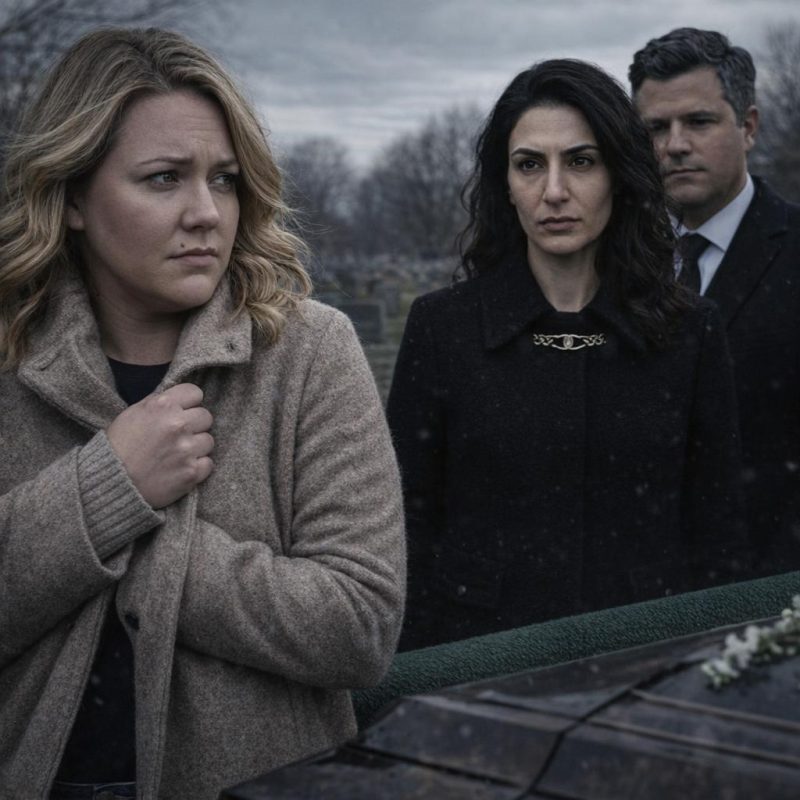 Image by RM AI
The Gathering
At the post-funeral reception, I watched Clarissa and Marcus huddle in the corner of Evelyn's living room, their heads together in urgent conversation. I'd spent the morning arranging cheese plates and brewing coffee in Evelyn's kitchen, the same kitchen where she'd taught me to make her famous lemon bars when I was twelve. Clarissa held court near the fireplace in her designer black dress, accepting condolences like she was receiving subjects, while I refilled coffee cups and collected used napkins. Marcus kept glancing toward the china cabinet where Evelyn's jewelry box sat on display, then whispering something that made Clarissa nod. Rachel showed up around three, gave me a long hug, and stationed herself at my elbow like a bodyguard. I caught fragments of Clarissa's conversations as I passed—words like "appraisal" and "market value" and "proper assessment." She left at four-thirty without helping clean up, citing exhaustion, though she'd barely lifted a finger all day. Marcus glanced my way and whispered something to Clarissa that made her smile—the first smile I'd seen from her all day.
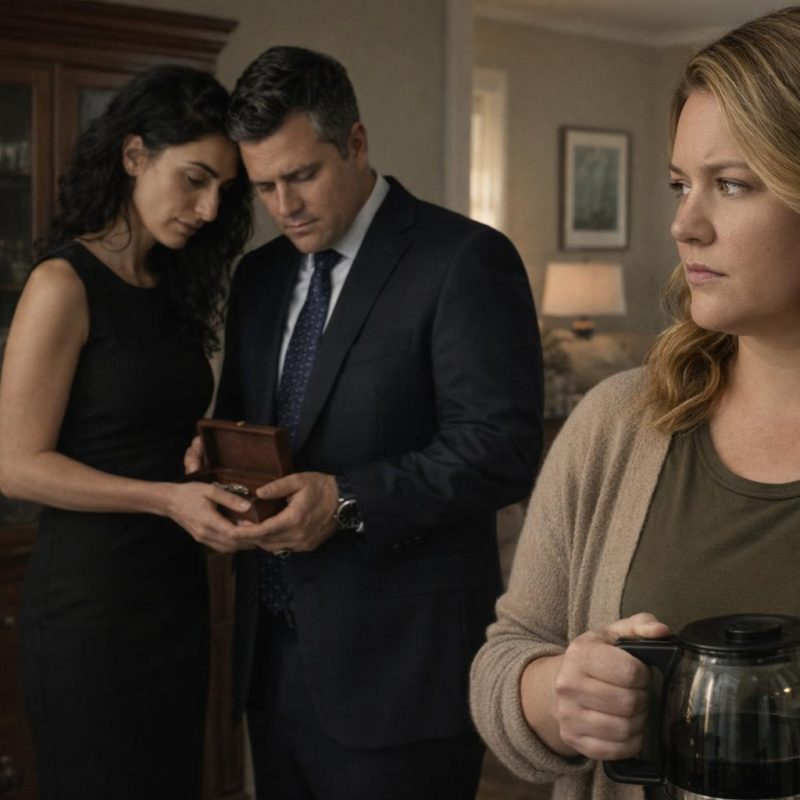 Image by RM AI
The Lawyer
Three days after the funeral, Clarissa called to inform me she'd hired an estate attorney—the most aggressive one in the city, she added with unmistakable pride. I was folding Evelyn's linens when my phone rang, and Clarissa's voice came through crisp and businesslike, like she was closing a corporate deal instead of discussing our grandmother's belongings. She explained that an estate of this value required professional handling, proper procedures, someone who understood the complexities of asset distribution. I asked why we needed lawyers at all, since Evelyn had a will and Mr. Sterling had been her attorney for thirty years. Clarissa laughed, this brittle sound that made me pull the phone away from my ear. She said something about protecting family interests and ensuring everything was handled correctly, her tone suggesting I was naive for questioning the necessity. The conversation lasted maybe five minutes, but I felt off-balance for hours afterward, like I'd just been warned about something without anyone actually saying the words. When I asked why we needed lawyers at all, Clarissa's laugh sounded like breaking glass.
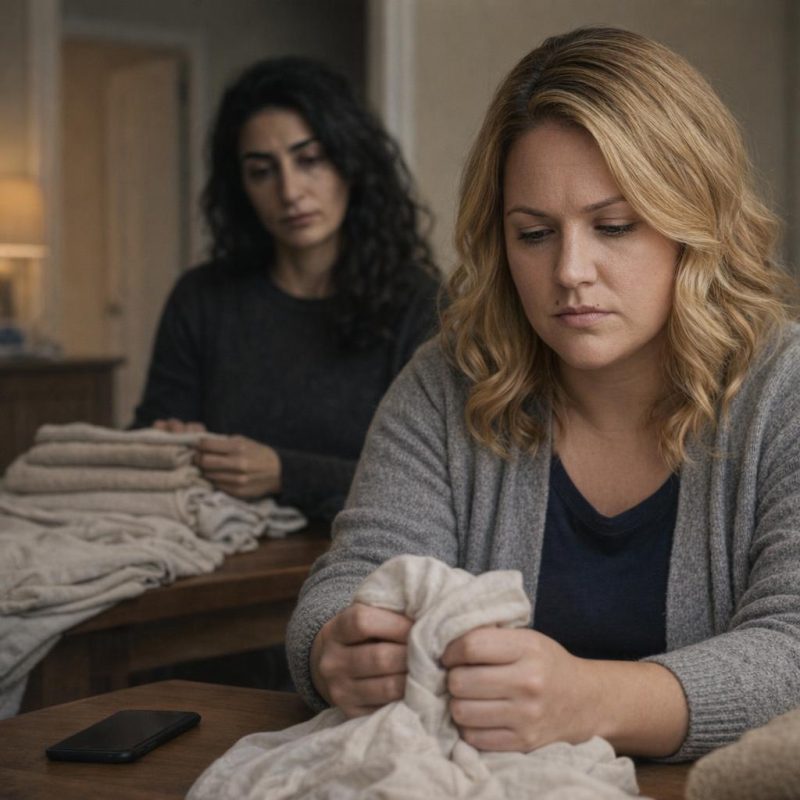 Image by RM AI
Last Words
I sat in Evelyn's empty bedroom and replayed our final conversations, searching for meaning in every pause and careful phrase she'd used. The room still smelled like her lavender sachets and the hand cream she'd used every night before bed. I'd spent so many evenings here during those last weeks, sitting in the chair by her bed while she drifted in and out of sleep, sometimes lucid and sharp, sometimes confused about what year it was. She'd made these cryptic comments about the house, about family history, about things that mattered versus things that just looked pretty. I remembered her squeezing my hand with surprising strength for someone so frail, her eyes suddenly focused and clear. She'd said something about foundations being more important than shine, about substance outlasting sparkle, and I'd nodded like I understood even though I didn't. She'd given me this knowing look, the same one she used to give me when I was a kid and she was teaching me something important disguised as a casual conversation. I wished I'd asked more questions, pushed for clarity instead of just accepting her cryptic wisdom. She'd squeezed my hand and said something about foundations being more important than shine—I just hadn't understood what she meant.
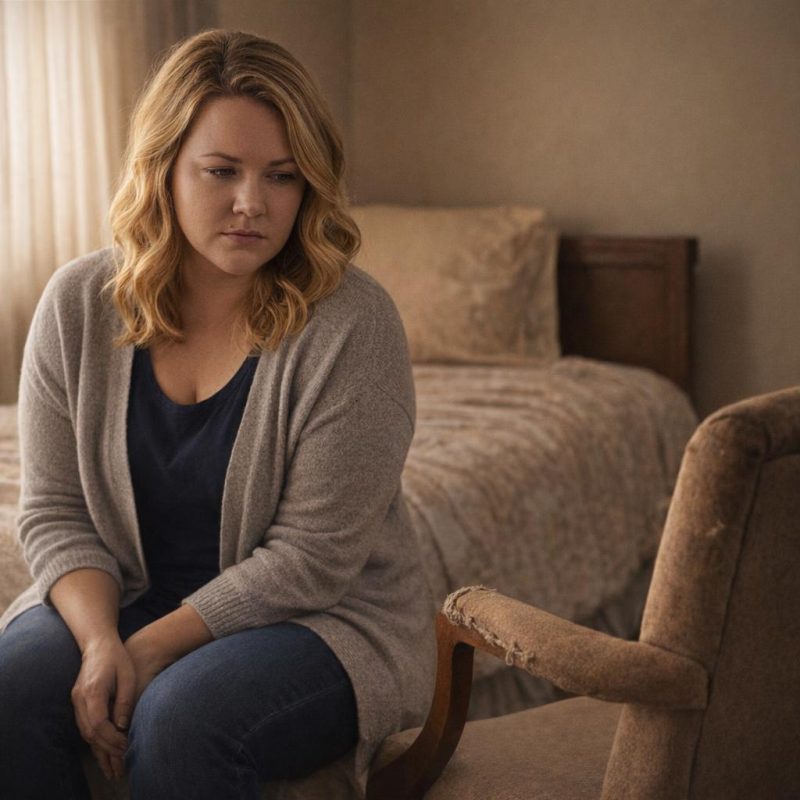 Image by RM AI
Coffee and Counsel
I met Rachel at our usual coffee shop and told her everything about Clarissa's lawyer, watching my friend's expression shift from sympathy to outrage. We sat in our regular corner booth, the one by the window where we'd been meeting for coffee since college, and I laid out the whole situation—the funeral, the whispered conversations, the aggressive attorney, the weird phone call. Rachel set down her cappuccino hard enough that foam sloshed over the rim. She asked what Clarissa even wanted, and I realized I didn't have a clear answer beyond a vague sense of threat. The jewelry, probably, since that's what everyone always noticed when they visited Evelyn—the elaborate pieces she'd worn to charity galas and society functions over the decades. Rachel pointed out that I'd been the one actually caring for Evelyn, that I'd earned whatever she'd left me, and I felt this uncomfortable twist in my chest because I hadn't been thinking about earning anything. I'd just loved my grandmother. Rachel asked what I valued from the estate, and I found myself thinking about those cryptic last words instead of the jewelry or the house. Rachel set down her mug and asked the question I'd been avoiding: what was I going to do about it?
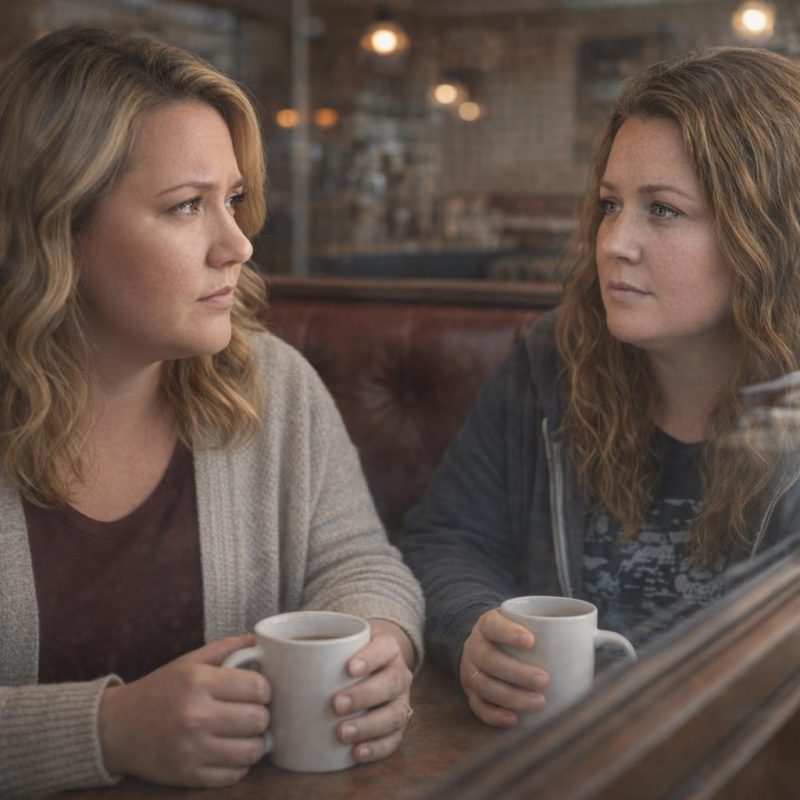 Image by RM AI
Paper Trail
I spent the afternoon sorting through boxes of Evelyn's personal letters, mementos from eight decades of life spread across her dining room table. There were photographs from the 1950s showing her in elaborate jewelry at charity balls, letters from friends who'd passed away decades ago, ticket stubs from Broadway shows and symphony performances. I found her wedding invitation, yellowed and delicate, and a pressed flower from her honeymoon. There were receipts for jewelry repairs, documentation of appraisals from the 1980s, guest lists from parties she'd hosted when my mother was young. Each item felt like a piece of a puzzle I was trying to assemble, a picture of who Evelyn had been beyond just my grandmother. The jewelry appeared in photo after photo—the emerald necklace, the diamond bracelet, the ruby earrings—always perfectly coordinated with her outfits, always catching the light. I worked through three boxes before I reached the bottom of the fourth, where a sealed envelope sat with my name written across it in Evelyn's distinctive handwriting. At the bottom of one box, I found a sealed envelope with my name on it in Evelyn's handwriting—dated just two weeks before she died.
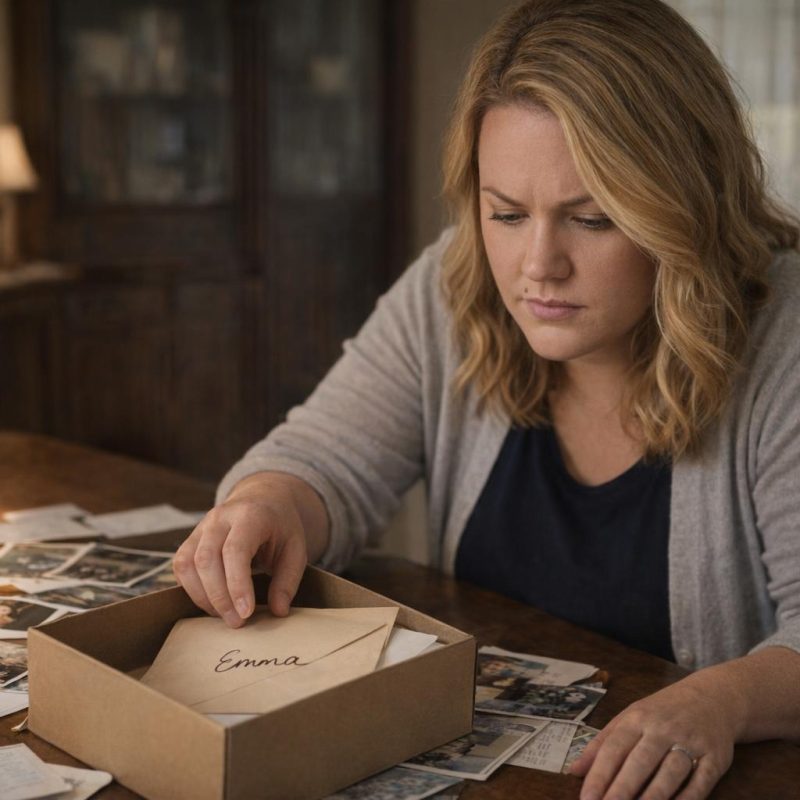 Image by RM AI
The Pressure
Clarissa showed up at the house unannounced the day before the will reading, her heels clicking across Evelyn's hardwood floors like a countdown. I was in the dining room, still surrounded by boxes of letters and photographs, when I heard her let herself in with the spare key she'd apparently kept. She walked through each room slowly, commenting on the condition of the floors, the outdated kitchen, the repairs the house would need. She mentioned the jewelry collection three times in ten minutes—casually, like she was just making conversation, but I noticed. Marcus wasn't with her this time, which somehow made it worse, like she didn't need backup for whatever this was. She picked up one of Evelyn's photographs, studied it, set it down without comment. I stayed quiet, just listening, watching her move through the space like she was already calculating its value. She said something about tomorrow being important, about hoping we could both be reasonable adults about the situation. I didn't ask what situation she meant. She paused at the threshold and said we both knew what the right thing to do was—she just hoped I'd be reasonable tomorrow.
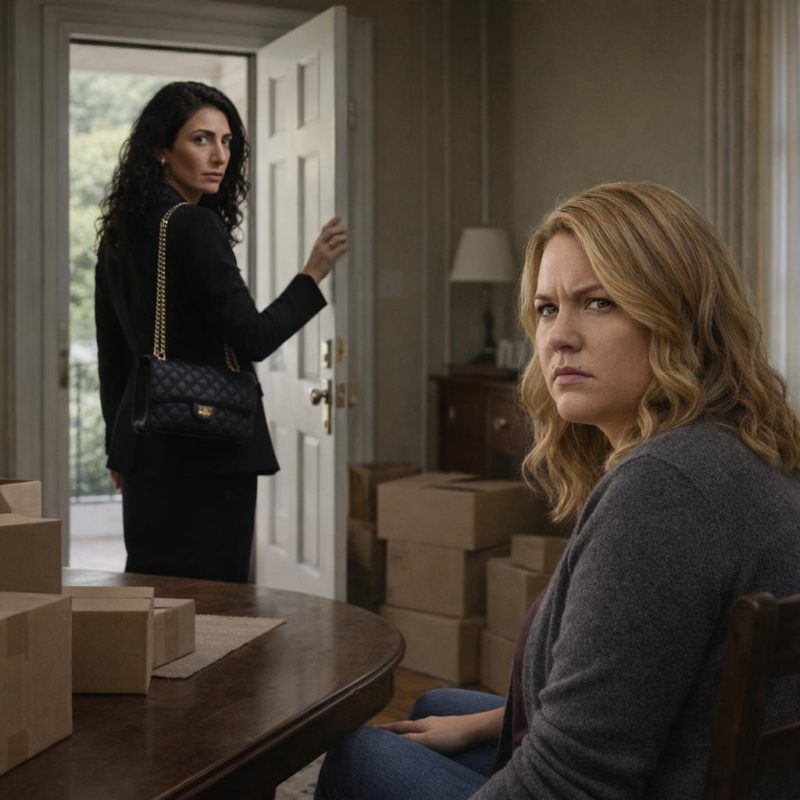 Image by RM AI
Scheduled Conflict
Mr. Sterling's assistant called to confirm our two o'clock appointment for the will reading, and I heard Clarissa's lawyer had already requested to attend. I was still at Evelyn's house, the sealed envelope sitting on the kitchen counter where I'd left it the night before, unopened. The assistant's voice was professionally neutral as she explained the logistics—Mr. Sterling's conference room, please arrive ten minutes early, bring identification. Then she mentioned, almost apologetically, that they'd need to arrange extra seating because Clarissa's legal representation had requested to be present for the reading. Legal representation, plural. I asked how many people Clarissa was bringing, and the assistant hesitated before saying they'd requested three chairs for her party. Three chairs. For a will reading. I thanked her and ended the call, staring at my phone like it might offer some explanation for why my sister needed an entourage to hear our grandmother's final wishes. I decided not to hire my own lawyer, trusting that Mr. Sterling would handle things fairly, though Rachel would probably call me an idiot for that choice. The assistant mentioned they'd need extra chairs for all the legal representation—apparently Clarissa wasn't coming alone.
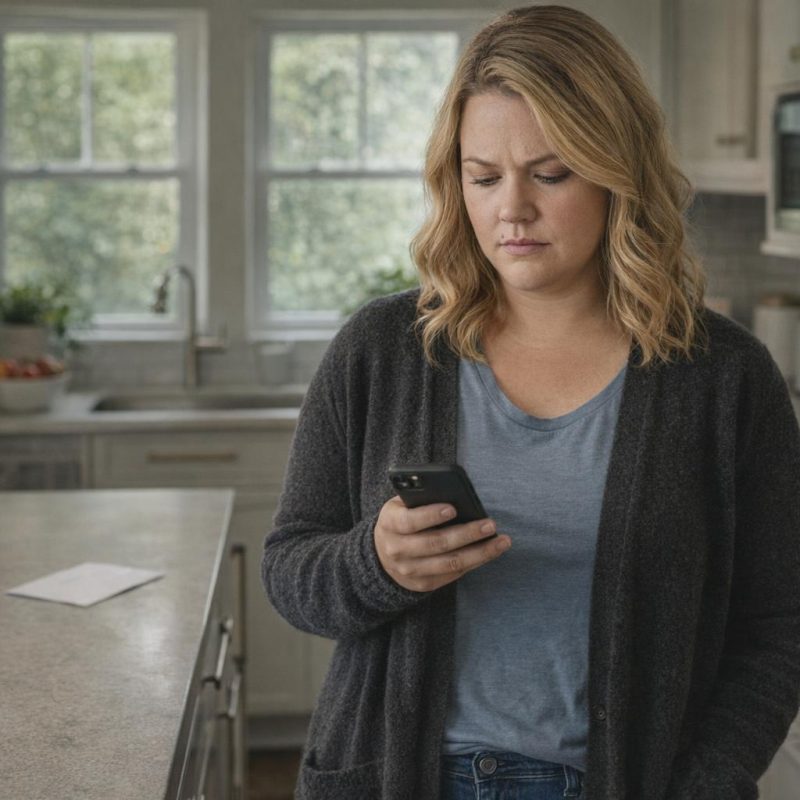 Image by RM AI
Empty Rooms
I drove to the Victorian house that evening, letting myself in with the key Mr. Sterling had given me after the funeral. The place felt different without my grandmother's presence—emptier, but also somehow more itself, like a person finally able to exhale after holding their breath for years. I walked through each room slowly, running my hands along the crown molding in the parlor, the carved newel post at the base of the stairs, the original brass doorknobs that had been turned by five generations of hands. The wallpaper in the dining room was peeling near the ceiling, and I could see water stains from some long-ago leak. In the kitchen, the linoleum was cracked and yellowed, probably installed sometime in the seventies. None of it was Instagram-worthy. None of it would photograph well on black velvet. But when I reached the master bedroom where Evelyn had spent her final months, I stood still and just listened. The house settled around me with small creaks and groans. I took a step toward the window, and the floorboards beneath my feet made a specific sound—not random settling, but something almost rhythmic, almost purposeful. I stepped again, and the pattern repeated. The house was trying to tell me something, I just didn't know what yet.
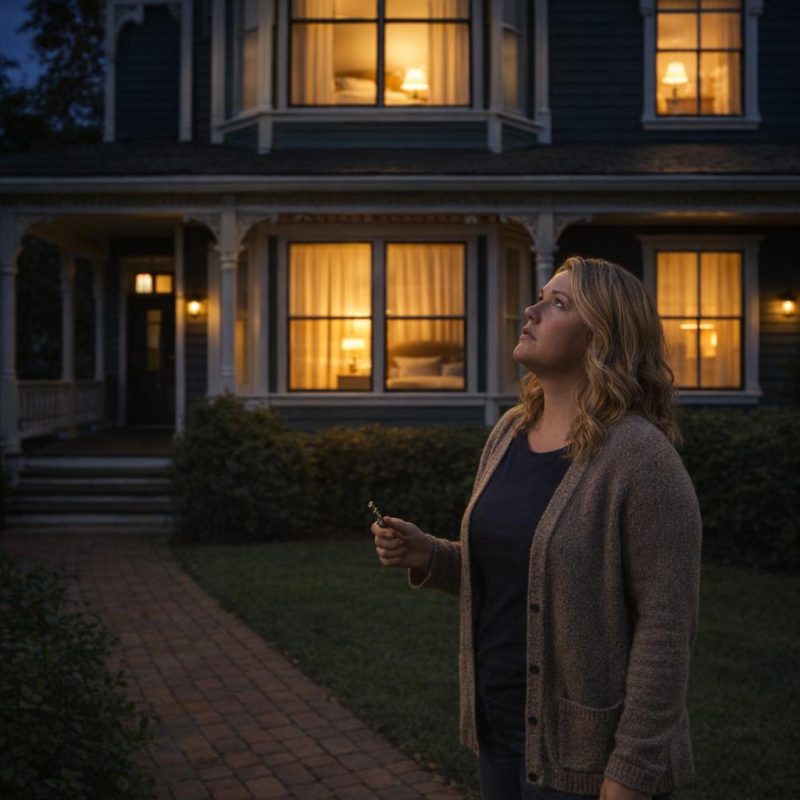 Image by RM AI
Social Media Spectacle
That night, I made the mistake of checking Instagram before bed. Clarissa's feed had exploded with new posts—professional-quality photos of my grandmother's jewelry collection spread across black velvet, each piece positioned like it was already in an auction catalog. The sapphire bracelet. The emerald earrings. The ruby brooch that Evelyn wore in her wedding photos. Each post had a carefully crafted caption about family heritage and preserving legacy, tagged with handles for Christie's, Sotheby's, and at least three vintage jewelry dealers I recognized from her previous shopping sprees. The comments were exactly what she wanted—friends gushing about how stunning the pieces were, how lucky she was, how they'd look perfect with her Valentino gown at the spring gala. I scrolled through six posts, each more elaborate than the last, my thumb hovering over the like button but never pressing it. Then I reached the final photo. Clarissa had taken a selfie wearing the five-carat teardrop diamond necklace, the one Evelyn had worn to every major family event for forty years. The caption read: "Honoring Grandmother's legacy and carrying it forward into new beginnings. Family treasures deserve to shine. 💎✨" I took a screenshot without reacting, then another, then one of each post. Just in case.
 Image by RM AI
The Reading
Mr. Sterling's office was exactly what you'd expect from a lawyer who'd been practicing since before email existed—mahogany paneling, leather-bound books, a grandfather clock ticking in the corner like we'd stepped into a period drama. I arrived ten minutes early like his assistant had requested, and found Clarissa already there with Marcus standing slightly behind her and a sharp-looking estate attorney I didn't recognize sitting to her right. They'd claimed the side of the conference table closest to Mr. Sterling's desk, a power move so obvious it would've been funny if my stomach wasn't twisted in knots. I took a seat across from them, alone, my purse in my lap and my hands folded on the table. Mr. Sterling greeted everyone with professional courtesy, his reading glasses on their chain glinting in the afternoon light. He had a velvet-bound document in front of him—Evelyn's will, I assumed—and several manila folders stacked beside it. Clarissa's attorney had his own briefcase open, papers already arranged like he was ready to object to something. The clock ticked. Mr. Sterling cleared his throat and opened the will. "Last Will and Testament of Evelyn Margaret—" "Before you continue," Clarissa interrupted, her voice bright and firm, "I think we should discuss the practical realities of this situation."
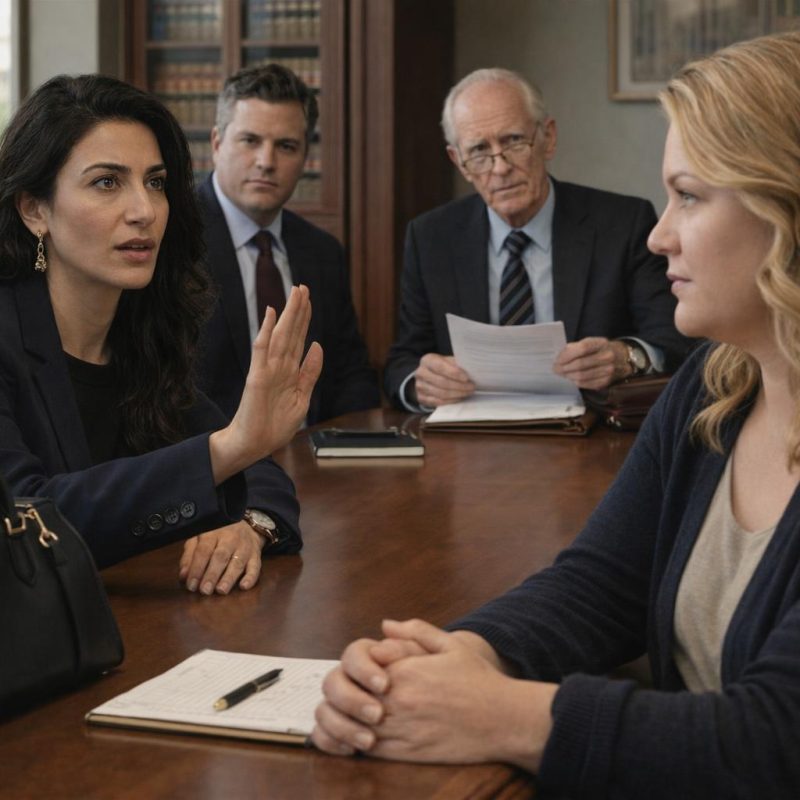 Image by RM AI
The Performance
Clarissa didn't wait for Mr. Sterling to respond. She launched into what was clearly a prepared speech, her hands gesturing gracefully like she was addressing a board meeting instead of her dead grandmother's lawyer. She talked about maintaining family image in their social circles, about the importance of appropriate accessories for charity functions, about how she attended at least a dozen galas a year that required serious jewelry, not costume pieces. Her attorney nodded along, occasionally glancing at his notes with practiced timing. Marcus shifted in his seat but said nothing, his eyes fixed on a spot somewhere above my head. Clarissa's voice stayed smooth and reasonable, like she was simply stating facts everyone should already understand. She mentioned the Junior League fundraiser, the hospital foundation dinner, the museum benefit where she'd be seated at the patron's table. Every sentence was designed to paint herself as the obvious choice, the responsible steward of family treasures. Then she turned to look directly at me, her smile tight and polite. "I mean, Emma, you've never even attended a charity gala in your life," she said, her tone almost sympathetic. "What would you actually do with diamonds anyway?" Mr. Sterling's expression remained carefully neutral, but I saw his jaw tighten slightly. I didn't answer. I just looked back at her and waited.
 Image by RM AI
The Offer
Clarissa reached into her designer bag and pulled out a handwritten document, sliding it across Mr. Sterling's polished desk toward me. "I've given this considerable thought," she said, her voice taking on that generous tone people use when they're about to screw you over. "And I think I have a solution that's fair to both of us." The proposal was simple: she would take the entire jewelry collection, and I could have the house. All of it—the Victorian with its three stories, its original woodwork, its century of family history. She listed the house's problems like she was doing me a favor by even mentioning them: the roof probably needed replacing, the plumbing was from the 1940s, the windows were drafty and single-pane, the foundation had settling cracks, the electrical was outdated. "It's a money pit, honestly," she said, shaking her head with what looked like genuine concern. "But if you want it, it's yours. I'll take the jewelry—it's portable, easier to manage, and frankly more practical." She sat back in her chair, looking pleased with herself. Marcus nodded slightly, like this was reasonable. Her attorney made a note on his legal pad. Mr. Sterling looked at me with something that might have been pity, waiting for my response. Clarissa called it generous, this offer to saddle me with a century-old money pit while she walked away with portable, liquid assets.
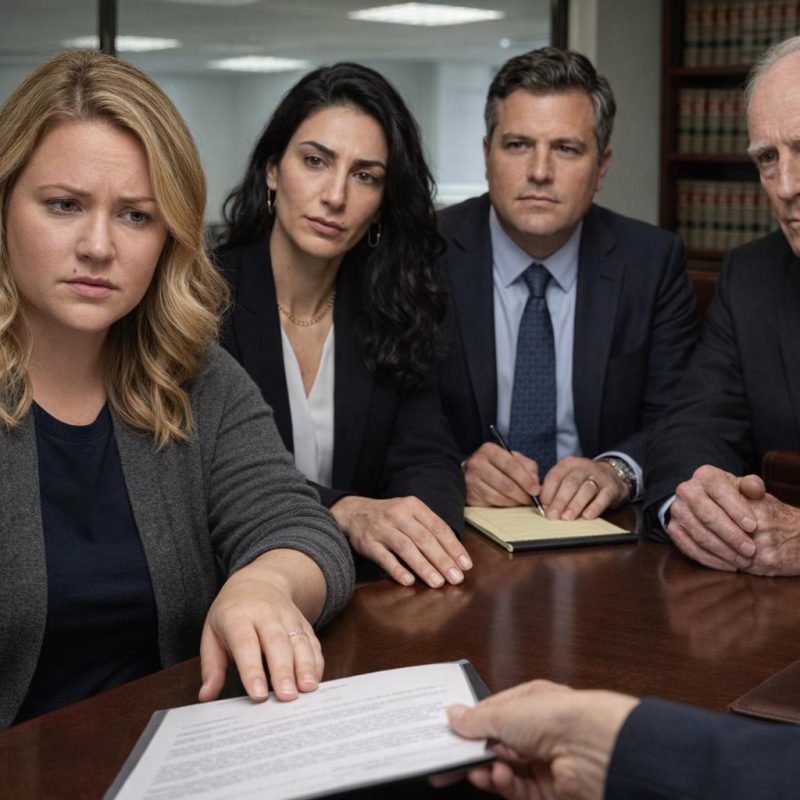 Image by RM AI
The Agreement
I looked at Mr. Sterling's sympathetic expression, at Clarissa's barely concealed triumph, at Marcus avoiding eye contact like his life depended on it. The grandfather clock ticked in the corner. Clarissa's attorney had his pen poised over his legal pad, ready to document my response. I could feel the weight of the moment, the expectation that I'd argue or negotiate or at least ask for time to think. Instead, I just nodded. "Okay," I said simply. "I accept." The room went still. Mr. Sterling's eyebrows rose slightly, and he leaned forward in his chair. "Emma," he said carefully, his voice full of concern I didn't need, "are you certain? This is a significant decision. You're entitled to time to consider, or to consult with your own legal representation." "I'm certain," I said. Clarissa's attorney looked pleased and immediately began pulling documents from his briefcase. Clarissa herself was trying not to smile too widely, but I could see the satisfaction radiating off her like heat. Marcus glanced between us, his expression uncertain, like he couldn't quite believe it was this easy. Mr. Sterling studied my face for a long moment, confusion clear in his eyes. He'd known Evelyn for decades, had probably expected me to fight harder. I'd never been more sure of anything.
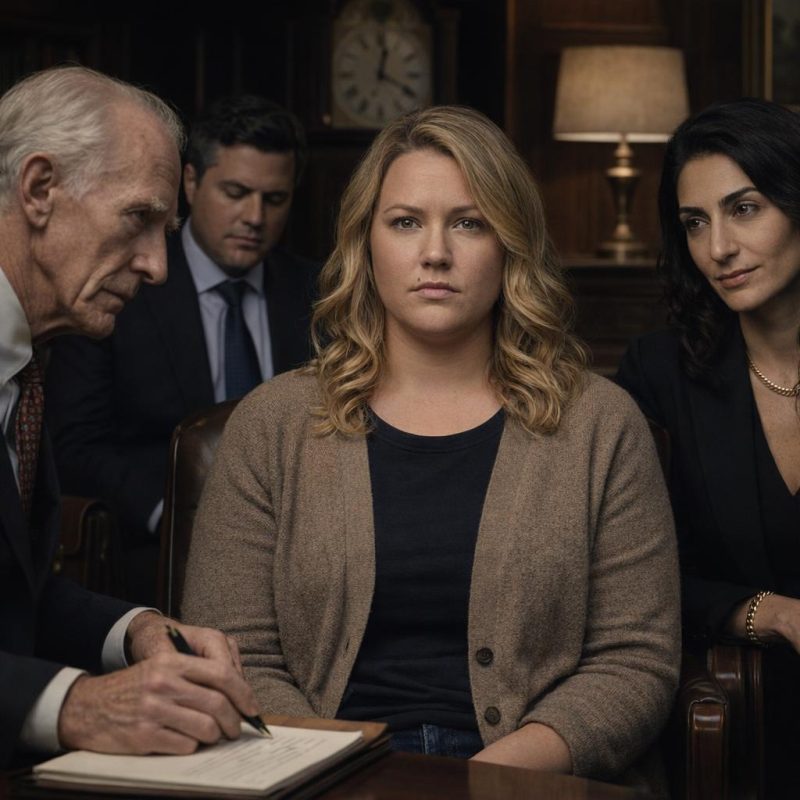 Image by RM AI
The Clause
"I'll sign over every gemstone, every gold link, every pearl," I said, my voice steady and calm. "But I need one thing in return." Clarissa's smile faltered slightly. Her attorney looked up from his paperwork. "What thing?" Clarissa asked, her tone wary now. "I need you to sign a document accepting the jewelry collection as-is," I said. "No future claims to anything found in the house, no disputes about contents or discoveries. You get the jewelry exactly as it exists right now, and I get the house and everything in it. Clean division." Clarissa's lawyer immediately started to object, his professional instincts apparently stronger than his client's greed. "Mrs. Chen, I'd advise we review the specific language of any such—" "Oh, for God's sake," Clarissa waved him off impatiently. "What possible difference could an as-is clause make? We're talking about museum-quality antique jewelry, not a used car." She looked at me with something between amusement and confusion. "Fine, Emma. If it makes you feel better to have your little clause, I'll sign it." Mr. Sterling pulled out a legal pad and began drafting the language, his pen moving carefully across the page. I watched him write, my hands still folded calmly in my lap, while Clarissa drummed her manicured nails on the table, impatient to finalize what she thought was her victory.
 Image by RM AI
The Signature
Clarissa's attorney tried one more time to get her to slow down, to let him review the as-is agreement Mr. Sterling had drafted, but she was done waiting. She grabbed the pen from her lawyer's hand and signed with a flourish, her signature bold and confident across the bottom of the page. "There," she said, sliding it toward me. "Happy now?" I signed my portion without hesitation, my own signature smaller and neater next to hers. Mr. Sterling witnessed both signatures, his notary stamp making that official thunk that meant the division was binding and complete. He filed the paperwork in one of his manila folders, his expression troubled but professional. Clarissa was already texting someone—probably the auction house, or maybe just her friends to share the good news. Marcus looked relieved that the whole thing was over, like he'd been holding his breath through a storm that had finally passed. Clarissa's attorney packed up his briefcase, still looking vaguely uncomfortable about how quickly his client had signed. Clarissa stood, smoothing her designer dress, and smiled at me across the desk. It was a look I'd seen before—triumph mixed with genuine confusion, like she couldn't quite process how easy this had been. She looked at me across the desk with a mixture of triumph and confusion, as if she couldn't quite believe I'd been this easy to beat.
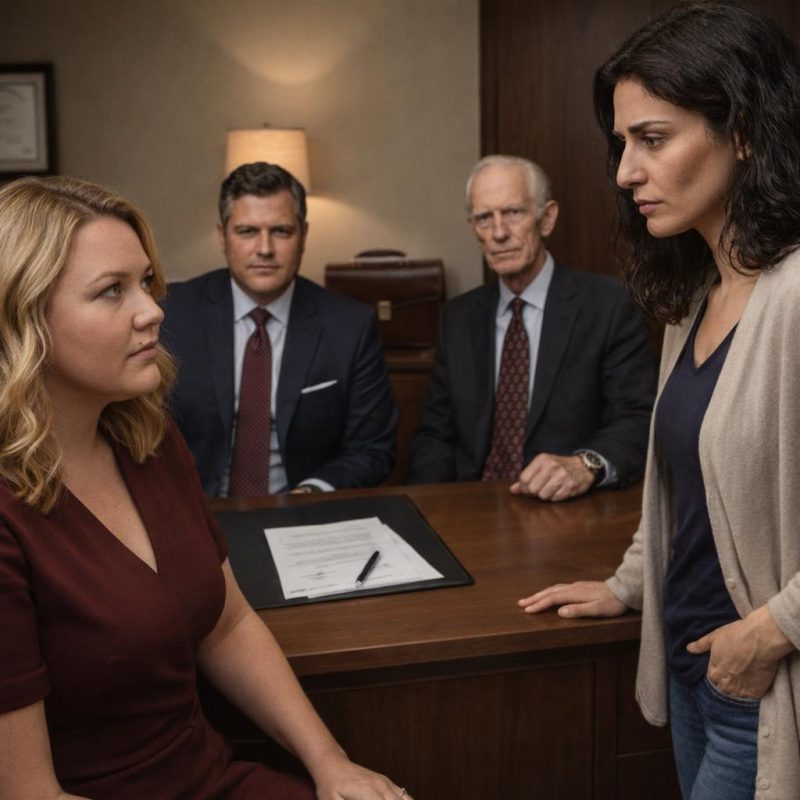 Image by RM AI
Moving Day
I showed up at the Victorian the next morning with my car packed full of cleaning supplies and storage bins, ready to start the tedious work of sorting through decades of accumulated belongings. Clarissa arrived twenty minutes later in her Range Rover, Marcus trailing behind in his BMW with empty boxes stacked in the back seat. She'd come prepared with velvet-lined jewelry cases and acid-free tissue paper, the kind of supplies you use when you're handling museum pieces. I started in the kitchen pantry, pulling out vintage canisters and hand-labeled spice jars while Clarissa headed straight upstairs to the master bedroom where Evelyn had kept the jewelry collection. For the next three hours, I organized expired baking supplies and ancient preserves while my sister made trip after trip past me, her arms loaded with heavy velvet boxes. She moved with purpose, her heels clicking against the hardwood floors, completely focused on extracting every piece of jewelry from the house. Each time she passed through the kitchen, she barely glanced my way, too busy mentally calculating auction estimates to wonder what I was actually doing or why I'd started with something as mundane as the pantry. I watched her carry out box after box, her face flushed with satisfaction, while I quietly continued my work among the Mason jars and recipe cards.
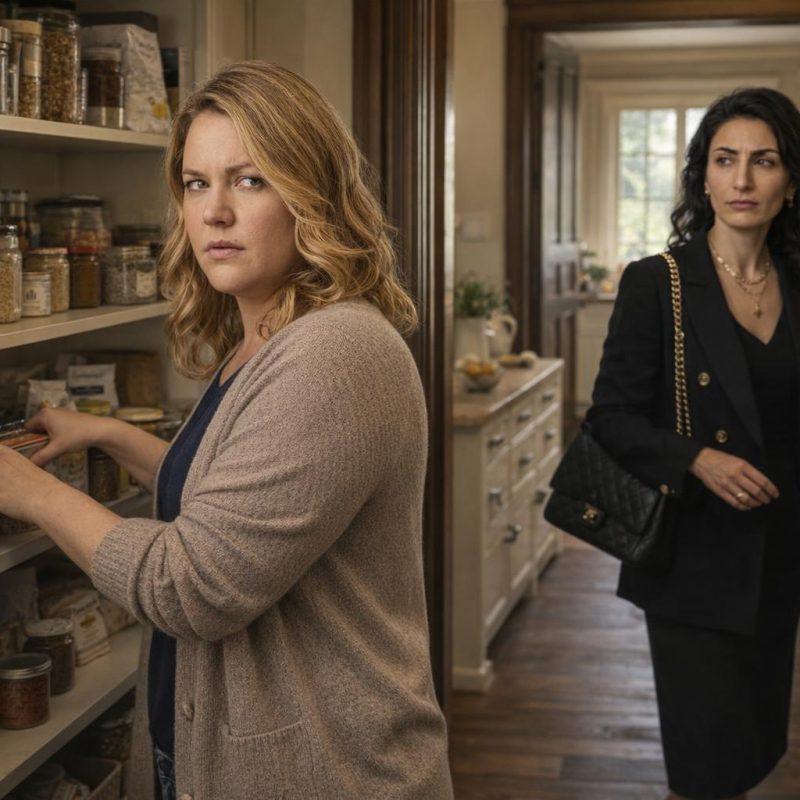 Image by RM AI
Attic Treasures
After Clarissa left with her final load, I climbed the narrow stairs to the attic, pulling the cord that turned on the single bare bulb hanging from the rafters. The space was exactly as I remembered from childhood visits—dusty and cramped, with boxes stacked against the sloped walls and old furniture draped in sheets. I started opening boxes systematically, finding photo albums with cracked leather covers and pages of black-and-white photographs held in place by corner tabs. There were ledgers too, the kind with marbled covers and columns for recording household expenses, each one labeled with a year in faded ink. I found deeds to properties I'd never heard of, receipts for items purchased decades ago, and letters tied with ribbon that smelled like lavender and time. One leather-bound album slipped from my hands as I was moving boxes, falling open to a photograph of Evelyn at maybe twenty years old, standing in front of this same house wearing a dark dress and that teardrop diamond necklace. I picked up the album and stared at the photo, something about it nagging at me though I couldn't identify what. The necklace looked exactly like the one Clarissa had just carried out of here, but something felt off in a way I couldn't name.
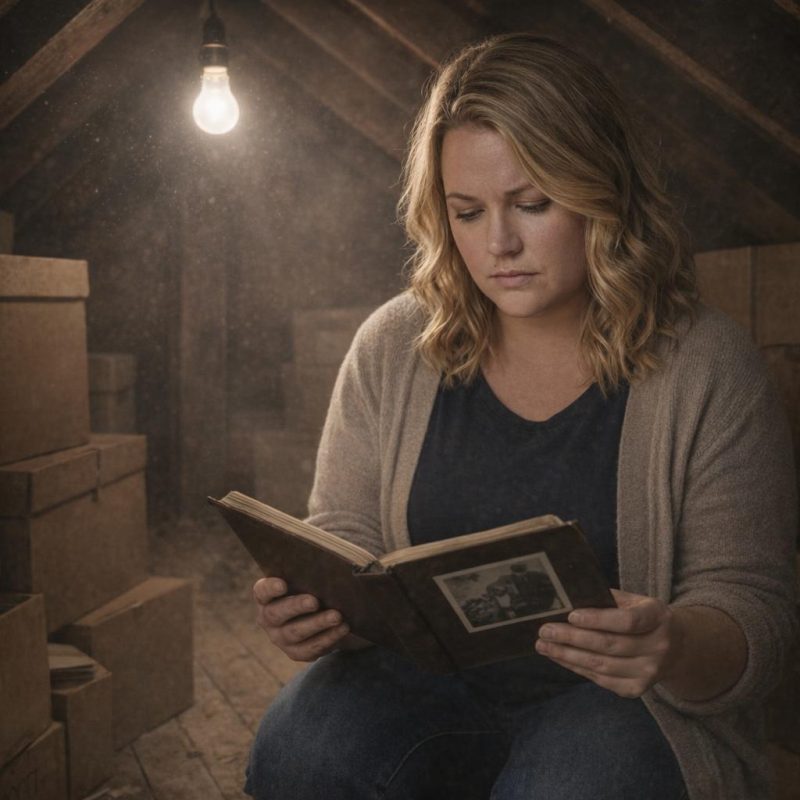 Image by RM AI
Depression Era
That evening, I sat at Evelyn's kitchen table with the old ledgers spread out in front of me, tracing my great-grandfather's handwriting through the pages. The entries from the late 1920s showed a comfortable family with regular income from rental properties and investments, the kind of wealth that came with social standing and security. Then 1929 hit, and the entries changed. Month by month, I watched the family's financial situation deteriorate in neat columns of numbers—properties sold, investments liquidated, debts mounting despite their best efforts. My great-grandfather's handwriting grew shakier as the 1930s progressed, the entries more desperate as he documented selling off assets piece by piece to keep the family afloat. There were references to furniture auctions, silver services sold, paintings that went to dealers for a fraction of their worth. The Depression had devastated them like it had devastated so many families, stripping away the comfortable life they'd known. I turned to the final page of the 1939 ledger, expecting to find more of the same grim accounting, but instead found a single line in my great-grandfather's hand: "Necessary sacrifices made. May future generations understand." I sat back in my chair, staring at those words and wondering what sacrifices he meant.
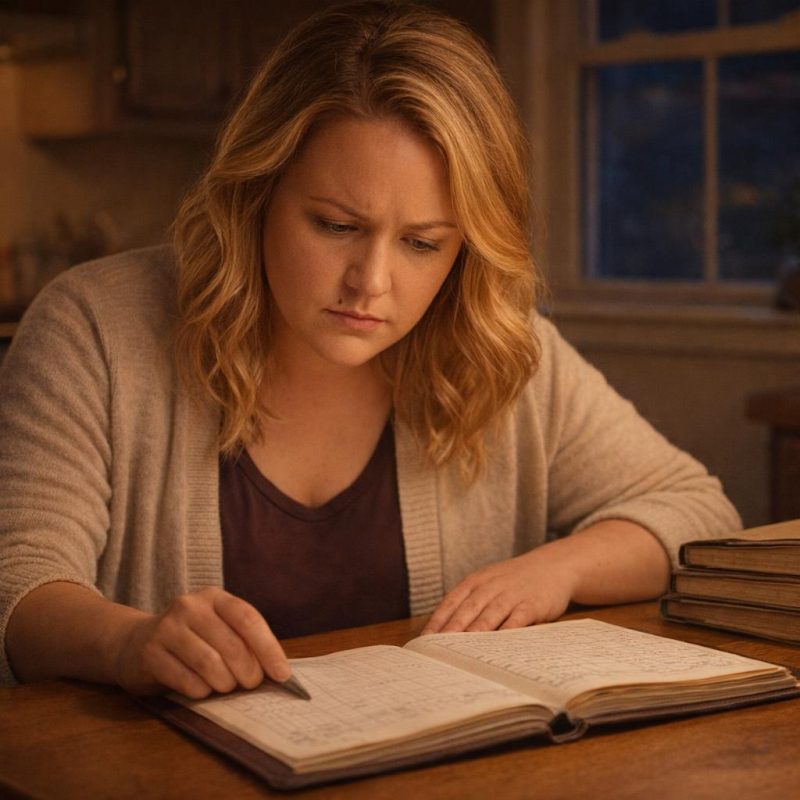 Image by RM AI
Questions of Authenticity
I was flipping through the 1940 ledger when a folded piece of paper slipped out from between the pages, landing on the table in front of me. It was a letter, the paper thin and yellowed, written in Evelyn's distinctive looping handwriting. The letter was addressed to someone named Dorothy, dated June 1943, and it read like a conversation between old friends catching up on life. Evelyn wrote about the war effort, about rationing and victory gardens, about keeping up appearances during difficult times. Then, near the bottom of the second page, she mentioned wearing her grandmother's jewelry to a charity gala: "I wore Grandmother's pieces last night, and everyone commented on how beautiful they were. I smiled and thanked them, thinking how funny it is that no one knows these aren't what they assume. But that's the thing, isn't it? The shine comes from the woman wearing them, not from the stones themselves." I read that passage three times, trying to parse whether she was being metaphorical or literal. Was she talking about confidence and bearing, or was she saying something else entirely? The letter's last line kept running through my mind—shine coming from the woman, not the stone—and I felt my heart start to race with a suspicion I couldn't quite name.
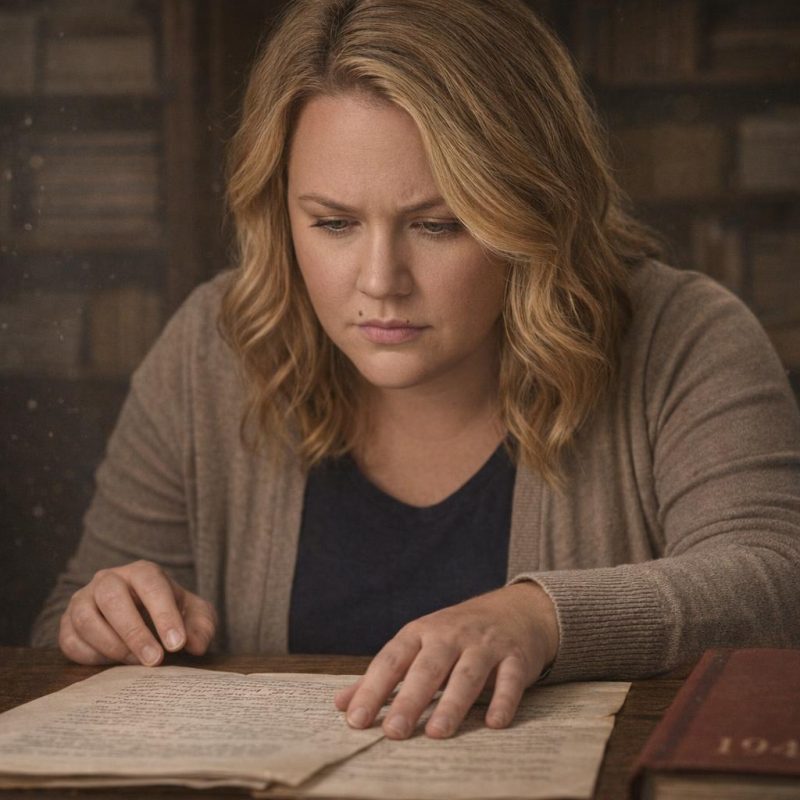 Image by RM AI
The Final Haul
I was standing in the kitchen doorway the next afternoon when Clarissa made her final trip through the house, her arms loaded with the last velvet boxes from Evelyn's collection. She'd been at it for two days now, methodically clearing out every piece of jewelry from the bedroom, the safe, the various hiding spots Evelyn had used over the years. This was it—the last haul, the final extraction of what she considered the only things of value in the entire estate. I watched her navigate the hallway, her designer bag slung over one shoulder, her face showing the strain of carrying heavy boxes but also the satisfaction of someone who'd won exactly what they wanted. She didn't ask if I needed help with anything, didn't wonder what my plans were for the house, didn't even glance at the rooms she was passing through. To her, this was just the structure that had contained the treasure, nothing more. She reached the front door and paused, shifting the boxes in her arms to free one hand for the doorknob. Then she looked back over her shoulder at me, that tight smile playing at her lips. "Enjoy your drafty consolation prize," she said, and then she was gone, the door closing behind her with a solid thunk that echoed through the empty house.
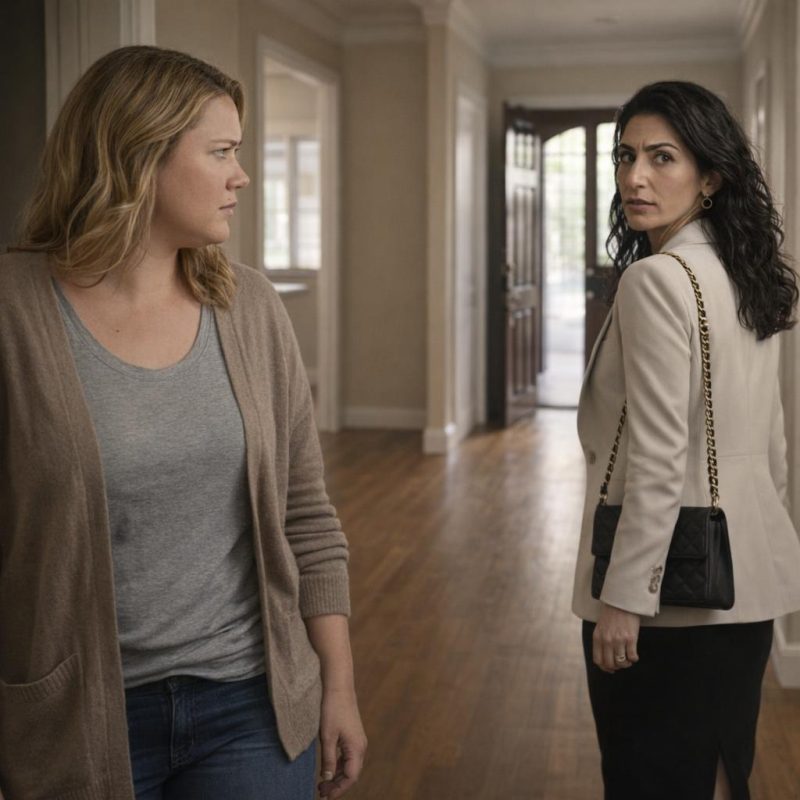 Image by RM AI
Moving In
I carried my boxes up the stairs to the master bedroom, the room where Evelyn had spent her final months looking out at the garden she'd tended for sixty years. It felt strange claiming this space as my own, but it also felt right somehow, like I was supposed to be here. I unpacked my clothes into the old dresser, hung my jackets in the closet that still smelled faintly of Evelyn's lavender sachets, and arranged my books on the nightstand beside the bed. As I moved around the room, the house made sounds—creaks and sighs that seemed to respond to my footsteps, the settling of old wood and the whisper of air through gaps in the window frames. I'd always known old houses made noise, but I found myself paying attention to these sounds in a way I never had before, listening to the pattern of creaks as I walked across the floor, noticing which boards groaned and which stayed silent. The house felt alive around me, not in a creepy way but in the way anything with history feels alive, full of stories and secrets pressed into its bones. I sat on the edge of the bed and looked around the room, and as I unpacked the last of my belongings, I found myself listening to the sounds of the old house as if it were trying to communicate.
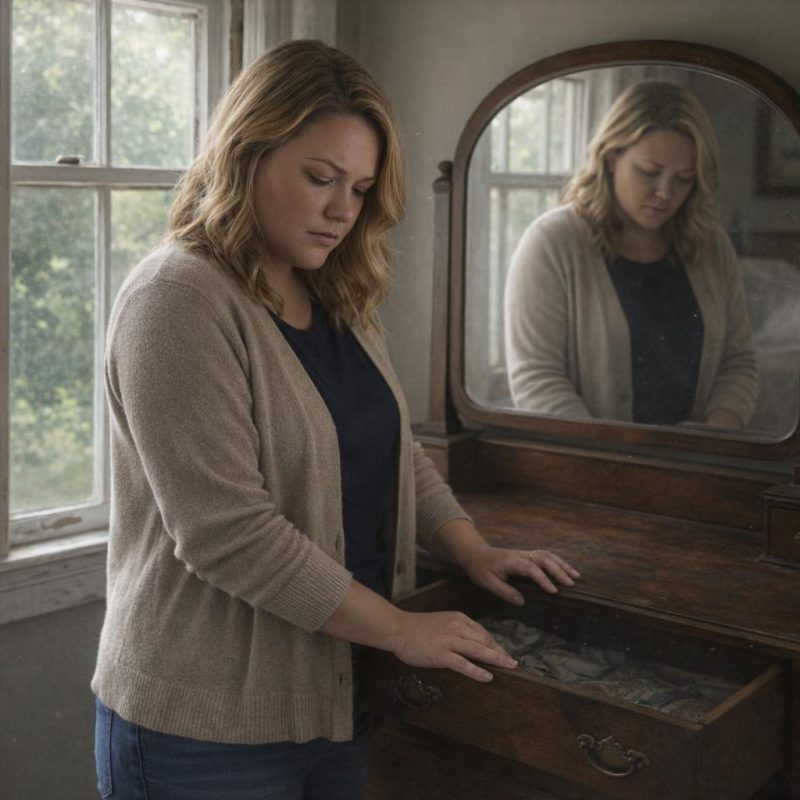 Image by RM AI
Inventory
I spent the next three days working through the house room by room, cataloging everything Clarissa had dismissed as worthless clutter. In the kitchen, I documented vintage Pyrex bowls and hand-crank mixers, recipe cards written in Evelyn's mother's handwriting with notes in the margins about adjusting for altitude. The dining room held boxes of correspondence—letters from relatives, postcards from travels, Christmas cards saved over decades. I found old books with inscriptions on the flyleaves, photo albums from eras I could only guess at based on the clothing and cars, and boxes of household items that told the story of how people lived in different decades. Each item felt like a piece of a larger puzzle, mundane on its own but meaningful as part of the whole. I worked methodically, making notes and taking photos, appreciating the historical value of objects that had no price tag but plenty of story. On the third day, I made my way to the library, a small room off the main hallway that I'd barely glanced into before. The shelves were packed with books, but on the bottom shelf in the corner, I found something I hadn't noticed during my first walk-through: a row of leather-bound journals, each one labeled with a year in gold lettering, spanning from 1895 to 1985.
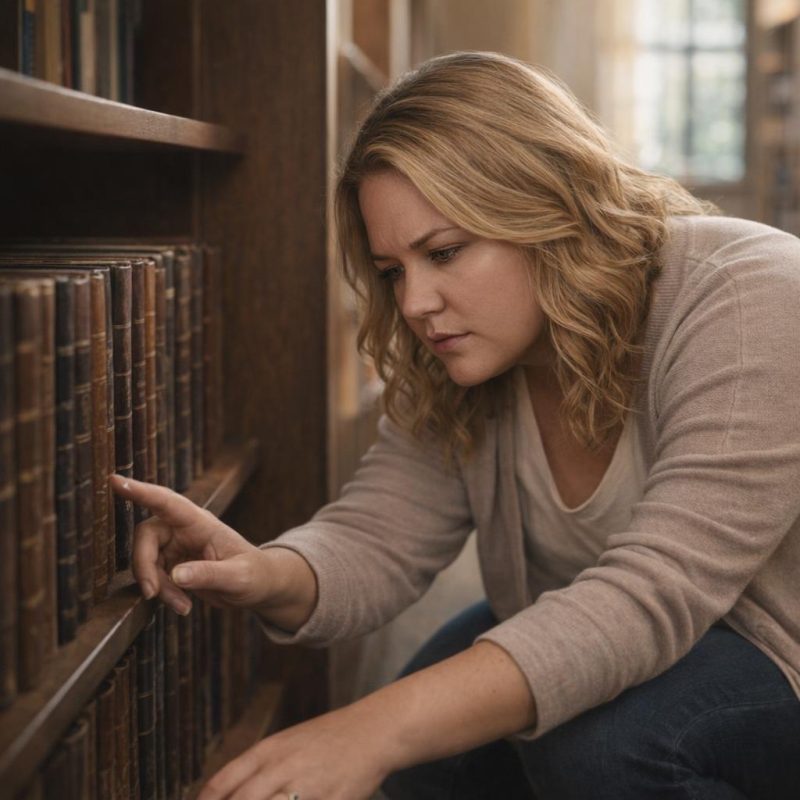 Image by RM AI
Rainy Day References
I pulled the earliest journal from the shelf and carried it to the window seat where the afternoon light was best. The leather was cracked and dry, the pages brittle at the edges, but my great-grandfather's handwriting was still clear and precise. The entries started in January 1895, documenting daily life with the kind of detail that made the past feel immediate—weather observations, business dealings, family dinners. I skimmed through months of entries until I found one dated September 1895 that made me slow down: "Have established what I call a rainy day fund for future generations. The times are good now, but I've seen fortunes rise and fall. Better to prepare while we can." The entries over the following months referenced this fund periodically, always in vague terms, always with the sense that he was planning for a future he hoped would never come. Then, in December 1895, I found an entry that made me sit up straighter: "Placed the fund where the foundation meets the future. May those who need it have the wisdom to look beyond the obvious." I read that line three times, trying to parse what it meant. Where the foundation meets the future—whatever that meant.
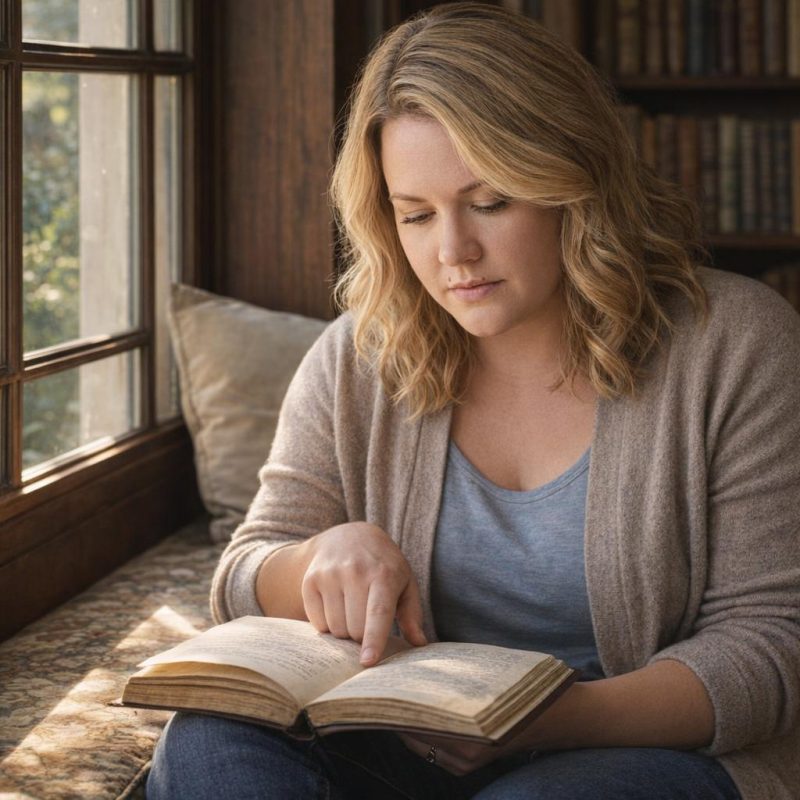 Image by RM AI
Below Ground
I descended the narrow stairs to the basement with a flashlight, sweeping the beam across stone foundation walls and decades of accumulated dust. The air down there was cool and damp, smelling like earth and old metal. I hadn't been in the basement since I'd moved in—there was no reason to, really, since the utilities had all been updated and the access panels were in the hallway closet. But now I was looking for something specific, even if I wasn't entirely sure what. The beam of my flashlight caught on old furniture draped in sheets, a rusted bicycle, boxes of Christmas decorations that probably hadn't been touched since the eighties. I moved slowly along the perimeter, examining the foundation stones. They were massive, the kind of stonework you don't see anymore, fitted together with thick mortar joints. Most of the mortar was dark with age, crumbling slightly in places where moisture had gotten in over the decades. I worked my way around the entire basement, checking each section methodically. In the far corner, behind the old coal chute, I noticed the mortar around one section of stones looked different from the rest.
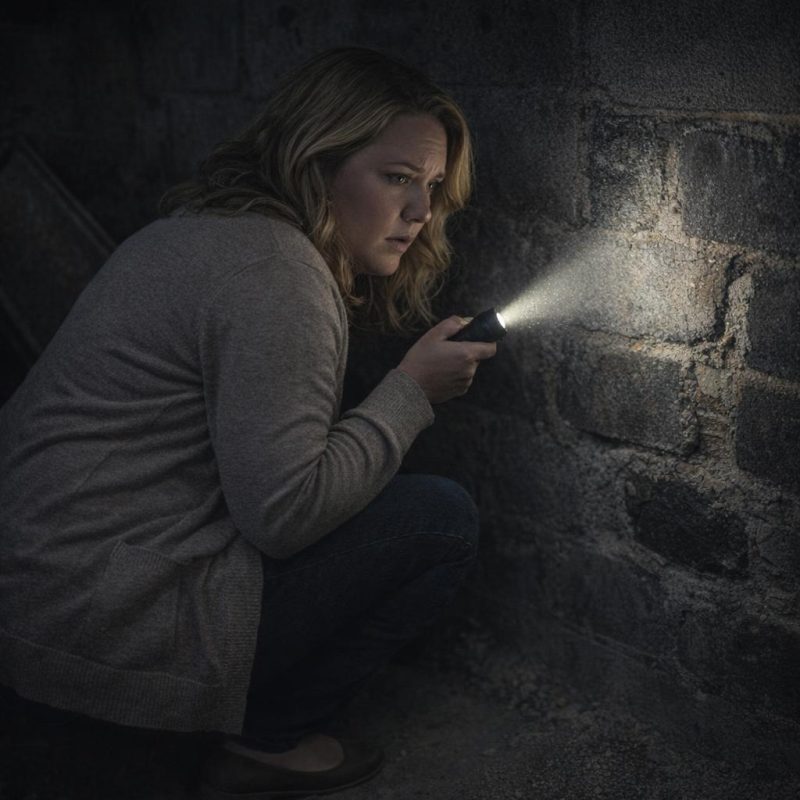 Image by RM AI
Architectural Memory
I found a reference in one of the journals to original blueprints being stored in the attic alongside important family documents. The entry was dated March 1998, written in Evelyn's careful handwriting during what must have been one of her organizing phases. She'd been sorting through decades of accumulated papers, deciding what to keep and what to discard. The entry described finding the original architectural drawings from when the house was built in 1892, rolled up in a leather tube that had protected them remarkably well. She'd moved them to a specific box in the attic, along with property deeds and family certificates. I read the entry twice, making note of which box she'd described—the one with brass corners, apparently, stored near the dormer window. Then I got to the last line of the entry, and I had to read it three times to make sure I wasn't misunderstanding. The entry was written by Evelyn herself in 1998, and the last line read: 'Some maps are more valuable than treasure.'
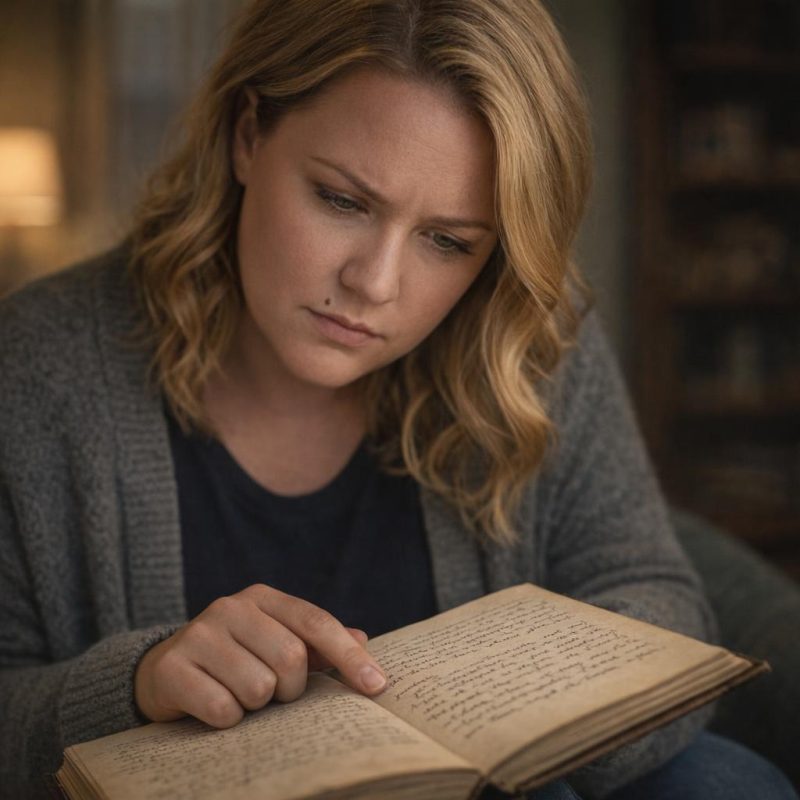 Image by RM AI
Auction Preparations
Clarissa called to inform me she had appointments scheduled with three prestigious auction houses for preliminary valuations of the jewelry collection. Her voice had that bright, controlled excitement she got when she was talking about money or status—the tone she used when describing her vacation properties or her husband's latest promotion. She rattled off the names of the auction houses: Christie's, Sotheby's, and a boutique firm in Boston that specialized in estate jewelry. Each one had given her preliminary estimates based on the photographs she'd sent, and she was clearly thrilled with the numbers they'd quoted. I made appropriate listening noises while she talked, not offering much commentary. She didn't seem to notice or care that I wasn't matching her enthusiasm. She was too caught up in describing the appointment process, the documentation she'd need to provide, the timeline for getting pieces into their next major auction. I could hear her flipping through papers as she talked, probably her color-coded planning binder. She mentioned the first appointment was Monday morning, and her voice practically vibrated with excitement about the estimated figures she'd been quoted.
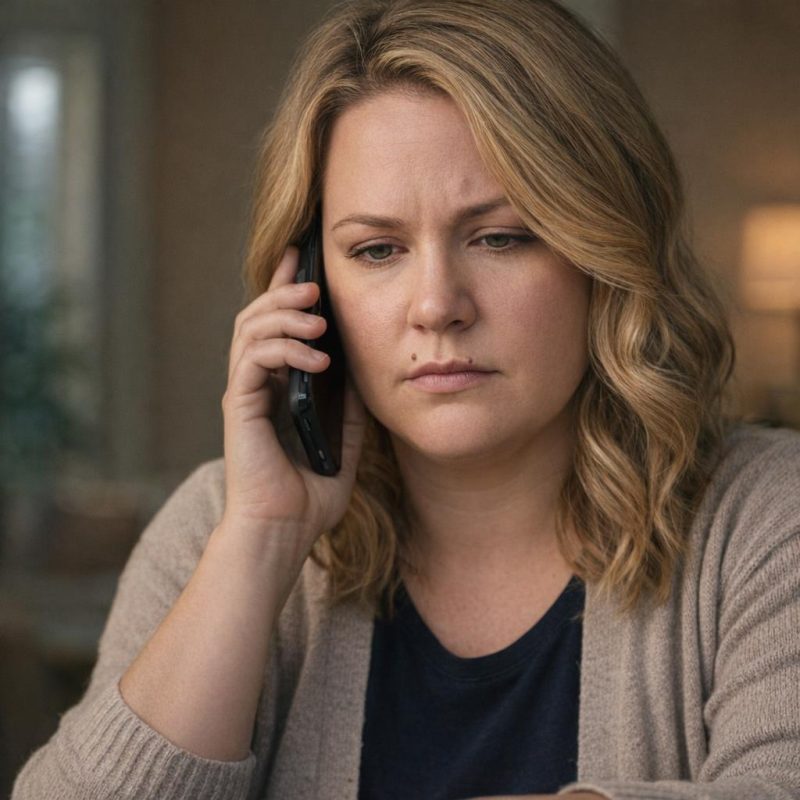 Image by RM AI
The Appraiser
Clarissa called again to announce she'd secured an appointment with Mr. Theodore Aris, the most respected gemologist in the state. She said his name like it should mean something to me, which it did, though not for the reasons she thought. I'd seen his name in Evelyn's address book, listed under 'trusted friends' with a note about his expertise and integrity. Clarissa went on about his credentials—forty years in the business, consultant to museums, appraiser for some of the oldest families in New England. He was semi-retired now, she explained, but he'd agreed to do the appraisal as a favor because of the collection's significance. She'd scheduled it for the following Saturday at her house, where she'd have everything laid out properly for his examination. Her voice carried that satisfied tone of someone who'd secured exactly what they wanted. She said Mr. Aris had appraised jewelry for museums and old-money families for forty years—he would give her the documentation she needed for the major auction houses.
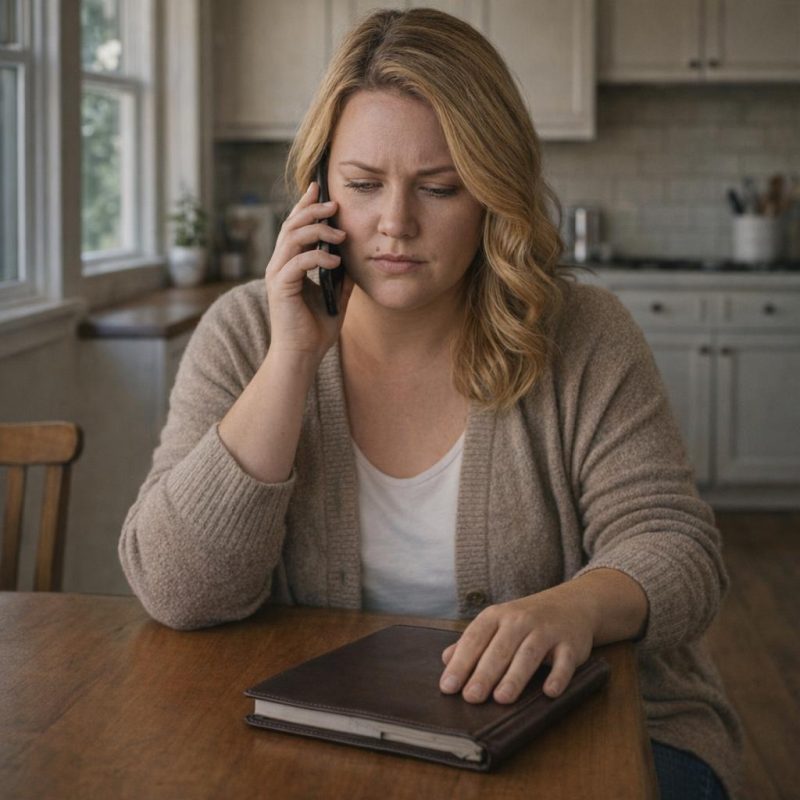 Image by RM AI
Parallel Preparations
I spent the week searching for the blueprints while Clarissa posted daily updates about cleaning and photographing each piece of jewelry. Every morning I'd climb up to the attic and work through another section of boxes, looking for the one with brass corners that Evelyn had described. Every afternoon I'd check my phone and see another Instagram story from Clarissa's account—close-up shots of emerald earrings, the sapphire necklace laid out on white velvet, the diamond bracelet catching the light. She'd added captions with estimated values, each one higher than the last. Her followers were eating it up, leaving comments about how lucky she was, how beautiful the pieces were, how they'd belonged in a museum. I felt uneasy looking at those numbers, though I couldn't quite articulate why. Something about the certainty in her captions, the way she'd already mentally spent the money. Her Instagram stories showed the collection spread across her dining room table, each piece tagged with estimated values that made my stomach twist.
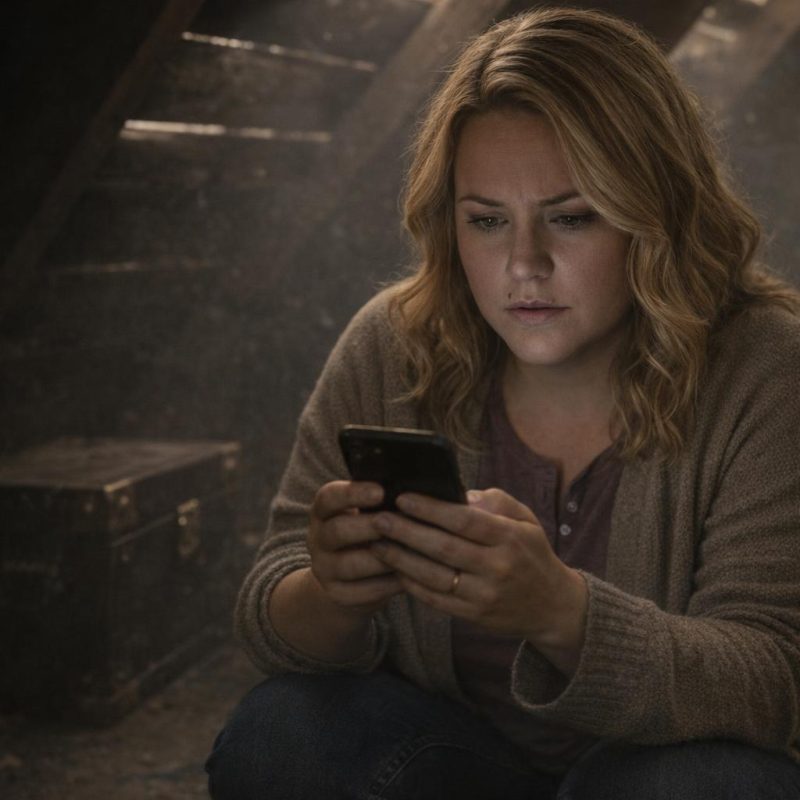 Image by RM AI
Evelyn's Letters
I found a wooden box tucked behind old Christmas decorations in the attic, and inside were letters Evelyn had written to me in the weeks before her death. The box was small, made of dark wood with a simple brass clasp, and it had been placed deliberately behind the bins of ornaments—not hidden exactly, but positioned where I'd eventually find it when I was ready to look. Inside were maybe a dozen envelopes, each one addressed to me in Evelyn's handwriting, each one numbered in sequence. The paper was good quality, the kind she'd always used for important correspondence. My hands shook slightly as I lifted them out. These were dated from her final month, written when she knew she was dying but was still clear-headed enough to plan. I could picture her at her desk, thinking through what she wanted to say, what she needed me to understand. The first envelope was marked 'Open First' and inside was a single sentence: 'The house remembers what people forget.'
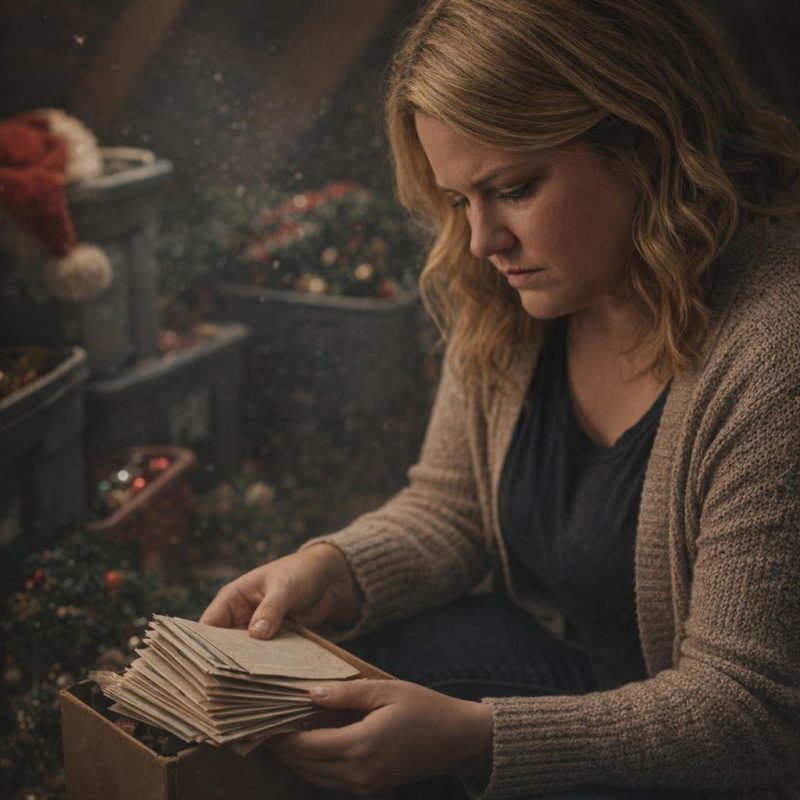 Image by RM AI
Hidden Wealth
I sat on the attic floor reading Evelyn's letters one by one, and the third letter explicitly mentioned her husband's rainy day fund hidden within the house structure. She wrote about the Depression, about how her husband had seen fortunes disappear overnight and had decided to protect what he could in a way that couldn't be taken by banks or creditors. He'd hidden something valuable—she didn't specify what—somewhere in the house itself, built into the structure during renovations in the 1930s. The letter described his thinking: that paper assets could vanish, but physical things hidden in physical spaces would endure. She wrote that she'd known about it for decades but had never needed to access it, and now she was leaving the knowledge to me. The letter didn't specify where exactly, but mentioned looking for places where 'the old meets the practical'—and I thought immediately of the basement coal chute.
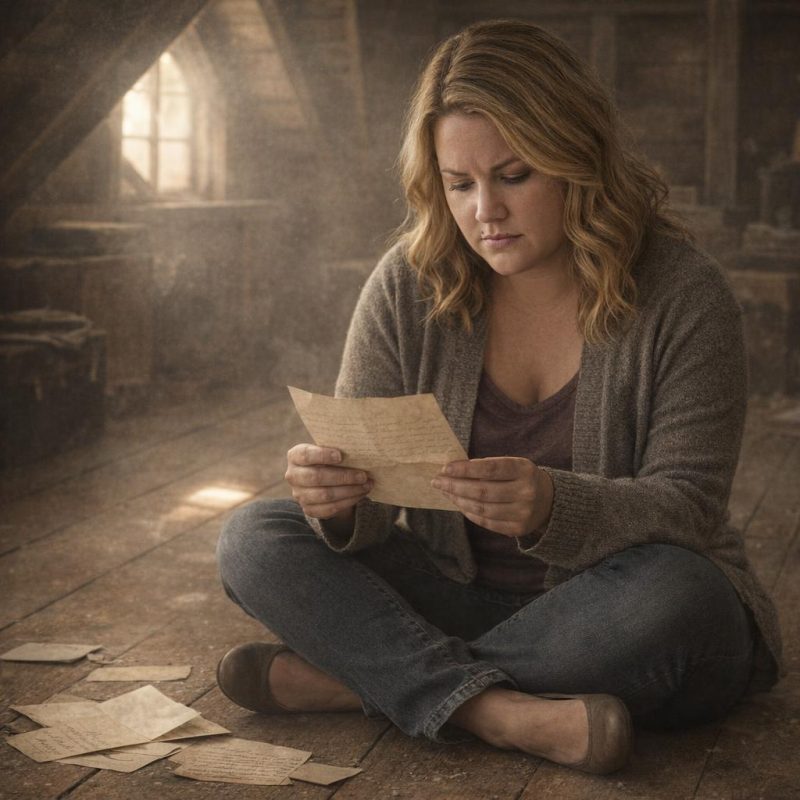 Image by RM AI
Cryptic Directions
I reread the fourth and fifth letters, trying to decode Evelyn's careful hints about foundation stones and hidden spaces behind Victorian coal delivery systems. She wrote about how coal chutes had been essential to homes like this one, built when coal was delivered regularly and needed to be funneled directly into basement storage. The chutes were often bricked up later when heating systems changed, creating hollow spaces that most people forgot existed. She mentioned foundation stones that could be removed and replaced, mortar that looked different if you knew what to look for. Her handwriting was shakier in these later letters, but her mind was still sharp, still strategic. She was giving me a treasure map without drawing an actual map, trusting that I'd understand, that I'd take the time to search properly. The fifth letter ended with a line that made my hands shake: 'Your sister wanted what shines. I always knew you'd want what lasts.'
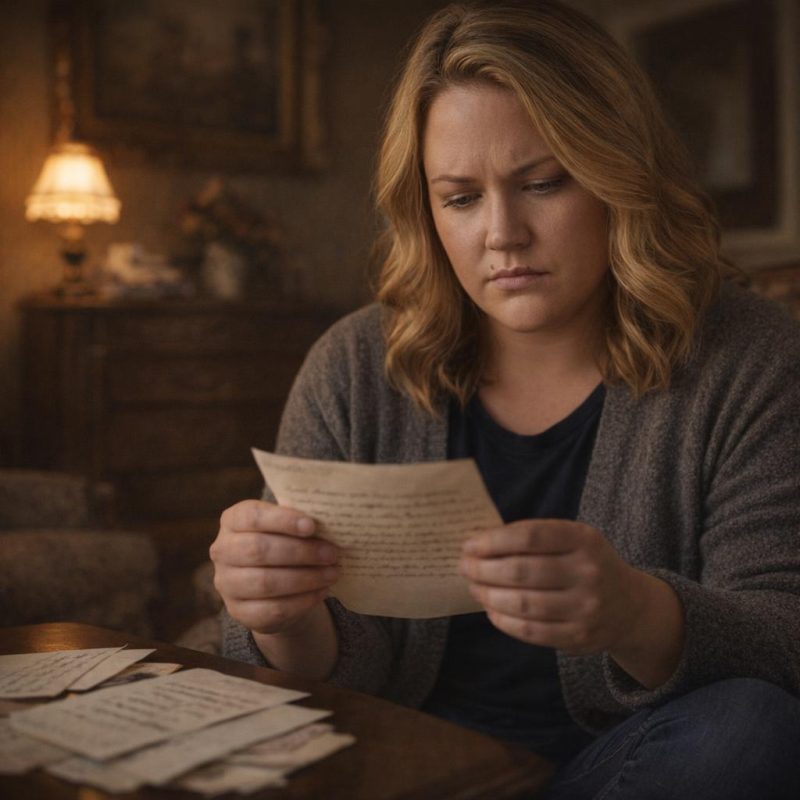 Image by RM AI
Seven Figures
Clarissa sent me a text message Friday afternoon announcing that preliminary estimates suggested the collection could fetch seven figures at auction. I was in the attic when my phone buzzed, still surrounded by Evelyn's letters and the blueprints I'd been studying. The message was pure Clarissa—no greeting, just triumph. She'd sent screenshots from the auction house's preliminary assessment, complete with highlighted sections about exceptional quality and historical significance. I scrolled through her texts while sitting cross-legged on the dusty floor, my flashlight casting shadows on the sloped ceiling. She'd included detailed breakdowns of individual pieces, estimates ranging from fifty thousand to three hundred thousand for the statement necklaces. The teardrop diamond piece alone was projected at a quarter million. I read through everything twice, my face neutral even though I was alone. My phone buzzed again with a follow-up message, and I could practically hear her voice dripping with satisfaction. Her message included three champagne emojis and ended with: 'Some of us know how to spot real value.'
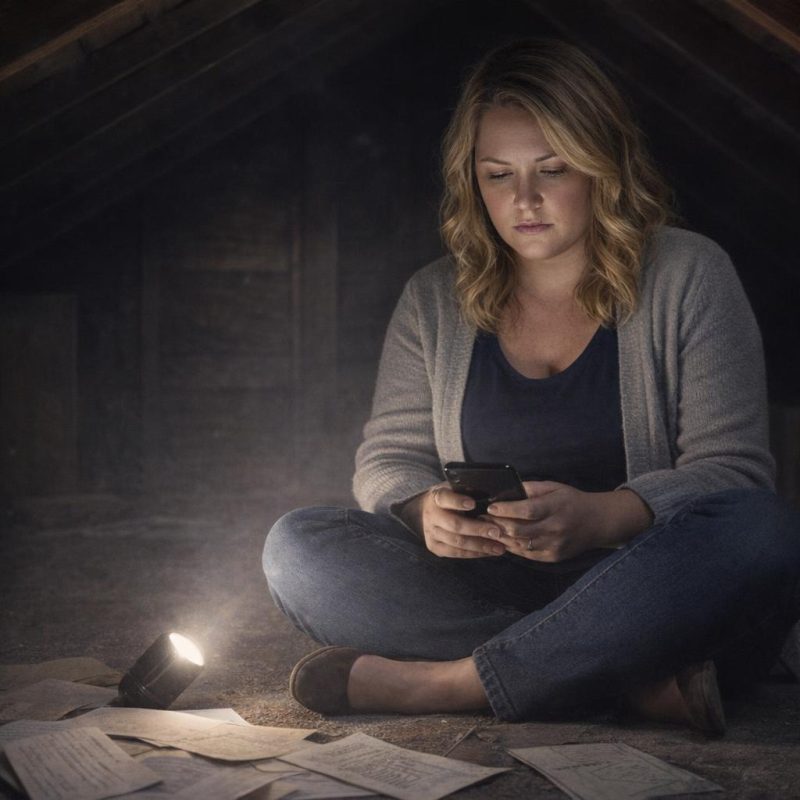 Image by RM AI
Foundation Work
I spent Friday evening in the basement with a flashlight and Evelyn's letters, examining every foundation stone near the coal chute for signs of disturbance. The concrete floor was cold through my jeans as I knelt in front of the bricked-up opening, running my fingers along the mortar lines. Evelyn's letters were spread beside me, weighted down with my phone and a screwdriver. I'd read her hints about foundation stones and coal delivery systems so many times I had them memorized, but I kept checking back, making sure I understood correctly. The basement smelled like damp stone and old wood, that particular scent of houses built before central heating. I worked systematically, starting from the left side of the coal chute and moving right, testing each stone for looseness, examining the mortar with my flashlight held at different angles. Most of the foundation showed the same aged, darkened mortar, crumbling slightly at the edges. But then I found them—three stones in a row, about two feet off the floor. Three stones showed mortar that was noticeably different in color and texture, as if they'd been removed and replaced sometime in the past decades.
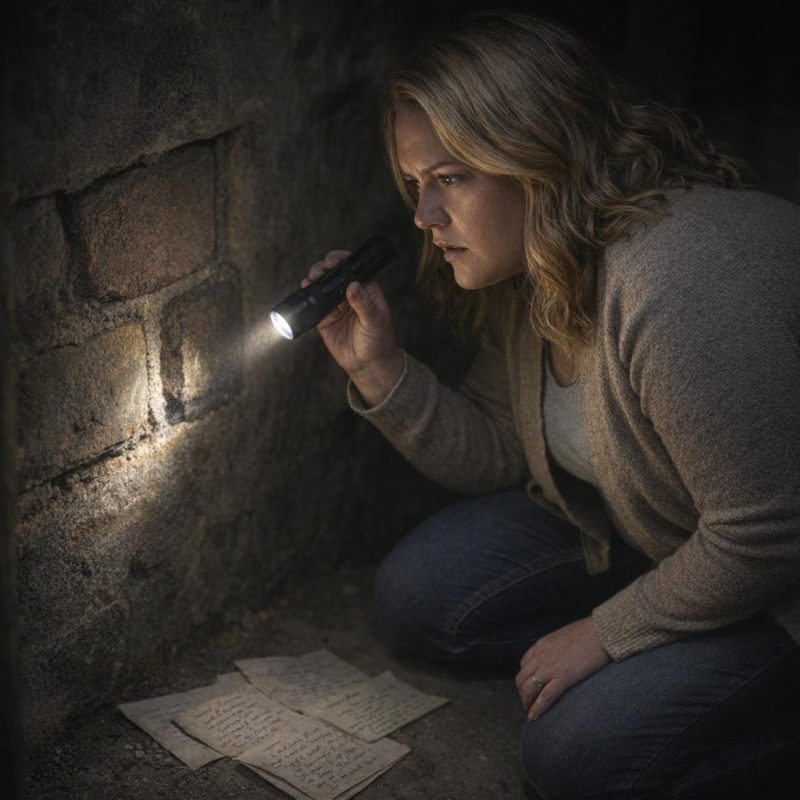 Image by RM AI
The Blueprint
I found the original house blueprints rolled in a tube at the bottom of the letter box, and spread them across the attic floor under the bare bulb light. They'd been there the whole time, underneath all of Evelyn's letters, and I'd almost missed them in my eagerness to read her words. The paper was yellowed and brittle at the edges, the blue ink faded but still legible. I weighted down the corners with books from Evelyn's shelves and leaned over the drawings, tracing the lines that showed how this house had been built in 1895. The architectural details were beautiful—hand-drawn flourishes around the title block, precise measurements in feet and inches, notes about materials and construction methods. I found the basement level and located the coal chute, marked clearly with its angled delivery system. The drawings showed how coal would have been funneled down from street level into the basement storage area. I was studying the foundation details when I noticed the red ink markings, definitely added much later than the original drawings. Someone—Evelyn, judging by the handwriting—had circled a specific area of the foundation in red ink and written 'restoration 1987' beside it.
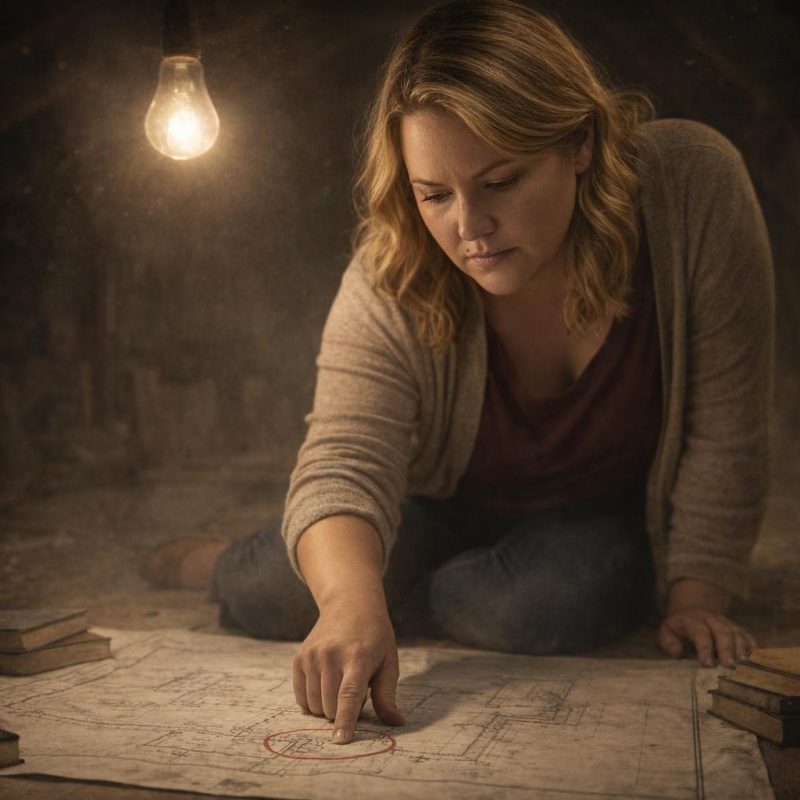 Image by RM AI
Modifications
I traced Evelyn's markings on the blueprint and understood that the 1987 restoration had created a false section of foundation wall behind the coal chute access. She'd been strategic about it, choosing a location that made sense for legitimate repair work. The coal chute would have needed maintenance after decades of disuse, and foundation work in old houses was common enough not to raise questions. I pulled out my phone and used the calculator to check the measurements, comparing the original 1895 specifications to what I'd observed in the basement. The numbers didn't match. According to the blueprint, the foundation wall should have been eight inches thick at that section. But when I'd examined it earlier, tapping along the stones, the wall seemed deeper, more substantial. I grabbed a tape measure from my toolkit and went back downstairs, measuring the distance from the coal chute opening to the exterior wall. Then I went outside in the dark, using my phone's flashlight to measure from the outside. The blueprints showed measurements that didn't match the current basement layout—there was space unaccounted for behind those three stones with different mortar.
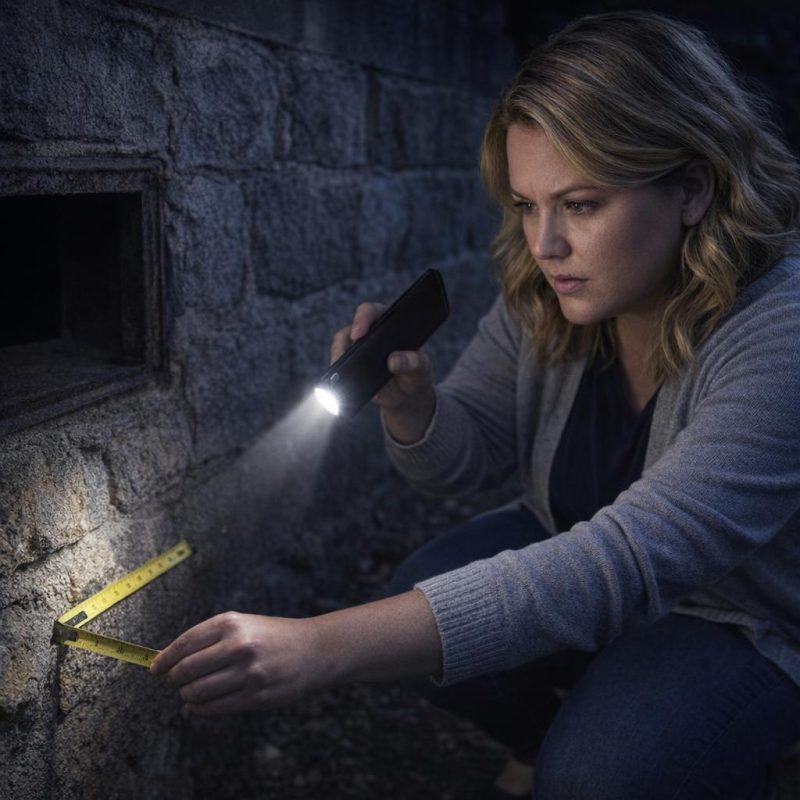 Image by RM AI
Legacy Posts
I put down the blueprints to check my phone and found Clarissa had posted a long Instagram story about preserving family legacy through proper stewardship of heirlooms. She'd gone all out with the production value—professional lighting, carefully staged shots, that filtered aesthetic she always used. I sat on the attic floor and tapped through the slides, watching her perform what she probably thought was dignified family history. She talked about the responsibility of inheritance, about honoring those who came before us by recognizing true value. There were photos of individual jewelry pieces arranged on white velvet, each one tagged with vague historical details she'd probably invented. She'd written captions about Evelyn's sophisticated taste, about how some people understood beauty and others just saw old things. The whole thing was so perfectly Clarissa—turning inheritance into content, making grief into an aesthetic. I almost laughed at the irony, sitting there in my dusty jeans with blueprints and foundation measurements scattered around me. The final slide showed the teardrop diamond necklace on a velvet display stand with the caption: 'Tomorrow we discover what history is worth.'
 Image by RM AI
Stone by Stone
I went to the basement Saturday morning before dawn and began carefully working the first loose foundation stone, feeling it give way after eighty years of being undisturbed. The house was completely silent around me, that particular quiet of early morning when even the street outside was still. I'd brought proper tools this time—a small pry bar, a hammer, work gloves, and my brightest flashlight. The stone resisted at first, the newer mortar still holding despite being decades old. I worked slowly, not wanting to damage anything or make noise that might carry through the old house's walls. Sweat gathered at my hairline despite the basement's chill. The stone shifted slightly, and I adjusted my grip, applying steady pressure rather than force. It moved another inch, then suddenly came free in my hands, heavier than I'd expected. I set it carefully on the floor beside me and aimed my flashlight into the gap I'd created. Behind the stone was darkness and the smell of old oilcloth, and my flashlight beam caught the edge of something wrapped and hidden.
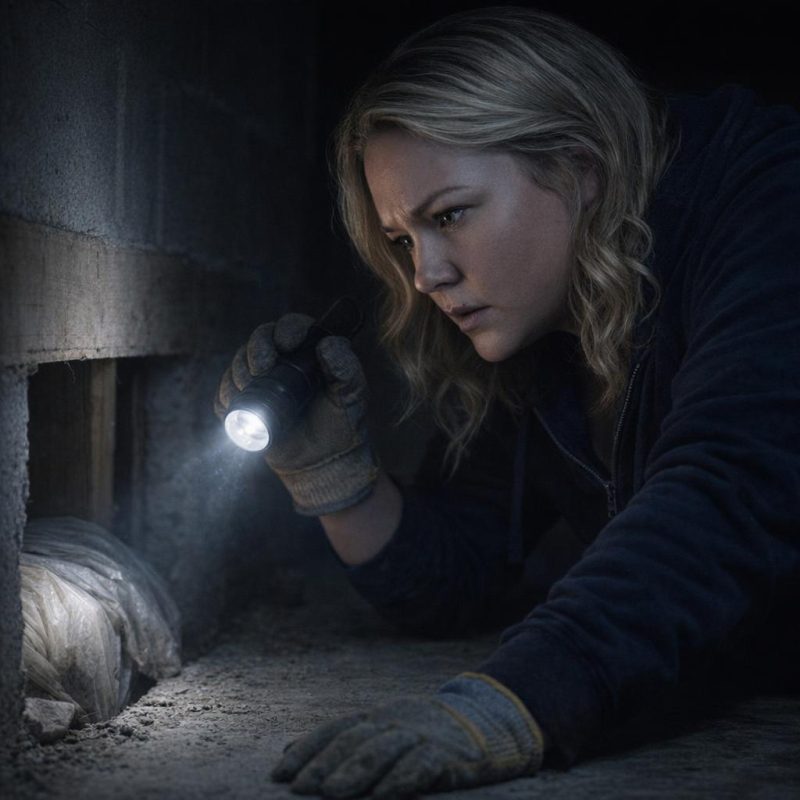 Image by RM AI
The Invitation
Clarissa called Friday evening, her voice bright with triumph as she invited me to attend the appraisal appointment Saturday morning. I'd been in the attic reviewing the blueprints one more time when my phone rang. I almost didn't answer, but curiosity won out. She didn't bother with small talk, just launched straight into her invitation like she was doing me a favor. The appointment was at ten o'clock at the auction house downtown, and she thought I might find it educational to see how professional appraisals worked. Her tone suggested she was being generous, giving me a chance to witness what real inheritance looked like. I could hear the smile in her voice, that particular satisfaction she got from what she thought was winning. She mentioned that Mr. Aris himself would be conducting the evaluation, dropping the name like I should be impressed. She said I could watch Mr. Aris confirm what she'd always known—that some people understood real value and others settled for old houses and sentiment.
 Image by RM AI
Cleaning Day
I told Clarissa I had too much cleaning to do in the basement and wished her luck at the appointment, then ended the call and went back to studying the blueprints. My voice had been pleasant, almost cheerful, which seemed to satisfy her. She'd made some comment about how I was finally learning to take care of property, and I'd let her have that little victory. The call lasted maybe three minutes total. I set my phone on silent and traced Evelyn's red markings again, memorizing exactly where I needed to search. I had all the measurements I needed, all of Evelyn's careful instructions decoded. My tools were ready in the basement, waiting for tomorrow morning. Tomorrow Clarissa would go to her appointment and discover whatever the auction house had to tell her. Tomorrow I would remove those foundation stones and find out what Evelyn had hidden there in 1987. I stood in the quiet basement with my tools and flashlight, knowing that by this time tomorrow, both of us would understand what we'd really inherited.
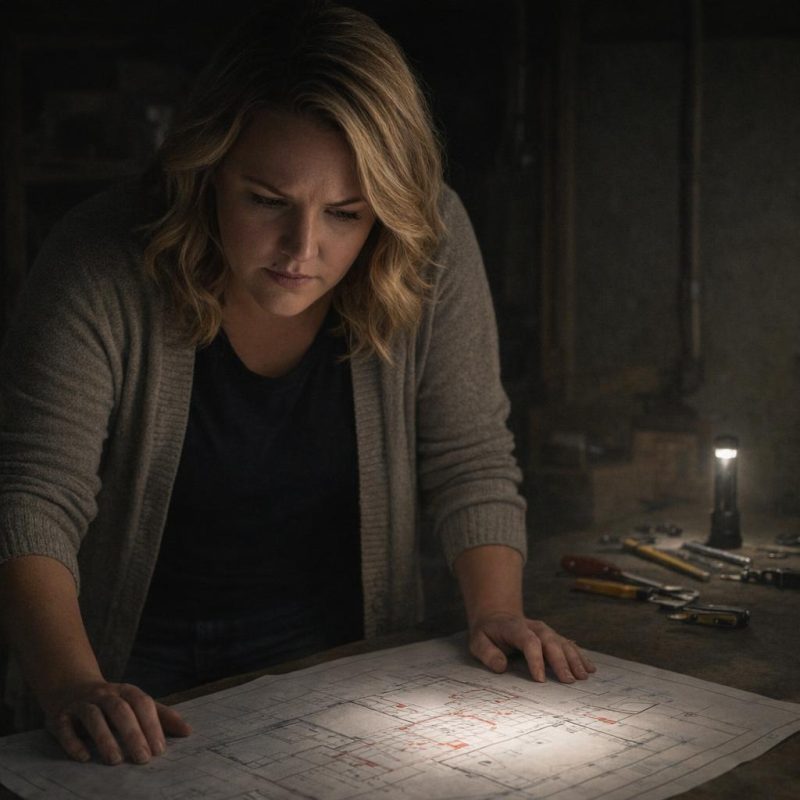 Image by RM AI
Vigil
I spent Friday night in the attic, surrounded by boxes of Evelyn's things I hadn't been able to sort through yet. The moonlight came through the old windows in dusty beams, catching on particles that danced like tiny stars. I'd brought up a blanket and my phone, though I kept it face-down beside me. I wasn't ready to talk to anyone. The attic smelled like cedar and old paper, the same smell I remembered from childhood visits when Evelyn would let me explore up here while she worked in her garden. I'd spent so many nights in this house during her final months, sitting beside her bed while she drifted in and out of sleep. She'd been sharp until nearly the end, making those dry observations that always caught me off guard. I thought about how different Clarissa and I had turned out, both raised by the same parents but choosing such different paths. This house held so many stories in its walls, so many secrets Evelyn had kept close. I watched the dust motes spiral in the moonlight and felt the weight of everything about to change. As the first gray light of Saturday crept through the window, I wondered which one of us would be more changed by what this day would bring.
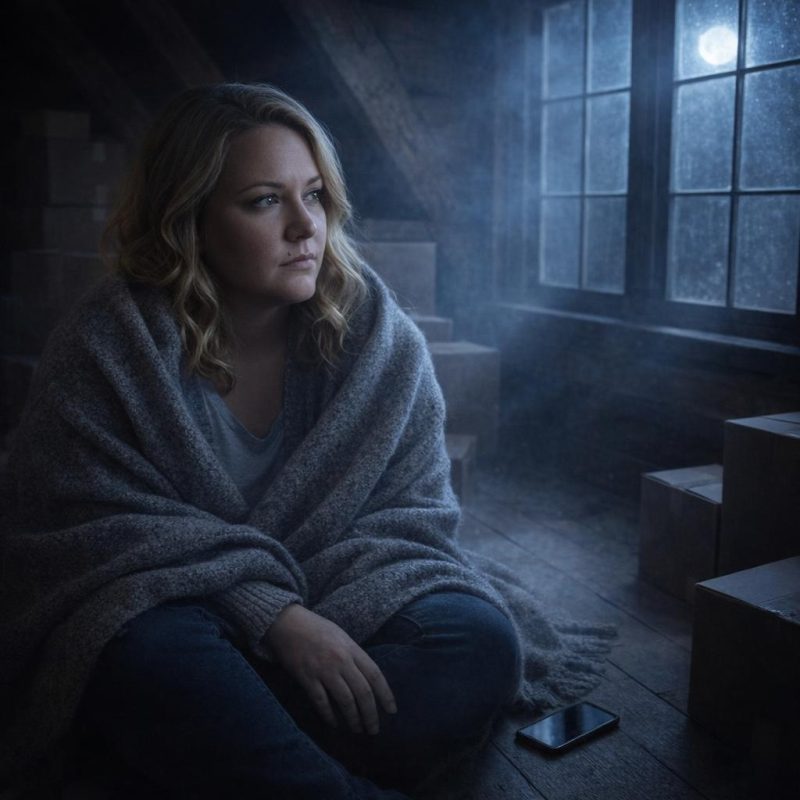 Image by RM AI
The Appointment
Saturday morning arrived bright and clear, the kind of spring day that makes everything feel possible. I made coffee in Evelyn's kitchen and looked out at her garden, now overgrown but still beautiful in its wild way. Somewhere across the city, Clarissa was probably already dressed in one of her designer outfits, checking her reflection one last time before heading downtown. I pictured her walking into Mr. Aris's office with those velvet boxes, her heels clicking on marble floors. She'd be wearing that tight smile she used when she wanted something, the one that never quite reached her eyes. Mr. Aris had known Evelyn for decades, had been her friend through everything. I wondered what he was thinking this morning, preparing for the appointment. He'd examine each piece with his careful hands and his reading glasses, taking his time the way he always did. Clarissa would be impatient, probably checking her phone, calculating numbers in her head. I stayed at the Victorian house instead, running my fingers along the kitchen counter where Evelyn had rolled out pie dough every Thanksgiving. The quiet felt heavy with anticipation. I knew the day would bring revelations for both of us, though only one of us expected them.
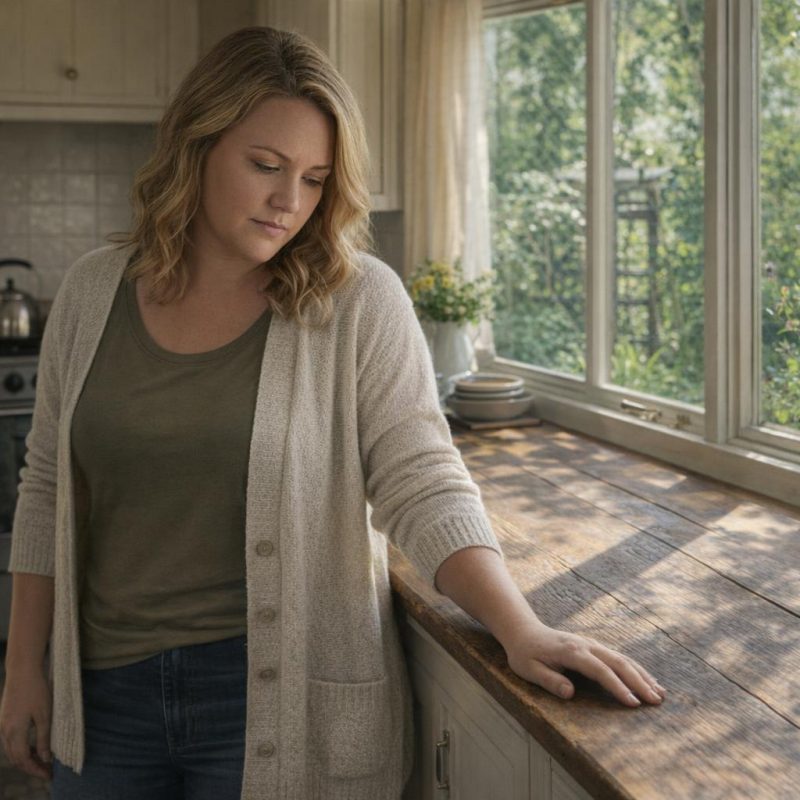 Image by RM AI
Black Velvet
I stood in the kitchen making coffee while picturing the scene at Mr. Aris's office. Clarissa would be laying out each piece on black velvet right about now, arranging them just so to catch the light. I could see her demanding preliminary figures before he'd even picked up his loupe, asking about insurance values and auction estimates. She'd want numbers immediately, the way she always did. Mr. Aris would be methodical though, examining each stone with that quiet authority he had. The silence would stretch as he worked, and Clarissa would fidget, checking her phone, maybe texting someone about how long this was taking. I poured my coffee and added cream, watching it swirl. The Victorian house felt peaceful around me, morning light coming through the old windows. I thought about Evelyn sitting at this same counter, drinking her tea and watching the garden. She'd known exactly what she was doing when she made her choices about the inheritance. I set down my mug and headed for the basement stairs, knowing that whatever was happening in that appraisal room, I had my own discoveries to make.
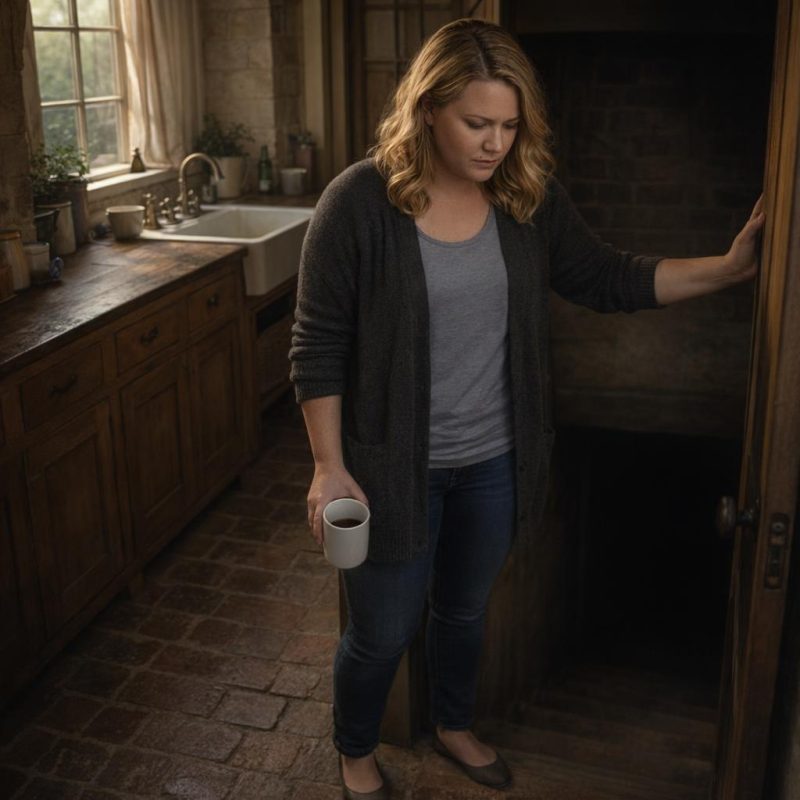 Image by RM AI
Glass and Light
Miles away in his oak-paneled office, Mr. Aris removed his loupe and set it down with a soft click. I wasn't there, but I could imagine the scene perfectly. Clarissa leaning forward in her chair, expectant, already mentally spending the fortune. Mr. Aris would have sighed, the way he did when delivering difficult news. He'd explained it gently, I'm sure. During the Depression, my great-grandfather had sold the real stones to keep the family afloat. What remained were high-quality costume glass replicas, beautiful theater props worth perhaps three thousand dollars to a vintage collector. The five-carat teardrop wasn't a diamond. The emeralds weren't emeralds. The sapphires were just very convincing glass. I heard about Clarissa's reaction later from Mr. Aris himself. She'd screamed that he was lying, that he was in on some conspiracy with me. She'd demanded a second opinion, a third opinion, threatened lawsuits. Her voice had echoed through the entire building. Security had to escort her out while she clutched those velvet boxes and sobbed. Clarissa's screams of denial were still echoing through the appraisal house when I descended into my grandmother's basement to find my own inheritance.
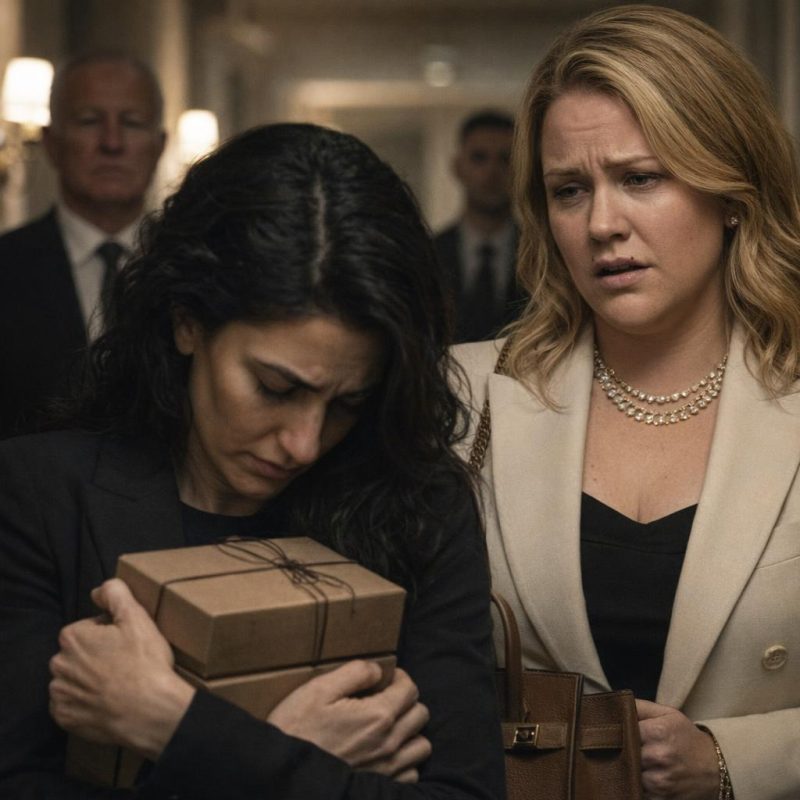 Image by RM AI
Behind the Stones
While my sister's world shattered in an appraiser's office, I knelt on the cold basement floor and pulled the first loose foundation stone completely free. It was heavier than I expected, rough against my palms. I set it carefully aside and worked on the second one, feeling it shift and give way. The cavity behind them opened up like a mouth, dark and promising. I shone my flashlight into the space, and there it was. The oilcloth package sat exactly where Evelyn's blueprints had indicated, tucked deep into the foundation where it had rested since 1987. My hands were shaking as I reached in, my fingers closing around fabric that felt stiff with age. I pulled gently, working it free from the tight space. Dust and bits of mortar came with it, scattering across the basement floor. The package was substantial, heavier than I'd imagined, with hard edges and soft weight combined. I lifted it carefully, cradling it against my chest as I backed away from the wall. The oilcloth package was larger than I expected, heavy in my hands as I lifted it from its eighty-year hiding place.
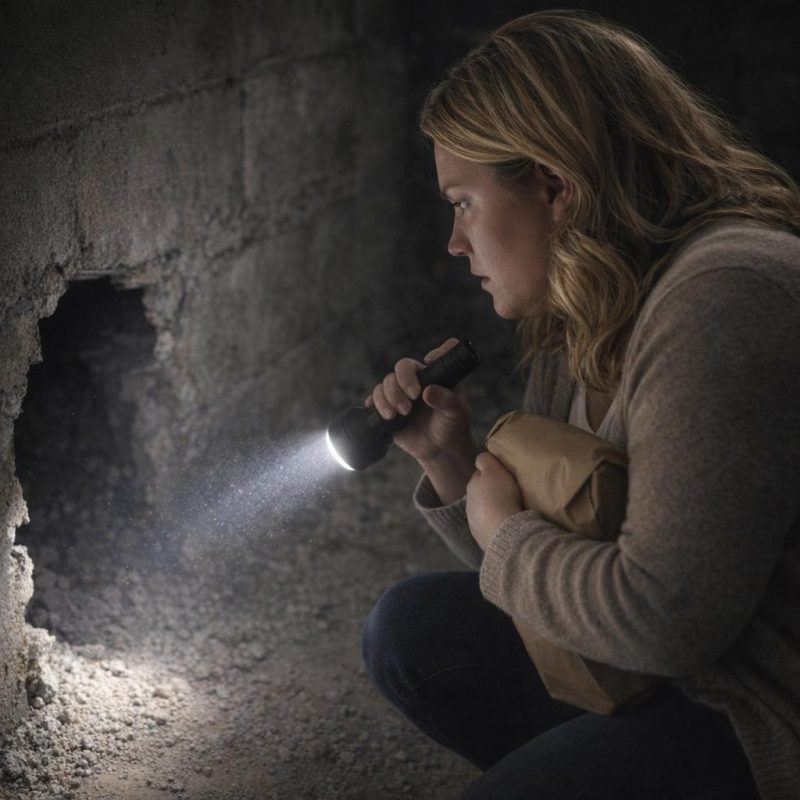 Image by RM AI
The Real Inheritance
I unwrapped the oilcloth with trembling fingers, the fabric crackling as I peeled back each layer. Inside were documents folded carefully and a leather pouch that made my breath catch. The papers were yellowed with age, their edges soft. Property deeds. I spread them out on the basement floor, my flashlight beam moving across faded ink and official seals. Three separate deeds, each one bearing the family name, each one showing addresses I recognized from downtown. The leather pouch was next. I loosened the drawstring and poured the contents into my palm. Gold bullion coins, heavy and unmistakably real, gleamed in the flashlight beam. They were warm somehow, or maybe that was just my hand shaking. I counted them twice, then a third time, each one solid and substantial. This was the true family fortune, the wealth Evelyn had hidden within the house foundation itself while everyone focused on the sparkly things in the jewelry box upstairs. The deeds showed addresses I recognized—three commercial buildings in the most expensive district in the city, still in the family name, still legally mine.
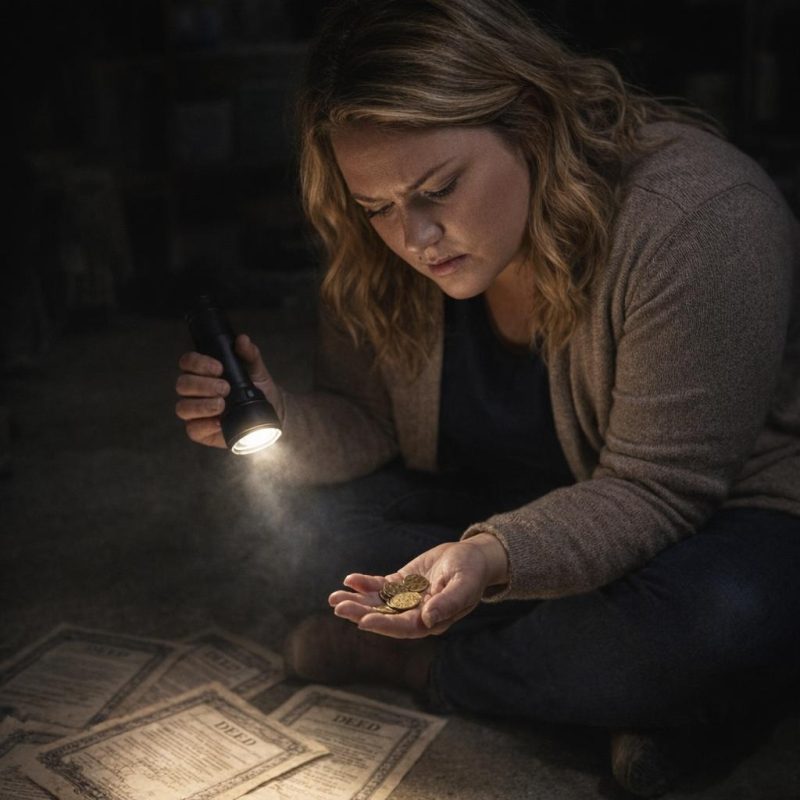 Image by RM AI
City Center
I spread the deeds across the basement floor and traced the addresses with my finger, my heart pounding as recognition hit. These weren't just any properties. One was the corner lot where that new high-rise office building stood, all glass and steel. Another was the retail block with the luxury shops, the ones Clarissa loved to browse. The third was the building that housed three restaurants and a boutique hotel. I'd walked past these places a hundred times, never knowing my family owned the land beneath them. The deeds showed continuous ownership through ground lease arrangements, the kind that generated steady income while the buildings above changed hands. Evelyn had arranged everything so carefully, making sure the properties stayed in the family name, making sure the income kept flowing into accounts I'd inherit. She'd let Clarissa choose first, knowing exactly what my sister would pick. The portable sparkle, the things you could wear to parties and photograph for social media. The family still owned the land beneath three of the most valuable buildings in the commercial district—Clarissa had traded a fortune for glass, and I had inherited a city block.
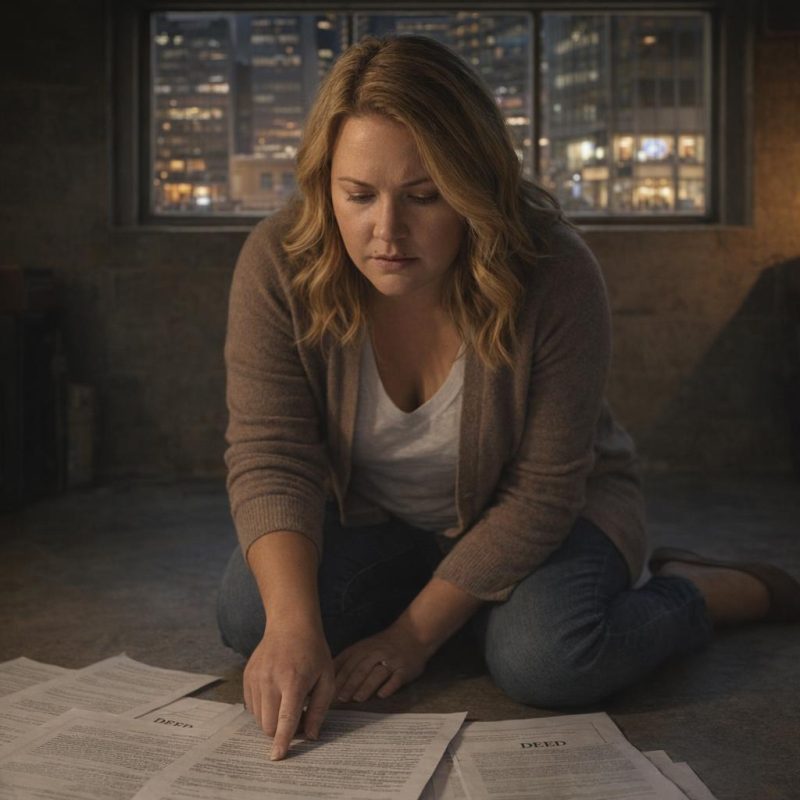 Image by RM AI
Worth Its Weight
I counted the gold coins one by one, each one heavy and warm in my palm. Twenty-three coins total, each one stamped with dates from the 1920s and early 1930s. This was the bullion my great-grandfather had never exchanged, the real wealth he'd preserved while converting the jewelry to glass replicas. The coins caught the flashlight beam and threw back golden light that danced across the basement walls. I thought about Clarissa in Mr. Aris's office, probably still arguing, still insisting there had been some mistake. She'd fought so hard for those velvet boxes, had been so certain she'd won. I held a gold coin up to the light and watched it gleam. Evelyn had known exactly what she was doing when she'd hidden these here, when she'd marked those blueprints in red ink, when she'd told me the stories about the Depression and the choices her father had made. She'd trusted me with the truth and given Clarissa the beautiful lie. I sat back against the stone foundation and finally let myself laugh, the sound echoing off the basement walls where my grandmother had hidden a fortune in plain sight.
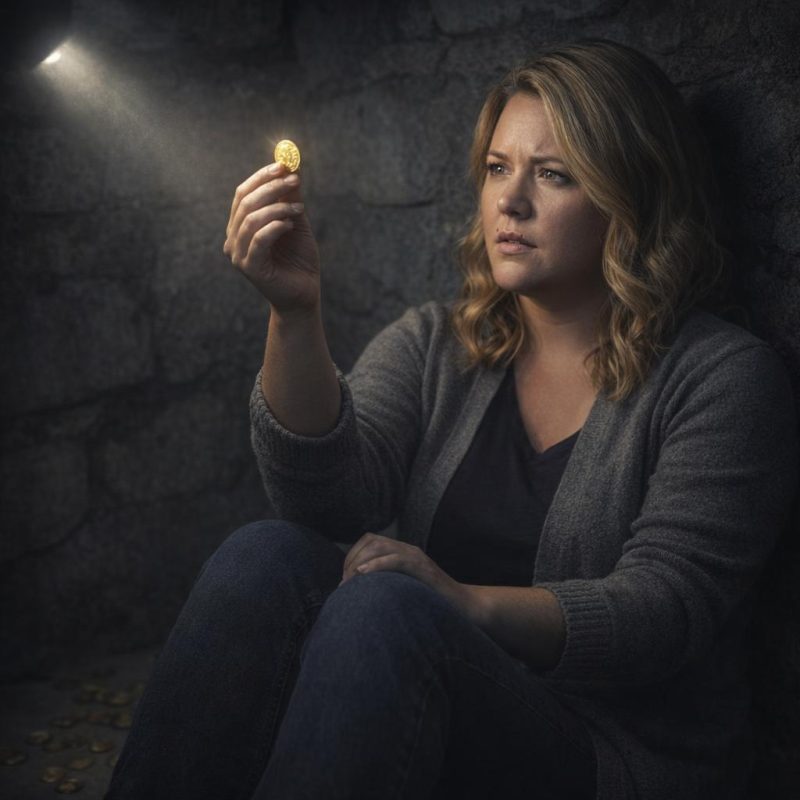 Image by RM AI
The Call
My phone lit up in the darkness of the basement, Clarissa's ringtone cutting through the silence like a knife. I'd been sitting there with the gold coins spread around me for maybe twenty minutes, just letting the reality of it all sink in. The phone buzzed again, insistent. I carefully gathered the coins back into their hiding spot and climbed the stairs, my legs stiff from sitting on the cold concrete floor. By the time I reached the kitchen, she'd called three times. I picked up on the fourth. "You knew." Her voice was raw, stripped of all that careful polish she usually maintained. "You knew the entire time, didn't you? That's why you were so eager to trade, why you didn't fight me on any of it." I leaned against the kitchen counter and waited. She wasn't really asking questions—she was building to something. "I want you downtown at Mr. Aris's office in one hour," she continued, her voice shaking with barely controlled fury. "You're going to explain to me exactly what kind of game you've been playing, and you're going to do it in front of witnesses." Her voice was raw with fury as she demanded I come downtown immediately—she seemed to think I owed her an explanation.
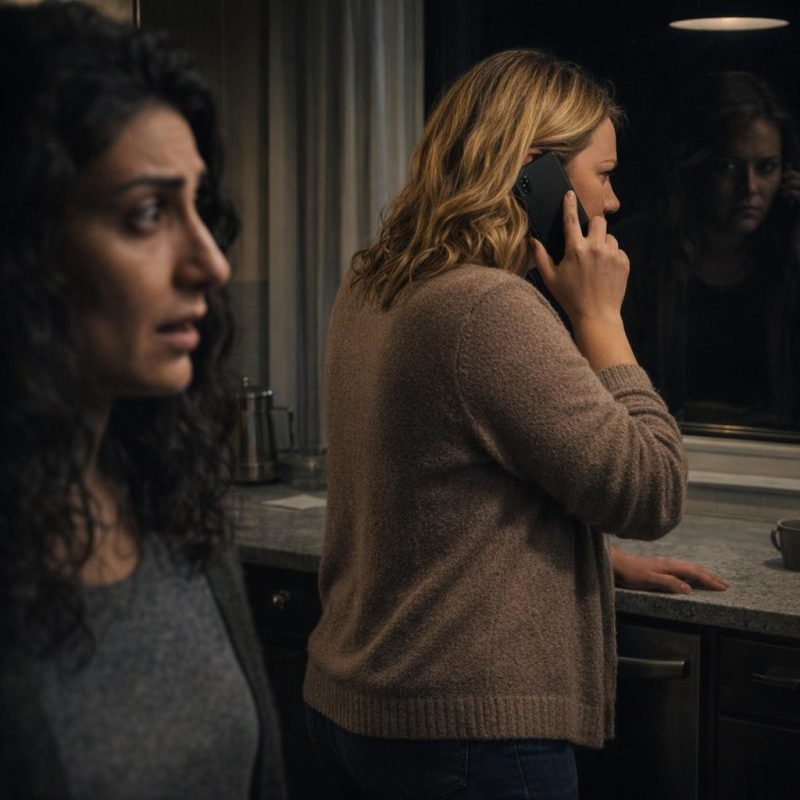 Image by RM AI
Declined
"I'm not coming downtown, Clarissa." I kept my voice level, almost gentle. The silence on the other end stretched for three full seconds before she exploded. "The hell you're not! I will have my lawyer file fraud charges so fast your head will spin. We'll get forensic accountants, we'll subpoena every document, every conversation you had with Grandma in those final months." She was spiraling now, throwing out legal terms like they were spells that could undo what had already happened. "We'll prove you manipulated her, that you switched the jewelry somehow, that you—" "Clarissa." I waited until she stopped to breathe. "Do you remember the agreement you signed? The one you were so eager to put your name on because you wanted to get out of that office as quickly as possible?" Another silence, this one different. "It said as-is. No warranties, no guarantees about condition or value. You accepted the collection in whatever state it was in." I could hear her breathing on the other end, could almost see her face as the legal reality settled over her anger like a blanket. I reminded her, as gently as I could manage, that she had signed an as-is agreement, and the line went silent before she hung up on me.
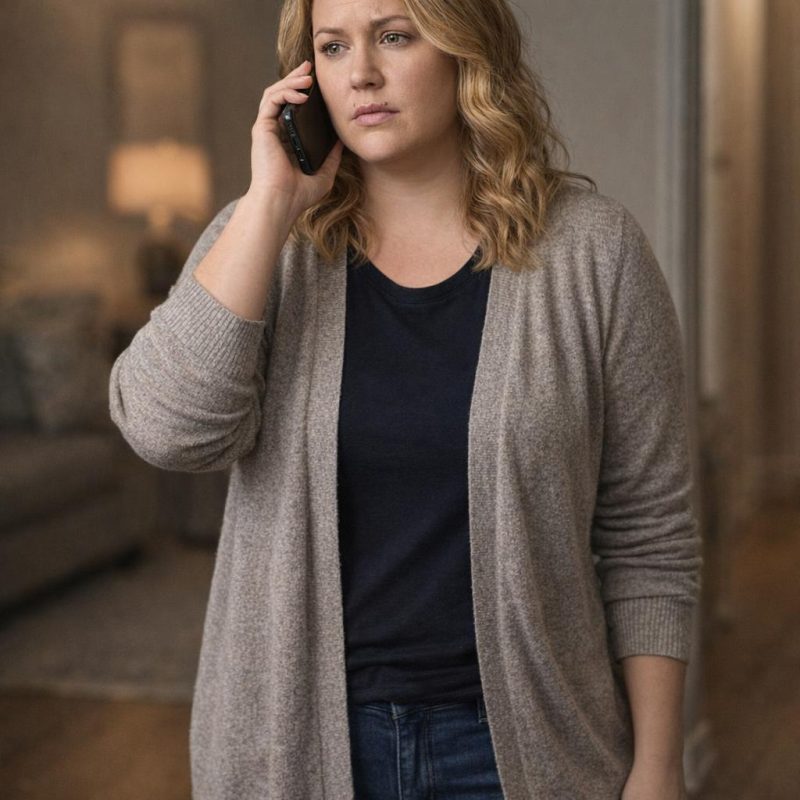 Image by RM AI
At the Door
The doorbell rang Sunday afternoon with the kind of aggressive persistence that suggested someone had been rehearsing their confrontation all night. I'd been expecting it, honestly. Clarissa wasn't the type to accept defeat over the phone. I opened the door to find her standing on the porch with Marcus slightly behind her, his expensive suit rumpled in a way that suggested he'd been dragged out of the house against his better judgment. Clarissa's face was tight, her makeup perfect but unable to hide the exhaustion around her eyes. She'd clearly spent the night nursing her fury into something she could wield. "We need to talk," she said, but she was already moving past me into the foyer before I could respond. Marcus offered me an apologetic look—brief, uncomfortable—but he followed his wife inside without a word. I closed the door and turned to find Clarissa standing in the center of the Victorian entryway, her head tilted back as she surveyed the crown molding and the original light fixtures. "I'm going to search every inch of this house," she announced, her voice echoing off the high ceilings. Clarissa pushed past me into the foyer, announcing she was going to search every inch of this house until she found whatever I was hiding from her.
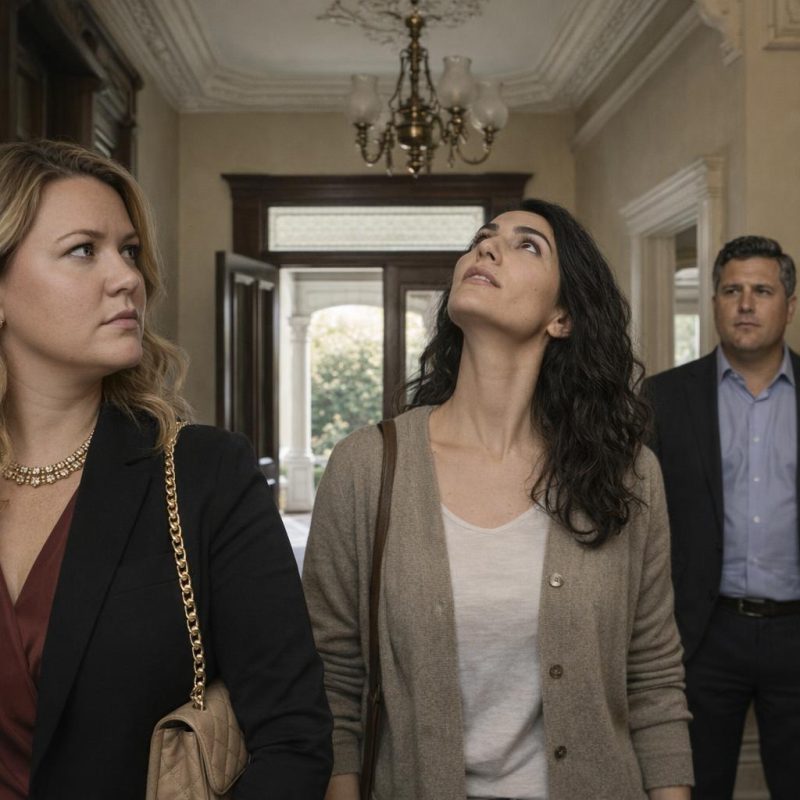 Image by RM AI
Accusations
She swept into the parlor like she owned it, Marcus trailing behind her with the resigned expression of someone who'd already lost this argument at home. "You orchestrated this entire thing," Clarissa said, spinning to face me. "You spent all that time playing the devoted granddaughter, the caretaker, and you were planning this the whole time." Her voice was building, getting louder with each accusation. "You switched the jewelry. You must have. You took the real pieces and replaced them with those—those cheap copies, and you let me walk away with garbage while you kept everything valuable." I stood in the doorway, arms crossed, and let her run through her theory. Marcus shifted his weight from foot to foot, looking anywhere but at me. "I'm calling my lawyer right now," Clarissa continued, pulling out her phone. "We're going to prove fraud, prove you manipulated a dying woman, prove you—" "Would you like to hear what actually happened?" I asked. She stopped with her lawyer's number already pulled up on the screen. Her lawyer's number was already pulled up on her phone when I asked if she would like to hear what actually happened.
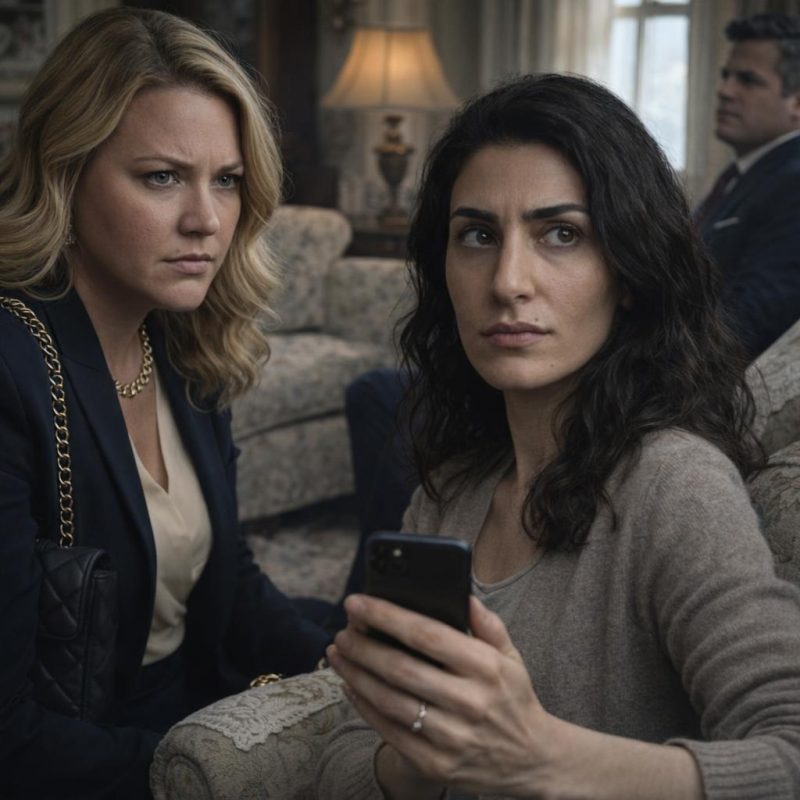 Image by RM AI
Binding Signatures
I walked upstairs to my bedroom and retrieved the folder from my desk drawer—the one containing all the documents from the will reading. When I came back down, I spread the papers across the dining room table, smoothing them flat with my palm. "Here," I said, pointing to the relevant paragraph. "The as-is clause. The one you signed without reading because you were so eager to get your hands on those velvet boxes." Clarissa leaned over the table, her eyes scanning the text. I watched her face as she found her own signature, that flourishing cursive she'd always been so proud of. "Call your lawyer," I suggested. "Put him on speaker." She did, her hands shaking slightly as she dialed. The lawyer answered on the second ring, and Clarissa explained the situation in clipped, angry sentences. There was a pause while he presumably reviewed his copy of the documents. "Ms. Hartwell," his voice came through tinny but clear, "the agreement is binding. You accepted the collection as-is, with no warranties regarding condition or authenticity. There's no fraud claim here—you took possession of exactly what was offered." Even Clarissa's lawyer, reached by speakerphone, confirmed that the documents were binding and she had no legal recourse for the condition of property she had already accepted.
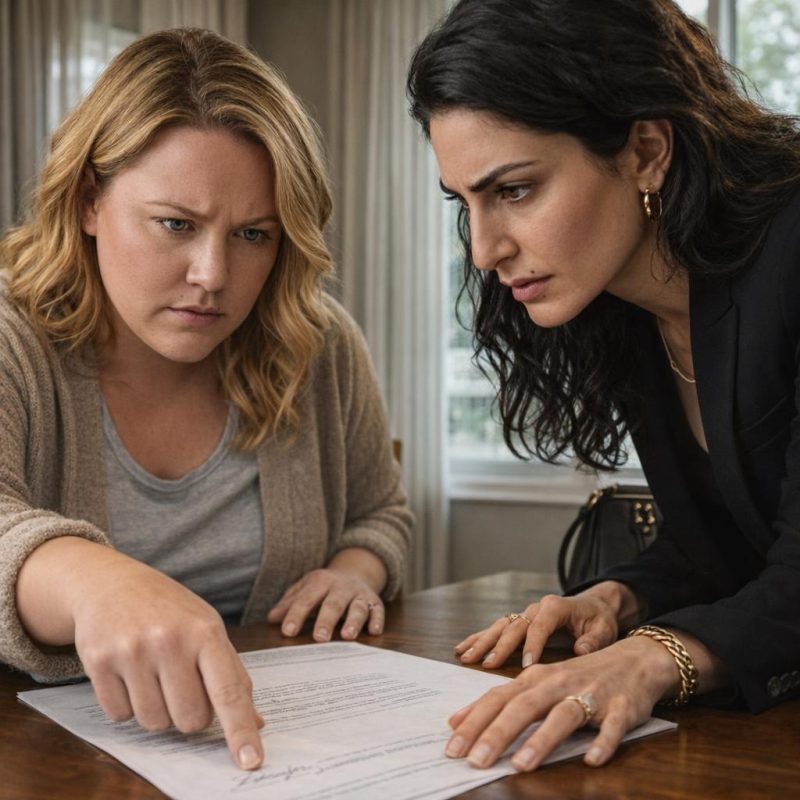 Image by RM AI
The Truth
Clarissa's face had gone pale, but I wasn't finished. She deserved to know the whole truth—not because I wanted to be cruel, but because Evelyn had planned this lesson specifically for her. "Grandma told me," I said quietly. "During those long nights when I was taking care of her, when you were too busy to visit, she told me everything." I moved to the window, looking out at the garden Evelyn had tended for decades. "She knew the jewelry was costume glass. She'd known since she was twenty years old, when her father commissioned the replicas during the Depression. He sold the real pieces to save the house and the land, and he had a jeweler create perfect copies so his daughter could still wear the family collection." Marcus made a small sound, but Clarissa stood frozen. "She wore that glass for over sixty years," I continued. "She told me the shine came from the woman, not the carbon. And she told me all of this months before she died, knowing exactly what you would choose when the time came." I turned back to face my sister. "I knew what you were getting when I agreed to the trade. I knew, and I let you take it anyway." Clarissa's expression shifted from rage to something worse: the dawning realization that our grandmother had seen exactly who she was and planned accordingly.
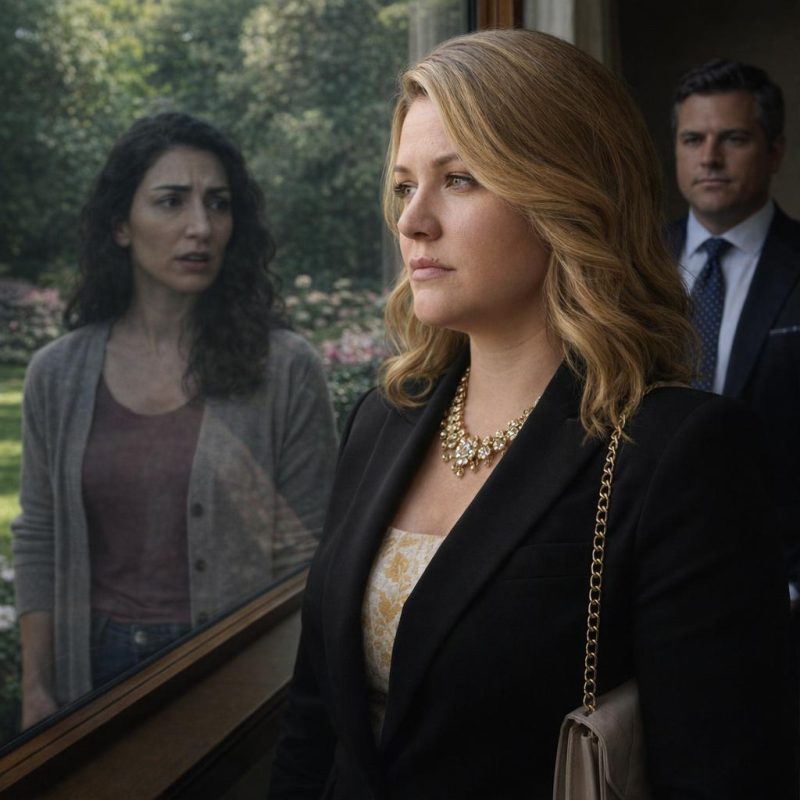 Image by RM AI
The Lesson
Clarissa sank into one of the dining room chairs, her designer bag sliding off her shoulder onto the floor. She didn't pick it up. The fight had drained out of her completely, replaced by something that looked almost like grief. "She knew," Clarissa whispered. "She knew I would choose the jewelry." I didn't answer. There wasn't really anything to say. Evelyn had understood her granddaughter perfectly—had known that Clarissa would see those velvet boxes and think only of their social currency, their portable value, their immediate shine. She'd chosen flash over foundation, exactly as Evelyn had predicted. "What else is in this house?" Clarissa asked suddenly, her head snapping up. "What did you really inherit? There has to be something. Land deeds? Stock certificates? What was worth more than that jewelry collection?" I met her eyes and chose my words carefully. "The house is full of family history," I said. It was true, in its way—just not complete. When she asked what else was in the house, what I had really inherited, I simply said that the house was full of family history—which was true, in its way.
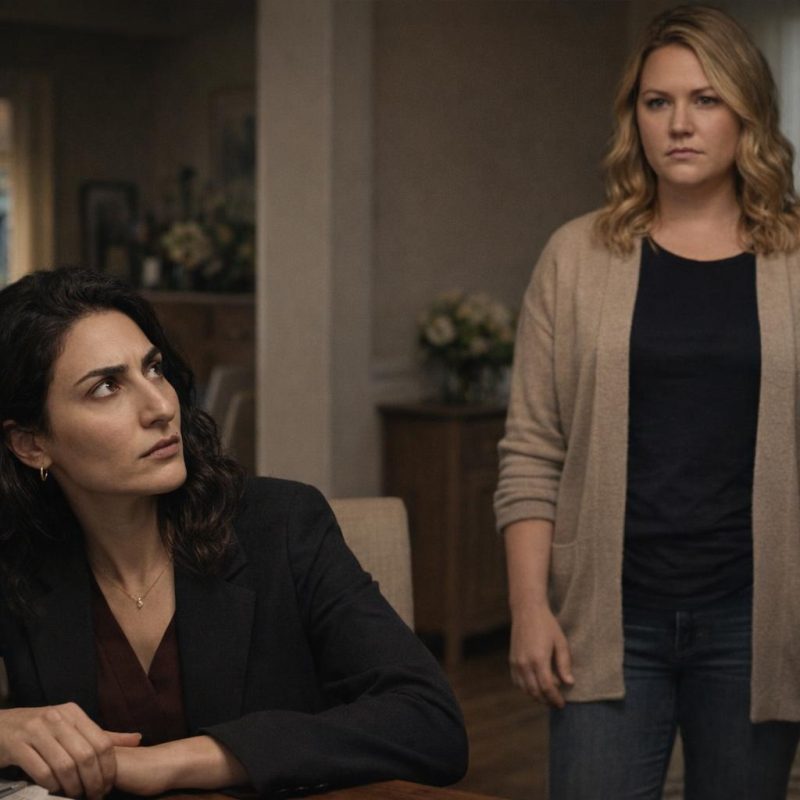 Image by RM AI
Exit Strategy
Marcus moved then, stepping forward to touch Clarissa's shoulder with the gentle pressure of someone who'd been waiting for his moment to intervene. "We should go," he said quietly. His voice carried the exhausted patience of someone who had already calculated the costs—financial, social, emotional—of fighting any further. There was no winning here, and he knew it. Clarissa didn't move immediately. She sat there for another moment, staring at the papers spread across the table, at her own signature accepting terms she hadn't bothered to read. Then she stood slowly, mechanically, and looked around the Victorian parlor. Her gaze traveled over the crown molding, the original hardwood floors, the built-in bookcases filled with generations of family volumes. I wondered if she was finally seeing it—really seeing it—for the first time. Seeing what she'd dismissed so casually as old and inconvenient. She picked up her bag from the floor and walked toward the front door without speaking. Marcus followed, offering me one last apologetic glance over his shoulder. Clarissa looked around the Victorian parlor one last time, as if seeing it clearly for the first time, before turning toward the door without another word.
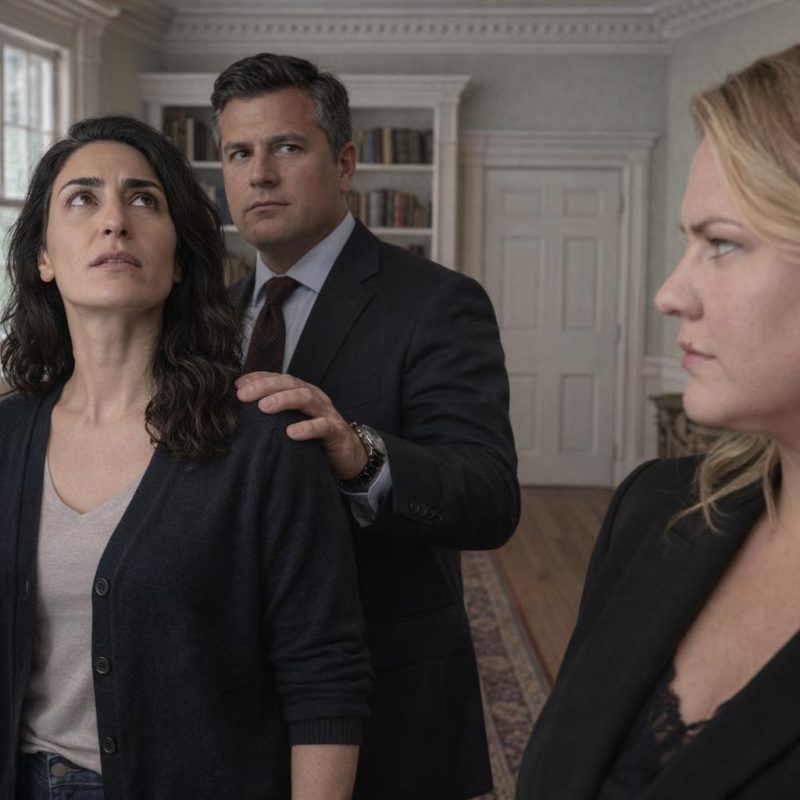 Image by RM AI
Securing the Foundation
I stood on the porch and watched their Mercedes pull away from the curb, Marcus driving carefully while Clarissa sat rigid in the passenger seat. I waited until the car turned the corner and disappeared completely before I went back inside. The house felt different now—lighter somehow, like a weight had been lifted from the foundation itself. I descended the basement stairs slowly, my footsteps echoing in the quiet. The loose stones were still scattered where I'd left them, the hiding place exposed and empty. I knelt on the cold concrete and carefully replaced each stone, fitting them back into their positions like puzzle pieces. The foundation looked ordinary again, unremarkable. I carried the oilcloth package upstairs and stood in Evelyn's bedroom, considering where to keep it until I could consult Mr. Sterling about proper arrangements. Her old hope chest sat at the foot of the bed, cedar-lined and sturdy. I opened it and tucked the package inside among her quilts and linens. As I closed the lid, I finally understood what my grandmother meant about foundations being more important than shine.
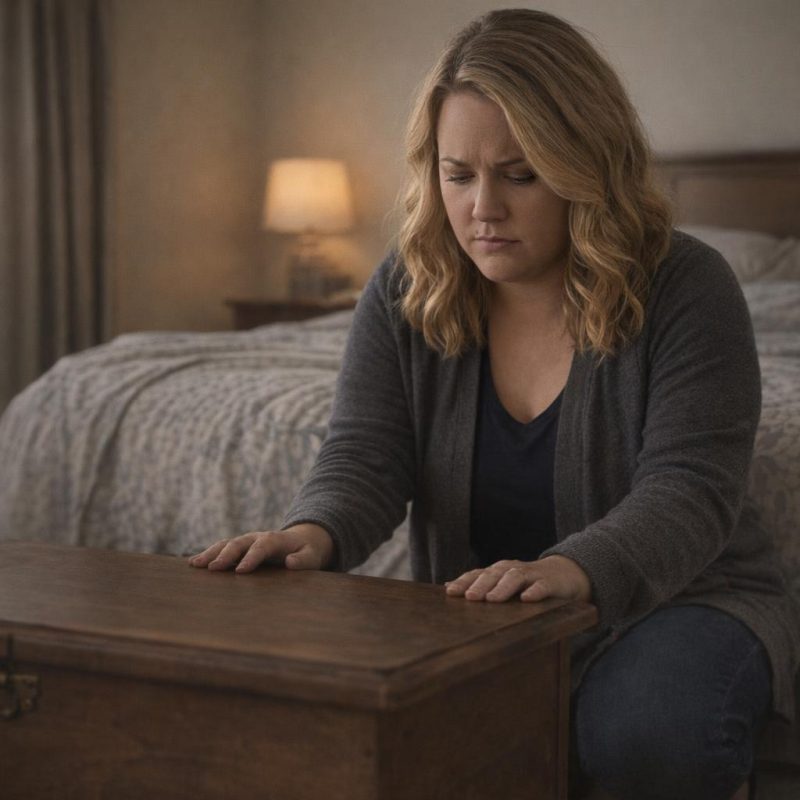 Image by RM AI
Legal Foundations
Monday morning, I sat across from Mr. Sterling in his mahogany office, watching his eyebrows climb higher as I spread the property deeds and gold coins across his polished desk. He picked up the first deed carefully, holding it by the edges like it might disintegrate. "These are..." He paused, adjusting his reading glasses. "These are quite extraordinary, Miss Emma." I waited while he examined each document, his professional composure cracking slightly with each new discovery. The deeds were valid, he confirmed—the properties had remained in the family through ground lease arrangements that had generated quiet income for decades. The gold represented significant preserved wealth, untouched since my great-grandfather had hidden it nearly a century ago. Mr. Sterling set down the last deed and looked at me with something approaching wonder. "Your grandmother was one of the most remarkable women I have ever known," he said quietly. I thought about Evelyn's patient planning, her careful silence, her absolute certainty about who should inherit what. "I'm only beginning to understand how remarkable," I told him.
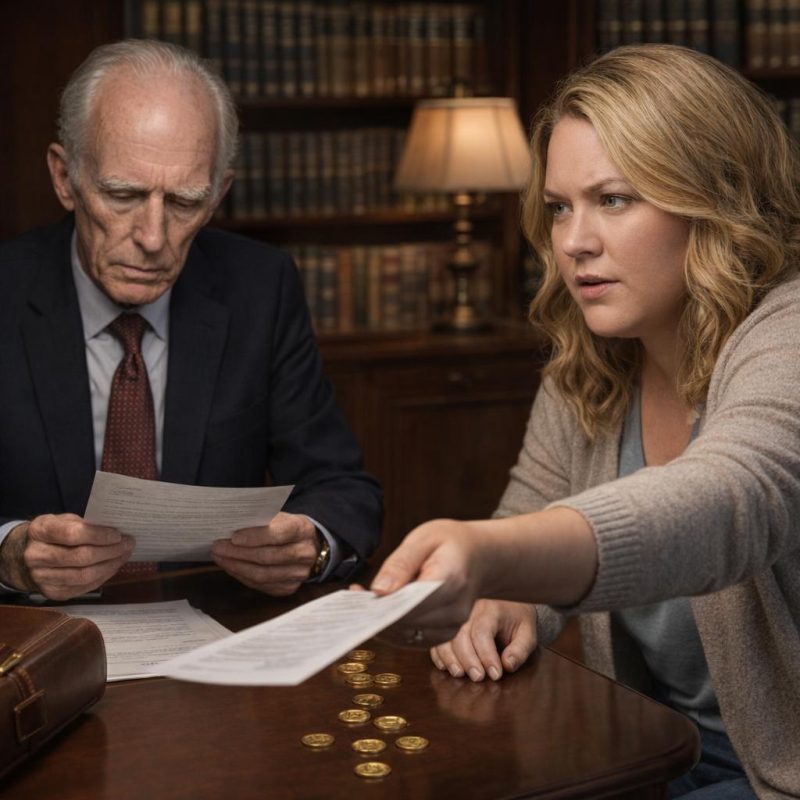 Image by RM AI
Restoration
I hired contractors to begin restoring the Victorian house, paying with a fraction of the income from properties my great-grandfather had hidden from the Depression nearly a century ago. The roof came first—that century-old burden Clarissa had mentioned so dismissively during the will reading. Workers stripped away the damaged shingles and replaced them with period-appropriate materials while I watched from the yard. The plumbing came next, then the electrical system, each update carefully planned to preserve the house's character while making it livable for another hundred years. I found myself thinking about that afternoon in Mr. Sterling's office when Clarissa had offered me this house like she was doing me a favor, like she was being generous by letting me have the consolation prize. She'd actually said that—consolation prize. I remembered her tight smile, the way she'd glanced at Marcus for approval before making her magnanimous gesture. The workers replaced a section of crown molding in the parlor, matching the original pattern exactly. As I watched them work, I smiled at the memory of her offering me this house as a burden she was graciously willing to let me shoulder.
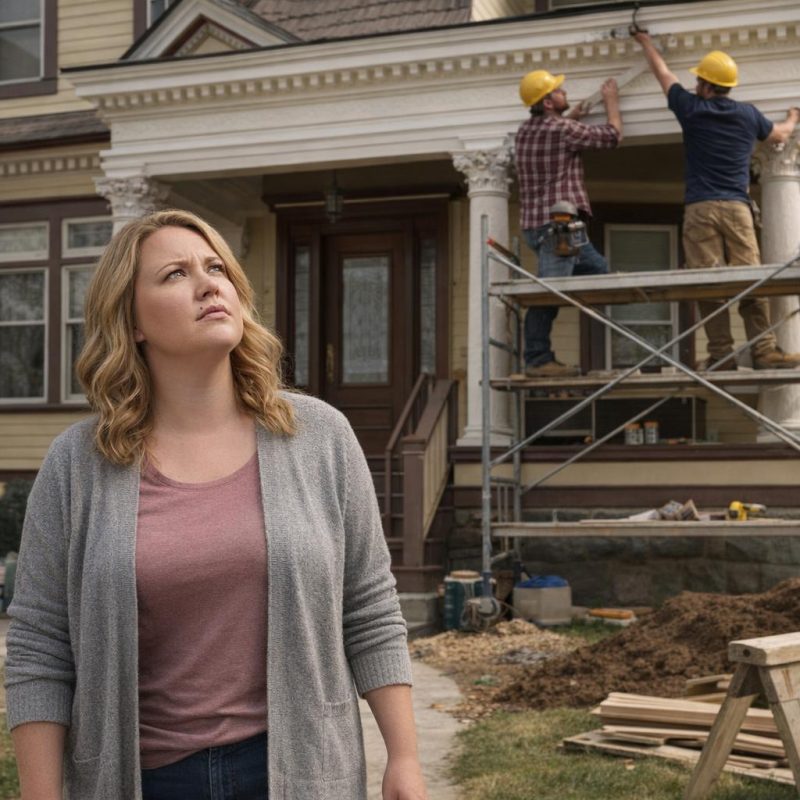 Image by RM AI
What Lasts
I sat on the porch of my grandmother's restored Victorian house on a warm Tuesday afternoon, holding a glass of sweet tea and thinking about the difference between price and value. The house looked beautiful now, the new roof gleaming in the sunlight, the fresh paint highlighting the original architectural details Evelyn had loved. It was another Tuesday, I realized—warmer than the cold February day when we'd buried her, but still a Tuesday. I thought about what my grandmother had understood about her two granddaughters, the careful way she'd divided an inheritance that looked unequal but wasn't. Clarissa had wanted the shine, the immediate gratification of something she could photograph and post and show off at charity galas. She'd gotten exactly what she wanted—about three thousand dollars worth of costume jewelry that looked expensive in the right light. I had the foundation. The land, the gold, the house full of history and memory. I had what lasted, what compounded, what mattered beyond the flash of a camera or the envy of strangers. Somewhere in the city, Clarissa still had her three thousand dollars worth of costume glass, but I had the foundation—and that, as Evelyn always said, was what lasted.
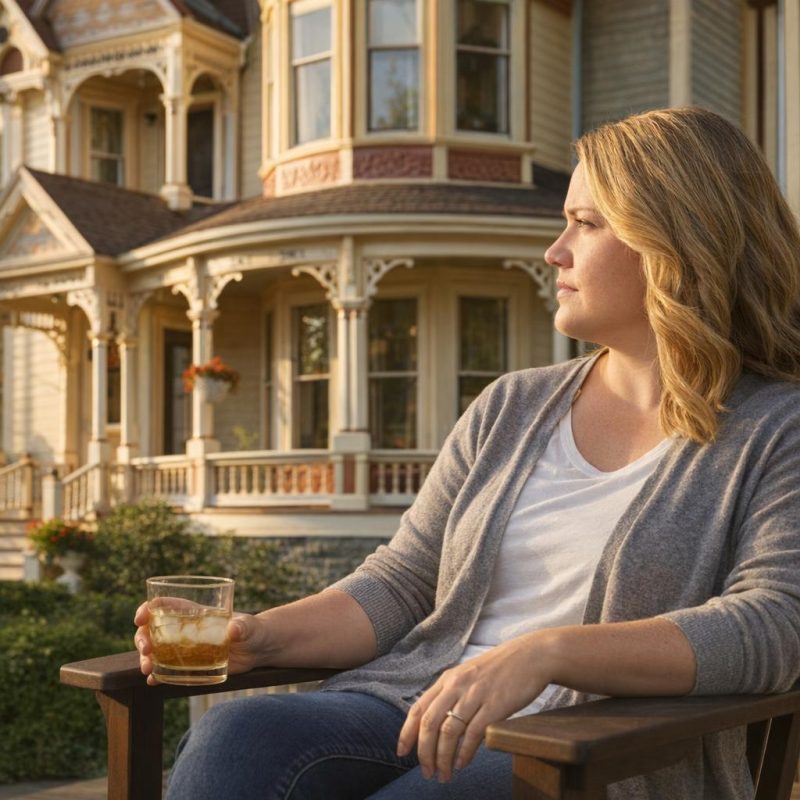 Image by RM AI
KEEP ON READING
20 Historical Figures Who Died Too Young
Lives Tragically Cut Short. History often remembers long reigns, mature…
By Christy Chan May 15, 2026
20 Historical Figures Who Died Right Before Everything Changed
Those Who Left Just Before the Final Act. Some people…
By Emilie Richardson-Dupuis May 15, 2026
20 Historical Figures Who Were Hot In Their Time But…
What Do You Think?. Beauty is famously in the eye…
By Sara Springsteen May 15, 2026
20 Greatest Underdogs In History
The World Did Not See That Coming. Everyone loves a story…
By Sara Springsteen May 15, 2026
20 Historical Figures Who Went From Villain To Antihero
History Gets Messy. History loves a clean villain. It gives…
By Cameron Dick May 15, 2026
10 Animals Humans Ate Into Extinction & 10 We Nearly…
The Menu Has Teeth. Extinction can sound distant, like something…
By Cameron Dick May 15, 2026