I Discovered My Business Partner's Plan to Steal My Company—So I Dismantled His Empire From the Inside
I Discovered My Business Partner's Plan to Steal My Company—So I Dismantled His Empire From the Inside
The Document on the Conference Table
I got to the office at 6:30 that Tuesday morning the same way I always did when I needed quiet — coffee from the cart downstairs, badge swipe, elevator to thirty, the whole city of Chicago still gray and half-asleep below the windows. The executive suite was empty, which was the point. I had a deployment review to finish before the team arrived and I wanted two hours without anyone stopping by my door. I set my coffee on my desk, grabbed my laptop, and walked toward the conference room to use the big monitor. That's when I saw it. Marcus's personal laptop was sitting open on the conference table, screen still lit, like he'd stepped out mid-sentence and forgotten to close it. I wasn't trying to read it. I wasn't even close enough at first. But the font was large — presentation size — and the words at the top of the screen were impossible to miss from the doorway. My name. A document title. The words 'Founder Departure Agreement.' I stood there in the doorway with my coffee going cold in my hand, reading the lines I could make out from where I stood, and the morning I'd planned — the quiet, the work, the ordinary Tuesday — dissolved completely. I didn't move for a long time. The weight of those two words just sat there in my chest, heavy and very still.
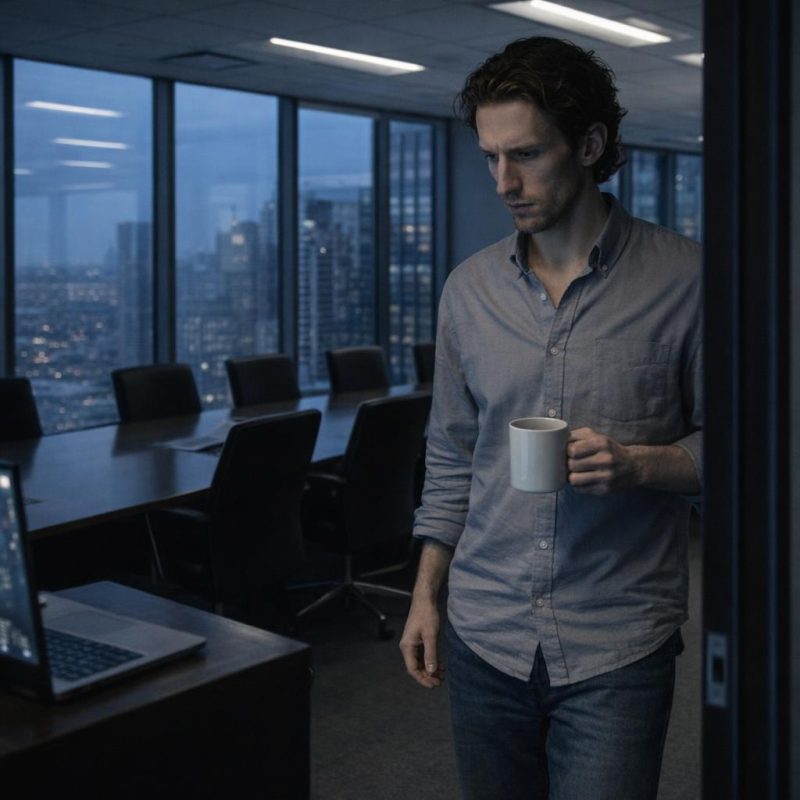 Image by RM AI
The Full Scope of Betrayal
I didn't touch the laptop. That was the first clear thought I had — don't touch anything. I moved closer, close enough to read, and I stood there with my hands at my sides like I was defusing something. The document was a full draft, not a rough outline. It had section headers, numbered clauses, legal formatting. My name appeared in the opening paragraph as 'departing founder,' and the valuation attached to my buyout was a number that made my jaw tighten. Twelve years. That's what twelve years of building this company was worth to whoever had drafted this. The non-compete clause ran five years and covered the entire security software sector — not just our competitors, but the whole field. Five years of sitting on the sidelines while the company I built kept running on my architecture. There was a section about 'documented behavioral concerns' that I skimmed and felt my stomach drop. And then there was the clause near the bottom, the one about intellectual property. It was written in the careful, bloodless language that lawyers use when they want something to sound routine. I heard the elevator chime somewhere down the hall and I walked out of that conference room fast, back to my office, door closed. Then I found the clause that would transfer all my patent authorship to the company before termination.
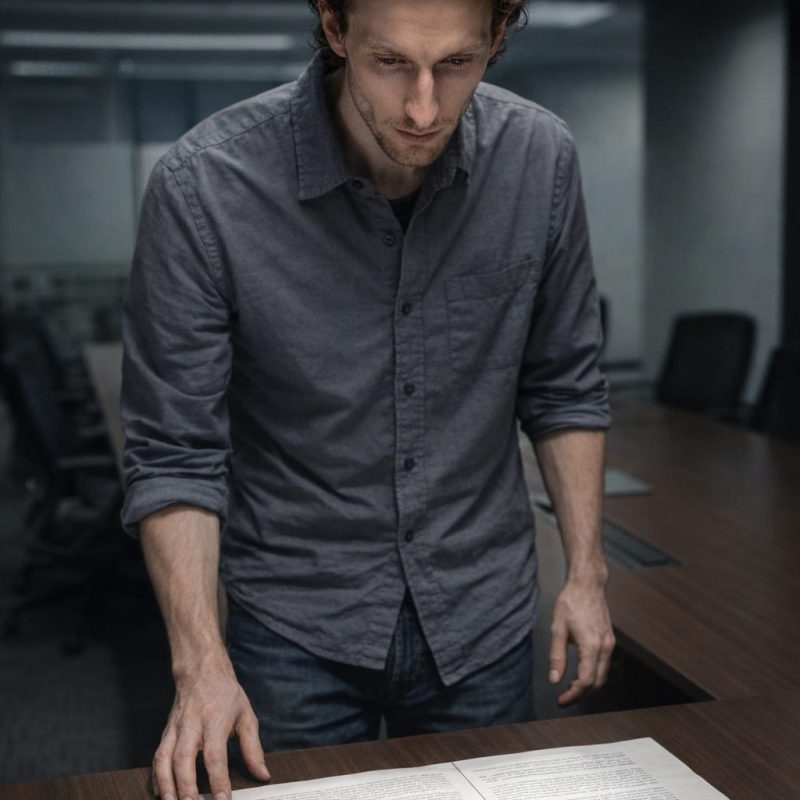 Image by RM AI
The Investor Names
I spent the rest of that morning at my desk doing almost nothing useful. I had the deployment review open on one screen and a blank document on the other, and I kept going back to what I'd read, reconstructing it from memory. The signature block section had been near the bottom of the document, just above the legal boilerplate. Jennifer Hawthorne's name was there with a notation beside it — 'Reviewed and supports transition.' Tom Richardson and Richard Foster were listed as board members consulted. Not signatories yet, but consulted. There was a line referencing 'three months of stakeholder alignment,' which was the kind of phrase that sounds like corporate process until you do the math. Three months back put the start of this somewhere in early spring, right in the middle of the stretch when I was working eighty-hour weeks on the encryption breakthrough. The timing wasn't lost on me. I'd been heads-down in the server room while apparently a great deal had been happening without me. The board meeting referenced in the document was scheduled for Monday morning. That was six days away. I sat at my desk and looked out at the Chicago skyline and tried to find a version of this that made sense, some explanation I was missing. I couldn't find one. The quiet of the office settled around me, and the feeling that had started in my chest that morning just spread, slow and cold, into everything else.
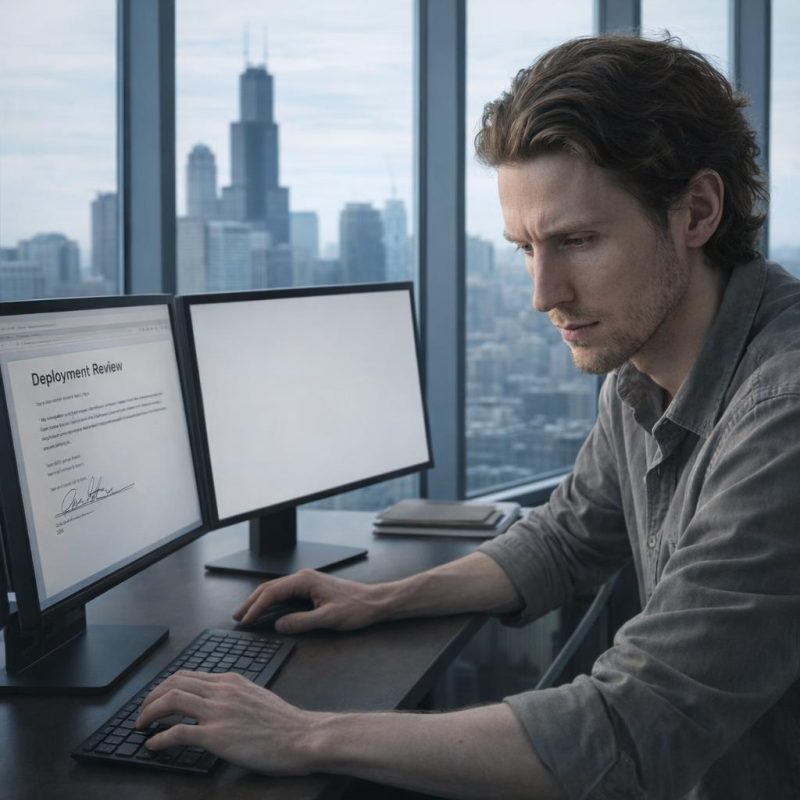 Image by RM AI
The Pattern of Small Betrayals
I closed my office door at noon and didn't open it again for two hours. I sat there and went back through the last three months the way you debug a system — methodically, looking for the pattern you missed the first time. Marcus had asked me in April to start emailing him summaries whenever we had a technical disagreement. He'd framed it as documentation for the board, said investors liked a paper trail on decision-making. I'd done it without thinking twice. In May, after a brutal six-week sprint, he'd suggested I take a mental health day. He'd said it gently, like he was looking out for me. I'd thanked him. There was the investor dinner I'd skipped because I was in the middle of fixing a critical authentication bug — Marcus had sent a follow-up email the next day saying he'd covered for me, that the investors understood. I'd felt grateful. The board presentations where I'd been asked to document technical roadblocks in writing. The meetings scheduled during the two weeks I was traveling for the infrastructure audit. Each one of those things, on its own, had seemed like normal business friction. Now they sat in a different arrangement entirely, and I couldn't stop turning them over, unsure what to make of the shape. The one that kept coming back to me was the afternoon Marcus had asked me, very casually, to put my 'process concerns' in writing — and I had.
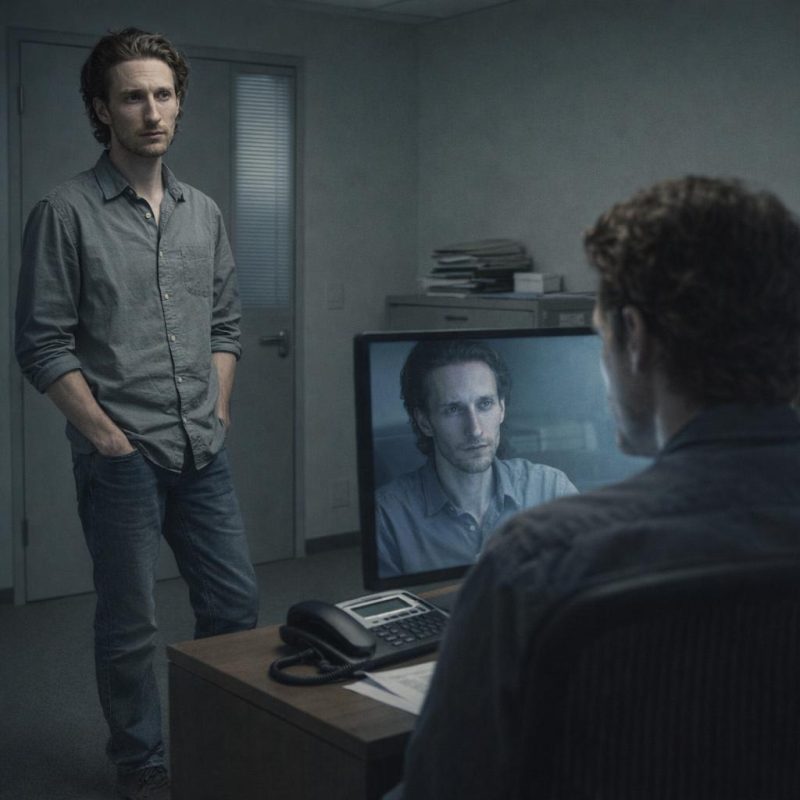 Image by RM AI
The Performance Begins
I made it to Wednesday without breaking. I drove in at my normal time, 8:00 AM, parked in my usual spot, rode the elevator up with my coffee, and told myself the whole way up that I was just going to work. Marcus was coming out of the executive suite when I stepped off the elevator, and for one half-second my whole body went rigid. Then I smiled. He smiled back, warm and easy, the way he always did, and said good morning like it was any other Wednesday. We fell into step together down the hallway and talked about the client presentation Thursday — he had notes on the slide deck, I had concerns about the demo environment, we sorted it out in about four minutes the way we always had. Amy came by with the morning coffee tray and mentioned the quarterly review timeline, and Marcus made a joke about the finance team's font choices, and I laughed at the right moment. He asked about my daughter's soccer game from the weekend, whether her team had won. I told him they had, 3-2, and he said that was great, that she was going to be a serious player. I kept my expression easy and my voice level, watching for anything that seemed off. There was nothing I could point to. Then, just as we were splitting off toward our offices, he turned back and said he wanted to grab lunch — today — to talk about where we were headed next.
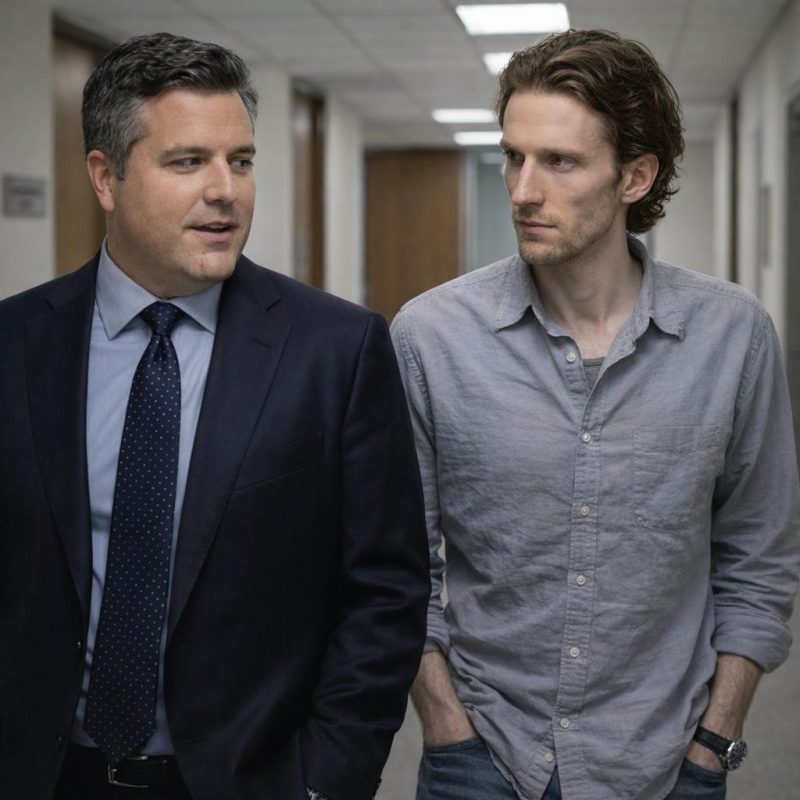 Image by RM AI
The Access Logs
Thursday morning, before anyone else arrived, I logged into the company's administrative backend from my office. I had legitimate access — I'd built half the system — so pulling up the audit logs didn't require anything unusual. I told myself I was just looking. The access records for the IP filing database went back eighteen months, and I filtered for the past quarter. Marcus's credentials showed up seventeen times. That number stopped me. His role didn't require regular access to the IP system — that was my domain, and David's team handled the filing mechanics. I scrolled through the entries. Almost every session was focused on provisional patent applications, not the finalized ones, not the ones already in the public record. One session had a timestamp of 11:47 PM on a Saturday. I was cross-referencing the timestamps against Marcus's calendar when David knocked and leaned in the doorway, asking a question about a dependency conflict in the encryption build. I answered him, we talked through it for a few minutes, and he left. I went back to the screen. I pulled up Marcus's calendar for the quarter and started matching dates. One access session — the longest one, forty-three minutes — landed on the same afternoon as a meeting entry that read 'JH — offsite.' Marcus had accessed the provisional patent files the same day he met with Jennifer.
 Image by RM AI
The Documented Evidence
I found the folder on Friday afternoon, buried three levels deep in the shared executive drive under a name that wouldn't have meant anything to me a week ago: 'Leadership Transition - Confidential.' There were six files inside. I opened the one labeled 'Behavioral Documentation' and read it straight through without stopping. Twelve incidents, each one dated, each one described in the flat, clinical language of an HR report. Incident one: 'Refused to attend investor dinner, citing exhaustion.' That was the night the authentication system threw a critical error at 7 PM and I stayed until 2 AM to fix it. Incident five: 'Became defensive when questioned about timeline delays.' That was a two-hour technical debate where I'd explained, with diagrams, why the proposed schedule was physically impossible given our infrastructure. Incident nine: 'Sent email at 3:47 AM expressing frustration.' That email had said, verbatim, 'breakthrough on the key derivation function — shipping the fix now, will document in the morning.' I sat with that one for a while. Then I found the email thread. It was between Marcus and Jennifer, dated six weeks back, and it described a meeting where I had apparently displayed 'emotional outbursts during a technical debate' — the same debate I remembered as a whiteboard session where I'd raised my voice exactly once, to be heard over the HVAC system. The email from Marcus to Jennifer read: 'Elias had emotional outbursts during the technical review. I think the board needs to be aware.'
 Image by RM AI
The Daughter's Game
The soccer field was in Evanston, forty minutes from my apartment on a good Saturday, and I made it with ten minutes to spare before kickoff. I found a spot in the bleachers near the top and watched the girls run their warm-up drills, looking for my daughter's number. Sarah arrived about five minutes later, spotted me, and took a seat two rows below with a nod that meant we were being civil today, which was fine. We'd gotten good at civil. She turned around after a few minutes and asked how things were going, and I said busy quarter, the usual. She looked at me for a moment longer than necessary and said I looked tired, asked if work was getting to be too much again. I told her it was just the end-of-quarter push, nothing unusual. She nodded like she didn't entirely believe me but wasn't going to push, which was also something we'd gotten good at. The game started and I tried to just watch. My daughter was playing left mid, and she had a good first half — two clean passes, one shot that went wide but showed good instinct. I tracked her footwork and tried to let Monday's board meeting exist somewhere outside the edges of the field. Sarah left right after the final whistle without circling back, and the other parents filtered out around me, and the noise of the morning faded. The field went quiet, and I sat there in the bleachers with the cool October air settling around me.
 Image by RM AI
The Lunch Performance
We met at Carmine's, same corner table we'd been using for three years, and Marcus was already there when I arrived, jacket off, sleeves rolled, looking like a man who had nothing on his mind but pasta and good conversation. He asked about my daughter's game before I even sat down — said he'd remembered it was this weekend, hoped she played well. I said she did. He smiled like he meant it. That was the thing about Marcus: the smile always looked like he meant it. He ordered his usual, the rigatoni, and launched into what he called the ten-year vision — expansion into federal contracts, a potential acquisition inquiry from a firm I won't name, a new VP of Engineering he wanted to bring in to 'take some of the technical load off your plate.' I kept my face neutral and asked the right questions. I even nodded at the acquisition part, like it was news I was hearing for the first time. Then I mentioned Monday's board meeting, casual as I could manage, said I wanted to make sure I was prepped. He said it was routine. Quarterly review, nothing unusual. And I watched his eyes when he said it — just for a second, something moved behind them that had nothing to do with routine.
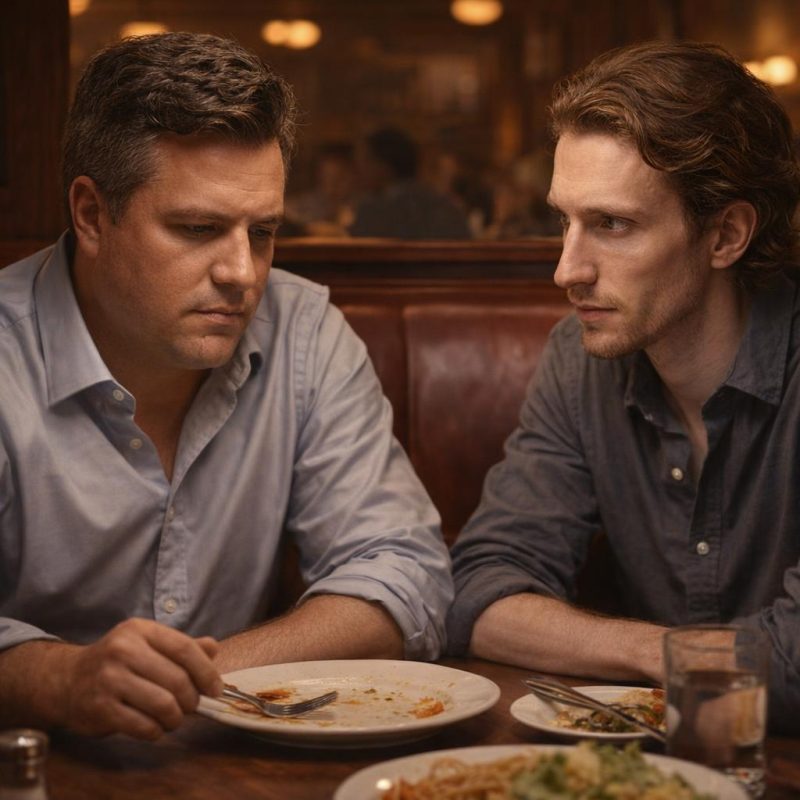 Image by RM AI
The Six-Day Countdown
Back at my desk by two-thirty, I pulled out a legal pad and wrote the date at the top. Tuesday. Board meeting was Monday at nine AM. I drew a line and started counting. Six days, including today, and the weekend sitting in the middle of it like a wall. Legal filings take time to process — I knew that much from the company's own patent history. The USPTO doesn't move fast, and state-level entity registrations have their own queues. Saturday and Sunday would cut off access to most filing offices and slow any attorney I brought in. I wrote out what had to happen in sequence: identify the vulnerable IP, get legal counsel, draft the transfer documents, file before Monday. Each step had dependencies. Each dependency had a clock. I mapped it out in four columns and stared at what I'd drawn. The columns didn't lie. If Marcus moved the board meeting up even by a day, or if anything triggered early action on his end, the whole sequence collapsed. I'd built systems under pressure before — tight deadlines, cascading dependencies, no margin for error. This felt like that, except the thing at risk wasn't a product launch. Six days was not a comfortable number, and sitting there with the legal pad in front of me, I felt that fact settle into my chest like something heavy finding its level.
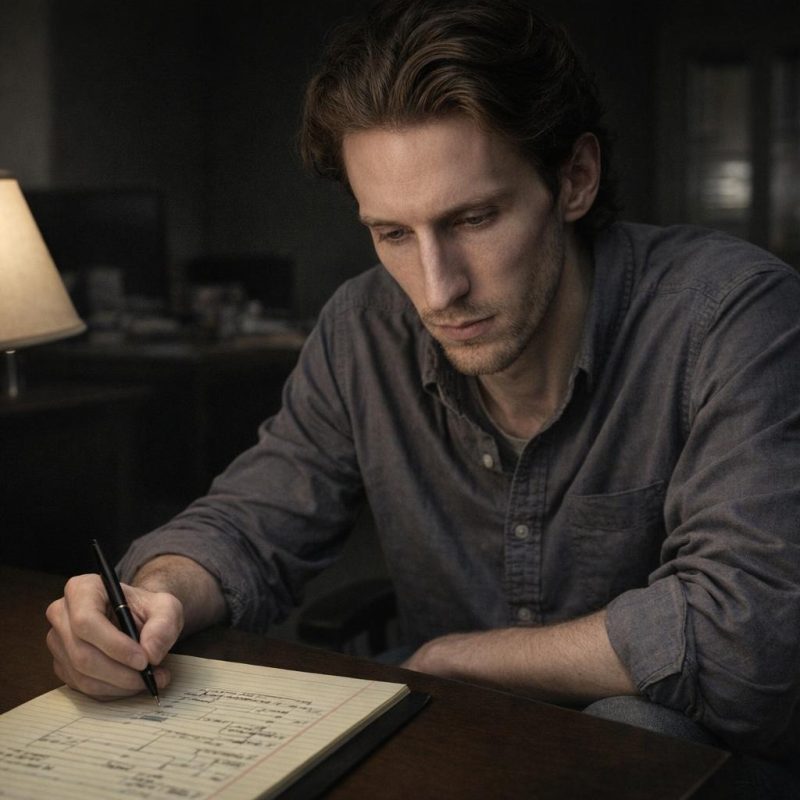 Image by RM AI
The IP Architecture
I locked my office door at six and opened the IP management database I'd built from scratch four years ago. I'd designed it myself — three tiers, color-coded, cross-referenced against filing dates and assignment status. At the time I thought I was being thorough. Now I was grateful for every obsessive detail. The first tier was clean: finalized patents, all formally assigned to Aegis Tech as corporate entity, signatures on file, USPTO records updated. Solid. The second tier was pending-assignment — applications that had cleared examination but were waiting on final corporate paperwork. A few of those had loose ends, but nothing dramatic. The third tier was the one I hadn't looked at closely in months: personal research filings, provisional applications, work that existed in the system but hadn't yet been formally transferred to the company. I started pulling records from that third tier and cross-checking the assignment clauses. Some had been signed over cleanly. Others had language that was technically incomplete — boilerplate that referenced a corporate officer signature that had never been obtained. Marcus had always left the IP administration to me, which meant he understood the system at the level of a quarterly summary, not at the level of the underlying architecture. I worked through it methodically, flagging each file, building a map. By eleven PM the map covered two monitors, and I was only halfway through.
 Image by RM AI
The Provisional Loophole
I got to the provisional applications subfolder just before midnight. I almost skipped it — I'd been through so many records by then that my eyes were starting to blur at the edges — but I clicked through anyway. The folder contained seven filings, all dated within the past eight months, all tagged with the same status label: pending corporate assignment. I opened the first one and recognized it immediately. It was the core of the new encryption algorithm, the one I'd spent fourteen months developing, the one that had generated the acquisition inquiry Marcus mentioned at lunch. I opened the second. Same status. Third, fourth, fifth — all of them. Each filing required a dual signature to complete the corporate assignment: one from me as inventor, one from a corporate officer. The corporate officer signature line on every single one of them was blank. I sat back and looked at the screen. These seven filings represented the work that made Aegis Tech worth acquiring. Without them, the company was solid but not exceptional. With them, it was something a major cybersecurity firm would pay a serious premium to own. And right now, not one of them was formally corporate property. Seven provisional filings, each worth millions, each sitting in legal limbo with my name still on them as sole inventor.
 Image by RM AI
The Value of What He Built
I spent the next hour going through the technical specifications in each of the seven filings, not because I'd forgotten what was in them — I'd written every line — but because I needed to see them the way an acquirer would. The encryption approach was genuinely novel. I'd solved a key-exchange problem that the industry had been working around for years rather than through, and the solution was elegant enough that it compressed into a small enough footprint to run on edge devices without meaningful latency cost. That combination — security and speed at the edge — was exactly what federal contract work required, and it was exactly what Marcus had been pitching to potential buyers. I pulled up the last acquisition inquiry we'd received and read through the technical due diligence questions. Every single one of them mapped directly to these seven filings. Without this IP, Aegis Tech's product was competitive. Plenty of firms had competitive products. What we had — what I had built — was something that didn't have a direct equivalent in the market yet. I estimated, conservatively, that the company's acquisition valuation dropped by sixty percent if these patents never completed their corporate assignment. Marcus had been talking about our future at lunch. I wondered how much of that future he understood was sitting in a pending-assignment folder with my name on it. The weight of what I'd built had never felt quite so specific before.
 Image by RM AI
Reaching for an Old Alliance
I found her card in the second drawer of my desk, tucked inside a conference program from two years ago. Diane Park, IP and Technology Law, a boutique firm downtown. We'd been study partners for two semesters before I switched out of law and into engineering — she used to joke that I had the analytical instincts for law but not the patience for billable hours. She wasn't wrong. I'd run into her at a cybersecurity conference in 2021 and we'd had coffee, caught up for an hour, and she'd pressed the card into my hand when we parted and said to call if I ever needed someone who actually understood how software patents worked. I'd meant to stay in better touch. I hadn't. Now I was sitting at my desk at midnight with seven provisional filings on my screen and a six-day window, and her card was the most useful thing in the drawer. I thought about what it meant to bring someone outside the company into this. Once I made that call, the situation had a witness. It became something with a paper trail and a second set of eyes and a person who could be deposed. I sat with that for a few minutes. Then I opened my email and drafted a message — careful, brief, nothing specific — asking if she had time to meet urgently about a confidential matter. I read it twice, changed one word, and sent it before I could talk myself out of it. The decision to trust someone outside the company had been made, and I felt it settle into place like a door closing quietly behind me.
 Image by RM AI
The Suburban Diner
She'd replied by seven the next morning and suggested a diner in Westmont she knew, forty minutes out, cash-only parking, the kind of place nobody from our industry would wander into by accident. I drove out Thursday evening and found her already in a back booth, wearing jeans and a fleece, which was the first time I'd seen her out of professional attire. She had her tablet out and a coffee she hadn't touched. I slid in across from her and she looked at me the way people look at someone who's clearly been sleeping badly, and said, 'You look like you've been doing math in your head for three days straight.' I said something like four. I walked her through it — the departure agreement I'd found, the board meeting, the seven provisional filings, the acquisition interest, all of it. She didn't interrupt. She pulled up the documents I'd forwarded to a secure address she'd given me, read through the assignment clauses, made notes on her tablet with a stylus, asked two precise questions about filing dates. Then she set the stylus down and looked at me. She said the provisional filings were not yet corporate property — that part I'd gotten right. She said moving them would not be quiet. The moment any transfer was filed, Marcus would know exactly what I was doing and why. She looked at me steadily across the table and said, 'Elias, this is going to look like a declaration of war.'
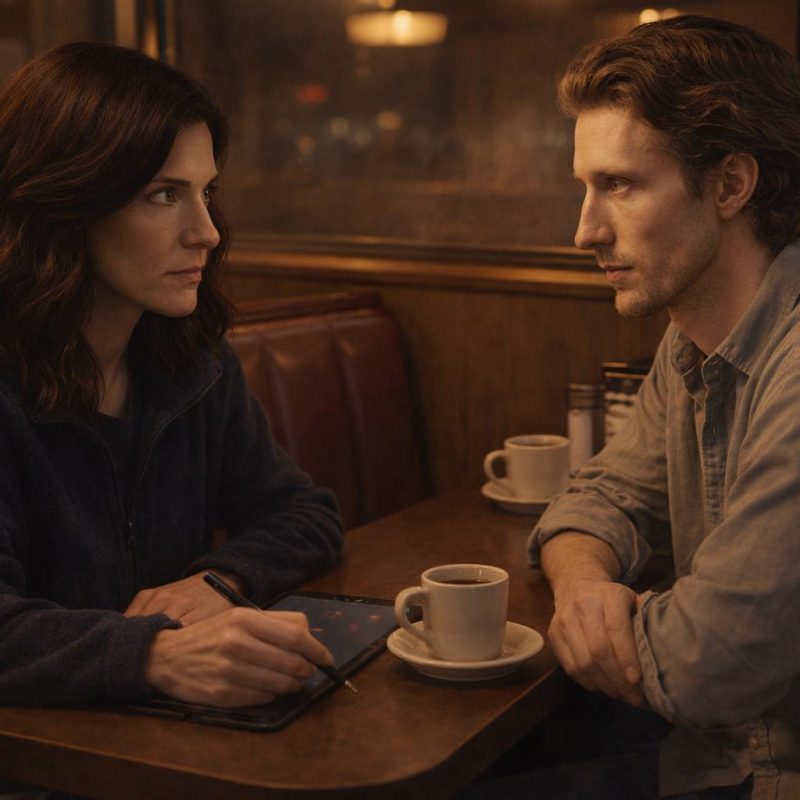 Image by RM AI
The War Already Started
I told her the war started three months ago. I just hadn't known I was in it yet. She held my gaze for a moment, then nodded once and opened her laptop. That was the thing about Diane — she didn't need a speech. She needed a problem with defined parameters, and I'd given her one. She said the cleanest structure was a Delaware holding company, registered under my name alone, with no operational connection to Aegis Tech visible on the surface. Delaware for the privacy provisions and the legal flexibility, she said — standard for exactly this kind of situation. The holding company would receive the provisional patent assignments before the corporate assignment window closed. She explained the filing sequence: entity registration first, then the assignment documents, then the USPTO transfer filings, all of it needing to move in a specific order before Monday morning. She started drafting while she talked, fingers moving across the keyboard, pulling up templates and modifying language in real time. I watched her work and answered questions when she asked them — inventor dates, filing numbers, the exact wording of the assignment clauses in the originals. The diner noise faded into background. An hour in, she turned the laptop so I could see the screen, and the outline of the holding company structure was there in clean, spare legal language, taking shape line by line.
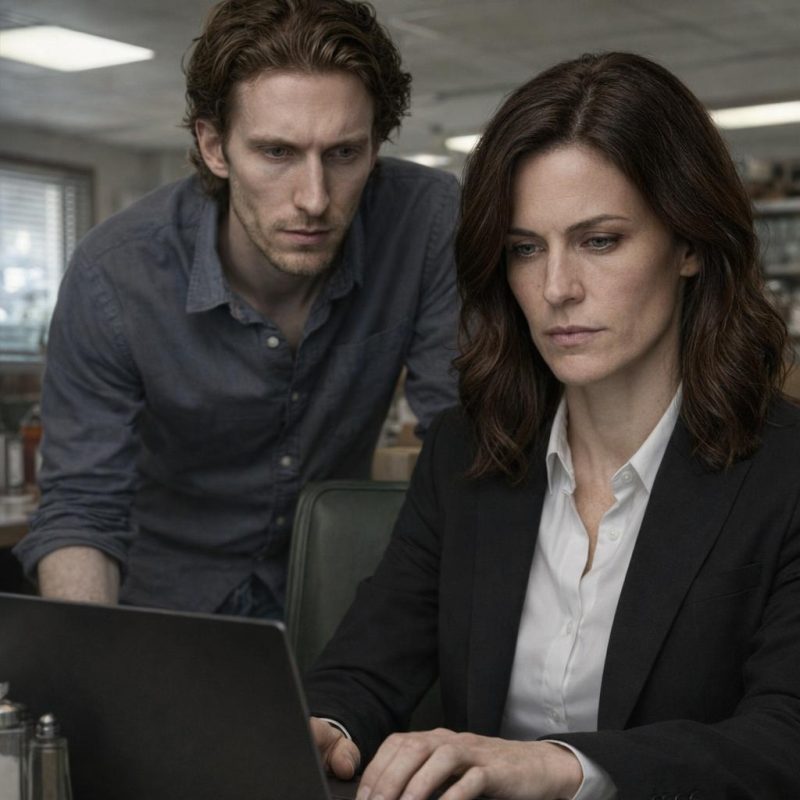 Image by RM AI
The All-Night Session
We ordered coffee four times. The diner crowd thinned out around midnight, then disappeared entirely, leaving just us and a tired server who stopped asking if we needed anything and just kept the pot coming. Diane drafted the holding company formation documents first — the Delaware entity, the registered agent, the operating agreement — talking through each clause while her fingers moved. I fed her the technical descriptions for each provisional patent: filing dates, inventor declarations, the specific claim language that mattered. She translated engineering into legal with a precision that made me grateful I'd called her. The assignment agreements came next, transferring each provisional from my name individually into the holding company. I read every line before I signed. Around 3 AM, she started building the USPTO electronic filing packages, cross-referencing each assignment against the original application numbers. I caught two transposition errors in the filing numbers and she fixed them without comment. By 5 AM, the documents were organized into a submission queue, timestamped and ready. My hand cramped from signing. My eyes felt like sandpaper. Diane closed her laptop, stretched her neck, and said we were done. I looked up and the diner windows had gone from black to gray to the pale, flat orange of early morning light pushing over the roofline across the street.
 Image by RM AI
The Paranoia Sets In
I got to the office at 8:30 with four hours of bad sleep in a parking lot and a gas station coffee that tasted like burnt rubber. Marcus caught me in the hallway before I even reached my desk. He looked at me the way you look at someone who clearly slept wrong and said I looked rough. I told him I'd been debugging a memory leak in the authentication layer — which was technically true, just not from last night. He nodded, said something about the client presentation tomorrow, and moved on. I sat down at my desk and opened my personal laptop next to the work one, the formation documents and assignment agreements sitting in a folder I'd named with a string of random numbers. Every time footsteps came down the hall, my shoulders went up. Amy brought coffee around nine and asked if I was feeling okay. I said I was fine, just tired. She gave me the look she gives when she doesn't believe something but isn't going to push it. Marcus stopped by again around eleven to confirm the presentation deck was ready. I pulled it up, walked him through the first three slides, kept my voice even. After he left, I sat there staring at the screen, the exhaustion and the low-grade dread settling into my bones like something permanent.
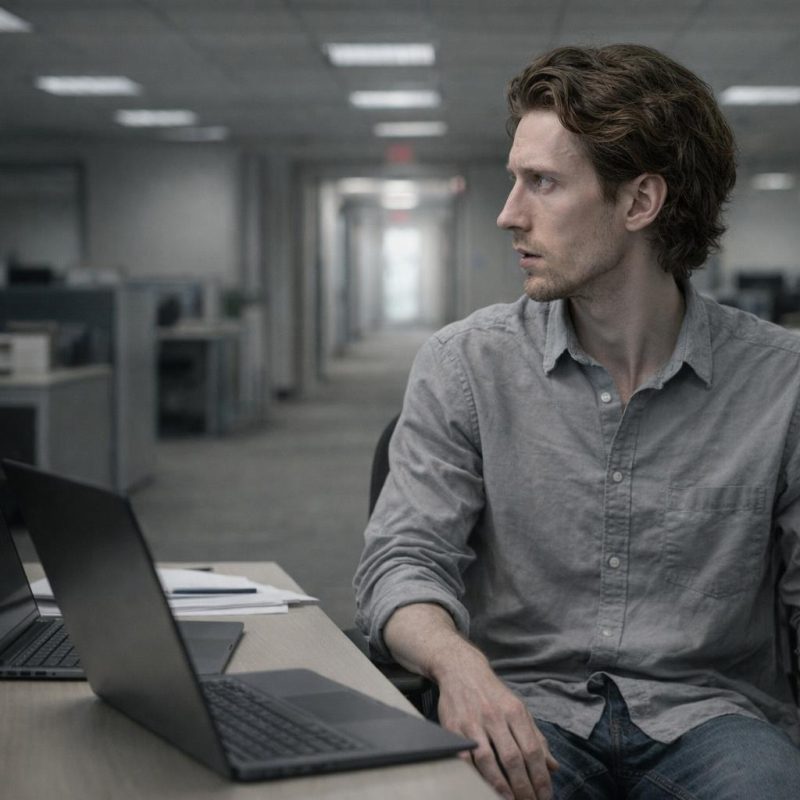 Image by RM AI
The Dual Realities
The Thursday afternoon staff meeting started at two. I stood at the whiteboard and walked through the Q4 technical roadmap — encryption module milestones, API integration timelines, the security audit schedule — and I sounded, as far as I could tell, completely normal. Marcus sat at the head of the table and added commentary about aligning the roadmap with investor expectations, which he said twice in slightly different ways. David asked about the encryption module timeline and whether the third-party audit could move up two weeks. I gave him a real answer because it was a real question. Amy was at the whiteboard behind me, writing action items in her neat block letters. My phone was face-down on the table in front of me. I'd set it to vibrate for one contact only. Every few minutes I was aware of it the way you're aware of a sound you're waiting to hear. Marcus talked about team unity during growth phases. I nodded at the right moments. David asked a follow-up about the key management architecture and I answered that too, because the work was real and it still mattered, even if the ground underneath all of it had shifted in ways no one in that room knew about yet. The phone didn't vibrate. The meeting ended at 3:15. The weight of holding two separate realities at once pressed down on me the whole drive back to my office.
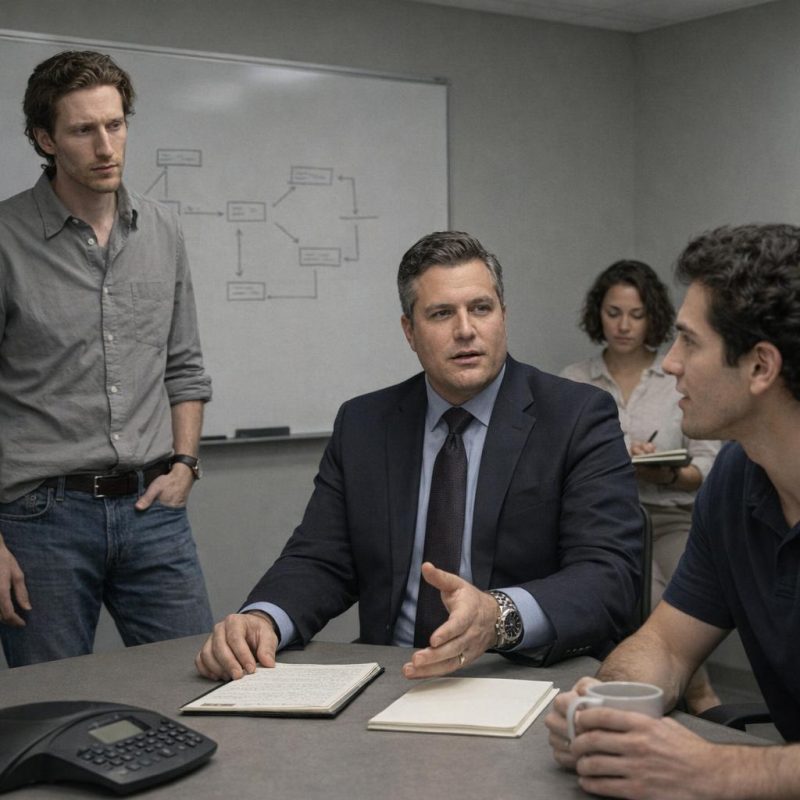 Image by RM AI
The Filing Confirmation
I closed the conference room door behind me and walked back to my office. I sat down, turned my phone over, and there it was — a message from Diane, sent at 3:08 PM. The Delaware entity was active. The registered agent had confirmed receipt, the state had processed the formation documents, and the entity number was live in the public registry. She'd attached a PDF of the confirmation. I opened it and scrolled through the filing details twice, not because I doubted her but because seeing it in official state formatting made it real in a way the diner drafts hadn't. The holding company existed. It had a name, a number, and a legal address. The patent assignment documents were finalized and sitting in the electronic submission queue, formatted to USPTO specifications, ready to transmit. Diane's message said she could submit first thing tomorrow morning for same-day processing, and that once filed, the assignments would appear in the public patent database within hours. I set the phone down on my desk and looked at the wall for a moment. Then I picked it back up and read the last line of her message again: the transfers were ready to file in the morning.
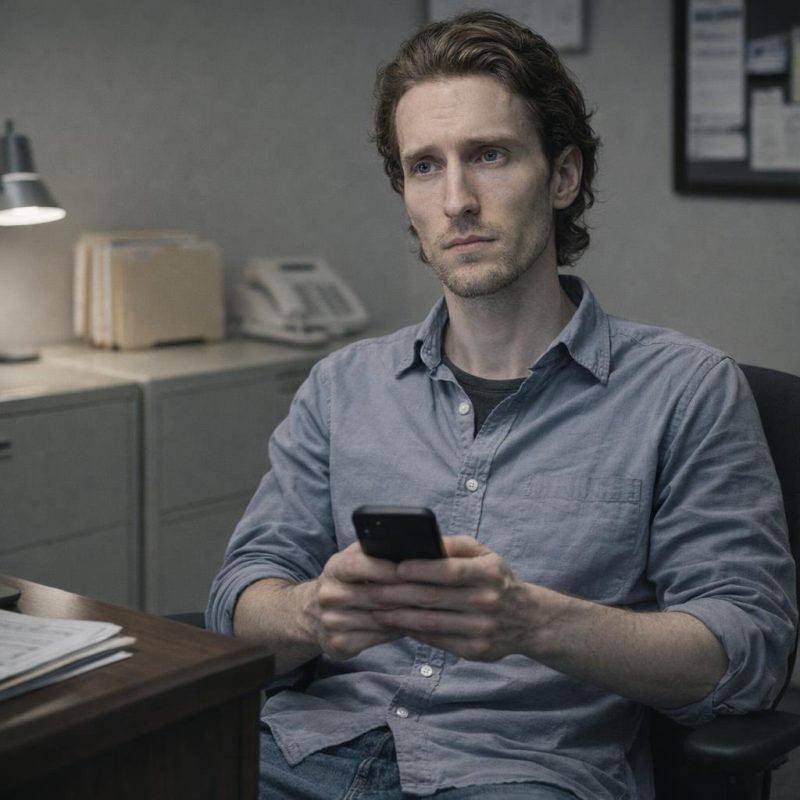 Image by RM AI
The Exposure Risk
Friday morning I got in early and pulled up the client presentation code, legitimate work, something I could have open on my screen without explanation. The legal documents were in a minimized window behind it. Marcus walked past my office door at 9:10. I didn't look up. He walked past again at 9:28, slower that time, and I kept my eyes on the code. At 9:41 he stopped in the doorway and asked about the encryption module's progress. I told him the core integration was solid, one edge case left to resolve before the demo. He said good, mentioned he was looking forward to Monday's board meeting, said the investors were going to like what they saw. I said I thought so too. He moved on. I let out a breath I hadn't noticed I was holding and went back to the code. The minimized window sat at the bottom of my screen like a live wire. At 10:15 he was back in the doorway, leaning against the frame with his arms crossed, relaxed, the practiced ease he always carried. He asked what I was doing over the weekend.
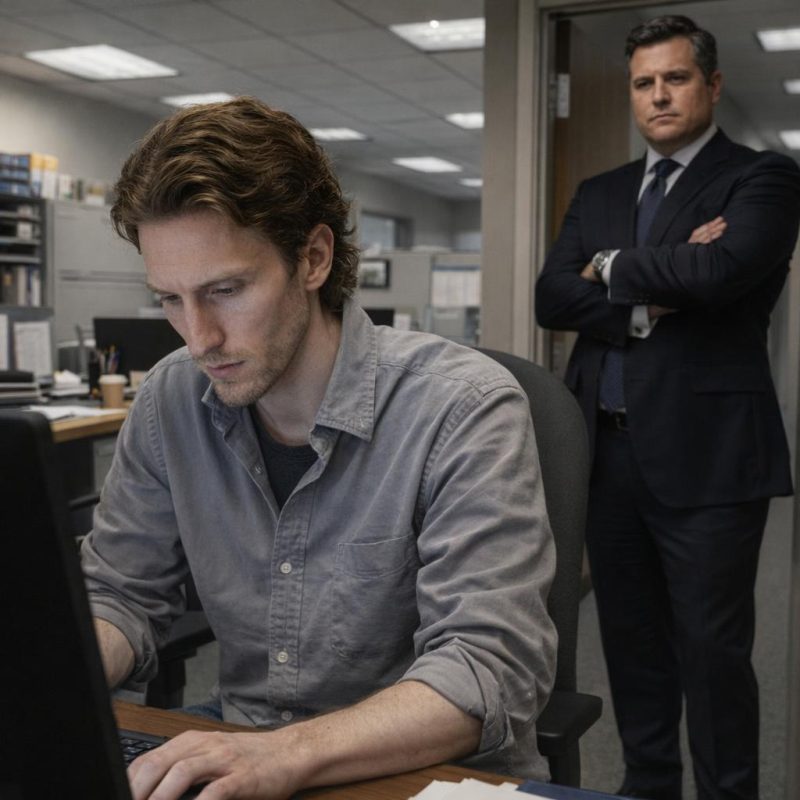 Image by RM AI
The Balancing Act
The Friday morning standup started at nine. David walked through the encryption module integration — he was two days ahead of schedule, which under normal circumstances would have been the best news of the week. Amy had the client deliverable timeline on the shared screen, color-coded by priority, and she walked through it with the efficiency she always brought. I answered questions about the security architecture, flagged a potential conflict in the key rotation logic that needed a second look before release, and kept the meeting moving. My phone was in my jacket pocket. I'd set the same single-contact vibrate alert. David asked if I'd be reachable over the weekend if questions came up on the integration. I said yes, absolutely, keep me posted. I meant it. The work was real. The team was real. None of what I was doing in the background changed that. Amy wrapped up the action items at 9:47 and people started filtering out. I stayed at the table for a moment after the room cleared, the morning light coming through the blinds in flat white strips across the table, the quiet of the empty conference room sitting around me while the clock on the wall moved and the filing window ticked closer.
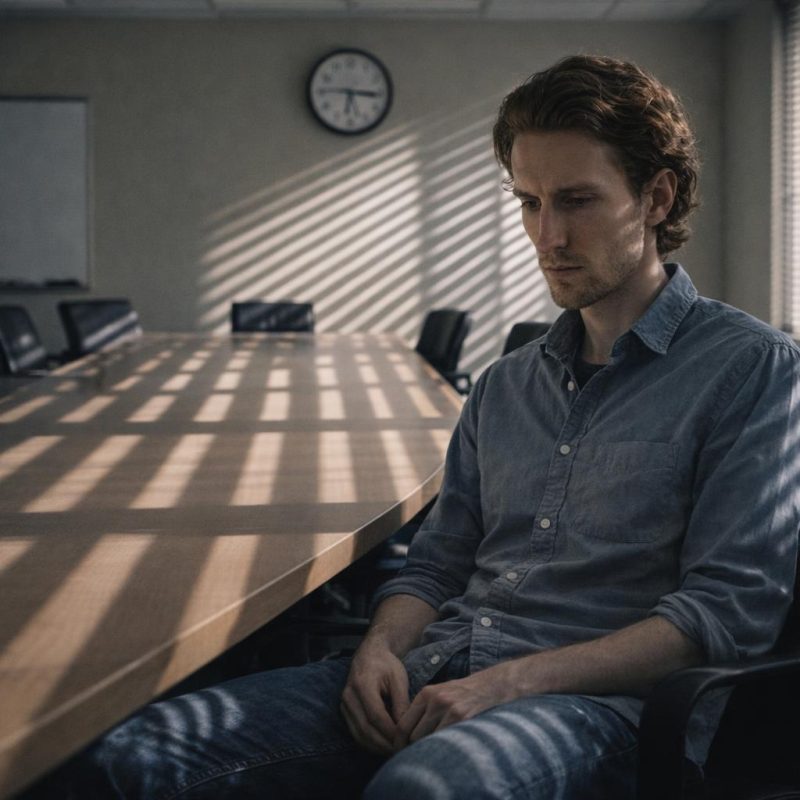 Image by RM AI
The Server Work Begins
I locked my office door at 11:30 and pulled up the development server directory on my workstation. Twelve years of repositories. The directory tree alone took forty seconds to fully render. I'd been living inside this codebase long enough that I knew its shape the way you know the layout of a house you grew up in — which directories held what, which branches were mine from the beginning, which had grown into something shared. I started with the provisional patent research: the adaptive encryption work, the key management architecture, the anomaly detection layer. I cross-referenced each file path against the patent application numbers Diane had filed, building a manifest as I went. Personal innovation on one side, company infrastructure on the other. The line wasn't always clean. Some of my foundational research had been built on top of by the broader team over the years, and I had to be careful — I wasn't taking anything that wasn't mine, and I wasn't deleting anything at all. I set up an encrypted transfer to external storage and wrote a script to handle the larger directories overnight, with transfer rates throttled low enough to stay under the system's automated alert thresholds. By early afternoon I had the first batch copied and verified. I sat back and looked at the directory tree still open on the screen, the sheer depth of what twelve years of intertwined work looked like when you tried to pull one thread loose from the rest of it.
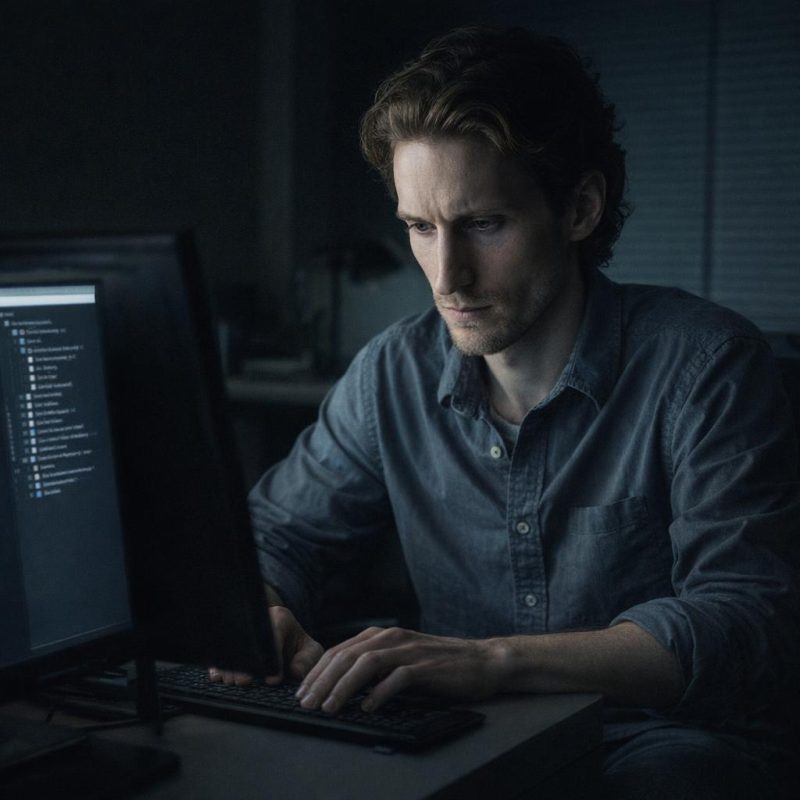 Image by RM AI
The Confidence in His Voice
The all-hands started at three in the main conference room, every chair filled, people standing along the back wall. Marcus opened with the quarterly numbers — revenue up eighteen percent, three new enterprise clients signed, pipeline looking strong. He had the slides memorized. He moved through them without looking at the screen, which he almost never did, and his voice had a quality to it I hadn't heard before, a kind of forward momentum, like he was building toward something rather than reporting on something. He talked about partnership opportunities in the pipeline, about strategic conversations with investors around scaling the platform. David asked about engineering headcount for next quarter and Marcus said they were planning to grow the technical team significantly, said it with a smile that landed somewhere between reassuring and something else I couldn't quite name. Amy presented the marketing roadmap and Marcus added commentary after each slide, enthusiastic in a way that felt slightly out of proportion to the content. I watched him from my seat near the back of the room. His posture, his timing, the way he held the room's attention without appearing to try. The meeting ended and people filed out talking, energized. The particular quality of Marcus's confidence during that presentation stayed in the room long after everyone had gone.
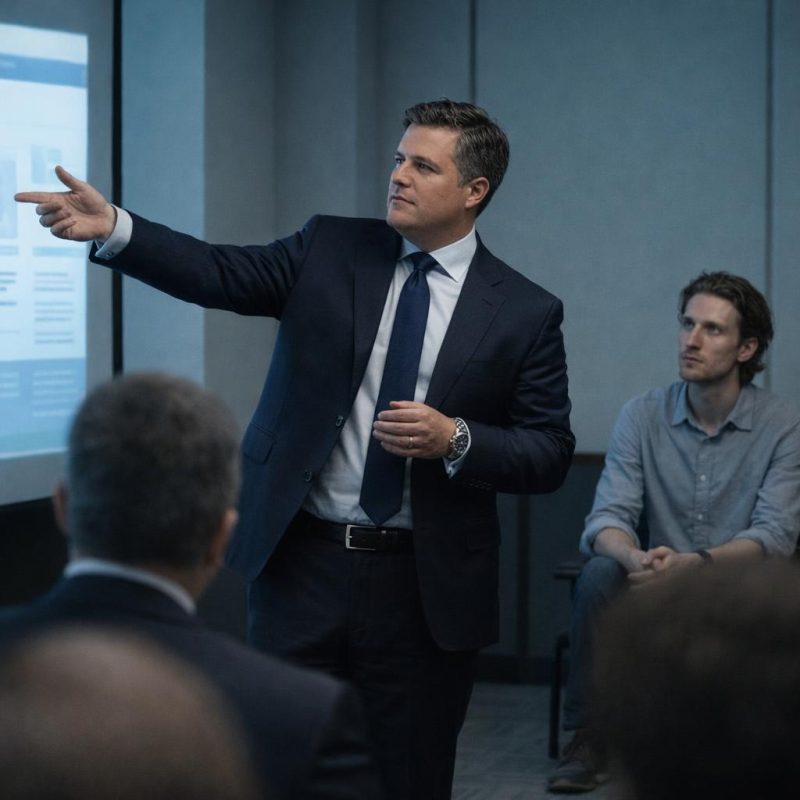 Image by RM AI
The Email Trail
I started pulling the email archive on Saturday morning, coffee going cold beside me, telling myself I was just looking for context. Three months of threads between me and Marcus, sorted by date. Most of it was ordinary — product decisions, investor prep, scheduling. But I started flagging anything where he'd asked me to put something in writing, and the flags started stacking up faster than I expected. There was the one asking me to outline my workload stress so HR could plan resource allocation. Another asking me to explain in writing why I'd missed the Hargrove dinner. One suggesting I consider taking some time off — for my mental health, he'd said, and he'd said it warmly, and I'd appreciated it at the time. Each message had felt like Marcus looking out for me. Standing in the middle of all of them now, something felt different, though I couldn't say exactly what I was looking at. Then I found the thread from September 12th, where he'd asked me to document my concerns about the acquisition timeline — said it would help him push back on the investors if he had something concrete from the technical side.
 Image by RM AI
The Quarterly Projections
Marcus came by my office around four-thirty Friday, which wasn't unusual, except that he closed the door behind him, which was. He asked about the technical roadmap for next quarter — casual, like he was just checking in. I walked him through the realistic timeline based on where the team actually was: the encryption module needed another six weeks minimum before it was client-ready, the API integration had two open dependencies, and I wasn't going to promise aggressive numbers I couldn't deliver. He listened, nodded, suggested the timeline might have room to compress if we prioritized differently. I said I'd look at it. We went back and forth on the encryption module's readiness for the acquisition discussions — he kept circling back to that specifically, asking about potential technical risks, what a buyer's due diligence team might flag. I gave him honest answers, careful ones. The whole conversation had a quality to it I couldn't quite name, like we were both reading from scripts we hadn't compared beforehand. He wrapped up by saying it would be helpful to have something written down before Monday's board meeting — my technical concerns, the risk assessment, all of it. Said the board would want to see it directly from me. I told him I'd have something ready. He smiled, thanked me, and left. On my desk, I wrote one word in the margin of my notepad: "Monday."
 Image by RM AI
The Digital Leash
I stayed late Friday after the office cleared out, the kind of quiet that only happens when the HVAC cycles down and the building stops pretending to be busy. I pulled up the encryption module's source tree and started working. What I was building wasn't complicated in concept — a biometric authentication layer buried three levels deep in the key management architecture, set to activate after seventy-two hours of normal operation. After that window, the system would require my fingerprint and retinal scan to re-authorize. To anyone reviewing the code at a surface level, it would look like a standard security checkpoint, the kind of thing you'd expect in enterprise-grade encryption. The modification was clean. I tested it twice against a sandboxed environment, watched it behave exactly as designed during the active window, then lock on schedule when the timer elapsed. I generated a separate set of master keys — the real ones — and moved them into my personal encrypted storage, air-gapped from anything the company's infrastructure could touch. The modified version went back into the deployment package, documented, labeled, indistinguishable from the original unless you knew precisely where to look and what you were looking for. I ran the final compile at eleven forty-seven. The terminal returned a single line: build successful.
 Image by RM AI
The Emergency Meeting Notice
The notification came Thursday evening while I was eating dinner at my kitchen counter — a calendar invite, the kind that arrives with that neutral little chime that means nothing until it does. I set down my fork and read it. 'Strategic Realignment.' Monday, nine AM, main boardroom. Attendees: me, Marcus, Jennifer, Tom, Richard. No agenda. No description. Just the title sitting there on my screen like a door with no handle. I did the math without meaning to. Thursday evening to Monday morning was three days, give or take a few hours. I'd seen that number before — in the departure agreement language Diane had flagged, in the timeline Marcus had been nudging toward in every conversation for the past two weeks. Three days. I put my phone face-down on the counter and finished eating, or tried to. The food had gone cold. I thought about the email archive, the documentation requests, the conversation about the technical roadmap, the encryption keys Marcus would be asking about soon enough. Everything had a shape now, even if I couldn't name all the edges yet. I washed my plate, dried my hands, and stood at the kitchen window for a while. The city outside kept moving. Monday was not a question anymore.
 Image by RM AI
The Audit Request
Marcus came into my office Friday morning carrying a coffee he hadn't brought for me, which told me something about the register of the conversation before it started. He said a potential acquisition partner had requested a technical audit of the encryption system — standard due diligence, he said, the kind of thing buyers always want before they commit. Their technical team needed the master keys to verify the architecture end-to-end. He said it like he was asking me to forward a calendar invite. I asked which acquisition partner. He gave me a name I didn't recognize, said the NDA prevented him from sharing more detail at this stage, said it with the kind of smooth patience that made the non-answer feel like a reasonable answer. I asked about the scope of the audit. He said their team just needed to confirm the encryption was what we'd represented it to be in the technical documentation. I asked about security protocols for key transfer. He said their team had a secure channel set up. Each answer arrived a half-second too quickly, too complete — something about the rhythm of it felt off to me, though I couldn't have said exactly why. I kept my face neutral and said I'd need to check the key management procedures before handing anything over. He nodded, said that was fine, said he just needed everything ready because the buyer's team had to verify the encryption system by end of day Friday.
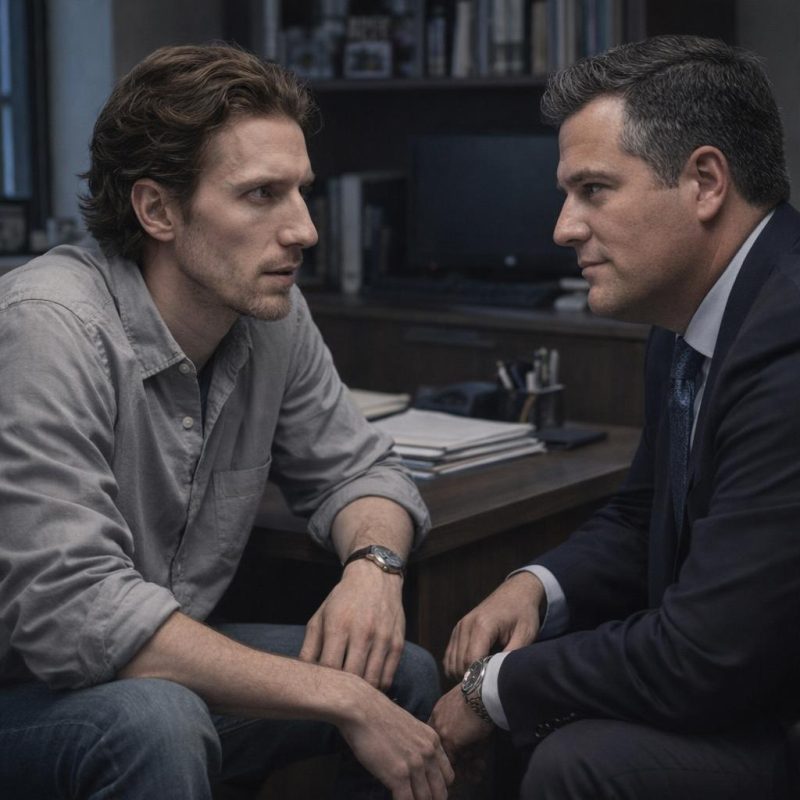 Image by RM AI
The False Keys
I spent forty minutes in my office preparing the key package, which was thirty-eight minutes longer than it needed to be and two minutes of actual work. The documentation I put together looked thorough — technical specifications, version history, integration notes, the kind of paperwork that signals competence and completeness to someone who isn't going to read past the first page. The keys themselves were the modified set, the ones with the seventy-two-hour authentication window built into the architecture three levels down. They would work perfectly. Any technical team running verification against them would get clean results, valid handshakes, full system access. Until Monday afternoon, give or take, when the biometric checkpoint would activate and the whole thing would go quiet. I walked the package down to Marcus's office myself. He was on a call, held up one finger, wrapped it in under a minute. I set the folder on his desk and walked him through the top-level specs — enough detail to sound thorough, not enough to invite questions. He flipped through the first few pages, nodded, said the acquisition team would be relieved to have this before the weekend. He thanked me for the quick turnaround. I said it wasn't a problem. He picked up the folder and I watched him tuck it under his arm, already moving toward his next task, his expression easy, uncomplicated — the look of someone whose afternoon had just gotten simpler.
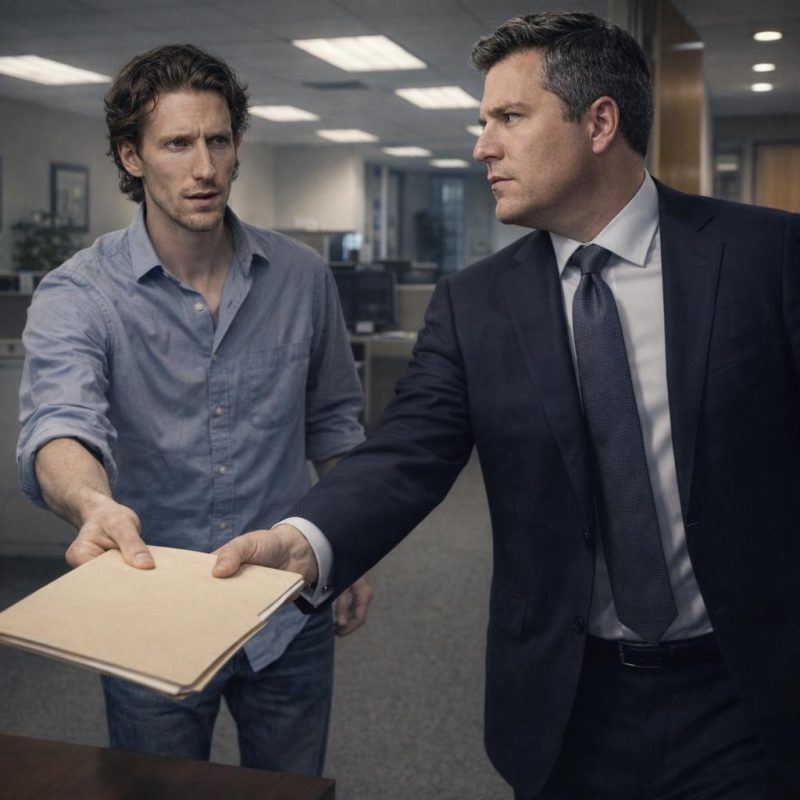 Image by RM AI
The Night Shift
Everyone was gone by seven. I waited until seven-thirty anyway, just to be sure, then I started. I had a list — not written down anywhere, just held in my head — of every directory, every research branch, every provisional patent file that was mine in origin even if it lived on company servers. I worked through it methodically, top to bottom. Before deleting anything from the local drives, I verified the encrypted copy had landed clean in my private cloud storage, checked the hash, confirmed the file integrity. Then I deleted. It wasn't fast work. Some of the research went back two and a half years, nested inside project folders that had accumulated like sediment. I was careful not to touch anything that belonged to the company's core product — the platform stayed intact, the client-facing systems stayed intact, the shared engineering work stayed intact. What I was removing was mine: the foundational research, the algorithmic work that predated the company, the patent-pending material Diane had helped me document. By two in the morning I was running on bad vending machine coffee and the particular focus that comes when you're too tired to be distracted. The office windows had gone fully dark against the city glow outside. I kept working. Somewhere around five-thirty, the last transfer queue finished moving, and the progress bar on my screen crossed to one hundred percent and held there, quiet and complete, as the first gray light started showing at the edges of the windows.
 Image by RM AI
The Private Fortress
Saturday morning I sat down with the private cloud storage dashboard and went through everything from the top. The architecture was completely separate from anything the company's infrastructure could reach — different credentials, different authentication chain, biometric access controls tied only to me. I pulled up the provisional patent files one by one and verified the encryption on each. I checked the access logs to confirm no company credentials had touched the storage at any point. I ran a test decryption on three of the larger research files to make sure the data had transferred without corruption. Everything came back clean. I built a complete inventory document — file names, hash values, storage locations, access procedures — and sent a copy to Diane with a note that she'd understand when she read it. Then I leaned back in my chair and looked at what I'd built over the past forty-eight hours. Whatever happened Monday, the encryption architecture I'd developed was sitting in a storage environment with no path in except through me. The keys I'd handed over would hold through the weekend. And the research that mattered most — the foundational work, the patent-pending material — was somewhere it couldn't be reached without my say-so. My phone buzzed on the desk beside me: an automated confirmation from the cloud system, timestamped 9:14 AM Saturday, reporting that the final encrypted backup had completed successfully.
 Image by RM AI
The Friday Normalcy
I got to the office at my usual time Friday morning — 8:47, give or take, same as always. Amy was already at her desk, and she handed me a coffee and the day's schedule without looking up from her tablet, the way she always did. I thanked her, took the cup, and walked to my office like it was any other Friday. Marcus passed me in the hallway around nine and asked if I'd reviewed the client deck one more time. I told him I had. He clapped me on the shoulder and said something about a strong quarter, and I smiled and agreed. I answered team emails about a routing issue in the API layer. I sat in on a fifteen-minute standup. I refilled my coffee. Every twenty minutes or so I picked up my phone and checked for a message from Diane, then set it face-down on the desk again. Nothing yet. The office hummed around me — keyboards, the HVAC, someone laughing in the kitchen down the hall — and I moved through all of it like a man walking through a film set, hitting every mark, saying every line, while somewhere underneath the performance the clock kept running.
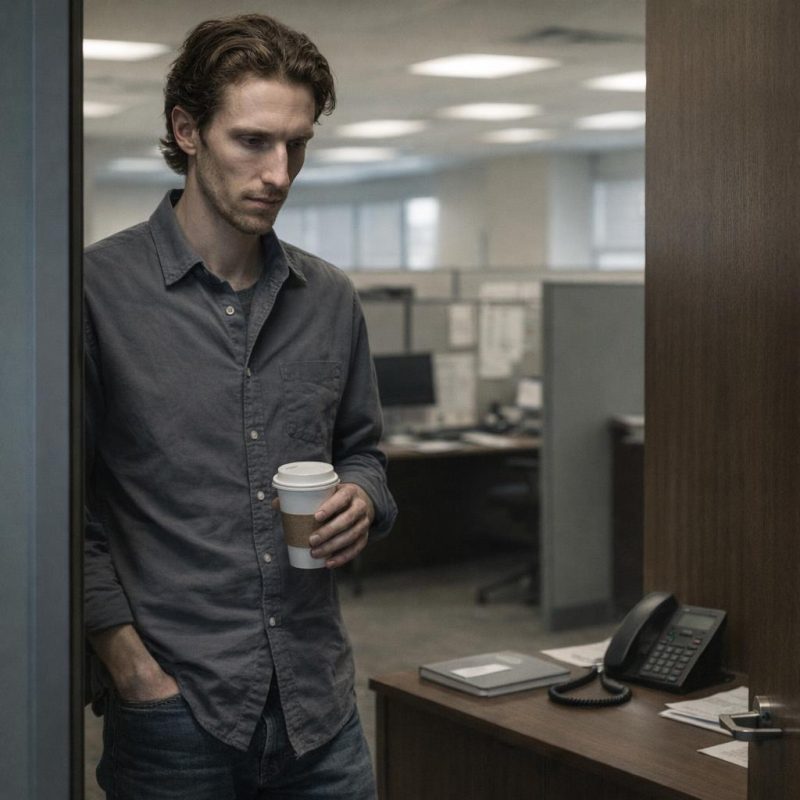 Image by RM AI
The Celebration Invitation
Marcus appeared in my doorway around four-thirty, jacket still on, looking like a man who'd had a good day. He said he wanted to grab drinks — just the two of us, like old times. Said we should toast the quarter, toast twelve years, toast everything we'd built from nothing in a rented office with secondhand servers and too much coffee. I told him that sounded good. He named the bar two blocks over, said six o'clock, and I said I'd be there. He stood in the doorway for a moment longer and talked about how proud he was of what we'd put together, how rare it was to build something that actually lasted. He mentioned the board meeting Monday like it was a milestone, something to look forward to. I kept my expression easy and said something about it being a big week. He nodded, satisfied, and left. I sat there after he was gone and looked at the empty doorway. Twelve years. He'd said it like it meant something to him, and maybe it did — I genuinely couldn't tell anymore. The invitation hung in the air of the quiet office, civil and warm and completely at odds with everything I'd spent the last two weeks doing.
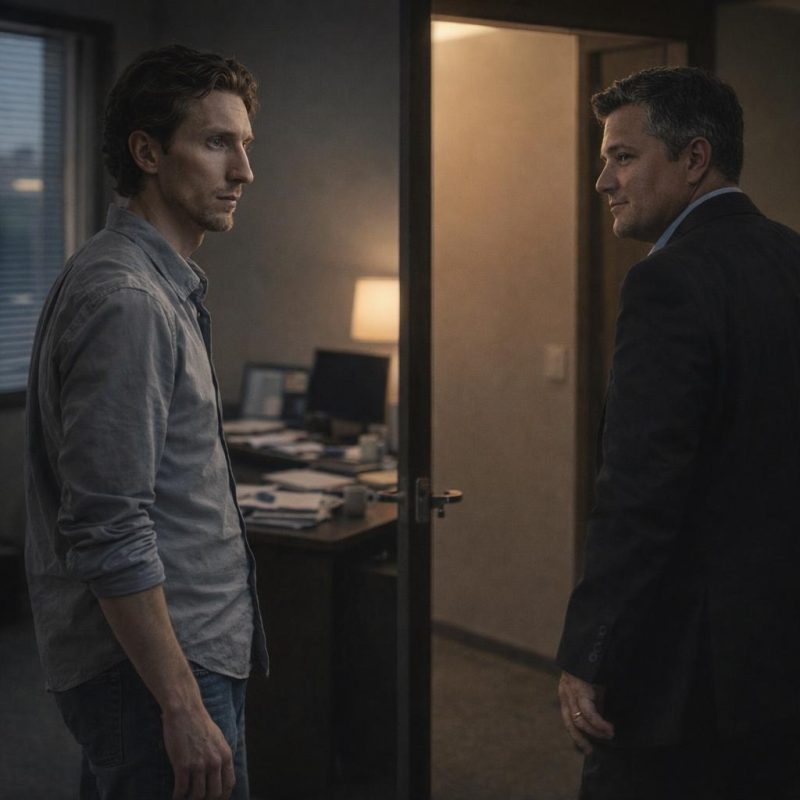 Image by RM AI
The Scotch and Lies
The bar was the kind of place we'd been going to for years — dark wood, good scotch, bartender who knew our order. Marcus was already there when I arrived, two glasses waiting. He looked relaxed. He talked about the stress of running a company at scale, how the demands compound year over year, how even people who love what they do can hit a wall. I nodded and sipped my drink and let him talk. He said the board had been discussing sustainable leadership structures — that it was normal at this stage of growth, nothing personal, just good governance. He talked about making sure the people who built something were taken care of financially when the time came to hand off certain responsibilities. He used words like transition and wellbeing and long-term security, and each one landed with a kind of careful precision that I filed away without reacting to. I watched his face while he spoke — the practiced ease of it, the way the concern looked completely genuine. Then he set his glass down, looked at me directly, and said he'd been thinking a lot about my future lately, and that whatever happened, he wanted to make sure I was okay.
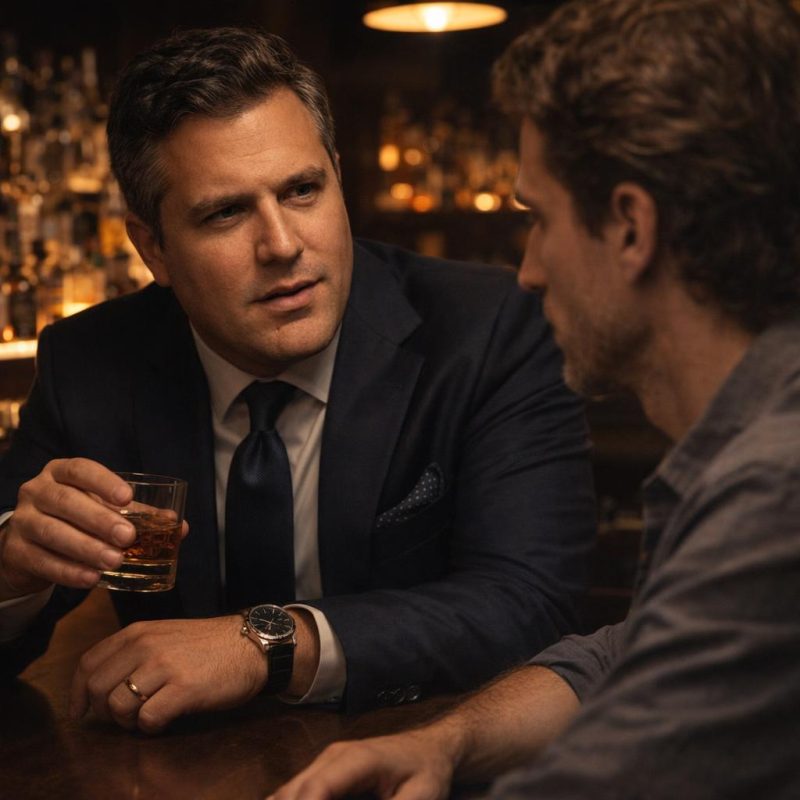 Image by RM AI
The Midnight Deadline
I was home by nine. I changed out of my jacket, made a pot of coffee I didn't need, and opened my laptop at the kitchen table. Diane had everything staged — seven transfer documents, each one tied to a provisional patent number, formatted for electronic submission to the patent office database. I went through them one at a time. Patent numbers matched the inventory I'd built. Holding company information was correct on every page. I cross-referenced three of them against the encrypted backup manifest just to be sure. Everything lined up. I queued the submissions and watched the clock on the laptop screen. 11:41. 11:49. 11:54. The apartment was completely quiet except for the refrigerator cycling on in the kitchen. I had the submission interface open, cursor sitting on the final confirm button, and I didn't move it. 11:57. I clicked. The progress bar ran for about four seconds, and then the screen returned a submission receipt with a timestamp reading 11:58 PM.
 Image by RM AI
The Official Record
I didn't close the laptop. I just sat there with the submission receipt on the screen and waited. The apartment was dark except for the desk lamp and the glow of the monitor. I made myself drink the rest of the coffee, which had gone lukewarm. At 12:14 AM, the email arrived — patent office address in the sender field, subject line reading Official Transfer Recordation Notice. I opened it. All seven provisional patents were listed by number. The holding company was recorded as the new legal owner on each one. The email included a link to the public patent database, and I clicked it and pulled up the first entry. The transfer was there, timestamped, publicly visible. I checked the second. Then the third. I went through all seven. The encryption architecture that had been the centerpiece of every pitch Marcus had made to outside buyers over the past month was no longer company property — at least not in any way the public record would confirm. I read the confirmation email one more time from the top, slowly, and the words didn't change.
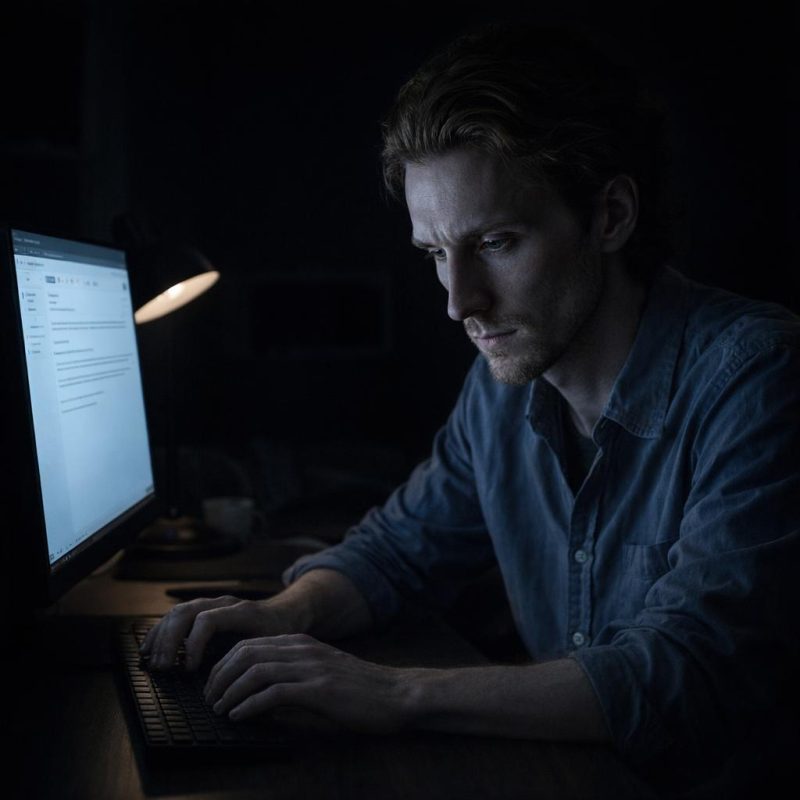 Image by RM AI
The Weekend Preparation
Saturday morning I printed everything. The transfer confirmations, the patent recordation notices, the access logs I'd pulled from the IP database showing the unusual query patterns over the past six weeks, the departure agreement language Diane had flagged, the encrypted backup manifest with its hash values and timestamps. I organized it into a single binder, tabbed and indexed, the way I used to organize technical documentation before a major product review. Then I called Diane, confirmed everything on her end was secure, and told her I'd see her Monday. She said she'd be ready. I spent the rest of Saturday and most of Sunday going through the material again — not because anything had changed, but because I needed to know it cold. Every date. Every file number. Every access timestamp. By Sunday afternoon I could recite the sequence of events from memory without looking at the binder. Sunday evening I sat at the kitchen table with a cup of tea and went through my talking points one final time, out loud, to no one. The documents were stacked neatly beside me. The position was as solid as I could make it, and I knew it.
 Image by RM AI
The Final Night
I went to bed at eleven and was still awake at one. I lay there running scenarios. In the most straightforward version, I walked in, laid out the documentation, and the board had no choice but to engage with what was in front of them. In the harder version, Marcus had something I hadn't accounted for — some angle I'd missed, some conversation with the investors that had already shifted the ground. I turned that one over for a while. I thought about the things he'd said at the bar, the careful language about transitions and wellbeing, and I wondered how long those talking points had been in development. I thought about Richard and Tom, whether either of them had been told anything yet, whether they'd walk in Monday already positioned. I thought about twelve years of building something and what it felt like to be sitting in the dark running contingency plans against the person I'd built it with. Around two in the morning I stopped trying to sleep and just let the ceiling be the ceiling. The binder was on the kitchen table where I'd left it. Monday was four hours away. The full weight of what the next morning would set in motion settled over me and didn't lift.
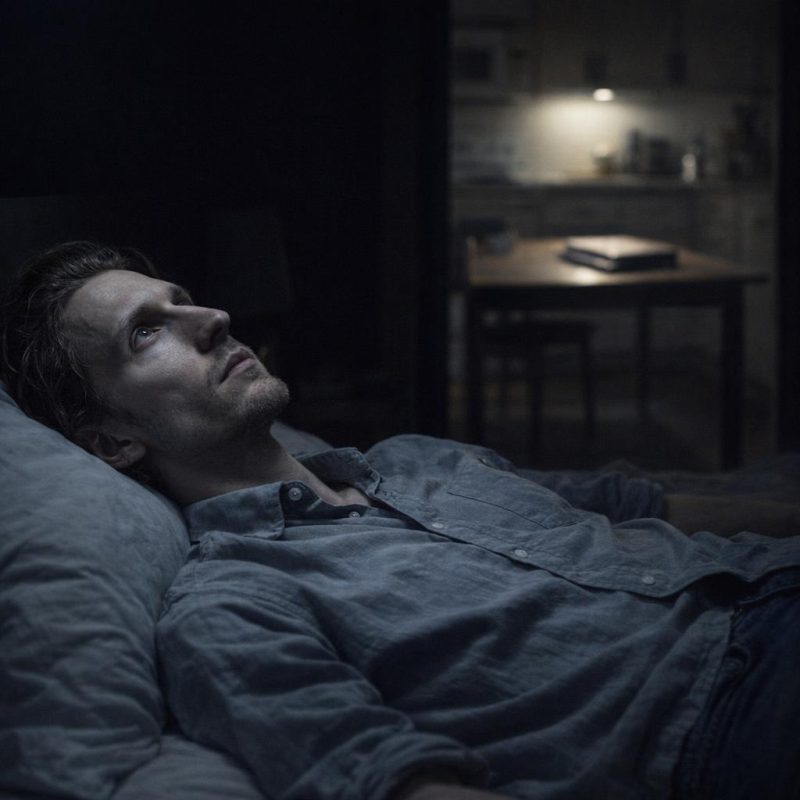 Image by RM AI
The Morning of Reckoning
I woke at six without an alarm. I showered, put on the good suit — the one I wore to the Series A close, the one I almost never touched anymore — and made coffee I actually drank. I packed the binder into my briefcase along with a second copy of the patent transfer confirmations in a separate folder, the way you bring a backup drive to a presentation you can't afford to lose. I drove in early, before the traffic built up, and pulled into the garage at 8:28. The elevator to the thirtieth floor was empty. I walked through the office suite, past the rows of desks that weren't filled yet, past Amy's station, past the glass wall of the conference room where we'd pitched our first enterprise client nine years ago. The boardroom door was at the end of the hall, closed. I could see light under it. I stood there for a moment with my briefcase in my hand, the building quiet around me, and then I walked toward it, knowing that whatever had been true about this company for the last twelve years was about to be something different.
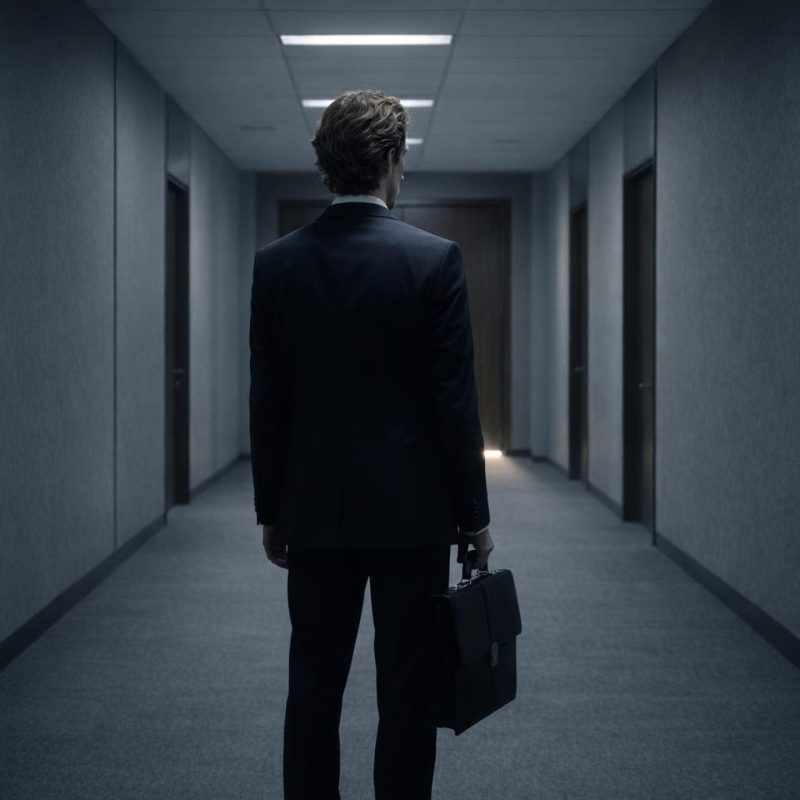 Image by RM AI
The Boardroom Awaits
I pushed the boardroom door open at 8:55 and they were all already there. Jennifer sat to the left of the head position, tablet open, stylus in hand, not looking up. Tom was beside her, phone face-down on the table for once, which I noticed. Richard sat across from them, hands folded, expression unreadable in the way that expensive legal training produces. And Marcus — Marcus was at the head of the table, the departure agreement folder positioned in front of him like a prop he'd rehearsed placing. He looked up when I came in and gave me the smile, the one I'd seen him use on clients for twelve years, warm and practiced and exactly the right wattage. 'Elias,' he said. 'Glad you're here.' I said good morning to the room, set my briefcase on the floor beside my usual chair, and sat down across from him. The folder sat between us like something neither of us was ready to name yet. I folded my hands on the table and waited, and the weight of it — all of it — settled quietly into my chest.
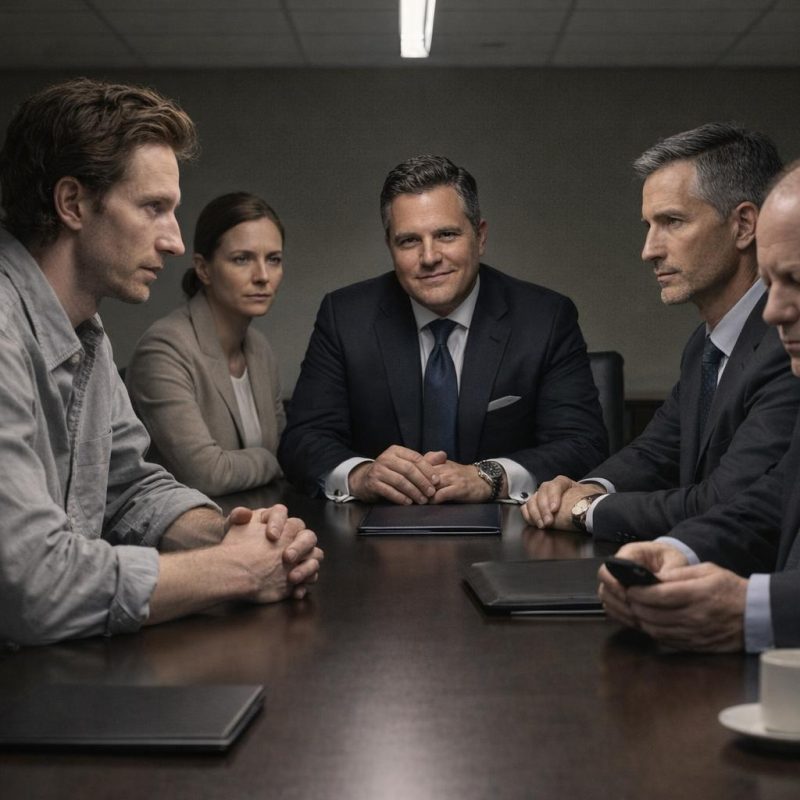 Image by RM AI
The Praise Before the Fall
Marcus clicked to his first slide and I watched the room. That was the thing about being the person everyone expected to be blindsided — nobody was watching me watch them. The slide read 'Foundational Leadership: Twelve Years of Technical Excellence,' and Marcus began talking about my contributions the way a eulogy talks about someone who can't object. He described the encryption architecture I'd built in year three, the authentication framework that became our core product, the provisional patents that had made Aegis Tech worth acquiring in the first place. His voice was measured, appreciative, the kind of tone that sounds like respect until you notice it's past tense. Jennifer kept her eyes on her tablet, stylus moving in small, precise strokes. Tom had his hands flat on the table, listening with the careful attention of someone who'd been briefed. Richard watched Marcus with the neutral expression of a man who'd sat through a hundred of these meetings and knew exactly what shape they took. I looked at each of them in turn, reading for anything — a flicker, a tell, a glance exchanged. Their faces gave me nothing, smooth and professional as conference room glass.
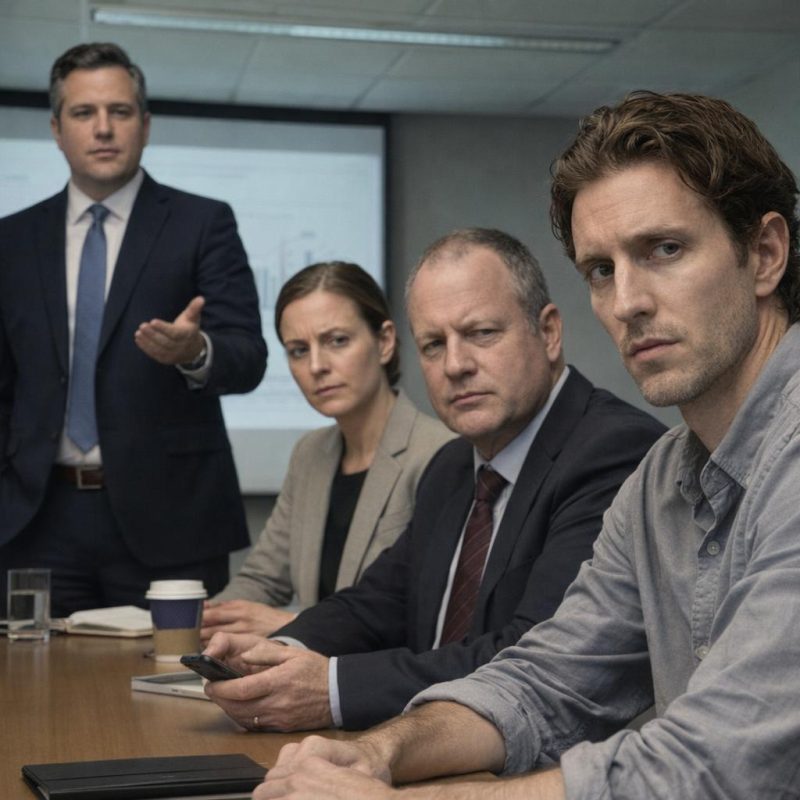 Image by RM AI
The Pivot to New Blood
The next slide was titled 'Strategic Evolution' and Marcus's tone shifted just enough that you'd only catch it if you were listening for it. He talked about scaling challenges, about the different skill sets required at different stages of a company's growth, about how the most visionary founders sometimes serve their companies best by stepping into advisory roles. He referenced investor feedback — careful not to name anyone at the table — about the need for fresh technical leadership as Aegis moved toward enterprise-scale deployment. He said the word 'transition' four times. He said 'fair compensation' twice. He talked about honoring foundational contributions while positioning the company for its next chapter, and every sentence was constructed to sound reasonable, even generous, the way a trap looks like a door when it's open. Tom and Richard stayed quiet. Jennifer hadn't looked up from her tablet. I kept my hands still on the table and my face neutral and I watched Marcus reach for the folder in front of him, open it, and slide the separation agreement across the table toward me.
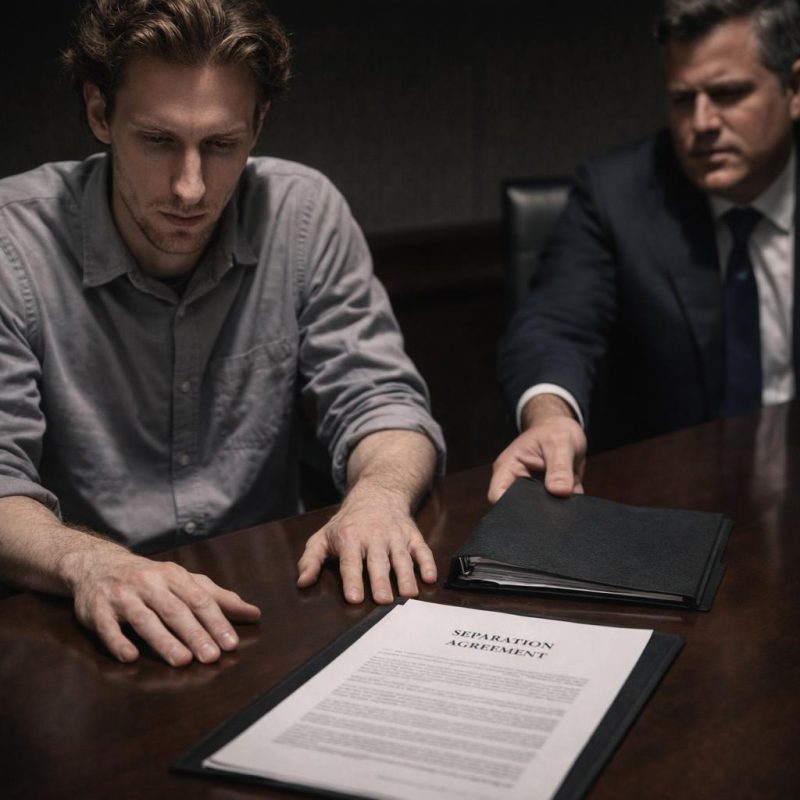 Image by RM AI
The Refusal
I let the folder sit there for a moment before I opened it. The first page was dense with legal language — severance terms, non-compete clauses, IP assignment provisions that would have handed over everything I'd built in exchange for a number that looked large until you understood what it was buying. Marcus was already talking, walking me through the headline figures, his voice carrying the smooth confidence of someone who'd rehearsed this part. I read the first page to the bottom, closed the folder, and set my hands flat on top of it. 'I won't be signing this,' I said. I kept my voice even, the way you keep your hands steady when you're defusing something. Marcus stopped mid-sentence. The practiced confidence on his face didn't disappear — it just went somewhere uncertain, like a signal losing its tower. Jennifer looked up from her tablet for the first time since I'd walked in. Tom and Richard exchanged a glance that lasted less than a second but covered a lot of ground. Marcus asked me to reconsider, said it was in the company's best interest, said the timeline was important. The silence that followed my refusal filled the boardroom.
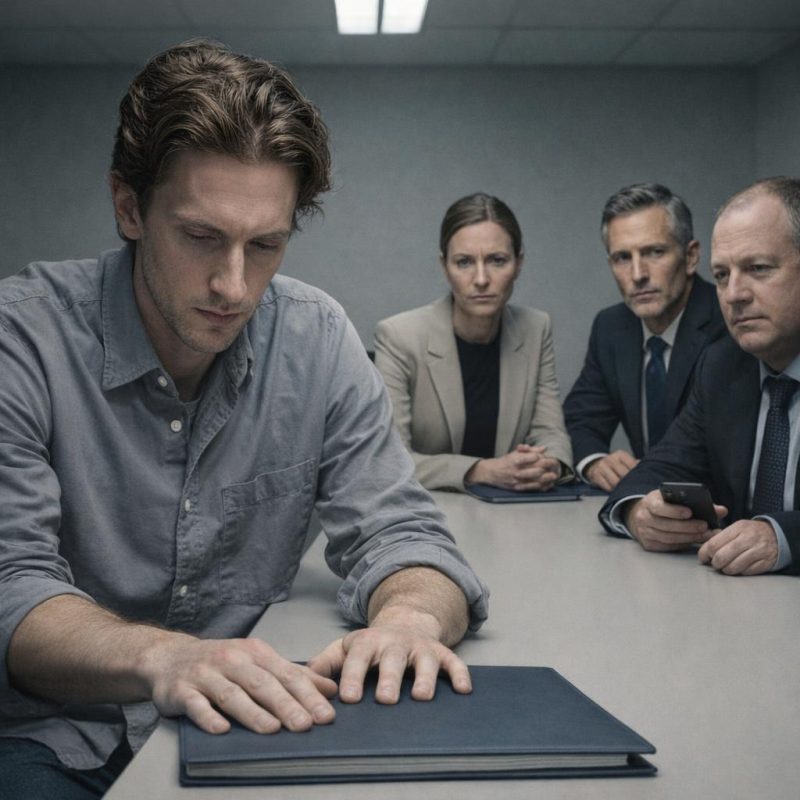 Image by RM AI
The IP Transfer Revelation
Richard asked the question I'd been waiting for — what exactly did I mean when I said I wouldn't sign, and what did I intend to do instead. I reached down and unzipped my briefcase. I told them that seven provisional patents had been transferred out of Aegis Tech's ownership at midnight on Friday, filed through my private holding company, confirmed and logged by the patent office before this meeting was ever scheduled. I listed them by name: the adaptive encryption framework, the biometric authentication stack, the zero-trust key distribution protocol, and four others. The technology Marcus had been showing to acquisition partners for the past three months. The technology the entire valuation was built on. Marcus's face went the color of old paper. Jennifer leaned forward, and I watched her read with the focused attention of someone doing rapid arithmetic. Tom said, quietly, 'What does this mean for the acquisition discussions?' I reached into my briefcase and pulled out the patent office confirmations.
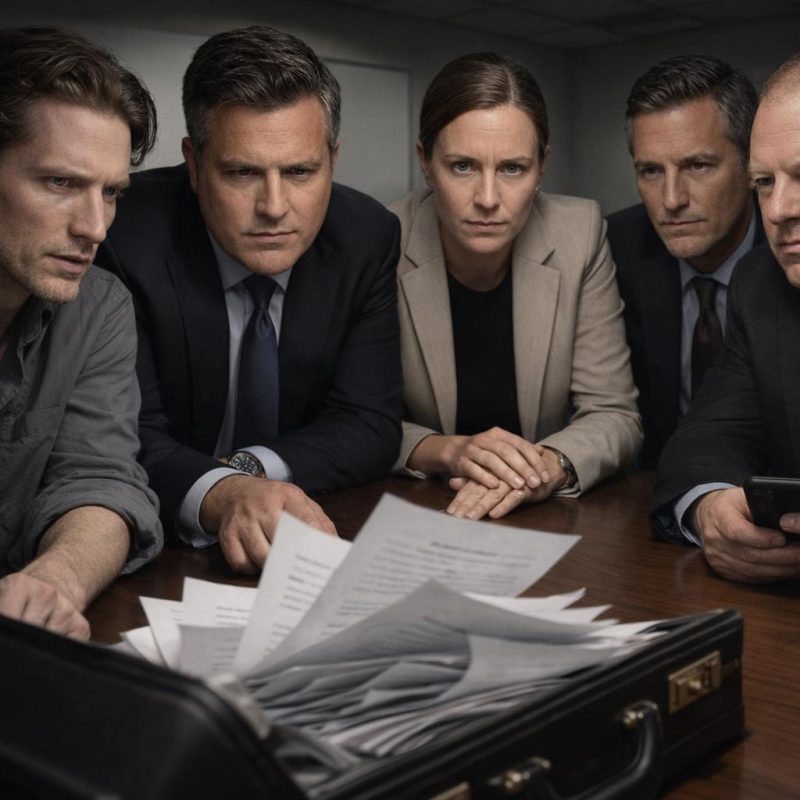 Image by RM AI
The Expiring Keys
Richard was the one who asked about the encryption keys — specifically, the access keys Marcus had provided to the acquisition partners during due diligence. I told him those keys were real when they were issued. I also told him they were time-limited, built on a seventy-two-hour authentication window that I'd architected into the system three years ago as a security feature. That window would close at 3:00 PM today. After that, the keys Marcus had handed over would stop functioning, and reauthorization required biometric verification — my fingerprint and retinal scan, registered as the sole authorized credentials in the system. Jennifer asked if I was describing sabotage. I told her I was describing intellectual property protection, and that the distinction mattered legally. Tom asked what it meant for the company's valuation if the core technology required my ongoing authorization to access. I told him it meant exactly what he thought it meant. Nobody spoke for a moment after that. Marcus sat very still, and I could see him working through the arithmetic the same way Jennifer had, arriving at the same answer from a different direction. The room had changed temperature without anyone touching the thermostat, and the reality of what I'd done settled over it like a weather system moving in.
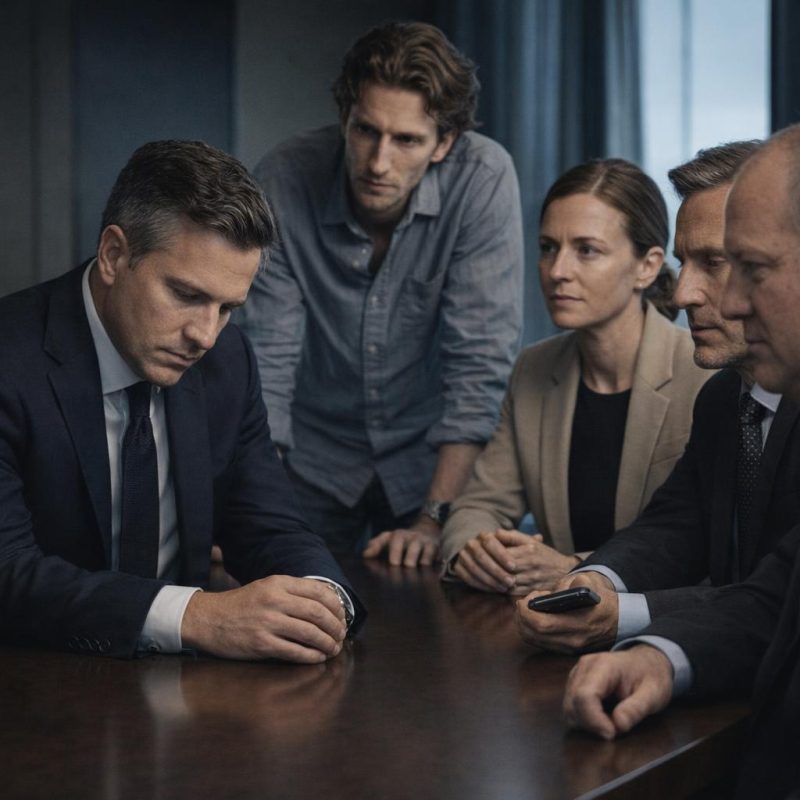 Image by RM AI
The Collapse
Marcus stood up. That was the first mistake — standing when everyone else was seated is a dominance move, but it only works when you have the room. He said I had acted against the company's interests, that what I'd done with the patents and the keys was a deliberate attempt to undermine a legitimate strategic process. I stayed in my chair and let him talk. Richard interrupted before Marcus finished his second sentence and asked, in the measured tone of someone who had already done the math, when exactly Marcus had planned to inform the board about the departure agreement. Marcus said it was being presented at this meeting. Tom pointed out, without inflection, that the agreement was dated eleven days ago. The room absorbed that. Jennifer said nothing. Marcus said the document had been prepared in advance as a formality, that the intent was always to discuss it collaboratively. Richard asked about a clause in the agreement referencing three months of prior stakeholder alignment. Marcus opened his mouth and then closed it. He tried again, something about process and timing, and the words came out in the wrong order. I watched him from across the table, and the certainty that had carried him into this room drained steadily from his voice as he tried to explain.
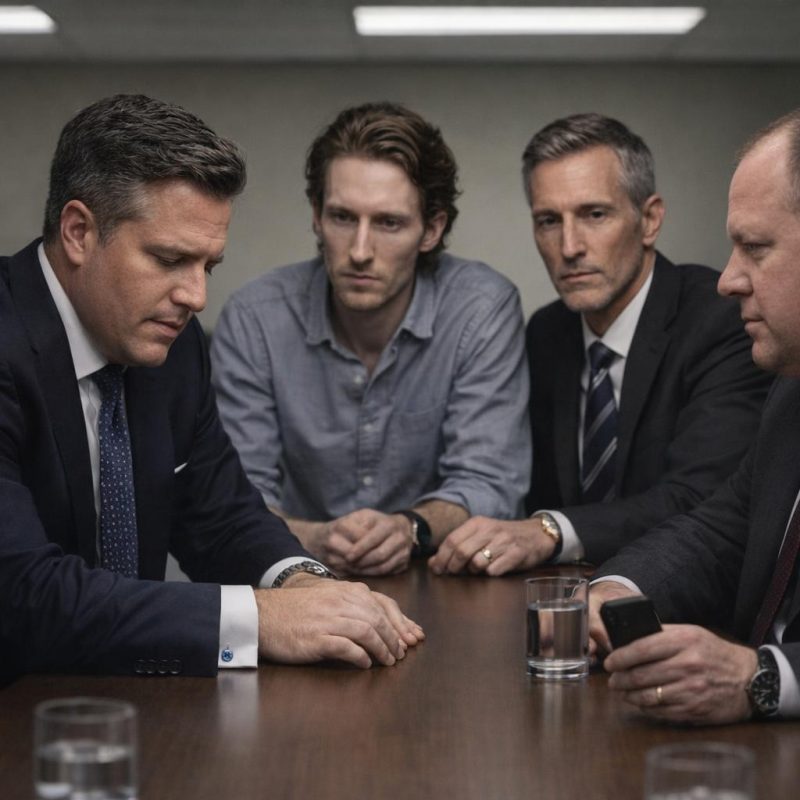 Image by RM AI
The Puppet Master Revealed
Jennifer set her tablet face-down on the table, which was the first time she'd put it down since the meeting started. She addressed the room in the calm, unhurried voice of someone who had already decided what came next before she walked through the door. She said that the events of the morning had made one thing clear: both founders had demonstrated they were unable to prioritize the company's interests over their personal conflict. She proposed that the board consider a leadership transition that removed both Marcus and me from operational roles and brought in professional management. Marcus turned to look at her. It was the first unguarded expression I'd seen on his face in years — not anger, not calculation, just the raw confusion of someone who had just discovered the floor wasn't where he thought it was. Jennifer referenced conversations she'd had with acquisition partners about leadership concerns, conversations that predated this meeting by months, conversations that neither Marcus nor I had been part of. Tom and Richard sat very still. I had come into this room thinking I understood the shape of what Marcus had built against me. But I watched Jennifer pick up the patent confirmation sheet, and her expression moved — the careful neutrality she'd worn all morning sliding away, replaced by something colder and more precise: the look of someone whose larger plan had just met an obstacle she hadn't placed there.
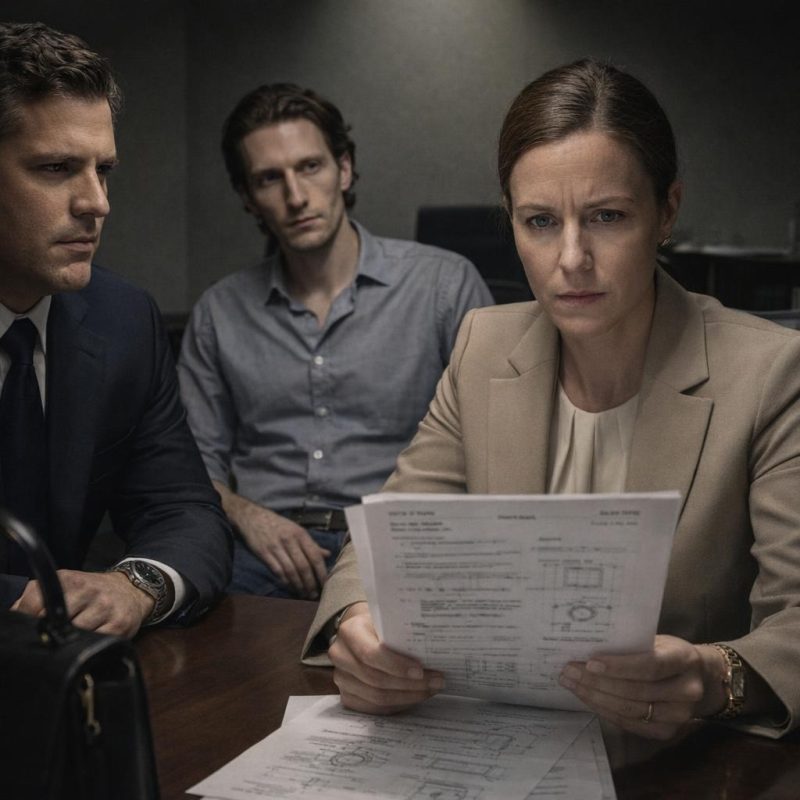 Image by RM AI
The Larger Game
I turned away from Marcus and looked directly at Jennifer. Not the polite, measured look I'd been giving her all morning — a direct, unambiguous look that said I was done pretending. I told her I wanted to walk through a timeline. Three months ago, Marcus approached her with concerns about my leadership. She encouraged him to document those concerns. She suggested the encryption key audit request — the one that gave Marcus grounds to claim I was creating operational risk. She drafted the framework language that ended up in the departure agreement. And while all of that was happening, she was already in conversations with acquisition partners about a distressed-valuation purchase. I said it plainly: she hadn't been helping Marcus remove me. She'd been using Marcus to destabilize the company so she could buy it cheap and flip it fast. Jennifer didn't deny it. She said she had identified an opportunity and acted on it, which in her world apparently passed for an explanation. Tom looked like someone had pulled the floor out from under him. Richard had gone very still. And then Marcus said her name — just her name, nothing else — and I watched his face as the full shape of what she'd done to him began to settle in behind his eyes.
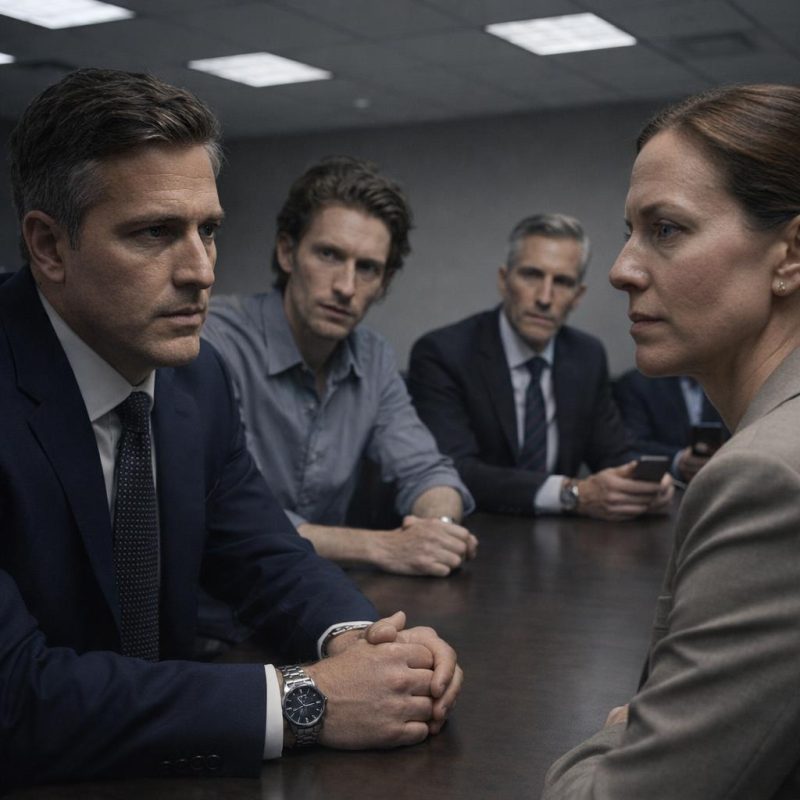 Image by RM AI
The Fire Sale Plan
Richard's voice came out flat and deliberate when he asked Jennifer to explain herself. Not a request — a demand from someone who had just realized he'd been sitting at a table with a person playing an entirely different game. Jennifer straightened in her chair and said she had identified a structural opportunity. She said she'd encouraged Marcus to pursue a leadership transition because the company's trajectory under dual founders had become a liability. She admitted she'd had conversations with acquisition partners before this meeting — before Marcus had even filed the departure agreement. She said she'd structured a deal to acquire Aegis Tech at a distressed valuation once both founders were removed, then resell immediately to the same acquisition partner at full market price. Tom asked, very quietly, whether she understood what a fiduciary duty was. Jennifer said she was creating value for her own investment, which was entirely within her rights. Richard said that was not what their investor agreement said, and his voice had an edge I hadn't heard from him before. Marcus hadn't moved. He was staring at the table like he was reading something written there that no one else could see. Tom leaned forward and asked Jennifer directly: she had buyers lined up to purchase the company at ten times what she intended to pay.
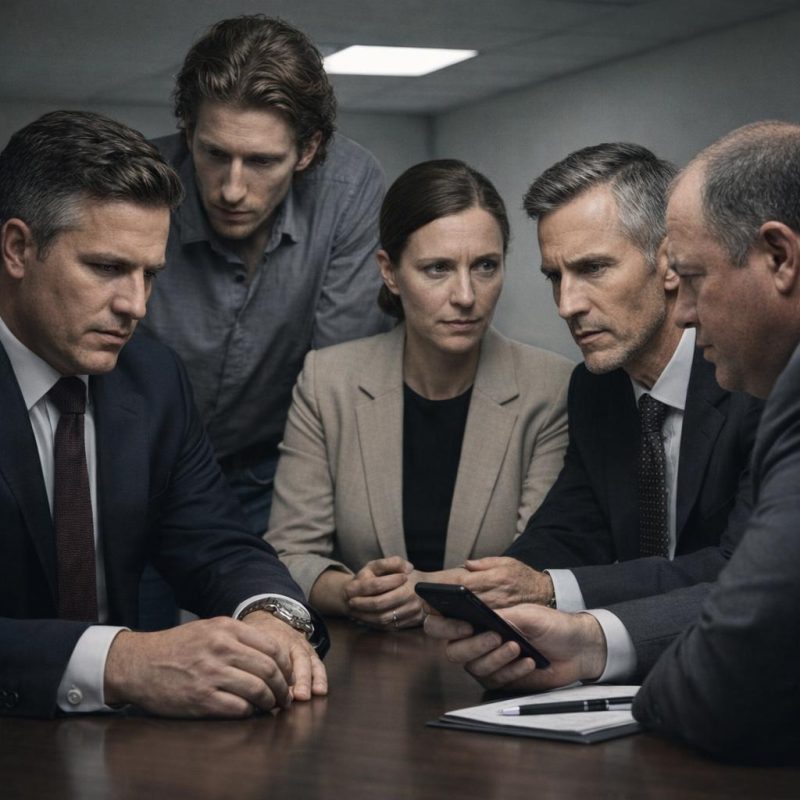 Image by RM AI
The Alliance Fractures
Tom didn't raise his voice. That was the thing that made it land harder. He said, in the same measured tone he used to discuss quarterly projections, that what Jennifer had described was self-dealing — a textbook breach of fiduciary duty to every other investor at the table. Richard agreed without hesitation. He said her manipulation of Marcus went well beyond acceptable business practice and that their investor agreement had explicit provisions against exactly this kind of conduct. Tom told her she needed to recuse herself from all company decisions, effective immediately. Jennifer said she was acting within her rights as a majority investor and that the board didn't have the authority to compel her recusal. Richard said they absolutely did, and that if she didn't step back voluntarily, they would pursue legal remedies. I stayed quiet. I had spent three months building toward this moment and I didn't need to say a word — Tom and Richard were doing the work for me, and they were doing it better than I could have. Marcus sat beside me without speaking. He hadn't touched the departure agreement since he'd set it down. Jennifer looked at Tom, then at Richard, and for the first time all morning her expression carried something that wasn't calculation — just the stillness of someone who had run out of moves and hadn't admitted it to herself yet.
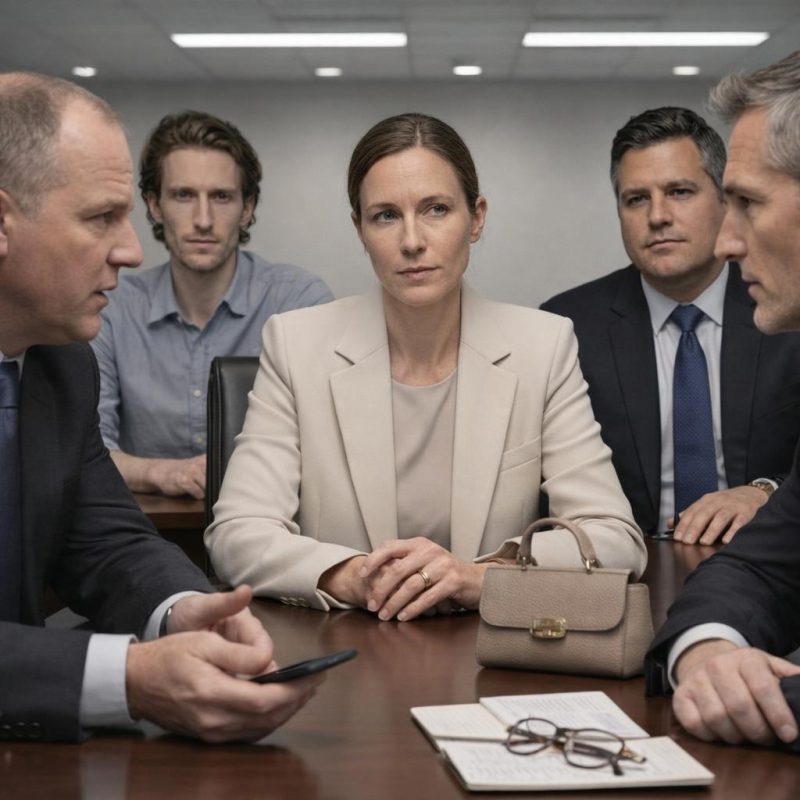 Image by RM AI
The Demand for Accountability
Richard asked Jennifer to detail every meeting she'd had with Marcus over the past three months. He wanted dates, locations, and the substance of every conversation. He wanted to know exactly what she had told Marcus about me, what language she had suggested for the departure agreement, and whether she had drafted any of it herself. Tom added that he wanted access to all written communications between her and Marcus — emails, texts, anything in writing. Jennifer set her pen down on the table. She said she would not answer any questions without her attorney present. Richard said her refusal confirmed everything we'd already laid out. Tom said he would be contacting his own legal counsel before the end of the day and that Jennifer should expect a formal inquiry into her conduct. Jennifer didn't respond to that. She began gathering her materials — the tablet, the folder she'd brought in, the pen she'd just set down. She moved with the same unhurried precision she'd had when she walked in, as if she were simply wrapping up a routine meeting that had run slightly long. Nobody stopped her. Nobody said anything else to her. She walked out and the door clicked shut behind her, and the silence she left in that boardroom had a weight to it that none of us seemed ready to disturb.
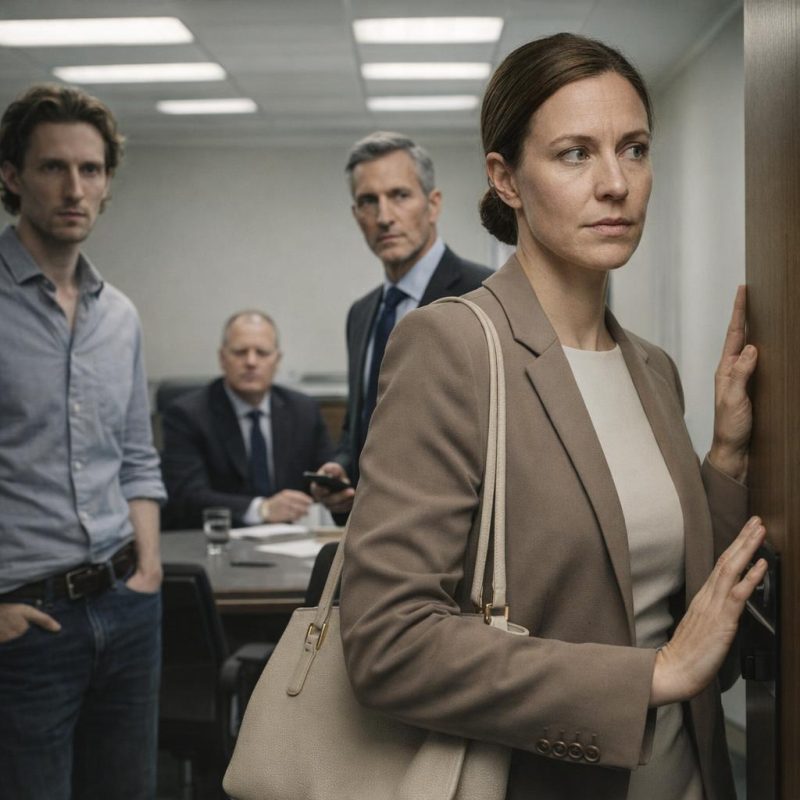 Image by RM AI
Marcus Understands
For a long moment after Jennifer left, nobody spoke. Then Marcus picked up the departure agreement — the one he'd brought in that morning, the one with my name on the signature line — and set it back down in the center of the table. He didn't look at Tom or Richard. He looked at the room in general, the way someone does when they're talking to themselves as much as anyone else. He said he had gone to Jennifer three months ago because he believed the company needed a change in direction. He said she had listened carefully, asked the right questions, and then told him exactly what he needed to hear. She'd suggested the documentation strategy. She'd suggested the audit request. She'd given him the framework language and told him it was standard practice for founder transitions. He said he had believed he was protecting the company's future. He said he hadn't questioned her motives because her interests had seemed aligned with his. Then he looked at me — directly, for the first time since the meeting started — and said he understood now what he had done. He didn't ask me to say anything back. He didn't ask for anything at all. He just sat with it, and the hollow recognition in his voice when he said it was the only honest thing he'd offered all morning.
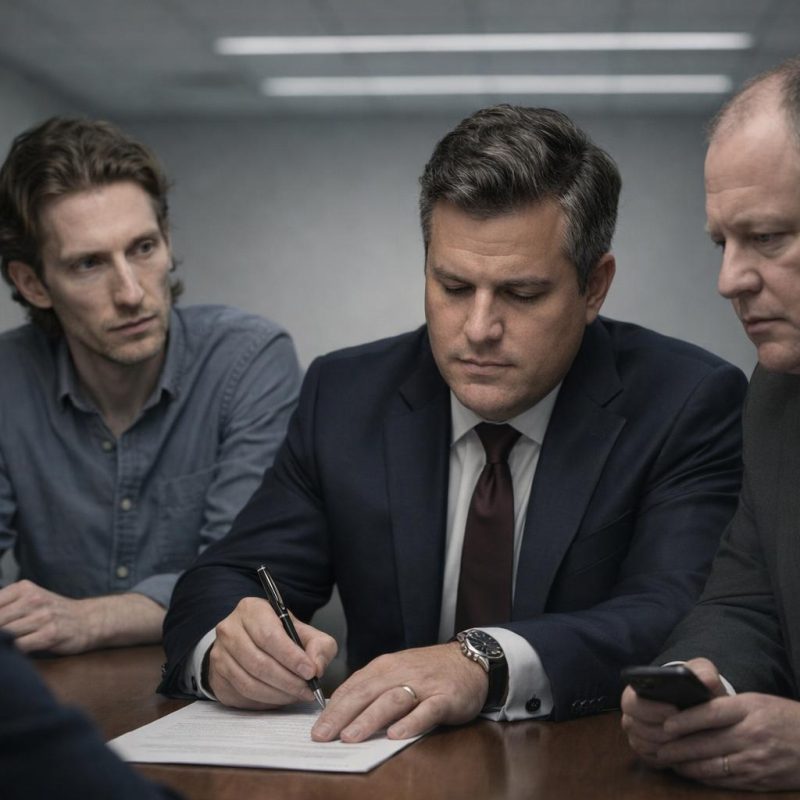 Image by RM AI
The Terms of Departure
I let the silence hold for another few seconds. Then I addressed Tom and Richard directly, because they were the only people in the room whose opinions still had any practical weight. I told them I was prepared to leave Aegis Tech, but I would be doing it on my own terms. Full ownership of the seven transferred patents would remain with my holding company — that wasn't negotiable. I wanted a twenty percent equity stake as departing founder, reflecting my contribution to the company's actual value. No non-compete clause, no non-disclosure restrictions beyond what already existed in the original partnership agreement. In exchange, I was willing to license the encryption technology back to the company at fair market rates, which would give Aegis Tech continued access to the core product without owning the underlying IP. Tom asked about the transition timeline. I said thirty days was workable — enough time to document the handoff properly without dragging it out. Richard was writing. Tom had stopped checking his phone, which for Tom was the equivalent of standing at attention. Marcus hadn't said a word since his admission, and I wasn't looking at him. I laid out each term clearly, one at a time, and watched Tom and Richard listen with the careful attention of two people who had just realized exactly how much leverage I was sitting on.
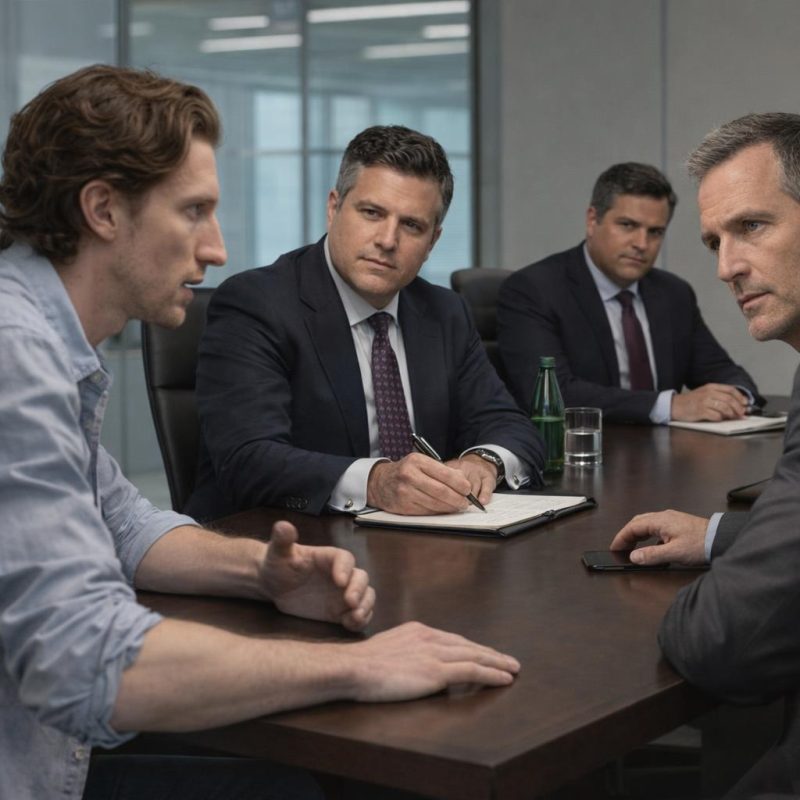 Image by RM AI
Jennifer's Final Gambit
Jennifer had been gone for less than ten minutes when the door opened and she walked back in. Nobody had invited her. She sat down in the same chair she'd left, set her hands flat on the table, and looked at me. She said she wanted to make a proposal. She said that the situation had become unnecessarily complicated and that there was a clean resolution available if I was willing to consider it. She would pay me five million dollars, personally, for immediate reassignment of the seven patents back to Aegis Tech. She said it would resolve the IP dispute, stabilize the company's position with the acquisition partners, and allow everyone to move forward. I told her no before she finished the sentence. I said the patents were not for sale at any price, and that she should factor that into whatever she was planning next. Tom told her she had no authority to make offers on behalf of the company or anyone else at the table. Richard said she should leave the meeting again, and this time stay out. Jennifer looked at each of us in turn — the practiced, unhurried scan of someone taking inventory. Then she reached into her folder and slid a single sheet of paper across the table: a formal written offer, five million dollars, already signed with her name at the bottom.
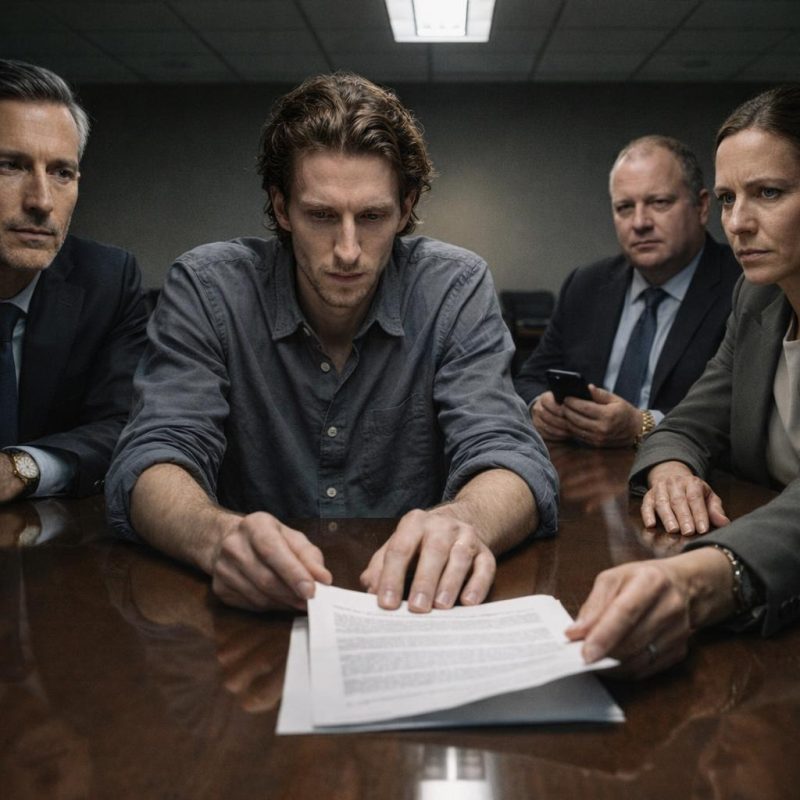 Image by RM AI
The Final Control
I didn't touch the paper. I looked at it for a moment, then looked back at Tom and Richard. I told them I wanted to be precise about something, because I thought there might still be some ambiguity in the room about what the actual situation was. The encryption technology — the proprietary algorithms, the key management architecture, the authentication framework — that was the company's primary value. Not the brand, not the client contracts, not the office in the financial district. The acquisition interest that Jennifer had been cultivating for months was based entirely on that technology. Without it, Aegis Tech was a competent but unremarkable security firm competing in a crowded market. Tom asked what happened if the board didn't accept my terms. I said I would take the technology, start a competing company, and be operational within six months. Richard looked at Marcus. Marcus looked at the table and said, quietly, that my assessment was accurate — that he'd known it for years and had never said it out loud because it hadn't been convenient. I let that sit. Then I told Tom and Richard that without my encryption technology, Aegis Tech was worth a fraction of the number Jennifer had been quoting to her acquisition partners.
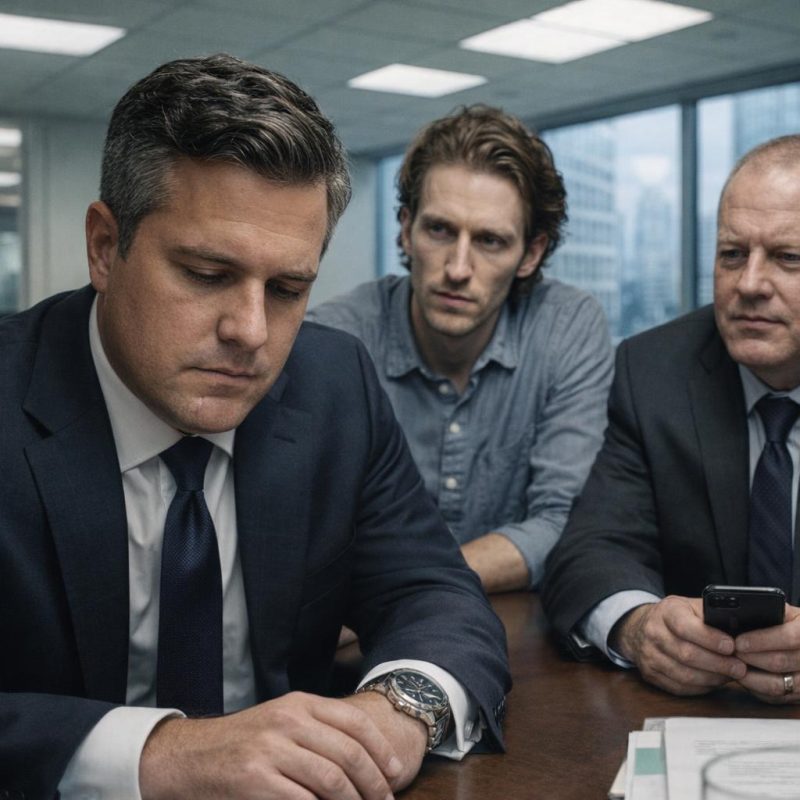 Image by RM AI
The Agreement
Tom looked at Richard for a long moment, then back at me. He said my terms were acceptable given the circumstances — that the board had a fiduciary obligation to protect the company's ability to operate, and that meant protecting the technology that made it worth operating. Richard nodded and said the same thing in fewer words: the proposal was reasonable and he was prepared to vote in favor. Jennifer's composure cracked just enough to be visible. She said the board should reject the proposal outright, that I was leveraging a manufactured crisis, that approving my terms would set a precedent that undermined investor authority. Nobody in the room looked particularly moved by that. Tom called for a formal vote on my departure terms. Richard voted in favor. Tom voted in favor. Jennifer voted against, her voice flat and controlled. Marcus sat very still for a moment, then said he was abstaining. Tom recorded it without comment. Three in favor, one against, one abstention. I had walked into that boardroom holding the only thing that mattered, and the board had just confirmed it in writing. The vote was three to one with one abstention, and I was free.
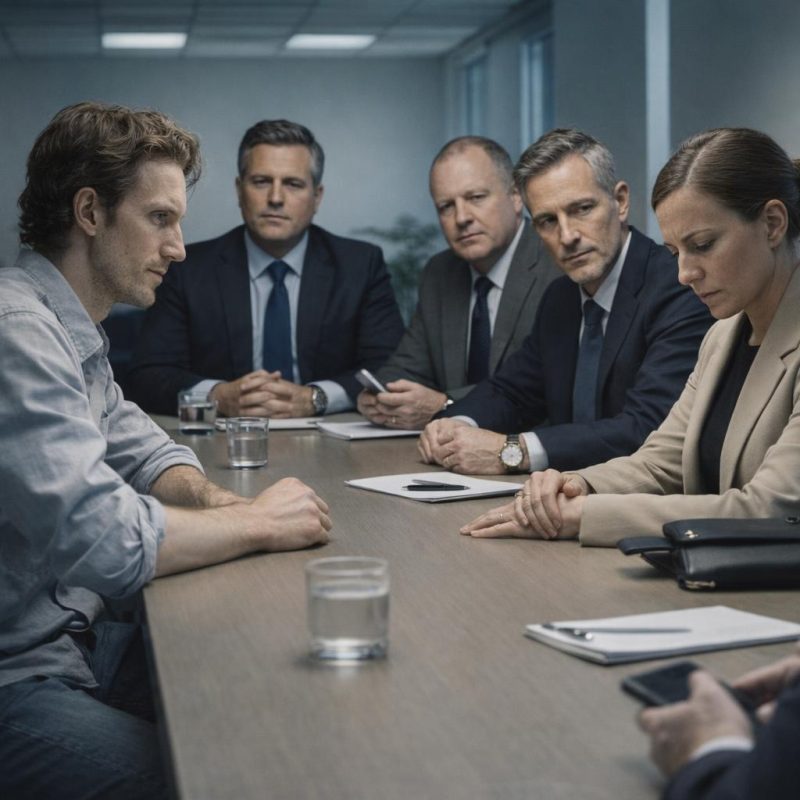 Image by RM AI
Walking Out
I picked up my briefcase from beside the chair, stood, and walked out of the boardroom without looking back. The hallway felt different than it had two hours earlier — quieter, or maybe I was just hearing it differently now. I took the elevator alone, all thirty floors down, watching the numbers drop on the panel above the doors. The lobby was busy with the usual midmorning foot traffic, people crossing in both directions with coffee cups and lanyards and the particular focused distraction of people who had somewhere to be. I had been one of them for eleven years. I crossed the marble floor for the last time as a founder of Aegis Tech and pushed through the glass doors onto the street. It was 11:47 in the morning. The November air hit my face — cold and sharp and carrying the particular smell of Chicago in late autumn, exhaust and lake wind and something faintly metallic. I stood on the sidewalk for a moment with my briefcase in my hand and my patents secured in the cloud and on three encrypted drives, and I didn't feel the need to look back at the building. The street settled around me, indifferent and ordinary and entirely my own.
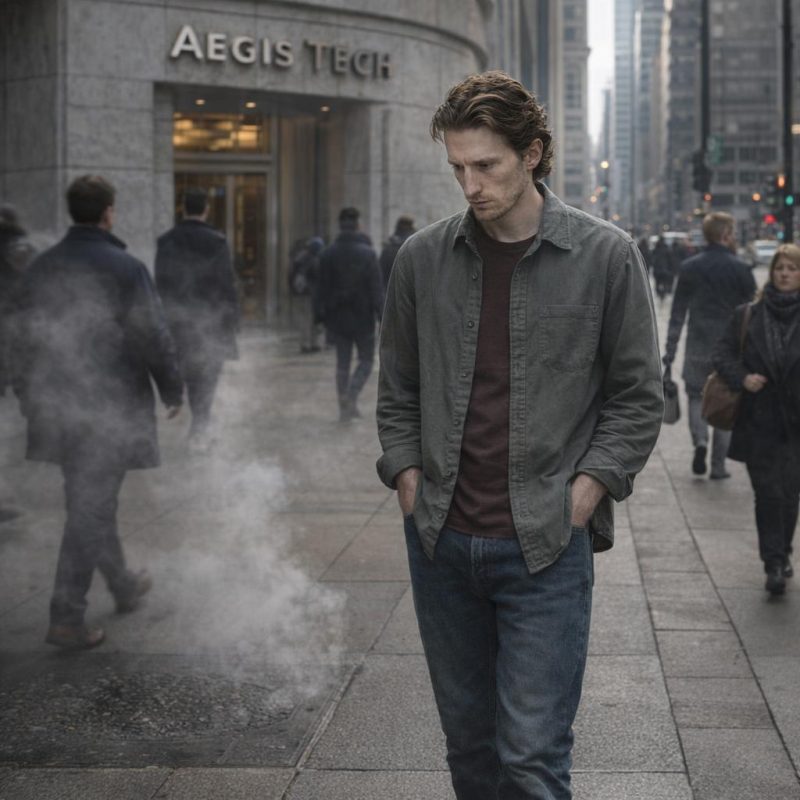 Image by RM AI
The New Foundation
Two days later I was sitting across from Diane in her office, the patent portfolio spread across the conference table between us in a way that would have made Marcus deeply uncomfortable. Diane had cleared her afternoon. She reviewed each filing with the focused precision I'd always appreciated about her — no small talk until she'd finished, then she set the last document down and said the portfolio was clean, comprehensive, and defensible. She said I could build an entire company on this foundation and nobody could touch it. I told her that was exactly what I intended to do. She smiled at that, the first real smile I'd seen in a long time that didn't have anything complicated behind it. We talked through the structure — a new security software company, lean at the start, no outside partners with board seats, investor terms that kept control firmly with me. Diane offered to handle all the legal formation and IP protection herself, said she'd been waiting for me to make this call for longer than she was going to admit. I described what the next evolution of the encryption technology could look like, the problems it could solve that nobody had solved yet, and as I talked I could feel the shape of it opening up — the clean, unobstructed space of something that was entirely mine to build.
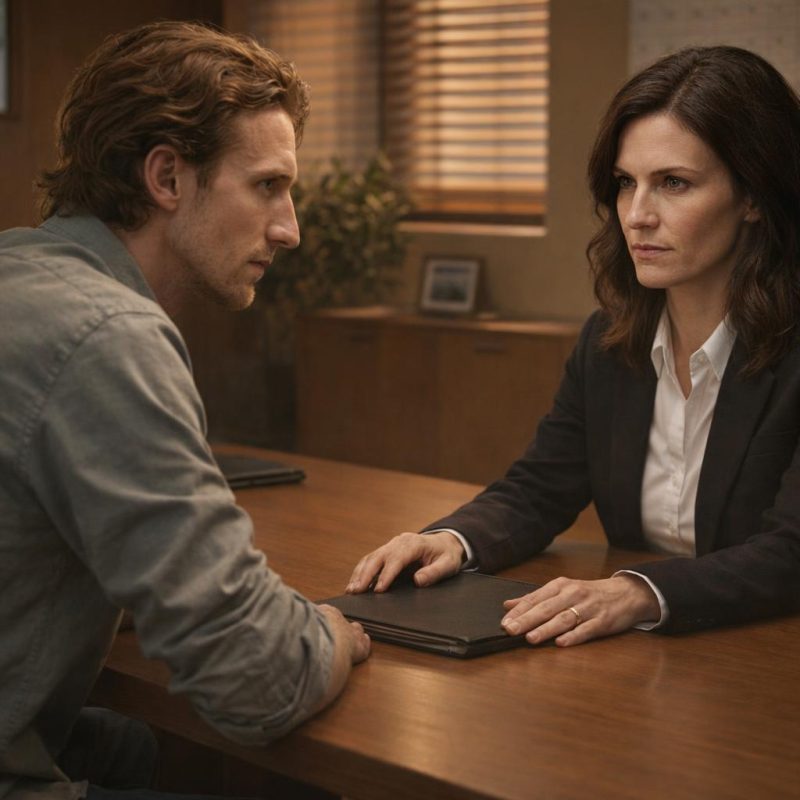 Image by RM AI
The Technology Under His Control
The new office was a modest suite on the fourteenth floor of a building twelve blocks from the old one — no marble lobby, no panoramic views, no conference rooms designed to impress acquisition partners. I had a desk, a workstation I'd assembled myself, and a window that looked out over a parking structure. It was exactly what I needed. I set up my equipment methodically, the way I used to set up a development environment before Marcus started scheduling my mornings with investor calls and brand strategy sessions. When everything was configured, I opened the encryption codebase for the first time in a space that belonged only to me. I worked through the morning without interruption. No board meetings. No one questioning my architectural decisions or asking me to simplify the technical language for a pitch deck. Around two in the afternoon an email arrived from a financial services firm that had heard, through channels I hadn't fully traced yet, that I was available. They were interested in a custom implementation. I read it twice, filed it, and went back to the code. I worked until the building went quiet around me, the city dimming outside the window, and on my screen the encryption algorithm ran clean and complete — every line of it mine.
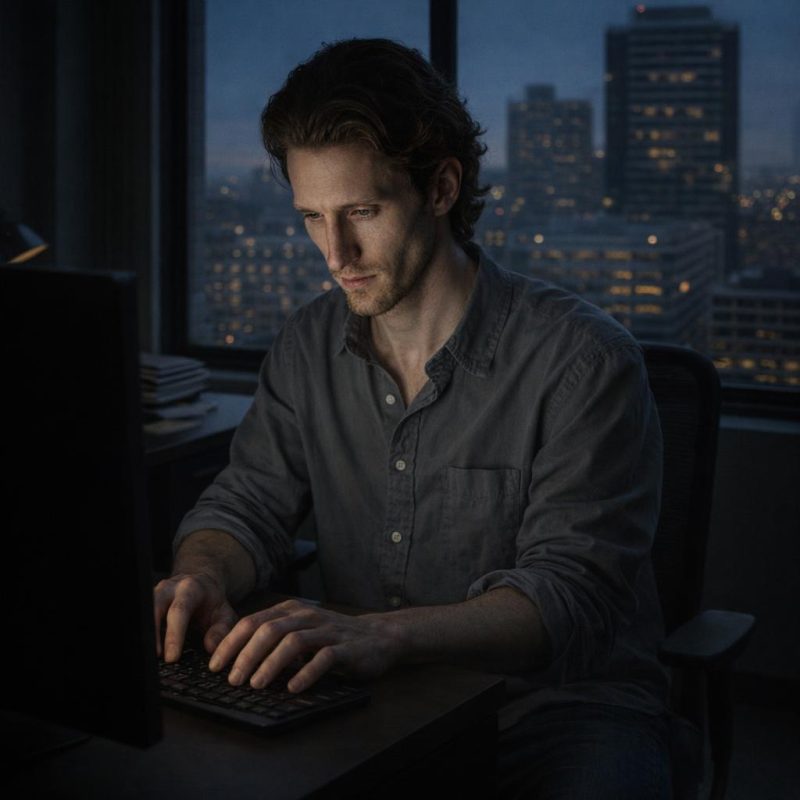 Image by RM AI
KEEP ON READING