The Pirate Widow Who Commanded One Of The World's Largest Fleets
 Unknown authorUnknown author on Wikimedia
By the early 1800s, the South China Sea had turned into one of the most dangerous stretches of water on the planet, and the person running the show was not a swaggering captain with a beard full of gunpowder. She had once worked in a floating brothel in Guangdong, and within a few years of stepping onto a pirate junk she was commanding a force so large that entire imperial navies backed down rather than face her.
Her name was Shi Yang, though history remembers her mostly by the title she inherited, Zheng Yi Sao, meaning wife of Zheng Yi, or simply Ching Shih. What emerges once you look past the legend is a woman who took over a criminal empire after her husband's sudden death and made it bigger, richer, and more disciplined than it had ever been under him, all while dodging three separate world powers determined to bring her down.
From Floating Brothel To Fleet Commander
Born around 1775 in Guangdong province, Shi Yang grew up among the Tanka people, a community that lived and worked almost entirely on the water. Before she carried any pirate title, she worked in the brothels and gambling boats of Canton, where she reportedly built relationships with wealthy and well-connected clients.
In 1801, at 26, she married Zheng Yi, a pirate commander descended from a long line of pirates. According to several accounts of the marriage, she agreed to the match only on the condition that she receive equal control over the fleet's finances and decisions, an arrangement almost unheard of for a woman in that period.
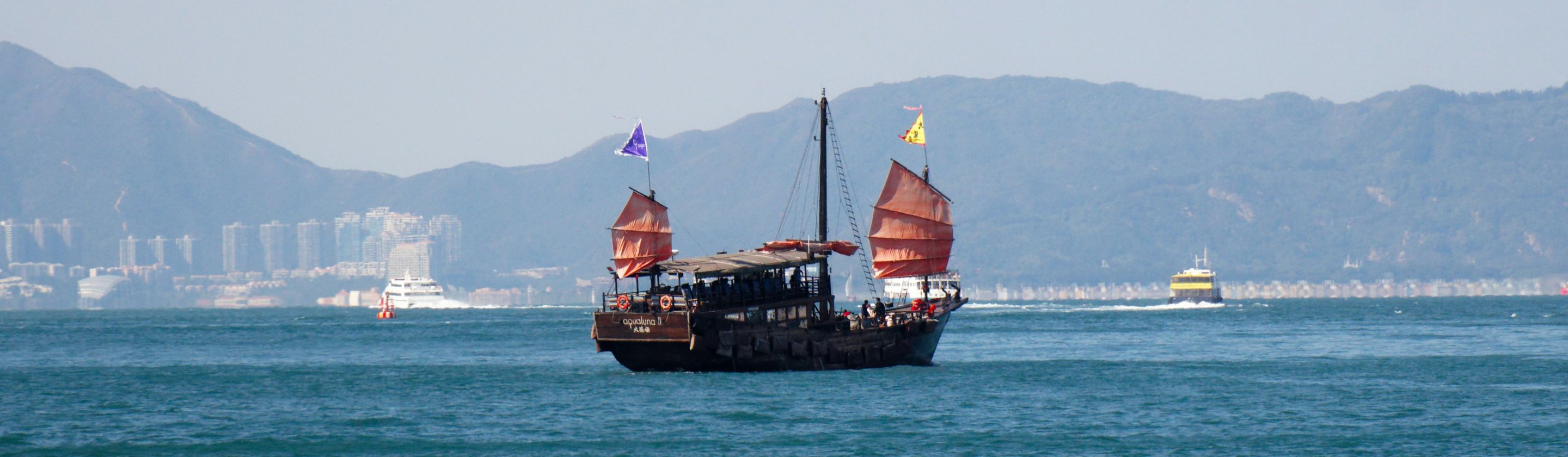
Under their joint leadership, the loose collection of pirate crews operating along the coast consolidated into a confederation split into six fleets, each sailing under a different colored flag. Zheng Yi's own Red Flag Fleet grew into the largest of the six, and by the middle of the decade it counted several hundred ships and tens of thousands of men under its command, controlling coastal traffic so completely that merchant vessels routinely paid for safe passage rather than risk an attack.
A Widow Takes The Helm
Zheng Yi died in November 1807, likely in a storm off the coast of Vietnam, though some accounts leave room for foul play. His widow moved fast, securing the loyalty of his relatives and senior captains before any rival could claim the fleet for himself.
Within weeks, she partnered with Zheng Yi's adopted son and former captain, Cheung Po Tsai, whom she soon married and installed as her second in command. With him running the day to day operations of the Red Flag Fleet, Ching Shih held overall authority over the wider confederation.
She also introduced a strict code of conduct that governed the entire operation. No pirate could keep plunder without registering it first, attacks required her direct approval, and violations carried brutal punishments up to beheading. Historians studying the period note that under her leadership, the confederation eventually grew to include as many as 1,800 vessels and an estimated 80,000 pirates, numbers that dwarfed contemporaries like Blackbeard, who at his height commanded roughly four ships and a few hundred men, though the scale of Ching Shih's power came at the same human cost typical of piracy in the region, with coastal villages regularly robbed and civilians killed or captured during raids.
Undefeated, Then Retired On Her Own Terms
Ching Shih's fleet went on to defeat Qing naval forces near Canton twice, in 1808 and again in 1809, and clashed repeatedly with Portuguese and British ships sent to protect trade in the region. An East India Company clerk named Richard Glasspoole, captured by her pirates in 1809 and held for several months, later published an account of his time among them, giving Western readers one of the few firsthand descriptions of life inside the fleet.
By 1810, sustained pressure from a combined Qing and Portuguese effort had started to wear the confederation down, and Ching Shih made a calculated decision rare among pirates of any era. Rather than fight to the end, she negotiated her own surrender directly with Qing officials, securing amnesty for herself and her crews along with permission to keep her accumulated wealth.
Most of her men were absorbed into the imperial military or simply released, and Cheung Po Tsai received an official naval post. Ching Shih settled in Canton, where she spent the rest of her life running a gambling house and, by several accounts, a quiet smuggling operation. She died in 1844 at around 69, having built and dismantled one of history's largest pirate fleets entirely on her own terms.
KEEP ON READING