

I Built a $40M Hotel Empire From Scratch—Then My Cousins Showed Up With a 100-Year-Old Document Claiming They Owned It All
I Built a $40M Hotel Empire From Scratch—Then My Cousins Showed Up With a 100-Year-Old Document Claiming They Owned It All
The Toast at Sunset
I stood on the wrap-around balcony of The Gilded Heron, my flagship hotel, raising a glass of local vintage to the Pacific sunset and the forty-million-dollar empire I'd built from absolutely nothing. The sky was doing that thing it does in late September—streaks of amber and rose bleeding into deep purple—and for the first time in a decade, I let myself just breathe. The acquisition papers were signed. The ink was dry. The global hospitality group had wired the funds that morning, and my accountant had sent me three emails with exclamation points, which for Gerald meant he was practically dancing. I took a slow sip of wine and felt the tension I'd been carrying in my shoulders for ten years finally start to dissolve. This was it. This was the quiet I'd been chasing through eighty-hour weeks and endless contractor disputes and family dinners where everyone looked at me like I was the crazy one. I'd done it. Four boutique hotels, each one a love letter to heritage and elegance, each one profitable, each one mine. The breeze off the ocean carried the scent of salt and jasmine from the garden below, and I closed my eyes, letting myself feel something I rarely allowed: pure, uncomplicated satisfaction. I had no idea that my celebration was about to be interrupted by the knock that would threaten everything.
 Image by RM AI
Ten Years in Renovation Dust
I let my mind drift back through the decade of renovation dust and stubborn contractors that had brought me to this balcony, to this moment of triumph. It started with a single dilapidated Victorian mansion in a town everyone had forgotten, a property I bought with my savings and a loan that made my banker wince. My extended family—the ones still living off the fumes of our great-grandfather's dwindling estate—had laughed at my expensive obsession. Cousin Julian had actually patted my shoulder at Thanksgiving and said, "Well, at least you'll learn a valuable lesson about risk." I'd spent my early thirties living in rooms that smelled like paint thinner and plaster dust, teaching myself hospitality management through online courses at night, sacrificing every holiday and every moment of peace to build something that mattered. While they attended charity galas and complained about trust fund distributions, I was on my hands and knees refinishing hardwood floors and learning to negotiate with suppliers in three languages. Every guest who walked through my doors had to feel like royalty—that was the brand, that was the promise. Four hotels later, I'd proven them all wrong. I thought I'd finally outrun the shadows of family expectation, but I was wrong.
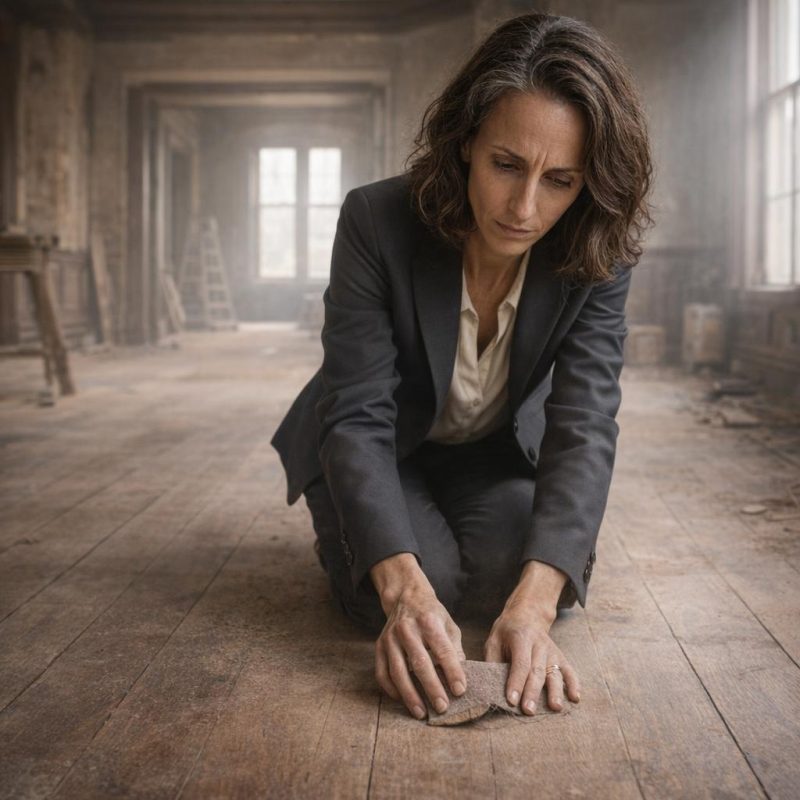 Image by RM AI
The Intercom Crackles
The intercom crackled to life, shattering my peaceful moment on the balcony like a rock through glass. Thomas Reed's voice came through, and something about it made me set down my wine glass immediately. Thomas had been my doorman at The Gilded Heron for eight years—steady, unflappable, the kind of man who could handle drunk wedding guests and celebrity tantrums with the same dignified calm. But right now, his voice had a shake in it I'd never heard before. "Ms. Claire, I'm sorry to interrupt, but there's a situation downstairs." I pressed the button. "What kind of situation, Thomas?" There was a pause, and I could hear him take a breath. "A legal team has arrived. They're waiting in the lobby, and they're not alone." My stomach did something unpleasant. "Who's with them?" Another pause, longer this time. "Your cousins, ma'am. Julian and Beatrice. They say it's urgent." I stared at the intercom, confusion flooding through me. Julian and Beatrice hadn't spoken to me in years, not since I'd stopped attending the family functions where they performed their inherited superiority. Why would they be here now, today of all days, with lawyers in tow? When he said my cousins Julian and Beatrice were in the lobby, something cold settled in my chest.
 Image by RM AI
Predatory Grins in the Lobby
I descended to the lobby with my heart hammering in a way that felt all wrong for what should have been the best day of my life. Julian and Beatrice stood near the marble reception desk, and the way they smiled when they saw me made my skin crawl. They flanked a man who looked like he'd been carved from cold marble—silver hair immaculate, expression completely unreadable, holding a leather-bound folio against his chest like it contained state secrets. Julian wore a suit that was slightly too fashionable, all sharp lines and expensive fabric, and his smile had that practiced quality I remembered from every family gathering. Beatrice examined my lobby the way someone might appraise inventory at an estate sale, her designer handbag probably worth more than my first month's revenue had been. "Claire," Julian said, spreading his hands in a gesture of false warmth. "Congratulations on your sale. We heard the news." The marble man stepped forward with surgical precision. "Ms. Claire, I'm Silas Vane, probate attorney. I represent the interests of the extended family estate." He placed the leather folio on my reception desk with the careful deliberation of someone serving a death sentence. The attorney introduced himself as Silas Vane and placed a leather-bound folio on my desk as if he were serving a death sentence.
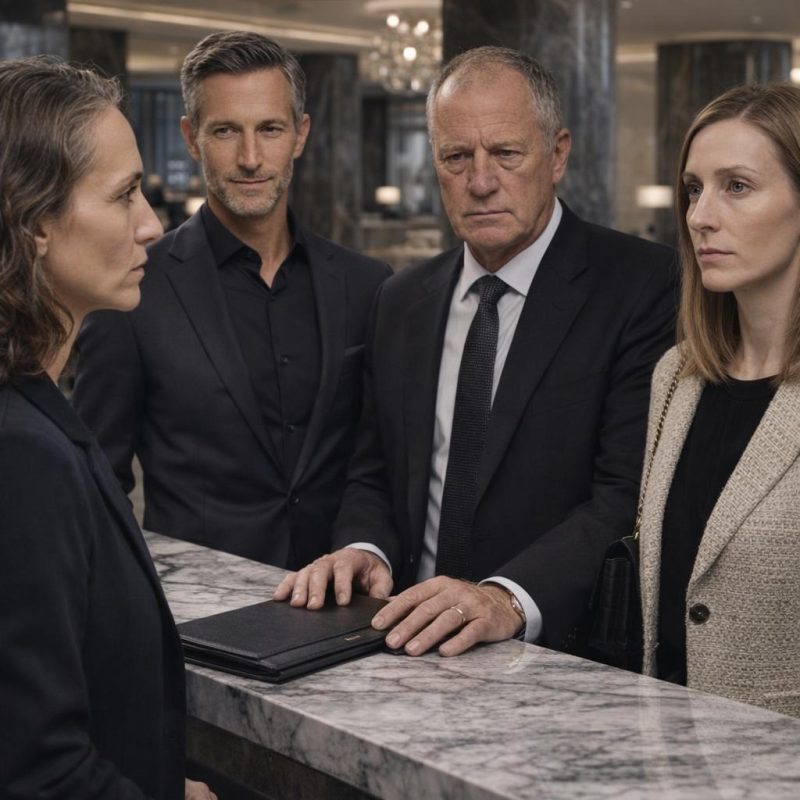 Image by RM AI
The 1922 Document
Silas opened the folio with clinical precision, and I found myself staring at a document that looked like it belonged in a museum. The paper was yellowed with age, the ink faded to sepia, and at the top in elaborate script it read: "Lineage Trust—Established 1922." My great-grandfather's signature sprawled across the bottom in the confident hand of someone who'd never doubted his authority over anything. "This trust," Silas said in a voice devoid of inflection, "was drafted by your great-grandfather to govern the distribution and use of family property and estates built on land originally owned by the family line." I leaned closer, trying to make sense of the archaic legal language. Words like "heirs and assigns" and "blood descendants" and "ancestral holdings" swam before my eyes. "I don't understand," I said, hating how my voice sounded uncertain. "My hotels aren't built on family land. I purchased every property independently." Silas's expression didn't change. "The trust defines family property more broadly than simple land ownership. It encompasses commercial ventures undertaken by blood descendants using the family name and reputation." As I scanned the archaic language about property and bloodlines, I felt the ground begin to shift beneath my feet.
 Image by RM AI
Thirty-Two Million Dollars
Julian pushed off from where he'd been leaning against my mahogany desk, the one I'd restored myself during the first renovation. "Let's cut to the chase, Claire. We're here because the trust entitles us to eighty percent of any commercial assets built under the family name. That's thirty-two million dollars from your sale." The number hit me like a physical blow. Thirty-two million. Eighty percent of everything I'd earned. "You can't be serious," I managed. Beatrice spoke for the first time, her voice carrying that bored superiority I remembered from childhood. "It's nothing personal, Claire. We're simply claiming what belongs to the collective estate. You've done well for yourself, and we're happy for you. But the trust is clear." Silas began explaining their interpretation—something about ancestral trees and collective ownership and commercial enterprises bearing the family name. My mind was reeling, trying to process how this could possibly be legal, how they could walk in here and claim the majority of my life's work. And then it hit me with sickening clarity: they'd waited. They'd waited until the sale was finalized, until the money was real and tangible, until I thought I was safe. The shock was physical, a cold weight in my chest as I understood they had waited for this exact moment to strike.
 Image by RM AI
Measuring for New Curtains
What happened next felt like a violation I couldn't quite name. Julian started walking through my hotel—my hotel—as if he already owned it, his eyes scanning the crown molding I'd painstakingly restored, the vintage light fixtures I'd hunted down at estate sales across three states. "The bones are good," he said to Beatrice, like I wasn't even there. "We could modernize the aesthetic, bring it into this decade." Beatrice had her phone out, photographing the artwork on my walls—pieces I'd commissioned from local artists, each one chosen to tell a story about the region's history. She paused at a watercolor of the coastline, tilting her head. "This might be worth something. We should have it appraised." I followed them through the lobby and down the corridor toward the restaurant, my hands clenched so tight my nails bit into my palms. Every word out of their mouths was possessive, proprietary, as if my decade of work had simply been me keeping their property warm for them. Neither of them acknowledged the sacrifices, the risks, the nights I'd gone without sleep to make payroll. Watching them inventory my life's work like estate appraisers, I could barely contain the rage building in my throat.
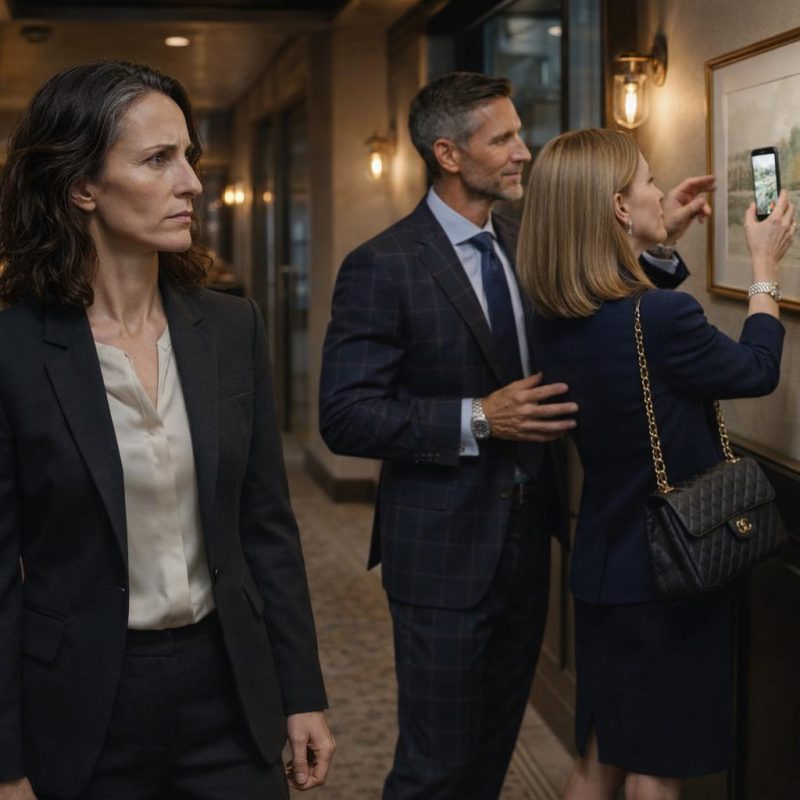 Image by RM AI
Emergency Call to Marcus
The moment my cousins and their marble attorney left the building, I grabbed my phone with hands that wouldn't stop shaking. Marcus Chen answered on the second ring. "Claire, hey—I was just about to call you to celebrate. How does it feel to be—" "Marcus, I need you to listen." My voice came out harder than I intended. "Something just happened." I told him everything—the ambush in my lobby, Julian and Beatrice appearing with a probate attorney, the leather folio with the 1922 document inside. I described the Lineage Trust, the archaic language about blood descendants and family property, the demand for thirty-two million dollars. Marcus asked careful questions, his lawyer brain already working. What exactly did the document say? Who signed it? What was the specific legal language about property rights? And then I got to the part about the trust governing commercial ventures built on family reputation, and Marcus went quiet. Not the thoughtful quiet of someone considering options. The heavy quiet of someone who'd just heard something that worried him. "Marcus?" I said, my heart starting to pound again. His voice, usually calm and reassuring, went quiet when I described the 1922 document, and that silence terrified me more than anything Julian had said.
 Image by RM AI
The Yellowing Parchment
Marcus and I sat across from each other in his office, spreading the photocopies of the trust across his conference table like we were defusing a bomb. The yellowed parchment had been reproduced in such high resolution that I could see every crack in the original ink, every fold line from a century of storage. My hands trembled as I smoothed the pages flat. Marcus pulled his reading glasses from his pocket and leaned forward, his finger tracing the ornate script that opened the document. I watched his expression shift from professional curiosity to something harder, more concerned. The language was dense—wherefores and henceforths stacked on top of each other like legal barbed wire. Every clause seemed to loop back on itself, creating layers of obligation that reached forward through generations. I kept searching for something, anything that would give us an opening. A contradiction. An ambiguity. Some weakness we could exploit. But the more Marcus read, the more his jaw tightened, and I felt my desperate hope starting to crack. The document was filled with wherefores and henceforths that seemed designed to trap future generations, and I could see Marcus's jaw tighten as he read.
 Image by RM AI
The Seed Soil Trap
Marcus explained the Lineage Clause with the kind of careful precision doctors use when delivering bad news, and every word made my stomach drop further. He pointed to a section halfway down the second page, his finger underlining the phrase seed soil. The trust defined it as any original parcel of family land used to generate commercial enterprise. My first hotel—the one I'd built with a construction loan secured against the small plot my father had given me—that was the seed. Everything that came after, Marcus explained, could be considered branches growing from that ancestral tree. The trust stated that any commercial venture derived from family seed soil must be distributed among direct blood descendants according to the provisions outlined. I felt the room tilt. Ten years of work. Fourteen hotels. Hundreds of employees. All of it potentially reclassified as family estate property because I'd used that one piece of land to get started. Marcus kept talking, explaining precedents and legal interpretations, but I could barely hear him over the roaring in my ears. If my cousins were right about the seed soil provision, my years of sacrifice and risk meant nothing—I was merely managing a family firm I never knew existed.
 Image by RM AI
Father's Work Ethic
I drove to my father Robert's house seeking comfort, needing to hear him say that our great-grandfather wouldn't have wanted this. He opened the door before I could knock, his weathered face creasing with concern the moment he saw my expression. We sat in his living room, the same room where I'd told him about my first hotel deal, where he'd hugged me after my mother died, where every major moment of my life had been processed. I explained everything—the trust, the seed soil provision, Julian and Beatrice's claim to thirty-two million dollars. Robert listened without interrupting, his gentle eyes never leaving my face. When I finished, he reached across and took my hand in both of his. His voice was quiet but firm when he spoke. You were the only one who inherited the old man's work ethic, Claire. The only one who understood what it meant to build something. I felt the tears I'd been holding back for days finally break through. Robert held my hand and told me I was the only one who inherited the old man's work ethic, and the irony of that inheritance being used to destroy me brought tears I'd been holding back for days.
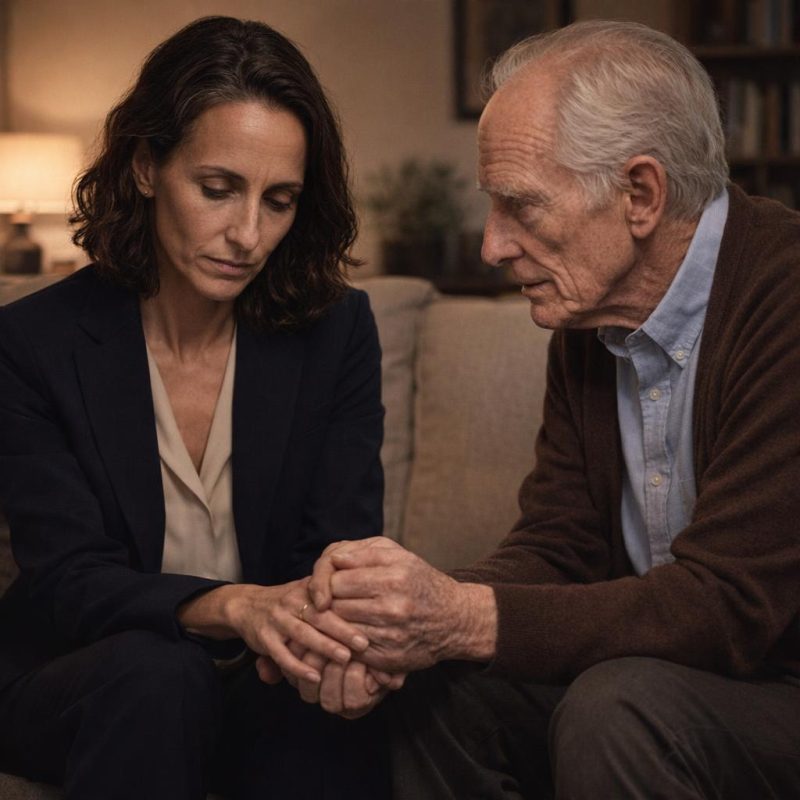 Image by RM AI
Drowning in Legalese
Back in Marcus's office, we spent hours parsing every clause of the 1922 document, my eyes burning from the archaic script and mounting dread. Marcus had printed multiple copies so we could mark them up, and his conference table looked like a war room. Yellow highlighters traced the seed soil provision. Pink marked the distribution requirements. Blue circled every mention of blood descendants and commercial ventures. We went through it line by line, Marcus reading passages aloud while I took notes, trying to find some angle we'd missed. The trust anticipated challenges to its authority and included provisions specifically designed to prevent them. It referenced property law from the era, cited precedents that were probably older than the document itself. Marcus pulled out his laptop and started researching the legal framework from 1922, trying to understand what the drafters had been thinking. Every avenue we explored seemed to dead-end in another carefully worded clause. The document was remarkably sophisticated for its time, almost as if whoever wrote it knew exactly how future generations might try to escape its reach. The more we studied it, the more airtight it appeared, each provision anticipating and closing off potential challenges.
 Image by RM AI
The Worst Case Scenarios
Marcus laid out the potential outcomes in stark terms, and hearing that I could lose eighty percent of the sale made the room spin. He'd created a spreadsheet with different scenarios, each one worse than the last. Best case: we could negotiate the claim down to twenty percent, maybe twenty-five. Worst case: the court upholds the full trust provisions and I lose thirty-two million of the forty million dollar acquisition. That's eighty percent, he said quietly. Everything you built, reduced to eight million before taxes and legal fees. I thought about my employees—the three hundred people whose jobs depended on this sale going through cleanly. I thought about the retirement I'd planned, the freedom I'd earned. Marcus pulled up case files on his computer, showing me precedents where century-old trusts had been enforced despite seeming outdated or unfair. Courts respect testamentary intent, he explained. They don't like to overturn what previous generations put in place, especially when it comes to family property. I felt physically sick. A legal technicality from before my grandparents were born was going to destroy everything I'd sacrificed for. As he described precedents where similar trusts had been upheld in court, I felt my future crumbling into dust.
 Image by RM AI
The Acquisition Team Wavers
David Thornton from the global hospitality group called with carefully worded concerns about the legal complications affecting our deal. I took the call in my office at The Gilded Heron, forcing my voice to stay steady and professional. David's tone was polite, almost apologetic, but I could hear the steel underneath. Our due diligence team has flagged some issues with the ownership structure, he said. We need clarity on the trust claim before we can proceed to closing. I gave him the most confident response I could manage, explaining that my legal team was reviewing the documents and we expected resolution soon. How soon, he asked. I didn't have an answer. David filled the silence with carefully neutral statements about the acquisition timeline, about the board's expectations, about their commitment to the deal assuming all legal matters could be resolved. Every word was professional and courteous. Every word was also a warning. If we can't verify clear title within the next few weeks, we may need to revisit our timeline, he said. I thanked him for his patience and ended the call before my voice could crack. His professional tone couldn't hide the message: if this trust issue wasn't resolved quickly, the acquisition could fall apart entirely.
 Image by RM AI
The Story Breaks
Sarah Mitchell, a local journalist, appeared at The Gilded Heron with questions about the family legal battle, and I realized the story had gone public. My assistant tried to turn her away, but Sarah was persistent, professional, her notebook already in hand. I agreed to speak with her in the lobby, hoping I could control the narrative somehow. She knew everything—the trust, the cousins, the acquisition at risk. Where did you hear about this, I asked. She smiled politely and said sources close to the situation, which meant Julian or Beatrice had leaked it. Sarah asked careful questions about the timeline, about my relationship with my cousins, about whether I'd known about the trust before building my business. I tried to explain the complexity, the years of work, the fact that I'd built this empire from nothing. But I could see how she was framing it in her mind—hotel heiress loses empire to her own kin. It was a better story than the truth. She scribbled notes while I talked, and I felt my private nightmare transforming into tomorrow's entertainment. I watched her notebook fill with details about the hotel heiress losing her empire to her own kin, and felt my private nightmare become public spectacle.
 Image by RM AI
Headlines and Mockery
The morning newspaper featured a headline mocking the hotel heiress who couldn't keep her own empire, and I couldn't bring myself to read beyond the first paragraph. I sat alone in my apartment with coffee going cold in my hands, staring at the words that reduced ten years of my life to a cautionary tale. The article made it sound like I'd inherited everything, like I was some spoiled rich girl who'd stumbled into success and was now getting her comeuppance. No mention of the eighteen-hour days. No mention of the risks I'd taken, the loans I'd personally guaranteed, the relationships I'd sacrificed. Just a simple narrative: entitled heiress versus rightful family claim. I forced myself to put the paper down and opened my laptop. That was a mistake. Social media had picked up the story overnight. Twitter threads dissected my situation with gleeful certainty. Reddit posts speculated about my character. People who'd never built anything, who knew nothing about what it took to create something from nothing, were celebrating my downfall like it was justice. Strangers called me greedy. Called me a fraud. Called me everything except what I actually was—someone who'd worked for every single thing I had. Social media picked up the story within hours, and strangers who knew nothing about my years of work gleefully dissected my downfall.
 Image by RM AI
Protecting the Team
I called an all-staff meeting at The Gilded Heron on a Tuesday morning, and three hundred faces filled the grand ballroom where we usually hosted weddings and corporate galas. The room felt different without the usual celebration—just rows of worried employees who'd seen the headlines, heard the rumors, watched their boss become a punchline on social media. I stood at the front without a podium, without notes, just me and the weight of three hundred livelihoods depending on what happened next. I told them the truth. I explained the trust, the claim, the legal battle ahead. I watched housekeepers who'd been with me since the first Victorian mansion, front desk staff who knew every regular guest by name, kitchen workers who'd helped me develop signature dishes that became our brand. They'd built this empire with me, and now they were asking the questions I couldn't answer. Would there be layoffs? Would new ownership honor their contracts? Would their health insurance continue during the legal fight? Elena Vasquez, my general manager at The Gilded Heron, stood up from the third row. She'd been with me for seven years, had turned down offers from Marriott and Hilton to stay, and now she asked the question everyone was thinking: would they still have jobs when this was over? I opened my mouth to reassure them, but the honest answer caught in my throat, and I couldn't promise them anything.
 Image by RM AI
Searching for Precedents
Marcus and I spent the next four days buried in legal databases, searching for any precedent where someone had successfully challenged a century-old trust document. We worked in his office with coffee going cold and takeout containers piling up, reading case after case of estate disputes that stretched back decades. I learned more about testamentary intent and ancestral property law than I ever wanted to know. We found a 1987 case in Massachusetts where descendants challenged a similar trust—the court upheld the original document. A 2003 dispute in Connecticut where the family settled, but for an amount that would have bankrupted the challenger anyway. A 2011 case in Rhode Island that looked promising until we read the footnotes and discovered the trust had been invalidated only because the original grantor was proven mentally incompetent at the time of signing. My great-grandfather had been a sharp, successful businessman. No one was going to buy an incompetence argument. Marcus made notes in the margins, highlighting anything that might help, but the pattern was clear. Courts treated these old estate documents with reverence, as if the wishes of the dead were more sacred than the lives of the living. Every case we found either upheld the original trust or settled for amounts that would still destroy me financially.
 Image by RM AI
The Forgotten Parcel
We shifted our focus to the seed soil provision itself, examining every detail of the small parcel of family land I'd used to secure my first construction loan nine years ago. I'd barely thought about that property in years—it was just a forgotten quarter-acre lot on the edge of town that had been sitting empty in the family for decades. My father had mentioned it once, said it came from his grandfather's estate, and I'd used it as collateral when the bank needed something tangible to back my renovation loan for the first Victorian mansion. Marcus pulled up the property records and we traced the chain of ownership backward. The parcel appeared on a 1922 survey map, part of a larger estate my great-grandfather had assembled. It had been subdivided over the years, parceled out to various family members, but this one piece had somehow stayed dormant until I'd claimed it. We mapped out how that single property connected to everything else—how the loan it secured had funded the first hotel, how the profits from that hotel had leveraged the second, how each property built on the success of the previous one. The more we studied the connections, the more I understood what Julian and Beatrice's lawyers would argue. The entire portfolio grew from that original seed. Every hotel traced back to family land. The more we studied how that single piece of property connected to my entire portfolio, the more trapped I felt in my great-grandfather's century-old web.
 Image by RM AI
Everything Traces Back
I sat in the county records office with Marcus on a Friday afternoon, surrounded by dusty ledgers and property documents that smelled like old paper and bureaucracy. The clerk, a woman in her sixties who'd probably worked there longer than I'd been alive, pulled file after file from the archives. We reviewed every title search for all four hotels, tracing the ownership chains backward through decades of transfers and sales. The first Victorian mansion traced to the loan secured by the family parcel. The second property was purchased with proceeds from the first. The third was leveraged against the equity in the first two. The fourth came from a construction loan that used all three previous hotels as collateral. Every single title led back to that original piece of family land like tributaries flowing to a river. Marcus made careful notes, hoping to find some break in the chain, some property I'd acquired independently that might be protected. There was nothing. The documentation was thorough, methodical, exactly what any competent businessperson would create. Exactly what would now be used against me. As the clerk pulled the final deed showing my great-grandfather's signature from 1922, I felt the weight of how completely his legal trap had closed around me.
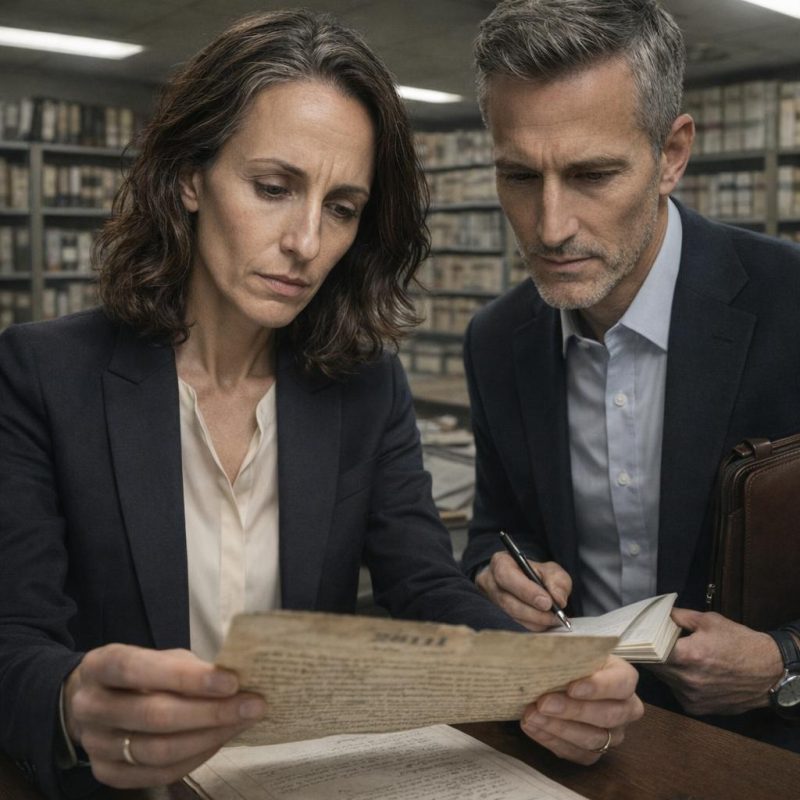 Image by RM AI
The Deposition Room
I sat across from Silas Vane in a sterile conference room at his firm's downtown office, the kind of space designed to intimidate with its floor-to-ceiling windows and expensive minimalism. The court reporter swore us in, her fingers poised over the stenography machine, ready to record every word that could determine whether I kept my empire or lost everything. Marcus sat beside me, his notepad already filling with observations, but I could feel the tension in his posture. This was it—the formal beginning of discovery, where both sides would present their evidence and probe for weaknesses. Silas looked exactly as I remembered from our first encounter: silver hair immaculate, expression carved from granite, every movement precise and calculated. He asked preliminary questions about my background, my education, my entry into the hotel business. His tone was professional, almost cordial, but I could feel the trap being set with each seemingly innocent inquiry. Julian and Beatrice would be deposed later, but today was about establishing the foundation of their claim. I answered carefully, aware that every word was being recorded, that anything I said could be twisted and used against me later. As Silas opened his briefcase and pulled out a stack of documents thicker than I expected, I realized they had prepared for this battle far more thoroughly than I had anticipated.
 Image by RM AI
Their Confident Testimony
Julian and Beatrice sat in the deposition chairs with relaxed postures, answering questions about their claim with a polish that made my stomach turn. Julian went first, dressed in another expensive suit that probably cost more than my staff made in a week. Silas walked him through the family history, and Julian recited names and dates like he'd been studying for this moment his entire life. He described finding the trust document in the archives, explained how he'd traced the family lineage, detailed the months of research that led them to my door. He sounded reasonable, almost sympathetic, like he regretted having to do this but had no choice given the legal reality. Beatrice followed with supporting testimony, her designer everything perfectly coordinated, her expression one of mild boredom as if this was all just a formality. She corroborated Julian's timeline, added details about their archive visits, mentioned family stories she claimed to remember from childhood. They both appeared so certain, so confident in their version of events. Marcus took notes, looking for contradictions, but their stories aligned perfectly. Too perfectly, maybe, but I couldn't prove anything. When Silas asked Julian to describe his understanding of the family lineage, he recited the genealogy without hesitation, and I couldn't tell if his certainty came from truth or from months of careful preparation.
 Image by RM AI
My Turn to Testify
I took the deposition chair and felt the weight of defending ten years of my life against questions designed to make my empire sound like stolen family property. Silas started with my background, my decision to enter the hotel business, my relationship with my father who'd never mentioned any trust or ancestral obligations. I explained how I'd worked eighteen-hour days, how I'd personally guaranteed loans, how I'd sacrificed relationships and sleep and any semblance of normal life to build something meaningful. Silas listened with that granite expression, then shifted to the property questions. He asked about the family parcel, and I confirmed I'd used it for my first construction loan. He asked if I'd known it came from my great-grandfather's estate, and I said yes, my father had mentioned it. He asked if I'd researched whether there were any restrictions on the property, and I admitted I hadn't—it had been sitting unused for decades, and I'd assumed it was mine to use. Each answer felt like a confession, even though I'd done nothing wrong. Marcus objected when the questions became argumentative, but the facts remained damaging. I'd built everything from family land. The chain of ownership was clear. My years of work, my personal sacrifice, my vision—none of it mattered in the face of legal documentation. When Silas asked me to confirm that I had used family land for my first construction loan, I said yes, and watched him smile as if I had just confessed to theft.
 Image by RM AI
The Language of Blood
Marcus spent the evening reviewing the trust document one more time, and I sat across from him in his office watching his pen move across the yellowing pages. We'd both read this thing a dozen times by now, analyzed every clause, debated every implication. The language was archaic, full of legal terminology from an era when estates were passed down like kingdoms and family bloodlines mattered more than individual achievement. I was exhausted from the depositions, from defending my life's work, from feeling like everything I'd built was being redefined as something I'd stolen. Marcus paused over a section about blood descendants, the phrase that appeared multiple times throughout the document. I'd seen it before, skimmed past it as just another piece of old-fashioned legal language. But now he was studying it with the kind of focus that made me sit up straighter. He read the passage again, then pulled out a legal reference book from his shelf, flipping to a section on estate law from the 1920s. I watched him compare the language, his expression shifting from concentration to something I couldn't quite read. He looked up from the yellowing page and said the word 'blood' carried very specific legal weight in 1920s estate law, and for the first time in weeks, I saw something other than defeat in his eyes.
 Image by RM AI
The DNA Suggestion
Marcus spent the evening reviewing the trust document one more time, and I sat across from him in his office watching his pen move across the yellowing pages. We'd both read this thing a dozen times by now, analyzed every clause, debated every implication. The language was archaic, full of legal terminology from an era when estates were passed down like kingdoms and family bloodlines mattered more than individual achievement. I was exhausted from the depositions, from defending my life's work, from feeling like everything I'd built was being redefined as something I'd stolen. Marcus paused over a section about blood descendants, the phrase that appeared multiple times throughout the document. I'd seen it before, skimmed past it as just another piece of old-fashioned legal language. But now he was studying it with the kind of focus that made me sit up straighter. He looked up from the yellowing page and told me we should request DNA testing for everyone claiming rights under the trust. I blinked at him, certain I'd misheard. DNA testing? He explained it was standard verification procedure for ancestral trusts with blood descent language, that the 1922 document required biological proof of lineage. The suggestion seemed to come from nowhere, this clinical scientific approach to what had been a battle of documents and depositions. I stared at him across his desk, unsure whether this was a brilliant legal strategy or a desperate lawyer grasping at anything to avoid admitting we had already lost.
 Image by RM AI
Debating the Gamble
Marcus called a strategy session the next morning, and I sat in his conference room while he laid out the DNA verification approach to the rest of the legal team. The debate started immediately. One associate argued it was legitimate evidentiary procedure, another worried it would look like a transparent stalling tactic to the judge. They went back and forth about how the court might perceive the request, whether we had solid legal grounds or were just throwing up roadblocks. The cost came up too, because filing additional motions meant more billable hours I could barely afford at this point. My legal fees had already drained my reserves, and every new strategy session felt like watching my bank account bleed out in real time. Marcus insisted the foundation was solid, that the blood descendant language gave us clear grounds to request verification. But then someone asked the question that had been hanging in the air since he first suggested this: what happens if the DNA confirms everything Julian and Beatrice claimed? What if we spent thousands more dollars just to prove they were right? I sat there listening to them debate my future, feeling the weight of every argument. The truth was, I had nothing left to lose except the hope that kept me fighting, and maybe that was enough reason to try.
 Image by RM AI
Filing the Motion
We filed the motion on a gray Tuesday morning, Marcus and I walking into the courthouse together like we'd done so many times before. The formal request for DNA verification of all parties claiming rights under the 1922 Lineage Trust sat in a manila folder under his arm, pages of legal arguments citing blood descendant language and evidentiary standards. The court clerk took our filing with the kind of bored efficiency that comes from processing hundreds of documents a day, stamping it with a hollow thud that echoed through the empty hallway. I watched her add it to a stack of other motions, other people's legal battles reduced to paper in a pile. Marcus maintained his professional composure, thanking the clerk and confirming the hearing date, but I could see the tension in his shoulders. This was aggressive legal action, pushing back when most lawyers would have advised me to start negotiating surrender terms. Walking out of the courthouse, I felt like I'd just launched one final desperate attack against an enemy that had already won. The motion was filed, the wheels were in motion, but I had no guarantees about where they'd take me. The court clerk stamped our filing with a hollow thud that echoed through the empty hallway, and I wondered if I was fighting for justice or just postponing the inevitable.
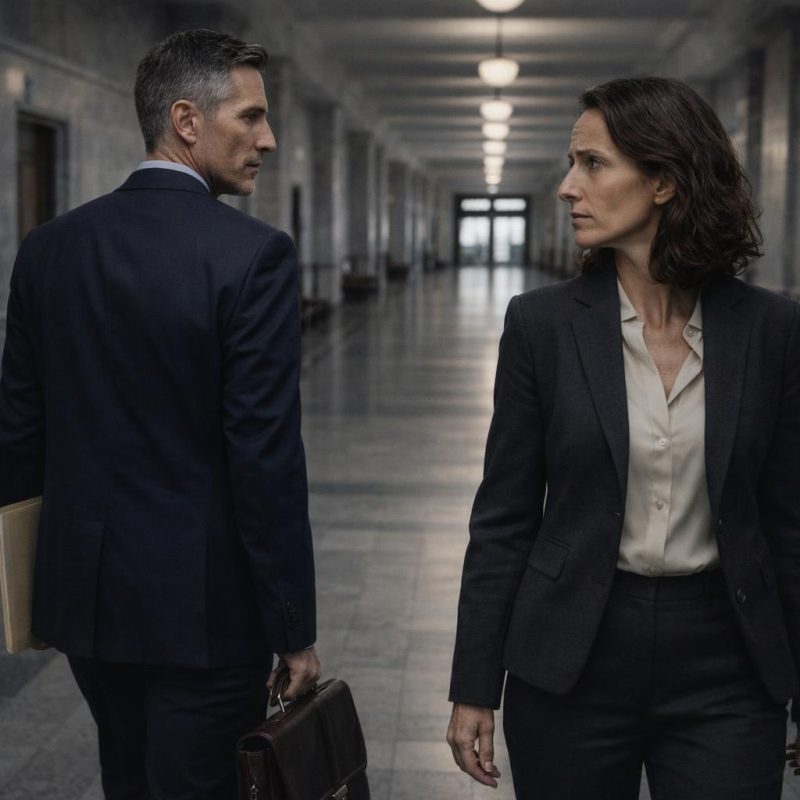 Image by RM AI
Their Dismissive Response
Julian called Marcus three days after we filed the motion, and I listened on speakerphone as my cousin's voice filled the office with amused contempt. He called the DNA request a transparent stalling tactic, his tone suggesting he found our desperation almost entertaining. Marcus kept his voice level, explaining it was standard verification procedure for ancestral trust claims, but Julian talked over him with the kind of confidence that comes from believing you've already won. I could hear Beatrice in the background, her laugh sharp and dismissive. Julian said they had nothing to hide, that their lineage was documented and verified, that this was just another waste of the court's time. Beatrice's voice came closer to the phone then, saying something about how pathetic it was that I'd resort to these tactics. They were so quick to dismiss the idea, so immediately confident in their response. I watched Marcus's face as he continued the conversation, keeping his tone professional while Julian's dripped with condescension. When the call ended, I sat there replaying their reactions in my mind. They'd claimed they had nothing to hide, but something about how quickly they dismissed the idea made me wonder what they were really thinking.
 Image by RM AI
The Court Hearing
The courtroom felt smaller than usual when we gathered for the hearing on our DNA motion. I sat behind Marcus at the plaintiff's table, my hands folded in my lap to keep them from shaking. Marcus presented our argument first, citing the blood descendant language in the 1922 trust document, explaining how DNA verification was appropriate evidentiary procedure for biological lineage claims. His voice was steady and professional, laying out the legal foundation like he was teaching a law school class. Then Silas stood up for the opposition, his silver hair immaculate under the fluorescent lights, his expression carved from granite. He argued that our motion was a stalling tactic, that the lineage was already documented through birth certificates and family records, that we were wasting the court's time with unnecessary scientific testing. The judge listened to both arguments with an unreadable expression, her face giving away nothing as she took notes. I tried to read something in her posture, in the way she nodded occasionally or asked clarifying questions, but she was a blank slate. The legal debate was technical and formal, both sides presenting their cases with professional precision. When she finally spoke, I held my breath waiting to hear whether my last hope would be granted or dismissed.
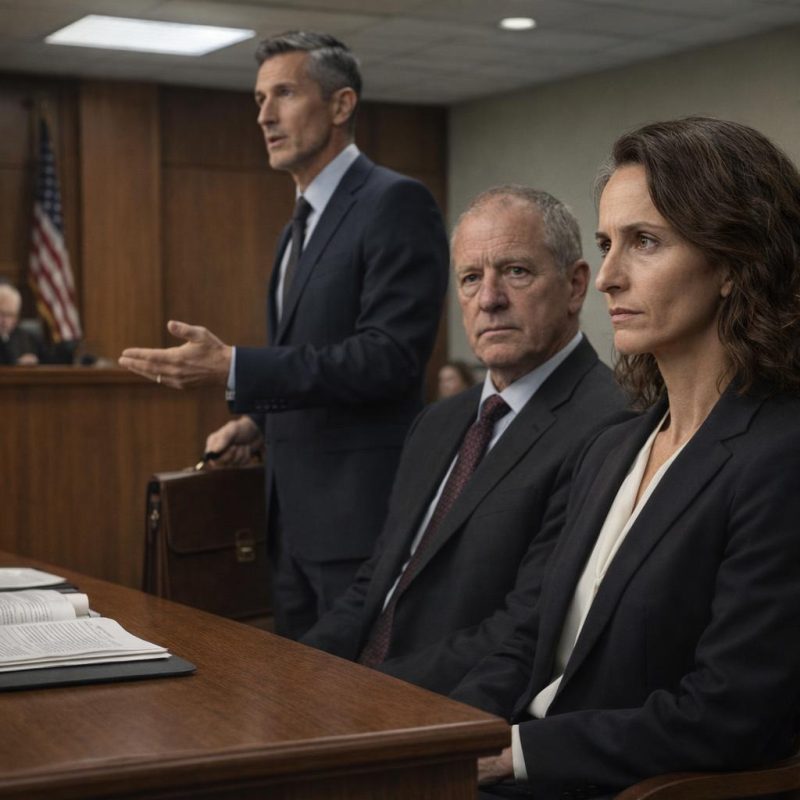 Image by RM AI
The Judge's Order
The judge ruled that DNA testing was appropriate as standard verification procedure for an ancestral trust claim involving blood descent. Her voice was measured and formal as she explained her reasoning, citing legal precedent for biological verification in estate cases. I felt relief flood through me so suddenly I had to grip the edge of the table to steady myself. Marcus's expression didn't change, but I saw his shoulders drop slightly, releasing tension he'd been carrying. The judge ordered testing for all parties claiming rights under the trust, to be conducted through a court-approved laboratory with results submitted as evidence. It was permission to investigate, not victory, but it felt like the first time in months that something had gone my way. We gathered our materials and left the courtroom, Marcus's hand briefly squeezing my shoulder as we walked down the hallway. Neither of us spoke about what came next, about the possibility that the DNA could confirm everything Julian and Beatrice claimed. The question hung between us in the silence: what would we do if the testing proved they were right? I'd won the right to verify their claim, but that didn't mean the verification would save me. Marcus squeezed my shoulder as we left the courtroom, but neither of us spoke the question that hung between us: what would we do if the DNA confirmed everything Julian and Beatrice claimed?
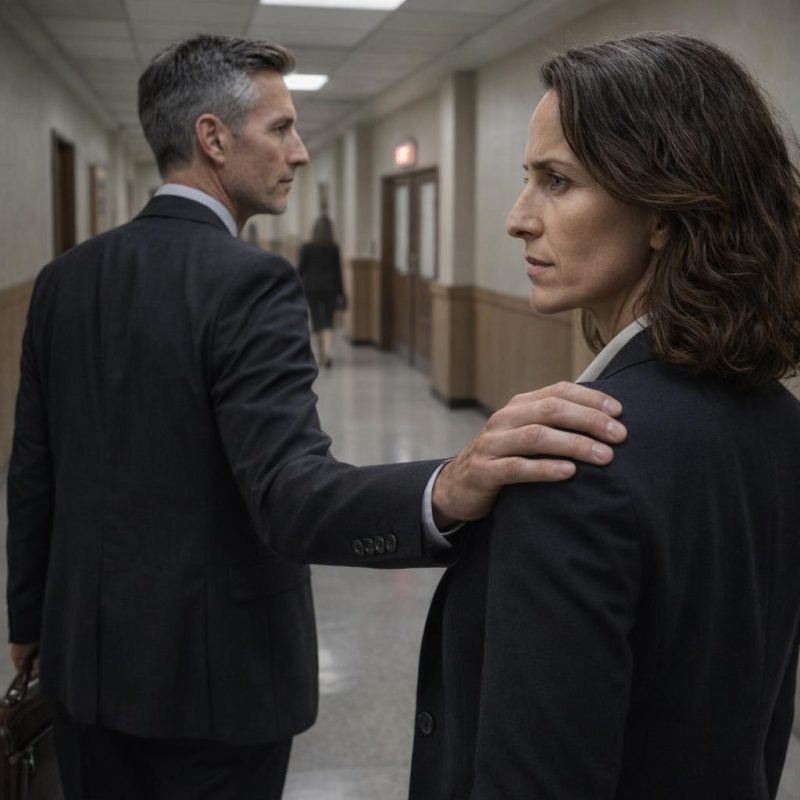 Image by RM AI
Swabs and Specimens
The clinical laboratory smelled like antiseptic and latex gloves, everything white and sterile under fluorescent lights. I sat in a plastic chair while a technician explained the cheek swab procedure, her voice professionally neutral as she walked me through what would happen with my sample. The swab felt rough against the inside of my cheek, an uncomfortable scraping that lasted only seconds but felt invasive somehow. She sealed it in a tube with a barcode label, my DNA reduced to a specimen in a plastic container. The technician explained that Julian, Beatrice, and any other relevant parties would provide samples too, all processed through the same laboratory to ensure consistency. The timeline was three to four weeks for results, she said, marking it on a form with clinical efficiency. I watched her label my sample, feeling detached from the whole process. This was science now, not legal arguments or family history or my word against theirs. I had no control over what the results would show, no way to influence or predict the outcome. As I walked out past the waiting room where Julian would arrive for his appointment later that day, I felt like I had set something in motion that I couldn't control or predict.
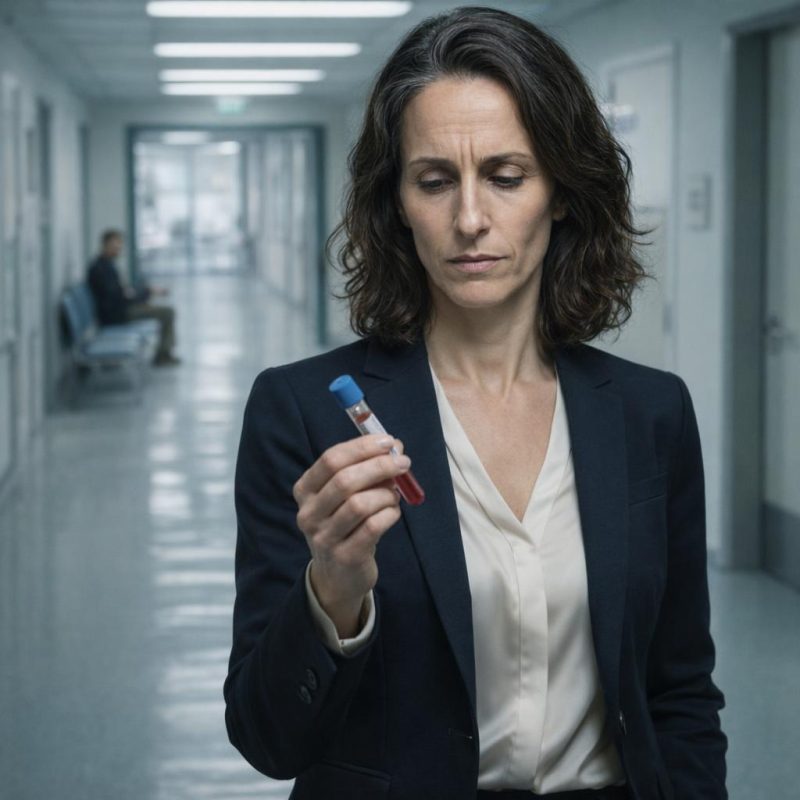 Image by RM AI
The Agonizing Limbo
Three to four weeks. The lab technician's words echoed in my head as I drove home from the appointment, my cheek still feeling strange from the swab. Three to four weeks of waiting while scientists analyzed DNA sequences and compared genetic markers, while my entire future hung in the balance of biological evidence. I marked my calendar with the estimated results date when I got home, circling it in red like it was a deadline or a sentencing. Twenty-eight days, maybe more, trapped in limbo between hope and despair. I couldn't move forward with my business, couldn't make plans, couldn't do anything but wait for science to decide my fate. Every morning I'd wake up and count the days remaining, watching them tick by with agonizing slowness. The uncertainty was torture, worse than the depositions or the courtroom battles because at least those had given me something to do, some way to fight back. Now I was powerless, suspended in time while laboratory equipment processed samples and generated reports. Nothing could be resolved until those results arrived, no decisions made, no next steps taken. I marked the calendar with the estimated results date and realized I had to somehow live an entire month trapped between hope and despair.
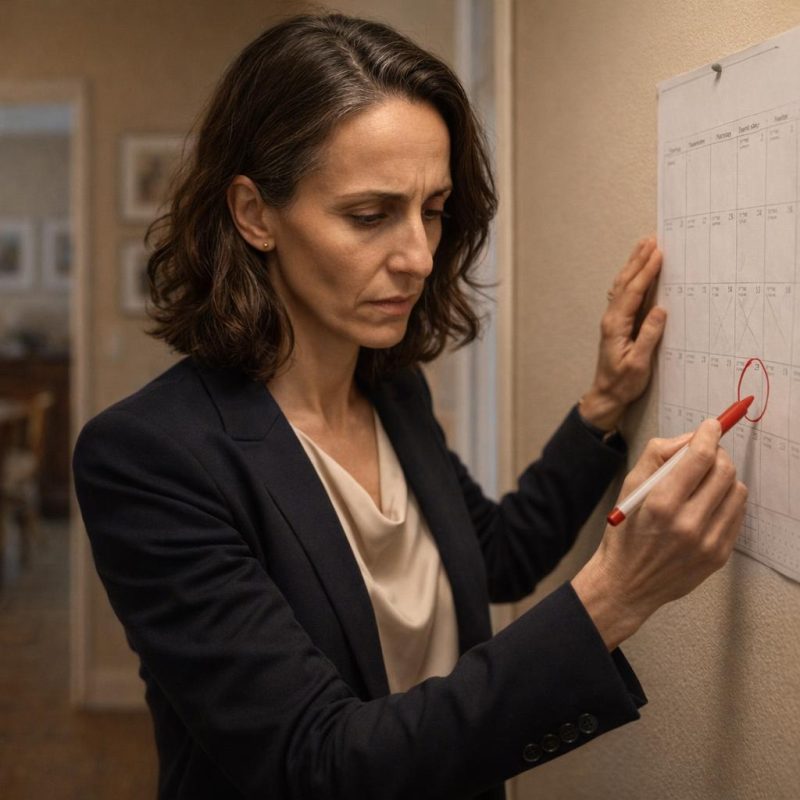 Image by RM AI
Ghost in My Own House
I walked the empty hallways of The Gilded Heron at two in the morning, my footsteps echoing off the marble floors I had personally selected from a quarry in Vermont. The hotel felt different in the darkness, like a house I was visiting rather than one I had built with my own hands. I ran my fingers along the crown molding in the east corridor, remembering the three weeks I had spent arguing with contractors about getting the details exactly right. Every surface held a memory—the wallpaper I had chosen after reviewing two hundred samples, the light fixtures I had found at an estate sale in Connecticut, the baseboards I had insisted on restoring rather than replacing. But now those memories felt like they belonged to someone else, some other version of me who had believed that ownership meant something permanent. I was a ghost haunting my own creation, drifting through rooms that might soon have someone else's name on the deed. The waiting had turned everything familiar into something temporary and strange, like I was already mourning a loss that hadn't happened yet. In the east wing, I found myself standing in the room where I had made my first design decision a decade ago, and I couldn't remember ever feeling more alone.
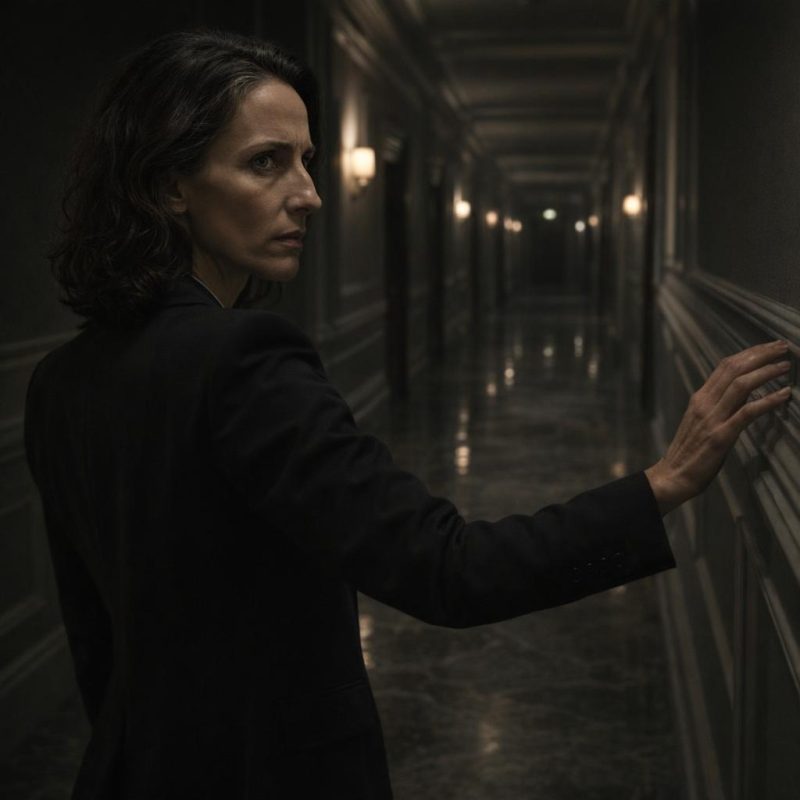 Image by RM AI
Years in the Boiler Room
I sat on the concrete floor of the old boiler room in the basement of The Gilded Heron, the space where I had spent countless winter nights during that first brutal renovation. The room still smelled faintly of oil and rust, though the ancient boiler had been replaced years ago with a modern system. I remembered being down here at three in the morning in January, my hands raw and bleeding from trying to fix a burst pipe with a wrench I barely knew how to use. I had called every plumber in the county, but no one would come out in the middle of a snowstorm for what I could afford to pay. So I had taught myself, watching YouTube videos on my phone while freezing water sprayed everywhere, believing that hard work and determination would be enough to build something that lasted. The wrench I had used still hung on the wall like a relic, a reminder of the woman who had thought she could control her own destiny through sheer force of will. I had driven guests to the airport in blizzards, lived in renovation dust for two years, sacrificed holidays and relationships and any semblance of a normal life. That earlier version of myself had believed in merit, in the idea that what you built with your own hands couldn't be taken away. The wrench I had used to fix a burst pipe still hung on the wall, a relic of a time when I thought I could control my own destiny.
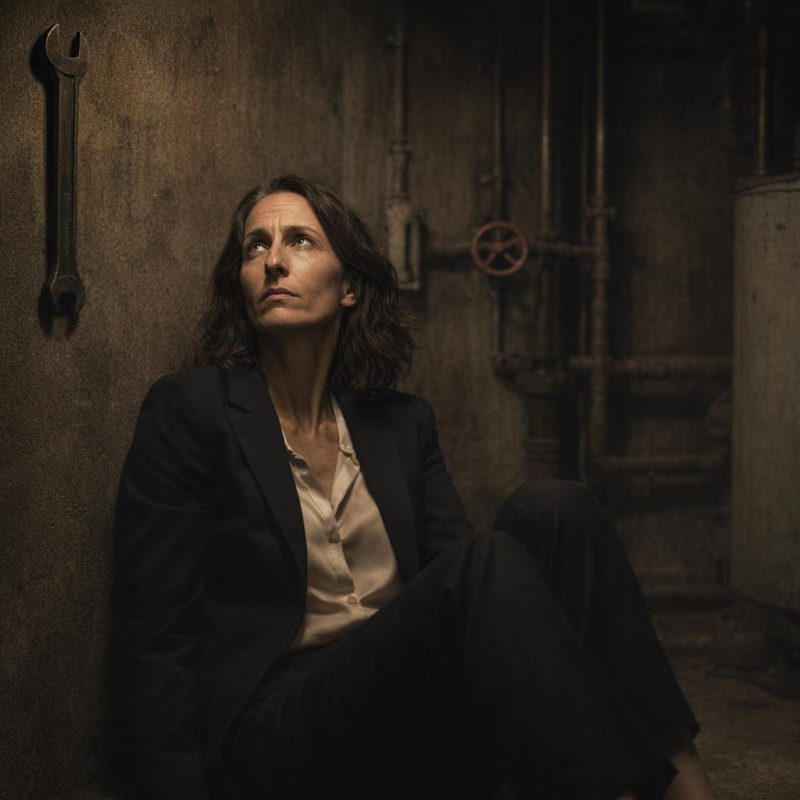 Image by RM AI
Three Hundred Anxious Faces
Elena gathered the staff in the main ballroom of The Gilded Heron, and I stood before three hundred worried faces trying to project a confidence I absolutely did not feel. The DNA results hung over all of us like a storm cloud, and I could see the anxiety in every expression—housekeepers who had been with me since the beginning, front desk staff who had families to support, kitchen workers who had helped build our reputation. I explained the testing process and the timeline, my voice steady even as my hands trembled slightly at my sides. Elena stood beside me, her warm professional presence providing support, but even she couldn't hide the concern in her eyes. The questions came quickly. How long until we know? What happens if the results go the wrong way? Will the new owners keep us on? I answered what I could, deflecting what I couldn't, trying to balance honesty with reassurance. Then a housekeeper in the back row, a woman named Maria who had worked for me for eight years, raised her hand and asked the question I had been dreading. "Should I start looking for another job?" The room went silent, everyone waiting for my answer, and I realized I had no honest response that wouldn't either create panic or give false hope. A housekeeper in the back row asked if she should start looking for another job, and I had no honest answer to give her.
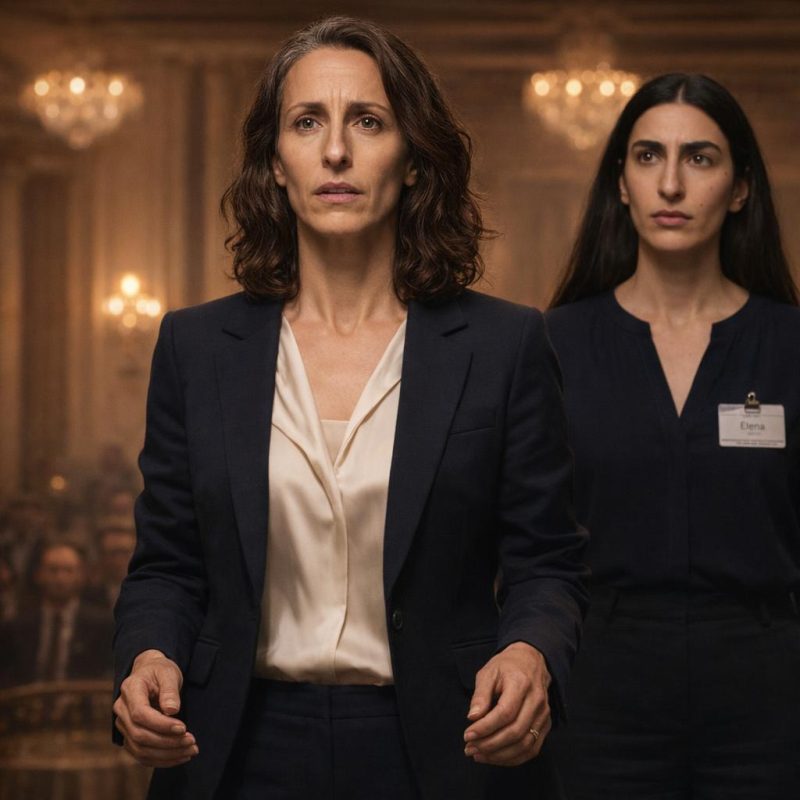 Image by RM AI
The Acquisition Deadline
David Thornton's email arrived at seven in the morning, and the subject line made my stomach drop: "Final Extension - Ownership Resolution Required." I read it three times, each word feeling like a nail in a coffin. The global hospitality group had been patient, he wrote, but they needed absolute clarity on ownership before proceeding with the acquisition. They were granting one final extension—fourteen days to resolve the dispute and provide clear title, or the deal would be terminated. The phrase "final extension" appeared twice in the email, underlined for emphasis. I pulled up my calendar and counted the days until the DNA results were expected to arrive. Twenty-one days from the testing date. I counted again, hoping I had made a mistake. The results would arrive exactly three days after David's deadline, leaving me with an impossible choice between guaranteeing something I couldn't guarantee or watching the acquisition collapse. I had no way to accelerate the laboratory processing, no ability to make science move faster. The deal I had worked toward for eighteen months was slipping away because of timing, because of biology, because of factors completely beyond my control. I calculated the days until the DNA results were due and realized they would arrive exactly three days after David's deadline, leaving me with an impossible choice.
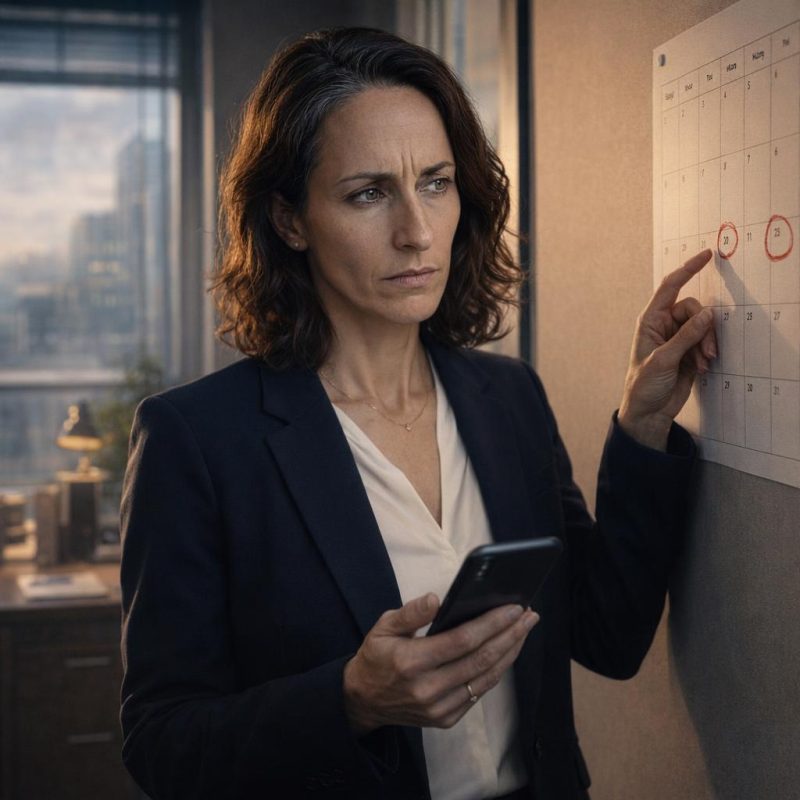 Image by RM AI
Buried Family Secrets
Sarah Mitchell's investigative piece appeared in the business section with the headline "The Ashford Family: Three Generations of Secrets and Scandals." I read it on my phone while drinking coffee that had gone cold, learning about my own family history from a journalist who had apparently done more research than I had ever bothered to do. There were affairs in the 1940s, business disputes in the 1950s, a bankruptcy that had been quietly settled in the 1970s. Sarah had dug through public records, interviewed distant relatives I had never met, pieced together a narrative of dysfunction that stretched back decades. The public dissection of family secrets felt invasive and humiliating, like watching someone rifle through old photo albums and point out all the worst moments. One paragraph caught my attention—a brief mention of a "hushed-up scandal" in Julian and Beatrice's branch of the family from the 1960s. The details were frustratingly vague, something about a family dispute that had been settled privately, records that had been sealed. I read it three times, trying to figure out if it mattered, if it had any connection to the current case. But Sarah had clearly hit a wall in her research, and the scandal remained a mystery, a footnote in a larger story of family ghosts becoming public knowledge. One paragraph mentioned a hushed-up scandal in Julian and Beatrice's branch of the family from the 1960s, but the details were vague enough that I couldn't tell if it mattered.
 Image by RM AI
Judgment in Ink
Sarah's follow-up article appeared two days later with an even worse headline: "Inheritance vs. Merit: The Gilded Heron Case as American Morality Tale." She had framed the entire legal battle as a philosophical question about wealth, family, and entitlement, and the comment section had exploded with strangers offering their opinions about my character and motivations. I read them until I felt physically sick, unable to stop scrolling even as each comment felt like a punch to the gut. People assumed I had inherited the hotels, that I was just another rich kid fighting over family money. They debated whether inherited wealth was ever truly earned, whether family businesses should stay in families, whether I deserved what I had. One commenter wrote that people who inherit family wealth never truly earn anything, and I wanted to scream at my screen that I had built this empire with my own bleeding hands, that I had lived in construction dust and fixed burst pipes at three in the morning and sacrificed every personal relationship for a decade. But no one was listening, no one cared about the truth when the narrative was so much more compelling. The characterization as an entitled heiress felt deeply, bitterly unfair, but I had no platform to defend myself, no way to make strangers understand. One commenter wrote that people who inherit family wealth never truly earn anything, and I wanted to scream that I had built this empire with my own hands, but no one was listening.
 Image by RM AI
Was It Worth It
I sat alone in my apartment staring at the wall of awards and photographs I had accumulated over a decade of building my business. Industry recognition plaques, framed magazine covers, photos from each hotel opening showing the progression of my empire. The Gilded Heron on opening day, The Silver Nest a year later, The Copper Wing after that. Each image represented months of work, years of sacrifice, holidays spent alone while friends gathered with their families. I had given up relationships because I was always working, missed weddings and births and funerals because I had a property crisis to manage. My personal life had become a footnote to my professional success, and I had told myself it was worth it, that I was building something that mattered. But now, sitting in the silence of my apartment with the DNA results looming and the acquisition falling apart, I wondered if I had bet everything on something I was going to lose anyway. For the first time in ten years, I questioned whether the sacrifice had been worth it, whether I should have chosen differently, lived differently, wanted different things. The framed photo of opening day at The Gilded Heron showed a younger version of me beaming with pride, and I barely recognized that woman anymore.
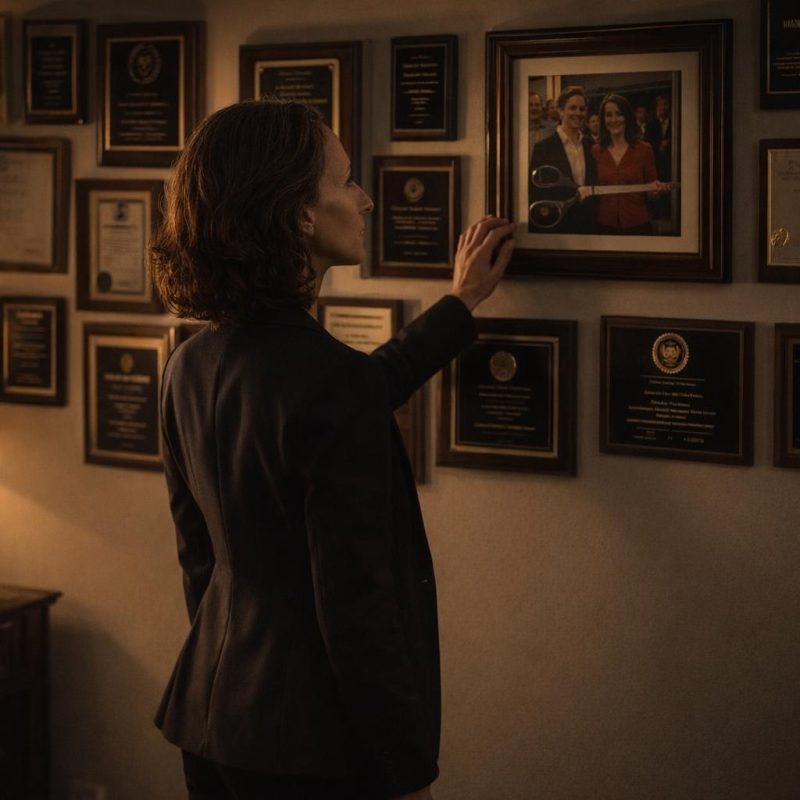 Image by RM AI
The Lab's Message
Marcus called at four in the afternoon, and I knew from his tone before he even spoke that the waiting was almost over. "The lab contacted me," he said, his voice carefully neutral. "The DNA results will be ready within forty-eight hours. They want to schedule a meeting to go over the findings." I felt my entire body go numb, my hand gripping the phone so tightly my knuckles went white. Forty-eight hours. Two days until I would know whether Julian and Beatrice had any biological claim to my empire, whether the document they had produced was backed by blood or just by paper. Marcus was still talking, saying something about scheduling and preparation, but I could barely hear him over the rushing sound in my ears. I managed to confirm the meeting time, managed to say something that sounded professional and composed, then hung up the phone and walked to my balcony on legs that felt disconnected from my body. The Pacific Ocean stretched out before me, endless and indifferent, and I stood there steeling myself for the verdict that would either vindicate everything I had built or destroy it completely. I hung up the phone and walked to my balcony overlooking the Pacific, steeling myself for either vindication or the destruction of everything I had built.
 Image by RM AI
Contingency Plans
Marcus called at four in the afternoon, his voice carefully neutral when he said the DNA results would be ready within forty-eight hours and we needed to meet that evening to prepare. I arrived at his office just after six, the city lights beginning to flicker on below his windows. We sat across from each other mapping out response strategies for every possible outcome, his yellow legal pad filling with contingency plans and procedural timelines. He outlined what would happen if the results confirmed the cousins' lineage—the trust enforcement, the asset transfer, the timeline for dismantling everything I had built. We discussed the scenario where results were inconclusive, the legal limbo that would follow. I asked about the acquisition timeline if the results were favorable, and he walked me through those steps too. But neither of us could bring ourselves to speak directly about what losing would mean for me personally. The words stayed trapped in our throats, too heavy to voice. Marcus provided final advice about maintaining composure in tomorrow's meeting, his hand briefly touching my shoulder as I stood to leave. As I left his office and stepped into the cold night air, I wondered if this was the last night I would spend as the owner of my own life.
 Image by RM AI
The Gathering
I walked into the sterile conference room the next morning and found Julian, Beatrice, and Silas already seated, their postures radiating the confidence of people who believed they had already won. The smell of floor wax hung in the air, sharp and chemical, making everything feel even more surreal. Julian sat with his legs crossed, one expensive loafer bouncing slightly, while Beatrice examined her manicure with that expression of bored superiority I had come to despise. Silas occupied his chair like it was a throne, silver hair immaculate, his granite face revealing nothing. Marcus took his place beside me, his presence steady and reassuring, though I could feel the tension in his shoulders. We exchanged minimal acknowledgment—a few curt nods, nothing more. The silence stretched between us like a chasm. Then the court officer entered carrying a sealed manila envelope, official and unopened, and placed it on the table in front of Silas with a quiet thud that seemed to echo in my chest. The court officer entered with a sealed manila envelope, and the air in the room became so thick I could barely breathe.
 Image by RM AI
The Seal Breaks
Silas took the manila envelope with his usual clinical precision, his fingers working the seal while everyone in the room sat frozen like statues waiting for a museum to crumble. I watched his hands move with that surgical deliberation he brought to everything, peeling back the flap with maddening slowness. Julian shifted in his seat slightly, the first crack in his confident facade, while Beatrice maintained her air of bored superiority though her eyes never left the envelope. Marcus sat ready beside me, his body coiled like a spring, prepared to respond to whatever words emerged from that sealed document. The seconds stretched into what felt like hours. My heart hammered so hard I was certain everyone could hear it. Silas removed the DNA report from the envelope, unfolding the pages with the same methodical care. He began reading silently, his eyes moving across the text, and I found myself holding my breath without meaning to. Every muscle in my body was braced for impact, waiting for whatever those words contained to either save me or destroy everything I had spent twenty years building. He pulled the report from the envelope and began to read, and I watched his composed expression for any flicker that would tell me my fate.
 Image by RM AI
The Flicker
I watched Silas read the DNA report, and something shifted in his marble expression—a flicker of surprise that vanished almost immediately but not before I caught it. His eyebrows drew together for just a fraction of a second, his lips pressing into a thinner line, and then the mask was back in place. But I had seen it. That momentary crack in his granite composure told me something in those results was unexpected. Marcus seemed to notice it too; I felt him straighten slightly beside me, his attention sharpening. Silas cleared his throat unexpectedly, a sound I had never heard from him before, and looked up at Julian and Beatrice with an expression I couldn't read. Something had changed in the room's energy. Julian's confident posture showed the first real signs of uncertainty, his bouncing foot going still. Beatrice's bored expression flickered with something that might have been concern. I felt something I hadn't felt in weeks rising in my chest—a spark of something that might have been hope, though I couldn't explain why. He cleared his throat and looked at Julian and Beatrice with an expression I couldn't read, and I felt something I hadn't felt in weeks: a spark of something that might have been hope.
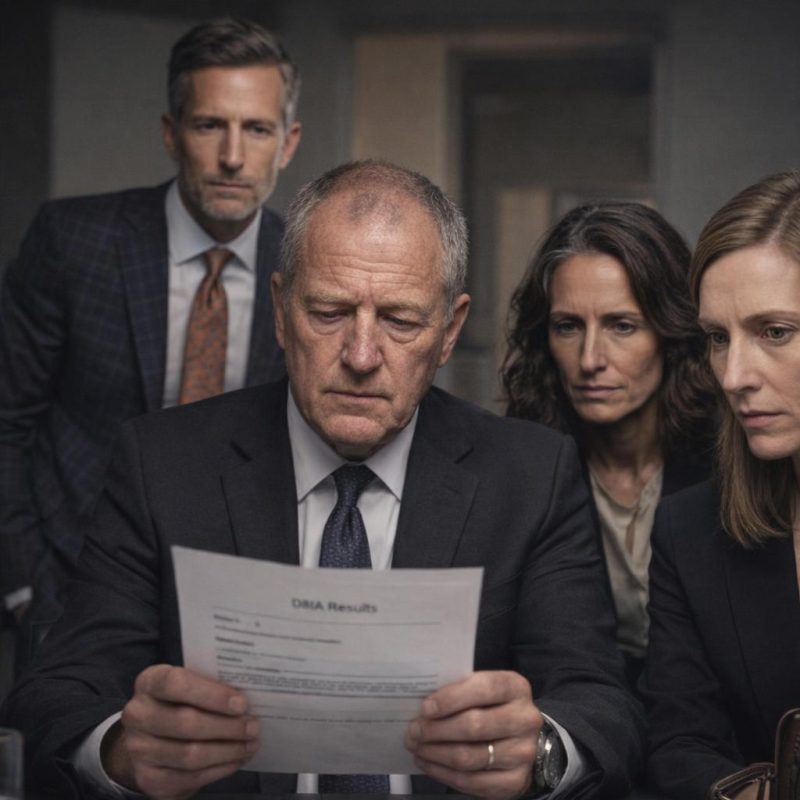 Image by RM AI
Not Blood of Our Blood
Silas announced that the DNA results showed Julian and Beatrice had no biological connection to our great-grandfather whatsoever, and the words hit the room like a bomb detonating in slow motion. I sat there absorbing the revelation, my mind struggling to process what I had just heard. No biological connection. The test had revealed a break in their lineage from the 1922 patriarch—a long-forgotten affair in their branch of the family, a secret buried for sixty years until this moment. The shock turned to understanding as the full implications crystallized. The Lineage Trust they had invoked, the very document they had weaponized against me, required blood descent. By demanding that the trust be enforced, by insisting on the DNA test to prove their claim, they had triggered their own undoing. Marcus immediately grasped the legal implications; I could see it in his eyes. Everything Julian and Beatrice had spent months building—the archive research, the legal filings, the confident demands—had collapsed on itself in a single laboratory report. The irony was almost too perfect to believe. The very document they had used as a weapon required blood descent—and they had just proven, in a court-ordered test they could not dispute, that they had no legal claim to any part of the family estate.
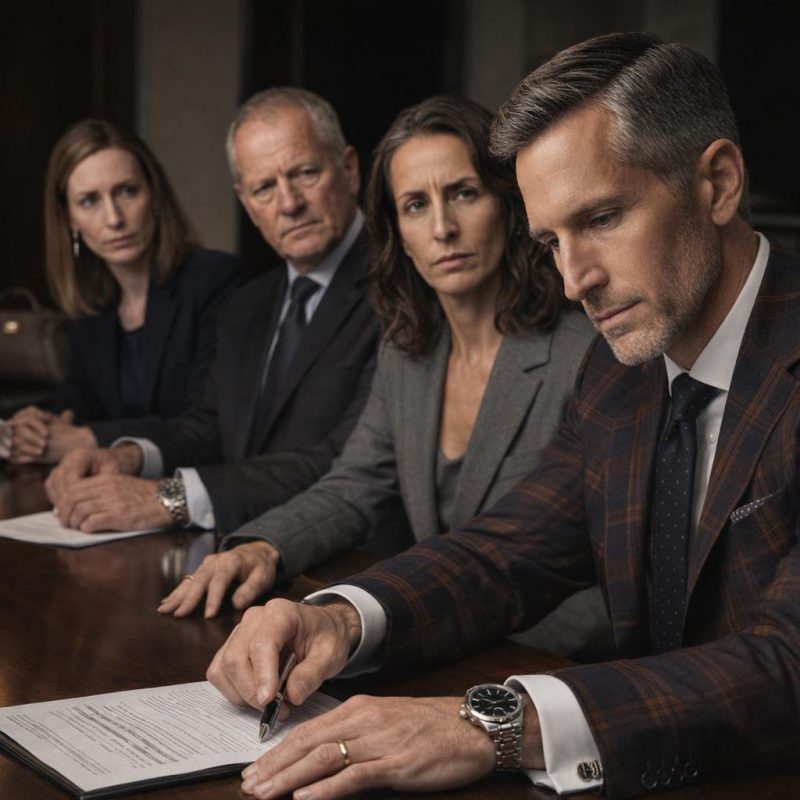 Image by RM AI
The Color Drains
I watched Julian's face transform as the implications hit him—not just losing the claim against me, but losing his stake in any part of the family estate he thought was his birthright. The color drained from his skin, leaving him pale and hollow-looking, his confident posture collapsing like a building losing its foundation. He realized he had no claim to my hotels, but worse, so much worse, the Lineage Clause now excluded him from all family estate. By invoking blood descent requirements, he had proven he had no blood descent. His expensive loafer stopped bouncing. His practiced smile had vanished completely. Beatrice's bored expression transformed into something like panic, her eyes wide and darting between Silas and the DNA report as if one of them might offer a different reality. Silas maintained his professional composure but offered no comfort, no reassurance, nothing. Marcus watched the transformation with quiet satisfaction, his posture relaxing for the first time in months. Julian's mouth opened and closed twice before any sound came out. His mouth opened and closed twice before any sound came out, and when he finally spoke, his voice was hollow with the sound of a man watching his entire identity collapse.
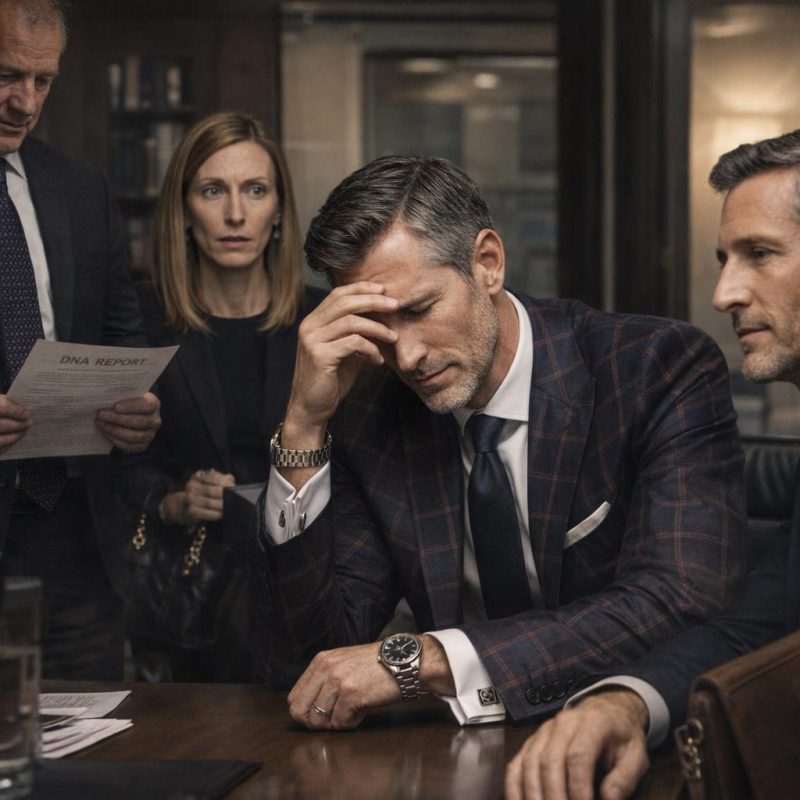 Image by RM AI
Legally Disinherited
Marcus formally stated for the record that Julian and Beatrice's invocation of the Lineage Clause had legally disqualified them from any claim to the ancestral estate, since the clause they cited required the very bloodline they had just proven they lacked. His voice was calm and precise, laying out the legal ramifications with the thoroughness I had come to rely on. The Lineage Clause required blood descent. Julian and Beatrice had court-ordered proof they lacked blood descent. Therefore their claim to my hotels was void. Furthermore, their invocation of the clause disinherited them from all ancestral property. They had come for my thirty-two million dollars and lost their own position in the family entirely. The months of torment were reversing in minutes. Justice was unfolding right here in this sterile conference room with its floor wax smell and fluorescent lights. Beatrice turned to Silas, her voice sharp with desperation, demanding he do something, fix this, find a loophole. I felt fully vindicated for the first time since that initial meeting when they had walked into my office with their hundred-year-old document. Beatrice turned to Silas demanding he do something, but for the first time since I'd met him, the marble-faced attorney had no words to offer.
 Image by RM AI
The Perfect Irony
I sat in my chair watching Julian and Beatrice realize that their months of archive research had led them to construct the perfect trap—for themselves. They had been so thorough, so meticulous in their preparation. They had found the Lineage Trust buried in family records, built their entire claim around its provisions, demanded that blood verification be the standard. Their own demand had triggered the DNA test. The test had revealed they had no blood connection. Their thorough preparation had destroyed their own inheritance. They had walked into my office expecting to claim eighty percent of everything I had built, and now they were leaving with nothing—worse than nothing, because they had no legal connection to the family estate at all. The 1922 document meant to trap me had freed me completely. The reversal was total and irrefutable. I realized I was permanently separated from them legally, cut free from their branch of the family tree by their own actions. It was almost poetic. They had come to take eighty percent of my life's work and instead handed me the only thing I had ever wanted from them: permanent legal separation from their branch of the family tree.
 Image by RM AI
The Full Ramifications
The conference room emptied slowly—Julian and Beatrice first, their expensive shoes clicking against marble in retreat, then Silas with his briefcase and granite expression, finally the court reporter packing up her equipment. Marcus touched my elbow. "Claire, stay a moment." I sank back into my chair while he closed the door, and suddenly the space felt enormous and quiet. He sat across from me, the same seat Silas had occupied an hour earlier. "I need you to understand the full scope of what just happened," he said, pulling out his notes. "When Julian and Beatrice invoked the Lineage Trust, they established blood descent as the legal standard for all claims under it. The court-ordered DNA test is now irrefutable evidence in the record. They cannot claim any property governed by that ancestral trust—not just your hotels, but any family estate property anywhere." I stared at him. "Any future inheritance?" "Gone. Void. Their branch has no legal standing for claims based on family lineage." He leaned forward. "They spent months in archives building an airtight case. They found every document, traced every provision, demanded the highest standard of proof." His voice carried something like awe. "They constructed a perfect legal trap." Every property claim they might have made, every future inheritance they might have received—all of it gone because they couldn't resist reaching for what was never theirs.
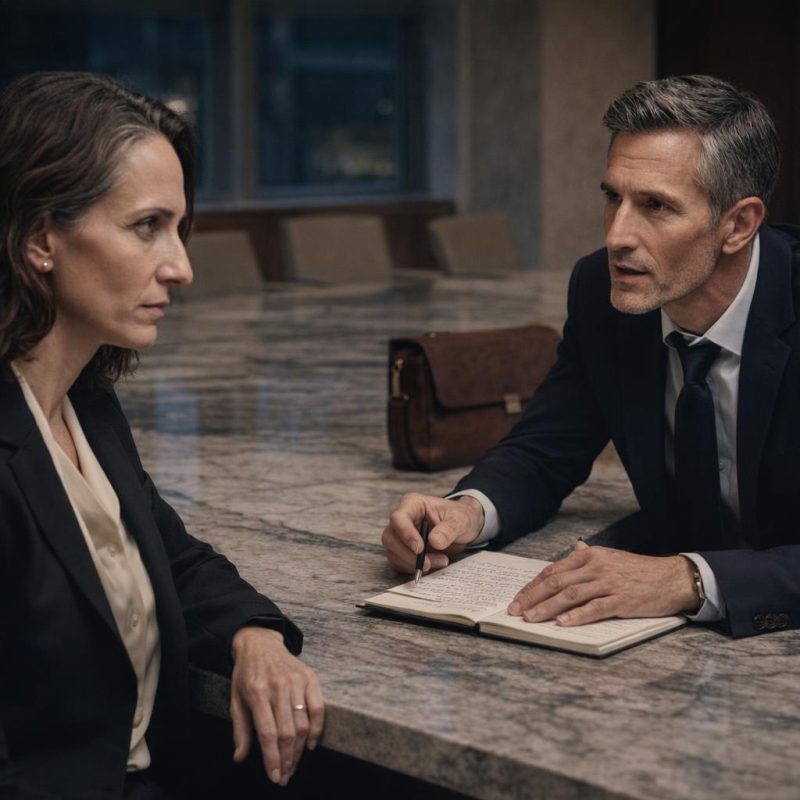 Image by RM AI
Cleared
The courthouse steps felt different walking down than they had walking up three months earlier. Marcus held the door as we emerged into afternoon sunlight, and I carried a single folder—the court's formal dismissal of all claims against my hotel portfolio. Every challenge to my ownership, every assertion under the Lineage Trust, every threat Julian and Beatrice had constructed from that 1922 document—dismissed. The judge had been efficient and clear. My ownership was confirmed as sole and uncontested. No appeals, no lingering questions, no shadows over the sale. Marcus walked beside me in comfortable silence, the kind that comes after a battle won. I thought about the months of uncertainty, the sleepless nights calculating worst-case scenarios, the weight of three hundred employees depending on me to protect their livelihoods. That weight had pressed down on my shoulders every morning when I woke and every night before I finally slept. Now it lifted. The legal battle that had threatened to destroy everything I'd built over a decade was officially over. I stopped on the sidewalk, tilted my face toward the sky, and let the sun warm my skin. The sun hit my face as I stepped outside, and I felt the weight of the entire ordeal lift from my shoulders like chains finally falling away.
 Image by RM AI
Silas Withdraws
The letter arrived by courier two days later, printed on Silas Vane's firm letterhead with his signature in precise black ink at the bottom. Marcus brought it to my office at The Gilded Heron, already opened and reviewed. "Silas has formally withdrawn as counsel," he said, handing me the single page. I read the clinical language—standard termination provisions, effective immediately, no explanation beyond professional boilerplate about conclusion of representation. The marble-faced attorney who had walked into my hotel six months ago with that leather portfolio, who had laid out the Lineage Trust with surgical precision, who had threatened my entire empire with calm certainty—he was simply gone from the case. No acknowledgment of the spectacular collapse, no reference to the DNA results that had destroyed his clients' position. Just formal withdrawal in emotionless legal prose. "Expected?" I asked Marcus. "Completely. After a case implodes like that, most attorneys exit quickly." He took the letter back. "Silas represented clients whose entire claim disintegrated under scrutiny they themselves demanded. There's nothing left for him to do." I thought about that first meeting, the intimidation in his stillness, the threat in his precision. That threat had dissolved entirely. The marble-faced attorney who had walked into my hotel threatening my empire had disappeared from the case without a word of acknowledgment, and somehow that felt like another small victory.
 Image by RM AI
Consequences Unfold
Marcus called me a week later with news that felt like watching dominoes fall in slow motion. "I thought you should know—Julian and Beatrice are facing complications with other family members now." I set down my coffee. "What kind of complications?" "The DNA results became part of the public court record. Extended family has access. Apparently their branch had claimed certain inheritance positions over the years based on direct lineage." His voice carried dry amusement. "Those claims are now being questioned. Aggressively." I pictured Julian's practiced smile, Beatrice's dismissive examination of my hotels like she was appraising inventory she'd soon own. They had waited so carefully, researching for months, timing their strike for maximum impact when I was about to close the biggest deal of my career. They had wanted to watch me lose everything at my moment of triumph. "How aggressive?" I asked. "Legal letters. Demands for accounting. One cousin is apparently challenging a property transfer from fifteen years ago." Marcus paused. "The sixty-year-old secret they exposed to attack you has exposed them to everyone else." I felt no satisfaction exactly, just a sense of symmetry—the universe balancing itself without my intervention. They had spent months waiting to strike at my moment of triumph, and now they were learning what it felt like to have the ground collapse beneath their own feet.
 Image by RM AI
The Deal Closes
David Thornton's name appeared on my phone three days after the court dismissal, and I answered knowing what he'd say before he spoke. "Claire, I wanted to call personally." His voice carried relief and something else—eagerness. "With the legal complications fully resolved, we're proceeding immediately. The acquisition will close within the week." I stood at my office window overlooking the city, watching traffic move through downtown streets. "The board is comfortable?" "More than comfortable. Eager. The due diligence concerns are completely addressed—your ownership is confirmed as sole and uncontested. Frankly, the way you handled this situation has impressed everyone here." He paused. "Building a forty-million-dollar portfolio is one thing. Defending it against a coordinated legal attack and emerging with your reputation enhanced? That's the kind of leadership we want in our organization." The global hospitality group that had wavered during the crisis, that had delayed and questioned and made me wonder if the deal would survive—they were now rushing to finalize. Everything I had built over a decade, every risk I'd taken, every sleepless night spent solving problems and building something from nothing—it was about to become part of something even larger. The global hospitality group that had wavered was now eager to finalize, and I realized that everything I had built was about to become part of something even larger.
 Image by RM AI
Headlines Reversed
Sarah Mitchell's article appeared in the business section on a Tuesday morning, and this time I read it without dread. The headline announced the stunning reversal—entrepreneur vindicated after DNA evidence destroys cousins' inheritance claim. She had written the story with the same thoroughness she'd brought to the earlier coverage, but now the narrative had shifted completely. The hotel heiress losing her fortune had become a self-made businesswoman defending what she'd built from nothing. The article detailed my decade of work, the portfolio I'd constructed property by property, the forty-million-dollar sale I'd earned through years of strategic growth. It explained how Julian and Beatrice had invoked a 1922 trust document, demanded blood verification, and discovered they had no biological connection to the family line. The false claims were exposed. The sixty-year-old secret was public knowledge. Other newspapers picked up the story within hours—the same publications that had mocked the heiress now celebrated the vindication. I read them all, sitting in my office with coffee growing cold. The public humiliation I'd endured for months transformed into public validation. The truth of my work, my achievement, my right to sell what I'd built—finally recognized. The same newspapers that had mocked the hotel heiress losing her fortune now told the story of a self-made businesswoman vindicated by the truth.
 Image by RM AI
Gratitude and Champagne
I reserved The Gilded Heron's private dining room for the evening, the same space where I'd hosted acquisition negotiations and celebration dinners over the years. Marcus arrived with his legal team—six people who had worked hundreds of hours on a case that had looked hopeless at the start. I'd ordered champagne, real champagne, the kind you save for moments that matter. We gathered around the table where we'd strategized and argued and searched for angles, and I raised my glass. "I don't have adequate words to thank you," I said, looking at each face. "You believed in this case when I wasn't sure I did. You found the thread that unraveled everything." Marcus smiled. "The blood descendant observation was yours, Claire. You saw what we missed." "But you knew what to do with it. You built the strategy. You made them demand the DNA test." I felt emotion rising in my throat. "You saved everything I built. You saved three hundred jobs. You gave me my life back." We drank, and Marcus lifted his glass again. "The best cases are the ones where the truth wins," he said simply. The team nodded, smiling, and I felt something I hadn't allowed myself to feel in months—not relief, not vindication, but something simpler and more profound. Marcus lifted his glass and said the best cases are the ones where the truth wins, and I finally allowed myself to feel something I hadn't felt in months: genuine joy.
 Image by RM AI
The Staff Celebration
Elena found me in my office two days later with a proposal. "The staff needs to hear from you directly. They've been reading the headlines, but they need to know what it means for them." So she organized a gathering in The Gilded Heron's grand ballroom—three hundred employees from housekeeping and front desk and kitchen and management, the same people who had asked me months ago if they should start looking for other work. I stood on the small stage where we usually positioned speakers for conferences, and Elena stood beside me with visible relief in her posture. "The legal battle is over," I told them, my voice carrying across the silent room. "I won. The claims against the hotel portfolio were completely dismissed. Your jobs are secure. The hotel's future is bright under new ownership, and they're committed to maintaining our standards and our team." The cheering started slowly, then built—applause and relief and celebration spreading through three hundred faces that had carried worry for too long. I saw the housekeepers who had worked for me since the beginning, the front desk staff who had maintained perfect professionalism while fielding questions about the lawsuit, the kitchen team who had kept serving excellence while wondering if they'd have jobs next month. The same employees who had asked if they should look for other work were now cheering, and I realized that protecting them had been the victory that mattered most.
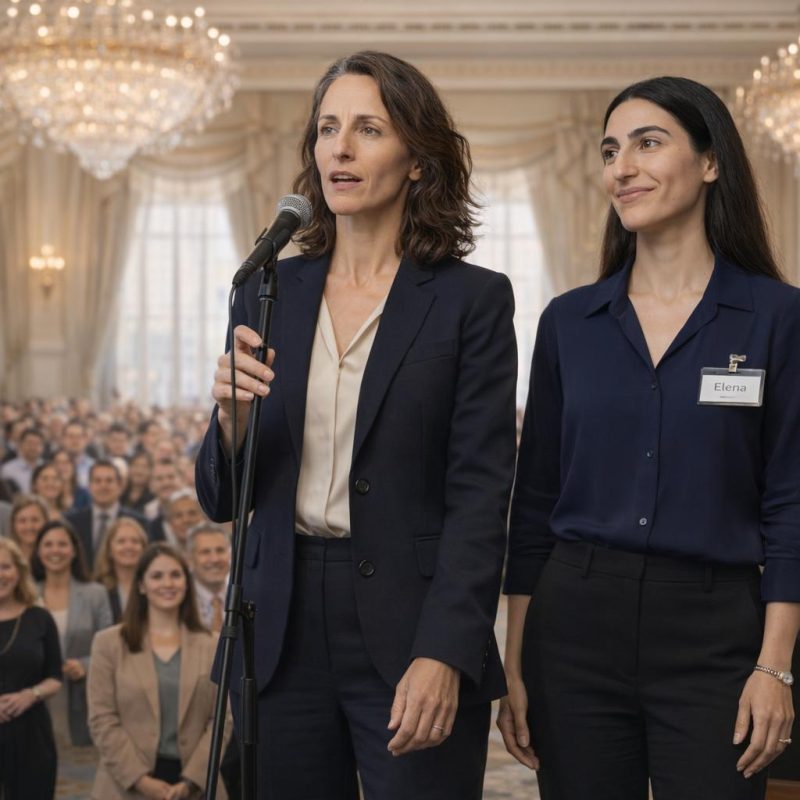 Image by RM AI
Legacy Conversations
I drove to my father's house three days after the staff celebration, and Robert met me at the door with the kind of quiet relief that only a parent can carry. We settled into his study—the same room where I'd sat months ago trying to explain the lawsuit, the same leather chairs, the same afternoon light slanting through the windows. This time, though, I wasn't there to deliver bad news. I told him everything. The DNA results that proved Julian and Beatrice weren't actually descended from the great-grandfather. The way their entire claim had collapsed under the weight of their own fabricated evidence. The irony that the 1922 document they'd weaponized against me had ultimately protected the legitimate bloodline—my bloodline. Robert listened with his hands folded, his weathered face showing decades of family history processing in real time. "Your great-grandfather worked sixteen-hour days in that first hotel," he said finally. "He believed in building something real, something earned." He looked at me with those gentle eyes that had seen so much. "You did the same thing. You built an empire the same way he did—through work, not through scheming over old papers." Then he smiled, and it was the kind of smile that carries blessing instead of expectation. "I always knew you were the one who truly inherited the family spirit," he said, and this time those words felt like a blessing instead of a burden.
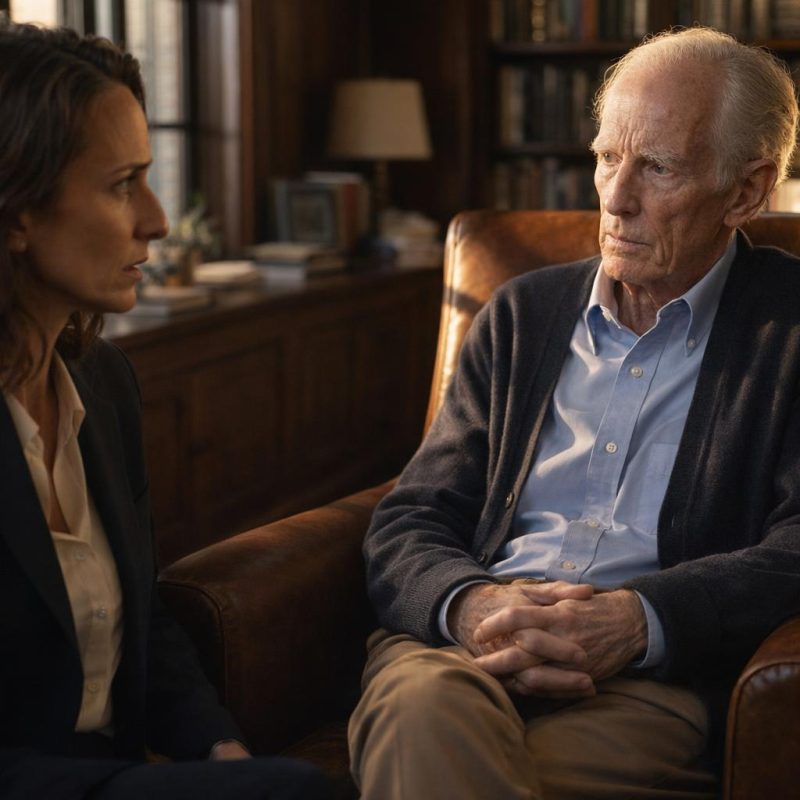 Image by RM AI
Forty Million Reasons
The wire transfer confirmation arrived on a Tuesday morning, delivered to my inbox with the kind of mundane subject line that didn't match the magnitude of what it contained. I opened it on my laptop in the home office of my penthouse, and there it was: forty million dollars, deposited and cleared, sitting in my account like a decade of my life had suddenly crystallized into a number. I stared at that figure for a long time. Forty million. I thought about the first Victorian mansion I'd bought—dilapidated, overlooked, requiring every cent I had and a loan that terrified me. I thought about the eighty-hour weeks, the staff I'd hired one by one, the systems I'd built from scratch. Every sacrifice, every missed holiday, every relationship I'd deprioritized because I was too busy building something that mattered. It had all led to this moment. The money was mine, fully and completely, with no claims against it, no cousins circling with century-old documents, no lawyers parsing through family trees. I leaned back in my chair and let out a breath I felt like I'd been holding for months. I had built this from a single forgotten mansion, and now I was financially free to decide what the next chapter of my life would look like.
 Image by RM AI
Return to the Balcony
I walked out onto the wrap-around balcony of The Gilded Heron that evening, drawn there by something I couldn't quite name. The Pacific stretched before me, endless and indifferent, and the sunset was painting the sky in shades of amber and rose—the same colors as the night everything had changed. I stood at the railing where I'd stood so many times before, where I'd watched this exact view while sipping local vintage and feeling proud of what I'd built. The memory surfaced with perfect clarity: the intercom crackling to life, Thomas's shaken voice announcing visitors, the moment my peaceful evening had shattered into months of legal warfare. So much had happened since that night. I'd been attacked by family I barely knew, had my legitimacy questioned, had my empire threatened by people who'd contributed nothing to its creation. I'd fought back with everything I had, had watched my cousins destroy themselves with their own lies, had emerged victorious in ways I couldn't have imagined. The view was identical to the night the intercom had crackled with Thomas's shaken voice, but I was not the same woman who had stood here then.
 Image by RM AI
To Freedom and Future
I went back inside and poured myself a glass of the same local vintage I'd been drinking that first night, then returned to the balcony as the last light faded from the sky. The waves crashed against the rocks below, their rhythm unchanged by human drama, and I raised my glass to the Pacific horizon. To the empire I had built from nothing, brick by brick and decision by decision. To the battle I had won against people who thought inheritance meant more than work. To the three hundred employees whose jobs were secure, whose futures were protected, whose loyalty had never wavered. To the freedom that stretched before me like the endless ocean, full of possibilities I could now afford to explore. I drank, and the wine tasted like victory. Julian and Beatrice had tried to take everything from me using a document they thought gave them power, but that hundred-year-old clause had backfired spectacularly. It had proven they weren't family at all, had severed them legally and permanently from any claim to what I'd built. The hundred-year-old clause that was meant to destroy me had become the very thing that ensured I would never have to deal with my family again, and that was the sweetest victory of all.
 Image by RM AI
placeholder
 Image by RM AI
KEEP ON READING
The Brutal Realities Of Gladiator Life Beyond the Arena
David Cruz asenjo on PexelsWhen most people think of gladiators,…
By Rob Shapiro Mar 31, 2026
The Volcano Winter That Nearly Toppled Europe
Collin Ross on UnsplashMost people, if asked to name a…
By Cameron Dick Mar 31, 2026
From School Plays To Starting A Cult: 20 Of The…
The Books That Made Us. Many people will tell you…
By Farva Ivkovic Jan 31, 2025
20 Facts About Jane Grey, The Forgotten Queen Of England
A Quick, Messy, and Tragic Reign. Lady Jane Grey never…
By Maria Cruz Jan 31, 2025
20 Priceless Historical Art Pieces Rescued By The Monuments Men
Protecting Human History. While the soldiers on the front lines…
By Sara Springsteen Mar 31, 2026
Almost Every Ancient Statue Has a Missing Nose, And It's…
Gary Todd from Xinzheng, China on WikimediaWalk through the classical…
By Elizabeth Graham Mar 31, 2026