

Champagne and City Lights
I stood at the floor-to-ceiling windows of my penthouse, holding a glass of champagne that cost more than my first month's rent ever did. The city lights stretched out below me like scattered diamonds, and for the first time in ten years, I wasn't thinking about the next pitch, the next product launch, the next crisis. Two days ago, I'd signed papers that put eighty million dollars in my account. Eighty. Million. I took a slow sip and let myself remember sleeping under that metal desk in the garage, surviving on ramen and coffee, telling myself it would all be worth it someday. It was worth it. I'd promised my three hundred employees a trust fund from the proceeds—they'd built this with me, and they deserved their share. The rest? That was mine. I'd earned every dollar. The intercom buzzed once. Then twice. Then a third time, sharp and insistent. James's voice came through, and he sounded nervous—which was weird, because James never sounded nervous.
 Image by RM AI
Uninvited Family
I pressed the intercom button. "What's wrong?" James cleared his throat. "Ms. Diana, you have visitors in the lobby. Your brother and sister. And they've brought someone with them." I hadn't seen Mark or Elena since Dad's funeral two years ago. We'd stood on opposite sides of the grave, exchanged stiff nods, and gone our separate ways. Now they were here? At ten PM? I told James to send them up, my stomach already tightening. When the elevator doors opened, Mark strolled in first, wearing a tailored suit with the jacket hanging open like he was too important to button it. Elena followed, her designer heels clicking on my marble floor, her smile so tight it could've cracked. Behind them came a silver-haired man in a three-piece suit, carrying a leather briefcase that probably cost more than my first car. "Diana," Mark said, dropping onto my Italian leather sofa without waiting for an invitation. "This is Sterling Hayes. Our attorney." Sterling's handshake felt like a business transaction. Cold. Calculated. Professional. He set his briefcase on my coffee table and smiled. Then he opened it and pulled out a yellowed document that looked like it came straight from Dad's study.
 Image by RM AI
A Ghost from the Study
Sterling laid the paper on my glass coffee table with the careful precision of someone who'd done this before. The document was old—genuinely old. The edges were yellowed, the creases worn soft, exactly what you'd expect from something that had been sitting in a file for twenty years. "This," Sterling said, his voice smooth and authoritative, "is the original agreement your father signed when he provided initial capital for your venture." I leaned forward, squinting at the dense legal language. It talked about seed investment, equity conversion, family business ownership. My father had given me ten thousand dollars when I was twenty-five and desperate to start my company. I'd always thought of it as a loan, maybe a gift. But this document claimed it was structured as equity. That the money made my entire company a family asset. "This can't be right," I said, but my voice sounded uncertain even to me. Sterling pointed to the bottom of the page. The signature sat there in faded blue ink, and my chest tightened. The looped 'D' in David. The rightward slant. The careful, deliberate way my father had always formed his letters. It looked exactly like Dad's handwriting.
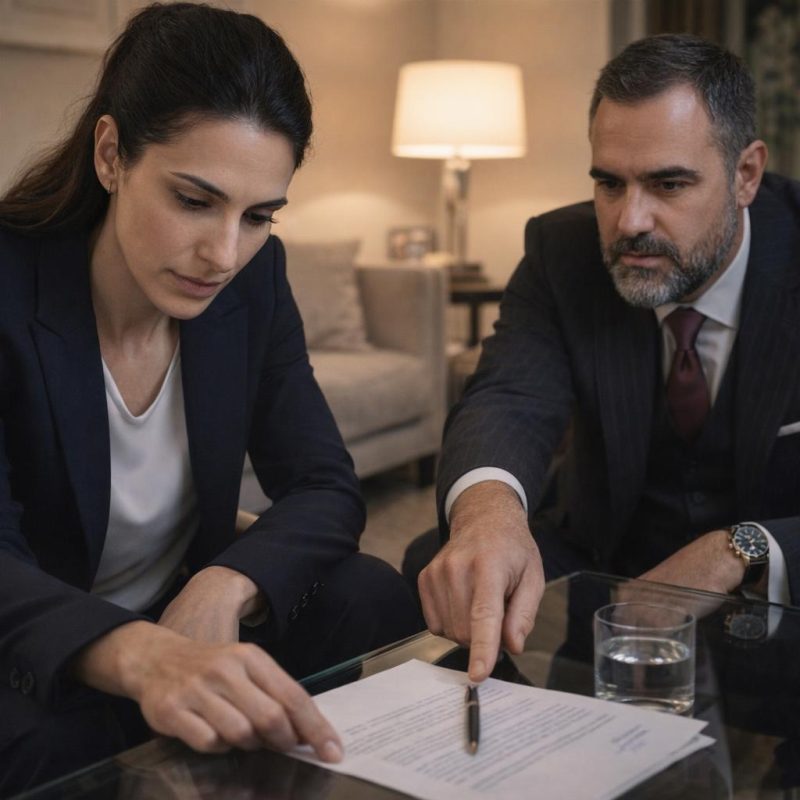 Image by RM AI
Fifty-Three Million
Sterling pulled out a calculator and tapped numbers with theatrical precision. "Two-thirds of eighty million dollars comes to approximately fifty-three million." He looked up at me. "That's what your siblings are entitled to." Mark leaned back on my sofa, arms spread wide like he owned the place. "Our fair share, Diana. You can't blame us for wanting what's ours." I stared at him. "Fair share? You called my company a 'little hobby' for ten years. You laughed when I was sleeping in a garage. You never asked how it was going, never offered help, never gave a damn until there was money involved." Elena's expression didn't change. "We've already made financial plans," she said quietly. "We assumed this would be resolved amicably." "Amicably?" I stood up, my hands shaking. "Get out. All of you. Get out of my apartment right now." Sterling gathered his briefcase with calm efficiency, like he'd expected this reaction. "We'll see you in court, Ms. Diana," he said. Mark smirked as he stood. Elena smoothed her skirt. And then they were gone, leaving that yellowed document on my coffee table like a bomb.
 Image by RM AI
Emergency Call
I paced my penthouse for forty minutes, trying to breathe, trying to think. My hands wouldn't stop shaking. Finally, I grabbed my phone and dialed Rebecca's number. She'd been my lawyer for eight years, handling every contract, every negotiation, every legal headache my company had ever faced. "Rebecca," I said when she answered. "I need you. Now." "What happened?" I tried to explain—the document, the demand, Sterling's briefcase, Mark's smirk—but the words came out in broken sentences that didn't make sense even to me. Rebecca cut through my panic with three sharp questions: "What did the signature look like? What was the paper quality? Did they leave the document with you?" I answered as best I could. There was a pause. Then Rebecca said, "Don't touch anything. Don't call anyone else. I'm cancelling my dinner plans and I'll be there in twenty minutes." I hung up and stared at the document still sitting on my coffee table. Twenty minutes felt like forever.
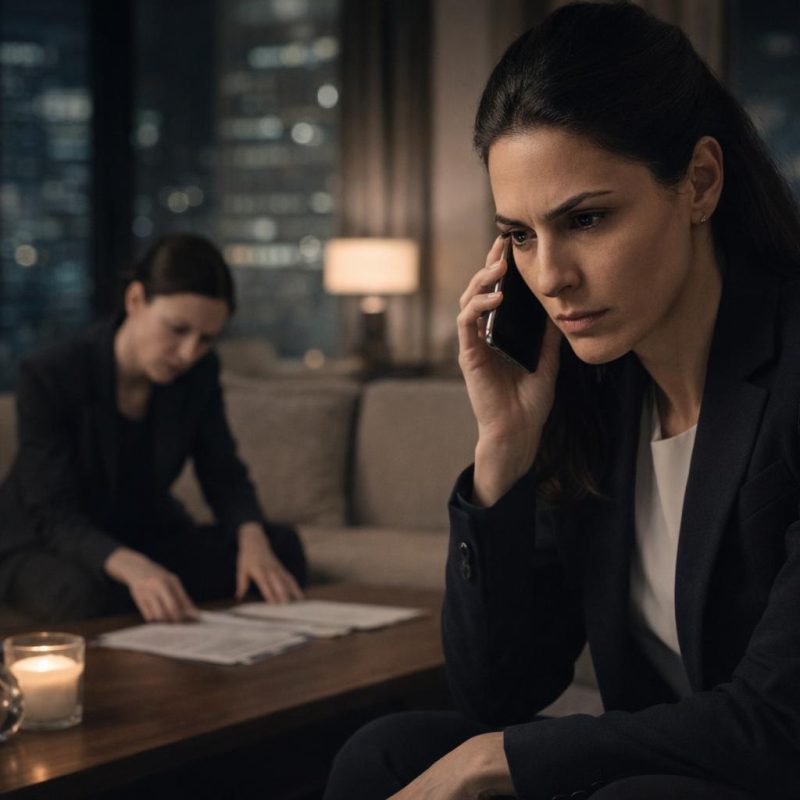 Image by RM AI
Legal Dissection
Rebecca spread the document across my dining table under the bright overhead light, her reading glasses perched on her nose. She'd arrived in fifteen minutes, not twenty, her practical suit slightly rumpled like she'd run out of her office. "Okay," she said, tracing lines of text with her finger. "This language here—seed investment clauses, equity conversion provisions—if this is legitimate, it's serious." She pointed to a paragraph that referenced my company by its original name, the one I'd used when I was working out of that garage. "This talks about family asset distribution. It's saying that because your father provided initial capital, the entire venture became a family business." I tried to remember signing anything like this. I'd been so young, so desperate for that ten thousand dollars. Had I signed something without reading it? "I don't remember this," I said. Rebecca looked up at me. "We need to find your father's original loan paperwork. Whatever you signed back then. Do you still have it?" I nodded slowly. "Storage unit. I kept everything." Rebecca's expression was grim. "Then we need to compare them. Because if that signature is authentic, Diana, this structure could actually hold up in court."
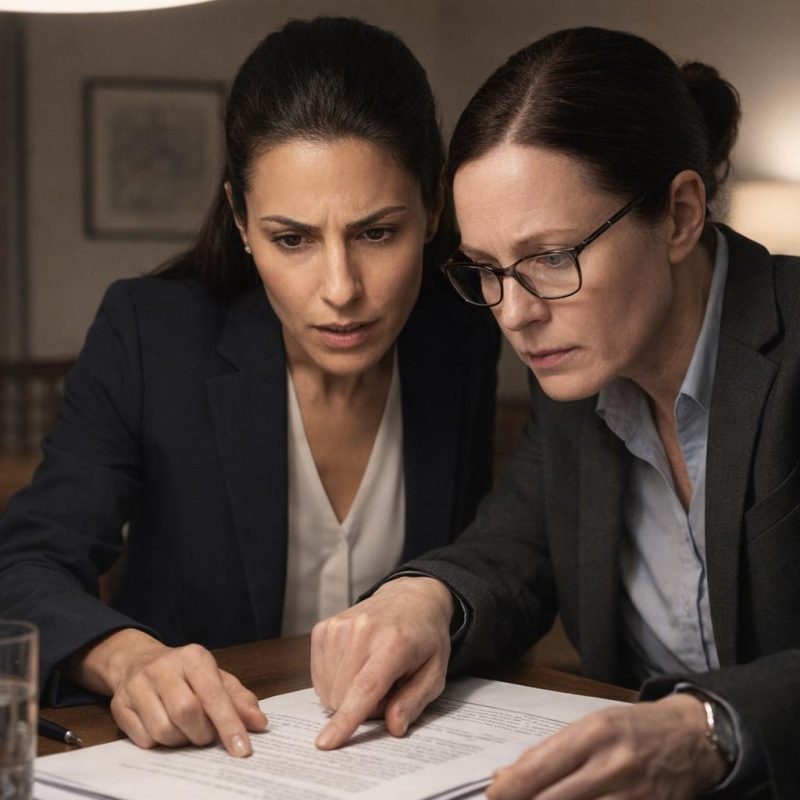 Image by RM AI
The Original Loan
We drove to my storage unit at midnight, Rebecca following in her car. I'd rented the space years ago for all my company's founding documents—every receipt, every contract, every piece of paper from those early days. I'd been obsessive about record-keeping, even when I had nothing. The folder labeled 'Initial Capital - Dad' sat in a fireproof box on the second shelf. My hands trembled as I pulled it out. Inside were bank statements, a handwritten note from my father, and the loan agreement I remembered signing. Or thought I remembered. The truth was, that whole period felt hazy now—I'd been so stressed, so young, so desperate to make something work. Had I read everything carefully? Had I understood what I was signing? Rebecca photographed each page with her phone, the flash bright in the dim storage unit. We drove back to my penthouse in silence. When we got there, Rebecca spread both documents side by side on my dining table. "Let's see what we're dealing with," she said. I stood behind her, and my stomach dropped as she opened the folder.
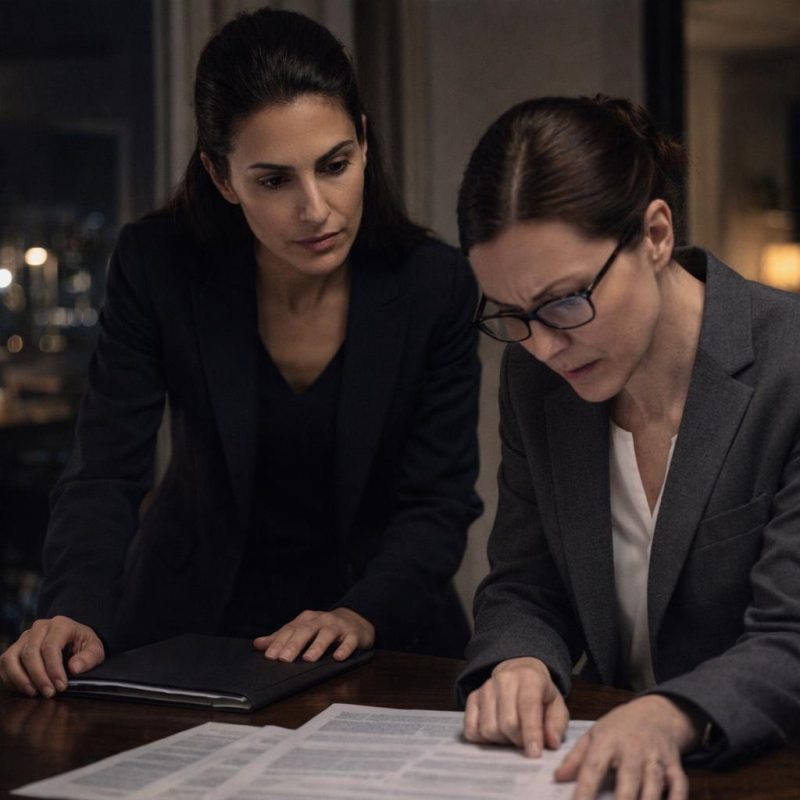 Image by RM AI
Perfect Match
Rebecca positioned my architect lamp directly over both documents, the bright LED light eliminating every shadow. She placed Sterling's yellowed paper next to my father's original loan agreement. The signatures sat inches apart. I leaned in, my heart pounding. The looped 'D' in David—identical on both pages. The rightward slant—exactly the same. The careful, deliberate way my father had formed each letter, the slight tremor in the downstroke of the 'v,' the way the 'id' connected—it all matched. Perfectly. "Rebecca," I whispered. "That's his handwriting. That's definitely his handwriting." Rebecca pulled out her phone and took high-resolution photos of both signatures from multiple angles. "I'm sending these to a forensic document examiner," she said. "But Diana, I have to be honest with you. This looks authentic." I stared at both papers until my vision blurred. Had I actually signed away my company twenty years ago? Had I been so desperate, so naive, that I'd given my siblings rights to everything I'd built? I felt sick.
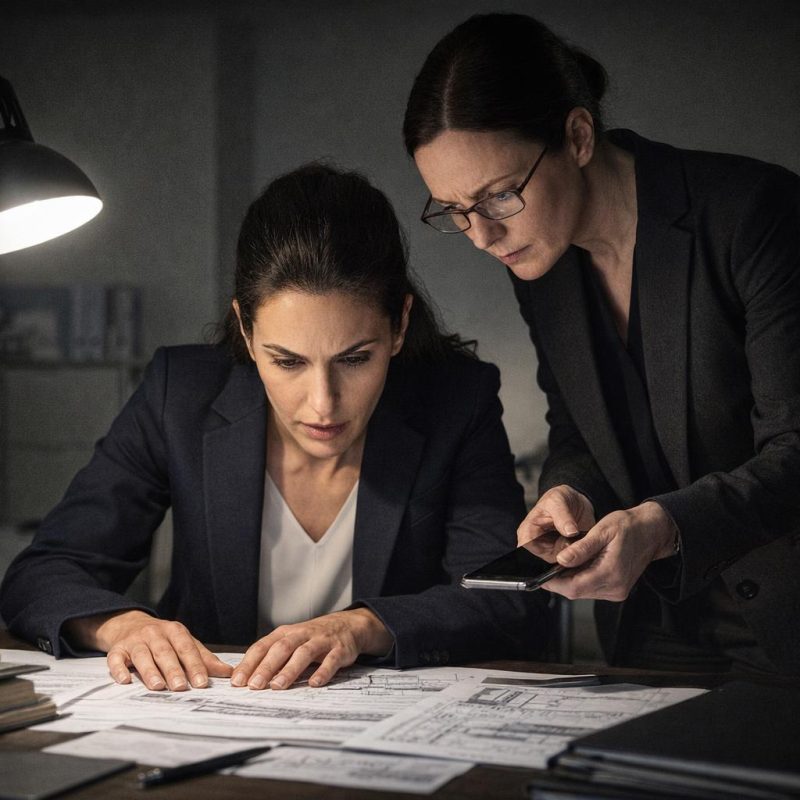 Image by RM AI
Broken Promises
I sat alone in my penthouse after Rebecca left, spreadsheets glowing on three monitors like accusatory eyes. The numbers didn't lie. I'd promised my three hundred employees a share of any successful exit—a trust fund I'd structured two years ago when we started getting acquisition interest. They'd earned it. God, had they earned it. These people had taken pay cuts during the lean years, worked weekends without complaint, believed in me when nobody else did. The trust fund required sixty million dollars to fulfill those commitments. Sixty million to keep my word. I ran the calculation again, hoping the numbers would somehow change. Eighty million sale price. Mark and Elena's claim: fifty-three million. What remained: twenty-seven million. I stared at that number until my vision blurred. Twenty-seven million meant the trust fund would be completely gutted, leaving my workers with nothing.
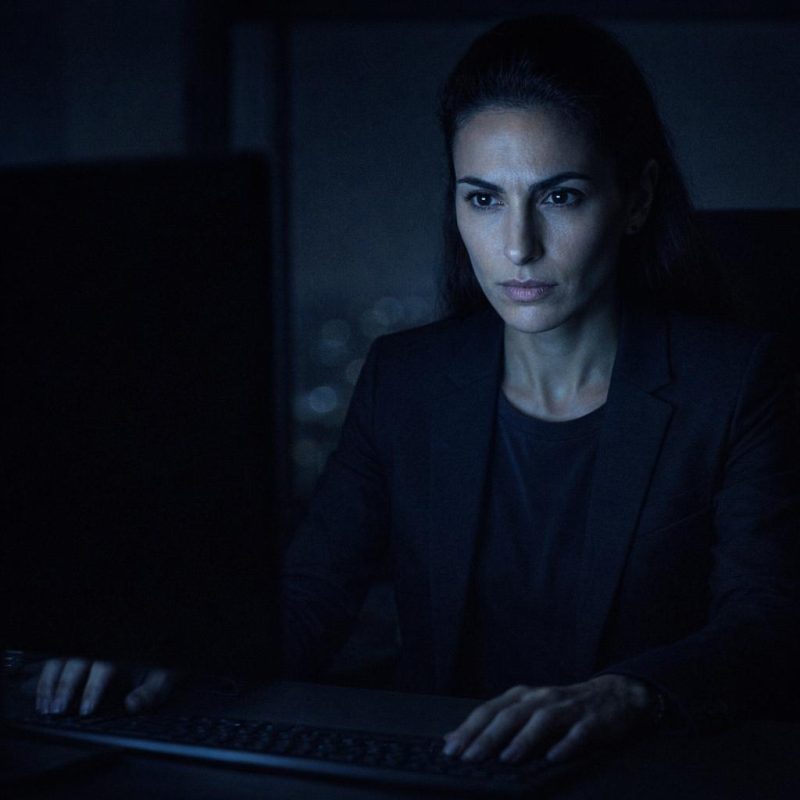 Image by RM AI
A Decade of Mockery
I lay awake that night replaying every family dinner over the past decade. Mark calling my company my 'little hobby' while cutting into prime rib at Christmas. Elena laughing—actually laughing—when I'd missed her birthday party to meet a critical deadline. 'Diana and her cute little project,' she'd said, like I was building model trains in my garage. Neither of them had ever asked about our actual progress, our revenue, our growth metrics. Nothing. Mark had once suggested I give up and get a 'real job' at his finance firm, like I was playing pretend. Elena referred to my employees as 'my little club,' as if we were knitting scarves instead of building enterprise software. And now, suddenly, they understood equity agreements and ownership percentages? Now they cared? I realized they'd waited until after the sale to make their move—until the money was real and counted.
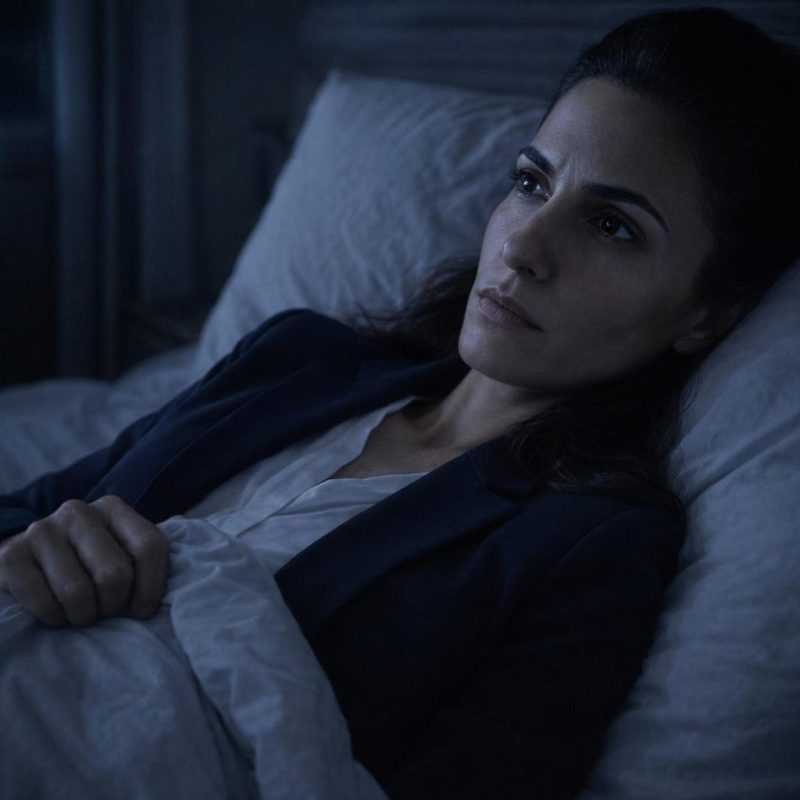 Image by RM AI
Wrong Notes
I met Rebecca at her law office downtown, the kind of place with mahogany everything and leather chairs that cost more than most people's cars. 'Something feels off,' I told her, pacing in front of her desk. 'I can't explain it exactly, but the way Sterling presented that document—it was too smooth. And Mark and Elena seemed too comfortable with all the legal terminology.' Rebecca leaned back, her reading glasses catching the afternoon light. 'Comfortable how?' I struggled to articulate it. 'Too polished. Too prepared. Like every word had been chosen in advance.' Rebecca's expression didn't change. 'Diana, gut feelings don't win court cases. I need evidence, not instinct.' I knew she was right, but I couldn't shake the feeling that their arrival had been too perfectly timed, too coordinated. 'The timing is convenient for them,' Rebecca acknowledged. 'I'll give you that. I'm going to examine every detail of this alleged agreement.' But she'd keep looking—that was something.
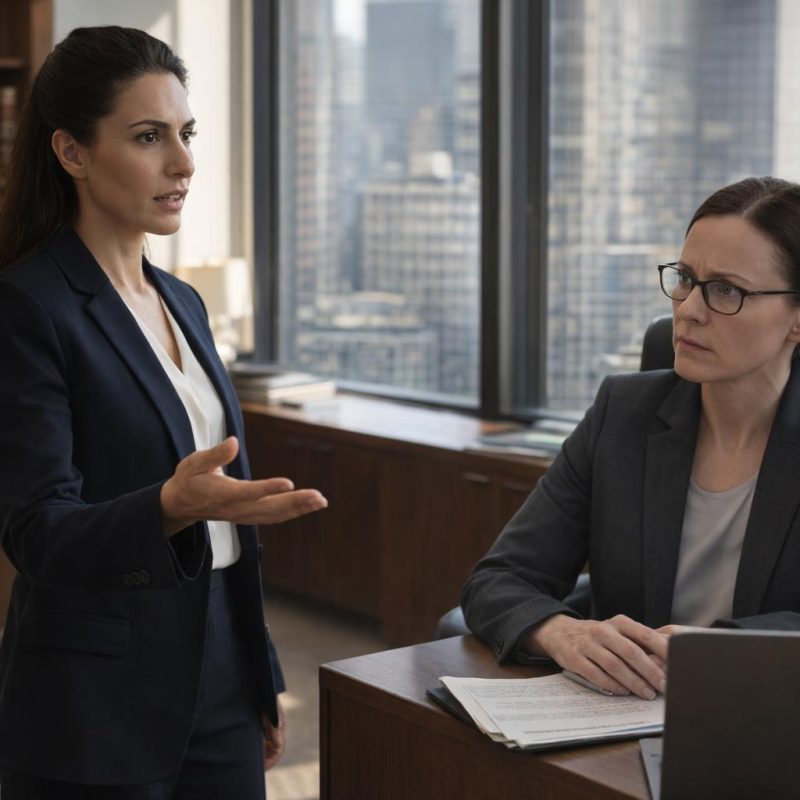 Image by RM AI
Forensic Analysis
Rebecca contacted a forensic document examiner she'd used in previous cases, a specialist who'd testified in federal court. 'We're ordering a complete analysis,' she explained, pulling up the examiner's credentials on her laptop. 'Paper dating, ink composition, handwriting verification—everything.' The expert would test whether the paper was genuinely twenty years old, analyze the chemical composition of the ink, and verify my father's signature against known samples. Rebecca sent high-resolution scans via secure courier that afternoon. I paid the rush fee without blinking—five thousand dollars to expedite the analysis. Money didn't matter anymore. The examiner promised preliminary results within two weeks. Two weeks. I tried to focus on anything other than waiting—answered emails, reviewed contracts, attended meetings where I heard nothing anyone said. The clock in my office ticked louder every day, counting down to answers I wasn't sure I wanted to hear.
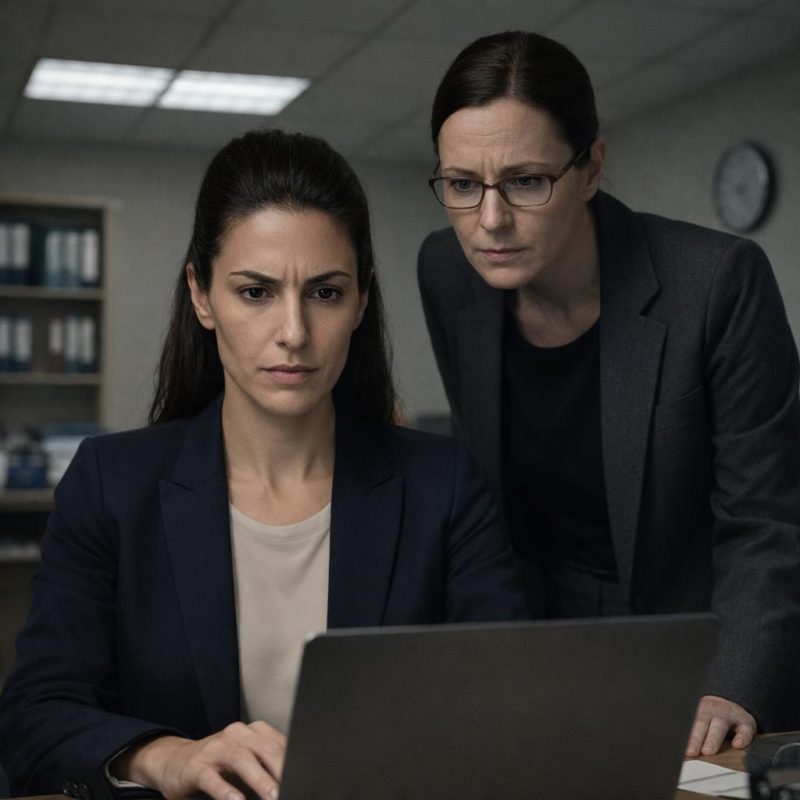 Image by RM AI
Aged Paper
Rebecca called on a Tuesday morning, her voice carefully neutral. 'First round of results came in.' I gripped my phone so hard my knuckles went white. 'The paper composition matches vintage stock from twenty years ago,' she said. 'The aging patterns appear consistent with natural degradation over time.' My hope for an obvious forgery collapsed like a building in slow motion. I'd been counting on the paper being wrong, on some clear sign that Sterling had manufactured the document last month. 'So it's real?' My voice came out flat. 'The paper is genuinely aged,' Rebecca corrected. 'That's all this test tells us. Ink and handwriting analyses are still pending.' I spent that night lying in bed, staring at the ceiling, watching shadows from passing cars slide across the plaster. One test had passed authentication, and I felt the ground shifting under my feet.
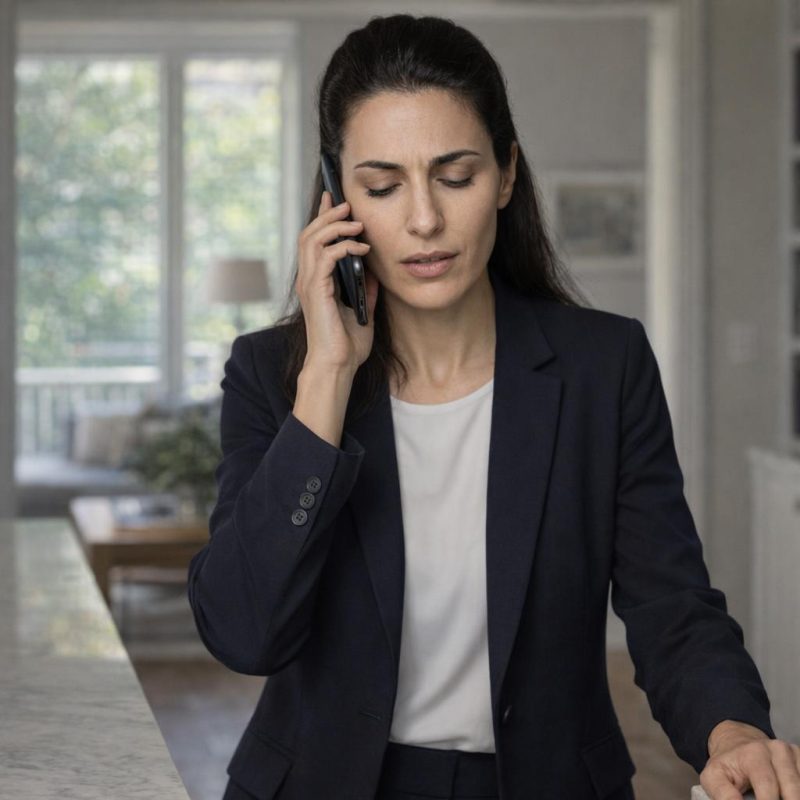 Image by RM AI
Consistent Ink
The forensic examiner's second report arrived via encrypted email four days later. Rebecca called me immediately. 'Ink results are in.' I closed my office door and sat down. 'The chemical analysis shows no modern additives,' she said. 'The ink type was common for business documents from that era. It's consistent with the timeframe.' I felt something cold settle in my chest. 'So that's authentic too?' Rebecca's pause told me everything. 'Forgers sometimes use vintage materials,' she said. 'This doesn't prove the document is real, just that whoever created it used period-appropriate supplies.' I calculated my odds of winning, watching them drop with each test result. Paper: authentic. Ink: authentic. Only one analysis remained. 'The final handwriting examination is scheduled for next week,' Rebecca said. I wasn't sure I wanted to know the results anymore—each answer brought me closer to losing everything.
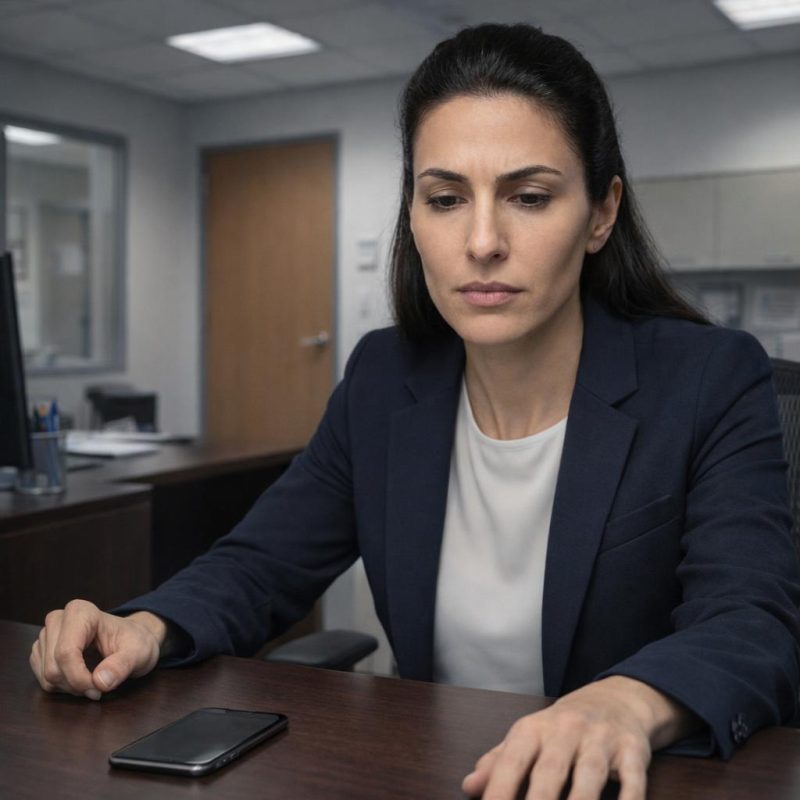 Image by RM AI
Mother's Silence
I drove to my storage unit on Saturday morning, desperate for anything that might help. My mother Patricia's belongings had been packed away here for three years, since she'd died. One year later, my father followed. I pulled boxes down from metal shelves, dust coating my hands, searching through old correspondence and family papers. Photos of Mark and Elena as children, their gap-toothed smiles mocking me from faded Polaroids. Birthday cards. Grocery receipts from 1987. Patricia's meticulous records showed nothing about David's business loans, nothing about any agreement involving the company I'd built. I went through every box twice, unfolding every paper, checking every envelope. Nothing. Just the ordinary debris of a life lived and finished. I left the storage unit with empty hands and a heavier heart, the fluorescent lights buzzing overhead like insects.
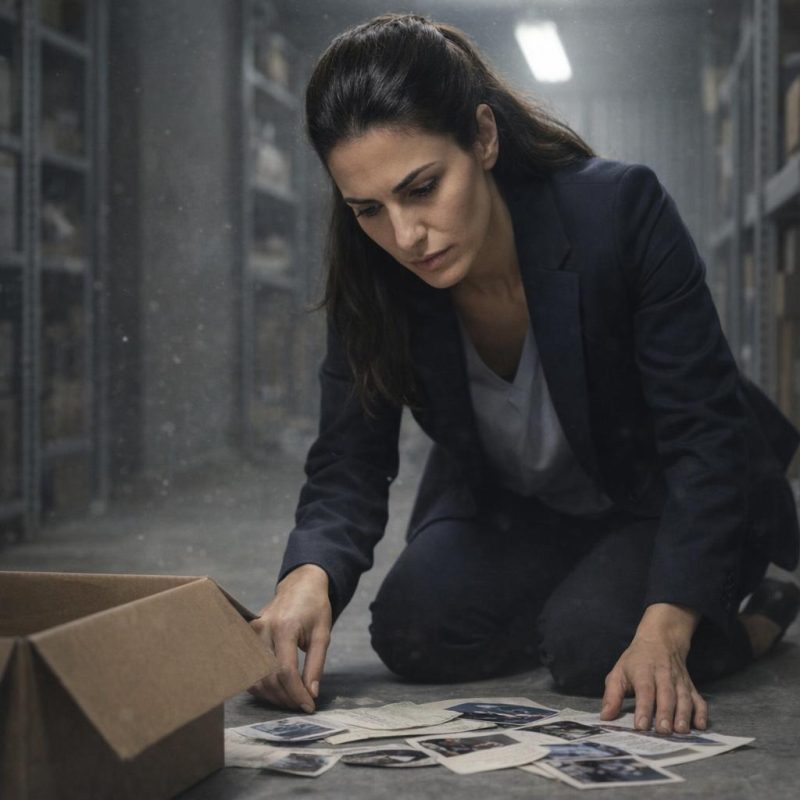 Image by RM AI
Formal Complaint
A process server showed up at my penthouse on a Wednesday afternoon, handing me a thick manila envelope with all the warmth of a parking ticket. Sterling's firm had filed in county civil court. I sat on my couch and read through thirty pages of legal accusations, each paragraph more damning than the last. The complaint formally demanded fifty-three million dollars plus legal fees and court costs. Mark and Elena were listed as co-plaintiffs, their names printed in bold type like they'd earned the right to be there. Rebecca received her copy and immediately called to schedule a strategy meeting. 'We need to prepare,' she said. 'This is real now.' I stared at the court date stamped on the first page—six weeks out. Six weeks to find something, anything, that would prove this document was a lie. The clock was ticking, and I was running out of time.
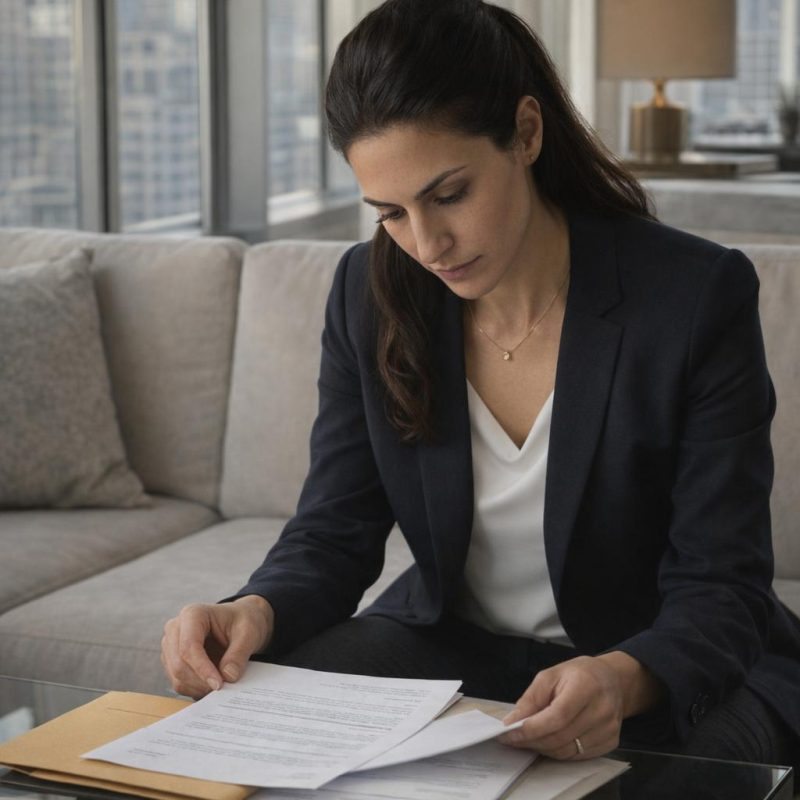 Image by RM AI
Deposition Room
The deposition room smelled like stale coffee and recycled air. I sat across from Sterling, Rebecca beside me, while Mark and Elena watched from the other side of the conference table like spectators at a tennis match. The court reporter's fingers hovered over her machine, ready to record every word. Sterling started with softballs—my name, my company's founding date, basic timeline stuff. Then he shifted. "Tell me about the initial capital your father provided," he said, his voice smooth as aged whiskey. I explained that Dad had called it a gift, that he'd wanted to help me start something of my own. Sterling made a note. "And yet there's a signed loan agreement." I said I was twenty-five and trusted my father completely, that I didn't question the paperwork. Rebecca objected twice to his phrasing, but the damage was done. Each answer felt like I was digging myself deeper, preparing for depositions that would only get harder from here. Then Sterling leaned forward, gold cufflinks catching the fluorescent light. "Why would your father give you special treatment over his other children?"
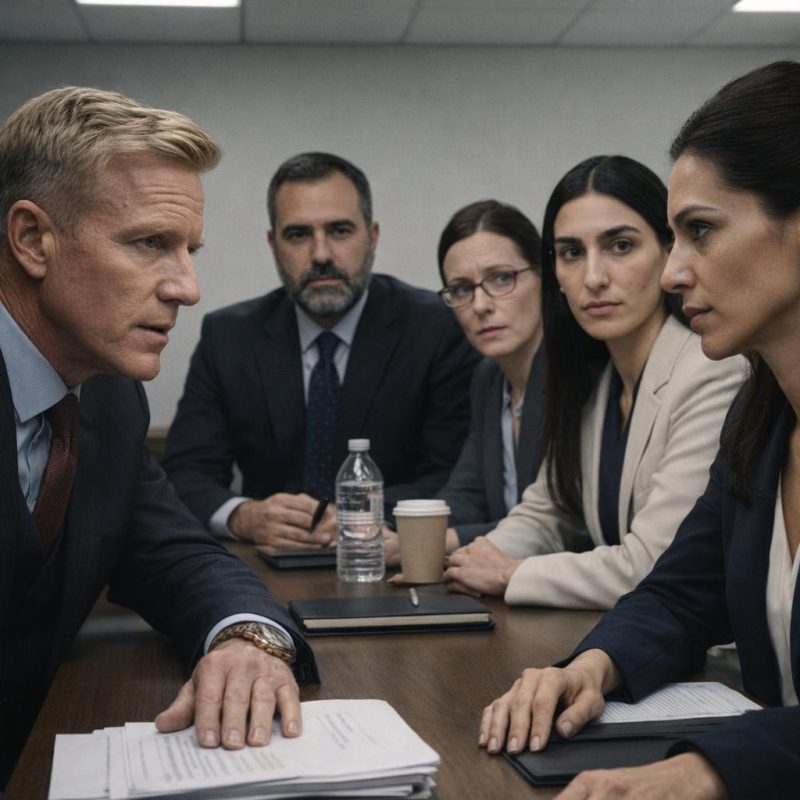 Image by RM AI
Mark's Performance
Mark settled into the deposition chair like he'd been born for it. His expensive haircut caught the light just right, his suit jacket open in that casual-confident way that probably cost more than my first office lease. Sterling walked him through the timeline, and Mark's answers flowed smooth and steady—I watched them perform innocence like it was a Broadway show. He testified that Dad had discussed the company as a family investment at multiple dinners. "He said Diana needed support, that she was brilliant but young," Mark said, his voice steady and sincere. "He wanted us all involved to help guide the business." I didn't remember those conversations. Rebecca scribbled notes, her pen moving fast across the legal pad. She objected to hearsay, but the court reporter kept typing, recording every word for the official record. Mark described specific moments—a conversation in Dad's study, a comment over Thanksgiving dinner three years before the company launched. Private moments I hadn't witnessed. How was I supposed to disprove conversations that might never have happened?
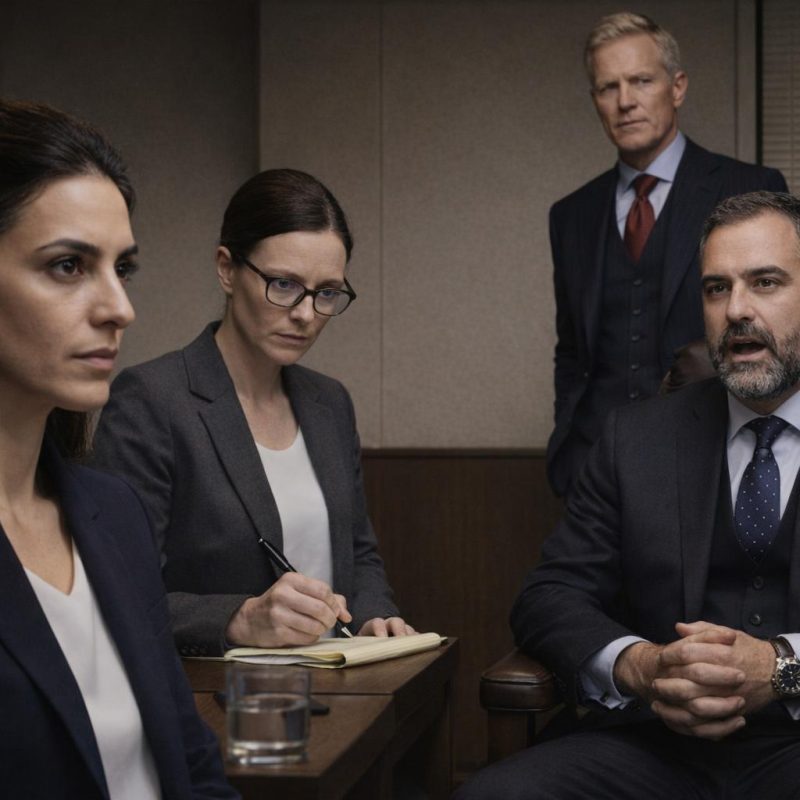 Image by RM AI
Elena's Story
Elena took the chair next, and I watched her smooth her designer skirt before folding her hands on the table. Perfect posture. Perfect composure. Sterling asked about Dad's intentions for the family, and Elena's answer came out smooth and practiced. "Our father believed in keeping wealth within the bloodline," she said, using that word three times in two minutes. "He talked about protecting the family legacy, making sure his children were taken care of equally." She described Dad as traditional, concerned about me managing such a large enterprise alone. "He expressed worries," Elena continued, her sharp smile never reaching her eyes. "He wanted Mark and me involved to ensure Diana had the support she needed." Her testimony aligned with Mark's so perfectly it made my stomach turn. Rebecca made notes about the coordination, but what could we do? Elena claimed Dad had used specific phrases about legacy and bloodline, words that sounded exactly like what Sterling needed to win. I felt the walls closing in, each word tightening the noose around my neck.
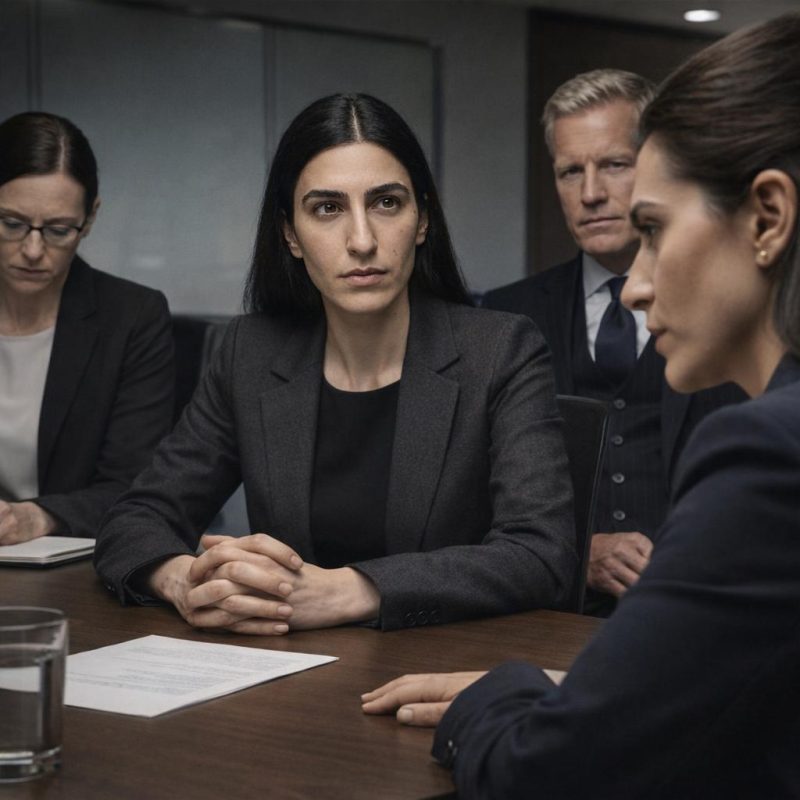 Image by RM AI
Preliminary Hearing
Judge Morrison's courtroom was smaller than I'd expected. We stood before the bench while he reviewed the depositions and evidence submissions, his reading glasses perched low on his nose. Sterling argued first, his voice filling the room with confidence. "Your Honor, we have clear documentary evidence—a signed loan agreement authenticated by multiple experts." Rebecca countered, questioning the document's legitimacy and the convenient timing of its discovery. She pointed out inconsistencies, raised doubts about the signature analysis still pending. Judge Morrison listened to both sides, his expression unreadable. Then he spoke. "The court finds sufficient evidence to allow this case to proceed to trial. The authenticated document, combined with the plaintiff testimonies regarding the deceased's intentions, presents questions of fact that require a full hearing." The gavel came down. I walked out of the courthouse with Rebecca, the afternoon sun too bright after the dim courtroom. My legs felt heavy, like I was moving through water, running out of options with every step. "We still have time," Rebecca said, but her voice sounded hollow. I'd just watched a judge decide my siblings had a legitimate claim to fifty-three million dollars of my money.
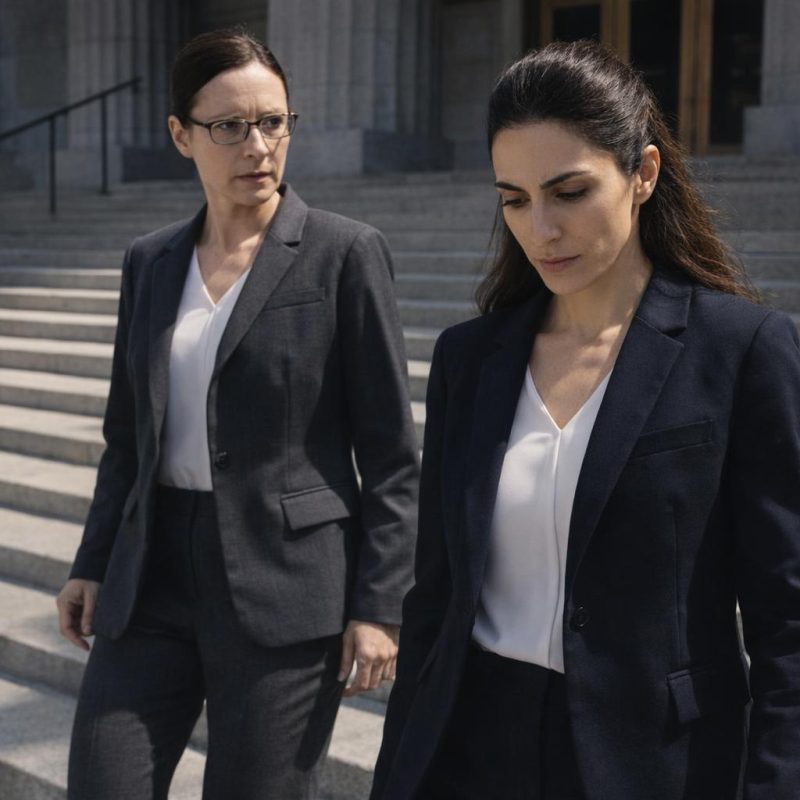 Image by RM AI
Black Coffee and Burning Eyes
My penthouse dining room became our war room. Rebecca and I set up shop with laptops, legal pads, and a coffee maker that ran constantly. Documents covered the glass table—depositions, forensic reports, timeline charts Rebecca had made of Dad's business dealings. We were looking for anything we'd missed, any crack in their story. The city lights glittered outside the windows as midnight came and went. Coffee cups accumulated like casualties. Rebecca had dark circles under her eyes that matched mine. We reviewed the depositions for the third time, searching for inconsistencies in Mark and Elena's testimonies. "There has to be something," I said, my eyes burning from staring at screens and documents, the coffee doing nothing to clear the fog. Rebecca made another chart, this one tracking every claim they'd made about Dad's intentions. Sleep became optional. We worked past midnight repeatedly, the trial date looming six weeks away like a guillotine. My eyes burned. Rebecca's reading glasses left red marks on her nose. "We're running out of time," she said finally, setting down her pen.
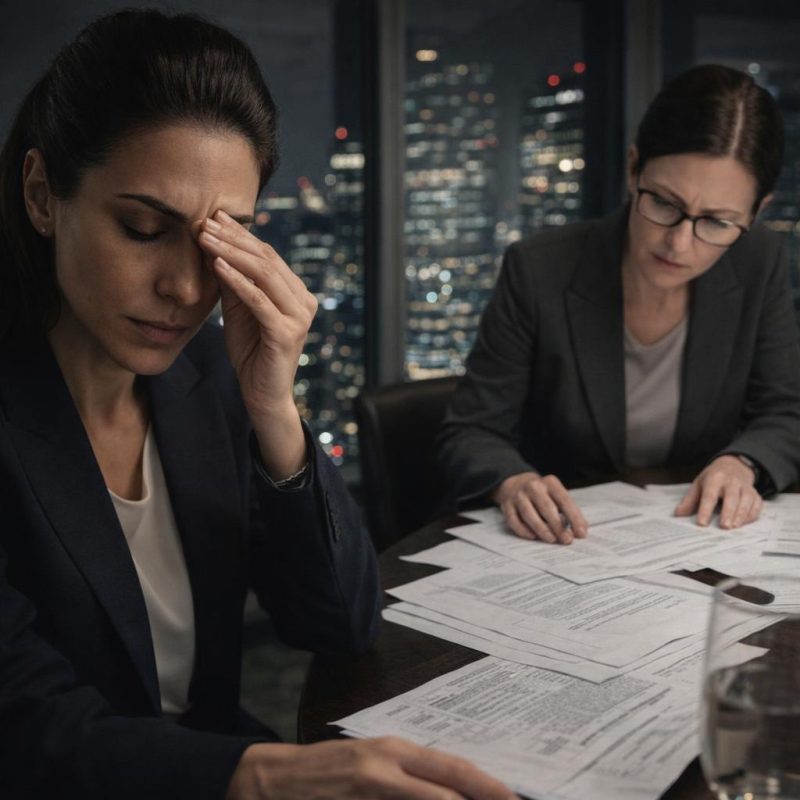 Image by RM AI
Every Line, Every Word
I held Sterling's yellowed document under the bright dining room light for what felt like the hundredth time. Every line, every word, every clause—I'd memorized them all by now. The legal language blurred together as I traced the margins with my finger, desperate for any clue we'd overlooked. Rebecca examined the paper quality under magnification, studying the texture and weight. We'd compared it to other documents from Dad's study, looking for inconsistencies in the paper stock or ink. Nothing jumped out. I ran my finger over Dad's signature again, that familiar scrawl that I'd seen on birthday cards and business contracts my whole life. It looked right. The forensic experts said it looked right. But something about this whole thing felt wrong in my gut. Rebecca photographed the document from multiple angles, the camera flash making me blink. She studied the spacing between paragraphs, the formatting, the way the text sat on the page. "We're missing something obvious," I said, more to myself than to her. Rebecca picked up the document for the hundredth time and held it up to the window light.
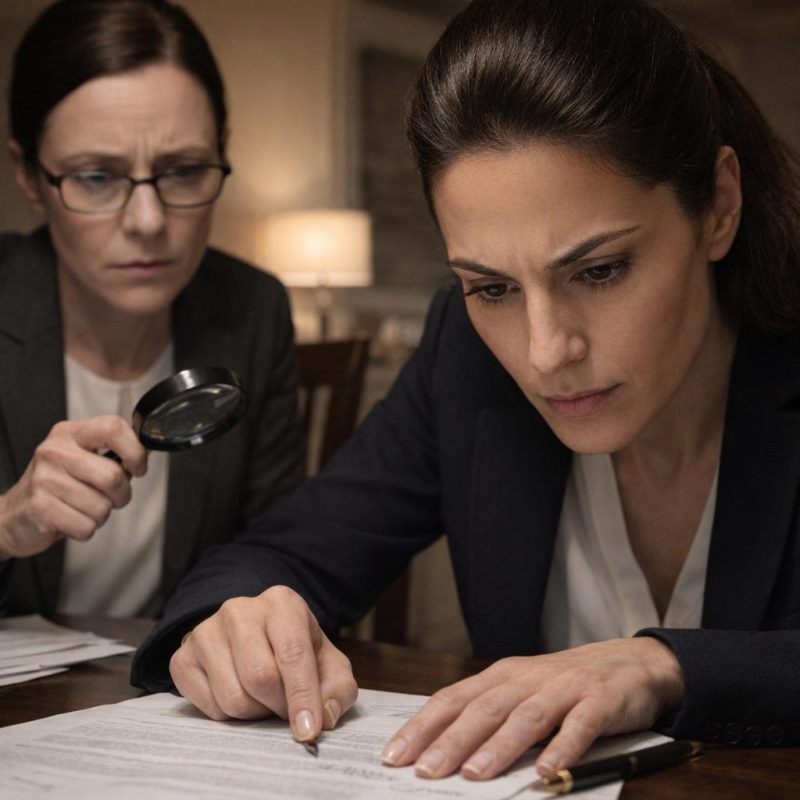 Image by RM AI
A Thread of Light
Rebecca froze mid-sentence, the document suspended against the morning light streaming through my penthouse windows. "Wait," she said, her voice sharp with sudden focus. I moved closer, following her gaze. The sunlight revealed a faint pattern in the paper itself—a watermark I'd never noticed before. Rebecca tilted the document, and the mark became clearer: a manufacturer's logo embedded in the fibers. "What is it?" I asked, my heart starting to pound. She pulled out her phone and photographed the watermark from multiple angles, her hands steady despite the excitement I could see building in her eyes. "Certain watermarks didn't exist twenty years ago," she said slowly, still staring at the pattern. "Paper manufacturers change their marks, update their branding. If this watermark is newer than the document's supposed date..." She trailed off, but I understood. For the first time in weeks, I felt something flicker in my chest that might have been hope, holding onto this tiny thread like my life depended on it. Rebecca looked at me, her tired eyes suddenly alert. "This watermark might not belong on twenty-year-old paper."
 Image by RM AI
Wrong Paper
Rebecca spent the next twelve hours on the phone with paper manufacturers and industry archives. I watched her build the case systematically, the way she did everything—methodical, thorough, relentless. She compiled a timeline of when specific watermarks entered production, cross-referencing manufacturer records and industry databases. The coffee got cold in our cups as she worked. Finally, she looked up from her laptop. "The watermark in that document belongs to a company that didn't start using that specific mark until five years ago," she said. "Fifteen years after the document was supposedly signed." My breathing steadied for the first time in days, daring to breathe again after weeks of suffocating pressure. Rebecca explained how forgers sometimes used aged paper to make documents look authentic, but they overlooked details like watermarks. "It's a crack in their armor," she said, already making notes for how to present this to the court. "But is it enough?" I asked. "Enough to prove forgery?" Rebecca met my eyes, and I saw the same cautious hope I felt. "It's a crack," she repeated. "Now we need to make it a chasm."
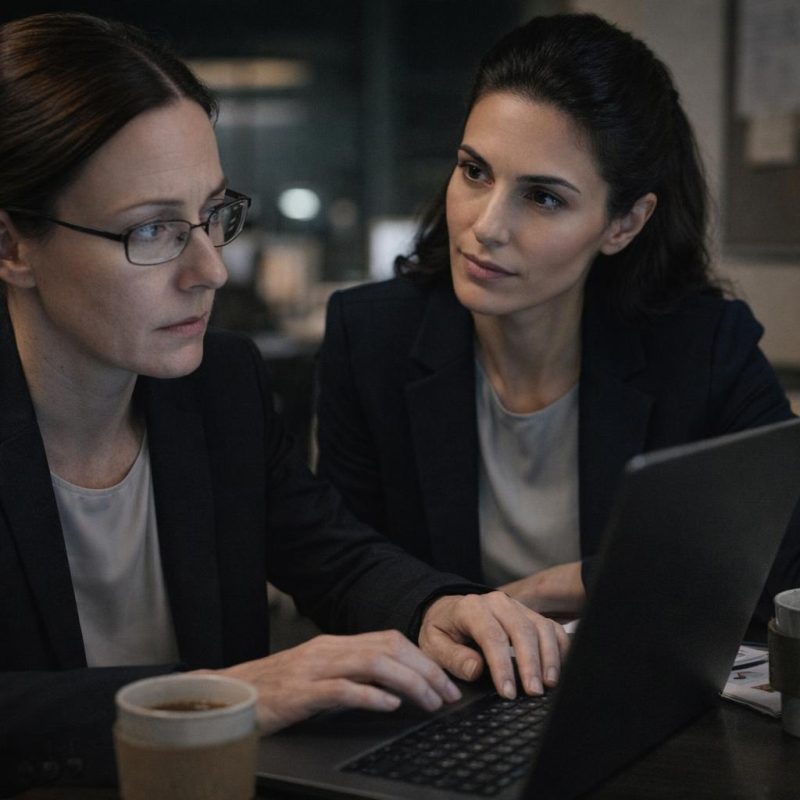 Image by RM AI
Mechanical Perfection
Rebecca sent the document to a typewriter forensics specialist the next morning. I didn't even know that was a real job until she explained it—someone who analyzes old typed documents to determine authenticity. The expert spent three days examining the spacing between letters, the alignment of lines, the pressure variations that manual typewriters leave behind. When the report came back, Rebecca called me into her office and spread the pages across her desk. "Manual typewriters from twenty years ago had inconsistencies," she said, pointing to comparison samples. "The keys strike with different pressure. The spacing varies slightly. It's mechanical—there's always variance." She slid the analysis of Mark and Elena's document toward me. The measurements were laid out in precise columns, showing perfectly uniform character spacing across every line. "This document shows digital precision," the specialist had written. "The uniformity is consistent with modern printer technology designed to mimic typewriter fonts." I stared at the numbers, feeling something shift in my chest. Rebecca was already making notes, adding this to her evidence file. The examiner's conclusion sat at the bottom of the page in bold text: the letters showed digital precision, not mechanical variance.
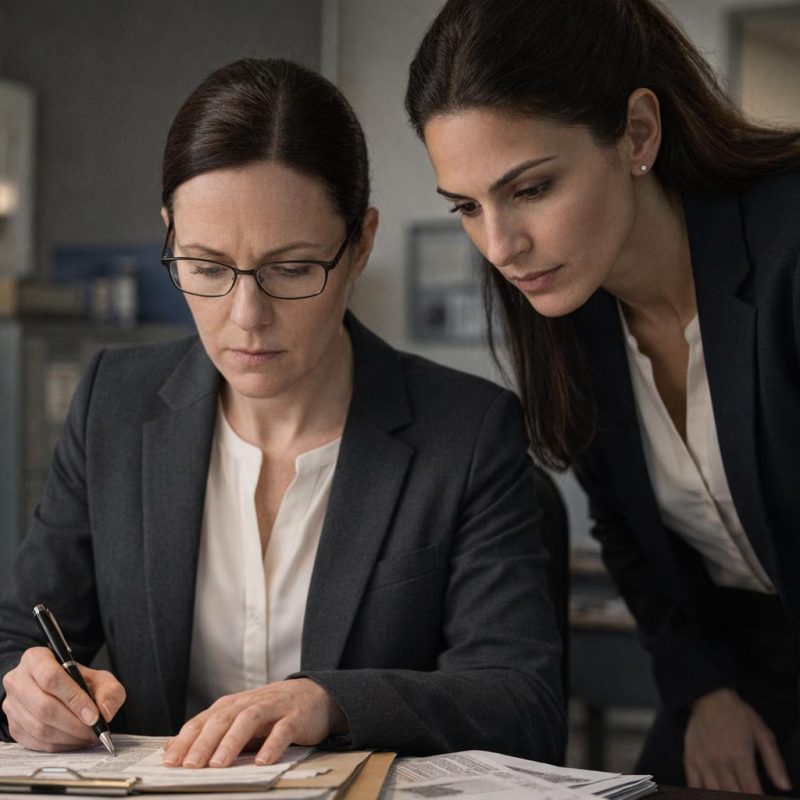 Image by RM AI
Building the Counter-Case
Rebecca worked eighteen-hour days for the next week, building our counter-case piece by piece. I watched her transform the watermark evidence and typewriter analysis into a comprehensive forgery report that read like a prosecutor's brief. She organized everything into clear technical categories—paper forensics, font analysis, timeline inconsistencies. I provided supporting testimony about my father's business practices, the way he kept meticulous records, how he would never have signed something so vague. Rebecca contacted expert witnesses willing to testify about watermark dating and typewriter technology. She prepared demonstrative exhibits with enlarged photographs showing the watermark under different lighting, comparison charts of manual versus digital typewriter spacing. I reviewed every draft, suggesting additions about my father's character and habits. The coffee in her office went cold repeatedly as we worked through the details. Three days before the deadline, Rebecca printed the final motion and handed me a copy. It was forty-seven pages of technical evidence and legal argument. "We have enough to file a counter-motion," she said, her voice steady but tired. "But the judge would have to find it compelling."
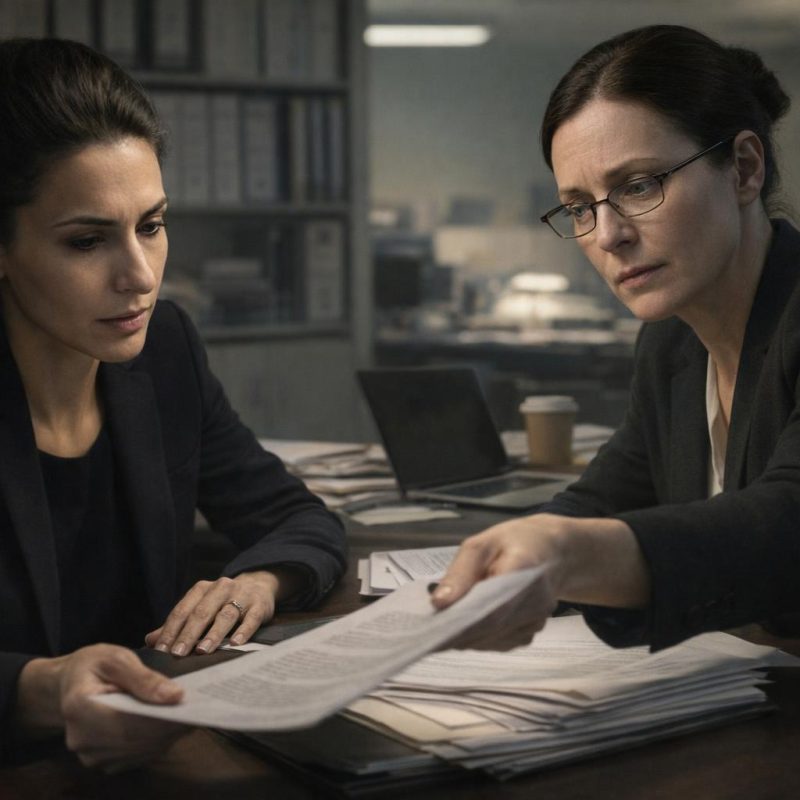 Image by RM AI
Counter-Strike
I accompanied Rebecca to the courthouse on a gray Tuesday morning, carrying copies of our motion in a leather portfolio that felt heavier than it should. The courthouse steps seemed longer than I remembered. Inside, we filed a formal motion to dismiss based on document forgery, and I watched the clerk stamp each page with the date and time. Rebecca submitted the watermark analysis as Exhibit A, the typewriter forensics report as Exhibit B. I signed affidavits supporting the motion, my signature looking strange and formal on the legal paper. The clerk processed everything with bureaucratic efficiency, adding our filing to the court record. Rebecca scheduled a hearing for the judge to review our evidence, marking the date in her planner with a red pen. We walked back outside into the cold air, and I felt something I hadn't felt in weeks—like I'd finally thrown a punch back instead of just taking them. The motion was filed. The evidence was submitted. For the first time since Mark and Elena had walked into my office with Sterling, I wasn't just defending. I was fighting.
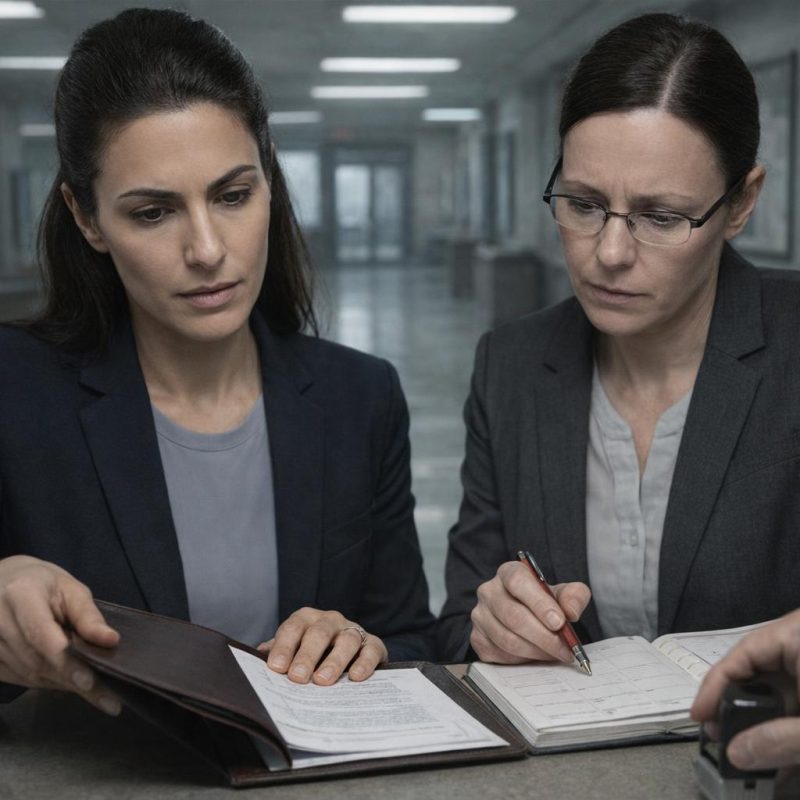 Image by RM AI
Technical Review
Judge Morrison reviewed our evidence in chambers two weeks later, both legal teams seated in his courtroom while he asked sharp questions that cut through Sterling's usual polish. Rebecca presented the watermark evidence with enlarged photographs mounted on foam board, walking the judge through the manufacturing timeline. Sterling sat across the courtroom with Mark and Elena, taking notes on a yellow legal pad. Morrison asked detailed questions about paper manufacturing processes, about how watermarks were dated, about the reliability of typewriter forensics. I watched my siblings exchange glances when Rebecca explained the digital precision findings. Mark's expression stayed neutral, but Elena's jaw tightened slightly. The judge requested documentation of watermark dating from the manufacturer, and Rebecca handed him a folder she'd prepared in advance. Sterling's pen moved rapidly across his notepad as Rebecca spoke, and I noticed he wasn't making eye contact with the judge. Morrison set a deadline for Sterling's response to the forgery claims—ten days to address the technical evidence. The judge said he needed to see Sterling's response before making a ruling.
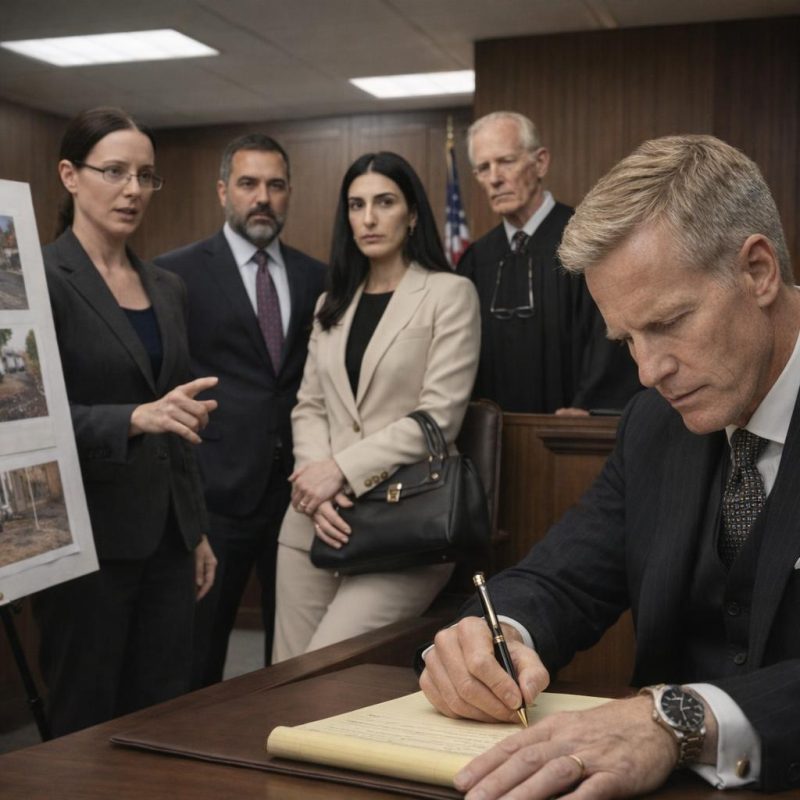 Image by RM AI
Sterling's Deflection
Sterling stood when his turn came, and I watched him attempt to dismiss our technical findings as circumstantial. He argued that watermark variations existed within manufacturing runs, that quality control wasn't perfect, that our expert might have misidentified the production date. He suggested the typewriter analysis was based on limited samples, that mechanical variance could be minimal in well-maintained machines. Rebecca objected to his characterization of the evidence, her voice sharp. But Sterling kept talking, focusing on procedural questions about chain of custody and expert qualifications. What struck me was what he didn't do—he presented no counter-experts to dispute our findings. No paper manufacturer to contradict the watermark dating. No typewriter specialist to challenge the digital precision analysis. He just talked around the evidence, suggesting possibilities without proving anything. Mark and Elena maintained neutral expressions throughout, their faces carefully blank. Judge Morrison listened without revealing his thoughts, occasionally making notes. When Sterling finished, Morrison said he would review all submissions before ruling. I watched Sterling's performance and noticed he didn't address the evidence directly.
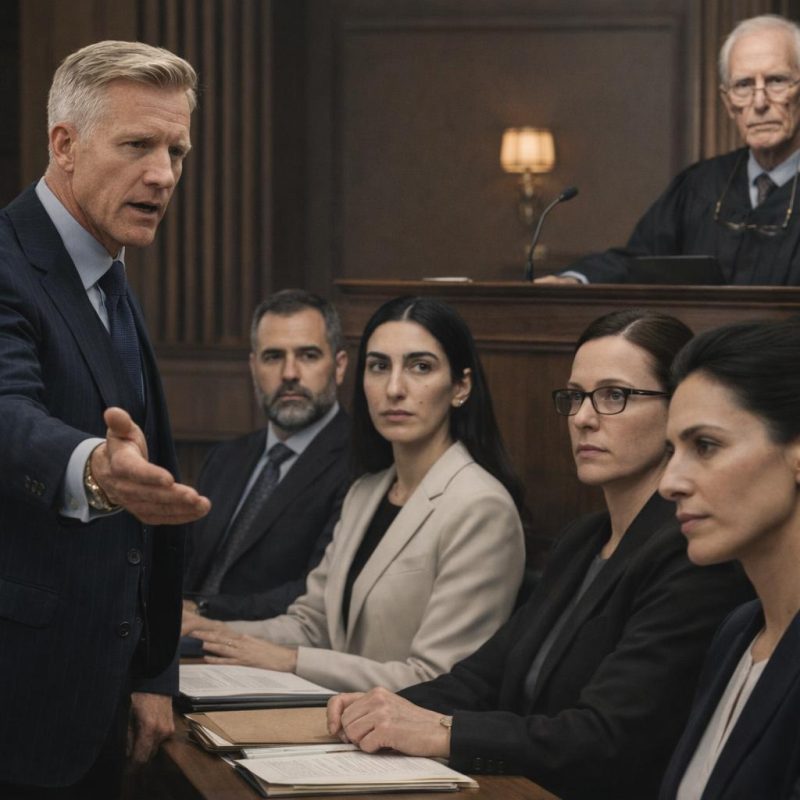 Image by RM AI
Unshaken Confidence
During the courthouse recess, I watched Mark and Elena in the hallway through the glass doors. They stood with Sterling near the water fountain, speaking quietly, and what puzzled me was their composure. I'd expected them to seem worried about the forgery evidence—the watermark dating, the typewriter analysis, the technical proof that their document was fake. Instead they appeared as calm as when they'd first arrived, Mark with his hands in his pockets, Elena checking her phone like this was just another meeting. Rebecca suggested they might be bluffing, trying to project confidence they didn't feel. But I couldn't shake the feeling they knew something I didn't. Sterling gestured as he spoke to them, and Elena nodded, her expression thoughtful but not distressed. Mark actually smiled at something Sterling said. They looked like people who had a backup plan, not people watching their case fall apart. I told Rebecca something felt off about how confident they still seemed.
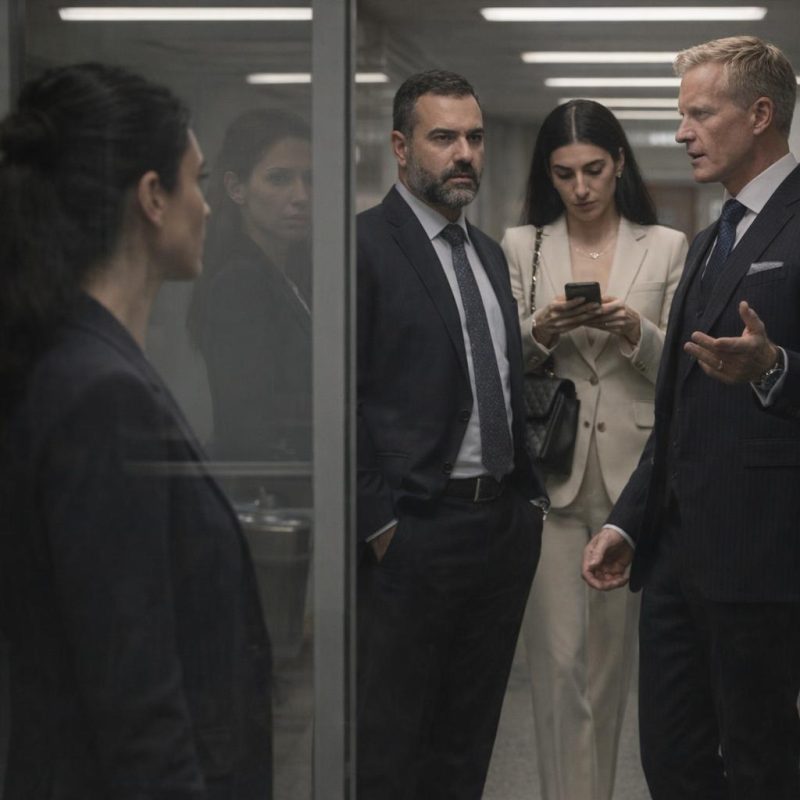 Image by RM AI
The Bloodline Clause
Rebecca was reviewing my father's will for any relevant provisions when she found it—a clause titled 'Verification of Lineage' buried in section seven. She called me over to her desk, pointing to the paragraph with her pen. The provision required biological proof for large inheritance claims, specifically mentioning distributions exceeding one million dollars. I read the language carefully, my father's careful legal phrasing about 'protection of family legacy' and 'verification of bloodline for substantial asset transfers.' The clause referenced genetic verification requirements for any claim over the threshold amount. Rebecca highlighted the section and set it aside for further analysis, already thinking about its legal implications. But I just stared at the words, reading them three times. My father had always treated his three children equally—same schools, same trust funds, same expectations. Why would he write something so specific? Why would he require proof of biological lineage? The language felt protective, almost defensive, like he was guarding against something. I asked Rebecca why my father would write something so specific.
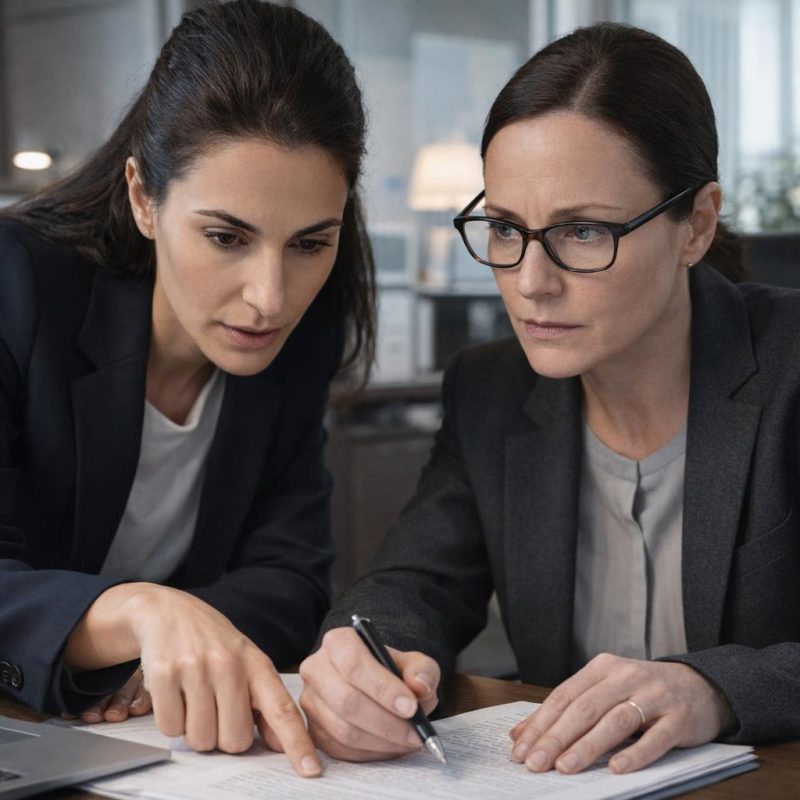 Image by RM AI
Legacy Protection
I took the will home that night and studied the bloodline clause at my kitchen table, reading my father's precise wording about protecting legitimate heirs and family assets. The language was careful, almost clinical—'genetic verification,' 'biological lineage,' 'protection of family legacy.' David had included requirements for DNA testing or other scientific proof of parentage for any inheritance claim over one million dollars. I tried to remember when he'd written this provision, whether he'd mentioned it to me. Rebecca had explained that such clauses were uncommon but not unheard of, usually included by wealthy families worried about fraudulent claims from distant relatives or illegitimate children. But we weren't distant relatives. We were his kids. Mark, Elena, and me—the three of us he'd raised, sent to college, brought into the business. I wondered about his reasoning, what had made him add this specific protection. The clause applied to any claim over one million dollars, which meant it would cover Mark and Elena's lawsuit. The language felt protective in a way I didn't fully understand. The clause seemed oddly protective for a man who'd always treated his three children equally.
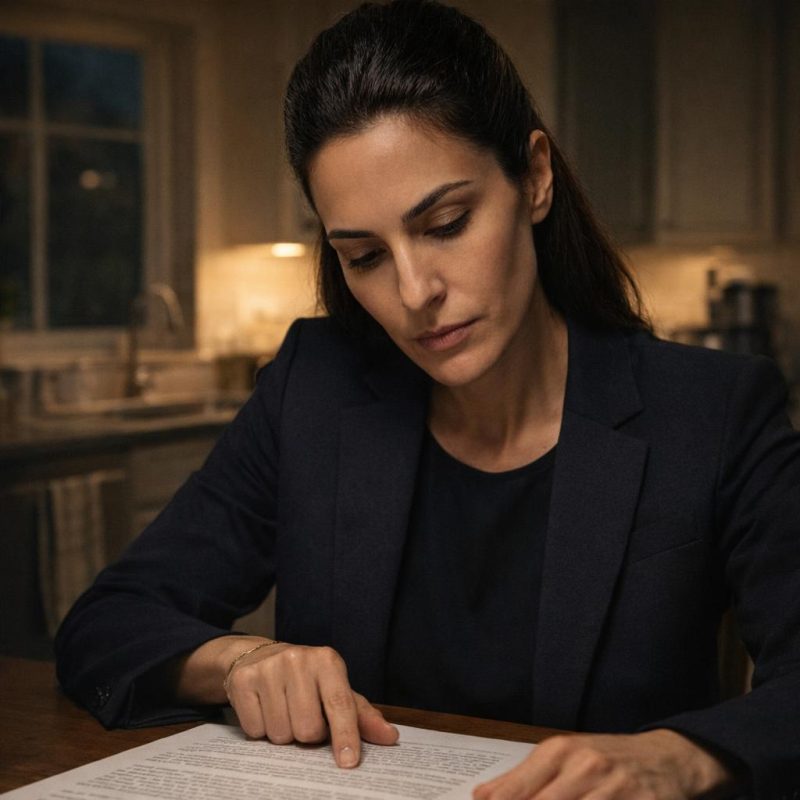 Image by RM AI
Questions Without Answers
I took the will home that night and spread it across my kitchen table next to David's other estate documents, comparing the bloodline clause to everything else he'd written. The language was consistent—precise, careful, protective. But this genetic verification provision stood out. It wasn't boilerplate. David had never mentioned it to me, never explained why he felt it necessary. I tried to remember conversations we'd had about inheritance, about protecting the business, about family. Nothing. Rebecca called the next morning and I asked her when the will was executed. I heard papers shuffling on her end. "Let me check the file," she said. More rustling. "Here it is. Signed and witnessed four years ago. Your father was sixty-six." I stared at my coffee. Four years ago. I tried to remember that period—what was happening, whether there'd been any family drama or tension. Nothing came to mind. It was ordinary. We'd had Sunday dinners. Mark was between jobs. Elena was planning her wedding. I was running the company. "Why would he write this then?" I asked. "I don't know," Rebecca said. "But he wrote it for a reason." The clause felt like insurance against a problem I couldn't name.
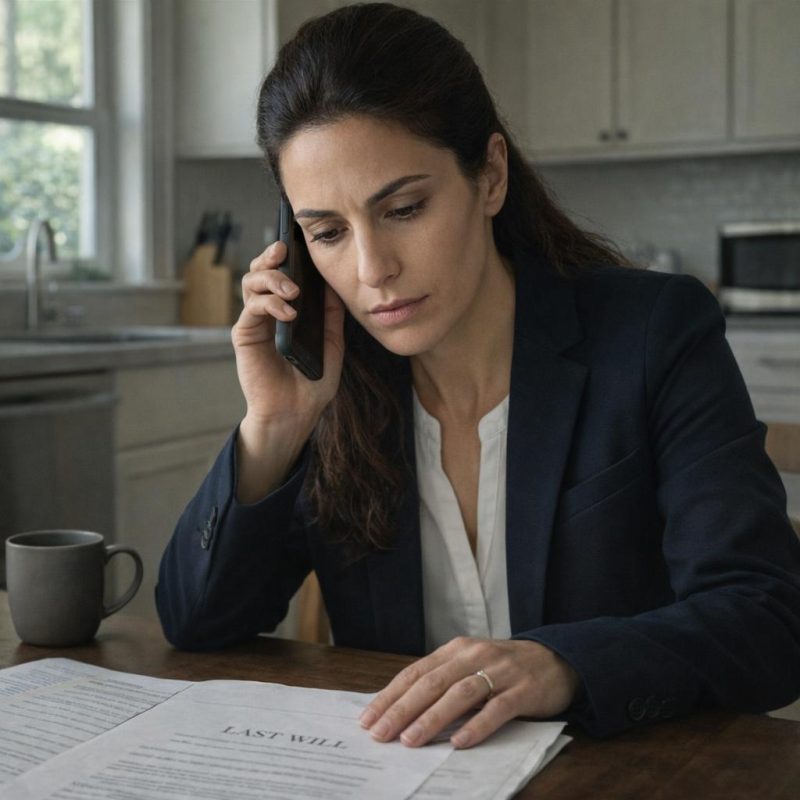 Image by RM AI
Unusual Patterns
Rebecca came by my penthouse two days later with David's financial records spread across her laptop. She'd been reviewing everything—the will, the trust documents, the loan agreements, the business transfers. "Look at this," she said, turning the screen toward me. She'd created a spreadsheet showing how David had categorized different assets. My loan was separated from the family trust entirely. Mark and Elena's inheritances were structured differently than mine. "He created specific categories for different children," Rebecca said. "That's not unusual, but combined with the bloodline clause..." She trailed off. I leaned closer, trying to see what she was seeing. "Combined with what?" "I'm not sure yet," she admitted. "But experienced estate lawyers sometimes write defensive provisions. Protections against future claims or challenges." I thought about that. "What would he be protecting against?" Rebecca shook her head slowly. "That's what I'm trying to figure out. There's something unusual about how he structured this. The patterns don't quite make sense unless..." She stopped. "Unless what?" "I don't know yet," she said, but her expression suggested she was starting to form a theory she wasn't ready to share.
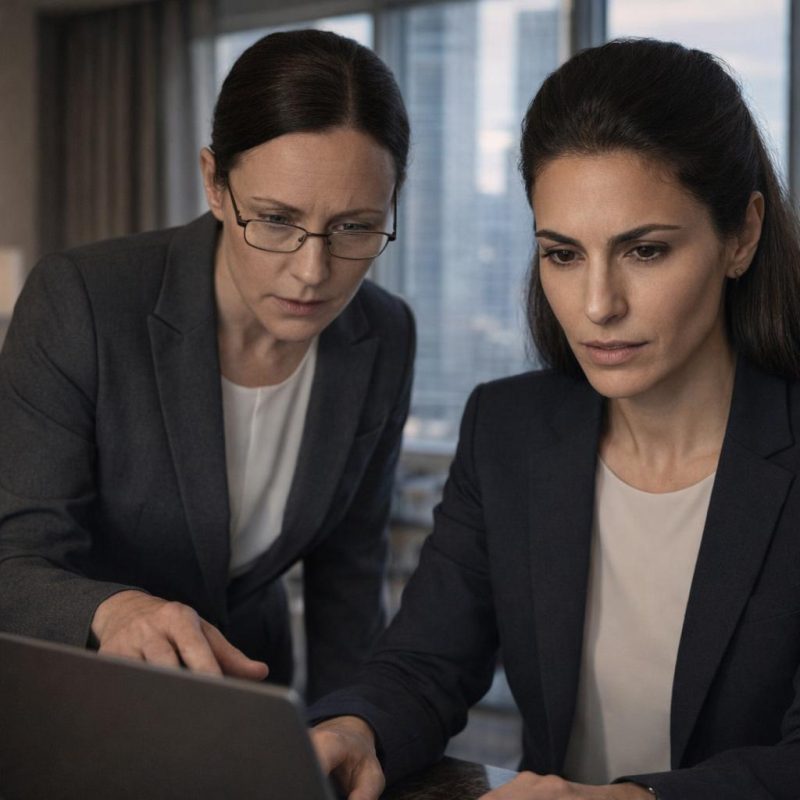 Image by RM AI
The DNA Suggestion
Rebecca closed her laptop and looked at me directly. "I have an idea. It's aggressive, but it might work." I waited. "The bloodline clause gives us legal grounds to request DNA testing. We could file a motion asking the court to verify all parties' standing under the will's genetic verification provision." I stared at her. "That's insane." "Is it?" Rebecca leaned forward. "Your father wrote specific language requiring biological lineage verification for claims over one million dollars. Mark and Elena are claiming fifty-three million. We have every right to invoke that clause." "You want me to ask my siblings to take a DNA test?" The words sounded absurd out loud. "I want to use every tool your father gave you," Rebecca said. "He wrote this provision deliberately. Maybe he knew something we don't." I stood up and walked to the window. "They'll lose their minds. This will destroy whatever's left of our relationship." "Your relationship is already destroyed," Rebecca said quietly. "They're suing you for everything you built." I pressed my forehead against the glass. The idea felt desperate and invasive and nuclear. "What if everyone's DNA matches and we just look paranoid?" I asked. Rebecca's silence made me turn around. "Then at least we'll know we tried everything," she said.
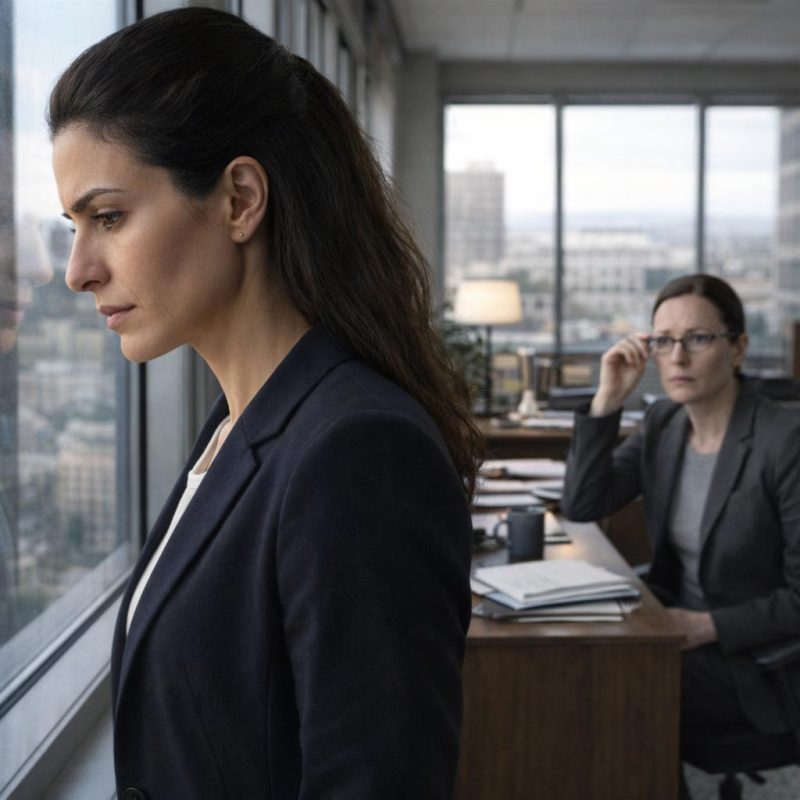 Image by RM AI
Nuclear Option
I spent the next three days walking through my penthouse at odd hours, weighing the decision. DNA testing. The nuclear option. I imagined Mark's face when he received the motion. Elena's cold fury. Sterling's calculated response. Rebecca had outlined the legal procedure—court-ordered testing, certified labs, chain of custody protocols. It was legitimate. David had written the clause. We had every right to invoke it. But rights and wisdom weren't the same thing. I stood in my living room at two in the morning, looking at the city lights, thinking about what the test might reveal. Probably nothing. We'd all match David's DNA and I'd look desperate and paranoid. Mark and Elena would use it as evidence of my instability. But what were my other options? The trial was approaching. Their case was strong. I was running out of moves. Rebecca's words kept echoing: "He wrote it for a reason." I thought about David at sixty-six, sitting with his lawyer, adding that specific clause. What had he known? What had he been protecting me from? The next morning I called Rebecca. "File it," I said. "The DNA motion. File it." She didn't ask if I was sure. "I'll have it ready by end of day." Losing fifty-three million was worse than family awkwardness.
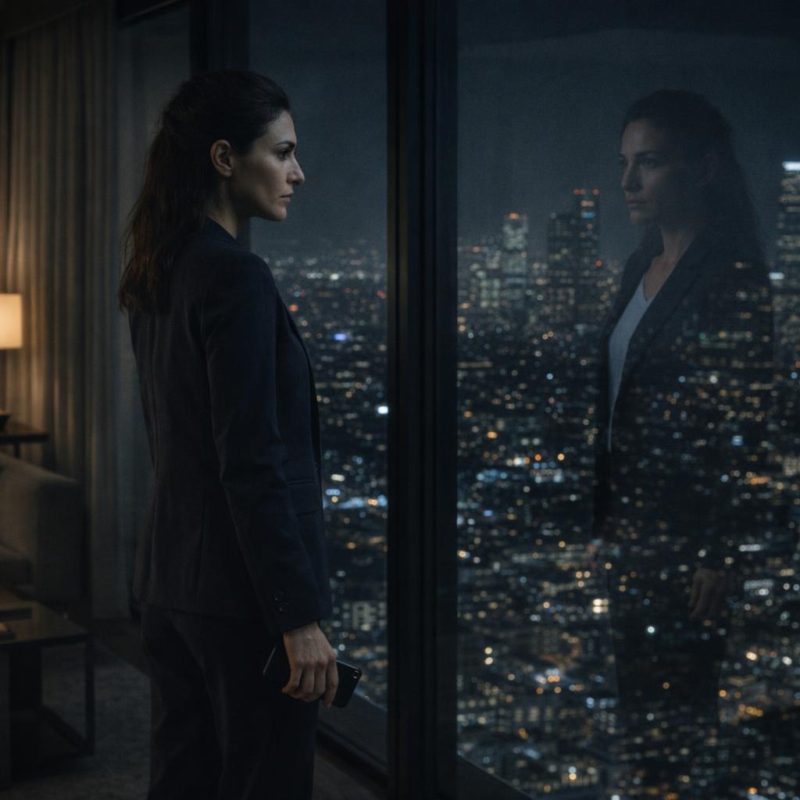 Image by RM AI
Filing the Motion
Rebecca drafted the motion that afternoon, citing David's bloodline clause and arguing it required genetic verification for inheritance claims exceeding one million dollars. The language was clinical and precise. I read it three times before signing. My hand shook slightly as I wrote my name on the authorization form. We submitted everything to Judge Morrison's court the next morning. The clerk stamped the filing and scheduled a hearing to consider the DNA request. Rebecca attached copies of the relevant will provisions, highlighting David's exact wording about biological lineage and scientific proof of parentage. Walking out of the courthouse, I felt like I'd crossed a line I couldn't uncross. The motion was public record now. Mark and Elena would be notified within hours. There was no taking it back. "How long until they respond?" I asked Rebecca. "Knowing Sterling? Fast." She was right. We were in my car when her phone rang. She glanced at the screen. "It's their lawyer." I drove while she took the call, her responses brief and professional. When she hung up, she looked at me. "He's furious. Called it a desperate stunt." "What did you say?" "That we're invoking a legitimate provision of the will." She paused. "Now we see how they respond."
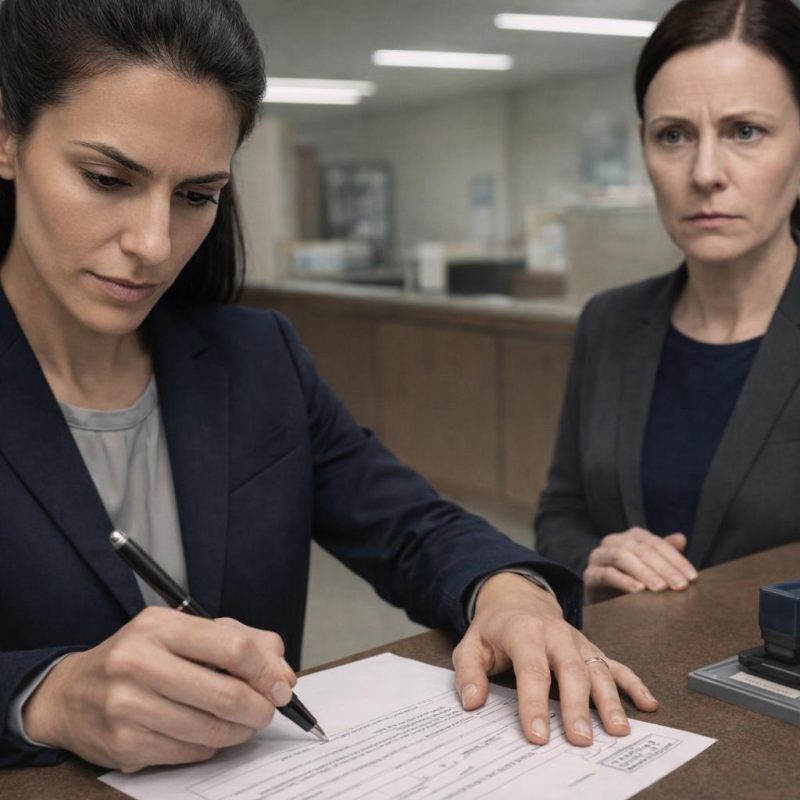 Image by RM AI
Explosive Reaction
They responded within an hour. Rebecca forwarded me Mark's voicemail first. His voice was tight with rage. "A DNA test? Are you fucking kidding me, Diana? This is a new low, even for you. You're so desperate to keep your precious money that you'll insult Dad's memory and question our family? Unbelievable." Elena's text came next: "Your DNA stunt is a disgusting insult to our father and our family. You should be ashamed." Then Sterling called Rebecca directly. I sat in her office while she put him on speaker. "This motion is offensive and invasive," he said, his polished voice sharp. "My clients are deeply hurt by this attack on their legitimacy." "It's not an attack," Rebecca said calmly. "It's a provision their father wrote into his will." "A provision you're twisting for tactical advantage." "A provision we're invoking as written." I listened to their exchange, but what struck me was the timing. They'd all responded within an hour of receiving the motion. The anger felt immediate and intense. Rebecca ended the call and looked at me. "That was fast." "Too fast?" I asked. She tilted her head slightly. "Their reaction seems stronger than the situation warrants."
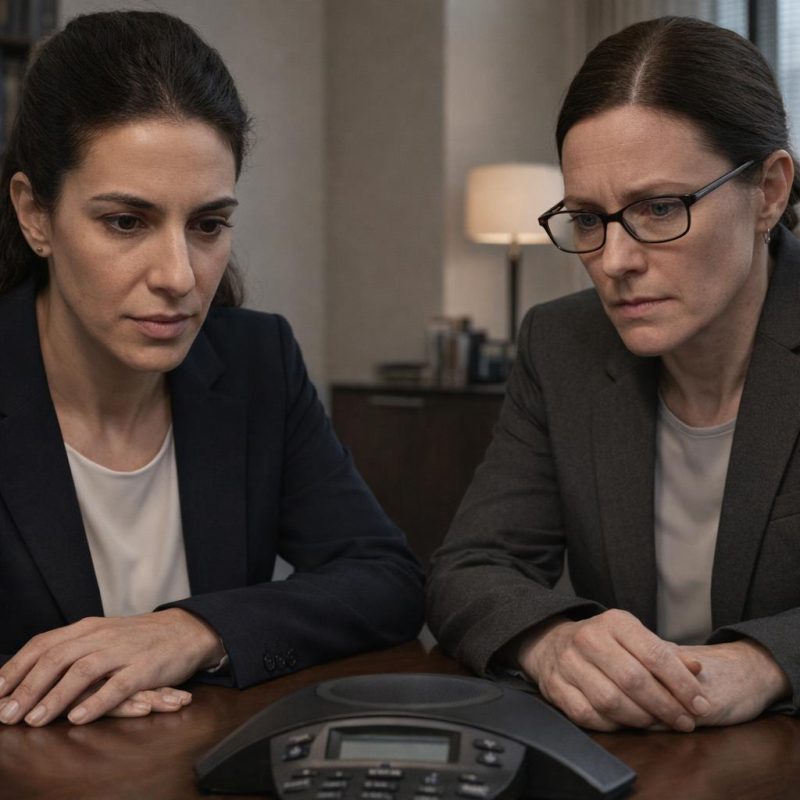 Image by RM AI
Insulting Memory
Sterling filed Mark and Elena's opposition brief two days later. Rebecca brought it to my office, already tabbed with sticky notes. "Read this," she said, handing it to me. The brief was four pages of outrage. Mark and Elena argued that DNA testing was an insulting desecration of David's memory and family dignity. They claimed the bloodline clause was traditional estate language, metaphorical rather than literal. They emphasized how the request dishonored their father and violated basic family respect. I flipped through the pages, noting the repeated phrases. "They really don't want to take this test," I said. Rebecca pointed to her sticky notes. "Count how many times they use the word 'insulting.'" I counted. Seven times in four pages. "They're fighting this emotionally, not legally," Rebecca said. "Look at the arguments. Nothing about why the clause shouldn't apply. Nothing about legal precedent or interpretation. Just emotion. Dignity. Respect. Insult." I read it again. She was right. The brief avoided legal reasoning entirely. It was all about feelings and family honor and David's memory. "Why aren't they arguing the law?" I asked. Rebecca leaned back in her chair. "Defensive people often fight hardest when cornered."
 Image by RM AI
Legal Necessity
We appeared before Judge Morrison one week later for the DNA hearing. Mark and Elena sat in the gallery behind Sterling, both of them rigid with tension. Sterling stood and argued that genetic testing was unnecessary and invasive given the other evidence in the case. "Your Honor, there's no question about my clients' parentage. They were raised by David Chen, acknowledged as his children, included in family documents. This DNA request is a desperate attempt to delay proceedings and cause emotional harm." Rebecca countered by citing David's specific bloodline verification clause. "The decedent wrote explicit language requiring genetic verification for inheritance claims over one million dollars. The plaintiffs are claiming fifty-three million. We're simply invoking the provision as written." Sterling argued the clause was traditional language, not a literal requirement. Judge Morrison listened to both sides, his expression neutral. Then he looked at Sterling over his reading glasses. "Counsel, if your clients are certain of their lineage, why would verification be problematic?" Sterling hesitated for just a fraction of a second. "It's the principle, Your Honor. The invasion of privacy and the insult to—" "I'll rule within one week," Judge Morrison said, cutting him off. That hesitation, though. I'd seen it.
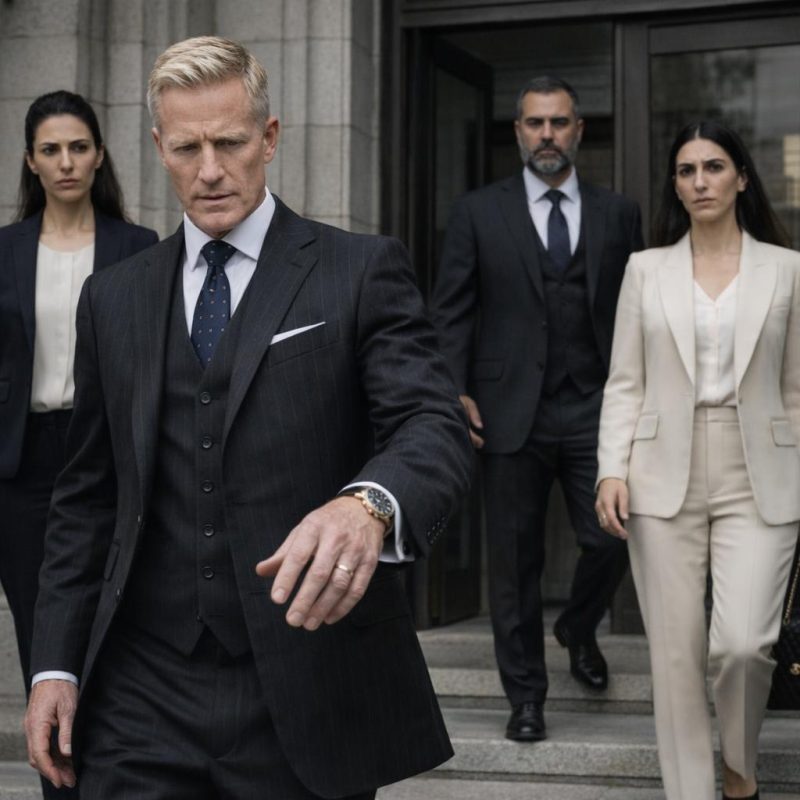 Image by RM AI
Waiting for the Gavel
We appeared before Judge Morrison one week later for the forgery evidence hearing. Rebecca had submitted the watermark analysis, the timeline documentation, everything we'd found. Sterling stood and argued that the forgery claims were speculative at best, that the will's bloodline clause was archaic language never meant to be enforced literally. "Your Honor, this provision appears in countless estate documents as traditional phrasing. My clients shouldn't be subjected to invasive genetic testing based on boilerplate language." Rebecca countered that David Chen was a meticulous businessman who chose every word carefully. "The decedent specified genetic verification for claims over one million dollars. The plaintiffs are seeking fifty-three million. The clause is clear and specific." I watched Judge Morrison's face as he reviewed both arguments. He took notes. He asked questions about the watermark evidence. He asked about David's drafting process. Mark shifted in his seat when Morrison read the bloodline provision aloud. Elena's jaw was tight, her composure strained around the eyes. The judge set down his pen and looked at both legal teams. "I'll deliver my ruling in three days."
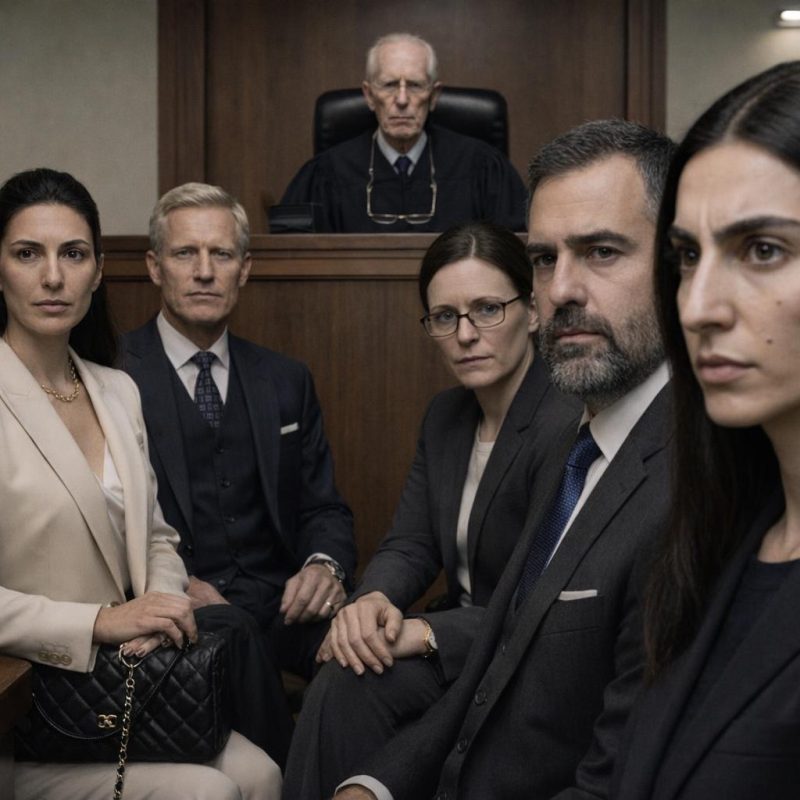 Image by RM AI
The Order
Judge Morrison delivered his ruling in open court on Thursday morning. I sat next to Rebecca, my hands folded on the table to keep them from shaking. Morrison read from his written decision, his voice measured and authoritative. "The bloodline clause in David Chen's will is specific, deliberate, and enforceable under estate law. The decedent's careful drafting throughout the document indicates intentional language choices, not boilerplate provisions." Sterling stood to object. Morrison overruled him without looking up. "The court orders DNA testing for all three siblings to verify biological relationship to the decedent. Testing will be conducted at a certified facility within one week." Mark's face went pale. Elena grabbed his arm, her knuckles white. Rebecca squeezed my shoulder, but I barely felt it. Relief crashed through me—the judge had seen what we'd seen. But right behind it came something colder. What if the test revealed something I didn't expect? What if David's careful planning had been protecting me from a truth I didn't know? The court clerk announced the testing appointment. Monday morning, nine AM.
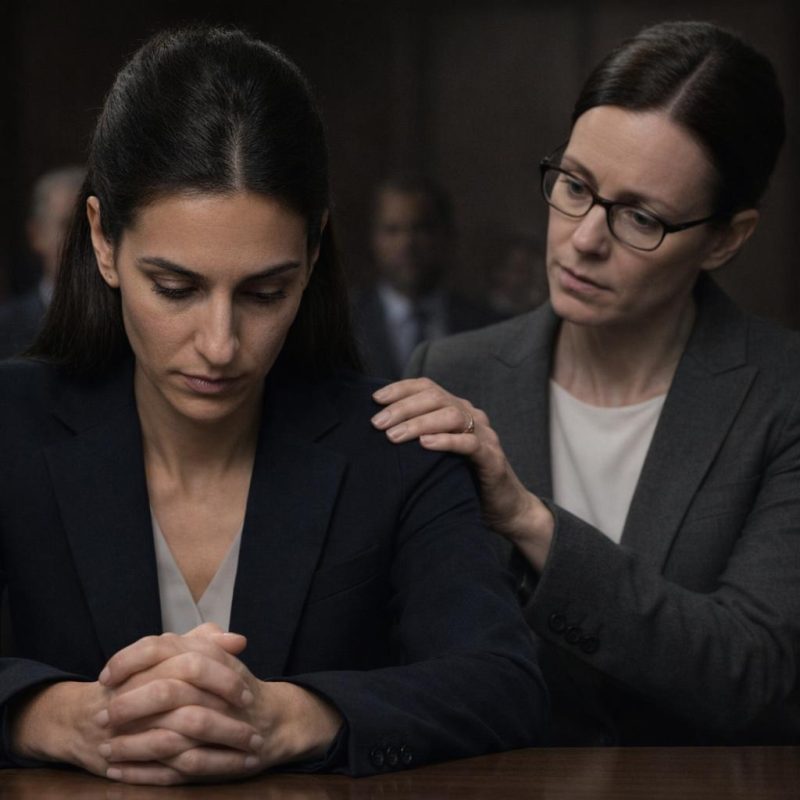 Image by RM AI
Sterile Hallway
I arrived at the testing facility Monday morning at eight forty-five. Mark and Elena were already there, seated at opposite ends of a bench in the waiting area. None of us spoke. None of us made eye contact. The fluorescent lights hummed overhead, that particular frequency that makes your teeth ache if you listen too long. I studied the generic artwork on the walls—abstract prints in corporate blues and grays that meant nothing to anyone. A fake plant sat in the corner, its leaves coated in dust. I thought about all the family dinners we'd shared growing up. Thanksgiving tables and birthday cakes and graduation parties. Mark sitting across from me, complaining about his internship. Elena next to Mom, discussing her latest designer purchase. We'd existed in the same rooms, eaten the same food, carried the same last name. But the distance between us now felt physical and permanent, like we'd been sitting on opposite ends of this bench our entire lives and just never noticed. A technician emerged from the back hallway with a clipboard. She called my name first.
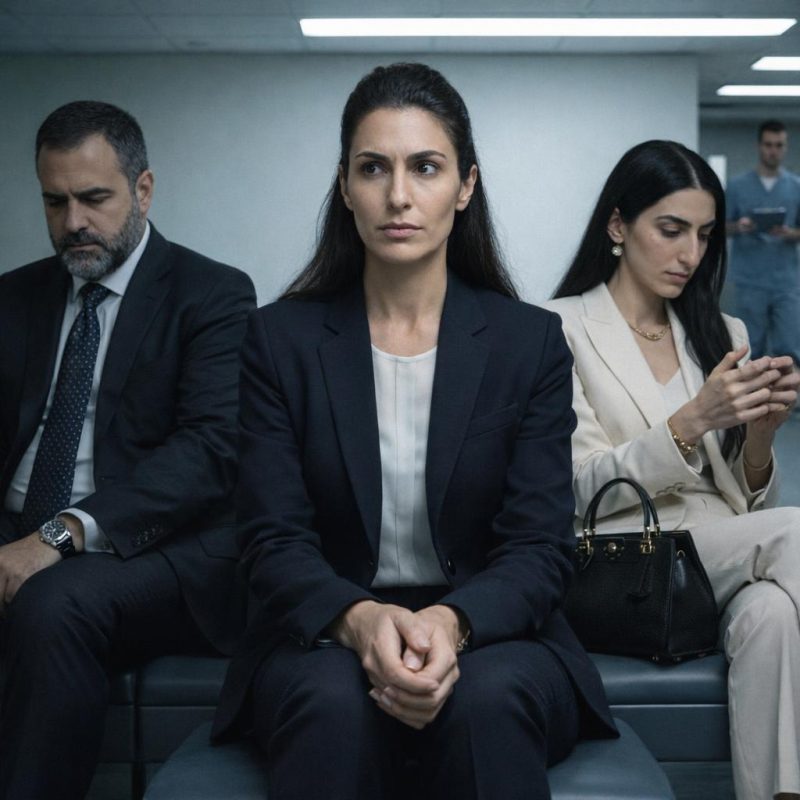 Image by RM AI
Twenty-One Days
The next three weeks were the longest of my life. I tried to maintain normal routines—morning coffee, emails, calls with my financial advisor about investment strategies I couldn't focus on. But mostly I just waited. I checked my phone constantly, even though Rebecca had told me the lab needed twenty-one business days minimum. She called every few days with no news, just checking in, her voice carefully neutral. I couldn't make decisions about anything. The penthouse felt too big and too small at the same time. I walked through it at odd hours, unable to sleep, watching the city lights blur through the windows. Tuesday morning marked exactly one month since I'd sold the company. One month since I'd thought my biggest problem was figuring out what to do with eighty million dollars. My phone rang at nine-fifteen. Rebecca's name on the screen. I answered on the first ring. "The results are in," she said, and something in her voice made my stomach drop. "I'm coming over."
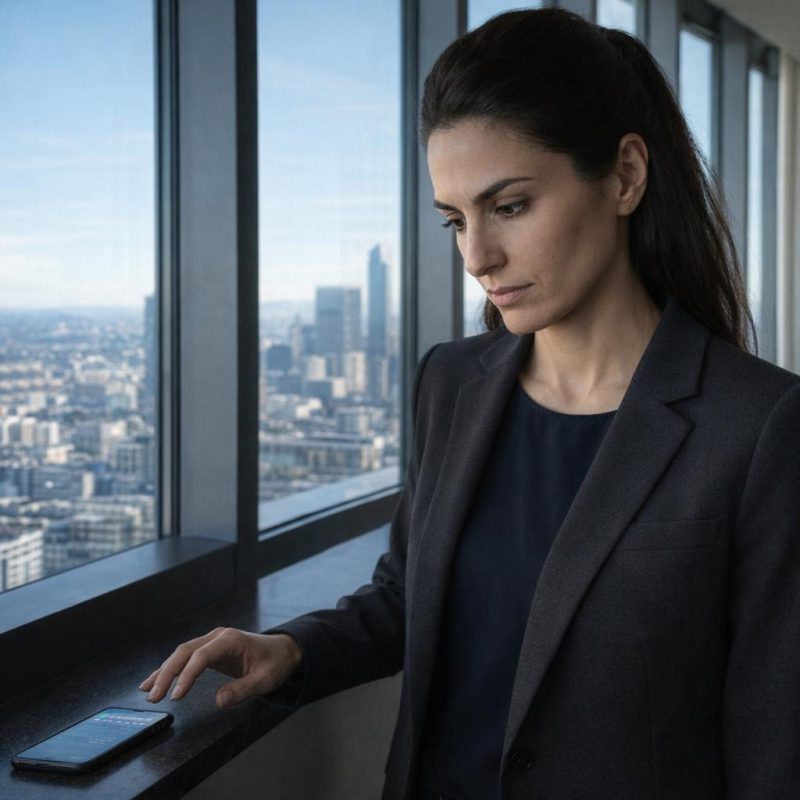 Image by RM AI
Strangers in the Blood
Rebecca arrived thirty minutes later with a sealed envelope from the court. I opened it at my kitchen counter, my hands trembling so badly I almost tore the paper. The report was clinical, formatted in charts and percentages that took me a moment to parse. Then I saw it. Probability of biological relationship between Diana Chen and David Chen: 99.97%. Probability of biological relationship between Mark Chen and David Chen: 0%. Probability of biological relationship between Elena Chen and David Chen: 0%. I read the words three times before they registered. Mark and Elena weren't David's children. They weren't his biological children. Rebecca explained what this meant for the lawsuit, her voice coming from somewhere far away. I was David Chen's daughter. My only biological daughter. Mark and Elena were—what? Half-siblings at most. Thirty-five years of family history suddenly looked different, like I'd been staring at an optical illusion and someone had just pointed out the hidden image. My mother had kept a secret that outlived her by three years.
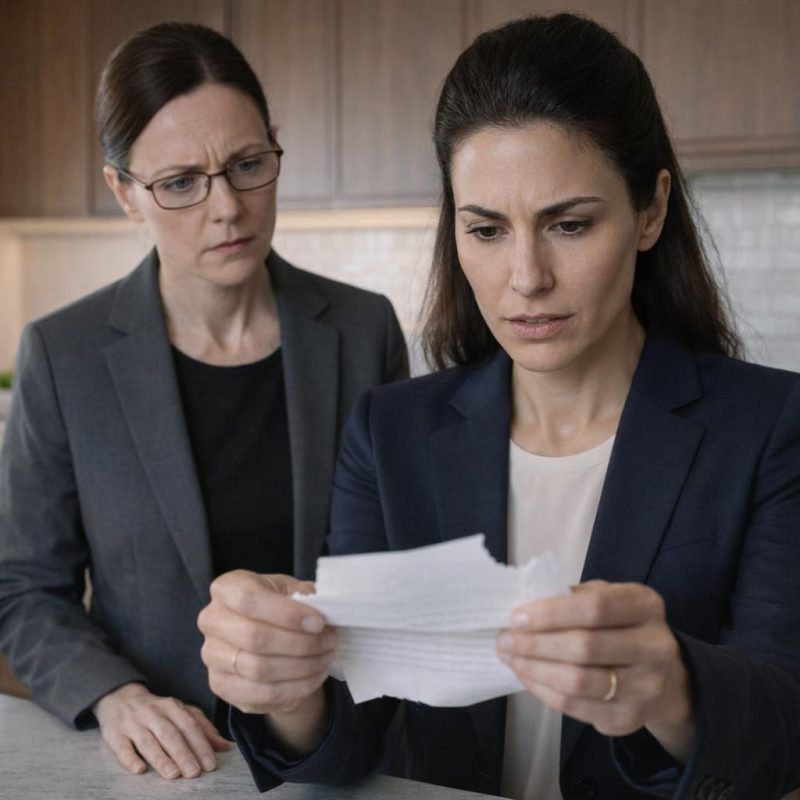 Image by RM AI
Mother's Secret
Rebecca and I sat at my kitchen table for two hours, piecing together what must have happened. The affair had to have occurred early in Patricia and David's marriage. Mark was born first, then Elena two years later. Then nothing for five years until I came along—from a completely different biological reality. Mom had maintained the secret through decades of family life. Dinners and holidays and school events, sitting next to David, raising three children he believed were all his. Or did he believe that? I remembered Mom's occasional distant looks at family gatherings, the way she'd sometimes stare at Mark or Elena with an expression I'd never been able to read. Rebecca suggested the affair might have been brief or ongoing—we'd never know. I realized I'd never really known my mother at all. The woman who'd taught me to set a proper table and criticized my career choices and died believing her secrets were buried with her. She'd looked at me at the end, in that hospital room, and said nothing. I wondered if she'd taken it to her grave believing no one would ever know.
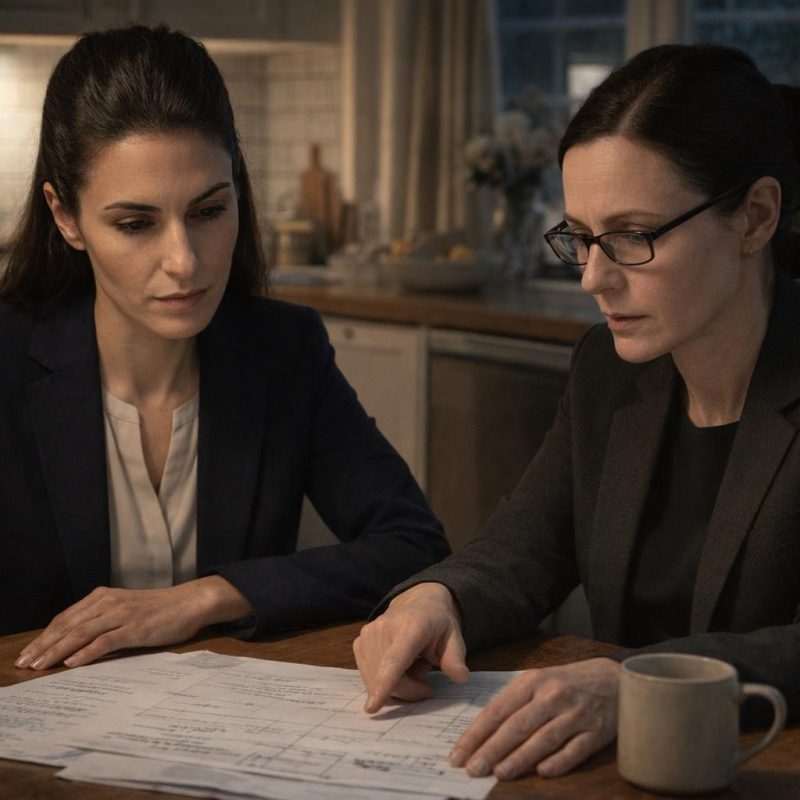 Image by RM AI
Father Knew
I pulled out David's will that night and read the bloodline clause again with new eyes. "Any claim to inheritance exceeding one million dollars must be verified through genetic testing confirming direct biological descent." The language was specific. Deliberate. Careful. David had known. He'd known about Mark and Elena all along, and he'd written this clause knowing exactly what it would reveal if they ever came after his estate. Rebecca had pointed out the timing—David updated his will two years ago, right around when Mark started asking him for money. Right around when Elena began her complaints about fairness and family obligation. He'd seen it coming. And he'd protected me. I thought about the ten thousand dollars he'd loaned me to start my company. How he'd encouraged me, quietly, without pushing Mark or Elena toward anything serious. He'd never expected them to build something real. He'd known they weren't his, and he'd made sure his real daughter—his only biological child—had her own foundation. My father had given me the money to build my own world because he knew the one I grew up in was built on a lie.
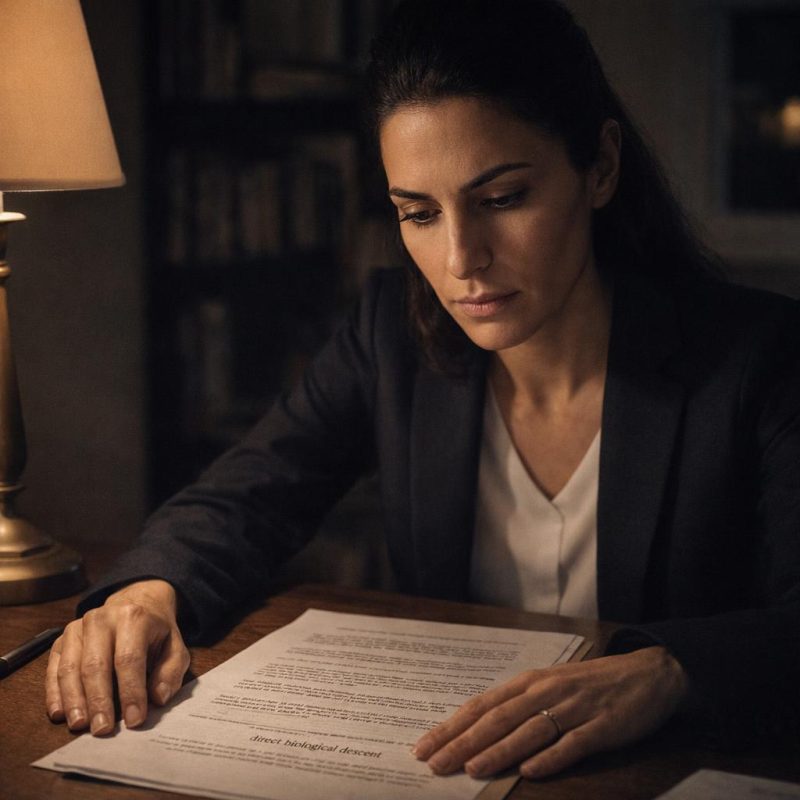 Image by RM AI
Their World Crumbles
Rebecca arranged a conference call with Sterling's office Wednesday afternoon. Sterling's voice was clipped, professional, but I could hear the strain underneath. He confirmed his clients had received the DNA results. In the background, I heard muffled voices, sharp and overlapping. Then Mark's voice cut through, demanding to speak directly to me. Sterling tried to shut him down. Elena could be heard arguing with someone off the line, her words indistinct but her tone unmistakable—panic and rage mixed together. Sterling cleared his throat and requested time to consult with his clients about next steps. Rebecca's response was ice-cold. "The results speak for themselves, counselor. Your clients have no biological claim to David Chen's estate." More muffled arguing in the background. Sterling asked for seventy-two hours before the next scheduled hearing. Rebecca agreed and ended the call. I sat in the silence of my penthouse afterward, thinking about Mark and Elena receiving those results. Thirty-five years of identity rewritten in a single page. Their carefully maintained lawsuit had just become their undoing. Sterling requested an emergency meeting with all parties.
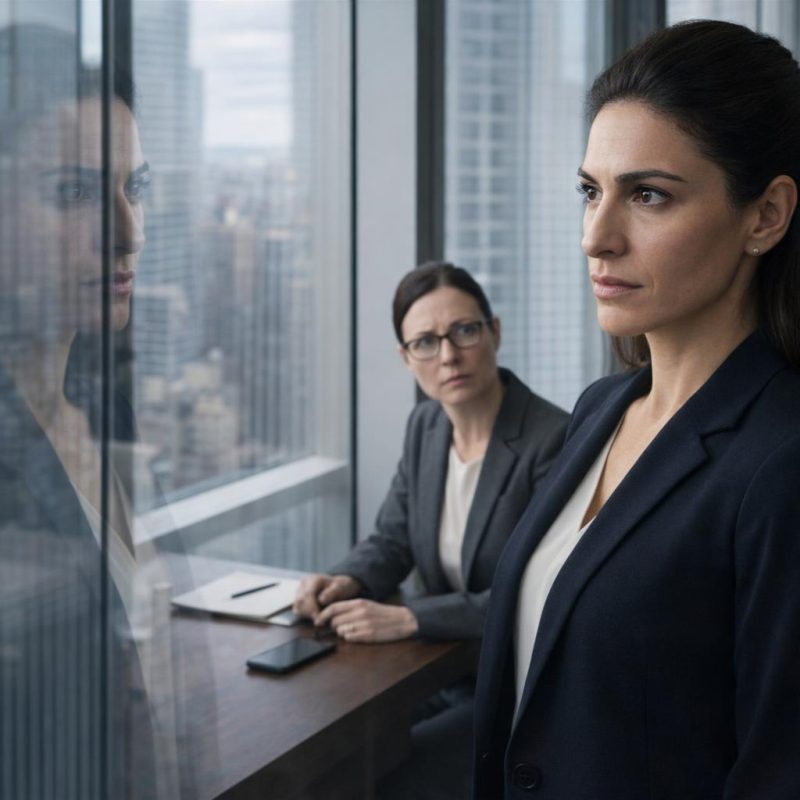 Image by RM AI
Collapse
Sterling stood before Judge Morrison and did something I never expected to see. He requested dismissal of his own clients' lawsuit. His voice carried none of that predatory confidence I'd watched him wield for months. He cited the DNA evidence as fundamentally changing the case, his words careful and measured. Rebecca sat beside me, her posture perfect, waiting. She objected immediately to simple dismissal without prejudice, her tone sharp. Mark sat rigid in his chair staring at the floor, his expensive suit looking rumpled for the first time. Elena's eyes were red from crying, her perfect makeup streaked. Judge Morrison accepted the dismissal of the company claim, his voice neutral. Then he paused, looking down at the documents before him. He raised the matter of David Chen's will provisions, and the courtroom went still. The bloodline clause, he said, had broader implications for inheritance beyond just the sale proceeds. Sterling's pen stopped moving on his notepad. Rebecca's hand tightened almost imperceptibly on her briefcase handle. I sat there watching justice unfold, feeling nothing like triumph. Judge Morrison said the bloodline clause had additional implications they needed to discuss.
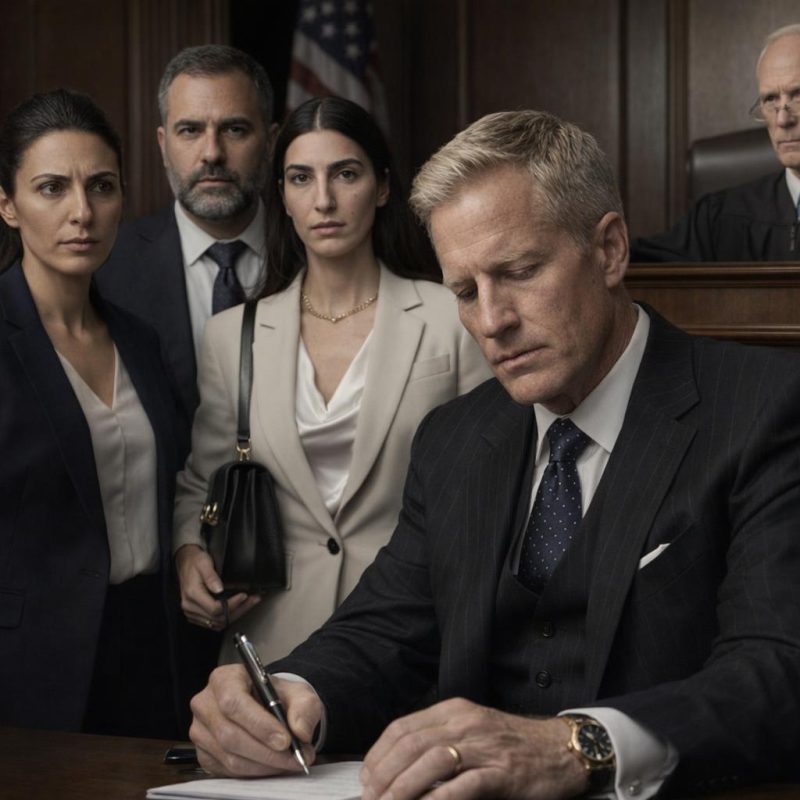 Image by RM AI
The Clause Bites Back
Judge Morrison pulled David's will from the file and read the relevant sections aloud. His voice was measured, almost clinical. The clause required proof of biological lineage for any distribution over one million dollars. Mark and Elena had already received portions of David's estate after his death—substantial portions. Those distributions now appeared to violate the will's terms. Rebecca had prepared for this possibility, I realized, watching her face remain perfectly neutral. Sterling objected on procedural grounds, his words tumbling out faster than usual. Morrison ruled the clause was unambiguous, his tone allowing no argument. I watched Mark's shoulders tense as understanding dawned. Elena's hands gripped the edge of the table, her knuckles white. The lawsuit they'd filed to claim my money had triggered their own disinheritance. Sterling was frantically writing notes, probably calculating how much they'd already received. Morrison continued reading, his words precise and devastating. Every sentence stripped away another layer of their claim. I felt vindication, sure, but it was hollow and cold. The clause they'd used as a weapon had become their undoing.
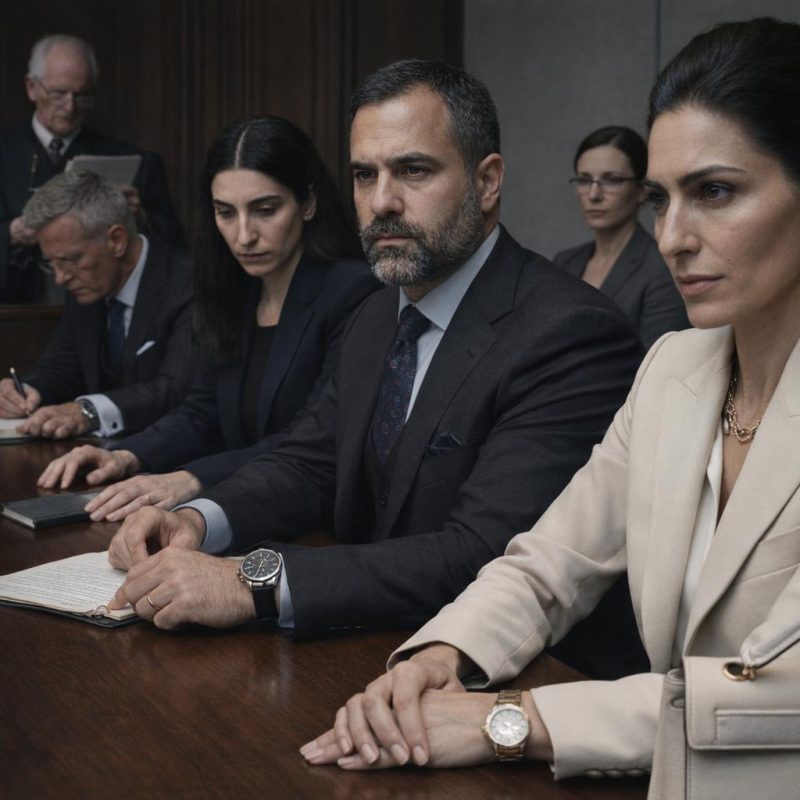 Image by RM AI
Total Reversal
Judge Morrison delivered his formal ruling in the same measured tone he'd used throughout. Mark and Elena Chen were declared ineligible heirs under David Chen's will. The bloodline verification requirement applied to all estate matters, not just the company sale. Sterling sat in stunned silence, his leather briefcase forgotten on the floor beside him. Mark's hands gripped the edge of the table so hard I thought the wood might crack. Elena looked between Sterling and Mark with growing panic, her breathing shallow and quick. Rebecca maintained professional composure beside me, but I caught the slight exhale of relief. I felt nothing like victory. This was just the inevitable conclusion of choices they'd made, dominoes falling in sequence. Morrison explained the ruling was final and subject only to appeal, though his tone suggested he didn't expect one to succeed. The courtroom was absolutely silent except for the court reporter's fingers on the keys. Elena's lawyer leaned close and whispered something to her. She started to shake.
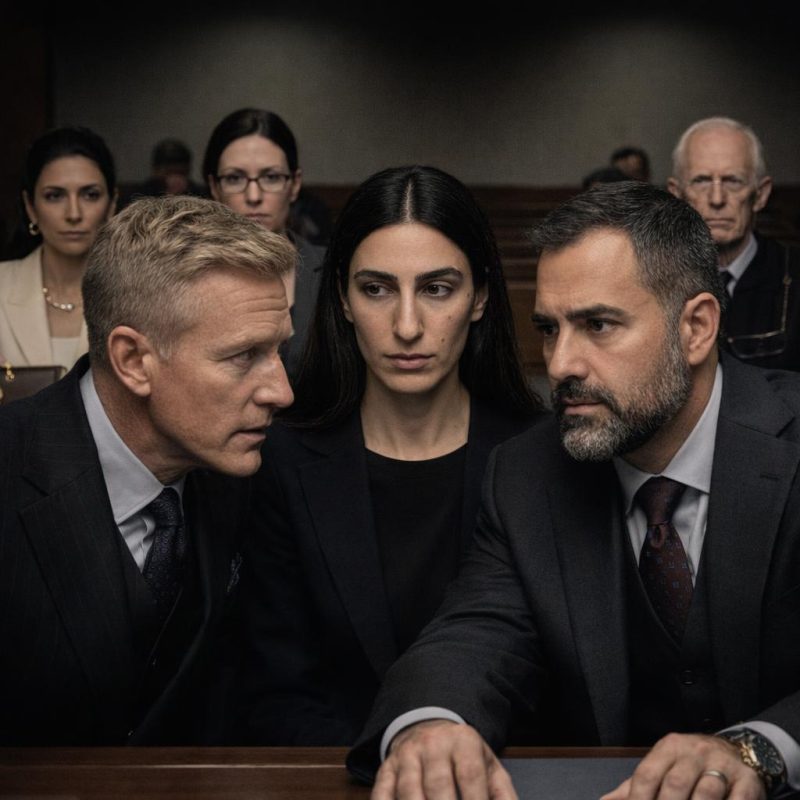 Image by RM AI
Everything They Had
Judge Morrison wasn't finished. He addressed the matter of prior estate distributions, and I saw Sterling's face go pale. Mark and Elena had received significant sums after David's death—I knew the amounts, had signed off on them myself back when I still thought of them as family. Under the bloodline clause, Morrison explained, those distributions were void. The court ordered full restitution to the estate. Sterling calculated the amounts quickly on his notepad, his pen moving in sharp, angry strokes. Elena's face went white. Mark had already spent most of his inheritance, I knew—the Tesla, the condo upgrade, the vacation to Bali he'd posted all over social media. The court gave them sixty days to comply with the restitution order. I hadn't expected this additional consequence. I'd thought the lawsuit dismissal would be the end of it. Instead, they were losing everything they'd already received. Rebecca's expression remained neutral, but I caught the slight tightening around her eyes. Mark stood up so fast his chair scraped against the floor.
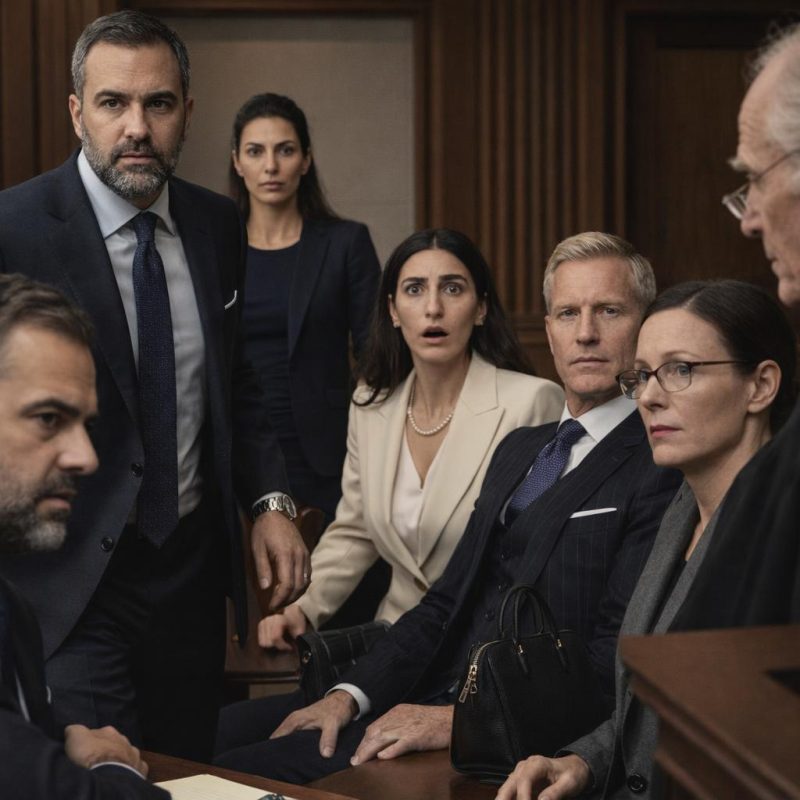 Image by RM AI
Elena Breaks
Elena stood up from her chair trembling, her whole body shaking. She said David was her father regardless of biology, her voice breaking on the words. Her voice rose as she talked about childhood memories—birthday parties, bedtime stories, the way he taught her to ride a bike. Sterling tried to calm her, reaching for her arm, but she pushed his hand away. Elena turned toward me and accused me of destroying their family, her eyes wild with grief and rage. She said I'd always been cold, always been calculating, and now I'd taken everything from them. She collapsed back into her chair sobbing, her shoulders heaving. Mark put a hand on her shoulder but said nothing, his jaw clenched tight. I watched someone I'd known my whole life fall apart, and I felt something uncomfortable twist in my chest. Not quite pity. Not quite guilt. The courtroom was uncomfortably silent except for Elena's crying, which echoed off the walls. The bailiff moved toward their table as Elena's cries echoed off the walls.
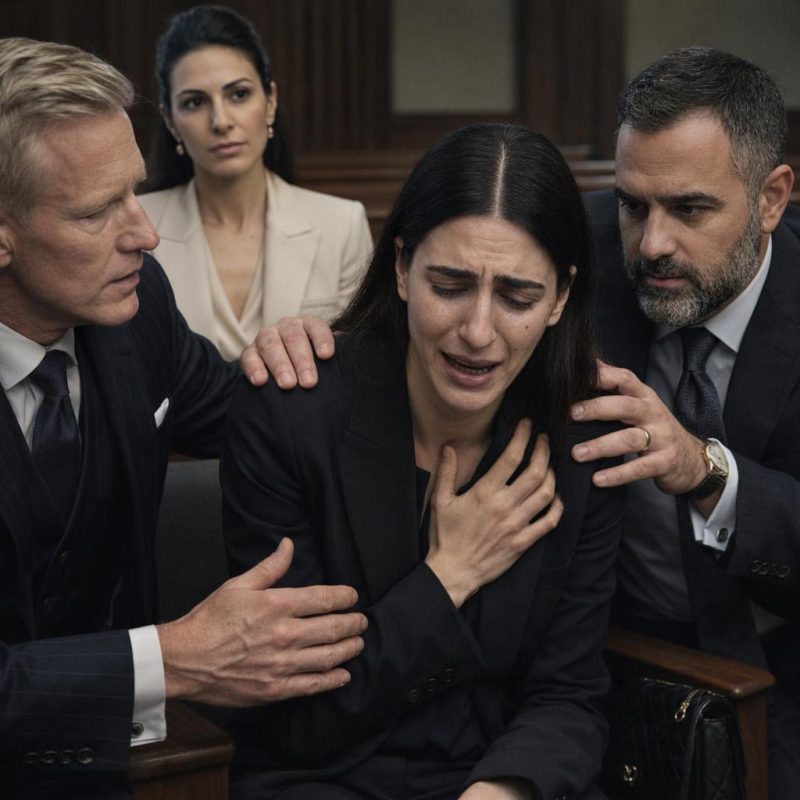 Image by RM AI
Mark Shatters
Mark turned toward me with fury in his eyes, and I saw thirty-five years of resentment finally break free. He shouted about years of watching me get special treatment, his voice cracking. He said David always looked at me differently, always gave me more attention, more opportunities. Mark accused me of knowing the truth somehow, of manipulating everything from the beginning. His voice gave way to something rawer than anger—something that sounded like grief. Sterling tried to intervene, standing and reaching for Mark's shoulder, but Mark shook him off violently. Judge Morrison called for order, his gavel coming down twice. Security approached their table, two bailiffs moving with practiced efficiency. Elena was still crying as they were led toward the door, her face buried in her hands. Mark shouted that I'd always been their father's favorite, and now he understood why. His words hung in the air as the bailiffs guided them toward the exit. I sat frozen watching them leave, feeling absolutely nothing. Security escorted Mark and Elena from the courtroom, and I couldn't look away.
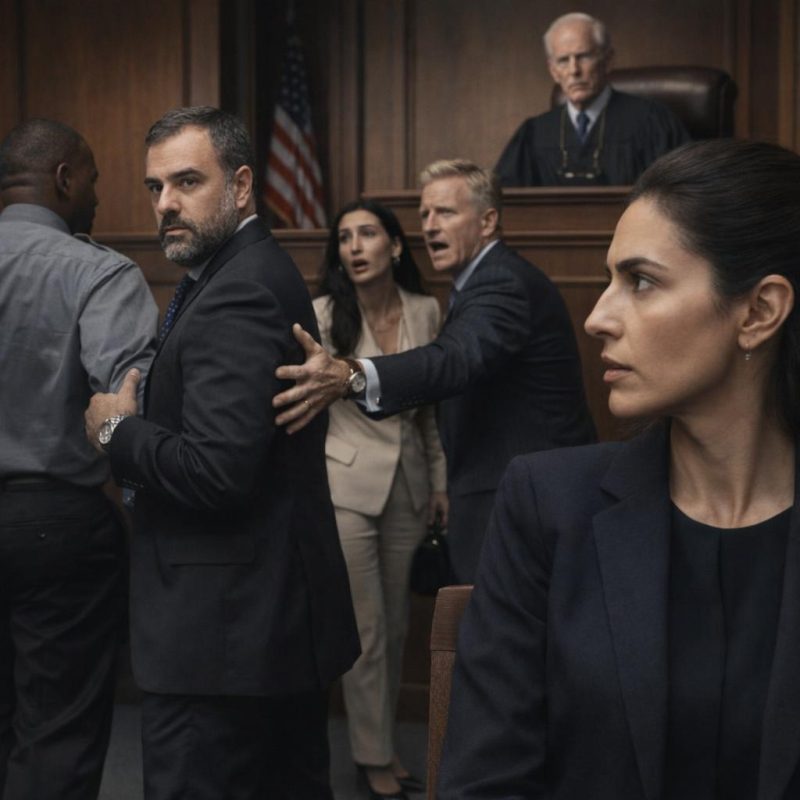 Image by RM AI
Final Order
Judge Morrison waited until the courtroom settled, the heavy doors closing behind Mark and Elena with a soft thud. He read the final order into the record, his voice quiet but clear. Mark and Elena Chen were formally excluded from the estate of David Chen. All claims against me were dismissed with prejudice. The forged document was ordered destroyed. Sterling's firm was referred for ethics review, and I saw Rebecca make a small note on her legal pad. She accepted the ruling on my behalf, her voice steady and professional. I heard the words without feeling them, like they were happening to someone else in some other courtroom. The gavel came down with unexpected softness, just a gentle tap against wood. Court was adjourned. People began gathering their things, the rustle of papers and briefcases filling the silence. I sat there for a moment longer, staring at the empty chairs where Mark and Elena had been. Thirty-five years of family history, reduced to a court order and a destroyed document. The judge's gavel fell, and thirty-five years of family ended with a single sound.
 Image by RM AI
Walking Out With Nothing
I walked out of the courthouse into afternoon light that felt too bright, too normal. Mark and Elena were already at their car in the parking lot, two figures moving slowly across the pavement. Sterling was nowhere to be seen—probably already gone, distancing himself from the wreckage. Mark held Elena's arm as they walked, supporting her weight. Neither of them looked toward the courthouse, toward me. I stood on the steps watching them, unable to look away. Rebecca waited silently beside me, her briefcase in hand, giving me space. The car pulled away without hesitation, no pause, no backward glance. I watched the taillights disappear around the corner and realized something that made my chest feel hollow. I had no siblings anymore. I had strangers who used to share my last name, who used to sit across from me at Thanksgiving, who used to be part of my life. Now I had a legal victory and an empty space where family used to be. They drove away without a word, and I realized I would probably never see them again.
 Image by RM AI
Alone in the Crowd
The courthouse hallway was still full of people even though my case was over. Lawyers rushed past with briefcases and clients trailing behind them, everyone focused on their own battles. A family argued in the corner about custody arrangements, voices rising and falling in waves of anger and desperation. I stood against the wall watching them all move around me like water flowing past a stone. I had won. The judge had ruled in my favor, Sterling's document was worthless, and Mark and Elena had nothing. But standing there in that crowded hallway, I felt completely alone. Rebecca gathered our papers methodically, organizing everything into her briefcase with the same careful attention she'd given every detail of this case. She didn't rush me. She just waited, patient and steady, while I tried to figure out what came next. The penthouse was waiting for me—empty rooms and eighty million dollars and silence. So much silence. Rebecca touched my arm gently, her eyes asking the question before her mouth did. "Ready to go home?" I looked at her and realized I didn't know how to answer.
 Image by RM AI
Empty Triumph
The elevator ride up to the penthouse felt longer than usual. The doors opened and I stepped into the apartment exactly as I'd left it that morning—pristine, expensive, empty. I walked to the window where I'd stood one month ago celebrating the sale, champagne in hand, thinking I'd finally made it. The Italian leather sofa where Mark had lounged with his entitled smirk sat empty now. The glass table where Sterling had laid his forged document was clean and bare. I moved through the rooms like a ghost, touching nothing, just looking at everything with new eyes. The kitchen was spotless. The counters gleamed. I opened the refrigerator and stared at the top shelf. The champagne from my celebration night was still there, exactly where I'd put it after pouring that first glass. The bottle I'd opened to toast my success before Mark and Elena showed up and turned my triumph into a nightmare. I stood there with the refrigerator door open, cold air washing over me, and I didn't reach for it.
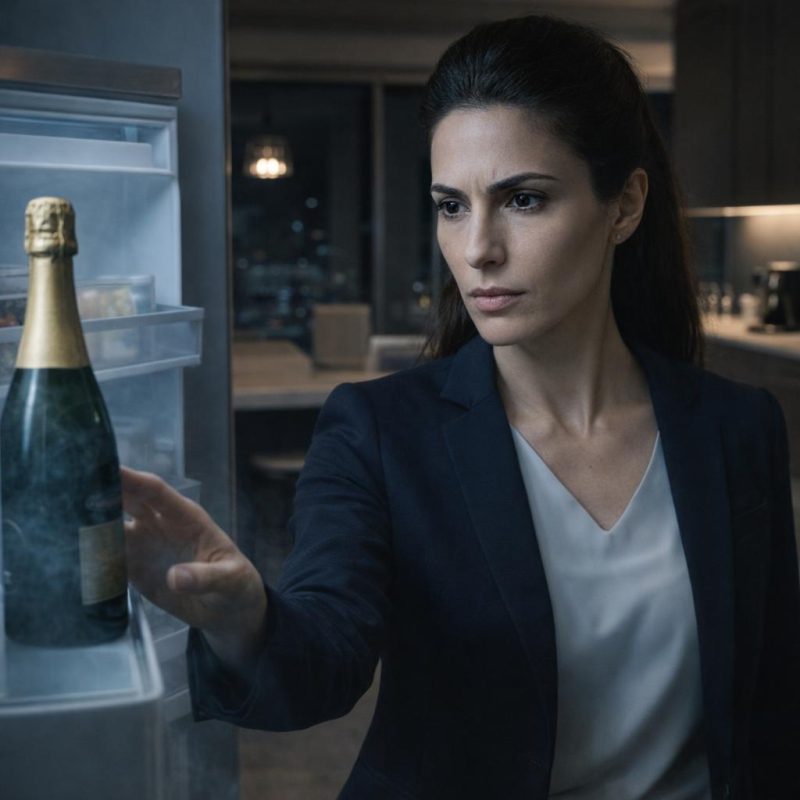 Image by RM AI
Father's Gift
I sat in my home office with my father's original loan papers spread across the desk. Ten thousand dollars, written in his careful handwriting twenty years ago. I'd read these documents a hundred times, but tonight I saw them differently. The careful provisions in his will weren't just legal protection—they were acts of love. He'd given me capital to build something independent, something that would be mine alone. He'd written clauses to protect what I created, to ensure no one could take it from me. I remembered his quiet encouragement over the years, the way he'd ask about the company but never about Mark or Elena's careers. He never explained why he believed in me so completely, why he invested in my dream when he gave nothing to them. Now I understood everything. David Chen had known the truth about his children long before any DNA test. He'd spent decades quietly ensuring his daughter would be safe, that she'd have something no one could steal. The tears came suddenly, hot and overwhelming. I cried for the first time since the DNA results came back, and I realized my father had known everything, and he had loved me enough to prepare for this day.
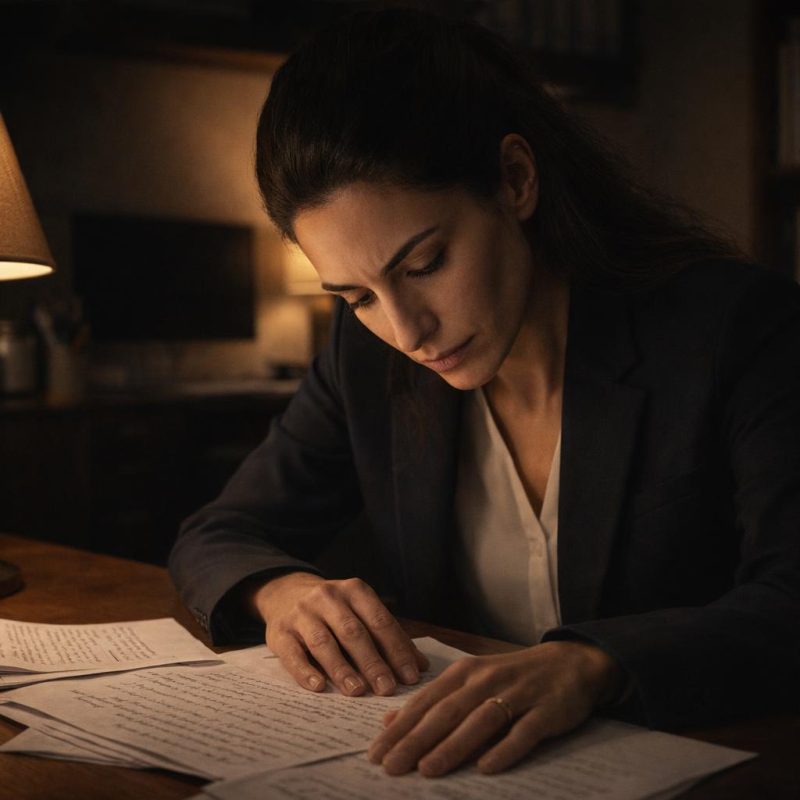 Image by RM AI
Water and Light
I stood at my window as night fell over the city, watching the lights flicker on across the skyline. I poured a glass of water—just water, nothing to celebrate, nothing to prove. The lights below sparkled exactly like they had one month ago when I'd stood in this same spot with champagne and dreams. Everything had changed and nothing had changed. I had eighty million dollars and no siblings. I had my father's love and my mother's secret. I had three hundred employees who would get their trust fund because I'd kept my promise. I thought about the garage where it all started, about the desk I'd slept under for ten years while I built something real. The penthouse was quiet around me, no voices, no demands, no family drama tearing me apart. I was alone. Completely, utterly alone. But standing there with my glass of water, looking out at the city I'd conquered, I realized something that settled into my bones like peace. The city sparkled below me, and I was exactly where I was supposed to be.
 Image by RM AI
KEEP ON READING

The 10 Youngest Monarchs In History & The 10 Oldest
Age Is Just A Number. Imagine being crowned king or…
By Chase Wexler Mar 11, 2025
You Think You Have Problems? These Royal Families Were Cursed
Boasson and Eggler St. Petersburg Nevsky 24. on WikimediaHeavy is…
By Ashley Bast Dec 5, 2025
You Can Thank This Greek-Canadian For Creating Pineapple On Pizza…
Love it or hate it, pineapple on pizza sparks debate…
By David Davidovic Dec 1, 2025
Yes, Female Gladiators Existed, And Here's Everything You Need To…
History of Women in Combat. Most people picture gladiators as…
By David Davidovic Jan 17, 2026
Yes, Australians Once Lost A Battle Against Flightless Birds
David Clode on UnsplashIn 1932, the Australian military went to…
By David Davidovic Nov 24, 2025
The Y2K Bug: Why Did Everyone Think Year 2000 Was…
Alan W on UnsplashOn December 31, 1999, people all over…
By Christy Chan Dec 22, 2025