The Man Who Built A Cathedral Out Of Scrap Metal, Seashells, And Broken Tile
The Man Who Built A Cathedral Out Of Scrap Metal, Seashells, And Broken Tile
The lot at 1765 East 107th Street in Los Angeles is a triangle pinched between a dead-end street and a set of railroad tracks. It holds seventeen connected structures made almost entirely from things other people threw out. The tallest spire reaches 99.5 feet, close to ten stories, standing on bent scrap rebar under a coat of mortar. No architect was involved at any stage.
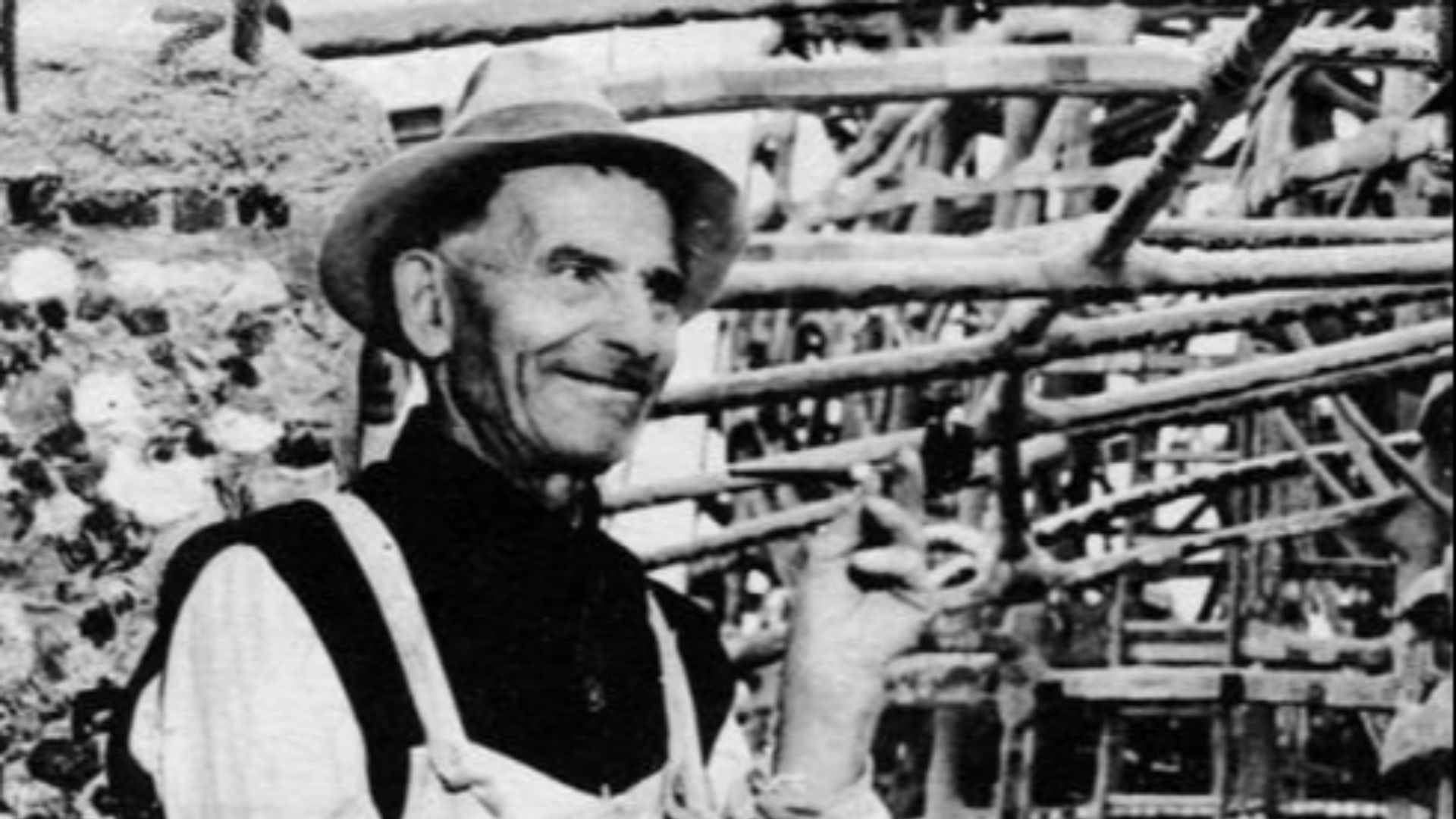
Sabato Rodia was an Italian immigrant who laid tile and worked construction jobs around Southern California. He bought the property in 1921 and spent the next thirty-three years building on it in the evenings and on weekends, alone, with nothing on paper. He carved Nuestro Pueblo over the entrance, which means our town. Most of his neighbors assumed he had lost his mind.
Built With Hand Tools And No Plan
Rodia worked without scaffolding, and he never used a bolt or a weld. He bent much of the steel framework by hand, using the railroad tracks behind the lot as a makeshift vise. To reach the upper sections he wore a window washer's belt and climbed the structure he was making, setting each piece by eye as he went.
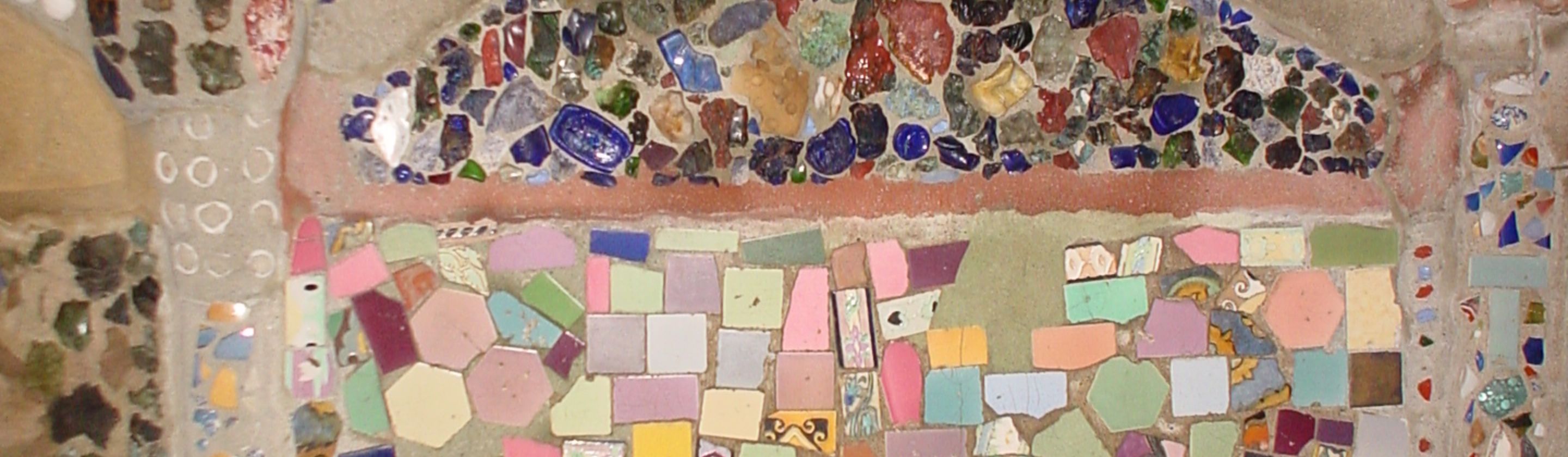
The decoration came from whatever passed through his hands. Broken tile arrived as factory seconds from Malibu Potteries and the California Clay Products Company, and neighborhood children brought him smashed dishes. Green glass in the walls includes soda bottles from the 1930s through the 1950s with the logos still legible. The blue pieces came from milk of magnesia bottles.
Thousands of seashells are pressed into the mortar, along with mirror fragments and the odd ceramic figurine. Rodia shaped every surface himself, so the towers read as one long handwriting sample rather than a design. Scholars who study the site place it among the most significant works of art in Los Angeles, which is a strange result for a structure built on a residential lot without permits.
The Neighbors Were Not Impressed
Local reception ran from puzzled to hostile. Kids broke the glass and tiling regularly, and during the Second World War a rumor went around that Rodia was signaling Japanese forces somehow through the towers. He kept building through all of it, mostly after work, mostly in silence.
In 1954 he stopped. Rodia, then in his mid-seventies, signed the property over to a neighbor, moved four hundred miles north to Martinez, and never came back to see it. He died there in 1965, a few weeks before the Watts uprising. He seems to have made peace with never knowing what happened to the towers.
What happened first was decay. Rodia's small house inside the enclosure burned on the Fourth of July in 1956, and the city issued a demolition order in 1957. Two men who visited in 1959, an actor and a film editor, bought the property specifically to stop it from being flattened.
The Day The City Tried To Pull Them Down
They organized the Committee for Simon Rodia's Towers in Watts and negotiated an unusual compromise. The city agreed that if the structures could survive an engineering load test, the demolition order would come off. An aeronautical engineer named Bud Goldstone, who had read about the towers in the paper, was brought in to run it.
On October 10, 1959, in front of a crowd of more than a thousand people, a crane hooked a cable to one of the towers and pulled sideways with 10,000 pounds of force. The tower didn't move. The testing rig gave out before the hand-built spire did, and the city removed the unsafe placard.
Official recognition arrived gradually after that. Los Angeles designated the site a historic-cultural monument in 1963, and the federal government made it a National Historic Landmark in 1990. The towers came through the 1994 Northridge earthquake with minor damage and a FEMA-funded retrofit that ran until 2001. An arts center now operates on the same block, teaching classes to kids from the neighborhood whose grandparents threw rocks at the glass.
KEEP ON READING