When Romance Becomes Political
Love stories are supposed to be private, but empires have never been great at respecting personal boundaries. When the person in charge falls hard, the crush can turn into a crisis, especially if heirs, alliances, and reputations are on the line. If you’ve ever thought your dating life felt complicated, just wait until you see what happens when a whole realm is watching. Here are 20 times in history when entire empires were on the verge of collapse, all because of love.
 David Wilkie Wynfield on Wikimedia
1. Cleopatra & Julius Caesar
Cleopatra didn’t just capture Caesar’s attention; she walked straight into Roman politics like she owned the place. Their relationship helped ignite fear and resentment among Roman elites who already distrusted powerful outsiders. Once gossip becomes strategy, even a love affair can feel like a threat to the state.
 The New York Public Library on Unsplash
2. Cleopatra & Mark Antony
Antony’s devotion to Cleopatra gave Octavian the perfect propaganda gift. Rome’s power struggle turned into a melodrama that ended with fleets, speeches, and betrayal on an epic scale. It’s the kind of relationship where the breakup costs you an empire.
 After Nathaniel Dance-Holland / William Shakespeare on Wikimedia
3. Henry VIII & Anne Boleyn
Henry’s obsession with Anne didn’t just change his personal life; it rewired England’s relationship with religion and Europe. The quest to marry her pushed him to reform the country's religion, which had ripple effects for centuries and reshaped the country's whole identity.

4. Edward VIII & Wallis Simpson
Edward wanted Wallis, and the British establishment wanted anything but that. The standoff became so intense that he chose love over the crown, which is both romantic and wildly disruptive.
 National Media Museum on Wikimedia
5. Napoleon & Joséphine
Napoleon adored Joséphine, but he also needed an heir, and those goals didn’t stay compatible. Their relationship tugged at his image and decisions in ways that made court politics extra unstable.

6. Hadrian & Antinous
Hadrian’s love for Antinous became an imperial event after Antinous died under mysterious circumstances. The emperor’s response helped shape monuments, religion, and public attention across the Roman world. It’s proof that personal loss can ripple outward into policy and symbolism.

7. Justinian & Theodora
Theodora’s background as a humble actress made elites clutch their pearls, which only increased the tension around her influence. Justinian trusted her fiercely, and that partnership helped steer major decisions when things got ugly. They ended up being a formidable power couple, but their initial pairing upset the aristocracy and disrupted the natural order of things in the Byzantine Empire.

8. Akbar & Mariam-uz-Zamani
People in the Mughal empire were initially in shock when Akbar, a Muslim, married Mariam-uz-Zamani, a Hindu. Even though their love ended up softening religious and political lines, it still upset people who preferred rigid boundaries and completely changed courtship practices.
 An unknown artist on Wikimedia
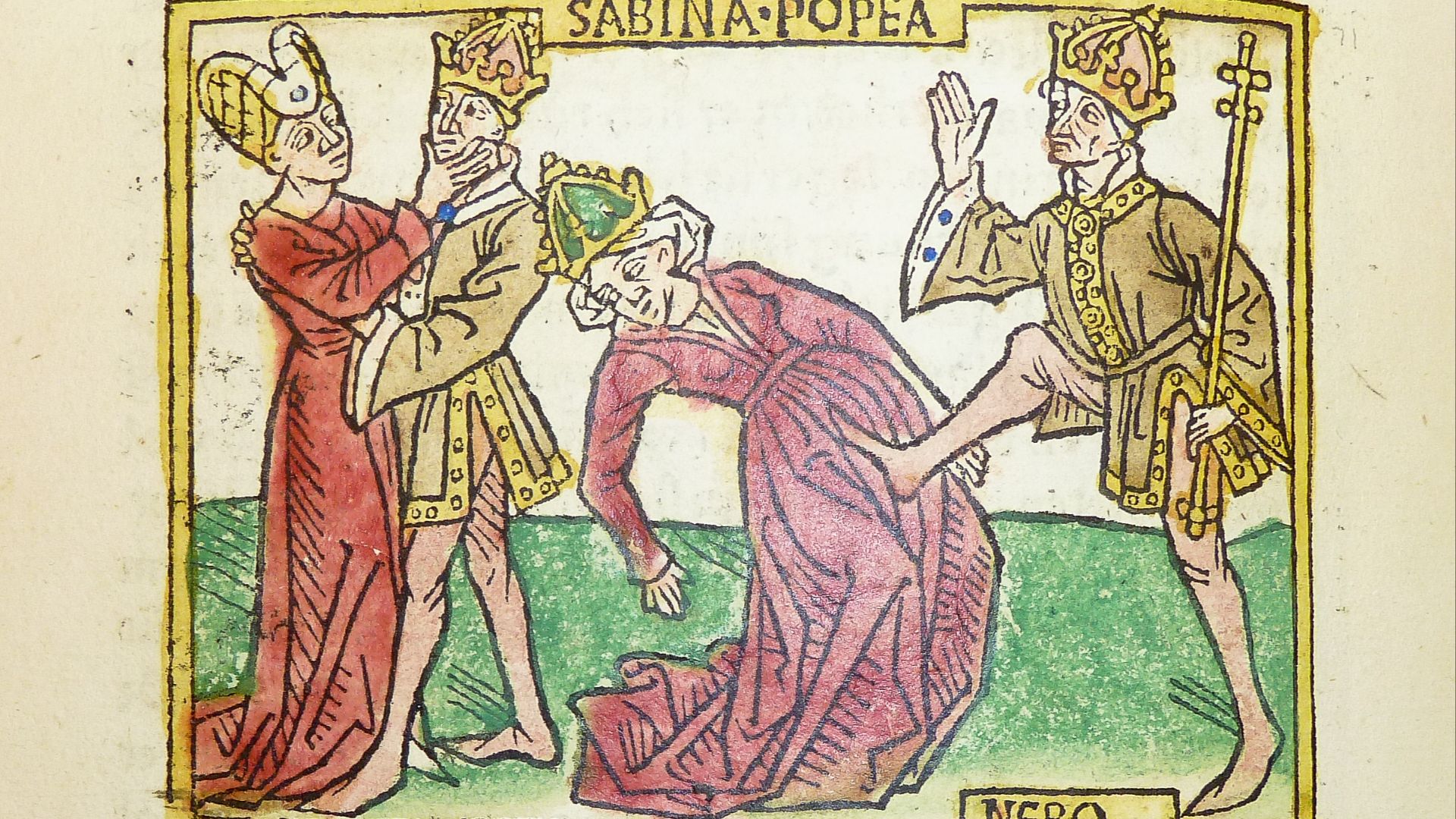
9. Nero & Poppaea Sabina
Nero’s obsession with Poppaea amplified court intrigue and pushed rivals into the danger zone. Their bond fueled paranoia, punishment, and a sense that the palace was turning into a trap. When romance makes a ruler more volatile, everybody starts watching the exits.
10. Caligula & His “Court Favorites.”
Caligula blurred the lines between personal desire and imperial control, and the result was a court that couldn’t relax. Favor could mean riches one day and ruin the next, depending on his whims. It’s hard to keep an empire steady when relationships run on panic.

11. Peter the Great & Catherine I
Peter’s attachment to Catherine helped elevate her from outsider to the center of Russian power. That shift bothered the political class and helped set off succession anxiety. When you put your partner on the throne’s doorstep, everyone else starts sharpening arguments.
 Attributed to Jean-Marc Nattier on Wikimedia
12. Louis XIV & Madame de Maintenon
Louis’s later-life devotion had the court whispering because it reshaped access and influence. Even a private relationship can destabilize a system built on spectacle and favoritism.

13. Philip II of Spain & Mary I of England
Their marriage wasn’t just personal; it made England fear becoming a pawn in Spain’s wider empire. The public unease fed rebellion, distrust, and pressure on Mary’s reign. If her sister Elizabeth hadn't picked up the pieces, it could've meant the end of England's power.
 Jooris van der Straeten on Wikimedia
14. Alexander the Great & Roxana
Alexander’s marriage to Roxana offended parts of his army and court, who preferred familiar power networks. The relationship symbolized a wider shift toward blending cultures, which made traditionalists nervous. When your love life becomes a referendum on identity, it’s going to get tense.

15. Napoleon III & Eugénie de Montijo
Napoleon III’s devotion to Eugénie made her a major presence at court, and critics loved to claim she was steering the ship. Her influence, real or exaggerated, became a political talking point whenever the Second Empire looked shaky. When a ruler’s romance turns into a public storyline, opponents will use it like free ammunition.
 Sergey Lvovich Levitsky on Wikimedia
16. Suleiman the Magnificent & Hürrem Sultan
Suleiman’s bond with Hürrem shifted influence inside the Ottoman court in ways that threatened established factions. Their union transformed Ottoman court traditions as he elevated his concubine, a Ruthenian slave, to his legal wife. Her political role became a lightning rod for resentment and fear of changing traditions.

17. Edward IV & Elizabeth Woodville
Edward IV marrying Elizabeth Woodville for love, not diplomacy, was nothing short of scandalous. It blindsided the nobles who expected a strategic match and a tidy alliance. The Woodville family’s sudden rise at court enraged key players, helped spark rebellion, and pushed longtime supporters into open opposition.

18. Tsar Nicholas II & Alexandra Feodorovna
Nicholas’s devotion to Alexandra would’ve been sweet in a private life, but as an imperial partnership, it became politically explosive. The Russian empire did indeed topple beneath their feet, and their union played a part, as she was unpopular at court, and it was rumored that she leaned on mystics and insiders.

19. Emperor Xuanzong & Yang Guifei
Emperor Xuanzong's intense love for his beautiful consort led him to neglect state affairs. Their relationship became entangled with court favoritism and the anger of people who felt shut out. When rebellion shook the Tang dynasty, she was targeted as a scapegoat, and her death marked a turning point for the dynasty.

20. Queen Victoria & Abdul Karim
Queen Victoria and Abdul Karim, her Indian attendant and confidant, shared a bond that wasn't romantic or sexual, but was deeply loving and just as controversial. It unsettled courtiers who felt shut out and suspicious. The backlash wasn’t just snobbery, since it tangled personal affection with imperial hierarchy and fears about influence at the top.

KEEP ON READING