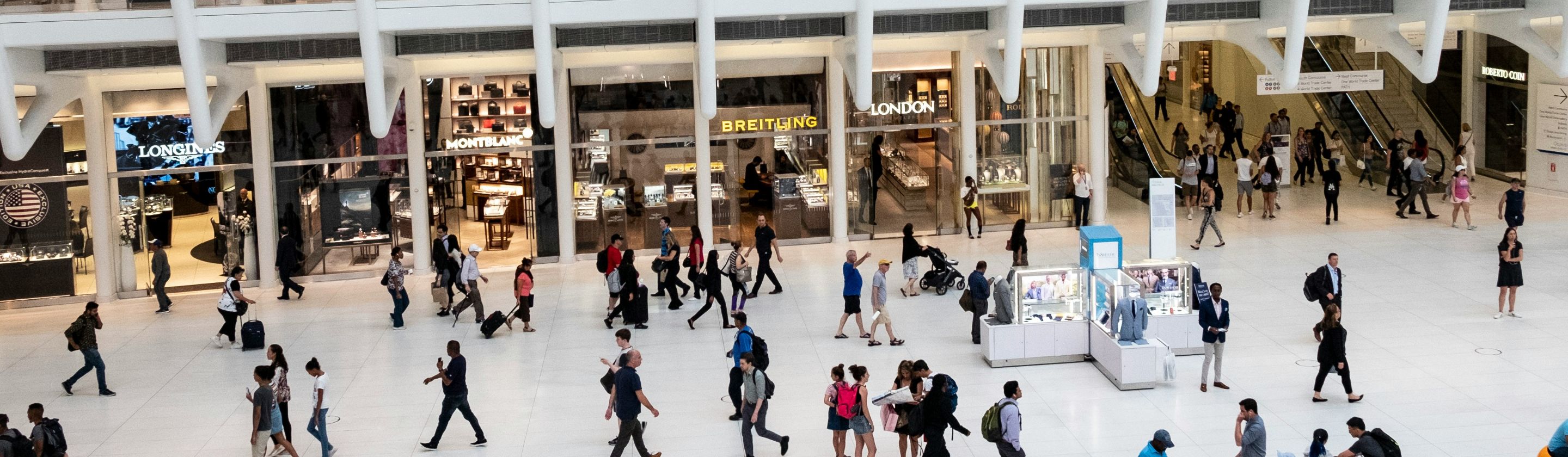

The shopping mall most people picture is a large enclosed building filled with department stores, food courts, escalators, and plenty of places to spend money you didn't necessarily plan to spend. The mall we all think of didn’t come together overnight, however. It actually has its origins in the early 1900s, when developers started playing around with the idea of clustered shopping centers outside of city centers.
Before malls became the default hangout spot for teenagers, shopping center developers were looking to solve the question of how suburban customers could easily shop without going into downtown areas. Malls evolved over several decades, eventually producing the enclosed, climate-controlled malls that became a defining feature of postwar American life.
Before The Enclosed Mall
One early milestone was the Roland Park Shopping Center in Baltimore, which opened in 1907. It contained six shops, including a grocery store, bakery, and drugstore, and was developed as part of a planned suburb. It looked nothing like a modern mall, but the basic idea of putting several businesses together in a purpose-built shopping destination was already taking shape.
Market Square in Lake Forest, Illinois, built in 1916, has also been cited as the first shopping center. The development combined shops around an arcade walkway with apartments built above the storefronts. Architect Howard Van Doren Shaw designed both the stores and the apartments, which were connected to a commuter train station across the street.
Country Club Plaza in Kansas City followed and took the idea much further. Built in 1923, developer J. C. Nichols linked the shopping center to a larger suburban development. He designed the center as part of a larger suburban community, with unified architecture, coordinated management, pedestrian areas, and extensive accommodations for automobiles. It became an important early model for the automobile-oriented shopping centers that would spread across the country.
Shopping Centers Move To The Suburbs
The 1930s brought additional experiments, including Highland Park Shopping Village in Dallas, which opened in 1931. Its design helped establish the idea of turning storefronts inward toward a central shopping area rather than having every store face a public street. That arrangement would become an important feature in the evolution toward the modern mall.
Progress toward the modern shopping center slowed with the Great Depression and World War II. However, the concept continued to evolve after World War II as suburban communities boomed and Americans began using cars for their daily transportation. Centers with large parking areas provided an attractive alternative to driving into traditional urban shopping districts multiple times.
Northland Center outside Detroit marked another evolutionary leap when it opened in 1954. Designed by Victor Gruen, it was the largest shopping center in the world at the time and featured the department store Hudson's as well as dozens of specialty retailers. Its design also included landscaping, fountains, artwork, a bank, a post office, and a huge parking area, showing that shopping centers were becoming destinations rather than simple rows of stores.
Southdale Changes Everything

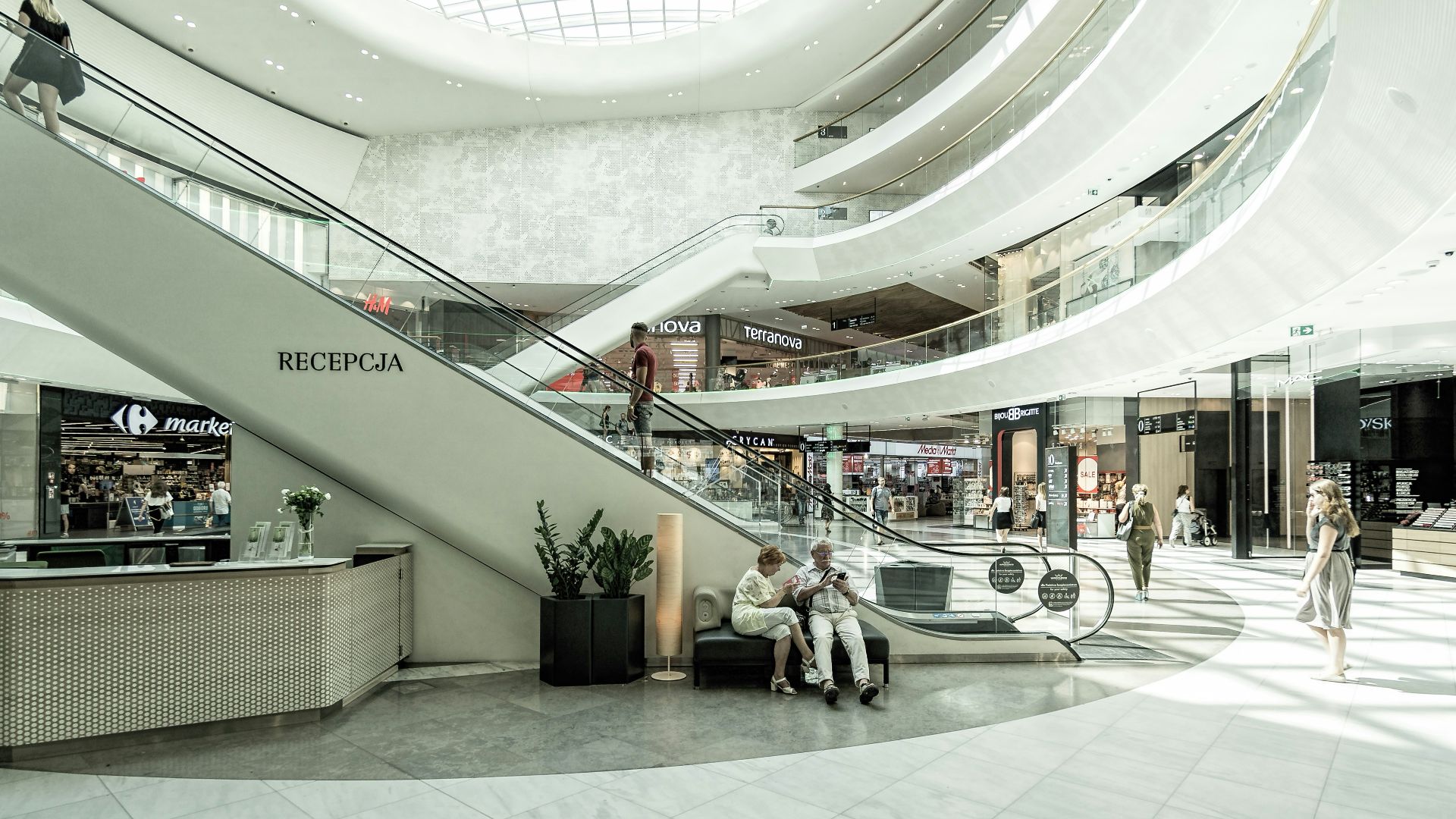
The biggest transformation arrived in 1956 with Southdale Center in Edina, Minnesota. Designed by Victor Gruen, Southdale became the first large-scale, fully enclosed, climate-controlled shopping center in the United States. It opened on October 8 with 72 stores and two major department-store anchors, Dayton's and Donaldson's.
Southdale allowed customers to comfortably shop year-round, rain or shine, which many Minnesotans found particularly convenient during winter months. Its interior included pedestrian spaces, restaurants, artwork, plants, a fishpond, and even a large bird cage, making the experience about more than simply walking from one store to another. Around 75,000 people reportedly visited on opening day, showing just how novel the concept was to the public.
Somewhat ironically, Gruen's own vision surpassed what ultimately became mall culture based on his design. He felt centers should be places for socialization and pedestrian traffic removed from the interference of automobiles. He also envisioned mixed-use communities that included more than just retailers. His designs ultimately resulted in the popularity of enclosed malls regardless, and by 1960, hundreds of large regional shopping centers were under construction, in planning stages, or already developed throughout the United States.
The early history of American malls is therefore less about one building suddenly inventing the shopping mall and more about decades of experimentation. Roland Park, Market Square, Country Club Plaza, Highland Park, Northland, and Southdale each introduced pieces of an idea that kept evolving. By the time mammoth malls of the 1970s, 1980s, and 1990s became staples of American culture, the prototype had already been refined over decades.
KEEP ON READING