 Ellis, Edward Sylvester, 1840-1916; Horne, Charles F. (Charles Francis), 1870-1942 on Wikimedia
The Battle of Thermopylae, fought in 480 BCE during the Greco-Persian Wars, remains one of the most well-known conflicts in ancient history. Although the Persian Empire ultimately won the battle, the resistance by a smaller Greek force had consequences that extended far beyond the battlefield. The event demonstrated the determination of Greek city-states to resist Persian expansion into mainland Greece.
Thermopylae is often remembered for the stand of King Leonidas of Sparta and his soldiers, but the larger significance lies in how the battle influenced later events in the war. The defense delayed the Persian advance and helped unify Greek forces against a powerful empire. In the years that followed, Greek victories at sea and on land shifted the course of the conflict and preserved the independence of many Greek states.
It Delayed the Persian Advance Into Greece
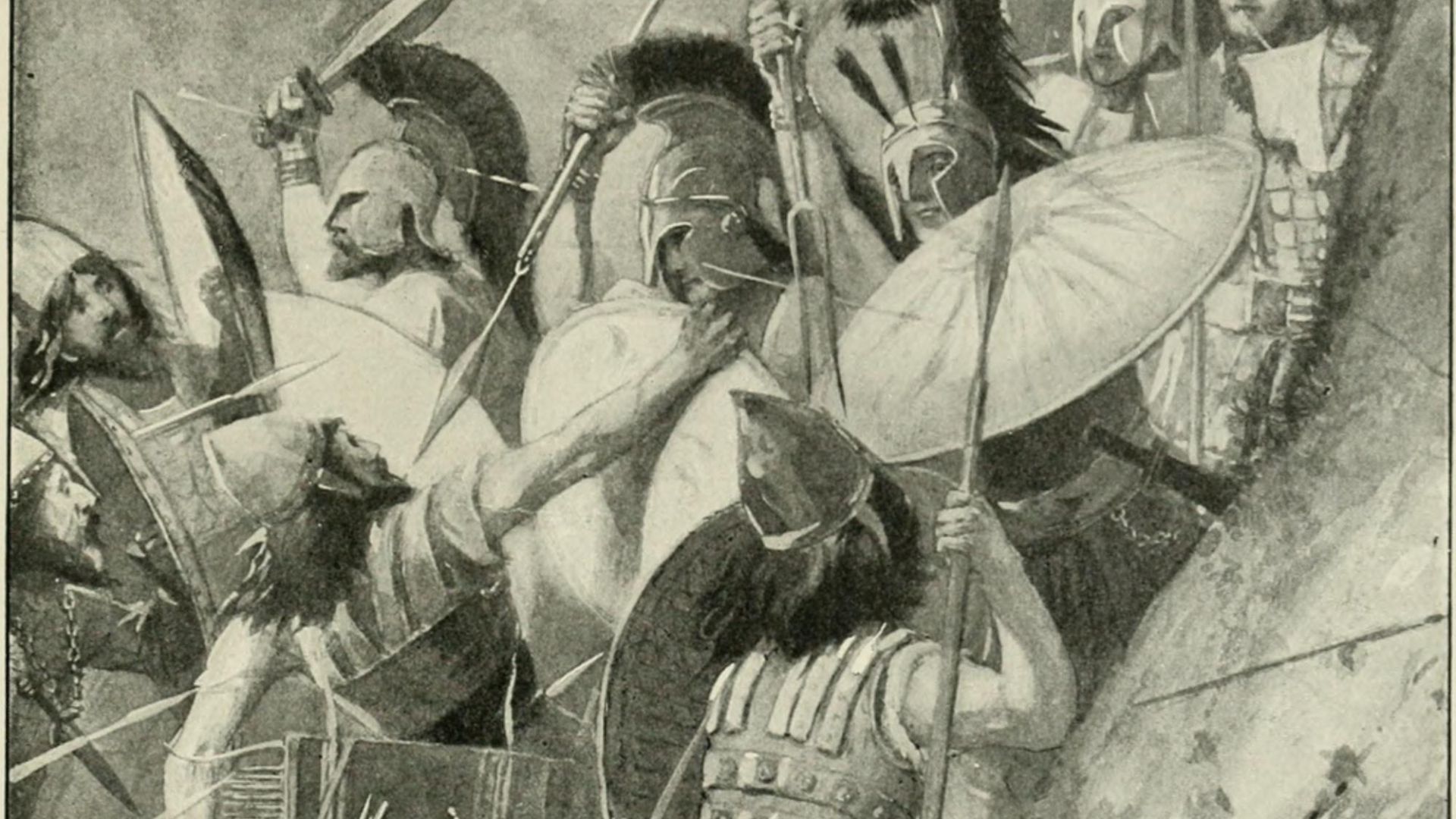
One major reason the battle became historically significant is that it slowed the Persian army’s progress through central Greece. The narrow coastal pass at Thermopylae allowed a relatively small Greek force to block a much larger Persian army. For several days, the defenders used the terrain to their advantage and held their position against repeated attacks. This delay gave other Greek city-states valuable time to prepare defenses and coordinate their strategy.
The Persian king Xerxes I had assembled a massive invasion force to subdue the Greek mainland. Ancient sources such as Herodotus describe the army as extremely large, though modern historians believe the numbers were smaller than originally reported. Even so, the Persian military greatly outnumbered the defenders at Thermopylae. The resistance demonstrated that geography and tactical discipline could offset numerical disadvantage.
By slowing the Persian advance, the Greek forces created an opportunity for other defensive actions to take place. While the land battle occurred, Greek naval forces were simultaneously engaging the Persian fleet at nearby Artemisium. Although both sides eventually withdrew from those early engagements, the delay helped the Greek alliance maintain organized resistance. This coordination proved important in later stages of the war.
It Strengthened Greek Unity
Another turning point created by the battle was the strengthening of cooperation among Greek city-states. Before the Persian invasions, many Greek regions frequently competed with one another for influence. Rivalries between states such as Athens, Sparta, and Corinth often dominated regional politics. Facing a large external threat encouraged them to work together more closely.
The defense of Thermopylae involved soldiers from several Greek states, not only Sparta. While the Spartan warriors are the most famous participants, forces from Thespiae, Thebes, and other regions also contributed to the defense. Their presence reflected a broader alliance formed to resist Persian expansion. This coalition became an important foundation for future military coordination.
The story of the defenders also served as a powerful symbol for other Greek communities. Accounts of their resistance spread throughout Greece and helped encourage continued opposition to Persian control. The willingness of the defenders to fight against overwhelming odds reinforced the idea that cooperation among the city-states was necessary. That shared sense of purpose strengthened the Greek alliance during the remainder of the war.
It Inspired Future Greek Victories
 Abbott, Jacob, 1803-1879 on Wikimedia
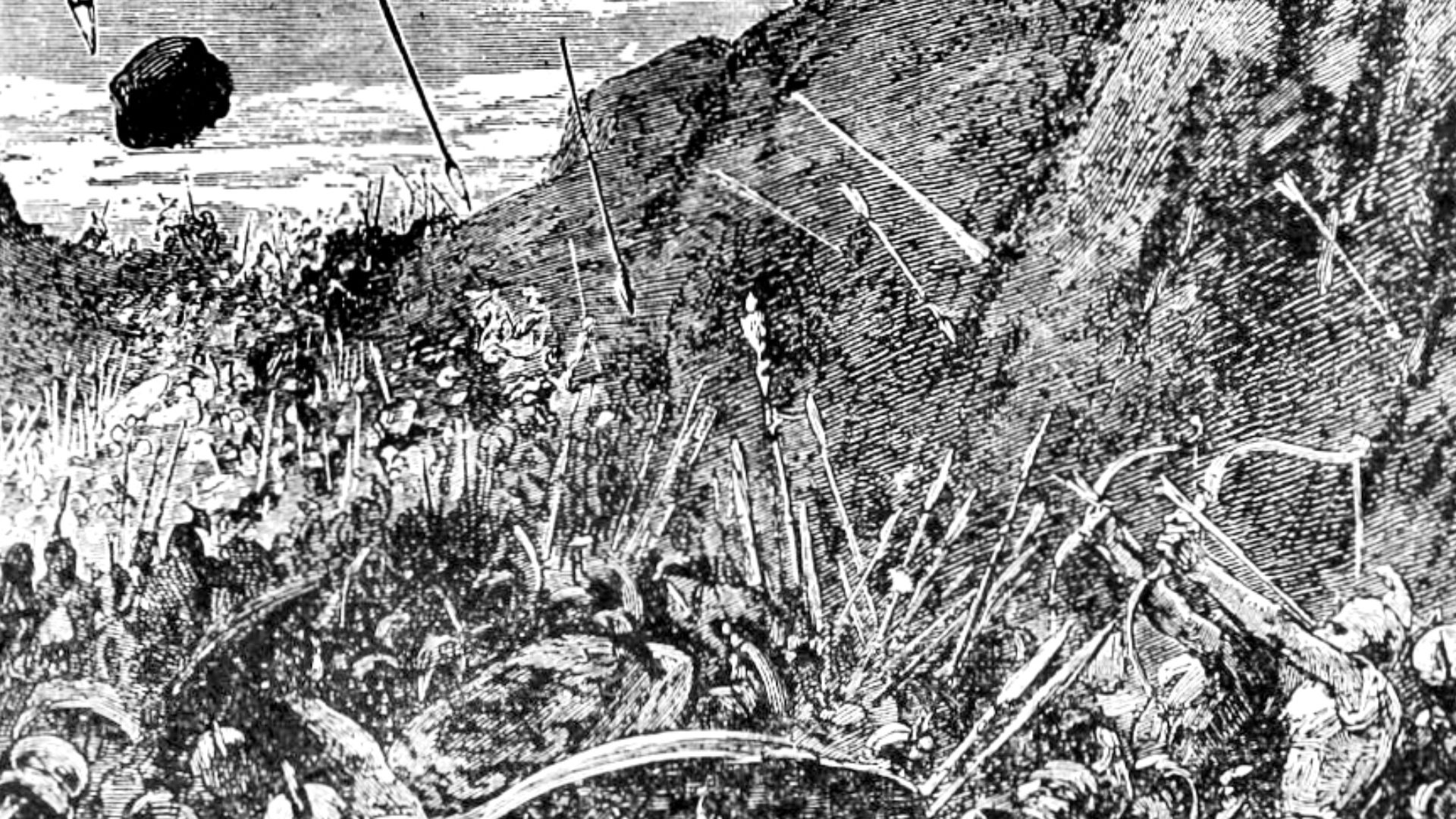
Although the Persian army eventually captured the pass after a hidden path allowed them to outflank the defenders, the battle’s influence did not end with that outcome. The resistance at Thermopylae became a powerful example of courage and determination. Greek communities used the story as motivation to continue resisting Persian forces. This morale boost contributed to later successes.
Shortly after Thermopylae, Greek naval forces achieved a decisive victory at the Battle of Salamis in 480 BCE. The Athenian fleet, led by Themistocles, used narrow waters to limit the effectiveness of the larger Persian navy. This victory significantly weakened Persian control of the region. It also forced Xerxes to withdraw much of his army from Greece.
The following year, Greek forces won another major victory at the Battle of Plataea in 479 BCE. This land battle ended the Persian campaign against mainland Greece. The earlier resistance at Thermopylae helped create the conditions that made these victories possible. By delaying the Persian advance and strengthening Greek unity, the battle played an important role in shaping the outcome of the Greco-Persian Wars.
In the centuries that followed, the story of Thermopylae continued to influence historical memory and cultural identity in Greece. Historians, writers, and leaders often referenced the battle when discussing courage and collective defense. Its legacy illustrates how even a tactical defeat can have strategic importance when it strengthens alliances and inspires future resistance.
KEEP ON READING