
20 Movies That Seem Too Crazy to Be Historically Accurate but Are
When Hollywood Didn't Need to Make Anything Up
Hollywood has a reputation for exaggerating historical events, inventing dramatic confrontations, adding fictional characters, and making ordinary situations seem far more exciting than they actually were. However, some of the most unbelievable moments in movies are surprisingly close to what happened in real life. From bizarre military operations to extraordinary survival stories, history is full of events that would probably be dismissed as unrealistic if someone had made them up. Of course, even the most historically accurate movies take creative liberties, but the real events behind these films are remarkable enough on their own. Here are 20 historically accurate movies that are stranger than fiction.
1. The Death of Stalin
Watching Soviet officials argue, panic, and desperately compete for power after Joseph Stalin's death feels almost too ridiculous to be historically accurate. However, the political infighting following his death in 1953 really was chaotic, with powerful figures scrambling to protect themselves and eliminate their rivals. Lavrentiy Beria, one of the film's most disturbing characters, was a feared security chief who was eventually arrested and executed. Although the movie compresses events and invents plenty of dialogue, the absurdity of the Soviet leadership's power struggle has a surprising amount of truth behind it.

2. Operation Mincemeat
Convincing an enemy army to change its military strategy using a dead body sounds like something no intelligence agency would actually consider. Nevertheless, British intelligence officers dressed a corpse as a fictional military officer in 1943 and planted misleading documents suggesting that Allied forces planned to invade Greece rather than Sicily. The body was deliberately placed where Spanish authorities would discover it, increasing the chances that the information would reach German intelligence. Remarkably, the deception helped convince German commanders that the Allies were planning to attack somewhere other than their intended target.

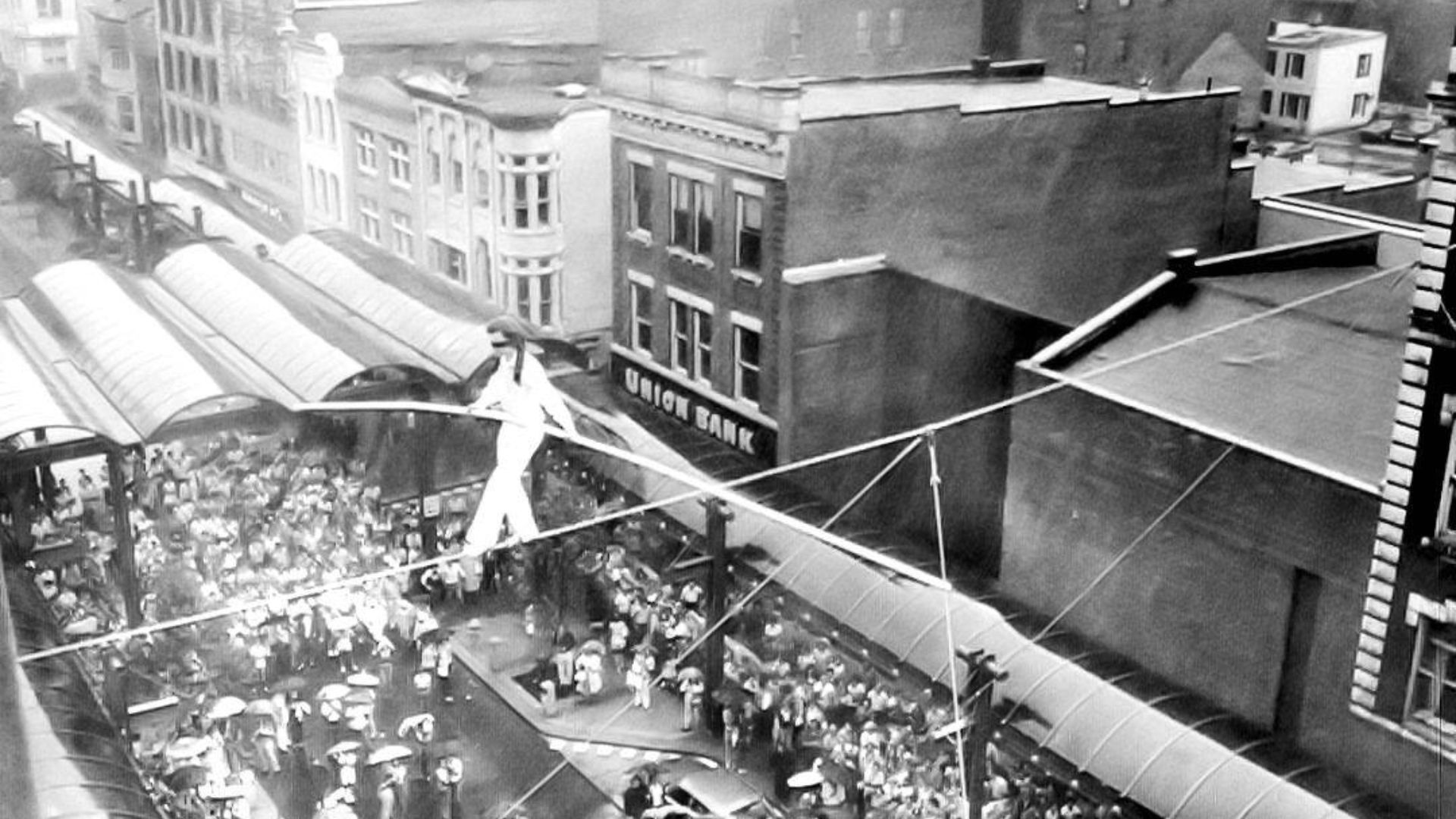
3. The Walk
In 1974, French performer Philippe Petit illegally strung a cable between the World Trade Center's Twin Towers and walked across it without a safety harness. As unbelievable as that sounds, he actually spent around 45 minutes performing more than 1,300 feet above Manhattan, crossing between the buildings several times. His elaborate preparations involved disguises, secretly transporting equipment, and sneaking onto the rooftops with several accomplices. Even the astonishing detail that Petit was arrested after completing his stunt is completely true.
4. Society of the Snow
When a plane carrying a Uruguayan rugby team and other passengers crashed in the Andes Mountains in 1972, those who survived faced conditions that seemed almost impossible to endure. They spent 72 days stranded in freezing temperatures, eventually resorting to eating the bodies of deceased passengers because they had no other source of food. Two survivors, Nando Parrado and Roberto Canessa, ultimately made the dangerous journey through the mountains to find help. Sixteen people survived the ordeal, and many of the movie's most disturbing details come directly from the survivors' accounts.

5. Hacksaw Ridge
A soldier refusing to carry a weapon while fighting in one of World War II's deadliest battles doesn't exactly sound like a recipe for military success. Yet Desmond Doss really served as an Army medic during the Battle of Okinawa and is credited with rescuing approximately 75 wounded soldiers without carrying a gun. He repeatedly exposed himself to enemy fire, lowering injured men down a steep escarpment to safety. His incredible bravery earned him the Medal of Honor, meaning one of the film's most seemingly exaggerated elements is actually among its most historically accurate.
 Summit Entertainment on Wikimedia
6. Apollo 13
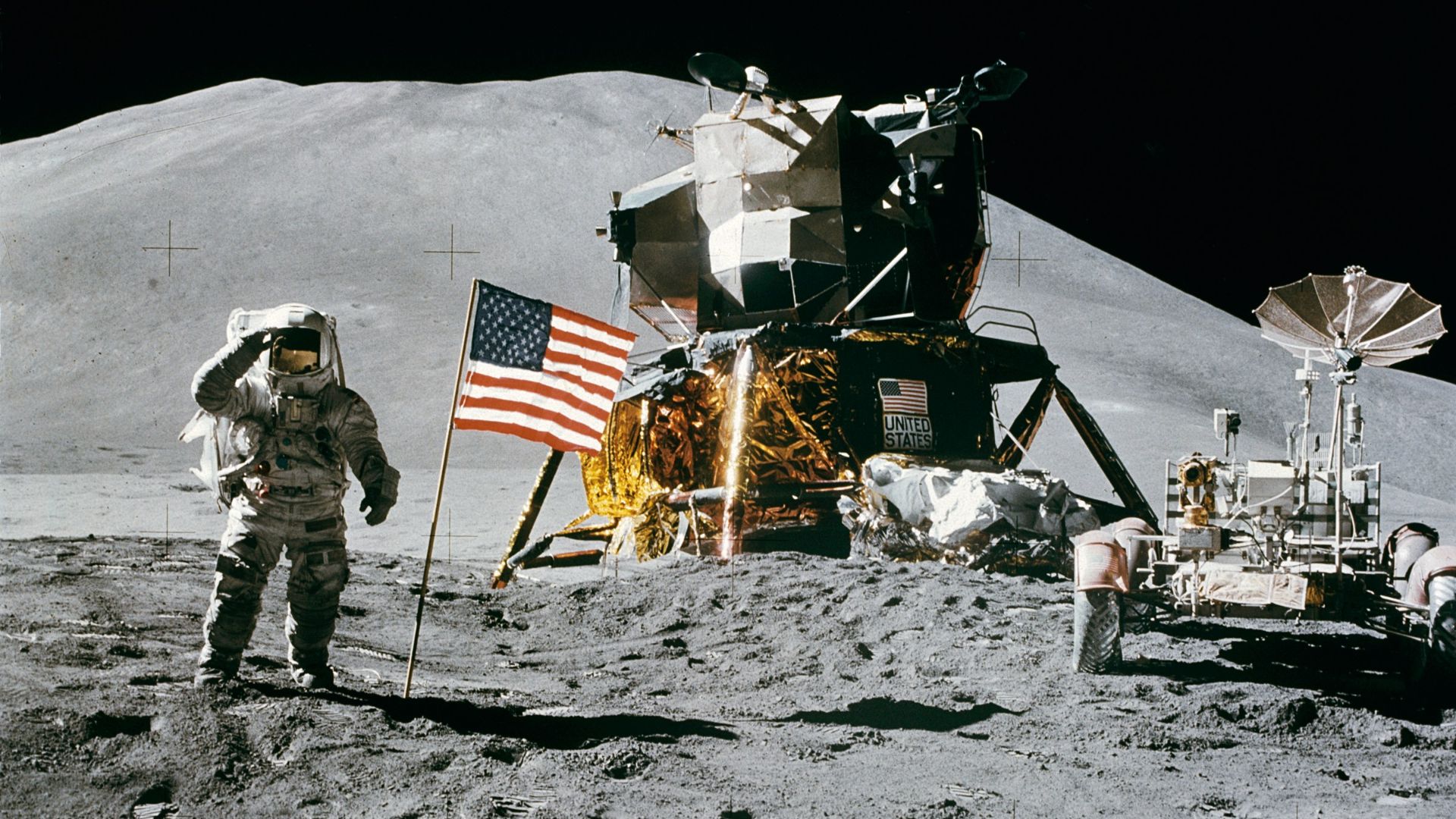
Few movie emergencies seem more improbable than astronauts trying to survive in space using duct tape and whatever equipment they happen to have available. However, when an oxygen tank exploded aboard Apollo 13 in 1970, NASA engineers really did develop a makeshift solution to prevent dangerous carbon dioxide buildup. Using materials that included plastic bags, cardstock, a spacesuit hose, and duct tape, they figured out how to make incompatible air-filtering equipment work together. The astronauts successfully recreated the device in space, making this one of the movie's most impressive examples of historical accuracy.
 Astronaut David R. Scott, Apollo 15 commander. on Wikimedia
7. Thirteen Lives
Rescuing a group of children from a flooded cave would already make for an extraordinary movie, but the actual 2018 operation in Thailand involved an even more surprising decision. Divers and medical experts determined that the trapped boys would need to be sedated so they wouldn't panic during the dangerous underwater journey. Rescuers then transported the unconscious children through narrow, flooded passages where even experienced divers faced considerable risks. Against extraordinary odds, all 12 boys and their soccer coach were brought out alive, exactly as the movie depicts.

8. The Finest Hours
When an oil tanker broke apart during a violent storm off Cape Cod in 1952, four Coast Guardsmen headed into the dangerous waters aboard a small wooden rescue boat. Their vessel was designed to carry only 12 people, but they somehow managed to bring 32 survivors aboard. Making matters worse, the rescuers lost their windshield and compass while navigating enormous waves and freezing conditions. The mission remains one of the most extraordinary rescues in Coast Guard history, and those seemingly impossible details really happened.

9. The 33
Being trapped underground for more than two months sounds like an impossible survival scenario, especially when rescuers initially have no way to communicate with you. In 2010, however, 33 miners survived for 69 days after a Chilean mine collapsed, leaving them approximately 2,300 feet below the surface. They carefully rationed their limited food supplies while rescue teams struggled to locate them and eventually drill an escape route. Every miner survived, emerging one by one through a specially designed rescue capsule as people around the world watched.
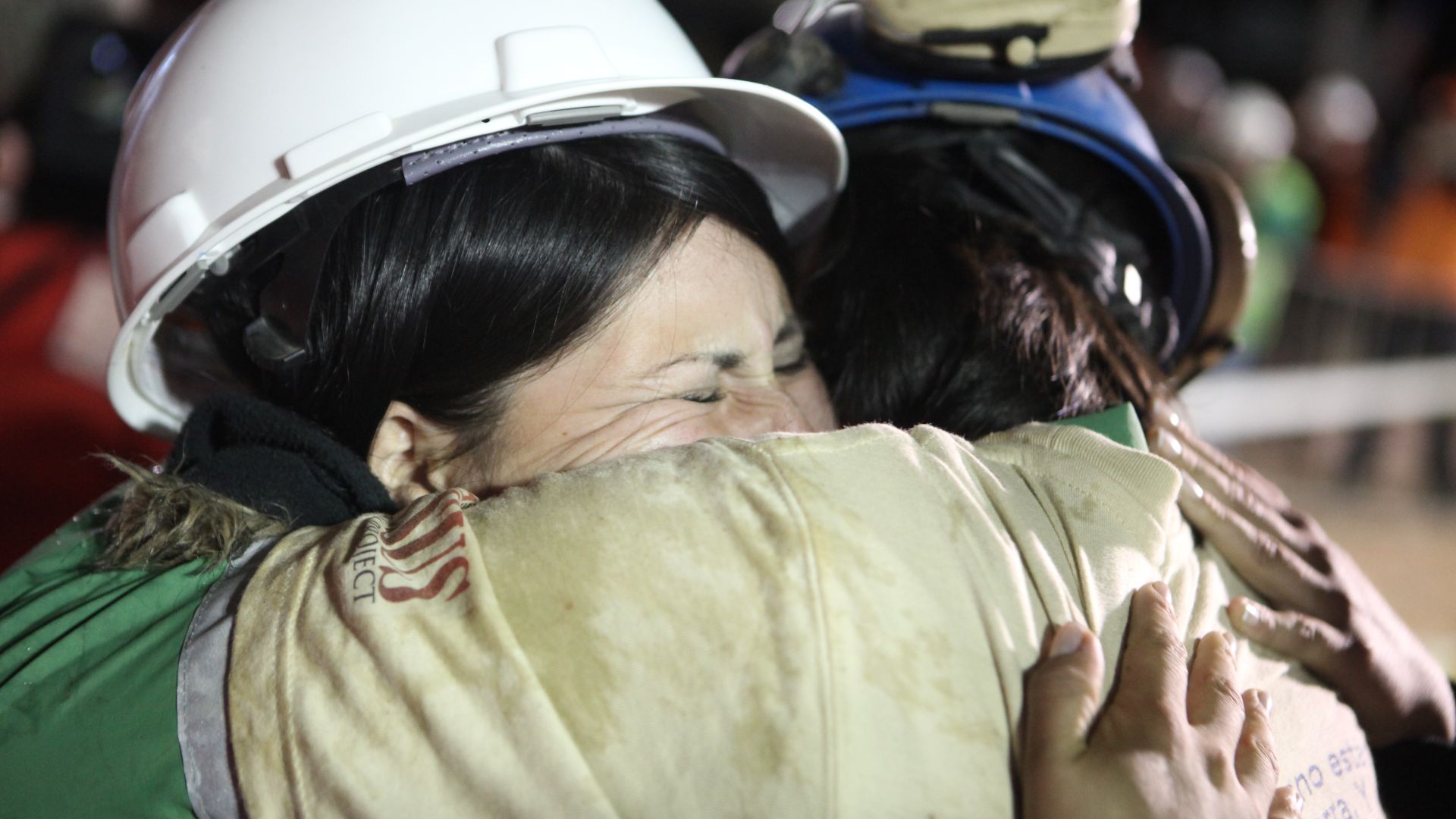 Secretaria de Comunicaciones from Chile on Wikimedia
10. The Straight Story
An elderly man traveling hundreds of miles on a riding lawnmower to visit his brother sounds like something a screenwriter would invent for a quirky road trip movie. However, 73-year-old Alvin Straight really did make the journey from Iowa to Wisconsin in 1994 after learning that his estranged brother had suffered a stroke. Unable to drive a car because of his poor eyesight, Straight attached a trailer to his lawnmower and spent roughly six weeks traveling about 240 miles, dealing with mechanical breakdowns and unpredictable weather along the way.

11. 127 Hours
If you watched a character amputate his own arm to escape a boulder, you'd probably assume the filmmakers were being unnecessarily dramatic. However, outdoorsman Aron Ralston actually made that decision in 2003 after spending five days trapped in a remote Utah canyon. Using a small multitool, he freed himself by amputating his right forearm before rappelling down a cliff and making his way toward help. Ralston survived the ordeal, and the movie's most shocking sequence is based directly on what he experienced.

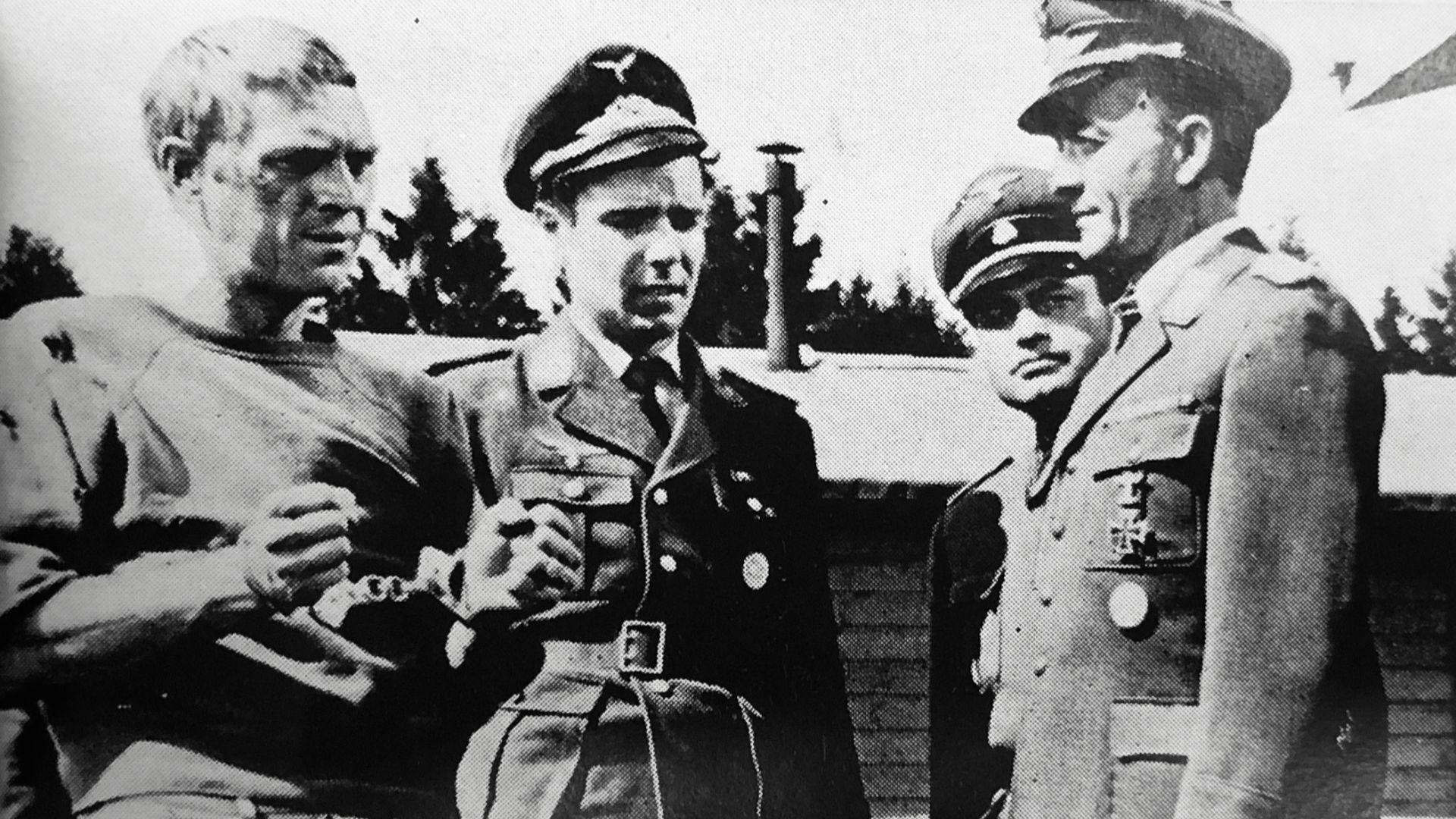
12. The Great Escape
Digging an elaborate tunnel beneath a heavily guarded German prisoner-of-war camp sounds like the kind of ambitious scheme Hollywood would come up with. Yet in March 1944, 76 Allied airmen actually escaped from Stalag Luft III through a tunnel they had secretly constructed beneath the camp. The prisoners also managed to produce forged documents, civilian clothing, and other supplies to prepare for their escape. Although the movie invents several memorable scenes, including Steve McQueen's famous motorcycle chase, the underground operation and the tragic execution of 50 recaptured prisoners were real.
13. The Boy Who Harnessed the Wind
A teenager building a functioning windmill from discarded materials despite having little formal engineering education seems like the perfect feel-good Hollywood story. In reality, William Kamkwamba accomplished exactly that in Malawi after his family's financial difficulties forced him to leave school. At just 14 years old, he used information from a library book and salvaged equipment to construct a windmill capable of generating electricity. His impressive ingenuity eventually attracted international attention, proving that the film's central achievement didn't need much Hollywood embellishment.
 Scotland Malawi Partnership on Wikimedia
14. The Impossible
The chances of an entire family surviving a catastrophic tsunami after being violently separated might seem a little too convenient for a movie. Nevertheless, the film follows the real experiences of María Belón and her family, who were vacationing in Thailand when the devastating 2004 Indian Ocean tsunami struck. Belón suffered severe injuries while her husband and their three sons struggled to survive and find one another amid the destruction. Despite everything they endured, all five family members eventually reunited, making the movie's emotional conclusion a genuine part of their story.
 Sofwathulla Mohamed on Wikimedia
15. The Big Short
The idea that a handful of investors recognized an approaching financial disaster while major banking institutions continued behaving as though everything was fine seems almost absurd. However, investor Michael Burry really did identify serious weaknesses in the American housing market before the 2008 financial crisis and purchased credit default swaps to profit from mortgage-related losses. His predictions initially attracted plenty of skepticism, including resistance from investors who questioned his unconventional strategy. Although the film simplifies complicated financial transactions and dramatizes conversations, its central story of people recognizing the impending collapse is supported by documented events.

16. American Animals
Four college students deciding to steal rare books from their university library sounds more appropriate for a ridiculous comedy than a historical crime drama. Surprisingly, four young men actually attempted this robbery at Transylvania University in Kentucky in 2004, targeting valuable books that included a first edition of John James Audubon's *The Birds of America*. Their poorly planned scheme involved disguises, an assault on a librarian, and an unsuccessful attempt to sell the stolen materials. The filmmakers even interviewed the real participants, whose conflicting recollections appear throughout the movie, making its already bizarre premise even more interesting.

17. Bernie
A friendly funeral director murdering a wealthy widow and somehow remaining popular among local residents sounds like an exceptionally strange crime story. However, Bernie Tiede really did kill Marjorie Nugent in Carthage, Texas, in 1996 and hide her body in a freezer. What's particularly unbelievable is that many townspeople continued expressing sympathy for Tiede even after he confessed to the murder. The movie captures this unusual community response remarkably well.
 All-Pro Reels from District of Columbia, USA on Wikimedia
18. The Counterfeiters
During World War II, Nazi Germany operated an elaborate counterfeiting program that forced concentration camp prisoners to manufacture fake British currency. Known as Operation Bernhard, the scheme was intended to destabilize Britain's economy while also providing Germany with funds for intelligence operations. Prisoners with specialized printing and engraving skills were forced to produce incredibly convincing banknotes under the constant threat of death. While the movie fictionalizes aspects of its characters' personal experiences, the enormous counterfeiting operation at the center of the story was very real.
 Manfred Werner (Tsui) on Wikimedia
19. The 12th Man
Escaping Nazi soldiers across the frozen Norwegian wilderness while suffering from severe frostbite seems like an adventure that would require some serious fictional exaggeration. Yet Norwegian resistance fighter Jan Baalsrud survived a similarly extraordinary ordeal in 1943 after a mission went terribly wrong. He spent weeks evading German forces, relying on assistance from local residents and enduring frostbite so severe that parts of his toes had to be amputated. His eventual escape to neutral Sweden really happened, although the film adjusts some of the details surrounding his remarkable journey.

20. The Professor and the Madman
You probably wouldn't expect one of the most important contributors to the Oxford English Dictionary to have been a convicted murderer confined to a psychiatric institution. Remarkably, American physician William Chester Minor really did submit thousands of quotations to the dictionary's editors while living at Broadmoor Hospital in England. He had been confined there after killing a man in 1872, but his extensive reading and research made him an exceptionally valuable contributor to the project. The film takes liberties with his relationship with dictionary editor James Murray, but the unlikely collaboration between these two men remains an extraordinary historical fact.
KEEP ON READING