

My Uncle Left Me a Rusted Toolbox and a Map to a Place That Shouldn't Exist—What I Found Changed Everything
My Uncle Left Me a Rusted Toolbox and a Map to a Place That Shouldn't Exist—What I Found Changed Everything
The Call That Changed Everything
I was in the middle of cleaning brushes when my phone rang — a Portland area code I didn't recognize. I almost let it go to voicemail. I'm glad I didn't, though I'm not sure glad is the right word anymore. The man on the other end introduced himself as Arthur Vance, executor of my uncle Silas's estate. He spoke in the measured, careful way of someone who delivers bad news for a living. Silas was gone. I stood there holding a turpentine-soaked rag, trying to feel something appropriate, and mostly just felt confused. Silas and I weren't close — we'd barely been in the same room more than a handful of times my whole life. I told Arthur as much. He acknowledged it without surprise, which unsettled me more than the news itself. He said Silas had left me a specific bequest. I asked what it was. He said he couldn't discuss it over the phone, that I'd need to come in person to claim it. Friday, his office in Portland. I asked why it had to be in person. He paused — just a beat too long — and said only that Silas had been very clear about that. I hung up and stood in the quiet of my studio, the smell of turpentine still sharp in the air, turning that pause over in my mind.
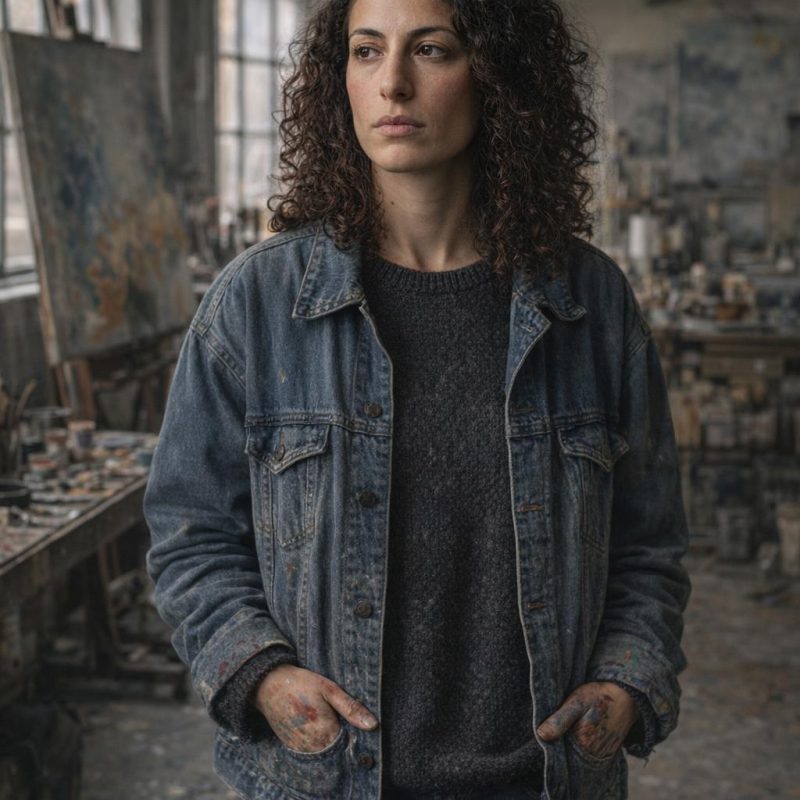 Image by RM AI
The Man Who Lived Three Lives
My mother used to say that Silas had lived three lives and told the truth in none of them. She said it the way people say things they've repeated so many times the words have worn smooth, like river stones. Growing up, I collected fragments of him the way you collect rumors — a surveyor once, she thought, working the backcountry of Oregon and Washington. Then something about prospecting, though nobody could say what he was looking for or whether he ever found it. After that, just a vague wave of the hand. Something else. Something unnamed. The stories contradicted each other depending on who was telling them, and nobody seemed bothered by that. He was the kind of man families keep at a comfortable distance and explain away at holidays. I was an artist living in a city apartment with paint-stained hands and a secondhand easel, and whatever Silas had been out there in the hills felt like a different species of life entirely. But I remembered him. Not well, and not warmly exactly, but I remembered. The summer I turned fifteen, he'd shown up at a family gathering — quieter than I expected, watchful, with eyes that moved over everything like he was taking measurements. He'd said almost nothing to me directly. Then, before the summer was out, he was gone again, back into the Pacific Northwest hills, and I never saw him after that.
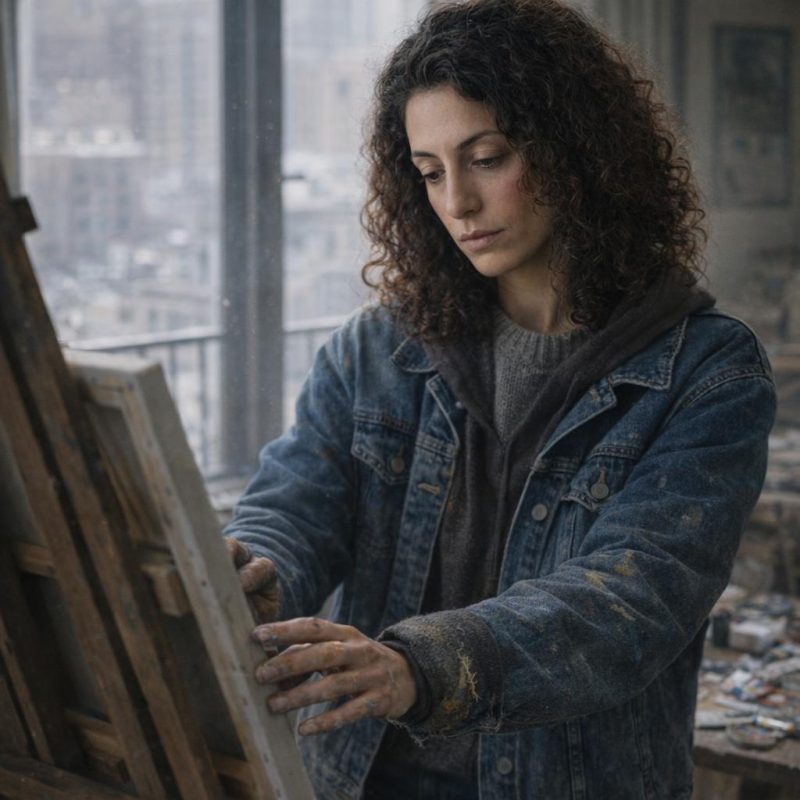 Image by RM AI
The Cousins Who Waited
I drove three hours with the windows cracked and the radio off, trying to prepare myself for something I couldn't name. The Portland law office was on the fourth floor of a glass building that smelled of recycled air and carpet cleaner. I knew before I stepped off the elevator that I was the last to arrive — Greg's black SUV and Sarah's silver sedan were already in the parking garage when I pulled in, which meant they'd been here long enough to get comfortable. They hadn't. Greg sat at the head of the conference table with his arms crossed and his jaw set, wearing the expression of a man who considers waiting a personal insult. Sarah was beside him, tapping one manicured nail against the mahogany in a slow, deliberate rhythm. Neither of them looked up when I walked in. Arthur rose from his chair at the far end and greeted me by name, formal and precise, shaking my hand with both of his. I thanked him and took the only remaining seat, which happened to be at the opposite end of the table from my cousins. The distance felt less like coincidence and more like geography. Sarah's nail kept tapping. Greg's eyes finally found me, and whatever was in them wasn't welcome. I set my bag on the floor and folded my hands on the table and let the silence settle around me like weather.
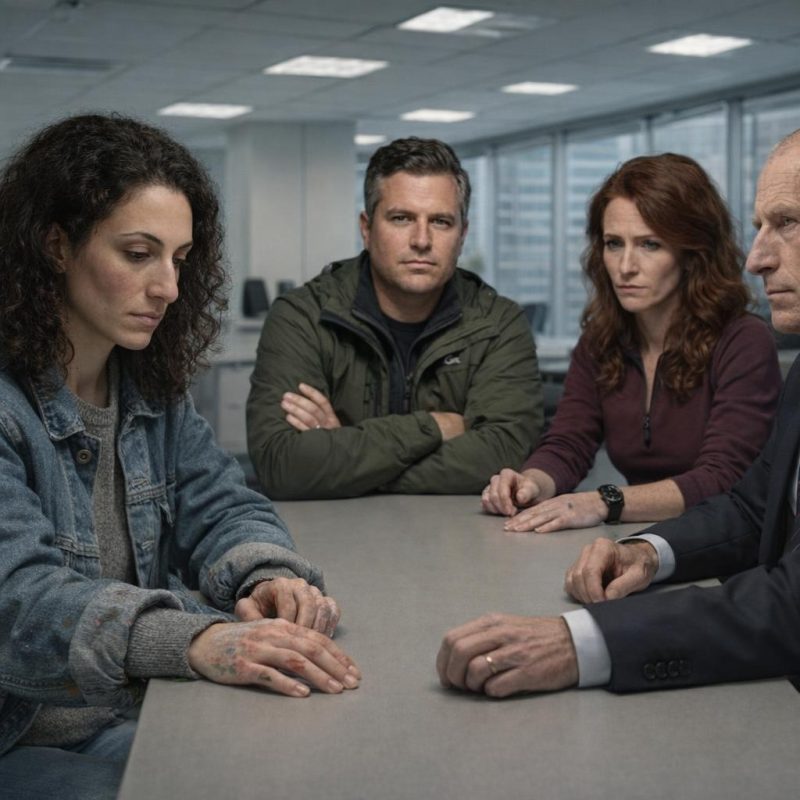 Image by RM AI
The Distribution of Assets
Arthur opened the folder with the unhurried precision of someone who had done this many times and felt no need to rush. He read in a flat, even voice that gave nothing away. The cabin in the foothills — a small place, he said, with two acres — went to Greg. I watched Greg's jaw unclench by a fraction. The savings account, divided equally, went to Greg and Sarah both. Sarah stopped tapping her nail. The vintage truck, a 1968 Ford, went to Greg as well. By the time Arthur finished that sentence, something had visibly left the room — the coiled, waiting tension that had been sitting in both of them since I arrived. Greg leaned back in his chair. Sarah smoothed the front of her jacket. I sat with my hands still folded and my water glass still untouched and wondered, not for the first time, why I had driven three hours for this. Arthur's voice continued, steady and unhurried, moving through the legal language with the patience of a man who understood that the document required every word. I glanced at Sarah and caught her checking her watch — a quick, satisfied flick of the wrist, like someone confirming a train was running on time. Greg's shoulders had dropped two full inches from where they'd been when I walked in, and the relief on his face was so unguarded it was almost uncomfortable to look at.
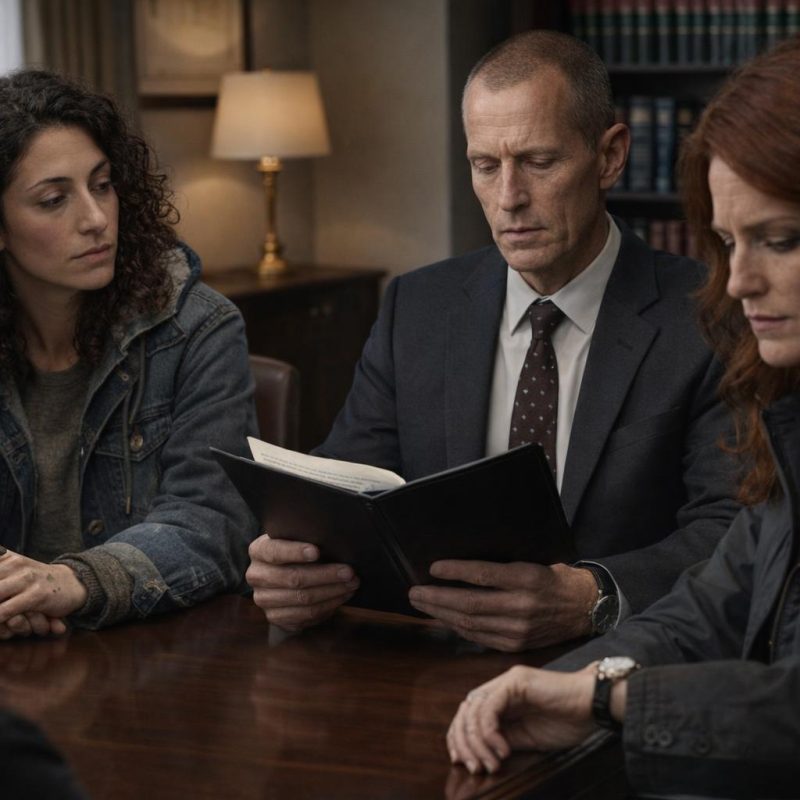 Image by RM AI
The Rusted Inheritance
Arthur set the folder down and reached beneath the table. He lifted something wrapped in a grease-stained canvas tarp and placed it on the mahogany with a dull, heavy thud. He read the bequest in the same flat voice he'd used for everything else: to my niece Elena, I leave my primary work kit and the contents therein. He pulled back the tarp. What sat on the table was a steel toolbox, heavy-gauge and old, its surface eaten through with rust in long orange streaks. The latch looked like it hadn't moved in years. Greg made a sound — a short, sharp bark of laughter that he didn't bother to disguise. Sarah glanced at it once and looked back at her watch. Arthur slid the box across the table toward me without ceremony. I put both hands on it and didn't say anything. The metal was cold and gritty under my palms, and it was heavier than it looked. I didn't know what I'd expected — I hadn't expected anything, really — but sitting there with my cousins' amusement still hanging in the air, I felt something shift in me. Not hurt exactly. Something quieter and more stubborn than that. I pulled the toolbox closer and kept my eyes on the rusted surface, and Greg's laughter faded into the recycled air of the conference room and stayed there.
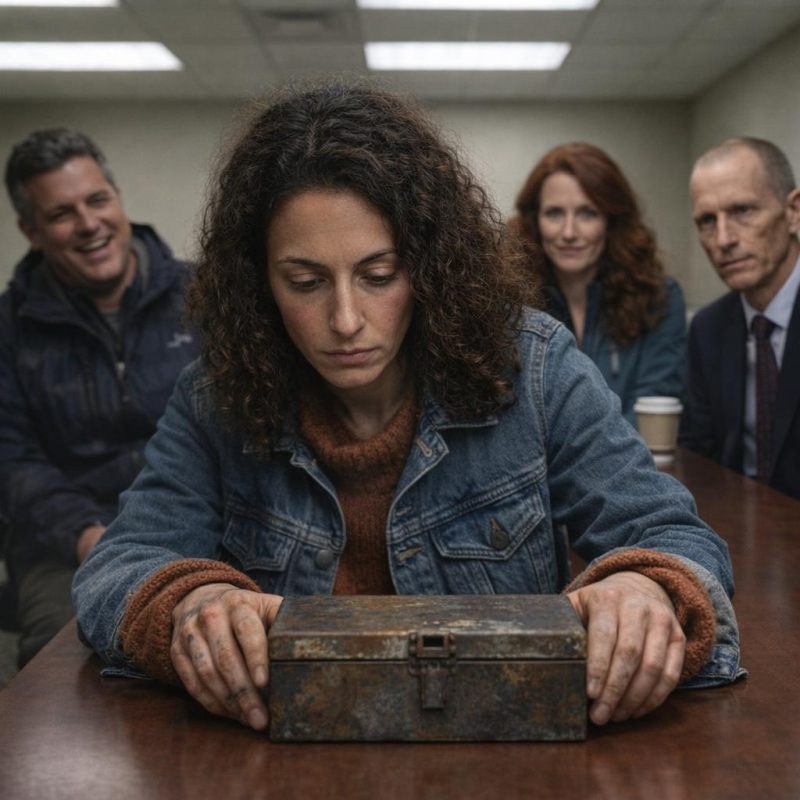 Image by RM AI
The Hidden Compartment
The latch was frozen solid. I worked it with the heel of my hand, then with the edge of a pen Arthur produced without comment, and after a long minute it gave with a screech of metal that made Sarah flinch. Inside, nested in a bed of cracked foam, were three things: a brass plumb bob on a length of braided cord, a leather measuring tape rolled tight, and a compass with a cracked crystal face. Old, all of it, but clean — oiled and maintained, the kind of care that takes intention. I lifted each piece out and set it on the table. Greg had gone quiet. I noticed the bottom of the box sat higher than it should have, given the depth of the exterior. I pressed my fingers along the seam and felt the give before I saw it — a false floor, thin but solid, fitted so precisely I'd almost missed it. I worked my thumbnail into the edge and pried it up. Underneath was a single folded piece of vellum, yellowed and soft, smelling of cedar and something faintly metallic. I unfolded it carefully, smoothing the creases flat on the table. It was a hand-drawn map, precise and detailed, with coordinates marked in small neat numbers. At the center, circled in red ink, was a single word: Found. And above it, in the same careful hand, two words that meant nothing to me yet: Elowah Reach.
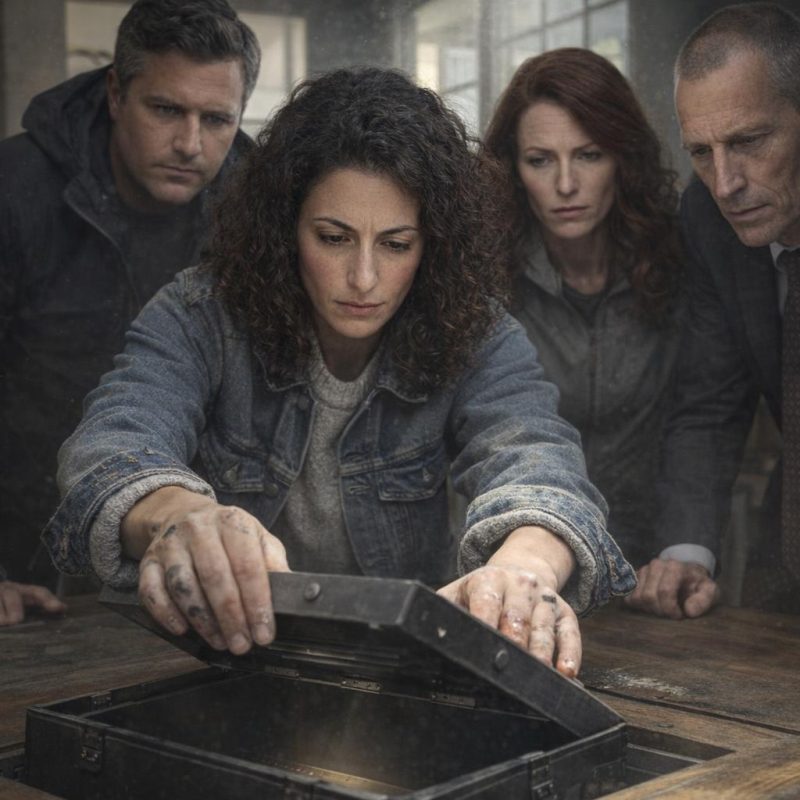 Image by RM AI
The Lie and the Exit
Greg's hand came across the table fast, reaching for the vellum. I was faster. I folded it in two quick movements and pushed it into my jacket pocket before his fingers reached the edge. He pulled his hand back and looked at me with something that wasn't quite anger — more like recalculation. I told them it was just a map of old logging roads, probably nothing, the kind of thing Silas would have kept for sentimental reasons. Sarah looked skeptical but bored. Greg looked like he was deciding something. I didn't wait to find out what. I wrapped the tools back in the tarp, tucked the toolbox under my arm, and walked out without asking Arthur if we were finished. The elevator took forever. My phone buzzed before I reached the lobby — Greg's name on the screen. I declined it and pushed through the glass doors into the gray Portland afternoon. I drove without a clear destination for a few minutes, then pointed myself toward the central library. The phone buzzed again. And again. I turned the volume off and dropped it on the passenger seat. By the time I found a parking spot on the street outside the library's main entrance, I looked down at the screen and Greg's name was there for the fifth time.
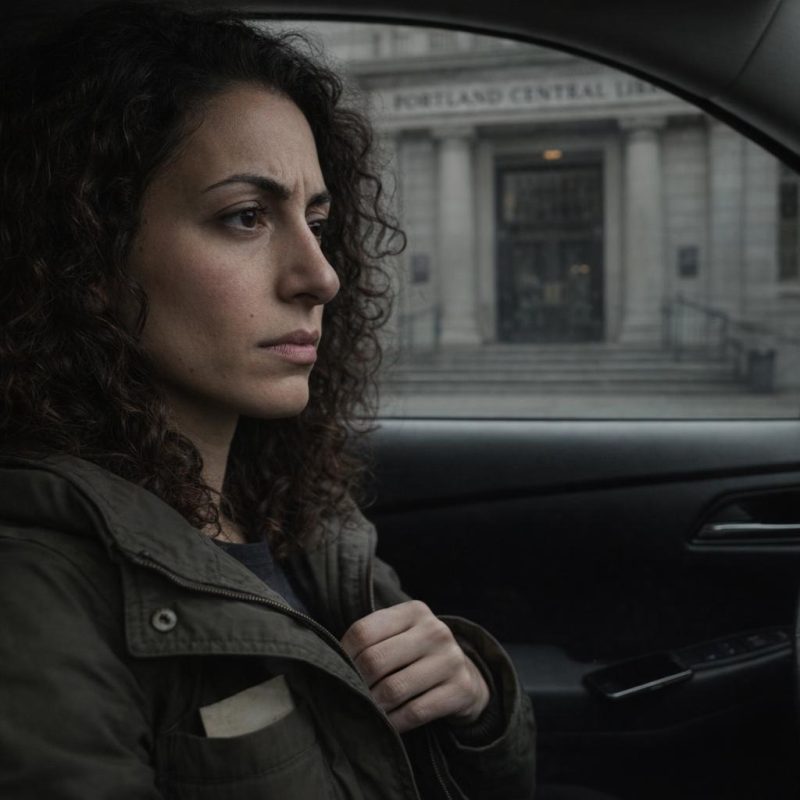 Image by RM AI
The Struck Record
The archive section of the Portland library smelled like old paper and forced heat, and I had it almost entirely to myself. I spread Silas's map on the reading table and started cross-referencing the landmarks against the library's collection of historical survey records. The coordinates on the vellum pointed to a stretch of the Columbia River Gorge that I couldn't find on any current map. I worked through the afternoon, pulling volumes, checking indices, following footnotes into other footnotes. My phone sat face-down beside my bag, silenced, its screen lighting up every few minutes with Greg's number. I stopped counting his calls somewhere around twelve. The 19th-century land grant records were stored in a separate binder, brittle and foxed at the edges, and it was there — in an 1890 survey log — that I found the first mention of Elowah Reach, listed as a private parcel with unusual topographic features noted in the surveyor's margin. That alone wouldn't have meant much. But I kept pulling records, and an hour later I found a second notation, this one from 1944, attached to a federal land reclassification form. Someone had stamped it in red. Someone had drawn a single line through the name Elowah Reach on the accompanying index. And typed beneath it, in the clipped language of bureaucratic finality, were the words: Private preserve — access restricted indefinitely due to geological instabilities, 1944.
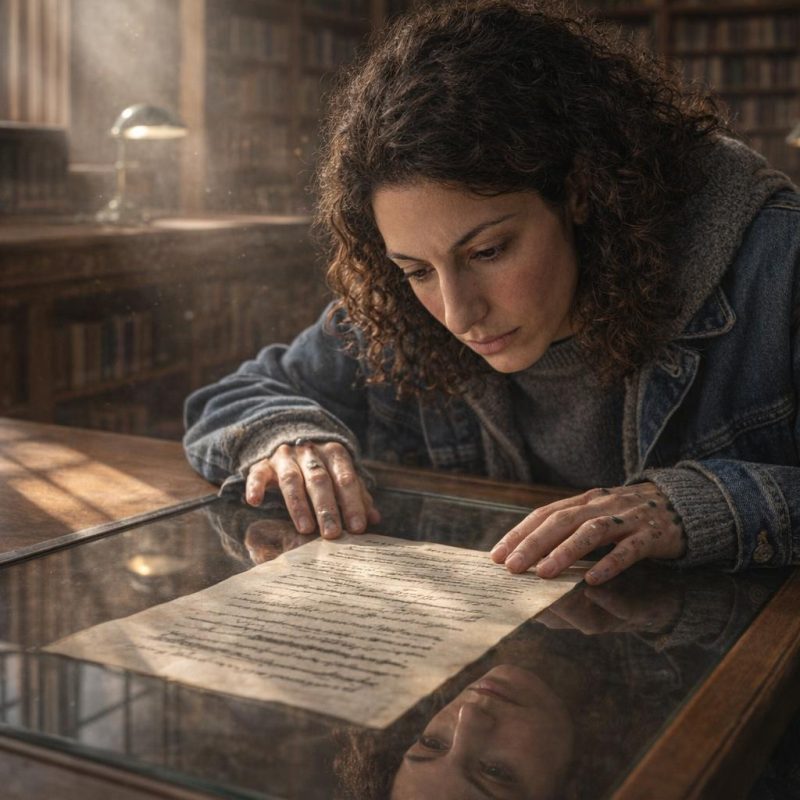 Image by RM AI
Into the Foothills
I left Portland before the sun came up, the toolbox riding in the trunk with a dull thunk every time I hit a pothole. I'd packed light — water, a headlamp, the map folded into my jacket pocket — and I drove east with the heater running and the radio off, watching the city dissolve into suburb and then into the long dark corridor of the Gorge. By the time the mist started coming down in earnest, I was on a two-lane road I didn't recognize from any app, following coordinates I'd transcribed by hand onto a notepad. The pavement gave way to gravel somewhere past the second ridge. The gravel gave way to dirt not long after that. I drove slower, leaning forward over the wheel, the firs pressing in on both sides until the road felt less like a road and more like a suggestion. Then I saw it — a gate, rusted the color of old blood, chained across the narrow track with a faded No Trespassing sign wired to the crossbar. The chain's padlock hung open, the shackle corroded through. The tire tracks in the mud on either side of the gate were faint and old, pressed into the earth like a memory. I pulled the toolbox from the trunk and stood there, the forest utterly silent beyond the gate.
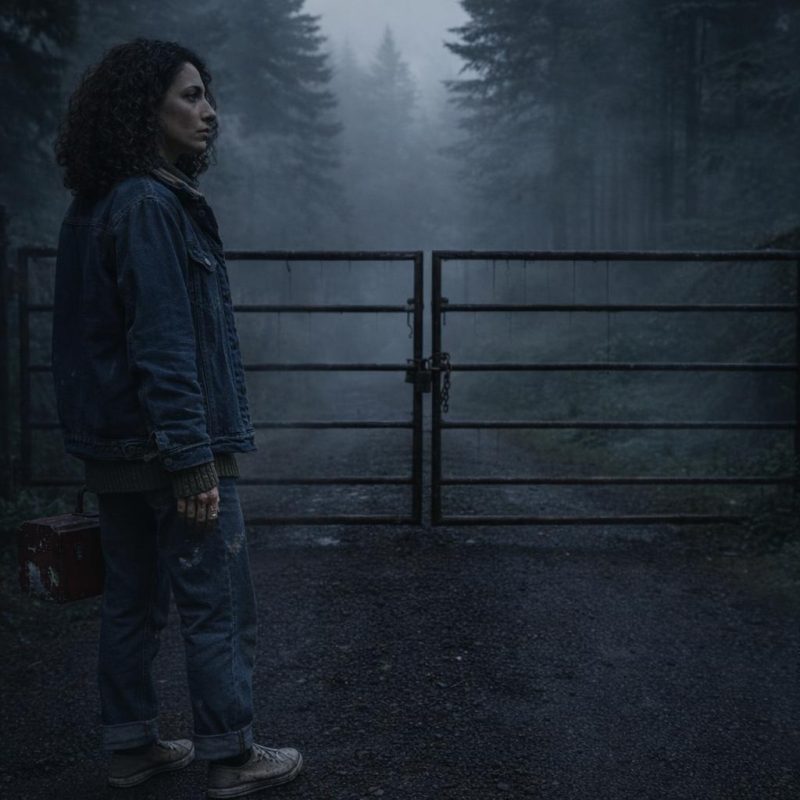 Image by RM AI
The Weeping Rock
The overgrown road beyond the gate climbed steadily, and the toolbox got heavier with every quarter mile. I switched it from hand to hand, stopping every so often to check the map against the terrain — a ridge line here, a drainage cut there, the way the firs gave way to hemlock as the elevation rose. The mist thickened as I climbed, softening the trees into gray shapes, muffling everything. I was sweating inside my jacket despite the cold. The map marked the first real landmark about a mile in, labeled in Silas's careful hand: weeping rock. I almost missed it. It sat just off the left side of the track, a low outcropping of dark stone draped so heavily in moss it looked like something alive and crouching. Water seeped through cracks in the rock face and ran in thin dark streaks down to the ground, staining the stone in long vertical lines. I set the toolbox down and stood in front of it for a moment, catching my breath. That was when I noticed the quiet — not the ordinary quiet of a forest, but something denser, something that pressed against my ears like held breath. No birds. No wind moving through the canopy. Just the faint sound of water finding its way through stone, and my own breathing, and nothing else.
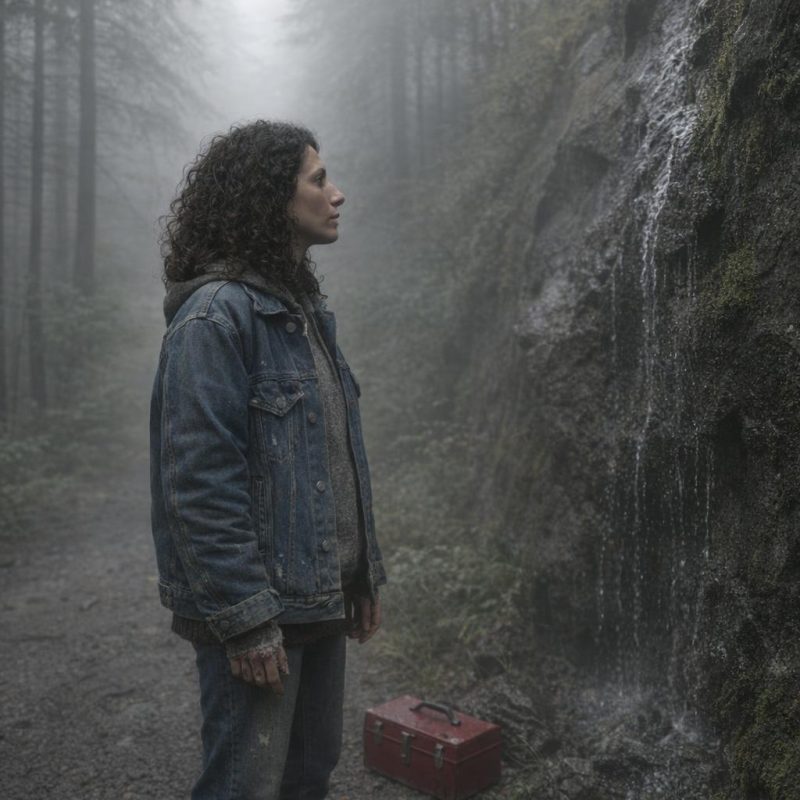 Image by RM AI
The Dry Creek
Past the weeping rock, the road dipped down into a shallow ravine, and I followed it carefully, the toolbox banging against my knee on the descent. The map called this stretch dry creek, and it was exactly that — a wide bed of smooth, pale stones with no water in it, the kind of place that probably ran full in spring but had gone bone-dry by midsummer. What stopped me wasn't the dryness. It was the ground on either side of the creek bed. Dead needles lay everywhere, inches thick, matted into a rust-colored carpet that covered the forest floor from bank to bank. The trees above me were alive — I could see green canopy through the mist — but nothing grew beneath them here. No ferns, no salal, no sword grass pushing up between the stones. Just that thick, dead layer, undisturbed, as if nothing had tried to grow there in a very long time. I checked the map. The red circle Silas had drawn was close now — maybe another half mile, maybe less. I could see larger trees ahead through the mist, their trunks wider than anything I'd passed so far. I climbed out of the ravine and kept walking, but the feeling that had started at the weeping rock followed me up the bank and didn't let go — a low, wordless sense that something about this place was simply wrong.
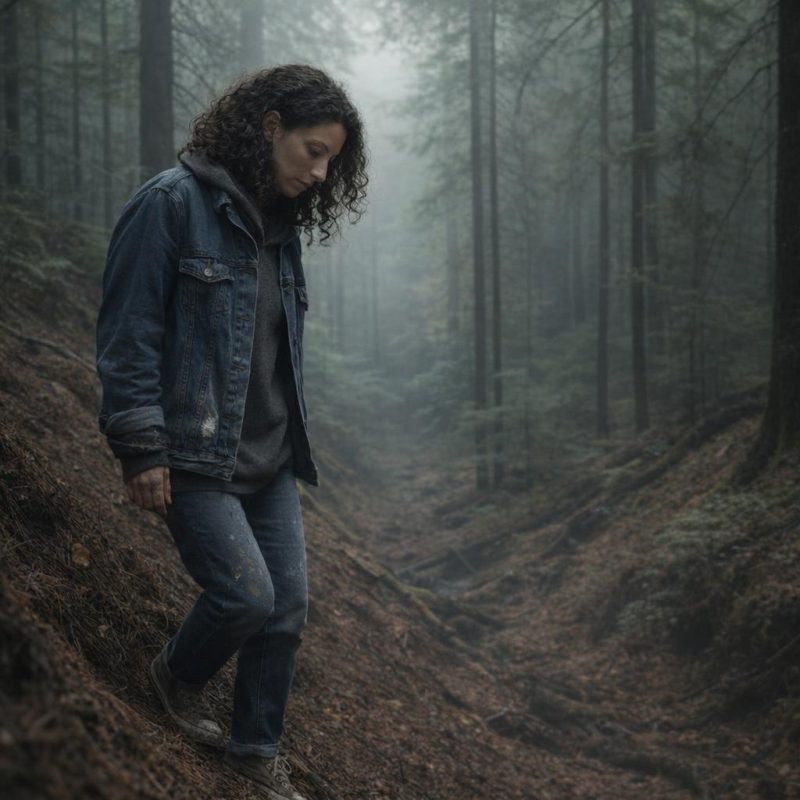 Image by RM AI
The Sentinel Cedars
The cedars announced themselves before I reached them. Their smell came first — that deep, resinous cedar scent, older and heavier than the firs I'd been walking through — and then the trees themselves materialized out of the mist like something from a different century. They stood in a rough circle around a small clearing, their trunks wider than I could have wrapped my arms around, their bark furrowed into deep vertical channels the color of cinnamon and rust. I stopped at the edge of the clearing and just looked. The silence here was different from the silence at the weeping rock. That had felt like absence. This felt like presence — like the trees were aware of me in some way I couldn't articulate and didn't want to examine too closely. I checked the map one more time. The red circle sat exactly where I was standing. The sun had dropped below the western ridge while I was climbing, and long shadows stretched across the clearing floor, turning the moss a deep, bruised green. I set the toolbox down and walked slowly toward the largest cedar, its roots spreading across the ground like the fingers of a buried hand. Nestled between two of those roots, almost invisible beneath a skin of lichen, sat a stone survey monument — squat, four-sided, weathered to the color of the surrounding rock.
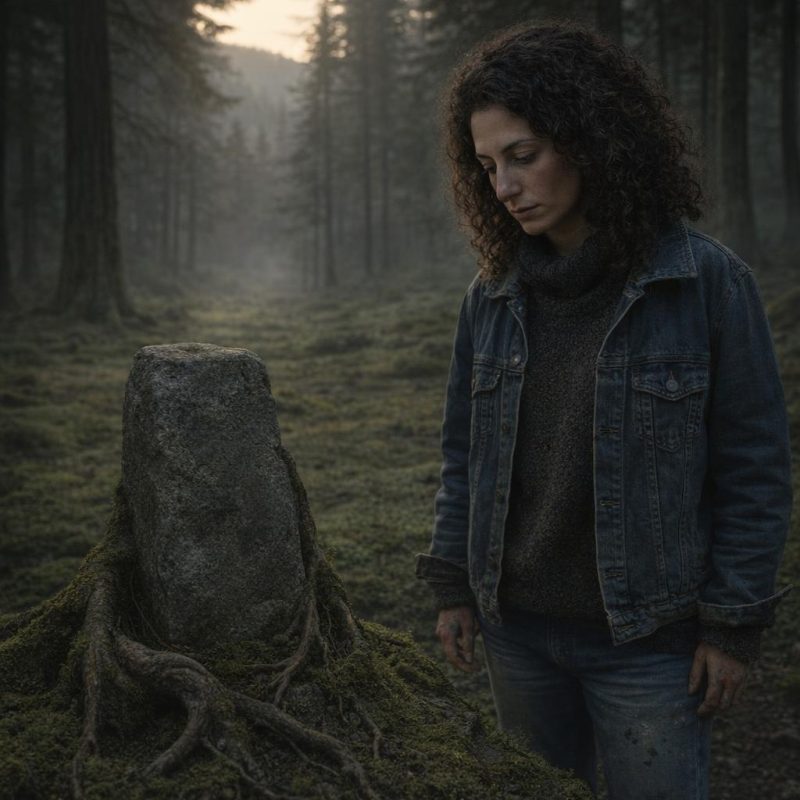 Image by RM AI
The Plumb Bob's Purpose
I opened the toolbox and lifted out the plumb bob. It was heavier than it looked, a brass teardrop on a length of braided cord, and I'd been carrying it all day without knowing exactly what for. The map had a small diagram tucked into the lower corner — I'd noticed it before but hadn't understood it until now. It showed a branch, a hanging weight, and a spot on the ground directly below. I looked up. A low branch extended from the cedar just above head height, almost directly over the survey monument. I tied the cord to the branch, let the weight drop, and stepped back. The plumb bob swung once, twice, and then went still. The air in the clearing was completely windless. The brass weight hung in perfect vertical alignment, its tip pointing to a patch of thick moss about two feet from the base of the monument. I crouched down and looked at the spot. The moss was undisturbed, the same as everything around it, giving nothing away. The light was going fast now — the sky above the cedars had shifted from gray to the deep blue that comes just before dark — and I could feel the cold settling in around me. I stayed where I was, kneeling in the damp, watching the weight hang perfectly still above the moss-covered ground.
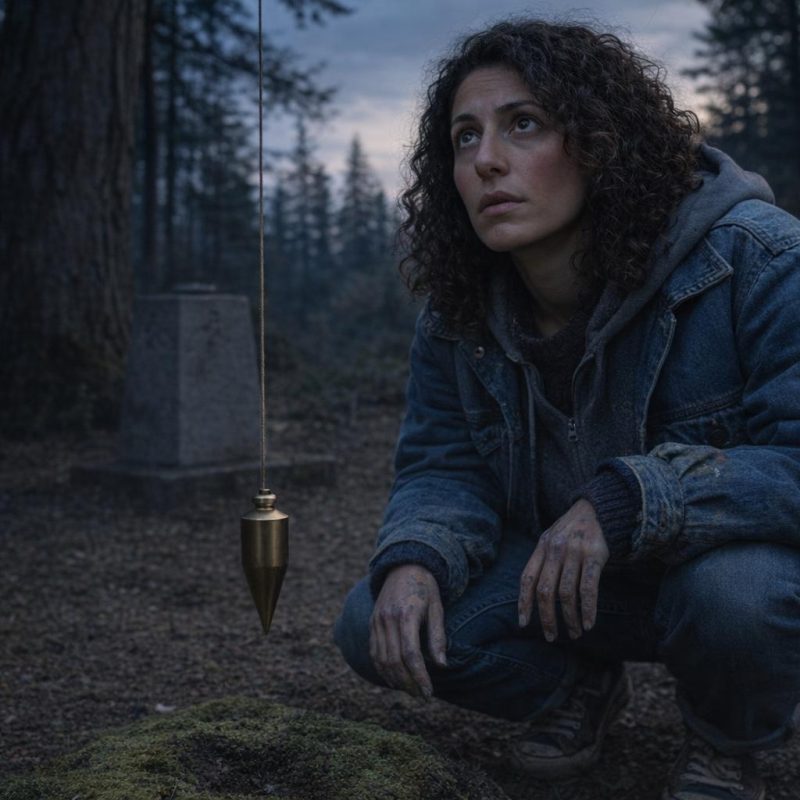 Image by RM AI
Six Inches Down
I pressed my fingers into the moss and it came away in a soft, damp sheet, like lifting a lid. The soil beneath was dark and loose, almost crumbly, and it gave easily at first. I dug with both hands, scooping the earth aside, my fingernails filling with black soil almost immediately. The cold didn't matter. The fading light didn't matter. I was aware of both in a distant way, the way you're aware of background noise when you're concentrating on something else entirely. I dug maybe four inches, five, and then my fingers hit something that wasn't soil and wasn't stone. I stopped. I pressed down again, more carefully this time, and felt the same resistance — flat, hard, with a faint give that stone doesn't have. I dug around the edges, working in a slow circle, clearing the soil away from whatever was down there. The shape that emerged under my fingertips was rectangular, deliberate, the corners too clean to be anything natural. My breath was coming in short pulls by then, fogging in the cold air above the hole. The last gray light was draining out of the sky above the cedars. I kept clearing soil away, and the solid resistance of it pressed back against my fingertips, unyielding and real.
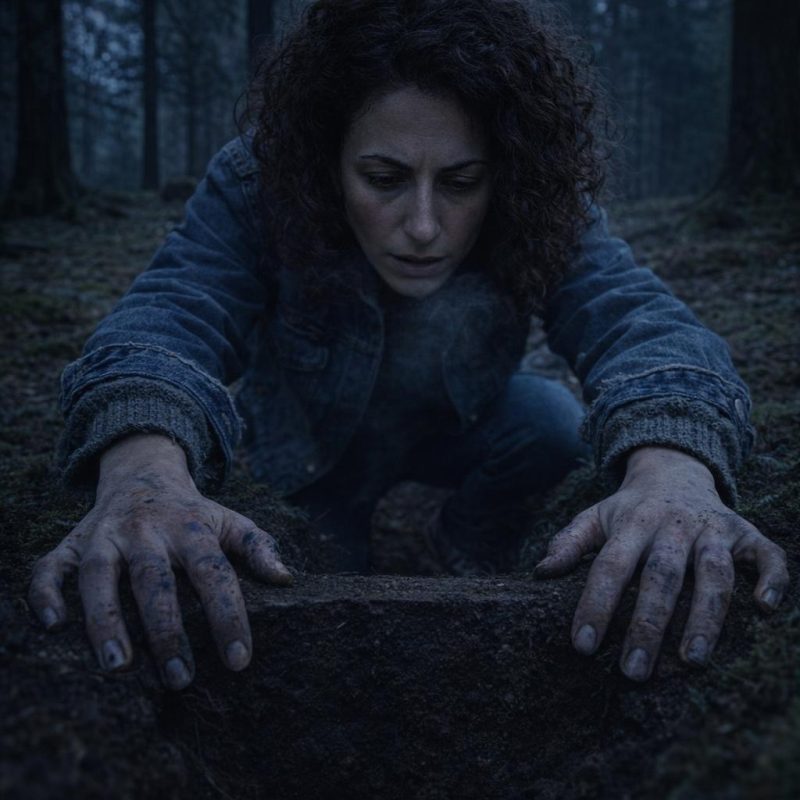 Image by RM AI
The Lead Box
I worked my fingers under the edges and lifted. The box came free of the earth with a soft, sucking sound, heavier than its size suggested, and I set it on the moss beside the hole. It was lead — dull gray, the seams sealed with old wax that had gone brittle and dark. I broke the seal with my thumbs, working around the edge until the lid gave. Inside, nested in what looked like oilcloth, were glass photographic slides in individual paper sleeves, each one labeled in a small, precise hand. Beneath them, wrapped in a separate piece of oilcloth, was a leather-bound journal, its cover soft with age. I lifted it out carefully. The leather was cool and slightly tacky under my fingers. I opened it to the first page. The entry was dated thirty years ago — the month and year written out in full in a handwriting I didn't recognize. It wasn't Silas's surveyor's script, that careful, upright printing I'd grown up seeing on birthday cards and postcards from the field. This was something else entirely — a looser, more urgent hand, the letters leaning forward as if the writer had been in a hurry, or afraid.
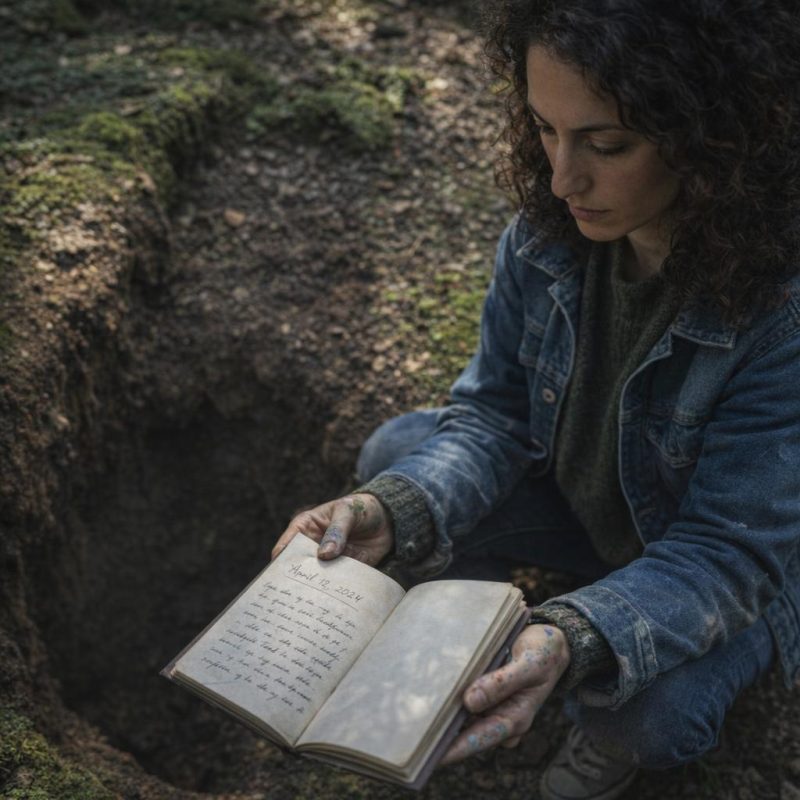 Image by RM AI
The Excavation Record
I couldn't read the journal in the dark that was coming down fast around me, so I set it aside and picked up the glass slides instead. I held the first one up toward the last pale strip of sky above the cedar canopy. It showed an excavation pit — forest floor, shored-up walls, a measuring rod propped against the side for scale. The second showed objects laid out on a tarp in careful rows, the way you'd document a find. They looked ancient, but something about them was wrong for this place, wrong for the Pacific Northwest entirely — the shapes too angular, the surfaces too worked. I went through three more slides quickly, the light almost gone. The fourth showed a carved stone, roughly the size of a hardback book, its face covered in markings. I held it as close to the fading sky as I could and turned it slowly. The symbols weren't anything I recognized — not Coast Salish, not Chinook, not any tradition I'd studied or seen in a museum. The lines were precise and deeply cut, arranged in a pattern that felt systematic, almost mathematical. I packed the slides and the journal back into the lead box, tucked it under my arm, and started back toward the gate before the last of the light was gone.
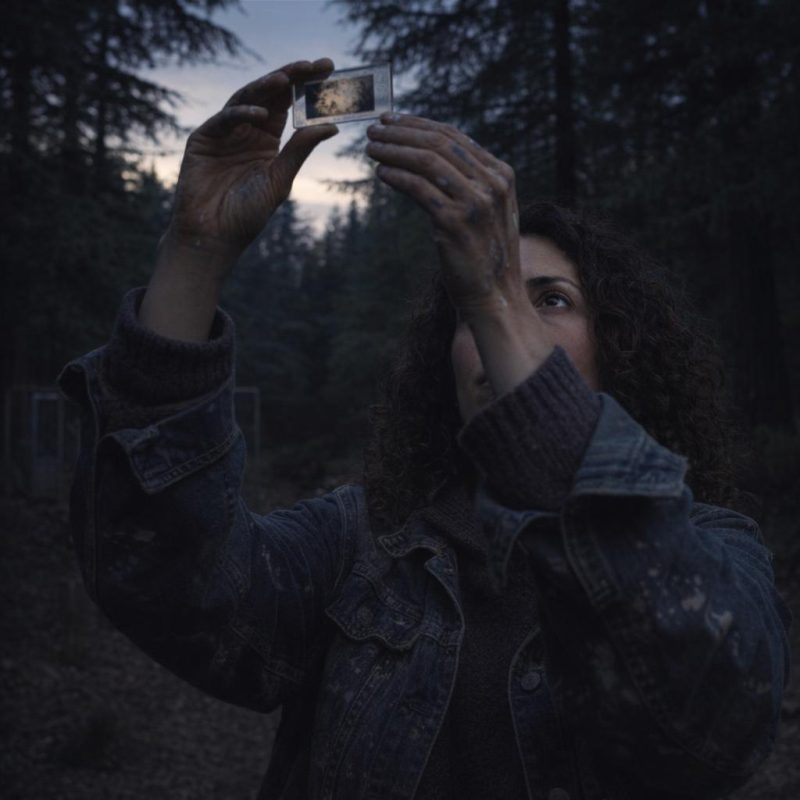 Image by RM AI
The Witness's Burden
The hike back took longer than I expected. My phone's flashlight threw a thin white cone across the trail, and the cedars on either side pressed in close, their bark catching the light in strips. I was filthy — mud on my knees, pine needles in my hair, the lead box tucked under one arm like something I was afraid to set down. When I finally reached the car I locked the doors, turned on the interior light, and just sat there breathing for a minute. Then I opened the journal. The entries started in the late eighties, Silas's handwriting small and precise, the kind of script that takes patience. He wrote about a survey job in the backcountry — routine work, he said, until it wasn't. He'd found something in a drainage cut above a creek bed, artifacts that had no business being where they were, and he'd documented everything before anyone else arrived. The early entries were almost clinical. But by the third year the tone shifted. He started writing about phone calls he didn't make being answered. About a truck parked at the end of his road for three days running. He never named who was behind it — just wrote that something about the site made certain people uneasy, and that he felt like the only thing standing between the place and whatever they might do about that unease.
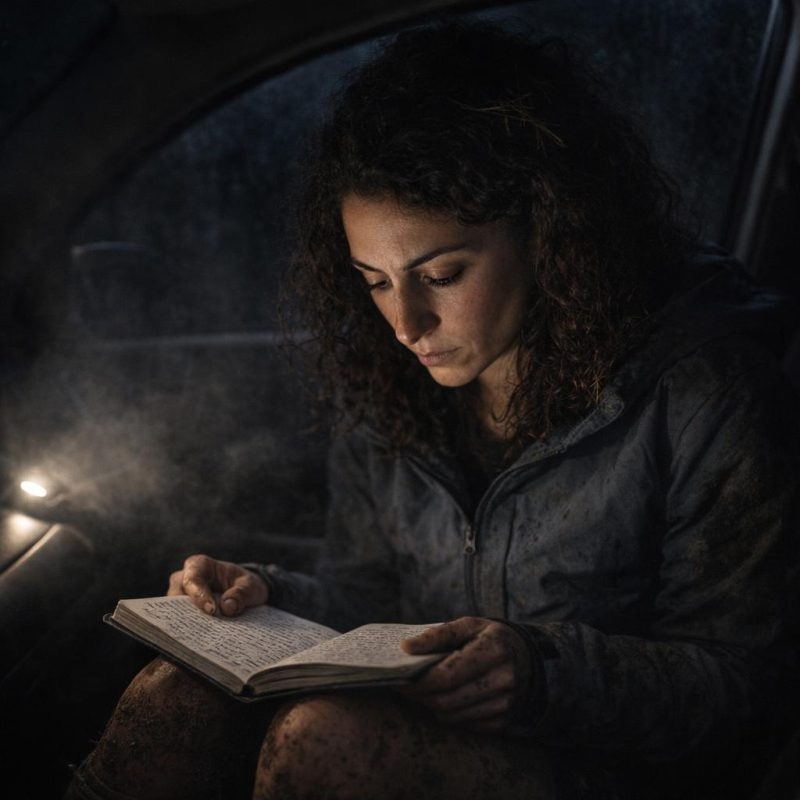 Image by RM AI
The Scope of Silence
I read for two hours without looking up. The journal covered thirty years in entries that ranged from a single line to four dense pages, and what they mapped wasn't just a discovery — it was a life slowly narrowing. In the early nineties Silas stopped attending family gatherings. He wrote about it plainly: he didn't want anyone near him who could be used as leverage. A few years later he sold the house in Portland and moved to the cabin. He described the move as practical, but the entry that followed it was one of the shortest in the book — just a date and the words *quieter here*. He kept meticulous field notes on the site, sketches and measurements and careful descriptions of each artifact, but he never submitted anything for publication, never contacted a university, never told a soul outside of one person whose name he'd blacked out with ink so thick it had warped the page. The later entries were harder to read. Not because the handwriting changed — it stayed precise almost to the end — but because the loneliness in them was so matter-of-fact. He wasn't asking for sympathy. He was just recording what it cost. I set the journal on my lap and looked out at the dark tree line, and the weight of what he'd carried for three decades settled over me like something physical.
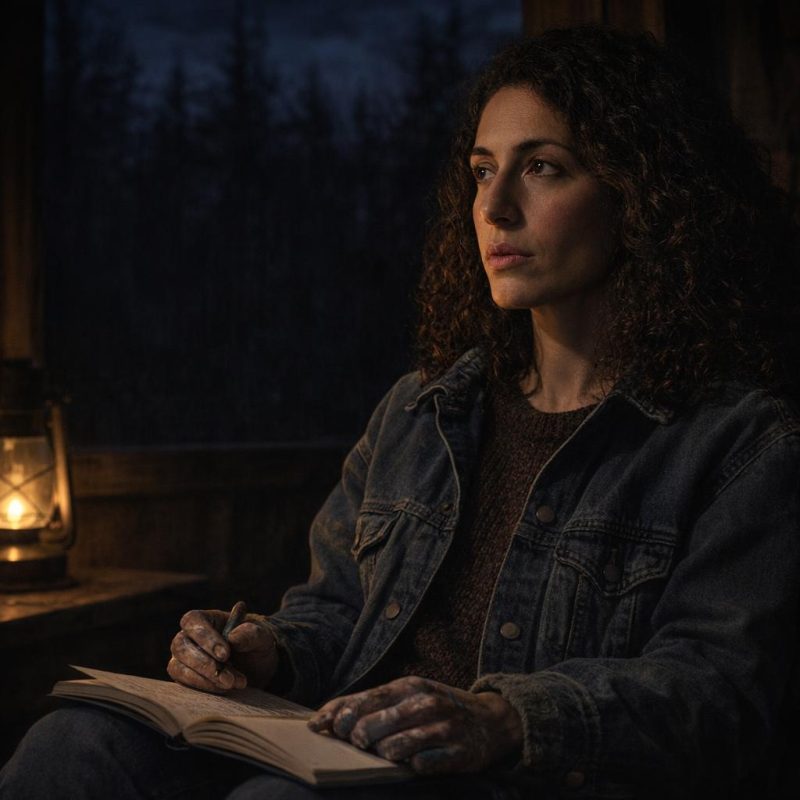 Image by RM AI
The Address in the Back
I almost missed it. I'd been reading front to back and the final pages felt thinner, like the journal was winding down, but when I turned past what I thought was the last entry I found one more — dated three months before Silas died, the ink a little shakier than the rest. It began with my name. Just that: *Elena.* No preamble, no explanation for why he'd chosen me over anyone else, though the lines that followed made the reasoning clear enough. He wrote that I was the only one in the family who'd ever sat still long enough to look at something without immediately deciding what it was worth. He told me not to go to the police and not to go to any lawyer connected to the estate. He said the people who wanted the site gone had long arms and longer patience, and that official channels were the first place they'd look. Then he told me to check the back of the book. I flipped to the inside back cover. An address was written there in the same careful hand — a town I'd never heard of, three hours north. Below it, one sentence: *A woman named Miriam is waiting. Bring her the key.* I looked at the lead box on the passenger seat, at the journal in my hands, and understood that I was already holding everything he meant.
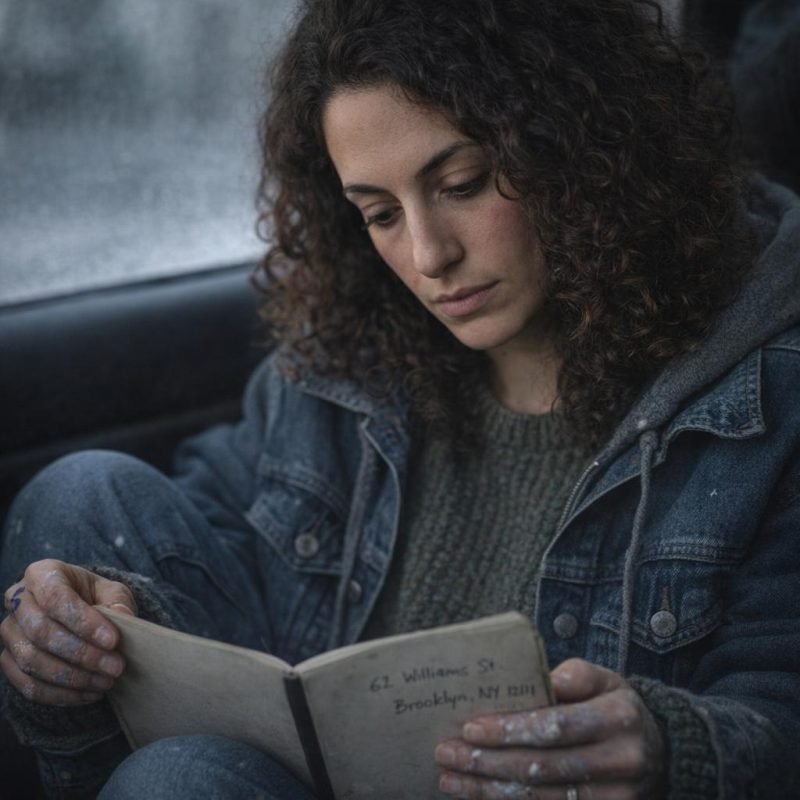 Image by RM AI
The Baton Pass
I sat with the engine off for a long time, the journal open on my lap to that last page. Silas hadn't left me property or money in any meaningful sense — the cabin was barely standing, the land worth almost nothing. What he'd left me was a post. A watch. The rusted toolbox, the lead box, the slides, the journal — they were a baton, and he'd spent thirty years running his leg of the race alone, in the dark, without anyone cheering. Now it was in my hands. I thought about driving home, putting the box in a closet, pretending I'd found nothing but old field notes. I thought about it seriously, the way you think about something you already know you won't do. Then I started the car. The headlights came on and lit up the gravel road ahead, and I put it in reverse to turn around. That's when I saw them in the rearview mirror — two pale headlights, far back on the forest road, moving slowly toward me through the trees.
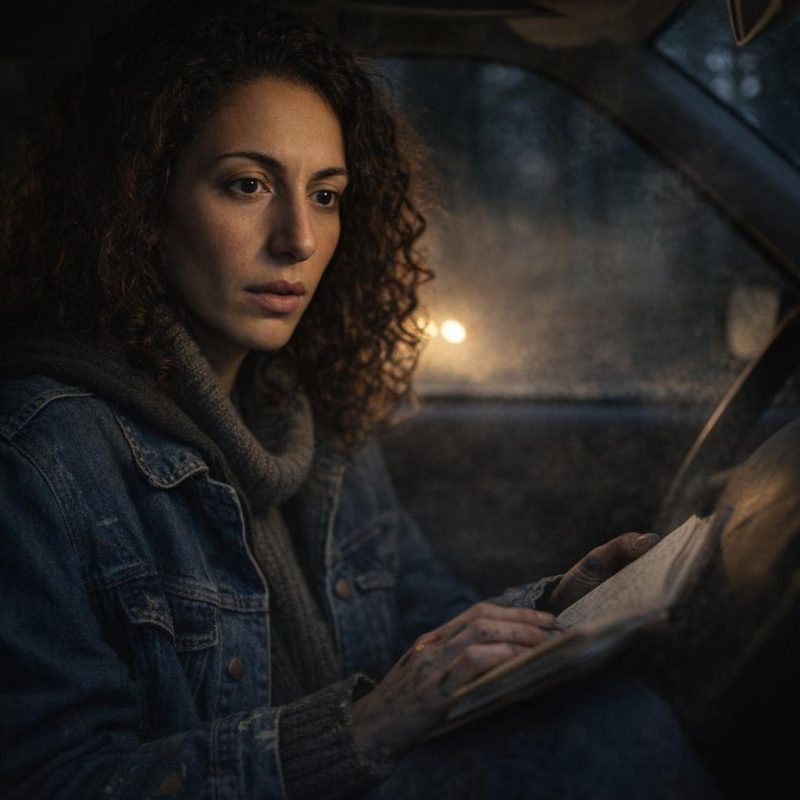 Image by RM AI
The Forest Road Pursuit
I cut my headlights without thinking. The darkness that dropped over the car was immediate and total, and for a second I couldn't see anything at all — just the faint suggestion of tree trunks in the moonlight filtering through the canopy. I sat still, one hand on the wheel, watching the mirror. The other headlights kept coming, slow and deliberate, sweeping across the road in a way that felt less like driving and more like searching. I put the car in gear and eased forward, navigating by the pale strip of gravel I could just make out ahead of me. The lead box was on the passenger seat. I kept one hand on it without meaning to. The road forked about a quarter mile ahead — I remembered it from the drive in — and I took the left branch, the narrower one, the one that looked less like it went anywhere useful. I pulled into the shadow of a cedar stand and stopped. Through the trees I could see the other vehicle reach the fork, its headlights sweeping left, then right, then going still. My engine ticked as it cooled. I didn't breathe. The headlights held at the fork, unmoving, and the forest around me was absolutely silent.
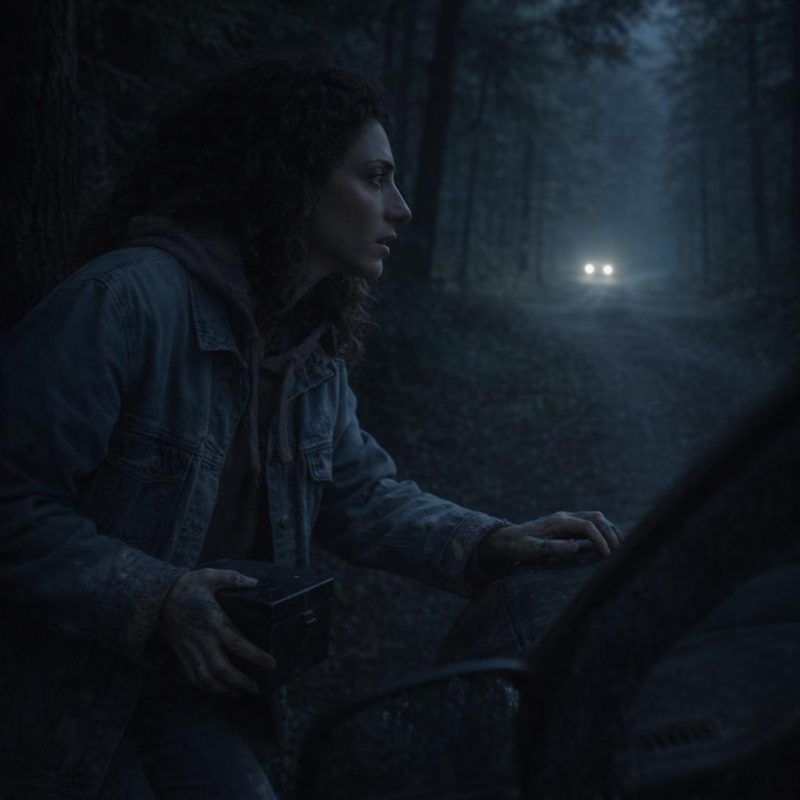 Image by RM AI
The Night Drive North
I counted to six hundred in my head — ten minutes, roughly — before the headlights at the fork finally swung right and disappeared into the trees. I gave it another five minutes after that, watching the darkness where they'd been. Then I restarted the engine, eased back to the main fork, and turned toward the highway. I drove with my lights off until I hit the paved road, then turned them on and pushed north. I stopped once, at an all-night gas station somewhere past Longview, and filled the tank while watching every car that pulled in. The lead box was under my jacket on the passenger seat. I bought the worst coffee I'd ever tasted and drank it anyway, standing at the counter where I could see the parking lot. Back on the highway I kept to the speed limit and checked my mirrors every few minutes — not frantically, just steadily, the way Silas had probably learned to do. The Cascades were invisible in the dark but I could feel them to the east, the way you can feel a wall in a dark room. By the time the sky began to lighten over the peaks, my shoulders had dropped maybe an inch from where they'd been all night, and the exhaustion that had been waiting behind the adrenaline finally moved in and made itself at home.
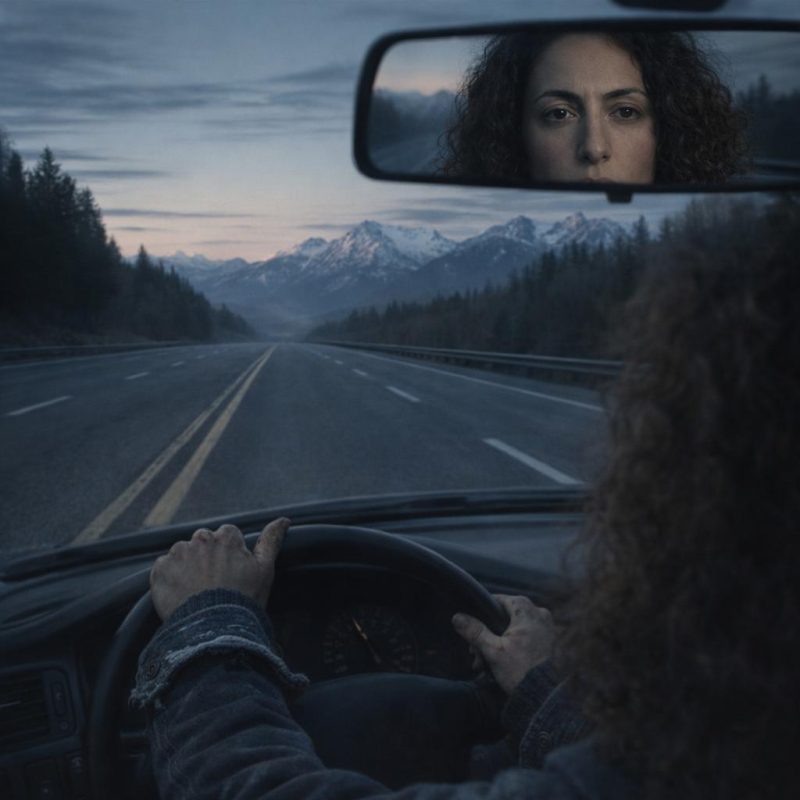 Image by RM AI
The Small Town
The town was smaller than I'd pictured — a single main street with a diner, a hardware store, a gas station with one working pump, and a row of pickup trucks parked at angles in front of all of them. It was early enough that the sidewalks were mostly empty, just a man in a canvas jacket walking a dog and a teenager unlocking the diner's front door. I drove slowly, checking the address from the journal against the street signs, feeling exposed in a way I hadn't expected — like the car was too clean, too Portland, too obviously out of place. Miriam's address was on the outskirts, the journal had said, so I was just passing through the main block when I saw it: a dark pickup truck coming toward me from the other direction, moving at an easy pace. It was the same color as Greg's, the same model — I couldn't be sure, and the sun was low enough that the cab was in shadow, the driver's face unreadable. The truck didn't slow or brake or give any sign that whoever was inside had noticed me. It just passed, continued down the street, and disappeared around the corner, and I watched it go in my mirror with my hands tight on the wheel.
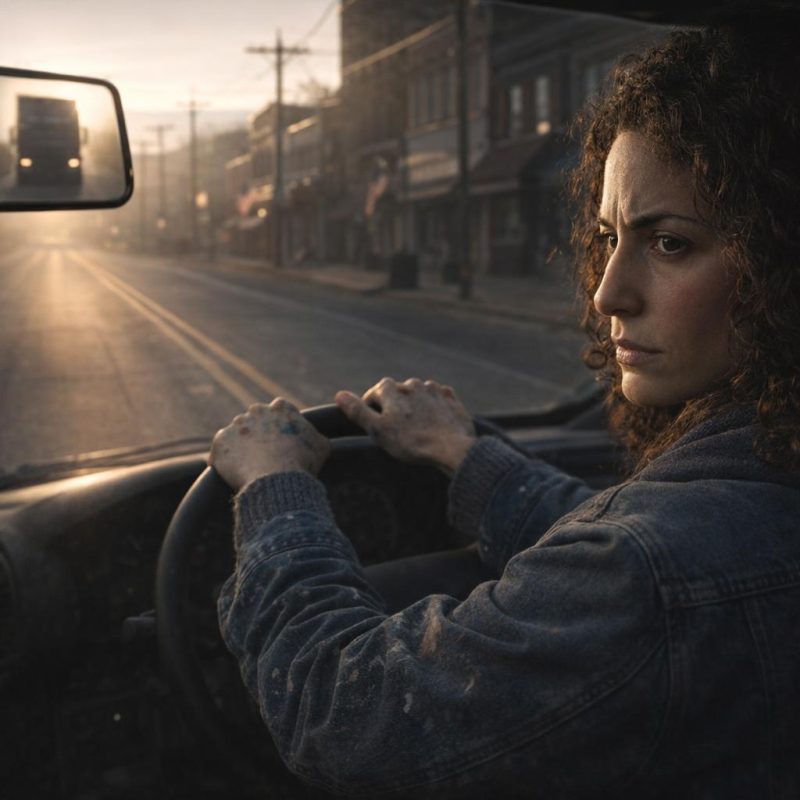 Image by RM AI
The Motel Room
The motel was a single-story strip of eight rooms at the edge of town, the kind of place with a hand-lettered vacancy sign and a vending machine that hummed too loud. I paid cash and gave a name that wasn't mine, and the man at the desk didn't look up from his crossword. The room smelled of old carpet and the particular staleness of windows that hadn't been opened in years. I showered until the water ran clear, watching the forest dirt spiral down the drain, and when I got out my fingernails were still dark at the edges no matter how hard I scrubbed. I lay down on the bed and stared at the ceiling. Sleep didn't come. After a while I sat up and opened the journal again, reading Silas's final entry one more time, as if the words might have changed. I thought about calling someone — a friend, anyone — and tried to think of a single person I could explain this to without sounding like I'd lost my mind. I thought about the police, about lawyers, about every official channel Silas had specifically told me to avoid. The journal sat open on the scratchy bedspread, the address in the back cover staring up at me, and the silence of the room pressed in from all sides with the particular weight of having no one left to call.
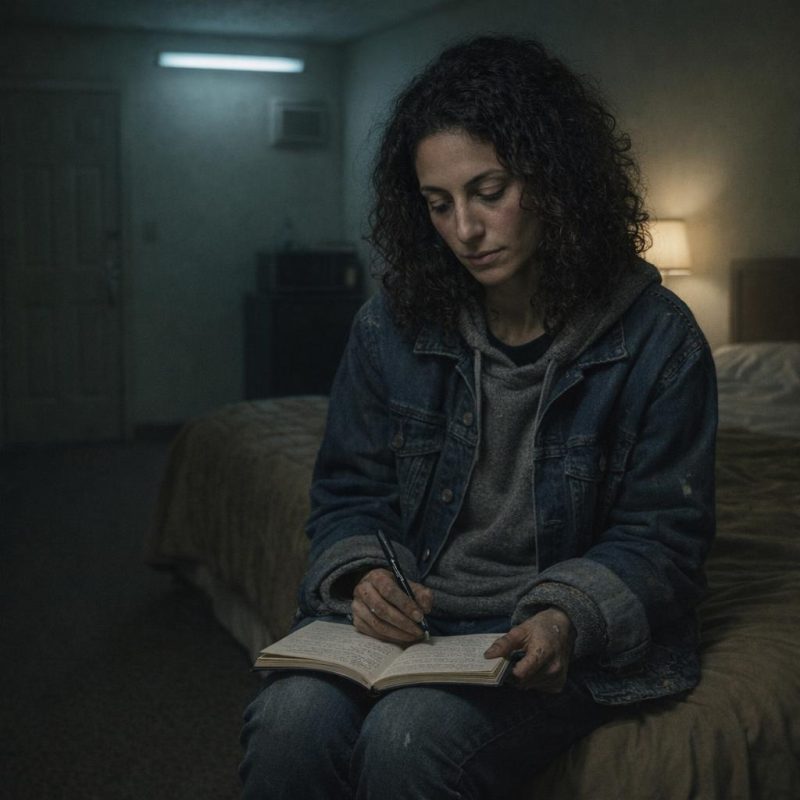 Image by RM AI
The Watched Parking Lot
I left the room around seven, stomach hollow, telling myself I just needed coffee and something to eat. The parking lot held three cars besides mine, all of them empty. The diner was two blocks down, a narrow place with steamed-up windows and a laminated menu. I ordered eggs and toast and sat in a booth facing the street. That's when I noticed it — a dark sedan parked across from the motel entrance, engine off, someone sitting in the driver's seat. Not reading. Not on a phone. Just sitting. I watched through the diner window for twenty minutes. The car didn't move. The person didn't get out. I paid my bill and walked back slowly, keeping to the sidewalk, not looking directly at the sedan. I couldn't make out a face — the light was wrong, the windows slightly tinted. I told myself it was nothing. A salesman waiting for a call. Someone killing time. I almost believed it. I got my key out at the door — and then the sedan's engine turned over and it rolled slowly past, close enough that I could feel the displaced air.
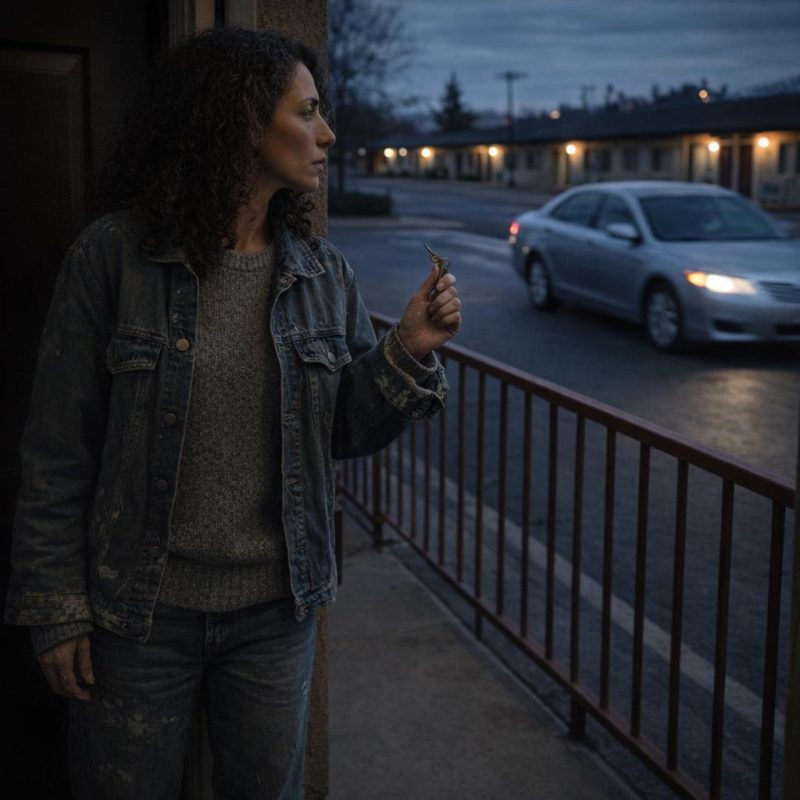 Image by RM AI
The Hidden Evidence
I found a self-storage place on the far edge of town, the kind with a keypad gate and rows of orange roll-up doors. I paid cash, gave a name I made up on the spot, and rented the smallest unit they had. My hands were steadier than I expected as I transferred the lead box from my trunk, wrapped in the old canvas tarp from Silas's toolbox. I locked the unit, pocketed the key, and stood there for a moment memorizing the number — 114 — the way you memorize something you can't afford to forget. Back in the car, I felt fractionally safer, the way you do when you've moved a target off your back and onto something stationary. I kept only one thing from the journal: the final page, torn carefully along the binding. I'd folded it into my jacket's inner pocket, close to my ribs. I spread it flat on the passenger seat now and read it again in the gray morning light. The address was written in Silas's careful surveyor's hand: 1847 Timber Ridge Road. And beneath it, a single word — Trust.
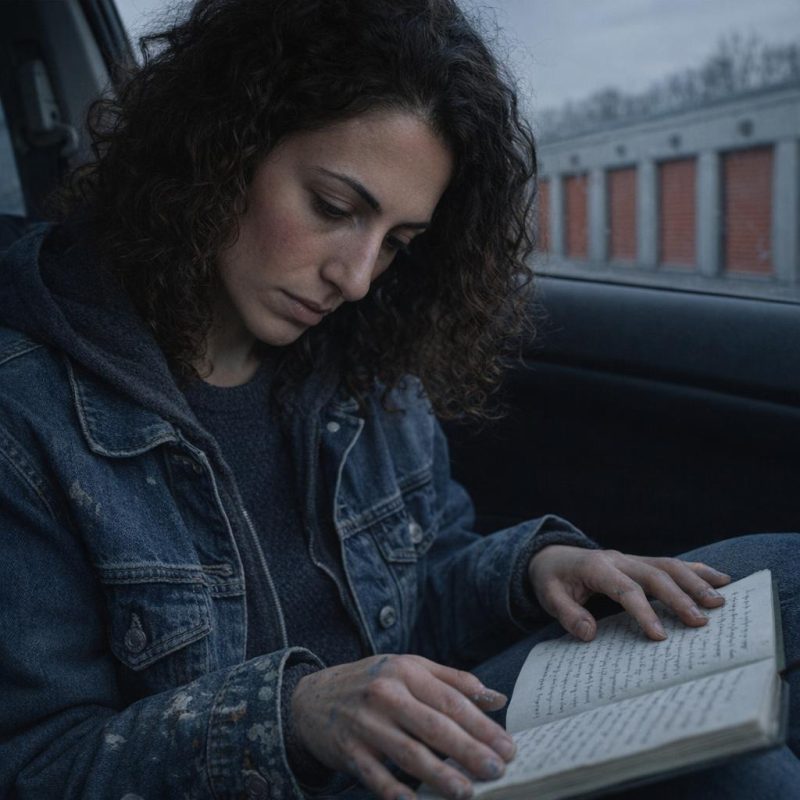 Image by RM AI
Timber Ridge Road
Timber Ridge Road climbed out of town through second-growth fir and cedar, the pavement narrowing until the center line disappeared entirely. Houses came infrequently — a mailbox here, a gravel drive vanishing into trees there — and the gaps between them stretched long enough that I started second-guessing the address. Then the road curved and I saw it: a small house set well back from the road, a gravel driveway cutting through tall pines, a single car parked near the porch. The house was modest but tended — wood siding recently painted, a woodpile stacked with precision along one wall, window boxes empty for the season. Nothing about it announced itself. I pulled over on the road's shoulder and sat with the engine idling, studying the place. The trees pressed close on three sides. No neighbors visible in either direction. I thought about the sedan from the motel parking lot, about the storage key in my pocket, about Silas's single word at the bottom of the page. I put the car in park and got out. I was halfway up the gravel drive when I caught movement in the front window — a woman's silhouette, still and watching — and then the curtain fell back into place.
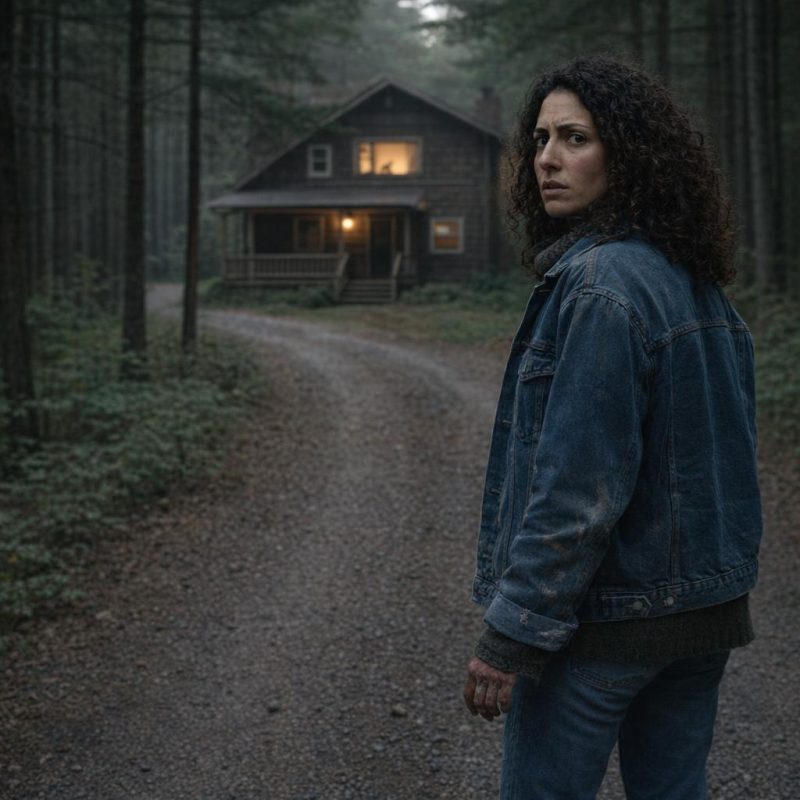 Image by RM AI
The Woman on the Porch
I kept walking. The porch steps were solid under my feet, no creak, and before I could knock the door opened. The woman standing in the frame was in her late sixties, silver-gray hair pulled back in a practical braid, her face deeply lined in the way that comes from decades outdoors rather than from age alone. She wore layered clothing — a flannel shirt under a canvas vest, worn at the elbows — and her eyes were sharp in a way that made me feel immediately assessed. She didn't smile. She didn't offer her name. She looked at me for a long moment and said, 'Did you bring the key?' I hesitated. I wasn't sure which key she meant — the toolbox key, the storage unit key, something else entirely. I said I wasn't sure what she was asking. She didn't elaborate. She just waited, patient in the way of someone who had learned that patience was a form of protection. I told her I'd found the lead box, that it was somewhere safe, that I'd come alone. Something in her expression shifted — not warmth exactly, but a recalibration. Then her eyes moved past my shoulder, scanning the road behind me in both directions, slow and deliberate, before she stepped aside and gestured me in.
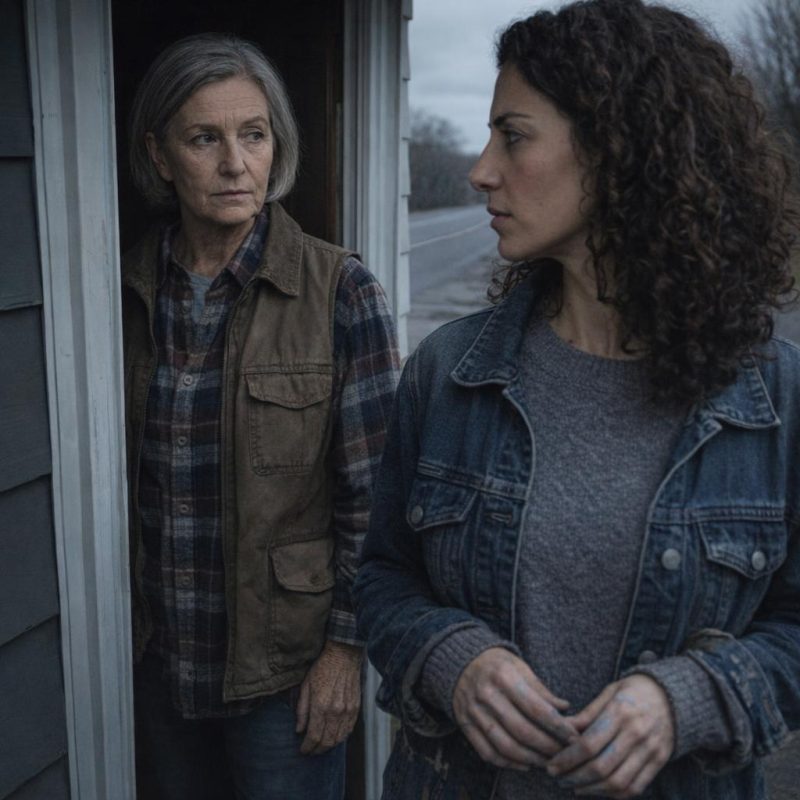 Image by RM AI
Inside the Guardian's House
The living room stopped me just inside the door. Every wall was covered — maps pinned at precise angles, photographs in clusters, typed documents connected by lengths of colored string. A large topographical map dominated the far wall, red circles marking a dozen locations across the region, some of them annotated in handwriting I didn't recognize and some in handwriting I did. Filing cabinets lined the wall to my left, four of them, each drawer labeled in small careful print. The photographs showed forest clearings, excavated ground, survey markers, and what looked like industrial equipment half-buried in undergrowth. It was the same obsessive grammar as Silas's journal — the same instinct to document everything, to build a record so dense it couldn't be dismissed. I stood in the middle of it and felt something loosen in my chest, some knot I hadn't known I was carrying. I wasn't the only one who knew. I hadn't been handed a burden that existed only in one dead man's notebooks. Miriam stood near the doorway and watched me take it all in, and she didn't say a word, and the silence between us carried the particular weight of being in the presence of someone who had given up a great deal to keep something true.
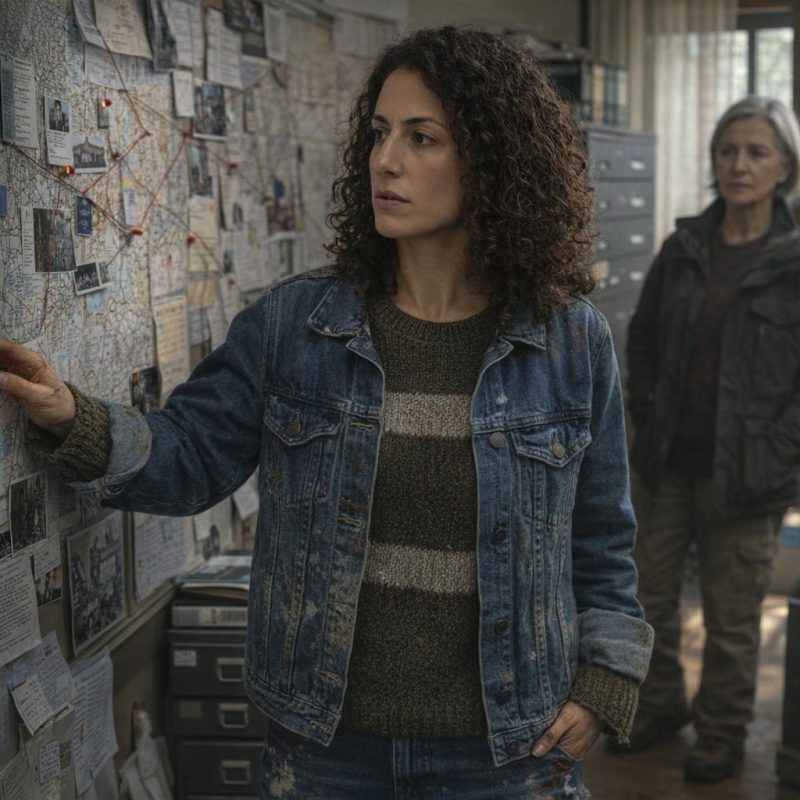 Image by RM AI
The First Questions
She put a kettle on but didn't offer me a chair. I stood near the center of the room while she moved around the kitchen doorway, and the questions came in the same measured cadence as everything else about her. How had I found the address. I told her about the will, the toolbox, the false bottom. She asked about the map. I described following it to Elowah Reach, the markers, the buried cache. Her expression didn't shift. She asked if I'd found what was inside the container. I said yes. She asked where it was now. I paused. The storage key was in my jacket pocket and I was suddenly very aware of it, the way you're aware of something you don't want to reveal. I said it was somewhere safe. She looked at me over the rim of her mug — she'd poured her own tea without pouring mine — and didn't push. She just nodded, once, and set the mug down. The kettle had gone quiet. She hadn't forgotten about my tea; I was fairly sure she'd decided not to offer it yet. Every question she'd asked had been precise and sequential, and every answer I gave seemed to be filed somewhere behind those sharp eyes, and I had the distinct feeling I hadn't yet earned a place at the table.
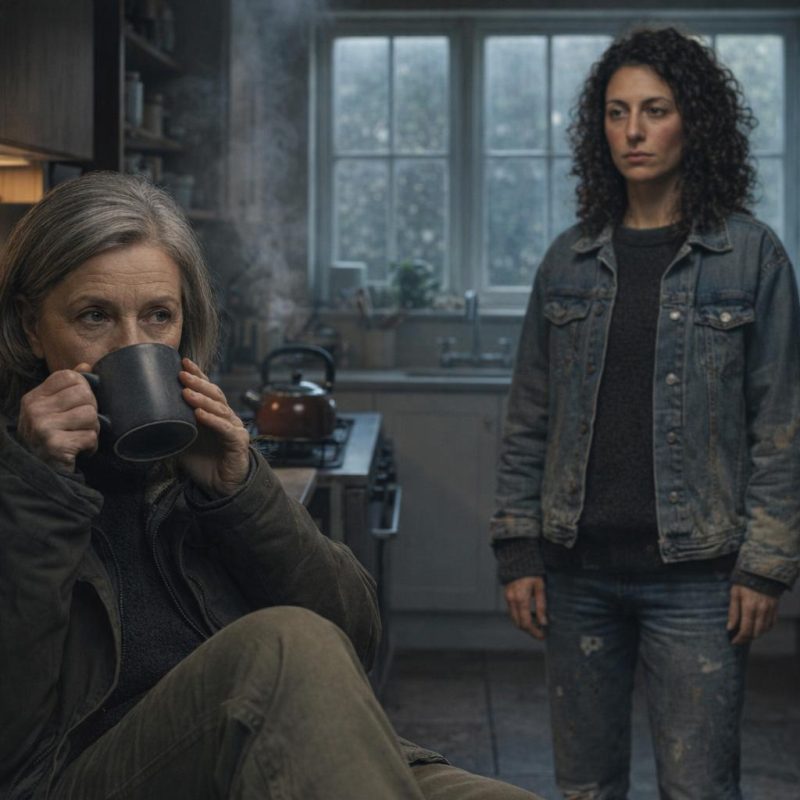 Image by RM AI
The Riddle Speaker
She started talking about watchers and witnesses, and at first I thought she was being metaphorical. She wasn't. She used the words the way someone uses technical terms — as if the vocabulary were shared. The watchers, she said, were still active. The witnesses had grown fewer over the years. Some had moved away. Some had gone quiet for reasons she didn't specify. Silas, she said, had been one of the last who still held the full picture. I asked her directly what they had witnessed. She said that what was buried had a way of staying buried when the right people wanted it to. I asked who the right people were. She said that trust had to be earned before names could be spoken. I asked what I needed to do to earn it. She said I was already doing it, which wasn't an answer. I stood there with my cold hands wrapped around a mug she'd finally poured — plain hot water, no tea bag, as if she'd run out or simply forgotten — and I listened to her speak in careful circles around the thing she clearly knew and I clearly didn't, and the frustration of it settled into me like the chill still coming off my jacket, present and patient and impossible to shake.
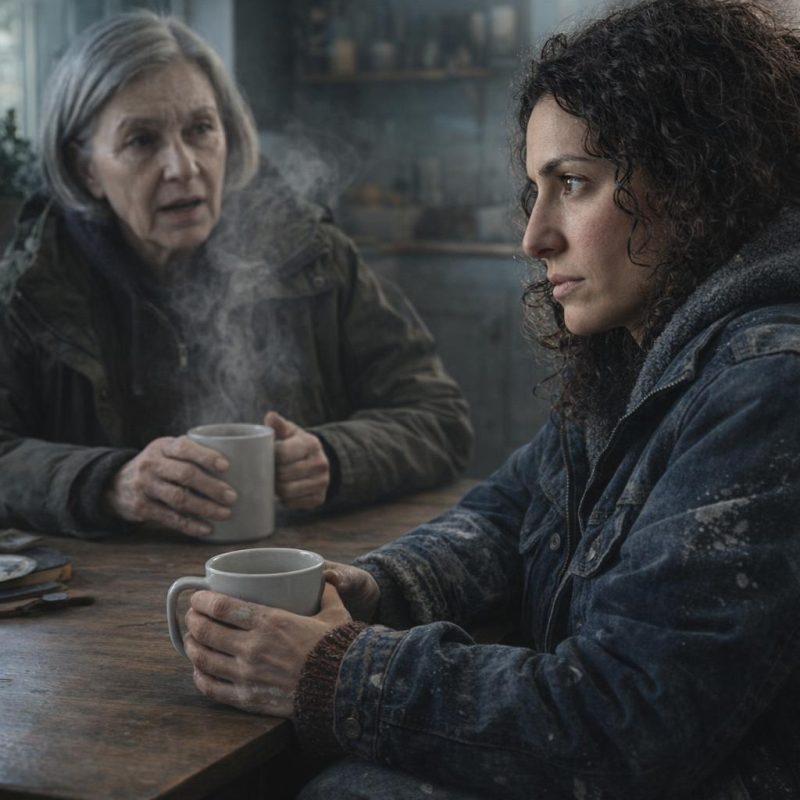 Image by RM AI
The Parallel Archive
Then she crossed to the nearest filing cabinet and took a key from a cord around her neck. The lock turned with the practiced ease of something opened often. She pulled out a folder, then another, setting them on the small table between us. The papers inside were dense — typed reports, hand-annotated maps, columns of dates and coordinates. The dates on the earliest pages began in the mid-1970s. I could see the same notational system as Silas's journal, the same shorthand for locations, the same way of marking a site revisited versus a site newly found. She said they had worked together for a long time, she and Silas, keeping their own records in parallel. She said it plainly, without elaboration, the way you state a fact you've lived with so long it no longer needs explaining. I was still processing that when she reached back into the cabinet and drew out a photograph — black and white, slightly overexposed, the edges soft with age. Two people standing at the edge of a clearing I recognized, both of them younger by thirty years, both holding surveying equipment, the tall pines behind them unmistakable.
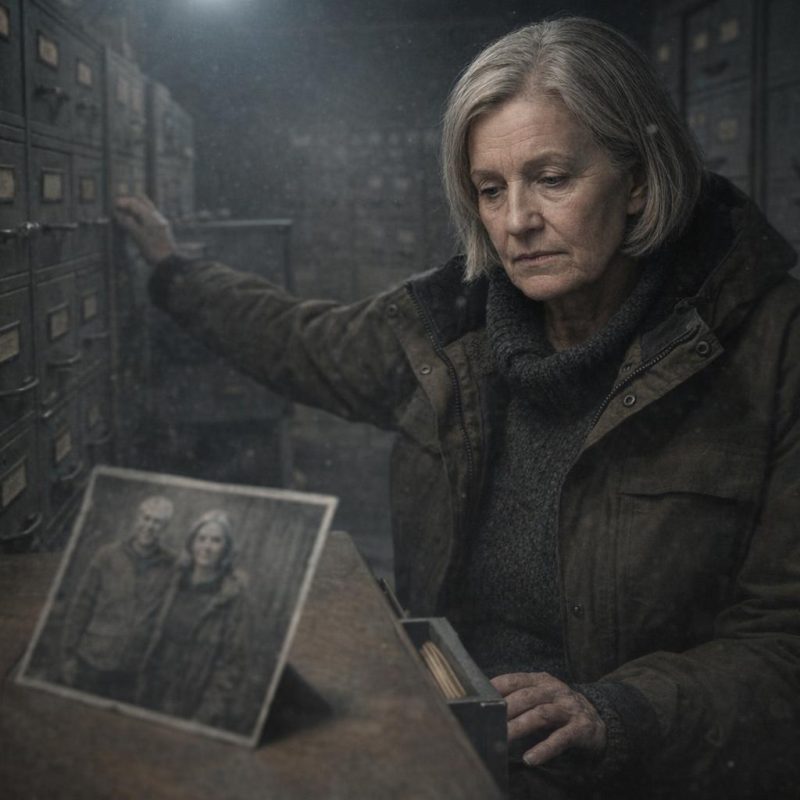 Image by RM AI
The Seventies
Miriam sat down for the first time since I'd arrived — not in the chair across from me, but on the edge of the table itself, like she needed to be closer to the papers between us. She said it started in 1974. She'd been working as a surveyor in the Cascade foothills, a contract job, nothing remarkable on paper. That's where she met Silas. They were assigned to the same project, mapping parcels along a watershed corridor, and within the first week they both noticed the same thing: the ground surveys didn't match the official records. Not by a little. By a lot. She said they started asking questions the way you do when you assume it's just a clerical error, and then people started telling them to stop. Not asking. Telling. She said the word 'threats' the way someone says it when they've had decades to make peace with what it means. They couldn't prove who was behind it then, not fully, but they understood they'd walked into something that powerful people needed to stay buried. So instead of going public, they made a different choice — they would protect the evidence until the moment was right. I looked at the photograph of the two of them, young and standing in that clearing, and I thought about how long fifty years actually is when you're the one holding the secret.
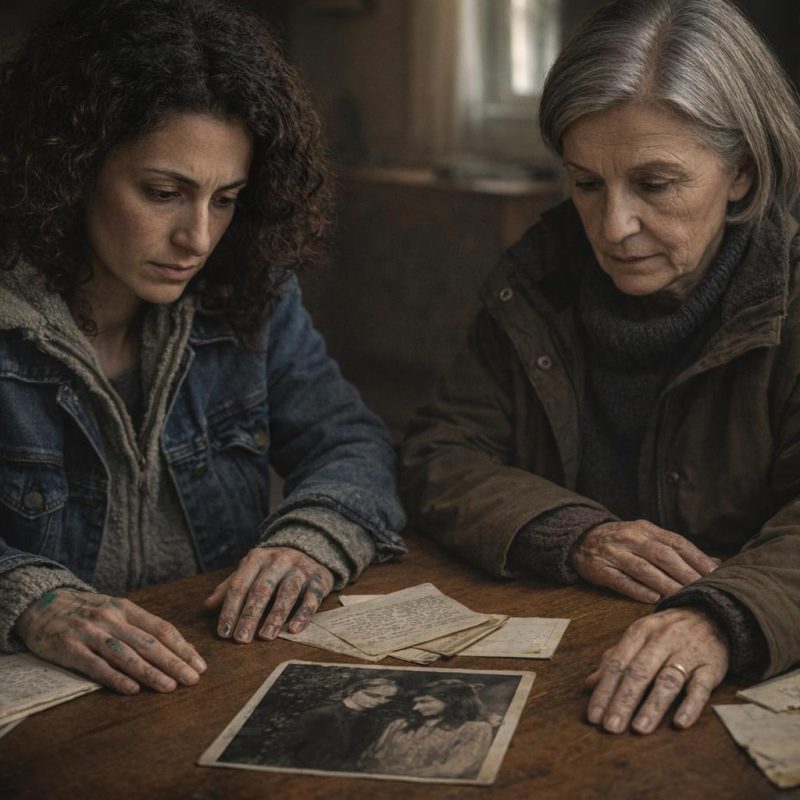 Image by RM AI
The Corporation
Miriam picked up one of the folders and turned it so I could see the first page — a column of company names, dates, land transactions. She tapped the top entry without saying anything for a moment. Then she told me there had been a timber corporation involved. One of the largest operating in the Pacific Northwest at the time, she said, with connections that ran into the state legislature and beyond. She didn't name it. She said she'd get to that. What she wanted me to understand first was the scale — this wasn't a small outfit cutting corners. This was an organization with the kind of reach that could make a federal investigation disappear, that could have a surveyor's findings reclassified and buried in a filing system no one would ever search. She said the company changed its name in the early 1980s. Restructured, rebranded, absorbed into a new entity. But it still existed. The same ownership structure, the same core interests, just wearing a different face. She said they had legal teams and they had patience, and for fifty years that combination had been enough. I sat with that for a moment — not the history of it, but the present tense of it. Whatever Silas had been protecting, someone was still out there protecting the other side of it, right now, today.
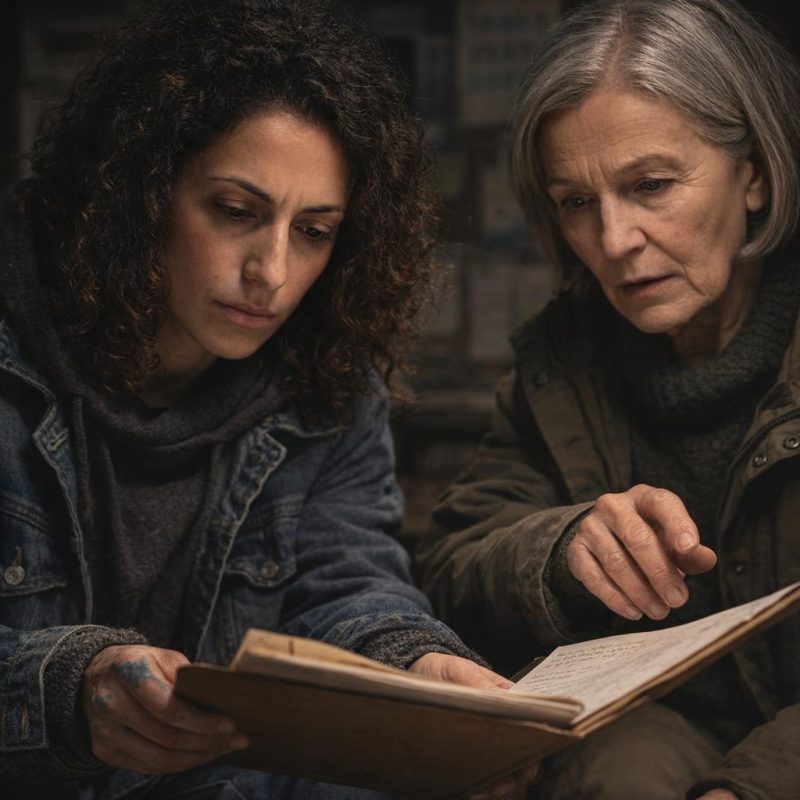 Image by RM AI
The Hunters Arrive
I'd stood up to stretch my legs and drifted toward the window without thinking about it — just needing a moment of sky, of distance. The road below Miriam's property curved through a stand of fir trees before straightening out toward the valley. I almost didn't register the truck at first. It was parked at the shoulder, half in shadow, and then I recognized the make, the color, the dent along the rear panel I'd seen a hundred times at family gatherings. My stomach dropped before my brain caught up. I stepped back from the glass on instinct. A second vehicle was pulling up behind the truck — a silver car I recognized too, though I'd spent years trying not to pay attention to it. Both doors opened. Two figures stepped out onto the gravel shoulder and stood there, not moving toward the house, just standing. They tilted their heads up toward the window where I'd been standing a moment before. I pressed myself against the wall and called for Miriam in a voice I barely recognized as my own. She crossed the room and looked past the curtain edge. She asked me, quietly, who they were. Greg and Sarah were looking straight up at the house.
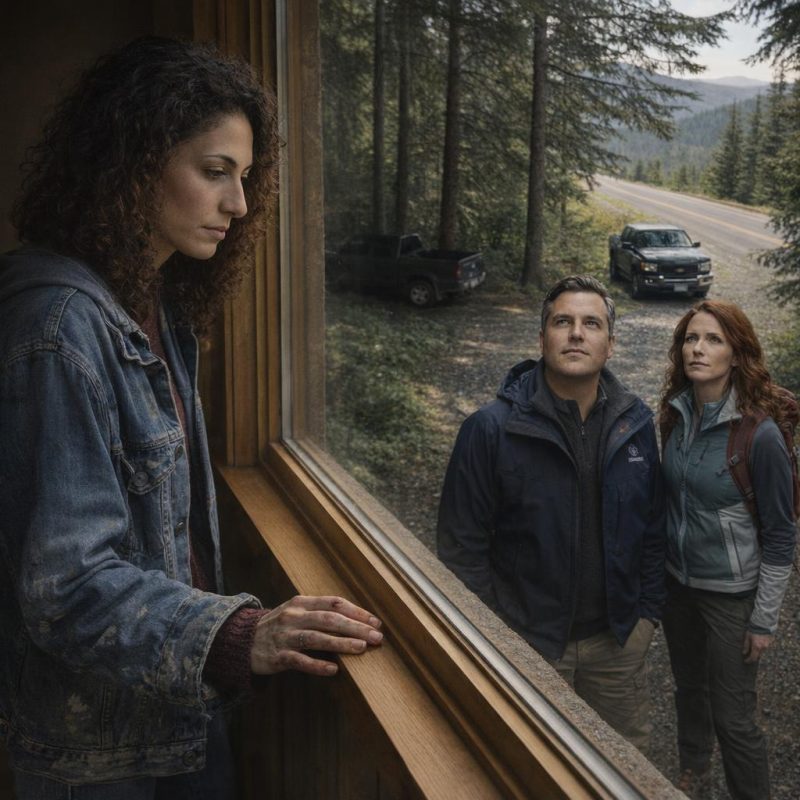 Image by RM AI
The EPA Investigator
Miriam pulled me away from the window by the arm — not roughly, but with the kind of certainty that doesn't leave room for argument. She told me to sit. I sat. She stood in the middle of the room for a moment, and I could see her making a decision about something. Then she went back to the filing cabinet. She said she hadn't told me everything about herself yet. She said she'd worked for the EPA in the 1970s — not as a contractor, not as a consultant, but as a federal investigator. She'd been assigned to Elowah Reach specifically, after the first anomalies were flagged. She found evidence of serious violations, she said, the kind that carried criminal liability. She was ordered to close the case. She used the word 'ordered' carefully, like she'd chosen it over several other words. She refused. She kept investigating. She said it plainly, without drama, the way you describe something that cost you everything and you've had a long time to accept the price. She was terminated in 1978. She pulled a manila folder from the back of the cabinet and set it on the table in front of me. Inside was a personnel file, government-issue paper gone soft at the edges. Across the top, in red ink, a stamp: TERMINATED FOR CAUSE — and below it, a date, and where the cause should have been listed, a blank line.
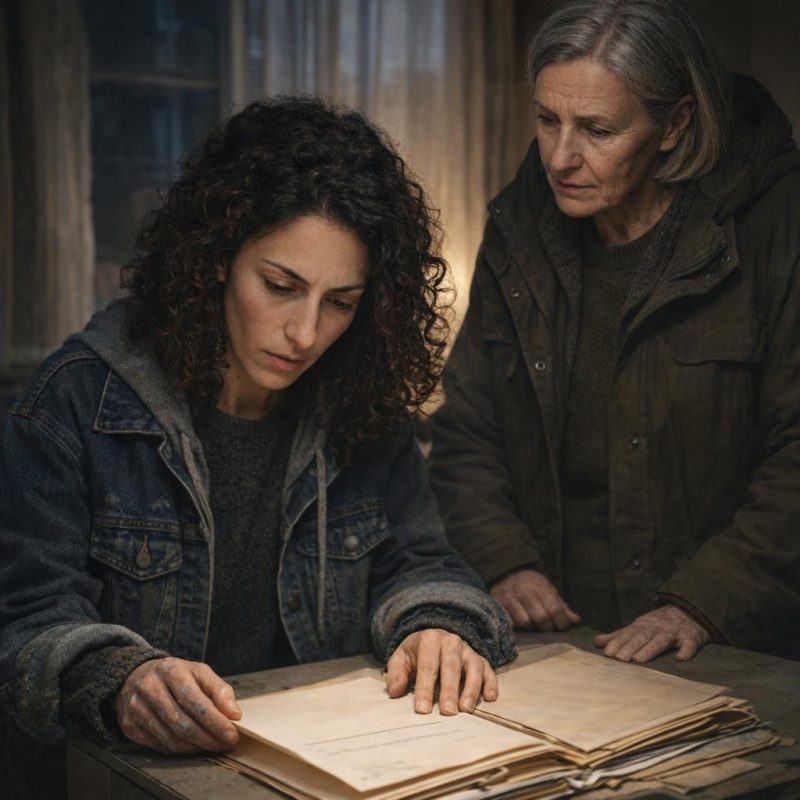 Image by RM AI
The Names in the Journal
Miriam asked if I'd brought the journal with me. I told her it was in a storage locker — I'd been careful about that much, at least. She nodded like that was the right answer, and something in her expression shifted, like I'd passed a small test I hadn't known I was taking. I described the entries I hadn't been able to decode — the shorthand location markers, the columns of initials, the lists that didn't seem to correspond to anything I could identify. She listened without interrupting, and then she started explaining. The initials were witnesses, she said. Some were workers who'd been at the site during the relevant years. Others were investigators, people like her, who'd come in through official channels and then been pushed out. The lists were a record of who had seen what, and when, and whether they'd stayed or walked away. She got up and pulled one of the folders open to a page near the back — a typed list, 1972 at the top, names and job classifications running down the column. She set it in front of me and pointed to a line about a third of the way down. I leaned in. The name was Thomas Hartley, listed as a site laborer. Thomas Hartley was my father.
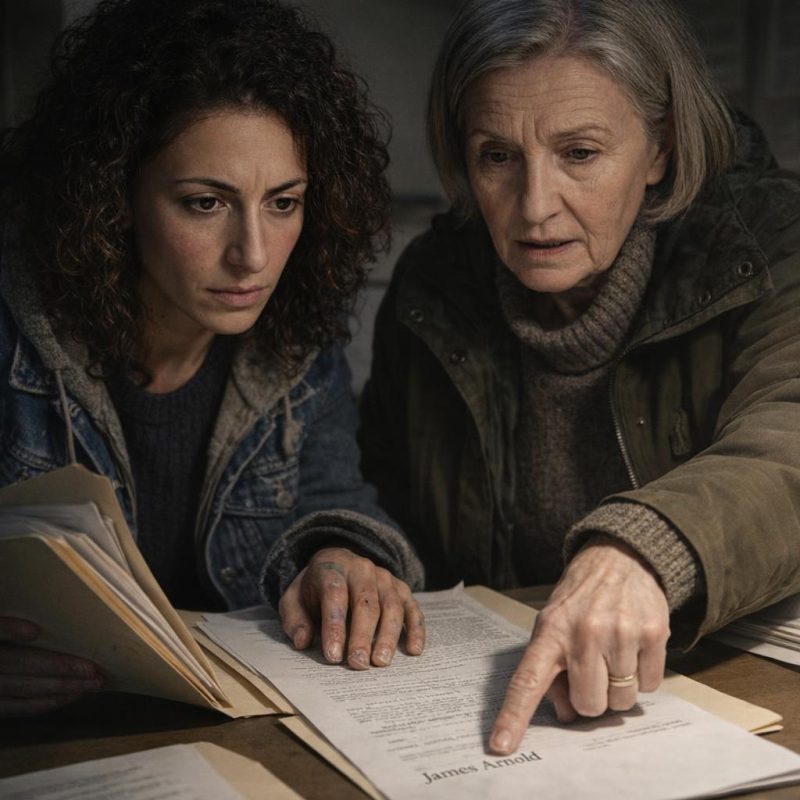 Image by RM AI
The Family Connection
I sat back in the chair and didn't say anything for a long moment. Miriam didn't rush me. She told me what she knew, slowly, in the same careful way she'd told me everything else. My father had been working at the site in 1972, before the worst of it, but long enough to see what was being brought in and where it was going. The company had approached him afterward, she said — offered money, a non-disclosure agreement, the whole package. He'd refused the money. But he'd also refused to testify. He quit his job, left the area, and never went back. Silas had tried to reach him, more than once, she said. He'd wanted his brother to come forward, to add his name to the record. My father had said no. He'd said it clearly enough that Silas eventually stopped asking, and after that the silence between them had hardened into something permanent. I'd grown up knowing my father and his brother didn't speak. I'd been told it was old family business, the kind of thing that happens and then calcifies. I'd never pushed. My father had died ten years ago without ever saying a word to me about any of it, and sitting in Miriam's kitchen with his name on a fifty-year-old list in front of me, I understood the shape of the silence he'd left behind.
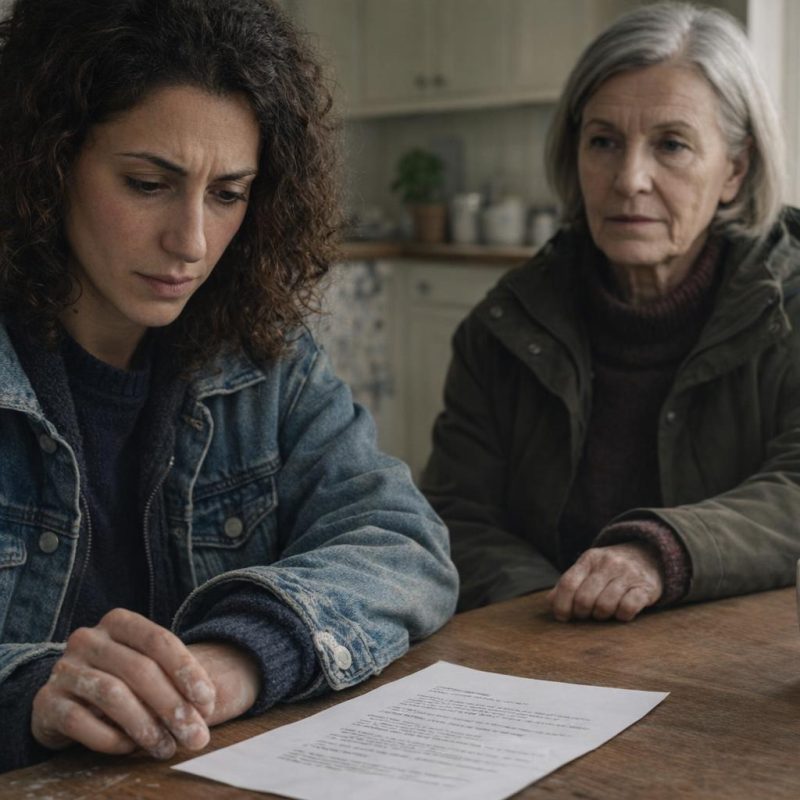 Image by RM AI
The Realization
I stayed at the table after Miriam finished talking, turning everything over. She let me. After a while she said something that cut through the noise in my head — she said every generation that had touched this thing had faced the same choice. You could protect the secret by keeping it, or you could protect it by ending it. Most people, she said, had chosen the first option. Not because they were cowards, necessarily, but because the cost of the second option was real and the people asking you to pay it weren't the ones who'd be paying alongside you. I thought about my father. I thought about what it must have taken to walk away and then spend the rest of his life not looking back. I thought about Silas, who had chosen the other path and spent fifty years carrying it alone. Miriam said the reason I was in danger wasn't only what I'd found — it was what I represented. Someone who hadn't been bought, hadn't been scared off, hadn't been worn down by time. She said Silas had known that about me. He'd left everything to me because I was the one person in the family who'd never wanted anything from him, which meant I was the one person they couldn't reach with an offer. The weight of that settled over me, not like a burden exactly, but like something I'd been carrying without knowing it and had finally set down in the right place.
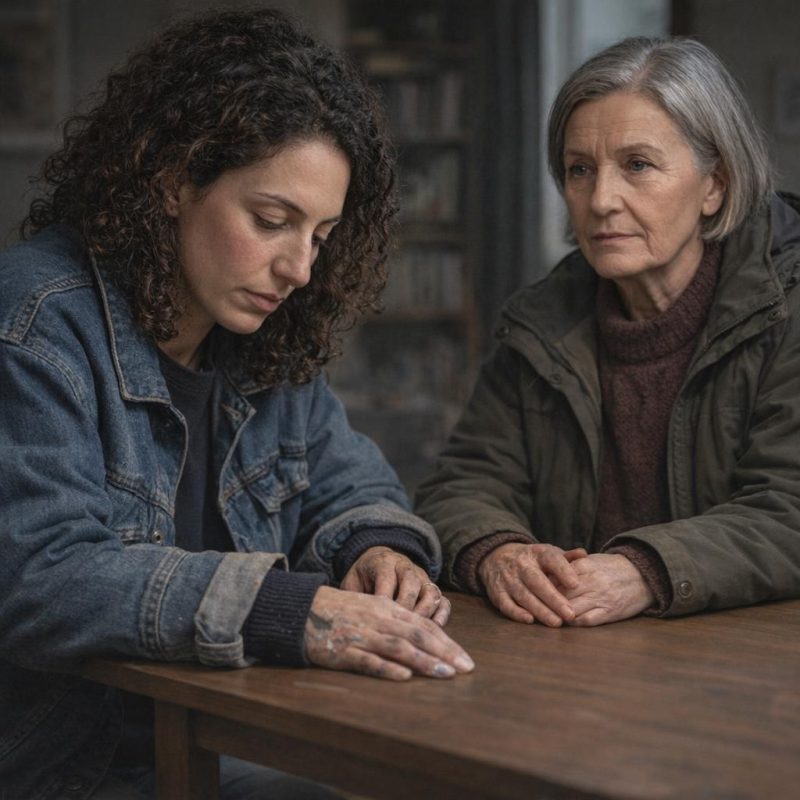 Image by RM AI
The Corporate Card
We'd been watching from the window for nearly twenty minutes when the third vehicle arrived — a dark sedan, the kind that costs more than most people's annual salary, moving slowly up the road like it already knew where it was going. A man got out. He was somewhere in his early fifties, suit jacket over a collared shirt, salt-and-pepper hair, shoulders squared and chin level in a way that drew the eye. He approached Greg and Sarah on the shoulder of the road. They talked for several minutes — I couldn't hear anything through the glass, just the shape of a conversation, Greg nodding, Sarah standing slightly back. Then the man reached into his jacket pocket and handed Greg something small. Miriam was already moving toward the sideboard. She came back with a pair of binoculars and pressed them into my hands without a word. I raised them to the window. Greg had the thing in his palm now, turning it once before sliding it into his jacket pocket — a business card, white with a dark green logo in the corner. I adjusted the focus until the text sharpened. The name on the card read: Cascade Timber Solutions.
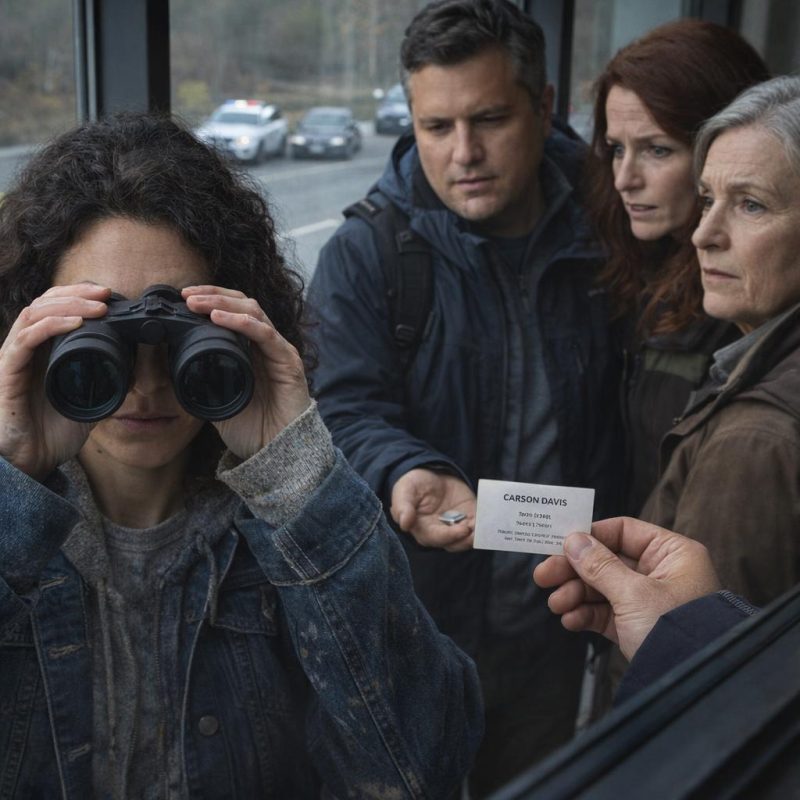 Image by RM AI
The Partial Truth
I lowered the binoculars and turned back to Miriam. She was already at the table, hands flat on the surface, looking at me like she'd been waiting years for this conversation. 'The artifacts,' she said, 'were never real.' I heard the words but it took a moment for them to land. She explained it slowly — the glass slides, the excavation photographs, the careful documentation of supposed ancient finds — all of it constructed to point investigators in the wrong direction. The site at Elowah Reach wasn't an archaeological mystery. It never had been. What was buried in those hills was something else entirely: evidence of environmental violations going back decades, corporate wrongdoing on a scale that would have meant criminal liability for people who had the money and the lawyers to prevent that from ever happening. Anyone who got close to the truth was steered toward the artifact angle, she said. Made to look like they were chasing fringe theories. Ancient civilizations. Pseudoscience. The kind of thing that gets a person dismissed before they finish a sentence. The journal, Miriam told me, held the real evidence. Not legends. Not maps to lost cultures. The truth was about corporate crime, and it had been sitting in my uncle's handwriting all along. I sat with that, the room quiet around me, the weight of what she'd said pressing down like weather.
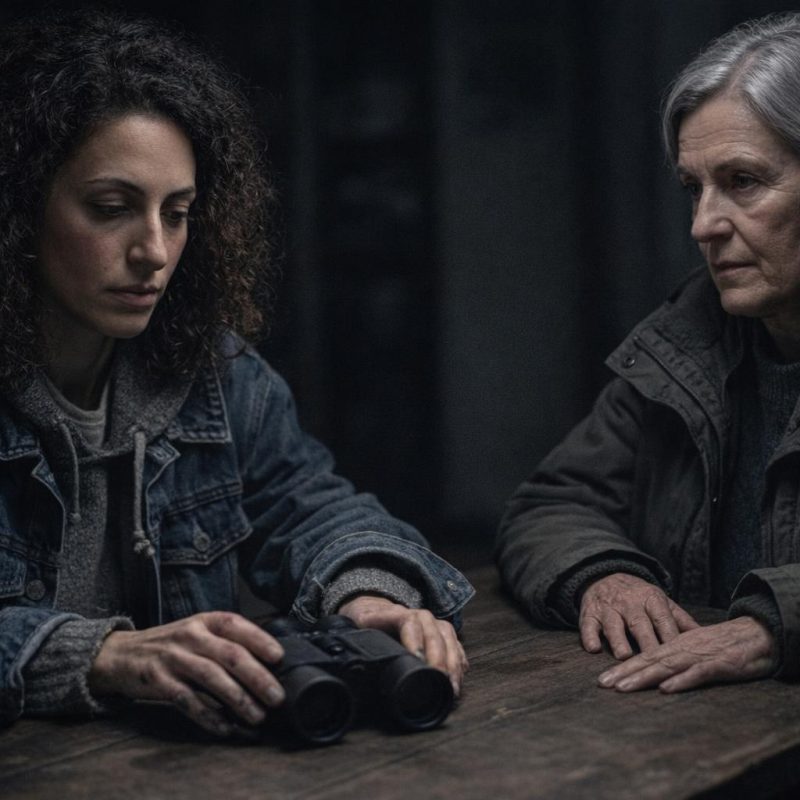 Image by RM AI
The Coded Sections
Miriam asked me to describe the coded sections — the ones I'd skipped over because they looked like technical gibberish. I closed my eyes and tried to pull them back. Lists of abbreviations, two or three letters followed by numbers, sometimes a decimal. Columns of figures I'd assumed were survey coordinates. 'Those aren't coordinates,' Miriam said. She pulled a worn notebook from the sideboard drawer and set it between us. The abbreviations were chemical compound designations — industrial solvents, she explained, heavy metals, compounds that had no business being anywhere near a watershed. The numbers were concentration measurements, recorded at specific locations across the site. Silas had been conducting environmental sampling for years, she told me, moving through those hills with equipment he'd built or borrowed, taking readings, logging everything in a system only he and a handful of others could parse. The dates in those sections ran from 1967 to 1974. Seven years of careful, methodical documentation. I thought about the entries I'd half-read, the ones that felt dry and impenetrable, and understood now that I'd been holding a scientific record without knowing it — a meticulous account of what had been put into the ground and what it was doing to everything around it. The careful documentation of substances that should never have been in those hills settled over me like cold air.
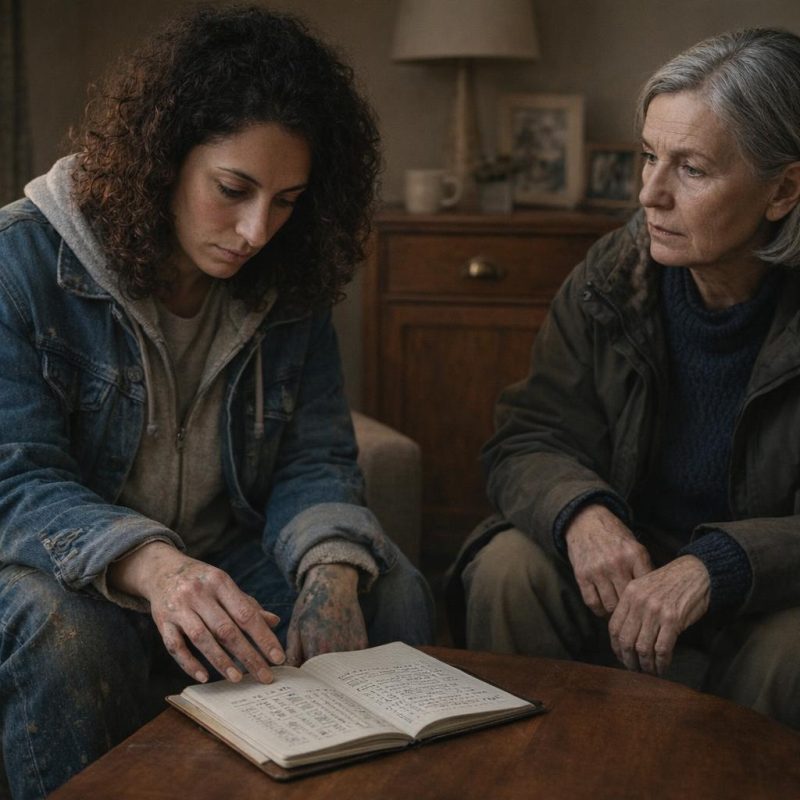 Image by RM AI
The Smoking Gun
Miriam asked if I'd noticed any folded papers tucked into the back of the journal. I had — I remembered them, a small sheaf of pages I'd taken for field notes or receipts, something administrative I'd meant to look at later and hadn't. She nodded like she'd expected that. Those weren't field notes, she said. They were shipping manifests. She crossed to a filing cabinet in the corner and came back with a folder, setting it open on the table between us. The copies inside were old, the ink faded at the edges, but the stamps were legible — dates, quantities, destination codes. She walked me through what I was looking at: chemical shipments routed to Elowah Reach, substances that had been banned from disposal in 1965, shipments that continued until 1974. The manifests showed not just what was transported but who authorized it, who signed off at each stage. This was the difference between suspicion and proof, Miriam said. Anyone could claim a corporation had done something wrong. These documents showed the chain of custody, the signatures, the paper trail that someone had gone to considerable effort to make disappear. She slid the folder toward me. I turned to the back of the journal in my memory, to those folded pages I'd barely glanced at — and then I looked down at the photocopied manifests in front of me, stamped in the upper corner with a name I didn't recognize but would not forget.
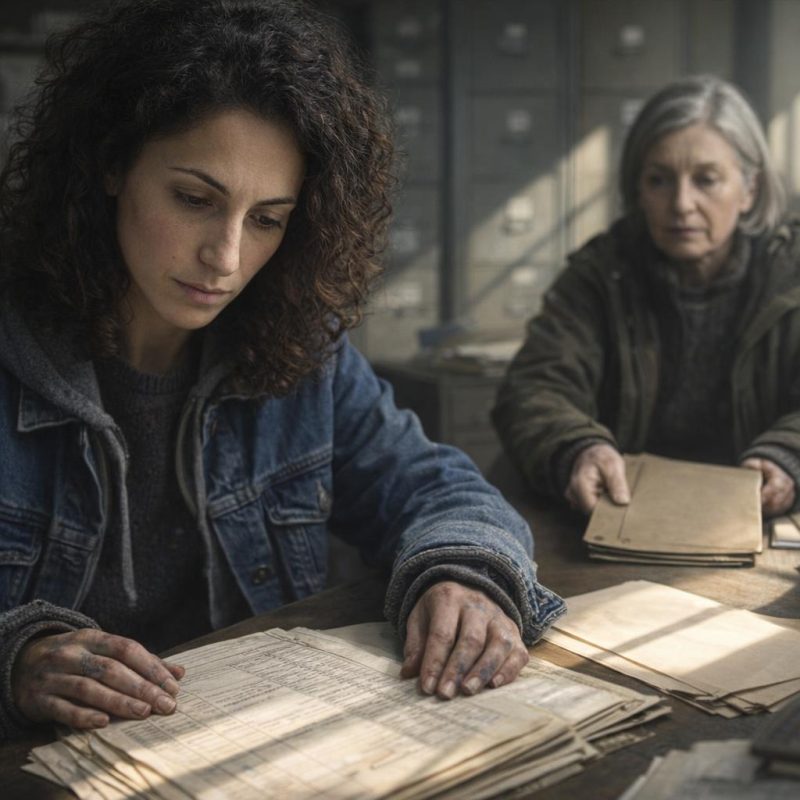 Image by RM AI
The Last Witness
Miriam said we needed to leave through the back. Greg and Sarah were still somewhere out front, and she wasn't willing to have that conversation in a driveway. We took her car, a battered Subaru that smelled of cedar and old paper, and she drove us across town without explaining where we were going until we pulled up in front of a small house on a quiet street, the kind of house that looks like it's been there so long it's become part of the ground. She knocked twice, then once more. The man who answered was in his late seventies, slight and trembling slightly at the hands, white hair sparse above a face that had seen decades of outdoor work. Miriam introduced him as Raymond. He'd been an equipment operator at Elowah Reach in the early 1970s, she said, and he stepped back to let us in without a word. The living room was dim and close, stacks of papers on every surface. Raymond moved to a side table and opened a shoebox with the careful deliberateness of someone handling something fragile. He'd taken the photographs secretly, he told me, over several weeks, hiding the camera under his jacket. He'd kept them for fifty years because he didn't know what else to do with them and was afraid to throw them away. His hands trembled as he held the photographs out — black and white images of barrels being lowered into open pits in the earth.
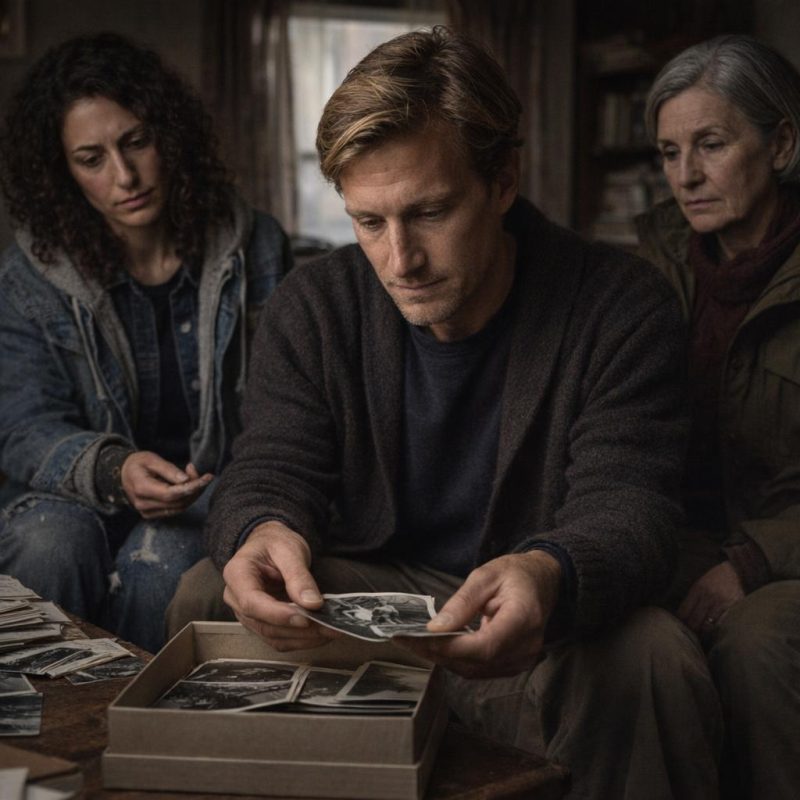 Image by RM AI
The Truth Revealed
Raymond sat down slowly and began to talk. The corporation had been dumping since 1965, he said — thousands of barrels across multiple sites, Elowah Reach among them. Workers were told the chemicals were inert, industrial byproducts, nothing to worry about. Most of them believed it because they had no reason not to. Then the cancers started. Raymond's brother developed leukemia at thirty-four and was dead within a year. Others followed. The corporation settled quietly, one family at a time, with agreements that required silence as a condition of payment. Miriam took over from there, her voice steady and flat. The artifact story hadn't emerged by accident. It had been seeded — fed to investigators, to journalists, to anyone who started asking questions about the site. The archaeological angle made the whole inquiry look ridiculous. Nobody wanted to be the reporter who got taken in by an ancient-aliens story. Witnesses were dismissed. Evidence was buried under layers of misdirection. And Silas, she said, had spent thirty years collecting what the corporation thought it had destroyed — chemical manifests, witness statements, death records, the photographs Raymond had hidden in a shoebox. He'd protected all of it. I sat there and felt the full shape of it come together at once: my uncle hadn't been guarding an archaeological mystery. He'd been the last line of defense against evidence of corporate manslaughter, and now that burden had passed to me.
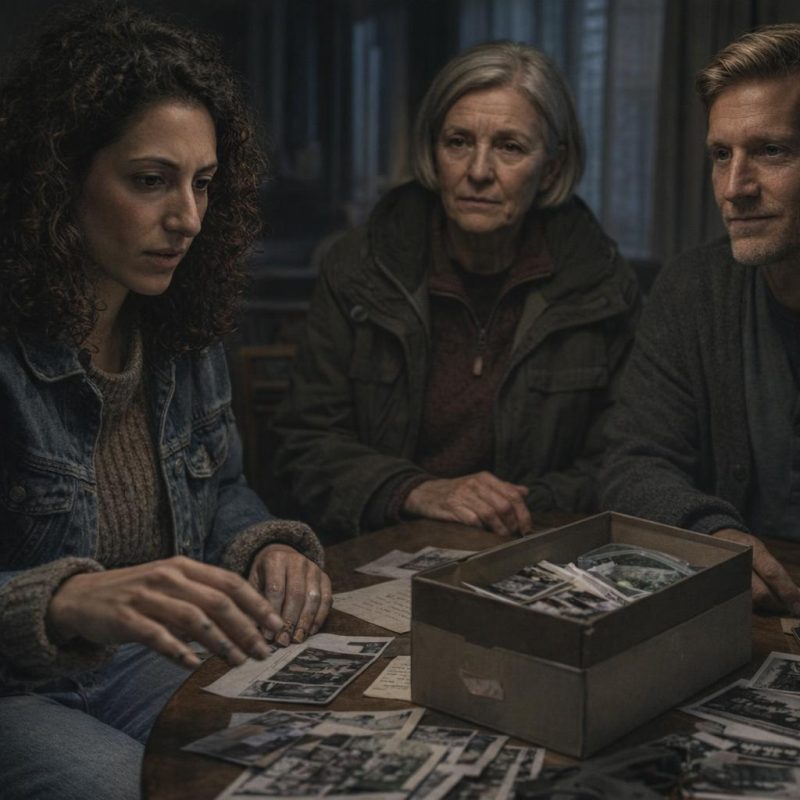 Image by RM AI
The Architecture of Silence
I kept thinking about the stories I'd grown up hearing. Silas was difficult. Silas was paranoid. Silas pushed everyone away and lived like a hermit in the hills because something had gone wrong with him, some essential social mechanism that the rest of us took for granted. My mother had said it with a kind of tired affection. Greg had said it with contempt. I'd accepted it the way you accept family mythology — as fact too old to question. Miriam watched me work through it and didn't rush me. She explained that the isolation had been the point. A man living alone in the backcountry, known for being erratic and difficult to deal with, wasn't someone a corporation's legal team would spend resources monitoring. His reputation as unstable made him seem harmless. No one would take his claims seriously even if he made them. He'd never married, never built close relationships, lived in poverty while sitting on evidence that could have made him wealthy if he'd been willing to sell it. He could have taken a settlement. He could have handed over the journal and lived comfortably for the rest of his life. Instead he'd chosen to be the guardian no one would suspect — and I understood now, with a clarity that felt like grief, that every strange choice he'd ever made had been a calculated survival strategy.
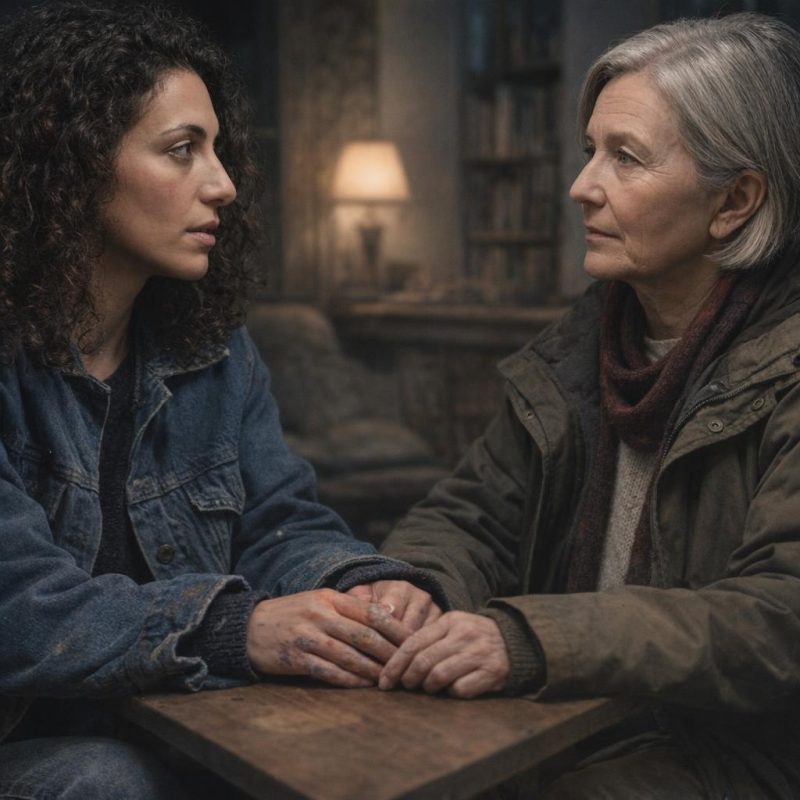 Image by RM AI
The Family Betrayal
I asked Miriam how the corporation had known to approach Greg and Sarah. She said it wasn't complicated — they monitored descendants of anyone connected to the original witnesses. When Silas died, they moved quickly. Greg and Sarah were contacted before the will had even been filed, she said, offered money to retrieve whatever evidence Silas might have left behind. They'd expected to inherit everything outright and had agreed to hand it over before they knew what they were agreeing to hand over. When the toolbox came to me instead, the arrangement shifted. They were tasked with following me, reporting my location, keeping track of what I found and where I went. The business card I'd seen Greg pocket in the driveway — that was from the corporation's legal team. Not a first contact. A check-in. I sat with that for a long time. I'd spent years feeling like the family outlier, the one who didn't fit, the cousin who got the sideways looks at holidays and the polite dismissals when she talked about her work. I'd told myself it was just the way families were, that some people clicked and some didn't. But Greg and Sarah hadn't been indifferent to me. They'd been assigned to me. And there was no version of that I could make feel like anything other than what it was.
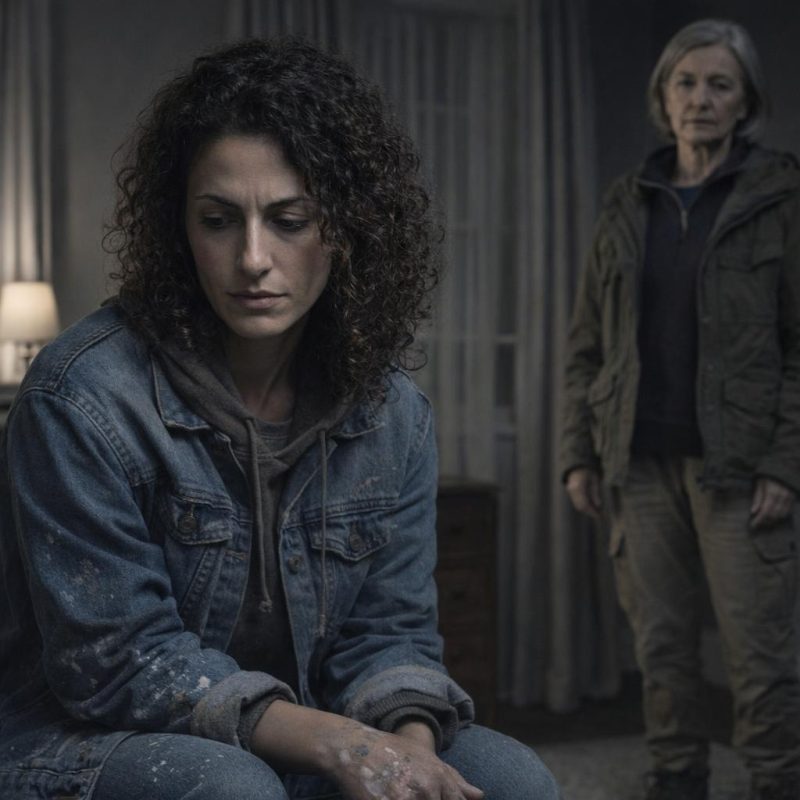 Image by RM AI
The Closing Net
Miriam didn't soften it. The corporation had a dedicated security team, she said — not rent-a-badge security, but people with resources and experience and a long history of making problems disappear quietly. They'd been tracking me since I left Portland. Greg and Sarah had been feeding them information the whole time: where I stopped, who I talked to, what I was carrying. They knew about the journal. Raymond shifted in his chair when she said that, his hands folding and unfolding in his lap. He told me quietly that other witnesses had disappeared over the years. Accidents, mostly. The kind that don't get looked at too hard. Miriam herself had survived two break-ins at her house, both times losing files but nothing she hadn't already copied and hidden elsewhere. I thought about the storage locker, the journal sitting inside it, and understood that hiding wasn't a strategy anymore — it was just delay. The evidence needed to be in the hands of someone who could act on it before the people looking for it got close enough to take it. Raymond looked at the floor. Miriam looked at me. The knowledge that every hour I waited narrowed the window sat in my chest, heavy and still.
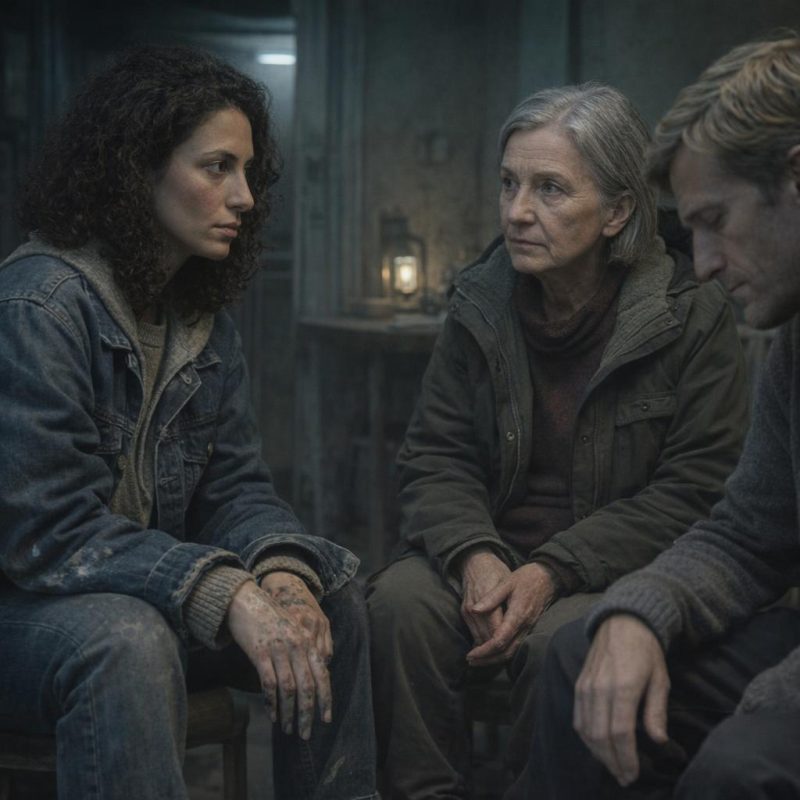 Image by RM AI
The Exposure Strategy
We spread everything out on Miriam's kitchen table — the journal, the manifests, Raymond's photographs — and started talking through what we actually had. Miriam was the one who said it plainly: hiding wasn't going to work anymore, and waiting was the same as losing. We needed to go public, and we needed to do it in a way that made suppression impossible. Raymond was the one who suggested simultaneous release. He'd been thinking about it, he said, for years — the idea that if you sent the same evidence to enough people at once, no single phone call could pull it back. Miriam started listing recipients out loud: two investigative journalists she trusted, the EPA regional director, the state attorney general's office, a federal environmental crimes unit. I wrote every name down. We'd photograph every page of the journal, every manifest, every slide. We'd create identical packets — digital and physical — and send them all at the same moment. I'd retrieve the journal and slides from the storage locker first thing in the morning. Once the evidence was in enough hands simultaneously, there was nothing left to suppress. We sat there in the quiet of her kitchen, and for the first time in days something that felt like a plan — a real one — started to take shape: multiple copies, multiple recipients, one simultaneous release.
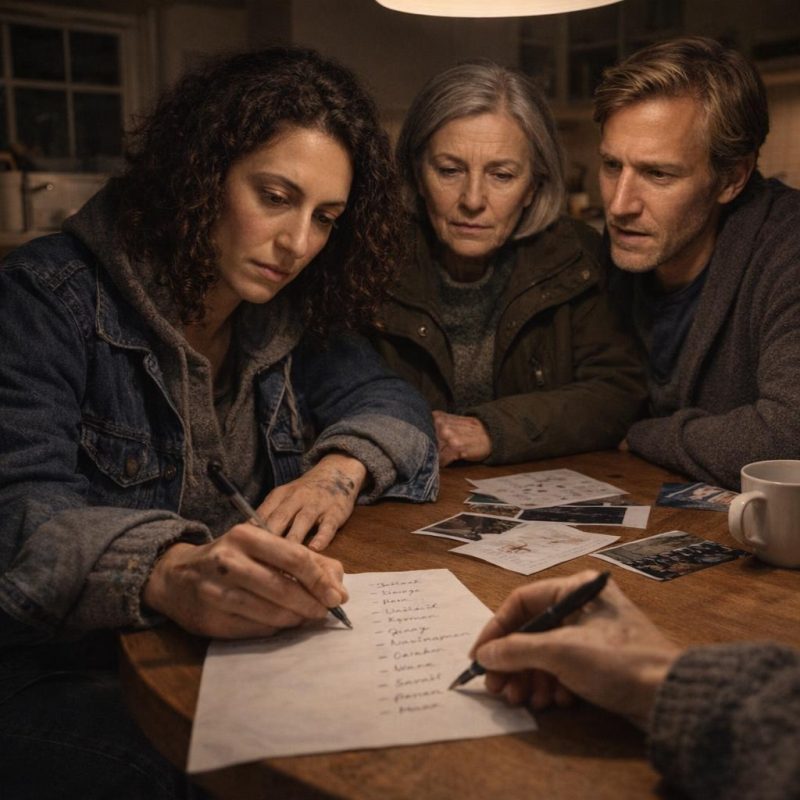 Image by RM AI
The Decision to Fight
Miriam didn't sugarcoat what going public would mean. She sat across from me and laid it out the way you'd lay out a map of bad terrain — methodically, without flinching. The corporation would come after my credibility first. They'd dig into my background, my finances, anything they could use to make me look unstable or motivated by money. They'd file injunctions, she said, and they'd find lawyers willing to drag it out for years. I sat there and thought about my apartment in Portland, the canvases stacked against the wall, the particular quiet of a Tuesday morning with coffee and good light. That life already felt like something I was remembering rather than something I could go back to. Silas had chosen me — not Greg, not Sarah — and I'd spent weeks trying to understand why. Sitting there, I thought I finally did. He needed someone who couldn't be bought and didn't have enough to lose to be scared off. Raymond looked at me from across the table and said if I led the way, he'd testify publicly — on record, on camera, whatever it took. He'd been waiting thirty years for someone to make it possible. I looked at Miriam. Then I told them both I'd do it — I'd be the public face of the release.
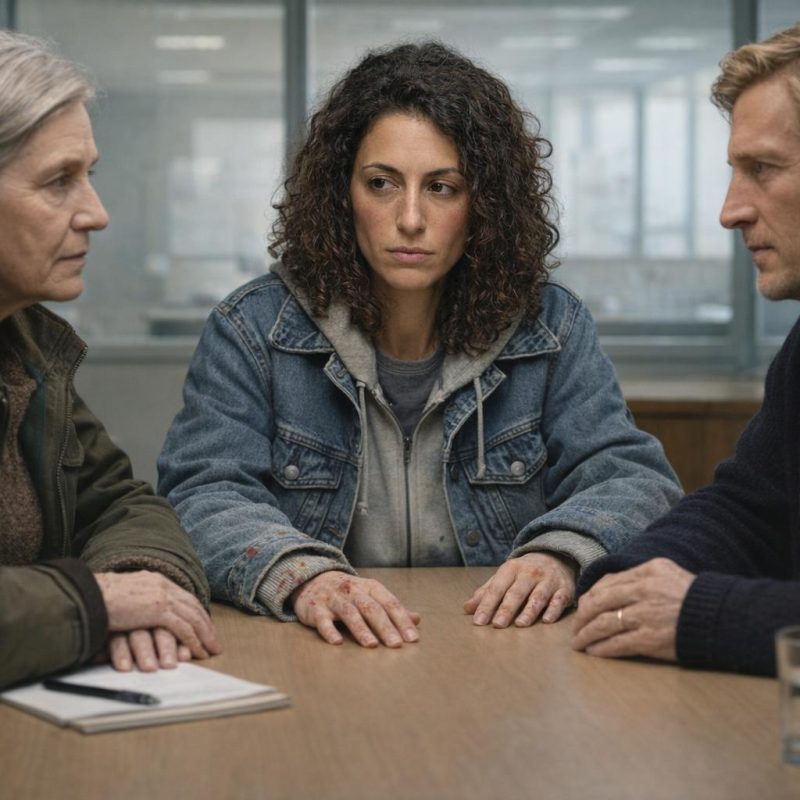 Image by RM AI
Return to Elowah Reach
I picked up the journal and the slides from the storage locker just after dawn, the unit's metal door rattling up in the gray morning quiet. We drove to Elowah Reach in Miriam's truck, Raymond in the back seat with his hands folded in his lap, navigating from memory. He hadn't been back since 1972, he said, but he remembered the landmarks the way you remember a bad dream — not because you want to, but because it won't let you go. The cedar grove looked the same as it had when I'd first found it: mist low between the trunks, the ground soft and dark, the smell of wet bark and something older underneath. Raymond walked slowly, stopping twice to orient himself, and then pointed to a section of ground near the base of a wide cedar where the soil had a different texture — slightly sunken, the moss thinner. He pointed to two more spots further in. Miriam moved between them with the soil testing equipment, pressing sample tubes into the earth while I photographed each location with GPS coordinates running on my phone. We worked fast and without much talking. The birds were quiet. The light barely reached the ground. I stood in the cedar grove with the journal under my arm and the soil samples in Miriam's bag, and the weight of what lay beneath my feet settled into me like cold water.
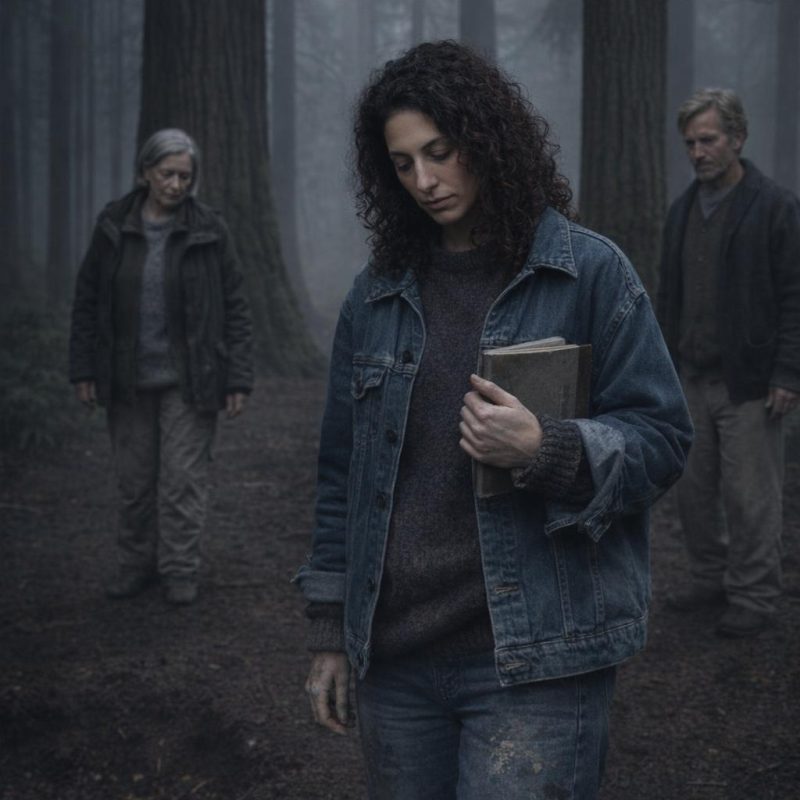 Image by RM AI
The Confrontation
We heard the SUVs before we saw them — tires on gravel, slow and deliberate, coming up the forest road. Two of them, black, moving without urgency because they didn't need to hurry. Four men in tactical gear stepped out first, spreading without being told to, positioning themselves at the tree line. Then the rear door of the second vehicle opened and Carlson stepped out. He was exactly as I remembered him from the documents Miriam had described — expensive suit, salt-and-pepper hair, the kind of posture that assumes the room already belongs to him. He said my name like he was reading it off a form. He told me I was trespassing on private property and that anything I'd collected needed to be surrendered immediately. I told him the land was a public preserve. He said the corporation held the mineral rights and that the distinction was something their legal team was prepared to clarify at length. Miriam stepped forward then and gave her name and her former EPA title in a flat, even voice. Carlson looked at her without surprise. He already knew who she was — I could see it in the way his expression didn't shift at all, not even slightly. The four men at the tree line hadn't moved. The road behind them was the only road out, and they were standing across it.
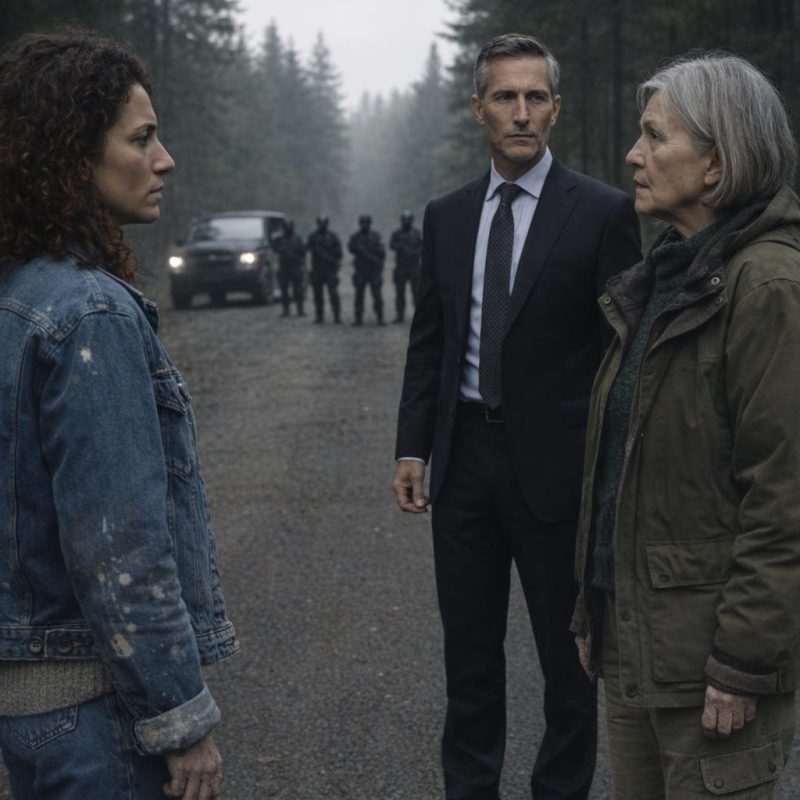 Image by RM AI
Greg's Revelation
Greg's truck came up behind the corporate SUVs about ten minutes later. He got out and walked toward us with his hands in his jacket pockets, and Carlson gave him a small nod — the kind between people who've met enough times that greetings are unnecessary. Greg looked at me and said I should have just taken the toolbox and left. He said Silas had been paranoid and the evidence was old and nobody was going to care. I asked him how much they were paying him. He told me. Two hundred thousand dollars. He said it like it was a reasonable answer to a reasonable question, like the number itself explained everything and I was the one being irrational for not seeing it. He said it was more than Silas's entire estate had been worth, more than I'd make in two years of selling paintings, and that I was throwing my life away for a dead man's obsession. I told him he was helping cover up the deaths of people who'd worked that site. He shrugged — actually shrugged — and said those people had been dead for fifty years and nothing I did was going to change that. I looked at my cousin and tried to find something familiar in his face. There was nothing there I recognized — just the flat, patient look of someone who had already decided the math worked out.
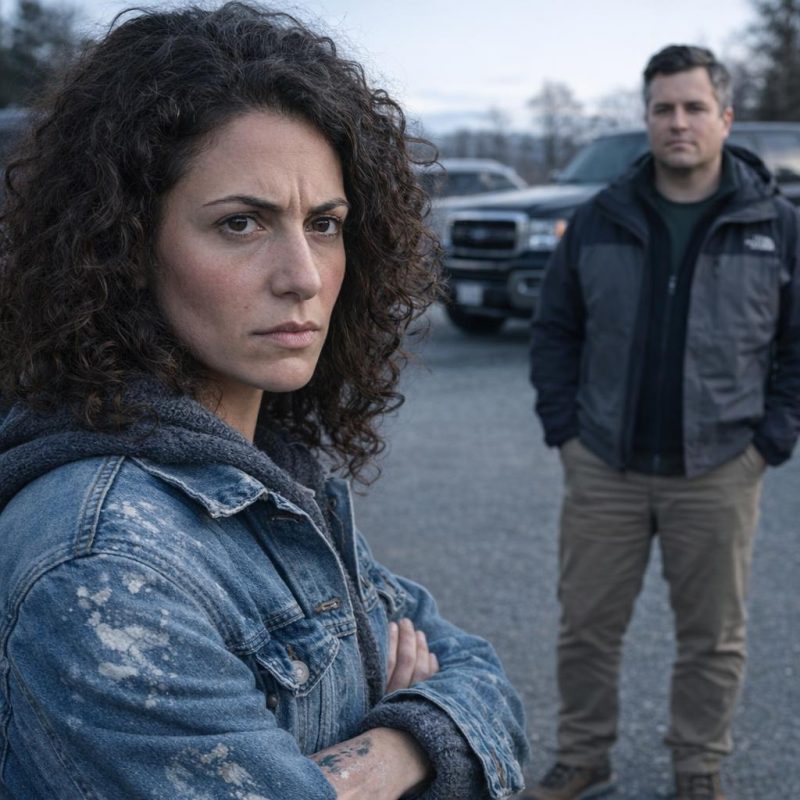 Image by RM AI
Sarah's Turn
Sarah's car came up the road while Greg was still talking. He turned and his expression shifted — relief, I think, assuming she was there to back him up. She got out carrying a manila folder held against her chest, walked past Greg without looking at him, and stopped in front of me. Greg said her name once, sharp. She didn't turn around. She told me she'd been documenting everything since Carlson first contacted them — emails, contracts, recorded phone calls with the corporate legal team. She said she'd told herself it was just business, that the evidence was old and the people were gone and the money was real. Then she found out about the workers who'd gotten sick. The ones who'd died. She said she couldn't make the math work after that, no matter how many times she tried. Greg stepped toward her and told her she had no idea what she was doing. Carlson said something quiet to the men at the tree line. Raymond put his hand on Miriam's arm. I watched Sarah's face — she looked tired more than anything, like someone who'd been carrying something heavy for a long time and had finally decided to set it down. She held the folder out to me, and I took it: emails, contracts, a full paper trail of the corporation's plan to destroy the evidence.
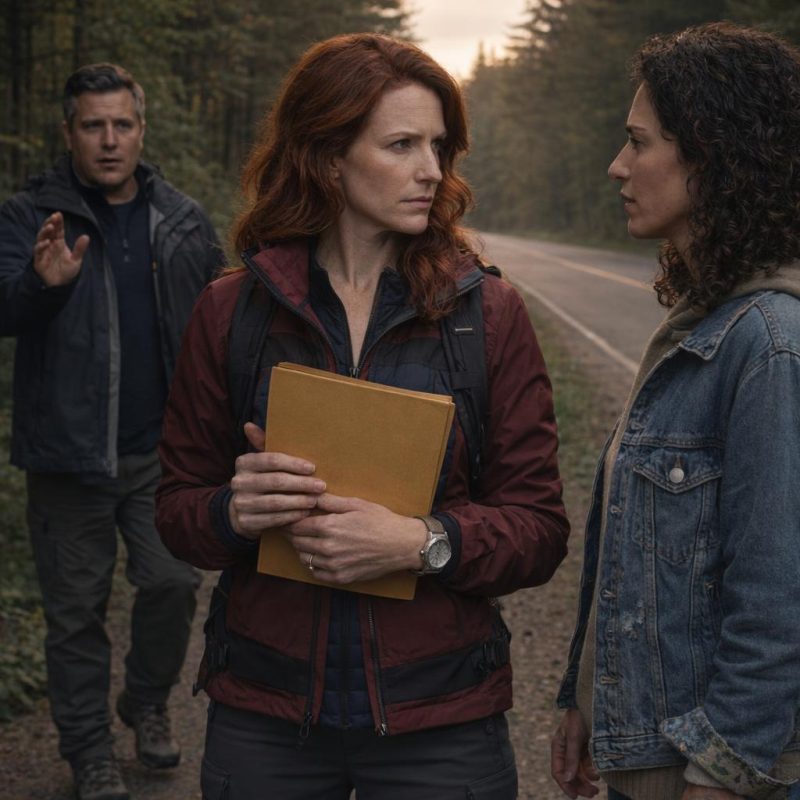 Image by RM AI
The Evidence Secured
Sarah had a satellite internet device in her car — she'd brought it deliberately, she said, in case things went sideways. We set it up on the hood of Miriam's truck while Carlson watched from twenty feet away and the security team held their positions at the road. I uploaded the scanned journal pages first, then the manifests, then my GPS-tagged photographs of the burial sites and Miriam's soil sample data. Sarah fed in her folder — the emails, the contracts, the recorded calls — and compressed everything into identical packets. I sent three to investigative journalists Miriam had named. Miriam sent directly to the EPA regional director and the national headquarters. Raymond dictated the state attorney general's address from memory and I sent his packet myself. Sarah transmitted her documentation separately to the federal prosecutor's office. Carlson took two steps toward us and one of the security men put a hand on his arm — even they could see it was already done. The confirmation messages started arriving in under four minutes. First one journalist, then the EPA, then the attorney general's office, each reply landing on my screen in quick succession while the cedar trees stood silent around us and the morning mist began to lift.
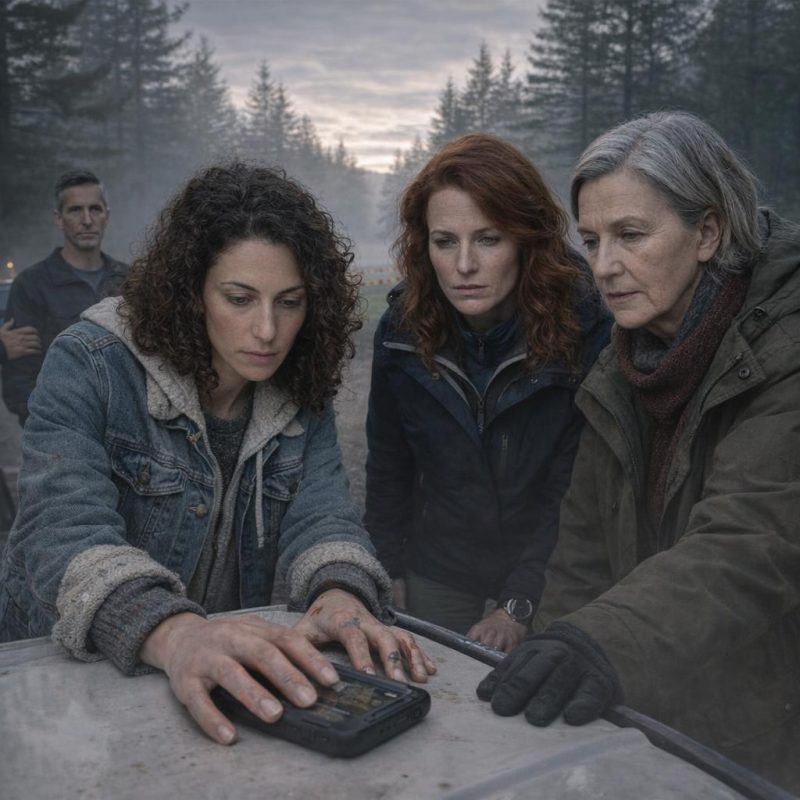 Image by RM AI
Federal Intervention
The FBI vehicles came up the forest road less than two hours later — three of them, with an EPA criminal investigation unit right behind. Agents fanned out across the site with the kind of practiced efficiency that made Carlson's security team step back without being asked. An agent in a dark jacket identified herself and told us the evidence packets had been received and verified. She said the site was now a federal environmental crime scene and asked us not to leave. Raymond sat down on a fallen log and let out a long breath. Miriam gave her statement standing up, her voice steady, thirty years of documentation delivered in careful sequence. I gave mine after, answering every question I could, handing over the journal and the original slides and every photograph on my phone. Sarah sat in her car with two agents and her folder of documents spread across the dashboard. Greg was standing near his truck with an agent on either side of him, not in handcuffs yet but not going anywhere either. Carlson had said nothing since the FBI arrived — just stood with his arms at his sides, jaw set, watching the agents move through the cedar grove toward the burial sites Raymond had marked. Then one of the agents walked up to Carlson, said something I couldn't hear, and I watched them put the handcuffs on.
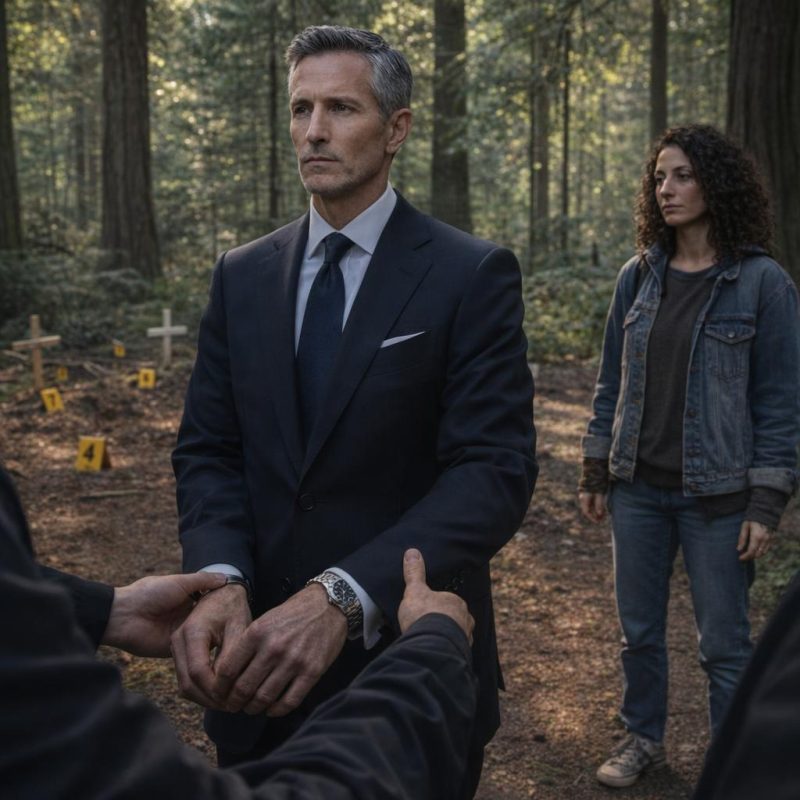 Image by RM AI
The Arrests
The news broke before we'd even made it back to town. Miriam had her phone out in the passenger seat, reading headlines aloud while I drove, and Raymond sat in the back with his hands folded in his lap like a man in church. By the next morning, three Cascade Timber Solutions executives had been charged — environmental crimes, conspiracy, obstruction — and the investigation had already expanded to sites we hadn't even known to look for. The company's stock dropped forty percent before trading was halted. I sat with Miriam and Raymond in the small motel room she'd booked, the television on low, watching reporters stand in front of corporate headquarters in Seattle with their microphones and their careful language. Raymond didn't say anything for a long time. Then he said, quietly, that his brother's name was Thomas, and that Thomas had been twenty-six years old. Miriam put her hand over his. Sarah had been granted immunity in exchange for her cooperation, which I understood even if I couldn't quite feel good about it. Greg was facing charges for evidence tampering and conspiracy, and I found I had nothing left to feel about that either — just a hollow, bone-deep tiredness. Then the broadcast cut to footage of three men in suits being walked out of a glass office tower, hands cuffed behind them, cameras flashing on every side.
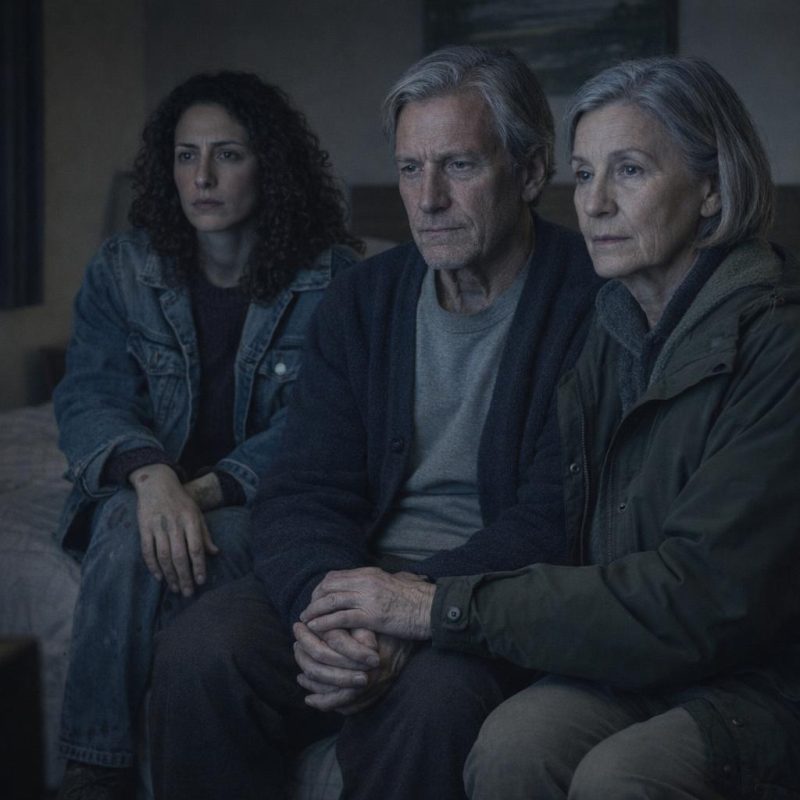 Image by RM AI
The Story Goes Public
The first interview request came from a producer in Portland, and within three days there were eleven more — television, radio, two national newspapers, a documentary team out of New York. I said yes to most of them. I didn't feel ready, but Miriam told me that ready wasn't the point, and I believed her. I sat under studio lights and told the story as plainly as I could: the rusted toolbox, the map, the cedar grove, the barrels, the names in Silas's journal. I explained what a thirty-year vigil looked like from the outside — the isolation, the meticulous records, the decision to trust a niece he hadn't seen in years with something that had cost him everything. Reporters kept asking me how it felt to be the one who finally brought it to light, and I kept trying to redirect them, because the truth was that Silas had carried it to the edge of the light himself. I just picked it up from there. Miriam gave her own interviews with the same careful precision she'd brought to thirty years of documentation. Raymond spoke once, briefly, about his brother Thomas, and I watched the interviewer go very still while he talked. After the last camera crew packed up and left, I sat alone in the quiet of the motel room, and the silence felt like something Silas had left behind on purpose — a space he'd always meant for the truth to fill.
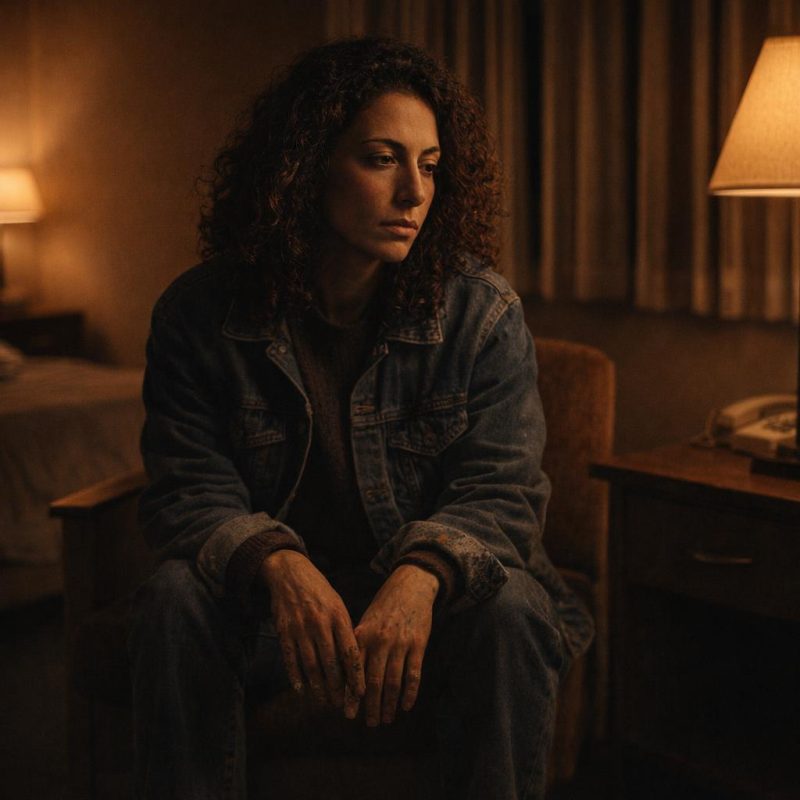 Image by RM AI
The EPA Investigation
The EPA team arrived at Elowah Reach with ground-penetrating radar and a crew of twelve, and what they found over the following weeks was worse than any of us had let ourselves imagine. The excavation at the primary site turned up hundreds of barrels — some corroded through entirely, their contents already bleeding into the soil and the water table below. Miriam was brought in as a consultant, and I watched her walk the site with the lead investigator, pointing to areas she'd flagged in her original 1978 report, her voice steady and her face unreadable. The agency formally reversed her termination and issued a written apology. She read it once, folded it, and put it in her jacket pocket without comment. As the weeks passed, the investigation spread outward — Oregon, Washington, Idaho — and the pattern that emerged was the same at every location: the same methods, the same corporate paper trail, the same silence purchased at the same price. Twelve additional sites were identified. The estimated cleanup cost crossed five hundred million dollars and kept climbing. I drove out to the Reach one evening after the crews had gone and stood at the edge of the tree line, looking at the excavated ground, the flagged markers stretching further than I could see. The fir trees stood at the perimeter, unchanged, holding their quiet over all of it.
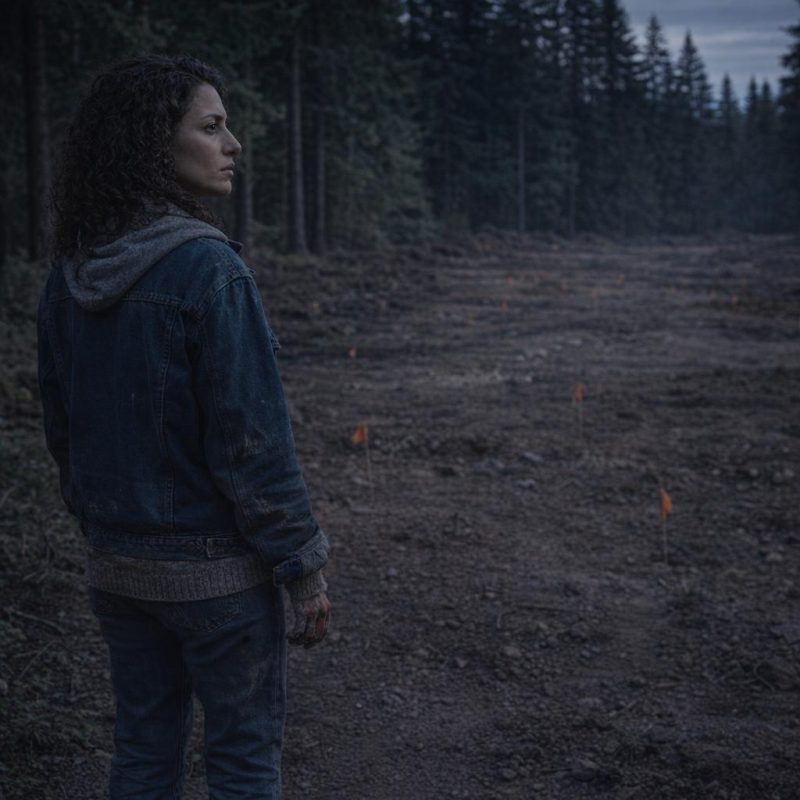 Image by RM AI
The Guardian's Mantle
The EPA's designation of Elowah Reach as a protected federal site came through on a Tuesday, and the paperwork for the guardianship followed two days later. Arthur drove up from Portland with a folder of documents and spread them across the table in Miriam's kitchen. He explained each page in his careful, deliberate way, and I listened to all of it. Raymond sat at the far end of the table with his coffee, and Miriam stood near the window with her arms crossed, watching me the way she had from the beginning — like she already knew what I was going to do and was just waiting for me to catch up. We had already spent two weeks working through the structure of the Silas Hartley Foundation for Environmental Justice — the mission language, the board composition, the whistleblower support protocols. Raymond had agreed to serve on the board without hesitation. I thought about Silas alone in that cedar grove for thirty years, keeping faith with something most people would have let go of long before. I thought about the workers whose names were in his journal, and the ones whose names weren't. I picked up the pen Arthur had set beside the signature line, and I signed my name to the page that made me the legal guardian of the site Silas had protected for thirty years.
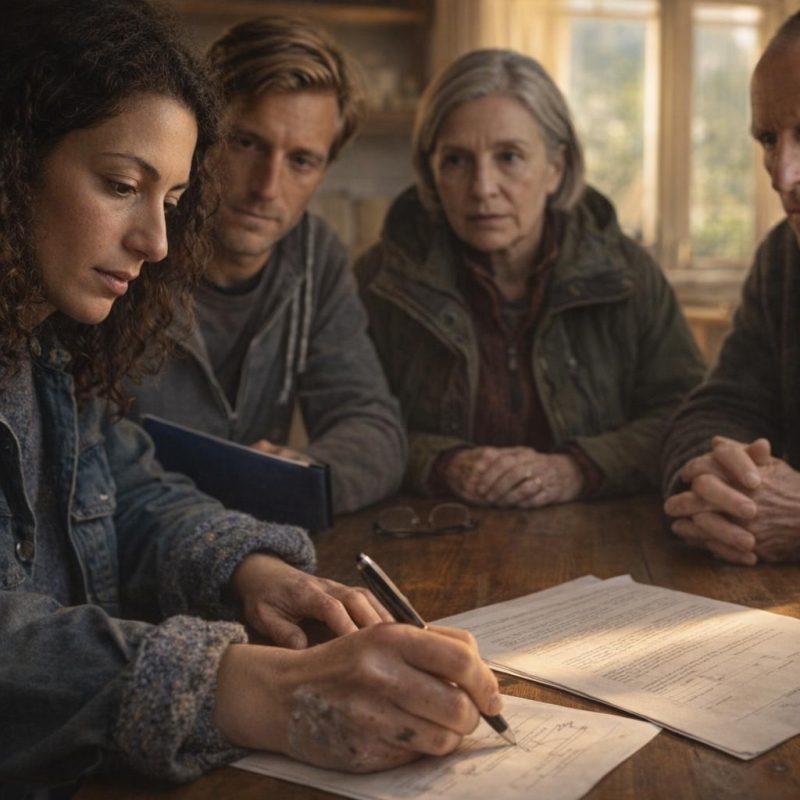 Image by RM AI
KEEP ON READING
From Heroes To Zeroes 20 Historical Figures Whose Heroism Was…
History is full of legends, but not every hero lived…
By Noone Feb 25, 2026
The Clueless Crush: How I Accidentally Invited a Hacker Into…
Fluorescent Lights and First Impressions. My name is Tessa, I'm…
By Ali Hassan Nov 4, 2025
This Infamous Ancient Greek Burned Down An Ancient Wonder Just…
History remembers kings and conquerors, but sometimes, it also remembers…
By David Davidovic Nov 12, 2025
Einstein's Violin Just Sold At An Auction—And It Earned More…
A Visionary's Violin. Wanda von Debschitz-Kunowski on WikimediaWhen you hear…
By Ashley Bast Nov 3, 2025
The Mysterious "Sea People" Who Collapsed Civilization
3,200 years ago, Bronze Age civilization in the Mediterranean suddenly…
By Robbie Woods Mar 18, 2025
20 Historical Figures Who Lived Much Longer Than You Think
Some Famous Lives Stretched Far. History has a way of…
By Christy Chan May 22, 2026