

My Ex-Husband Left Me a Mysterious Key Instead of Money—When I Found Out Why, His Widow's Smile Vanished
My Ex-Husband Left Me a Mysterious Key Instead of Money—When I Found Out Why, His Widow's Smile Vanished
The Call That Changed Everything
I was folding laundry on a Tuesday afternoon — the kind of unremarkable Tuesday that smells like fabric softener and has no ambitions — when the phone rang. I almost let it go to voicemail. The number was unfamiliar, a local area code I didn't recognize, and I had a basket of towels that weren't going to fold themselves. But something made me pick up. The man on the other end introduced himself as Richard Payne, attorney-at-law, and asked if he was speaking with Elaine. I said yes, still holding a half-folded hand towel. He told me, in the measured tone of someone who delivers difficult news for a living, that his client Martin Patterson had passed away eleven days prior, and that Martin had left specific instructions for me to be contacted regarding his estate. I told him he must have the wrong person. Martin and I had divorced nearly twenty years ago. I hadn't spoken to the man in at least fifteen years. Richard said, gently but firmly, that he understood, and that Martin had been quite specific. I stood there in my kitchen with that half-folded towel pressed against my chest, and the weight of Martin's name — spoken out loud after all that silence — settled over me like something I hadn't known I was still carrying.
 Image by RM AI
The Thirty-Six Hour Debate
I spent the better part of thirty-six hours talking myself out of going, and then talking myself right back into it, and then out again. I made a list of reasons not to attend — it was a long list. I didn't know these people anymore. I hadn't been part of Martin's life in nearly two decades. Whatever he'd left me was probably symbolic at best, and showing up would only make me look like I was clinging to something that had been over for years. And then there was Cheryl. Martin's spouse. The woman who had moved into the space I'd vacated with what felt, at the time, like indecent speed. Walking into that room meant walking into her territory, and I had no illusions about how that would feel. I'd be the ex-wife, the relic, the woman who didn't quite fit the story they'd been telling about Martin's life. I poured a lot of coffee during those thirty-six hours. I stared at Richard Payne's business card on my kitchen counter until the edges blurred. I kept coming back to the same question: why would Martin leave me anything at all? We hadn't spoken. We hadn't written. Whatever thread had once connected us had gone slack a long time ago. Curiosity is a stubborn thing, though. It doesn't care how undignified it looks. I called Richard Payne's office the next morning and told his assistant I would be there — knowing full well that Cheryl would be sitting in that room when I walked in.
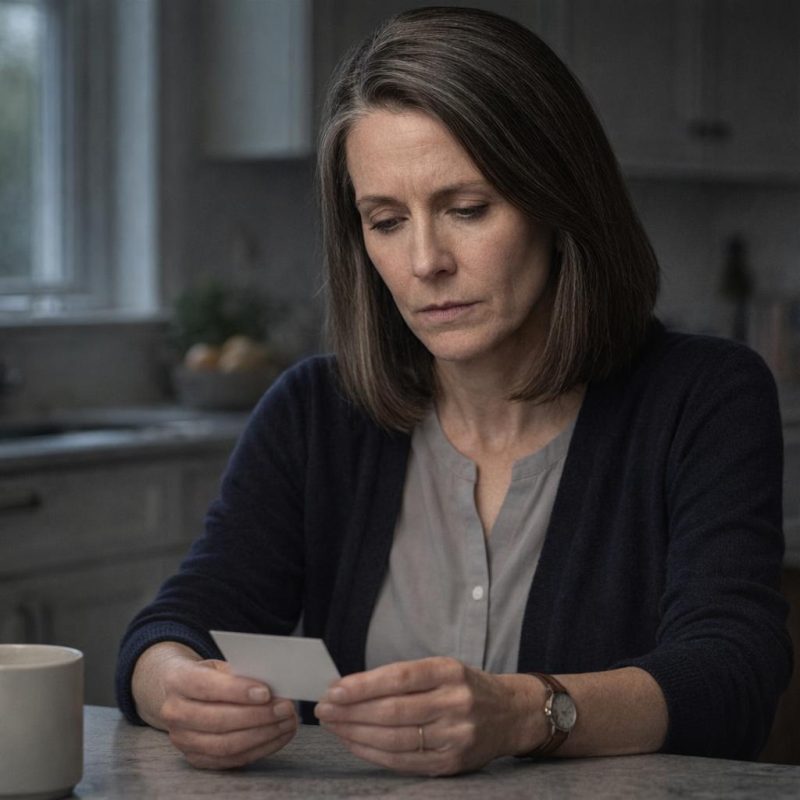 Image by RM AI
Twelve Years and One Divorce
Martin and I were married for twelve years, and for most of them, I thought we were happy in the quiet, unremarkable way that good marriages often are. We weren't dramatic people. We didn't fight loudly or love loudly. We built things slowly — a house, a routine, a shared shorthand for the small frustrations of daily life. I thought that counted for something. When it ended, it ended completely. No gradual cooling, no long negotiation — just a door closing with a finality that still surprised me when I thought about it. I signed the papers. I moved out. I told myself it was survivable, and it was, though surviving and being fine are not always the same thing. What I hadn't anticipated was the speed of what came next. Within a year, Martin had married Cheryl. She came with two children from a previous relationship — Derek and Melissa — and from everything I could piece together from mutual acquaintances who eventually stopped mentioning it out of kindness, Martin had absorbed them all into his life without apparent difficulty. New family. New photographs on the walls. New everything. I used to wonder, in the years right after, whether our twelve years together had simply been practice — a dress rehearsal for the life he actually wanted. I never found a satisfying answer to that. And now, sitting with the news of his death, I found myself wondering why, after all of it, he had remembered me at all.
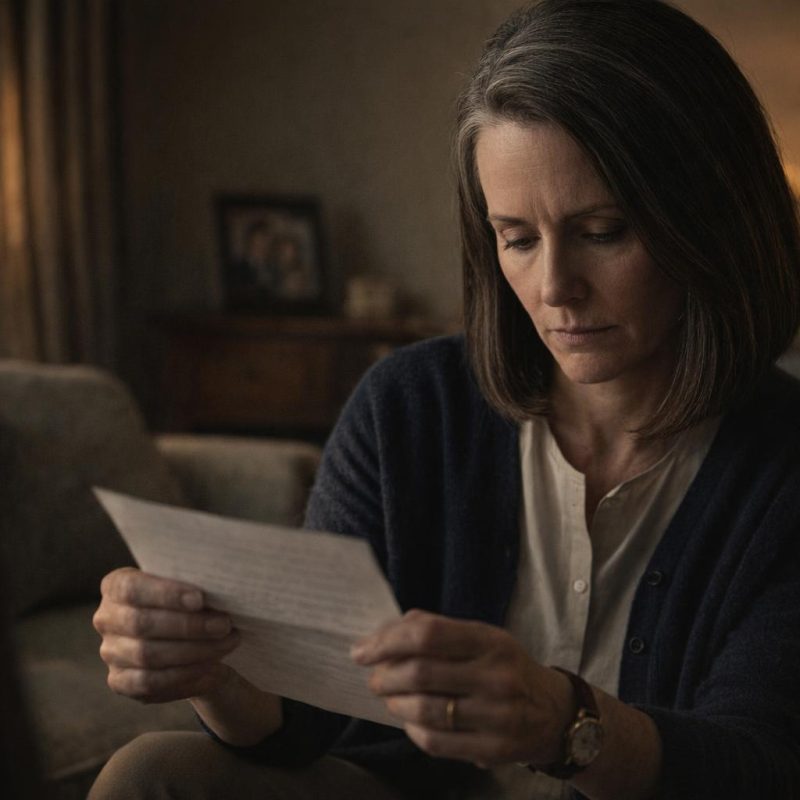 Image by RM AI
Preparing for the Inevitable
The morning of the will reading, I stood in front of my closet for longer than I care to admit. I wasn't trying to impress anyone — that ship had sailed about eighteen years ago. I was trying to find something that said I belonged in the room without trying too hard to say it. I settled on a grey cardigan over a dark blouse, sensible shoes, nothing that could be read as either desperate or defiant. Practical. That was the word I kept using to myself. I was being practical. I'd seen Cheryl exactly twice in eighteen years. The first time was at a mutual friend's retirement party, about four years after the divorce. She'd looked through me the way you look through a window when you're focused on something outside — not hostile, just absent, as if I occupied no meaningful space in her field of vision. The second time was at a grocery store, maybe six years after that. Same thing. A flicker of recognition, then nothing. I didn't exist in any version of her world that mattered. I knew walking into that office would be more of the same, only deliberate and witnessed. I reminded myself that curiosity had brought me this far, and curiosity was a reasonable thing to honor. But as I locked my front door and walked to my car, what settled in my chest wasn't resolve — it was the quiet, familiar dread of knowing that Cheryl would look right through me again, and this time there would be an audience.
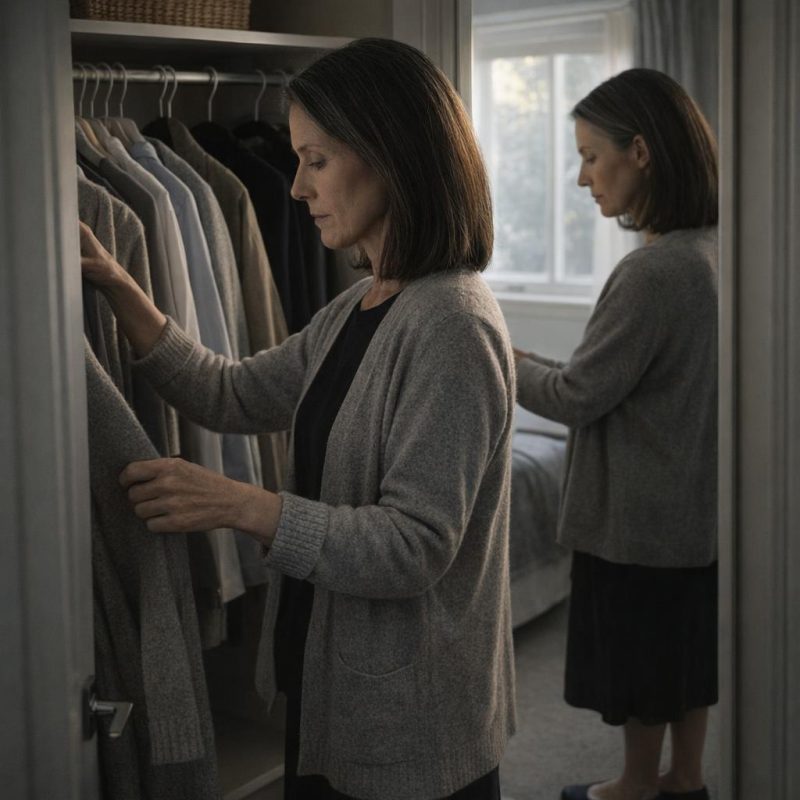 Image by RM AI
The Law Office
The law office was exactly what I'd expected — dark wood paneling, leather chairs, the particular hush of a place where money changes hands in hushed tones. I arrived at exactly the appointed time, which meant I was the last one there. They were already seated when Richard's assistant showed me in, and the room rearranged itself in my perception the moment I crossed the threshold. Cheryl sat in the center chair with the posture of someone who had decided in advance that this room belonged to her. Her ice-blue eyes moved to me the instant I appeared, catalogued my grey cardigan and sensible shoes in approximately one second, and moved away. That was it. That was the greeting. Derek sat to her right in a suit that probably cost more than my car, his sharp features arranged into an expression of mild contempt that seemed to be his resting state. Melissa was to Cheryl's left, scrolling through her phone with the practiced indifference of someone who wanted everyone in the room to know they had better places to be. Nobody spoke. Nobody nodded. The silence wasn't accidental — it had a texture to it, a deliberate density that pressed against my sternum as I stood in the doorway. Richard Payne rose from behind his desk and was the only person in the room to make eye contact with any warmth. He gestured toward the empty chair at the far end of the table, and every eye in the room tracked me as I crossed the floor to take it.
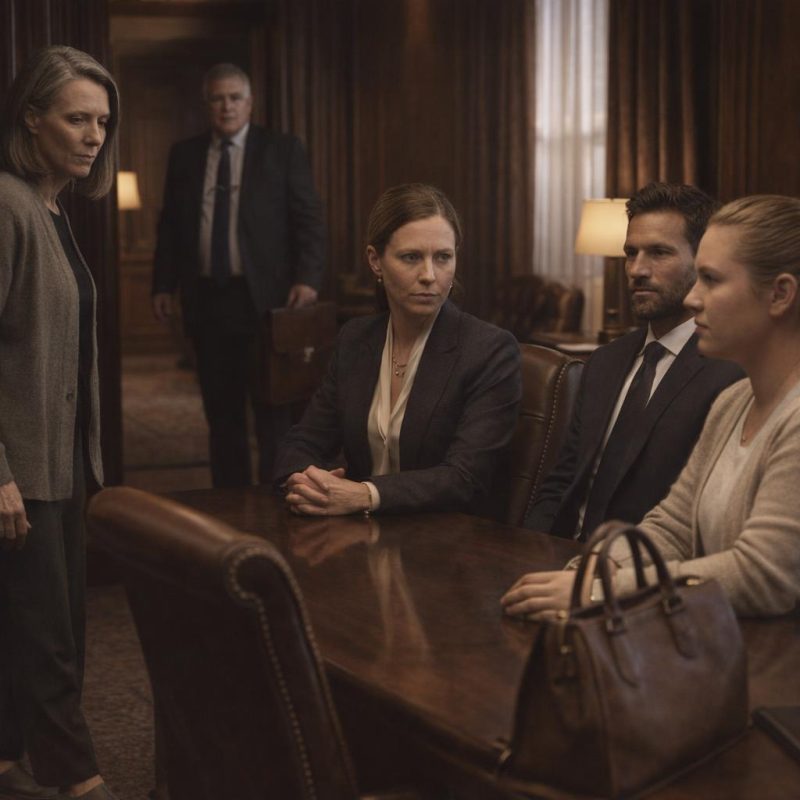 Image by RM AI
The Distribution Begins
Richard began reading in the flat, clinical tone of a man who had done this hundreds of times and had learned to keep his own feelings entirely out of it. Martin's estate was modest but organized — the will of someone who had thought carefully about what he was leaving behind. The house in Belmont, where Cheryl had lived for sixteen years, went to Cheryl. Richard read it without inflection. Cheryl's chin lifted almost imperceptibly. Derek received Martin's truck and fifteen thousand dollars. Melissa received the sedan and an equal sum. There were small bequests to a veterans' group Martin had supported for years and to the local library — the kind of quiet generosity that told you something about a person. I sat with my hands folded in my lap and felt the weight of Cheryl's gaze moving over me at intervals, measuring, assessing. I wondered, not for the first time since Richard's phone call, why I was here. I had watched Martin's life — the life he'd built after me — get distributed to the people who had filled it, and I felt something I hadn't expected: a low, genuine sadness that had nothing to do with money. He had built something real here, even if I'd had no part in it. I was still sitting with that thought when Richard paused, reached into a flat box on the corner of his desk, and said my name.
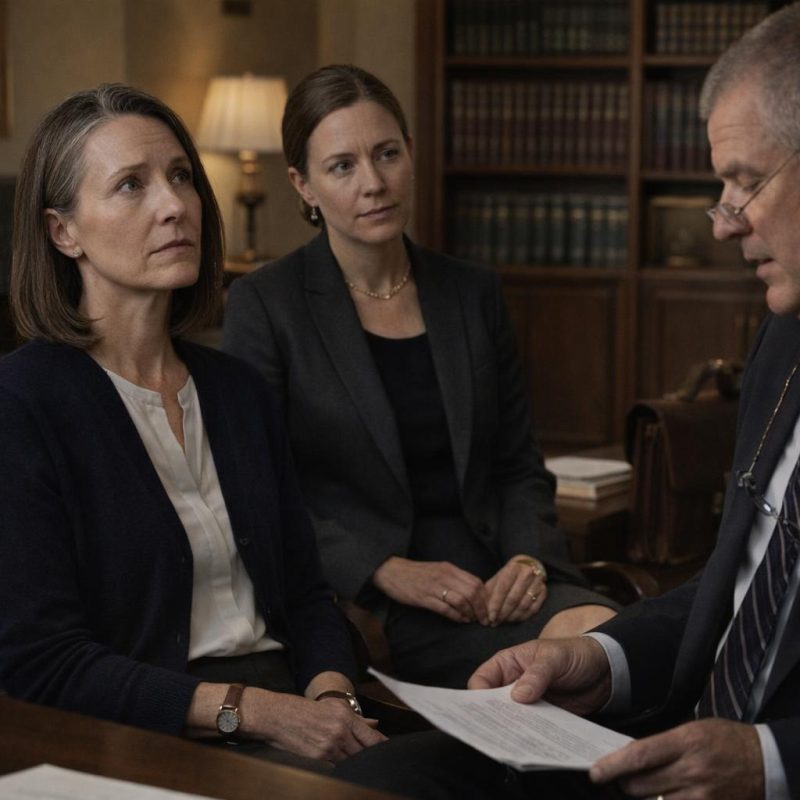 Image by RM AI
The Brass Key
Richard slid the box across the desk toward me, and I opened it slowly, my hands not entirely steady. Inside, on a square of faded velvet, sat a single brass key on a cracked leather fob. The leather was dark with age, nearly black at the edges, and the brass had gone green in the grooves. Stamped into the fob in letters I had to tilt toward the light to read were the words 'Starlight Motel' and, below that, 'Room 12.' The Starlight had been torn down years ago — there was a CVS where it used to stand, which felt like its own kind of joke. Cheryl's laugh came sharp and short, the sound of someone who wanted the room to know they found this beneath contempt. Derek muttered something about inheriting worthless memories. I didn't look up. I was staring at a small crescent-shaped nick on the side of the brass, just below the bow of the key. I knew that nick. I had made it myself in the summer of 1989 with a nail file, after we'd locked ourselves out and I'd been trying to improvise. Martin had kept this key for thirty years. He had carried it, or stored it, or held onto it through a divorce and a remarriage and an entire second life — and he had left it to me. I turned the key over in my palm, and that was when I noticed the sliver of paper tucked beneath the leather loop.
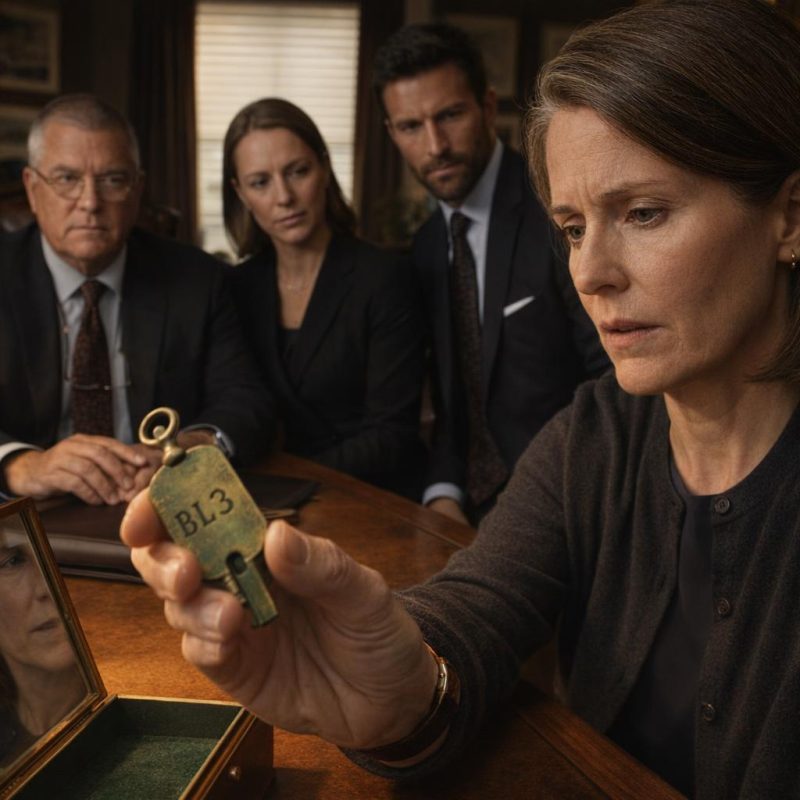 Image by RM AI
Three Lines in Martin's Hand
I kept my hands below the edge of the table as I worked the paper free. It was small, folded twice, the kind of note you'd pass in a classroom. I unfolded it carefully, smoothing the crease with my thumbnail, and recognized Martin's handwriting immediately — that familiar slanted scrawl that leaned slightly to the left, as if the words were always in a mild hurry. Three lines. That was all. 'Route 16. Mile marker 204. Ask for Box 7.' My pulse hammered in my ears. I read it twice, then a third time, as if the words might rearrange themselves into something I already understood. They didn't. I had no idea what Box 7 was, or what waited at mile marker 204, or why Martin had gone to the trouble of hiding this from everyone else in the room. I was still staring at the note when I felt the shift — Cheryl had gone quiet. I looked up. She was leaning forward slightly, her eyes fixed on the paper in my hands, the easy satisfaction she'd worn all morning completely gone from her face. Her voice came out sharp and flat. 'What does it say? What's in the box?' I folded the note, slipped it and the key into my cardigan pocket, and met her eyes. 'It's personal,' I said. 'None of your business.' The paper sat warm against my ribs, and the quiet certainty that Martin had left me something meant only for me settled into my chest and stayed there.
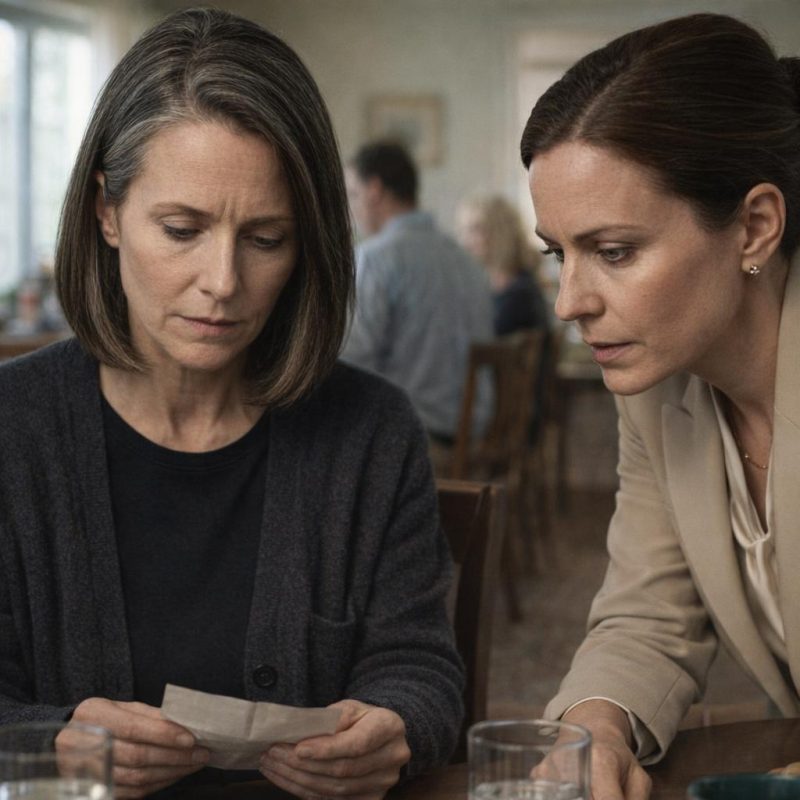 Image by RM AI
Route 16
I left before Cheryl could ask again. I didn't trust myself to keep my expression neutral if she pushed, and I wasn't ready to explain something I didn't yet understand myself. I just drove. Route 16 heading east, the way the note said, the brass key sitting in my cardigan pocket like a small warm stone. The highway had been widened since I last drove it — two lanes had become four, and a strip of chain restaurants had swallowed the old orchard stand where Martin and I used to stop for cider in October. We were so young then. We thought marriage was something you fell into and stayed in, like a warm room. We had no idea how much work a warm room actually takes. I kept my eyes on the mile markers and let the memories come without chasing them. The landscape underneath all the new construction was still the same — the same low ridgeline to the north, the same flat fields going gold in the afternoon light. Ninety minutes out, the development thinned and the road quieted, and I started watching the markers more carefully. Two hundred and two. Two hundred and three. Then I saw the sign, weathered and slightly tilted, half-hidden by an overgrown cedar: Pine Ridge Storage.
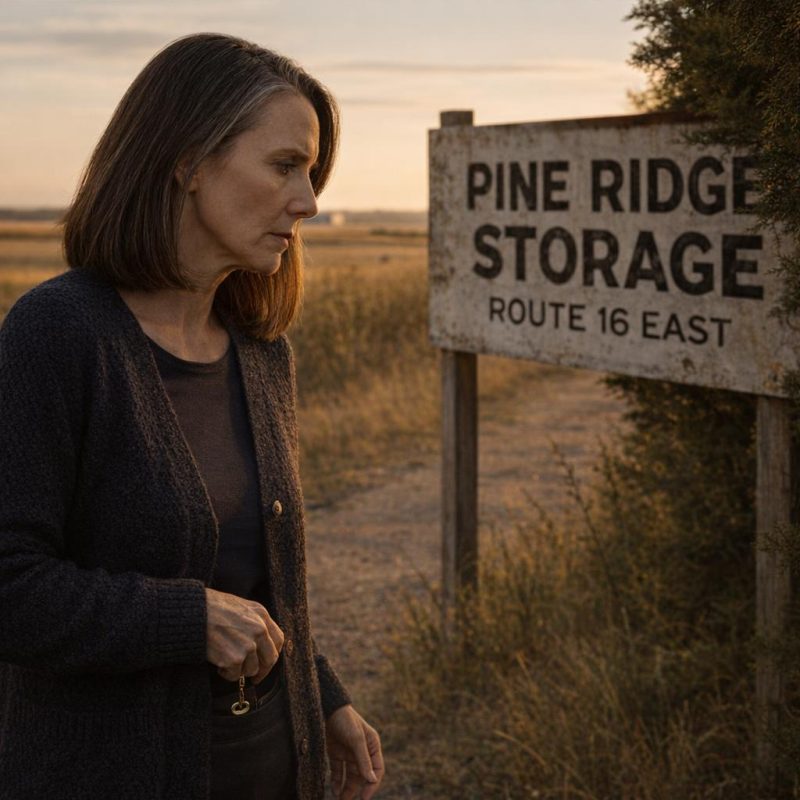 Image by RM AI
Joan Knew My Name
The office was smaller than I expected — barely enough room for a desk, a filing cabinet, and a space heater that ticked steadily in the corner. A woman sat behind the desk with a folded newspaper in front of her, pencil in hand, working a crossword with the focused calm of someone who had nowhere else to be. She looked up when I pushed the door open, and before I could say a word, before I could even reach for the key in my pocket, she set her pencil down and looked at me with an expression I couldn't quite name. 'You're not Cheryl,' she said. 'You're Elaine.' I stood in the doorway for a moment, one hand still on the frame. I had never seen this woman in my life. She had crossword-ink on two fingers and eyes that were doing something careful and deliberate — taking me in, measuring me against something she already knew. 'I'm Joan,' she said, and her voice was matter-of-fact, unhurried. 'I've been waiting for you.' The space heater ticked. Outside, a truck passed on the highway and the sound faded into the distance. I stepped inside and let the door close behind me, and the quiet certainty in her voice settled over the room like something that had always been there.
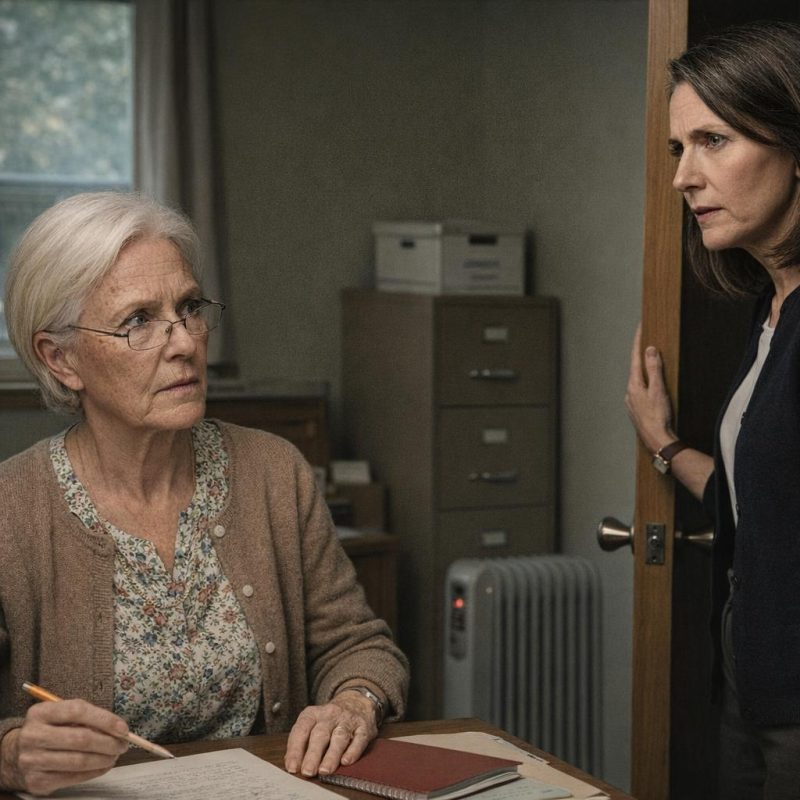 Image by RM AI
Five Years in Advance
Joan didn't make me ask. She folded the newspaper, set it aside, and told me the whole of it in the plain, careful way of someone who had rehearsed the telling. Martin had come in about eight months ago, she said. A Tuesday, mid-morning, when the place was empty. He'd looked thin, she said — thin and tired in a way that wasn't just age. He paid for a unit five years in advance, cash, and he sat across from her at that same desk and wrote out his instructions by hand. She kept a copy in the filing cabinet. Only one person was to be given access: Elaine Patterson, with a brass key. No exceptions. No substitutions. If anyone else came asking — and she said someone had, twice, a woman who didn't leave a name — Joan was to say the unit didn't exist. She led me through a narrow back hallway that smelled of dust and old cardboard, past rows of numbered metal doors, until we reached a small room at the far end. On the wall, bolted at chest height, was a lockbox. A small metal plate above it read: Box 7. I stood there looking at it, and somewhere behind the practical details Joan had just given me, I kept seeing the same image — Martin, sick and careful and alone, driving out here on a Tuesday to make sure I would find what he needed me to find.
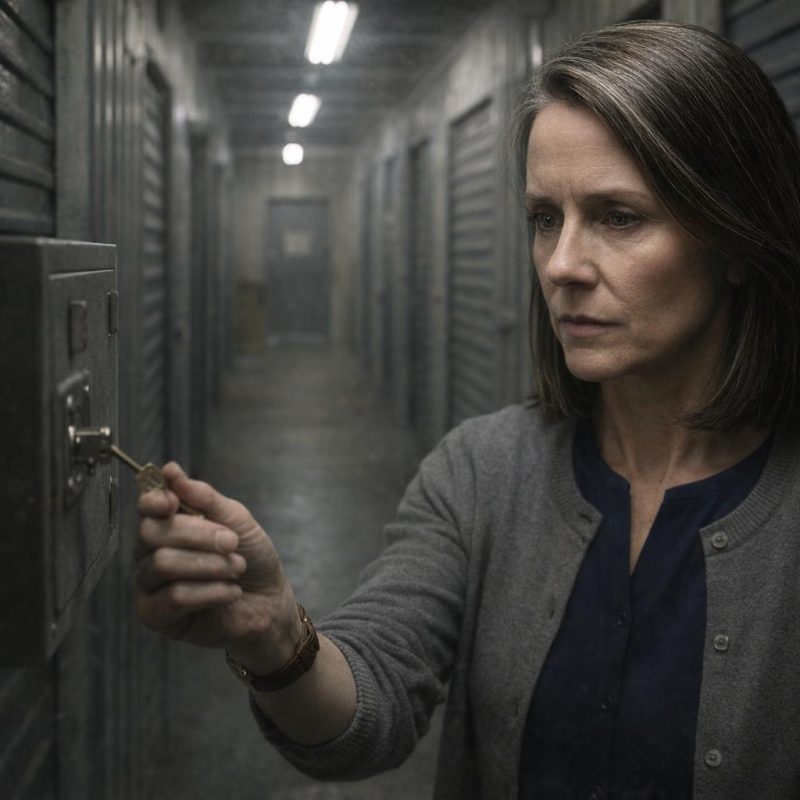 Image by RM AI
Box 7
Joan produced a small key of her own from a ring on her belt and fitted it into the outer casing. The lock turned with a clean click. She swung the panel open and stepped back without a word, giving me the space to look. Inside, the box was divided into two shallow compartments. In the lower one sat a thick manila envelope, its flap sealed with packing tape, and a black flash drive no bigger than my thumb. In the upper compartment, alone, was a letter. A standard white envelope, sealed, and on the front, in that familiar leftward-leaning handwriting, my name. Just my name. Nothing else. My stomach dropped in a way I hadn't felt in years — a physical thing, like missing a step in the dark. The room felt too warm suddenly, the air close and still. Joan had moved to the doorway and was giving me privacy without being asked, which I was grateful for, because my hands had started shaking in a way that made the manila envelope feel impossible. I set it back down. I needed to start somewhere smaller, somewhere that felt like it still had a human voice in it. I reached for the letter.
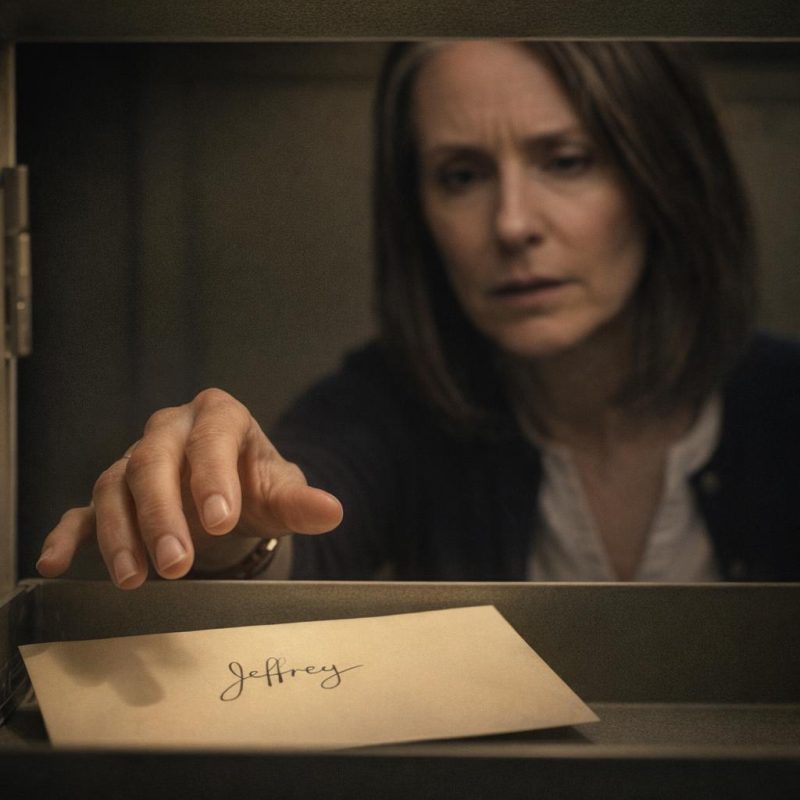 Image by RM AI
Martin's Letter
Martin's handwriting was harder to read than I remembered — smaller, the letters pressed more tightly together, as if he'd been trying to fit everything into the space he had left. He started with an apology. He was sorry for pulling me back into something that wasn't mine to carry. He knew it wasn't fair. But he said he'd gone through the list of people he could trust — really trust, without reservation — and the list had come down to one name. Mine. He wrote that something had been wrong in his life for a long time, longer than he'd let himself admit. He couldn't say more than that in the letter, he wrote, because he wasn't certain enough yet, and he didn't want to point me in the wrong direction. What he knew was that money was moving in ways he hadn't authorized, and that when he tried to ask questions, the answers he got back didn't hold together. He needed someone outside the situation to look at what he'd gathered and tell him if he was seeing things clearly or losing his mind. He ended with three words: 'I trust you.' I folded the letter along its original creases and held it in both hands for a moment. The weight of what he was asking — the quiet, absolute faith of it — sat on my shoulders and didn't move.
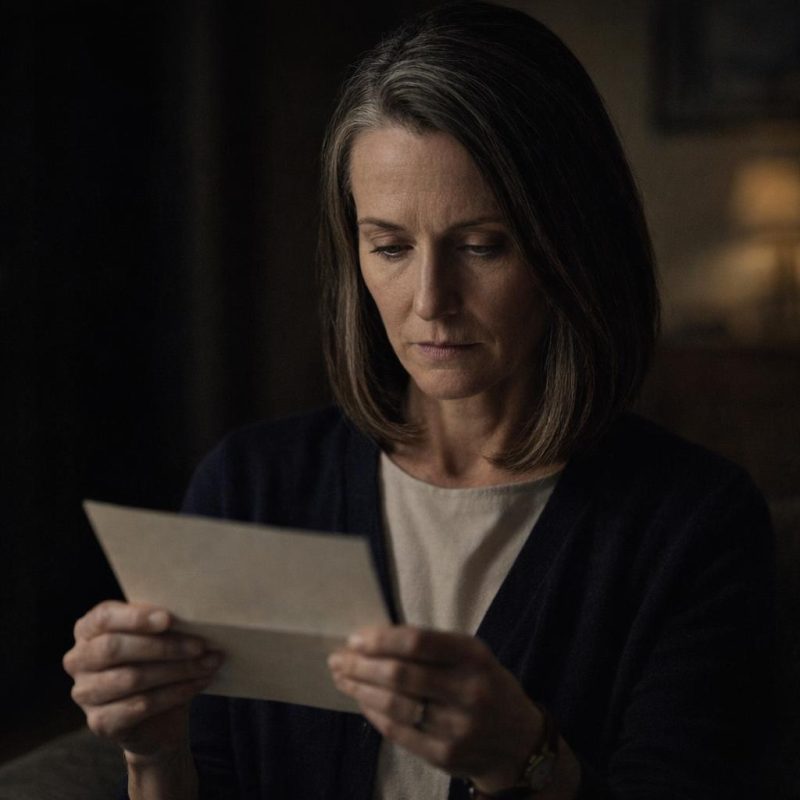 Image by RM AI
The Manila Envelope
The manila envelope took both hands to open — the packing tape had been applied in overlapping strips, the way you seal something you don't want coming apart by accident. Inside was a stack of papers at least two inches thick. Bank statements, multiple accounts, going back nearly three years. Transfer records, each page dense with routing numbers and dates and amounts. Account summaries with sections highlighted in yellow, the kind of careful marking that takes time and intention. I spread them across Joan's desk in rough chronological order and tried to find the shape of it. The numbers were large — larger than I'd expected from what I knew of Martin's finances — and they moved in patterns I couldn't immediately follow. Money arriving in one account and leaving another within days. Transfers to account numbers I didn't recognize, with no memo lines, no explanations. Highlighted figures that didn't correspond to anything I could identify as a regular expense. I'm not an accountant. I kept reminding myself of that as I turned page after page. But I'd managed my own finances for twenty years on my own, and I knew what ordinary money movement looked like, and this wasn't it. The volume of it alone was staggering — dozens of transactions, months of them, all carefully flagged by Martin's yellow highlighter. I sat back and looked at the spread of papers across the desk, and the feeling that settled over me was not understanding but its opposite — the slow, heavy sense that whatever I was looking at was only the surface of something much larger underneath.
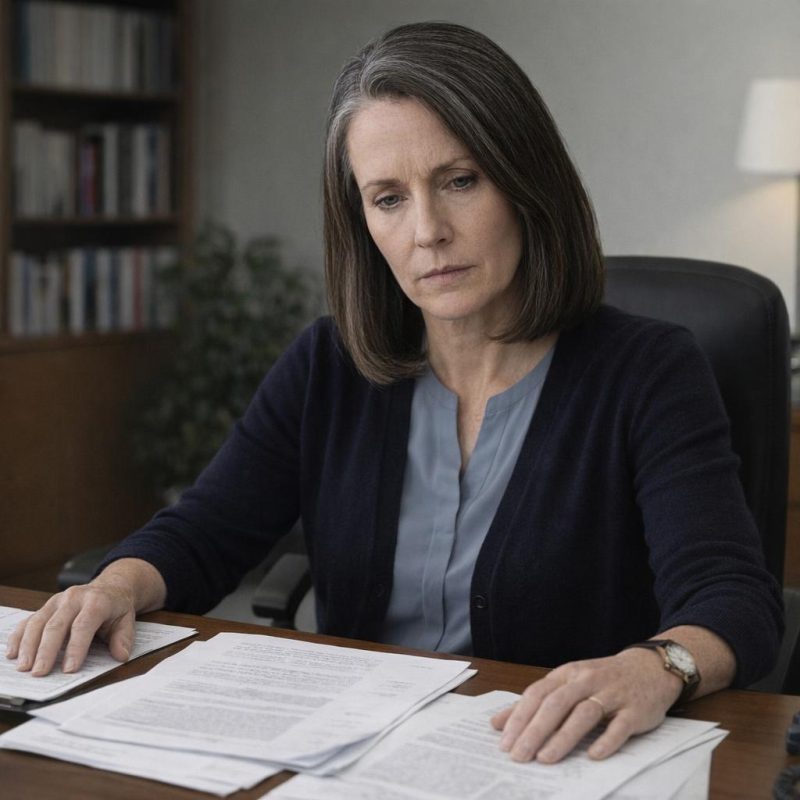 Image by RM AI
Martin's Voice
I asked Joan if I could use the office computer. She didn't hesitate — just nodded, said she'd be outside if I needed anything, and pulled the door nearly shut behind her. I sat down, plugged in the flash drive, and waited for it to load. Three folders. The first was labeled 'Emails,' the second 'Documents,' and the third simply 'Audio.' I opened the audio folder first, I'm not sure why — maybe because I needed to hear him before I could read him. There were eleven files, each named with a date. The earliest was from about nine months ago. I clicked it. Martin's voice came through the small desk speakers, and the sound of it hit me somewhere I hadn't expected. He sounded like himself at first — measured, careful, the same deliberate pace I remembered. He was talking about a transfer he hadn't authorized, describing it the way you'd describe a minor administrative error, something that could be sorted out with a phone call. By the fourth file, the pace had changed. He spoke more quietly, and there was something underneath the words — a tightness, a kind of controlled worry that he was clearly trying to keep out of his voice and couldn't quite manage. By the seventh, his voice had dropped lower still, and there was a long pause before he spoke, as if he were listening for something before he started. I sat very still and listened to all eleven in order. The final file in the folder was dated three days before Martin died.
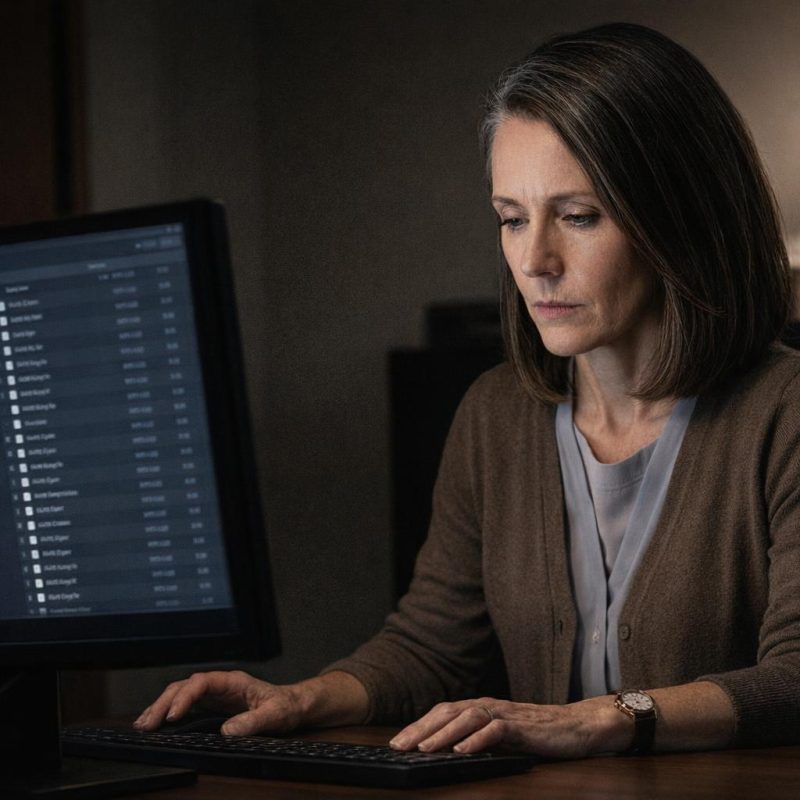 Image by RM AI
Unexplained Transfers
I went back to the financial documents with the audio files still running in my head. The pattern Joan had described — money moving, accounts I didn't recognize — was clearer now that I had Martin's own notes to cross-reference against. I started with the transfer records and worked forward chronologically, the way you'd read a story you already suspected had a bad ending. Large sums, moved in increments just irregular enough to avoid looking like a schedule. The destination accounts had no names attached, only numbers. Then I got to the authorization forms — the ones that required a signature before a transfer could be processed. Most of them looked right. But a handful, clustered in the final eight months, had something slightly off about them. The signatures were too even. Martin's handwriting, as I'd just seen in the letter and heard described in his own voice notes, had grown unsteady — the letters smaller, the pressure inconsistent. These signatures were smooth. Fluid. The kind of signature you produce when your hand is working exactly as it should. I pulled one form closer and checked the date in the upper right corner. Then I went back to the audio files and found the note where Martin had mentioned, almost in passing, that his hand tremors had made writing difficult for months. The date on the authorization form was six weeks after that recording.
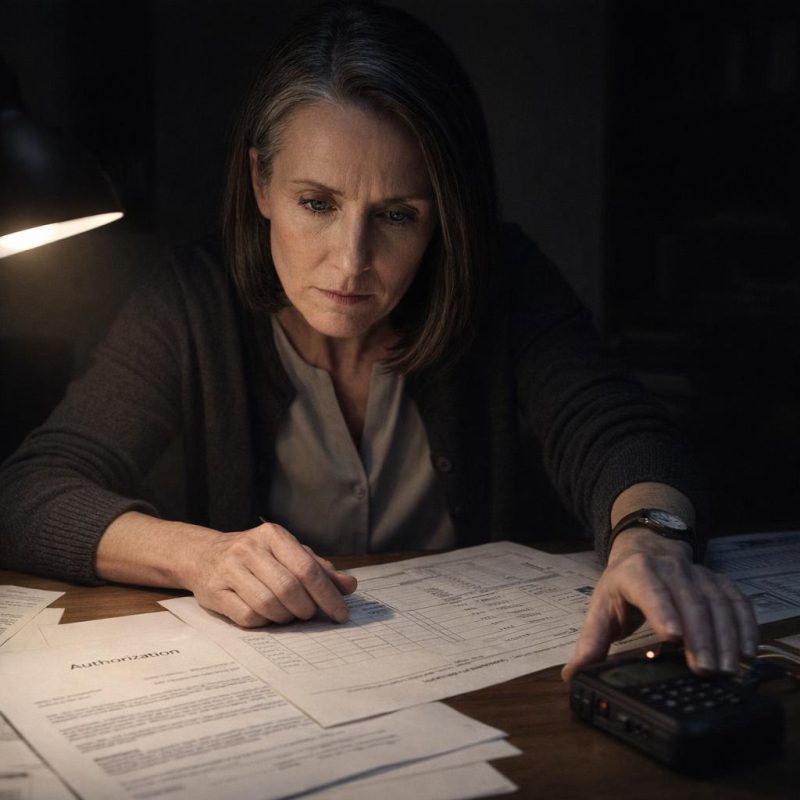 Image by RM AI
Sixteen Years of Control
I started laying out Martin's notes in order, the way you'd arrange photographs from a trip you never took. The earliest entries were from the first year after his marriage to Cheryl — small things, easy to dismiss. A friend who stopped calling. A family gathering he wasn't told about until it was over. But as I moved forward through the years, the pattern thickened. By year three, the mentions of old friends had dropped off almost entirely. By year seven, he was writing about people he used to see every week as though they were strangers he'd once known. Sixteen years of that. Sixteen years of a world that kept getting smaller. What stopped me was a document near the back of the flash drive — a folder of saved email drafts, messages Martin had written to people from his old life. Some were warm, almost apologetic, explaining that he'd been out of touch and wanted to reconnect. A few were more urgent. None of them had been sent. And when I cross-referenced the names against a separate file of returned correspondence, every single reply had come back with the same polite, brief note — saying Martin had asked not to be contacted. I couldn't prove anything. But the replies all said the same thing, word for word, and that uniformity sat wrong with me in a way I couldn't explain.
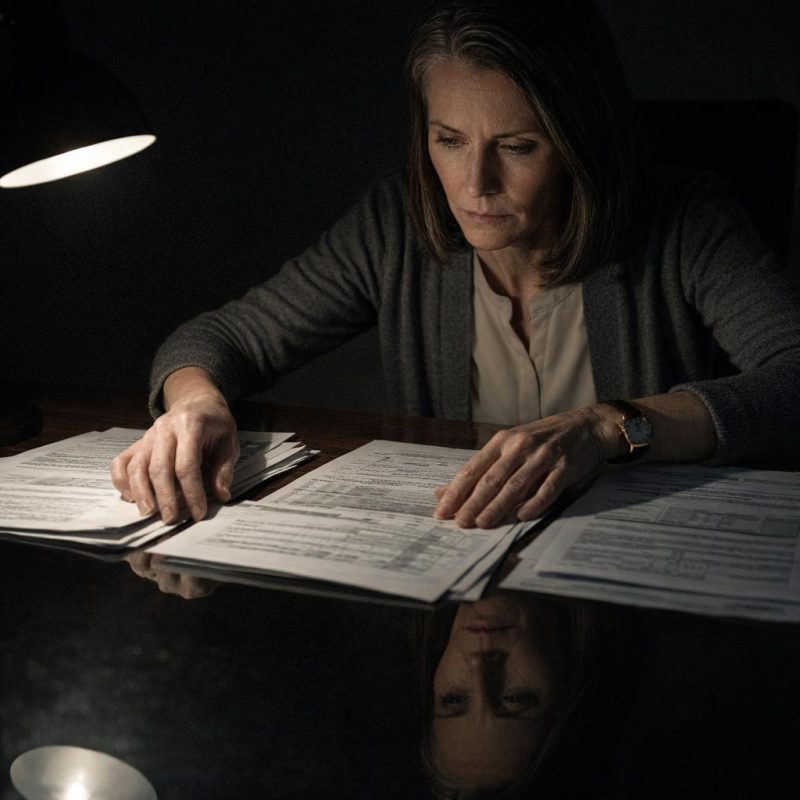 Image by RM AI
The Trap Closes
Joan had stepped out to handle a delivery, and I was glad for the quiet. What I was reading didn't feel like something I should have a witness for. Martin's notes from the middle years weren't about money or documents — they were about daily life, and they were hard to get through. He wrote about asking to go for a drive and being asked where he was going, every time, without fail. He wrote about trying to make a phone call from the kitchen and finding Cheryl or one of her children nearby within minutes. He mentioned cameras — small ones, mounted in corners of rooms he used most — that he hadn't installed and hadn't been consulted about. He stopped having conversations he cared about because he couldn't finish a sentence without someone walking in. He wrote that he'd started keeping his real thoughts in notes he hid inside old books on the shelf, because it was the only place that felt private. I sat with that for a long time. A man who had once been easy in his own skin, who had laughed loudly and left doors open — reduced to hiding his thoughts inside book spines in his own house.
 Image by RM AI
Derek's History
I almost missed the folder. It was labeled simply 'Background' and sat between two larger files I'd already opened. Inside were two reports — formal, the kind you pay a service to compile. The first was on Derek. I read it slowly, then read it again. There were fraud charges going back nearly a decade, most of them involving older victims. Financial exploitation. Misrepresentation. A few cases had gone to court; others had been settled quietly or dismissed on procedural grounds. Martin had attached printed news articles to the digital file — local coverage of complaints, a consumer watchdog piece that named Derek without quite naming him. He'd highlighted passages in yellow and written small notes in the margins, careful and precise even as his handwriting had started to show the tremor. He knew. That was what kept landing on me as I read through page after page. Martin hadn't been fooled. He had looked at the man living under his roof, eating at his table, and he had gone out and found out exactly who that man was. He had documented it, filed it, and kept it. He had known, and he had stayed quiet anyway — and I couldn't stop wondering what that kind of knowledge costs a person, carried alone for years.
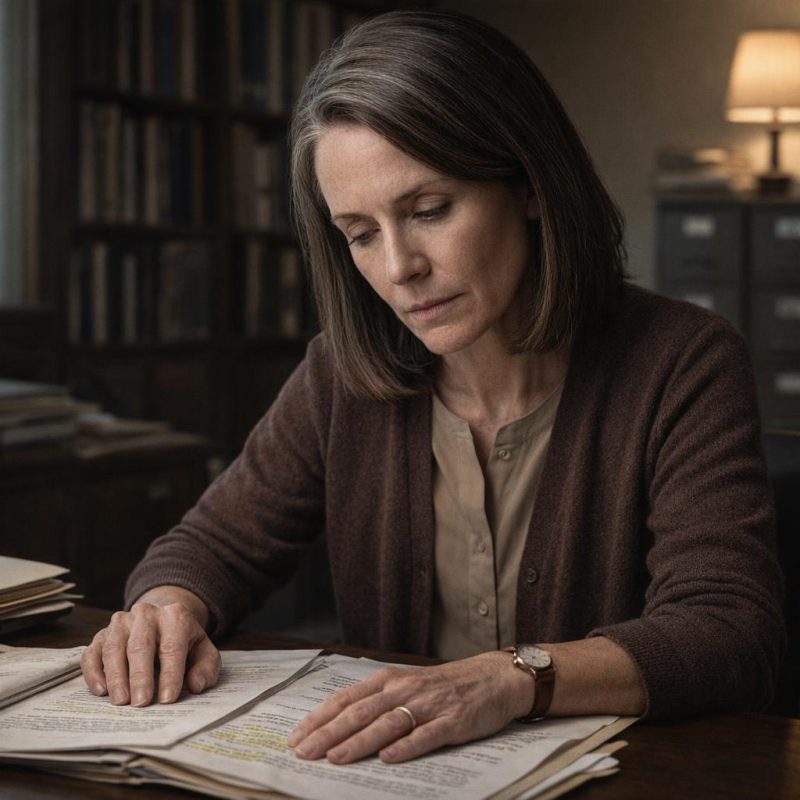 Image by RM AI
Melissa's Web
The second report in the folder was on Melissa, and it was longer. Her credentials were listed first — a certified financial advisor designation, a professional license number, a consulting firm with a clean-looking website. Then came the annotations Martin had added: each credential crossed out in red pen, with a single word beside it. 'Fake.' The license number traced back to a lapsed registration that had never been renewed. The consulting firm had no physical address. Deeper in the file were records Martin had gathered showing Melissa's name appearing in connection with networks that had defrauded elderly people across at least four states — different aliases, different entry points, but the same basic shape. I felt something cold settle in my chest as I read. Then I found the email. Martin had printed it and tucked it at the back of the folder — a message from Melissa to a contact whose name was just a string of numbers. The body of the email was brief and businesslike. It referenced 'the current project' and included a timeline with milestones. I looked at the dates on that timeline, then looked at the dates in Martin's medical notes still open on the table beside me — and I didn't know what to make of the overlap, only that I couldn't unfocus my eyes from it.
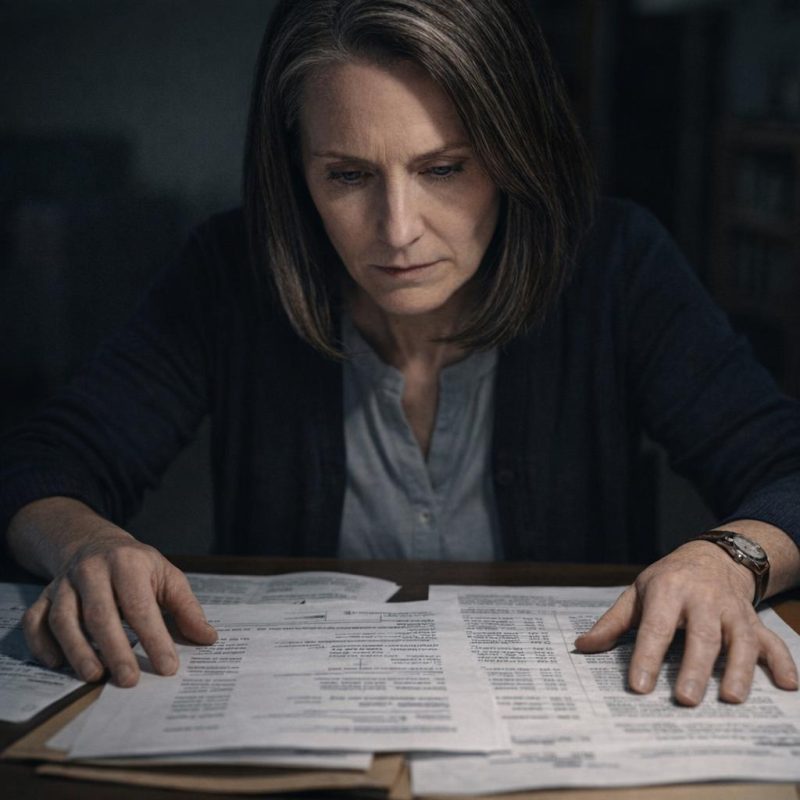 Image by RM AI
Robert's Number
Martin's old address book was a plain text file on the flash drive, the kind of thing you export from an ancient contact manager and never update. Most of the entries were outdated — area codes that had changed, email addresses ending in domains that no longer existed. But Robert Walsh was near the bottom, listed as 'best friend since 1985,' with a cell number that looked newer than the rest. I stared at it for a moment, then picked up my phone. It rang twice. Three times. Then a man's voice, cautious and a little rough around the edges. I told him my name and said I'd been married to Martin a long time ago. There was a pause — not the kind where someone is deciding whether to hang up, but the kind where someone is deciding how much to say. I told him I had questions about Martin's last few years, that I'd come across some things I was trying to understand. Another pause. Then his voice shifted — something in it loosened, like a knot that had been pulled tight for a long time. He said he'd been hoping someone would call. He said he'd been sitting on his worry for years without knowing who to bring it to. We agreed to meet the next morning, and when I set the phone down, the quiet in the room felt different — less empty than it had before.
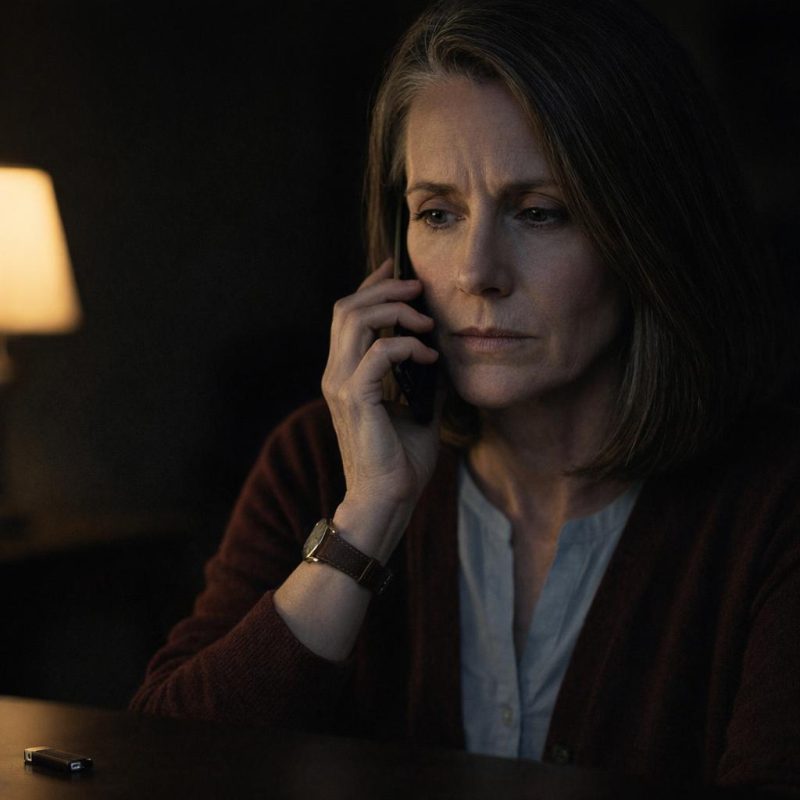 Image by RM AI
What Robert Saw
Robert was already in the booth when I arrived, a mug of coffee in front of him and his hands wrapped around it like he needed something to hold. He was in his early sixties, with a weathered face and the kind of steady eyes that made you feel he'd seen enough of the world to stop being surprised by most of it. He started talking almost before I sat down. Martin had changed, he said — not all at once, but steadily, the way a tide goes out. The calls stopped first. Then the standing coffee they'd had every other Thursday for fifteen years. When Robert pushed, he was told Martin was busy, that he'd be in touch. The few times they did manage to see each other in those middle years, Martin had been different. Quieter. He kept glancing toward the door. He answered questions with short sentences and didn't ask any of his own. Robert said it was like talking to someone who was listening for something else the whole time. The last time he saw Martin — six months before Martin died — he'd tried to say something real, something direct, and Martin had just looked at him with an expression Robert said he still couldn't fully describe. He set his mug down and looked at the table. He said Martin had seemed like a man who was afraid to be seen talking to someone he trusted.
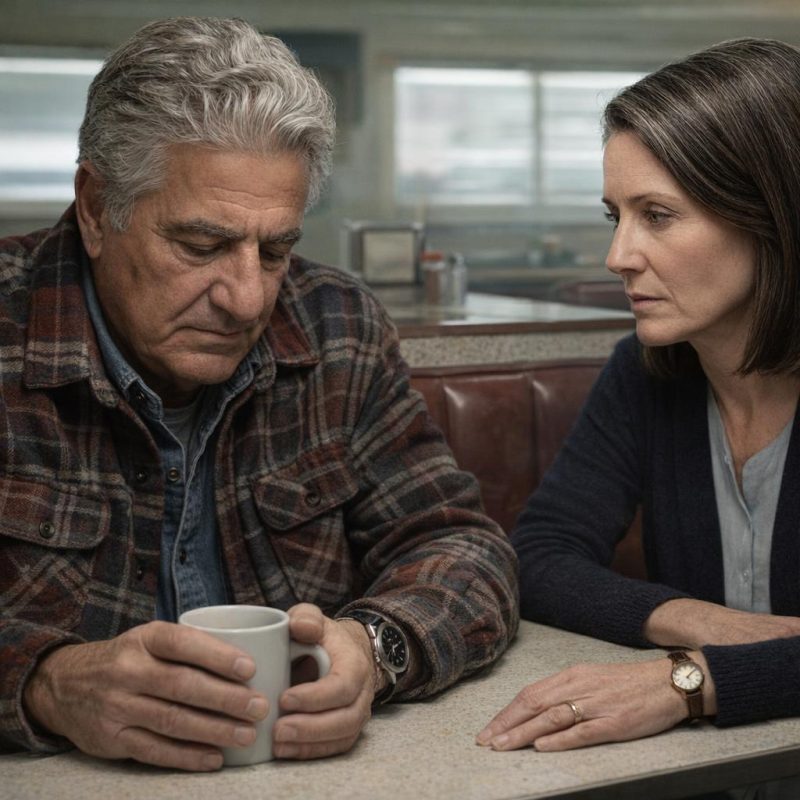 Image by RM AI
The Medical Records
Joan waved me back to the office without my having to ask. I think she could tell from my face that I wasn't done. I opened the medical records folder and started at the beginning — annual checkups, routine bloodwork, the ordinary paper trail of a man in reasonable health for his age. Martin's records from his fifties were unremarkable. Good cholesterol numbers, a note about mild hypertension, the usual. Then I hit the final year, and the file changed character entirely. Prescriptions I didn't recognize, listed in combinations that seemed like a lot for someone whose previous records showed so little. Documented symptoms: confusion, short-term memory loss, tremors that had worsened faster than the notes seemed to expect. A physical therapist's observation that his coordination had declined sharply between two appointments only ten weeks apart. Near the back was a single page I kept returning to — a note from a physician, dated eight months before Martin died. The doctor had written that the speed of Martin's cognitive decline was difficult to account for given his prior health history. He had recommended a full neurological workup and additional bloodwork. At the bottom of the page, in a different hand, someone had written 'patient declined further testing' — and that was where the medical file ended.
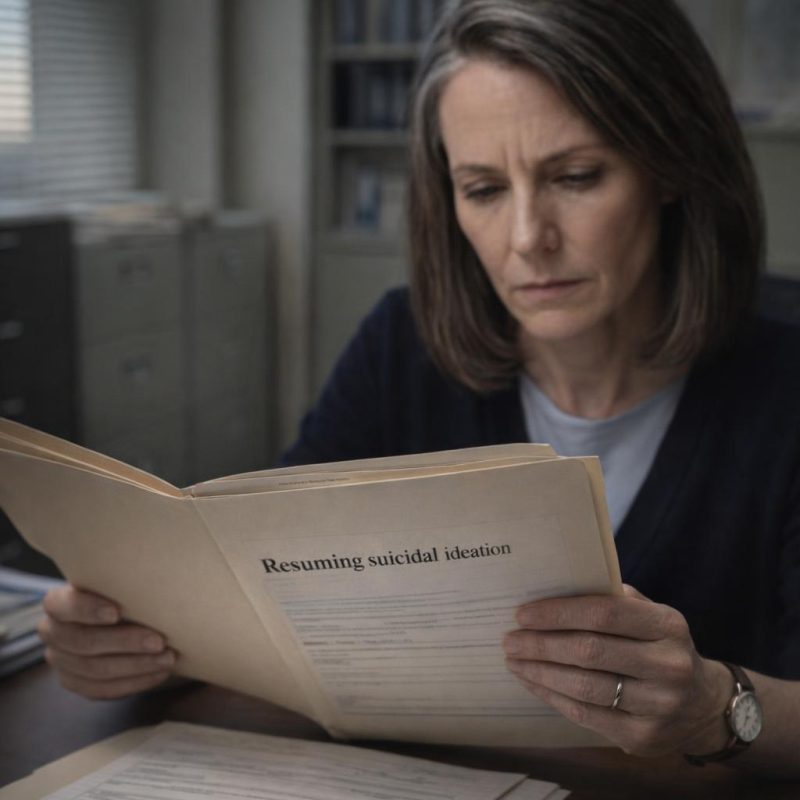 Image by RM AI
Following the Money
I spread the bank statements across the desk in order, oldest to newest, the way you'd lay out evidence you weren't sure you wanted to find. Martin had been thorough. Each statement had been gone over by hand — a yellow highlighter marking certain transfers, his handwriting cramped in the margins beside them. The notes were short and plainly worried. 'I didn't authorize this' appeared beside a transfer in the third month. 'Where is this money going?' beside another, two months later. As the statements moved into the final year, the highlighted entries came more frequently — sometimes three or four to a page. The destination accounts were listed only as numbers, no institution names, no identifying details. I started adding the figures on a notepad, working through each statement carefully, checking my arithmetic twice. The transfers had started small, almost reasonable-looking. Then they accelerated. By the last six months, the amounts had grown substantially, the intervals between them shrinking. When I reached the final statement and added the last figure, I sat back and looked at what I'd written. The total transferred out of Martin's accounts in his final year alone came to two hundred and thirty-four thousand dollars.
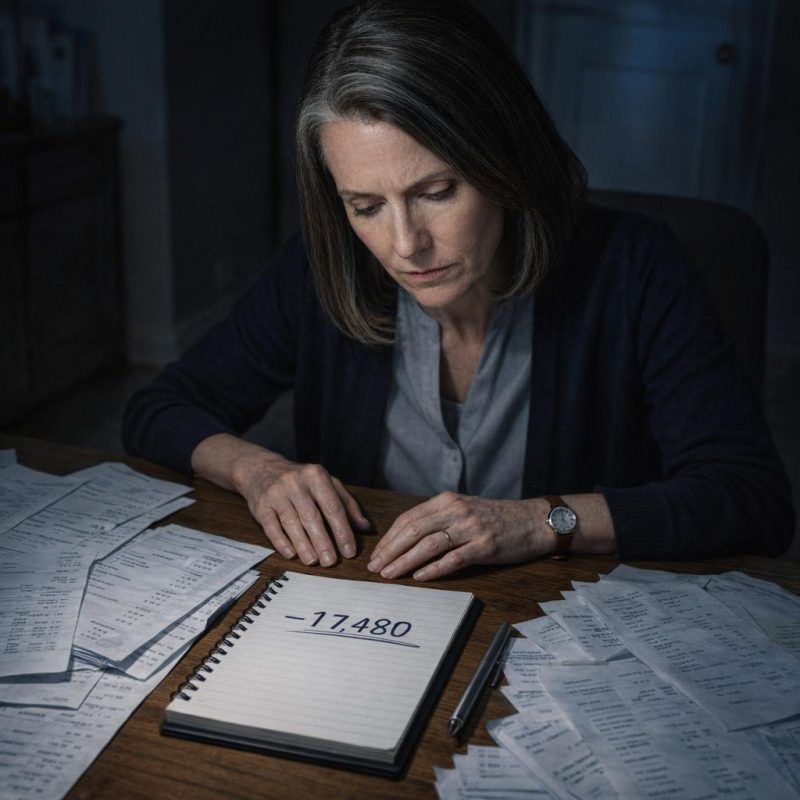 Image by RM AI
Martin's Workplace
The manufacturing plant was forty minutes from Pine Ridge Storage, out past the county line where the roads flatten and the landscape opens up into industrial lots and chain-link fencing. I'd looked up the address the night before, half-expecting the place to have closed or moved, but it was still there — same name on the sign, same low brick building Martin had described to me years ago. I went in through the main office and asked the woman at the front desk if anyone there had known Martin Patterson. She looked up from her computer with the careful expression of someone deciding how much to say. She told me Martin had retired four years ago, then picked up her phone and called someone without explaining why. A few minutes later, a man in his sixties came through the side door — broad-shouldered, work-worn, the kind of face that doesn't give much away. He said he'd worked alongside Martin for nearly thirty years. I told him I was trying to understand Martin's last months, that I had questions no one else had been able to answer. He studied me for a moment, then said Martin had come back to the plant about three months before he died, agitated in a way he'd never seen before, and asked to speak privately.
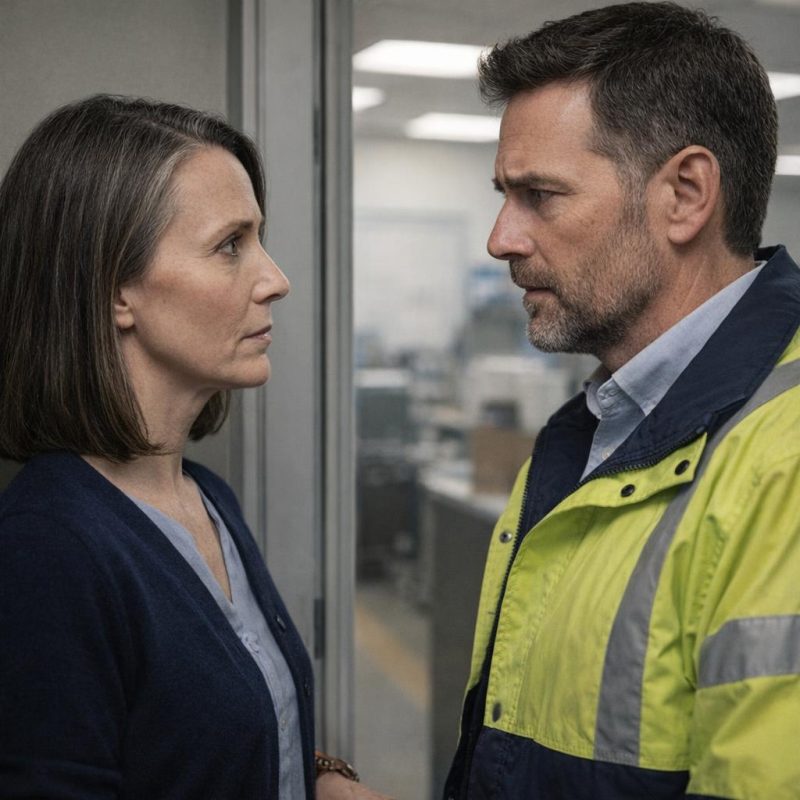 Image by RM AI
The Blocked Messages
The supervisor — he told me his name was Gene — led me to a small break room off the main floor. He pulled open a desk drawer and set an old employee directory on the table between us, the kind with a laminated cover gone soft at the corners. He said Martin had left it there during that last visit, asked him to keep it somewhere safe. I opened it to the back cover and felt the air go out of me. Martin had written my phone number and email address there in his careful, cramped hand. Below that, a column of dates stretching back nearly two years, each one followed by a short note. 'Called — no answer.' 'Email bounced.' 'Left message — no response.' The handwriting in the earlier entries was steady. By the later ones, it had started to shake. Gene said Martin was convinced his messages weren't getting through, that something was wrong with the lines. He'd asked Gene to try calling me from the plant phone. Gene had tried. It went straight to voicemail. I sat there looking at that list of dates — two years of attempts, two years I'd spent assuming Martin had simply moved on and left me behind — and the floor felt like it had shifted under my chair.
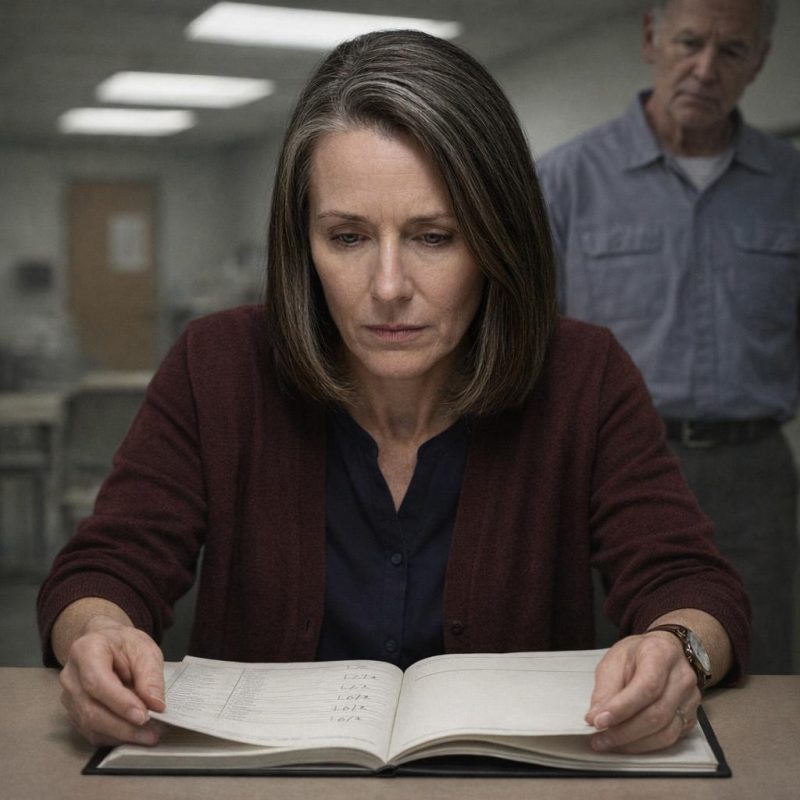 Image by RM AI
The Intercepted Life
I sat in my car in the plant parking lot for a long time after Gene walked me back to the entrance. The directory was in my lap, open to that back cover. I went through everything I'd gathered — the bank statements with Martin's worried margin notes, Robert's account of being turned away at the door, the bounced emails, the calls that went nowhere. My own number was on that list. My own email address, written in Martin's hand, with two years of failed attempts recorded beside it. I thought about my phone during those years — the calls I'd missed, the voicemails that never came, the inbox that stayed quiet. I'd told myself Martin had made his choice when he remarried so quickly, that silence was its own kind of answer. But the silence hadn't been his. Every thread Martin had tried to pull — toward me, toward Robert, toward anyone outside that house — had come back to nothing. The picture that was forming wasn't one I could dismiss as coincidence or bad luck. Martin had been surrounded by people, and somehow, in the middle of all of it, he had been completely alone.
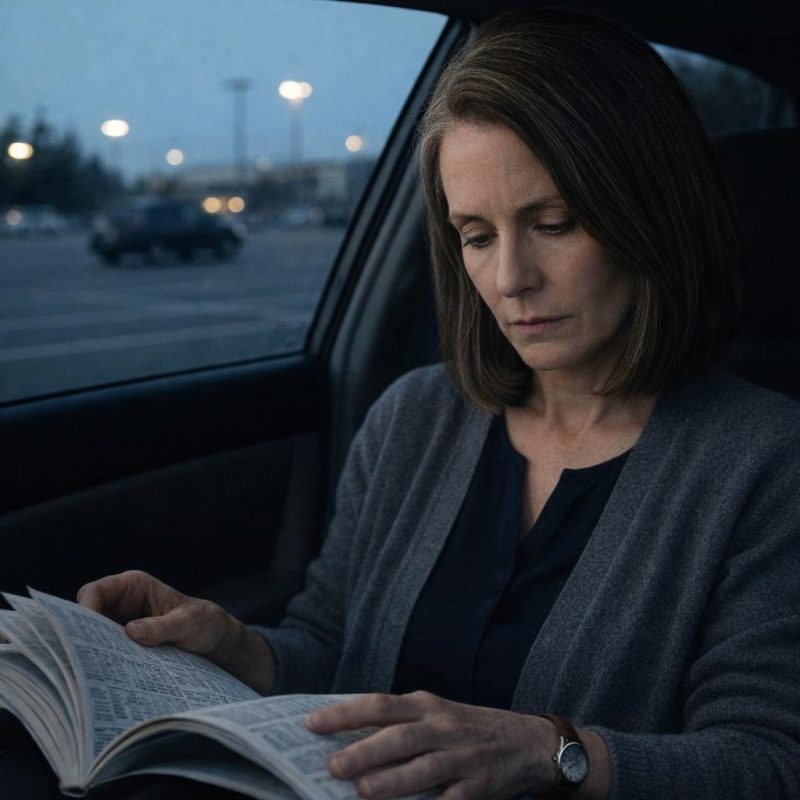 Image by RM AI
The Hidden Accounts
Joan had left a fresh pot of coffee on the corner of her desk when I came back to Pine Ridge, and I was grateful for it without saying so. I spread Martin's property records out alongside the estate distribution documents Richard had given me after the will reading. Martin had kept meticulous lists — accounts by number, investment certificates with their face values, a coin collection he'd been building since his twenties, bonds he'd purchased over decades of careful saving. I went through the estate inventory line by line, checking each item against Martin's own records. The coin collection didn't appear anywhere in the official distribution. Neither did three of the investment accounts. A set of savings bonds Martin had documented with their serial numbers was simply absent. I added up the values Martin had recorded for the missing items, cross-checking my figures twice. Joan refilled my cup without being asked and didn't say anything, which was exactly right. The number I kept arriving at was well into six figures. What Martin had carefully cataloged and what Cheryl had reported to the estate attorney were two substantially different pictures of the same man's life, and the gap between them sat on the table in front of me like something with weight.
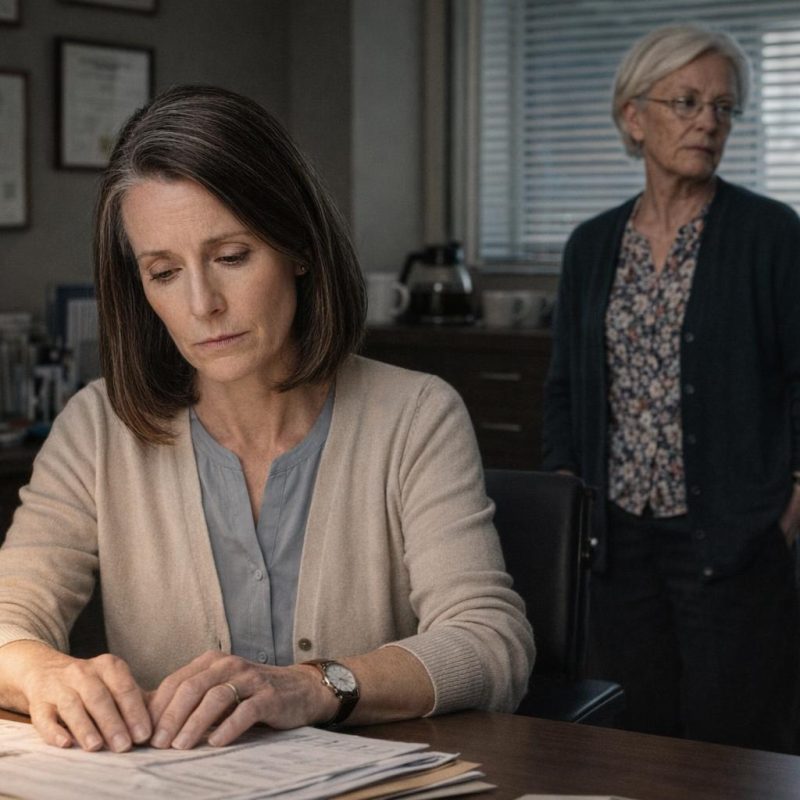 Image by RM AI
Derek's Pattern
Joan offered me her computer without my having to ask, sliding the keyboard across the desk with a look that said she understood what I was doing and wasn't going to make it awkward. I searched Derek Hoffman's name through court record databases, starting with the state and then widening out. What came back took me a while to work through — filings from three states, civil complaints, one criminal charge that had been dropped when the complaining witness died before the case went to trial. The pattern across the cases was consistent enough to be uncomfortable. An elderly person, usually living alone or with reduced family contact. A period of trust-building, often through a family or caregiver connection. Then a series of financial transfers, forged signatures on documents, accounts drained in increments small enough not to trigger immediate alarm. By the time anyone noticed, Derek was gone. I found four documented cases with enough detail to follow. In one of them, the victim had lost everything — savings, property, a retirement account built over forty years. I sat back and looked at the screen. The cases were spread across years and states, but the shape of each one was the same, and Martin's name wasn't in any of them, which didn't make me feel better.
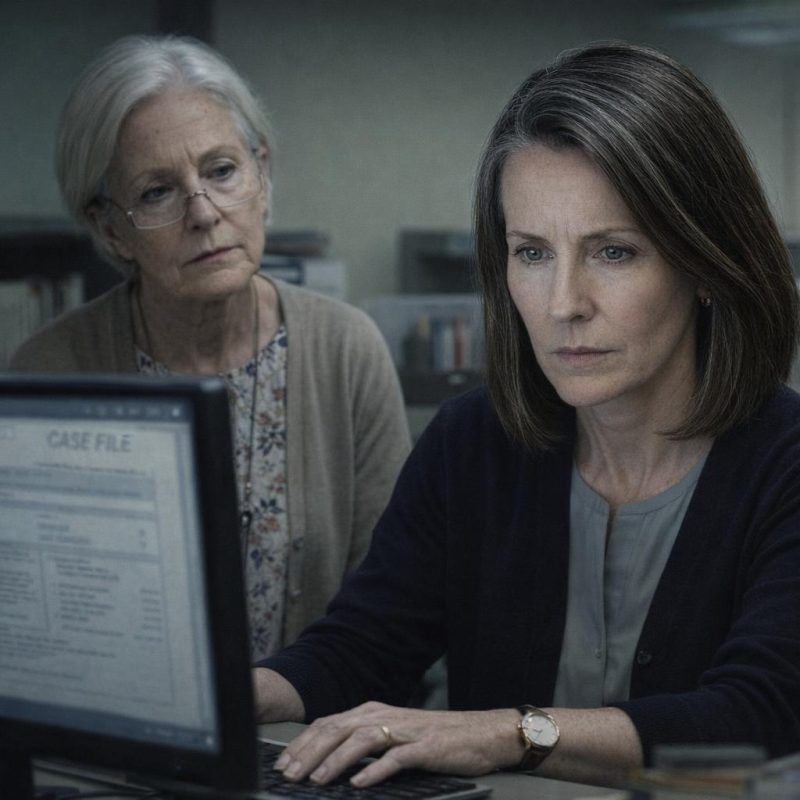 Image by RM AI
Melissa's Network
I stayed at Joan's computer and started searching the aliases Martin had noted in his documents beside Melissa's name. Most of them led nowhere useful — dead forum accounts, deleted profiles. But one username turned up in an archived thread on a site that aggregated posts from private financial forums before they went dark. The thread was several years old. The posts were casual in tone, almost breezy, the way people write when they think they're among people who share their assumptions. One post, from the alias Martin had circled and labeled in his notes, caught me mid-scroll and held me there. It was a few sentences about handling what the poster called 'difficult targets' — people who started asking questions, wanting documentation, pushing back on explanations. The advice was practical and specific in a way that made my skin go cold. Another member had replied with something about 'accelerating timelines' when a target became too alert. I checked the dates on the thread. The exchange had taken place during the same stretch of months when Martin's margin notes had shifted from confused to frightened. I looked at Joan. She was watching me from across the desk, her crossword face-down on the blotter. I turned the screen toward her so she could read it herself.
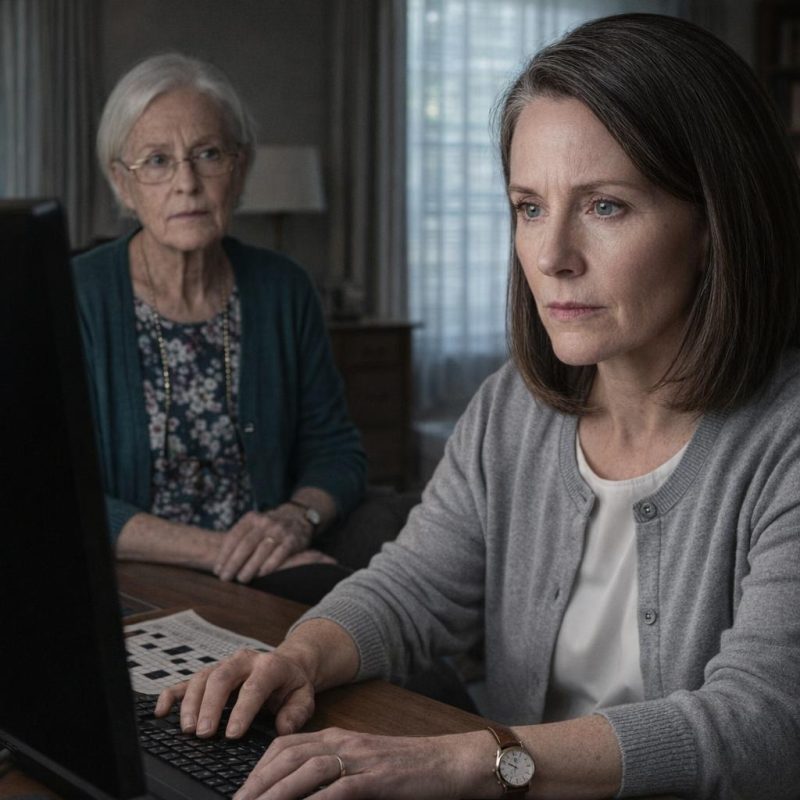 Image by RM AI
The Final Months
I cleared a section of Joan's desk and laid everything out in order — bank statements, medical records Robert had helped me obtain, Martin's handwritten notes, the property lists, the forum printout, the employee directory. Then I went through it all again, this time building a timeline on a yellow legal pad, month by month. Martin had noticed the first unexplained transfer nine months before he died. He'd started writing margin notes two weeks after that, the handwriting still steady, the tone still more puzzled than alarmed. His first documented medical appointment for neurological symptoms came roughly two weeks after he began asking questions about the accounts. I kept writing dates and events in two parallel columns — one for his investigation, one for his health. As the financial notes grew more urgent, the medical entries grew more serious. Tremors noted. Coordination concerns flagged. Memory gaps documented by his doctor in language that was careful and clinical and, reading it now, deeply sad. The columns didn't just run alongside each other. They moved in lockstep, each escalation in one matched by an escalation in the other, all the way to the final entries. I set the pen down and looked at what I'd drawn. Two lines, rising together, ending at the same place.
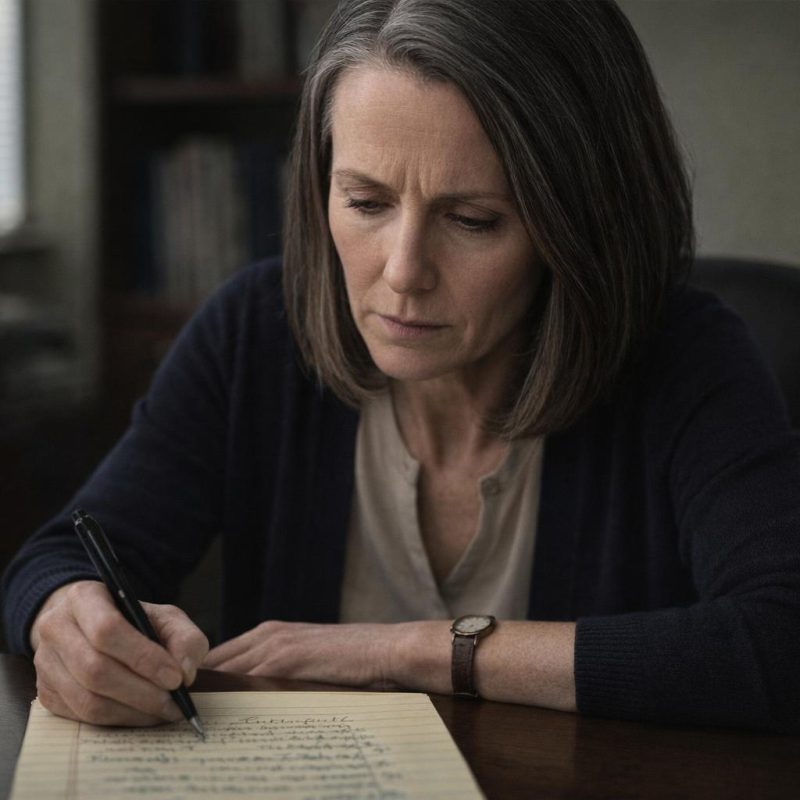 Image by RM AI
The Symptoms
I typed Martin's symptoms into the search bar one by one — tremors, progressive confusion, coordination loss, organ stress, cognitive decline over months rather than weeks. The first results were what I expected: Parkinson's, early-onset dementia, a handful of metabolic conditions. I worked through them methodically, checking each against Martin's documented progression. None of them fit cleanly. The symptom sequence in Martin's records had a specific shape — early tremors, then confusion, then the sharper cognitive drop, then the organ involvement — and the timing between stages was too compressed for most of the neurological explanations. I narrowed the search. Joan had gone quiet on the other side of the desk. I found a medical journal article about chronic low-level toxin exposure, written for clinicians, dense with terminology I had to read twice. I went through the symptom progression it described: initial peripheral tremors, advancing to cognitive disruption, followed by memory fragmentation, with late-stage organ stress appearing in a specific sequence depending on the compound involved. I pulled Martin's medical records back in front of me and held the two documents side by side. The progression in the article and the progression in Martin's records followed the same sequence, stage by stage, in the same order, across the same general timeframe — a match I had no explanation for yet, only the cold weight of it sitting in my chest.
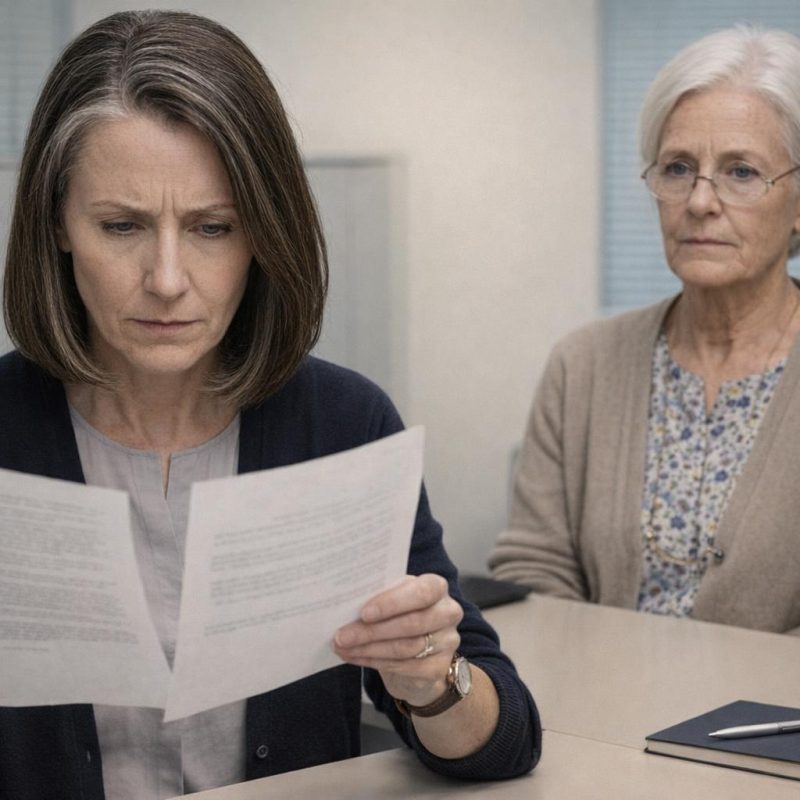 Image by RM AI
Frank Morrison
I found Frank Morrison the way you find most things when you don't know where else to look — a late-night search, a name that kept appearing in the right kinds of forums, twenty years of experience listed plainly on a spare website with no stock photos and no promises. His office was on the fourth floor of a building that smelled like old carpet and coffee, and he was exactly what the website suggested: a gray-templed man in a worn leather jacket who listened more than he talked. I spread everything across his desk — the financial documents, the medical records, the timeline I'd built from Martin's files, the journal article I'd printed and annotated in the margins. Frank took notes in a weathered notebook without interrupting. When I finished, he looked at the documents for a long moment, then looked at me. I told him I thought Martin's death hadn't been natural. I told him I thought someone had done this to him deliberately. And then I said the word I'd been circling for days without landing on — murder. It came out quieter than I expected, and it sat in the air between us like something that couldn't be taken back. Frank didn't flinch. He said he'd take the case. But the word stayed with me long after I left his office, heavier than I'd imagined it would be.
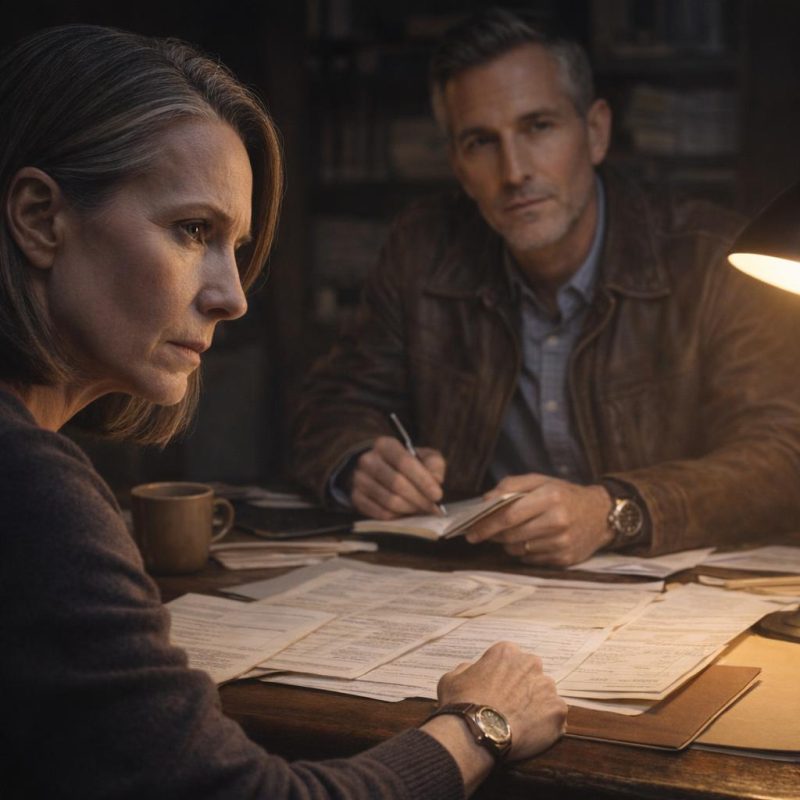 Image by RM AI
What Frank Found
Frank called three days later, just after seven in the morning. I'd barely slept. I'd been checking my phone every few hours the way you do when you're waiting for news you both want and dread. His voice was measured, the way it had been in his office — no drama, just facts laid out in order. The medical examiner's report had inconsistencies he said were unusual: the timeline of Martin's final hours didn't align with the witness statements on file, and two of those statements had been collected only from people inside the household. He'd found a neighbor who'd seen Martin the day before he died. The neighbor said Martin had come outside, moving unsteadily, and had seemed to be trying to get to the street. Someone had come out of the house behind him and guided him back inside. That account didn't appear anywhere in the official record. Frank said the symptoms Martin presented with hadn't been fully investigated before the death certificate was signed, and that the sequence of his decline matched patterns he'd seen documented in cases involving prolonged exposure to certain compounds. He said he didn't have conclusive proof yet. He said the word yet carefully, like it mattered. I sat at my kitchen table after we hung up, the phone still warm in my hand, and let the weight of having been right settle over me like something I hadn't wanted to carry.
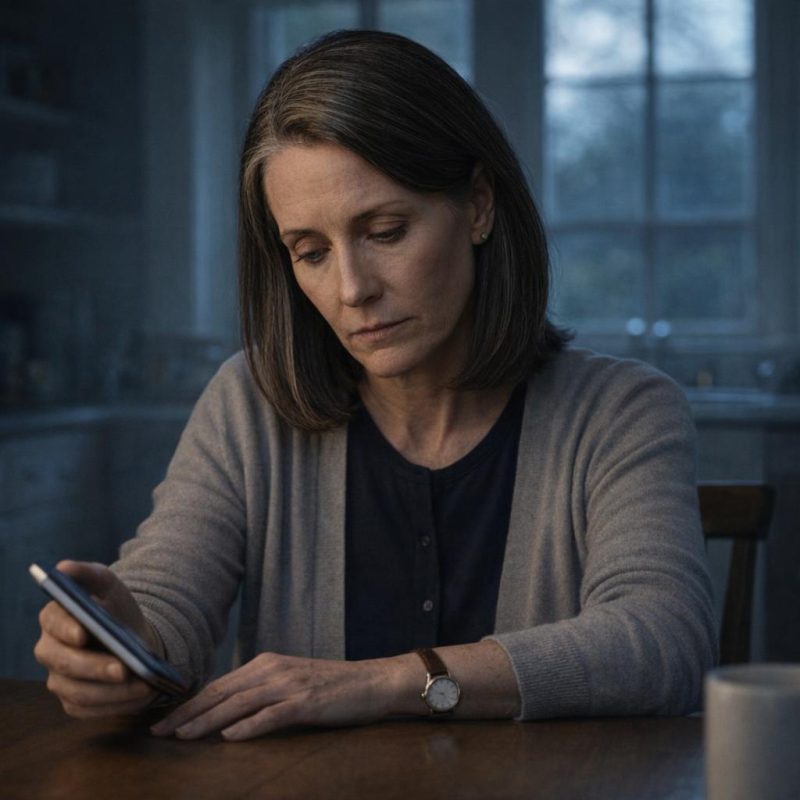 Image by RM AI
Cheryl Knows
The call came in the middle of a Tuesday afternoon while I was sorting through a stack of mail I'd been ignoring for a week. Unknown number. I almost let it go to voicemail. I didn't. The voice on the other end was composed, unhurried, and immediately recognizable — Cheryl, Martin's spouse, speaking as though she were commenting on the weather rather than calling from a number I'd never seen before. She asked what I thought I was doing. Not hello, not any preamble — just that question, delivered with the particular coldness of someone who considers themselves above raising their voice. She said I was digging into Martin's private affairs, that I was stirring up grief that had already been settled, that whatever I thought I'd found in some storage unit didn't amount to anything worth pursuing. I didn't say much. I was still processing the fact that she knew — about the storage unit, about the investigation, about enough of it to call me directly. She told me I should accept Martin's death and move on the way everyone else had managed to. Her voice stayed even the whole time, almost pleasant, which made it worse. Then, just before she ended the call, she said: 'You should be very careful about the questions you're asking.'
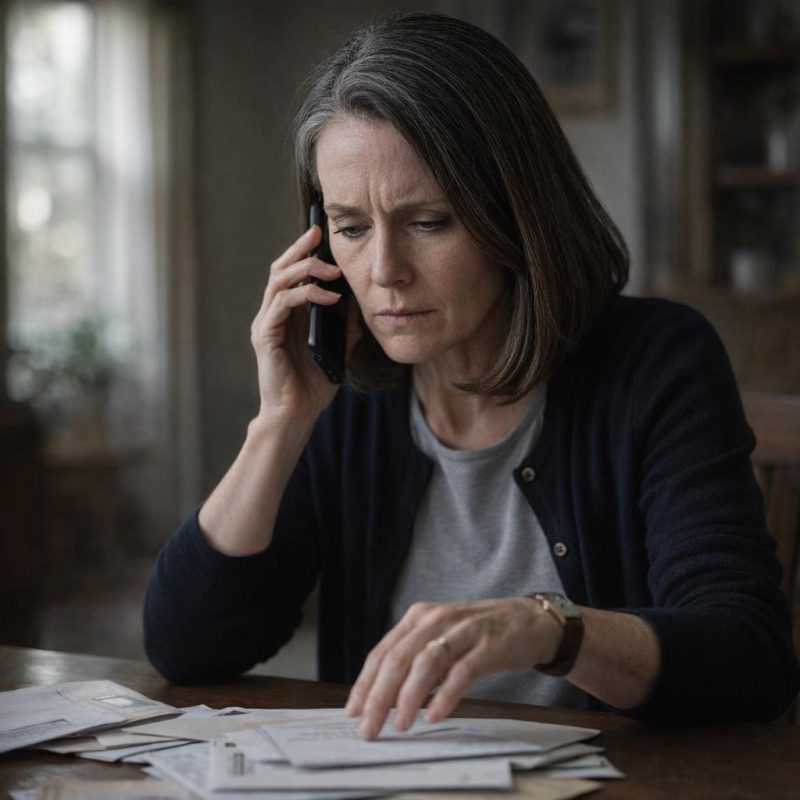 Image by RM AI
Derek's Warning
I was still sitting with Cheryl's call when my phone rang again that evening. No name on the screen, but the voice that came through was nothing like his mother's careful composure. Derek, Cheryl's son and Martin's stepson, didn't bother with the measured tone. He said I was sticking my nose where it didn't belong. He said people who asked too many questions had a way of running into problems — not as a metaphor, not as a vague suggestion, but stated plainly, like a fact he was sharing as a courtesy. He mentioned falls. He mentioned car trouble. He mentioned home invasions, the way you mention weather patterns, as though they were simply things that happened in the world. I didn't speak. I held the phone and listened and kept my breathing steady because I didn't want him to hear anything in my voice that he could use. He said I should think seriously about my own safety. He said I was at an age where accidents happened all the time. And then, before I could respond, he was gone — the line dead, the room very quiet around me. His last words sat in my ear like something I couldn't shake loose: 'Accidents happen all the time to women your age.'
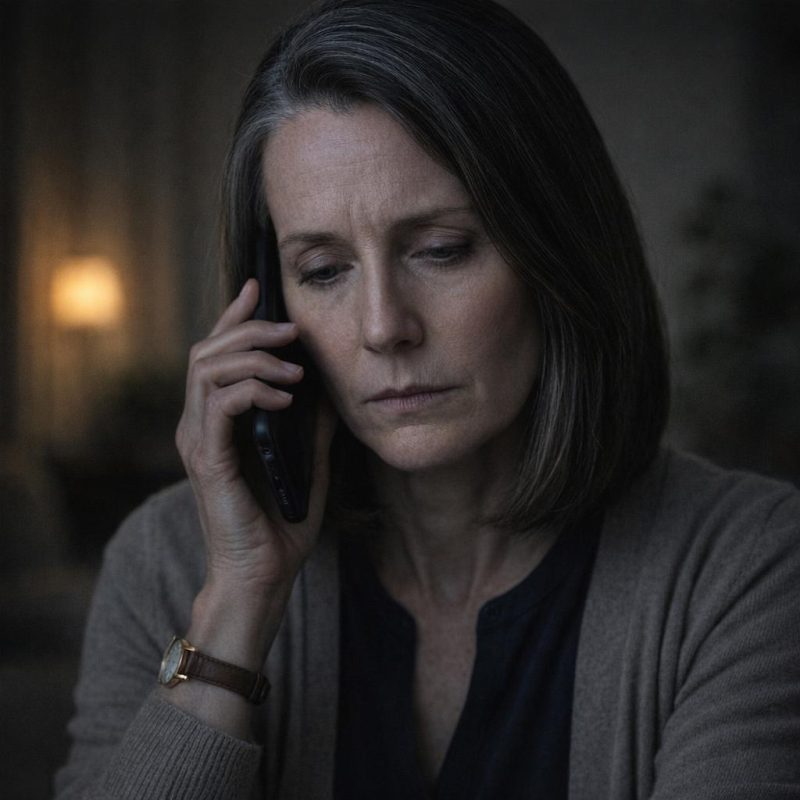 Image by RM AI
The Break-In
I'd gone to the grocery store for nothing more dramatic than milk and bread. The whole errand took maybe forty minutes. When I came back down the hallway toward my apartment, I noticed the door before I reached it — not wide open, just slightly ajar, the way a door looks when the latch hasn't caught. I stood in the hallway for a moment. Then I pushed it open with my fingertips. Papers were scattered across the living room floor, pulled from the folders I'd kept on the side table. My desk drawers were open, contents shifted. The laptop that had been sitting on the desk was gone. I moved through the rooms slowly, checking each one, and everything that had been touched had been touched with a kind of efficiency — not ransacked, just searched. The files I'd kept at home were copies only; the originals were with Frank, and I was grateful for that in a way that felt almost physical. I set my grocery bag down on the kitchen counter and stood there for a moment before I saw it: a piece of paper on the kitchen table, block letters, no signature. It read: 'Stop asking questions.'
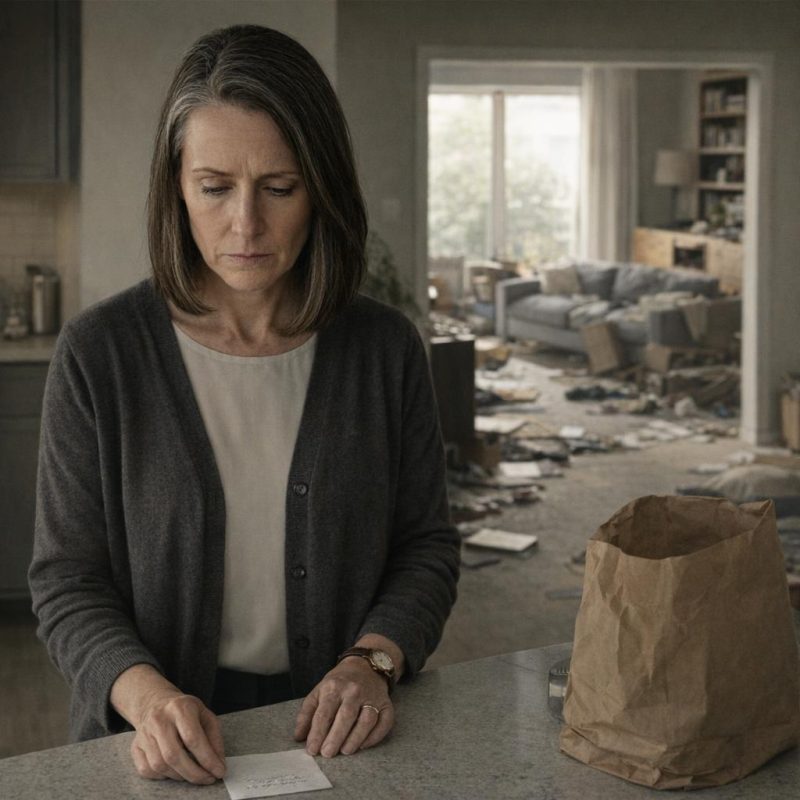 Image by RM AI
The Police Dismiss Her
I went to the police station the next morning with the note in a plastic bag, photographs I'd taken of the scattered papers and open drawers, and a written account of both phone calls — Cheryl's and Derek's — with the times and what had been said as precisely as I could reconstruct it. The officer at the desk was polite enough. He took notes. He asked about my relationship to Martin's family, and when I explained — ex-spouse, the storage unit, the evidence I'd brought to a private investigator — I watched his expression settle into something I recognized immediately. He said it sounded like a family dispute. He said estate conflicts had a way of getting emotional, that people sometimes read threats into conversations that were really just tension. He suggested the break-in might have been unrelated, a coincidence of timing. He recommended I reach out to Cheryl directly and try to resolve things privately, as though what I'd described was a disagreement over a holiday dinner rather than a note left on my kitchen table after my laptop was taken. He didn't say he wouldn't file the report. He just made clear, in the careful language of someone who has decided not to act, that nothing further would come of it. I drove home in silence, and the frustration of it sat in my chest like something with no outlet and no name.
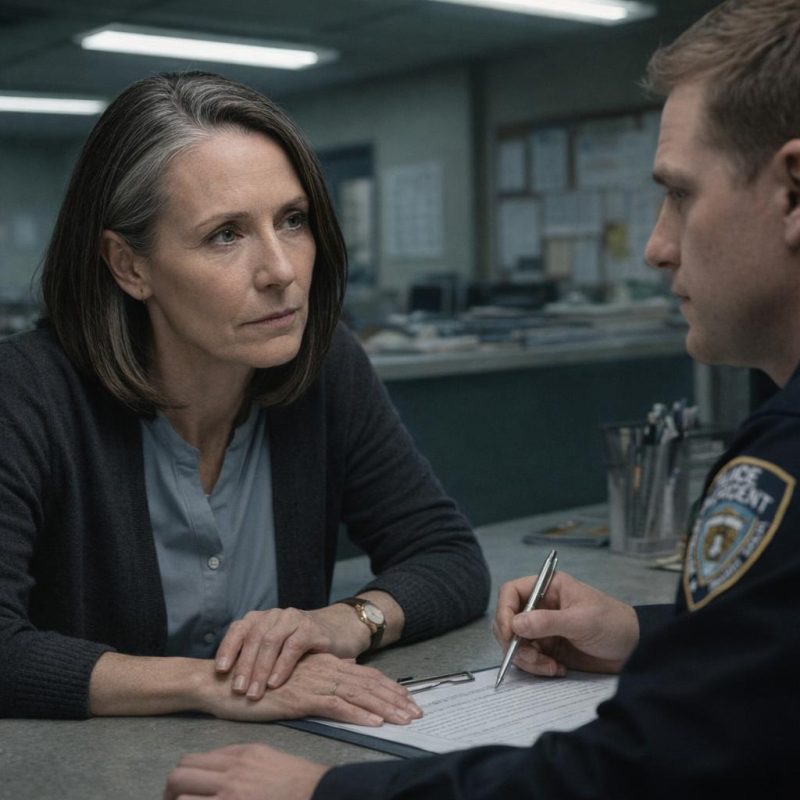 Image by RM AI
The Witness
Frank called four days after the police station, and his voice had a different quality to it — still measured, but with something underneath that I'd learned to read as meaning he had something real. He said he'd found a witness. A home health aide who had been brought in to help Martin with daily tasks in the weeks before his death — a woman named Angela, hired through a care agency, who had worked in the house for exactly three days before Cheryl dismissed her without explanation. Frank had tracked her through the agency's records. He said Angela had agreed to talk, that she'd been troubled by Martin's death and had been carrying what she'd seen without knowing what to do with it. He was arranging a meeting for the following morning, a coffee shop, somewhere neutral. I sat with that for a moment after we hung up — the idea that someone had been inside that house, had been close enough to see what was happening to Martin, and had been removed before she could do anything about it. Three days. Cheryl had kept her for three days. Whatever Angela had seen in that house, she had been willing to sit across a table and say it out loud, and that felt, for the first time in weeks, like something solid to hold onto.
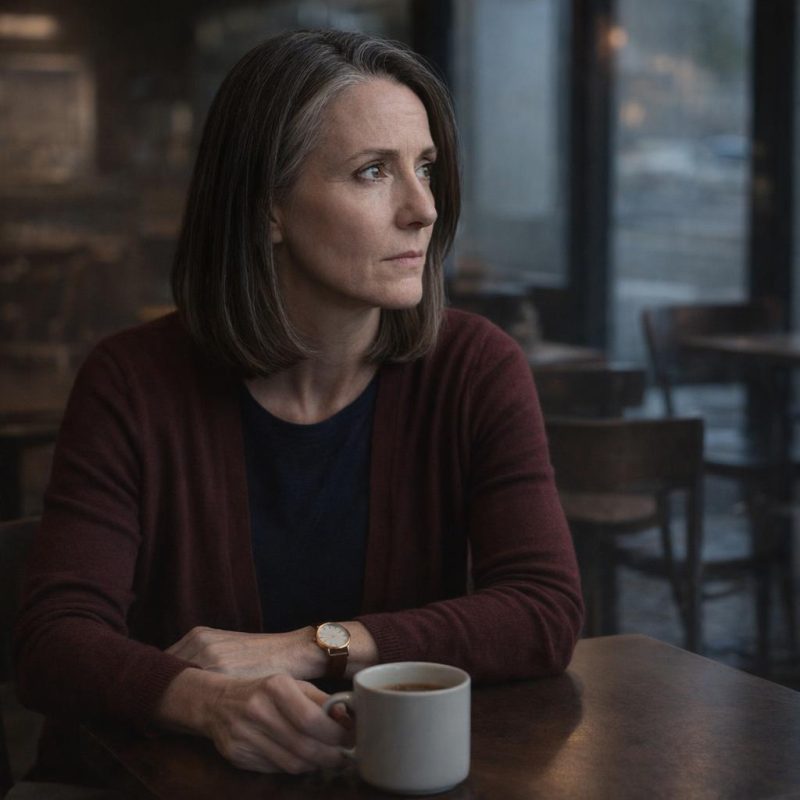 Image by RM AI
What Angela Saw
Angela was in her mid-forties, with the steady, unhurried manner of someone who had spent years in other people's homes during the worst moments of their lives. She wrapped both hands around her coffee cup and didn't look away when she talked. She said Martin had been weak when she arrived, confused in the way that came and went, but that there had been moments of clarity — sharp, frightened clarity. On her second day, while Cheryl was out of the house, Martin had taken her arm in the hallway. His grip was stronger than she'd expected given how he looked. He'd pulled her close and spoken in a low voice, checking the doorway behind her as he did. She'd tried to raise it with Cheryl that evening — carefully, professionally, the way she'd been trained to flag a patient's distress. Cheryl had thanked her, said Martin had episodes of confusion, said it was being managed. The next morning, Angela received a call from the agency: her placement had been terminated, effective immediately, no reason given. She'd thought about Martin every day since. She set her cup down and looked at me steadily, and then she repeated what Martin had whispered to her in that hallway: 'They're putting something in my food, and no one will believe me.'
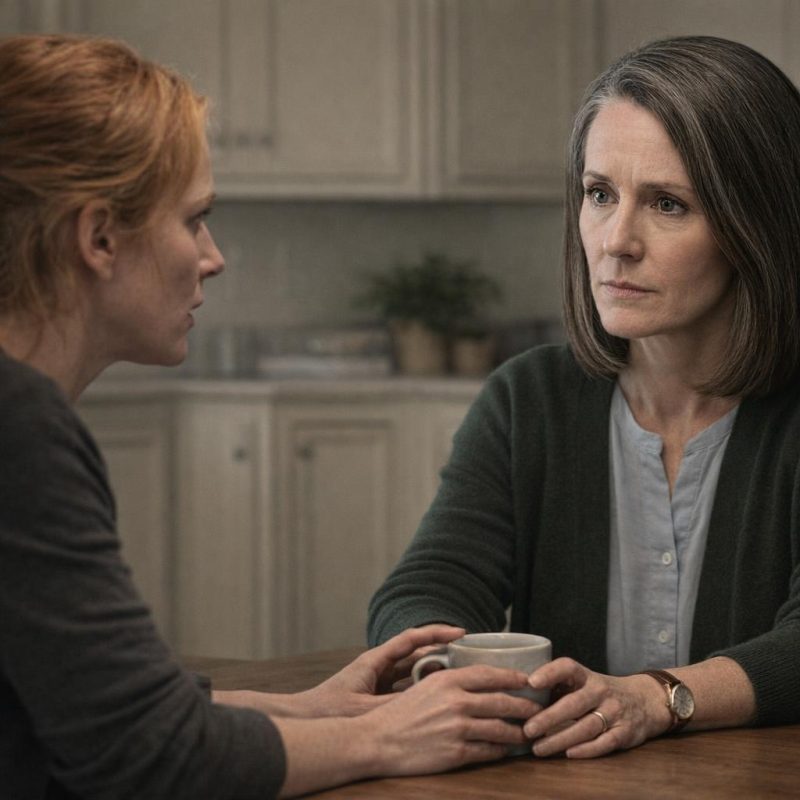 Image by RM AI
Patricia Knowles
Frank called on a Tuesday morning, his voice carrying that particular steadiness he used when he had something real. He said he knew a forensic pathologist — Patricia Knowles, nearly twenty years in the field — who had agreed to look at the original medical examiner's report on Martin. I drove to her office near the city hospital with a folder of Martin's medical records pressed against my chest like I was carrying something fragile. Patricia was in her late forties, frameless glasses, the kind of posture that came from spending decades being the most precise person in any room. She didn't offer pleasantries. She spread the documents across her desk and read in silence while Frank and I sat across from her. She asked about Martin's symptoms in the final weeks — the tremors, the confusion, the sudden weight loss. I answered everything I could. She made notes in a small, careful hand. When she finally looked up, she didn't soften what she said. Several standard tests had never been ordered. Key symptom patterns had gone unexamined. The original report had moved too quickly to a natural-causes conclusion without the supporting work to justify it. The quiet authority in her voice settled over the room when she said the original examination had been incomplete.
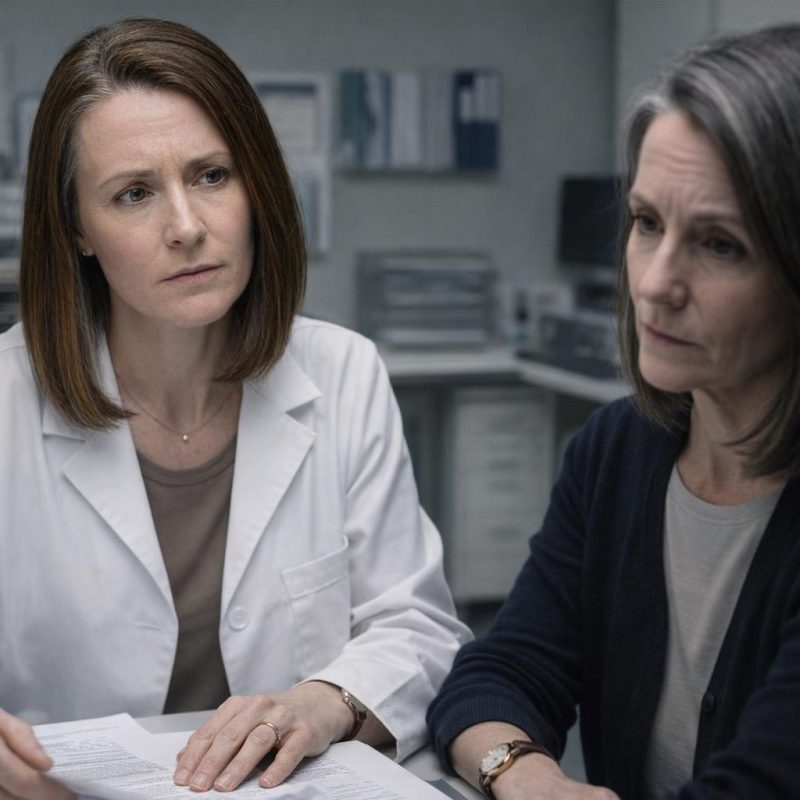 Image by RM AI
The Hair Sample
Patricia set her pen down and asked the question I'd been dreading: had Martin's body been cremated? My stomach dropped. I looked at Frank, and for a moment neither of us spoke. I genuinely didn't know. Frank reached into his jacket and pulled out a folded document — he'd done his homework before we ever walked through that door. Martin had signed papers years earlier donating his body to medical research. His remains had gone to a university program across the state. Frank had already contacted the program and confirmed that tissue samples were still preserved in their archive. I felt something loosen in my chest that I hadn't realized had been locked tight. Patricia explained it carefully: hair and tissue could be tested for certain toxins even months after death, depending on what we were looking for. Some compounds left traces that didn't break down easily. She said she could formally request access to the samples and submit them for analysis, but we needed to understand the process would take several weeks. I nodded. Frank nodded. We both understood there was nothing to do but wait. I drove home that evening thinking about Martin signing those donation papers — some quiet, practical decision he'd made years ago — and what it might mean now that the evidence might still exist.
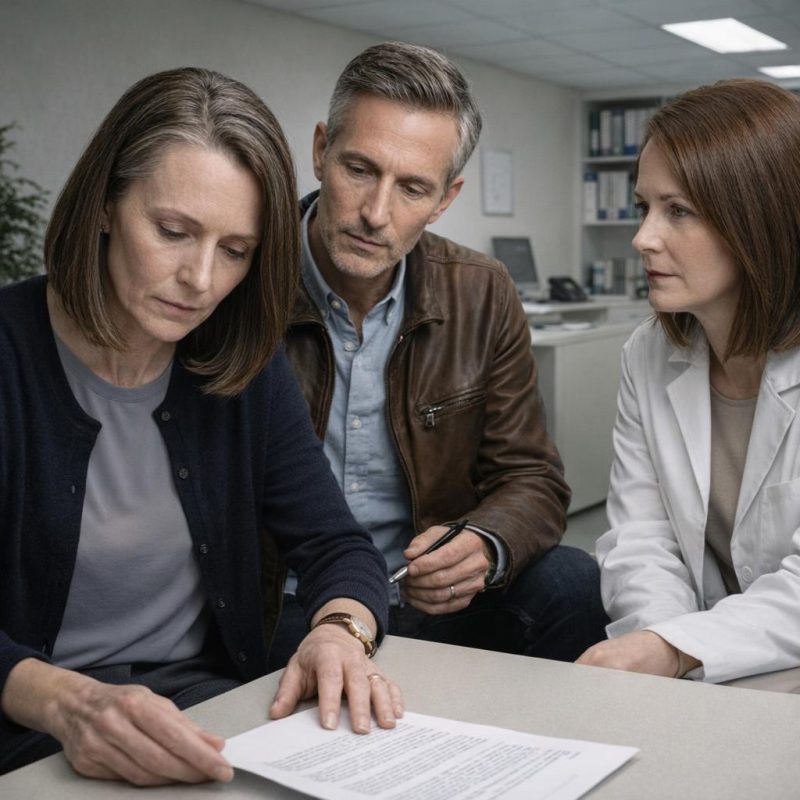 Image by RM AI
Cheryl's Offer
I pulled into my apartment parking lot just after six and saw her before I'd even cut the engine. Cheryl was standing beside a black sedan near the entrance, dressed like she was coming from a board meeting, posture perfect, expression arranged into something she probably thought looked reasonable. My pulse jumped, but I got out of the car. She walked toward me with a measured pace. She said we needed to talk like adults. She said there was no reason for things to get messy. Then she told me she was prepared to offer me fifty thousand dollars — a clean settlement, she called it — contingent on my stepping back from whatever I was doing and signing a nondisclosure agreement. She framed it as tidying up family business, as though Martin's death were an estate dispute and I was an inconvenient creditor. I stood there in the cooling evening air and looked at her. I didn't say yes. I didn't say no. I asked her what exactly she thought I was doing that needed to stop. She smiled the way people smile when they think they've already won. Then she said the offer expired in twenty-four hours.
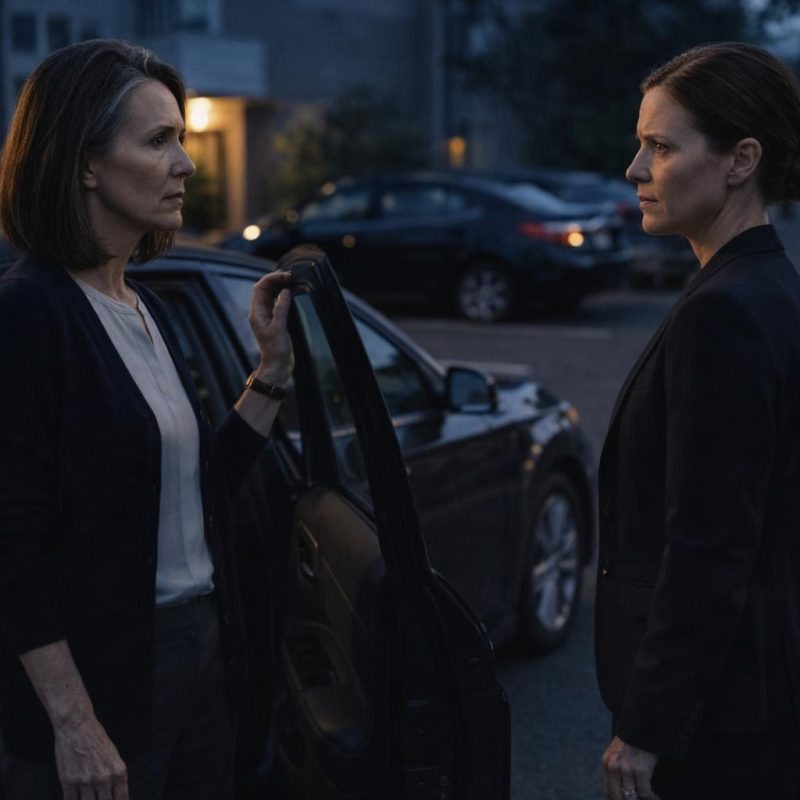 Image by RM AI
The Trap
I went straight inside, locked the deadbolt, and called Frank before I'd even taken off my coat. I told him everything — Cheryl in the parking lot, the fifty thousand dollars, the nondisclosure agreement, the twenty-four hour clock she'd put on it. He listened without interrupting. When I finished, he was quiet for a moment, and then he said that what she'd just done was evidence of obstruction. He said it carefully, like he wanted me to understand the weight of it. He asked if I was willing to use it. The plan he laid out was straightforward: I would reject the offer, and we would wait. If Cheryl or her children made further contact, I would be wearing a recorder. Frank said he could have the equipment to me by morning — small, easy to conceal, legally usable in our state. I told him I was afraid. He didn't pretend that was unreasonable. He said this could push things further, that pressure sometimes made people do things they wouldn't otherwise do. I told him I thought I was already past the point where staying quiet kept me safe. We stayed on the phone a little longer, working through the details. By the time I hung up, I had stopped shaking. I was going to reject the offer and let whatever came next come — and I was going to be ready for it.
 Image by RM AI
The Toxicology Report
Patricia called on a Thursday afternoon, and I knew from the first second of silence before she spoke that the results were back. Martin's tissue samples had tested positive for slow-acting toxins — more than one compound, she said, found at levels that indicated sustained exposure over several months. She used precise, clinical language, but the meaning was not clinical at all. She said the levels were consistent with deliberate, sustained poisoning intended to kill. I sat down on the kitchen floor because my legs simply stopped working. Frank called twenty minutes later. He had traced the offshore accounts through a chain of shell companies, and the names on the controlling documents were Cheryl's, Derek's, and Melissa's. He had found evidence connecting them to at least six other elderly victims across multiple states — financial records showing a pattern of isolation and asset redirection that ran through all of them. Martin had left behind the storage unit, the key, the documents — Frank said the evidence suggested he had been trying to get proof out before it was too late. He hadn't had enough time. I stayed on the kitchen floor for a long time after Frank hung up, the phone still warm in my hand, and Patricia's words sitting in my chest like something that could not be taken back.
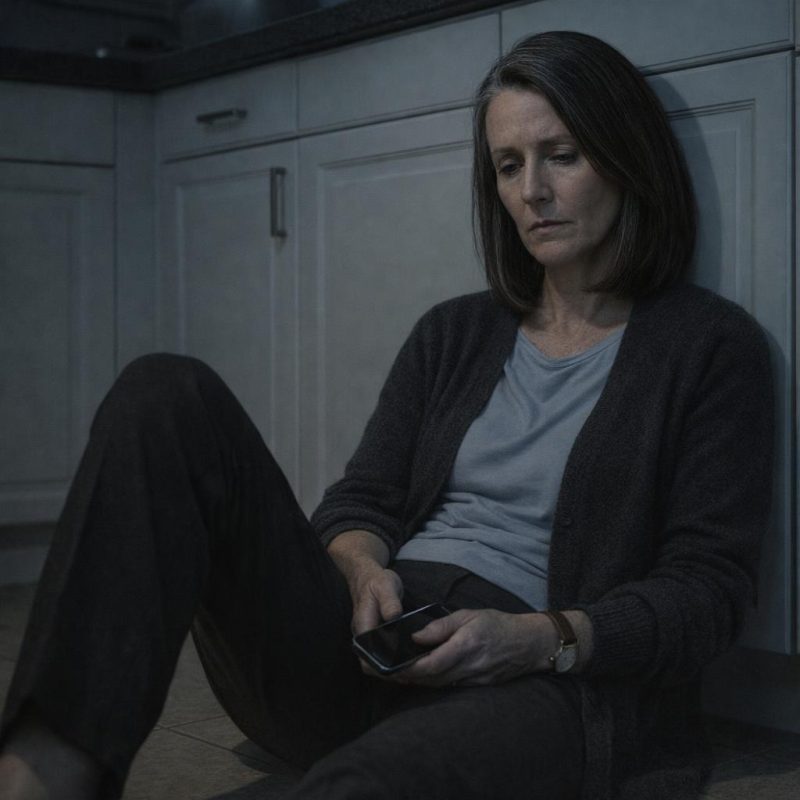 Image by RM AI
Securing the Evidence
Frank was at his office when I arrived at seven the next morning, coffee already made, documents already spread across the table. We spent the next several hours making copies — every financial record, every photograph, Patricia's preliminary report, the recordings from my encounters with Cheryl, Frank's investigative notes. Frank locked one complete set in his office safe. I drove a second set to my attorney and watched her seal it in a labeled envelope and log it into her files. We uploaded encrypted copies to two separate secure cloud accounts with different passwords stored in different places. Frank gave a sealed package to a colleague he trusted with instructions not to open it unless Frank told him to or went unreachable. Then I went to the bank and rented a safety deposit box — the smallest one they had, which was still large enough for what I needed. I placed the last complete set of documents inside. I had written a letter the night before, addressed to no one in particular, explaining what the box contained and asking that it be turned over to law enforcement if anything happened to me. I folded it on top of the stack and closed the lid. Frank had also arranged for Patricia's report to be filed formally with the medical board, which meant it existed in a system neither of us controlled. I slid the safety deposit box into its slot and heard the lock catch.
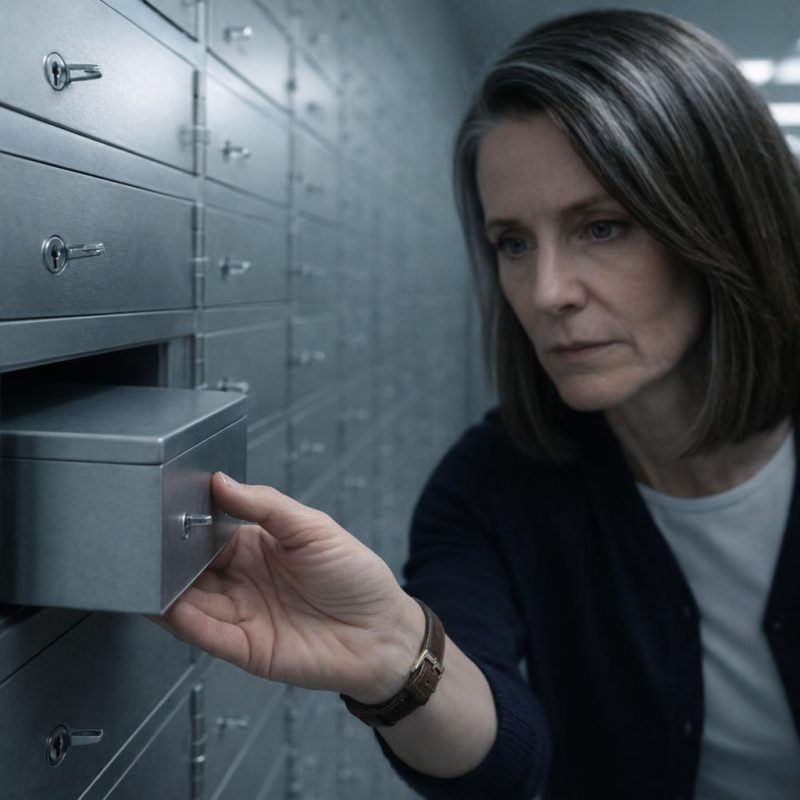 Image by RM AI
Sarah Chen
Frank called two days later and said he had someone he wanted me to meet. Her name was Sarah Chen — FBI, elder fraud division, a decade building cases against exactly the kind of operation we were describing. He had sent her a summary of the evidence the evening before, and she had agreed to sit down with us. We met at a federal building downtown on a Wednesday morning. Sarah was in her early forties, a sharp suit, a badge clipped at her hip, and the kind of focused stillness that made you feel like every word you said was being filed and cross-referenced in real time. She had printed Frank's summary and marked it up before we arrived. She asked about the timeline in detail — when Martin first showed symptoms, when the financial transfers began, how the shell companies were structured, how the other victims connected. She asked about Angela, about Robert, about the storage unit. She listened the way investigators listen, without nodding along, just absorbing. When she had worked through her questions, she set her pen down and said the interstate financial activity gave the case federal jurisdiction. She said she was opening an investigation. I had spent months carrying this alone, and then with Frank, in the particular quiet of private effort. Sitting in that federal building, I felt the weight of it shift — not disappear, but move into something larger than the two of us.
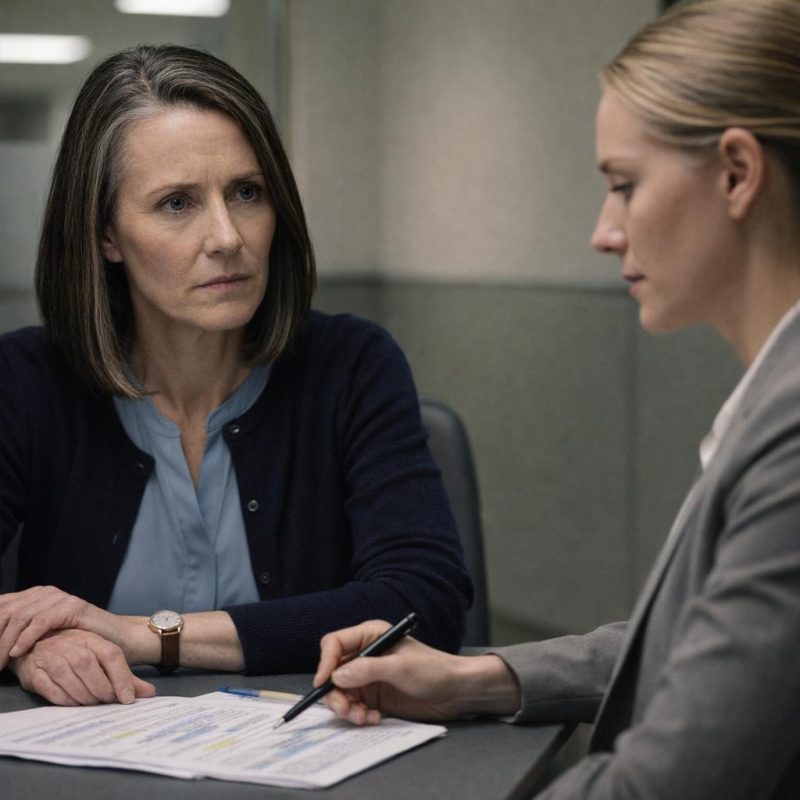 Image by RM AI
Building the Federal Case
The next two weeks were the most exhausting of my life, and also, strangely, the most purposeful. I met with Sarah and her team four times, sometimes at the federal building, once at Frank's office, once over a secure video call when a scheduling conflict made the drive impossible. I gave formal testimony twice, working through the timeline from the storage unit key to Patricia's toxicology report, answering the same questions from different angles until the answers felt worn smooth. The FBI analysts pulled the financial documents apart layer by layer, tracing the money through the shell companies across state lines. They identified victims in six states — elderly men and women who had been isolated from their families, their assets quietly redirected, some of them gone now and some of them still alive and reachable. Robert gave a recorded statement about the changes he'd seen in Martin during those final years. Angela did the same. Patricia's toxicology report became the spine of the case, the thing everything else attached to. Sarah told me near the end of the second week that the evidence was comprehensive — that the pattern was documented, the financial trail was traceable, and the case was strong. I drove home that evening and sat at my kitchen table in the quiet. Somewhere in a federal building, the work was continuing without me, methodical and thorough, brick by careful brick.
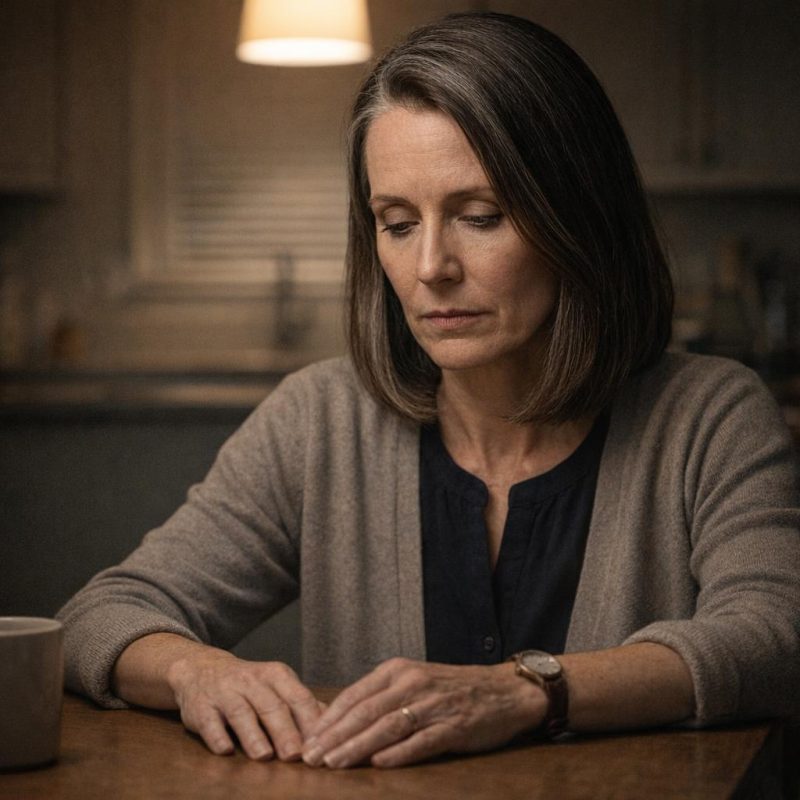 Image by RM AI
Cheryl Runs
I was washing dishes when my phone rang, Sarah's name on the screen. I dried my hands and picked up, and she didn't bother with small talk. She told me that Cheryl had made her move that afternoon — packed a bag, withdrawn as much cash as she could access, and driven to the airport. Federal agents had been watching her since the asset freeze went into effect, so they were already in position when she reached the gate. Sarah said she had a one-way ticket. I asked where to. The Cayman Islands. I stood there in my kitchen holding the phone, and something in my chest went very still — not surprise, exactly, but a kind of grim recognition. Of course she ran. When the walls close in on someone like Cheryl, they don't sit quietly and wait. They calculate exits. Sarah explained that the attempted flight would be entered as evidence of consciousness of guilt, which would complicate any future bail argument considerably. Cheryl's accounts, properties, and investment holdings were already under federal hold. She had nothing left to run with. I asked if she was in custody. Sarah said yes — federal agents had arrested her at the gate before she could board the flight to the Cayman Islands.
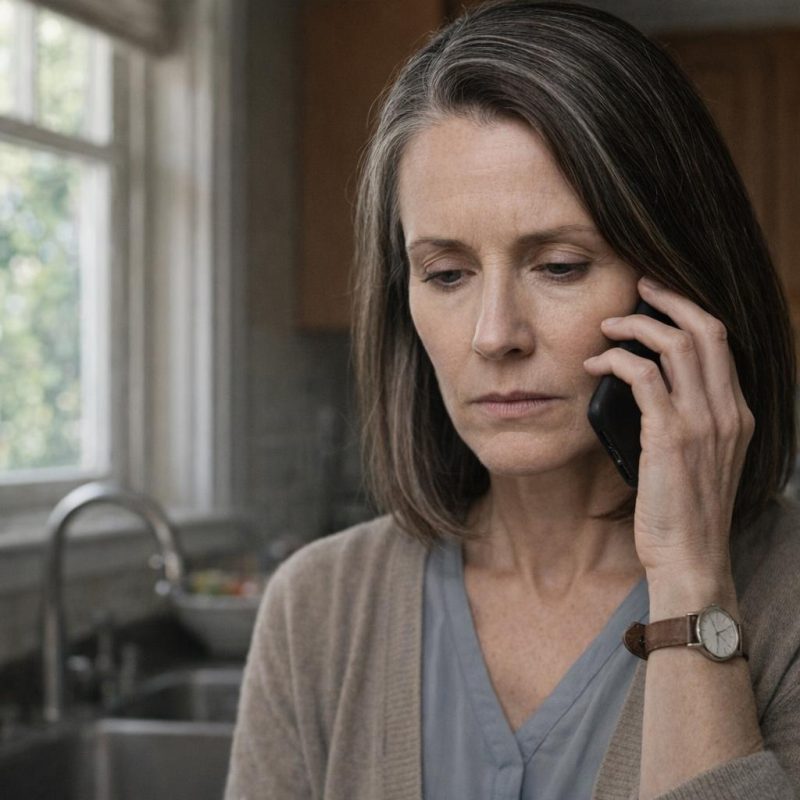 Image by RM AI
Derek's Arrest
Two days after Cheryl's arrest, Sarah called again, and this time Frank was already at my kitchen table when I put her on speaker. The FBI had coordinated with authorities in two other states — I didn't catch which ones at first, I was still processing — and they'd moved on Derek that morning. Agents had gone to his office, walked in while he was apparently in the middle of a meeting, and taken him into custody without incident. Frank made a quiet sound that might have been satisfaction. Sarah said Derek had outstanding fraud warrants he'd apparently believed were buried deep enough to ignore. He'd been wrong. During the arrest, agents seized his computers, his phones, and boxes of financial records going back years. Sarah said the records documented communications between Derek, Cheryl, and Melissa — detailed enough to map the entire operation. He'd kept records of everything, she said, almost like he'd expected to need them someday. I thought about the way Derek had looked at me across that conference table months ago, the absolute confidence in his expression, the certainty that he was untouchable. Frank closed his notebook, set it flat on the table, and said Derek was being held without bail — flight risk, same as his mother. The entitlement that had carried Derek through every room he'd ever walked into had run out of road.
 Image by RM AI
The Federal Raid
Sarah called before seven in the morning and told me to come if I wanted to see it. Frank picked me up forty minutes later and we drove to the neighborhood without saying much. I hadn't been back since the day I'd stood at Martin's door years ago, and the street looked smaller than I remembered — the same tidy lawns, the same mailboxes, the same quiet that had always felt slightly wrong to me. We parked across the street and waited. The federal vehicles arrived in a convoy, four of them, and agents in jackets moved up the front walk with the kind of unhurried efficiency that meant they'd done this many times before. A neighbor two doors down came out onto her porch. Then another across the street. Within twenty minutes there were eight or nine people standing at a respectful distance, watching. The agents were inside for hours. Boxes came out steadily — banker's boxes, evidence bags, a laptop in a sealed container. Frank offered me coffee from a thermos and I took it without tasting it. I kept thinking about Martin moving through those rooms, careful and quiet, documenting what he could, afraid of what he knew. The house where he had lived and died sat open in the morning light, its secrets finally being carried out in labeled boxes, and I held my coffee with both hands and let the stillness of it settle over me.
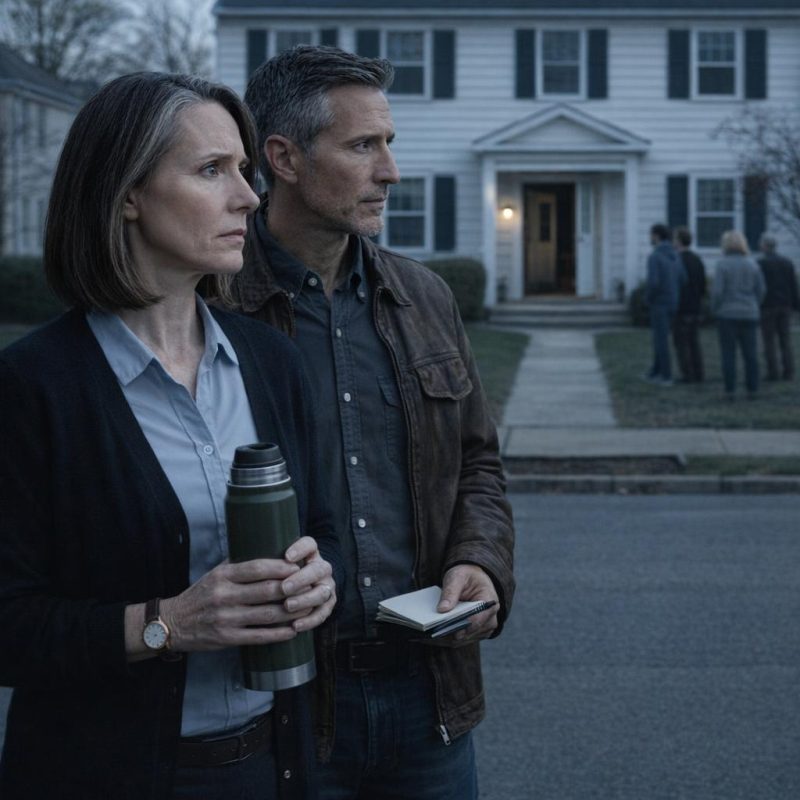 Image by RM AI
The Other Victims
Sarah spread the files across the conference table at the field office and gave me a moment before she started talking. Twelve names. Twelve people, all of them elderly, all of them living alone or nearly so, spread across six states over eight years. She walked me through the pattern — the way Cheryl's network had identified targets, built trust, isolated them from family, redirected assets. The total financial losses exceeded three million dollars. I sat with that number for a moment and couldn't make it feel real. Some of the victims were still alive, Sarah said, and the FBI was working to connect them with family members and legal advocates. Some were not. Three deaths were under review for possible homicide, the circumstances similar enough to Martin's that Patricia's toxicology methodology was being applied to what records still existed. Martin had been documenting this pattern in the months before he died — cross-referencing names, dates, financial transfers, building a picture he must have known was bigger than just himself. His notes had given the FBI the thread that unraveled the rest of it. I looked at the twelve names on the table, people I had never met, lives I would never fully know, and thought about a man sitting alone in a house that wasn't safe anymore, carefully writing down everything he could so that someone, eventually, might understand the full weight of what had been done.
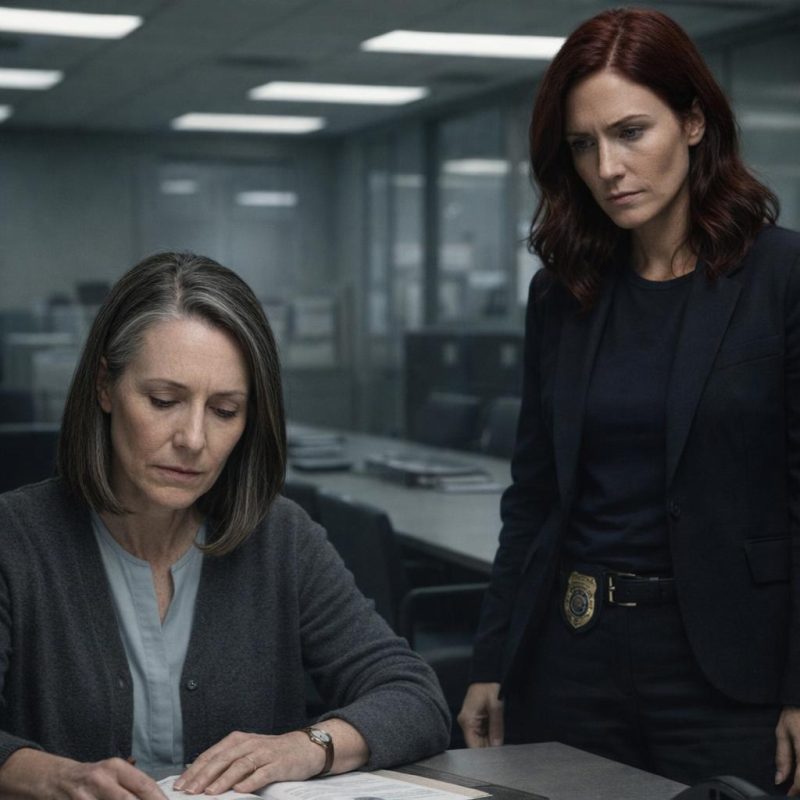 Image by RM AI
Melissa's Deal
Sarah called on a Thursday afternoon, and I could hear something different in her voice before she'd finished her first sentence — a controlled energy, like someone holding a door open that was trying to swing shut. Melissa's attorney had contacted the FBI. Melissa wanted to cooperate. In exchange for a reduced sentence, she was prepared to testify against Cheryl and Derek — all of it, Sarah said. The murder plot, the timeline, the specific steps taken to poison Martin over months. She had recordings. She had messages. She had documentation that Sarah described as detailed and corroborating. I sat down slowly in my chair. I'd known Melissa was calculating from the first time I'd seen her, that practiced indifference she wore like a second skin, always tracking the room for advantage. I suppose I shouldn't have been surprised that when the structure finally cracked, she moved toward the exit before the ceiling came down. Sarah said the FBI was still negotiating the terms, but that Melissa's testimony, if it held, would be devastating to Cheryl's defense. I thought about Cheryl in a federal holding cell somewhere, and about Melissa in a lawyer's office making the trade that would bury her mother. There was no satisfaction in it that felt clean. The family had fractured completely, each piece falling in a different direction, and the silence on the line after Sarah hung up carried the full weight of that collapse.
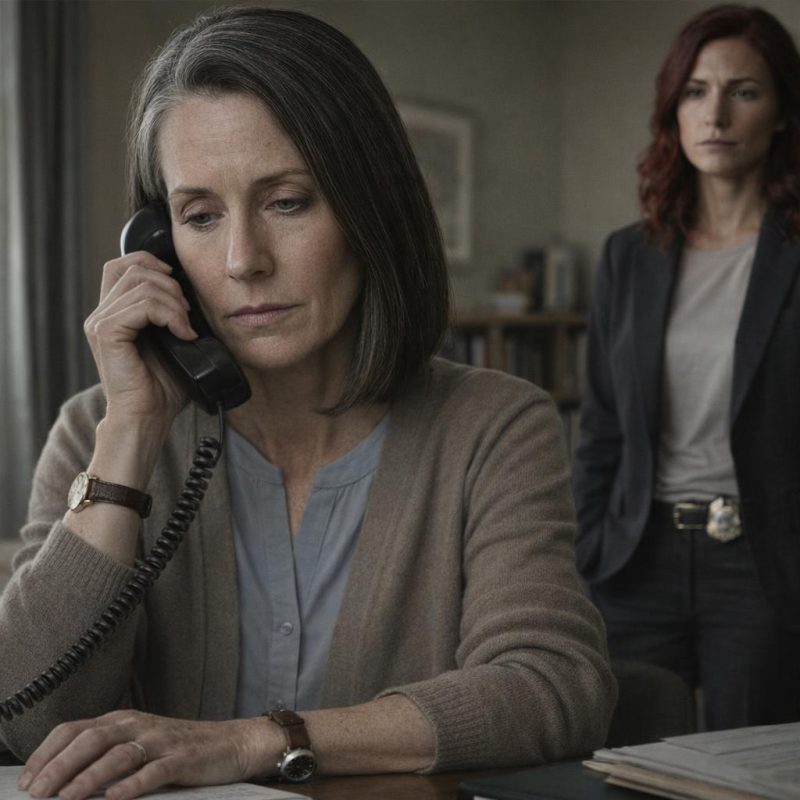 Image by RM AI
Cheryl's Arrest
The federal courthouse was more crowded than I'd expected. Frank and I arrived early and still had to work our way to seats in the gallery. Press, observers, a few faces I didn't recognize who had the careful stillness of people with a personal stake. The charges had been filed the previous week — first-degree murder in Martin's death, conspiracy to commit fraud across state lines, elder abuse and financial exploitation. Seeing them listed in print had made something in me go very quiet. When Cheryl was brought in, she was wearing jail clothing, and her posture was still perfect. That was the thing I noticed first — the posture, the set of her shoulders, the way she moved as if the room owed her its attention. Her attorney argued for bail. The prosecutor laid out the flight attempt, the frozen assets, the severity of the charges, the documented pattern across six states. The judge listened without expression and denied bail without hesitation, citing the severity of the charges and the demonstrated flight risk. Cheryl's attorney said something I couldn't hear. Cheryl didn't react. Frank put his hand briefly on my arm. I watched the bailiff move toward her, watched her stand, and then the courtroom doors swung open and Cheryl was led out in handcuffs, her perfect posture finally meaning nothing at all.
 Image by RM AI
The Trial
The trial ran three weeks. I was called in the second week, and I sat in the witness box and described everything — the brass key arriving in the mail, the storage unit, the notebooks Martin had left, the financial documents, the pattern he had spent his final months trying to preserve. Cheryl's attorney cross-examined me for nearly an hour, and I answered every question the same way I'd answered Sarah's questions months earlier: carefully, specifically, without embellishment. Cheryl sat at the defense table the entire time and looked at a point somewhere past my left shoulder. Patricia testified about the toxicology findings. Melissa testified for two full days, her voice flat and precise, and what she described was methodical and deliberate and very hard to listen to. Angela testified about Martin's fear in those last months. Robert testified about the man he'd known for thirty years and what had changed. The prosecution showed the jury the pattern of other victims, twelve names and twelve sets of documents, and the financial records that traced the money through shell companies across state lines. Closing arguments took a full day. Then the jury was gone, and the waiting began. Frank and I sat in the courthouse cafeteria for most of it, drinking bad coffee and not saying much. On the second day of deliberations, just after two in the afternoon, the foreperson sent word that the jury had reached a verdict.
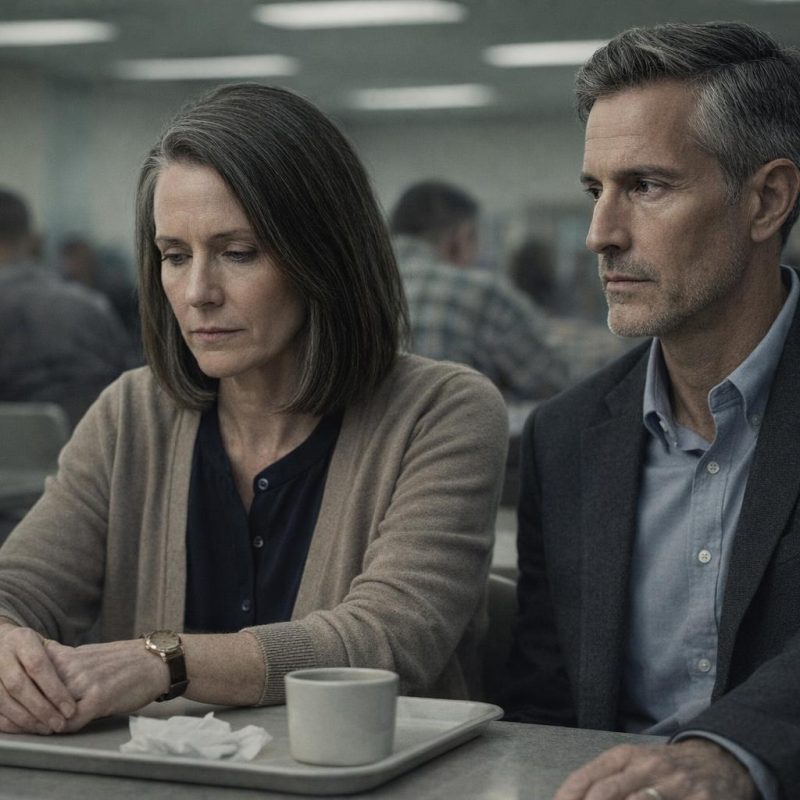 Image by RM AI
The Verdict
The courtroom went completely silent when the foreperson stood. Frank reached over and took my hand, and I let him. The judge read each count in sequence, and after each one the foreperson said the same word. Guilty. First-degree murder. Guilty. Conspiracy to commit fraud across state lines. Guilty. Elder abuse and financial exploitation. Guilty, on every count related to the other victims. I counted twelve names in my head as the verdicts came, one for each person whose life had been taken apart by the same careful, patient cruelty that had taken Martin. Cheryl sat at the defense table and showed nothing — no tears, no flinch, no visible acknowledgment that anything had changed. That stillness had probably served her well for years. It didn't serve her now. Sarah caught my eye from across the room and gave a small nod. Frank's hand tightened briefly around mine. I thought about Martin sitting alone in that house, writing everything down in careful notebooks, trusting that someone would eventually find the key. The judge thanked the jury for their service, and then she looked down at her calendar and announced that sentencing was scheduled for six weeks from today.
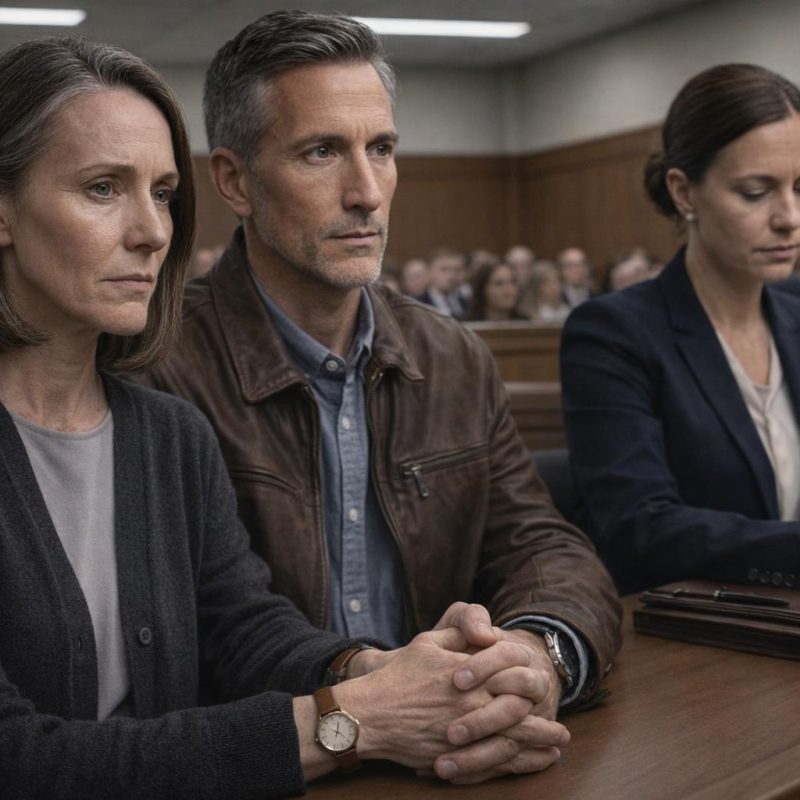 Image by RM AI
Sentencing
Six weeks passed the way time passes after something enormous — slowly, then all at once. The courtroom was packed again on sentencing day, fuller than it had been for the verdict. Families of the other victims filled the gallery, some of them people I'd come to recognize over the months of trial. When the judge called my name, I stood and walked to the podium with the paper I'd written and rewritten a dozen times. I talked about Martin — not the evidence, not the notebooks, not the key — but the man. The careful way he moved through the world. The trust it must have taken him to leave that envelope knowing he might not be alive to explain it. I said that he had spent years in a situation I couldn't fully imagine, and that he had found a way to reach through it and ask for help from someone he hadn't spoken to in nearly twenty years. I said that took more courage than most people will ever need. I spoke for the other twelve victims too, because someone had to. When the judge pronounced the sentence — life in prison without possibility of parole — Cheryl stood at the defense table and showed nothing. The bailiff moved toward her, and she walked out of that courtroom for the last time.
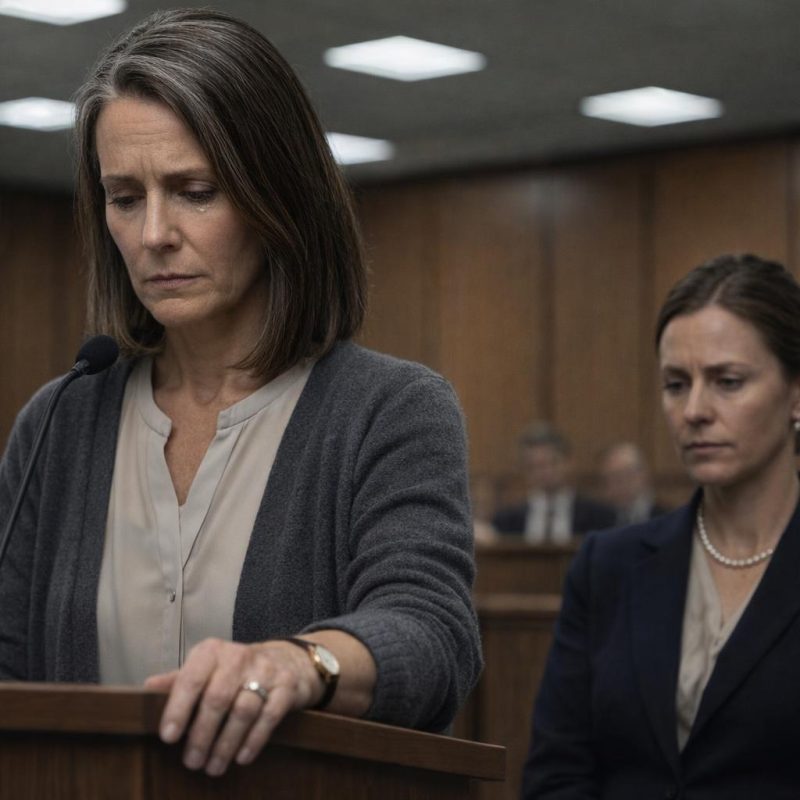 Image by RM AI
The Aftermath
The weeks after sentencing had a strange, underwater quality. I slept more than I had in months. I let dishes sit in the drying rack longer than necessary. I didn't rush anything. Robert drove up from the coast about two weeks after the hearing, and we sat at my kitchen table with coffee going cold between us and talked about Martin the way you talk about someone when the grief has finally settled enough to let the good memories back in. Robert told me about the Martin he'd known before Cheryl — the one who laughed easily, who kept a vegetable garden he was unreasonably proud of, who once drove four hours to help Robert move a broken-down truck off a mountain road without being asked. I hadn't known about the garden. It felt like a small gift. Frank came by a few days later. He didn't stay long, but before he left he said that Martin had chosen the right person to trust, and that not everyone would have seen it through. I didn't know what to say to that, so I just thanked him. After he left I sat by the window for a long time, and the afternoon light moved across the floor the way it does when nothing is pressing and nowhere needs to be.
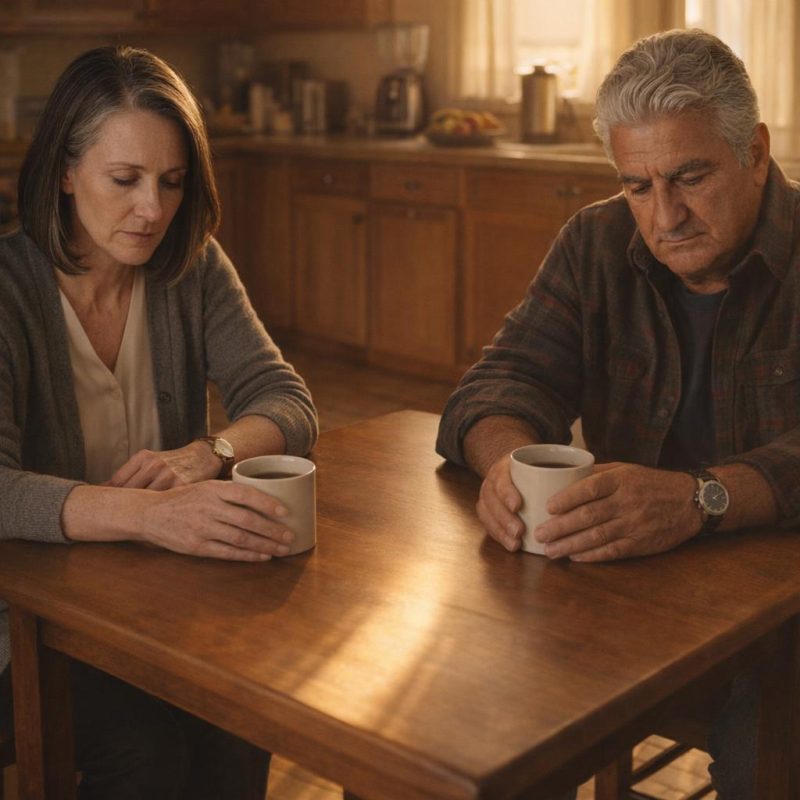 Image by RM AI
Martin's Final Gift
I'd been carrying the brass key in my coat pocket since the trial ended, meaning to return it. It took me almost a month to actually make the drive back to Pine Ridge Storage. Joan was at the front desk when I walked in, and her face opened into something warm and relieved when she saw me. I told her about the verdict and the sentencing, and she pressed her hand flat against the counter and closed her eyes for just a moment. Then she said there was something I should know. Martin had left a second envelope in Box 7, she told me — sealed, marked with a single word on the front: After. She'd been holding it since before he died, waiting for the right person to come. My hands weren't entirely steady when I opened it. The letter inside was dated nearly four years before his death. Martin wrote about our marriage the way you write about something you've had time to understand — carefully, without self-pity, with a kind of clear-eyed sorrow. He said he had never stopped being grateful for the years we had. He said he was sorry for the way things ended, that the fault had been his, and that he hoped I had built something good. He thanked me for being someone worth trusting. I sat in my car in the parking lot for a long time after, the letter folded in my lap, the afternoon going quiet around me.
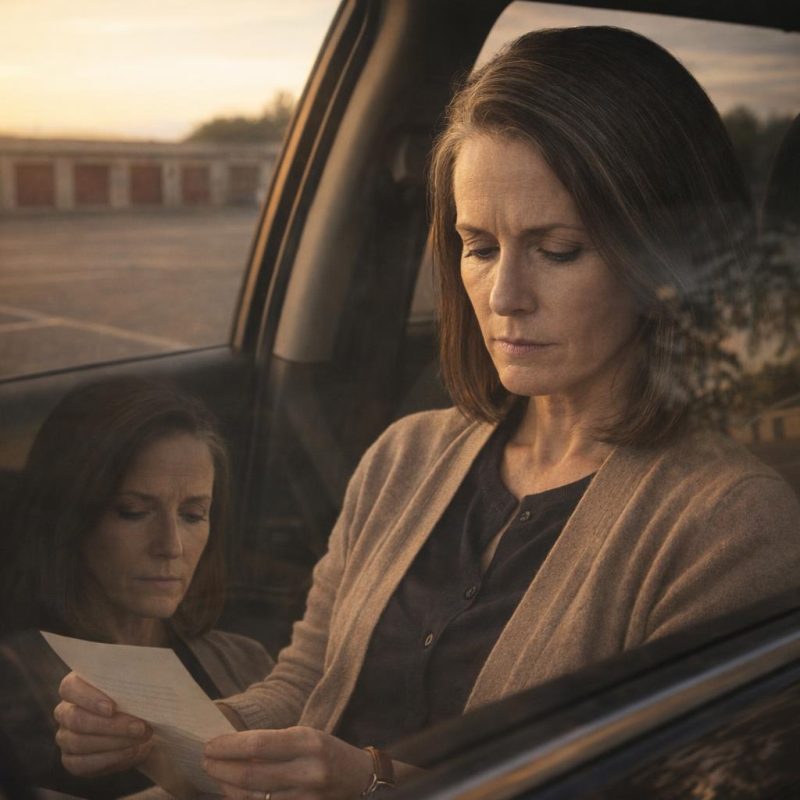 Image by RM AI
Moving Forward
Six months after the sentencing, I stood at my kitchen counter on a Tuesday morning with nowhere particular to be. The coffee was hot. The light through the window was the pale gold of early autumn. I'd been asked to speak at a conference on elder financial abuse the following month — the second such invitation since the trial — and I'd said yes to both. It wasn't something I'd planned. It was something that had found me, the way certain purposes do. I thought about Martin that morning, the way I thought about him most mornings now — not with the sharp ache of the trial, but with something quieter. I thought about the vegetable garden Robert had described, and the careful notebooks, and the envelope he'd addressed to me and left with a woman he trusted at a storage facility, on the chance that I would come. I thought about the word After on that second envelope, and what it had cost him to write what was inside it. I picked up the brass key from the counter where it had been sitting since I got home from Pine Ridge. It was small and ordinary-looking, the kind of thing you'd pass over at a yard sale without a second glance. I turned it over once in my palm. Then I opened the drawer beside the stove and set it inside, gently, and pushed the drawer closed.
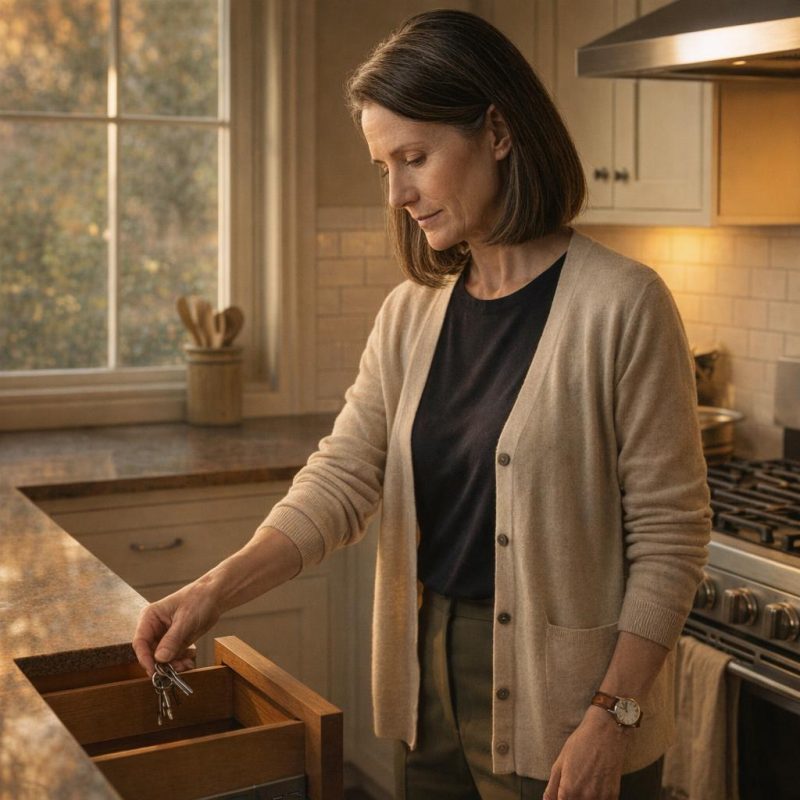 Image by RM AI
KEEP ON READING
20 Historical Figures Who Lived Much Longer Than You Think
Some Famous Lives Stretched Far. History has a way of…
By Christy Chan May 22, 2026
20 LGBTQ+ People from History Who Changed the World
History Is Full Of Queer Icons . LGBTQ+ people have always…
By Emilie Richardson-Dupuis May 22, 2026
20 Historical Poisons That Changed Politics, War, And Royal Families
Power In A Cup. Poison has always had a strange…
By Cameron Dick May 22, 2026
20 Man-Eaters That Terrified Entire Regions
When Fear Had Teeth. History has a way of turning…
By Cameron Dick May 22, 2026
20 Mistresses Who Had More Power Than the Queens Beside…
Power Wasn’t Always on the Throne. Royal history loves a…
By Annie Byrd May 22, 2026
20 Rare Artifacts That Changed Scholars’ Understanding of the Past
Discoveries That Forced Historians to Rethink What They Knew. Archaeology…
By Rob Shapiro May 22, 2026