

My Neighbor Spent Months Flirting With My Husband—Then I Discovered the Real Reason She Moved Next Door
My Neighbor Spent Months Flirting With My Husband—Then I Discovered the Real Reason She Moved Next Door
The Comfort of Routines
I've lived on Sycamore Lane for thirty years, and I can tell you exactly what Tuesday morning looks like from my front porch. Frank comes out at seven with two mugs — mine with a splash of cream, his black — and we sit in the green metal chairs my mother left me and watch the street wake up. The Hendersons' sprinklers kick on at seven-fifteen. The Pattersons' retriever barks twice at the mail truck and then gives up. It's the same every week, and I mean that as a compliment. Our brick ranch house isn't fancy, but it's ours, paid off twelve years ago, and every room in it knows us by now. Frank fishes on Saturday mornings and is back by noon. We eat dinner at six. We go to church on Sundays and sit in the fourth pew from the front, same as always. Our neighbors know to wave before they ask a favor, and I know which hedges hide the best gossip on the block. People think quiet lives are boring. I think they've never had one. There's a particular kind of peace that settles into your bones when nothing is trying to surprise you, and on those Tuesday mornings with the coffee still warm and Frank's shoulder close enough to touch, that peace felt like the most solid thing I owned.
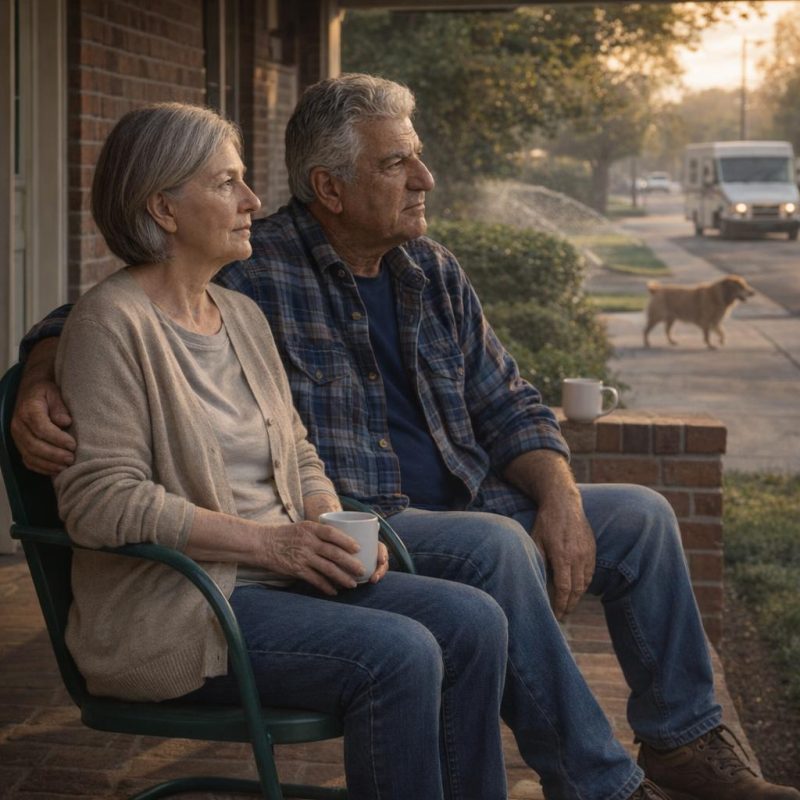 Image by RM AI
The Peterson Place Sells
The moving truck showed up on a Thursday, which surprised me because the Peterson place had only had the sold sign in the yard for about three weeks. Frank mentioned it over breakfast — said the house must have gone fast, probably a cash offer — and I agreed without really thinking about it. By mid-morning I was at the kitchen sink rinsing out the coffee pot and I had a clear view of the whole production next door. Professional movers, not the rent-a-truck-and-call-your-cousins kind. They were carrying in furniture that looked like it belonged in a magazine spread — a cream-colored sofa wrapped in moving blankets, a tall antique mirror, boxes labeled in neat black marker. Whoever this was, she hadn't downsized. Frank came in for a glass of water and glanced out the window with me for a moment before heading back to the garage. I stayed. I'm not ashamed of it — watching new neighbors move in is practically a civic duty on this street. I was about to turn away when the woman directing the movers stepped back from the driveway and looked toward our house. Late fifties, I guessed. Silk blouse, dark slacks, hair that looked like it had been done that morning. She stood very still for just a second, and then she turned back to her movers like she'd seen exactly what she came to see.
Blueberry Muffins and Introductions
She knocked the very next morning, which I respected. Some new neighbors take weeks to introduce themselves, and by then the window for a real welcome has closed. I opened the door and there she was — Valerie, she said, holding a basket with a blue cloth napkin tucked over the top. Blueberry muffins, still warm. She'd made them herself, she told me, and I believed her because the whole basket smelled like butter and vanilla. I invited her in and we sat at the kitchen table with coffee and talked for the better part of an hour. She was recently divorced, looking for a fresh start somewhere quieter. She asked about the nearest grocery store, whether the church on Elm Street was welcoming to newcomers, what the winters were like on this end of town. She complimented my garden — specifically the black-eyed Susans along the fence, which nobody ever notices — and said the front porch looked like the kind of place a person could actually breathe. I told her she was welcome to knock anytime she needed anything, and I meant it. She thanked me with a warmth that felt genuine, gathered up her basket, and walked back across the yard with the kind of easy, unhurried grace that made it look like she'd been doing this her whole life.
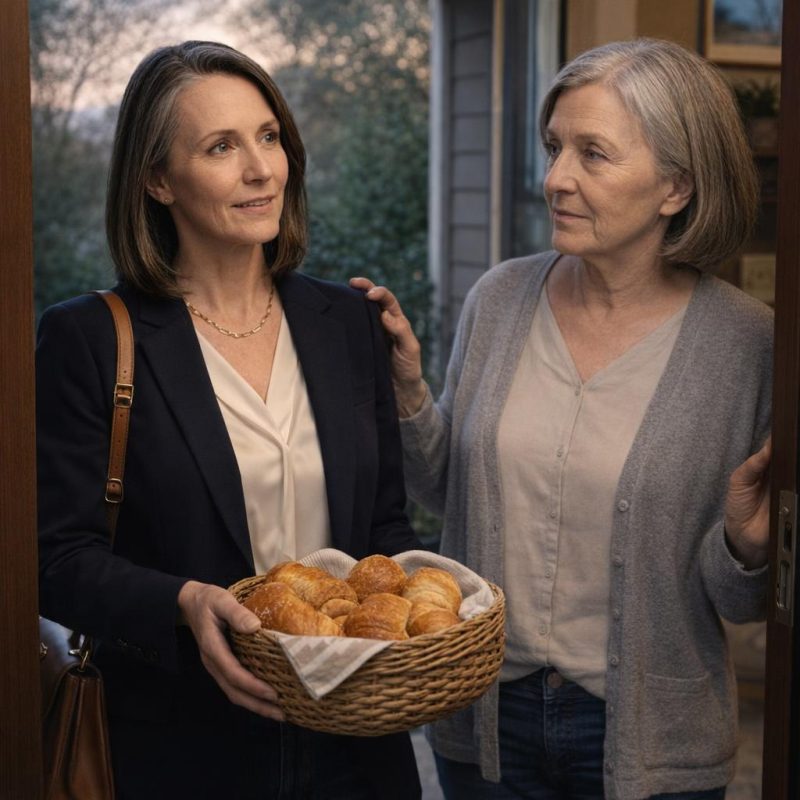 Image by RM AI
Questions About Frank
Valerie came back for coffee a few days later, and I was glad for the company. We settled in at the kitchen table again and the conversation moved the way good conversation does — easy, no long silences, one topic rolling naturally into the next. She asked where Frank had worked before he retired, and I told her about the twenty-two years at the county planning office. She nodded like that was interesting and asked what he did with himself now, so I told her about the fishing and the yard work and the occasional woodworking project in the garage. She wanted to know how long we'd been married, whether our kids lived close by — our son is up in Columbus, I told her, visits when he can. I shared a story about Frank forgetting our twentieth anniversary and making up for it with a weekend trip to Gatlinburg, and she laughed in the right places. She was a good listener. She leaned in, asked follow-up questions, remembered details I'd mentioned in passing. It was only later, washing up the coffee cups after she'd gone, that something small snagged at the back of my mind. I turned it over while the water ran warm over my hands, trying to put my finger on it. I couldn't say anything was wrong, exactly. I just noticed that Frank's name had come up an awful lot for a conversation that was supposed to be about getting to know each other.
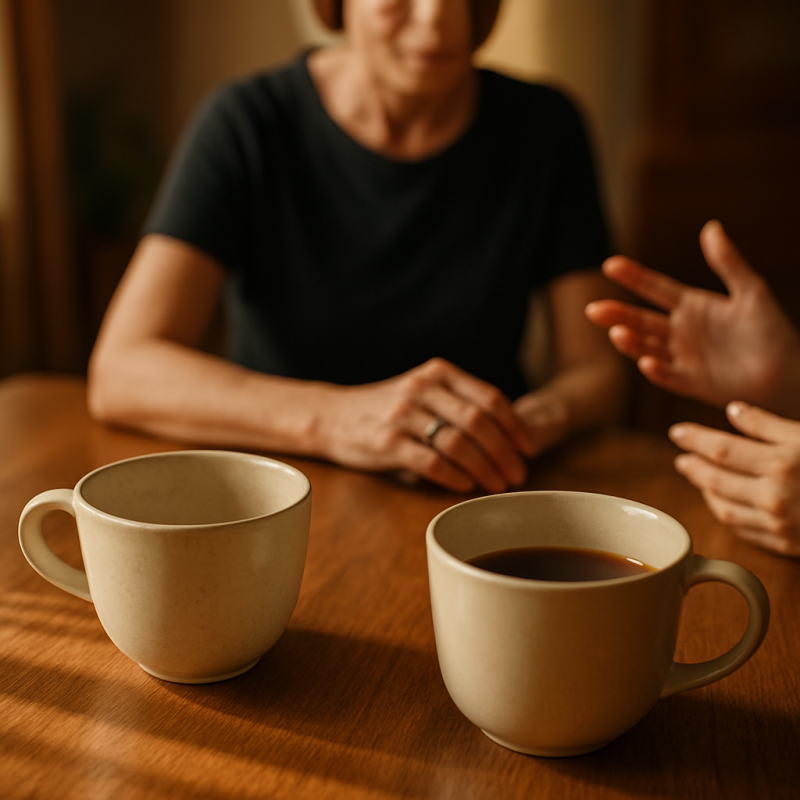 Image by RM AI
The Dependable Man
Frank came home from the hardware store while Valerie was still sitting at my kitchen table, and I introduced them the way you do — first names, quick smile, nothing formal. He set his bag down on the counter and shook her hand and said it was nice to meet her, the same easy politeness he uses with everyone. Valerie said she'd heard so much about him, which was a little odd given that we'd only had two conversations, but I let it pass. Frank asked if she was settling in all right, she said yes, and he excused himself to put away what he'd bought. Standard stuff. But then Valerie turned back to me with this smile — not a big smile, just a small, careful one — and said, "You're lucky, you know. He seems like such a dependable man." The word dependable sat in the air between us in a way I couldn't quite account for. It wasn't a strange thing to say about someone's husband. People say things like that all the time. But something about the way she said it, the particular weight she put on it, made me feel like she wasn't just making conversation. I smiled back and said yes, he was, and changed the subject. Frank came back through a few minutes later, said a polite goodbye, and headed out to the garage. Valerie left shortly after. I stood at the sink and turned that word over in my mind — dependable — and couldn't decide why it had landed the way it did.
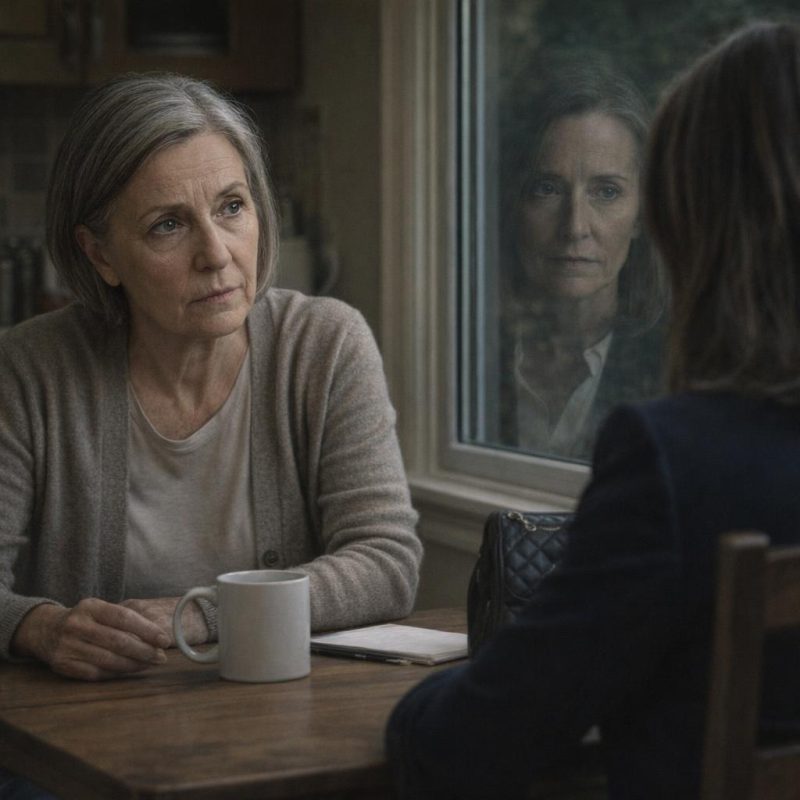 Image by RM AI
Yard Work and Timing
I started noticing the timing about two weeks in, and once I noticed it I couldn't stop. Frank mows the lawn on Saturday mornings — always has, same route, front to back, done by ten. The Saturday after Valerie moved in, I was at the kitchen window with my second cup of coffee when she appeared in her driveway about ten minutes after he started up the mower. She checked her mailbox, waved in his direction, and stood there for a minute or two before going back inside. I told myself that was nothing. People check their mail. The following Wednesday, Frank was out trimming the hedges along the side fence, and I watched Valerie come out to water her flower beds. She had a watering can, which I thought was a little unusual given that she had a perfectly good hose connection on the side of her house. They exchanged a few words over the fence — I couldn't hear what — and she went back inside after a few minutes. Frank didn't mention it when he came in. I didn't ask. I wasn't sure what I would have asked, exactly. It wasn't like anything had happened. She was outside. He was outside. People are outside. I rinsed my cup and put it in the rack and told myself I was reading into things that weren't there. But the pattern had taken shape in my mind now, quiet and uninvited, and it stayed.
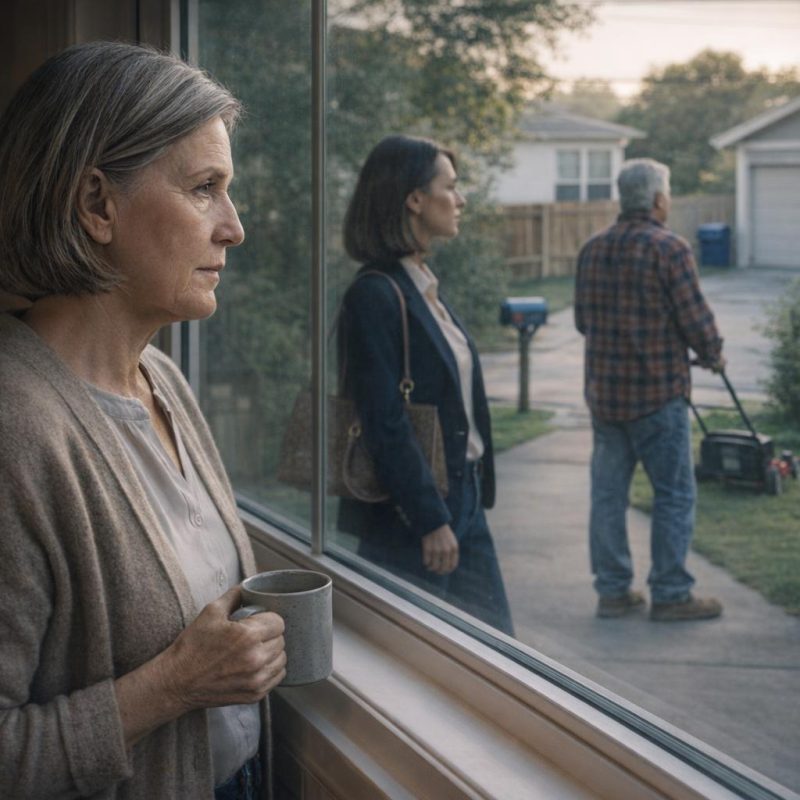 Image by RM AI
Heavy Boxes
It was a Sunday afternoon, Frank dozing in the recliner with the game on low, when the knock came. I answered it and there was Valerie in a linen blouse, apologetic smile, saying she hated to bother us but she had some boxes in the garage she couldn't manage on her own — heavy ones, from her old house, needed to be moved to a back shelf. She looked past me just slightly when she said it, toward the living room. I offered to help myself, and she said oh no, it was really a two-handed job, she didn't want me straining anything. Frank was already up by then, having heard voices, and before I could say much else he told her it was no trouble at all. I stood on the porch and watched them cross the yard together, Valerie pointing toward her garage and Frank nodding along. I felt something tighten in my chest that I didn't have a clean name for. It wasn't jealousy, exactly — or I told myself it wasn't. Frank was being a good neighbor. That's what people do. He was back in twenty minutes, said she was very grateful, said the boxes weren't even that heavy. He went back to his recliner and the game like nothing had happened. I stayed on the porch a little longer than I needed to, looking at the closed garage door across the yard.
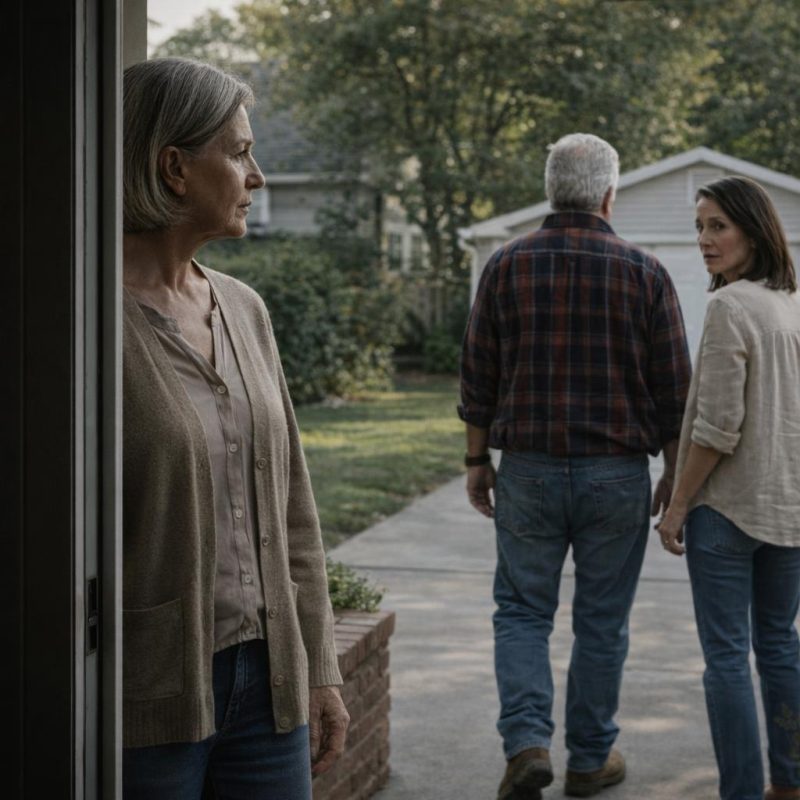 Image by RM AI
Coffee and Compliments
Valerie came for coffee again on Tuesday, and within the first five minutes Frank's name was already on the table. She said she'd noticed how well he kept the yard — the edges were so clean, did he do it himself? I said yes. She said he seemed like a man who kept his word, you could just tell. I said mm-hmm and refilled her cup. She mentioned his build, said it was clear he'd kept himself up, a lot of men his age let themselves go. I smiled and said nothing. She asked if he'd always been so reliable, or if that was something that came with age. I gave her a shorter answer than the question deserved. By the time she stood up to leave, I had been keeping a quiet count in the back of my mind the way you do when something starts to feel like more than coincidence. I walked her to the door, said it was lovely as always, and closed it behind her. Then I stood in my own hallway and added it up. Six times. Frank's name, Frank's qualities, Frank's habits — six separate compliments in under thirty minutes, and not one of them had felt like small talk.
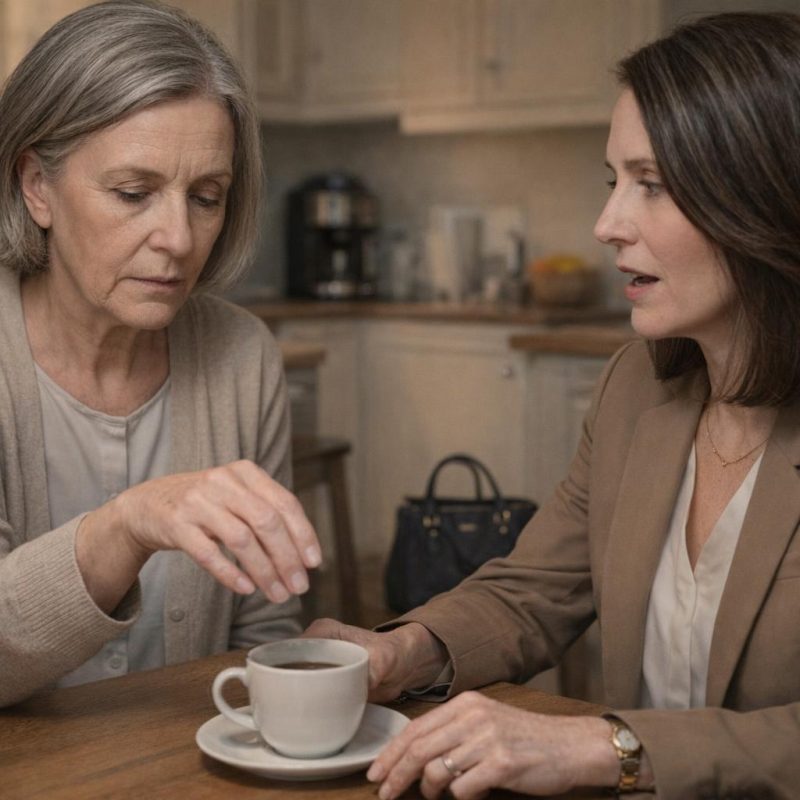 Image by RM AI
Frank's Dismissal
I brought it up over dinner, which in hindsight was probably the wrong setting. Frank was halfway through his chicken when I said I'd noticed something about Valerie — the way she kept steering every conversation back to him, the compliments, the timing of it all. I laid it out as calmly as I could. Six compliments in thirty minutes, I said. All about you. Frank set his fork down and looked at me with that expression he gets, the one that's patient in a way that feels slightly condescending. He said he hadn't noticed anything like that. I said that was kind of the point — he never noticed. He shook his head and said Valerie seemed like a perfectly nice woman who was probably still finding her footing after her divorce. I said I wasn't trying to be unkind, I just thought the attention was a little pointed. He picked his fork back up. Said some people were just naturally warm, that not every friendly neighbor had an agenda. I felt the familiar heat of being talked out of something I was sure of, and by the time he reached for the bread, I was already wondering if I'd miscounted. Then he said it — easy, almost offhand — that not everyone was out to cause trouble.
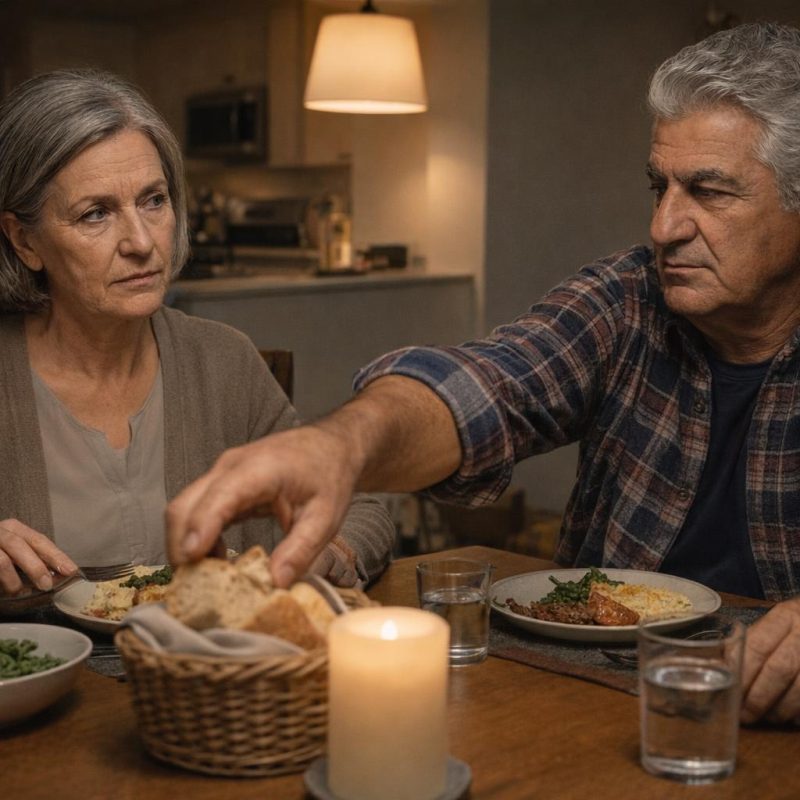 Image by RM AI
The Mailbox Encounter
It happened on a Thursday morning, the kind of ordinary day that doesn't give you any warning. Frank said he was going to grab the mail, and I was at the kitchen counter refilling my coffee when I glanced out the window and saw Valerie step out of her front door. The timing was so exact it almost looked choreographed, though I told myself that was a ridiculous thing to think. She crossed her lawn in a light jacket, and by the time Frank reached the mailboxes, she was already there. I watched them from the window. They talked for longer than a mailbox conversation usually goes — long enough for my coffee to stop steaming. At one point they both laughed, heads tilting back at the same moment, easy and comfortable, like people who'd known each other longer than a few weeks. Frank came back inside a few minutes later and said Valerie had asked him about good fishing spots on the lake. He said it cheerfully, like it was nothing, and went to hang up his jacket. I said that was nice and turned back to the counter. My coffee had gone completely cold, and I stood there holding the mug anyway, not quite ready to put it down.
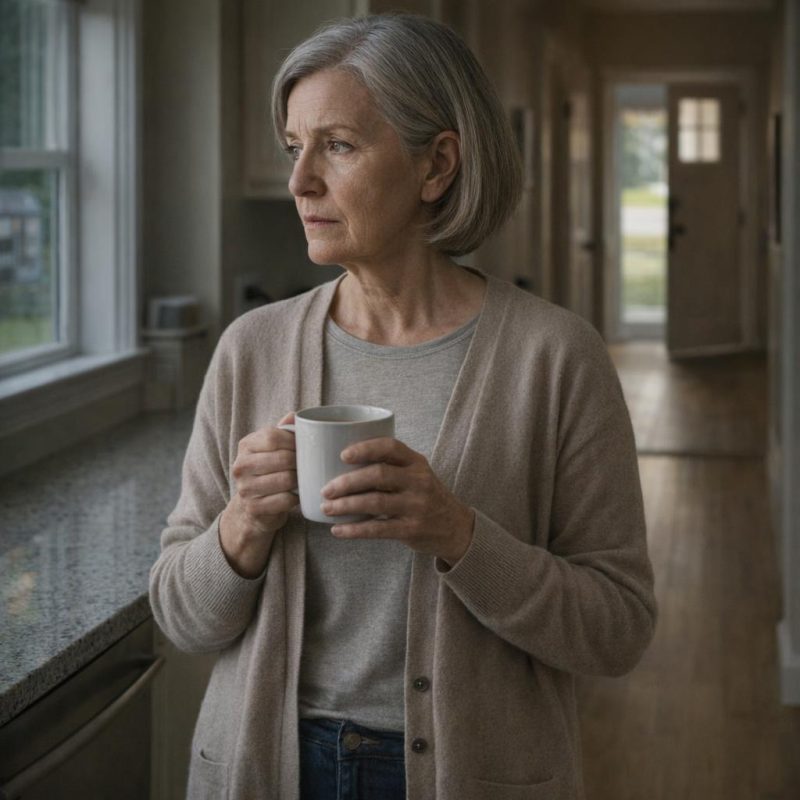 Image by RM AI
Feeling Invisible
It was a Saturday afternoon and I'd gone into the bathroom to wash my face, which is such a small, ordinary thing that I don't know why I stopped and actually looked. But I did. I stood there at the mirror longer than I meant to, taking stock in a way I hadn't in a long time. The gray at my roots had grown out more than I'd noticed. My cardigan was the kind of thing you put on because it's comfortable and then forget you're wearing. I thought about Valerie — the fitted blouses, the hair that always looked like she'd just come from somewhere, the way she moved like she was aware of herself in a room. I couldn't remember the last time I'd been aware of myself in a room. I used to dress up more. There was a time when I paid attention to those things, when Frank would notice and say something, and I would feel seen. I stood there trying to remember exactly when I'd stopped, and I couldn't pinpoint it. It had just happened the way things do — gradually, then completely. I wasn't angry, exactly. It was quieter than anger. Just the weight of feeling like I'd become part of the background of my own house.
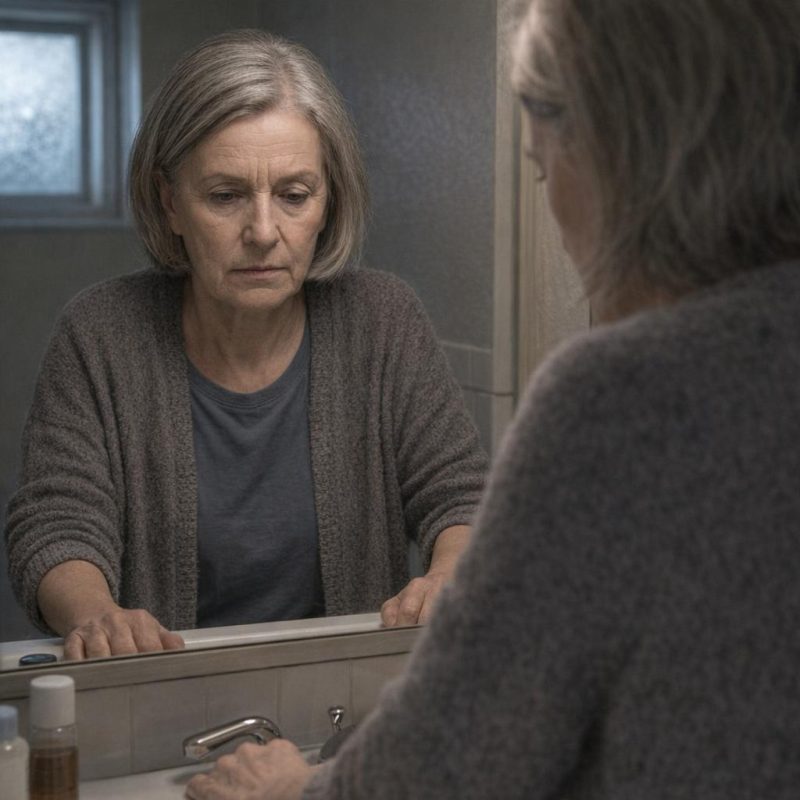 Image by RM AI
The Fitted Dress
Frank went out to check the mail around ten-thirty on a Tuesday, which he does sometimes when he's between tasks in the yard. I was in the living room folding laundry and I happened to look up at the right moment — or the wrong one, depending on how you look at it. Valerie was already outside. She had on a blue dress, fitted, the kind that looks like it cost more than it's letting on, and her hair was down. I set the shirt I was folding back on the pile. She crossed toward the mailboxes and Frank looked up and they started talking, the way they always seemed to end up talking. I told myself it was nothing. People go outside. People check their mail. But I kept watching. She laughed at something he said, and then she reached down and smoothed the front of her dress with both hands, slow and deliberate, and looked back up at him.
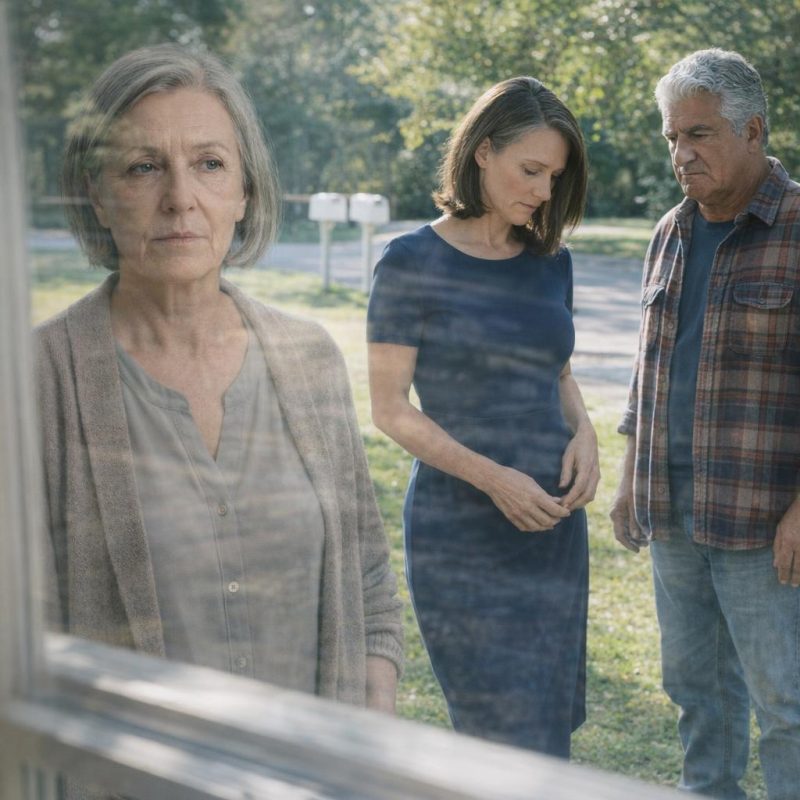 Image by RM AI
Through the Kitchen Window
It was a Wednesday evening, after dinner, and Frank was at the kitchen sink washing dishes. I could hear the water running as I walked into the living room to turn off the lamp I'd left on. I glanced toward the side window out of habit — we back up close to Valerie's property line, and I'd gotten used to checking without meaning to. She was standing in her yard. Not walking, not doing anything in particular. Just standing there, facing our house, her eyes fixed on the kitchen window where Frank's silhouette moved behind the glass. I went still. She didn't look away right away. She just stood there in the early dark, watching him the way you watch something you've been thinking about. Frank kept washing dishes, completely unaware, the water still running. I felt my heart start to knock against my ribs. I knew I had to say something to her — I couldn't just keep watching this from the other side of the glass. But in that moment I didn't move either, and the house felt very quiet around me, and the only sound was the water running in the kitchen and the particular stillness of being watched.
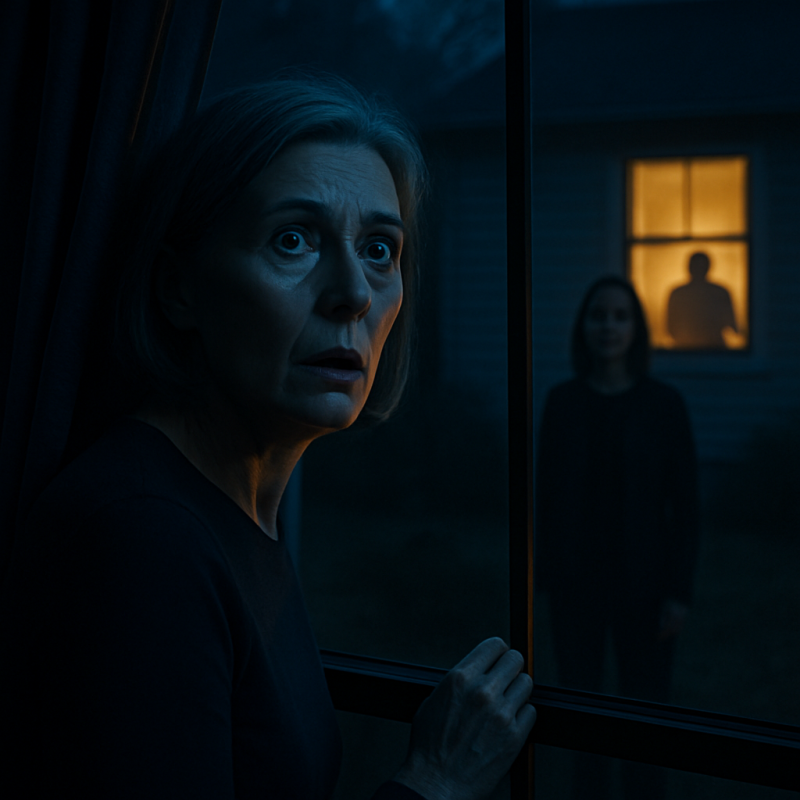 Image by RM AI
Admiring the Curtains
I went outside the next morning. I'd rehearsed it a little, which I'm not proud of, but I wanted to say it clearly and not come across as unhinged. I caught Valerie near her front steps and I asked her, as evenly as I could, if everything was all right — said I'd noticed her standing in the yard the night before, looking toward our kitchen window for quite a while. She blinked, and then she laughed. Not a mean laugh, just a light, easy one, like I'd said something mildly amusing. She said she was so sorry, she should have mentioned it — she'd been admiring our kitchen curtains. Said she'd been trying to find something similar for her own place and kept forgetting to ask me where I'd gotten them. She tilted her head and asked if they were from one of the home stores on Route 9. I heard myself say I thought so, yes, maybe Pottery Barn. She said she'd have to check. I walked back inside feeling the particular embarrassment of someone who has just made a scene about curtains. I stood in the kitchen for a moment, looking at the curtains in question, which were perfectly ordinary. Her explanation had been so smooth, so immediate, that I couldn't find a single edge to push against.
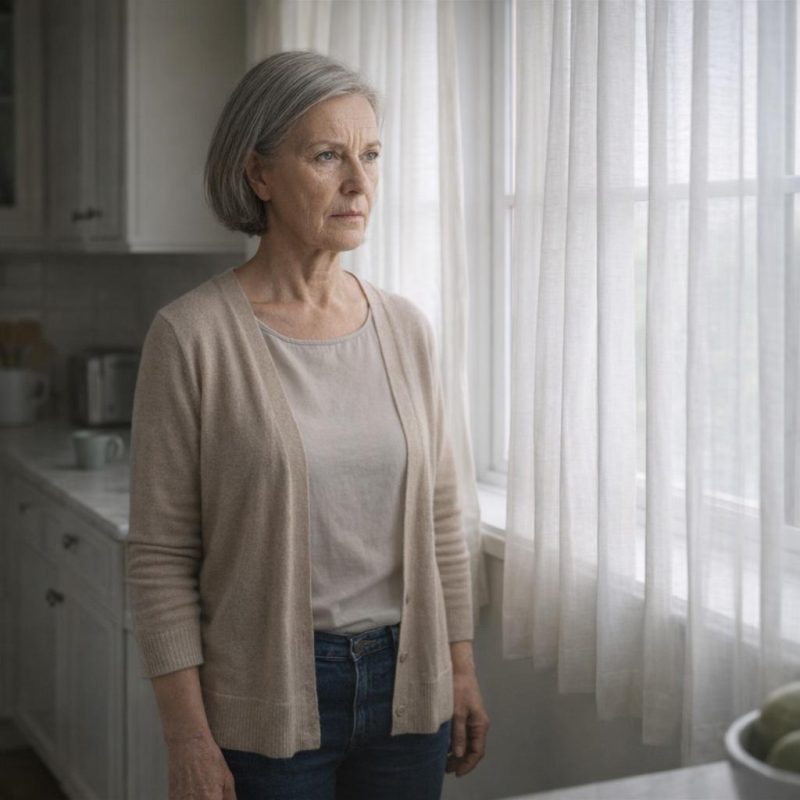 Image by RM AI
Just Friendly
I tried one more time that evening. I told Frank about the window incident, about confronting Valerie, about the curtain explanation that had left me feeling like I'd imagined the whole thing. I told him I still felt uneasy, that something about the pattern of it — the mailbox, the coffee visits, the timing — didn't sit right with me. Frank listened, or did a reasonable impression of it, and then he sighed. He said Valerie was a recently divorced woman living alone in a new neighborhood, and that being friendly was how some people coped with that. He said I was being unfair to someone who hadn't actually done anything wrong. I told him that wasn't the point, that it was the accumulation of it, the way it kept adding up. He shook his head. Said I was letting my imagination run away with me. I felt something close between us then — not a fight, just a door quietly shutting. I looked at him across the kitchen and understood that I was on my own with this. I decided right then to stop bringing it up. And then he said it again, the same way he'd said it before, calm and final: that I was imagining things.
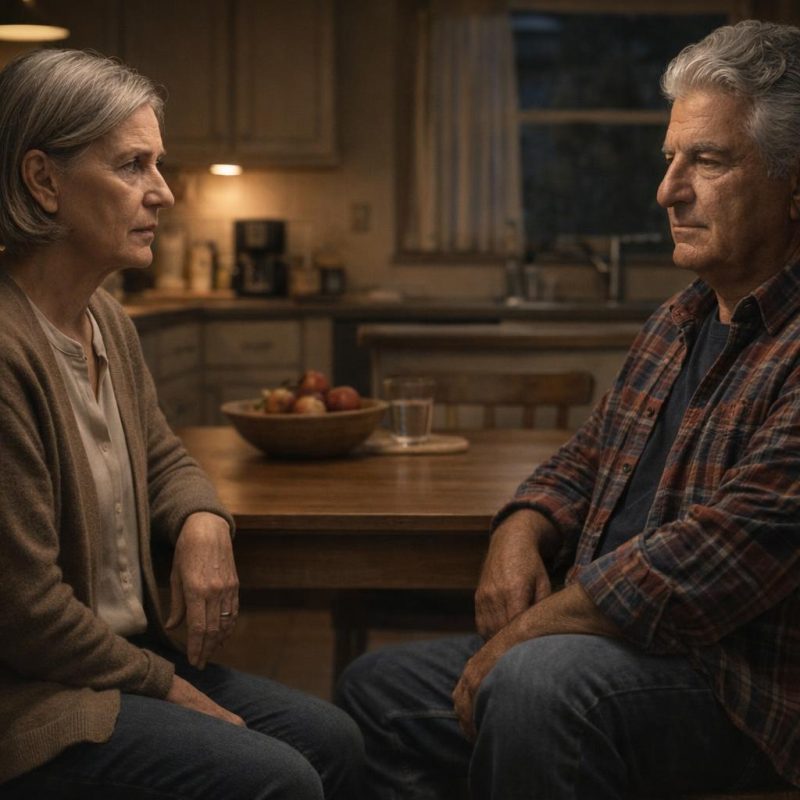 Image by RM AI
The Photograph
It was a windy afternoon, the kind that sends leaves skidding across the driveway and tips over the recycling bin if you don't weight it down. I went out to retrieve the bin and noticed something pale caught against the base of the hedge along the property line. I thought it was a receipt or a flyer at first. I picked it up and turned it over. It was a photograph — old, the color faded to that warm yellow that pictures get when they've been handled for decades. There were two people in it. One of them was a teenage girl I didn't recognize, dark-haired, maybe sixteen or seventeen, standing with her arms slightly stiff at her sides. The other one I recognized immediately. It was Frank. Younger by thirty or forty years, thinner in the face, but unmistakably him — the set of his jaw, the way he held his shoulders. They were standing close together, not quite touching. I looked at the girl again. I had never seen her before in my life. The wind picked up and I closed my hand around the photo to keep it from going anywhere. It had blown from the direction of Valerie's mailbox, which stood open at the end of her walk. I turned the photograph over.
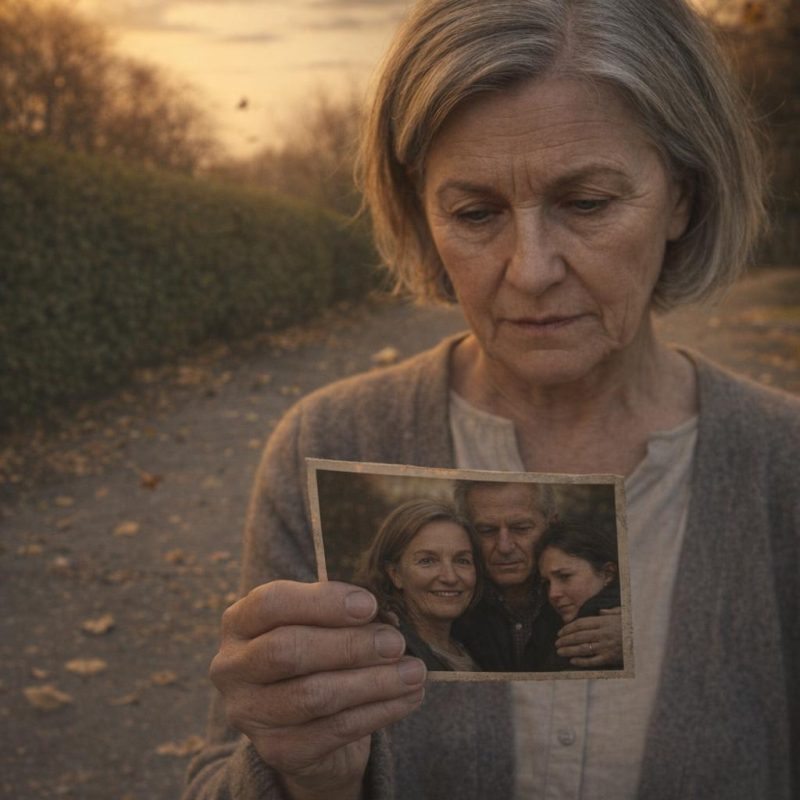 Image by RM AI
The Color Drains
I didn't wait. I walked straight inside with the photograph in my hand and found Frank at the kitchen counter pouring himself a glass of water. I set it down flat on the counter in front of him without saying a word and watched his face. He looked at it the way you look at something you're hoping isn't what you think it is. The color left his face so fast it was almost frightening — not a gradual fade, just gone, like someone had pulled a plug. He picked it up with both hands. I asked him who the girl was. He said he didn't know, that he couldn't remember, that it was a long time ago. His voice came out thin and uneven. I told him to look at it again. He did, and his hands were shaking badly enough that the photo trembled between his fingers. He still wouldn't meet my eyes. He kept staring at the picture and saying he didn't know, he didn't know, like if he said it enough times it might become true. I didn't believe a single word of it. Whatever was in that photograph, it had reached right through forty years and grabbed him by the throat. The glass slipped from his other hand and hit the edge of the sink, and then the photograph followed it, fluttering down into the basin while Frank just stood there, both hands gripping the counter.
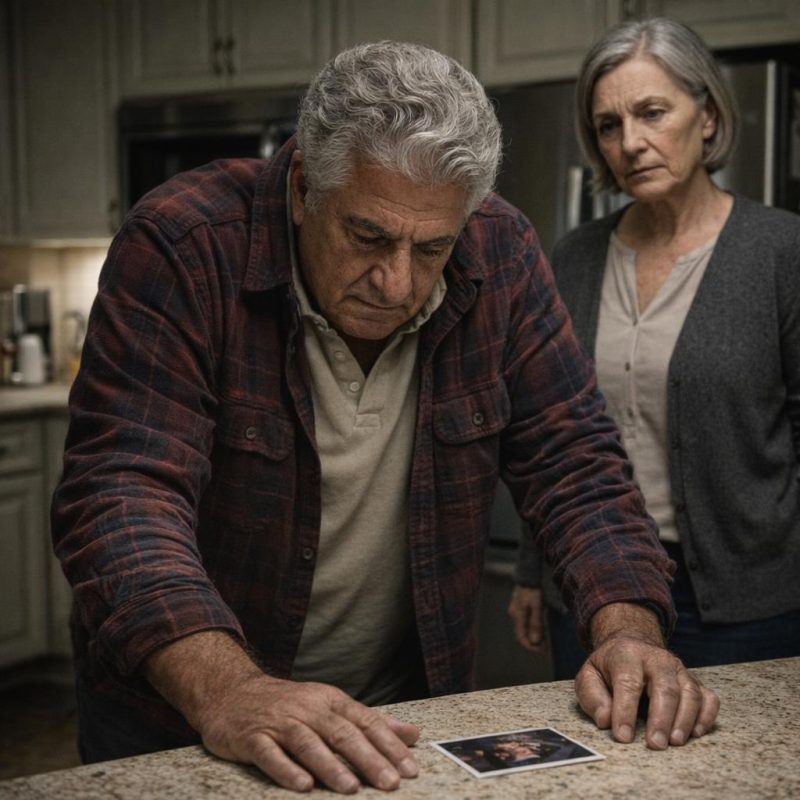 Image by RM AI
Pacing After Midnight
Frank came to bed around ten, same as always, but I lay there in the dark listening to his breathing and knew something was wrong with it — too shallow, too careful, like a man pretending to sleep rather than actually sleeping. Around midnight I heard him get up. The stairs creaked in that familiar sequence, third step, then sixth, and then the kitchen light came on and spread a thin line under the bedroom door. I didn't go down. I told myself I was giving him space, but honestly I think I was afraid of what I'd find if I did. I lay there and listened to his footsteps moving back and forth across the kitchen floor. Back and forth. Back and forth. The refrigerator opened and closed. A chair scraped. Then the footsteps again. It went on for over an hour. I watched the clock on the nightstand tick past one, then past two. At some point the kitchen light went off and the house went quiet, but I still couldn't sleep. Thirty years of marriage and I thought I knew every version of this man — his moods, his silences, his tells. Lying there in the dark, I wasn't so sure anymore. The quiet he'd left behind felt different from ordinary quiet. It had weight to it.
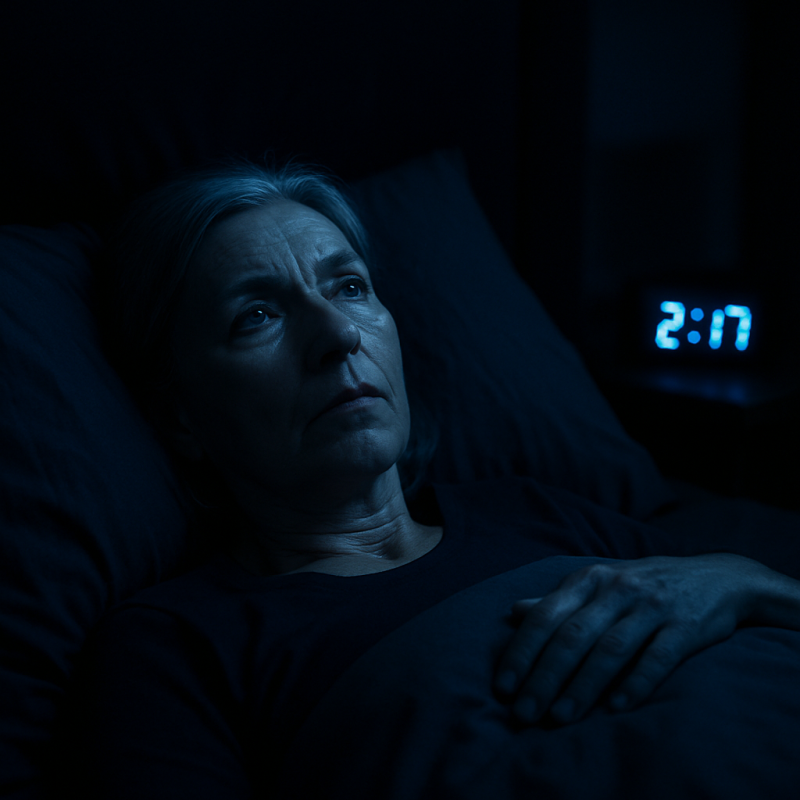 Image by RM AI
Muffins and Mentions
I hadn't slept more than three hours and I was standing at the kitchen sink with a cup of coffee going cold in my hand when the doorbell rang. Valerie was on the porch with a white paper bag and a smile like it was any other Tuesday morning. She said she'd made blueberry muffins and thought of us. I thanked her and stepped back to let her in, and she came through the door the way she always did — easy, unhurried, filling the room with the smell of something warm and sweet. Frank was at the table behind me. I heard his chair shift when she walked in. Valerie set the bag on the counter and started talking about the weather, about how the wind had knocked over her garden stakes, and then she said, almost as an aside, that it reminded her of a town she used to spend time in — a small place, she said, and she named it. She said it the way you'd mention any unremarkable detail. I didn't recognize the name at first. But Frank did. I heard the coffee mug hit the table harder than it should have, and when I turned around his face had gone the same color it had gone the day before. Valerie kept talking, her voice light, her hands still. The name of that town just hung there between all three of us like something none of us quite knew how to reach for.
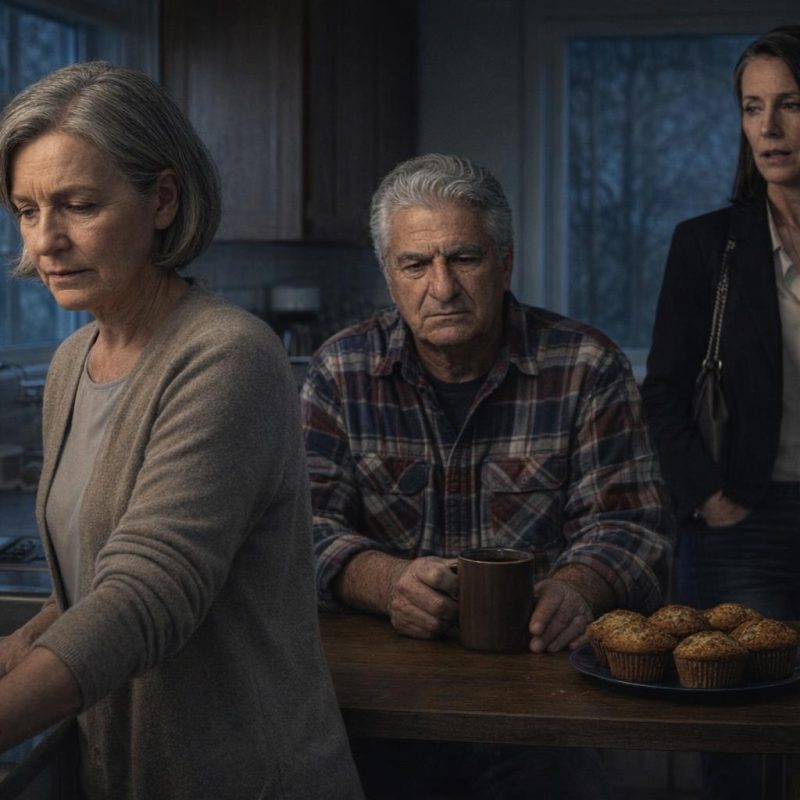 Image by RM AI
Smoke Through the House
After Valerie left, Frank didn't say anything about the town she'd mentioned. He just cleared his mug from the table and went out to the garage, and I heard him moving things around out there for the better part of an hour without actually doing anything useful. When he came back inside he was quieter than usual, and not the comfortable kind of quiet we'd built over thirty years. This was something else. He snapped at me when I asked if he wanted lunch — not meanly, but sharply, the way people do when they're angry at something they can't name. He stood at the back window for a long time after that, just staring at the yard. I watched him from the hallway and didn't say anything. Around three in the afternoon his phone rang and he looked at the screen and walked straight out the back door without a word. I could see him through the kitchen window, pacing the length of the patio, shoulders up around his ears, one hand pressed flat against the back of his neck. He was out there for nearly fifteen minutes. When he came back in he said it was nothing, just a work thing, and something about the way he said it didn't sit right with me. He set his phone face-down on the counter. A few minutes later I watched him pick it up, tap the screen twice, and slide it into his pocket.
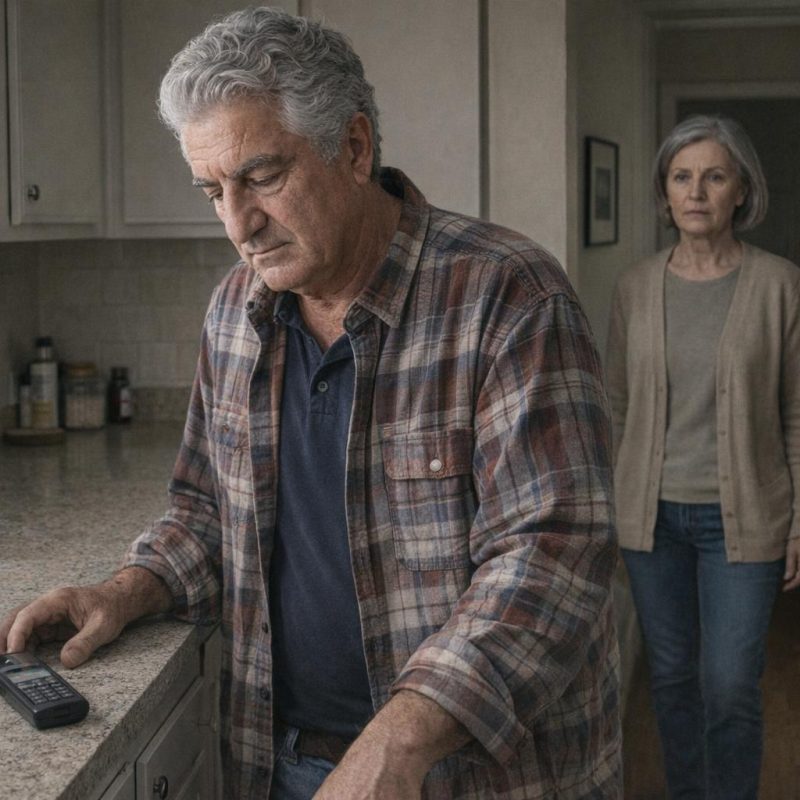 Image by RM AI
The Blueberry Muffins Return
She was back the next morning. I heard the knock and for a second I just stood in the hallway and didn't move, the photograph still sitting in the kitchen drawer where I'd put it after fishing it out of the sink. Then I went to the door. Valerie was standing there with another bag of muffins — blueberry again — and her hair was done and she was wearing a light blue cardigan and she looked like someone who had slept perfectly well and had no particular reason not to. She asked how I was doing. She asked if the wind had knocked anything over in our yard. She mentioned she'd seen a sale at the grocery store and wondered if I needed anything. I said no thank you and I took the muffins and I smiled and I said something about the weather because that's what you do. The whole time, the photograph was twelve feet away in that kitchen drawer. The whole time, I was thinking about Frank's face when she'd said that town's name. Valerie said she'd see us around and gave a little wave and walked back down the front path, easy as anything, her heels quiet on the pavement. I stood in the doorway and watched her go. I don't know how long I stood there after she disappeared around the hedge, holding a bag of muffins I had no intention of eating, the morning air cool and still around me.
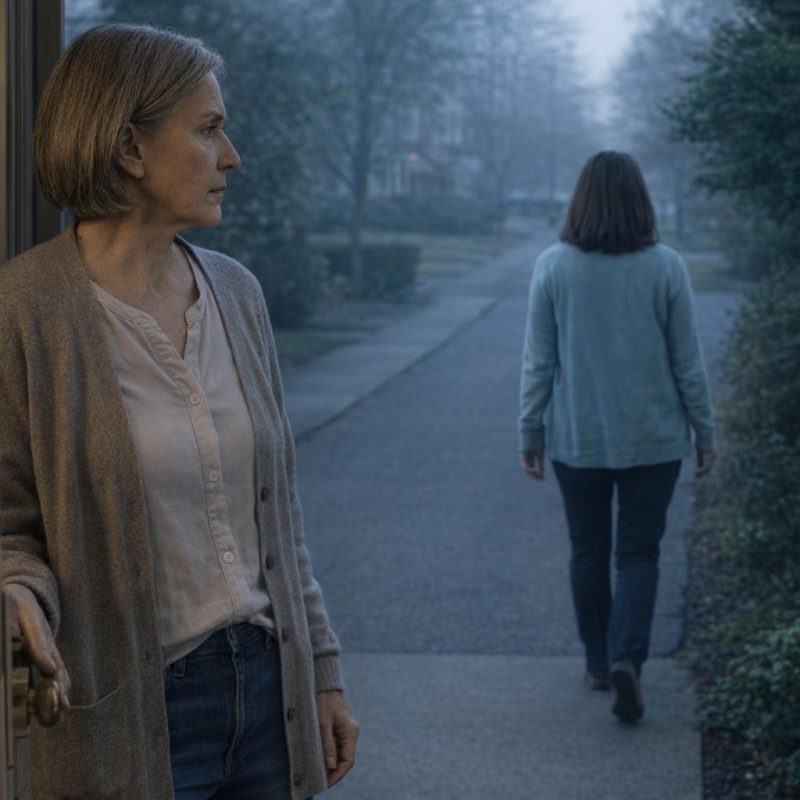 Image by RM AI
Outside Calls
It started during breakfast two days later. Frank's phone buzzed on the table and he glanced at the screen and stood up without finishing his eggs. He said he'd be right back and went out to the front porch, pulling the door most of the way shut behind him. I sat at the table and listened. I couldn't make out words, just the low murmur of his voice through the glass, and the occasional pause where someone else was talking. He was out there for ten minutes. When he came back in he sat down and picked up his fork like nothing had happened, and when I asked who it was he said an old friend, just catching up. His eyes went to his plate when he said it. It happened again the next morning, and then again the afternoon after that. Each time he stepped outside. Each time he came back looking like he'd aged a little in the interval — shoulders lower, jaw tighter, the lines around his eyes a little deeper. By the third call I'd stopped asking. There wasn't any point. Whatever he was carrying out to that porch with him, he wasn't bringing it back inside to share with me. I'd watch him through the window sometimes, his back to the glass, one hand in his pocket, and the set of his shoulders said everything his words wouldn't.
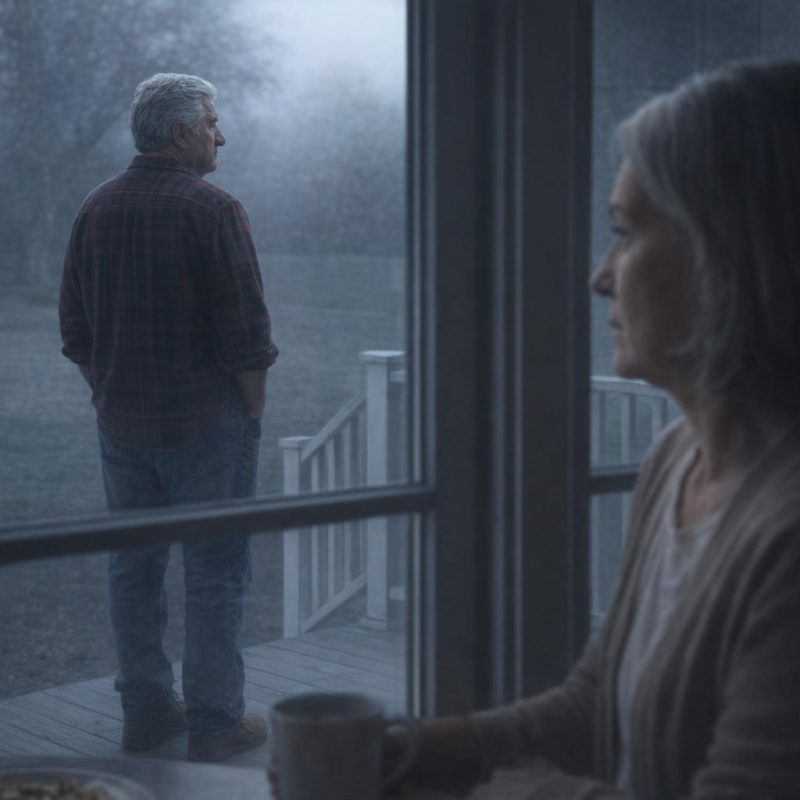 Image by RM AI
The Deleted Messages
It was a Thursday evening, and we were eating dinner when his phone buzzed beside his plate. He picked it up, read whatever was on the screen, and deleted it. Just like that — no comment, no explanation, phone back on the table. I kept eating. I didn't say anything. Ten minutes later it buzzed again. Same thing. He read it, deleted it, set the phone down. I watched him from across the table and he didn't look at me once. We moved to the living room after dinner and he sat in his chair with the television on and I sat on the couch with a book I wasn't reading. His phone buzzed a third time. He picked it up and I was watching him over the top of my book. He read the message. His jaw tightened. In thirty years of marriage Frank had never once hidden a message from me. We'd always been the kind of couple who left phones on the counter, who read each other funny texts from friends, who had no reason not to. I sat there with my book open in my lap and my stomach turning over slowly as he pressed delete and slid the phone into his shirt pocket without a word.
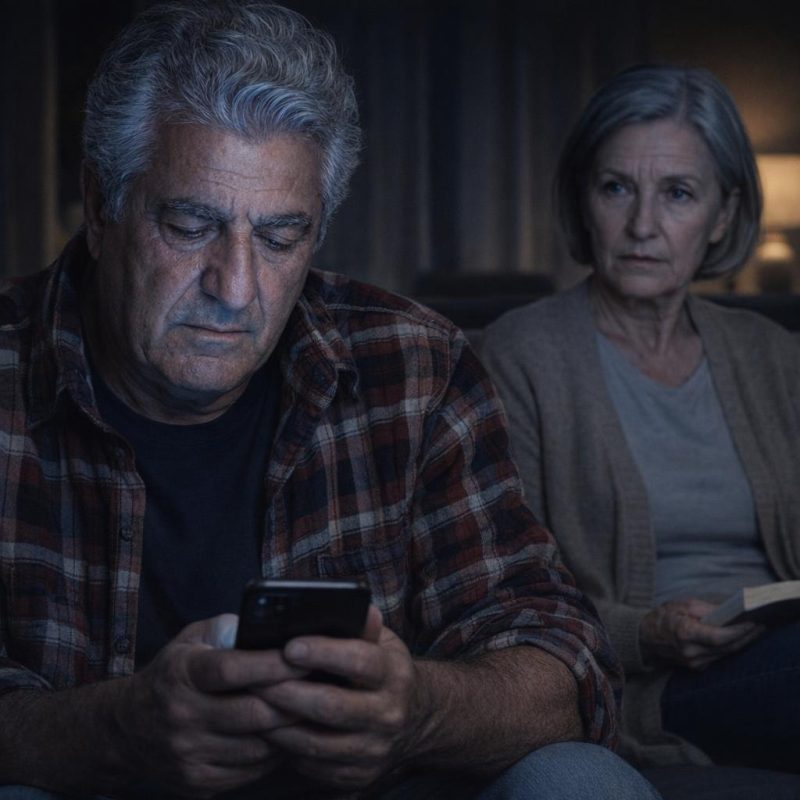 Image by RM AI
The Town Name
I waited until Frank left for the hardware store on Saturday morning. The moment his truck backed out of the driveway I went to his desk in the spare room. I wasn't sure what I was looking for — I just knew I needed to find something solid, something I could hold in my hands. I pulled open the bottom drawer where he keeps old paperwork, the kind of things people never throw away but never look at either. Pay stubs, tax forms, receipts going back decades. I started going through them. It took me about twenty minutes to find it — a pay stub, yellowed and soft at the fold, from a company I didn't recognize in a town I'd never heard him mention. The town Valerie had named at my kitchen counter. The date on the stub was March 1983. There was a second one behind it from July of the same year, and then nothing after that — no more stubs from that employer, no explanation, just six months of work in a place three hours from where we'd met, during a stretch of time Frank had never once brought up in all our years together. I sat back in his desk chair and held the two stubs in my hands. Thirty years of conversations, thirty years of stories about where he'd been and what he'd done, and there was a gap right there in the middle of it that I had never thought to ask about.
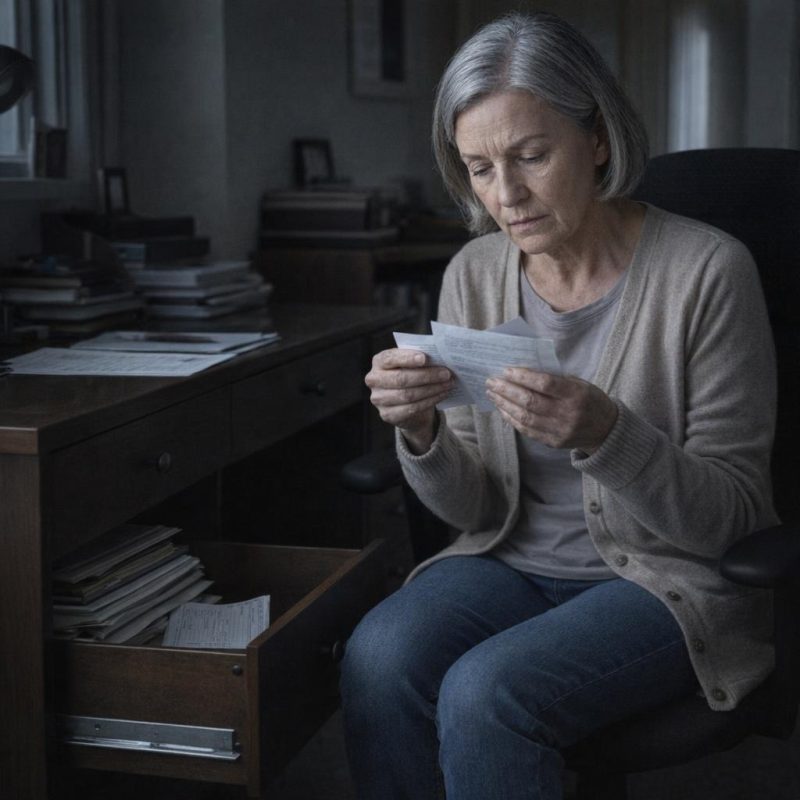 Image by RM AI
The Debate
I stood at the kitchen sink for a long time after Frank got home, watching him move around the house like nothing had changed, like those two pay stubs weren't sitting in the back of my mind every waking minute. Part of me wanted to walk straight across the yard and knock on Valerie's door and ask her point-blank what she wanted with my husband. I'd rehearsed it a dozen times in my head — the knock, the look on her face, the question hanging in the air between us. But every time I got to that part, I hit a wall. If she'd already been willing to sit at my kitchen counter and tell me half a story, she'd have no trouble telling me another one. I'd get whatever she wanted me to hear, not the truth. And Frank — if I went to Frank with two old pay stubs and a bad feeling, he'd find a way to make it sound like nothing. He was good at that. Thirty years of marriage had taught me that much. What I needed was something he couldn't explain away. Something solid. So I made a decision standing there at that sink, drying the same dish for the third time — I was going to watch, and I was going to wait, and I was going to find out for myself. It felt like stepping through a door I couldn't step back through.
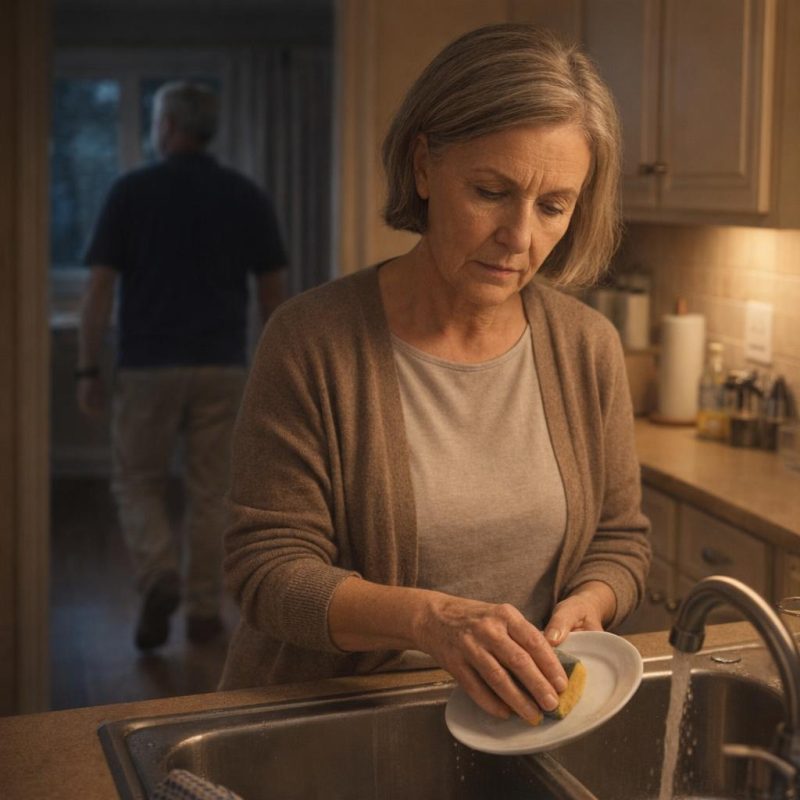 Image by RM AI
The Cracked Garage Door
I took the trash out Tuesday evening, the way I always do, dragging the bin down the side of the house while the streetlights were just starting to flicker on. Valerie's car was in her driveway — I noticed that first, the way you notice things when you've started paying attention to them. Her house lights were on, warm yellow behind the curtains. Everything looked ordinary. And then I saw it. Her garage door was cracked open, maybe a foot off the ground, just enough to let a thin line of shadow spill out onto the concrete. I stood there with my hand still on the trash bin lid. Through the gap I could make out the shapes of boxes — stacked ones, the kind people use for files — and what looked like papers spread across a folding table. I told myself it was nothing. People leave their garage doors open all the time. But I didn't move. I stood at the edge of my yard in the cooling air, looking at that narrow strip of darkness, and something about it pulled at me in a way I couldn't quite shake. I knew I shouldn't go over there. I knew it the same way you know you shouldn't look down from a high place. The gap in that door sat there in the dim evening light, patient as anything.
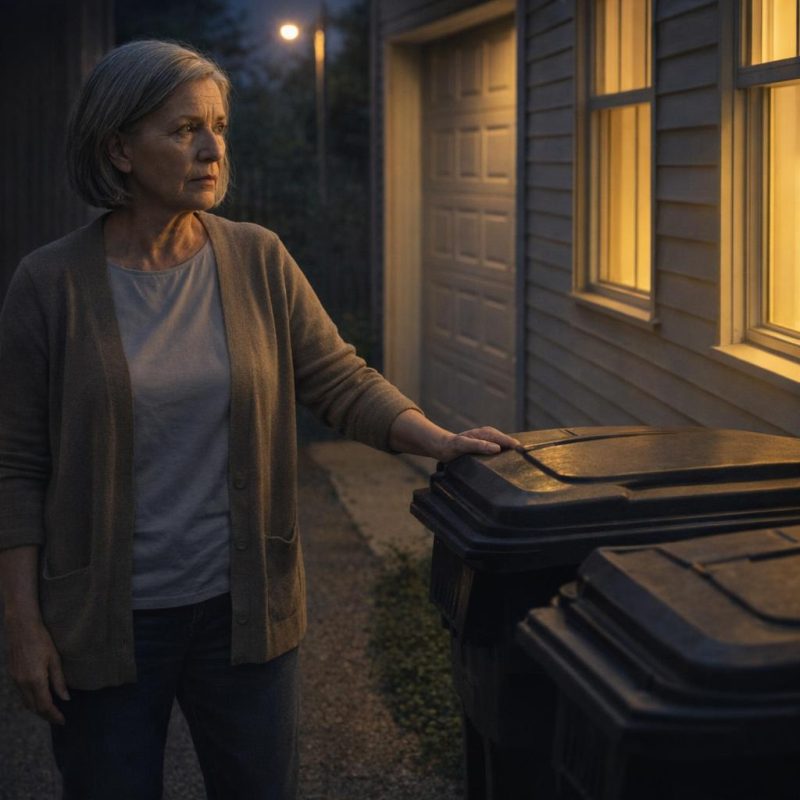 Image by RM AI
Bowling Night
Thursday came around and Frank announced at dinner that he was heading out for bowling league, same as he did every week. I smiled and told him to have fun. I cleared the plates. I listened to him pull on his jacket and grab his keys and say goodbye from the front hallway, and I called back something ordinary, something that sounded like a normal wife on a normal evening. Then I heard his truck start, and I stood very still at the kitchen counter until the sound of the engine faded down the street. I waited ten more minutes after that. I washed a glass I didn't need to wash. I checked the front window once, just to be sure. Then I looked across the yard toward Valerie's house. Her car was still in the driveway. The curtains were drawn, the lights on behind them, same as Tuesday. And the garage door — I could see from where I stood that it was still cracked open, that same foot of darkness along the bottom. My heart was going faster than it had any right to. I wasn't a person who did things like this. I'd spent thirty years being the kind of woman who minded her own business and trusted her husband and didn't go poking around in other people's garages in the dark. The woman standing at that window didn't feel much like her anymore.
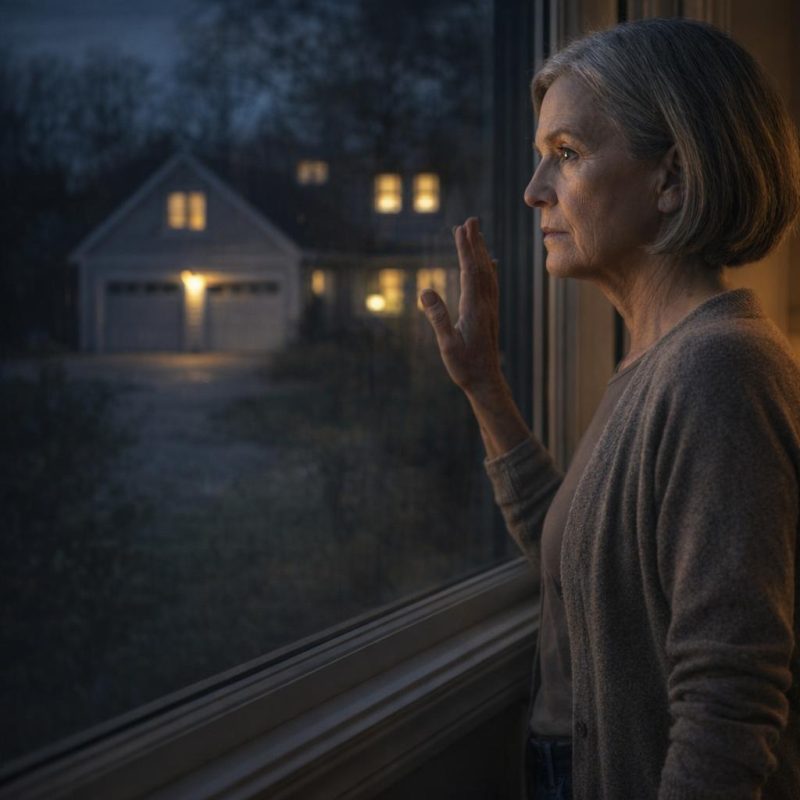 Image by RM AI
Inside the Garage
I slipped through the gap in the side gate, the latch cold under my fingers, and crouched down to push through the cracked garage door. The air inside was stale and close, the kind that comes from a space that's been lived in but not aired out. I straightened up and let my eyes adjust. It took a few seconds, and then I saw it — all of it. File boxes, stacked two and three high along every wall, each one labeled in neat block letters I couldn't quite read in the low light. A folding table ran along the far side, covered in papers and manila folders and what looked like old maps, edges curling up at the corners. There was a corkboard mounted on the wall above it, but I couldn't make out what was pinned to it from where I stood. I moved closer, stepping carefully, and that's when I noticed the newspaper clippings — dozens of them, some yellowed and brittle, some newer, taped and pinned in overlapping layers. Old photographs were scattered across the table between the folders, face-up, like someone had been sorting through them recently. Everything had a system to it. Labels, dates, categories I couldn't yet read. Whatever this was, it wasn't a hobby. Someone had been building this for a very long time.
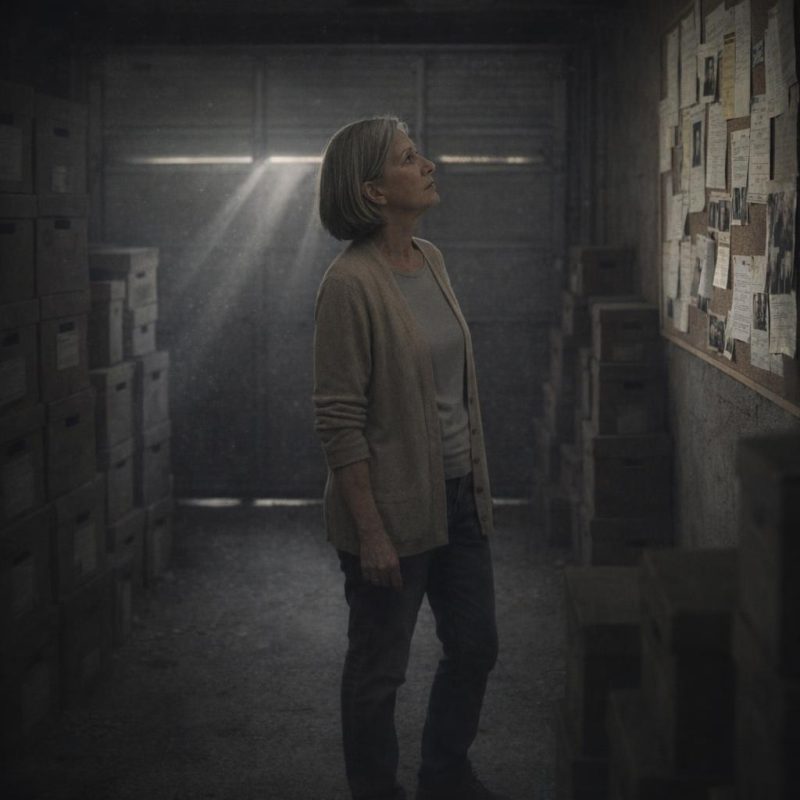 Image by RM AI
The Corkboard
I made myself walk to the corkboard. I don't know why — maybe because some part of me needed to see it up close before I could believe it. The photographs were pinned in rows, overlapping in places, and it took me a moment to understand what I was looking at. Frank. Dozens of photographs of Frank. Some of them were old enough that I almost didn't recognize him — a younger man, thinner, with more hair, standing outside buildings I didn't know in places I couldn't name. Others were recent, taken from a distance, the kind of shot you get when you're standing across a street with a long lens. Frank getting into his truck. Frank at the hardware store. Frank in our front yard. Red string ran between the photographs in a web I couldn't follow, and handwritten notes were pinned at intervals between the images, but the light was too dim to read them clearly. I leaned in close and could make out a date here, a word there, nothing that connected into sense. My legs felt strange under me, like the floor had shifted slightly. I didn't know how many years this represented — I couldn't count the photographs, couldn't read the notes — but the sheer weight of it pressed down on me in that dim, close space, and I stood there unable to move.
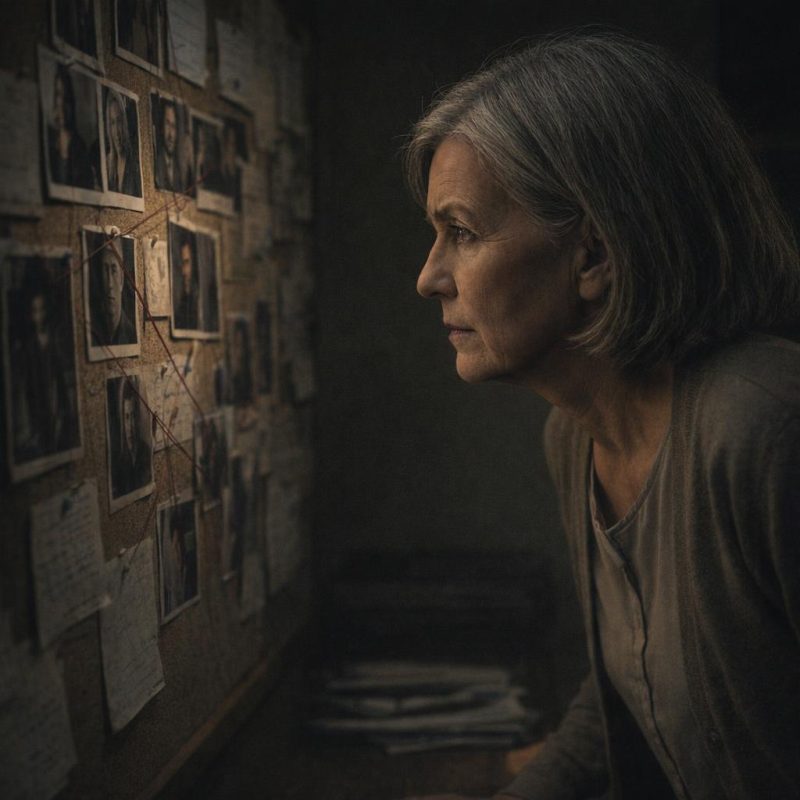 Image by RM AI
Diane Mercer
I pulled myself away from the corkboard and moved to the nearest file box. My hands were shaking badly enough that I had trouble with the lid. Inside were folders, each one labeled, and I lifted the first one out and opened it on the table. Employment records — old ones, the paper gone soft and slightly waxy the way old documents get. Frank's name was on them, the same company name I'd seen on those pay stubs in his desk drawer. I set that folder aside and opened the next one. Maps, printed and hand-drawn both, with addresses circled in red pen. The town Valerie had named at my kitchen counter appeared on three of them. And then I saw it — a name, written across the top of a document in the same neat block letters as the box labels. I turned to the next page and it was there again. I went through four more folders in the next few minutes, and the name appeared in every single one of them, sometimes in the margins, sometimes as a header, sometimes circled and underlined like whoever made these files needed to keep reminding themselves who was at the center of all of it. The name was Diane Mercer, and I had never heard it before in my life.
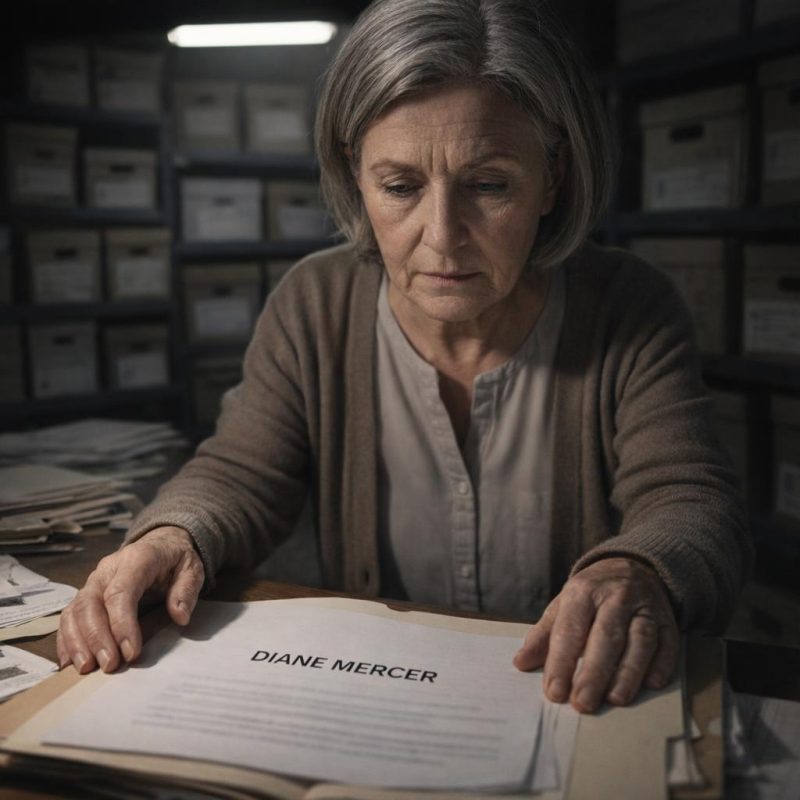 Image by RM AI
I Wondered How Long
I heard the footsteps a half-second before I registered what they meant — a soft sound from the doorway behind me, unhurried, like someone who'd been standing there long enough to decide there was no rush. I spun around so fast I knocked a folder off the table. Valerie was standing in the doorway between the garage and the house, one hand resting on the frame, watching me. I waited for the anger. I braced for it — the sharp voice, the accusation, the demand to know what I thought I was doing in her garage in the dark. It didn't come. She looked at me for a long moment, and what I saw on her face wasn't fury. It was something closer to relief, the kind that comes after a long wait. She said she'd wondered how long it would take. Her voice was quiet, almost to herself, like she was finishing a thought she'd been carrying around for a while. I couldn't find a single word. My heart was slamming against my ribs and the folder I'd knocked was splayed open on the concrete floor between us, and Valerie just stood there in the doorway looking at me with that strange, exhausted calm, like my being there was the first thing in a long time that had gone the way she'd expected.
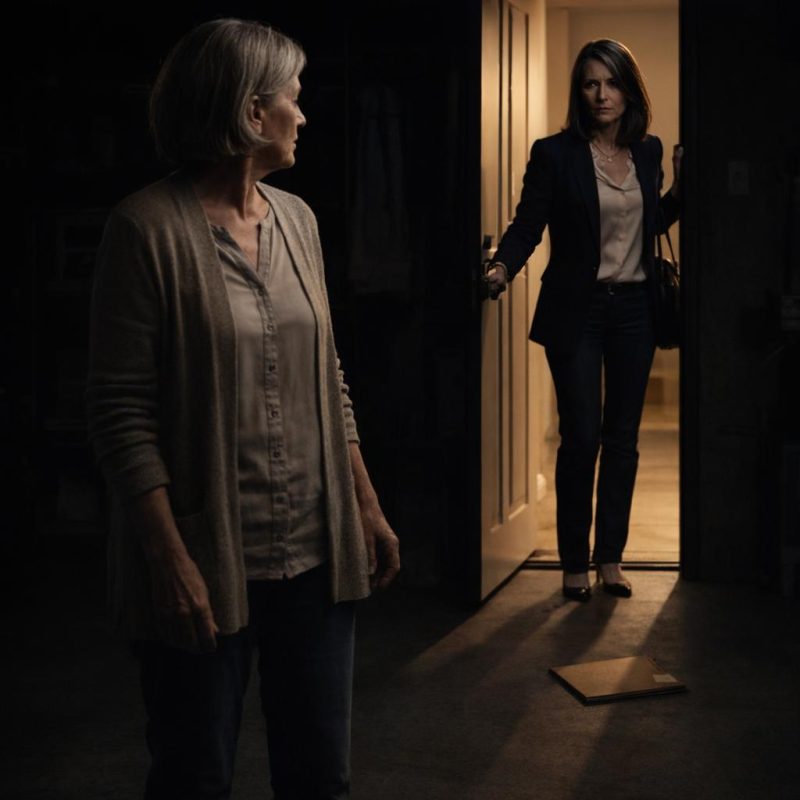 Image by RM AI
Not What You Think
Valerie stepped into the garage and let the door swing shut behind her. She didn't move toward me, just stood a few feet inside, her arms loose at her sides, looking at me the way you look at someone you've been waiting to have a conversation with for a very long time. I still hadn't managed to say anything. She spoke first. She said I could stop worrying about Frank in that way — that she wasn't there for him, not like that. She said she hadn't moved in next door to take anything from me. I heard the words and understood them individually, but they didn't land the way I expected them to. Because if it wasn't that — if all of this, the flirting, the coffee, the months of careful neighborliness — wasn't about wanting my husband, then what was it? She turned slightly and gestured toward the corkboard, toward the boxes, toward all of it. She said she'd been looking for answers. Her voice was flat and careful, and her face, when she turned back to me, looked like someone who had been carrying something heavy for so long she'd forgotten what it felt like not to. I felt the fear I'd been holding shift into something else entirely — something with more weight to it, and no shape I recognized yet.
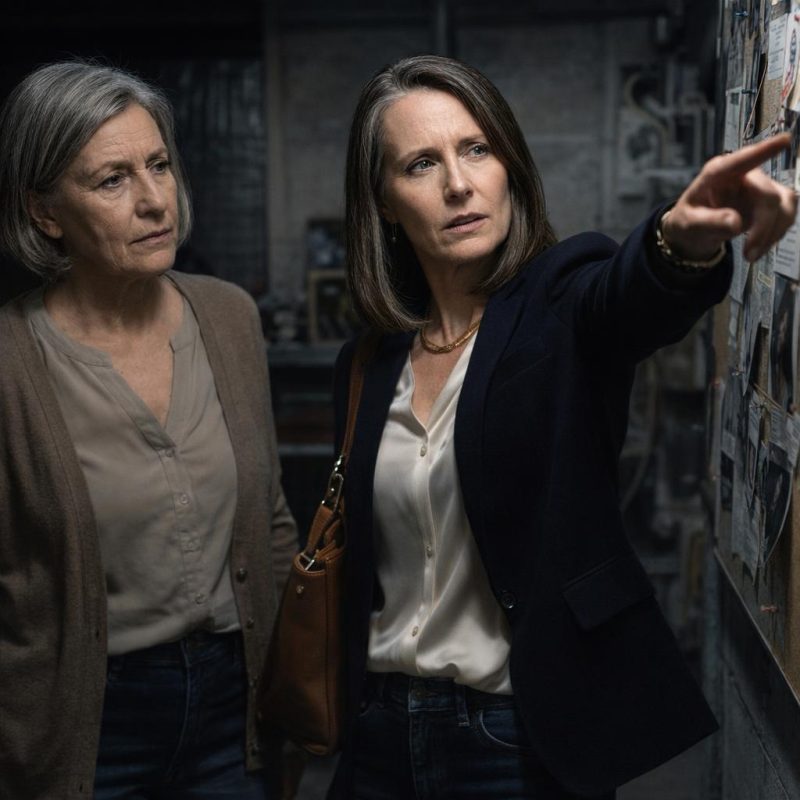 Image by RM AI
The Investigation
I stood there in my own garage, surrounded by boxes I hadn't opened in years, and tried to make sense of what Valerie had just said. She was investigating Frank. Not flirting with him, not trying to steal him — investigating him. Like he was a case. Like he was someone who had done something. I asked her what she meant, and she said it carefully, the way you say something you've rehearsed a hundred times. She said she believed Frank was connected to something that happened a long time ago. Decades ago. She said a woman had disappeared, and that she had reason to believe Frank knew more about it than he'd ever told anyone. My first instinct was to laugh — not because it was funny, but because it was so far outside anything I could picture that my brain didn't know what else to do with it. I asked her how long she'd been looking into this. She said years. Not months. Years. I looked at her face and she wasn't performing anything. There was no drama in it, no satisfaction. Just the steady, exhausted look of someone who had been carrying a question for so long it had become part of her. I didn't know what to say. I just stood there, and the garage felt smaller than it ever had before.
 Image by RM AI
The Scandal
She started talking about the 1980s, and I made myself listen even though every part of me wanted to walk back into the house and close the door. She described a scandal — a young woman who had accused a married man of something serious, something that had cost her everything. The woman had lost her job, her reputation, her place in the community. And then, not long after, she'd simply vanished. No forwarding address, no goodbye, nothing. Valerie said Frank's name had come up in connection with all of it. I told her she was wrong. I said it plainly, without hesitation, because I meant it. Frank was not that kind of man. I had been married to him for thirty years. I knew how he treated people, how he showed up, how he handled hard things. He was not someone who would be connected to a woman's disappearance. Valerie looked at me with something that wasn't quite pity and wasn't quite patience — somewhere in between. She said she understood this was difficult to hear. I told her difficult wasn't the word. I told her she was describing someone I didn't recognize. But even as I said it, something small and unwelcome shifted at the edge of my certainty, and I couldn't quite push it all the way back.
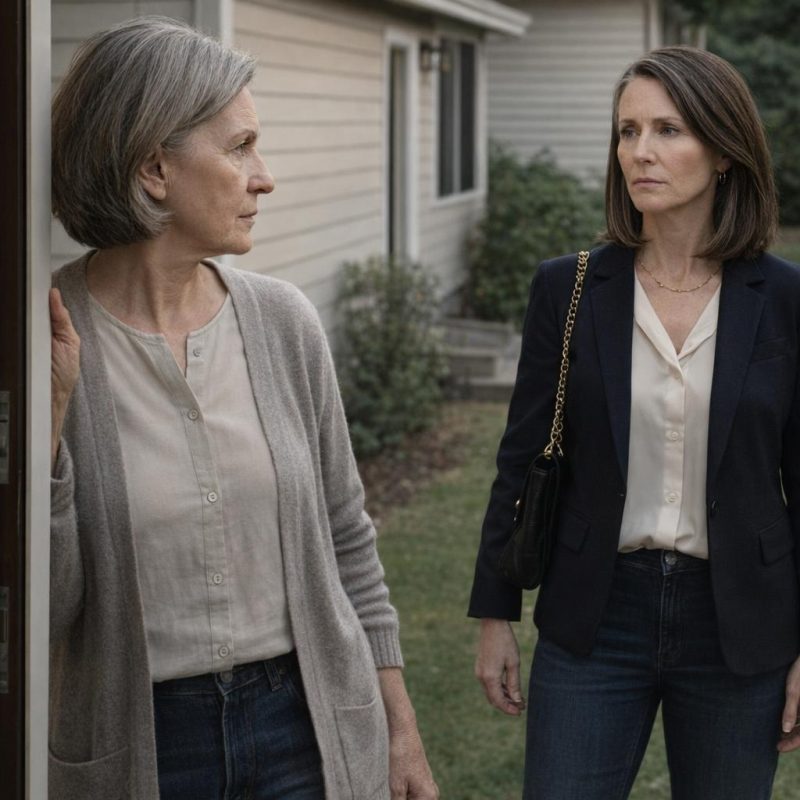 Image by RM AI
Diane Was My Sister
I asked her again who the woman was. I needed a name. Valerie had been speaking in careful generalities, and I kept thinking that if I could just attach a name to all of this, I could find the seam where it didn't fit Frank and pull it apart. She went quiet for a moment. Not the quiet of someone stalling — the quiet of someone gathering themselves for something that still costs them, even after years of saying it. Then she said the name. Diane. She said Diane had been twenty-six years old when she disappeared. She said Diane had been bright and funny and full of plans, and that one year she was there and the next year she simply wasn't, and no one in any official capacity had ever given the family a real answer. I watched Valerie's face as she said it. The composed, careful exterior she'd worn every single time I'd seen her — at the mailbox, over coffee, across the fence — it didn't disappear exactly, but it thinned. Her eyes filled. She blinked once, slowly, and looked at the floor. I felt the anger I'd been holding start to loosen into something more complicated. I opened my mouth to say something, and she looked back up at me and said, quietly, that Diane was her sister.
 Image by RM AI
Only Someone Connected
I didn't say anything for a long moment. Then I asked her how she could possibly connect Frank to any of this. She could have read old articles, I told her. She could have found names in public records. That didn't mean she actually knew him. Valerie nodded slowly, like she'd expected exactly that response. Then she started talking. She described the apartment Frank had lived in during his mid-twenties — the one on Calloway Street with the broken radiator and the landlord who never fixed anything. She mentioned the old blue pickup he'd driven, a '79 Ford with a dent in the rear panel on the passenger side. She named two of the jobs he'd held before we met, including the loading dock position he'd quit after six months because of a supervisor he couldn't stand. And then she mentioned a scar on his left shoulder — a small crescent-shaped one he'd gotten from a fishing hook when he was young. I felt the blood leave my face. I had traced that scar with my own fingers. I had heard the story behind it. Frank had never mentioned anyone named Diane to me, not once in thirty years, but Valerie was standing in my garage describing my husband's life with a precision that had no innocent explanation I could find.
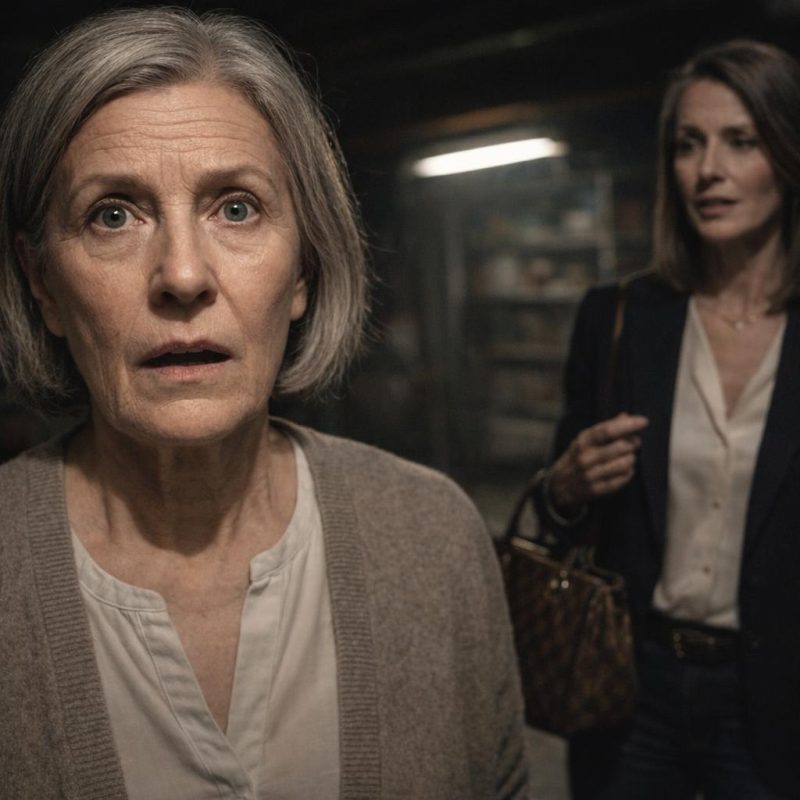 Image by RM AI
The Deliberate Purchase
I asked her how she knew all of that, and she didn't look away. She said she'd done her research. She said she'd been doing it for a long time. And then she told me the part I hadn't let myself think about yet — that she hadn't ended up next door by accident. She'd waited for the house to come on the market. She said she'd been watching the neighborhood for over a year, and when the Peterson place finally listed, she moved on it within days. She bought it to be close to Frank. To watch him, to find a way in, to eventually get him to talk. I stood there and thought about every single interaction we'd had. The muffins on the porch. The conversations over the fence. The coffee in her kitchen with the afternoon light coming through the window, when I'd thought maybe I was making a new friend. All of it had been part of something I hadn't known I was standing in the middle of. I wasn't angry at her the way I expected to be — or maybe I was, but it was tangled up with too many other things to feel clean. She said she was sorry. She said she hadn't had another way to get to the truth. I looked at her and thought about thirty years of a life I thought I understood, and then she said that every conversation she'd had with me had been part of her plan to get close to Frank.
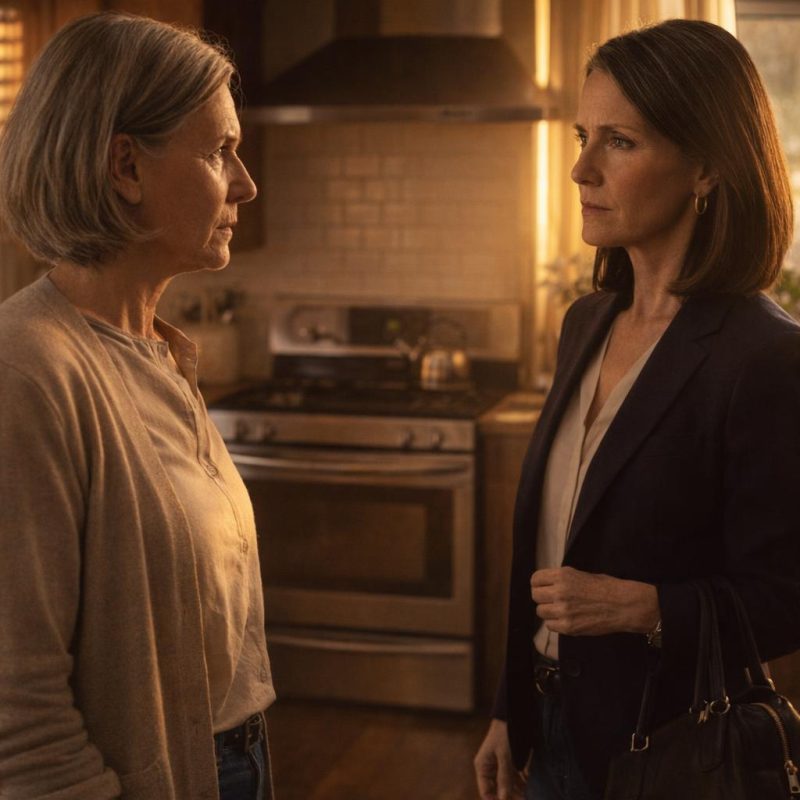 Image by RM AI
The Confrontation
Frank came home just after six, and I was sitting at the kitchen table waiting for him. I didn't give him time to set down his keys. I said the name — Diane — and watched his face. The color went out of it so fast it was almost like watching a light switch off. He set his bag down very carefully, the way you set something down when your hands aren't entirely steady, and he sat across from me. He said he'd known her, a long time ago. He said they'd had a brief involvement — he used that word, involvement, like it was a legal term — and that it had ended badly. He said she'd become unstable afterward, that she'd made accusations that weren't fair, and that eventually she'd left town on her own. I asked him why he'd never told me. He said there was nothing to tell. I asked him when exactly it had ended, and he gave me a year. Then, ten minutes later, when I asked again from a different angle, he gave me a different one. I caught it. He said he'd misspoken. I asked him where she'd gone when she left, and he said he didn't know. Then he said he'd heard she'd moved out of state. Those two answers sat next to each other in the room, and neither of them fit with the other, and Frank's jaw was tight and his eyes were fixed somewhere past my shoulder.
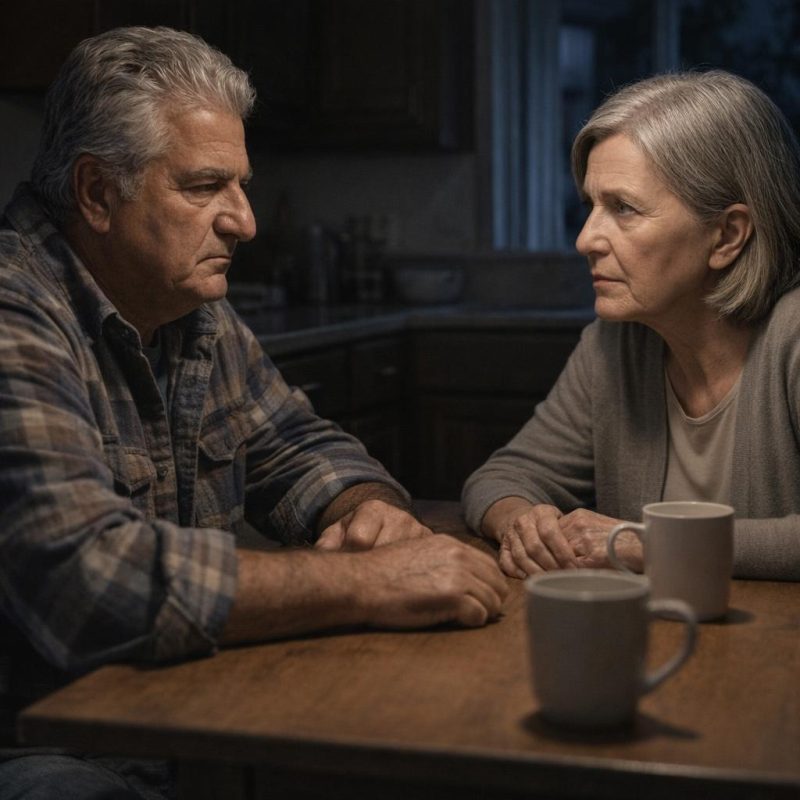 Image by RM AI
The Changing Story
I pushed harder. I asked him about the financial support — Valerie had mentioned it in passing, that someone had offered Diane money around the time she disappeared, and I wanted to hear what Frank would say without me leading him. He said yes, he'd offered her something. To help her get settled somewhere new. I asked how much. He said he couldn't remember exactly. I asked if it was a check or cash. He said he thought cash. I asked when he'd given it to her. He said it was hard to remember, it was forty years ago. I told him he'd just described the color of his old truck without hesitating, so I didn't think the timeline was the problem. His jaw tightened. He said that was different. I asked him how. He didn't answer. He stood up and said he'd told me everything he knew, that there was nothing more to say, and that he was tired. I watched him walk to the sink and stand there with his back to me, and I noticed his hands when he gripped the counter edge — they were shaking, the same way they'd shaken the night I'd shown him the photograph from Valerie's garage. He didn't turn around. The tremor in his hands was the only thing in the room still telling the truth.
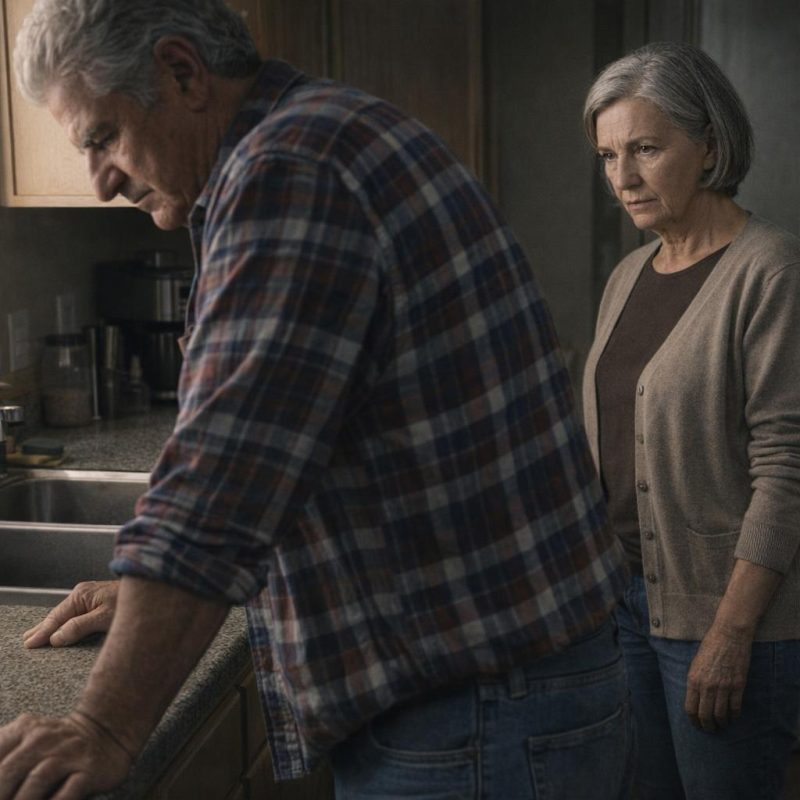 Image by RM AI
The County Records
I hadn't slept much. I was on my second cup of coffee when the knock came, just past seven-thirty. Valerie was standing on the porch with a manila envelope and the look of someone who hadn't slept either. I let her in without saying much. She sat at the kitchen table and spread out a set of documents — county records, she said, that she'd only just gotten access to through a records request she'd filed months ago. She pointed to a line near the top of the first page. Diane hadn't simply vanished. She had checked into a women's shelter about sixty miles away, under a different name, roughly eight months after the scandal. The records showed she'd stayed for several weeks. There were intake forms, a case number, a social worker's notes. Valerie's hands were steady as she turned the pages, but her face wasn't. She said she hadn't known any of this until the envelope arrived two days ago. I read through the documents slowly, and the picture they built was different from anything either of us had been working with. Diane had been somewhere. She had been documented, accounted for, alive. And then Valerie turned to the last page and pointed to a line near the bottom, and I read it twice to make sure I understood it: Diane had died in a car accident, several years after she'd left the shelter.
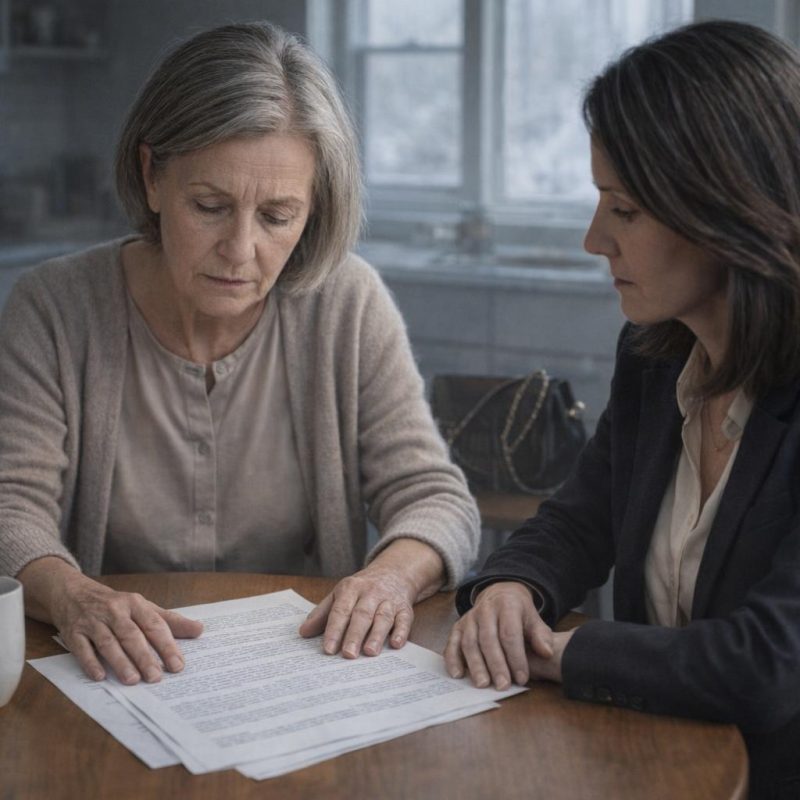 Image by RM AI
The Adopted Daughter
I sat there for a moment after Valerie turned that last page, trying to absorb what I'd just read. Diane had died. That was already a lot. But then Valerie slid another document across the table — adoption records, partial ones, the kind that had been processed through the county after a parent's death. Diane's daughter had been only three years old when the accident happened. Three years old. The child had been placed with a family through a closed adoption, no contact allowed with the birth family, no identifying information shared. Valerie said she'd been trying to locate her for over a year, but the records were sealed tight and her lawyer hadn't found a way through yet. I kept looking at the intake form — just a case number, a date, a child's age listed in a small box. No name. No face. Just a number on a page that represented a whole person who had grown up somewhere not knowing any of this. Not knowing about Diane, not knowing about the scandal, not knowing why her mother had disappeared or how she had died. Somewhere out there was a woman, probably in her late thirties or early forties by now, living her life with a gap in it she might not even know was there. The thought of that settled over the kitchen like something heavy and quiet.
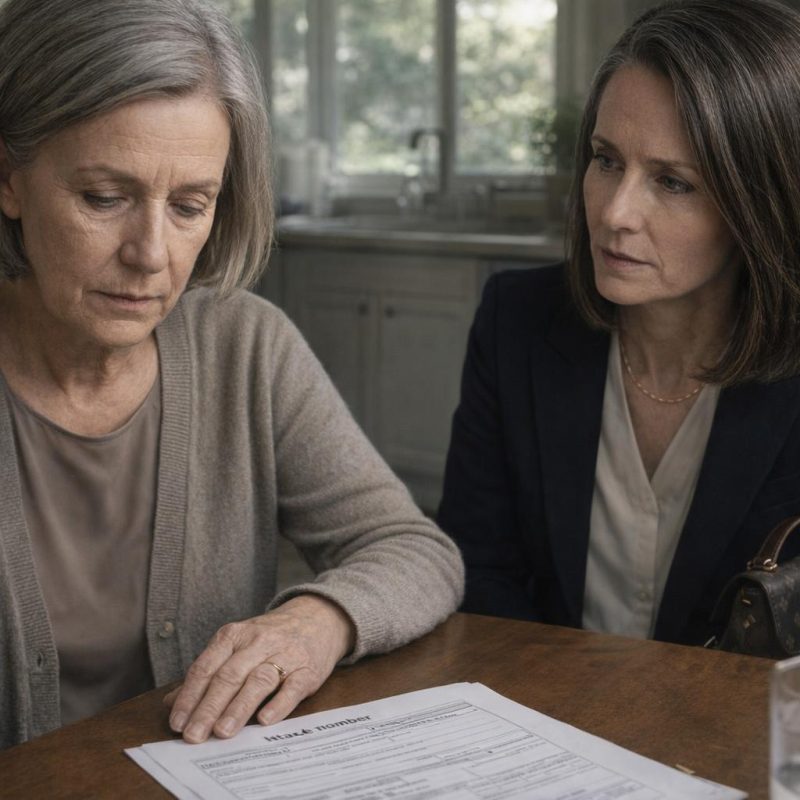 Image by RM AI
Someone Else Lied
Valerie poured herself more coffee without asking, which I didn't mind. We'd moved past formalities somewhere around the second document. She sat back down and said she'd spent months comparing what Frank had told me — the version I'd passed along to her — against what her own family had been told forty years ago. The timelines didn't line up. Frank had said the scandal broke in the spring. Valerie's mother had always believed it happened in the fall, because that was when Diane stopped coming home for Sunday dinners. The details about who knew what and when were different enough that Valerie didn't think it was just faulty memory. She said she thought someone had fed both sides a different story. Someone who had access to both Frank and Diane's family. Someone who had a reason to keep them from ever comparing notes. I asked her who she thought that was, and she shook her head slowly. She said she didn't know yet. But she said the gap between the two accounts was too specific to be accidental — certain facts had been swapped out, not just forgotten. I didn't have an answer for her. I just sat there turning it over, feeling the edges of something much larger than a forty-year-old neighborhood rumor, something with more architecture to it than I'd been prepared for.
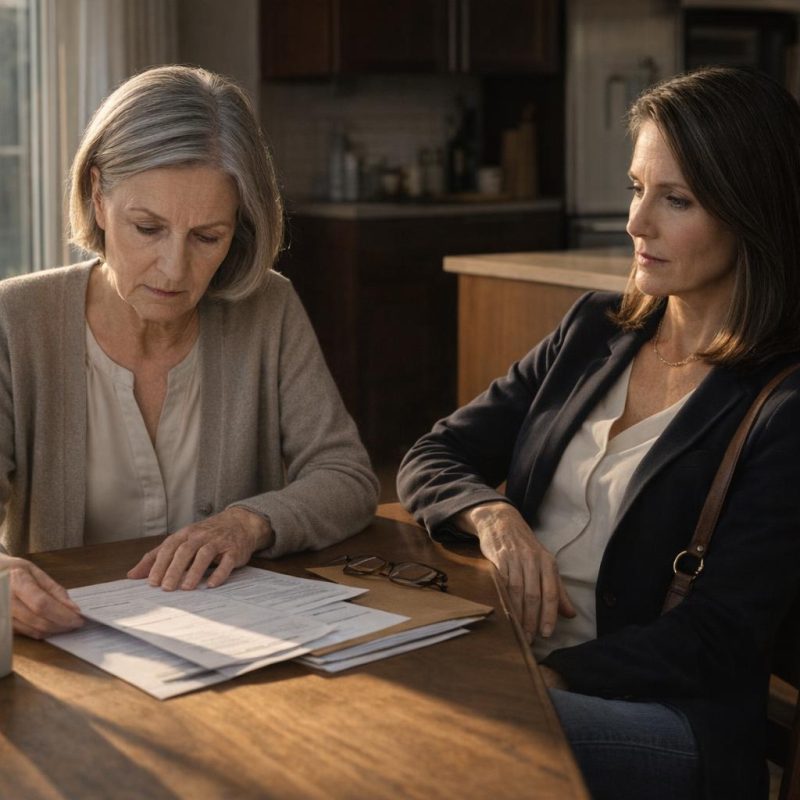 Image by RM AI
The Sealed Documents
Valerie reached into the envelope again and pulled out what looked like a legal filing index — a cover sheet listing case numbers and parties. She set it in front of me and pointed to a line about halfway down. Frank's name was there, printed in the plain typeface of old court documents. Next to it was a case number, and next to that, a company name I didn't recognize. I read it twice. It wasn't a name I'd ever heard Frank mention, not in thirty years of marriage. Valerie said the actual documents were sealed by court order, had been since 1983, but that she'd hired a lawyer to file a motion to unseal them. The process could take weeks, maybe longer. She said she believed the documents contained the real account of what happened — not the version that had circulated through the neighborhood or the one Frank had carried around in his head, but the legal record of whatever agreement had been made. I asked her what kind of agreement. She said she wasn't sure yet, but the filing category suggested it was civil, not criminal, and that it involved a corporate party. I looked back down at the index sheet, at Frank's name sitting next to a company I'd never heard of in my life, and something cold moved through me.
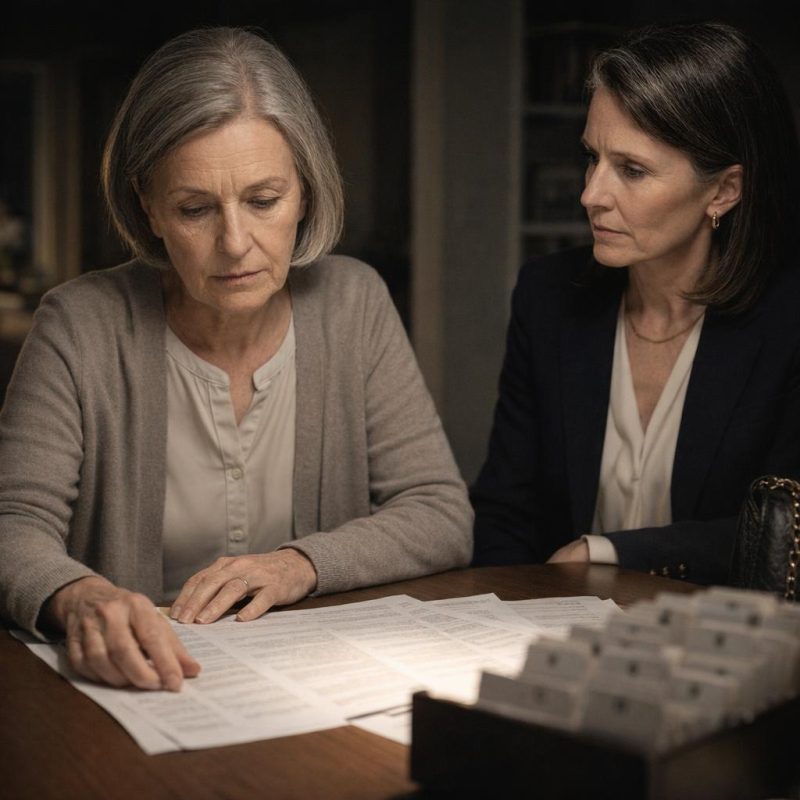 Image by RM AI
The Wealthy Employer
The call from Valerie's lawyer came faster than either of us expected. She was at my door two days later with a new envelope, thicker this time, and her expression was the careful kind that people wear when they're carrying something they don't want to drop. We spread the pages across the kitchen table. It was a legal agreement, dated 1983, between Diane and a corporation called Hartwell Industries. The language was dense but the structure was clear enough: a payment of fifty thousand dollars, which was a significant sum in 1983, made to Diane in exchange for her agreement not to discuss, disclose, or pursue any legal action related to an incident that had occurred at a company event. The silence clause ran for three full paragraphs. I read it slowly, then read it again. Near the bottom of the second page, Frank's name appeared — listed as a witness to the agreement, with his signature on the line below. Not a party to the contract. A witness. I sat with that distinction for a moment, trying to understand what it meant that he had been in that room, that he had watched Diane sign something like this, that he had put his name on it. The payment amount sat at the top of the page in plain figures: $50,000.00.
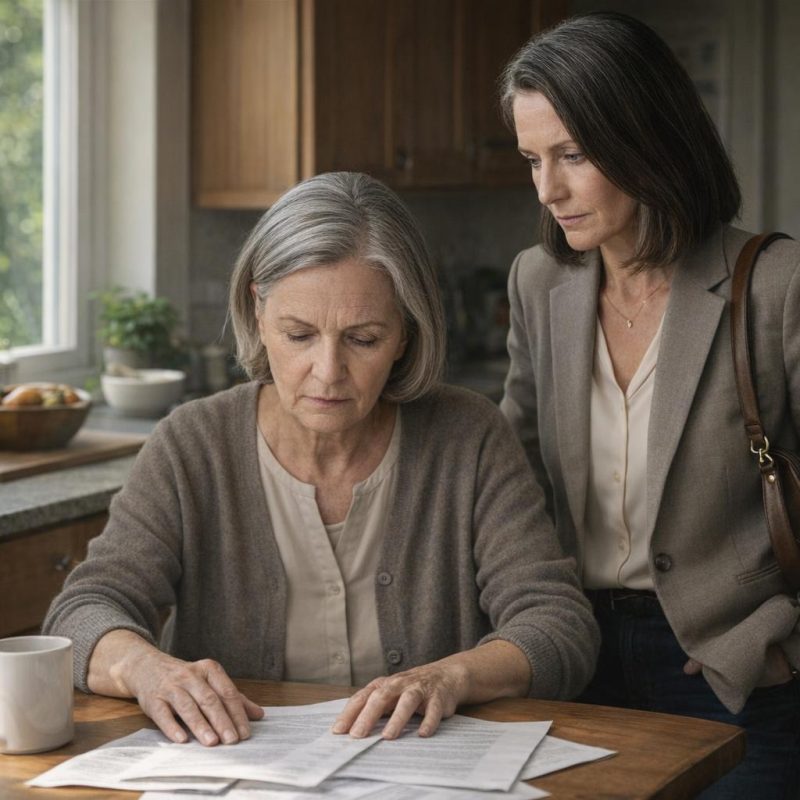 Image by RM AI
The Real Father
Valerie was still going through the pages when she stopped and pulled one sheet free from the back of the stack. She set it in front of me without saying anything. It was a separate addendum, attached to the main agreement, and it was labeled at the top with the words 'Paternity Acknowledgment and Indemnification Clause.' I read the first paragraph slowly. Then I read it again. The document stated that Frank had agreed, in exchange for continued employment and protection from professional blacklisting, to publicly acknowledge paternity of Diane's child. It said the arrangement was made to protect the interests of the Hartwell family and to prevent reputational damage to the company and its principals. And then, in the second paragraph, in the same plain legal typeface as everything else on the page, was the name of the biological father. Valerie set her finger on the line and slid the page closer to me. There it was, sealed away for forty years and now open on my kitchen table: Thomas Hartwell.
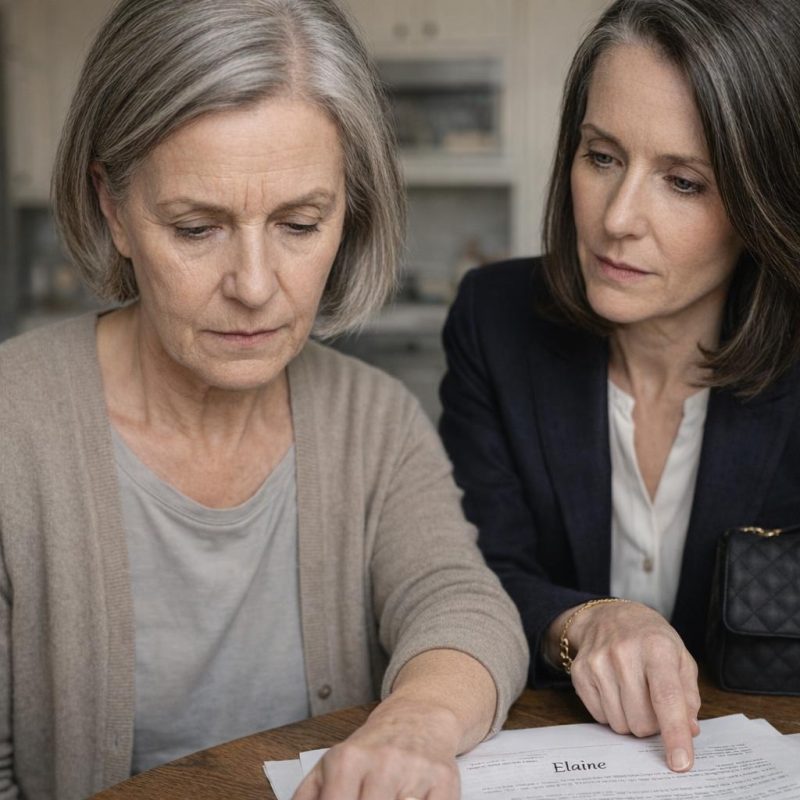 Image by RM AI
Forty Years of Silence
I didn't say anything for a long time. Valerie didn't either. I went back through the pages slowly, reading the parts I'd skimmed the first time. The agreement made it plain: Frank had been twenty-six years old, working a junior position at Hartwell Industries, when the company's legal team had come to him. They had told him that if he didn't sign, he would be fired, blacklisted from the industry, and that they had the resources to make sure he never worked in his field again. He had no savings, no family money, no lawyer of his own. He had signed. He had stood in that room and watched Diane sign away her right to speak about what Thomas Hartwell had done to her, and then he had put his name on the witness line, and he had carried that with him for forty years. Not guilt over a child that was his. Guilt over a child that wasn't — over a young woman he hadn't been able to protect from people who had more power than either of them could have fought. Valerie said quietly that she'd been wrong about him. She said she'd spent months assuming Frank was the one who had hurt her sibling, and she'd been wrong. I didn't have anything to say to that. I just sat there thinking about the man I'd been married to for thirty years and everything he'd been holding alone.
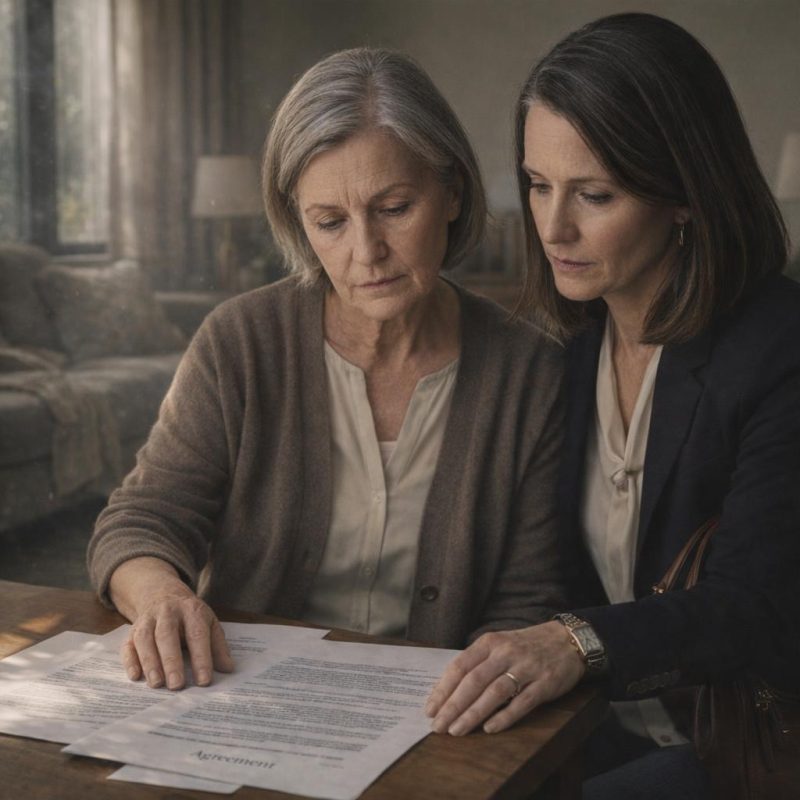 Image by RM AI
He Knew All Along
After a while, Valerie said she'd suspected from early on that Frank had recognized her when she moved in. She said his reaction the first time they met had been too controlled — not the mild surprise of meeting a new neighbor, but the careful stillness of someone managing something. I thought back to that first week. The way Frank had gone quiet at the dinner table after she introduced herself over the fence. The way he'd started finding reasons to be inside when she was in her yard. I'd read it as jealousy, or discomfort, or some vague marital guilt I couldn't name. But he had known exactly who she was. He had seen Diane's sibling move in next door and understood immediately what it might mean. Valerie said she thought he'd been afraid — not of his own secrets coming out, but of what would happen if the Hartwell family found out someone was asking questions again. She said the Hartwells still had money, still had lawyers, still had the kind of reach that didn't expire. Frank had spent forty years watching for any sign that the agreement was unraveling, and then one day Diane's sibling had appeared on the other side of his fence. I thought about all those evenings he'd seemed distracted, all those times he'd stood at the kitchen window longer than he needed to, and I understood now what he'd been watching for.
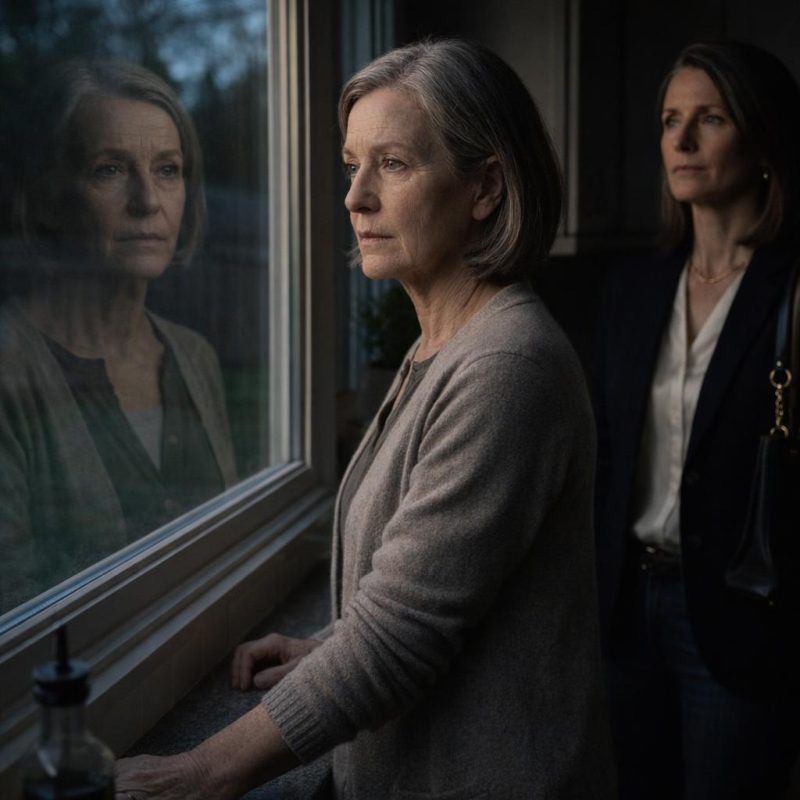 Image by RM AI
The Hartwell Reach
I asked Frank to come downstairs that evening. Valerie was still at the kitchen table when he walked in and saw her sitting there with the documents spread out in front of her. He stopped in the doorway. He looked at me, then at the pages, and something in his face went very still. I told him we knew. He sat down slowly, like his legs had made the decision before he did. He said he'd recognized Valerie the day she moved in — said her face was close enough to Diane's that he'd known within the first few minutes of conversation. He said the Hartwell family had come to him in 1983 with two lawyers and a document and told him plainly that if he ever spoke about what had happened, they would come after everyone connected to him. He said the word 'everyone' had stayed with him. He said when Valerie appeared next door, all he could think about was keeping her away from us long enough to figure out what she knew and whether the Hartwells were watching. His voice was unsteady as he said it. Valerie listened without interrupting. When he finished, none of us spoke for a while. The documents sat between us on the table, and the kitchen was quiet, and somewhere underneath the quiet was the understanding that the people who had written those documents were still out there.
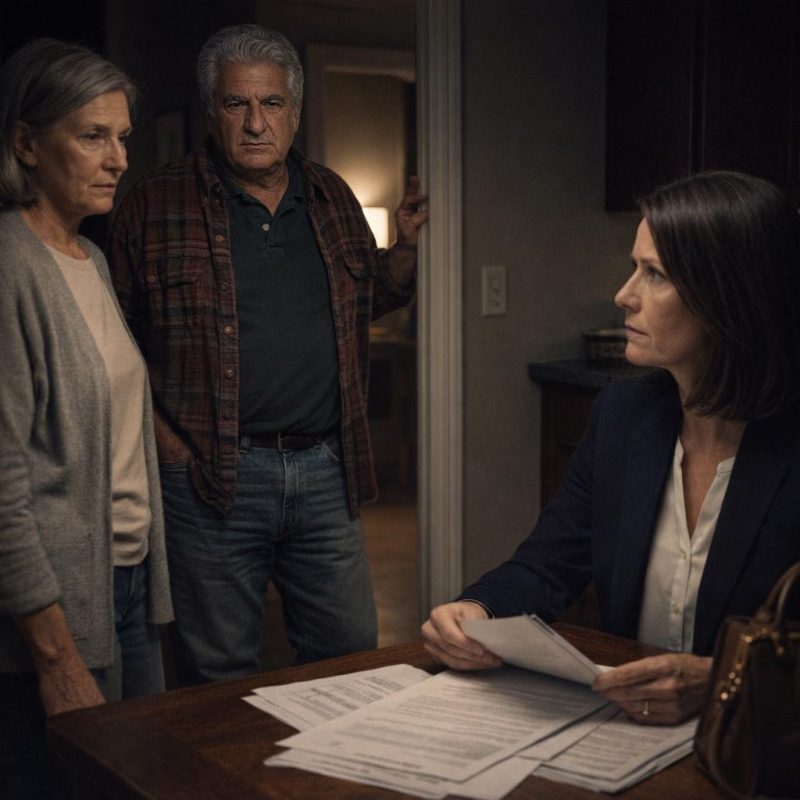 Image by RM AI
Going Public
Valerie was the one who broke the silence. She said she was taking the documents to the press — all of it, the cover-up, the Hartwell name, everything. She said Diane deserved to have the truth known, and that she wasn't going to sit on it for another forty years while that family kept building their walls higher. Frank went pale. He leaned forward and said she didn't understand what she was dealing with, that the Hartwells weren't just old money anymore — they had reach, they had people, and they would come after anyone whose name appeared anywhere near this story. Valerie looked at him steadily and said she didn't care. I believed her. I also believed Frank. That was the problem — I could see both of them clearly, and I was terrified for all of us. I wanted to tell Valerie to wait, to think it through, to give us time to figure out a safer way. But I didn't say any of it, because I wasn't sure there was a safer way, and Valerie had already made up her mind. She began stacking the documents into a neat pile, smoothing the edges with her hands, her face set and quiet and absolutely certain she was going to do this tomorrow.
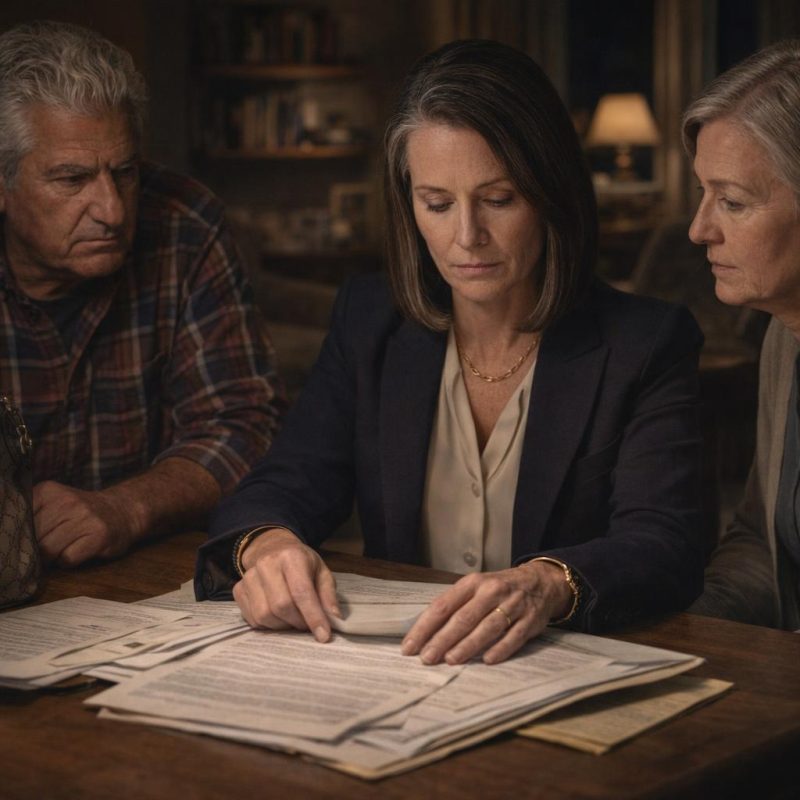 Image by RM AI
Still Connected
Frank got up and came back with his laptop. He set it on the table and pulled up a news article — a profile piece from a business magazine, dated eight months ago. Thomas Hartwell, real estate developer, philanthropist, board member of three separate foundations. There was a photo of him at a charity gala, silver-haired and smiling, shaking hands with a state senator. Frank scrolled down and showed us another article, then another. Campaign donation records. A groundbreaking ceremony with a governor in attendance. Valerie took the laptop and started searching on her own, and the more she found, the quieter she got. I read over her shoulder. The Hartwell family had given millions to political campaigns over the past two decades. Thomas sat on the boards of companies I recognized. He had a foundation in his late mother's name. He looked, from every angle the internet offered, like a respected man of considerable standing. Frank said quietly that this was what forty years of careful work looked like — that the scandal had never surfaced because they had made absolutely sure it wouldn't. I sat back in my chair and felt the weight of what we were actually up against. Then Valerie pointed to a headline from three weeks ago: Thomas Hartwell's name, linked to a state infrastructure contract worth forty million dollars.
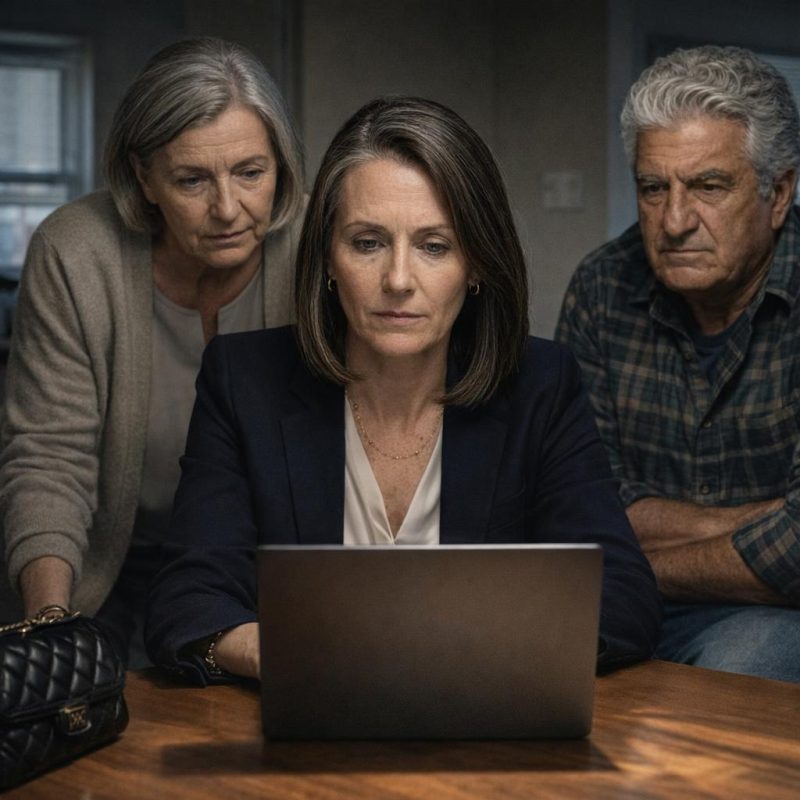 Image by RM AI
The Break-In
I came awake all at once, the way you do when something is wrong before you know what it is. The sound had already stopped, but the shape of it was still in my ears — glass, breaking, somewhere close. I shook Frank and he was up before I finished saying his name. We went to the bedroom window and looked out. Valerie's garage door was standing wide open, and the lights inside her house were on, every one of them. We pulled on our robes and went outside without even talking about it. The air was cold and the street was empty and quiet in a way that felt wrong after whatever had just happened. Valerie was already on her front step when we got there. She had her arms wrapped around herself and she was shaking. She said someone had come in through the back window, that she'd heard it from upstairs and by the time she got downstairs they were already gone. We went inside with her. There was glass on the kitchen floor, scattered across the tile in a wide arc from the broken pane. Frank put his hand on my arm and I could feel that his hand wasn't steady. None of us said anything for a moment. The broken glass caught the light and just lay there, quiet and sharp and wrong.
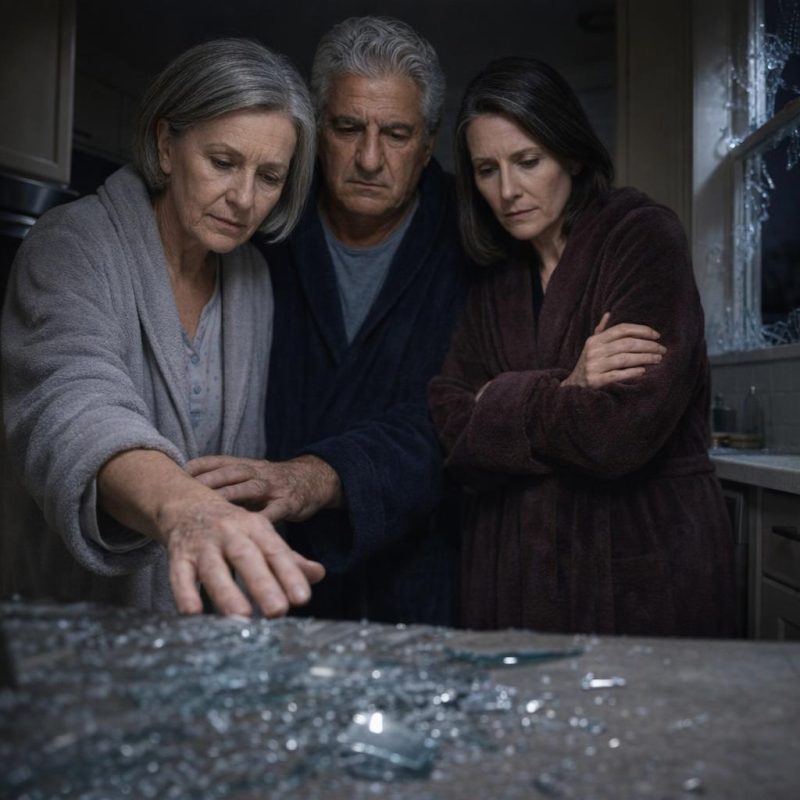 Image by RM AI
Everything Gone
We went into the garage together. I don't know what I expected — maybe that it wouldn't be as bad as I feared. It was worse. The file boxes were gone. Every single one of them, the ones that had lined the shelves along the back wall, the ones stacked in the corner, all of it gone. The corkboard had been stripped completely clean — not a single photograph, not a pin, not a scrap of paper left behind. The shelves stood bare. The folding table where Valerie kept her laptop was empty, the power cord still plugged into the wall, dangling. Valerie walked to the center of the garage and stopped. She didn't say anything for a long moment. Then she said, very quietly, that it had taken her eleven years. Frank said he was sorry. He said it the way you say something when you knew it was coming and it still hits you harder than you thought it would. I looked at the empty shelves and felt something cold move through me — not just fear, but anger, the kind that sits underneath fear and is harder to shake. Valerie reached out and touched one of the bare shelves with her fingertips, and then she let her hand drop. The garage was just an empty room now, and the silence in it felt enormous.
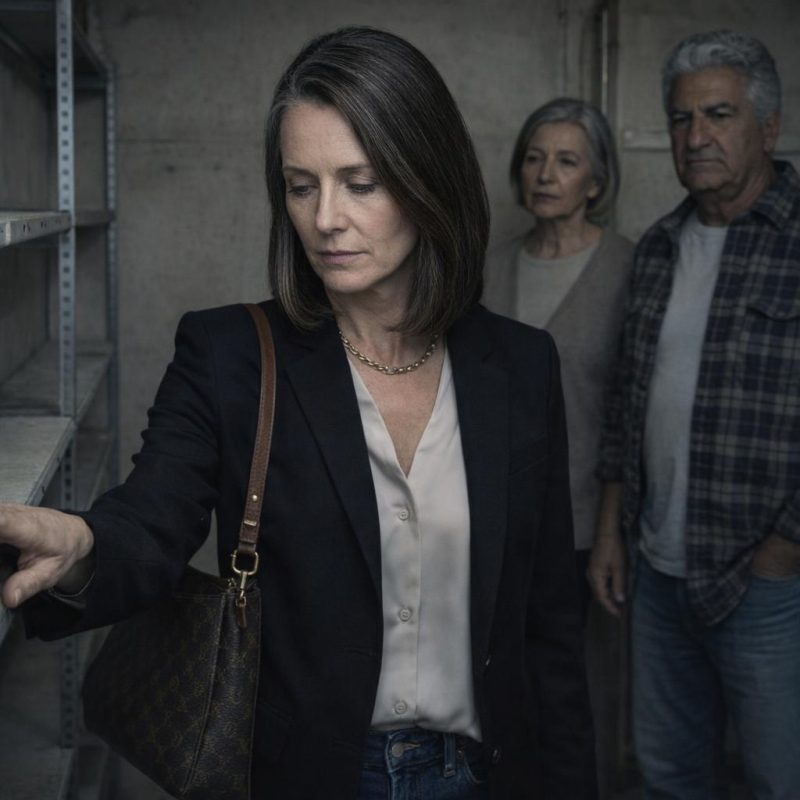 Image by RM AI
Vanished
I noticed her car was gone when I went out to get the paper the next morning. I told myself she'd gone for groceries, or coffee, or maybe she'd needed to drive somewhere just to think. I knocked on her door anyway. Nothing. I called her phone and it went straight to voicemail. I called again an hour later. Voicemail. Frank came and stood in the doorway and watched me dial a third time and said maybe she'd left town for a few days, that after last night it would make sense for her to go somewhere safe. I said I didn't think that was it. He didn't argue with me. By afternoon I'd called four more times. By evening I walked back across the street and stood on her front step and looked through the narrow window beside the door. Dark inside. No movement. Her mail was starting to collect in the box. I stood there longer than I needed to, looking at the dark windows and the empty driveway, trying to find some version of this that wasn't frightening. I couldn't find one. The house just sat there, closed up and still, the way a house looks when the person who lives in it is simply gone.
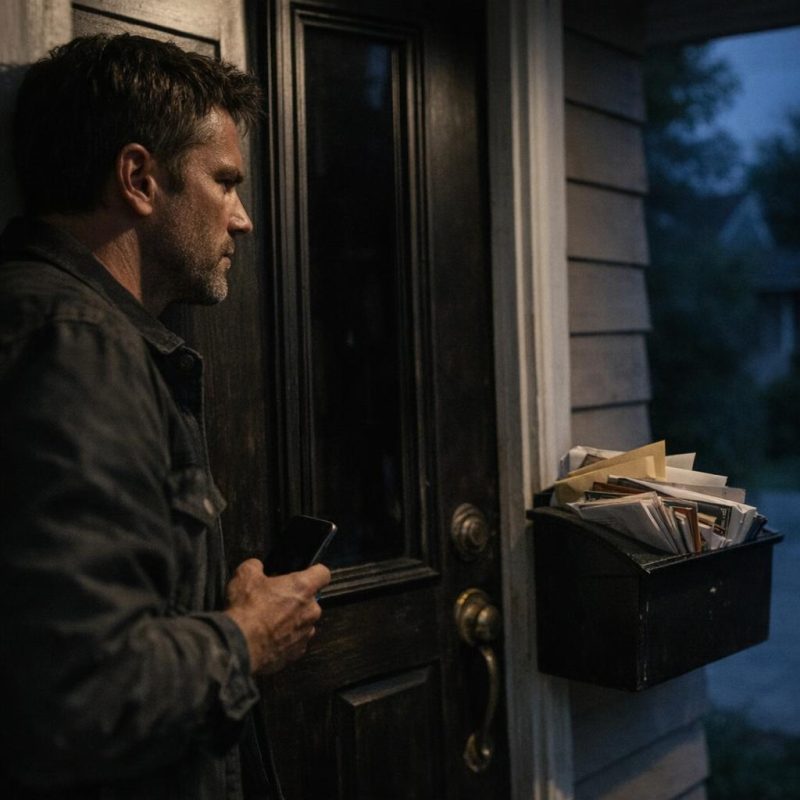 Image by RM AI
Ask Frank
I almost missed it. I'd gone out to check the mail without really thinking about it, the kind of automatic thing you do on a Tuesday morning when you're trying to hold yourself together by staying in routine. There were two bills and a circular. And underneath them, folded once, a piece of notepaper. I recognized the handwriting before I even unfolded it all the way — I'd seen it on the labels of Valerie's file boxes, neat and precise and slightly slanted. I stood in the driveway in my slippers and read it. It wasn't long. It said: Ask Frank what really happened the night Diane died. That was all. No signature, no explanation, no context. Just those twelve words in Valerie's careful handwriting. My hands went cold. I read it again, standing there in the morning light with the bills tucked under my arm, and I felt something shift underneath everything I thought I understood. I'd believed Frank. I'd sat at that kitchen table and listened to him and I had believed him. But Valerie had written this note before she disappeared, which meant she had known something she hadn't said out loud in front of all of us. I stood in the driveway and looked at the paper in my hands and could not make myself go back inside.
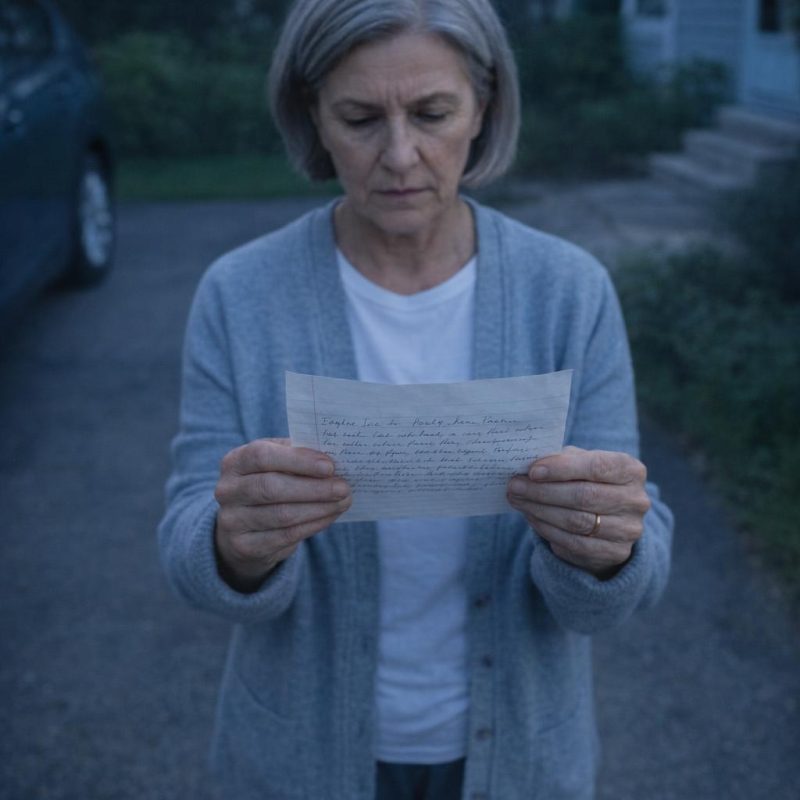 Image by RM AI
The Last Person
I put the note on the kitchen table in front of Frank without saying anything. He looked at it for a long moment. Then he looked at me. His face did something I hadn't seen it do before — it didn't go still the way it had when he was managing what to say. It just crumbled. He said there was one more thing. He said Diane had come to him the night before she left town. Not to the office, to his apartment — she'd knocked on his door late, and she'd been frightened, and she'd begged him to help her get away from the Hartwells. She said they were threatening her. She said she had nowhere else to go. Frank said he stood in his doorway and listened to all of it, and then he told her he couldn't help her. He said he was twenty-four years old and he was terrified of losing everything — his job, his future, the life he'd barely started building. He told her he was sorry and he closed the door. She left crying. A week later she was dead, killed in a car accident on a highway two states away. He said he had never told anyone. He said he had spent forty years knowing that the last thing Diane ever asked of anyone was something he had the power to give her, and he had turned and walked back into his apartment instead.
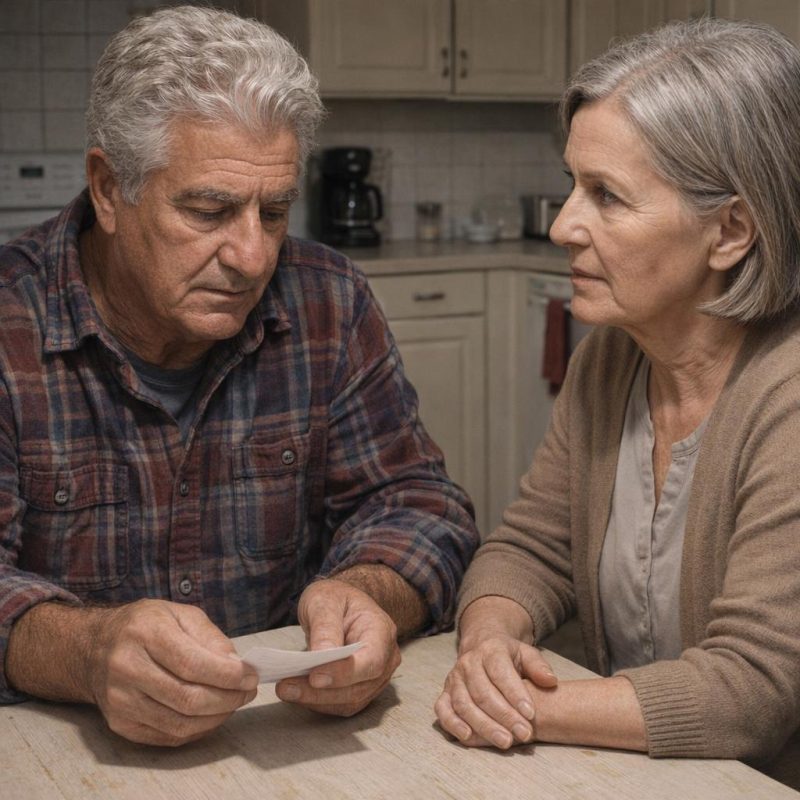 Image by RM AI
Drowning in Guilt
He didn't stop there. Once he started he couldn't seem to stop, and I sat across from him and let him talk. He said he knew he hadn't caused the accident. He said he'd told himself that ten thousand times over forty years, in the middle of the night, in the car, in the shower — he hadn't caused it, he hadn't known what would happen, he was just a scared kid who made a terrible choice. He said it never helped. He said the guilt wasn't about the accident. It was about the door. The closed door and her face on the other side of it and the sound of her walking away down the hallway. He said he'd carried that sound for forty years and never told me because he was ashamed of the person he'd been that night, and he hadn't wanted me to know that person existed. At some point he put his face in his hands. I got up and went around the table and put my arms around him, and he wept — not quietly, not the way men sometimes cry when they're trying to hold most of it back. He wept the way someone does when they've been holding something for so long that letting go of it is its own kind of violence. I had never seen him cry like that in thirty years of marriage, and he was weeping for a woman he had failed on a cold night four decades ago.
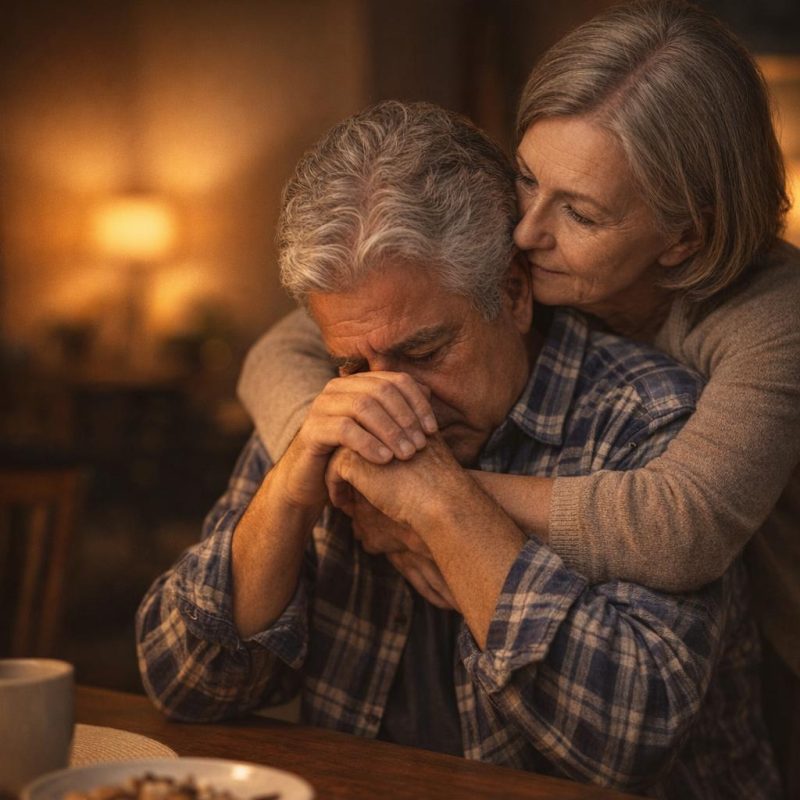 Image by RM AI
The Daughter Returns
We'd been sitting in the kitchen for maybe twenty minutes after Frank finally stopped crying when I heard a car pull into the driveway next door. I got up without thinking and looked out the window, and my stomach dropped — it was Valerie's car. Frank was already on his feet. We went outside together, neither of us saying anything, and Valerie stepped out of the driver's side looking tired in a way I hadn't seen before, like she'd been running on something other than sleep for a long time. Then the passenger door opened. The woman who got out was in her early forties, dark hair, careful posture — and when she turned toward us I had to grip the porch railing because her eyes were Diane's eyes. The shape of them, the color, the way they held something cautious and searching all at once. Valerie said, quietly, "This is Rachel. Diane's daughter. I found her two weeks ago and I told her everything." Rachel looked at Frank, and Frank looked back at her, and he went completely still — the kind of still that isn't calm at all. Rachel said she needed to understand what had happened to her mother, and her voice didn't waver when she said it.
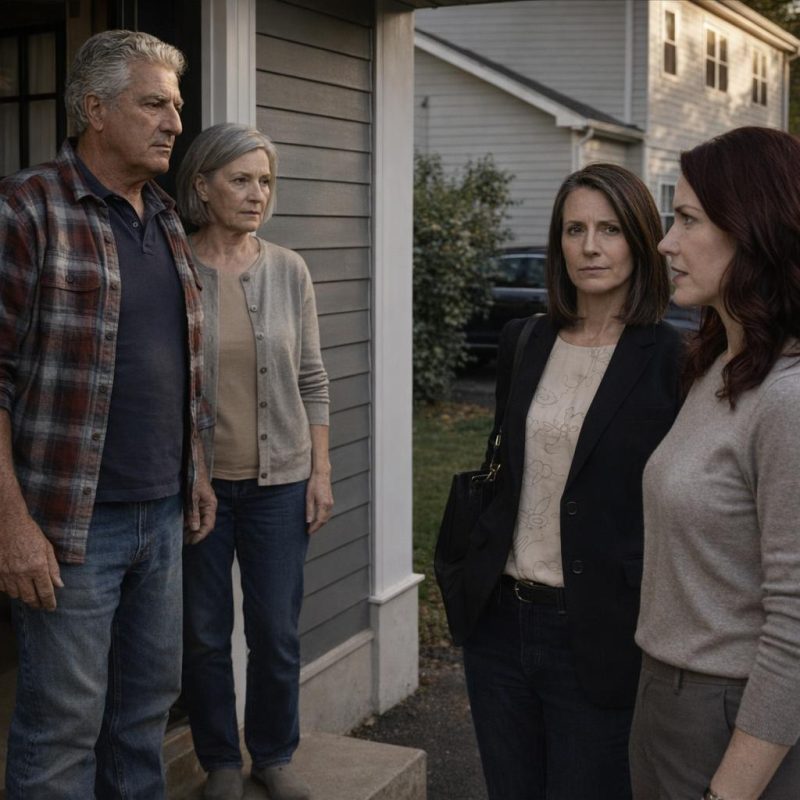 Image by RM AI
The Confrontation
We all moved inside without anyone suggesting it — it just happened, the way things do when the moment is too large for a doorstep. Frank sat across from Rachel at the living room table and told her everything, the same way he'd told me, except this time his voice was quieter and his hands stayed flat on his knees like he was trying to hold himself down. He told her about the door. About Diane's face. About walking away. Rachel listened with tears running down her face and didn't interrupt once. When he finished, the room was so quiet I could hear the refrigerator humming from the kitchen. Rachel was still for a long moment, and then she said, "I wish you'd been braver. I really do." She paused. "But you were young, and they had all the power, and the people who actually destroyed her life were the Hartwells — not you." Frank's face crumpled. Rachel reached across the table and put her hand over his, and she said, "My mother wouldn't want you carrying this for another forty years." I watched Frank's shoulders drop — not in defeat, but in something closer to release — and the room held all of us in a silence that felt, for the first time in weeks, like it might actually be safe.
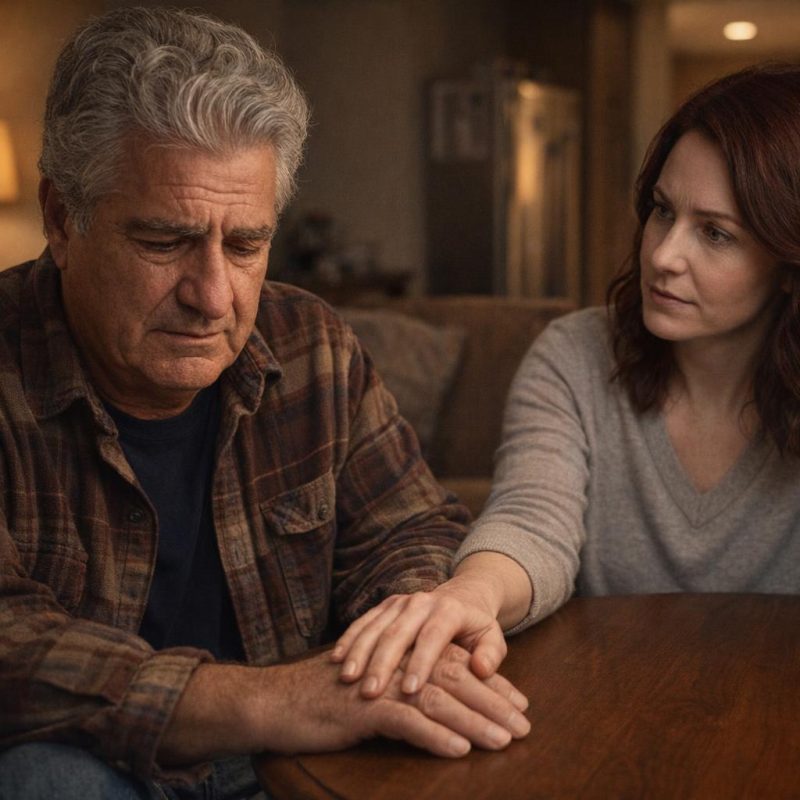 Image by RM AI
The Truth Comes Out
It was Valerie who told us about the documents, almost as an afterthought, the way someone mentions they've already handled something so you don't have to worry. She said she'd made copies of everything before the break-in — every letter, every photograph, every piece of paper she'd pulled from that storage unit — and stored them in a safe deposit box across town. She'd given copies to three different journalists before she ever came back to our street. I stared at her. Frank stared at her. She just smoothed her sleeve and said she hadn't wanted to leave anything to chance. The first article ran four days later. Then two more. The Hartwell family's cover-up — Thomas's relationship with Diane, the pregnancy, the pressure campaign, the way they'd buried a young woman's life to protect their name — was laid out in print for anyone to read. Thomas's business partners started issuing statements. Political allies went quiet. Rachel sat at my kitchen table one afternoon reading the articles on her phone, and she didn't say anything for a long time. She said, finally, "People know who she was now. They know her name." It wasn't the ending any of us would have chosen. Diane was still gone, and no headline was going to change that. But the silence that had swallowed her for forty years had finally, irrevocably, broken open.
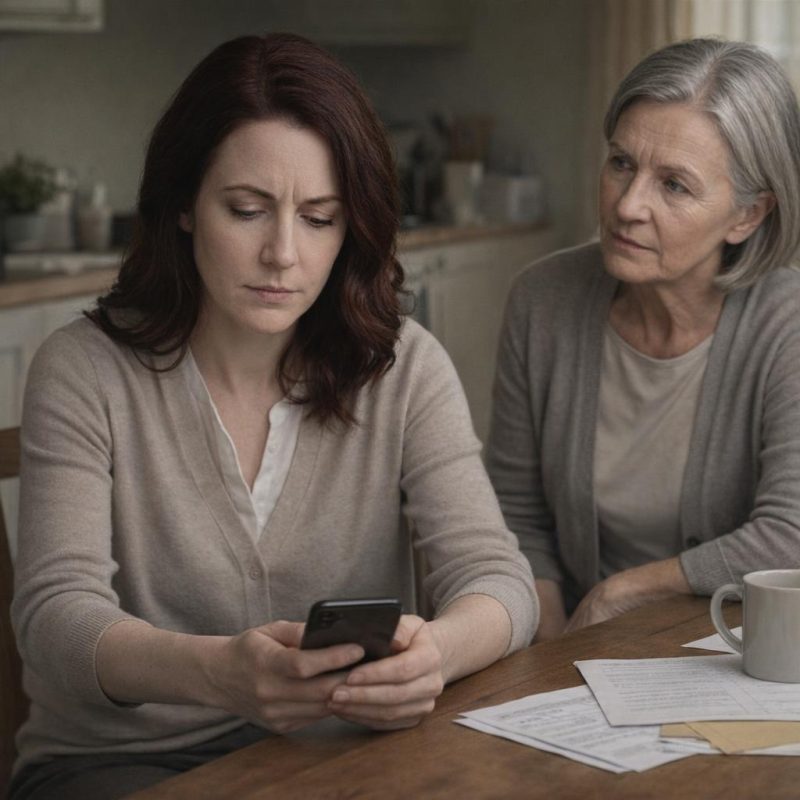 Image by RM AI
Blueberry Muffins and Secrets
Months passed. Frank and I were still together — I want to be clear about that — but together looked different now, the way a bone looks different on an x-ray after it's healed. We talked more. Sometimes about hard things, sometimes about nothing, but the nothing felt more honest than it used to. He seemed lighter, which I hadn't expected to resent as much as I occasionally did, and then I'd feel guilty for resenting it, and we'd talk about that too. Valerie moved away about six weeks after the articles ran. She didn't leave a forwarding address, but she left a note in my mailbox that said simply, "Thank you for not throwing me out." Rachel came by twice — once in the fall, once near the holidays — and each time she and Frank sat at the kitchen table and talked while I made coffee and tried not to hover. I thought I'd known everything about my own house, my own marriage, my own street. I'd believed that for thirty years. One afternoon in early spring I was standing at the front window with a cup of tea when a moving truck pulled up three doors down, and a couple climbed out and started carrying boxes inside, laughing at something between them. I watched them for a moment, and then I let the curtain fall.
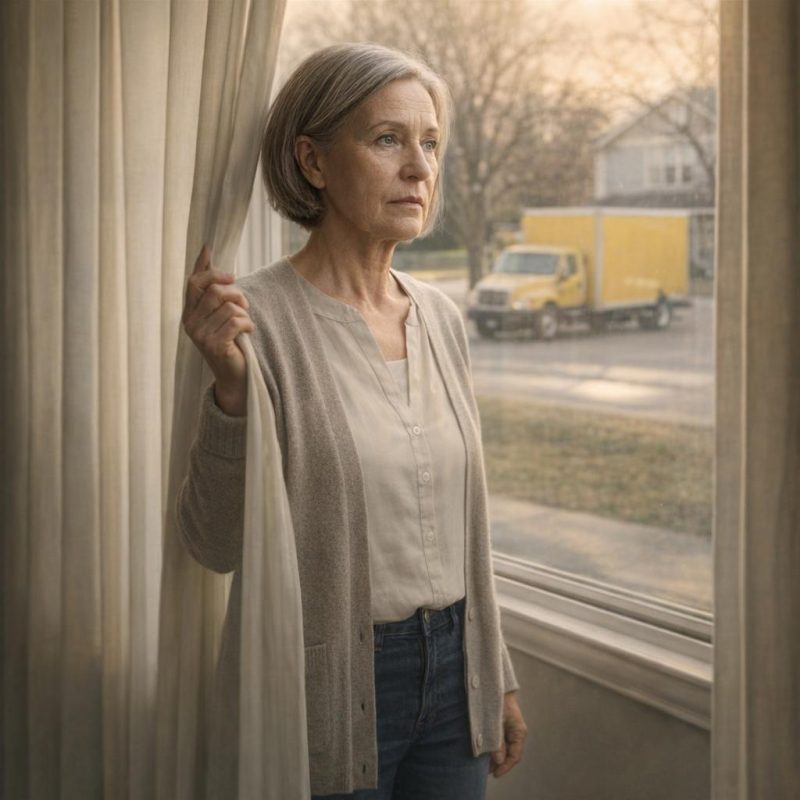 Image by RM AI
KEEP ON READING

The story of Ching Shih, the Woman Who Became the…
Unknown author on WikimediaFew figures in history are as feared…
By Emilie Richardson-Dupuis Dec 29, 2025
Einstein's Violin Just Sold At An Auction—And It Earned More…
A Visionary's Violin. Wanda von Debschitz-Kunowski on WikimediaWhen you hear…
By Ashley Bast Nov 3, 2025
This Infamous Ancient Greek Burned Down An Ancient Wonder Just…
History remembers kings and conquerors, but sometimes, it also remembers…
By David Davidovic Nov 12, 2025
The Mysterious "Sea People" Who Collapsed Civilization
3,200 years ago, Bronze Age civilization in the Mediterranean suddenly…
By Robbie Woods Mar 18, 2025
20 Greatest Ancient Athletes In History
Ancient Olympics. Long before modern stadiums and multimillion-dollar endorsements, athletes…
By Sara Springsteen May 1, 2026
20 Soldiers Who Defied Expectations
Changing the Rules of the Battlefield. You’ve probably heard plenty…
By Annie Byrd Feb 10, 2026