

After Decades of Marriage My Husband Stopped Wearing His Wedding Ring — Then I Realized He'd Been Living A Secret Life
After Decades of Marriage My Husband Stopped Wearing His Wedding Ring — Then I Realized He'd Been Living A Secret Life
Thirty-Eight Years of Comfortable Routine
Thirty-eight years is a long time to share a bathroom, a kitchen table, and a remote control, and I want to be honest with you — most of it was good. Tom and I built our life in a small town in Ohio where everybody knows your name at the grocery store and the pastor remembers your kids' birthdays. We raised two daughters in a three-bedroom house with a leaky back porch we kept meaning to fix, and we went to church every Sunday without fail, the kind of habit that becomes its own kind of comfort. Our evenings had a shape to them. Tom would settle into his recliner after dinner, I'd take the couch with my afghan, and we'd watch Wheel of Fortune and then Jeopardy, calling out answers we mostly got wrong. It wasn't romantic, not the way movies make romance look. But there was something steady in it — the way he'd refill my coffee without being asked, the way I always knew which side of the bed was mine. Our daughters, Jennifer and Melissa, were grown and living their own lives, and Tom and I had settled into the quiet that comes after the noise of raising children. Some evenings I'd look over at him in that recliner, the television light moving across his face, and feel something close to gratitude. The house was warm. The night was ordinary. That was enough.
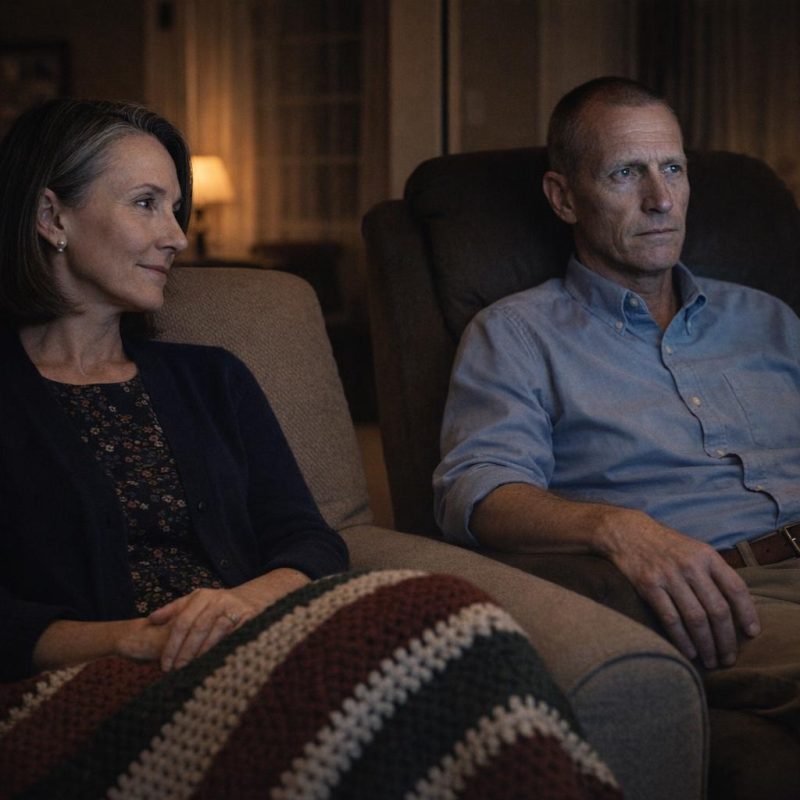 Image by RM AI
The Missing Ring
It was a Tuesday, which matters only because Tuesdays were the most unremarkable day of our week — no church, no errands we hadn't already planned, nothing to distinguish one from the next. Tom was at the kitchen table when I came downstairs, already buttering his toast the way he always did, corner to corner, very deliberate. I poured my coffee and stood at the counter for a moment, watching the morning come through the window over the sink. The yard was still gray with early light. I turned to set my mug down and my eyes went to Tom's hands the way they sometimes do when you've looked at someone for decades — not really looking, just seeing. He was reaching for his orange juice. I told myself he must have taken it off in the shower and forgotten to put it back on. That happened sometimes, didn't it? I'd left my own rings on the bathroom counter more than once. I picked up my coffee and sat down across from him, and we talked about nothing in particular — the weather, whether the gutters needed cleaning. Then he reached for the newspaper and I looked again, and there it was — his left ring finger, bare as the day before we married.
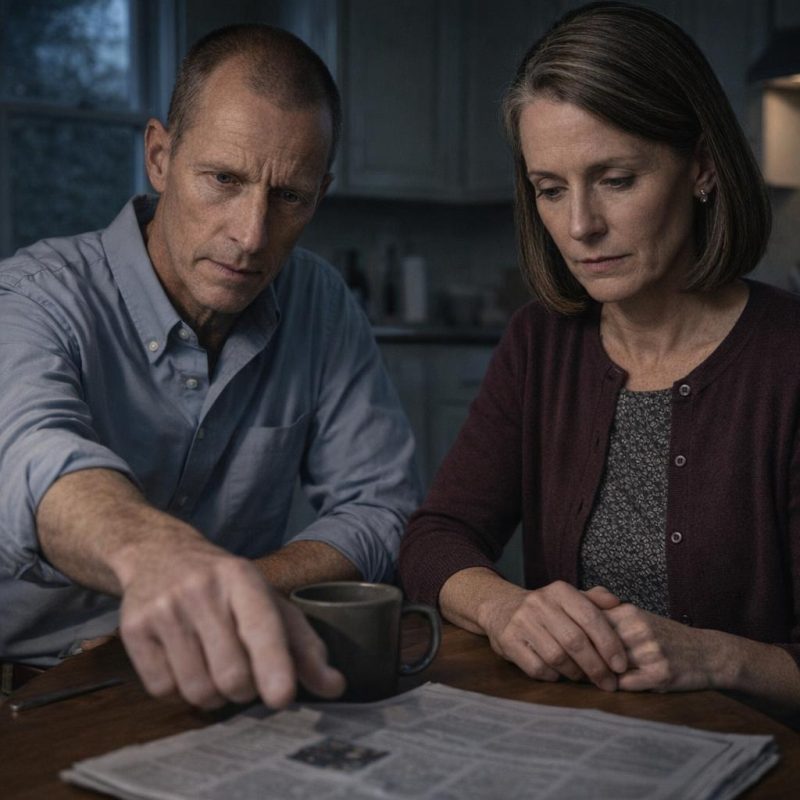 Image by RM AI
Swollen Finger
Three mornings in a row I looked at Tom's hand across the breakfast table, and three mornings in a row the ring wasn't there. I didn't say anything right away. I'm not sure why — maybe I didn't want to make something out of nothing, or maybe I was waiting to see if he'd put it back on without me having to ask. By Thursday I couldn't let it go any longer. I kept my voice easy, the way you do when you're trying not to sound like you're making a big deal out of something. I asked him, somewhere between the toast and the second cup of coffee, whether he'd misplaced his ring. He barely looked up. He said his finger had been swelling lately, that the ring was getting tight and uncomfortable, and he'd taken it off until it settled down. He said it like he was telling me the weather — matter-of-fact, no edge to it, no hesitation. I nodded and said something like, oh, that makes sense, and he turned back to his paper. It did make sense. Fingers swell. People get older. I'd read somewhere that it was common. I wrapped both hands around my coffee mug and told myself that was all it was. But something about the way the explanation arrived so easily, so complete, sat with me in a way I couldn't quite shake for the rest of that morning.
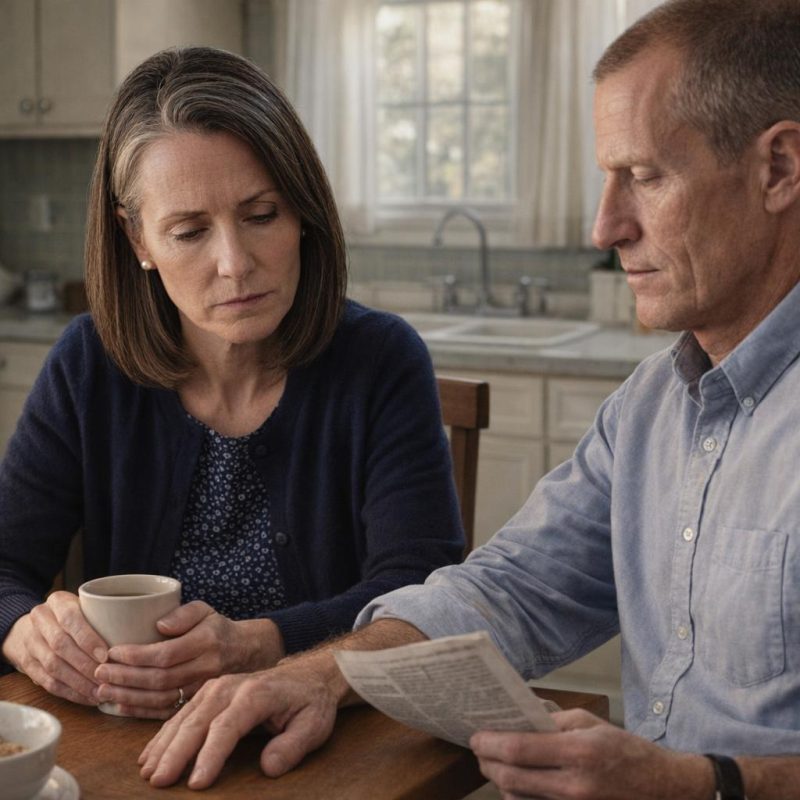 Image by RM AI
The Normal-Looking Finger
After Tom gave me that explanation, I tried to let it go. I really did. But I found myself looking at his hands more than I ever had before — during dinner, during the game shows, when he passed me the salt. I wasn't being dramatic about it. I was just looking. And what I saw didn't match what he'd told me. His ring finger looked exactly like it always had. The same size as his other fingers, maybe even a little slimmer than his middle finger, the way it had always been. No redness around the knuckle. No puffiness. No sign that anything had been pressing against the skin. I even looked at it one evening when he was reading and his hand was resting flat on the arm of the recliner, completely relaxed. It looked perfectly normal. I compared it to his right hand, finger by finger, the way you do when you're trying to talk yourself out of something. They matched. I didn't say anything. I didn't know what I would even say — that I'd been studying his hands like some kind of evidence? That felt embarrassing to admit, even to myself. So I just sat with it, the quiet gap between what he'd told me and what I could plainly see, and I turned my attention back to the television like nothing was different. But something had shifted, just slightly, in the way I was paying attention.
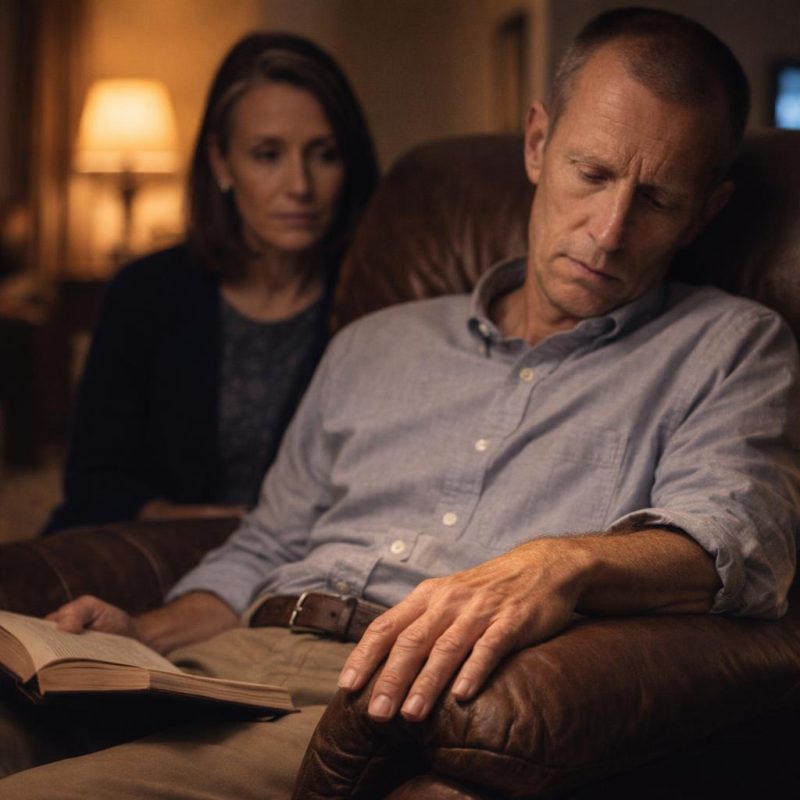 Image by RM AI
Small Changes Accumulating
Once I started noticing things, I couldn't stop. That's the trouble with paying attention — it's hard to turn off once you've switched it on. Tom had always left his phone on the kitchen counter, screen up, the way people do when they have nothing to hide. Now it was face down. Every time. On the counter, on the end table beside his recliner, on the passenger seat of the car when we drove to church. I told myself maybe the screen glare bothered him. Then I noticed he'd started volunteering for grocery runs. Tom had complained about the grocery store for the better part of our marriage — the parking lot, the self-checkout machines, the way the cart wheels always pulled to one side. Suddenly he was offering to go without being asked, sometimes twice in a week. I let him, because what was I going to say? And then one afternoon I was hanging up a shirt of mine in our closet and I stopped. There they were — three dress shirts on the rod, still in their plastic store wrapping, tags attached, pressed and new, and I had no memory of him ever mentioning buying them.
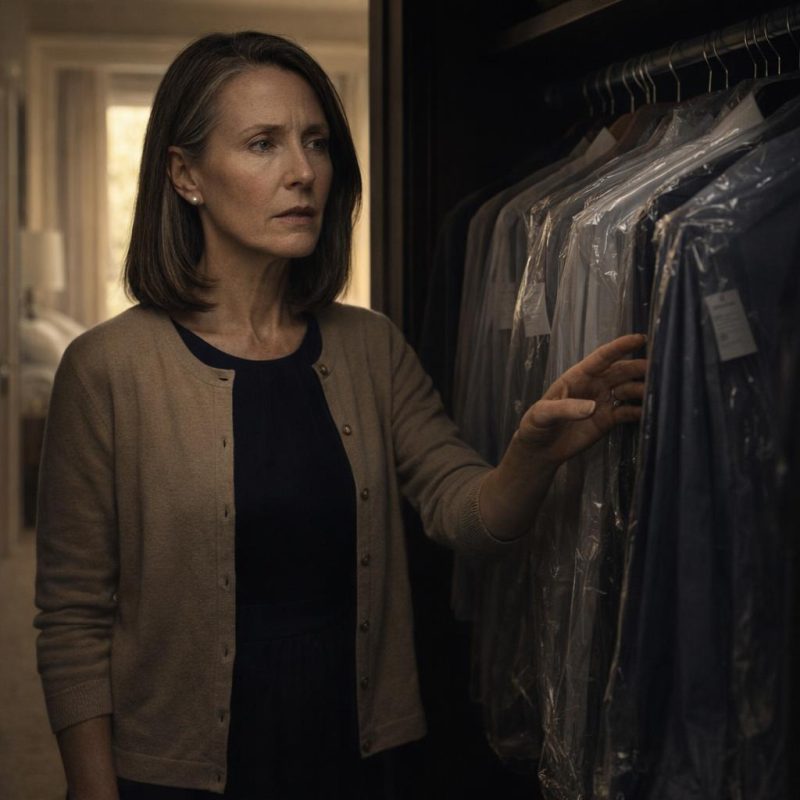 Image by RM AI
Unfamiliar Perfume
Tom came home from running errands on a Wednesday evening, hung his jacket on the hook in the front closet the way he always did, and went straight to the kitchen to put away what he'd bought. I didn't think anything of it. An hour or so later I went to the closet to get my own coat — I was going to step out to check the mail before it got dark. I reached past Tom's jacket, and that's when it hit me. A scent. Sweet and powdery, distinctly feminine, the kind of perfume that lingers in fabric. I stopped moving. I stood there with my hand still on my coat and breathed it in again, slower this time, telling myself I was wrong. Maybe it was a fabric softener from the dry cleaner. Maybe someone had bumped into him in a store aisle. I lifted the collar of his jacket carefully and brought it close. The scent was there, clear and unmistakable, not faint the way something accidental would be. It wasn't mine. I don't wear anything powdery — I've used the same light floral spray for twenty years, and this was nothing like it. I stood in that closet for a long moment, my coat still in my hand, running through every reasonable explanation I could think of. The jacket smelled like a woman who was not me.
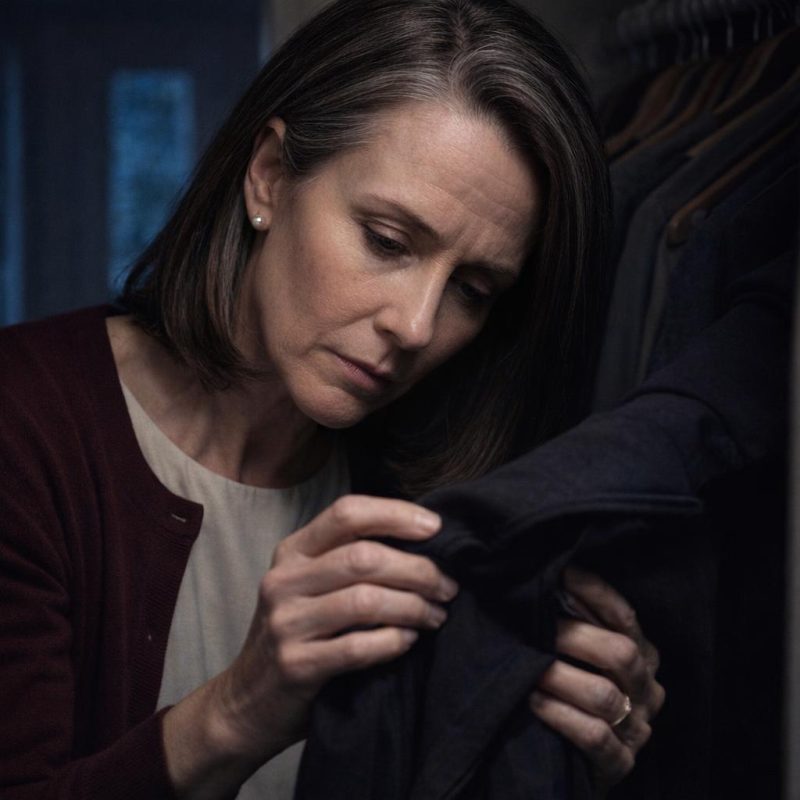 Image by RM AI
Every Moment Feels Suspicious
After the closet, something changed in the way I moved through my own house. I didn't confront Tom. I didn't even know how I would start that conversation, or what I was actually accusing him of. But I couldn't unknow what I'd smelled, and I couldn't stop my mind from running it through everything else — the ring, the phone, the shirts, the grocery store trips. Our evenings looked the same from the outside. We still watched our game shows. Tom still laughed at the contestants who guessed wrong. But his laughter sounded different to me now, or maybe I was just listening differently. When he told me about his day — a stop at the hardware store, a chat with the neighbor — I found myself turning his words over, looking for the edges. I hated it. I hated sitting across from the man I'd shared a bed with for thirty-eight years and feeling like I was reading a document for fine print. One night he asked me what I wanted for dinner, just like he had a thousand times before, and I looked at his face for a beat too long before I answered. He didn't notice. He never noticed. And that was almost the worst part — that I was carrying all of this alone, in a house that looked exactly like it always had, while everything familiar had quietly become something I wasn't sure I could trust anymore.
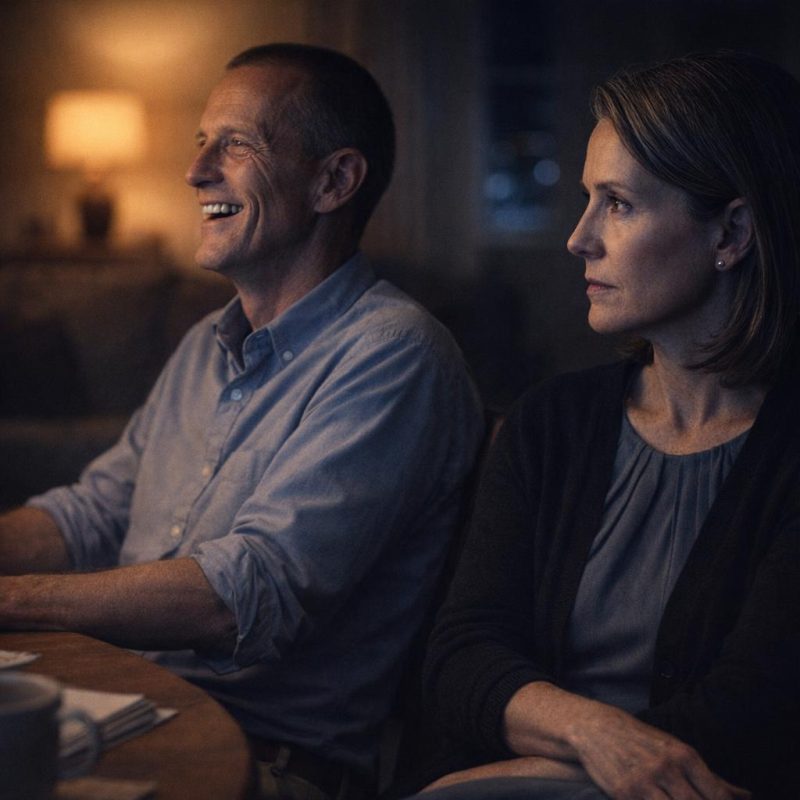 Image by RM AI
Confiding in Carol
I held it all inside for about two weeks before I finally called Carol. We met at the café on Elm Street where we'd been having coffee together since our kids were in elementary school, and I waited until we had our cups in front of us before I said anything. I told her about the ring first — the bare finger, Tom's explanation about the swelling. I watched her face as I talked. She listened without interrupting, which wasn't always Carol's way, and that alone told me she was taking it seriously. Then I told her about the phone, always face down. The grocery store trips he used to avoid. The three new dress shirts still in their wrapping. I told her about the perfume on his jacket, and when I said that part, her expression shifted. She set her coffee cup down. Carol had known Tom almost as long as I had, had sat at our Thanksgiving table, had watched our daughters grow up. She wasn't someone who jumped to conclusions without reason. She looked at me across the table, and her voice came out quiet and flat when she spoke. She said, "Amanda, honey — taken together, that's not nothing."
 Image by RM AI
Men Don't Stop Wearing Rings
Carol didn't soften it. She picked up her coffee cup again, took a slow sip, and said it plainly — men don't stop wearing their wedding rings without a reason. I opened my mouth to argue before she'd even finished the sentence. I told her Tom wasn't like that. I told her thirty-eight years counted for something, that he'd never once given me cause to question him, that he was a deacon at our church for twelve years and coached Jennifer's softball team and came home every single night. Carol let me talk. She didn't interrupt, didn't roll her eyes, just waited. Then she pointed out, quietly, that the perfume hadn't explained itself. That new dress shirts don't buy themselves for no occasion. That a man who suddenly starts protecting his phone like it holds state secrets is a man with something to protect. I told her there were innocent explanations for all of it. She asked me, gently but directly, why I'd called her if I wasn't worried. I didn't have an answer for that. I looked down at my coffee and said I just needed to talk it through with someone. And even as the words left my mouth, I could hear how hollow they sounded — because I was still defending him out loud while something cold and specific was taking root in my chest, and I couldn't stop either one.
 Image by RM AI
Trying to Convince Myself
I spent the next several days talking myself down from the ledge. I'd wake up in the morning and watch Tom shuffle to the kitchen in his slippers, pour his coffee, unfold the newspaper the way he had for decades, and I'd tell myself I was being ridiculous. Thirty-eight years. Two daughters raised in that house. Sunday mornings in the third pew from the front, every week without fail. I'd remind myself of all of it like I was reciting a prayer. Tom had never been a man who chased things. He was steady. He was routine. He was the man who remembered to put the trash out and fixed the screen door without being asked and fell asleep in his recliner watching the evening news. I'd look at him across the breakfast table and think: this is the same man. Nothing has changed. But then he'd shift in his chair, or glance at his phone, and I'd feel that cold thing move in my chest again. I wasn't watching him the way a wife watches a husband. I was watching him the way you watch something you're afraid might disappear. And no matter how many times I told myself I was overreacting, the unease just sat there, quiet and patient, waiting for me to stop pretending it wasn't real.
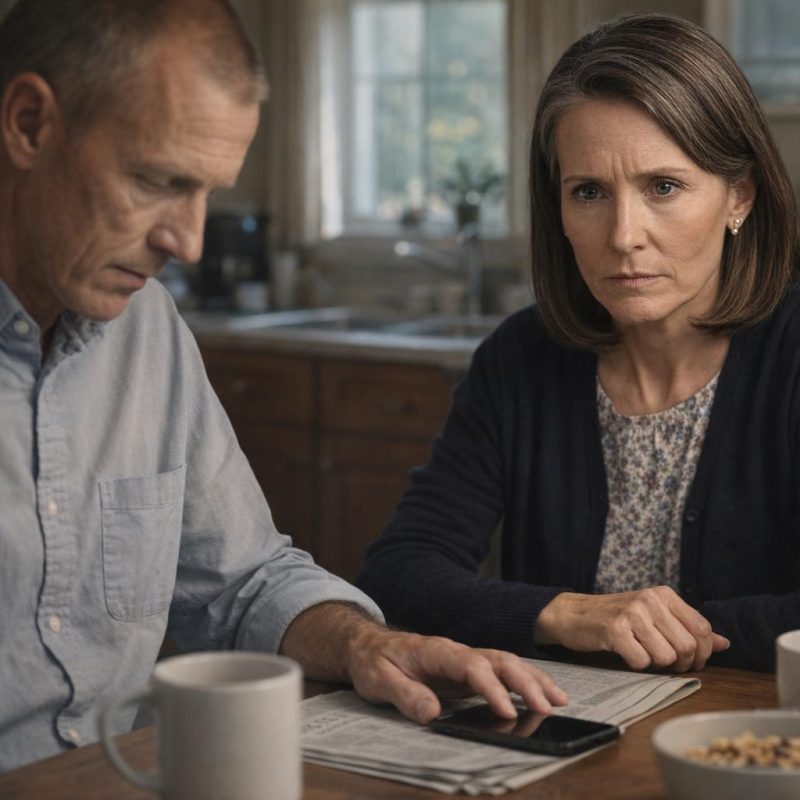 Image by RM AI
Melissa's Observation
Melissa called on a Tuesday afternoon, and for the first few minutes we talked about ordinary things — her work schedule, whether I'd tried the new recipe she'd sent me, how the garden was coming along. She has her father's way of easing into things, my younger daughter does. She doesn't rush. So when the conversation shifted, I almost missed the shift. She mentioned she'd been at a restaurant across town the week before, a place called Harrington's over near the old mill district. She said she'd seen Tom there. I asked if he'd been alone, and there was a pause — just a beat too long — before she said no. She described the woman carefully, the way you describe something you've been turning over in your mind before you say it out loud. Attractive, she said. Blonde. Around my age, maybe a little younger. She added quickly that they were probably just having lunch, that it was probably nothing, that she didn't want me to worry. I told her I wasn't worried. I kept my voice even and thanked her for mentioning it. After we hung up, I sat at the kitchen table with the phone still in my hand, and the careful, loving way Melissa had chosen every single word settled over me like a weight I couldn't lift.
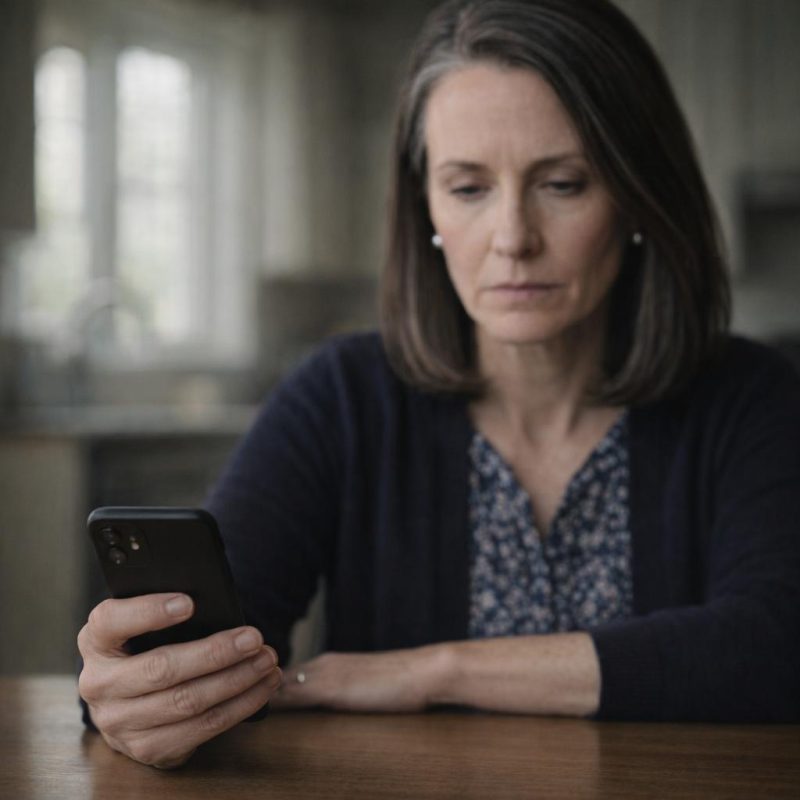 Image by RM AI
Unable to Confront
I rehearsed it a hundred times in my head. I'd walk into the living room, sit down across from Tom, and just ask him. Calmly. Who was the woman at Harrington's? Simple question. But every time I got close to actually saying it, something locked up in my throat. It wasn't that I didn't trust myself to ask. It was that I didn't trust myself to hear the answer. Tom was in the kitchen that evening, washing up after dinner, humming something low under his breath the way he always did. He looked so ordinary. So completely, maddeningly familiar. The same hands I'd held at the altar. The same way he dried the dishes, folding the towel over his shoulder when he was done. I stood in the doorway watching him and thought: I cannot ask this man if he is lying to me. Not yet. Not without knowing more. Because if I asked and he confirmed it, I couldn't unknow it. And if I asked and he denied it, I wasn't sure I'd believe him. I needed something solid first. Something I could hold in my hand. And then, quietly, the thought settled into place — I would follow him.
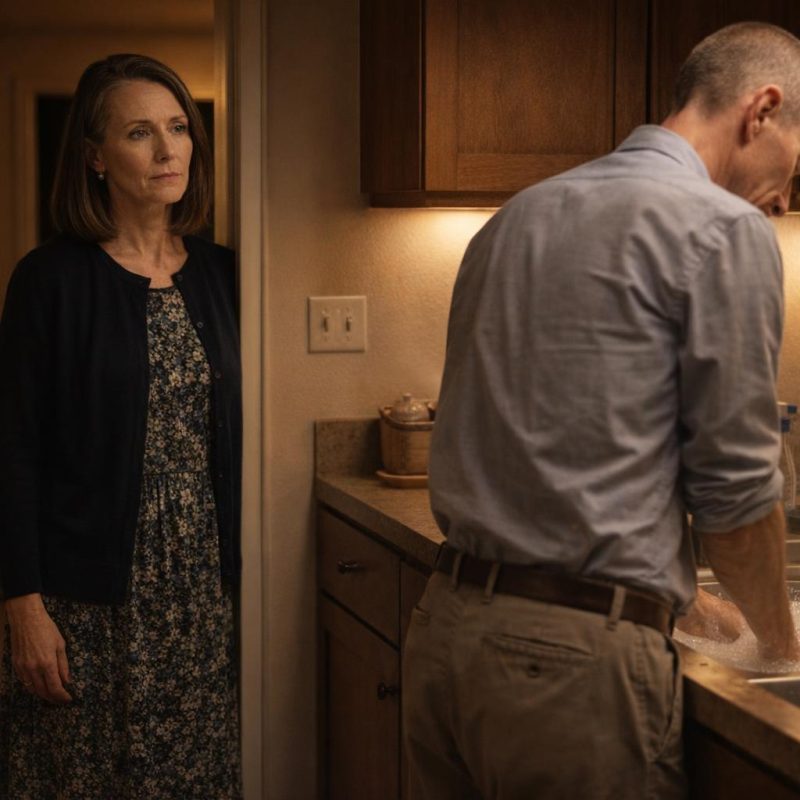 Image by RM AI
Watching and Listening
I'm not proud of what I became those next two weeks. I started keeping a mental log of when Tom left the house and when he came back, how long he was gone, whether his explanation matched the time. When he took phone calls, I'd find a reason to be in the next room, folding laundry or straightening a shelf, listening for tone even when I couldn't make out words. His voice always dropped when he was on the phone, just low enough that I couldn't catch anything useful. I checked the mileage on his truck twice — once before he left on a Wednesday, once when he got back — and the numbers were higher than a hardware store run would explain. One afternoon while he was in the shower, I went through his wallet. I found nothing definitive, just the usual cards and a few folded receipts I couldn't read clearly in the dim light. I put everything back exactly as I'd found it and stood there in the bedroom feeling like a stranger in my own marriage. I had spent thirty-eight years trusting that man without a second thought. And now I was cataloging his movements like I was building a case. The shame of it sat heavy on me, even as I knew I wasn't going to stop.
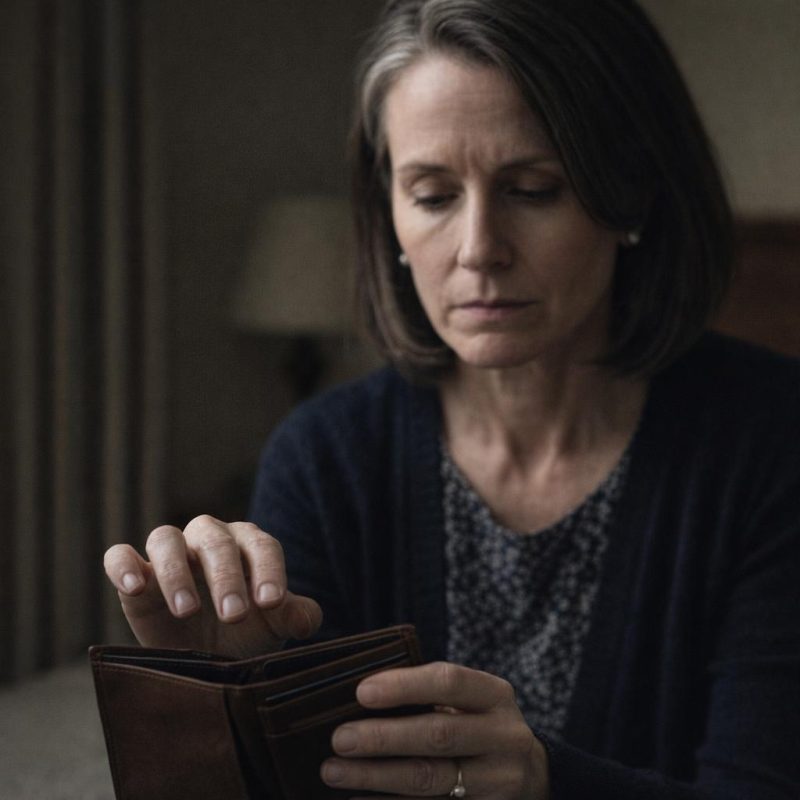 Image by RM AI
Expensive Lunches
The following Saturday, Tom went out to mow the back lawn, and I went to his wallet. I'd told myself I was just checking again, that I probably wouldn't find anything. But this time I took my time. Tucked into the billfold section, folded in thirds, were three receipts. I smoothed them out on the dresser one by one. Three restaurants, none of them names I recognized, none of them places Tom and I had ever been together. The dates ran across the past four weeks, almost evenly spaced. The amounts were higher than what we'd spend on a casual lunch — one was over sixty dollars, another close to eighty. The third restaurant's address was on the east side of town, near the mill district, near Harrington's. I photographed each receipt with my phone before folding them back exactly as I'd found them. My hands weren't entirely steady doing it. I tucked the wallet back into the nightstand drawer and walked to the window. Outside, Tom was pushing the mower in slow, even rows across the yard, the same way he'd done it every summer for thirty years. The receipts were in my phone's camera roll now — three slips of paper I didn't have an explanation for, sitting alongside the image of a man I thought I knew.
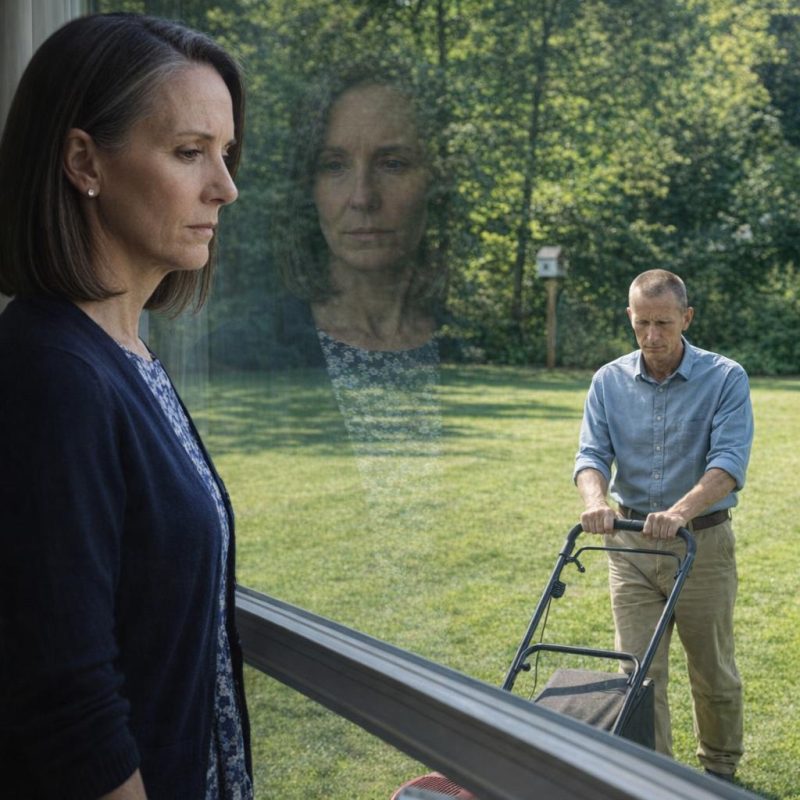 Image by RM AI
The Hotel Charge
The credit card statement came on a Thursday, tucked in with the electric bill and a church newsletter. I almost set it aside for Tom to go through the way I usually did, but something made me open it myself. I sat at the kitchen table and ran my finger down the column of charges — groceries, the pharmacy, the gas station on Route 9. Then I stopped. A hotel charge. The name of the place meant nothing to me, but the town did — Cloverfield, the next county over, a good forty miles from our house. I stared at the date. A Saturday, three weeks back. I remembered that Saturday. Tom had left after breakfast and said he was going to run some errands, maybe stop by the hardware store for weatherstripping. He'd been gone most of the afternoon. He came home smelling like cold air and said the hardware store had been picked over. I'd made soup for dinner and we'd watched television and I hadn't thought twice about any of it. The charge was for one night. I sat there at the kitchen table with the statement flat in front of me, and I read the line again — the hotel name, the town, the date — unable to make it fit with anything he had told me.
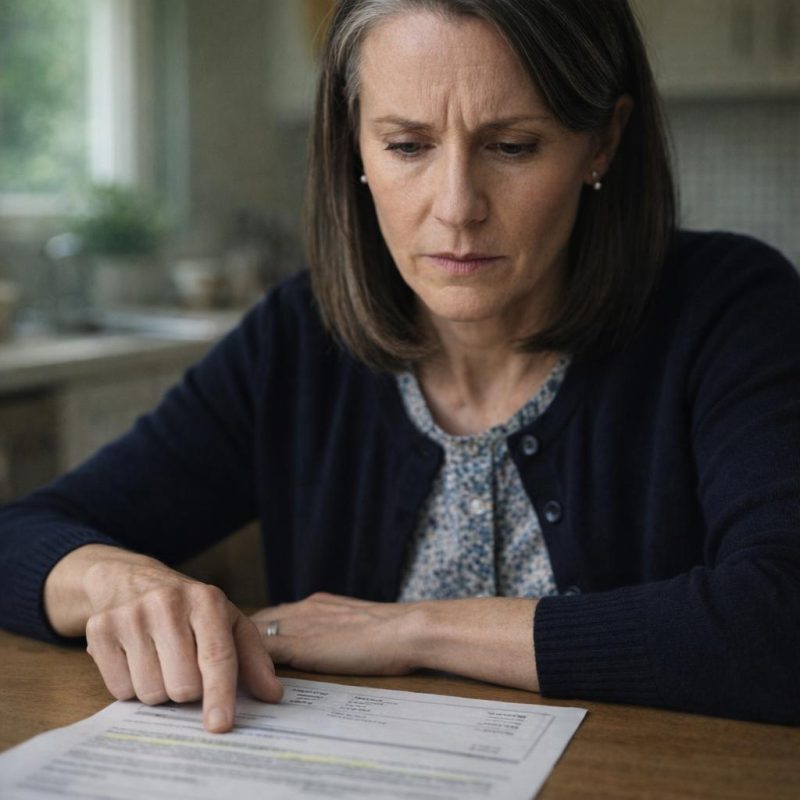 Image by RM AI
The Jewelry Store Receipt
A few days after I found the statement, I went out to Tom's truck to grab the insurance card — we had a routine appointment coming up and I wanted to have everything ready. I opened the glove box and a small stack of papers slid out onto the seat. I gathered them up, registration, the old insurance card, a folded map he'd never thrown away. And then I saw it, tucked flat against the back of the compartment, almost hidden behind the map. A receipt. The header read Caldwell's Fine Jewelry, right there on Main Street, a store I'd walked past a hundred times. The date printed at the top was two weeks after Tom had stopped wearing his ring. I turned it over in my hands. The amount was three hundred and forty dollars. I stood there in the driveway going through every occasion I could think of — my birthday wasn't for four months, our anniversary had passed in the spring, there was no holiday in between. I had not received jewelry from Tom. Not a bracelet, not a necklace, not so much as a pair of earrings. The receipt sat in my hand: Caldwell's Fine Jewelry, one item, three hundred and forty dollars, a date that meant nothing in our marriage.
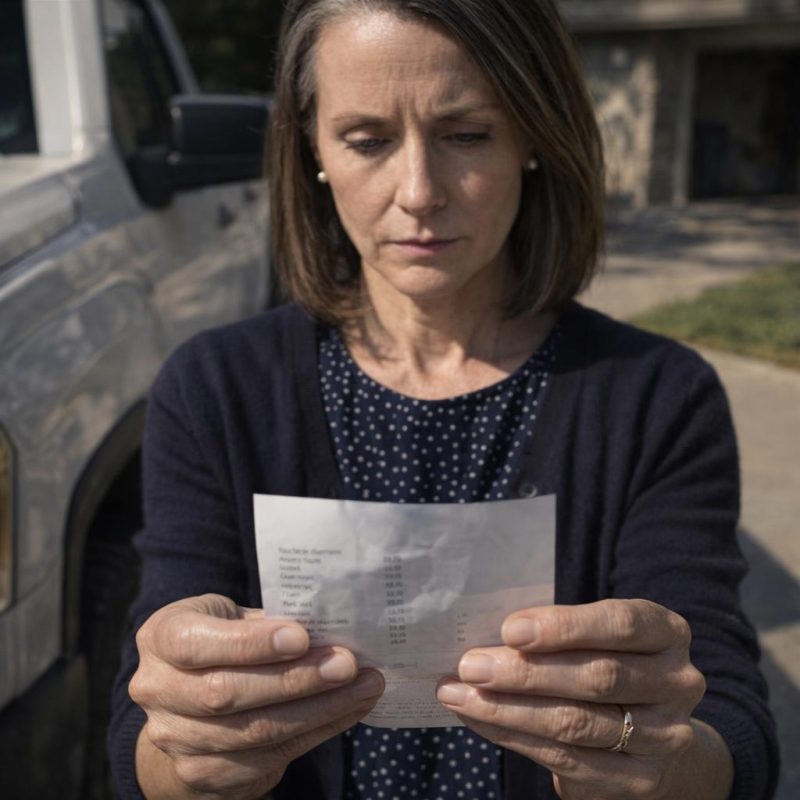 Image by RM AI
Obsessed and Sleepless
I don't know exactly when the obsession took over, but by the second week after finding that jewelry receipt, it had. I'd lie down beside Tom each night and stare at the ceiling while he slept, his breathing slow and even, completely unbothered, and I'd feel something close to rage at how peacefully he could rest. I'd stopped eating real meals. I'd pick at whatever I put on my plate and then scrape the rest into the trash when Tom wasn't looking. My clothes felt looser. I caught myself in the bathroom mirror one morning and barely recognized the woman looking back — hollow eyes, gray skin, the kind of tired that sleep doesn't fix even when you can get it. Every time Tom spoke to me, I'd turn his words over in my mind afterward, listening for something I couldn't quite name, some small thing that might explain the unease I couldn't shake. I'd go back through everything — the ring, the perfume on his collar, the bank statement, the receipt from Caldwell's — and arrange it all in order like I was building a case. I told myself I was just trying to understand. But at three in the morning, lying rigid in the dark while Tom slept beside me, I was still counting, still cataloging, still unable to stop.
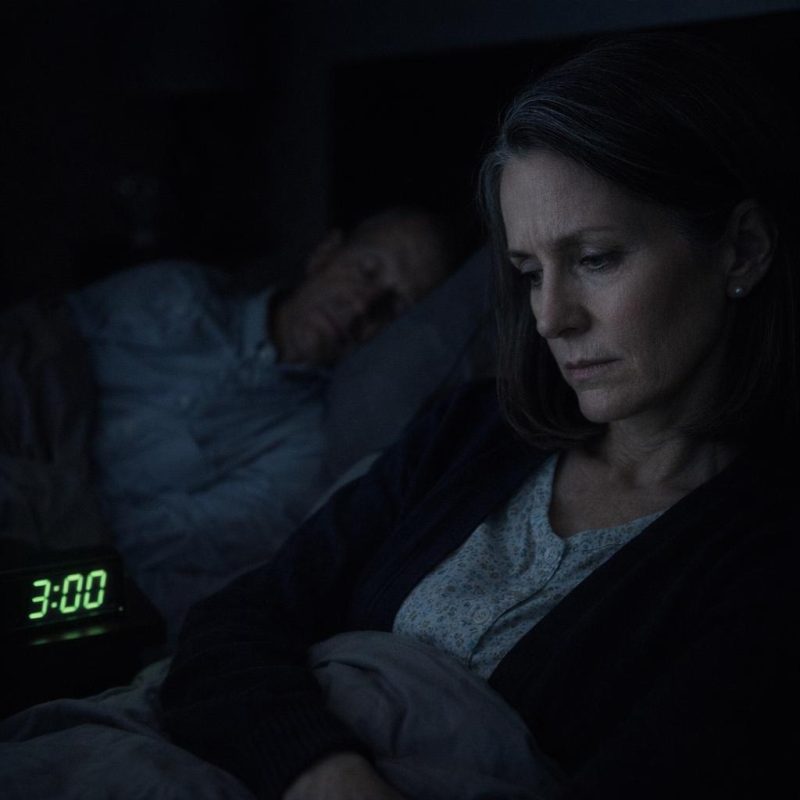 Image by RM AI
Every Smile Feels Fake
Tom brought me coffee the next morning, set it on the counter right beside me the way he always had, and I stood there looking at the mug and couldn't feel a single thing except suspicion. I thanked him. I made my voice sound normal. But in my head I was already turning it over — was he being attentive because he felt guilty, or was this just Tuesday, just Tom being Tom the way he'd been for thirty-eight years? I couldn't tell anymore. That was the part that frightened me most. He asked about my day over lunch and I gave him short answers, one or two words, enough to seem present without actually being there. He suggested dinner out, somewhere nice, and I said I was tired. He looked hurt. I saw it cross his face and I felt nothing — or maybe I felt too much and had gone numb to it. Jennifer called that evening and asked how things were going. I told her fine, everything was fine. She paused a beat too long before she said that we'd seemed a little distant lately, her dad and me. I said we were just busy. After I hung up, I sat at the kitchen table with my cold coffee and the quiet of the house settled in around me, wide and heavy.
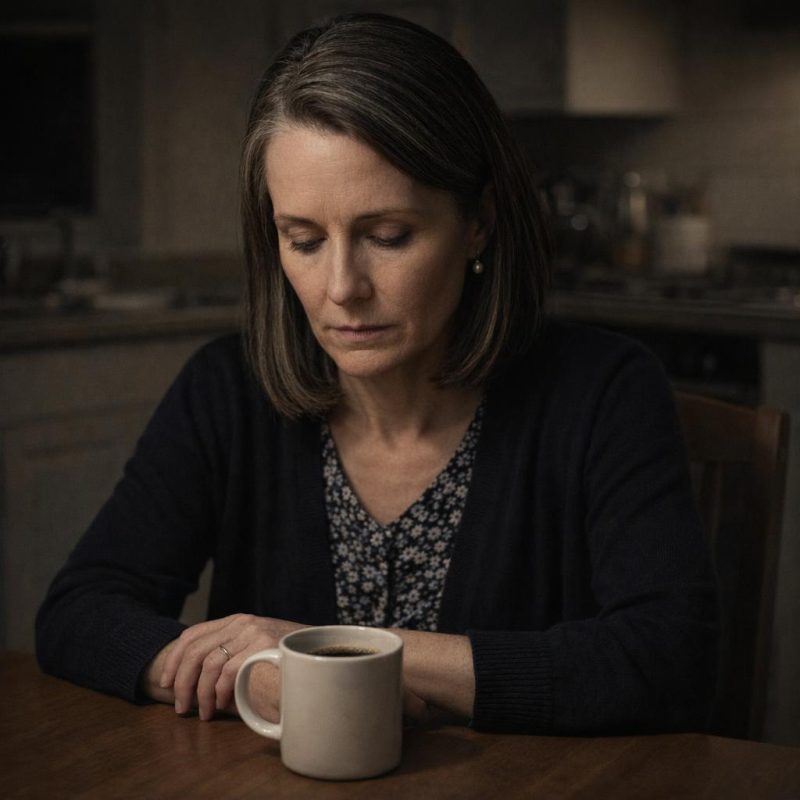 Image by RM AI
The Decision to Follow
Tom left for the hardware store on a Thursday afternoon and I sat down at the kitchen table after his truck pulled out of the driveway and I just stayed there. I'd been turning the idea over for days — following him, actually getting in my car and following my husband like something out of a television movie. Every time the thought surfaced I pushed it back down. It felt wrong. Invasive. Beneath the kind of woman I'd always believed myself to be. I was a church-going woman from a small town in Ohio. I did not follow my husband. Except I also could not keep living the way I'd been living. The receipts could have explanations. The bank charge could have explanations. I'd told myself that a hundred times. But there was a part of me that understood, quietly and without drama, that I needed to see something real — something I couldn't talk myself out of at three in the morning. I needed to know. Not suspect, not wonder, not catalog. Know. I made the decision sitting right there at that kitchen table, alone in the house, with the afternoon light coming through the curtains. I hated what it said about where we'd ended up. I sat with that feeling for a long time, and the house was very still around me.
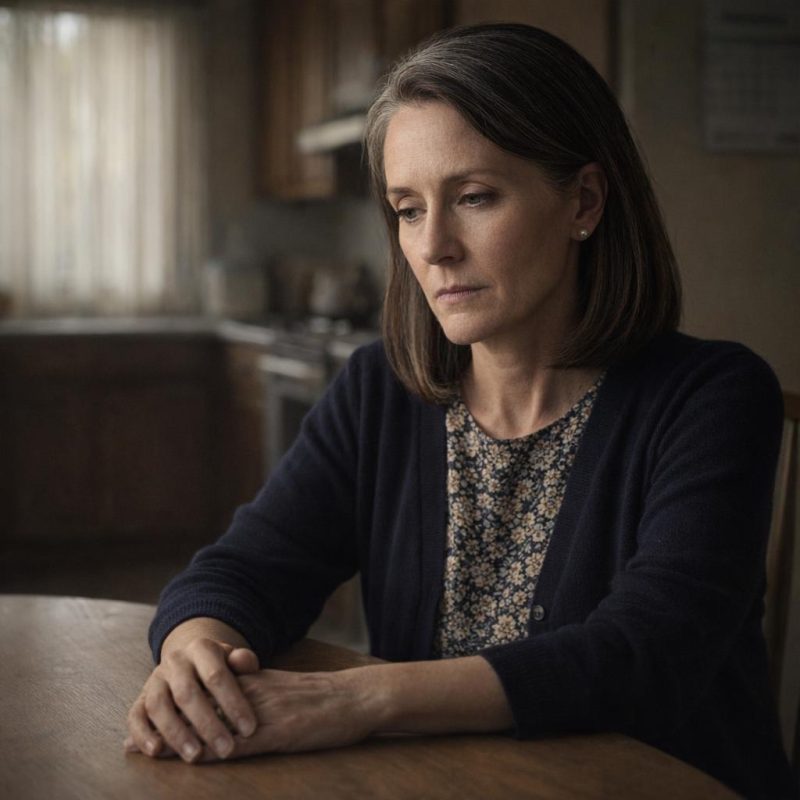 Image by RM AI
Preparing to Follow
I kept my car keys in the front pocket of my cardigan all morning. Every time Tom moved toward the door I felt my pulse jump. He read the newspaper at the kitchen table. He went out to the garage and worked on something — I could hear the occasional clank of a tool — and I stood at the kitchen window pretending to wipe down the counter, watching. My nerves were pulled so tight by noon that I'd spilled my coffee twice and given up on it entirely. Early afternoon he came back inside, washed his hands at the sink, and dried them on the dish towel. He said he needed to run some errands, just around town, nothing specific. I asked, as casually as I could manage, if he needed me to pick anything up while he was out. He said no, he was fine, he'd be back before dinner. He grabbed his truck keys off the hook by the door and headed out. I heard the engine turn over. I counted to thirty, watching the second hand on the kitchen clock. Then I picked up my purse, walked to the back door, and reached for my keys.
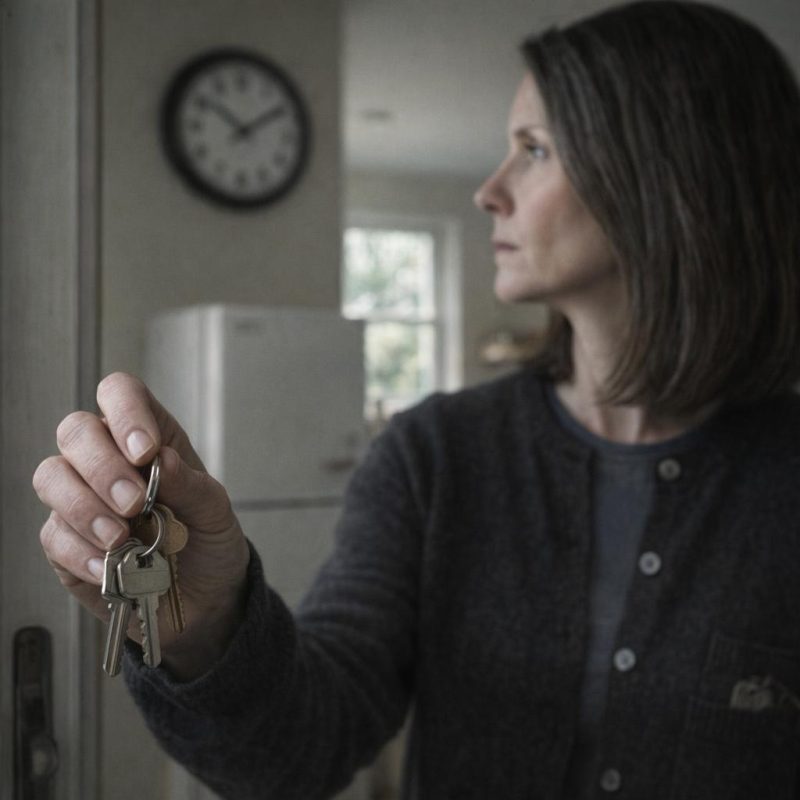 Image by RM AI
Following Tom to the Edge of Town
I pulled out of the driveway slowly, keeping my eyes on Tom's truck at the end of the block. I stayed several car lengths back, far enough that I hoped I'd blend into ordinary traffic. He drove through the center of town — past the diner, past the pharmacy, past the hardware store he'd claimed to visit before — and I followed, my hands tight on the wheel. He didn't stop. He kept going past the grocery store, past the old feed supply building that had been converted into apartments, past the edge of the neighborhoods I'd known my whole adult life. The streets started to change. The houses got smaller and quieter, set back from the road behind old maples and chain-link fences. I didn't recognize any of it. I'd lived in this town for over thirty years and I was driving down streets I'd never had reason to turn onto. Tom's truck moved steadily ahead of me, unhurried, like he knew exactly where he was going. My chest felt tight. I kept both hands on the wheel and followed him deeper into that quiet, unfamiliar part of town, and the distance between where I'd always lived and wherever he was leading me felt like more than just miles.
 Image by RM AI
The Tidy Blue House
Tom's truck slowed and pulled into a driveway on a quiet residential street, and I eased my car to the curb across the road, tucking in behind a parked minivan so I wasn't fully visible. I turned off the engine and sat there. The house was small and tidy, painted a soft blue with white trim around the windows and along the porch railing. There were flower boxes beneath the two front windows, filled with something yellow — marigolds, maybe, or black-eyed Susans. The lawn was cut short and edged clean. A wind chime hung near the front door, turning slowly. It looked like a house someone cared for. Tom got out of his truck and I watched him walk toward the front steps with a steadiness that told me he'd done this before. He didn't hesitate at the bottom of the steps. He didn't look around the way a person does when they're somewhere unfamiliar. He just walked up, like he belonged there, and reached for the doorbell. I sat with my hands still on the steering wheel, engine off, staring at that little blue house with its cheerful flower boxes, and the weight of what I was looking at pressed down on me like something I couldn't name.
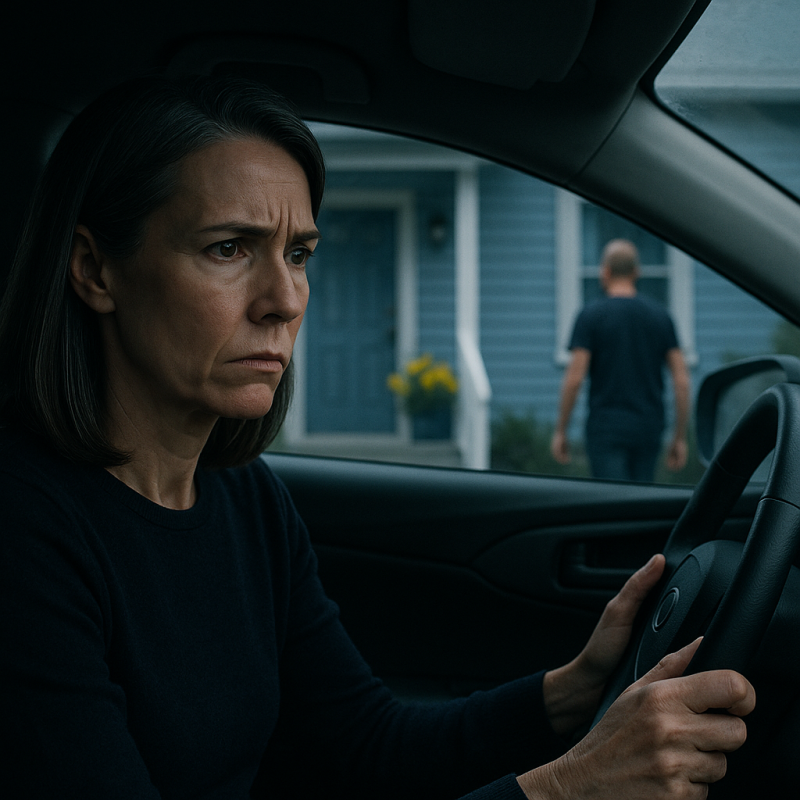 Image by RM AI
The Woman at the Door
The front door opened before Tom's hand reached the bell. A woman stepped into the doorway — blonde, somewhere around my age, with a face that was still pretty in the way that some women carry into their late fifties. She was wearing a light cardigan and dark slacks, nothing remarkable, but she smiled when she saw Tom and the smile was warm and immediate, the kind that doesn't have to think about itself. She stepped forward and put her arms around him. I watched from across the street, my hands still on the steering wheel, my breath gone shallow. It wasn't a quick greeting. She held on, and he let her, and there was nothing uncertain about either of them. I told myself to start the car. I told myself to look away. I didn't do either. Tom said something I couldn't hear through the glass. The woman pulled back just enough to look at his face, and she raised one hand and touched his cheek — gently, like it was the most natural thing in the world — and my stomach turned over completely.
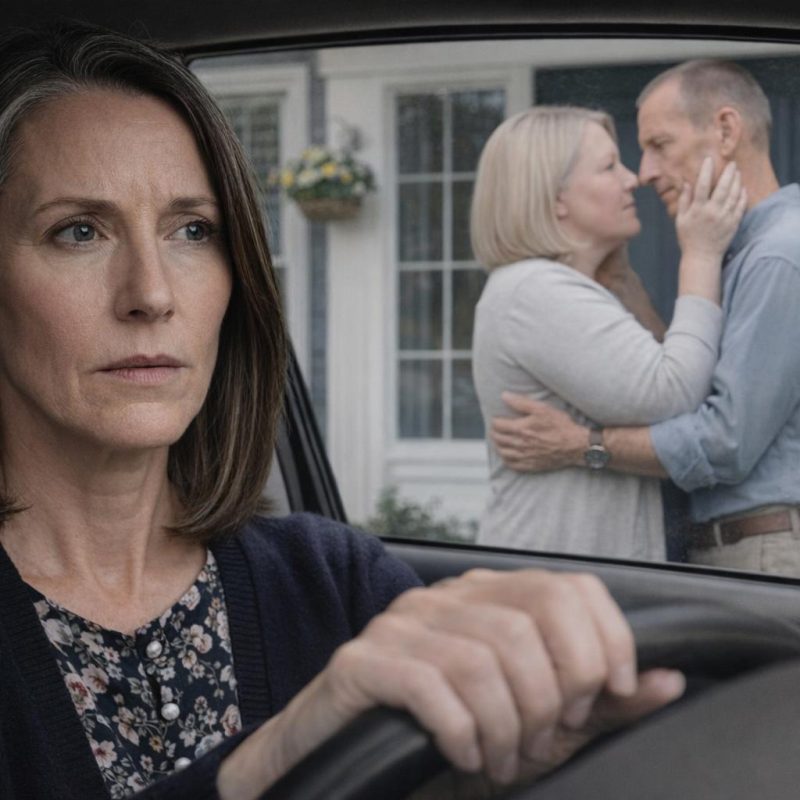 Image by RM AI
Driving Home in Shock
I got the car started somehow. I don't remember making the decision to leave — my hands just moved, turned the key, shifted into drive. I pulled away from the curb and drove without thinking, back through those unfamiliar streets, back toward the part of town I recognized. My hands were shaking on the wheel. By the time I reached the main road my mind had already jumped ahead, past the shock, into the cold practical machinery of what came next. I thought about sitting across a desk from a divorce lawyer, someone I'd have to find in the yellow pages because I'd never needed one before. I thought about our savings account, the retirement fund Tom had managed for years, and whether I even knew all the account numbers. I thought about telling Melissa and Jennifer — the look on Jennifer's face, the way Melissa would try to hold everyone together. And then I thought about Sunday morning. About walking into church. About the way news travels in a small town, quietly and completely, until everyone knows and no one says it to your face. Thirty-eight years. The life I'd built, the woman I'd been in this town, the marriage I'd believed in — I could see it all coming apart, and I was still ten minutes from home.
 Image by RM AI
Barely Holding Together
The next two days I moved through the house like I was underwater. I made breakfast — eggs, toast, the same things I'd made a thousand times — and stood at the counter watching the food go cold because I couldn't bring myself to sit down across from him. Tom talked about his day, about the weather, about something he'd heard on the radio, and I nodded in what I hoped were the right places. I don't think I heard a single word. At night I lay beside him in the dark, listening to him breathe, staring at the ceiling until the numbers on the clock blurred. I'd rehearse what I wanted to say — I followed you, Tom, I saw you — and then the words would dissolve before I could get them out. My hands shook when I poured the coffee. I spilled some on the counter Tuesday morning and stood there looking at it for longer than made any sense. That evening he noticed I'd barely touched my dinner. He set down his fork and looked at me across the table with those familiar eyes, and something in my chest pulled tight. "You feeling alright?" he asked, and I told him I thought I might be coming down with something.
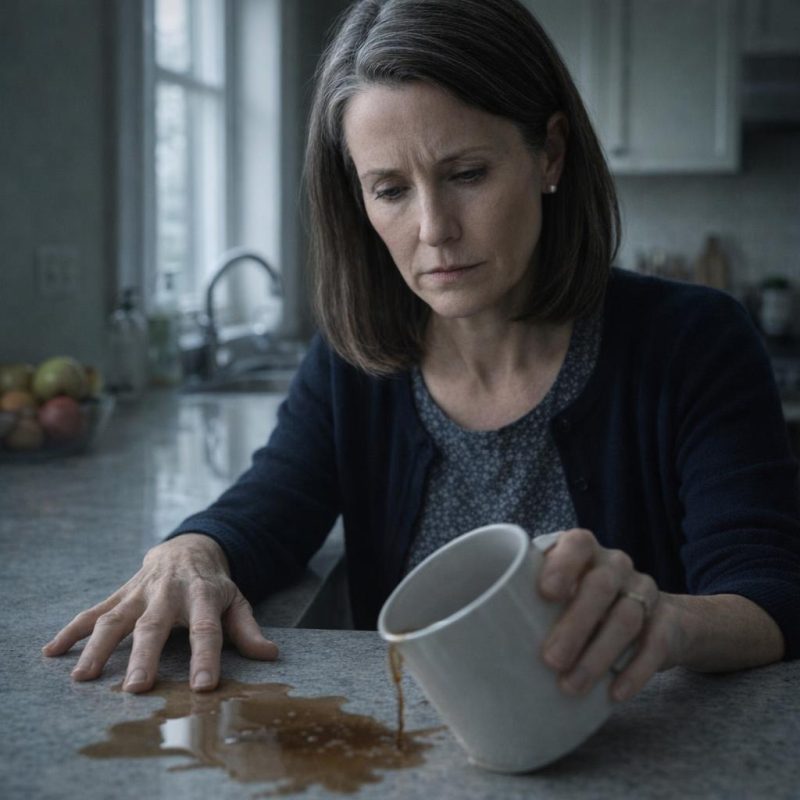 Image by RM AI
Carol Insists on Digging Deeper
I called Carol the morning after and asked if she could meet me at the café. She was already there when I arrived, coffee in hand, watching the door. I sat down and told her everything — following Tom, the blue house on Maple Street, the woman who came to the door. I described the way the woman touched his face, the way he leaned into it, and Carol sat very still across from me, which is not something Carol does often. When I finished she was quiet for a moment, and then she said, "Before you say a word to Tom, we need to know what we're dealing with." I told her I didn't see what there was left to figure out. She shook her head. She said she wanted to know who owned that house — that walking into a confrontation without facts was like going to court without evidence. I started to argue, but she was already reaching for her phone. She said her cousin Linda worked at the county records office and owed her a favor. Carol said she'd call Linda that afternoon and find out exactly whose name was on that deed. I didn't want to wait. Every hour felt like swallowing glass. But I told her fine, and she reached across the table and squeezed my hand, and I held on.
 Image by RM AI
Waiting for Information
I don't think I slept more than two hours that night. By six in the morning I was already up, sitting at the kitchen table with my phone face-up in front of me, willing it to ring. Tom came downstairs, kissed me on the cheek the way he always did, and left for work, and I felt my whole body exhale the moment his car pulled out of the driveway. I tried to load the dishwasher. I tried to fold the laundry that had been sitting in the basket since Monday. I'd pick something up and then set it back down without knowing why. Every time my phone buzzed — a church newsletter, a coupon from the grocery store — my heart lurched so hard I had to put a hand on the counter to steady myself. I kept picturing the county records, some official document with a name typed neatly across the top. I kept trying to imagine what name it would be. The afternoon came and went. Tom came home and I put dinner on the table and answered his questions in short sentences, and he looked at me with that careful expression he'd been wearing all week. I said I had a headache and went to bed before eight. I lay there in the quiet with the phone on the pillow beside me, and the waiting pressed down on me like something with real weight.
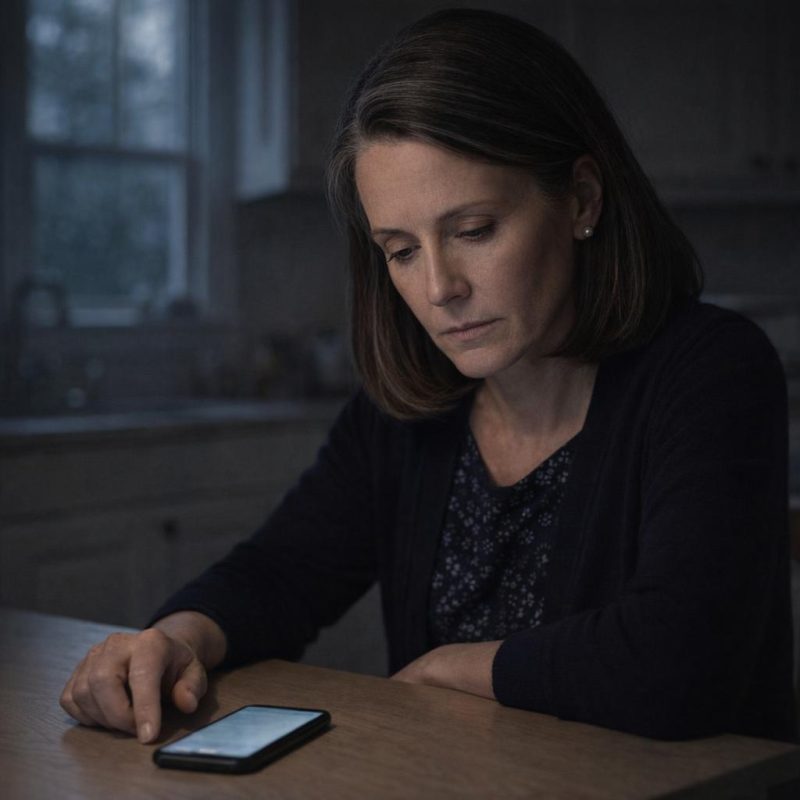 Image by RM AI
The Property Records
Carol called the next morning, just after ten. I answered before the first ring had finished. She said Linda had pulled the records on the Maple Street property and that she was looking at them right now. I asked her whose name was on the deed. Carol paused — not a long pause, but long enough that I gripped the phone tighter. She said the house did not belong to the blonde woman. I told her I didn't understand. I'd been so certain, had spent two days building a picture in my mind with that woman at the center of it, her name on every document. Carol said the ownership was more complicated than that. She told me to sit down. I was already sitting, at the kitchen table, in the same chair I'd been in since Tom left that morning. I told her I was sitting. She said there was something else about the property, something she hadn't expected her cousin to find, and that it changed the shape of things considerably. I asked her what she meant. She said the ownership was connected to Tom. Not to the woman. To Tom. I set my coffee cup down on the table and looked at the wall across from me, and the picture I'd been carrying in my head for two days quietly came apart.
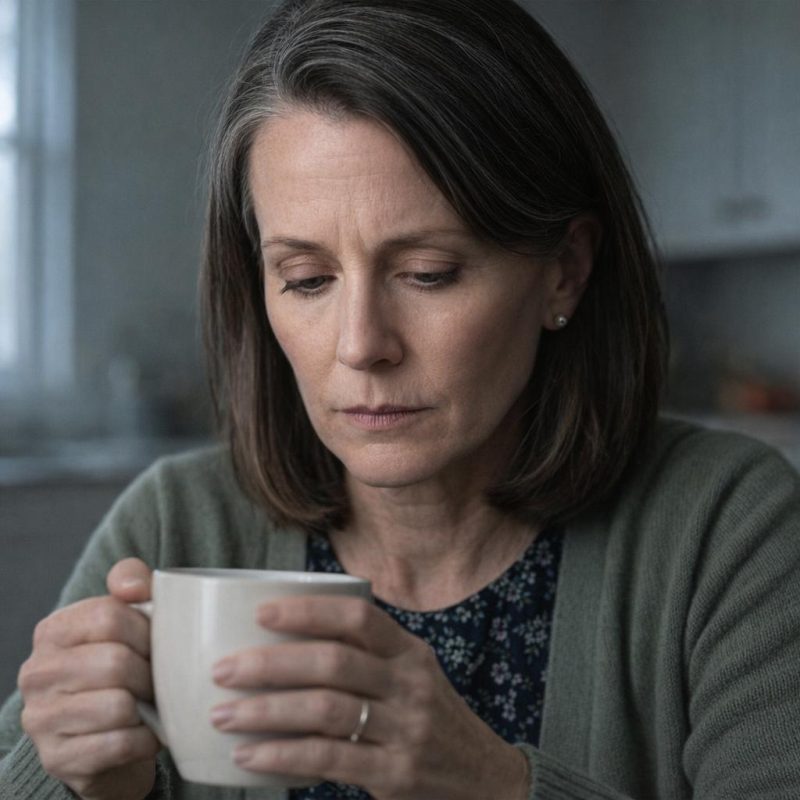 Image by RM AI
Tom's Second Identity
Carol walked me through it slowly, the way you explain something to someone who keeps asking you to repeat yourself. Her cousin had found an unusual ownership structure in the records — not a straightforward deed in one name, but something layered, with a secondary legal identity tied back to Tom. I asked her what that meant, a secondary identity, and she said she wasn't entirely sure of all the legal mechanics, but that Tom's name was connected to it in a way that was documented and clear. I asked how long. She said the records went back at least seven years. Seven years. I said the number out loud, quietly, just to hear it. Carol said she was still trying to get more detail from Linda, that there were more documents to look at. I asked if the blonde woman's name appeared anywhere in the records at all. Carol said she'd check, but that so far the connection ran through Tom. I sat there in the kitchen holding the phone, and I thought about the man who had slept beside me for thirty-eight years, who handed me the church bulletin every Sunday, who knew how I took my coffee. The house around me felt the same as it always had, and that was the strangest part — nothing had changed, and everything had.
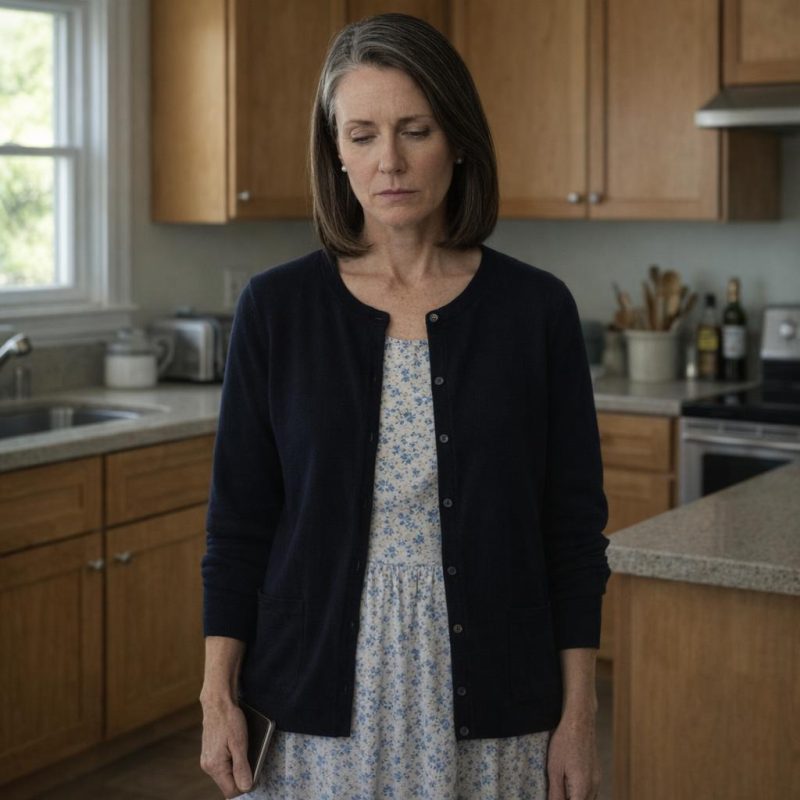 Image by RM AI
Seven Years of Deception
An hour later Carol sent photos to my phone — screenshots of the tax payment records her cousin had pulled. I spread them out on the kitchen table and looked at them one by one. Seven years of payments, regular as clockwork, going back to a spring I could place exactly because that was the year Jennifer got married and Melissa finished her nursing program. Tom had walked Jennifer down the aisle. He'd cried at the reception. And somewhere in that same season, according to these records, he had begun paying taxes on a house I didn't know existed. I sat with that for a long time. We'd been going to church every Sunday. We'd been taking our summer drives out to the lake. We'd been living the life we'd always lived, the comfortable, quiet life I'd believed in completely. All of it running alongside something I couldn't see. My hands were flat on the table and I could feel my jaw tightening. I called Carol back and told her I was done waiting. She said she understood, that she'd been expecting this call, and she told me to be careful and to keep my voice steady. I told her I'd try. The tax records sat in a row across my kitchen table, seven years of payments, each one dated and stamped.
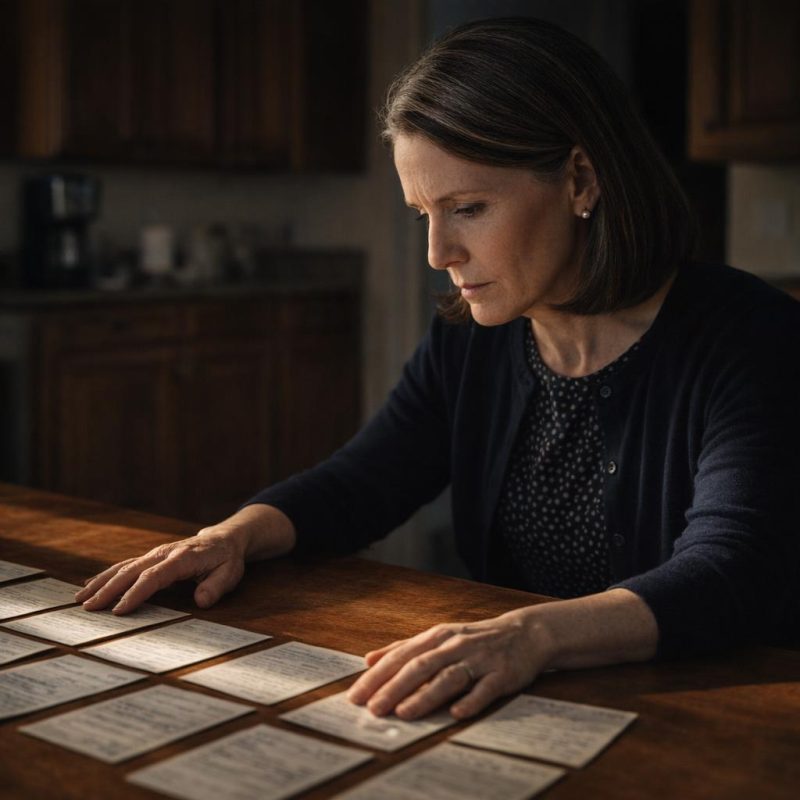 Image by RM AI
The Confrontation Begins
Tom came through the back door at his usual time, set his keys on the hook, and called out that he was home. I was standing in the kitchen. I hadn't moved from that spot in twenty minutes. I told him we needed to talk, and something in my voice made him stop in the doorway. He looked at me the way you look at someone when you're trying to read the weather. I asked him to sit down. He did. I stood across from him at the table and I told him I knew about the house on Maple Street. The color left his face so completely and so fast that for a moment I thought he might be sick. I told him I had followed him there. I told him I had seen him with the woman at the door, seen the way she touched his face, seen him go inside. My voice was shaking but I didn't stop. I asked him whose house it was and what he had been doing there and who that woman was. He didn't deny it. He didn't reach for an excuse or a deflection. He just looked at me from across the table with something in his eyes that I hadn't seen before — not guilt exactly, but something heavier than that, something that had been carried a long time. Then he put his face in his hands, and the kitchen went very quiet around us both.
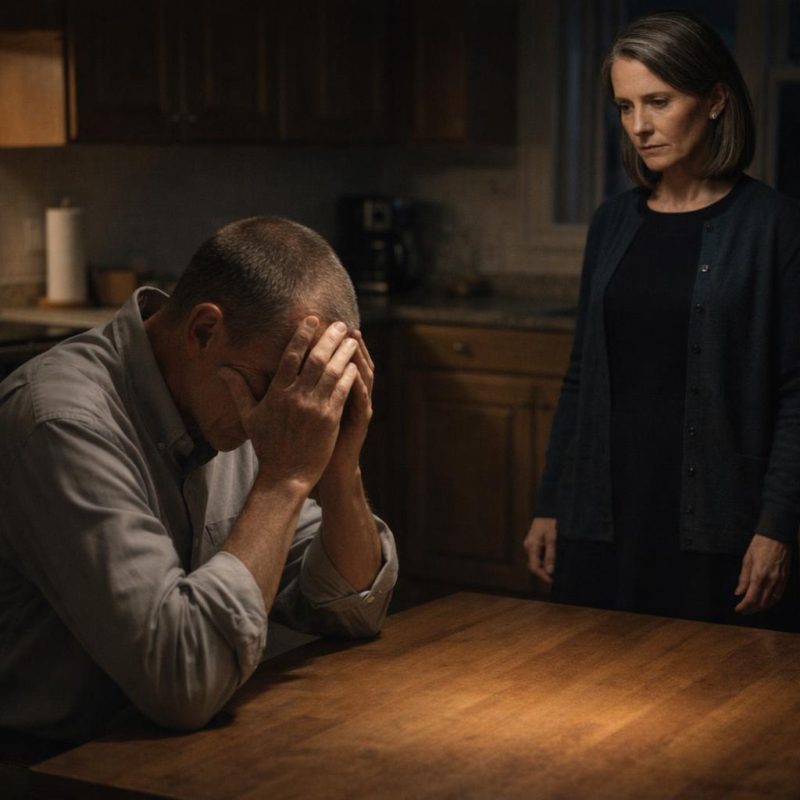 Image by RM AI
Tom's Admission
He sat like that for what felt like a full minute, face in his hands, not speaking. I didn't fill the silence. When he finally looked up his eyes were red at the edges. He said the house was his. He said he'd been paying for it for years. I asked him about the woman. He said yes, he had been seeing her regularly, that he'd been going there for a long time. Something cracked open in my chest and I started to say it — the word I'd been carrying for days, the accusation that had been sitting at the back of my throat since the moment I watched him walk through that door. I got as far as the first syllable. Tom held up one hand, not sharply, just firmly, and said, "Amanda, stop." I told him not to lie to me. He said he wasn't lying, that the truth was more complicated than what I was thinking, and that he needed me to let him explain everything before I said another word. I told him he had one chance. He nodded slowly, looked down at the table, and then back up at me, and said, "The woman in that house — she's not who you think she is."
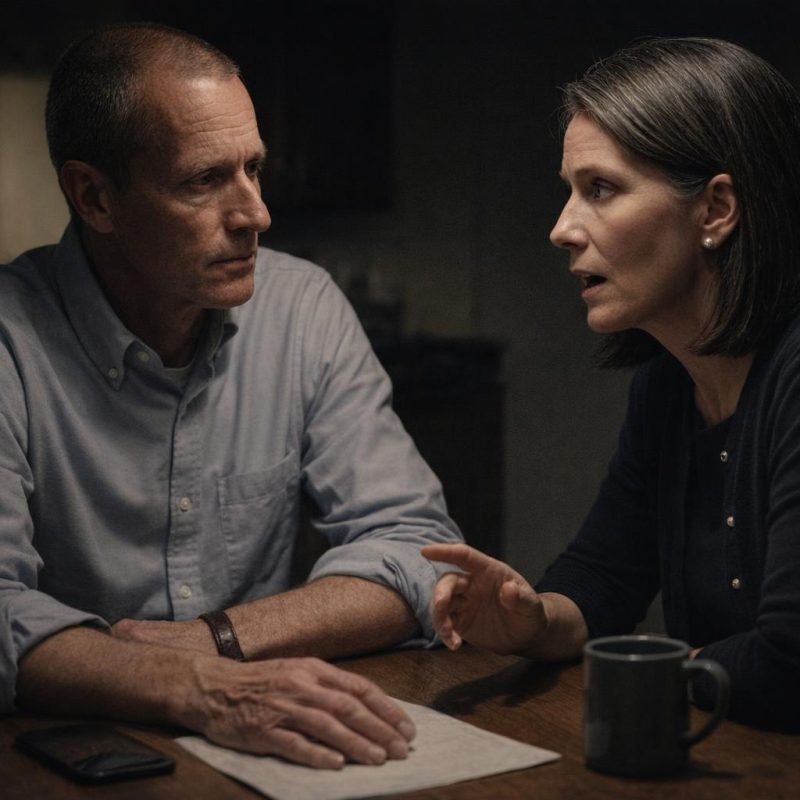 Image by RM AI
Waiting for the Truth
I don't know how long we sat there after he said that. The kitchen clock ticked. The refrigerator hummed. Tom looked down at his hands, folded on the table in front of him, and I watched his jaw work like he was trying to form words that kept dissolving before they reached his mouth. I told him to just say it. My voice came out steadier than I felt, which surprised me. He opened his mouth and then closed it again, and something about that small motion — that failure to begin — made my chest tighten in a way that was almost worse than anything he could have said out loud. I pressed my palms flat against the table to keep them still. He looked up at me finally, and there was something in his eyes I hadn't expected. Not guilt exactly. Something closer to fear. Not the fear of being caught. Something older than that, and heavier. He took a long, slow breath, the kind a person takes before they step off a ledge. I waited. The silence between us felt like it had weight, like it was pressing down on both of us equally, and I sat inside it, bracing myself for whatever was about to break it open.
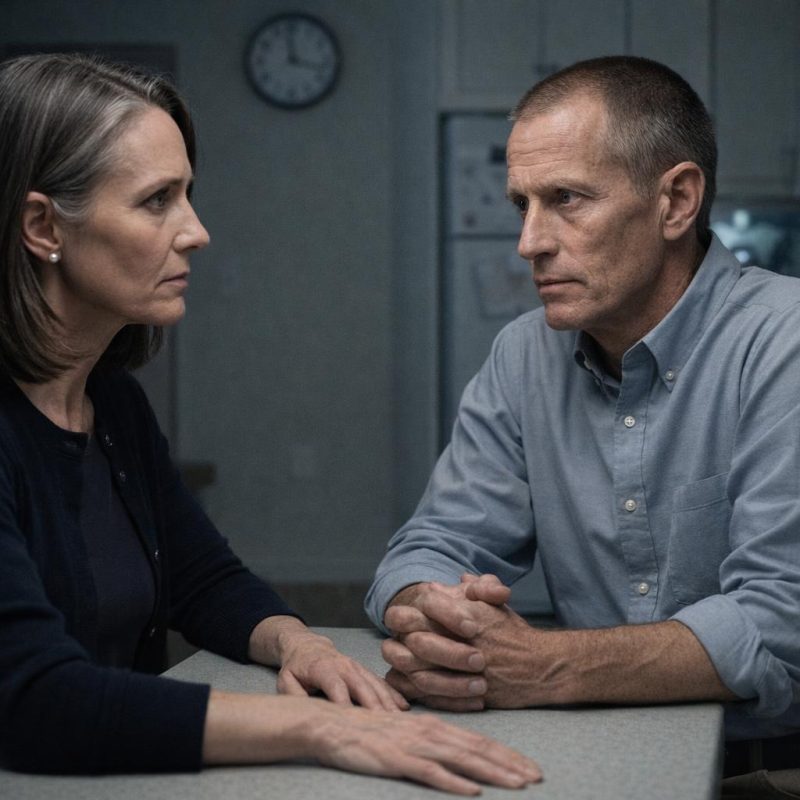 Image by RM AI
The Beginning of Explanation
He said she wasn't his mistress. Those were the exact words he used, and I remember them because they landed so strangely, like he'd answered a question I hadn't quite finished asking. I told him I didn't understand. He said he'd been helping her. I asked what that meant — helping her how, helping her with what — and he rubbed the back of his neck the way he does when he's trying to find a way around something difficult. He said she'd needed help years ago, that she'd been in a bad situation, and that he'd stepped in because there was no one else. I asked why any of that required a secret house and years of silence, and he didn't have a clean answer for that. He said it was complicated. I told him complicated wasn't good enough. He said the situation involved history — old history — and that it wasn't just his story to tell. I asked whose story it was then. He looked at the table. I told him to stop talking in circles and just tell me who she was. He said it touched on things from before we were married, things that went back further than he'd expected when he first got involved. I sat there trying to follow the shape of what he was saying, and the more he talked, the less I understood.
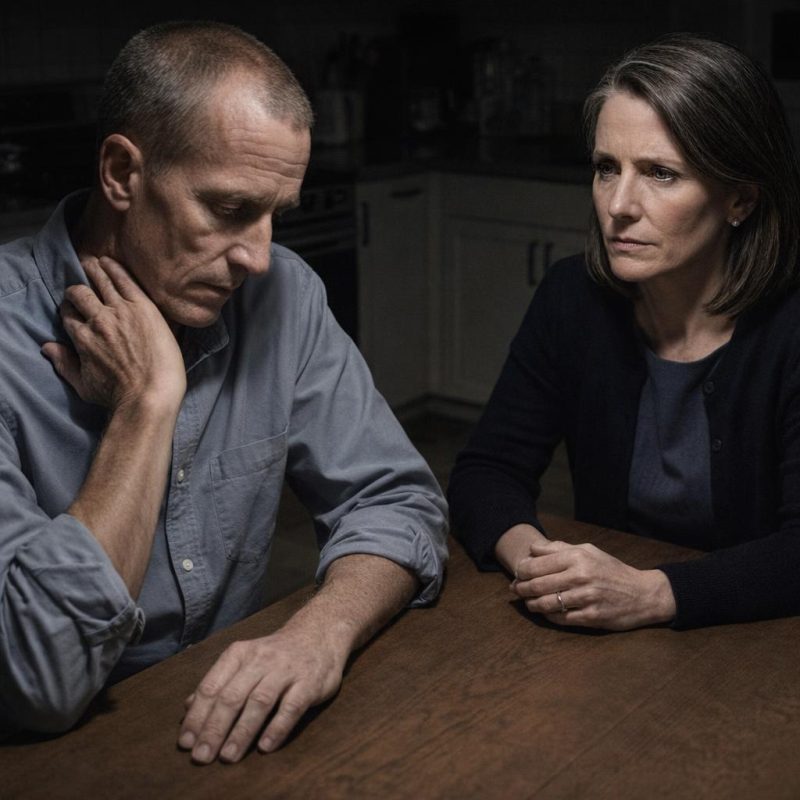 Image by RM AI
Family History
He said the word family, and something shifted in the room. Not loudly. Just a small, quiet tilt, like a picture frame knocked slightly off-center. I asked him what he meant. He said the situation was connected to my family — my history, not his. I told him that didn't make any sense. He asked if I remembered the feud. I didn't answer right away because of course I remembered it. You don't forget something like that. He said the woman had been caught up in all of it, that the fallout had followed her in ways that were hard to explain quickly, and that she'd been too ashamed to reach out on her own. I asked what shame had to do with a house he'd been paying for in secret. He said she hadn't wanted to come to me directly. That she'd needed someone to go through instead. I felt something cold move through me then, something I couldn't name yet, a shape forming at the edge of my understanding that I wasn't ready to look at straight on. I asked him again — slowly, carefully — what my family had to do with the woman in that blue house, and he looked at me with something that might have been pity, and said, "She's someone you lost a long time ago."
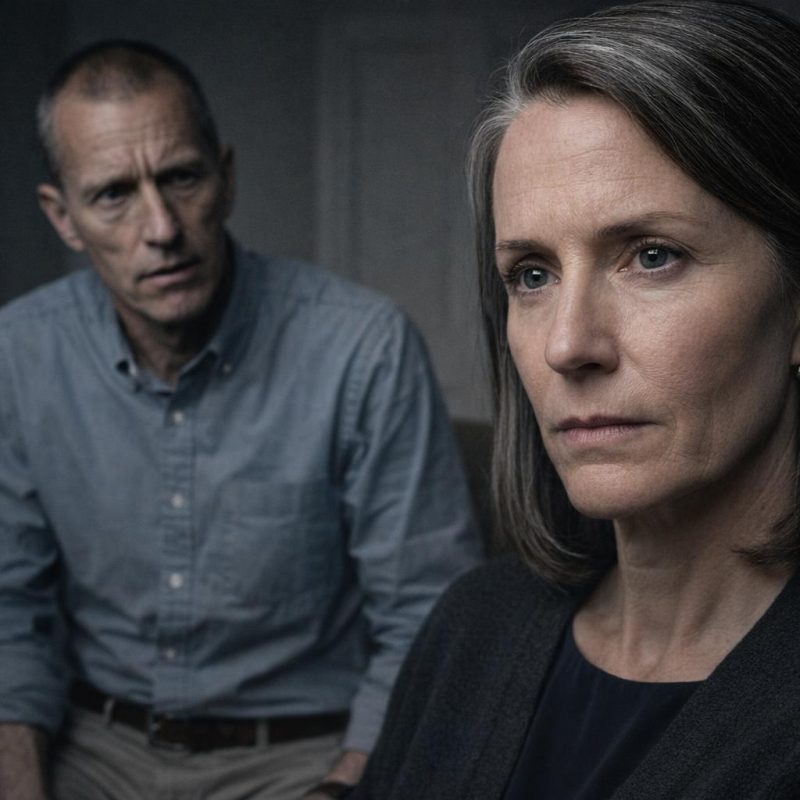 Image by RM AI
Remembering Diane
My mind went somewhere before I could stop it. It went back thirty years, to a kitchen that smelled like my mother's coffee cake and raised voices and a door slamming so hard the windows rattled. The feud over my father's estate had torn through our family like something that had been waiting for permission. There were accusations, lawyers, sides taken, words said that couldn't be unsaid. And then Diane was gone. My younger sister packed what she could carry and left, and the years that followed were full of silence where she used to be. My mother spent the last decade of her life waiting for a phone call that never came. I'd grieved Diane the way you grieve someone who chose to leave — which is its own particular kind of loss, because the door was never fully closed, just locked from the other side. I'd stopped expecting her to walk back through it a long time ago. I looked at Tom across the table, and something in his expression — the careful stillness of it, the way he wasn't moving — made the question rise up in me before I'd fully decided to ask it. I said, "Does this have something to do with Diane?" Tom's eyes didn't look away from mine.
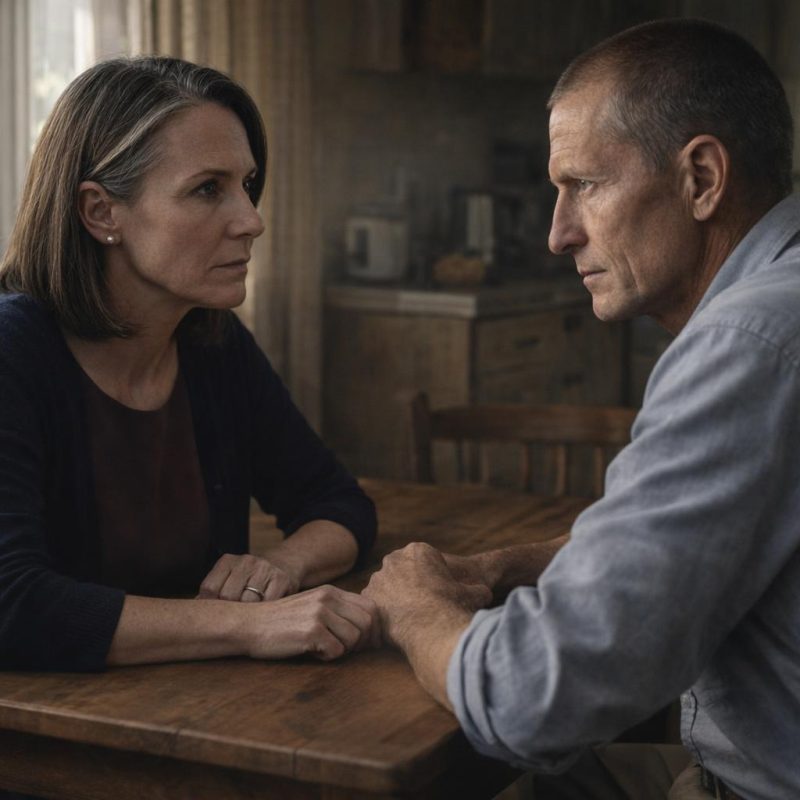 Image by RM AI
The Unreconciled Sister
My mother used to keep a photograph of Diane on the nightstand. Even at the end, when she could barely sit up on her own, that photograph was there. She never talked about it directly — that wasn't her way — but I'd catch her looking at it sometimes, and the expression on her face was the kind that doesn't need words. She died without ever hearing Diane's voice again. I'd made my peace with that, or something close enough to peace that I'd stopped examining it too carefully. Diane was gone. That was the shape of things. I'd built thirty years of ordinary life around that absence, and it had become just another part of the landscape, something you stop noticing because it's always been there. But sitting across from Tom now, watching the way he was holding himself — careful, braced, like a man waiting for something to land — I felt that old grief shift. Not disappear. Just move. I looked at him and my voice came out smaller than I intended, barely above a whisper, and I said, "Tom. Is the woman in that house — is she Diane?" His eyes filled, slow and quiet, and he nodded.
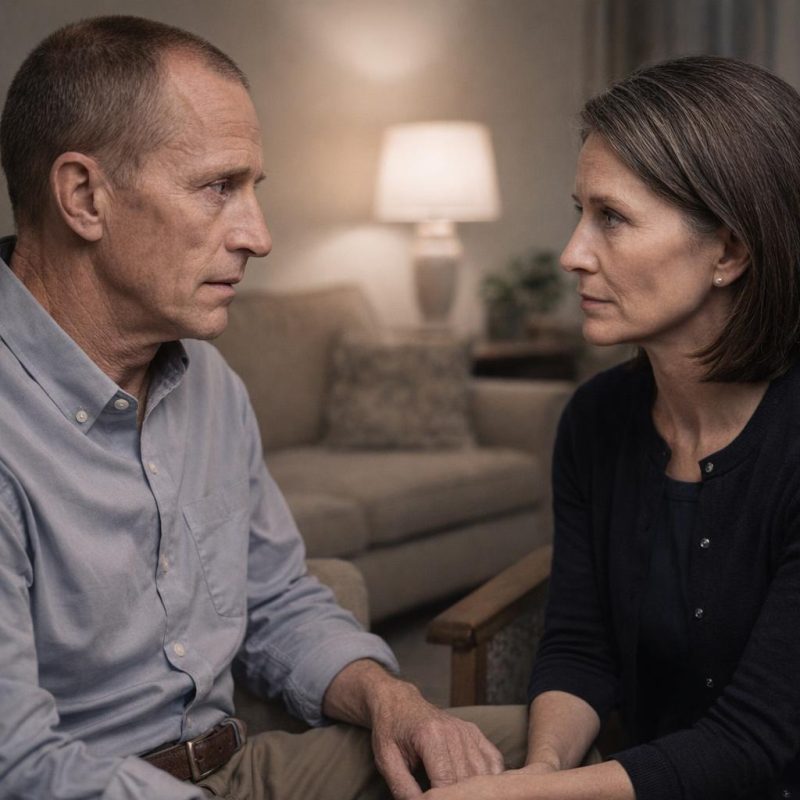 Image by RM AI
Running Into Diane
I don't think I said anything for a long moment. I'm not sure I could have. Tom let the silence sit, which was the right thing to do, and then he started talking in a low, careful voice. He said it was about seven years ago. He'd been in Dayton for a work errand, something routine, a supplier he needed to see in person. He stopped at a hardware store on the way back. And there she was. He said he almost didn't recognize her at first — she was behind the register, her hair shorter, her face older in the way that years of hard living will do — but then she looked up and he knew. He said Diane went pale when she saw him. She tried to keep working, pretending she hadn't recognized him, but he waited until her break and they talked in the parking lot for almost an hour. She was renting a room from someone, behind on everything, working two jobs and still not making it. Tom said she looked worn down in a way that went past tired. He'd offered to help before he'd fully thought it through, he said, because she was family and she was struggling and he didn't know what else to do. The word family sat in my chest like something I hadn't been allowed to hold in a very long time.
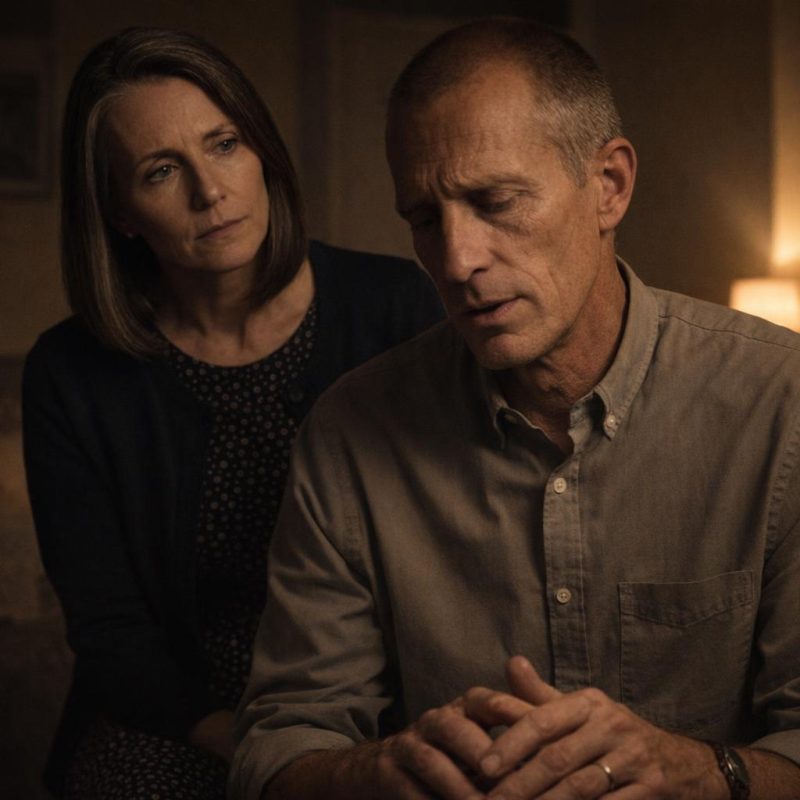 Image by RM AI
Too Ashamed to Return
Tom said Diane had cried when he offered to help. Not grateful crying — more like the kind that comes from being caught somewhere you're ashamed to be found. He said she made him promise not to tell me. He said she asked him more than once, made sure he understood she meant it. She was convinced I hated her. That after everything that happened with our father's estate, after the things that were said, I'd want nothing to do with her. Tom told her that wasn't true, that he was certain of it, but Diane wouldn't hear it. She said she needed time. She needed to get herself steady before she could face me, if she ever could. So Tom helped her quietly. He found the house, got it into a condition worth living in, made sure the bills were covered. He said he kept thinking she'd come around, that eventually she'd let him tell me, but the months turned into years and Diane kept saying she wasn't ready. I sat with all of that — the image of my younger sister too ashamed to say my name, convinced after thirty years that I'd turned to stone against her — and I didn't know whether to feel grief or anger or something I didn't have a word for yet. The thought of her carrying that fear all this time settled over me like something I couldn't lift.
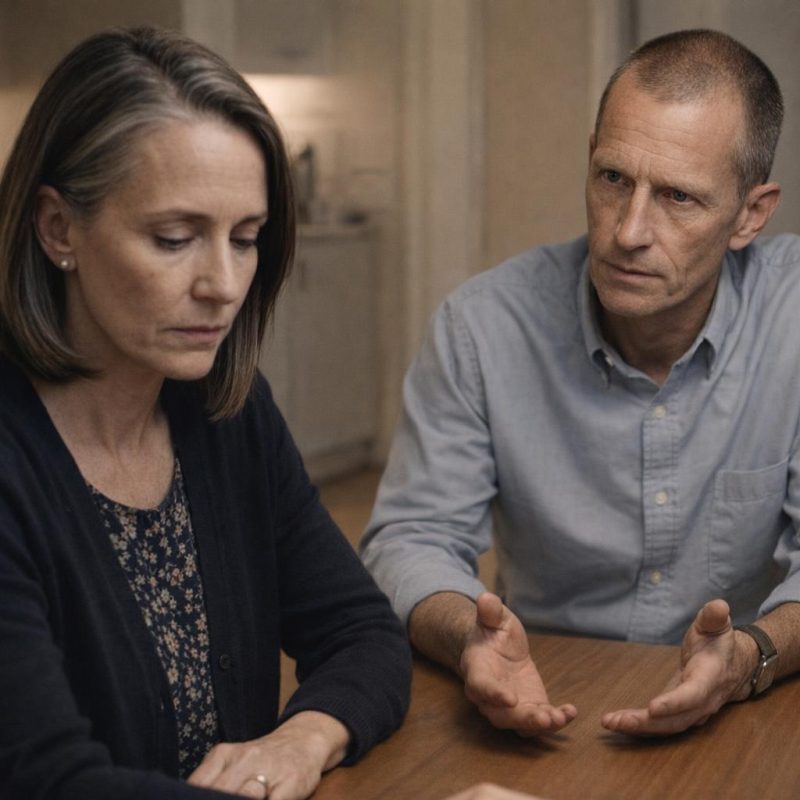 Image by RM AI
Why Hide It From Me
I let the quiet hold for a minute. Then I pushed back from it. I told Tom I understood about Diane — or at least I was trying to — but that understanding one piece of this didn't mean the rest of it made sense. I said seven years was a long time to keep something like that from your wife. He said Diane had asked him to. I said I heard that, but a promise to my younger sister didn't explain why he'd never once given me a hint, never let something slip, never trusted me with even the edges of it. He looked down. I told him I wasn't finished. I said I needed him to explain the ring. I watched something move across his face when I said it — not surprise exactly, more like a man who'd been hoping a particular door wouldn't open. I told him that if this was about helping Diane, if there was no affair, then I needed to understand why he'd taken off his wedding ring. What that meant. What he'd been trying to say with it, or hide. He was quiet for a moment, and then he said there was more. He said there were things he hadn't told me yet, things that were harder to explain than Diane. I told him no more waiting, no more pieces — I needed all of it, right now.
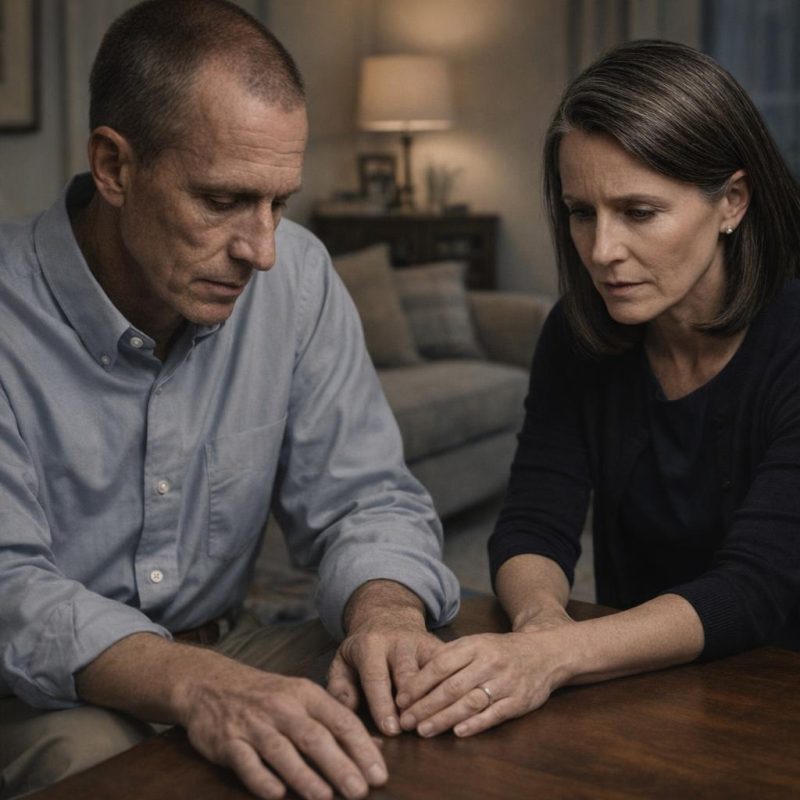 Image by RM AI
The Ring and the Panic
I asked him again about the ring. I kept my voice steady, but I needed him to look at me when he answered. He glanced down at his bare finger like he'd forgotten it was empty, and then he said the ring had started bothering him — the fit, the weight. I told him his finger looked perfectly fine to me, no swelling, no mark. He nodded slowly and said that wasn't the whole truth. I waited. He said he'd taken it off during a difficult time, a stretch of weeks when things felt like they were closing in on him. I asked what kind of difficult time. His voice caught just slightly, not enough to be a sob, just enough to notice. He said he'd been dealing with something he couldn't talk about yet, something that had nothing to do with not loving me. I watched his hands on the table — both of them open, palms down, like a man trying to hold himself still. He wasn't performing distress. Whatever was sitting behind his eyes was real, and it was heavy, and it had been there a long time. I didn't push any further in that moment. I just sat with the shape of a fear I couldn't name yet, and let the silence hold it.
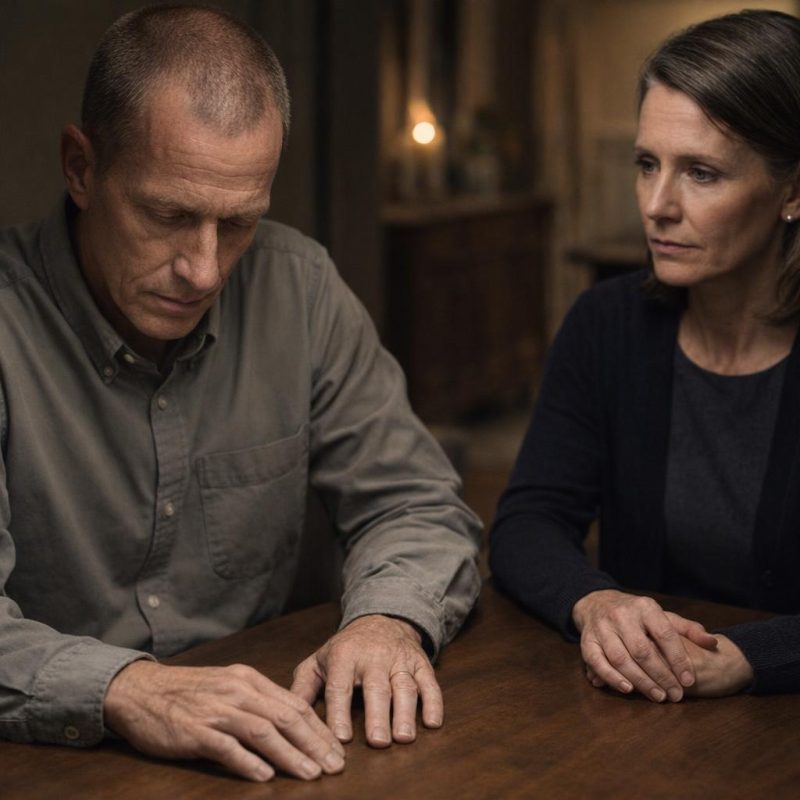 Image by RM AI
More Secrets Remaining
He said it again — there was more. Not one more thing, but layers of it, things stacked on top of each other that he hadn't known how to bring to the surface. I felt my chest tighten the way it does before bad news, that physical bracing your body does before your mind catches up. I told him I couldn't do partial truths anymore. I said every time I thought I had the whole picture, another edge appeared, and I was exhausted from trying to hold a shape that kept changing. He said he understood that. He said I deserved to know everything, and he meant it — I could hear it. But then he asked if he could explain it in order, one piece at a time, so I could follow it properly. I told him I'd been patient enough. He looked at me then with something I hadn't expected — not guilt exactly, but something closer to desperation, like a man standing at the edge of something he'd been dreading for a long time. He said he was afraid of how I'd react. Not afraid I'd leave, or afraid I'd be angry — afraid in a deeper way, the kind that comes from caring too much about what someone thinks of you. That look sat between us like a third person at the table.
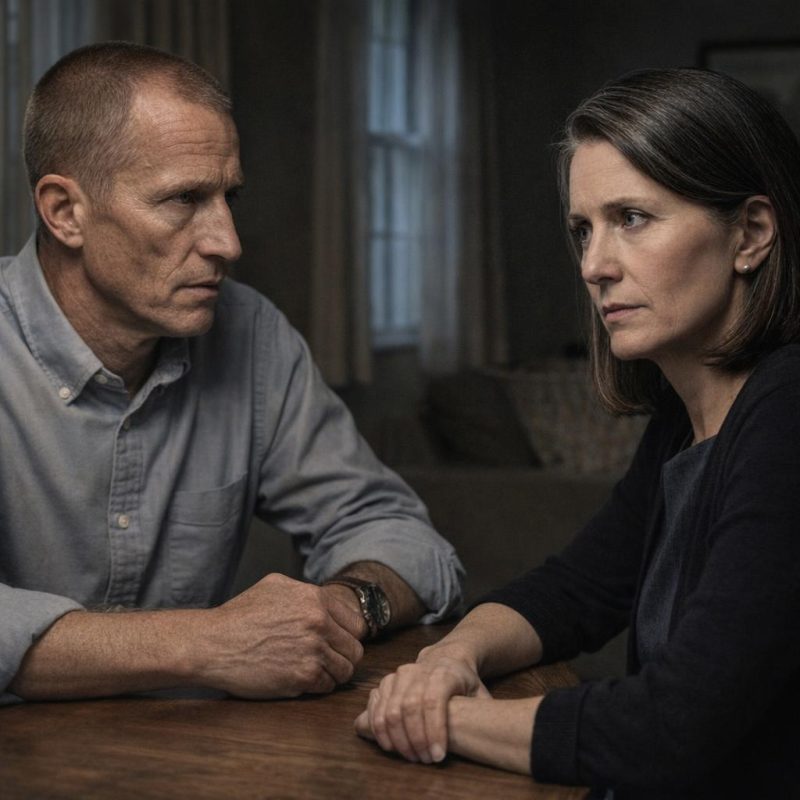 Image by RM AI
Before the Final Truth
I told him I couldn't walk back through our front door and pretend any of this was normal. I said our marriage — thirty-eight years of it — deserved more than half-answers and careful silences. He nodded. He didn't argue, didn't deflect, just nodded like a man who had finally run out of road. I told him I needed everything: the ring, the house, Diane, all of it, and I needed it now, not in pieces, not softened. He asked me to listen to all of it before I reacted. I said I would try. He looked down at his hands for a long moment, the way he does when he's organizing his thoughts, and I recognized that gesture from thirty-eight years of watching him think. Then he said he needed to start with Diane. I said okay. He said her name again, quietly, like he was testing whether the word would hold. He said she was my younger sister, and he had been helping her, and there was more to that story than what I already knew. I sat very still. I didn't breathe much. And then Tom took a slow breath and began to speak.
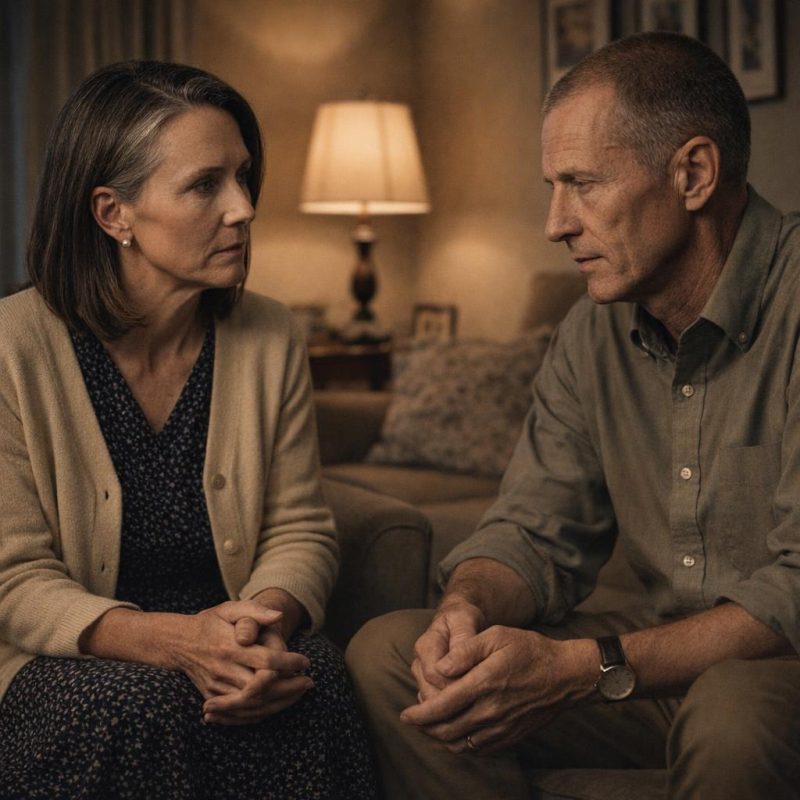 Image by RM AI
The Sister Revealed
He said it plainly. The woman in the blue house was Diane — my younger sister, the one who had vanished from our lives thirty years ago after the family fell apart. I heard the words, but it took a moment for them to land somewhere real. He said he'd found her years back, that she'd had nowhere stable to go, and that he'd bought the house so she'd have a place to rebuild. He said she was working a low-wage job when he found her, barely keeping her head above water, and that she'd broken down when she saw him. I asked why he hadn't told me. He said Diane had begged him not to. She was terrified, he said — genuinely terrified — that I would turn her away after everything that had happened between our families. I told him I would never have done that. I said she was my sister. He said he believed me, but Diane didn't. She couldn't. Thirty years of silence had convinced her that the door was closed for good, and no amount of Tom telling her otherwise had moved her from that belief. He said there was a reason she'd been so afraid, a reason that went deeper than just the years apart, and he looked at me steadily as he said it.
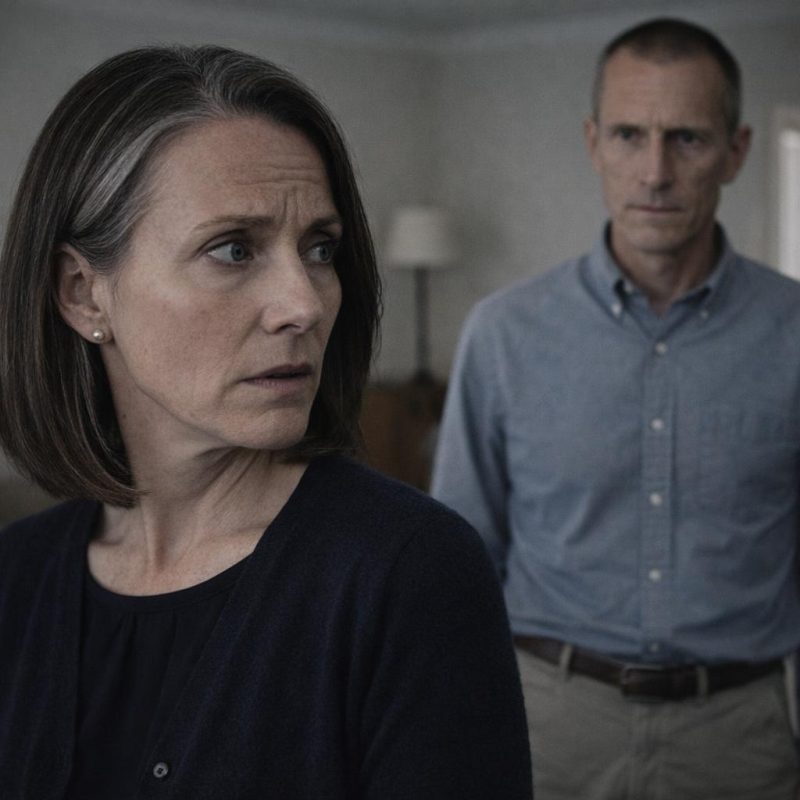 Image by RM AI
She's Your Sister
He said it clearly, no softening around the edges: he had not been having an affair. The woman I had followed, the woman I had watched him hold in that doorway, was Diane. My younger sister. I sat there and felt every assumption I'd built over the past weeks shift under me like ground that wasn't solid anymore. The perfume on his jacket — Diane's. The lunches, the receipts, the careful distance he kept at home — all of it had been the weight of a secret he was carrying for someone else, not a betrayal of me. The embrace I'd seen in that doorway wasn't romantic. It was a brother-in-law and a woman who had been lost for thirty years, and he had been the only person holding a thread back to her family. I thought about the hotel charge, the jewelry, the way he'd looked guilty every time I came close to asking the right question. None of it meant what I thought it meant. Tom had been protecting my sister from the one thing she feared most — and that thing was me. I didn't know whether to cry or laugh or put my head down on the table. I looked at him and said, why didn't you just tell me, and my voice came out smaller than I intended.
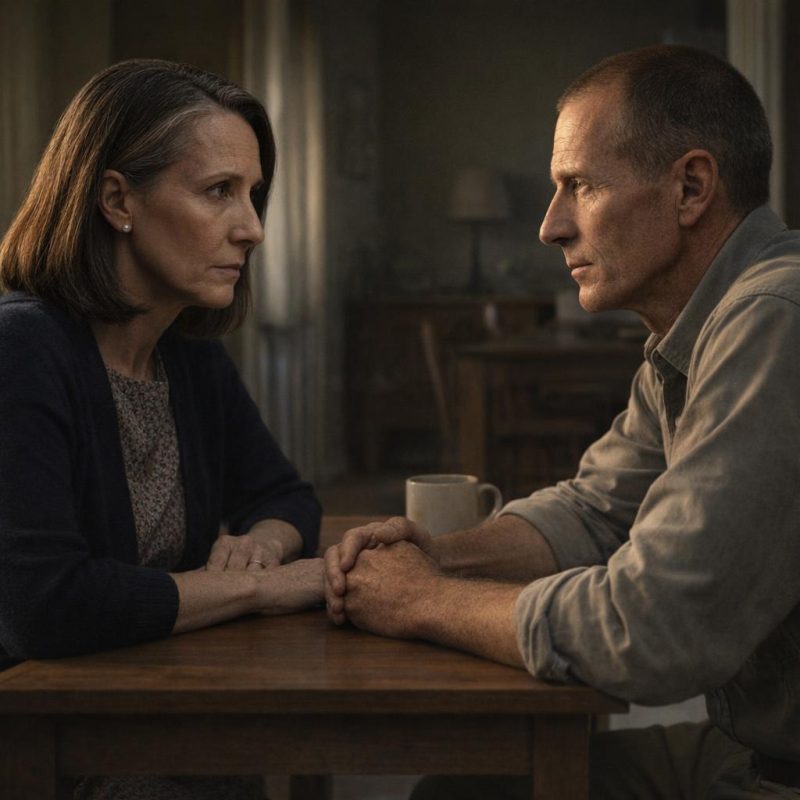 Image by RM AI
Reframing Every Assumption
I sat there and let my mind go back through all of it. The afternoon I'd followed him to that quiet street and watched him walk up to the blue house like he belonged there. The way he'd held her, easy and familiar, and how that had hollowed me out. I had been so certain. I had built an entire case in my head — the receipts, the perfume, the missing ring — and every piece of it had pointed in the same direction. Except it hadn't. The perfume was Diane's. The lunches were him making sure she was eating. The jewelry was probably a gift he'd picked out for her, something small to make her feel less forgotten. I had been wrong about all of it, and the relief of that was real, but so was something else — a low, slow anger at seven years of being kept in the dark, at being made to feel like I was losing my mind when the answer had been sitting twenty minutes from our house the whole time. I looked at Tom and asked him why Diane had never just called me herself, never written a letter, never found a way to reach out directly in all those years. He said she was too ashamed, and too afraid, and that the fear had only gotten heavier the longer she waited.
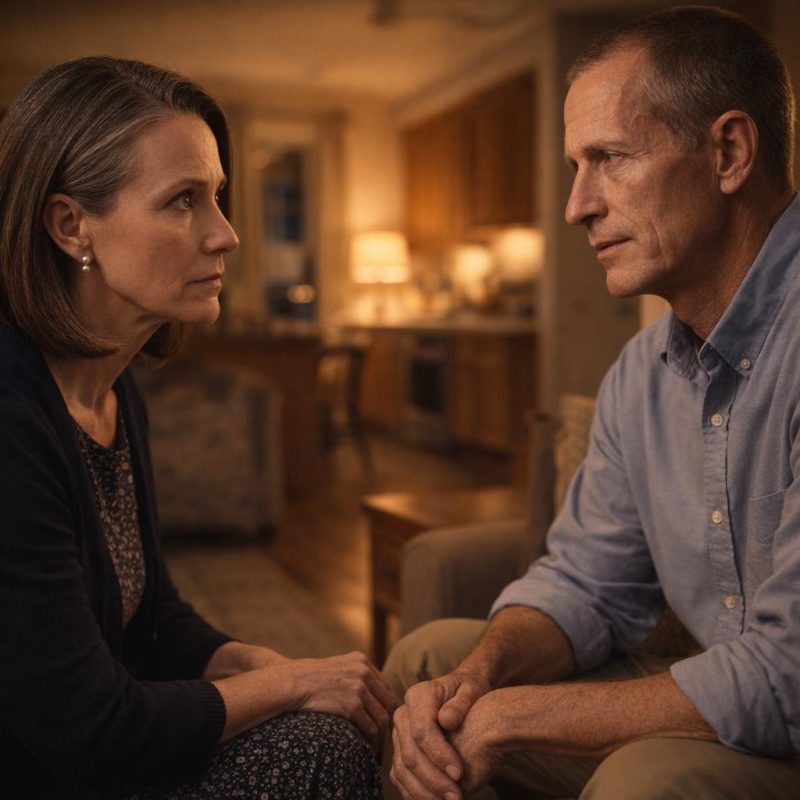 Image by RM AI
Diane's Fear of Rejection
Tom described finding her the first time — a chance encounter, he said, at a hardware store two towns over. He almost hadn't recognized her. She was thinner than I would have remembered, he said, and her eyes had that look people get when they've been carrying something alone for too long. When she realized who he was, she'd started crying right there in the aisle. He said she told him she'd wanted to come home for years. That she'd picked up the phone more times than she could count. But she was convinced — absolutely convinced — that I hated her, that the family feud had settled into something permanent, and that showing up after thirty years of silence would only make things worse. Tom said he'd tried to tell her otherwise. He'd told her I wasn't like that, that I would want to know she was okay, that whatever had happened between our parents didn't have to define us. But Diane couldn't hear it. He said the longer the silence stretched, the more certain she became that she'd already been written off. He'd agreed to help her get stable first, thinking that once she felt steadier, she'd find the courage to reach out on her own. She never did. I sat with that — the image of my younger sister standing in a hardware store aisle, crying, believing I had already given up on her.
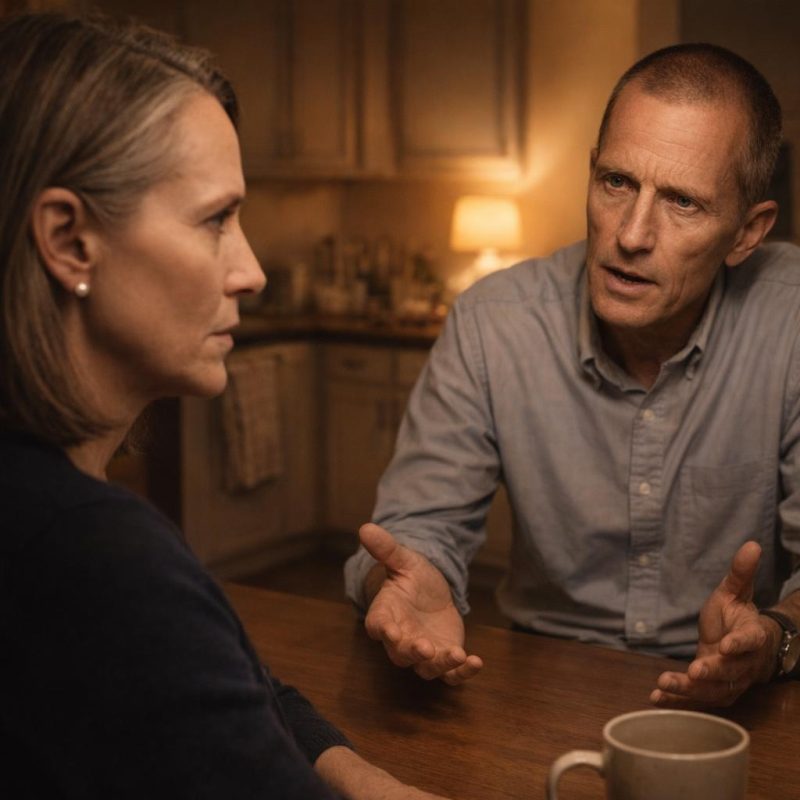 Image by RM AI
The Memory Loss Diagnosis
Tom said there was one more thing. He said it quietly, the way you say something you've been rehearsing and dreading in equal measure. He told me he'd gone in for a routine checkup months ago, nothing alarming, just the kind of appointment you make when you're our age and trying to stay ahead of things. But the doctor had noticed something. He'd been referred to a specialist. I watched Tom's face as he said the words — early-stage memory loss, possibly the beginning of dementia — and I understood, in a way I hadn't before, what I'd been seeing in him these past months. The forgetfulness I'd chalked up to stress. The moments where he'd lose the thread of a conversation and look briefly panicked before finding his way back. He said he'd told no one. He said the fear of it had come in waves, panic attacks that arrived without warning, and that during one of those attacks he'd taken off his wedding ring because looking at it made the fear worse — the thought of forgetting me, forgetting us, forgetting thirty-eight years. He said he hadn't been able to put it back on after that. He hadn't known how. I didn't say anything for a long time. I just looked at his bare hand resting on the table between us, and the weight of everything he'd been carrying alone settled over the room like something you could almost touch.
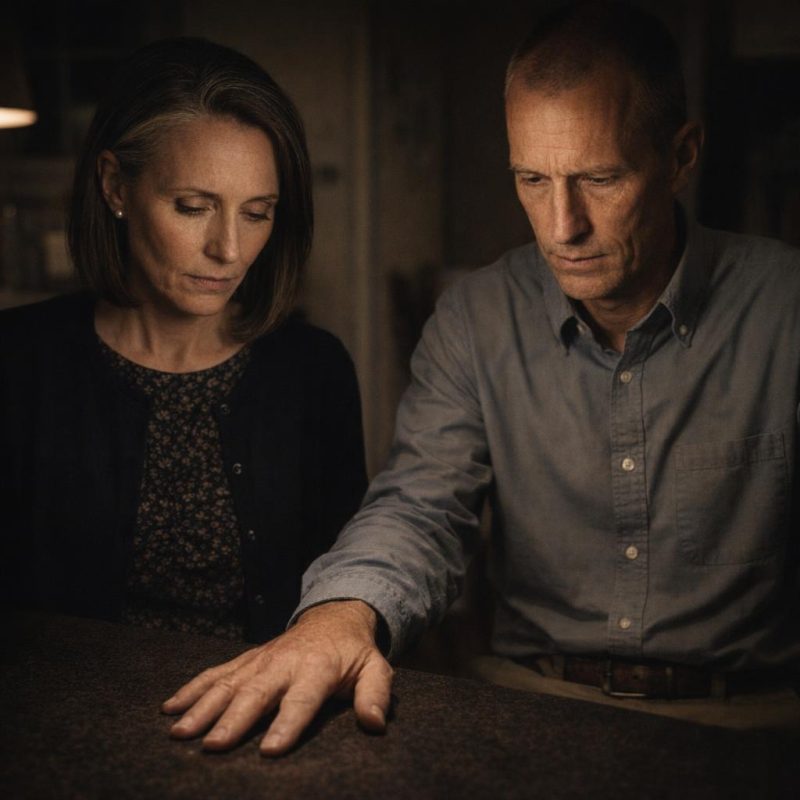 Image by RM AI
Tom and Diane's Past
Diane showed up at the front door about an hour after Tom called her. I hadn't asked him to call her. I hadn't asked for any of this. She stood on the porch looking like she hadn't slept, her hands clasped in front of her, and I stepped back to let her in because I didn't know what else to do. She sat down at the kitchen table across from me and said she was sorry for staying away so long. I asked her why she'd been so afraid to come back, and she looked at Tom, and something passed between them that I couldn't read. She said there was something else I didn't know. Something she and Tom had agreed, a long time ago, to never tell me. My stomach dropped before she even finished the sentence. She said that years before Tom and I ever met, before any of us knew how things would turn out, she and Tom had dated. Briefly, she said. Innocent, she said. But they'd hidden it because they were afraid of what it would do to the family. I looked at Tom. He nodded. He didn't look away.
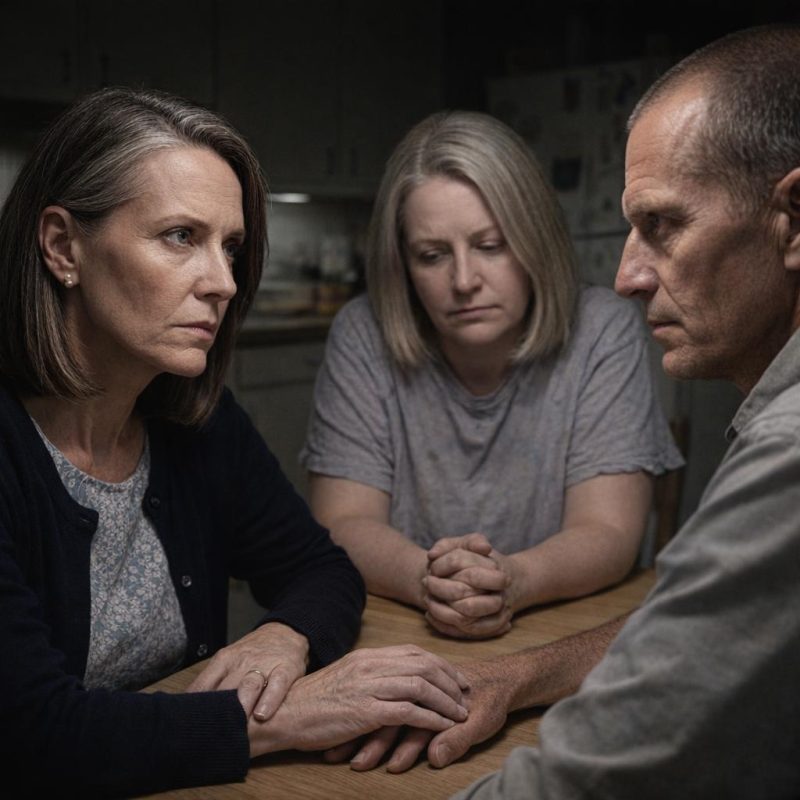 Image by RM AI
Every Interaction Reexamined
I kept coming back to one moment. I'd watched Diane reach up and touch Tom's face in the hallway of that blue house — the way her hand moved, slow and certain, like she'd done it before. I'd told myself it was affection between two people who'd been through something hard together. Now I didn't know what to call it. I asked them both, sitting there at my kitchen table, if they were telling me everything. Tom said yes. Diane said yes. They said it almost at the same time, and I noticed that too. I told them the way they moved around each other didn't look like two people who'd shared a few dates forty years ago. Diane said a shared history creates a kind of closeness that's hard to explain. Tom said he'd thought of her as family, that helping her felt like the right thing to do. I wanted to believe them. Part of me did believe them. But another part of me kept replaying every moment I'd witnessed between them and asking a question I couldn't quite silence. I asked why they'd hidden the dating history all these years. Tom said they were young and foolish and afraid of being judged. That answer made sense. It also didn't make the doubt go away.
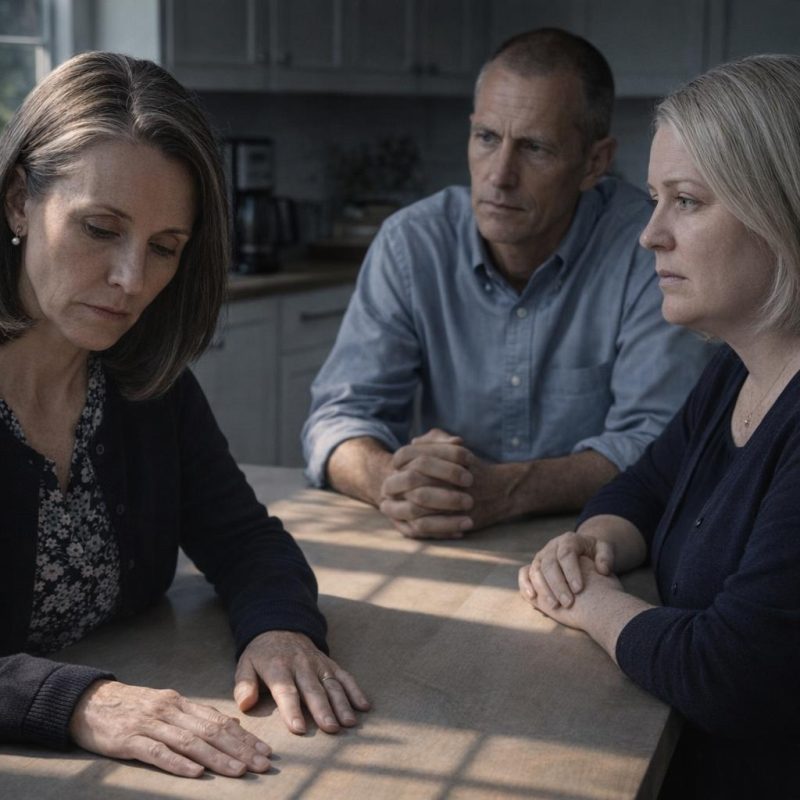 Image by RM AI
Melissa's Fury
I told Melissa that evening, sitting at the kitchen table with a cup of tea I never touched. I told her about Diane being alive, about the blue house, about the years Tom had spent quietly helping my younger sister without telling me she existed in his life. Melissa went very still. Then she asked, in a voice that was careful and controlled, why her father had kept this from all of us. I explained that Tom had been trying to protect Diane, trying to help her get back on her feet. Melissa shook her head. She said that didn't excuse it. She said a secret that big wasn't protection, it was a decision made for everyone without asking anyone. Her voice started to rise. She said I deserved to know about my own sister. She turned to Tom, who was sitting in the doorway, and she told him he had no right to make that choice for our family. Tom tried to explain, started to say something about fear and good intentions, and Melissa cut him off. She said good intentions didn't make thirty years of silence acceptable. The argument moved through the kitchen like a storm, voices overlapping, and I sat between my husband and my daughter feeling the ground between them crack open beneath us all.
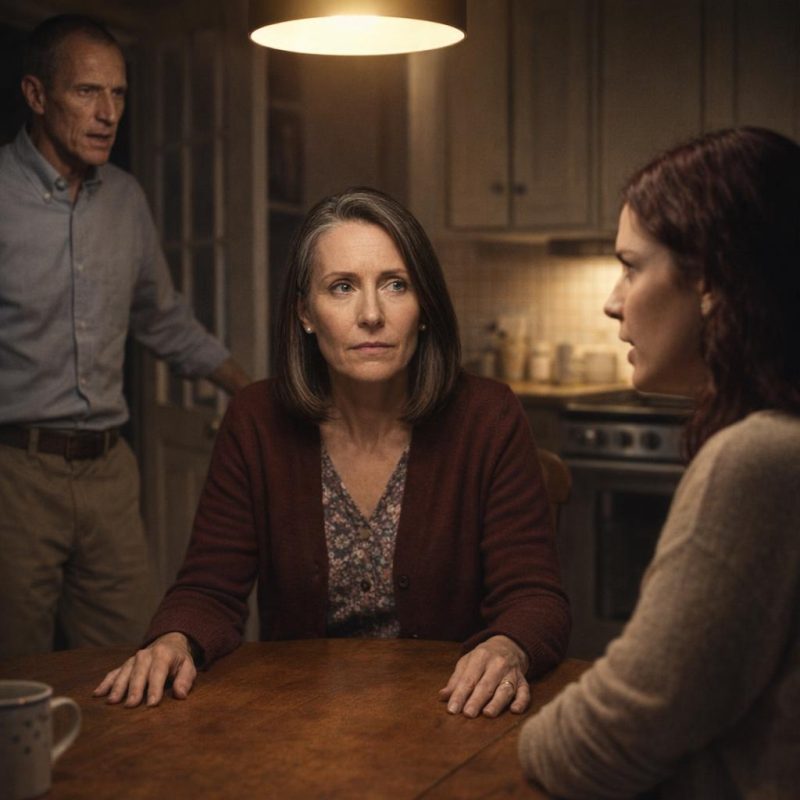 Image by RM AI
Jennifer's Accusation
Jennifer called that night, after Melissa had gone home and the house had gone quiet. She didn't ease into it. She said, Mom, you need to hear me out. She said she'd talked to Melissa and she didn't believe Tom's story, not the way he was telling it. I told her Tom had been helping Diane out of genuine care, that he'd been carrying a diagnosis that terrified him, that there were reasons behind all of it even if the reasons were wrong. Jennifer said I was being naive. She said no man maintains that level of secrecy — a hidden house, a hidden relationship, a hidden diagnosis — without something deeper going on. I told her she didn't know her father the way I did. She said that was exactly the problem, that none of us had known him the way we thought we did. I admitted, quietly, that I had doubts too. She said that wasn't weakness, that was clarity. She said I deserved better than a marriage built on compartments. I didn't argue with her. I didn't agree with her either. I just held the phone and listened to my older daughter's voice, fierce and certain, and felt the distance between what she believed and what I was still trying to work out settle over me like a second skin.
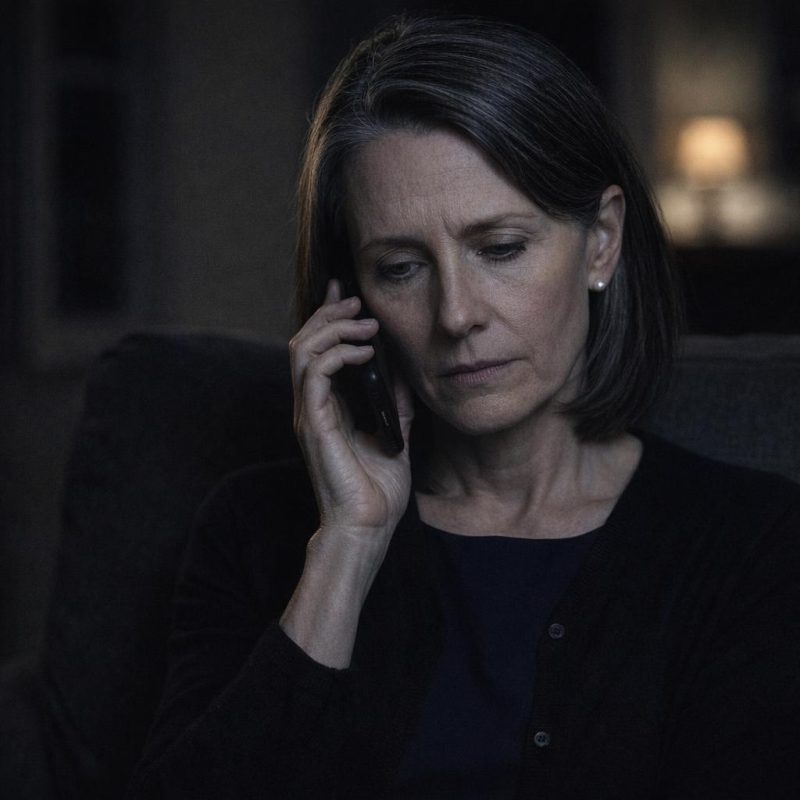 Image by RM AI
Tom's Deterioration
The doctor's appointment was on a Tuesday. I'd reminded Tom about it Monday night and again Tuesday morning over breakfast. When I came home that afternoon, he was sitting in the living room watching television. He looked up and asked how my errands went. I asked him how his appointment went. He looked at me blankly. He'd forgotten entirely. I found his truck keys in the vegetable drawer of the refrigerator three days later. He stood in the kitchen staring at them in my hand, genuinely confused, no performance in his face, just a man trying to locate a memory that wasn't there. The worst was the Thursday he didn't come home for dinner. I found him parked in front of a house on Clover Street, the house we'd sold twenty-two years ago. He was sitting in the truck with the engine off, looking at the front porch like he was waiting for someone to come out. I got in the passenger seat and didn't say anything for a moment. He turned to me and said he wasn't sure how he'd ended up there. I drove us home with his truck following behind, and that night he sat at the kitchen table and told me he was terrified, his voice breaking on the word. The fear in his eyes was something I recognized, and it had nothing to do with being caught.
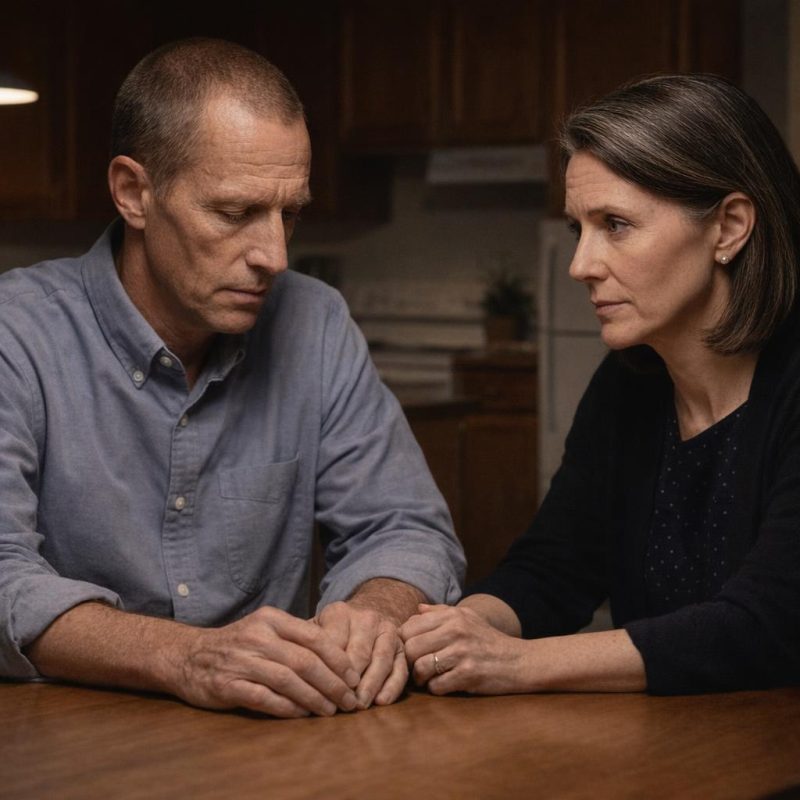 Image by RM AI
Carol's Insistence
Carol and I met at the diner on Route 9, the one we'd been going to since our kids were in grade school. I told her everything — Diane, the blue house, the dating history, the diagnosis. She listened without interrupting, which wasn't like her, and when I finished she wrapped both hands around her coffee mug and said it all sounded very convenient. I asked her what she meant. She said a man who needs to explain away a secret house and a secret relationship and thirty years of hidden contact with his wife's sister — that man might also find a diagnosis very useful. I told her I'd seen his memory lapses myself. I'd found his keys in the refrigerator. I'd driven him home from a house we hadn't owned in two decades. She said she wasn't saying he was faking entirely, but that people under pressure find ways to lean into whatever earns them sympathy. I told her the fear in his eyes was real. She reached across the table and put her hand over mine and said, honey, you are too close to this to see it clearly. I didn't pull my hand away. But I also didn't agree with her. Then that same evening she called again and said, Amanda, you need to make a decision about what you're going to do.
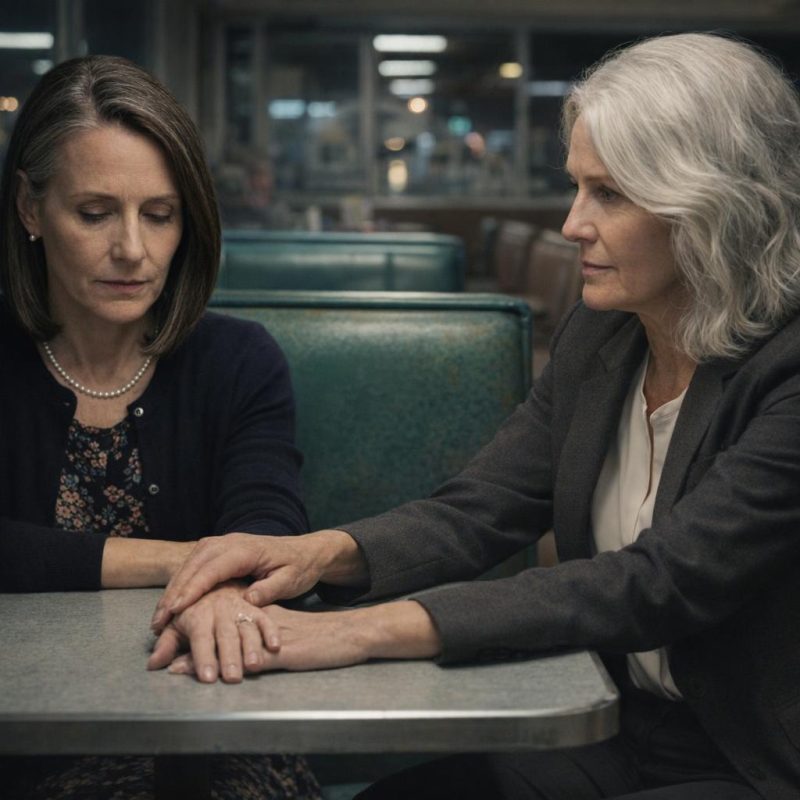 Image by RM AI
The Father's Manipulation
Diane called two days later and asked if she could come by. She said she had something to show me, that it was important, that Tom had already seen it. When she arrived she was carrying a shoebox, old and soft at the corners, and she set it on the kitchen table between us. Tom sat off to the side, quiet. She said they'd found these in a storage unit she'd kept locked for years, things she'd taken from their father's house after he died. Inside the box were letters. Envelopes, dozens of them, bundled with rubber bands gone brittle with age. She lifted one bundle and handed it to me. My handwriting was on the envelopes. My name, my return address, letters I had written to Diane over the years and believed she'd never answered. Diane lifted another bundle. Her handwriting on those. Letters she'd sent to me that I had never received. Their father had kept them all. He'd told each of us the other wanted nothing to do with her. He'd let thirty years of silence grow between us on a foundation he'd built himself. I sat there holding a letter I'd written to my younger sister when I was thirty-four years old, the ink faded but the words still mine, and the box sat open on the table between us with thirty years of stolen correspondence inside it.
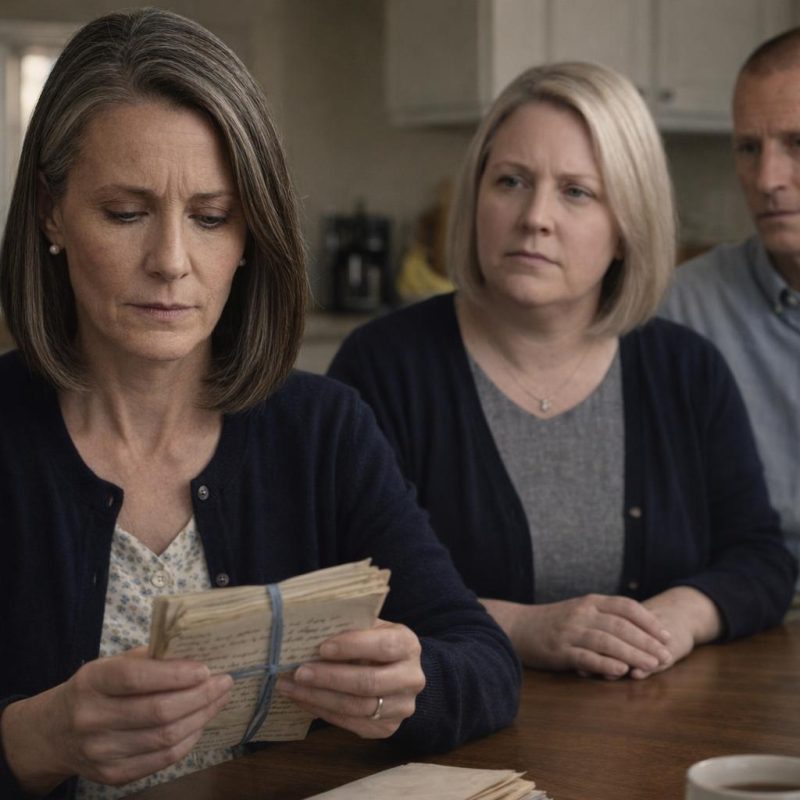 Image by RM AI
The Impossible Choice
After Diane left and the house went quiet, Tom and I sat in the living room without turning on any lights. I told him I didn't know if I could forgive the lies. Not just the blue house, not just Diane, but all of it — the years of silence, the decisions made without me, the weight he'd carried alone and let me carry alone too. He said he understood. He said he would accept whatever I decided. He said he'd been wrong to keep so many things from me, that fear had driven him into corners he hadn't known how to get out of. He said he'd been afraid of losing his memory and losing me at the same time, afraid that if he told me about Diane I'd see him differently, afraid that if he told me about the diagnosis I'd start grieving him before he was gone. I told him the secrets had nearly destroyed us anyway. He said he knew that. He said he was sorry, and he said it the way a person says something they've been holding for a long time. I looked at him across the room — the man I'd built thirty-eight years with, the man I still didn't entirely recognize, the man I still loved — and I understood that whatever came next, I had to choose it with my eyes open.
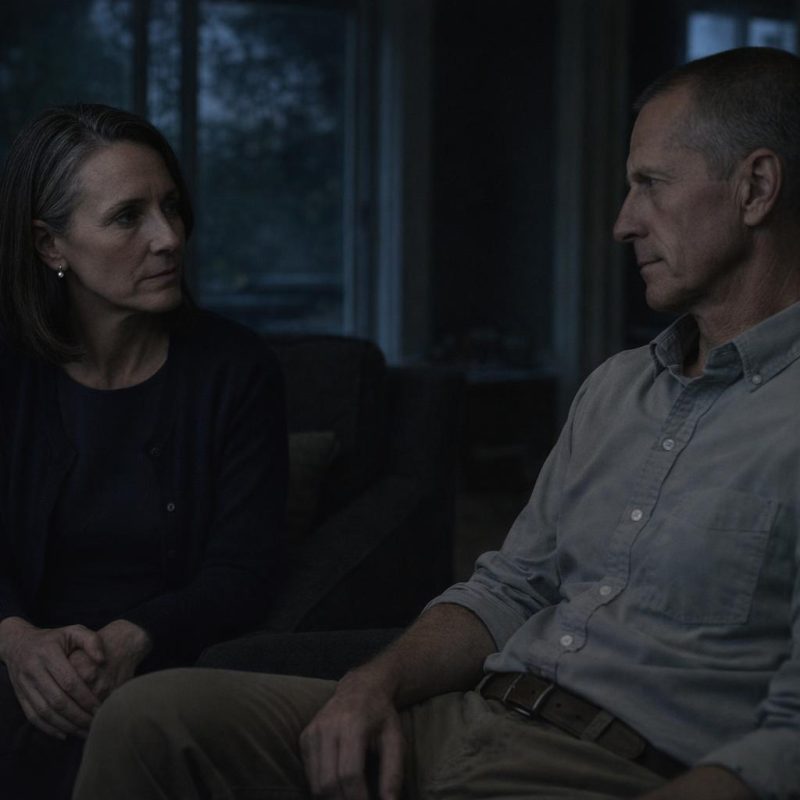 Image by RM AI
Choosing to Rebuild
The next morning I told Tom I believed him. Not that the lies hadn't hurt — they had, more than I knew how to say — but I believed that fear had driven him, not cruelty, not indifference. He was sitting at the kitchen table with his coffee going cold in front of him, and when I said it, something in his face just gave way. He put his head down and cried in a way I hadn't seen from him in thirty-eight years. I stood there and let him, and then I put my hand on his shoulder and kept it there. Later that afternoon I called Diane. She answered on the second ring, and I could hear her breath catch when she realized it was me. I told her I wanted her to come back. I told her she was family, and that we had lost enough years already. She cried too. When she came over that evening, I opened the door and we stood there for a moment just looking at each other — two old women with thirty years of silence between us — and then I pulled her in and held on. Melissa and Jennifer were harder. Jennifer especially. But they came to dinner that Sunday, and they sat at the table, and that was enough for a start. I chose to move forward — not because the pain was gone, but because love was still there underneath it.
 Image by RM AI
The Ring Returns
I noticed it on a Tuesday morning, the kind of ordinary Tuesday that doesn't announce itself as anything. Tom was pouring orange juice at the counter, and the light caught the gold band on his left hand. I hadn't seen it there in months. I stood in the kitchen doorway and just looked at it for a moment, not saying anything. When he turned around and caught me staring, he glanced down at his hand and then back up at me. He said he wanted to wear it for whatever time he had left. His voice was quiet and steady when he said it, the way he gets when he means something all the way through. I told him I was glad. It came out smaller than I intended, but he nodded like he understood the full weight of it. The ring sat loose on his finger — he'd lost weight over the past months, more than I'd let myself notice until that moment. He'd had to push it up past the knuckle just to keep it from sliding off. We sat down together at the table after that, and he reached over and covered my hand with his. Neither of us said anything more. The ring caught the morning light again, gold and a little too wide for the hand that wore it now, and I held the quiet of that moment close.
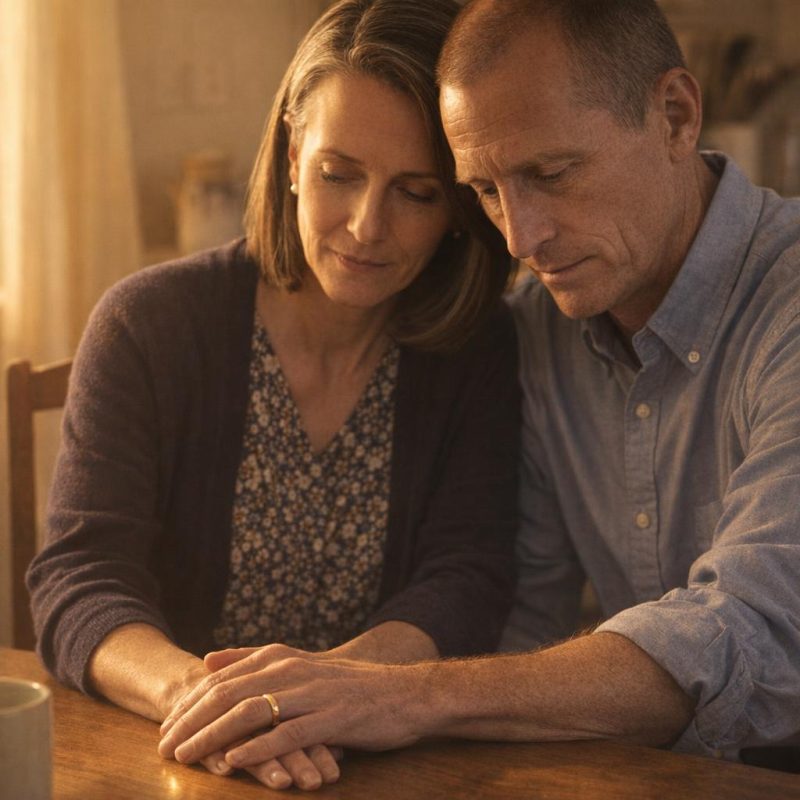 Image by RM AI
His Greatest Fear
It was a Thursday evening, the kind that settles in slowly with the last of the daylight going soft through the curtains. Tom and I were sitting in the living room, not watching anything, just being in the same space the way we'd learned to do again. He set his glass down and said he needed to tell me something. I waited. He looked at his hands for a moment before he looked at me. He said he'd been thinking about what scared him most — not the forgetting itself, not losing names or dates or the way home. He said his greatest fear was that one day he might look at me and not feel what he felt right now. That he might look at my face and not know what it had meant to him. His voice broke on that last part. I reached over and took his hand in both of mine and held it tight. I told him that if that day ever came, I would remember for both of us. I would carry it for both of us. He leaned forward and I held him while he cried, his shoulders shaking the way they had when we lost his mother, the way they had at Jennifer's wedding. The room had gone nearly dark around us, and I didn't move to turn on any lights. The weight of his hand in mine was enough.
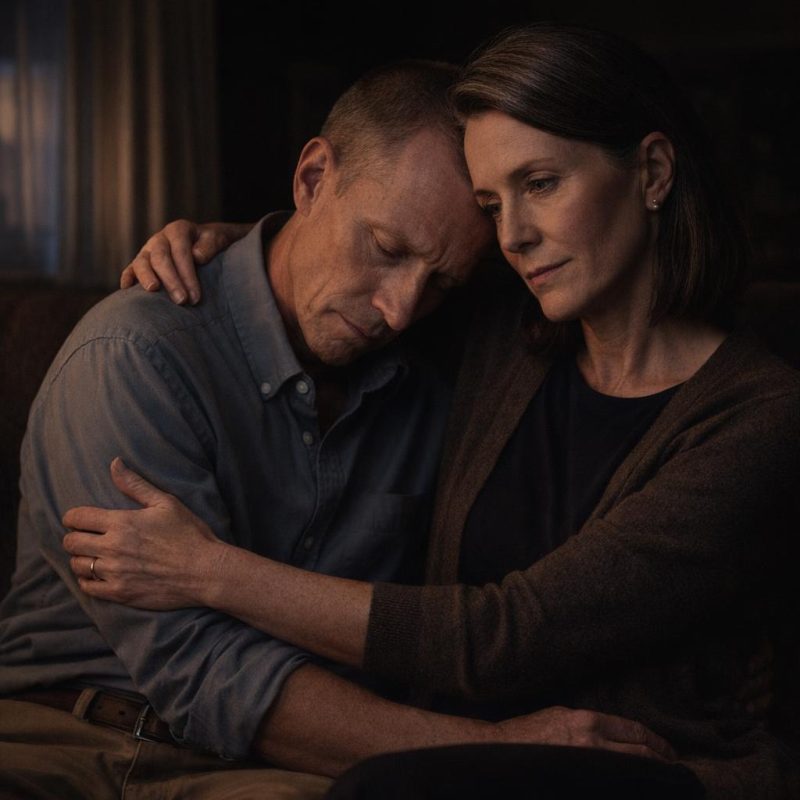 Image by RM AI
The Real Mystery
I've had a lot of time to think about what this past year actually was. When I first noticed Tom's ring was gone, I was so certain I knew what it meant. I built a whole story in my head — the affair, the other woman, the betrayal I'd never seen coming. And I was wrong. Not about the secrets, but about what they meant. The truth turned out to be something I never could have imagined: a blue house, a sister I'd lost, a diagnosis he'd been carrying alone, a man so afraid of hurting me that he'd buried himself under the weight of it all. I've learned that fear can make good people do things that look, from the outside, exactly like betrayal. I've learned that a marriage isn't just the good years — it's also the silences, the things left unsaid, the moments where you have to decide whether love is enough to keep going. Ours had been tested in ways I wouldn't wish on anyone. But it had held. Not perfectly, not without damage, but it had held. Tom is still here. Diane is coming to Sunday dinners now. My younger daughter Melissa brings flowers sometimes, and even Jennifer is starting to soften around the edges. The real mystery was never whether Tom had been unfaithful. It was whether a marriage could carry the weight of secrets, regret, and time — and whether two people could choose each other again on the other side of all of it. We did.
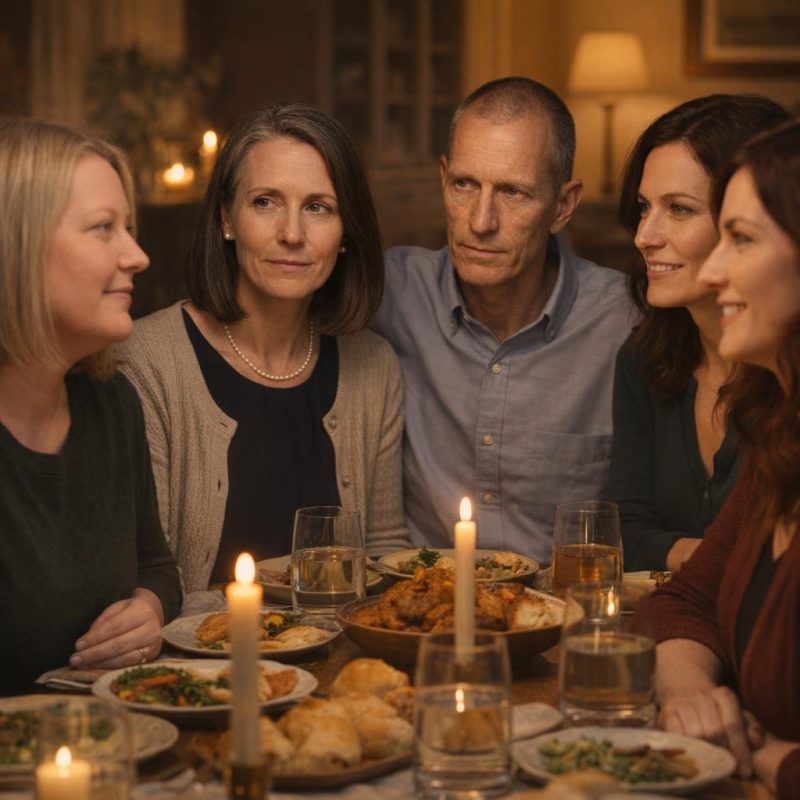 Image by RM AI
KEEP ON READING

The 10 Youngest Monarchs In History & The 10 Oldest
Age Is Just A Number. Imagine being crowned king or…
By Chase Wexler Mar 11, 2025
You Think You Have Problems? These Royal Families Were Cursed
Boasson and Eggler St. Petersburg Nevsky 24. on WikimediaHeavy is…
By Ashley Bast Dec 5, 2025
You Can Thank This Greek-Canadian For Creating Pineapple On Pizza…
Love it or hate it, pineapple on pizza sparks debate…
By David Davidovic Dec 1, 2025
Yes, Female Gladiators Existed, And Here's Everything You Need To…
History of Women in Combat. Most people picture gladiators as…
By David Davidovic Jan 17, 2026
Yes, Australians Once Lost A Battle Against Flightless Birds
David Clode on UnsplashIn 1932, the Australian military went to…
By David Davidovic Nov 24, 2025
The Y2K Bug: Why Did Everyone Think Year 2000 Was…
Alan W on UnsplashOn December 31, 1999, people all over…
By Christy Chan Dec 22, 2025