

He Told Me I Had 10 Minutes to Pack—But the Law Said I Could Stay: My Journey From Eviction Threat to Empowered Homeowner
He Told Me I Had 10 Minutes to Pack—But the Law Said I Could Stay: My Journey From Eviction Threat to Empowered Homeowner
The Notification That Changed Everything
I was looking up a chicken recipe on our shared iPad when my entire world shifted. You know that moment when you're doing something completely mundane—standing in your kitchen, thinking about dinner—and everything just stops? That was me, frozen at the island counter, staring at a notification that had just popped up on the screen. "Can't wait to see you tonight, baby. Last night was incredible." The message was from someone named Chloe. My hands started shaking before my brain could fully process what I was reading. I tapped the notification without thinking, and suddenly I was looking at months of messages. Six months, to be exact. Chloe. The junior associate Mark had mentioned a few times. The one who was "really sharp" and "going places." I scrolled through message after message, my stomach twisting tighter with each one. My fingers moved on autopilot, taking screenshots, even though I could barely see the screen anymore. Mark was still at work, probably sitting in his corner office, completely unaware that I'd just stumbled into his secret. The words on the screen blurred as I realized I'd just read something I could never unread.
 Image by RM AI
The Confrontation I Rehearsed All Day
I spent the entire afternoon rehearsing what I'd say when Mark walked through that door. I imagined a dozen different versions of his apology—the breakdown, the tears, the begging for forgiveness. I pictured him falling apart, finally showing some real emotion instead of that corporate mask he wore everywhere. By the time I heard his car in the driveway, I'd convinced myself he'd at least have the decency to look ashamed. He came in at his usual time, loosening his tie, asking how my day was like nothing had changed. I couldn't do the small talk. I just thrust the iPad toward him, my hands still trembling, the messages still open on the screen. He took it from me and read. And read. The silence stretched between us like a physical thing, filling the entryway, the kitchen, every space where I'd expected words to be. I waited for the apology, for the emotion, for something. Instead, Mark just looked up from the screen with this eerily calm expression, like I'd shown him a mildly interesting news article. He looked at the iPad I thrust toward him and said nothing—just set down his briefcase with unnerving calm.
 Image by RM AI
The Marriage Dissolution Presentation
Mark gestured for me to sit on the couch—our couch, the one we'd picked out together on that trip to Charleston, the one that sat on the rug we'd spent an hour debating over. He remained standing, positioning himself like he was about to deliver a quarterly report to the board. And that's exactly what it felt like. He used phrases like "no longer viable" to describe our marriage, as if we were a failing business venture. He talked about wanting to keep things "civil and efficient," about handling this "like adults." I sat there on that Charleston rug, breathing in his expensive cologne mixed with my own rising panic, and listened to him discuss Chloe like she was a logical next step in his career plan. Not a betrayal. Not an affair. Just the next item on his agenda. His tone was identical to the one I'd heard through his office door during conference calls—measured, professional, completely detached. I kept waiting for him to crack, to show me the man I'd married underneath all this corporate speak. When he finished his speech, he asked if I had any questions, as if I'd just attended a business briefing.
 Image by RM AI
The Inheritance Claim
That's when Mark explained the house situation, and I felt the ground shift beneath me all over again. The house came from his grandfather's inheritance, he said. Purchased before our marriage with pre-marital funds, which made it separate property. His separate property. He said these terms with such confidence, as if the words themselves were proof. I needed to find somewhere else to live by the weekend. The weekend. As in, four days from now. He suggested I look for apartments near my sister Amy's place, two towns over, like he'd already mapped out my exile. Then he offered me the small SUV as a "gesture of goodwill," and I actually saw him pause like he expected me to thank him. I tried to argue, but I didn't know the legal facts to counter what he was saying. Pre-marital asset. Sole ownership. Separate property. The words felt heavy and official, and I was just a high school English teacher who suddenly couldn't find her own words. I thought about security deposits and first month's rent on my salary, and felt myself shrinking. He offered me the small SUV as a 'gesture of goodwill,' as if that settled everything.
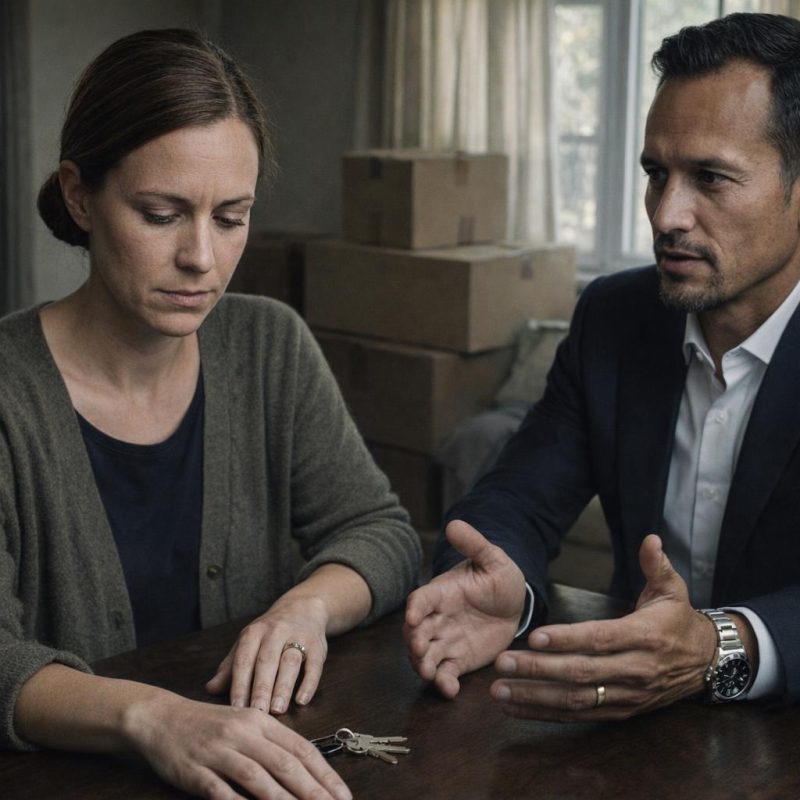 Image by RM AI
The Ghost in the Guest Room
That first night in the guest room, I lay on the narrow bed staring at ceiling cracks I'd never noticed before. I could hear Mark moving around in our bedroom—his bedroom now, apparently—down the hall. The sounds of his normal nighttime routine felt obscene somehow. I pulled up apartment listings on my phone, scrolling through tiny studios and basement units, doing math I didn't want to do. First month, last month, security deposit. My teacher's salary had always seemed fine when I was living here, but now those numbers looked impossibly small on the screen. I thought about calling my sister Amy, asking if I could crash on her couch temporarily, and felt the humiliation burn in my chest. I cried into the pillow, trying to stay quiet, trying not to give him the satisfaction of hearing me fall apart. The guest room's beige walls felt like they were closing in. Sleep came in brief, anxious intervals, broken by the sound of every creak in the house. In the morning, I walked past the family photos in the hallway—our wedding, vacations, Christmas mornings—and they seemed to mock me, a catalog of a life I thought was mine.
 Image by RM AI
The Boxes in the Hallway
The boxes started appearing on Wednesday morning. I walked out of the guest room to find flattened moving boxes stacked against the hallway wall, right where I couldn't miss them. Mark had already left for work, leaving them there without a word, like they explained themselves. Each morning brought more. Thursday, there were three additional boxes. Friday, two more joined the stack. I walked past them going to the bathroom, to the kitchen, to anywhere, and they felt like a physical manifestation of my deadline, a cardboard countdown timer. Mark never mentioned them directly. He didn't have to. We'd pass each other in the kitchen and he'd glance at the boxes, then at me, and the message was crystal clear. I thought about hiding them in the garage, but I didn't want to escalate things. I was already sleeping in the guest room, already feeling like an intruder in my own home. On Tuesday morning, there were two more boxes than the day before, and he left a roll of packing tape on top.
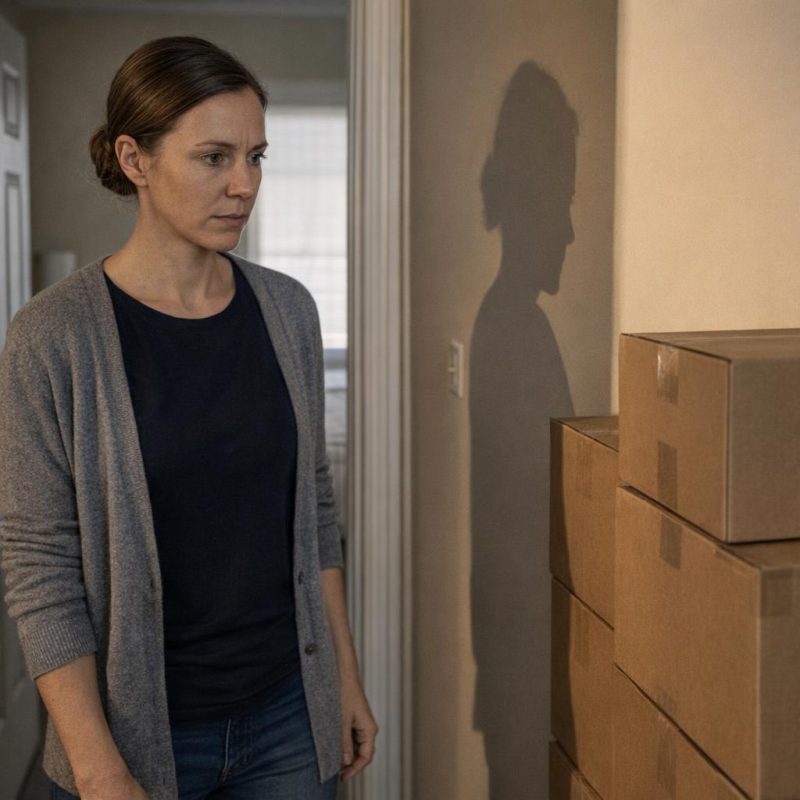 Image by RM AI
Drowning in Legal Language
Every time I tried to talk to Mark about the house, about our situation, he'd respond with more legal terminology that made my head spin. Pre-marital asset. Sole ownership. Separate property acquisition. He'd explain these terms in this patient, condescending tone that made me feel like a child asking why the sky is blue. I'd ask what he meant, and he'd sigh like I was being deliberately difficult. When I suggested we at least try couples counseling, he looked at me like I'd suggested we consult a fortune teller. When I mentioned mediation, thinking maybe a neutral third party could help us figure this out fairly, his response was even worse. Mediation was for people who had something to mediate, he said. The property ownership was clear. The facts were self-evident. I found myself doubting my own memory of our marriage, wondering if I'd somehow missed something fundamental about whose house this really was. Had he always talked about it as his? Had I just not been paying attention? The legal jargon swirled around me like a fog, and I felt myself drowning in it. When I asked if we could at least talk to a mediator, he said mediation was for people who had something to mediate.
 Image by RM AI
The Tape Gun in My Hand
I stood in the study on Tuesday afternoon, surrounded by Mark's moving boxes, holding the tape gun in my hand. My books lined the shelves—the novels I taught, the poetry collections, the literary criticism I'd accumulated over years. I was actually going to do it. I was going to pack up and leave, just like he wanted. The tape gun felt heavy, and the act of surrender felt both inevitable and devastating. Then I thought of Sarah. My friend Sarah, who'd gone through her own divorce last year. I remembered her strength, the way she'd held her head high even when her ex tried to steamroll her. I set down the tape gun and grabbed my phone instead, my hands shaking as I scrolled to her number. She answered on the second ring. "Rachel? What's wrong?" I could barely get the words out through my tears—the affair, the house, the weekend deadline, all of it tumbling out in a rush. There was a pause, and then Sarah's voice came back, sharp and clear and absolutely certain. 'Don't pack a single box until you talk to my lawyer.'
 Image by RM AI
The Phone Number That Changed Direction
Sarah's voice steadied me through the phone. 'Rachel, listen to me. Last year, my husband tried the exact same thing. He told me I had forty-eight hours to get out of our house because his parents had helped with the down payment. He made it sound so official, so legal.' I gripped the phone tighter, my other hand still resting on that abandoned tape gun. 'What did you do?' I asked. She laughed, but it wasn't a happy sound. 'I almost left. I actually started packing. Then my sister made me call her lawyer, and you know what Jennifer told me? That possession is nine-tenths of the law when you're still married. That my husband couldn't just kick me out because he wanted to. That I had rights.' My heart was pounding. 'Sarah, Mark says the house was his grandfather's—' 'Doesn't matter,' she interrupted. 'Not if you've been living there, paying bills, maintaining it. Jennifer will explain everything. She's amazing. Write this down.' I fumbled for a pen, my hands shaking as I scribbled Jennifer Walsh's name and office number on my notepad. When I hung up, I looked at those words—that phone number—and felt something I hadn't felt in days: the faint pulse of possibility.
 Image by RM AI
Scheduling Hope
I called Jennifer Walsh's office the moment it opened Wednesday morning, my coffee growing cold beside me as I listened to the phone ring. A paralegal answered, her voice professional but kind, and I tried to explain my situation without crying. 'My husband wants me out of the house by this weekend, and I don't know if I have any rights, and Sarah Chen referred me.' There was a pause, the sound of keyboard clicks. 'Sarah's a former client. Let me check Jennifer's schedule.' More clicking. 'We've had a cancellation this afternoon. Can you come in at two?' This afternoon. That was only five hours away. Both terrifyingly fast and impossibly far. I said yes before I could second-guess myself. After I hung up, I stood in the study surrounded by those moving boxes and realized I needed to bring proof—proof of what, exactly, I wasn't sure. Proof that I wasn't just Mark's tenant in his grandfather's house. I pulled open the file cabinet and started gathering everything I could find: the deed, mortgage statements, property tax records, old renovation receipts stuffed in folders. My hands moved frantically, and the afternoon appointment loomed ahead like both salvation and judgment.
 Image by RM AI
Following the Money
I spread three years of bank statements across the dining room table, the papers overlapping like scales. I'd grabbed a yellow highlighter from my desk drawer, and now I went through each statement methodically, marking every payment that touched the house. There—mortgage payment, January 2019. There—property taxes, April 2019. The kitchen renovation we'd done together, paid in three installments. I highlighted them all. The new roof after that storm. The deck repair. The furnace replacement last winter. Each yellow line was a piece of evidence, though evidence of what, I still wasn't entirely sure. I found the quarterly property tax payments, always drawn from our joint account—the account where both our salaries were deposited. My salary. My contributions. I photographed each page with my phone, the yellow marks glowing under the dining room light. The pattern they formed told a story I'd never thought to read before: twelve years of shared financial responsibility, twelve years of maintaining this house together. The highlighted lines weren't just payments. They were proof that this house wasn't just his, even if his name was the only one on the deed.
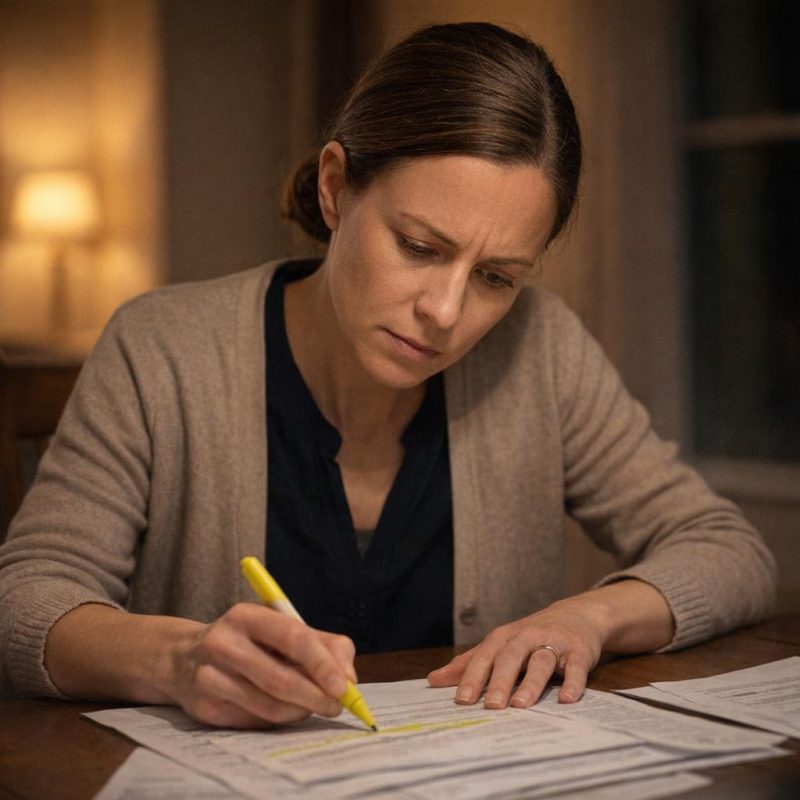 Image by RM AI
The Commingling Conversation
Jennifer Walsh's office was smaller than I'd expected, lined with law books and family photos that made it feel more human. She greeted me with a firm handshake and warm eyes behind reading glasses, gesturing to the chair across from her desk. I explained everything in a rush—the affair, Mark's grandfather, the weekend deadline—and she listened without interrupting. Then she asked the question that changed everything: 'Have you used your salary to pay property taxes or home maintenance?' I nodded, pulling out my highlighted bank statements. 'Yes, for twelve years. Everything came from our joint account.' Jennifer looked over her reading glasses at those yellow-marked pages, and for the first time since I'd walked in, she smiled. She spread the statements across her desk, examining the property tax payments, the renovation costs, the repair bills. 'This is called commingling of assets,' she said, tapping one of the highlighted lines. 'Once you start mixing separate property with marital funds, the law stops caring whose grandfather died and starts caring who paid the bills.' I felt something shift in my chest—not quite hope, but the space where hope might grow.
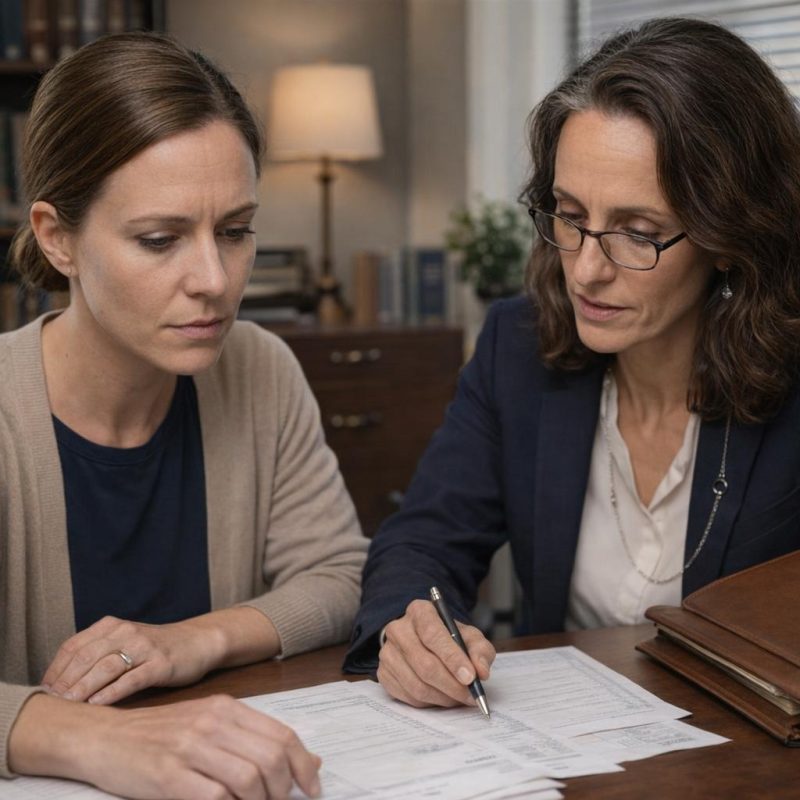 Image by RM AI
The Eviction That Wasn't
Jennifer leaned back in her chair, her reading glasses catching the afternoon light. 'Rachel, I need you to understand something important. Mark cannot legally evict you without a court order. What he's doing—giving you a deadline, threatening you, trying to intimidate you into leaving—that's called a self-help eviction, and it's illegal.' I stared at her. 'But he says it's his house.' 'You're still married. You have every legal right to remain in the marital home, regardless of whose name is on the deed. Only a court can order you to leave, and that would require him to file formal motions, go through proper legal channels.' My voice came out small. 'What happens if I just refuse to go?' Jennifer's smile was certain. 'Absolutely nothing. He'd be the one breaking the law if he tried to force you out.' The words settled over me like a blanket I hadn't known I needed. For three days, I'd been operating under Mark's version of reality, his rules, his timeline. But there were other rules—real rules, legal rules—and they said I could stay. I left her office with paperwork about filing for divorce, my hands steadier than they'd been since Tuesday afternoon. I'd found solid ground for the first time.
 Image by RM AI
Mother Knows
I sat in my car in the law office parking lot, engine off, phone in my hand. I needed to hear my mother's voice. Diane answered on the first ring. 'Sweetheart?' I tried to explain—the affair, the eviction threat, the lawyer consultation—but the words tangled together. Before I could finish, she interrupted me. 'Rachel, I need to tell you something I've wondered for years. I think Mark loved the idea of you more than the actual person. The accomplished professor he could show off at firm dinners. Does that make sense?' It did. God, it did. 'Mom, he wants me out of the house by this weekend.' There was a pause, and when she spoke again, her voice was steel. 'You stay in that house no matter what. Do you hear me? Leaving would be the first step in letting him rewrite your history together. That house represents twelve years of your life, your marriage, your contributions. Don't let him erase that.' Her words wrapped around me like her arms used to when I was small. She offered to visit if I needed her, and I told her I'd let her know. When I hung up, I felt less alone than I had in days.
 Image by RM AI
The Kitchen Island Standoff
I came home that evening with Jennifer's business card in my purse and my mother's words in my head. Mark was in the kitchen pouring wine, still wearing his work clothes, looking comfortable and settled as if the matter of my departure was already resolved. The moving boxes were still stacked by the study door where I'd left them that morning. I walked past them, into the kitchen, and stood across the island from him. 'I'm not leaving the house,' I said. My voice was steadier than I expected. Mark paused mid-pour, the wine bottle hovering over his glass. He looked at me with something that might have been surprise—genuine surprise, as if I'd just announced I was taking up skydiving. The kitchen island stretched between us, granite and twelve years of shared meals and morning coffee. He set down the bottle slowly, carefully, his corporate composure sliding back into place. He set down his glass slowly, looked at me with something that might have been surprise, and asked what had changed my mind.
 Image by RM AI
Grandfather's Legacy
I didn't answer his question. I just stood there, my hands resting on the cool granite, meeting his gaze. And that's when Mark's professional demeanor cracked. His voice rose—actually rose—something I'd never heard in twelve years of marriage. 'This is my grandfather's house! My family's property! Do you understand that? My grandfather built his entire legacy so his descendants would have something, and you think you can just—' He kept going, his face reddening, his words tumbling over each other. He shouted about bloodlines and inheritance and family legacy, his corporate control giving way to something raw and desperate. I stood silently and let him finish. I didn't interrupt, didn't argue, didn't defend myself. I just waited. When his anger finally burned out, silence filled the kitchen. His chest was heaving slightly, his expensive tie loosened, his hair—always so perfectly styled—falling across his forehead. And in that silence, I could see something I'd never seen before—the realization that volume wasn't going to work this time.
 Image by RM AI
The Joint Account Defense
Then I started talking. I told Mark about the property taxes we'd paid every quarter for twelve years from our joint account. I mentioned the new roof three years ago—$18,000. The furnace replacement—$6,500. The deck repair—$4,200. I kept my voice steady, reciting numbers like I was grading papers. I listed the bathroom tile work, the garage door opener, the hardwood flooring in the living room. Every expense came from our combined income, every check written from our joint checking account. My teaching salary had contributed to all of it—the maintenance, the improvements, the endless small repairs that keep a house standing. Mark tried to interrupt twice, but I kept going, my voice calm and factual. I told him about commingling of assets, about how separate property transforms when marital funds improve it. And when I got to the kitchen renovation we'd just finished paying off last month—$32,000 of our combined income poured into his grandfather's house—his expression changed when I mentioned the kitchen renovation we'd just finished paying off—the one that turned his separate property into our marital investment.
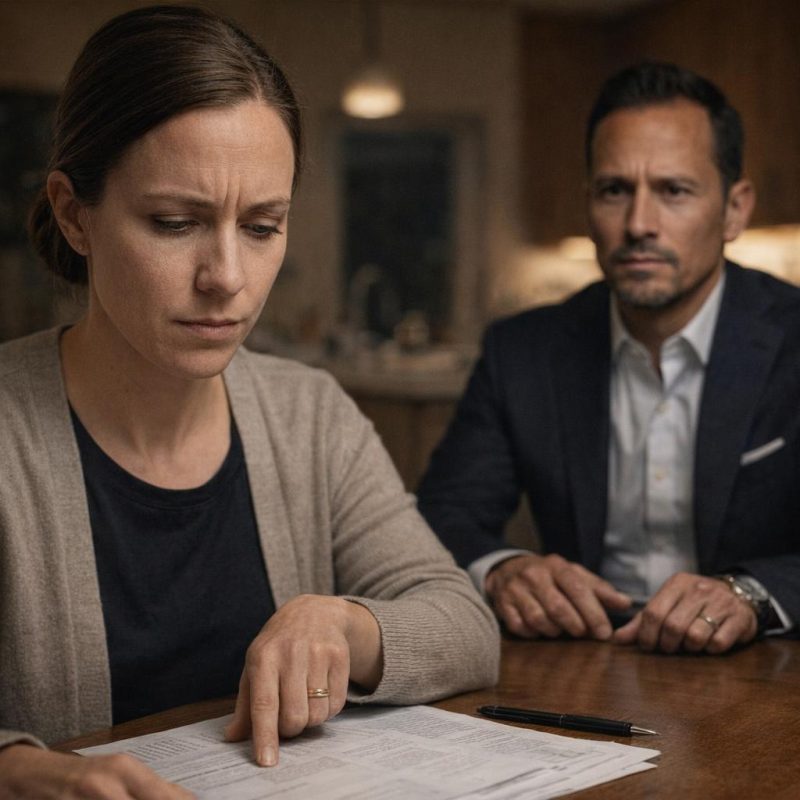 Image by RM AI
The Mother-in-Law's Call
My phone rang while I was chopping vegetables for dinner two days later. Mark was upstairs in the guest room, and I'd been enjoying the quiet rhythm of the knife against the cutting board. Patricia Hayes's voice came through the speaker with that particular blend of warmth and steel that only certain mothers-in-law can manage. 'Rachel, dear, I hope I'm not interrupting.' She'd never called my cell before—always went through Mark. 'Mark has shared with me what's happening, and I wanted to reach out woman to woman.' I set down the knife, my hand suddenly unsteady. She talked about family legacy, about understanding, about how the Hayes property had been in the family for three generations. 'I know you're upset about Mark's choices,' she said, her voice dripping with practiced sympathy, 'but surely you can see that the house needs to stay in the family. Mark is my only son, Rachel. This home was meant for Hayes descendants.' I stood there holding my phone, a half-chopped onion on the cutting board, realizing that Mark had escalated beyond just his attorney. He'd brought in his mother to apply pressure from a different angle. Patricia kept talking about being reasonable, about doing the right thing for the family. When she finally said goodbye, her tone suggested she expected me to reconsider my stubbornness. She said Mark was her only son and the house was meant to stay in the Hayes bloodline, as if twelve years of marriage meant I'd only been borrowing his life.
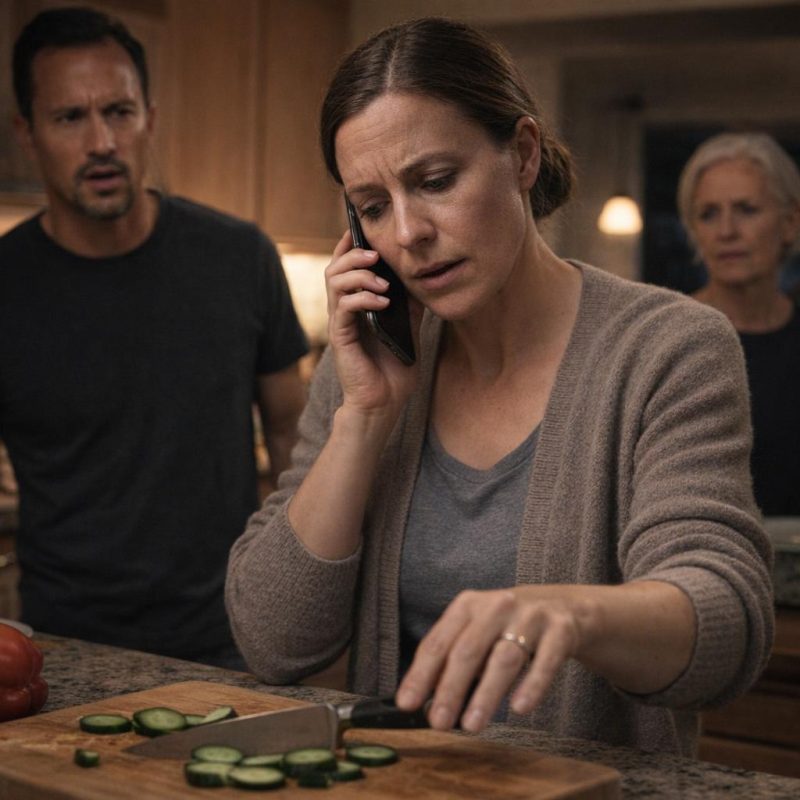 Image by RM AI
Filing Day
Jennifer's office smelled like coffee and paper when I arrived on Monday morning. She had the divorce petition printed and ready, pages of legal language that would transform my marriage into a court case. 'This requests temporary orders,' she explained, tapping a section with her pen. 'It establishes your right to remain in the marital home during proceedings. The court will recognize that you have an interest in the property regardless of whose name is on the deed.' I signed each page where she'd marked with yellow tabs, my signature looking surprisingly steady. Jennifer filed everything electronically while I sat there, the clicks of her keyboard making it all feel surreal and official at the same time. 'Now we serve Mark,' she said, looking up from her computer screen. 'A process server will deliver the papers to him personally. I need you to understand—this makes everything very real. Up until now, this has been conversations and threats. Once Mark receives these papers, he'll know you're not backing down.' She leaned forward, her reading glasses catching the light. 'Are you prepared for his reaction?' I thought about his face when I'd recited our renovation costs, about Patricia's phone call, about twelve years of being told what I should do. 'Yes,' I said. She warned me that serving Mark with papers would make everything very real, and asked if I was prepared for his reaction.
 Image by RM AI
The Process Server
The process server came on Thursday afternoon. I was in the kitchen—I seemed to spend a lot of time there lately, maybe because it was the room we'd just renovated together, the one that proved my point about commingled assets. I watched through the window as Mark pulled into the driveway at his usual time, 6:15 PM. The server approached him before he could reach the front door, handed him the envelope, said something brief. Mark stood there in his tailored suit, briefcase in one hand, divorce papers in the other. I watched his face as he read. First confusion—his eyebrows drew together. Then recognition as he flipped through the pages. Then something that looked like rage, his jaw tightening, his shoulders going rigid. He stood in the driveway for what felt like forever, just reading and re-reading. Finally, he walked toward the house. I stayed at the sink, my hands in soapy water, acting like I hadn't been watching. He came through the door without speaking, walked right past me like I wasn't there. His footsteps went down the hall, and then I heard it—the guest room door opening. The sound of a suitcase being unzipped. Mark was moving into the room where he'd told me I belonged, and I was staying exactly where I was.
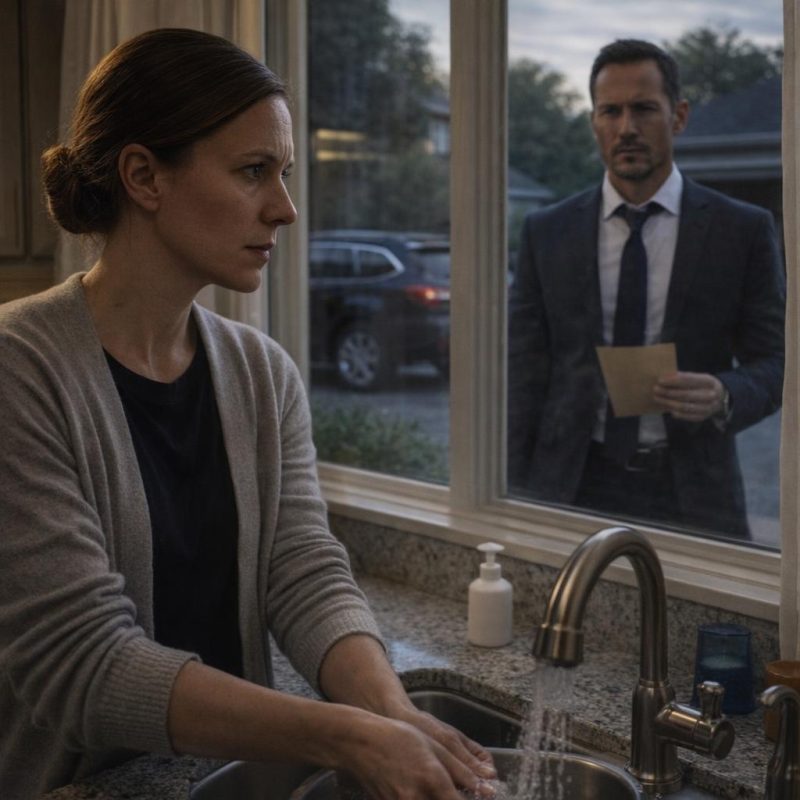 Image by RM AI
Paper Trail of a Shared Life
I spent the entire weekend going through every file cabinet, every closet, every box in the attic. The home office filing cabinet yielded the kitchen renovation contract—$32,000, paid in installments from our joint checking account. I photographed every page with my phone. The garage storage shelves had the roofing invoice from three years ago, the contractor's estimate stapled to the final bill. I found the furnace replacement receipt in a folder labeled 'House Repairs 2019.' The deck repair invoice was tucked into a manila envelope with paint color samples. I created folders on my phone—Renovations, Repairs, Maintenance, Improvements. Each photograph was dated, each document showed our joint account number. I found receipts for the hardwood flooring we'd installed in the living room, for the new garage door opener, for the bathroom tile work. The pile of evidence grew higher than I'd expected. Every invoice told the same story—Mark's grandfather might have bought this house forty years ago, but we'd poured our marriage into maintaining it, improving it, making it ours. I sat on the office floor surrounded by papers, my phone full of photographs, and realized something. These weren't just receipts. They were proof that you can't claim sole ownership of something you've let someone else invest in for twelve years.
 Image by RM AI
The Aggressive Letter
The certified letter arrived on Tuesday. Cream-colored letterhead, expensive paper stock, the kind that announces its own importance. Robert Sterling, Attorney at Law, in raised lettering across the top. Ten pages of legal threats dressed up in formal language. I read it standing in the entryway, my hands actually shaking. Robert demanded I acknowledge Mark's sole ownership of the property. He gave me thirty days to vacate. He used words like 'trespassing' and 'unauthorized occupancy' and 'legal consequences.' The letter suggested I was squatting in someone else's home, that my presence was barely tolerated, that I should be grateful Mark hadn't already called the police. I called Jennifer immediately. 'Read me the worst parts,' she said. So I did, my voice unsteady on phrases about property rights and inheritance law. When I finished, Jennifer laughed. Actually laughed. 'Oh, Robert,' she said, and I could hear her smiling through the phone. 'He's trying to scare you. These letters are all bark, no bite. When an attorney comes out this aggressive, this theatrical, it usually means they know their legal position is weak.' She explained that the threats were toothless, that Robert was hoping I'd panic and leave before we got to court. 'He's posturing,' Jennifer said. 'And honestly? This letter just made my job easier.'
 Image by RM AI
Cataloging Our History
I walked through the house with my phone, documenting everything. The kitchen doorframe where we'd marked our niece Emma's height every birthday—those pencil lines climbing from age three to age ten. The family photos on the mantle, including the one from our fifth anniversary trip to Charleston where we'd bought the living room furniture. I photographed the bookshelf we'd assembled together one Sunday afternoon, Mark holding the pieces while I read the instructions. The holiday decorations in the attic, boxes labeled in my handwriting. Every room held evidence of our shared life, and I captured it all. In the master bedroom, I opened the closet to photograph the built-in organizers we'd installed. That's when I found the box. Tucked on the top shelf, a shoebox I'd forgotten about. Inside were all the anniversary cards Mark had given me over twelve years. I sat on the bedroom floor and read through them. Year three: 'To our home and our future.' Year seven: 'Every day in our house is a gift.' Year ten: 'Building our life together in the home we love.' Each card referenced our home, our shared space, our joint future. I photographed every single one, Mark's handwriting clear and unmistakable. In the master bedroom closet, I found the box of cards Mark had given me over the years, each one signed 'our home, our life, our future,' as if he'd forgotten his own words.
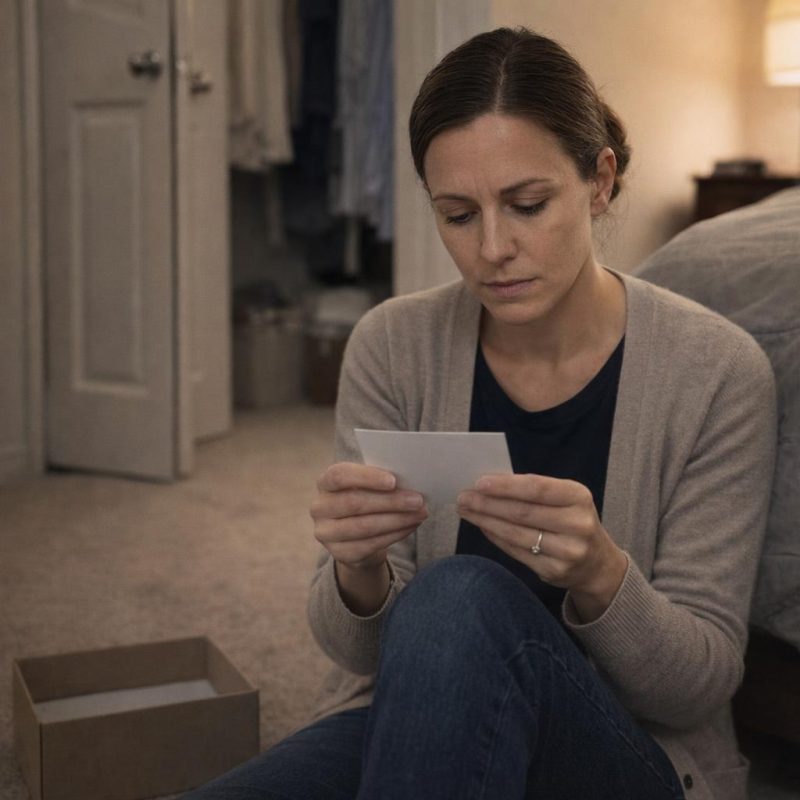 Image by RM AI
Jennifer's Response
Jennifer called me into her office the following Monday. 'I want you to see this before I file it,' she said, sliding a document across her desk. Thirty pages. Her response to Robert Sterling's threatening letter was a legal masterpiece. She'd cited every relevant case in our state about marital property transformation. She'd detailed every renovation we'd paid for from joint funds, every property tax payment, every repair and improvement over twelve years. The response argued that Mark's inheritance had been commingled with marital assets to such an extent that the property had transformed into a marital asset. Jennifer had attached all my documentation—the renovation receipts, the contractor invoices, the payment records. She'd included photographs of the family home environment, the growth marks on the doorframe, the shared spaces we'd created together. And in the appendix, she'd added something that made me smile. Mark's anniversary cards. Every single one, photographed and printed, his handwriting declaring 'our home' and 'our future' in his own words. 'I'm filing this today,' Jennifer said. 'Robert will receive it by tomorrow.' I imagined Mark's face when his attorney showed him the appendix, when his own romantic words came back to haunt him in a legal document. She included the photographs of Mark's anniversary cards in the appendix, and I imagined his face when his own handwriting testified against him.
 Image by RM AI
The Corporate Apartment
The text came through on a Tuesday morning: 'Moving to corporate apartment for duration of proceedings. Will collect belongings Thursday 3pm.' No greeting, no explanation beyond the bare minimum. I read it three times, trying to decode what it really meant. Then it hit me—he'd finally accepted that intimidation wouldn't work. He couldn't scare me into leaving anymore. Thursday afternoon, I positioned myself in the living room with a book I wasn't actually reading. At exactly three o'clock, his car pulled into the driveway. I watched through the window as he made trip after trip from the guest room to his trunk. Suitcases first, then garment bags with his work suits, then boxes of toiletries and shoes. He moved with efficient precision, like he was checking items off a mental list. He never came to the front door. Never knocked to say he was there or to discuss logistics. Just loaded his car methodically, his jaw set in that familiar stubborn line. When he finally drove away, he didn't look back at the house—not even a glance in the rearview mirror. I stood there in the empty living room, and for the first time since that iPad notification lit up my world, I took a full breath without my chest tightening.
 Image by RM AI
Discovery Begins
Jennifer called me into her office to explain the discovery phase. 'We're requesting five years of tax returns, all bank statements, employment records, credit card statements, and investment account information,' she said, sliding the formal request across her desk for me to review. The document was thorough, demanding every financial record that might show how Mark had used or improved the house. She filed it that afternoon, and we waited. Thirty days later, exactly at the deadline, Robert Sterling's office delivered a box to Jennifer's reception desk. We opened it together in her conference room, spreading the documents across the table. Tax returns, some bank statements, a few pay stubs. Jennifer flipped through the pages with a practiced eye, her reading glasses sliding down her nose. 'This feels thin,' she said after a few minutes. 'For someone claiming such clear financial standing, I'd expect more documentation.' She made notes on her legal pad, marking gaps she'd noticed. 'He'll probably supplement,' she added, though her tone suggested she wasn't entirely convinced. I started reviewing the tax returns Mark had provided, trying to make sense of numbers that should have been familiar but somehow felt like reading a stranger's financial life.
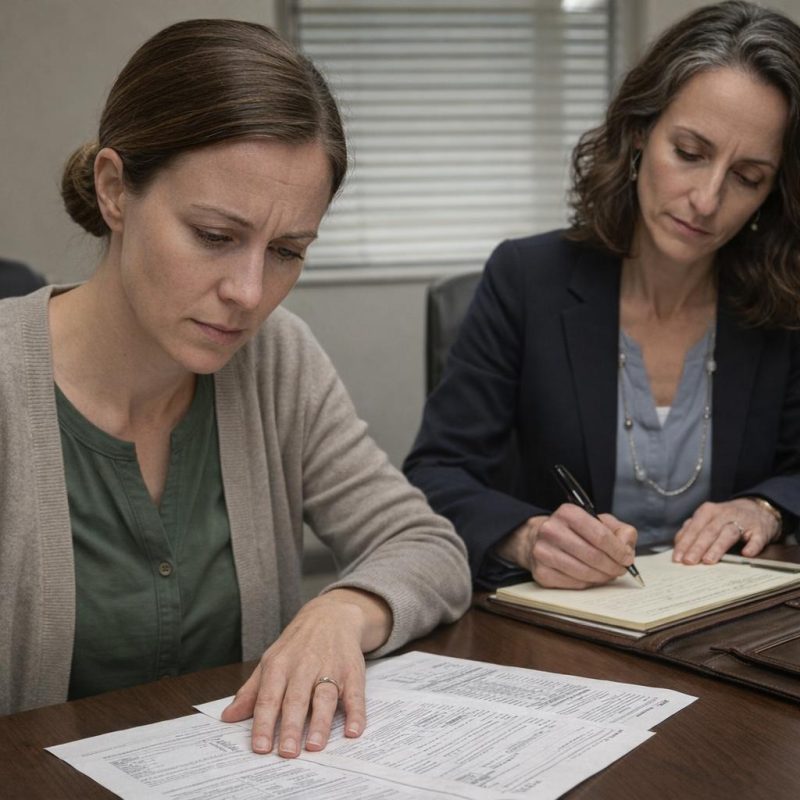 Image by RM AI
Reading Between the Lines
I spread five years of our joint tax returns across my dining room table, creating a timeline I could actually see. Mark's base salary from his company stayed consistent—that part made sense. But there was this supplemental income line on Schedule C that jumped around in ways I couldn't explain. One year it showed fifteen thousand in consulting income. The next year, barely three thousand. Then eight thousand, then twelve. I sat there with my coffee getting cold, trying to remember conversations about his consulting work. Had he mentioned taking on extra projects some years? I couldn't recall specific discussions. He'd always worked in the home office on weekday evenings, his door closed, the blue light of his computer screen visible under the crack. I'd assumed he was finishing corporate work or answering emails. The fluctuations seemed random, following no pattern I could identify. Some years showed 'consulting services,' other years listed 'business advisory.' I made notes in the margins, questions to ask Jennifer at our next meeting. Maybe I just hadn't paid attention to these details before. Maybe I'd been too focused on the kids' schedules and household management to ask what he was actually doing in that office.
 Image by RM AI
The Business Expense Question
The business expense deductions caught my attention next. Mark held a middle-management position—steady, respectable, but not the kind of role that typically required extensive travel. Yet here were line items for trips to Dallas, Phoenix, Atlanta. Cities I didn't remember him mentioning. The meal and entertainment deductions seemed high too, thousands of dollars some years. I pulled out our old family calendars, the paper ones I'd kept because I liked seeing everyone's schedules in one place. I started cross-referencing dates. A business trip to Phoenix listed for a weekend in April—but the calendar showed 'Mark golf w/colleagues' for that same Saturday and Sunday. Another trip to Atlanta coincided with a weekend he'd said he was playing in a charity tournament locally. I grabbed our joint credit card statements from the file box. The dates that showed business travel deductions on his taxes showed no corresponding charges on our cards. No flights, no hotels, no rental cars. Maybe he'd been using a separate business card I didn't know about? That would make sense for expense reimbursement. But something about the mismatches felt off in a way I couldn't quite articulate, like finding puzzle pieces that almost fit but left tiny gaps.
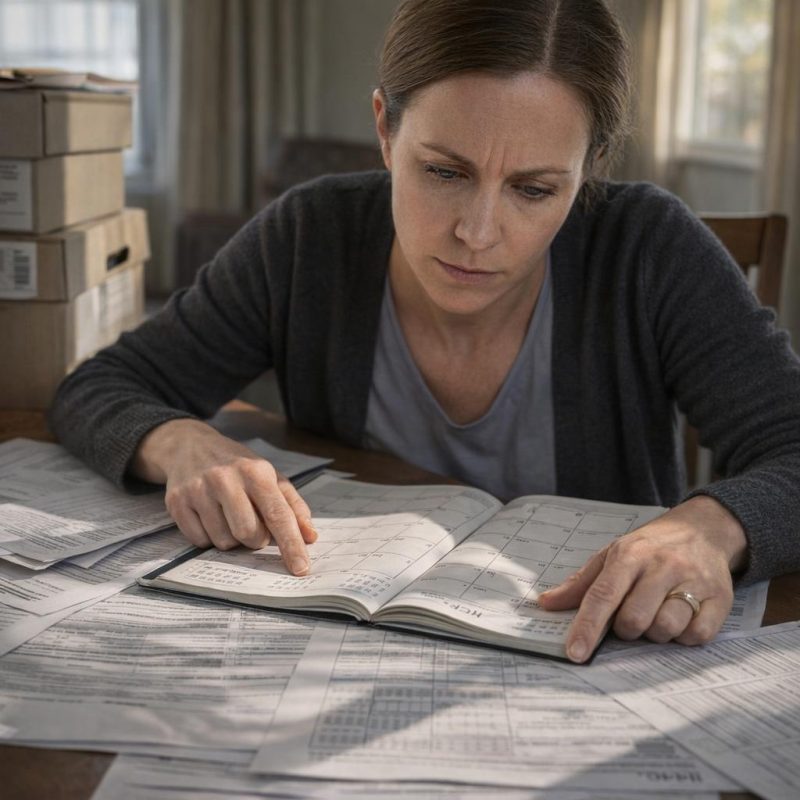 Image by RM AI
Jennifer's Observation
Jennifer spread Mark's tax documents across her conference table like she was studying a map. 'These income reporting patterns are unusual for someone with a steady corporate position,' she said, tapping her pen against a column of numbers. 'The supplemental income varies too much. It's not following any logical business cycle.' She looked up at me over her reading glasses. 'Did Mark ever mention forming an LLC? Doing significant consulting work on the side?' I opened my mouth to answer and realized I had no idea. 'He worked in the home office most evenings,' I said slowly. 'I always assumed he was finishing corporate projects or catching up on emails. He never really talked about what he was doing in there.' Jennifer made a note on her legal pad. 'We need to dig deeper into whether he formed any business entities. These deductions suggest something more structured than occasional side work.' I felt my stomach drop. How had I lived with someone for twelve years and not known basic facts about his work life? I'd been managing the household, raising our kids, maintaining our home, while he'd been doing... what, exactly? Jennifer's expression was carefully neutral, but I could tell she thought the patterns warranted serious investigation.
 Image by RM AI
The Unfamiliar Transfers
I was searching through old email folders for financial records when I found credit card statements I'd forgotten I'd saved. They were from three and four years ago, back when I'd been more diligent about downloading everything for tax season. I opened them one by one, scanning the charges. Most were familiar—grocery stores, gas stations, the kids' activities. But there were these small transfers, two hundred dollars here, three hundred there, always to the same account number I didn't recognize. The amounts were modest enough that I must have glanced right past them at the time. But now, looking at multiple statements in sequence, I could see the pattern. The transfers always happened on the fifteenth of the month. Every single month, like clockwork. Same account number, similar amounts, always mid-month. I pulled up more statements, going back further. The pattern continued. I tried to remember if Mark had mentioned a savings strategy, some automatic transfer he'd set up for retirement or investment purposes. Nothing came to mind. The account number didn't match our joint savings or either of our individual retirement accounts. I made copies of every statement showing the transfers, adding them to my growing file of questions. The regularity felt too deliberate to be random, too consistent to be something I should have forgotten about.
 Image by RM AI
Subpoenaing the Truth
Jennifer filed comprehensive subpoenas for Mark's complete banking records from the last three years. 'We're requesting everything,' she explained. 'Personal accounts, business accounts, any accounts held individually or through business entities he controls.' She submitted them to the court and served the relevant banks. I felt like we were finally going to get real answers. Two days later, Jennifer called. 'Robert Sterling filed a motion to quash the subpoenas,' she said, and I could hear the interest in her voice. 'Forty-eight hours. That's fast, even for him.' She read me portions of his motion—arguments that our requests were overly broad, harassing, irrelevant to the property dispute. 'He's claiming the banking records have nothing to do with whether the house is marital property,' Jennifer said. 'Which is technically creative, but not particularly convincing.' She paused. 'Rachel, when lawyers fight this hard against discovery, it usually means there's something worth finding. People don't file emergency motions to protect boring bank statements.' I sat in my kitchen, phone pressed to my ear, feeling increasingly certain that Mark had been hiding something significant. The question was what, and how long he'd been doing it.
 Image by RM AI
Procedural Warfare
Robert Sterling filed three separate motions in one week. The first challenged the scope of our discovery requests. The second raised procedural objections to the subpoena language. The third claimed scheduling conflicts that would require delays in document production. Each motion meant Jennifer had to draft written responses. Each response took time. Each delay pushed our timeline further out. I met with Jennifer to review the motions, feeling my frustration build. 'This is textbook procedural warfare,' she said, spreading the documents across her desk. 'He's burying the core issue under layers of objections. Every motion creates automatic delays while the court considers his arguments.' She looked at me directly. 'These are standard delay tactics, Rachel. Lawyers use them when their clients need time.' Time for what, I wanted to ask, but Jennifer continued. 'When someone fights this hard to slow down discovery, they're usually trying to make inconvenient documents disappear. Or reorganize assets. Or create explanations for things that don't have good explanations.' She started drafting responses to all three motions, her fingers flying across her keyboard. I watched her work, understanding that we were in for a much longer fight than I'd hoped, and that Robert's aggressive resistance probably meant Jennifer was right—there was something Mark desperately didn't want us to find.
 Image by RM AI
The Judge's Chambers
The courtroom was smaller than I'd imagined, wood-paneled and formal in a way that made my stomach tight. Jennifer sat beside me at the plaintiff's table, her organized folders stacked neatly while Robert Sterling spread his papers across the defense table with theatrical precision. Judge Morrison entered through a side door, and we all stood. She was maybe sixty, gray hair cut practically short, reading glasses already perched on her nose. She had this quiet authority that filled the room without her saying a word. Standing before authority like this made everything feel more real, more permanent. Robert launched into his arguments about privacy concerns and relevance objections, his voice booming like he was performing for an audience that wasn't there. He emphasized how invasive our discovery requests were, how they exceeded the scope of a simple property dispute. Jennifer countered calmly, pointing out that financial disclosure was standard in divorce proceedings and that Mark's resistance suggested he was hiding relevant information. I watched Judge Morrison's face as she listened to both attorneys. Her expression didn't change much, but I caught something in her eyes when Robert kept circling back to privacy protections. When he finished his third variation on the same argument, Judge Morrison looked directly at him over her reading glasses and asked why a property dispute required such extensive financial secrecy.
 Image by RM AI
Thirty Days for Truth
Judge Morrison didn't take long to decide. She announced her ruling right there from the bench, her voice measured and firm. Mark was ordered to provide complete financial disclosure within thirty days. All banking relationships. Any business entities he owned or controlled. Documentation for everything. She set the deadline clearly and added that failure to comply would result in sanctions. Robert's jaw tightened, and I saw him make a note on his legal pad with more force than necessary. Jennifer's posture relaxed slightly beside me. The judge's words felt like validation, like someone in authority had finally looked at Mark's behavior and found it as suspicious as I did. We stood when Judge Morrison left the courtroom, and I felt this strange mix of relief and dread settling in my chest. Watching justice work in real time was both empowering and terrifying. Jennifer gathered her folders efficiently, and we walked out into the hallway together. She explained that this ruling meant we'd finally see Mark's complete financial picture, all the accounts and entities he'd been trying to keep hidden. I nodded, understanding that we'd won this round but also knowing that whatever we were about to discover had been worth all of Robert's aggressive resistance. Jennifer squeezed my hand as we left the courthouse, and I knew we were finally going to see what Mark had been trying so hard to hide.
 Image by RM AI
Hiring the Forensic Accountant
Jennifer recommended hiring a forensic accountant the next day. She explained that Mark's financial situation was too complex for standard discovery review, that we needed someone who specialized in tracing hidden assets and reconstructing financial histories that people tried to erase. She introduced me to Patricia Chen over a conference call. Patricia had twenty years of experience finding money that people didn't want found. Her voice was calm and analytical, asking detailed questions about Mark's employment, our joint accounts, any business interests I knew about. I met with her in person two days later at Jennifer's office, bracing for revelations I couldn't yet imagine. Patricia reviewed the financial documents we'd gathered so far, making notes in a leather portfolio. She explained her process for building complete financial pictures from incomplete information. Then she mentioned something that made my skin prickle. She'd seen cases where people prepared for divorce years in advance, moving assets gradually so their spouses wouldn't notice the pattern. She described tactics people used to hide money during marriage, creating business entities and offshore accounts long before filing papers. The most sophisticated ones started early, she said, treating divorce preparation like a long-term investment strategy. Patricia said she'd seen cases where people spent years preparing for divorce, and that the most dangerous ones were the ones who thought they were smarter than the discovery process.
 Image by RM AI
The Offshore Discovery
Patricia called three weeks later while I was folding laundry in the living room. Jennifer was already on the line when I joined the conference call. Patricia's voice was professional but I could hear the significance in her tone. She'd found an offshore account in the Cayman Islands, registered in Mark's name. My hands went still on the towel I was holding. The account had been opened eighteen months ago. I did the math immediately. Eighteen months ago was a full year before I'd found those messages from Chloe on Mark's phone. A full year before I'd discovered the affair that supposedly explained everything. Patricia continued, explaining that the account held a balance that equaled roughly six months of Mark's gross salary. I couldn't speak for a moment, seeing the scope of what he'd hidden from me. How had he moved that much money without me noticing? We'd shared finances. I'd seen our bank statements. There hadn't been any sudden drops in our checking account, no financial hardship that would have explained that kind of transfer. Patricia explained the account had been funded through small, regular transfers over time, amounts small enough to avoid triggering reporting requirements. Jennifer asked her to trace the source of those transfers. I sat on the couch with the phone pressed to my ear, trying to understand how Mark had accumulated that much money without me noticing it was missing.
 Image by RM AI
The Shell Company
Patricia called again four days later with more findings. She'd traced the offshore account deposits back to their source. A Delaware LLC, registered in Mark's name, formed approximately two years ago. I'd never heard him mention any business entity. Never heard him talk about forming a company or doing consulting work outside his regular job. Patricia explained that Delaware was commonly used for business privacy, that the state's laws made it easy to hide ownership structures. But here's what made my stomach drop. The LLC had been receiving regular payments from Mark's employer. Consulting fees, the invoices said. Mark had been routing portions of his employment income through this business entity I didn't know existed. The LLC would receive the payments, then transfer money to the offshore account in smaller increments. Jennifer asked questions about the payment amounts and frequency while I sat there understanding the betrayal on a level I hadn't before. Mark had created an entire business structure in secret. He'd been diverting income through a company, moving it offshore, building a hidden financial life that ran parallel to our marriage. This wasn't a mistake or an oversight. The LLC had been receiving payments from Mark's employer for consulting services, which meant he'd been routing portions of his income through a business entity I didn't know existed.
 Image by RM AI
Before the Affair
Patricia came to Jennifer's office to present her complete analysis. She'd created a timeline, dates and transactions laid out in a spreadsheet that told a story I didn't want to believe. The Delaware LLC was formed two years ago. Regular income transfers to that LLC began shortly after. The offshore account was opened eighteen months ago. Patricia highlighted these dates with her pen, then pulled out another document. The affair. Based on the messages I'd found and the timeline I'd given her, the affair with Chloe had begun approximately six months before I discovered it. Which meant Mark's financial activities had started at least a year before Chloe appeared. I stared at the dates, realizing the depth of what I was facing. The LLC formation. The income routing. The offshore account. All of it had been set in motion before Mark ever met Chloe, or at least before their relationship became what it became. Patricia showed me the pattern of systematic income underreporting that began when the LLC was formed. Jennifer leaned forward, suggesting the financial structure indicated something more than spontaneous decisions. I couldn't stop looking at those dates. I'd thought the affair was the betrayal, the moment everything changed. But Patricia's timeline showed financial moves that predated everything I'd thought I understood. I stared at the dates on her spreadsheet and felt something cold settle in my chest—the affair wasn't the beginning of his betrayal, it was the middle.
 Image by RM AI
Patricia's Campaign
Patricia Hayes started calling more frequently after the discovery hearing. At first it was once a week, then twice, now every other day. She'd call in the late afternoon, her voice carrying that measured tone that wealthy people use when they want something but won't directly ask for it. She'd talk about family legacy, about the Hayes name and what it meant in their social circles. She'd mention how vindictive divorce proceedings could damage everyone involved, how public records could expose private family matters. On Tuesday she suggested I was being unreasonable by pursuing such extensive financial discovery. On Thursday she called again, her voice softer this time, more concerned. Mark had been under so much stress lately, she said. His health was suffering. Perhaps we could settle things quietly, she suggested, before more family details became public record. I stayed polite, thanked her for calling, but didn't engage with her suggestions. I'd learned that much at least. But I noticed the timing, facing coordinated pressure from multiple directions now. Her increased calls coincided exactly with the thirty-day discovery deadline approaching. She and Mark were working together, trying different angles to make me back down. Patricia's calls were just another form of the same pressure Robert Sterling applied in court. On Thursday she mentioned that Mark had been under so much stress lately and that perhaps we could settle things quietly before more family details became public record.
 Image by RM AI
The Reconciliation Messages
The text messages came late on a Saturday night. My phone lit up on the nightstand, and I saw Mark's name. Then another message. Then another. I picked up the phone and read them in the dark bedroom. He'd been confused, he wrote. Scared about what was happening between us. He still loved me. He'd always loved me. Maybe we'd both overreacted to what was really just a rough patch in our marriage. People went through difficult times, he said. That didn't mean they had to throw everything away. He wanted to talk, really talk, about starting over. His words were longer and more emotional than anything he'd sent since I'd changed the locks. I read them twice, doubting my perception for a moment, feeling that familiar pull toward the comfort of believing him. Part of me wanted to respond, to say yes, to make all of this complexity disappear back into the simple story of a marriage that could be saved. Then I thought about the offshore account Patricia had found. The one Mark had opened eighteen months ago, a full year before he told me about Chloe. I thought about the Delaware LLC and the systematic income routing. I read his words about starting over and remembered the offshore account he'd opened a year before he told me about Chloe, and I knew exactly what this new sweetness was designed to accomplish.
 Image by RM AI
The Settlement Offer
Jennifer called me on a Tuesday afternoon, and I could hear something careful in her voice before she even said what the call was about. Robert Sterling had reached out with a settlement proposal. Mark was offering twelve thousand dollars annually in alimony for five years, plus I'd keep the SUV and all my personal property. The number was higher than I'd expected—more than Mark had ever suggested during those awful conversations in our kitchen. Jennifer walked me through the terms methodically, her tone professional but measured. Then she got to the conditions. I had seventy-two hours to accept. The offer required waiving further financial discovery beyond what we'd already completed. I sat at my kitchen table listening to her explain the deadline, feeling that familiar tug toward relief. This could be over by the weekend. No more legal bills, no more waiting, no more of this exhausting uncertainty. I could take the money and start rebuilding my life. But something felt wrong about the timing. Mark's sweet text messages had come just days ago. Patricia had found the offshore account last week. Now suddenly Mark wanted to settle quickly, generously, before we could look any deeper. The offer expired in seventy-two hours, and I couldn't shake the feeling that the deadline was designed to prevent me from seeing something I wasn't supposed to find.
 Image by RM AI
The Patience Game
I met with Jennifer the next morning, and she didn't waste time with pleasantries. She spread the settlement offer across her desk alongside Patricia's preliminary findings about the offshore account and the Delaware LLC. The timing bothered her, she said. Rushed settlements often appeared right when discovery started revealing problems. I stared at the numbers Mark was offering, trying to calculate whether twelve thousand a year for five years was enough to rebuild a life. Jennifer pointed out that if Mark was hiding significant assets, the generous alimony might represent a fraction of what I was legally entitled to receive. I felt so tired. The legal process had consumed months of my life, and every day brought new complexity I hadn't asked for. Part of me just wanted to sign the papers and make all of this stop. But Jennifer reminded me about the shell company, the unexplained consulting income, the offshore transfers that made no sense for someone with Mark's salary. She said patience might be worth more than any dollar amount they were offering right now. I thought about Mark's careful planning, the eighteen-month timeline Patricia had mentioned, the way everything seemed designed to push me toward quick decisions. I told her to reject the offer and keep digging, even though every part of me wanted the pain to be over.
 Image by RM AI
Following the Paper Trail
Patricia Chen wasn't done following the money. Jennifer explained that the forensic accountant had prepared subpoena requests for Mark's employer, seeking compensation records and any consulting agreements on file. I waited anxiously while the legal process ground forward, each day feeling like a week. When Mark's company HR department finally responded, they provided employment files going back three years. Patricia called Jennifer with her initial findings, and Jennifer relayed them to me over the phone. Mark had initiated a consulting arrangement with his own employer eighteen months ago. The arrangement routed portions of his compensation through his LLC rather than as direct salary. It was perfectly legal, Jennifer said, but unusual for someone in Mark's position. The consulting agreement had been Mark's idea, something he'd personally requested and structured. I wrote down the date when Jennifer told me—eighteen months ago, the same timeline as the offshore account opening. Patricia noted the coincidence in her analysis. Everything seemed to trace back to that same period, like Mark had spent weeks setting up financial structures I was only now beginning to see. Jennifer said we needed to complete the picture before drawing conclusions, but I could hear the significance in her voice. I felt they were close to understanding Mark's full strategy.
 Image by RM AI
The Eighteen-Month Question
Patricia Chen came to Jennifer's office with charts and timelines spread across a conference table. I sat across from both of them while Patricia walked me through her complete analysis. Every major financial move Mark had made traced back to the same eighteen-month window. The LLC formation happened twenty months ago. The offshore account opened eighteen months back. The consulting arrangement with his employer began exactly then. Regular transfers to the LLC started immediately after these structures were in place. Patricia pointed to another date on her timeline—the affair with Chloe had begun about six months before I found those messages on the iPad. I stared at the chart, trying to understand what the pattern meant. All of Mark's financial preparation had happened before the affair even started. Jennifer asked Patricia what this kind of pattern typically indicated in her experience. Patricia chose her words carefully. It looked like someone preparing for a major life change, she said. Someone building financial structures in advance of something specific. I felt something cold forming in my understanding, a possibility I didn't want to consider. I wondered aloud if the affair had somehow been connected to all these financial moves. The pattern looked like preparation for something specific, and I started to wonder if Chloe had been the beginning of my marriage ending or the excuse for an ending Mark had already planned.
 Image by RM AI
The Blueprint
Patricia presented her final comprehensive report in Jennifer's conference room, and I watched my entire marriage collapse into a timeline of calculated moves. Mark had systematically prepared for divorce for eighteen months before the affair with Chloe even began. He'd moved approximately one hundred fifty thousand dollars into hidden accounts through careful income routing and offshore transfers. The LLC, the consulting arrangement, the Delaware account—all of it had been built during a period when I'd thought we were planning our future together. Patricia explained that the affair timing coincided precisely with Mark's financial readiness. He'd spent more than a year hiding assets, underreporting income, and building structures designed to survive divorce discovery. Then Chloe appeared, creating the crisis that would force me out quickly. Jennifer pointed out what I was already understanding—the eviction threat, the ten-minute deadline, the weekend pressure, all of it was designed to push me out before I could discover what Mark had spent eighteen months hiding. His settlement offers had been calculated to seem generous while concealing six figures in assets. The iPad notification wasn't the start of betrayal. It was the trigger for Mark's exit plan. Everything I thought I knew about my marriage collapsed into a single realization: the affair wasn't his betrayal—it was his exit strategy.
 Image by RM AI
Designed Urgency
I sat in Jennifer's office replaying every moment since I'd seen those messages on the iPad, understanding now that nothing had been what it seemed. Mark's calm during our confrontation wasn't shock—he'd been prepared for that conversation. His presentation about ending the marriage was something he'd planned for months, every word carefully considered. The weekend deadline wasn't cruelty born from passion; it was strategy designed to prevent exactly what I'd done—calling a lawyer, asserting my rights, staying in the house long enough to discover the truth. Jennifer walked me through how each piece of Mark's behavior fit the larger plan. The affair had begun when his financial preparation was complete. He'd needed a crisis to force me out quickly, before I could think clearly or seek legal advice. Every generous offer—the SUV, the personal property, even the alimony in the settlement—had been calculated to seem reasonable while hiding the bulk of what he'd stolen. If I'd left quietly that weekend, I would have lost everything Mark had spent eighteen months concealing. The discovery process had revealed what he'd worked so hard to hide. I felt the betrayal deepen into something colder than heartbreak. This wasn't passion or confusion or a midlife crisis. This was premeditation. The ten minutes he gave me to pack weren't cruelty—they were a calculated bet that my shock would do his work for him.
 Image by RM AI
Fraud Has Consequences
Jennifer explained the legal implications of what Mark had done, and for the first time in months, I felt something like hope. Intentional asset concealment during divorce constituted fraud. Mark's systematic hiding of income over eighteen months, his failure to disclose the offshore account and LLC on his sworn financial statements—all of it violated legal disclosure requirements. When he'd signed those initial financial disclosures claiming he'd listed all assets and income sources, he'd committed perjury. Jennifer described how family court judges treated this kind of deception. Courts could impose sanctions for discovery abuse. Judges often awarded larger shares of marital assets to the deceived spouse as penalty for the other party's fraud. In some cases, the concealing spouse was ordered to pay the other party's attorney fees. Jennifer had seen hidden assets result in punitive divisions that went far beyond equal splits. I reviewed Mark's original financial disclosures with new eyes, noting every omission. The offshore account was completely absent. The LLC wasn't mentioned. The consulting income was buried in vague categories. Jennifer prepared to amend our court filings with fraud allegations supported by Patricia's forensic analysis. She said judges particularly disliked being lied to, and that Mark had lied under oath when he signed his initial financial disclosures.
 Image by RM AI
The Evidence File
I spent two days going through every drawer, file box, and forgotten folder in the house, gathering documentation that supported the timeline Patricia had built. I pulled out old calendars from the home office, noting when Mark's late nights at work had increased—eighteen months ago. I found credit card statements showing small charges at restaurants I didn't remember visiting, business lunches that happened on weekends. His travel had increased dramatically during that same period. I photographed metadata from family photos on my computer, documenting the gaps in our time together that had started appearing. In Mark's desk drawer, I found receipts he'd kept for tax purposes, small purchases and business expenses filed chronologically. One receipt stopped me cold. It was from a high-end jeweler downtown, dated three weeks after Mark had opened the offshore account. The purchase was for a custom bracelet, fourteen hundred dollars. Mark had never given me a bracelet. I photographed the receipt with shaking hands, understanding what it meant. This was when the exit plan had gained a face, when financial preparation had merged with personal desire. I documented everything methodically, creating a timeline of behavioral changes that matched the financial moves Patricia had traced. I found the receipt from the jeweler where he'd bought Chloe's bracelet, dated three weeks after he opened the offshore account—the moment his exit plan gained a face.
 Image by RM AI
The Desperate Pivot
Robert Sterling called Jennifer's office on a Tuesday afternoon, and I was sitting across from her desk when she put him on speaker. His voice had lost some of its courtroom thunder—he sounded almost conciliatory as he explained that Mark wanted to make a revised settlement offer. Double the original alimony amount, he said, plus a more equitable split of the retirement accounts. Jennifer's expression didn't change as she took notes. Then Robert mentioned the personal note Mark had included, and my stomach tightened. Jennifer asked him to send everything over immediately. The email arrived ten minutes later. I stared at the settlement figures first—they were substantial, more than I'd ever expected when this started. Then I opened the attachment with Mark's handwritten note. His careful script filled half a page, the same precise lettering I'd seen on twelve years of anniversary cards. He wrote about making terrible mistakes, about confusion and poor judgment, about wanting to do right by our marriage and everything we'd built together. Jennifer watched me read it, her reading glasses catching the afternoon light. She pointed out that even this doubled amount didn't account for the offshore account alone, much less the shell company assets Patricia had traced. I looked at that familiar handwriting again, remembering all those cards promising me forever, and I knew exactly what making things right meant to someone who'd spent eighteen months planning to steal my future.
 Image by RM AI
Freezing the Accounts
Jennifer drafted the emergency motion that same evening, working late at her office while I sat in her conference room reviewing the language. She argued that Mark's documented history of asset concealment posed an imminent risk of further dissipation, citing Patricia's forensic analysis and the eighteen-month timeline of systematic hiding. The motion requested immediate freezing of all remaining accessible marital accounts—the joint checking, the savings accounts, Mark's individual business account, everything we could reach. I signed the declarations under penalty of perjury, my hand steadier than I expected. Jennifer filed electronically that night, requesting expedited consideration given the evidence of ongoing concealment. We waited. I checked my phone obsessively, expecting delays or procedural obstacles. But forty-eight hours later, Jennifer called with news that made my hands shake. The judge had reviewed the forensic evidence and granted the freeze. Every account was locked pending trial. Mark couldn't move a dollar without court approval. Jennifer explained that the offshore account remained beyond easy reach—we'd need a judgment to pursue that—but everything domestic was frozen solid. I sat in my kitchen that evening, the house quiet around me, and felt something shift in my chest. For the first time since Mark had given me ten minutes to pack, he was the one who couldn't access his own money.
 Image by RM AI
Opening Statements
The courtroom was smaller than I'd imagined, wood-paneled and formal, with afternoon light filtering through high windows. I sat beside Jennifer at the plaintiff's table, my hands folded on the polished surface, while Mark sat across the aisle with Robert Sterling. Judge Morrison entered and we all stood—she was a woman in her sixties with gray hair and reading glasses, radiating the kind of quiet authority that didn't need volume. She called the proceedings to order and invited opening statements. Jennifer rose first, her voice clear and measured as she outlined the discovery of Mark's affair through the iPad notification, the weekend eviction threat, the moving boxes that appeared like psychological warfare. Then she shifted to the systematic financial preparation uncovered through discovery—the Delaware LLC, the offshore account, the consulting arrangement that routed income away from marital funds. She presented the eighteen-month timeline, arguing that Mark had committed fraud through false financial disclosures while planning his exit. Mark's face remained neutral throughout, almost bored. Then Robert Sterling stood, and his voice filled the courtroom as he called me a vindictive spouse who'd turned a simple inheritance dispute into a witch hunt, someone who couldn't accept that a marriage had ended and wanted to punish her husband for moving on. Mark nodded slightly at his attorney's characterization, and I realized Mark still thought he could win.
 Image by RM AI
My Truth
Jennifer called me to the witness stand after the lunch recess. My legs felt unsteady as I crossed the courtroom and raised my right hand to be sworn in. Judge Morrison's expression was patient, attentive. Jennifer began with basic questions about the marriage, our twelve years together, the house we'd renovated. Then she asked about the ending. I described finding Chloe's messages on the shared iPad, the shock of seeing my husband's affair spelled out in casual texts. I told Judge Morrison about Mark's calm presentation that same evening, how he'd explained the marriage was over and I had the weekend to pack. I described the moving boxes appearing daily, stacked in the hallway like a countdown. Jennifer asked about changes in Mark's behavior before the affair. I took a breath, remembering details I'd dismissed at the time. I told her about the evening eighteen months ago when Mark started locking his home office door, something he'd never done before. The late nights that increased, the unexplained work trips, the emotional distance that had crept in so gradually I'd convinced myself it was normal work stress. I described finding the jeweler's receipt for a fourteen-hundred-dollar bracelet I'd never received, dated three weeks after he'd opened the offshore account. Across the courtroom, Mark's composure cracked just slightly, and I understood—he'd thought I never noticed the beginning of his separate life.
 Image by RM AI
The Forensic Record
Patricia Chen took the stand the next morning carrying three thick binders of documentation, her professional demeanor filling the courtroom with credibility. Jennifer qualified her as an expert in financial forensics and asset tracing, walking through her credentials and experience. Then Patricia began explaining her methodology—how she'd traced the Delaware LLC formation, discovered the offshore account through subpoenaed bank records, identified the consulting arrangement that routed Mark's income away from marital funds. She opened the first binder and walked Judge Morrison through specific transactions, dates, amounts. Each transfer had a corresponding document, each shell company transaction left a paper trail she'd followed with methodical precision. Then Patricia displayed a large timeline chart on an easel beside the witness stand. The chart showed everything in sequence: LLC formation in January two years ago, offshore account opened in February, consulting arrangement formalized in March, affair beginning that summer, eviction threat this past spring. The progression hung in the air like an accusation, each event building on the last. Patricia testified that the pattern was consistent with systematic divorce preparation, estimating total concealed assets exceeded one hundred fifty thousand dollars. Robert Sterling cross-examined aggressively, but he couldn't undermine the documented evidence. Judge Morrison asked clarifying questions, her pen moving steadily across her notepad. When Patricia stepped down, the sequence of calculated moves hung in the air like an accusation even Robert Sterling couldn't spin.
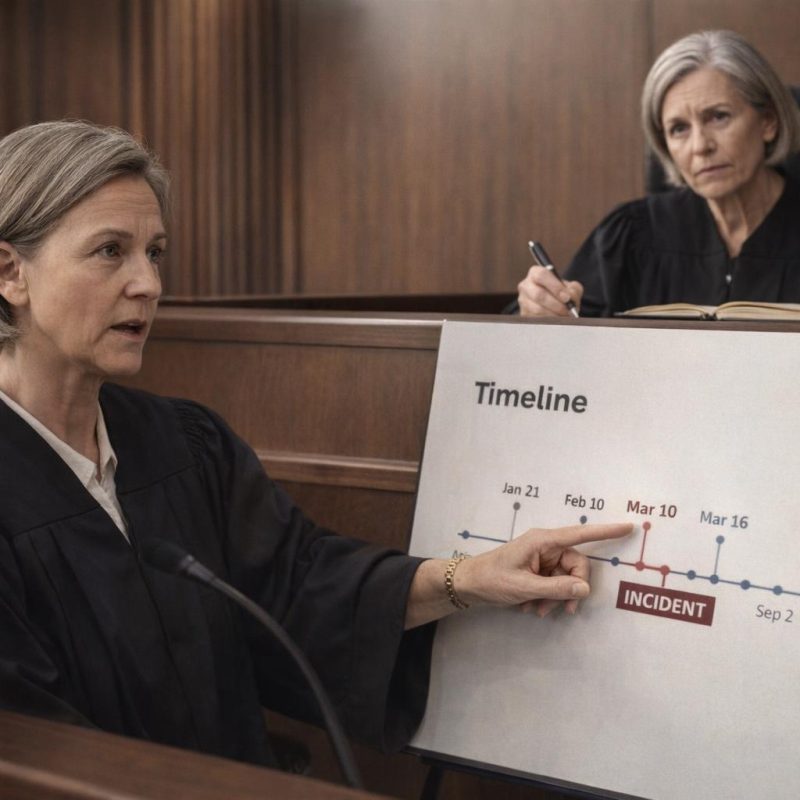 Image by RM AI
Mark's Version
Mark took the stand that afternoon, his posture confident as Robert Sterling conducted direct examination. He described the marriage breakdown as mutual growing apart, two people whose lives had diverged naturally over time. He claimed the financial structures were standard business practices—the LLC for liability protection, the offshore account for retirement diversification. His voice was steady, reasonable, the same tone he'd used to explain why I had ten minutes to pack. Then Jennifer rose for cross-examination. She started with Mark's original sworn financial disclosures, reading aloud his statement that he had no undisclosed accounts or business entities. She asked him to reconcile that statement with the offshore account Patricia had traced. Mark claimed he'd forgotten about the account when signing the disclosures, that it had slipped his mind during a stressful time. Jennifer's expression didn't change. She produced the appraisal Mark had ordered on the house two years ago, asking why he'd formed the LLC exactly two weeks later. Mark paused. The silence stretched long enough that I could hear someone shift in their seat behind me. He finally claimed the timing was coincidental, just normal business planning. Jennifer noted that the appraisal, LLC formation, and offshore account had all occurred within a single month. Mark's answers became increasingly defensive, contradicting his earlier testimony about the timeline. Judge Morrison's expression hardened with each inconsistency, and the pause after Jennifer's question about the LLC timing lasted long enough for everyone in the courtroom to hear the answer he couldn't give.
 Image by RM AI
The Cross-Examination
Robert Sterling recalled me to the stand for cross-examination the following morning, and I knew what was coming. He spent the first hour questioning my contributions to the household finances, emphasizing repeatedly that the house had been Mark's inheritance, suggesting I was trying to take what was never mine. He asked whether I really understood joint finances or if I'd simply let Mark handle everything while I enjoyed the benefits. He characterized my pursuit of discovery as obsessive, implying I'd turned normal financial planning into a conspiracy theory because I couldn't accept that my husband had fallen out of love. Then he pivoted to the settlement offers. He described them as generous given the circumstances, framing Mark as someone who'd tried repeatedly to resolve things fairly while I refused every olive branch. His voice took on a theatrical quality as he asked why I hadn't simply accepted if I wasn't motivated by greed. The courtroom was silent, waiting for my answer. I looked at Judge Morrison, then back at Robert Sterling. I told him the offshore account alone held more than double what Mark had offered in either settlement—over a hundred thousand dollars that Mark had sworn under oath didn't exist. I explained that accepting would have meant losing everything I'd helped build while Mark kept the money he'd hidden. The courtroom went completely silent, and I watched Robert Sterling's theatrical confidence falter for just a moment before he moved on to his next question.
 Image by RM AI
The Closing Argument
Jennifer stood before Judge Morrison for closing arguments, and I watched her weave together every piece of evidence we'd gathered over months of discovery. She began by acknowledging the house had started as Mark's inheritance, then systematically presented how it had transformed through marital contribution—the property taxes paid from joint funds, the renovations we'd planned together, the twelve years of shared life that had made it ours. Then she pivoted to the systematic financial concealment, walking through the eighteen-month timeline with specific dates: LLC formation, offshore account, consulting arrangement, affair, eviction threat. She highlighted Mark's false statements in sworn financial disclosures, contrasted his testimony with documentary evidence, pointed out the specific contradictions in his explanations about timing and intent. Jennifer addressed the affair and eviction threat as designed to force me out before discovery could reveal what he'd hidden. Then her voice softened slightly as she referenced the anniversary cards Mark had written during those eighteen months, cards promising our shared future while he was planning his separate exit. She asked Judge Morrison to consider what kind of man spends eighteen months preparing to leave his wife while writing such words. Across the aisle, Mark looked away for the first time since the trial began, and I saw something in his expression I'd never seen before—not quite shame, but an acknowledgment that someone had finally seen through the careful performance he'd maintained for so long.
 Image by RM AI
Awaiting Judgment
Robert stood and delivered his closing argument with the same theatrical confidence he'd displayed throughout the trial, reframing Mark's eighteen months of financial maneuvering as prudent business planning that any reasonable person would undertake. He emphasized that the house had been Mark's inheritance, a Hayes family property that should remain with the Hayes family regardless of marital contributions. The timeline was coincidental, he insisted—Mark's business decisions had nothing to do with the marriage ending, and the affair was a separate personal matter that shouldn't influence property division. He suggested I was overreaching, trying to claim assets that had never truly been mine, and asked Judge Morrison to honor the sanctity of inherited property. When he finished, Judge Morrison thanked both attorneys for their thorough presentations, acknowledged the complex financial and property issues before her, and announced she would take the matter under advisement. She would issue a written ruling within two weeks. As the judge dismissed us, I stood and caught Mark's eye across the courtroom—he looked smaller somehow, diminished in a way I'd never seen during our marriage. Jennifer and I walked into the courthouse hallway, where she explained what to expect during the waiting period, but I barely heard her words. I stepped outside into afternoon sunlight, not knowing whether I would lose everything or finally receive justice, but certain that whatever happened, I had refused to be erased quietly.
 Image by RM AI
The Ruling
Jennifer called on Thursday morning and told me to come to the office immediately—the ruling had arrived. My hands shook as she handed me the document, and I started reading Judge Morrison's careful analysis of everything we'd presented. She found in my favor on every major issue. The house had become marital property through commingling, she wrote, citing the property taxes and renovations paid from joint funds over twelve years of marriage. Judge Morrison found that Mark had committed fraud through systematic asset concealment, and his false sworn statements constituted perjury. The equitable division she ordered accounted for his deception—I was awarded the house as my share of marital property, and the hidden assets were included in the marital estate calculation. Mark had thirty days to either buy out my equity or vacate the premises. I was also awarded attorney fees as sanction for his discovery abuse. I read the final paragraph three times, my vision blurring with tears I hadn't realized were falling, before the words finally sank in: the house was mine, and Mark had thirty days to buy out my equity or vacate.
 Image by RM AI
The Keys Are Mine
Mark's attorney contacted Jennifer within a week—Mark had chosen to pay the equity buyout rather than appeal or continue fighting. The amount included compensation for the concealed assets, and Jennifer handled all the paperwork for the property transfer. On a rainy Tuesday afternoon, Robert Sterling arrived at the house to deliver the cashier's check while I signed the final settlement documents. The house was transferred entirely into my name. Mark came by later that day to collect his last personal items, and we exchanged maybe ten words total during the handoff. I watched from the kitchen window as he loaded boxes into his car, the same car that had sat in this driveway for twelve years of our marriage. When he pulled away from the curb, I knew it was for the last time. I stood in the kitchen holding the settlement check, looking around at walls that were completely mine now—no shared mortgage, no joint ownership, no legal ambiguity. The moving boxes Mark had once left in the hallway, expecting me to fill them in ten minutes, were long gone. I watched Mark's car pull away from the curb for the last time, and the home I'd almost packed into boxes became the foundation for whatever came next.
 Image by RM AI
For Every Woman
I sat down at the kitchen island where Mark had once told me I had ten minutes to pack, and I started writing everything down—every legal concept I'd learned, every mistake I'd almost made, every moment when staying put had felt impossible but turned out to be essential. I wrote about commingling and marital contributions, about how joint funds transform separate property into shared assets. I documented what I'd learned about self-help evictions and why they're illegal, about forensic accountants who can trace money through corporate shells, about the power of refusing to be rushed out of your own life. I thought about Mark's eighteen months of careful planning, how his preparation had ultimately backfired because he'd underestimated my willingness to fight. I wrote for every woman who might need this information, for anyone sitting on the edge of a bed they helped buy while someone who broke their vows tells them to pack their bags. I wrote until my hand cramped and the afternoon light faded. If you're reading this from the edge of a bed you helped pay for, while someone who broke their vows tells you to pack your bags, I need you to know what I wish someone had told me: the walls around you are more than timber and drywall—they are your legal standing, and no one can take them without a fight you have every right to win.
 Image by RM AI
KEEP ON READING

The story of Ching Shih, the Woman Who Became the…
Unknown author on WikimediaFew figures in history are as feared…
By Emilie Richardson-Dupuis Dec 29, 2025
Einstein's Violin Just Sold At An Auction—And It Earned More…
A Visionary's Violin. Wanda von Debschitz-Kunowski on WikimediaWhen you hear…
By Ashley Bast Nov 3, 2025
This Infamous Ancient Greek Burned Down An Ancient Wonder Just…
History remembers kings and conquerors, but sometimes, it also remembers…
By David Davidovic Nov 12, 2025
The Mysterious "Sea People" Who Collapsed Civilization
3,200 years ago, Bronze Age civilization in the Mediterranean suddenly…
By Robbie Woods Mar 18, 2025
20 Greatest Ancient Athletes In History
Ancient Olympics. Long before modern stadiums and multimillion-dollar endorsements, athletes…
By Sara Springsteen May 1, 2026
20 Soldiers Who Defied Expectations
Changing the Rules of the Battlefield. You’ve probably heard plenty…
By Annie Byrd Feb 10, 2026