

My Husband Started Going to Auctions After He Retired—Then a Stranger Asked Me About a Woman Named Clara
My Husband Started Going to Auctions After He Retired—Then a Stranger Asked Me About a Woman Named Clara
The Sheet Cake and the Pot Roast
Frank came home on his last day carrying a sheet cake in a white bakery box and a card signed by what looked like every person in the building. Forty-two years at the same company, and they'd sent him off with buttercream frosting and a gift card to a hardware store. I'd had the pot roast in the oven since three o'clock and a bottle of Bordeaux we'd been saving since Jennifer's college graduation, and I told myself this was the beginning of something good. We sat at the kitchen table after dinner with the cake between us, and Frank talked about sleeping until seven-thirty, maybe eight. He talked about the woodworking bench he'd been meaning to set up for years, about drives with no particular destination, about mornings with nowhere to be. His voice had a lightness to it I hadn't heard in a long time, and I found myself leaning into it. I asked questions just to keep him talking. The wine was better than I remembered, or maybe everything just felt softer that evening. I watched him across the table, this man I'd shared a house with for thirty-eight years, and thought that maybe retirement would suit us both just fine.
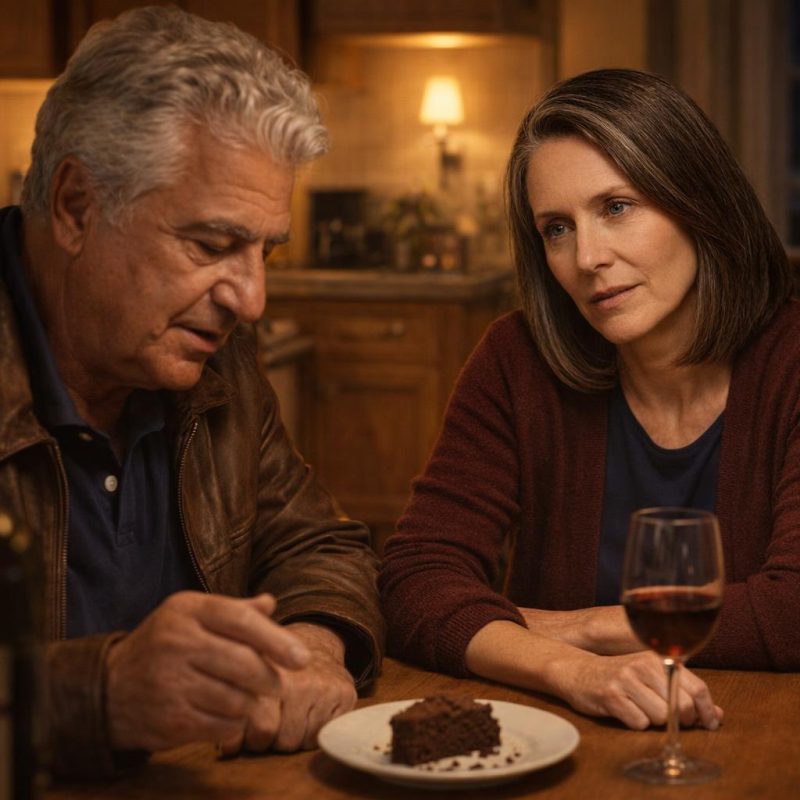 Image by RM AI
The First Two Weeks
The first two weeks, I kept waiting for Frank to settle. He'd always been a man who needed a schedule — up at five-forty, coffee measured to the line, out the door by six-fifteen. Retirement scrambled all of that, and I watched him try to find his footing without quite knowing where to put his feet. He slept until seven, then seven-thirty, and instead of looking rested he looked vaguely unsettled by it, like he'd overslept for something important. He'd pick up the newspaper at breakfast and set it down unread. He'd start toward the garage and end up in the living room. He'd stand at the kitchen window for ten minutes at a stretch, just looking out at the backyard. I did the dishes and said nothing, because I told myself this was normal. Forty-two years of structure doesn't dissolve in a week. I gave him space the way you give a room time to air out after being closed all winter. But some evenings I'd catch him in the middle of the hallway, perfectly still, staring at the wall ahead of him as though he'd completely forgotten where he was going.
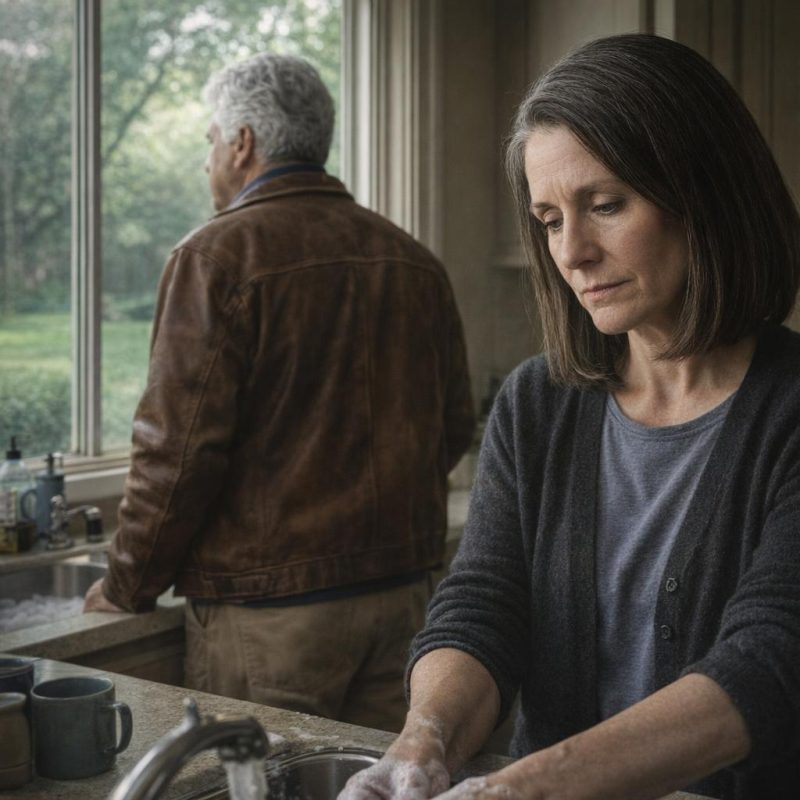 Image by RM AI
Reorganizing the Garage
The garage became Frank's project in the third week. He announced it at breakfast on a Monday — he was going to sort through everything, organize the tools properly, make some sense of the shelves. I helped him that first afternoon, handing him boxes and holding the label maker while he decided where things belonged. He seemed focused in a way he hadn't been since he stopped working, and I was glad for it. By Thursday he'd reorganized the whole space, and it looked genuinely better. Then on Saturday he started again. Different system, he said. More logical. I helped with that one too, though I noticed we were moving several things back to roughly where they'd started. He'd stand back and look at the finished arrangement with real satisfaction, and then within a few hours he'd be restless again, wandering the house with the television going in the background. I didn't say anything about the repetition. I understood, in the way you understand something without quite putting words to it, that the garage wasn't really the problem he was trying to solve. I stood in the doorway one evening and watched him shift the same boxes back to the shelf where they'd begun, and the television murmured on behind me.
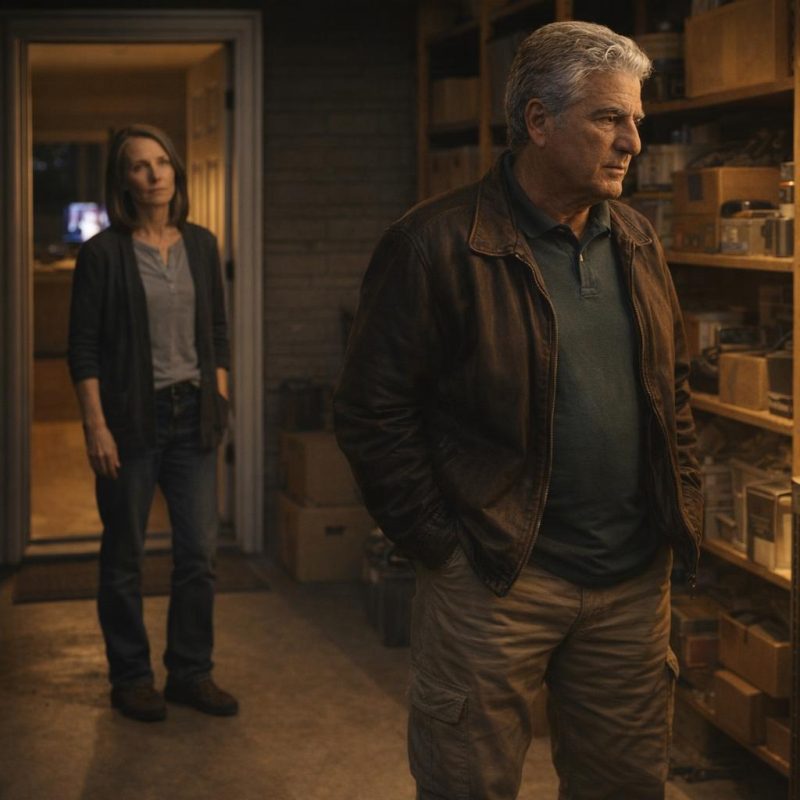 Image by RM AI
The Waiting
I made a decision somewhere around the fifth week that I wasn't going to push. Frank had given forty-two years to a company that ran on deadlines and performance reviews, and it seemed reasonable that unwinding from all of that would take time. I kept to my routines — dinner at six, grocery run on Wednesdays, my Tuesday morning walk with the neighbor down the block — and I tried to let those rhythms carry us both. Frank seemed to appreciate the meals, at least. He'd sit down and eat and talk a little, though his attention drifted. Afternoons he'd fall asleep in the recliner with the television on, and I'd cover him with the throw blanket and go back to whatever I was doing. I told myself it was rest he was catching up on. I told myself a lot of things that month. I'd go to bed at my usual time and lie there in the quiet, and more often than not I'd still be awake an hour later, listening to the low sound of the television drifting down the hall from the living room.
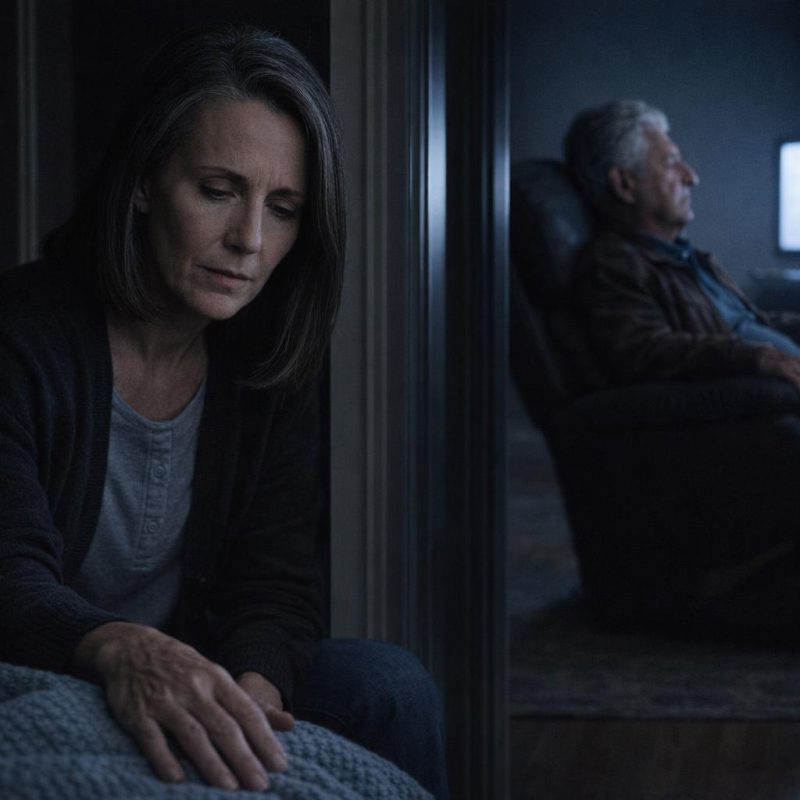 Image by RM AI
The Brass Clock
It was a Saturday in early October when things shifted. Frank found a small notice in the back pages of the local paper — an auction barn about twenty minutes outside of town, estate sale items, starting at nine. He read it twice at the breakfast table and then folded the paper with a kind of purpose I hadn't seen in weeks. He was out the door by eight-thirty. I spent the morning doing laundry and running to the hardware store for weatherstripping, and I'll admit I didn't think much about where he'd gone. He came back just after two o'clock, and I heard the back door open and close with more energy than it had in months. He came into the kitchen carrying something bundled in a dish towel, and he set it on the counter and looked at me with this expression I couldn't quite name — eager, almost boyish. He unwrapped the cloth carefully, the way you'd unwrap something fragile, and his hands were actually trembling a little as he lifted back the last fold and set the brass mantel clock on the counter between us.
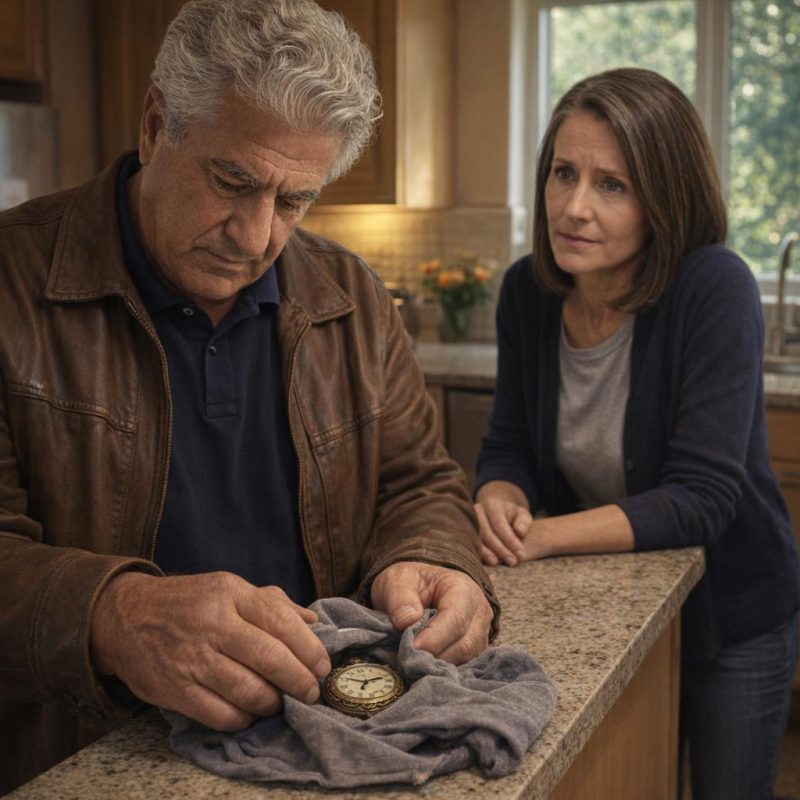 Image by RM AI
The Look on His Face
I asked him about the clock, and that was all it took. He talked for the better part of an hour — the auction barn out on Route 9, the folding chairs set up in rows, the auctioneer who worked without a microphone and didn't need one. He described the other items he'd considered: a set of cast iron skillets, a wooden tool chest with the original hardware, a box of old maps he'd almost bid on just because they were beautiful. He'd paid thirty-two dollars for the clock and he thought it might be worth four times that, though he said it didn't really matter. I asked questions and he answered them and then kept going without prompting, his posture different than it had been in weeks — straighter, more present, like something had come back into alignment. He set the clock on the mantel in the living room and stood back to look at it from three different spots in the room. He mentioned, almost as an aside, that there was another auction the following Saturday. I told him he should go. I meant it without reservation. His eyes had a brightness in them I hadn't seen in longer than I wanted to admit.
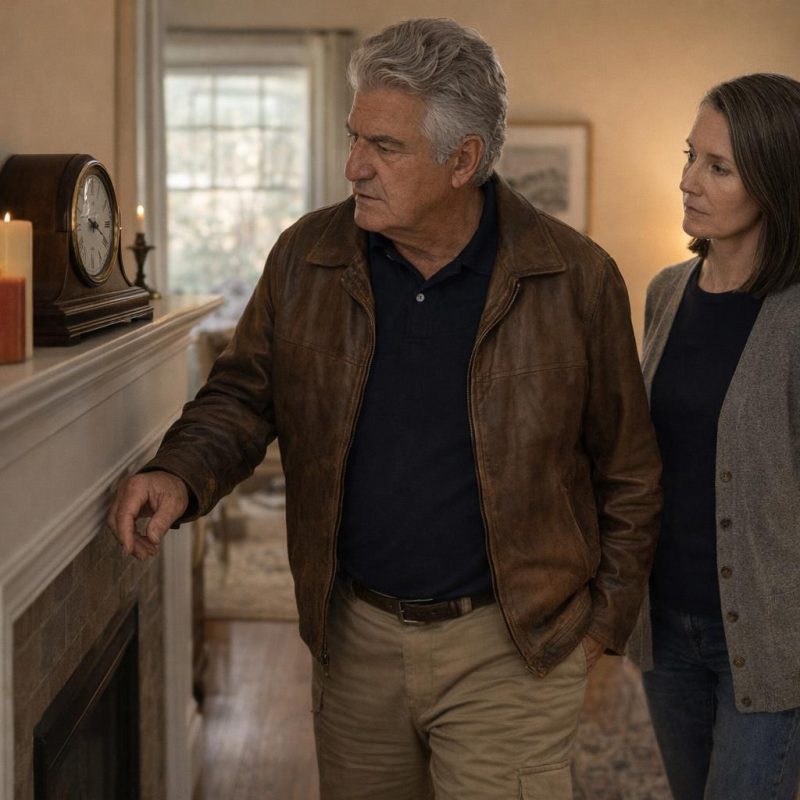 Image by RM AI
Three Auctions in Two Weeks
He went back the next Saturday, and the one after that. Three auctions in two weeks, and each time he came home carrying something wrapped in newspaper or tucked under his arm with the careful attention of a man transporting something irreplaceable. The second trip produced a set of framed photographs — formal portraits, the kind families had taken in the early part of the last century, serious-faced people in their Sunday clothes staring straight into the camera. The third Saturday he came home with a small writing desk, the kind that might have sat in a bedroom or a study, with a broken hinge on the drop-front lid that he was already planning how to fix. I helped him carry the desk into the garage, and we shifted things around to make room. He explained each piece to me with the patience of someone who'd been thinking about it the whole drive home. I listened and asked the occasional question and found I didn't mind any of it. The garage was filling up, that was true, but Frank was filling up too, in some way I was glad to see. I stood among the framed portraits and the furniture and the accumulated weight of other people's belongings, and it felt, strangely, like enough.
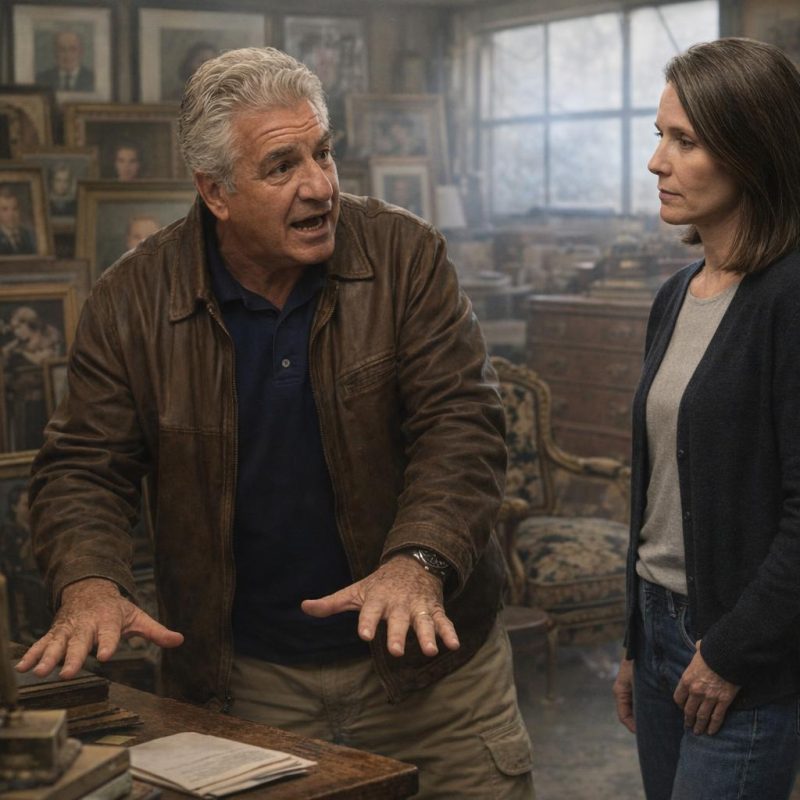 Image by RM AI
Framed Strangers
The following weekend we spent a good part of Saturday morning rearranging the garage properly. It was like one of those road trip packing sessions from when Jennifer was small — everything had to fit, and fit in a way that still left room to move. Frank directed and I shifted, and between us we worked out a system that kept both cars accessible and gave his growing collection a kind of order. The framed photographs went along the back wall, leaning in a row. The writing desk sat against the side wall with its broken hinge facing out, waiting for Frank's attention. He talked while we worked, explaining what he'd learned about vernacular photography — how portraits like these were often overlooked at estate sales, undervalued because nobody recognized the subjects. I handed him a level and held frames steady while he talked. Most of the photographs were formal family groupings, stiff and a little solemn the way those old portraits tend to be. But one of them stopped me for a moment — a woman photographed alone, wearing a wide-brimmed hat tilted slightly to one side, her expression somewhere between composed and amused, beautiful in a way that felt almost out of place among the serious-faced strangers around her.
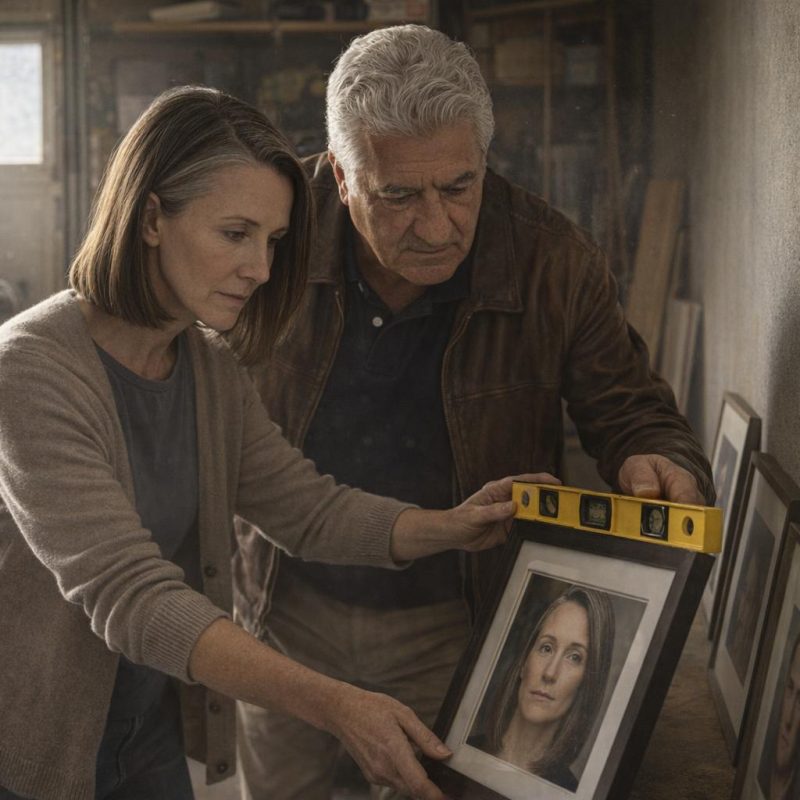 Image by RM AI
Thursday Evenings
It crept up on me so gradually I almost didn't notice. By the third or fourth week of Frank's retirement, Thursday evenings had taken on a particular shape. He'd come in from the garage around seven, wash his hands at the kitchen sink, and settle at the table with his laptop and whatever auction listings had come in the mail. Sometimes he had the newspaper folded open beside him, cross-referencing estate notices with the online listings the way he used to cross-reference sports scores. I'd do the dishes or sit in the armchair with a book, and the sound of him clicking through pages became as ordinary as the refrigerator hum. He'd call out occasionally — a Victorian sideboard coming up in Millbrook, a set of woodworking planes he thought looked promising. I'd say something back without really looking up. It was comfortable in the way that long marriages get comfortable, the two of you occupying the same space without needing to perform at each other. I didn't think much of it until I mentioned to my friend Carol that I couldn't do lunch that Saturday because Frank had an auction. She raised an eyebrow. I opened my mouth to explain — and realized I'd already rearranged my whole week around his schedule without once questioning it.
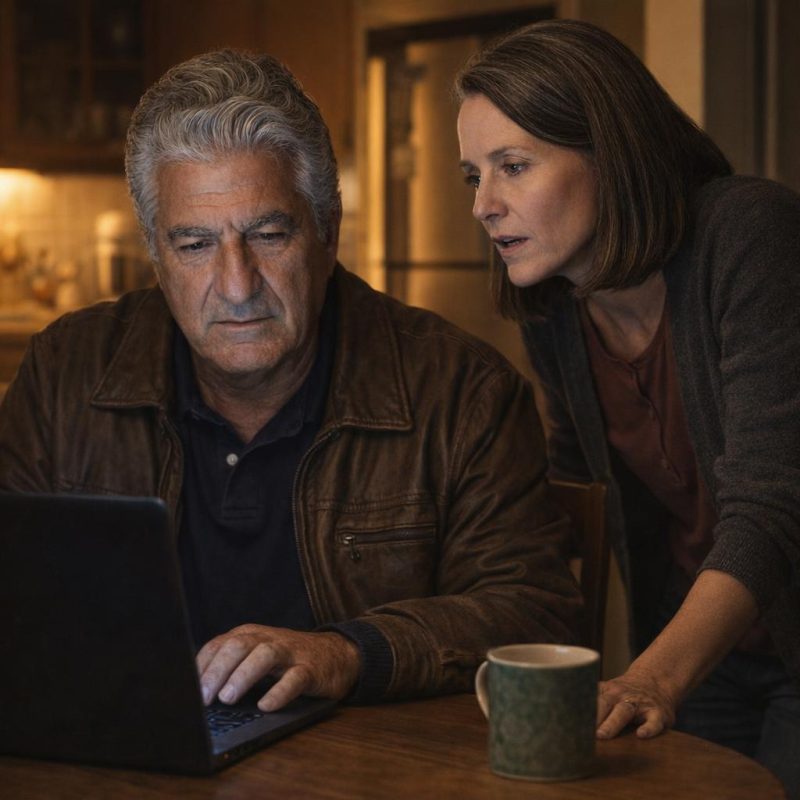 Image by RM AI
Potential
Frank had a way of talking about the pieces he brought home that made dinner last longer than it used to. He'd set something on the counter before we sat down — the brass clock, the writing desk, a small wooden box with a broken latch — and by the time we'd finished eating I'd have heard more about dovetail joints and patina and regional manufacturing differences than I'd ever expected to retain. I didn't retain most of it, honestly. What I kept was the feeling of it — the way his hands moved when he talked, tracing the edge of a drawer or tapping the corner of a frame to demonstrate something about construction. He'd hold up a piece of furniture hardware and explain what made it hand-forged versus machine-made, and his voice would take on that particular quality it gets when he's genuinely absorbed in something. I watched his hands one evening while he described the joinery on the writing desk — how the craftsman had cut each joint by hand, what that said about when and where it was made. And something about the gesture, the way his fingers moved over the wood like he was reading it, brought back a feeling I hadn't thought about in years. He used to talk like that about everything, back when we were first married. I'd forgotten how much I'd liked listening.
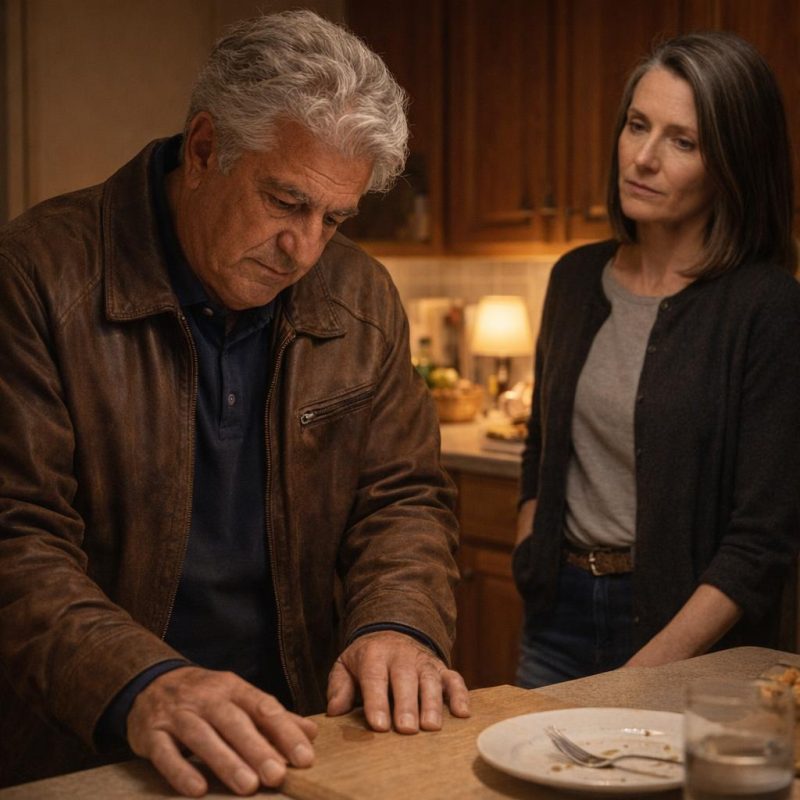 Image by RM AI
The Decision to Join Him
It was a Thursday evening, dishes done, Frank at the kitchen table with his laptop and a cup of tea gone cold beside him. I was standing in the doorway between the kitchen and the living room, not quite ready to settle into my book, watching him scroll through listings with that focused, unhurried attention he'd developed. He circled something in the margin of the newspaper printout he kept beside the laptop — a habit I'd noticed him pick up, the way some people annotate books. I found myself wondering what it actually looked like, the auction barn. I'd pictured it vaguely: folding chairs, fluorescent lights, someone talking too fast into a microphone. But I'd been picturing it from the outside, the way you picture a place you've only heard described. Frank looked up and caught me watching him. I said I was thinking I might like to come along Saturday, if he didn't mind the company. He looked surprised for just a moment — genuinely surprised, not the polite kind — and then something in his face settled into something warmer. He said of course, that he'd been meaning to ask. I told him I'd probably be bored. He said that was fine, that most people were, at first. I went back to my book, but I wasn't really reading anymore. I was already thinking about Saturday.
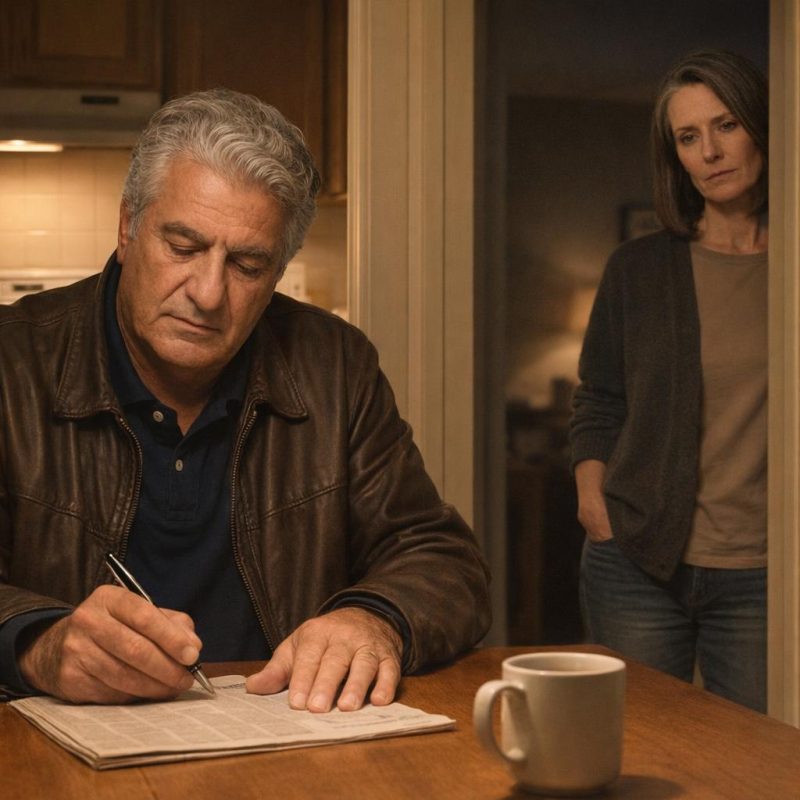 Image by RM AI
The Auction Barn
The auction barn was twenty minutes outside of town, down a county road I'd driven a hundred times without ever turning into that particular gravel lot. Inside it was bigger than I'd expected — high ceilings, concrete floors, rows of folding chairs facing a raised platform where the auctioneer stood with a microphone and a kind of practiced authority. Frank handed me a bidder's card at the registration table and I took it the way you take things you don't intend to use. The coffee was free and terrible, which I appreciated for the honesty of it. I found a folding chair near the refreshment table and settled in while Frank moved toward the front, where a cluster of people stood examining lots with the focused expressions of people who had done this many times before. Once I stopped trying to follow the numbers, the auctioneer's voice had a rhythm to it that was almost musical — a kind of call and response with the room. I watched a retired couple argue quietly over a lamp they clearly didn't need. I watched a young woman in overalls photograph every angle of a mid-century credenza before the bidding even started. I was enjoying myself more than I'd expected to admit. Then I noticed a young couple near the side wall, bidding on a low-slung chair with an intensity that seemed out of proportion to the furniture, while Frank drifted steadily toward the front of the room.
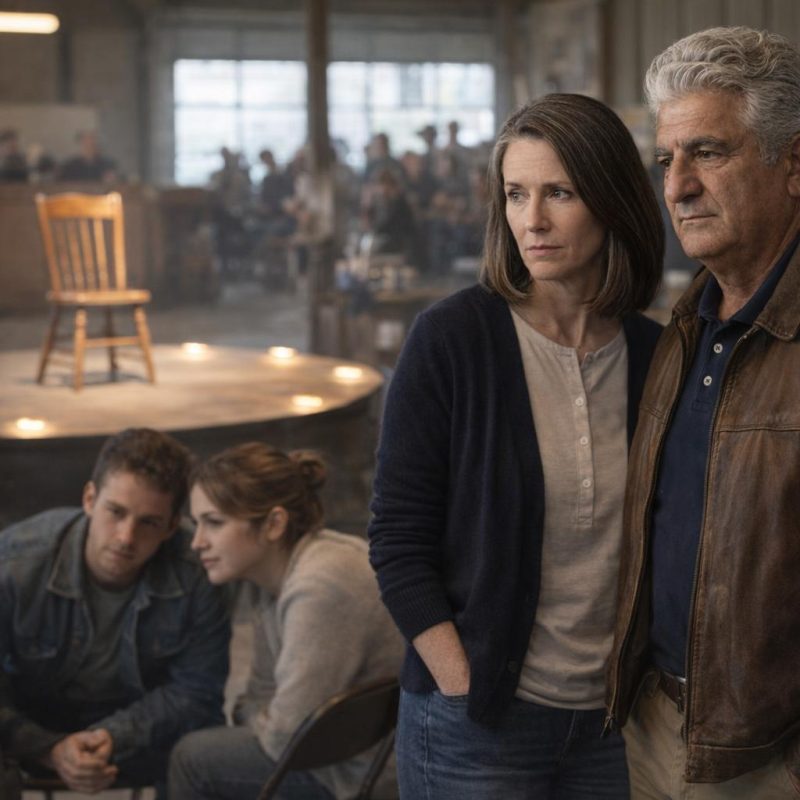 Image by RM AI
The Saturday Rhythm
After that first Saturday it became our routine without either of us formally deciding it would. I had my spot near the refreshment table — third chair from the end, close enough to the coffee urn to refill without losing my view of the room. Frank had his spot near the front, standing with the other serious bidders, hands in his pockets, watching the auctioneer the way you watch someone you've learned to read. I could see him from across the room, and I found I liked that — the particular angle of his shoulders when something caught his attention, the small shift in his posture when he decided to bid. We'd meet up between lots, compare notes. He'd tell me about the piece he was watching; I'd tell him about whatever small drama I'd observed from the back. A couple who kept outbidding each other by accident. A dealer who arrived late and immediately started working the room. Frank would listen and smile and then drift back toward the front. By the time we loaded whatever he'd won into the back of the car and pulled out of the gravel lot, the day had a pleasant, used-up feeling to it. We drove home most Saturdays without talking much, the radio low, the afternoon light coming in sideways through the windows, and it was the kind of quiet that doesn't need filling.
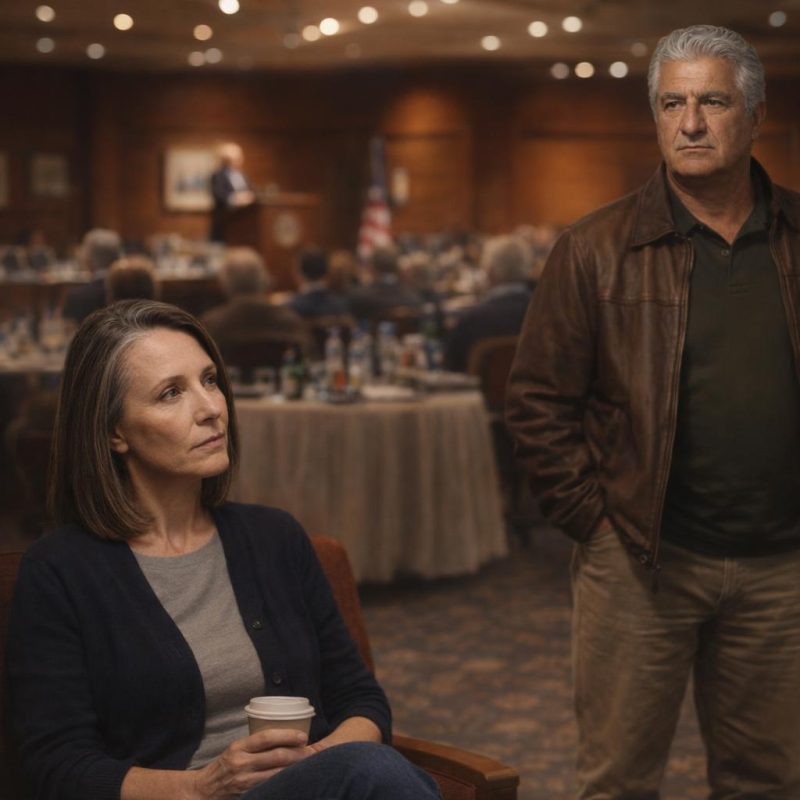 Image by RM AI
The Cabinet He Lost
Frank had spotted the cabinet early, before the auction even started — a dark walnut piece, low and wide, with original hardware and what he said were very good bones. He described it to me while we were still getting coffee, turning his bidder's card over in his hands the way he does when he's already decided he wants something. When the lot came up he positioned himself near the front and I watched from my usual spot. The bidding moved faster than usual. A dealer in a canvas jacket kept raising his paddle with the unhurried confidence of someone spending someone else's money. Frank stayed in longer than I expected him to, his paddle going up each time with a small, deliberate motion. I could see the set of his jaw from across the room. The dealer raised again. Frank raised. The dealer raised one more time, and the auctioneer's hammer came down before Frank's arm had fully lowered. He stood there for a moment, paddle at his side, and then made his way back to me. I handed him his coffee without saying anything. He took it and looked at the floor and said fifty dollars, just fifty dollars. I told him there'd be another one. He said he knew that. We talked about the cabinet all the way home — the hardware, the proportions, what he would have done with it — and by the time we pulled into the driveway his face had gone back to its ordinary expression, the disappointment worn smooth by the telling of it.
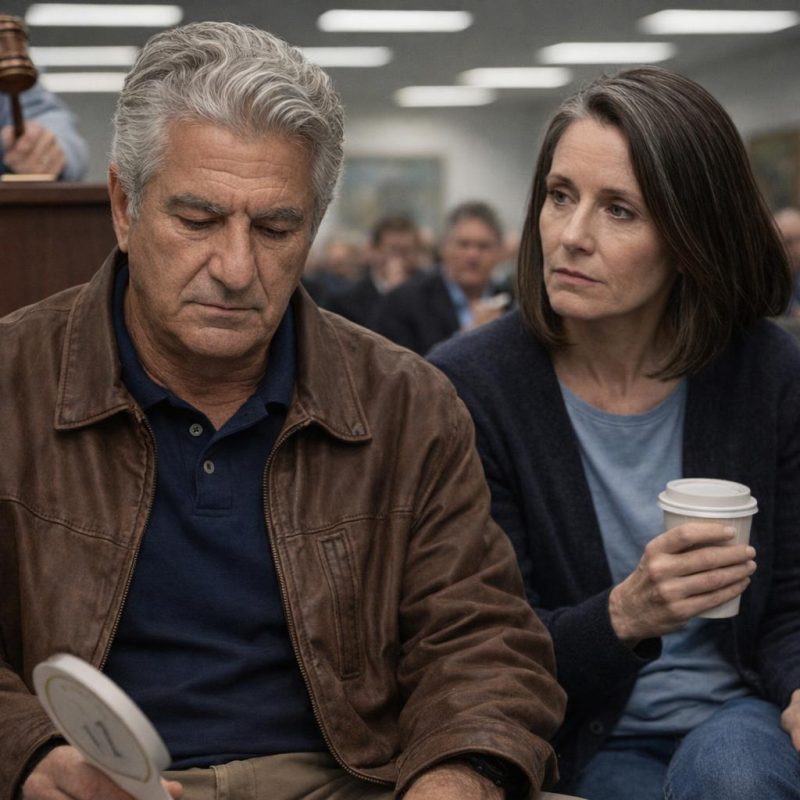 Image by RM AI
The Dealers and the Collectors
After enough Saturdays I started to feel like I understood the room. There were the dealers — you could spot them by the way they moved through the preview, methodical and unhurried, picking up pieces and setting them down without any visible reaction. There were the entertainment couples, there for the outing as much as anything, who'd leave with something they hadn't planned on buying and seem pleased about it. There were the young collectors, intense and specific, who knew exactly what decade they were hunting and wouldn't look twice at anything outside it. And then there were the serious hobbyists, the ones like Frank, who came with research and patience and a particular piece in mind. I'd gotten good enough at reading the room that I could usually tell who was going to bid on what before the lot came up. I watched body language the way I used to watch students in a classroom — who was leaning forward, who had gone very still, who was pretending not to look at something they very much wanted. Frank fit in naturally with the hobbyist collectors, comfortable in the rhythm of it. One Saturday I noticed a dealer in a gray jacket moving toward a wooden tool chest that Frank had been circling during the preview, running his hand along the lid with that particular focused attention Frank reserved for pieces he'd already half-decided on.
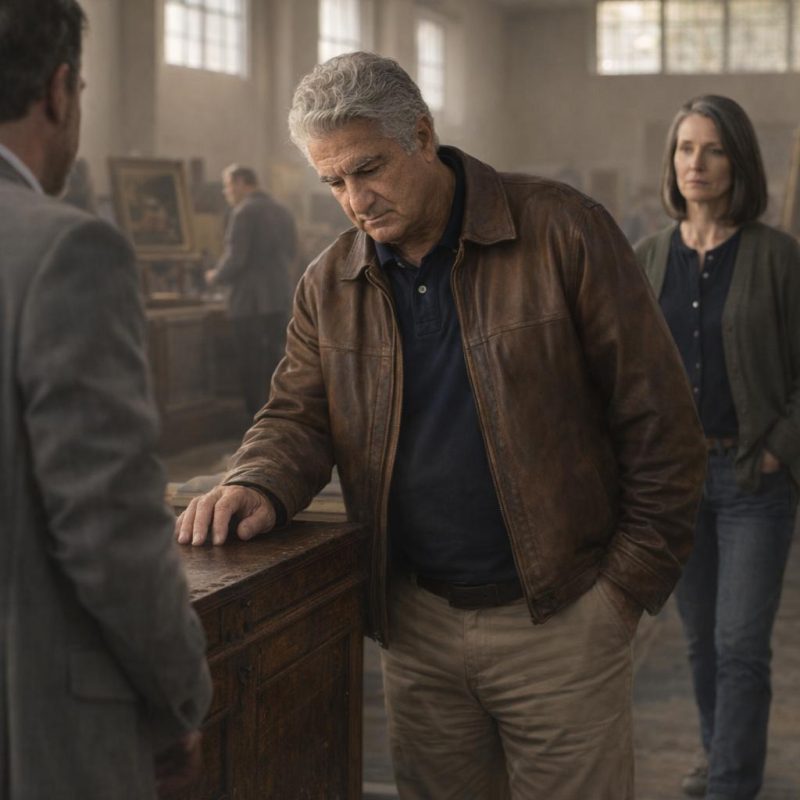 Image by RM AI
Research at the Kitchen Table
Frank came home one Saturday with a canvas roll of woodworking tools — chisels and gouges wrapped in individual pockets, the kind of thing a craftsman would have carried. He set it on the kitchen table and unrolled it carefully, and within the hour he was at the laptop, reading about makers' marks and regional tool manufacturers the way some people read novels. I made dinner around him, working at the counter while he read aloud occasionally — a sentence about hand-forged steel, a note about a particular workshop in Pennsylvania that had operated for only twelve years before closing. By the time we sat down to eat he had moved on to furniture, specifically to the dovetail joints on the writing desk still waiting in the garage, and from there to a furniture maker from the 1880s whose name I'd already forgotten by the time he finished explaining the significance of it. He talked for nearly twenty minutes — the man's workshop, his apprentices, the particular style of his drawer construction that apparently made his pieces identifiable even without a maker's mark. Frank's hands moved the whole time, sketching shapes in the air above his dinner plate. I sat across from him and listened, and what struck me wasn't the information itself but the quality of his attention — the way his voice picked up speed when he found the thread of something, opinions and knowledge coming out in a rush the way they used to when we were young.
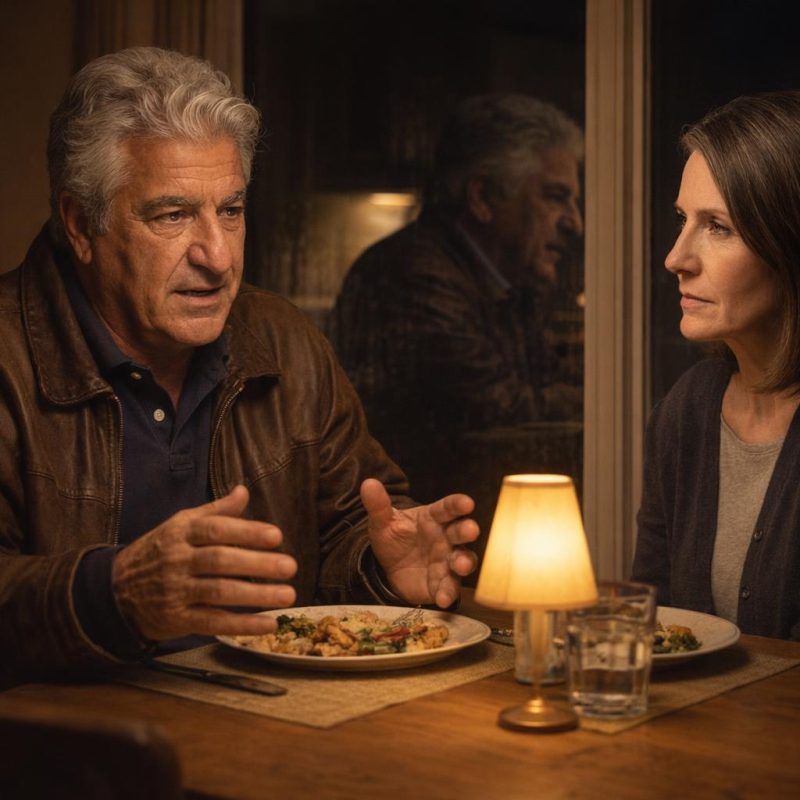 Image by RM AI
Details She Would Have Missed
He started teaching me to look properly sometime that autumn, and I found I was a willing student. It began with the writing desk still sitting in the garage — Frank crouched beside it one Saturday morning, running his thumb along the inside edge of a drawer, explaining how the fit told you something about the maker's patience. A tight drawer meant care. A loose one meant speed, or a bad season, or an apprentice left unsupervised. I crouched beside him and tried to feel what he was feeling, and I couldn't quite, but I understood what he meant. He showed me how to read grain patterns on a tabletop — the way the wood moved, the direction of the lines, what it suggested about where the tree had grown and how it had been cut. Most of it went past me within the hour. What stayed was the quality of his attention, the way he handled things as though they deserved to be handled carefully. At the next auction I tried to look the way he'd shown me, running my fingers along the underside of a small side table while he was occupied elsewhere. I didn't find much. But on the back of a framed print leaning against the wall, half-hidden by shadow, I found a small stamped mark — a maker's name and a date and a city I recognized.
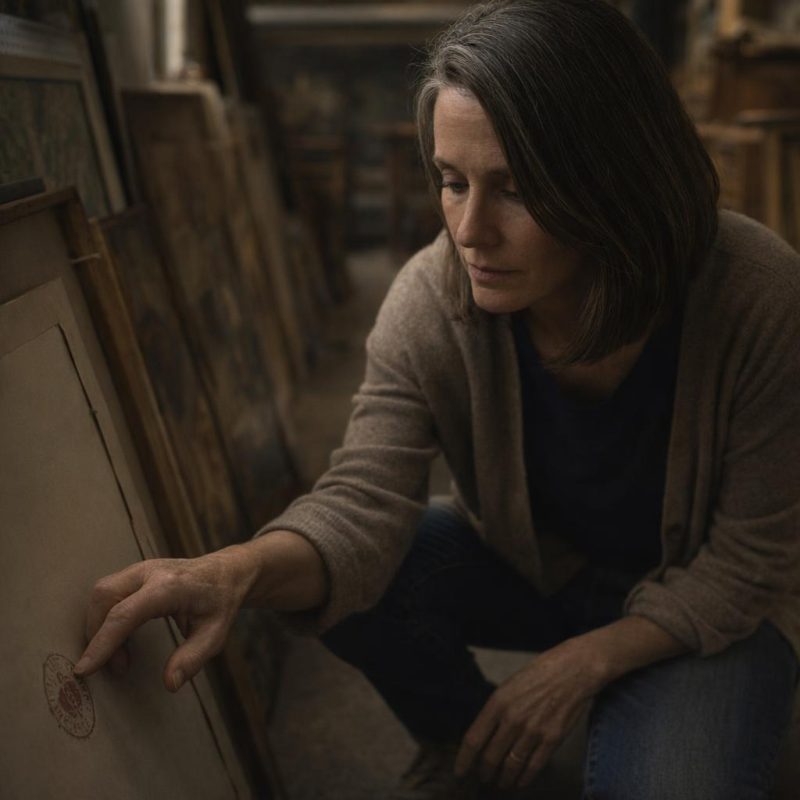 Image by RM AI
The Shape of the Week
By the time the leaves were fully down, the auction schedule had become the shape of our week in a way that felt entirely natural. Thursday evenings Frank sat at the kitchen table with the regional newspaper folded open to the estate notices, a pen in one hand and his reading glasses pushed up on his forehead. He'd cross-reference listings on the laptop, checking addresses against estate sale websites, making small notes in the margins about what a particular house might yield based on the neighborhood and the decade it was built. I learned to check with him before making any Saturday plans, the way you'd check a calendar that someone else maintains. A few times I'd mentioned something — a lunch, a neighbor's open house — and he'd look up with that particular expression, and I'd say never mind, we can do it another week. It didn't feel like a sacrifice. It felt like the natural order of things, the way a shared life develops its own gravity. I started planning my grocery runs for Friday afternoons so Saturday mornings would be free. I started keeping a small bag packed with comfortable shoes and a water bottle. On Thursday evenings I'd make tea and bring him a cup without being asked, and he'd thank me without looking up from the paper, pen moving in slow circles around the listings that interested him most.
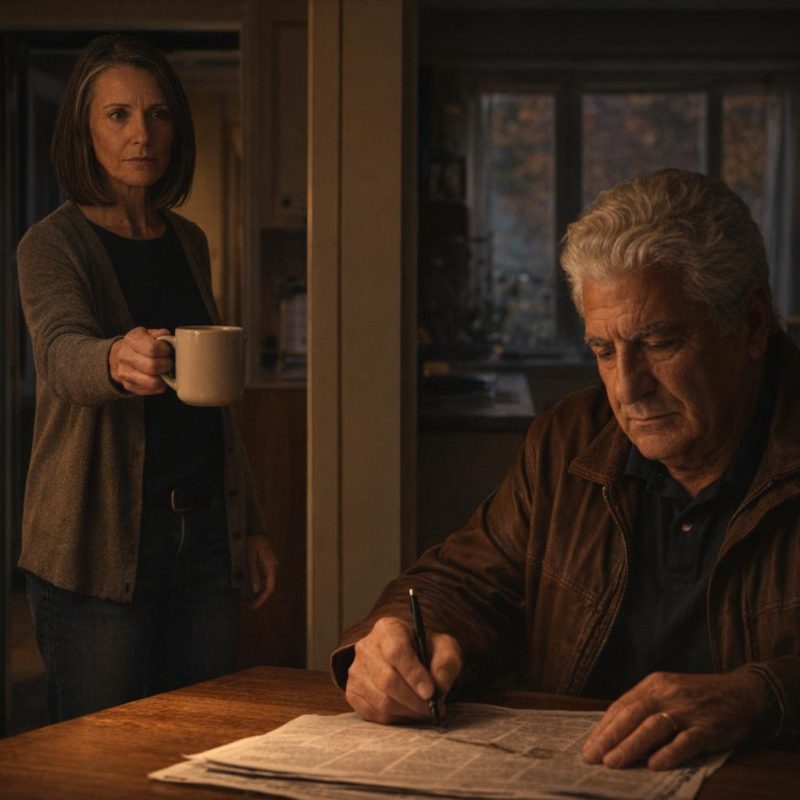 Image by RM AI
The Prior Commitment
My cousin Ruth called in early October about her birthday gathering — a Saturday afternoon at her daughter's house, the kind of easy family afternoon I'd always enjoyed. I told her I'd check with Frank and call her back. Frank had been tracking an estate sale two counties over for nearly three weeks by then, a Victorian house whose contents he'd been piecing together from the listing photographs the way a detective assembles evidence. He'd mentioned it at dinner twice and shown me a photograph of a sideboard he thought might be worth the drive. When I asked him about Ruth's party, he didn't say anything for a moment, just looked at the calendar on the refrigerator. I told him it was fine, that we could skip it, that Ruth would understand. He said he appreciated it. I called Ruth that afternoon and told her we had a prior commitment, which was technically true — Frank had circled that sale in the newspaper weeks before the invitation arrived. Ruth was gracious about it, the way she always is, and said we'd celebrate another time. I felt a small pull of guilt after I hung up, the kind that fades quickly when you've already made your decision. We'd been to three family gatherings that year. One missed birthday felt manageable. The auctions had become the thing we did together, and that felt like it counted for something.
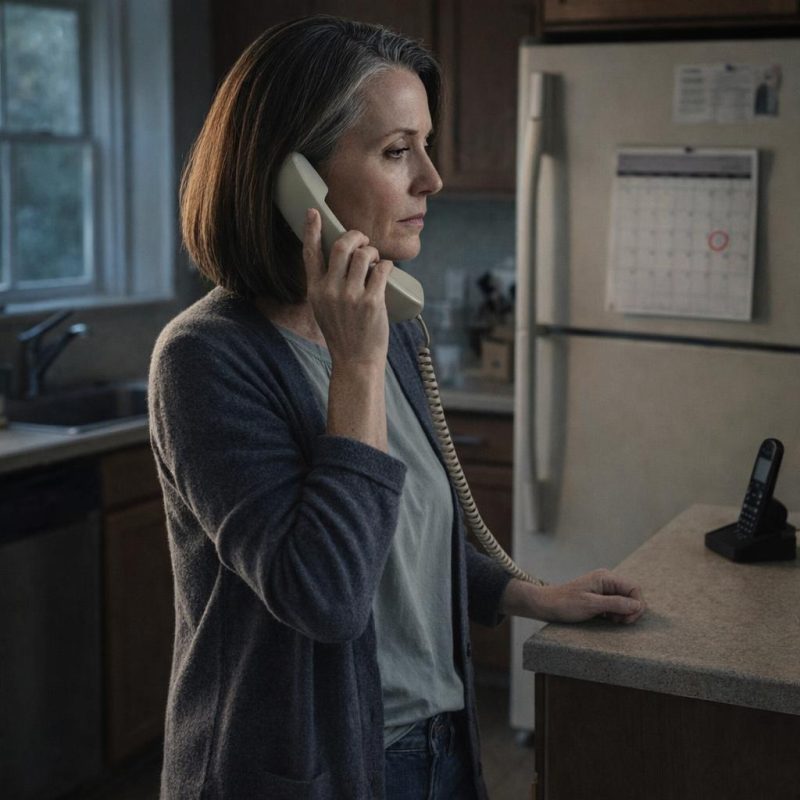 Image by RM AI
The Victorian House
The Victorian house was everything Frank had hoped it would be. We drove out on a gray October Saturday, two counties over, and pulled into a street already lined with cars on both sides. The house itself was tall and narrow with a wraparound porch, the kind of place that holds onto things — dark wood trim, high ceilings, rooms that opened into other rooms. Frank had his auction paddle before I'd finished my coffee. The crowd was thick for a Saturday morning, dealers and regulars moving through the rooms with the practiced efficiency of people who do this every week. I drifted toward the back parlor where someone had set up a folding table with coffee and packaged cookies, and I stood there for a while watching the room fill and empty. Frank had found the sideboard almost immediately — I could see him across two doorways, crouched beside it with his reading glasses on, running his hand along the lower rail the way he'd taught me to do. He looked entirely absorbed, entirely himself. I was refilling my coffee cup when I noticed a woman making her way toward me through the crowd. She was somewhere in her late fifties, dressed practically in a canvas jacket and sensible boots, the kind of person who comes to these sales regularly and knows what she's looking for. She had an expression I couldn't quite read — something between recognition and discomfort — and she was looking directly at me as Frank inspected the sideboard across the room.
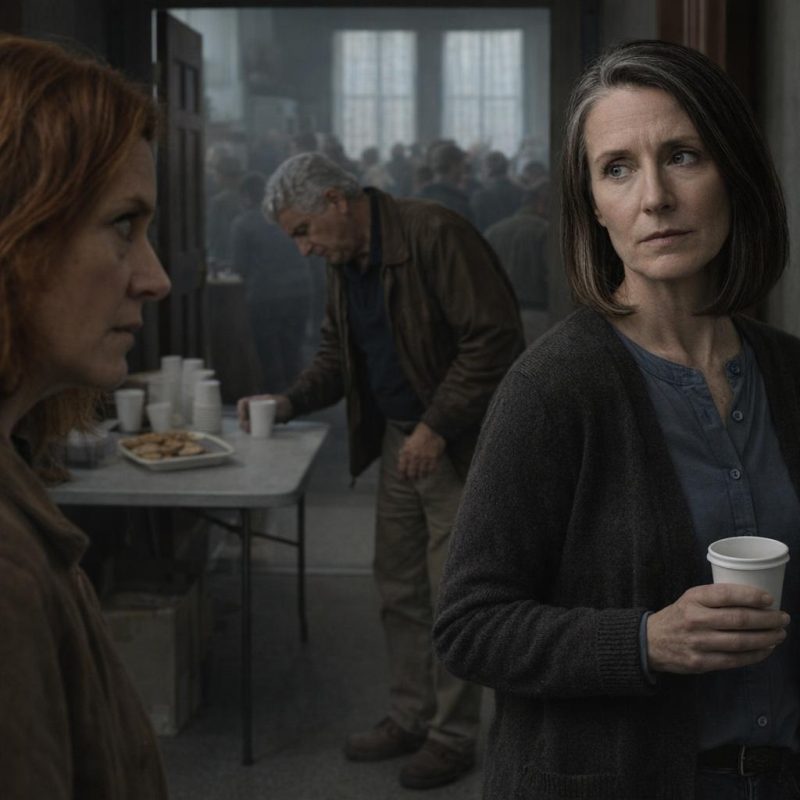 Image by RM AI
What She Meant
She introduced herself as Marilyn and said she'd seen me at a few sales before, which I believed — I'd started to recognize the regulars by then. She said she hoped she wasn't interrupting, and I told her she wasn't. Then she said something that didn't quite land right. She said she was a little confused, and she said it in the way people say things when they're not sure they should be saying them at all. I asked her what she meant. She shook her head and said she'd misunderstood something, that it wasn't important. I asked what she'd misunderstood. She looked briefly uncomfortable and said she'd thought I was someone else — that Frank mentioned a woman at the sales sometimes, and she'd assumed the woman he mentioned wasn't me. She said it quickly, like she was trying to get through it, and then she seemed to regret having said it at all. I started to ask another question — I'm not sure what I would have asked — but she picked up her coffee cup and said she was sorry for the confusion and moved toward the far end of the room before I could find the words. I stood there holding my cup. The crowd moved around me. Across the room, Frank was still crouched beside the sideboard, absorbed in whatever he was reading in the wood, and Marilyn paused once near the doorway and looked back at him with an expression I couldn't name.
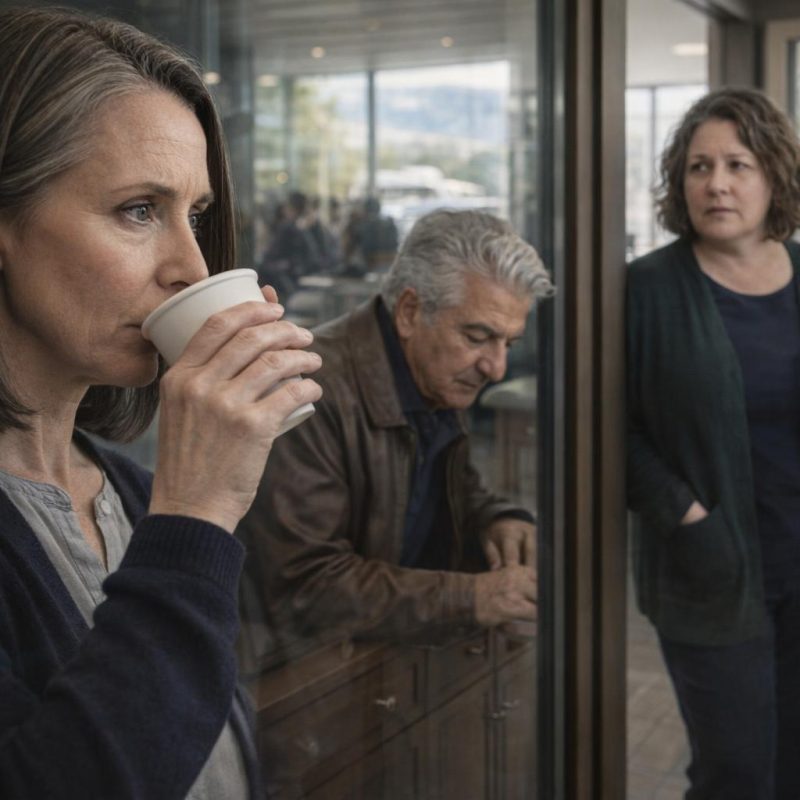 Image by RM AI
The Sideboard
Frank came back twenty minutes later looking pleased with himself in the way he always did when a bid went better than expected. He'd gotten the sideboard for less than he'd budgeted, he said, and he was already thinking about where it might go — the front hallway, maybe, or the wall in the dining room where we'd never found the right piece. He talked about the wood quality on the drive to the truck, about the construction of the lower cabinet doors, about something in the joinery that suggested an earlier date than the listing had indicated. I nodded and said the right things. I asked whether the hallway had enough clearance, which was a reasonable question, and he said he thought so, and we talked about measurements for a few minutes. The whole time, Marilyn's words were sitting somewhere just behind my attention, the way a sound sits in a room after the source of it has stopped. I kept turning the phrase over — a woman Frank mentioned, not me. I told myself it was nothing, that she'd clearly been embarrassed and had probably misremembered something someone else had said. Frank didn't notice anything different about me. He was happy, talking about the piece the way he talked about all the pieces he loved, and I kept nodding in what I hoped were the right places while he talked.
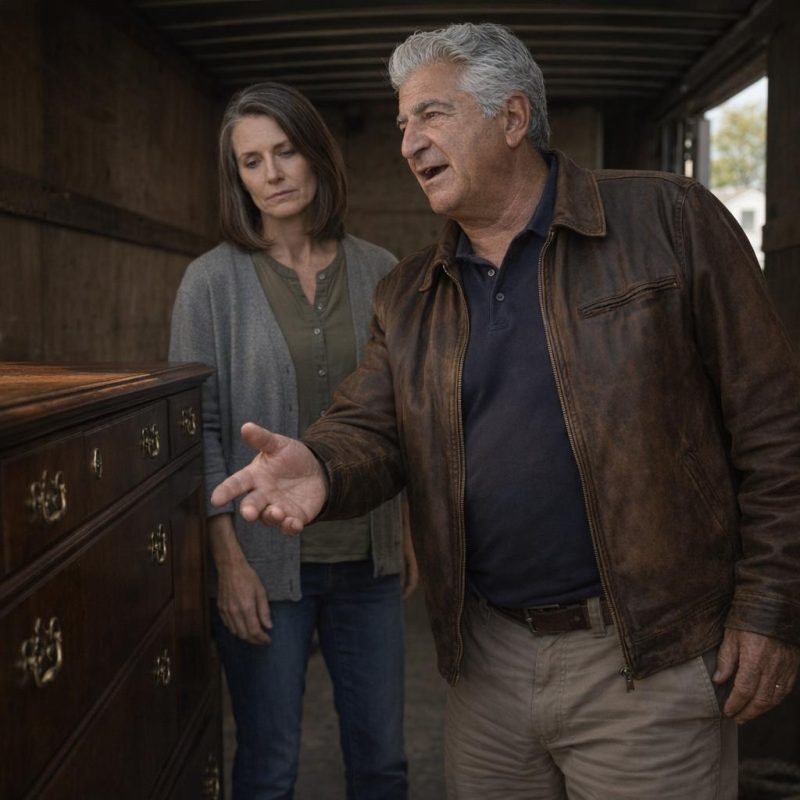 Image by RM AI
The Name
We stayed another hour after Frank secured the sideboard, working our way through the remaining rooms while a man from the auction house arranged for loading. I'd mostly settled back into the rhythm of the sale by then — looking at a set of pressed glass dishes I didn't need, running my hand along a cedar chest that smelled exactly like my grandmother's house. Frank was outside with the truck when I drifted toward the back door to let him know I was ready to leave. The man helping with the loading was asking Frank something about the piece, something about the style or the period, and Frank was answering in that easy, knowledgeable way he had when someone asked him a question he actually wanted to answer. I wasn't really listening. I was thinking about whether I'd left my water bottle in the parlor. And then, in the middle of whatever Frank was saying to the man, I heard a name. Just a name, dropped into the sentence the way you'd mention someone familiar, someone you expected the other person to know. I only caught the tail end of the sentence. I didn't catch the context. But the name itself came through clearly enough, and it wasn't a name I recognized — it wasn't anyone from our life, anyone from the neighborhood or the family or the years we'd spent together. Frank said Clara.
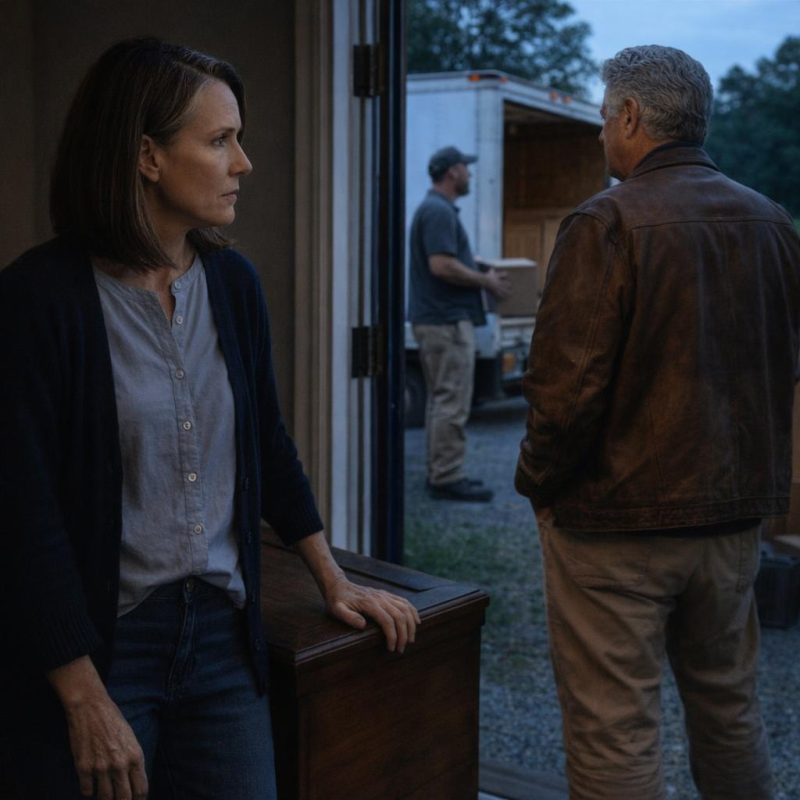 Image by RM AI
The Drive Home
We loaded the last of it and got on the road a little after noon. Frank drove, which he always did on the longer trips, and I sat with my hands in my lap and watched the October fields go by. He talked most of the way home — about the sideboard, about a lamp he'd almost bid on, about a dealer he'd spoken to who apparently knew a great deal about Victorian hardware. I made the sounds of someone listening. I asked a question about the lamp at some point, and he answered it at length, and I went back to watching the fields. The name had settled somewhere in the back of my mind and wouldn't move. I turned it over quietly, the way you turn over a word in a foreign language that you almost recognize. I didn't know anyone named Clara. Frank had never mentioned anyone named Clara in thirty-eight years of marriage, not a neighbor, not a colleague, not a distant relative I'd never met. I wondered if I'd misheard. The sentence had been half-finished, the loading dock noisy, Frank's voice directed at someone else entirely. It was possible I'd caught a syllable wrong. I told myself that was probably it. The name sat in the back of my mind like something I'd stepped on in the dark and couldn't quite identify.
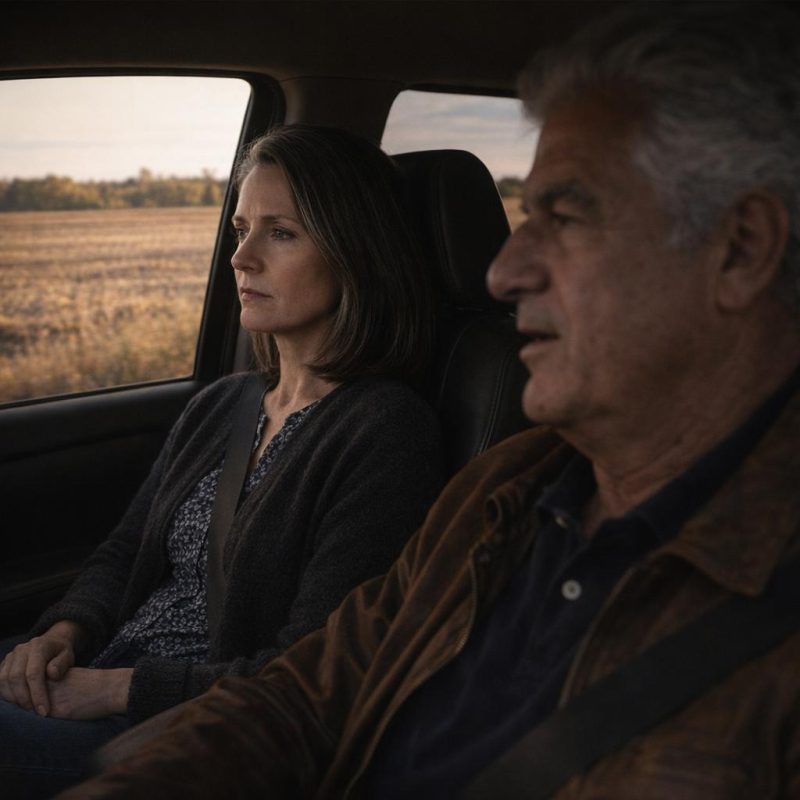 Image by RM AI
Unloading
We got home a little after three. Frank backed the truck into the driveway and we unloaded the sideboard together, one end each, shuffling sideways through the garage door while he called out instructions about the threshold. It was heavier than it looked. We set it against the far wall, and he stood back and looked at it the way he always did with a new piece — hands on his hips, head tilted, satisfied. He said it would clean up nicely. I said I thought so too. He went inside to wash up, and I stayed in the kitchen and put the kettle on and waited. I wasn't sure what I was waiting for exactly. I just knew I wanted to ask while the day was still close enough to feel natural. When he came back in, drying his hands on the dish towel, I mentioned it as casually as I could — that a woman at the auction had come up to me near the loading dock, thinking I was someone Frank had talked about. I kept my voice easy. I watched his face when I said it.
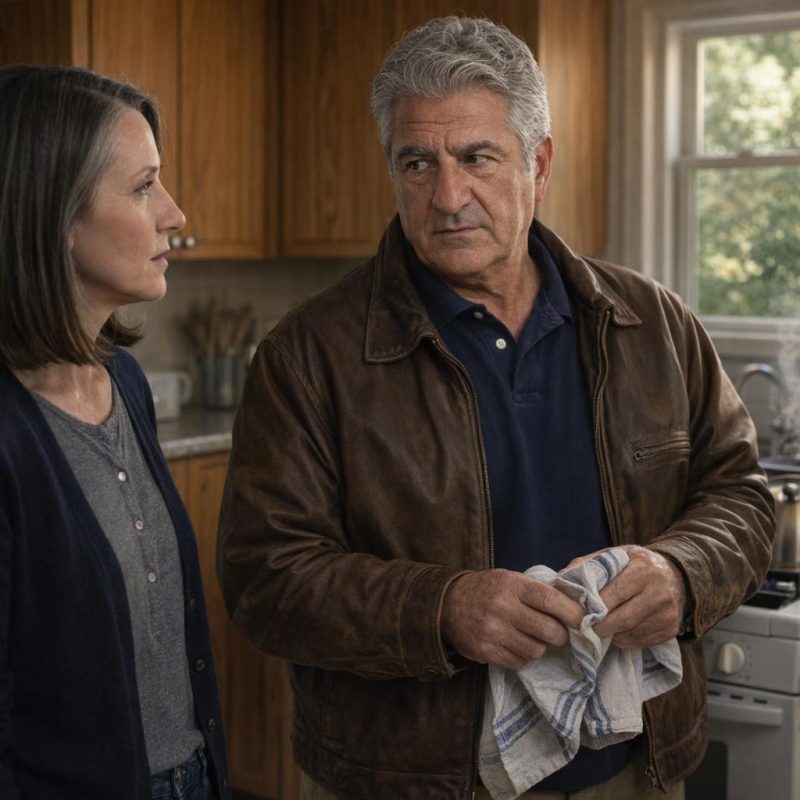 Image by RM AI
The Laugh
He looked at me for just a second — not long, barely a beat — and then he laughed. Not a big laugh, just a short, easy one, the kind that says the thing you've said is mildly amusing and not worth much more than that. He said the auction circuit was full of people who half-listened to conversations and filled in the gaps themselves. He shrugged and hung the dish towel back on the oven handle. He said he probably talked to a dozen people at every sale and couldn't account for what any of them thought they'd heard. It was a perfectly reasonable answer. That was the thing. It landed smoothly, without any edges I could catch on. He didn't ask who the woman was. He didn't ask what she'd said exactly, or what she'd thought my name was, or why she'd approached me at all. He just moved on — opened the refrigerator, asked if we needed milk. I stood there and tried to find what was bothering me about it, and I couldn't quite name it. The ease of it was what stayed with me.
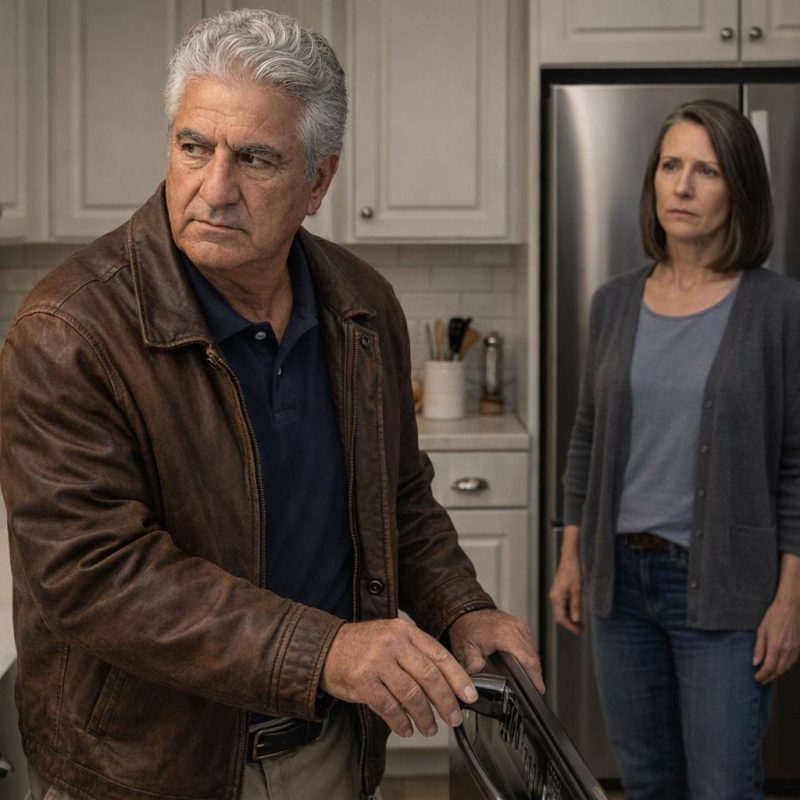 Image by RM AI
The Next Morning
I slept badly and woke up with it still sitting there. Over coffee I brought it up again, more carefully this time. I said I'd been thinking about what the woman had said, and that she'd used a name — that she'd called me Clara. Frank was standing at the counter with his back to me, rinsing his mug. He set it down and said the same thing he'd said the night before, almost word for word — that people at those sales heard pieces of conversations and invented the rest. His voice had a quality I couldn't quite name. Not irritated. Not defensive. Just even, the way someone sounds when they're explaining something they consider already settled. I asked him directly if he knew anyone named Clara. He was quiet for a moment. Then he said no, it didn't ring a bell at all. He said he thought he might have left a socket wrench in the truck and he should go check before he forgot. He was still facing the counter when he said it.
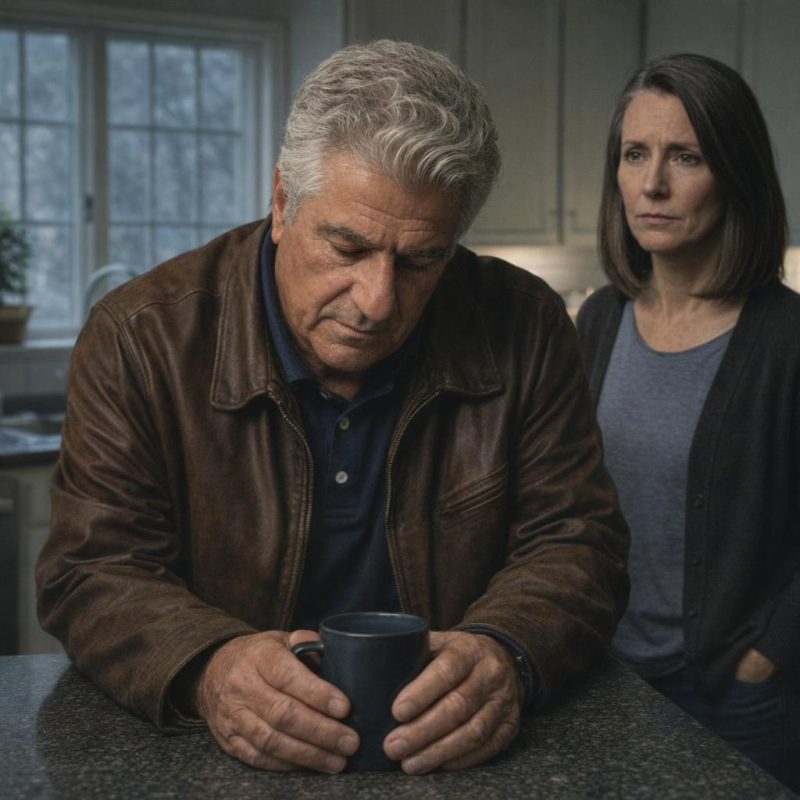 Image by RM AI
The Unsteady Hand
He didn't move toward the door right away. He reached for the coffee pot first, to refill his cup. I watched him from the table. He lifted the pot and tipped it over his mug, and his hand wasn't quite steady as he poured. It wasn't dramatic — just a small tremor, the kind you might not notice if you weren't paying attention. A little coffee caught the rim of the mug instead of the inside. He set the pot down without looking at it and without looking at me, and then he said something about the wrench again and walked out through the back. I sat there. The kitchen was quiet. I thought about the way he'd answered — facing the counter, voice flat and even, no curiosity about the name or the woman or why any of it had happened. And then I thought about his hand on the coffee pot. Those two things sat next to each other in my mind and I couldn't make them fit together into something that felt like nothing.
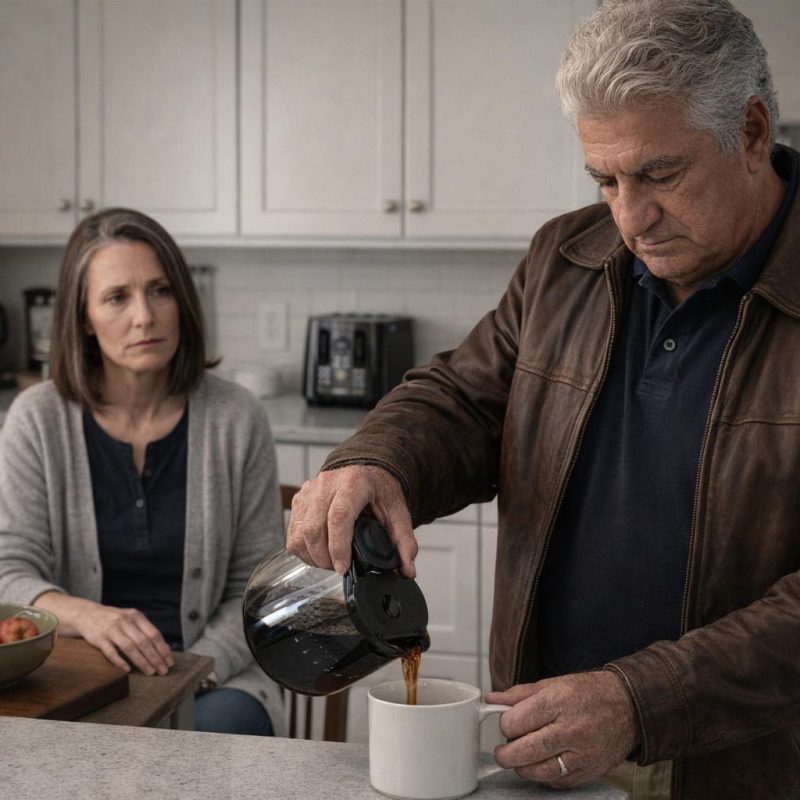 Image by RM AI
The Realization
I didn't follow him. I sat at the table and let the quiet settle around me. I thought about Marilyn's face at the loading dock — the way she'd gone uncomfortable so quickly, the apology in her expression before she'd even finished the sentence. I thought about the name itself, how it had come out of her mouth with a kind of weight to it, like it meant something specific. And I thought about Frank's hand on the coffee pot. His voice had been steady. His hand hadn't been. I'd been married to him for thirty-eight years, and something about the way those two things sat together — the even voice, the unsteady hand — didn't add up the way it should have. I wasn't certain of anything. I didn't have anything I could point to. But something had shifted in the last twenty-four hours, quietly and without announcement, and I could feel it the way you feel a change in air pressure before a storm — not the storm itself, just the stillness that comes before it. I sat with that feeling and didn't move.
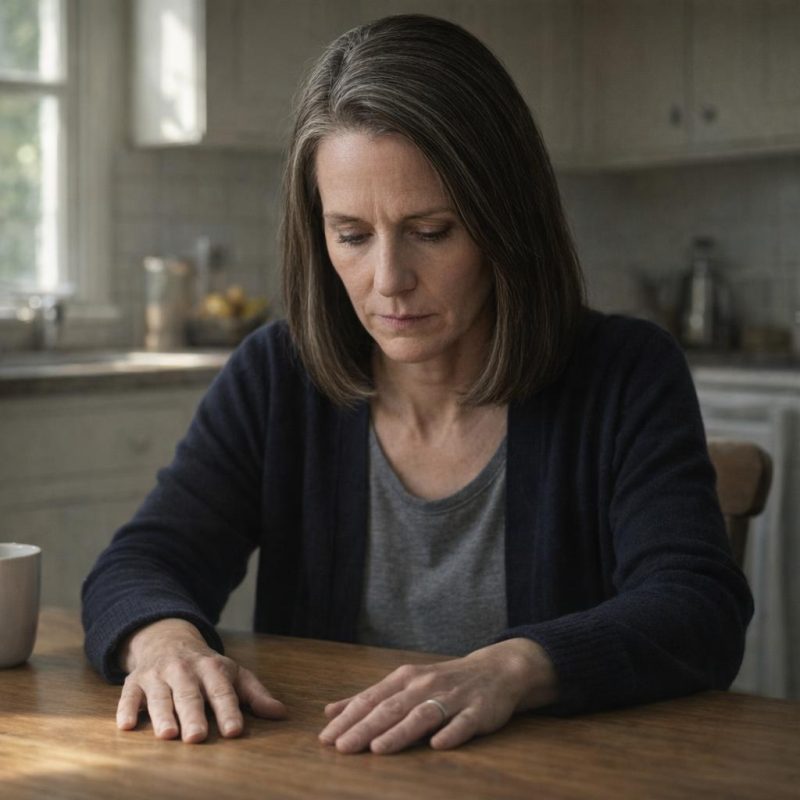 Image by RM AI
Looking Through the Garage
Frank stayed outside for a long time. I heard the truck door open and close, and then the sound of him moving around in the driveway. I went to the garage. I told myself I was just looking at the sideboard again, checking how it sat against the wall. But I stood in front of the photographs instead. There were seven of them now, framed and propped along the shelf above the workbench — the ones Frank had picked up at various sales over the past year. I'd looked at them before without really looking. Serious-faced families. A man in a dark coat. A child with a hoop. I'd thought they were just the kind of thing you found at estate sales, the anonymous past that nobody wanted. But standing there now, I went through them one by one. The man in the dark coat was the only man. The child could have been either. The rest — five of the seven — were women. Portraits, mostly. One group photograph with three women standing in a garden. I stood there and looked at all of them, and then my eyes went back to the woman in the hat.
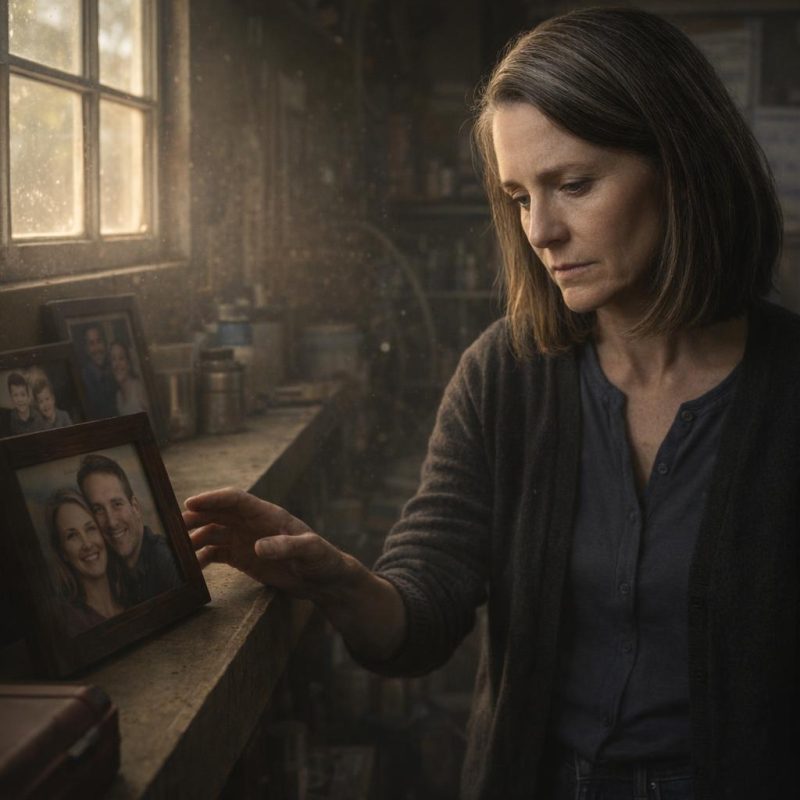 Image by RM AI
The Woman in the Hat
I picked her up. The frame was cool and a little dusty, and the photograph inside was sepia, the way they all were from that era — early 1900s, I guessed, based on the collar and the cut of the jacket. The woman was looking slightly off to one side, not quite at the camera. I'd thought she was beautiful the first time Frank brought her home, and I still thought so. There was something composed about her face, something self-contained. I tried to remember what Frank had said when he bought her. Something about the frame, I thought. He'd talked about the frame. I set her back down and looked at the row of photographs again. Frank had been going to auctions for fourteen months. He'd come home with furniture and tools and the occasional piece of glassware, and I'd thought it was retirement filling itself in, a man finding a new way to spend his time. But standing there in the garage with the photographs in front of me, I had the feeling — quiet and unsettling — that he hadn't just been collecting. That he'd been looking for something.
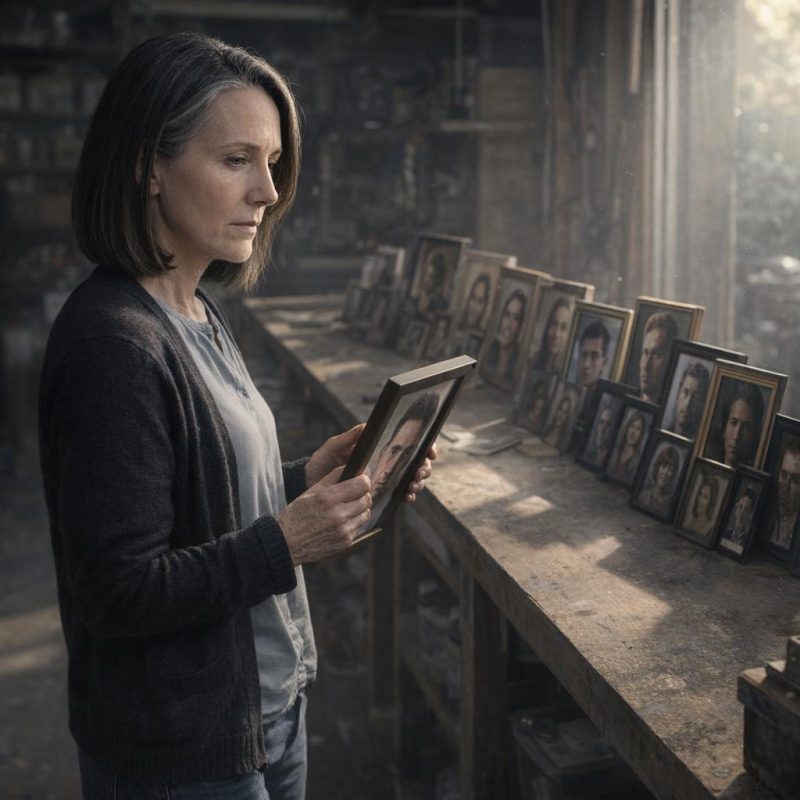 Image by RM AI
Marilyn's Reluctance
The following Saturday I told Frank I had errands and drove to the auction barn alone. I found Marilyn near the refreshment table, filling a paper cup with coffee. She saw me coming and I could tell from the way her shoulders shifted that she remembered. I asked if I could talk to her for a minute. She said of course, but she looked at the floor first. I told her I wasn't upset, that I just needed to understand what she'd meant the week before. She apologized again — said she'd assumed, that she shouldn't have said anything. I told her it was all right and asked her to just tell me what she knew. She was quiet for a moment, turning the paper cup in her hands. Then she said she'd heard Frank mention a woman named Clara at different sales over the years.
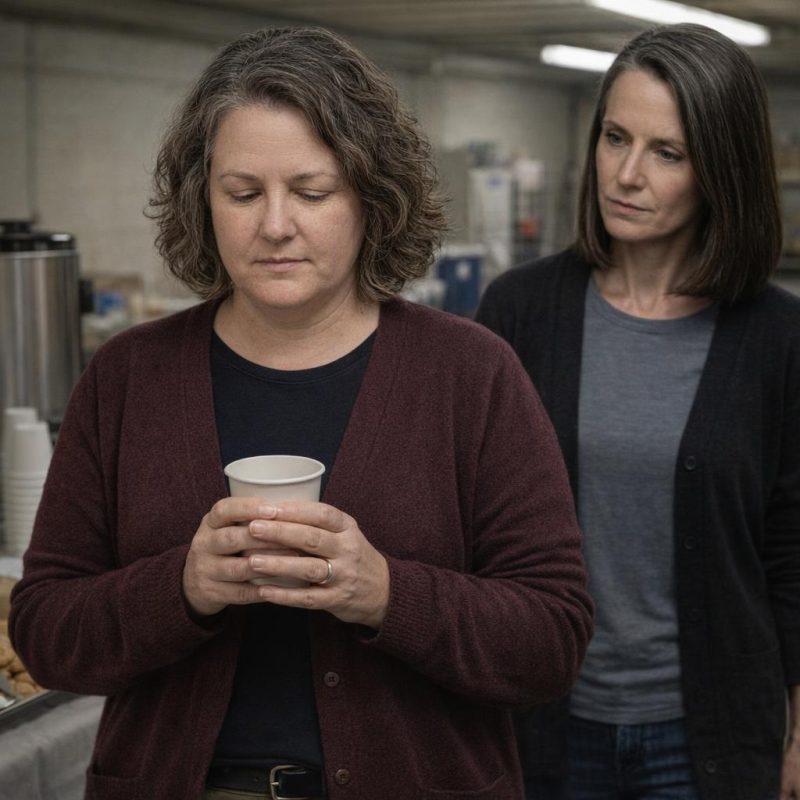 Image by RM AI
The Drive Home Alone
I didn't stay for the auction. I made some excuse to Marilyn about needing to get back, and I walked to my car with my keys already in my hand. The drive home took forty minutes on a good day, and I needed every one of them. I kept both hands on the wheel and let the road unspool in front of me. Years, she'd said. Not once, not a slip of the tongue at a single sale — years. Frank had been going to those auctions for two years since he retired, and apparently he'd been carrying this woman's name into every one of them. Clara. I said it out loud in the car, just to hear what it sounded like. It didn't sound like anything I recognized. Not a cousin, not an old neighbor, not anyone he'd ever mentioned in thirty-eight years of marriage. I thought about all the Saturday mornings I'd handed him his coffee and watched him back out of the driveway, happy for him that he'd found something to do with his time. I'd thought it was about the furniture, the bidding, the other dealers. I turned onto our street and sat in the driveway for a moment before going inside. The knowledge had settled somewhere low and quiet, the way cold does when it gets into your joints and stays.
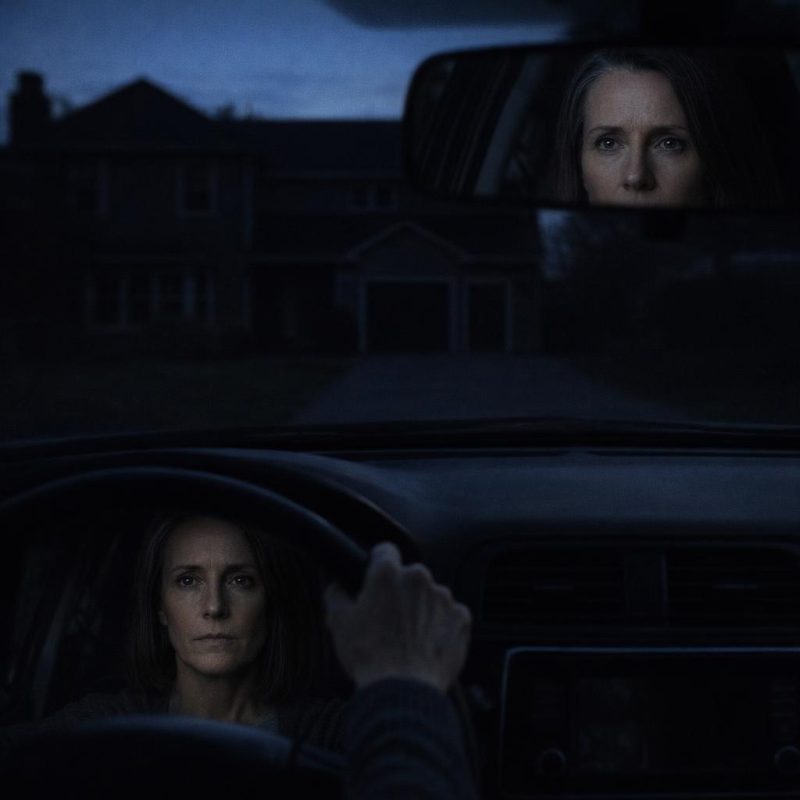 Image by RM AI
The Confrontation
Frank was in the living room with the television on when I came in. He looked up and asked how the errands went. I set my purse on the hall table and told him I hadn't run errands — I'd gone to the auction. Something shifted in his face, just slightly, the way a door moves when there's a draft. I told him I'd talked to Marilyn again. He kept his eyes on me and didn't say anything. I said that Marilyn had confirmed what she'd told me the week before — that she'd heard him mention a woman named Clara at different sales over the years. Frank was quiet for a moment. Then he asked, carefully, what exactly Marilyn had said. Not who Clara was. Not a denial. Just: what exactly did she say. I told him — that she'd heard the name more than once, at different sales, over the course of the two years he'd been going. He nodded slowly, like he was taking inventory of something. I watched him the way you watch a person when you're trying to read something they haven't said yet. He didn't offer anything. He just sat there, and his face went the kind of neutral that doesn't come naturally — the kind that takes a moment to arrange.
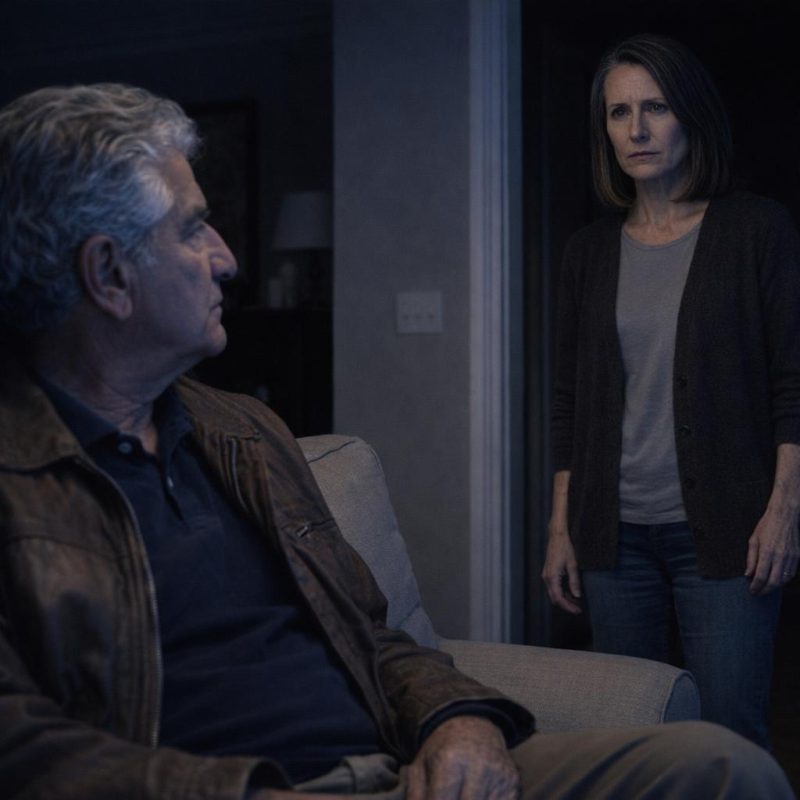 Image by RM AI
The Partial Truth
Frank sat down heavily on the couch, the way he does when something has gone out of his knees. He was quiet long enough that I thought he might not say anything at all. Then he said he had known someone named Clara, a long time ago, before he met me. He said it the way you'd mention a street you used to live on — matter-of-fact, like it was geography rather than anything that mattered. I asked him why he'd been talking about her at auctions. He said he didn't remember doing that, that Marilyn must have misunderstood something, taken a name out of context. I asked what context. He didn't answer that directly. He said it was a long time ago, that it didn't mean anything now, that some things from before a marriage just don't come up because there's no reason to bring them up. I asked how long ago. He said it didn't matter. I looked at him sitting there with his hands on his knees, and I thought about Marilyn turning that paper cup in her hands, the careful way she'd said over the years. Frank's explanation was smooth and quiet and reasonable. And he said Clara was someone he knew before we met.
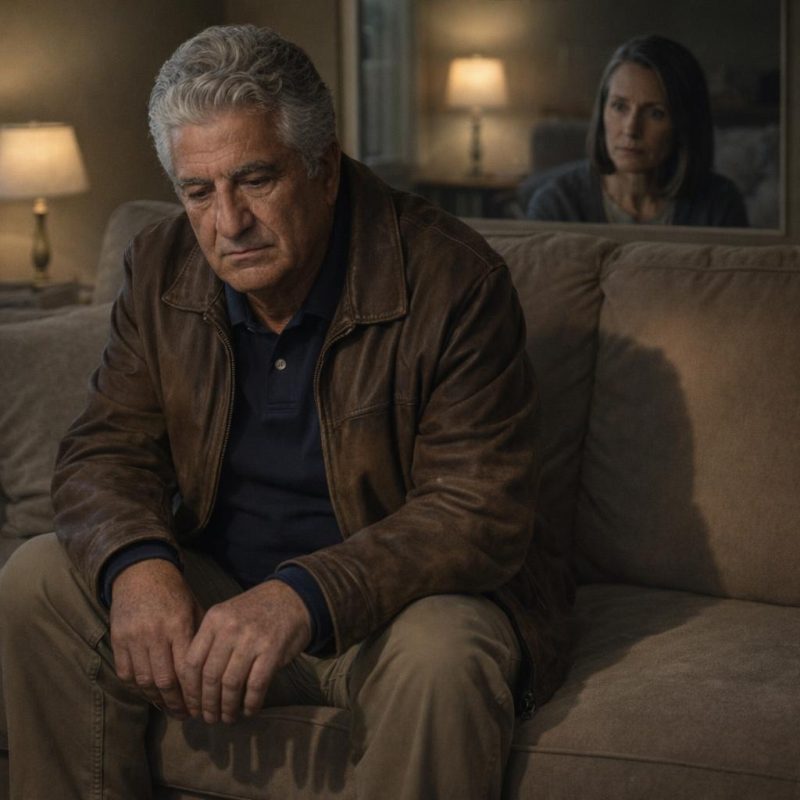 Image by RM AI
The Question
I don't know exactly when I decided to ask it. I'd been standing near the window, and I turned and looked at him across the room — this man I'd been married to for thirty-eight years, whose hands I knew, whose breathing I could recognize in the dark — and I asked him if he had loved her. Just that. Did you love her. Frank looked at me, and then he looked at his hands, and he didn't say anything. The television was still on in the background, some low murmur of voices, and I was aware of it the way you're aware of traffic outside when something important is happening inside. I watched his face. There was something there — not guilt exactly, more like pain, the kind that's old and worn smooth from being carried a long time. I said his name. He still didn't answer. I told him the silence had already answered me. He finally said it was complicated. I said I understood that. What I meant was that I'd heard everything I needed to hear in the space before those words, in the long moment when he looked at his hands instead of at me, and the silence stretched between us before he said a word.
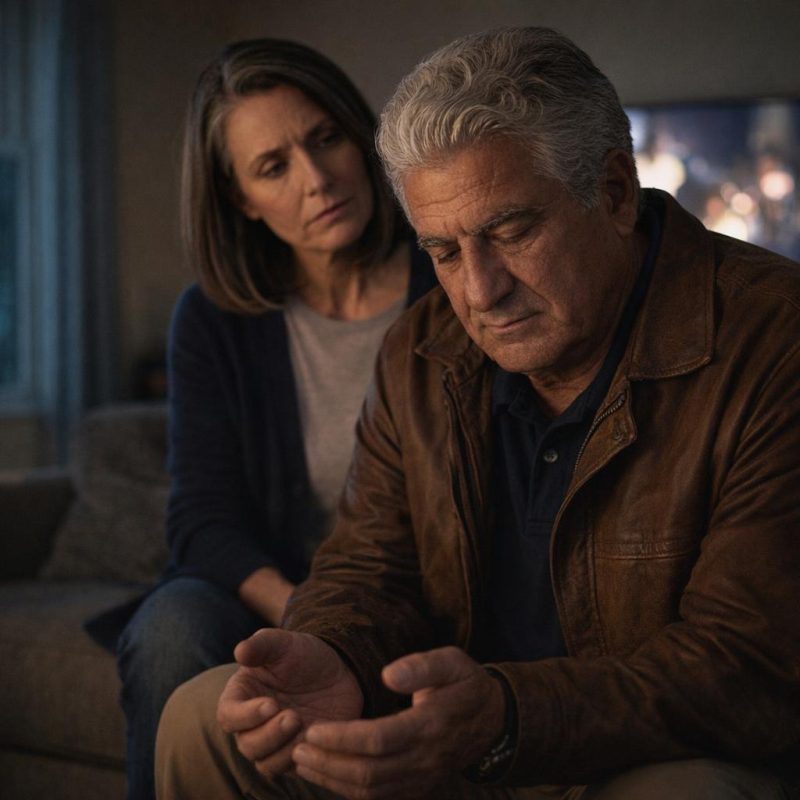 Image by RM AI
The Guest Room
I stood up from the couch and told Frank I needed space for the night. He nodded. He didn't argue, didn't reach for my hand, didn't say anything at all, and somehow that was worse than if he had. I went down the hall to the guest room — the room we kept for Jennifer when she visited, with the blue quilt and the nightstand that still had a paperback on it from her last stay. I'd made up that bed dozens of times. I'd never slept in it. I sat on the edge of the mattress and looked around at the room like I was seeing it for the first time. The walls were the same pale yellow we'd painted them fifteen years ago. There was a framed print above the dresser that I'd picked out at a craft fair and never thought about since. After a while I heard Frank moving in our bedroom down the hall — the familiar sounds of him getting ready for bed, the creak of the closet door, the particular way the mattress shifted. Sounds I'd fallen asleep to for thirty-eight years. I lay down on top of the blue quilt without changing my clothes, and I pulled the door closed behind me.
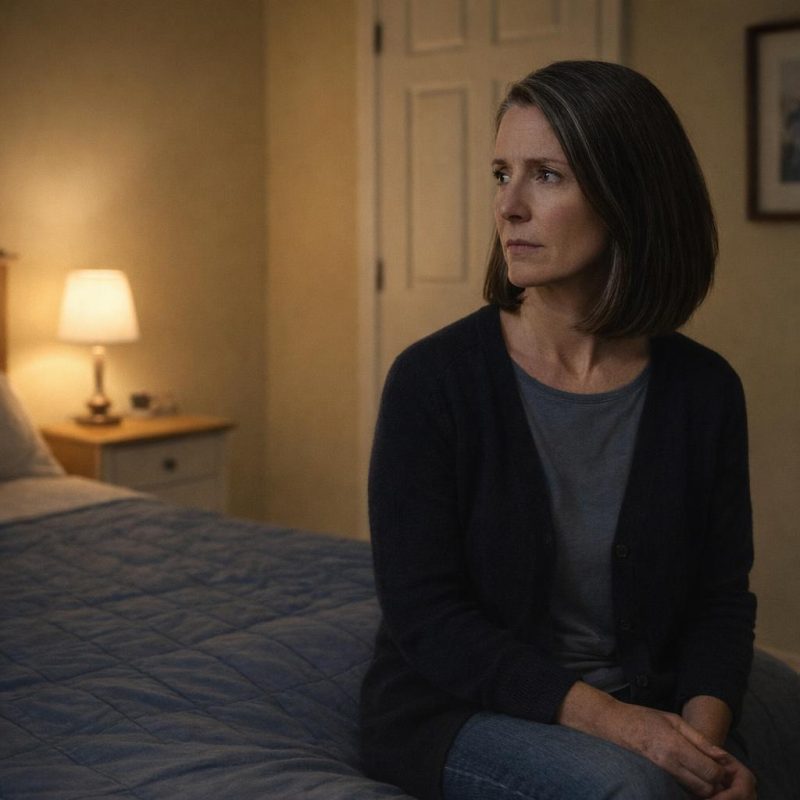 Image by RM AI
The Long Night
I didn't sleep. The guest room ceiling was smooth and unfamiliar, and I lay there watching the shadows shift as a car passed outside. I thought about our wedding day — Frank in his dark suit, the way he'd looked at me at the altar, and I tried to remember if I'd ever had any reason to doubt what I saw in his face. I couldn't find one. That was the thing that kept snagging. I thought about the early years, the apartment on Greer Street, the way he used to reach for my hand at the movies. I thought about the years when Jennifer was small, and the years after she left, and the long ordinary Saturdays that had made up most of our life together. I turned each memory over slowly, the way you turn over a stone to see what's underneath, and I couldn't find anything that looked like a lie. But I also couldn't stop wondering whether I'd simply never known what to look for. Whether there had been a whole room in him I'd never been shown. The dawn light came through the curtain in a thin gray line, and I was still lying there, still dressed, with thirty-eight years pressing down on me like something I couldn't lift.
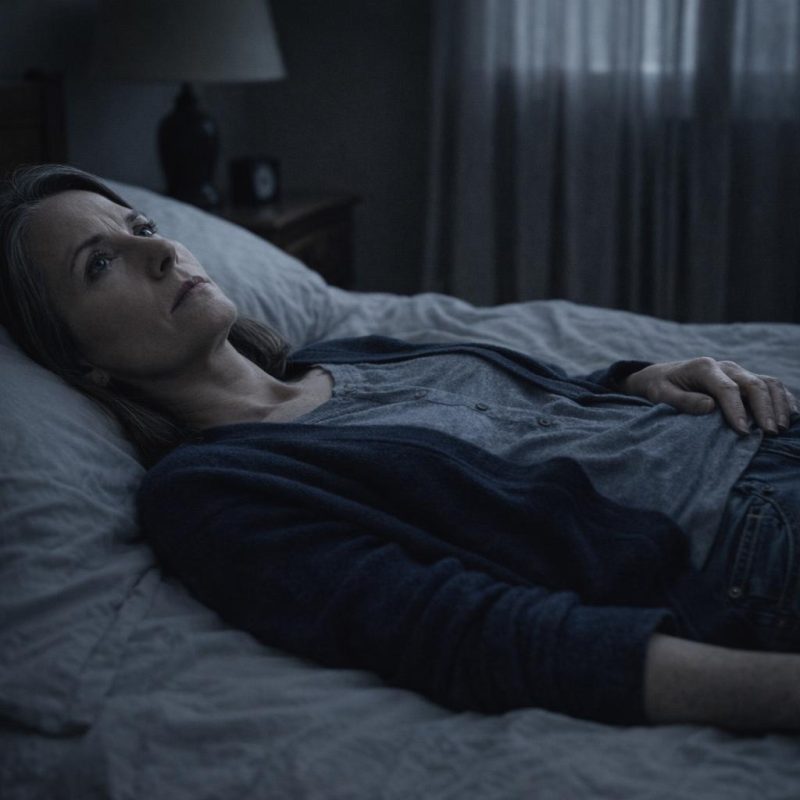 Image by RM AI
Morning After
When the light was full enough that pretending to sleep felt pointless, I got up and went to the kitchen. Frank was already there. He was sitting at the table with a mug in front of him, and when I touched the side of it the coffee was cold. He'd been there a while. I went to the counter and poured myself a cup without saying anything. I could feel him watching me. I sat down across from him and wrapped both hands around my mug and looked at the table between us. Neither of us spoke. The kitchen was the same as it always was — the same curtains, the same crack in the grout near the sink that we'd been meaning to fix for years — and it felt strange that everything could look so ordinary. Frank's hands were flat on the table. His eyes were red at the edges, and there were shadows under them that hadn't been there yesterday morning. I'd spent the night asking myself questions I couldn't answer. Looking at him now, I could see he hadn't slept either, and something about that — the fact that he'd sat here in the dark with his cold coffee, waiting — settled over me like the quiet before a hard conversation.
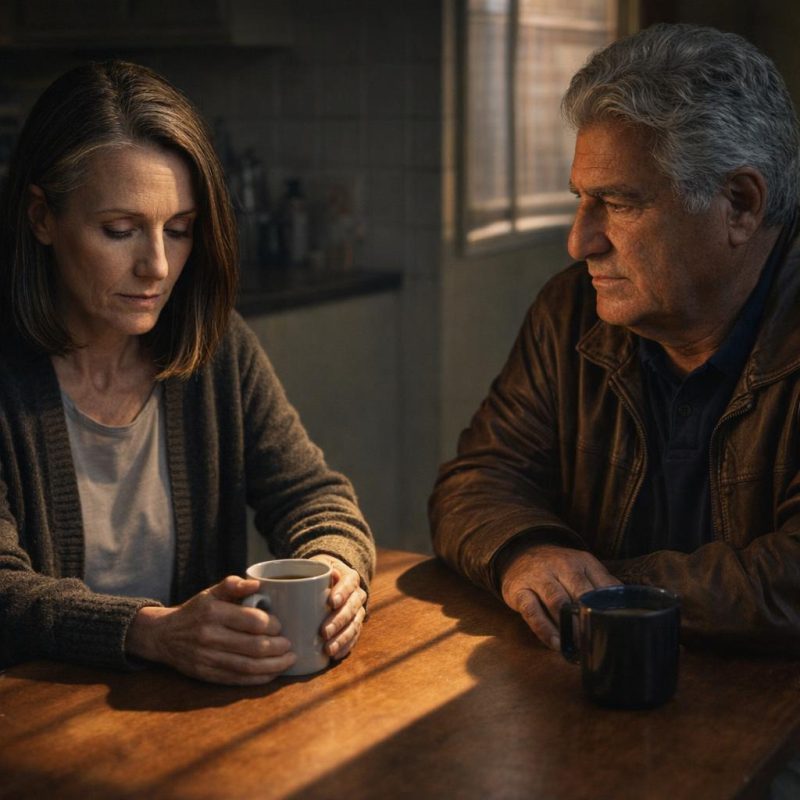 Image by RM AI
The Full Story
I was the one who broke the silence. I set my mug down and told him I needed to know everything — not the short version, not what he thought I could handle, everything. About Clara. About who she was and how long and why he'd never once said her name to me in thirty-eight years. Frank looked at me for a long moment. His jaw moved slightly, like he was testing words before he said them. Then he nodded. He said he'd tell me the whole story. I gripped my mug and waited. He said it went back forty years. He took a breath, the slow kind, the kind a person takes when they're about to put something down that they've been carrying for a long time. I didn't move. I didn't look away. Whatever was coming, I had decided somewhere in that long sleepless night that I was going to hear it — all of it — and Frank looked at me across the kitchen table and began to speak.
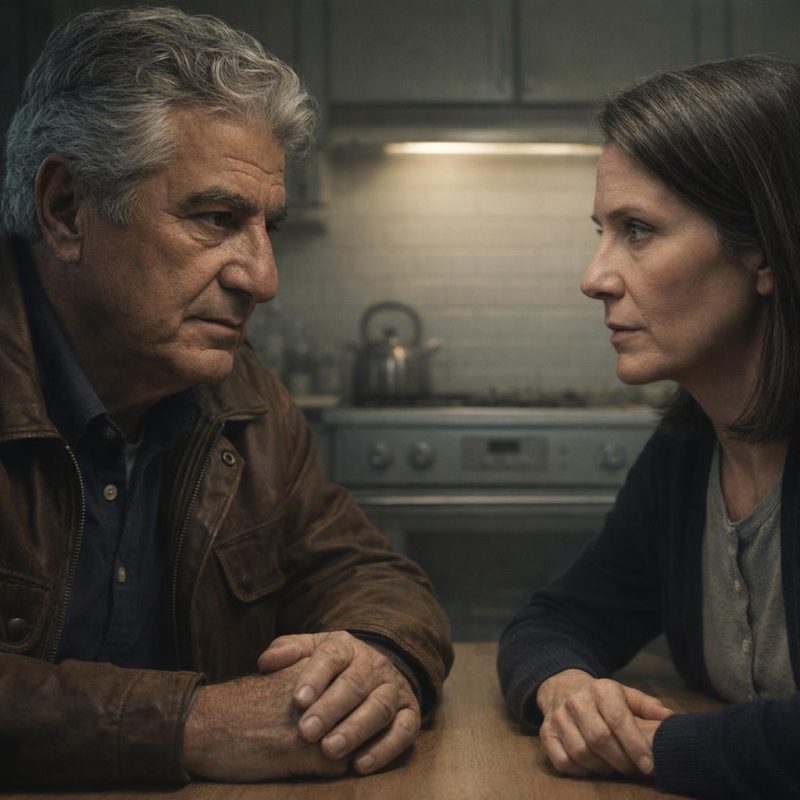 Image by RM AI
Calling Jennifer
I excused myself from the kitchen table without explaining why. I just said I needed a minute, and Frank nodded like he understood, and I walked down the hall to the bedroom and closed the door behind me. My hands were steadier than I expected. I sat on the edge of the bed and found Jennifer's name in my phone and pressed call before I could talk myself out of it. She picked up on the second ring, and the first thing she said was, 'Mom, what's wrong?' I told her I didn't know how to start. She said, 'Just start anywhere.' So I did. I told her that her father had known a woman named Clara — that there was someone from before me, someone he'd never mentioned in thirty-eight years, and that he was in the kitchen right now waiting to tell me the whole story. Jennifer went quiet for a moment. Then she asked if I was okay. I told her I didn't know yet. She offered to come over and I said not yet, not until I'd heard it. What I didn't tell her was the real reason I'd called — I needed someone to know I was about to walk back into that kitchen, so the words would be real once I said them out loud.
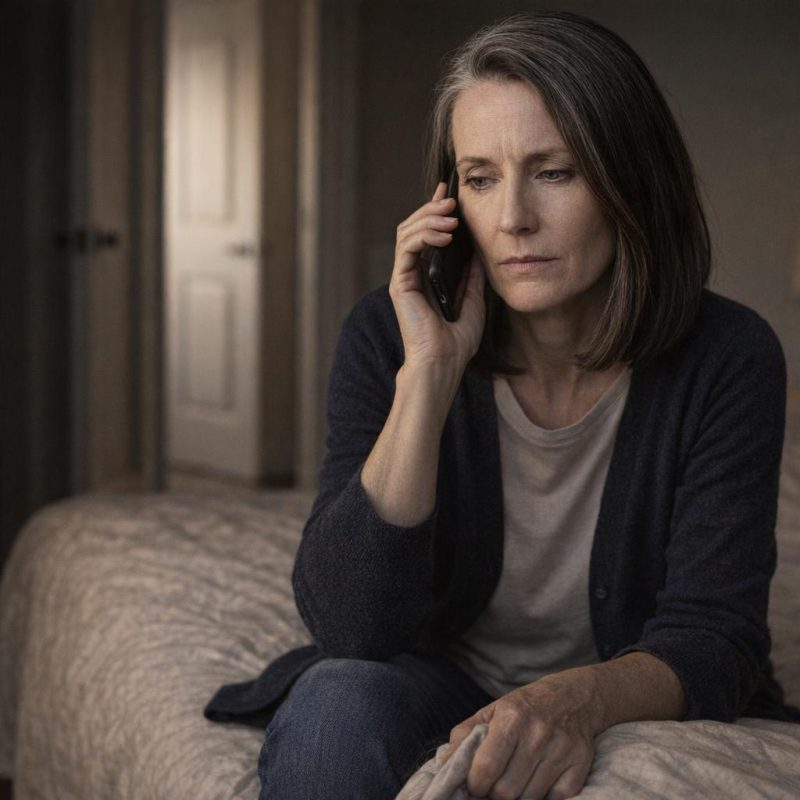 Image by RM AI
Returning to the Table
I sat on the edge of the bed for another minute after I ended the call with Jennifer, just breathing. The bedroom felt very still. I looked at the framed photo on the dresser — Frank and me at our twenty-fifth anniversary, both of us squinting into the sun — and I made myself look away from it. Then I stood up, smoothed my shirt, and walked back down the hall. Frank was exactly where I'd left him. He hadn't moved his chair, hadn't touched his coffee. His hands were folded on the table in front of him, and he was looking at them when I came in. I sat down across from him and I said, 'I'm ready.' He looked up at me then. His eyes were tired in a way I hadn't noticed before, or maybe I had and just hadn't named it. He nodded once, slowly. I wrapped both hands around my mug even though the coffee had gone cold. The kitchen was very quiet — no radio, no traffic outside, just the faint tick of the clock above the stove. I waited. The silence between us had a weight to it, the particular heaviness of something that, once spoken, could not be taken back.
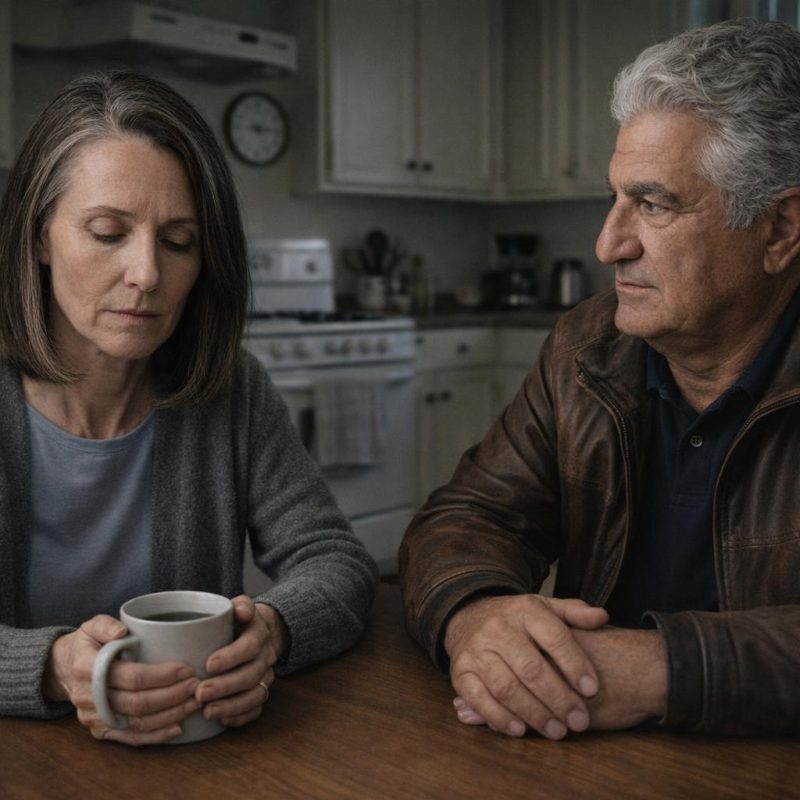 Image by RM AI
Clara Hartley
Frank started slowly, the way you do when you've rehearsed something so many times it's worn smooth. He said her name was Clara Hartley. He said it carefully, like he was setting something fragile on the table between us. They met when he was twenty-three, he said. She was a year younger. He said it was serious from early on — not the casual kind of young relationship, but the kind where you start talking about the future in concrete terms. They dated for two years. He said they had talked about getting married, that it wasn't just an idea but something they were actually planning. I watched his face while he spoke. He wasn't looking at me. He was looking at a point somewhere past my shoulder, somewhere I couldn't follow. He said Clara was twenty-four when it happened. A car accident. He said the words plainly, without decoration, the way people say things they've had to say before and have learned not to dress up. I sat very still. I did the arithmetic without meaning to — forty years ago, six months before I met him — and I heard him say it again in my head, quiet and final: Clara died in a car accident.
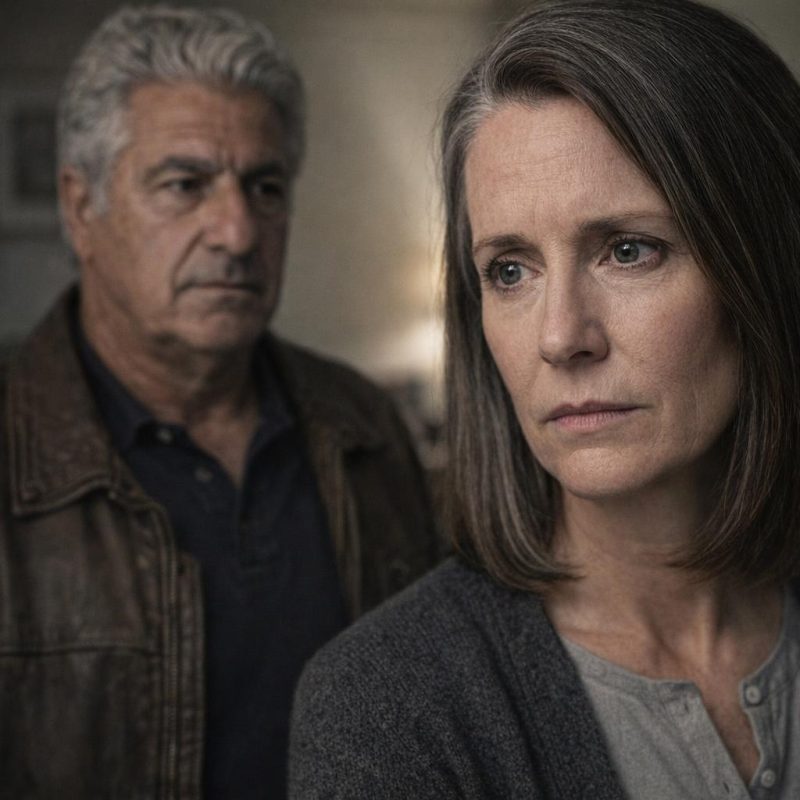 Image by RM AI
Six Months
I sat with the numbers for a moment. Forty years ago. Six months. I asked him if he was still grieving when we met, and he said yes without any hesitation at all, which was somehow worse than if he'd had to think about it. I asked if he was still grieving when we got married, and he looked at me and nodded. I asked — and I kept my voice level, I don't know how — if he had ever stopped. He didn't answer right away. He looked back down at his hands, and the silence stretched out long enough that it became its own kind of answer. I asked him why he married me, then, if he was still in love with her. He said he thought he could move forward. He said he believed that with time it would change, that what he felt for Clara would soften into something he could carry quietly, and that what he felt for me would grow into something that filled the space. He said it like he'd believed it when he said it to himself. I didn't say anything. I just looked at him across the table, and the words sat between us, heavy and still, like a stone dropped into water that had already gone flat.
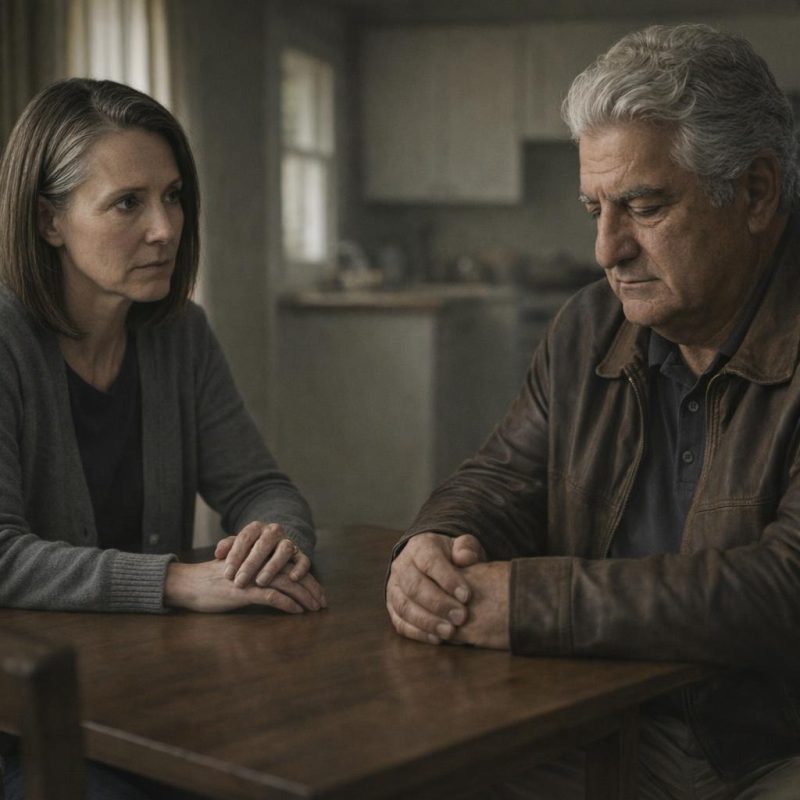 Image by RM AI
The Truth About the Auctions
I asked him about the auctions. I said it directly — I asked what Clara had to do with them. Something shifted in his face. He looked away toward the window, and then he said it: Clara had loved antiques. Estate sales, old furniture, objects with history. They used to go together when she was alive, he said, weekends driving out to find things. After he retired, he said, he couldn't stop thinking about her. The auctions were a way to feel close to her again. He'd been buying pieces she would have loved — the writing desk, the brass clock, the photographs of women who reminded him of her. He said he'd been talking about her to people at the sales, to Tom, to others, because saying her name out loud made her feel less gone. He said it quietly, like a confession he'd been holding for years. I heard myself ask if he understood what he was describing — that he had spent our retirement years living inside a relationship with a woman who had been dead for four decades. He didn't deny it. He said he never meant to hurt me. And then he said it in the same quiet voice: at every auction, in every room full of old things, he had been looking for her.
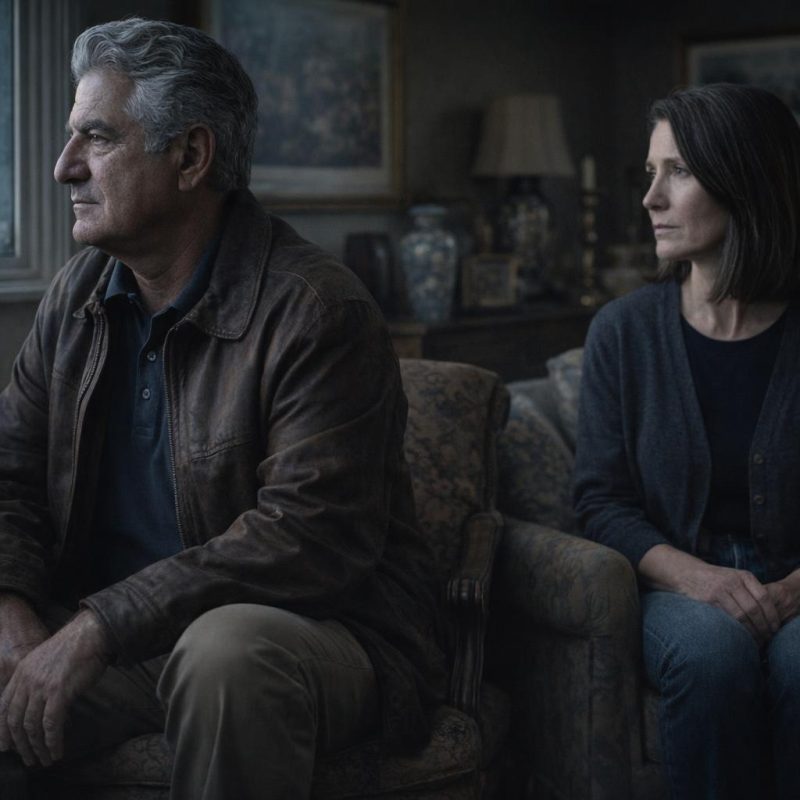 Image by RM AI
The Question of Love
I asked him again. I needed to hear him say it plainly. I asked if he had ever truly loved me — not cared for me, not valued me, not found comfort in me — loved me. Frank opened his mouth and then closed it. He said he cared about me deeply. I told him that wasn't what I asked. He tried again. He said it was complicated, that love wasn't always simple, that he had learned to love me over time. I asked him if he was thinking of Clara on our wedding day. He didn't deny it. I asked if he had compared us throughout the marriage, measured me against her in ways I never knew about. He said not consciously, but maybe yes. I felt something cold move through me. He reached across the table toward my hand and I pulled it back before he could touch it. He said I had been a good wife, a good partner, that he meant that. I heard exactly what he was not saying — that good wife and good partner were the things he could offer me honestly, and that the other thing, the larger thing I had asked about, was still sitting there unanswered, and Frank's mouth opened once more and nothing came out.
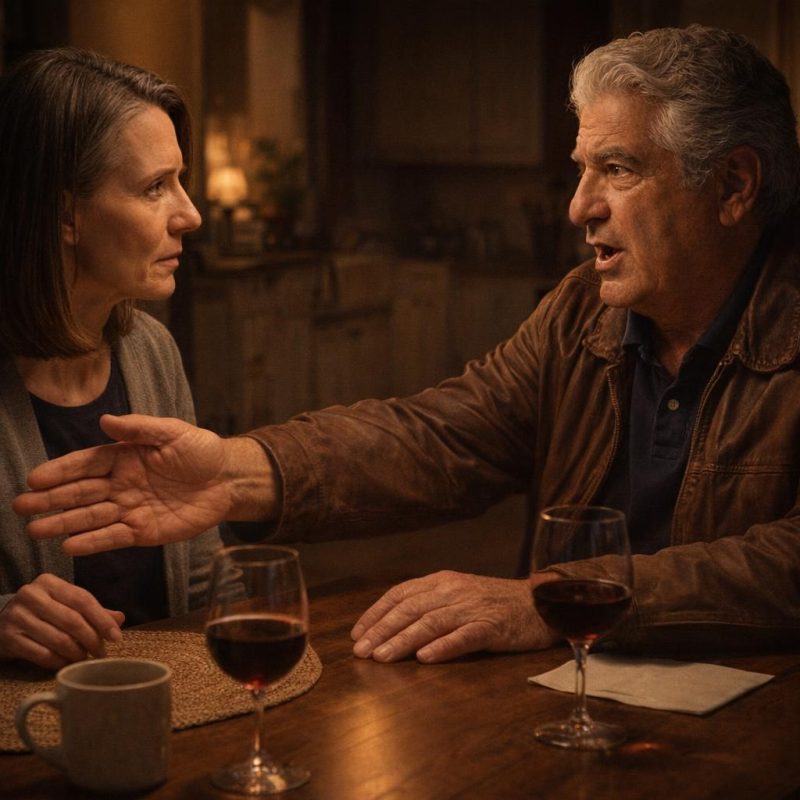 Image by RM AI
The Pieces in the Garage
I thought about the woman in the hat photograph — the one I'd noticed early on, the one I'd thought was just a pretty find. I asked Frank if she looked like Clara. He said yes, a little. I asked about the writing desk. He said Clara had one like it in her apartment. The brass clock, I said. He said it was similar to one that had been in her family's house. I went through them in my head, one by one, and he confirmed each one with a word or two, quietly, like a man reading from a list he'd always known was there. And then I thought about the Saturdays. All those Saturdays I'd spent helping him carry things in, arranging them in the garage, asking him where he wanted this lamp, that chair. I had moved things from one side of the room to the other trying to make it look right, trying to make him happy with the arrangement. I had organized it carefully. I had thought I was helping him build something he loved. I sat with that for a long moment — the image of my own hands straightening the edges of a shrine I hadn't known I was building for another woman.
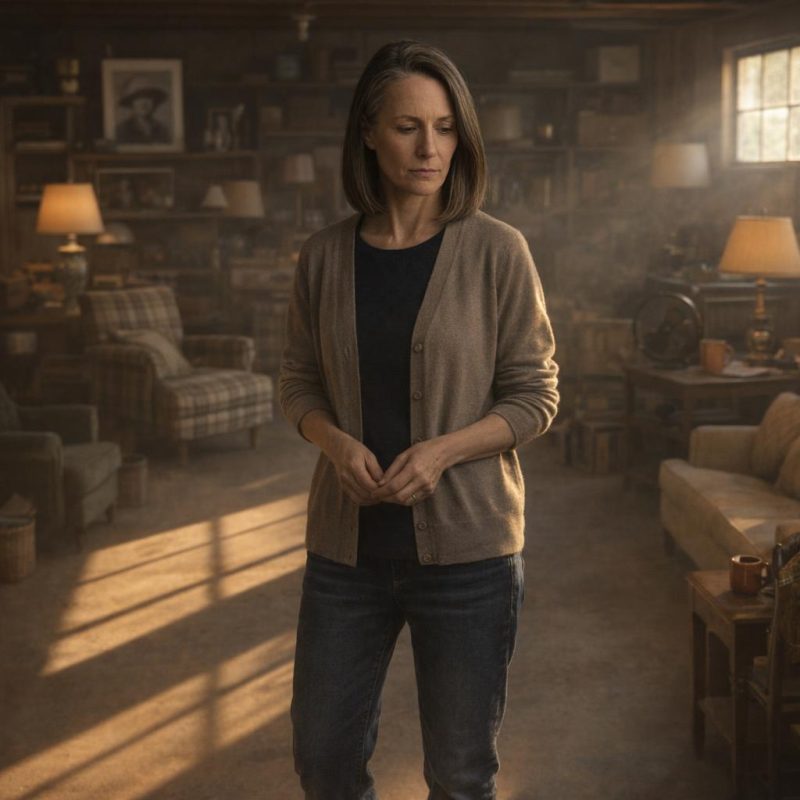 Image by RM AI
Thirty-Eight Years
I counted them without meaning to. Thirty-eight years. I thought about the children we raised, the houses we moved through, the ordinary Tuesdays and the holidays and the anniversaries with their cards and their dinners. I asked Frank if he had thought of Clara during those years, during the moments that were supposed to be ours. He said probably yes, sometimes. I asked about our children's births. He said he was present for those, that he was there, and I believed him, but being present and being wholly there are not the same thing and we both knew it. I asked if he had ever wished things had been different — that it had been her life instead of mine beside him. He said no, never that. I didn't know if I believed him. I thought about every anniversary dinner, every Christmas morning, every quiet evening I had taken for contentment. I had read those years as a shared life. I had thought we were building the same thing. I asked him what I had been to him, all this time. He didn't answer right away. The kitchen clock ticked above the stove, and the weight of thirty-eight years settled over me like something I had been carrying without knowing it had a name.
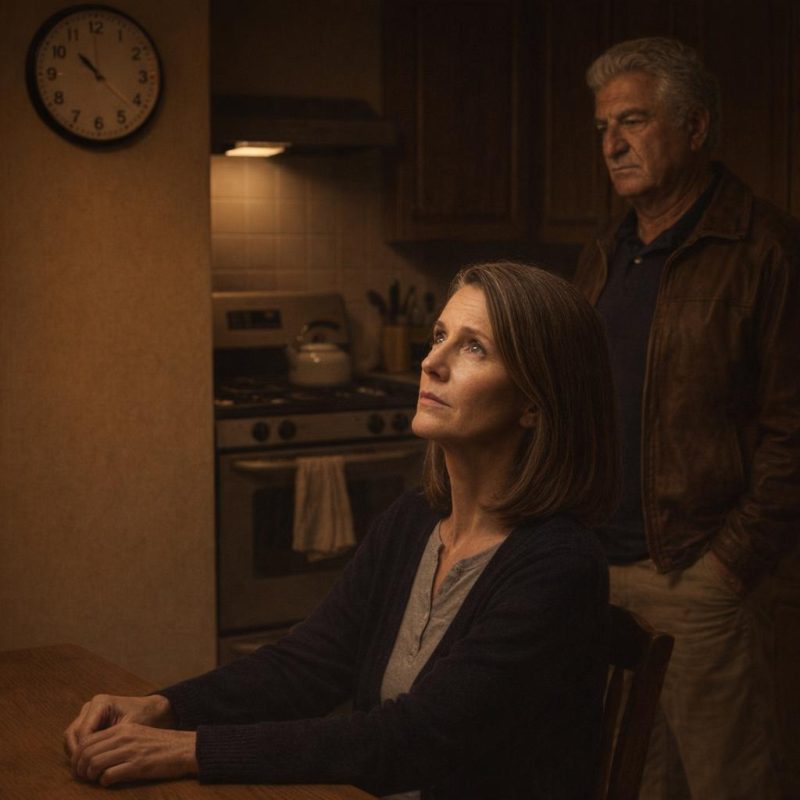 Image by RM AI
The Guest Room Again
I pushed back from the kitchen table without saying much. I told Frank I couldn't be near him right now, that I needed to be somewhere else in the house, and he nodded like he'd been expecting it. He didn't reach for me. He didn't argue or follow. I walked down the hall to the guest room — the same room I'd retreated to weeks ago when this had all started, when Clara was still just a name a stranger had mentioned at an auction. That felt like a different life now. I closed the door behind me and stood in the middle of the small room, still fully dressed, and something about the quiet felt different this time. Before, the room had felt like exile. Now it felt like shelter. I sat on the edge of the bed and listened to Frank moving in the kitchen — the soft clink of mugs, the running water, the ordinary sounds of a man cleaning up after a conversation that had broken something irreparable. I lay back and stared at the ceiling. I didn't cry. There was nothing left that felt like tears. There was only the ceiling, and the quiet, and the door I had closed behind me — and I didn't think I would open it again.
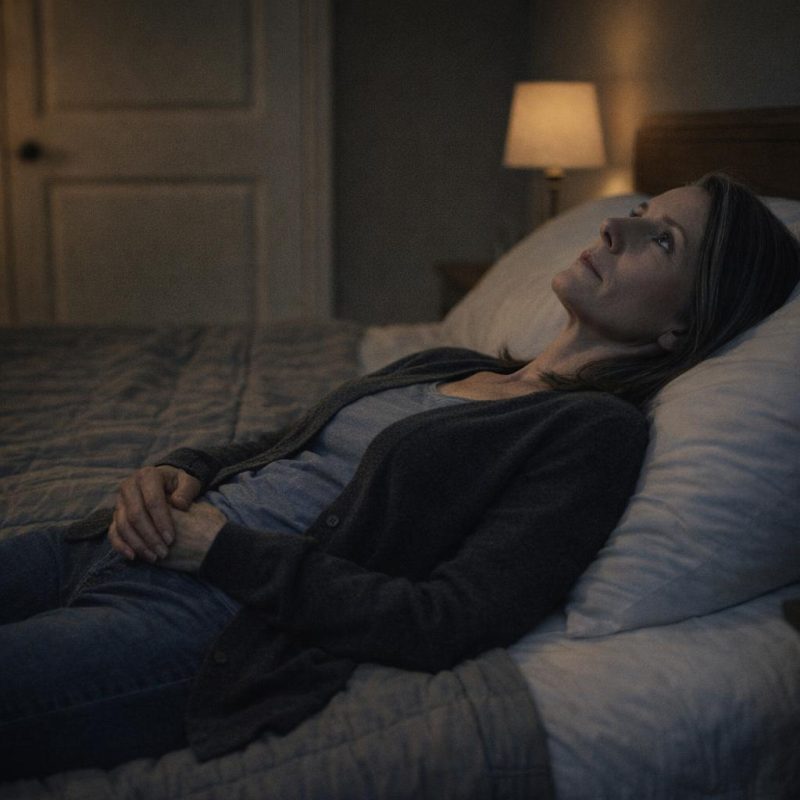 Image by RM AI
Reviewing the Marriage
I didn't sleep. I lay in the guest room and let the years come back to me one by one, and this time I looked at each of them differently. Our wedding day — Frank's face at the altar, that expression I had always read as overwhelmed with happiness. I looked at it again now and wondered. Our first house, the way he'd arranged the furniture with such certainty, like he already knew where things belonged. Had he been placing them where she would have put them? Our first child — I remembered Frank holding the baby, his face going soft and strange, and I had thought it was wonder. Now I turned the memory over and looked at its underside. Family vacations. Quiet Sunday mornings. The particular way he'd go still sometimes, looking at nothing, and I'd assumed he was just tired. Every memory I touched had a shadow in it now, a shape I hadn't seen before. Thirty-eight years of moments I had believed were ours. I had been so certain I knew what our life meant. I lay there in the dark and understood that Clara had been present in our marriage from the very beginning — a third person at every table, in every room, in every photograph where it looked like just the two of us.
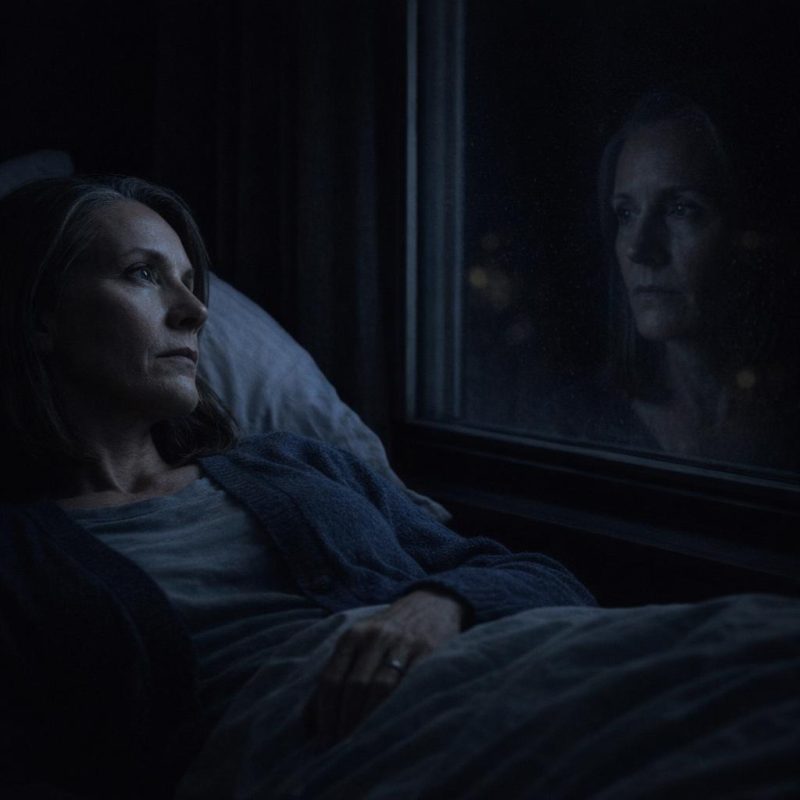 Image by RM AI
Morning Decision
I woke before the light was fully up, that thin grey hour when the house is still and everything feels provisional. I lay there for a while just looking at the ceiling, the same ceiling I'd stared at most of the night. The decision was still sitting in front of me, unchanged. Could I stay married to Frank knowing what I knew now? Could I forgive thirty-eight years of a life built on something he'd never told me? I didn't have an answer. I got up and washed my face in the small bathroom off the hall, and I looked at myself in the mirror for a long moment. The woman looking back seemed like someone I recognized but didn't quite know anymore. I opened the guest room door and walked to the kitchen. Frank was already at the table, both hands wrapped around a mug, and he looked up when I came in. Neither of us spoke right away. I poured myself coffee with hands that weren't entirely steady and stood at the counter, not sitting, not leaving. I had thirty-eight years of mornings behind me and I didn't know what to do with this one. The weight of what I had to decide sat in my chest like something with no edges and no name.
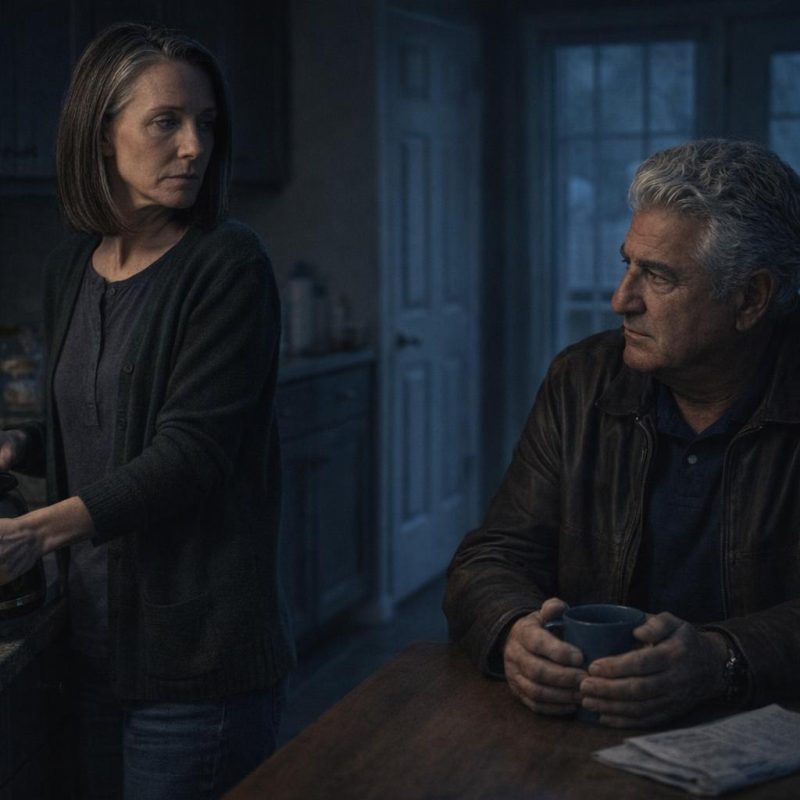 Image by RM AI
What He Remembers
I sat down across from Frank and told him I needed him to tell me about Clara. Not the outline — I already had that. I needed to know who she actually was. He looked surprised, maybe even a little afraid of the question, but I held his gaze until he started talking. She had dark hair, he said. She laughed easily, at small things, the kind of laugh that made other people want to be in on the joke. She worked at the public library and was studying art history part-time. She collected vintage postcards and mismatched teacups, and she and Frank used to spend whole Saturdays at estate sales, working their way through other people's belongings. She had an eye for quality, he said — she could pick up a piece of furniture and know within seconds whether it was worth anything. She was the one who taught him. His face changed as he talked. The careful, guarded expression he'd been wearing for days softened into something I hadn't seen before, something unguarded and private. I asked what her voice sounded like. He closed his eyes. He said it was low, a little husky, that she always sounded like she was about to tell you something worth hearing. The kitchen filled with the details of a woman I had never met, and I sat across from the man I'd married and watched him love her.
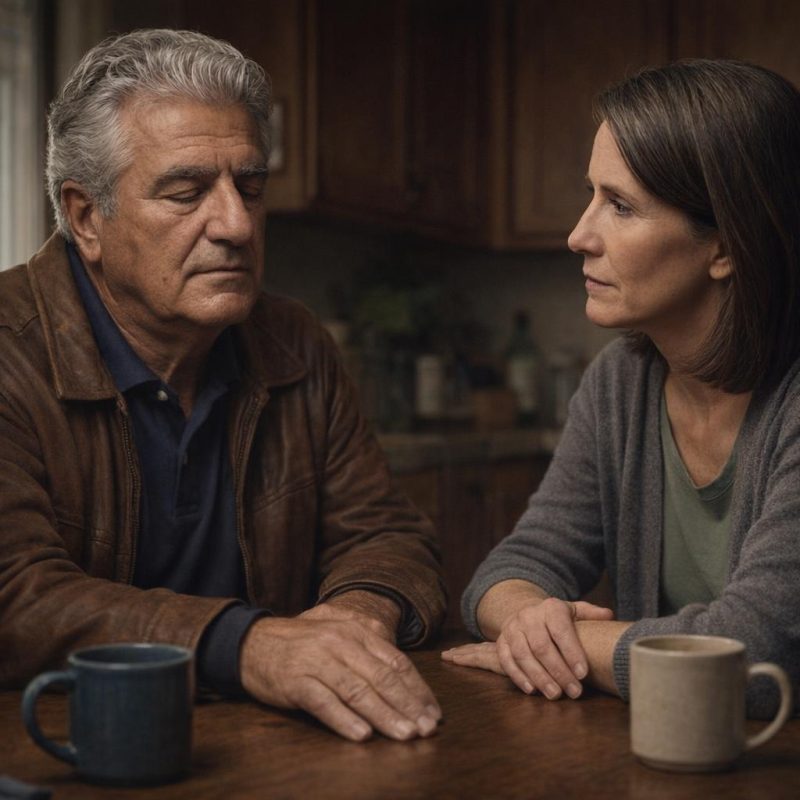 Image by RM AI
The Accident
I asked him about the accident. He was quiet for a moment, and then he told me. She was driving home from her parents' house on a Friday night in November. A drunk driver crossed the center line. She died on impact, he said, and the flatness in his voice when he said it told me he had carried those words for a very long time. He got the call at two in the morning. He drove to the hospital alone and identified her body. He was twenty-five years old. He said he walked out of that hospital and didn't feel anything for months — not grief exactly, just absence, like someone had removed a load-bearing wall and he was waiting to see if the rest of the structure would hold. Six months later he met me at a work function. He said he was still numb when we started dating. He thought companionship was enough. He thought he could build a good life without the other thing, the thing he'd had with Clara, and that it would be fair to both of us. He said he married me believing that. He said he never expected to fall in love again after her — and then he stopped, and looked at his hands, and didn't finish the sentence. The kitchen was very quiet. I sat with the weight of what he hadn't said, and what he had.
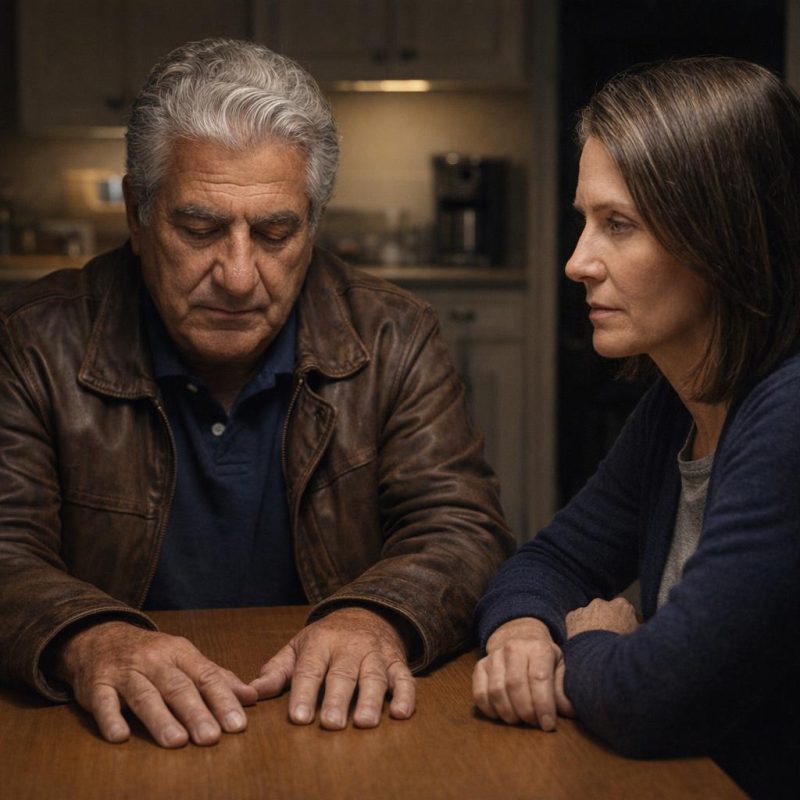 Image by RM AI
The Direct Question
I set my coffee mug down and asked him directly. Did he ever love me at all. He said yes, immediately, without hesitating, and I believed him — which almost made it worse. I asked him to explain what he meant. He said he loved my steadiness, the way I kept things together, the partnership we'd built. He loved the life we'd made, the children, the years. I asked him if he had ever been in love with me. He didn't answer right away. He looked at the table, then back at me, and I could see him trying to find a way to say it that wouldn't land the way it was going to land. I asked him one more time, directly: if Clara had lived, would he have chosen me. He was quiet for a long moment. And then he said, quietly, that he loved me — but not the way he had loved her.
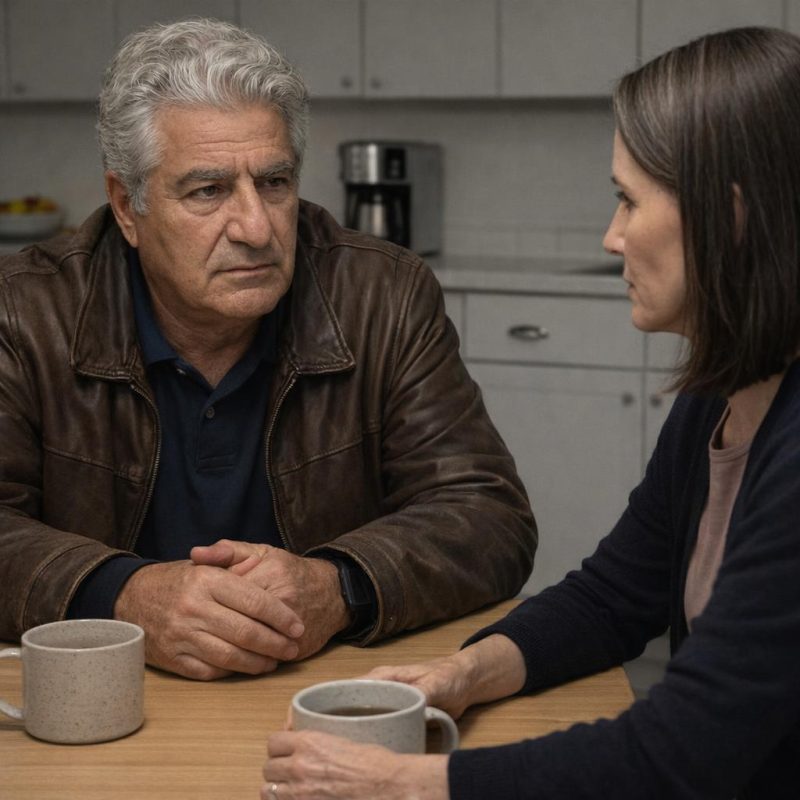 Image by RM AI
The Impossible Answer
I waited. I kept my hands flat on the table and I waited for him to answer the question. He opened his mouth and then closed it again. He said it wasn't a fair question. I told him I needed to know anyway. He looked down at his hands — those capable, familiar hands I had watched for thirty-eight years — and he said he couldn't answer that. I told him his silence was an answer. He said it was complicated, that hypotheticals weren't the same as real life, that he couldn't know what he would have done in a life that hadn't happened. I told him it was actually very simple. I asked him one more time: if Clara had lived, would he have chosen me. He looked up at me. His mouth opened. Nothing came out. I watched his face move through something — not cruelty, not indifference, just an honest inability to say yes — and I felt something settle in my chest, cold and final, like a door closing from the inside. I stood up. He reached across the table toward my hand. I pulled mine back before he could reach it.
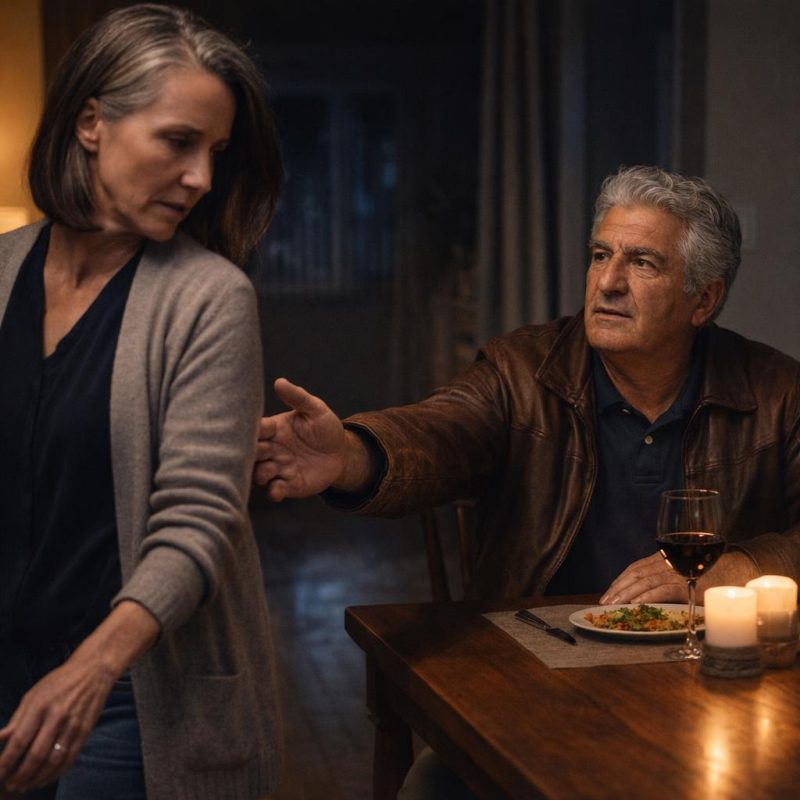 Image by RM AI
What Comes Next
I stood in the kitchen and told him I couldn't do this anymore. I said I couldn't stay in a marriage where I had always been second to a ghost — where the woman he'd actually wanted had been dead for thirty-eight years and still managed to take up more space in our life than I did. Frank asked what I wanted him to do. I said I didn't know yet. I said I needed time away from him and from this house, that I needed to think without him in the next room. He asked where I would go. I told him I'd stay with Jennifer for a while. He nodded. He didn't argue, didn't reach for me, didn't try to talk me out of it. He just sat there at the kitchen table with his hands around his mug, and I thought how strange it was that after everything, he still looked like my husband. I told him there was nothing left to say right now. He asked if there was anything at all he could say that would help. I told him no. I walked to the bedroom to pack a bag.
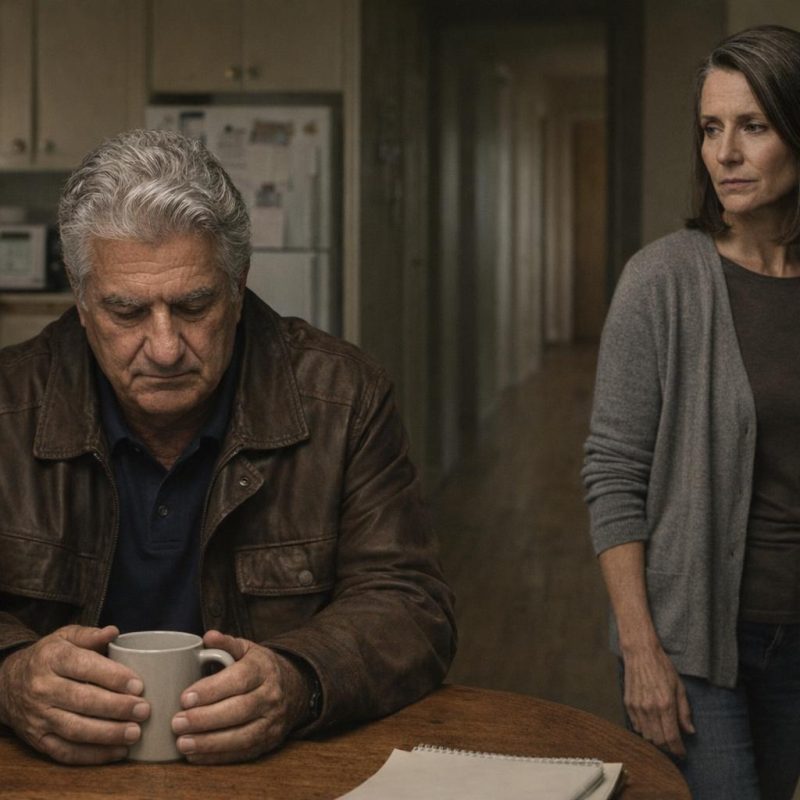 Image by RM AI
Packing
I pulled the old suitcase down from the top shelf of the closet and set it open on the bed. I packed the way you pack when you don't know how long you'll be gone — a week's worth of clothes, maybe more, folded without much thought. Toiletries from the bathroom. My medications in their little orange bottles. Two books from the nightstand, though I couldn't have told you why those two. I stood in the doorway of the bedroom for a moment and looked at the room — the quilt we'd had for twenty years, the lamp Frank had found at an estate sale, the framed photo of us at Jennifer's college graduation. Thirty-eight years of a life, and it all just sat there looking ordinary. I carried the suitcase to the living room and set it by the front door. Frank was still at the kitchen table, hands around his mug, not looking up. I told him I'd call in a few days. He nodded. I picked up my purse and my keys. I didn't say goodbye and neither did he. I turned the knob, stepped outside, and pulled the door shut behind me.
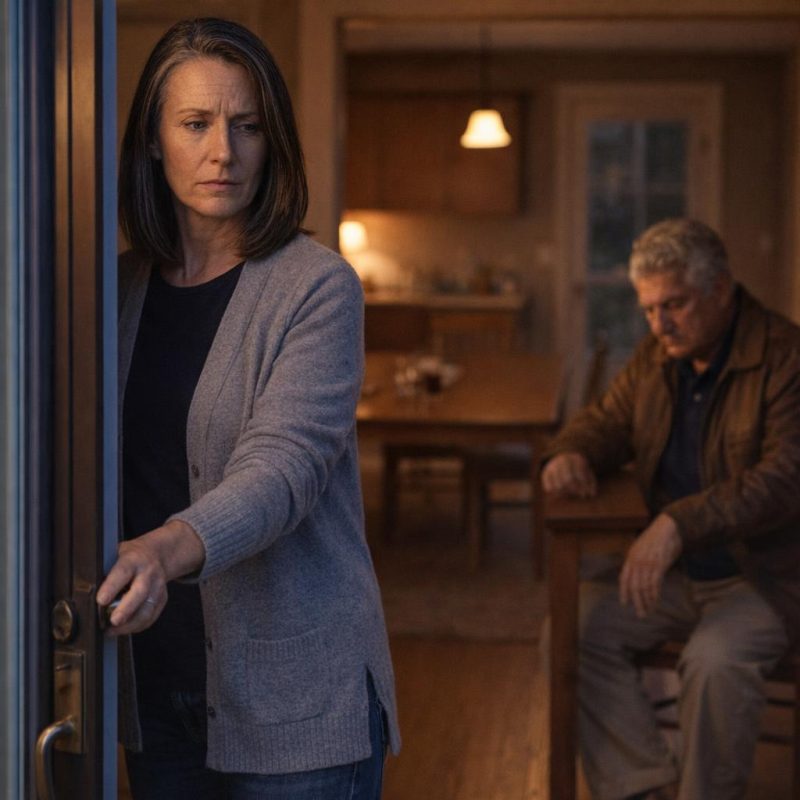 Image by RM AI
Jennifer's House
Jennifer opened the door before I even knocked — she must have been watching for my car. She pulled me into a hug right there on the porch, and I let her. We sat in her living room with mugs of tea going cold on the coffee table, and I told her everything. All of it. Clara, the auctions, Tom, Marilyn, the photographs, the way Frank had looked when he finally admitted it. Jennifer listened without interrupting, which wasn't like her, and I could see her jaw tighten as I talked. When I finished she said, quietly, how could he do that to you for thirty-eight years. I said I didn't know. She said it wasn't about Clara being dead — it was about me never being enough in his mind, and that was unforgivable. Something about hearing her say it out loud, plainly, without softening it, broke something loose in me. I started crying in a way I hadn't let myself cry through any of it — not when Marilyn told me, not when Tom confirmed it, not even when Frank admitted the truth. Jennifer put her arms around me and didn't say anything else. The sound of the rain starting against her windows was the only thing I was aware of for a long time.
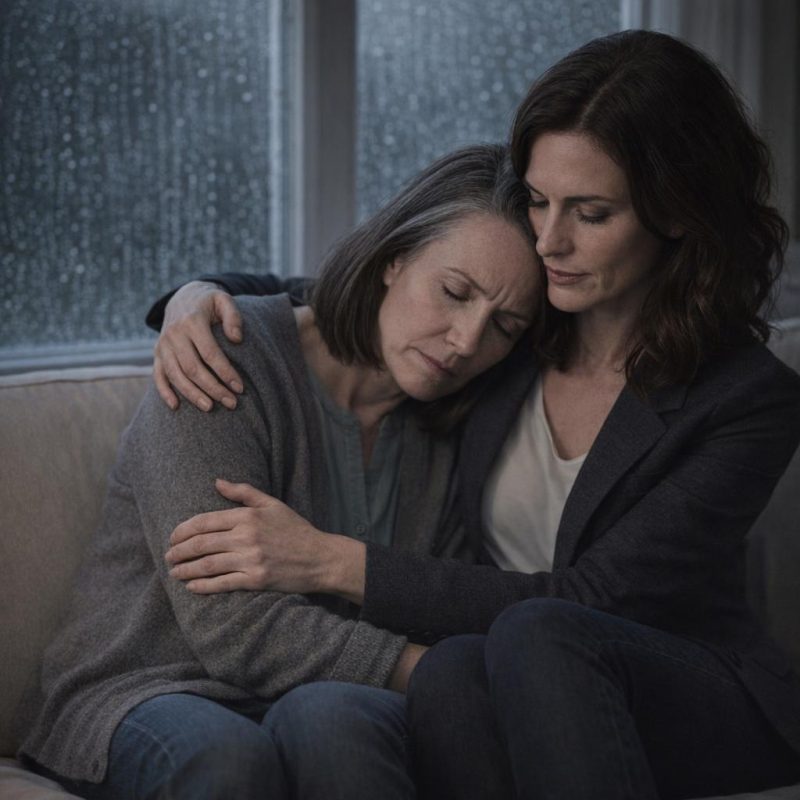 Image by RM AI
The Days After
I stayed five days, and then kept staying. Jennifer took time off work and didn't make a fuss about it, just rearranged her schedule and left the guest room door open and made coffee every morning without asking. I slept better than I had in months. That surprised me more than anything — I'd expected to lie awake, but instead I slept deeply and woke up to light coming through curtains that weren't mine, in a room that held none of the weight of the last thirty-eight years, and something in me unclenched. We talked a lot, Jennifer and I. She asked me what I wanted, not what I was going to do about Frank, but what I actually wanted for myself. I realized I didn't have a ready answer. I'd been Helen-and-Frank for so long that just-Helen felt like a stranger I'd have to reintroduce myself to. But I started making a small, tentative list in my head. An apartment with my own bookshelves arranged the way I liked. The trip to Portugal I'd mentioned for years and never booked. Friends I'd let drift because our lives had become so couple-centered. I was sixty-three years old, and the life still ahead of me felt, for the first time in weeks, like it might belong entirely to me.
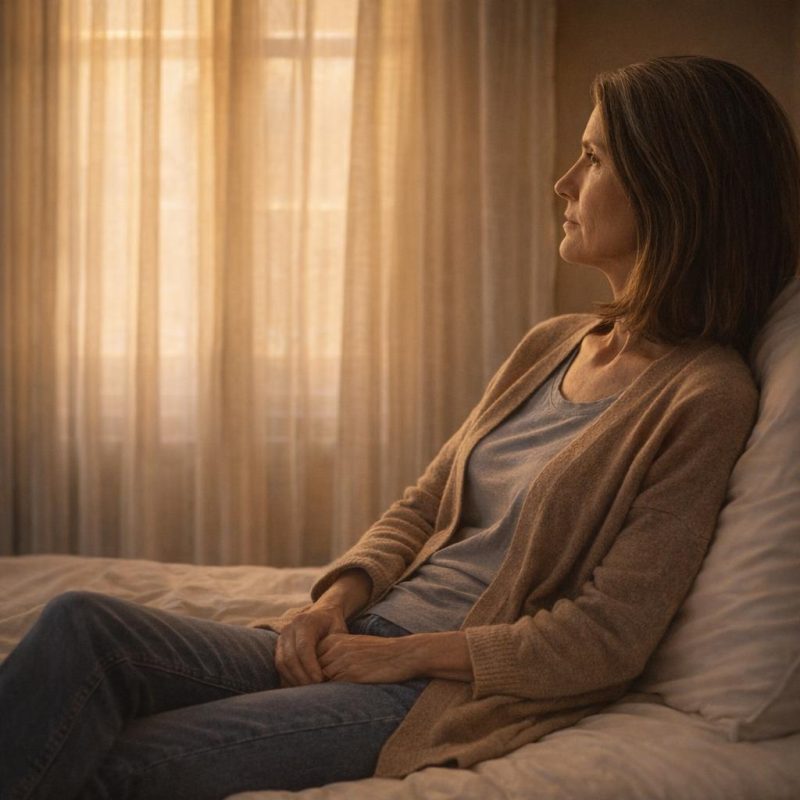 Image by RM AI
What She Lost and What Comes Next
On the fifth morning I woke up and something had settled. Not healed — I wasn't fooling myself about that — but settled, the way a house stops shifting after a storm. I called Frank after breakfast. I told him I wasn't coming back yet, and that I wasn't sure I was coming back at all. He said he understood. I told him I had spent thirty-eight years being someone's second choice without knowing it, and that I wasn't willing to spend whatever time I had left that way. He asked if there was any chance for us. I said I didn't know. I said I needed to find out who I was when I wasn't organizing my life around his. We hung up and I sat with Jennifer at her kitchen table, and we talked about practical things — apartments, finances, what starting over at sixty-three actually looked like. It scared me. I won't pretend it didn't. But underneath the fear was something else, something quieter and more stubborn, and when Jennifer reached across the table and squeezed my hand, I knew what it was. I told her I was ready to find out what came next. She said, good — because you deserve to be someone's first choice, Mom. I picked up my mug and held it with both hands and let that land.
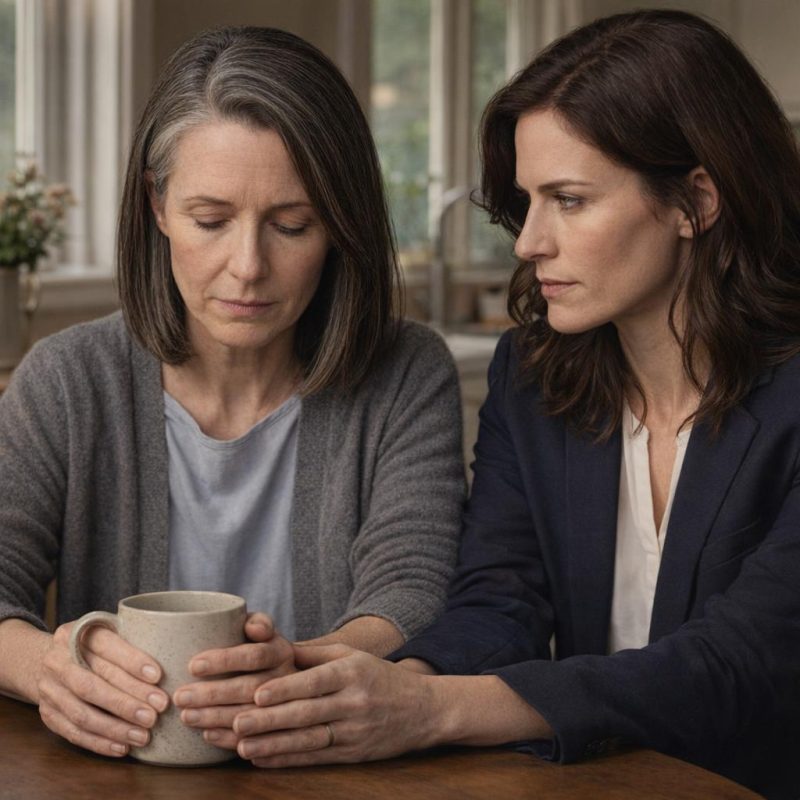 Image by RM AI
KEEP ON READING
How a Deformity Made This Man an Urban Legend
Alex Fu on PexelsThere's a stretch of road in western…
By Christy Chan Jun 25, 2026
20 Bizarre Archaeological Finds That Mainstream History Refuses to Explain
Digging Up the Unexplained. Standard history textbooks like to present…
By Sara Springsteen Jun 24, 2026
The Deadly Beer Flood That Sounds Too Strange To Be…
en.wikipedia.org on GoogleOn the afternoon of October 17, 1814, a…
By Cameron Dick Jun 25, 2026
The Pope Whose Corpse Was Put On Trial
Cavallieri, 1588 on WikimediaIn January 897, a dead man was…
By Cameron Dick Jun 25, 2026
The History of Training Circus Animals
Svetlana Zhigulskiy on UnsplashThe history of training circus animals goes…
By Elizabeth Graham Jun 25, 2026
20 Royal Heirs Raised By People Who Weren’t Their Parents
Definitely Not The Ordinary Family Life. Being a royal child…
By Elizabeth Graham Jun 25, 2026