

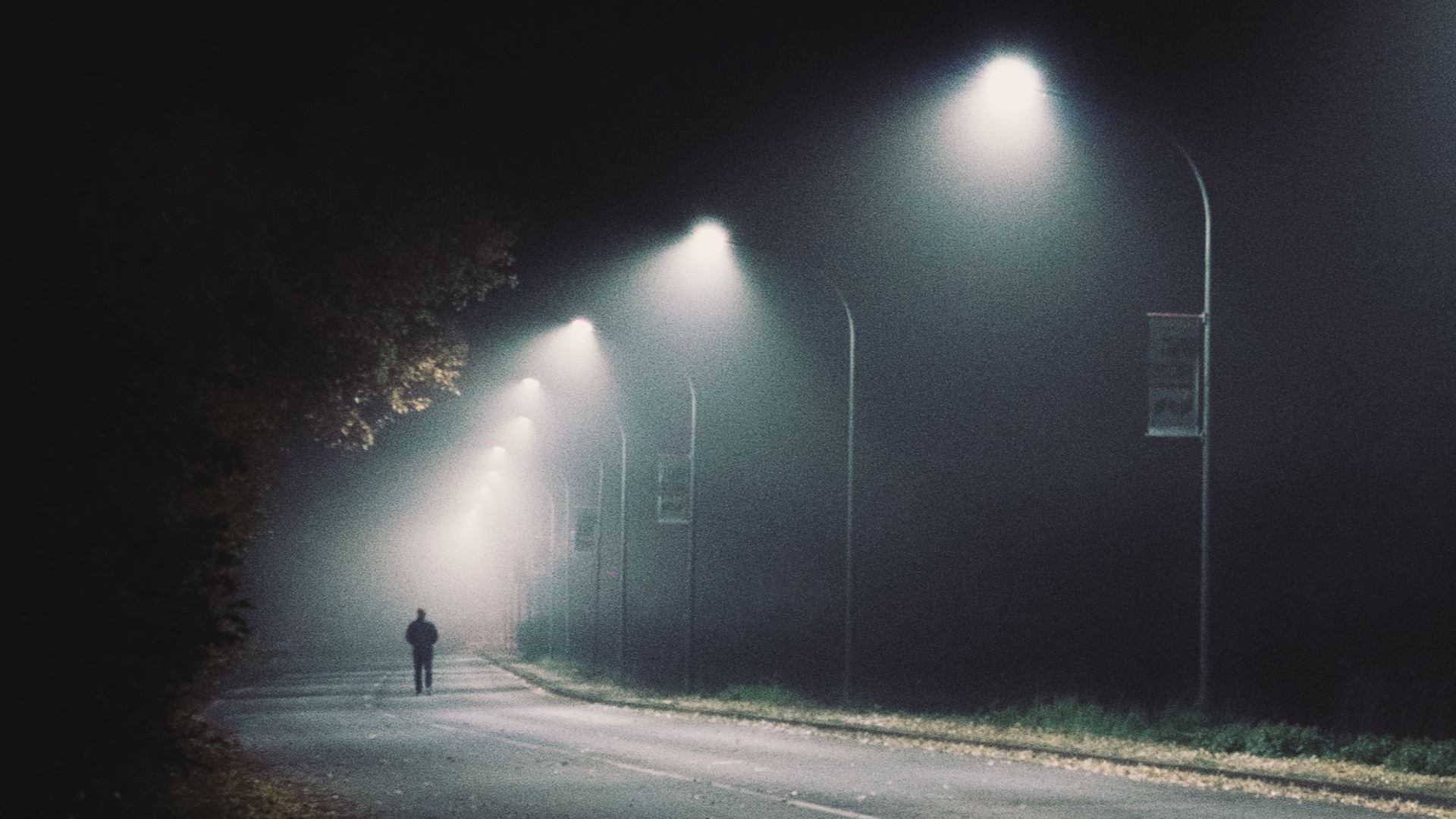
There's a stretch of road in western Pennsylvania that locals once treated as something close to sacred ground, the kind of place teenagers dared each other to drive down after dark. The figure they hoped to spot wasn't a ghost or a monster, even though the stories that grew around him made him sound like one. He was a man named Raymond Robinson, and the tragedy that disfigured him as a child eventually turned him into one of the most enduring legends in Pittsburgh-area folklore.
What makes this story different from most urban legends is that the man at its center actually existed, and you can still trace the real events that shaped his life. Robinson was severely injured in a childhood electrical accident, to the point that he could not go out in public without fear of causing a panic, so he undertook long strolls after dark along State Route 351. Over the decades, those quiet nighttime walks became the seed of a story that spread far beyond the small towns where he lived.
The Accident That Changed Everything
Robinson's life took its devastating turn on a summer evening in 1919, when he was just a child living near Beaver Falls. He was out with friends, planning to go swimming, and they had a bet to climb up on the Harmony railroad bridge to count how many eggs were in a bird's nest. He reached for what he thought was a harmless wire, not realizing it carried enough current to kill him several times over.
The injury was catastrophic by any measure. The bridge carried a trolley line with electrical wires of both 1,200 and 22,000 volts, and those same lines had already killed another boy less than a year earlier. Doctors who treated Robinson didn't expect him to survive the night, but he defied all expectations. He survived, but there was a steep cost: he lost both eyes, his nose, and his right arm.
A Life Lived After Dark
Robinson eventually settled into a routine that allowed him some freedom without exposing him to public ridicule. He spent his days at home with relatives in Koppel, Pennsylvania, making doormats, wallets, and belts to sell, work that gave him purpose despite his blindness. It wasn't until nightfall that he ventured outside, walking a familiar stretch of road with a cane to guide his steps.
His nighttime walks followed a consistent path that he came to know by feel. He went for long walks along a quiet stretch of State Route 351, feeling his way along with a walking stick, and over the years, locals began to recognize the rhythm of his outings. Curious neighbors and teenagers started driving out specifically to catch a glimpse of him, turning his private routine into something of a local spectacle.
The reception he received from these visitors varied wildly depending on who showed up. Some encounters were friendly, with some spectators bringing him cigarettes and beer, while others were cruel; nothing, however, stopped him from continuing his nightly walks. He was hit by passing cars on more than one occasion, yet he kept returning to the same path for decades. People who actually got to know him, rather than just gawking from a car window, consistently described him as warm and good-natured despite everything he'd endured.
From Local Curiosity to Regional Myth
The transformation from real man to legend happened gradually, fueled largely by secondhand storytelling rather than firsthand encounters. Each retelling added new details, and the facts of his accident slowly gave way to far more dramatic explanations.
Some versions of the tale claimed he'd been a factory worker disfigured by acid rather than electricity, while others insisted his skin had turned permanently green from the shock. In these retellings, he became a ghost who haunted dark roads, supposedly the spirit of a young man who'd died in a terrible accident decades earlier. The real Raymond Robinson, who was very much alive during most of this mythmaking, had little control over how his story was being reshaped by people who'd never met him.
By the time the legend reached its peak, it had taken on details that had nothing to do with the actual man. Robinson's family and close friends watched this happen with a mixture of frustration and resignation, knowing that the kind, soft-spoken man they cared about was being recast as a monster meant to frighten children into staying off dark roads at night.
Robinson eventually had to give up his walks in his later years as age and increased traffic made the road too dangerous for him. He died in 1985 at age 74, having lived through one of the most severe childhood accidents imaginable and come out the other side with a generous spirit intact. His story stands as proof that the line between fact and folklore can blur quickly, especially when fear and fascination get the chance to fill in the gaps left by an incomplete truth.
Decades later, people still drive down Route 351 hoping to spot the Green Man, even if most of them have no idea that the legend started with a real boy, a bird's nest, and a wire he never should have touched.
KEEP ON READING
How a Deformity Made This Man an Urban Legend
Alex Fu on PexelsThere's a stretch of road in western…
By Christy Chan Jun 25, 2026
The Deadly Beer Flood That Sounds Too Strange To Be…
en.wikipedia.org on GoogleOn the afternoon of October 17, 1814, a…
By Cameron Dick Jun 25, 2026
The Man Who Predicted the Titanic Sinking 14 Years Before…
Unknown authorUnknown author on WikimediaYou have likely heard countless fascinating…
By Sara Springsteen Jun 25, 2026
The Pope Whose Corpse Was Put On Trial
Cavallieri, 1588 on WikimediaIn January 897, a dead man was…
By Cameron Dick Jun 25, 2026
How the Little Ice Age Doomed Greenland's Vikings
Internet Archive Book Images on WikimediaThe Norse settlers of Greenland…
By Emilie Richardson-Dupuis Jun 25, 2026
20 Royal Heirs Raised By People Who Weren’t Their Parents
Definitely Not The Ordinary Family Life. Being a royal child…
By Elizabeth Graham Jun 25, 2026