

The Box of Desk Supplies
Arthur came home on a Friday afternoon in late June carrying a cardboard box that barely reached his waist. Thirty-five years at the logistics firm, and that was it — a stapler, a coffee mug with a chip in the handle, a framed photo of the two of us from our trip to Yellowstone, and a small desk calendar still open to the wrong month. I'd expected something bigger. A party, maybe, or at least the kind of exhausted relief you see on a person's face when they've finally set down something heavy. Instead he walked through the front door, set the box on the kitchen table, and stood there looking at it like he wasn't sure what came next. I made coffee. He sat down. We talked about dinner, about whether the gutters needed cleaning, about nothing in particular. He wasn't sad exactly — or if he was, he wouldn't have called it that. He just seemed smaller somehow, like a man who'd spent decades filling a specific shape and now had no shape left to fill. That evening I sat across from him in the living room while he stared at the television without really watching it, and the quiet between us felt heavier than I'd expected it to.
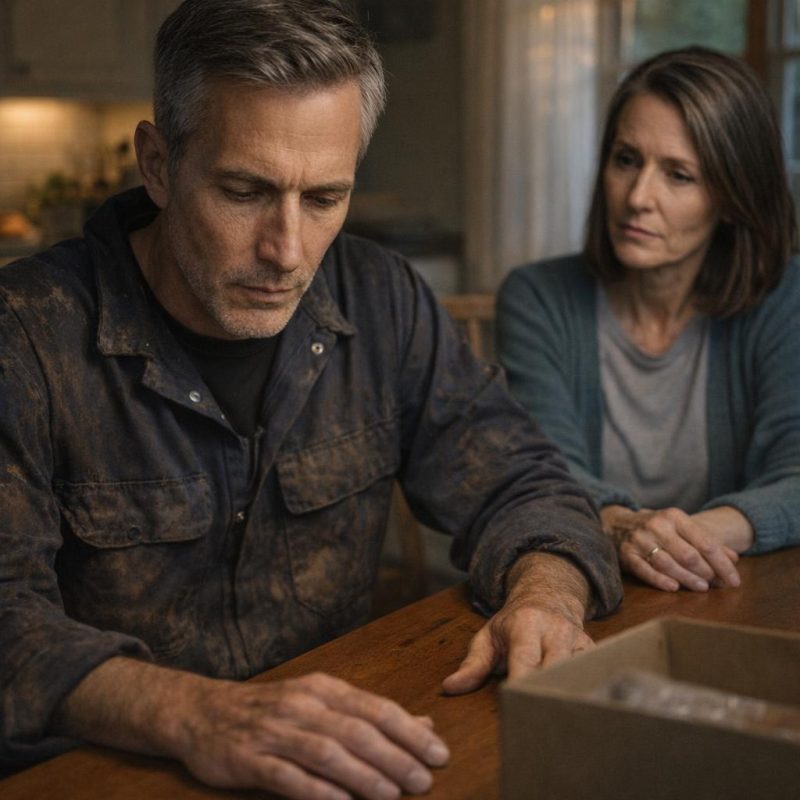 Image by RM AI
The Ghost in the Kitchen
The first few weeks of retirement, Arthur woke up at five-thirty out of pure habit. I'd hear him moving around the kitchen before the sun was fully up, the coffee maker clicking on, the soft shuffle of his slippers on the tile. But there was nowhere to go. No commute, no morning briefing, no inbox waiting. By seven he'd already run out of things to do with himself. I'd come downstairs and find him standing at the back window with his coffee going cold, or sitting at the kitchen table with a newspaper he'd already read. He'd pick up the remote and set it back down. He'd start toward the garage and then drift back inside. I tried not to hover. I told myself this was normal, that every person who retires goes through an adjustment period, that he just needed time to decompress. But watching him move through the house like that — room to room, picking things up and putting them down — it was like watching someone search for something they couldn't name. I gave him space. I kept busy with my own routines. I told myself it would pass. Then one night I woke up at two in the morning to get a glass of water, and Arthur was standing in the middle of the hallway in the dark, perfectly still, staring at nothing.
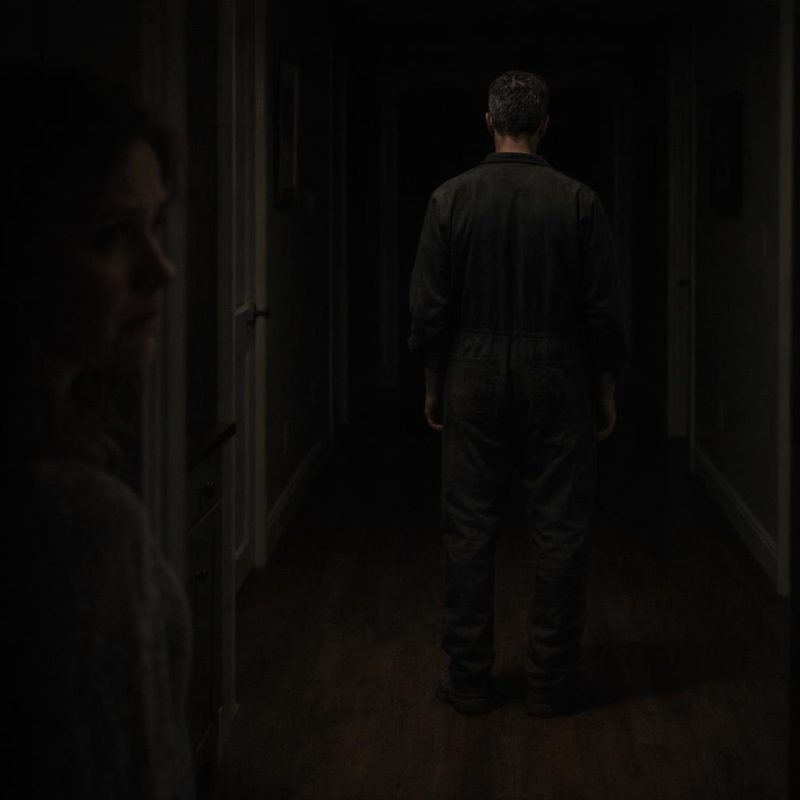 Image by RM AI
The Bird Feeder Vigil
His favorite spot became the kitchen window. He'd stand there with both hands shoved deep into his pockets, weight shifted to one hip, eyes fixed on the bird feeder we'd hung from the oak tree years ago. Sometimes he'd stay like that for twenty minutes without moving. I started suggesting things — gently, carefully, the way you do when you're trying not to make someone feel managed. I mentioned gardening. We had a decent-sized yard and he'd always said he wanted to do more with it. He nodded and said maybe. I brought up the library downtown, told him they were always looking for volunteers, that he'd be good with the cataloguing given his background in logistics. He said that sounded interesting. Neither of us believed it. I tried woodworking, golf, a photography class at the community center. Each suggestion got the same response — a small, polite smile, a noncommittal word or two, and then his gaze would drift back toward the window. He wasn't dismissing me out of rudeness. I understood that. He was somewhere else entirely, turning something over in his mind that he hadn't found words for yet, and my suggestions couldn't reach him there. He told me once that he was still finding his legs, and I held onto that phrase like it meant something. But the smile he gave me when he said it never quite made it to his eyes.
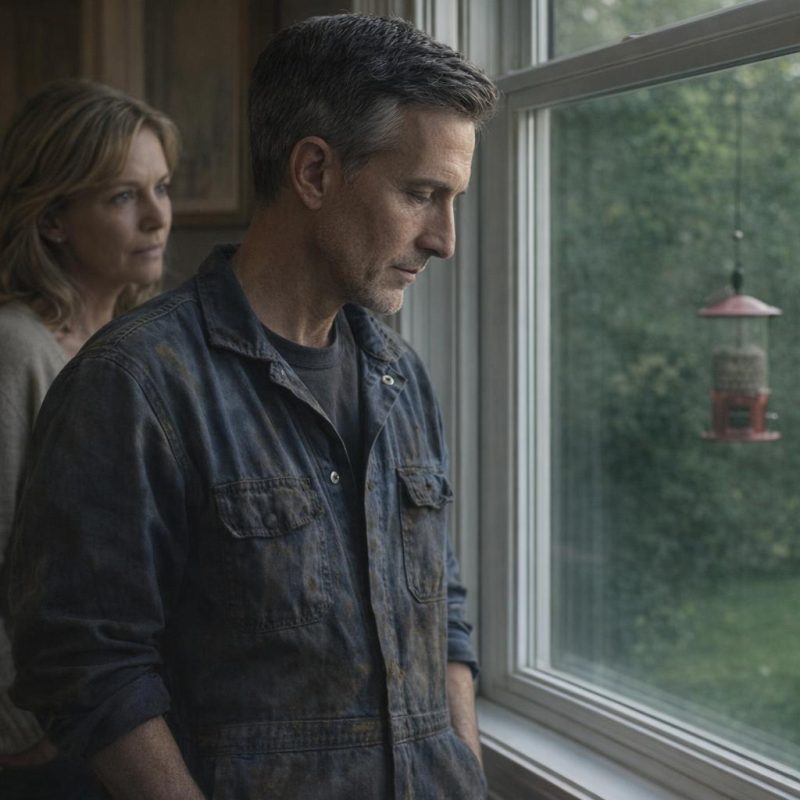 Image by RM AI
Grease Under His Fingernails
It was a Saturday in August, one of those thick humid days where the air sits on you like a wet blanket, and Arthur left after breakfast without saying much about where he was going. That wasn't unusual by then — he'd taken to driving around on weekends, just to have somewhere to be. But when he came back that afternoon, something was different. I noticed it before he even spoke. He was standing straighter. His eyes had a brightness in them I hadn't seen in months — maybe longer. He set his keys on the counter and held up both hands, and his fingers were dark with grease up to the second knuckle. He was grinning like a kid. He'd stopped at a swap meet over in Millbrook, he said, and found a 1968 Mustang engine in the back of a seller's truck. He described it the way some people describe falling in love — the condition of the block, the potential in it, the way the seller hadn't known what he had. He'd bought it on the spot and it was sitting in the trunk of his car right now. I stood there listening to him talk, and I felt something loosen in my chest that I hadn't realized I'd been holding tight. Whatever this was, it had put the light back in his face.
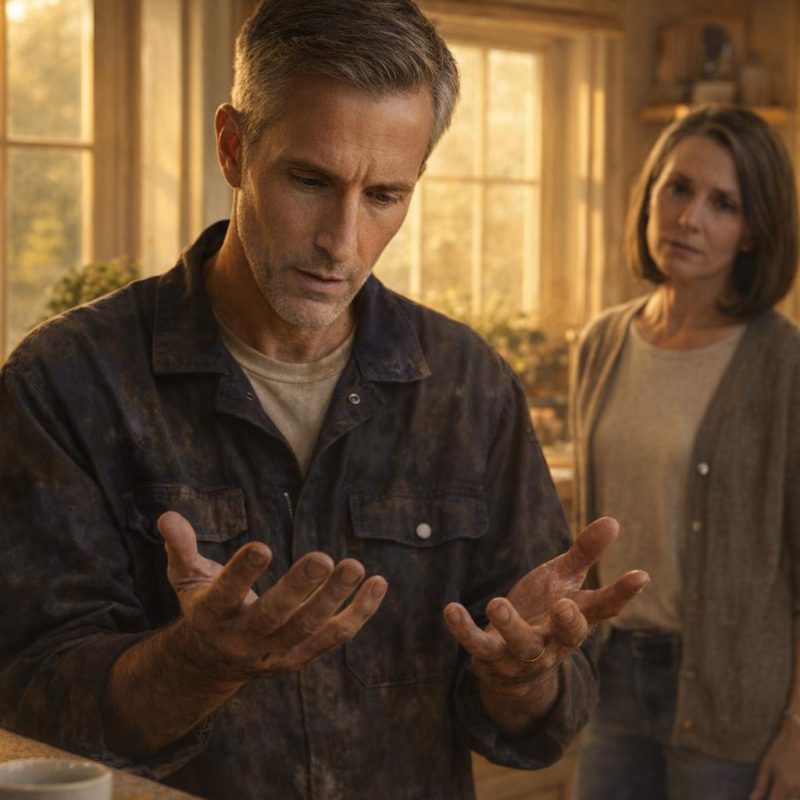 Image by RM AI
The Garage Transformation
Within a month, I could tell the garage had become a different place just by walking past the door. The smell changed first — that familiar mix of old cardboard and sawdust gave way to something sharper, more purposeful: degreaser, motor oil, the faint metallic bite of metal on metal. Arthur had cleared out the holiday decorations and the boxes of things we'd been meaning to donate for years. He'd built makeshift shelves along one wall and lined them with parts I couldn't name, each one wrapped in cloth or set carefully on a folded towel. The Mustang engine sat on a tarp in the center of the floor like the main attraction. He was out there every morning by eight, sometimes earlier. I'd bring him coffee around nine and he'd take it without looking up, already deep in whatever he was working on. I didn't mind. Honestly, I was grateful. The man who'd been drifting through the house like a ghost had somewhere to be again, something that needed him. I started leaving him to it, giving him the same space I'd give anyone absorbed in something they loved. One afternoon I pulled the garage door open to call him in for lunch, and I stopped in the doorway without saying a word — the whole space had been transformed into something I barely recognized.
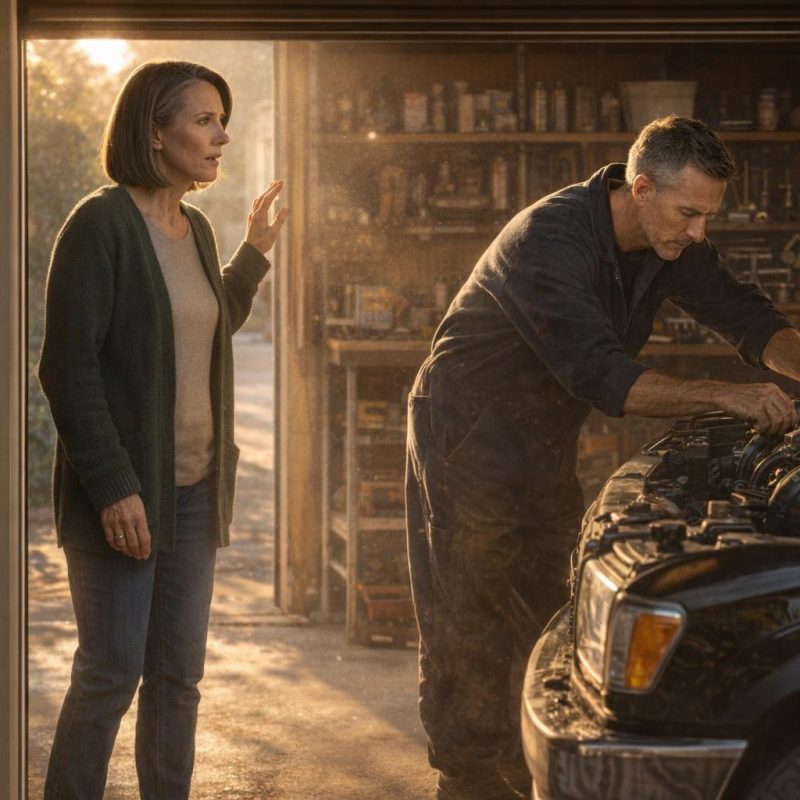 Image by RM AI
The Workbench
He built the workbench himself over the course of a long weekend. I watched him measure the lumber twice before every cut, the way he used to double-check shipping manifests at the firm. He assembled it with the same quiet precision — no wasted motion, no second-guessing once the measurements were confirmed. When it was done he ran his hand along the surface the way a person tests something they're proud of. The coveralls came next. He'd ordered a pair online and they arrived in a plain brown box, and from that point on they became his uniform as reliably as his old work shirts had been. He'd be in them by seven-thirty most mornings, out in the garage with the radio tuned to a talk station, the voices drifting through the side door and into the kitchen while I had my second cup of coffee. There was something almost musical about the rhythm of it — the low murmur of the radio, the occasional clank of a tool, the sound of a man who knew what he was doing. His posture had changed too. The slight forward hunch he'd carried through those first weeks of retirement was gone. He moved through the garage — and through the house — with a straightness in his spine I recognized from his working years. The coveralls fit him better than his retirement clothes ever had.
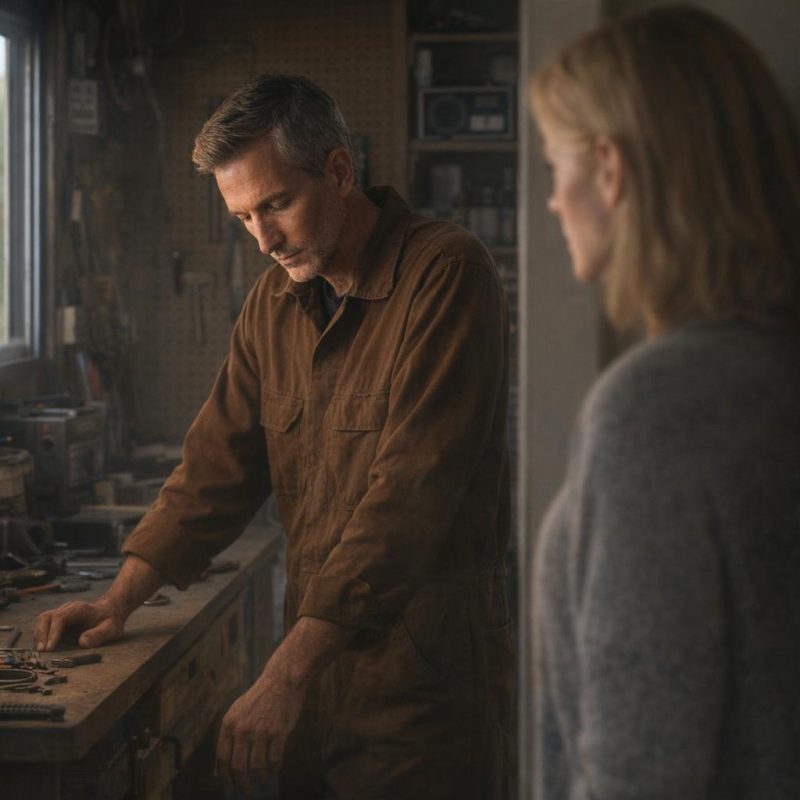 Image by RM AI
The Restoration Circle
He mentioned the restoration circle over dinner one evening in October, almost as an aside, the way you mention something you've already decided about. A group of retired guys, he said, who got together to trade parts and talk through problems on their projects. Someone at the swap meet had told him about it. I asked him where they met and he said it rotated — sometimes one guy's garage, sometimes another's. I asked if he liked them and he smiled, a real smile this time, and said they were good people who knew what they were talking about. I felt a small, genuine relief at that. One of the things I'd quietly worried about was the isolation — Arthur had always been social at work, always had colleagues to eat lunch with, problems to solve alongside other people. The garage hobby was wonderful, but it was solitary. Knowing he'd found a group felt like the last piece settling into place. He mentioned a few of the men by name over the following weeks — Dave, who was working on a '72 Chevelle; Mike, who specialized in foreign makes; Leo, who apparently had a barn full of parts going back to the fifties. I listened and asked questions and felt, for the first time since June, like things were genuinely going to be fine. Then one evening he mentioned two more names I didn't recognize, people he'd never brought up before.
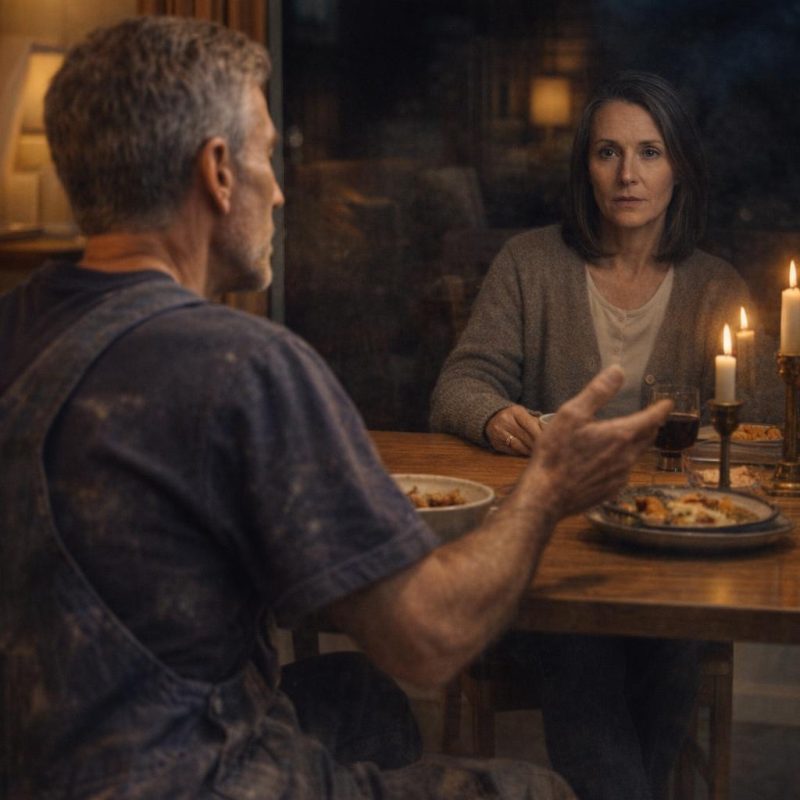 Image by RM AI
Tuesday and Thursday Mornings
By November, the Tuesday and Thursday pattern was firmly in place. He'd be up early those mornings, dressed and out the door by eight, sometimes with a thermos of coffee and a list he'd written on a notepad the night before. Tuesdays he said he was usually hitting the specialty shops — there was one over in Carver that stocked hard-to-find parts, another in the next county that dealt in vintage upholstery. Thursdays he said he was typically helping one of the guys from the circle with their own projects, returning the favor for advice he'd been given. I didn't question it. Why would I? The schedule was consistent, the explanations were reasonable, and more than anything, the man coming home on those evenings was the Arthur I recognized — tired in the good way, the way you get tired when you've used your hands and your mind on something that matters. I appreciated the structure of it more than I could have explained. For thirty-five years our household had run on the rhythm of his work schedule, and when that rhythm disappeared in June it had thrown everything slightly off-balance. Now there was a shape to the week again. Tuesday and Thursday mornings, regular as clockwork, as fixed as any schedule he'd ever kept.
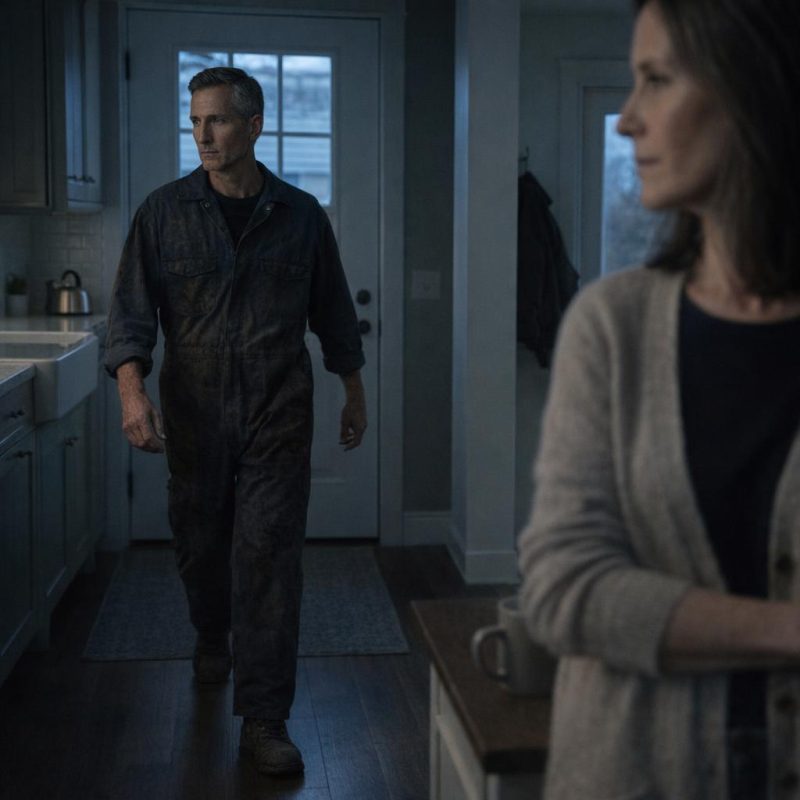 Image by RM AI
Space and Marriage
People always assume that a long marriage means you've grown so close you finish each other's sentences, that you move through the house like two halves of the same thing. Ours was never quite like that, and I think that's why it worked. Arthur and I had always given each other room — real room, not the polite kind where you're secretly keeping score. When he wanted to spend a Saturday afternoon reading in the den with the door closed, I didn't take it personally. When I wanted to drive out to the nursery alone and spend two hours deciding between perennials, he didn't hover. We'd figured that out early, maybe in the first five years, and we'd never had to revisit it. So when the garage became his place, it slotted right into the pattern we'd built without either of us having to say a word about it. I had the mornings to myself — my coffee, my garden, my quiet — and he had his projects and his circle and whatever satisfaction came from getting his hands dirty. By the time he came home in the evenings, we were both glad to see each other. That gladness, I'd learned, was something you had to protect. The comfortable distance between us had always been what made the closeness feel like a choice.
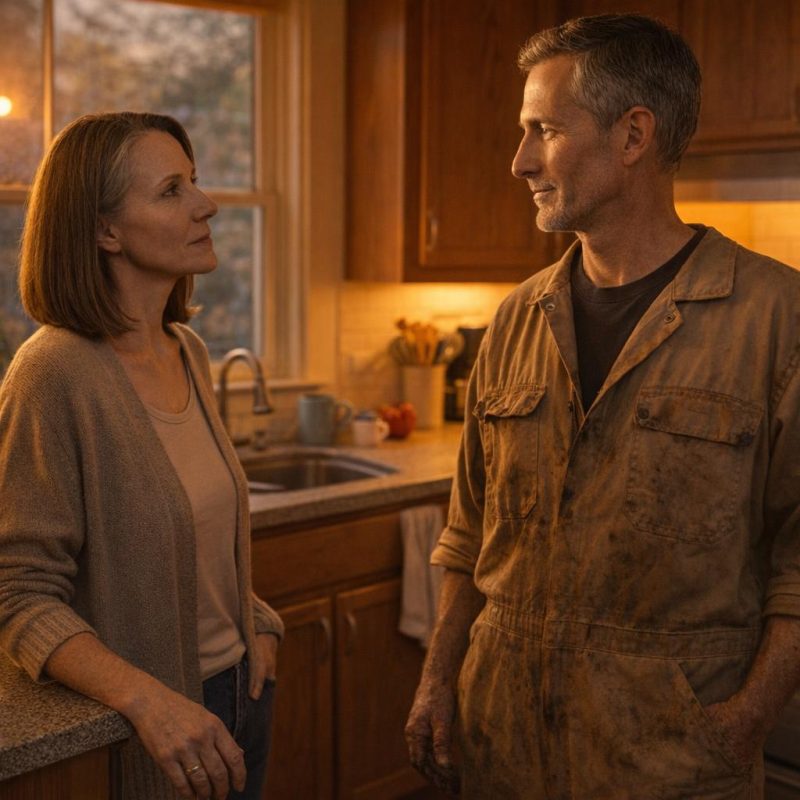 Image by RM AI
Dave, Mike, and Leo
I never met Dave, Mike, or Leo, but by December I felt like I could have picked them out of a crowd. Dave was the one with the carburetor obsession — Arthur came home one Thursday shaking his head and laughing, saying Dave had spent three hours on a rebuild that should have taken forty-five minutes because he kept second-guessing himself. Mike was the hunter, the one who showed up to the circle with something extraordinary he'd tracked down at an estate sale — a set of original gauges still in the box, a chrome piece nobody had seen outside of a catalog. Leo was the collector, the one with the gaskets. Arthur mentioned Leo's gaskets the way some people mention a neighbor's rose garden — with a kind of fond exasperation, like it was both impressive and slightly ridiculous. I asked questions because I was genuinely curious. What did Dave do before he retired? Was Mike the one with the truck? Arthur always answered easily, filling in details, and the men took on shape and texture in my mind. I imagined them the way you imagine characters in a book someone else is reading aloud to you — partial, warm, a little blurry at the edges. I was glad Arthur had found them, these friends who existed only in his stories.
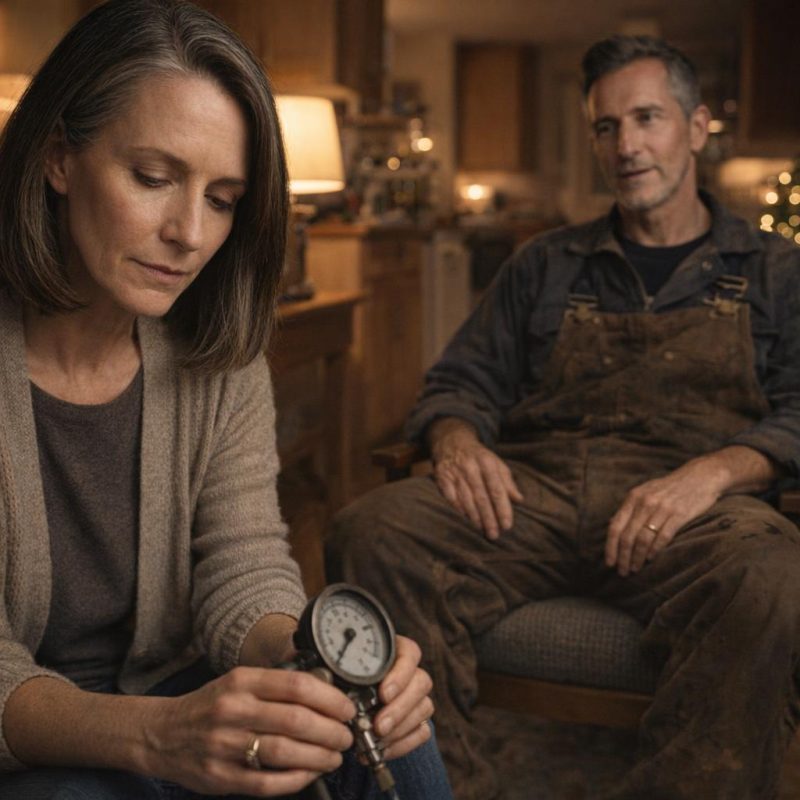 Image by RM AI
Dinner Conversation
The stories kept coming through the winter and into the spring, and I found myself looking forward to them in the way you look forward to a good serial — always a new complication, always a resolution just satisfying enough to make you want the next installment. Arthur described a transmission problem Dave had been wrestling with for two weeks, the kind of thing where every fix revealed another layer underneath. He talked about advice Leo had given on sourcing original parts — apparently there was a whole network of suppliers most people didn't know about, and Leo had been working it for years. Mike's workshop came up regularly as a gathering place, the kind of shop where someone always had coffee on and there was always something interesting on the lift. I asked follow-up questions I didn't fully understand the answers to. What's the difference between a rebuild and a remanufacture? Why does it matter if the gasket is original versus reproduction? Arthur would explain patiently, and I'd absorb maybe half of it, and we'd move on. What I understood completely was the pleasure he took in the telling. He sat straighter at the dinner table those evenings. His hands moved when he talked. I didn't need to follow every technical detail to appreciate the ease with which Arthur inhabited these stories.
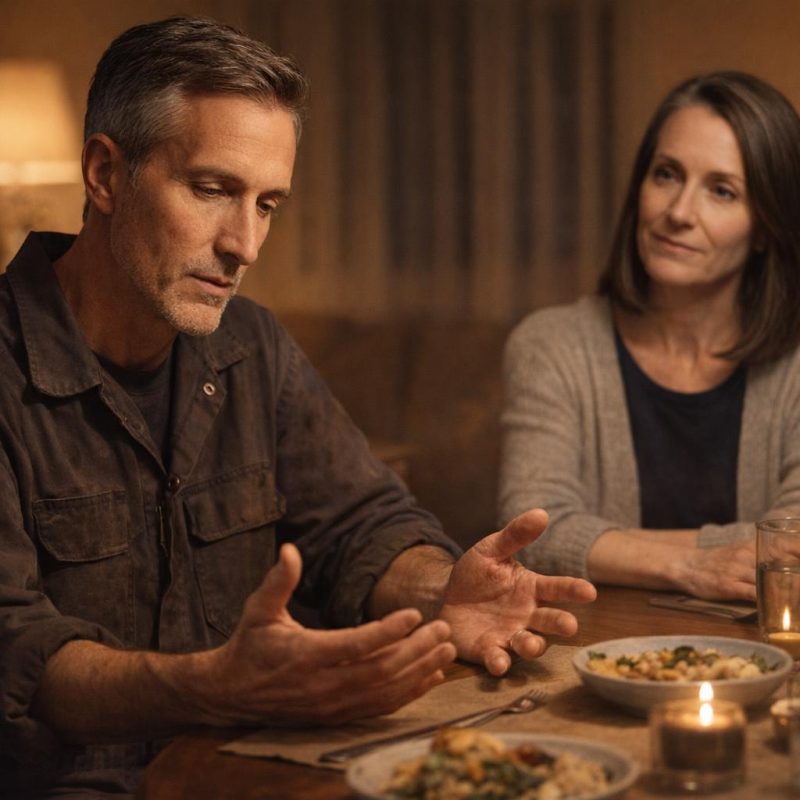 Image by RM AI
Carburetor Victories
There was one Thursday in late March that I still think about when I want to remember what that year felt like at its best. I'd been in the garden most of the afternoon and had come inside to start dinner when I heard the truck in the driveway. I looked out the kitchen window and there he was — Arthur, standing in the driveway at dusk, covered in grease and grinning like he'd just won something.
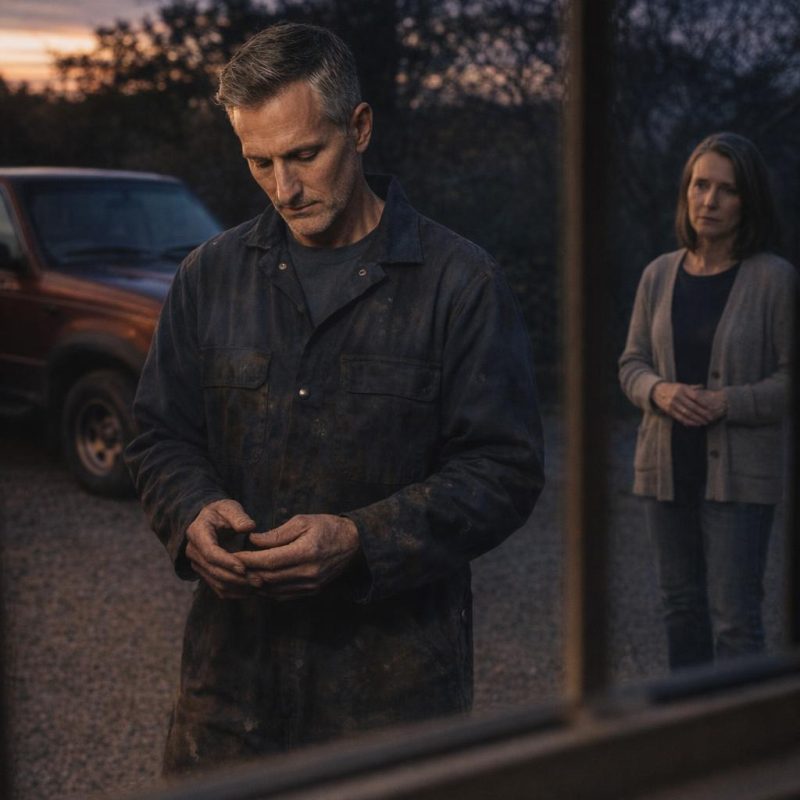 Image by RM AI
The Second Year
By the time the second year of his retirement rolled around, the Tuesday-Thursday pattern had quietly expanded. It wasn't dramatic — there was no single week where everything changed. It was more like the tide coming in, gradual enough that you don't notice until you look down and your shoes are wet. He started going in on Saturday mornings. Then the occasional Monday. Then I realized one Wednesday afternoon that I couldn't remember the last time I'd seen him before five o'clock on a weekday. The garage had become his primary domain in a way that the house never quite had been, even after thirty-five years. I'd come downstairs some mornings and find his coffee cup rinsed and drying in the rack, the truck already gone. I told myself it was fine — and mostly I believed it. He was happy. He was healthy. He had somewhere to be and people who expected him. Those were not small things. I'd watched enough friends' husbands drift into retirement like boats cut loose from a dock, and I knew what that looked like. Still, there were afternoons when the house felt very quiet, and I'd sit with my tea and notice, in a mild and passing way, how completely the hobby had taken over his days.
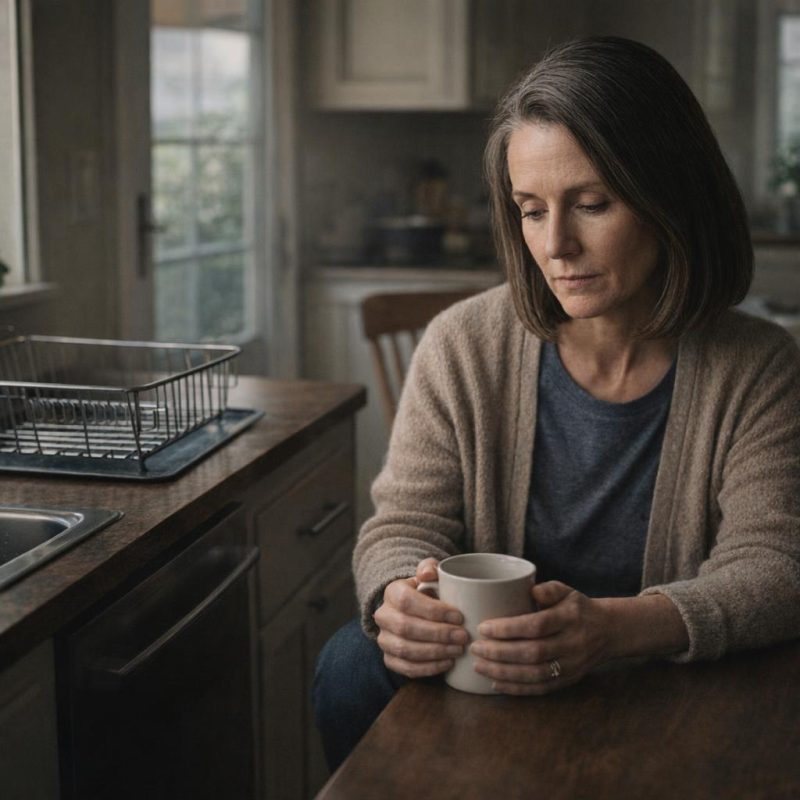 Image by RM AI
Photos on His Phone
He started showing me photos on his phone sometime that spring, and I have to admit they were impressive. Not just the cars themselves — though those were beautiful, all that chrome and leather and paint that had somehow survived decades — but the individual pieces he was tracking down. He'd scroll through and narrate: a chrome bumper he'd sourced from a seller in Pennsylvania, still wrapped in the original cloth. Leather seats from Ohio, barely cracked, the color so intact it looked almost new. I'd ask how he found such specific things, and he'd explain that the restoration network was wider than most people realized — collectors who knew collectors, estate sales that never made it to the public listings, shops that dealt exclusively in original parts and didn't advertise. It made sense. Every specialized world has its own channels. I was more impressed by the dedication it required than anything else — the patience to track down a single piece across three states, to wait months for the right one rather than settle for a reproduction. I held his phone and scrolled through image after image, chrome and leather and glass, the scope of what he was finding spread across multiple states, and felt something close to genuine admiration for the care he was putting into it.
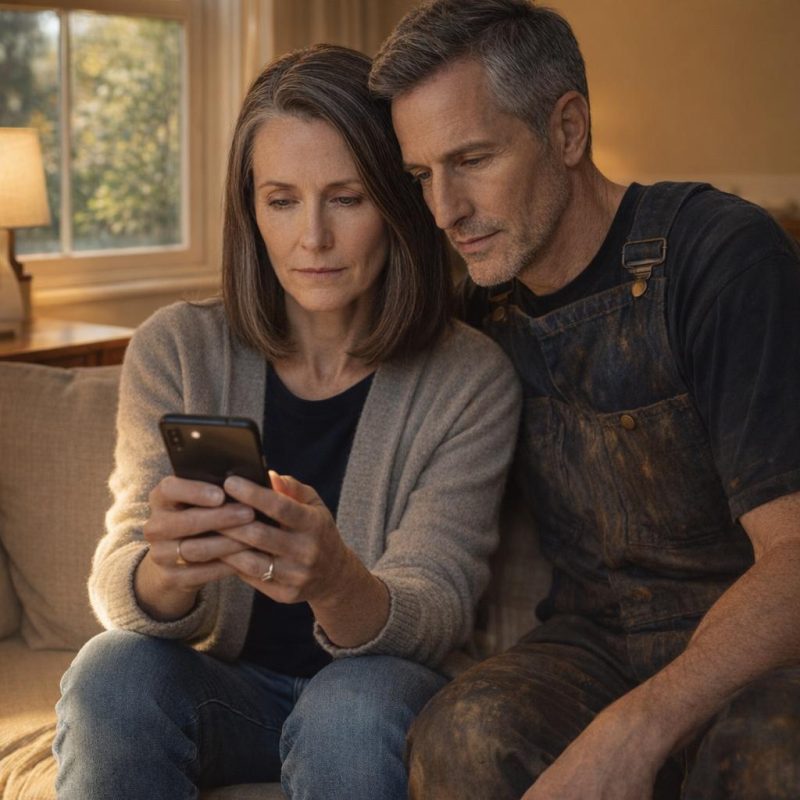 Image by RM AI
The Ambitious Finds
The out-of-state sourcing trips started becoming more frequent that summer, or at least that's when I began to notice them as a pattern. He'd mention a manifold he needed, something specific that nobody local had, and he'd leave early and come back after dark smelling of highway miles and fast food. I didn't think much of it at first. The hobby had always required legwork. But one evening in July he pulled into the driveway and I went out to ask if he wanted me to hold dinner, and when he climbed out of the truck I happened to glance at the dashboard through the open door. I wasn't looking for anything. I was just standing there. The odometer reading sat in my line of sight for maybe three seconds before he swung the door shut. I did the math on the way back inside — the town he'd mentioned was forty minutes each way, maybe fifty with traffic. The number I'd seen didn't match that, not even close, not even if he'd made three stops. I stood at the kitchen counter and told myself there were a dozen explanations. He'd taken a different route. He'd gone somewhere else first and forgotten to mention it. I almost had myself convinced. Almost.
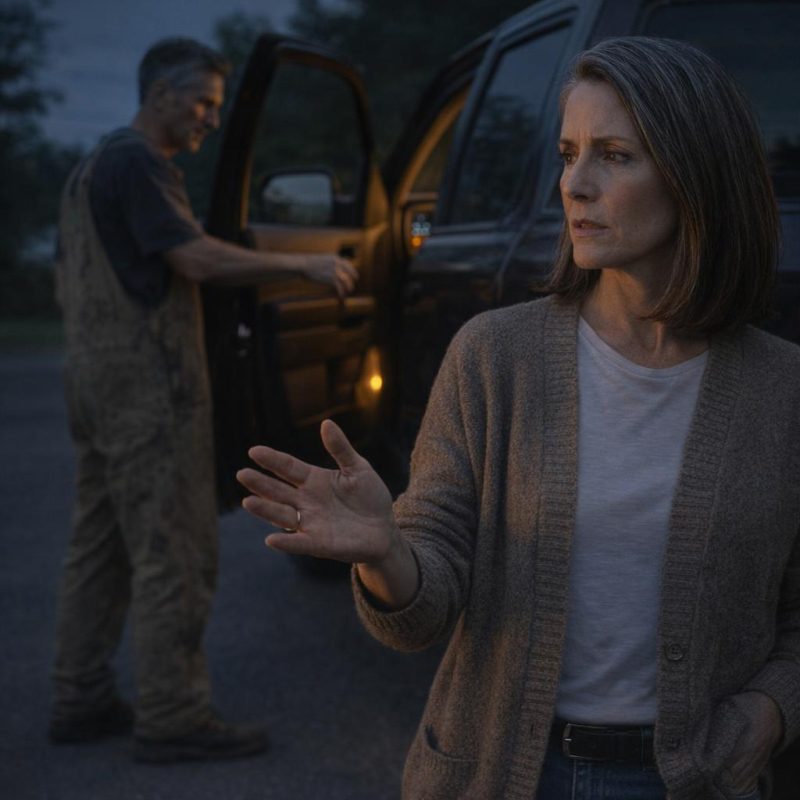 Image by RM AI
The Vitality
Whatever small unease I'd felt that evening faded quickly, the way those things do when the person standing in front of you looks genuinely well. And Arthur did look well — better than well, if I'm honest. That summer he moved through the house with an energy I hadn't seen in years. His posture was different, straighter, the kind of straightness that comes from confidence rather than effort. He laughed more easily, at small things, at nothing in particular. The haunted look that had settled into his face during those last grinding years before retirement — that particular exhaustion that lives behind the eyes — was simply gone. I found myself watching him cross the kitchen one morning, coffee in hand, moving with a lightness in his step, and I thought about the man who had sat at our kitchen table the previous June staring at his own hands like he didn't know what to do with them anymore. These were not the same man. Whatever the garage had given him, it had given him back to himself, and I felt grateful for it in a way that was almost physical. He set his mug down, rolled his shoulders back, and walked out to the truck with the easy stride of a man who had somewhere important to be.
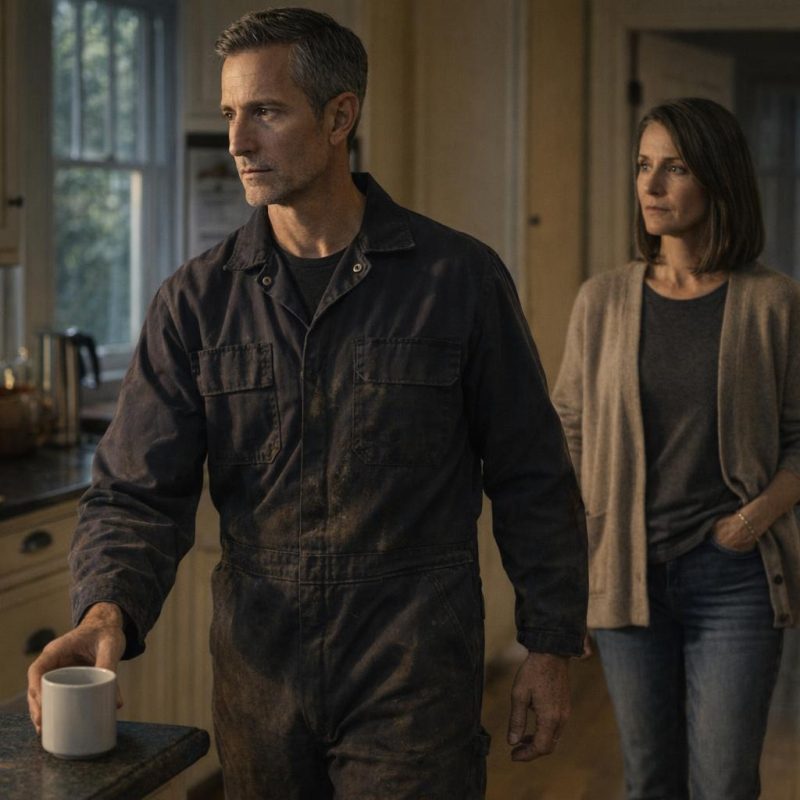 Image by RM AI
The Late Dinner Routine
By September, dinner at eight had become as fixed a part of our routine as morning coffee. I'd learned to time things so his plate went into the oven around seven-thirty — something that could hold without drying out, a casserole or a roast, something forgiving. He'd come through the back door smelling of exhaust and machine oil, drop his keys on the hook, and head straight upstairs to shower. I'd hear the pipes knock in the walls, the familiar percussion of our house doing what it always did, and by the time he came back down in clean clothes with his hair still damp, I'd have his plate on the table and a glass of water poured. We'd sit together and he'd talk — about a carburetor that had fought him all afternoon, about a gasket that crumbled the moment he touched it, about small victories with stubborn bolts. I didn't understand half of it, but I liked the sound of his voice when he talked about things he cared about. It reminded me of the early years. One evening I was rinsing dishes while he finished eating, and his phone buzzed on the counter beside the fruit bowl — a sharp, insistent sound in the quiet kitchen — and I turned to see the screen light up, Arthur still upstairs in the shower.
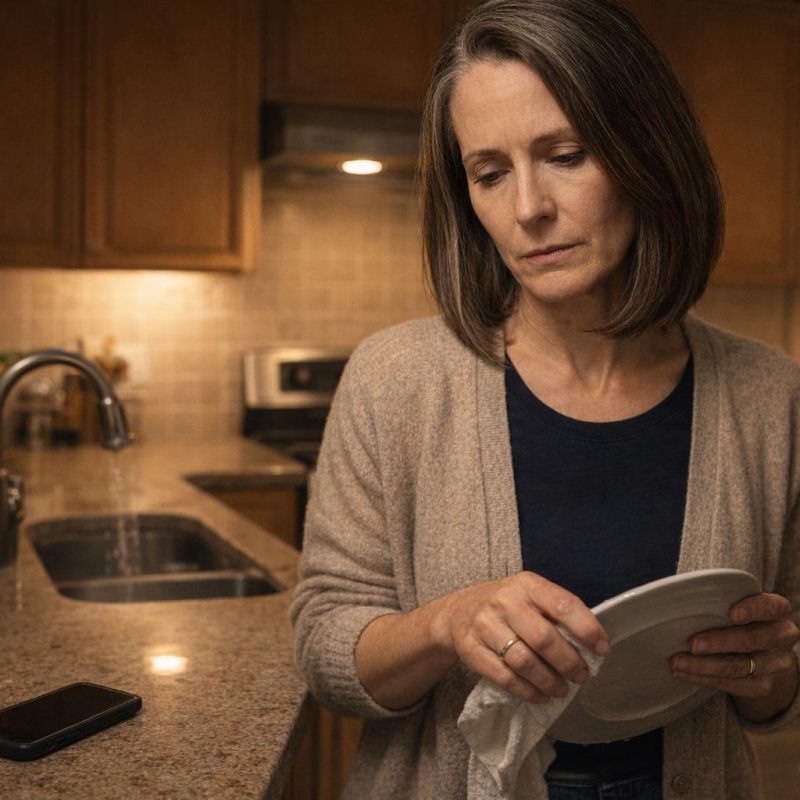 Image by RM AI
Space as an Ingredient
I've thought a lot, over the years, about what makes a long marriage work. People always want a single answer — communication, they say, or commitment, or shared values. And those things matter, they do. But if I'm honest about what had kept us steady through thirty years, it was something quieter than any of that. It was the willingness to let each other be separate people. We'd figured that out early, almost by accident. Arthur had his interests and I had mine, and we'd never made the mistake of treating that as a problem to solve. He had his woodworking phase in the nineties, his fishing years after that, the long stretch when he read nothing but military history and wanted to talk about it at breakfast. I had my garden, my book club, the watercolor class I'd taken three times and never quite mastered. We moved through the same house on parallel tracks, and then we'd meet in the evenings and actually have something to say to each other. The garage felt like more of the same. He had found a thing that lit him up, and I had my days to myself, and in the evenings we sat across the table from each other like two people who had chosen this life and kept on choosing it. That felt like enough. That had always been enough.
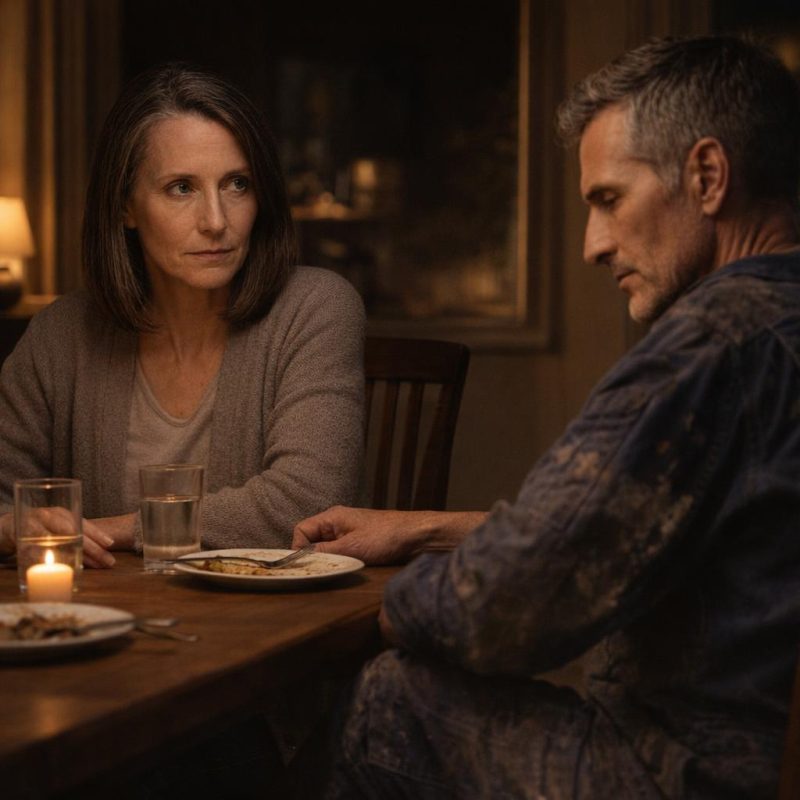 Image by RM AI
Small Details
It started with small things. The kind of things that don't mean anything on their own but collect in the back of your mind like loose change at the bottom of a drawer. Arthur's phone rang one afternoon while he was in the backyard, and he walked around the side of the house to take it, out of earshot. I told myself he probably just wanted quiet. Another time he mentioned he was running to the hardware store and was gone for nearly three hours. The hardware store was twelve minutes away. He came back with a single bag, a box of screws and some sandpaper, and I didn't say anything because what would I even say. I found a receipt in his jacket pocket when I was sorting laundry — a gas station I didn't recognize, in a direction I wouldn't have expected. He'd mentioned the garage was close to home. I smoothed the receipt out and looked at it for a moment, then folded it back and tucked it into the pocket where I'd found it. Each thing had an explanation, probably. The phone call was nothing. The hardware store trip ran long. The gas station was on a route I didn't know he took. I told myself I was assembling a puzzle out of pieces that didn't belong to the same picture. But the feeling didn't quite leave me, even after I'd talked myself out of it.
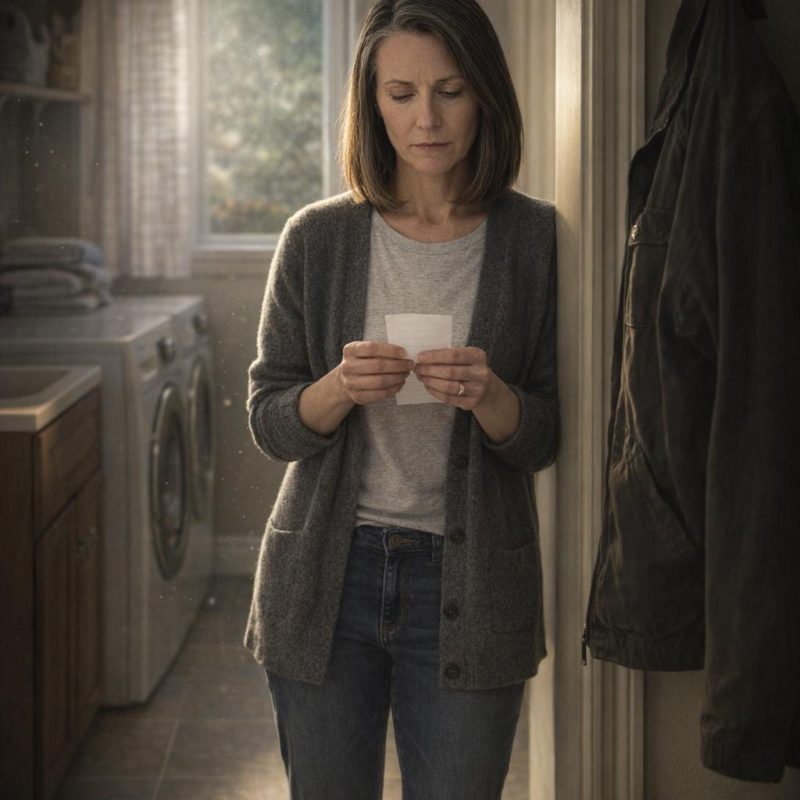 Image by RM AI
The Mileage
I'm not sure what made me look at the odometer. It wasn't a plan — I wasn't conducting an investigation. I just happened to be standing beside the SUV when Arthur came back from what he'd called a quick errand, picking up a part from a supplier he knew, shouldn't take long. I glanced at the dashboard through the window while he was carrying something inside, and the number sat there in my head the way numbers do when they don't match what you expected. Later that evening I checked what I'd noted the last time I'd driven it myself. The difference was more than I could account for with a local trip, even accounting for traffic or a detour. I didn't say anything at dinner. I watched him eat and talk about his day and I nodded in the right places, and afterward I went to hang up his jacket and checked the pockets out of habit. I told myself I was just looking for tissues before the wash. But there it was, folded in the inside pocket — a receipt from a diner I'd never heard of, in a town I'd have to drive forty minutes to reach, with a timestamp from mid-morning and a total that showed two people had eaten.
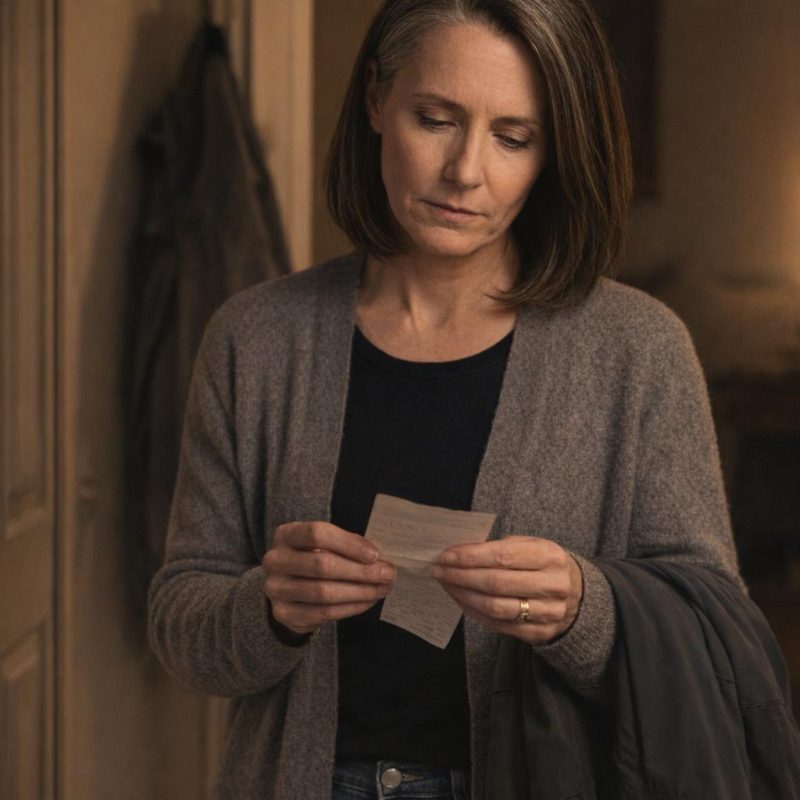 Image by RM AI
Trying to Ignore Doubts
I put the receipt back exactly where I'd found it. I smoothed the fold and tucked it into the inside pocket and hung the jacket on its hook, and then I stood in the hallway for a moment before going back to the kitchen. I told myself what I'd been telling myself for weeks — that there were reasonable explanations for all of it, that I was connecting dots that weren't meant to connect. The diner could have been a supplier meeting. The mileage could have been a detour I didn't know about. Arthur had always been the kind of man who took the long way when he was thinking something through. That evening he came to the table in a good mood, talking about a chrome trim piece he'd finally tracked down, and I watched him the way you watch someone when you're looking for something you hope not to find. His hands were steady. His eyes were easy. He laughed at something on the radio and refilled my water glass without being asked. There was nothing there. Nothing I could point to. I decided I was manufacturing suspicion out of ordinary life, the way an anxious mind will do when it has too much quiet time. I went to bed telling myself that. But the doubt had settled somewhere below my ribs, and it stayed there through the night, quiet and patient and entirely unwilling to leave.
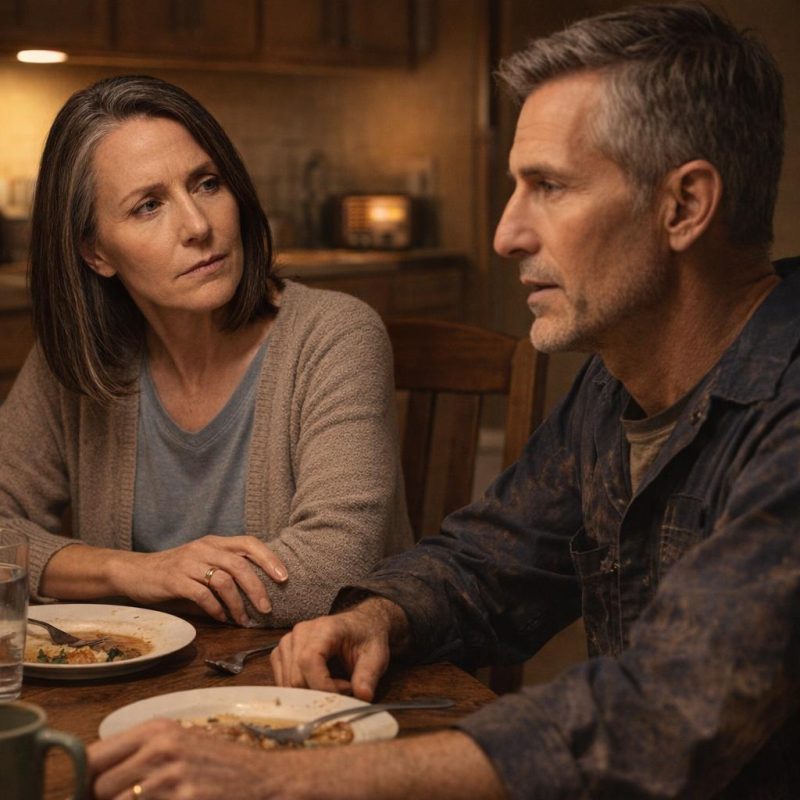 Image by RM AI
Planning the Garage Sale
The idea came to me on a Tuesday when I went down to the basement for the extra folding chairs and had to move three boxes just to reach them. We'd been accumulating things for years the way long-married people do — slowly, without noticing, until suddenly there's no clear path to the folding chairs. I mentioned it to Arthur that evening, almost offhandedly, that the basement had gotten out of hand and maybe we should do a garage sale before the weather turned. He looked up from his plate and said that sounded like a good idea. Just like that. No hesitation, no negotiation. He said he had some spare parts taking up space in the garage, things he'd bought thinking he'd need them and hadn't, and he could price those up and put them on a separate table. We talked through the logistics over the rest of dinner — what weekend, whether to advertise on the neighborhood app, whether to bother with a permit. It was the most ordinary conversation we'd had in weeks, and I felt something loosen in my chest that I hadn't realized was tight. This was us. This was just us, planning a Saturday the way we always had. I went to sleep that night easier than I had in a while, reassured by nothing more complicated than the simple fact of his easy agreement.
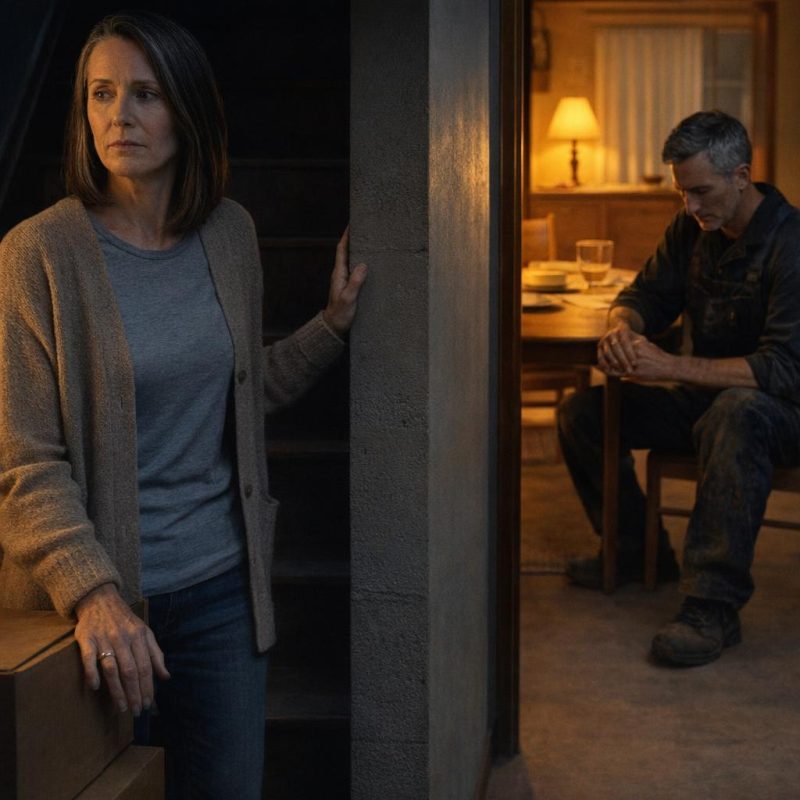 Image by RM AI
Setting Up the Sale
We were up before seven on Saturday. Arthur made coffee while I pulled the folding tables out of the basement, and by eight we had three of them set up along the driveway in a row. The morning was clear and cool, the kind of early autumn day that feels like a gift, and I was in a better mood than I'd been in weeks. I arranged the kitchen things on the first table — the bread maker we'd used twice, the fondue set from the nineties, a set of glasses I'd been meaning to donate for years. Arthur worked the far end, sorting through boxes he'd brought from the garage, wiping things down with a rag before he set them out. He'd priced everything with little stickers, neat and organized the way he did things when he was in a good mood. A few neighbors drifted by before nine, picking through the books and the old picture frames. The morning had the easy, unhurried feeling of a day with no particular stakes. I was rearranging a row of paperbacks when I heard the scrape of a heavy box behind me, and I turned to see Arthur coming down the driveway carrying a crate of old cast-iron engine parts, dark with age, each piece the kind of thing that looked like it belonged in a museum of engines.
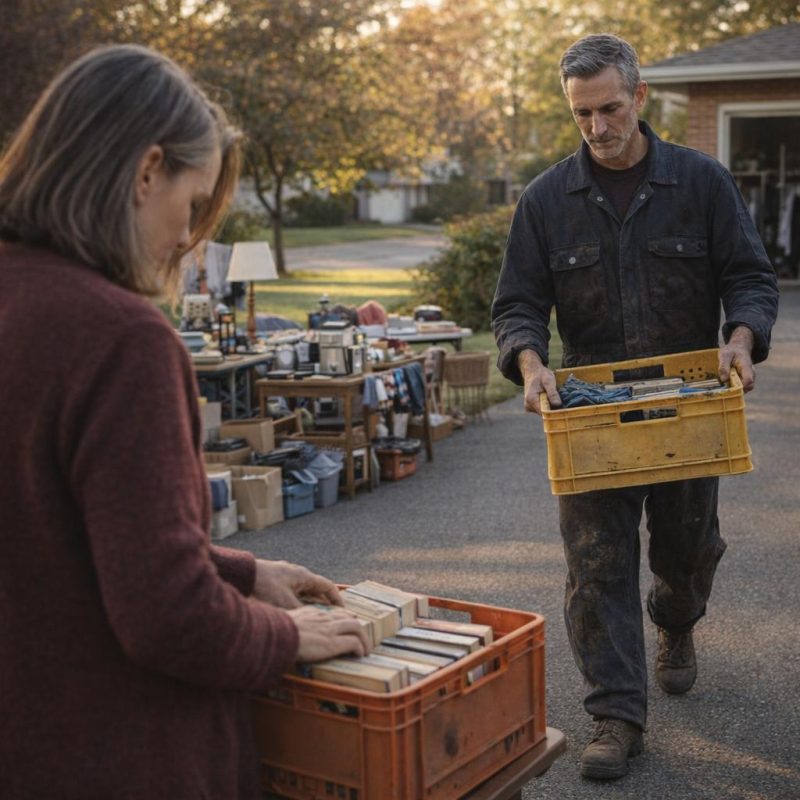 Image by RM AI
The Man in the Racing Jacket
The man came up the driveway about twenty minutes later. He was wearing a faded racing jacket, the kind with sponsor patches that had been washed so many times the colors had gone soft, and he moved with the unhurried confidence of someone who wasn't browsing so much as assessing. He went straight to Arthur's table, the way people do when they know what they're looking for. He picked up the cast iron piece I'd watched Arthur set out — turned it over in his hands, ran his thumb along the edge of it, tilted it toward the light. His grin spread slowly, the grin of someone who has just confirmed something they already suspected. He set it back down and looked up, and that's when I noticed he wasn't looking at the table anymore. He was looking at Arthur, who had come around from the other side. The man raised a hand in greeting, easy and familiar, and said Arthur's name — not as a question, not the way a stranger would say it, but the way you say the name of someone you already know.
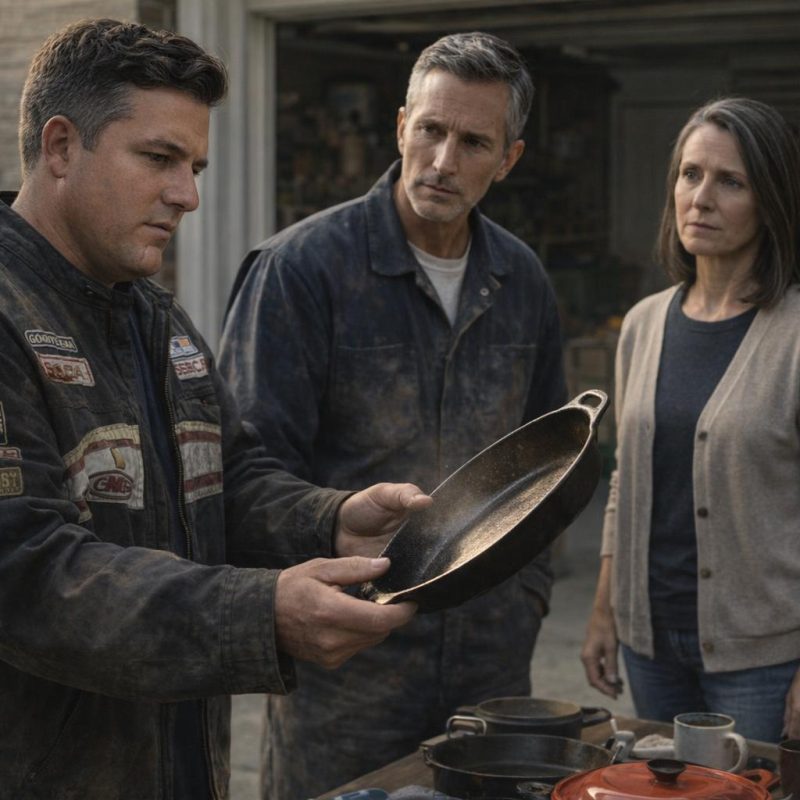 Image by RM AI
Partner and Other Shop
I was still holding a box of kitchen items — a colander, some mismatched mugs, a spatula I'd been meaning to throw out for years — when I heard the man in the racing jacket say it. He'd been talking to Arthur in that easy, familiar way, the way you talk to someone you've done business with before, and then the words just landed right in the middle of the afternoon. He asked if Arthur's partner was coming by later, and then said something about a lift for the other shop. Just like that. Casual as anything. I don't think he even noticed me standing there. I set the box down on the table without meaning to, a little too hard, and one of the mugs shifted and nearly tipped. Arthur's head turned just slightly — not toward me, toward the man — and something moved across his face so fast I almost missed it. The afternoon sun was warm on my shoulders but I felt a sudden cold settle in my chest. Partner. Other shop. I turned the words over without knowing what to do with them.
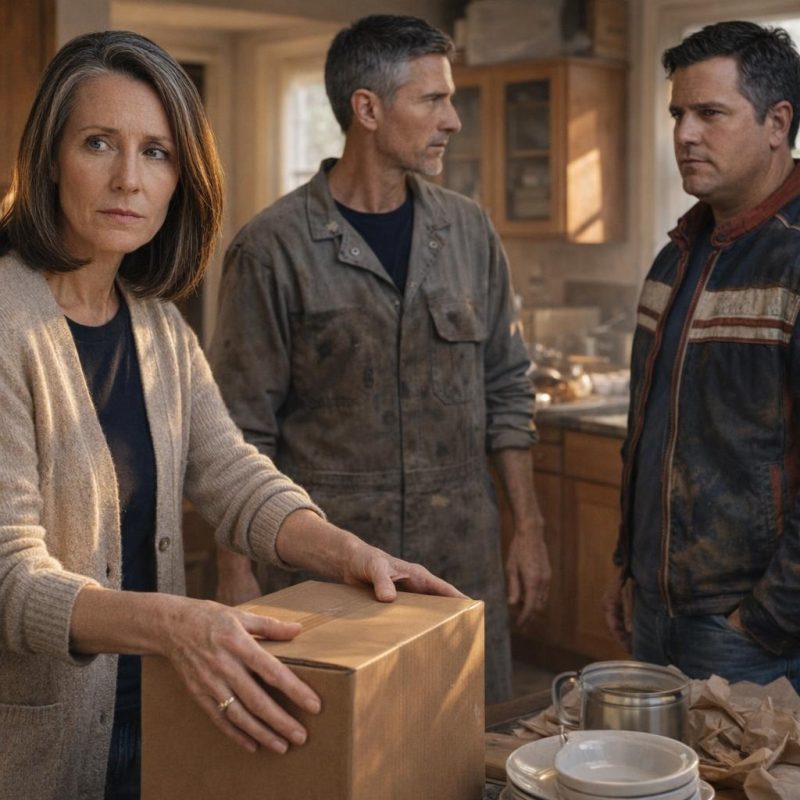 Image by RM AI
Arthur's Denial
Arthur laughed. It came out quick and easy, the kind of laugh that's meant to close a door, and he shook his head and said the man must have him mixed up with someone else from the circuit. Said there were a few Arties who ran in those circles, said it happened all the time. The man's expression shifted. He wasn't offended, just genuinely puzzled — the look of someone recalculating. He said no, he was pretty sure, said they'd spoken last week at a show in Springfield, said he remembered the conversation clearly. Arthur laughed again, softer this time, and said Springfield, huh, and shrugged in a way that was meant to seem easy but didn't quite land that way. I watched from behind the table, not speaking, not moving. The man looked at Arthur for a moment longer than felt comfortable, then nodded slowly, the way people do when they decide not to push. I kept my eyes on Arthur's face the whole time. Whatever he was feeling, he had it mostly covered. Mostly.
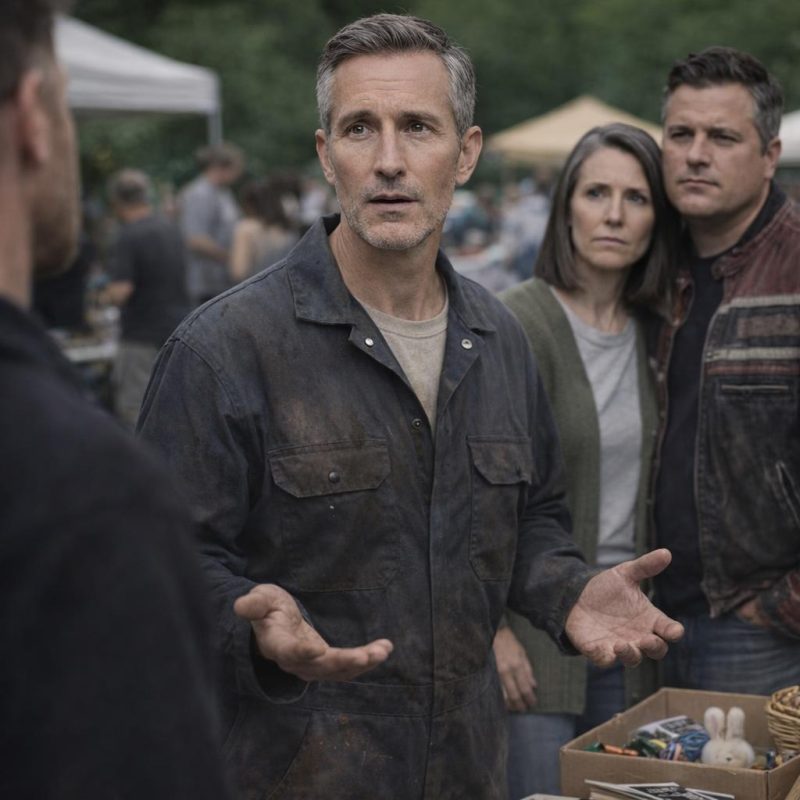 Image by RM AI
The Urgent Murmur
Arthur put his hand on the man's shoulder — a friendly gesture, the kind that also steers — and walked him toward the back of the driveway, away from the tables, away from me. I watched them go. Arthur's posture had changed; his shoulders were set differently, forward and deliberate, and he was talking in a low voice I couldn't catch from where I stood. I pretended to straighten a stack of paperbacks. I moved a ceramic bowl two inches to the left. I was not reading the spines of those books. I was watching the two of them at the far end of the driveway, their heads angled toward each other, the conversation brief and intent. A neighbor stopped to ask me the price on a picture frame and I answered without looking at her. When I glanced back, the man in the racing jacket was nodding. He said something short, gave a small wave, and walked back down the driveway toward the street. Arthur stood there a moment before turning around, and I looked down at the table before he could catch me watching.
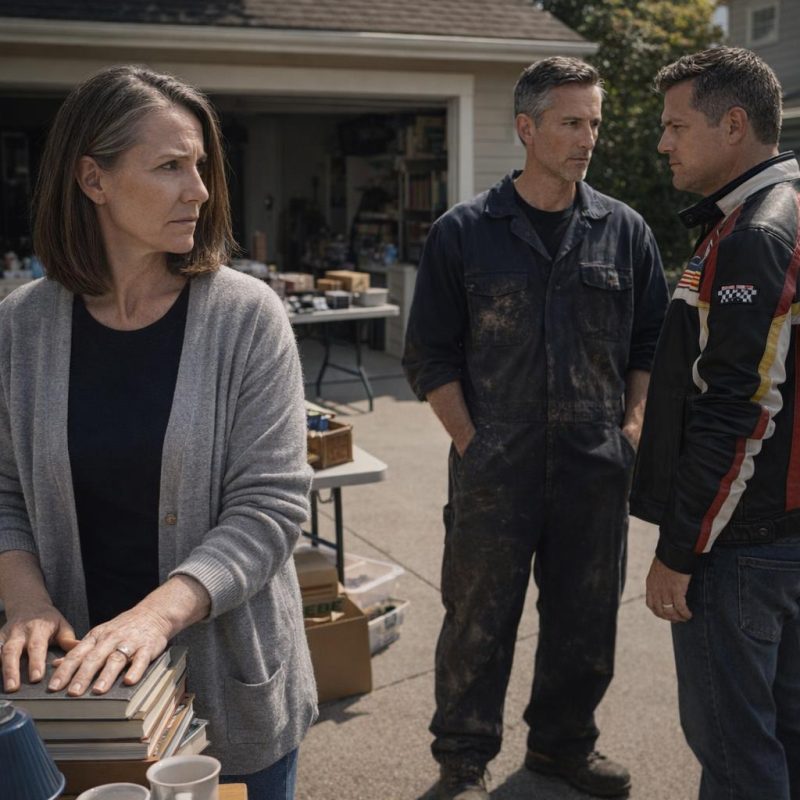 Image by RM AI
Packing Up Early
He came back with color in his face that hadn't been there before — not the flush of heat or exertion, but something tighter than that. He went straight to the nearest table and started stacking things without asking, folding the tablecloth over items that hadn't sold, moving with a quick, agitated energy that didn't match the slow Saturday afternoon around us. I asked if something was wrong. He said he was tired, said he wanted to go inside, said the sale had gone on long enough. A couple of neighbors were still browsing the far table and he didn't even glance at them. I started helping without saying anything more, picking up boxes, carrying things toward the garage. He didn't look at me the whole time we packed up. Not once. I kept waiting for him to say something — to explain, or to make a joke the way he usually would, to smooth things over the way he always had. He just kept moving, jaw set, eyes fixed somewhere past my shoulder. I carried the last box inside and set it on the kitchen counter, and the house felt very quiet.
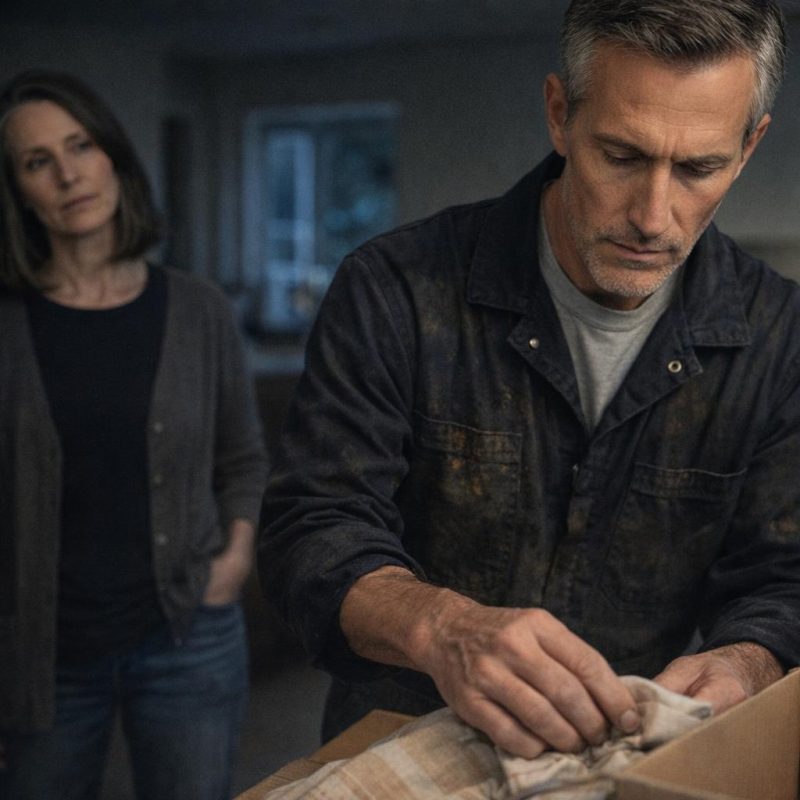 Image by RM AI
The Snap
I waited until we were inside, until the door was closed and the boxes were stacked and there was no reason left not to ask. I kept my voice even. I just wanted to know who the man in the racing jacket was, that was all — a simple question, the kind you ask a hundred times in a marriage without thinking twice. Arthur's response came fast and sharp. He said the guy was a crank, said he had him mixed up with some other Artie from the circuit, said it wasn't worth talking about. The words themselves weren't so bad. It was the tone. I had heard Arthur frustrated before, heard him tired and short-tempered after a long day, heard him grumble about traffic and bad news and things that didn't go right. This was different. There was an edge in it I didn't recognize, something that pushed me back without touching me. I didn't ask anything else. I turned toward the counter and started unpacking the box I'd carried in, setting mugs on the shelf one at a time, and the silence between us settled in like something that had been waiting for a place to land.
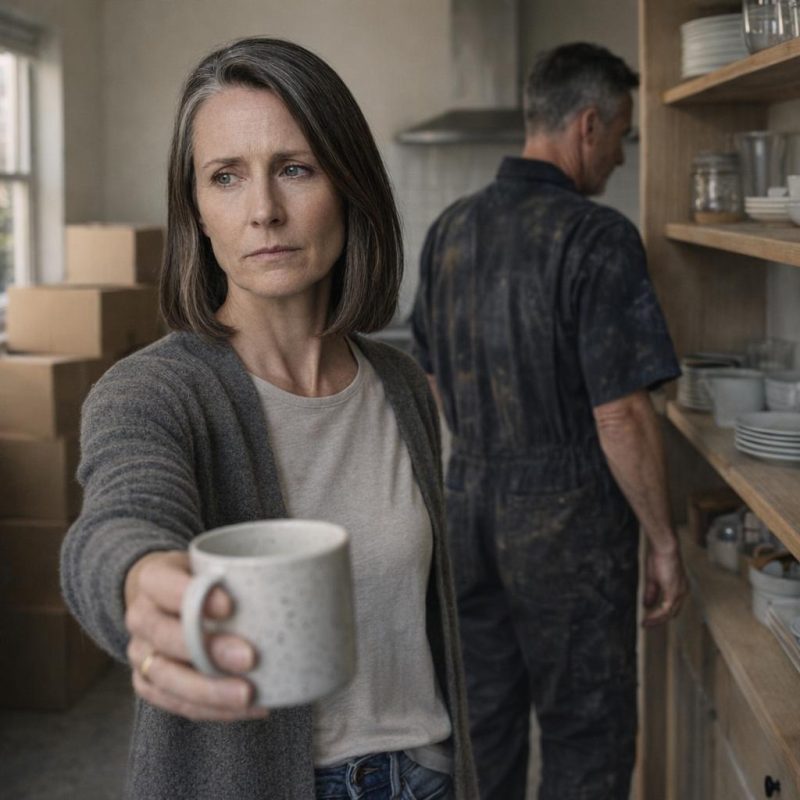 Image by RM AI
Words That Stay
The days after the garage sale passed the way days do when something is sitting wrong — on the surface, ordinary; underneath, not. Arthur went back to his Tuesday and Thursday schedule without missing a beat, came home at the usual time, talked about the guys at the shop, ate dinner, watched the news. I sat across from him and nodded and passed the salt and said the right things. But the words kept coming back. Partner. Other shop. I'd be washing dishes and there they were. I'd be folding laundry and there they were again. I started watching him more carefully — not in a way I could have explained to anyone, just a quiet, steady attention I hadn't needed before. The way he moved through the house. The way he answered questions. Whether he looked at me when he talked or slightly past me. I told myself I was overthinking it. I told myself the man at the garage sale had probably gotten the wrong person entirely, just like Arthur said. But the words didn't care what I told myself. They just kept repeating, low and steady, like something tapping at a window in the dark.
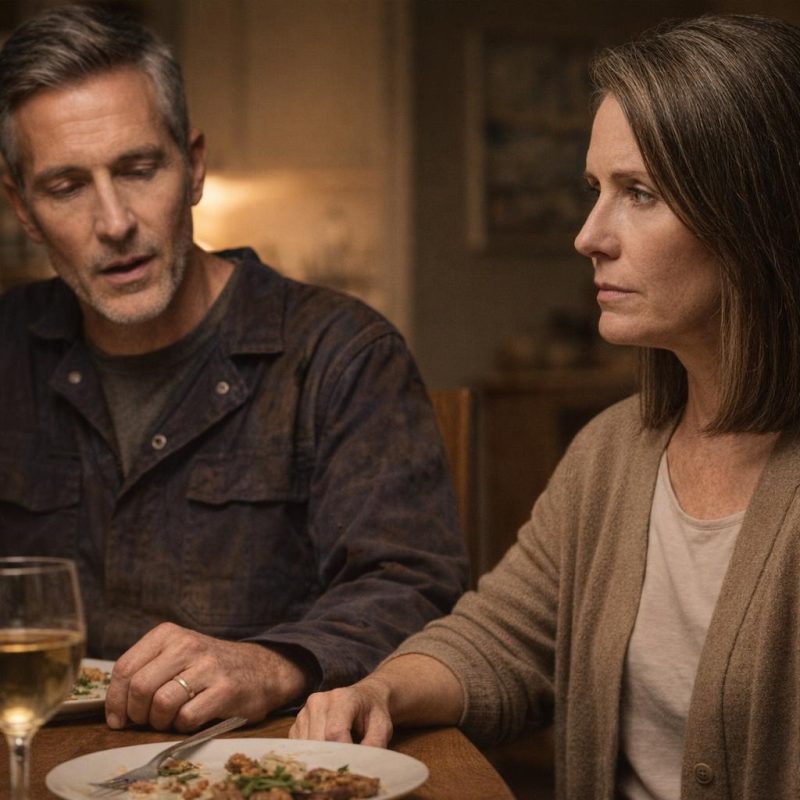 Image by RM AI
Trying to Move On
I made a real effort. That's the honest truth of it. I told myself to stop turning it over, to let it go, to trust thirty years of marriage over one strange afternoon with a man in a faded jacket who'd probably gotten the wrong person entirely. I went back to my routines — the garden, the book club, the Tuesday calls with my sister. I sat across from Arthur at dinner and listened to him talk about a carburetor he was sourcing and a guy named Pete who kept underbidding everyone at auction, and I laughed at the right moments and asked follow-up questions and meant most of them. On the surface, it looked exactly like it always had. And Arthur seemed fine — relaxed, even, the way he'd been since he found his footing again after retirement. I almost convinced myself. Almost. But there was something underneath all of it that I couldn't quite smooth away, a low, persistent hum that sat just below the ordinary sounds of our life together. I could ignore it for an hour, sometimes for a whole evening. It was always there when I stopped.
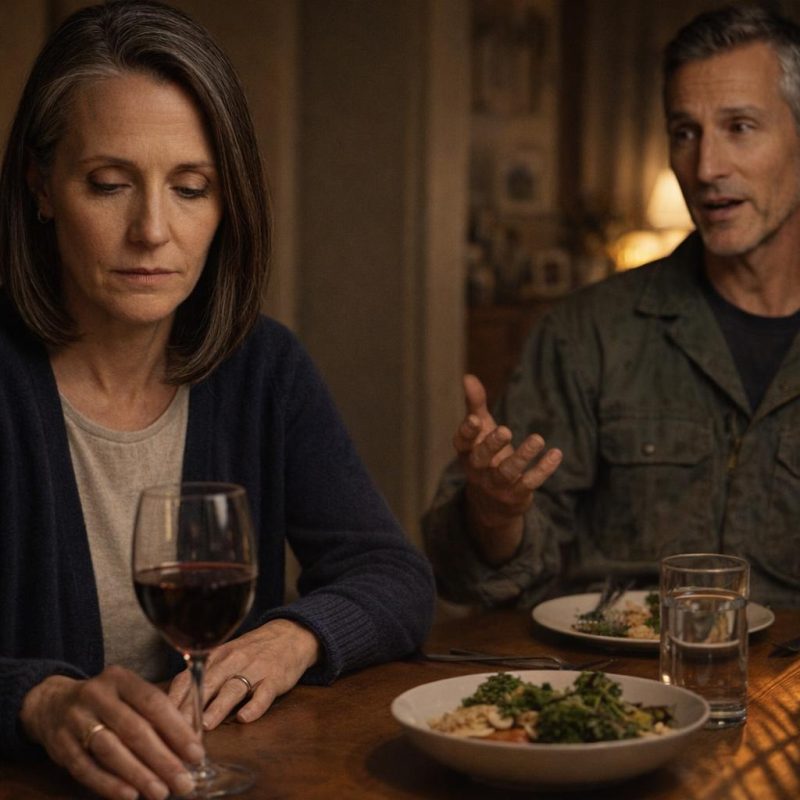 Image by RM AI
The Mileage Becomes Apparent
It started small, the way these things do. I began noticing the odometer — not obsessively, just a glance when I moved his car to get mine out of the garage, the way you notice things when you're already paying attention. Then I started writing the numbers down. I kept a small notebook in my cardigan pocket, the kind I used for grocery lists, and I'd check the reading before he left on Tuesday mornings and again when he pulled back in that evening. The first week I told myself the numbers didn't mean anything. The second week I told myself I was probably misremembering. The third Tuesday I wrote down the number before he left, sat with it all day, and checked again the moment he was inside and his back was turned. I stood next to his car in the garage, notebook in hand, the overhead light buzzing faintly above me, and did the subtraction. Arthur had said he was going to a specialty shop across town, the kind of errand that should have put maybe thirty miles on the car. The number on the page read two hundred and thirty.
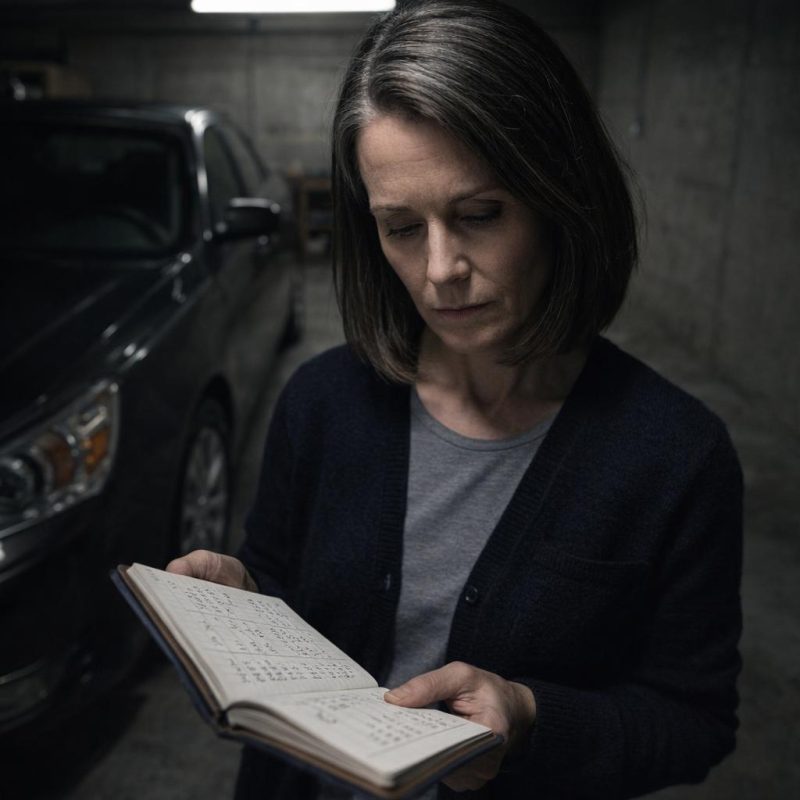 Image by RM AI
Receipts in Pockets
I started checking his pockets before I put anything in the wash. I told myself it was practical — Arthur had always been bad about leaving things in his jeans, old habit from his working years — but I knew I was looking for something even if I couldn't have said exactly what. The first one I found was tucked into the breast pocket of his flannel shirt: a receipt from a place called Millbrook Family Diner, dated a Tuesday three weeks back. I'd never heard him mention Millbrook. The second turned up in his work pants, folded twice — a parts shop in Riverside, the kind of place that sold specialty hardware and industrial supplies. Then there was a coffee shop receipt from somewhere called Oakdale, a town I had to look up on the county map just to confirm it existed. None of these places matched anything he'd told me he was doing on those days. I smoothed each one flat and tucked them into the back of my sock drawer, behind the things I never moved. Standing there in the laundry room with the washer filling, I looked at the small stack of paper I'd collected and felt the particular quiet of someone who has started keeping score without meaning to.
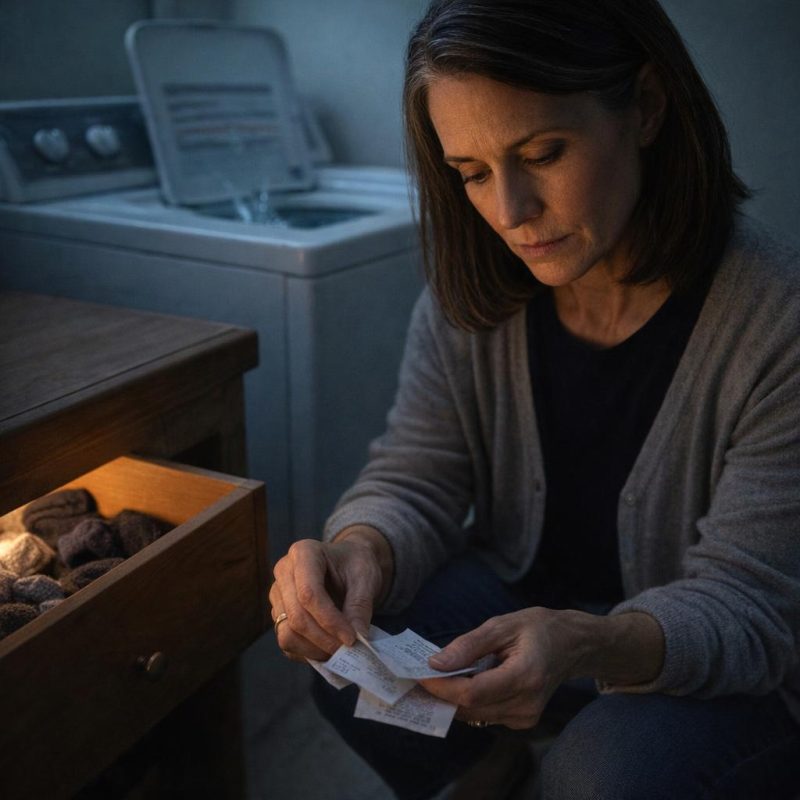 Image by RM AI
Breakfast for Two
The Riverside Diner receipt was different from the others. I almost missed it — it had slipped down into the lining of his jacket, the kind of thing that happens when a pocket has a small tear at the seam. I pulled it out carefully, unfolded it on the kitchen table, and smoothed it flat with both hands. It was dated last Thursday. The itemized list was short but specific: two breakfast specials, two coffees, two orange juices. I sat there and read it twice. Arthur had told me Thursday was a parts run, a solo errand, the kind of thing he did alone. I tried to think through the innocent explanations — a chance meeting with an old colleague, a neighbor he'd run into, someone from the neighborhood who happened to be passing through a diner forty miles from home. I turned each possibility over carefully, the way you do when you're hoping one of them will hold. Arthur was still upstairs when I sat with that receipt, the house quiet around me, the morning light coming flat through the kitchen window. The total at the bottom of the slip — two of everything, nothing extra, nothing forgotten — just sat there on the table between my hands.
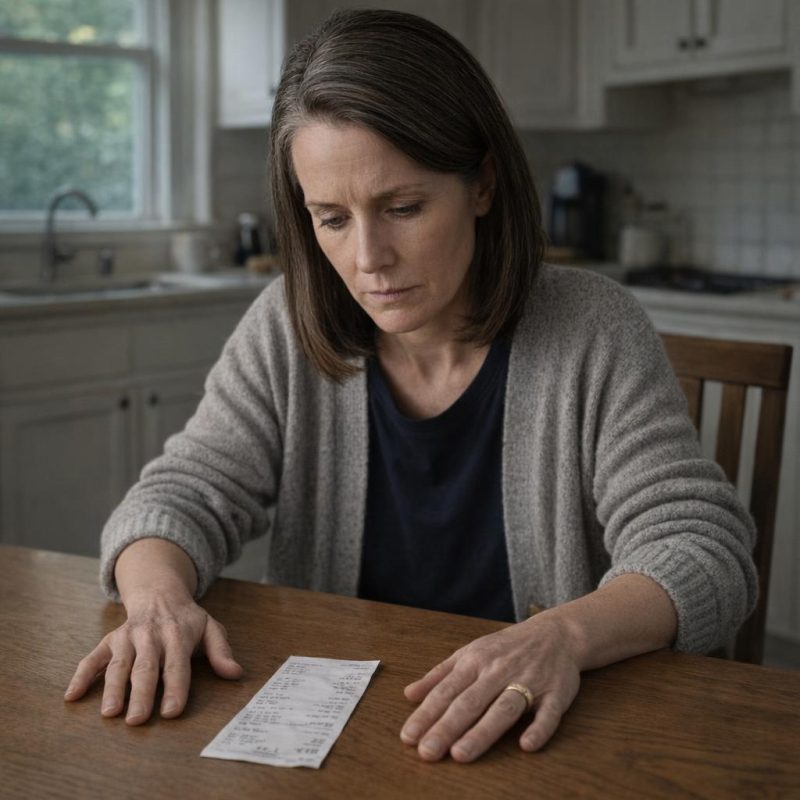 Image by RM AI
Shop Logistics
Arthur went upstairs to shower after dinner on Wednesday, the same routine he'd kept for thirty years — dishes done, news off, shower before bed. I was sitting on my side of the bed with a book I hadn't actually been reading when his phone lit up on the nightstand. I watched the screen brighten and go dark. I told myself to leave it. I picked it up anyway. The contact name read Shop Logistics, no first name, no last name, just those two words like a label on a filing cabinet. The message was short. It asked about renewing the lease next month or moving the collection to a new location before the end of the quarter. I read it twice, then a third time. The shower was still running down the hall, steam drifting faintly under the bathroom door. I set the phone back exactly where it had been, screen down, angled the same way I'd found it, and sat very still on the edge of the bed while the words lease renewal and move the collection turned over and over in my head.
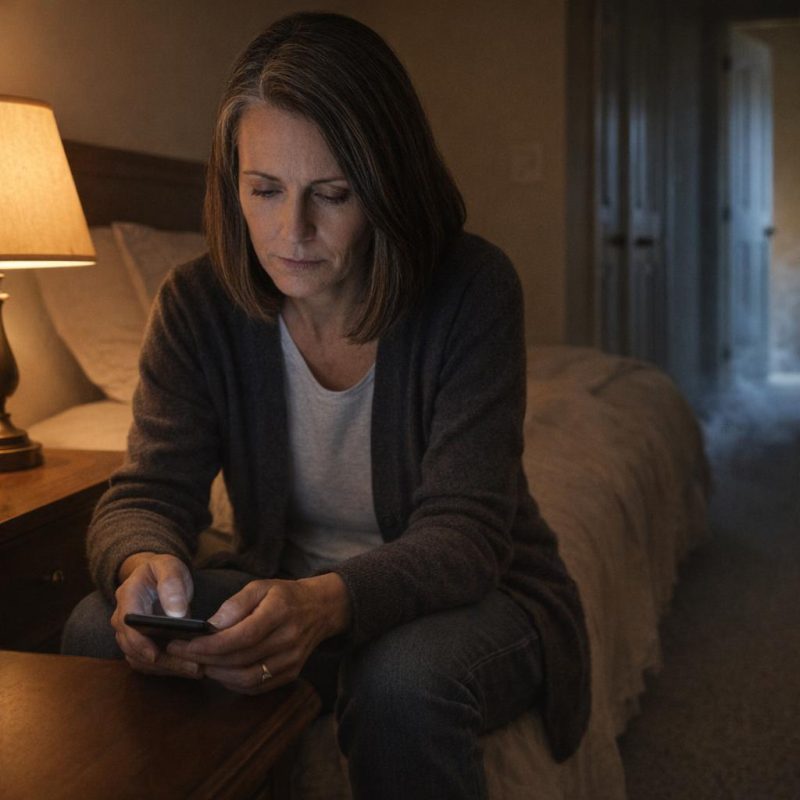 Image by RM AI
Understanding the Scope
The shower kept running. I sat on the edge of the bed and held very still, the way you do when you're trying not to disturb something fragile. I picked the phone up one more time and read the message again, slower. Lease renewal. Move the collection. The word collection was the one that kept snagging. You don't renew a lease for a hobby. You don't move a collection to a new location before the end of a quarter — the language was organized, ongoing, the kind of thing that implied schedules and deadlines I had no knowledge of. Shop Logistics wasn't a friend's nickname in his contacts. It read like a business arrangement, something structured and sustained. I thought about the receipts in my sock drawer — Millbrook, Riverside, Oakdale — towns spread across the county, not one errand but a pattern of them. The shower shut off. I heard the pipes settle in the wall. I put the phone back exactly as I'd found it, screen down, same angle, and folded my hands in my lap. Whatever Arthur was doing on those Tuesdays and Thursdays, it wasn't a single project tucked into a corner of someone's garage — the phone in my lap had just told me that much.
 Image by RM AI
Deciding to Wait
Arthur came out of the bathroom in his usual cloud of steam, toweling his hair, and I had my book open in my lap like I'd been there all evening. He asked if everything was okay in that offhand way people do when they're not really expecting a complicated answer. I said yes, fine, just tired. He nodded and climbed into bed and was asleep inside of fifteen minutes — he'd always been able to do that, drop off like a switch being thrown, while I lay there cataloguing every unresolved thing in my head. I stared at the ceiling for a long time. Confronting him felt wrong, not because I was afraid of the conversation but because I didn't have enough yet. I had receipts from towns he'd never mentioned and a text message I'd read without his knowledge, and none of it told me what I actually needed to know. I needed to see it. Whatever it was, I needed to put my own eyes on it before I said a single word. Arthur's breathing went slow and even beside me in the dark. By the time the clock on the nightstand read midnight, I had made up my mind: next Tuesday morning, I was going to follow him.
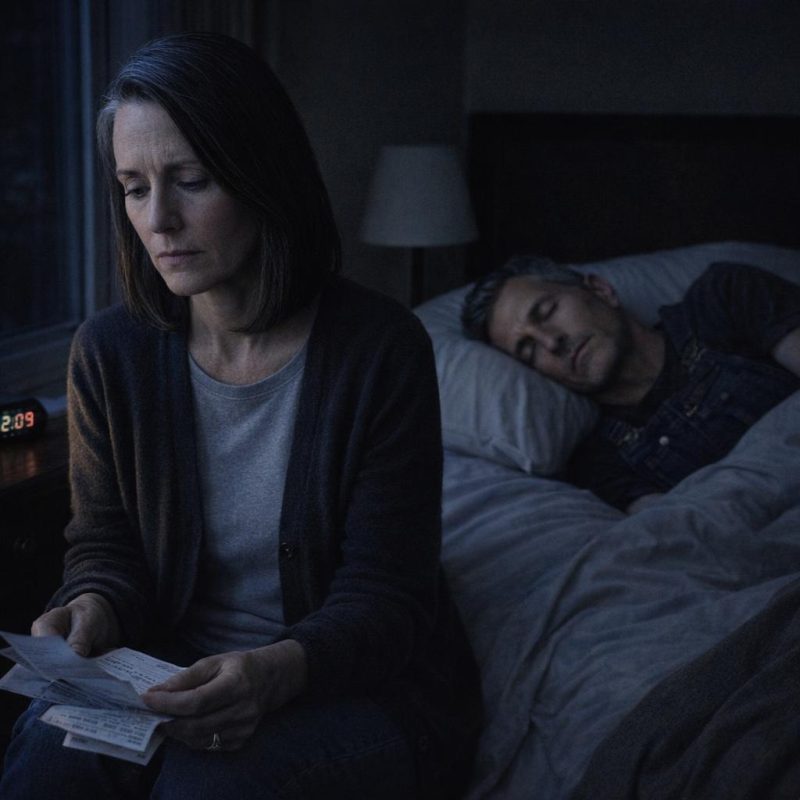 Image by RM AI
First Surveillance Attempt
I was up before six on Tuesday, dressed and waiting in the kitchen with my keys already in my hand. Arthur left at seven-fifteen the way he always did, backing down the driveway without hurrying, the same unhurried pace he brought to everything since retirement. I gave him two minutes, then pulled out after him. I caught sight of his SUV at the end of the block and felt a small, grim satisfaction. I kept two cars back on the surface streets, which felt manageable. Then we hit the highway and everything changed. Traffic was heavier than I'd expected for a Tuesday morning — a merge from a construction detour had everything bunched up in the left lanes — and a delivery truck pulled in front of me at exactly the wrong moment. By the time I got around it, Arthur's dark blue SUV had simply disappeared into the flow of cars ahead. I drove another twenty minutes, taking the next two exits and doubling back, but there was nothing. I pulled into a gas station lot and sat with the engine running, feeling foolish and hollow and more unsettled than I'd expected. I drove home the long way, and the house felt very quiet when I walked back in.
 Image by RM AI
Becoming a Detective
I spent the next two days with the county map spread across the kitchen table. I told Arthur I was planning a drive to visit my sister, which wasn't entirely a lie — I had been meaning to go. I traced the highway routes with my finger, looking for the exits that made sense given the towns on those receipts. Millbrook was northeast. Riverside was east-southeast. Oakdale sat between them, slightly south. If Arthur was moving between all three, there was a rough corridor he'd have to be traveling, and the industrial areas on the eastern edge of the county sat right in the middle of it. I wrote down three possible exit numbers and the roads that fed off them. I thought about what I was doing — mapping routes to follow my own husband — and the strangeness of it settled over me like something I couldn't quite shake off. But I also thought about the text message, the word collection, the lease renewal, the breakfast for two. Thursday morning I set my alarm for five-fifty, laid out my clothes the night before, and put the folded map in the passenger seat of my car so I wouldn't have to think about it in the morning.
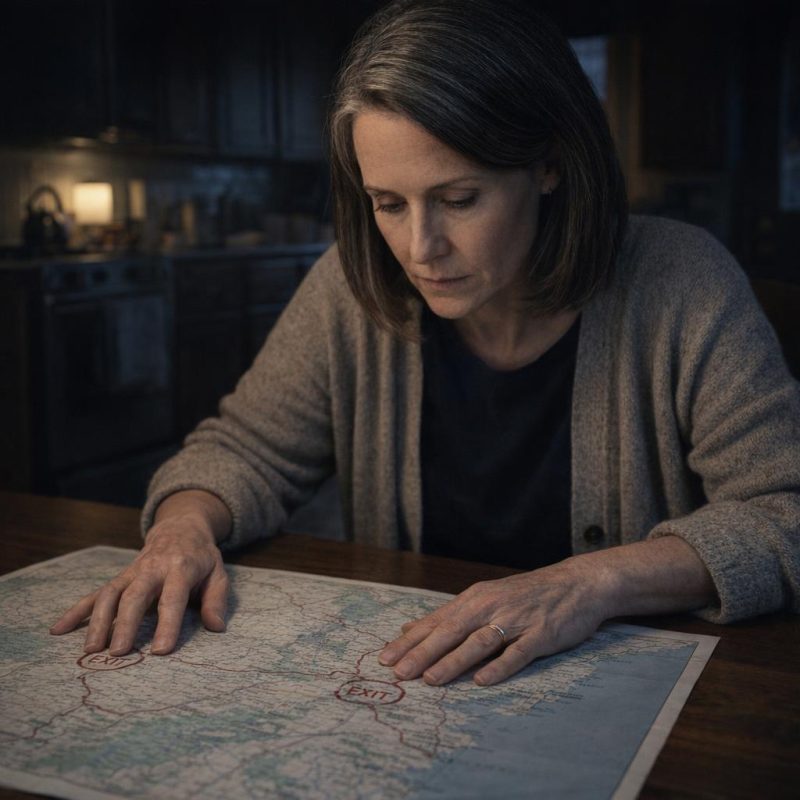 Image by RM AI
The Industrial Park
Thursday I left thirty seconds behind him. Not two minutes — thirty seconds, close enough to keep him in sight from the start. I stayed two cars back on the highway, and when he took an exit I'd never used before, the one that feeds down toward the eastern edge of the county, I followed without hesitating. The road narrowed to two lanes after the ramp, and the landscape changed — fewer houses, more chain-link, low flat buildings set back from the road behind gravel lots. Arthur drove like a man who knew exactly where he was going, no slowing to check signs, no hesitation at intersections. He turned left onto a gravel road I wouldn't have noticed if I hadn't been watching for it, and I hung back and let a gap open between us before I followed. The road opened into a wide lot surrounded by corrugated metal buildings, the kind of industrial park that exists in every county but that most people never have a reason to visit. I pulled off onto the shoulder behind a stand of scrubby trees and cut my engine. Arthur parked in front of one of the larger buildings, got out, and reached into his jacket pocket for a set of keys.
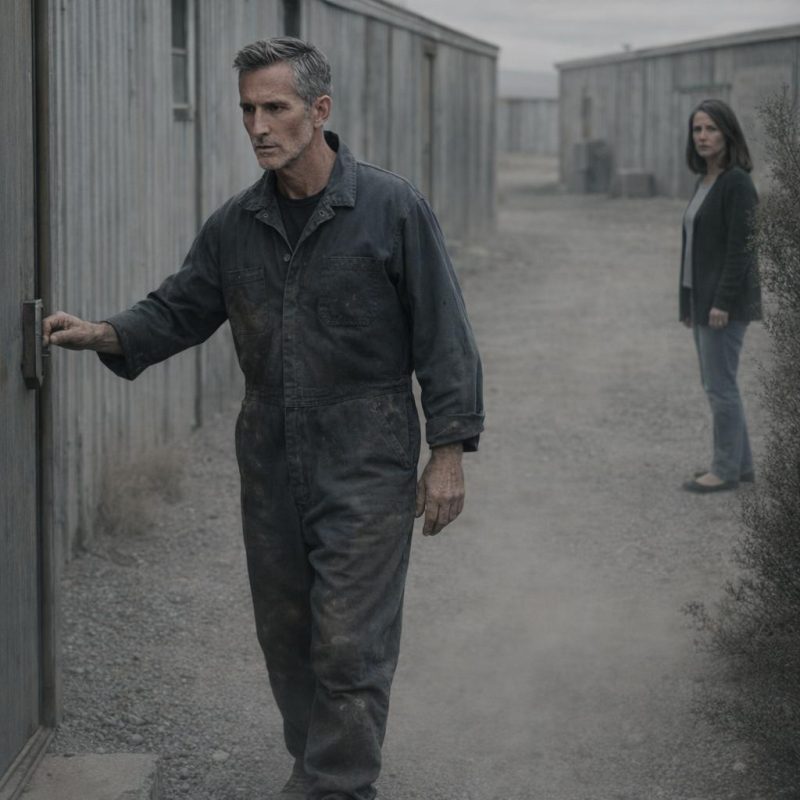 Image by RM AI
Watching from a Distance
I sat behind the wheel and didn't move. Arthur had parked in front of the largest of the corrugated metal buildings, the kind with a rolling door wide enough to drive a truck through. He didn't look around. He didn't check over his shoulder. He just reached into his jacket pocket, pulled out a set of keys I had never seen before — not his car keys, not the house keys, something else entirely — and crouched down to work the lock on the door. The metallic groan of the rolling door carried all the way to where I was parked behind the tree line. It slid up in sections, slow and heavy, and the dark interior opened up behind it. Arthur walked back to his SUV, got in, and drove it straight inside. The door stayed open. I could see the edge of light spilling out from within, but not what was casting it. My hands were still on the steering wheel. I told myself I should get closer. I told myself I should drive away. I did neither. I just sat there in the quiet of that gravel lot, watching the open door, feeling the weight of whatever was waiting on the other side of it.
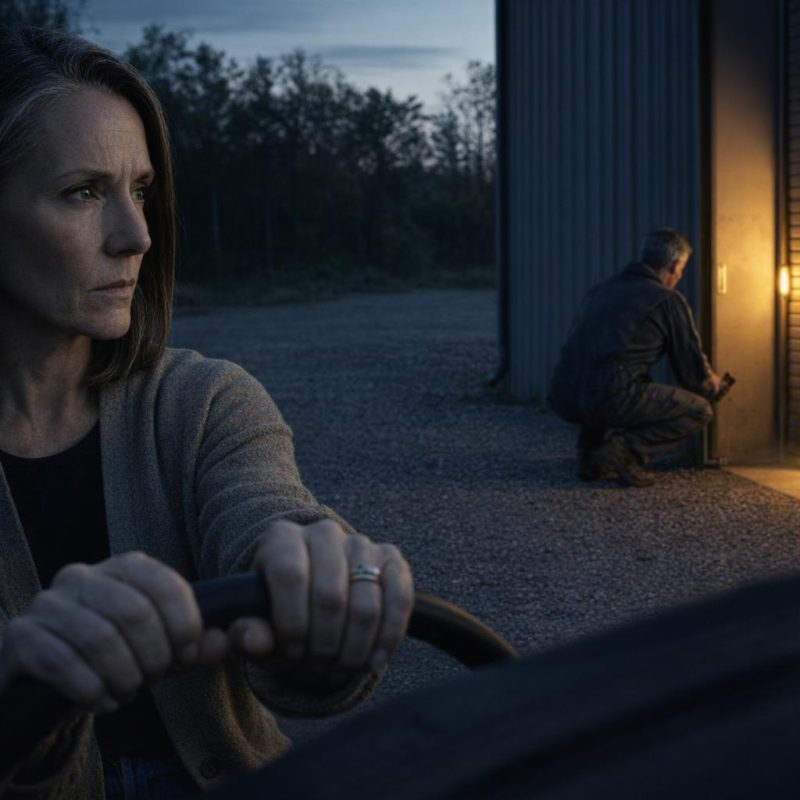 Image by RM AI
The Glint of Chrome
I got out of the car slowly, easing the door shut behind me so it barely clicked. The gravel was loose and I had to watch my feet, placing each step carefully to keep the noise down. I moved along the edge of the lot, staying close to the fence line, until the open rolling door came into full view. What I saw stopped me where I stood. There were cars inside — not one, not two, but at least four of them, lined up in various stages of being taken apart and put back together. A long hood with no engine. A chassis stripped to bare metal, gleaming under the shop lights. Two others further back that looked nearly finished, their paint catching the light in deep, rich colors. The walls were lined with pegboards hung with tools, organized the way a professional organizes things, not the way a hobbyist does. There was a hydraulic lift. There were rolling tool chests the size of small refrigerators. This wasn't a weekend project. Whatever this was, it had been going on for a long time, and it had cost real money to build. I stood at the edge of the doorway and felt the ground shift a little beneath me.
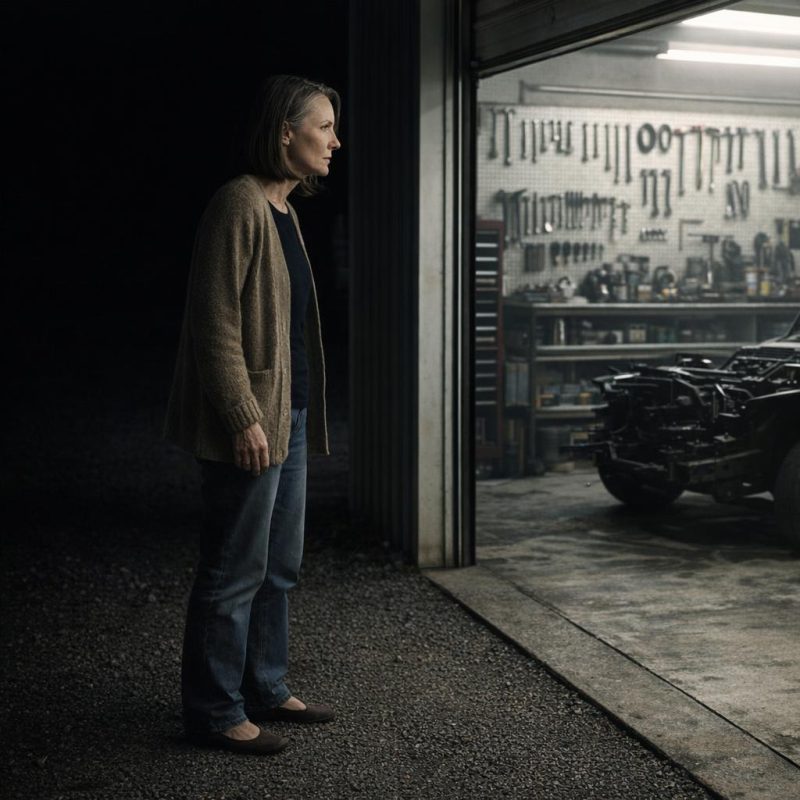 Image by RM AI
The Woman Steps Out
I pressed myself against the outer wall of the building and kept watching. Arthur had moved to the far end of the shop, his back to me, bent over something I couldn't make out. The cars between us gave me cover. I counted the vehicles again — four, maybe five — and tried to take in the details, the tools, the organized shelving, the industrial lighting overhead. Then movement caught my eye near the silver chassis in the middle of the floor. Someone stepped out from behind it — a woman, younger than me by at least twenty years, wearing coveralls and heavy work gloves, her dark hair pulled back in a ponytail. She wiped her forehead with the back of one gloved hand in the easy, unselfconscious way of someone who had done it a thousand times in that exact spot. She moved through the space like she belonged there — not like a visitor, not like someone new — and reached for a tool on the nearest pegboard without looking, found it without searching.
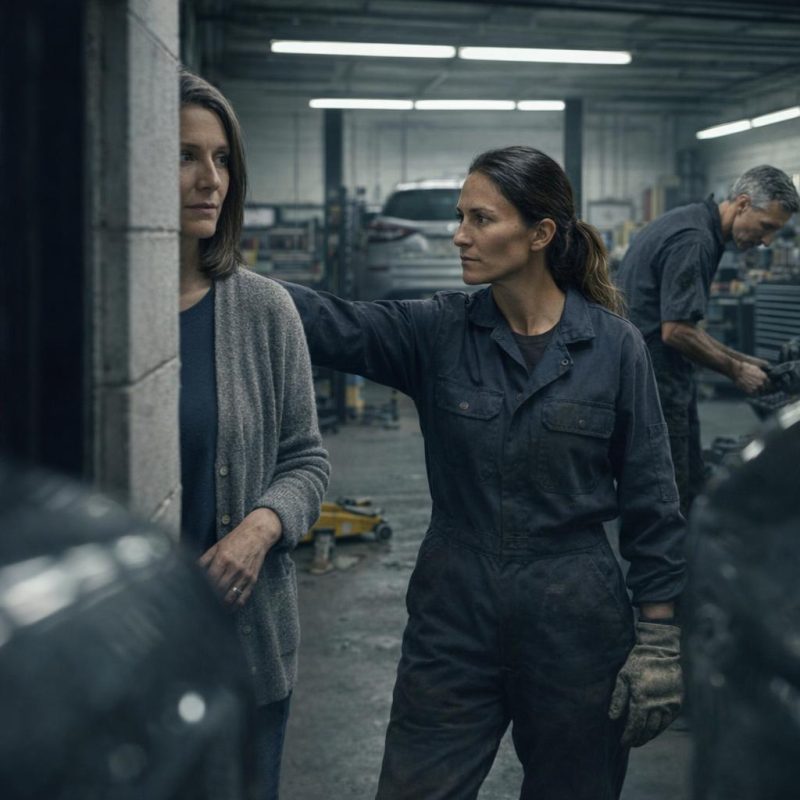 Image by RM AI
Not Lovers
I made myself stay. I pressed my back against the wall and kept watching, even though every instinct told me to leave. Arthur straightened up and turned, and when he saw the woman he walked toward her without hesitation. They met at the engine block in the center of the floor. He said something and she leaned in, pointing at something inside the engine cavity. He nodded. She handed him a tool and he used it, and she watched with her arms crossed, waiting. There was no touch. No lingering look. No moment that made my stomach clench the way I had been bracing for. What I saw instead was something I almost didn't have a word for — two people who had worked side by side long enough that they didn't need to explain themselves to each other. She pointed again and he adjusted his angle. He said something and she laughed, short and practical, and reached past him to show him what she meant. They moved around that engine block with the ease of people who had done it dozens of times before, each one knowing where the other would be without having to look.
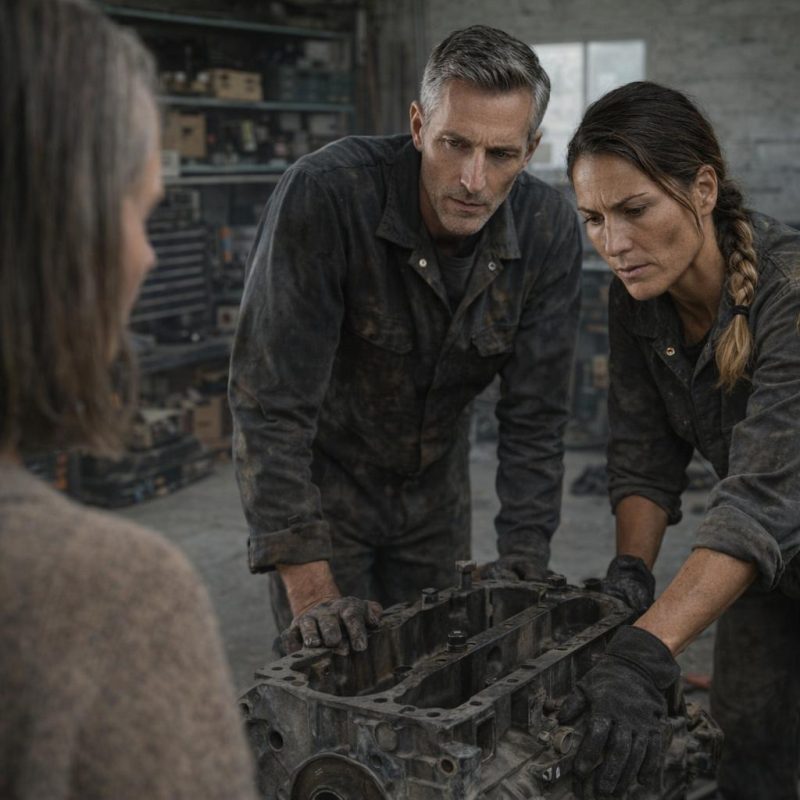 Image by RM AI
The Truth Revealed
I got back to my car before either of them looked up. I sat in the driver's seat with the door pulled shut and my hands in my lap and I let the pieces land where they had to land. The lease agreement. The mileage. The folder labeled Shop Logistics. The keys I had never seen. The hydraulic lift, the tool chests, the five cars in various stages of professional restoration. The woman in coveralls who moved through that space like she owned half of it. This wasn't a hobby. This wasn't a midlife crisis project tucked into a rented bay. Arthur had built a business — a real one, with equipment and overhead and at least one hired professional — and he had hidden every inch of it from me. Dave and Mike and Leo, the Tuesday nights, the Thursday afternoons, the restoration circle that met at rotating garages across the county — none of it was real. He had constructed an entire parallel life, complete with invented friends and fabricated evenings, and I had sat across the dinner table from him and believed every word. The woman wasn't the secret. The secret was so much larger than that, and it had been running right alongside our marriage for God knows how long.
 Image by RM AI
Driving Home Numb
I drove home on autopilot, barely registering the turns. My hands were on the wheel but I wasn't really there. I kept replaying dinner conversations — Arthur describing Dave's garage, the way Mike always brought the wrong socket set, Leo's opinions about original versus reproduction parts. He had given them personalities. He had given them habits and opinions and running jokes. I had asked follow-up questions. I had laughed at the right moments. I had been a good audience for a story that had no cast. Every Tuesday and every Thursday for however long this had been going on, he had left our house with a destination in mind and a fiction ready to deliver when he got home. I thought about the way he'd say he was tired after a long session, the way he'd smell faintly of something I'd taken for motor oil from a friend's garage. It had all been real — just not the version he'd been telling me. The anger came up slow and then all at once, and by the time I turned onto our street I understood that Dave and Mike and Leo had never existed at all.
 Image by RM AI
The Empty House
I didn't turn on the lights when I got home. I sat down in the armchair by the front window and I stayed there. The house felt the same as it always had — same furniture, same smell of the candle I'd burned that morning, same creak from the floorboard near the hallway — and that sameness felt wrong now, like a stage set that hadn't been struck yet. I thought about thirty years. I thought about the early ones, when we had nothing and it didn't matter, and the middle ones, when we built something together, and the recent ones, when I had watched him drift and worried and waited. I had been so relieved when he found his purpose again. I had told myself it was good for him. I had given him the space he asked for because I trusted him. That was the part that kept circling back — not the business, not the woman in the coveralls, not even the invented friends. It was the trust. I had handed it to him without conditions, the way you do after thirty years, and he had used it to build a wall I hadn't known was there. The house settled around me in the dark, and I sat with that.
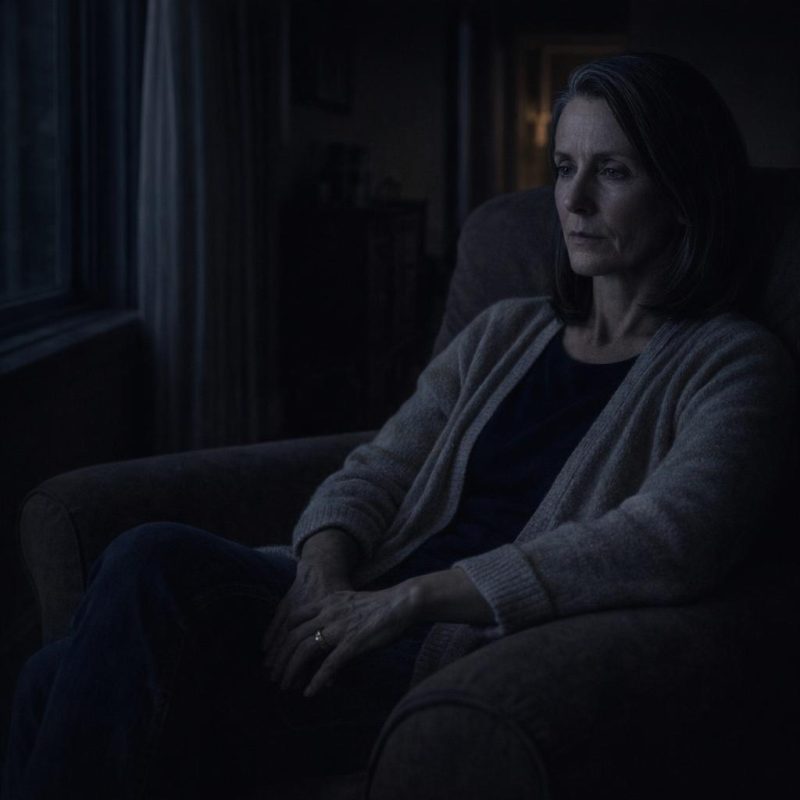 Image by RM AI
Preparing the Confrontation
At some point I got up and went to the bedroom. I opened the nightstand drawer and took out the receipts I had saved, the ones I'd photographed and printed. I got my notebook with the mileage records, the dates, the address I had written down from the lease agreement. I pulled up the photo I'd taken on my phone of the building's exterior, the address visible on the corrugated wall above the rolling door, and I sent it to myself so I'd have it on paper. Then I carried everything to the living room and laid it out on the coffee table. The receipts in one row. The notebook open to the relevant pages. The printed photo beside it. My hands were steady. The shaking from the drive home was gone. I wasn't rehearsing speeches anymore — I had stopped doing that somewhere between the bedroom and the hallway. What I had instead was simpler than a speech. I had the evidence, and I had thirty years, and when I heard his car in the driveway I would be sitting right here, in the light, with all of it in front of me. The coffee table held everything I had found, laid out in the quiet of the room, waiting.
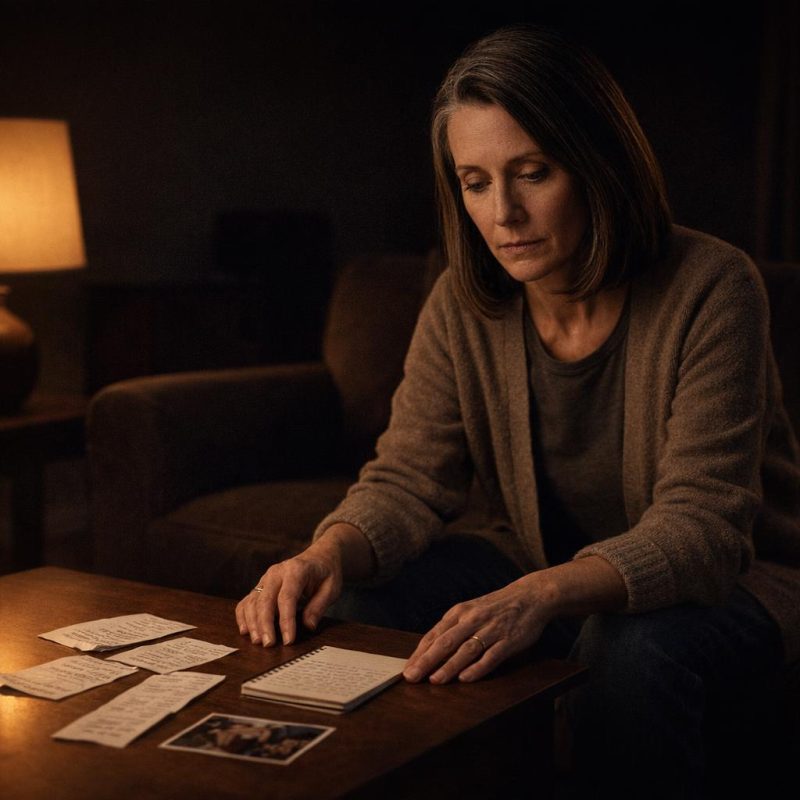 Image by RM AI
Arthur Comes Home
His headlights swept across the living room wall at eight o'clock, same as always. I heard the SUV pull into the driveway, heard the engine cut, heard the door close with that familiar thunk. I didn't move from the couch. I sat with my hands folded in my lap and the coffee table in front of me, everything laid out exactly as I'd arranged it — the receipts in a row, the notebook open, the printed photo with the address visible on the corrugated wall. He came through the front door with his usual greeting, something easy and tired about the day, and I said something back. I don't remember what. My voice came out steady, which surprised me. He set his keys on the hook by the door, the way he had done ten thousand times before, and headed upstairs. I listened to the water run. I listened to the pipes settle. He came back down in clean clothes, his hair damp, smelling like the same soap he'd used for thirty years. He crossed the room and lowered himself into his recliner with a small exhale of comfort. He reached for the remote on the side table. He hadn't looked at the coffee table yet.
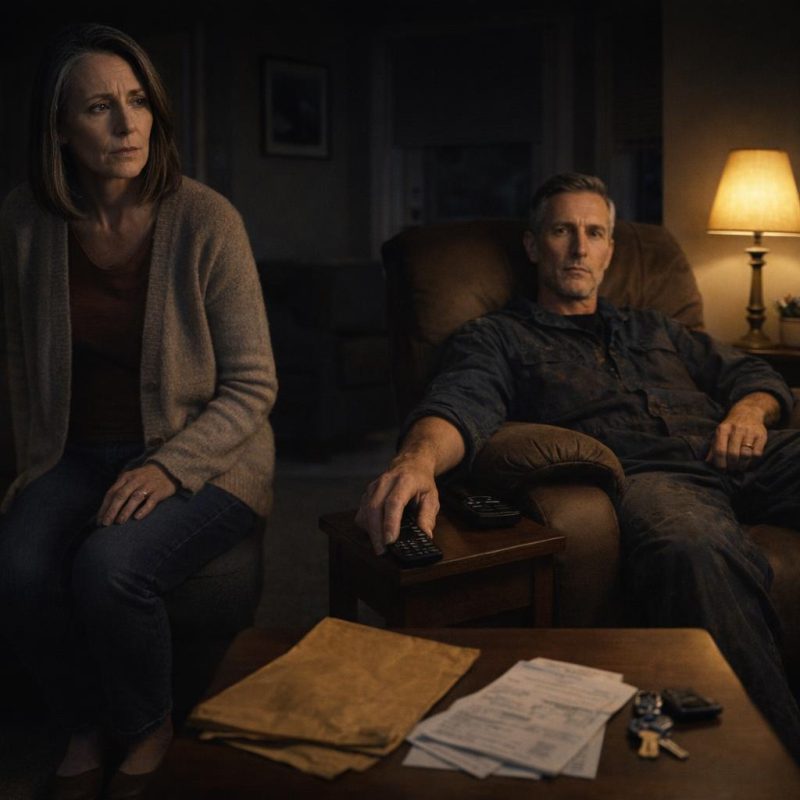 Image by RM AI
The Evidence on the Table
I said his name. Just that — Arthur. Quiet, the way you say something when you need a person to actually hear it. He looked up from the recliner with the remote still in his hand, his expression open and unsuspecting, and I slid the papers across the coffee table toward him. The printed text message first. Then the photo of the building with the address on the wall. I watched his eyes drop to the table. I watched them move across the page. The remote slipped from his fingers and landed against the armrest with a soft plastic knock. He didn't pick it up. His eyes went to the text message, then to the address, then back to the text message. The color left his face the way heat leaves a room — gradually, and then all at once. I didn't say anything else. There was nothing else to say yet. The television was still on across the room, some news program murmuring at low volume, and neither of us looked at it. We sat in the light of the lamp with the evidence between us, and Arthur stared at what I had put in front of him.
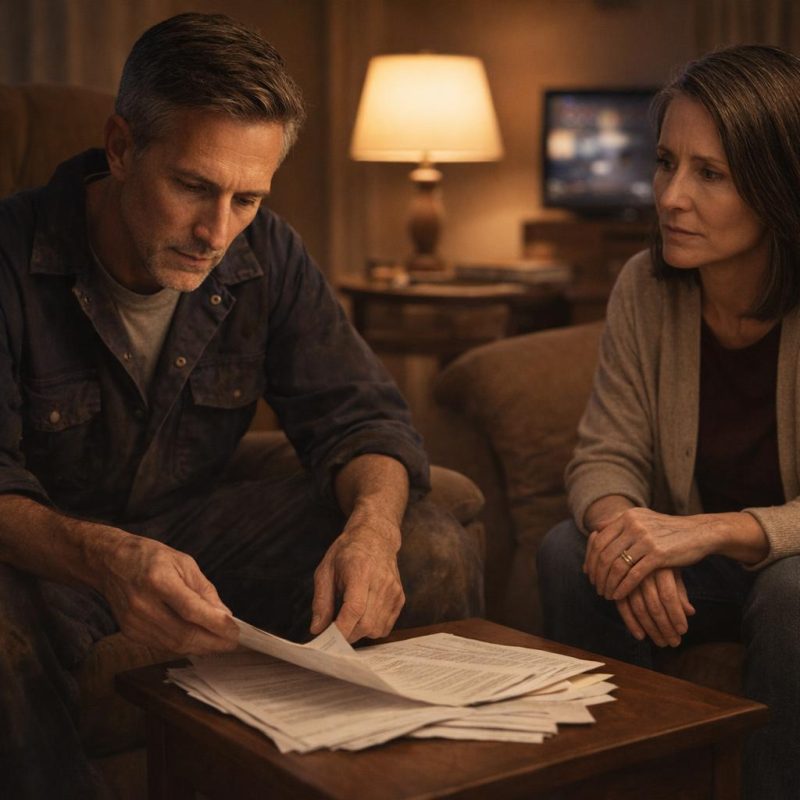 Image by RM AI
Arthur Goes Pale
He looked the way he had the month he retired — hollowed out, like something essential had been removed. His mouth opened once and then closed again without producing a word. I didn't fill the silence. I had spent weeks filling silences, making excuses for him in my own head, smoothing things over before they had a chance to become something I'd have to face. I was done with that. His hands found the armrests of the recliner and gripped them, knuckles going pale. The television kept murmuring behind him, some anchor reading the weather, and the sound of it felt absurd against the stillness between us. He looked older than he had this morning. I don't know how that was possible in the span of a few hours, but it was true — he looked diminished, like a man who had been carrying something heavy for a long time and had just been told to set it down in front of someone who could see exactly how much it weighed. He finally looked up at me. His eyes didn't search for an exit. He didn't reach for an explanation. He just looked at me, and the silence between us held everything he hadn't said.
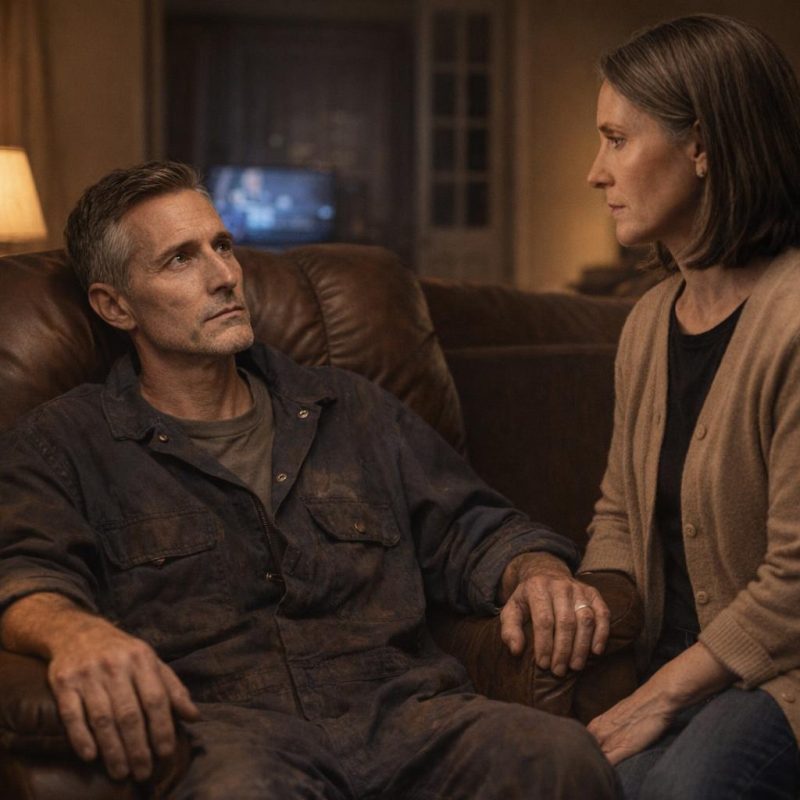 Image by RM AI
The Master Mechanic
He started talking in a voice I almost didn't recognize — low and careful, like he was handling something fragile. He said her name was Marina Castellanos. He said she was a master mechanic, that he'd found her through a referral from someone at a car show eighteen months ago, that she was the one who actually did the restoration work. He'd hired her as his business partner, he said, and she ran the day-to-day operations out of the industrial park. I sat very still. I had spent the last several days building a picture of what was happening in that building, and the picture I'd built had been wrong in almost every detail. Not an affair. A business. A woman with grease-stained gloves and a mechanical skill set I couldn't have imagined, doing work Arthur had always dreamed of doing but never could alone. He said he'd used part of his retirement bonus to cover her first year's salary. He said it quietly, without looking away from the table, and I heard the shape of what was coming before he finished the sentence. There was money I hadn't known about. The room felt very still around that fact.
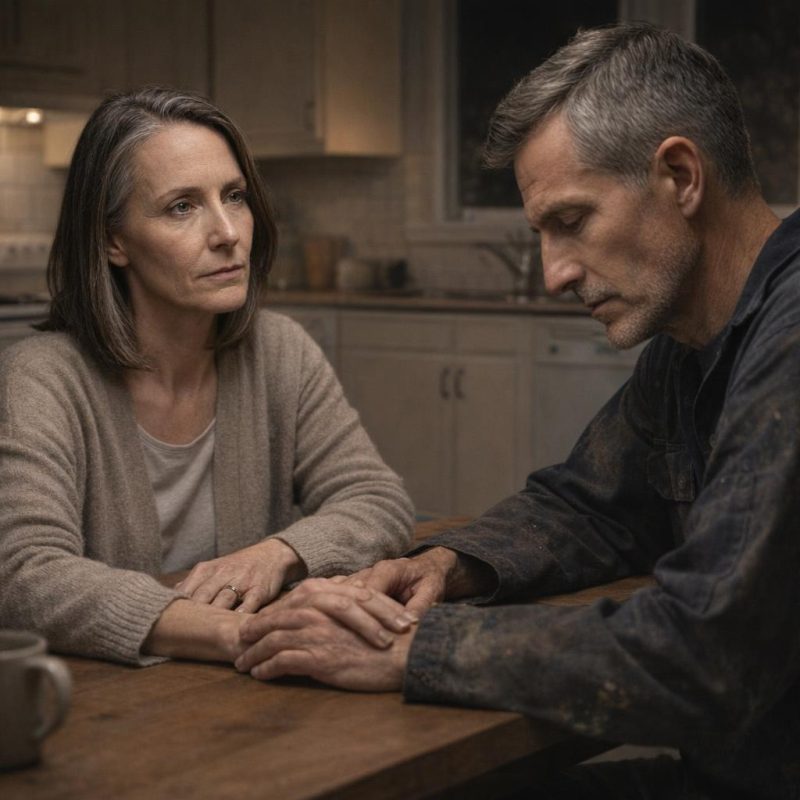 Image by RM AI
The Separate Money
He told me the retirement bonus was fifty thousand dollars. I had known about thirty. He'd told me thirty, handed me the paperwork showing thirty, and I had filed it away without question because that was what we did — we trusted each other with the numbers. The other twenty thousand had gone into a separate account, his name only, opened the same week he retired. He used it to lease the building and cover Marina's first-year salary. He said he'd never seen the statements come to the house because he'd set up the account with a different mailing address — his brother's, in Tucson. I sat with that for a moment. Not the amount, though the amount was significant. It was the architecture of it that hit me — the separate account, the redirected mail, the brother in Tucson who apparently knew and hadn't said a word to me in eighteen months of Sunday phone calls. Arthur said he was afraid I would tell him it was too risky. He said he thought I would ask him to put the money back into savings where it was safe. He said all of this to the coffee table, not to me. The twenty thousand dollars sat between us like a third person in the room.
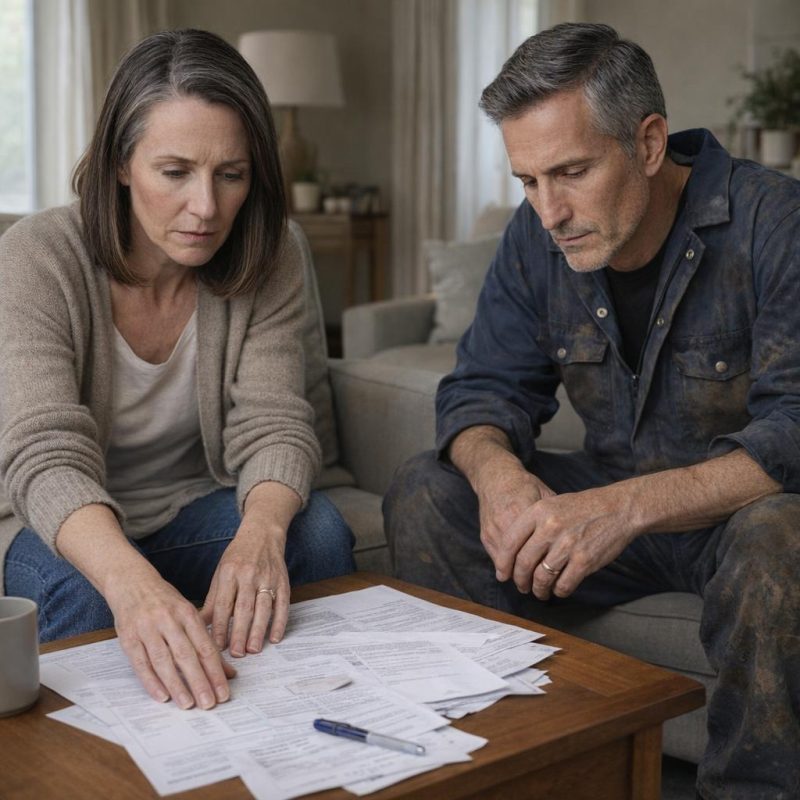 Image by RM AI
Fear of Being Discouraged
His voice broke on the word 'dying.' He said the first month of retirement felt like dying — not dramatically, not all at once, but slowly, like a tide going out and not coming back. He said he'd wake up in the morning and lie there trying to think of a reason to get up, and some mornings he couldn't find one. I remembered those mornings. I had chalked them up to adjustment, to the natural grief of leaving a career, to something that would pass. He said when he found the Mustang engine at the garage sale, something shifted. He started researching the classic car market. He saw the margins on restored vehicles. He saw a path that was his — not a hobby, not a retirement project, but an actual business with actual stakes. He wanted to tell me. He said that three times: he wanted to tell me. But every time he got close, he imagined my face, imagined the careful, reasonable things I would say about risk and savings and being sensible at our age, and he couldn't do it. He said he couldn't bear the thought of someone he loved talking him out of the one thing that had made him want to get out of bed. Then he said: 'I built something I was proud of, and I was terrified to show it to you.'
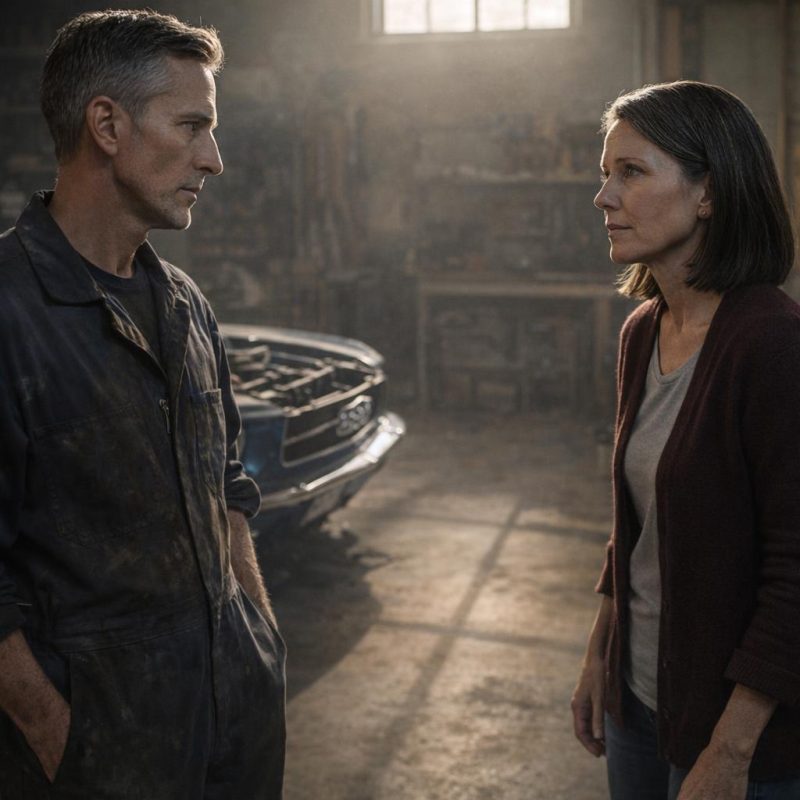 Image by RM AI
Something That Made Him Feel Alive
He said he hadn't felt like himself in years. Not since the last promotion, maybe — not since there was still something ahead of him at work, some next thing to reach for. Retirement had taken the next thing away, and without it he said he felt like a ghost moving through rooms that didn't need him. The restoration business gave him back a shape. He knew what he was again: someone who built things, someone whose hands had a purpose, someone other people called when they needed something done right. He'd sold three cars. He had two more nearly finished. He'd made back his initial investment and then some. He said all of this without pride, just as facts, the way you recite evidence when you're trying to explain something that still doesn't fully make sense even to you. I listened. I was angry — I want to be clear about that, I was still angry — but underneath the anger something else was moving, something I recognized from the early months of his retirement when I'd watched him shrink and hadn't known how to reach him. He looked at me across the coffee table and his voice came out thin and unsteady: 'I felt alive again, Grace. For the first time in years, I felt like I wasn't just waiting.'
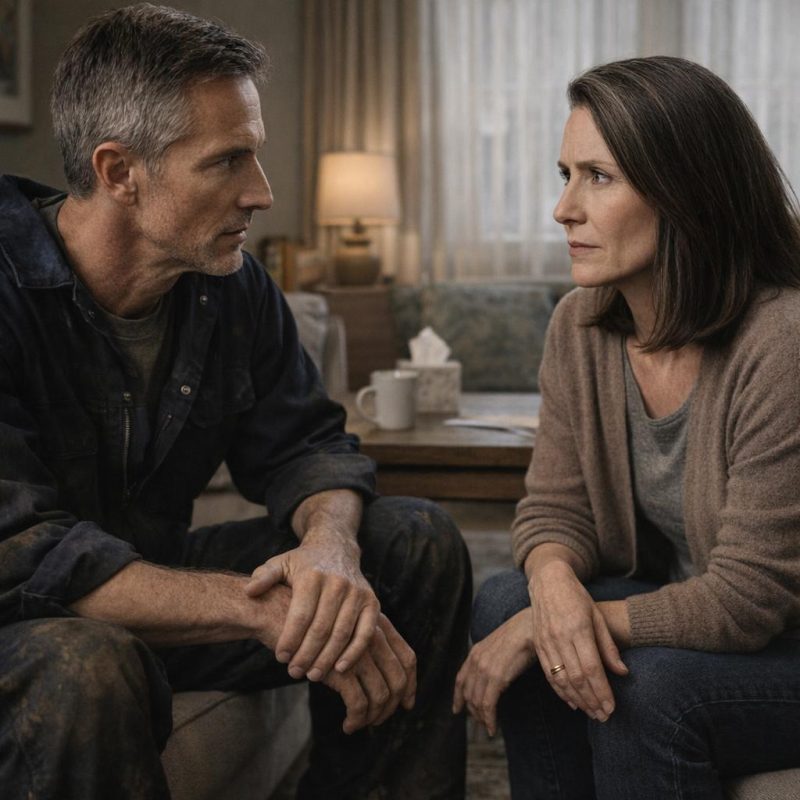 Image by RM AI
No Room for Ambition
He said he didn't think there was room for it. Not in so many words, but that was what it came down to — he had looked at our life together, at the careful way we managed things, at the conversations we'd had about being responsible with what we'd saved, and he had decided there was no space in that life for what he wanted to do. He said he thought I would be the voice of reason. He said it gently, like it was a compliment. I heard it differently. I heard it as: I looked at you and saw a door that would close. I heard it as: I knew what you would say before you said it, so I stopped telling you things. I sat very still while he talked. He wasn't trying to wound me — I could see that clearly enough. He was explaining, the way you explain something you've been carrying alone for so long that the explanation itself comes out worn smooth. But then I asked him, quietly, if he had ever just considered telling me. He looked at the table for a long moment. 'I was a coward,' he said. The distance between us felt wider than the room.
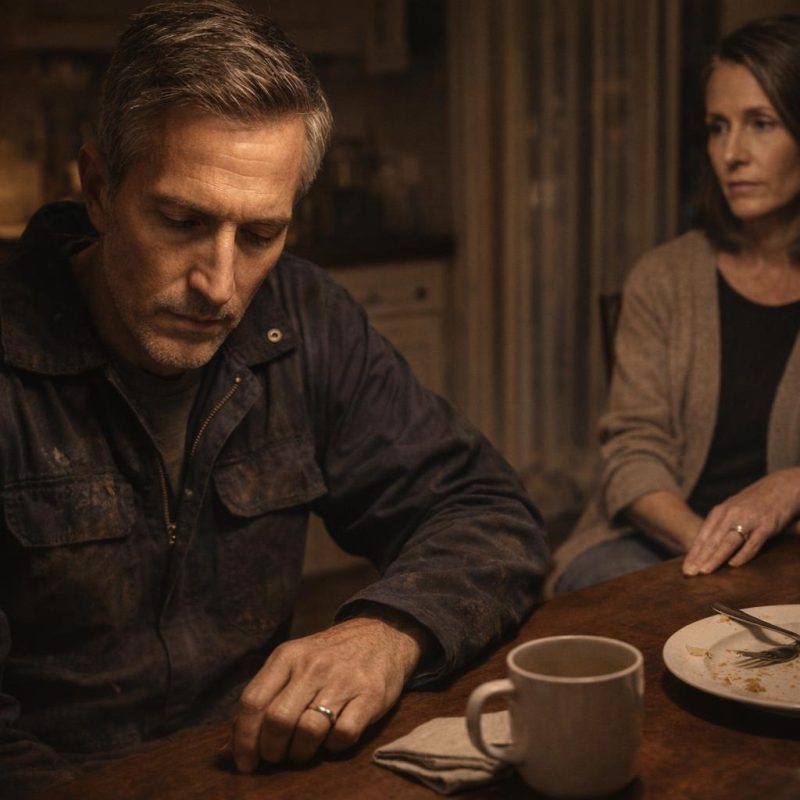 Image by RM AI
The Stranger He Became
We sat in the living room for a long time after that. The television was on — some home improvement show neither of us had chosen — and the light from it moved across the walls in a way that felt wrong for the kind of silence we were sitting in. The evidence was still on the coffee table. The photographs, the receipts, the business cards with his name on them. I kept looking at his hands. Thirty years I had known those hands. The callouses, the way he held a coffee cup, the particular way he rubbed the back of his neck when he was tired. I knew all of it. And yet the man sitting across from me had built an entire life I had never been invited into. Not a secret hobby. Not a passing obsession. A business. A partner. A building with his name on the lease. He looked defeated, shoulders curved inward, eyes on the floor. I didn't feel triumphant. I didn't feel angry anymore, not exactly. I felt something quieter and harder than anger. I looked at him and I saw both things at once — the man I had married and the stranger who had decided, somewhere along the way, that I was a door better left closed. The coffee table between us held everything he had hidden, and it felt like the longest distance I had ever crossed in my life.
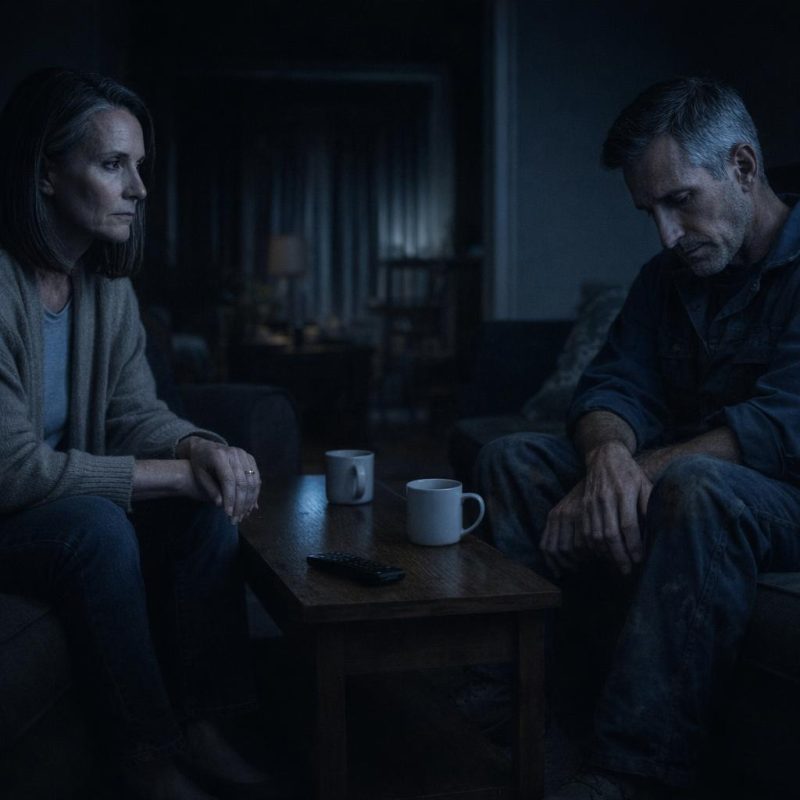 Image by RM AI
First Words After
I was the one who finally spoke. I asked him what he wanted to happen now. He looked up from the floor and said he didn't know. I believed him. That was the strange part — after everything, I still believed him when he said he didn't know. I told him I needed time. Not days, necessarily, but time to sit with all of it, to let it settle into something I could actually hold and examine without my hands shaking. He nodded. He said he understood. He said he would do whatever I needed. I asked him about the business — whether he intended to keep it going. He said that was entirely up to me. I told him that wasn't an answer, that I needed to know what he actually wanted, not what he thought I wanted to hear. He was quiet for a moment. Then he said yes, he wanted to keep it. He said it was the first thing in years that had made him feel like himself. That landed somewhere tender. I didn't say so. I told him we would talk again tomorrow, and that I wasn't making any decisions tonight. He said okay. We sat there a little longer, both of us exhausted in a way that had nothing to do with the hour, the television still murmuring in the background like nothing had changed at all.
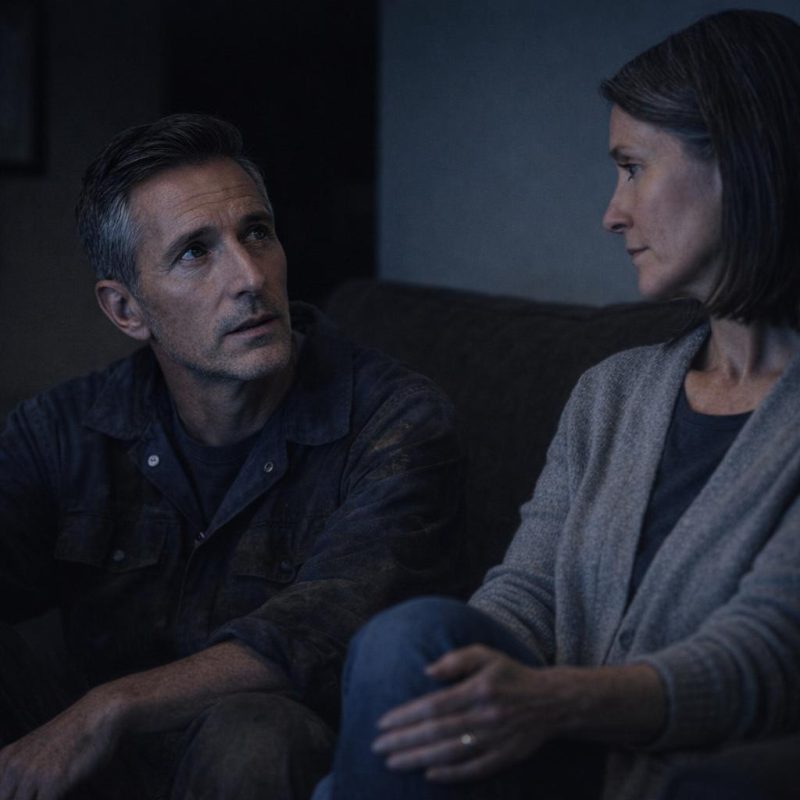 Image by RM AI
What Happens Next
A few days later, I asked him to take me there. He didn't hesitate. We drove to the industrial park on a Tuesday morning, and he unlocked the bay door himself, and I walked in. I don't know what I had expected — something smaller, maybe, or more makeshift. What I found was a proper operation. Clean concrete floors, organized tool racks, two cars in various stages of restoration under good lighting. Marina was there. She shook my hand and looked me in the eye and didn't apologize for existing, which I respected. She showed me around without being asked, explained what they were working on, talked about the business with a directness that told me she was good at what she did. I was impressed. I didn't want to be, but I was. On the drive home I told Arthur I wanted full financial transparency going forward — every account, every record, every invoice. He agreed without argument. I told him I wouldn't ask him to shut it down, but I would not be kept outside of it again. He said he understood. He said he wanted me involved. I told him wanting and doing were two different things, and he said he knew that too. We didn't resolve everything that afternoon. But we started talking about the future in a way that felt like we were both actually in it, and that was something neither of us had managed in a long time.
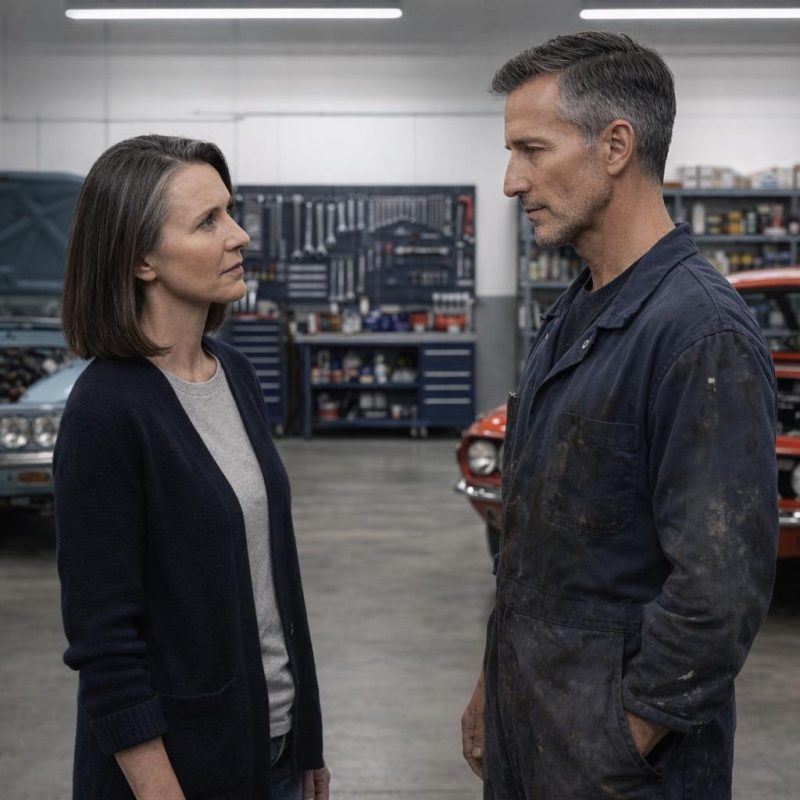 Image by RM AI
New Ground
The weeks that followed were not easy, but they were honest, and that turned out to matter more than easy. Arthur showed me everything — the accounts, the client list, the contracts, the margins. He called me before making decisions, not after. I started going to the shop on Saturday mornings, partly to stay informed and partly because I found, to my own surprise, that I liked it there. Marina and I developed a working rhythm. She didn't need me to understand the mechanics, and I didn't pretend to. What I understood was the business side, and she was glad to hand that off. Arthur watched the two of us together one morning with an expression I hadn't seen on him in years. I was still hurt. I want to be clear about that — the hurt didn't disappear because things got better. But I started to see that what he had built wasn't a rejection of our marriage. It was something he had needed and hadn't known how to ask for. That didn't excuse the secrecy. We said so to each other, plainly, more than once. But we also said something else: that a marriage thirty years in could hold new shapes if both people were willing to keep showing up. We were still figuring out what that looked like. The rules were different now — honesty about ambition, honesty about fear, no more decisions made alone in the dark — and we were building on that ground together.
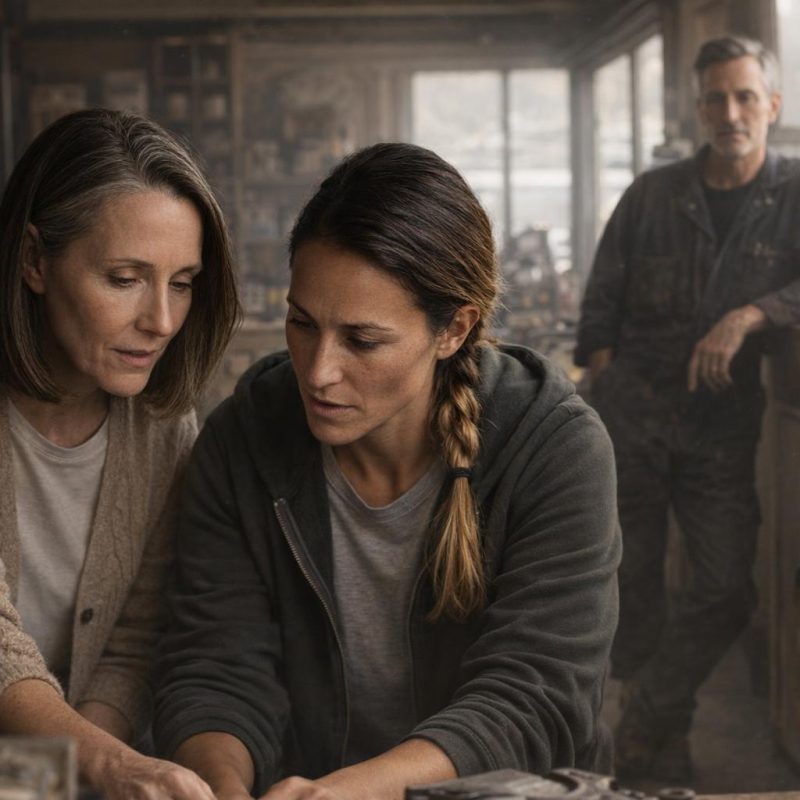 Image by RM AI
KEEP ON READING
How a Deformity Made This Man an Urban Legend
Alex Fu on PexelsThere's a stretch of road in western…
By Christy Chan Jun 25, 2026
20 Bizarre Archaeological Finds That Mainstream History Refuses to Explain
Digging Up the Unexplained. Standard history textbooks like to present…
By Sara Springsteen Jun 24, 2026
The Deadly Beer Flood That Sounds Too Strange To Be…
en.wikipedia.org on GoogleOn the afternoon of October 17, 1814, a…
By Cameron Dick Jun 25, 2026
The Pope Whose Corpse Was Put On Trial
Cavallieri, 1588 on WikimediaIn January 897, a dead man was…
By Cameron Dick Jun 25, 2026
The History of Training Circus Animals
Svetlana Zhigulskiy on UnsplashThe history of training circus animals goes…
By Elizabeth Graham Jun 25, 2026
20 Royal Heirs Raised By People Who Weren’t Their Parents
Definitely Not The Ordinary Family Life. Being a royal child…
By Elizabeth Graham Jun 25, 2026