

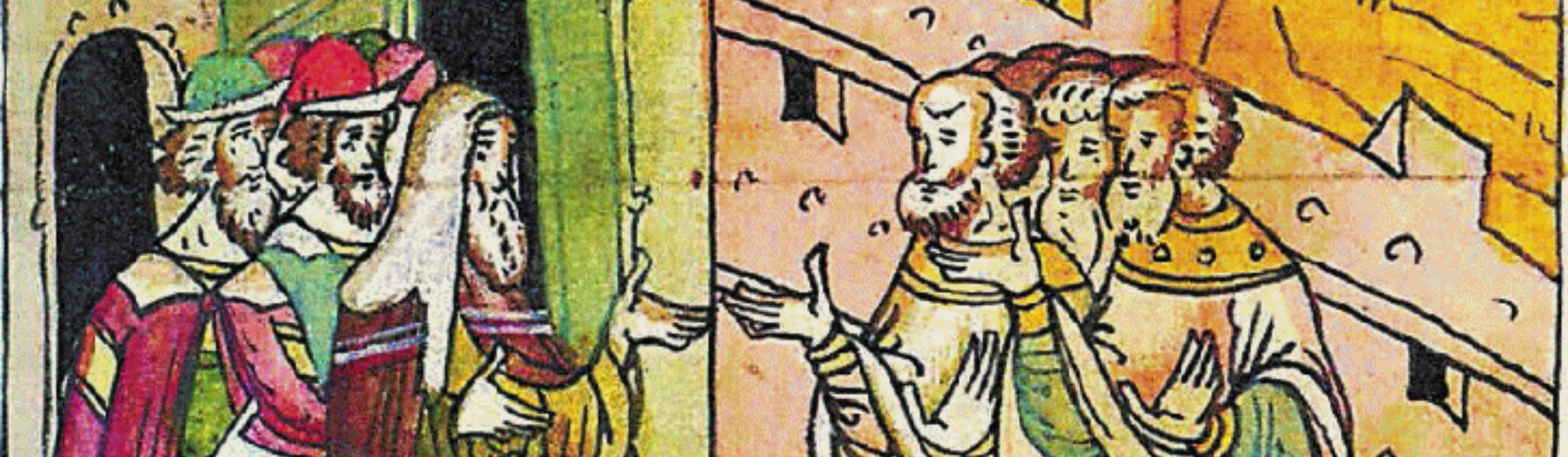
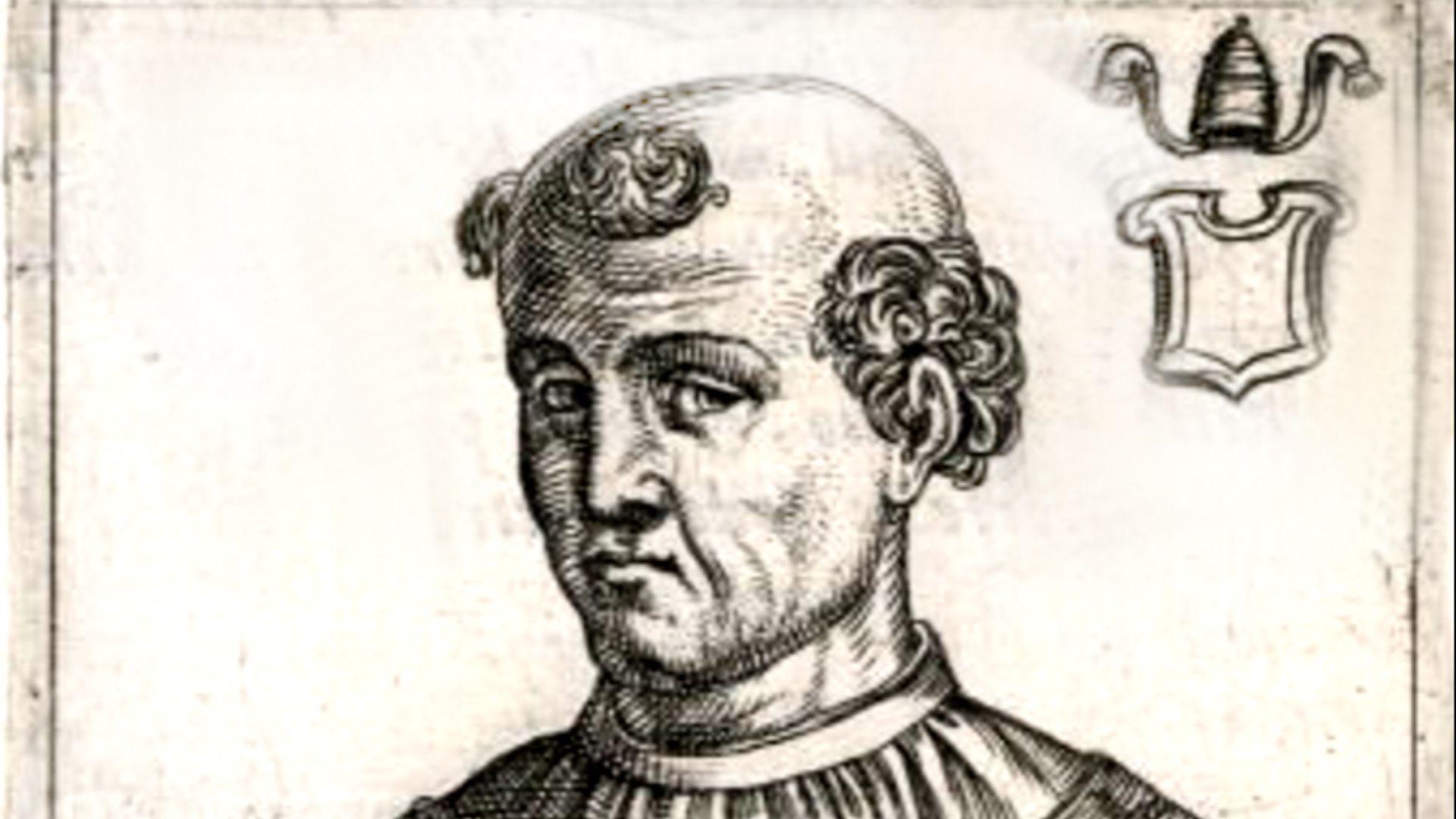
In January 897, a dead man was dressed in papal vestments, propped on a throne in the Basilica of St. John Lateran in Rome, and put on trial for crimes against the Church. The defendant was Pope Formosus, who had died nine months earlier. The prosecutor was the reigning pope, Stephen VI, who stood in the courtroom and screamed accusations at the corpse while a terrified young deacon cowered nearby, tasked with speaking in the dead man's defense. This actually happened.
The event is known to history as the Cadaver Synod, or in Latin, the Synodus Horrenda. It is one of the most bizarre episodes in the long and frequently strange history of the Catholic Church, and it tells you something not just about the savagery of medieval ecclesiastical politics, but about how desperately power was being fought over in ninth-century Rome, and how far the people fighting for it were willing to go.
The World That Made It Possible
To understand the Cadaver Synod, you have to understand how unstable the papacy had become in the decades leading up to it. Between 872 and 965, there were roughly two dozen popes. Between 896 and 904 alone, there were nine. Historian Eamon Duffy, in Saints and Sinners: A History of the Popes, describes the papal throne of this period as the prize of tyrants and brigands, an office seized by whichever Roman noble family or political faction had enough force behind it at any given moment.
Formosus had spent his career navigating those currents. He had been a respected bishop and papal legate before his election to the papacy in 891, but his most consequential decision was crowning Arnulf of Carinthia as Holy Roman Emperor in 896, which put him squarely at odds with the Spoletan dynasty and its ruler Lambert of Spoleto. When Arnulf fell ill and his army departed Italy, the Spoletans returned to power. Formosus died in April 896 before he could see what that meant for his legacy. He was succeeded briefly by Pope Boniface VI, who died two weeks later, and then by Stephen VI, who came to power with Spoletan backing and a grievance to settle.
What made Formosus legally vulnerable, even in death, was canon law. He had originally been the bishop of Porto, and church law strictly prohibited bishops from moving between dioceses. When he became pope, his enemies framed that transfer as a violation of the fifteenth canon of the Council of Nicaea. An earlier political dispute with Pope John VIII had also left Formosus exposed to a charge of perjury. The legal footholds were thin but they were enough.
The Trial Itself
The logic of the Cadaver Synod was grimly practical. If Formosus could be declared guilty and his papacy null, then everything he had done as pope would be undone. Every bishop he ordained, every priest he appointed would lose their legitimacy. That was the real target. Destroying the corpse was the mechanism; dismantling a network of Formosan clergy was the goal.
The body was exhumed from St. Peter's Basilica and brought to the Lateran. The most detailed account comes from Liudprand of Cremona, a tenth-century chronicler who wrote about the events in his book Antapodosis roughly sixty years after the fact. Historians treat his version with caution, since Liudprand had his own political purposes, but the broad outline is corroborated by other sources. The corpse was dressed in vestments and seated on the throne. A deacon was appointed to answer for it. Stephen VI then conducted what the sources describe as a frenzied prosecution, shouting at the body and demanding it account for its crimes.
The verdict was never in doubt. Formosus was found guilty of perjury, coveting the papacy, and illegally moving between dioceses. His vestments were stripped from the corpse. Three fingers were cut from his right hand, the fingers he had used in life to give the benediction. The body was then thrown into the Tiber River, where ancient Rome had long disposed of its most condemned criminals, a deliberate act of damnatio memoriae meant to erase him from history entirely.
The Aftermath
It did not work. Stephen VI had miscalculated how the people of Rome would receive the spectacle. The Cadaver Synod turned public opinion sharply against him. He was deposed, imprisoned, and strangled to death before the year was out, his reign lasting barely thirteen months.
The body of Formosus was retrieved from the Tiber by fishermen and quietly reburied by monks. By late 897, Pope Theodore II had convened a synod that annulled the Cadaver Synod entirely and ordered Formosus's body returned to St. Peter's Basilica in full pontifical vestments. In 898, Pope John IX confirmed that rehabilitation through synods in Rome and Ravenna, and formally banned any future trials of the dead. The record of the Cadaver Synod was ordered destroyed.
The story did not end cleanly even then. Pope Sergius III, who came to power in 904, reversed course, re-validating the original condemnation and demanding the re-ordination of every cleric Formosus had ever consecrated. The confusion rippled through the clergy for years before the Church quietly moved on, treating the episode as an aberration best left alone. No pope has ever taken the name Formosus since. The Latin word means good-looking, which under the circumstances is not an association anyone was eager to revive.
KEEP ON READING
The story of Ching Shih, the Woman Who Became the…
Unknown author on WikimediaFew figures in history are as feared…
By Emilie Richardson-Dupuis Dec 29, 2025
Einstein's Violin Just Sold At An Auction—And It Earned More…
A Visionary's Violin. Wanda von Debschitz-Kunowski on WikimediaWhen you hear…
By Ashley Bast Nov 3, 2025
This Infamous Ancient Greek Burned Down An Ancient Wonder Just…
History remembers kings and conquerors, but sometimes, it also remembers…
By David Davidovic Nov 12, 2025
The Mysterious "Sea People" Who Collapsed Civilization
3,200 years ago, Bronze Age civilization in the Mediterranean suddenly…
By Robbie Woods Mar 18, 2025
The Deadly Beer Flood That Sounds Too Strange To Be…
en.wikipedia.org on GoogleOn the afternoon of October 17, 1814, a…
By Cameron Dick Jun 25, 2026
20 Soldiers Who Defied Expectations
Changing the Rules of the Battlefield. You’ve probably heard plenty…
By Annie Byrd Feb 10, 2026