

My Husband and I Finally Splurged on Dinner at That Fancy Restaurant Everyone Talks About—Then the Manager Looked at Us Like We Were Trash
My Husband and I Finally Splurged on Dinner at That Fancy Restaurant Everyone Talks About—Then the Manager Looked at Us Like We Were Trash
The Confirmation Email
I'd been on the waitlist for six months. Six months of checking my email every morning like some kind of ritual, half-convinced the confirmation would never come. So when it finally did — when I saw The Velvet Hearth in my inbox on a Tuesday afternoon — I actually screamed. Mark came running from the garage thinking something was wrong, sawdust still on his shirt, and I just held up my phone and watched his face break into that big, uncomplicated grin of his. We sat at the kitchen table together while I read the email out loud, the whole thing, like it was a document that needed witnessing. The formatting was beautiful, honestly — cream-colored background, a small embossed logo, the kind of thing that made you feel important just receiving it. Our reservation was confirmed for Saturday at seven. I read every line twice. And then I got to the closing, and I stopped. I read it again. Then I handed the phone to Mark without saying anything and watched him read it too. He looked up at me with his brow furrowed. "We look forward to welcoming you home," he said slowly, like the words might mean something different out loud. We both sat there for a moment, not quite sure what to make of it.
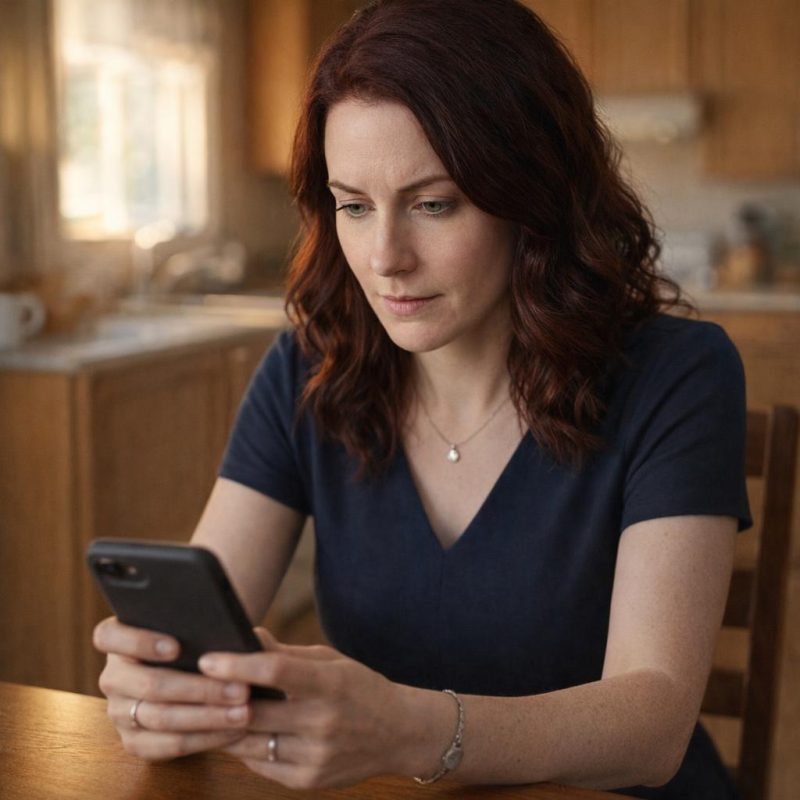 Image by RM AI
The Closet
I told myself I was just being practical when I pulled everything out of the closet the night before. I laid it all on the bed — the black wrap dress, the green blouse with the good slacks, the floral midi I'd worn to my cousin's wedding — and none of it looked right. None of it looked like someone who belonged at The Velvet Hearth. I'd spent three weeks researching the restaurant online, reading reviews, studying photos of the dining room, and every woman in every picture looked like she'd been born knowing which fork to use. I was not that woman. The navy dress was still in its garment bag, hanging on the closet door. I'd bought it on a Saturday when I was feeling brave, spent more on it than I'd ever spent on a single piece of clothing in my life, and immediately felt guilty about it. I'd tried it on four times already. I put it on again, stood in front of the mirror, and picked apart every detail — the way it sat on my shoulders, whether my arms looked wrong, whether I looked like I was trying too hard. I was still sitting on the edge of the bed in it, the garment bag crumpled beside me, when Mark appeared in the doorway. He crossed the room without a word and wrapped his arms around me from behind. "You look beautiful," he said quietly. "And we deserve to be there."
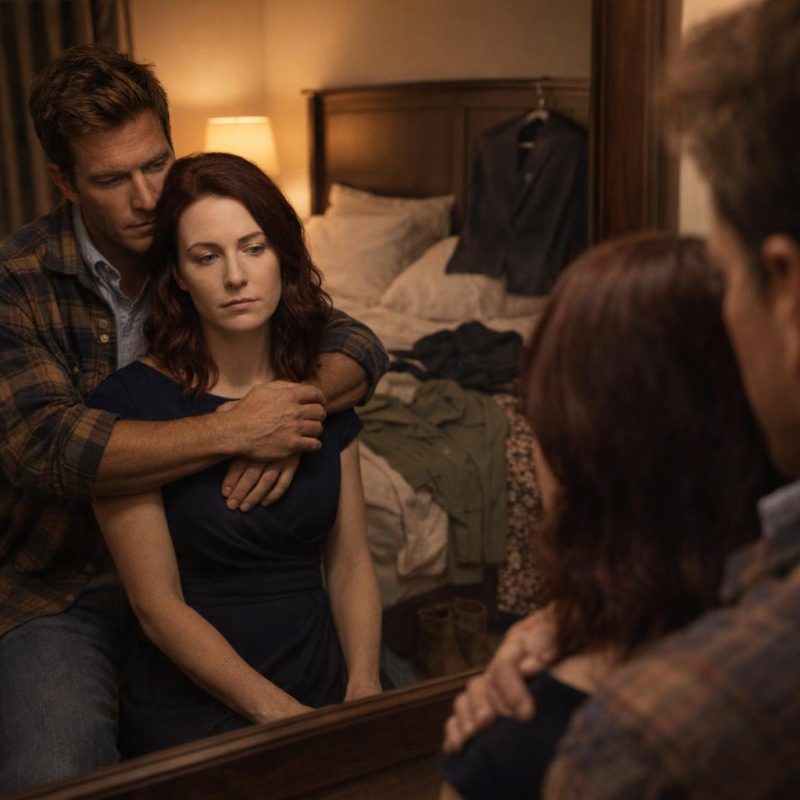 Image by RM AI
The Hostess
The doors were heavier than I expected — thick glass with brushed brass handles — and for one ridiculous second I thought about turning around. Mark pushed through first and held it open, and I stepped in behind him onto a floor that looked like it had been polished that afternoon. The hostess stand was ahead of us, a curved piece of marble that looked more like sculpture than furniture, and I was already rehearsing what I'd say. Reservation for Henderson, party of two, seven o'clock. I had it ready. I didn't get to use it. The young woman behind the stand looked up before we'd taken three steps, and something happened to her face that I wasn't prepared for. It wasn't the practiced smile of someone doing their job. It was something warmer and more specific than that — her eyes went bright, her whole expression opened up, and she looked directly at me. Not at Mark, not at us as a couple. At me. I glanced sideways to see if someone had come in behind us, but there was no one. When I looked back, she was already stepping around the stand, moving toward us with a kind of quiet eagerness that made my stomach do something strange. I'd never met this woman in my life, and I was almost certain of it. But the warmth on her face felt like something I couldn't quite explain away.
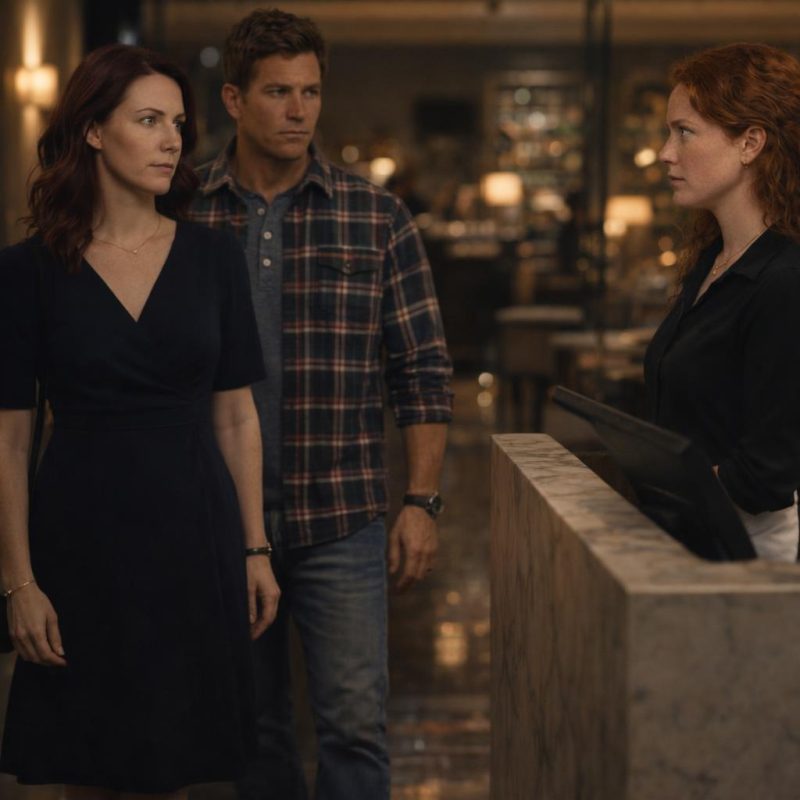 Image by RM AI
The Best Table
She introduced herself as Emma and said she'd show us to our table, and I followed her through the dining room trying to take everything in without looking like I was gawking. The other guests were exactly what I'd imagined — silk and cashmere, quiet laughter, the kind of ease that comes from never having to check a price. Emma moved through it all without hesitation, and I kept close behind her, my heels quieter than I'd hoped on the hardwood. Then she turned toward a stone archway I hadn't noticed from the entrance, and we stepped through it and down three shallow steps, and the room changed. The tables were farther apart here. The lighting was softer. The flowers on each table were fresh and elaborate in a way the main room's weren't. I'd read about this section in a review once — a blogger who'd spotted a film director dining here had mentioned the VIP alcove in passing, almost reverently. Emma stopped at a booth along the far wall, floor-to-ceiling windows behind it looking out onto a garden lit with small warm lights. I recognized it from a photograph I'd seen online, the kind of table that appeared in the background of celebrity sightings. A server materialized beside us almost immediately, tall and precise, and before either of us could speak, he said, "Mr. Henderson, welcome. I'm Thomas and I'll be taking care of you this evening." I hadn't told anyone our name.
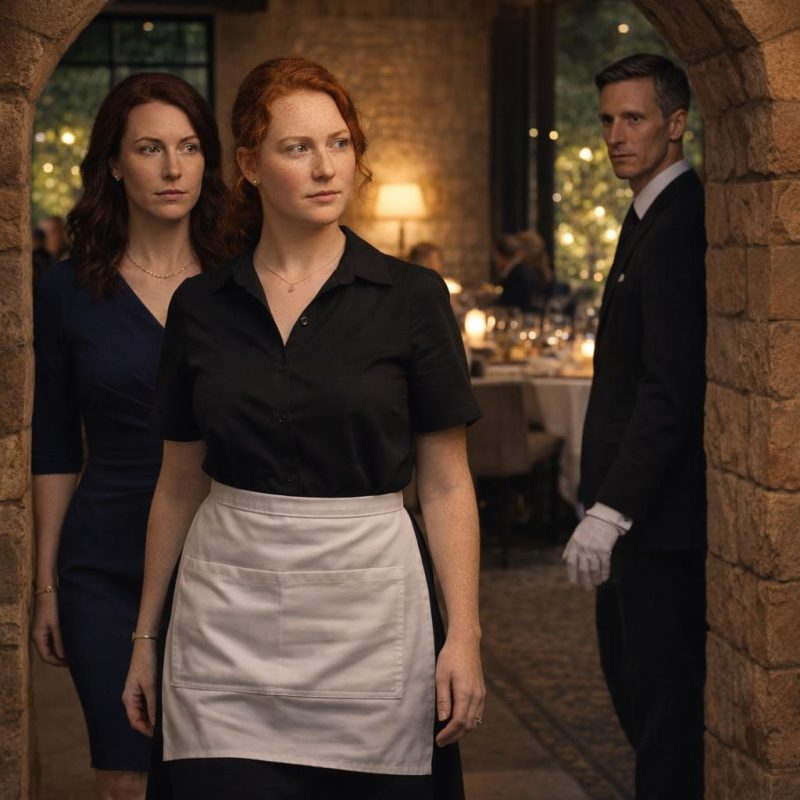 Image by RM AI
The Priceless Menu
Thomas poured water from a crystal pitcher and handed us each a menu with the kind of careful ceremony that made me feel like I should be paying closer attention. The leather cover was soft and heavy, and I opened it expecting the usual columns of dishes and prices. The descriptions were beautiful — handwritten-style font, ingredients I'd never heard of, preparations that sounded more like poetry than food. But there were no numbers. I turned the page. Still nothing. I checked the inside cover, the back panel, the very last page. Mark was already leaning forward over his menu, pointing at something and whispering about duck confit like a kid at a theme park, completely unbothered. I leaned over and looked at his menu. No prices there either. I remembered reading something once, in one of those food blogs I'd fallen down at midnight — that certain restaurants only gave priceless menus to guests they considered VIP, guests who weren't expected to worry about the bill. I'd filed it away as a curiosity, the kind of thing that happened to other people. I whispered to Mark that something felt off, that maybe there'd been a mix-up with the reservation. He just winked at me and went back to the menu. I flipped through mine again from the beginning, slowly this time, turning every single page.
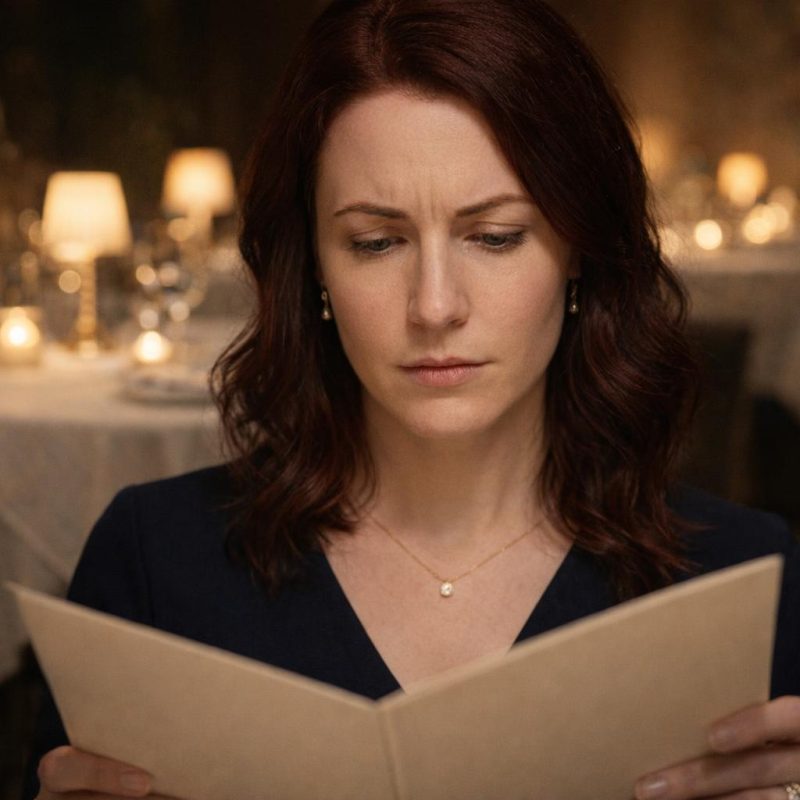 Image by RM AI
The Manager's Stare
I noticed her while Mark was describing something he'd read about the lamb preparation — a woman near the kitchen entrance in a charcoal-grey suit, standing very still. She wasn't checking on tables or speaking to staff. She was watching us. I knew that look. I'd seen it in the department store where I worked my way through college, the way certain customers would track you with their eyes when they'd already decided something about you. It was a look that sorted people. I tried to focus on what Mark was saying, nodding at the right moments, but I could feel her attention like a pressure at the side of my face. I glanced back. She was still there, arms folded loosely, her gaze steady and unimpressed. There was nothing subtle about it. Mark was laughing now at something on the menu, tilting it toward me, and I smiled because I didn't know what else to do. When I looked toward the kitchen entrance a third time, the woman's eyes met mine directly, and the corner of her mouth pulled back — not into a smile, but into something that went the other direction entirely. I looked away first. I looked down at my menu and kept my eyes there, my face warm, feeling the way I used to feel when someone made it clear, without a single word, that I didn't belong somewhere.
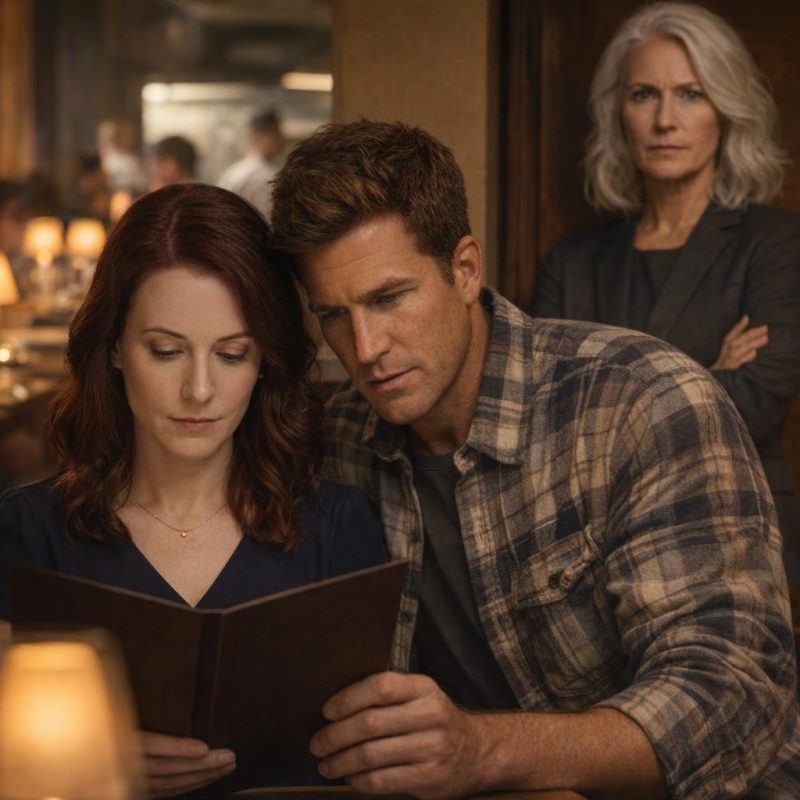 Image by RM AI
The Chef's Gift
Thomas reappeared with a small wooden board and two additional plates balanced along his arm with practiced precision. He set them down one by one, describing each in a low, unhurried voice — seared foie gras with a cherry reduction, smoked duck breast with fig compote, house-made pâté finished with truffle oil, each one garnished with tiny edible flowers I couldn't name. Mark and I hadn't ordered any of it. I looked up at Thomas, and he gave a small, composed nod before I could ask. Mark laughed — that open, delighted laugh of his — and said something about having a guardian angel watching over us tonight. I tasted the foie gras because it seemed wrong not to, and it was extraordinary, the kind of thing that made you understand why people spent their lives chasing food like this. But I kept glancing toward the kitchen entrance, toward the spot where the woman in the charcoal suit had been standing. She wasn't there anymore, which somehow didn't make me feel better. I looked back at Thomas, who was still standing at a respectful distance, hands clasped, waiting to see if we needed anything. "The chef," he said, with a slight incline of his head, "wanted to send these out personally. There is, of course, no charge."
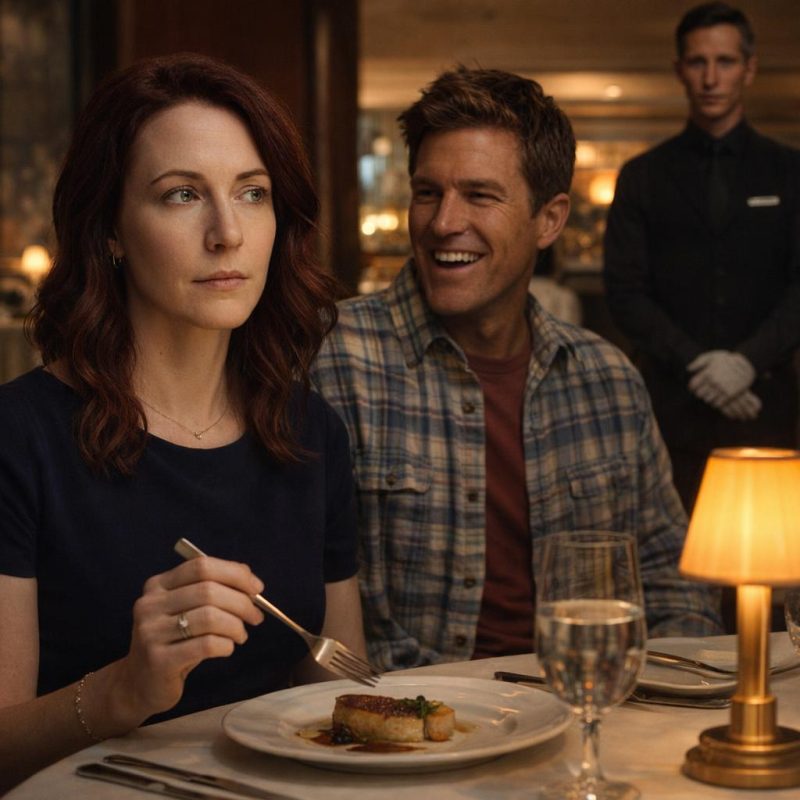 Image by RM AI
The Whispers
The couple at the table beside us had been whispering since Thomas's second visit. I'd noticed it the way you notice something you're trying not to notice — in pieces, at the edges of my attention. The woman was in a silk blouse the color of champagne, and she wore it the way people wear things that have never had a price tag in their minds. Her husband had the kind of watch that gets mentioned in wills. I caught fragments when the ambient noise dipped — her voice low and precise, his a murmur in response. At one point she tilted her head toward our table and said something I couldn't fully hear, and he leaned in and replied with what sounded like investors or new money, though I couldn't be certain. Then she said food critics, and he made a small sound of consideration. My hands weren't steady when I picked up my fork again. Mark asked if I was okay, and I told him I was fine, that the food was incredible, which was true. He went back to his duck with genuine happiness, and I envied him that — the ability to just be somewhere without feeling watched. I set my fork down and folded my hands in my lap, and the woman's voice drifted over again, quieter this time, something about the dishes we'd received being from the chef's private selection, a thing she'd apparently never seen offered to a table before.
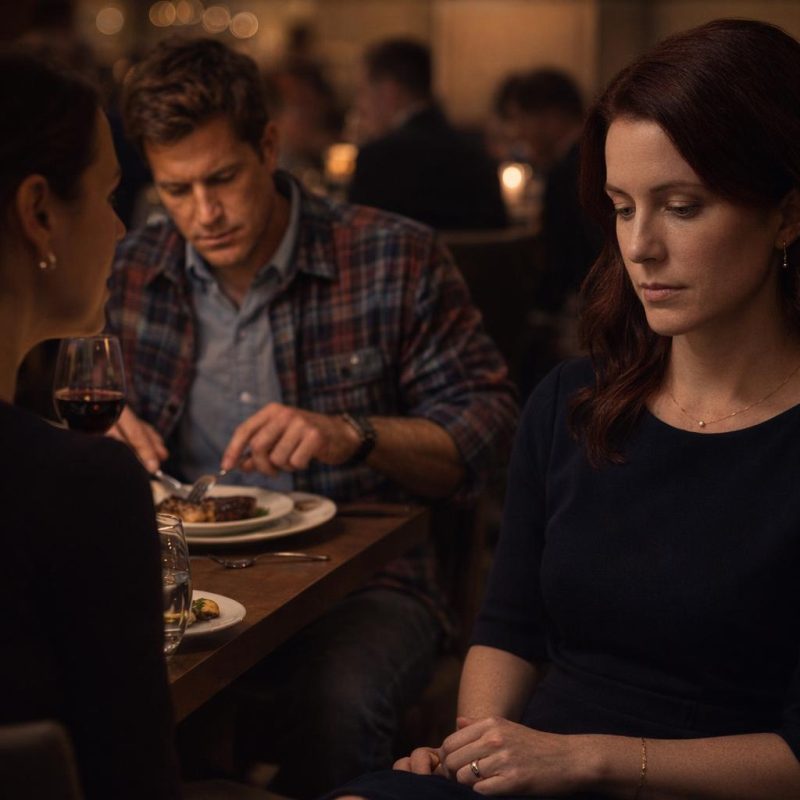 Image by RM AI
Madame
Thomas came back with a water pitcher that caught the candlelight like something from a museum, and I watched him move with the kind of precision that made me feel like I was at a state dinner instead of a restaurant. He set the pitcher down, straightened, and looked directly at me. 'Would Madame care for another glass of wine?' he asked, and I blinked at him for a moment because I genuinely wasn't sure he was talking to me. Nobody had ever called me Madame in my life. I said yes, mostly because I didn't know what else to do, and he poured with both hands wrapped around the bottle like it was something fragile and irreplaceable. Then he turned to Mark and asked if Monsieur would like anything, and Mark said, 'Just Mark is fine, man, thanks,' with that easy warmth he has, and Thomas smiled politely without it reaching anywhere near his eyes. I'd seen Thomas laugh — actually laugh — with a couple near the window not twenty minutes earlier, leaning in like they were old friends. With us, he was a different person entirely. When he finished pouring, I touched the edge of the table and said, 'You can just call me Sarah.' He looked at me with what I can only describe as genuine confusion, then turned and walked away without a word.
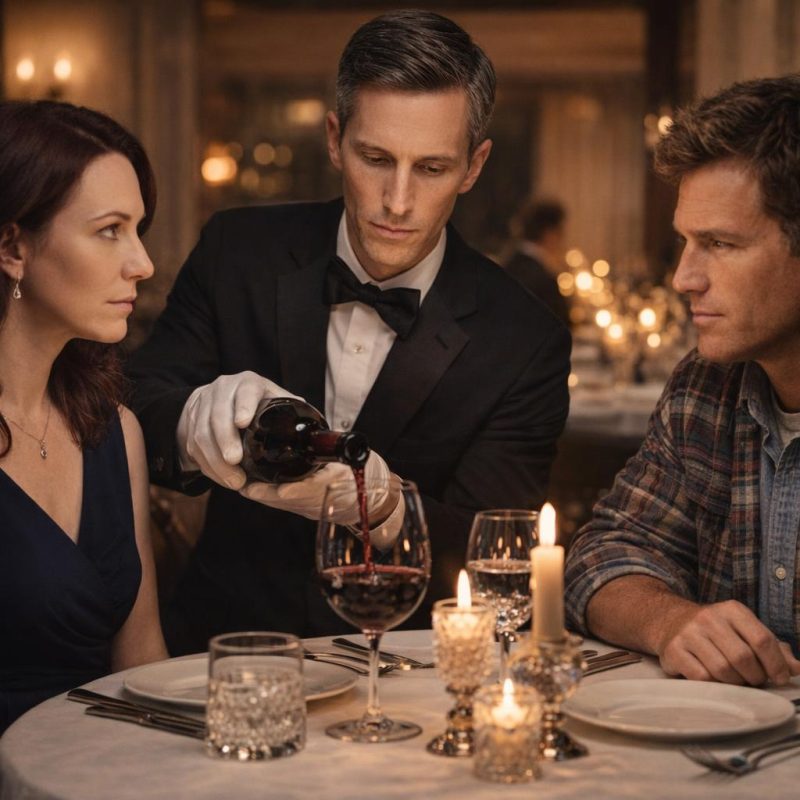 Image by RM AI
The Calloused Hands
I saw Lydia before Mark did. She moved through the dining room the way water moves around stones — smooth, controlled, like the room rearranged itself for her. She stopped at our table with her hands clasped in front of her and a smile that had been assembled rather than felt. She said she wanted to make sure everything was meeting our expectations, and Mark, being Mark, lit up and told her the food was incredible, that he'd never tasted anything like it. She nodded at him the way you nod at something you're not really listening to. And then her eyes dropped. I watched it happen. Her gaze traveled down from his face to his hands resting on the white tablecloth — his carpenter's hands, broad and calloused, with a fresh scrape across one knuckle from a job earlier that week. Something moved across her face. It was quick, the way a shadow crosses a wall, but I caught it. It wasn't surprise. It wasn't concern. It was the particular expression of someone who has found exactly what they expected to find and is quietly disgusted by it. She turned back to me with the same assembled smile and told us to enjoy our evening, and I sat there with my hands folded in my lap, watching her eyes linger on Mark's calloused hands one last time before she turned away.
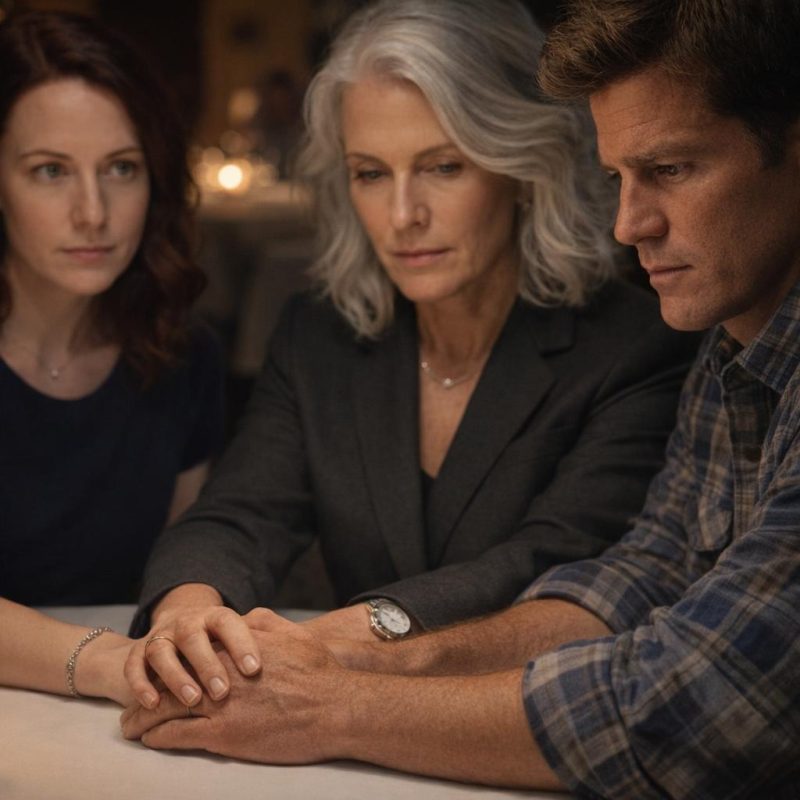 Image by RM AI
The Wrong Turn
I excused myself to find the restroom and took a wrong turn somewhere past the second corridor, ending up near a narrow alcove beside the manager's station. I was about to double back when I heard Lydia's voice — not the smooth, controlled version she used in the dining room, but something sharper underneath it, like a blade that had been wrapped in cloth and was cutting through anyway. She was speaking to Emma, the hostess, in a low and furious tone. I pressed myself against the wall without thinking. Lydia said she didn't care what the owner thought, that this was her dining room and she ran it a certain way. Then she said bringing people like us in here was an insult to everything she'd built. I heard her mention Mark's hands — she called them practically filthy, said it like the words tasted bad in her mouth. Emma said something I couldn't make out, something quiet and careful, and Lydia cut her off. 'We are running a world-class restaurant,' she said, her voice pulled tight and flat, 'not a soup kitchen for the lucky.' I stood in that corridor and couldn't move. The noise of the dining room carried on around the corner like nothing had happened, silverware and soft laughter and the low murmur of people who belonged there, and Lydia's words settled over me like something cold.
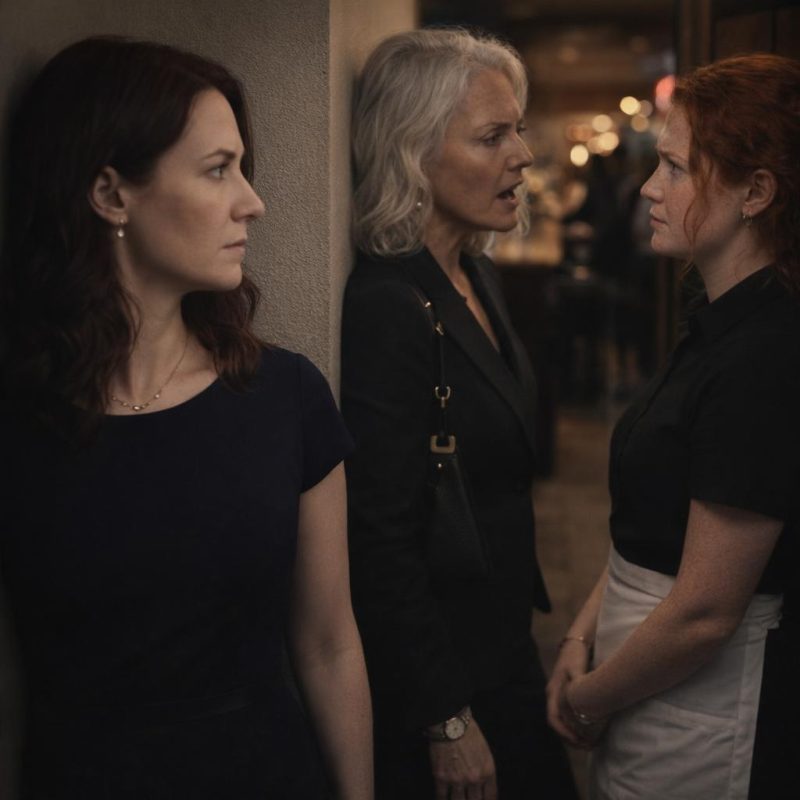 Image by RM AI
The Return
I walked back to the table with Lydia's words still moving through me like a current I couldn't switch off. I kept my chin up and my pace even, the way you do when you're trying to look like nothing is wrong and every step feels like a performance. Mark was looking at the menu when I came around the corner, but he glanced up with a smile that faded the moment he saw my face. I sat down and reached for my water glass immediately, just to have something to hold. My hands weren't entirely steady. I set the glass down and smoothed the napkin across my lap and tried to arrange my expression into something that looked like a woman who had simply gotten turned around looking for a restroom. Mark watched me do all of this. He didn't say anything for a moment, and in that moment I thought about telling him — about the corridor and Lydia's voice and the words practically filthy and soup kitchen for the lucky — and I thought about what his face would do when he heard it, and I couldn't. He'd worked a full week. He'd been so happy tonight. He asked, quietly, what was wrong.
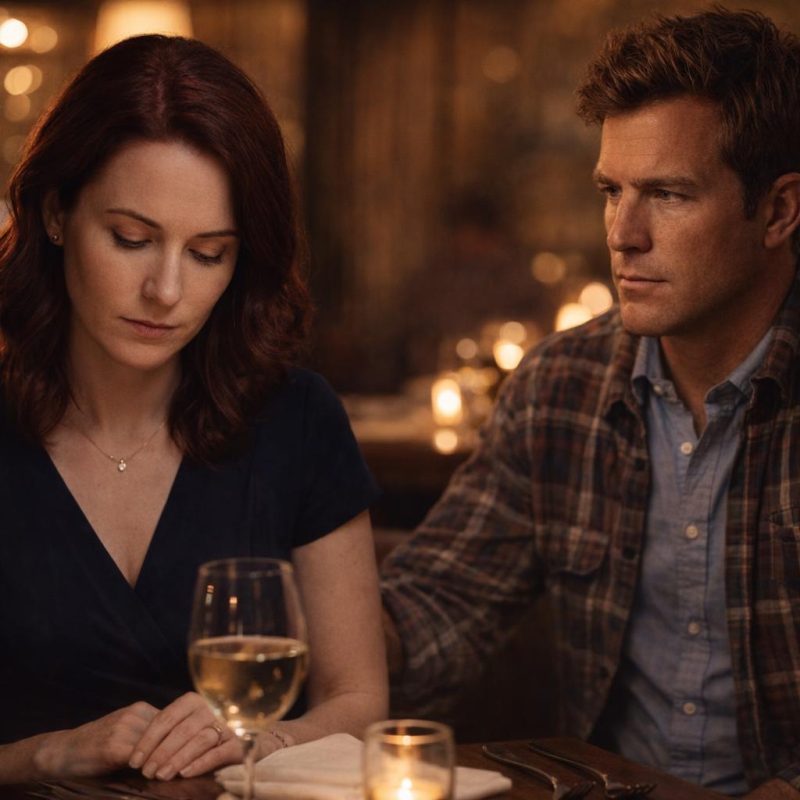 Image by RM AI
The Deflection
I told him I was fine. I said it the way you say things when you're hoping the saying of them will make them true. I gestured vaguely at the dining room — the candlelight, the high ceilings, the soft orchestral murmur of a room full of people who seemed entirely at ease — and said it was just a lot to take in, that I'd gotten a little overwhelmed. Mark's eyes stayed on my face a beat longer than they needed to. He has always been able to read me, which is one of the things I love about him and one of the things that makes lying to him feel like trying to hide something in a glass house. I told him it was nothing, and asked what he was thinking of ordering next. He hesitated. I could see him deciding whether to push, and I held my smile steady and waited. He let it go. He picked up the menu and started describing a dish he'd been eyeing, something with truffle and a reduction I didn't fully follow, and I nodded along and made the right sounds. Lydia's voice kept running underneath everything, a loop I couldn't stop. Soup kitchen for the lucky. I watched Mark's face as he talked, the genuine pleasure in it, and I kept my expression open and present, and the hollow feeling in my chest sat quietly where I'd put it.
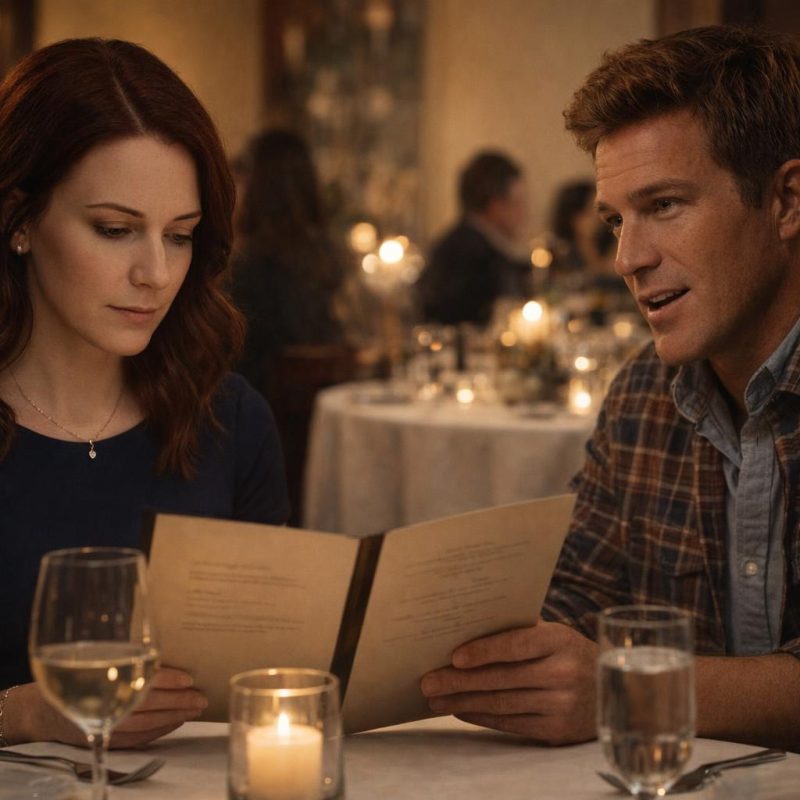 Image by RM AI
The Question of Pity
Thomas appeared again with a plate I hadn't ordered, setting it between us with the same careful reverence he brought to everything. He said it was compliments of the kitchen, gave a brief description I only half-absorbed, and withdrew. The presentation was extraordinary — something architectural about it, colors arranged like a painting. Mark made a sound of pure delight and leaned forward to look at it properly. I looked at it too, and felt something twist low in my stomach. It was the third complimentary course. Maybe the fourth — I'd lost count. Each one had arrived without explanation, without us asking. I'd been trying not to think about it too directly, but sitting there with another beautiful plate in front of me, I couldn't stop the thought from forming. It felt strange — the kind of strange that sits in your chest without a name attached to it. I didn't know what to make of the food, or the evening, or any of it. Mark reached for his fork with uncomplicated happiness. I sat with the plate in front of me and the unease I couldn't quite account for, and couldn't bring myself to pick up my fork.
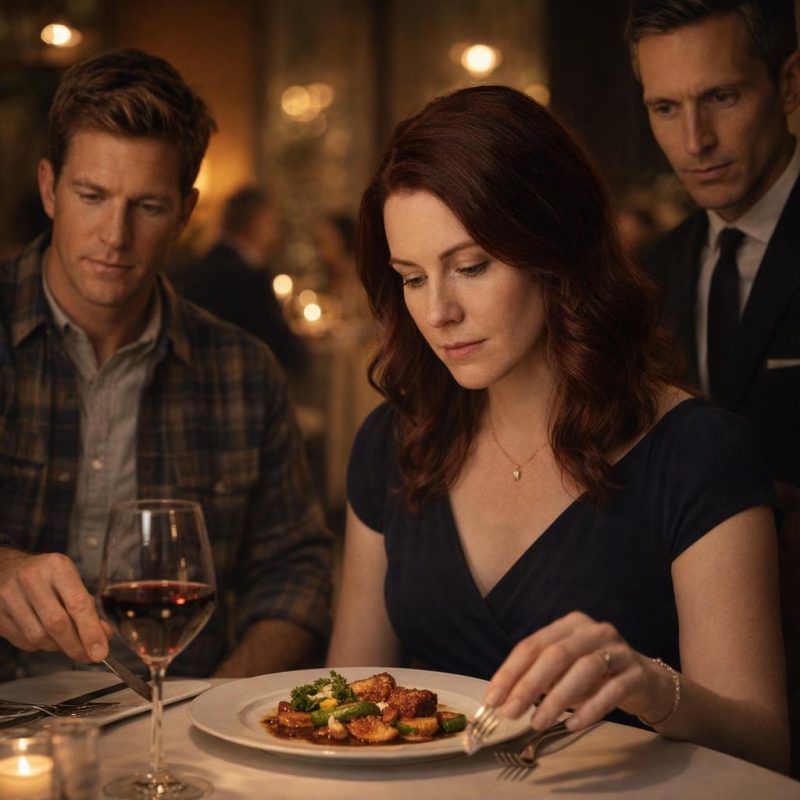 Image by RM AI
The Pattern
I started watching the other tables. I don't know exactly when I began doing it — somewhere between Thomas's third visit and the arrival of a small amuse-bouche neither of us had seen on any menu. The VIP section held maybe eight tables, all of them occupied by people who wore their wealth the way I wore my navy dress — like it was simply part of them, unremarkable. Thomas moved between them with the same professional ease, pausing to refill a glass here, exchange a word there. With the couple two tables over he actually smiled, a real one, and said something that made the woman laugh. I watched him work the room and tried to count. The table by the window: nothing extra, just their ordered courses arriving in sequence. The couple near the partition: same. The group of four in the corner: ordering from the menu, nothing more. I went back through the evening in my mind — the amuse-bouche, the chef's selection dishes, the small plates that had appeared between courses, the wine Thomas had described as a gift from the cellar. Mark was working through his current course with quiet concentration, fork moving with the focused pleasure of someone who had stopped thinking about anything except what was in front of him. Something about the evening felt off in a way I couldn't quite put into words, and I didn't know what to do with that feeling.
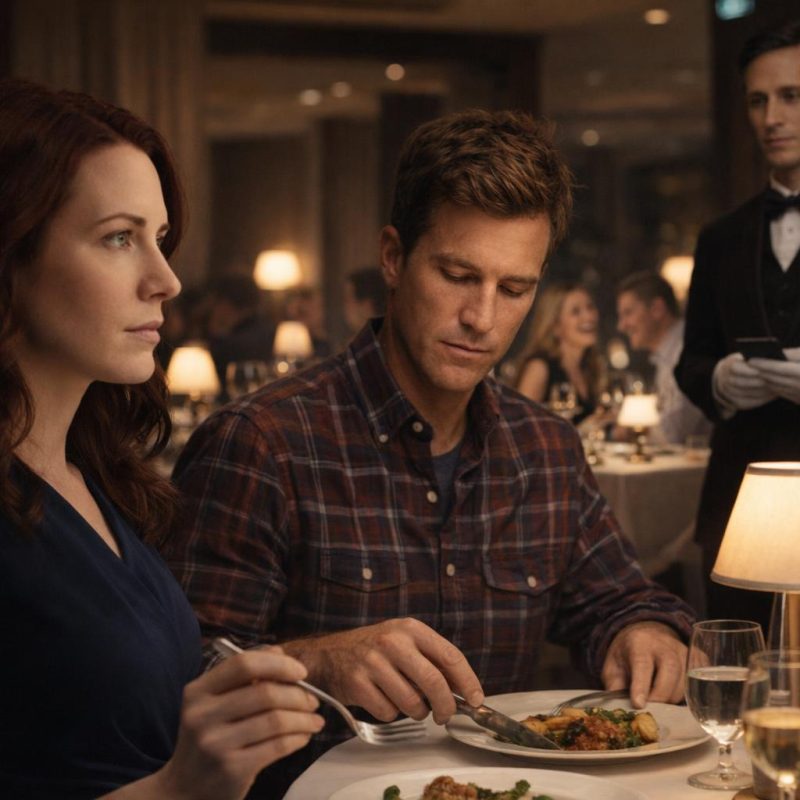 Image by RM AI
The Divided Staff
Emma passed our table and gave me a warm smile — the kind that reaches the eyes, genuine and quick — and then her gaze shifted toward the far end of the room where Lydia stood with her arms crossed near the kitchen entrance, and the smile dropped from Emma's face like something switched off. I filed that away without knowing what to do with it. A server I hadn't seen before came to refill our water, moving with careful attention, and I noticed his hands were not entirely steady on the pitcher. He caught my eye for just a moment and gave a small, almost apologetic smile, and then his gaze cut sideways toward the kitchen and his expression went neutral and careful. Thomas arrived next, posture immaculate as always, but his jaw was set in a way I hadn't noticed before, a tightness that hadn't been there earlier in the evening. Across the room, Emma and Lydia exchanged a look — brief, loaded, the kind of look that carries a whole conversation in it — and then both of them looked away. Mark was describing the sauce on his plate to me, happy and unhurried, entirely elsewhere. Something had changed in their faces as the evening wore on — though I couldn't have said what — and I watched a server's eyes cut toward the kitchen after he'd smiled at our table.
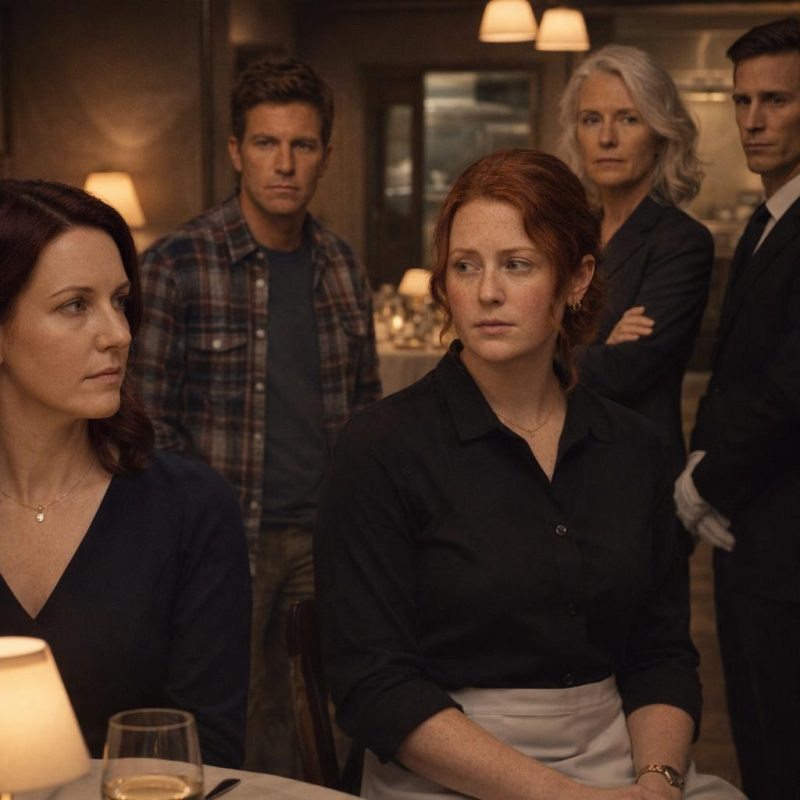 Image by RM AI
The Check-In
Emma appeared at our table with that same warm, practiced smile, asking if we were enjoying our evening. Mark lit up immediately, telling her the lamb was extraordinary and the wine pairing was perfect, and I watched her face while he talked — the way her attention kept drifting back to me, just slightly, like I was the one she'd actually come to check on. I smiled and said everything was lovely, because it was, technically. But something about the way she kept watching me made me set down my fork. I asked her, as casually as I could manage, if everything was okay — turning the question back on her, the way you do when you sense something underneath the surface of a conversation. Mark looked at me like I'd asked the waiter to explain quantum physics. Emma's smile didn't disappear exactly, but it shifted — something moved behind her eyes, a flicker of something I couldn't name — and for just a moment her composure slipped, the way a mask slips when someone asks the one question they weren't prepared for.
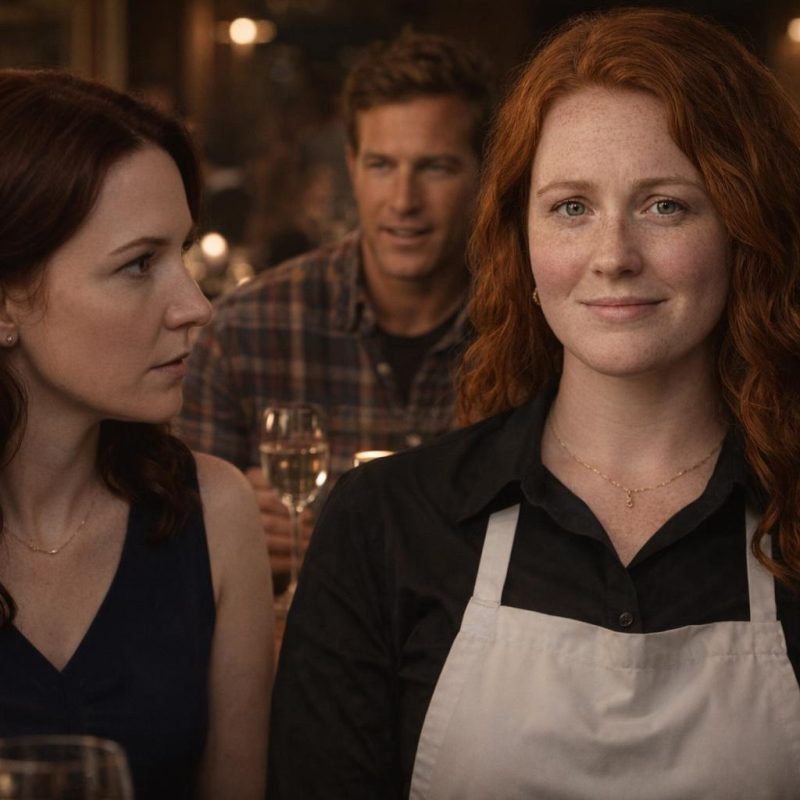 Image by RM AI
The Deflection
When Thomas came to refill our wine, I decided I was done letting the evening happen to me. I asked him directly — politely, but directly — why we were receiving so many complimentary courses, why the attention felt so different from what other tables seemed to be getting. Mark went very still beside me, the way he does when he thinks I'm about to embarrass us both. Thomas paused for exactly one beat, the pitcher hovering over my glass, and then his professional mask settled back into place so smoothly it was almost impressive. He said the restaurant simply wanted to ensure our complete satisfaction. I pressed him — asked if this was standard for every guest — and he said, without missing a beat, that every guest was valued. His answer was technically a sentence. It contained words arranged in a grammatically correct order. It told me absolutely nothing. Mark touched my arm gently and gave me a look that said please, let it go. I sat back in my chair and let the silence fill the space where an actual answer should have been.
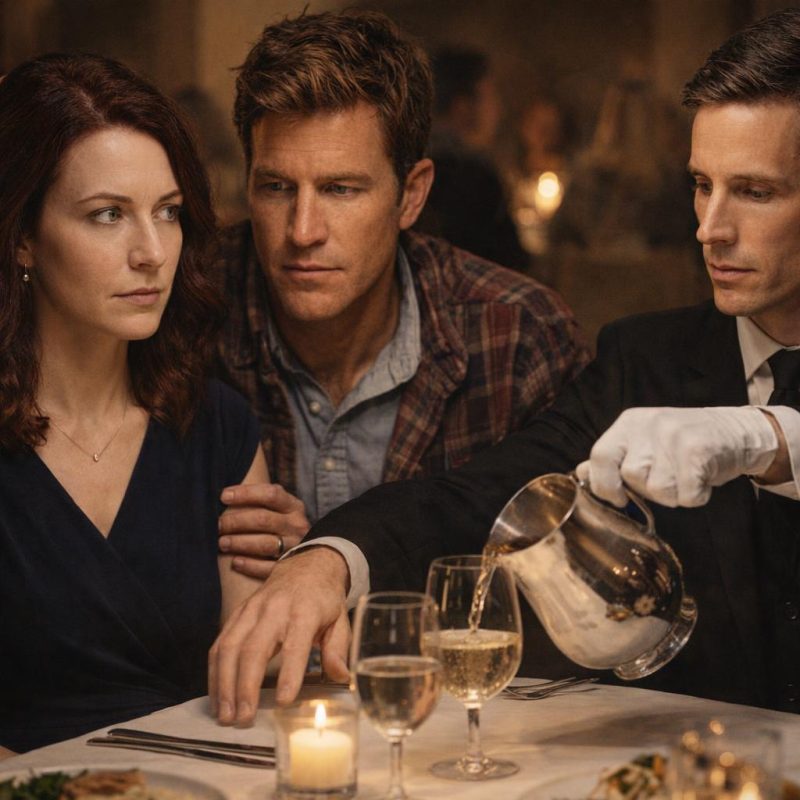 Image by RM AI
The Comparison
A few minutes later, a well-dressed man at the table nearest to ours flagged Thomas down with an easy wave, the kind of wave that assumes it will be answered. Thomas crossed the room and his whole body changed — shoulders dropped half an inch, the rigid formality softened, and he leaned in slightly as the man asked about wine pairings in a tone that was almost conversational. Thomas made a recommendation and the man laughed at something he said, and Thomas smiled back — a real smile, not the careful, measured expression he brought to our table. They used each other's first names. I noticed that. The man called him Thomas like they were old acquaintances, and Thomas responded in kind, easy and warm. Then Thomas turned and walked back toward us, and I watched the shift happen in real time — the shoulders came back up, the expression recalibrated, the formality returned like a coat he'd briefly taken off and put back on. Mark was reading the menu again, unbothered. I sat with the quiet certainty that whatever Thomas was doing at our table, it had nothing to do with how he treated everyone else.
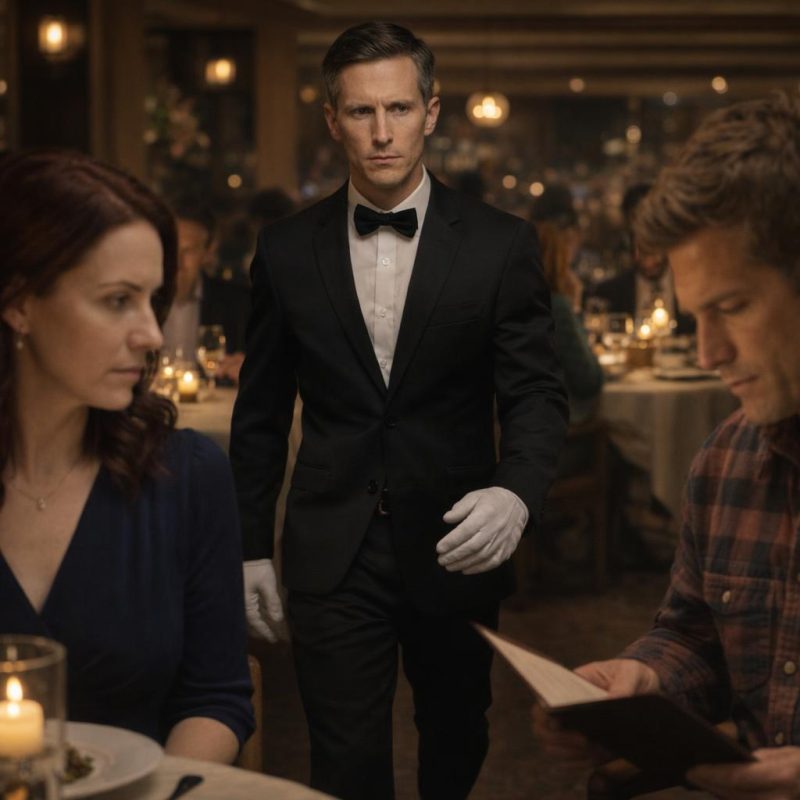 Image by RM AI
The Setup
I'd been trying to push it aside all evening, but it kept surfacing — the confirmation email. The one that had arrived months ago when I'd made the reservation, with its strange closing line that I'd read twice and then dismissed as unusual marketing copy. I mentioned it to Mark across the table, keeping my voice low. He looked up from his dessert menu and I watched something shift in his expression — a small furrow between his brows, the look he gets when he's pulling something back from memory. He said he remembered it. He admitted he'd thought the wording was odd at the time but figured it was just how fancy restaurants talked. I asked him if he thought the reservation was real — if we'd actually just booked a table like normal people, or if something else had put us here tonight. He looked uncomfortable with the question, the way he does when I say something he can't immediately argue against. I said it out loud then, the thing I'd been circling all evening — that maybe we hadn't ended up here by accident. Mark opened his mouth to answer, and then I told him about the exact phrase: *we look forward to welcoming you home*.
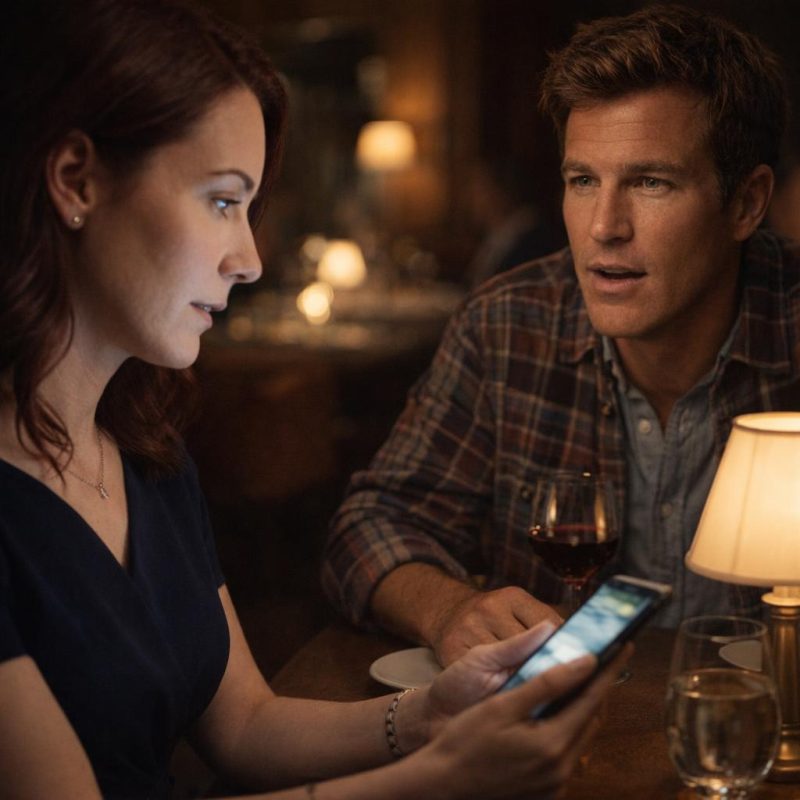 Image by RM AI
The Literal Message
Mark set down his menu when I said it. He repeated the phrase back to me slowly — *welcoming you home* — like he was testing the weight of each word. He said he'd assumed it was meant to feel intimate, the way some high-end places try to make you feel like a regular even on your first visit. I told him I'd thought the same thing at the time. But I asked him when he'd last seen another restaurant use the word *home* in a confirmation email, and he didn't have an answer for that. We sat with it for a moment. I said it out loud — that it was a strange word to choose, that *welcoming* and *home* together implied something more specific than just hospitality. Mark suggested maybe it was a translation thing, that the restaurant had European influences and maybe something got lost in the phrasing. It was a reasonable explanation. I wanted to accept it. But the word kept sitting wrong, the way a picture frame sits wrong on a wall even when you can't find the exact angle that's off. Mark looked at me across the table, and neither of us said anything more, and the question settled between us like something with actual weight.
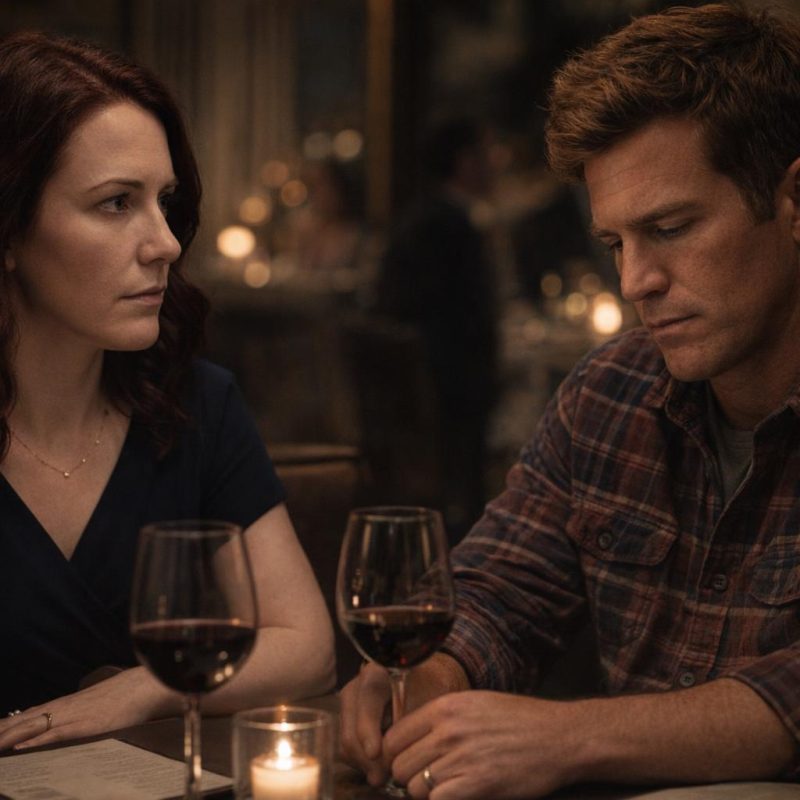 Image by RM AI
The Contest Theory
Mark is an optimist by nature — it's one of the things I love most about him and occasionally find maddening — so it didn't surprise me when he leaned forward and suggested maybe we'd won a contest. He said it with genuine enthusiasm, like the idea had just solved everything: maybe we'd entered some drawing months ago and forgotten about it, and this was the prize. A complimentary VIP evening at The Velvet Hearth. He pointed out that it would explain the extra courses, the special attention, all of it. I turned the theory over in my mind and tried to make it fit. Parts of it did. But a contest wouldn't explain Emma's face when I'd asked if everything was okay. It wouldn't explain the way Thomas's formality felt less like hospitality and more like instruction. And it couldn't touch what I'd overheard near the kitchen — something in Lydia's tone that I still hadn't found a way to bring up with Mark, that I was carrying alone at this table. I didn't say any of that. I just nodded slowly and let his theory sit there between us, and he seemed relieved that I wasn't pushing back. But the hollow feeling in my chest had nothing to do with the food, and Mark's explanation left it exactly where it was.
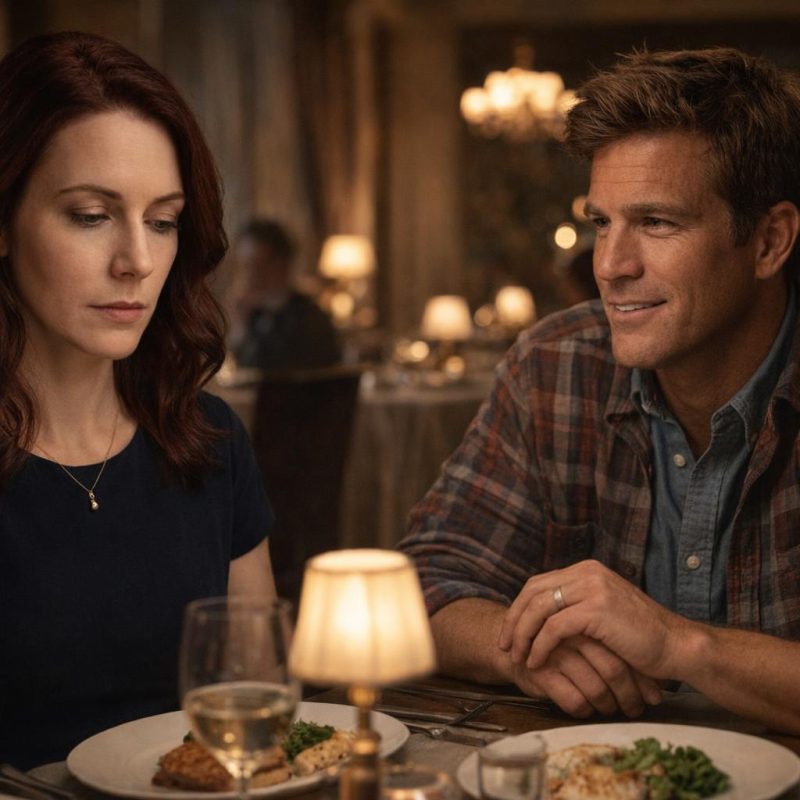 Image by RM AI
The Chef's Visit
We were debating whether to order dessert when a man in chef's whites came through the kitchen door and walked directly toward our table. Not toward the room in general — toward us, with the kind of purposeful stride that doesn't leave room for ambiguity. He introduced himself as the head chef and asked if everything had been to our satisfaction. Mark straightened in his chair and thanked him with genuine warmth, the way Mark thanks everyone — like he means it, because he does. The chef nodded at Mark and then turned to me specifically and asked if the flavors had suited my palate, using that exact phrase, *suited my palate*, like he'd thought about how to ask it. I said yes, everything had been extraordinary, because it had. He said he'd wanted to ensure the evening was special. I glanced around the VIP section while he spoke — at the other tables, the other guests — and he hadn't stopped anywhere else. Just us. Mark was beaming. I kept my expression pleasant and my hands folded in my lap, and I watched the chef give a slight, formal bow before he turned and walked back through the kitchen door.
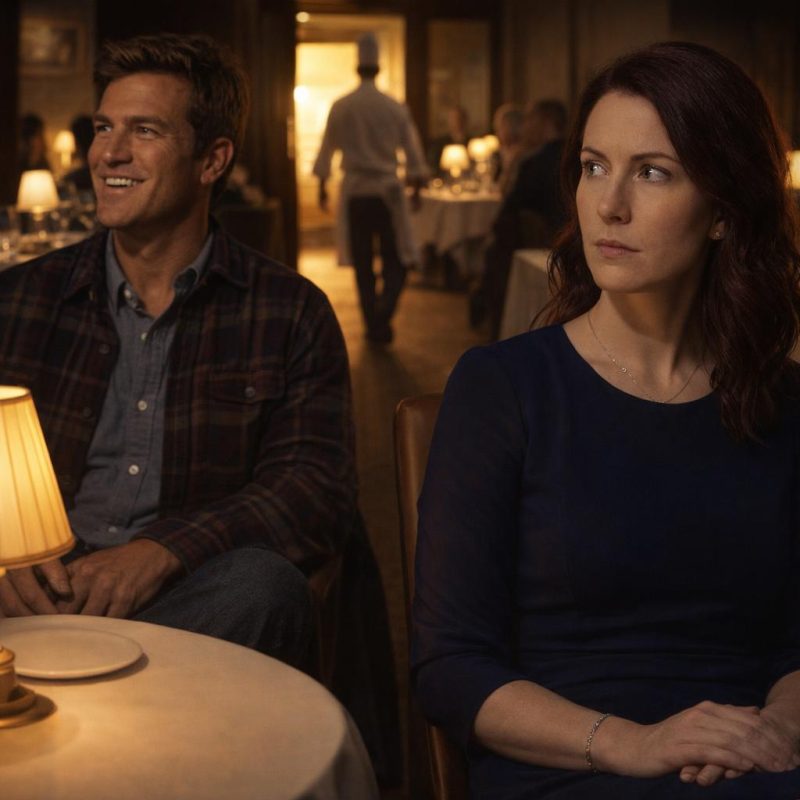 Image by RM AI
The Handwritten Note
Thomas arrived with the dessert menus presented with his usual careful flourish, one placed before each of us with both hands. I opened mine and a small card slipped from between the pages — heavy cardstock, the kind that has a texture you notice, with handwriting in dark ink that was deliberate and unhurried. I read it once, then read it again. I passed it across the table to Mark without saying anything. He took it and his eyebrows drew together as he read. He looked up at me and then back down at the card. He asked, quietly, whether he thought other guests had received something similar. I glanced around the room — at the other tables in the VIP section, the other menus sitting open — and saw nothing like it anywhere. Thomas stood at a respectful distance, hands clasped, expression neutral. The word *honored* snagged in my mind and wouldn't let go — it wasn't the word a restaurant used for a paying customer, it was the word you used for someone whose presence meant something beyond a reservation. I tucked the card into my purse. The note read: *Welcome to The Velvet Hearth — we're honored by your presence*.
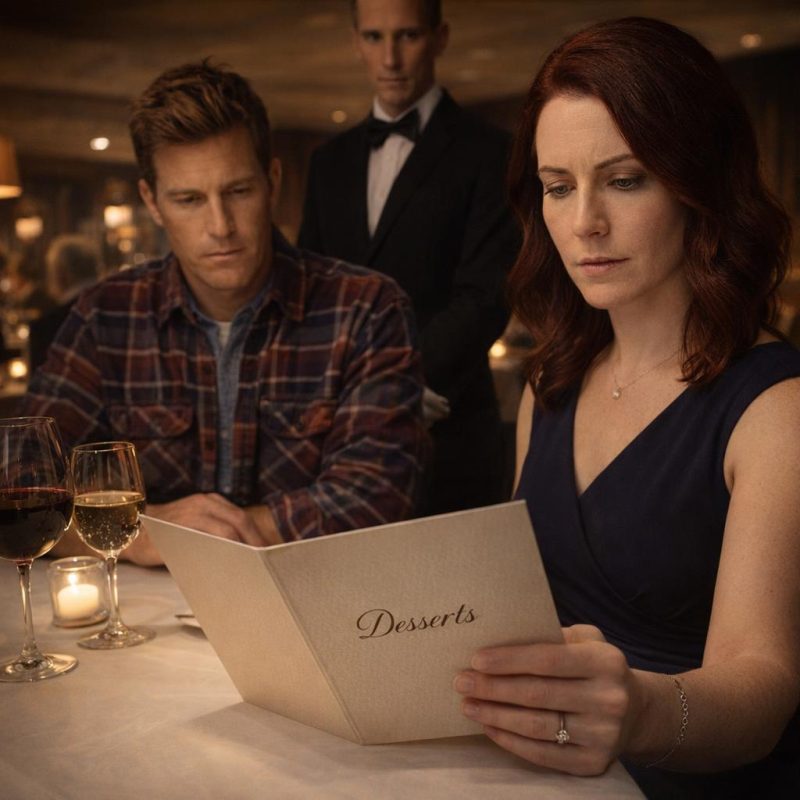 Image by RM AI
The Escape
I set the dessert menu down and pressed my palms flat against the table, just for a second, just to feel something solid. Mark was saying something about the chocolate soufflé, his voice warm and easy, and I nodded like I was following along. But I wasn't. I was back on that card — *honored by your presence* — and the chef appearing at our table, and Thomas with his careful formality, and the way Emma had looked at me from the moment we walked in, like she'd been expecting me specifically. Not us. Me. The booth felt smaller than it had ten minutes ago. I could hear my own heartbeat in a way that wasn't comfortable. I needed to think, and I couldn't think with Mark right there, hopeful and happy and completely unbothered by any of it, because his unbothered-ness made me feel like maybe I was losing my mind, and I didn't want to drag him into that spiral if I was wrong. I folded my napkin and set it beside my plate. I told him I needed to use the restroom and just get a moment to myself.
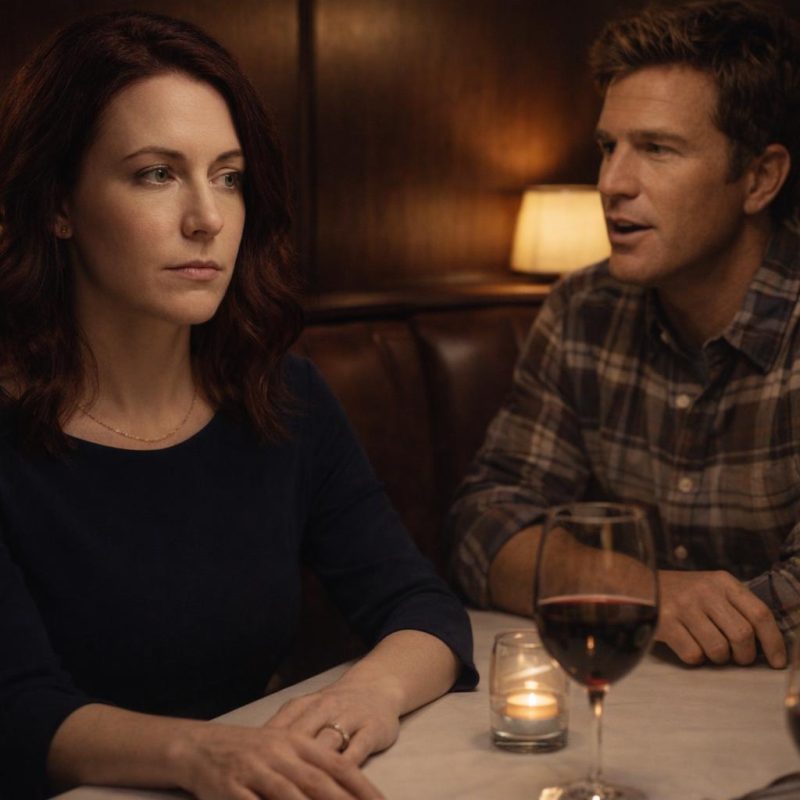 Image by RM AI
The Gallery Wall
The hallway beyond the dining room was a different world entirely — hushed and cool, the carpet thick enough to swallow my footsteps. I found the restroom, splashed cold water on my wrists, and stood at the sink for a moment just breathing. On my way back, I slowed down. One wall of the corridor was lined with framed photographs, floor to ceiling almost, the kind of gallery a place builds over decades when it's proud of what it's become. I walked along it slowly. Opening night, from the look of the fashions — women in shoulder pads, men in wide lapels. Awards ceremonies. A ribbon cutting. Celebrity guests I half-recognized from old magazine covers. Staff portraits from different eras, the uniforms evolving subtly across the years. The restaurant had always been like this, I could see that — always immaculate, always exclusive, always a place where the right people came to be seen. Some photos showed a woman I took to be the owner, always at the edge of the frame, always slightly turned or partially obscured. Nothing in any of those images explained a single thing about tonight. But the hallway itself was quiet in a way the dining room hadn't been, and I stood there in the stillness and let myself breathe.
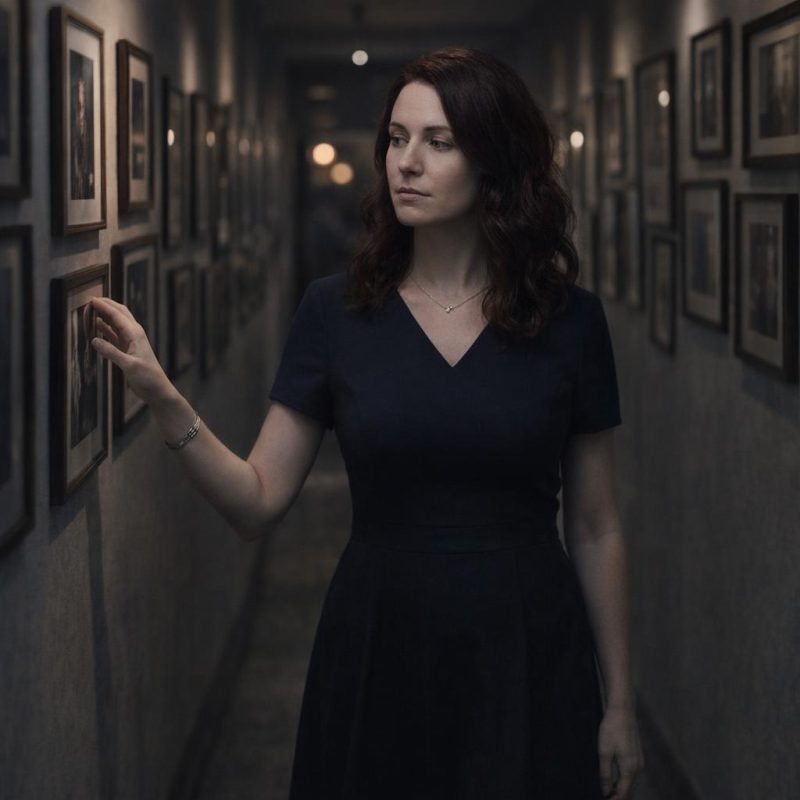 Image by RM AI
The Familiar Stranger
I almost walked past it. It was near the end of the gallery, a photograph from what looked like ten or twelve years ago — a culinary awards ceremony of some kind, judging by the podium and the formal gowns. The woman accepting the award was elegant, silver-haired even then, wearing something dark and expensive that caught the light. She was in profile, her face turned slightly toward the presenter, and I couldn't make out her features clearly. But something about the line of her jaw, the way she held her shoulders, the particular angle of her chin — something snagged in me the way a thread catches on a rough edge. I stood there longer than I meant to. I tried to place it. Had I seen her in a magazine? On television? The restaurant had been written up in local papers over the years; maybe I'd seen her photo in one of those. But the feeling wasn't the mild recognition of a public figure. It was something quieter and stranger than that, something that sat closer to the chest. I shook my head and told myself it was the stress of the evening making me see connections that weren't there. I turned away from the photograph. The feeling didn't turn away with me.
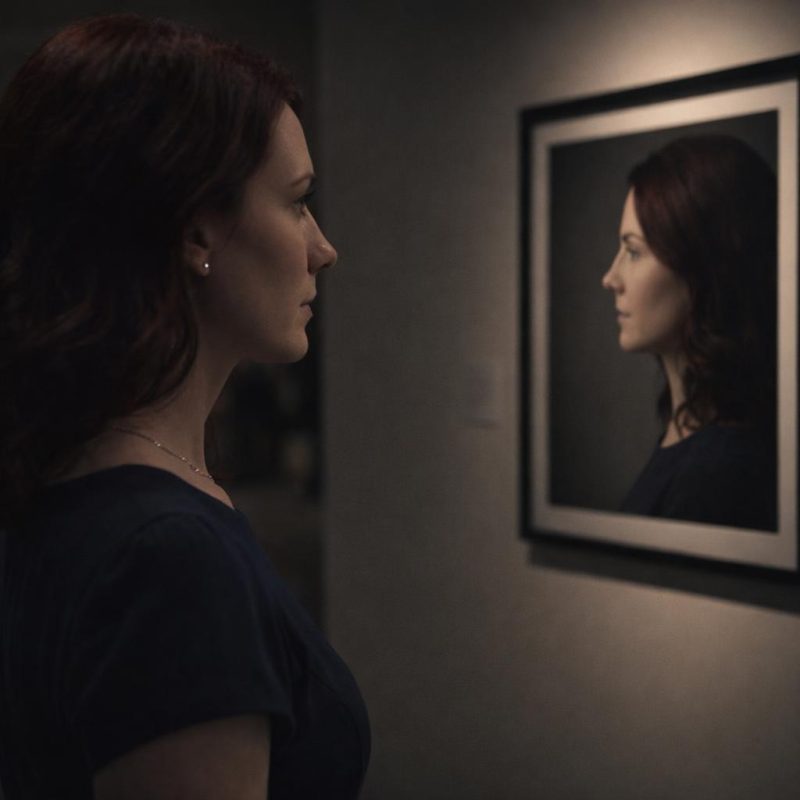 Image by RM AI
The Kitchen Whisper
The kitchen was somewhere behind a set of double doors near the end of the corridor, and I could hear the controlled chaos of it even from a distance — the clatter of pans, the quick back-and-forth of voices keeping things moving. I wasn't trying to listen. I was just walking, my heels quiet on the carpet, my mind still half-stuck on that photograph. The doors weren't fully closed. There was a gap of maybe six inches, and the voices came through clearly enough. Two of them, talking fast the way kitchen staff do when service is running. I caught fragments — something about a timing issue with a dessert course, something about a table in the main room. Then one voice said it plainly, without any particular weight, the way you'd say any ordinary thing: *the owner's special guest*. The other voice asked which table. I stopped walking. I wasn't sure I'd heard it right. Then the first voice answered, and the words landed in the quiet hallway like something dropped from a height: *table twelve*.
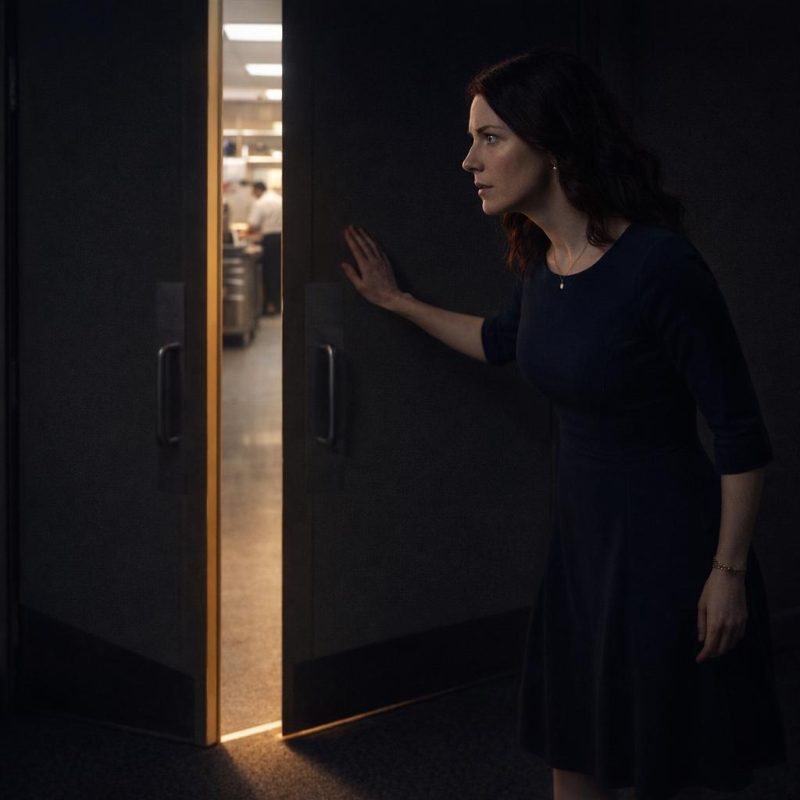 Image by RM AI
The Direct Question
I spotted Emma near the hostess stand, straightening a small arrangement of flowers with the focused calm of someone who always has something to do with her hands. I crossed the lobby toward her and kept my voice low when I reached her. I told her I'd overheard something near the kitchen — staff mentioning the owner's special guest — and that our table was table twelve. I asked her, as directly as I could manage, why the owner considered us special. Emma's professional smile didn't disappear exactly, but it shifted, the warmth pulling back behind something more careful. She looked at me for a moment before she answered. She said she wasn't at liberty to discuss the owner's private arrangements. I asked if we knew the owner somehow, if there was some connection I wasn't aware of. Her eyes moved briefly toward the dining room and then back to me. She said she was sorry, that she genuinely was, but that there were things she simply couldn't speak to. I could see it in her face — the discomfort of someone following instructions they hadn't written. She wanted to say more. Whatever was stopping her was something I couldn't see, and that absence sat between us like a closed door.
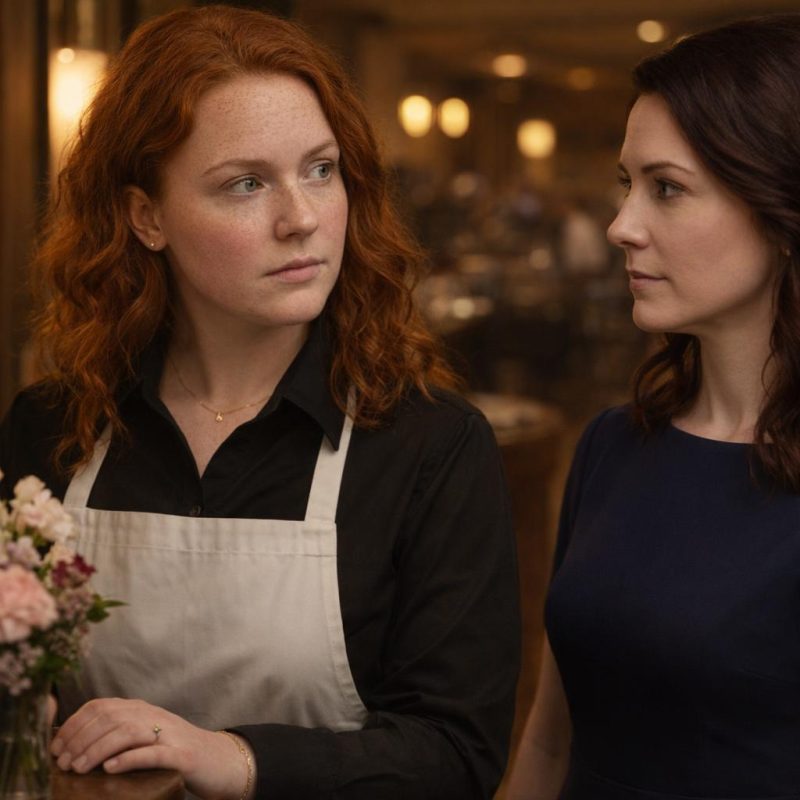 Image by RM AI
The Evasion
I tried once more. I asked her to please just tell me what was happening — not the official answer, just the truth. Emma's expression settled into something carefully neutral, the kind of neutral that takes practice. She said the restaurant valued all its guests equally. I told her, as evenly as I could, that that wasn't true — not tonight, not with the complimentary courses and the handwritten note and the chef coming to our table personally. She paused. She said that some evenings were simply more special than others. It was a polished answer. It was also completely empty. I asked what made this evening one of those. She apologized, said she needed to attend to other guests, and was already turning away before I could form another question. I watched her go — the graceful, unhurried walk of someone who had been trained never to appear to be fleeing. I stood at the edge of the lobby with the hum of the dining room behind me and the corridor's quiet ahead, and the space Emma had left felt wider than the physical distance between us.
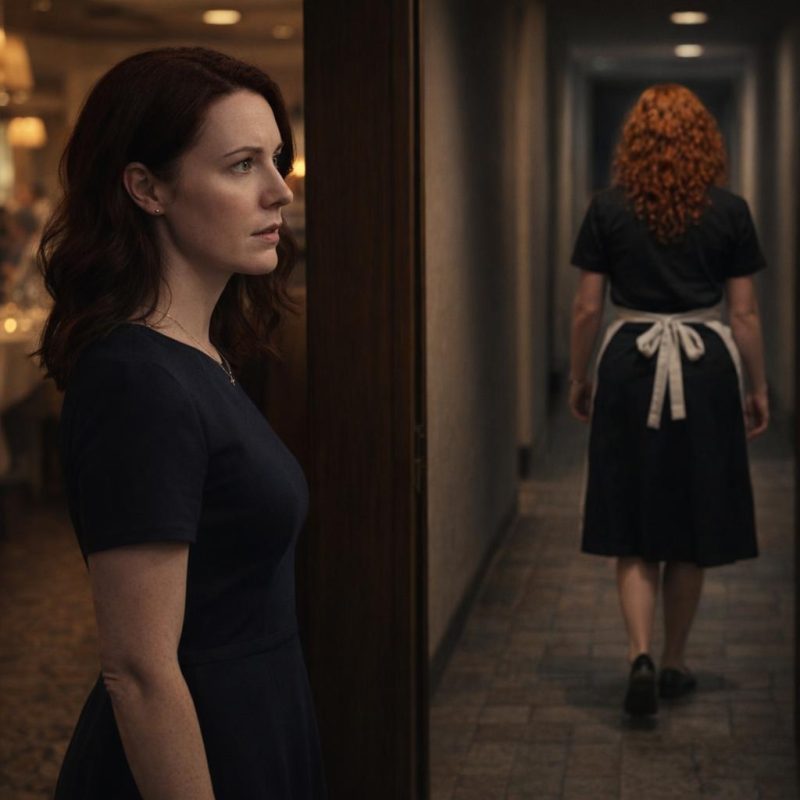 Image by RM AI
The Return to Mark
I took the long way back, past the gallery wall without looking at it this time, through the soft light of the corridor and back into the warmth of the dining room. Mark was at our table with a glass of red wine, turning it slowly by the stem the way he does when he's content. He looked up when he saw me coming and his face did that thing it does — just opened, easy and glad. He asked if I was feeling better and said I'd been gone a while. I told him I was fine, just needed a minute. I slid into my seat across from him. He had the dessert menu open and was already leaning toward the chocolate option, I could tell by the way he was reading it. He had no idea about the kitchen voices or Emma's careful non-answers or the photograph in the hallway that I still couldn't shake. He was just here, in this beautiful room, on this night we'd saved up for, and the happiness on his face was so uncomplicated and so real that I couldn't bring myself to put any of what I was carrying onto it. I looked at him across the candlelight, and the joy still sitting on his face made something in my chest pull tight.
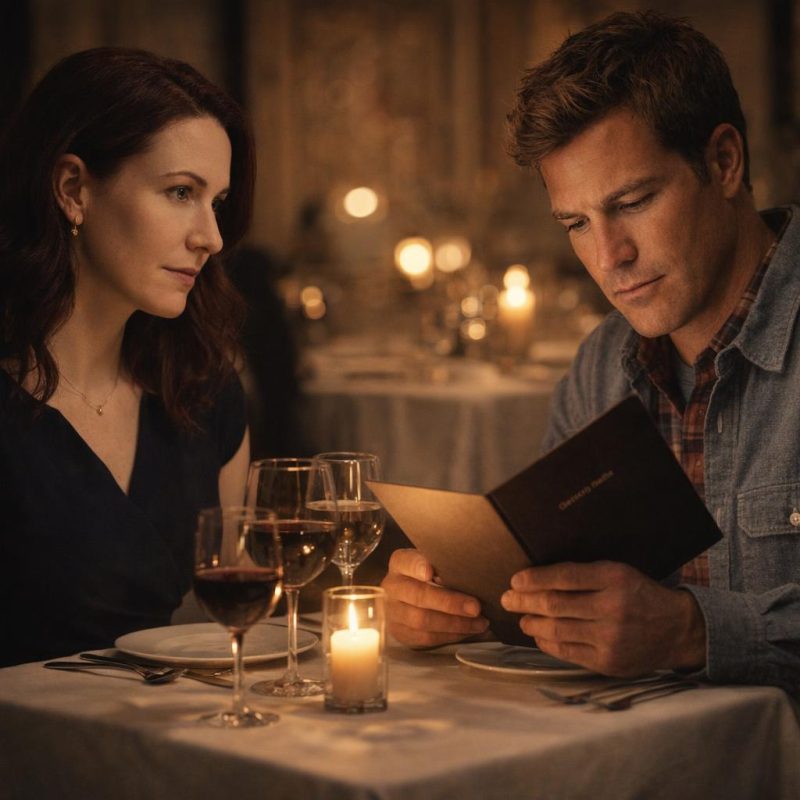 Image by RM AI
The Mental List
Mark was describing the dessert options with genuine enthusiasm, something about a salted caramel tart versus the soufflé, and I was nodding at what I hoped were the right moments. But my mind was somewhere else entirely. I was running through the evening from the beginning, laying each piece out in order. The confirmation email with its strange phrasing — *welcome you home*. Emma recognizing me at the door before I'd given my name. The best table in the house, waiting for us. Menus without prices. Course after course arriving that no other table seemed to receive. The chef, appearing personally. The handwritten card tucked into the dessert menu. And then the voices through the kitchen door: *the owner's special guest, table twelve*. I turned each one over, looking for the thing that connected them. Separately, any one of them might have been a coincidence or a policy or just the way a very expensive restaurant operated. But together — laid end to end like that — they didn't feel random. They felt like they were pointing at something. Or at someone. Mark said my name gently and asked if I was listening. I looked up and apologized. Every strange thing that had happened tonight had one thing in common: it had happened to me, not to us.
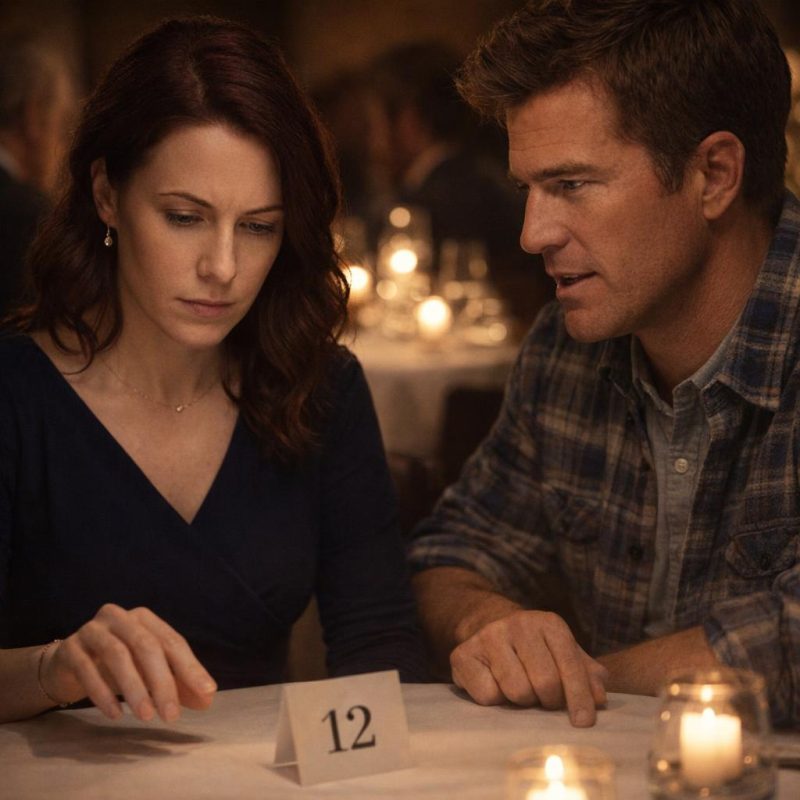 Image by RM AI
The Request
Thomas appeared at our table with his usual practiced composure, already drawing breath to ask about dessert, and I stopped him before he could get the words out. I asked, as calmly as I could manage, whether it would be possible to speak with the owner. Something shifted in his expression — just for a second, a small crack in the professional surface — before he smoothed it back into place. I asked if the owner was in the building. He paused, and the pause was long enough to be its own kind of answer. He said he couldn't say. Mark was looking at me with his brow furrowed, the way he does when he's trying to figure out what he's missed. He asked me quietly why I wanted to speak with the owner. I said I just wanted to thank them personally for the hospitality. Thomas offered to pass along our gratitude, his voice perfectly even, his hands folded in front of him. It was a gracious offer. It was also, I was fairly certain, exactly the kind of answer designed to close a door without appearing to. He said the owner was unavailable this evening.
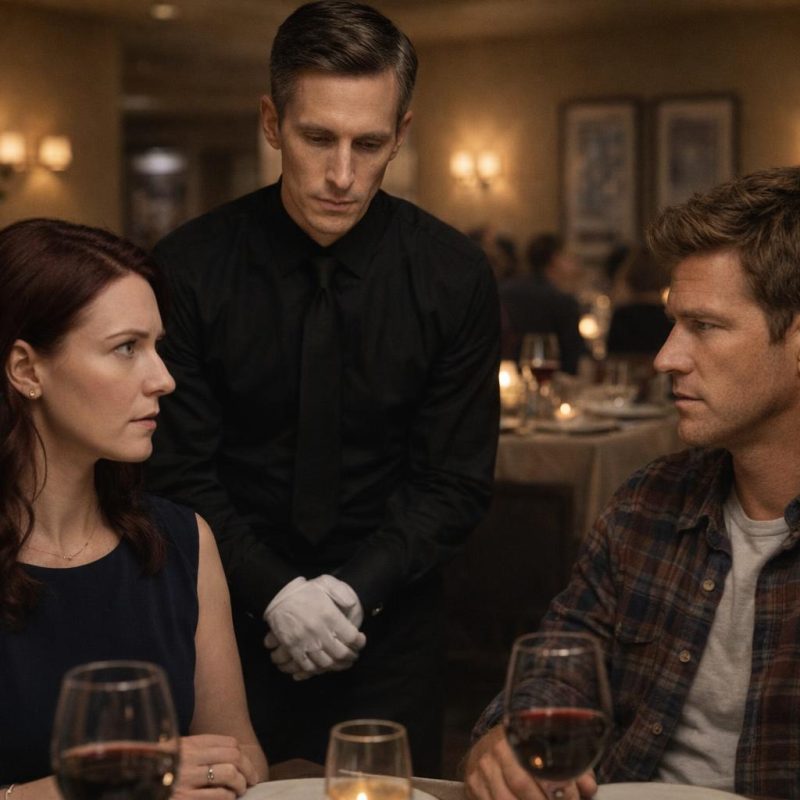 Image by RM AI
The Watched
Mark was working through his dessert with quiet contentment, making small appreciative sounds over the salted caramel tart, and I was trying to do the same. But something had shifted in the air around me, or maybe just in my own skin. The hair on the back of my neck rose slowly, the way it does when you become aware of something before you can name it. I had the distinct, uncomfortable feeling of being watched. I set my fork down and let my eyes move across the dining room. The other tables were absorbed in their own evenings — low conversations, the clink of glasses, candlelight catching on silverware. Nothing unusual. Lydia was no longer visible near the kitchen entrance. I looked toward the archway that led to the hallway, then to the kitchen doors, then back across the room. Nothing. The feeling didn't ease. If anything, it pressed in closer. I felt oddly exposed, like I was sitting under a spotlight that no one else could see. Mark hadn't noticed anything. He was describing the caramel notes in his dessert. I let my gaze travel slowly upward, past the wall sconces, past the framed photographs, toward the upper level of the restaurant.
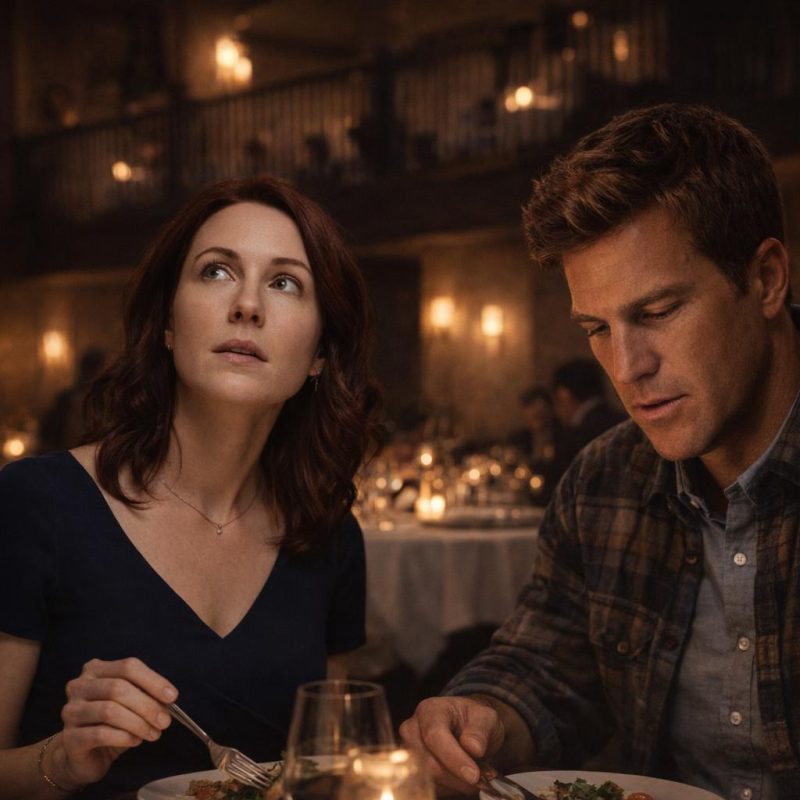 Image by RM AI
The Balcony
There was a balcony I hadn't noticed before — a narrow private gallery that curved above the far end of the dining room, half-hidden by the architectural detail of the ceiling. It was the kind of thing you'd miss if you weren't looking up. I was looking up now. A woman stood there in the shadow at the railing's edge, partially lit by the ambient glow rising from the dining room below. She was older, elegantly dressed, silver-haired, and she was completely still. Her hand rested on the railing. She wasn't scanning the room the way a manager might. She wasn't checking on service or surveying the floor. She was watching our table. I could feel it even from that distance, the specificity of her attention. I nudged Mark's arm and tilted my head upward. He looked. The woman didn't move. She didn't step back into the shadow or glance away the way someone caught staring usually does. She simply stayed where she was, her gaze fixed on us — on me, I thought, though I couldn't have said why I was so sure. The weight of it settled over me like something I couldn't quite name, and I sat with it, unable to look away from her.
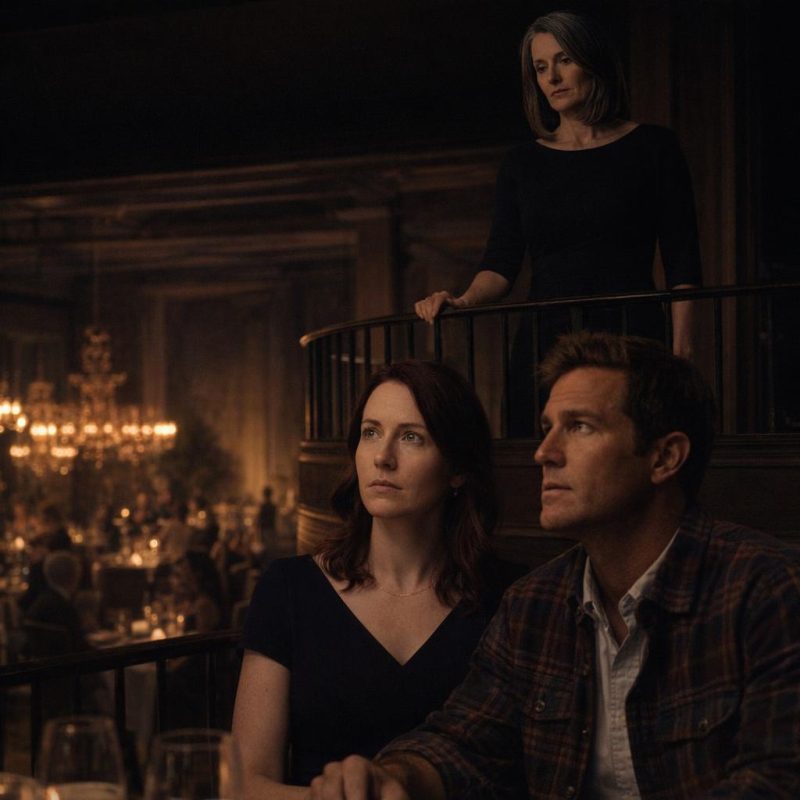 Image by RM AI
The Emotional Gaze
I couldn't pull my eyes from her. The dining room's light reached the balcony in a soft, indirect way, enough that I could make out the lines of her face when I looked carefully. She was watching me — not Mark, not the table in general, but me specifically. I was almost certain of it. Her hand on the railing wasn't resting anymore; her fingers were curled around it, gripping. Her posture was rigid in a way that didn't look like composure. It looked like effort. Her eyes caught the light from below, and there was a brightness to them that I couldn't quite account for. Not anger. Not the cold appraisal I'd gotten from Lydia all evening. This was something else entirely, something that sat in a different register — raw and close to the surface, like an emotion she was working hard to hold back. I didn't know what to do with that. Mark's voice came from beside me, low and curious, asking what I was looking at. I didn't answer right away. I was still trying to understand what I was seeing in her face, and the weight of her gaze pressed down on me in a way I couldn't shake.
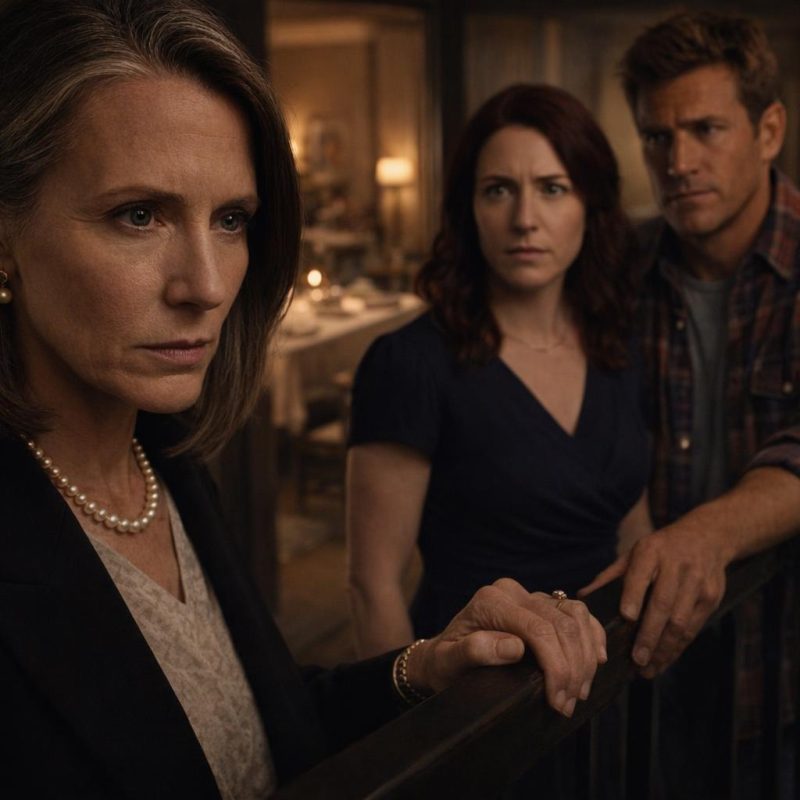 Image by RM AI
The Owner
The photographs. I thought of them suddenly — the framed images lining the hallway we'd walked through on the way to our table. Award ceremonies, ribbon cuttings, a woman shaking hands with someone official-looking. An elegant woman with silver hair. I turned back to the balcony. Even in the low light, even at this distance, the resemblance was there. The posture, the bearing, the way she held herself. This must be Victoria. The owner. The person Thomas had told me was unavailable this evening. The person whose kitchen staff had called me the owner's special guest. Mark had followed my gaze upward now, and I heard him make a small sound of surprise. He asked quietly if I knew her. I shook my head. I had never seen this woman before tonight — not in person, not anywhere I could place. And yet she was standing on that balcony watching us the way you watch something that matters to you deeply, with an intensity that didn't belong to a stranger observing random guests. I didn't understand it. I couldn't make it fit into any explanation that made sense. The certainty that she was Victoria, the owner, settled into me quietly and stayed there.
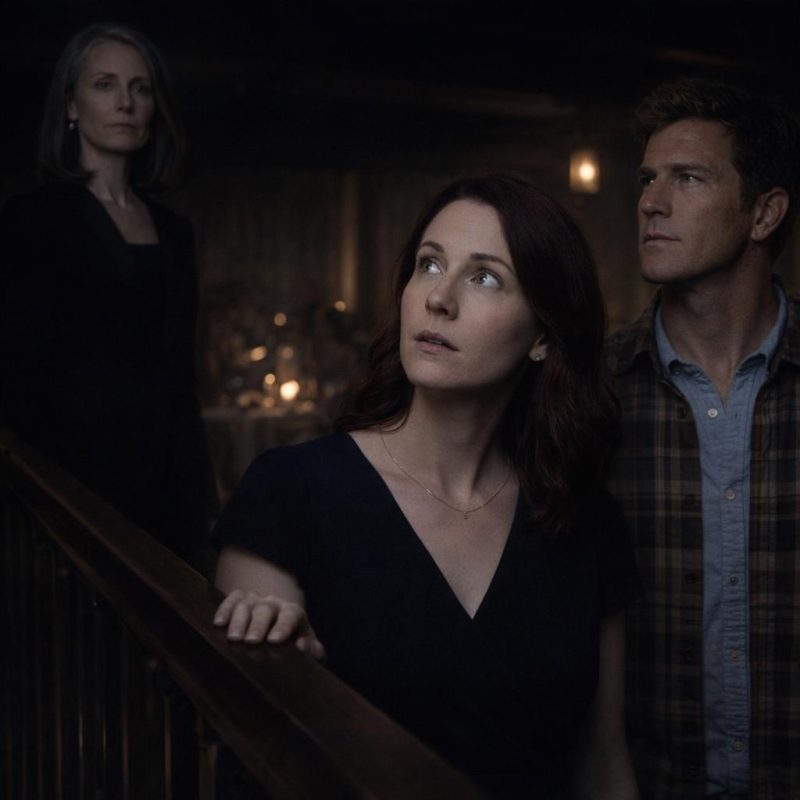 Image by RM AI
The Demand
Thomas reappeared at the edge of the dining room, moving toward us with his usual measured pace, and I turned to face him before he reached the table. His step didn't falter, but something in his face did — a tightening around the eyes, a fraction of a second where the professional mask slipped before he reassembled it. He said he would need to check whether speaking with the owner was possible. I told him I would wait. Mark straightened beside me and said, quietly but clearly, that we'd had a remarkable evening and we deserved to understand why. Thomas looked genuinely distressed in a way that seemed less about us and more about being caught between two sets of instructions he couldn't reconcile. He asked us, very politely, to please wait just a moment. Then he turned and walked quickly toward the kitchen, his posture still perfect but his pace faster than it had been all evening. Mark reached over and covered my hand with his. I looked at him and he gave me a small nod. I told Thomas I knew the owner was here and I wanted to speak with her now.
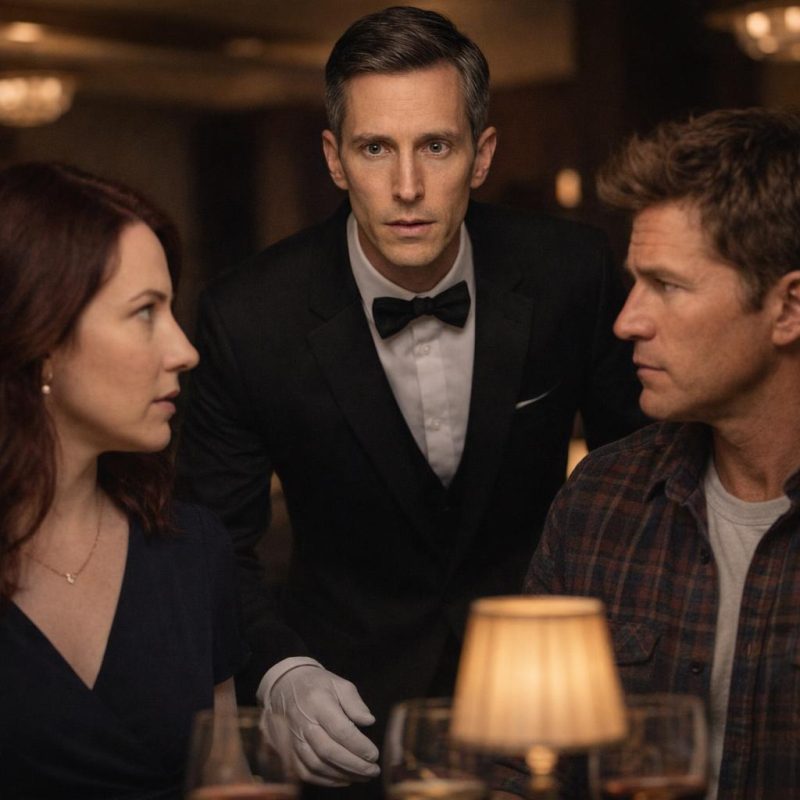 Image by RM AI
The Interception
Thomas never made it back to us. Lydia appeared first, moving across the dining room with the kind of smooth efficiency that made it look effortless, her charcoal suit immaculate, her expression arranged into something that resembled warmth. She said she understood there had been some confusion and that she was happy to address any concerns we might have. Her smile was perfectly placed. Her eyes were not. I told her I wanted to speak with the owner. The smile tightened at the corners, just slightly. She said the owner rarely met with guests during service — it was simply a matter of logistics, she hoped we understood. I said we were apparently special guests, and I watched something move through her expression that she controlled before it could fully surface. She said she would see what she could arrange. Mark leaned forward and asked what exactly was going on, his voice carrying the particular patience of someone who has been confused for a long time and is starting to run out of it. I kept my eyes on Lydia. She held my gaze for a moment, then looked away first, and the cold professionalism behind her careful smile was the only honest thing she'd offered us all evening.
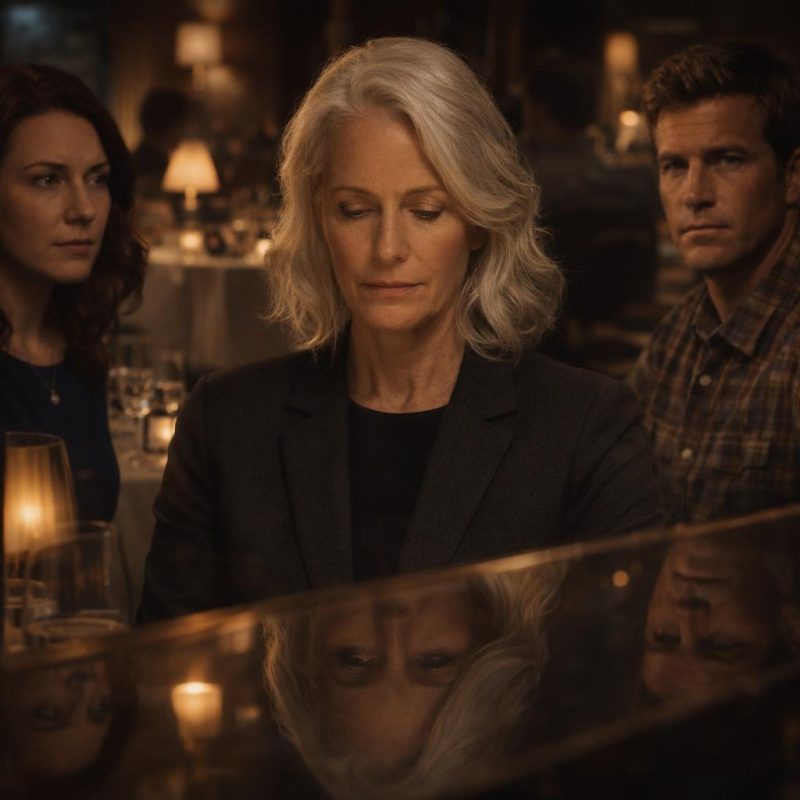 Image by RM AI
The Standoff
I asked Lydia directly why we were being treated as special guests when no other table had received anything close to what we'd been given all evening. She said the restaurant prided itself on exceptional service for every guest. I said that wasn't an answer. Her smile went a degree tighter. She said every guest's experience was unique and tailored to the occasion. I asked about the confirmation email — the phrasing that said the restaurant looked forward to welcoming us home. She said it was standard language, part of their correspondence template. I looked at her and she looked back at me, and we both knew that wasn't true. Mark's hand found my arm, a gentle pressure, and I could hear the concern in his voice when he asked if I was all right. I told him I was fine. Lydia said she would go speak with the owner personally and excused herself with a small, practiced inclination of her head. I watched her walk away — her pace unhurried, her posture unruffled — and I sat back in my chair. The evening had been full of questions and every answer I'd been given had been a door closing quietly in my face, and the tiredness of it had finally settled into my bones.
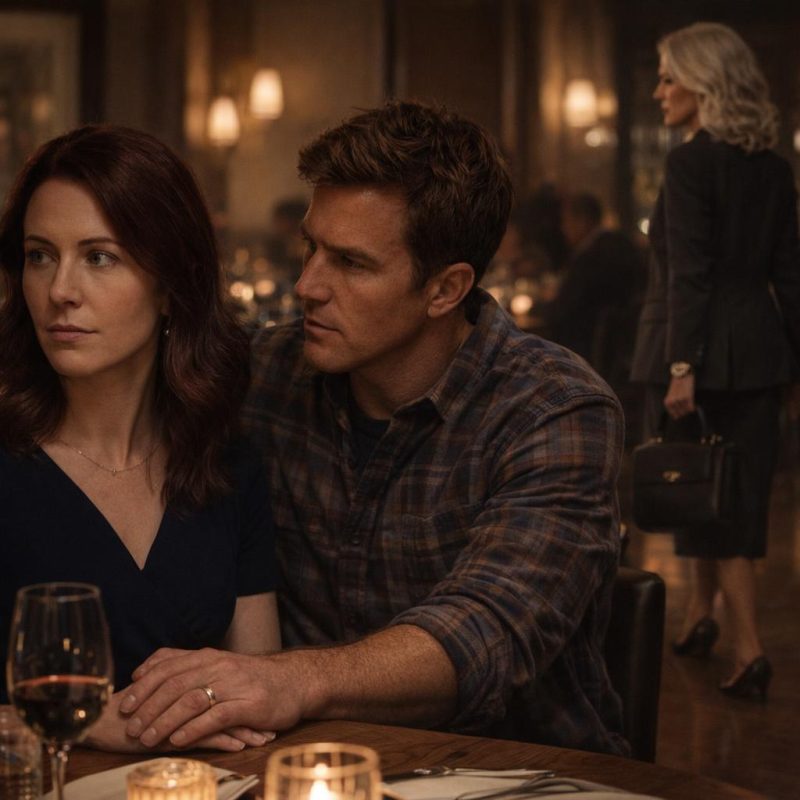 Image by RM AI
The Breaking Point
I couldn't do it anymore. That was the only thought I had left — clear and final, cutting through the exhaustion like something sharp. I set my napkin on the table and looked at Mark and said we needed to go. He blinked at me. The candle between us flickered and he asked what I meant. I said I meant now, that we needed to leave right now. He looked around the dining room, then back at me, and I could see him trying to find the right question. The evasions, the special treatment, Lydia's practiced contempt, the woman upstairs who had watched me like I was something she'd lost — all of it had been pressing down on me all evening and I had finally run out of room to carry it. My hands were flat on the tablecloth. I wasn't crying, but I was close. Mark leaned forward and said my name quietly, the way he does when he's worried, and asked what was wrong. I told him I couldn't explain it, not here, not in this room. He reached across the table and covered my hands with his and asked, gently, if we'd even paid yet. I hadn't thought about the bill. I hadn't thought about any of it. I just knew I needed to leave.
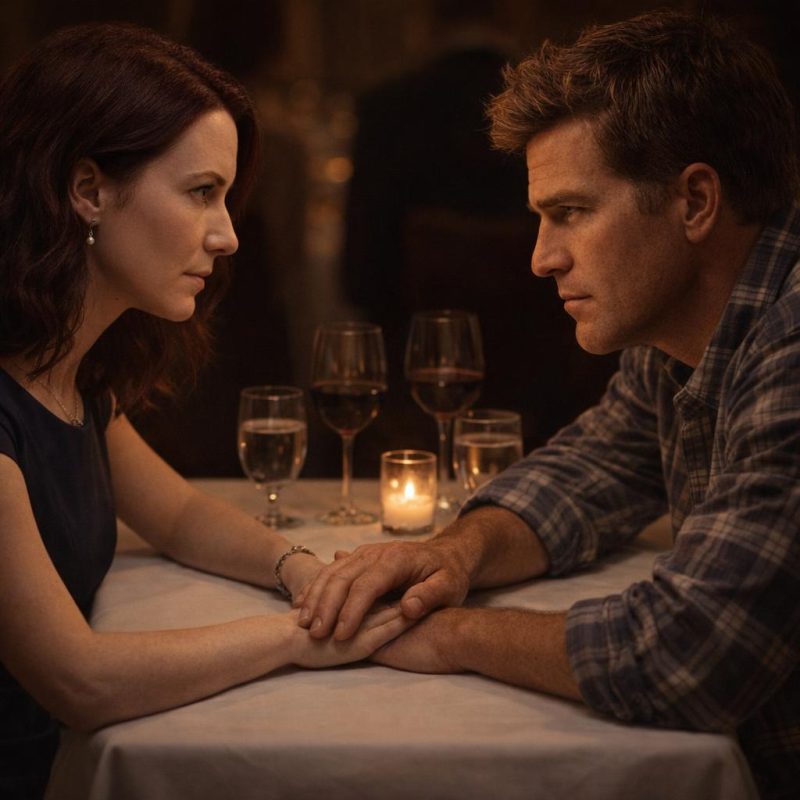 Image by RM AI
The Message
I was already pushing back my chair when Thomas appeared at the edge of the table. He moved differently than he had all evening — less like a performance, more like a person. He stopped and looked at me directly, which he hadn't really done before, and said that the owner had requested to speak with us privately. My hands went still on the armrests. Mark asked if that was a normal thing, a standard part of the evening. Thomas paused before answering, which told me everything about what his answer would be. He said it was highly unusual. He said Victoria would like to meet us in her office upstairs, if we were willing. The word 'willing' landed strangely — like he understood we might not be, like he was leaving a door open. Mark looked at me and I looked at him and neither of us spoke for a moment. I had wanted to leave thirty seconds ago. Part of me still did. But there was another part, the part that had been asking questions all night and getting nothing back, that understood I had come too far to walk out now without knowing why. Mark squeezed my hand and asked quietly what I wanted to do. Thomas stood waiting, patient and still, and the card he held out bore a single word: Victoria.
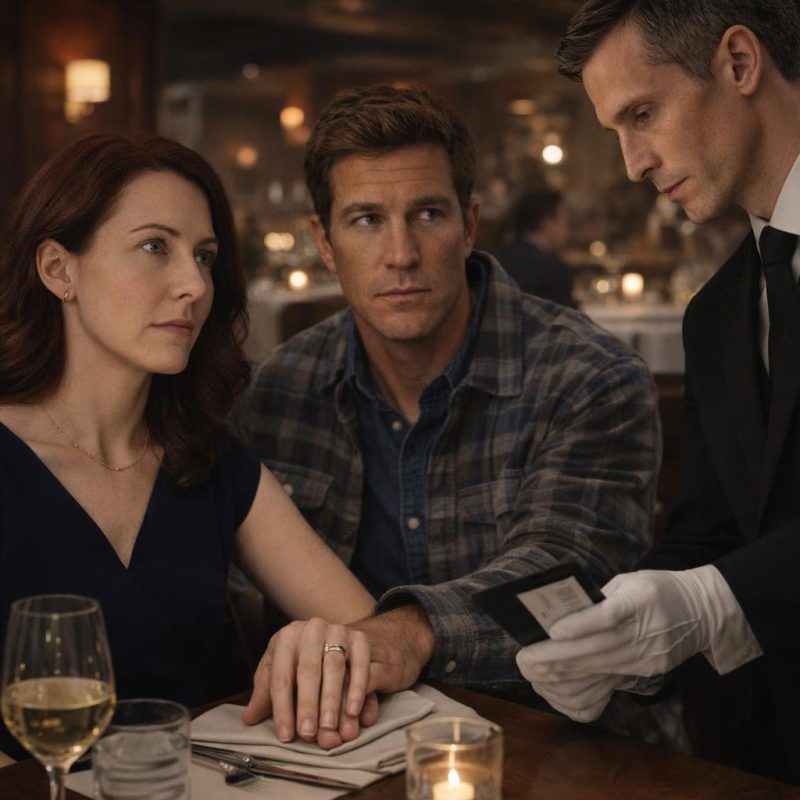 Image by RM AI
The Ascent
Thomas led us through a door near the back of the dining room marked Private in small brass letters. I hadn't noticed it before, though I supposed I hadn't been looking for it. Beyond it was a narrow staircase, elegant in a quieter way than the dining room — dark wood banister, a runner of deep burgundy carpet, photographs lining the wall going up. I didn't look at them closely. My legs felt unsteady and I kept my eyes on the steps. Mark walked just behind me with his hand resting lightly on my lower back, and that small pressure was the only thing that felt real. Thomas climbed ahead of us without speaking. At the top of the stairs was a hallway with thick carpet that swallowed the sound of our footsteps entirely, and the contrast with the noise of the dining room below was so complete it felt like stepping into a different building. Thomas stopped at a heavy wooden door at the end of the hall. He knocked softly, two quiet raps, and waited. A voice from inside said to come in. He opened the door and stepped aside, gesturing for us to enter, and I stood at the threshold for just a moment, the silence of that carpeted hallway pressing in around me like something held.
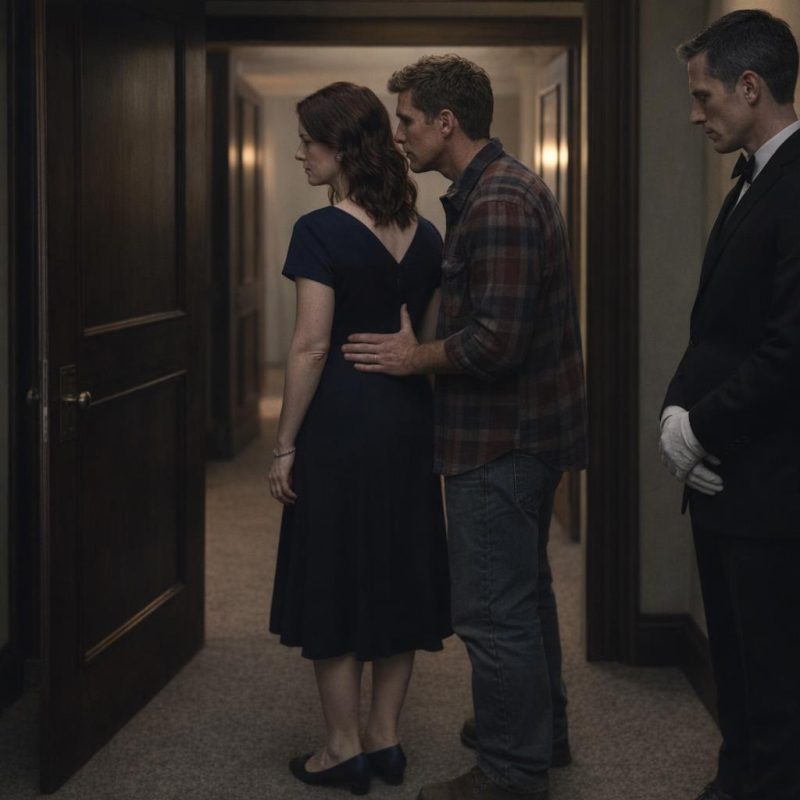 Image by RM AI
The Greeting
The office was nothing like the dining room. It was quieter, more personal — bookshelves along one wall, a desk with papers arranged in careful stacks, tall windows looking out over the city lights below. Victoria was standing near those windows when we entered, backlit, and for a moment I could only see her silhouette. Then she turned. I had seen her from across the dining room earlier in the evening, just a glimpse, but up close she was different. She was elegant in the way that comes from decades of practice — silver hair, a dark dress, jewelry that didn't announce itself. But her eyes were red-rimmed. That was the first thing I truly registered. Her eyes were red and her hands, when she clasped them in front of her, were not quite steady. She looked at me the way you look at something you've been waiting a very long time to see, and the intensity of it made me take a half-step back. Mark moved closer to my side without a word. Victoria's voice, when she spoke, came out thinner than I expected. She thanked us for coming. She said she was grateful we'd stayed. Then she gestured toward two chairs near the desk, and I watched her hand tremble as she pointed.
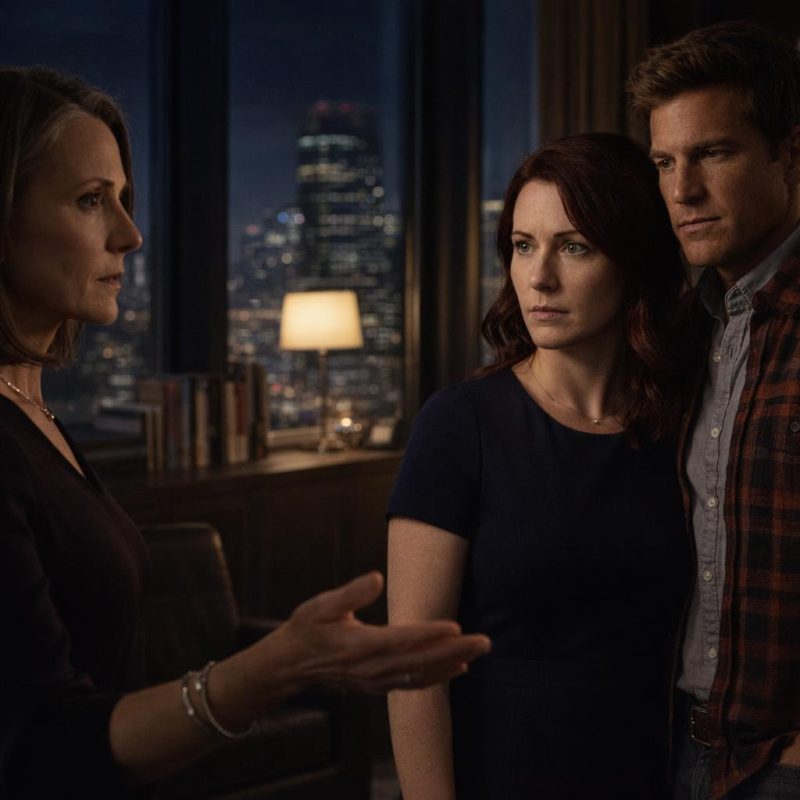 Image by RM AI
The Truth
Victoria sat down across from us and for a moment she didn't say anything at all. She pressed her hands together in her lap and looked at the desk and then looked at me, and I could see her trying to find a place to begin. I asked her what this was about. She took a breath that shook on the way in. She said she didn't know how to start, that she had rehearsed this moment many times and now that it was here, every version of it felt wrong. She said she had been searching for someone for a very long time. She said she had given a baby up for adoption thirty-six years ago. The number landed in my chest like something dropped from a height. Thirty-six years. My age exactly. I felt Mark go very still beside me. Victoria's voice broke on the next sentence — I heard it crack right down the middle — and she looked at me with those red-rimmed eyes and said the words I had not in any way prepared myself to hear. The room didn't tilt so much as rearrange itself around me, every object suddenly in a slightly different place than it had been a second before. Mark's hand found mine under the armrest and gripped it hard. Victoria said: I'm your mother.
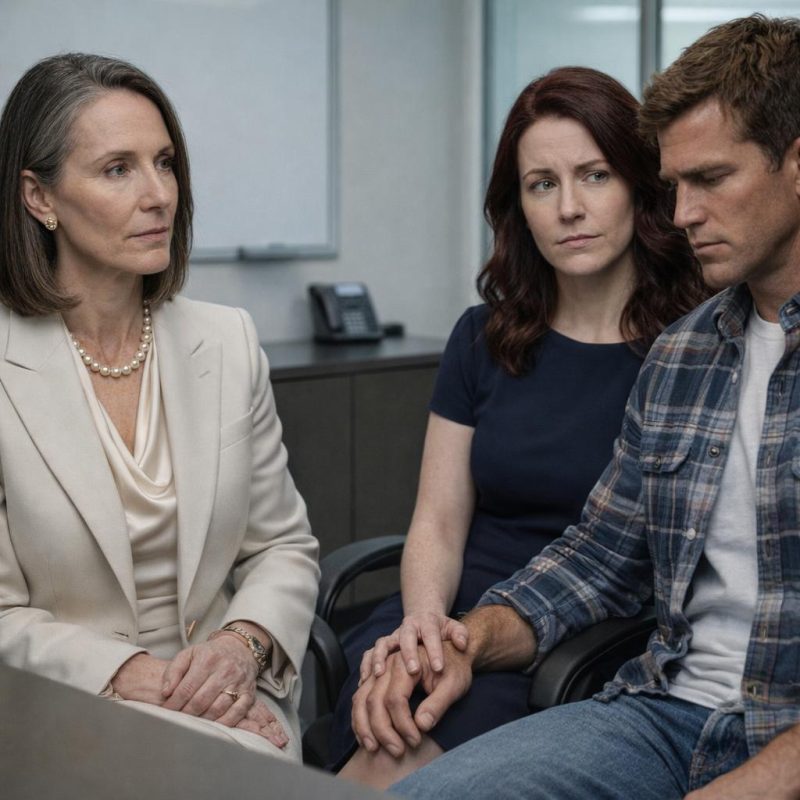 Image by RM AI
The Denial
My first instinct was to shake my head, and I did — just once, a small automatic motion, like trying to clear water from my ears. I said that wasn't possible. Victoria said she understood how overwhelming this was. I stood up. I didn't decide to; my body just did it, the chair scraping back against the carpet. I said she must be mistaken, that there had to be some confusion, that people didn't just — I didn't finish the sentence. Mark was on his feet beside me, his arm coming around my shoulders, steady and warm. I asked Victoria how she could possibly know something like this. She said she had known for six months. She said she had hired investigators, that it had taken years of searching before they found me. I heard my own voice go higher than I meant it to when I asked her to prove it. I said I needed her to show me something real, something I could hold in my hands, because words in a room weren't enough — not for this, not for something this size. Victoria looked at me for a long moment, and there was no offense in her expression, only a kind of exhausted recognition, like she had expected exactly this. She nodded once and turned toward her desk.
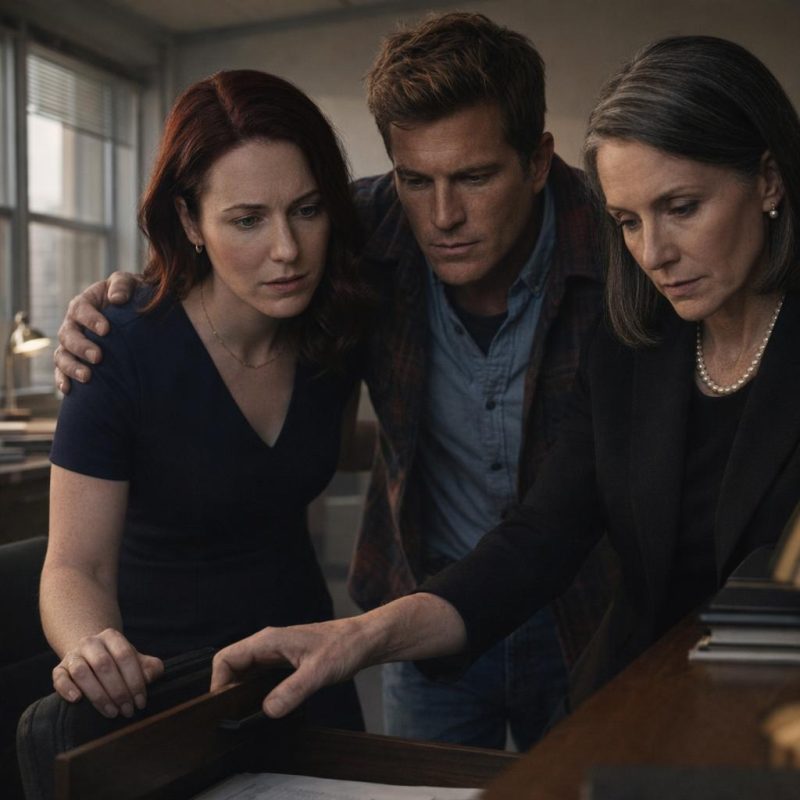 Image by RM AI
The Evidence
Victoria opened the bottom drawer of her desk and lifted out a folder, setting it on the surface between us with both hands, carefully, like it was something fragile. She opened it. The first page was an official document — adoption papers, the header printed in the formal typeface of a county courthouse. I saw my birth date before I saw anything else. It was right there in the third line, unmistakable. Mark made a sound beside me, low and quiet. Victoria turned to the photographs next — a newborn in a hospital bassinet, a tiny face, a white blanket. The baby wore a bracelet on one wrist, the kind hospitals use, printed with numbers and a date. Then Victoria reached into the desk drawer again and brought out a small hinged box. She opened it and held it toward me. Inside, on a square of white cotton, was a bracelet. Plastic, faded, the printing still legible — a date, a number, a hospital code. My date. My number. My knees went soft and Mark caught my elbow and guided me back into the chair. Victoria said she had kept it from the day they placed the bracelet in her hand at the hospital, that she had never been able to put it away. I sat with it resting in my open palm, too small for my hand now, and I could not speak.
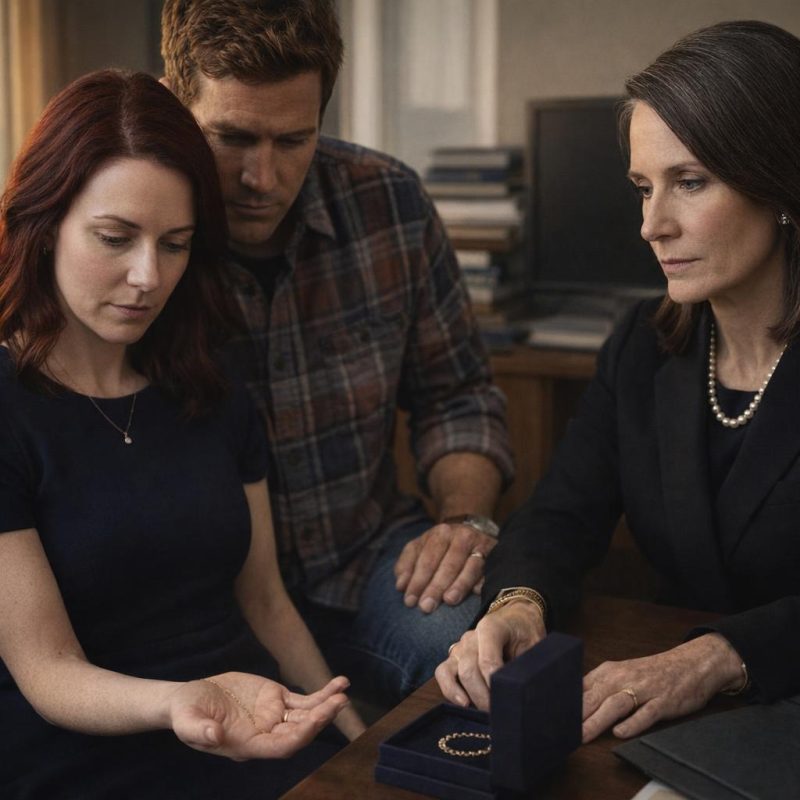 Image by RM AI
Welcome Home
After a long time I remembered the email. It surfaced through everything else the way small specific things do when your mind is trying to find something solid to hold. I asked Victoria about the confirmation message — the line that said the restaurant looked forward to welcoming us home. Victoria's face changed. The composure she had been carefully maintaining crumbled at the edges and she pressed her fingers to her mouth for a moment before she answered. She said she meant it literally. She said this restaurant, everything she had built here over twenty years, was meant to be part of what she left behind for me. She said she hadn't wanted to call me on the phone or send a letter — she had been afraid I would refuse to come, or that the shock of it would be too much without context. She had wanted me to see the place first, to feel welcomed in it, before she told me the truth. The VIP table, the menus, the courses we hadn't ordered — all of it had been her trying to give me something, the only way she knew how, before I knew who she was. Mark asked quietly how long she had known where I was. Victoria said six months, since the investigators found me. I sat holding the bracelet in my lap, and the words welcome you home settled over me like something I had no idea how to carry.
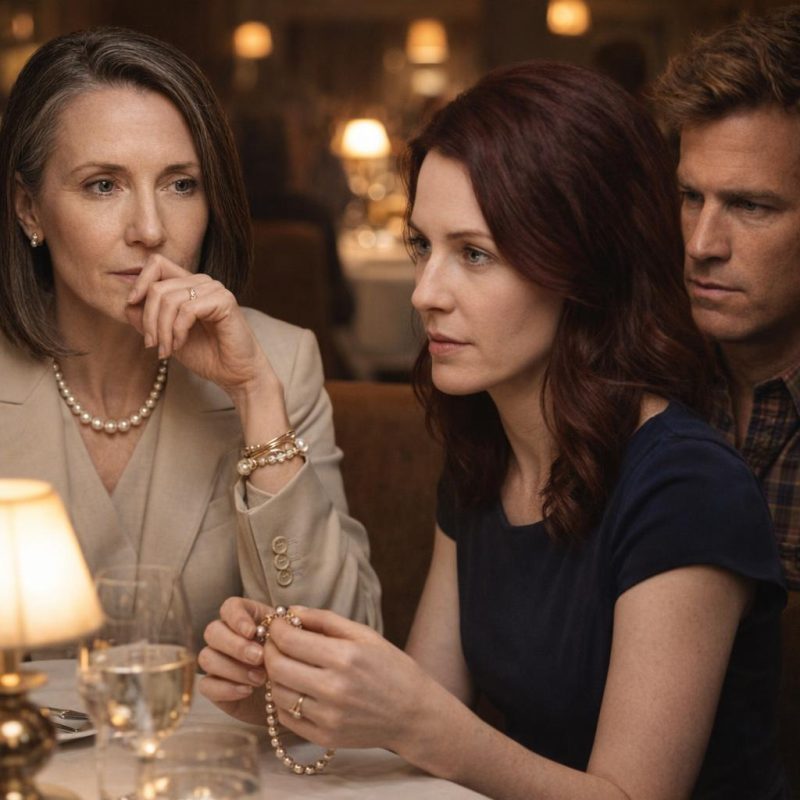 Image by RM AI
The Accusation
The bracelet was still warm in my hands when the anger arrived. It didn't creep in — it hit me all at once, like a wave I hadn't seen coming. I set the bracelet down on the table very carefully, because I didn't trust what my hands might do otherwise. Victoria was watching me with those sad, careful eyes, and I felt something inside me go tight and hot. I stood up again, my voice shaking before I even found the words. I told her that the menus, the table, the watching from across the room — all of it — had been a performance. That she had staged an entire evening around us without once telling us who she was or why we were really there. Victoria started to say she was afraid, that she hadn't known how else to reach me, and I cut her off. I told her that fear wasn't an excuse for what she'd done. That she had no right to manipulate us this way — to turn the most disorienting night of our lives into something she had scripted and controlled. Mark reached for my arm and I pulled away. Victoria's tears were falling freely now, and I felt my own eyes burning, but I didn't stop. She had no right.
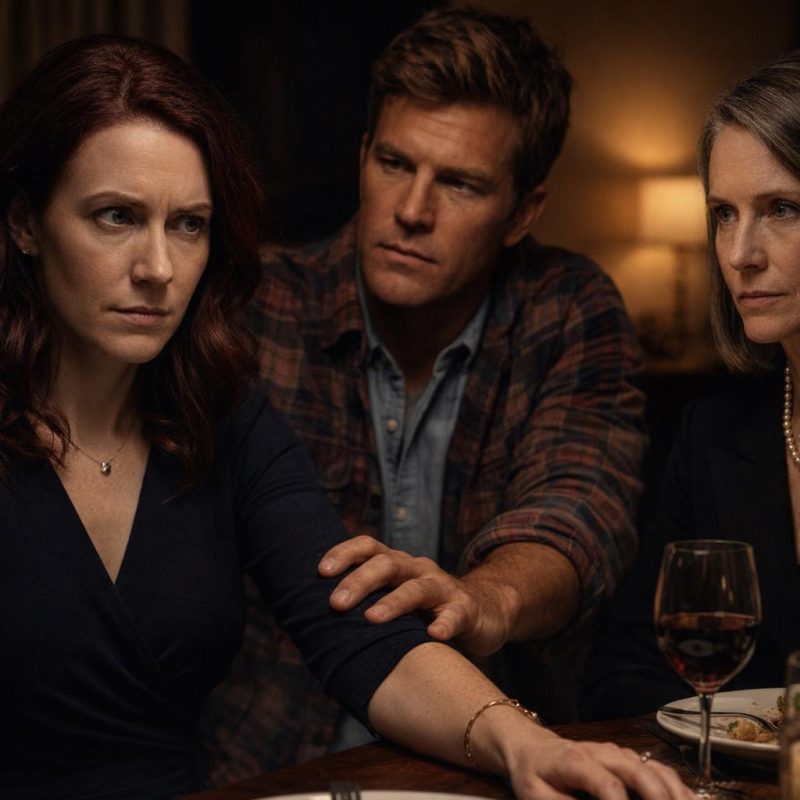 Image by RM AI
The Comfort
Mark stepped in front of me, not to stop me but to hold me, and I let him. His arms came around my shoulders and I pressed my face against his collar and shook. I could feel how steady he was — that particular stillness he gets when everything around us is falling apart — and I held onto it. Behind me I heard Victoria's breath catch, ragged and quiet. Mark asked her, over my head, to explain why she had done it this way. Victoria's voice came out barely above a whisper. She said she had thought about me every single day for thirty-six years. That when the investigators finally found me, she was terrified. She didn't know if I would want to meet her. She didn't know if I would hang up the phone or throw away a letter without reading it. She thought that if I came here first, if I saw what she had built, maybe I would be willing to stay long enough to listen. She said she just wanted to meet me. Even if it was only for one evening. Even if I walked out afterward and never came back. Mark's arms tightened around me, and I felt my anger shift — not disappear, but loosen at the edges — because the terror in her voice was something I recognized. It was the voice of someone who expected to be left.
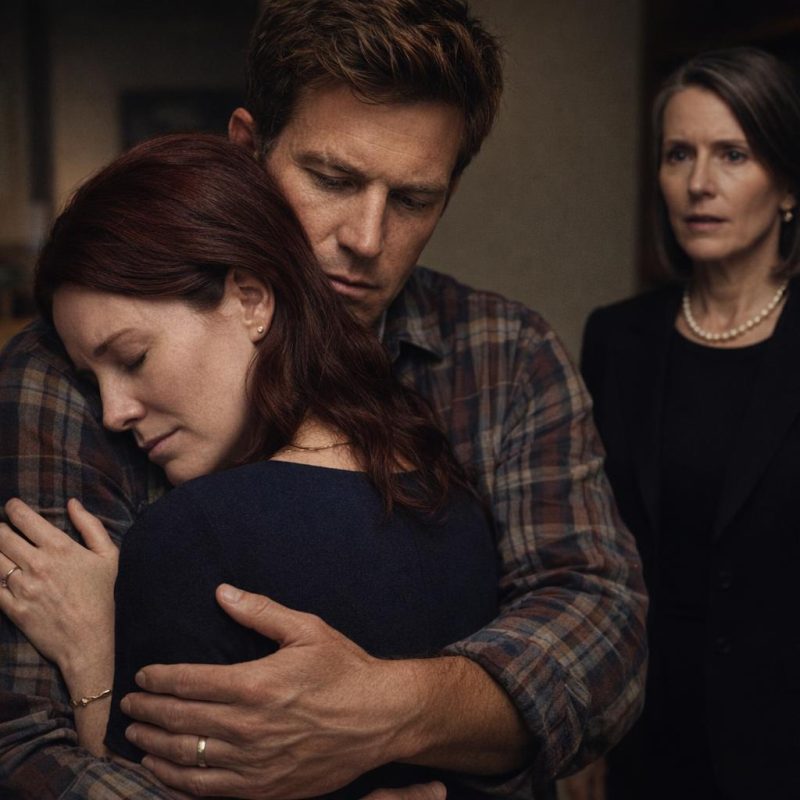 Image by RM AI
The Question
I pulled back from Mark's arms and wiped my face with the back of my hand. Victoria was watching me the way you watch something fragile that you're afraid to touch. I sat back down across from her, and Mark settled beside me, his hand finding my knee. I looked at Victoria for a long moment — at the silver hair and the careful posture and the eyes that had been tracking me all evening from across a crowded room — and I asked her the question I had been carrying my entire life. I asked her why. If she had thought about me every day for thirty-six years, if she had hired investigators and built a restaurant and planned an entire evening just to be near me, then why had she let me go in the first place. Victoria's face went pale. She pressed her hands flat against the table and nodded slowly, like she had been waiting for this question and dreading it in equal measure. She said she would tell me everything. She said she needed me to understand the circumstances. I sat with my hands clenched in my lap and said nothing. Mark didn't move. Victoria took a long, shaking breath, and the question I had carried since I was old enough to understand what adoption meant hung in the air between us, finally spoken out loud.
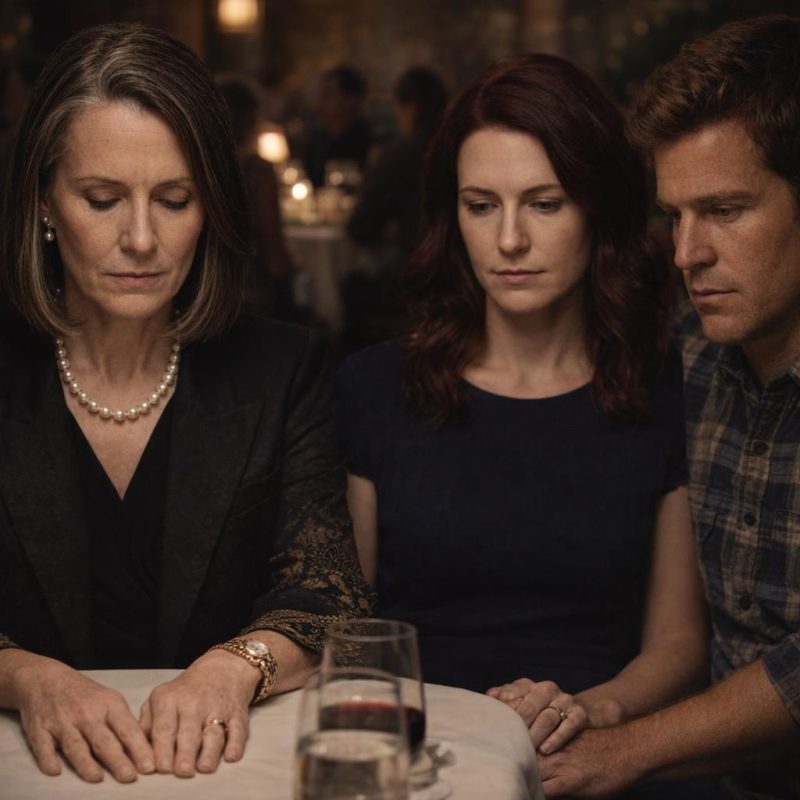 Image by RM AI
The Past
Victoria said she was twenty-four when she got pregnant. She was working two jobs — a diner on weekday mornings, a hotel kitchen on weekends — and she was barely keeping herself fed. My biological father was violent. She said it plainly, without softening it, and I watched her hands press harder against the table as she said it. He was controlling and unpredictable, and she had known, with the particular clarity that comes from fear, that she could not raise a child inside that situation. She had no family who could help. No savings. No safe place to go. She said she held me for two hours after I was born. Two hours, and then she signed the papers and walked out of the hospital alone. Six months later she left him. She spent years after that rebuilding herself from nothing — working her way up through restaurant kitchens, saving every dollar, learning the business from the ground up. As she talked I kept hearing echoes of my own life in her words. The doubles I had worked. The ramen dinners. The particular exhaustion of being one unexpected bill away from losing everything. I had lived inside a version of the story she was telling me, and sitting there listening to her, I felt something in my chest go very quiet.
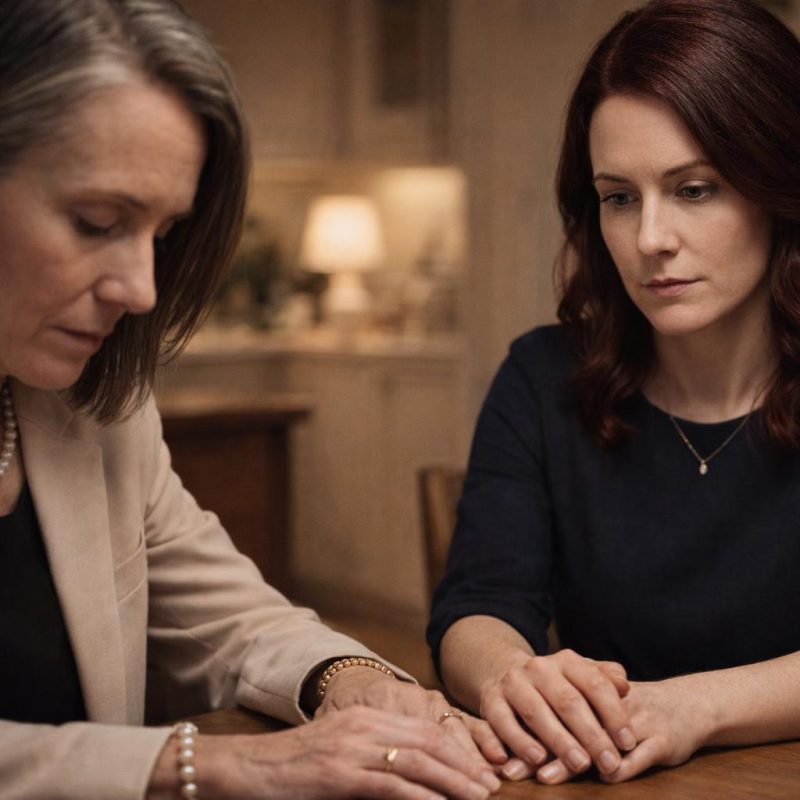 Image by RM AI
The Parallel Lives
I asked her how she had built all of this from that. From nothing, from two jobs and a violent man and walking out of a hospital alone. Victoria said it took fifteen years. She said she worked in other people's kitchens until she understood every part of the business, and then she saved obsessively — the way you save when you know what it feels like to have nothing — and she opened The Velvet Hearth fifteen years ago. She said she built it with me in mind. That every decision, every detail, every carefully chosen piece of it was meant to be something she could leave behind for the daughter she had given away. The priceless menus. The best table in the house. The welcome you home in the confirmation email. All of it had been for me, before I even knew she existed. I felt tears sliding down my face again and didn't bother wiping them away. Mark squeezed my hand and I squeezed back. I thought about the ramen dinners and the double shifts and the way Mark and I had counted out tip money on the kitchen table to make rent. I thought about how many times I had felt like I was failing at a life that other people seemed to manage without effort. Victoria had lived that same life. She had come out the other side of it and built something extraordinary, and she had done it thinking of me the whole time.
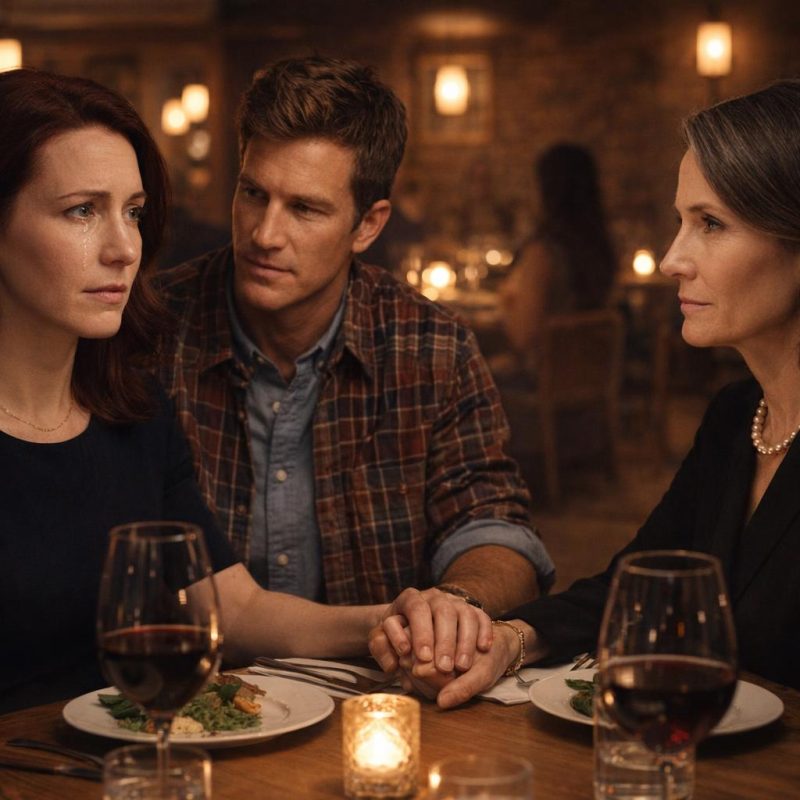 Image by RM AI
The Manager's Cruelty
I don't know exactly when it surfaced — somewhere between Victoria's story and the quiet that followed it — but Lydia's face came back to me. The curled lip when we walked in. The way her eyes had moved over Mark's hands like she was cataloguing something offensive. I had pushed it down all evening, told myself I was imagining it, told myself it didn't matter. But it did matter, and I was done pretending otherwise. I asked Victoria why, if she had wanted us here, if she had told her staff to treat us as honored guests, Lydia had spent the entire evening looking at us like we didn't belong. Victoria's expression shifted — confusion first, then something sharper. She asked me what I meant. So I told her. I told her about the stares and the curled lip and the way Lydia had spoken to Thomas near the manager's station when she thought no one was listening. I told her what I had overheard — the word trash, the comment about Mark's hands being filthy, the crack about a soup kitchen for the lucky. Victoria stood up so fast her chair scraped back against the floor. Her face had gone white. She said she had given Lydia explicit instructions to treat us as honored guests. Mark looked at me, his voice low and careful, and asked if I had heard that correctly. I told him I had heard every word.
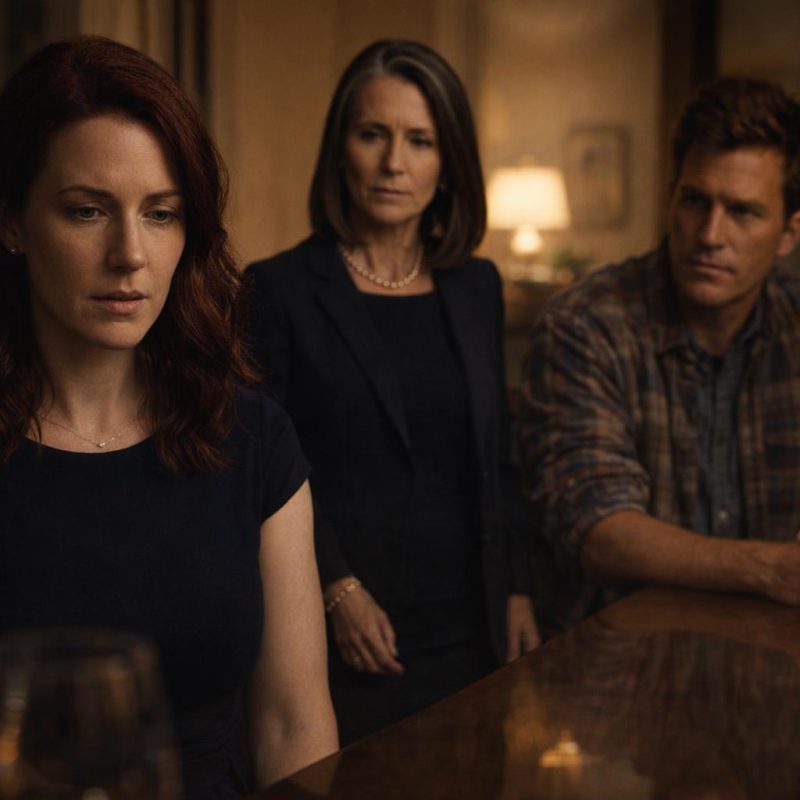 Image by RM AI
The Confrontation
Victoria picked up her phone without sitting back down. She spoke to someone downstairs in a voice I hadn't heard from her yet — flat and absolute, no warmth in it at all. She said to send Lydia up immediately. Then she set the phone down and we waited. The silence in that office was the kind that has weight to it. Mark sat very still beside me. I watched the door. When the knock came, Lydia entered with her professional smile already in place, her posture perfect, her charcoal suit without a wrinkle. The smile lasted about two seconds. It dissolved the moment she saw Mark and me sitting there, and something moved across her face that she couldn't quite control. Victoria asked her, in that same flat voice, to repeat what she had said about the guests at table seven this evening. Lydia's color drained. Victoria didn't wait. She quoted it back — the trash comment, the filthy hands, the soup kitchen line — each phrase landing in the room like something dropped from a height. Lydia straightened and said she had been protecting the restaurant's reputation, that not every reservation reflected the standard the establishment maintained. Victoria cut her off mid-sentence. Then Victoria said something that stopped all of us — she said that Lydia had spoken that way about her daughter. Lydia's mouth closed. Her eyes moved to me, and the composure she had worn all evening cracked open completely.
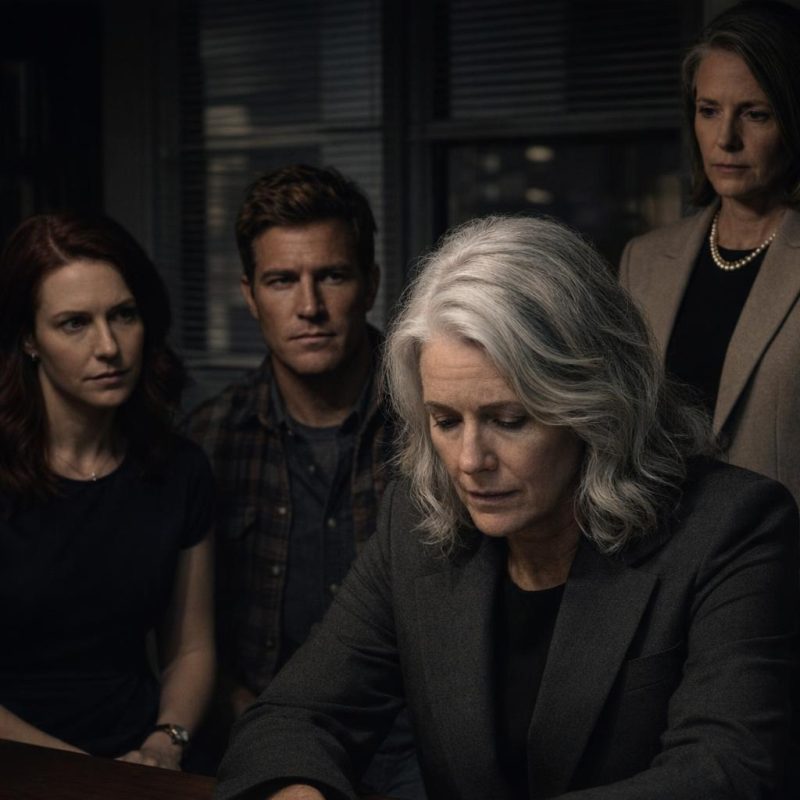 Image by RM AI
The Firing
Victoria told Lydia she was fired, effective immediately. She said it the way you close a door — final, without drama, without room for negotiation. Lydia's mouth opened. She said she had managed this restaurant for ten years. She said she had built the front-of-house culture from nothing, that the reputation Victoria was so proud of existed because of her work. Victoria looked at her without expression and said she didn't care. She said no one treated her daughter with contempt in her restaurant or anywhere else. The word daughter landed in the room again, and this time I watched Lydia's eyes move to me with something new in them — not contempt, not the curled-lip dismissal from earlier in the evening, but a kind of stunned recalculation, like she was seeing me for the first time and understanding what that meant for her. Lydia tried once more. She said she was sorry, that she hadn't understood the situation. Victoria's expression didn't change. She told Lydia to collect her things and go. For a moment Lydia stood completely still. Then she turned, her shoulders rigid, her chin up, and walked out. The door clicked shut behind her. I sat in the chair with Mark's hand in mine, and I felt vindicated and hollowed out in equal measure, and I watched the closed door and waited to feel something cleaner than what I had.
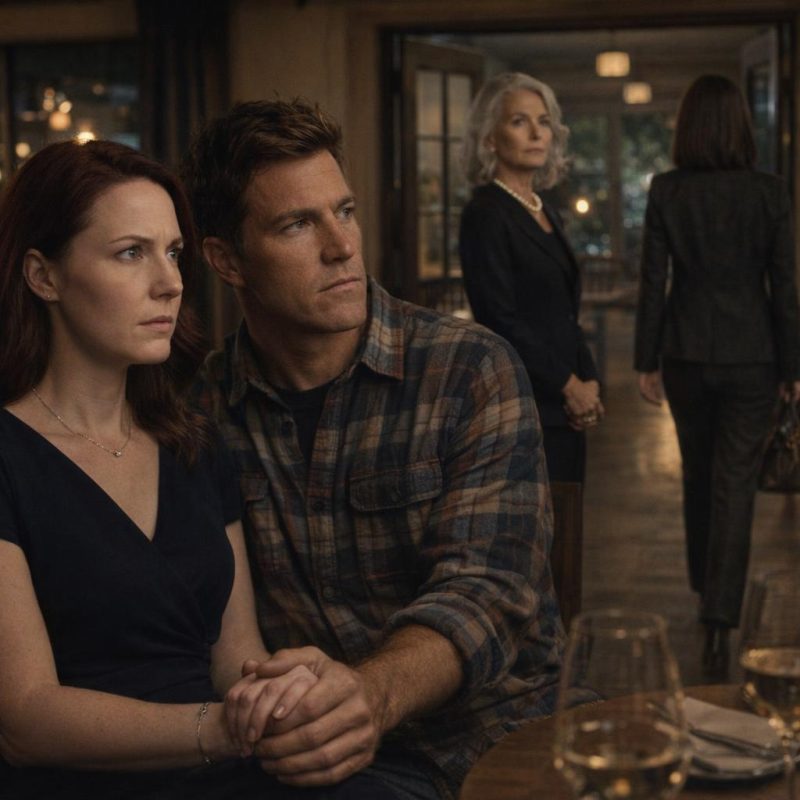 Image by RM AI
The Offer
After the door clicked shut behind Lydia, the office went very quiet. Victoria sat back down slowly, like the confrontation had cost her something she hadn't budgeted for. She looked exhausted in a way that had nothing to do with the hour. For a long moment none of us spoke. Then she folded her hands on the desk and looked at me — not the way she'd looked at me from across the dining room, careful and guarded, but directly, openly, like she was done managing the distance between us. She said she didn't expect anything from me. She said she had spent thirty-four years just wanting me to know I was wanted, that I was loved, that the choice she made had never stopped costing her. She said she understood if I needed to walk out of this room and never come back. And then she asked, quietly, if I would consider having a relationship with her. No pressure, she said. No expectations. Whatever I needed, whatever pace felt right. Mark's hand tightened around mine, steady and warm, and I looked at this woman across the desk — a stranger who shared my blood, who had built something beautiful while carrying something heavy — and I had absolutely no idea what to say. The question hung in the air between us, waiting.
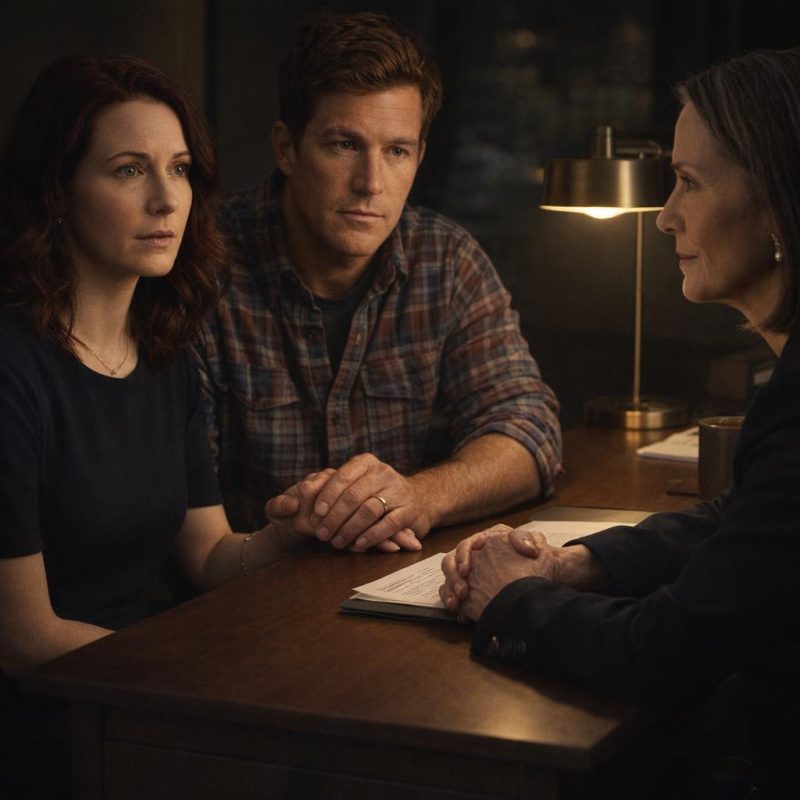 Image by RM AI
The Request for Time
I took a breath that came out shakier than I intended. I told Victoria I needed time. I said I was sorry, that I wasn't trying to be cruel, but that this was too much to hold in a single evening — the restaurant, Lydia, the bracelet, the papers, all of it. Victoria nodded before I even finished the sentence. She said she understood. She said she had waited thirty-four years and she could wait longer. Her eyes filled then, not dramatically, just quietly, the way water rises before it spills. She reached into her desk drawer and slid a card across to me — her personal number, handwritten on the back. She said I could call whenever I was ready. Or never, if that was what I decided. She said she would understand that too, even if it broke her heart. Mark told her we appreciated her honesty, and he meant it — I could hear it in his voice. I stood up on unsteady legs and nodded to her. She stood too, and I could see she wanted to reach for me, but she didn't. She held herself still and let me go. Walking out of that office, I felt the particular relief of a woman who had been given permission to breathe before she had to decide anything at all.
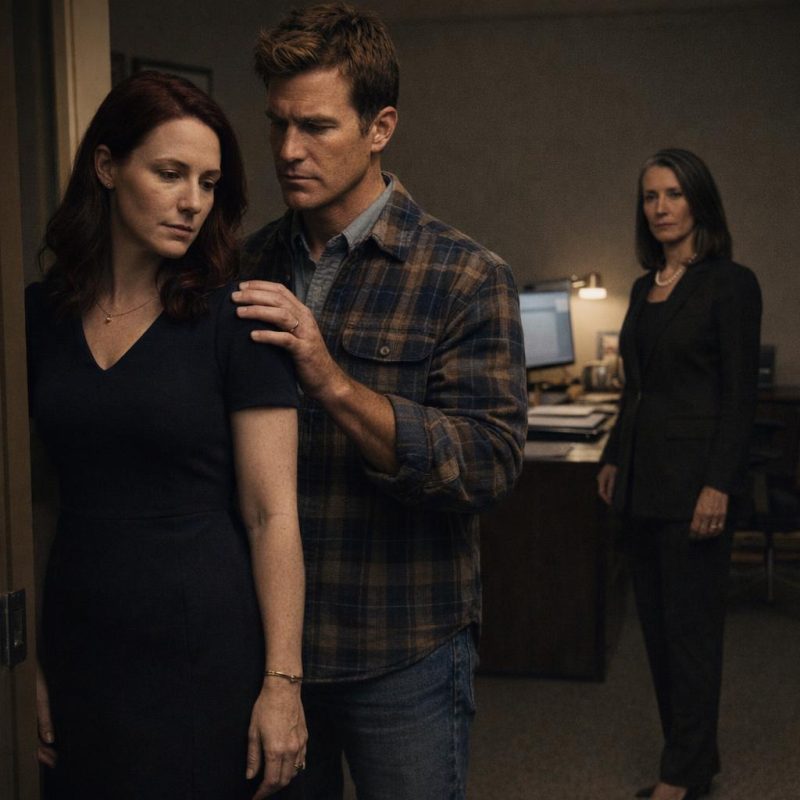 Image by RM AI
The Drive Home
We didn't say much walking to the car. Mark unlocked it and I got in and stared through the windshield at the restaurant's lit entrance while he started the engine. The city slid past in blurred streaks of orange and white as he drove, and I watched it without really seeing it. He asked how I was feeling somewhere around the third traffic light. I told him I didn't know, which was the most honest thing I'd said all night. He said that was fair. I told him about the hospital bracelet again — I needed to say it out loud one more time, to make it real — and about the adoption papers Victoria had kept all those years, the whole careful archive of a grief I hadn't known existed. Mark reached over and took my hand without a word. I said I thought I understood why she gave me up. I said that didn't mean I knew what to do with her now. He said I didn't have to figure that out tonight. We drove the rest of the way in silence, and it wasn't an uncomfortable silence — it was the kind that only exists between two people who have been through something together and don't need to fill it. His hand stayed over mine the whole way home.
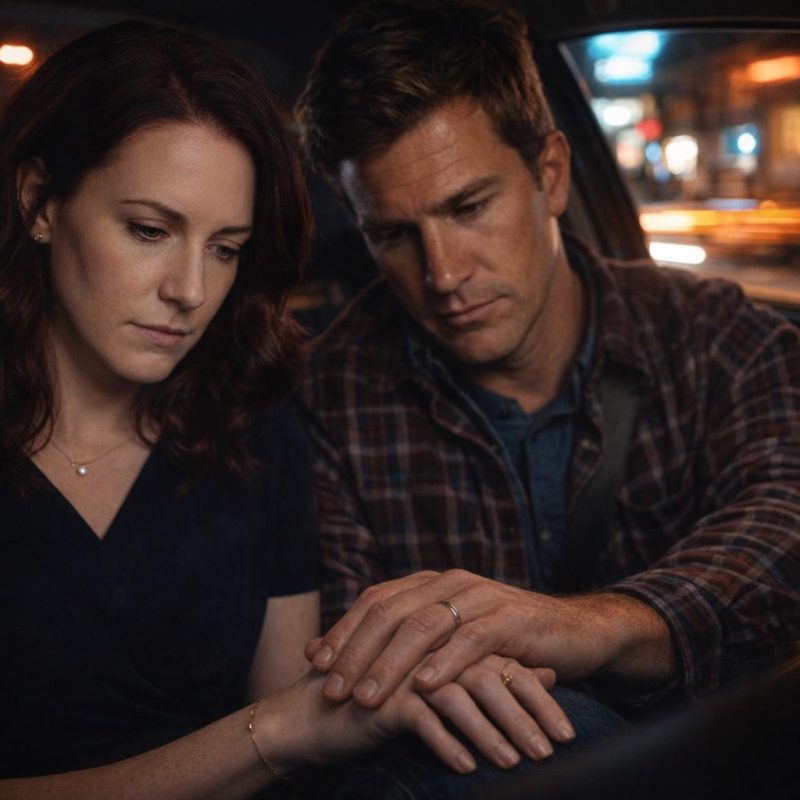 Image by RM AI
Coming Home
Three days passed. I thought about Victoria constantly — while I was folding laundry, while I was making coffee, while I lay awake at two in the morning staring at the ceiling. Mark didn't push. He just stayed close, refilling my mug without being asked, sitting beside me on the couch in the evenings. I thought about my parents — the ones who raised me, who came to every school play and drove me to every doctor's appointment and loved me without condition or complication. They would have told me to at least try. I knew that without having to ask. I thought about Victoria building that restaurant, pouring herself into something beautiful while carrying a loss she couldn't talk about. I thought about how much of my own life I'd spent feeling like I was on the outside of rooms I hadn't been invited into. On the third evening I picked up the card from the kitchen counter where I'd left it. I turned it over in my hands. Mark looked up from across the room and I told him I was going to call. He smiled — just that, a quiet smile — and crossed the room and kissed my forehead. My heart was pounding as I dialed. It rang once, then twice, and I held the phone tight and waited for her to answer.
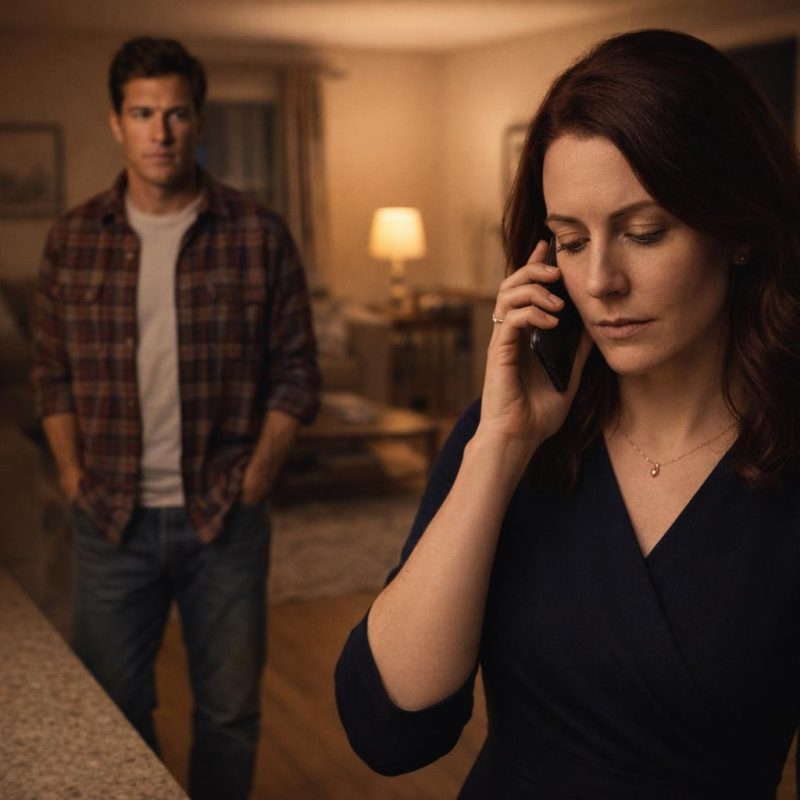 Image by RM AI
KEEP ON READING
The 20 Most Recognized Historical Figures Of All Time
The Biggest Names In History. Although the Earth has been…
By Cathy Liu Oct 4, 2024
10 of the Shortest Wars in History & 10 of…
Wars: Longest and Shortest. Throughout history, wars have varied dramatically…
By Emilie Richardson-Dupuis Oct 7, 2024
10 Fascinating Facts About Ancient Greece You Can Appreciate &…
Once Upon A Time Lived Some Ancient Weirdos.... Greece is…
By Megan Wickens Oct 7, 2024
20 Lesser-Known Facts About Christopher Columbus You Don't Learn In…
In 1492, He Sailed The Ocean Blue. Christopher Columbus is…
By Emilie Richardson-Dupuis Oct 9, 2024
20 Historical Landmarks That Have The Craziest Conspiracy Theories
Unsolved Mysteries Of Ancient Places . When there's not enough evidence…
By Megan Wickens Oct 9, 2024
The 20 Craziest Inventions & Discoveries Made During Ancient Times
Crazy Ancient Inventions . While we're busy making big advancements in…
By Cathy Liu Oct 9, 2024