

The Sweetest Idea I'd Ever Heard
I almost didn't make it on time. I'd spent twenty minutes trying to find parking three blocks away, and by the time I pushed through the venue doors my cheeks were flushed and my good shoes were pinching. But then I saw Emma across the room, and all of that fell away. She was moving between clusters of guests with this easy, unhurried grace that still surprises me sometimes — I can remember the little girl who used to hide behind my legs at family dinners, and here she was, hosting a room full of people like she'd been doing it her whole life. The venue itself was lovely. Soft string lights ran along the ceiling, and someone had arranged small vases of white flowers on every table. It smelled like warm bread and something floral, and the low hum of conversation filled the space without overwhelming it. Emma spotted me near the entrance and crossed the room in about four steps, wrapping both arms around me before I'd even set my bag down. She smelled like her mother's perfume, which caught me off guard in the best possible way. I told her the place looked beautiful, and she laughed and said she'd been there since seven in the morning making sure it did. I believed her. Standing there with her hands still holding mine, watching the people she loved fill the room she'd put together for them, I felt something settle quietly in my chest — the particular kind of happiness that only comes from watching someone you love become exactly who they were always going to be.
 Image by RM AI
One Old Family Photograph
I'd assumed the evening would follow the usual reception format — cocktails, toasts, dinner, dancing. Emma had other ideas. About thirty minutes in, she tapped a small bell near the entrance and waited for the room to quiet down. When she had everyone's attention, she explained that she and her fiancé had wanted the celebration to feel like more than just a party. They wanted it to feel like a gathering of histories. She called it a memory wall. The concept was simple: each family or guest had been asked, in the invitation, to bring one old photograph — something that told a piece of their family's story. The images would be displayed together on a long stretch of corkboard along the far wall, creating a kind of visual timeline that stretched across generations. She said she wanted the two families coming together to actually see each other's histories, not just shake hands over dinner. A few people around me made soft sounds of appreciation. Someone near the back said it was the most thoughtful thing they'd ever heard at an engagement party. I had to agree. I'd brought my photograph in a small envelope tucked inside my purse, and I found myself pressing my hand against it without thinking, the way you check for your keys before leaving the house. Emma smiled at the room and said she hoped every picture would start at least one conversation — and then she asked everyone to go ahead and find a spot on the wall for the photograph they'd brought.
 Image by RM AI
The Photograph of Uncle Daniel
I'd gone back and forth about which photograph to bring. I have a shoebox in the hall closet that holds maybe forty years of loose prints, and I'd spent an evening sorting through them before I found the one that felt right. It was black and white, slightly soft at the edges the way old photos get when they've been handled too many times. My parents stood beside my infant crib — my mother leaning in close, my father with one hand resting on the rail — and in the background, half-turned toward the camera as if he'd just noticed it, stood my mother's older brother Daniel. He had one hand on the porch railing and a look on his face that was somewhere between amused and distracted. I'd always loved that detail. He wasn't posing. He was just there, the way family is just there, present in the background of the moments that matter. The story I'd grown up with was simple and sad: Daniel had died in a construction accident just a few months after that photograph was taken. He was young — barely into his twenties. My mother didn't talk about him often, and when she did, her voice would go quiet in a way that told me not to press. I never did. Some losses, I understood, don't get smaller with time. They just become part of the shape of a person. I'd written his name on the small card that went with the photograph, and standing there looking at it pinned to the wall, I felt the familiar, gentle weight of a story I had never once thought to question.
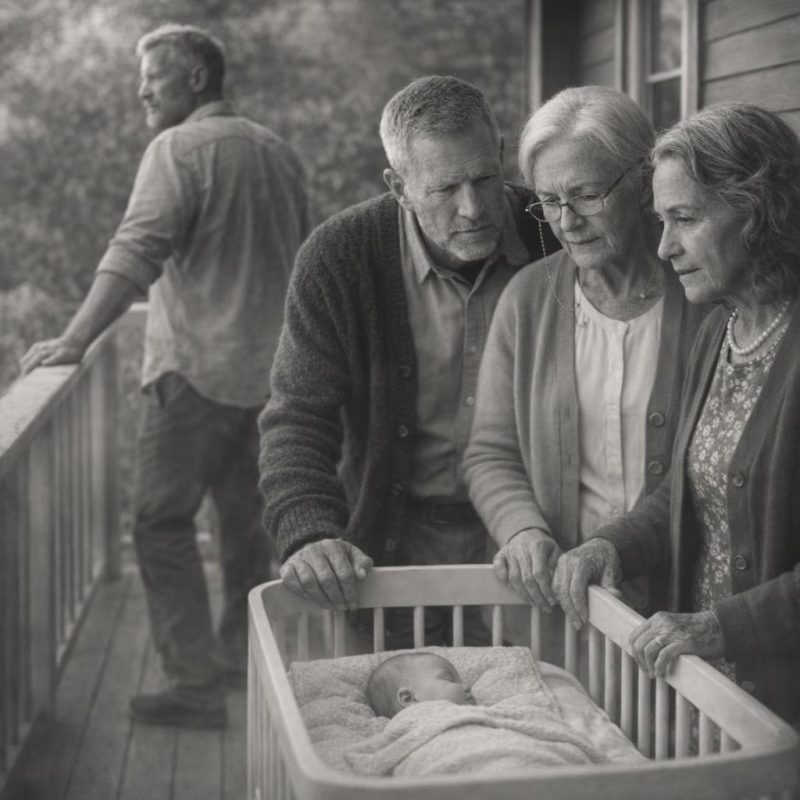 Image by RM AI
Nearly a Century of Memory
By the time cocktail hour was fully underway, the memory wall had filled in a way that genuinely took my breath away. I don't think any of us had quite anticipated what it would look like once everyone's contributions were up together. There were faded wedding portraits where the bride's dress looked stiff with starch and the groom stood at attention like he was being photographed for a record. There were military snapshots — young men in uniform squinting into bright sun somewhere overseas. School pictures with the blurred blue backgrounds I remembered from my own childhood. A family gathered on the steps of a house that no longer existed, everyone dressed in their Sunday best. Vacation photographs where someone had caught a candid moment of laughter that had survived sixty years to make a stranger smile. The collection stretched back nearly a century in places, and forward to images that couldn't have been more than a decade old. What struck me most was how different all the families looked and how similar all the moments were — the same instinct to gather, to mark an occasion, to say this happened and we were here. Emma moved along the wall with her fiancé, stopping at each photograph, and I watched her lean in to read the small cards guests had written. She touched his arm when something moved her. The room felt full in a way that had nothing to do with the number of people in it. All those preserved moments, pressed together on a single wall, carried a weight that was almost physical — the accumulated evidence of lives that had mattered to someone.
 Image by RM AI
Walking the Memory Wall
When the formal part of the cocktail hour wound down and people drifted toward the bar or found seats at the tables, I found myself drawn back to the memory wall. I wasn't ready to sit yet. I moved along it slowly, starting at the far left where the oldest photographs were clustered, reading the small handwritten cards that guests had tucked beside their images. One card said simply: my grandmother, the day she arrived in this country. She didn't speak a word of English yet. Another read: the only photograph that survived the fire. I stopped at that one for a moment. There was a couple in their thirties, standing in front of a car I couldn't identify, both of them laughing at something outside the frame. Whoever had written the card hadn't explained what fire, or when, or what else had been lost. They didn't need to. I kept moving. A military photograph caught my eye — a young man in dress uniform, so young it was almost hard to look at. The card beside it said he came home. Three words, and I felt them in my sternum. I made my way slowly down the length of the wall, taking my time, until I reached the section where I'd pinned my own contribution that afternoon. I stopped in front of it — my parents, the crib, and Daniel half-turned in the background with his hand on the railing — and stood there looking at the three of them the way you look at something you've seen a hundred times but are only now really seeing.
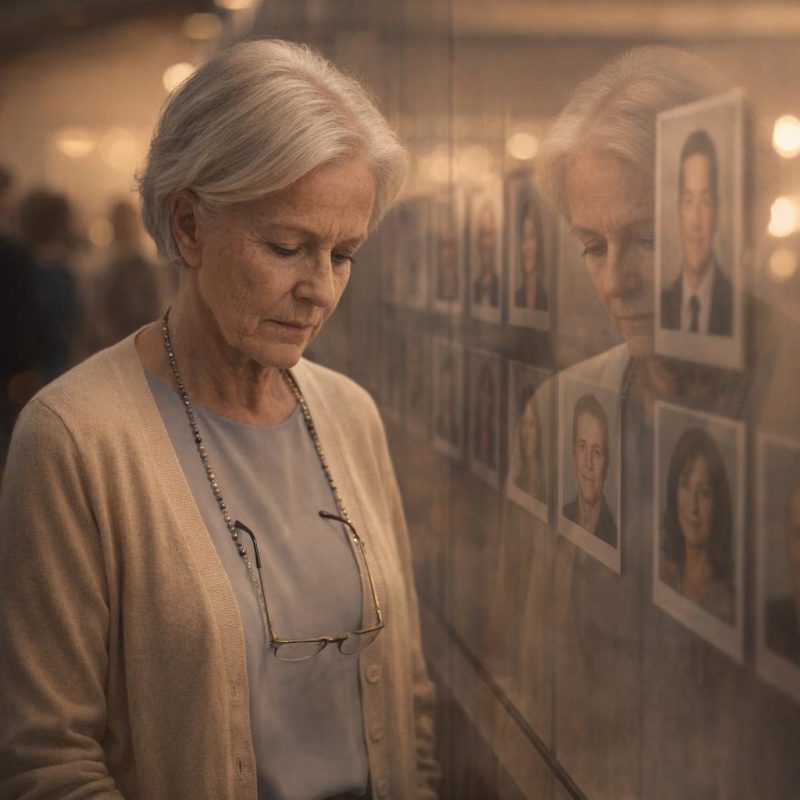 Image by RM AI
An Elegant Stranger
I'd been standing in front of my photograph for maybe two or three minutes when I became aware of someone approaching from my left. I glanced over. She was an elderly woman — early eighties, I guessed — dressed in a way that suggested she'd given real thought to the occasion. A deep navy dress, a single strand of pearls, silver hair swept back with quiet precision. She moved slowly but with a kind of deliberate composure, the way people carry themselves when they've spent a lifetime being careful about how they appear in a room. I assumed she was from the other family, someone I hadn't been introduced to yet, and I smiled in the way you do at receptions when you're not sure of the connection but want to be welcoming. She didn't return the smile right away. Her attention had already moved past me to the wall. She stopped a few feet away and began looking at the photographs the way I had — methodically, reading the cards, taking her time. Then she reached my photograph. She went still. It was a subtle thing, the kind of stillness that you might not notice if you weren't already watching. But I was watching. She leaned in slightly, and her eyes moved across the image in a way that felt less like casual interest and more like recognition — like someone searching a face they were trying to place, or perhaps trying to confirm. Her expression shifted as her gaze settled on Daniel's figure in the background, something moving across her face that I couldn't quite name.
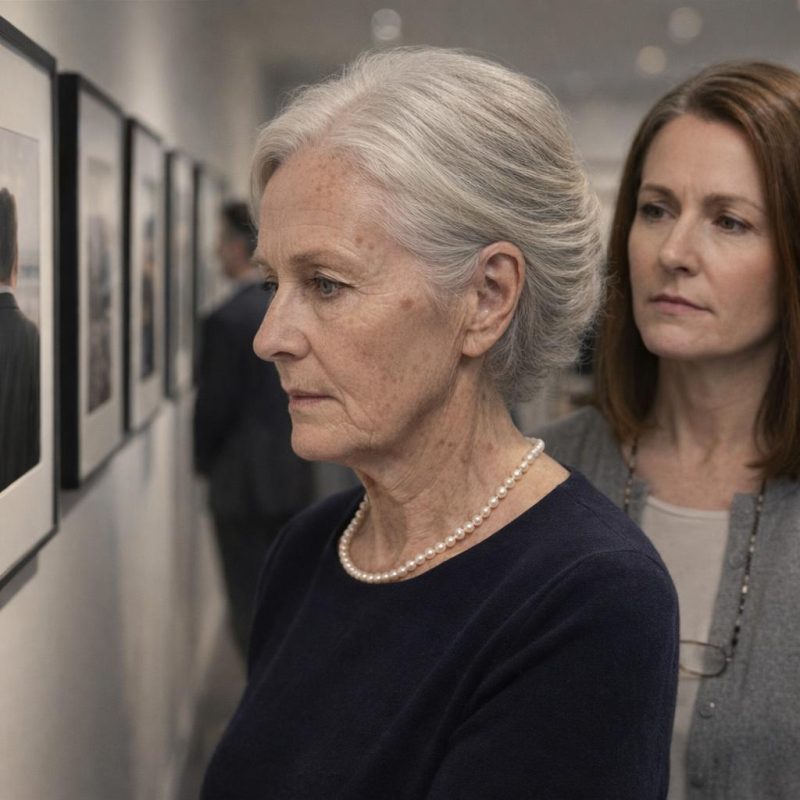 Image by RM AI
Tears for a Stranger
I didn't say anything. I'm not sure I could have, even if I'd known what to say. The woman's eyes had filled — not dramatically, not the way grief looks in films, but in that quiet, involuntary way that happens before a person has decided whether they're going to cry. She blinked once, slowly, and then reached out and touched the frame of my photograph. Just the edge of it, with two fingers, the way you might touch something fragile or something you weren't sure you had the right to touch at all. I watched her and felt a strange pull between the instinct to give her privacy and the instinct to ask if she was all right. She didn't look unwell. She looked like someone who had just encountered something she hadn't expected to find in this room, at this party, on an ordinary evening. Her focus stayed entirely on the photograph. Not on my parents, not on the crib, not on the composition of the image — on Daniel. On the young man half-turned toward the camera with his hand on the railing, the one I'd always thought of as a footnote to a story that ended too soon. I had no idea who this woman was or what connection she could possibly have to a black-and-white photograph from before I was old enough to remember anything. But whatever she felt when she looked at it, it was real. The intimacy of her grief — quiet and unguarded and entirely her own — settled over the space between us like something I had no business disturbing.
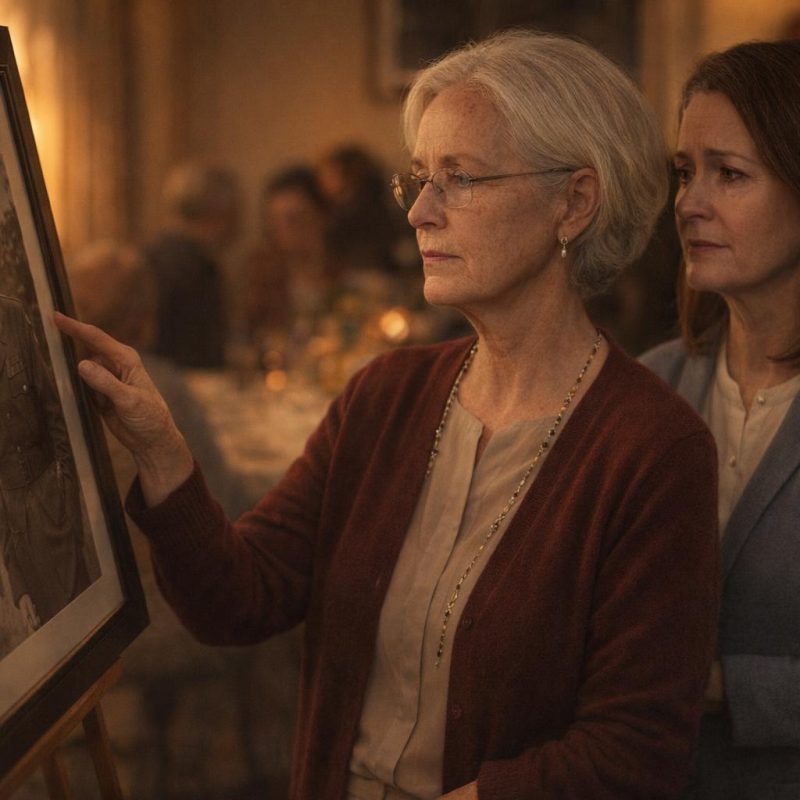 Image by RM AI
Who Told You He Died
She stood there for a long moment, her fingers still resting lightly on the edge of the frame. Then she straightened, slowly, and turned to face me. Her eyes were composed now, though still bright. She looked at me with the careful attention of someone who was choosing their words before they spoke them. The noise of the reception carried on around us — glasses, laughter, someone's heels on the hardwood — and for a moment I thought she might simply introduce herself and move on. Instead, she spoke quietly, just loud enough for me to hear over the room. She asked me about Daniel. She said his name the way you say the name of someone you know, not someone you've just read off a card. She asked me what my connection to him was, and I told her he was my great-uncle — my mother's older brother — and that he had passed away long before I was born. I said it the way I'd always said it, the way the story had always been told, simple and settled and not requiring any further explanation. She listened. She nodded once, very slightly. And then she looked at me with an expression I still can't fully describe — not unkind, not alarmed, but carrying something careful and grave — and she asked me, in a voice pulled low and even, who had told me that Daniel was dead.
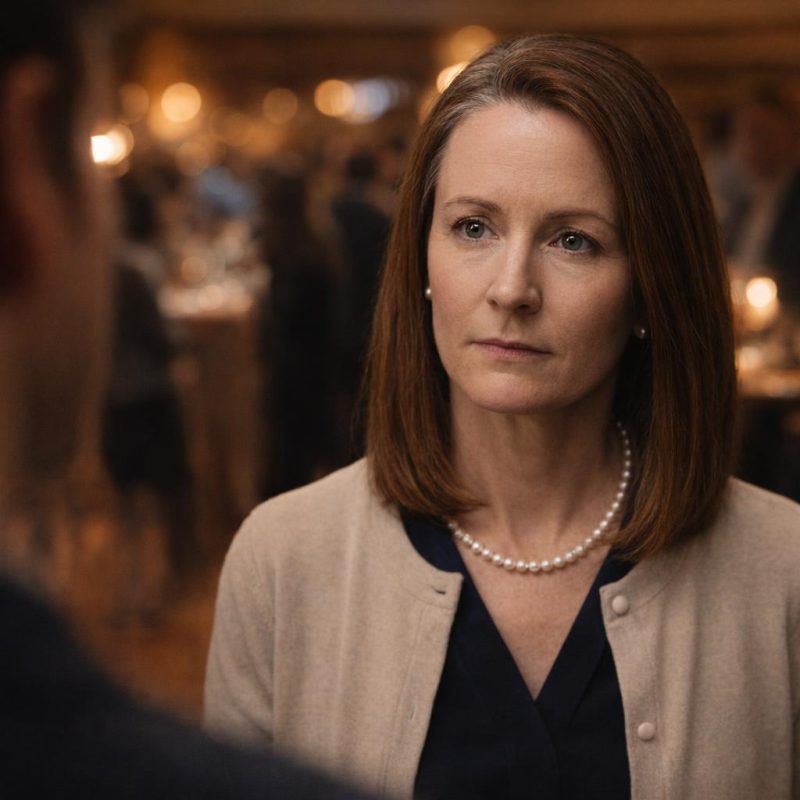 Image by RM AI
The Story Everyone Accepted
I told her the story the way I'd always told it, the way my mother had told it, the way her mother had told it before that. Daniel died in a construction accident. It happened decades ago, before I was born, before most of the family had any real memory of him. There was a site collapse somewhere — I'd never known exactly where — and he was gone. My mother had grieved him her entire life. She kept one photograph of him, a formal portrait taken when he was young, and she never spoke about him without a particular kind of quiet settling over her face. The whole family accepted it. Nobody questioned it. Why would they? These things happened, especially back then. Records were incomplete, distances were long, and grief had a way of closing around a story and sealing it shut. I said all of this to Eleanor standing there in the middle of the reception, my voice steady, my hands folded in front of me, feeling faintly ridiculous for explaining my own family history to a stranger. I told her my mother had genuinely believed it. I told her there had never been any reason to doubt. My voice was still even when I finished, but something in Eleanor's expression had been pulling at me the whole time I spoke — something careful and still and not quite right. And when I finally stopped talking, she shook her head, slowly, just once.
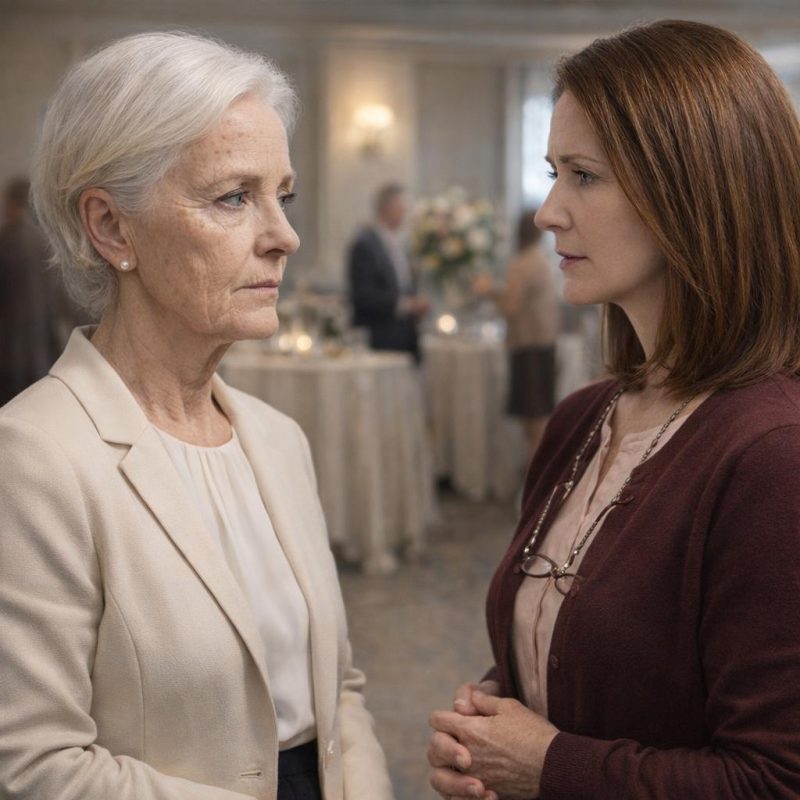 Image by RM AI
Twenty Years After
She said it quietly, without any drama in her voice at all, which somehow made it worse. I asked her when she had last seen him. She told me the year, and I did the arithmetic without meaning to, standing there with a glass I'd forgotten I was holding. I asked her if she was certain it was the same man. She said she had spoken with him for nearly an hour at her husband's retirement party. She remembered his voice, the way he held himself, the particular way he laughed at something someone said near the end of the evening. She wasn't guessing. She wasn't misremembering a face from a crowded room. She had known him, and she had spoken with him, and he had been alive and standing in a room full of people — and then she said the year again, quietly, and I counted backward without wanting to: twenty years after the photograph my mother kept on her dresser was taken, twenty years after the story said he was already gone.
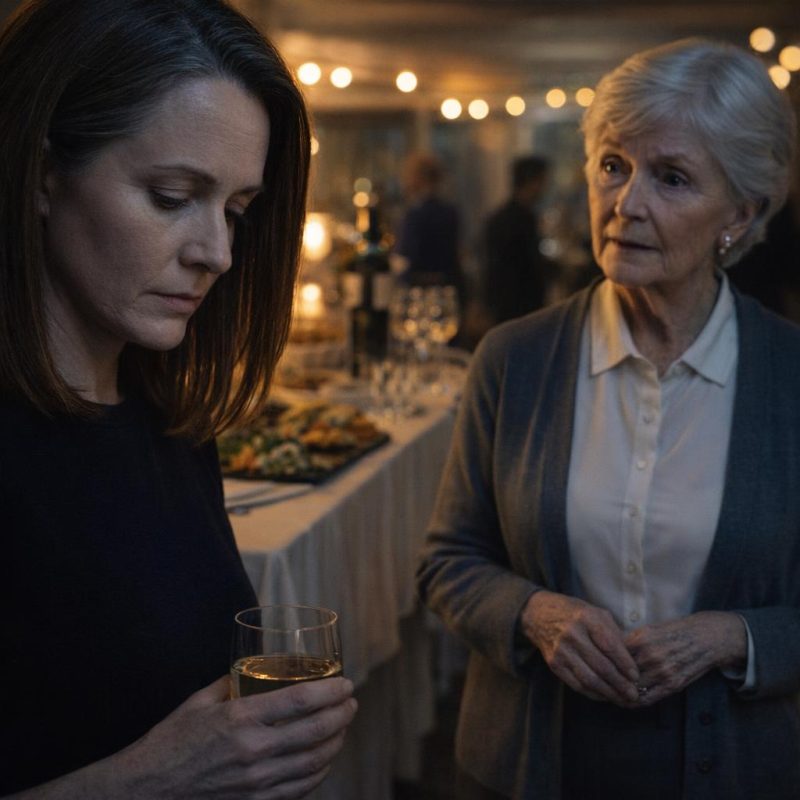 Image by RM AI
The Interruption
I was about to ask her how — how she could be certain, how this was possible, what it meant — when a woman appeared at my elbow. She was someone from Emma's side of the guest list, someone I'd been introduced to earlier in the evening and whose name I'd already lost. She wanted to ask me something about the reception venue, whether the garden terrace was open, something entirely ordinary and entirely impossible to answer in that moment. I tried. I gave her some kind of response, something polite and probably useless, and I kept my eyes on Eleanor the whole time, watching her over the woman's shoulder. Eleanor had gone still. She was looking toward the far end of the room, toward the doors that opened onto the outside terrace, and something in her posture had shifted — a slight drawing inward, a composing of herself. By the time the woman thanked me and moved away, Eleanor had taken a step back. I turned fully toward her, ready to ask everything I hadn't been able to ask, and she said she needed a moment of air, that she'd be just outside. She touched my arm once, briefly, and then she was moving toward the exit. I stood there and watched the space where she had been standing, the faint impression of a conversation that had cracked something open and then simply stopped.
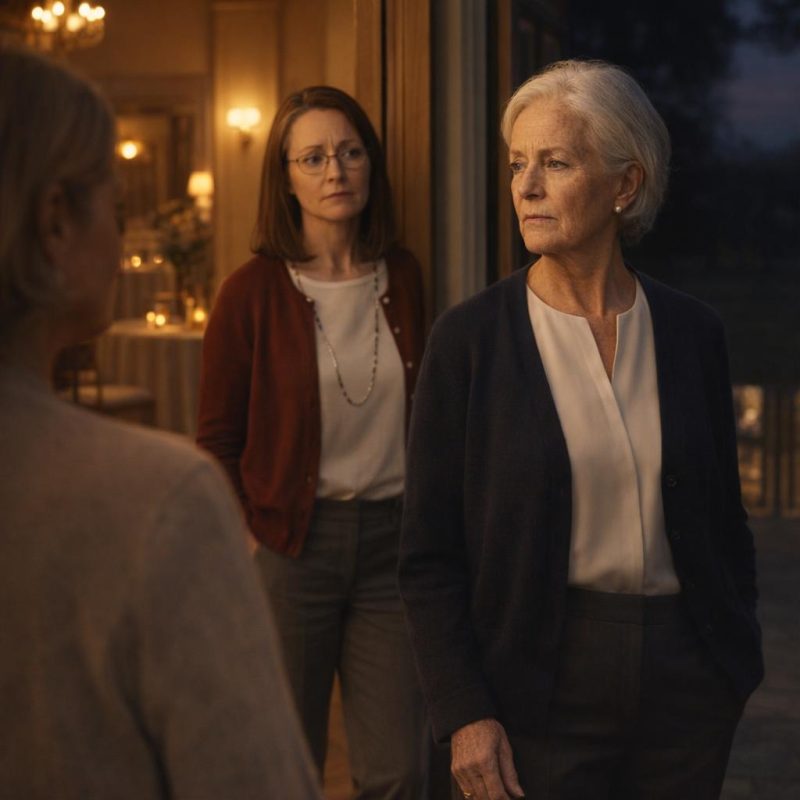 Image by RM AI
Hurrying After Answers
I didn't deliberate. I set my glass down on the nearest surface — a side table near the window, next to someone's abandoned program — and I went after her. The reception carried on behind me, the low hum of conversation and the clink of glasses and someone laughing at something near the bar, and all of it felt like it belonged to a different evening entirely. I moved through the room as quickly as I could without drawing attention, past the cluster of Emma's friends near the fireplace, past the long table with the photographs, past the door that led back to the foyer. I pushed through the exterior door and stepped out into the cooler air. The terrace was quieter, lit by strands of small lights along the railing, and most of the guests had stayed inside. I stood for a moment letting my eyes adjust, scanning the length of the terrace, past the empty chairs and the potted hedges and the low stone wall at the far end. And there she was — Eleanor, standing alone near the railing, her back half-turned to the door, her silver hair catching the light, her hands resting quietly in front of her.
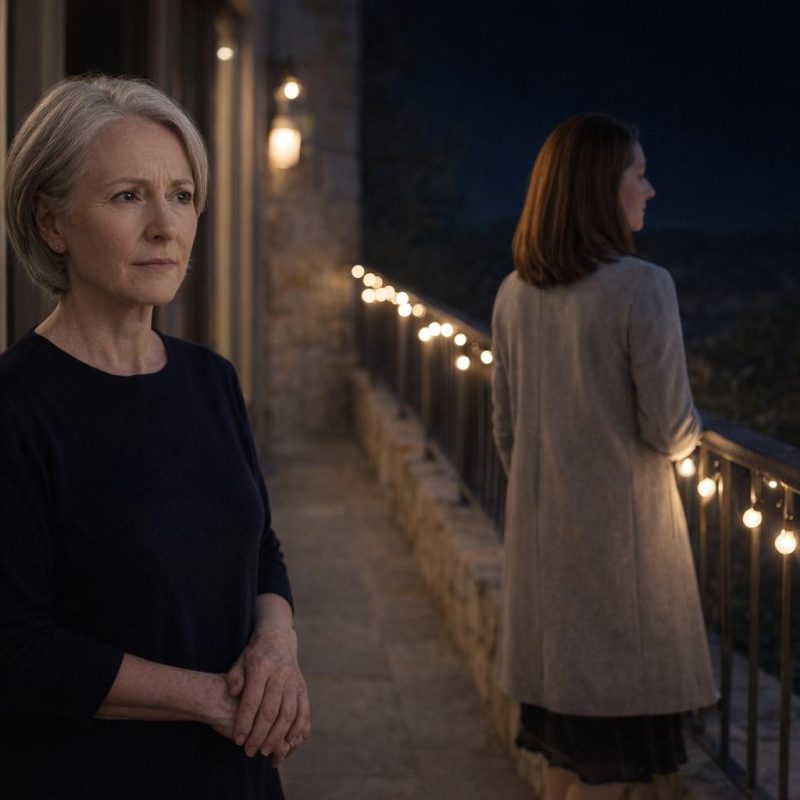 Image by RM AI
Eleanor's Introduction
She heard me coming and turned before I reached her. There was nothing startled in her expression — she had been expecting me, or something like me, and she waited while I crossed the last few feet of terrace between us. Up close, in the quieter light outside, she looked older than she had inside, and more tired, and more certain all at once. She introduced herself properly then, Eleanor, and she told me her late husband had spent years volunteering with a veterans' support organization, coordinating visits and events and the kind of practical help that doesn't make the news. She had been involved alongside him for much of that time. That was how she had come to know Daniel. Not as a family name on a photograph, not as a story someone told, but as a man who showed up reliably, who helped with logistics, who stayed after the events to stack chairs and carry boxes. She said he had been part of that community for years before she and her husband ever thought to ask much about where he came from. I listened to all of this standing very still, my hands at my sides, the cool air moving around us. I was trying to hold the shape of what she was telling me against the shape of what I had always known, and the two things would not fit together no matter how I turned them. But her voice, when she spoke about him, carried no uncertainty in it at all.
 Image by RM AI
A Mistake That Couldn't Be Undone
I asked her if she had ever asked him about his family. She said yes, more than once, over the years. She said he wasn't evasive exactly — he would answer, but only so far. He never claimed anything dramatic. He never said he had no family or that they were gone. What he said, the way Eleanor remembered it, was that his family believed he could never come home. That there had been a mistake, something that happened a long time ago, and that it couldn't be undone. He said it the way you say something you've made a kind of peace with, not bitterly, not with self-pity, just as a fact about the shape of his life. Eleanor said she had assumed it was an estrangement — a falling out over money or a marriage or something that families sometimes couldn't recover from. She hadn't pressed him. It hadn't seemed like her place. I stood there on the terrace taking this in, the small lights along the railing blurring slightly at the edges of my vision. A mistake that couldn't be undone. I turned the phrase over in my mind, looking for something to hold onto, some explanation that would make it ordinary. My mother had grieved her older brother for her entire life, and somewhere, apparently, he had been carrying those words around like a stone in his pocket.
 Image by RM AI
The Group Photograph
Eleanor reached into her bag and said there was something she wanted to show me. She took out her phone, an older model with a worn case, and she scrolled for a moment with the careful deliberateness of someone who doesn't entirely trust the technology. Then she turned the screen toward me. It was a group photograph, the kind taken at an event — maybe thirty people arranged in loose rows, some seated, some standing, a banner visible at the edge of the frame. A veterans' gathering of some kind, indoors, fluorescent light, everyone looking at the camera with the slightly formal expressions people wear when they know a photograph is being taken. Eleanor pointed to a man in the second row, standing slightly to the left of center. He was older. His hair had gone white and his face had the particular weathering of someone who had spent time outdoors over many decades. But the shape of his jaw, the set of his eyes, the way he held his shoulders — I had seen all of it before, in a small framed photograph that had sat on my mother's dresser for as long as I could remember. My breath caught somewhere in my chest and stayed there. Eleanor was watching me, not the phone. And on the screen, unmistakably older but unmistakably the same man, Daniel looked back at me.
 Image by RM AI
Unmistakably Older, Undeniably Him
I don't know how long I stood there holding her phone. Long enough that Eleanor put her hand briefly on my arm and asked if I was all right. I wasn't, not exactly, but I nodded anyway. I kept looking at the photograph. I kept moving between the details — the line of his nose, the particular heaviness of his brow, the way his mouth sat even in a neutral expression — and comparing them to the image I had carried in my memory my whole life, the young man in the formal portrait my mother had kept. Age changes a face. I knew that. But it doesn't change the underlying architecture of it, the things that are simply bone and structure and the specific way a person is put together. This was the same man. I couldn't make it not be true by looking harder or finding some angle that introduced doubt. The photograph on Eleanor's phone showed a man who had been alive and present and standing in a room full of people at a point in time when my family had long since finished grieving him. I handed the phone back to Eleanor. My hands were steady, which surprised me. The story my family had carried for sixty years — the accident, the loss, the closed chapter of Daniel's life — was not what had actually happened.
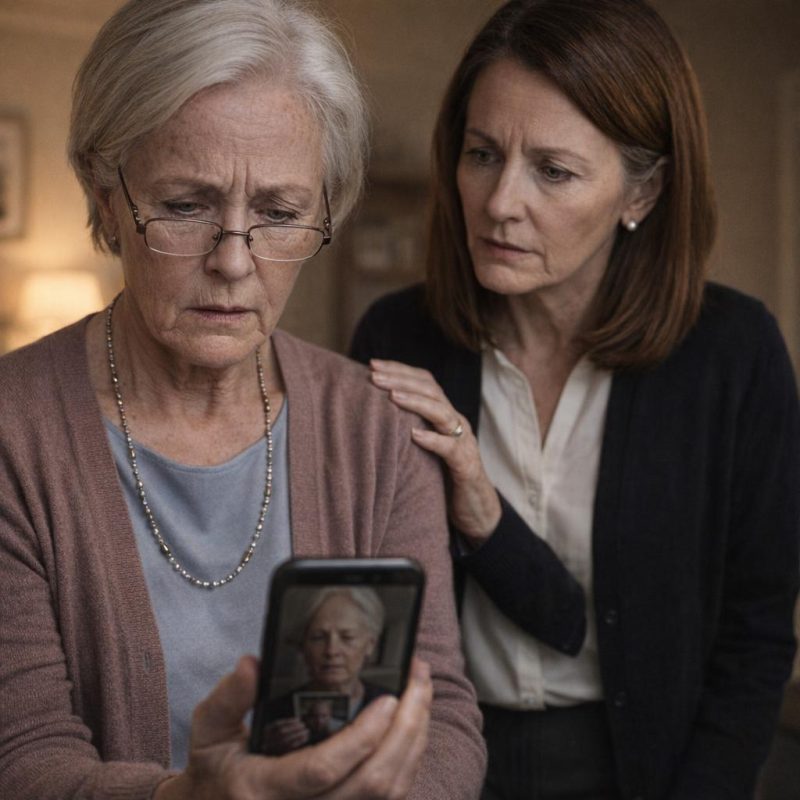 Image by RM AI
Barely Functional
I walked back into the reception and the noise hit me like something physical — the clinking glasses, the laughter, the DJ easing into a slow song that everyone seemed to know but me. I found my seat and sat down and tried to look like a person who was present. I wasn't. My mind kept pulling back to Eleanor's phone, to that photograph, to the particular line of a nose I had spent sixty years thinking belonged to a dead man. Emma found me somewhere between the salad course and the toasts. She crouched down beside my chair the way she used to when she was small and wanted my full attention. "Gran," she said, "you okay? You look like you're somewhere else entirely." I told her I was just tired, that the evening had caught up with me, that I was so proud of her and so happy to be there. She studied my face for a moment the way young people do when they're deciding whether to push. She didn't push. She kissed my cheek and went back to her fiancé and her friends and her beautiful uncomplicated evening. I watched her go and felt something close to relief. I couldn't have explained any of it to her — not yet, maybe not for a long time. I stayed another forty minutes. I hugged her at the door and told her it was a perfect night. Then I drove home, and before I had even taken off my coat, I knew I needed to start looking.
 Image by RM AI
Searching the Boxes
The storage closet off the hallway held four large plastic bins and two cardboard boxes that had followed me through three house moves without ever being properly sorted. I knew they were in there — the family papers, the old photographs, the documents my mother had pressed on me in her final years because she said I was the one who would take care of things. I had always meant to go through them properly. I pulled everything out into the hallway and sat down on the floor in my good dress, still in my heels, and started opening lids. The first bin was mostly my own records — tax documents, school reports, things that had nothing to do with what I was looking for. I set it aside. The second held my mother's papers, and I slowed down there. Letters bundled with rubber bands that had gone brittle. Envelopes with handwriting I recognized and some I didn't. Photographs loose at the bottom, edges soft with age. I didn't rush through them. I made myself go carefully, one item at a time, setting each thing down in a deliberate order so I could find my way back if I needed to. The hallway light was steady overhead. Outside, the neighborhood had gone quiet. I worked through the papers the way you do when you're not sure what you're looking for but you'll know it when you find it — slowly, methodically, with both hands.
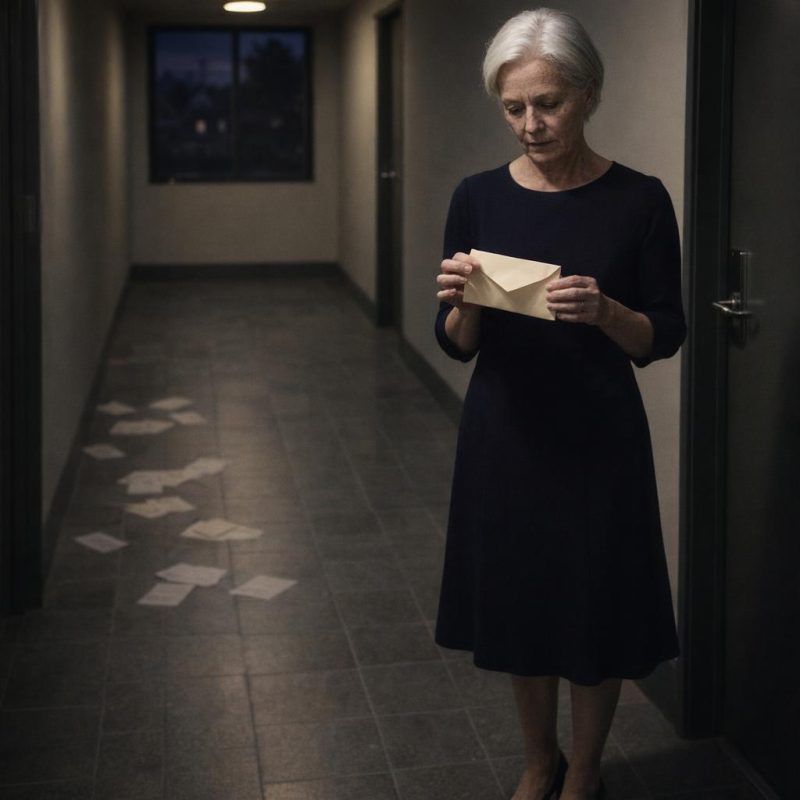 Image by RM AI
The Year Everything Stopped
By the time I reached the bottom of the second bin, a pattern had started to take shape that I couldn't ignore. Daniel appeared in the early papers the way any family member would — mentioned in letters, named in a Christmas card list my mother had kept, visible in a handful of photographs from what looked like the late 1950s. There was a picture of him holding me as an infant, his face young and unguarded, and I set that one aside and kept going. Then, somewhere around a cluster of documents dated about a year after that photograph was taken, he simply stopped appearing. No gradual fade. No final letter. Just — nothing. I went back through everything twice to make sure I hadn't missed something. I checked the third bin, which held more of my mother's papers from later decades. I checked the cardboard boxes. I looked specifically for the things that should exist if someone had died — an obituary clipped from a newspaper, a funeral program, a sympathy card, a note about a burial plot. My mother had saved everything. She had kept grocery lists and birthday cards and a receipt from a department store dated 1963. But there was nothing that documented the end of Daniel's life. Not a single piece of paper that said he had died, or where, or when. The hallway was very quiet around me, and the absence of those documents sat heavier than any of the papers I had actually found.
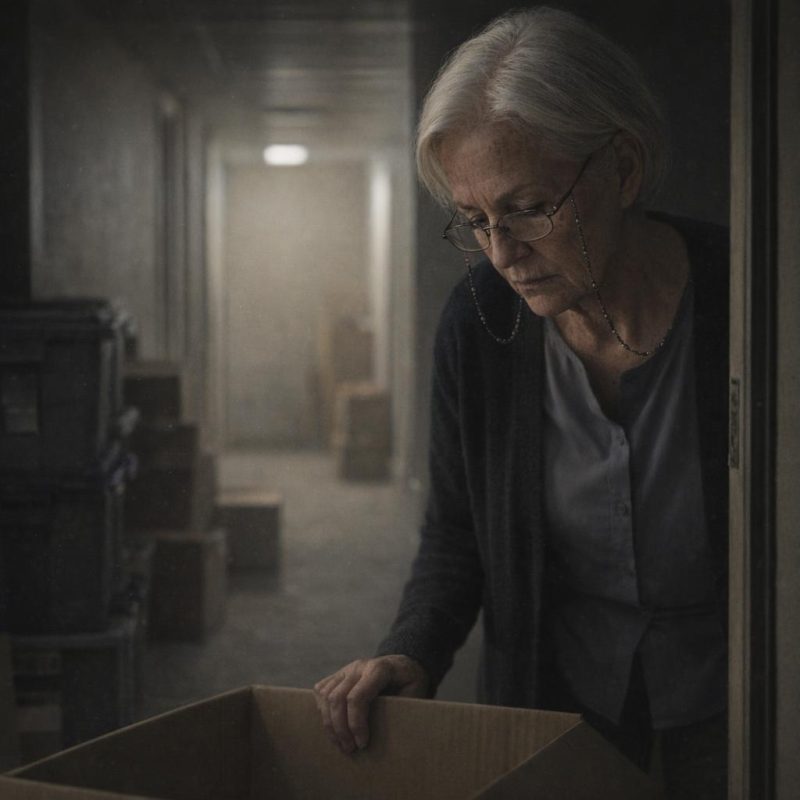 Image by RM AI
Noticing the Pattern
I went back through the letters a second time, more slowly, reading each one properly instead of scanning for dates. That was when I started finding the references — not documents about Daniel's death, but mentions of it, scattered through correspondence over the years. A letter from my mother's cousin offered condolences about "the terrible accident." A note in my grandmother's handwriting referred to "losing Daniel on that construction site" as though it were an established fact being recalled, not reported. Another letter, from someone I didn't recognize, mentioned the family's loss in passing, the way people do when they're acknowledging something everyone already knows. I laid them out on the hallway floor in chronological order. What struck me wasn't that people had written about it — it was how they wrote about it. The same phrase kept appearing in different hands: the accident, the construction site, the tragedy. No one ever named a specific location. No one mentioned a date. No one described what had actually happened or who had been there. It was the same story, repeated across years of correspondence, always in the same general terms, with none of the specific detail that tends to appear when people are writing from their own memory of an event. I sat there on the floor with the letters spread around me, and then I found three more — each one referencing the construction accident in that same careful, unspecific way, as though everyone had been told the same version of the same story and simply passed it along.
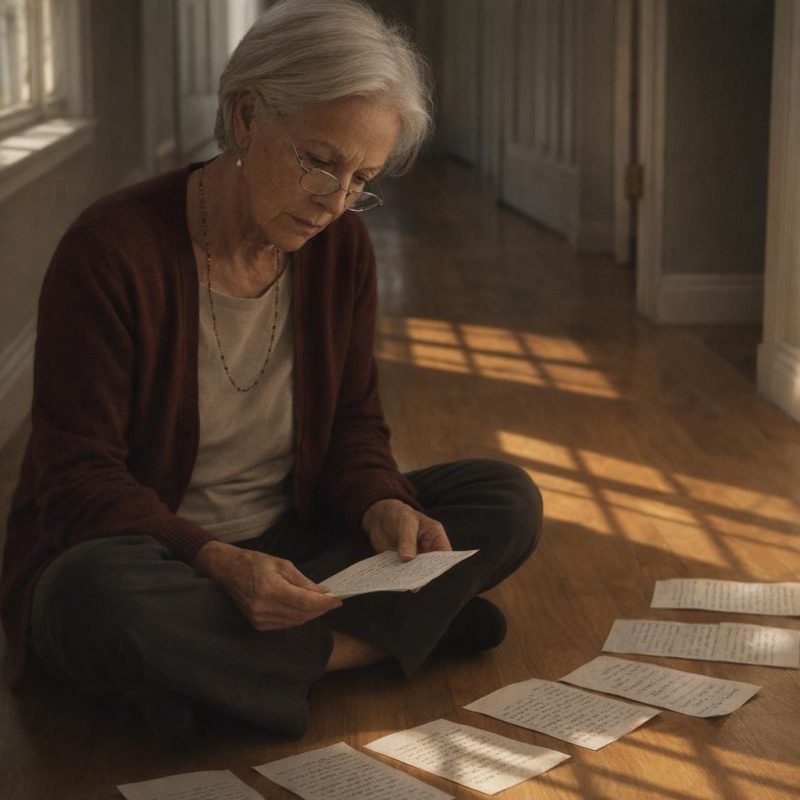 Image by RM AI
No Obituary, No Funeral Program
I went through every remaining box before I let myself stop. I wasn't going to conclude anything until I was certain I hadn't missed something — a folder tucked inside another folder, an envelope stuck to the bottom of a bin. I checked everything twice. I was looking for the things that grief leaves behind, the paper trail that death always seems to generate whether families intend it or not. An obituary from a local newspaper. A funeral home program with a date and a scripture verse and a list of surviving family members. A sympathy card that mentioned a service. A receipt for a cemetery plot, or a deed, or even just a handwritten note about where he was buried. My mother had been a keeper of things. She had saved her own mother's recipe cards and her father's military discharge papers and a birthday telegram from 1958. If Daniel had died and been buried and mourned in the way the family story described, there would have been something. A single piece of paper. A clipping. Anything. There was nothing. I sat on the hallway floor surrounded by sixty years of carefully preserved family history, and the place where Daniel's death should have been documented was simply empty — a silence where I had always assumed there was a story, and where now there was only the absence of one.
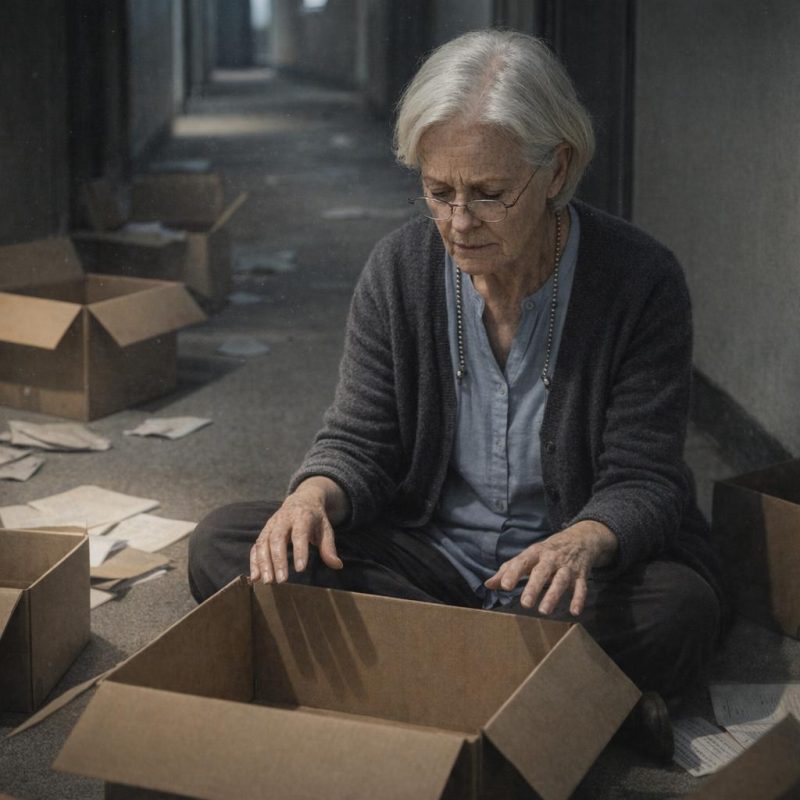 Image by RM AI
Searching Online Records
I moved to the kitchen table with my laptop and started over, this time in the official records. I told myself there were reasonable explanations — my mother hadn't saved everything, the newspaper hadn't run an obituary, the family had handled arrangements quietly. I searched the state death index first, entering Daniel's full name and the approximate year, then a range of years on either side to account for any uncertainty in the family story. Nothing came back. I tried a broader genealogy database, one that aggregated records from multiple states, and searched again. Still nothing. I found a cemetery records site and searched every county in the region where the family had lived during those years, then expanded outward to neighboring counties, then to the whole state. No burial record. No plot registration. No death certificate filed under his name in any database I could access. I sat back and looked at the screen. It was past midnight. The kitchen was quiet except for the refrigerator's low hum. I told myself that records from that era weren't always digitized, that gaps existed, that absence wasn't the same as proof of anything. But I had been searching for over an hour, and the result was the same every time — a blank space where a death record should have been, in database after database, county after county. I closed the laptop and sat with my hands flat on the table, and the quiet of the kitchen settled around me like something with weight.
 Image by RM AI
Calling Aunt Margaret
I called Aunt Margaret the next morning. She was in her mid-eighties now, my mother's younger sister, and she still lived in the house she and her husband had bought in the 1970s. She answered on the third ring, her voice bright and familiar in the way of someone who is genuinely pleased to hear from family. We talked for a few minutes about Emma's engagement party — she had seen the photographs on Emma's social media and said the venue looked beautiful. I let the conversation settle before I brought it up. I told her I had been going through some of my mother's old papers and had come across some things that made me curious about family history. She said that sounded like a lovely project. Then I said Daniel's name. I asked her what she remembered about the circumstances of his death — whether she recalled anything specific about the accident, or where it had happened, or who had told the family. There was a pause. Not a long one, but long enough to notice. When she spoke again, her voice was still warm, but something underneath it had shifted — a tightening, almost imperceptible, like a door being eased toward its frame without quite closing.
 Image by RM AI
Visible Discomfort
I asked her about the construction accident specifically — whether she remembered which site it had been, or what year, or who had come to tell the family. She said it was so long ago. She said her memory wasn't what it used to be. I asked about the funeral arrangements, whether she remembered where he had been buried, and she said she thought it had all been handled very quietly, that she couldn't recall the details. I asked if there had been a service. She said she believed so, but she wasn't certain. Each answer came a beat slower than the one before it, and each one landed just slightly to the side of the question I had actually asked. I heard paper rustling on her end of the line — a soft, repeated sound, like she was turning something over in her hands without being aware of it. I asked her one more time, gently, whether she remembered who had first told the family that Daniel was gone. The rustling stopped. Her breathing came through the phone differently then — shallower, I thought, and careful, the way a person breathes when they are trying to sound normal and it is costing them something to do it.
 Image by RM AI
The Subject Should Remain Buried
She didn't answer my question. Instead, she said my name — just once, quietly — and then she said that some things were better left where they were. I told her I understood that, but that I had a granddaughter getting married and a family history full of gaps, and I just wanted to understand what had happened to Daniel. She said she was sorry, but that the subject should remain buried. Those were her exact words. Buried. I asked her what she meant by that, and she said she meant exactly what she said. Her voice had gone flat and careful, nothing like the aunt I remembered from Sunday dinners and holiday phone calls. I told her I wasn't trying to cause trouble, that I only wanted the truth. She said some truths did more harm than good, and that she had lived long enough to know the difference. I started to say something else — I'm not even sure what — and she said she had to go, that she wasn't feeling well, that she hoped I understood. I said I did. She said goodbye, and the line went dead before I'd even finished saying the word back to her.
 Image by RM AI
The Reaction That Convinced Me
I sat at the kitchen table for a long time after the call ended. The coffee I'd made before dialing had gone cold, and I didn't bother getting up to warm it. I kept turning the conversation over in my mind — not just what she'd said, but how she'd said it. My aunt Margaret was eighty-three years old and had never, in all the years I'd known her, been anything but forthcoming. She had opinions about everything. She shared them freely. The woman who had just told me the subject should remain buried was not the woman I knew. That phrase alone — buried — it wasn't the word a person reaches for when they're simply tired of old grief. It was the word a person uses when they're warning you off. And the way she'd ended the call, so quickly, before I could ask anything else — that wasn't forgetfulness. I couldn't prove any of it, of course. Maybe I was reading too much into the tone of an elderly woman who was genuinely exhausted by painful memories. But I didn't think so. Something in that conversation had felt too careful, too controlled, too much like a door being shut rather than a conversation running out of steam. Someone in this family knew more than they had ever told me, and I was no longer willing to pretend otherwise.
 Image by RM AI
Investigating Childhood Connections
I decided that morning that I was done waiting for family members to tell me the truth. If the people who shared Daniel's blood weren't going to talk, then I needed to find someone who would. I started with the old photographs — the ones I'd pulled from my mother's albums years ago and never quite put back in order. I spread them across the dining room table and looked at every face I didn't recognize. There were boys in some of the older pictures, teenagers standing in yards and on front stoops, squinting into summer light. I turned each photo over, hoping for names written in pencil on the back, and found a few. I wrote them all down in a notebook. Then I went online and started cross-referencing — old community directories, alumni pages for the high school Daniel would have attended, local newspaper archives from the county where they'd grown up. It was slow work. Most of the names led nowhere. Some of the people I found were clearly too young to have known him, and others had died years ago. I made a list of the ones who might still be reachable and noted down every phone number and address I could find. By late afternoon, the notebook had two full pages of names, most of them crossed out, a handful still circled. The dining room table was covered in papers, and the afternoon light had shifted without my noticing.
 Image by RM AI
Finding Names of Old Friends
I went back through the photographs a second time, more carefully. There was one boy who appeared in more pictures than any of the others — standing next to Daniel at what looked like a school fair, sitting beside him on the hood of an old car, standing in the back row of what might have been a church group photograph. He had dark hair and a wide, easy grin, and Daniel always seemed to be laughing in the pictures where this boy was nearby. On the back of one photograph, someone had written two names in faded pencil: Danny and Richie, summer '58. I searched the name Richard Holloway against the high school alumni records I'd found, and it came up. Then I found it again in a community directory from the early sixties. Then a third time, in a brief mention in a local newspaper from 1962 — a sports result, two names listed together. The same name, turning up again and again in the margins of my uncle's early life. I searched for a current address and found a listing in another state, several hundred miles away. There was a phone number attached to it. I wrote it down at the top of a fresh page and drew a circle around it, then sat back and looked at it for a moment. Richard Holloway's name appeared in the records more than any other name I had found.
 Image by RM AI
Making Calls Across States
I started making calls the next morning. Most of the numbers I'd found were disconnected, or rang through to voicemail boxes that were full, or were answered by people who had no idea who I was talking about. One woman was polite but firm — she said her late husband had grown up in that area, but the name Daniel didn't mean anything to her. Another man said he thought he remembered a family by that surname but couldn't place any individuals. I left messages wherever I could, keeping them brief and clear. I said I was trying to learn more about a family member who had passed away decades ago, that I was looking for anyone who might have known him as a young man, and that I would be grateful for even a few minutes of their time. I identified myself as his niece. I left my number. Then I waited. The afternoon passed without a single callback. I made a few more calls in the early evening, left a few more messages, and then put the notebook down and made dinner. The house was quiet in the way it gets when you've been waiting for something and it hasn't come yet — not an unpleasant quiet, exactly, but a held-breath kind of stillness that settles into the corners of every room.
 Image by RM AI
Richard Responds
The call came two days later, mid-morning, from an area code I didn't recognize. I almost let it go to voicemail — I'd had a few spam calls that week and I was tired of them — but something made me pick up. The voice on the other end was elderly, a little gravelly, but steady. He said his name was Richard Holloway, and that he'd gotten my message about Daniel. I sat down immediately. He asked me how much I knew about what had happened, and I told him honestly that I didn't know very much at all — that I'd grown up being told Daniel had died in a construction accident, and that I'd recently started to wonder whether that was the whole story. There was a pause on his end, not a long one, but the kind that has weight to it. He said he was willing to talk, if I really wanted to know. I told him I did. He asked me a second time, more quietly, whether I was sure — whether I understood that what he had to say might be difficult to hear. I said yes. And then he said something that stopped me completely: that he'd been waiting a long time for someone from Daniel's family to finally ask.
 Image by RM AI
Scheduling the Conversation
He didn't start the story right then. He said it was complicated — that there were things he needed to think through before he could explain it properly, and that he wanted to do it right. He asked if we could speak the following day, at a set time, when he'd had a chance to gather himself. I said of course. We agreed on ten o'clock in the morning. Before we hung up, he said he appreciated my patience, and that he was sorry it had taken this long for anyone to ask the questions I was asking. I told him I was sorry too, though I wasn't entirely sure what I was apologizing for — maybe for the decades of silence, maybe for the family that had never thought to look. After we said goodbye, I set the phone down on the kitchen counter and stood there for a moment without moving. I thought about what he'd said — that he needed time to think about how to explain everything. That wasn't the language of someone dredging up a distant memory. That was the language of someone who had been carrying something for a very long time and needed to decide how to set it down carefully. I went to bed that night earlier than usual, but I didn't sleep well. The morning felt very far away, and the quiet of the house had a different quality to it — not the held-breath stillness of waiting for a callback, but something heavier, and closer.
 Image by RM AI
The Relief in His Voice
The phone rang at exactly ten o'clock. I'd been sitting at the kitchen table since nine-thirty, my notebook open in front of me, a pen in my hand that I hadn't written anything with yet. I answered on the second ring. Richard's voice was different from the day before — or maybe I was listening more carefully now. There was something looser in it, less guarded, like a knot that had been worked at overnight and had finally given a little. He said good morning, asked if I was ready, and then, before I could answer, he said he was glad I'd called. Not glad in a polite, conversational way — glad in the way a person sounds when they've been holding something alone for longer than they should have had to. He said keeping silent about Daniel had been one of the hardest things he'd ever done, and that there had been many years when he'd wondered if anyone would ever come looking. He hadn't started the story yet. He was still finding his footing, still choosing his words with the care of someone who understood that what came next would matter. But I could hear it already — the particular exhaustion of a person who has carried a secret not because they wanted to, but because they didn't know what else to do with it.
 Image by RM AI
Beginning to Explain
Richard took a breath — I could hear it clearly through the phone, slow and deliberate the way a person breathes when they're about to say something they've been holding back for decades. He said he wanted to start at the beginning, and that the beginning was the most important part. I kept my pen still against the notebook page. I didn't want the scratch of writing to interrupt him. He said that what the family had been told about Daniel — the accident, the death, all of it — was not what had actually happened. He said it plainly, without drama, the way you say something when you've said it to yourself so many times it's lost its edges. I sat very still. I had suspected something was wrong for weeks now — the gaps in the records, the way Aunt Margaret's face had closed off when I asked questions, the genealogist's careful silence. But suspecting something and hearing it confirmed out loud are two entirely different things. Richard's voice was steady. He said there was more to explain, that the leaving hadn't happened in a vacuum, that there were circumstances I needed to understand. I told him I was listening. And then he said it — that Daniel had not died.
 Image by RM AI
The Accident at the Family Business
Richard's voice shifted when he moved into the next part of the story — not louder, but more careful, like he was picking his way across ground he wasn't sure would hold. He said I needed to understand what the family had been dealing with at the time, because nothing that came after made any sense without it. My grandfather had owned a small manufacturing business. I knew that much — it had come up in family conversations over the years, always in passing, always in the past tense, the way people mention things that ended before you were old enough to ask questions. Richard said the business had employed a number of local families, that it had been my grandfather's life's work, the thing he'd built from almost nothing over twenty years. And then, sometime in the mid-1950s, there had been an accident. He didn't rush through it. He said a piece of equipment had failed on the floor, that a worker had been seriously injured, and that the damage — to the building, to the machinery, to the injured man's medical costs — had been significant. He said the word significant the way people use it when they mean something much worse. I wrote the word accident in my notebook and underlined it once. Richard said the business had been operating on thin margins even before it happened, and that the accident had pushed everything to a breaking point. He paused, and in that pause I felt the shape of where the story was going — though I couldn't yet see the edges of it clearly. He said the accident changed everything.
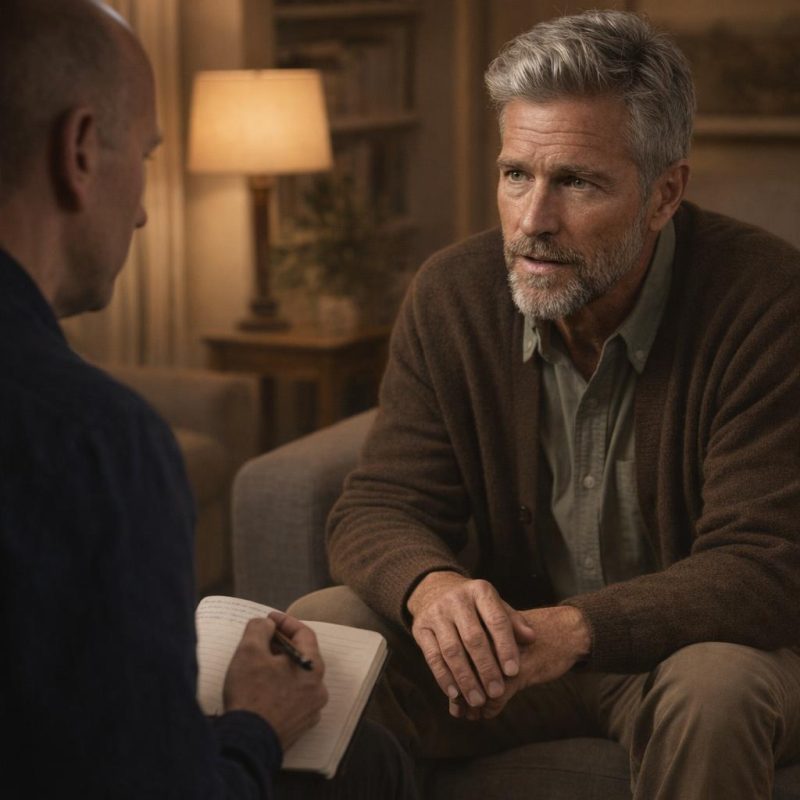 Image by RM AI
Threat of Bankruptcy
Richard kept going, and I kept listening, and the picture he was drawing got darker with every sentence. The accident hadn't just been costly in the immediate sense — the repairs, the medical bills, the lost production time. He said there had been questions afterward about whether the equipment had been properly maintained, whether the safety standards had been followed the way they should have been. He said those questions had the potential to become something much more serious. Legal consequences, he said. Personal liability. I wrote those words down too. My grandfather had signed his name to things, had made decisions about how the business was run, and if the wrong people started asking the right questions, there was a real possibility that everything he'd built could be taken apart. Richard said the word bankruptcy quietly, like he was still uncomfortable saying it out loud after all these years. He said it wasn't just my grandfather's livelihood at stake — it was the livelihoods of the families who worked there, people who had mortgages and children and no other place to go. I sat with that for a moment. I thought about my grandfather the way I'd always known him — the formal photographs, the careful posture, the sense of a man who kept things close to his chest. I had never thought of him as desperate. But sitting there with the phone pressed to my ear, I began to understand what it might have felt like to watch everything you'd spent your life building stand at the edge of collapse.
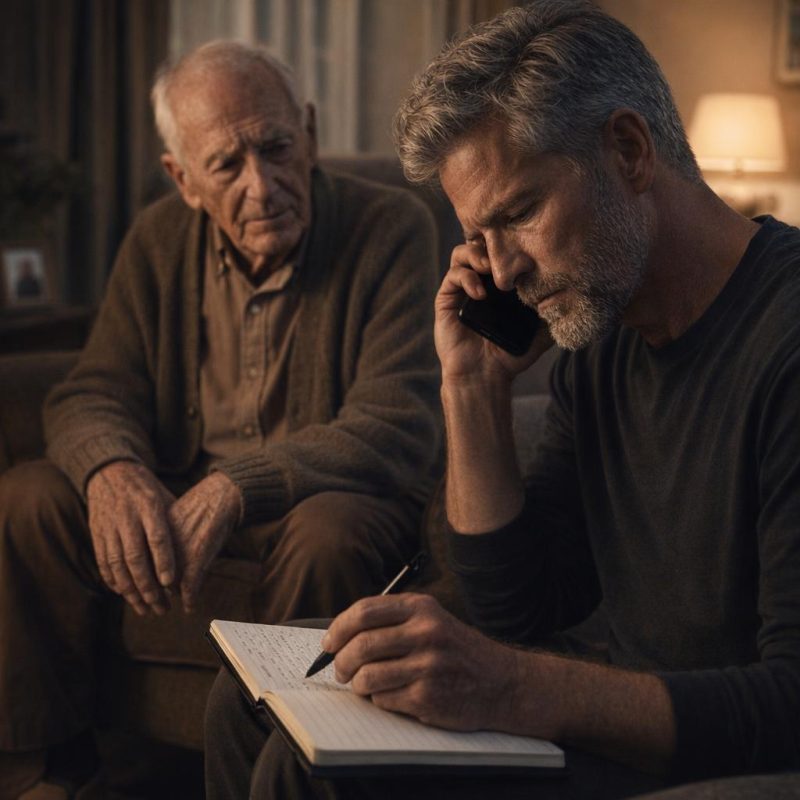 Image by RM AI
The Grandfather's Involvement
Richard said my grandfather was not a man who accepted defeat easily. He said it without judgment, just as a fact, the way you describe someone you knew well enough to understand without needing to approve of everything they did. He said that when the accident happened and the full weight of what it meant became clear, my grandfather had started looking for a way through it. Not a way around it exactly — Richard was careful about how he put it — but a way to keep the business standing and the family protected. I noticed that Richard's voice had changed again. It had gotten quieter, more measured, the way a person sounds when they're approaching something they're not entirely comfortable with even now. He said my grandfather had been talking to people, working through the problem the way he worked through everything — privately, without letting on to anyone outside his immediate circle how serious things had gotten. I asked Richard if he had been part of that circle. He said he had been close enough to Daniel to know what was being discussed, that Daniel had told him things in confidence that Richard had never repeated to anyone. He said my grandfather had been looking for a solution that would satisfy the people asking questions without destroying what remained of the business. I wrote the word solution in my notebook and stared at it. Richard's voice pulled tighter as he said that my grandfather had found one — and that it had involved Daniel directly.
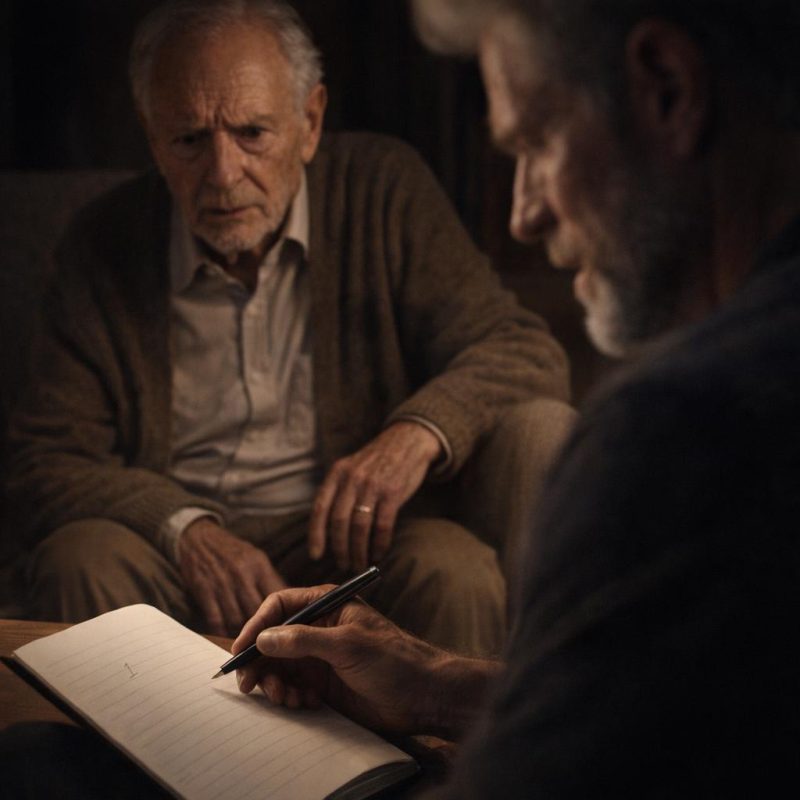 Image by RM AI
Daniel's Choice to Leave
I didn't say anything. I think Richard understood that I needed him to keep going without me asking him to, because he did. He said that my grandfather had come to Daniel with the situation laid out plainly — the accident, the liability, the threat to the business, the families who depended on it. He said Daniel had been young, in his mid-twenties, and that he had listened to all of it without interrupting. Richard's voice was quieter now, almost careful. He said my grandfather had explained that if someone were to take responsibility for the accident — to step forward as the person at fault — the legal pressure would shift, the questions would have somewhere to land, and the business might survive. I pressed my pen flat against the notebook page. Richard said Daniel had sat with that for a long time. He said there had been more than one conversation, that it hadn't happened all at once. But in the end, Daniel had told my grandfather that he would go. He had agreed to leave town, to take the weight of it with him, to disappear quietly so that the business and the family could keep standing. I heard Richard say it and I felt something in my chest go very still. Richard said Daniel had agreed to go.
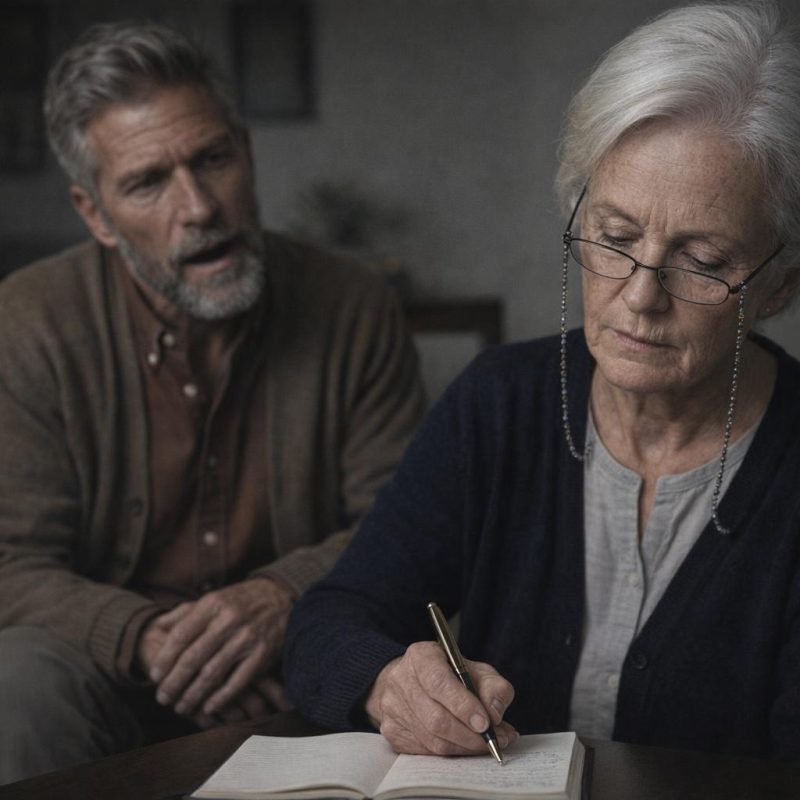 Image by RM AI
Grappling with the Scope
I set my pen down. I hadn't written anything in several minutes and I didn't try to pick it up again. Richard had gone quiet too, giving me space I hadn't asked for but needed. I tried to hold the shape of what he'd just told me — a young man in his mid-twenties, sitting across from his father, listening to a case being made for why he should walk away from his own life. And then agreeing to do it. I thought about my mother. She had been a teenager when Daniel disappeared. She had grown up in that house, eaten at that table, asked questions that must have been answered with careful, practiced words. She had grieved her older brother. I had watched her grieve him, in the quiet way she sometimes went still when his name came up, in the way she kept that one photograph. And all that time, he had been alive somewhere. The deception hadn't been a misunderstanding or a rumor that got out of hand. It had been a decision — made by people my mother trusted, people she lived with, people who sat beside her at dinner and watched her cry and said nothing. I didn't feel angry yet. I think I was still too far inside the shock of it to reach anger. I just sat there with the phone in my hand, and the kitchen around me felt very quiet, and the weight of what had been done to my mother — and to Daniel — settled over me like something I couldn't lift.
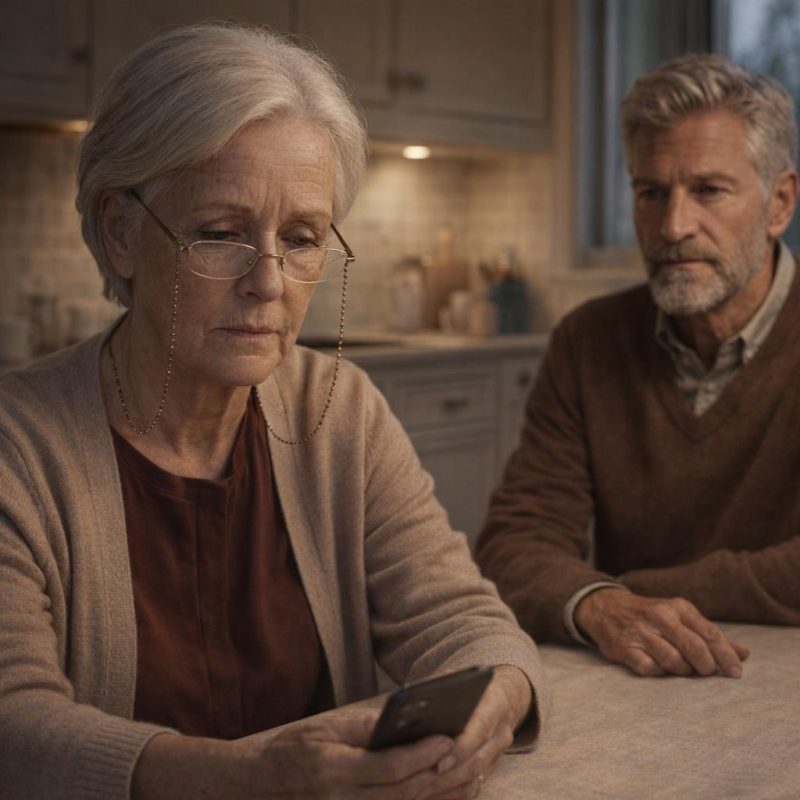 Image by RM AI
Realizing the Magnitude
Richard said he was sorry. He said it simply, without elaborating, and I believed him. I told him I knew he hadn't been the one to make the decisions, and he said that was true but that it hadn't always made it easier to live with. We sat in that for a moment, the two of us on opposite ends of a phone line, both of us carrying something we hadn't chosen to carry. I asked him how many people had known. He said not many — my grandfather, a few people close to the business, and Daniel himself. He said my grandmother had been told a version of events that wasn't the full truth. He said my mother and Aunt Margaret had been told even less. I thought about that word — version. A version of events. Not a mistake, not a misunderstanding, but a version. Something shaped and handed to people who had no reason to question it. My mother had been seventeen years old. She had taken what she was given and built her grief around it and carried it for the rest of her life. I had grown up inside that grief without knowing what it was made of. The family I thought I knew — the stories, the silences, the careful way certain subjects were never quite discussed — all of it had grown up around something that had never been allowed to surface. Richard said there was still more I needed to hear. I told him I was still there. The story I had grown up inside had been built by other people's hands, and I was only now beginning to see the seams.
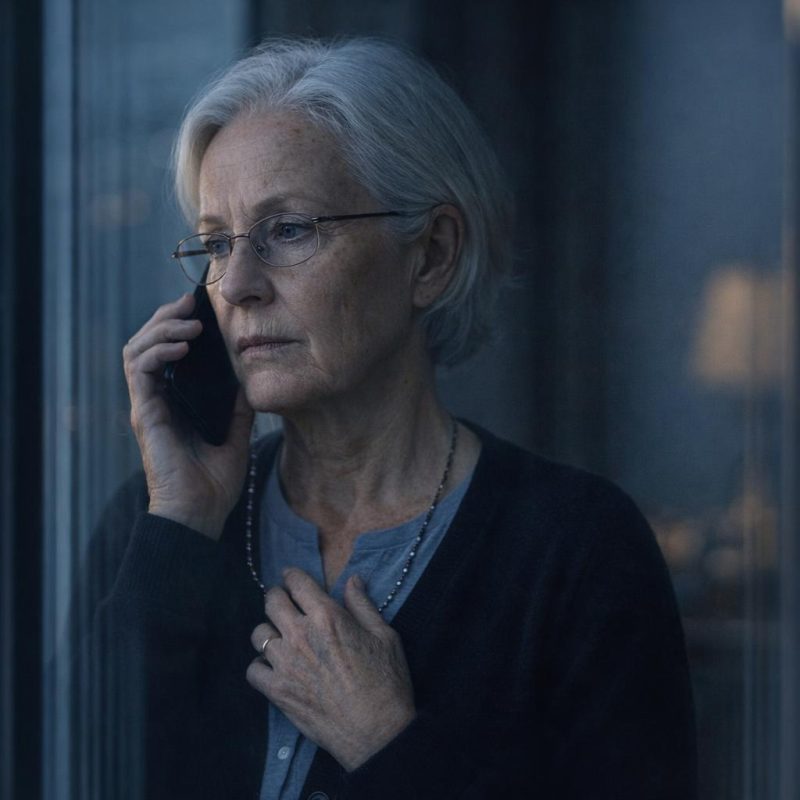 Image by RM AI
The Death Story Was Deliberate
Richard said he needed to tell me about the story the family had given people. Not just that Daniel had left — but what they had said to explain why he was gone and why he was never coming back. I felt my grip tighten on the phone. He said that leaving town quietly wasn't enough on its own. People would ask questions. Neighbors, relatives, friends from church — people who had known Daniel his whole life would want to know where he'd gone and why. A young man didn't simply vanish without an explanation. So an explanation had been made. Richard said the word made carefully, and I heard the weight in it. He said the family had told people that Daniel had died. A construction accident, he said — and the story had held because no one close enough to question it had been given reason to look. He said my grandfather had been involved in putting that story together. He said my mother and Aunt Margaret had been told the same thing as everyone else — that their older brother was dead. They had not been given a choice about what to believe. They had simply been handed the story and left to grieve it. I sat very still. I thought about every time my mother had mentioned Daniel's name with that particular quietness, every time the subject had closed before it fully opened. Richard's voice came through the phone flat and clear: the death had never happened — it had been invented.
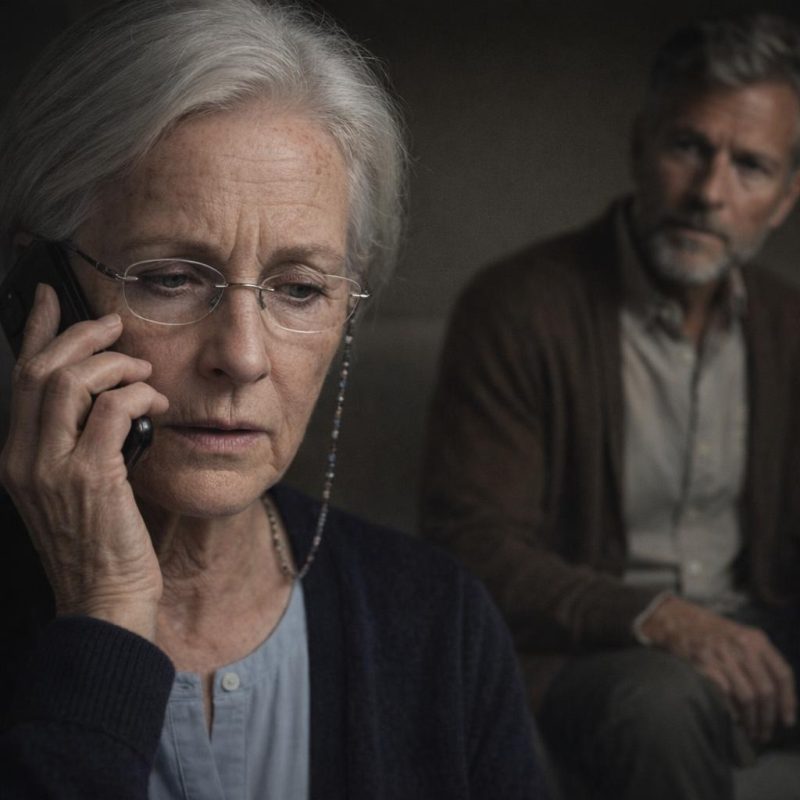 Image by RM AI
Mother Was Only a Teenager
I asked Richard how old my mother had been when it happened. He was quiet for a moment, and then he said she was fifteen. Fifteen years old. I had to set the phone down on my knee and just breathe for a second. My mother had been a teenager — a child, really — when she was handed a story about her older brother dying in a construction accident and told to grieve it. She hadn't been consulted. She hadn't been protected from the lie in any meaningful way. She had simply been given it, the way you hand a child something heavy and walk away. Richard said she had loved Daniel the way younger sisters love older brothers who are kind to them — completely, without reservation. He said Daniel had been good to her, patient with her, the kind of older brother who looked out for her at school and walked her home when it was late. And then one day he was gone, and she was told he was never coming back because he was dead. I thought about my mother's face when she talked about him in those rare, careful moments. That particular quietness she carried. I had always read it as grief, and I had been right — it was grief, real and total and completely undeserved. She had spent her entire life mourning a brother who was alive, and she had never once been given the chance to know otherwise. She had carried that loss faithfully, innocently, for every year of her adult life.
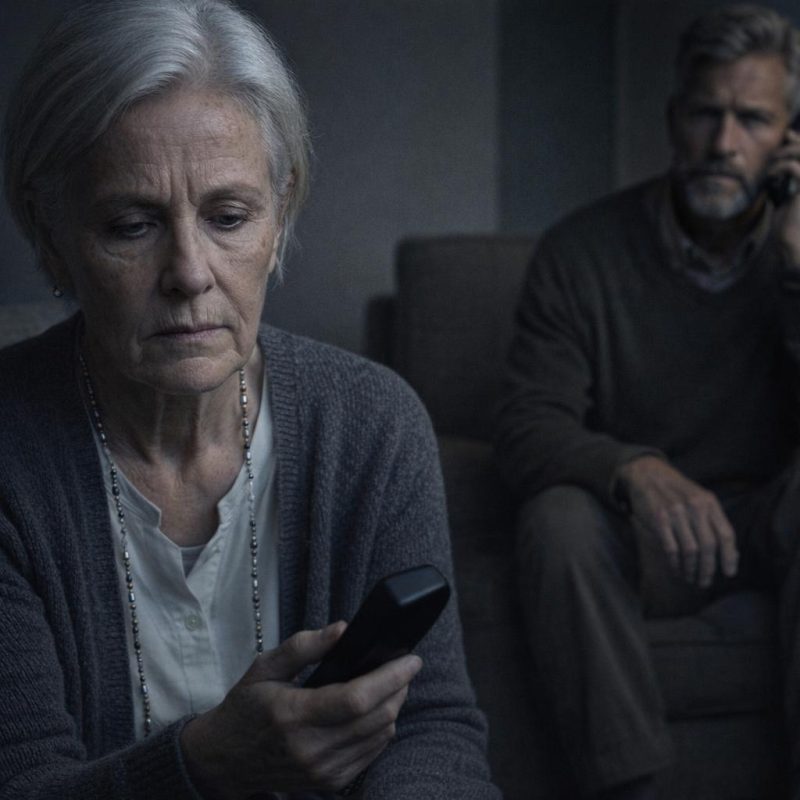 Image by RM AI
The Lie That Became Permanent
I asked Richard how something like this could go on for so long. Sixty years. I kept turning that number over in my mind like a stone I couldn't put down. He said that in the beginning, it probably felt manageable — a story told to get through a crisis, something that could be revisited later when things settled. But things never settled in the way that would have made revisiting it feel safe. Time passed. The story calcified. The people who had told it once found themselves having to maintain it simply because correcting it would have meant explaining why they had told it in the first place. Richard said that's how these things work. You don't make a decision to lie forever. You make one decision, and then the next decision is made for you by the first one, and then the next, and before long the lie isn't something you're actively choosing — it's just the shape of the world as everyone around you knows it. New people came into the family. Children were born. My mother married and had me, and I grew up in a house where Daniel was a ghost with a grave that didn't exist, and no one who knew the truth ever said a word. I sat with the phone pressed to my ear and thought about how something meant to be temporary had simply never been given permission to end.
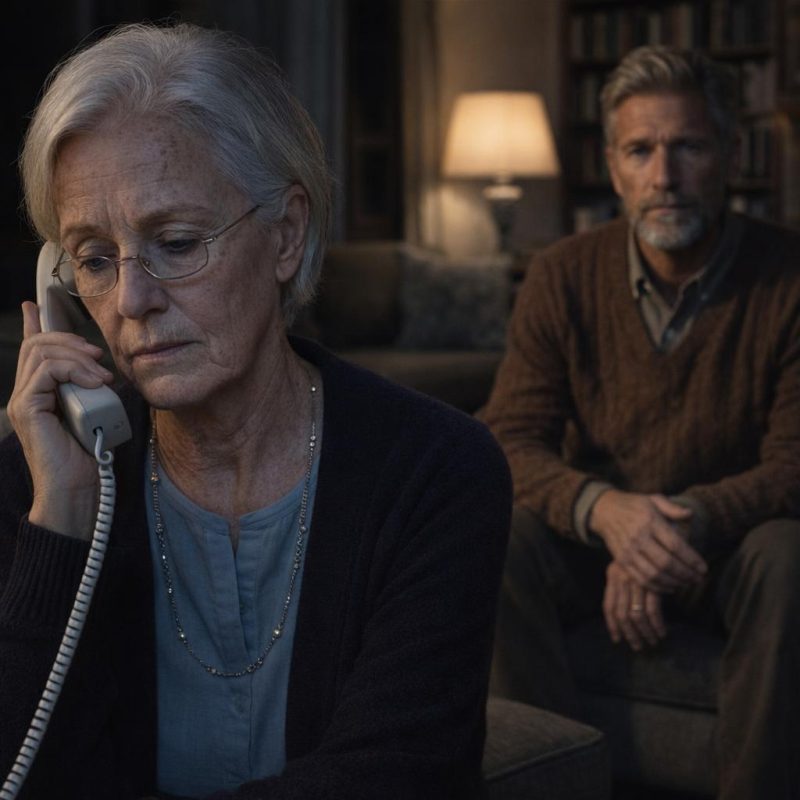 Image by RM AI
Daniel's Sacrifice for His Siblings
Richard said he wanted me to understand something about Daniel before he went any further. He said Daniel hadn't been forced. Not exactly. He said Daniel had been a young man who loved his family — loved his younger sisters, my mother and Aunt Margaret, in a way that was particular and fierce — and when his father laid out what was at stake, Daniel had listened. Richard said the family business was in serious trouble, and there was a situation involving Daniel that, if it became public, would have brought everything down. Jobs, the house, his sisters' futures, all of it. Richard said Daniel had sat with that for a long time. He hadn't agreed immediately. But he had agreed. He had believed that his leaving — his disappearing completely — was the price that would keep everything else intact for the people he loved. Richard's voice was careful when he said this, like he was still trying to be fair to a decision he had watched his friend make decades ago. He said Daniel had walked away from his name, his family, his entire life, believing it was an act of love. He had given up every birthday, every holiday, every ordinary Tuesday with the people who mattered to him — a whole life's worth of moments with his sisters, with people who never knew he was still out there thinking of them, because he believed it was the only way to protect them.
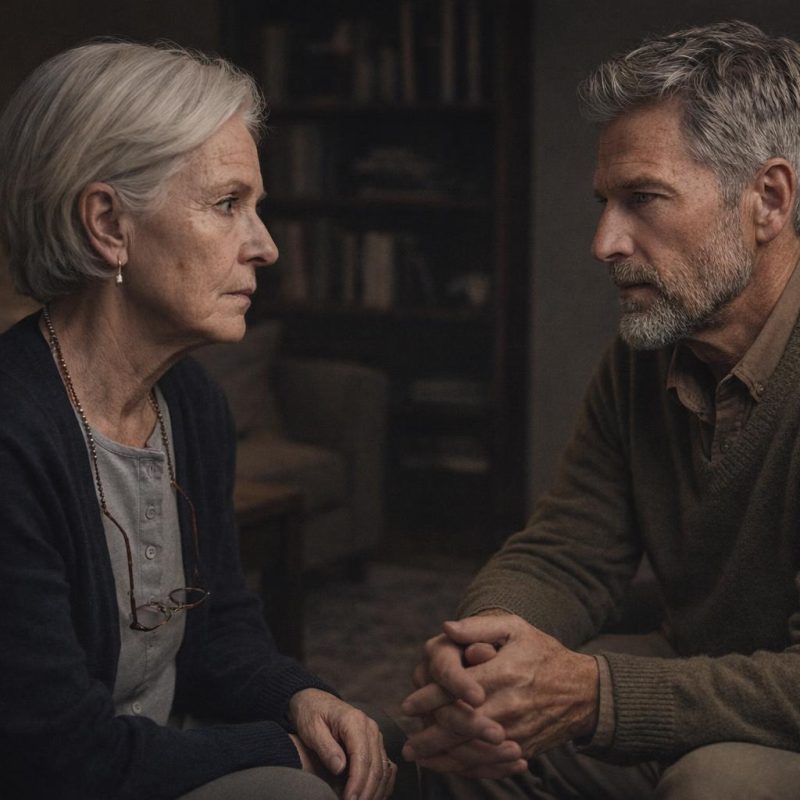 Image by RM AI
Cornered by the Weight
I don't know exactly when during Richard's account I stopped being able to take notes. At some point my pen was just resting in my hand, not moving. The weight of what he was describing had become something physical — a pressure behind my sternum that made it hard to sit up straight. I had started this search thinking I might find a name, a date, a grave somewhere that would give my family a piece of missing history. What I had found instead was a deliberate erasure. A brother who had been alive. A mother who had grieved him for nothing. A lie that had been handed down like an heirloom, generation to generation, until it reached me. I thought about Emma's engagement party, the moment Eleanor had asked me who told me Daniel had died, the way that single question had cracked something open that sixty years of silence had sealed shut. I thought about all the family dinners, all the holidays, all the times my mother had gone quiet at the mention of his name, and I felt something close to fury — not the hot, immediate kind, but the slow, cold kind that settles in your chest and stays. Richard said he was almost at the end of what he knew. He said there was one piece left, the piece that explained how the whole thing had been set in motion, and his voice carried the weight of a man who had held something too long. I told him I was listening.
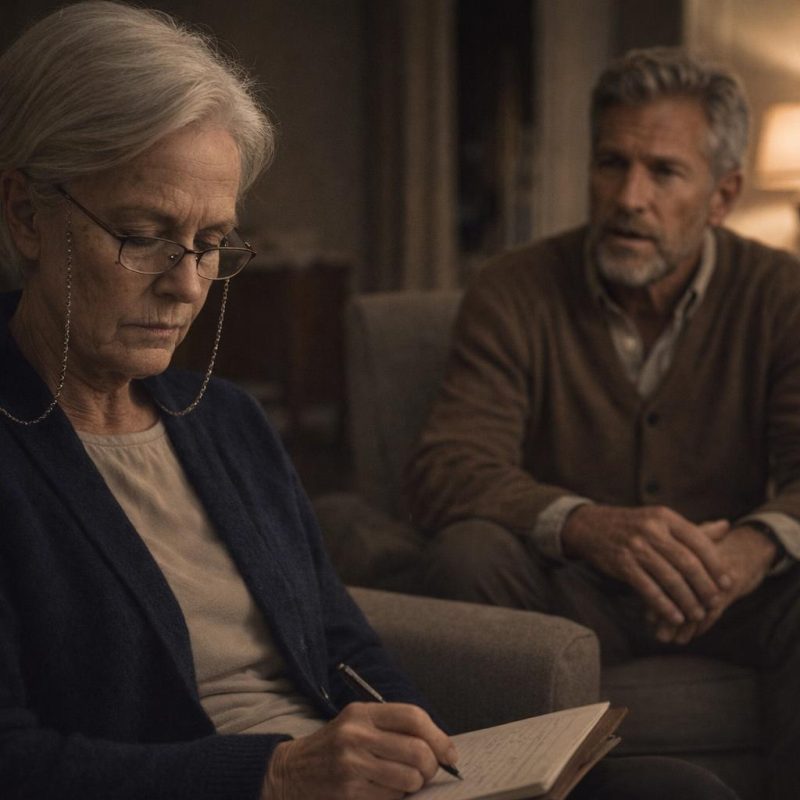 Image by RM AI
The Grandfather Orchestrated Everything
Richard said it had been my grandfather. Grandfather Thomas. He said it plainly, without softening it, and I heard the steadiness in his voice — the steadiness of someone who had decided, finally, that the truth deserved to be said out loud. He told me that my grandfather had gone to Daniel privately, before anyone else knew how bad things had gotten with the business. There had been a situation — a debt, a scandal, something that had Daniel's name attached to it in a way that could have destroyed everything the family had built. My grandfather had laid it out for Daniel like a ledger: if Daniel stayed, the business collapsed, the family lost everything, his sisters lost their futures. If Daniel left — left completely, left permanently, left in a way that couldn't be questioned or followed — the family could survive it. And then my grandfather had done the rest. He had constructed the story of the construction accident himself. He had told it to my mother and Aunt Margaret and to every neighbor and church friend and relative who asked. He had chosen to erase one son in order to preserve everything else, and he had maintained that erasure without correction for the rest of his life. Richard said Daniel had trusted his father's judgment. He had believed his father when he said it was the only way. I sat there holding the phone, and the man I had known as a stern but decent grandfather — the man whose photograph still sat on my sister's mantle — was someone I no longer recognized at all.
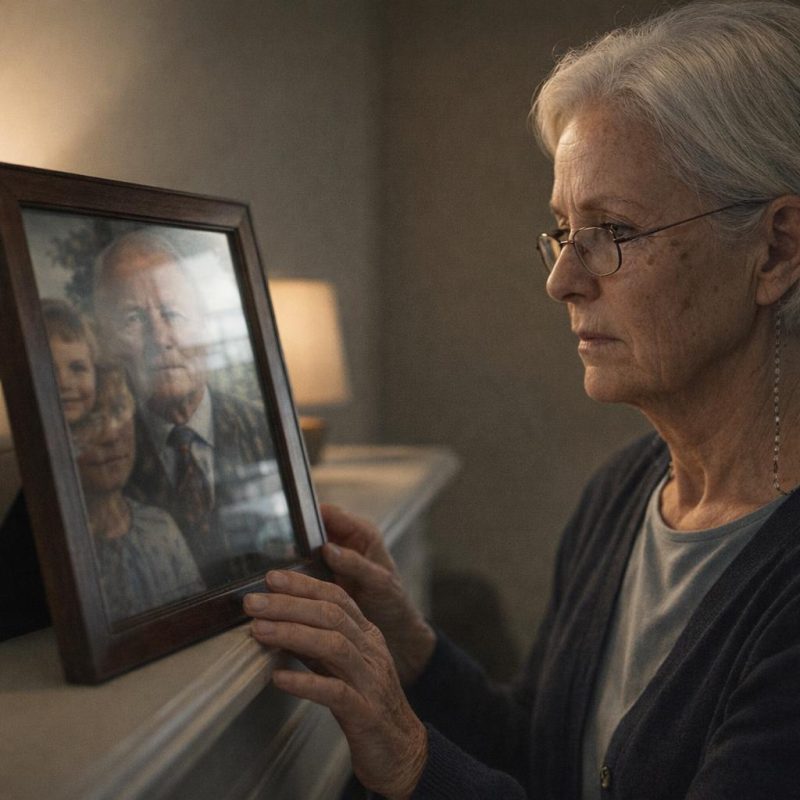 Image by RM AI
Grappling with Calculated Cruelty
I didn't say anything for a long time after Richard finished. I'm not sure he expected me to. He just stayed on the line, quiet, the way people do when they know there's nothing useful left to add. I kept thinking about the photograph on my sister's mantle — Grandfather Thomas in his good suit, that formal expression he always wore in pictures, the one we had always read as dignity. I thought about the holidays I had spent in his house as a child, the way he sat at the head of the table, the way everyone deferred to him. I had understood that deference as respect. I was only now understanding what it might also have been. He had looked his own son in the eye and told him to disappear. He had invented a death. He had handed that invented death to a fifteen-year-old girl and let her carry it for the rest of her life. And he had done all of it — I kept coming back to this — not in a moment of panic, not in a single terrible instant, but across time, with repetition, with maintenance. He had told the story more than once. He had chosen, more than once, not to correct it. Richard said quietly that he thought I should know my grandfather had never spoken of it again, not to him, not to anyone he knew of. I asked Richard if he thought my grandfather had felt any remorse. There was a long pause before he answered.
 Image by RM AI
Eleanor's Package
Eleanor called on a Thursday afternoon, about a week after Emma's reception. I almost didn't answer — I had been moving through my days in a kind of fog since my conversation with Richard, going through the motions of ordinary life while carrying something that felt anything but ordinary. But I saw her name on the screen and picked up. She asked how I was managing, and I told her honestly that I wasn't entirely sure. She said she understood, and then she said there was a reason she was calling beyond just checking in. She told me that Daniel had given her something to keep, years ago — she didn't say exactly when, only that it had been a long time. She said he had asked her to hold onto it and hadn't given her specific instructions about what to do with it eventually. She had kept it all this time in a box in her study, and after meeting me at the reception and learning what I had uncovered, she had decided I was the right person to have it now. I asked her what it was. She said they were letters. Several of them, she thought, though she hadn't opened them — she had respected that they weren't hers to read. She said they were addressed to my mother. Daniel had written them, she said, but he had never mailed them. She was going to send the package that same afternoon, and she hoped they would give me something I was looking for. After we hung up, I sat in the kitchen chair and thought about Daniel's words, preserved all those years in envelopes my mother had never held.
 Image by RM AI
Opening the Package
The package arrived four days later, a padded envelope with Eleanor's return address in the upper left corner and my name written in her careful, elegant hand. I set it on the kitchen table and stood there looking at it for a moment before I sat down. I opened it slowly, pulling back the flap without tearing anything, the way you handle something you already know is fragile. Inside were five envelopes, each one aged to a soft ivory color, slightly thickened at the edges the way old paper gets. They were held together with a rubber band that had gone brittle and snapped the moment I touched it. I set them out in a row on the table. Each envelope had my mother's name written on the front — her full name, in handwriting I had never seen before but recognized immediately as belonging to someone who had learned to write in the same era she had, the same careful loops, the same slight lean to the right. There was no postage on any of them. No return address. Just her name, written by a hand that had loved her and then been made to disappear. I picked up the first envelope and held it without opening it, feeling the slight give of the paper, the weight of whatever was folded inside. My mother had never known these existed. Daniel had written to her anyway, across all those years of silence, and the words had waited in a box in Eleanor's study for longer than some people live. I sat at the table with all five letters in front of me, and the kitchen was very quiet around me.
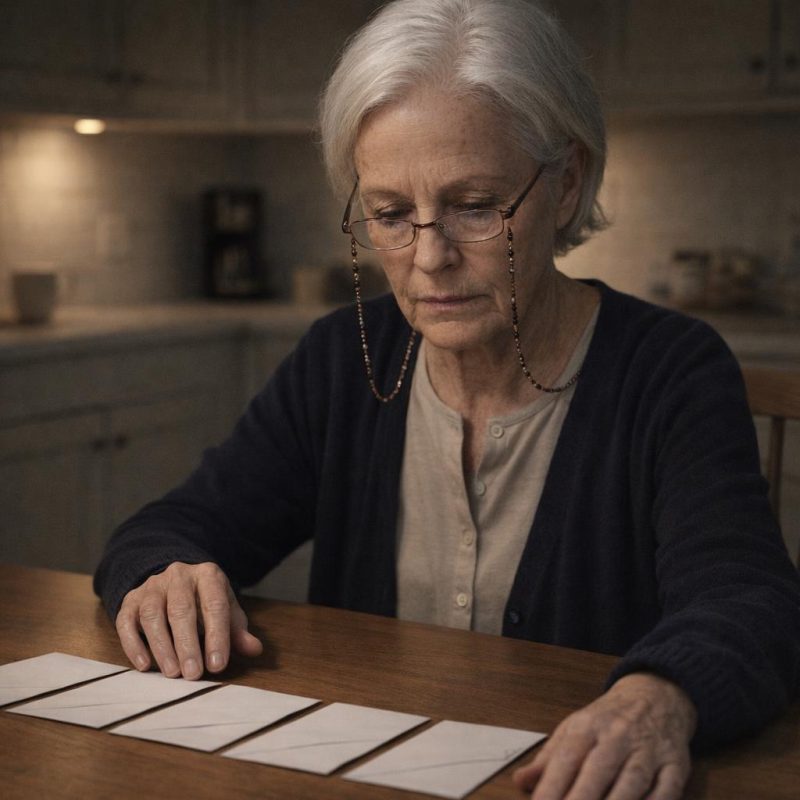 Image by RM AI
Reading Daniel's Letters
I opened the first letter carefully, easing the single folded page out without tearing it. The handwriting was the same as on the envelopes — careful, slightly slanted, the kind of penmanship that belonged to a different era. He started simply. He wrote that he thought about her every day. He wrote that he hoped she was well, that she had found someone good, that she was happy in ways he couldn't picture because he hadn't been there to see any of it. His voice on the page was gentle in a way that made my chest ache — not dramatic, not bitter, just quiet and full of something he couldn't quite put down. He described the town he'd settled in, the small apartment, the work he'd found. He wrote about the smell of autumn there, how it reminded him of home, how he'd learned to stop letting it. The second letter was dated three years later. He wrote that he still thought about writing to her directly but had stopped himself each time, because he didn't know what the letter would do to her, whether it would bring comfort or only open something that had been allowed to close. By the third letter, something had shifted. He wrote that he had tried, once, to reach out — and then stopped himself, the sentence trailing into a long silence on the page before he moved on to something else entirely. He wrote that he had learned, over time, that some doors were better left as they were, though he never explained what had taught him that.
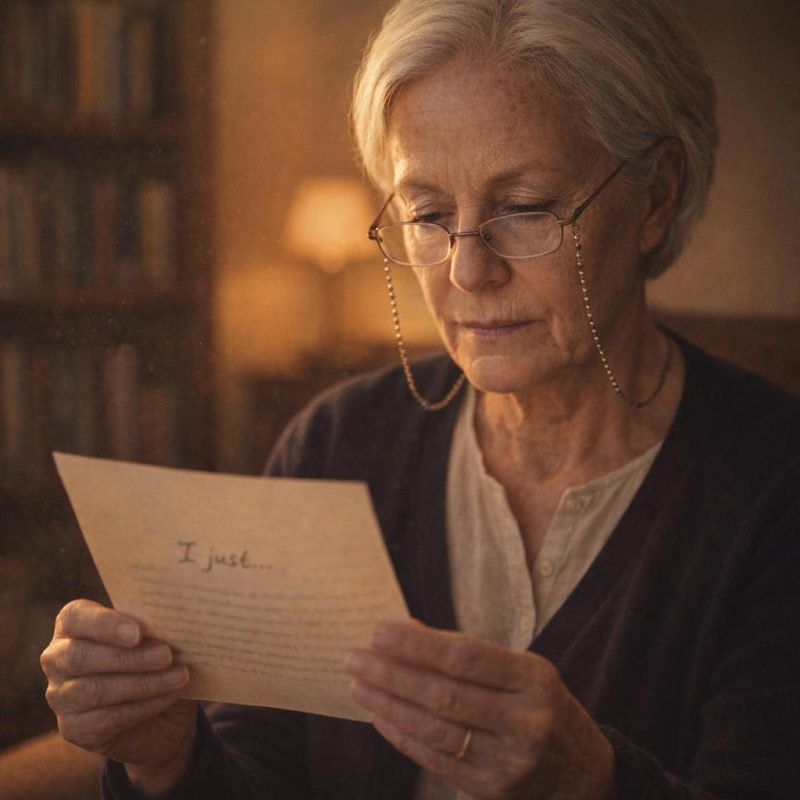 Image by RM AI
Daniel's Reconnection Attempts
The fourth letter was the hardest to read. Daniel wrote about the years after their parents died, when he had believed — genuinely believed — that the reason for his silence had finally ended. He described sitting down and writing to his sisters, real letters with a return address, letters he actually sent. He waited weeks. Nothing came back. He wrote that he told himself the address was wrong, that the letters had been lost, that there was some simple explanation he was missing. So he tried again. He found a phone number through a neighbor of a neighbor, someone who still lived near the old house. He called twice. No one answered. He didn't know, reading his own words back to himself on the page, whether to feel foolish or heartbroken, and I could feel that uncertainty in every sentence. He wrote that he drove to the old hometown once, parked down the street from the house where they'd grown up, and sat there for an hour before driving away without knocking. He couldn't explain why he left. He wrote that it felt like the house itself was telling him something he didn't have the courage to hear yet. The fifth letter returned to the same question he couldn't answer: why, after everything that had kept them apart, did the silence continue even when the reason for it should have been gone. Across five letters and more than a decade of attempts, not one had ever been answered.
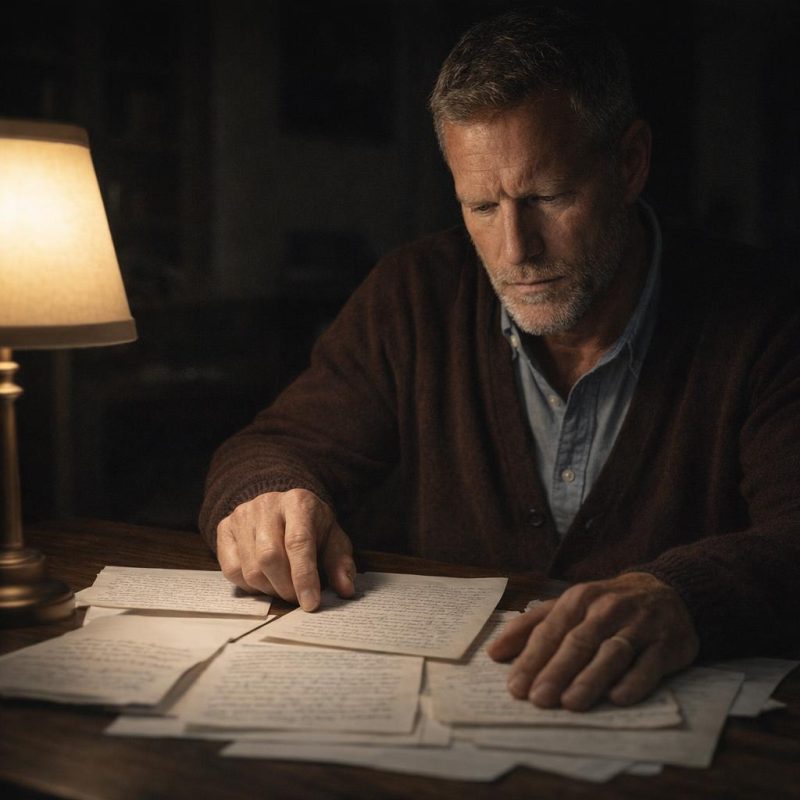 Image by RM AI
Hometown Warnings
The answer was in the margins of the last letter, written smaller than the rest, like he'd added it after the fact and hadn't wanted to give it too much space on the page. Each time he had tried — the letters, the phone calls, the drive back to the old street — someone had found him first. Not the same person every time, but always someone connected to the old business, someone who knew enough to know he was asking. They came politely. He was careful to say that. No threats, no raised voices. Just a quiet conversation, always the same shape: if the past came back up, the original scandal would come with it. There were employees who had stayed on after everything settled, people who had built their retirements around that company, families who had no idea what had happened in the years before they arrived. Daniel wrote that he had sat across from these men and believed them. He had no reason not to. He wasn't naive — he said that plainly — but he also couldn't look at the arithmetic and decide that his need to see his sisters was worth more than a pension someone else had spent thirty years earning. So he stopped. Each time, he stopped. He folded the attempt back up and put it away and went home to his apartment and his quiet life and his letters that he wrote to my mother but never sent. I set the last page down on the table and sat with the weight of what it had cost him to be that decent.
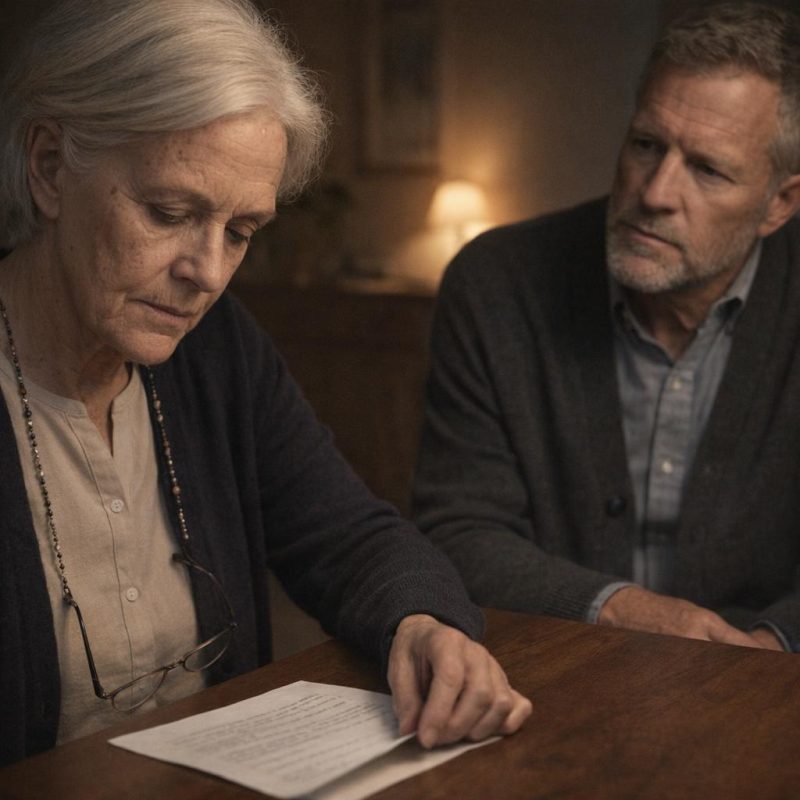 Image by RM AI
Daniel's Final Choice
The final letter wasn't long. It was dated about two years before Eleanor had told me he died, and the handwriting was a little slower than the earlier ones, more deliberate, like each word had been considered before it was committed to the page. He wrote that he had made his peace with it. Not easily — he was honest about that — but fully. He wrote that he understood his sisters couldn't respond even if they wanted to, that the silence wasn't indifference, that he had chosen to believe that. He wrote that he forgave the people who had warned him away, because they were protecting something real, even if the cost of that protection had been paid entirely by him. He described his apartment, the window that looked out over a small park, the way the light came through in the mornings. He wrote that he had built a life he was not ashamed of. He wrote that he hoped, wherever my mother was, she had been loved well and had not spent too many years wondering about him. He asked Eleanor to keep the letters safe, and to use her judgment about whether they ever needed to find their way to anyone. He didn't ask for anything else. I sat at the kitchen table with that last page in my hands, and the morning light came through my own window, and I thought about a man who had given up everything and still found a way to wish his family well.
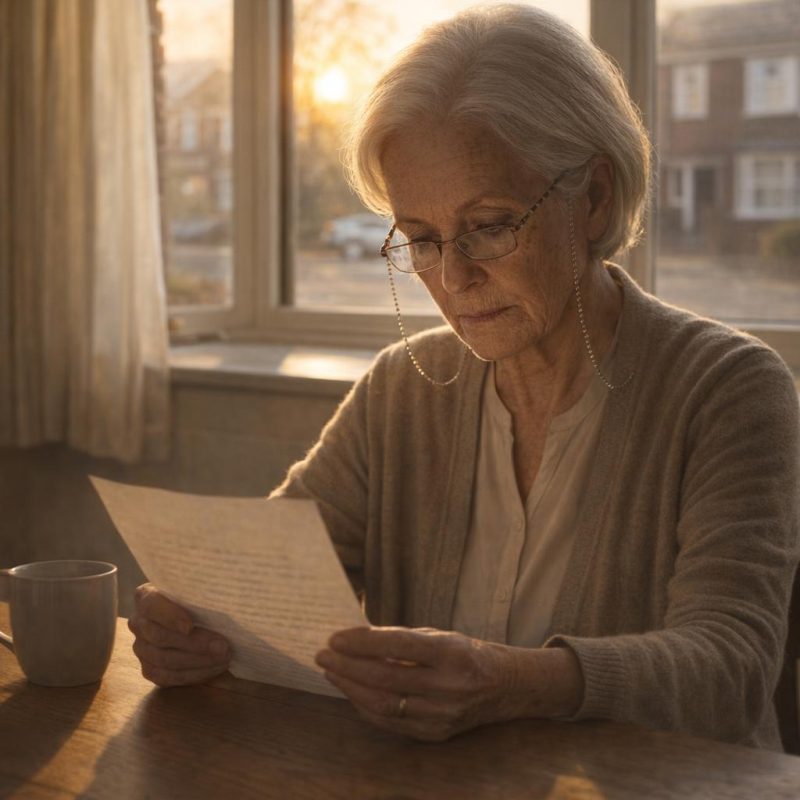 Image by RM AI
Hiring the Genealogist
I spent two days after finishing the letters just sitting with what I knew. Then I decided that sitting wasn't enough. Daniel had lived a whole life after the exile — decades of mornings and work and choices — and I didn't know any of it beyond what he'd written in those five letters. I wanted to know who he had actually been. Not the ghost my grandfather had made of him, not the sad figure in Eleanor's careful keeping, but the real man who had gotten up every day and built something out of what he'd been left with. I asked around and did some research, and eventually I found a genealogist who specialized in exactly this kind of work — tracing people who had been deliberately lost, reconstructing lives from public records and institutional archives. We met at her office, a small room lined with folders and filing cabinets and the particular smell of old paper that I was starting to associate with the truth. I told her everything. She listened without interrupting, took careful notes, and asked precise questions that told me she understood exactly what she was looking at. When I finished, she said she thought she could find him — the real shape of his life, the places he'd lived, the work he'd done, the people who might remember him. I told her I needed to know that his life had mattered, that it had amounted to something real. She looked at me steadily and said that in her experience, it usually had.
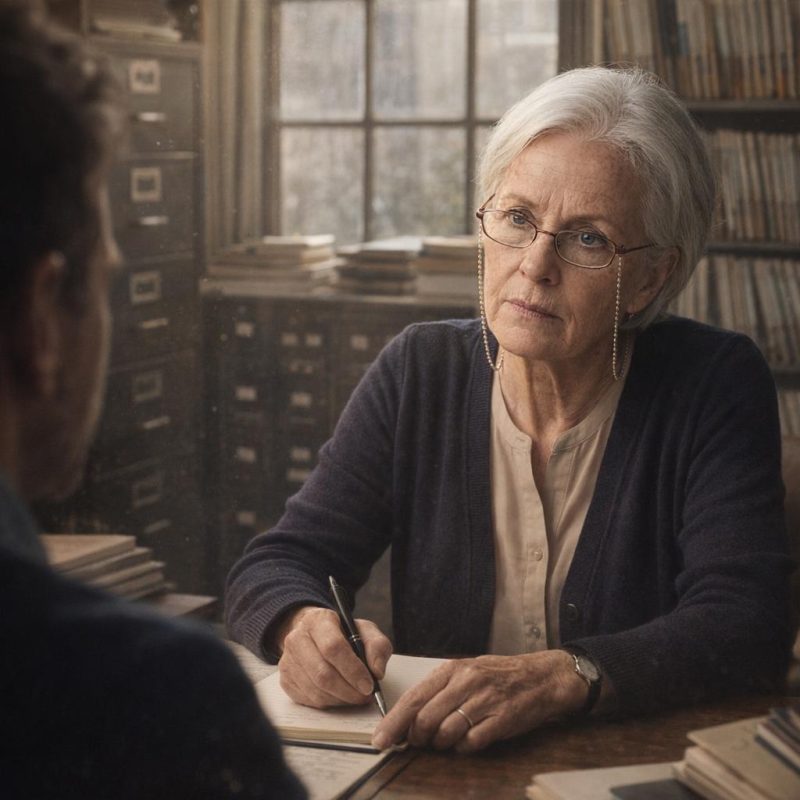 Image by RM AI
Tracing Daniel's Quiet Life
She called me ten days later. I sat down at the kitchen table before I even said hello, because I could tell from the first word that she had found something. She had traced Daniel through public records across four decades — voter registrations, tax filings, library cards, the small bureaucratic footprints of a quiet life. He had lived in the same modest apartment for thirty-one years, a two-bedroom unit on the third floor of a building near a veterans' center. He had never married. There were no children listed anywhere in the records. He had worked a series of jobs — warehouse logistics, then a hardware supply company, then a small building materials firm where he stayed for nearly twenty years. His income had been modest and consistent. She described a man who had kept his head down and paid his bills and shown up where he said he would. She said the volunteer records were extensive — he had logged hundreds of hours at the veterans' center over the years, more in some years than others, but never stopping entirely. She said his name appeared in the center's annual reports going back to the late 1970s. I was writing everything down, my handwriting getting smaller and tighter the way it does when I'm trying to hold something carefully. Then she paused and said there was one more thing she hadn't mentioned yet, something she'd found that she thought I needed to hear about separately.
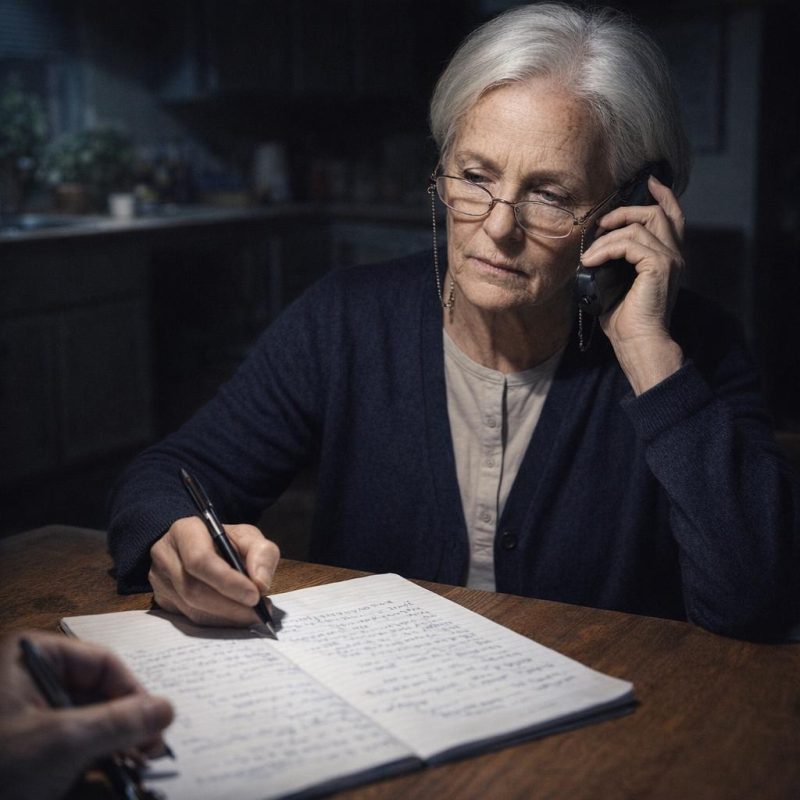 Image by RM AI
Mentoring Young Tradespeople
The mentoring program had been informal at first, she said — Daniel had started working with young men coming out of the veterans' center who needed a trade and didn't know where to begin. He knew carpentry, basic electrical, plumbing fundamentals, enough to make himself useful. He started showing up on job sites with them, vouching for them to foremen he'd built relationships with over the years. She had found three former mentees who were willing to speak with her, all of them now in their forties and fifties, all of them still working in the trades. One of them had started his own contracting business. They each described Daniel the same way — patient, exacting, not a man who gave praise easily but one whose approval meant something when it came. One of them had said that Daniel never talked about his family, but that you could tell there was something there, some absence he carried quietly. He had given these men what he knew, freely and without expectation, and they had built their working lives on it. I thought about my grandfather, who had decided that Daniel was a liability, a problem to be managed and removed. And then I thought about the man these three people remembered — the one who had shown up, year after year, and handed something real to people who needed it. The records showed Daniel had kept at it until he was well into his seventies, still turning up on job sites, still making himself useful to anyone who asked.
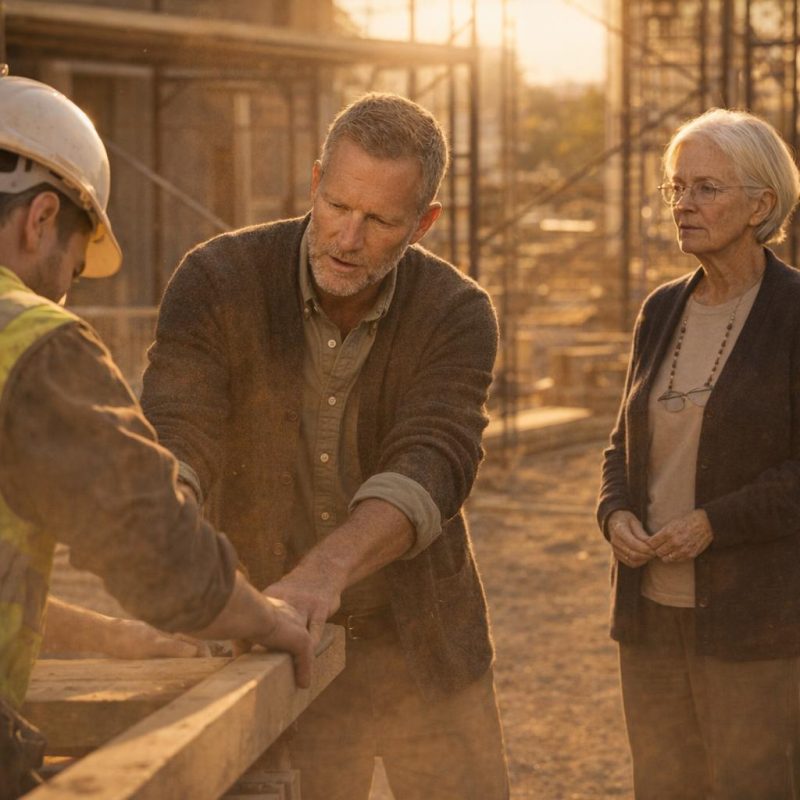 Image by RM AI
The Historical Society Interview
She called again two days later, and her voice had a different quality to it — careful, like she was carrying something she didn't want to drop. She said she had found something she hadn't expected, something that had come up in the last round of archive requests she'd sent to the county historical society where Daniel had spent his final years. They had been running an oral history project for the past decade, recording interviews with longtime residents and local tradespeople, preserving voices and stories before they were gone. Daniel had agreed to participate. She had the date of the interview — it was fourteen months before he died. She said the historical society had digitized their archive two years ago, and that the recording existed, that she had already been in contact with them and they were willing to share a copy. I asked her how long the interview was. She said approximately forty minutes. I sat very still at the kitchen table, my pen still in my hand from the notes I'd been taking, and I thought about the fact that somewhere in a digital archive, my great-uncle's voice was waiting — forty minutes of it, recorded while he was still alive and still himself. I asked her to send it to me as soon as she possibly could.
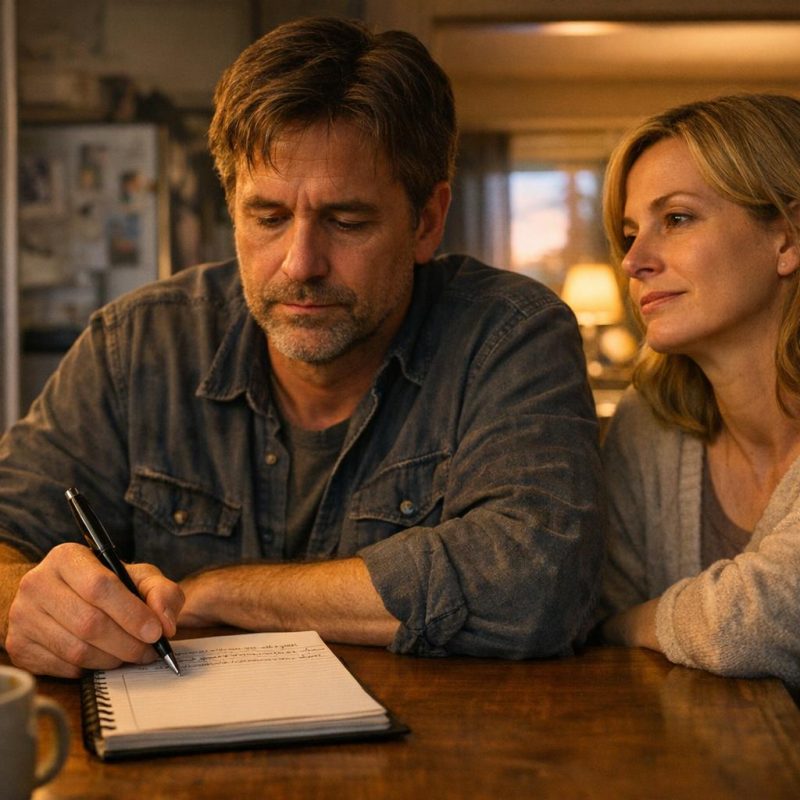 Image by RM AI
Daniel's Greatest Regret
The file arrived in my inbox on a Tuesday morning, and I sat with my coffee going cold beside me for nearly twenty minutes before I could bring myself to click it open. When I finally pressed play, the first thing I heard was background noise — the faint creak of a chair, someone adjusting a microphone — and then his voice. It was unhurried and low, with a slight formality to it, the way men of his generation spoke when they knew they were being recorded. The interviewer asked him about his early life, and he answered carefully, mentioning a family back east without naming anyone. Then she asked him what he considered his greatest regret. There was a pause — maybe three seconds, maybe four — and when he spoke again, his voice was the same measured tone, but something underneath it had shifted. He said he had siblings he never saw again after he was young. He said he never blamed them for the silence, that he understood it wasn't their choice to make. And then he said the thing that stopped me completely. He said the hardest part wasn't leaving. He said the hardest part was knowing there would be nieces and nephews, maybe even their children, who would grow up believing he had died — children who would never have the chance to know him, and who he would never have the chance to know. His voice, calm and unhurried, carried sixty years of quiet grief in a single sentence.
 Image by RM AI
Playing the Recording at the Reunion
I organized the reunion for a Saturday in late September, at my sister's house where there was enough room for everyone. I didn't tell people exactly what we were gathering for — just that I had found something important about the family and that I needed everyone together to share it. By the time I stood up in front of them, there were nearly thirty people in that living room, ranging from my aunt Margaret to Emma and her fiancé, three generations crowded onto sofas and folding chairs and the bottom two steps of the staircase. I told them everything from the beginning — the genealogist, the letters, Richard, Eleanor, the truth about what had happened to Daniel and why. I watched faces move through confusion and then disbelief and then something quieter and harder to name. Then I told them I had his voice. I set my phone on the speaker in the center of the room and pressed play. The same background creak, the same unhurried low voice filling the space between us. Nobody moved. When he reached the part about the nieces and nephews who would grow up believing he had died, Emma put her hand over her mouth. Aunt Margaret sat very still with her eyes closed. Someone near the back of the room was crying quietly, and then someone else was too, and then the recording ended and the room held the silence like it was something none of us wanted to break.
 Image by RM AI
Aunt Margaret's Confession
It was Aunt Margaret who spoke first, after the silence had stretched long enough that I thought no one would. She asked if she could say something, and the room went even quieter. She sat forward in her chair, her hands folded in her lap, and she said she had known. Not suspected — known. She said that Grandfather Thomas had called her to his bedside in the last week of his life, when he was already too weak to sit up on his own, and he had told her everything. The real reason Daniel left. The arrangement he had made with his son. The story about the construction accident that he had built to replace the truth. She said he had cried, which she had never seen him do before, and that he had asked her — not told her, asked her — to keep it quiet. He said the family's name had survived everything it had survived, and he didn't want the last thing people remembered about him to be this. She said she had told herself for years that she was protecting people. Protecting my mother, who was already gone by then. Protecting the rest of us from something that couldn't be undone. Her voice was thin and steady as she said it, and she didn't make excuses, just laid it out plainly. When she finished, nobody spoke for a long moment, and the weight of what she had carried alone for all those years settled over the room like something we could all finally feel together.
 Image by RM AI
Placing Daniel in His Rightful Place
We made the decision together, which felt right. Emma was the one who said it first — that Daniel deserved to be in the family record the way he actually was, not the way Grandfather Thomas had needed him to be. So that's what we did. I wrote out his real story in full, from the beginning to the end, and Emma added it to the memory wall she had built for her engagement party, the one that had started all of this. His photograph went up beside it — the one Richard had given me, Daniel in his fifties, standing outside what looked like a hardware store, squinting slightly into the sun. We corrected the family archive. We removed the construction accident. We wrote down the truth about the exile, the letters, the forty-minute recording that still existed in a county historical society's digital archive. Aunt Margaret sat with us while we worked, and at one point she reached out and touched the edge of his photograph with two fingers, just briefly, and didn't say anything. I thought about the question Emma had asked me at that engagement party, the one that had pulled the first thread loose. One question, asked in complete innocence, and sixty years of carefully maintained silence had come undone. Daniel's photograph sat in its place in the family record, his name written beneath it in full, with the years of his actual life and the true account of how he had spent them.
 Image by RM AI
KEEP ON READING
How a Deformity Made This Man an Urban Legend
Alex Fu on PexelsThere's a stretch of road in western…
By Christy Chan Jun 25, 2026
20 Bizarre Archaeological Finds That Mainstream History Refuses to Explain
Digging Up the Unexplained. Standard history textbooks like to present…
By Sara Springsteen Jun 24, 2026
The Deadly Beer Flood That Sounds Too Strange To Be…
en.wikipedia.org on GoogleOn the afternoon of October 17, 1814, a…
By Cameron Dick Jun 25, 2026
The Pope Whose Corpse Was Put On Trial
Cavallieri, 1588 on WikimediaIn January 897, a dead man was…
By Cameron Dick Jun 25, 2026
The History of Training Circus Animals
Svetlana Zhigulskiy on UnsplashThe history of training circus animals goes…
By Elizabeth Graham Jun 25, 2026
20 Royal Heirs Raised By People Who Weren’t Their Parents
Definitely Not The Ordinary Family Life. Being a royal child…
By Elizabeth Graham Jun 25, 2026