

The Suggestion
Sunday dinners at my house have always been the best part of the week, and this one was no different. Susan had brought a pot of her chicken soup — the kind she makes when she wants to feel useful — and Michael sat across from me at the kitchen table, quiet in that way teenagers are when they're content rather than sulking. We were halfway through dessert when Susan set down her fork and said, almost as an aside, that she'd been thinking about Michael's driving practice. Her SUV, she said, was just too big for a new driver. Too much car. Too many blind spots. I watched Michael glance up from his plate, and I could see him trying not to look too interested in where this was going. Susan said it practically, the way she says most things — no fuss, no sentiment — but the idea she floated was a good one. She thought maybe Michael could practice in my old station wagon instead. I didn't even let her finish the sentence before I said yes. That wagon has been sitting in my garage being useful to no one, and the thought of it carrying my grandson around the neighborhood felt exactly right. We talked about the car for a while — how it handles, how forgiving it is, how the steering is honest and the brakes don't surprise you. Michael listened more than he spoke, which I've always taken as a sign of good sense in a young person. The soup bowls sat empty between us, and the kitchen smelled like coffee and something sweet, and I thought there was nowhere else I'd rather be.
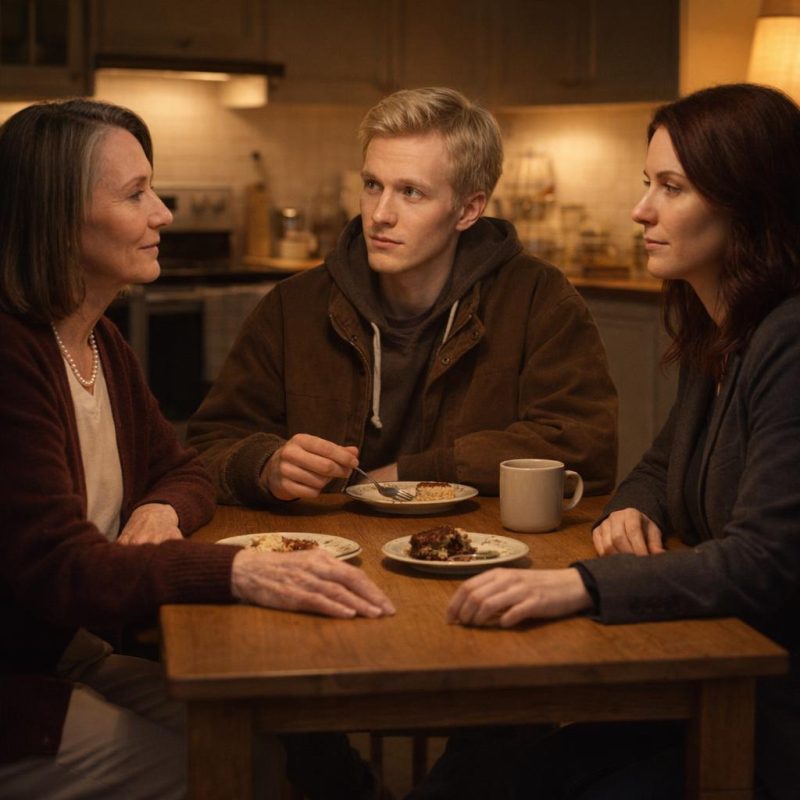 Image by RM AI
First Practice Session
Michael showed up that Saturday morning about twenty minutes early, which told me everything I needed to know about how nervous he was. He was standing on my porch when I came to the door, hands in his jacket pockets, trying to look casual and not quite pulling it off. I handed him the keys without making a big production of it, because I remembered what it felt like to be sixteen and terrified of doing something wrong in front of someone you wanted to impress. We went out to the garage together and spent a few minutes adjusting the seat and the mirrors. He took that part seriously, which I appreciated — none of that teenage impatience to just get moving. When he finally turned the key, the wagon started on the first try, smooth and quiet, the way it always does. I told him to take his time in the driveway, and he did. He practiced stopping and starting, getting a feel for the pedals, and I stood back and let him work it out without hovering over his shoulder. He checked his blind spots more carefully than most adults I've ridden with, turning his whole head each time like he was making absolutely sure. After about fifteen minutes in the driveway, he eased out onto the street and we drove the neighborhood roads for half an hour, nice and slow. By the time we got back, his shoulders had dropped about two inches from where they'd started. I watched from the end of the driveway as he pulled away from the curb on his own — smooth, no stalling, no hesitation.
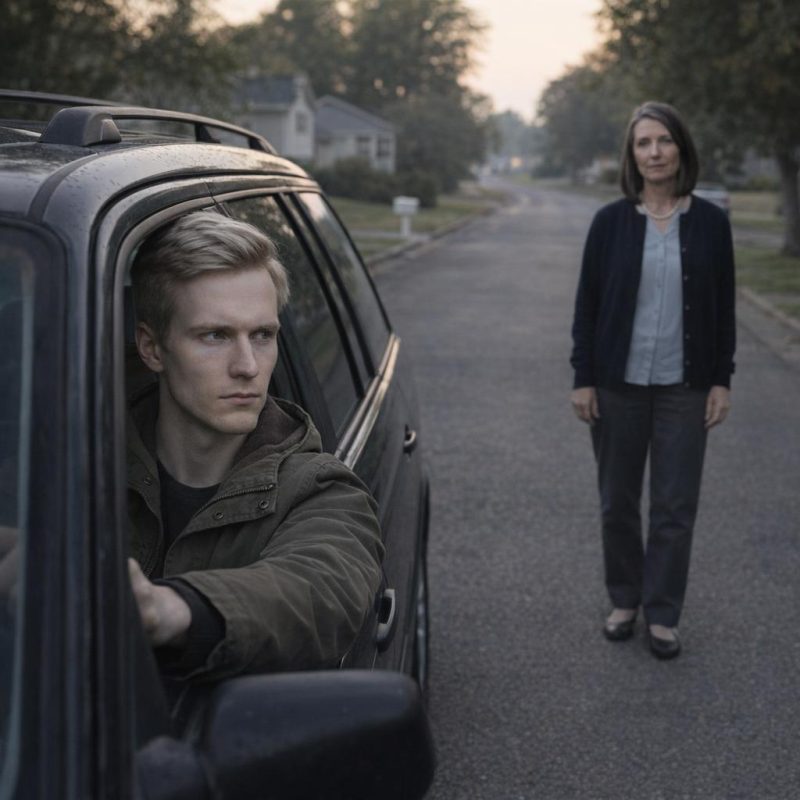 Image by RM AI
Building Confidence
He came back every Saturday after that, regular as the mail. I started looking forward to it in a way I hadn't expected — that hour on weekend mornings when the neighborhood was still quiet and Michael was out there in the wagon, getting a little better each time. The first thing I noticed was his hands. Early on, he'd gripped the steering wheel like it might try to escape, knuckles pale, arms stiff. By the third week, his grip had loosened into something natural. Then his parallel parking improved, almost overnight it seemed, though I knew it was the hours of practice behind it. He stopped overcorrecting on turns. His three-point turns went from three-part ordeals to something smooth and almost graceful. He started asking me questions that surprised me — not just how do I do this, but why does the car respond this way, what should I be watching for when I merge onto a highway. Thoughtful questions. The kind that told me he was thinking ahead rather than just reacting. I didn't say much during those sessions. I'd point something out when it mattered, but mostly I just watched. There's a particular kind of quiet pleasure in watching someone learn a thing properly — not rushing it, not cutting corners, just building the skill one Saturday at a time. By the sixth week, I barely had anything left to correct. He'd become a careful, confident driver, and the wagon had done its job. I sat in the passenger seat on that last practice run and felt something settle warmly in my chest, the way it does when you've watched someone grow into themselves.
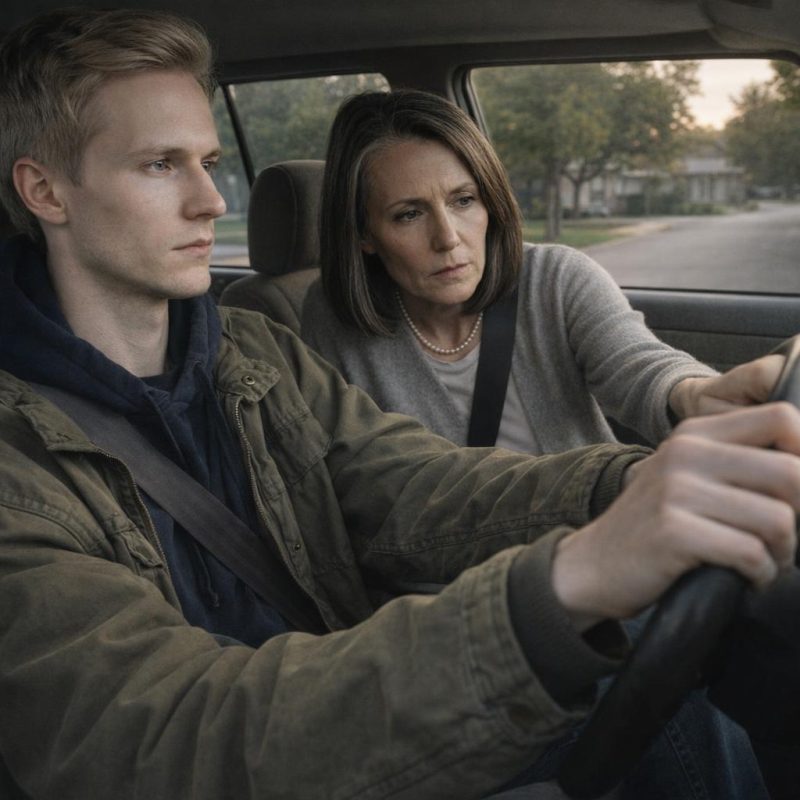 Image by RM AI
Test Day Success
They pulled into my driveway just after noon, and I knew before either of them got out of the car. Michael was grinning — that wide, slightly disbelieving grin that young people get when something they worked hard for actually comes through. Susan was right behind him, already reaching for her phone to take pictures. I had the cookies ready. Snickerdoodles, his favorite since he was about seven years old, still warm from the oven. He came through the back door and held up the little card like it was something precious, which I suppose it was. His license. His name, his photo, that official stamp that says the state of things has been settled and he is, in fact, allowed to drive. Susan put her arm around him and I took the photo she asked me to take, and then she took one of the two of us together at the kitchen table. We talked about the test — which parts felt easy, which intersection had made him nervous, how the parallel parking had gone exactly the way we'd practiced it. He said the station wagon had prepared him well, and he said it looking right at me, which meant something. I told him the wagon had always been a good teacher. Susan laughed at that, and Michael did too, and the kitchen smelled like warm cinnamon and sugar. He held the license up one more time so I could get a proper look at it, and the afternoon light caught his face just right, and I thought I had never seen him look quite so pleased with himself, or quite so grown.
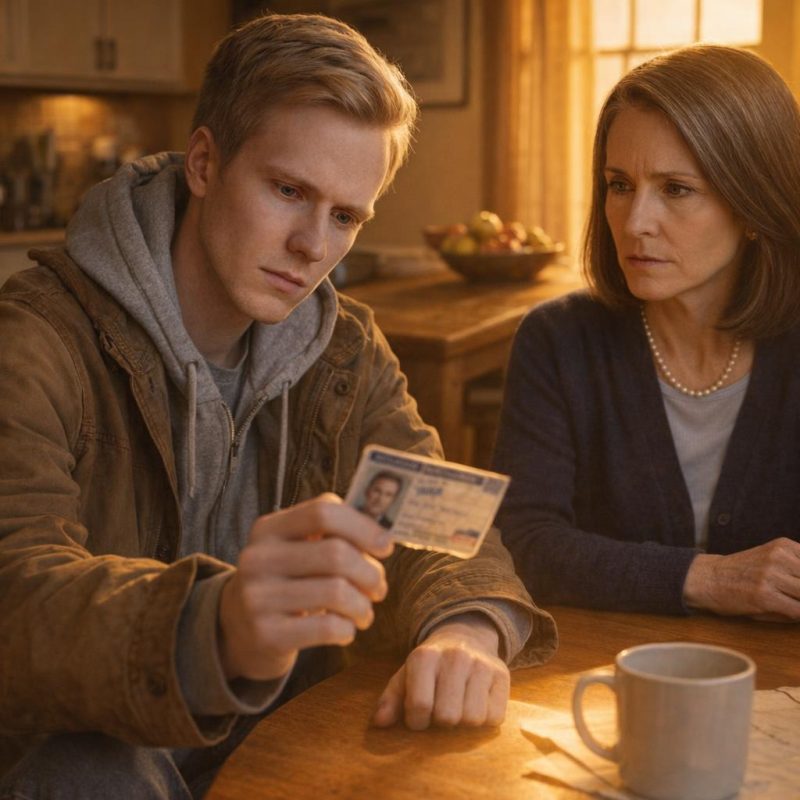 Image by RM AI
The First Request
The call came on a Thursday evening, just after I'd finished the dinner dishes. I recognized Michael's number on the phone and picked up expecting nothing in particular — maybe he wanted to tell me something about school, or ask about Sunday dinner. Instead, he asked, very politely, whether he might borrow the station wagon on Saturday. Just for a short errand, he said. Shouldn't take long. His voice was easy and unhurried, the way it gets when he's not asking for anything he thinks is a big deal. I told him of course, without even pausing to think about it. He'd earned that car in a way, all those Saturday mornings, all that careful practice. It felt natural that he'd want to use it. I assumed he was running something for Susan — groceries, maybe, or a pickup she hadn't gotten around to. He thanked me and said he'd come by at ten to get the keys. I told him I'd leave them on the kitchen counter so he wouldn't have to wait if I was in the garden. He said that was perfect. We talked for another minute or two about nothing in particular, and then we said goodbye, and I set the phone down on the counter and went back to wiping down the stovetop. It was only later, sitting in the living room with my book, that I noticed I'd said yes before I'd even thought to ask what the errand was — and by then, it didn't seem to matter enough to call him back.
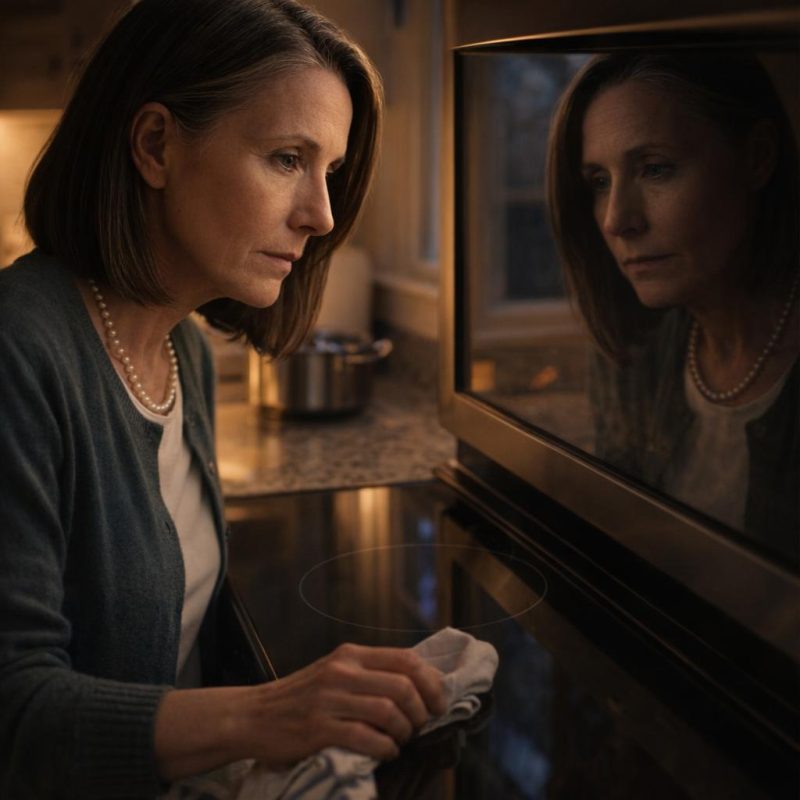 Image by RM AI
The Pattern Begins
He came on Saturday at ten, just as he'd said, picked up the keys from the counter, and was back in just under an hour. I was in the garden when I heard the wagon pull into the driveway, and I checked my watch more out of habit than anything else. He brought the keys inside, said thank you, and was gone again before I'd finished deadheading the roses. The following Saturday, the same thing happened. He called Friday evening this time, asked if he could borrow the wagon again, and I said yes without a second thought. When I mentioned, casually, that I hoped he wasn't putting too many miles on Susan's SUV, he smiled and said he just preferred keeping the mileage down on her car. It made sense. Susan's SUV was newer, and teenagers are more aware of those things than people give them credit for. He was back in an hour again, keys on the counter, a quick thank-you, and out the door. I didn't think much of it. He was a responsible kid with a new license and a grandmother who didn't mind lending her car. That seemed like the whole story. Then, the following Thursday evening, my phone buzzed on the kitchen table — a text this time, not a call — asking if Saturday worked again.
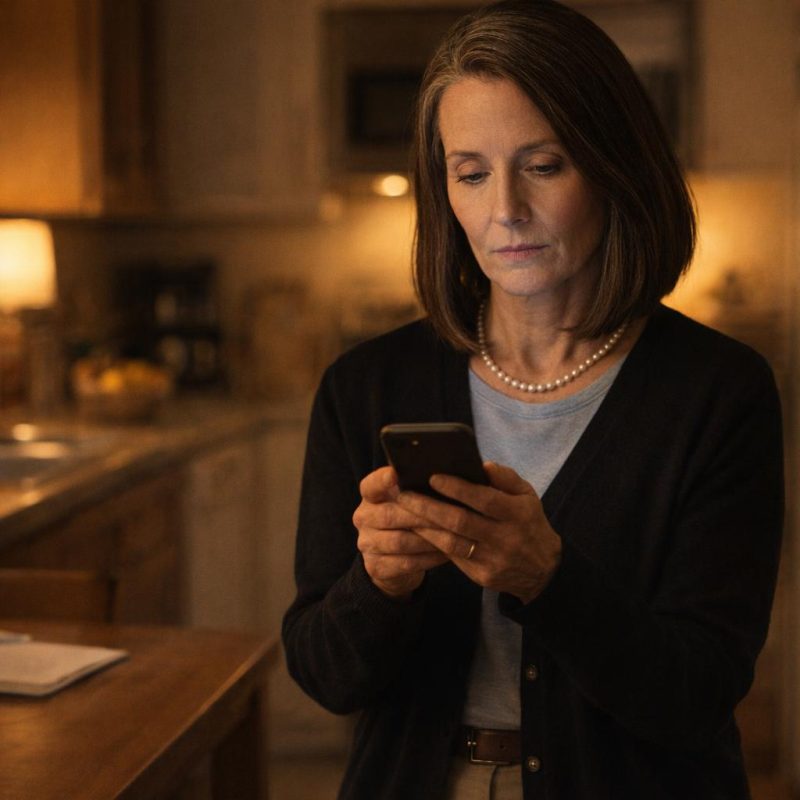 Image by RM AI
Comfortable Explanations
By the fourth Saturday, I'd stopped thinking of it as a favor and started thinking of it as simply what we did now. Michael would text or call by Friday, I'd say yes, and he'd show up at ten with that easy, unhurried manner of his. I did ask him once, while he was waiting for the keys, whether everything was alright with Susan's car — whether there was some mechanical issue I should know about. He shook his head and said no, nothing like that. He said the station wagon was just more comfortable to drive. Then he paused for a moment, the way he does when he's deciding whether to say something, and he told me that the wagon reminded him of when he was little. Road trips, he said. The way the back seat felt, the sound of the engine on the highway. He said it in that quiet, offhand way that meant he wasn't trying to make a moment out of it — he was just telling me something true. I felt a small warmth move through me when he said it. That old car had carried this family a long way over the years, and the idea that Michael still carried some of that with him — some memory of being small and safe in the back seat — was more than I'd expected to feel on a Saturday morning. I told him he could borrow it whenever he needed, and I meant it without reservation. He thanked me, picked up the keys, and mentioned, almost as an afterthought, that the wagon reminded him of the road trips we used to take when he was young.
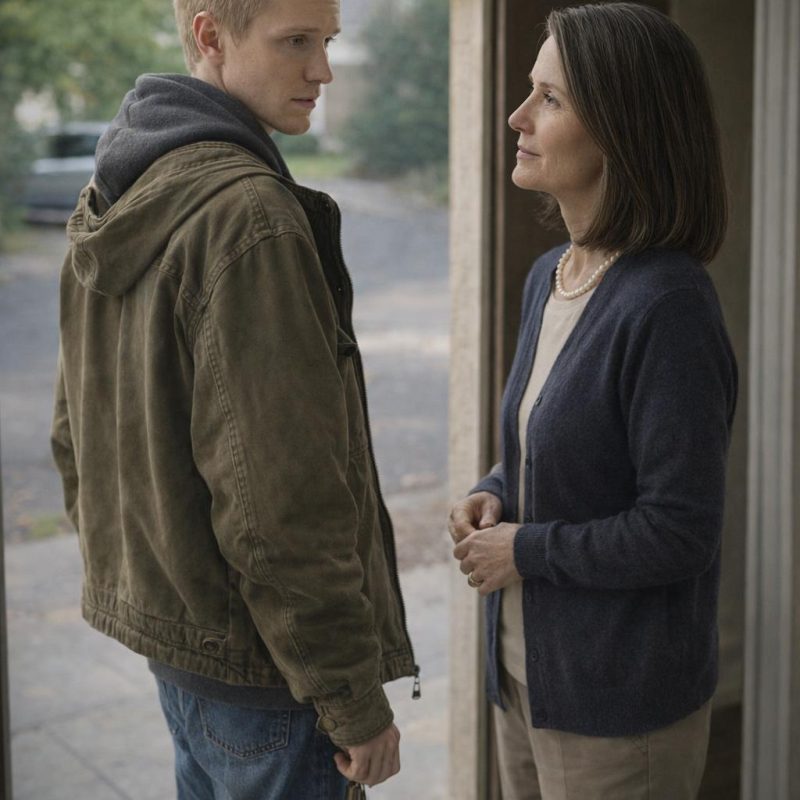 Image by RM AI
The Unchanging Hour
I'm not sure exactly when I started noticing the time, but once I did, I couldn't stop. The first week I paid attention, I happened to glance at the kitchen clock when Michael pulled out of the driveway — ten-oh-seven — and I was folding laundry in the back bedroom when I heard the wagon return. I came out to the kitchen and looked at the clock without really meaning to. Eleven-oh-five. Fifty-eight minutes. I didn't write it down or anything like that. It just sat in the back of my mind the way small things do when they don't quite fit anywhere. The following Saturday I was more deliberate about it, though I told myself I wasn't. I noted when he left — ten-oh-nine — and went about my morning. When the wagon pulled back in, I was already near the kitchen. Eleven-oh-eight. Fifty-nine minutes. I stood there for a moment with the dish towel in my hands, not sure what I was thinking exactly. The third Saturday, I didn't even pretend I wasn't watching the clock. He left at ten-twelve. I made tea, watered the plant on the windowsill, read four pages of my book. When I heard the car in the driveway, I walked to the kitchen and looked up at the clock. The minute hand sat in the same position it had occupied the week before, and the week before that — and the dashboard clock on the wagon, visible through the window as Michael climbed out, read eleven-ten.
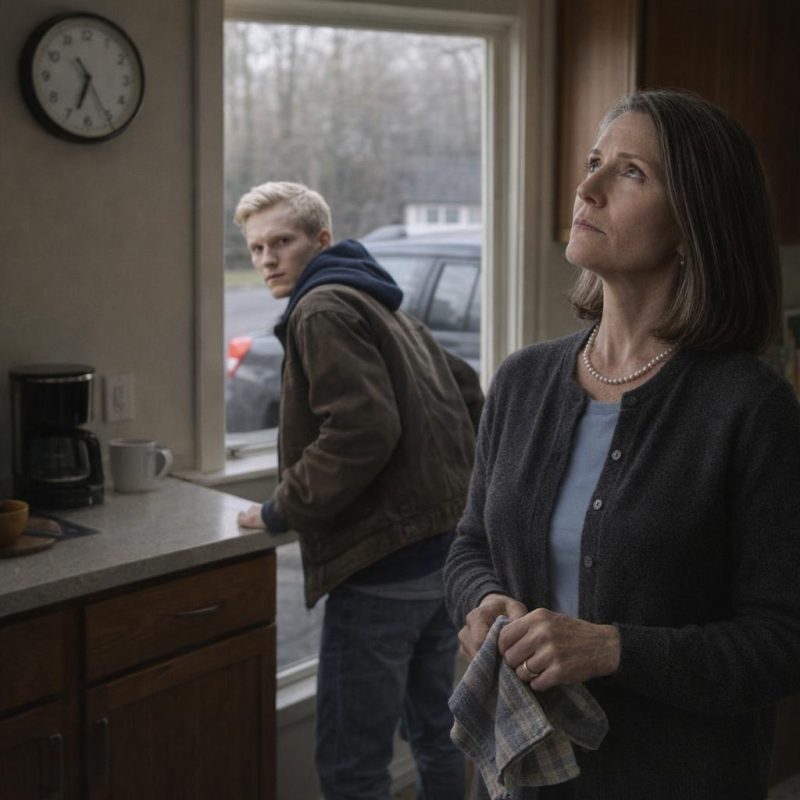 Image by RM AI
The Fuel Mystery
I almost didn't check. Michael had walked home the way he sometimes did when the weather was decent, and I'd gone out to pull the wagon into the garage mostly out of habit. I wasn't looking for anything. I just happened to glance at the fuel gauge before I cut the engine — the way you do when you've owned a car long enough that checking it is automatic. It hadn't moved. Or if it had, it had moved so little I couldn't tell the difference. I sat there for a moment with my hand still on the key, thinking I must be misremembering where it had been. But I do remember. I always note the gauge when I fill up, and I'd filled it the Thursday before. An hour of driving — even slow, careful driving — uses more than that. I climbed back out and walked around to the driver's side to check the odometer, something I hadn't thought to do before. Six miles. Six miles round trip, for an hour away. I stood there beside the car in the quiet of the garage, the smell of motor oil and old upholstery around me, turning that number over in my mind. Six miles wasn't across town. Six miles was barely out of the neighborhood. I didn't know what to make of it, and I wasn't sure I was ready to.
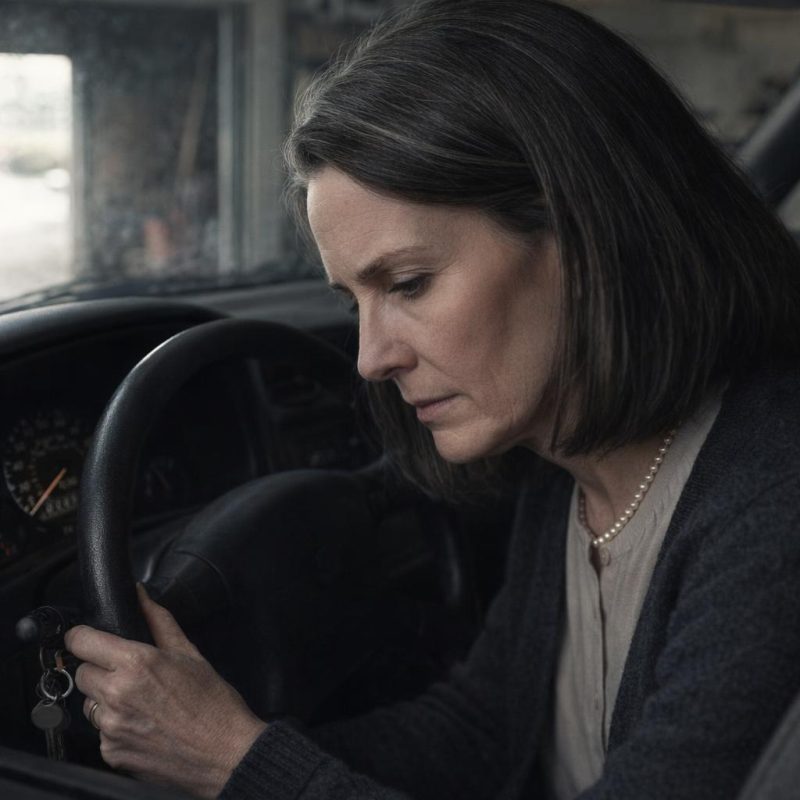 Image by RM AI
The Decision to Follow
I drove over to Susan's on Wednesday with no particular plan, just a vague idea forming at the back of my mind. We had tea at her kitchen table and talked about the usual things — her work, the neighbor's new fence, whether the weather would hold through the weekend. At some point I mentioned, as casually as I could manage, that my car was making a funny noise and I didn't want to drive it far on Saturday. Would she mind if I borrowed the SUV for a few hours in the morning? She said of course, barely looking up from her mug. She didn't ask where I was going, and I didn't offer. I felt a small twist of guilt about that on the drive home. Susan trusts me without question, the way daughters do with mothers they've never had reason to doubt, and here I was being deliberately vague with her. I told myself it wasn't really deception — I just wanted to understand what Michael was doing before I said anything to anyone. That felt reasonable when I thought it through. It felt less reasonable at two in the morning when I was lying awake running through the plan. I'd wait five minutes after he pulled out, then follow at a distance. Simple enough. And yet the thought of trailing my own grandson through Saturday morning streets sat in my chest like something I hadn't quite given myself permission to do.
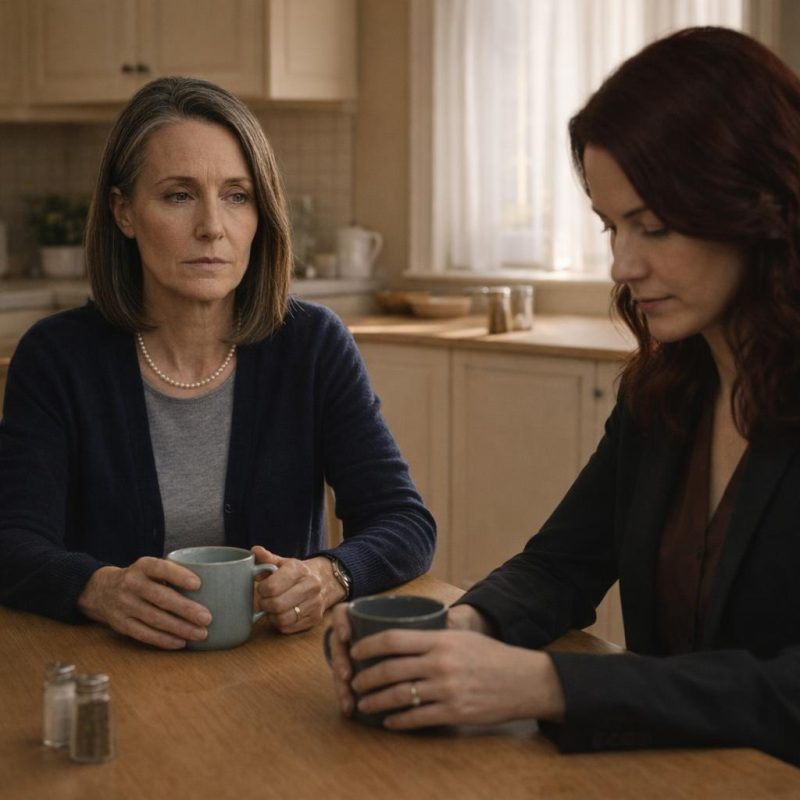 Image by RM AI
The First Tail
Michael came for the wagon right on schedule — ten-oh-eight — and I watched from the front window as he backed out of the driveway with that easy confidence he has behind the wheel. I gave him five minutes. I counted them on the kitchen clock, which felt both careful and slightly absurd. Then I got my keys, pulled Susan's SUV out of the garage, and turned in the direction he'd gone. I caught sight of the wagon two blocks ahead and let a pickup truck drift between us before I settled into a pace. My hands were steadier than I expected, but my heart wasn't. Every time Michael slowed for a light, I felt a little jolt of worry — that he'd glance in the mirror, that he'd recognize the car, that he'd pull over and I'd have to explain myself. I kept two cars between us the way I'd seen people do in films, which felt both sensible and faintly ridiculous for a seventy-three-year-old woman on a Saturday morning. He turned onto Meridian, heading east, away from the neighborhoods I knew well. I followed. The morning was bright and ordinary, other people running errands, a dog walker on the corner, a man loading boxes into a van. Everything looked perfectly normal. And yet there I was, following someone I loved and trusted completely, because something small and quiet wouldn't let me leave it alone.
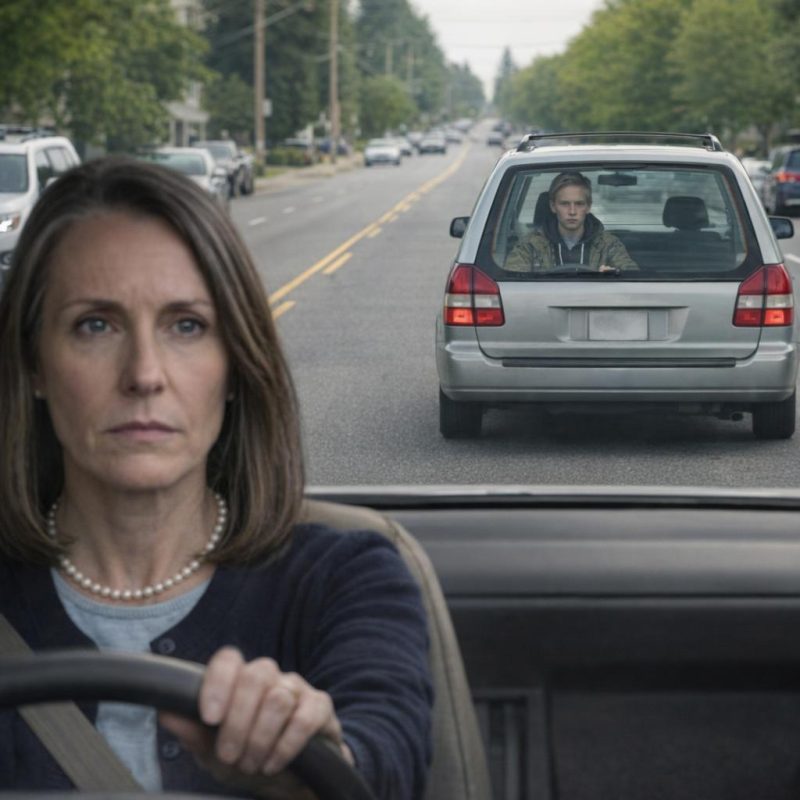 Image by RM AI
The Parking Lot
He drove for about fifteen minutes before I understood where he was going — or rather, before I understood that I had no idea where he was going. We were on the far side of town by then, past the hardware store and the old drive-in lot that's been a mattress warehouse for years. When Michael put on his turn signal and pulled into the parking lot of a grocery store I'd been to maybe twice in my life, I almost missed the turn. I swung in a few seconds behind him and immediately angled toward a delivery van parked near the side entrance, putting it between us. The lot was mostly empty at that hour — a handful of cars clustered near the entrance, a cart return with two carts in it, a woman loading bags into a hatchback near the doors. Michael drove past all of it. He went to the far corner of the lot, the part that gets no foot traffic, where the pavement has that faded, forgotten look. He pulled in and cut the engine. I checked my watch. Ten twenty-six. I sat behind the delivery van with the SUV idling, watching the back of the old station wagon through the gap between the van and a concrete barrier. Nothing happened. Michael didn't get out. He didn't look at his phone, as far as I could tell. He just sat there, still, in the quiet of that empty corner of the lot.
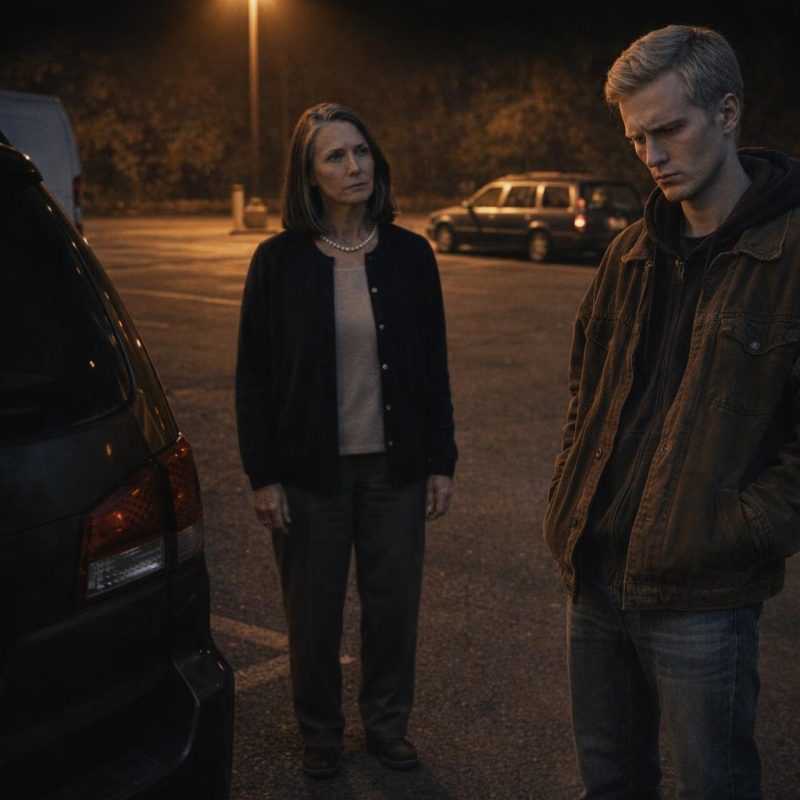 Image by RM AI
The First Visitor
I watched the clock on the dashboard tick past ten forty before anything changed. Then a sedan pulled into the lot — dark blue, older model — and drove slowly toward the far corner as if the driver already knew where he was going. He parked alongside the wagon, close enough that the two cars were nearly touching. An elderly man got out. He moved carefully, the way people do when their joints have opinions about the weather, and he was carrying a small folder tucked under one arm. He paused for just a moment beside his car, glanced around the lot — not nervously exactly, but the way someone does when they want to be sure of their surroundings — and then he opened the passenger door of the wagon and climbed in. I held my breath without meaning to. Through the windshield of the wagon I could see two silhouettes, Michael's on the left and the older man's on the right, and they appeared to be talking. Calmly. No raised hands, no sudden movements, nothing that looked like anything other than two people having a quiet conversation in a car. The folder sat on the man's lap. Michael seemed to be listening more than talking, leaning slightly forward the way he does when he's paying close attention to something. I sat behind the delivery van with my hands in my lap, watching two shapes talk through glass I couldn't see through, in a silence I couldn't break.
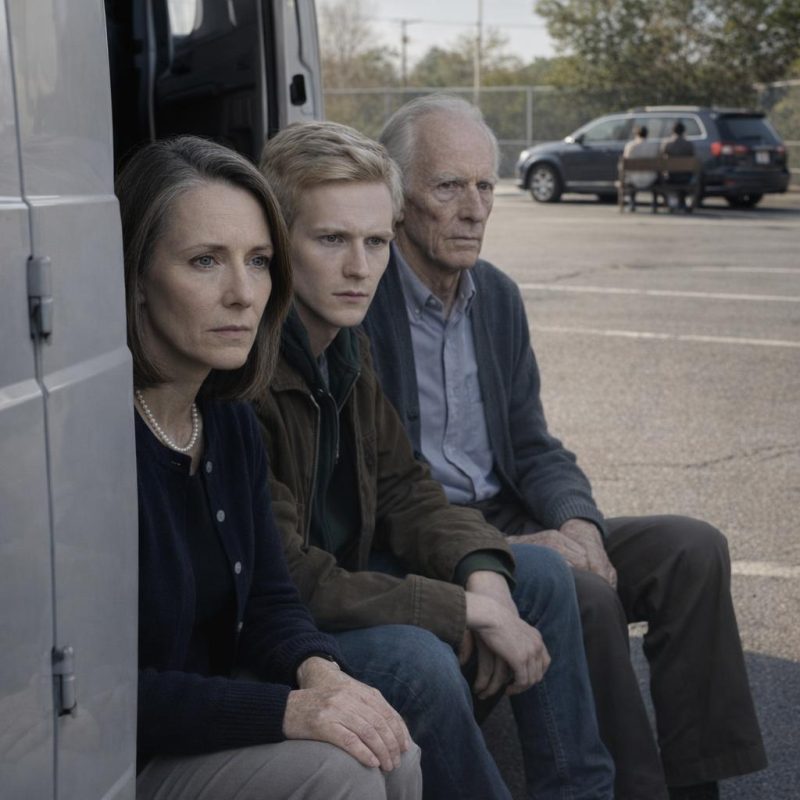 Image by RM AI
The Departure
They talked for what my watch told me was about fifteen minutes, though it felt both shorter and longer than that. Then the passenger door opened and the elderly man stepped out, moving with the same careful deliberateness as before. He paused at the window — Michael had rolled it down — and said something. Just a few words. The man nodded once, tucked the folder back under his arm, and walked to his sedan. He didn't look back. He pulled out of the lot at a measured pace and was gone. Michael's window stayed down for a moment, and then it went up, and he just sat there again. Same stillness as before. I checked my watch. Ten fifty-four. He had about ten minutes before he'd need to leave to make it back to my house by eleven. I kept my eyes on the wagon and tried to sort through what I'd seen. An elderly man with a folder. A calm conversation. A nod. Nothing that looked dangerous, nothing that looked wrong, nothing I could point to and say — there, that's the thing. And yet something about the whole arrangement sat uneasily with me. The empty corner of the lot. The careful timing. The way the man had glanced around before getting in. It all looked perfectly ordinary, and somehow that made it harder to set aside, not easier.
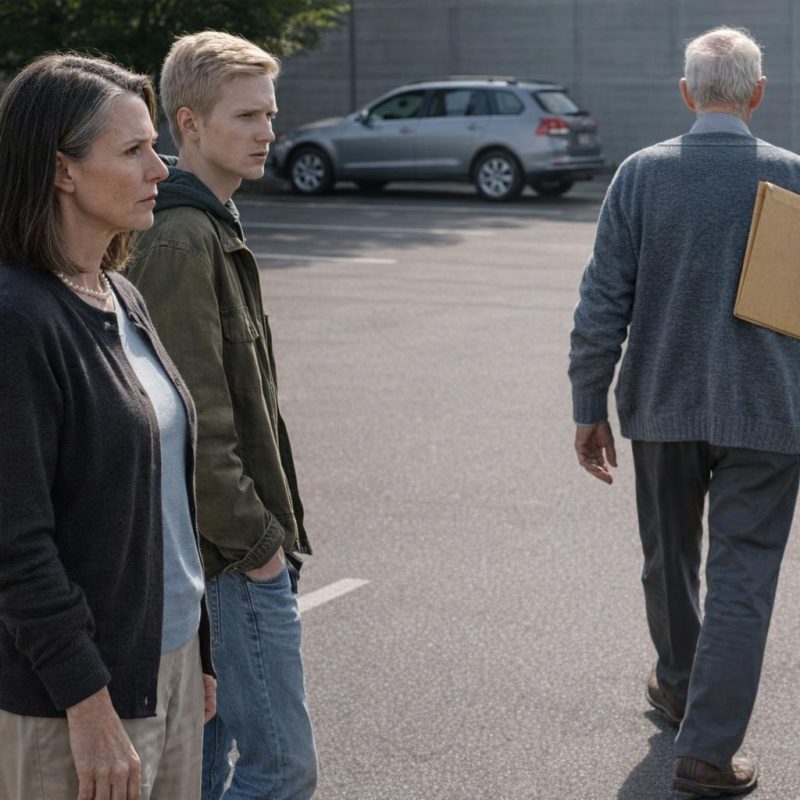 Image by RM AI
The Return Home
When Michael finally started the wagon and pulled out of the corner spot, I gave him a few seconds and then eased the SUV out from behind the delivery van. I followed him back through the east side of town, keeping the same careful distance as before, but my mind was already working ahead. I knew a faster way home — two streets over, then cutting through the old neighborhood behind the library. I'd driven it a hundred times. When Michael turned onto Meridian heading west, I peeled off and took Chestnut instead, pressing the accelerator a little more than I usually would. I pulled into my driveway with maybe ninety seconds to spare, swung the SUV into the garage, and got the door down before I walked to the front of the house. I was standing on the front path, keys in my pocket, trying to look like someone who had simply stepped outside for some air, when the wagon turned onto my street. Michael pulled up, cut the engine, and climbed out with that easy unhurried way he has. He smiled when he saw me, held up the keys, and walked over to drop them in my hand. "Thanks, Gran," he said. "She ran great." I smiled back and said I was glad to hear it. He gave a little wave and headed off down the sidewalk, and I stood there watching him go, no closer to understanding anything than I'd been at ten twenty-six in an empty parking lot.
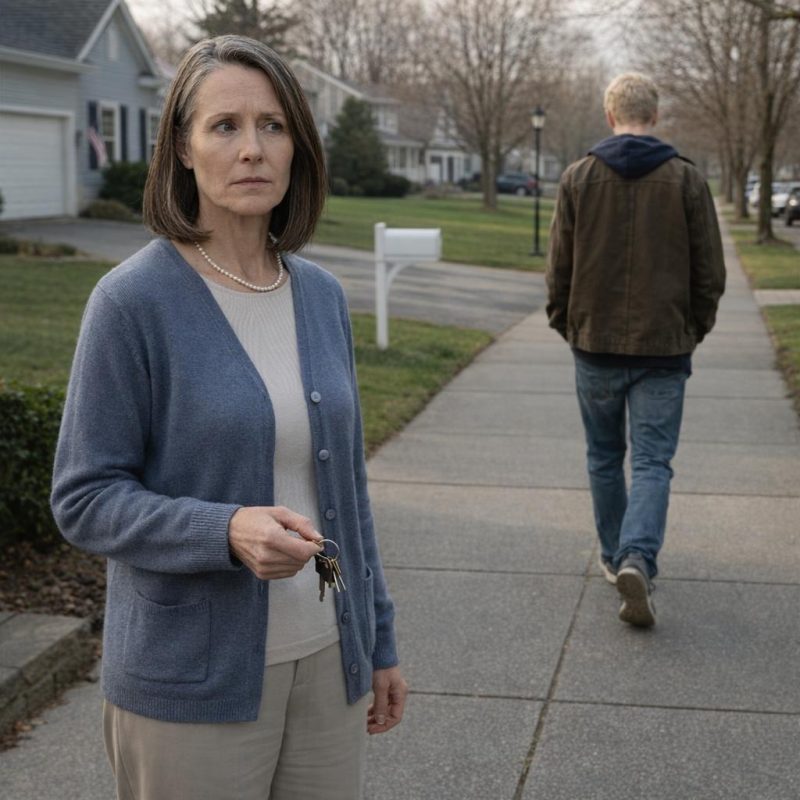 Image by RM AI
The Second Week
I borrowed Susan's SUV again the following Saturday without offering any more explanation than the week before. She handed over the keys the same way she had the first time, no questions, and I felt the same small guilt about it that I'd felt before. Michael came for the wagon at ten-oh-nine. I waited my five minutes and followed. He took the exact same route — Meridian east, past the hardware store, past the old drive-in lot — and pulled into the same grocery store parking lot at almost the same time as the week before. Same far corner. Same faded pavement. He cut the engine and sat. I tucked the SUV behind the delivery van, which was parked in the same spot as if it lived there, and I waited. Twenty-two minutes passed. Then a car I didn't recognize pulled into the lot — smaller than the sedan from last week, silver, with a dent along the rear panel. A woman got out. Middle-aged, dark coat, moving with a kind of contained urgency, like someone who had somewhere to be but was making herself slow down. She looked around the lot the same way the elderly man had — that same brief, careful survey — and then she walked to the passenger side of the wagon and got in. I leaned forward slightly in my seat. She was carrying an envelope, thick enough that the flap bowed outward, stuffed with what looked like a considerable weight of papers.
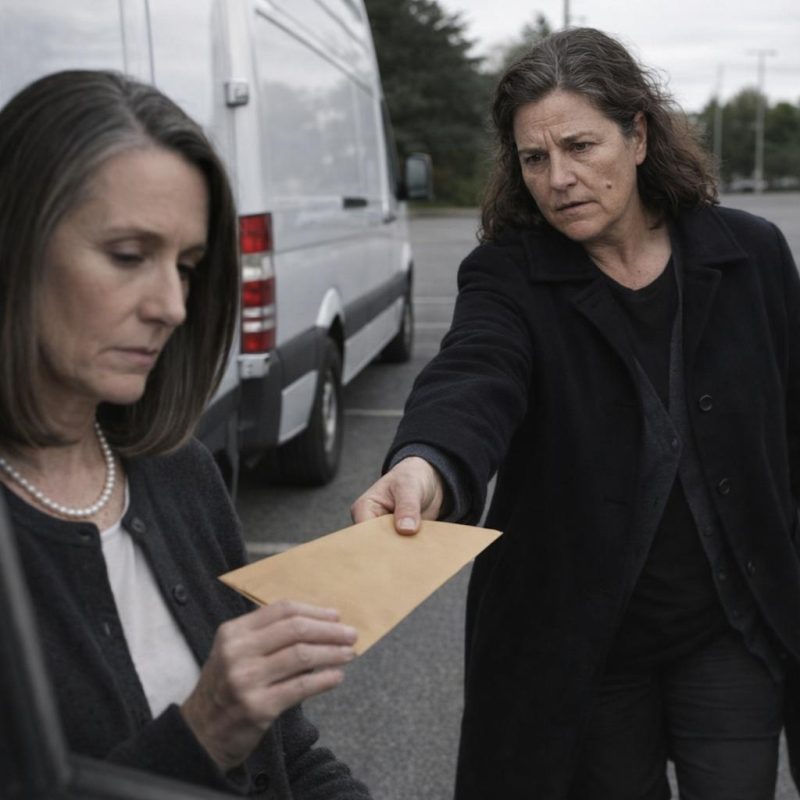 Image by RM AI
The Pattern Confirmed
The woman stayed inside the wagon for exactly fifteen minutes. I know because I watched the clock on Susan's dashboard the whole time, the way you watch a pot you're not supposed to watch. When she got out, she didn't look around the lot the way she had when she arrived. She just walked back to her silver car, got in, and drove away — no hesitation, no backward glance, like she'd done what she came to do and that was that. Michael sat alone again after she left, same as he had the week before. Ten minutes, give or take. Then he started the engine and pulled out of the lot at the same unhurried pace, taking the same route home. I followed at the same careful distance, my hands resting on the wheel, my mind turning everything over. Same parking spot. Same far corner. Same fifteen-minute window. Same ten minutes of sitting alone after. I'd been telling myself the first week was strange and the second week was a coincidence, the way you tell yourself things when you don't quite want to know the answer yet. But sitting there in Susan's SUV, watching the wagon's taillights ahead of me, I couldn't keep calling it coincidence. The timing was too exact. The pattern was too clean. And somewhere between Meridian and my driveway, it settled over me that this wasn't something Michael had done twice — this was something he did every single week.
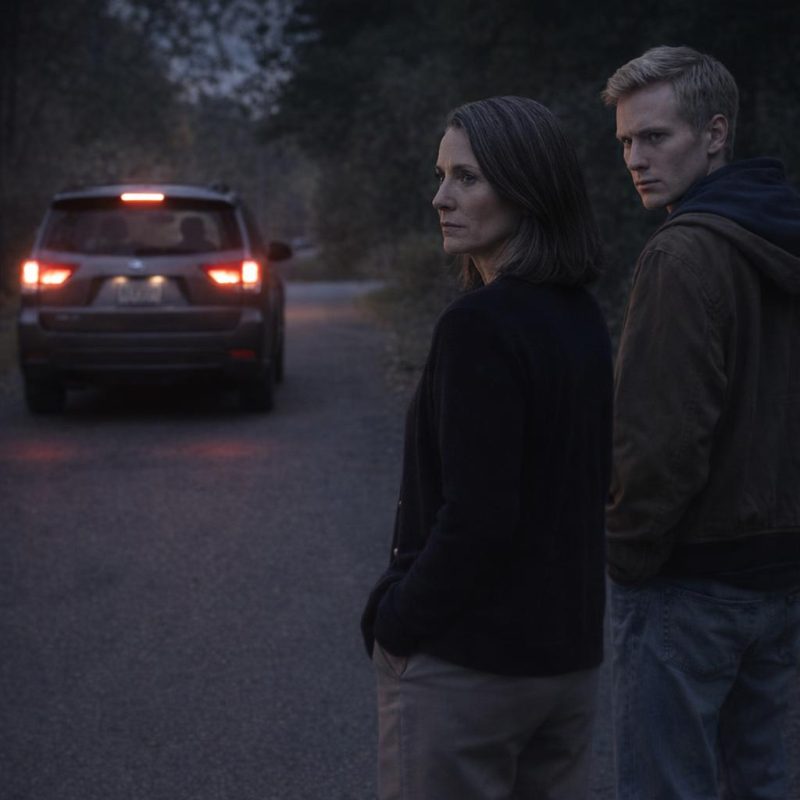 Image by RM AI
The Third Visitor
The third Saturday I almost didn't go. I stood in Susan's kitchen holding her keys and told myself I'd seen enough to know it was a pattern, and that following him again wasn't going to tell me anything new. Then I thought about that thick envelope, and the elderly man with his careful folder, and I put my coat on. Michael left at ten-oh-nine again. I gave him his five minutes and followed. He parked in the same far corner of the same lot, cut the engine, and sat. I tucked in behind the delivery van — still there, still in the same spot, which I was starting to find oddly reassuring — and I waited. The car that pulled in this time was a small hatchback, a little battered around the edges, and when the doors opened I wasn't prepared for what I saw. A young couple, neither of them much older than twenty, and the woman was carrying an infant in one of those padded car seats that looks too big for the baby inside it. They brought the baby into the wagon with them. I could see them through the rear window — Michael turned sideways in the driver's seat, the young man leaning forward, the woman with the car seat settled between them on the bench. They talked for the full fifteen minutes. At one point the young man lifted the baby out of the seat and passed it gently across to the woman, and the three of them just sat there together in my old station wagon, quiet and careful with that small, sleeping thing between them.
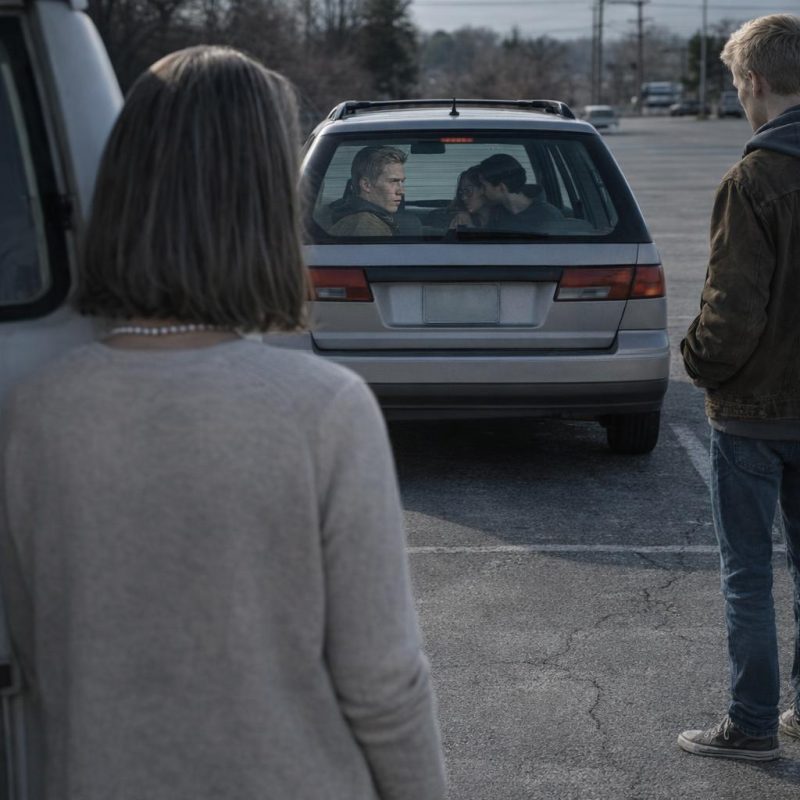 Image by RM AI
Different People, Same Mystery
I drove home alone in Susan's SUV and tried to line the three weeks up in my head like photographs laid out on a table. An elderly man with a folder. A middle-aged woman with a thick envelope. A young couple with a baby. Nothing connected them that I could see — not age, not the way they dressed, not the kind of car they drove. The only things they shared were Michael, and that parking lot, and the fifteen minutes, and the way each of them had looked around the lot when they arrived, that same brief, careful survey, like they were making sure of something before they committed to being there. I kept turning it over, looking for the thread. Whatever was in those folders and envelopes, I couldn't make it add up to anything I recognized. But nothing I'd seen looked threatening. Nobody raised their voice. Nobody left in a hurry. The meetings had the quiet feel of appointments — something expected, something arrived at, not accidental. And yet I couldn't name what any of it meant. A sixteen-year-old boy, meeting strangers in a parking lot every Saturday morning, each one different, each one carrying something. I pulled into my driveway and sat for a moment after I cut the engine. The neighborhood was quiet. A few leaves skittered across the pavement. I had watched three weeks of something I still couldn't name, and the not-knowing sat in my chest like a stone I couldn't put down.
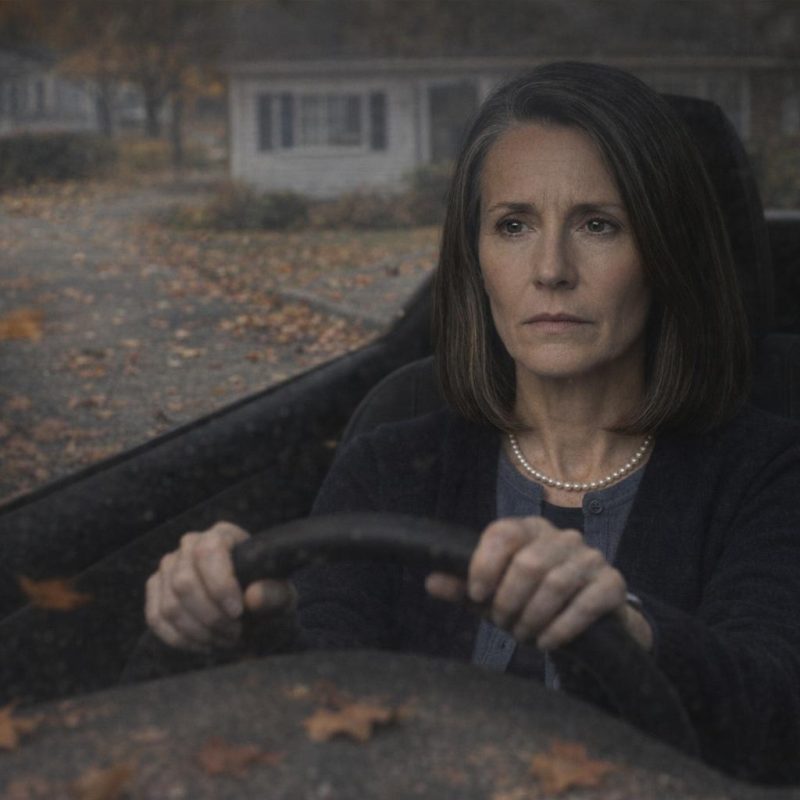 Image by RM AI
The Confrontation
I waited until the following Saturday, when Michael brought the wagon back. I'd made lemon cake, which I do when I want a conversation to feel like it isn't one. I invited him in before he could hand over the keys and head for the door, and he came without hesitating, which made me feel a little worse about what I was planning to ask. We sat at the kitchen table and I cut him a slice and poured the tea, and I let a few minutes pass before I said, as casually as I could manage, that I'd been curious where he liked to go on his Saturday drives. He looked up from his plate. Just for a second — a small pause, the kind that wouldn't mean anything if you weren't already watching for it. Then he said he just liked driving around. That it helped him think. I asked if everything was all right, and he said yes, everything was fine, he just liked having some time to himself on the weekends. He smiled when he said it. It was a good smile, warm and easy, the kind he'd had since he was small. He thanked me again for the cake and for letting him use the wagon, and I said of course, anytime, and I meant it. I walked him to the door and watched him go down the front steps, and I stood there holding my tea with both hands, because my grandson had just looked me in the eye and told me he spent every Saturday morning driving around alone to think — and something about that didn't sit right with me at all.
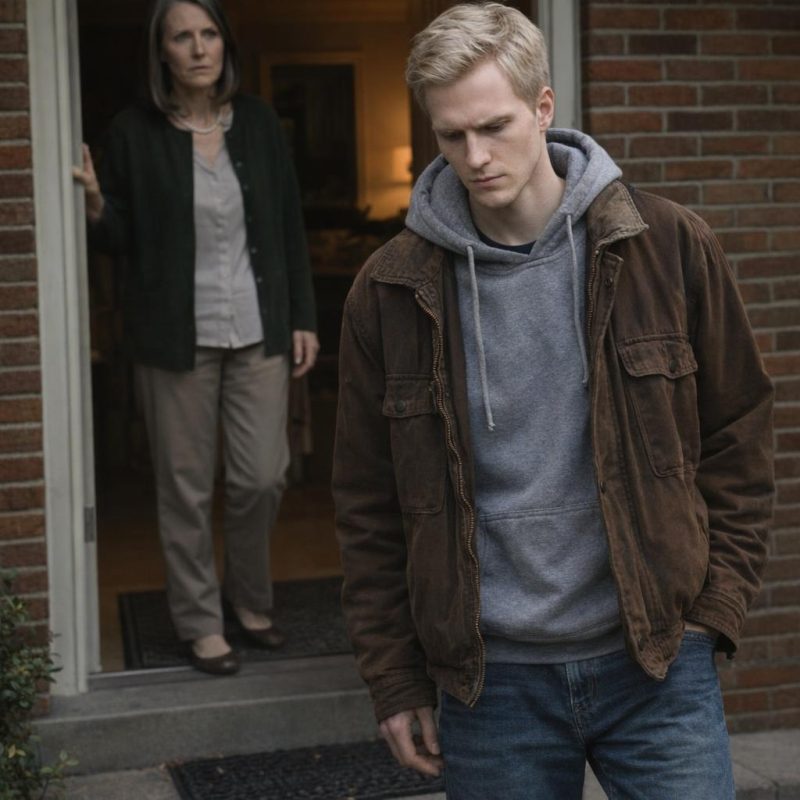 Image by RM AI
The Search
After Michael's car disappeared around the corner, I put on my coat and went out to the wagon. I told myself I was just going to have a look. I wasn't sure what I expected to find — I only knew that I'd watched three weeks of something I didn't understand, and I'd just been told a story that didn't fit what I'd seen, and I needed to do something with my hands. I opened the driver's door first, then the passenger side, then both rear doors. I checked under the front seats — nothing but a forgotten pen and a few crumbs that were probably mine. The door pockets held a gas receipt and an old parking stub, both from months ago. The center console had a pack of tissues and a spare key I'd forgotten about. I opened the glove compartment and found the owner's manual, a small flashlight with dead batteries, and the insurance card in its plastic sleeve. I went around to the trunk and lifted the hatch. The emergency kit was there, the spare tire, a folded tarp I'd put in years ago and never used. I closed the hatch and stood in the driveway for a moment, looking at the wagon. Then I got in the driver's seat and just sat there, the way Michael always sat after his visitors left. The car smelled faintly of old upholstery and something I couldn't name. I had checked every corner of it and found nothing that told me a single thing.
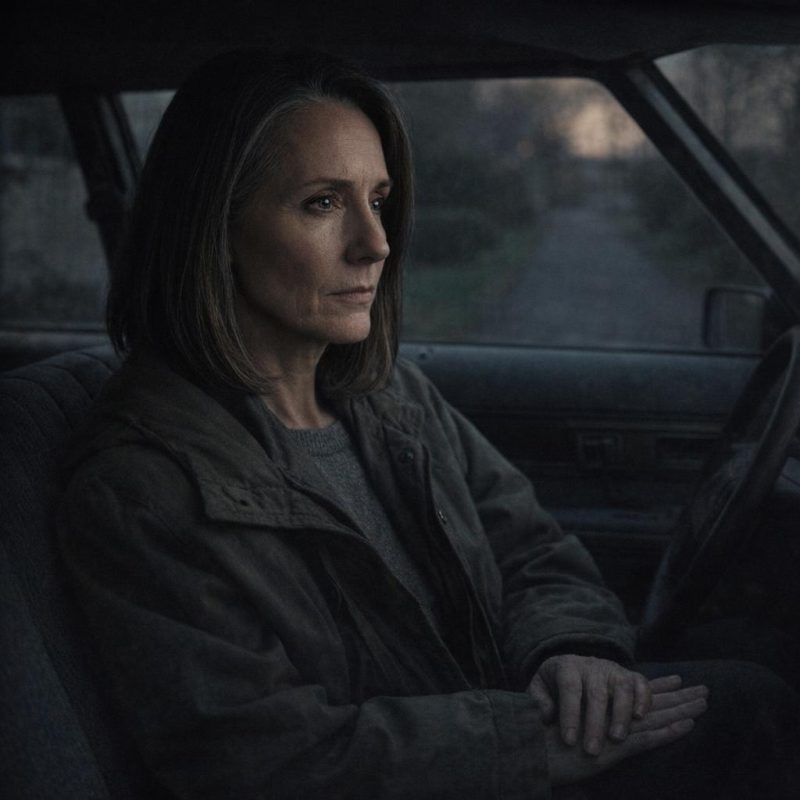 Image by RM AI
The Map
I went back out to the wagon about an hour later. I'm not entirely sure what made me go — restlessness, mostly, and the particular stubbornness that comes from not being ready to accept that there's nothing to find. I opened the glove compartment again, slower this time, and I took everything out and set it on the passenger seat. The owner's manual. The flashlight. The insurance card. I was about to put it all back when I noticed that the manual was sitting at a slight angle, like something behind it had been nudging it forward. I reached in and felt along the back of the compartment, and my fingers found the edge of something flat and folded. I worked it out carefully. It was a highway map, the old paper kind, folded into quarters the way nobody folds maps anymore. I spread it open across the steering wheel, smoothing the creases. It covered the county and the surrounding area, and someone had gone over it with a blue pen — several locations marked with careful circles, each one placed with what looked like patience. One of the circles sat right over the intersection near the grocery store. I leaned closer. The handwriting beside the circles was small and neat, little notations I had to squint to read. And as I sat there in the fading afternoon light, I unfolded the last crease and held the map still, trying to make out those small, careful letters in the dimming light.
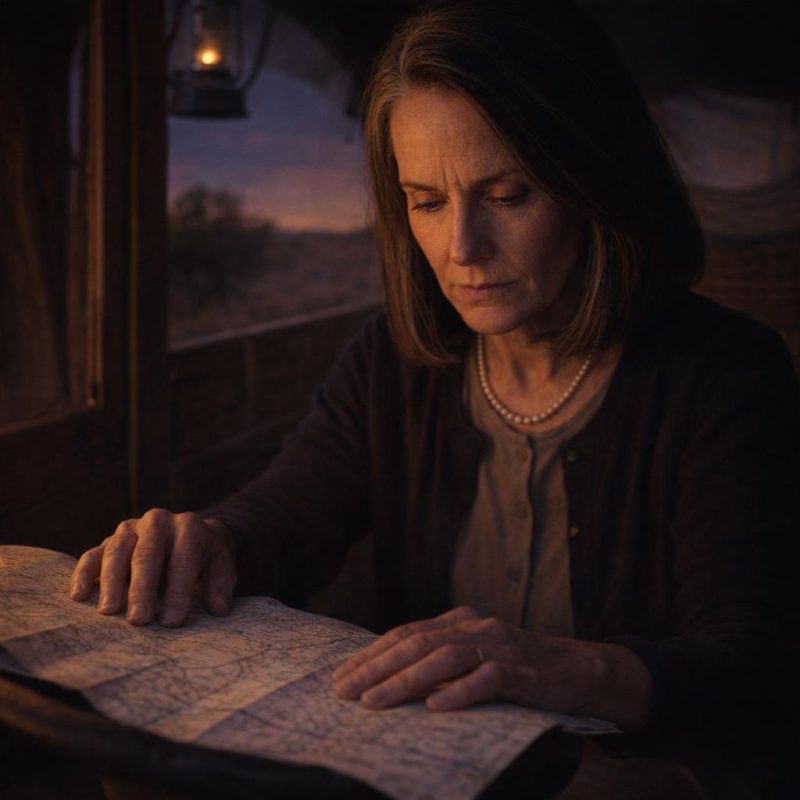 Image by RM AI
Robert's Hand
I don't know how long I sat there before I let myself look at the handwriting properly. Part of me kept smoothing the map, tracing the fold lines, doing anything but focusing on those small neat letters beside the circles. But eventually I did look. The recognition came the way it sometimes does — not all at once, but in pieces that assembled themselves before I could stop them. The particular way the capital R curved back on itself. The way the sevens had that little crossbar through the middle. Robert had always crossed his sevens. He said it was something his father had taught him, to keep them from being confused with ones. My hands started shaking before I'd fully processed what I was seeing. Robert had been gone for eight years. Eight years since the brief, terrible illness that took him faster than any of us were ready for. I hadn't seen his handwriting in all that time — not a note, not a card, not a grocery list tucked in a coat pocket. I'd thought I was past the part where ordinary things could knock the breath out of me. I sat in the driver's seat of the old wagon he'd loved, holding a map covered in his careful blue ink, and the afternoon light came through the windshield at a low angle, and the neighborhood was perfectly quiet around me, and I just held it.
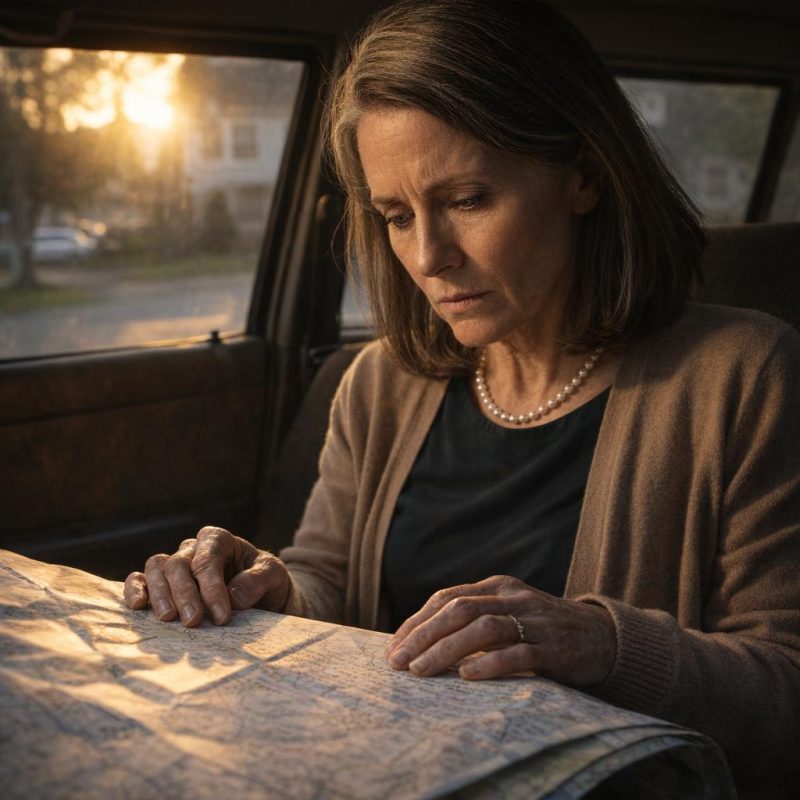 Image by RM AI
The Grocery Store Circle
I brought the map inside and spread it on the kitchen table under the good light. I needed to see it properly, all of it at once. The grocery store parking lot was easy to find — I'd driven that route three Saturdays in a row and I knew every turn. Robert's circle sat right over it, a careful blue ring around the intersection, with a small notation beside it in his crossbar-seven handwriting that I still couldn't quite bring myself to read straight on. I made myself look at the rest of the map. There were four other circles, scattered across the county — one near the old library on Fenwick, one out past the fairgrounds, one in a neighborhood I didn't recognize on the east side, and one more near the river road. I didn't know those addresses. I couldn't place them. I stood over the map for a long time, the kitchen quiet around me, trying to find some arrangement of facts that made sense. Robert had drawn these circles. Michael was meeting strangers at one of them. Robert had been gone for eight years. I pressed my fingertips lightly against the paper, against his handwriting, and I couldn't find a single explanation that connected those three things into anything I understood. Robert had marked this parking lot — had marked all of these places — for some reason I couldn't see, and I had no idea what my grandson had to do with any of it.
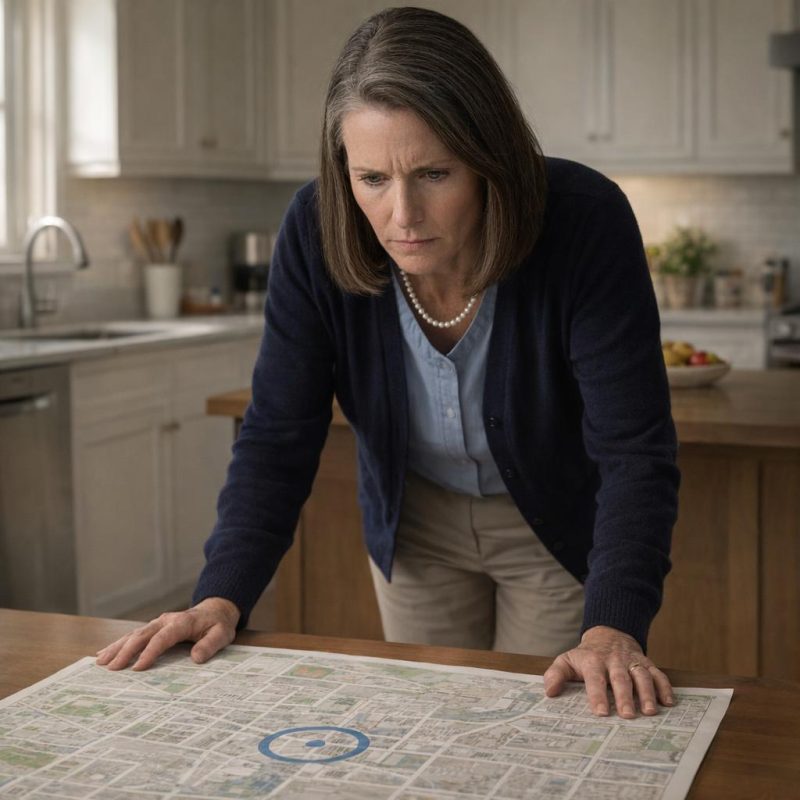 Image by RM AI
Eight Years Gone
I sat down at the kitchen table and stopped trying to make sense of the map for a moment. I just sat with it. Robert died eight years ago this past November — a short illness, the doctors called it, which always struck me as a strange way to describe six weeks that changed everything. We had forty-two years together. Forty-two years of Sunday breakfasts and arguments about the thermostat and him leaving his reading glasses in every room but the one where he needed them. I thought I knew the shape of his days as well as I knew my own. He was a quiet man, Robert. Methodical. He kept his promises and he paid his bills on time and he never once made me feel like I was on the outside of his life. Or so I believed. I pressed my palm flat against the map on the table. The paper was old but not fragile — he had kept it carefully, folded along the same creases every time. Someone had used this map. Someone had carried it and unfolded it and marked those circles with a steady hand. And now my grandson was meeting strangers in one of those same parking lots, eight years after Robert was gone. I couldn't find a way to make that timeline work. A dead man's careful markings, and a sixteen-year-old boy, and meetings I hadn't been meant to see — the three of them sat on that table together, and I had no idea what held them.
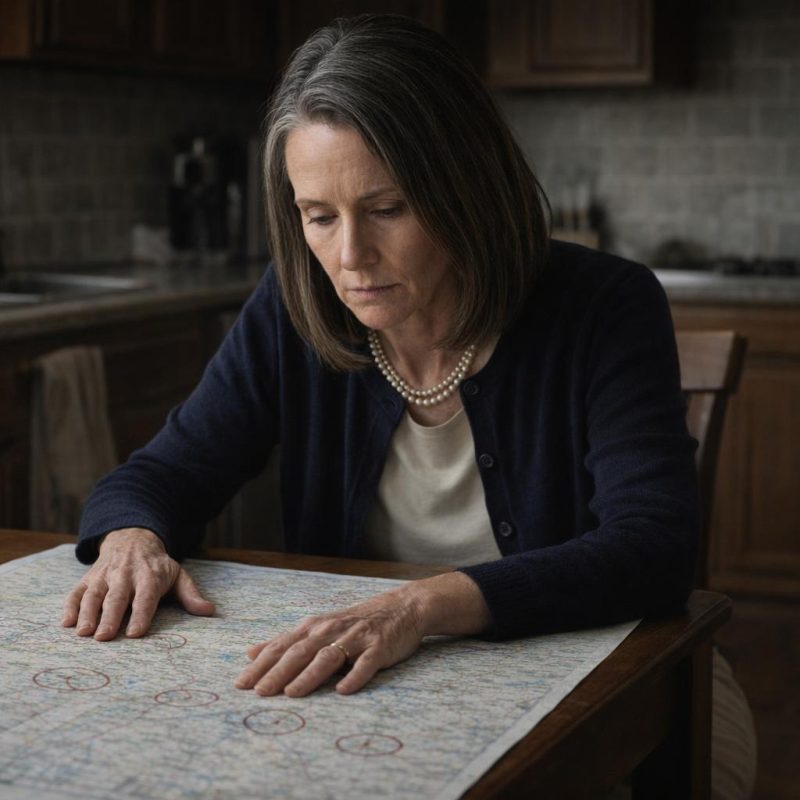 Image by RM AI
Harold's Number
Harold Chen's number was still in my address book — the actual paper one, the green spiral-bound I've kept in the kitchen drawer since 1987. I hadn't called him in over a year, maybe closer to two. We exchanged Christmas cards and that was about the extent of it since Robert passed. Harold had been Robert's closest friend for decades, the kind of friend who knew things about a person that a wife sometimes didn't, and right now that felt like exactly what I needed. I found his number on the third page under C and stood at the counter with the phone in my hand for a moment before I dialed. It rang four times and I was already composing what I'd say to his voicemail when the line clicked. I told him I'd found something of Robert's — a map, with markings on it — and that I didn't understand what I was looking at. I tried to keep my voice steady but I could hear myself not quite managing it. I said I thought he might know something, and that I was sorry to call out of nowhere like this. Harold didn't ask me to explain further. He said he could be at my house in twenty minutes. I set the phone down on the counter and let out a breath I hadn't known I was holding, and when I heard his voice come through the line — calm and certain and so much like the old days — something in my chest finally loosened.
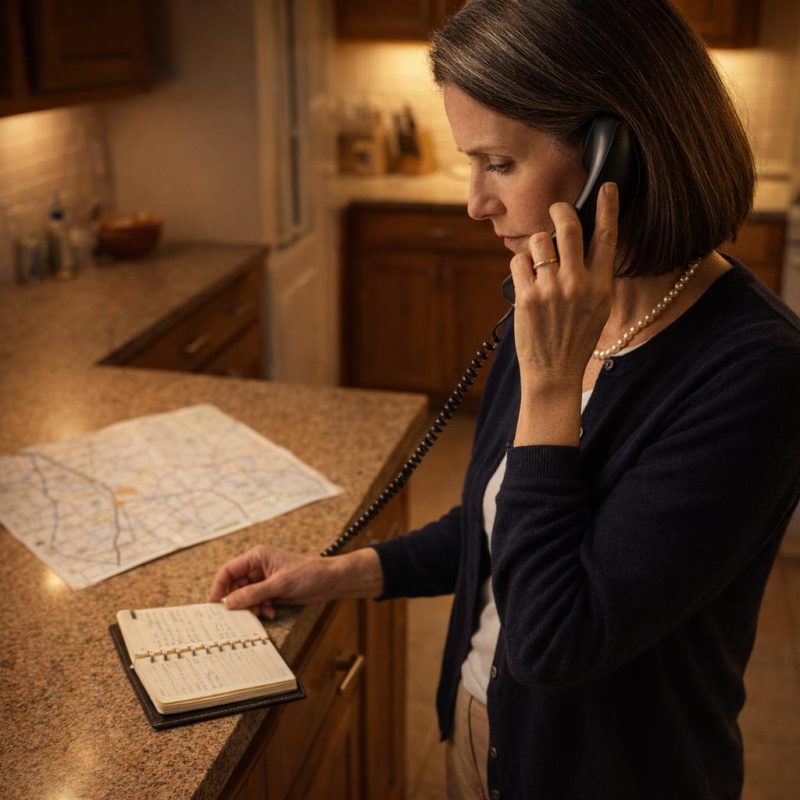 Image by RM AI
Harold Arrives
Harold was at my door in eighteen minutes. I know because I watched the clock on the microwave the entire time, which is not a habit I'm proud of. He looked older than I remembered — we all do, I suppose — but he had the same careful way of moving, the same sharp eyes that Robert always said could spot a problem before it announced itself. I brought him straight to the kitchen without any of the usual pleasantries, and he didn't seem to expect them. He sat down across from the map and I stood to the side and let him look. He didn't say anything at first. He leaned forward with his elbows on the table and studied it the way you study something you recognize but weren't expecting to see. Then he reached out and touched one of the blue circles with the tip of his index finger — just one, the one near the fairgrounds — and held it there for a second without speaking. I watched his face. Something had moved across it when he first saw the map, some quick shift I couldn't name, and now his expression had gone very still. I wanted to ask him what he knew. I wanted to ask him immediately. But something about the way he was sitting, the careful quiet of him, made me wait. The kitchen held the two of us and the map and whatever Harold was working out in his head, and I stood there in the silence and let it settle around me.
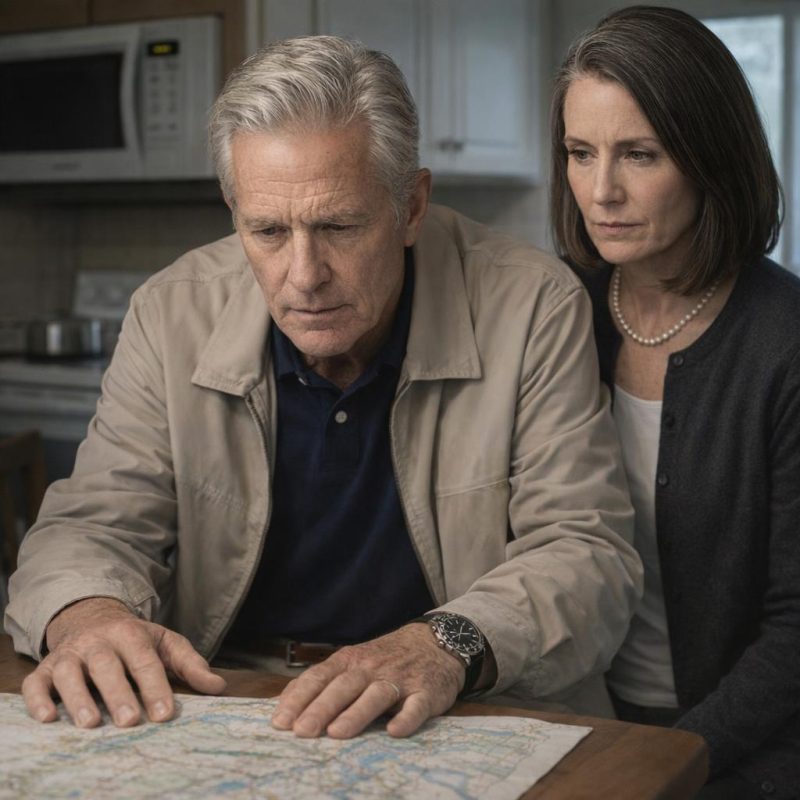 Image by RM AI
The Volunteer Work
Harold sat back in his chair and folded his hands on the table. He took a breath — the kind that means someone is deciding where to start — and then he told me. Robert had volunteered with a legal aid nonprofit for years. Not a few months. Years. The organization helped elderly people get their affairs in order — wills, advance directives, property documents — before a serious illness or a family crisis made those conversations impossible to have. Harold said a lot of people who needed that help were frightened of law offices. The formal waiting rooms, the hourly rates posted on the wall, the feeling of not understanding the language being spoken at them. Robert had noticed that. So instead of asking people to come to an office, he went to them. He met them in places they already felt comfortable — grocery store parking lots, the library, a bench near the river. He'd sit with them and go through their paperwork and help them understand what they had and what they still needed. Harold said Robert never talked about it much. He didn't want recognition. He just thought it was something that needed doing and that he happened to be able to do. I sat across from Harold and listened to all of this and felt something I couldn't quite name — not quite grief, not quite pride, not quite the particular ache of realizing that the man I had shared a bed with for forty-two years had carried a whole quiet corner of his life that I had never once been shown.
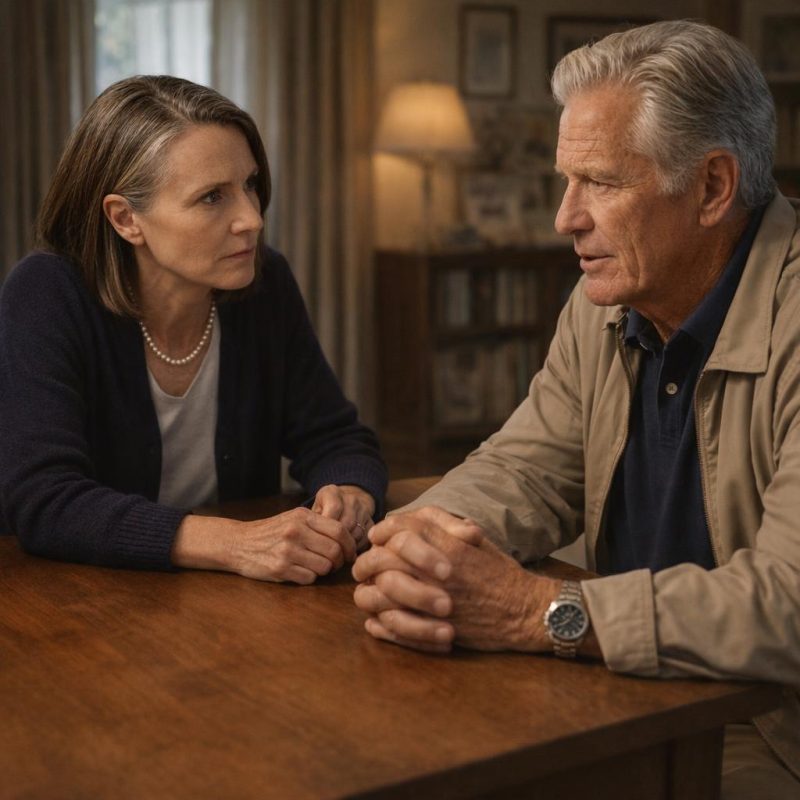 Image by RM AI
The Station Wagon Office
Harold told me Robert had a particular reason for using the station wagon. I hadn't asked — he just knew I'd want to know. He said Robert always felt that the car mattered. It wasn't a sleek sedan or something that looked official. It was old and a little worn and it smelled like the inside of someone's family, and that was the point. People who were already nervous about their paperwork, already embarrassed that they'd waited so long or didn't understand what they had, would sit in that passenger seat and feel like they were talking to a neighbor, not an institution. Harold said Robert used to joke that the wagon had done more good than any conference room he'd ever sat in. I had to look away from Harold for a moment when he said that. I thought about all the times I'd complained about that car — the way it rattled on the highway, the passenger window that stuck in cold weather, the sheer stubbornness of Robert's refusal to replace it. He'd always just smiled and said it still ran fine. I had never once imagined he was protecting something about it. I looked back at the map on the table, at the five careful circles in Robert's handwriting, and the grocery store lot where I had watched my grandson meet a stranger on three separate Saturdays — and the question that had been sitting at the back of my mind all day finally moved to the front.
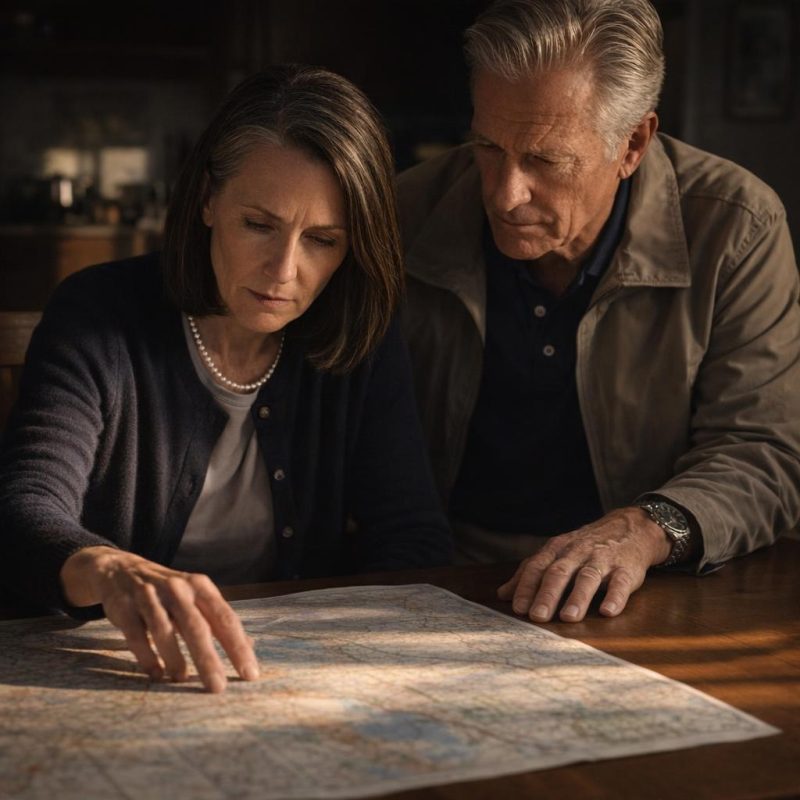 Image by RM AI
After Robert
I asked Harold what happened to the program after Robert died. He was quiet for a moment before he answered. He said it faded. The nonprofit kept running — they still had staff, still had an office, still helped people who came through the door — but the outreach piece, the part where someone went out and met people where they were, that had stopped. Harold said he didn't think anyone else had wanted to take it on. It required a certain kind of patience, he said, and a certain kind of person, and Robert had been that person in a way that wasn't easy to replace. He said he'd thought it was a shame at the time but he'd understood. These things happen when the one person holding them together is gone. He looked at the map again, at the circles, and said he supposed those locations were just Robert's old routes now. Just a record of where he used to go. I didn't say anything about Michael. I don't know exactly why — something made me hold it back, some instinct I didn't fully trust yet. I just nodded and let Harold's words settle into the kitchen around us, and after he said his goodbyes and I walked him to the door and watched his car back out of the driveway, I stood in the hallway for a long time with the particular sadness of hearing about a good thing that had quietly gone out of the world.
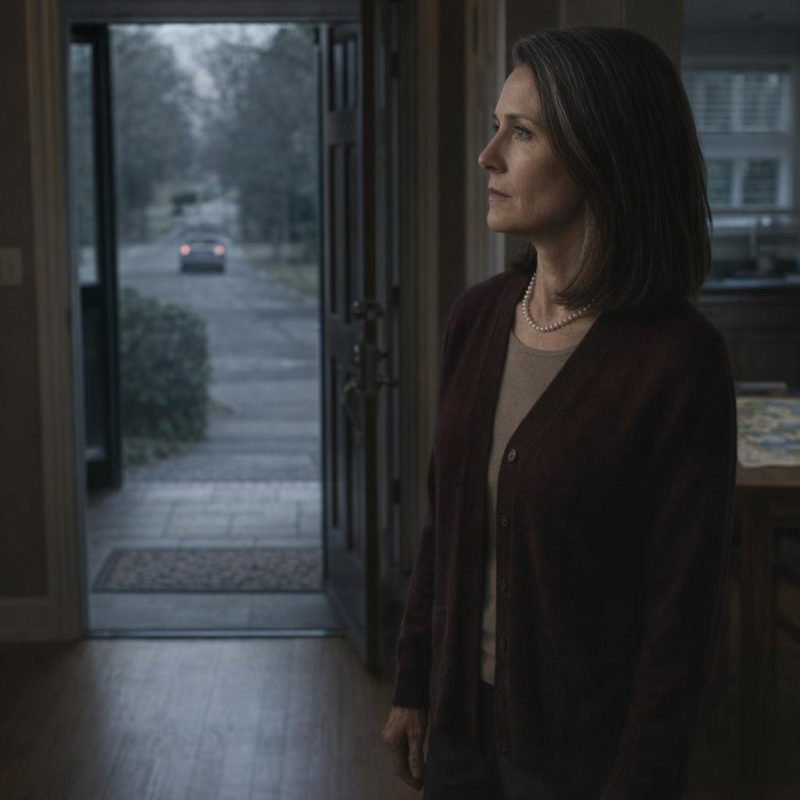 Image by RM AI
The Nonprofit
After Harold left I sat at the kitchen table for a few minutes without moving. Then I got up and went to the small desk in the corner of the living room where I keep the laptop Susan bought me two Christmases ago. I typed the name of the nonprofit Harold had mentioned into the search bar — I had to try two different spellings before I found it — and there it was. A clean, simple website. A mission statement about helping seniors navigate estate planning without the fear and expense of formal legal consultations. A list of services. A section about their history that went back further than I'd expected. I read through it slowly, the way I read things on screens now that the font never seems quite large enough. There was a page for their staff and a page for their programs and at the bottom of the contact page there was a name and a phone number for the program coordinator. I wrote the name and number down on the notepad I keep by the desk — Lisa, and a local number — and I set the pen down and looked at what I'd written. I would call Monday morning, I decided. Whatever was happening with Michael and that parking lot and Robert's old map, this woman might be the one person who could tell me something I didn't already know. The house was dark around me by then except for the blue-white glow of the laptop screen, and I sat with it a moment longer before I closed the lid.
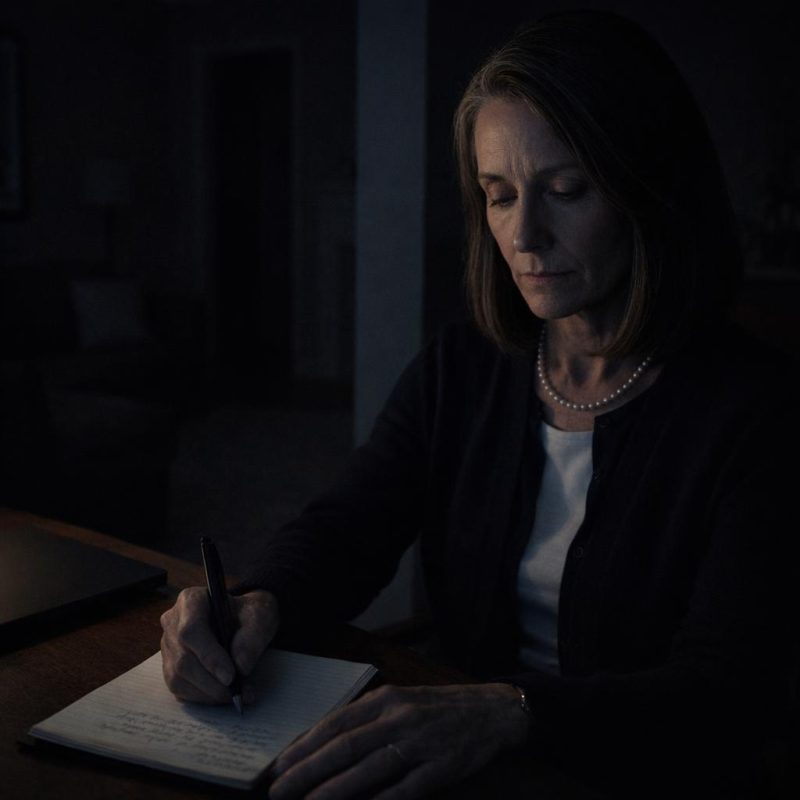 Image by RM AI
The Phone Call
Monday morning I waited until nine o'clock, which felt like the polite thing to do, and then I dialed. The phone rang twice and a woman answered — professional, warm, a little brisk in the way of someone who has a full day already underway. I told her my name and said that my late husband had volunteered with the organization some years back, and that I had some questions about the work he'd done. There was a brief pause on the line. She said her name was Lisa and that she was the program coordinator, and her voice softened when I mentioned Robert. She said she hadn't been with the organization long enough to have known him personally, but that she'd heard his name. People spoke well of him, she said. I thanked her and asked a few careful questions about how the outreach program had worked — the parking lot meetings, the document help, the way he'd gone to people instead of waiting for them to come in. Lisa answered each one patiently. And then, before I could figure out how to ask what I actually needed to ask, she said something that stopped me entirely. She said it was funny I should call now, of all times, because just recently someone had come to them wanting to restart the outreach program — and they'd said yes.
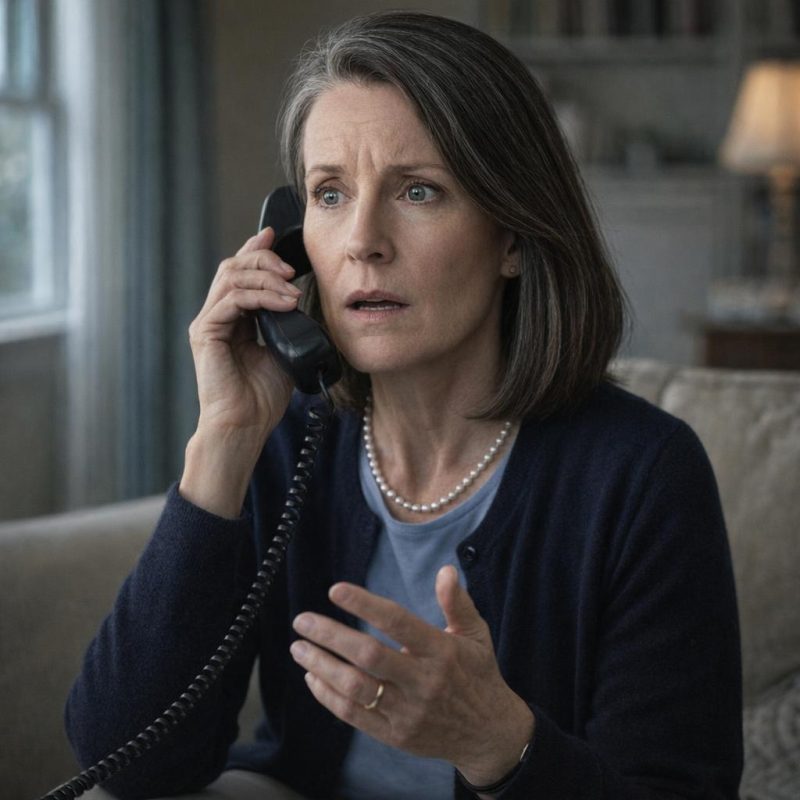 Image by RM AI
The Same Locations
I held the phone a little tighter. Lisa was still talking, explaining how the revived outreach program had come together, and I was trying to keep up while my mind was already running ahead of her words. She said someone had reached out to the organization several months back — a young person, she said, which surprised her at first — offering to meet with clients in public places, the way the old program had operated. Neutral ground, she called it. Places where people felt safe enough to show up. And then she mentioned the locations. A grocery store parking lot on Millbrook. The library on Sycamore. The community center off Route 9. I had the map spread open on the kitchen table in front of me, and I looked down at it as she spoke. Robert's handwriting. His circles and his notes. Every location she named was already marked on that page. Lisa said she'd thought it was a wonderful coincidence — that whoever had revived the program had such good instincts for where people felt comfortable. She had no idea those spots had been chosen before, years ago, by someone else entirely. I didn't say anything for a moment. I just looked at the map, at the careful circles my late husband had drawn, and at the worn crease down the center where it had been folded and unfolded many times. Someone had used this map. Someone who had access to it. The grocery store on Millbrook. The library on Sycamore. My hands went still on the table as the pieces settled into place.
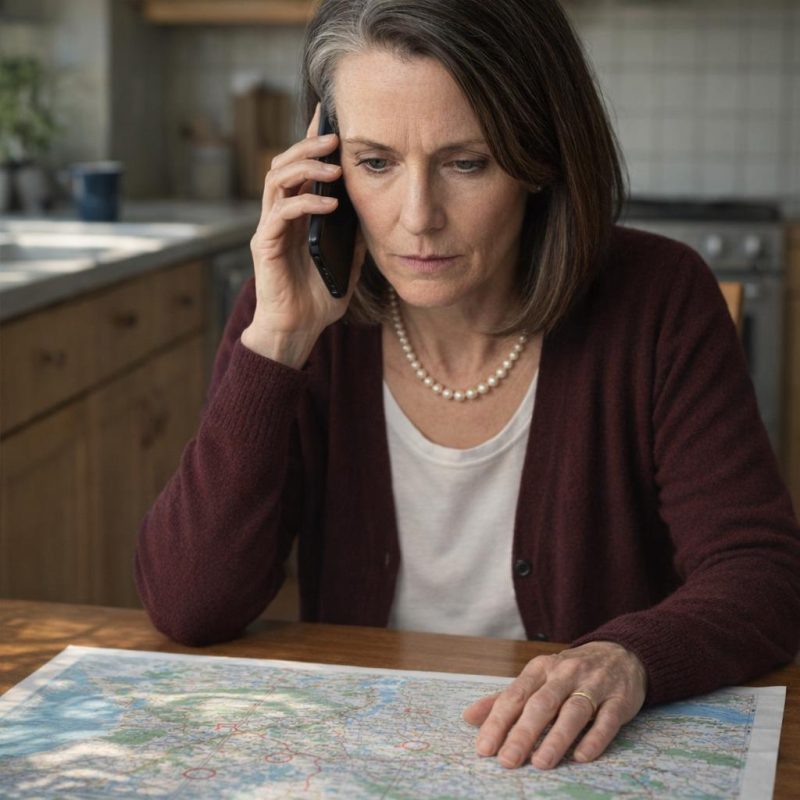 Image by RM AI
Michael's Introduction
I asked Lisa if she knew anything more about the person who'd contacted them, trying to keep my voice steady and conversational, like I was just making polite conversation and not holding my breath. She said yes, of course — he'd introduced himself properly when he first called. She said he'd been very clear about who he was. He told her his name was Michael, and that he was Robert Harrison's grandson. She paused there, like she was giving me a moment to respond, and when I didn't she added that he'd mentioned the family was supportive of him continuing the tradition. That he had their blessing, was how she put it. I set my free hand flat on the kitchen table. Michael. He had called this woman, introduced himself by his grandfather's name, and told her the family approved. He had done all of that without saying a single word to me. Lisa's voice came back warm and a little careful. She said she hoped she hadn't overstepped by sharing any of this, and that she'd assumed, given what Michael had told her, that I already knew everything about what he'd been doing. She said it so gently, so matter-of-factly, that for a second I almost laughed. She assumed I already knew.
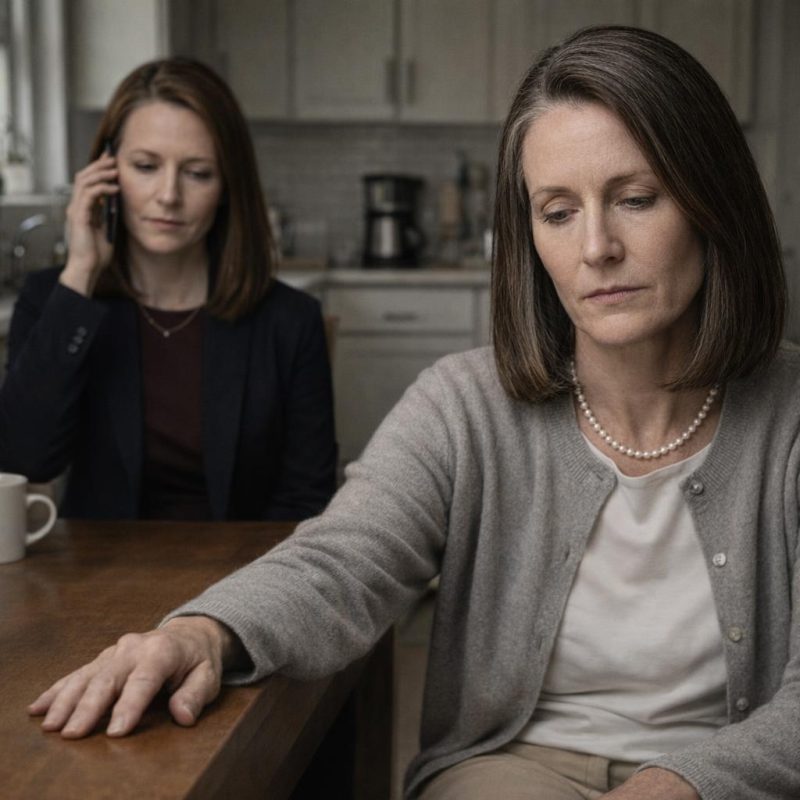 Image by RM AI
Preparing to Confront
I thanked Lisa, told her she hadn't done anything wrong at all, and got off the phone as gracefully as I could manage. Then I sat down at the kitchen table and didn't move for a while. The map was still there in front of me, Robert's handwriting going soft at the edges where I'd handled it too many times in the past week. I smoothed one corner of it with my thumb and thought about Michael. Sixteen years old. Calling a nonprofit organization, introducing himself as Robert Harrison's grandson, borrowing my station wagon every Saturday, meeting strangers in parking lots — and never once mentioning any of it to me. I wasn't angry, exactly. That surprised me a little, because I'd half expected to be. What I felt was more complicated than that. There was something that sat close to pride, warm and a little aching, and underneath it something that stung just slightly — the fact that he hadn't told me. That he'd thought he needed to keep it from me. I decided I wasn't going to come at him with accusations or a list of questions fired off one after another. I was going to show him the map. I was going to let him see that I already knew, and then I was going to give him room to explain it in his own words. Saturday was four days away. I folded the map carefully along its original creases and left it in the center of the table where I would remember to find it.
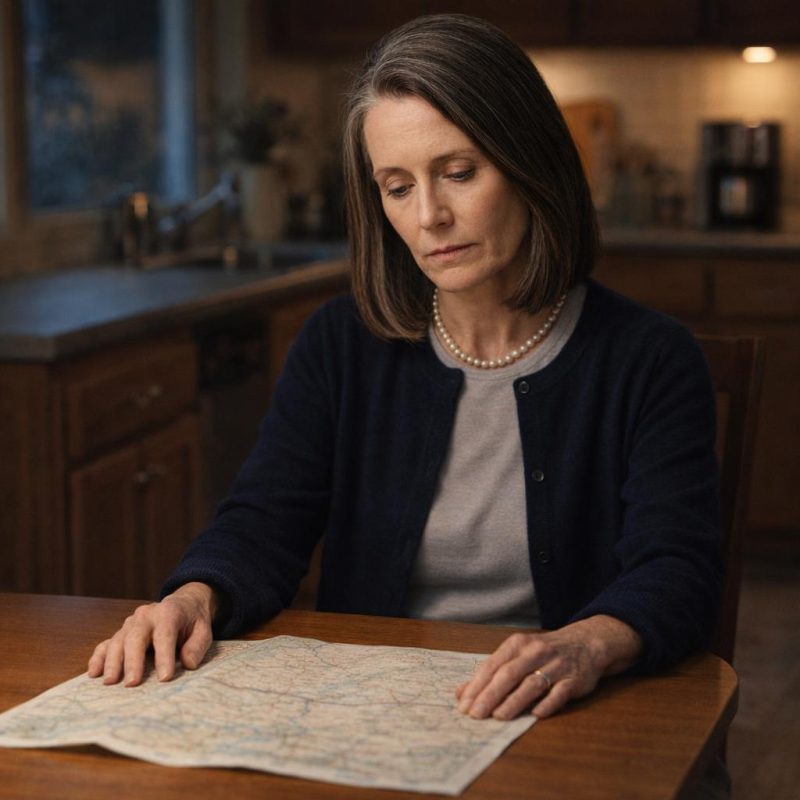 Image by RM AI
The Gentle Confrontation
Saturday came the way Saturdays do when you've been waiting for them — slowly, and then all at once. I heard the wagon pull into the driveway just after noon, the familiar sound of that old engine settling into quiet. I watched from the kitchen window as Michael climbed out, and I went to the back door before he could just leave the keys in the mailbox the way he sometimes did when he was in a hurry. I called his name and told him to come inside for a minute, that I had something to show him. He looked a little uncertain but he followed me in, and I gestured for him to sit down at the kitchen table. The map was already there, unfolded, Robert's handwriting visible from across the room. I didn't say anything. I just stood back and let him look. I watched his face as he took it in — the circles, the notes in the margins, the worn crease down the center. The color went out of his cheeks slowly, the way it does when something catches a person completely off guard. He looked up at me and then back down at the map, and then he asked, very quietly, where I had found it. I told him it had been in the glove compartment of the wagon. He sat very still after that, both hands resting on the table, and the kitchen held the particular silence of someone trying to figure out where to begin.
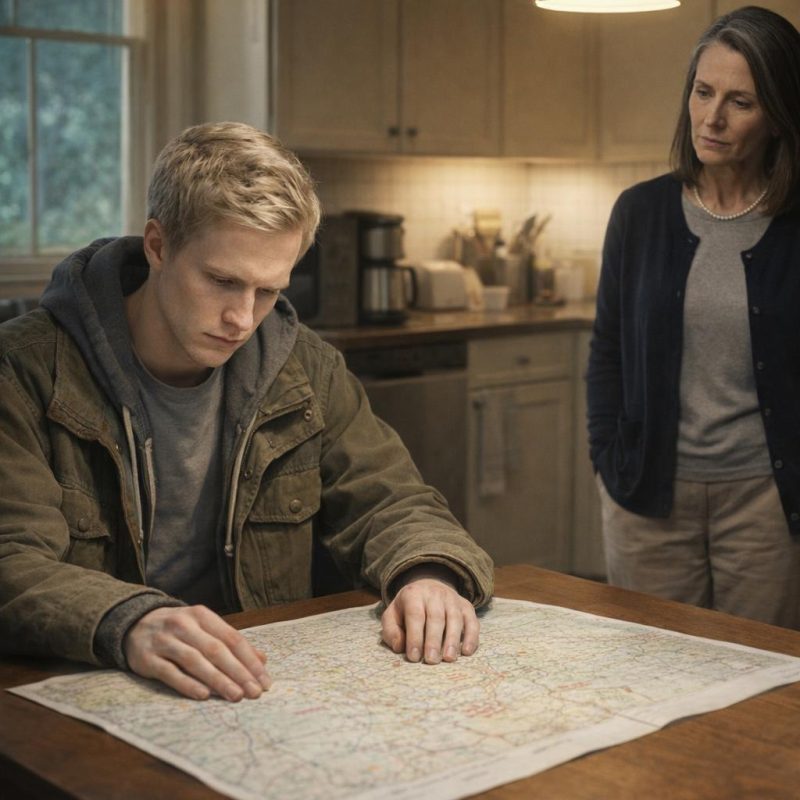 Image by RM AI
The Attic Discovery
I pulled out the chair across from him and sat down, and I told him I wasn't upset. I said it plainly, because I could see from the way he was holding himself — shoulders drawn in, eyes on the table — that he was bracing for something. I told him I just wanted to understand. He nodded once, slowly, and then he started to talk. He said it had begun last spring, when I'd asked him to help me clear out some of the boxes in the attic for a school service project he was doing. He'd been up there for a couple of hours while I was downstairs, and he'd found a stack of boxes pushed back against the far wall — boxes he hadn't seen before. He said he'd opened one just to check what was inside, thinking it might be things I wanted to donate. But it wasn't household things. It was papers. Folders. And underneath those, a row of journals, small ones with cloth covers, filled front to back in his grandfather's handwriting. He said he'd sat down on the attic floor and started reading, and that he hadn't been able to stop. He described what was in them — entry after entry about families Robert had met, the situations they'd been in, what the meetings had meant to them. He said by the time he came back downstairs that afternoon he'd already read through most of the first journal, and that he kept thinking about one line his grandfather had written near the beginning — a line about why the work mattered. He looked up at me then, and his voice was steady but his eyes weren't, and he said he needed to tell me what that line said.
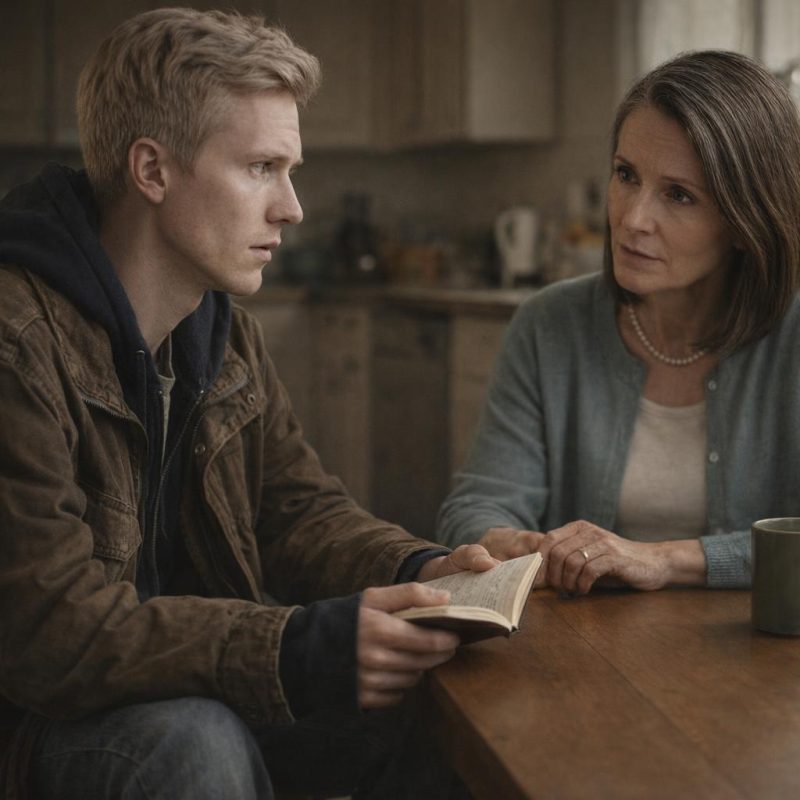 Image by RM AI
The Inspiration
He said the line was simple. Something like: the office door is the hardest part — so don't make them come to the door. He said it had stopped him cold when he read it, because he'd never thought about it that way before. He'd grown up assuming that if people needed help, they went and found it. But the journals told a different story. Entry after entry described people who had every reason to seek help but who never did — held back, Robert had written, by something as simple as where the help was located. People who lost things they didn't have to lose, because no one came to meet them where they were. Michael said he'd sat with that for weeks after he found the journals. He'd gone back up to the attic twice more to keep reading. And then one afternoon he'd looked up the organization online, found a contact number, and called. He said Lisa had answered, and that she'd listened to the whole thing without interrupting. She was the one who suggested he use the station wagon — said it was the right kind of car for the work, unassuming, easy to park anywhere. Michael looked at me across the table and said he hadn't gone looking for a project. He said the journals found him, and after that he didn't feel like he had much of a choice.
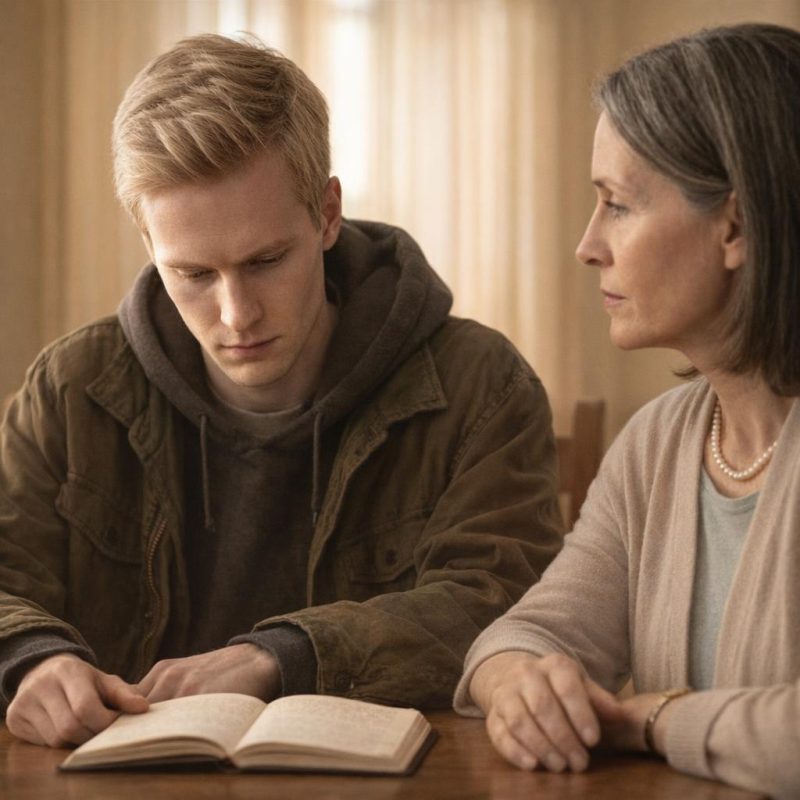 Image by RM AI
The Fear of Judgment
I asked him then why he hadn't told me. I kept my voice gentle, because I meant it gently, but I needed to hear the answer. He was quiet for a moment, turning one of his hands over on the table like he was looking for the right words on the other side of it. Then he said he'd been worried about what I would think. Not about the work itself, he said quickly — he knew I would understand that part. It was more that he was sixteen, and he was aware of being sixteen, and he thought I might tell him he was taking on too much. That it wasn't his place. That he should leave it to adults who knew what they were doing. He said he wanted to prove first that he could handle it before he told anyone. He'd planned to tell me eventually, once he had a few months behind him and could show me it was going well. He looked at me with that particular expression teenagers get when they're trying very hard to seem older than they feel, and I could see underneath it how young he still was — how much it had cost him to carry this quietly for so long, and how certain he'd been that I would find a reason to say no. I hadn't known he thought of me that way. That I was someone whose first instinct would be to pull him back rather than let him go forward. That sat with me in a way I hadn't expected, quiet and a little heavy.
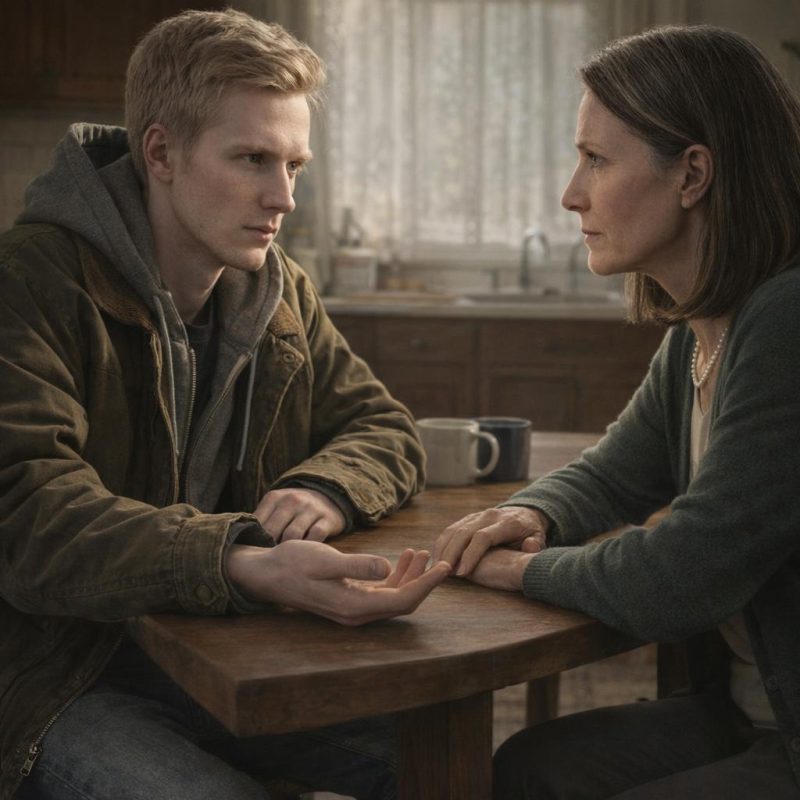 Image by RM AI
The Remaining Question
I reached across the table and covered his hand with mine and told him I wasn't angry. I said it again because I wanted it to land properly this time, without any of the weight of the past few minutes still clinging to it. I told him I was proud of him — that what he'd done took more courage and more care than most adults I knew would have managed. He looked relieved in the way that only happens when someone has been holding something for a very long time and finally sets it down. But I still had a question, and I told him so. I said I understood now how it had started, and why he'd kept it quiet, and what the organization did. What I didn't understand yet was what actually happened during those meetings. What it looked like when someone pulled into that parking lot and walked up to the wagon. What he said to them, what they brought with them, what he was able to do. I asked him to walk me through it. He straightened a little in his chair, and I could see him gathering himself, sorting through where to begin. He opened his mouth and then closed it again, and then he looked at the map still spread between us on the table, as though the answer was somewhere in those careful circles his grandfather had drawn. The kitchen was quiet around us, and I waited.
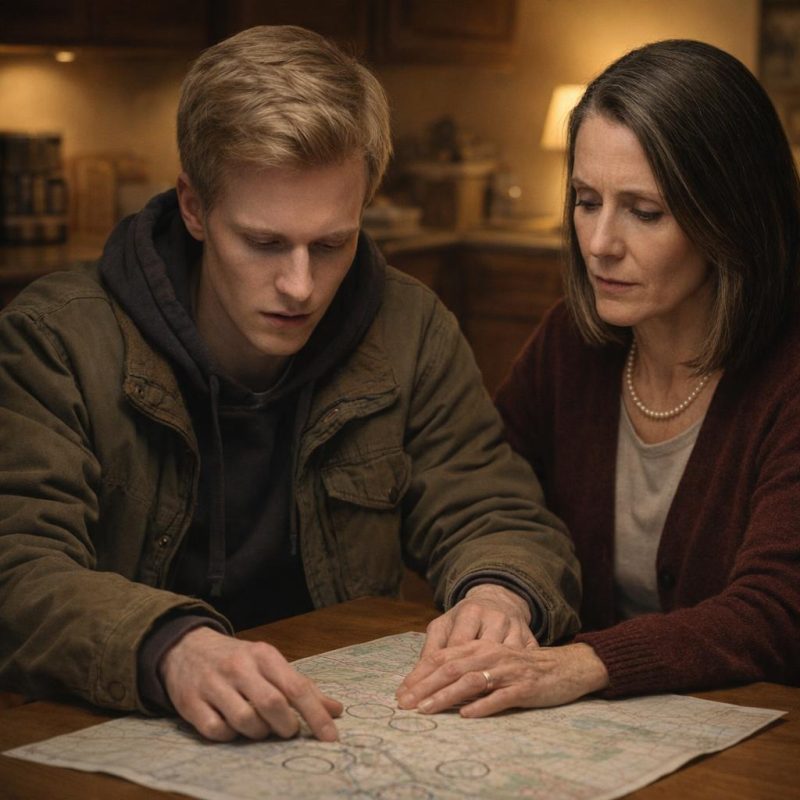 Image by RM AI
The Invitation to Observe
Two days after Michael and I sat at the kitchen table with Robert's map spread between us, my phone rang. It was Lisa, and she got right to the point the way I'd come to expect from her. She said she'd been thinking about our conversation, and she had a proposal. She wanted to know if I'd like to see for myself — not through Michael's description, not through hers, but with my own eyes. She said she could position me in the parking lot on Saturday in a spot where I'd have a clear view of everything but Michael wouldn't be able to see me. She'd park her own car between us to block his sightline. I'd just sit and watch. I asked her if Michael would know afterward, and she said that was entirely up to me — she just thought I deserved to understand what I'd been worrying about. I sat with that for a moment. Part of me felt like I was sneaking around behind my own grandson's back, and I told her so. She said she understood, but that sometimes the kindest thing a person could do was witness something before they spoke about it. That landed. I told her I'd be there. She said Michael had a meeting scheduled for Saturday morning at nine, and to arrive by eight forty-five so we'd have time to get settled. I wrote it down on the notepad by the refrigerator, the same one I use for grocery lists, and I stared at what I'd written for a long time after I hung up.
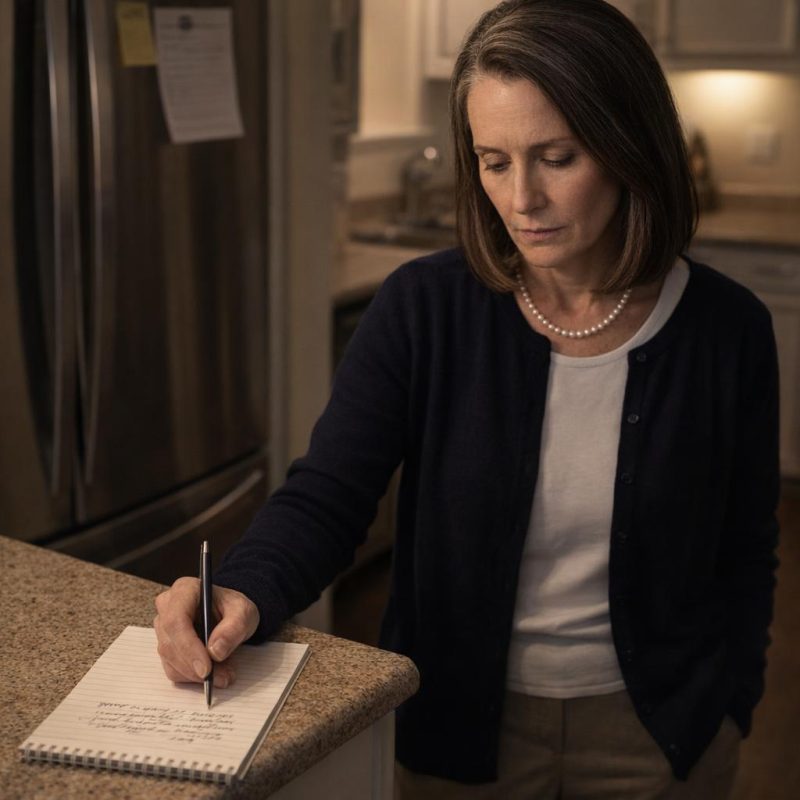 Image by RM AI
Preparing to Watch
The days between that phone call and Saturday moved the way time does when you're waiting for something you can't quite name — slowly, and with too much room to think. I went through my usual routines. I watered the plants on the back porch, I made my grocery run on Thursday, I had Harold over for coffee on Friday afternoon and managed to talk about everything except the one thing sitting at the center of my mind. I didn't call Michael. That was the hardest part. Normally I'd have called him twice by midweek just to check in, and the silence felt strange and deliberate on my end in a way I hoped he wouldn't notice if he thought about it. I rehearsed staying calm. I told myself that whatever I saw on Saturday, I would not react in a way that embarrassed either of us. I would watch, and I would understand, and then I would decide what to do with what I knew. Friday night I barely slept. I lay in the dark listening to the house settle and going over every small thing Michael had said at that kitchen table, every careful word, every pause. By five in the morning I gave up on sleep entirely and made coffee and sat with it until the sky went pale. I dressed carefully — nothing that would stand out, nothing that would catch his eye if something went wrong with Lisa's plan. Then I picked up my keys, and I drove toward the address Lisa had given me.
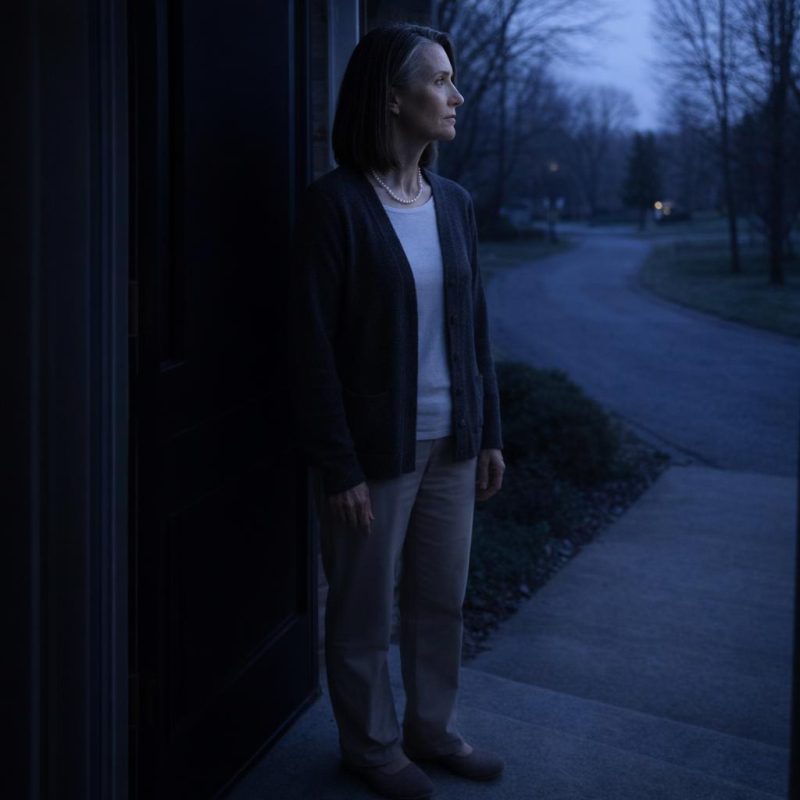 Image by RM AI
The Observation Post
I pulled into the parking lot at eight forty-two, which meant I was three minutes early even by my own standards. Lisa was already there, standing beside her car near the far end of the lot, and she raised a hand when she saw me. She guided me into a spot along the side wall — angled just enough that I had a clear line of sight to the corner where Michael always parked, but tucked back far enough that I'd be in shadow once the morning light shifted. Then she pulled her own car forward and positioned it between mine and the open corner, a natural-looking gap that would block Michael's view without looking arranged. She was efficient about it, the way she was efficient about everything, and I found myself grateful for that. She came around and got into my passenger seat, and we sat together without saying much. The lot was quiet. A few other cars were scattered around, nothing unusual. Lisa checked her phone once and said he was reliable, always on time. I nodded and kept my eyes on that corner spot — the one I now recognized from the map, from Michael's description, from weeks of wondering. At nine o'clock exactly, the old station wagon rolled in and eased into the corner, and I watched my grandson cut the engine and settle in to wait.
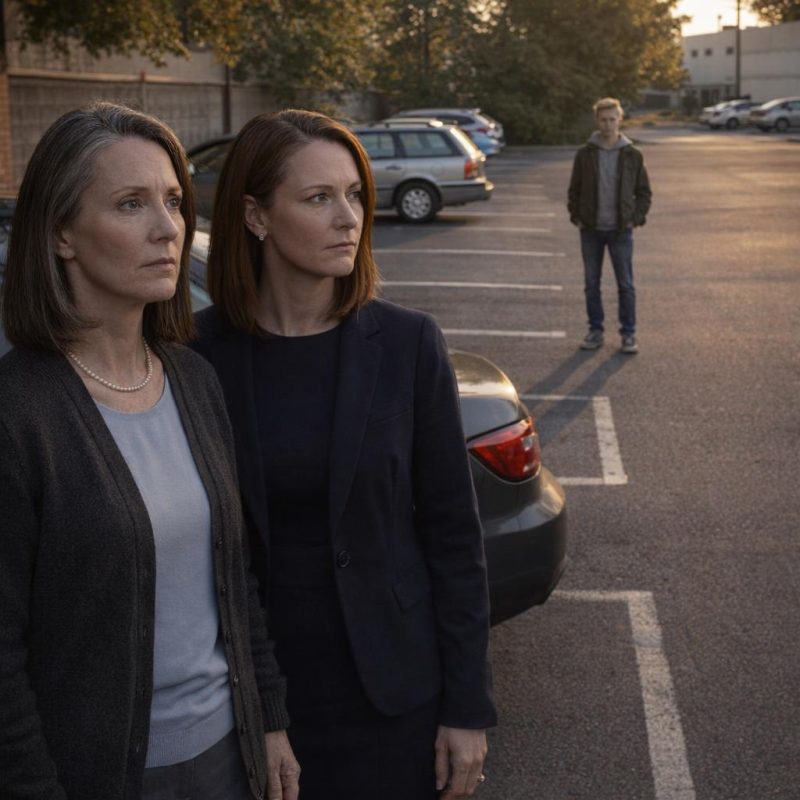 Image by RM AI
The Waiting
We didn't speak. I think we both understood that words would have broken something in that moment. I watched Michael through the windshield — just the back of his head, really, the way he sat still in the driver's seat with his hands resting in his lap. He wasn't on his phone. He wasn't fidgeting. He was simply waiting, with a patience that seemed too settled for a sixteen-year-old. Ten minutes passed. My hands were wrapped around the steering wheel even though the car wasn't running, and at some point I noticed I was gripping it harder than I needed to. Lisa glanced at her watch and gave a small nod. She leaned toward me just slightly and said, barely above a whisper, that the client should be arriving any moment now. I didn't answer. I kept my eyes on the wagon, on the familiar dent above the rear wheel well, on the faded paint I'd watched Robert wash in the driveway every spring for thirty years. All those weeks of wondering — the borrowed car, the empty parking lots, the careful silence — had narrowed down to this one quiet morning, and whatever was about to happen was already on its way across the lot toward my grandson. The weight of that settled into my chest and stayed there, still and complete, like something that had finally found the place it was meant to rest.
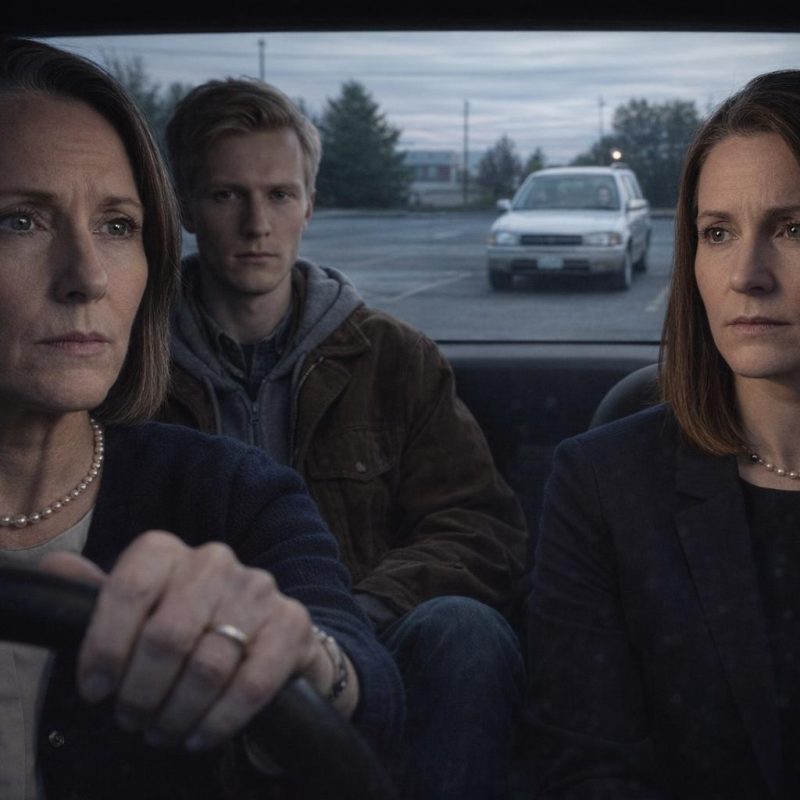 Image by RM AI
The Truth Revealed
She came from the far end of the lot — an elderly woman moving carefully, carrying a thick manila folder pressed against her chest the way you'd carry something you were afraid to drop. She tapped on the passenger window of the wagon, and Michael leaned over and opened the door for her from the inside. Lisa touched my arm lightly and began to explain in a low voice. She said Michael didn't give legal advice. He wasn't there to tell anyone what to do or what their documents meant. What he did was listen. He let people spread everything out — deeds, photographs, handwritten letters, medical records — and he helped them put it in order. He asked gentle questions. He helped them find the thread of their own story so that when they sat down with an attorney, they weren't overwhelmed and scattered. They were ready. Through the windshield I could see the woman's papers fanning out across the dashboard. At one point her shoulders shook, and Michael reached somewhere — the glove box, I thought — and handed her something. Tissues. He sat quietly while she composed herself, not rushing her, not filling the silence with words. After about twenty minutes she gathered everything back into the folder, slowly and carefully, and she reached over and patted his hand before she got out. I had spent weeks imagining what happened in that car. I had turned it over in my mind a hundred different ways, building theories and then pulling them apart. And sitting there watching him hand that woman a tissue and wait — without impatience, without agenda — I understood that what Michael was giving those people wasn't advice at all. It was the one thing most of them hadn't had in a very long time: someone who would simply sit with them and not look away.
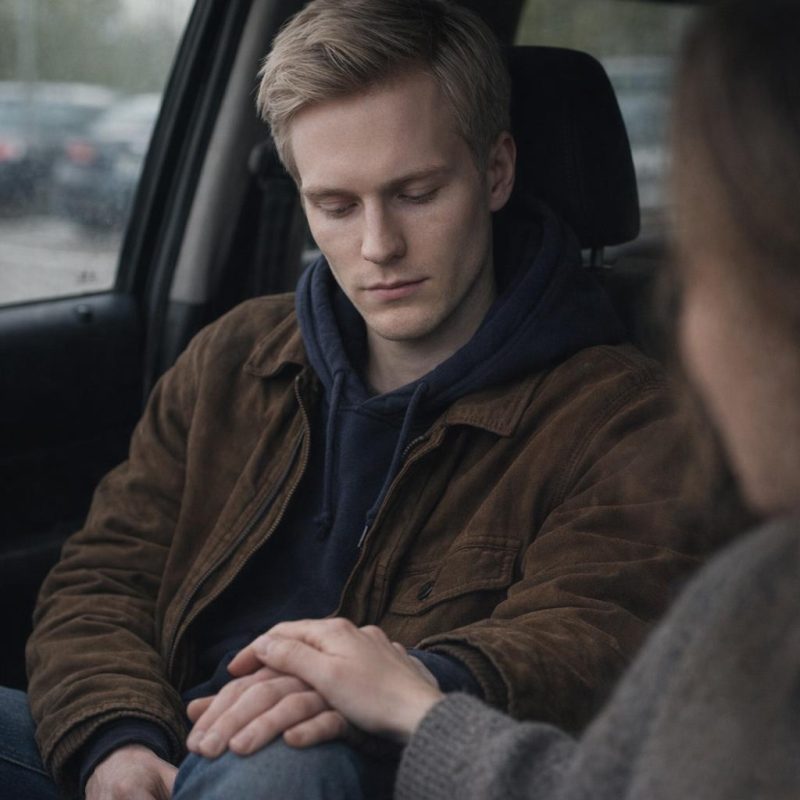 Image by RM AI
The Familiar Space
Lisa let the quiet sit for a moment before she said anything more. Then she told me something I hadn't expected. She said that for several of the clients who came to Michael, the wagon itself was part of why they came. Some of them remembered Robert. Not all of them — some were newer to the organization — but enough. They remembered a man who had met them in that same car years ago, who had been patient with them when they were frightened and confused, who had never made them feel foolish for not understanding their own paperwork. The car meant something to them. It meant safety. It meant that whoever was sitting in the driver's seat was going to treat them the way Robert had. Lisa said one woman had called the organization specifically asking if the station wagon was still being used, because she hadn't been able to bring herself to come back after Robert passed, and hearing that it was still there had been what finally got her through the door. I watched a second client cross the lot toward the wagon just then — a woman in a blue coat who slowed when she got close, and reached out and rested her hand briefly on the hood before she knocked on the window. It was such a small gesture. But I knew exactly what it meant, because I had done the same thing myself in my own driveway more times than I could count. Robert had left something behind in that old car, and somehow my grandson had known it was worth keeping.
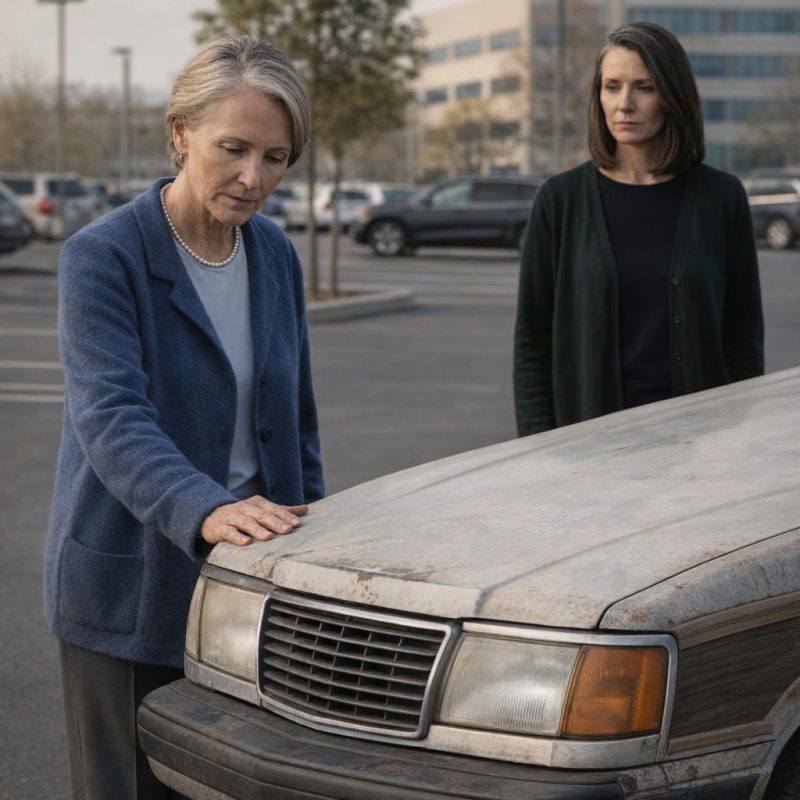 Image by RM AI
The Attorney Connection
The woman in the blue coat was in the wagon for about twenty-five minutes. When the door opened and she stepped out, her folder looked different — thicker somehow, more organized, the papers no longer threatening to slide loose from the edges. Michael got out on his side and came around, and they walked together across the lot at an easy pace, not hurried. Three spaces down, a car I hadn't paid much attention to — a dark sedan, unremarkable — had its door open, and a man in his fifties stepped out to meet them. He shook the woman's hand with both of his, the way people do when they want you to know the handshake means something. Michael said a few words, gestured toward the woman, and then stepped back. He put his hands in his jacket pockets and stood a little apart while the attorney and the woman settled into a conversation over her open folder. Lisa told me quietly that the attorneys rotated — different volunteers each week, coordinated through the organization — and that they always waited until Michael signaled that a client was ready. Michael walked back to the wagon alone and got in, and the door closed, and he was still again. Across the lot, the attorney was already bent over the woman's documents, pointing at something on one of the pages, and the woman was nodding. I watched the attorney take the folder gently from her hands and begin to go through it page by page.
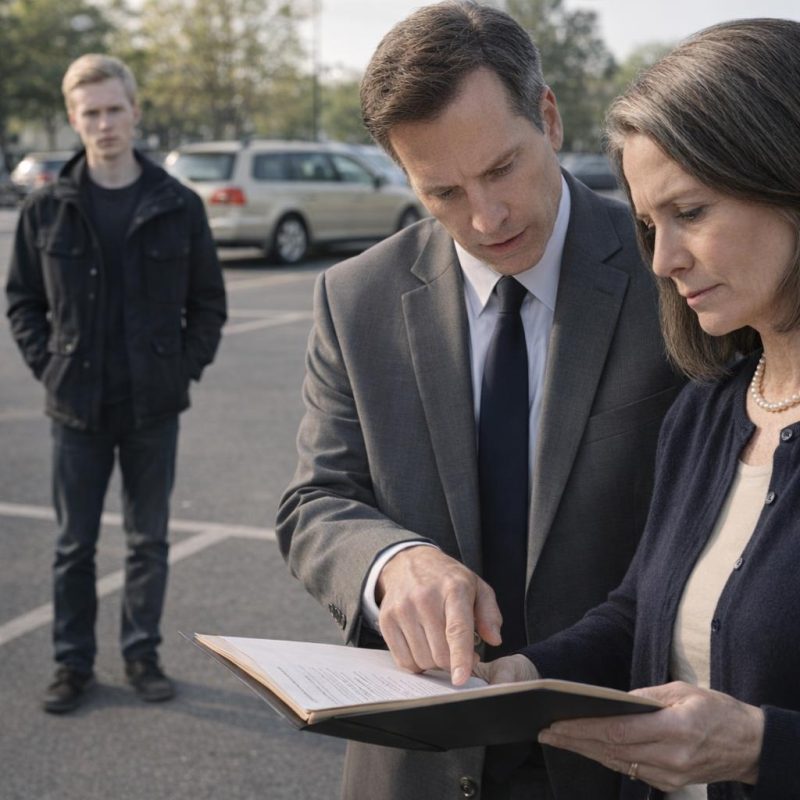 Image by RM AI
Pride Replaces Worry
At some point I realized my face was wet. I hadn't noticed when it started. Lisa reached into her bag without a word and held out a small packet of tissues, and I took one and pressed it against my cheek and tried to pull myself together, which didn't entirely work. Michael was already greeting the next person — a man this time, older, moving slowly with a cane — and I watched my grandson come around the wagon to hold the door open for him. The gentleness of it. The complete, unhurried gentleness. Lisa said softly that Michael had never missed a Saturday since he started. Not once. Not for weather, not for school events, not for anything. She said the clients asked about him when he wasn't there yet, that they knew his name, that some of them had specifically requested to come back on a day when he was scheduled. I thought about all the mornings I had watched him back that wagon out of my driveway with no explanation, all the worry I had carried, all the quiet suspicion I had felt and then felt guilty for feeling. He had been carrying something I hadn't known to look for — something Robert had carried before him, in the same car, on the same kinds of mornings. I had spent weeks trying to understand my grandson. Sitting there in that parking lot, watching him settle that old man carefully into the passenger seat, I saw him — really saw him — for the first time.
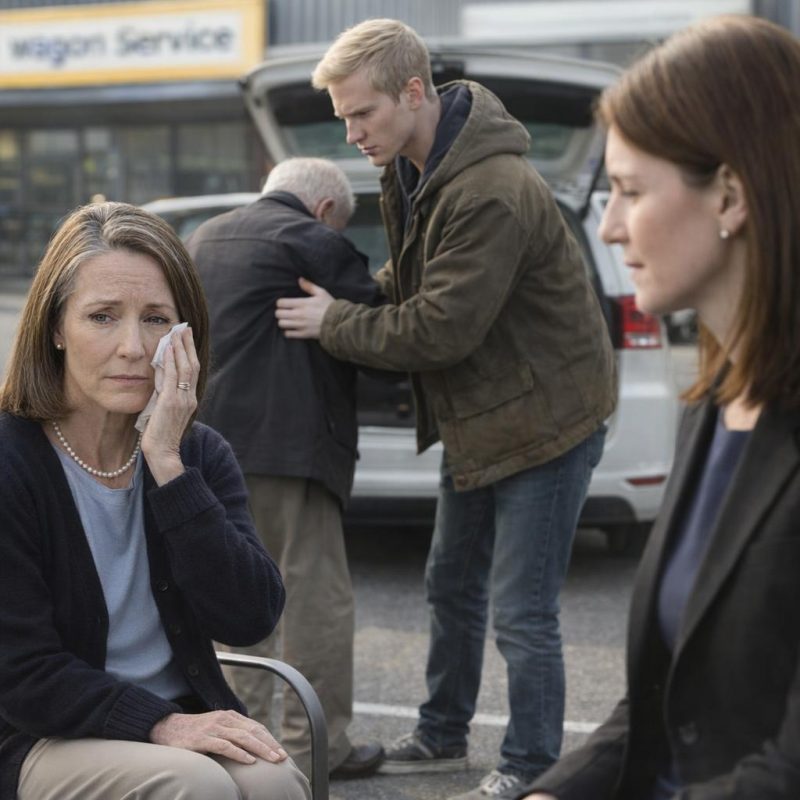 Image by RM AI
Multiple Saturdays
I went back the next Saturday. I told myself it was just to be sure, but that wasn't really true — I went back because I couldn't stay away. Lisa had saved me the same spot, a folding chair near the edge of the lot where I could watch without being in the way. Michael never looked over. He was too focused. That second week, a young couple arrived with a baby on the mother's hip and a folder of papers neither of them seemed to know how to hold. Michael came around the wagon, smiled at the baby first, then at them, and something in their shoulders dropped about two inches. The week after that, an elderly man came alone with a small briefcase, moving carefully, and Michael walked beside him the whole way from the curb without being asked. I watched him hand out tissues more than once. I watched him sit on the hood of the wagon while someone talked, just listening, not checking his phone, not glancing at the time. Lisa told me he organized his own checklist so clients arrived in the right order for the attorney inside. He had thought of that himself. Week after week, the faces changed and the stories changed, but Michael didn't. Same patience. Same unhurried attention. Same boy who used to ask me to cut the crusts off his sandwiches, now sitting with strangers in a parking lot, making them feel like their problems were worth someone's time. I stopped counting the Saturdays after a while. I just came, and I watched, and I let it settle into me like something I hadn't known I needed.
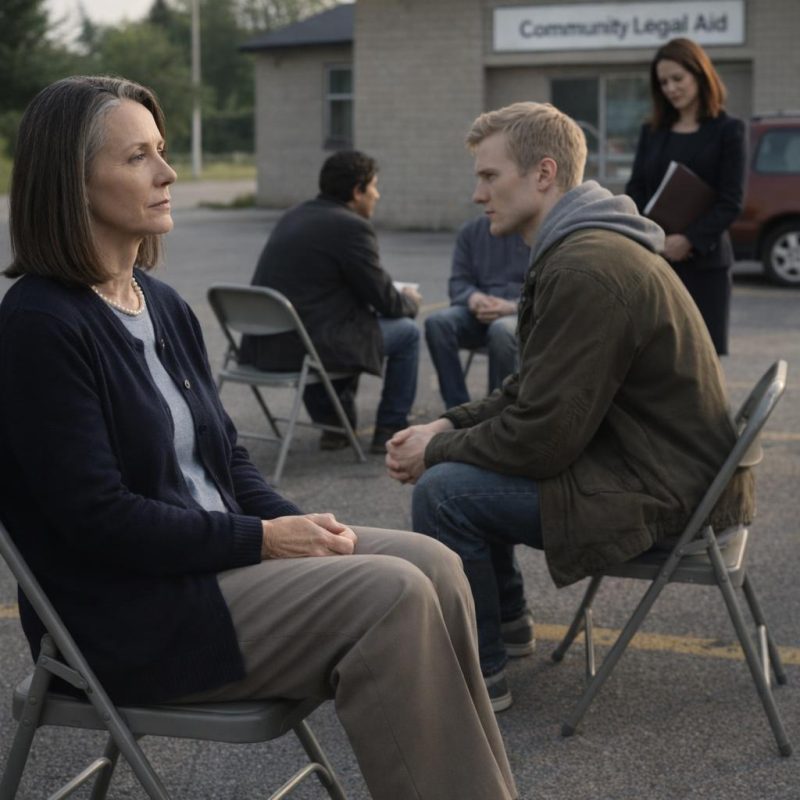 Image by RM AI
The Stories
One morning Lisa and I sat in her car while Michael was inside helping the attorney file some paperwork, and she started telling me stories. Not in a formal way — more like she'd been holding them and finally had someone to give them to. She told me about a man who had put off estate planning for ten years because every time he tried to make an appointment, he'd end up sitting in some office that felt cold and official and he'd leave before anyone called his name. He met Michael in the parking lot on a Tuesday follow-up visit and came back the next Saturday with everything organized in a binder. She told me about a couple whose son had a disability, and they'd been terrified for years about what would happen to him when they were gone, but the paperwork felt so overwhelming they kept postponing it. Michael sat with them for two Saturdays in a row. They completed the trust on the third. Lisa said she'd seen people walk away from attorneys' offices for years, but she'd never seen anyone walk toward one the way they did after talking to Michael first. Then she got quiet for a moment and told me about a widow. The woman had a box of her late husband's papers she hadn't opened since the day he died. She'd carried it from apartment to apartment for four years. She brought it to Michael, and he sat with her while she went through every page, and he never once made her feel like she was taking too long. Lisa said the woman called the office afterward just to say thank you — and that she'd finally been able to sleep.
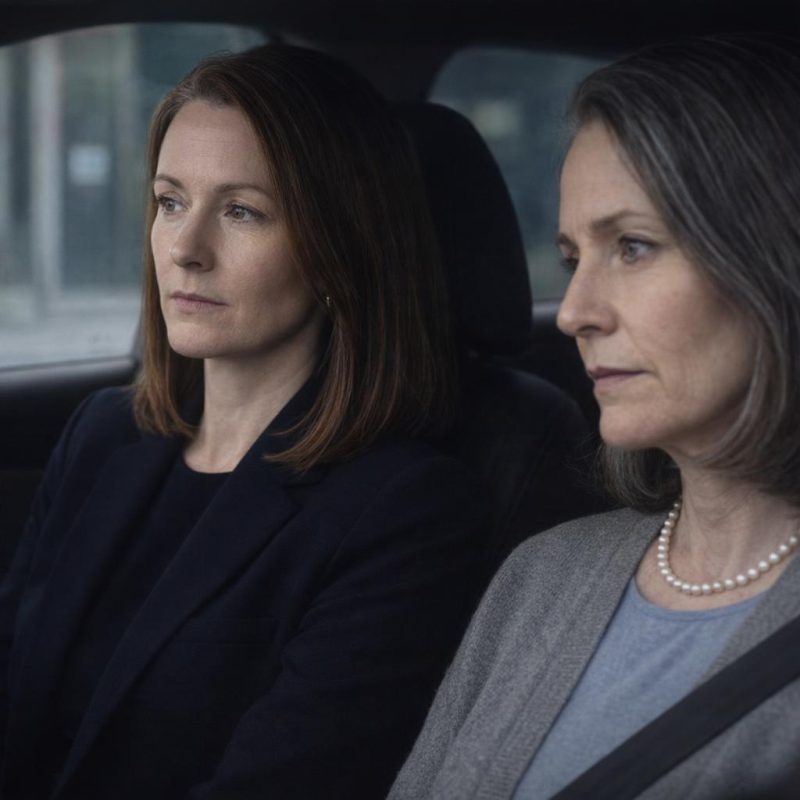 Image by RM AI
The Funding Announcement
The nonprofit held their celebration on a Thursday evening in late October, in a room at their office that someone had strung with small white lights and filled with folding chairs. Susan drove me, and Harold met us at the door. He looked the way he always did at things that mattered — quiet and straight-backed, like he was standing at attention for something he believed in. Susan had taken the afternoon off work, which she almost never did, and she kept her hand on my arm as we found our seats. Lisa stood at the front of the room and thanked everyone who had made the program possible, and when she said Michael's name, the room applauded in a way that wasn't polite or perfunctory — it was warm, the kind of applause that means something. Michael was sitting two rows ahead of me and I watched his ears go red. He dipped his head and looked at his hands, and I recognized that gesture because Robert used to do the same thing when someone thanked him for something he thought was just ordinary decency. Lisa announced that permanent funding had been secured — that the program would continue, that it wasn't going away. People around me exhaled in a way that told me they'd been worried. Harold reached over and squeezed my hand once, firmly, and didn't say anything. He didn't need to. I sat there in that little room with the white lights and the folding chairs, and the fullness of it was almost more than I knew what to do with.
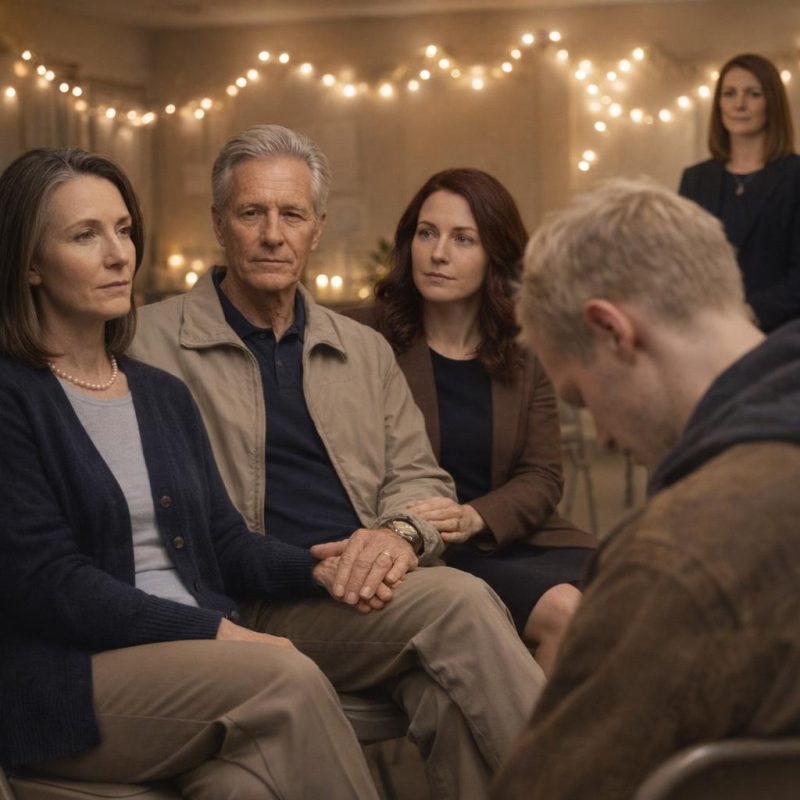 Image by RM AI
The Documentation
After the applause settled, Lisa clicked to her first slide and the room went attentive in the way rooms do when numbers are about to mean something. She walked through the data carefully, the way someone does when they want you to understand it rather than just hear it. Forty-three families had completed estate planning in the past six months. Twelve had prevented foreclosure by finally getting their property documents in order. Eight families with disabled children had created special needs trusts — some of them after years of putting it off because they hadn't known where to start or who to trust. Lisa said each number on the slide represented a Saturday morning, a parking lot, a conversation that felt safe enough to have. Harold leaned forward in his chair. Susan had stopped scrolling her phone. I looked at the slide and tried to hold all of it at once — forty-three families, twelve foreclosures that didn't happen, eight children whose futures were now protected on paper. I thought about the young couple with the baby. I thought about the elderly man with the briefcase. I thought about the widow and her box of papers. And then I thought about a sixteen-year-old boy who had quietly decided, on his own, that Saturday mornings were for this. Lisa advanced to the next slide, and the number at the top was larger than the one before it — and I realized I was gripping the edge of my chair.
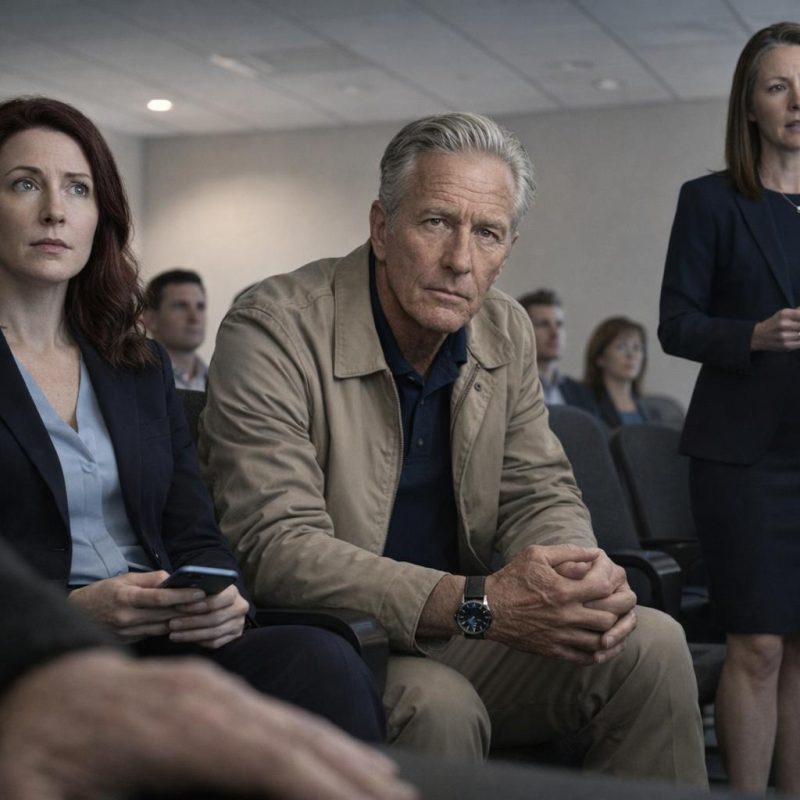 Image by RM AI
Remembered Kindness
Near the end of the program, Lisa asked if anyone wanted to share a few words, and I expected polite silence. Instead, an elderly man near the back of the room raised his hand and stood up slowly, steadying himself with the chair in front of him. He said he wanted to explain why he'd agreed to participate. He said he had met Robert in a parking lot twelve years ago — that Robert had helped him organize documents before his wife went in for surgery, and that Robert had never made him feel like a burden or a bother. He said when a young man called him about the program and mentioned the station wagon, he recognized it. He said he agreed to come because of what he remembered about Robert. He sat down, and before the room could settle, a woman two rows over stood up and said nearly the same thing — different year, different parking lot, same car, same patience. Then a third person. They had all known Robert. They had all remembered him. Harold made a sound beside me that wasn't quite a word. Susan reached over and took my hand without looking at me. I couldn't look at Michael right away. When I finally did, he was very still, watching the last person sit down, and his expression was the one people wear when something they hoped was true turns out to actually be true. Robert's name, spoken by strangers in a lit room, carrying forward across twelve years — and landing, finally, right where it belonged.
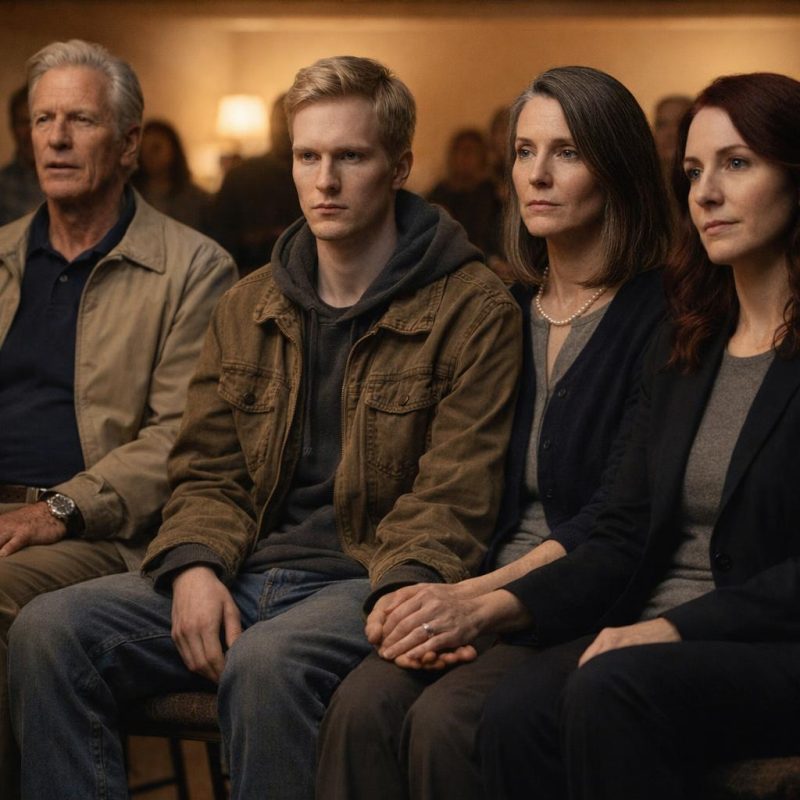 Image by RM AI
The Same Patience
The woman who had spoken second stayed after the formal program ended, and a small group gathered around her near the refreshment table. I drifted close enough to listen. She was describing the first time she'd met Michael — how she'd sat in the passenger seat of the wagon with a folder of her late husband's papers in her lap and hadn't been able to open it. She said Michael hadn't pushed. He'd just sat there with her, talking about nothing in particular, until she was ready. She said it took almost thirty minutes before she could even look at the first page. Harold was standing beside me and I heard him exhale slowly. Michael was a few feet away, holding a paper cup of punch, and I could see from where I stood that his eyes were bright in a way he was trying to manage. Another man nearby nodded and said Michael had helped him face a stack of documents he'd been avoiding for three years — that Michael had never once made him feel foolish for waiting so long. They spoke about him the way you speak about someone who gave you something you didn't know how to ask for. I watched my grandson stand there and receive it, quietly, the way Robert used to receive gratitude — like it surprised him every time. Then the woman touched Michael's arm and said, simply, that he had made her feel safe enough to face the thing she'd been most afraid of — and Michael looked at the floor and nodded, and I had to look away.
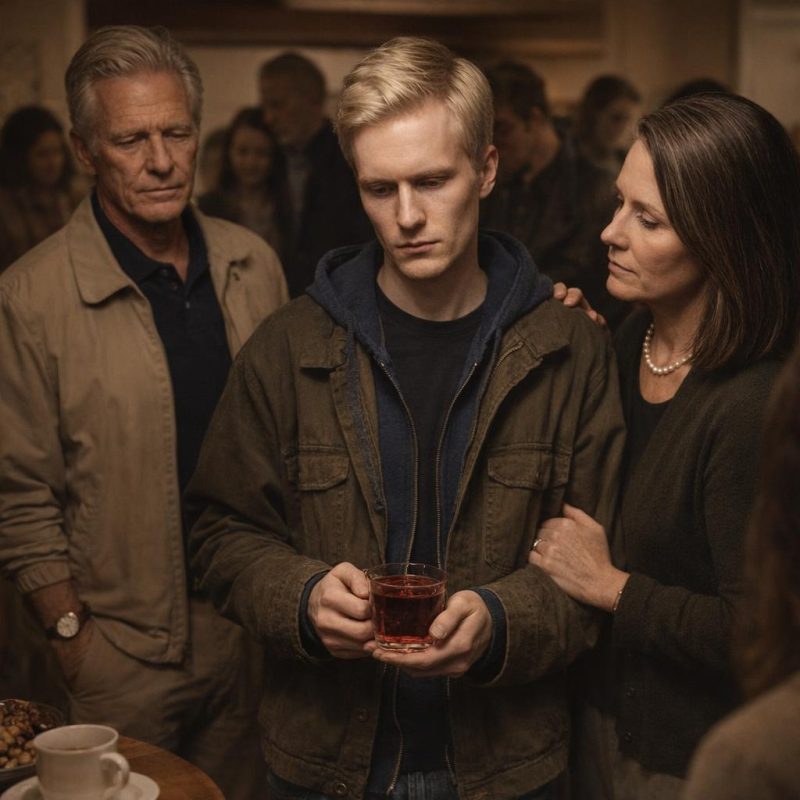 Image by RM AI
Never About Driving
We were the last ones left in the parking lot. Susan had gone to bring the car around, and Harold had said his goodbyes, and it was just Michael and me standing next to the wagon in the cool October air. I asked him why he'd never told me. Not accusingly — I was past that. I just wanted to hear him say it. He scuffed his shoe against the asphalt for a moment and then said he'd been afraid I'd think he was being dramatic about an old car. He said he'd tried to explain it to himself a dozen times and it always came out sounding strange. Then he looked at the wagon and said it was never about the driving. He said the first time he'd shown up in it, an elderly woman had stopped halfway across the parking lot and just looked at it for a long moment before she came any closer. She'd asked him whose car it was. When he told her it had been his grandfather's, she'd nodded like that explained something, and she'd been easier to talk to after that. He said it happened again. And again. He said people touched the hood sometimes before they got in, the way you touch something you want to be real. I stood there listening to my grandson explain how a 1987 station wagon had become a kind of promise — Robert's promise, carried forward in sheet metal and worn upholstery — and the October air was cold and still, and I didn't feel the need to say anything at all.
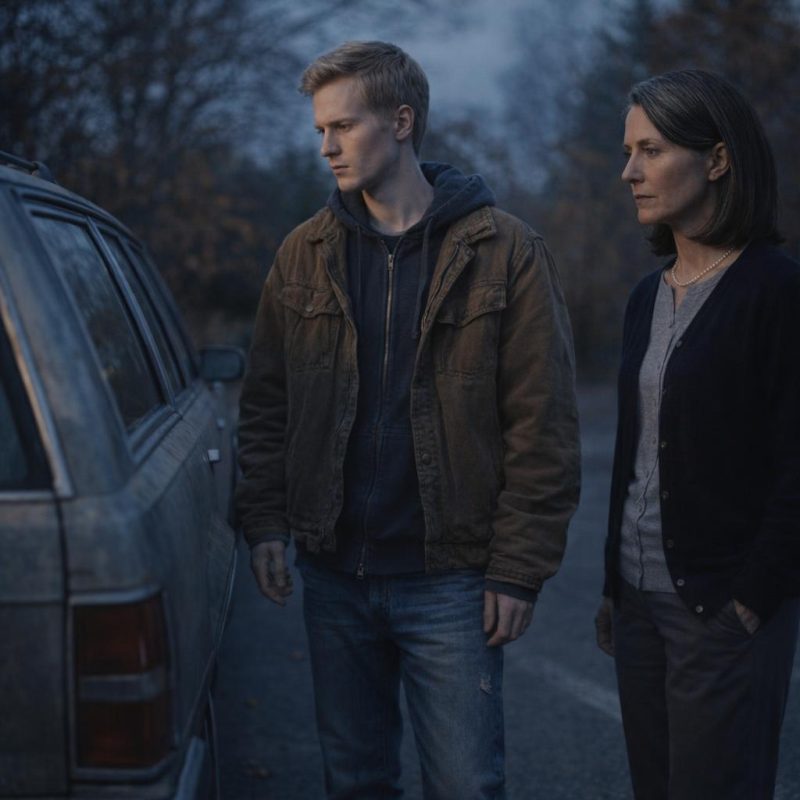 Image by RM AI
The Symbol
We sat on the tailgate for a while after that, the way you do when neither person is ready to go inside yet. I told Michael I understood now — not just what he'd been doing on those Saturday mornings, but why the wagon had to be the wagon. He nodded like he'd been waiting a long time for someone to say that. He told me some clients touched the hood before they got in. He said it gently, like he knew how it sounded, but he said it anyway. I told him I didn't think it sounded strange at all. I thought about Robert driving this same car to parking lots I'd never known about, helping people I'd never met, and never once mentioning it over dinner. I thought about Michael finding that out and deciding, quietly and on his own, to pick up exactly where Robert had left off. The wagon sat there in the dark lot, a little dented, a little faded, the kind of car that had no business meaning as much as it did. But it did. It held something — I wasn't sure what word to use for it. Not just memory. Something more like a kept promise, passed between two people who loved the same things without ever having to say so, and the night settled around us both, quiet and complete.
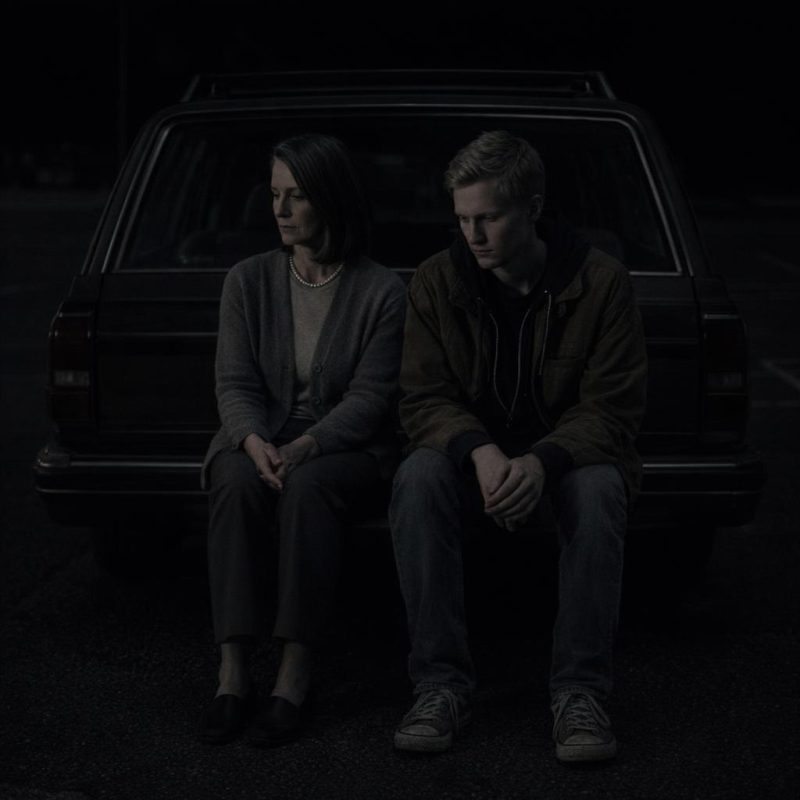 Image by RM AI
The Decision
I called the meeting on a Tuesday evening, which is how Susan knew I was serious. I don't call meetings. I make dinner and let things come out over the table. But this time I asked her and Michael and Lisa to come to the house, and I had the wagon's title sitting on the kitchen counter when they arrived. Susan walked in first and saw it and gave me a look I recognized — the one that means she's already calculating whether to argue. Lisa came in behind her, and Michael last, still in his jacket, like he'd come straight from somewhere. I waited until everyone had coffee, and then I told them I wasn't selling the wagon. Susan started to say something about the insurance costs, and I held up one hand. Michael started to say something too — I think he was going to protest that it was still my car and I shouldn't feel obligated — and I stopped him the same way. I said the wagon belonged to the work now. It had always belonged to the work, really. We just hadn't known it. Lisa looked at me across the table with the kind of stillness that meant she understood exactly what I was saying. I told her I had one condition: the wagon could never be sold, and if the program ever ended, it came back to the family. Lisa nodded and said, without hesitating, that she would put it in writing. I slid the title across the table toward her.
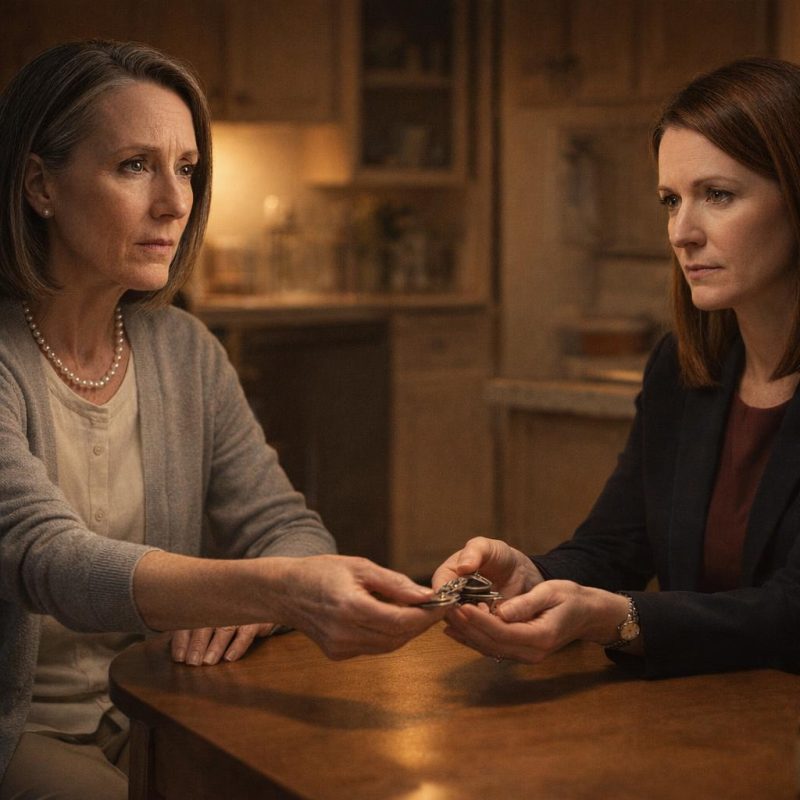 Image by RM AI
The Donation
The nonprofit's office was smaller than I'd expected — a converted storefront with mismatched chairs and a whiteboard covered in colored markers. Lisa had the paperwork ready when Michael and I arrived, stacked neatly in a manila folder with little sticky tabs marking every line that needed a signature. I sat down across from her and put on my reading glasses and went through each page slowly, the way Robert always said you should. Michael sat beside me and didn't rush me, not once. There were more pages than I anticipated for something that had started as a sixteen-year-old borrowing a car on Saturday mornings. When I got to the title transfer, I paused for just a moment. Not because I was uncertain. I just wanted to feel the weight of it properly before I let it go. I thought about the dent above the rear wheel well, and the way the driver's seat had worn down on the left side from decades of Robert settling into it, and the particular sound the door made when you closed it just right. Then I signed my name. Lisa promised, again and on the record this time, that the wagon would be used only for outreach meetings — nothing else, ever. Michael thanked me in a voice so quiet I almost missed it. I handed the keys across the desk, and the metal was warm from my palm, and I sat back in the chair and felt, for the first time in a long while, that something had landed exactly where it was supposed to.
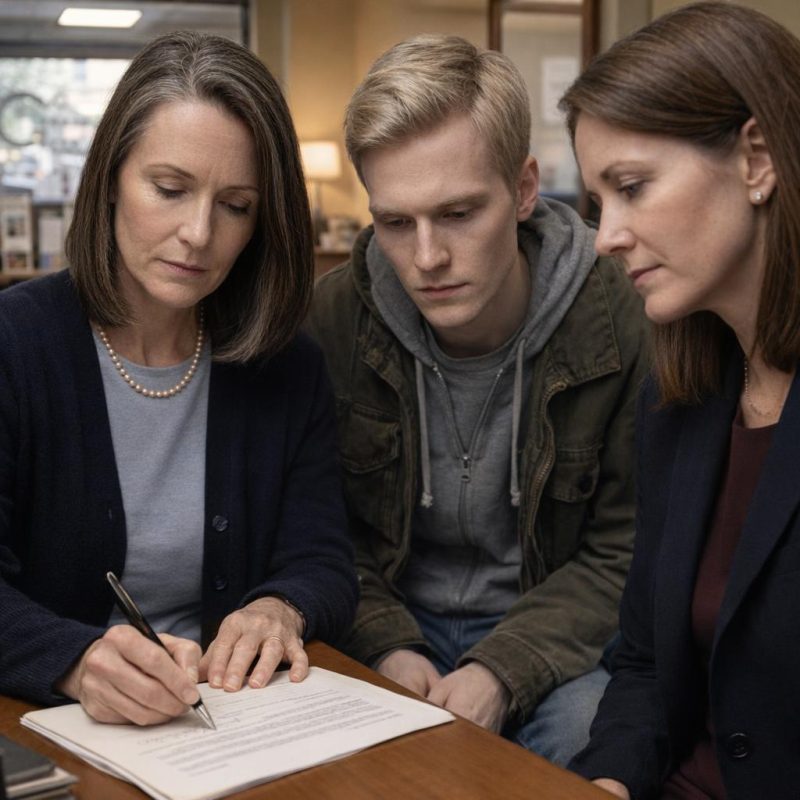 Image by RM AI
The Terms
Lisa pulled out a separate sheet after the title transfer was done — a conditions addendum, she called it, which was a more official name than I'd expected for what was essentially a promise written down. She read my condition back to me word for word: the wagon was to be used exclusively for community outreach meetings, it could not be sold or repurposed, and if the program ever ceased operation, ownership would revert to the family. Michael would have first scheduling priority for Saturday sessions. I listened to each clause and nodded. It felt strange to hear the Saturday mornings described in legal language — words like exclusive use and reversion of title sitting alongside something that had always been, at its heart, just a boy and a car and a parking lot and people who needed somewhere safe to sit. But I was glad the language was there. Glad it was permanent. Lisa asked if I wanted to add anything else before she finalized it. I thought about it for a moment and said no — I thought it covered everything that mattered. She uncapped her pen and began writing the final version into the official donation agreement, her handwriting small and careful, and I watched each word take its place on the page.
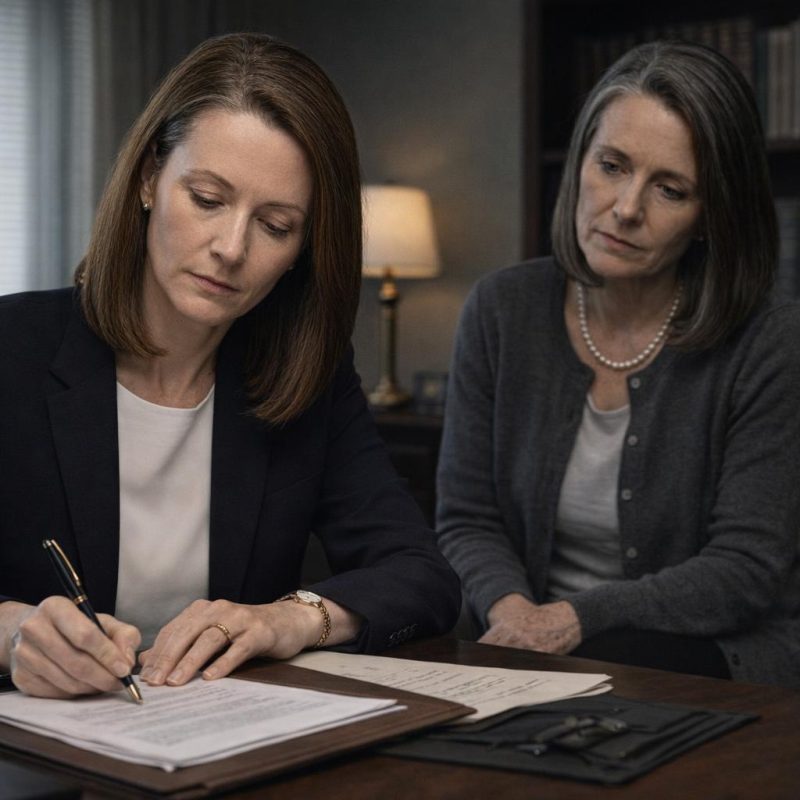 Image by RM AI
Kindness on Four Wheels
It was a Wednesday morning, about three weeks after the paperwork was signed, and I was sitting at my kitchen table with a cup of coffee going cold beside me. Michael had called the night before to tell me about a man he'd met that Saturday — a veteran, he said, who'd driven forty minutes because someone had told him about a blue station wagon in a parking lot where nobody asked hard questions. I sat there thinking about that. I thought about the first time I'd followed Michael, how I'd gripped the steering wheel of my neighbor's car and told myself I was just being a responsible grandmother, when really I was terrified of what I might find. I'd imagined so many things. Not one of them came close to the truth. I thought about Robert, who had done this quietly for years and never once made it sound like anything more than running an errand. I thought about Michael finding that logbook and deciding, without fanfare, that the work wasn't finished. I'd spent so long thinking the wagon was just an old car I needed to deal with — sell it, donate it to a church raffle, something practical. It turned out it had already known what it was for. The coffee had gone completely cold by the time I reached for it, and I smiled at the cup like it had said something wise, and outside the morning was bright and ordinary and exactly enough.
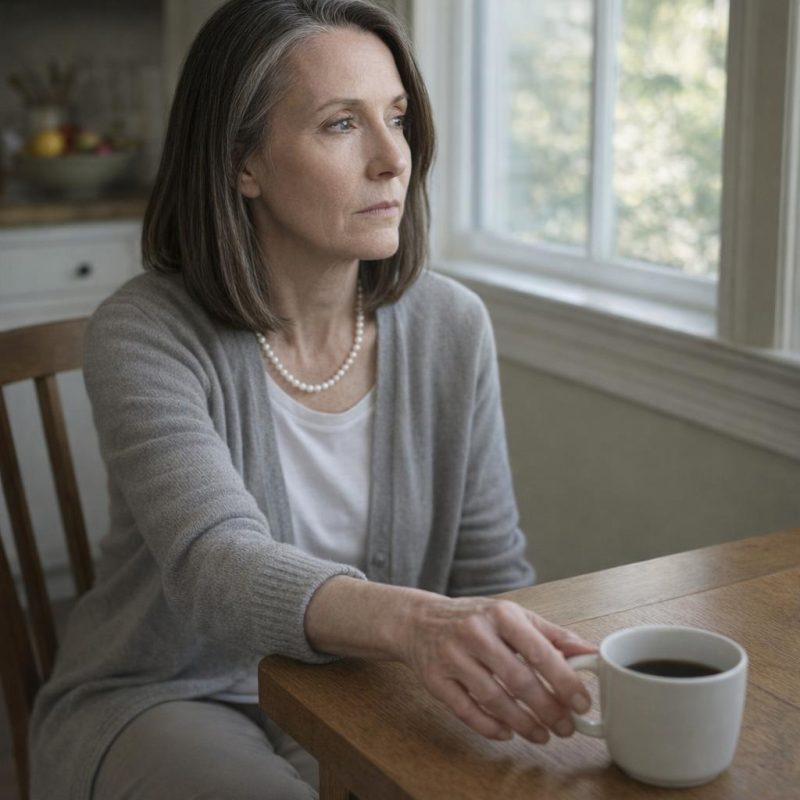 Image by RM AI
KEEP ON READING

20 Greek Gods We Don't Often Talk About
Step Aside, Zeus. Greek mythology isn’t only about Zeus and…
By Elizabeth Graham Jan 16, 2026
10 Historic Courtship Practices That Should Be Brought Back &…
Old-School Dating Was a Mix of Charming & Unhinged. Historic…
By Emilie Richardson-Dupuis Jan 20, 2026
Pooches Of The Past: Extinct Dog Breeds
Unknown authorUnknown author on WikimediaDogs have been showing up in…
By Elizabeth Graham Jan 27, 2026
The 20 Craziest Silent Films Ever Made
When Silence Let the Madness Speak. Silent cinema didn’t just…
By Chase Wexler Jan 5, 2026
Legendary Tales: 20 Most Fascinating Mythical Creatures from Folklore
Mythological Beasts. Stories about mythical creatures endure for a simple…
By Christy Chan Jan 16, 2026
The three most expensive historical artifacts ever sold at auction
Attributed to Leonardo da Vinci on WikimediaAuctions are where history…
By Emilie Richardson-Dupuis Jan 9, 2026