

My Ex-Husband Left Me One 'Item' in His Will—When I Opened It, I Realized He'd Been Documenting Everything
My Ex-Husband Left Me One 'Item' in His Will—When I Opened It, I Realized He'd Been Documenting Everything
The Call That Changed Everything
I almost didn't answer. It was a Tuesday morning, gray and unremarkable, and the number on my screen was one of those generic strings that usually meant a robocall about my car's extended warranty. But something made me swipe to accept—maybe just the stubborn refusal to let anyone think they'd gotten the better of me, even a recording. The voice on the other end was calm, professional, and very much human. He introduced himself as Mr. Hendricks, an attorney, and asked if I was Patricia Whitmore. The way he said it, with that careful lawyer precision, made my stomach tighten before he'd even delivered the news. Leonard had died. A heart condition, sudden, three days ago. I stood there in my kitchen, phone pressed to my ear, waiting for some feeling to arrive. Grief, maybe, or shock. But what came instead was confusion—the kind that makes you feel like you've walked into the wrong room and can't quite figure out why nothing looks familiar. We hadn't spoken in eight years. He'd remarried quickly, moved on completely, and I'd done the same in my own way. Mr. Hendricks cleared his throat gently and said something that made even less sense than the call itself. Leonard had left something for me in his will.
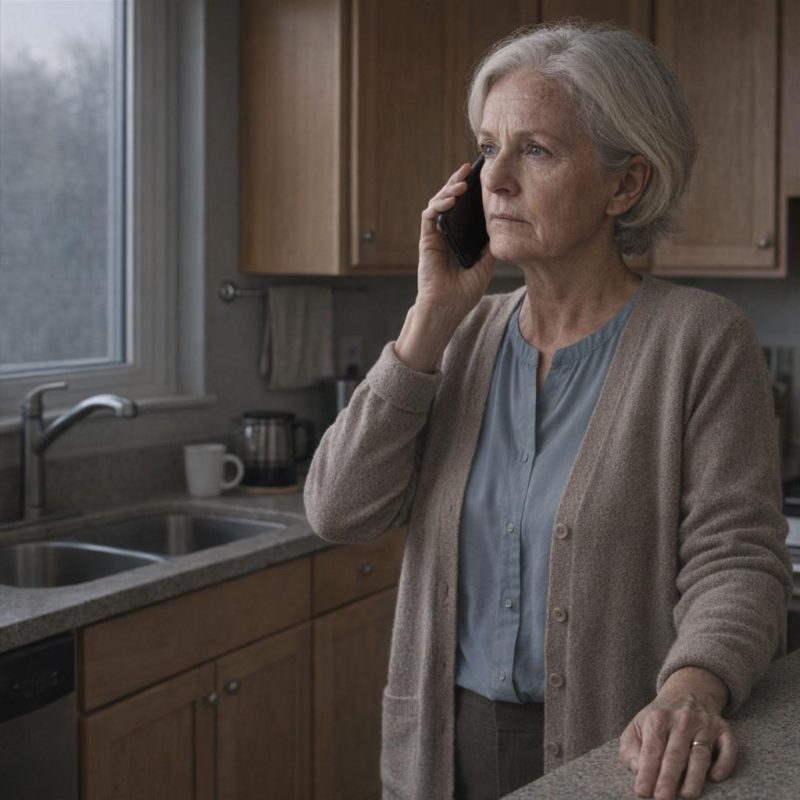 Image by RM AI
Not Cash, But an Item
Not money, Mr. Hendricks clarified when I asked. An item. The word hung there between us, oddly specific and strange. I found myself staring at the coffee maker on my counter, trying to process what that could possibly mean. Leonard had been practical to a fault, unsentimental in ways that used to frustrate me and eventually just became part of the landscape of our marriage. When we divorced, he'd insisted we divide everything cleanly—no lingering connections, no shared anything. He'd been almost clinical about it, like he was closing a business partnership rather than ending twenty-three years together. So why would he leave me anything at all? Mr. Hendricks suggested we meet at his office later that week. He had the item there, he said, and it would be easier to discuss in person. I agreed because I couldn't think of a reason not to, and because my mind was already racing through possibilities that made no sense. A book? Some piece of furniture I'd once mentioned liking? Nothing fit with the Leonard I'd known, the one who'd made it clear we were done and there was no looking back. I hung up and stood there in my kitchen, wondering what on earth my ex-husband could have thought I needed from him now.
 Image by RM AI
The Cold Ending
I sat alone in my apartment that evening, trying to reconcile the man who'd left me something with the one I remembered from our divorce. That Leonard had been cold in a way that still surprised me when I thought about it. Not cruel, exactly—just finished. He'd divided our possessions with the efficiency of someone sorting recycling, insisting we each take what was ours and move on without sentiment. There had been no tearful conversations, no attempts at closure or understanding. Just paperwork and a handshake that felt more appropriate for a real estate closing. And then Elise had appeared almost immediately, with her two grown children and her ideas about how things should be. They'd made it clear, in ways both subtle and direct, that I was part of Leonard's past and had no place in whatever came next. I'd accepted that. I'd had to. But now this—this item, this gesture from beyond the grave—contradicted everything I thought I understood about how we'd ended. Leonard had been the one who insisted on the clean break, who'd looked at me across the lawyer's table and said we needed to be practical about this. So what had changed? What could possibly have made him think of me when he was planning his estate, sitting in some office with Elise probably right there beside him? The contradiction troubled me more than the news of his death had.
 Image by RM AI
The Drive to His Office
The drive to Mr. Hendricks's office took me through streets I used to know by heart. I passed the hardware store where Leonard and I had spent countless Saturday mornings, back when we were fixing up our first house and everything felt possible. The coffee shop on the corner was still there, though it had a different name now. I kept my eyes on the road and tried not to let my mind wander too far into memory, but it was hard not to when every landmark seemed designed to remind me of a life I'd stopped living eight years ago. My thoughts kept cycling through increasingly unlikely scenarios. Maybe Leonard had kept some piece of jewelry I'd left behind and felt guilty about it. Maybe it was a letter, some kind of explanation or apology he'd never managed to say out loud. But none of it made sense. Leonard hadn't been the type for grand gestures or delayed sentimentality. The drive felt longer than the actual twenty minutes it took, each mile stretching out as my mind tried and failed to land on something that fit. When I finally pulled into the parking lot of the law office, I sat in my car for a moment, hands still on the steering wheel. Whatever was waiting for me inside, I had a feeling it was going to complicate things in ways I couldn't yet imagine.
 Image by RM AI
The Wooden Box
Mr. Hendricks's office was exactly what you'd expect—dark wood, leather chairs, diplomas on the wall in matching frames. He stood when I entered, offered his condolences with the practiced sympathy of someone who'd done this many times before, and gestured for me to sit. He didn't waste time with small talk. Within minutes, he'd opened a drawer in his desk and produced a wooden box, medium-sized and solid-looking, the kind Leonard used to keep tools in. He slid it across the polished surface toward me with both hands, like it was something that required care. The box was old-fashioned, with brass hinges that had darkened with age. I recognized the style immediately—Leonard had always preferred things that were built to last, that had weight and substance to them. Mr. Hendricks explained that Leonard had been very specific in his instructions. The box was to be given directly to me, in person, with no one else present. The lawyer's eyes stayed on my face as he said this, watching for my reaction in a way that made me think he knew more than he was saying. Or maybe he was just curious, wondering what could be in a box that warranted such particular instructions. My hands felt strangely heavy as I reached across the desk, my fingers closing around the smooth wood.
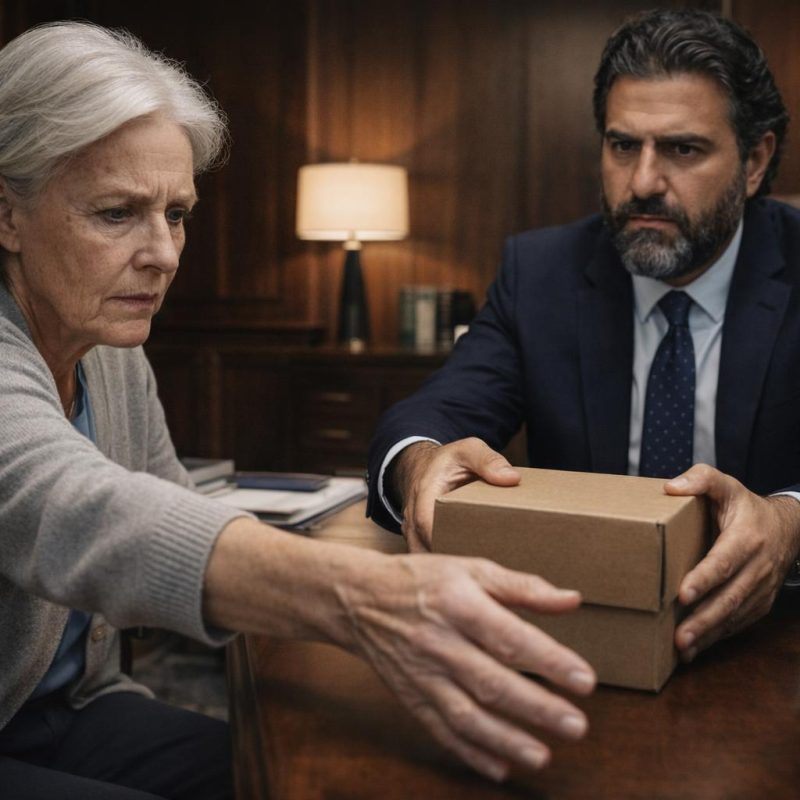 Image by RM AI
Contents Revealed
I lifted the lid slowly, not sure what I was bracing for. Inside, arranged with the same careful precision Leonard had always brought to everything, were four items. An old flip phone sat on top—one of those basic models from fifteen years ago, before smartphones took over. I recognized it immediately. Beside it was a small leather-bound notebook, the kind you could buy at any office supply store, and a USB drive. But it was the photograph at the bottom that hit me harder than I'd expected. It showed Leonard and me standing in front of our first house, both of us younger and smiling in that unguarded way you only smile when you believe everything will last. I'd forgotten that photo existed. We looked so certain of ourselves, so sure we'd figured out how to build a life together. I picked up the phone, turning it over in my hands, and that's when I noticed the strip of masking tape on the back. Written on it in Leonard's precise handwriting was my full name: Patricia Anne Whitmore. Not Patty, which is what he'd called me for most of our marriage. Not Pat. My full name, written out like he was labeling evidence. The formality of it felt significant in a way I couldn't quite name.
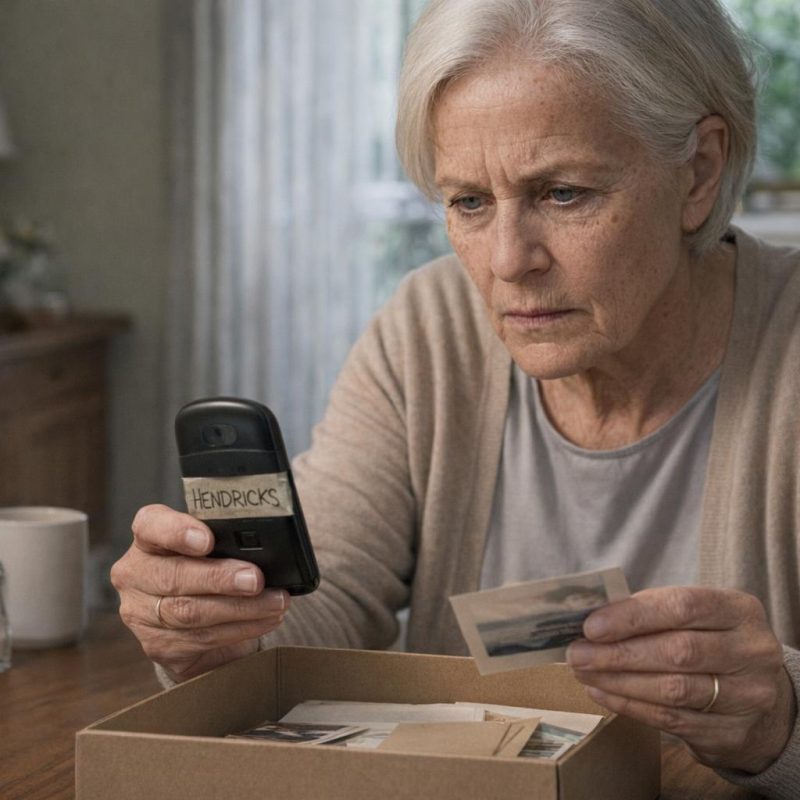 Image by RM AI
You'll Know What to Do
I looked up at Mr. Hendricks, the phone still in my hand. "Did he leave any instructions? Anything that explains what this is?" The lawyer hesitated, and I caught something in that pause—a careful choosing of words, maybe, or uncertainty about how much to say. He folded his hands on the desk in that practiced attorney way and told me that Leonard had been very clear on one point. He'd said I would know what to do once I saw what was inside. Those were his exact words, Mr. Hendricks emphasized, as if the phrasing itself mattered. I would know what to do. I looked back down at the contents of the box—the phone, the notebook, the USB drive, the photograph of two people who no longer existed. Something shifted in my understanding right then. This wasn't about nostalgia or closure. This wasn't Leonard trying to make peace with our past or leave me some sentimental token to remember him by. He'd left me something with a purpose, something he believed I'd understand when I saw it. The problem was, I didn't understand. Not yet. But the weight of the phone in my hand and the deliberate way he'd written my full name told me this was something else entirely.
 Image by RM AI
Taking It Home
I thanked Mr. Hendricks and left his office with the box tucked under my arm. It wasn't particularly heavy, but I felt the weight of it anyway as I walked to my car. The physical presence of it, the solidity of the wood and whatever Leonard had decided was important enough to leave behind. The drive home passed in a blur of half-formed thoughts that wouldn't quite connect into anything coherent. I kept glancing at the box on the passenger seat, as if it might somehow explain itself if I looked at it enough times. Nothing about this made sense with what I knew of Leonard—the practical man who'd insisted on clean breaks and forward momentum, who'd looked at me eight years ago and made it clear we were done. That Leonard wouldn't have left me anything, let alone something this deliberate. When I got home, I brought the box inside and placed it on my kitchen table. I sat down in the chair across from it, just staring, my mind trying to work through what Leonard had meant. The flip phone. The notebook. The USB drive. The photograph of who we used to be. And that strip of tape with my full name written in his careful hand. I didn't know what any of it meant yet, but I knew one thing for certain: I had to figure this out.
 Image by RM AI
Spreading the Evidence
I lifted the lid off the box and set it aside, then began removing each item one by one. The flip phone came out first—I placed it on the left side of the table, exactly where it had been positioned in the box. Then the leather notebook, which I set beside the phone with the same careful spacing Leonard had used. The USB drive went next to the notebook, and finally the photograph, which I positioned on the right end of the line. I stepped back and looked at what I'd laid out. Everything was arranged in the exact sequence Leonard had packed it, with the same deliberate spacing between each item. I hadn't consciously tried to preserve his arrangement, but something in me had recognized the intentionality of it and responded accordingly. The items sat there in a neat row across my kitchen table, and I found myself studying not just what they were, but how they'd been organized. The spacing was too precise to be random. Leonard had thought about this layout, had positioned each piece with purpose. I'd lived with him long enough to know the difference between casual storage and deliberate arrangement. This was the latter. Whatever message these items were meant to convey, the order itself seemed to matter.
 Image by RM AI
Recognizing His Patterns
I pulled out a chair and sat down, my eyes moving from one item to the next. The spacing between them was exactly the kind of thing Leonard used to do when he was working through something important. During our marriage, I'd watched him lay out tax documents on the dining room table with this same precision—each form in its designated spot, everything aligned and accessible. He'd done the same thing with tools in the garage, with files in his office, with anything that required his full attention. This wasn't just organization for its own sake. This was how Leonard prepared when something mattered. I remembered coming home once to find him at the kitchen table with bank statements spread out in careful rows, working through some discrepancy he'd noticed. He'd had that same focused quality then, that same methodical approach to making sure he understood every detail. Looking at these items now, I recognized that same energy. Leonard had taken time with this box. He'd thought about what to include, how to arrange it, what order would make sense. Whatever he wanted me to understand, he'd treated it with the seriousness he reserved for things that truly mattered.
 Image by RM AI
The Leather Notebook
I reached for the leather notebook and opened it to the first page. Leonard's handwriting filled the lined paper in neat, compact columns. Dates ran down the left margin in chronological order, each one followed by a short note—sometimes just a few words, sometimes a full sentence. To the right of each note was a series of numbers formatted like account references or transaction codes. I flipped through the pages slowly. The pattern repeated on every page: date, note, numbers. Date, note, numbers. Nothing jumped out as immediately obvious, but everything was clearly organized with Leonard's characteristic precision. Some of the notes were cryptic—single words like "transfer" or "adjustment" or "verification." Others were slightly more descriptive: "called to confirm," "statement received," "discrepancy noted." The transaction numbers varied in length and format, but they all had the structured appearance of official financial references. I couldn't yet see what story these entries told or what Leonard had been tracking, but I could see that he'd been systematic about it. Whatever this notebook documented, he'd maintained it with the same careful attention he'd always brought to important records.
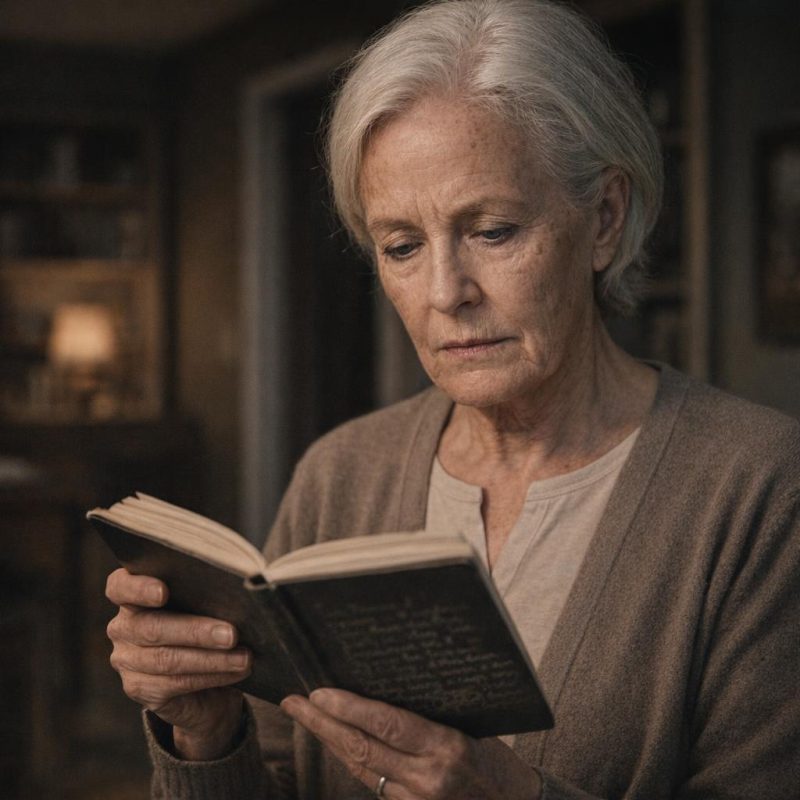 Image by RM AI
Familiar Numbers
I went back to the beginning of the notebook and studied the transaction numbers more carefully this time. Some of the formats looked familiar in a way I couldn't quite place at first. Then it clicked—these were the same kinds of reference numbers Leonard used to write down when we were married, the way he'd always noted account identifiers for our joint finances. I recognized the pattern: the way he'd format bank account numbers, the structure he'd use for investment references. These weren't random strings of digits. They were specific account identifiers, the kind you'd use to track financial records. But that didn't make sense. Most of our shared accounts had been closed or transferred after the divorce. We'd divided everything cleanly, moved our finances into separate spheres. I couldn't understand why Leonard would be tracking accounts that should have belonged to our past. I flipped through the notebook again, checking the dates beside each entry. They were all recent—within the last two years. These weren't old records he'd kept from our marriage. This was something he'd been actively documenting long after we'd separated our lives.
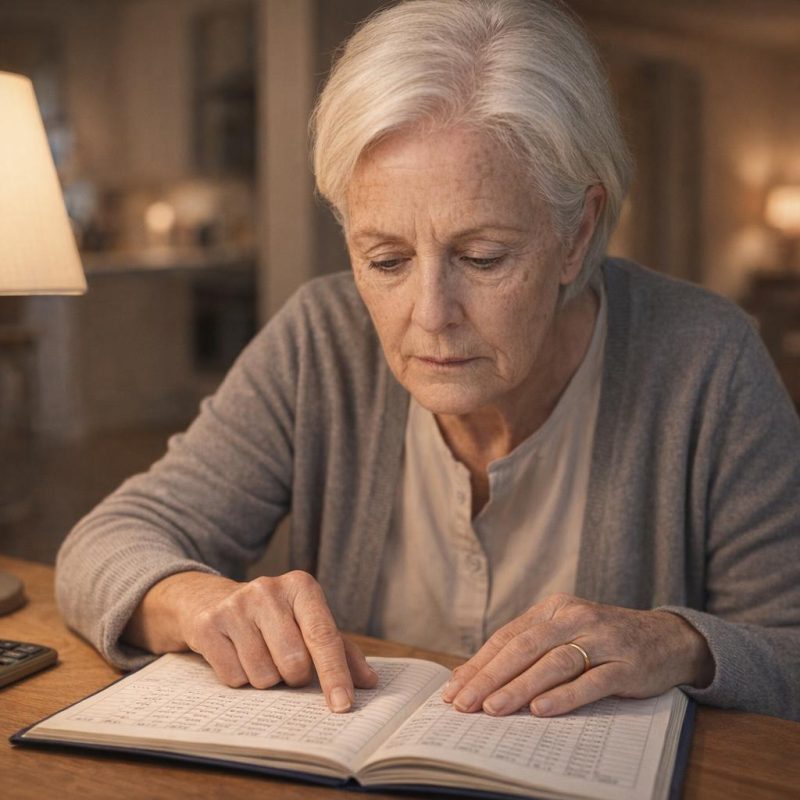 Image by RM AI
Two Years of Entries
I turned to the first page of the notebook and noted the earliest date, then flipped all the way to the back to find the last entry. The notebook covered exactly two years of entries, starting from a date I recognized—it was around the time I'd heard through mutual acquaintances that Leonard's health had started declining. The latest entry was dated just three weeks before he died. I paged through the notebook again, more slowly this time, watching the dates progress in careful chronological order. Leonard had been writing in this notebook consistently throughout those two years, maintaining his documentation even as his health deteriorated. The handwriting stayed neat and controlled almost to the end, though I noticed the last few entries were slightly less precise, the letters not quite as carefully formed. Whatever Leonard had been tracking, he'd kept at it until very near the end of his life. This wasn't something he'd started and abandoned, wasn't a project he'd lost interest in. He'd maintained it with purpose right up until he no longer could. I set the notebook down on the table and felt the first real stirring of unease settle in my chest.
 Image by RM AI
The Photograph
I needed a moment to clear my head, so I set the notebook aside and picked up the old photograph. The image was so familiar I could have described it from memory—our first house, the two of us standing on the front steps with our arms around each other. I studied my younger face, the way I'd smiled at the camera with such certainty. Leonard's expression was open and hopeful in a way I'd almost forgotten he could be. We'd believed in that moment that we were building something lasting, that the house behind us was just the beginning of a life we'd share for decades. The years between then and now felt like they belonged to different people entirely. I let myself feel the loss for a moment—not just of the marriage, but of the people we'd been when we thought we knew how everything would turn out. Then I set the photo down deliberately, placing it back in its spot on the table. Whatever Leonard had left me, it wasn't about remembering better times or dwelling on what we'd lost. The photograph was part of the message, but it wasn't the message itself. I needed to focus on the practical items—the notebook with its cryptic entries, the phone, and the USB drive.
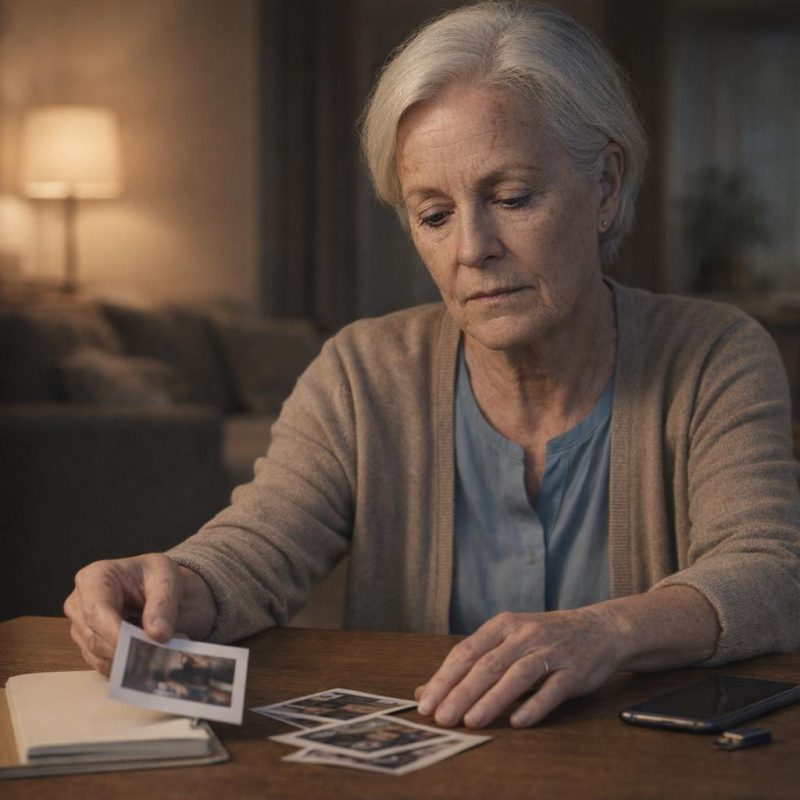 Image by RM AI
Turning to the Drive
I pushed the photograph to the side and picked up the small USB drive, weighing it in my palm. It was one of those basic models you could buy at any office supply store, unlabeled and ordinary-looking. The drive felt impossibly light for whatever information it held, though I knew that was ridiculous—data didn't have physical weight. Still, I found myself turning it over in my hand, as if examining it more closely would somehow reveal its contents. I realized this was probably where Leonard's real message was stored. The notebook might be an index or a reference guide, but this drive would have the details—the actual documentation of whatever Leonard had been tracking for two years. The notes in the notebook were too brief, too cryptic to tell the full story on their own. They were markers pointing to something more complete, and that something was likely on this drive. I set it down on the table and stood up, my chair scraping against the floor. My laptop was in the living room, and I needed to see what Leonard had left for me to find.
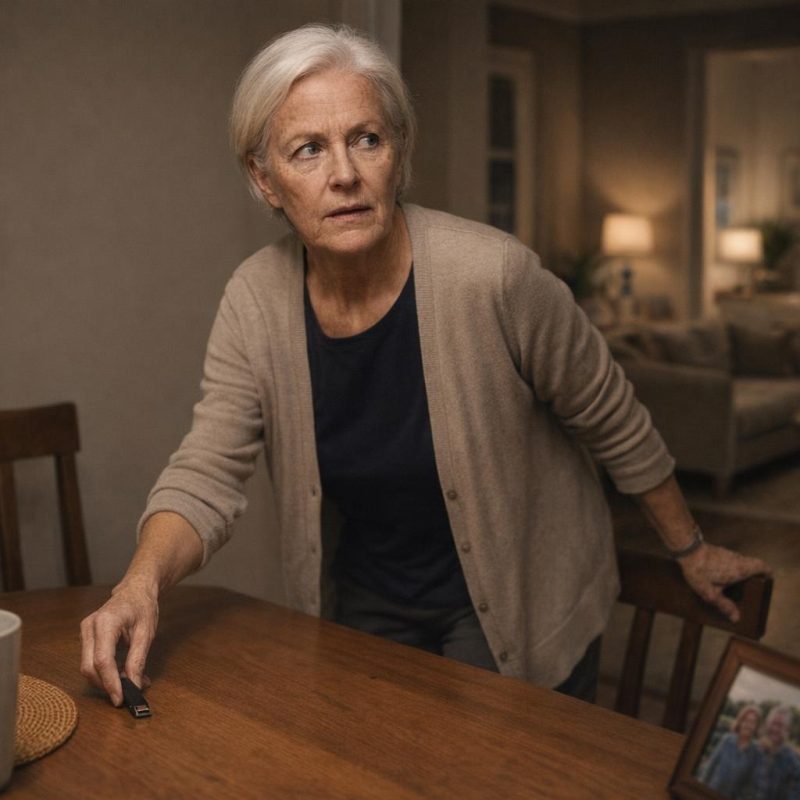 Image by RM AI
Connecting the Drive
I returned to the kitchen table with my laptop and set it down beside the row of items. I inserted the USB drive into the port and waited while the computer recognized it. The drive took a moment to load—long enough that I wondered if there was a problem—but then a window opened on my screen showing the drive's contents. Leonard had created a folder structure with clear, descriptive labels. I could see at least a dozen folders, each one named with the kind of precise terminology Leonard had always used for important files. There were folders labeled by year, folders that appeared to reference specific accounts, folders with names like "Correspondence" and "Statements" and "Verification." I leaned closer to the screen, scanning the list. This was exactly how Leonard organized everything that mattered—categorized, labeled, accessible. Nothing was left to chance or memory. Every piece of information had its designated place. I moved the cursor toward the first folder, my finger hovering over the trackpad. Whatever Leonard wanted me to understand, he'd laid it out systematically, and now I just had to follow the path he'd created.
 Image by RM AI
Opening the Files
I clicked on the first folder and watched as the directory expanded to show its contents. The screen filled with file names—dozens of them, maybe more. I scrolled down slowly, taking in what I was seeing. Bank statements. Account summaries. Legal forms with official letterheads. Every file had been named with a date and a brief description, the kind of labeling system Leonard had always used for anything important. I opened another folder and found more of the same. Then another. Leonard had been scanning and organizing financial documents systematically, creating a digital archive that spanned what looked like the same two-year period as the notebook. I leaned back slightly, trying to grasp the scope of what I was looking at. This wasn't a few random papers he'd decided to preserve. This was extensive—deliberate in its completeness. I began opening files at random, skimming through bank statements and account records, trying to understand what pattern or purpose connected them all. The documents themselves looked ordinary enough, the kind of paperwork anyone might accumulate over time. But the sheer volume of what Leonard had collected and the care he'd taken to organize it all told me this archive meant something. I just didn't know what yet.
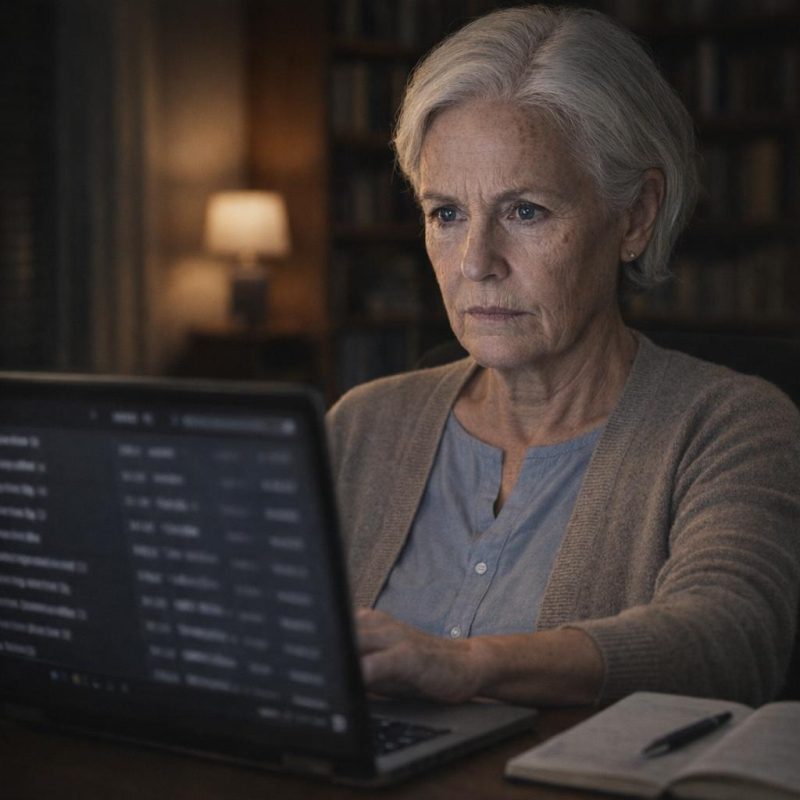 Image by RM AI
The Labeled Folders
I closed the file I'd been reading and returned to the main folder view, wanting to see all the directories at once. I scanned the list more carefully this time, paying attention to the labels Leonard had chosen. Most were straightforward—years, account types, the kind of categories you'd expect. But several folders had names that felt different from the others, more specific in a way that made me pause. Policy Changes. Transfers. Account Consolidations. And then, near the bottom of the list, one folder that was simply labeled with a name: Elise. I felt something shift in my chest, a small tightening I couldn't quite explain. These labels suggested Leonard had been tracking specific types of changes, not just maintaining general records. He'd been documenting something particular, something he'd wanted to isolate and preserve. I moved my cursor down the list, hovering over each folder for a moment before settling on Policy Changes. Whatever Leonard had been tracking, this seemed like a logical place to start. I clicked on the folder and waited for it to open, my heart beating slightly faster than it had been a moment before.
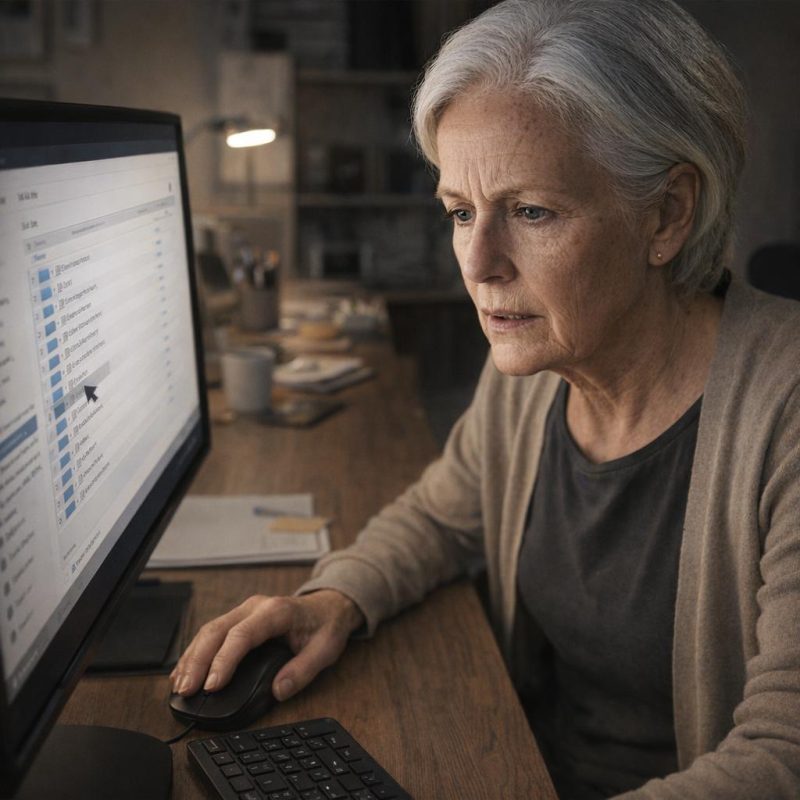 Image by RM AI
Insurance Documents
The first file opened to show a life insurance policy document, the kind with dense paragraphs of legal language and tables of coverage amounts. I recognized it immediately—this was one Leonard had maintained since before our marriage, a policy he'd held for decades. But the document showed modification dates from eighteen months ago, recent changes made long after our divorce. I closed that file and opened another. A different policy, also one I remembered him mentioning years ago, and it too showed recent modifications within the same timeframe. I worked through several more files, finding the same pattern. These were policies Leonard had held for most of his adult life, stable and unchanged for years, all showing alterations made within a narrow window of time. I tried to remember if it was normal to update policies periodically, if there were routine reasons someone might make changes to long-standing coverage. Maybe there were. Maybe this was standard financial maintenance. But the timing struck me as odd—all of these changes clustered together, all happening within the same few months. My discomfort grew as I stared at the screen, though I couldn't yet articulate why these documents bothered me so much.
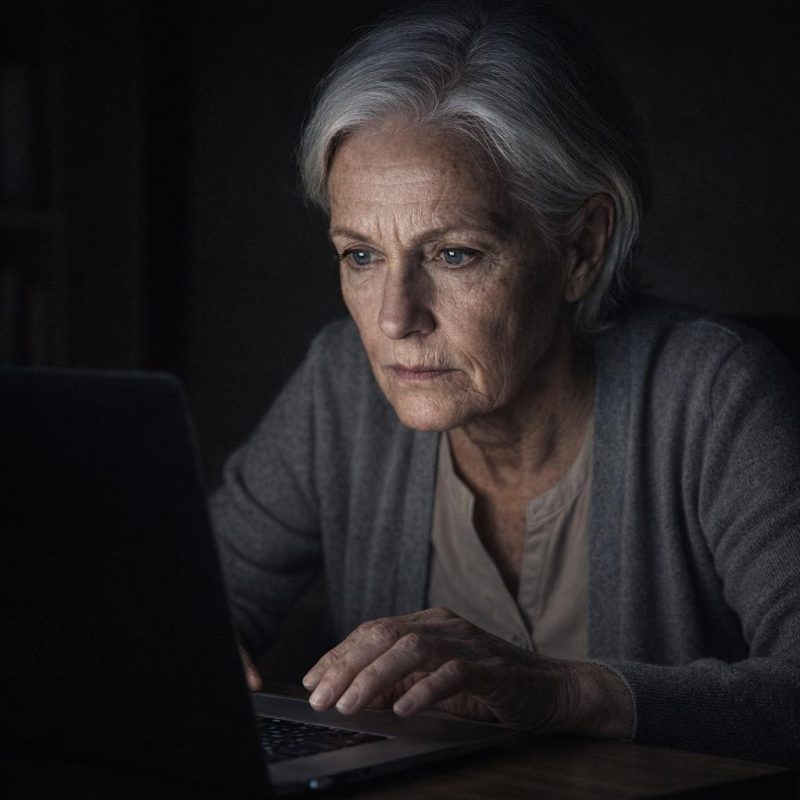 Image by RM AI
The Beneficiary Line
I opened several more policy documents in sequence, clicking through them methodically. Each one showed the same pattern in the beneficiary section, the same recent modification dates, the same outcome. Every policy now listed Elise as the sole beneficiary. The changes had all been made around the same time, that same narrow window eighteen months ago. I sat back from the laptop, trying to think objectively about what I was seeing. It made sense, didn't it? When someone remarried, they changed their beneficiaries to their new spouse. That was normal. That was what people did. But something about seeing them all laid out this way, documented and preserved in Leonard's meticulous filing system, felt off. If these were just routine changes, why had he gone to such lengths to scan and organize them? Why had he wanted me to have this archive? I couldn't shake the feeling that he'd wanted me to see this specifically, that there was something here I was supposed to notice beyond the obvious fact of Elise's name appearing on every form. I wondered if this was simply what happened in a remarriage or if Leonard had wanted me to notice something else, some detail I wasn't seeing yet.
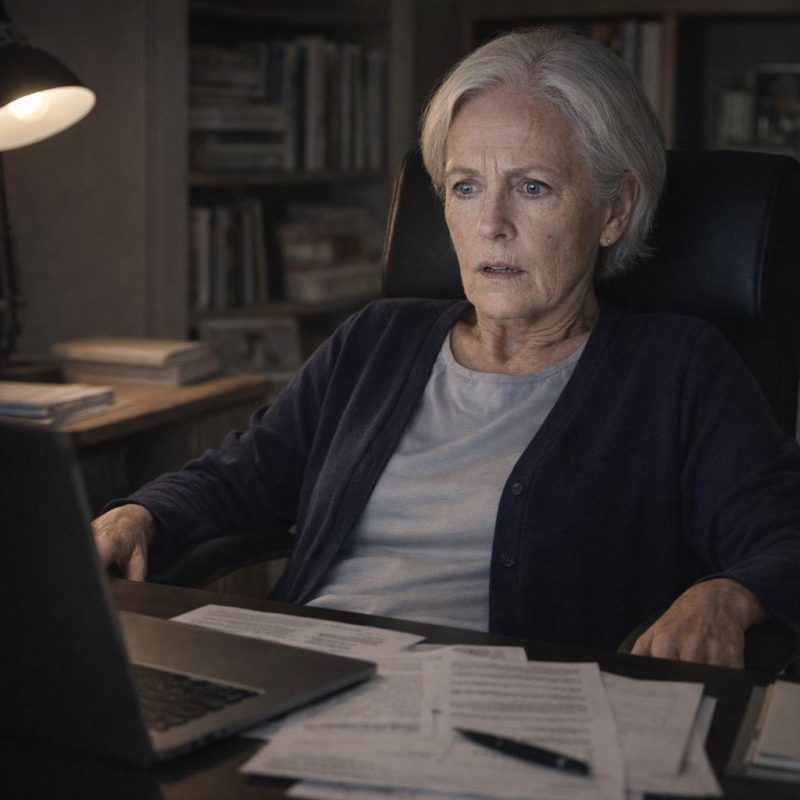 Image by RM AI
Cross-Referencing the Timeline
I reached for the leather notebook and placed it open beside my laptop, the two timelines now side by side. I began comparing dates on the policy documents with the entries Leonard had written in his careful handwriting. The notebook contained brief notes about his daily activities—meetings, trips, appointments, the mundane record of how he'd spent his time. I found a document dated on a Tuesday in March and looked for the corresponding entry in the notebook. That day, Leonard had written 'Cleveland conference—three days.' I checked another document, this one dated in April. The notebook entry for that day said 'Portland, back Friday.' I felt the first concrete inconsistency settle in my mind, something I could point to that didn't require interpretation or guesswork. Several forms were dated on days when Leonard was documented as being elsewhere, sometimes hundreds of miles away. I went through more files, cross-referencing each date with the notebook, and found the pattern repeated. Documents signed on days Leonard had been traveling for work. Forms processed when the notebook clearly showed he'd been out of town. Several document dates matched days the notebook showed Leonard was out of town.
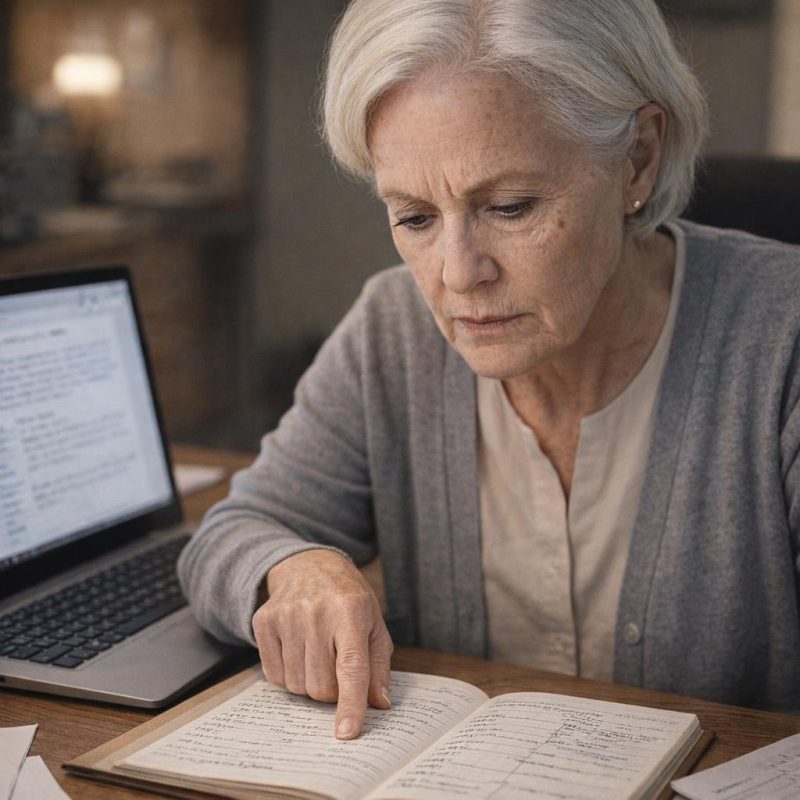 Image by RM AI
Signed While Away
I compiled a mental list of the problematic dates, opening files and checking them against the notebook entries. I found a beneficiary change form dated during a three-day business trip Leonard had taken to Atlanta. Another document was signed the day his notebook said he was visiting family in Oregon, a trip he'd noted with the arrival and departure times. The forms all required in-person signatures according to the fine print at the bottom—I'd read enough legal documents over the years to recognize that language. I tried to think of explanations that would make sense. Maybe Leonard had made quick trips back that he hadn't recorded in the notebook. Maybe the dates on the forms were recorded incorrectly by whoever processed them. Maybe he'd signed things in advance somehow, though I wasn't sure how that would work with documents that required witnesses. But the notebook had been so meticulously kept, every entry dated and specific, times noted down to the hour for flights and meetings. Leonard had never been casual about record-keeping. Something about this felt deeply wrong, a wrongness I could feel in my chest even though I couldn't yet name what it meant. I stared at the signatures on the screen, wondering how forms could be signed in person when Leonard was hundreds of miles away.
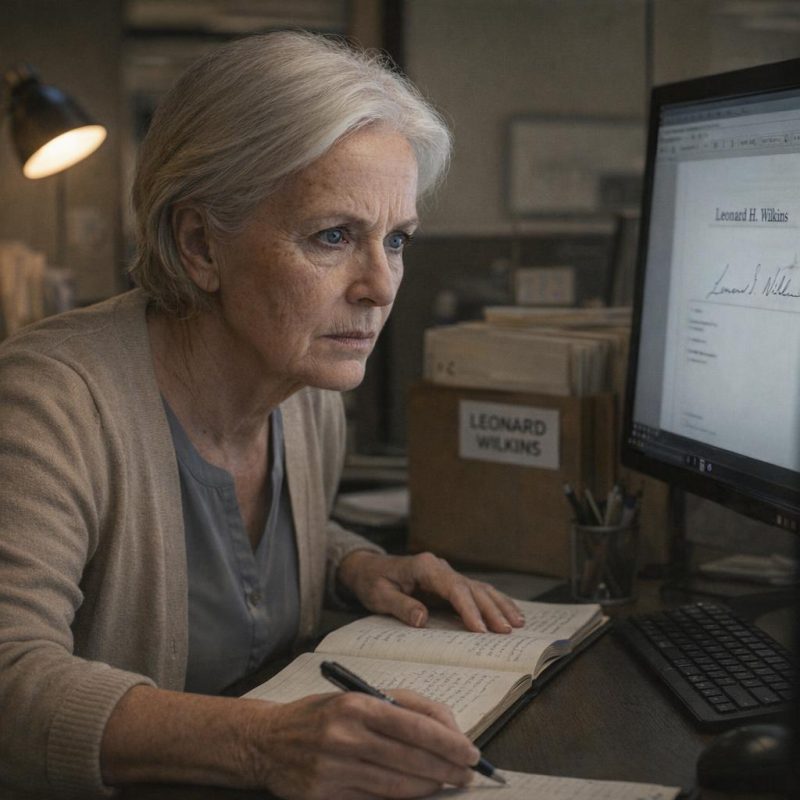 Image by RM AI
Searching for Reasons
I stood up from the table and walked to my kitchen counter, needing to move, needing to think. I made coffee while running through possible explanations in my mind, trying to find one that would make all of this make sense. Maybe Leonard had backdated documents for some legitimate reason I didn't understand. Maybe he'd signed things in advance before traveling, though that didn't match what the forms required. Maybe the notebook dates were approximate, not exact—just his general recollection of when things happened rather than a precise record. I carried my coffee back to the table and sat down, the laptop still open in front of me. But Leonard had never been approximate about anything in his life. The notebook times and locations were too specific to be casual estimates—he'd written down flight numbers, hotel names, the exact days conferences started and ended. Every explanation I constructed felt forced when I looked at the documents again, like I was trying to make puzzle pieces fit that clearly didn't belong together. I took a sip of coffee and stared at the screen. No matter how hard I tried, the explanations kept falling apart when I looked at the evidence again.
 Image by RM AI
The Weight of Suspicion
I closed the laptop lid and sat back in my chair, the kitchen quiet around me. I wondered if I was seeing shadows where none existed, if I was constructing problems out of coincidences and normal paperwork. Maybe I wanted to find something wrong because of our history, because some part of me still carried resentment about how our marriage had ended. Maybe I was being unfair to people I didn't know anymore, reading malice into what might be perfectly ordinary administrative confusion. The thought made me uncomfortable—the idea that I might be the problem here, that my own biases were distorting what I was seeing. But Leonard had left this to me specifically. He'd gone to the trouble of organizing everything, labeling it, preserving it, and then making sure it ended up in my hands after he died. He'd written in his letter that I would know what to do, that he trusted my judgment. That had to mean something. I sat there for another moment, then reached forward and opened the laptop again. Whatever was true, whether I was seeing clearly or seeing ghosts, I owed it to him to look at everything. I couldn't leave it unexamined no matter how much I wanted to.
 Image by RM AI
Asset Consolidation
I clicked on the folder labeled Transfers and felt my stomach drop. There were dozens of documents inside—bank transfers, account movements, consolidation forms. I opened them chronologically, starting with the earliest dates. The first transfers were small, almost experimental in size. A few thousand here, a few thousand there. Then they got larger. Retirement accounts were consolidated into new joint accounts. Investment portfolios were repositioned. I kept clicking through, document after document, and a pattern emerged that I couldn't ignore. In nearly every document, Elise's name appeared as the authorized party. Her signature was on the authorization lines. Her name was listed as the recipient or joint holder. I stared at the screen, trying to make sense of what I was looking at. Was this normal? When you got married later in life, didn't you consolidate finances? Wasn't this just what couples did? But something about the volume felt off. The frequency. The way it all moved in one direction. I couldn't tell if I was looking at ordinary spousal financial management or something else entirely, and that uncertainty made my hands shake as I reached for the next folder.
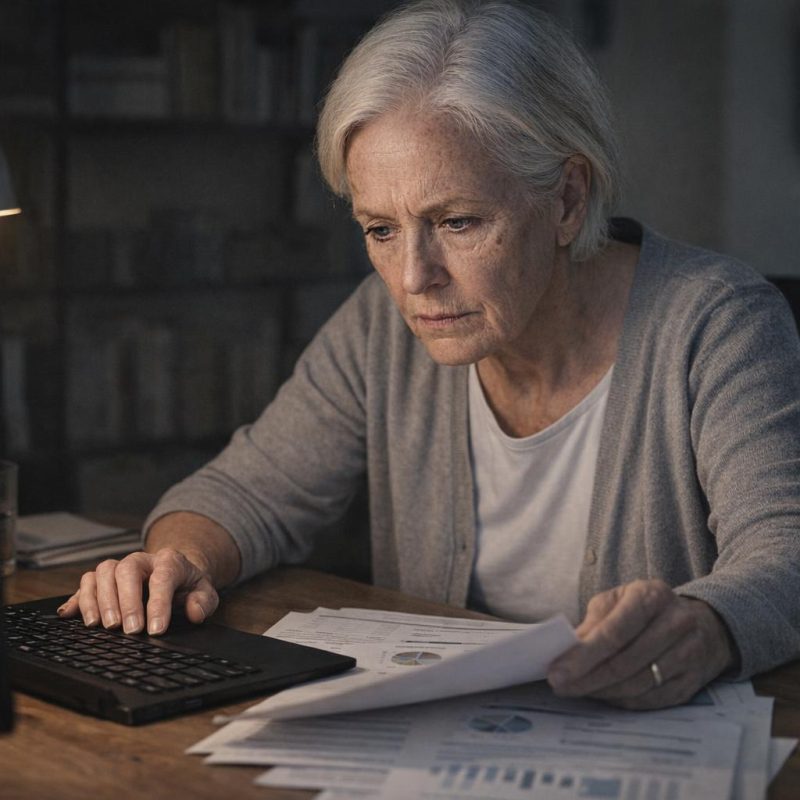 Image by RM AI
Making Her Own Notes
I got up and retrieved a fresh notebook from my desk drawer. If Leonard had documented everything, then I needed to do the same. I needed my own record of what I was finding, something I could reference and cross-check. I opened to the first page and began making lists. Date mismatches went on one page—documents signed when Leonard was supposedly traveling. Documents signed during travel went on another page, with the locations noted from his notebook. Asset transfers got their own section, listed chronologically with amounts and destinations. I noted which documents named Elise as the authorized party. I marked which forms had signatures that looked slightly off, though I didn't write why they looked off. Just that they did. The list grew longer as I worked through the laptop files. I was careful to avoid writing conclusions, just facts. Just observations. But the facts were starting to tell a story I couldn't ignore, and as my handwriting filled page after page, the word 'coincidence' felt less and less adequate to explain what I was seeing.
 Image by RM AI
Timestamp Anomalies
I clicked on the file properties of several scanned documents, something I'd learned to do years ago when I was still working. The timestamps showed when each file was created, when it was scanned into digital format. Several documents were scanned at two in the morning. Others were processed at midnight, at three AM, at odd hours throughout the night. I sat back and thought about Leonard's routine. We'd been married for decades, and some things never changed. He went to bed at ten o'clock without fail. He woke at six. He was predictable about it, almost rigid. Even on weekends, even on vacation, his internal clock kept the same schedule. He would never have been scanning documents in the middle of the night. I checked more timestamps, clicking through dozens of files. The pattern continued. Late night scans, early morning scans, times when Leonard would have been sound asleep. Someone had been scanning these documents, preserving them digitally, creating this archive. But it hadn't been Leonard, and that realization shifted something fundamental in how I understood what I was looking at.
 Image by RM AI
Studying Signatures
I arranged four documents on my screen, each showing Leonard's signature at the bottom. I'd seen his signature hundreds of times during our marriage—on tax returns, on the deed to our house, on birthday cards to our daughter. The basic shape was always consistent. I zoomed in on the first signature, then the second, third, and fourth. The 'L' in Leonard had a distinctive loop he always made the same way, a flourish he'd developed in college and never changed. On two of the documents, the loop was slightly different. Smaller. Less confident. The 'r' at the end of his name usually had a sharp uptick, almost like a tiny flag. On several documents, it was rounded instead, soft where it should have been angular. I felt my stomach tighten. I opened more documents, comparing them side by side. Some looked perfect. Others had these subtle variations—a letter formed differently, a stroke that went the wrong direction. The variations were small enough that you'd miss them if you weren't looking carefully. But they were there, and once I saw them, I couldn't unsee them.
 Image by RM AI
Trusting What She Saw
I connected my printer and printed out the key documents, the ones where the signatures looked questionable. I spread them across the kitchen table in date order, creating a timeline I could see all at once. Then I held them up to the light, one by one. The pressure patterns in the ink told their own story. Leonard had always pressed hard with a pen, almost engraving the paper. I used to tease him about it, how he'd leave impressions on the pages underneath. Some of these signatures were lighter, more tentative, as if someone was being careful not to press too hard. I examined the stroke direction next, the way the pen had moved across the paper. Leonard always signed in one continuous motion, never lifting the pen until he was done. Several signatures showed stops and starts, little hesitations where the ink pooled slightly. I pulled out documents I knew were genuinely Leonard's from the box—old letters, notes he'd written. I laid them next to the questionable ones. The difference became obvious when compared side by side. These weren't all written by the same hand, and I felt certain of that in a way I couldn't explain but absolutely trusted.
 Image by RM AI
Questionable Authorizations
I navigated to the Account Consolidations folder and opened forms for closing and consolidating retirement accounts. Each form had a section at the bottom listing required verification documents—driver's license, original account statements, notarized authorization. Standard stuff. I'd filled out similar forms myself over the years. I cross-referenced with the scanned supporting documents Leonard had saved. Several forms were missing required paperwork entirely. Others had documents that looked photocopied rather than original, which shouldn't have been acceptable. Yet all of them had been processed and approved. I checked the institutional stamps on each form. Banks and investment firms had all accepted them, signed off on them, moved the money as requested. How had forms with missing requirements been approved? How had photocopies been accepted when originals were required? I couldn't answer those questions. Maybe there were explanations I didn't know about, procedures that had changed, exceptions that could be made. But the pattern was undeniable—every single form had been approved despite missing what should have been required documentation.
 Image by RM AI
Mapping the Decline
I took a large sheet of paper from my printer and drew a line down the middle, creating a timeline. On the top half, I marked dates from Leonard's notebook where he'd mentioned his health. Doctor visits. New medications. Days he'd noted feeling unwell or exhausted. On the bottom half, I marked dates of financial changes—transfers, consolidations, account closures. Then I started connecting the dots. The first significant changes began shortly after Leonard's first cardiac episode, the one that had landed him in the emergency room. Activity increased when he was hospitalized overnight for observation. The largest transfers occurred during a week when his notebook showed him exhausted and unwell, barely able to write more than a few words each day. I stared at the timeline, at the way the two tracks ran parallel. The correlation was impossible to miss. As Leonard got weaker, as his health declined, the financial activity intensified. Someone had been moving faster as his condition worsened, and the timing of that acceleration made my chest feel tight with something I didn't want to name yet.
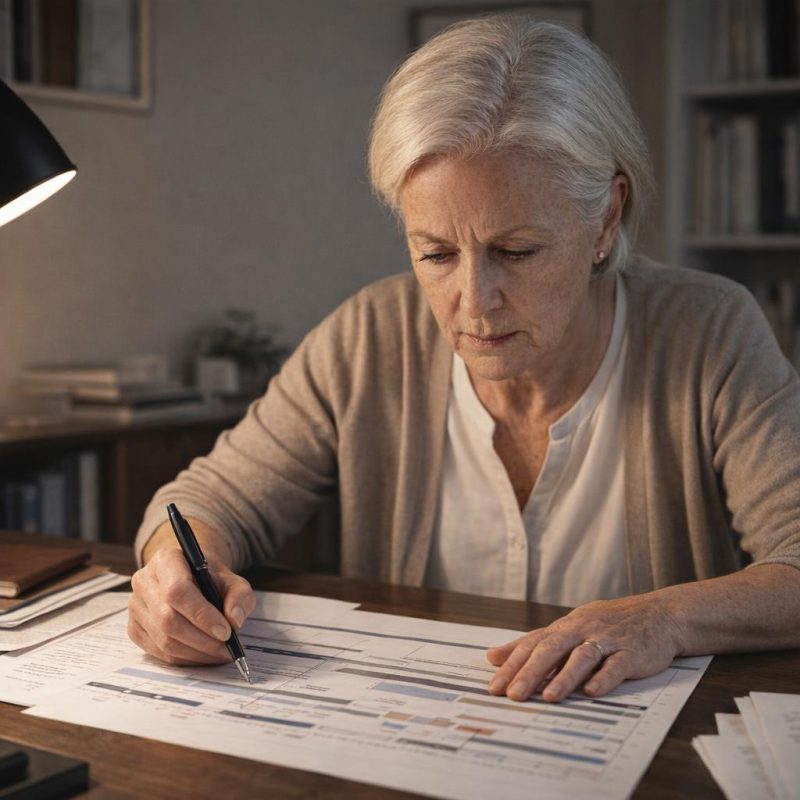 Image by RM AI
Acceleration
I went back through the laptop and counted the number of document scans per month, creating a chart in my notebook. The first year of Leonard's marriage to Elise showed one or two changes monthly. Normal stuff. The pace increased gradually over the second year. Then, six months before Leonard's death, the volume tripled. Sometimes four or five major transactions in a single week. I turned to Leonard's notebook for those same months, the final six months of his life. His entries became briefer, less detailed. Some days had only a word or two—'tired' or 'doctor' or 'pain.' Other days were blank entirely, as if he hadn't had the strength to write. I could see his strength failing in the handwriting itself, the way the letters got shakier, less controlled. While Leonard was fading, while he was struggling to write even a few words in his own notebook, the financial activity had surged to its highest point. The overlap made my chest tight and my hands cold. Those same six months were when Leonard's notebook entries became shorter, more fragmented, as if he was struggling just to hold the pen.
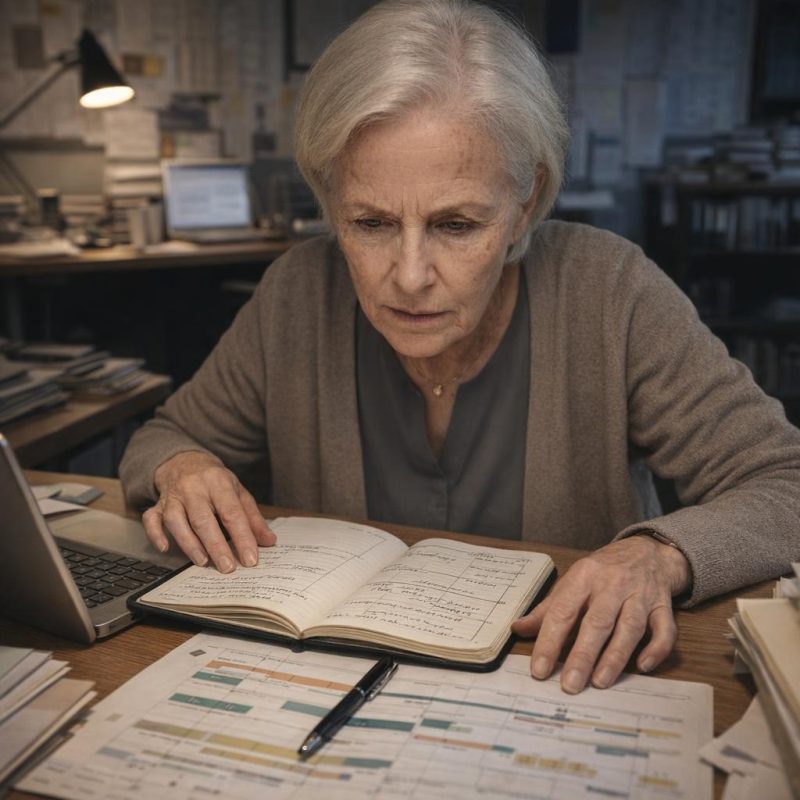 Image by RM AI
Sitting with It
I pushed back from the kitchen table and stood up, needing distance from everything spread across it. My legs felt stiff from sitting so long, and my head was starting to ache from the fluorescent overhead light. I walked to the living room window and looked out at the street. It was late afternoon, and the neighborhood looked exactly as it always did. Mrs. Chen was walking her terrier. Someone's sprinkler was running on the lawn across the street. A delivery truck rolled past, unhurried. Everything outside was so ordinary, so normal, while inside my house the world had tilted sideways. I pressed my palm against the window frame and tried to breathe evenly. Leonard had sat somewhere, probably at his own kitchen table or maybe in a hospital room, and methodically documented everything I'd just reviewed. He'd scanned documents while he was dying. He'd kept notes while his handwriting deteriorated. He'd known something was wrong, and he'd left it all to me. I understood now why the lawyer had watched me so carefully when he handed over that box. Leonard had entrusted me with something important, something that required action. I pressed my forehead against the cool glass and closed my eyes. Whatever this was, whatever Leonard had uncovered in those final months, I couldn't walk away from it—not when he'd trusted me with it.
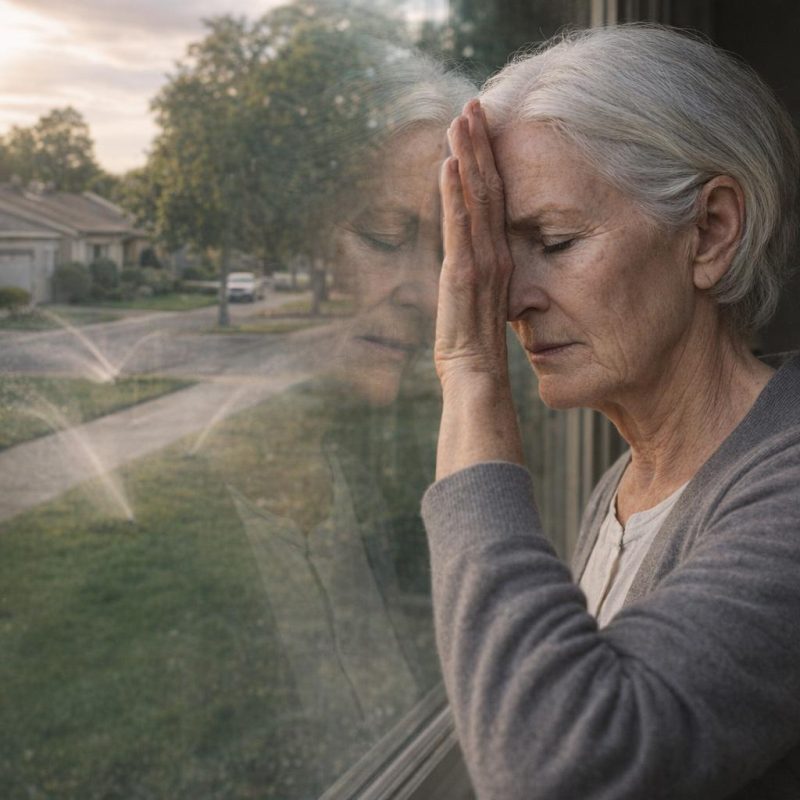 Image by RM AI
Accepting the Truth
I walked back to the kitchen and stood at the edge of the table, looking at everything with new clarity. The documents were still spread out in their careful arrangement. The notebook sat open to Leonard's shaky final entries. The USB drive rested beside my laptop. The photograph of us from thirty years ago was pushed to the side, and I realized that's exactly where it belonged. This wasn't about nostalgia. Leonard hadn't been getting sentimental in his final months, sorting through old memories and feeling wistful about the past. He'd been documenting. He'd been building a record of something wrong, something he needed someone else to see. I picked up my own notes, the timeline I'd constructed, the list of inconsistencies I'd found in the signatures and dates. Leonard had seen it too. That's why he'd scanned everything. That's why he'd left detailed notes. That's why he'd chosen me, specifically, to receive this box. I set my notes back down and looked at the whole collection again. This wasn't a keepsake or a memory. Leonard hadn't left me a piece of our shared past. He'd left me a case that needed solving.
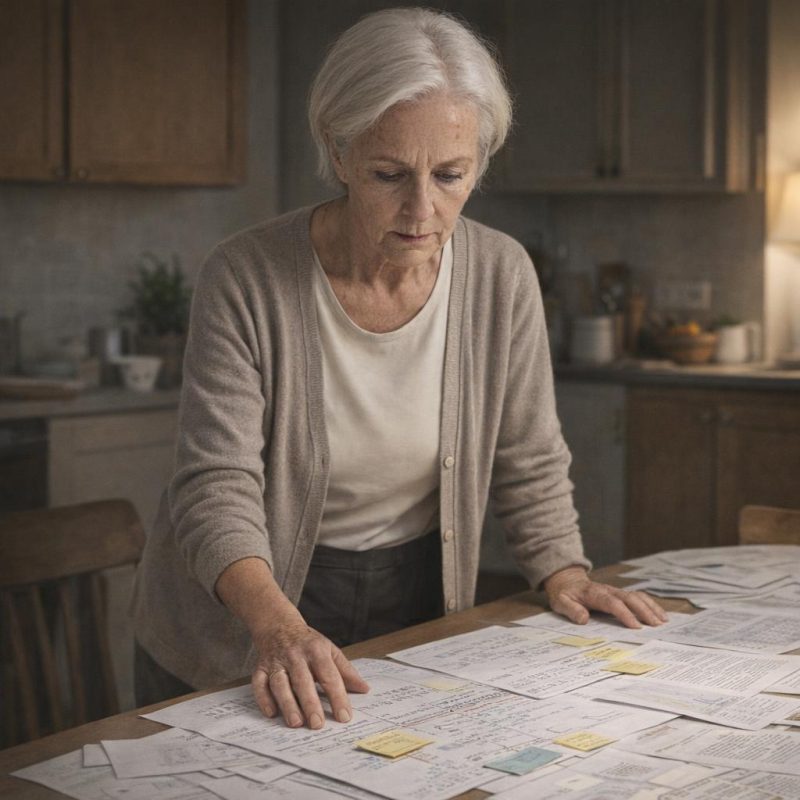 Image by RM AI
The Phone
I looked at the flip phone lying on the table where I'd left it hours ago. I'd been working around it this whole time, reviewing documents and making notes, but I'd avoided picking it up. The paperwork had been hard enough to process—columns of numbers, scanned signatures, dates that didn't align. But the phone felt different. It felt personal in a way the documents didn't. This was Leonard's voice. Leonard's actual words, recorded in those final months. I reached out and picked up the phone carefully, holding it in both hands. It was heavier than I remembered these old flip phones being, or maybe my hands just felt weak. The piece of tape on the back had my name written in his handwriting, that same shaky script from the final notebook entries. I turned the phone over in my palms, feeling the weight of it. Whatever was on this phone, Leonard had meant for me to hear it. He'd charged it, maintained it, labeled it with my name, and placed it in that box knowing I'd eventually find it. I took a breath and looked at the power button. The phone was heavier than I remembered, and my hands weren't quite steady as I picked it up.
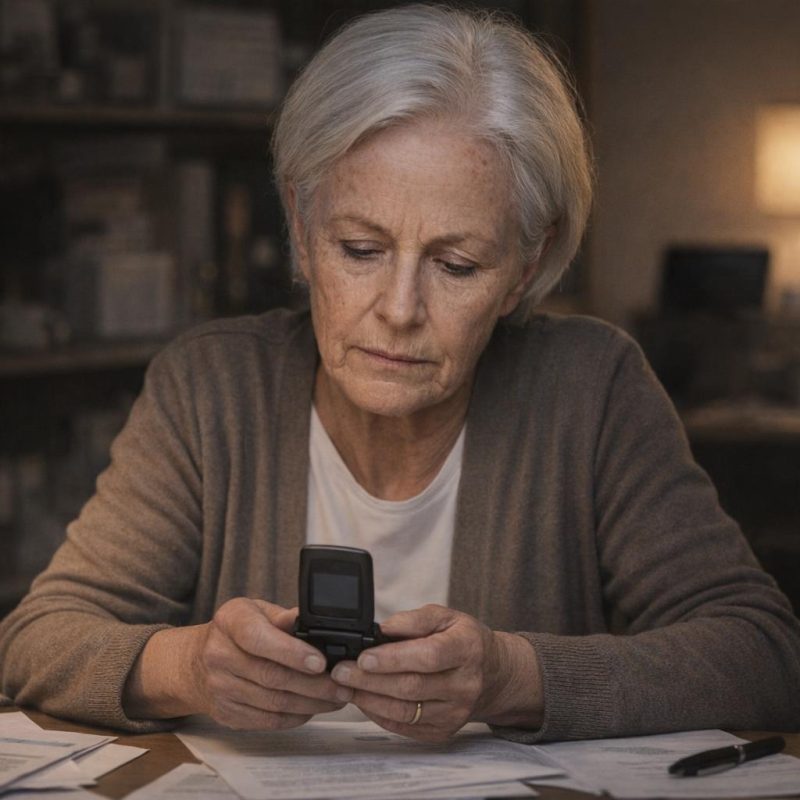 Image by RM AI
Powering On
I pressed and held the power button, half-expecting nothing to happen. These old flip phones didn't hold a charge for long, and this one had been sitting in a box for weeks, maybe longer. But the screen lit up immediately with the startup animation, that old carrier logo I remembered from years ago. The phone completed its boot sequence, chiming softly as it loaded. I stared at the battery indicator in the corner of the screen. It showed nearly full charge—four bars out of five. How was that possible? The phone had been in the box, presumably untouched since Leonard's death. Someone had charged it recently. Leonard had charged it before he died, knowing I'd need it to work when I finally opened the box. He'd planned that far ahead. He'd made sure this phone would be alive and waiting when I found it. I navigated to the main menu with shaking fingers, scrolling through the familiar icons. Messages. Contacts. Settings. And there, near the bottom—Voice Memos. The screen flickered to life, showing a nearly full battery.
 Image by RM AI
Saved Recordings
I clicked on the Voice Memos icon and a list appeared on the small screen. Five saved recordings. Each one was labeled with a date, and I could see they spanned the last three months of Leonard's life. The first recording was from three months before his death. The others were spaced weeks apart—one from ten weeks before, one from seven weeks, one from four weeks. I scrolled down to the last recording, and my breath caught when I read the title. The first four recordings had simple date labels, but this one was different. 'If anything happens.' I stared at those three words on the tiny screen. Leonard had recorded a message specifically for this situation. He'd known he might not be around to explain what he'd found, what he'd documented, why he'd left me this box full of evidence. He'd prepared for the possibility that he'd be gone and I'd be sitting here alone, trying to piece it together. My heart was beating faster now, a tight feeling in my chest. This was what he'd really wanted me to hear. The most recent recording was titled 'If anything happens.'
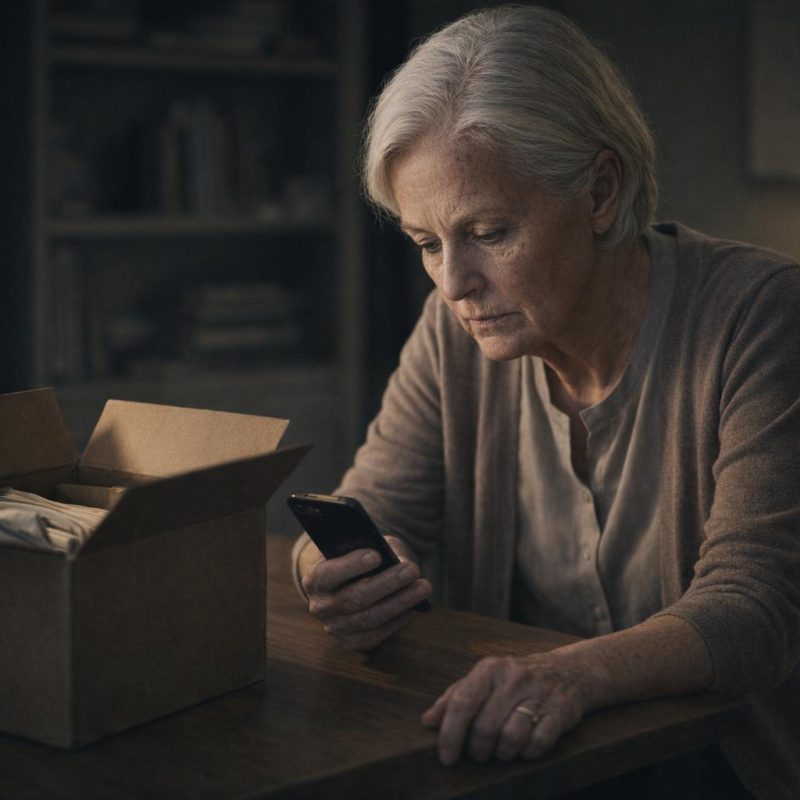 Image by RM AI
The Final Message
I looked at the recording title on the small screen, my thumb hovering over the play button. I was afraid of what I might hear. Leonard's voice after eight years of silence—eight years of divorce and distance and separate lives. Leonard's voice from beyond death, recorded when he knew he was dying, when he knew I'd be the one listening. Whatever was on this recording, it was important enough for him to plan for. He'd kept this phone charged and maintained. He'd labeled this specific message for exactly this moment. I thought about all the evidence I'd spent the afternoon reviewing. The inconsistencies in the documents. The signature variations. The timeline that showed everything accelerating in those final six months. This recording would explain what Leonard had seen, what he'd understood about all of it. I pressed my thumb down on the play button before I could change my mind. The recording began to load, a small progress bar appearing on the screen. I pressed play, bracing myself for whatever Leonard had needed to say.
 Image by RM AI
Before the Voice
I placed the phone on the kitchen table in front of me, setting it down carefully. I needed both hands free, needed something to hold onto. The recording was loading, and I gripped the edge of the table with both hands, steadying myself. There was a moment of static through the small speaker, that crackling sound old recordings make. Then I heard a breath, someone inhaling before speaking. Then Leonard's voice began. It was him. Absolutely, unmistakably him. But older than I remembered, even accounting for the eight years since I'd last heard him speak. His voice was tired in a way that went beyond physical exhaustion. It was the tiredness of someone who'd been carrying something heavy for too long, someone who knew they were running out of time. I gripped the edge of the table harder, my knuckles going white. Leonard's voice filled the quiet kitchen, older and tired but unmistakably him.
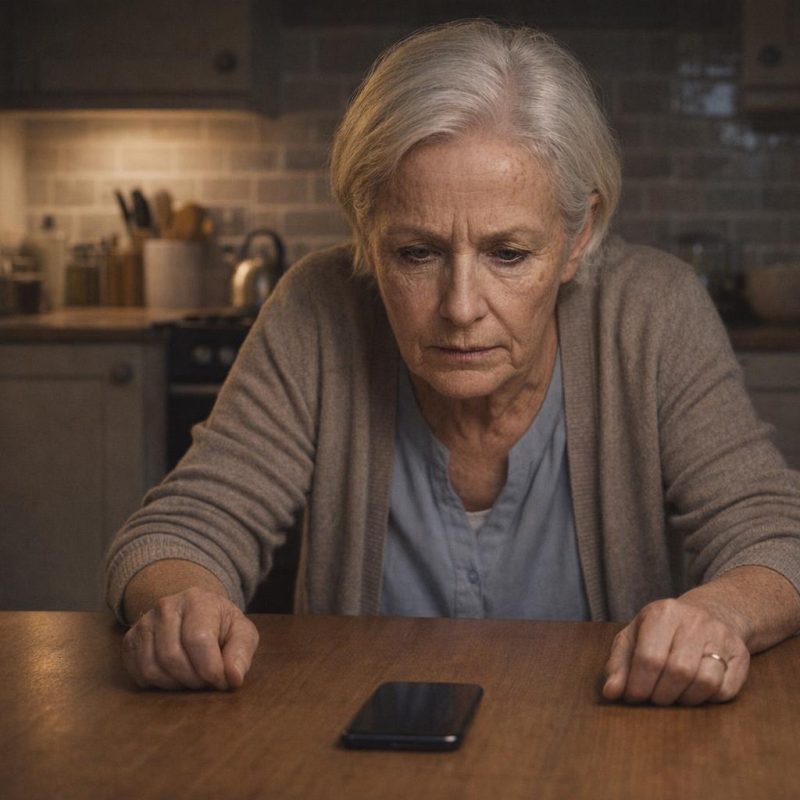 Image by RM AI
Patricia
The first word that came through the phone's small speaker was my name. 'Patricia.' Not Pat, not anything casual or familiar. My full name, spoken with gravity and formality. I hadn't heard him say it like that since the early years of our marriage, back when we were young and everything still felt serious and important. The tone carried weight—trust, responsibility, something that needed to be said properly. I sat completely still. My hands were pressed flat against the table on either side of the phone, and I realized I'd stopped breathing. Every part of my attention was fixed on that voice, on the way he'd said my name, on what he was about to tell me. The recording continued, and I could hear him taking another breath, preparing to explain. I froze, because the way he said my name told me everything that followed would change what I thought I knew.
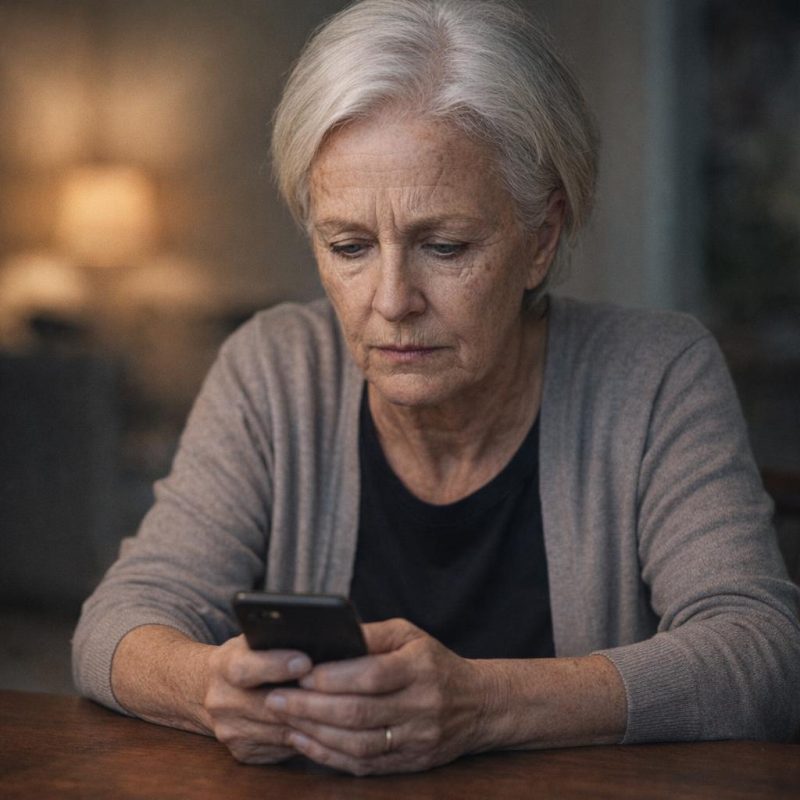 Image by RM AI
Unauthorized Changes
The recording continued, and Leonard's voice shifted into something more methodical, like he was reading from notes he'd prepared. He said his health had been declining for over a year—his heart, mostly, but other things too. When it got harder to manage everything on his own, he'd asked Elise to help with the finances. At first, everything seemed normal. She handled bills, made sure accounts were current, took care of the paperwork that exhausted him. Then he started noticing things. Small things at first—an account he didn't remember opening, a transfer he couldn't recall authorizing. Policy changes on his life insurance that he didn't remember agreeing to. His voice carried genuine confusion mixed with something heavier, something that sounded like fear he was trying to keep controlled. I sat with my hands pressed flat against the table, not moving, barely breathing. He said he'd asked about the discrepancies. The answers always came quickly, always sounded reasonable—consolidation for tax purposes, better interest rates, standard updates. His voice grew quieter as he said he had wanted to believe there was an explanation.
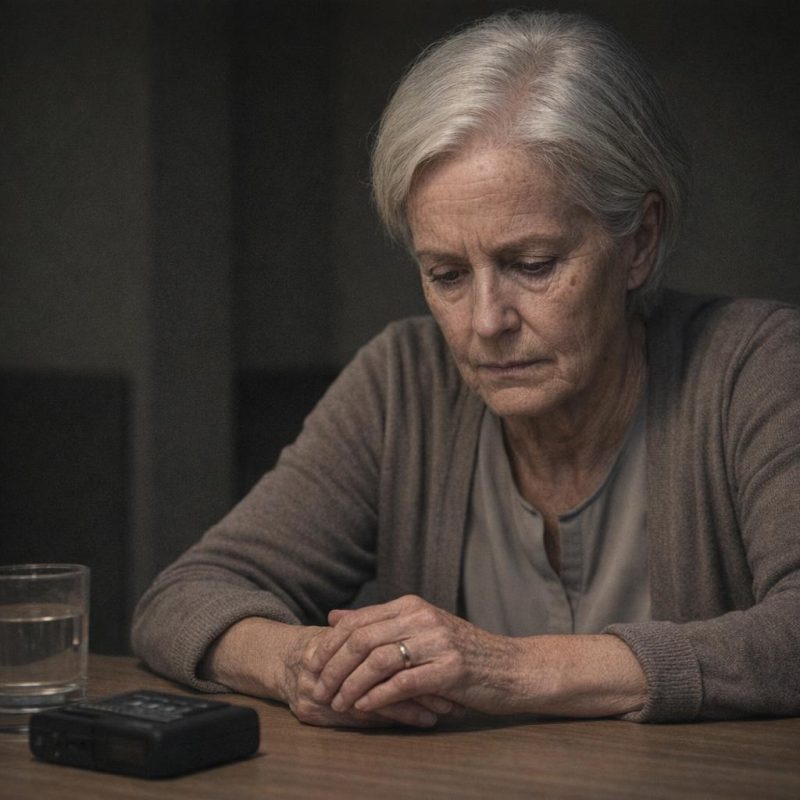 Image by RM AI
Keeping Copies
Leonard's voice continued, describing how he'd started paying closer attention after those conversations. He said the explanations always came so quickly, always sounded so reasonable in the moment. But when he checked later, when he went back through statements and documents, things didn't add up the way they should have. So he started making copies—quietly, carefully, when no one else was around. He scanned documents in the middle of the night when he couldn't sleep, when his heart kept him awake and the house was silent. He kept a notebook of dates and details, cross-referencing everything he could find. I understood now why the timestamps on those files showed two and three in the morning. Leonard said he needed proof, not suspicions. He couldn't confront anyone based on a feeling, couldn't accuse someone of something he couldn't demonstrate. I gripped the edge of the table as his voice filled my kitchen, and I could hear the loneliness in his words—the isolation of carrying suspicions you can't share, of documenting something terrible while pretending everything is fine. He said he couldn't confront anyone directly—not yet, not without something concrete.
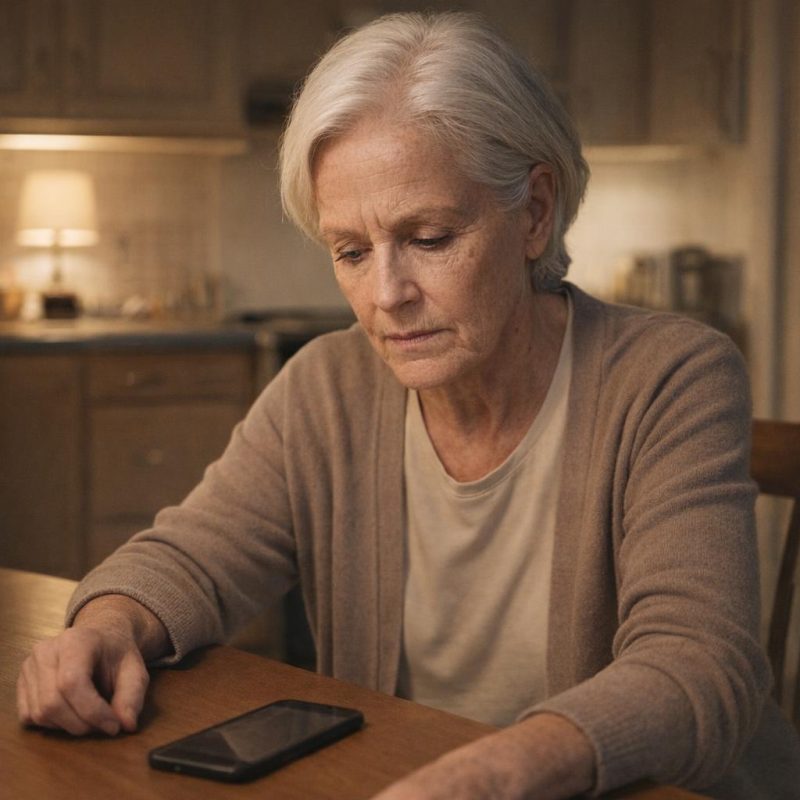 Image by RM AI
The One Who Notices
Leonard's voice shifted again, becoming more personal, almost intimate in a way I hadn't heard in decades. He said he'd thought for a long time about who could handle this if something happened to him. He couldn't trust lawyers who might have conflicts of interest or professional relationships with Elise. He couldn't go to the police with only suspicions and partial documentation. Then he thought about me. He said I had always been the one who caught the things he missed, even back when we were married. I noticed when numbers didn't add up, questioned things that seemed off even when he dismissed them as unimportant. I felt tears prick my eyes unexpectedly, not from sadness exactly but from the weight of what he was saying. Leonard said that was why he was leaving this to me—because if anyone could see the full picture, if anyone could understand what all these pieces meant when put together, it would be me. The trust he was placing in me settled onto my shoulders like something physical, something I could feel the weight of.
 Image by RM AI
If I'm Gone
Leonard's voice grew heavier, more serious, like he was forcing himself to say something he didn't want to acknowledge. He said he wasn't sure how much time he had left. His heart was getting worse, and he could feel it—the fatigue, the shortness of breath, the way his body was giving out. If something happened to him before he could act on what he'd found, then everything he had documented would mean nothing. Elise would believe she had covered every trace, that no one knew what had been happening. She would think she was safe. And she would inherit everything—every policy, every account, every asset he'd spent his life building. Leonard said I was the only person who could stop that from happening. His voice cracked slightly as he said he was sorry for putting this on me, sorry for leaving me with this burden. The recording ended with a soft click, and silence filled the kitchen like water rushing into a space. I sat absolutely still, barely breathing, the full weight of Leonard's words pressing down on me.
 Image by RM AI
The Evidence File
I stared at the phone's blank screen, and the silence after Leonard's voice felt enormous, like the air itself had changed. Everything I had spent days examining suddenly clicked into place with a clarity that made my chest tight. The notebook wasn't just dates—it was a timeline of theft. The USB drive wasn't just records—it was proof of forgery. The phone wasn't a memento—it was testimony. Leonard had built a complete case file in the final months of his life, documenting Elise's systematic fraud piece by piece while his health was failing and he was at his most vulnerable. Forged signatures on beneficiary forms. Unauthorized transfers between accounts. Manipulated policy documents. All of it carefully recorded, timestamped, cross-referenced. He had trusted me with the evidence because he knew I would use it, because he knew I would see it through. This wasn't about nostalgia or unfinished business between us. This wasn't about our marriage or our past. The box on my kitchen table wasn't about sentiment—it was about making sure Elise's crimes would not remain hidden.
 Image by RM AI
Earlier Recordings
I navigated back to the first recording, the one dated three months before Leonard died. His voice sounded stronger then, but troubled in a way that made my stomach clench. He described noticing the first discrepancy in a bank statement—a transfer he didn't recognize. The second recording was two weeks later, and there were more examples, more confusion in his tone. By the third recording, his voice had hardened. He had confirmed that signatures on beneficiary forms didn't match his handwriting, that dates didn't align with when he'd supposedly signed documents. The fourth recording was the most painful to hear. Leonard sounded exhausted, scared, and completely alone. He said he couldn't trust anyone in his current life—couldn't tell doctors who might think he was confused from his illness, couldn't tell friends who were really Elise's friends now, couldn't tell family who would close ranks against him. I listened to each one, feeling the weight of his isolation pressing against my ribs. Leonard had died carrying this burden alone, trusting only me to lift it. Each recording showed him becoming more isolated with what he knew, and more determined that someone else would carry it forward.
 Image by RM AI
The Weight of Trust
I sat back from the phone and stared at the ceiling, trying to process what Leonard had done and why. He could have hired private investigators. He could have contacted financial regulators or elder abuse hotlines. He could have told his doctor about his concerns, asked for help. Instead, he had built this case himself and left it to his ex-wife. I understood why now. Professionals might have been compromised or dismissed his claims as confusion from a dying man. His current family would have closed ranks against him, protected Elise, questioned his mental state. His friends were Elise's friends now too—they'd moved in the same circles, attended the same events. I was the only person outside that world who knew him well enough to recognize what was real. Who knew his handwriting, his habits, his way of organizing things. Who would take this seriously and see it through without hesitation. The trust he had placed in me felt like both an honor and a weight I couldn't set down. I was the last line of defense for a man who had run out of options.
 Image by RM AI
The Decision
I looked at all the evidence spread across my kitchen table—Leonard's notebook, the USB drive, the phone with its recordings, my own notes documenting the inconsistencies I had found and verified. This was not something I could handle alone. It needed to go to people with authority to investigate and act. I thought about my options carefully. A lawyer would be expensive and might take forever, billing hours while Elise continued to benefit from what she'd taken. Going directly to the police felt uncertain—I wasn't sure if they handled this kind of thing or if I'd be shuffled between departments. But financial fraud was a crime, and crimes got investigated by law enforcement. Elder financial abuse was something prosecutors took seriously. I made my decision sitting there in my kitchen with Leonard's voice still echoing in my head. I would take everything to law enforcement. I would explain what Leonard had documented and what I had verified independently. I would make sure someone with authority understood what had happened. I reached for my phone to find out where to begin.
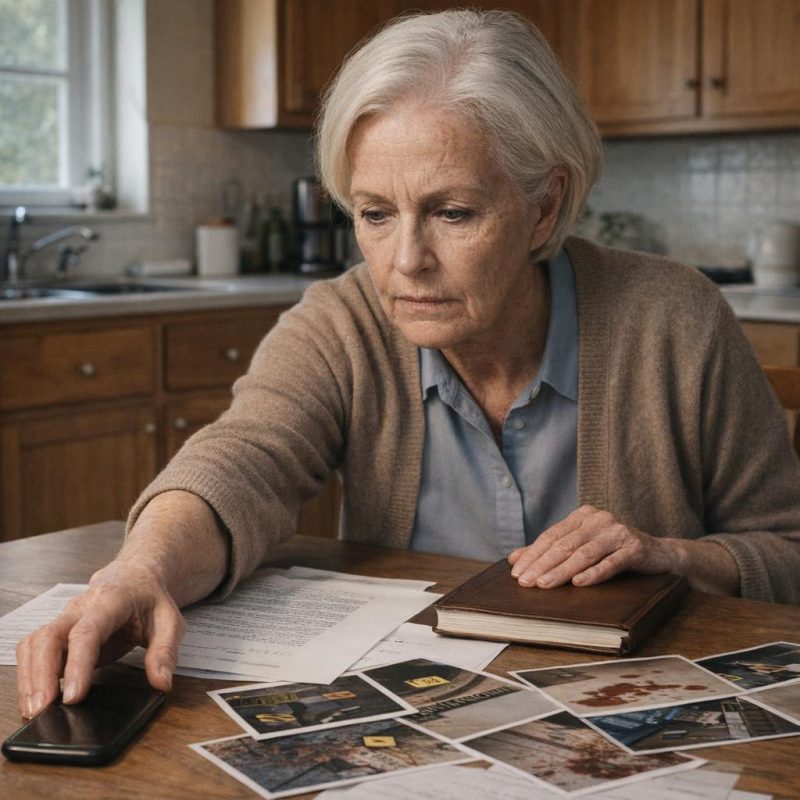 Image by RM AI
Organizing the Case
I spent the next day organizing everything into a presentation that would make sense to someone seeing it for the first time. I cleared my dining room table completely and spread out all the materials—Leonard's notebook, the USB drive contents, the phone with recordings, every document I'd verified. I created separate folders for different types of evidence. One folder held all the financial documents showing transfers and account changes. Another contained the insurance policy modifications. A third held documents with questionable signatures that I'd flagged. I wrote out a timeline on a large sheet of paper, mapping Leonard's health decline along one axis and the financial changes along the other. The correlation was impossible to miss when you saw it laid out visually. I burned the phone recordings onto a CD as backup, labeling it carefully with dates and contents. Then I typed up my own analysis of the signature inconsistencies, documenting exactly what I'd noticed and how I'd verified the discrepancies. Everything was cross-referenced back to Leonard's notebook entries so someone could follow the trail of evidence. I wanted the presentation to be clear and professional, something that would be taken seriously. I kept imagining a skeptical detective looking at this material, deciding whether it was worth their time. By evening, I had a complete case file ready to present, and I knew the evidence needed to speak for itself.
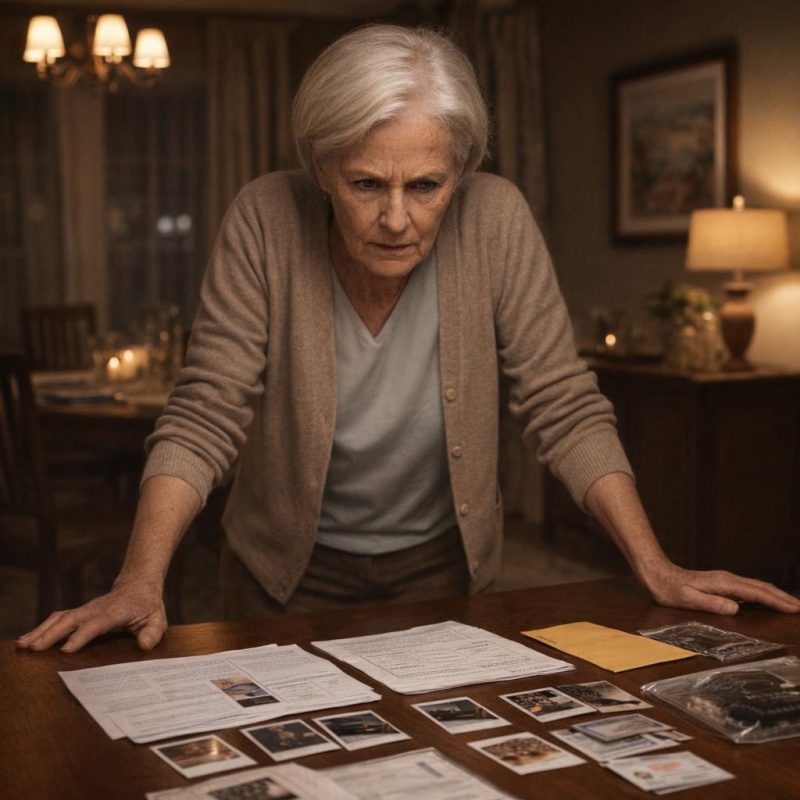 Image by RM AI
Fear of Dismissal
That night, I lay awake running through scenarios of what would happen when I walked into a police station with my folders. I imagined the moment I'd explain who I was—the ex-wife, coming forward with accusations against the woman who'd replaced me. It would be so easy for them to dismiss me as jealous or vindictive. A bitter woman who couldn't let go, who wanted to hurt her replacement out of spite. I knew exactly how it might look from the outside. Eight years of silence, and suddenly I appear with a box full of accusations. I could already hear the skepticism in my head, the polite dismissal. But then I thought about the evidence itself. The timestamps that didn't match. The signatures that looked wrong. The timeline that showed everything changing as Leonard got sicker. His voice on those recordings, tired but absolutely certain about what he was documenting. The documents didn't lie, even if people might doubt my motives for bringing them forward. I would present everything professionally and let the facts speak for themselves. If they dismissed me anyway, at least I would have tried. At least I would have done what Leonard asked. In the morning, I got dressed in my most professional clothes and drove to the police station, my folders stacked carefully on the passenger seat.
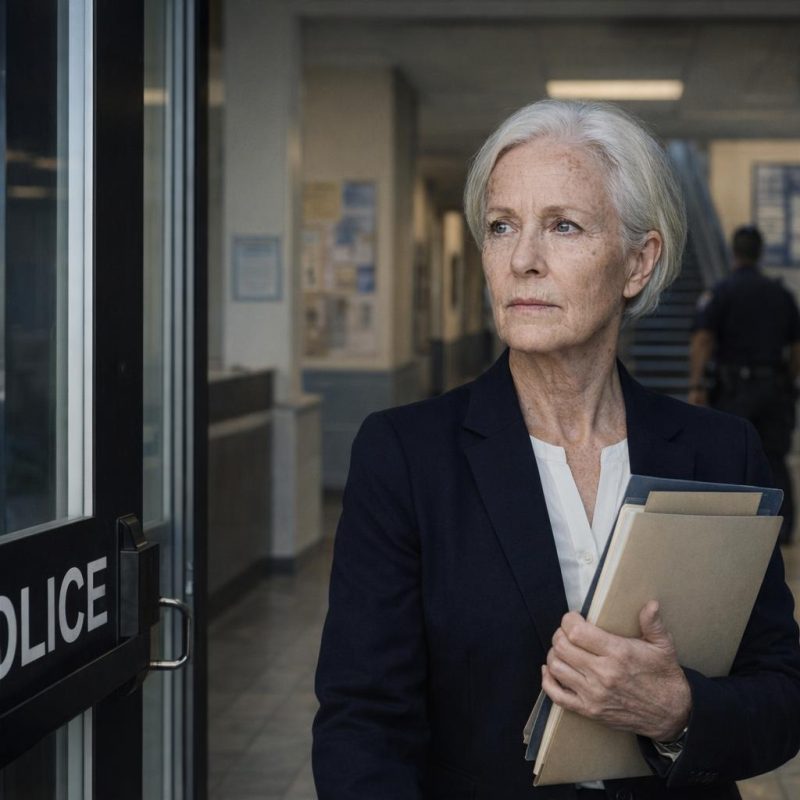 Image by RM AI
Meeting Detective Morrison
I arrived at the precinct and asked to speak with someone about financial fraud. The officer at the desk took my name and told me to wait. I sat in an uncomfortable plastic chair for forty minutes, watching people come and go, my folders balanced on my lap. Finally, a man in a rumpled blazer came out and introduced himself as Detective Morrison. His voice was professionally neutral, giving nothing away. He led me to a small interview room with a metal table and two chairs. I placed my folders on the table and began explaining, starting with the phone call from Leonard's lawyer and the wooden box I'd received. I walked through what I'd found in the documents—the timeline, the signature inconsistencies, the dates that didn't match Leonard's known locations. Detective Morrison listened without interrupting, his tired eyes watching me carefully. When I finished, he didn't dismiss me or look skeptical the way I'd feared. Instead, he opened his own notebook and clicked his pen. He asked when exactly Leonard's health had started declining. He asked about the specific dates of the questionable transfers. He wanted to know how I'd verified the signature inconsistencies. I answered everything as clearly as I could, feeling something loosen in my chest. He was taking me seriously.
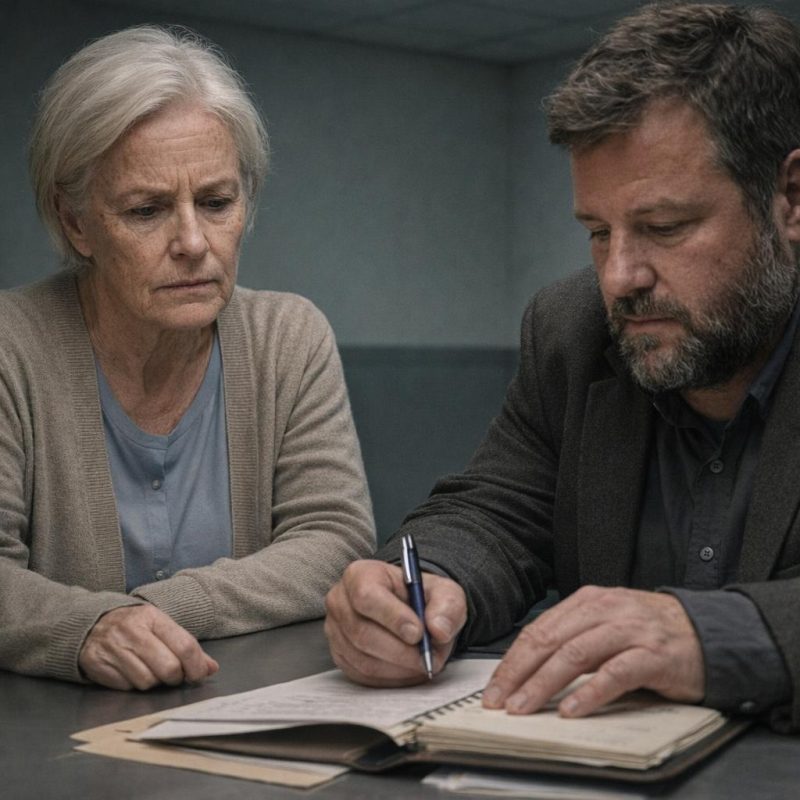 Image by RM AI
The Forensic Accountant
Detective Morrison made a phone call and asked me to wait. Twenty minutes later, a woman in her mid-thirties arrived carrying a leather portfolio. Morrison introduced her as Rachel Nguyen, a forensic accountant who worked with the department. Rachel had an efficient manner but warm eyes that softened when she looked at me. She spread my documents across the table methodically, organizing them by type. For nearly an hour, she examined them in silence while Morrison and I waited. I watched Rachel's expression change as she worked—her eyebrows drawing together, her lips pressing into a thin line. She made notes in a small notebook, compared signatures side by side, checked dates against other documents. She held papers up to the light, examining them from different angles. Finally, Rachel set down her pen and looked up at Detective Morrison. She told him there were significant irregularities in these documents. Multiple signatures showed inconsistent pressure and stroke patterns. Transfer authorizations were missing required documentation. The timeline of changes correlated suspiciously with the account holder's medical decline. Rachel said this warranted a full investigation. I felt my eyes sting with relief, and I had to look down at the table to compose myself. Someone with expertise was confirming what Leonard had documented so carefully.
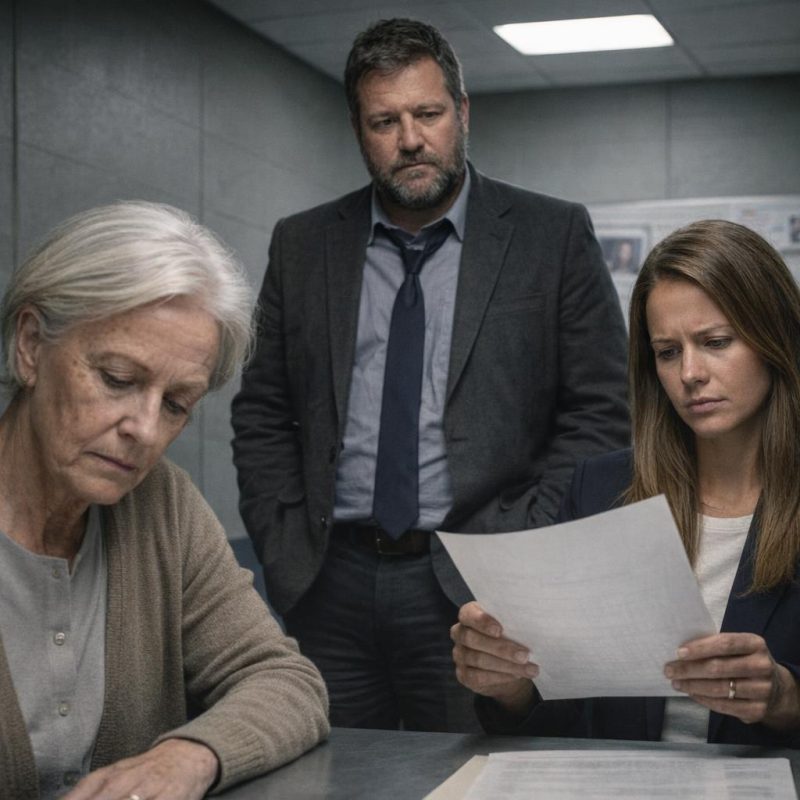 Image by RM AI
Walking Through the Timeline
I unfolded my large timeline sheet on the table, smoothing out the creases. I pointed to specific dates when documents were supposedly signed, then showed corresponding notebook entries proving Leonard was traveling those exact days. Morrison followed along, checking dates against his own notes. Rachel examined the signatures I'd flagged most carefully, holding them up to the light and comparing stroke patterns. She explained that Leonard's genuine signature had consistent characteristics—a particular loop in the L, a sharp uptick on the final letters. Rachel pointed to three documents from the same month, all supposedly signed by Leonard. She said these signatures showed hesitation marks and different pressure patterns. The person writing them had been copying the original, not signing naturally. They were almost certainly written by someone other than Leonard. Morrison asked me to leave the recordings as well. I handed over the phone and the backup CD, explaining what was on each recording. He wrote down the dates and times, cross-referencing them with the documents. Rachel made copies of everything, organizing them into her own evidence folders. The investigation was officially underway, and I felt the weight of Leonard's box finally shifting from my shoulders to people who had the authority to act.
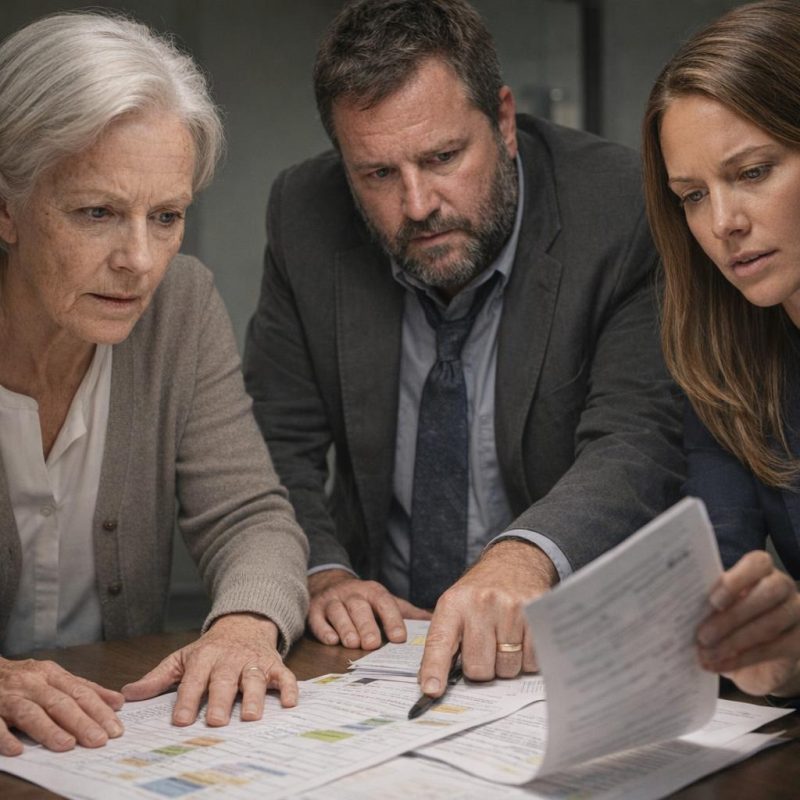 Image by RM AI
Confirmation
Three days later, I received a call from Rachel asking me to come back to the precinct for an update. She met me in the same interview room with a folder of her own findings. The preliminary analysis confirmed what I'd suspected. At least seven documents contained forged signatures. Two life insurance policies had been fraudulently modified to change beneficiaries. Retirement accounts had been consolidated without proper authorization. The total amount of unauthorized transfers exceeded three hundred thousand dollars. All of it had been systematically moved to accounts in Elise's name over a two-year period. Rachel said Leonard's documentation was remarkable—the dates, the notebook entries, the organized folders. It was one of the most thorough private evidence files she had ever received from a citizen. She said most cases like this came to light years after the fact, when the trail was cold and the documentation scattered. Leonard had given them everything they needed while the evidence was still fresh. I thanked her, feeling Leonard's careful work finally recognized for what it was. He'd known exactly what he was doing when he compiled that box. He'd built a case that couldn't be dismissed or explained away.
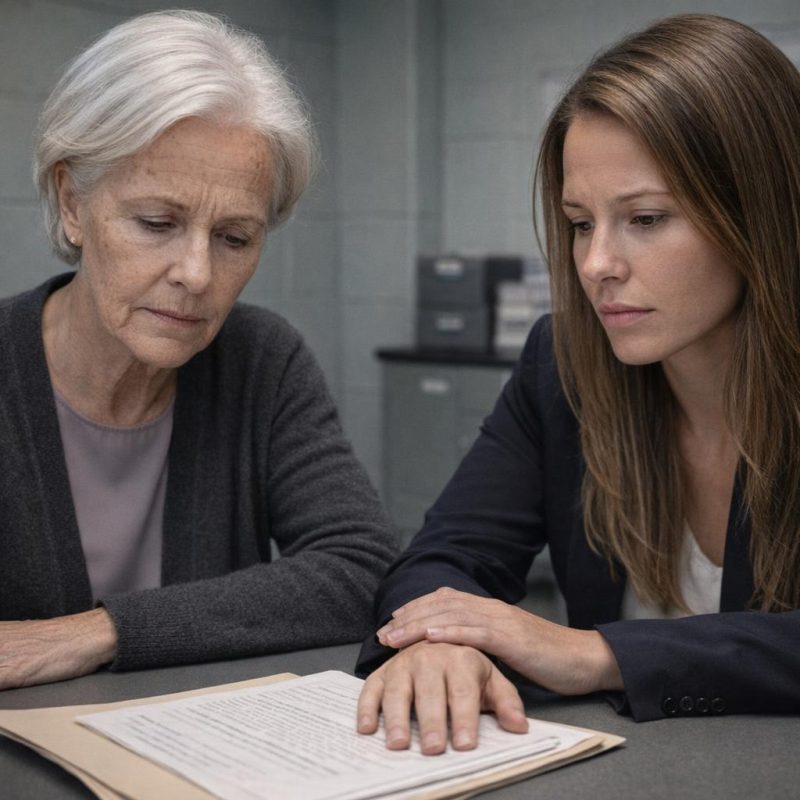 Image by RM AI
The Investigation Moves
Detective Morrison called me with an update two weeks later. The case had been reviewed by the district attorney's office, and there was sufficient evidence to proceed with a formal investigation. Elise would be contacted for questioning. Her financial records would be subpoenaed. I asked what I should do now, and Morrison told me to wait—the process would take time. I was not to contact Elise or anyone connected to her. Any communication could compromise the investigation. I agreed, though waiting felt harder than investigating had been. At least when I was verifying documents and building the timeline, I'd been doing something. Now I had to sit back and trust that the system would work. But I had done what Leonard asked. I'd opened the box, understood what he was showing me, and taken it to people with authority to act. The rest was in their hands now. For the first time since receiving that phone call from the lawyer, I felt something like hope. Justice was actually possible. Leonard's voice wouldn't be silenced by the woman who'd taken advantage of him.
 Image by RM AI
Called to the Hearing
The call came on a Thursday afternoon, four weeks after my first meeting with Morrison. A formal hearing had been scheduled. I was asked to attend to confirm details of the evidence chain—how I'd received the box, what I'd found, how I'd verified the information. I would need to testify about the materials Leonard had left me. I agreed immediately, then asked who else would be present. The voice on the phone paused before answering. Elise had been notified and would be attending with her attorney. My stomach tightened at the thought of seeing her. I hadn't laid eyes on Elise in eight years, not since she'd moved into my former home with Leonard. Now we would be in the same room while Leonard's voice played from those recordings, while his documentation was presented as evidence. I spent the next week preparing myself emotionally. I practiced staying calm, staying factual. I would answer questions clearly and let the evidence speak, just as I had from the beginning. I wouldn't let anger or old hurt show on my face. But knowing I'd have to face her made everything suddenly, intensely real.
 Image by RM AI
The Composure Cracks
The hearing room was smaller than I'd expected—just a conference room with fluorescent lights and a long table. I saw Elise the moment I walked in. She sat on the far side with her attorney, dressed in a navy suit that probably cost more than my monthly mortgage. Her hair was perfect, her posture composed. Our eyes met for maybe two seconds. She looked right through me like I was furniture, like I was nothing. I took my seat on the opposite side, Rachel beside me for support. Detective Morrison began methodically presenting the evidence—documents projected on a screen, dates read aloud, amounts listed in careful detail. Elise's attorney objected repeatedly, claiming everything had been authorized, that Leonard had given her full access to manage their finances. His tone was confident, dismissive even. Then Morrison asked to play the audio evidence. Leonard's voice filled the room. Tired, measured, damning. He described what he'd noticed, the patterns he'd documented, the careful way she'd positioned herself. He explained why he was leaving this evidence to me—because he knew I would understand what it meant. I watched Elise as the recording played. The composed mask began to crack. Color drained from her face. Her eyes went wide with something I recognized immediately as shock. She hadn't known Leonard had documented anything. She had believed she was completely safe, that she'd covered every angle perfectly. Leonard's voice from beyond the grave proved her wrong.
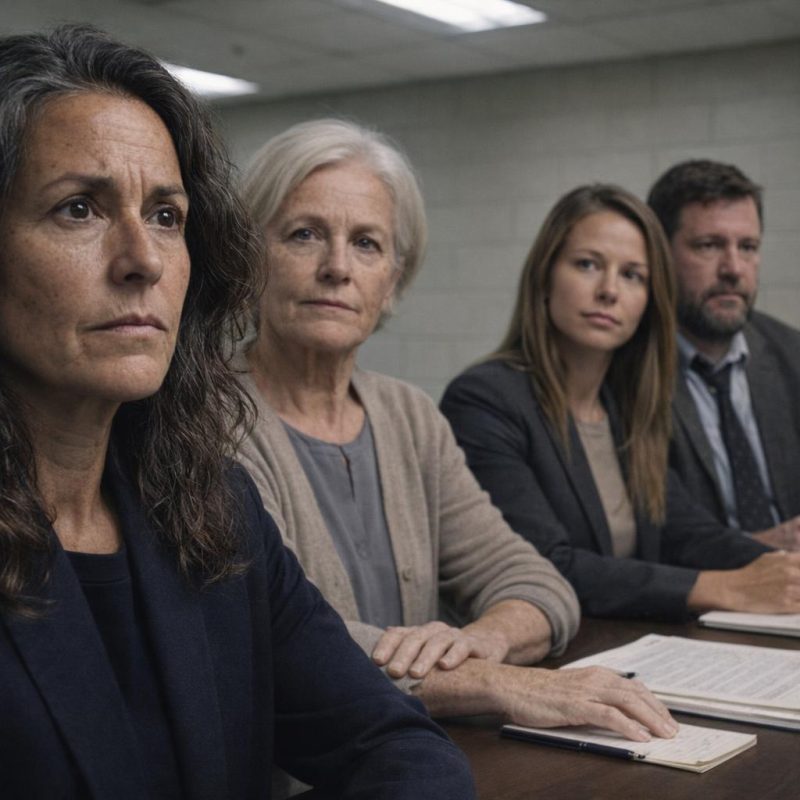 Image by RM AI
Unraveled
The weeks after the hearing moved with surprising speed. Elise was formally charged with financial fraud and forgery—multiple counts spanning two years of documented theft. Her accounts were frozen pending investigation. The assets she'd carefully positioned in her name were locked down. I learned all of this through Detective Morrison's updates, brief phone calls where he walked me through each development. I didn't need to be present for the legal proceedings. My role was finished—I had delivered Leonard's evidence, testified to its authenticity, and now the system was handling the rest. On the day the charges were formally announced, I stood by my kitchen window with my morning coffee. The same window where I'd processed all of this weeks ago, where I'd first opened that wooden box and heard Leonard's voice. I felt something settle inside me, something that had been tight and anxious for longer than I'd realized. It wasn't triumph—I didn't want Elise to suffer, didn't take pleasure in her downfall. Just peace. Leonard's truth had been told. Justice was being served. The knot I'd been carrying since that lawyer's office had finally loosened. I picked up my keys and walked outside into the afternoon light, feeling lighter than I had in months.
 Image by RM AI
What He Left Behind
I returned to my kitchen table that evening with a cup of tea. The same table where I'd spread Leonard's evidence across the surface, trying to make sense of what he'd left me. The same chair where I'd heard his voice for the first time in years, explaining what he'd discovered and why he'd chosen me to receive it. I thought about the man he'd been when we married—practical, private, careful with his words and his trust. I thought about how our marriage had ended, cold and clean and final because he'd insisted on it that way. We'd both been hurt. Neither of us had handled it well, and the divorce had left scars that never quite healed. But in the end, when Leonard needed someone he could trust completely, someone who would do the right thing no matter what, he had thought of me. Not his new wife, not his friends, not professionals who might have been more obvious choices. Me. I felt tears on my cheeks, but they weren't bitter. Leonard had given me something unexpected in his death—not closure on our marriage, that was long past. But proof that despite everything that had gone wrong between us, despite all the ways we'd hurt each other, some part of him had still known who I was at my core.
 Image by RM AI
The Story He Meant to Tell
I picked up the old photograph from the table the next morning. Leonard and me in front of our first house, young and hopeful and completely unaware of how things would turn out. I looked at it for a long moment, remembering that version of us, then placed it back in the wooden box. The notebook went in next, its pages filled with Leonard's careful documentation. Then the USB drive with all the digital evidence. The old flip phone, now silent, settled into its place beside them. Leonard had left me this box because he knew I would understand—not just the evidence itself, anyone could have eventually seen the patterns he'd documented. But the meaning behind it. He had wanted his story told truthfully, not the version Elise would have written where she was the devoted widow caring for her dying husband. The real story, where a dying man discovered his betrayal and documented it methodically, then trusted his ex-wife to make sure someone listened. I closed the lid of the wooden box, the same box the lawyer had slid across his desk all those weeks ago. It felt different now, lighter somehow, like it had released whatever weight it had been carrying. I had done exactly what Leonard asked. His truth had been heard, believed, and acted upon. The box would stay on my shelf now, a reminder of the complicated man he was—and the one thing between us that had survived everything else.
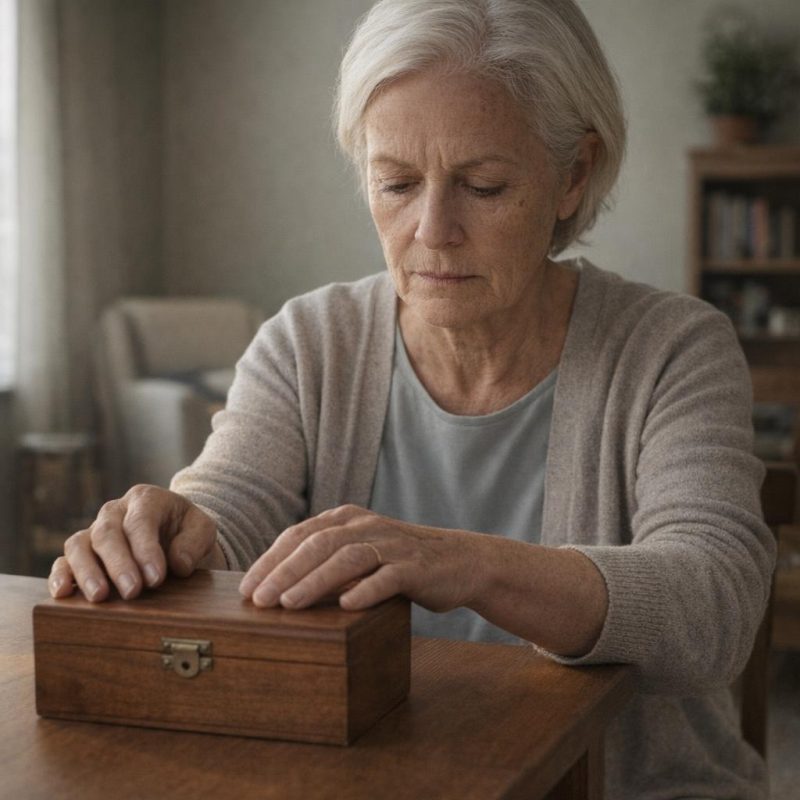 Image by RM AI
KEEP ON READING

From Heroes To Zeroes 20 Historical Figures Whose Heroism Was…
History is full of legends, but not every hero lived…
By Noone Feb 25, 2026
The Clueless Crush: How I Accidentally Invited a Hacker Into…
Fluorescent Lights and First Impressions. My name is Tessa, I'm…
By Ali Hassan Nov 4, 2025
This Infamous Ancient Greek Burned Down An Ancient Wonder Just…
History remembers kings and conquerors, but sometimes, it also remembers…
By David Davidovic Nov 12, 2025
Einstein's Violin Just Sold At An Auction—And It Earned More…
A Visionary's Violin. Wanda von Debschitz-Kunowski on WikimediaWhen you hear…
By Ashley Bast Nov 3, 2025
The Mysterious "Sea People" Who Collapsed Civilization
3,200 years ago, Bronze Age civilization in the Mediterranean suddenly…
By Robbie Woods Mar 18, 2025
20 Greatest Ancient Athletes In History
Ancient Olympics. Long before modern stadiums and multimillion-dollar endorsements, athletes…
By Sara Springsteen May 1, 2026