

My Ex Called Me About My Lottery Win Before I Told Anyone—And I Realized He'd Been Playing a Much Longer Game
My Ex Called Me About My Lottery Win Before I Told Anyone—And I Realized He'd Been Playing a Much Longer Game
The Call That Changed Everything
I was standing in the Target home goods aisle, holding a velvet throw pillow in a shade they were calling 'dusty mauve,' trying to decide if thirty-four dollars was too much to spend on something I didn't need but desperately wanted, when my phone buzzed. Richard's name on the screen stopped me cold. Seven days. It had been exactly seven days since the divorce papers landed on his doorstep, and this was the first contact. My thumb hovered over the decline button, but something made me answer. His voice came through wrong — too fast, too tight, an edge I hadn't heard before, not even during our worst fights. He didn't say hello. He didn't ask how I was. He said, 'I know about the ticket, Dani.' Just like that. Four words, and the floor of the aisle seemed to tilt under my feet. I don't remember saying anything back. I don't remember walking to my car. I just remember standing in the parking lot with the pillow still in my hands, the store's automatic doors sliding open and shut behind me, the afternoon sun too bright and too ordinary for what had just happened.
 Image by RM AI
Emergency Meeting
I texted Kira one word from the parking lot: 'Emergency.' She didn't ask questions. That's the thing about my best friend — she just shows up. By the time I pulled into the coffee shop on Morrison Street, my hands were still shaking on the steering wheel. Kira was already inside, two double espressos on the table, her coat still half on like she'd run from wherever she'd been. I sat down and I whispered it, because saying it out loud at full volume felt like it might make it more real than I could handle. Five point eight million dollars. One week after I filed for divorce. Kira's face went through about six different expressions in three seconds, and then it went pale. She set her cup down very carefully. She started talking about marital property law in our state — how assets acquired during a marriage, even right at the end, even one week before the ink dried on the filing, could still be considered joint property until the divorce was finalized. I watched her mouth moving and I heard every word and I understood exactly what she was telling me. Richard hadn't just called to congratulate me. Under the law as it stood right now, he might actually be entitled to half.
 Image by RM AI
A Mother's Rage
I drove to my mother's house in Riverside that evening because I needed someone to tell me what to do, or at least to sit next to me while I figured it out. My mother, Patricia, opened the door, took one look at my face, and pulled me inside without a word. I sat at her kitchen table and told her everything — the ticket, the numbers, the five point eight million, and Richard's call. She didn't scream. She didn't cry. She stood up from her chair slowly, like something was rising in her, and she started pacing. Her hands moved the way they always do when she's furious — cutting the air, punctuating every sentence. She went through five years of it. Every time I'd apologized for something Richard did at a dinner party. Every month I'd quietly covered his half of the rent when his 'cash flow was tight.' Every version of myself I'd made smaller so he could feel bigger. She said he would not see a single dime. She said I had to fight with everything I had. I didn't argue with her. I just sat there at that kitchen table, listening to her list the receipts of a marriage I was still legally inside, the weight of it settling over me like something I couldn't quite put down.
 Image by RM AI
The Fugitive Fantasy
Beth showed up at my apartment at eleven PM with a bottle of red wine under one arm and her laptop under the other, which meant she'd already been thinking. My sister didn't knock so much as announce herself, and within twenty minutes she had four browser tabs open — two about Cayman Islands offshore accounts, one about international asset protection trusts, and one that was, I am not joking, a real estate listing site for beachfront properties in Costa Rica. She turned the laptop toward me and made her case with the kind of passionate, slightly unhinged energy that I had always both loved and feared about her. They can't take what they can't find, she said. She wasn't entirely joking. For a few minutes, sitting there with wine in my hand and the glow of a three-bedroom villa on the screen, the idea of just disappearing felt like the most beautiful thing I'd ever considered. No lawyers. No Richard. No five-year timeline. Just gone. But the wine bottle emptied and the laptop battery died and the fantasy went with them. I wasn't a criminal. I was just a woman who wanted her life back. The Costa Rica listings were still glowing on the screen when the laptop finally went dark.
 Image by RM AI
The Glass Desk
Jennifer Hayes's office was everything I expected and nothing I was ready for. Glass desk, glass demeanor, a severe haircut that cost more than my car payment, and a calm so complete it felt almost aggressive after two days of everyone around me either raging or scheming. She was meeting me for the first time and she treated the situation the way a surgeon treats a chart — with interest, but without feeling. She explained that while the timing of the win was, in her word, 'problematic,' there were potential arguments worth exploring. The source of funds used to purchase the ticket. My intent at the time of purchase. Whether the ticket could be characterized as a separate asset given the circumstances of the filing. She laid each option out like cards on the table, flat and even, no promises attached. I sat across from her and tried to absorb it all. I had walked in hoping someone would tell me there was a clean answer, a loophole big enough to walk through. Jennifer didn't say there wasn't one. She just made it clear that the law didn't hand out clean answers, and that whatever path existed would require work, time, and money I hadn't yet spent. The cold light coming through her office window made everything look exactly as complicated as it was.
 Image by RM AI
The Timeline
Jennifer slid a document across the glass desk toward me near the end of our second meeting, and I almost didn't pick it up. It was a litigation timeline. Printed, organized, color-coded in a way that should have felt reassuring but didn't. Three to five years. That's what it showed — court dates, motions, appeals, continuances, all mapped out in tidy rows like a calendar for a life I hadn't agreed to live. Jennifer explained it without apology. Richard would fight for every penny. His attorneys would file motions, request delays, challenge valuations. By the time a final judgment came down, I could easily have spent six figures in legal fees alone. She said it matter-of-factly, the way you'd describe weather. I sat there and looked at the document and felt something in my chest give way, just a little. Five years of my marriage were already gone — years I couldn't get back, years I'd spent making myself smaller and quieter and easier to live with. The timeline on that desk was asking me to give five more. I didn't say anything. I just sat there with the document in front of me, the color-coded rows blurring slightly at the edges, and let the full weight of it press down.
 Image by RM AI
The Voicemail
The next day I sat at my kitchen table staring at the wall — not thinking exactly, more like waiting for a thought that hadn't arrived yet — when my phone lit up with Richard's name again. I let it ring. I watched it go to voicemail and then I sat there for another full minute before I pressed play. His voice had changed. The frantic edge from the first call was gone, replaced by something smoother, almost warm, the tone he used at dinner parties when he wanted people to like him. He talked about being adults. About handling things the easy way before the lawyers took everything in fees. He said we both knew how this worked and that fighting it would only hurt us both. And then, like a coat sliding off to show what was underneath, the warmth dropped out of his voice. He said he knew the law. He said he knew what he was entitled to. He said he had people who would make sure he got it. And then, right at the end, almost gently: 'I know you'll do the right thing, Dani. You always do.' I set the phone face-down on the table. He knew exactly which lever to pull.
 Image by RM AI
The Shark
The certified letter arrived on a Tuesday, which felt appropriate somehow — not dramatic enough to be a Monday, not far enough into the week to have built up any defenses. The return address was a law firm I didn't recognize, but the name on the letterhead stopped me in the hallway: Marcus Brennan. I'd heard that name before, in the way you hear about a weather system before it reaches you. I sat down on the floor right there and read all six pages. It demanded not just half the lottery winnings but interest on the half, plus compensation for what the letter called 'attempted asset concealment' — which almost made me laugh out loud, since I hadn't even cashed the ticket yet. Six pages of dense, expensive legal language, each paragraph a different way of saying Richard intended to take everything he could reach. I kept turning it over in my mind, wondering how he'd managed to retain someone like Brennan this fast, this aggressively, but I couldn't land on an answer that made sense. The last page had a deadline printed in bold: fourteen days to comply with the demand for full disclosure and immediate release of funds, or face a motion for indefinite freeze of all assets pending litigation.
 Image by RM AI
The Receipt
I found it while I was digging for a pen — a crumpled receipt at the very bottom of my purse, soft at the edges from weeks of being buried under lip balm and loose change. Target. I almost threw it away. But something made me smooth it out against my knee, and there it was: 3:47 PM. Detergent. Toilet paper. One eucalyptus candle I'd told myself was a treat, the kind of small indulgence you allow yourself when you're counting every dollar and trying to feel like a person anyway. I remembered that afternoon. I remembered standing in the checkout line thinking about whether I could afford the candle, deciding I could, feeling quietly proud of that tiny decision. Seventeen minutes later, Richard had called. I sat there on the kitchen floor holding that receipt and turning the timeline over in my head. He'd been so certain on that call — not curious, not hopeful, certain. Like the outcome wasn't in question. I couldn't explain it yet, but something about his confidence didn't feel like it came from a lawyer's letter or a legal strategy. It felt like something else. I pulled out my phone and took a photo of the receipt — the timestamp at 3:47 PM, the exact minute my life split in two.
 Image by RM AI
The Spreadsheets
Mitchell Grant's office smelled like recycled air and expensive coffee, and he did not ask me how I was doing. I appreciated that more than I expected to. He had a glass desk, two monitors, and the kind of stillness that made you feel like emotion was a variable he'd already accounted for and set aside. He pulled up a spreadsheet before I'd even finished sitting down. Asset transfer, alimony structure, lump sum settlement — he walked me through each one like he was explaining weather patterns, not my life. Each path had different tax implications, different legal exposure, different ways the money could move or be protected. He showed me numbers I hadn't thought to ask about. He showed me structures I didn't know existed. I kept waiting for him to tell me what to do, but he didn't. He just kept clicking through the columns, calm and methodical, laying out options the way someone lays out tools before a repair job. At some point I stopped feeling like a woman being dragged through a legal nightmare and started feeling like someone sitting at a table with actual choices in front of her. I didn't know yet which move made sense. But I sat there watching Mitchell scroll through the calculations, and for the first time in weeks, the numbers felt like possibility instead of threat.
 Image by RM AI
The Spending Spree
Kira showed up with her laptop already open, which told me everything I needed to know about the mood of the visit. She'd been monitoring Richard's social media — her words were 'just keeping an eye on things,' but the look on her face said she'd found something worth driving over for. She turned the screen toward me and I scrolled through it slowly. Richard at a steakhouse, the kind with leather booths and no prices on the menu. Richard at a car dealership, one hand resting on the hood of a silver BMW, grinning like someone who'd already signed the paperwork. The captions were the part that got me. Things like 'patience is a strategy' and 'real wealth takes time, then arrives all at once.' Cryptic enough to seem clever, specific enough that I knew exactly what he meant. He was spending the money in his imagination before a single dollar had changed hands. Kira was watching my face while I scrolled, and I could feel her waiting to see how I'd react. I handed the laptop back without saying anything. I didn't have words for it yet — just a slow, settling anger that felt different from the panic of the past few weeks. I kept coming back to that photo of him next to the BMW, that grin, that caption, and the weight of it sat in my chest like something I couldn't put down.
 Image by RM AI
The Documentation
I spread everything out on the kitchen table: bank statements, credit card bills, old rent receipts, a folder I hadn't opened in two years. I wasn't sure what I was looking for at first — just something, anything that might help Jennifer build a clearer picture of what our marriage had actually looked like on paper. It took about twenty minutes before the pattern became impossible to ignore. Month after month, my name on the rent check. My card on the grocery runs. My account absorbing the shortfall when his freelance work dried up, which it did, regularly, and which he always had a reason for. There were receipts for dinners I remembered not being able to afford, restaurants he'd chosen, tabs I'd quietly covered. A credit card statement showing a balance I'd carried for eight months while he talked about investing. Each piece of paper was its own small sting, not because I'd forgotten, but because seeing it laid out like that made it impossible to explain away. I'd spent years telling myself it balanced out somehow, that I was keeping track wrong, that I was being unfair. The table said otherwise. At the bottom of the folder sat a rubber-banded stack of old bills — months of rent invoices, every one of them paid in full from my account alone.
 Image by RM AI
The Refused Meeting
He called on a Wednesday afternoon, which felt calculated even if I couldn't prove it — midweek, midday, when I'd be less likely to have someone with me. He said we needed to meet in person. Said it was the only reasonable way to handle something this significant, that phone calls and lawyers were making everything more complicated than it needed to be. His voice had that particular warmth he used when he wanted something, the one that used to make me feel like I was being unreasonable for noticing it. I felt the old pull immediately — the reflex to say yes, to smooth things over, to make it easier for everyone including him. But I'd spent the last week sitting with those bank statements, and something had shifted. I told him no. Just that. No, I wasn't going to meet in person, and anything he needed to communicate could go through Jennifer. There was a pause, and then his tone changed — not dramatically, but enough. He said this was too important for that, that I was making things harder than they needed to be, that he just wanted to talk. I said no again and ended the call. I sat there afterward with the phone still in my hand, not moving, just feeling the unfamiliar weight of that word — how small it was, and how long it had taken me to say it.
 Image by RM AI
The Location
I'd been staring at the photo of the receipt on my phone for ten minutes before it finally landed. Not the items, not the total — the timestamp. 3:47 PM. Richard had called at 4:04. Seventeen minutes. I'd gone over this before, but I'd been thinking about it as a question of information — how had he heard about the win so fast? The lottery commission doesn't release names until a ticket is claimed, and I hadn't claimed it yet. Nobody official knew. But sitting there with the receipt in one hand and my call log in the other, I started thinking about it differently. It wasn't just that he'd known about the win. His first words on that call had been about the lottery ticket — no preamble, no 'I heard something,' just straight to it, like he already had the details. And he'd mentioned Target. He'd said it directly, early in the call, before I'd said a word about where I'd been. I hadn't registered it at the time because I'd been too shocked to register anything. But I heard it now, replaying it in my head. I sat with that for a long time, the phone quiet in my lap, the particular cold feeling of realizing that he had named the exact store where I'd been standing seventeen minutes before he called.
 Image by RM AI
The Leak
I couldn't stop turning it over. Richard had known — not just about the win, but where I was, almost the minute it happened. And the only people I'd told were Kira, my mother, and Beth. I hated myself for where my mind went next, but it went there anyway. Kira had been the first call I made. She'd shown up with espresso and her laptop and had been in my corner every single day since. My mother had reacted with the kind of fury that doesn't leave room for a secret side conversation. Beth had arrived with wine and a list of increasingly dramatic escape plans. None of them would do this. I knew that. I believed that. But somehow Richard had found out, and he'd found out fast, and every explanation I tried to construct kept circling back to someone who had known. I sat on the couch going in circles, hating the shape of my own thoughts. This was what suspicion did — it didn't stay where you aimed it. It spread. It got into the spaces between you and the people you loved and made everything feel provisional. I picked up my phone to call Kira, then stopped. I opened my contacts instead and just stared at the names — Kira, Mom, Beth — the three people who had shown up for me without hesitation, and I couldn't make myself trust that completely anymore.
 Image by RM AI
The Suspicious Login
I don't know what made me check the security settings. Paranoia, probably — the same low-grade anxiety that had been following me around for days, making me double-check door locks and read texts twice. I opened my bank app, went into the account activity section, and found the login history almost by accident. Most of it was me — my phone, my usual times, the same IP address from my apartment. But there was one entry that didn't fit. A login from three weeks ago, a Tuesday evening, from a device I didn't recognize. I scrolled back further. There was another one. And another. I sat down on the edge of the bed and kept scrolling, my hands going unsteady. The timestamps were spread across the past month — before the lottery win, after the divorce filing, during the weeks when I'd been quietly trying to get my finances in order. I didn't know what to make of it. I didn't know who or how. I went into the details on the oldest login and opened the location data. The IP address listed a coffee shop across town — a place I had never once been to — with a timestamp of 9:43 PM on a night I'd been home alone.
 Image by RM AI
The Old Statements
I don't know what made me pull out the old bank statements. Maybe it was the login history still sitting in the back of my mind, or maybe I just needed to feel like I was doing something instead of waiting. I dug through the filing box I'd shoved in the closet after the separation — the one I'd been avoiding for months — and spread three years of joint account statements across the kitchen table. At first I was just looking for anything that felt out of place. And for a while, nothing jumped out. Then I started going month by month, and I noticed them. Small transfers, scattered across the statements. Five hundred dollars here. A thousand there. Sometimes two months apart, sometimes six. Always to the same account number I didn't recognize, always labeled something vague like 'personal expense' or 'business cost.' I grabbed a notepad and started adding them up. My handwriting got messier as the total climbed. By the time I reached the most recent statements, I had filled half a page with numbers. I sat back and stared at what I'd written — over thirty thousand dollars, moved out of our joint account across three years, to an account I had never once asked about.
 Image by RM AI
The News Article
I couldn't stop there. Once I'd found the transfers, I needed context — something, anything, that might explain what I was looking at. So I opened my laptop and started searching for Richard's current employer. I wasn't sure what I expected to find. Maybe nothing. Maybe a press release about a big contract win, something that would make me feel like I was overreacting. Instead, I found a local business section article from about two months ago. It was short — barely four paragraphs — and Richard's name wasn't in it anywhere. But his company was. The article mentioned that the firm had launched an internal financial audit after irregularities were flagged during a routine review. That was it. No details, no names, just that one careful sentence buried near the bottom. I read it three times. Richard had never mentioned an audit. Not once. His social media was full of posts about patience and building wealth and playing the long game, the kind of thing people post when they want you to think everything is fine. I bookmarked the article and closed the laptop. The kitchen was quiet around me, the bank statements still spread across the table, and that single careful sentence about irregularities sat in my head like a splinter I couldn't reach.
 Image by RM AI
The Approaching Deadline
I'd been keeping a mental count of the days since Marcus Brennan's letter arrived, but somewhere around day ten I started marking them on the actual calendar — the paper one on the fridge, the kind I usually only used for dentist appointments. Three days left. I stood there looking at the red circle I'd drawn around the deadline date and felt the weight of it settle into my chest. Three days before Richard's attorney could file to freeze the lottery winnings. Three days before everything I'd been quietly trying to protect got locked up in legal limbo while lawyers argued over it. I had the login history. I had the bank statements with the transfers. I had the bookmarked article about the audit. But none of it was connected in any way I could explain to a judge, and I knew it. Richard's texts had been coming in almost daily now, each one a little sharper than the last. His social media still showed someone living like money was no object. And underneath all of it was the feeling I couldn't shake — that I was only seeing the edges of something much larger. The calendar hung there on the fridge, the red circle waiting, three days still between me and whatever came next.
 Image by RM AI
The Private Investigator
With two days left before the deadline, I stopped waiting and made a call. A friend of a friend had used a private investigator during a messy business dispute, and I'd filed the name away without ever thinking I'd need it. I dug it out, made the call, and two hours later I was sitting across a small desk in a downtown office that smelled like old coffee and printer toner. The investigator was quiet and unhurried, which helped, because I was neither of those things. I laid everything out — the bank statements with the transfers to the unknown account, the news article about the audit at Richard's company, the suspicious login history from my own bank account. I talked too fast and probably repeated myself. The investigator didn't seem to mind. Just kept writing, steady and methodical, filling a yellow legal pad with notes while I talked. When I finished, there was a pause. Then came the question about how quickly I needed answers. I said two days, knowing that was almost impossible. The investigator nodded, said following the money always takes longer than people want but promised to move as fast as the trail allowed. I walked out into the afternoon feeling something I hadn't felt in weeks — like I was no longer just absorbing whatever Richard threw at me. The investigator's pen moved across the notepad in steady, unhurried lines.
 Image by RM AI
The Private Investigator
I drove home from that office with the windows down even though it wasn't warm enough for it. I needed the air. I'd spent so many weeks feeling like I was reacting — to Richard's calls, to Marcus Brennan's letter, to every new piece of information that landed in my lap without warning. Handing over those documents, sitting across from someone who listened without flinching and wrote everything down — it felt different from anything else I'd done since this started. Not better, exactly. Not safer. Just different in a way I couldn't quite name. I made tea when I got home and sat at the kitchen table, the same table where the bank statements were still stacked in a neat pile. The investigator had copies now. Someone else was following the thread. I'd given everything I had — the transfers, the article, the login history — and now there was nothing left to do but wait and try not to spiral. I thought about Richard's texts, about the audit article, about the account number that appeared over and over in three years of statements. I didn't have answers yet. But for the first time since Richard's call about the lottery win, I hadn't been the one sitting still while someone else moved the pieces. That quiet fact settled over me like something I hadn't known I needed.
 Image by RM AI
The Offshore Discovery
The call came the next morning while I was still in my pajamas, halfway through a cup of coffee I hadn't tasted. I picked up on the second ring. The investigator's voice was measured, the same unhurried tone from the office, but there was something underneath it that made me set the mug down. Preliminary findings, the investigator said. I should know that the account number from the bank statements — the one Richard had been transferring money to for three years — traced back to a domestic holding account. And that holding account had been used to funnel money into offshore accounts. Cayman Islands. Multiple transfers. I asked how far back. Three years at minimum, the investigator said, possibly longer, but the paper trail got harder to follow the further back you went. I asked if this was just the money from our joint account. There was a pause. No, the investigator said. The amounts moving through the offshore accounts appeared to be larger than what had come out of our marriage — though how much larger would take more digging to say for certain.
 Image by RM AI
The Legal Timeline Question
I sat with that for a long time after I hung up. The investigator's words kept circling back — larger than what had come out of the marriage. I pulled out Marcus Brennan's certified letter and read it again, slowly this time, like I was reading it in a different language. The aggressive tone, the fourteen-day deadline, the threats about asset concealment. I'd read it the first time as intimidation. Now I kept turning it over, looking at it from different angles. I didn't know whether Brennan knew about the offshore accounts or not. If he did, the aggressive push for the lottery money felt harder to make sense of. If he didn't, I had no idea what picture of Richard he was actually working from. Either way, something didn't add up. I didn't have answers to either question. What I had was a feeling that the letter and the offshore accounts and the audit article were all pointing at something I couldn't quite see yet, like three separate roads that had to meet somewhere I hadn't reached. Richard's deadline expired tomorrow. I set the letter down on the table and looked at the ceiling for a while. The uncomfortable possibility that his legal aggression might be covering something else entirely sat with me in the quiet of that room.
 Image by RM AI
The Escalating Pressure
Three texts before noon. I watched them arrive one after another, each notification a small jolt. The first one told me to respond to Marcus Brennan immediately, that I was out of time. The second said I was making a mistake I would regret. The third said he knew I was stalling and that it wouldn't work. I read all three sitting at the kitchen table, the certified letter still nearby from the night before. Richard had always had a particular kind of confidence — the kind that didn't need to raise its voice because it assumed the answer was already yes. Even when we were fighting, even when things were at their worst, there had been a steadiness to him that I'd mistaken for strength for years. These messages didn't have that. The entitlement was still there, but it was sitting on top of something else now, something that pushed through in the clipped sentences and the repetition, in the way he kept circling back to the same point like he was trying to convince himself as much as me. I set the phone face-down and looked out the window. Whatever Richard had always been, these messages sounded like someone running out of something — and I couldn't stop wondering what his clock was counting down to.
 Image by RM AI
The Employment History
I don't know what made me pull up his LinkedIn profile that afternoon. Maybe it was the texts, or the certified letter, or just the particular way desperation has of making you want to understand what you're actually dealing with. I sat at the kitchen table with my laptop and started scrolling. Richard had always talked about his career like it was a steady upward climb — the kind of story you tell at dinner parties. But what I found didn't look like that. Three jobs in five years. The first one ended after eighteen months, no explanation in his profile, just a gap and then a new company. The second lasted only ten months before another quiet exit. He'd been at his current company for two years, which was the longest stretch in recent memory. I sat back and tried to remember if he'd ever mentioned any of this. He hadn't. Not once. I remembered him leaving for work every morning, coffee in hand, same routine, same confidence. But between the second job and the third, there was a four-month window where, according to everything I could find online, Richard wasn't employed anywhere at all — and I had no idea where he'd been going.
 Image by RM AI
The Business Trip Receipts
I found the folder tucked behind a stack of old tax documents in the filing cabinet — one of those accordion folders Richard had left behind when he moved out, stuffed with receipts he'd never bothered to sort. I almost threw it away. Instead I sat down on the floor and started going through it. Most of it was ordinary: gas stations, grocery runs, a few restaurant receipts. But then I hit the business trip receipts, and something snagged. I remembered him telling me about a conference in Chicago — three days, company-paid, he'd brought me back a deep-dish pizza joke that wasn't funny. The receipt in my hand was from a hotel in Miami. Same dates. I set it aside and kept looking. A trip he'd said was Seattle showed charges in Las Vegas — hotel, restaurants, two nights. The dates matched exactly what he'd told me. I turned the receipts over in my hands, trying to find some explanation that made sense. Maybe the company rerouted him. Maybe there was a reason. But the more I looked at the careful handwriting on the folder tab — his handwriting — the less any of it felt like a mistake. The hotel receipt from Miami sat on the floor between my knees, the dates printed in clean black ink.
 Image by RM AI
The Money Trail
The investigator called while I was still at the kitchen table, the Miami receipt sitting in front of me like an accusation. She said she had an update and asked if I had a few minutes. I told her I had as many as she needed. She walked me through what she'd traced so far — money moving from Richard's domestic accounts outward, through a series of transfers she described as systematic and consistent. Not random. Not occasional. Every month for three years, she said. The amounts varied, but they averaged around fifteen thousand dollars a month. I did the math in my head while she was still talking and felt something cold settle in my chest. She said the transfers were always timed to stay just under federal reporting thresholds, always spread across different accounts, never the same pattern twice in a way that would trigger an automatic flag. I asked her where the money was going. Offshore, she said. Accounts she was still working to fully identify. I asked where it was coming from. She paused. That, she said, was the next step. Then she said it again, slower: every month, for three years, fifteen thousand dollars, moved offshore like clockwork.
 Image by RM AI
The Scope
After I hung up I got out a legal pad and Richard's old pay stubs from the same filing cabinet. I sat there and did the math the slow way, the way that doesn't let you fudge anything. His salary had been decent — not extraordinary, but decent. I wrote down his annual take-home after taxes, subtracted what I knew we spent on rent, groceries, the car payments, utilities, the vacations he always insisted on. I was generous with the estimates. I gave him every bonus I could remember, every raise, every year-end payout. Then I added it all up and compared it to what the investigator had told me: five hundred thousand dollars, moved offshore over three years. The two numbers didn't come close to each other. Even if he'd saved every dollar he ever earned and spent nothing on himself, the math didn't work. I stared at the legal pad for a long time. The money the investigator found wasn't savings. It wasn't inheritance — his parents were still alive and not wealthy. It wasn't anything I could account for from our life together. Five hundred thousand dollars, and I had no idea where it came from.
 Image by RM AI
The Embezzlement Theory
She called again two days later. I could tell from the way she opened the conversation — careful, measured — that what she had to say wasn't simple. She said she'd been doing this work for eleven years and that the pattern she was seeing in Richard's accounts resembled something she'd encountered before. Not often, she said, but enough times to recognize the shape of it. She used the phrase 'serious financial misconduct' and then let it sit there. She said the amounts, the timing, the offshore routing, the transfers timed to stay under reporting thresholds — taken together, they pointed toward something beyond hidden marital assets. She said she'd seen similar financial patterns in cases involving corporate fraud. I remember I was standing in the kitchen when she said it, and I sat down without meaning to. She said looking into it further would require access to Richard's employer records — either voluntary cooperation from the company or a subpoena. I asked what would happen if the theory turned out to be correct. She said Richard could be looking at criminal charges, not just civil liability — but that was still a theory, not a conclusion. I didn't say anything for a moment. The refrigerator hummed. Outside, a car passed. Her words hung in the air between us, and I sat there holding the phone long after the call had ended.
 Image by RM AI
The Emergency Motion
The notice arrived by email, forwarded from Jennifer's office with a subject line that made my stomach drop before I even opened it. Richard, through Marcus Brennan, had filed an emergency motion for an asset freeze. The motion claimed I was attempting to conceal or dissipate marital property — the lottery winnings — and requested a court hearing within forty-eight hours. If the judge granted it, the ticket would be frozen. I couldn't cash it, couldn't access it, couldn't do anything with it while the motion was pending. I read the filing twice, slowly. Brennan had included language about sanctions and contempt charges if I failed to comply. The whole thing was aggressive in a way that felt almost theatrical, like it was designed to make me panic and call Richard directly and agree to whatever he was asking. I thought about the investigator's words from two days ago, about the offshore accounts, about the shape of what she'd described. I thought about the four-month employment gap and the Miami hotel receipt and the fifteen thousand dollars a month for three years. Richard was pushing hard to lock down the lottery money, and I didn't know if that was because he was desperate or because something else was closing in on him — but either way, the weight of it pressed down on me like something I couldn't yet name.
 Image by RM AI
The Evidence Strategy
Jennifer's office had that particular kind of quiet that expensive law firms cultivate — the kind that's supposed to make you feel like everything is under control. I didn't feel that way. I sat across from her glass desk and told her I wanted to bring the offshore accounts into the response to Brennan's motion. I wanted to put it all on the table right now and let the court see what Richard was actually doing. Jennifer listened without interrupting, which I'd learned meant she was about to tell me something I didn't want to hear. She set her pen down and said that revealing partial evidence would be the worst thing I could do. If we showed our hand now, with the investigator's work still incomplete, Richard would have time to explain the accounts away, claim they were legitimate, move things around. She said we needed the full picture before we gave him any warning. The investigator still needed to trace the source of the money. Without that, we had a suspicious pattern but not a complete one. Jennifer said she would file a response to the motion that denied Richard's claims without mentioning anything about the offshore accounts. I understood the logic. I even agreed with it. But sitting there, holding information that could change the entire shape of this case, while a court date ticked closer — that tension settled into me and didn't move.
 Image by RM AI
The Expense Reports
The investigator called the morning after Jennifer filed the response. She said she'd obtained Richard's corporate expense reports through a contact at the company — she didn't elaborate on how, and I didn't ask. She said the reports showed irregularities. Multiple charges for consulting services, amounts that seemed excessive even for the kind of firm Richard worked for. Invoices from vendors I'd never heard of, names that meant nothing to me. She said she'd cross-referenced them and that several of the vendors had no websites, no business registrations, no public records of any kind. She said she couldn't yet say what that meant, only that the amounts on the expense reports tracked closely with the amounts that had been transferred offshore — two trails that seemed to be running parallel. She said the picture was still incomplete and that she needed more confirmation before she could draw any conclusions. I asked her to send me what she had. The file came through while we were still on the phone — pages of line items, vendor names, dates, dollar amounts. I scrolled through slowly, and near the bottom of the third page I stopped: charges for services listed as completed, with delivery dates and sign-off signatures, for work that, according to every record she'd found, had never actually been done.
 Image by RM AI
The Shell Companies
The investigator called back two days later with more. She'd traced the vendor names from the expense reports to actual corporate filings — and every one of them led back to the same registered agent. Richard. The companies existed on paper, she said, registered to addresses that turned out to be mailbox stores and vacant office suites. She'd pulled the bank account records tied to those entities, and the money trail was exactly what she'd suspected: Richard's employer paid the invoices, the payments landed in the corporate accounts, and then the funds moved again — into Richard's personal accounts, and then offshore. She sent me the incorporation documents while we were on the phone. I opened them and just sat there, scrolling. The filing dates were three years ago. Not last month. Not after I won the lottery. Three years ago. I didn't know what to do with that. I'd been telling myself he was just going through a rough patch, that things would eventually level out. Three years ago, I was covering his share of the rent and not asking too many questions. I didn't say anything for a long time after I hung up. I just sat at my kitchen table with the documents open on my laptop, and the quiet in the apartment felt different than it had before.
 Image by RM AI
The Contract Connection
The investigator walked me through the mechanics of it the next morning, slowly, like she wanted to make sure I understood every step. Richard had access to his employer's vendor payment system — part of his job, apparently, approving smaller purchases without needing a second sign-off. He'd created purchase orders for services that, as far as anyone could tell, were never actually performed. The invoices looked legitimate on the surface: professional formatting, plausible service descriptions, amounts that didn't immediately raise flags. Each transaction appeared to fall under the threshold that would trigger additional review. Individually, she said, none of them would have stood out. But over three years, the small amounts had accumulated. She paused before she gave me the total, and I remember thinking that pause meant the number was going to be bad. She said it was more than half a million dollars — and that was just what she'd confirmed so far. I wrote the number down on a notepad and stared at it. Half a million dollars, moved through fake companies, through accounts I'd never known existed, while I sat across from him at dinner and asked how his day was. The number just sat there on the page, not getting any smaller.
 Image by RM AI
The Audit Connection
I'd bookmarked the news article about Richard's company weeks earlier, back when I was still trying to make sense of why he'd been so on edge. I pulled it up again that afternoon and read it differently this time. The article mentioned an internal audit — described it as routine, the kind of language companies use when they don't want to alarm anyone. But the investigator had told me the audit was specifically focused on vendor payments. I read that line three times. I thought about the last few months before I filed — Richard coming home distracted, snapping at small things, checking his phone constantly. I'd told myself it was stress, maybe work pressure, maybe just who he'd become. I pulled up the article again and found the date the audit had been announced: four months ago. Four months ago was when things started to feel different. The investigator had said the audit was in its final phase, closing in on exactly the area where the irregularities were concentrated. I sat back and tried to hold all of it at once — the shell companies, the false invoices, the offshore accounts, the audit bearing down. And then I noticed the sidebar link I hadn't clicked before: a follow-up article, published just that week, saying the company had flagged suspicious vendor payments for further review.
 Image by RM AI
The Fraudulent Billing Documentation
The complete documentation package arrived as a file transfer link on a Thursday afternoon. I almost didn't open it right away — I made tea first, straightened things on my desk, did the small useless things people do when they're stalling. Then I sat down and clicked through. The investigator had organized everything: copies of every false invoice with Richard's approval signature, bank records showing the movement of funds from his employer to the shell company accounts to his personal accounts and then offshore, the incorporation documents, the expense reports. She'd also built a spreadsheet — every transaction logged by date, vendor name, amount, and destination account. I scrolled to the bottom of the spreadsheet and found the running total. I'd been bracing for the half-million figure she'd mentioned before. The number at the bottom of that column was $2.3 million. I read it twice. Then I read it a third time. It wasn't a supplemental income stream or a side arrangement that had gotten out of hand. It was a second financial life, running parallel to the one I thought we shared, accumulated entry by entry across three years. The spreadsheet sat open on my screen, every row a date and a dollar amount and a name I'd never heard until now.
 Image by RM AI
The Embezzlement Timeline
I went back to the beginning of the spreadsheet and started reading from the top. The investigator had sorted everything chronologically, and I followed the dates forward slowly. The first entry was three years ago, almost to the month. I remembered that time — Richard had just started his new job, the one he'd described as a step up, better pay, more responsibility. He'd seemed energized for a few weeks, then settled back into the version of himself I'd gotten used to. I'd been glad for him. I'd thought the new position was good for his confidence. I kept scrolling. The invoices started small, spaced out, then grew more frequent as the months went on. I pulled up the timeline the investigator had included in her notes. She'd flagged something: before this job, Richard had a four-month gap in his employment history. He'd told me at the time that he'd left his previous company voluntarily, that he'd needed a break, that the culture had been toxic. I hadn't pushed. I hadn't asked for details. I just accepted it because that was what I did back then. The investigator had noted that the scheme appeared too structured for a first attempt — that whoever set it up had seemed to know the system well from early on. The first fraudulent invoice in the file was dated exactly one month after Richard began his current job.
 Image by RM AI
The Closing Audit
The investigator's update came through on a Friday evening, and I read it sitting on my couch with the lamp on and everything else dark. The audit team at Richard's company had identified suspicious vendor payments. They'd flagged his expense approvals for review. She said the audit was in its final phase — expected to wrap up within two to three weeks — and that once it completed, the company would refer its findings to law enforcement. She also mentioned that Richard's access to the payment system meant he could likely see the audit activity — that someone in his position would probably have a sense of how close it was getting. I thought about the threatening texts, the emergency motion, the pressure for an immediate settlement that had been building for weeks. I'd been reading all of it as entitlement, as the kind of aggression Richard defaulted to when he didn't get what he wanted. But sitting there with the investigator's update on my screen, the timeline felt worth paying attention to. Two to three weeks. That was how much time remained before the audit finished and the referral went out. I set my phone face-down on the cushion beside me and sat with that for a while — the strange, heavy quiet of knowing something was coming that I couldn't stop and didn't need to.
 Image by RM AI
The Flight Plan
The investigator sent one more file a few days later with a note that just said: thought you should see this. I opened it and found browser history records — I didn't ask how she'd obtained them, and she didn't explain. The searches were dated, timestamped, going back four months. Countries with no extradition treaties. Cost of living comparisons for specific cities I'd never heard of. Property purchase requirements for foreign nationals. There was also a name — a law firm specializing in international asset protection — with a note that Richard had made contact with them around the same time the audit began. I sat with the file open for a long time. I thought about the phone call, seventeen minutes after the lottery numbers were announced. I'd spent weeks trying to understand what that call meant — whether it was desperation, entitlement, some leftover reflex from the marriage. Looking at the timestamps on those searches, the picture felt different. The money he was pushing so hard to get didn't seem to be about what he thought he deserved from our marriage. It looked more like an exit fund — enough to go somewhere the audit couldn't follow. I wasn't sure he'd ever planned to stay and see any of this through.
 Image by RM AI
The Final Proof
The investigator's final report arrived on a Tuesday morning, and it was thorough in a way that made my chest feel tight just scrolling through it. Everything was there: the bank records, the false invoices, the shell company incorporation documents, the expense reports with Richard's signatures, the spreadsheet with every transaction logged across three years. The total was documented clearly — $2.3 million. The flight research was included too, with the timestamped browser records and the contact with the international asset protection firm. She'd also pulled together what she knew about the audit's current status. At the end of the report, she'd written a short note: the evidence is sufficient for criminal prosecution, and she believed a court would want to examine whether assets tied to fraud could be treated as ordinary marital property. She said it was time to take everything to my attorney and to the court. I read that last line twice. For weeks I'd been on the defensive — responding to motions, fielding threats, trying to hold ground while Richard pushed harder. I closed the report and looked at the folder sitting on my desk, everything printed and organized, every page in order. It was time to stop defending and start moving.
 Image by RM AI
The Confirmation
I spread everything out on the kitchen table one last time — the bank records, the shell company incorporation documents, the false invoices, the expense reports with Richard's signatures, the spreadsheet logging every transaction across three years. Two point three million dollars. I'd read through it so many times the pages had started to feel worn at the edges, but I needed to go through it again, slowly, in order. The browser records showing the flight research. The timestamped contact with the international asset protection firm. The investigator's note at the end confirming the employer's audit had already been referred further. I laid the lottery ticket next to the folder and took a photo of both of them sitting there together on the table. I don't know exactly why I did that. Maybe I needed to see them side by side — what I'd won and what I'd almost lost it to. Something about the whole picture, laid out like that, settled into me in a way that was hard to describe. Not anger, exactly. Not relief. Just the weight of knowing how close it had all come, and how much had been moving underneath the surface while I was just trying to get through each day.
 Image by RM AI
The Attorney Review
Jennifer's office felt different when I walked in with the folder under my arm. She was already at her glass desk, coffee untouched, and she didn't say anything when I set the package down in front of her — she just opened it and started reading. I watched her work through it page by page. Her expression stayed composed the way it always did, that clinical stillness she wore like a second suit. But somewhere around the third or fourth document, something shifted. Her jaw tightened. She turned back one page, then forward again, and her finger stopped on a line in the bank records. She didn't say anything for a long moment. When she finally looked up, she said the evidence was more than sufficient — for civil purposes and for criminal ones. She explained that assets tied to fraud couldn't be treated as ordinary marital property, that the embezzlement gave us grounds to challenge his claim entirely. She said she could file a counterclaim exposing the criminal activity, pursue reimbursement of my legal fees, and request sanctions. Then she pulled a legal pad toward her and started writing. I sat across from her and let the words settle — that the fraud voided his claim, that the ground had shifted completely, that we weren't just defending anymore.
 Image by RM AI
The Ultimatum
My phone buzzed while I was still sitting across from Jennifer, and I already knew before I looked at the screen. Richard. I stepped into the hallway to take it. His voice was different from the last time — higher, tighter, like something was wound too close to snapping. He said he was willing to accept sixty percent. Sixty percent of the lottery money, and I could keep the rest, and we could end this today. He said forty percent was more than fair given what I'd spend on legal fees if this dragged out. Then his tone shifted and he said it would drag out — that he'd file motion after motion, that the fees would eat through everything I'd won before any judge ever ruled. I kept my voice even. I told him I needed to think about it. He said there was no time to think, that he needed an answer now, that everything depended on me making the right choice today. I could hear something underneath the words that I hadn't heard before — not anger, not entitlement, something closer to panic. I told him again I'd think about it and ended the call. I stood in the hallway for a moment, phone in my hand. Then he sent a follow-up text: he needed an answer today, or everything falls apart.
 Image by RM AI
The Contempt Motion
The filing came through the next morning. I saw Marcus Brennan's name at the top and felt my stomach drop before I'd read a single line. It was a motion for contempt and sanctions — claiming I was willfully obstructing discovery, refusing to cooperate, acting in bad faith. The language was aggressive in a way that felt almost theatrical, like it was written to intimidate as much as to argue. Jennifer called while I was still reading it. She said Brennan had filed it fast, probably within hours of Richard's call going nowhere. The motion asked the court to impose penalties for my obstruction. I scrolled to the bottom of the document and stopped. The sanctions request was ten thousand dollars per day until I complied with Richard's discovery demands.
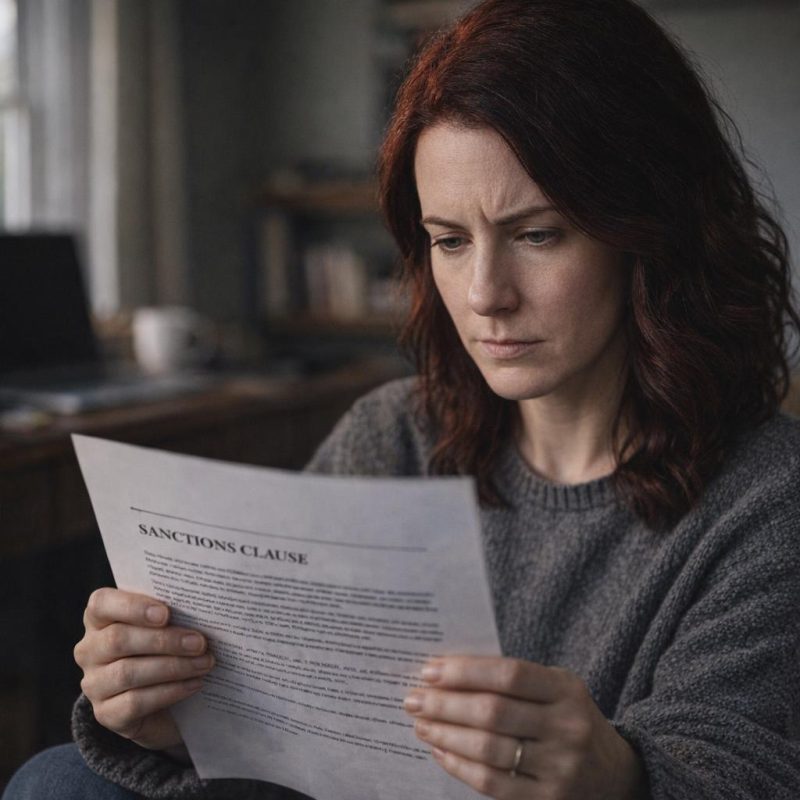 Image by RM AI
The Embezzlement Exposed
I sat at the kitchen table with the evidence package in front of me and let myself see it clearly for the first time. Not as separate pieces — the bank records here, the shell companies there — but as one complete picture. Richard had been embezzling from his employer for three years. Two point three million dollars moved through false invoices and shell companies into offshore accounts. His employer's audit had found it, and the findings had been referred to law enforcement. Criminal charges weren't a possibility somewhere down the road. They were coming. That was why he called seventeen minutes after I won. Not because he felt entitled to half of a marriage he'd already gutted. Because he needed cash he could move before anyone froze his accounts. That was why he hired Marcus Brennan with money he didn't legitimately have. Why he posted photos of himself spending freely while claiming financial hardship. Why his voice on the phone sounded like a man running out of time rather than a man fighting for what he believed was his. He wasn't fighting a divorce battle. He was fighting to stay out of prison. Every motion, every threat, every desperate call — it was all about buying enough time to disappear. I sat there holding the folder, and the full weight of it pressed down on me: I hadn't been fighting my ex-husband for half my lottery winnings. I'd been standing between a man facing prison and the money he needed to run.
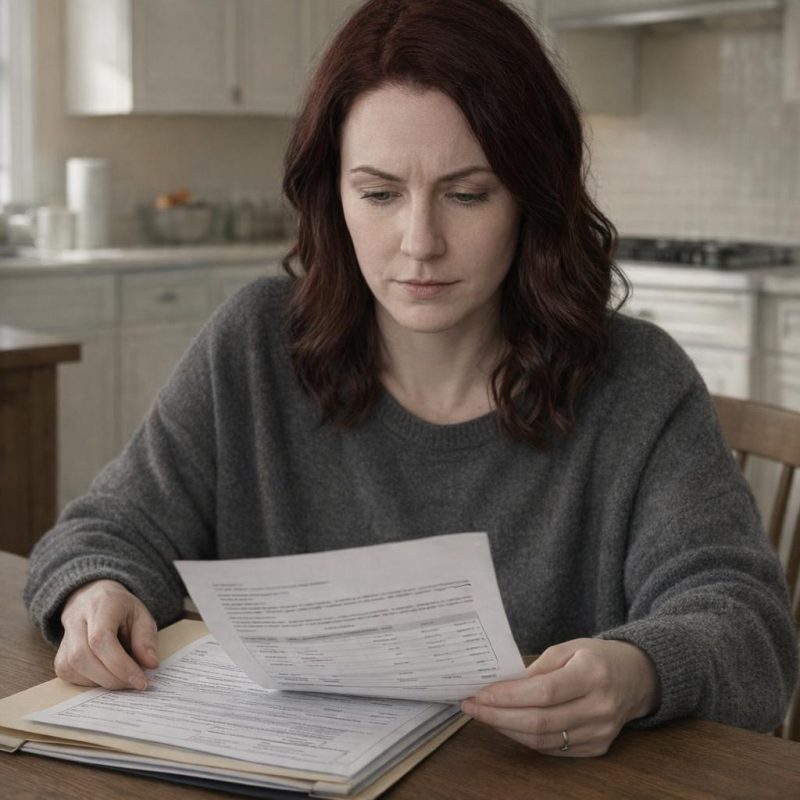 Image by RM AI
The Counterclaim
Jennifer had the counterclaim ready by the following afternoon. I sat across from her while she walked me through it one final time — the bank records showing $2.3 million moved through shell companies to offshore accounts, the false invoices Richard had approved, the incorporation documents listing him as registered agent for each shell company, the browser records showing his research into non-extradition countries, the timeline mapping three years of systematic embezzlement, and the documentation confirming his employer's audit had been referred to law enforcement. The counterclaim argued that assets obtained through criminal fraud could not be considered marital property under any circumstances, and that his claim to the lottery winnings was therefore void. It also requested sanctions against Richard and Marcus Brennan, and full reimbursement of every legal fee I'd paid since this started. Jennifer read through the filing one last time, scrolling slowly, checking each attachment. She looked up and asked if I was ready. I told her yes. She turned back to her screen, and I watched her hand move to the mouse and click send.
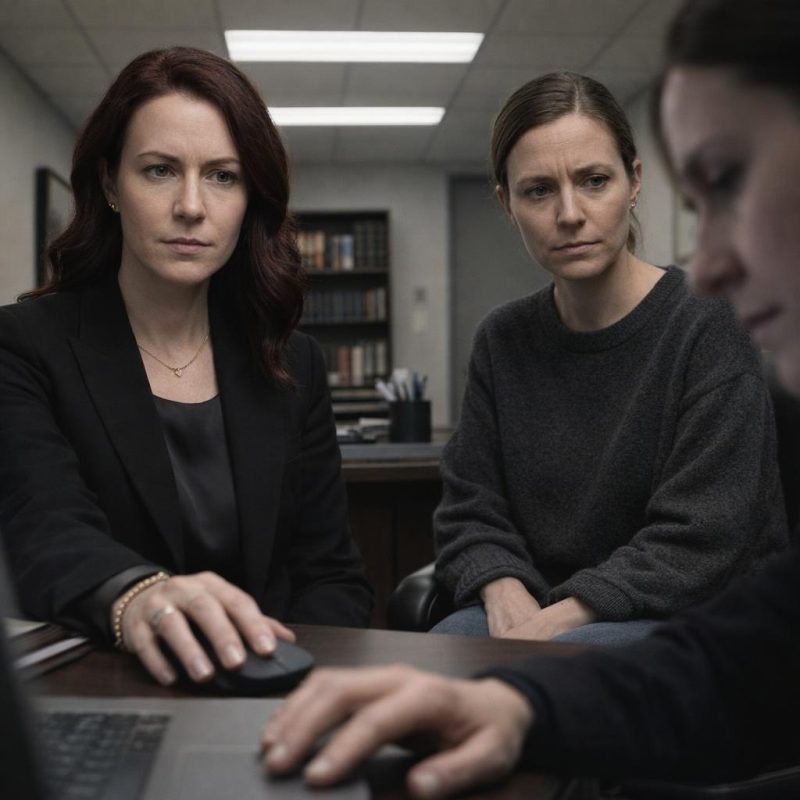 Image by RM AI
The Withdrawal
Jennifer called me less than three hours after the counterclaim was served. Her voice was measured, but I could hear something underneath it — the particular stillness of someone delivering news they hadn't expected to deliver this fast. Marcus Brennan had filed a notice of withdrawal. Effective immediately. The document was brief, just a few lines — no explanation, no statement of cause, nothing beyond the formal language of an attorney ending representation. Jennifer said she'd seen attorneys withdraw before, but rarely this quickly, and rarely without at least a procedural reason attached. She said it was her read that Brennan hadn't known about the embezzlement when he took the case — that Richard had paid him with money that wasn't his and told him a version of events that left out the part where criminal charges were already forming. Now that the fraud was in the court record, Brennan couldn't continue. Richard was without legal representation three days before the contempt hearing he'd filed against me. He would need to find a new attorney willing to take a case with $2.3 million in documented embezzlement attached to it, or stand in front of a judge alone. I sat with the phone in my lap after Jennifer hung up, and the house was very quiet around me.
 Image by RM AI
The Criminal Complaint
Jennifer called two days later, and I knew from the first word that it wasn't about the divorce. She said Richard's employer had completed its internal audit and filed a criminal complaint. The charges were embezzlement, fraud, and money laundering. The total documented was $2.3 million — the same figure, the same shell companies, the same offshore accounts the investigator had traced. Jennifer said the employer was cooperating fully with law enforcement and that the criminal case would proceed on its own track, separate from the divorce proceedings. But she said the existence of criminal charges made our position in the divorce essentially unassailable — that no court would treat assets tied to documented criminal activity as ordinary marital property. I thanked her and sat with the phone in my hand after we hung up. I thought about the call Richard had made seventeen minutes after I won. The practiced ease in his voice. The way he'd said we should handle this between ourselves, just the two of us, no lawyers necessary. He hadn't been calling to claim what he thought was his. He'd been calling because he was already out of time, and I was the only exit he had left. Now there were no exits. Just the charges, the evidence, and whatever came next for him — none of which involved me anymore.
 Image by RM AI
The Federal Investigation
Jennifer called me the morning after the criminal complaint was filed, and her voice had a different quality to it — not urgent exactly, but precise in a way that made me sit down before she finished her first sentence. She said federal authorities had opened their own investigation. The offshore accounts in the Cayman Islands had triggered federal jurisdiction the moment money crossed international borders, and money laundering at that scale was a federal crime, not a state one. She walked me through what that meant: federal prosecutors, federal sentencing guidelines, conviction rates that hovered somewhere above ninety percent. The shell companies, the false invoicing, the transfers — all of it was now inside a federal case file. She said Richard's assets, including the offshore accounts he'd been quietly building for years, were subject to federal seizure. Any money he'd moved, any account he'd been counting on, was now frozen or flagged. I sat there after we hung up and thought about the call he'd made seventeen minutes after my numbers came up. The practiced calm in his voice. The careful way he'd said we should keep this between us. He'd had an exit strategy, and now federal agents were tracking every dollar he'd moved offshore.
 Image by RM AI
The Invalidation
Jennifer came to my apartment two days before the hearing, and she spread the documents across my kitchen table like she was laying out a case she'd already won. She explained it slowly and clearly, the way she explained everything — no softening, no hedging. Marital property law protects assets acquired during a marriage through legitimate means. The operative word, she said, was legitimate. Richard's claim to any portion of the lottery winnings rested entirely on the argument that the ticket was purchased during our marriage and therefore subject to community property rules. But that argument assumed he had standing to claim community property at all. When you've spent three years embezzling from your employer, laundering money through shell companies, and hiding assets from your spouse, she said, you don't get to invoke marital property law. The fraud didn't just complicate his claim — it voided it. She had filed a motion for summary judgment requesting the court declare me the sole owner of the winnings, along with a sanctions request for the frivolous contempt motion he'd filed while actively committing fraud. She slid the final page across the table toward me. Richard's signature appeared on the incorporation documents for every shell company — his name, his handwriting, dated and notarized.
 Image by RM AI
The Hearing
I'd been in courtrooms before — traffic hearings, a landlord dispute years ago — but nothing that felt like this. Jennifer and I arrived early and took our seats at the plaintiff's table. Richard came in alone, no attorney beside him, and he looked smaller than I remembered. Not physically — he was the same height, same tailored jacket — but something about the way he moved had changed. He sat down at the defendant's table without looking at me. The judge called the case and immediately asked Richard about his lack of representation. Richard said he was between attorneys and requested a continuance. Jennifer was on her feet before he finished the sentence, objecting and presenting the counterclaim evidence — bank records, shell company incorporation documents, expense reports cross-referenced against wire transfers, offshore account activity spanning three years, the full $2.3 million documented and timestamped. The judge took the binder and read without speaking. He asked Jennifer two clarifying questions about the timeline of transfers. He asked Richard once whether he wished to respond to the documentation before she continued. Richard said he did. The judge nodded and kept reading. Jennifer finished her presentation and sat down beside me, and the courtroom went completely quiet while the judge turned the last page.
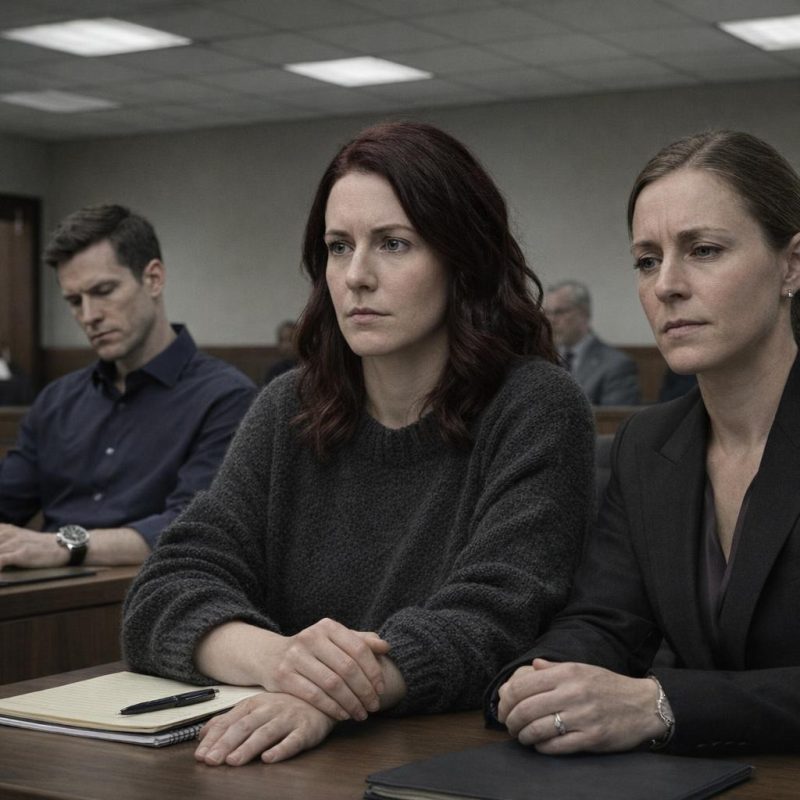 Image by RM AI
The Denial
The judge looked up from the binder and asked Richard to respond. Richard stood slowly, and I could see his hands grip the edge of the table before he let go. He said the shell companies were legitimate business ventures he'd been developing on the side. He said the offshore accounts were for tax planning purposes, something his financial advisor had recommended. He said the expense reports had been approved by his supervisors at every level and that the evidence was being misinterpreted by people who didn't understand how corporate finance worked. Jennifer slid a page across to the judge — Richard's signature on a false invoice for a vendor that had never existed. The judge asked Richard to explain it. Richard said he didn't remember signing that particular document, that he signed hundreds of documents a month and couldn't be expected to verify every vendor personally. Jennifer presented the incorporation filings for three of the shell companies — Richard's signature on each one, notarized, with his personal identification number. The judge asked Richard to explain those. Richard said he thought he was signing something else. He said someone must have misrepresented the documents to him. His voice kept moving — filling space, reaching for explanations that dissolved before they landed — and the sound of it, thin and circling and going nowhere, settled over the room like something already finished.
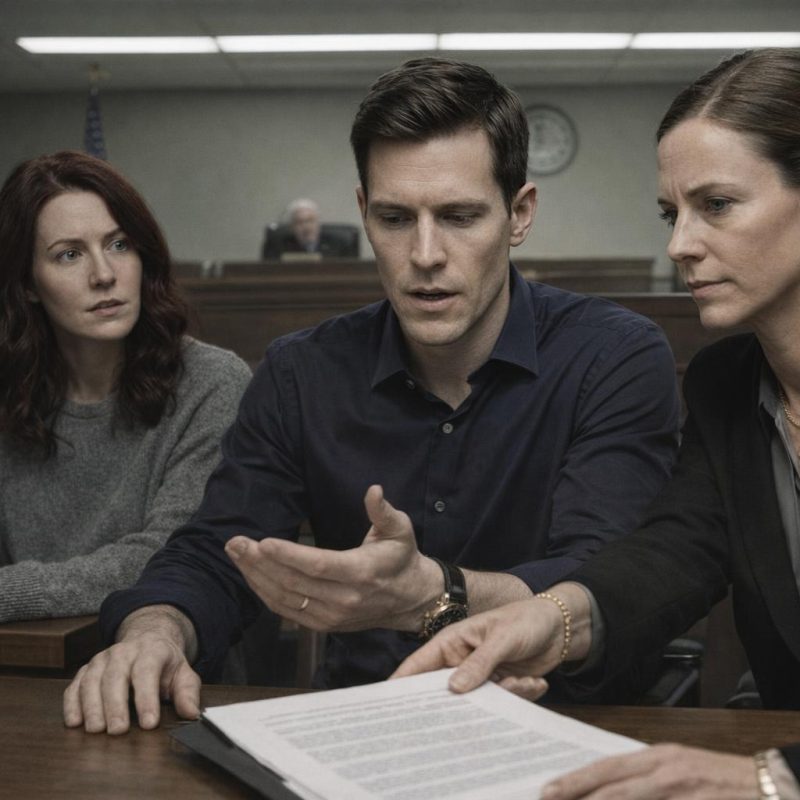 Image by RM AI
The Ruling
The judge set the binder down and folded his hands. He said the court had reviewed the evidence in full and was prepared to rule. He went through it methodically — the incorporation documents bearing Richard's signature, the false invoices cross-referenced against wire transfers, the offshore accounts showing systematic movement of funds over thirty-six months. He said the documentation was not ambiguous. He said Richard's explanations were not credible. He ruled that assets obtained through criminal fraud could not be considered marital property under any applicable statute, and that Richard's embezzlement voided any standing he might otherwise have had to claim community property rights. The contempt motion Richard had filed against me was dismissed as baseless. Jennifer's sanctions request was granted — Richard was ordered to pay my legal fees in full. The ruling was final and effective immediately. I sat very still while the judge spoke. Five years of my life had been spent making myself smaller, apologizing for things that weren't my fault, covering expenses while Richard spent freely and called it partnership. I had carried the weight of that marriage in my shoulders for so long I'd stopped noticing it. And then the judge's voice, flat and certain, said Richard had no legal claim to any portion of the lottery money.
 Image by RM AI
The Plea
Jennifer stopped to speak with the clerk after the ruling, and I walked out into the hallway alone. I heard Richard behind me before I saw him. He said my name — not the way he used to, easy and familiar, but something rougher underneath it now. I stopped and turned around. He looked like a man who had run out of moves and knew it. He said he knew he'd made mistakes. He said he'd been under pressure, that things had gotten out of hand, that he never meant for it to go this far. He asked me to remember the good years, the early ones, before everything got complicated. His voice kept dropping, reaching for something that might land. He said he needed money — not much, just enough to start paying back what he owed, enough to show good faith before sentencing. He said I was the only person who could help him now. I looked at him for a long moment. I thought about the call he'd made seventeen minutes after my win. The practiced warmth in his voice. The careful way he'd said just the two of us, no lawyers necessary. I told him no. I turned and walked toward the elevator. Behind me, his voice cracked as he said he would go to prison if I didn't give him the money to pay back what he stole.
 Image by RM AI
The Testimony
The hearing continued that afternoon with testimony about the marriage itself. Jennifer called me to the stand, and I was sworn in and sat down and looked out at the room. Richard was at the defendant's table, watching me. Jennifer asked about the financial dynamics of our relationship, and I answered. I described how I had covered rent for the first two years because Richard said his income was irregular. How I had paid his car insurance, his phone bill, his gym membership, while he told me he was investing in his future. How he made me feel selfish for asking where the money went. How I had apologized, over and over, for noticing things that turned out to be exactly what they looked like. I described finding the bank login alerts on his laptop. The transfers I couldn't account for. The business trips that didn't match any client I'd ever heard him mention. I described the years I spent making myself smaller so he could feel larger. My voice shook at the beginning. I noticed it, took a breath, and kept going. By the time Jennifer asked me to describe what the marriage had actually been — not what I'd hoped it was, but what it was — my voice was steady, and I told the truth: it wasn't a partnership, it was a pattern, and I had lived inside it for five years.
 Image by RM AI
The Arrest
We were gathering our documents when the courtroom doors opened again. Two people in dark jackets walked in with the kind of deliberate pace that makes a room go quiet. They moved directly toward Richard at the defendant's table. One of them said his name and identified themselves as federal agents. The other said Richard was under arrest for embezzlement, fraud, and money laundering. Richard's face went the color of old paper. He started to say something — I couldn't hear what — and then one of the agents was guiding his hands behind his back. The handcuffs made a sound I felt more than heard. The other people still in the courtroom had gone completely still. Jennifer's hand came to rest briefly on my arm. Richard turned his head as they walked him toward the door, and his eyes found mine across the room — that same face I had shared a home with for five years, a bed, a life I thought was real. Then the agents walked him through the doors and he was gone. I stood there in the quiet that followed, watching the doors settle closed behind him.
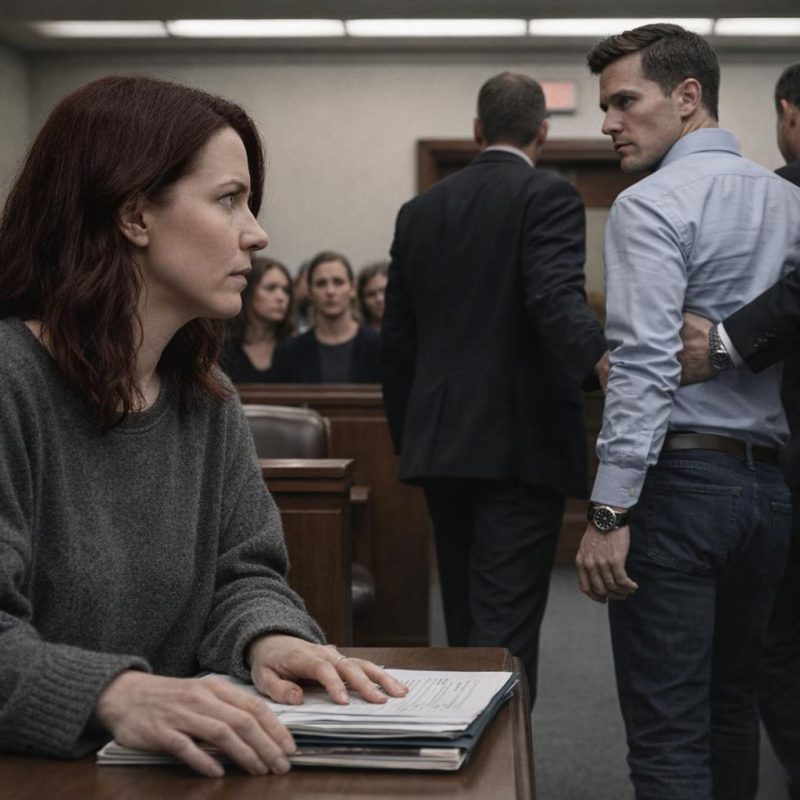 Image by RM AI
The Final Decree
The judge came back to the bench about twenty minutes after the agents walked Richard out. The courtroom had barely settled — people were still whispering, still processing what they'd just watched happen. He called the room to order and said the court would proceed to finalize the divorce proceedings. Jennifer leaned close and told me to breathe. The judge reviewed the evidence on record — the financial fraud, the documented abuse of marital assets, the testimony already entered. He stated, clearly and for the record, that Richard's conduct had been both criminally fraudulent and financially predatory throughout the marriage. Then he said the words I had been waiting months to hear: the lottery winnings were mine, acquired prior to any valid marital claim, and no settlement would be awarded to Richard. Legal fees would be assessed against him as well, though the judge acknowledged collection would be complicated given the circumstances. Jennifer accepted the signed final decree across the table. I stared at the paper in her hands — my name, Richard's name, and the judge's signature at the bottom of the page.
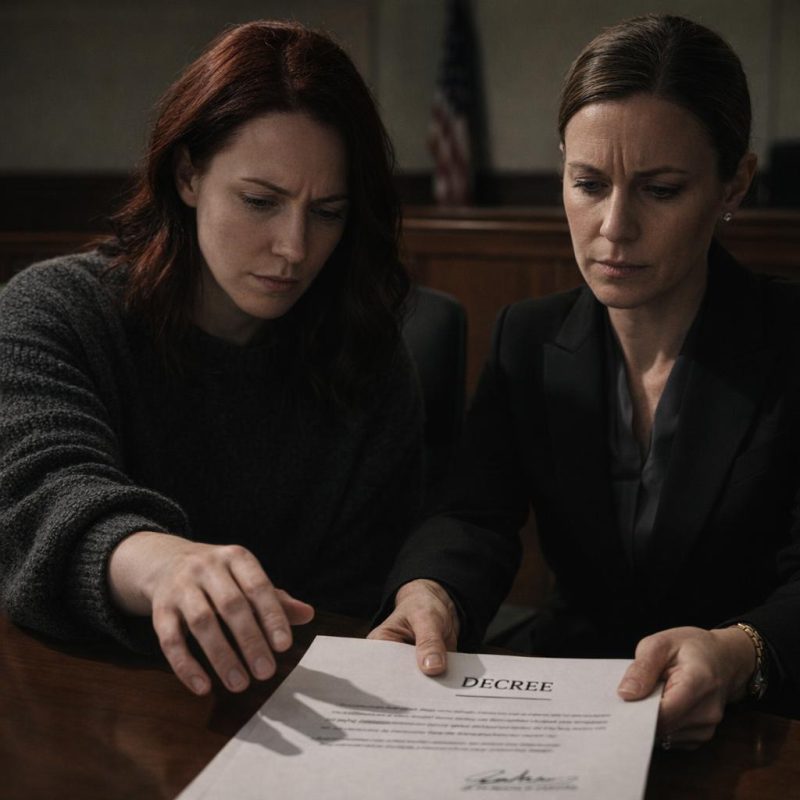 Image by RM AI
The Freedom
Jennifer and I walked out through the courthouse doors together, and the afternoon light hit me like something physical. I had been inside that building for hours and I'd forgotten the sun was still out there doing its thing. Kira was on the steps. She didn't say anything — she just pulled me into a hug and held on, and I let her. I think I needed that more than I'd realized. Jennifer shook my hand and told me she'd handle the remaining paperwork, that I didn't need to worry about any of it. I thanked her, and I meant it in a way that felt inadequate for what she'd actually done. After she left, Kira asked if I wanted to go somewhere to celebrate. I told her I just wanted to go home and sit in the quiet for a while. She nodded like that made complete sense. We walked to her car together, and somewhere between the courthouse steps and the parking lot, I noticed my shoulders had dropped. My jaw had unclenched. The tension I'd been carrying so long I'd stopped noticing it had gone somewhere, and the afternoon felt wide open around me.
 Image by RM AI
The Ticket
The lottery commission office was not what I expected. I think after everything — the courtroom, the federal agents, Marcus in his tailored suit — I expected the actual claiming of the money to feel dramatic too. It didn't. It was a beige waiting room and a woman at a desk who asked for my ID and the ticket and walked me through a stack of paperwork. I signed where she pointed. She verified the ticket. She congratulated me in the same tone someone uses when they tell you your prescription is ready. And then she handed me a check for five point eight million dollars. The full amount. No half going to Richard, no legal cloud hanging over it, no asterisk. I took a photo of it before I did anything else — I don't know why exactly, I just needed proof that it was real. I met with Mitchell that afternoon and we went through accounts and investment structures and a plan that was entirely mine to make. I paid off the legal fees first. Then I sat with the rest of it and thought about what I actually wanted, not what anyone else expected. The check sat on the table between us, and for the first time in months, I felt like I could think clearly.
 Image by RM AI
The New Beginning
A month after the divorce was finalized, I had people over for dinner. Kira, my mother, and my sister Beth crowded into my apartment, and it felt different in there — lighter, more mine than it had ever been when I was trying to make it feel like ours. My mother held my face in her hands at the door and apologized for not seeing how bad things had gotten during the marriage. I told her she wasn't the only one who hadn't seen it clearly. Beth announced that the offshore account research had been completely unnecessary and that she wanted credit anyway, which made us all laugh in a way that felt like exhaling. Kira raised her glass and said something about courage that made me look at the ceiling so I wouldn't cry. At some point I thought about the Target receipt I still had in a drawer — the timestamp on it, the ordinary Tuesday afternoon that had cracked everything open. Richard was in federal custody. The lottery money was mine, legally and completely. But sitting there with the three of them, I kept coming back to something that had nothing to do with the money. I had stopped making myself small. I had fought for something, and I had not let go. That felt like the real number on the check.
 Image by RM AI
KEEP ON READING

From Heroes To Zeroes 20 Historical Figures Whose Heroism Was…
History is full of legends, but not every hero lived…
By Noone Feb 25, 2026
The Clueless Crush: How I Accidentally Invited a Hacker Into…
Fluorescent Lights and First Impressions. My name is Tessa, I'm…
By Ali Hassan Nov 4, 2025
This Infamous Ancient Greek Burned Down An Ancient Wonder Just…
History remembers kings and conquerors, but sometimes, it also remembers…
By David Davidovic Nov 12, 2025
Einstein's Violin Just Sold At An Auction—And It Earned More…
A Visionary's Violin. Wanda von Debschitz-Kunowski on WikimediaWhen you hear…
By Ashley Bast Nov 3, 2025
The Mysterious "Sea People" Who Collapsed Civilization
3,200 years ago, Bronze Age civilization in the Mediterranean suddenly…
By Robbie Woods Mar 18, 2025
20 Historical Figures Who Lived Much Longer Than You Think
Some Famous Lives Stretched Far. History has a way of…
By Christy Chan May 22, 2026