

My Dad Never Missed a Single Event in My Life — Until the Woman He'd Been Dating For Three Months Had a 'Crisis' on My Graduation Day
My Dad Never Missed a Single Event in My Life — Until the Woman He'd Been Dating For Three Months Had a 'Crisis' on My Graduation Day
The Empty Chair
I stood in my graduation gown staring at one empty seat in the auditorium, telling myself my dad was just running late. The fabric felt scratchy against my neck as I shifted in line with the other graduates, all of us arranged alphabetically and waiting for our names to be called. I kept scanning the crowd, looking for that familiar face I'd seen at every piano recital, every softball game, every parent-teacher conference since I was seven years old. The seat was in the fourth row, right side, exactly where he always sat so I could spot him easily. I'd texted him the section number three times. Around me, other graduates were waving to their families, pointing out relatives, laughing nervously about tripping on stage. I just kept staring at that empty chair, my stomach twisting tighter with each passing minute. Traffic, I told myself. There was probably an accident on the highway. Maybe he couldn't find parking. The dean was approaching the podium now, adjusting the microphone. My hands were shaking as I clutched my program. He had never missed anything before.
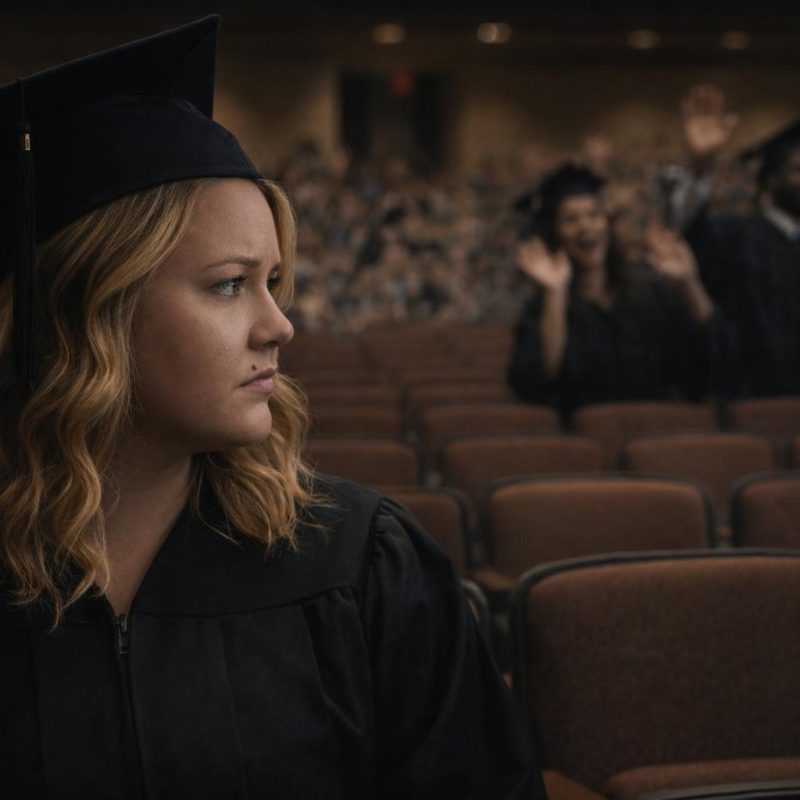 Image by RM AI
Before Everything Changed
I was seven years old when my mother died, and almost everything I remember after that is really about my dad. Before that day, though, I remember her everywhere—in the kitchen making pancakes shaped like Mickey Mouse, reading to me before bed with different voices for every character, braiding my hair while humming songs I didn't know the names of. She had this way of making ordinary moments feel special, like when we'd have tea parties with my stuffed animals and she'd pretend to be scandalized by the gossip. I remember her laugh most of all, how it filled up our whole house. Then one morning she didn't wake up. An aneurysm, the adults whispered to each other when they thought I couldn't hear. At the funeral, I sat between Dad and my aunt, wearing a black dress that felt too tight, watching people cry over someone who just yesterday had been making me breakfast. I didn't understand why everyone kept saying she was gone when her coffee mug was still in the sink. The morning after her funeral, everything became different.
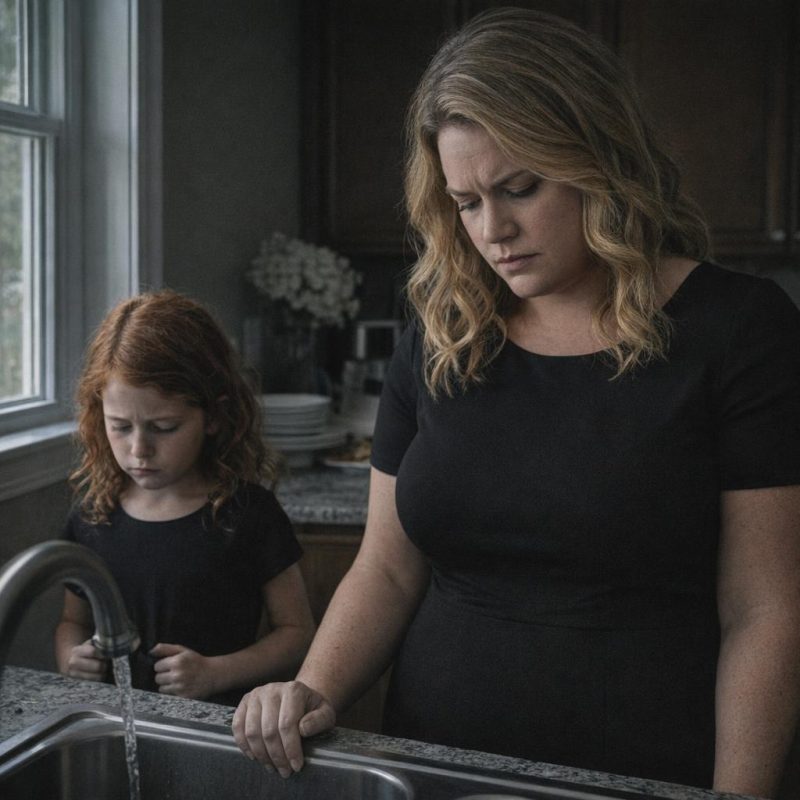 Image by RM AI
Just Us Now
The morning after Mom's funeral, Dad sat me down at the kitchen table and said the words that would define the next fifteen years of our lives. The house felt wrong without her—too quiet, too empty, like all the air had been sucked out of it. Her chair sat across from us, and I kept expecting her to walk in and ask if we wanted eggs. Dad's eyes were red and swollen, and he hadn't shaved in days. He looked smaller somehow, like he'd shrunk inside his own clothes. I was still wearing my pajamas even though it was almost noon. He reached across the table and took my small hand in both of his, and I remember thinking how rough his palms felt. His voice cracked when he started talking, and he had to clear his throat twice before the words came out right. He told me he didn't know how to do this alone, that he was scared and sad and didn't have all the answers. But then he looked right at me with this fierce determination I'd never seen before and said the words I'd carry with me forever: "It's just us now, kiddo. We're a team."
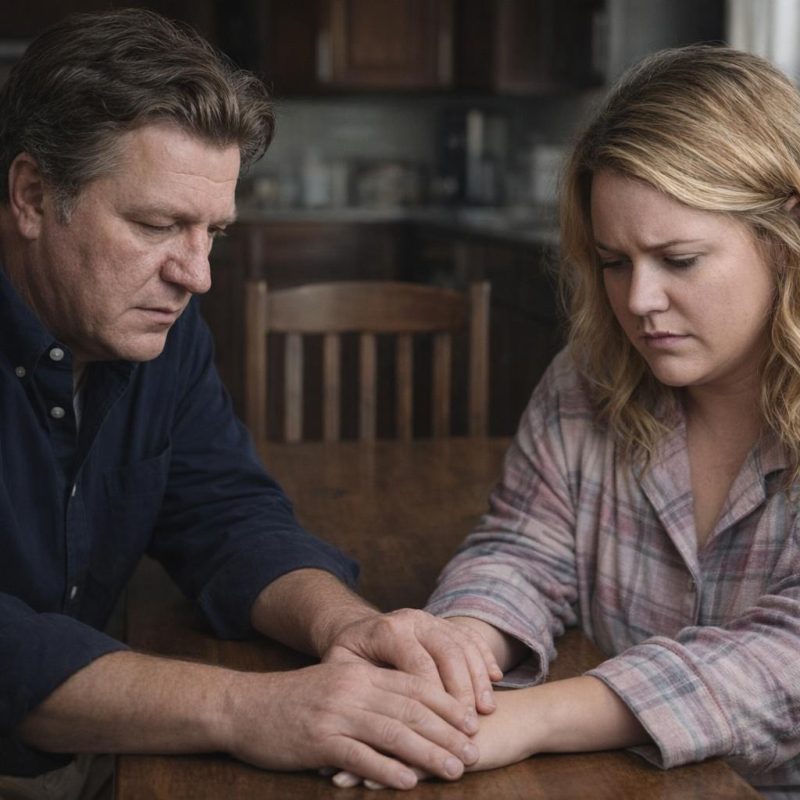 Image by RM AI
Tutorial Videos and Tangled Hair
Dad spent three nights watching YouTube videos about French braids before he finally got my hair right for the school picture. I'd sit on the bathroom counter while he stood behind me, his big fingers fumbling with the sections of hair, muttering under his breath at the laptop propped on the sink. The first night ended with my hair in knots and both of us nearly crying. The second night produced something that looked more like a twisted rope than a braid. I never complained, just sat there patiently while he tried again and again, watching his concentrated face in the mirror. He'd pause the video, rewind it, watch the same thirty seconds over and over. On the third night, something clicked. His movements became more confident, more sure. The braid came together smoothly, each section crossing over perfectly like the woman in the video showed. When he finished, he stepped back and stared at it for a long moment, then at me in the mirror. His whole face transformed—not quite a smile, but something close to it, something I hadn't seen since before Mom died. When he finished, he looked more proud than I'd ever seen him.
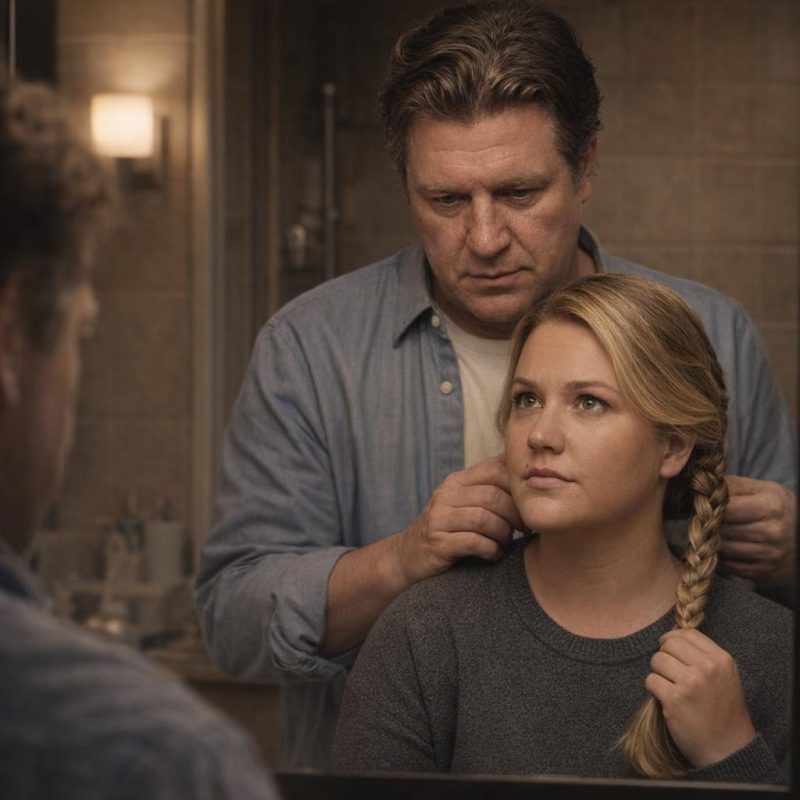 Image by RM AI
Less Sad Every Year
The school lunches Dad packed got slightly less sad every year—from forgotten napkins and bruised apples to actual balanced meals that other kids envied. In second grade, I'd open my lunchbox to find a sandwich with the bread still frozen in the middle and a juice box he'd forgotten to include a straw for. The other kids would share their crackers with me, and I'd pretend not to notice their moms shooting sympathetic looks my way during pickup. Third grade brought improvements—the sandwiches were edible, and he remembered fruit snacks most days. He started leaving little notes on napkins, just smiley faces at first, then short messages like "Have a good day" in his messy handwriting. By the time I hit fourth grade, something had shifted. My lunches had variety—turkey and cheese one day, peanut butter and honey the next. He'd pack baby carrots with ranch dressing in a separate container, string cheese, homemade cookies he'd learned to bake from Mom's old recipe cards. One day I bit into my sandwich and realized something that made my chest feel warm: he'd left off the mustard. By fourth grade, he'd figured out I hated mustard.
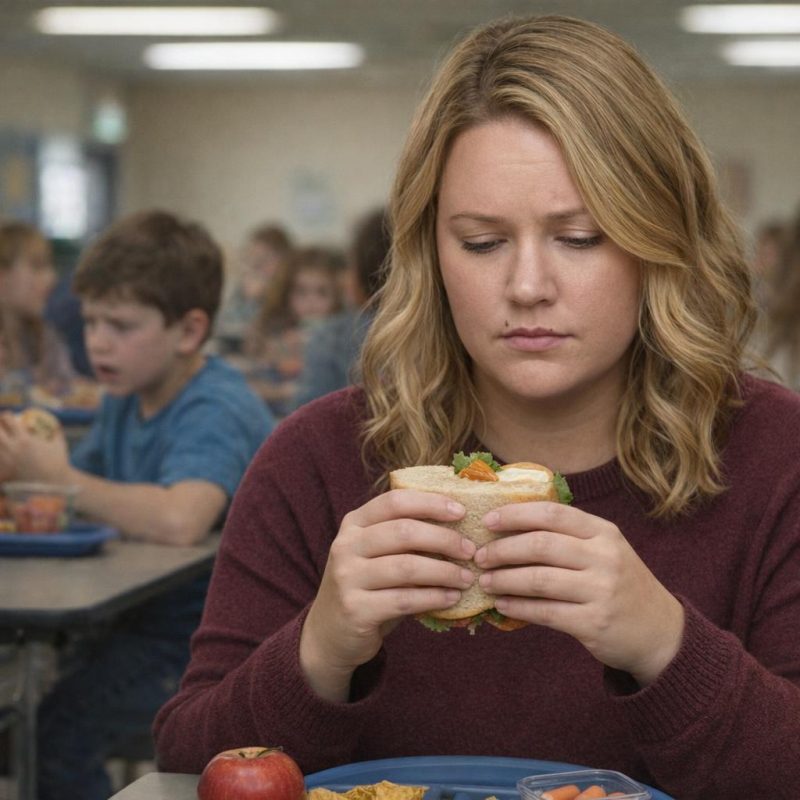 Image by RM AI
The Steady Expression
Dad sat through piano recitals and softball games with the same steady expression that meant I wasn't facing anything alone. I'd be up on stage, fingers trembling over the keys, and I'd find his face in the third row, always the third row, watching me with this calm certainty that made my hands stop shaking. At softball games, he'd be in the bleachers with the other parents, but while they shouted and cheered and groaned, he just watched with that same steady look. It didn't matter if I hit a home run or struck out, if I played Beethoven perfectly or fumbled through "Chopsticks"—his expression never changed. That steadiness became my anchor. Before every performance, every game, every school presentation, I'd scan the crowd until I found him, and then I could breathe again. Other kids' parents would miss things sometimes—work trips, scheduling conflicts, younger siblings' events. I'd hear them complain about it in the locker room or backstage. But not my dad. Spring concerts, fall plays, science fairs, award ceremonies, parent-teacher conferences, field day competitions. He never missed a single one.
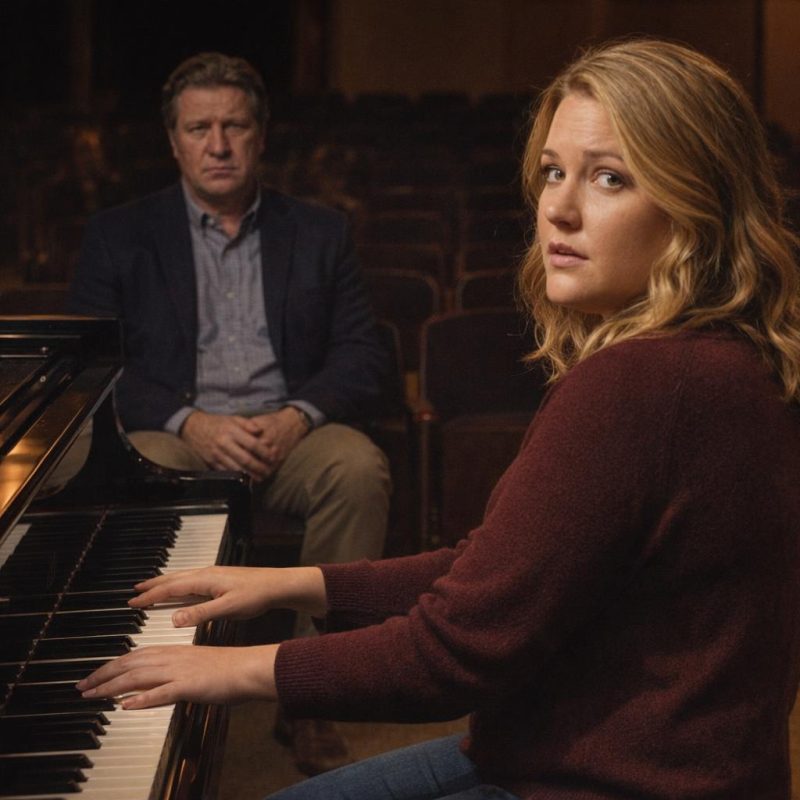 Image by RM AI
Middle School Mathematics
During middle school, I learned that having a dad who never missed anything made me both lucky and different from most of my friends. My best friend Emma's dad traveled for work and missed her entire volleyball season. Another friend, Josh, couldn't remember the last time his father had come to a school event—always too busy, always had something more important. I'd listen to them talk about it at lunch, this casual acceptance that their parents just wouldn't be there, and I'd feel this weird mix of guilt and gratitude. At the science fair, I watched other kids present their projects to teachers and judges while their parents were nowhere to be found. Dad stood in the back, reading every word on my poster board about plant growth, asking questions like he was genuinely curious. During parent-teacher conferences, he'd take notes on what my teachers said, actually write things down in a little notebook he kept in his jacket pocket. When I had a small part in the school play, he sat through all three performances. I started noticing the weight of his presence, how unusual it was, how much it meant. I stopped taking it for granted.
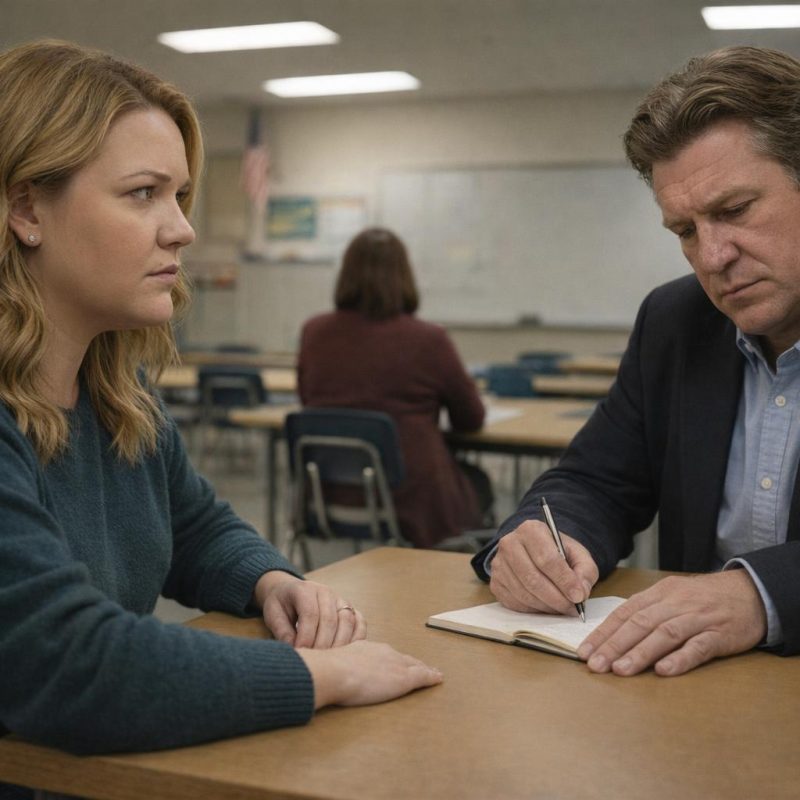 Image by RM AI
Steady Through Heartbreak
When I came home crying over my first real heartbreak at sixteen, Dad listened with the same steady presence he'd brought to everything else. I'd been dating someone for three months—which felt like forever when you're sixteen—and he'd broken up with me at lunch in front of half the cafeteria. I held it together until I got home, then completely fell apart the second I walked through the door. Dad was in the kitchen making dinner, and when he saw my face, he just turned off the stove and sat down at the table. I collapsed into the chair across from him, the same chair I'd sat in when he made his team promise nine years earlier, and sobbed. He didn't ask what happened. Didn't tell me I was too young for it to matter or that there would be other boys. Didn't try to make jokes or distract me or fix it. He just sat there, his hands folded on the table, watching me with those patient eyes while I cried about how much it hurt and how embarrassing it was and how I'd never feel normal again. An hour passed, maybe more. He didn't try to fix it, just sat there until I stopped crying.
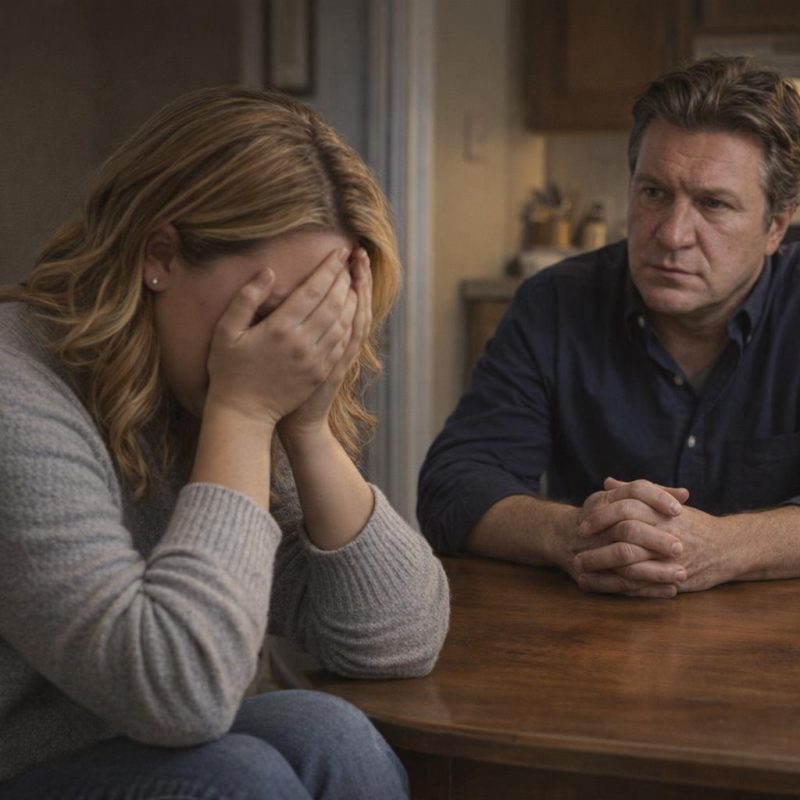 Image by RM AI
College Applications
Senior year, we spread college applications across the kitchen table like we were planning a military campaign. Same table where he'd made that team promise nine years earlier, same chairs, same overhead light that flickered when the furnace kicked on. Dad had printed out a spreadsheet—an actual spreadsheet—tracking deadlines and requirements for each school. He sat across from me with reading glasses I'd never seen him wear before, reviewing my essay about the soccer championship while I filled out the Common App for the third time because I kept second-guessing my activities list. "This part about the penalty kick," he said, tapping the page. "You made it about the team. That's good. That's what they want to see." He never told me what to write, never took over, just asked questions that helped me figure out what I was trying to say. We worked until almost midnight, and when I finally closed my laptop, he gathered up all the papers into neat stacks. The acceptance letters would come in spring. Then I'd leave. We both knew it, sitting there in the kitchen that had held every important conversation of my life. "You're ready for this," he said, even though I wasn't sure either of us believed it.
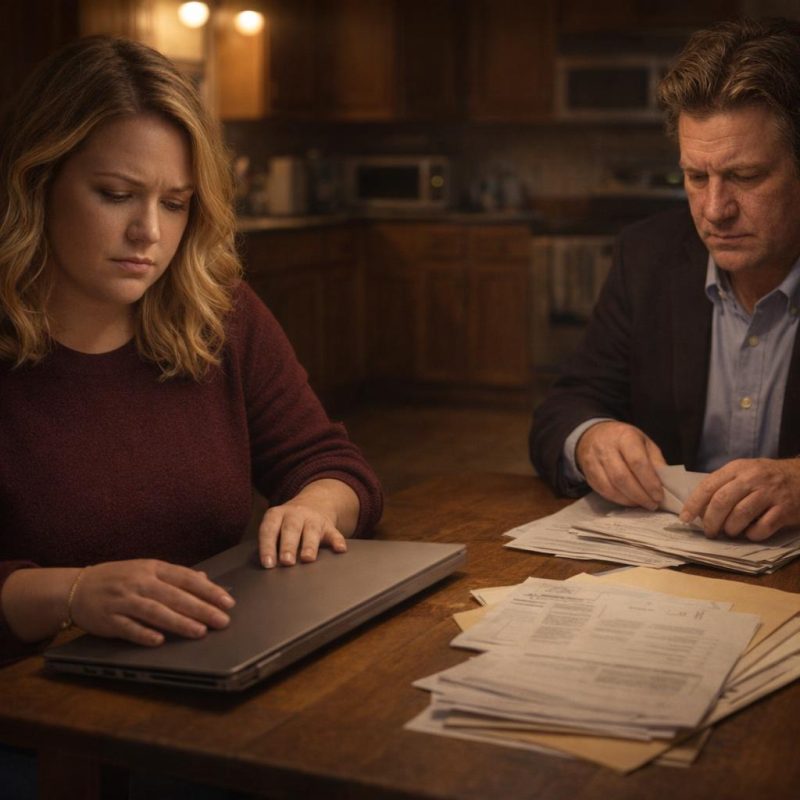 Image by RM AI
First Year Away
The first year of college felt like learning to breathe in a different atmosphere. Everything was louder, faster, more intense than I'd expected. My roommate stayed up until three in the morning every night. The dining hall served breakfast until noon, which felt revolutionary and wrong at the same time. I got lost walking to my chemistry lab twice in the first week. But every Sunday at two o'clock, my phone would ring, and it would be Dad. Same time, every week, like clockwork. He'd ask how classes were going, if I was eating enough, whether I'd made friends. Not in the worried, hovering way some of my friends' parents did—just genuinely wanting to know. I'd tell him about the philosophy professor who only lectured in questions, about the girl down the hall who'd invited me to join her study group, about how the campus looked when it snowed. He'd tell me about work, about fixing the leaky faucet in the bathroom, about running into my old soccer coach at the grocery store. Those calls were the thread that kept me tethered when everything else felt like I was floating in space. Every week, same time, he'd ask how I was doing like my answer actually mattered more than anything else in his world.
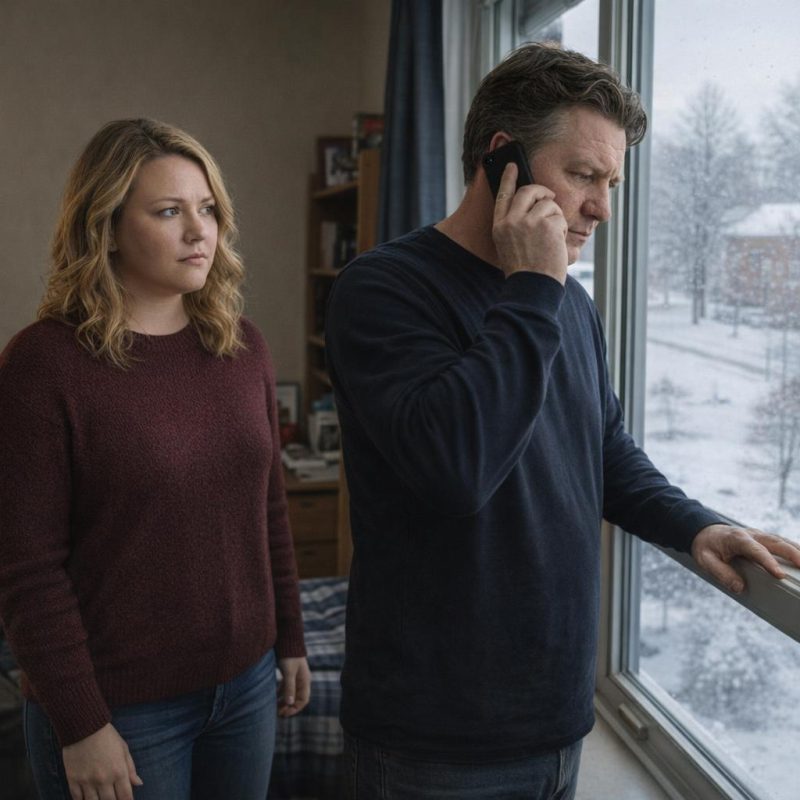 Image by RM AI
Finding Direction
Sophomore year I finally had to declare my major, and I was paralyzed by the decision. I'd been taking classes in everything—psychology, literature, philosophy, even an economics course that nearly killed me. I called Dad on a Tuesday, off-schedule, because I had to submit the paperwork by Friday and I still had no idea what to choose. He listened while I spiraled about making the wrong choice, about closing doors, about picking something practical versus something I actually cared about. Then he asked, "What about that philosophy class you took fall semester? The one about ethics and moral reasoning?" I'd mentioned it once, in passing, back in October. Told him about a discussion we'd had about trolley problems that had kept me up all night thinking. That was four months ago, one comment in probably twenty phone calls since then. "You talked about that class more than anything else that whole semester," he said. "Even when you were complaining about the reading load, you sounded excited." He was right. I'd been so focused on what I should major in that I'd forgotten to pay attention to what actually made me want to keep learning. He remembered a comment I'd made about a philosophy class in October of freshman year.
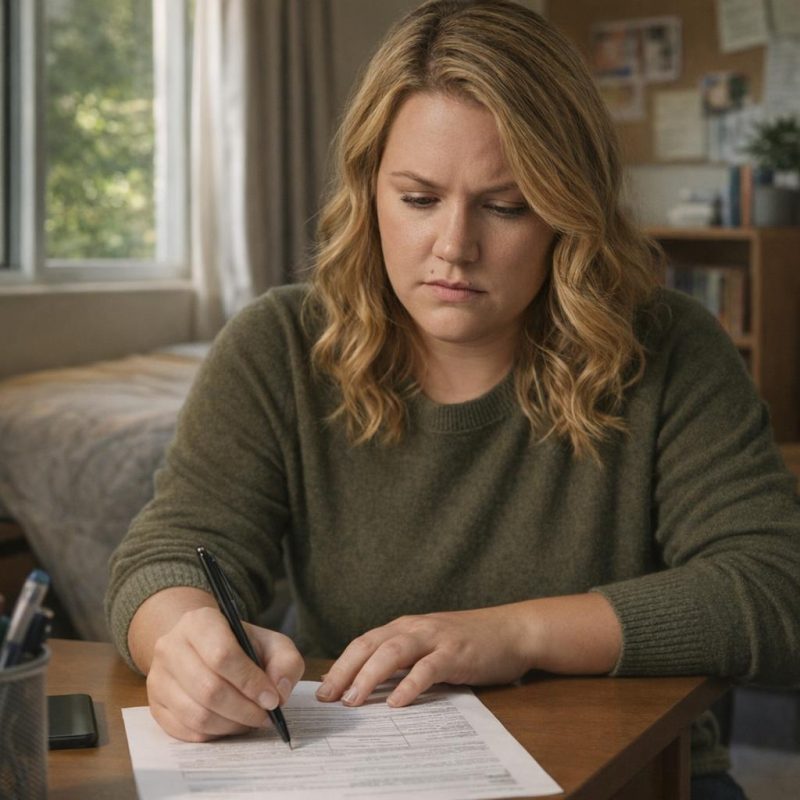 Image by RM AI
The Sunday Routine
Our Sunday calls became the rhythm that organized both our weeks. I'd save up things to tell him—the weird thing my professor said, the movie I'd watched, the argument I'd had with my roommate about whether cereal was soup. He'd save things too. Stories about the neighbors, updates on his bowling league, questions about whether I thought he should finally replace the living room couch. We'd talk for an hour, sometimes longer, about nothing and everything. My friends thought it was weird that I talked to my dad that much. Their parents called to ask about grades or remind them about family obligations. But our calls weren't like that. They were just us, staying connected across the distance, maintaining the team we'd always been. I'd schedule my weekends around those calls. Wouldn't make plans until after two on Sundays, wouldn't go anywhere I couldn't get good reception. It wasn't a burden. It was the most stable thing in my life, the proof that even though I was building something new here, I hadn't lost what mattered most. The calls felt essential, unshakeable, permanent. I couldn't imagine anything disrupting that pattern.
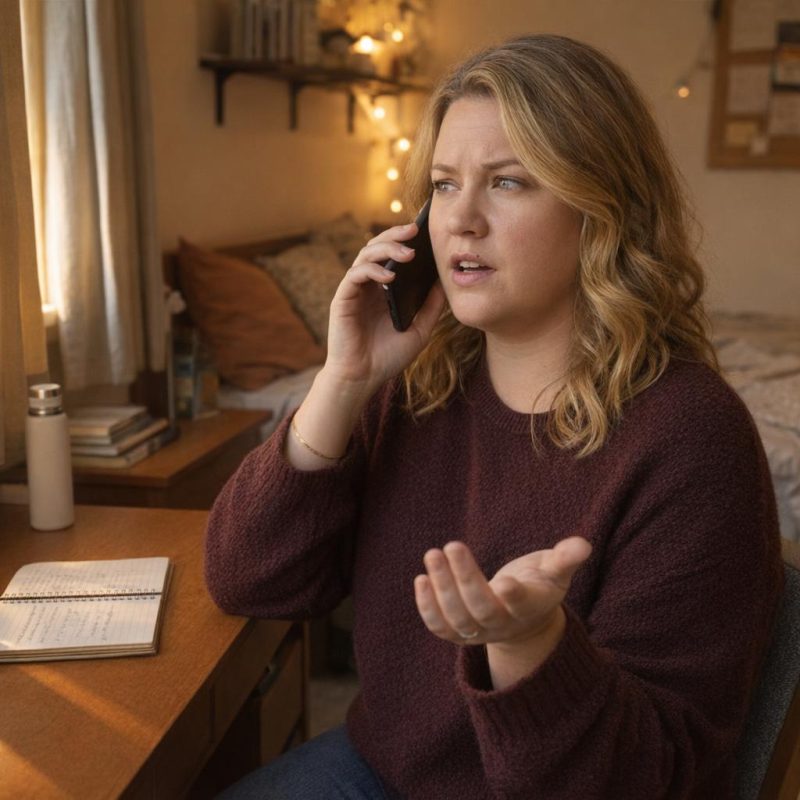 Image by RM AI
Thesis Beginnings
Junior year I started the research for my senior thesis, and the pressure felt different than anything I'd faced before. This wasn't just another paper—it was supposed to be original research, a real contribution to the field, the culmination of everything I'd learned. I was exploring moral responsibility in collective action, which sounded impressive but mostly meant I was drowning in academic journals and questioning every argument I tried to make. During our Sunday call, I mentioned I was struggling to articulate my central thesis clearly. Dad asked if I wanted to practice my pitch on him, even though he'd never understand the academic jargon. I almost said no—what was the point of explaining Kantian ethics and collective intentionality to someone who'd never taken a philosophy class? But he insisted, so I tried. I spent forty-five minutes walking him through my argument, and he asked questions the whole time. Not smart questions, necessarily, but honest ones. "So why does it matter if people intended it together or separately?" "What's the real-world example of this?" His questions, coming from someone who didn't know the theory, forced me to explain what I actually meant instead of hiding behind terminology. He listened anyway, for forty-five minutes, asking questions that actually helped.
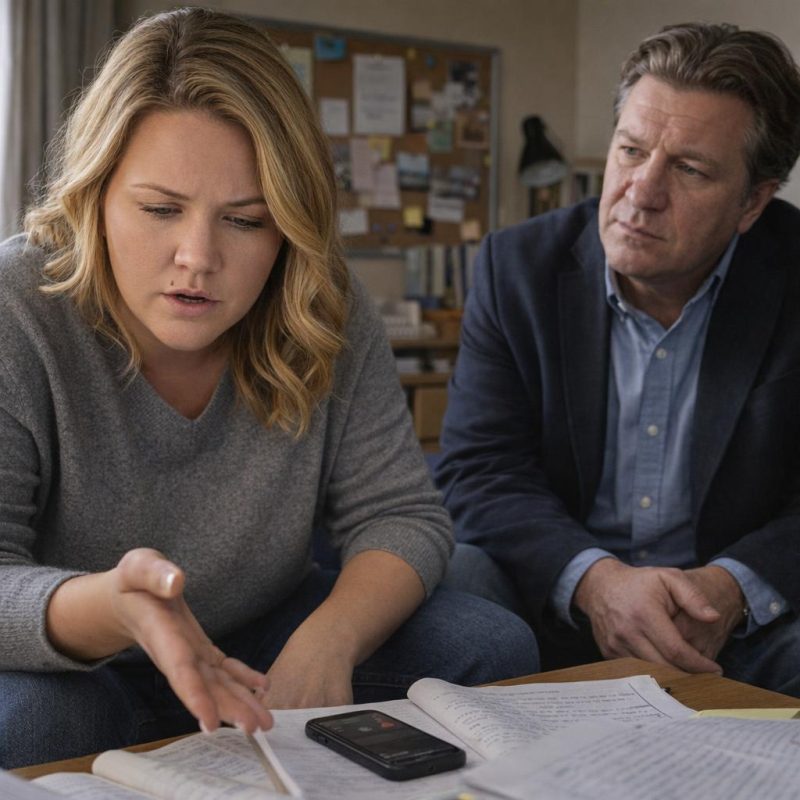 Image by RM AI
Final Semester Starts
When final semester started, everything felt normal in the best possible way. I had two seminars, my thesis revision schedule, and a part-time job at the library that was perfect for reading between shifts. The campus looked beautiful under January snow, and I'd finally figured out the best route to avoid the wind tunnel between the science building and the student center. Sunday calls with Dad continued like always—he wanted to know about my thesis defense date, about my plans for after graduation, about whether I was going to the career fair. We talked about commencement, about whether he should book a hotel now or wait, about how weird it was going to be to walk across that stage. I'd been working toward this for four years, and now it was actually happening. Everything felt like it was falling into place exactly as it should. My thesis advisor liked my revisions. My applications for graduate programs were submitted. Dad and I were already joking about how he'd probably cry at graduation and embarrass me. Life felt predictable, secure, like I'd finally figured out how to balance independence with staying connected to what mattered. I had no idea how fast normal was about to disappear.
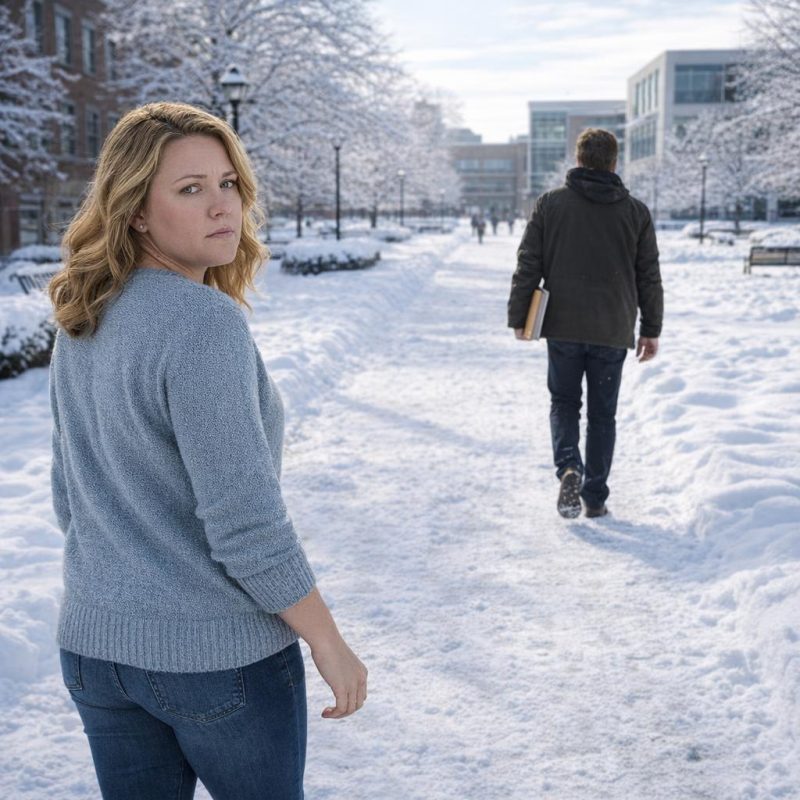 Image by RM AI
Someone Named Lisa
Dad called on a Tuesday instead of Sunday, and I knew something was different before I even answered. He never called off-schedule unless something was wrong. My first thought was that someone had died—Grandma, maybe, or one of his brothers. But when I picked up, he sounded nervous, not sad. There was this weird energy in his voice I'd never heard before. He asked about my week, about my thesis, doing the small talk we usually skipped because we'd just talked two days ago. Then he said he had something to tell me. He'd been seeing someone. A woman named Lisa. They'd met at work, started talking, and it had turned into something more. I tried to process what he was saying while also trying to sound like a supportive daughter who was happy her father had found someone. My stomach dropped, but I made myself smile even though he couldn't see me. I said all the right things—that's great, I'm happy for you, tell me about her. He sounded relieved, like he'd been worried about how I'd react. Then, almost casually, he mentioned they'd been dating for a few months already.
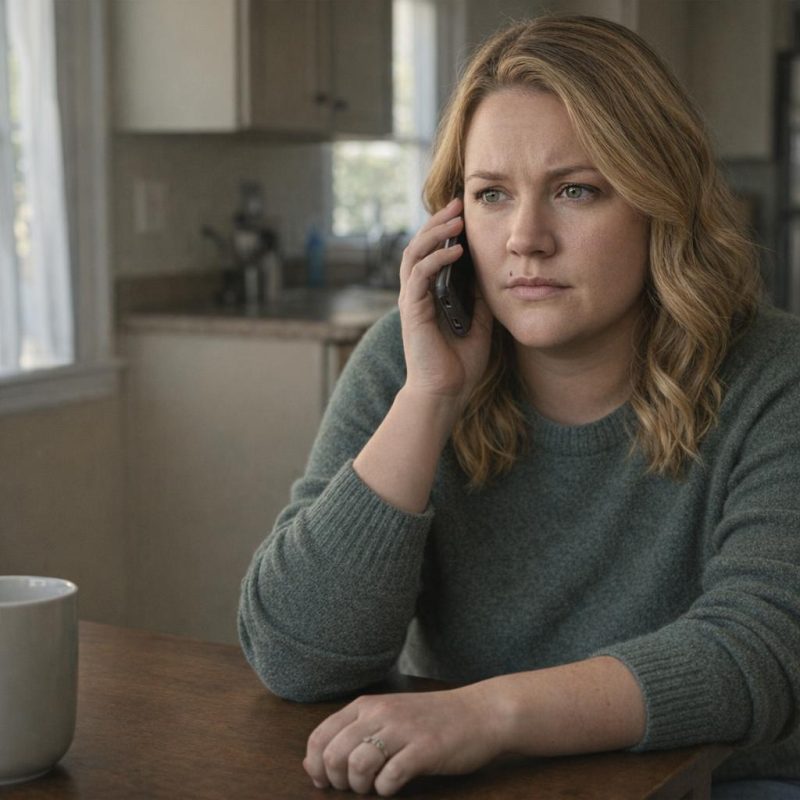 Image by RM AI
Processing the News
I sat in my dorm room after the call ended, staring at my phone like it might offer some explanation for what I was feeling. I should be happy for him. That's what a good daughter would feel. Dad deserved happiness, deserved companionship, deserved to have someone in his life beyond Sunday phone calls with his daughter three states away. He'd been alone since Mom died when I was seven—nineteen years of coming home to an empty house, of eating dinner by himself, of having no one to talk to about his day. Of course he should date. Of course he should find someone. So why did I feel like I'd been punched in the stomach? Why did the fact that he'd waited months to tell me feel like a betrayal, even though I knew that was unfair? He didn't owe me a real-time update on his dating life. I was an adult. I'd been away at college for years. But we told each other everything, or at least I thought we did. We were a team. We'd always been a team. He hadn't been alone in months, and I hadn't known.
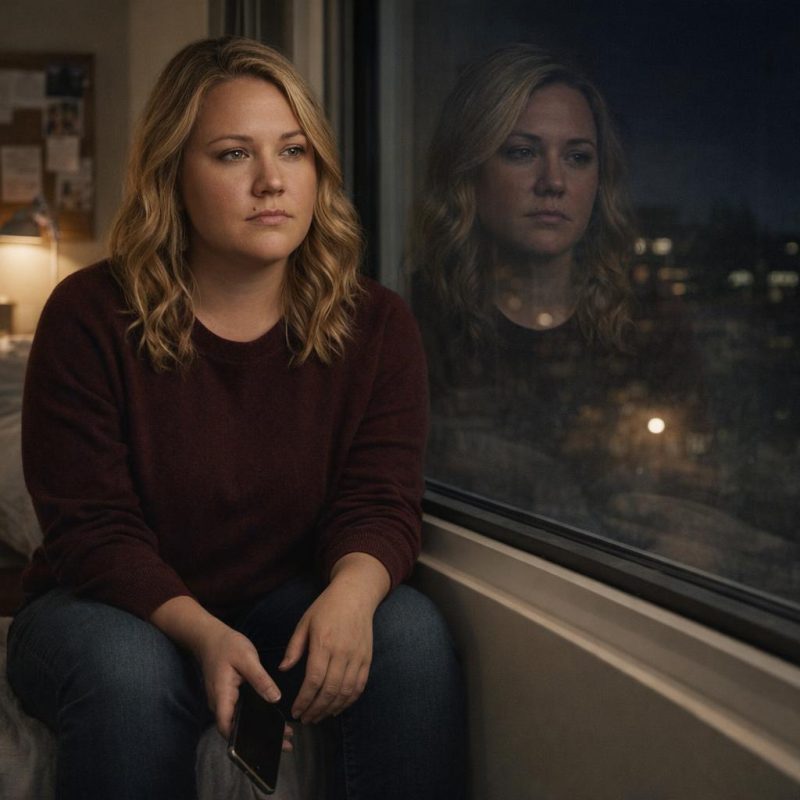 Image by RM AI
The Secret Months
I kept replaying our Sunday calls in my head, the ones from the past few months. He'd told me about the new coffee shop that opened downtown, about finally fixing the leaky faucet in the kitchen, about the neighbor's dog that kept getting into his yard. Normal stuff. Dad stuff. But now I knew that during those same weeks, he'd been seeing Lisa. Taking her to dinner, maybe to that same coffee shop he'd mentioned. And he just... hadn't said anything. It wasn't like he'd lied exactly. I never asked if he was dating anyone. But we talked about everything. At least I thought we did. When my roommate got that weird rash, I told him. When his coworker retired, he told me. We were the kind of close where silence felt like its own kind of dishonesty. So what did it mean that he'd kept this whole part of his life separate for months? What else had I missed in those conversations, reading them as complete when they'd actually had this Lisa-shaped hole running through them? I'd thought I knew his life. I'd thought he knew I'd want to know. What else had I missed?
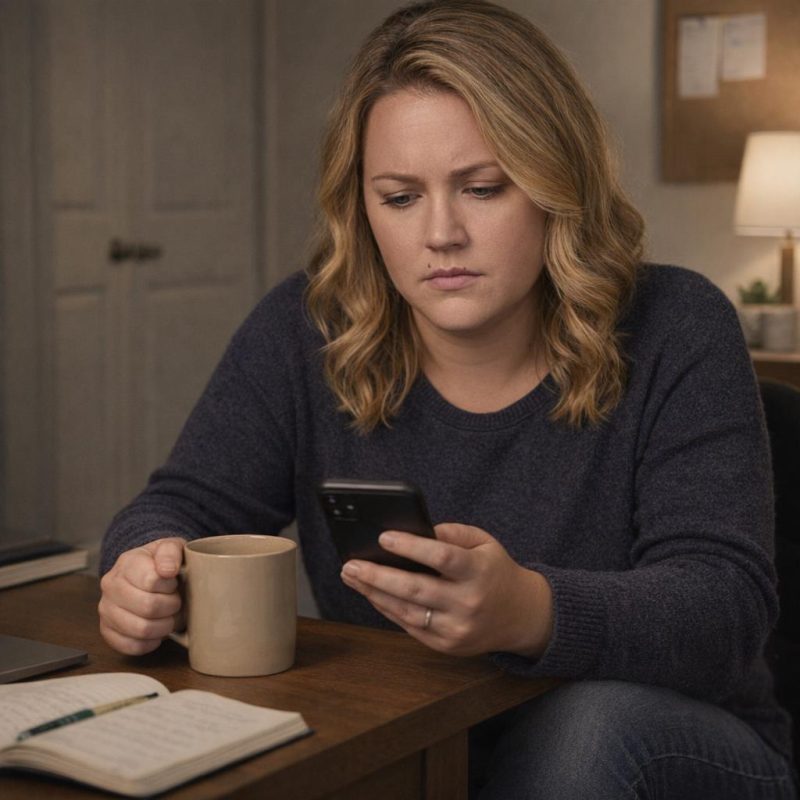 Image by RM AI
Dinner Plans
Dad called three days later while I was walking back from the library. "I was thinking," he said, and I could hear that careful tone he used when he was worried about my reaction. "Maybe the three of us could have dinner? So you could meet Lisa properly. Get to know her a little." I stopped on the sidewalk, watching students stream past me. Of course he wanted us to meet. Of course that was reasonable. What was I supposed to say—no, I'd rather you keep your girlfriend a secret forever? "Sure," I said. "That sounds good." "Yeah?" The relief in his voice was immediate and obvious. "That's great, honey. Really great. How about next Saturday? There's that Italian place near campus you like." We worked out the details. Seven o'clock. The restaurant with the good breadsticks. I'd meet them there. "I'm really glad you're open to this," he said before we hung up. "It means a lot to me." I stood there after the call ended, feeling like I'd just agreed to something I couldn't take back. He sounded relieved, which made me feel worse.
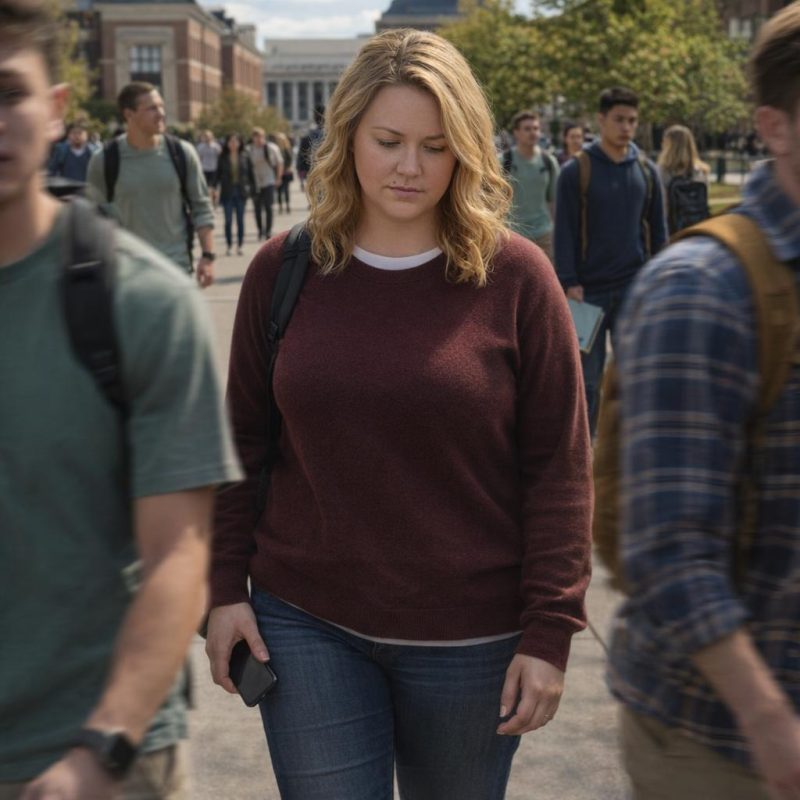 Image by RM AI
The Right Questions
Lisa was already at the table when I arrived, sitting next to Dad with her hand resting near his on the white tablecloth. She stood to hug me, and she smelled like expensive perfume. "Riley, it's so wonderful to finally meet you," she said. "Your dad talks about you constantly." She asked about my major, my thesis topic, my plans after graduation. She smiled at all the right moments, made sympathetic sounds when I mentioned my advisor's impossible standards, laughed when I told the story about the library's broken heating system. "And what about you?" I asked when the waiter cleared our salads. "Dad mentioned you work in healthcare?" "Administration," she said, nodding. "It's rewarding work. Challenging, but rewarding." She turned to Dad. "Tom was telling me about your thesis presentation. That must be coming up soon?" We talked about my presentation. Then about Dad's garden. Then about whether we wanted dessert. By the time dessert arrived, I realized I still knew almost nothing about her.
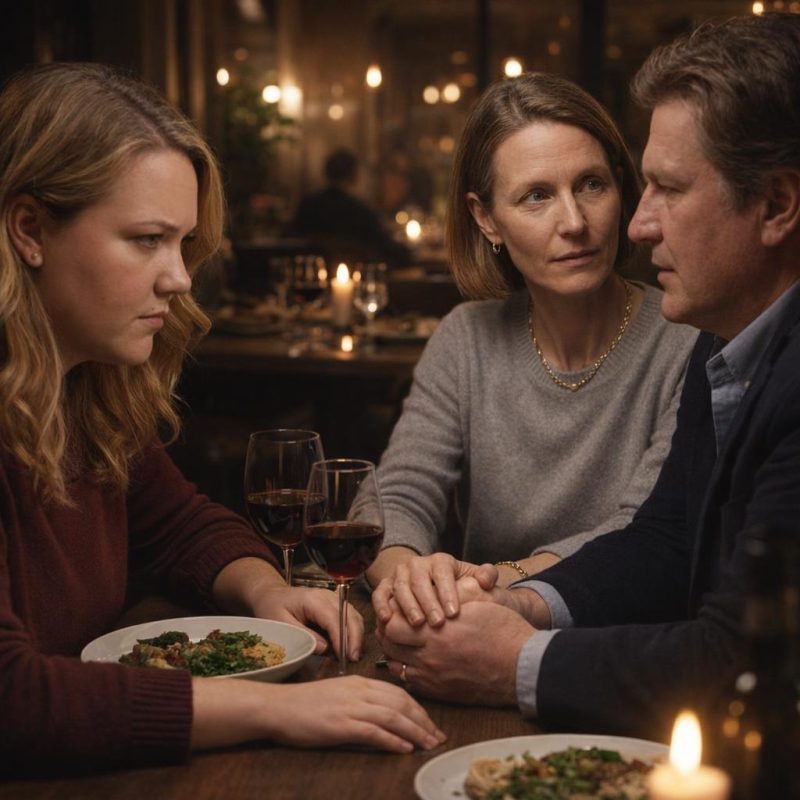 Image by RM AI
Nothing Real
The drive back to campus took forty minutes, and I spent all of them trying to figure out what bothered me. Lisa had been nice. Warm, even. She'd asked good questions and seemed genuinely interested in my answers. Dad had looked happier than I'd seen him in years. So why did I feel like I'd just sat through a job interview instead of a dinner? I tried to remember what she'd actually told me about herself. Healthcare administration—but where? She'd said it was challenging work, but what did that mean? When I'd asked where she grew up, she'd said something about moving around a lot and then asked me about my childhood in our old house. When I'd asked about her family, she'd smiled and said families were complicated and wasn't it nice that Dad and I were so close? I couldn't name her hometown. I couldn't name her employer. I couldn't tell you if she had siblings or where she went to college or what she did on weekends. Maybe that was normal for a first meeting, or maybe I was looking for problems that weren't there.
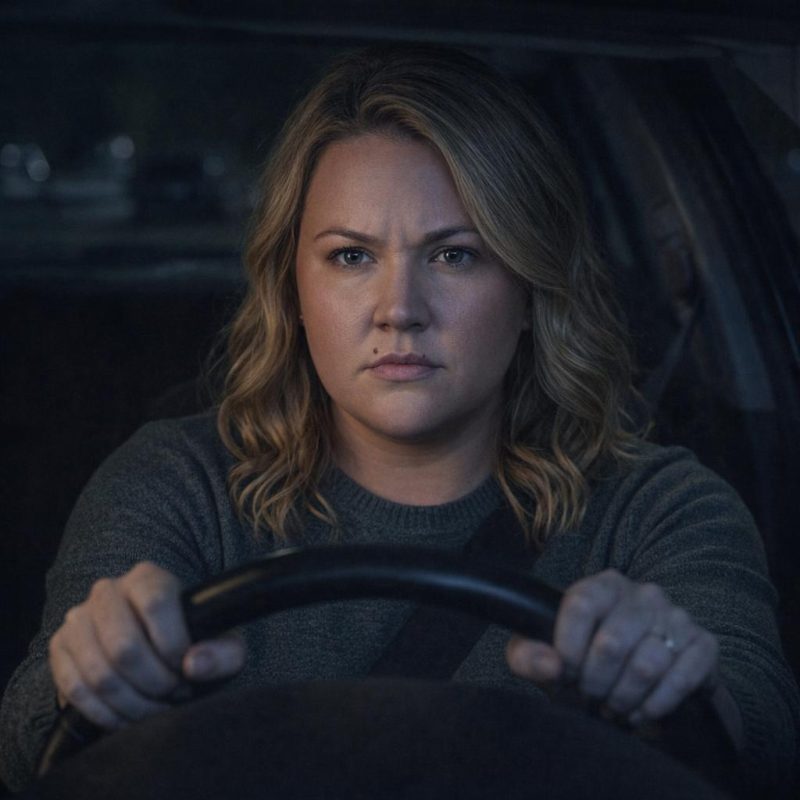 Image by RM AI
Deflection Patterns
I spent the next two days mentally replaying every question I'd asked Lisa and every answer that had somehow slipped sideways. "Where do you work?" "In healthcare administration—it's such important work, making sure patients get the care they need." Okay, but which hospital? Which clinic? "Do you have family in the area?" "Family's complicated, isn't it? But I love that you and your dad are so close." Right, but do you have siblings? Parents? "Where did you grow up?" "Oh, we moved around so much when I was young. What was it like growing up in the same house your whole childhood?" Every single answer had redirected. Every single one had turned the conversation back to me or to Dad, and I'd let it happen because it felt rude to push. Her job was in healthcare administration, but I couldn't remember her naming a single hospital or clinic.
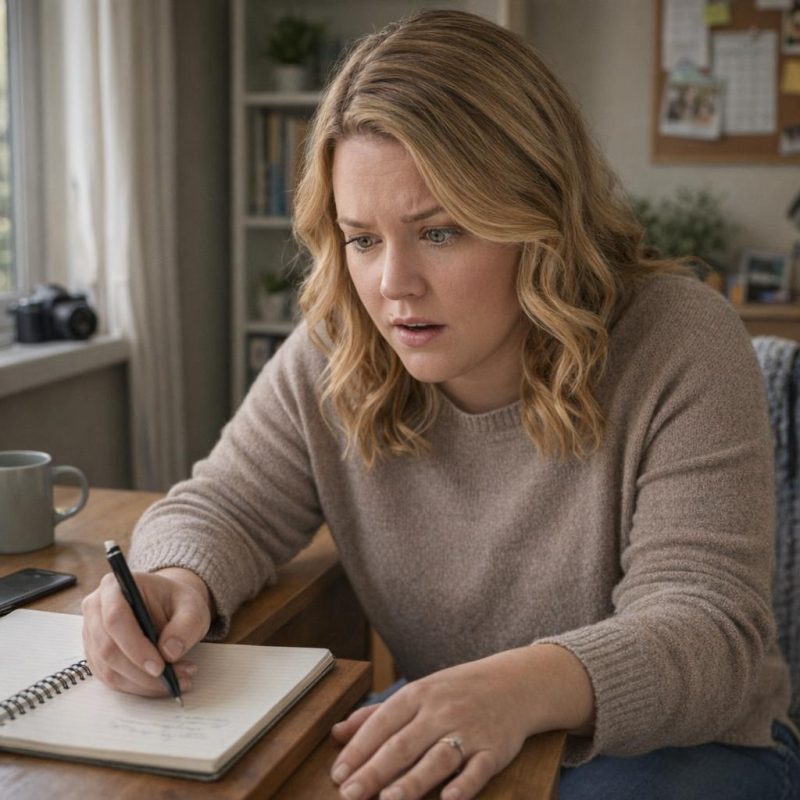 Image by RM AI
Second Chances
When Dad called again, I was in the middle of highlighting sources for my bibliography. "I had an idea," he said. "What if you and Lisa met for coffee? Just the two of you. I think maybe having me there made it feel formal, you know? Like you were both performing for me." He wasn't wrong about that. "She suggested that coffee place near your campus," he continued. "The one with the good scones. She really wants to get to know you better, Riley." I looked at my highlighted pages, at the thesis that was supposed to be my focus right now. "Okay," I said. "When?" We settled on Thursday afternoon. After he hung up, I sat there telling myself this was good. This was me being fair, being open-minded, giving her a real chance without Dad there as a buffer. Maybe one-on-one would feel different. Maybe I'd actually learn something about her. I told myself I was giving her a real chance, not looking for problems.
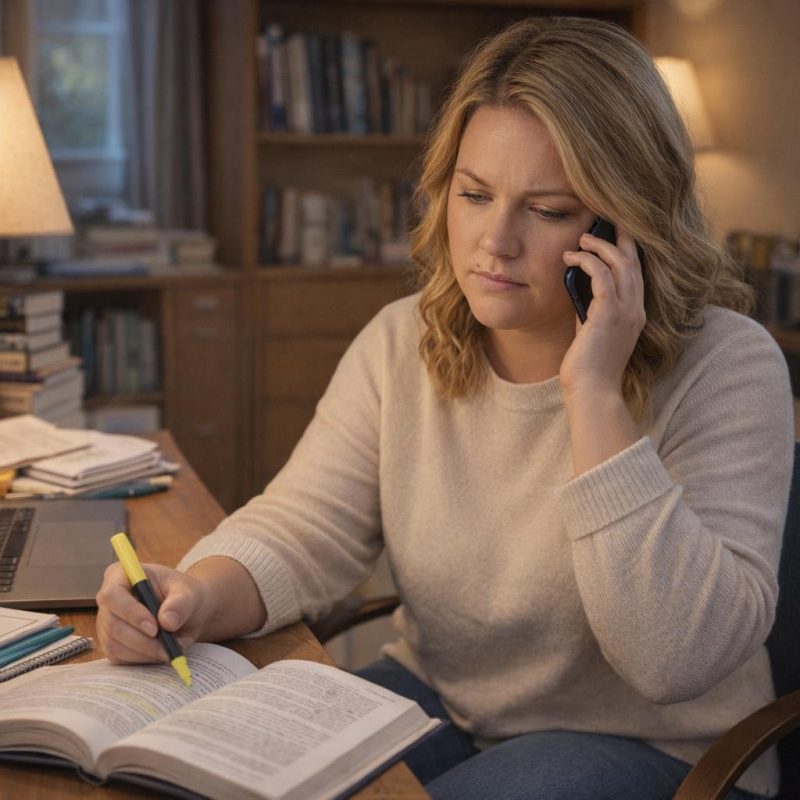 Image by RM AI
Healthcare Administration
Lisa was already at a corner table when I walked in, two cups of coffee waiting. "I got you a latte," she said. "Your dad mentioned you liked them." We talked about my thesis for a while. She asked smart questions about my research methodology, about my timeline for finishing. Then I asked about her work. "Healthcare administration is fascinating," she said. "You're really at the intersection of patient care and operational efficiency. Making sure the systems work so that doctors and nurses can focus on what they do best." She talked for five minutes. I listened carefully. When she finished, I still didn't know where she worked or what her actual job title was. "And your family?" I asked. "Are they nearby?" "Oh, family's always complicated, isn't it?" She smiled. "I grew up in Portland, actually. Moved around a lot as an adult." We talked about the Pacific Northwest for a bit. Then she mentioned something about visiting Seattle as a kid, except she said it like she'd lived there. Her hometown was either Portland or Seattle depending on which story she was telling.
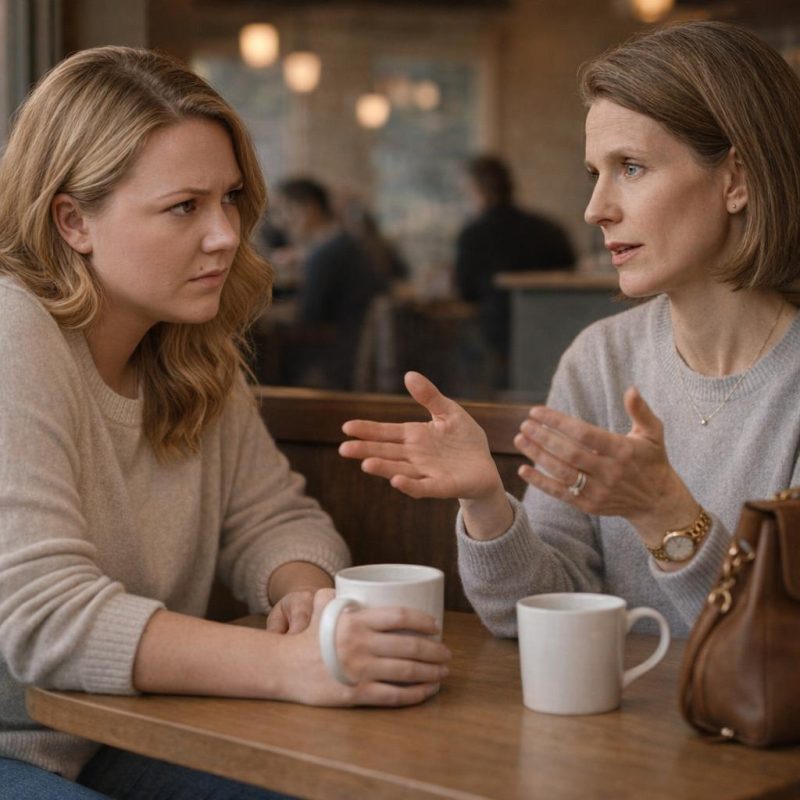 Image by RM AI
The Shifting Story
I sat in the library afterward with my thesis notes spread out in front of me, completely untouched. Portland or Seattle. She'd definitely said Portland first—"I grew up in Portland, actually." But then later, when we were talking about rain, she'd said something about "when I was a kid in Seattle." Hadn't she? Or had she said visiting Seattle? I tried to replay the exact words, but they blurred together in my memory. Maybe her family had moved. Maybe she'd lived in both places. Maybe I'd misheard or misunderstood, and I was sitting here building a case out of nothing because I wanted a reason to dislike her. That felt ugly to admit, even to myself. Dad was happy. Lisa was perfectly nice. And here I was, cataloging inconsistencies like I was investigating her instead of getting to know her. Maybe I'd misheard, or maybe she'd said her family had moved, or maybe I was looking for reasons not to like her.
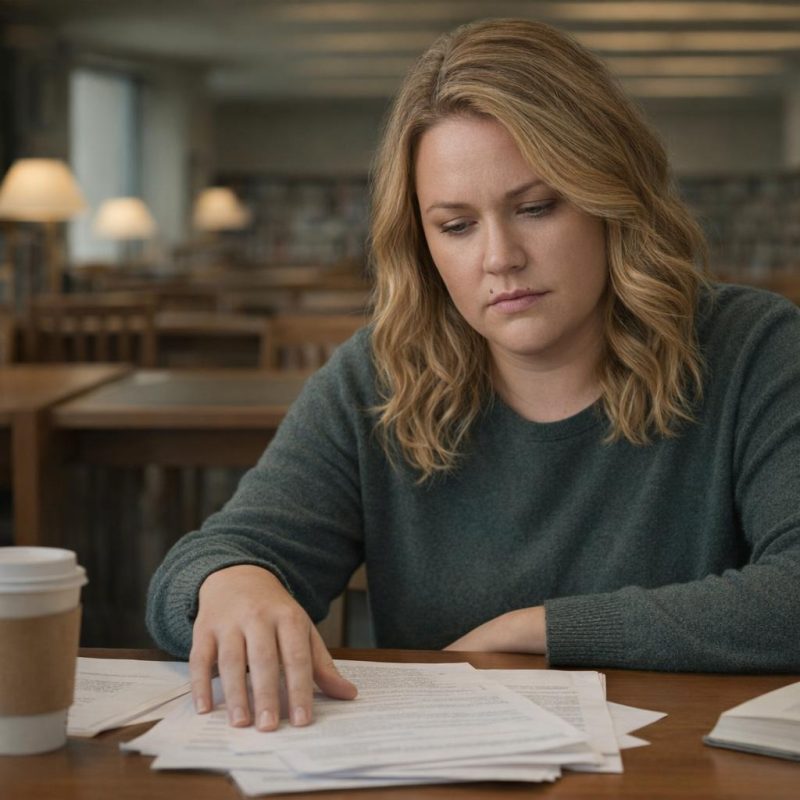 Image by RM AI
Voicing Doubt
I called Dad that night during our usual Thursday slot, trying to sound normal even though my stomach was tight. We talked about my thesis for a few minutes—he asked about my research timeline, I gave him the update he expected. Then I took a breath and said the coffee meeting had gone fine, that Lisa seemed really nice. I paused, choosing my words carefully. "She's just a little hard to get to know, I guess. Kind of vague about some things." I kept my voice light, almost laughing it off, like it was barely worth mentioning. The silence on the other end stretched longer than it should have. When Dad finally spoke, his voice had an edge I'd never heard before. "What do you mean by that?" Not curious. Not concerned. Sharp. My hand tightened around the phone. I tried to backtrack, saying I just meant she was private, that it was fine, totally normal for someone new. But the damage was already done. The conversation had shifted into something tense and unfamiliar, and I didn't know how to shift it back. The air between us felt suddenly charged with something I couldn't name. His response had come too fast and too sharp.
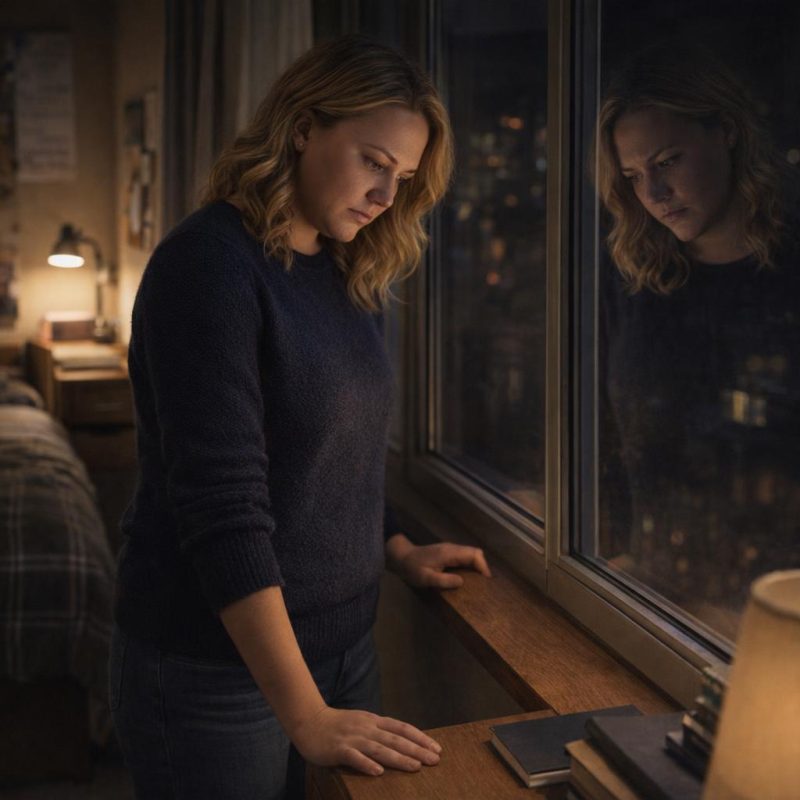 Image by RM AI
Sharp and Panicked
Dad didn't let it go. "You're looking for problems where there aren't any, Riley." His tone was harder now, almost angry. "Why can't you just be happy for me?" I felt my chest constrict. This wasn't how we talked to each other. Ever. I tried to explain that I was happy for him, that I just wanted to understand Lisa better, to get to know her. But he cut me off. "You're being judgmental. You met her once and you're already picking her apart." There was something underneath the irritation in his voice—something that sounded almost like panic, like fear. I didn't understand it. I'd never heard him speak to me this way before, like I was the problem, like I was the one being unreasonable. I kept trying to de-escalate, to smooth things over, but every word I said seemed to make it worse. He accused me of not giving Lisa a fair chance, of looking for reasons not to like her. The call felt like it was spiraling, and I couldn't stop it. I'd never heard him speak to me that way before.
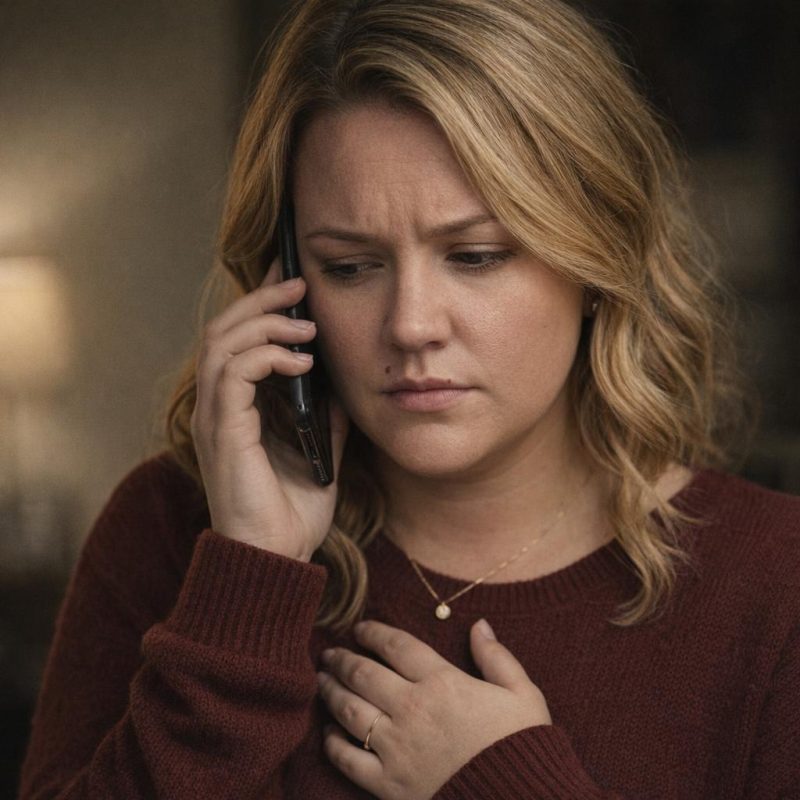 Image by RM AI
The Enemy
"You need to give Lisa a real chance," Dad said, his voice still tight with that defensive edge. "Stop looking for problems that don't exist." I sat on my bed, phone pressed to my ear, feeling like the ground had shifted beneath me. I tried one more time to tell him I wasn't trying to cause problems, that I just wanted to understand what was happening. But he wasn't hearing me. He was hearing criticism, attack, judgment—things I hadn't meant to convey. The conversation ended badly, with both of us frustrated and hurt. No resolution. No understanding. Just tension hanging in the air between us. After we hung up, I stared at my phone for a long time, wondering when I'd become the obstacle in my own father's life. When had wanting to know his girlfriend better turned into being the enemy? I felt confused and alone, like I'd lost my footing in the one relationship I'd always been able to count on. The distance between us felt sudden and vast, and I didn't know how to cross it. We'd never hung up angry before.
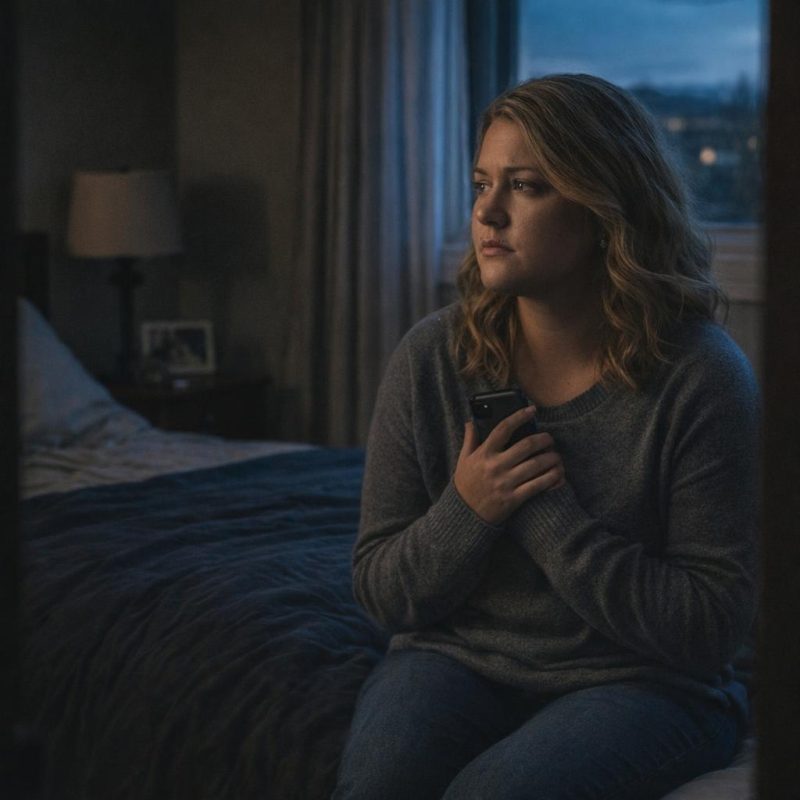 Image by RM AI
Dinner at His Apartment
Three days later, Dad sent a text instead of calling. "Lisa wants to cook dinner for you at my place. Saturday at 6?" I stared at the message, feeling the weight of what it really meant. This wasn't just a dinner invitation. It was a test. A chance to prove I wasn't the judgmental daughter he'd accused me of being. If I said no, I'd only confirm whatever point he thought I was making. If I said yes, maybe I could fix whatever had broken between us during that phone call. I texted back that I'd be there, adding a smiley face that felt forced even in emoji form. After I hit send, I sat with my phone in my lap and made myself a promise. I would try harder this time. I would push down the doubts, ignore the inconsistencies, give Lisa the fair chance Dad said she deserved. Maybe I had been looking for problems. Maybe my grief over Mom had made me protective in ways that weren't fair. I told myself I'd try harder this time.
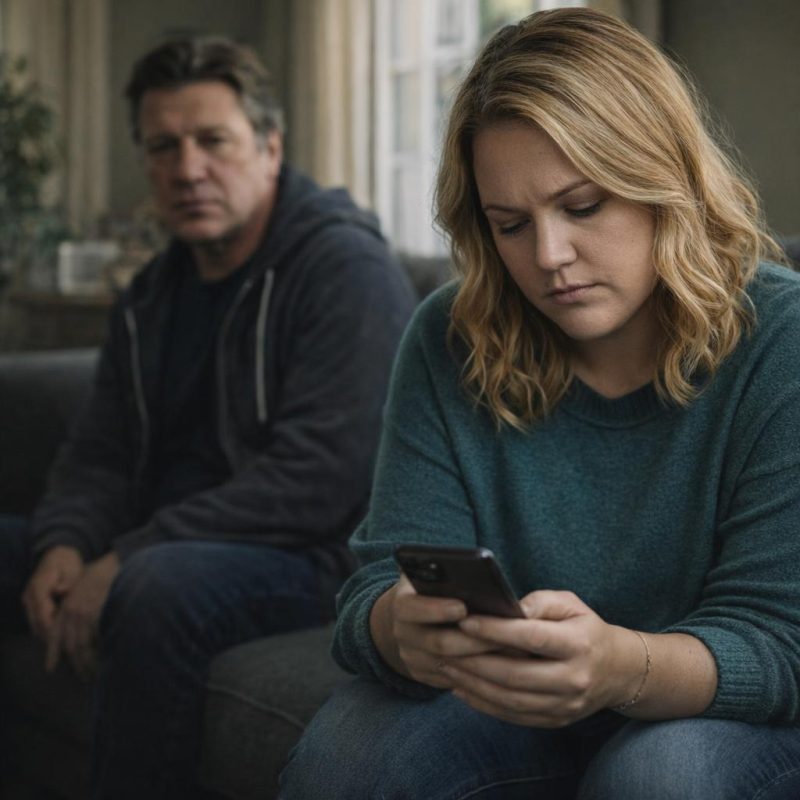 Image by RM AI
Smooth Navigation
Saturday evening, I arrived at Dad's apartment with a bottle of wine and my best intentions. Lisa was already in the kitchen, wearing an apron over dark jeans and a cream sweater, looking perfectly at ease. Dad seemed relaxed and happy, more like himself than he'd sounded on the phone. Lisa smiled warmly when she saw me and immediately pulled me into the cooking process. "Riley, could you help me find the serving platter?" she asked Dad, but her hand was already reaching for the cabinet to the left of the sink. She opened it before he could answer, pulling out exactly what she needed. A few minutes later, she asked where he kept the good wine glasses. Again, she opened the right cabinet while the question was still hanging in the air. It happened three more times—asking where things were while simultaneously retrieving them. I watched Dad's face. He didn't seem to notice, or if he did, he didn't think it was strange. But I noticed. I stood there setting the table, wondering how many times Lisa had been here to know his kitchen this well. Dad didn't seem to notice.
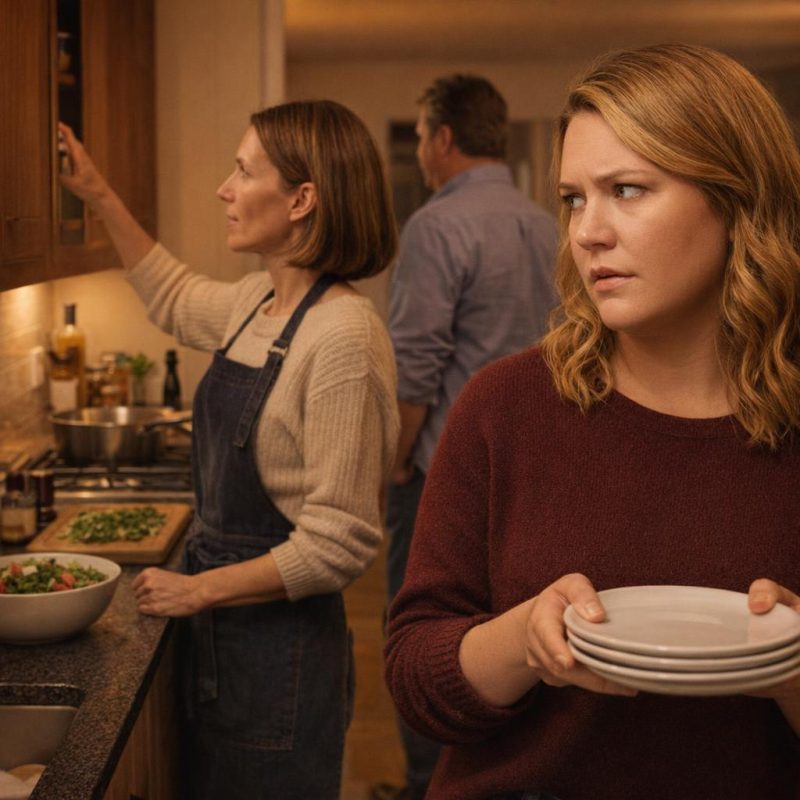 Image by RM AI
Cousin's Birthday
Two weeks later, my cousin Emma turned thirty, and the whole family gathered at Aunt Denise's house for cake and chaos. Dad brought Lisa, introducing her to relatives she hadn't met yet. I watched her work the room with practiced ease, asking my uncle about his new job, my cousin about her kids' school, my grandmother about her garden. She remembered every detail, referencing things people had mentioned earlier in new conversations. "Oh, so this must be the daughter who's studying marine biology," she'd say, or "Your husband mentioned you just got back from visiting your sister in Phoenix." Everyone seemed charmed. She was attentive, warm, genuinely interested. But I couldn't shake the feeling that I was watching her build a catalog, storing information about my family like data points. Then I caught Aunt Denise's eye from across the room. She was watching Lisa too, and the look on her face wasn't charmed. It was concerned, assessing, almost protective. Our eyes met, and something passed between us—a shared unease, a mutual recognition that something felt off. Aunt Denise gave me a look across the room that said she'd noticed it too.
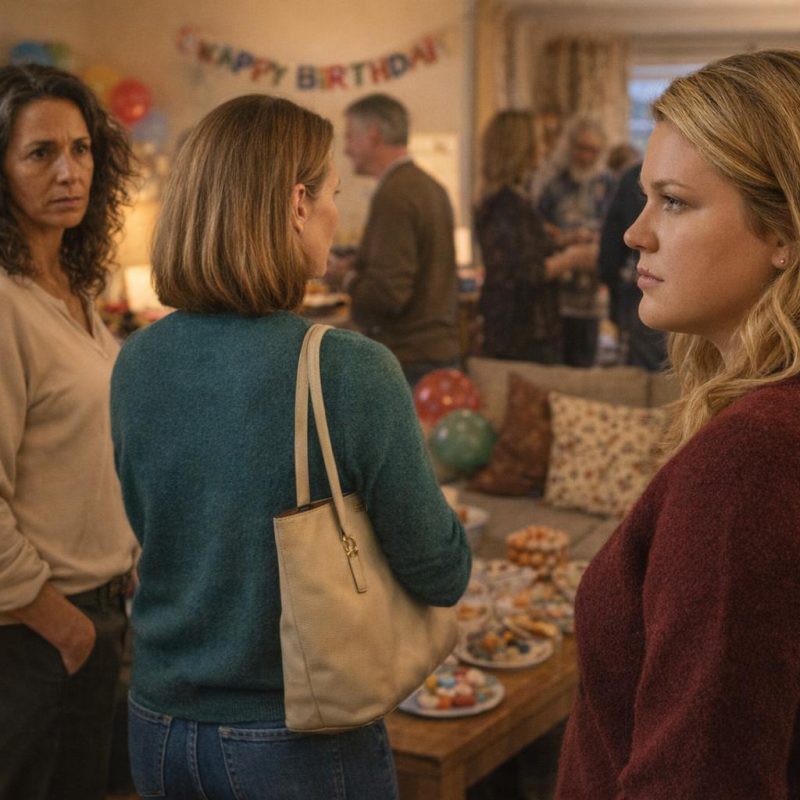 Image by RM AI
The Shared Look
I couldn't stop thinking about it on the drive home. The way Aunt Denise had looked at me when Lisa asked Uncle Mark about his late wife. Lisa's question had been perfectly sympathetic—"I heard you lost your wife a few years ago. That must have been so difficult." Kind words, gentle tone. But then Uncle Mark had started talking about Sarah's favorite restaurant, the one he couldn't bring himself to go back to, and Lisa's attention had sharpened. She'd leaned in, asked follow-up questions about his grief, about how his kids had handled it, about whether he'd dated since. The questions seemed caring on the surface, but there was something about the way she focused when he answered, the way she absorbed every detail. I'd glanced at Aunt Denise during that exchange and found her watching with an expression I couldn't quite read. Not charmed. Not fooled. Concerned. Now, alone in my car, I replayed the moment over and over. What had Denise seen? What had I seen? The question had been sympathetic, but the attention that followed his answer felt different.
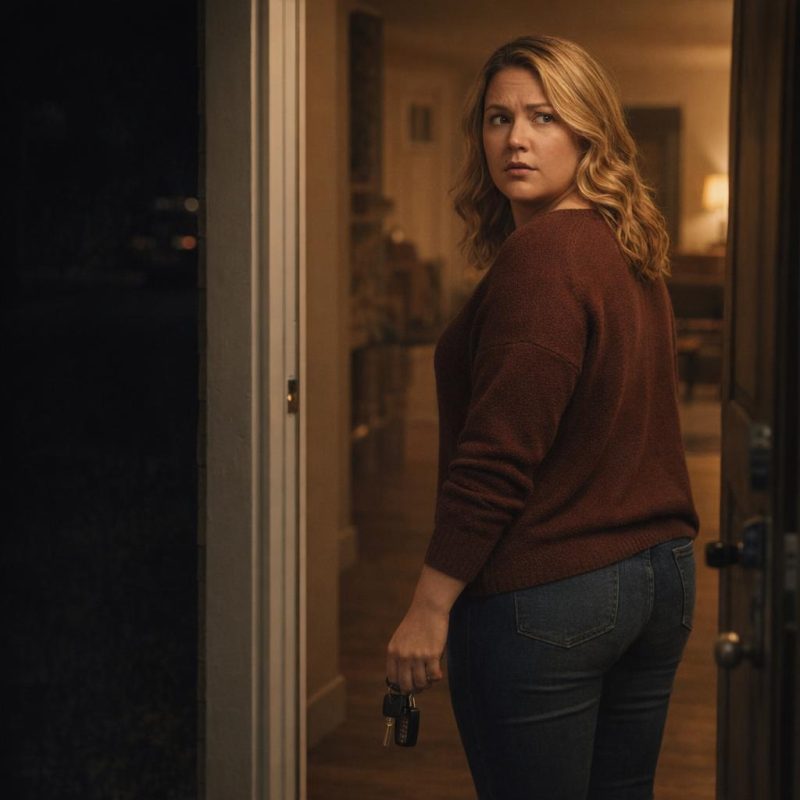 Image by RM AI
Too Fast
I waited two days before calling Dad again, rehearsing what I'd say until the words felt stiff in my mouth. When he answered, I kept my voice carefully neutral. "Hey, Dad. The party was really nice. Everyone seemed to like Lisa." I paused, then took the plunge. "I just wanted to say... things seem to be moving really fast with you two, and I—" He exploded before I even finished the sentence. "Are you serious right now?" His voice was louder than I'd ever heard it, sharp with anger that seemed to come from nowhere. "Are you trying to control my life? Is that what this is?" I froze, stunned by the intensity of his reaction. I'd barely said anything. I tried to calm him down, to explain that I wasn't trying to control anything, but he wouldn't hear it. He was furious in a way that felt completely disproportionate to what I'd said. My careful words, my gentle tone—none of it mattered. The phone felt hot against my ear, my pulse hammering in my throat. He exploded before I even finished the sentence.
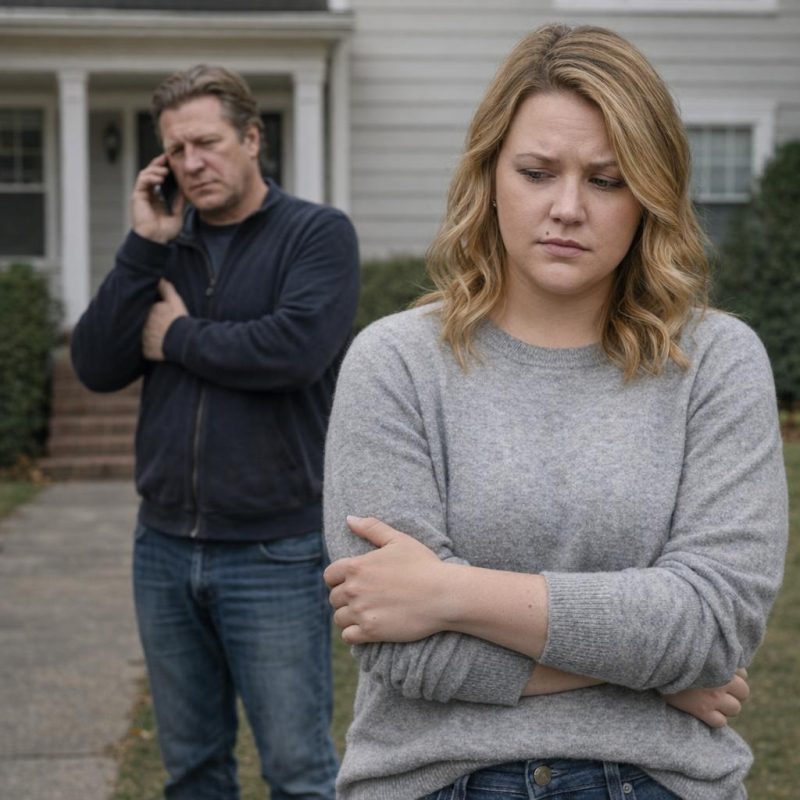 Image by RM AI
Under the Anger
"Do you want me to be alone forever?" His voice cracked on the word 'alone,' and I froze. "Is that what you want? Because that's what it sounds like." I tried to interrupt, to tell him that wasn't what I meant at all, but he kept going. "You clearly have a problem with me being happy. You can't stand that I've found someone." The accusations felt like they were coming from somewhere else, like he was arguing with someone who wasn't me. I pressed the phone harder against my ear, trying to understand where this was coming from. Under all that anger, I heard something else—something that sounded like fear. His voice had this edge to it, almost desperate. "Dad, I just want you to be careful," I managed to say. "That's all. I'm not trying to—" "You need to back off," he said, and the fear was still there, threaded through every word. "This is my life." The conversation spiraled after that, both of us saying things that made everything worse. I kept trying to reach him, to make him hear what I was actually saying, but it was like talking to a stranger. I didn't understand what he was so afraid of.
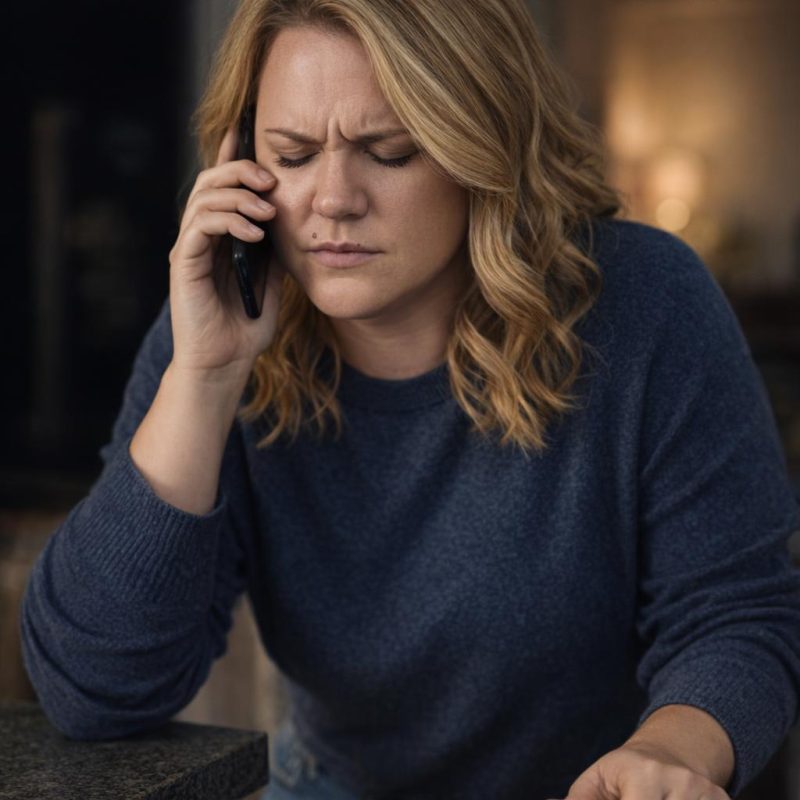 Image by RM AI
Second Guessing
I replayed that phone call maybe a hundred times over the next few days. I'd be sitting in the library trying to study, and suddenly I'd hear his voice again—that crack when he said 'alone,' the way he'd sounded almost panicked. I kept analyzing his tone, trying to figure out what was underneath all that anger. Had I really heard fear, or was I just imagining it because I wanted there to be some explanation for why he'd reacted that way? Maybe I was inventing problems where none existed. Maybe Lisa was just a private person and Dad was just being defensive about a new relationship. Maybe I was the one being controlling without even realizing it. I'd read somewhere that grief makes people protective of new happiness, like they're afraid it'll be taken away. Was that all this was? I couldn't trust my own judgment anymore. Every time I thought I understood what was happening, I'd second-guess myself. Finals were approaching, and I tried to focus on studying, on the exams that actually mattered. But late at night, I'd lie awake wondering if I was creating a crisis out of nothing. Maybe I was the one creating problems where none existed.
 Image by RM AI
Graduation Week
Finals week hit like a freight train. I had three exams in four days, two major papers due, and my thesis defense scheduled for Thursday morning. I threw myself into all of it—the studying, the writing, the endless revisions. Every time my mind started to drift toward Dad and Lisa and that awful phone call, I'd force myself back to my notes. I highlighted passages until my textbooks looked like rainbow disasters. I rewrote my thesis introduction six times. I lived on coffee and granola bars and told myself that if I just focused on graduation, everything else would resolve itself. Dad wouldn't miss my graduation. He'd never missed anything important in my entire life. By the time we saw each other at the ceremony, whatever tension existed between us would just... dissolve. We'd hug, he'd tell me he was proud, and this whole weird chapter would be over. The week was absolutely exhausting. I barely slept, barely ate anything that wasn't from a vending machine. I was so buried in academic work that I hardly thought about Lisa at all. Graduation was three days away, then two, then one. I was wrong about that.
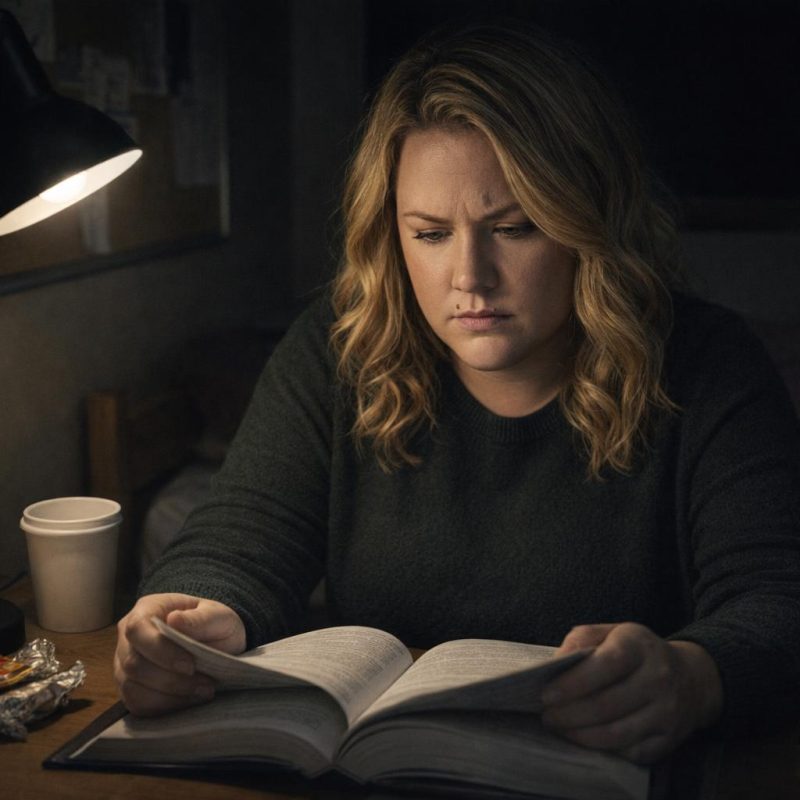 Image by RM AI
Logistics Only
Dad and I started texting about graduation logistics on Tuesday. Stiff, formal messages that felt like we were strangers coordinating a business meeting. "What time should I plan to arrive?" he wrote. I sent back the ceremony start time and suggested he get there thirty minutes early for parking. "Where is parking?" Another text. I explained about the lot behind the auditorium. "Do you need directions to the venue?" I asked, even though he'd been to campus a dozen times. "No," he replied. Just that. One word. I asked if he needed to know where to pick up his guest ticket. "Yes." I sent him the information. He responded with "OK." No warmth. No excitement. No "can't wait to see you graduate" or "so proud of you." Just practical information exchanged like we were coordinating a delivery. Neither of us mentioned Lisa. Neither of us mentioned our argument. The texts sat on my phone like little monuments to everything we weren't saying. I kept hoping that seeing each other in person would fix whatever had broken between us. Lisa's name never appeared in any of them, but I felt her presence in every word we didn't say.
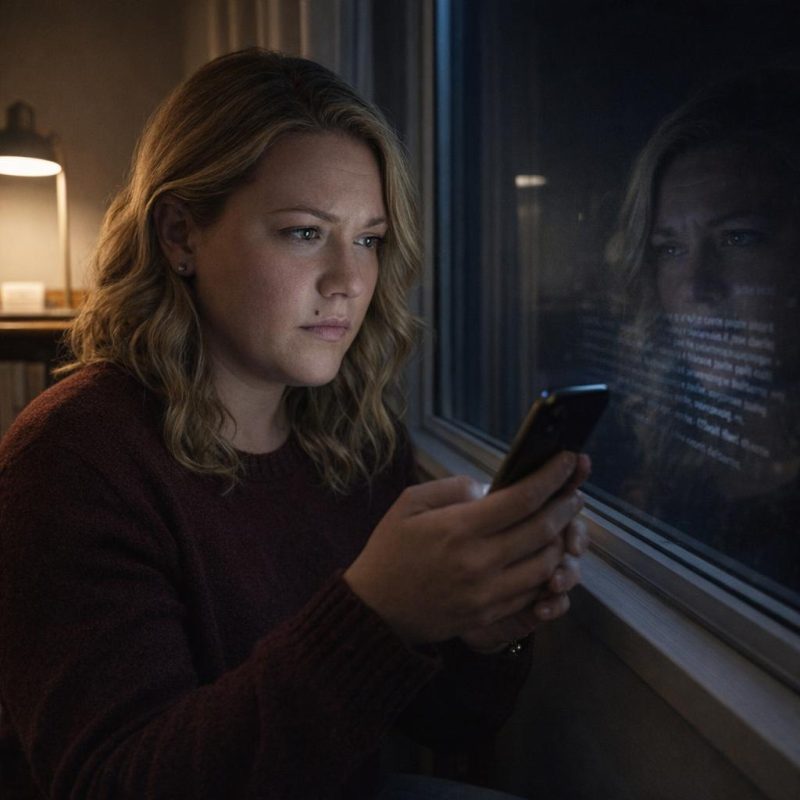 Image by RM AI
The Unspoken Name
More texts came over the next two days. Dad confirmed he had the date and time written down. I sent him a photo of what the auditorium looked like so he'd recognize it. He sent back a thumbs up emoji. Every message felt like we were both carefully writing around this massive thing we refused to name. I wanted to ask if Lisa was coming to the ceremony. The question sat in my text box half-typed at least five times. "Will Lisa be there too?" But I couldn't bring myself to hit send. I was afraid asking would start another fight, would make him defensive again, would ruin whatever fragile peace we'd managed. I was also afraid of the answer. Afraid she'd be there, sitting next to him, inserting herself into this moment that was supposed to be mine and his. Or maybe I was more afraid that he'd choose not to come at all if I made it an issue. The silence around her name grew louder with every bland, logistics-only text we exchanged. I told myself it would be fine. Tomorrow he'd be there in the audience like always, and none of this awkwardness would matter. I wanted to ask if she was coming to the ceremony, but I was afraid of what his answer would mean.
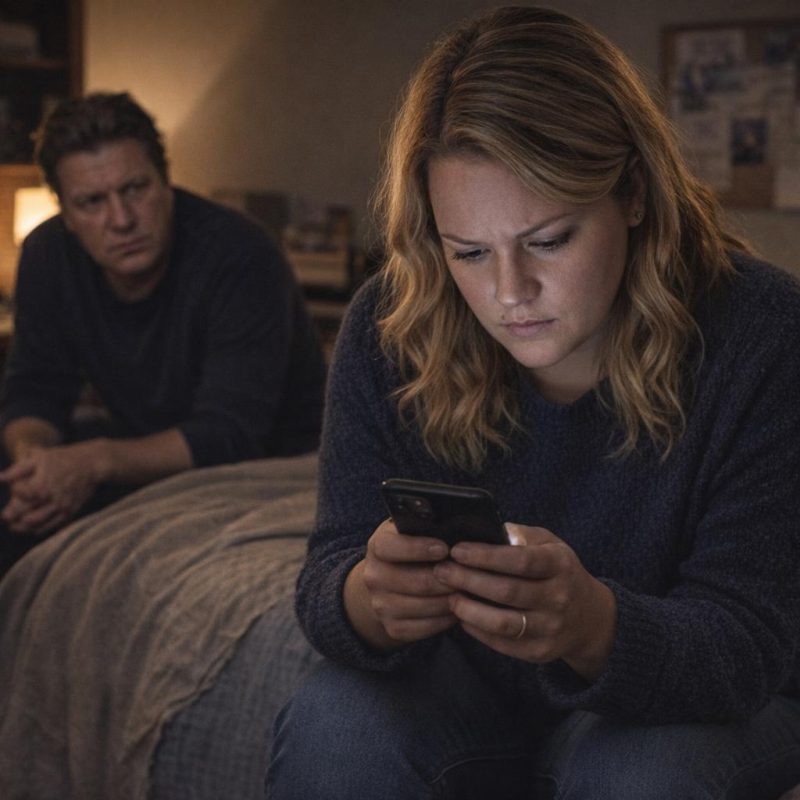 Image by RM AI
Proud of You
My phone buzzed at nine-thirty the night before graduation. I was laying out my cap and gown on my bed, making sure everything was ready for the morning. The text was from Dad. "Proud of you. We'll see you tomorrow." I stared at those words until they blurred. We'll see you tomorrow. Not just the logistics, not just confirmation of time and place. Actual warmth. Actual emotion. He sounded like my dad again—the one who used to leave notes in my lunch box, who'd always been the loudest person cheering at my events. The relief that flooded through me was so intense I had to sit down on the edge of my bed. I'd been worrying for nothing. All that anxiety, all that second-guessing, all those fears about him choosing Lisa over me—it was all just stress and overthinking. Of course he was going to be there. Of course everything was going to be okay. I texted back a heart emoji and "Love you, Dad." He sent one back immediately. I went to bed that night believing tomorrow would be perfect, that I'd look out into the audience and see him right where he'd always been. It was the first time in weeks he'd sounded like himself.
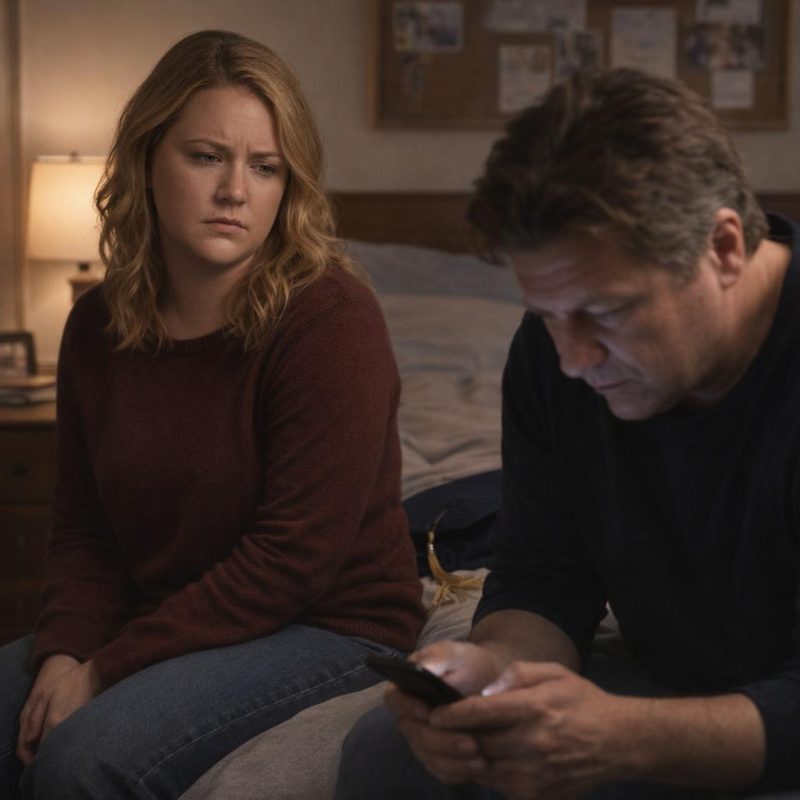 Image by RM AI
Getting Ready
I woke up early on graduation morning, too excited to sleep. The sun was barely up when I got in the shower, letting the hot water wake me up fully. I did my hair the way I'd practiced, put on makeup carefully so it would look good in photos. The dress I'd bought specifically to wear under my gown was hanging on my closet door—a soft blue that Mom would have loved. I slipped it on, zipped it up, looked at myself in the mirror. In two hours, I'd be walking across that stage. Dad would be in the auditorium where he'd always been—at my kindergarten graduation, my eighth grade promotion, my high school ceremony. This was the big one, the culmination of four years of work, and he was going to be there to see it. I sat down on my bed to put on my shoes, checking the time. One hour before I needed to line up with the other graduates. Everything was perfect. Everything was finally okay again. Then my phone rang. It was Dad calling. My stomach dropped even before I answered.
 Image by RM AI
The Crisis
"Hey, sweetheart." His voice was tight, wrong. I knew immediately. "Dad?" I stood up, one shoe on, one still in my hand. "What's wrong?" He took a breath I could hear through the phone. "Lisa's having a crisis. I can't leave her alone right now." The words didn't make sense at first. I just stood there, dress half-zipped, staring at my cap and gown laid out on the bed. "What kind of crisis?" I asked. "I just... I can't leave her. She needs me here." My heart was pounding so hard I could feel it in my throat. "Dad, please." My voice came out small, desperate. "It's my graduation. It's today. Right now." "I know, I know," he said, and he sounded like he was trying to convince himself more than me. "But Lisa really needs me. I can't just—" "Dad, please," I said again. I was begging now, actually begging. "It's my graduation. The biggest day of my life." I could hear him breathing, could hear him making the choice in real time. He was choosing her. After everything, after a lifetime of never missing a single event, he was choosing a woman he'd known for three months over being there for me. I heard myself say 'Dad, please. It's my graduation,' like I was begging him to remember who I was.
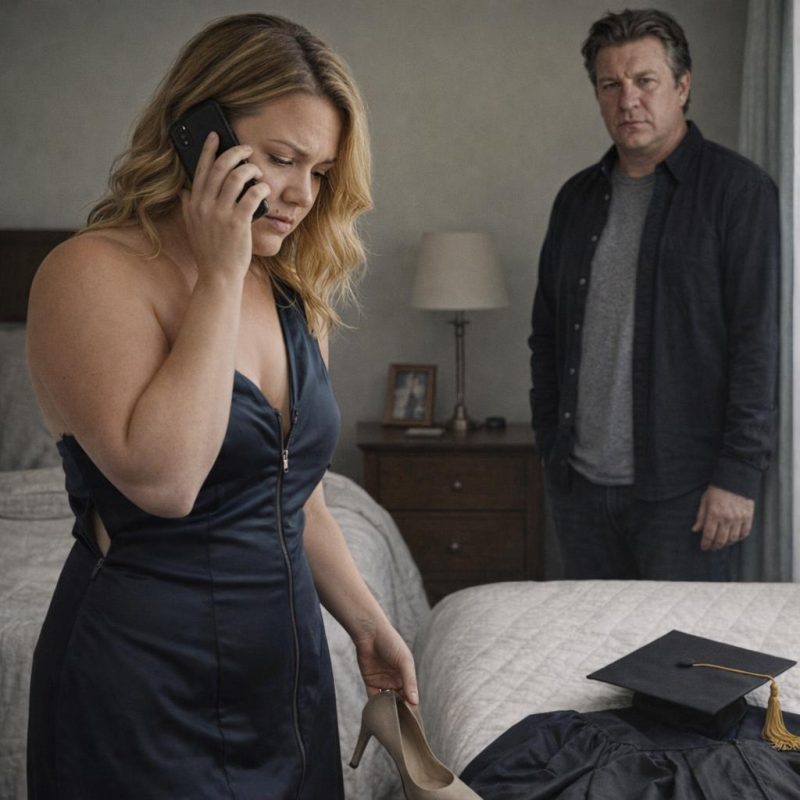 Image by RM AI
Please
"Dad, please," I said again, and my voice cracked. "Remember the piano recitals? You sat through every single one, even when I was terrible. You never missed a softball game, not even the ones where I sat on the bench the whole time." I was pacing now, one shoe on, one still clutched in my hand, my dress half-zipped up my back. "The science fair in eighth grade when my volcano didn't work and you stayed with me until midnight helping me fix it. Every parent-teacher conference. Every awards ceremony. Every single thing, Dad. You were always there." I could hear him breathing on the other end. "You promised me," I whispered. "At the kitchen table after Mom died, you promised we were a team. Just you and me. That we'd get through everything together." My throat was so tight I could barely get the words out. "Please don't break that promise. Please don't choose her over me. Not today." The silence stretched out so long I thought maybe the call had dropped. Then I heard him take a shaky breath, and for just a second, I thought maybe I'd reached him.
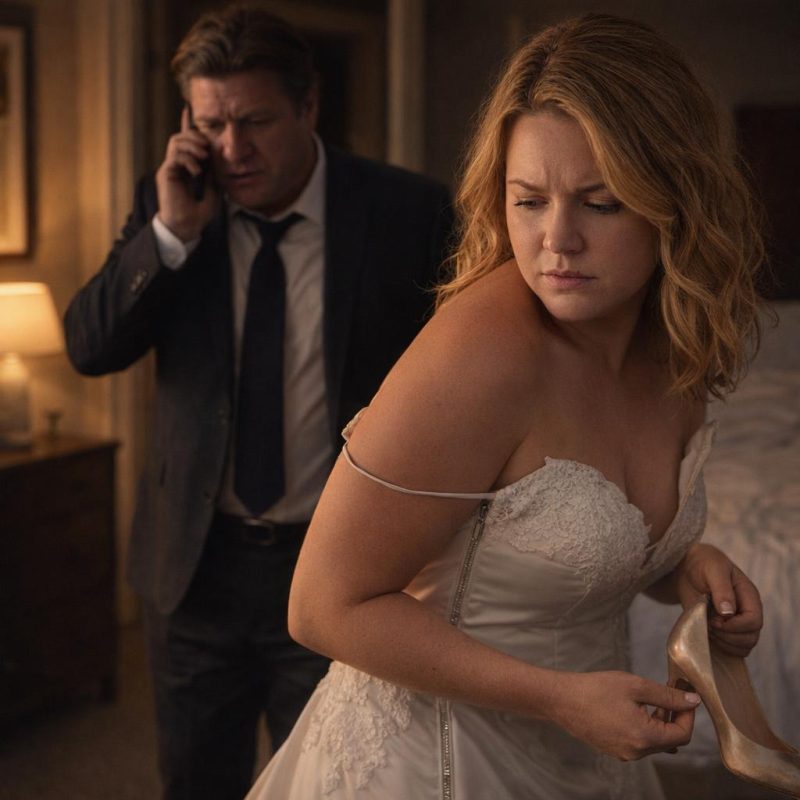 Image by RM AI
She Needs Me
"I'm sorry, Riley," he finally said, and his voice sounded hollow, like he was reading from a script he didn't quite believe. "Lisa needs me right now. I have to be here for her." The words hit me like a physical blow. "Dad, wait—" I started, but he was already talking over me. "I have to go," he said quickly, like he couldn't get off the phone fast enough. "I'm sorry." The line went dead. I stood there staring at my phone, still holding my other shoe in my hand. The screen showed the call had ended—two minutes and forty-seven seconds. That's how long it took for him to choose her. Fifteen years of never missing anything. Fifteen years of being there, of being the one constant in my life after Mom died. Piano recitals and softball games and science fairs and parent-teacher conferences and every single moment that mattered. All of it weighed against three months with a woman I'd met twice. He had chosen her over fifteen years of never missing anything.
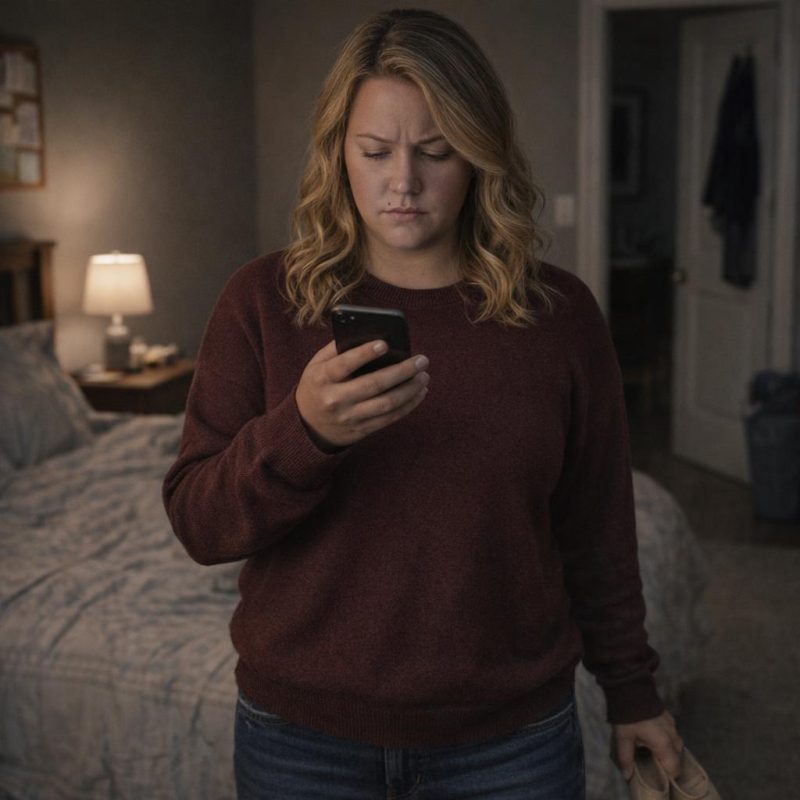 Image by RM AI
The Empty Seat
I finished getting ready in a fog, zipped my own dress, put on both shoes, drove to campus like I was on autopilot. The auditorium was packed with families, everyone smiling and taking photos. I scanned the crowd anyway, even though I knew he wouldn't be there. Aunt Denise waved from the third row, camera already in hand. Next to her was an empty chair. I lined up with the other graduates, listened to speeches I didn't hear, waited for my name to be called. When it came, I walked across that stage in front of hundreds of people, and the only thing I could see was that empty chair. I shook hands with the dean, accepted my diploma, smiled because that's what you're supposed to do. The whole time I felt like I was watching myself from somewhere far away, like this was happening to someone else. After the ceremony, Marcus found me in the crowd and pulled me into a hug. Aunt Denise took photos and tried to make me laugh. I performed happiness while feeling completely hollowed out. Marcus hugged me after, but I couldn't feel it.
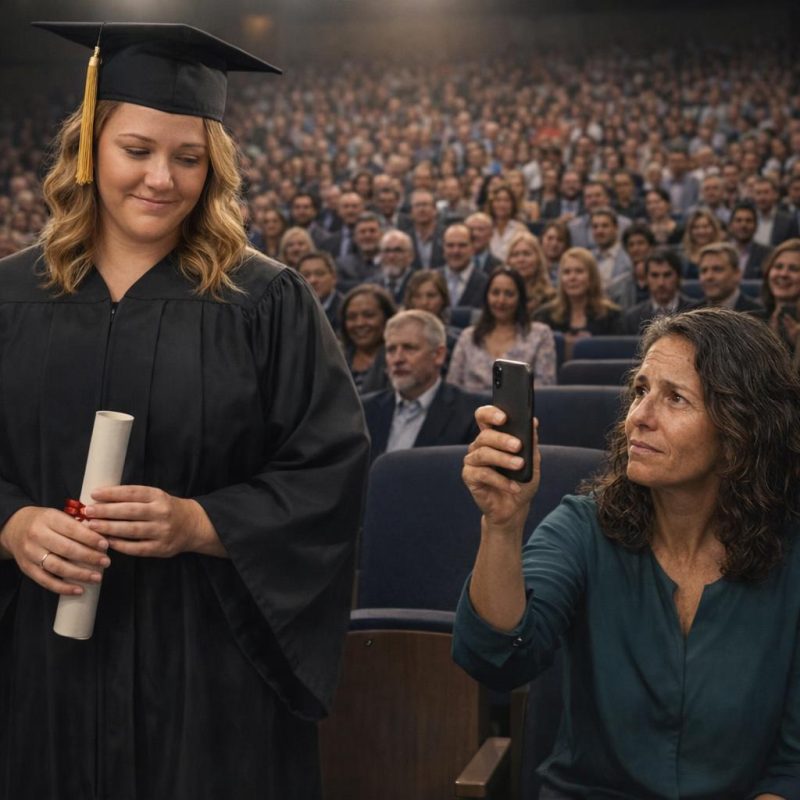 Image by RM AI
What Denise Knew
I was still holding my diploma tube in the hallway, other families celebrating around me, when Aunt Denise touched my arm. "Riley, can we talk somewhere private?" Her voice was low, serious in a way that made my stomach drop. We found an empty classroom down the hall. She closed the door and turned to face me, and the look on her face made me want to run. "I need to tell you something about Lisa," she said. "I recognized her at your dad's birthday party. Not from our family—from somewhere else." My mouth went dry. "What do you mean?" "A story my friend Carol at work told me about two years ago," Denise said carefully. "About her older brother. I didn't want to frighten you without being sure, so I've been making calls since the party. This morning I got confirmation." She paused, and I could see her choosing her words. "Lisa has done this before. To another widower with adult children." She said she'd recognized Lisa at the birthday party—not from our family, but from a story she'd heard two years earlier.
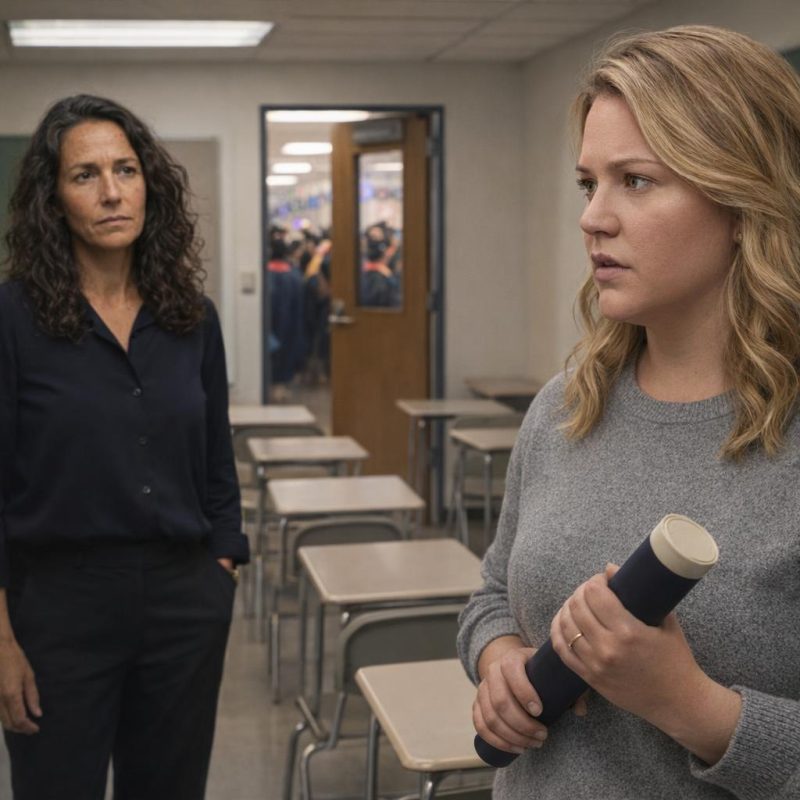 Image by RM AI
The Previous Widower
"Carol's brother was widowed about three years ago," Denise explained. "A woman named Lisa started dating him maybe six months after his wife died. She moved fast, asked endless questions about his kids—his daughter and son, both in their twenties. She seemed so interested in family dynamics, in understanding everyone's relationships." I felt sick. "Every important family event became some kind of test," Denise continued. "Thanksgiving dinner where he had to choose between Lisa and his daughter. His son's birthday where Lisa suddenly had a crisis. Weekend visits that always got complicated. The adult children were framed as cold, controlling, unwelcoming. And he defended her. Against his own kids." My hands were shaking. "Carol watched her brother become completely isolated from his children. The relationship eventually fell apart when someone else recognized the pattern—Lisa had apparently done it before that, too. Different city, different name." Denise met my eyes. "She used a different last name with Carol's brother. Different vague story about her job. But everything else?" The woman had used a different last name then, but everything else was identical.
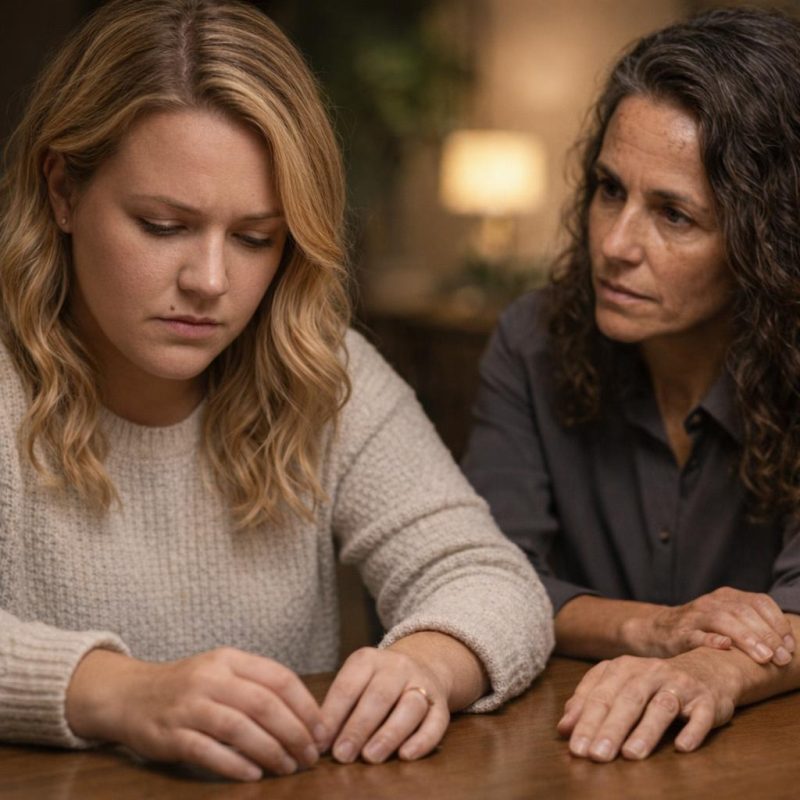 Image by RM AI
Isolation
"The goal is always the same," Denise said quietly. "Separate the widower from anyone who might see what's really happening. She collects information about family dynamics, identifies who's closest to him, then creates situations that force loyalty tests. The adult children get positioned as threats to his happiness. He gets conditioned to defend her against his own family." I thought about every phone call with Dad over the past three months. Every time he'd gotten defensive. Every time he'd accused me of not wanting him to be happy. "Every crisis pulls him further from his support system," Denise continued. "The vague job story prevents anyone from verifying her background. The shifting hometown details hide her past. It's systematic." My graduation. The biggest day of my life, and Lisa had manufactured a crisis that forced Dad to choose. She needed him to miss something irreplaceable. She needed me to become the enemy. Every conflict I'd had with Dad, every angry phone call, every moment I'd questioned myself—none of it had been an accident.
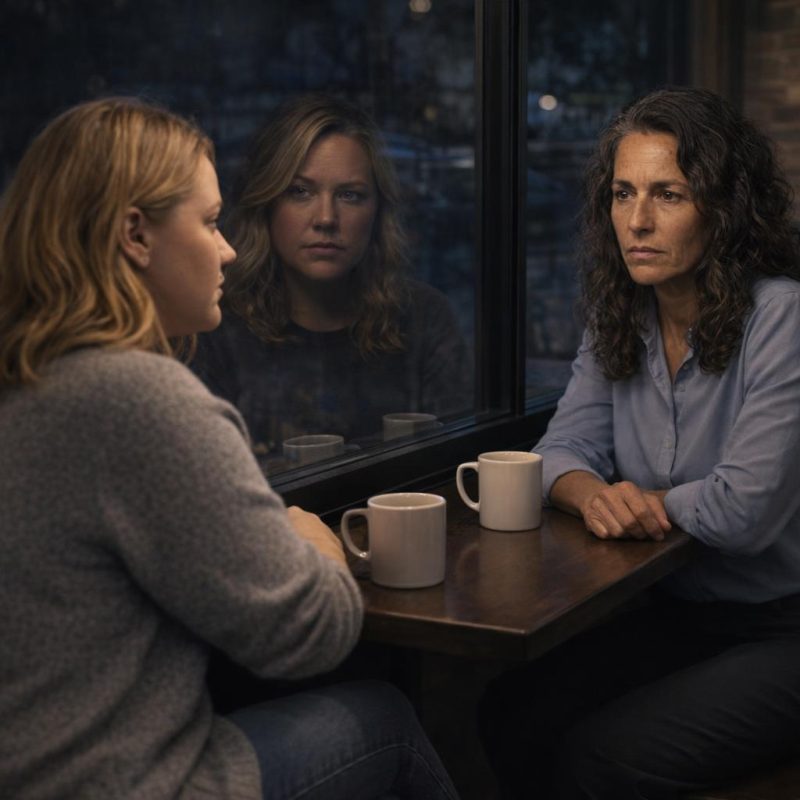 Image by RM AI
No Answer
I pulled out my phone right there in the classroom and called Dad. It rang four times and went to voicemail. I tried again. Same result. Third time, same thing. "Maybe Lisa has his phone," I said, my voice shaking. "Maybe she's screening his calls." I looked at Denise. "I'm going to his apartment. Right now." "Riley, maybe we should think about how to approach this—" "I'm going," I said. "With or without you. I can't leave him there with her, not knowing what I know now." My graduation cap was still sitting on the passenger seat of my car where I'd tossed it. I was still wearing my graduation dress. None of it mattered. "He needs to know the truth," I said. "He needs to know about Carol's brother, about the pattern, about all of it. I can't just leave him isolated with her." Denise studied my face for a long moment, then nodded. "Okay. I'm coming with you. Carol's brother will talk to your dad if we need him to." She got in the car.
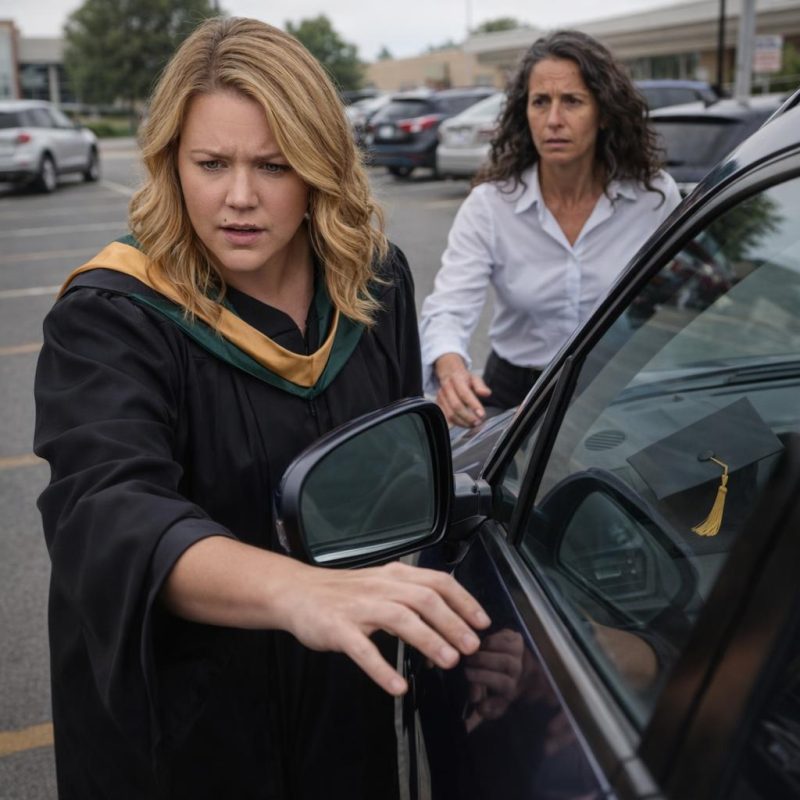 Image by RM AI
The Drive Over
I drove toward Dad's apartment with Denise quiet beside me. The route was so familiar—I'd driven it dozens of times over the past few months—but everything felt different now. I kept trying to figure out what I would say when I saw him face to face. How do you tell your father he's been systematically manipulated? That the woman he's defending has done this before, to other widowers, to other families? He'd been defending Lisa for months. His anger at me had been protective of her. His fear had been fear of losing her. Would he even let us in the door? Would Lisa answer and speak for him, tell us he didn't want to see me? Denise reminded me we had specifics—names, details, Carol's brother who could verify everything. But I knew facts might not be enough. Dad had been told I was the problem. That I was cold, unwelcoming, trying to control his life. I had to somehow break through months of conditioning, and I had no idea how. We pulled onto his street, and I gripped the steering wheel tighter. Nothing I practiced felt strong enough to undo months of conditioning.
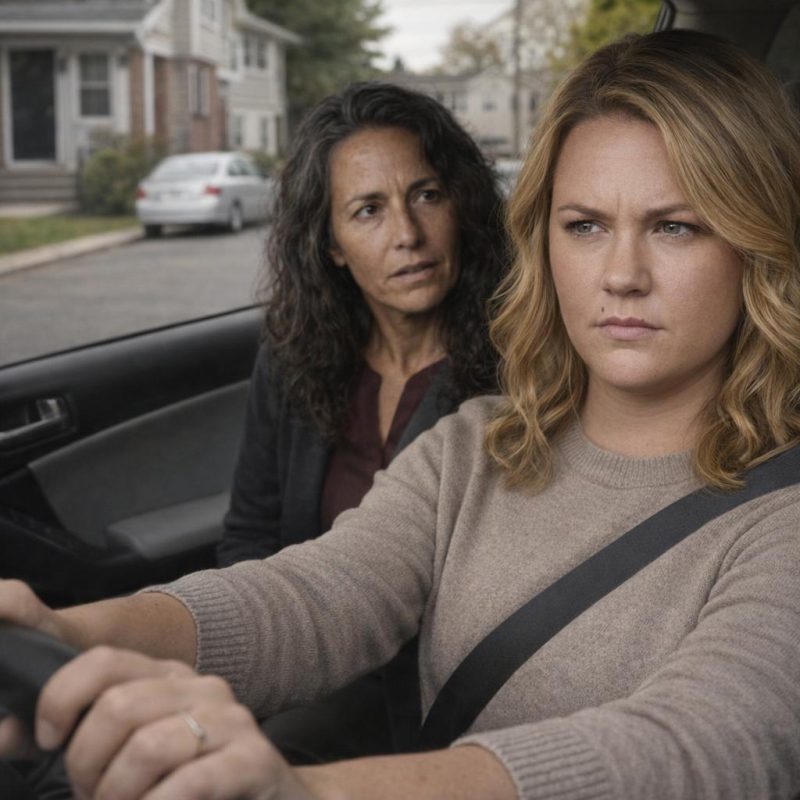 Image by RM AI
At the Door
I didn't even get to knock. The door swung open before my knuckles made contact, and there was Lisa, perfectly composed in cream-colored linen, her smile warm and practiced like she'd been expecting pleasant company. "Riley," she said, her voice carrying that careful brightness I'd heard so many times before. "What a lovely surprise." Everything about her felt wrong—the ease of her posture, the welcoming tone, the way she stood in the doorway like this was a social call. Behind her, I could see Dad in the hallway, and the second his eyes landed on me in my graduation dress, something flickered across his face. Surprise, maybe recognition of what today was supposed to be. Then his gaze shifted to Aunt Denise standing beside me, and his entire expression changed. His jaw tightened. His shoulders squared. He moved slightly, positioning himself closer to Lisa, and I saw exactly what Denise had described—the defensive stance of someone who'd been trained to see his own family as the threat. He looked at me like I'd come to attack her. Like I was the problem he'd been warned about. Behind her, I could see Dad's face, already tense the second he registered Aunt Denise beside me.
 Image by RM AI
Defensive Positions
Dad stepped forward, coming to stand right beside Lisa in the doorway. His body angled toward her, protective, like he was bracing for whatever accusation I'd brought this time. He didn't look at me with warmth or curiosity. He looked at me with wariness. With suspicion. The way you'd look at someone you expected to cause trouble. His eyes moved to Denise, and that wariness hardened into something colder. He knew she wouldn't come here without reason. He knew she'd never bought into Lisa's performance. And Lisa had clearly prepared him for this exact scenario—the moment when his difficult daughter would recruit reinforcements to attack the woman he loved. I could see it in every line of his posture. He was ready to defend her. Ready to tell us we were wrong, that we were being unfair, that we couldn't see what he saw. The conditioning Denise had described wasn't theoretical anymore. It was standing right in front of me, wearing my father's face. I wanted to reach him so badly it hurt. But first, I had to get through the wall Lisa had built between us. Denise didn't wait for an invitation to speak.
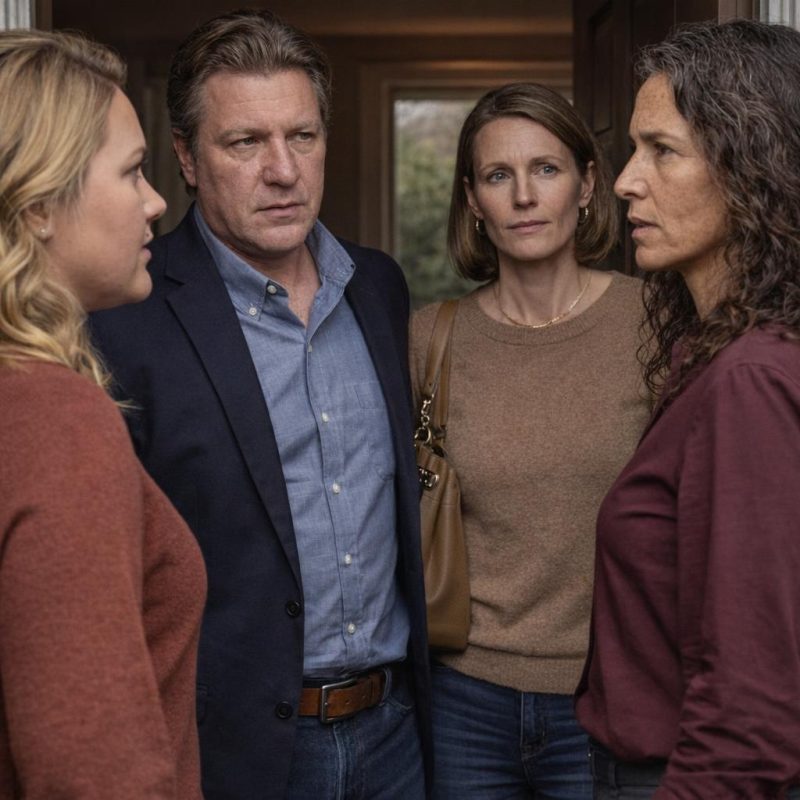 Image by RM AI
Names and Details
Aunt Denise's voice was calm and clear, cutting through the tension like she was presenting facts at a business meeting. "Tom, I need to tell you something," she said. "I have a friend from work named Carol. Her brother was widowed about two years ago. A woman started dating him—called herself Lisa, different last name than the one you know, but Lisa. She worked in healthcare administration, though the details were always vague. Her family situation was complicated, always shifting depending on who asked. She asked endless questions about his adult children. And then, every single major family event—birthdays, holidays, his daughter's wedding—there was a crisis. Something that required his attention right then. Something that made him choose between her and his kids." Denise listed each parallel point by point, her tone never accusatory, just factual. "His children tried to warn him. They were labeled controlling, jealous, unable to accept their father's happiness. He defended her against them for months." I watched Dad's face as Denise spoke, and what I saw there wasn't surprise—it was recognition.
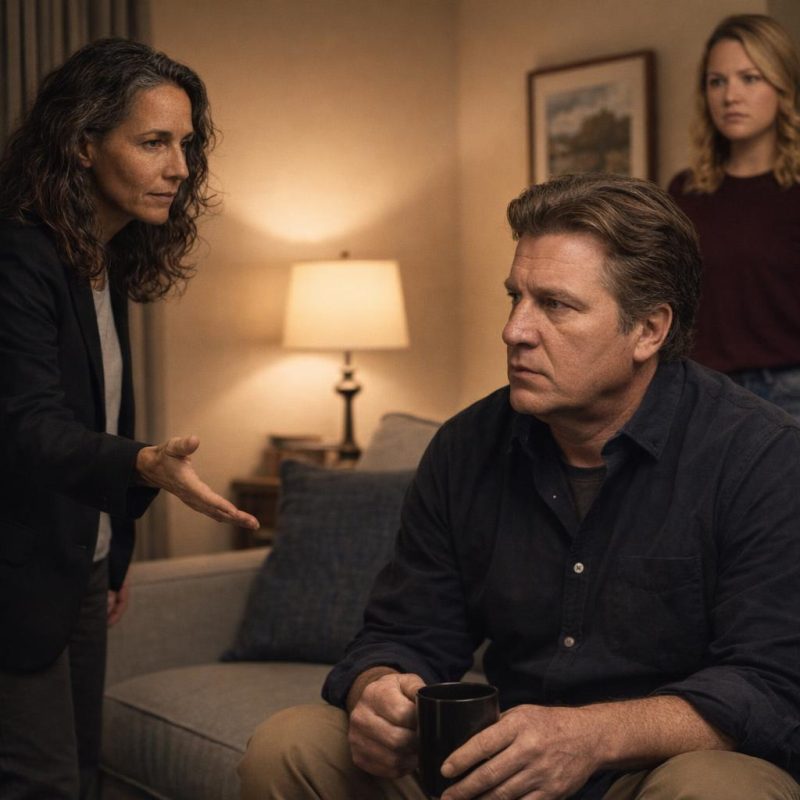 Image by RM AI
The Face He Made
Dad's expression shifted as Denise laid out each detail. His defensive posture didn't disappear, but something changed behind his eyes. The healthcare job that stayed perpetually vague—his face flickered. The family that was always complicated but never quite explained—he blinked, processing. The questions about me that never seemed to stop, the way every conversation circled back to what I thought, what I did, how I felt about him—his jaw worked slightly. And then the crises. The birthday party where Lisa felt unwelcome. The phone calls where she needed reassurance during my visits. This morning, my graduation, when she'd had an emergency that required him right then. His eyes moved slightly with each point Denise made, like he was checking them against a mental list he'd been keeping without realizing it. This wasn't new information landing on him. This was a pattern he'd been living, maybe even questioning in the quiet moments he wouldn't admit to anyone. The fear in his face made sudden, terrible sense. He hadn't been afraid I was wrong about Lisa. He'd been afraid I was right. He'd known something was wrong all along.
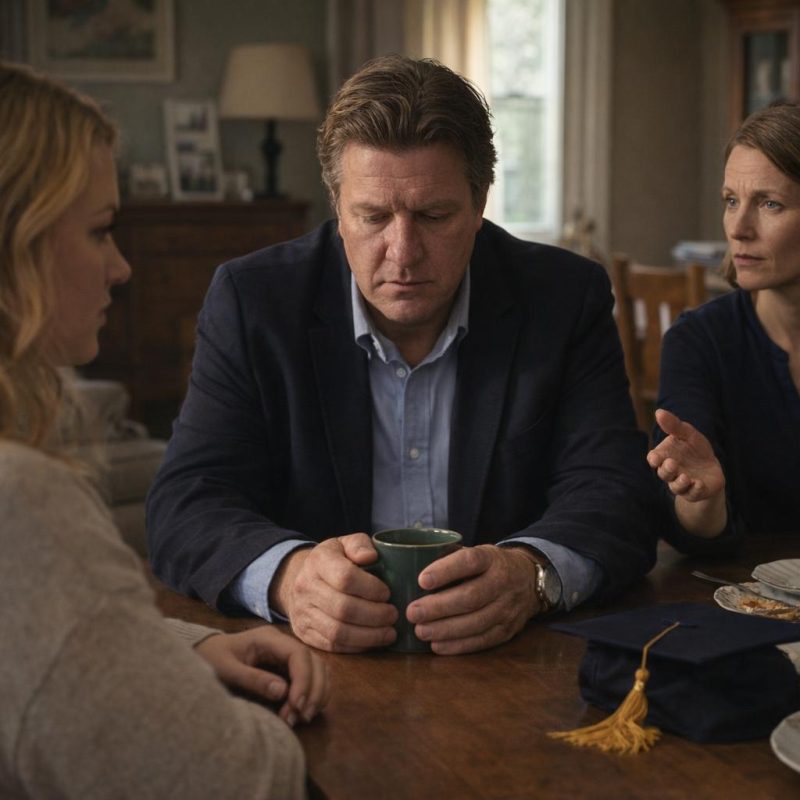 Image by RM AI
The Pivot
Lisa laughed, light and dismissive, like Denise had just told the most ridiculous joke she'd ever heard. "This is absurd," she said, shaking her head with practiced disbelief. "You're telling me you believe workplace gossip? There are thousands of women named Lisa. This is—" But then she pivoted, smooth as silk, her attention shifting to me. "I understand now," she said, her voice taking on a tone of sad realization. "Riley, I've tried so hard with you. I really have. But you've been looking for problems since the day we met. You've been cold, unwelcoming, and now you've recruited your aunt to help you drive me away." The transition was seamless. One second she was dismissing Denise's evidence as coincidence, the next she was reframing herself as the victim of my jealousy. Her hand moved to her chest, a gesture of wounded dignity. "I know this is hard for you," she continued, looking at Dad now. "Your father being happy with someone who isn't your mother. But this has gone too far." The pivot happened so fast it felt rehearsed.
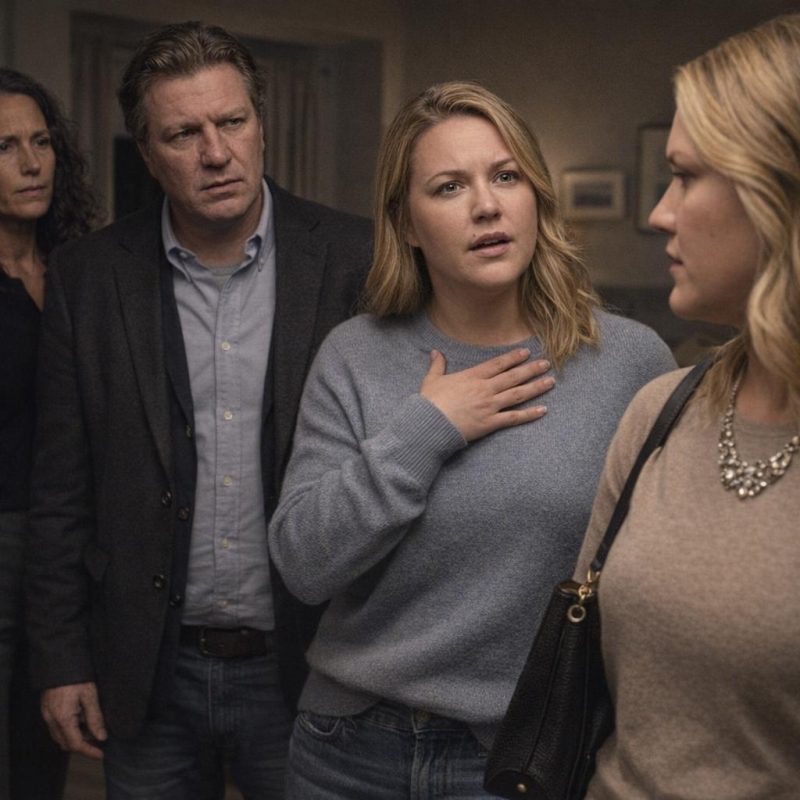 Image by RM AI
Making Me the Problem
Lisa turned fully toward Dad, her expression shifting to something softer, more vulnerable. "Tom, I've tried everything," she said. "I've been patient. I've given her space. I've tried to connect with her, to show her I'm not trying to replace anyone. But she's been hostile from our first meeting. And now this—bringing Denise here with these accusations based on some story about a completely different person?" She reached for his arm, her fingers gentle on his sleeve. "I understand why she's doing this. She can't handle you having a life that doesn't revolve around her. She can't accept you being happy with anyone but her." I watched her work, and I recognized every word. This was the same script Denise had described. Another daughter labeled as jealous and controlling. Another daughter blamed for poisoning the relationship. Another widower asked to choose between his child and the woman who'd isolated him from everyone who might see through her. Lisa looked up at Dad, her eyes searching his face. "Are you going to let them attack me like this?" she asked quietly. It was the same script she'd used on the other widower's daughter.
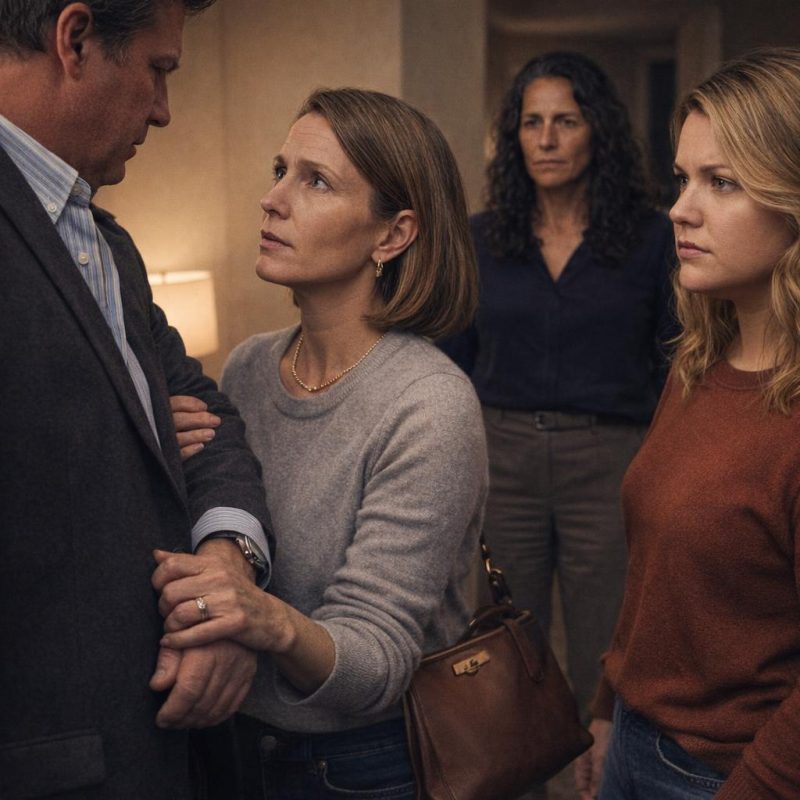 Image by RM AI
The Graduation Cap
Dad didn't answer Lisa right away. His gaze drifted past me, through the open doorway to where my car sat at the curb. I saw his eyes focus on something, and I knew without looking what he was seeing—my graduation cap, still sitting on the front seat where I'd tossed it this morning before the ceremony. Before the empty chair. Before the moment I'd looked for him and found absence instead. His face changed. The defensiveness wavered. He stared at that cap for a long moment, and I could see him putting pieces together. He'd missed my graduation this morning. Lisa had called with a crisis—something urgent, something that required his immediate presence. But here she was now, hours later, perfectly composed in cream linen, not a hair out of place, no sign of whatever emergency had been so critical it couldn't wait three hours. He looked back at Lisa, then at the cap again. His daughter had graduated today. His daughter was standing in front of him in her dress, and he hadn't been there. He'd missed my graduation for a crisis that Lisa was now pretending never happened.
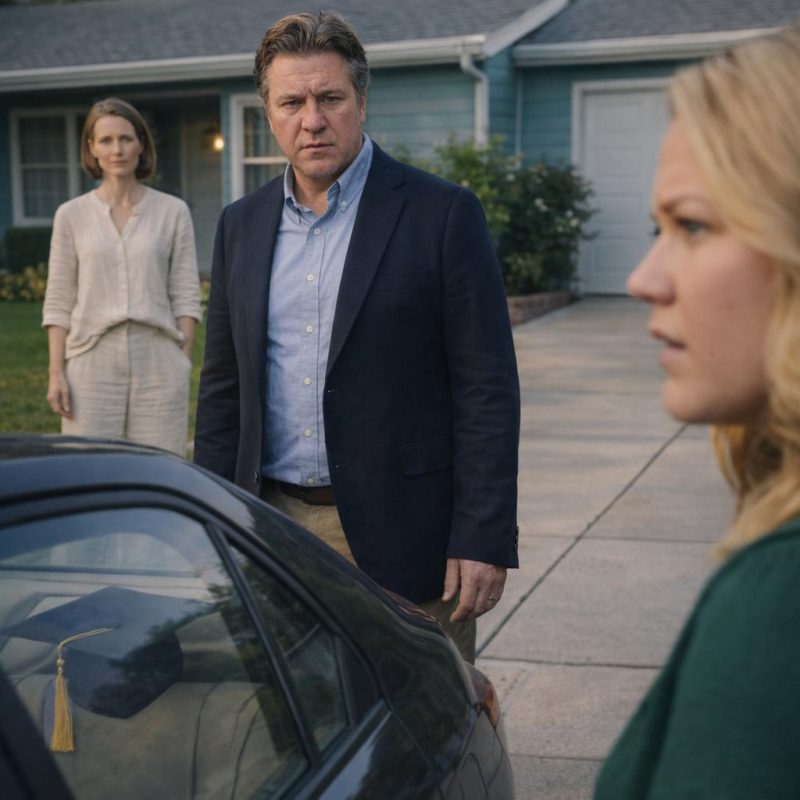 Image by RM AI
The Question
Dad turned to Lisa, and when he spoke, his voice was quieter than I'd heard it in months. "Why does every major moment with Riley become a test?" he asked. Not angry, not accusatory. Just asking. Lisa blinked, her confident expression faltering slightly. "What do you mean?" she said, but he kept going. "Her birthday party—you felt unwelcome, needed me to leave early. The phone calls when she visited—you needed reassurance right then. Today, her graduation—you had a crisis that meant I had to stay." He listed them simply, like he was reading from a list he'd been keeping without realizing it. "Every time I have something important with my daughter, something happens with you. Every step toward Riley is a step away from you." Lisa's mouth opened, then closed. She reached for an explanation. "Those all had reasons, Tom. You know they did. I wasn't—" But he asked again, his eyes steady on her face. "Why do they always coincide? Why Riley's moments specifically?" Lisa's smile faltered for the first time since we'd arrived.
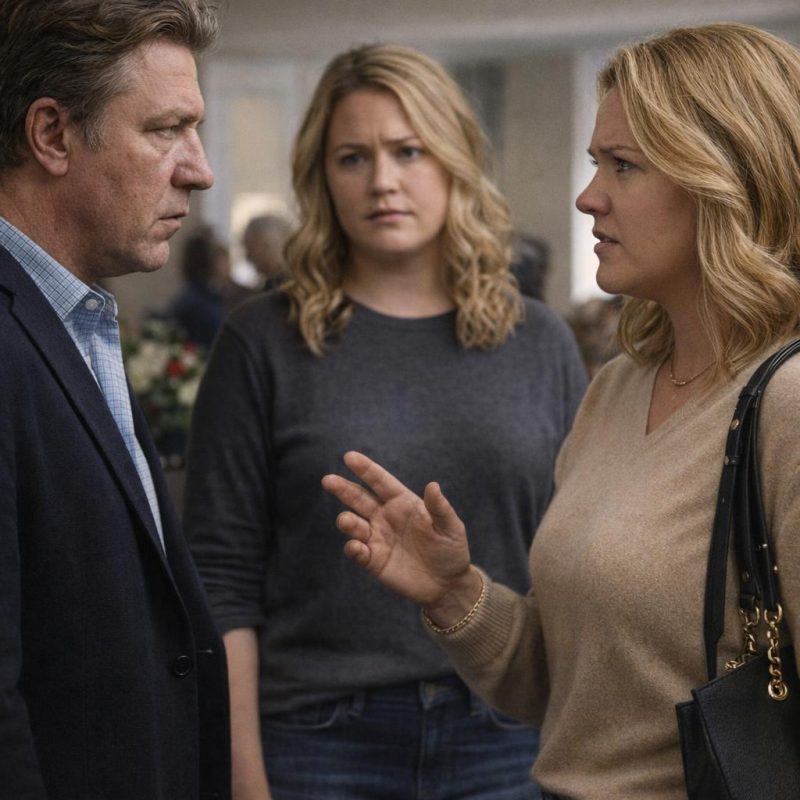 Image by RM AI
The Silence
Lisa tried to answer him. She really did. First she said I exaggerated everything, that I'd always been dramatic about her presence in Dad's life. Then she pivoted, said his family had been difficult from the start, that Aunt Denise had poisoned me against her. Then she landed on coincidence—these things just happened to overlap, she couldn't control when she needed support. But none of it addressed what he'd actually asked. Why did her crises always land on my moments? Dad just listened. He didn't interrupt, didn't argue, didn't defend me. He waited for her to actually answer the question. She couldn't. Because the truth would expose exactly what she'd been doing, and we all knew it. The silence stretched until Dad spoke again, his voice so tired it barely carried across the room. "I need you to leave, Lisa." Her expression shifted instantly—wounded, betrayed, like he'd struck her. "I can't believe you're doing this," she said, her voice breaking. "I gave you everything, Tom. Everything." He just repeated it. "I need you to go." She grabbed her purse with sharp, angry movements, didn't look at me or Aunt Denise as she headed for the door. She was out the door in under a minute, and none of us moved until we heard her car pull away.
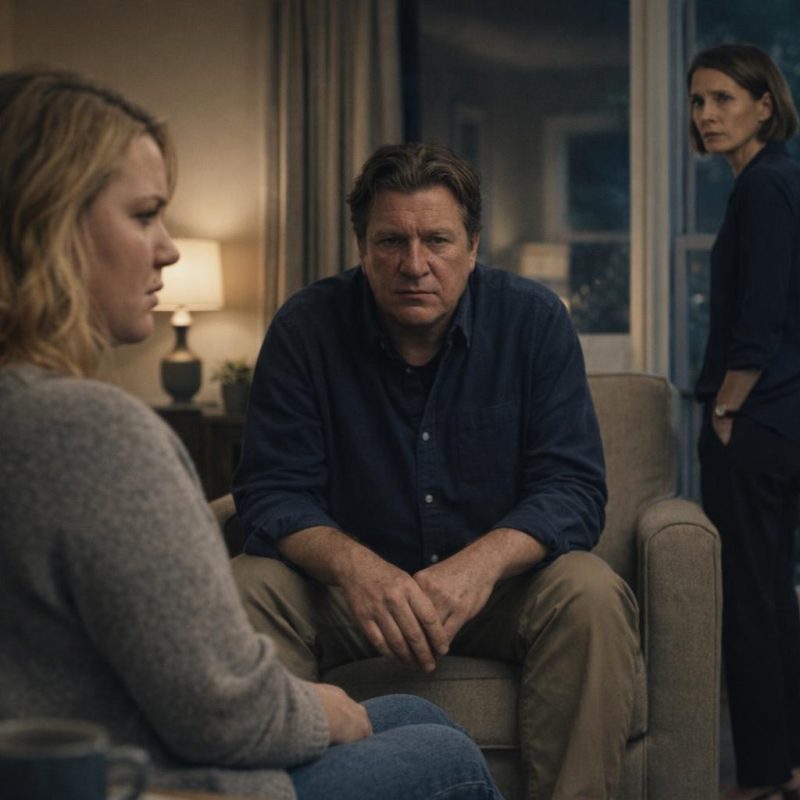 Image by RM AI
Two Days Later
Two days passed before I heard from him. Two days of sitting with everything that had happened, replaying the confrontation, feeling the anger and hurt settle into something heavier. My phone buzzed on the third morning. Dad, asking if he could come over. I said yes. When he arrived at my apartment, he looked older than I'd ever seen him. The lines around his eyes had deepened, his shoulders carried a weight that hadn't been there before graduation. He sat down at my kitchen table without asking, the same kind of table where he'd made that promise when I was seven. He didn't start with excuses. Didn't ask if I was okay. Didn't try to explain Lisa away or minimize what had happened. He just sat there, hands folded on the table, gathering himself. I waited. I wasn't going to make this easy for him, wasn't going to fill the silence with reassurance or forgiveness he hadn't earned yet. Whatever he needed to say, he was going to have to find the words himself. He didn't ask me to make him feel better.
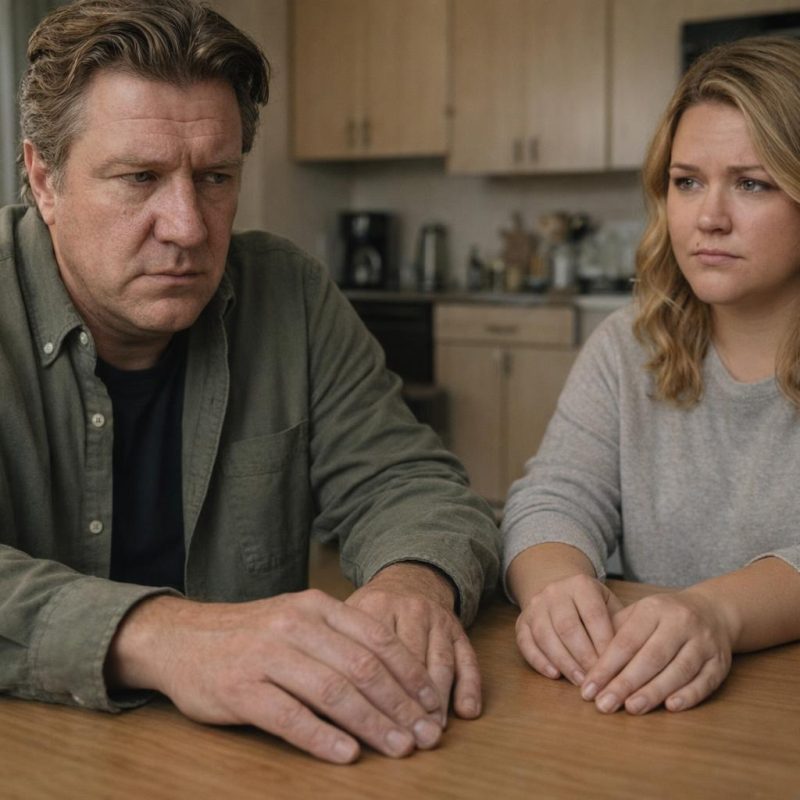 Image by RM AI
What Loneliness Becomes
"I'm sorry I missed your graduation," he said finally. No qualifiers, no explanations trailing behind it. "I missed the biggest day of your life. I failed you." He talked about the loneliness after Mom died, how for years he'd focused only on raising me, and when I left for college the silence in the house became unbearable. Lisa had appeared and filled that silence. She'd asked about his day, seemed to care about his life, made him feel seen again. He'd wanted so badly for it to be real that he'd let himself not see what was actually happening. When I'd raised concerns, he'd felt attacked. Because acknowledging my concerns meant acknowledging his mistake, and he couldn't face that. So he'd chosen to defend her instead of listening to his daughter. "I ignored every instinct telling me you were trying to protect me," he said, his voice breaking. Tears formed in his eyes, real and unguarded. "Because admitting that would mean admitting I'd failed to protect you."
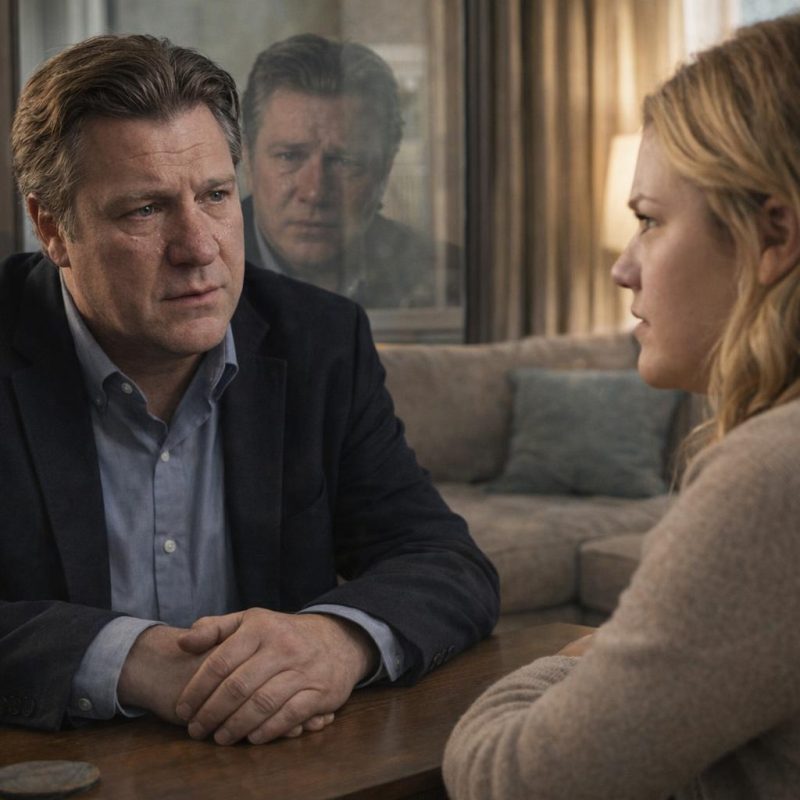 Image by RM AI
Rebuilding the Team
He looked at me then, tears still in his eyes, and referenced the promise he'd made when I was seven. The team we were supposed to be. "I know I broke that," he said. "I broke us." His tears weren't performative, weren't designed to make me comfort him. They were just honest. I felt the weight of his words settle between us. I didn't immediately forgive him. I couldn't pretend graduation hadn't happened, couldn't erase the months of conflict and pain. But I could see that he understood now. He wasn't asking me to make him feel better, wasn't rushing me toward forgiveness or reconciliation. He was just acknowledging what he'd done. I reached across the table—not for a hug, but to put my hand on his arm. A small gesture, but it was something. We sat together in my kitchen, at the same kind of table where it all started. We weren't fixed, but we were honest. The team was damaged but not destroyed. We're still rebuilding, slowly and awkwardly, but for now that has to be enough.
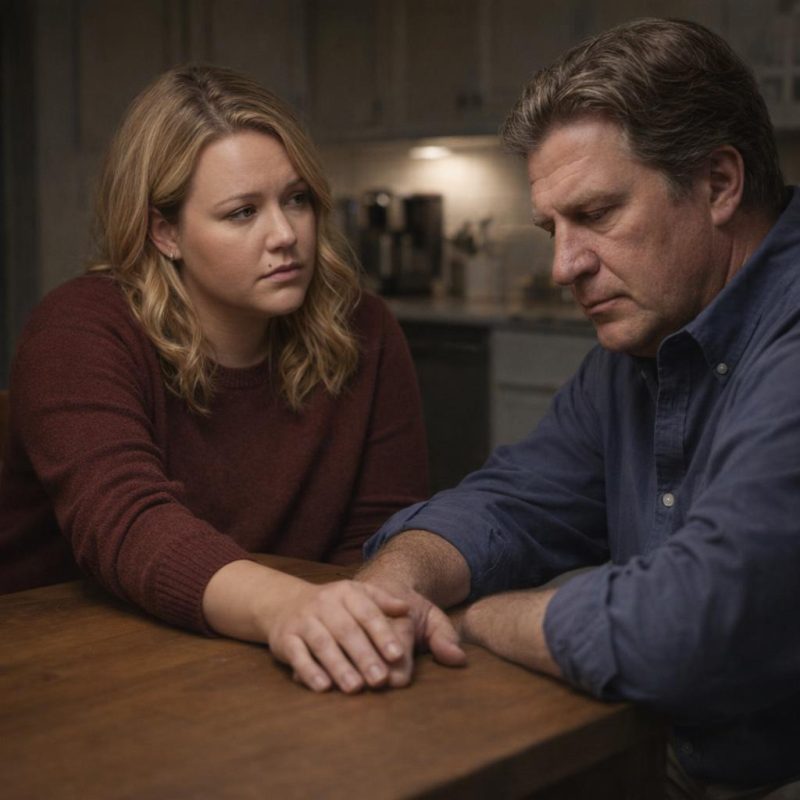 Image by RM AI
KEEP ON READING
The Brutal Realities Of Gladiator Life Beyond the Arena
David Cruz asenjo on PexelsWhen most people think of gladiators,…
By Rob Shapiro Mar 31, 2026
The Volcano Winter That Nearly Toppled Europe
Collin Ross on UnsplashMost people, if asked to name a…
By Cameron Dick Mar 31, 2026
From School Plays To Starting A Cult: 20 Of The…
The Books That Made Us. Many people will tell you…
By Farva Ivkovic Jan 31, 2025
20 Facts About Jane Grey, The Forgotten Queen Of England
A Quick, Messy, and Tragic Reign. Lady Jane Grey never…
By Maria Cruz Jan 31, 2025
20 Priceless Historical Art Pieces Rescued By The Monuments Men
Protecting Human History. While the soldiers on the front lines…
By Sara Springsteen Mar 31, 2026
Almost Every Ancient Statue Has a Missing Nose, And It's…
Gary Todd from Xinzheng, China on WikimediaWalk through the classical…
By Elizabeth Graham Mar 31, 2026