

The First Tuesday
It starts on a Tuesday. I'm at my desk working through a budget spreadsheet when Melissa walks in carrying a stack of glass containers with snap-on lids. The kind with the rubber seals. The kind that take actual effort. She's smiling the way she always smiles — wide, easy, like the room belongs to her. I watch her set a container on Michael's desk first. He lifts the lid and the smell hits the whole floor. Something with garlic and herbs. He says something like 'you're incredible' and she laughs. Then Jennifer gets one. Jennifer actually claps. I go back to my spreadsheet. I tell myself I'm not watching. I am watching. Melissa moves through the row of desks with the kind of ease that comes from knowing exactly where you're going. She stops at Michael's desk again to say something. She stops at the printer station. She does not stop at mine. I hear the containers clicking shut behind her as she heads back toward the kitchen. I don't say anything. I don't move. I just sit there with the quiet that settles over my desk like it always has.
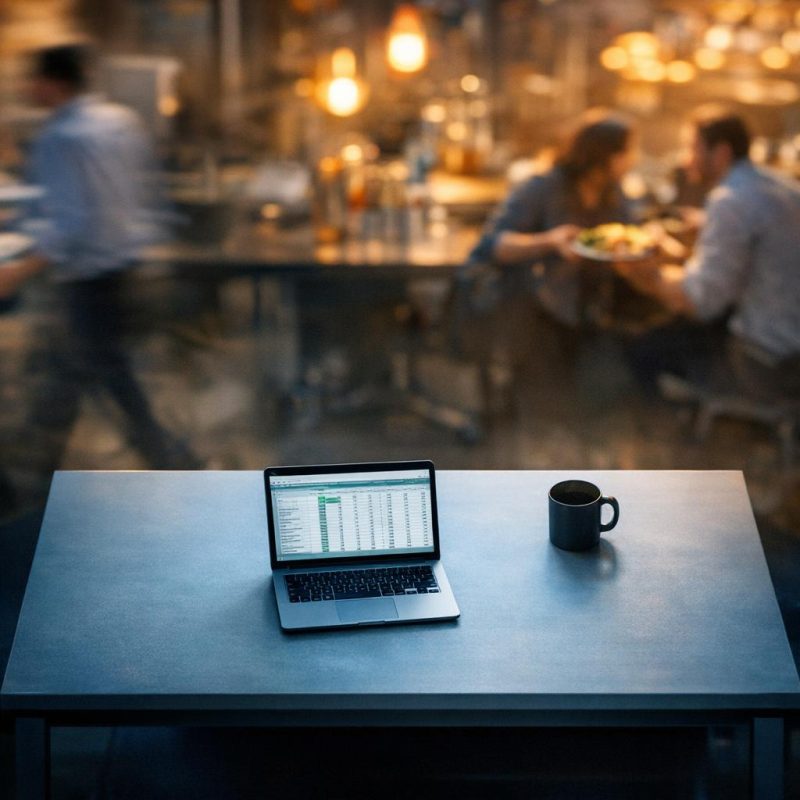 Image by RM AI
The Promise
I'm still staring at the same row of numbers when I hear footsteps stop behind me. I turn around and it's Melissa. She's holding one hand to her chest like she's genuinely pained. Her eyes go soft at the corners. 'I'm so sorry,' she says. 'I completely forgot you were back here. I only made so many and I lost count.' She touches my shoulder. Just briefly. Her hand is warm and her voice is low and she looks at me like she means every word. I nod. I tell her it's fine, really, don't worry about it. She shakes her head like she's disappointed in herself. 'I'm going to bring you one tomorrow,' she says. 'I promise. I'll make sure I have enough.' I watch her face when she says it. Her smile looks real. The kind that reaches the eyes. I have no reason not to believe her. I go back to my spreadsheet and I tell myself it was just a miscalculation, a headcount error, the kind of thing that happens. By the time I leave that evening, I've almost forgotten about it entirely. Almost. Then I remember: she said tomorrow.
 Image by RM AI
Tomorrow Arrives
I get in early the next morning. I'm not sure why. I tell myself it's because I have a deadline, and that's partly true. I set up my desk, open my laptop, pull up the spreadsheet. I don't think about the containers. I don't think about the promise. Around noon I hear the familiar sound — the soft thud of a bag being set down in the kitchen, the snap of lids, the low hum of conversation starting up near Michael's desk. I keep my eyes on my screen. I hear Michael say something enthusiastic. I hear Jennifer laugh. I hear Melissa's voice moving through the room, warm and unhurried. I wait. The footsteps pass my desk without slowing. I don't turn around. I listen to the sounds of everyone else eating — the scrape of forks, the murmur of appreciation — and I keep my eyes on the numbers in front of me. I tell myself she probably just forgot again. People forget. It happens. It doesn't mean anything. I believe that, mostly. But my desk stays empty, and the smell of whatever she made drifts all the way to where I'm sitting.
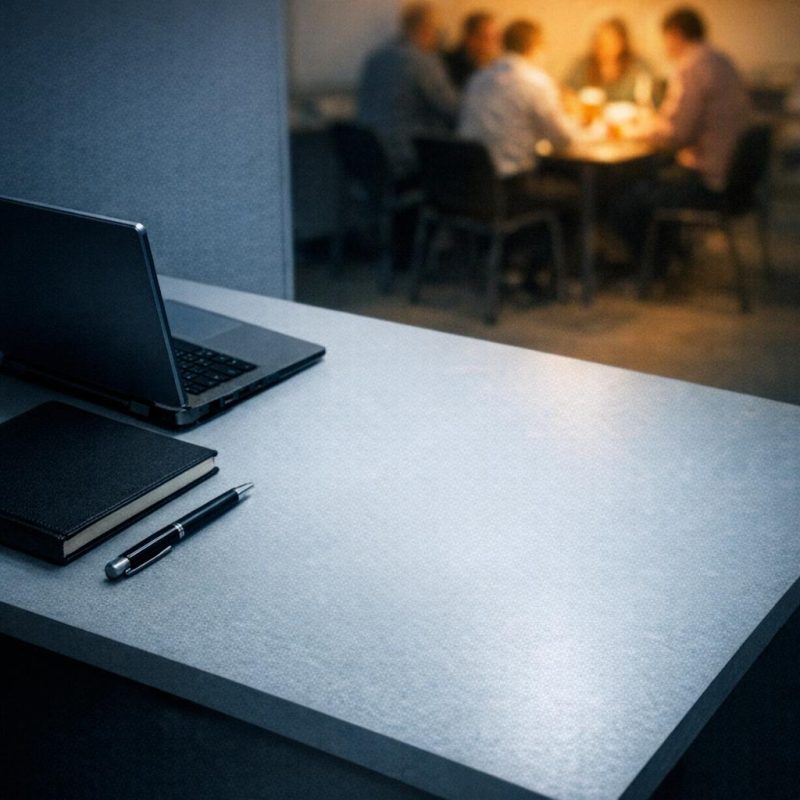 Image by RM AI
The Third Time
Tuesday again. I know it's Tuesday because that's when she comes. I notice that now — the day of the week. I'm already at my desk when Melissa walks in with the containers. She moves through the office the same way she always does. Unhurried. Confident. She sets one down for Michael and he does his usual routine — the lid lift, the smell, the compliment. Jennifer gets hers and immediately takes a photo. I watch the whole thing from my desk and I count. One. Two. Melissa makes a loop back toward the kitchen. She doesn't stop. Three. That's the number I'm sitting with now. Three times. I feel something small and embarrassing settle in my chest — the awareness that I've been keeping count at all. It feels petty. It probably is petty. Maybe she just keeps miscounting. Maybe I sit too far back. Maybe I blend into the wall. I don't say anything. I don't flag her down. I just sit there and let the number sit with me, quiet and stubborn, the way certain things do.
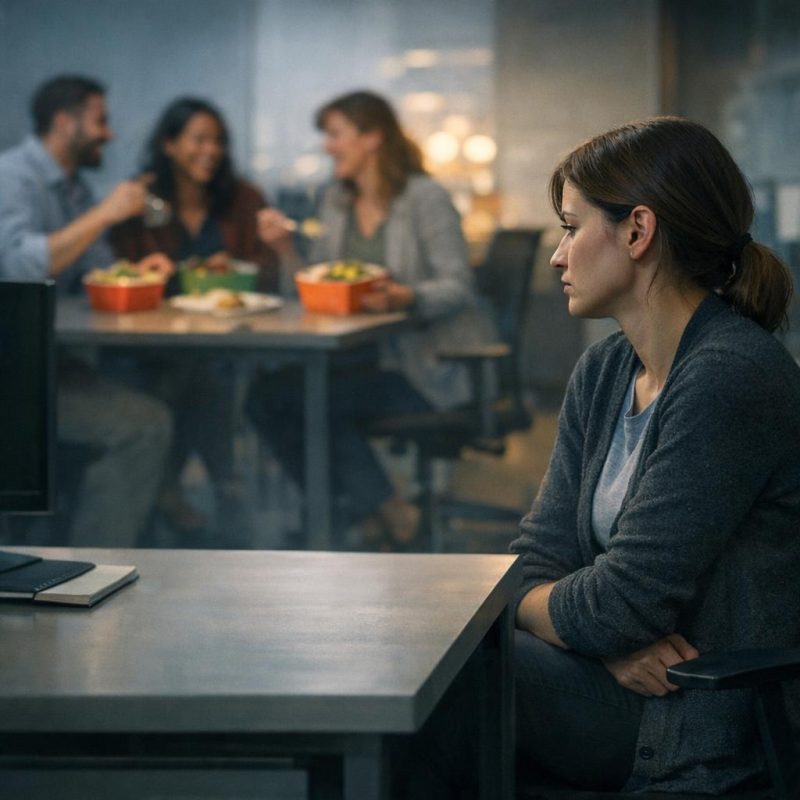 Image by RM AI
Week One Ends
By Friday I've counted six. Tuesday and Thursday both, every time the same — containers for everyone, nothing for me. I keep the count in my head like something I'm not supposed to be doing. Six feels like a lot. Six also feels like something I should be able to explain away, and I keep trying. Maybe she makes a fixed batch and I'm always just outside the number. Maybe she doesn't realize I eat at my desk. Maybe I should just say something. I don't say anything. On Friday afternoon Melissa comes by my desk with that same expression — the soft eyes, the hand near her chest. She apologizes again. Same sad smile. I nod and tell her it's fine. David walks past during the whole exchange, coffee in hand, eyes on his phone. He doesn't slow down. He doesn't look up. I watch Melissa's face as she finishes the apology and I try to decide if I'm overreacting. Six is just a number. People forget. I'm probably making this into something it isn't. I'm still telling myself that when I see her turn back toward the kitchen — and then she stops, turns around, and walks back toward my desk with that same apologetic smile.
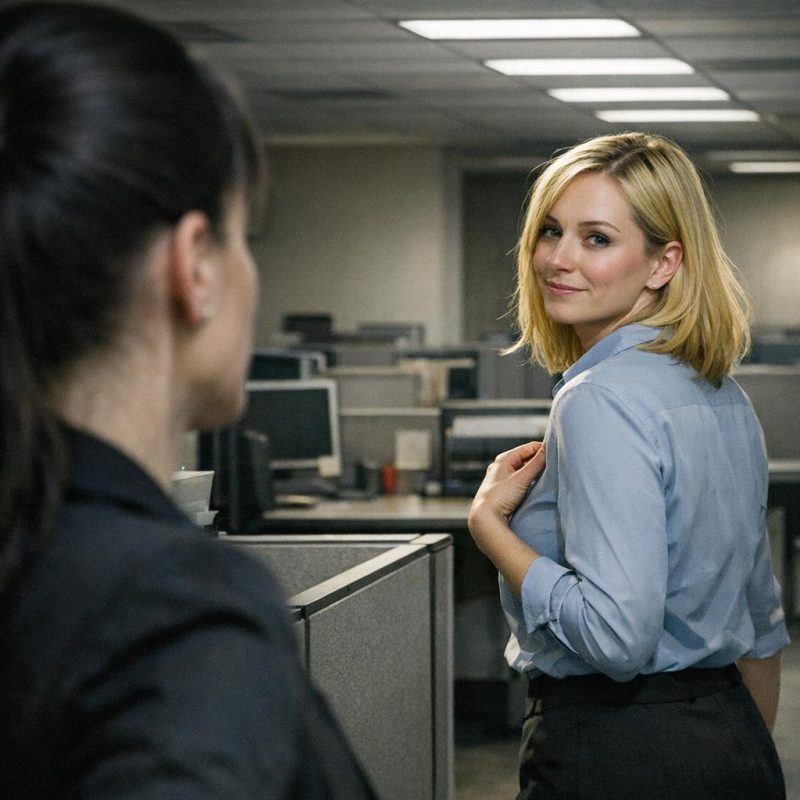 Image by RM AI
The Repetition
She says, 'I'm so sorry, I just keep losing count.' I've heard that before. Not something like it — that exact phrase. I sit very still. She laughs a little, shakes her head, says she's terrible with numbers. I've heard that too. I try to remember if I'm imagining it. I run back through the other apologies in my head — the soft eyes, the hand near the chest, the specific words in the specific order. It's possible I'm just remembering wrong. Memory does that. It fills in gaps with patterns that aren't really there. I smile and tell her not to worry about it. She squeezes my shoulder and walks away. I turn back to my screen. The words are still sitting in my ears. 'I just keep losing count.' I try to shake the feeling that something is off. I probably heard her wrong. I probably filled in the blanks. I sit there for a moment, running the phrase back one more time, and I can't decide if the similarity means anything or if I'm the kind of person who looks for patterns where there aren't any. The words come back again, identical: 'I just keep losing count.'
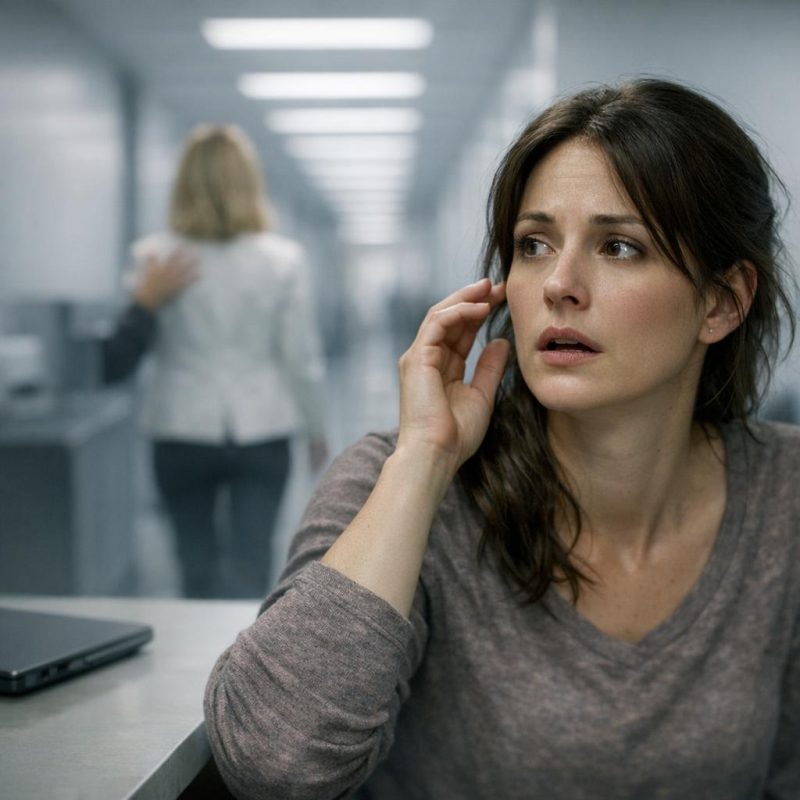 Image by RM AI
The Upgrade
The containers change. I notice that first. They used to be plain glass — functional, clean. Now they're wide ceramic bowls with fitted lids, the kind you'd see in a food magazine. The meals change too. Simple pasta gives way to something with saffron. Then a Moroccan tagine with preserved lemon. Then grain bowls with roasted vegetables and some kind of sauce drizzled in a careful spiral. Michael photographs his before he opens it. Jennifer posts hers before she even tastes it. By the third week of this, a small crowd forms near Melissa's usual distribution spot before she even sets the bag down. She tells them about the spice blend she sourced online, the technique she learned from a video, the way the slow cooker changes everything. They listen like she's giving a talk. Michael says she should start a food blog. Jennifer says she already follows three accounts that aren't as good as this. I sit at my desk and watch the circle tighten around her. The smell reaches me — warm and layered and genuinely good. My desk is empty. The crowd laughs at something Melissa says, and the sound fills the whole floor.
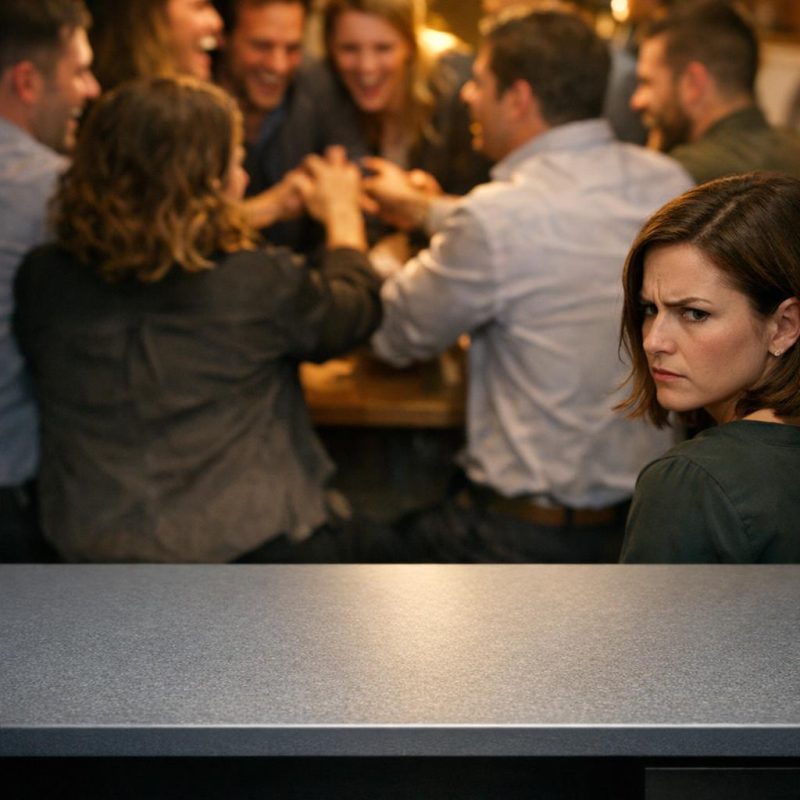 Image by RM AI
Derek's Question
Derek stops by my desk mid-morning, coffee in hand, the way he does when he's between tasks and looking for somewhere to land. He nods toward the kitchen. 'Have you tried any of Melissa's stuff?' he asks. 'It smells incredible.' I keep my eyes on my screen. 'I usually bring my own lunch,' I say. 'Easier that way.' He accepts that. He talks for another minute about the tagine from last week, how Michael sent him a photo of it, how he's thinking about asking Melissa for the recipe. I make the right noises. I keep my voice even. He doesn't push. After a moment he says he should get back to it and straightens up to leave. I exhale slowly once he's turned away. Then I hear him pause. I glance up. Derek is standing just past my desk, looking back at the surface of it — the empty space where a container has never once been placed — and his eyes stay there for a beat longer than they need to.
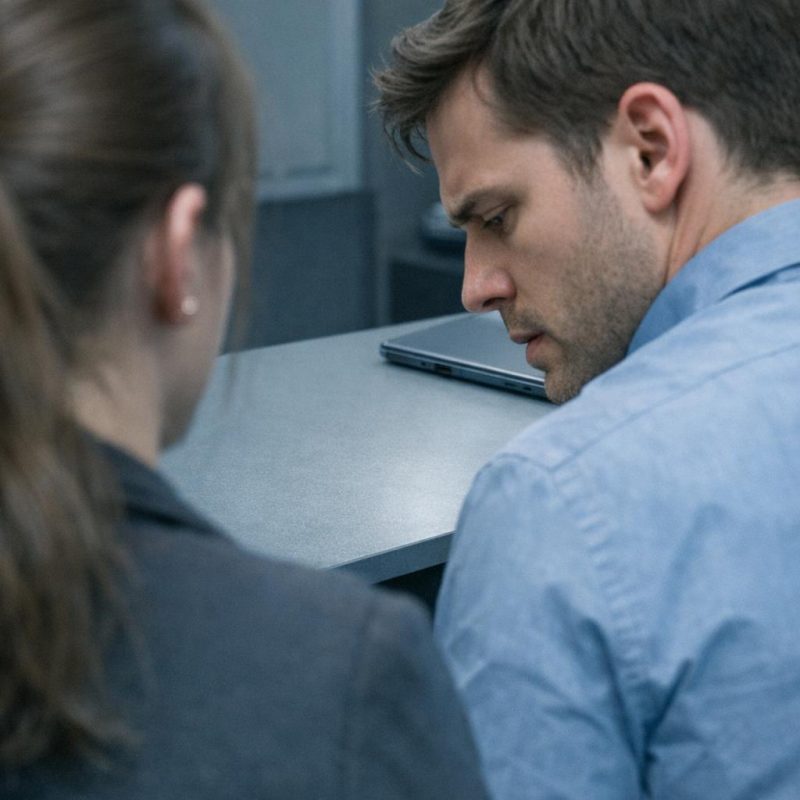 Image by RM AI
The Notebook
I pull a small notebook from my bag at the kind with a plain black cover, nothing special. I open it to the first page and I write today's date. Then I write the dates I remember. The Tuesday with the tagine. The Thursday with the rice dish that made Michael close his eyes when he took a bite. The Friday someone brought in something that smelled like cardamom and warm butter. I write down who got food each time. I write down that I didn't. I go back as far as I can remember and the list is longer than I expected. Every entry has the same gap in it. I sit with the notebook open on my lap, below the desk where no one can see it, and I tell myself this is just organizing my thoughts. That's all. Just getting it straight in my head. Maybe I'm being paranoid. Maybe I'll look at this in a week and feel embarrassed. I close the notebook and slide it into the back of my drawer, under a folder no one touches. I sit back up and put my hands on the keyboard. The tally marks are already there behind my eyes whether I write them down or not.
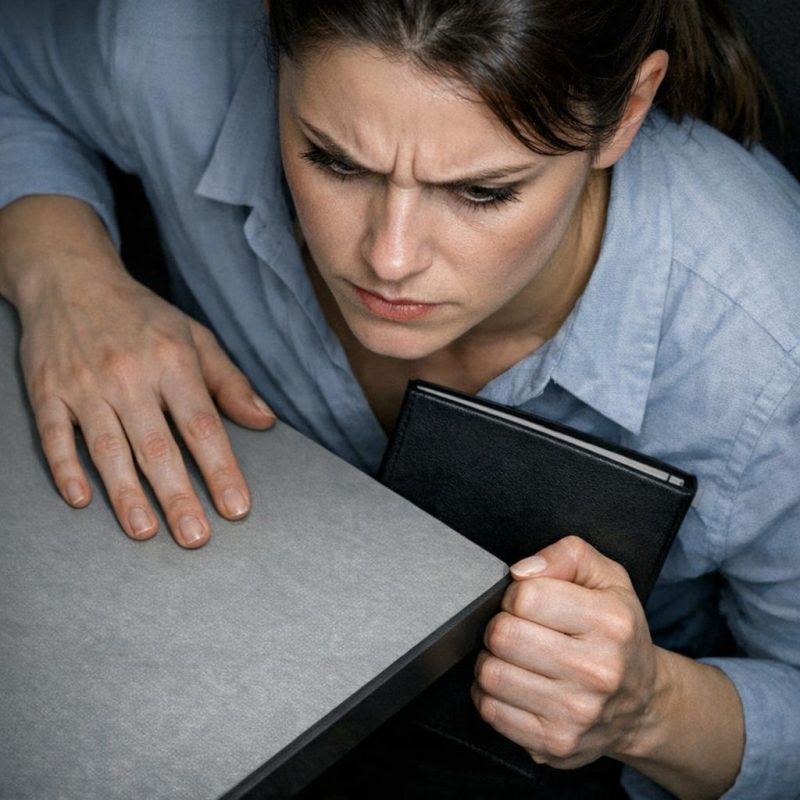 Image by RM AI
Left and Right
Melissa comes down our row just after noon. I hear her before I see her at the soft thud of containers being set down, the warm murmur of her voice. I keep my eyes on my screen. She stops at Michael's desk first, to my left. I hear the container land. I hear Michael say something grateful and low. Then her footsteps move. They pass my desk without slowing. Not a pause. Not a half-step. Just a clean, unbroken line of motion. She stops at Jennifer's desk, to my right. Another container. Jennifer makes a small delighted sound. I sit between them with my hands in my lap. I don't turn my head. I don't look at the containers on either side of me. I stare at the same line of text I've been staring at for the last four minutes and I wait for Melissa's footsteps to move on. They do. The office fills back up with the small sounds of lunch at lids being opened, chairs shifting, someone laughing at something. I stay very still. The empty space around my desk doesn't make a sound.
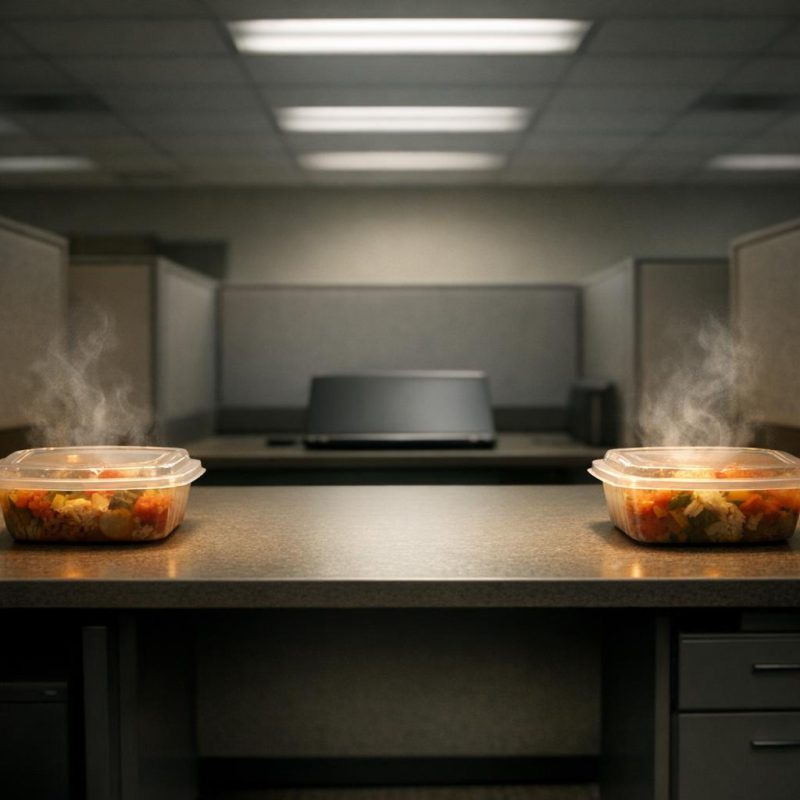 Image by RM AI
The Cold Glance
Melissa is in a good mood today. I can tell from across the room at the way she moves, the way people turn toward her like she's giving off warmth. She makes her rounds with the containers and her smile is the same one it always is, wide and easy, the kind that makes people feel chosen. I watch from my desk without meaning to. She works her way down the row. When she gets close to my area I look back at my screen. I hear her stop at the desk beside mine. I hear the container go down. I hear her say something that makes the other person laugh. And then, for just a second, I feel it at the specific weight of being looked at. I glance up without thinking. Melissa's eyes are on me. The smile is still on her face but something underneath it has gone flat. It lasts less than a second. Then the warmth floods back in and she's already turning away, already moving to the next desk, already laughing at something someone said. I look back at my screen. I tell myself I probably imagined it. But I keep thinking about the temperature in her eyes.
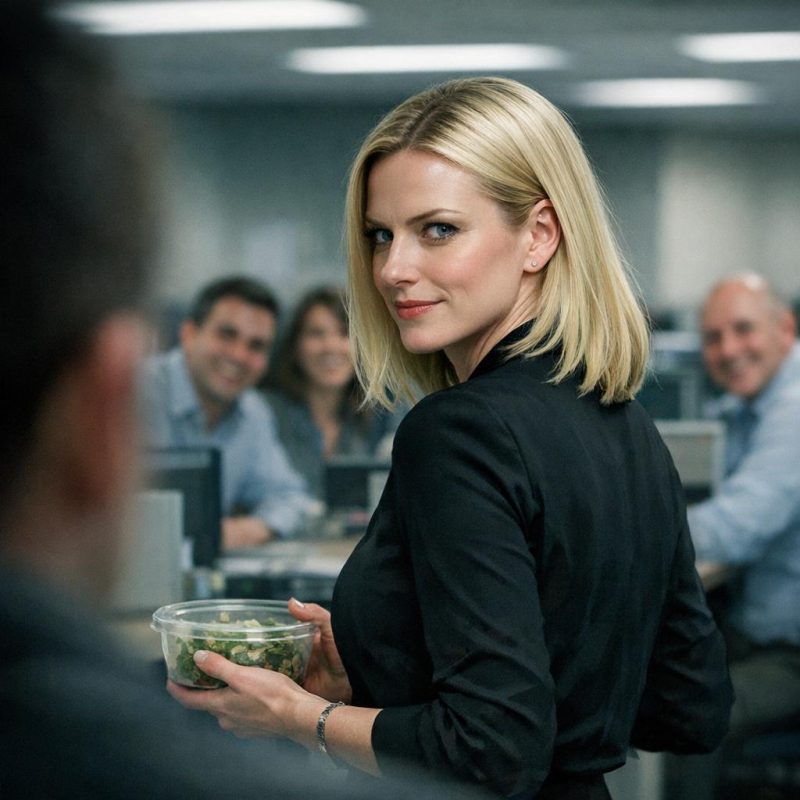 Image by RM AI
Tom Confirms
It's a quiet afternoon, the kind where the office settles into its own low hum and people stop moving around as much. Tom rolls his chair a few inches toward my desk. He doesn't make a production of it. He just gets a little closer and keeps his voice down. 'Hey,' he says. 'Can I ask you something?' I nod. He looks at his monitor for a second like he's still deciding, then he says, 'Has Melissa ever brought food to your desk?' I feel something shift in my chest. I keep my face neutral. 'No,' I say. 'Not once.' He nods slowly, like that confirms something. He says it's probably nothing. He says maybe she just doesn't know me as well. But then he pauses, and he says he's been watching the distribution for a week now and the gap is the same every time. Everyone in the row. Everyone in the kitchen. Everyone who passes through. Everyone except me. I don't say anything. I don't know what to say. Tom glances toward the kitchen and then back at me, quiet and steady. 'I've been counting,' he says.
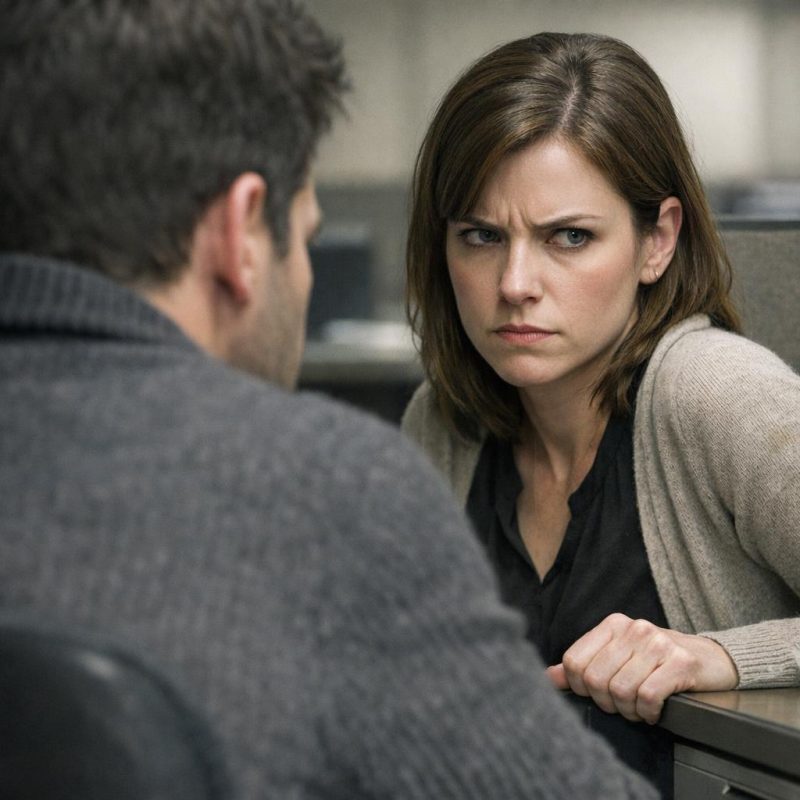 Image by RM AI
The Brown Bag
I pack a sandwich at home the next morning. Sourdough, turkey, a little mustard. I wrap it in wax paper and put it in a brown paper bag and fold the top down twice. It feels deliberate. It feels like a decision. I set the bag on my desk when I get in and I tell myself this is fine. This is better, actually. I don't need to sit here waiting for something that was never coming anyway. I have my own lunch. I made it myself. Noon arrives and Melissa makes her rounds. I hear the containers going out. I hear the sounds of people receiving things at the small grateful noises, the thank-yous, the lids coming off. I unfold the top of my brown bag and take out my sandwich. I unwrap the wax paper carefully so it doesn't make too much noise. I take a bite. The sandwich is fine. It's a perfectly fine sandwich. Melissa moves through the office with her containers and her warm voice and I sit at my desk with my wax paper in my lap and I chew slowly and I tell myself I'm in control of this. The paper crinkles softly when I set it down.
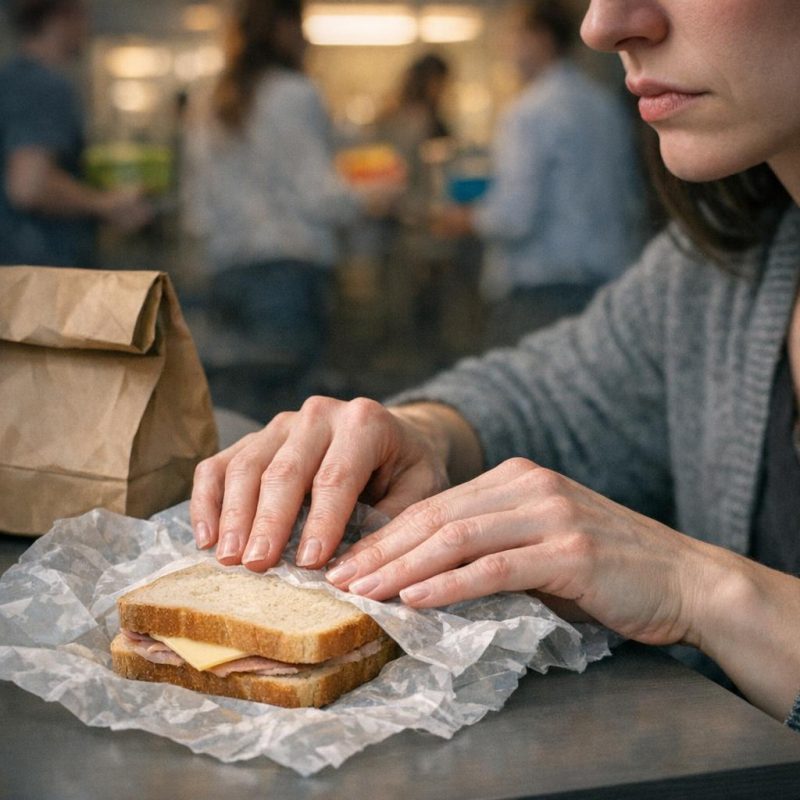 Image by RM AI
The Sound of Heels
It starts at eleven-thirty. I don't check the clock at I just know, the way you know a sound is coming before it arrives. The click of heels on the hard floor near the kitchen. My chest tightens before I've consciously registered what the sound means. I keep my eyes on my screen. The footsteps move into the hallway. My breathing changes. Not dramatically at just a slight shallowing, a small catch at the top of each inhale. I notice it the way you notice a habit you didn't know you had. The heels get closer. I press my feet flat against the floor. I make my hands stay on the keyboard. I type something that doesn't mean anything just to keep them moving. The footsteps pass my desk at the same pace they always do, unhurried, even. Melissa moves through the office and the containers go out and the thank-yous happen and none of it involves me. I already knew that. My body apparently knew it too, before I did. I sit very still after she's gone and wait for my breathing to even out. The tightness in my chest takes a little longer to leave than the footsteps did.
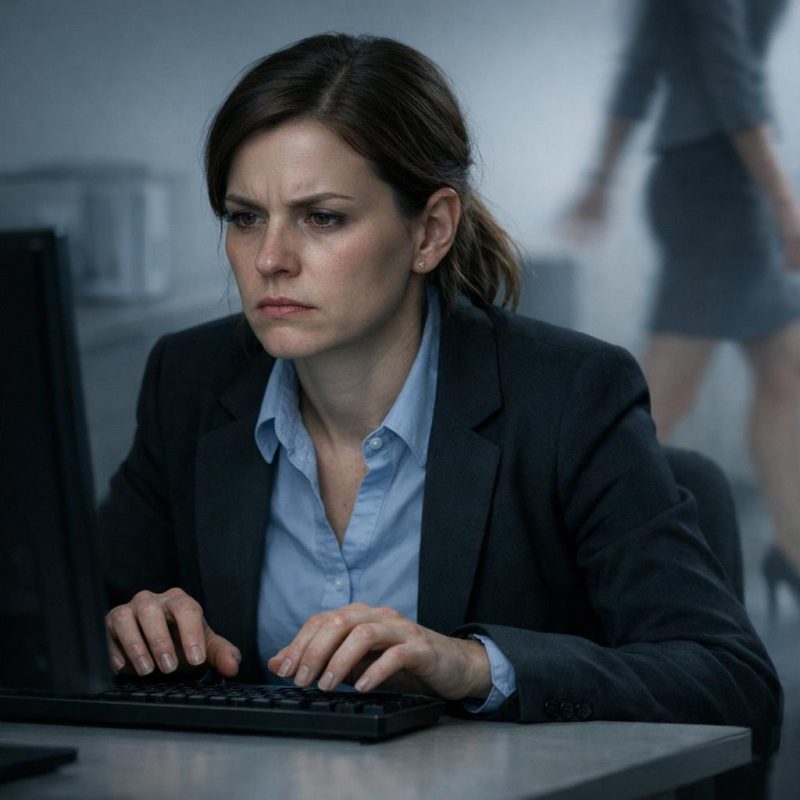 Image by RM AI
The Air Shifts
Today I don't even look up. I hear Melissa come in from the kitchen side, hear the familiar weight of the bag she carries, hear Michael say her name like it's good news. I keep my eyes on my monitor. I keep my hands on my keyboard. I am very focused on a spreadsheet I have been staring at for twenty minutes without actually reading. Melissa moves through the space between the desks. I feel her getting closer the way you feel weather changing at something in the air pressure, something in the quality of the light. Jennifer says something and laughs. Derek asks what's in the containers today. Melissa answers and her voice is warm and easy and carries across the room. Behind me, someone thanks her. Someone else asks for seconds. I sit at the center of all of it, hands on the keyboard, eyes on the screen, and I feel the small breeze of her passing settle and go still.
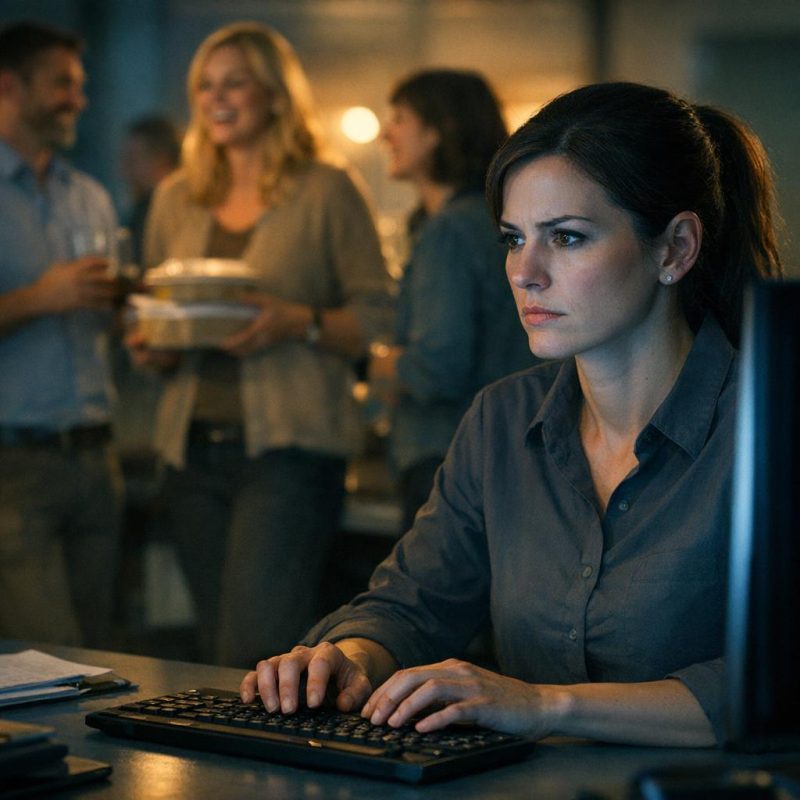 Image by RM AI
Spice Market Stories
Melissa is telling a story about saffron. I can hear it from my desk at something about a market, a vendor, the right way to bloom the threads in warm water. She's standing near the center of the floor and Derek, Michael, and Jennifer have drifted toward her the way people drift toward a fire when the room is cold. I eat my sandwich. I keep my eyes down. Her voice rises and falls with the story and I can hear the pleasure people take in listening to it, the small sounds of attention at a laugh, a question, a murmur of appreciation. She knows how to hold a room. I'll give her that. I take another bite and look at my screen and try to care about the spreadsheet. Then I feel it at the specific pressure of being watched. I look up without meaning to. Across the room, past Derek's shoulder, past the small gathered circle of people, Melissa's eyes find mine. Her story doesn't stop. Her expression doesn't change. She holds my gaze for exactly one beat, maybe two, and then she looks away and keeps talking, smooth and unbroken, like I was never there at all.
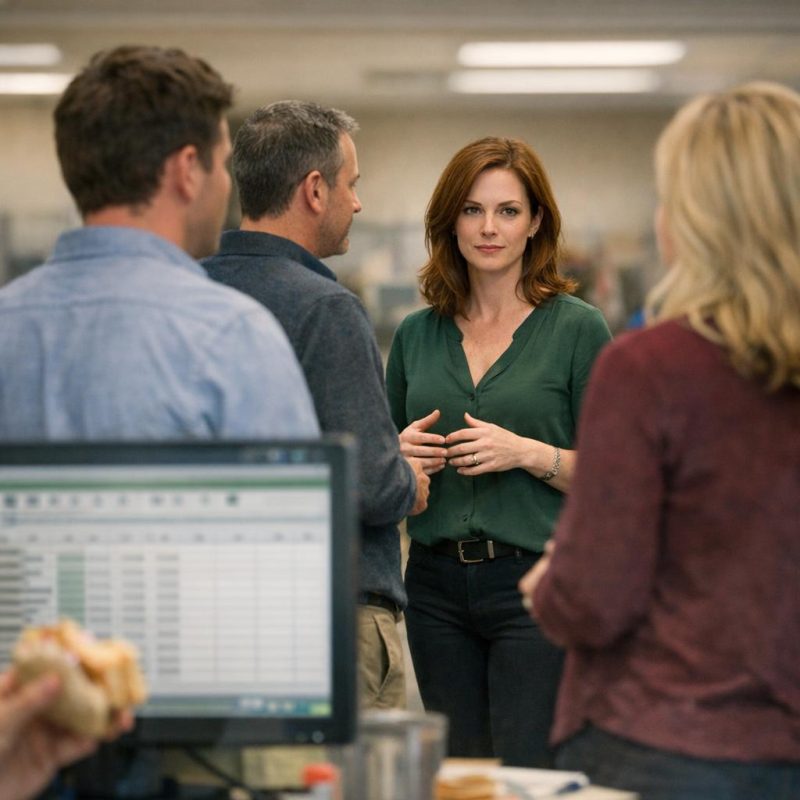 Image by RM AI
The Message in the Look
Melissa finishes the story with a small, satisfied laugh. Michael shakes his head like she's just said something remarkable. Jennifer claps once, delighted. The room exhales. And then, in the middle of all that warmth, Melissa's eyes find me again. Not a glance. Not an accident. She holds it. Three seconds, maybe four. Her expression doesn't shift. No smile, no frown, nothing I can name. Just a steady, level look that sits on me like a hand pressed flat against a door. I don't look away. I don't know why I don't look away. The noise of the room keeps going around us — Michael saying something, Jennifer laughing — but between us there's this strange, airless quiet. Then she turns back to them, smooth and easy, like flipping a page. I sit with my hands in my lap and stare at my screen. I don't know what she was saying. I don't know if she was saying anything at all. But something passed between us in that silence — something I felt land even if I can't name what it was.
 Image by RM AI
Losing Grip
After lunch the floor empties out and I sit at my desk and try to be reasonable. I go through it like a list. The food she brings. The way she hands it out. The look just now. I line it up in my head and it looks like a pattern. But patterns are easy to find if you're looking for them. That's the thing. I know that. I took a statistics class once and the professor said the human brain is a pattern-finding machine, even when there's nothing there. Maybe Melissa just forgets me. Maybe I sit too far from the others. Maybe she doesn't like me and that's it — not a campaign, just a personality clash, the kind of thing that happens in every office everywhere. Maybe the look meant nothing. Maybe she was just thinking about something else and I happened to be in her line of sight. I want that to be true. I turn it over and try it on and it almost fits. Almost. I can't make it fit all the way. But I can't prove it doesn't, either. I sit with that — the not-knowing, the maybe, the possibility that I'm the problem here.
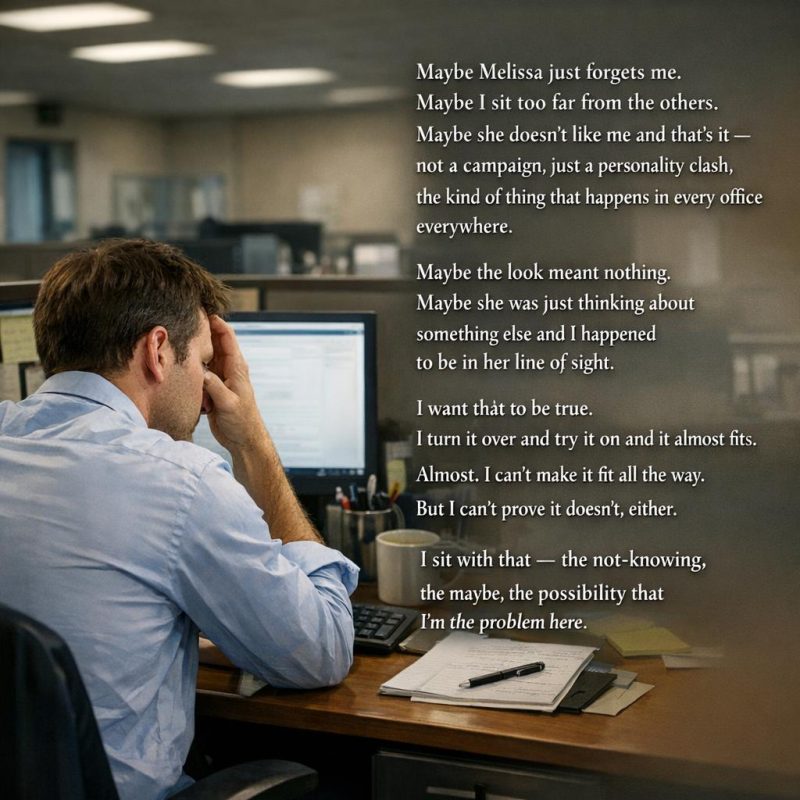 Image by RM AI
The Siege
I open the small notebook I keep in my bottom drawer. I started writing things down a few weeks ago, almost as a joke, almost to prove to myself there was nothing to write. There are two pages now. Dates, times, what she brought, who got some, whether I was at my desk. I count the entries. Fourteen. Fourteen times over six weeks. I sit with that number for a moment. Across the floor, Melissa sets a container on Michael's desk and he lights up the way he always does. She moves to Jennifer next. Same routine. Same warm smile. Same careful hands. I watch her work the room and I feel something I can't quite name — not anger exactly, not sadness exactly. More like the feeling of standing outside in the cold for so long that you stop noticing the temperature and just notice that your hands don't work right anymore. Six weeks is a long time to wonder if you're imagining something. Six weeks of small moments that each mean nothing and together mean something I still can't say out loud. The notebook sits open on my desk, fourteen lines of dates and details, and the weight of it settles into my chest and stays there.
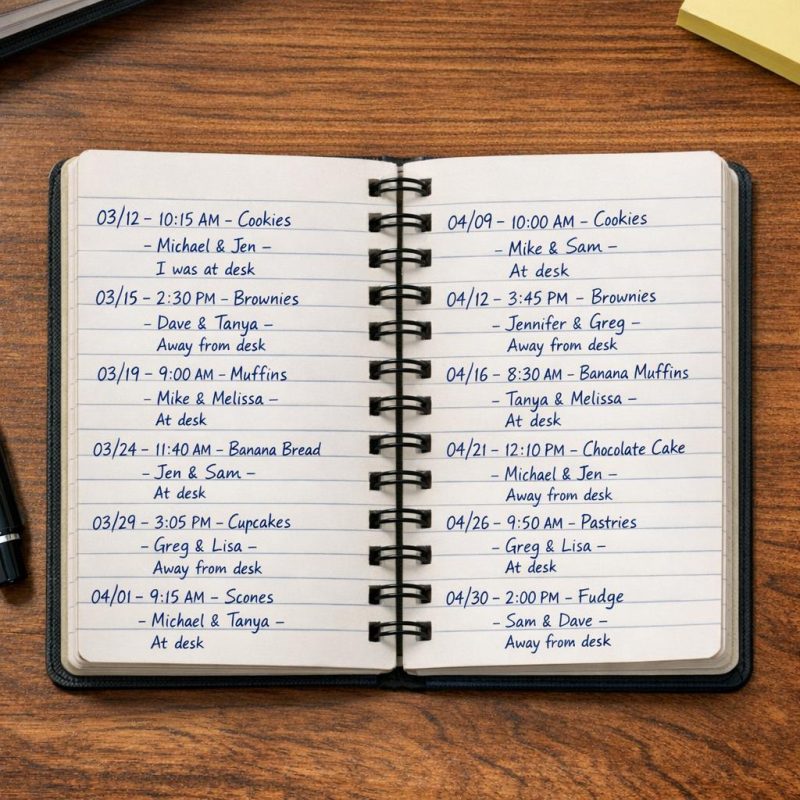 Image by RM AI
The Decision
I stay at my desk after everyone else has gone. The floor is quiet. The overhead lights have switched to their dim after-hours setting and my screen is the brightest thing in the room. I look at the notebook. Fourteen entries and I still don't have anything solid. I have feelings and timing and a look that lasted three seconds too long. That's not enough. I know it's not enough. I've been waiting for something to make sense on its own and it hasn't and it won't. If I want to understand what's happening, I have to stop waiting and start looking. Melissa always arrives before most people. I've noticed that. She sets up before the floor fills in, arranges things, gets settled. I've never been here to see it. I've never been early enough. I think about what I might see if I was. I think about whether I actually want to know. Both things are true at the same time — the fear and the need — and I sit with them until the need wins. I pack up my bag, turn off my screen, and decide: tomorrow I come in early.
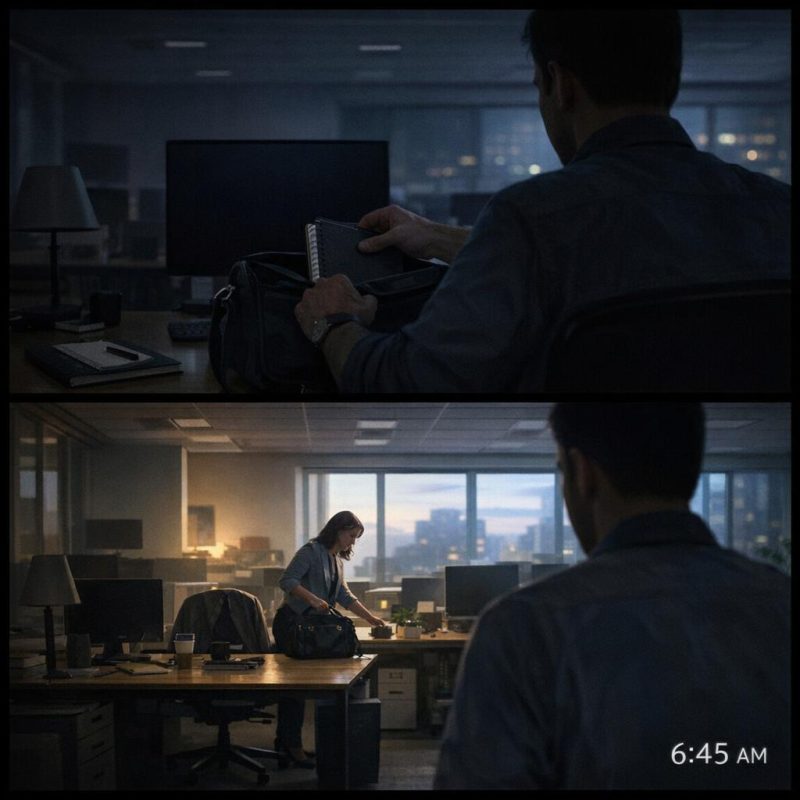 Image by RM AI
The Confrontation Plan
I sit at my kitchen table with a notepad and try to write it down. What I would say to her. How I would start. I write: *Melissa, I've noticed I'm not included when you bring food in.* I read it back. It sounds like a complaint from a child. I cross it out. I try: *I wanted to ask you directly — is there a reason I'm left out?* Better, maybe. But I can hear her response already, the smooth confusion, the wide eyes, the *oh my gosh, I had no idea, I'm so sorry.* And then what? I have nothing. I write down the questions I actually want to ask and they all come out wrong — too aggressive, too needy, too easy to deflect. I try softer versions and they sound like I'm apologizing for bringing it up. I try direct versions and they sound like accusations I can't back up. I fill half a page and none of it works. The problem isn't the words. The problem is that feelings aren't evidence. I can feel targeted every day of the week and it doesn't matter if I can't show someone else what I see. I put the pen down. The notepad sits there, half a page of crossed-out sentences, and none of them say what I actually mean.
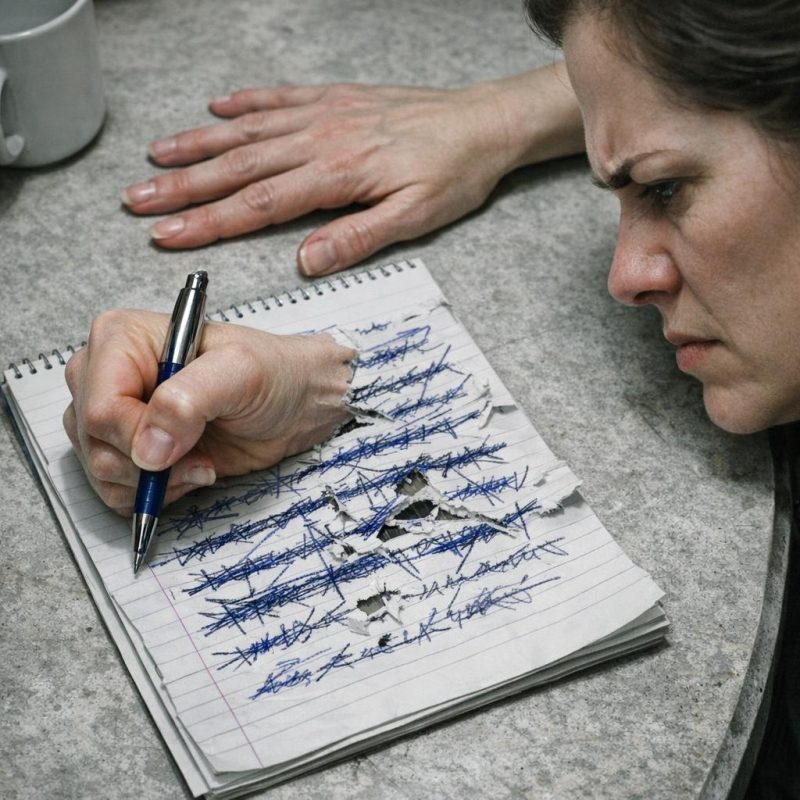 Image by RM AI
HR Visit
I go to HR on my lunch break. Rachel's office is at the end of the hall past the copy room, and I almost turn around twice before I knock. She opens the door and waves me in without much expression. I sit across from her and explain it — the food, the pattern, the weeks of it, the notebook. She listens with her hands flat on the desk and her face neutral in a way that's hard to read. When I finish she asks if I have documentation. I tell her about the notebook. She nods once, slowly, like she's filing something away. She says I should keep recording dates and details. She says if there's a pattern, documentation will help establish it. She doesn't say she believes me. She doesn't say she doesn't. She hands me a form — an incident log template — and tells me to fill one out each time it happens and keep copies. I take the form. I thank her. I walk back down the hall with the paper in my hand and I'm not sure if I feel better or worse. Something has shifted, though. Writing it in a notebook for myself is one thing. Filling out an official form is something else entirely, and the difference between the two sits heavy in my chest the whole way back to my desk.
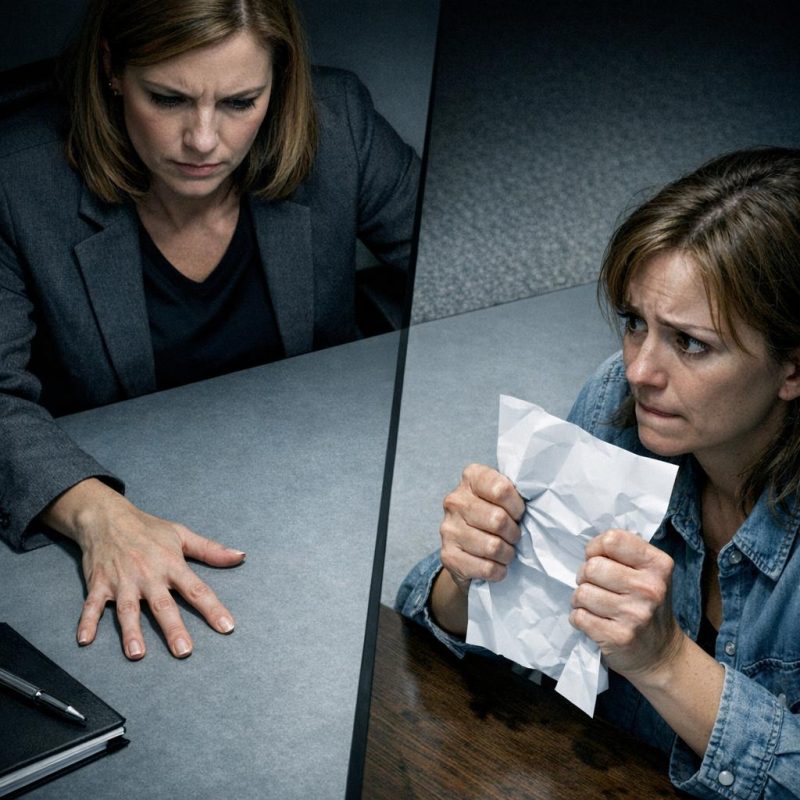 Image by RM AI
The Documentation
I keep my phone face-up on the desk now, angled slightly toward the center of the floor. I've practiced the motion — thumb to the camera app, one tap — so it looks like I'm checking a message. Melissa comes in at 11:40 with two containers and a paper bag. Same as always. She sets them on the kitchen counter and starts opening lids. I watch from my desk. Michael gets up before she even calls his name. Jennifer drifts over a minute later. I wait until Melissa's back is turned and I take the first photo — the counter, the containers, the small gathered group. Then I wait. She hands Michael a portion and I get the second shot, his hands, her hands, the food passing between them. Jennifer next. I get that too. Then Melissa closes the containers and starts back toward the kitchen. My desk sits empty in the frame of my screen. I angle my phone one last time and press the shutter — my own desk, bare, nothing on it, the space where a plate would go if I were included.
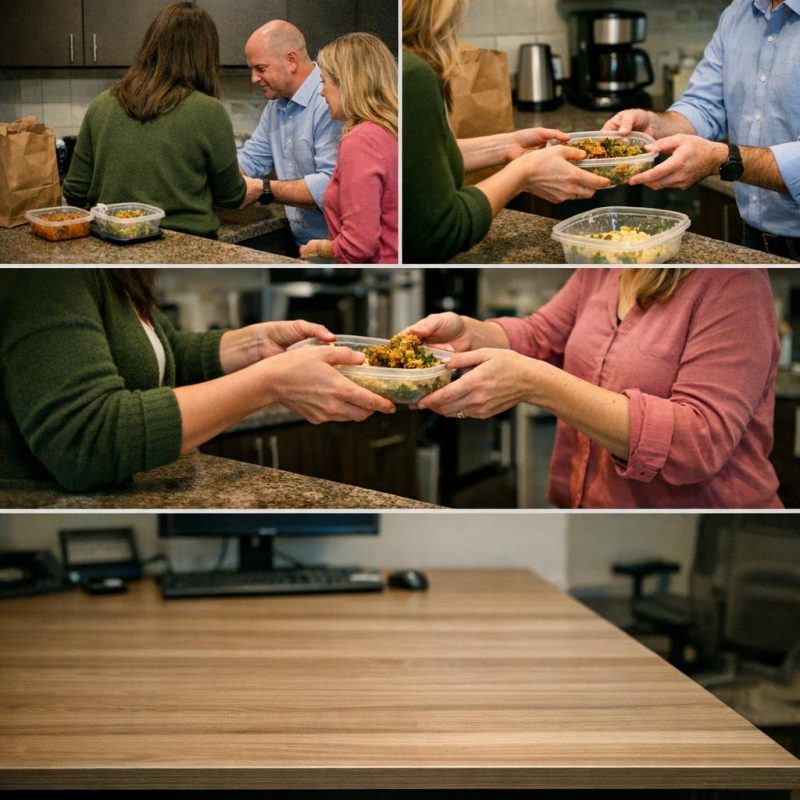 Image by RM AI
The First Check
Today I watch from the moment she steps off the elevator. She comes in carrying the usual bag, moving at her usual pace, and before she heads to the kitchen she does something I've seen before but never clocked until now. Her eyes move across the floor. A quick scan, casual-looking, the kind of thing you'd miss if you weren't paying attention. But I am paying attention. Her gaze travels the room and stops, briefly, at my desk. Not at Michael's desk. Not at Jennifer's. Mine. She holds it for maybe a second, then continues toward the kitchen like nothing happened. I write the time in my log. I note what I saw. I don't know what it means. It could be nothing — people scan rooms, eyes land places, it doesn't have to mean anything. But I've been watching for three days now and it's happened each time, the same sequence, the same order. She enters. She scans. Her eyes find my desk first.
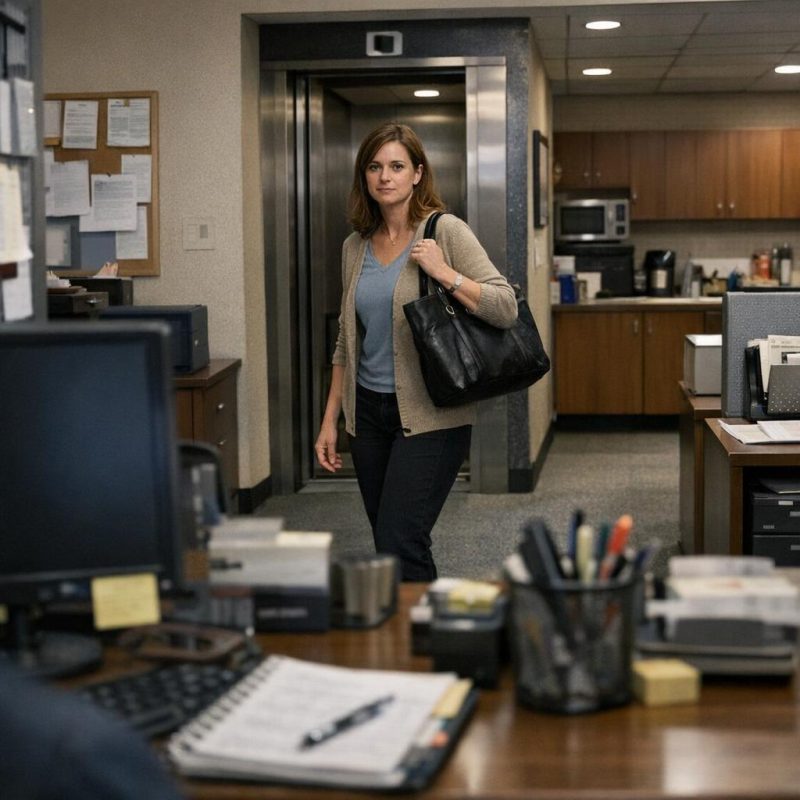 Image by RM AI
The Circle Tightens
Derek is back today. I notice him the moment he steps off the elevator — same glasses, same button-down, same easy way of moving through a room. He drops his bag at his desk and within twenty minutes he's gravitating toward the breakroom. I watch him go. I'm eating at my desk again. Sandwich from home, same as yesterday, same as the day before. I stopped trying to time my lunch around anyone else weeks ago. Melissa's voice rises from down the hall, warm and carrying, the kind of voice that fills a room and makes everyone in it feel chosen. Michael says something and there's a burst of laughter. Jennifer's high pitch cuts through it. Even Derek — back one morning and already inside the circle. I sit with my sandwich and my notebook and I count the people I can hear. Four. There are four people in that breakroom and not one of them thought to knock on my cubicle wall on the way. I don't move. I just listen. The laughter comes again, louder this time, rolling down the hallway toward my desk.
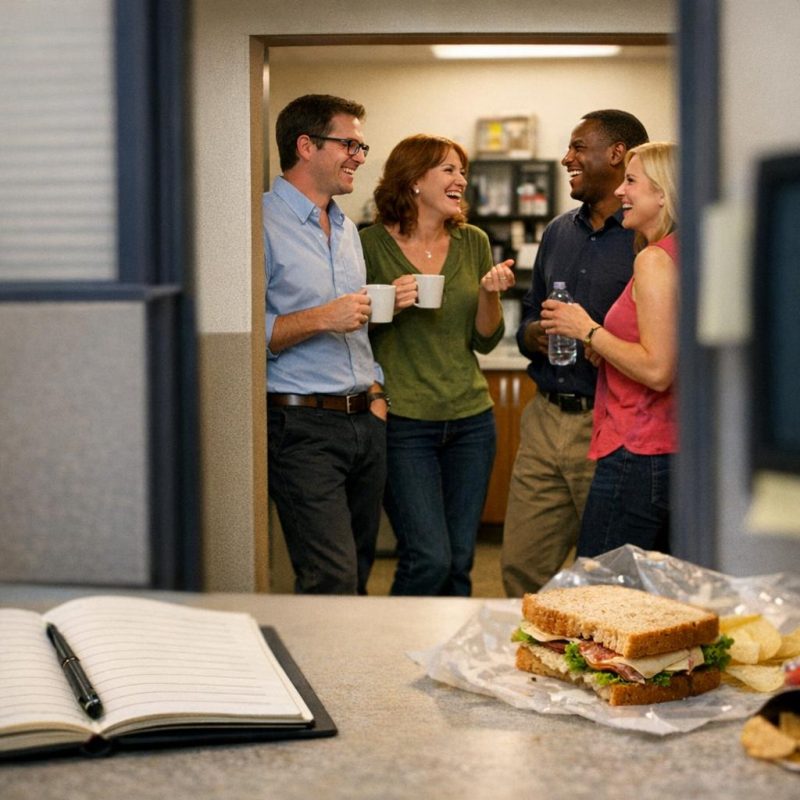 Image by RM AI
The Siege Recognized
I open my notebook to the first page of entries. Three weeks of dates, times, observations. Lunch brought in — Lynn excluded. Breakroom gathering — Lynn not invited. Birthday cake in the conference room — Lynn found out after the fact from an empty plate in the sink. I read through it slowly. Each entry on its own looks like nothing. A forgetful coworker. A missed invitation. The kind of thing you'd chalk up to bad luck or office drift. But laid out like this, one after another, the pattern doesn't look like drift. It looks like pressure. Sustained. Consistent. Aimed. I think about the word I've been circling for days, the one that kept surfacing when I tried to describe what this felt like from the inside. Not bullying — that word felt too blunt, too schoolyard. Not harassment — too legal, too formal for what I could actually prove. I tap my pen against the page. I think about walls going up around a city. Supply lines cut. People inside slowly running out of things they need. The word that fits is siege.
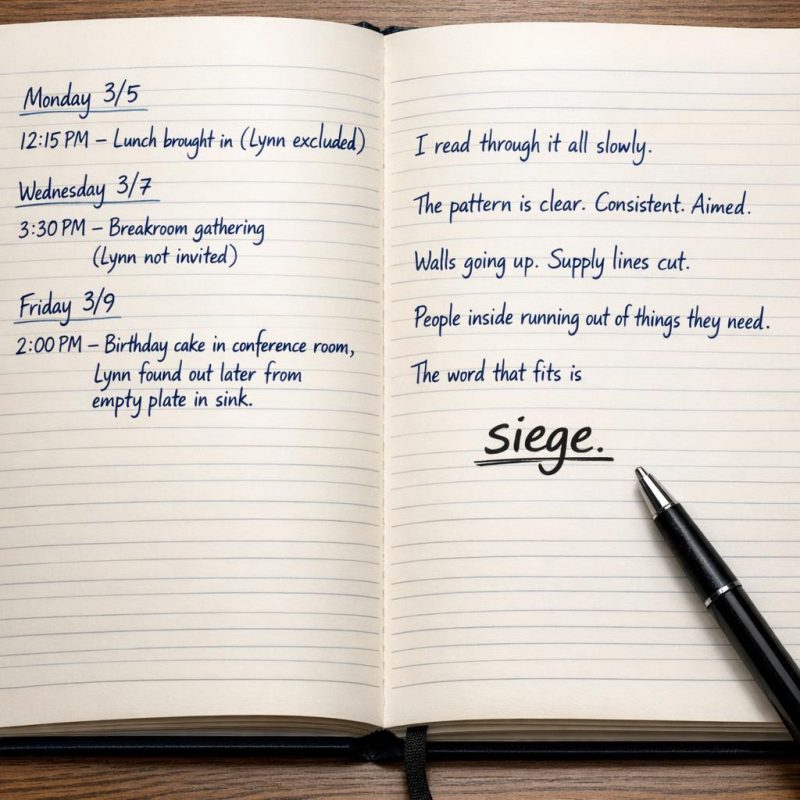 Image by RM AI
Seven-Thirty
I set my alarm for six. I'm out the door by six-forty and at the building by seven-twenty. The lobby guard barely looks up. The elevator opens onto a dark floor — half the overhead lights still on their timer, the rest coming up slow as I move through the space. My footsteps are the only sound. I set my bag down at my desk and just stand there for a moment, taking it in. Empty chairs. Dark monitors. Someone's cardigan draped over the back of a chair like they just stepped away. The breakroom is at the end of the hall. I've been thinking about it since last night — what I might find, what I might not find, whether I'm being paranoid or whether paranoid is just the word people use when they don't want to believe something is real. I start walking. The lights hum above me. My heart is doing something I don't like — a fast, shallow beat that I feel in my throat more than my chest. I don't know what I'm looking for. I just know I need to look. The floor holds its silence around me like it's waiting too.
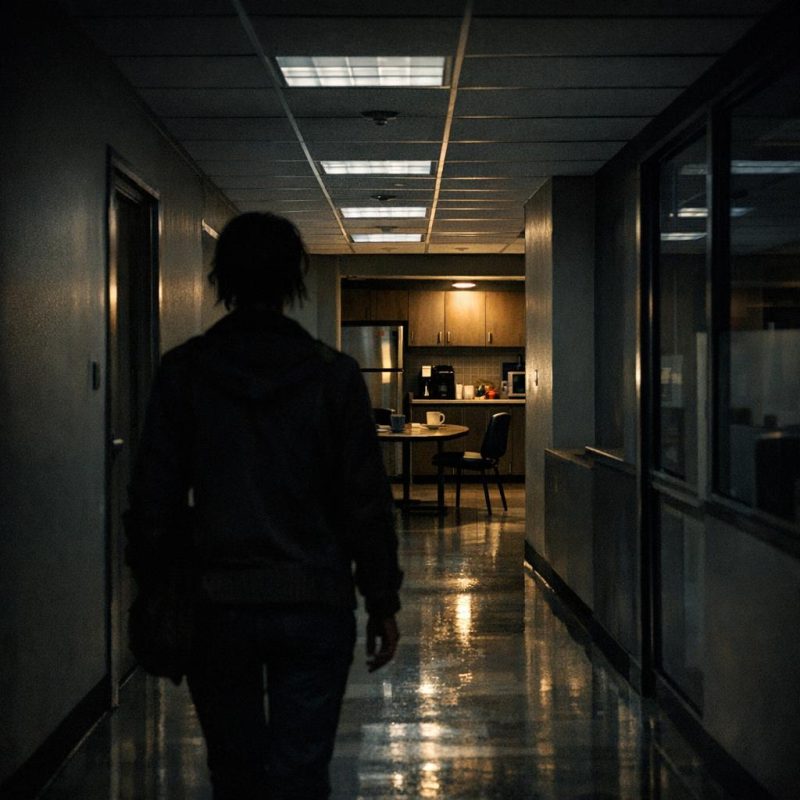 Image by RM AI
The Voice
I'm ten feet from the breakroom when I hear it. A voice. Low and even, coming from around the corner — not the warm, carrying tone she uses in the open office, not the bright social register I've heard a hundred times. This is flatter. Controlled. The kind of voice someone uses when they think no one is listening. I stop walking. My hand is still reaching toward the doorframe and I pull it back. I press myself against the wall just outside the entrance and I stay very still. I know that voice. I've been listening to it for months. I know the way it rises at the end of a sentence when she wants something, the way it softens when she's performing warmth. This isn't either of those. She's on the phone. I can hear the one-sided rhythm of it — a pause, then words, a pause, then words. I can't make out everything yet. But I can hear enough to know she's not talking about work. The flat, even sound of it moves through the wall and settles somewhere in my chest, and I don't move.
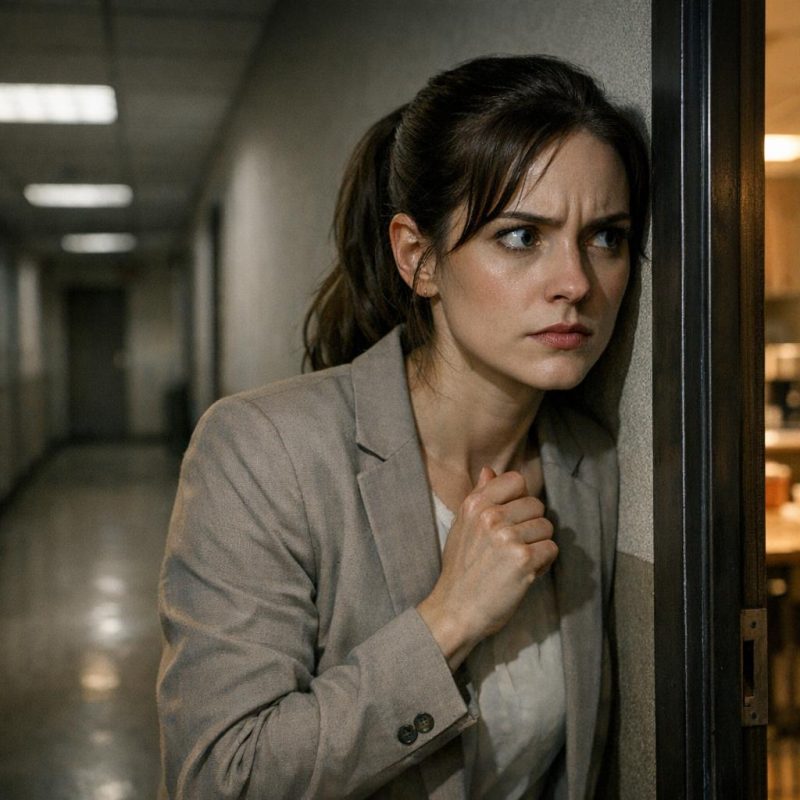 Image by RM AI
Something Special
I hold my breath and listen. Her words come through in pieces at first — fragments, half-sentences, the shape of a conversation I can only hear one side of. Then she says it clearly enough that there's no mishearing it. Something special. Just for her. I go very still. She keeps talking, her voice staying in that same flat register, and I catch more words — something about things being different, something about the afternoon. My hands find the wall behind me and I press my palms flat against it. I don't move. I don't breathe more than I have to. I don't know who she's talking to. I don't know who she means. There are other women in this office. It could be anyone. I tell myself that. I stand there in the hallway with my back against the wall and I tell myself it could be anyone, it could mean anything, I could be standing here catastrophizing at seven-thirty in the morning over a phone call I only heard half of. But my hands are shaking against the wall. And the words just sit there in the air around me — just for her.
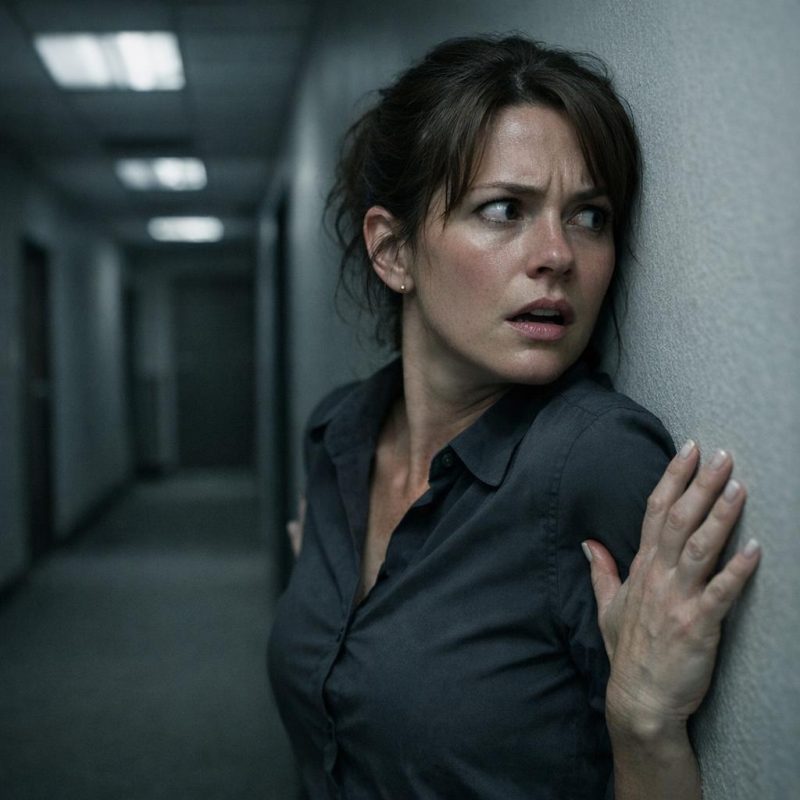 Image by RM AI
The Target
I hear her say goodbye and the call ends. I don't move. I stand there with my palms still flat against the wall and I go back through what I heard. Something special. Just for her. I turn it over. I try to make it mean something else. A friend. A sister. Someone outside this office entirely. I try to make it land somewhere that isn't me. It doesn't land there. I think about the weeks of entries in my notebook. I think about the way her eyes moved to my desk this morning. I think about every lunch, every gathering, every time I wasn't included. I don't know what she packed. I don't know what she means by special. I don't know what she thinks is going to happen. But standing here in this hallway with my back against the wall and my hands still trembling, I can't make the math work any other way. Inside the breakroom, I hear the soft sound of containers being set down on the counter, one after another.
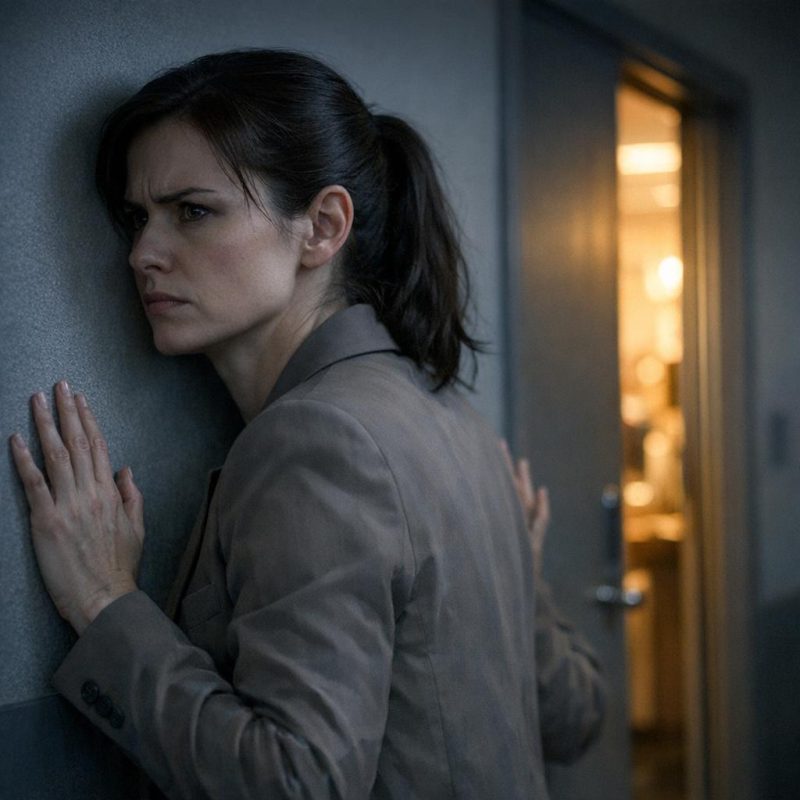 Image by RM AI
The Wait
I'm back at my desk by seven-forty. I open a document on my screen and stare at it. The words don't mean anything. I type a sentence and delete it. I type it again. The clock in the corner of my screen reads 7:43. I think about leaving. I think about calling in sick, walking back to the elevator, going home and sitting in my apartment until whatever today is supposed to be just passes. But I don't move. I stay in my chair and I watch the floor fill up around me — Derek arriving, then Michael, then Jennifer, then the slow accumulation of everyone else. Melissa comes in at her usual time. She doesn't look at me differently. She moves through the office the same way she always does, easy and unhurried, stopping to say something to Jennifer that makes Jennifer laugh. I watch the clock move from nine to ten. From ten to eleven. My stomach is a tight, closed fist. I don't eat anything. I don't get coffee. I just sit and wait and watch the minutes go, each one slower than the last, the morning stretching out long and thin like something being pulled apart.
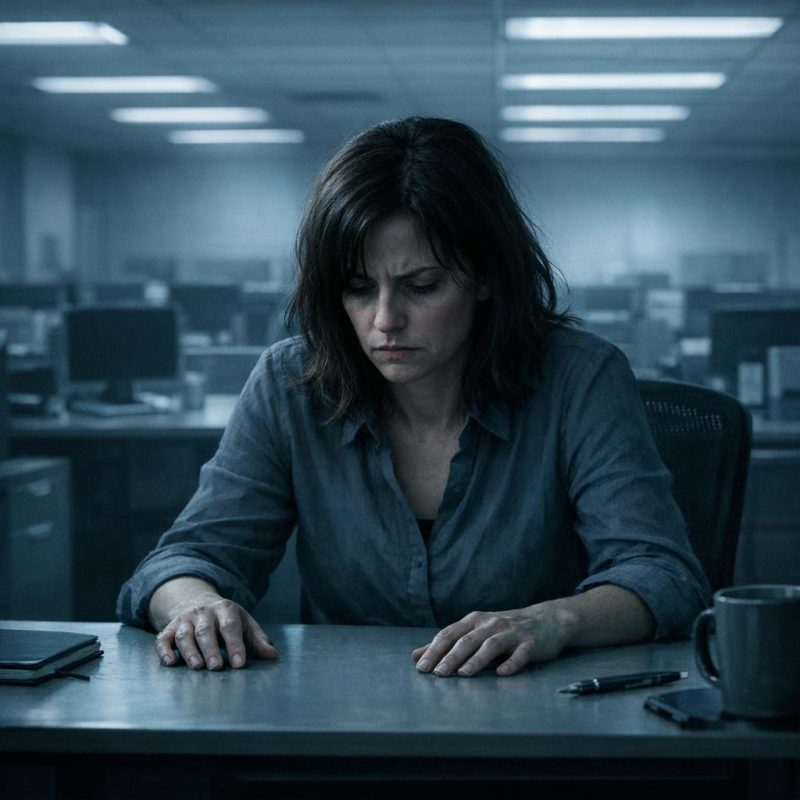 Image by RM AI
The Pattern Breaks
I hear the heels at noon exactly. That specific rhythm — measured, unhurried — coming from the direction of the kitchen. I've heard it enough times to know it without looking up. I hear the soft thud of containers being set down at Michael's desk, then Jennifer's, then the murmur of voices as people start to gather. Same as always. I keep my eyes on my screen. I tell myself this is how it goes. She makes her rounds, she skips my desk, the afternoon moves on. I hear Derek say something appreciative. I hear Michael laugh. And then the footsteps don't stop. They keep coming. They come down the row and they stop directly in front of me and I have no choice but to look up. Melissa is standing at my desk. She's smiling — that full, warm smile, the one that reaches everywhere it's supposed to reach. She says she made a little extra today and thought of me. The office has gone quiet in the way offices go quiet when something unexpected happens. I look down. There is a container sitting on my desk.
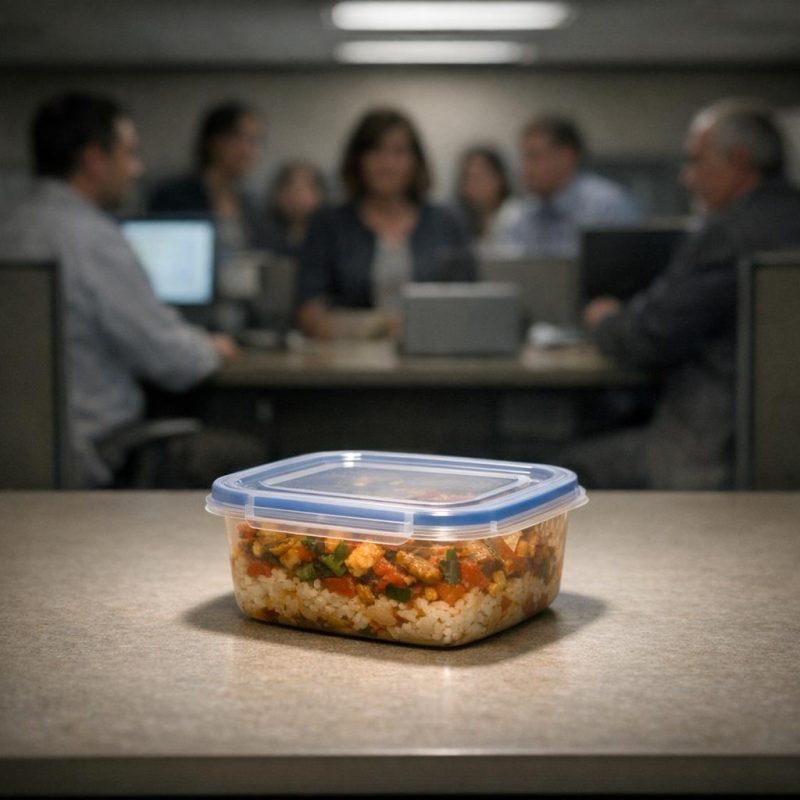 Image by RM AI
The Performance
I look up. I make myself smile. It takes everything I have to hold it steady — the corners of my mouth, the angle of my eyes, the small exhale that's supposed to read as pleasant surprise. I say thank you. I say it sounds great. Melissa's smile widens and she says she thought I might like this one, that she made it with a little extra care. Her voice is warm. Her eyes are warm. The whole performance is warm. I hear Michael say something approving from across the room. I hear Jennifer make a small delighted sound. Derek is quiet, but I can feel him watching. I keep my hands flat on my desk so they don't shake. I keep my voice even. I say it smells wonderful. Melissa nods like she's satisfied with something, and then she turns and walks back the way she came, unhurried, heels measured on the floor. The container sits in front of me. The office settles back into its usual sounds. And I am aware, in a way I can't quite shake, of every pair of eyes that just watched that exchange.
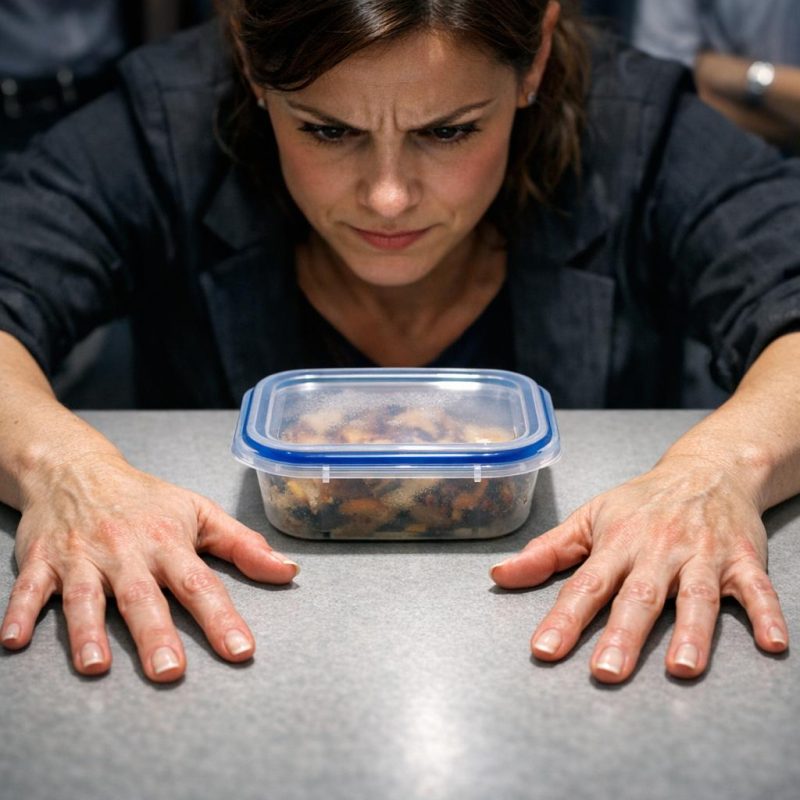 Image by RM AI
The Similar Container
I carry the container to the breakroom like it's nothing. Like I'm just a person going to eat lunch. The breakroom is crowded — Michael is already at the far table, Jennifer beside him, both of them talking over each other. Derek is at the counter pouring coffee. I set my container down near the end of the table and reach for a fork from the drawer. That's when I see it. Another container, same size, same shape, same pale blue lid, sitting at the other end of the table. I go still for a second. I look at mine. I look at the other one. They're not just similar. They're the same. Same brand, same color, same small dent near the hinge on the lid. My pulse does something I don't have a name for. I pull out a chair and sit down slowly, keeping my face neutral, keeping my hands steady. I don't open either one. I just sit there with my fork in my hand, watching the room move around me, and I don't take my eyes off that other container.
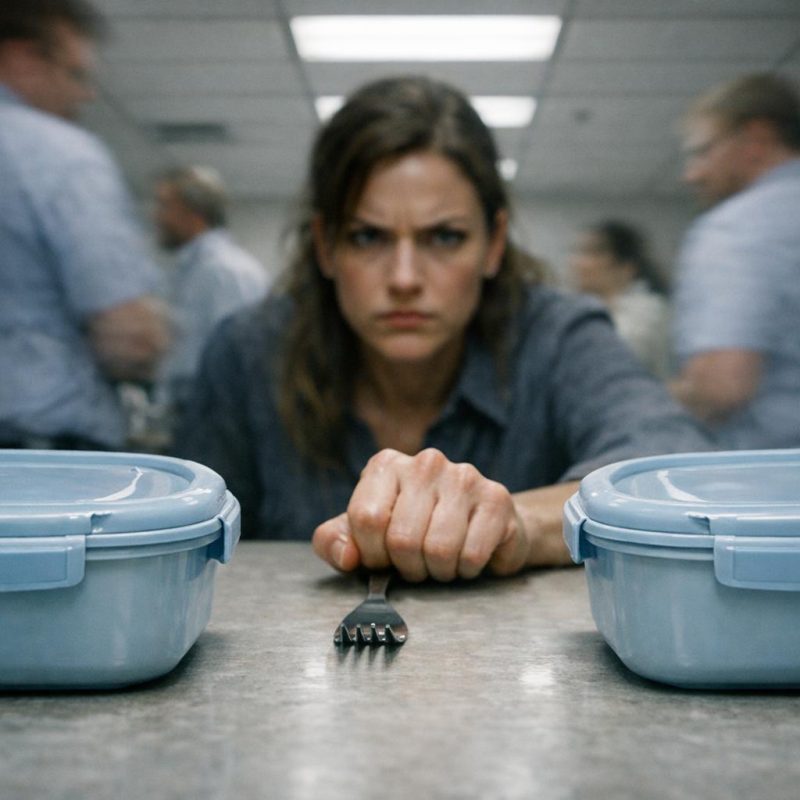 Image by RM AI
The Distraction
I stay in my seat. I don't move toward the other container. I just keep my fork in my hand and wait, the way you wait when you know something is about to shift but you can't force it. Michael is telling a story now, something about a client call that went sideways, and Jennifer is laughing. Derek is still at the counter. The table is loud and full and everyone is looking at everyone else. Then Derek turns and asks Michael something about the Harmon project — something about a deadline, a file, a number he can't remember. Michael swivels toward him. Jennifer turns too. Three heads pivot away from the table at the same moment. The other container sits there, unwatched. My container sits beside it. My heart is going fast and hard and I can feel it in my throat. I don't think. I don't plan. I just see the gap open up in front of me — three seconds, maybe four — and I know it won't stay open long.
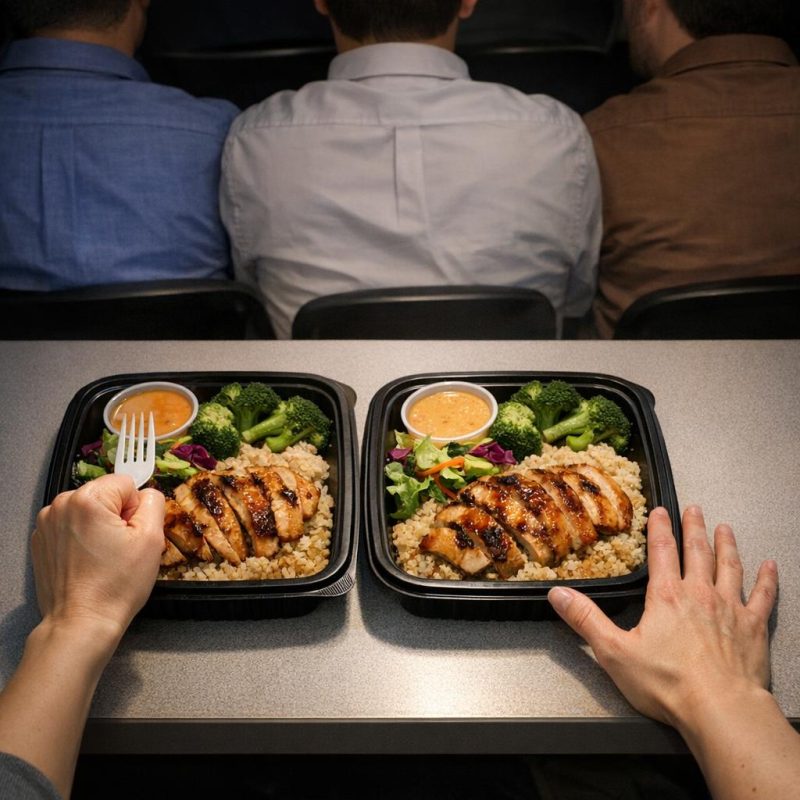 Image by RM AI
The Swap
I move. My left hand closes around my container. My right hand closes around the other one at the same moment. One smooth motion — left slides right, right slides left. I don't look up. I don't check faces. I keep my eyes on the table and I breathe through it. One second. Two. Three. I set the new container down in front of me and pull my hands back into my lap. My pulse is hammering so hard I can feel it in my fingertips. I pick up my fork again. I look at the table like nothing happened. Michael is still talking. Jennifer is still laughing. Derek is nodding at something. Nobody turned around. Nobody saw. The container that was mine is now at the far end of the table. The container that was at the far end of the table is now in front of me. I sit with that fact for a moment, fork in hand, breathing slow and careful. The swap is done.
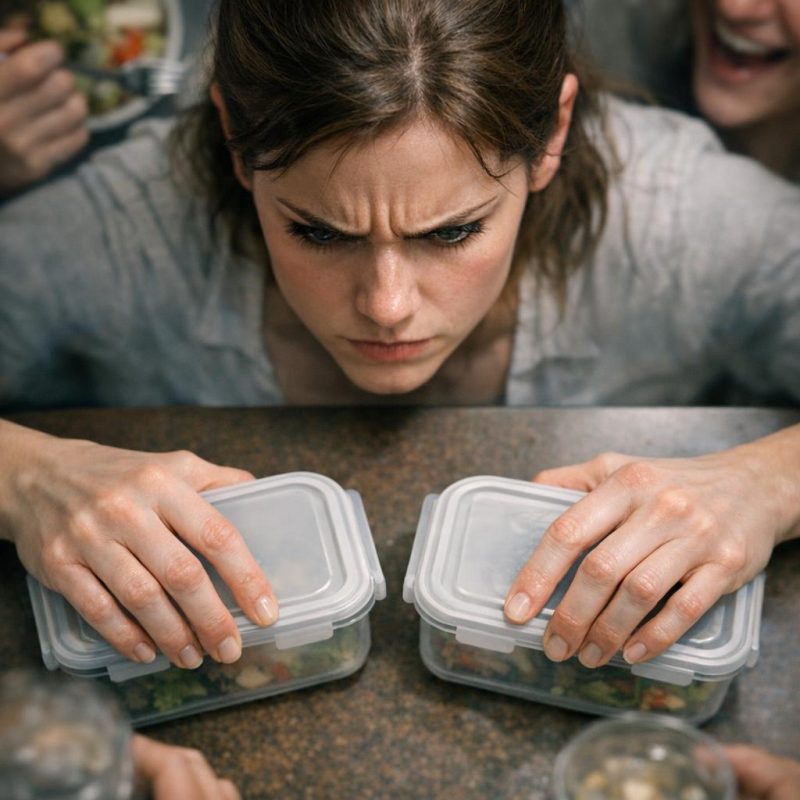 Image by RM AI
The Opening
I pull the lid back slowly. There's food inside — same general look as what Melissa usually makes, layered and careful, the kind of thing that takes time. I pick up my fork and hold it over the container and try to look like someone who is simply about to eat lunch. The breakroom is still loud. Michael is still talking. Then the door opens. I don't have to look up to know who it is. I know the sound of those heels. Melissa steps in and her eyes move across the room the way they always do — quick, practiced, taking inventory. She smiles at Michael. She says something to Jennifer. And then her gaze travels to the table, and it stops. Her eyes land on the container sitting in front of me, and then they move to the container at the far end of the table, and something in her face goes very, very still.
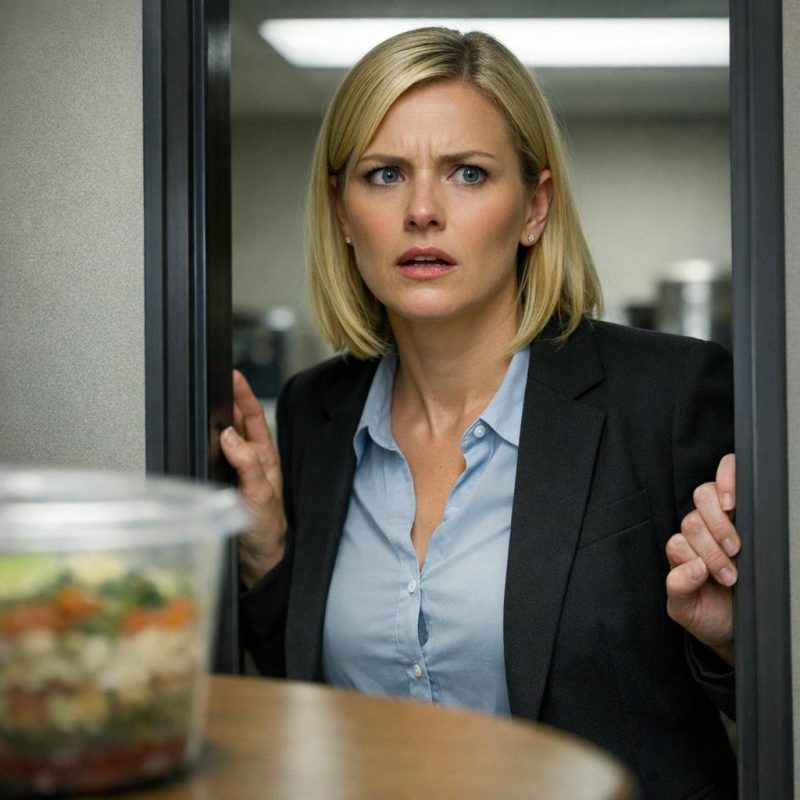 Image by RM AI
The Sharp Eyes
The warmth drops out of her expression like a switch flipped. One moment she is Melissa — bright, composed, the version of herself she keeps polished for rooms full of people. The next moment her eyes are sharp and flat and moving fast. She crosses the breakroom in fewer steps than the space should allow. I watch her come. I keep my fork in my hand. I keep my face neutral. She's not running — she's too careful for that — but there's an urgency in the way she moves, a tightness in her shoulders, a precision to each step that doesn't match the easy smile still sitting on her mouth. Michael notices first. He trails off mid-sentence. Jennifer looks up. Derek turns from the counter. The room doesn't go quiet yet, but it tilts — that subtle shift when people sense something is happening and haven't decided whether to acknowledge it. Melissa reaches the edge of my table and stops. I don't look away from her. I notice, in a distant and very clear way, how fast she covered that distance.
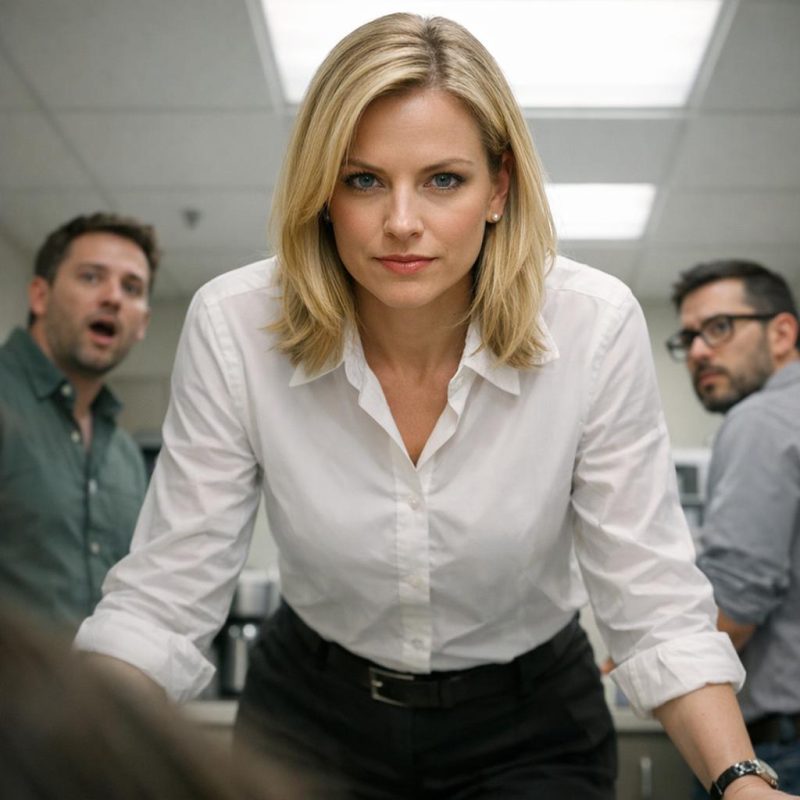 Image by RM AI
Wrong One
Her hand comes out and reaches for the container in front of me. She says I have the wrong one. Her voice is still friendly — still carrying that warm, social lilt — but there's something underneath it pulled tight. I put my hand on the container and slide it closer to me. I ask her why it matters which one I have. She says she just wants to make sure I get the right dish, that she made them slightly differently and she knows which one I'd prefer. Her smile doesn't move. It stays exactly where she put it. I keep my hand on the container. I ask her again — why does it matter. The breakroom has gone quieter now. I can feel Michael and Jennifer and Derek all watching without watching, the way people do when they don't want to be caught staring. Melissa's fingers are still extended toward the container. Her smile is still in place. And the claim she just made — that I simply have the wrong one — sits in the air between us, waiting.
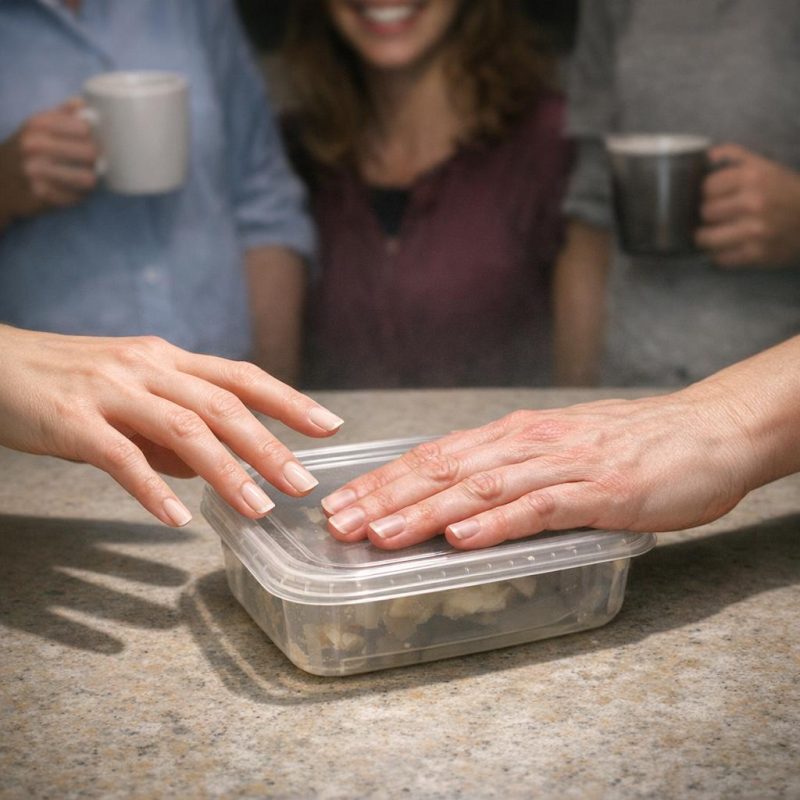 Image by RM AI
The Tug of War
She doesn't pull her hand back. Her fingers close around the far edge of the container. I don't let go. My hand is flat on top of it, pressing down, and hers is gripping the rim, and for a moment neither of us moves. The breakroom goes completely silent. I hear a fork set down somewhere behind me. I hear a chair stop mid-scrape. Michael has stopped talking. Jennifer has stopped laughing. Derek is very still at the counter. Melissa's smile is still on her face but it has gone rigid, the muscles around it working to hold the shape. I look at her and she looks at me and the container sits between our hands like a question neither of us has said out loud yet. Then I hear it — a sound at the doorway, a pause in the ambient noise of the hallway beyond. I don't turn my head. But I see Melissa's eyes flick up and past me, toward the door, and something shifts in them. Both our hands are still on the plastic.
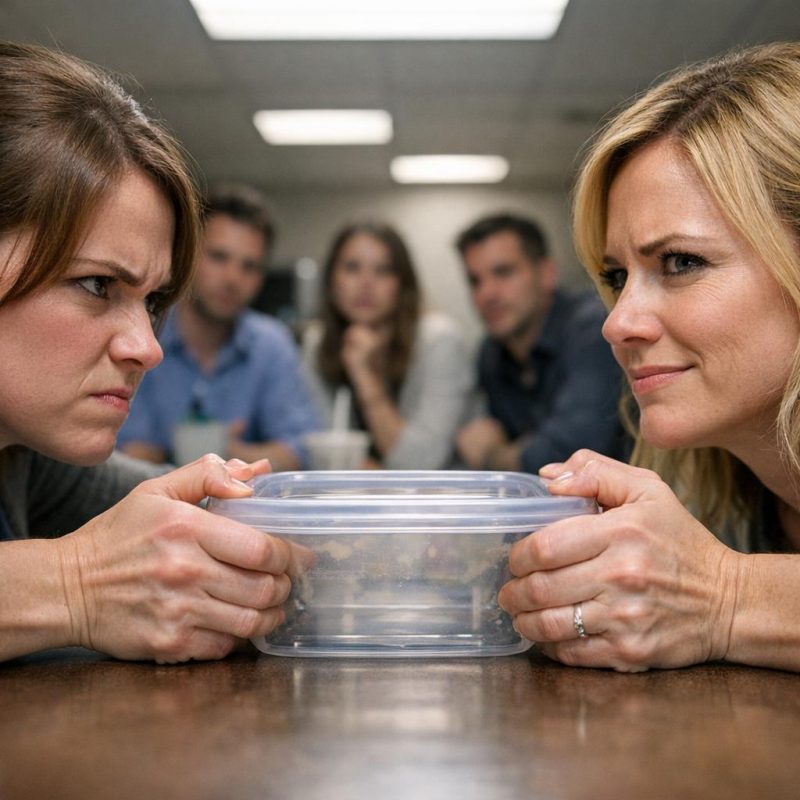 Image by RM AI
The Room Goes Silent
Nobody moves. That's the thing I keep coming back to — nobody moves. Michael's fork is suspended halfway between his plate and his mouth. Jennifer's phone is face-down on the table, forgotten. Derek stands at the counter with his coffee cup raised and his elbow bent and he just stays there, like someone hit pause on him. I can feel the weight of every set of eyes in the room. Melissa's smile is still technically on her face but it has stopped working. The muscles around her mouth are holding the shape but nothing behind it is moving anymore. Her fingers are still curled around the rim of the container. Mine are still flat on top of it. Neither of us has said a word. I hear David shift his weight in the doorway. I don't turn to look at him. I don't look at anyone except Melissa. The container sits between our hands, plastic and ordinary, and the room holds its breath around it. The silence has a texture to it now — thick and close and full of everything nobody is saying.
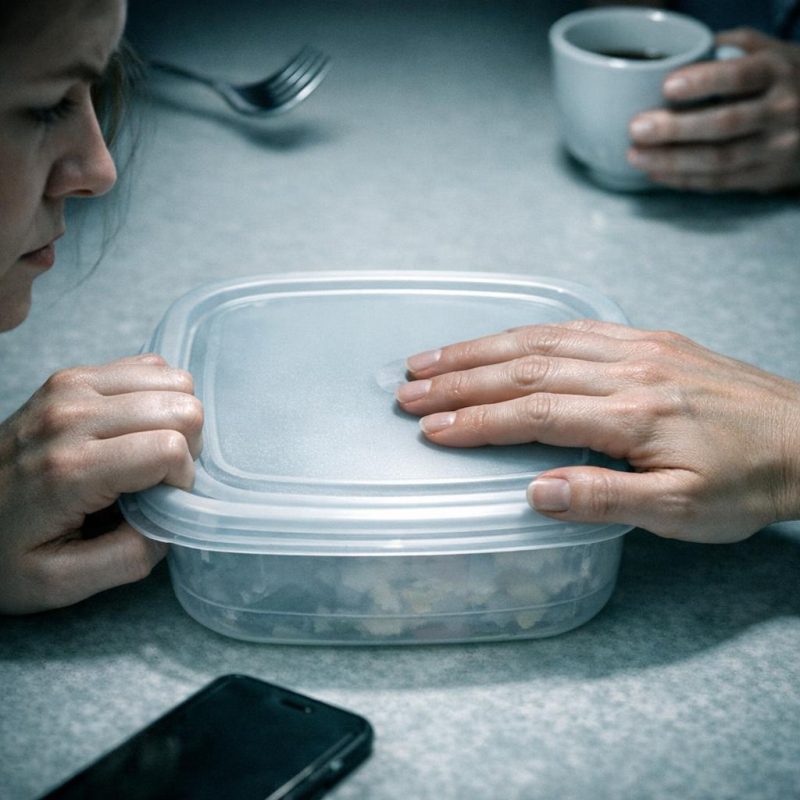 Image by RM AI
The Phone Call
I keep my voice even. That takes more effort than anything else right now. 'I came in early this morning,' I say. I'm not looking away from Melissa. 'Earlier than usual.' Her fingers tighten on the rim. I feel it through the plastic. 'I was in the hallway near the kitchen.' I pause. Let that land. 'I heard you on the phone.' Something moves across Melissa's face — fast, controlled, gone in under a second. But I saw it. 'You were talking about something special,' I say. 'Something you'd packed.' The room is so quiet I can hear the refrigerator hum. Michael hasn't moved. Jennifer is staring at the table. Derek has set his coffee cup down without making a sound. David is still in the doorway. I don't know what his face looks like and I don't check. I keep my eyes on Melissa. Her jaw is set. Her smile is completely gone now. The words I just said hang in the air between us, and the room holds them there with us.
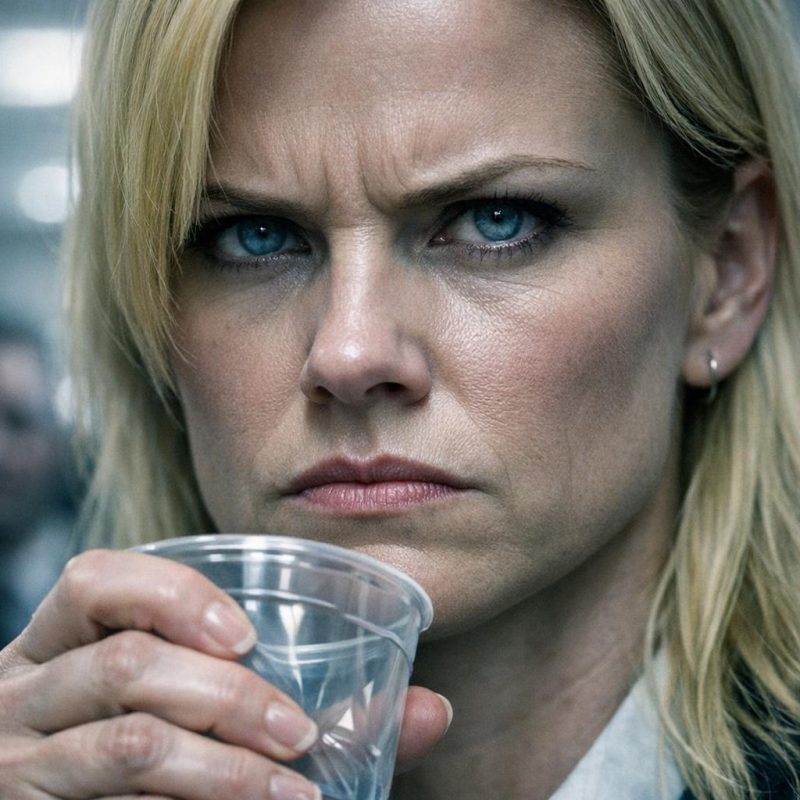 Image by RM AI
What's in the Sauce
I let the silence sit for another second. Then I ask it. 'What's in the sauce, Melissa?' My voice comes out flat and clear. No shake in it. I'm surprised by that. I watch Michael's brow crease. I watch Jennifer's head come up from the table. Derek goes very still. David, behind me, doesn't make a sound. Melissa's eyes stay on mine. For a moment her expression doesn't change at all. Then the color starts to shift at the edges of her face — something draining out of her cheeks, something tightening around her eyes. She doesn't answer. She doesn't reach for an explanation or a deflection or one of her easy, practiced smiles. She just looks at me. The container is still between our hands. I can feel my own pulse in my palm where it presses against the lid. The question is still out there, hanging in the air between us, and she hasn't touched it.
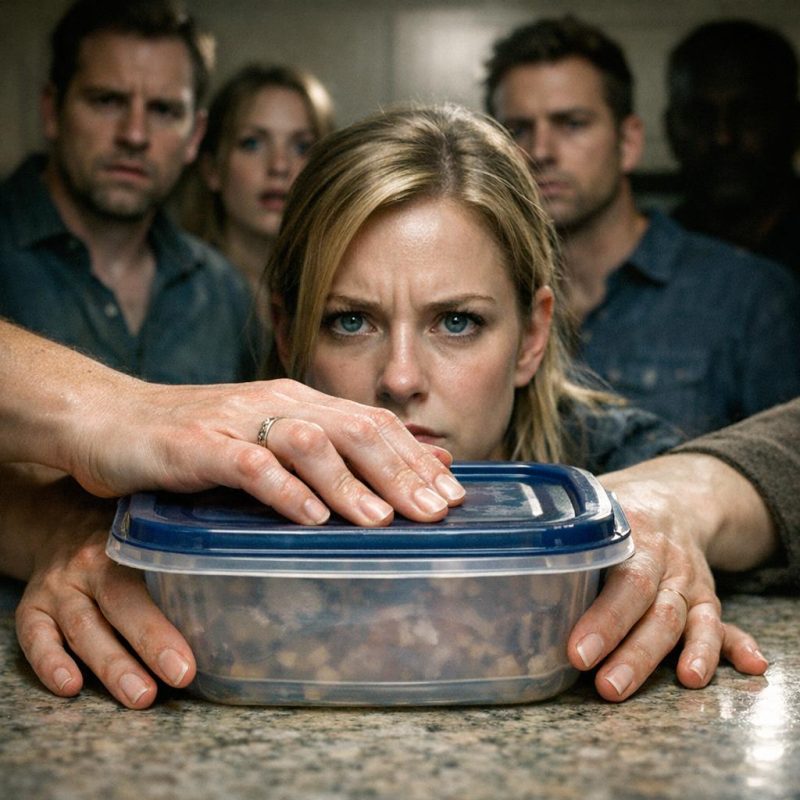 Image by RM AI
The Freeze
And then she goes still. Not the controlled stillness she usually carries — this is different. This is the stillness of something stopping. Her eyes widen, just slightly, just enough. I feel it before I see it: the pressure on the container changes. Her grip doesn't release but it loosens, the tension going out of her fingers by degrees, and the shift is so small that nobody else would notice it. But I notice it. I've been noticing everything about this container for weeks. I feel the weight redistribute under my palm. Behind me I hear David take a step into the room — one step, deliberate, the sound of his shoe on the tile cutting through the silence. Across the table Michael leans forward. Jennifer's hand comes up to cover her mouth. Derek's eyes move from Melissa to me and back again. Melissa's fingers are still on the rim. Mine are still on the lid. But the pressure between our hands has shifted, and her grip on the container is no longer what it was.
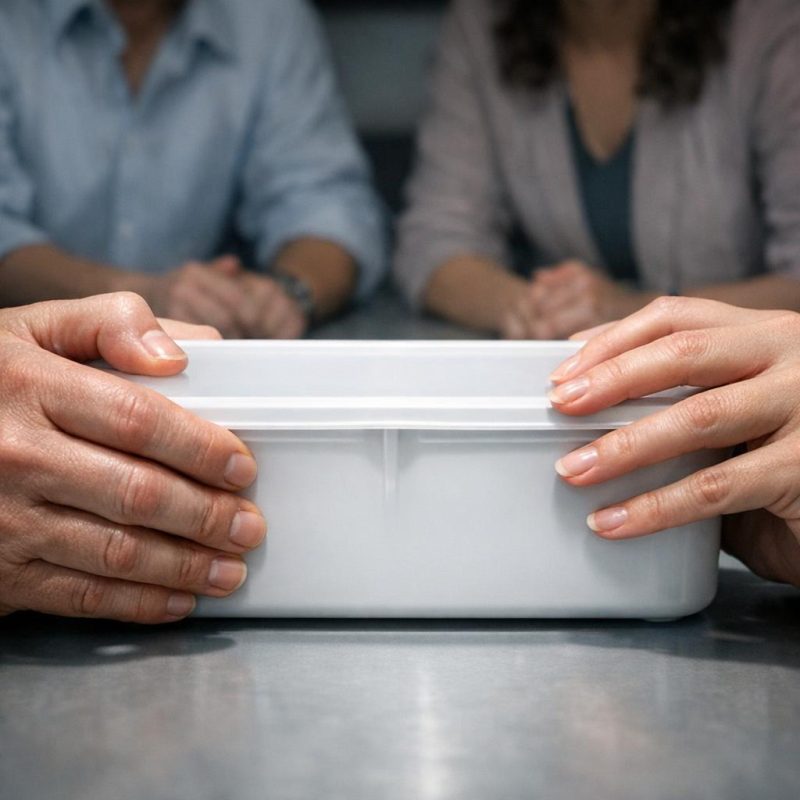 Image by RM AI
The Connection
Something moves in her eyes. Not fear exactly. Something older than fear. I've seen that look before — not on her face, but in a photo. A photo on a phone screen, held up by a mutual friend at a party eight months ago, laughing about how fast Jason had moved on. The woman in that photo had the same jaw. The same way of holding her chin up. My hand goes cold on the container lid. The exclusions line up behind my eyes like a row of doors slamming shut — every skipped lunch, every container that went to everyone else, every apology that landed just wrong enough to sting twice. This wasn't random. This wasn't office politics. And the food — the sauce she packed separately, the one she made sure I'd reach for — the thought finishes itself before I can stop it. Melissa's eyes don't look away. In them I see recognition, and behind the recognition, something that looks exactly like rage.
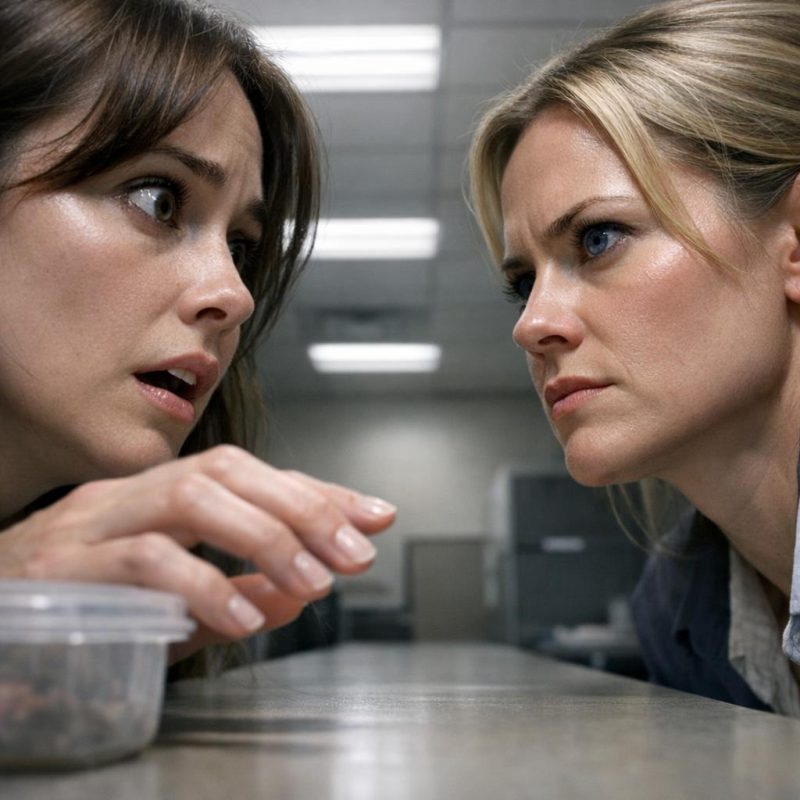 Image by RM AI
The New Girlfriend
Jason mentioned her exactly once. Two months after we ended, in a comment on a mutual friend's post — something offhand, something meant to be seen. I remember reading it on my phone in my car in a parking lot, the screen too bright, my coffee going cold in the cupholder. He'd said her name. He'd said she was someone who really understood him. I hadn't looked her up. I hadn't wanted to. I close my eyes for half a second and open them again. Melissa is still standing across from me, still holding the rim of the container, still not speaking. I count backward. Jason's comment. The date I saw it. Two months later, Melissa walked into this office for her first day. She smiled at everyone. She brought food. She learned my name before I learned hers. The container is still between our hands. The room is still watching. The timeline clicks into place like a key turning in a lock I didn't know was there.
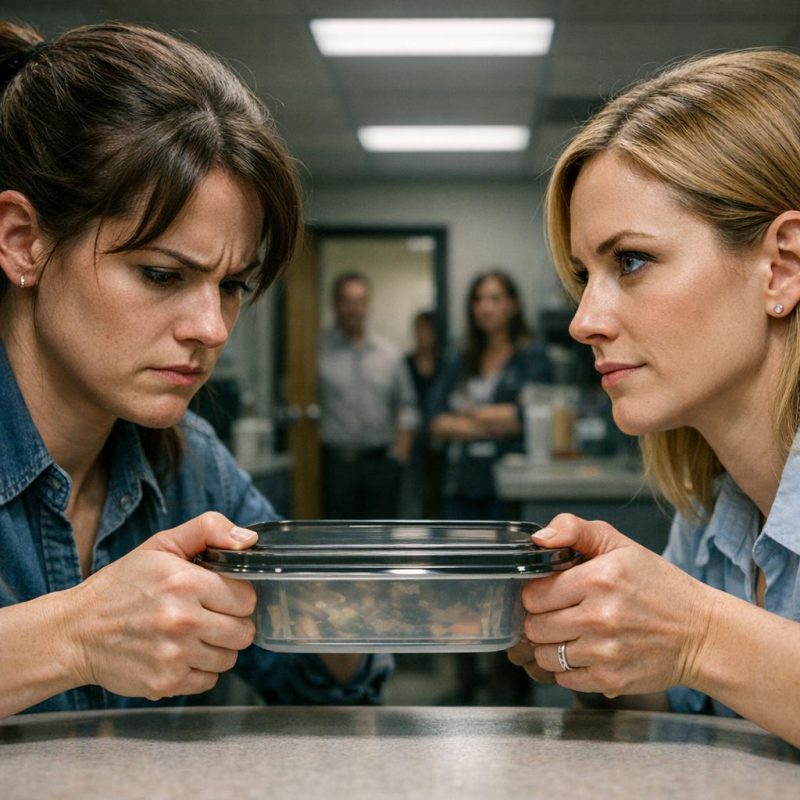 Image by RM AI
Two Months After
Two months. I keep landing on that number. It takes time to find a job listing. Time to apply, to interview, to wait. Time to research a company, to learn who works there, to learn where someone sits and what they eat and what they're allergic to. She didn't stumble into this. She built it. I look at her face and she knows I'm counting. I can see it in the way she's stopped performing — the warmth is gone, the polish is gone, and what's underneath is something flat and patient that has been waiting a long time to be seen. David is somewhere behind me, processing. The rest of the room is frozen. Nobody has moved since I asked the question. Melissa still hasn't answered it. She doesn't need to anymore. The two months sit between us, heavier than the container, heavier than anything either of us could say out loud.
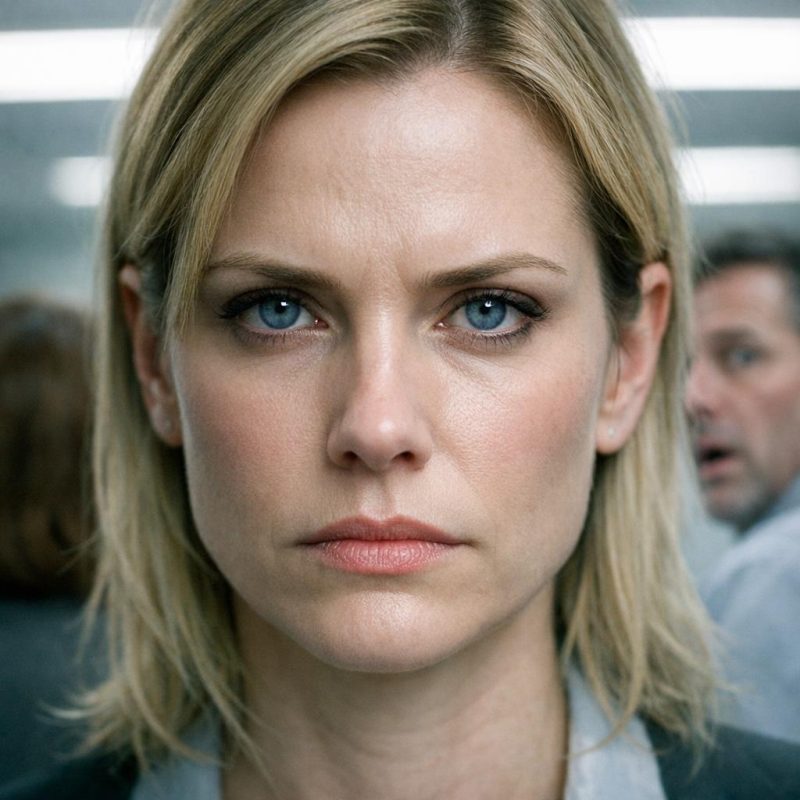 Image by RM AI
Every Exclusion
Every lunch I didn't get. Every container that went to Michael, to Jennifer, to Derek, to anyone who wasn't me. Every time she said oops with that half-smile. Every apology that came with a tilt of her head and eyes that stayed perfectly dry. I see them differently now. They weren't oversights. They weren't carelessness. They were the point. The cold glances that she'd smooth over before anyone else caught them. The stories she told that always left me slightly outside the frame. The way she'd built herself into the center of this office so that when she finally excluded me from something that mattered, everyone would already be on her side. It was never about the food. The food was just the last move. I look at Melissa's face and she knows I've put it together — I can see it in the way her expression has gone completely quiet, the performance finally, fully over.
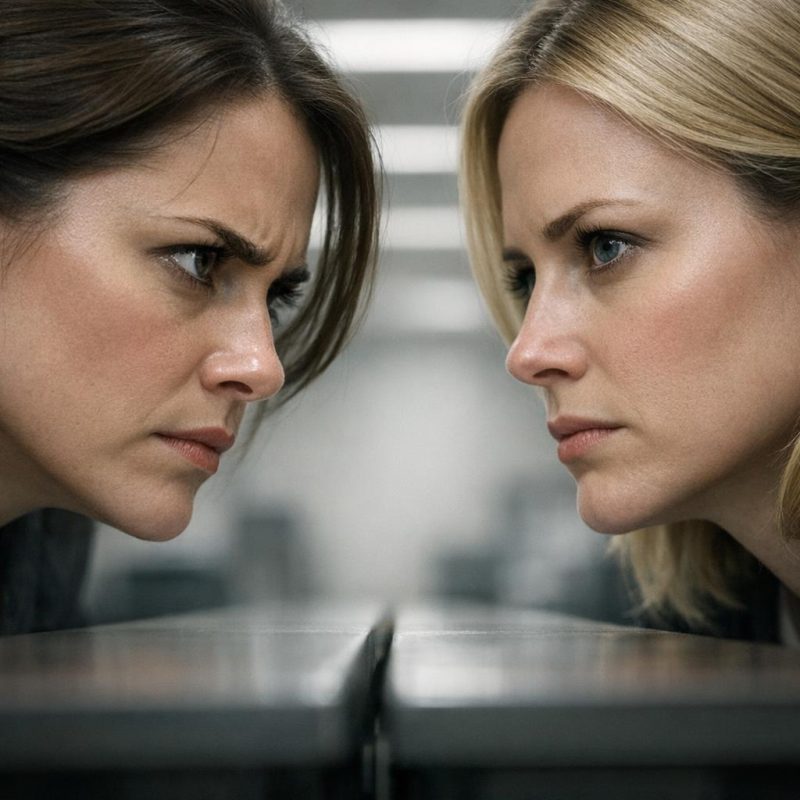 Image by RM AI
The Allergen
The container sits between us and I can't stop staring at it. Shrimp. There's shrimp in there — I can see the pink curled edges through the clear lid. My chest goes tight in a way that has nothing to do with anger. I told Jason about my shellfish allergy on our third date. I remember the exact moment. We were at a Thai place and I moved the dish to the far side of the table and he asked why and I explained everything — the hives, the throat closing, the EpiPen I carry everywhere. He nodded like he was filing it away. I thought it was sweet. I thought he was paying attention because he cared. Melissa's expression hasn't changed. That quiet, finished look. No performance left. She already knows I've figured it out. She knew before I said a word. The shrimp wasn't an accident. The special container, the separate meal, the one dish made just for me — it was never a gesture. It was a delivery system. And the only way Melissa could have known what would put me in a hospital is if Jason told her.
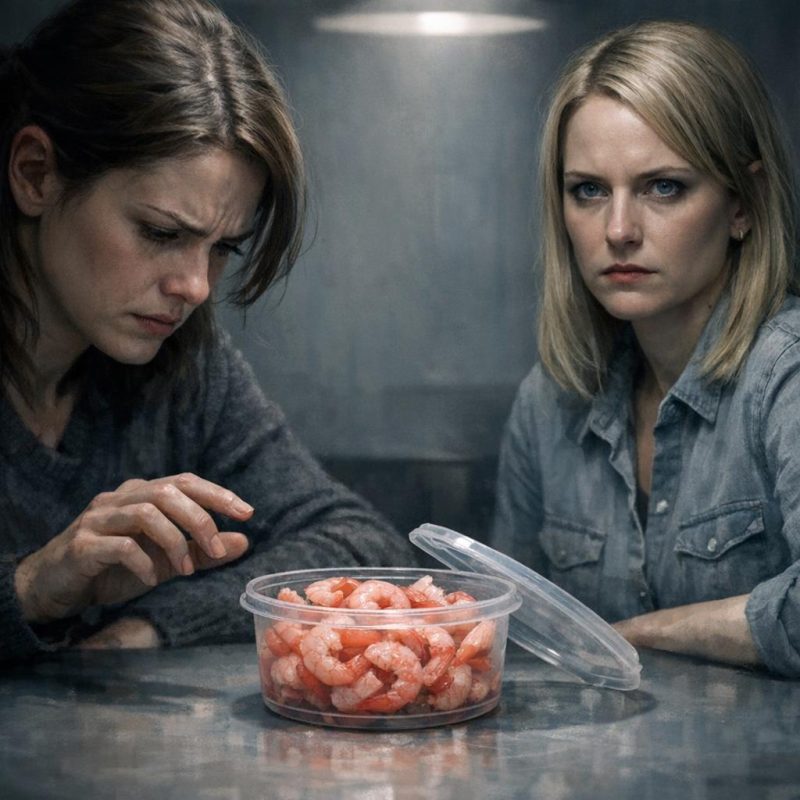 Image by RM AI
Witnesses
I don't lower my voice. I don't look away from David when I start talking. I say it plainly, the way you'd read a list of facts into a recorder. Melissa is Jason's girlfriend. Jason is my ex. He left, and then Melissa showed up here six weeks later with a job offer she apparently pursued. I say that part slowly so it lands. I tell them about the lunches — every single one, every name called except mine, every oops and tilted-head apology. I tell them about the phone call I overheard this morning, the one where her voice went flat and certain in a way I'd never heard before. I point to the container on the counter. I tell them there is shrimp in that food. I tell them I have a documented shellfish allergy. I tell them the only person outside a medical office who knew about that allergy was Jason. Derek has gone completely still. Michael's mouth is open. Jennifer is gripping her phone but not looking at it. David has moved fully into the room. He's standing near the door with his arms at his sides, and he is listening to every word.
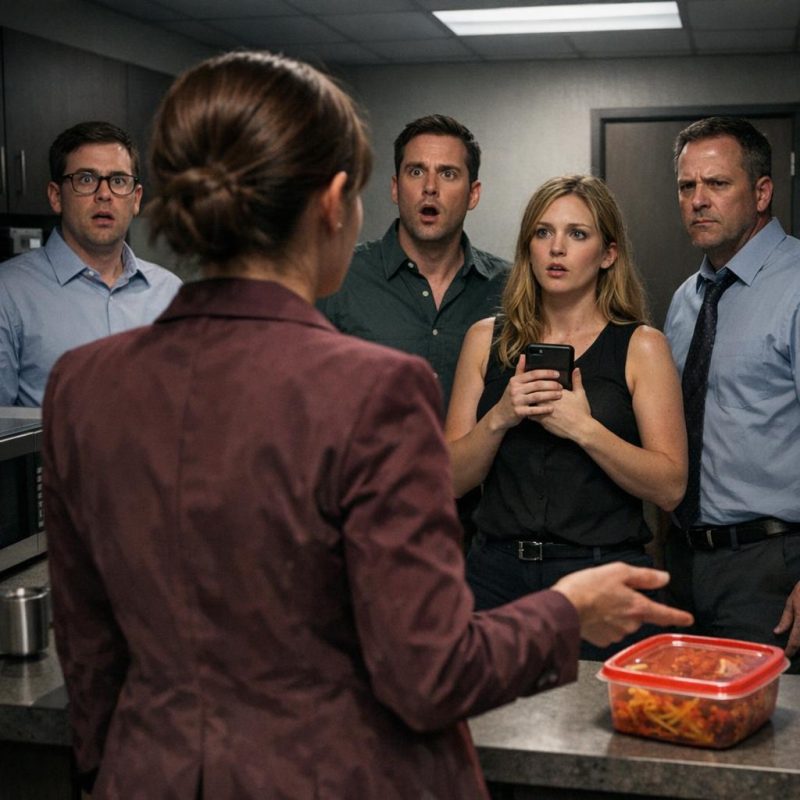 Image by RM AI
The Facts
I pull out my phone and open the notes app. I've been keeping dates. I read them aloud. October 3rd — everyone got lunch, I didn't. October 7th — same. October 11th, 14th, 19th, 22nd. I keep going. My voice doesn't shake. I tell them about this morning's phone call — the words I caught through the breakroom wall, the shift in her tone, the way she said my name like it was something she was finishing. I describe the containers: one for the group, one set aside separately, labeled with care, handed to me with a smile. I tell them the shrimp is visible through the lid right now if anyone wants to look. I tell them Melissa was hired six weeks after Jason ended things. I tell them I didn't connect it at first. I tell them I do now. David hasn't moved. He's watching me the way he watches quarterly reports — like he's checking figures against a ledger. Melissa is still standing near the counter. She hasn't spoken. The facts are just sitting in the room, taking up all the space there is.
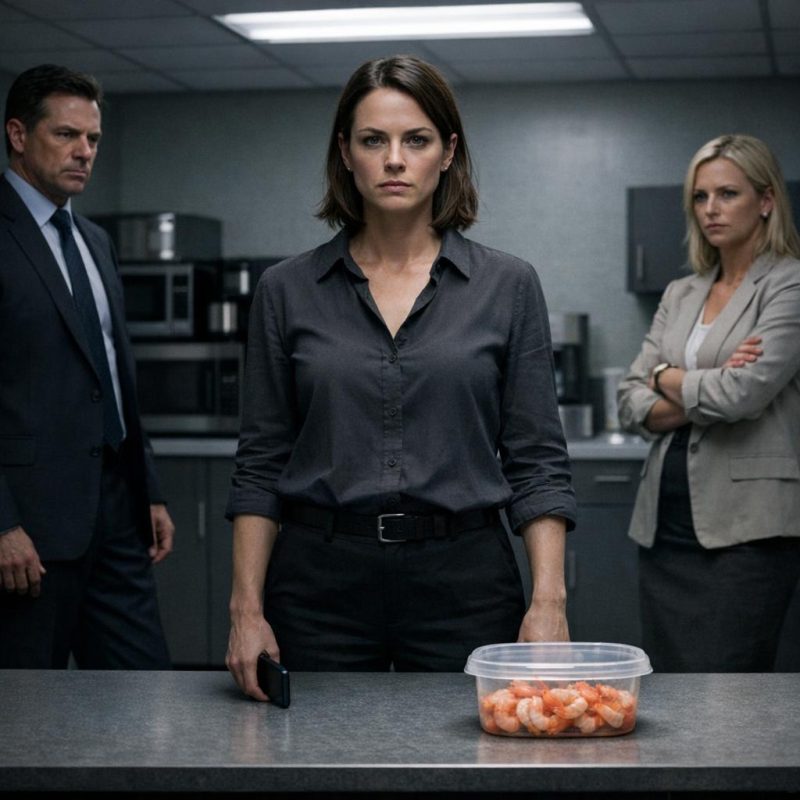 Image by RM AI
The Spin
Melissa speaks. Her voice comes out lighter than I expect, almost airy, like she's explaining a small clerical error. She says the exclusions were accidents. She says she lost track sometimes, that lunch orders get complicated, that she never meant to leave anyone out. She says she had no idea about any allergy. She says the word misunderstanding like it's a door she can still walk through. Then she laughs — a short, soft sound that's supposed to signal that this is all a little absurd, that reasonable people can see how these things happen. The laugh doesn't travel. It hits the air and stops. Nobody picks it up. Derek doesn't move. Michael is looking at the floor. Jennifer has put her phone face-down on the counter. David's expression doesn't shift. Melissa's smile holds for a moment longer than it should, the way a held note goes sharp at the end. Then it fades. The explanation hangs in the room, and the room doesn't give it anything back.
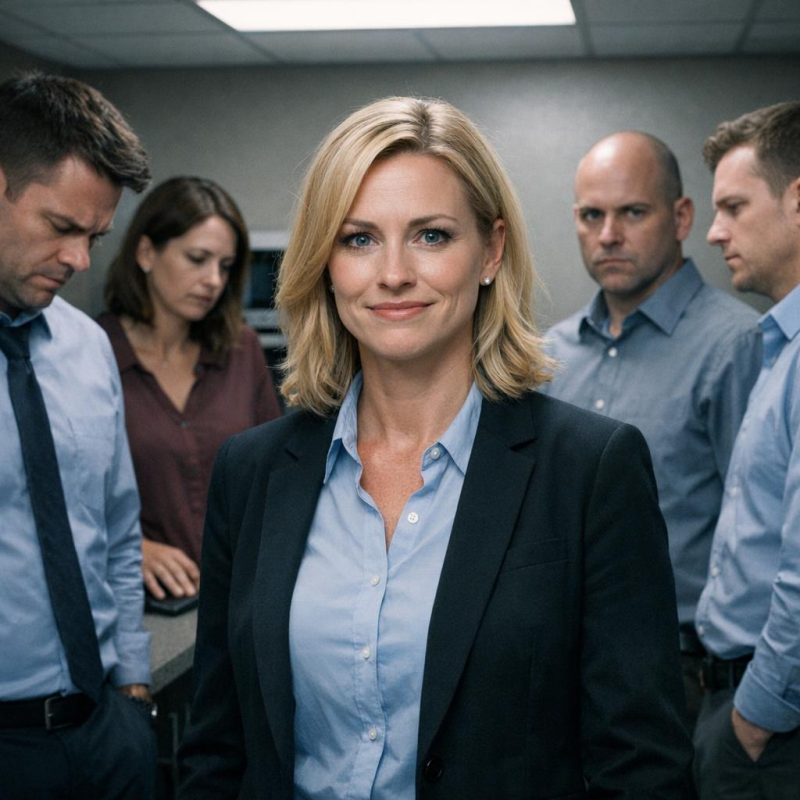 Image by RM AI
Pattern Confirmed
Tom speaks from across the room. He doesn't stand up. He doesn't raise his voice. He just says, quietly and without hesitation, that he noticed. He says he saw it happen more than once. He says he thought about saying something and didn't, and he's sorry for that, but he's saying it now. He names two of the same dates I named. He was paying attention. Derek nods before Tom finishes. Derek says he thought it was strange — the way the count always came up short by exactly one, the way Melissa would look briefly in my direction before announcing there wasn't enough. He says he told himself there was probably an explanation. He says he doesn't think that anymore. Melissa doesn't respond. She's looking at a point somewhere between the counter and the window, not at Tom, not at Derek, not at me. David writes something on his phone. The room has two more voices in it now, and they're saying the same thing I've been saying, and there is nothing left in the silence that sounds like doubt.
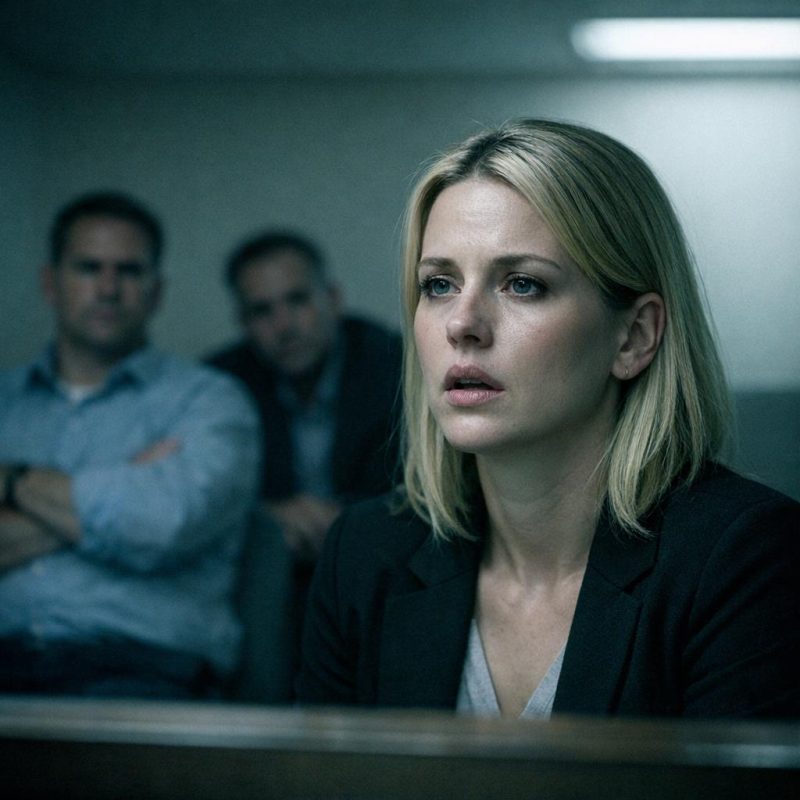 Image by RM AI
The Collapse
Melissa's face changes. Not gradually — it goes all at once, like something structural giving way. The composure she's held through every lunch, every apology, every performance in this office just stops. Her chin drops. Her hands, still resting near the container, begin to shake. The first tear comes fast, then another. She doesn't wipe them. She doesn't try to recover the smile or find the right tilt of her head. The warmth she's worn like a uniform for weeks is simply gone, and what's underneath it isn't grief — it's something rawer and less controlled than that. Nobody moves toward her. Michael, who has posted about her cooking, who has called her the heart of the office, stands with his arms crossed and his eyes on the floor. Jennifer doesn't reach for her. Derek watches without expression. Tom is still. David is watching Melissa the way you watch something you need to see clearly before you decide what to do about it. The container sits on the counter between us, lid still on, shrimp still visible through the plastic.
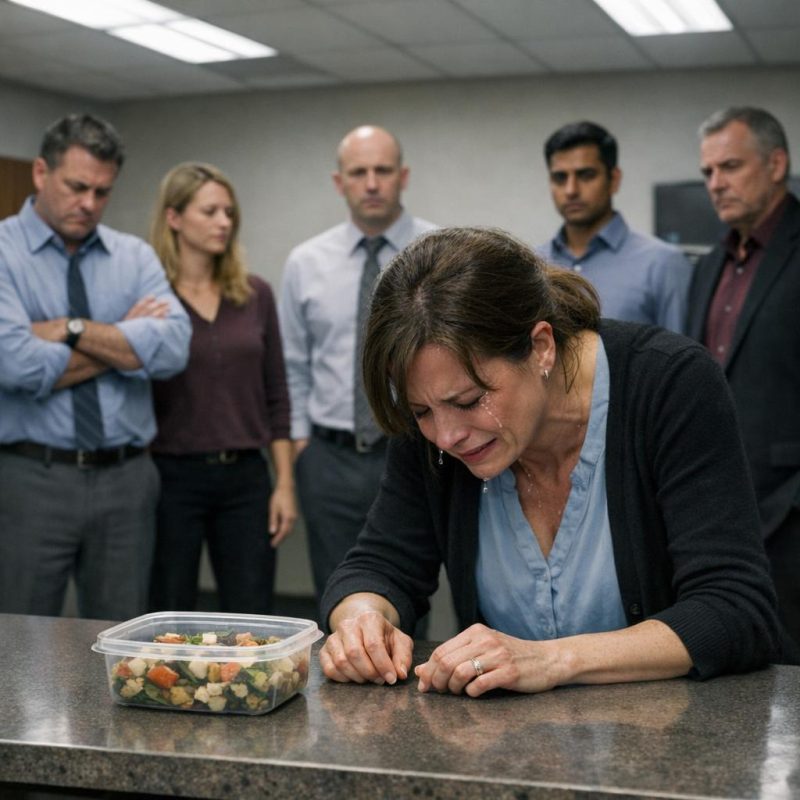 Image by RM AI
The Blame
She speaks through the tears. Her voice is uneven but the words are clear enough. She says I ruined everything. She says I broke Jason's heart. She says I was the problem — that whatever happened between them started because of what I did to him, because of the damage I left behind, because he never fully got over it and she had to watch that and it wasn't fair. She says it like she's been holding it for months. Maybe she has. I know what actually happened. Jason cheated. Jason left. I didn't break his heart — he handed mine back in pieces and walked out. But Melissa has built a different story, one where I'm the wound that infected everything after, and she carried that story all the way into this office and into every lunch she made and every container she filled. The room is very quiet. David's jaw is set. Derek is looking at Melissa like he's seeing her for the first time. Then Melissa says it again, louder: "You ruined us. You ruined him. This is your fault."
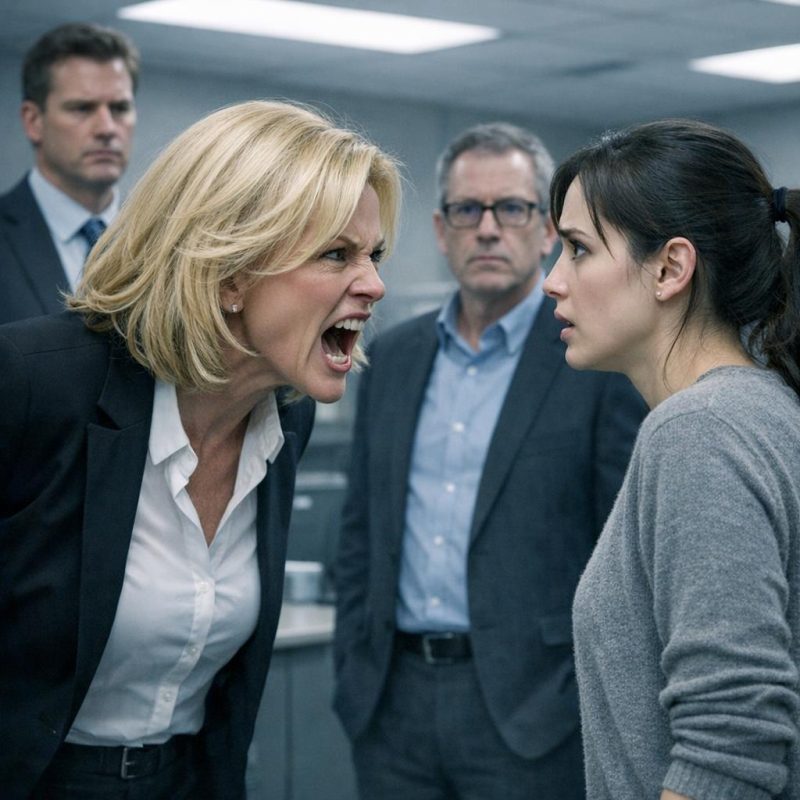 Image by RM AI
Security Called
David takes out his phone. He doesn't look at Melissa when he makes the call. He says he needs security in the third-floor breakroom, and his voice is flat and procedural, the voice he uses for things that have already been decided. Melissa goes still when she hears it. The tears are still on her face but she's stopped crying. She looks at David like she's waiting for him to take it back. He doesn't look up. Rachel arrives two minutes later. I hear her before I see her — the quick, even footsteps in the hallway, the kind that don't slow down. She comes through the door with her tablet already open, stylus in hand, and she takes in the room in one sweep. She looks at the container on the counter. She looks at me. She looks at Melissa. She doesn't ask what happened — she starts writing. Melissa watches Rachel's stylus move across the tablet screen and something shifts in her expression, a recognition that this is no longer a conversation anyone can walk back from.
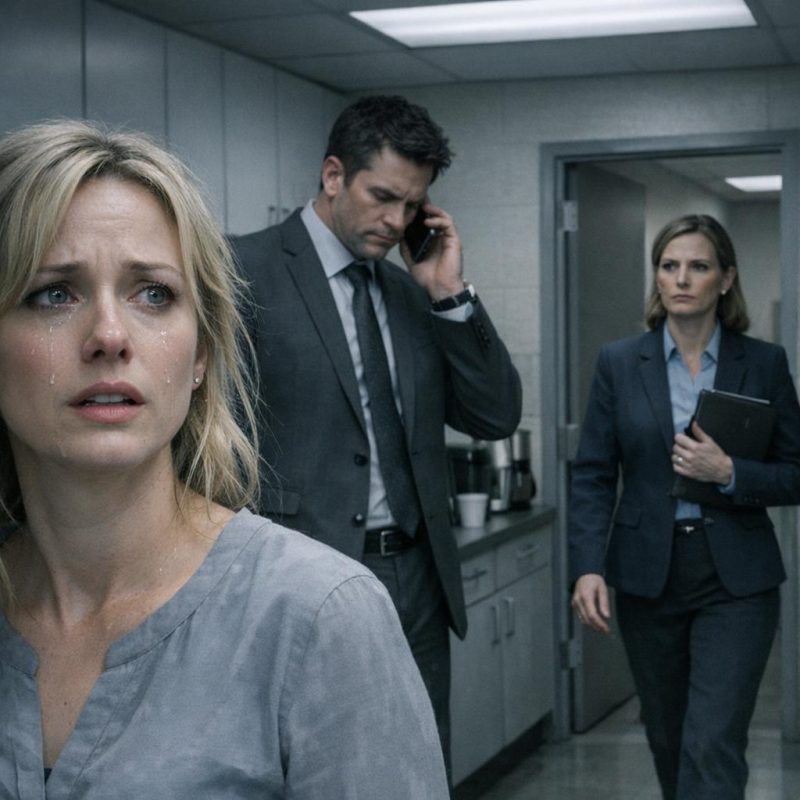 Image by RM AI
Evidence Seized
Two security officers appear in the doorway within minutes. They're in uniform, calm, unhurried. Rachel speaks to them quietly and points to the container on the counter. One of them pulls a sealed evidence bag from his belt and opens it without ceremony. He lifts the container by the edges, drops it in, seals it. Just like that. Melissa watches this happen and something leaves her face — not the composure, that's already gone, but something else. The fight, maybe. The certainty that she could still talk her way out of this. The officer with the bag steps back. The other one moves toward Melissa and says her name once, quietly, and gestures toward the door. She looks at David. He's looking at his phone. She looks at me. I don't look away. Derek is standing in the hallway now, and Michael behind him, and Jennifer with her hand over her mouth. Tom is at the edge of the room, arms crossed, watching. Nobody says anything. Melissa straightens her jacket. She walks out between the two officers, her heels clicking down the hallway until they don't. Rachel sets the sealed bag on the counter and writes something on the label.
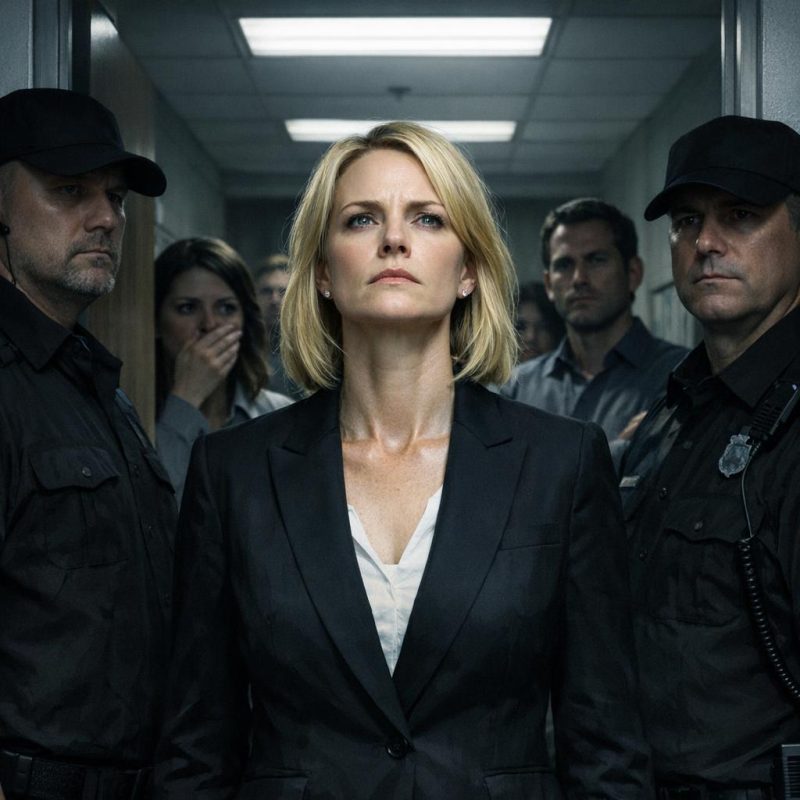 Image by RM AI
The Lab Results
Three days later Rachel calls me to her office. She closes the door behind me, which she doesn't always do. David is already there, sitting in the chair to the left, and he doesn't quite meet my eyes when I come in. Rachel sets her tablet on the desk and turns it to face me. There's a document on the screen — a lab analysis, formatted in columns, dense with terminology I have to read twice. She walks me through it anyway. The food in the container tested positive for concentrated shellfish extract. Not a trace amount. Not cross-contamination. Concentrated. Rachel says the quantity present was sufficient to trigger a severe allergic reaction in someone with my documented sensitivity. She says the word deliberate and doesn't soften it. I sit with that word for a moment. David clears his throat and says he should have seen the pattern earlier, that he's sorry he didn't. His voice is quieter than I've ever heard it. I nod because I don't have anything to say to that yet. Rachel closes the document and tells me the findings have been forwarded to legal and to the police. I look at the tablet screen, now dark, and the weight of being right about all of it settles over me like something finally put down.
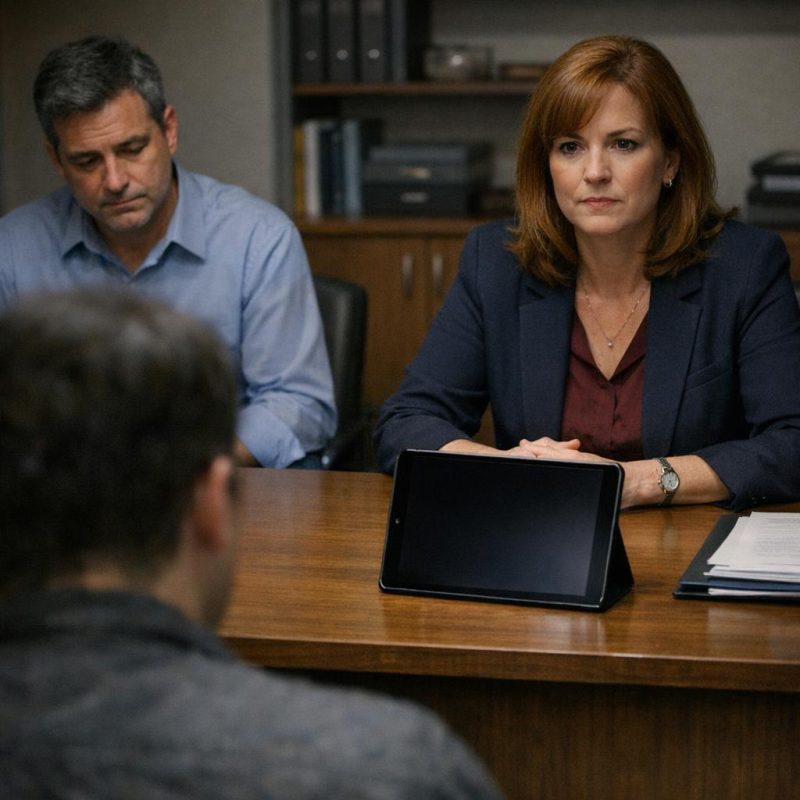 Image by RM AI
New Beginning
The office feels different the next week. Not loud-different. Quiet-different. Derek stops by my desk on Monday morning with his coffee and says he's sorry, that he noticed things were off but didn't say anything, and that he should have. He means it — I can tell by the way he doesn't try to explain it away. Michael comes by later and says he feels like an idiot for posting about the food, for making it seem like something to celebrate. He looks genuinely sick about it. Jennifer sends me a message that says she's so sorry and she had no idea and she keeps thinking about it. I write back and tell her I know. Tom doesn't apologize exactly — he just stops at my desk and says he's glad I trusted what I was seeing, and that lands differently than the rest, steadier somehow. David stops by in the afternoon and tells me formally that steps have been taken to ensure my safety going forward, and then, less formally, that he hopes I know the office is better with me in it. I sit at my desk after he leaves and look at the space around me — my monitor, my coffee mug, the small plant I've kept alive for two years — and it all feels like mine again.
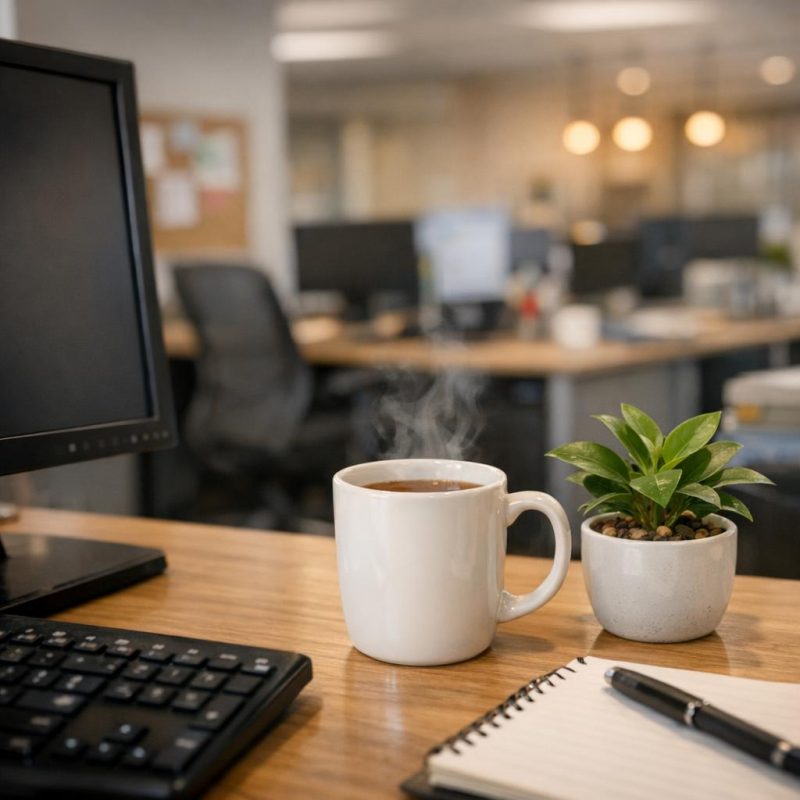 Image by RM AI
Lunch Shared
On Thursday I bring food. I make it the night before — a big batch of the pasta salad my mother used to make on summer weekends, the one with the roasted peppers and the lemon dressing that keeps well overnight. I pack it into two containers and carry them in on the bus, one in each hand. I set them in the breakroom before anyone else arrives and write a small note on a piece of paper: *Help yourself.* Derek finds it first and reads the note out loud to no one in particular. Michael comes in and says it smells incredible. Jennifer takes a portion and says thank you twice. Tom fills a bowl and sits down across from me without making a thing of it, which is exactly right. We eat together at the breakroom table, the four of them and me, and the conversation moves the way it does when people aren't performing anything — easy, a little scattered, occasionally funny. I eat my own bowl and it tastes the way I remembered. When I get up to put my container away, I look back at the table — the open lids, the serving spoon resting across the rim, the five of us still talking — and I set my container down beside theirs.
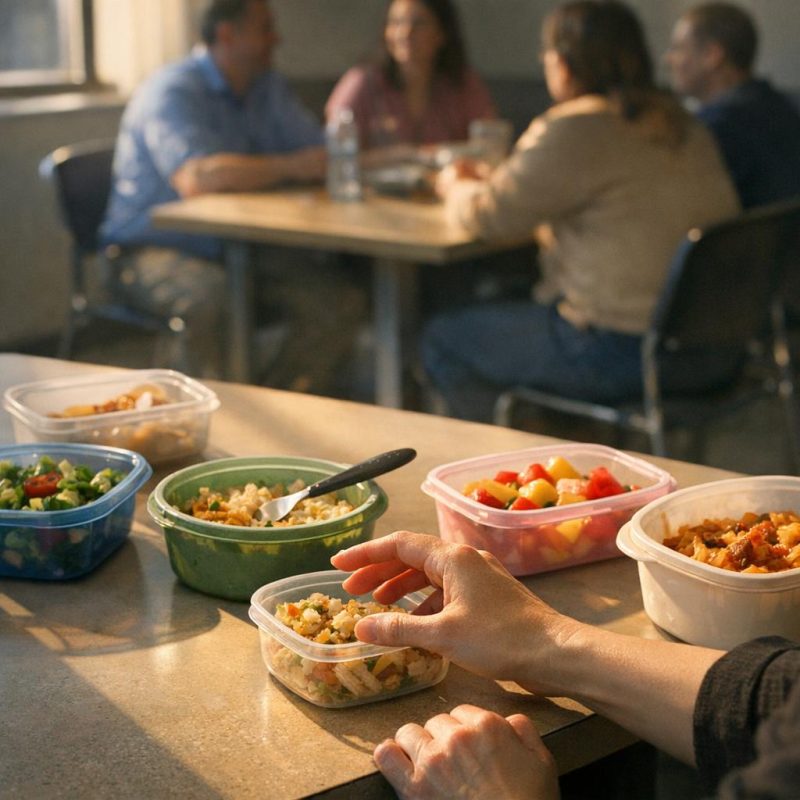 Image by RM AI
KEEP ON READING
The Florida Tire Reef That Became An Environmental Disaster
Navy Combat Camera Dive Ex-East on WikimediaIn 1972, off the…
By Cameron Dick Jun 16, 2026
20 People in History Who Faked Their Own Deaths
Disappearing Wasn’t Always the End of the Story. Ever wanted…
By Christy Chan Jun 15, 2026
20 Discoveries That Proved History Wrong
How Fresh Finds Keep Rewriting the Textbooks. We like to…
By Sara Springsteen Jun 15, 2026
20 Things Every American Home Had in the 1920s
The 1920s Home Was Practical, Busy, & Changing Fast. American…
By Emilie Richardson-Dupuis Jun 15, 2026
20 Historical Figures Who Took Secrets to the Grave
Questions Left Behind. History gives us a lot of things:…
By Annie Byrd Jun 15, 2026
20 Engineers Who Built The Impossible
Building What Others Said Couldn't Be Built. Throughout history, engineers…
By Rob Shapiro Jun 15, 2026