

My Daughter Invited Me to Her Graduation Dinner, Then I Found Three Letters on My Place Card That Made My Blood Run Cold
My Daughter Invited Me to Her Graduation Dinner, Then I Found Three Letters on My Place Card That Made My Blood Run Cold
The Navy Cardigan
I sat in the parking lot outside Marcello's for a full three minutes before I got out of the car. That's not something I'm proud of, but it's the truth. I'd driven past the restaurant twice just to make sure I had the right place, and then I'd sat there with the engine running, smoothing down the front of my navy cardigan like it was going to save me. Emma had complimented that cardigan once — two Christmases ago, maybe three — and I'd thought about that when I pulled it from the closet this morning. Silly, I know. But that's where I was. I checked my lipstick in the rearview mirror, told myself to stop being ridiculous, and walked in. Emma was standing near the entrance, and when she saw me, her whole face opened up. Not the polite smile I'd been bracing for — something warmer than that. She said my name and crossed the space between us before I could even get my coat off, and the hug she gave me was the kind that lasts a beat longer than it needs to. I stood there with my arms around my daughter and let myself feel it — the warmth of her, the realness of it — and something in my chest that had been clenched for a long time finally, quietly, let go.
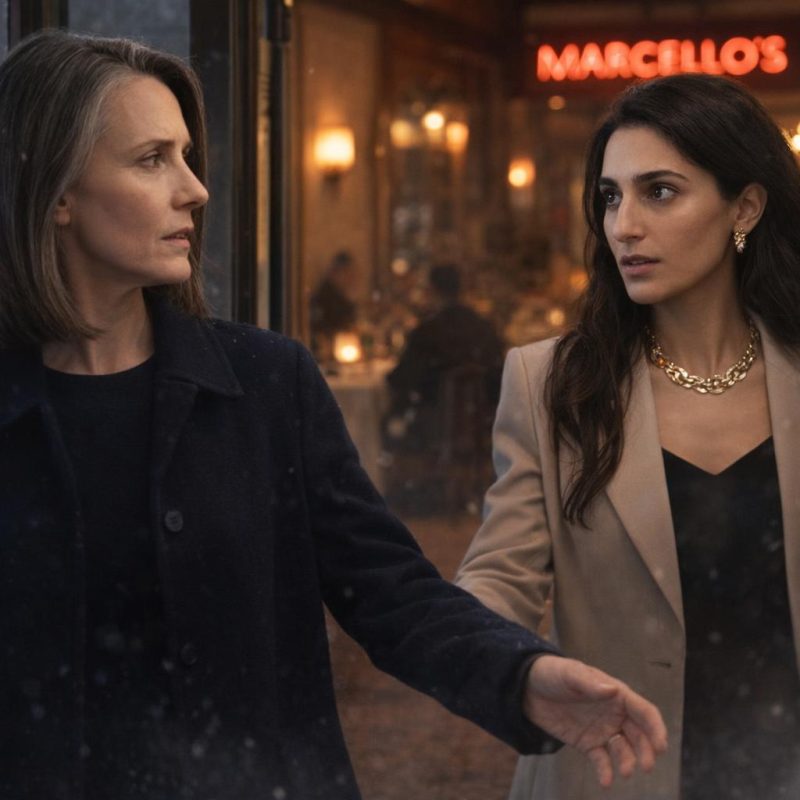 Image by RM AI
Twenty Place Settings
Emma led me through to the dining room and I stopped in the doorway for a moment, just taking it in. The table was long — longer than I'd expected — draped in white linen with low floral centerpieces spaced evenly down the middle, and the lighting was warm and deliberate, the kind that makes everyone look their best. There had to be twenty place settings, maybe more. I counted the chairs without meaning to. Rachel was already there, near the far end, talking with her hands the way she always does, laughing at something the person next to her had said. Lucas stood close to Emma's empty chair, easy smile in place, scanning the room the way people do when they're comfortable in a crowd. I recognized a few faces from photos Emma had shared over the years — a college friend here, a former classmate there — but most of the people already seated were strangers to me. A woman near the center wore jewelry that caught the light every time she moved. A man in a dark blazer was deep in conversation with someone I'd never seen before. I smiled at the room in general, the way you do when you're not sure who's looking, and tried to get my bearings. The flowers, the spacing, the little folded menus at each setting — Emma had put real thought into this. I just wished I recognized more than a handful of the people she'd put it together for.
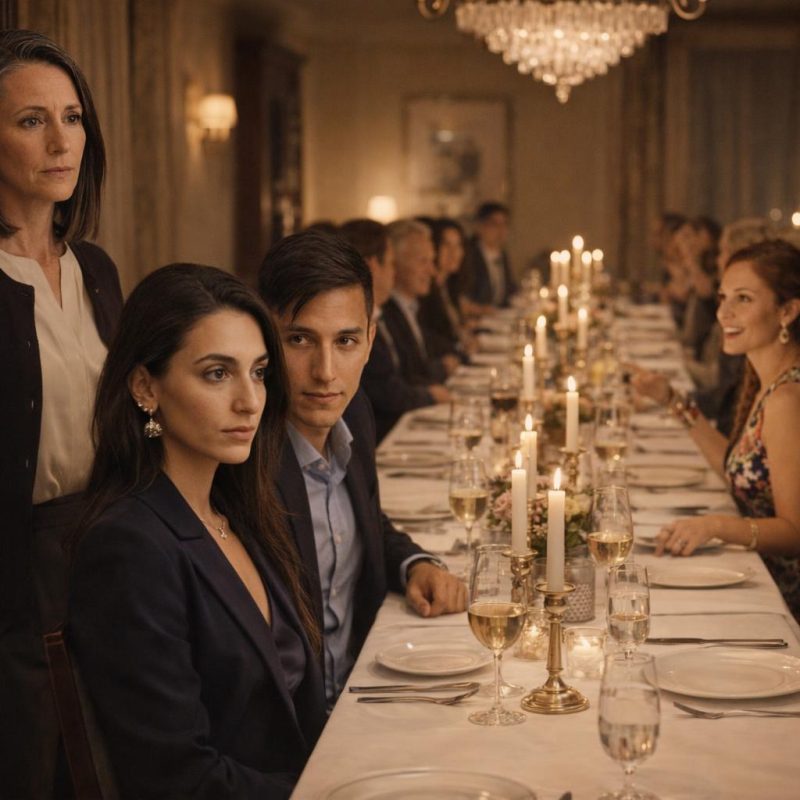 Image by RM AI
Elegant Script
I found my seat about halfway down the table, on the left side, where the curve of the room gave me a soft view of most of the other guests. Someone had thought about that, I noticed — the positioning felt considered rather than random. I set my purse on the back of the chair and reached for the place card propped against the water glass. It was cream-colored, heavier stock than I'd expected, and my name was written across the front in calligraphy that belonged on a wedding invitation. The letters were raised slightly, the ink a deep charcoal, each curve of each letter drawn with real care. I turned it over in my hands once, just to feel the weight of it. I'm not sure why that detail hit me the way it did — it was just a card, just a name — but standing there in that warm room, surrounded by the low hum of conversation and the smell of something rich coming from the kitchen, it felt like evidence of something. Like Emma had wanted me there enough to make sure even the small things were right. I set the card back against the glass and pulled out my chair, and for a moment I just stood there, running my thumb slowly over the raised letters of my name.
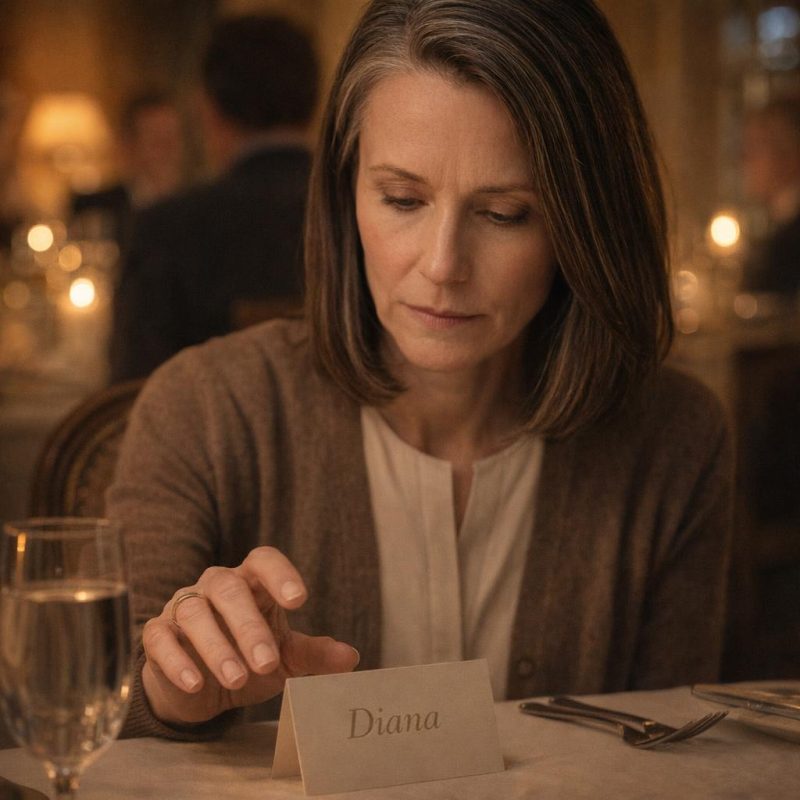 Image by RM AI
Three Letters in Blue Ink
I was about to tuck the place card under the edge of my plate — just to keep it from getting knocked over during dinner — when something made me pause. I'm not sure what it was, honestly. Maybe just the fidgeting habit of someone who doesn't quite know what to do with their hands at a party. I turned the card over. The back was plain cream, the same heavy stock, and for a second I thought it was blank. Then I saw them. Three letters, written in blue pen near the bottom center of the card: BBU. Small, neat, clearly not an accident. The ink was slightly smudged on the lower curve of the first B, the way ballpoint smears when someone writes quickly and the side of their hand drags across it. But the letters themselves were deliberate — evenly spaced, consistent pressure, like someone had taken a moment to write them carefully. I turned the card back over, then over again, as if the front might suddenly offer an explanation. It didn't. I set it down on the tablecloth and looked at it. BBU. I ran through the obvious things — a table code, a seating note, some kind of restaurant shorthand — and came up empty. My mind just went quiet, the way it does when something doesn't fit any category you have for it, and I sat there staring at the three letters in blue ink.
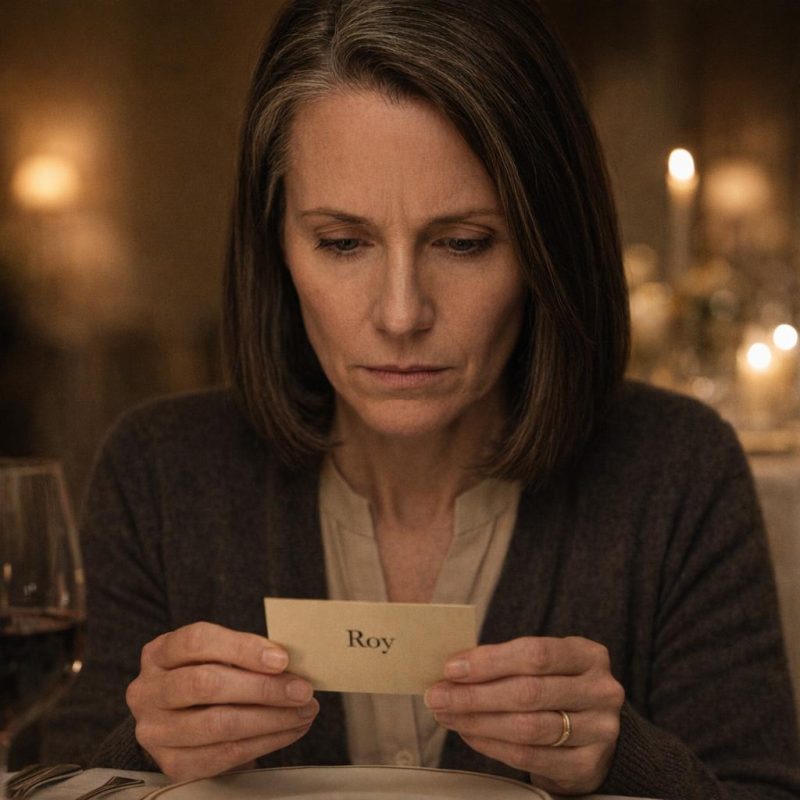 Image by RM AI
Only Mine
I told myself it was probably nothing. A restaurant notation, a dietary flag, something the kitchen needed to know. But the thought snagged and wouldn't let go, so I did what I probably shouldn't have — I started checking. The seat to my left was still empty, the place card propped neatly against the glass. I reached over as casually as I could manage, like I was just adjusting the centerpiece, and tilted it toward me. The back was completely blank. I set it down and looked across the table, pretending to admire the flowers, and got a clear enough angle on the card opposite mine. Blank. Marcus arrived then, settling into the seat to my right with a polite nod and a greeting aimed at someone further down the table. While he was turned away, I tilted his card just enough to see the back. Blank. I checked two more after that — one further down when a guest leaned forward to reach the bread, another when the woman beside it stood to hug someone who'd just arrived. I tried to be subtle about it. I think I was. But every card I managed to see told me the same thing, and by the time I set the last one back in place, the warmth I'd felt walking into this room had developed a small, cold crack running through it. Every other card at that table was completely blank.
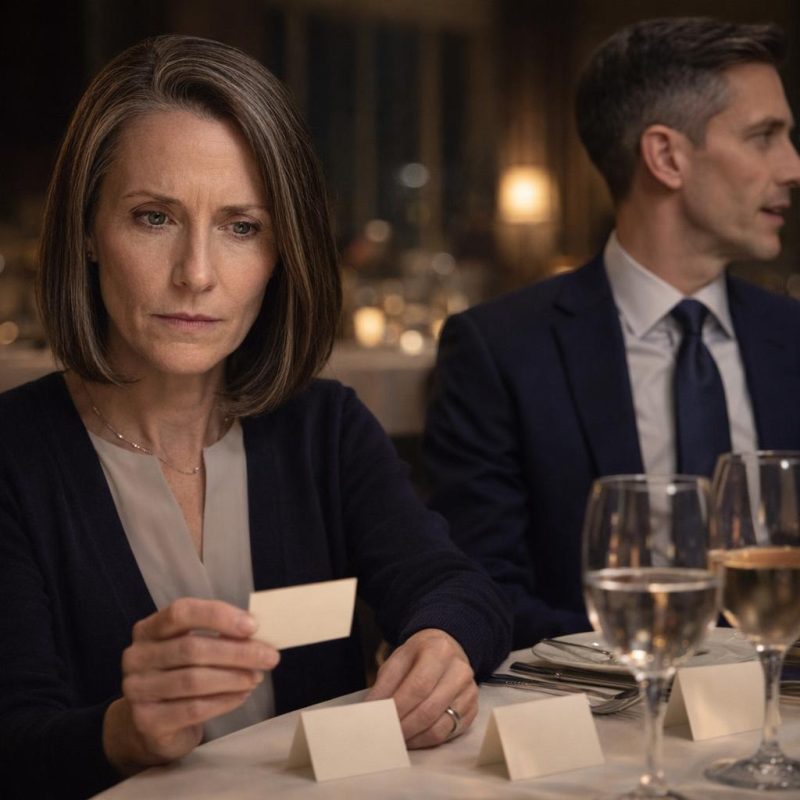 Image by RM AI
The Server's Glance
The first course arrived with the kind of quiet efficiency that good restaurants do well — servers appearing from the side, plates lowered without interruption, no one reaching across anyone. Rachel was mid-story at her end of the table, something about Emma's thesis defense, her hands moving in wide arcs as she described what sounded like a near-disaster involving a projector and a very unhelpful IT department. A few people laughed. I smiled in the right direction and tried to look like I was following along. Then a young server appeared at my left shoulder, plate in hand. He was maybe twenty-two, sharp-eyed, the kind of efficient that comes from doing this long enough to move without thinking. But he paused. Just for half a second — barely enough to register — and his eyes dropped to my place card before he set the plate down. Not a glance at the table in general, not a check of the seat number. Specifically the card. Then he straightened, moved one step to his right, and set Marcus's plate down without any pause at all. I watched the other servers working their way down the table. No one else stopped. No one else looked. I picked up my fork and stared at my food, the smell of it reaching me before the appetite did — and the appetite didn't come.
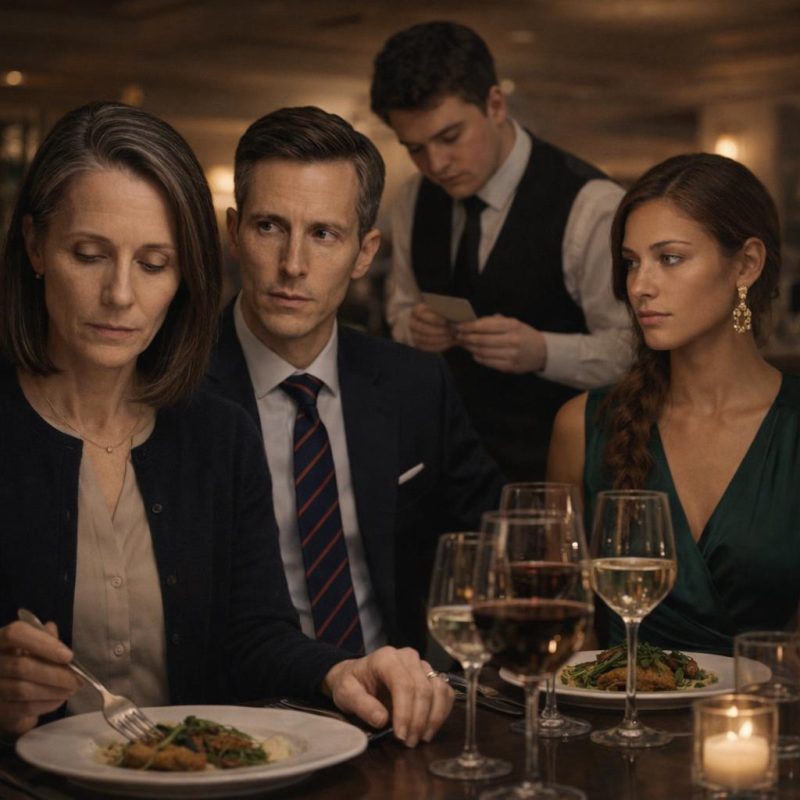 Image by RM AI
Careful Words
I took a bite I didn't taste and decided the best thing I could do was act normal. So I turned to Marcus and smiled and asked how he knew Emma. He looked up from his plate, returned the smile, and said they worked together — that she was incredibly dedicated, that the team was lucky to have her. All perfectly reasonable things to say. But there was a small pause before each answer, not long enough to be rude, just long enough to notice if you were already noticing things. Like he was selecting from a list rather than just talking. I mentioned that I didn't recognize many of the guests, that Emma had clearly built quite a life I wasn't fully caught up on. He nodded and said something about how Emma had a real gift for bringing people together. Warm words, smoothly delivered. I smiled back and let the conversation settle. Across the table, a woman I didn't know had glanced up when I spoke, and there was a half-beat before she smiled and turned back to her neighbor. Maybe that was nothing. People get distracted at dinner parties. Marcus reached for his water glass, and I found myself watching the moment just before he answered my next question — the small, almost imperceptible pause, the slight gathering behind his eyes — as if he was deciding, very carefully, exactly what to say about Emma.
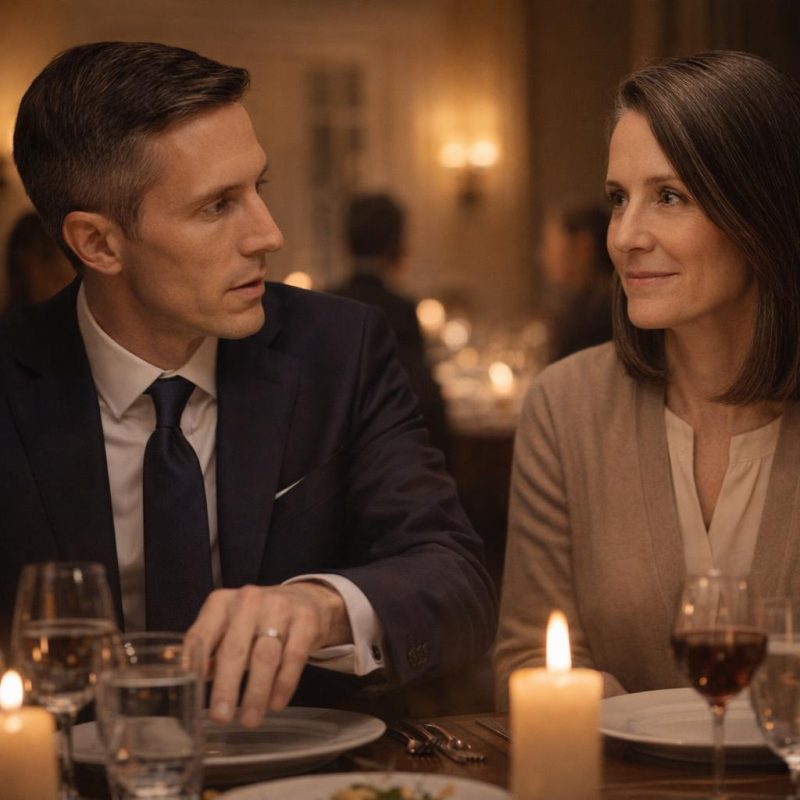 Image by RM AI
Reading Into Nothing
I set my fork down and made myself take a breath. This was what I did — I knew that about myself. I found a thread and I pulled it until everything looked like it was unraveling, even when it wasn't. Marcus was polite. Some people were just polite. The pause before he spoke could be thoughtfulness, could be the natural rhythm of someone who chose their words carefully in professional settings. The server had probably glanced at my card to confirm the dish — dietary restrictions, table position, any number of ordinary reasons. The woman across from me had hesitated before smiling because she didn't know me, and strangers hesitate. That was just people. I picked my fork back up and took another bite, this time actually registering the flavor — something with lemon and capers, well done. Emma had planned a beautiful dinner. Twenty people, white linen, calligraphy place cards, a room that smelled like good food and fresh flowers. She had invited me. That was the fact I kept coming back to. She had called me, she had asked me to come, and she had hugged me at the door like she meant it. BBU was probably a restaurant code I'd never heard of — something about the table configuration or the seating chart software. I was sitting at my daughter's graduation dinner, surrounded by people who loved her, and I was manufacturing shadows. The weight of my own suspicion sat quietly in my chest, and I tried, carefully, to set it down.
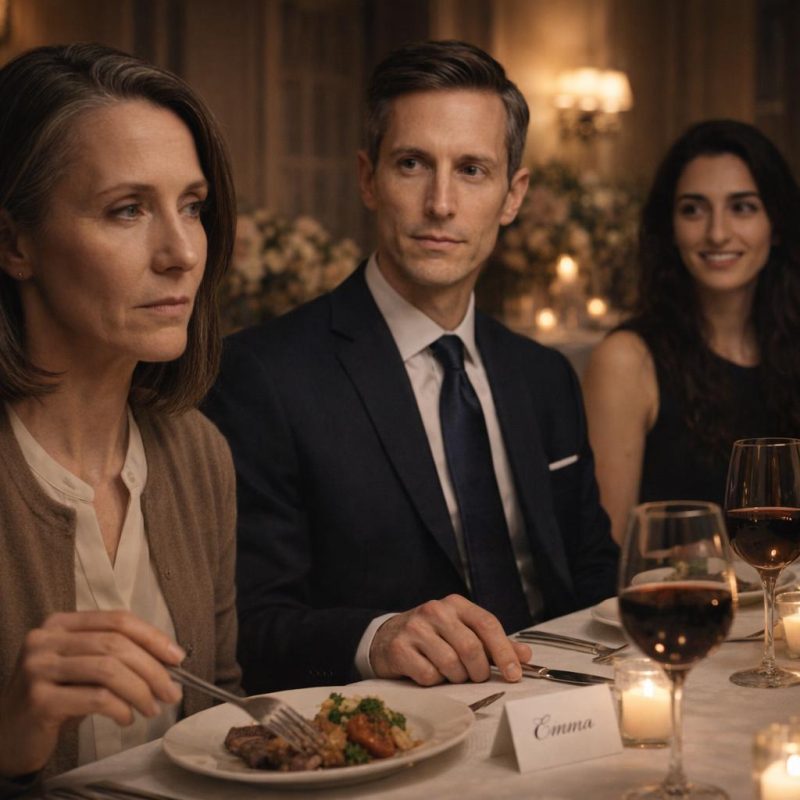 Image by RM AI
Her Radiant Face
I made myself look up from my plate. Across the room, Emma was mid-laugh — her head tilted back, one hand pressed to her collarbone the way she'd done since she was a teenager when something genuinely caught her off guard. Lucas stood beside her with his arm loosely around her shoulders, grinning at whatever she'd just said. She looked radiant. That was the only word for it. Her whole face was open and bright, the kind of happy that doesn't perform itself — it just spills out. I felt a small, sharp stab of guilt settle somewhere behind my sternum. Here I was, sitting at her graduation dinner, turning a three-letter code into a conspiracy while my daughter laughed twenty feet away. She'd called me. She'd asked me to come. She'd hugged me at the door. I set the place card down and left it there. Then Emma glanced across the room and caught my eye, and her expression shifted into something warm and pleased — a small wave, a real smile. I lifted my hand and waved back, keeping my face bright, and for a moment the weight in my chest loosened just enough to let me breathe.
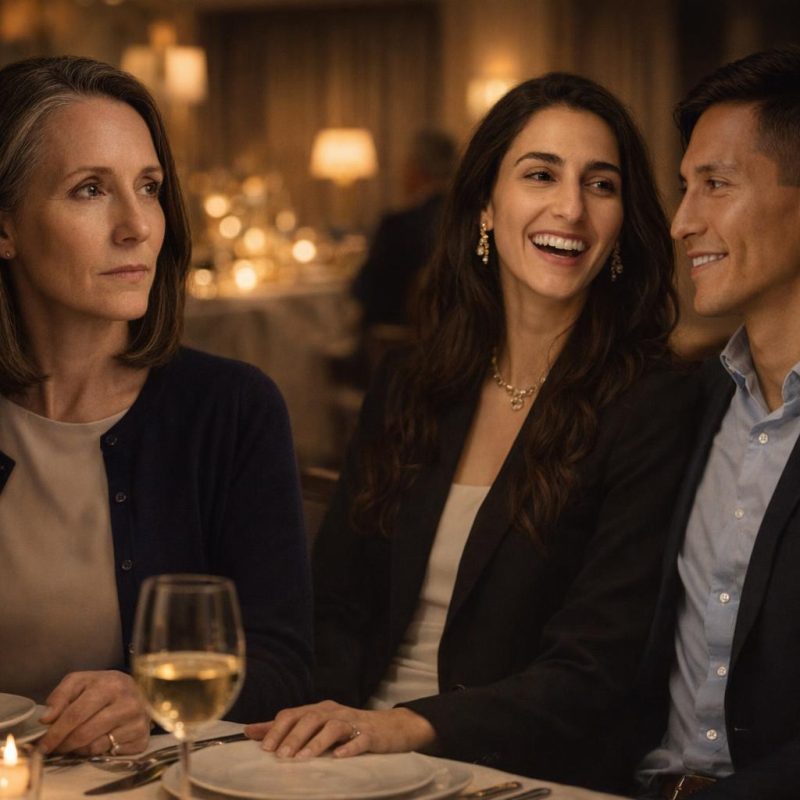 Image by RM AI
The Coordinator Approaches
I was reaching for my water glass when I noticed her — the woman in the dark blazer I'd seen moving through the room all evening, the one with the tablet tucked against her side. She had the practiced efficiency of someone who ran events for a living: checking in, adjusting, disappearing before anyone could flag her down. She stopped at our end of the table, and I watched her lean slightly toward Marcus, asking something quiet about the pacing of the courses. Marcus smiled and said everything was wonderful, thank you, and she made a small note on her tablet without breaking her professional expression. Something clicked into place for me then. She'd been here when the table was set. She would have seen the place cards, maybe even handled them. If BBU was a restaurant code — a seating notation, a dietary flag, anything like that — she would know it. I set my water glass down carefully. She was already turning toward me with that same polished smile, and I felt the question forming before I'd fully decided to ask it.
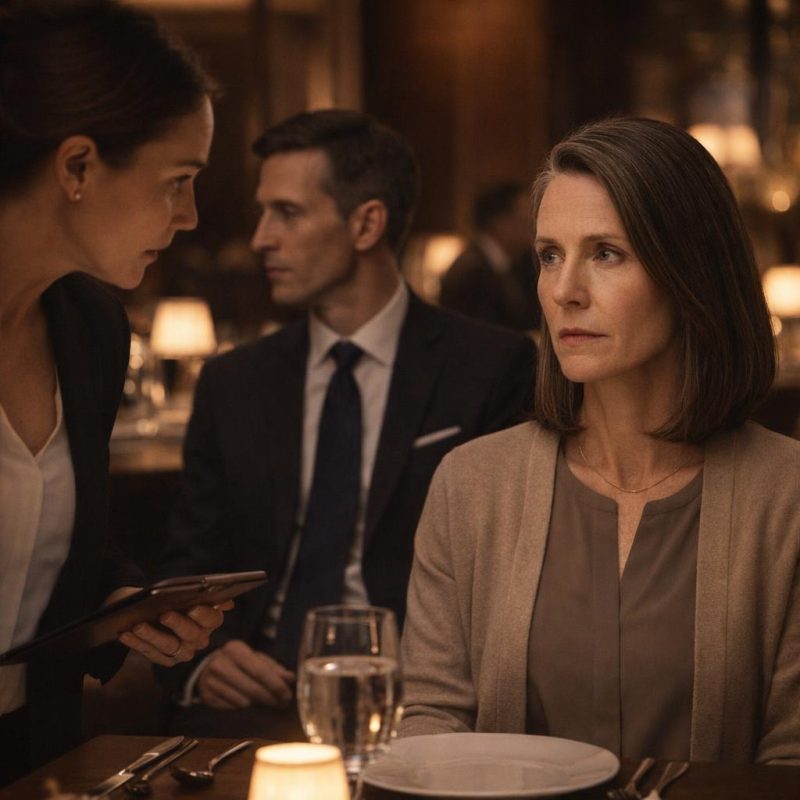 Image by RM AI
A Simple Question
I picked up the place card before I could talk myself out of it. Claire — I'd heard someone call her that earlier — paused when she saw the movement, her tablet shifting slightly in her grip. I kept my posture easy, one elbow resting on the table, the way you'd ask someone to settle a trivial bet. I even let a small smile into my voice. 'I'm sorry to bother you,' I said, 'but I noticed these little letters on my place card and I can't figure out what they mean — is it a table code or something?' I kept it light, almost amused, like I was asking about a font choice. Claire's eyes moved to the card in my hand. She didn't answer immediately, and I told myself that was just professionalism — she was probably running through a mental index of table configurations and dietary notations. I angled the card slightly so the three letters were clearly visible in the candlelight, and held it out toward her so she could see.
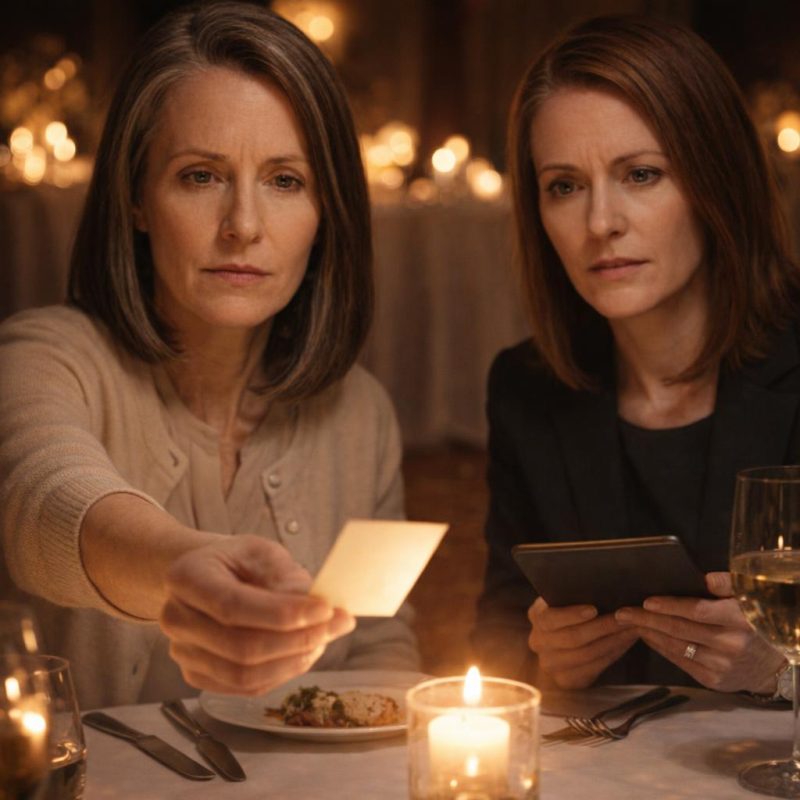 Image by RM AI
Be Brief, Uninvited
Claire's professional smile didn't fade so much as it simply stopped. She straightened up from where she'd been leaning in, and something shifted in her bearing — a small tightening, a pulling back. Her tablet pressed flat against her side. She glanced once toward the far end of the table, then back at me, and I had just enough time to think that this was a strange reaction to a seating code before she leaned close and spoke very quietly, her voice barely above a whisper. 'It means Be Brief, Uninvited.' She pulled back immediately, her expression caught somewhere between discomfort and apology, and the words just hung there in the space between us.
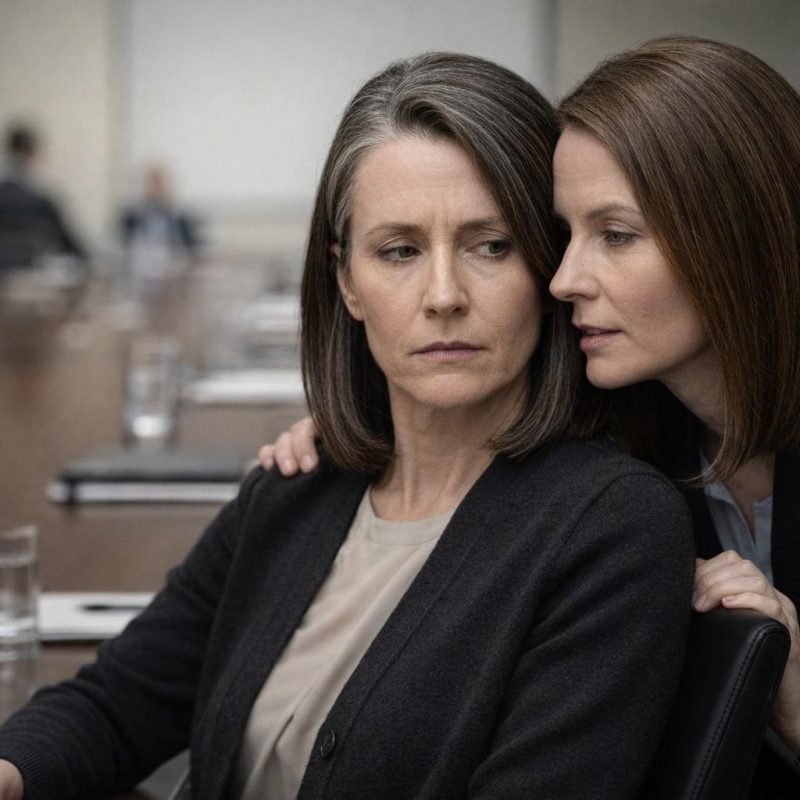 Image by RM AI
Processing the Impossible
I sat very still. The card was still in my hand. Be Brief, Uninvited. I turned the words over slowly, the way you turn something unfamiliar in your fingers, waiting for it to resolve into a shape you recognize. Brief — like, keep conversations short? Uninvited — but I was invited. Emma had called me. She'd said my name on the phone and asked me to come. I had a voicemail. I had a dress I'd bought specifically for tonight. The words didn't fit together into anything that made sense, and yet they sat there, perfectly legible, refusing to mean something harmless. Was it an instruction? A note to the staff? My hands had gone cold without my noticing, and the ambient noise of the dinner — the silverware, the low laughter, the soft music — felt suddenly very far away, like I was hearing it through a wall. Claire was still standing nearby, but I couldn't make myself look up at her. I just sat there holding the card, the three letters face-up in the candlelight.
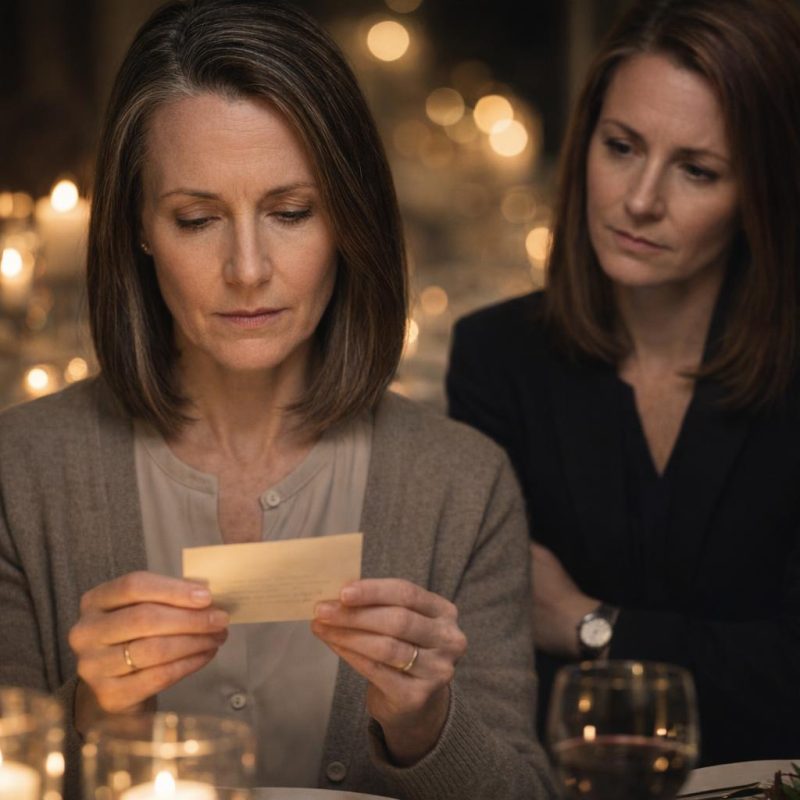 Image by RM AI
Claire's Retreat
I opened my mouth. I had a question — several questions — but I couldn't get the first one out fast enough. Claire was already moving. She took one step back from the table, then another, her posture stiff in a way it hadn't been before, her eyes fixed somewhere past my shoulder. She didn't look at me. She turned and walked toward the kitchen area with the kind of purposeful stride that signals a conversation is over before it's begun, and within a few seconds she was gone — absorbed into the soft bustle near the service entrance, her dark blazer disappearing behind a half-open door. Marcus was saying something to the man across from him, laughing at his own punchline, completely unaware. The place card sat on the tablecloth in front of me, face-up. I didn't pick it up again. I just sat there in the middle of all that warm light and good food and low, easy conversation, with three words I couldn't explain and no one left to ask.
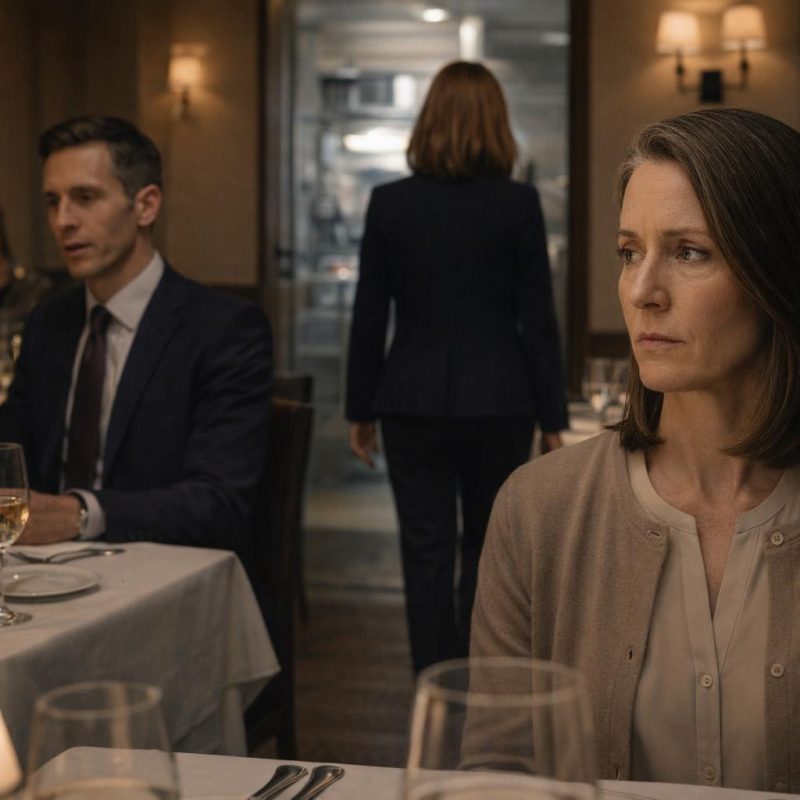 Image by RM AI
The Performance
Marcus turned back to me and said something about the wine — a Burgundy, apparently, very well chosen for the menu. I nodded. I said something like 'it's lovely,' and I heard my own voice come out smooth and even, which surprised me. My hand found my fork and I picked it up, though I had no intention of eating. Be Brief, Uninvited. An instruction to the staff? A note about me specifically? I took a sip of water and held it in my mouth for a second before swallowing, just to have something to do with my face. Marcus was still talking — something about the difference between Burgundy and Bordeaux — and I kept nodding, kept the corners of my mouth lifted, kept my eyes attentive. Inside, my thoughts were moving fast and going nowhere, like wheels spinning on ice. I set the water glass down with both hands because one hand alone didn't feel steady enough. The smile on my face had been there so long it had started to feel like something I was holding in place rather than something that belonged to me.
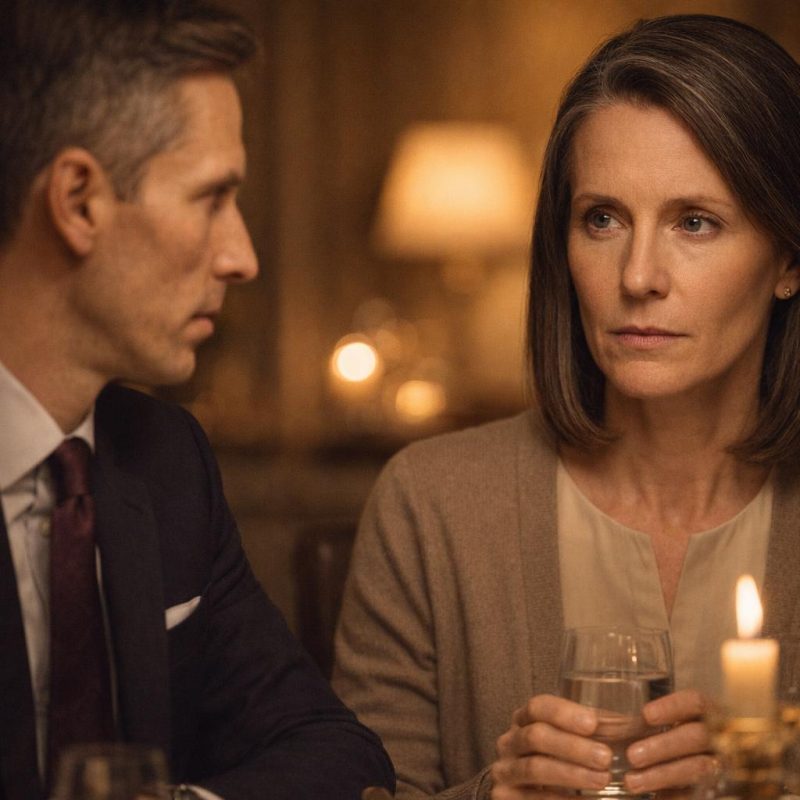 Image by RM AI
Across the Room
I let my eyes drift across the room. I needed to see her. Emma was standing with a small cluster of guests near the far end of the space, one hand gesturing as she talked, her face animated and open. She was telling a story — I could tell by the rhythm of it, the way the people around her leaned in slightly, the way she paused for effect before the punchline landed and the group laughed. Lucas stood just off her shoulder, relaxed, smiling at the reaction she got. She looked exactly the way she had an hour ago when I'd waved at her from across the room — warm, present, genuinely happy. I searched her face the way you search a familiar room for something out of place. There was no coldness there, no careful distance, nothing that looked like performance. She laughed at something one of the guests said, her whole face lifting with it, easy and unguarded.
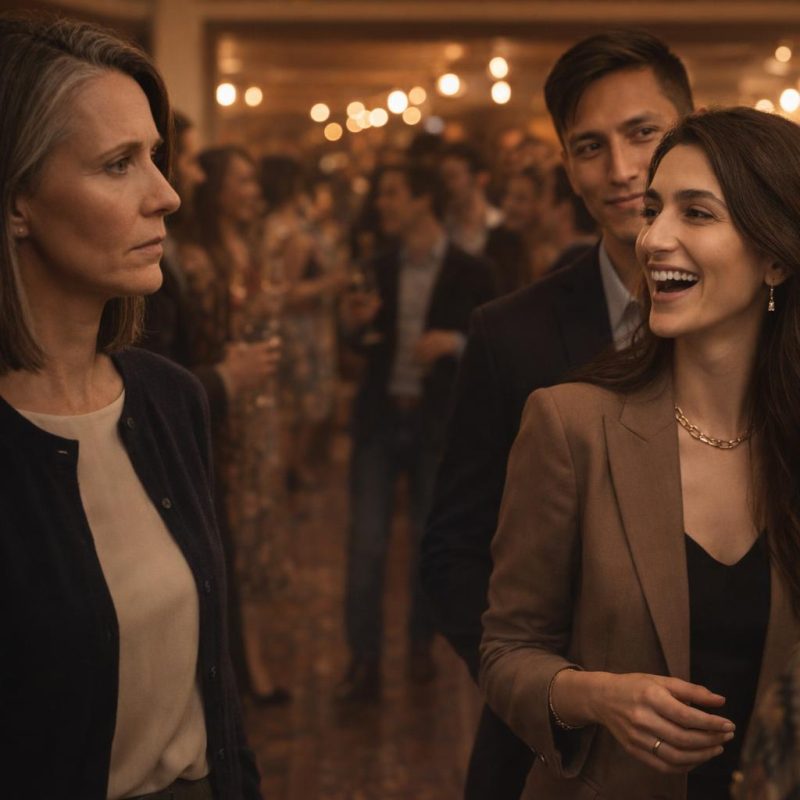 Image by RM AI
Testing the Waters
I turned toward the woman across from me — she'd been introduced briefly when I arrived, though her name hadn't quite landed — and tried the most natural thing I could think of. I asked how she knew Emma. She smiled, the kind of smile that's perfectly pleasant and perfectly closed, and said they worked together. I nodded and asked what department, and she told me, and I asked a follow-up about how long she'd been there, keeping my voice easy and conversational, the way you do when you're genuinely curious and not at all cataloging every micro-expression. She answered. Politely. Completely. And then she turned her water glass a quarter turn and looked back toward the center of the table, as if the conversation had reached its natural end even though I hadn't felt it arrive there. I tried once more — something about whether she'd been to Marcello's before — and she answered that too, briefly, and that's when I saw it. Her eyes dropped. Just for a second. Down to her wrist, where her watch caught the light from the candle between us.
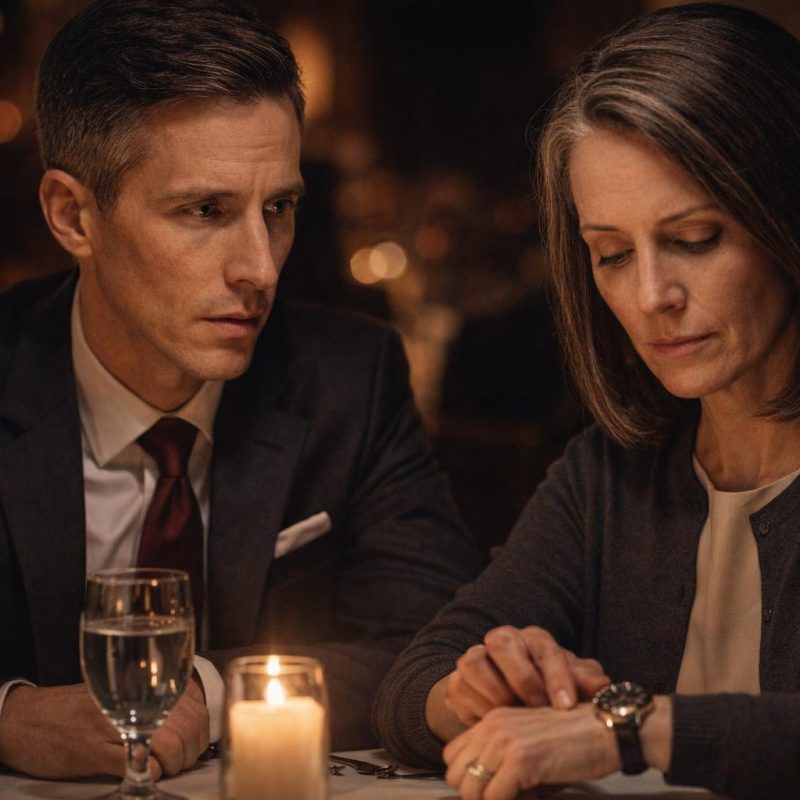 Image by RM AI
The Second Course
The pasta arrived in wide shallow bowls, cream sauce pooled around fresh herbs, and I remember thinking it smelled wonderful. I took a bite and tasted almost nothing. I was watching too hard to eat. Rachel was back at the table by then, animated as ever, telling a story about a trip she and Emma had taken their junior year — something about a missed train and a hostel with no hot water — and the people around her laughed at the right moments. I laughed too, a beat late, because I was watching the shape of the story rather than hearing it. She never turned to include me. Not once. Marcus answered my questions when I asked them, every time, without fail. But he never asked one back. Not a single one. I tried to tell myself that some people are just like that at dinner parties, that not everyone reciprocates, that I was reading too much into the geometry of a table. But the feeling kept settling in anyway, slow and heavy, the way cold air settles into a room when a window has been open too long. I sat with my fork resting against the rim of the bowl and couldn't shake the sense that something here was very wrong.
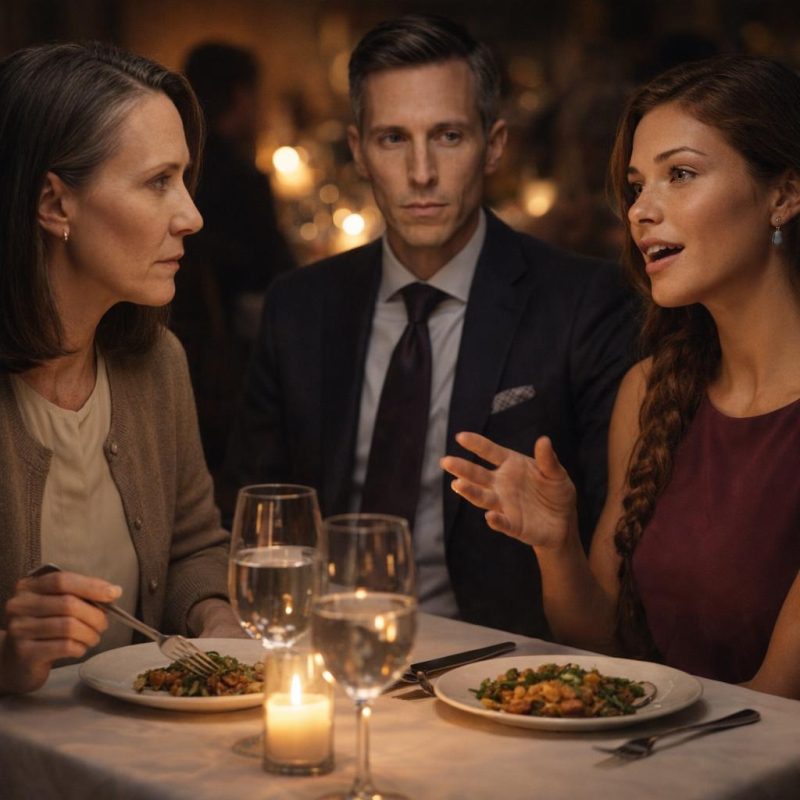 Image by RM AI
The Invitation Text
I waited for a lull in the conversation around me and then quietly slipped my phone from my purse, angling the screen away from the table like I was just checking the time. I opened my messages and scrolled back three weeks to Emma's text. I'd read it so many times when it first arrived that I'd practically memorized it, but I read it again now, slowly, the way you read something when you're looking for a different answer than the one you got before. 'Mom, I'm having a graduation dinner at Marcello's on the 15th.' And then the second message, sent a minute later: 'Would love for you to be there.' That was it. No details about the time, no mention of who else was coming, no follow-up when I replied yes. I'd filled in all the blanks myself — assumed it meant what I wanted it to mean, assumed the warmth I heard in those words was the warmth she'd intended. I turned the phone over in my hands. The restaurant noise moved around me, forks and laughter and the low hum of other people's evenings. I turned the screen back up and sat there looking at the words 'Would love for you to be there.'
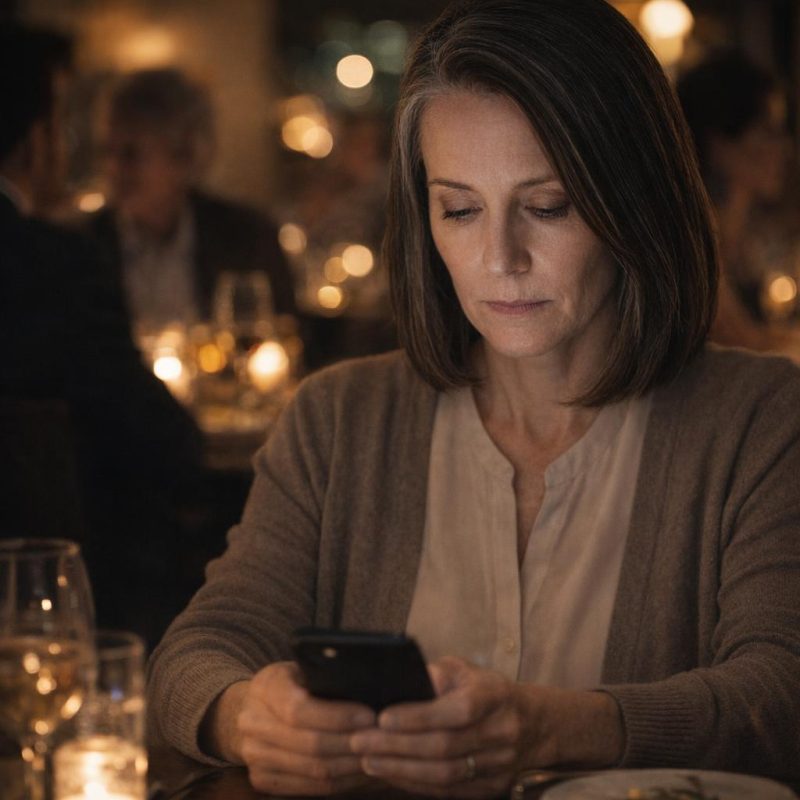 Image by RM AI
Lucas's Glance
I slipped the phone back into my purse and looked up. Lucas was watching me. He was standing near Emma at the far end of the room, close enough that his shoulder almost touched hers, but his eyes weren't on her. They were on me. Emma was mid-conversation with someone I didn't recognize, her hands moving the way they do when she's making a point, completely absorbed. She wasn't looking my way at all. But Lucas was. I didn't look away immediately and neither did he. There was nothing aggressive in it, nothing that would have read as rude to anyone watching from the outside. It was just a look. Steady and still, lasting maybe two seconds longer than a casual glance would. I couldn't read it. It wasn't warm the way it had been when he'd greeted me at the door, but it wasn't cold either. It was something else entirely, something I didn't have a word for, and the not-having-a-word for it was the part that stayed with me as I held his gaze from across the room.
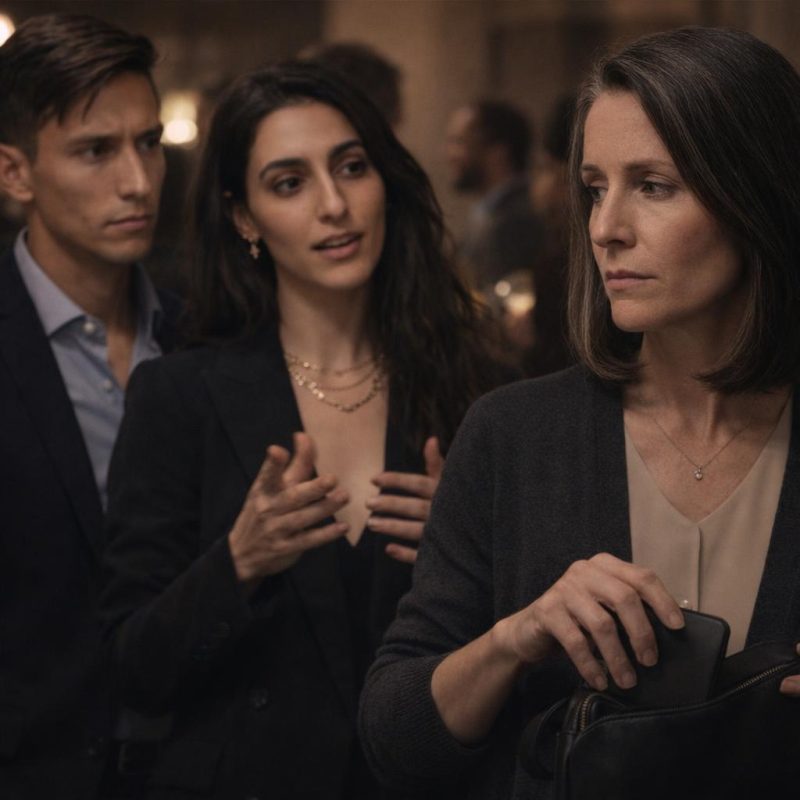 Image by RM AI
The Bathroom Escape
I set my napkin on the table beside my plate, folded neatly, the way you do when you want to look composed. I leaned slightly toward Marcus and said something about needing to find the restroom. He nodded without looking up from his plate, a small, distracted acknowledgment, and that was that. I pushed my chair back and stood, and for a moment my legs felt less certain than I expected them to. I kept my pace even as I moved away from the table, not too fast, not the walk of someone fleeing. I was aware of the room in a way I hadn't been when I arrived — the placement of tables, the angle of the lighting, the way sound moved differently near the walls. I didn't look back. My purse stayed on the chair, which felt like a small act of faith, or maybe just practicality. I just needed a minute. A minute away from the careful politeness and the conversations that ended just slightly too soon. The hallway ahead of me felt like the first quiet thing I'd encountered all evening, and I moved toward it the way you move toward something you didn't know you needed until it was right in front of you.
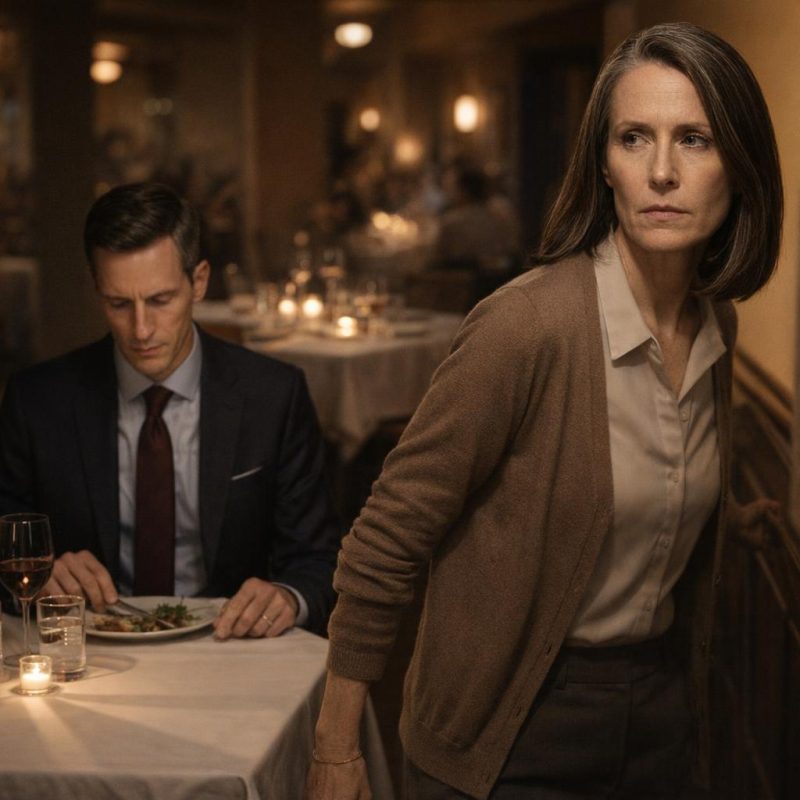 Image by RM AI
Voices in the Hallway
The hallway outside the bathrooms was narrow and dim, a welcome contrast to the brightness of the dining room. I slowed as I reached it, one hand trailing along the wall, and let out a breath I hadn't realized I'd been holding. That's when I heard them. Two voices, low and conversational, coming from just around the corner — close enough to be clear, far enough that I couldn't see who they belonged to. I stopped. I wasn't trying to eavesdrop. I just stopped, the way you stop when your body understands something before your mind does. I caught fragments. Something about the dinner being 'a lot.' A pause. Then one voice said something I couldn't fully make out, and the other responded with a word I did catch: 'awkward.' Another pause, and then the first voice again, softer, with something that sounded almost like sympathy in it. 'Poor thing.' I stood very still with my hand flat against the wall. The voices moved on to something else, easy and unhurried, as if what they'd said had been nothing more than a passing observation. And then, just before they rounded back toward the dining room, I heard it clearly — my own name, spoken in the hallway in a voice I didn't recognize.
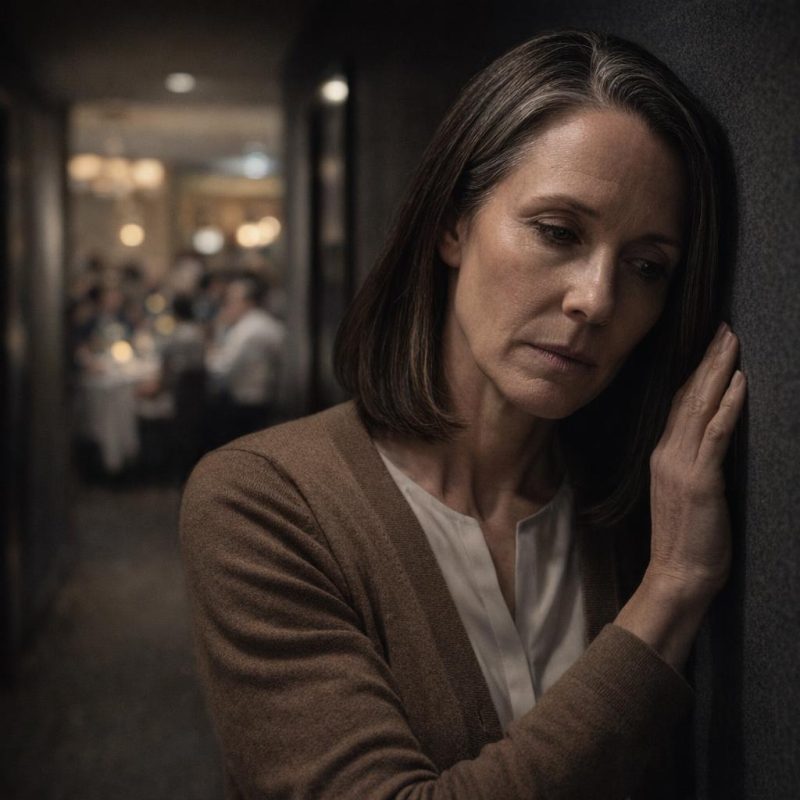 Image by RM AI
Returning to the Table
I gave myself a moment in the bathroom, running cold water over my wrists the way my mother used to tell me to when I was anxious as a kid. It helped, a little. I dried my hands, checked my face in the mirror — composed enough, I decided — and walked back out. The dining room felt brighter than I remembered it. I kept my shoulders back and my pace steady as I approached the table, the way you do when you're performing normalcy for an audience you can't quite identify. I slid into my seat beside Marcus, reached for my water glass, and that's when I caught it. Across the table, two guests — a woman in a green dress and the man beside her — exchanged a look. It was quick, the kind of thing that would have been invisible if I hadn't already been watching for exactly that kind of thing. A flicker, a small shared acknowledgment, gone almost before it registered. Rachel glanced my way and then down at her plate. Marcus shifted slightly in his seat. No one said anything. I set my water glass down and picked up my fork, willing my hand not to betray me.
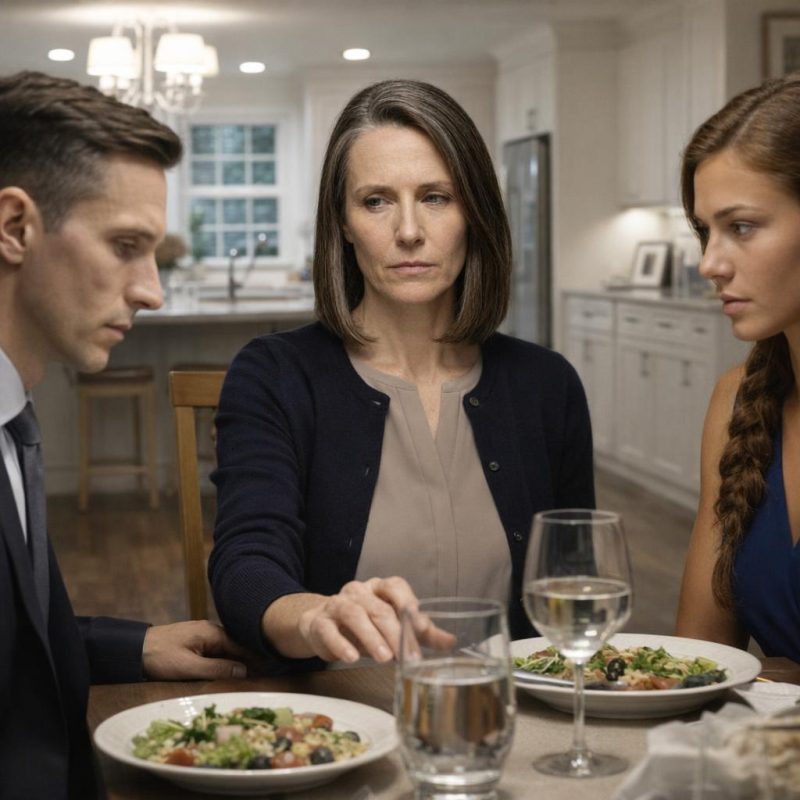 Image by RM AI
Emma's Toast
Emma stood near the head of the table, wine glass raised, and the room quieted around her the way rooms do when someone commands attention without asking for it. She smiled — that wide, genuine smile that had always been her best feature — and began to speak. She thanked everyone for coming to celebrate with her, said it meant everything to have the people she loved most in one room. She talked about the last four years, the late nights, the moments she'd almost given up. She looked at Lucas and her voice softened, and she thanked him for being her anchor. She turned to Rachel and said something about how you only get one person who knows all your worst habits and loves you anyway, and Rachel laughed and pressed a hand to her chest. She named colleagues, mentioned a professor who'd pushed her harder than she'd wanted to be pushed. Her voice was warm throughout, unhurried, the kind of toast people remember. I sat with my hands in my lap and waited. Each name she spoke, I told myself the next one would be mine. She raised her glass, the room raised theirs, and the applause came — and my name had not been among them.
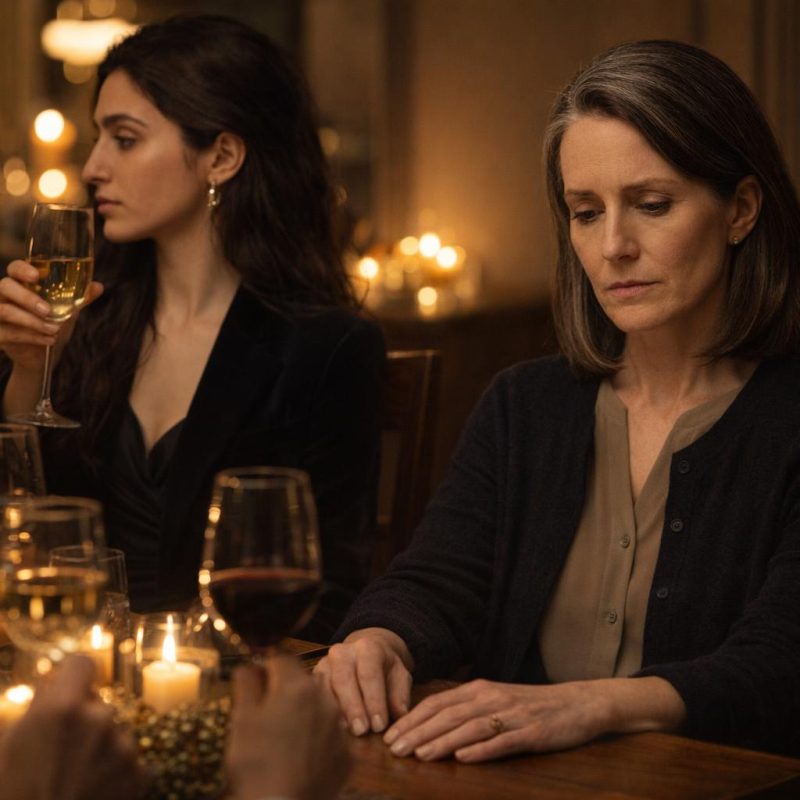 Image by RM AI
Watching Her Warmth
The applause faded and Emma moved, and that's when I started watching her properly. She drifted toward the far end of the table first, touching a shoulder here, leaning in for a laugh there, and the room seemed to brighten wherever she landed. Lucas stayed close, a half-step behind, smiling at her the way people smile when they're proud of someone. Emma's joy looked completely real — the kind that doesn't perform, it just spills. She crouched beside an older man I didn't recognize and said something that made him throw his head back laughing. She refilled someone's wine without being asked. She moved through the room like she'd been doing this her whole life, easy and warm and entirely present. I sat with my fork resting against the edge of my plate and watched from my end of the table, which she hadn't come near. I told myself she was just working the room, that hosts do that, that she'd make her way down eventually. I was still telling myself that when she crossed to the other side and wrapped her arms around a woman I had never seen before in my life.
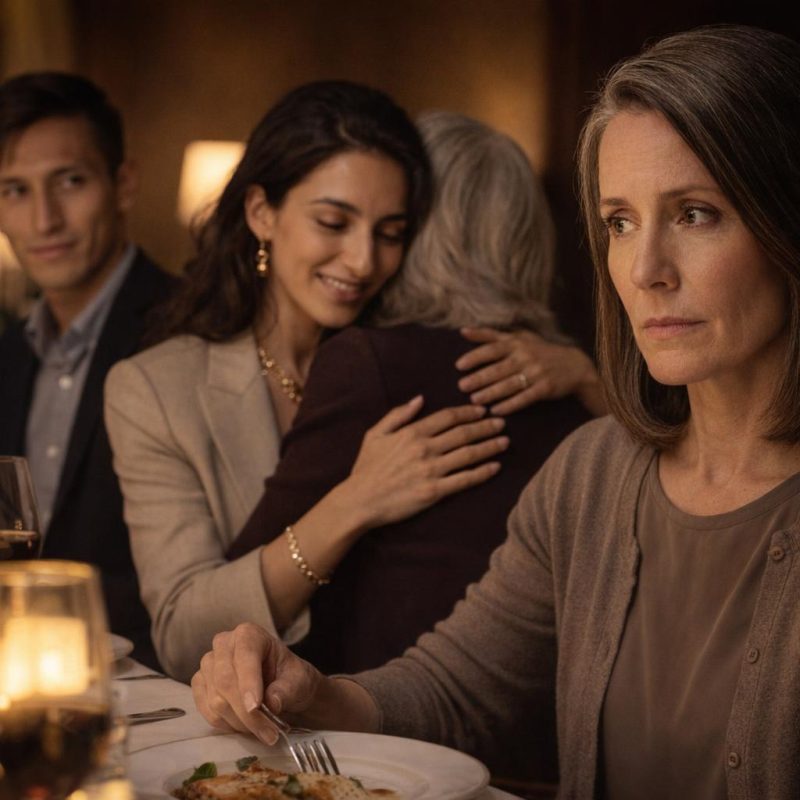 Image by RM AI
The Fourth Course
The fourth course arrived without fanfare — a wide shallow bowl, something with roasted root vegetables and a dark reduction pooled at the center. The server set it in front of me with a quiet efficiency and I picked up my fork the way you do when your hands remember what to do even when your mind has gone somewhere else entirely. Marcus said something about the plating, how the restaurant had a way of making simple ingredients look architectural. I nodded. I may have said 'mm' or something like it. I cut a piece of carrot and put it in my mouth and chewed and swallowed and reached for my wine. The food might have been extraordinary. I genuinely couldn't tell. My mind was still back at the toast, still running through the names Emma had spoken, still checking and rechecking the list the way you recount money when you're sure you've miscounted but the number keeps coming out the same. I cut another piece. Fork up, fork down. The candles on the table had burned lower without my noticing, and the wax had pooled in soft rings around their bases, and I just kept going through the motions, one bite at a time.
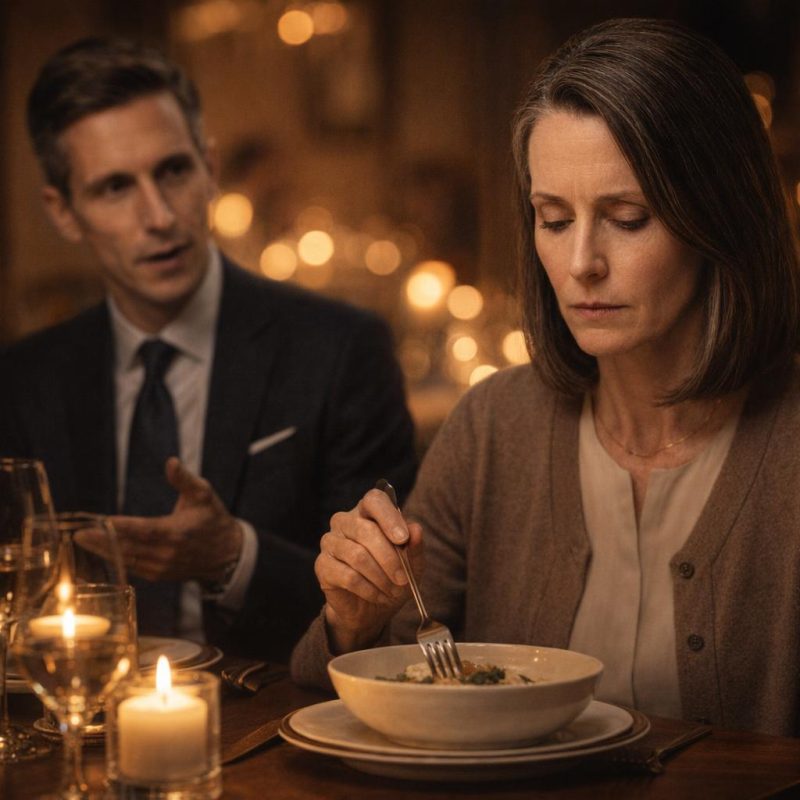 Image by RM AI
The Memory of Closeness
At some point the noise of the table receded and I was somewhere else entirely. Emma at sixteen, sitting on the kitchen counter the way she always did — never in a chair if a counter was available — her socks mismatched, her hair still damp from the shower. It had been a Tuesday night in October, I was almost certain of that, because the windows had been fogged from the soup I'd had on the stove. She'd been talking about college, about what she wanted to study, about whether it was okay to want something big. She'd leaned across the counter toward me and said, 'Do you think I'm smart enough?' and I'd said, 'Emma, you're the smartest person in any room you walk into,' and she'd laughed and said, 'You have to say that,' and I'd said, 'I really don't.' We'd talked for hours that night. She'd stayed up past midnight just talking, and I'd let her, because those conversations felt rare even then, and I'd known enough to hold onto them. I couldn't tell you when that version of her stopped sitting on my kitchen counter. I couldn't find the exact moment, no matter how many times I'd tried. The weight of not knowing where it went had never really left me.
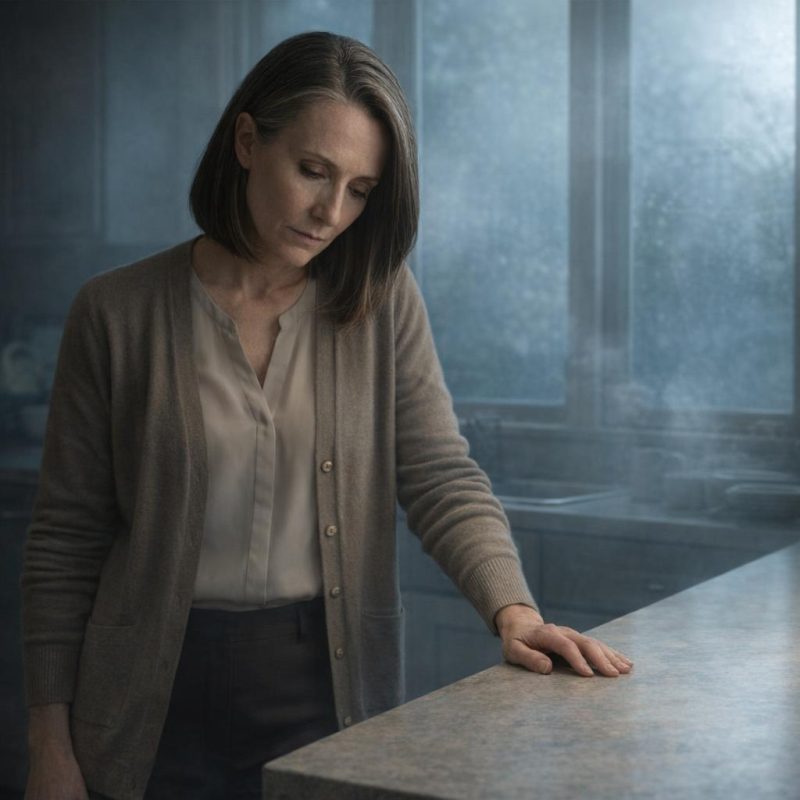 Image by RM AI
The Confirmation
Marcus had been talking about his schedule — something about back-to-back client meetings running into the following week — and I was half-listening, nodding at the right intervals, when he said it. He was explaining why he'd kept his evening commitments light lately, why he'd told himself to keep dinner conversations brief tonight so he could be present for the actual celebration rather than getting pulled into work talk. He said it the way people say things they don't realize carry weight. Brief tonight. I set my fork down. Not quickly, not dramatically — I just set it down on the edge of the plate and left it there. He kept talking. I don't know what he said after that because the word had lodged somewhere behind my sternum and I couldn't get past it. Brief. The same word from the place card. The same instruction. And something about the way he'd said it — casually, without hesitation, as though it had already settled into his evening — made the thought that had been circling the edges of the dinner move in close and stay. He didn't seem to notice that I'd gone very still. He reached for his wine and continued, and I sat there with my hands flat on the tablecloth, and the thought wouldn't leave.
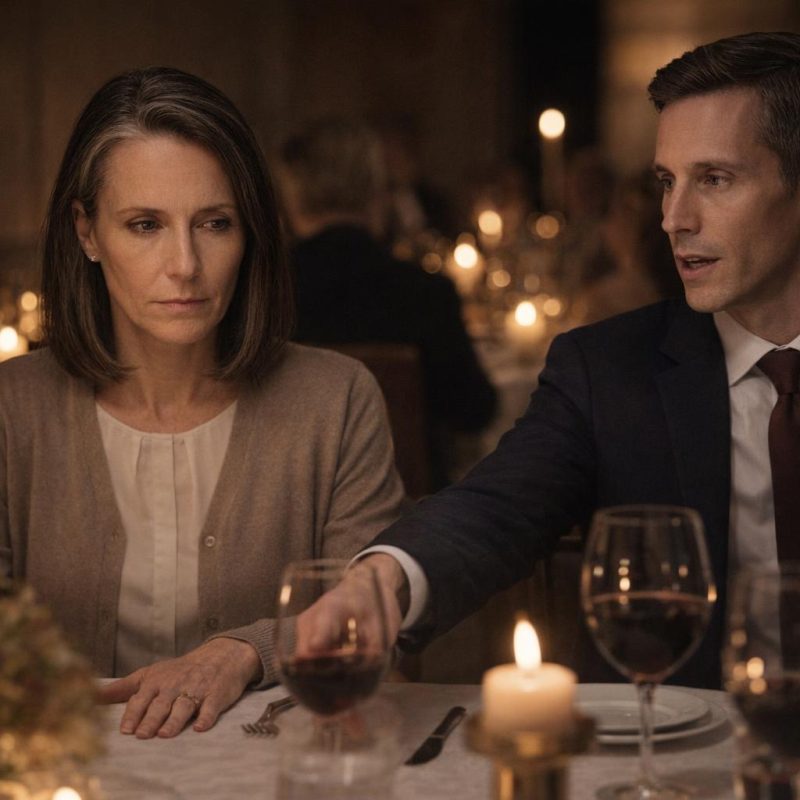 Image by RM AI
The Decision to Know
I sat very still for a long moment after that. The table noise continued around me — silverware, laughter, someone telling a story at the far end — and none of it touched me. I kept my hands flat on the cloth and let the thought settle into something solid. Marcus hadn't invented that word. He'd used it the way people use a phrase that has already found its shape, casually, without thinking twice. Which meant it hadn't just been the place card. I didn't know how far it went or what exactly had been said, but something in me had begun to suspect that my invitation hadn't looked quite like the others. I wasn't going to stand up and make a scene. I wasn't going to cry in front of people I barely knew. But I also wasn't going to leave without understanding what I was actually sitting in the middle of. That much had become clear to me somewhere between the fourth course and Marcus's offhand sentence. The decision didn't feel dramatic. It just felt necessary, and it settled into my chest like something that had always been there.
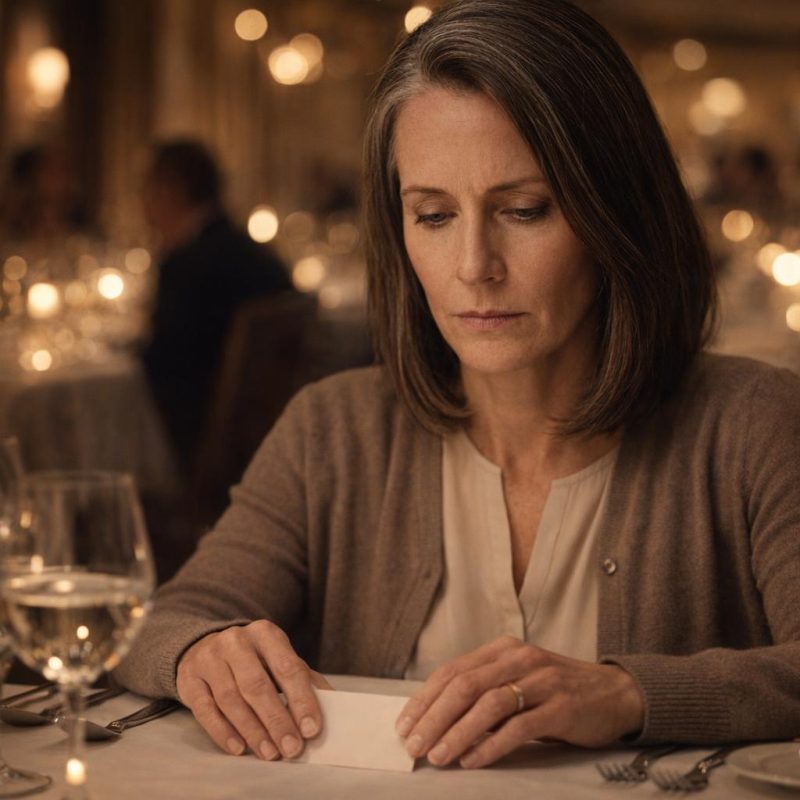 Image by RM AI
The Approach
I'd been staring at the candle nearest my plate for what felt like several minutes when I looked up and saw Emma moving. She was coming down the length of the table — finally, for the first time all evening — working her way along the far side, pausing to squeeze a shoulder, bending to say something into someone's ear. Lucas followed a few steps behind her, his hands easy at his sides, that same steady smile he'd worn all night. My pulse picked up in a way I hadn't expected. I'd spent the last hour watching her from a distance, and now the distance was closing and I didn't know what I was going to say when she reached me, or what she was going to say, or whether this was the moment everything shifted. She stopped two seats away. A man I didn't know said something and Emma laughed, her hand coming to rest briefly on his arm, and she leaned in like he was the most interesting person she'd encountered all evening. I watched her from where I sat, hands in my lap, and waited. She was moving toward me for the first time all night.
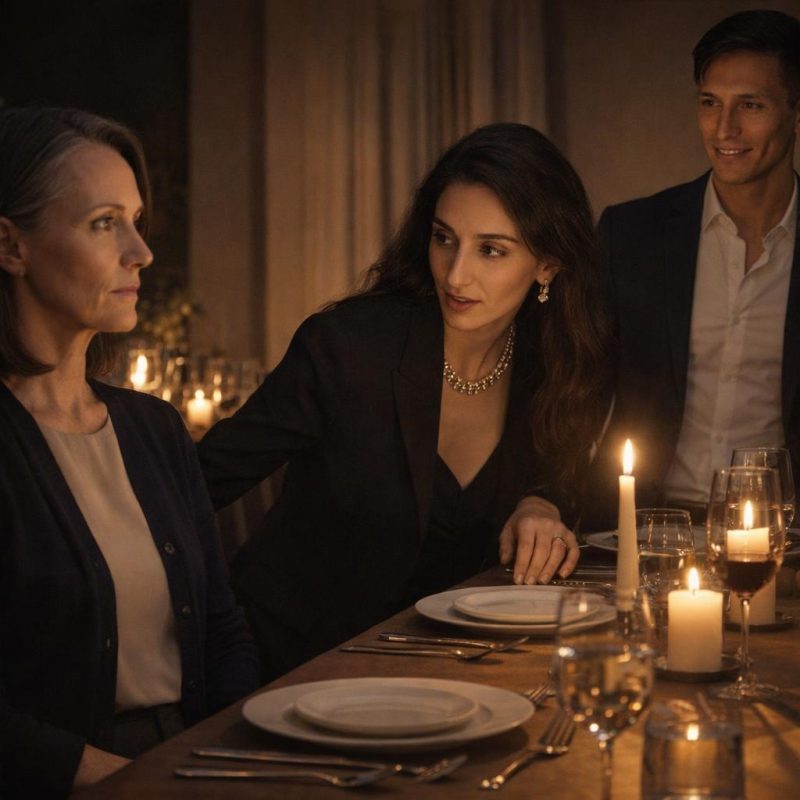 Image by RM AI
Studying Her Face
I watched Emma from two seats away and I looked for it — really looked, the way you look when you're trying to catch something before it disappears. I watched for the moment her smile would slip, for the flicker of something cold behind the warmth, for any sign that what she was performing and what she was feeling were two different things. Her laugh sounded easy and unguarded. When she touched the guest's arm it looked like genuine affection, not a gesture she was managing. Her eyes crinkled at the corners the way they do when something actually lands as funny. Marcus had gone quiet beside me, working through the last of his plate, and I sat there with my wine glass held loosely in both hands, studying my daughter's face with the kind of attention I hadn't given anything all evening. I couldn't find what I was looking for. There were no cracks. Whatever I'd been expecting to see — some trace of the coldness that had to be underneath all of this — it wasn't visible from where I sat. She just looked like Emma at her best: open, warm, entirely at ease. And somehow that was harder to sit with than cruelty would have been.
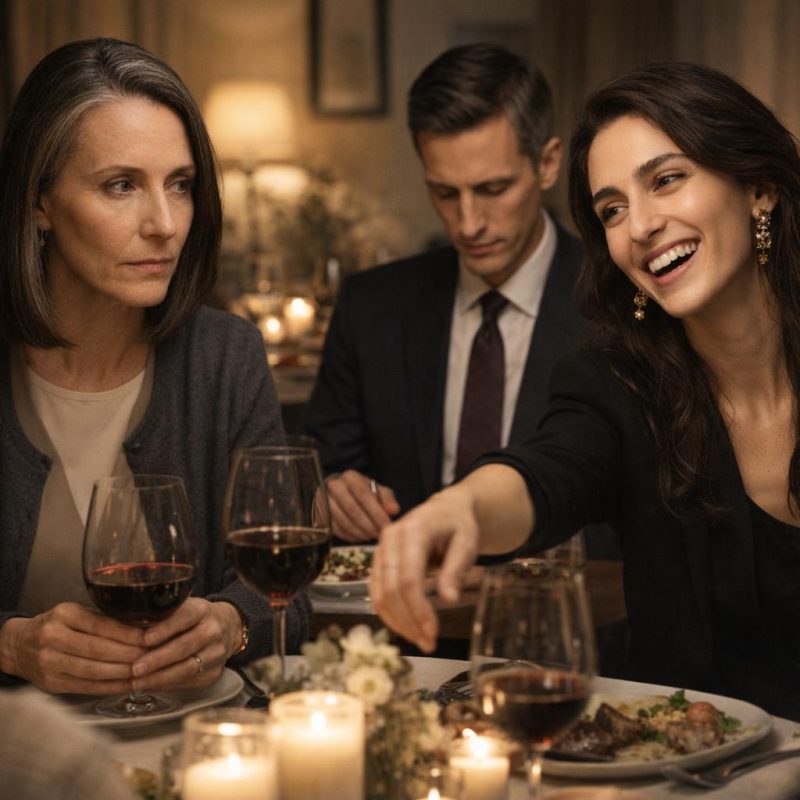 Image by RM AI
The Invisible Line
Somewhere between watching Emma laugh with the guest two seats away and reaching for my water glass, I started tracing her path backward through the evening. I did it almost without meaning to — the way your mind assembles a picture from pieces it's been collecting without telling you. She'd been to the far end of the table at least three times. She'd worked both sides, the middle, the cluster of colleagues near the window. She'd refilled wine, initiated hugs, crouched down to talk to the older man, circled back to Rachel twice. I ran through it carefully, the way you recount something when you suspect the total is wrong. And the total kept coming out the same. She had covered nearly every inch of that room. Every section of the table. Every guest. Except this one. Except here, where I was sitting, where Marcus was sitting, where the candles had burned lowest and the conversation had been the quietest all night. I hadn't moved from my seat. She hadn't crossed into this end. Not once, not briefly, not even in passing. There was a line somewhere between her path and my chair, and the whole evening had held to either side of it.
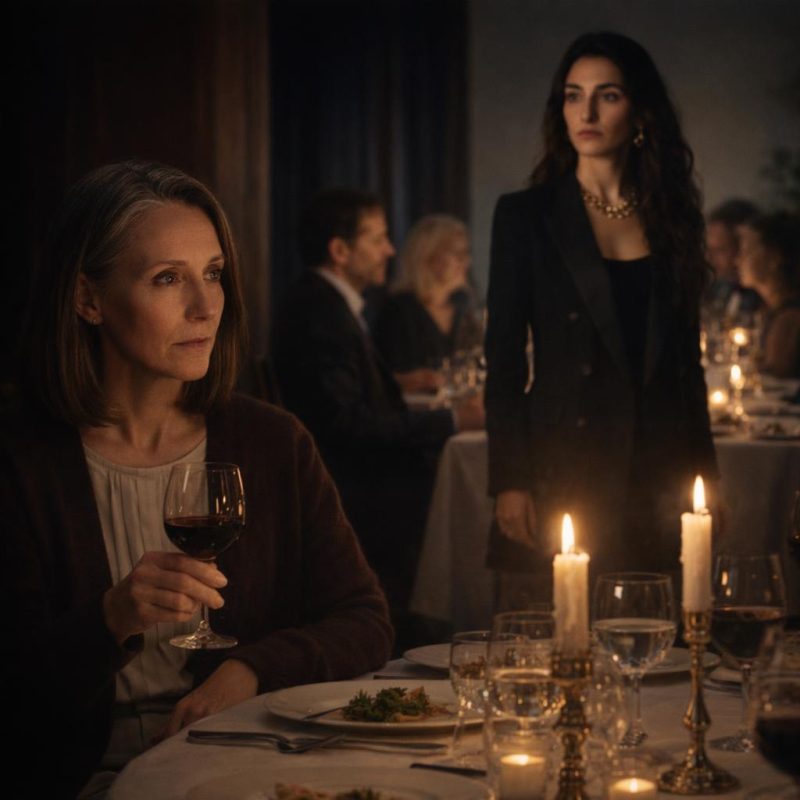 Image by RM AI
The Teenage Years
I don't know exactly when my mind left the table, but somewhere between staring at the untouched bread on my plate and watching the candle nearest me gutter in a draft, I was back in the house on Mercer Street, standing outside Emma's bedroom door. She was fifteen. I'd come home from work later than I'd meant to — a Tuesday, I think, or maybe a Wednesday — and the house had that particular quiet that meant she'd been alone in it for hours. I knocked. She said come in, but the way she said it was different. Not annoyed, not distracted. Just flat. She was sitting at her desk with her back to me, and when I asked how her day was, she answered in three words. Fine. Pretty good. Okay. I stood there for a moment, trying to find a way in, and there wasn't one. I told myself it was normal. Thirteen-year-olds did this, fifteen-year-olds did this, every mother I knew had a version of this story. I went back downstairs and made dinner and told myself it would pass. The candle nearest me guttered again, and I was back at the table — carrying the memory of that hallway, and the door that had never quite opened the same way again.
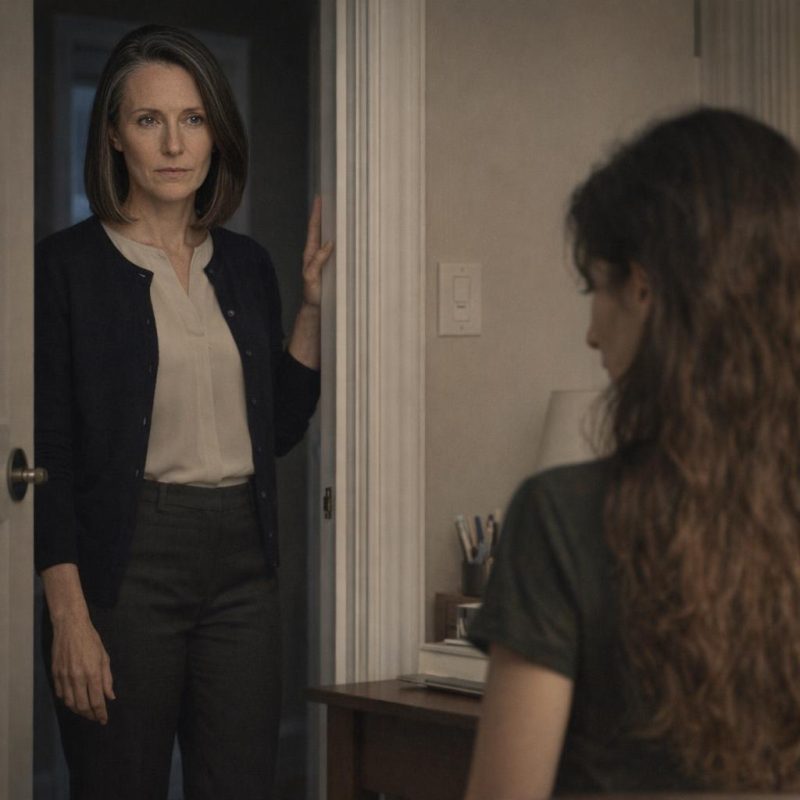 Image by RM AI
The Fifth Course
I was still somewhere on Mercer Street when the server appeared at my left shoulder. I heard the soft placement of a plate before I registered anything else — the clink of ceramic, the faint smell of something warm and herbed. Marcus made a small sound of appreciation beside me and said something about the presentation, the way the sauce had been layered or the garnish arranged. I didn't catch the specifics. I looked down at the plate in front of me the way you look at a word you've read too many times — the shape of it there, present and real, but not quite landing. My fork was still on the table where I'd left it after the last course. I didn't pick it up. I couldn't think of a single reason to. The food looked careful and considered, the kind of thing you'd normally pause over, and I felt nothing about it at all. Marcus said something else, maybe to me, maybe to the table in general. I nodded in a way that I hoped passed for engaged. The plate sat in front of me, untouched, its careful arrangement meaning nothing.
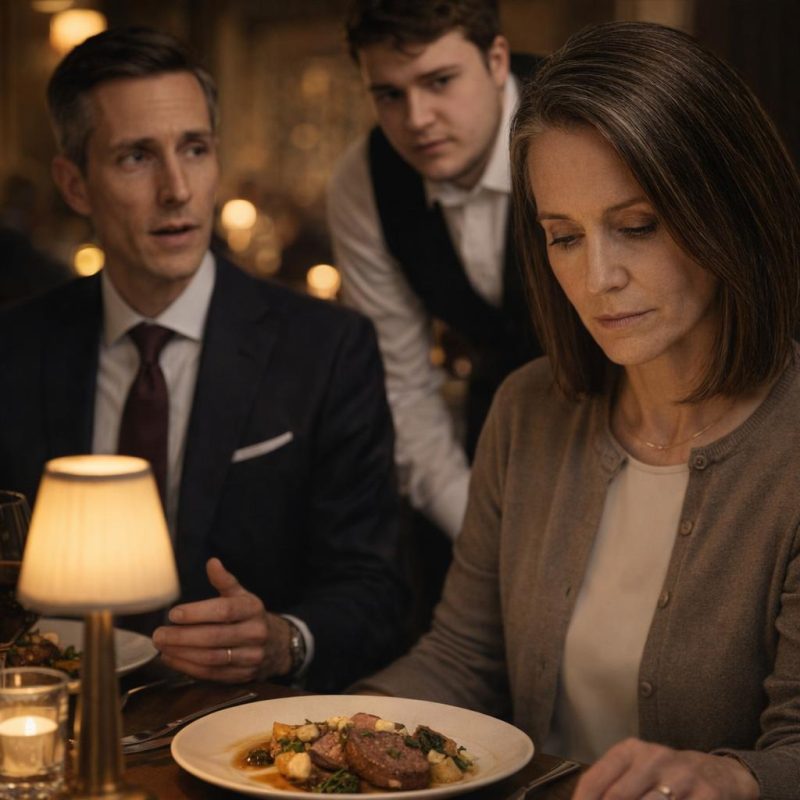 Image by RM AI
Rachel's Avoidance
I looked across the table at Rachel. She was mid-story, hands moving, leaning slightly toward the man on her left — animated in the way she always was, the kind of person who made a room feel warmer just by being loud in it. I waited. When you're trying to catch someone's eye, there's a rhythm to it — you watch for the natural pause, the moment their gaze sweeps outward before landing somewhere new. Rachel's gaze swept. It moved left, then right, then down to her wine glass, then back to the man beside her. It didn't stop on me. I waited a few more minutes and tried again. This time her eyes moved across the table in a wide arc — and I watched them skip the section where I was sitting the way you skip a crack in the pavement without thinking. She reached for her glass. She laughed at something. She turned back to her conversation. It wasn't the distracted missing of someone caught up in the moment. There was something in the angle of it, the consistency of it, that felt less like accident and more like effort. I sat with that feeling, and then I tried one more time, and Rachel looked down at her plate instead.
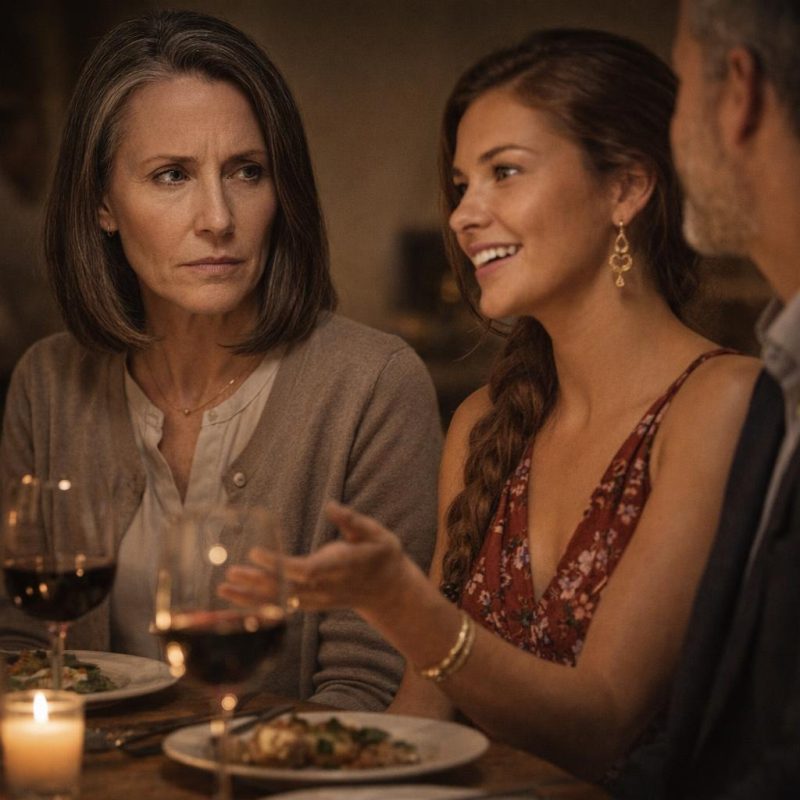 Image by RM AI
Calculating the Effort
I sat back slightly and let my mind do what it had been trying to do for the last hour — work through the logistics of it. Not the why, which I still couldn't get my arms around, but the how. The place cards alone would have taken time. Someone had to know which seats were assigned to which guests, had to mark each one with those three letters, had to make sure mine was the only one that looked different. Then there were the guests themselves — twenty people, give or take, and every one of them had arrived tonight knowing something I didn't. That didn't happen by accident. Someone had reached out to each of them individually, explained the instruction, made sure they understood it and agreed to follow it. Claire had been briefed. The seating chart had been arranged. The whole evening had been built around a set of directions that everyone at this table had received except me. I kept turning that over. The coordination required. The number of conversations that must have happened in the weeks before tonight. The number of people who had said yes. It wasn't a small thing, what this had taken. Whatever this was, it had been carried for a long time before I walked through that door.
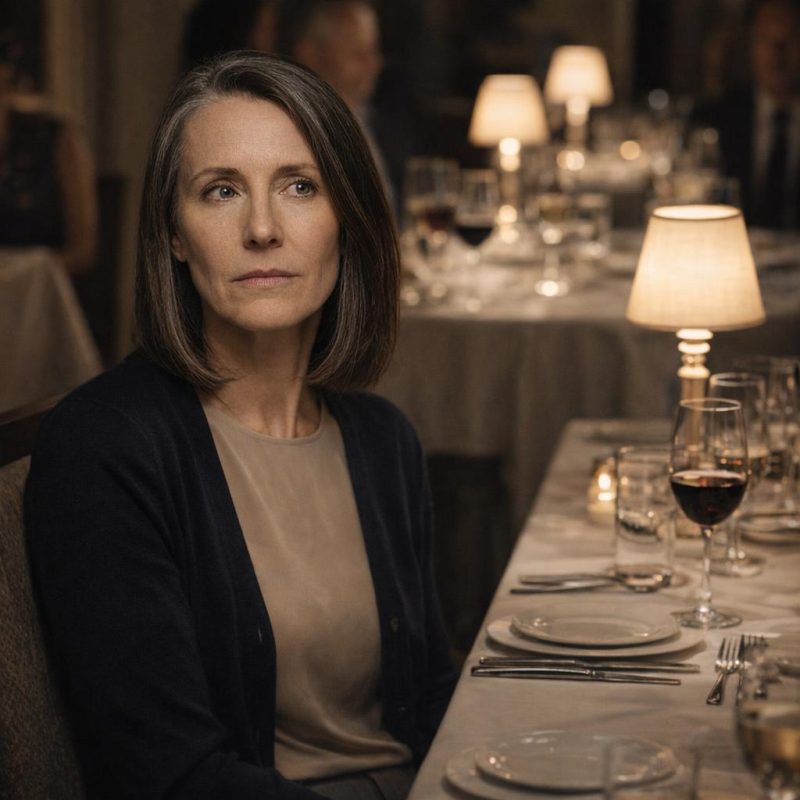 Image by RM AI
Not Spontaneous
Three weeks ago I'd gotten the invitation. I'd read it twice standing in my kitchen, then set my phone face-down on the counter and stood there for a moment with my hand pressed flat against the tile, just breathing. Three weeks. And the planning — the place cards, the briefing, the coordinated guests — none of that could have happened in three weeks. It would have started before the invitation. Before she'd even sent the message asking me to come. I turned that over carefully, the way you turn something fragile. Whoever had put this together hadn't done it in a moment of anger, hadn't fired off a decision and then scrambled to make it work. There'd been time taken. Steps thought through. The kind of effort that doesn't come from impulse — it comes from sitting with something long enough to build it into a plan. I didn't know what the plan was. I still didn't know what BBU meant or what tonight was supposed to accomplish. But there was a difference between something done in heat and something done in cold, careful quiet — and whatever this was, it felt like the latter. The weight of that difference settled into my chest and stayed there.
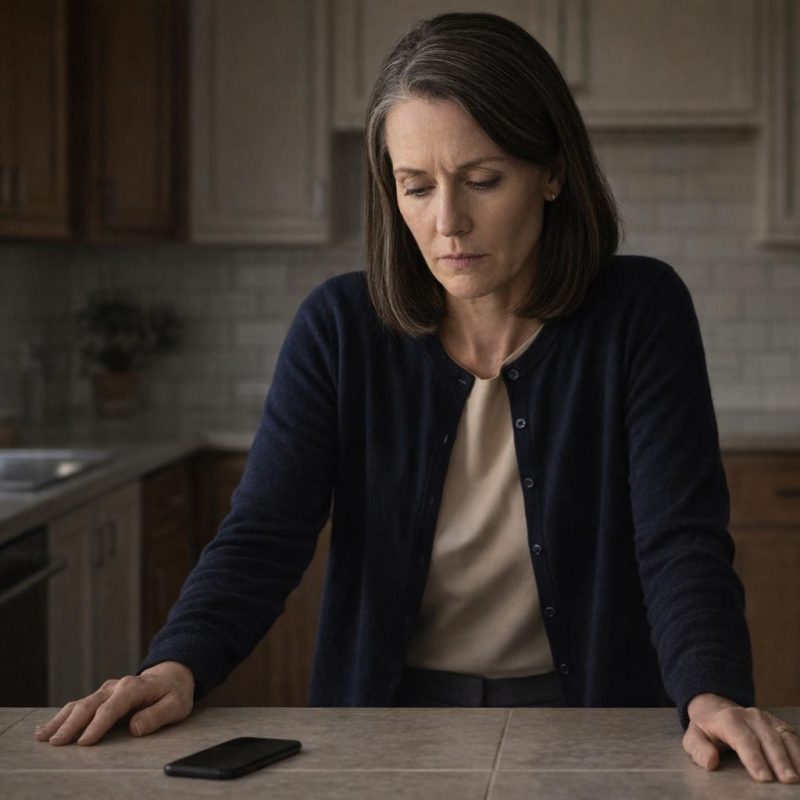 Image by RM AI
The Invitation Reframed
My hands were unsteady when I reached for my phone. I kept it low, below the table's edge, and opened the message thread. Emma's text was still there, the same as it had always been, but I read it the way you reread a contract after something has already gone wrong. 'I'm having a graduation dinner next month. Would love for you to be there.' I read it once. Then again. Then a third time. The words hadn't changed, but something about them felt different now — lighter than they should have been, almost weightless, like they were doing less work than I'd originally given them credit for. I'd read warmth into them three weeks ago. I'd read an opening, a reaching-out, the beginning of something. I'd told my sister about it. I'd bought a new cardigan. I'd driven forty minutes in traffic and walked through that door with something careful and hopeful sitting in my chest. I looked at the message again. 'Would love for you to be there.' It didn't say she'd missed me. It didn't say she wanted to celebrate together. It just assumed I'd come — and now I couldn't tell if that assumption had ever been kindness at all.
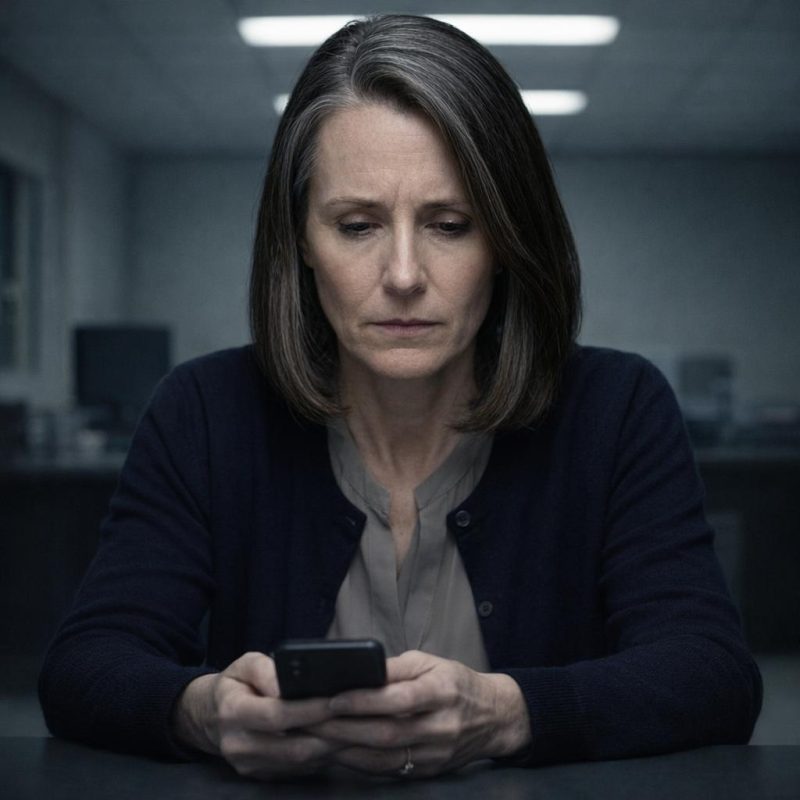 Image by RM AI
The Exact Wording
I kept the phone in my lap and read it again, slower this time, one phrase at a time. 'I'm having a graduation dinner.' Not 'I want you at my graduation dinner.' Not 'I'd love to celebrate with you.' Just — I'm having one. A statement of fact, with an address attached. Then: 'Would love for you to be there.' Not 'I've missed you.' Not 'It would mean so much.' Would love. Polite. Conditional in the way that formal things are conditional — the kind of phrasing you use when you want to leave yourself room. I'd read it as warmth because I'd wanted to. I'd filled in the spaces between the words with everything I'd been hoping for, and the words themselves had never promised any of it. They were careful words. Chosen words. They didn't close a distance or extend a hand — they just opened a door and stood back. I sat with the phone in my lap and the message on the screen, and what settled over me wasn't anger, not yet. It was something quieter than that — the particular stillness of understanding that the words had always meant exactly what they said, and nothing more.
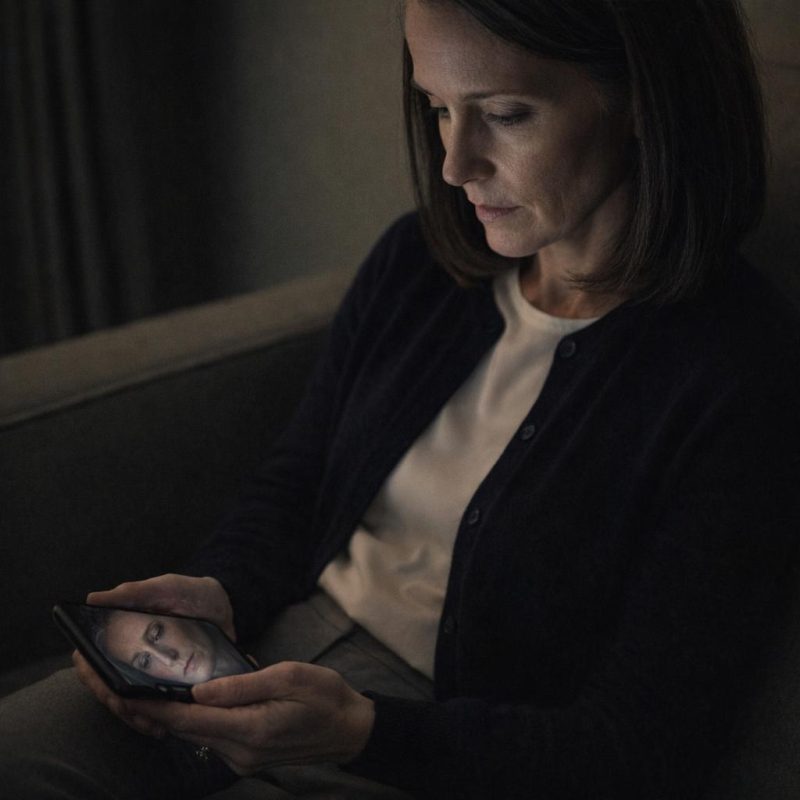 Image by RM AI
Not Reconciliation
I put the phone face-down on my thigh and looked up. Emma was at the far end of the table, laughing at something the woman beside her had said — head tilted back, one hand on the woman's arm, completely at ease. She looked the way she always looked when she was working a room: warm, present, effortless. I watched her for a moment and then looked at the table around me. The careful seating. The marked place card. The coordinated quiet at this end. The guests who'd arrived already knowing. Rachel, who couldn't meet my eyes. Marcus, who'd been pleasant and brief and nothing more. Claire, who'd recited the BBU instruction like something she'd been told to say. I'd walked in tonight carrying something I'd been holding for a long time — the possibility that this was a beginning, that the distance between us had finally gotten small enough to cross. I looked back at Emma. She was still laughing. She hadn't glanced this way once. Whatever tonight was, it hadn't been built to bring me closer to her.
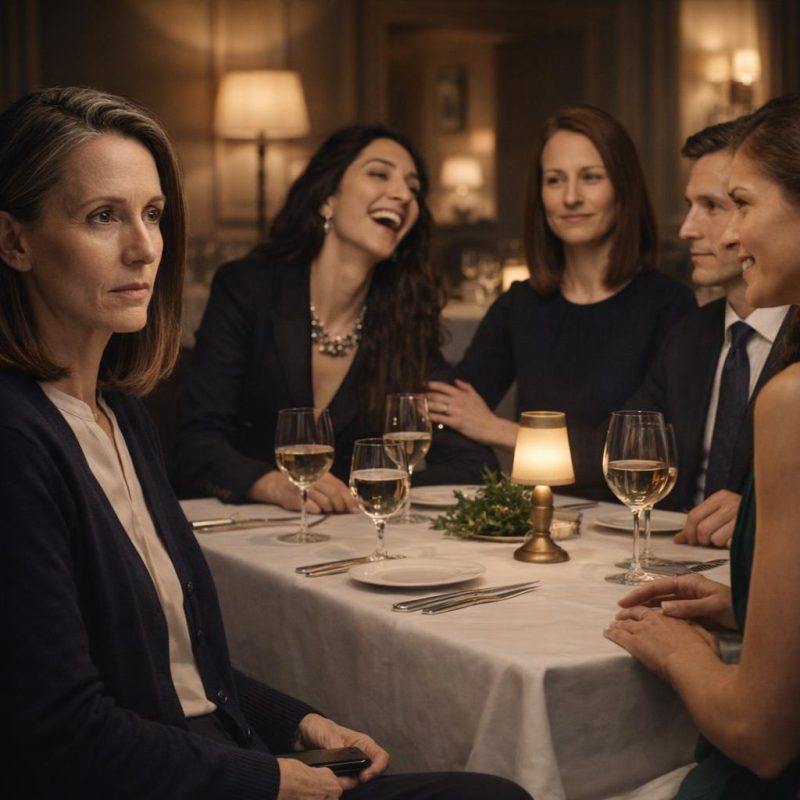 Image by RM AI
Timing the Silence
I started paying attention to the clock on the wall around the time Marcus turned back to his plate. It was an old habit — timing things, counting intervals — and I couldn't stop it once it started. He'd spoken to me for maybe ninety seconds. I'd counted without meaning to. The woman across the table, whose name I'd already lost, had done the same earlier in the evening — a polite question, a brief answer, a turn away. Maybe two minutes, if I was generous. I'd told myself it was just the natural rhythm of a dinner party, people circulating, conversations finding their own edges. But then a man two seats down leaned toward me and asked how I'd heard about the restaurant. I answered. I asked him something back — something easy, about whether he'd been here before. He smiled and gave me four words. Then he reached for his wine. The exchange had lasted less than two minutes. I sat with my hands in my lap and looked at nothing in particular. I couldn't prove anything. I couldn't say for certain why every conversation at this end of the table seemed to find the same quiet stopping point. But the rhythm of it had settled into me, steady and unmistakable, like a metronome I hadn't agreed to keep time with.
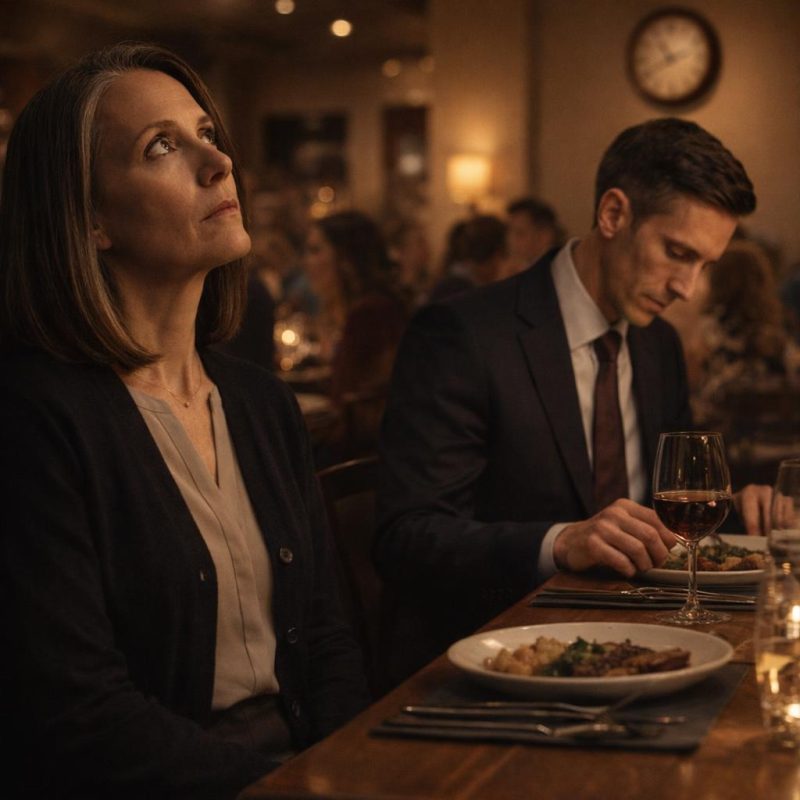 Image by RM AI
The Watch Check
The man two seats down — I'd caught his name as Marcus introduced us, though it hadn't stuck — turned toward me again about twenty minutes later. He asked about my drive in, whether the traffic had been bad coming from the north side. It was the kind of question you ask when you're being polite, not curious, and I knew the difference. Still, I answered carefully, tried to give him something real to work with. I mentioned the construction on the bridge, the detour I'd taken. He nodded. I asked him where he'd come from. He started to answer — something about the west end, a parking situation — and then his eyes dropped. Just for a second. Down to his left wrist. I watched it happen. The glance lasted maybe half a breath. He finished his sentence, shorter than it had started, and turned back toward the center of the table with a small, conclusive smile. I didn't say anything. I picked up my water glass and held it without drinking. I couldn't say what the watch check meant. Maybe nothing. Maybe he had somewhere to be. But I sat there feeling the shape of it — the way the conversation had been moving, and then the glance, and then the clean, practiced stop.
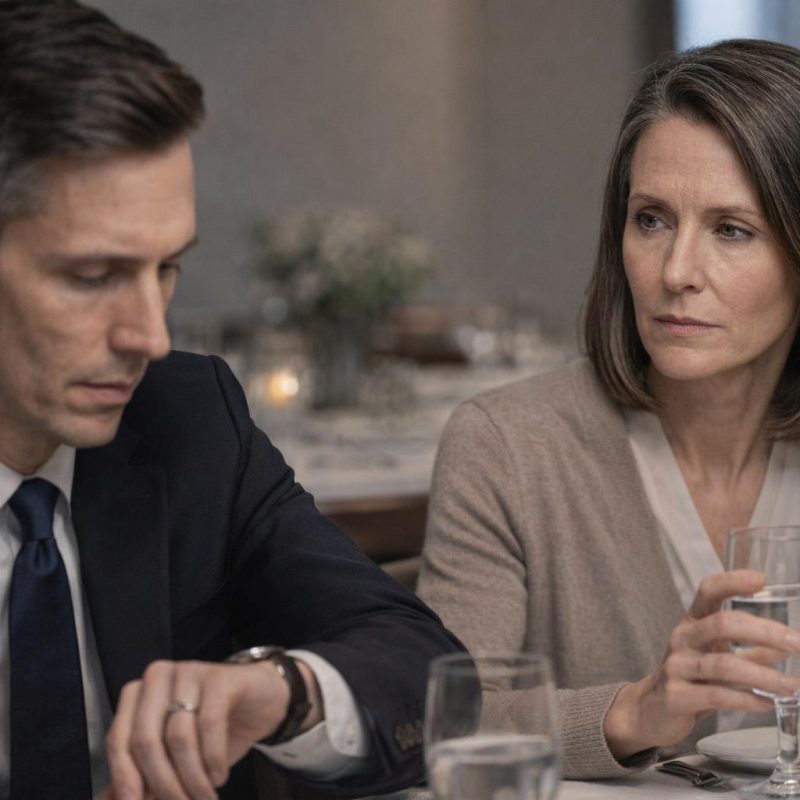 Image by RM AI
The Childhood Incident
My thoughts drifted somewhere around the second course. I wasn't tracking the table anymore — I was somewhere else entirely, pulled back by something I hadn't thought about in years. Emma was twelve. It was a Thursday in November, and her school was putting on a production of some abridged Shakespeare — I couldn't even remember which one now. She'd had a small part, maybe six lines, but she'd practiced them for weeks. I remembered hearing her in her room at night, running through them in a low voice like she was afraid to be overheard. I'd told her I'd be there. I'd meant it when I said it. But a client call ran long, and then there was a handoff I couldn't leave, and by the time I got to the school the first act was already over. I found my seat during intermission. I remember scanning the stage, the wings, the clusters of kids in costume. And then I found her. She was standing just offstage, still in her costume, and she was looking out at the audience — searching, the way children do when they're looking for one specific face. She found mine. I still remembered the look that crossed her face when she did.
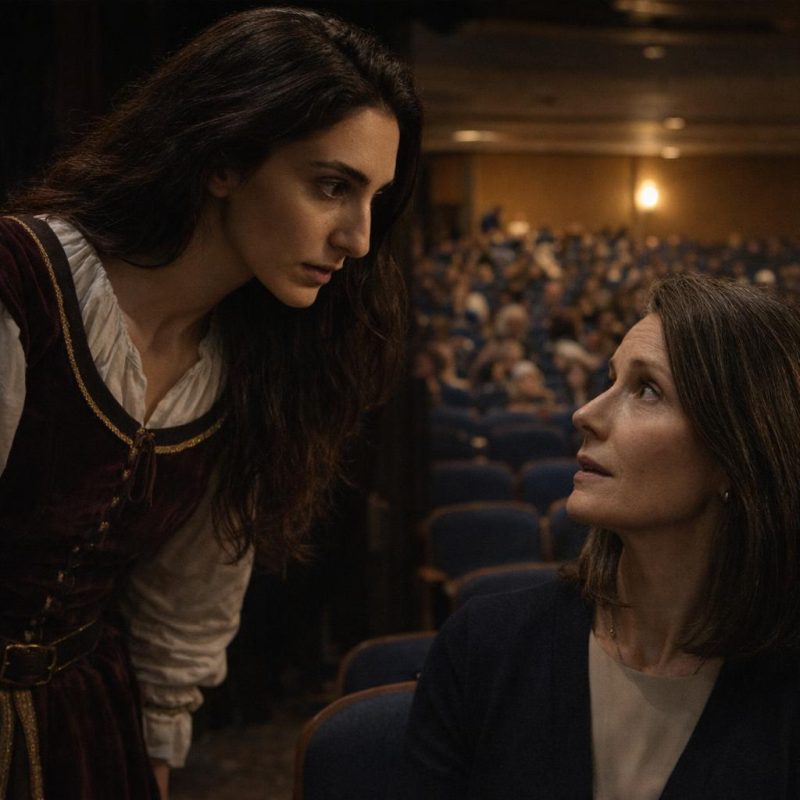 Image by RM AI
Months of Planning
I pulled myself back to the table, but my mind wouldn't settle. It kept moving through the timeline, working backward the way you do when something stops adding up. The invitation had come three weeks ago — a card, handwritten, with the restaurant name and the date. I'd been so careful with it, kept it on the kitchen counter so I wouldn't lose it. But the guests here tonight hadn't been invited three weeks ago. You don't coordinate a dinner this size in three weeks. The place cards alone — the marked ones, the BBU instruction Claire had been given — those had to be ordered, printed, briefed. Claire had known exactly what to say when I asked her. That kind of preparation doesn't happen in a week. Someone had been working on this well before the invitation reached me. A month, maybe more. I thought about the seating arrangement, the way Marcus had been positioned beside me, the way Rachel had known where to look and where not to. The scope of it pressed down on me slowly, the way cold water rises. I sat very still and let the math settle. The invitation in my hand had felt like a beginning. But whatever this was, it had started long before I ever opened that envelope.
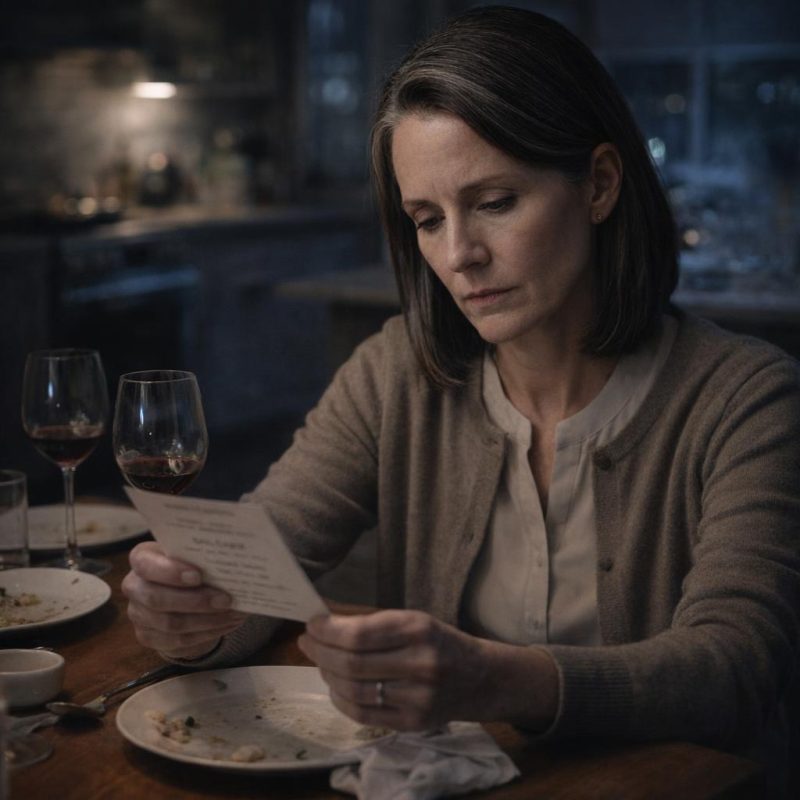 Image by RM AI
The Overheard Revelation
I'd stepped away from the table to find the restroom, following the hallway past the service alcove. I almost turned back when I heard voices — low, close, familiar. Emma's voice, and then Lucas's, just around the corner. I stopped without deciding to. Emma was talking in that clipped, focused way she had when she was recapping something that had gone well. I heard her say she'd been documenting it for months — the texts I'd sent after the invitation, the voicemail I'd left saying how much it meant to me. She said she'd coordinated with the guests six weeks out, that everyone had known their role before they walked in. Lucas said something I couldn't fully catch. Emma's voice came back, quieter but clear: she called it exactly what she'd wanted it to be. She said she'd built the whole evening around making sure I felt it. I stood in the hallway with my back against the wall and my hands flat at my sides, the sounds of the dinner carrying on behind me like nothing had changed — and then Emma said my name, and described, in her own words, every piece of what she had spent months putting into place.
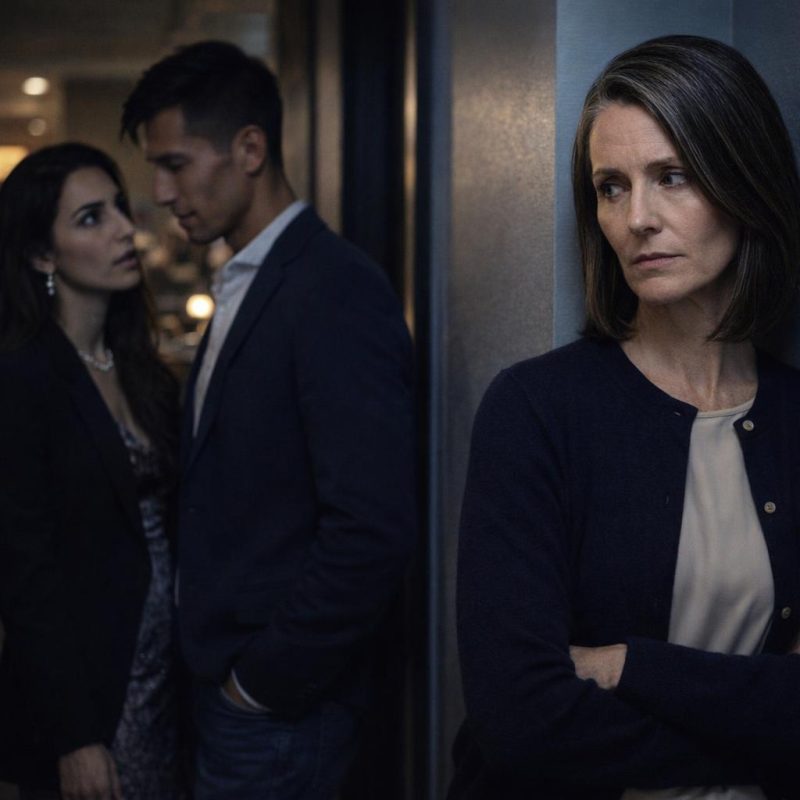 Image by RM AI
Standing in the Hallway
I didn't move. I couldn't. My back was against the wall and my feet felt like they'd grown into the floor. Emma and Lucas were still talking around the corner — their voices low, unhurried, the way people talk when they think they're alone. I wasn't processing words anymore. I was processing the shape of the evening, the whole architecture of it, rearranging itself in my mind now that I knew what it was built for. The hug at the entrance. The warm smile. The careful seat at the far end of the table. The BBU instruction. Rachel's eyes that wouldn't meet mine. Marcus, pleasant and brief and nothing more. Claire, reciting her line. Every piece of it had been placed. The invitation I'd kept on my kitchen counter for three weeks, the one I'd read so many times the fold had gone soft — that had been the beginning of it, not the gesture I'd taken it for. Emma had documented my hope. She'd kept a record of how much I'd wanted this. I stood in that hallway and felt the full weight of what I'd walked into, and then I understood that every single detail — from the place card to the seating to the timed conversations — had been arranged to make sure I felt exactly this.
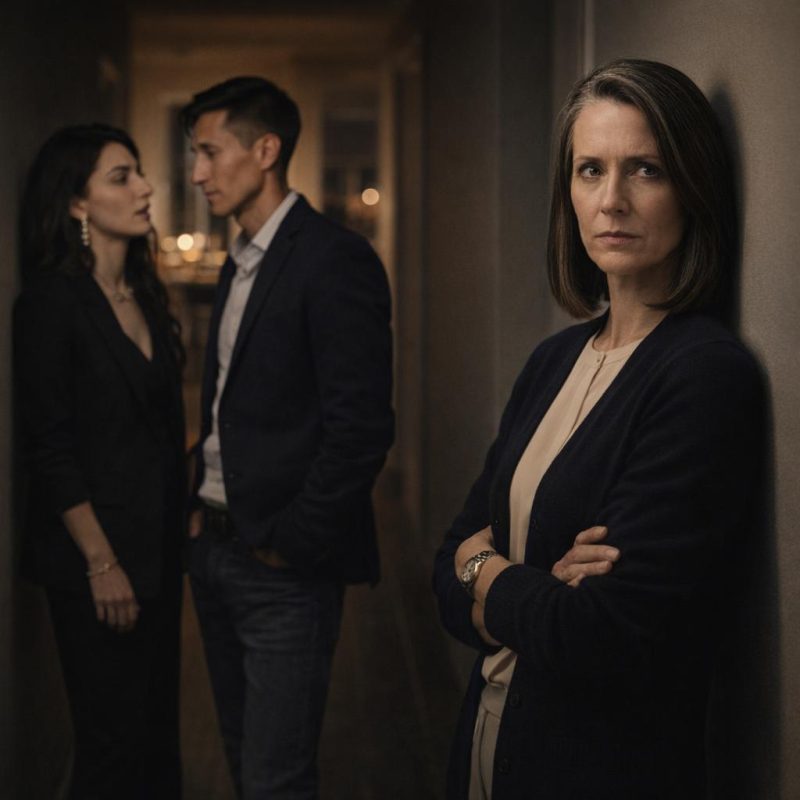 Image by RM AI
The Weight of Knowing
At some point my legs stopped holding me. I didn't decide to sit — I just found myself down against the wall, knees bent, the carpet rough under my palms. The hallway was dim and quiet and the sounds from the dining room felt very far away. I knew everything now. Not as a suspicion, not as a feeling I couldn't name — I knew it. Emma had spent months on this. She'd invited me here knowing exactly what the evening would be. She'd watched me walk in, hugged me at the door, smiled at me across the room, and every one of those moments had been something other than what I'd believed it was. The daughter I'd driven across the city to see, the one I'd been so careful with, so hopeful about — she had built this night to hurt me. Not carelessly. Not in a moment of anger. She had planned it, documented it, coordinated it, and then stood at the entrance and smiled. I sat on the floor of that hallway and held that knowledge in my chest, and it was heavier than anything I'd carried in a long time. The dinner went on without me, and I sat with the full, crushing weight of what my daughter felt for me.
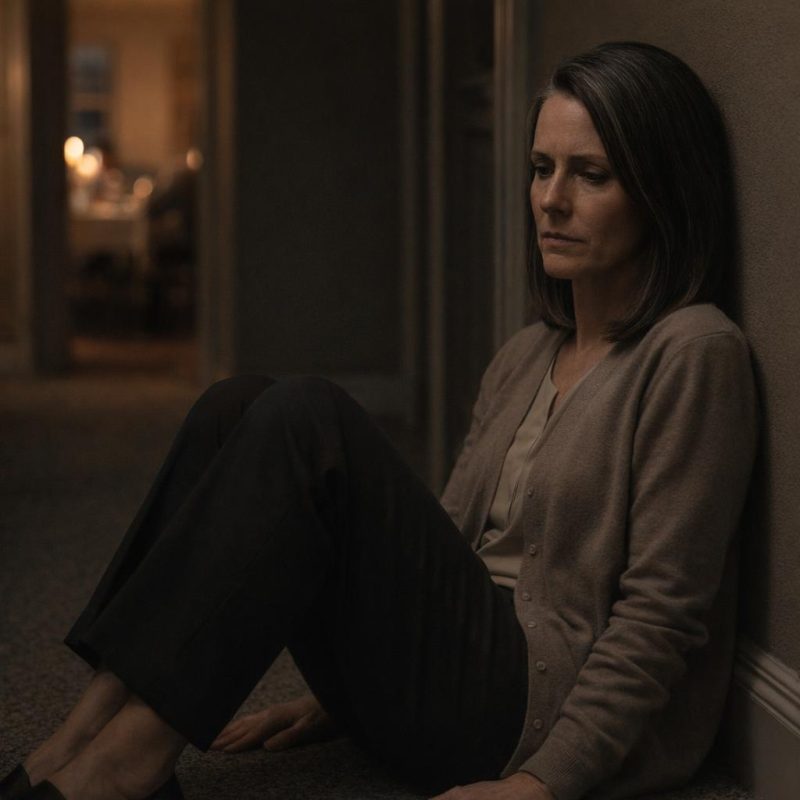 Image by RM AI
Connecting the Dots
I don't know how long I sat there before my mind started moving again. When it did, it didn't go forward — it went back. The school play wasn't the only time. I knew that now, sitting on that floor, in a way I hadn't let myself know before. There was the debate championship Emma's junior year — I'd had a work dinner I'd told myself I couldn't reschedule. I'd sent flowers instead, as if flowers were the same thing. There was her sixteenth birthday lunch, the one she'd planned herself, made a reservation for, reminded me about twice. I'd forgotten. Not maliciously — I'd just let it slip, the way I let things slip when work filled every available space. I remembered her face when I called to apologize, the way she'd said it was fine in a voice that meant the opposite. I'd told myself she understood. I'd told myself she was resilient, that she knew how much I loved her even when I wasn't there. But she hadn't been collecting understanding. She'd been collecting every missed curtain call, every forgotten lunch, every time I'd chosen something else and called it unavoidable. I sat with that on the hallway floor, and the pattern of it stretched back through her whole childhood, quiet and unbroken.
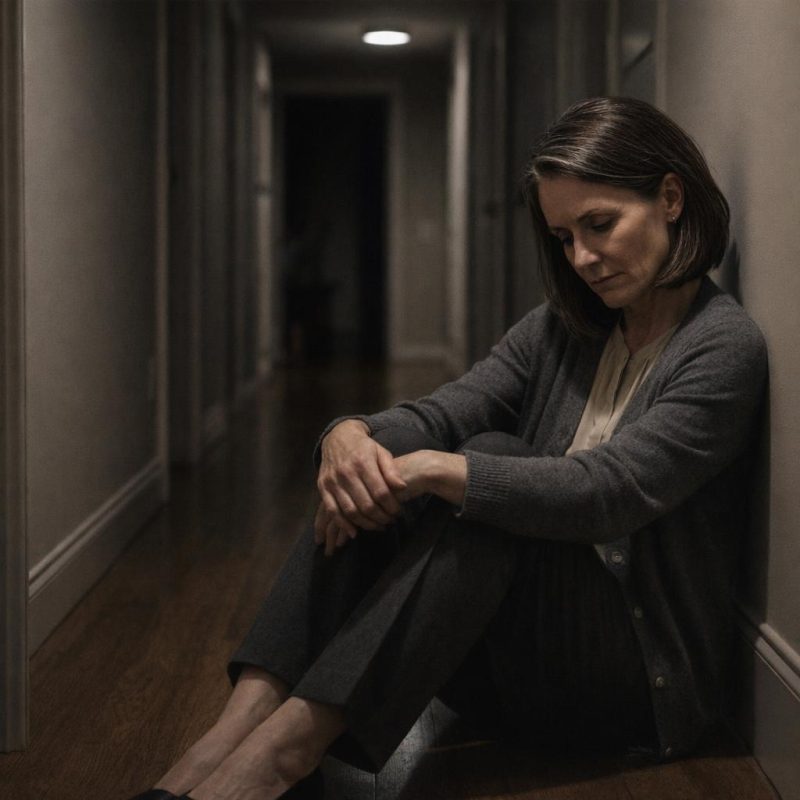 Image by RM AI
Emma's Approach
I made myself stand up. My legs felt wrong beneath me, like the floor had shifted slightly and hadn't shifted back. I smoothed my cardigan, picked up my clutch, and walked back to the table the way you walk when you're trying not to look like you've been crying on a hallway floor — carefully, deliberately, one foot in front of the other. I slid into my seat and set my hands flat on the tablecloth to stop them from shaking. The conversation around me had moved on without me, the way it had all evening, and no one seemed to notice I'd returned. I picked up my water glass and took a slow sip. And then I looked up. Emma was moving. Not toward the far end of the table, not toward Lucas, not toward the cluster of her friends near the window. She was moving toward my end of the table, weaving between chairs with that easy, practiced grace of hers, her face arranged into something pleasant and unreadable. Lucas followed a few steps behind her, hands in his pockets, watching. She stopped two seats away from me, and I felt every muscle in my body go still.
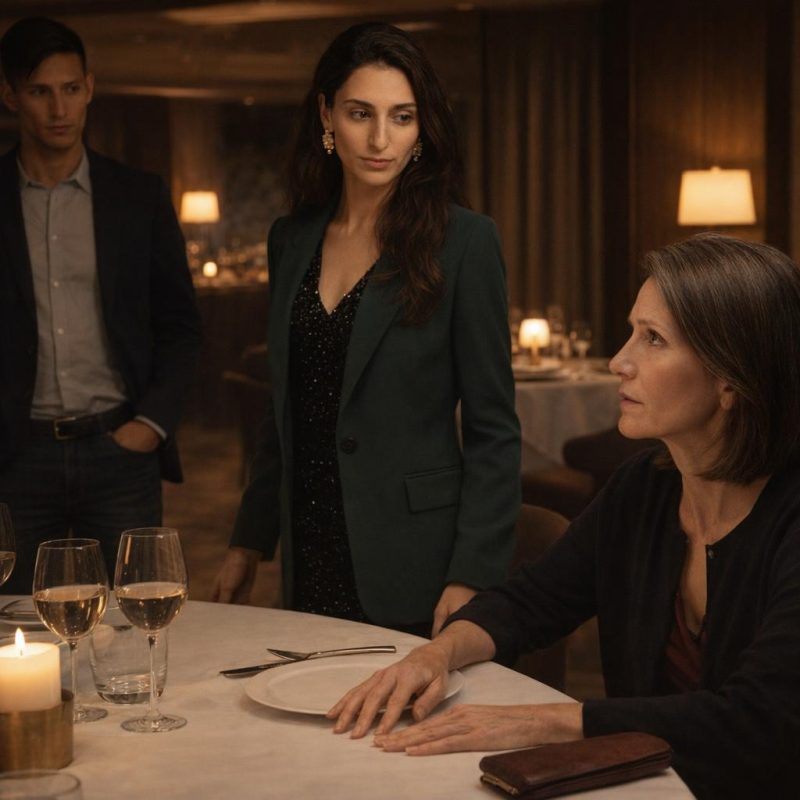 Image by RM AI
The Cold Exchange
She closed the last two steps between us and stopped beside my chair. I looked up at her. She was smiling — the kind of smile that photographs beautifully, the kind she'd been wearing all evening for everyone else. Up close, it was the same smile. But her eyes were something else entirely. They were flat and clear and completely still, the way water looks right before it freezes. "Are you enjoying the dinner?" she asked. Her voice was warm, conversational, pitched just right for a daughter checking in on her mother at a celebration. I heard every note of it. I also heard what was underneath it — or rather, what wasn't. No warmth. No softness. Nothing that had ever passed between us in twenty-five years of being her mother. "It's lovely," I said. My own voice came out steadier than I expected. She nodded, still smiling, said something brief about the dessert course coming soon, and then she was already turning away. The whole exchange lasted maybe ninety seconds. Marcus shifted in the seat beside me, eyes forward. Emma's voice, pulled flat and even beneath the pleasantness, carried back to me as she moved on: "Glad you could make it."
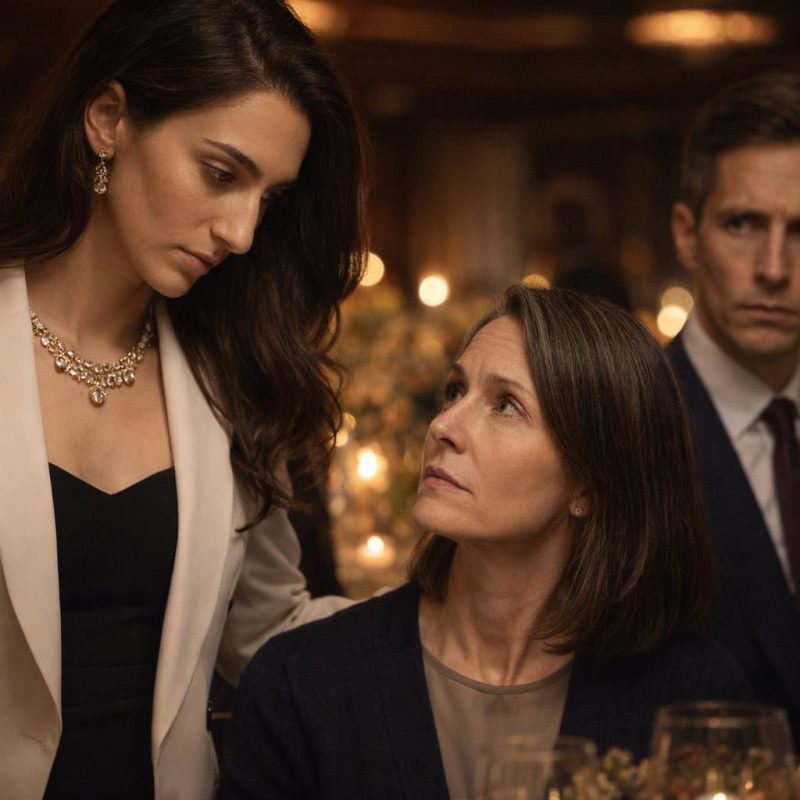 Image by RM AI
The Decision to Confront
I sat very still after she walked away. The dessert forks were already laid out beside my plate, small and precise, and I stared at them without seeing them. I could leave. I knew that. I could push back my chair, collect my things, walk out through the front of the restaurant and into the night air, and Emma would probably count that as a win — the quiet exit, the dignified retreat, the mother who finally understood she wasn't wanted and removed herself without a scene. That was probably exactly what she expected. I'd spent so much of her childhood doing the quiet thing, the convenient thing, the thing that kept the surface smooth. I'd told myself it was grace. Sitting here now, I understood it had mostly been avoidance. Marcus said something low beside me — I didn't catch it — and I gave a small nod that meant nothing. I wasn't going to leave. Not like this. Not without looking her in the eye and letting her see that I understood what she'd done and that I was still here, still her mother, still someone who existed in this room. I folded my hands in my lap and felt something settle into place in my chest, quiet and immovable.
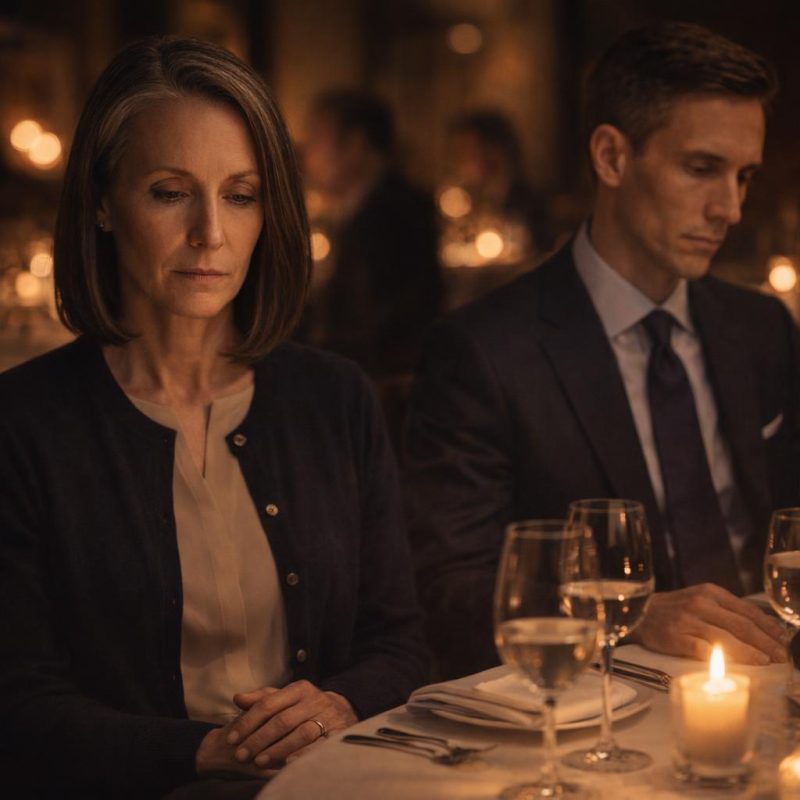 Image by RM AI
Standing Up
I pushed my chair back. The legs scraped against the floor and the sound was louder than I intended — a few heads turned at the near end of the table, and I felt the attention land on me like something physical. I stood up. Across the room, Emma was laughing at something, her hand resting lightly on someone's arm, completely at ease. I watched her for a moment and then I opened my mouth. My voice came out quieter than I'd planned, smaller than I wanted it to be, but it carried. "Emma." She didn't hear me, or didn't turn. I tried again, louder this time. "Emma — could we speak privately for a moment?" The table around me went quiet in that particular way a table goes quiet when something real is happening. Rachel, two seats down from Emma, stopped mid-sentence. Marcus went very still beside me. Lucas, standing near the window, turned his head. And then Emma turned too, slowly, her expression shifting from laughter to something careful and composed. She looked at me across the length of the table, and the room held its breath around us. I stood there with my hands at my sides, shaking, and I did not sit back down.
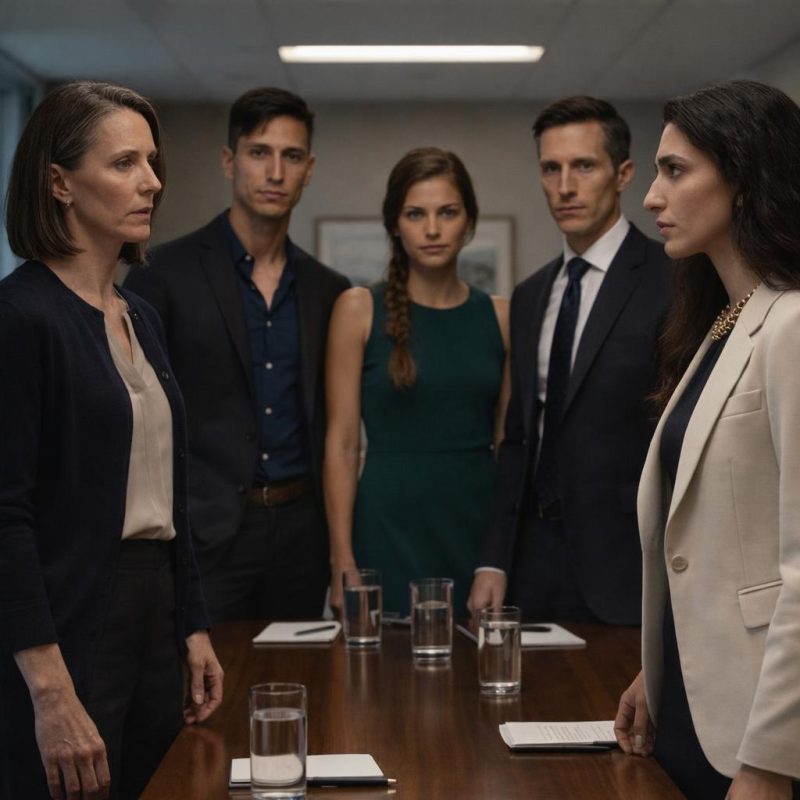 Image by RM AI
The Refusal
Emma's smile came back like she'd only set it down for a second. She tilted her head slightly — that small, gracious tilt she'd had since she was a teenager, the one that made her look patient and reasonable — and she said, "Mom, this really isn't the time." Her voice was light. Almost gentle. The kind of voice you'd use with someone who'd had a little too much wine and needed redirecting. "Why don't you sit back down and enjoy dessert? They're bringing out the tart." A few people at the table looked away. Someone picked up a water glass. Lucas stood beside her, hands still in his pockets, his expression pleasant and unreadable. Rachel was looking at the tablecloth. I felt the dismissal move through the room like a current — quiet, efficient, perfectly executed — and I understood that this too had been part of it. Not just the place card, not just the seating, not just the ninety-second exchange. This moment too. The public redirect. The gentle suggestion that I sit down and be quiet and be grateful I'd been included at all. Emma had already turned back to her conversation, her shoulders easy, her laugh resuming right where she'd left it. The words "enjoy dessert" sat in the air between us, polite as a closed door.
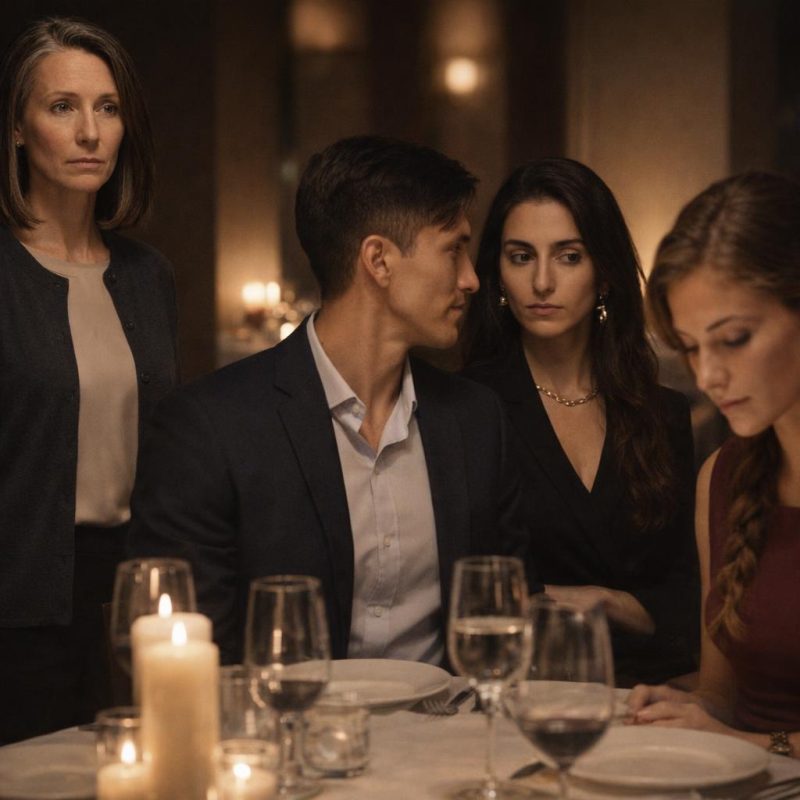 Image by RM AI
The Public Confrontation
I didn't sit down. I don't know exactly when the decision happened — somewhere between "enjoy dessert" and the sound of Emma's laugh picking back up — but my feet stayed where they were and my voice came out louder than it had all evening. "I know what BBU means, Emma." The room went quiet again, differently this time. "I know you planned this. I know the seating, the instruction to keep conversation brief, all of it — I know what this dinner was." My hands were shaking. I could feel them shaking and I couldn't stop them and I didn't try. Emma turned back toward me slowly, and her face was still calm — that was the thing that undid me most, how calm she was, how completely unsurprised. "I want to know why," I said, and my voice cracked on the last word. "If you wanted to hurt me, you could have just — you didn't have to invite me here and —" I stopped. The words were piling up wrong. Around the table, every conversation had died. Chairs had stilled. The server near the far wall had gone motionless. I looked at my daughter across the length of that beautiful, carefully arranged table, and I asked the only question I had left: "Why did you invite me at all?"
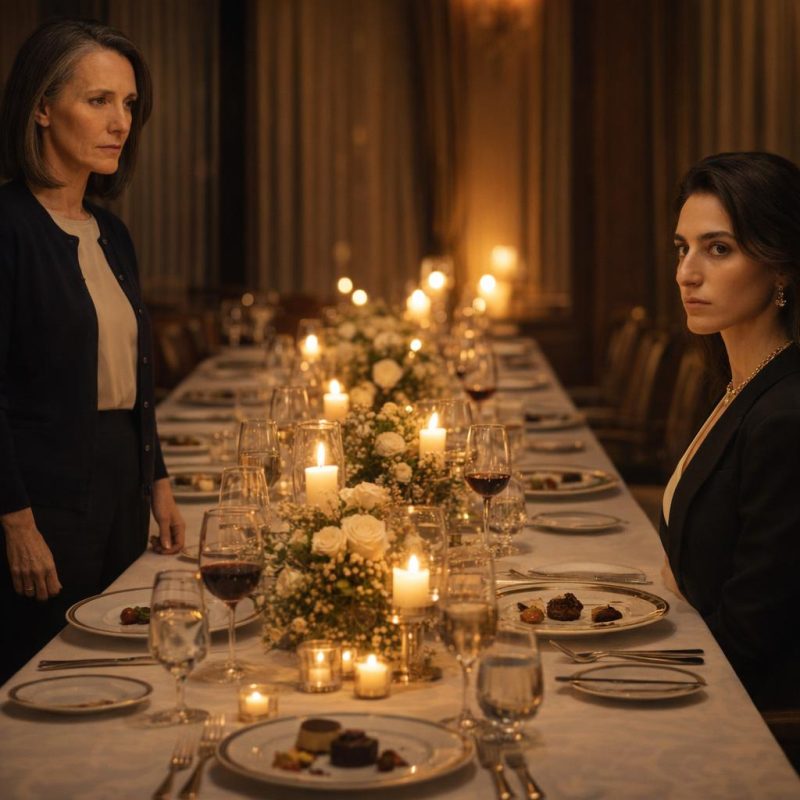 Image by RM AI
Emma's Answer
Emma didn't flinch. She didn't look away, didn't reach for her wine glass, didn't do any of the things people do when they're caught off guard. She just looked at me, and then she started talking. "The school play," she said. "Eighth grade. You sent flowers." Her voice was level, almost clinical. "My debate championship, junior year. You had a work dinner." She paused, not for effect — it didn't feel like effect — but the way you pause when you're reading from something you've memorized so thoroughly it's become part of your breathing. "My sixteenth birthday lunch. The one I made the reservation for myself. You forgot." Someone at the table shifted. I heard it. I couldn't look away from her face. "Every piano recital you arrived late to. The spring concert in fifth grade where you walked in during my solo." She wasn't raising her voice. She wasn't crying. She was standing in the middle of her own graduation dinner, in front of her colleagues and her friends, and she was reading me the list she had been keeping since she was thirteen years old. Each item landed separately, with its own weight. Lucas stood just behind her left shoulder, still and quiet. Rachel's hands were flat on the table. Emma's voice came through pulled tight and even — no waver, no give, no crack.
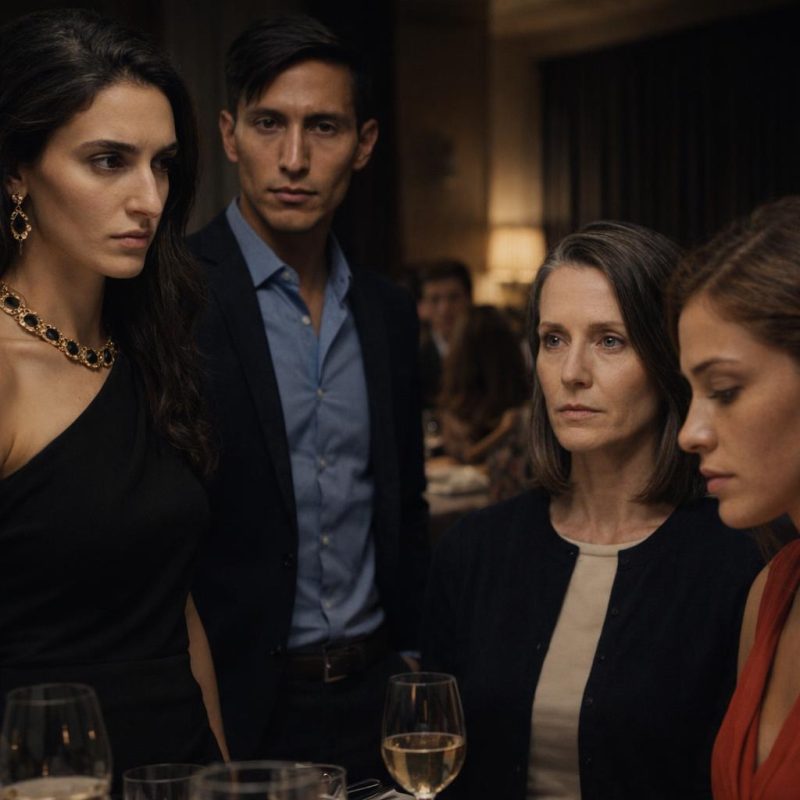 Image by RM AI
The Watching Guests
I pulled my eyes away from Emma's face. I don't know why — some instinct to find solid ground, to see if anyone else in the room was experiencing what I was experiencing. What I found didn't help. At the near end of the table, two of Emma's colleagues I didn't recognize were staring at their plates, shoulders drawn in, the particular posture of people who want very badly to be somewhere else. A woman in a green dress had her hand pressed to her mouth. But further down — and this was the part that stayed with me — a few faces weren't surprised at all. They were watching with something quieter than shock, something that looked almost like recognition, like they'd been waiting for this moment to arrive and had simply been patient about it. Rachel was sitting very still, her hands still flat on the tablecloth, her face tight with something that looked like genuine distress. Marcus had turned his head away from me entirely, eyes fixed on the middle distance, jaw set. And then I noticed something else — something that made the floor feel unsteady beneath me all over again. Lucas was watching Emma, not me, and the expression on his face wasn't discomfort or surprise. It was something that looked unmistakably like quiet pride.
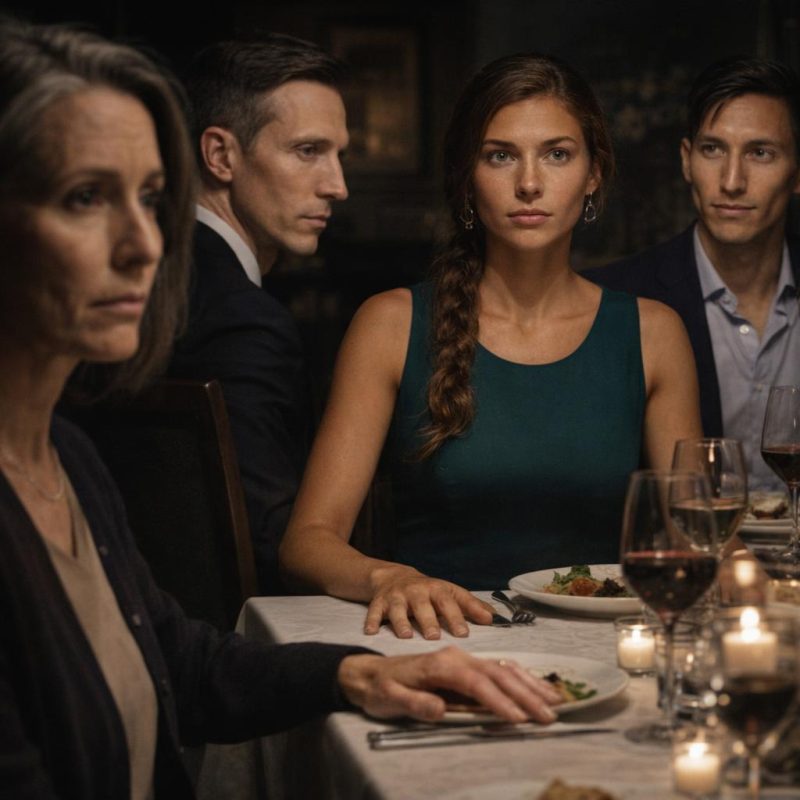 Image by RM AI
The Choice
I don't know exactly when my hands found the back of my chair, but they were there — gripping the carved wood like it was the only solid thing left in the room. I stood there for a moment, just breathing, and something shifted. Not dramatically. Not with a crack of thunder or a sudden rush of anger. It was quieter than that, and somehow more final. I could sit back down. I could pick up my fork and wait for dessert and let Emma have whatever was left of this evening. I could give her that. I had given her so many things over the years — my patience, my apologies, my willingness to believe that if I just tried harder, showed up differently, loved better, it would eventually be enough. But I didn't have to give her this. No one at this table could make me stay. Not Emma, not Lucas with his quiet pride, not Rachel with her guilty hands flat on the cloth. I wasn't a guest anymore — I was a prop, and props don't have to consent. My fingers loosened on the chair. I reached down and picked up my purse.
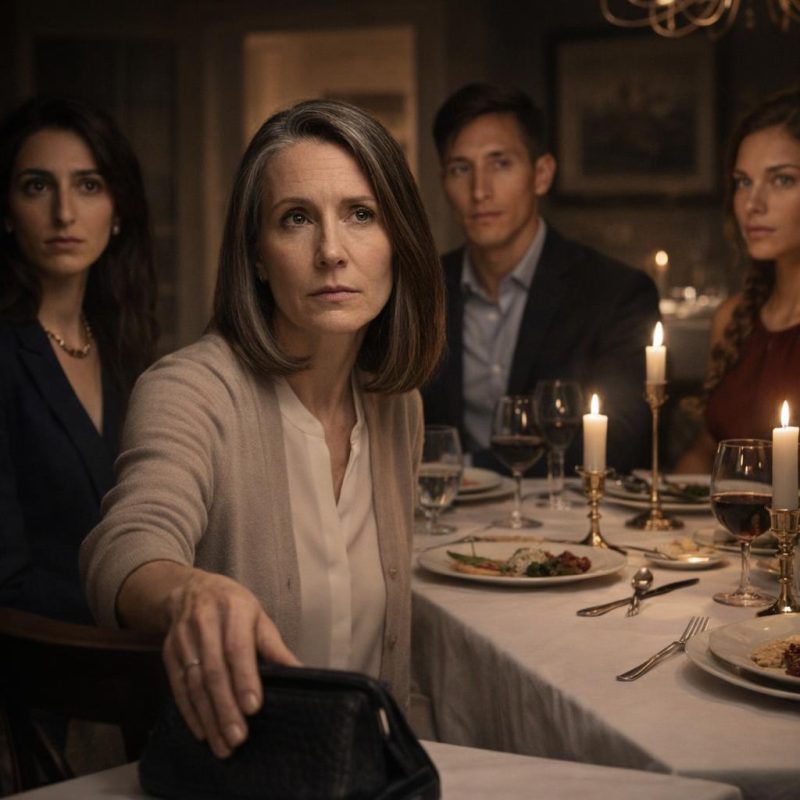 Image by RM AI
Gathering Her Things
The purse strap settled onto my shoulder and I stood there for just a second, making sure my hands were steady. They were. That surprised me a little. I reached for my navy cardigan, the one I'd draped over the chair back when I first sat down, and I pulled it on slowly, one arm and then the other, smoothing it down the front the way you do when you want to feel put together. Marcus shifted in his seat beside me — I caught the movement in my peripheral vision — but he didn't say anything, and I didn't look at him. I didn't look at Emma either. I was aware of her the way you're aware of a sound you've decided not to respond to. I straightened the cardigan one more time. I picked up the small envelope with my name on it — the one with those three letters — and I set it back down on the table, face up. I didn't need to take it with me. I already knew what it said. I took one last look at the table, at the untouched bread and the half-filled glasses and the careful arrangement of everything Emma had planned, and I felt something in my chest go very, very still.
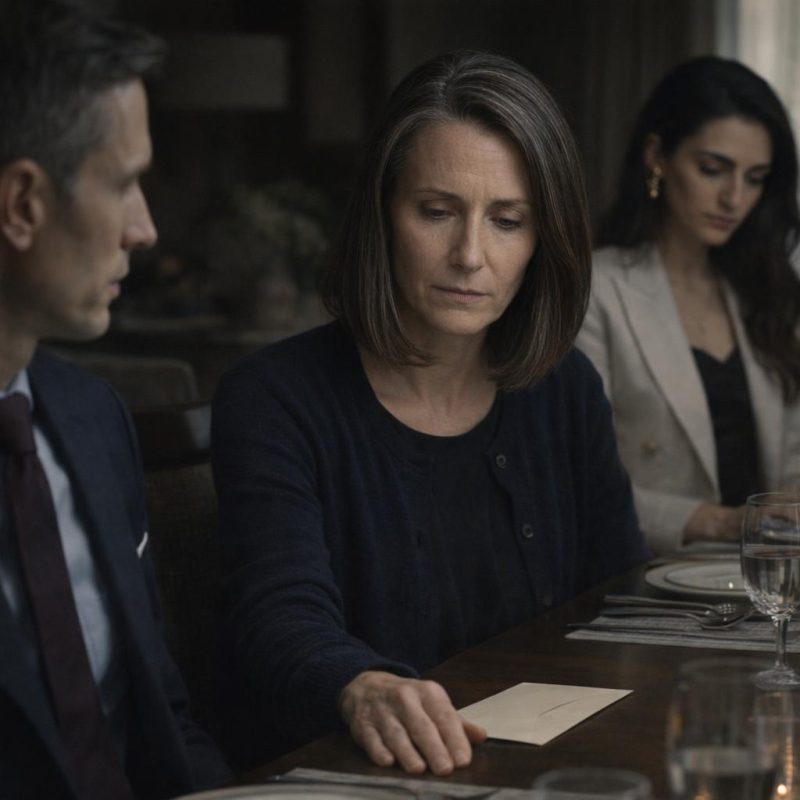 Image by RM AI
Walking Out
I walked toward the front of the restaurant at a pace I had to consciously keep measured. Not too fast — fast would have looked like fleeing, and I wasn't fleeing. I was leaving. There's a difference, and it mattered to me in that moment more than I can fully explain. I passed a table of four who were laughing at something on someone's phone, completely unaware. I passed the bar, where a couple sat close together over shared drinks. The warm amber light of Marcello's, which had felt so welcoming two hours ago, now felt like a stage set — beautiful and hollow and not meant for me. I pushed open the heavy front door and the night air came in against my face, cool and immediate, carrying the smell of rain on pavement from somewhere nearby. I stood on the step for a moment. I don't know what I was waiting for — some part of me still half-expected to hear my name called from behind me, Emma's voice cutting through the noise of the restaurant, pulling me back. I stood there and listened. The door swung closed behind me, and the warmth and the noise of the room sealed itself away, and there was nothing but the quiet street and the dark sky above it.
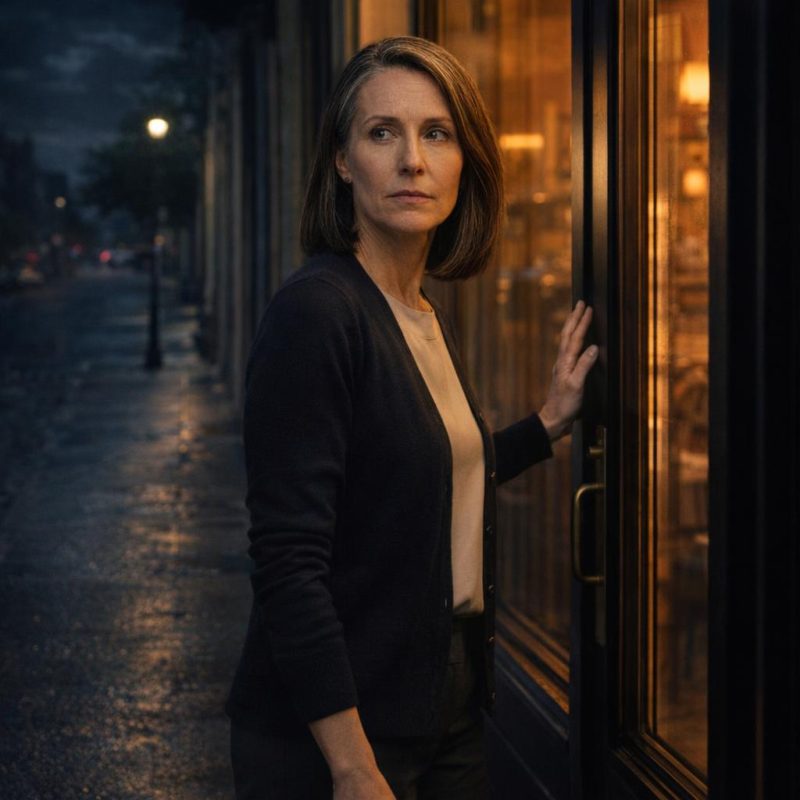 Image by RM AI
In the Car
I sat in my locked car in the parking lot for a long time before I started the engine. I could see the glow of Marcello's from where I'd pulled in — warm yellow light behind frosted glass, the faint outline of movement inside. My hands rested on the steering wheel and I just let myself sit there. I thought about Emma's list. The things she'd said — some of them had landed because they were true. I had missed things. I had been distracted during years when she needed me present. I had chosen my own grief over her confusion more than once, and I hadn't always known how to say sorry in a language she could hear. Those parts were real, and I wasn't going to pretend otherwise just because the delivery had been designed to humiliate me. But grief and humiliation aren't the same thing as healing, and what happened tonight wasn't about healing. I knew that now with a clarity that felt almost physical, like something had been set down that I'd been carrying for a long time. I didn't know what came next — whether Emma and I would ever find our way back to something real, whether I would even want to try. But I knew I would survive this. I turned the key in the ignition, and the engine came to life in the dark.
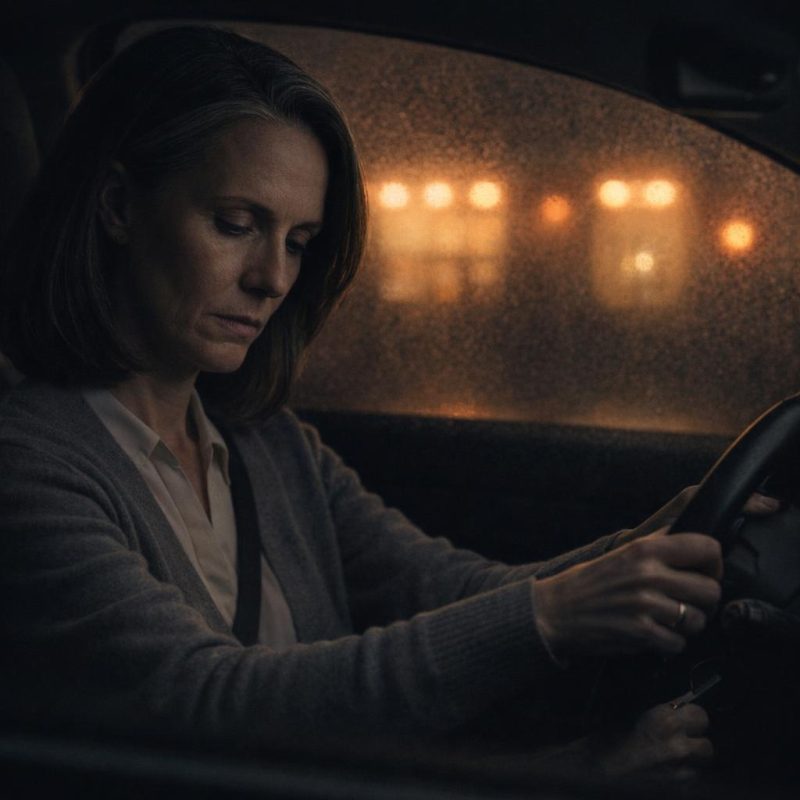 Image by RM AI
KEEP ON READING

The 10 Youngest Monarchs In History & The 10 Oldest
Age Is Just A Number. Imagine being crowned king or…
By Chase Wexler Mar 11, 2025
You Think You Have Problems? These Royal Families Were Cursed
Boasson and Eggler St. Petersburg Nevsky 24. on WikimediaHeavy is…
By Ashley Bast Dec 5, 2025
You Can Thank This Greek-Canadian For Creating Pineapple On Pizza…
Love it or hate it, pineapple on pizza sparks debate…
By David Davidovic Dec 1, 2025
Yes, Female Gladiators Existed, And Here's Everything You Need To…
History of Women in Combat. Most people picture gladiators as…
By David Davidovic Jan 17, 2026
Yes, Australians Once Lost A Battle Against Flightless Birds
David Clode on UnsplashIn 1932, the Australian military went to…
By David Davidovic Nov 24, 2025
The Y2K Bug: Why Did Everyone Think Year 2000 Was…
Alan W on UnsplashOn December 31, 1999, people all over…
By Christy Chan Dec 22, 2025