

I Went to the ER with a Migraine. The Blood Tests Revealed My Husband Had Been Poisoning Me for Months
I Went to the ER with a Migraine. The Blood Tests Revealed My Husband Had Been Poisoning Me for Months
The Morning Everything Changed
I woke up that Tuesday morning and knew immediately that something was wrong. Not wrong like a bad night's sleep or the start of a cold — wrong in a way I'd never felt before. The pain hit me the second I opened my eyes, a blinding pressure behind my temples that made the ceiling tilt sideways. I tried to sit up and the room just spun. I grabbed the edge of the nightstand and held on, breathing through my teeth, waiting for it to pass. It didn't pass. Greg was already awake, and when he saw my face he was out of bed before I could say a word. He didn't ask questions. He just said, 'We're going to the ER,' in that calm, steady voice of his, and started helping me find my shoes. I told him I was probably fine, that it would ease up, but he shook his head and kept moving. He got his arm around my waist and walked me to the car like I was made of glass. The early morning streets were quiet and grey, and at every red light he reached over and squeezed my hand. I remember staring at the dashboard, too nauseated to speak, and feeling the warm, steady weight of his hand on mine.
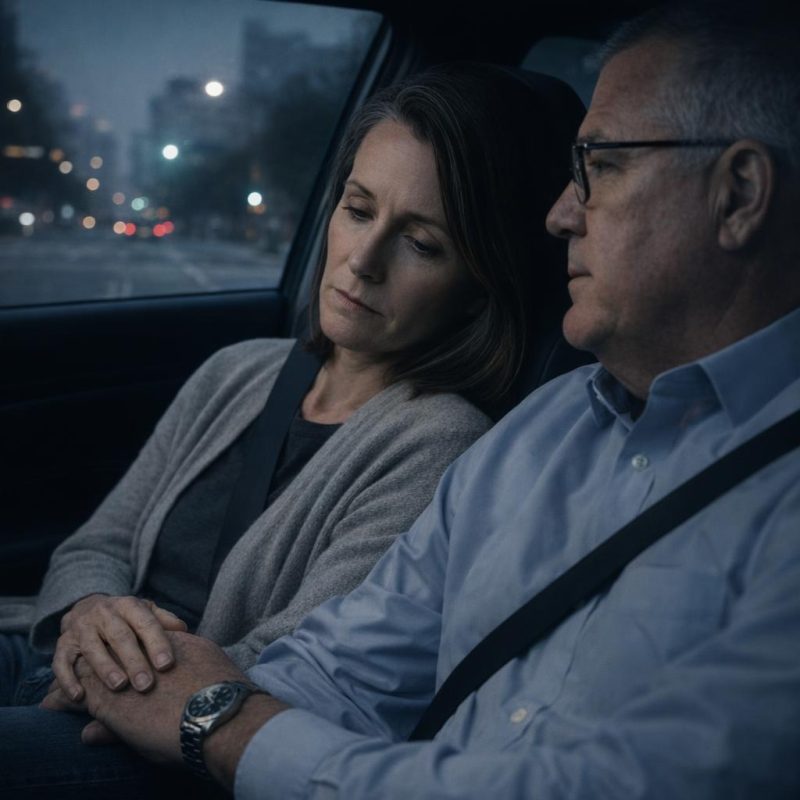 Image by RM AI
The Waiting Room
The ER waiting room was packed. Every chair taken, people slumped against walls, a toddler crying somewhere near the vending machines. Greg found us two seats in the far corner and I curled into mine, pressing my fingers against my eyes, trying to block out the fluorescent lights. Those lights were brutal — sharp and relentless, cutting right through my skull. The antiseptic smell wasn't helping either. Every few minutes a wave of nausea rolled through me and I had to breathe slowly and deliberately just to keep it together. Greg went to the reception desk twice in the first hour. I could see him from where I sat, leaning forward, speaking quietly but firmly, gesturing back toward me. He came back each time with updates that amounted to nothing — just 'they know we're here' and 'it shouldn't be much longer.' He brought me a cup of water from the dispenser near the door and sat beside me rubbing slow circles on my back. I watched the clock on the wall move with agonizing slowness. Two hours. Greg checked his watch so many times I lost count. The pain wasn't easing — if anything it was building, tightening, pressing harder behind my eyes. And then, finally, a nurse appeared in the doorway and called my name.
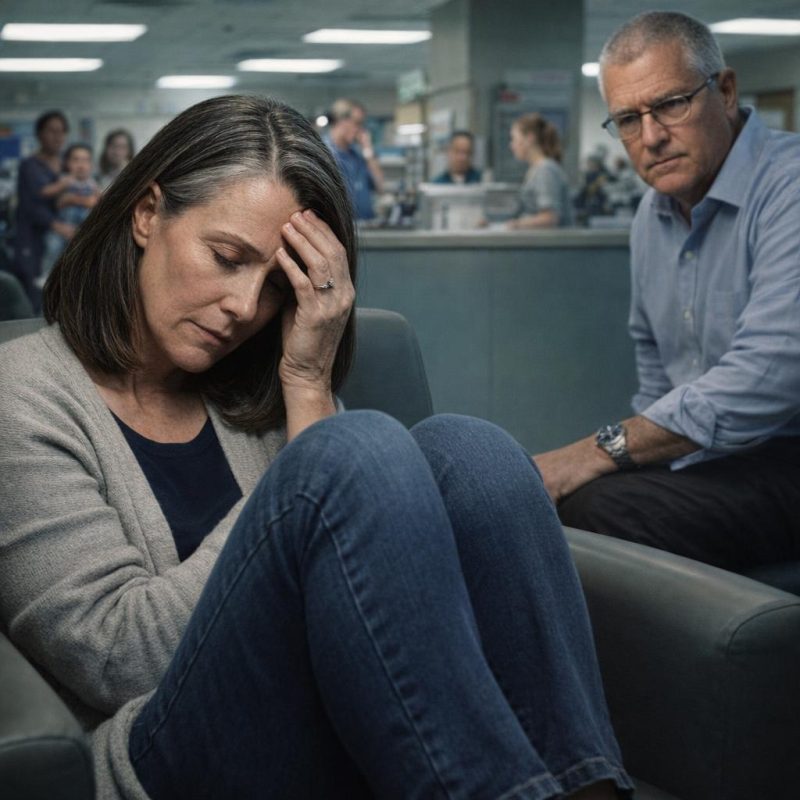 Image by RM AI
Through the Double Doors
When I heard my name I tried to stand up on my own and my legs just didn't cooperate. Greg was already there, his arm sliding around my waist before I could embarrass myself by grabbing the chair. He took most of my weight without making a thing of it, just shifted his stance and started moving us forward, slow and steady. The double doors swung open and the hallway beyond was cooler, quieter, and I felt a small wave of relief just from the dimmer light. I couldn't have walked it alone. My feet were moving but Greg was doing the real work, guiding me around a supply cart, steering us toward the examination room at the end of the corridor. I remember the feel of his shoulder under my hand, solid and familiar. He kept his voice low the whole time, close to my ear. 'You're doing great,' he said. 'Almost there. I've got you.' I believed him completely. I had no reason not to. Twenty-two years of marriage and he had never once let me down when it counted. I leaned into him and let him carry me through it, too exhausted and too grateful to feel anything but the quiet certainty that I was safe because he was there.
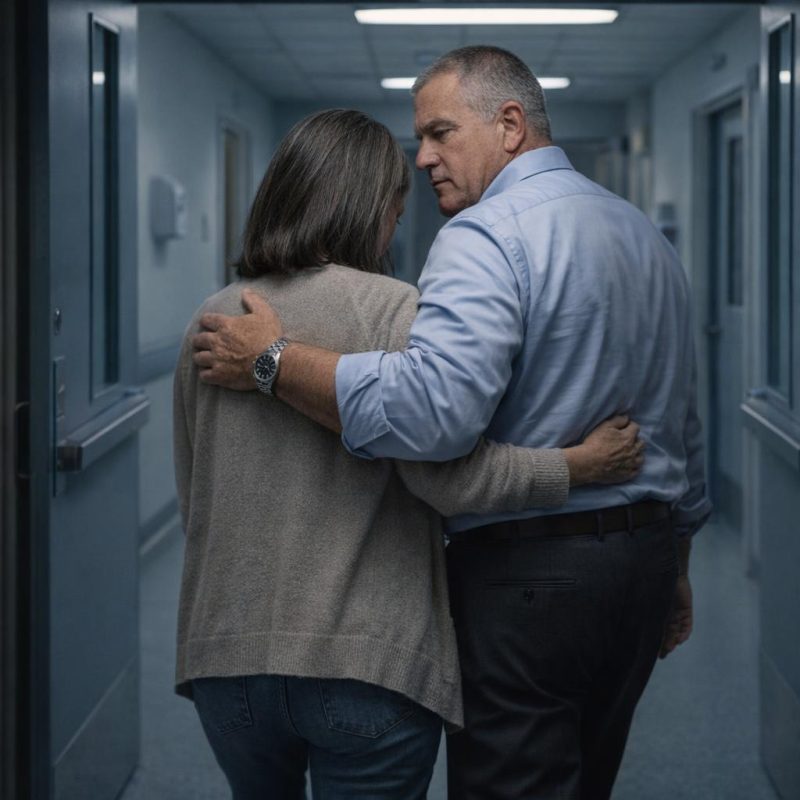 Image by RM AI
Four Months Ago
Lying on that examination table, staring at the ceiling tiles while I waited for the doctor, I tried to think back to when all of this had started. It hadn't come on overnight — I knew that much. I cast my mind back through the weeks and landed somewhere around four months ago. That was when the tiredness had first crept in, the kind that sleep didn't fix. I'd written it off immediately. I was in the middle of handling my aunt Margaret's estate at the time, and the paperwork alone was enough to exhaust anyone. There were lawyers and accountants and forms that needed notarizing, and I was still working full-time on top of it. Stress, I told myself. Then the nausea started, usually in the mornings, usually after breakfast. I blamed that on the stress too, and then on menopause, and then on the weather changing. The headaches came last, starting as occasional dull pressure and building over the weeks into something harder to ignore. I'd cycled through every reasonable explanation I could think of — hormones, dehydration, too much screen time, not enough sleep. None of them had felt quite right, but none of them had felt alarming either. Lying there now, I kept coming back to the same quiet detail: the fatigue had started right around the time the estate paperwork began.
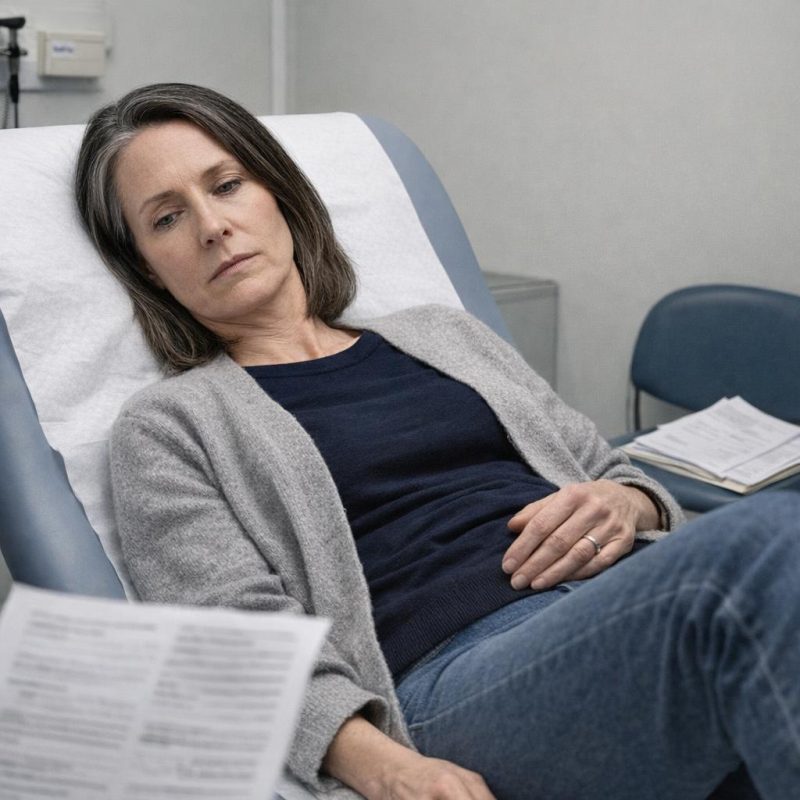 Image by RM AI
Aunt Margaret's Gift
My mind drifted to my aunt Margaret while I lay there waiting, and I felt the familiar ache of missing her. She had been my favorite person in the family for as long as I could remember — sharp-tongued and funny and completely her own person. She never married, never seemed to want to, and she'd spent decades building a life entirely on her own terms. She'd made her money through investments, patient and shrewd in a way that impressed everyone who knew her, though she never talked about it much. She was seventy-eight when she passed, and even at the end she was more alert and more opinionated than most people half her age. I'd grieved her genuinely. The inheritance had come as a complete shock. I hadn't expected anything — Margaret had nieces and nephews and causes she cared about, and I'd assumed whatever she left behind would be divided up or donated. I remember sitting in the lawyer's office with Greg beside me, half-listening, thinking mostly about how much I missed her laugh. And then the lawyer looked up from the document in his hands, found my face across the table, and read my name as the sole beneficiary of her entire estate — two million dollars, left to me alone.
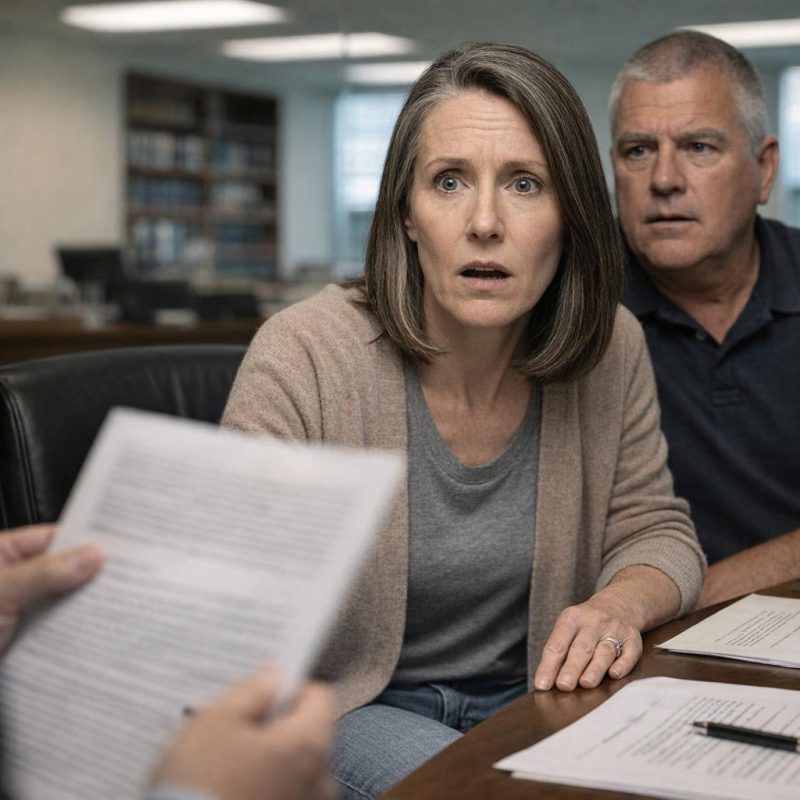 Image by RM AI
Kitchen Table Dreams
After the will reading, Greg and I spent weeks at the kitchen table with notebooks and laptops spread between us, talking through what the money could mean for our lives. It was a good time, genuinely. We talked about retiring early, maybe in the next two or three years. We mapped out trips we'd always put off — Portugal, New Zealand, a slow train through Japan. Greg found a listing for a lakeside cabin about two hours north of us and we spent an entire evening looking at the photos, talking about what it would be like to wake up to that view every morning. I remember feeling lighter than I had in years. The inheritance had finally cleared probate and landed in my account, and suddenly the future felt wide open. Greg asked a lot of questions during those conversations, which I appreciated. He wanted to understand the legal side of things — how the estate had been structured, what the tax implications were, how the account was set up. At one point he asked whether the account was in my name alone, and I said yes, that was how Margaret had arranged it. He nodded and asked what would happen to the money if something happened to me. I told him it would pass to him as my spouse. I thought he was just being thorough.
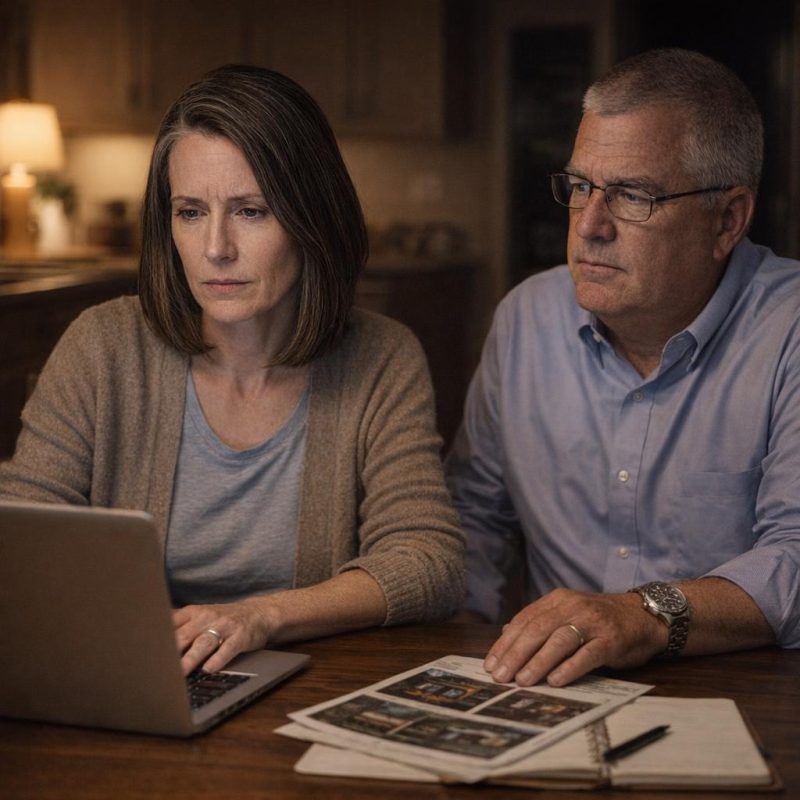 Image by RM AI
The Remedy Research
Around the time my symptoms were getting harder to push through, Greg started researching. I'd come downstairs some evenings and find him at the laptop, tabs open, reading about fatigue and nausea and what natural approaches might help. It touched me, honestly. He'd print things out sometimes, or read passages aloud over dinner. He settled on herbal teas — a rotating mix of things he said were known for supporting energy and settling the stomach. He'd brew them himself and bring them to me wherever I was, the mug already the right temperature, the way he knew I liked it. I felt cared for in a way that made me feel guilty for how much I'd been complaining. Some evenings I genuinely wasn't thirsty, or the smell of whatever he'd made didn't appeal to me, and I'd tell him I'd have it later. He'd shake his head gently and set it on the table in front of me anyway. He said natural remedies only worked if you were consistent, that skipping doses defeated the whole purpose. He wasn't pushy about it — or at least it hadn't felt that way at the time. He'd just wait, patient and calm, until I picked up the mug. And I always did. I trusted his research, trusted his care, and I drank whatever he put in front of me without a second thought. Then one evening he brought the tea to me before I'd even asked, and when I said I really wasn't thirsty, he sat down across from me and said, 'Catherine, please — just drink it.'
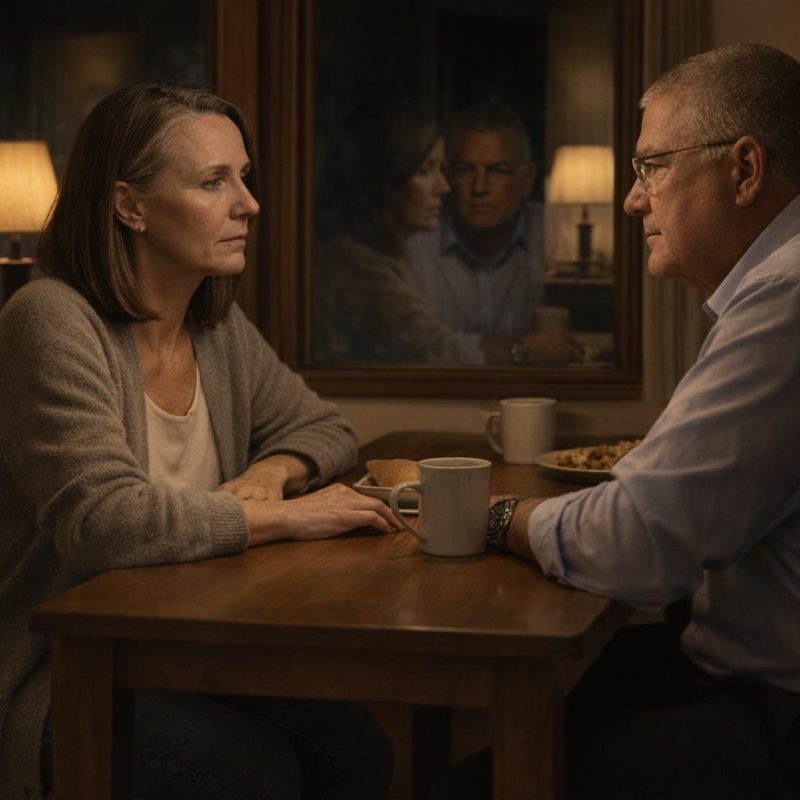 Image by RM AI
Joanne's Visit
Joanne had been my best friend for going on thirty years, and she had a way of seeing through me that I'd never quite gotten used to. She came by on a Saturday afternoon about three weeks before the ER visit, and I could tell from the moment she walked in that she was clocking everything — the way I moved, the color of my face, how long it took me to get up from the couch. We sat in the living room with tea and I tried to be normal about it, talking about her daughter's new job and a book we'd both been meaning to read. But Joanne kept watching me with that look she gets, the one that means she's already made up her mind about something. She asked how I'd really been feeling and I gave her the standard answer — tired, a bit off, probably hormones. She didn't buy it. She pointed out that I'd lost weight, that my color was wrong, that I seemed to be moving carefully, like everything hurt. I told her I was fine, that I had a doctor's appointment coming up. Greg came through at one point with tea for both of us, cheerful and easy, and Joanne smiled at him and thanked him. But after he left the room she turned back to me and lowered her voice. When she left that afternoon, she hugged me longer than usual, and her words stayed with me long after the door closed behind her — that she was worried, that I looked worse than I seemed to realize.
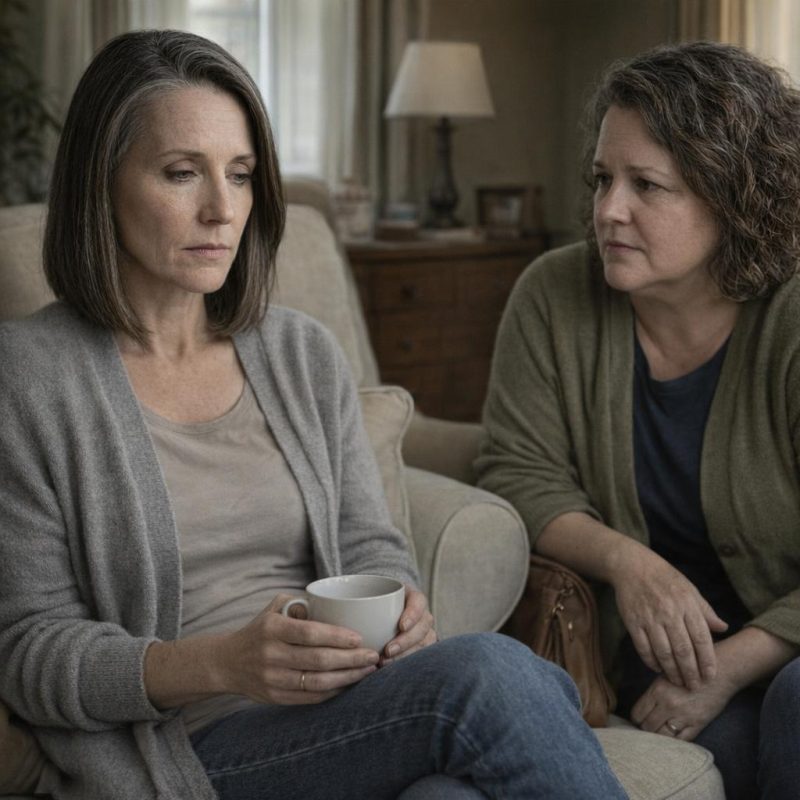 Image by RM AI
The Library Struggle
I'd been a librarian for eighteen years, and I loved that job in the quiet, bone-deep way you love something that fits you exactly right. But that Tuesday — maybe six weeks before everything fell apart — I could barely get through a four-hour shift. I remember standing in the stacks with an armful of returns, and the cart felt like it weighed twice what it should. My arms ached. My legs ached. Even my eyes felt heavy, like the fluorescent lights were working against me personally. A patron asked me to help locate a reference book and I had to read the call number three times before it made sense. Three times. I've been reading call numbers since before some of those patrons were born. I took two extra breaks in the back room, sitting with my eyes closed and telling myself it was the change, that my body was just recalibrating, that every woman I knew had gone through something like this. Stress didn't help, I told myself. I was carrying a lot. The inheritance, the fatigue, the headaches that came and went without warning. By the time I locked up my station and walked to the parking lot, the late afternoon sun felt like a personal insult. The drive home was only twelve minutes, but I gripped the wheel the whole way, gravity pressing me into the seat like it had something to prove.
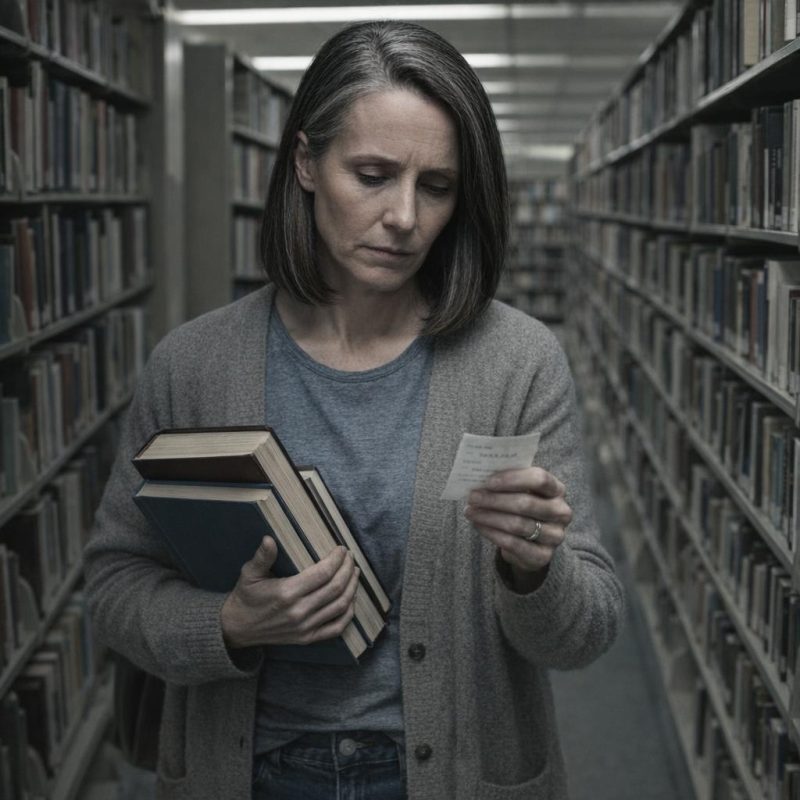 Image by RM AI
The Morning Coffee Ritual
Greg had always been a morning person, which I was decidedly not, and somewhere in our twenty-two years together that had turned into a ritual I'd come to depend on. Every morning without fail, he was up before me, and by the time I shuffled into the kitchen, the coffee was already made. Not just brewed — made the way I liked it, with the right amount of cream, set on the counter at the exact spot where I always stood. I'd offered to make my own plenty of times, especially on the mornings I was up early enough. But he'd wave me off, almost a little insistent about it, saying he liked doing it, that it was his thing, his small way of taking care of me. I thought it was sweet. I told Joanne once that it was one of those little marriage things that sounds small but actually means a lot. On the morning I'm thinking of specifically, I was sitting at the kitchen table with the newspaper I wasn't really reading, still half-asleep, when I heard him moving around in the kitchen — the clink of the spoon, the soft sound of the cabinet closing. A minute later he came around the corner, mug in hand, smiling that easy smile of his, and set the steaming cup down in front of me.
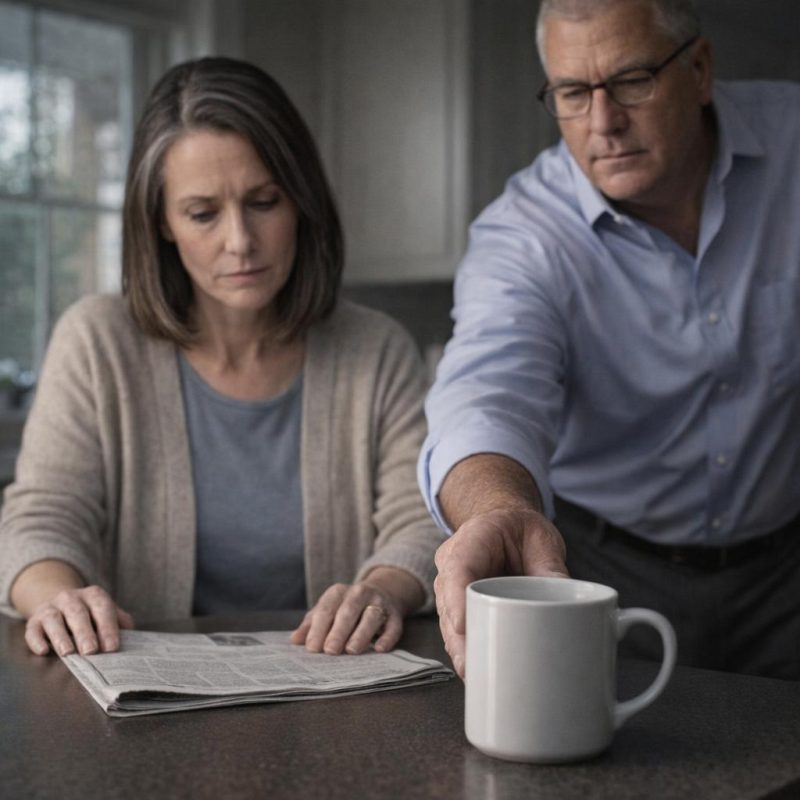 Image by RM AI
After Breakfast Nausea
Breakfast had always been my favorite meal, or it used to be. Somewhere in those months I'd lost my appetite for it almost entirely, but I kept eating because Greg made the effort and because I knew I needed something in my stomach. We'd sit together most mornings, talking about nothing in particular — his work, the neighbors, whatever was in the news — and it felt normal. It felt like our life. But then, reliably, about thirty minutes after I finished eating, something would shift. It started as a low-grade unease, the kind you try to breathe through, and then it would build into a full rolling nausea that made me want to lie very still and not move. Greg noticed, of course. He'd look up from whatever he was doing and ask if I was okay, and I'd tell him yes, just the hormones, just my body being difficult. He'd nod sympathetically and sometimes bring me a glass of water. I'd looked it up online enough times to have convinced myself — nausea, fatigue, digestive upset, all of it listed under perimenopause symptoms on half a dozen reputable sites. So I kept telling myself that's what it was. I'd lie down on the couch until the feeling passed, staring at the ceiling, waiting for my stomach to settle into something that felt like quiet.
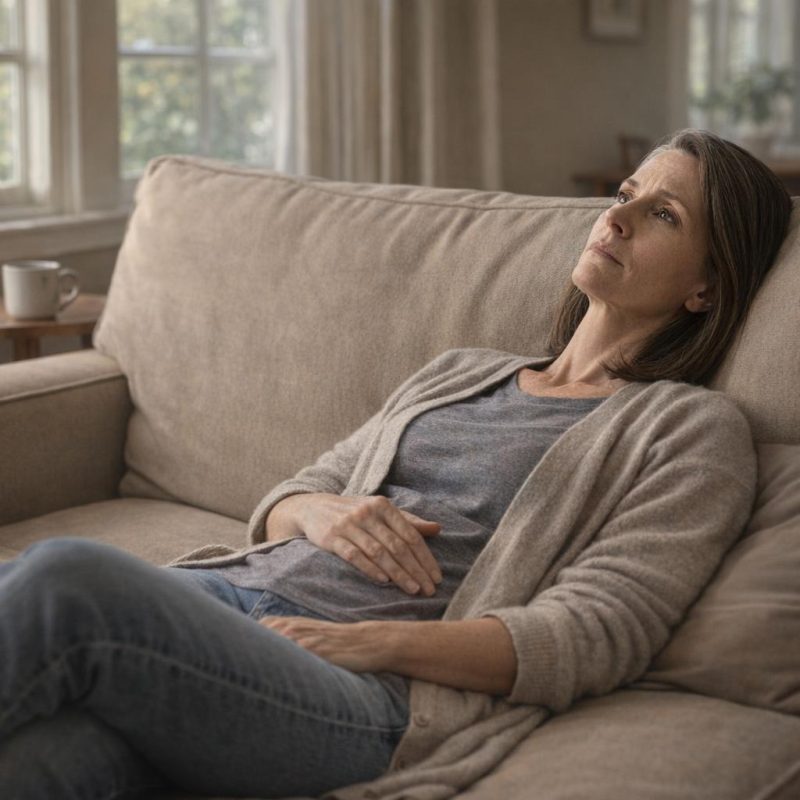 Image by RM AI
Vitamins and Supplements
Greg had always been a researcher. If something needed fixing or improving, he'd spend an evening going down an internet rabbit hole and come up with a plan. So when my symptoms kept dragging on, it didn't surprise me when he started bringing home supplements. First it was magnesium, then B vitamins, then something for adrenal support that came in a brown glass bottle with a long list of ingredients I didn't recognize. He'd explain each one carefully — this one's for energy, this one helps with nausea, this one's supposed to support hormonal balance. He set up a little system on the kitchen counter, bottles lined up in order, and he'd remind me every morning to take them. I appreciated it. I really did. It felt like he was paying attention, like he was trying to solve the problem when the doctors hadn't given us much to work with. I took everything he handed me without question because that's what you do when you trust someone completely and you're desperate to feel better. One evening he came home with a new bottle — something he said he'd read good things about, a different formulation — and set it on the counter in front of me. He twisted off the cap, shook two capsules into his palm, and held them out, telling me I should start that night, not wait until morning.
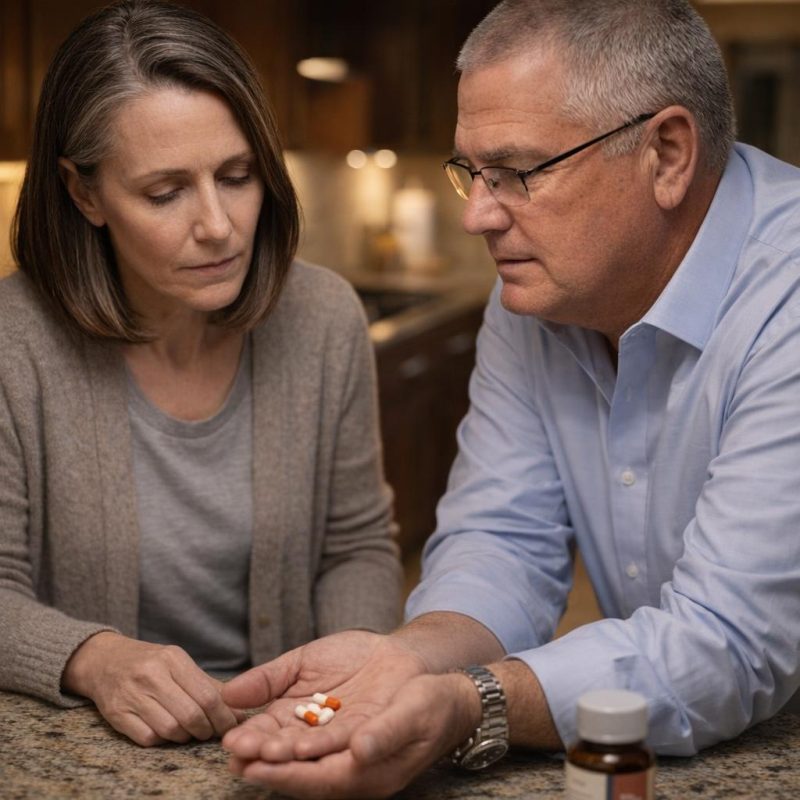 Image by RM AI
The Morning Pattern
I've always been the kind of person who keeps lists, so it wasn't entirely out of character when I started mentally logging how I felt each day. At first it was loose — just a general sense of better or worse. But after a few weeks the pattern got hard to ignore. Mornings were the worst. Not just tired-mornings, but genuinely sick mornings, the kind where I'd sit at the kitchen table and have to concentrate on breathing evenly. The nausea would come on within an hour of eating, and the headaches would follow not long after, a dull pressure behind my eyes that sometimes built into something sharper by midday. Afternoons were marginally better. Evenings, better still. I started wondering if I'd developed some kind of food sensitivity — maybe gluten, maybe dairy, maybe something in the coffee. I'd read that hormonal changes could affect digestion, could make you suddenly reactive to things you'd eaten your whole life without trouble. There were two mornings, maybe three, when I was running late and skipped breakfast entirely, just grabbed my keys and went. And those days — I noticed this clearly, though I didn't know what to make of it — those days I felt almost like myself by noon. I turned it over in my mind without landing anywhere, chalking it up to coincidence, to the unpredictable rhythms of a body I no longer fully recognized.
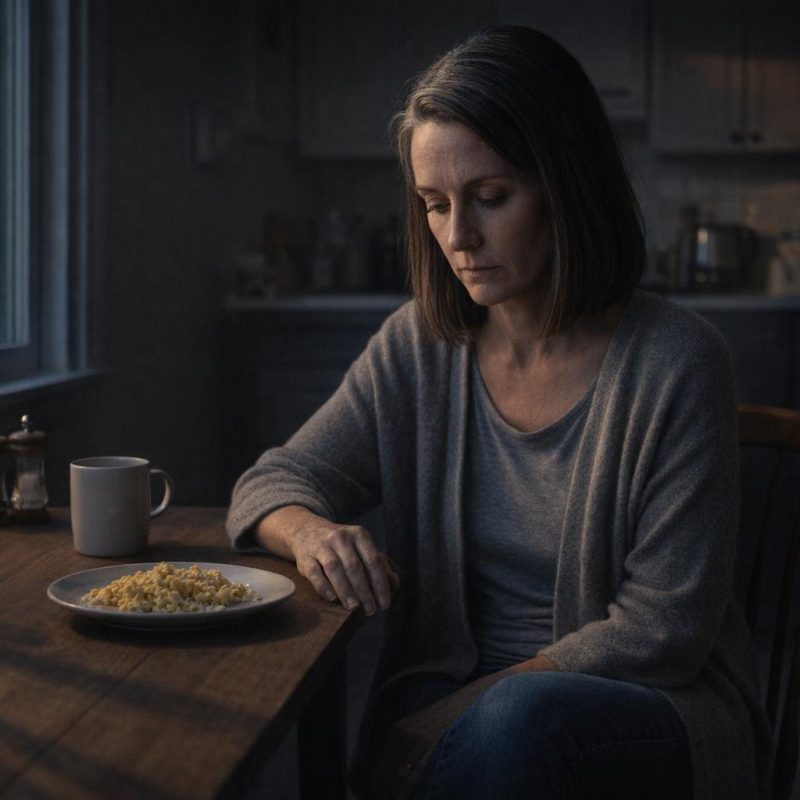 Image by RM AI
The Doctor's Appointment
I finally made the appointment after Greg encouraged me for the third time in a week. My regular doctor was a practical, no-nonsense woman I'd been seeing for years, and I sat in her office and described everything — the fatigue, the nausea, the headaches, the weight loss, the way mornings had become something I dreaded. She listened, asked the right questions, and ordered a full panel of bloodwork. I went home and waited, telling myself that finally having an answer would be a relief, whatever it turned out to be. Greg drove me to the follow-up appointment, sat in the waiting room while I went in, and I remember thinking how lucky I was to have someone who showed up like that. The results were normal. All of them. My thyroid was fine, my iron was fine, my glucose was fine. She said it was most likely perimenopause compounded by stress, recommended I get more sleep, reduce caffeine, consider talking to someone. She was kind about it. She wasn't dismissing me, exactly — but she was also clearly not worried, and that gap between what she saw on paper and what I was living in my own body sat in my chest the whole drive home. Greg squeezed my hand and said at least nothing was seriously wrong. I nodded and looked out the window, holding onto that thought without quite being able to believe it.
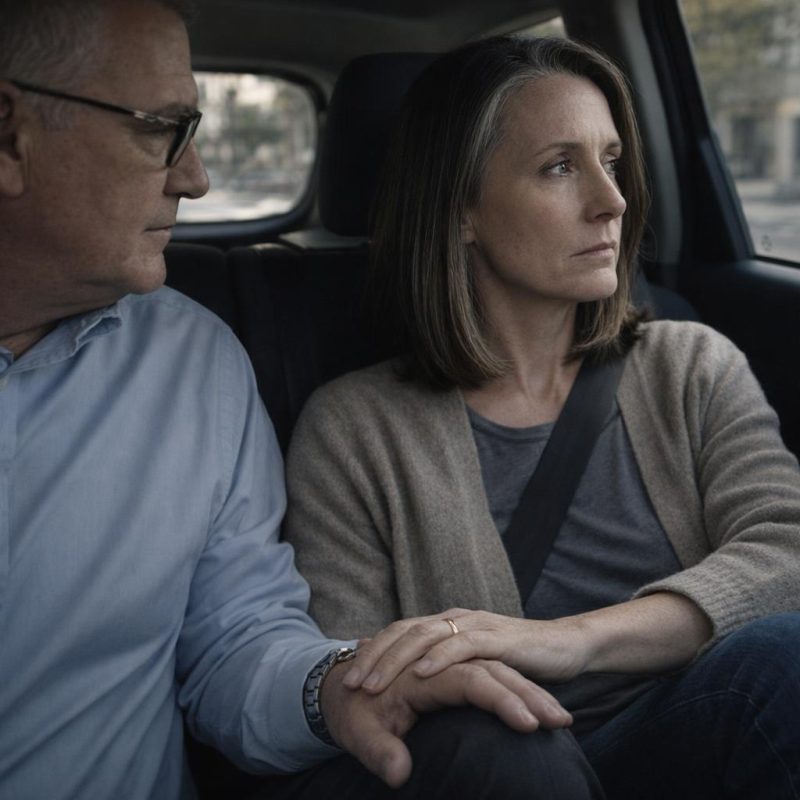 Image by RM AI
The Inheritance Timeline
I don't know what made me pull out the bank statements that evening. Maybe I was just trying to feel organized, in control of something, since my body had stopped cooperating. I spread them across the kitchen table — three months' worth — and there it was, the deposit from my aunt Margaret's estate, the full two million dollars, sitting in the account like a fact I still hadn't entirely absorbed. I'd been so sick around that time that the money had barely registered the way it should have. I sat there looking at the date on the statement, and then I reached for the small notebook I'd been using to track my symptoms. I'd started it casually, just jotting down the bad days, the headaches, the nausea scores I gave myself on a scale I made up. I flipped back to the beginning and found the first entry where I'd written the word severe — underlined it, actually, because that day had been bad enough to warrant emphasis. I set the notebook down next to the bank statement and looked at both of them sitting there on the table. The two dates were close together — close enough that I noticed, though I couldn't say what, if anything, it meant. I told myself it was probably the stress of the money arriving, that grief and finances had a way of landing in the body.
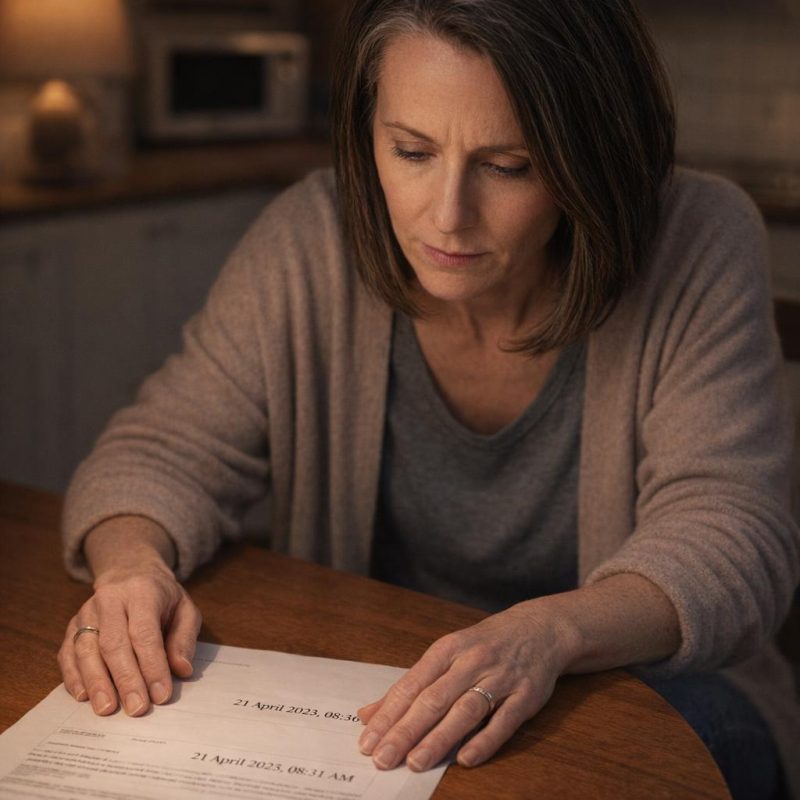 Image by RM AI
Questions About the Will
I sat with that for a long time after I put the statements away. My mind kept drifting back to a conversation I'd had with Greg not long after the inheritance came through — maybe a week or two after, I couldn't pin it down exactly. He'd brought it up casually, the way he brought up most practical things, over dinner or while we were watching television. He'd asked whether I'd updated my will. I remembered thinking it was a reasonable question, the kind of thing a responsible spouse would think to raise. The money changed things, he'd said. It should be reflected properly in the documents. He'd asked specifically what would happen to the inheritance if something happened to me — whether it would pass to him automatically or whether it needed to be spelled out. I'd told him I'd look into it, and I had, and that had been the end of it. But sitting there now, with the notebook and the bank statements still fresh in my mind, the memory of that conversation felt different than it had at the time. I told myself that married couples talked about these things. That it was practical, not strange. That I was connecting dots that probably didn't connect. Still, I couldn't quite put it down — the specific question he'd asked, the careful way he'd asked it, the fact that he'd wanted to know, precisely, what would happen to the money if I died.
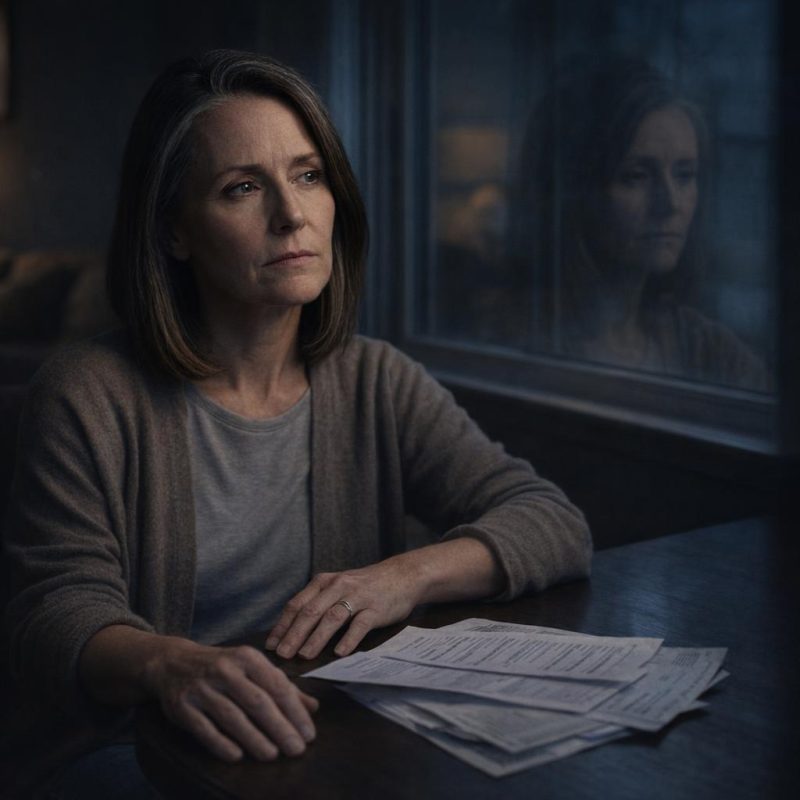 Image by RM AI
Tuesday Morning Crisis
I woke up Tuesday morning and the pain hit me before I even opened my eyes — a pressure so deep and violent behind my temples that I couldn't tell where my skull ended and the agony began. When I tried to sit up, the room tilted sideways. I grabbed the edge of the nightstand and missed it entirely, and my elbow came down hard on the mattress. I lay there for a moment, breathing through my teeth, trying to convince myself it would pass the way the others had. It didn't. The light coming through the curtains felt like needles. I pressed my palm over my eyes and that didn't help either. Greg must have heard me because he was beside me within seconds, his voice low and urgent, asking what was wrong. I tried to tell him it was just a headache but the words came out wrong and I think I was crying without meaning to. He didn't argue with me or wait for me to talk him into anything. He said we were going to the emergency room and that was that. He helped me pull on clothes I couldn't have managed alone, and then I felt his arm come around my waist as he guided me toward the car.
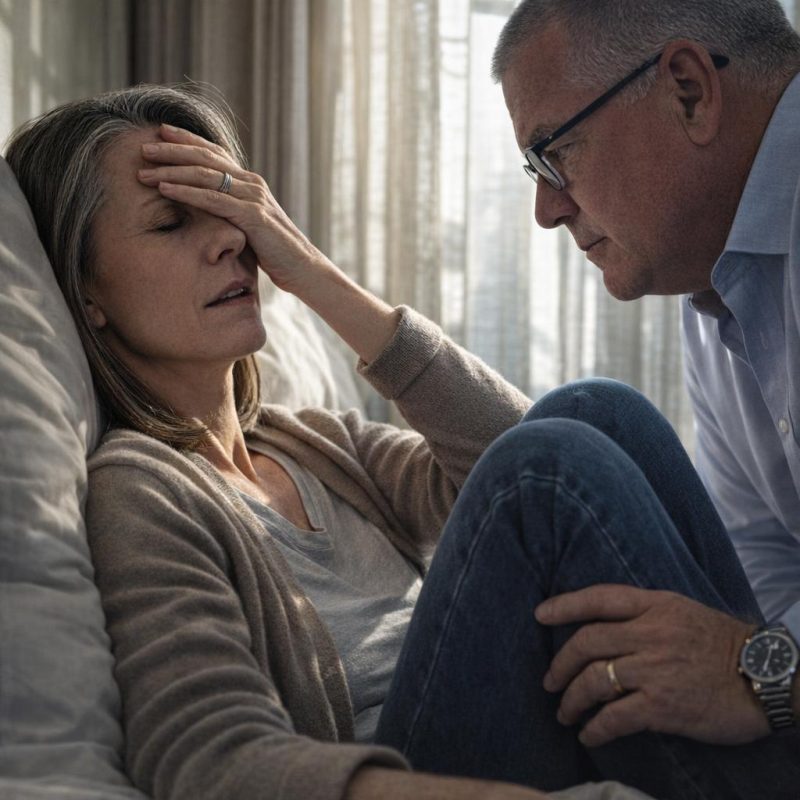 Image by RM AI
Dr. Santos
The examination room was small and too bright, and I was still squinting against the fluorescent lights when Dr. Santos came in. She looked young — early thirties, maybe — with dark hair pulled back and a calm, unhurried manner that I found myself grateful for immediately. She introduced herself and sat down on the rolling stool across from me, and she actually looked at me before she looked at her clipboard. I told her everything. The headaches that had started months ago as occasional nuisances and then grown into something I couldn't sleep through. The nausea that came in waves, especially in the mornings. The fatigue that had settled into my bones so completely that some days getting off the couch felt like a genuine accomplishment. Greg stood near the door, nodding along, filling in details when I lost the thread. Dr. Santos listened without interrupting, asking quiet follow-up questions that told me she was tracking every word. When I finished, she ordered pain medication and IV fluids and mentioned, almost as an aside, that she wanted to run some blood tests — just to rule things out, she said. She wrote something on her clipboard, and when she looked back up at me, there was something in her expression I couldn't quite name — careful and warm at the same time, professional and genuinely concerned all at once.
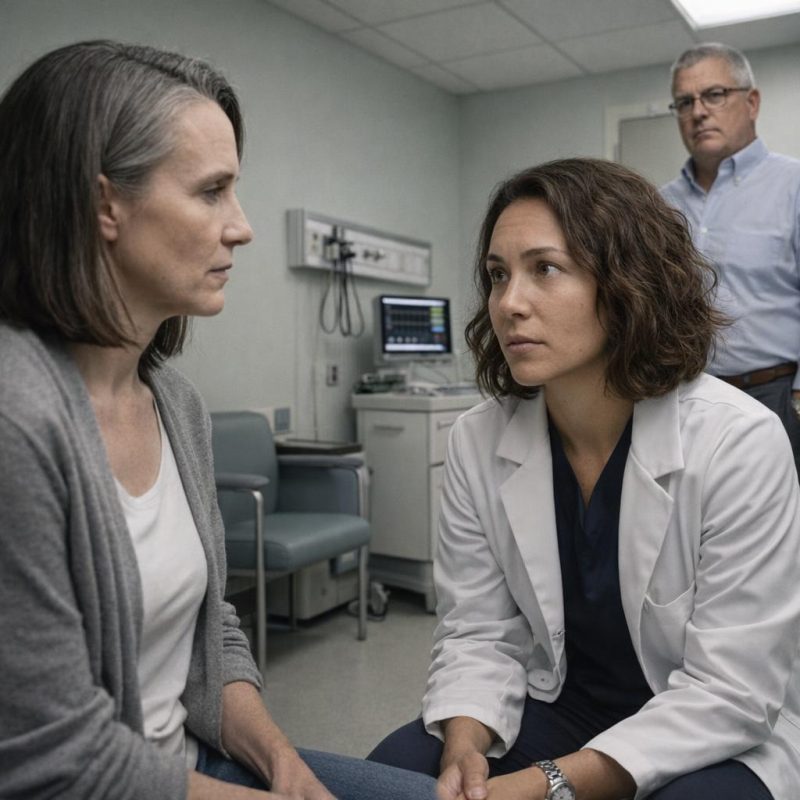 Image by RM AI
The IV
The nurse was efficient and kind, and within a few minutes the IV line was in and the medication had started moving through me. Greg leaned down and kissed my forehead before he straightened up. He asked if I wanted anything from the coffee cart down the hall, and I shook my head, and he squeezed my hand once and slipped out the door. The room went quiet. I exhaled slowly and let my shoulders drop for the first time in hours. The pain didn't disappear — it pulled back, like a tide going out, leaving something raw and tender in its place, but manageable. Bearable. I sank back against the thin hospital pillow and stared at the ceiling tiles and just breathed. It was the first time since I'd woken up that morning that my thoughts felt like my own again. The medication had taken the edge off enough that I could hold a thought for more than a few seconds without the pain shattering it. I didn't try to think about anything important yet. I just lay there and let the quiet settle around me, and for a few minutes the relief of simply not being in agony was enough to fill the whole room.
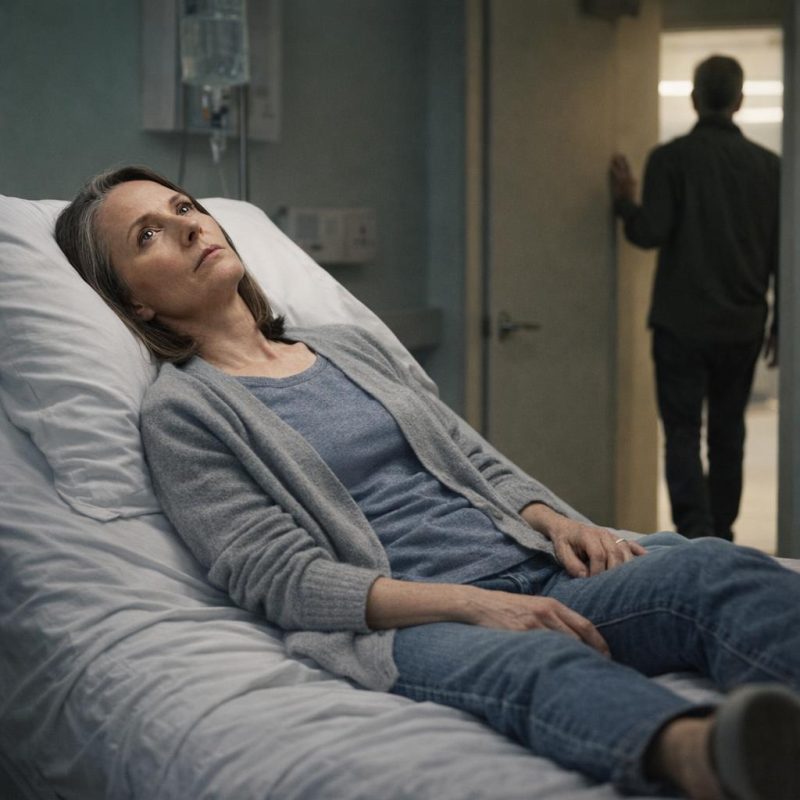 Image by RM AI
The Timeline
I stared at the ceiling and let my mind drift back through the last several months, trying to find the beginning of it. The medication had cleared enough of the fog that the timeline felt almost reachable. The exhaustion had come first — I remembered that now. About four months ago, maybe a little more. I'd blamed the stress of settling my aunt Margaret's estate, all the paperwork and the phone calls and the weight of grief still sitting on top of everything else. Then the nausea, always in the mornings, always after breakfast. I'd wondered about a stomach bug that never quite resolved. Then the headaches, building slowly at first and then not slowly at all. I tried to line it up in my head — when the symptoms had started, when they'd gotten worse — and something about the shape of it made me go still. The inheritance had cleared my account about four months ago. The money had come to me alone, just my name on the account. And I remembered Greg asking about it not long after — asking what would happen to it if something happened to me, asking about the will, asking in that careful, practical tone of his. I told myself I was being paranoid. I told myself grief did strange things to a person's thinking. But lying there alone, I couldn't quite make the chill go away.
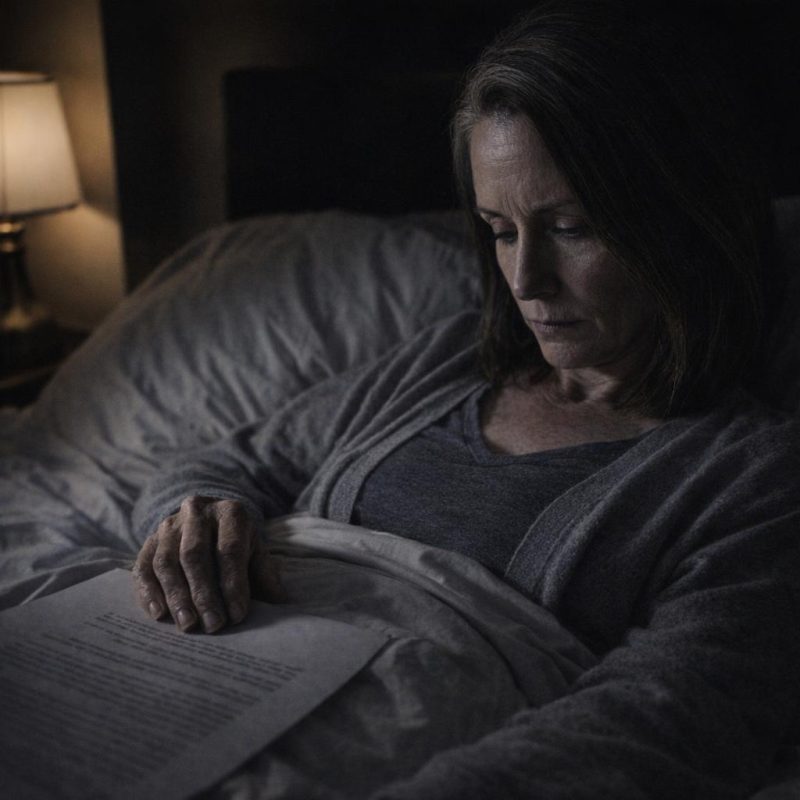 Image by RM AI
Greg's Inheritance Questions
I kept coming back to the questions. Not just one conversation — several of them, spread across weeks. Greg asking whether the inheritance account was solely in my name. Greg wanting to know the legal specifics, whether it would transfer automatically or whether the will needed to be updated first. I remembered him bringing it up at dinner one evening, and then again a few days later while I was sorting through Margaret's paperwork at the kitchen table. At the time I'd thought he was being thorough. Responsible. The kind of practical thinking that had always been one of his strengths. Married couples talked about money, especially after something as significant as a two-million-dollar inheritance. I knew that. I told myself that. But lying in the hospital bed now, with the IV dripping quietly beside me and the fluorescent hum of the corridor outside, the frequency of those conversations felt different than it had in the moment. Not wrong, exactly. I couldn't say wrong. Just — more than I'd registered at the time. More specific. More than I'd noticed in the moment. I turned it over and tried to find the innocent explanation, and I could find one, I could always find one, but the discomfort sat in my chest like something with weight to it, and it didn't move.
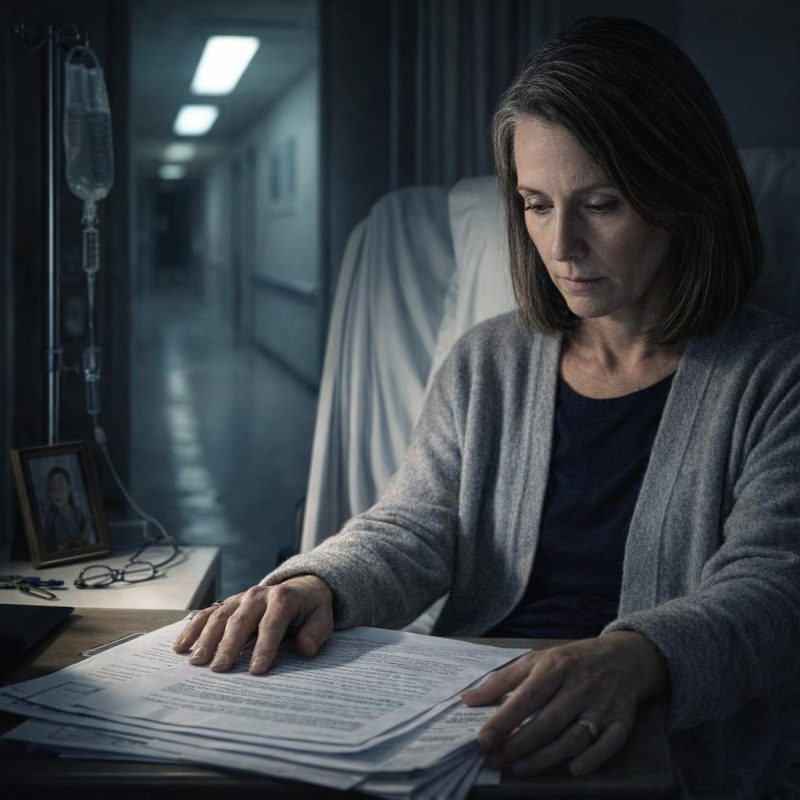 Image by RM AI
Waiting for Results
Greg came back with two paper cups of coffee and set one on the tray table beside my bed without being asked. He pulled the chair close and sat down, and for a while we just existed in the same room together, waiting. He asked how I was feeling and I told him the medication was helping. He nodded and wrapped both hands around his cup. I watched the steam curl up from mine and didn't drink it. The conversation came in short bursts and then stopped, and neither of us seemed to know how to fill the gaps. Greg checked his watch once, then again a few minutes later. I noticed but didn't say anything. The blood test results could take a while, I knew that, and there was nothing to do but sit with the waiting. Normally the silence between us was comfortable — the kind that comes from twenty-two years of knowing someone well enough not to need words. This felt different. I couldn't have explained why, and I didn't try to. I just noticed it, the way you notice a change in air pressure before a storm, and I held my coffee cup and let the silence sit between us, heavier than it had any reason to be.
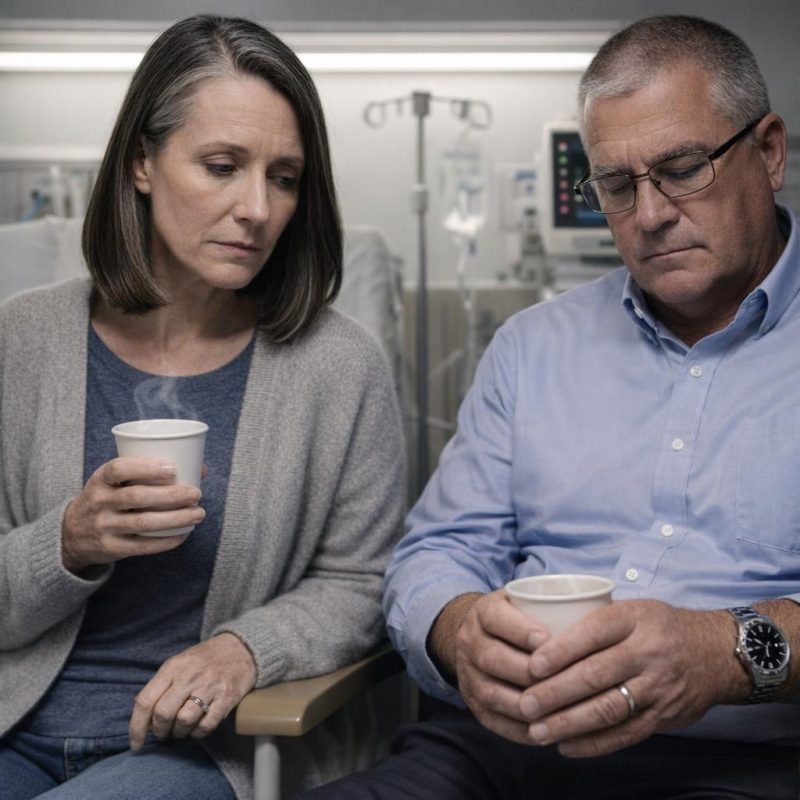 Image by RM AI
Dr. Chen Arrives
Dr. Santos came back about forty minutes later, and she wasn't alone. The man beside her was older — late fifties, I guessed — with silver at his temples and the kind of measured, unhurried walk that I associated with people who had delivered difficult news many times before. She introduced him as Dr. Chen, a senior physician on the floor. He nodded at me with a small, careful smile that didn't quite reach his eyes. Greg stood up from his chair. I pushed myself a little more upright against the pillow, my heart already picking up speed, because there is a particular way doctors enter a room when something is wrong, and this was that way. Dr. Chen carried a tablet, and he held it at his side as he approached the bed. He asked how my pain level was, and I told him better, and he nodded again like that was useful information but not the information he was focused on. The room felt very still. Greg had moved to stand at the foot of the bed, and I was aware of him there without looking at him. Dr. Chen glanced down at the tablet, then looked briefly toward Greg, and then he turned his full attention to me.
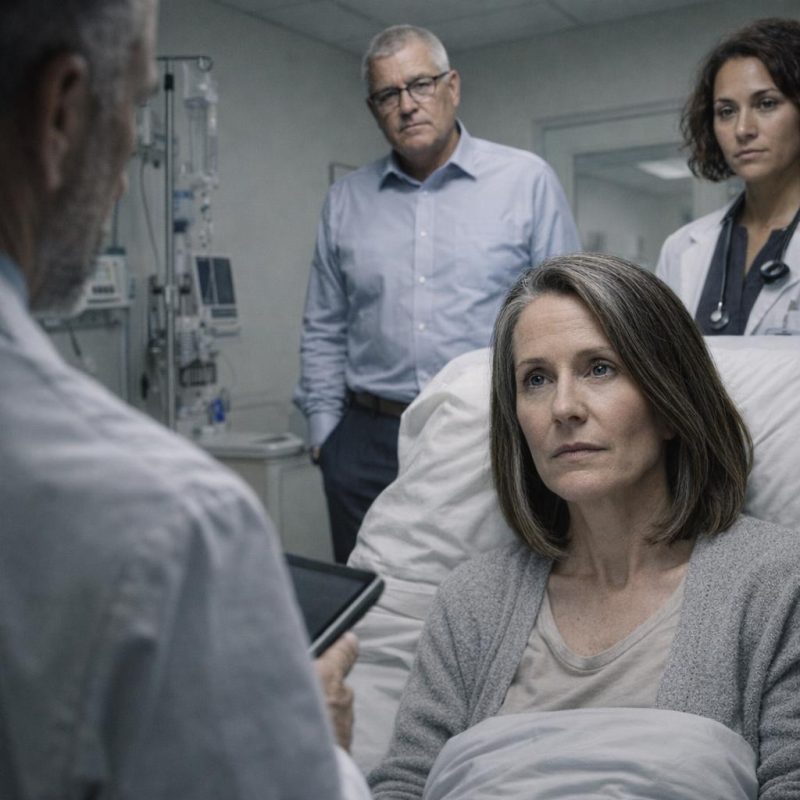 Image by RM AI
The Second Blood Draw
Dr. Chen said the first round of results had come back with something unexpected, and they needed to confirm it with a second blood draw before they could say anything definitive. His voice was even and careful. Dr. Santos stood slightly behind him, her hands folded in front of her. I asked what kind of unexpected, and Dr. Chen said they were running a toxicology screen — that they were checking for various substances that could account for the pattern of symptoms I'd described. I didn't know exactly what that meant, but the word toxicology landed somewhere in my chest and sat there. I asked if that was serious and he said they needed the second draw first, and that was all he would give me. The nurse came in with a fresh kit and began preparing my arm. I turned my head toward Greg without thinking about it, the way you turn toward someone you've shared your life with when you need an anchor. He was still standing beside the chair, and his face was composed, and his eyes were on Dr. Chen. But his right hand was wrapped around the chair arm, and his knuckles had gone white.
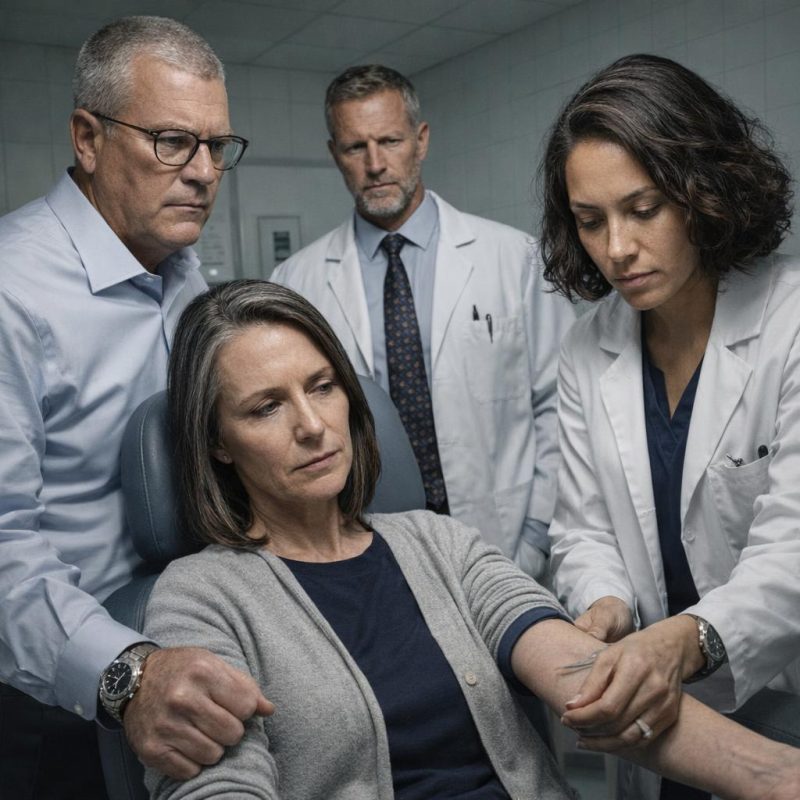 Image by RM AI
Hospital Procedures
After the second blood draw, things moved faster. A nurse came in with a wheelchair and said they needed to take me down for a CT scan, and then possibly an MRI depending on what they found. I asked if this was still about the migraine and she gave me a smile that didn't quite answer the question. Greg walked alongside the wheelchair through the corridor, his hand resting on my shoulder, and I kept telling myself this was just how hospitals worked — thorough, cautious, covering every base. The scan rooms were cold and bright and efficient, and the technicians spoke to me in the calm, practiced way people do when they want you to stay still and not ask too many questions. By the time they wheeled me back to my room, I'd counted three separate occasions where two staff members had stepped away from me to speak quietly to each other, their voices too low to catch. I tried to read their faces through the glass panel in the door. Greg sat down in the chair again and pulled out his phone, and I stared at the ceiling tiles and told myself I was probably overreacting. Then I heard it — two nurses, just outside my door, their voices low and close together, one of them saying they needed to call someone.
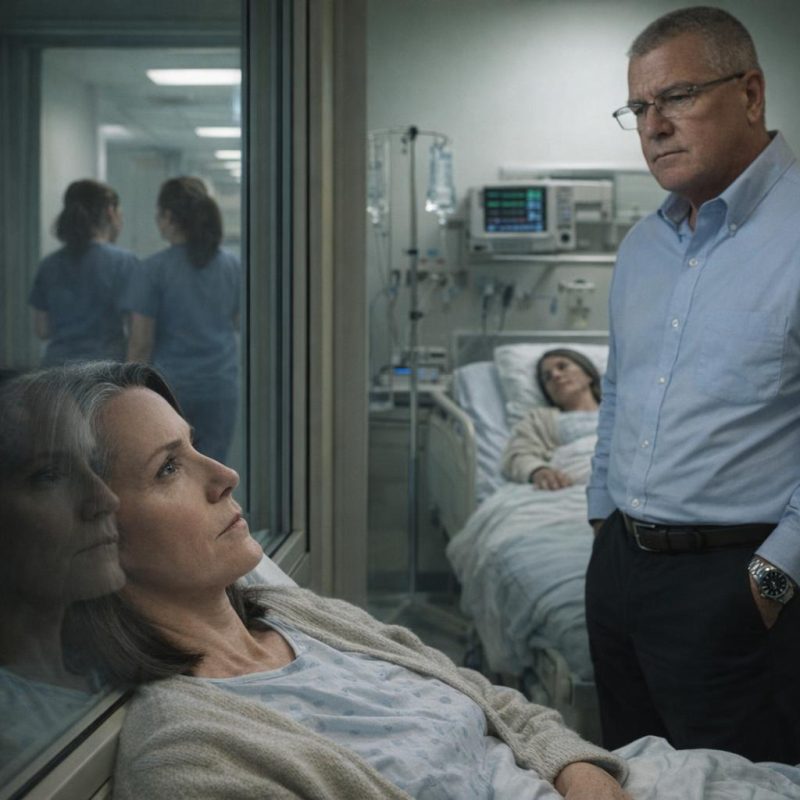 Image by RM AI
The Shift in Atmosphere
Something had shifted, and I couldn't pretend otherwise. The nurses who came in to check my vitals were still kind, still professional, but there was a different quality to their efficiency now — quicker, more deliberate, like people who had somewhere important to be. Through the narrow window beside my door I could see Dr. Santos and another doctor I didn't recognize standing in the hallway, heads bent together over a tablet, speaking in low voices. Dr. Santos glanced up once and caught me looking, and she gave me a small nod before turning back. I asked the next nurse who came in what was happening, and she said they were still waiting on the final results and that Dr. Chen would be in to speak with me as soon as they had everything they needed. It wasn't a lie, exactly. But it wasn't the whole truth either, and I was starting to understand the difference. Greg sat in the chair by the window, scrolling through his phone without looking up. I watched the hallway through the glass, the quiet consultations, the careful expressions, the way no one quite met my eyes for long. I was at the center of something, and I didn't yet have a name for what it was.
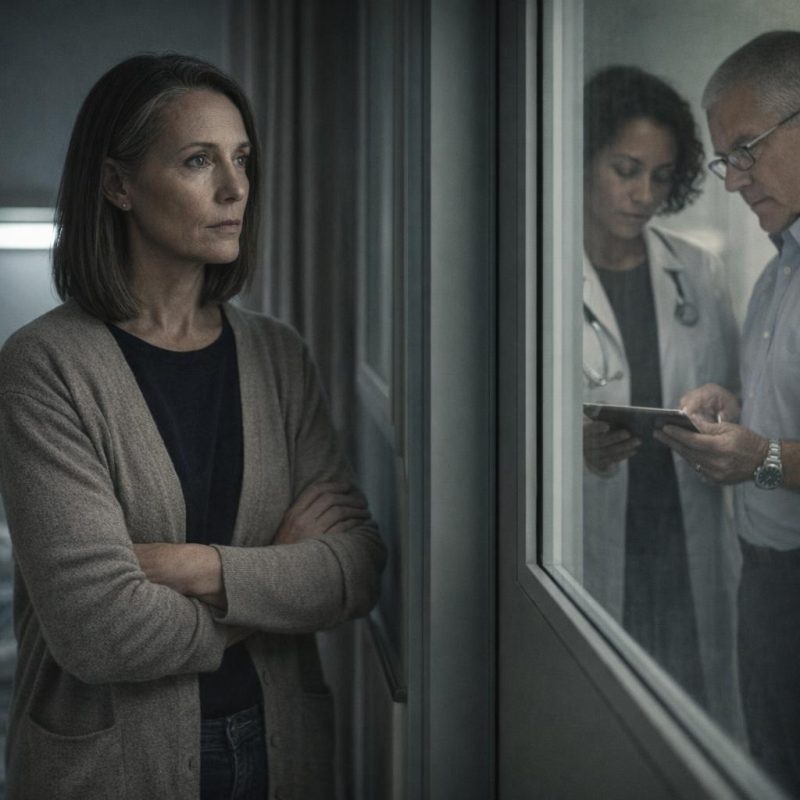 Image by RM AI
Toxicology Screen
Dr. Chen came back about forty minutes later, and this time he pulled the door fully closed behind him. He told me the toxicology screen was still being processed, that the lab was running the results now and they should have something concrete within the hour. I asked what exactly they were screening for, and he said they were checking for a range of substances — things that could accumulate in the body over time and produce the kind of symptoms I'd been experiencing. I asked him to be more specific and he said he'd rather wait until the results were confirmed before going into detail. It was a careful answer. A practiced one. I nodded like I understood, because I didn't know what else to do. When Dr. Chen left, I turned toward Greg. He was sitting with his elbows on his knees, staring at the floor between his feet. He hadn't said anything during the whole exchange. I'd expected him to ask questions — he usually did, at doctor's appointments, always the one with the clipboard and the follow-up questions. But he'd said nothing. His shoulders were drawn up tight, and he still hadn't looked at me, and I sat there watching the rigid line of tension across his back and couldn't quite figure out what to make of it.
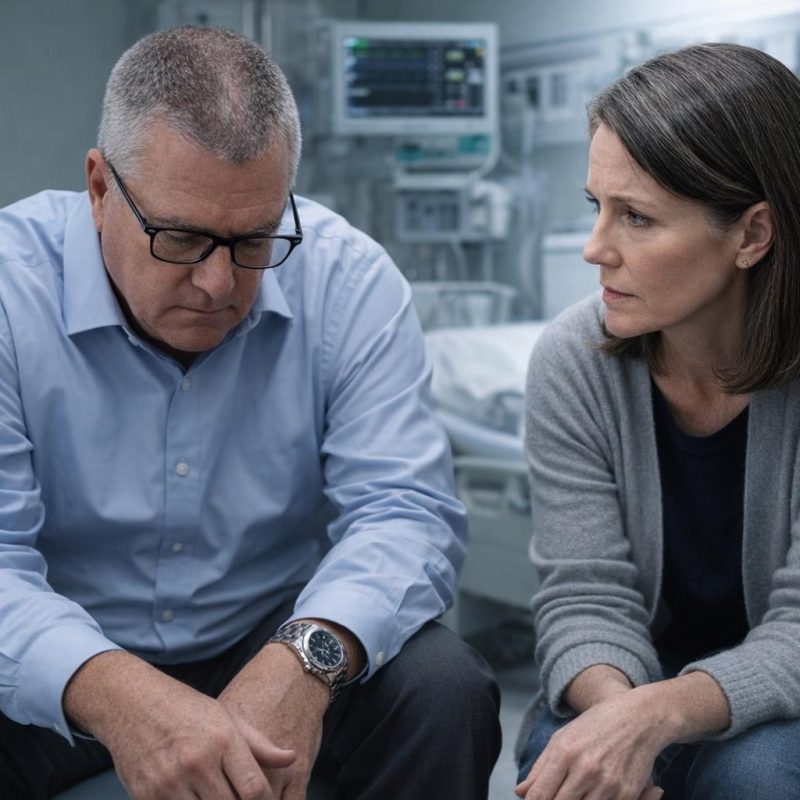 Image by RM AI
Detective Hayes
The woman who came through the door wasn't wearing scrubs. She had on dark slacks and a gray blazer, and she moved into the room with a kind of quiet authority that was different from the doctors. She introduced herself as Detective Sarah Hayes and said she was with the county police department. I remember thinking I must have misheard her. I asked her to repeat it and she did, calmly, and then she said she had a few routine questions she hoped I wouldn't mind answering. I looked at Greg and he was standing near the window, arms crossed, his expression unreadable. I looked back at Detective Hayes and said of course, whatever she needed. She had a small notebook and she asked me about my daily routine — what time I woke up, whether I worked from home, how I spent my mornings. I answered everything as clearly as I could, still trying to work out why a detective would be in a hospital room asking about my schedule. She wrote things down in neat, unhurried strokes. Then she looked up from her notebook, her pen still resting on the page, and asked me who prepared my meals at home.
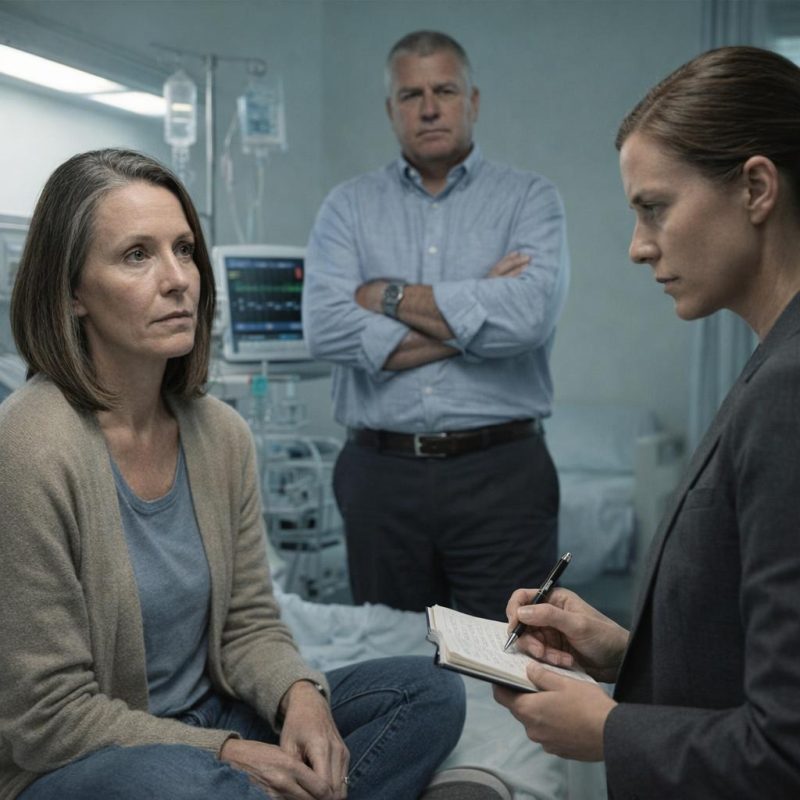 Image by RM AI
Daily Routine
I told Detective Hayes that Greg handled most of the cooking. That had been true for years — he'd always enjoyed it, always said it was how he unwound after work. She nodded and asked me to walk her through a typical morning. So I did. I woke up around seven, I said. Greg was usually already in the kitchen. By the time I came downstairs, the coffee was made and waiting for me. She asked if I made my own coffee sometimes, and I said no, not really — Greg liked doing it, had his whole system with the grinder and the specific beans he ordered online. I smiled a little when I said it, the way you smile at a harmless habit. Detective Hayes didn't smile back. She wrote something down, then asked whether Greg always prepared the coffee himself, or whether anyone else ever made it. I said it was always Greg. She asked if I'd ever made it myself in the past few months and I thought about it and said I honestly couldn't remember a time I had — he was always up before me. She underlined something in her notebook. Greg was standing very still by the window, his back half-turned to us. The room had gone quiet in a way that felt different from ordinary quiet, and I sat with that stillness, not yet knowing what to call it.
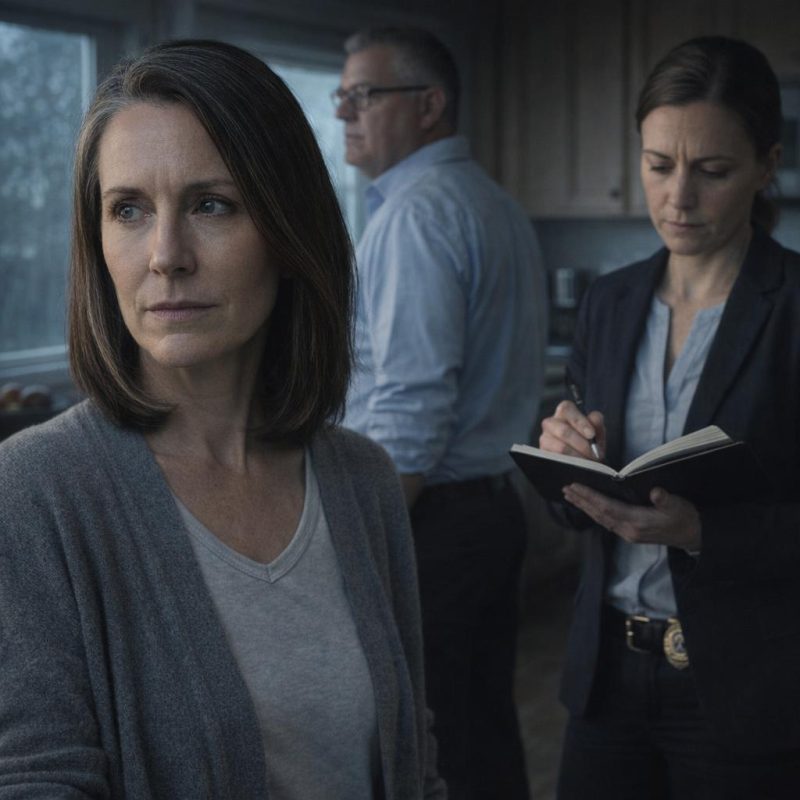 Image by RM AI
The Coffee Ritual
Detective Hayes asked me to describe Greg's coffee routine in more detail — where he made it, whether I was usually in the kitchen with him, how long it took. I answered each question carefully, explaining that he made it in the kitchen alone most mornings, that I'd usually come down after he called up to me, that the cup was always ready on the counter by the time I got there. She asked whether I'd ever tried to make it myself and Greg had stopped me. I paused at that, because the word stopped felt too strong, but I said yes, there had been times I'd offered and he'd waved me off, said he had it handled, that it was his thing. She asked if he'd ever seemed particular about it — insistent, was the word she used. I said he was particular about a lot of things in the kitchen. She wrote that down too. Then she looked up and asked, in the same even tone she'd used for every other question, whether anyone besides Greg had ever prepared my morning coffee. I started to answer and then I noticed Greg. He was still standing near the window, but his face had gone the color of old paper, and his hands, hanging at his sides, were trembling slightly.
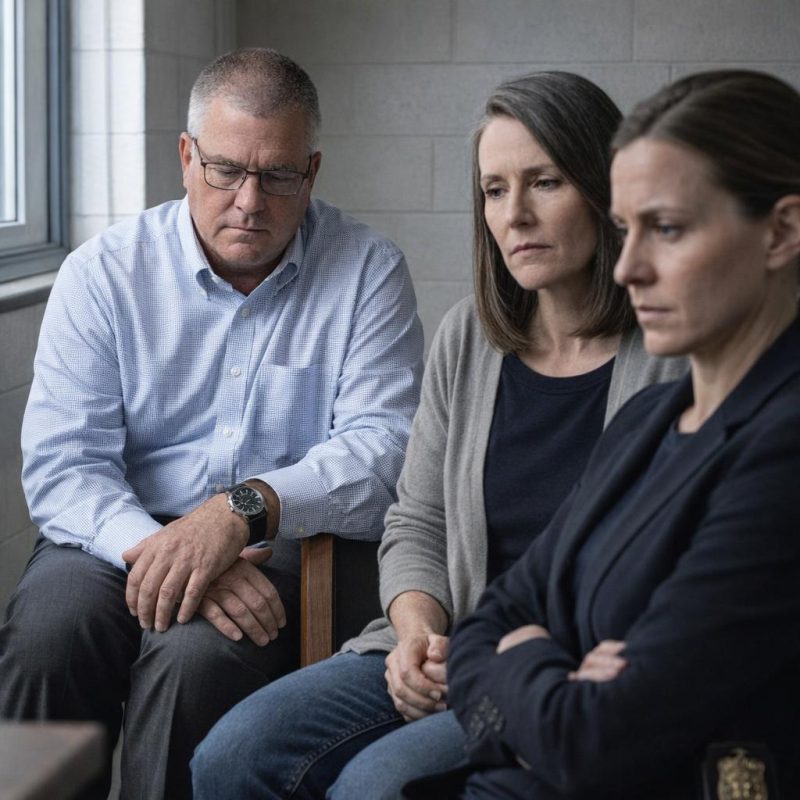 Image by RM AI
Pieces Clicking
I kept my eyes on Detective Hayes and answered her question, but part of my mind had already broken away and was moving through the past several months on its own. My aunt Margaret had passed in February. The inheritance had cleared in March. My symptoms — the headaches, the nausea, the exhaustion that I'd blamed on grief — had started sometime in April. I hadn't connected those dates before. I hadn't had any reason to. Greg had started asking about the will around that same time, small questions, casual ones, the kind you don't think twice about when they come from your spouse of twenty-two years. He made my coffee every morning. The toxicology screen. The detective in my room asking who prepared my food. I pressed my hands flat against the hospital blanket and told myself I was doing what frightened people do — finding patterns in coincidences, building a story out of anxiety. Greg was my husband. He loved me. There was a reasonable explanation for all of it. I kept telling myself that, one thought at a time, like reciting something I needed to believe. But the cold had already started spreading through my chest, slow and quiet, and I sat with it, unable to make it stop.
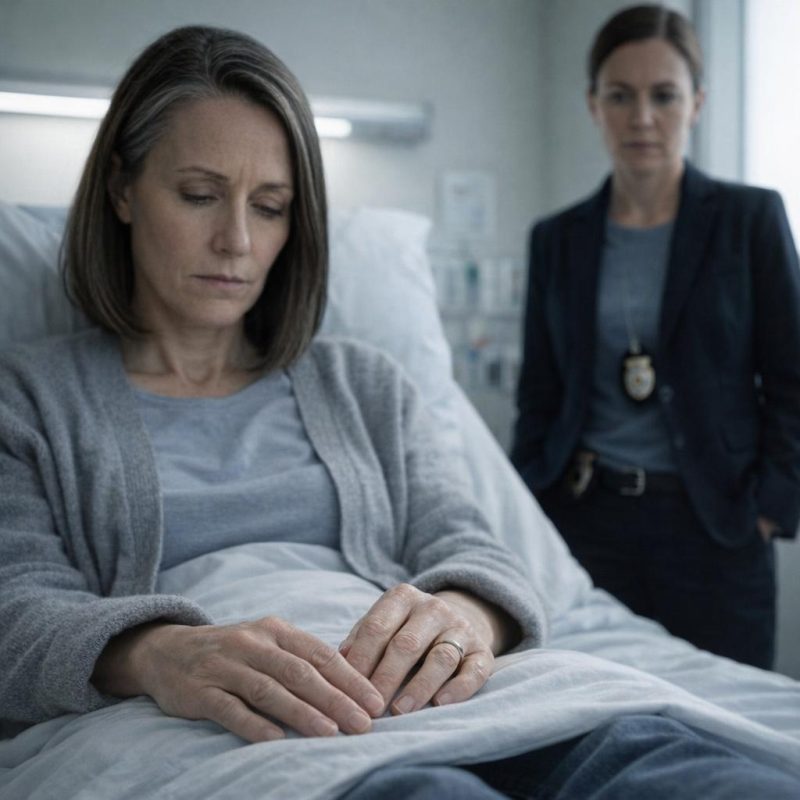 Image by RM AI
Greg's Persistence
My mind kept snagging on the mornings. Hundreds of them, maybe more, stretching back through the past year. I'd offered to make the coffee myself plenty of times — on weekends when I was up first, on mornings when he seemed tired, on days when I just wanted to do something simple and domestic. He always said no. Always had a reason. He liked the grind setting a particular way. He'd already measured the beans. It would only take him a minute. I'd thought it was sweet, the way some people think a small, repeated kindness is sweet. I remembered one morning in particular — I'd been feeling especially worn down and I'd gotten to the kitchen before him and had the kettle on. He'd come in, seen what I was doing, and taken over before I'd finished filling it. He'd handed me the finished cup and I'd taken the first sip without thinking. The memory that kept surfacing now was a quieter one. I could see him in the kitchen doorway on so many mornings, leaning against the frame with his arms crossed, and I would finish the cup, and then he would pick up his keys and leave for work.
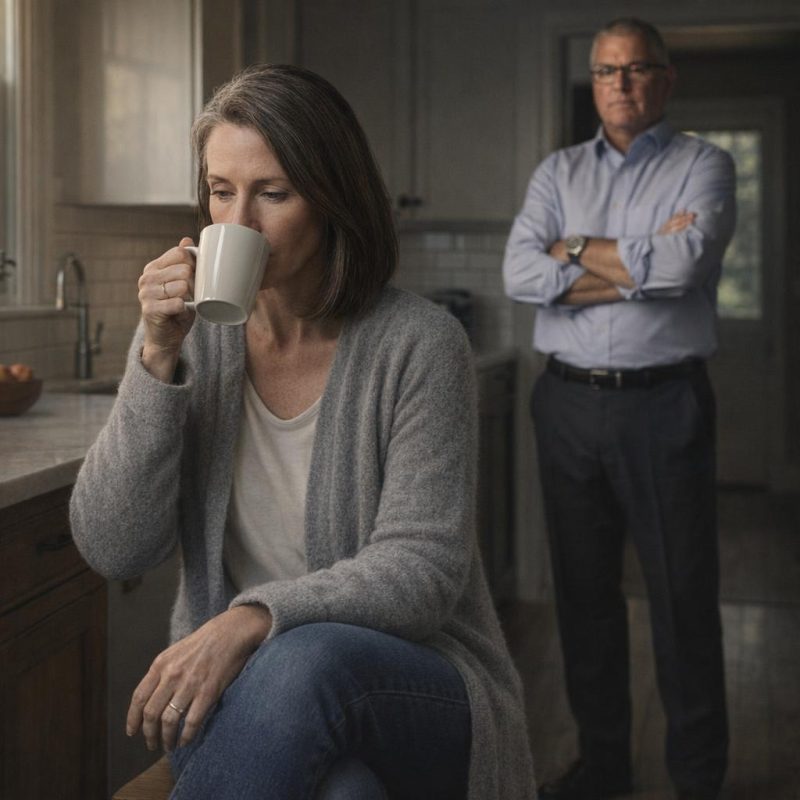 Image by RM AI
Private Conversation
Dr. Chen came back into the room with a quieter energy than before — measured, careful, the kind of stillness that made me sit up straighter without knowing why. He glanced at Detective Hayes, who was standing near the window, and then he looked at Greg. He said he needed a few minutes alone with me. Just a private word, he called it. Greg's eyebrows lifted. He asked if everything was okay, and his voice came out smooth and even, the way it always did. Dr. Chen said it was just standard procedure, that he needed to go over some results with me directly. Greg looked at me then — a long look, the kind that usually felt like concern — and then back at the doctor. He said of course, no problem at all, and he picked up his jacket from the chair. But his movements were slow. Too slow. He straightened his collar. He checked his phone. He took three steps toward the door and paused with his hand on the frame. Dr. Chen waited. Detective Hayes waited. I watched Greg's jaw tighten before he finally stepped through the door, and the look on his face as it swung shut behind him sent a cold thread straight through my chest.
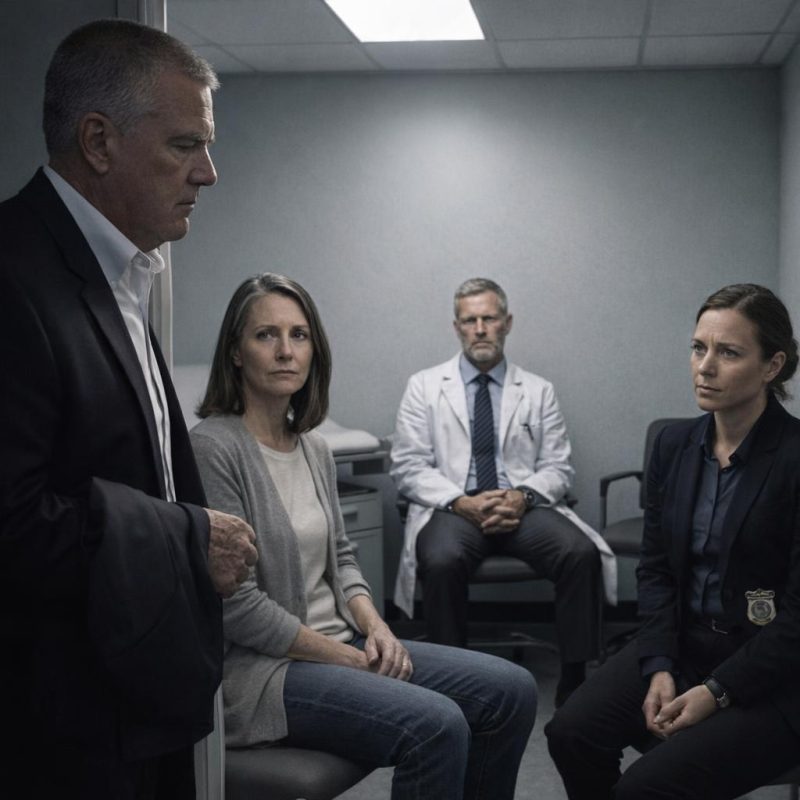 Image by RM AI
Greg Steps Out
The door clicked shut and the room felt different immediately — smaller, quieter, like the air had been rearranged. Dr. Chen moved to the foot of my bed and Detective Hayes stayed near the window, her notepad open. Neither of them spoke right away, and in that silence I turned my head toward the narrow window that looked out into the hallway. Greg was out there. I could see him through the glass, a blurred shape moving back and forth in a tight line. He paced the length of the corridor and then turned and paced it back. He ran his hand through his hair once, then again. He stopped and looked at his phone, then put it away without doing anything with it. He paced again. I had seen Greg anxious before — before job interviews, before difficult conversations — but this was different. His shoulders were pulled up toward his ears. His movements had a jittery, contained quality, like something trying not to spill. I watched him stop and face the window, and for a moment I thought he was looking directly at me. His face through the glass was pale and drawn tight across the cheekbones.
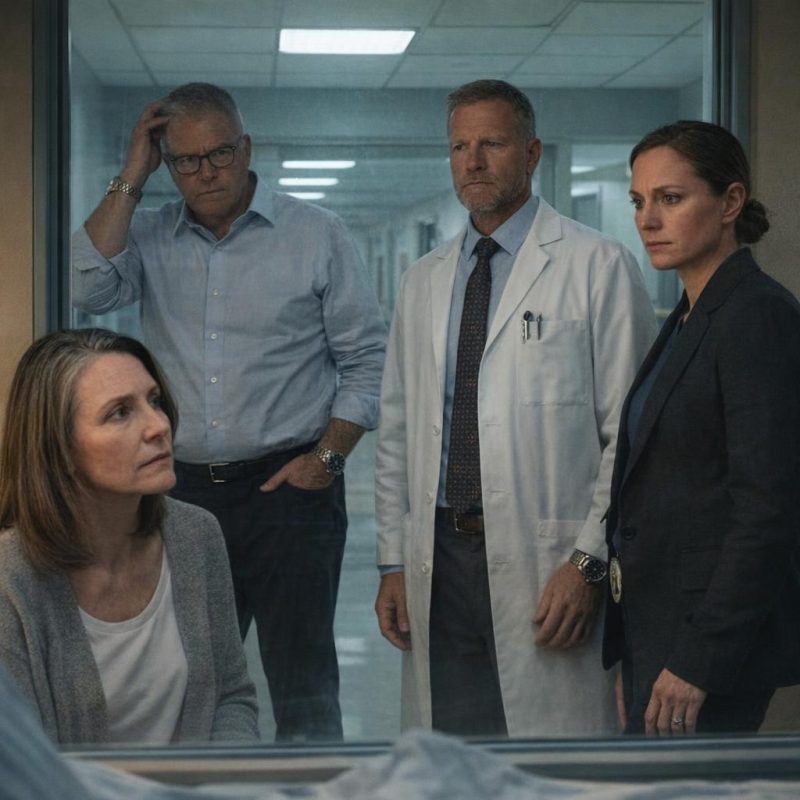 Image by RM AI
Heavy Metal Poisoning
Dr. Chen pulled up something on his tablet and turned it so I could see the screen. There were numbers, ranges, columns I didn't know how to read. He walked me through it slowly, pointing as he spoke. My blood work had come back with elevated levels of heavy metals. He said the words carefully — arsenic and thallium — and I heard them without fully absorbing them. I asked what that meant, whether it was serious, and he said yes, it was serious, that these substances were consistent with the symptoms I'd been experiencing for months. The fatigue. The headaches. The nausea that never quite went away. I asked if it could be the water. We were in an older neighborhood, I told him, and I'd read things about old pipes. He said that was a reasonable question but that the specific metals and the levels didn't match what you'd typically see from contaminated water. I asked about the air, about something environmental, about whether I could have picked something up without knowing it. He didn't dismiss me. He just kept his expression steady and said we needed to look more carefully at the source. I lay back against the pillow and stared at the ceiling, and the words arsenic and thallium settled over me like something I couldn't lift off.
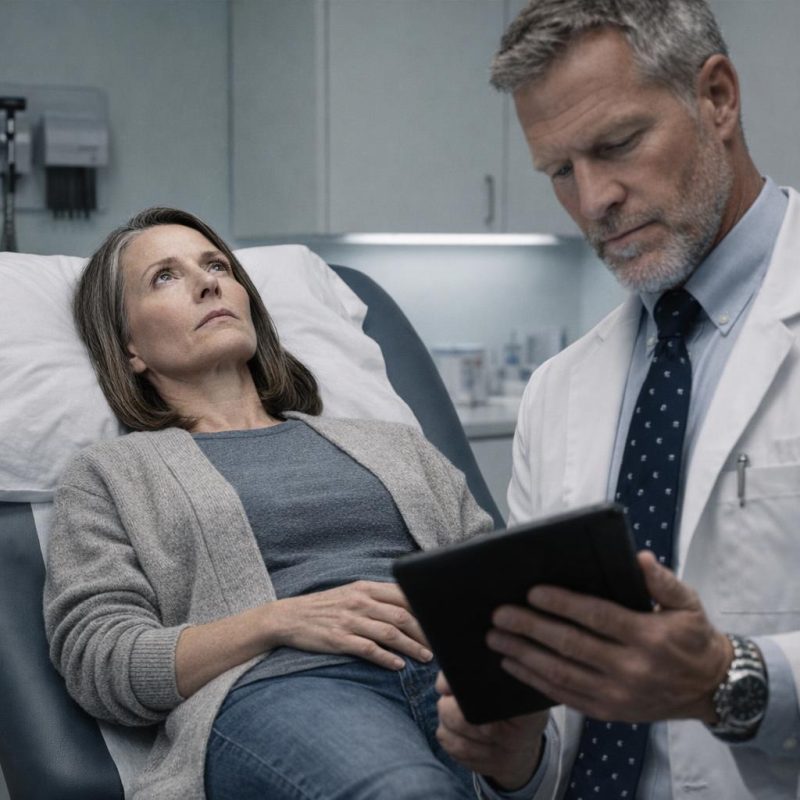 Image by RM AI
Repeated Exposure
Dr. Chen set the tablet down on the tray table and folded his hands. He said the exposure wasn't a single event. The levels in my blood indicated repeated doses over a period of months, not a one-time incident. I told him I worked at a library — I'd been there for eleven years — and I asked if something in the building could account for it. Old materials, maybe, or something in the archive storage. He shook his head gently and said that library work, even in older buildings with older collections, wouldn't produce this kind of result. Detective Hayes looked up from her notepad and asked about household products. Cleaning supplies, she said. I went through everything I could think of — the usual things under the sink, the stuff we used on the floors, the bathroom cleaner. Nothing unusual. Nothing new. Dr. Chen listened and then said that the pattern they were seeing wasn't consistent with incidental contact or accidental exposure. He said the levels, and the way they'd accumulated over time, were consistent with regular administration. My hands had been resting in my lap and I noticed, almost from a distance, that they had started to shake.
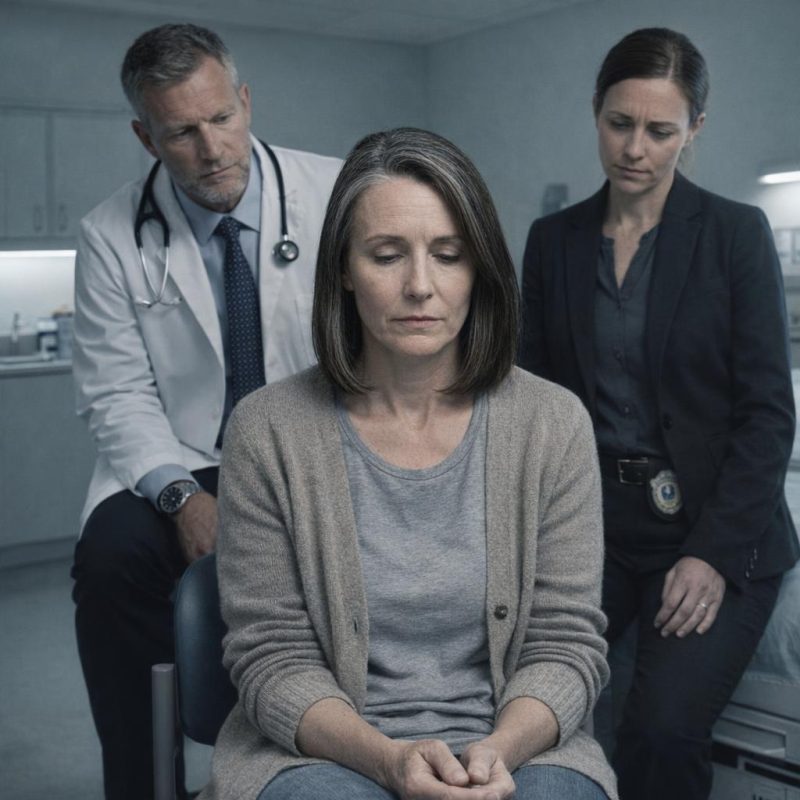 Image by RM AI
Environmental Sources Ruled Out
I kept going. I couldn't stop myself. I asked about the pipes again, whether old galvanized plumbing could leach something unusual. Dr. Chen said the specific metals didn't match that profile. I asked about the produce we bought — whether contaminated food from a supplier could do this, whether there had been any recalls I hadn't heard about. He said the pattern of accumulation didn't fit dietary exposure from store-bought food. I mentioned the pesticides our neighbor used along the fence line every spring, and the chemical smell that sometimes drifted into the yard. Detective Hayes wrote something down. Dr. Chen said that wouldn't account for these particular substances at these levels. I was running out of things to suggest and I could hear it in my own voice — a kind of frantic quality, like I was searching for a door in a room that didn't have one. Dr. Chen waited until I'd gone quiet. Then he said it plainly, without softening it: the levels were consistent with deliberate poisoning.
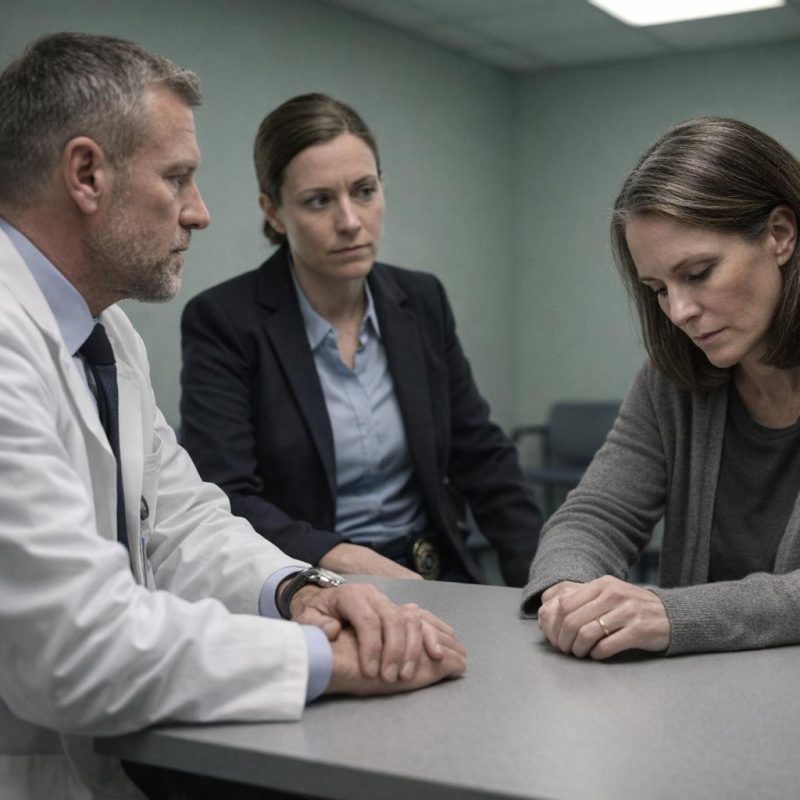 Image by RM AI
Deliberate Poisoning
The word deliberate sat in the room like something physical. Dr. Chen said it again, more slowly — that this was not environmental exposure, that the substances had been introduced into my food or drink, and that based on the levels and the timeline, it had been happening for months. I didn't say anything. I'm not sure I could have. My hands were in my lap and I watched them tremble without feeling connected to them. Detective Hayes spoke next. She said they needed to investigate, that this was now a matter for law enforcement, and she asked if I understood what she was telling me. I said yes, though I wasn't sure I did. She said she would need to ask me some questions, and that I should take my time. I nodded. Dr. Chen stayed near the foot of the bed, and I was grateful he didn't leave. I kept my eyes on the blanket across my knees. Someone had been putting something into what I ate and drank. That was what they were telling me. I turned the sentence over in my mind and it didn't become more real. The room was very quiet, and the quiet had a weight to it I hadn't felt before.
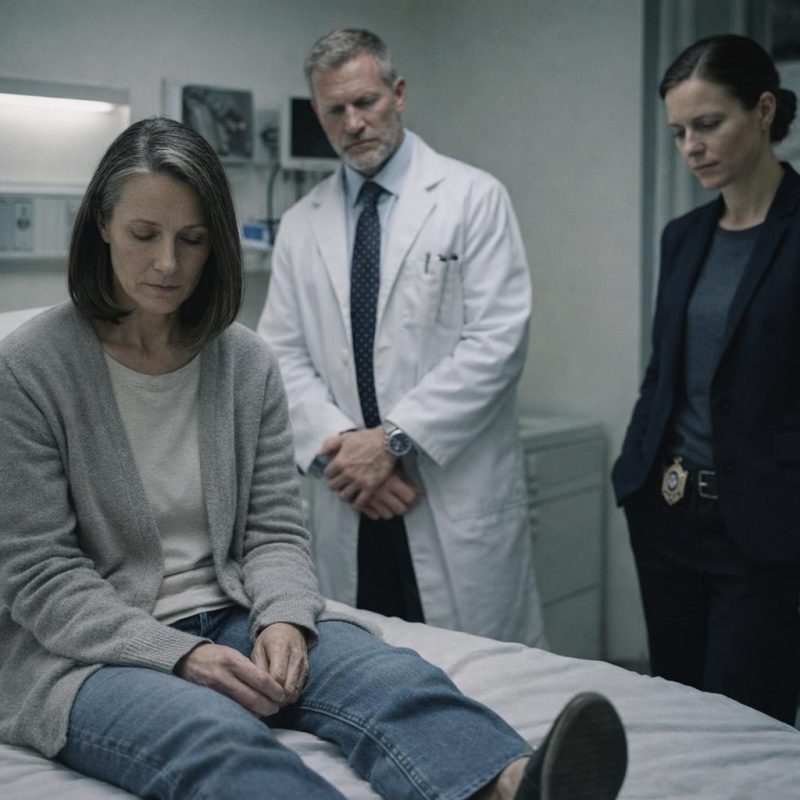 Image by RM AI
Levels and Timeline
Dr. Chen brought the tablet back and showed me a graph this time — a line that climbed in a slow, steady arc across four months. He pointed to where my symptoms had first appeared in my medical records, a cluster of complaints I'd brushed off as stress or age, and showed me how the levels tracked alongside them. Each point on the line corresponded to a blood draw or a documented symptom. The climb was gradual but it was consistent, and it didn't flatten or dip. Detective Hayes asked me when my aunt Margaret's estate had been settled — when the inheritance had actually cleared into my account. I told her the date. It was a date I remembered clearly because Greg had taken me to dinner to celebrate. Dr. Chen moved his finger along the graph to that point on the timeline. The line began its upward climb just after it. I looked at the screen for a long time. The graph didn't ask anything of me. It didn't accuse anyone. It just showed me a shape — a steady, patient rise — and the date where that rise began sat there against the timeline, quiet and immovable.
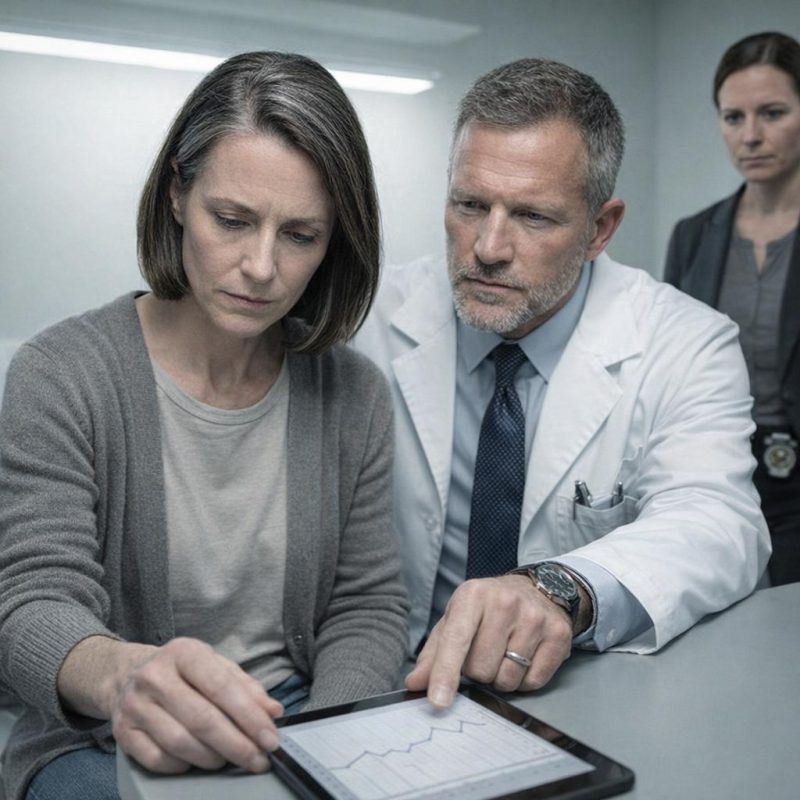 Image by RM AI
Who Has Access
Detective Hayes pulled her chair closer to the bed and clicked her pen. She asked me who prepared my meals at home. I said mostly Greg. She asked if that included breakfast. I said yes, almost always — he made the coffee every morning without fail, had done for as long as I could remember. She asked about lunch and dinner. I said we cooked together sometimes, but he handled most of it. He liked to cook, I told her, and I heard how ordinary that sounded even as I said it. She asked if anyone else had regular access to my food or drink. I mentioned Joanne — my best friend, who came over for dinner maybe once or twice a month. She wrote that down. She asked if Joanne ever prepared anything for me. I said no, not really, she was a guest. Detective Hayes nodded and kept writing. My voice had developed a tremor I couldn't control. She asked me to confirm the primary person who prepared what I ate and drank on a daily basis. I said Greg's name. It came out quieter than I intended. I watched Detective Hayes draw a line beneath it on her notepad.
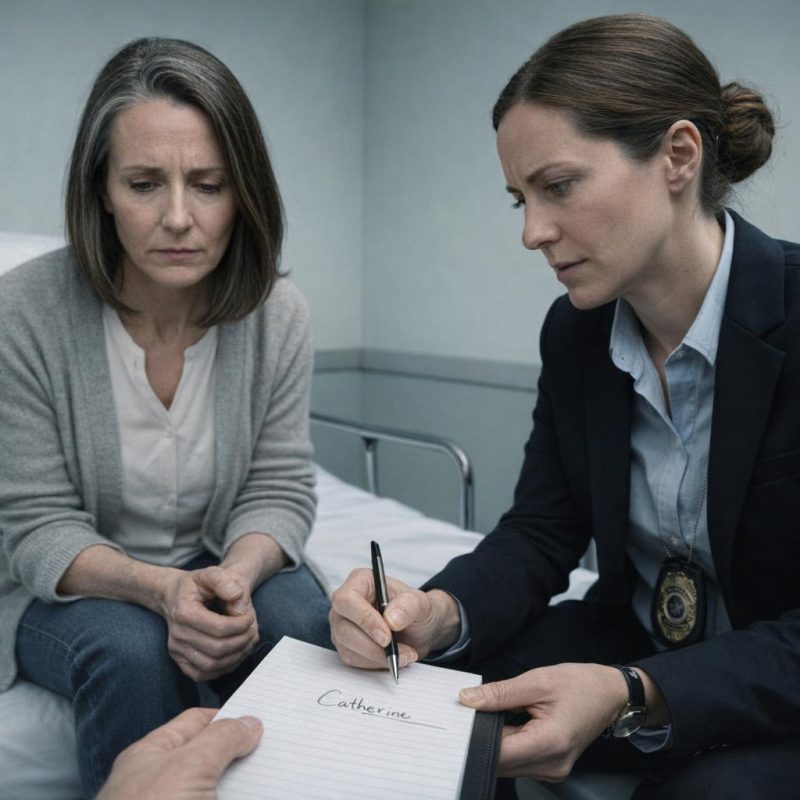 Image by RM AI
Everyone With Access
Detective Hayes asked me to be thorough — to think about every person who had regular access to what I ate or drank. I tried. I went through it methodically, the way she asked. Greg made the coffee every morning, had done for years. He packed my lunch most days too — a habit that started when I was going through a stressful stretch at work and never really stopped. Dinner was usually him as well, or the two of us together, but he was always the one who started it, who seasoned things, who plated everything up. I mentioned Joanne, my best friend, who came over for dinner maybe once or twice a month, but she never cooked anything, never brought food. She was a guest. I ate lunch at work from whatever Greg had packed that morning. I thought about takeout — maybe twice a month, if that. I thought about restaurants, the occasional work lunch. But day in, day out, almost everything that went into my body passed through Greg's hands first. Detective Hayes wrote it all down without comment. I sat there listening to the scratch of her pen, and the smallness of that list settled over me like something I couldn't breathe through.
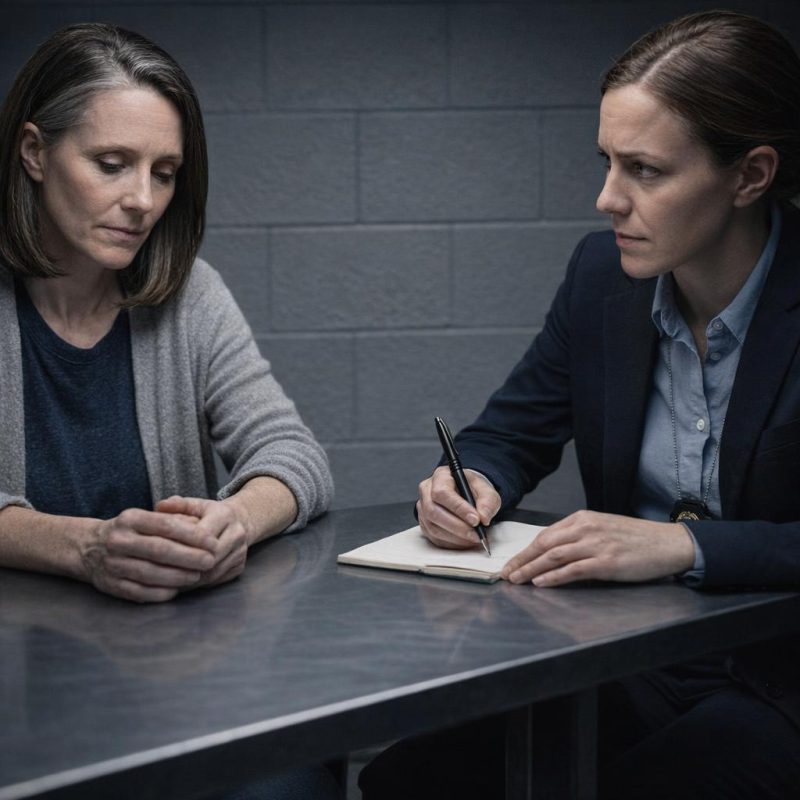 Image by RM AI
The Inheritance Correlation
Detective Hayes asked if there had been any significant financial changes in my life recently. I told her about my aunt Margaret — my beloved aunt who had passed away four months earlier and left me her entire estate. Two million dollars. I watched the detective's pen slow slightly as I said the number. I told her the money had cleared into my account about three months ago. She asked if the account was in my name alone or joint. I said mine alone — I had set it up that way on the advice of the estate attorney. She nodded and asked, carefully, what would happen to that money if something happened to me. I said Greg would inherit it. As my spouse, he would be the primary beneficiary. Across the room, Detective Hayes and Dr. Chen exchanged a look — brief, almost imperceptible, but I caught it. I had been a person who noticed things my whole life, and I noticed that. Neither of them said anything. They didn't need to. I looked down at my hands on the hospital blanket, and the silence between the three of us held something I wasn't ready to name out loud but could no longer pretend wasn't there.
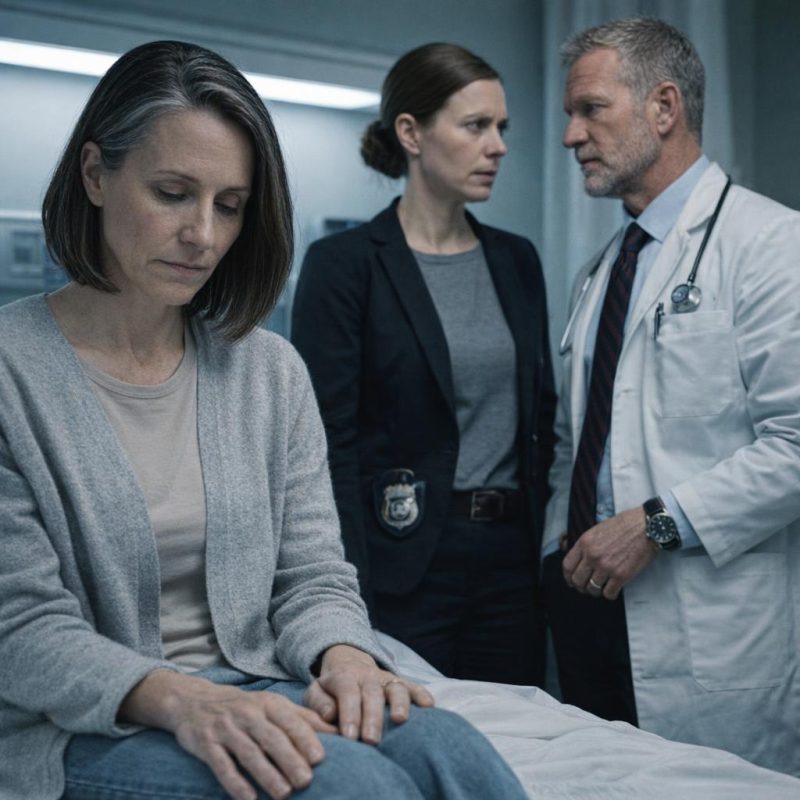 Image by RM AI
Greg's Questions About the Will
Detective Hayes asked if anyone else knew about the inheritance. I said Greg knew everything — we had talked about it extensively after my aunt Margaret passed. He had been involved in every conversation about the estate, the attorney meetings, the account setup. Then I started remembering things I hadn't thought about in weeks. Greg had asked about my will. More than once. He wanted to know if I had updated it since the money came in, whether it reflected the new amount. I had thought he was being practical, responsible even. He brought it up at least three times in the space of a single week — once at dinner, once when we were getting ready for bed, once on a Sunday morning when I was still half-asleep with my coffee. Each time I had brushed it off, told him I would get to it. Each time he had let it go, but he always came back to it. What would happen to the money if something happened to me? That was the question underneath every version of it. Sitting in that hospital bed, those conversations felt different than they had at the time. My heart was pounding so hard I could feel it in my throat when Detective Hayes set down her pen and said she needed to speak with Greg.
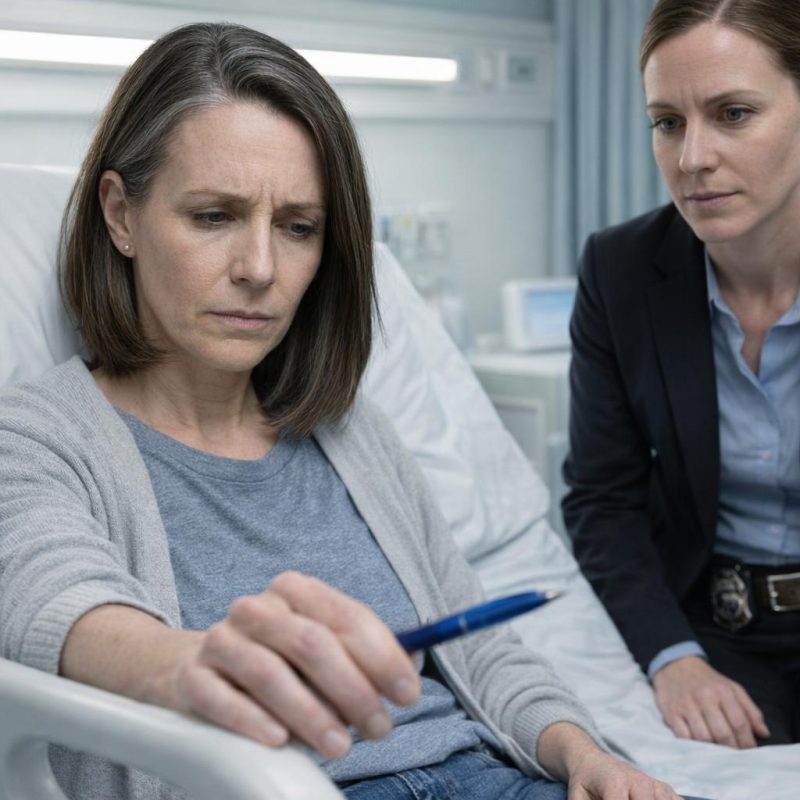 Image by RM AI
Bringing Greg Back
Dr. Chen stepped out and spoke quietly to one of the nurses in the hallway. I could see them through the narrow window in the door — the nurse nodding, then moving off down the corridor toward the waiting area. I watched her go. My hands were gripping the edge of the blanket without me meaning to. A minute passed. Maybe two. Then I saw Greg appear at the far end of the hallway, following the nurse back toward my room. His face was turned slightly away at first, and then he looked up and saw the window, saw me watching. His expression shifted — something moved through it that I couldn't quite read, a tightening around the eyes, a stiffness in his jaw that hadn't been there when he left. He walked slowly. The nurse said something to him and he nodded, but his eyes stayed fixed on the door ahead of him. He pushed it open and stepped inside, and his gaze moved from me to Dr. Chen to Detective Hayes and back again. His jaw was set. His hands were at his sides. He asked what was going on, and his voice came out pulled tight and flat.
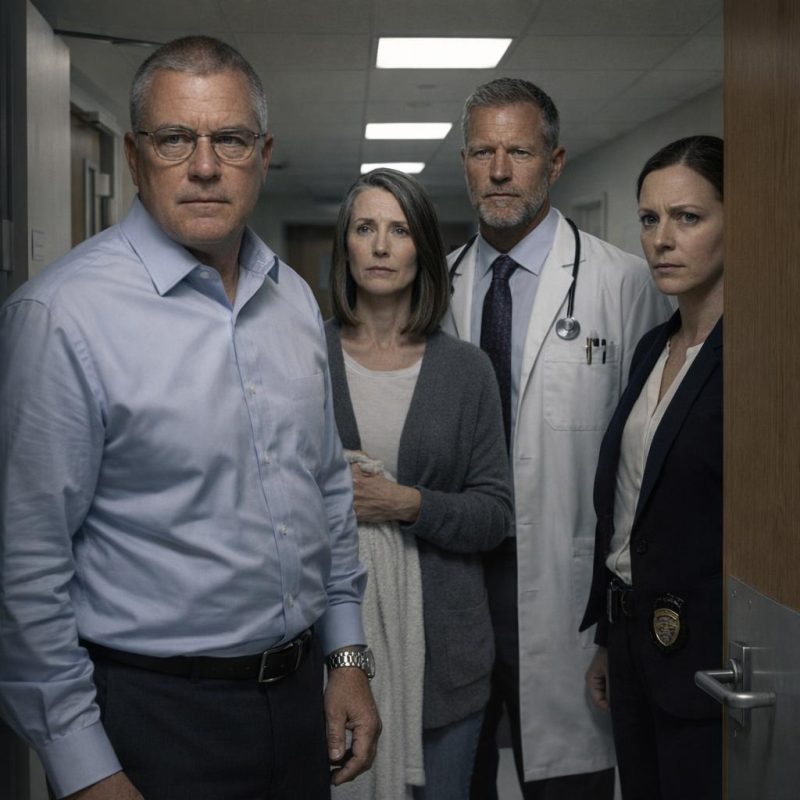 Image by RM AI
The Diagnosis
Dr. Chen didn't hesitate. He addressed both of us — me in the bed, Greg standing near the door — and said the blood tests had returned results that required immediate discussion. He explained that my blood showed significantly elevated levels of arsenic and thallium. Heavy metals, he said. He explained what they did to the body — the neurological symptoms, the fatigue, the migraines, the hair loss I had mentioned in passing. He said the levels weren't consistent with environmental exposure. They were consistent with repeated ingestion over a period of months. He used the word deliberate. He said someone had been introducing these substances into my food or drink on a regular basis. The room went completely silent. I looked at Greg. His face had gone white — not pale, white, the color draining out of him so fast it was almost physical to watch. His voice cracked when he said he needed air, and then his fingers released the coffee cup — I watched it drop, watched it shatter against the linoleum, coffee spreading in a dark arc across the floor — and he turned and ran from the room.
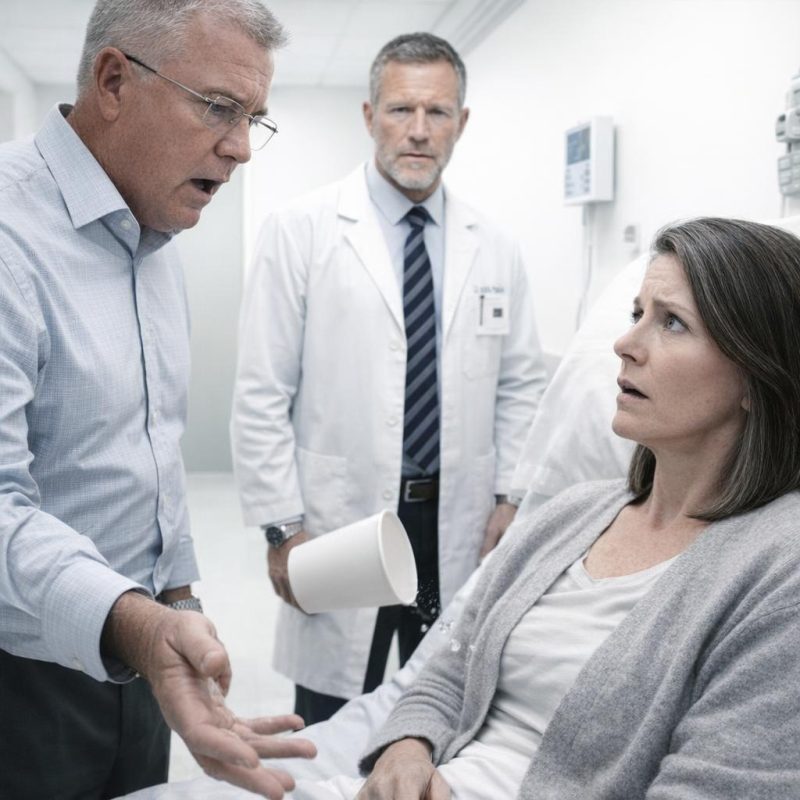 Image by RM AI
The Flight
For a second nobody moved. Then Detective Hayes had her radio out and was talking fast — describing Greg, his clothing, which direction he had gone. She used the words 'suspect' and 'attempted murder' and I heard them land in the room like objects dropped from a height. A nurse appeared in the doorway and Detective Hayes told her to alert hospital security immediately. Dr. Chen put his hand briefly on my arm and said something I didn't fully process. I was staring at the spilled coffee on the floor, the broken pieces of the cup scattered across the linoleum. Twenty-two years. I kept thinking that. Twenty-two years of mornings, of dinners, of him handing me a cup of coffee with a smile, and the whole time — I couldn't finish the thought. Detective Hayes came back to my bedside. She told me that officers were being dispatched to our home. She said the fact that he ran was significant. She said they would find him. She looked at me steadily and said Greg was now a flight risk.
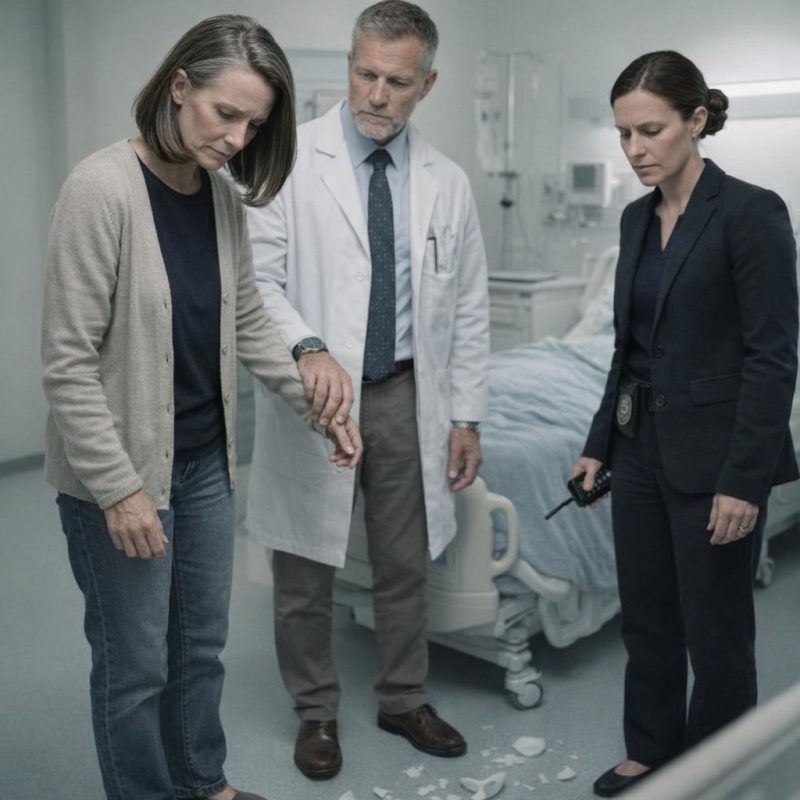 Image by RM AI
Twenty-Two Years
Detective Hayes stepped out to coordinate with the officers, and Dr. Chen followed to speak with the nursing staff, and for a few minutes I was alone. I looked at the coffee still pooled on the floor. Nobody had cleaned it up yet. I thought about every morning Greg had handed me a mug — the way he always made it exactly how I liked it, a little strong, a little sweet, and how I had taken that as evidence of love for twenty-two years. I thought about the Sunday mornings and the dinners and the evenings on the couch when he would ask how I was feeling, his voice full of what I had read as concern. I thought about every doctor's appointment he had driven me to, every time he had held my hand in a waiting room, every time he had said he was worried about me. All of it had been happening at the same time as whatever he was putting in my food. The care and the poison, running alongside each other, and I had only ever seen one of them. Twenty-two years of a life I thought I understood, and it had never been what I believed it was. The weight of that sat in my chest like something that had no bottom.
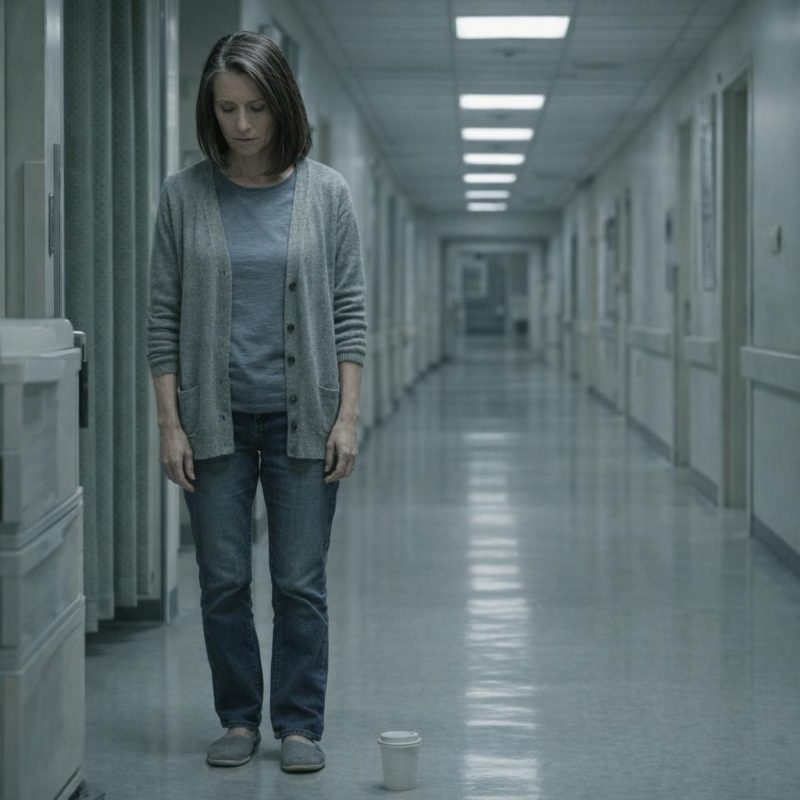 Image by RM AI
Treatment Plan
Dr. Chen came back in quietly and pulled the chair close to the bed. He said he wanted to talk about treatment. He explained chelation therapy — an IV medication that binds to heavy metals in the bloodstream and allows the body to clear them. He said I would need several sessions and would have to stay in the hospital for monitoring, at least initially. He said my symptoms — the migraines, the fatigue, the neurological episodes — should begin to improve as the metals were cleared from my system. I asked him if I would fully recover. He said yes. With treatment, he expected a complete recovery. He said I was fortunate they had caught it when they did. A few more months, he said carefully, and the damage could have been irreversible. I nodded. I heard everything he said. The word 'fortunate' sat strangely in my mind — fortunate, because I had gone to the emergency room with a migraine, because a blood panel had been run, because a doctor had looked at the numbers and known what they meant. I was going to live. I held that fact quietly, and underneath the relief, the reason I needed saving at all pressed down on me like a weight I didn't yet know how to carry.
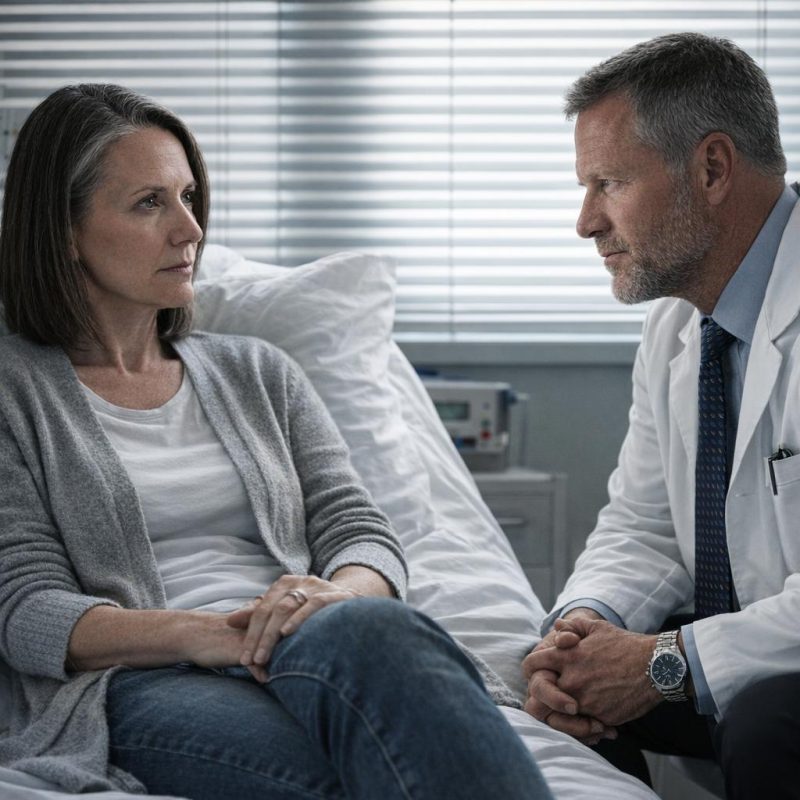 Image by RM AI
Joanne Arrives
I called Joanne from the hospital room while Dr. Chen's words were still settling over me like ash. I don't even remember exactly what I said — something about needing her, something about Greg. She didn't ask questions. She just said she was coming. True to her word, she was there in under thirty minutes, still wearing her gardening clothes, dirt on her knees, hair pulled back in a messy clip. She pushed through the door and the moment I saw her face — that open, worried, completely unguarded face — something inside me just gave way. I started crying in a way I hadn't let myself cry yet. Not the quiet, stunned kind. The ugly, gasping kind that comes from somewhere deep. She crossed the room and wrapped her arms around me and I held on like she was the only solid thing left in the world. She kept saying, "I'm here, I'm here," and I kept trying to find the words. I told her about the blood tests. About the arsenic and the thallium. About the doctors' faces and Greg's face and the moment he walked out the door. She pulled back just enough to look at me, and I heard myself say it out loud for the very first time: "Greg poisoned me."
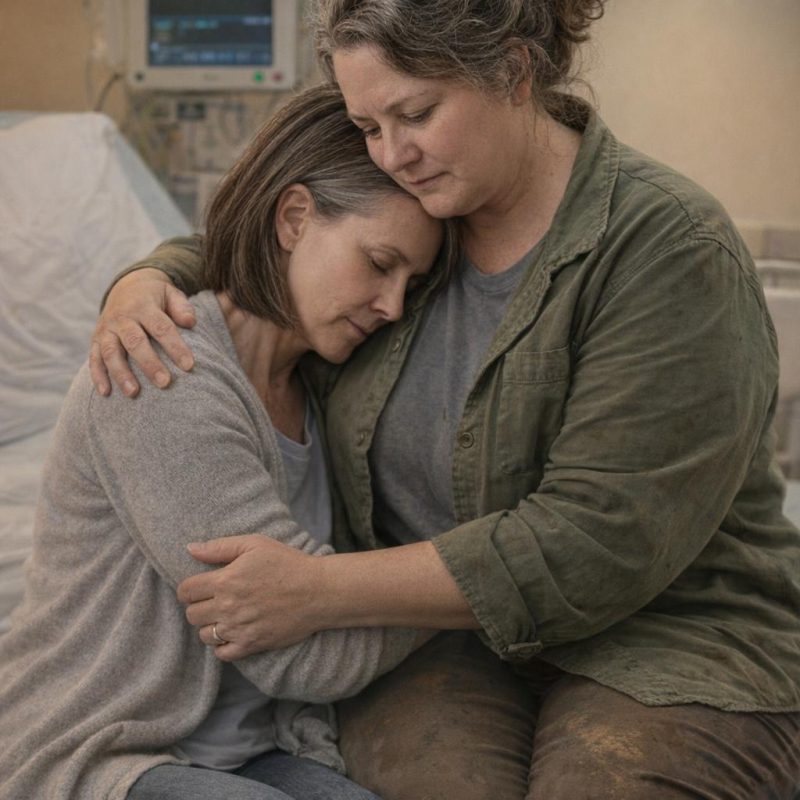 Image by RM AI
Greg's Arrest
Joanne hadn't let go of my hand in what felt like hours when Detective Hayes came back into the room. Her expression was composed but there was something different in the set of her jaw — a kind of quiet resolution. She pulled a chair close and sat down, and I remember thinking that detectives must learn early how to deliver news that splits a person's life in two. She told me they had found Greg. He was twenty miles outside the city, pulled over at a gas station. A patrol unit had spotted his car in the lot. She said he hadn't resisted. He was in custody and would be transported to the county jail to be formally charged with attempted murder. I nodded. I kept nodding, like the motion was the only thing keeping me upright. Joanne squeezed my hand hard enough that I felt it. I thought I would feel relief — and I did, somewhere underneath everything else. But there was also something that felt like grief, raw and bewildering, because the man being handcuffed at a gas station twenty miles away had been my husband for twenty-two years. Detective Hayes said he had been at the ATM when the officers approached — trying to pull out as much cash as he could carry.
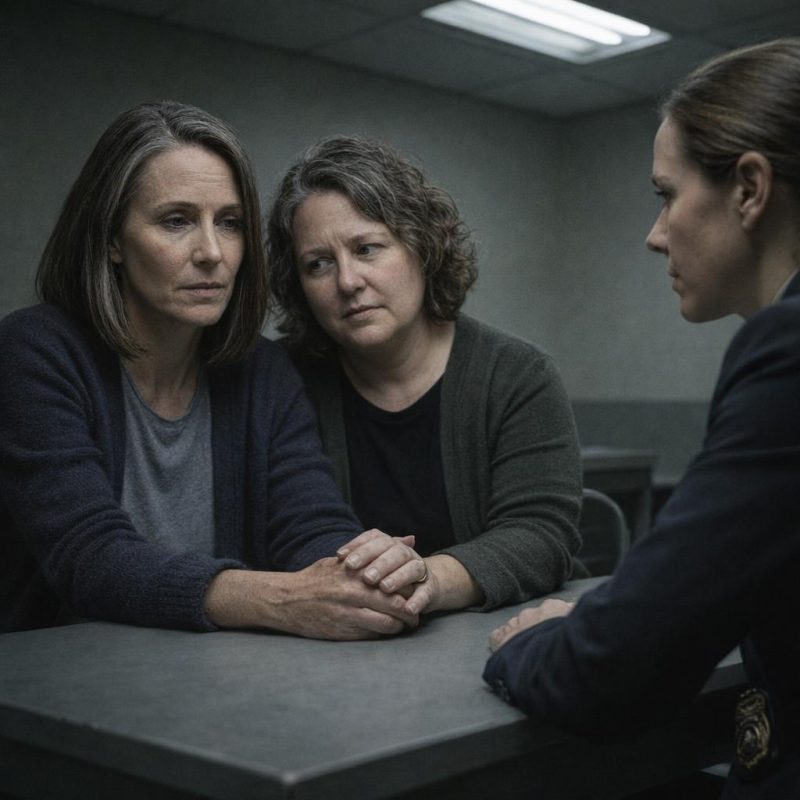 Image by RM AI
The Search Warrant
Detective Hayes was still in my room when her phone buzzed. She glanced at the screen, stood up straighter, and said, "They've executed the search warrant on your house." I watched her listen for a moment, her expression giving almost nothing away. Then she lowered the phone and looked at me directly. Investigators had gone through the garage. Behind a row of paint cans on the back shelf, they found containers — sealed, labeled in Greg's handwriting — holding arsenic and thallium. She said it carefully, like she was making sure every word landed. The physical evidence was in hand. Joanne made a sound beside me, something between a breath and a word that never quite formed. I didn't make any sound at all. I just sat there thinking about our garage. The one I walked through every single day to get to the car. The one where I had helped Greg organize those shelves two summers ago, moving cans around, handing things to him, laughing about something I couldn't even remember now. The poison had been sitting there the whole time, behind the paint, in our house, in our life. Detective Hayes said it was strong evidence for prosecution. I already knew that. What I couldn't stop feeling was the weight of all those ordinary mornings I had walked right past it.
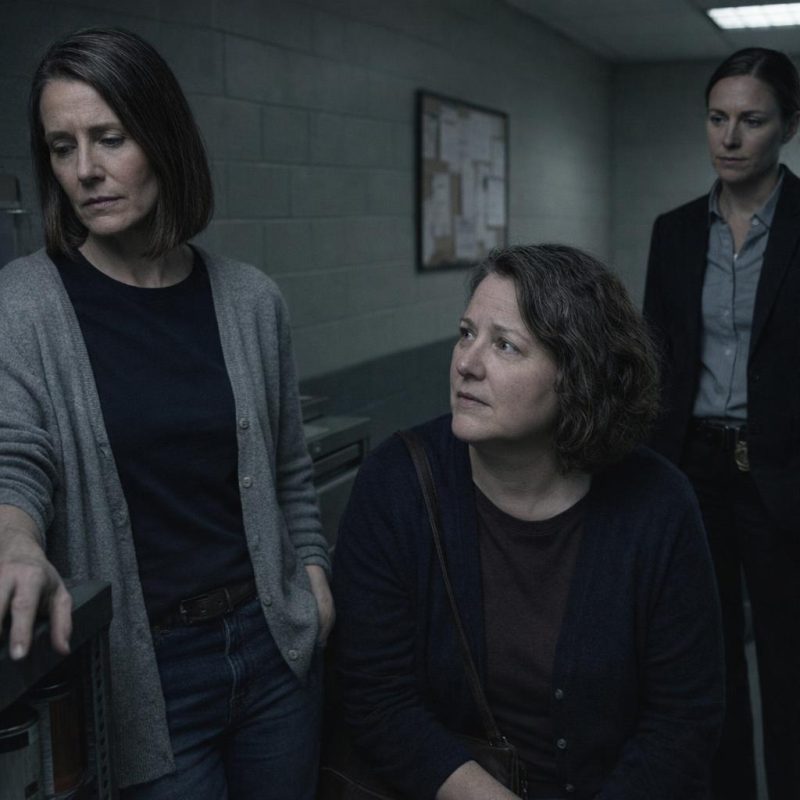 Image by RM AI
Internet History
Detective Hayes came back the following morning with a folder and a look on her face that told me before she opened her mouth that whatever was inside it was going to be hard to hear. Forensic investigators had gone through Greg's laptop. His search history went back months — she said the earliest entries were dated just weeks after my aunt Margaret's estate was settled. He had searched for untraceable poisons. He had searched for the symptoms of arsenic poisoning and how long they take to appear. He had looked up how long it takes for heavy metal poisoning to become fatal. He had researched inheritance law for surviving spouses. He had searched for how to avoid raising suspicion during a prolonged illness. Joanne sat very still beside me. I sat very still too. Detective Hayes read a few of the search terms aloud and each one landed like something physical. I kept thinking about the timeline — my aunt Margaret gone, the money arriving, and Greg, somewhere in our house on his laptop, typing those words into a search bar. Every search was a step. Every result he clicked was a decision. Detective Hayes closed the folder and said the search history established clear premeditation. I didn't need her to tell me that. I was already sitting with the full, cold shape of what those months had actually been.
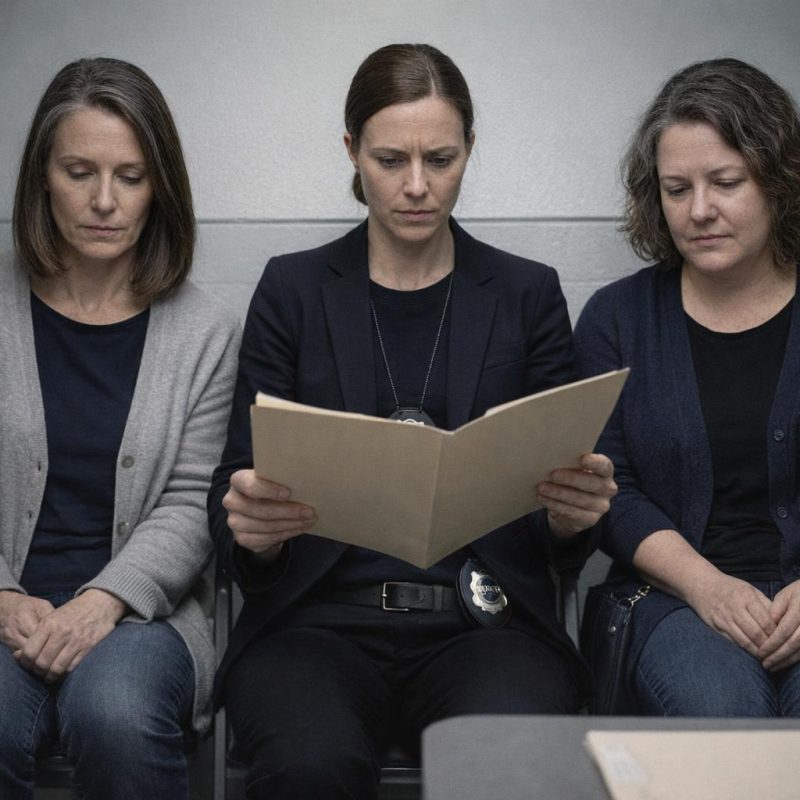 Image by RM AI
Grand Jury
The grand jury room was smaller than I expected. Quieter too. DA Williams had prepared me as well as anyone could — he was measured and precise, the kind of person who made you feel like the facts were enough, that the truth didn't need embellishment to be believed. He guided me through my testimony carefully, asking me to describe my symptoms, the months of migraines and fatigue, the way I had kept assuming I was just getting older, just run down. I told them about my aunt Margaret and the inheritance. I told them about Greg's questions — the ones about my will, about what would happen to the money if something happened to me. I described the morning coffee ritual, how Greg had made it every single day without exception, how he had waved me off the few times I offered to do it myself. I told them about the ER, about Dr. Chen's face when he came back into the room, about the blood test results. I told them about watching Greg walk out the door. The jurors watched me with grave, careful attention. A few of them leaned forward. I kept my voice as steady as I could, and somewhere in the middle of it I realized that saying it out loud — all of it, in sequence, in a room full of people who were truly listening — felt like the first time any of it had been fully real.
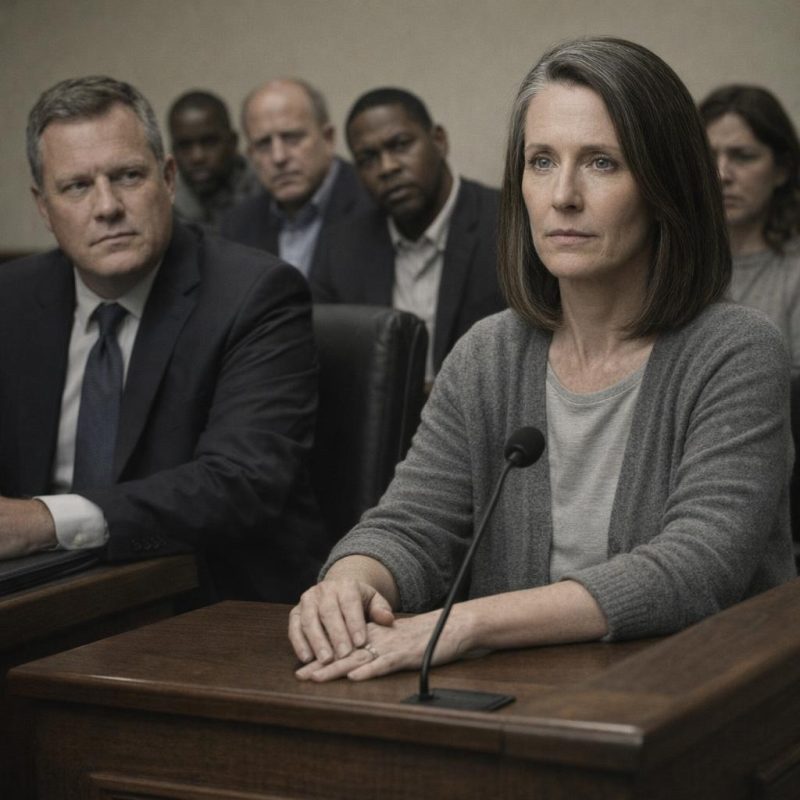 Image by RM AI
The Indictment
DA Williams called me two days after my testimony. The grand jury had returned an indictment — attempted murder in the first degree. He said it clearly and without fanfare, the way people deliver news they know is both a relief and a wound. Greg had been arraigned that morning. He had pleaded not guilty. I stood in Joanne's kitchen holding the phone and I felt the anger move through me like something with heat and weight. Not guilty. After the blood tests, after the containers in the garage, after the search history on his laptop — he was standing in a courtroom saying not guilty. DA Williams explained that Greg's attorney was arguing the evidence was circumstantial. He said they intended to claim I was either mistaken or lying. He said it matter-of-factly, like he was reading from a document, and I appreciated that he didn't soften it. He told me the case was going to trial and that the evidence was strong. He said I should prepare myself to testify again, this time in open court, in front of a jury, with Greg sitting at the defense table. I told him I understood. I told him I wasn't afraid of that. What I didn't say was that I was already furious — because Greg, after everything, was going to make me prove it.
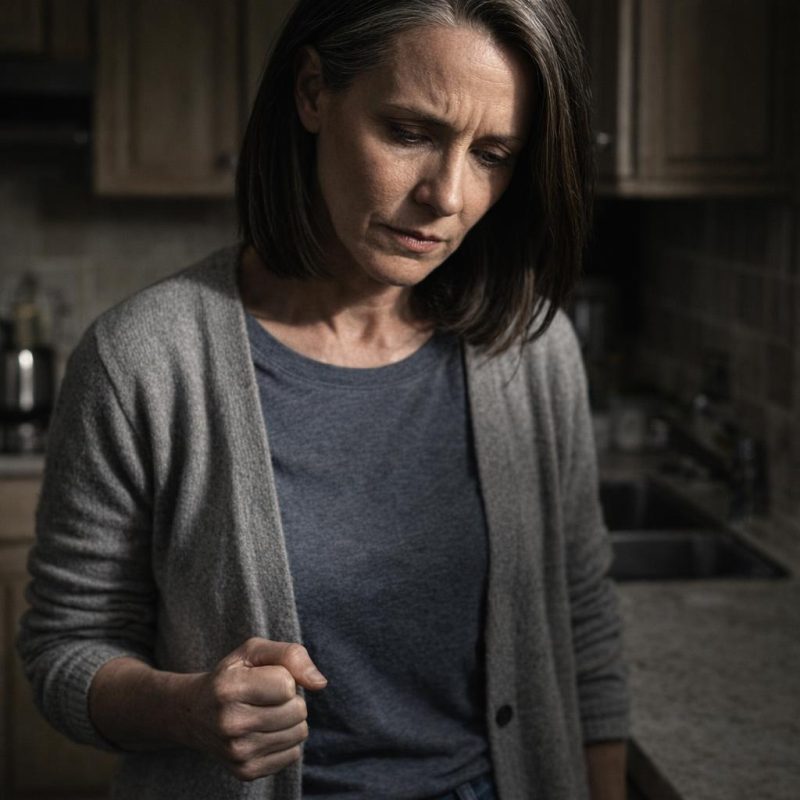 Image by RM AI
Trial Begins
I had been in courtrooms before, but never like this. Never as the reason the room existed. I took my seat in the gallery and kept my eyes forward while the space filled around me. Then the side door opened and Greg was brought in, and I made myself look. He was in a dark suit, his hair combed the way he always combed it, and he sat down at the defense table without glancing toward me. DA Williams delivered the opening statement with the kind of quiet authority that doesn't need volume. He laid it out plainly — the inheritance, the poison, the months of deliberate administration, the blood tests that had saved my life. Greg's attorney countered with words like circumstantial and coincidence and grieving wife. I watched the jury during both. Their faces were careful, attentive, giving nothing away. Then Dr. Chen took the stand, and the medical charts went up on the screen — the blood panels, the toxicology results, the documented levels of arsenic and thallium in my system. And then DA Williams put up the graph. It was a simple thing, a line rising steadily over time, and beside it a vertical marker showing the date the inheritance cleared. The poison levels and the money arriving, plotted together on the same axis, visible to everyone in the room.
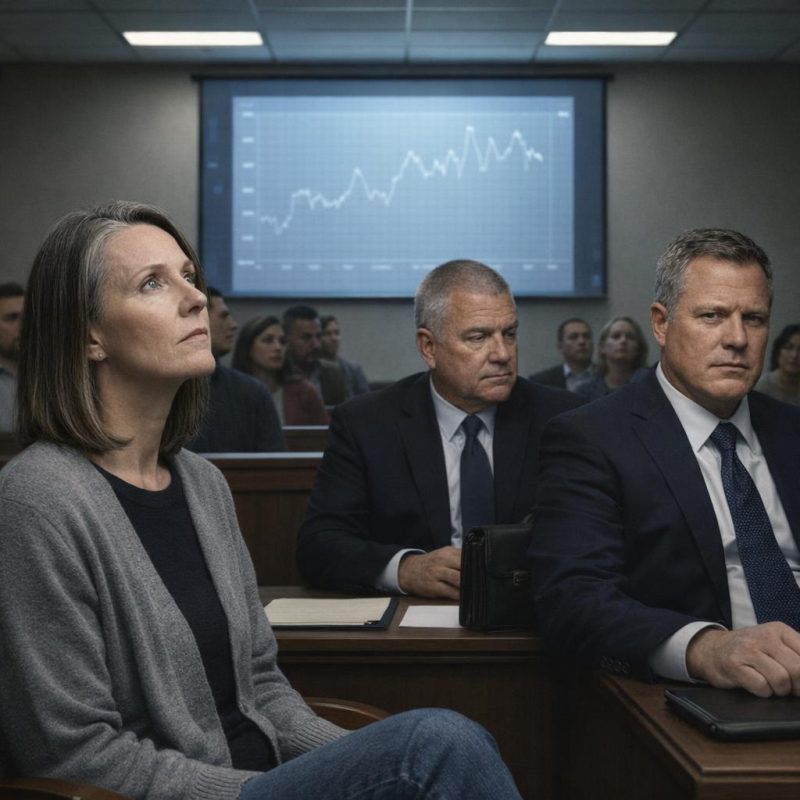 Image by RM AI
Catherine's Testimony
When DA Williams called my name, I stood up and walked to the witness stand and I did not look at Greg. I sat down, took the oath, and folded my hands in my lap. DA Williams started gently — my daily routine, my health before the symptoms began, what a normal morning in our house looked like. I described the coffee. I told the jury that Greg made it every single morning without exception, that he was already up and in the kitchen before I came downstairs, that the mug was always waiting for me on the counter. I told them about the two or three times I had offered to make it myself and how he had said no, that he liked doing it, that it was his thing. I described the headaches starting. The fatigue. The way I kept telling myself it was stress, or age, or not sleeping well enough. I described the morning I finally went to the ER. I told them about Dr. Chen coming back into the room with the blood results. I told them about looking at Greg's face in that moment and watching something shift in it. I told them I had trusted my husband completely — with my mornings, with my coffee, with my health, with my life. I looked up from my hands then, and the jury was watching me, every single one of them, with an attention that felt like the room had stopped breathing.
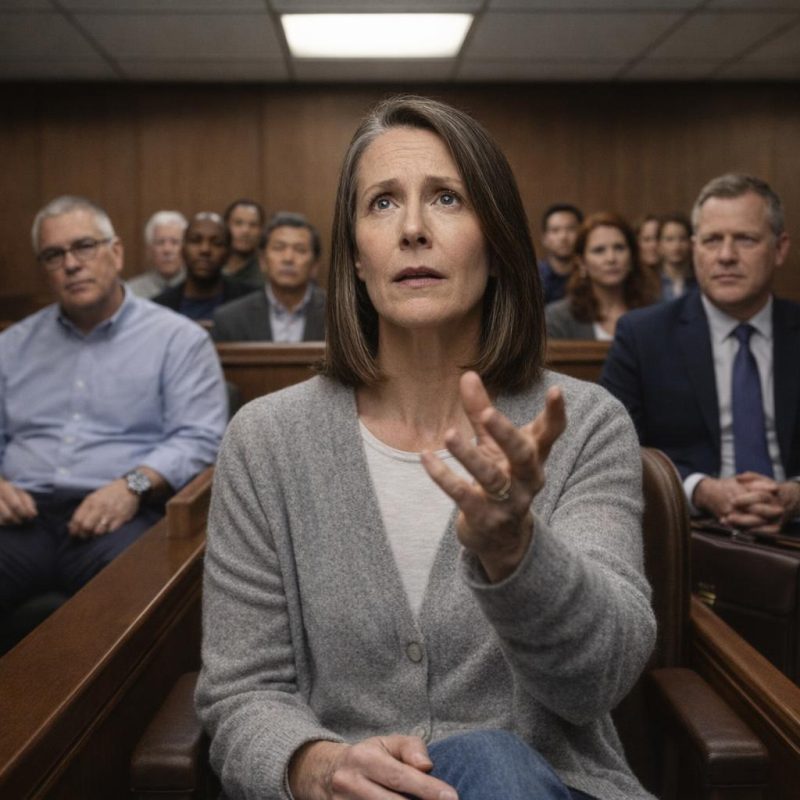 Image by RM AI
The Verdict
The jury was out for two days. I sat with Joanne in the hallway outside the courtroom for most of it, drinking bad coffee and not saying much. When the call came that they had reached a verdict, my legs felt like they belonged to someone else. I walked back in and took my seat and kept my eyes forward. The foreperson stood up and read the words — guilty, guilty, guilty — one count after another, and I heard them land in the room like stones dropping into still water. I looked at Greg then. His face didn't move. Not a flinch, not a blink, nothing. The judge scheduled sentencing for the following week, and I sat through that too, in the same seat, with Joanne's hand pressed against mine. The judge spoke directly to Greg about betrayal and premeditation and the deliberate erosion of a person's life. Greg stood at the defense table with his hands clasped in front of him and his eyes fixed somewhere past the judge's shoulder. Then the judge's voice settled into the room, clear and final: twenty-five years.
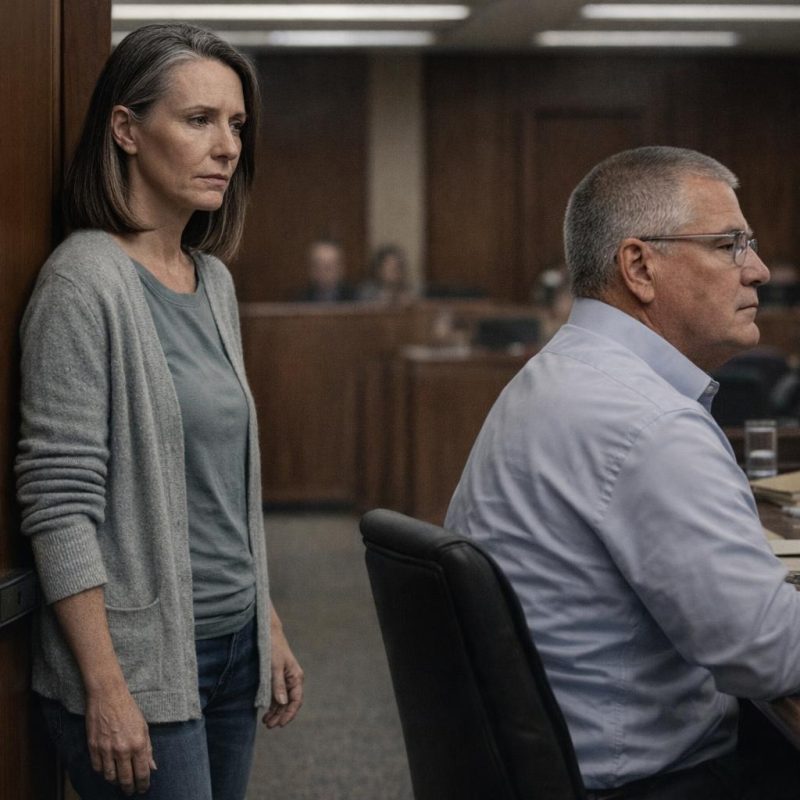 Image by RM AI
Recovery
The last chelation session was quieter than I expected. Dr. Chen came in afterward with my results and told me the heavy metals were gone — cleared, he said, like it was a simple thing, like the word itself wasn't enormous. My symptoms had been resolving for weeks by then. The headaches were gone. The fatigue had lifted. I could think clearly again, and that alone felt like a miracle I hadn't earned. The emotional recovery was slower and messier and nobody could schedule it. I started seeing a therapist twice a week. I moved out of the house Greg and I had shared and found a small apartment with big windows and no history. Joanne helped me carry boxes up two flights of stairs and then sat on my kitchen floor eating takeout with me while I cried about things I couldn't even name. I went back to work at the library part-time, shelving books and helping people find things, and there was something steadying about that — the quiet, the order, the sense that everything had a place. Some mornings I woke up and the weight of it all pressed down hard. Other mornings I just made coffee and watched the light come through the window, and the fact that I was still here felt like enough.
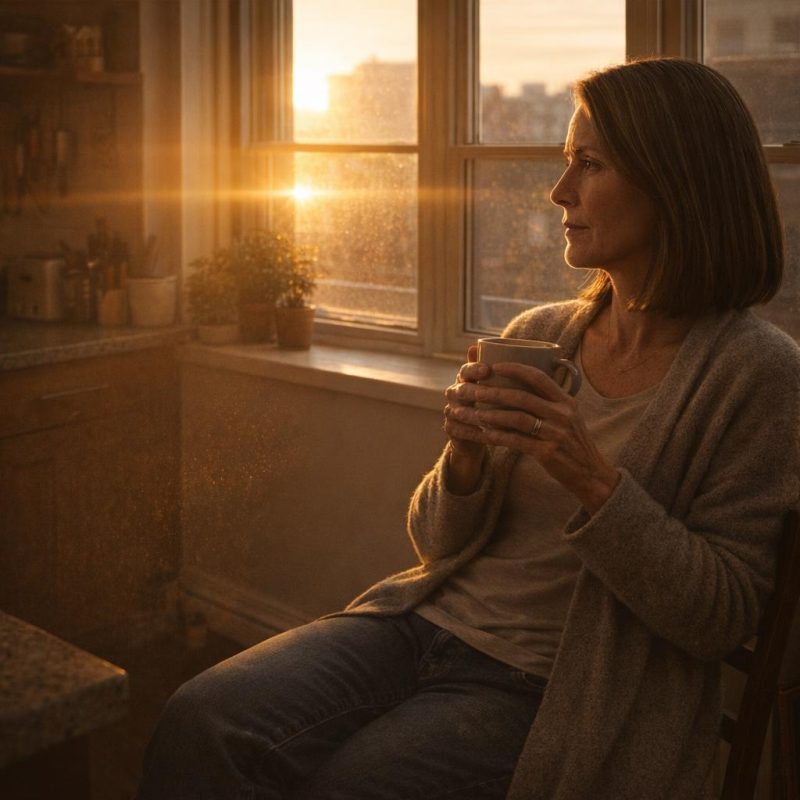 Image by RM AI
Divorce and New Beginnings
The divorce was finalized on a Thursday morning in a lawyer's office that smelled like carpet cleaner and old paper. Joanne drove me there and waited in the lobby with a coffee she'd brought from the good place down the street. The paperwork was straightforward — Greg had no leverage, no standing, nothing left to negotiate with. My lawyer set the pages in front of me one by one and I read every line before I signed, which I hadn't always done in my life and which I intended to do from now on. The inheritance remained entirely mine. The house would be sold. The accounts were already separated. When I signed the final page, my lawyer said congratulations in a careful, measured way, and I nodded and thanked her. In the lobby, Joanne handed me the coffee and asked how I felt, and I told her I wasn't sure yet, which was honest. We drove back to my apartment and sat on the balcony and she let me be quiet for a while without filling the silence. I thought about the support group I'd started attending, the other women in that circle who understood without needing an explanation. I thought about the trip I was planning — Portugal, maybe, or somewhere I'd never been. I thought about the future, and for the first time in a long time, it felt like mine to shape.
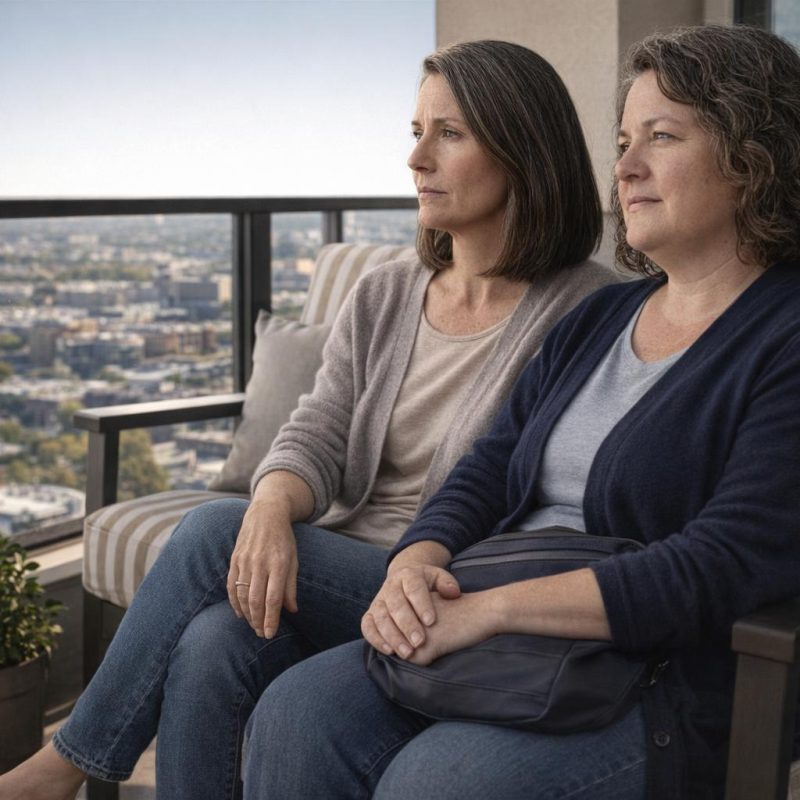 Image by RM AI
Choosing to Survive
I think about the woman who walked into that ER on a Tuesday morning with a migraine and a husband beside her. She trusted him with her coffee, her mornings, her body, her life. She had no idea. I am not that woman anymore, and I mean that in every way — not just the obvious ones. I know things now that I didn't know then. I know what my instincts feel like when they're trying to tell me something. I know that love is not the same as safety. I know that I am harder to break than I ever imagined, because someone tried very hard to break me and I am still here, sitting on a balcony in an apartment that is entirely mine, planning a trip I will take alone and enjoy completely. Joanne came over the evening I booked the flights and we opened a bottle of wine and she said, 'You're actually going,' and I said yes, I actually am. The inheritance that Greg had tried to take from me — along with everything else — was going to fund a life he never got to touch. I had spent months surviving. I had spent months getting through. And somewhere between the last therapy session and the moment I clicked confirm on that booking page, something shifted — not dramatically, not all at once, but clearly: I was done just getting through. I was ready to live.
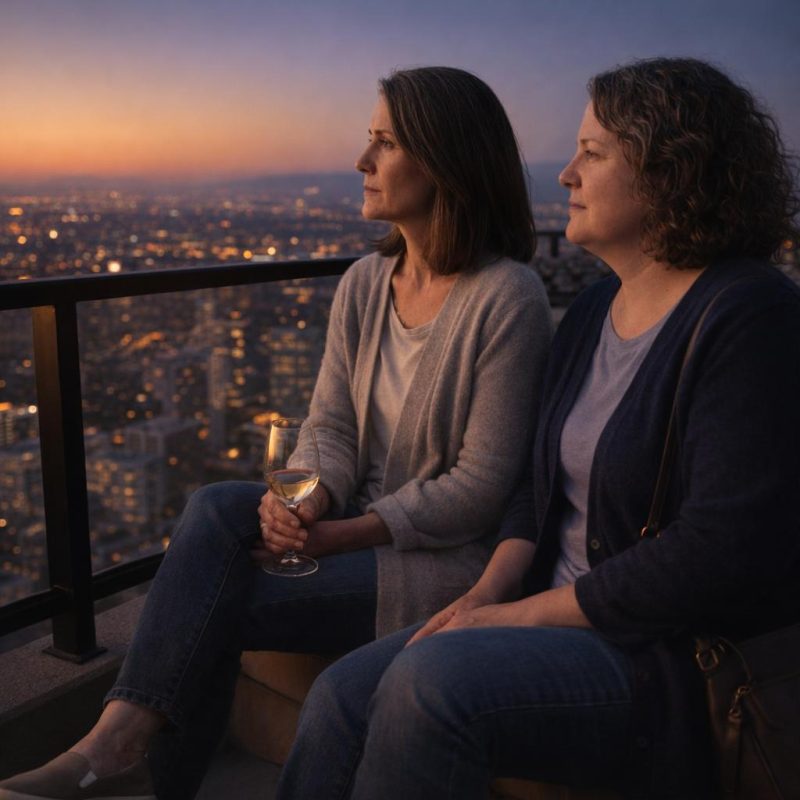 Image by RM AI
KEEP ON READING

The story of Ching Shih, the Woman Who Became the…
Unknown author on WikimediaFew figures in history are as feared…
By Emilie Richardson-Dupuis Dec 29, 2025
Einstein's Violin Just Sold At An Auction—And It Earned More…
A Visionary's Violin. Wanda von Debschitz-Kunowski on WikimediaWhen you hear…
By Ashley Bast Nov 3, 2025
This Infamous Ancient Greek Burned Down An Ancient Wonder Just…
History remembers kings and conquerors, but sometimes, it also remembers…
By David Davidovic Nov 12, 2025
The Mysterious "Sea People" Who Collapsed Civilization
3,200 years ago, Bronze Age civilization in the Mediterranean suddenly…
By Robbie Woods Mar 18, 2025
20 Greatest Ancient Athletes In History
Ancient Olympics. Long before modern stadiums and multimillion-dollar endorsements, athletes…
By Sara Springsteen May 1, 2026
20 Soldiers Who Defied Expectations
Changing the Rules of the Battlefield. You’ve probably heard plenty…
By Annie Byrd Feb 10, 2026