

I Was Humiliated at the Company Party—Then I Exposed the One Thing My Boss Never Wanted Anyone to Know
I Was Humiliated at the Company Party—Then I Exposed the One Thing My Boss Never Wanted Anyone to Know
The Executive Table
I walked into the downtown venue that Friday night expecting to feel proud. The company had rented out the entire top floor of the Meridian Hotel—floor-to-ceiling windows overlooking the city, dim amber lighting that made everything look expensive, an open bar that stretched along the entire west wall. I'd been with the company for three years, and this year had been different. The Riverside project had been mine from pitch to delivery, and I'd brought it in under budget and ahead of schedule. Ryan had pulled me aside two weeks earlier and told me I'd earned something special this year. He'd said it with that knowing smile, the one that suggested he was letting me in on something. When I stepped into the ballroom and saw the executive table positioned dead center on a raised platform, I understood what he'd meant. The lighting hit it perfectly, making it impossible to miss. White linens, crystal glasses, name cards in small silver frames. I felt people's eyes on me as I moved through the crowd, and I interpreted every glance as recognition. This was it—the moment when three years of work finally meant something visible.
 Image by RM AI
The Welcome
Ryan found me before I'd made it halfway across the room. His hand landed on my shoulder with enough force that I actually stepped forward slightly, and his voice carried over the ambient noise. "There he is! Dan, everyone, the man who saved our asses on Riverside!" A few executives near the bar turned to look, and I felt my face warm. Ryan kept his hand on my shoulder, steering me slightly toward a cluster of senior leadership I recognized from quarterly meetings. "Three years with us and already running projects like a ten-year vet," he continued, his smile wide and performative. I managed a thank you that came out quieter than I'd intended. A couple of the executives nodded in my direction—I couldn't tell if it was approval or just acknowledgment. Ryan's enthusiasm felt almost too big, like he was making sure everyone in a ten-foot radius knew I was there. But I told myself that's just how these things worked at this level. Public recognition. Visibility. I thanked him again and started moving toward the executive table, my confidence building with each step.
 Image by RM AI
Taking My Seat
I found my name card between two executives I'd only ever seen in company-wide emails. Mark sat three seats down, his power tie perfectly knotted, already deep in conversation with someone I didn't recognize. CEO Patricia occupied the head of the table, her silver hair catching the light as she reviewed something on her phone. The chair felt heavier than it should have when I pulled it out. The table setting in front of me looked like something from a restaurant I couldn't afford—multiple forks, a wine glass and water glass, a small menu card describing the four-course meal. I was hyper-aware of my posture, the way I placed my hands, whether my expression looked natural or forced. I could feel eyes on me from multiple directions. Some of the other executives were already seated, their conversations flowing easily, and I tried to look like I belonged in the pauses between their sentences. I reached for my water glass just to give myself something to do, something that looked purposeful. That's when Mark shifted in his seat, turning his body toward me.
 Image by RM AI
The First Comment
Mark's voice was quiet, almost conversational. "This table's usually reserved for leadership." The words landed with a weight I hadn't expected. I looked at him, trying to read his expression, but his face was neutral—not hostile, not friendly, just observational. A few other people at the table were close enough to have heard. I felt a flicker of confusion move through my chest. "Ryan invited me to sit here," I started to say, but something about the way Mark's eyebrow lifted slightly made me pause mid-sentence. His expression didn't match what I'd expect from a simple misunderstanding. There was no surprise, no oh-I-see-now clarity. Just that same neutral observation, like he was waiting for me to catch up to something. I glanced around to see if anyone else had registered the comment. A woman two seats over was suddenly very interested in her phone. Another executive was signaling the waiter. Ryan was somewhere behind me, out of my line of sight. The confusion sharpened into something more specific—a sense that I'd missed something important, that there was context here I didn't have.
 Image by RM AI
Out of Place
Mark leaned back in his chair, and his laugh carried just far enough. "Everyone gets excited their first year," he said, his tone light but pointed. "Thinking they've made it to the big leagues." A couple of people at the table chuckled—uncomfortable sounds that felt more like social obligation than genuine amusement. Heat crawled up my neck. I was suddenly aware of every person within earshot, every face that had turned slightly in my direction. The comment hung in the air, and I couldn't tell if I was supposed to laugh along or defend myself or just sit there. I chose sitting there, keeping my expression as neutral as I could manage. I looked toward Ryan, hoping for some kind of intervention or clarification, but he was focused intently on his drink, swirling the ice in a way that seemed to require his full attention. The energy at the table had shifted. What had felt like curiosity a moment ago now felt like scrutiny. I noticed the woman next to me adjust her napkin with unnecessary precision. Another executive cleared his throat and started a conversation with the person on his other side. And I sat there, feeling the weight of being watched while pretending I didn't.
 Image by RM AI
The Jokes Continue
Mark didn't stop. "Do you need someone to explain how things work at this level?" he asked, his smile not quite reaching his eyes. Then, a minute later, to no one in particular: "I wonder if the seating charts got mixed up this year." Each comment arrived with perfect timing, just as I'd started to think maybe it was over. Each one was delivered with the same smile, the kind that could be interpreted as friendly if you weren't the target. I forced myself to keep my shoulders relaxed, my hands resting naturally on the table. I focused on my breathing, on not letting my face show what I was feeling. Around me, the other executives had developed a sudden fascination with their phones, their drinks, the view out the windows—anything but me. No one made eye contact. No one jumped in to change the subject or redirect the conversation. I became hyper-aware of every micro-movement I made—where I placed my hands, whether I was blinking too much, if my expression looked defensive. Ryan remained silent, sipping his drink like he was watching a show that didn't quite hold his interest. And that's when I started to wonder: was anyone going to step in, or was I supposed to just endure this?
 Image by RM AI
The Setup
I watched Ryan take another slow sip of his drink, his eyes scanning the room like he was looking for someone more interesting to talk to. He'd been sitting there the entire time, close enough to hear every word Mark said, and he hadn't said a single thing. Not one word of clarification or defense or even mild redirection. The realization moved through me like cold water. Ryan had invited me to sit here. He'd made that big show of greeting me, announcing my presence, steering me toward this table. He'd known exactly what would happen. This wasn't a mistake or a misunderstanding or Mark going rogue. This was the point. I was supposed to sit here and take it while everyone watched. I understood suddenly that this wasn't about the seat at all—it was about showing everyone in the room exactly where I stood in the hierarchy, no matter what project I'd delivered or how many hours I'd worked. The embarrassment I'd been feeling shifted into something colder, more calculated. I made a conscious choice not to argue, not to defend myself, not to give them whatever reaction they were looking for. I sat back in my chair and started watching instead of reacting.
 Image by RM AI
Enduring Dinner
The first course arrived—some kind of seared scallop arrangement that probably cost more than my weekly grocery budget. I focused on my plate, cutting precise pieces, chewing slowly, giving myself a task that didn't require eye contact or conversation. Mark made another passing comment about hoping I was taking notes on how things worked up here. I didn't respond. I'd stopped trying to fit in or prove I belonged. Instead, I watched. I noticed who laughed at Mark's comments—forced, performative sounds. I noticed who looked uncomfortable but stayed silent. I noticed who avoided looking at me entirely, and who snuck glances when they thought I wasn't paying attention. The meal moved through its courses with excruciating slowness. Salad, then the main course, then some elaborate dessert I barely tasted. I maintained careful control over my facial expressions, keeping everything neutral and unreactive. Mark's comments continued like background noise I couldn't escape, but I'd stopped letting them land emotionally. By the time CEO Patricia stood to begin the evening's speeches, I had stopped trying to participate in the performance they'd created around me.
 Image by RM AI
The Speeches Begin
CEO Patricia stood at the front of the room, her silver hair catching the chandelier light as she invited people to share reflections on the year. Before she'd even finished the sentence, Mark was on his feet, reaching for the microphone with the kind of confidence that came from knowing everyone would listen. He started with a joke about the company's new coffee machines—something about how they were more temperamental than some of the clients—and the room responded with easy laughter. I watched him work the crowd, his timing perfect, his smile practiced but effective. He moved into talking about growth and teamwork, about raising standards and pushing boundaries, and people nodded along like they were hearing something profound instead of the same corporate platitudes we'd all heard a hundred times before. But I could feel something building beneath the surface of his words. The way he paused between certain phrases, the way his eyes scanned the room like he was measuring reactions. He was setting something up, laying groundwork for a point he hadn't made yet. I sat perfectly still at the executive table, my hands folded in my lap, watching him build momentum. The laughter that followed was louder than before, and I could feel him building toward something.
 Image by RM AI
Public Reference
Mark circled back to the importance of understanding your place in the organization, about enthusiastic newcomers who sometimes tried to jump ahead without earning it first. I felt several heads turn in my direction, subtle glances from people at nearby tables. The comment landed differently than his previous jokes—sharper, more pointed. The laughter that followed was louder and more uncomfortable, the kind that comes when people aren't sure if they're supposed to find something funny but do it anyway because everyone else is. I felt the weight of the entire room's attention settling on me like a physical thing. Mark was still smiling, still holding the microphone, still playing to the crowd. And in that moment, I made a decision. I could sit there and take it, let him have his moment at my expense, or I could do something I hadn't planned on doing. Before I could overthink it, before the rational part of my brain could talk me out of it, I stood up. The room quieted slightly, conversations dropping to murmurs as people noticed me rising from my seat at the executive table. The laughter that followed was louder than before, and I knew this was my moment to either stay silent or respond.
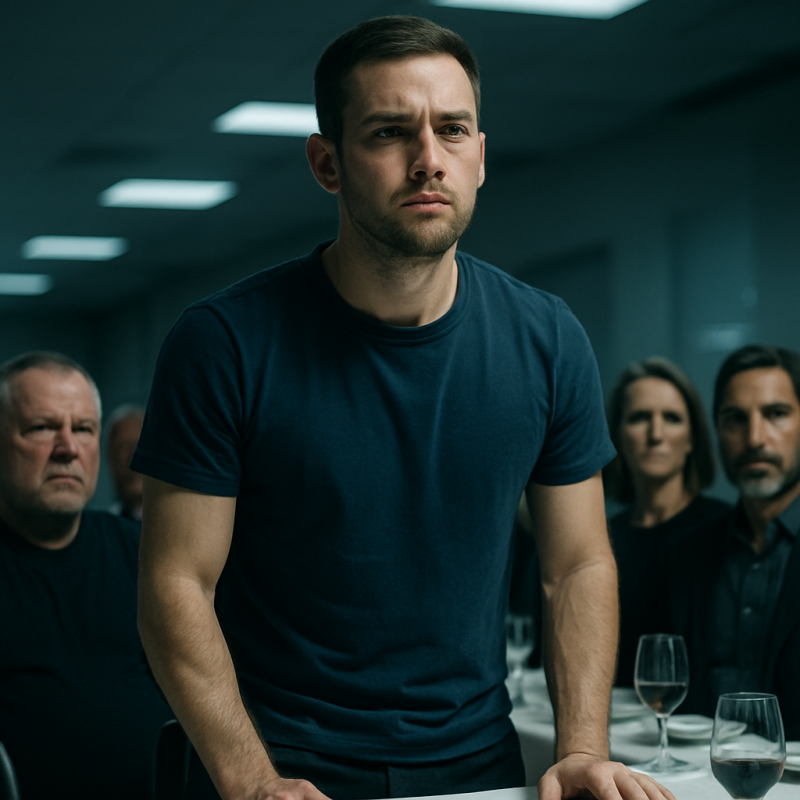 Image by RM AI
My Response
I stepped forward and reached for the microphone, and Mark handed it over with a smile that didn't quite reach his eyes. My heart was pounding but my voice came out steady. I thanked everyone for the opportunity to be here tonight, mentioned how much I'd learned this year about how things really worked. Then I shifted gears. I talked about the importance of transparency in project reporting, about how critical it was that the data we presented to clients remained accurate and unchanged from what was originally delivered. I mentioned accountability, how we all had a responsibility to make sure what got presented matched what actually happened. I glanced briefly at Mark while I said it, just a flicker of eye contact, nothing that could be called out as aggressive. The words were careful, indirect enough to be deniable if anyone questioned them later, but specific enough that anyone paying attention would wonder what I was really saying. I handed the microphone back to Mark calmly, my hand completely steady despite the adrenaline coursing through me. I returned to my seat and sat down, watching Mark's smile tighten just slightly.
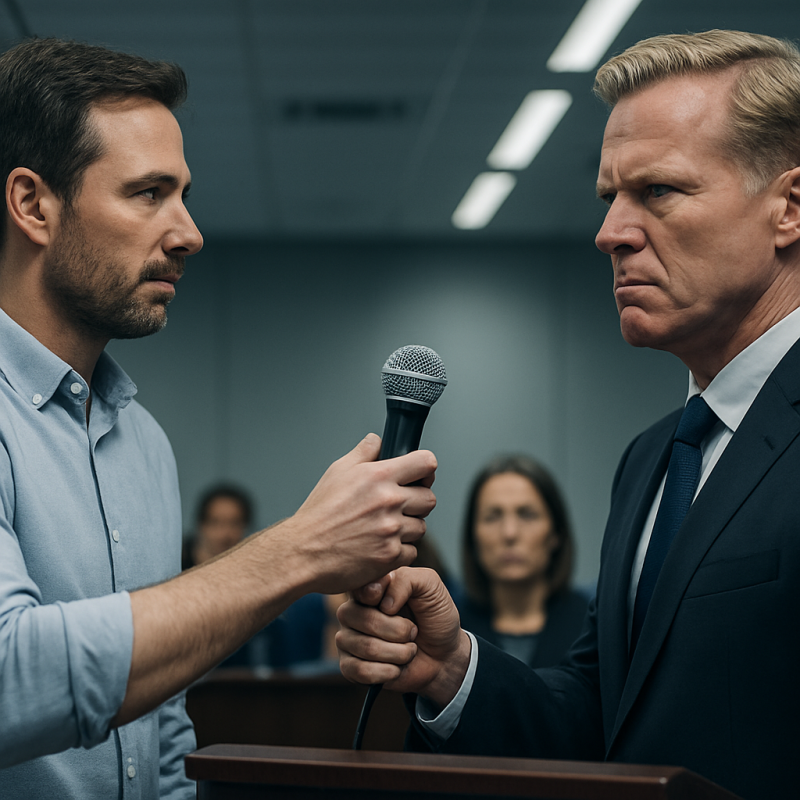 Image by RM AI
The Room Goes Quiet
The energy in the room shifted immediately. Conversations that had been flowing easily moments before slowed to uncertain murmurs. I watched people glance at each other across tables, trying to figure out if I'd meant what it sounded like, if I'd just made some kind of veiled accusation at a company party in front of everyone. Mark's confident demeanor showed its first real crack—he didn't lose his smile, but it became more fixed. He made some quick comment about everyone being passionate about their work and moved on to wrap up his speech, but the momentum he'd built earlier was gone. I observed reactions carefully, filing each one away. Some people looked confused. Others looked uncomfortable. A few looked intrigued, like they'd just witnessed something they weren't supposed to see. CEO Patricia was looking between Mark and me with slight confusion, clearly trying to understand what had just happened. And Ryan—Ryan's entire posture had changed from relaxed to alert, his shoulders squared, his attention locked on me. Ryan sat up straighter in his chair, and I could feel him staring at me from across the table.
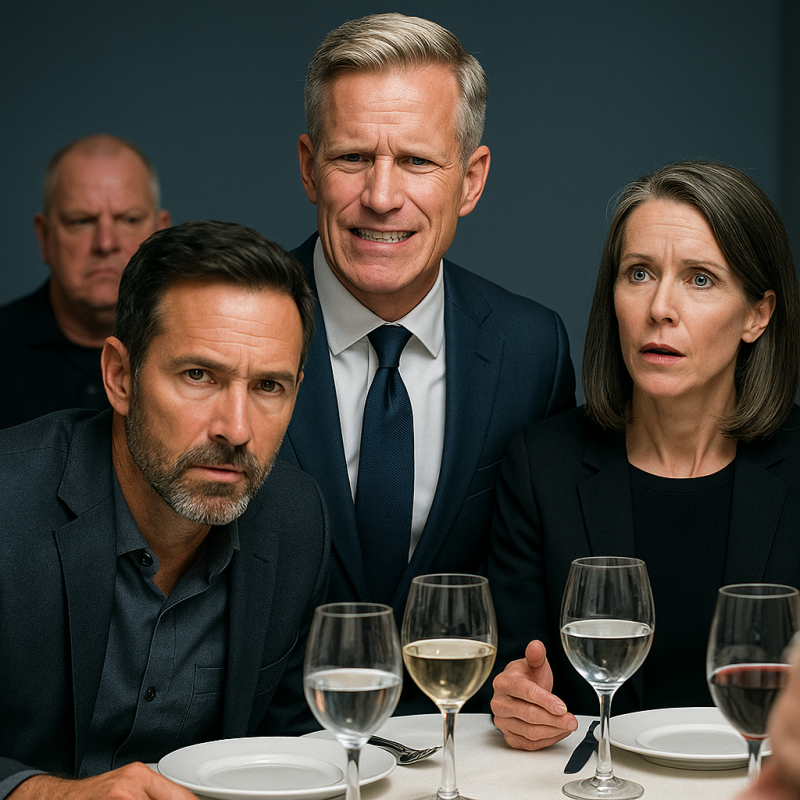 Image by RM AI
The Party Winds Down
The formal program concluded about twenty minutes later, and people began standing, mingling, moving between tables. I stayed seated at the executive table, maintaining the same composed posture I'd held all evening. The dynamics around me had shifted in ways I was still processing. People were quieter near our table than they'd been earlier, their conversations more subdued. Mark made no additional comments in my direction, which felt more significant than if he'd continued his earlier pattern. Ryan avoided making eye contact with me entirely, suddenly very interested in his phone. I watched the room carefully, noting who was speaking in low voices, who kept glancing toward the executive table like they were trying to figure something out. The party was breaking up gradually, people collecting coats and saying goodbyes. Across the room, I saw Jennifer, someone from my level who I'd worked with on a few projects. She was standing near one of the regular tables, and when our eyes met, she held the contact for a moment longer than casual. Then she started making her way toward me, weaving between clusters of departing colleagues. Jennifer caught my eye from across the room and started making her way toward me.
 Image by RM AI
Jennifer's Sympathy
I stood to leave as the venue continued emptying out, and Jennifer reached me near the exit. She touched my arm lightly, her expression sympathetic in a way that made me realize how visible the whole thing had been. She said she'd witnessed what happened at the executive table, that Mark had been completely out of line. I thanked her but kept my response measured, not wanting to get into the details of how the evening had felt from my seat. She nodded, understanding my guardedness, but then her expression shifted slightly. She lowered her voice, glancing around to make sure no one was close enough to overhear. She mentioned she'd noticed my comment about data accuracy during the speeches, the way I'd talked about transparency and accountability. Then she asked carefully what I'd meant by it, whether I was talking about something specific or just speaking generally. I deflected, said I was just reinforcing corporate standards, the kind of thing anyone might say. She looked at me for a long moment, uncertain whether to believe me, trying to read something in my expression I wasn't ready to show. We parted ways near the coat check, and I walked to my car still processing everything. She lowered her voice and asked what I'd meant about the data accuracy comment.
 Image by RM AI
Weekend Replay
I spent Saturday morning replaying the entire party in my mind, analyzing each moment like I was reviewing footage. Mark's comments, the way he'd built toward that joke about enthusiastic newcomers. Ryan's silence throughout the evening, how he'd avoided defending me or even acknowledging what was happening. The way my veiled comment about data accuracy had landed—harder than I'd expected, creating a shift in the room I still didn't fully understand. I kept coming back to Mark's reaction, that tightening of his smile, the way his confidence had faltered for just a moment. Why had that specific comment affected him? I'd been speaking generally, hadn't I? Or had I accidentally hit on something real without meaning to? By Sunday, I was questioning everything. I recalled moments from the past year where things had felt slightly off—reports that seemed different from what I remembered submitting, conversations that stopped when I entered rooms, the way Mark sometimes looked at my work with an expression I couldn't quite read. Maybe I was overthinking it. Or maybe there was something I'd been missing all along. By Sunday evening, I'd decided that Monday would start with me looking more carefully at my project files.
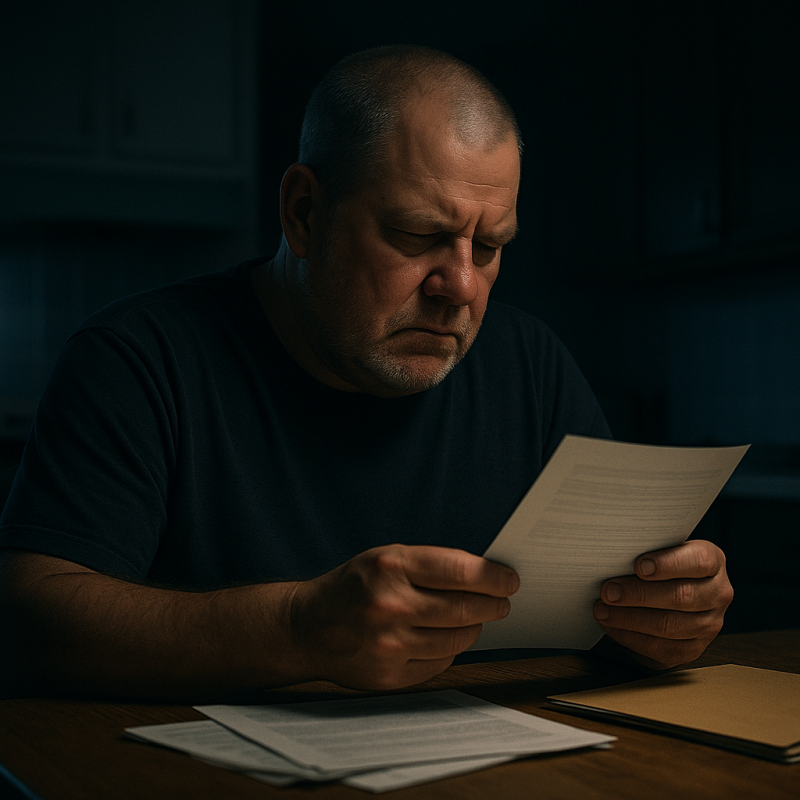 Image by RM AI
Monday Morning
I arrived at the office Monday morning with a heightened awareness I couldn't shake. The moment I walked through the door, I sensed the atmosphere had changed around me. Colleagues who normally offered casual good mornings glanced at me differently—some with curiosity, others with something that looked like caution. In the hallway, a few people avoided eye contact entirely, suddenly very interested in their phones or the floor. The usual morning small talk felt strained when it happened at all. I made my way to my desk, noting each interaction, each avoidance, each subtle shift in behavior. Then Ryan walked past my desk without stopping, without his usual greeting, without even the performative shoulder clap he typically deployed. He kept his eyes forward like I wasn't there, like we hadn't sat at the same table Friday night. The avoidance was so obvious it confirmed what I'd already suspected—whatever had happened at that party, whatever I'd triggered with my comment about data accuracy, the fallout was real. I logged into my computer, my resolve solidifying. The changed atmosphere wasn't just in my head. Ryan walked past my desk without his usual greeting, and I knew the fallout from Friday was just beginning.
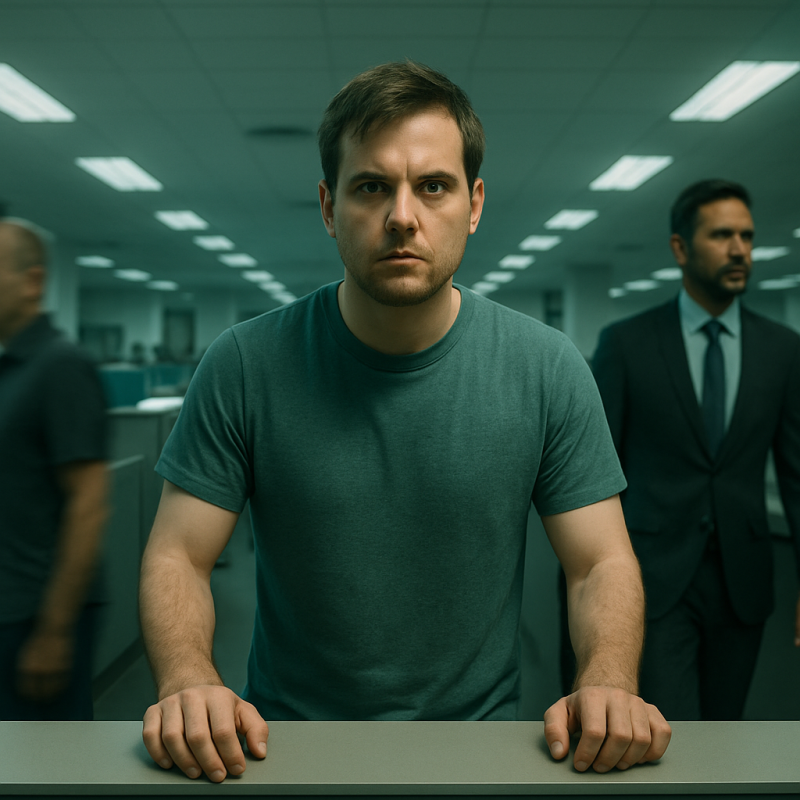 Image by RM AI
Careful Observation
I spent the morning watching Ryan avoid me while Mark acted like nothing had happened, and the contrast told me everything. Ryan changed direction in the hallway twice when he saw me coming, suddenly very interested in his phone or ducking into conference rooms he had no reason to enter. He walked the long way around the floor to avoid passing my desk, and when we ended up in the same meeting, he positioned himself on the opposite side of the table and didn't make eye contact once. Meanwhile, Mark breezed through the office with his usual commanding presence, stopping to chat with people, laughing at someone's joke in the break room, completely unaffected. I watched him through the glass wall of a conference room, noting how relaxed he seemed, how normal. That normalcy felt wrong. If Friday's party had been as tense as the aftermath suggested, why wasn't Mark showing any signs of it? Ryan's nervous avoidance made sense if something was actually wrong. Mark's complete lack of concern suggested either he didn't think anything was wrong, or he knew something Ryan didn't. I sat at my desk processing the different reactions, wondering what Ryan might be nervous about that Mark wasn't. That afternoon, I opened my project archive and started pulling files from the major client project I'd led.
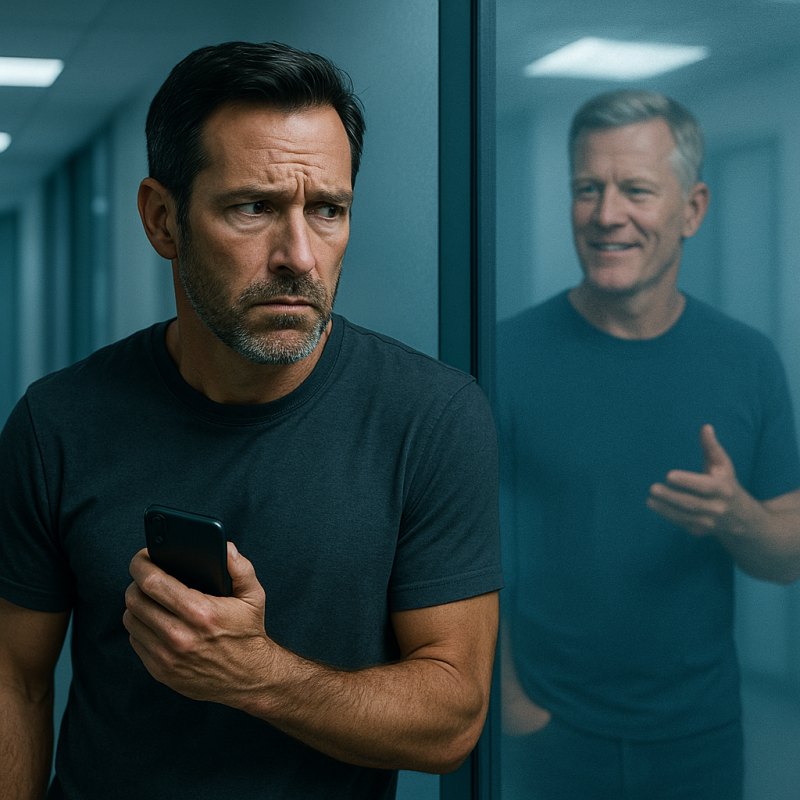 Image by RM AI
Reviewing the Files
I pulled up my project files from the year and started reading through them with fresh eyes, looking for anything unusual. I opened the folder containing my original documentation from the major client project, the one I'd spent four months leading earlier in the year. I read through my initial project plans, the weekly status reports I'd compiled, the data summaries I'd prepared for review meetings. I went through timelines, deliverables, budget projections, and the final comprehensive report I'd submitted before the project moved to executive presentation. Everything looked exactly as I remembered creating it—thorough, accurate, carefully documented. But I kept reading anyway, looking for anything that might have been sensitive or problematic, anything that could explain the tension at Friday's party. Some sections seemed like they might have been important, data points that could have mattered to someone, but I couldn't quite put my finger on what felt off. I spent hours reading through dense project materials, my eyes starting to blur from staring at spreadsheets and reports. Maybe I was being paranoid. Maybe there was nothing to find and I was just looking for problems because I wanted an explanation for what had happened. Three hours later, I sat back and stared at my screen, wondering if what I was seeing was actually there or if I was looking for problems that didn't exist.
 Image by RM AI
The Discrepancies
I compared my original reports to the final presentations and found numbers that didn't match, changes I hadn't made, data that had been altered. I opened both documents side by side on my screen—my final comprehensive report on the left, the executive presentation that had gone to the client on the right. I started reading through them section by section, comparing carefully. The first discrepancy appeared in a financial projection for year-two revenue. My report showed a conservative estimate based on the data we had. The final presentation showed a number fifteen percent higher. I found a second change in the timeline data, where my realistic six-month implementation schedule had become an aggressive four-month promise. Then I found more. Multiple numbers had been adjusted from my originals—budget figures, resource allocations, projected ROI percentages. These weren't minor edits or formatting changes. These were substantive alterations to key data points, the kind of changes that would affect client expectations and billing projections. I found no documentation of who had made these changes or why, no revision notes, no approval trail I could see. My hands felt cold as I scrolled through both documents, finding difference after difference. I sat frozen at my desk, understanding that what I'd stumbled onto was bigger than embarrassment at a party.
 Image by RM AI
Comparing the Work
I pulled every version I could find and laid them out side by side, documenting each difference between what I'd delivered and what had been presented. I retrieved files from my local drive, the shared project folder, and the archived presentations directory. I opened multiple windows across my monitors, arranging them so I could compare documents systematically. I started a new file on my personal laptop—not the company system—and began documenting each discrepancy I found. Original scope versus final scope. My timeline versus presented timeline. My financial projections versus what the client had been shown. The changes followed a pattern I couldn't ignore. Every alteration inflated the projections, made the outcomes look more favorable, compressed the timelines to seem more aggressive and impressive. I documented changes to deliverable dates, resource requirements, and success metrics. The modifications appeared across multiple sections of the project, not just one or two isolated edits. This wasn't someone fixing a typo or updating a formatting style. Someone had systematically gone through my work and made it look better than the data supported. I saved my comparison notes in an encrypted file, my mind racing through implications. These changes would make projects appear more successful than they actually were, would set client expectations that might not be realistic. By the end of the day, I had a list of alterations that I couldn't ignore.
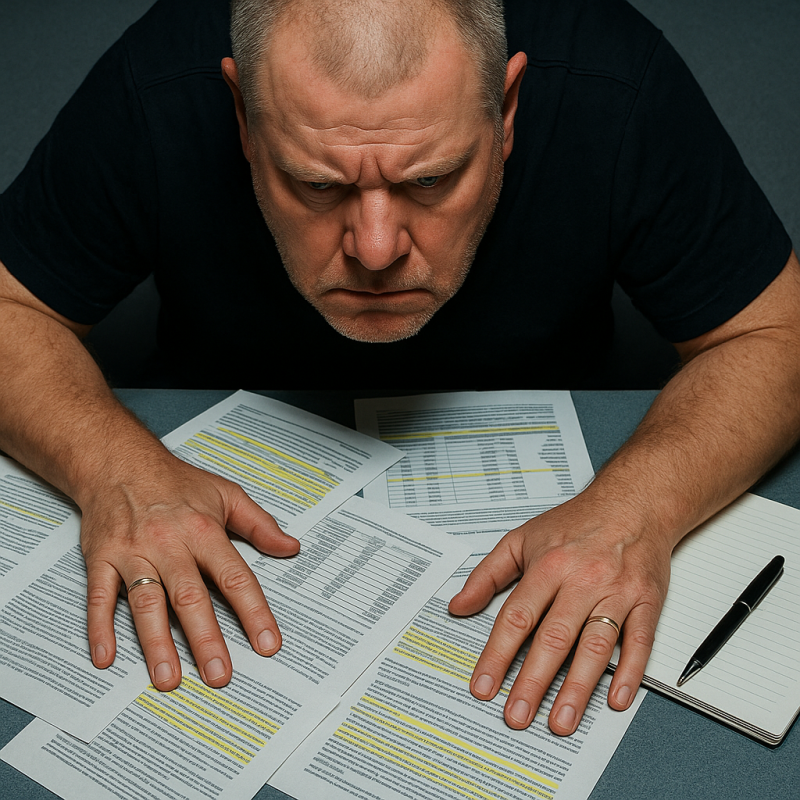 Image by RM AI
The Archive
I went deeper into the archived files and found similar alterations in older projects I'd worked on months before. I accessed the project archive system and started pulling files from earlier in the year, projects I'd contributed to but hadn't led. I opened a client engagement from six months prior where I'd handled the data analysis portion. Same pattern. My conservative projections had been adjusted upward in the final client presentation. My realistic timeline estimates had been compressed. I found another project from eight months back with matching modifications—financial data inflated, risk assessments softened, success metrics made more optimistic. I documented each finding in my personal notes, creating a spreadsheet that tracked the alterations across different projects and timeframes. A third project showed the same kinds of changes, this one from a different quarter and a different client entirely. This wasn't isolated to my major project or even to projects I'd led. The pattern appeared across multiple engagements, different teams, different months. I noted that the changes seemed to span at least three quarters of work, possibly more if I kept digging. My stomach felt tight as I saved my findings to an encrypted file on my personal device, the weight of what I was uncovering starting to settle in. By late afternoon, I had three separate projects showing the same kinds of changes, all from different months.
 Image by RM AI
The Finance Conversation
I found Tom from finance in the break room and started what seemed like casual conversation about project reporting processes. He was refilling his coffee mug when I walked in, and I grabbed a cup for myself, keeping my tone light and conversational. I mentioned I'd been thinking about how projects move through the system from completion to client delivery, just curious about the workflow since I usually only saw my part of it. Tom explained the basic approval process—project teams submit final reports, they go through department review, then up to senior directors for final approval before anything goes to clients. I asked who typically has authority to modify reports at that stage, framing it as general interest in how the company operates. Tom said senior directors can make adjustments before billing, that it's part of their oversight role to ensure everything meets company standards. He added that adjustments are supposed to be documented in the revision log, that everything goes through proper channels. But as he said it, something shifted in his expression. He glanced around the empty break room, then back at me with a look I couldn't quite read. Tom mentioned that final client reports sometimes get adjusted before billing, then glanced around and changed the subject.
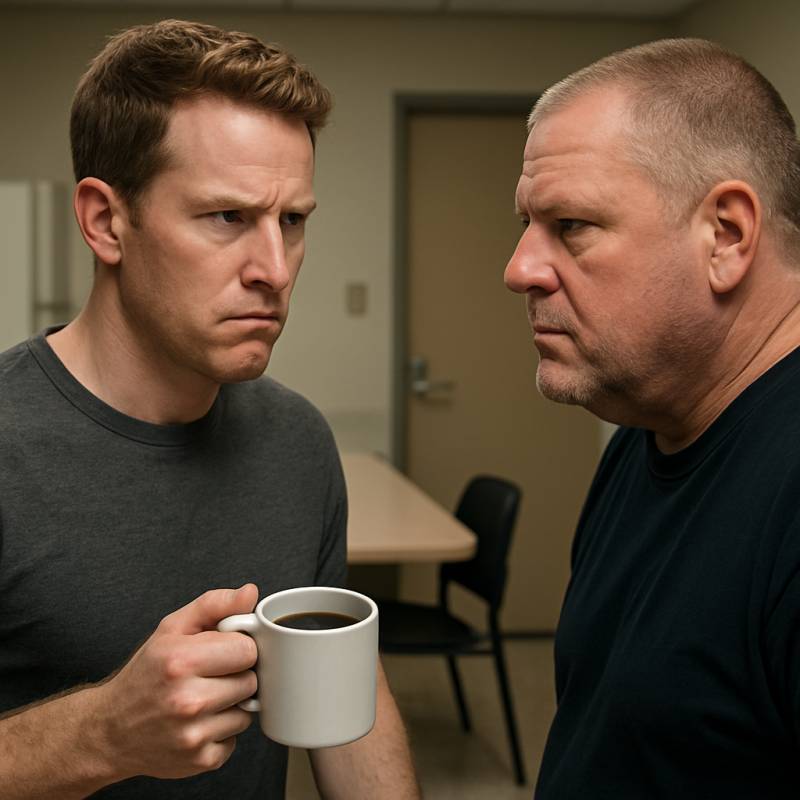 Image by RM AI
The Timeline
I mapped out every altered file by date and discovered the changes started appearing consistently about eighteen months ago, quarter after quarter. I created a detailed spreadsheet on my personal laptop, documenting each modified project chronologically. I plotted the alterations across quarters, looking for when this had begun. The first altered report I could find appeared approximately eighteen months back, right at the start of the previous fiscal year. From that point forward, the modifications occurred consistently—every quarter showed projects with the same kinds of inflated projections and compressed timelines. I went back to the archived files and pulled up the approval signatures on the modified documents. Every final version, every presentation that had gone to clients with altered data, carried the same approval signature at the bottom. Mark's signature. I cross-referenced the timing with company announcements I could find in my email archive. Mark had been promoted to senior director almost exactly eighteen months ago. The alterations had started appearing shortly after he'd gained the authority to make final approvals on client deliverables. I documented the correlation in my timeline, though I knew correlation didn't prove causation. But the pattern was too regular to be random, too consistent to be different people, and all of it had Mark's approval signatures.
 Image by RM AI
Business as Usual
I made sure to show up to meetings on time, hit my deadlines, and act exactly like someone who wasn't investigating anything at all. I arrived at work at my usual time Tuesday morning, grabbed my usual coffee, settled at my desk with my usual routine. I attended the weekly team meeting and participated appropriately, offering input on current projects and asking relevant questions about upcoming deadlines. I completed a routine status report with my typical attention to detail, making sure the work was solid and professional. In the hallway, I engaged in normal small talk with colleagues about weekend plans and the weather, keeping my tone light and unremarkable. I kept my investigation completely separate from my daily work, only accessing my personal files during lunch or after hours when I was alone. When others walked by my desk, my screen showed only legitimate company work—current projects, emails, standard reports. Ryan stopped by late in the afternoon to review the status report I'd submitted. He complimented my work, said it was thorough and exactly what he needed, seemed satisfied and almost relieved. I smiled and thanked him like nothing had changed, like we were just two colleagues doing our jobs, like I wasn't spending every private moment documenting evidence of systematic alterations to company projects.
 Image by RM AI
The Billing Connection
I spent Tuesday evening at my apartment going through the billing records I'd quietly pulled from the system, cross-referencing them against the project documentation I'd been reviewing for weeks. The process was methodical—I opened each client invoice, found the corresponding project file, compared the numbers line by line. My coffee went cold on the desk beside me as I worked through the first account, then the second. The third one made me stop and check my work twice because I couldn't believe what I was seeing. The invoices matched the altered projections, not my originals. Every single one. The clients had been billed based on the inflated scope estimates, the extended timelines, the padded resource allocations that Mark had changed in the system. I sat back in my chair and felt my stomach drop as the implications settled over me. This wasn't just about making projects look better in internal reports or protecting departmental metrics. This was about actual money that clients had paid based on data that had been systematically changed after I'd submitted it. I checked two more accounts to be sure, and the pattern held. The billing reflected the alterations, not the reality. The clients had been billed based on the altered data, which meant this wasn't just about making projects look better internally.
 Image by RM AI
Multiple Accounts
I took Wednesday off using a personal day, then worked through the weekend pulling every client account record I could access without raising flags in the system. I moved carefully, reviewing billing documentation and project files for each account, documenting what I found in my personal files at home. By Friday evening, I'd reviewed eighteen client accounts spanning different industries and project types—software implementations, process improvements, strategic consulting engagements. The same alterations appeared in more than half of them. Scope increases that I'd never approved. Timeline extensions that inflated billable hours. Resource allocations that didn't match my original estimates. I spent Saturday calculating rough totals, adding up the differences between what clients had been billed and what the original project parameters would have justified. The numbers made me feel sick. We were talking about millions of dollars across multiple quarters, multiple clients, multiple project types. I created a master spreadsheet listing every affected account, the type of alteration, the approximate billing impact. By Sunday night, I sat staring at the document on my screen, understanding that what I'd initially thought was one manager protecting his metrics had turned into something far larger. This wasn't one project or one quarter—it was widespread, spanning multiple clients and millions in billings.
 Image by RM AI
Ryan's Role
I watched Ryan carefully during Monday's team meeting, trying to read whether he understood what had been happening with the billing or if Mark had kept him completely in the dark. Ryan reviewed the week's priorities with his usual polished enthusiasm, mentioned upcoming client check-ins, discussed resource allocation for the quarter. His tone stayed light and professional throughout, nothing in his manner suggesting he carried any particular weight or concern. I listened for any indication he knew about the alterations, any slip in his carefully maintained corporate optimism, but found nothing definitive. Toward the end of the meeting, Ryan mentioned he'd been in a session with Mark last week where they'd discussed projection methodologies with a major client, and he described it casually, almost as an aside. I studied his face as he spoke, analyzed his body language, searched for clues about whether that casual tone meant genuine ignorance or careful cover. I couldn't tell. I thought back to the holiday party, to Ryan's silence when Mark humiliated me, and wondered if he'd avoided me afterward because he knew what Mark had done to the data or simply because Mark had told him to keep distance. Ryan mentioned a client meeting with Mark where projections had been discussed, and I couldn't tell if his casual tone meant ignorance or complicity.
 Image by RM AI
The Audit Announcement
CEO Patricia opened Tuesday's all-hands meeting with her usual polished authority, silver hair perfectly styled, voice carrying that practiced boardroom warmth that never quite reached genuine. She announced the company would be conducting a routine external audit, explained it was standard procedure for organizations of our size and growth trajectory, emphasized it reflected our commitment to transparency and best practices. I felt immediately alert, wondering if this audit might catch what I'd been documenting for weeks. I watched Mark's face from across the conference room, looking for any reaction—tension, concern, even subtle discomfort. He appeared completely unbothered, even nodding approvingly when Patricia mentioned the audit scope. After the meeting ended, he made a positive comment to another director about how good audits kept everyone sharp. That afternoon, David arrived—the external auditor, professional and methodical, carrying a tablet and introducing himself to the leadership team with detached courtesy. He set up in the large conference room, spreading documentation across the table with systematic precision. I observed from a distance as he began his initial meetings, watched him take meticulous notes, wondered about the scope of what he'd actually examine. David, the external auditor, arrived that afternoon and set up in the conference room, and I wondered if this might expose what I'd found.
 Image by RM AI
Mark's Confidence
I encountered Mark in the break room Wednesday afternoon, and he was holding court with two other managers, completely relaxed despite the audit happening down the hall. He joked about how auditors always made people nervous over nothing, said he'd been through a dozen of these and they always ended the same way—minor recommendations, clean bill of health, everyone back to normal within a week. The other managers laughed, seemed reassured by his confidence. Mark poured himself coffee with easy movements, made another comment about how the real trick was just keeping your documentation organized and your processes clean. I stood by the coffee maker maintaining a neutral expression while my mind raced through what I knew about the altered billing records. His ease felt completely wrong given the discrepancies I'd documented, the millions in questionable billings, the systematic changes to client invoices. I wondered what he understood that I didn't—whether he had connections with the auditing firm, whether he knew something about the audit scope that gave him this confidence, whether there was some protection I couldn't see. I refilled my own coffee and left the break room, but the image of his relaxed smile stayed with me. His ease felt wrong given what I knew about the altered billing records, and I wondered what he understood that I didn't.
 Image by RM AI
Audit Limitations
David distributed the formal audit scope document Thursday morning, and I obtained a copy through the standard department distribution. I read it carefully at my desk, going through each section with growing disappointment. The audit focused on general financial controls—approval processes, segregation of duties, compliance with accounting standards, internal control documentation. It covered high-level financial statement accuracy and standard operating procedures. I read through the methodology section twice, searching for any indication the audit would examine specific client billing accuracy or compare project documentation to invoices. Nothing. The scope didn't include detailed verification of how client charges were calculated or whether billing matched original project parameters. I understood immediately why Mark had seemed so confident in the break room. The audit would never catch what I'd found—it wasn't designed to. David would review controls and procedures, check that the right approvals existed, verify that processes looked proper on paper. He wouldn't dig into whether the numbers themselves had been altered after the fact. I sat back in my chair and felt the weight of realization settle over me. The audit would never catch what I'd found, and I understood I'd have to decide whether to bring it forward myself.
 Image by RM AI
Internal Considerations
I spent Saturday morning at my kitchen table with my laptop open, weighing my options with the same methodical approach I'd used to document the billing issues. I pulled up the company intranet and reviewed internal reporting procedures—anonymous hotlines, ethics committees, chain of command protocols. I made a list of potential consequences for each approach. Reporting through company channels meant going to HR or the ethics committee, trusting the system to investigate fairly and protect me from retaliation. But I'd seen how the company operated, how Mark maintained his position despite clear problems, how Ryan stayed silent when it mattered. I researched external options next—regulatory agencies, industry oversight boards, legal protections for whistleblowers. The personal risk felt enormous either way. Internal reporting might get suppressed or redirected, might put a target on my back without actually fixing anything. External reporting meant burning bridges, potentially ending my career in this industry, becoming known as someone who went outside the organization. I questioned whether I even had enough evidence to make a credible report that would be taken seriously. Sunday evening, I sat staring at my notes, at the pros and cons I'd listed for each path. By Sunday night, I'd listed the pros and cons of each approach, and neither option felt safe.
 Image by RM AI
Testing HR
I scheduled a meeting with Alison from HR for Monday afternoon, framing it in my calendar request as a career development discussion. She welcomed me into her office with professional warmth, asked about my goals and trajectory with the company. We spent the first ten minutes on routine topics—my performance reviews, potential growth opportunities, skills I wanted to develop. I steered the conversation gradually toward project quality and reporting standards, keeping my tone casual and hypothetical. I mentioned how important data accuracy was in client-facing work, asked general questions about what channels existed if someone had concerns about reporting practices. Alison's expression shifted immediately—the friendly openness replaced by something more guarded and carefully neutral. Her posture straightened slightly, her responses became more measured and protocol-focused. She emphasized the importance of following chain of command, suggested that any concerns should go through direct managers first before escalating elsewhere. I asked about situations where the concern involved the direct manager, and she gave me what felt like a rehearsed answer about HR being available for guidance while respecting organizational hierarchy. I thanked her and ended the meeting earlier than scheduled, understanding I'd learned what I needed to know. Alison's expression shifted from friendly to guarded the moment I mentioned project reporting standards, and I knew I'd learned something important.
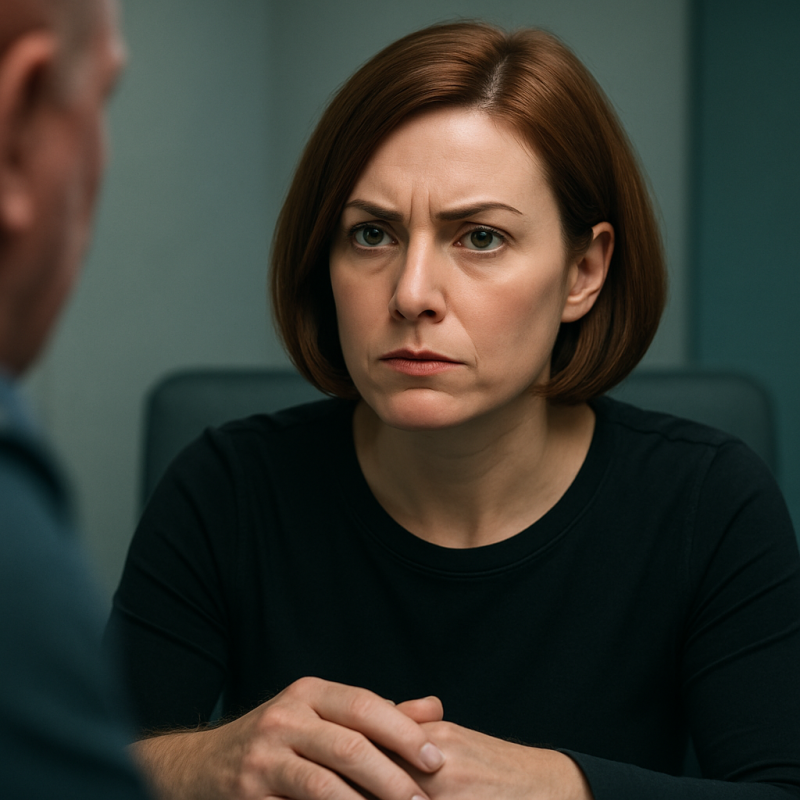 Image by RM AI
Proper Channels
The email arrived in my inbox three hours after I left Alison's office. Subject line: "Follow-up on Our Discussion." I opened it and found exactly what I'd expected—three paragraphs of carefully worded HR protocol reminding me that any concerns about project reporting or management practices should be directed to my immediate supervisor first. Alison emphasized the importance of following proper channels, respecting the chain of command, and allowing direct managers the opportunity to address issues before escalating elsewhere. She included links to the employee handbook sections on grievance procedures and professional conduct. I read it twice, then pulled up the org chart on my screen. My immediate supervisor was Ryan. Ryan reported directly to Mark. Any concern I raised about Mark's alterations would go through Ryan first, who would then have to decide whether to forward it up the chain—to Mark himself, or to Mark's peers on the executive team. I traced the lines on the chart with my cursor, following the reporting relationships from my desk all the way to the top. Every path led back through Mark's sphere of influence. The proper channels seemed designed to give leadership advance warning, to allow time for narrative control before any real scrutiny could begin. I closed the email and stared at the org chart, understanding exactly what Alison had really been telling me.
 Image by RM AI
System Protection
I sat at my desk for twenty minutes after closing Alison's email, just staring at the organizational chart on my screen. The lines and boxes that I'd never paid much attention to before suddenly looked like a defensive perimeter. HR reported to the Chief Operating Officer, who sat on the same executive team as Mark. Legal reported to the General Counsel, another executive peer. Every department that was supposed to provide oversight or accountability ultimately answered to the same small group of senior leaders. I clicked through the employee handbook sections Alison had linked, reading the whistleblower policy with new eyes. It sounded protective on the surface—encouraging employees to report concerns without fear of retaliation, promising confidential investigations. But every procedure routed through management first. Every complaint would be logged, documented, and reviewed by people whose careers depended on maintaining good relationships with the executives. If I filed an internal complaint about Mark altering billing records, it would land on desks of people who worked alongside him, who attended the same leadership meetings. I'd be identified immediately as the source. Mark would know before any real investigation started. And the complaint would likely be buried under layers of internal review while I got quietly marked as a problem employee. I minimized the org chart and felt profoundly alone, sensing that internal reporting would fail me.
 Image by RM AI
Whistleblower Research
I started researching that night after dinner, sitting at my kitchen table with my laptop and a notepad. I searched for whistleblower protection laws, regulatory agencies that handled corporate fraud, case studies of people who'd exposed billing irregularities at their companies. The Dodd-Frank Act came up repeatedly—provisions for protecting employees who reported securities violations, financial incentives for whistleblowers whose information led to successful enforcement actions. I read about the SEC's whistleblower program, the process for filing complaints, the documentation requirements for credible submissions. I found stories of successful exposures—employees who'd reported fraud and triggered investigations that resulted in millions in fines and restitution. But I also found the other stories. Whistleblowers who'd been fired on pretextual grounds months after filing complaints. People who'd been blacklisted in their industries, who couldn't find work for years afterward. Legal battles that dragged on longer than the investigations themselves. I bookmarked a page listing attorneys who specialized in whistleblower cases, then kept reading. The protection laws were real, but so were the risks. Companies found ways to retaliate that looked legitimate on paper—performance improvement plans, restructuring eliminations, cultural fit concerns. I closed my laptop after midnight, feeling both empowered by the legal framework and sobered by the reality that protection on paper didn't always translate to protection in practice. The stories were split evenly between vindication and retaliation, and I wasn't sure which outcome to expect.
 Image by RM AI
Securing Evidence
I stayed late Monday night, waiting until most of the office had cleared out before I started. The floor was quiet except for the hum of the HVAC system and the occasional distant voice from the cleaning crew. I logged into the shared drive and began systematically downloading files—client billing records, project reports, the original versions I'd saved before Mark's alterations. I copied everything to an encrypted external drive, organizing the files by client and date. Tuesday night I did the same thing, working methodically through the documentation, double-checking that I had complete records for every altered project. I saved copies of Mark's approval signatures, the email chains where he'd requested changes, the final versions that went to clients. Wednesday night I came back again, finishing the last of the downloads and adding my own detailed notes explaining each discrepancy. I was encrypting the final batch of files when I noticed the light. Mark's office was at the far end of the floor, and his door was closed, but I could see the glow underneath. I hadn't seen him leave. I hadn't heard anyone else on the floor for the past hour. I finished the encryption, ejected the drive, and slipped it into my bag. My heart was beating faster than it should have been as I shut down my computer and grabbed my coat. Maybe Mark was just working late on something unrelated. Maybe he always stayed this late and I'd never noticed. Or maybe he suspected something. On the third night, I noticed Mark's office light was still on, and I wondered if he suspected anything.
 Image by RM AI
Building the Case
I spread everything out across my home office floor that weekend—printed copies of the billing records, the altered reports, my original versions, the approval signatures, the email chains. I started building a timeline, arranging the documents chronologically to show exactly when the alterations had started and how they'd progressed. I created separate folders for each affected client, organizing the evidence so anyone reviewing it could follow the pattern clearly. For each alteration, I wrote a detailed explanation connecting the changed project scope to the billing impact—how reducing reported hours or simplifying deliverables allowed the company to bill clients for work that hadn't been performed at the level promised. I included Mark's signatures on every altered report, documenting his direct approval. I calculated the total financial impact across all the clients, double-checking my math three times. Then I wrote an executive summary, a clear narrative that laid out the pattern without requiring someone to dig through hundreds of pages of documentation. I worked through Saturday and most of Sunday, triple-checking facts, verifying dates, making sure every claim I made could be defended with hard evidence. By Sunday evening, I had something comprehensive and credible—a case that told a complete story. I stacked the organized files on my desk and felt the weight of what I'd built. The timeline made the pattern undeniable, and I realized I had built something that could end careers—including possibly my own.
 Image by RM AI
Final Verification
I went through it all again Monday night, this time with a calculator and a critical eye, looking for any weakness someone could exploit to discredit the case. I recalculated the financial impact for each client, verifying the billing amounts against the project scopes, making sure my numbers were exact. I checked the dates on every altered document, confirming they matched the timeline I'd constructed. I reviewed Mark's approval signatures, ensuring I'd correctly documented which reports he'd signed off on. I pulled up my original files and compared them line by line with the altered versions, looking for any discrepancy I might have missed or mischaracterized. I searched for gaps in the documentation, places where someone could argue I'd made assumptions or drawn conclusions without sufficient evidence. I found nothing. The calculations held. The dates were accurate. The signatures were documented. The pattern was clear and consistent across multiple clients and multiple months. I had backup copies stored securely in three separate locations. I sat back in my chair and acknowledged what I'd been avoiding—the case was solid, and I had no legitimate reason to keep delaying. Every day I waited was another day of choosing comfort over principle, another day of letting the fraud continue because confronting it was scary. I closed the files and felt something shift inside me, a kind of resolute certainty replacing the anxiety. The numbers held, the pattern held, and I had no more reasons to delay making the decision.
 Image by RM AI
External Contact
I searched for attorneys Tuesday morning during my lunch break, sitting in my car in the parking lot with my personal phone. I looked for lawyers specializing in regulatory compliance and whistleblower cases, reading through credentials and case histories on firm websites. One name kept appearing in articles about corporate fraud cases—an attorney who'd represented multiple whistleblowers in successful SEC enforcement actions. I read reviews and background information, checked his track record, confirmed he had experience with billing fraud specifically. Then I called the number listed on his website. An assistant answered, professional and efficient. I explained I needed guidance on a potential fraud matter at my company, that I had documentation and wanted to understand my options. She asked a few screening questions—what industry, what type of fraud, whether I was currently employed there. I kept my answers general, not mentioning names or specifics. She told me the attorney could meet with me for an initial consultation later that week, and we scheduled it for Thursday afternoon. I'd need to take a half day off work, but I could claim a doctor's appointment. I thanked her and ended the call, then sat in my car for a few minutes before heading back inside. It was the first concrete step I'd taken toward external action, the first move that couldn't be undone or walked back. The attorney's assistant scheduled a consultation for later that week, and I felt my path forward finally taking shape.
 Image by RM AI
The Consultation
The attorney's office was downtown in a building I'd passed a hundred times without noticing. I took Thursday afternoon off, telling Ryan I had a medical appointment, and arrived fifteen minutes early. The attorney was in his fifties, calm and methodical, the kind of person who'd spent decades reviewing complex cases. I presented my organized evidence—the timeline, the client files, the financial calculations, the documentation of Mark's approvals. He spent over an hour reviewing everything, asking detailed questions about my role, how I'd discovered the alterations, what access I'd had to the original records. I explained the pattern, walked him through specific examples, showed him the billing discrepancies. He examined the numbers carefully, cross-referencing the altered reports with the client invoices. Then he looked up and confirmed what I already knew—the evidence showed a clear pattern of potential fraud, the documentation was thorough and credible, and I had a strong case. He explained the process for filing a complaint with the SEC, discussed whistleblower protections under Dodd-Frank, outlined the timeline I could expect and the potential risks. I asked what would happen once the complaint was filed. He was direct—once submitted, the investigation would proceed regardless of what I wanted. There would be no calling it back, no changing my mind if things got difficult. Regulatory investigations couldn't be stopped or reversed. I sat there for a moment, feeling the weight of that finality, then told him I understood and wanted to move forward. He confirmed what I already knew—the case was strong, the evidence was solid, and if I moved forward, there would be no going back.
 Image by RM AI
Timing and Process
The attorney walked me through the submission process in detail—how the agency would receive the complaint, conduct a preliminary review, and then decide whether to proceed with a formal investigation. He explained that once they determined the case had merit, they'd begin gathering additional information before contacting the company. The timeline was specific: six to eight weeks from submission to formal notification. He was clear about what that meant—I'd have roughly two months where everything would appear normal, where Mark and Ryan and everyone else would go about their business completely unaware. Then the agency would reach out to the company with formal inquiries, and everything would change. He advised me to maintain completely normal work behavior during that window, to give them no reason to suspect anything unusual. I asked what would happen when the investigation became known. He explained that companies typically respond with internal reviews, legal teams, and attempts to identify the source. My identity would be protected initially under whistleblower provisions, but it might become known eventually depending on how the investigation unfolded. I left his office understanding the path ahead with absolute clarity. I started mentally counting the days I had left to appear like nothing was wrong.
 Image by RM AI
Timing and Process
The attorney walked me through the submission process in detail—how the agency would receive the complaint, conduct a preliminary review, and then decide whether to proceed with a formal investigation. He explained that once they determined the case had merit, they'd begin gathering additional information before contacting the company. The timeline was specific: six to eight weeks from submission to formal notification. He was clear about what that meant—I'd have roughly two months where everything would appear normal, where Mark and Ryan and everyone else would go about their business completely unaware. Then the agency would reach out to the company with formal inquiries, and everything would change. He advised me to maintain completely normal work behavior during that window, to give them no reason to suspect anything unusual. I asked what would happen when the investigation became known. He explained that companies typically respond with internal reviews, legal teams, and attempts to identify the source. My identity would be protected initially under whistleblower provisions, but it might become known eventually depending on how the investigation unfolded. I left his office understanding the path ahead with absolute clarity. I started mentally counting the days I had left to appear like nothing was wrong.
 Image by RM AI
Personal Protections
I spent the following evenings at home organizing every piece of documentation that could protect me when the questions inevitably came. I pulled my performance reviews from the past three years—all of them positive, several noting my reliability and attention to detail. I saved copies of emails where managers praised my work, where clients thanked me for catching errors, where colleagues asked for my help on complex projects. I gathered records of the original reports I'd created before Mark altered them, proof that my work had been accurate and thorough. I backed everything up to a secure personal drive, then created a second backup on a cloud service outside the company's systems. I reviewed my employment contract, looking for any clauses about reporting or confidentiality that might be used against me. I organized a timeline of my accomplishments, the projects I'd completed successfully, the extra hours I'd logged. Every document was a potential shield against whatever retaliation might come. I tried to focus on normal life between these preparation sessions—cooking dinner, watching television, pretending everything was fine. But I kept thinking about that six-to-eight-week window, wondering how much time I actually had. I saved everything I might need and tried not to think about how soon that day might arrive.
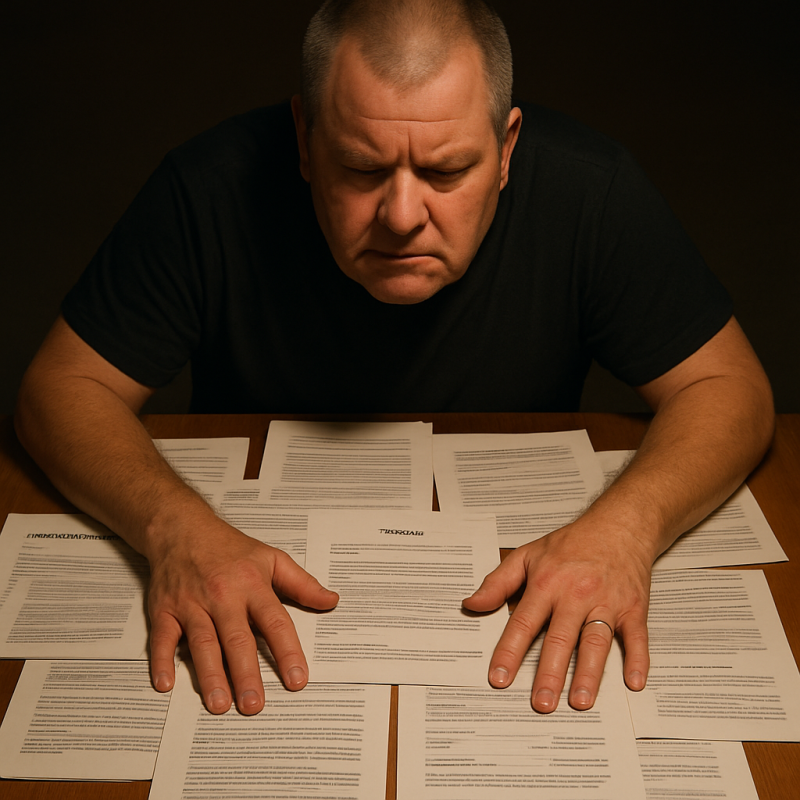 Image by RM AI
Personal Protections
I spent the following evenings at home organizing every piece of documentation that could protect me when the questions inevitably came. I pulled my performance reviews from the past three years—all of them positive, several noting my reliability and attention to detail. I saved copies of emails where managers praised my work, where clients thanked me for catching errors, where colleagues asked for my help on complex projects. I gathered records of the original reports I'd created before Mark altered them, proof that my work had been accurate and thorough. I backed everything up to a secure personal drive, then created a second backup on a cloud service outside the company's systems. I reviewed my employment contract, looking for any clauses about reporting or confidentiality that might be used against me. I organized a timeline of my accomplishments, the projects I'd completed successfully, the extra hours I'd logged. Every document was a potential shield against whatever retaliation might come. I tried to focus on normal life between these preparation sessions—cooking dinner, watching television, pretending everything was fine. But I kept thinking about that six-to-eight-week window, wondering how much time I actually had. I saved everything I might need and tried not to think about how soon that day might arrive.
 Image by RM AI
The Facade
I went to work each day and maintained my exact routine, arriving at the same time, attending the same meetings, completing my assignments with the same careful attention I'd always shown. I participated in project discussions, offered input during team reviews, and engaged in the usual small talk in the hallway and break room. Ryan stopped by my desk one afternoon to discuss a client deliverable, and we talked through the timeline and requirements like we'd done dozens of times before. I nodded and took notes and asked clarifying questions, and he seemed satisfied with my responses. Mark passed me in the hallway later that week, and we exchanged the standard professional nod—the kind of brief acknowledgment that happens a hundred times in any office. He looked exactly as he always did, confident and polished, completely unaware of what was coming. I felt the surreal quality of it all, the strange disconnect between what everyone saw and what I knew. Every conversation felt like a performance, every normal interaction a carefully maintained facade. I went home each evening wondering when the investigation would officially begin, when the agency would move from preliminary review to formal action. No one in the office suspected anything unusual about my behavior. Mark nodded at me in the hallway like any other day, and I nodded back, both of us completely unaware of what was coming.
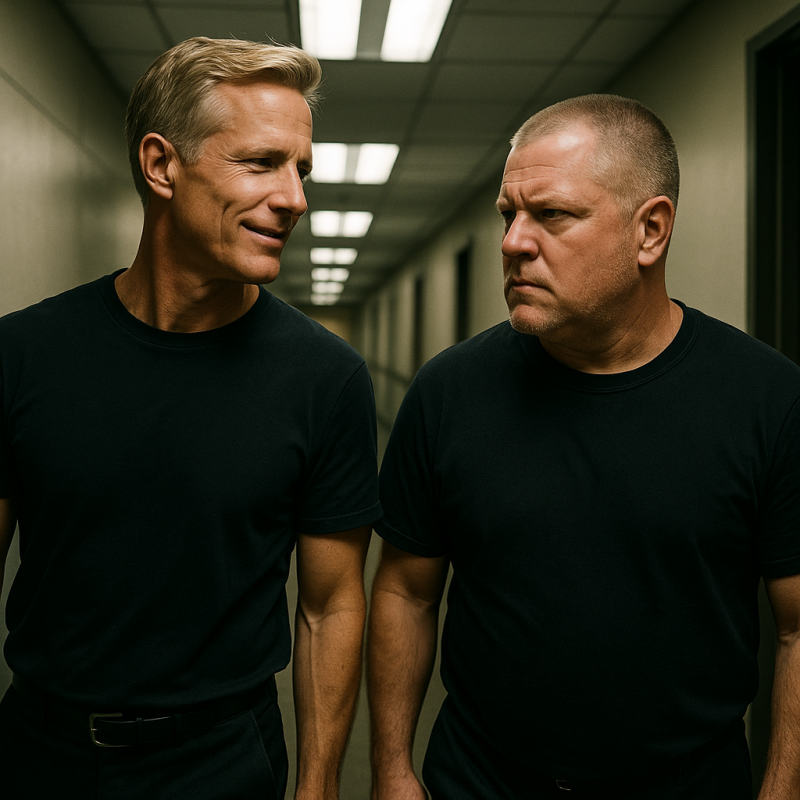 Image by RM AI
The Facade
I went to work each day and maintained my exact routine, arriving at the same time, attending the same meetings, completing my assignments with the same careful attention I'd always shown. I participated in project discussions, offered input during team reviews, and engaged in the usual small talk in the hallway and break room. Ryan stopped by my desk one afternoon to discuss a client deliverable, and we talked through the timeline and requirements like we'd done dozens of times before. I nodded and took notes and asked clarifying questions, and he seemed satisfied with my responses. Mark passed me in the hallway later that week, and we exchanged the standard professional nod—the kind of brief acknowledgment that happens a hundred times in any office. He looked exactly as he always did, confident and polished, completely unaware of what was coming. I felt the surreal quality of it all, the strange disconnect between what everyone saw and what I knew. Every conversation felt like a performance, every normal interaction a carefully maintained facade. I went home each evening wondering when the investigation would officially begin, when the agency would move from preliminary review to formal action. No one in the office suspected anything unusual about my behavior. Mark nodded at me in the hallway like any other day, and I nodded back, both of us completely unaware of what was coming.
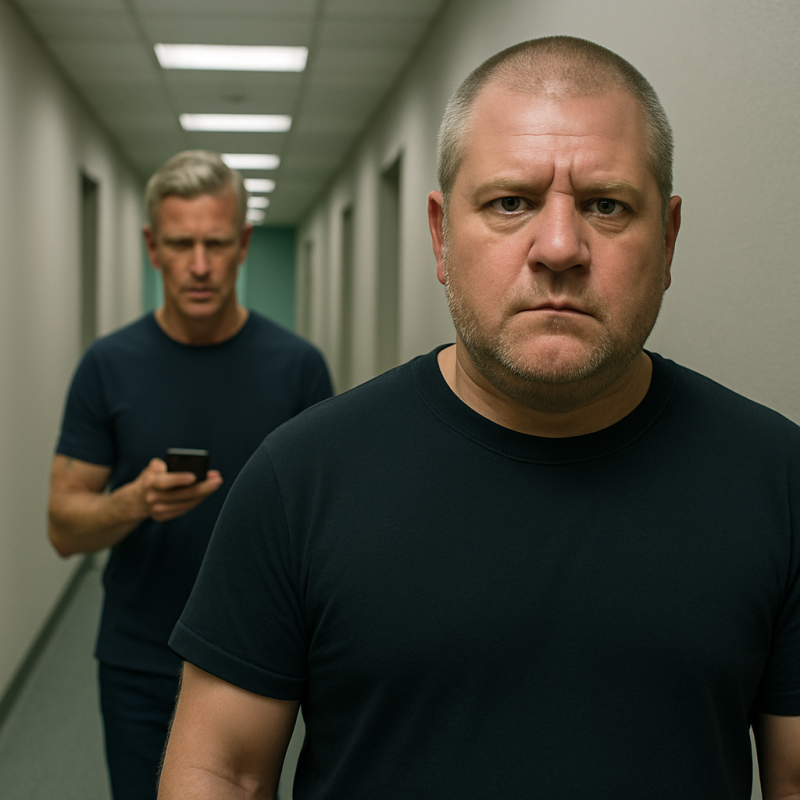 Image by RM AI
The Submission
I met with the attorney at his office on a Thursday afternoon, and we reviewed the complete complaint package one final time. He walked me through each section—the summary of allegations, the timeline of events, the detailed documentation of altered reports, the financial calculations showing billing discrepancies. I read through the formal complaint, verifying that every fact was accurate, every exhibit properly referenced. The documentation was thorough: client files, email records, the pattern of alterations spanning multiple accounts. He asked if I was certain I wanted to proceed, reminding me that once submitted, the investigation would move forward regardless of what I wanted. I told him I understood. He logged into the regulatory agency submission portal and positioned the screen so I could see. He explained exactly what we were submitting—the formal complaint, the supporting evidence, the request for investigation. I gave verbal authorization to proceed. He moved the cursor to the submit button and clicked. We watched together as the confirmation message appeared on screen, acknowledging receipt of the complaint and providing a reference number. The attorney explained the agency would send formal acknowledgment within several days. I sat there for a moment, feeling the weight of every document I had gathered settle into something irreversible. I left the office knowing the investigation was now officially in motion, understanding there was no taking it back now.
 Image by RM AI
The Submission
I met with the attorney at his office on a Thursday afternoon, and we reviewed the complete complaint package one final time. He walked me through each section—the summary of allegations, the timeline of events, the detailed documentation of altered reports, the financial calculations showing billing discrepancies. I read through the formal complaint, verifying that every fact was accurate, every exhibit properly referenced. The documentation was thorough: client files, email records, the pattern of alterations spanning multiple accounts. He asked if I was certain I wanted to proceed, reminding me that once submitted, the investigation would move forward regardless of what I wanted. I told him I understood. He logged into the regulatory agency submission portal and positioned the screen so I could see. He explained exactly what we were submitting—the formal complaint, the supporting evidence, the request for investigation. I gave verbal authorization to proceed. He moved the cursor to the submit button and clicked. We watched together as the confirmation message appeared on screen, acknowledging receipt of the complaint and providing a reference number. The attorney explained the agency would send formal acknowledgment within several days. I sat there for a moment, feeling the weight of every document I had gathered settle into something irreversible. I left the office knowing the investigation was now officially in motion, understanding there was no taking it back now.
 Image by RM AI
Six Months Earlier
The truth was, I had started documenting Mark's alterations six months before the holiday party, long before he humiliated me in front of everyone. I'd first noticed the discrepancies in early summer during routine project work—small changes to reports I'd created, numbers that didn't match my original files. I'd decided then to investigate systematically rather than report immediately, knowing that someone like Mark, someone protected by leadership, would never face consequences through normal channels. My reputation for reliability gave me access to files and systems others couldn't reach without raising questions. I used that access carefully, gathering documentation during late nights at the office while appearing to work overtime on legitimate projects. Every extra hour, every careful question to colleagues, every moment I seemed reliably invisible—it was all part of building a comprehensive case. The holiday party invitation came six months into my investigation, and I'd wondered if it was a test of where I stood with leadership. I'd sat at that executive table already knowing exactly what Mark had been doing, already having compiled months of evidence. My veiled comment about transparency and data accuracy wasn't a naive attempt to raise concerns—it was strategic positioning to observe how leadership would respond. And when Mark humiliated me and Ryan stayed silent and everyone at that table made it clear they'd protect him no matter what, it wasn't a catalyst. The party wasn't what pushed me to investigate—it was the final confirmation that leadership would protect Mark no matter what he did.
 Image by RM AI
Six Months Earlier
The truth was, I had started documenting Mark's alterations six months before the holiday party, long before he humiliated me in front of everyone. I'd first noticed the discrepancies in early summer during routine project work—small changes to reports I'd created, numbers that didn't match my original files. I'd decided then to investigate systematically rather than report immediately, knowing that someone like Mark, someone protected by leadership, would never face consequences through normal channels. My reputation for reliability gave me access to files and systems others couldn't reach without raising questions. I used that access carefully, gathering documentation during late nights at the office while appearing to work overtime on legitimate projects. Every extra hour, every careful question to colleagues, every moment I seemed reliably invisible—it was all part of building a comprehensive case. The holiday party invitation came six months into my investigation, and I'd wondered if it was a test of where I stood with leadership. I'd sat at that executive table already knowing exactly what Mark had been doing, already having compiled months of evidence. My veiled comment about transparency and data accuracy wasn't a naive attempt to raise concerns—it was strategic positioning to observe how leadership would respond. And when Mark humiliated me and Ryan stayed silent and everyone at that table made it clear they'd protect him no matter what, it wasn't a catalyst. The party wasn't what pushed me to investigate—it was the final confirmation that leadership would protect Mark no matter what he did.
 Image by RM AI
The Real Timeline
I thought back through the past six months and saw how every piece had fit together with careful precision. I'd noticed that first discrepancy in July, a small alteration to a client report that made our projections look better than my original analysis supported. Instead of reporting it immediately, I'd started watching for patterns, documenting every instance I could find. My trusted position as the reliable employee who stayed late and asked for extra work became the perfect cover for accessing files across multiple accounts. I'd used those late nights to systematically gather evidence—original reports, altered versions, client invoices that didn't match the projections Mark had approved. Every casual conversation with colleagues was intelligence gathering, carefully worded questions designed to understand who knew what without raising alarm. I'd maintained my dependable facade throughout the entire investigation, never showing frustration or suspicion, always appearing grateful for the opportunity to contribute. The holiday party had come in December, five months into my evidence collection. I'd already compiled documentation across seven major client accounts by then, already identified the pattern of systematic alterations. Sitting at that executive table, I'd known exactly what I was dealing with. My comment about transparency had been a final test—would anyone in leadership take the concern seriously, or would they protect Mark regardless? When they chose humiliation over accountability, it confirmed what I'd suspected all along. By the time Mark humiliated me at that party, I had already gathered enough evidence to bring him down.
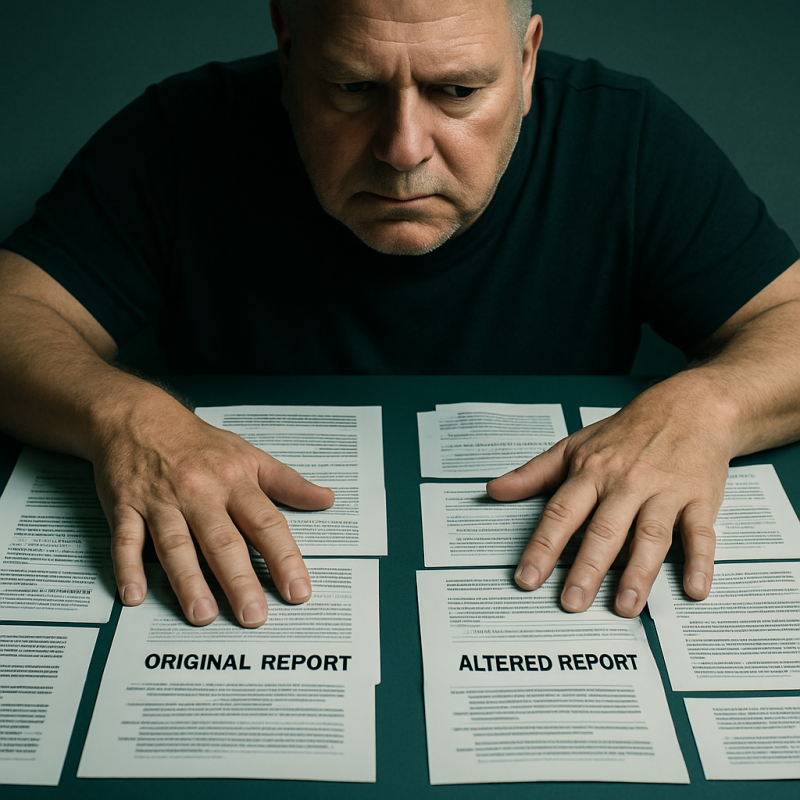 Image by RM AI
The Real Timeline
I thought back through the past six months and saw how every piece had fit together with careful precision. I'd noticed that first discrepancy in July, a small alteration to a client report that made our projections look better than my original analysis supported. Instead of reporting it immediately, I'd started watching for patterns, documenting every instance I could find. My trusted position as the reliable employee who stayed late and asked for extra work became the perfect cover for accessing files across multiple accounts. I'd used those late nights to systematically gather evidence—original reports, altered versions, client invoices that didn't match the projections Mark had approved. Every casual conversation with colleagues was intelligence gathering, carefully worded questions designed to understand who knew what without raising alarm. I'd maintained my dependable facade throughout the entire investigation, never showing frustration or suspicion, always appearing grateful for the opportunity to contribute. The holiday party had come in December, five months into my evidence collection. I'd already compiled documentation across seven major client accounts by then, already identified the pattern of systematic alterations. Sitting at that executive table, I'd known exactly what I was dealing with. My comment about transparency had been a final test—would anyone in leadership take the concern seriously, or would they protect Mark regardless? When they chose humiliation over accountability, it confirmed what I'd suspected all along. By the time Mark humiliated me at that party, I had already gathered enough evidence to bring him down.
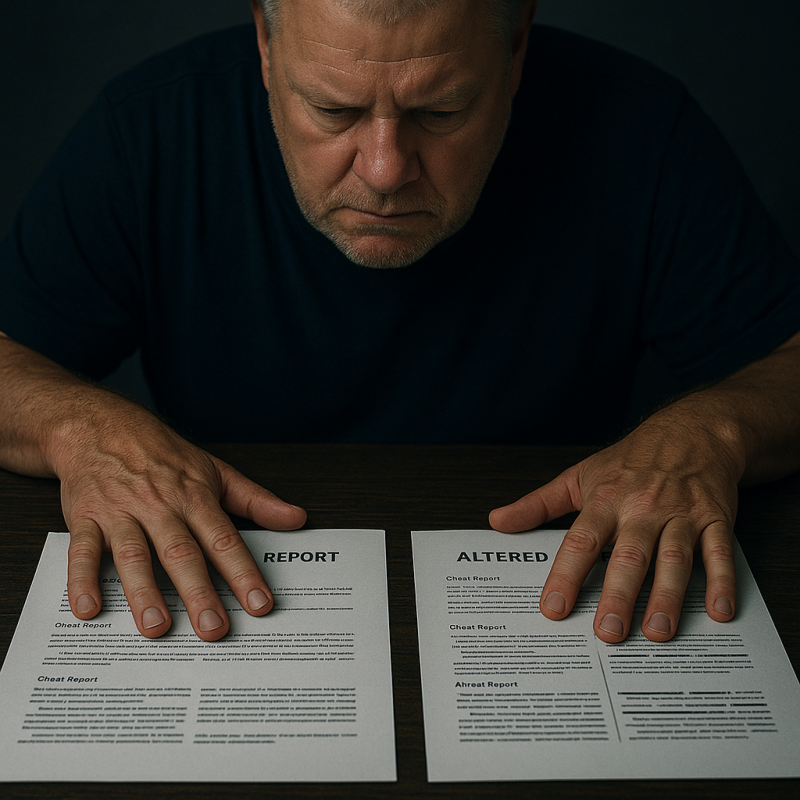 Image by RM AI
Agency Response
The regulatory agency sent me a secure message two days after the submission, formally confirming they had received my complaint and all supporting documentation. The message outlined their standard process—they were beginning a preliminary assessment to evaluate the evidence and determine whether the case merited a formal investigation. They explained that this initial review typically took two to three weeks, during which they'd analyze the documentation I'd provided and assess the strength of the allegations. The message requested that I remain available for follow-up questions if needed and instructed me to maintain strict confidentiality about the complaint. I understood what they were really saying—they were evaluating whether my evidence was solid enough to proceed, whether the pattern I'd documented constituted actual violations worth investigating. I went to work the next day and maintained my normal routine, participating in meetings and completing assignments while knowing the agency was reviewing everything I'd submitted. The office felt surreal in a different way now—not because I was hiding what I'd done, but because the investigation had truly begun its official process. I checked the secure portal each evening, looking for updates or requests for additional information. The waiting felt different than the preparation had, more passive but somehow more intense. I knew the agency was making their determination, deciding whether to move forward. They estimated initial assessment would take two to three weeks before deciding whether to open a formal investigation.
 Image by RM AI
Agency Response
The regulatory agency sent me a secure message two days after the submission, formally confirming they had received my complaint and all supporting documentation. The message outlined their standard process—they were beginning a preliminary assessment to evaluate the evidence and determine whether the case merited a formal investigation. They explained that this initial review typically took two to three weeks, during which they'd analyze the documentation I'd provided and assess the strength of the allegations. The message requested that I remain available for follow-up questions if needed and instructed me to maintain strict confidentiality about the complaint. I understood what they were really saying—they were evaluating whether my evidence was solid enough to proceed, whether the pattern I'd documented constituted actual violations worth investigating. I went to work the next day and maintained my normal routine, participating in meetings and completing assignments while knowing the agency was reviewing everything I'd submitted. The office felt surreal in a different way now—not because I was hiding what I'd done, but because the investigation had truly begun its official process. I checked the secure portal each evening, looking for updates or requests for additional information. The waiting felt different than the preparation had, more passive but somehow more intense. I knew the agency was making their determination, deciding whether to move forward. They estimated initial assessment would take two to three weeks before deciding whether to open a formal investigation.
 Image by RM AI
Preliminary Investigation
Three weeks later, almost to the day, I received another secure message from the agency. The preliminary review was complete, and they were opening a formal investigation into the matter. The message explained that the evidence I'd provided showed sufficient indication of potential violations to warrant a comprehensive investigation. They were scheduling me for a detailed interview with investigators to discuss the documentation and provide additional context. The interview was set for the following week—they'd send specific instructions for the secure video conference. They also explained the next steps: after completing my interview and gathering any additional information they needed, they would contact the company with formal inquiries. That was when everything would become real for Mark and Ryan and everyone else who'd been operating as if nothing was wrong. I read the message twice, absorbing the timeline. The company would be notified soon after my interview, probably within days. I had one week to prepare mentally for the formal interview process, to review my evidence and ensure I could answer any questions thoroughly. I understood the investigation was now official and completely irreversible, that my role as the source would eventually become known to the company. I saved the message and closed my laptop, feeling the weight of what was coming. They scheduled my comprehensive interview for the following week, and I knew the company would be contacted shortly after.
 Image by RM AI
Formal Investigation
Three weeks later, almost to the day, I received another secure message from the agency. The preliminary review was complete, and they were opening a formal investigation into the matter. The message explained that the evidence I'd provided showed sufficient indication of potential violations to warrant a comprehensive investigation. They were scheduling me for a detailed interview with investigators to discuss the documentation and provide additional context. The interview was set for the following week—they'd send specific instructions for the secure video conference. They also explained the next steps: after completing my interview and gathering any additional information they needed, they would contact the company with formal inquiries. That was when everything would become real for Mark and Ryan and everyone else who'd been operating as if nothing was wrong. I read the message twice, absorbing the timeline. The company would be notified soon after my interview, probably within days. I had one week to prepare mentally for the formal interview process, to review my evidence and ensure I could answer any questions thoroughly. I understood the investigation was now official and completely irreversible, that my role as the source would eventually become known to the company. I saved the message and closed my laptop, feeling the weight of what was coming. They scheduled my comprehensive interview for the following week, and I knew the company would be contacted shortly after.
 Image by RM AI
The Notice
The notice arrived on a Tuesday morning, and I watched the entire executive floor shift into crisis mode within minutes. I was at my desk reviewing routine reports when I saw Patricia's assistant moving quickly between offices, her expression tight and professional. Then the calendar invitations started appearing—emergency leadership meeting, immediate attendance required, conference room A. I watched Ryan hurry past my desk without his usual performative greeting, his jaw set and his eyes focused straight ahead. Mark followed moments later, his power tie perfectly knotted but his face showing the first cracks in his executive polish. Other directors I recognized from company events moved toward the conference room with unusual urgency, their normal confident strides replaced by something faster and less controlled. The door closed firmly behind them, and through the glass walls I could see Patricia standing at the head of the table, a document in her hands. I turned back to my computer screen and continued working, my fingers steady on the keyboard, my expression carefully neutral. Around me, other employees were starting to notice the unusual activity, heads turning toward the closed conference room, voices dropping to speculative whispers. Leadership gathered in the main conference room with the door firmly closed, and I sat at my desk knowing exactly what they were reading.
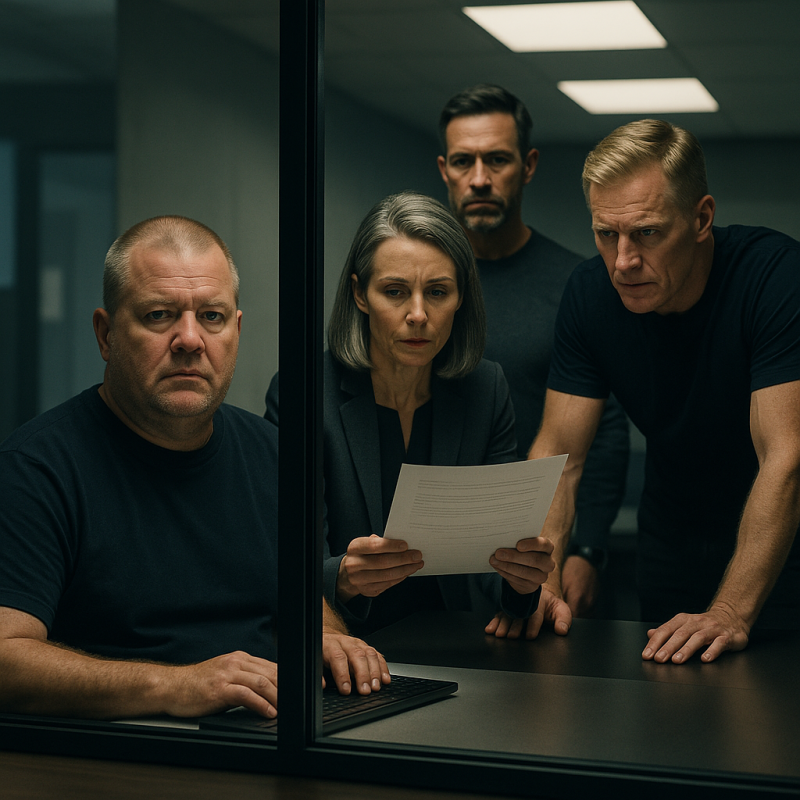 Image by RM AI
The Notice
The notice arrived on a Tuesday morning, and I watched the entire executive floor shift into crisis mode within minutes. I was at my desk reviewing routine reports when I saw Patricia's assistant moving quickly between offices, her expression tight and professional. Then the calendar invitations started appearing—emergency leadership meeting, immediate attendance required, conference room A. I watched Ryan hurry past my desk without his usual performative greeting, his jaw set and his eyes focused straight ahead. Mark followed moments later, his power tie perfectly knotted but his face showing the first cracks in his executive polish. Other directors I recognized from company events moved toward the conference room with unusual urgency, their normal confident strides replaced by something faster and less controlled. The door closed firmly behind them, and through the glass walls I could see Patricia standing at the head of the table, a document in her hands. I turned back to my computer screen and continued working, my fingers steady on the keyboard, my expression carefully neutral. Around me, other employees were starting to notice the unusual activity, heads turning toward the closed conference room, voices dropping to speculative whispers. Leadership gathered in the main conference room with the door firmly closed, and I sat at my desk knowing exactly what they were reading.
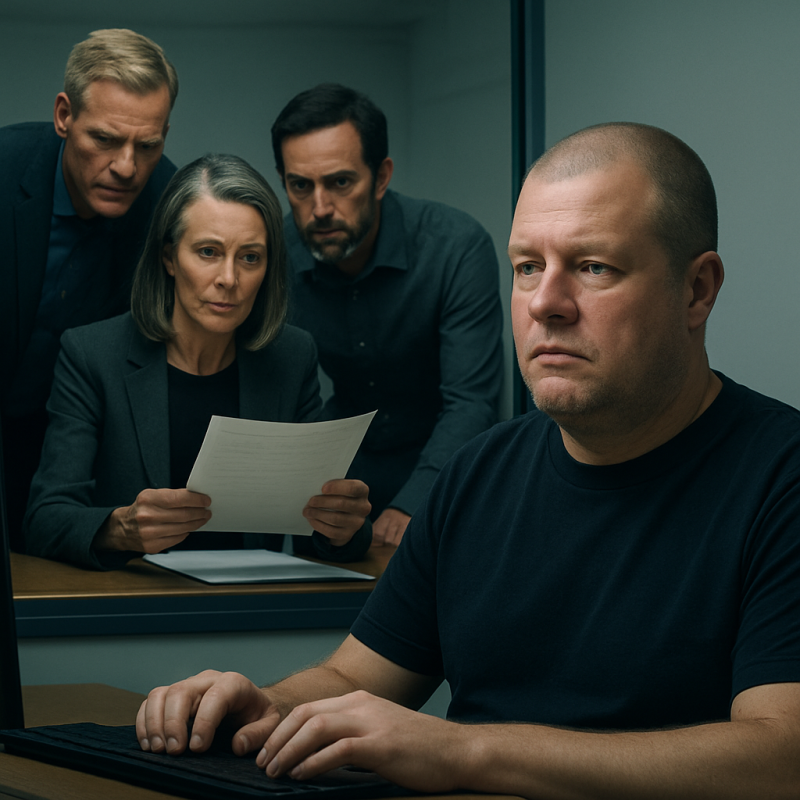 Image by RM AI
Leadership Scrambles
I could see everything through the glass walls, and what I watched was a leadership team realizing they were facing something they couldn't control. Patricia stood at the head of the table, her silver hair perfectly styled but her posture rigid with tension as she gestured to the document in front of her. Mark was talking, his hands moving in that commanding way he used during presentations, but his usual confidence looked strained around the edges. Ryan sat forward in his chair, his networking smile completely absent, his face pale under the conference room lighting. An attorney I didn't recognize arrived twenty minutes into the meeting, carrying a leather briefcase and wearing the kind of expensive suit that signaled serious legal firepower. I watched them pass documents around the table, each executive studying the pages with expressions that shifted from confusion to alarm as they processed what they were reading. Alison from HR took notes with mechanical precision, her pen moving steadily across her legal pad while her face maintained careful professional neutrality. The meeting stretched past an hour, then ninety minutes, the urgency in their gestures never diminishing. Then Ryan stood and walked toward the door, and I turned my attention back to my screen just as he emerged into the main office. He looked shaken, his polished corporate armor visibly cracked. Ryan emerged from the meeting looking visibly shaken, and when he saw me at my desk, he quickly looked away and kept walking.
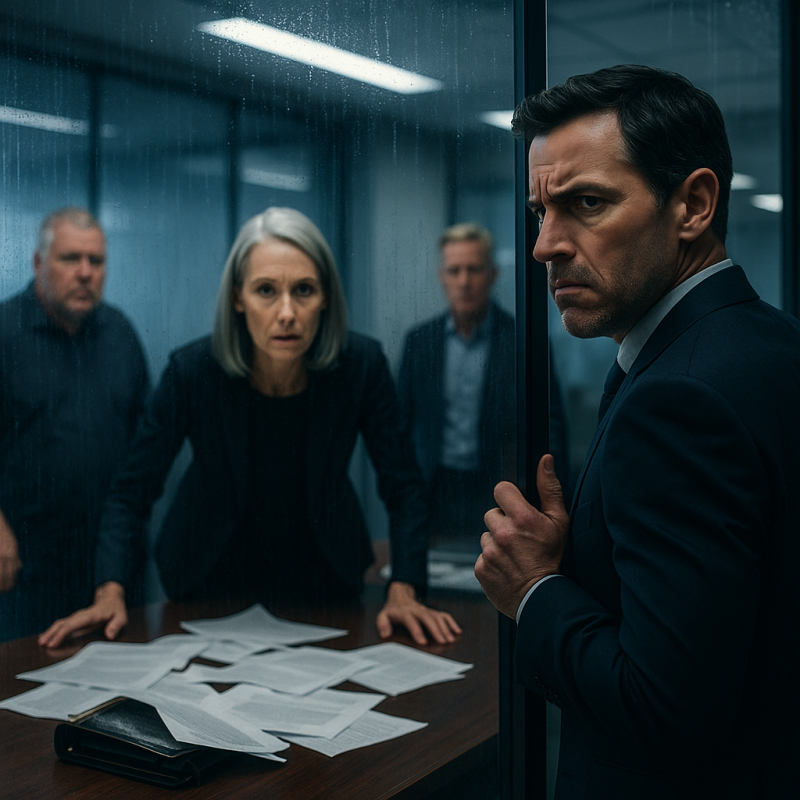 Image by RM AI
Leadership Scrambles
I could see everything through the glass walls, and what I watched was a leadership team realizing they were facing something they couldn't control. Patricia stood at the head of the table, her silver hair perfectly styled but her posture rigid with tension as she gestured to the document in front of her. Mark was talking, his hands moving in that commanding way he used during presentations, but his usual confidence looked strained around the edges. Ryan sat forward in his chair, his networking smile completely absent, his face pale under the conference room lighting. An attorney I didn't recognize arrived twenty minutes into the meeting, carrying a leather briefcase and wearing the kind of expensive suit that signaled serious legal firepower. I watched them pass documents around the table, each executive studying the pages with expressions that shifted from confusion to alarm as they processed what they were reading. Alison from HR took notes with mechanical precision, her pen moving steadily across her legal pad while her face maintained careful professional neutrality. The meeting stretched past an hour, then ninety minutes, the urgency in their gestures never diminishing. Then Ryan stood and walked toward the door, and I turned my attention back to my screen just as he emerged into the main office. He looked shaken, his polished corporate armor visibly cracked. Ryan emerged from the meeting looking visibly shaken, and when he saw me at my desk, he quickly looked away and kept walking.
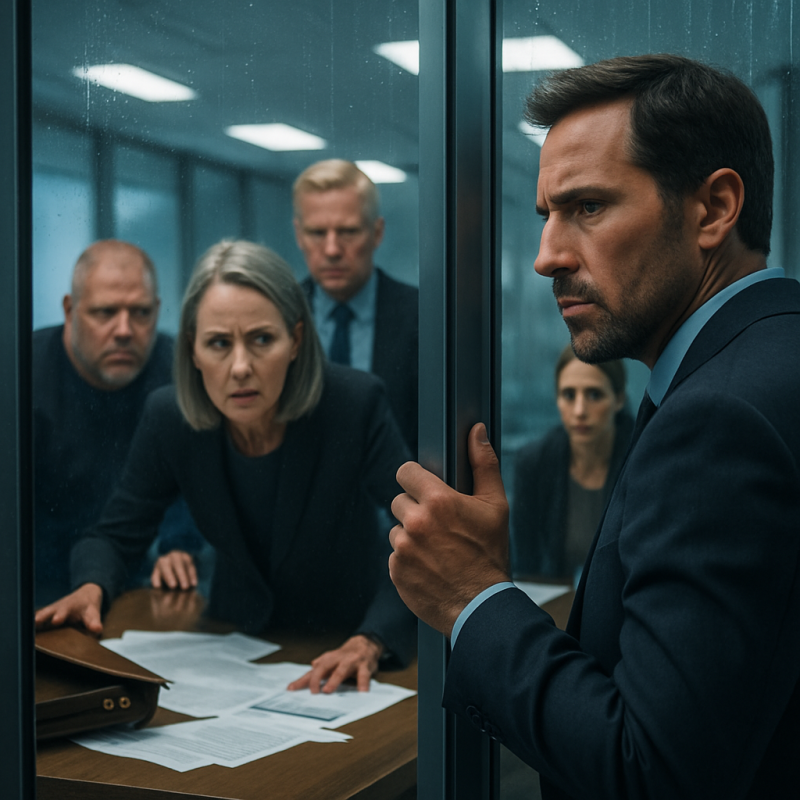 Image by RM AI
Direct Confrontation
Ryan appeared at my desk around four that afternoon, his shoulders tight and his usual easy smile nowhere in evidence. "Hey, do you have a minute to talk somewhere private?" His voice was controlled but I could hear the tension underneath it, the careful modulation of someone trying to appear casual while feeling anything but. I nodded and followed him down the hallway to one of the small offices we used for confidential calls, watching the stiffness in his posture as he walked. He closed the door firmly behind us and turned to face me, his expression serious in a way I'd never seen during all his performative shoulder-clapping and networking enthusiasm. "I need to ask you something directly," he said, and I waited, keeping my face neutral and mildly curious. "What do you know about the regulatory investigation?" The question hung in the air between us, and I let a moment pass before responding, as if I needed time to process what he was asking. "What do you mean?" I kept my tone professional, genuinely curious, like someone who'd heard office rumors but had no specific information. Ryan studied my face carefully, looking for tells, for any sign that I knew more than I was saying. He closed the door of the empty office and asked me directly what I knew about the regulatory investigation.
 Image by RM AI
Direct Questions
Ryan appeared at my desk around four that afternoon, his shoulders tight and his usual easy smile nowhere in evidence. "Hey, do you have a minute to talk somewhere private?" His voice was controlled but I could hear the tension underneath it, the careful modulation of someone trying to appear casual while feeling anything but. I nodded and followed him down the hallway to one of the small offices we used for confidential calls, watching the stiffness in his posture as he walked. He closed the door firmly behind us and turned to face me, his expression serious in a way I'd never seen during all his performative shoulder-clapping and networking enthusiasm. "I need to ask you something directly," he said, and I waited, keeping my face neutral and mildly curious. "What do you know about the regulatory investigation?" The question hung in the air between us, and I let a moment pass before responding, as if I needed time to process what he was asking. "What do you mean?" I kept my tone professional, genuinely curious, like someone who'd heard office rumors but had no specific information. Ryan studied my face carefully, looking for tells, for any sign that I knew more than I was saying. He closed the door of the empty office and asked me directly what I knew about the regulatory investigation.
 Image by RM AI
Deflection
I kept my expression neutral and slightly concerned, like someone trying to be helpful but genuinely confused about what was happening. "I've only heard the same rumors everyone else has been talking about," I said, which was technically true even if it omitted the rather significant detail that I'd filed the complaint that started those rumors. "I noticed the emergency meetings this morning, but I don't know anything specific." Ryan's jaw tightened slightly, and he asked if I remembered anything unusual about my project work over the past year. I thought about that for a moment, as if genuinely considering the question, then shook my head. "My work followed all the standard procedures I was given. Is there a problem with something I delivered?" He didn't answer that question, just continued watching me with that careful intensity, trying to read something in my face that would confirm whatever suspicion was forming in his mind. I maintained the same expression of innocent professional curiosity, not defensive, not nervous, just someone trying to understand why they were being asked these questions. "The investigation involves questions about altered project data," Ryan said finally, and I let my eyebrows rise slightly in surprise. "Is my original work somehow implicated in whatever happened?" I asked. He stared at me for a long moment before saying leadership was taking this extremely seriously, and I nodded like I understood the gravity.
 Image by RM AI
Careful Deflection
I kept my expression neutral and slightly concerned, like someone trying to be helpful but genuinely confused about what was happening. "I've only heard the same rumors everyone else has been talking about," I said, which was technically true even if it omitted the rather significant detail that I'd filed the complaint that started those rumors. "I noticed the emergency meetings this morning, but I don't know anything specific." Ryan's jaw tightened slightly, and he asked if I remembered anything unusual about my project work over the past year. I thought about that for a moment, as if genuinely considering the question, then shook my head. "My work followed all the standard procedures I was given. Is there a problem with something I delivered?" He didn't answer that question, just continued watching me with that careful intensity, trying to read something in my face that would confirm whatever suspicion was forming in his mind. I maintained the same expression of innocent professional curiosity, not defensive, not nervous, just someone trying to understand why they were being asked these questions. "The investigation involves questions about altered project data," Ryan said finally, and I let my eyebrows rise slightly in surprise. "Is my original work somehow implicated in whatever happened?" I asked. He stared at me for a long moment before saying leadership was taking this extremely seriously, and I nodded like I understood the gravity.
 Image by RM AI
Determining the Source
Mark called the meeting for Wednesday afternoon, and when I walked into the conference room, I recognized everyone there—we'd all worked on the projects that were now under investigation. Tom from finance sat near the window, his glasses reflecting the overhead lights, his nervous energy visible in the way he kept adjusting his collar. Jennifer was there too, looking genuinely confused about why we'd been assembled, her professional demeanor intact but her eyes showing uncertainty. Ryan stood near Mark at the front of the room, his arms crossed, his face still showing the strain from our conversation the day before. Mark waited until we were all seated, then closed the door and began speaking in that commanding tone he used when he wanted to project authority and control. "There's a regulatory investigation into our project reporting," he said, his eyes moving across each of our faces. "This is a serious situation that could affect the company's reputation and operations." He let that sink in for a moment, watching our reactions. "I need to know if anyone here has noticed irregularities in project data, anything that seemed unusual or incorrect." We all looked at each other with varying degrees of uncertainty, and I shook my head along with everyone else. He asked if anyone had noticed irregularities or been contacted by outside parties, and I felt everyone's eyes sweep past me as they all shook their heads.
 Image by RM AI
Finding the Source
Mark called the meeting for Wednesday afternoon, and when I walked into the conference room, I recognized everyone there—we'd all worked on the projects that were now under investigation. Tom from finance sat near the window, his glasses reflecting the overhead lights, his nervous energy visible in the way he kept adjusting his collar. Jennifer was there too, looking genuinely confused about why we'd been assembled, her professional demeanor intact but her eyes showing uncertainty. Ryan stood near Mark at the front of the room, his arms crossed, his face still showing the strain from our conversation the day before. Mark waited until we were all seated, then closed the door and began speaking in that commanding tone he used when he wanted to project authority and control. "There's a regulatory investigation into our project reporting," he said, his eyes moving across each of our faces. "This is a serious situation that could affect the company's reputation and operations." He let that sink in for a moment, watching our reactions. "I need to know if anyone here has noticed irregularities in project data, anything that seemed unusual or incorrect." We all looked at each other with varying degrees of uncertainty, and I shook my head along with everyone else. He asked if anyone had noticed irregularities or been contacted by outside parties, and I felt everyone's eyes sweep past me as they all shook their heads.
 Image by RM AI
Protected Identity
The investigation moved forward without revealing who had filed the complaint, and I settled into a strange routine of watching everything I'd set in motion unfold around me while maintaining my normal work schedule. The regulatory agency kept my identity confidential, protected under whistleblower statutes that I'd researched thoroughly before ever making contact. I participated in the same routine interviews as everyone else who'd worked on the projects, answering questions about standard procedures and documentation practices without being singled out or treated differently. Leadership brought in an external law firm—I recognized their attorneys from the expensive suits and leather briefcases that started appearing in conference rooms. Document preservation orders went out across all departments, and I watched people become more careful about what they said in emails and how they discussed project work. Mark and Ryan were consumed with managing the crisis response, their usual executive routines disrupted by constant meetings with attorneys and board members. The internal review process began examining years of project files, and I saw increased scrutiny of our documentation systems. The office tension remained high, conversations dropping to whispers whenever leadership walked past. Leadership brought in external attorneys and began their own internal review, and I wondered how long it would take before someone connected me to the complaint.
 Image by RM AI
Anonymous Observer
The investigation moved forward without revealing who had filed the complaint, and I settled into a strange routine of watching everything I'd set in motion unfold around me while maintaining my normal work schedule. The regulatory agency kept my identity confidential, protected under whistleblower statutes that I'd researched thoroughly before ever making contact. I participated in the same routine interviews as everyone else who'd worked on the projects, answering questions about standard procedures and documentation practices without being singled out or treated differently. Leadership brought in an external law firm—I recognized their attorneys from the expensive suits and leather briefcases that started appearing in conference rooms. Document preservation orders went out across all departments, and I watched people become more careful about what they said in emails and how they discussed project work. Mark and Ryan were consumed with managing the crisis response, their usual executive routines disrupted by constant meetings with attorneys and board members. The internal review process began examining years of project files, and I saw increased scrutiny of our documentation systems. The office tension remained high, conversations dropping to whispers whenever leadership walked past. Leadership brought in external attorneys and began their own internal review, and I wondered how long it would take before someone connected me to the complaint.
 Image by RM AI
Board Notification
The board of directors received the investigation findings on a Friday, and by Monday morning the entire power structure had shifted in ways that were visible to everyone. I heard through the office grapevine that board members had spent the weekend asking pointed questions that executive leadership couldn't adequately answer, questions about oversight and accountability and how these reporting irregularities had continued for so long without detection. Patricia called an all-hands meeting for Tuesday afternoon, mandatory attendance, and the conference room filled with employees who knew something significant was about to be announced. She stood at the front with her commanding executive presence, her silver hair perfectly styled, her expression stern and institutional. "The company is taking immediate administrative action in response to the ongoing investigation," she said, her voice carrying the formal distance of someone delivering a prepared statement. "Effective immediately, Mark Henderson is being placed on administrative leave pending completion of the regulatory review." The room went completely silent, that shocked collective silence of people processing information they hadn't expected. I watched Mark's face from across the room—he'd been standing near the side wall, and his executive polish cracked visibly as Patricia made the announcement. Mark left the building that same afternoon, his office emptied of personal items by the end of the day. CEO Patricia announced that Mark was being placed on immediate administrative leave pending completion of the investigation, and the entire office fell silent.
 Image by RM AI
Board Notification
The board of directors received the investigation findings on a Friday, and by Monday morning the entire power structure had shifted in ways that were visible to everyone. I heard through the office grapevine that board members had spent the weekend asking pointed questions that executive leadership couldn't adequately answer, questions about oversight and accountability and how these reporting irregularities had continued for so long without detection. Patricia called an all-hands meeting for Tuesday afternoon, mandatory attendance, and the conference room filled with employees who knew something significant was about to be announced. She stood at the front with her commanding executive presence, her silver hair perfectly styled, her expression stern and institutional. "The company is taking immediate administrative action in response to the ongoing investigation," she said, her voice carrying the formal distance of someone delivering a prepared statement. "Effective immediately, Mark Henderson is being placed on administrative leave pending completion of the regulatory review." The room went completely silent, that shocked collective silence of people processing information they hadn't expected. I watched Mark's face from across the room—he'd been standing near the side wall, and his executive polish cracked visibly as Patricia made the announcement. Mark left the building that same afternoon, his office emptied of personal items by the end of the day. CEO Patricia announced that Mark was being placed on immediate administrative leave pending completion of the investigation, and the entire office fell silent.
 Image by RM AI
Suspension
I arrived Wednesday morning and walked past Mark's office out of habit, then stopped when I registered what I was seeing. The office was dark, completely empty of the personal items that had filled it—the framed awards, the executive photos, the expensive desk accessories that had projected success and authority. His nameplate had already been removed from the door, leaving only the mounting hardware and a slightly darker rectangle on the wall where it had been attached. The symbolic erasure was complete and efficient, as if Mark had never occupied that space at all. Employees spoke in hushed tones near the coffee station, processing the suspension with a mixture of shock and speculation, wondering what he'd done and whether more consequences were coming. I noticed Ryan's absence immediately—he wasn't in his usual areas, wasn't making his rounds through the office with his networking smile and performative enthusiasm. I saw him later that afternoon working from a closed office with the blinds drawn, his door shut in a way that signaled he didn't want to be disturbed or observed. He avoided the executive floor entirely, avoided common areas where he might encounter questions or speculation, and I realized he was preparing himself for what might come next. Leadership announced interim reporting structures to fill the gap Mark's suspension had created. Ryan avoided the executive floor entirely that day, and I realized he was preparing for his own potential exposure.
 Image by RM AI
The Empty Office
I arrived Wednesday morning and walked past Mark's office out of habit, then stopped when I registered what I was seeing. The office was dark, completely empty of the personal items that had filled it—the framed awards, the executive photos, the expensive desk accessories that had projected success and authority. His nameplate had already been removed from the door, leaving only the mounting hardware and a slightly darker rectangle on the wall where it had been attached. The symbolic erasure was complete and efficient, as if Mark had never occupied that space at all. Employees spoke in hushed tones near the coffee station, processing the suspension with a mixture of shock and speculation, wondering what he'd done and whether more consequences were coming. I noticed Ryan's absence immediately—he wasn't in his usual areas, wasn't making his rounds through the office with his networking smile and performative enthusiasm. I saw him later that afternoon working from a closed office with the blinds drawn, his door shut in a way that signaled he didn't want to be disturbed or observed. He avoided the executive floor entirely, avoided common areas where he might encounter questions or speculation, and I realized he was preparing himself for what might come next. Leadership announced interim reporting structures to fill the gap Mark's suspension had created. Ryan avoided the executive floor entirely that day, and I realized he was preparing for his own potential exposure.
 Image by RM AI
Ryan's Implication
The investigation expanded Thursday morning, and I watched Ryan get called into back-to-back meetings with legal counsel. He walked past my desk twice that day, his networking smile completely absent, his face carrying the kind of stress that comes from knowing your entire career is being examined under a microscope. The internal review had moved beyond Mark's direct actions and started examining the approval chain, the oversight mechanisms that should have caught the discrepancies but somehow never did. I saw the pattern emerging before the official announcement came—Ryan had signed off on those altered reports, had approved the billing that didn't match the actual work, had known exactly what he was authorizing. The evidence showed he wasn't just politically cowardly or willfully blind. He'd been complicit all along, protecting Mark because he was protecting himself, maintaining the fraud because his own advancement depended on it. Leadership held an emergency board meeting Friday afternoon, and by end of day they announced a management restructuring. Ryan's position was eliminated effective immediately, offered a separation package in exchange for his cooperation with investigators. I watched him clear out his office that evening, carrying boxes to his car in the parking lot, his corporate climber persona finally stripped away. Both of them were gone within a week, and I understood now that Ryan had never been the ambitious but harmless manager I'd thought he was—he'd been Mark's accomplice the entire time.
 Image by RM AI
Ryan's Fall
The investigation expanded Thursday morning, and I watched Ryan get called into back-to-back meetings with legal counsel. He walked past my desk twice that day, his networking smile completely absent, his face carrying the kind of stress that comes from knowing your entire career is being examined under a microscope. The internal review had moved beyond Mark's direct actions and started examining the approval chain, the oversight mechanisms that should have caught the discrepancies but somehow never did. I saw the pattern emerging before the official announcement came—Ryan had signed off on those altered reports, had approved the billing that didn't match the actual work, had known exactly what he was authorizing. The evidence showed he wasn't just politically cowardly or willfully blind. He'd been complicit all along, protecting Mark because he was protecting himself, maintaining the fraud because his own advancement depended on it. Leadership held an emergency board meeting Friday afternoon, and by end of day they announced a management restructuring. Ryan's position was eliminated effective immediately, offered a separation package in exchange for his cooperation with investigators. I watched him clear out his office that evening, carrying boxes to his car in the parking lot, his corporate climber persona finally stripped away. Both of them were gone within a week, and I understood now that Ryan had never been the ambitious but harmless manager I'd thought he was—he'd been Mark's accomplice the entire time.
 Image by RM AI
Exposure
The regulatory agency informed the company Monday morning that I was the whistleblower who had initiated the investigation, and within an hour everyone in the office knew my name. I don't know who spread the word first—maybe someone from legal, maybe someone who overheard a conversation—but by the time I arrived Tuesday, the knowledge had permeated every department. I felt it the moment I walked through the front entrance, the way conversations paused when I passed, the way eyes tracked my movement across the floor. Jennifer approached me near the coffee station, her voice quiet but supportive. "That took real courage," she said, and I could see she meant it. Tom saw me from across the room and immediately looked away, busying himself with papers on his desk, making it clear he wanted no association with what I'd done. Some colleagues stopped by my desk throughout the day to thank me privately, their voices low, their gratitude genuine but cautious. Others treated me with visible resentment, their silence communicating exactly what they thought about someone who'd exposed the company's problems to outside authorities. CEO Patricia requested a meeting late that afternoon, thanked me formally for bringing the issues forward, her words professional and measured. I walked through the building feeling dozens of eyes on me, some grateful, some resentful, all of them reevaluating everything they thought they had known about me.
 Image by RM AI
Identity Revealed
The regulatory agency informed the company Monday morning that I was the whistleblower who had initiated the investigation, and within an hour everyone in the office knew my name. I don't know who spread the word first—maybe someone from legal, maybe someone who overheard a conversation—but by the time I arrived Tuesday, the knowledge had permeated every department. I felt it the moment I walked through the front entrance, the way conversations paused when I passed, the way eyes tracked my movement across the floor. Jennifer approached me near the coffee station, her voice quiet but supportive. "That took real courage," she said, and I could see she meant it. Tom saw me from across the room and immediately looked away, busying himself with papers on his desk, making it clear he wanted no association with what I'd done. Some colleagues stopped by my desk throughout the day to thank me privately, their voices low, their gratitude genuine but cautious. Others treated me with visible resentment, their silence communicating exactly what they thought about someone who'd exposed the company's problems to outside authorities. CEO Patricia requested a meeting late that afternoon, thanked me formally for bringing the issues forward, her words professional and measured. I walked through the building feeling dozens of eyes on me, some grateful, some resentful, all of them reevaluating everything they thought they had known about me.
 Image by RM AI
New Reality
I returned to work after the weekend and found the office had settled into a new reality where some colleagues treated me with genuine respect while others avoided me entirely, and I understood both reactions. The people who thanked me saw someone who'd prioritized integrity over career safety, who'd risked everything to expose fraud that was hurting the company and its clients. The people who avoided me saw someone who'd broken the unspoken code, who'd gone outside the organization instead of handling things internally, who'd brought regulatory scrutiny and public embarrassment down on all of them. Jennifer met me for lunch in the cafeteria, sitting across from me while others kept their distance. "How are you handling all this?" she asked, her concern evident. I told her I was processing it, that I'd known there would be consequences but hadn't fully anticipated how isolating it would feel. She nodded, then asked the question I'd been asking myself. "Do you regret it?" I thought about Mark's suspension, about Ryan's complicity finally being exposed, about the clients who'd been overcharged and the employees who'd been pressured to participate in something wrong. Tom walked past our table without acknowledging either of us, his avoidance deliberate and complete. Jennifer asked if I regretted what I had done, and I told her the only thing I regretted was that it had been necessary at all.
 Image by RM AI
Divided Reactions
I returned to work after the weekend and found the office had settled into a new reality where some colleagues treated me with genuine respect while others avoided me entirely, and I understood both reactions. The people who thanked me saw someone who'd prioritized integrity over career safety, who'd risked everything to expose fraud that was hurting the company and its clients. The people who avoided me saw someone who'd broken the unspoken code, who'd gone outside the organization instead of handling things internally, who'd brought regulatory scrutiny and public embarrassment down on all of them. Jennifer met me for lunch in the cafeteria, sitting across from me while others kept their distance. "How are you handling all this?" she asked, her concern evident. I told her I was processing it, that I'd known there would be consequences but hadn't fully anticipated how isolating it would feel. She nodded, then asked the question I'd been asking myself. "Do you regret it?" I thought about Mark's suspension, about Ryan's complicity finally being exposed, about the clients who'd been overcharged and the employees who'd been pressured to participate in something wrong. Tom walked past our table without acknowledging either of us, his avoidance deliberate and complete. Jennifer asked if I regretted what I had done, and I told her the only thing I regretted was that it had been necessary at all.
 Image by RM AI
Moving Forward
The company implemented new oversight procedures over the following weeks and brought in leadership who promised genuine accountability, and I watched carefully to see if they actually meant it. CEO Patricia announced the changes in an all-hands meeting, emphasizing transparency and compliance, her words hitting all the right notes but leaving me cautious about whether the culture would truly shift. New systems were put in place to prevent the kind of billing fraud that had flourished under Mark's management—additional review layers, external audits, whistleblower protections that should have existed all along. Some colleagues remained supportive, stopping by to check how I was doing, while others maintained their distance, the division in the office a constant reminder of what speaking up had cost. I considered whether to stay or start looking for opportunities elsewhere, whether I could build a future here or whether my role as the whistleblower had permanently limited what that future could be. I reflected on everything from that first discrepancy I'd noticed to watching Ryan clear out his office, understanding that I'd prioritized principle over career advancement and accepting what that meant. The uncertainty didn't bother me the way I thought it would. I'd done what needed to be done, had exposed fraud that was real and harmful, had refused to be complicit in something I knew was wrong. I didn't know yet whether I had a future at this company, but I knew I had done the right thing, and somehow that was enough.
 Image by RM AI
Moving Forward
The company implemented new oversight procedures over the following weeks and brought in leadership who promised genuine accountability, and I watched carefully to see if they actually meant it. CEO Patricia announced the changes in an all-hands meeting, emphasizing transparency and compliance, her words hitting all the right notes but leaving me cautious about whether the culture would truly shift. New systems were put in place to prevent the kind of billing fraud that had flourished under Mark's management—additional review layers, external audits, whistleblower protections that should have existed all along. Some colleagues remained supportive, stopping by to check how I was doing, while others maintained their distance, the division in the office a constant reminder of what speaking up had cost. I considered whether to stay or start looking for opportunities elsewhere, whether I could build a future here or whether my role as the whistleblower had permanently limited what that future could be. I reflected on everything from that first discrepancy I'd noticed to watching Ryan clear out his office, understanding that I'd prioritized principle over career advancement and accepting what that meant. The uncertainty didn't bother me the way I thought it would. I'd done what needed to be done, had exposed fraud that was real and harmful, had refused to be complicit in something I knew was wrong. I didn't know yet whether I had a future at this company, but I knew I had done the right thing, and somehow that was enough.
 Image by RM AI
KEEP ON READING

20 Greek Gods We Don't Often Talk About
Step Aside, Zeus. Greek mythology isn’t only about Zeus and…
By Elizabeth Graham Jan 16, 2026
10 Historic Courtship Practices That Should Be Brought Back &…
Old-School Dating Was a Mix of Charming & Unhinged. Historic…
By Emilie Richardson-Dupuis Jan 20, 2026
Pooches Of The Past: Extinct Dog Breeds
Unknown authorUnknown author on WikimediaDogs have been showing up in…
By Elizabeth Graham Jan 27, 2026
The 20 Craziest Silent Films Ever Made
When Silence Let the Madness Speak. Silent cinema didn’t just…
By Chase Wexler Jan 5, 2026
Legendary Tales: 20 Most Fascinating Mythical Creatures from Folklore
Mythological Beasts. Stories about mythical creatures endure for a simple…
By Christy Chan Jan 16, 2026
The three most expensive historical artifacts ever sold at auction
Attributed to Leonardo da Vinci on WikimediaAuctions are where history…
By Emilie Richardson-Dupuis Jan 9, 2026