

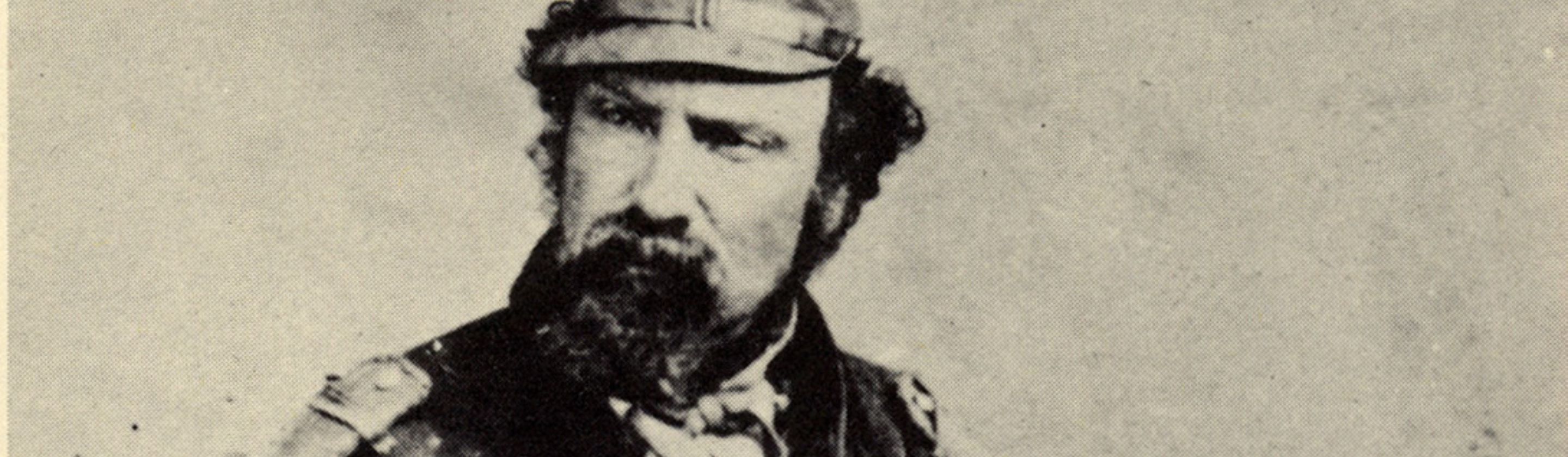
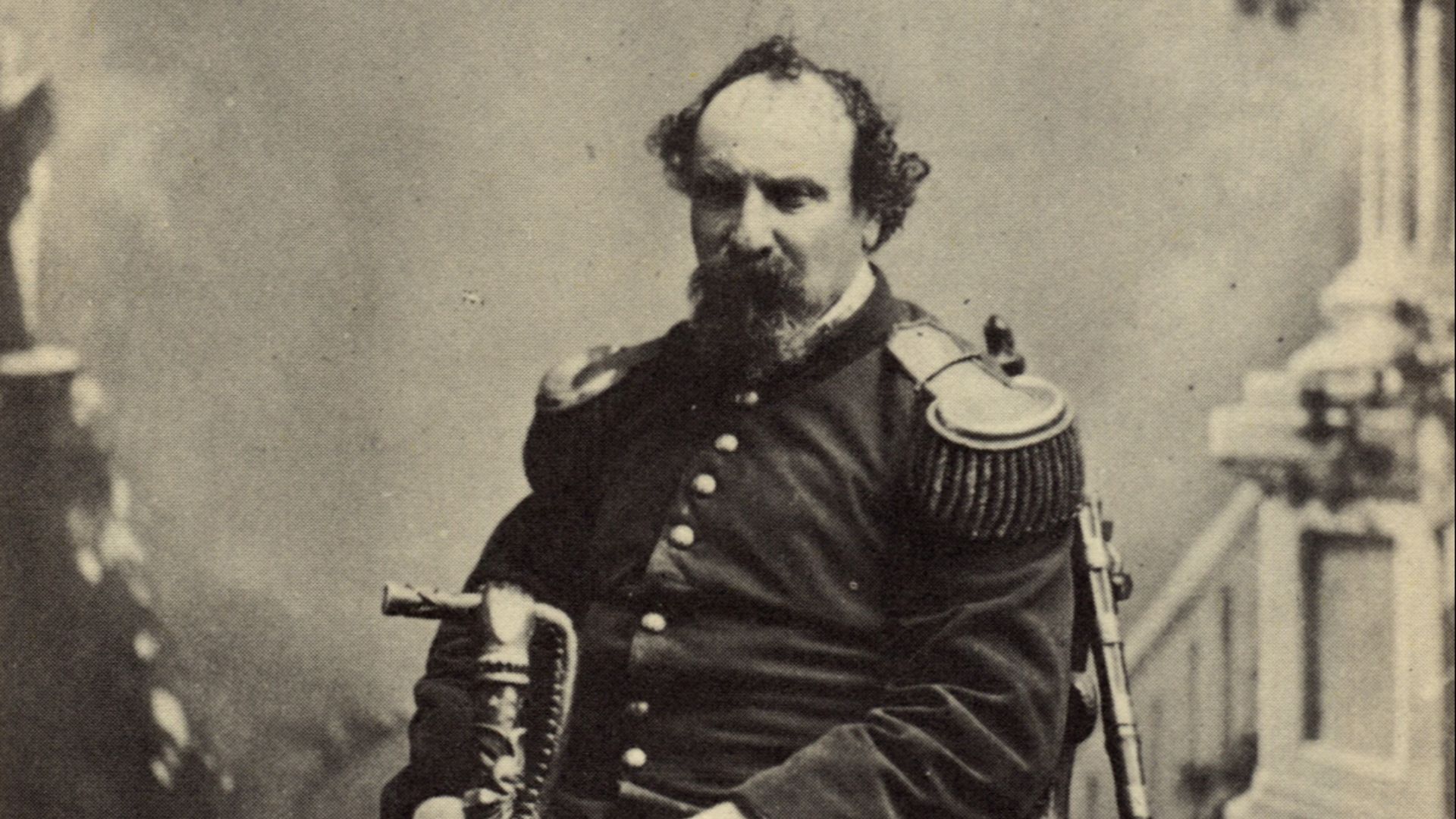
 Unknown authorUnknown author on Wikimedia
On the morning of January 8, 1880, a man collapsed on the corner of California and Dupont Streets in San Francisco and died before anyone could get him to a hospital. He had no real political office, no inherited title, and no legal authority over anything. He was also, without much debate, one of the most genuinely beloved figures the city has ever produced.
His name was Joshua Abraham Norton, and for twenty-one years he had ruled San Francisco as Emperor Norton I, Emperor of the United States and Protector of Mexico. The city played along, and then, somewhere along the way, stopped playing.
From Fortune to Ruin to Proclamation
Norton arrived in San Francisco in 1849 as part of the Gold Rush wave, carrying roughly $40,000 inherited from his father's estate. He was sharp and ambitious, and he built that stake into a small real estate fortune over the following years. By the early 1850s he was one of the more prosperous businessmen in a city full of people trying to become prosperous businessmen. Then he made one catastrophic decision.
In 1852, Norton tried to corner the rice market. A famine in China had driven rice prices up sharply, and Norton purchased a large cargo of Peruvian rice at around 12 cents per pound, betting prices would continue to climb. Several other ships arrived in port shortly after, rice flooded the market, and the price collapsed. Norton spent the next several years in legal battles trying to void his contract and recover his losses. He failed on both counts. By the mid-1850s, the fortune was essentially gone, and Norton largely disappeared from public life.
He re-emerged, spectacularly, on September 17, 1859, when the San Francisco Bulletin published a letter he had submitted declaring himself Emperor of the United States. The editors ran it, possibly as a curiosity or a joke. The city of San Francisco received it as neither. Norton began appearing in the streets in a military uniform, complete with epaulettes and a beaver hat, and San Franciscans, with the specific warmth of a city that has always had affection for the genuinely eccentric, simply accepted him.
The Business of Being Emperor
Norton's reign was not purely ceremonial, at least not in practical terms. He issued proclamations regularly, some absurd, some surprisingly prescient. In 1860 he ordered the dissolution of the United States Congress, which he viewed as corrupt and ineffective. In 1869 he proposed the establishment of a League of Nations to resolve international disputes peacefully, an idea Woodrow Wilson would resurrect nearly fifty years later as his own. In 1872 Norton called for the construction of a suspension bridge or tunnel connecting San Francisco to Oakland. The Bay Bridge opened in 1936.
He also issued his own currency. Norton's bonds and notes, printed in denominations ranging from 50 cents to $10, were accepted by a wide range of San Francisco businesses during his reign. Restaurants fed him for free and displayed certificates of imperial approval in their windows. The Board of Supervisors voted him a small stipend for new uniforms. When a police officer named Armand Barbier had Norton arrested in 1867 on the grounds that he was mentally unwell and should be committed, Police Chief Patrick Crowley released him with a formal apology and ordered all officers to salute him in the street.
There is no clean explanation for why San Francisco embraced Norton the way it did. The most honest answer is probably that the city recognized something in him, some particular sincerity beneath the theater. Norton believed genuinely in what he was doing, or at minimum conducted himself as though he did, and the city respected that in a way it might not have respected a more obviously winking performance.
The Funeral That Proved the Point
Norton died with roughly $5 in his pocket and no material assets. His estate, once inventoried, included a collection of walking sticks, some worthless bonds, and a handful of foreign coins. The Pacific Union Club, one of San Francisco's most exclusive institutions, paid for his casket. That detail alone tells you something about the cultural position he had managed to occupy.
An estimated 10,000 people attended his funeral procession, a remarkable number for a city of San Francisco's size at the time. The San Francisco Chronicle ran the obituary under the headline "Le Roi est Mort," French for "the king is dead." Mark Twain, who spent time in San Francisco during Norton's reign, is widely believed to have drawn on him when creating the Duke and the King in "The Adventures of Huckleberry Finn." Robert Louis Stevenson wrote about him directly.
What Norton pulled off was genuinely strange and genuinely difficult. He invented an identity, sustained it for two decades, and convinced an entire city to participate. San Francisco has had no shortage of characters in its history, but Norton remains the one that the city, on some level, still seems to miss.
KEEP ON READING
The 20 Most Recognized Historical Figures Of All Time
The Biggest Names In History. Although the Earth has been…
By Cathy Liu Oct 4, 2024
10 of the Shortest Wars in History & 10 of…
Wars: Longest and Shortest. Throughout history, wars have varied dramatically…
By Emilie Richardson-Dupuis Oct 7, 2024
10 Fascinating Facts About Ancient Greece You Can Appreciate &…
Once Upon A Time Lived Some Ancient Weirdos.... Greece is…
By Megan Wickens Oct 7, 2024
20 Lesser-Known Facts About Christopher Columbus You Don't Learn In…
In 1492, He Sailed The Ocean Blue. Christopher Columbus is…
By Emilie Richardson-Dupuis Oct 9, 2024
20 Historical Landmarks That Have The Craziest Conspiracy Theories
Unsolved Mysteries Of Ancient Places . When there's not enough evidence…
By Megan Wickens Oct 9, 2024
The 20 Craziest Inventions & Discoveries Made During Ancient Times
Crazy Ancient Inventions . While we're busy making big advancements in…
By Cathy Liu Oct 9, 2024