

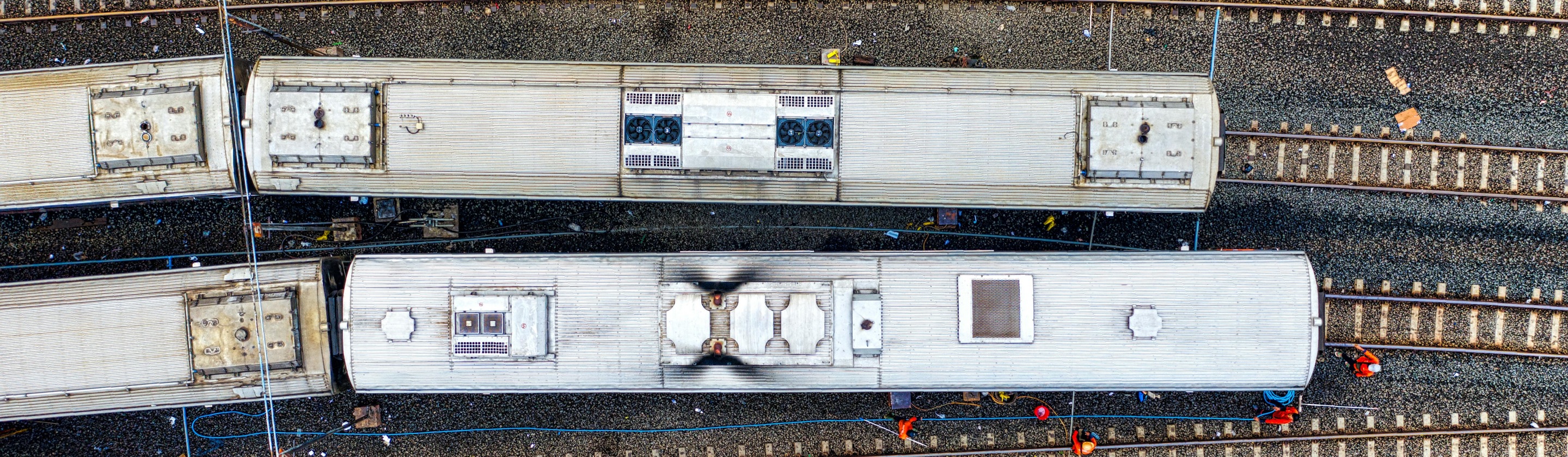
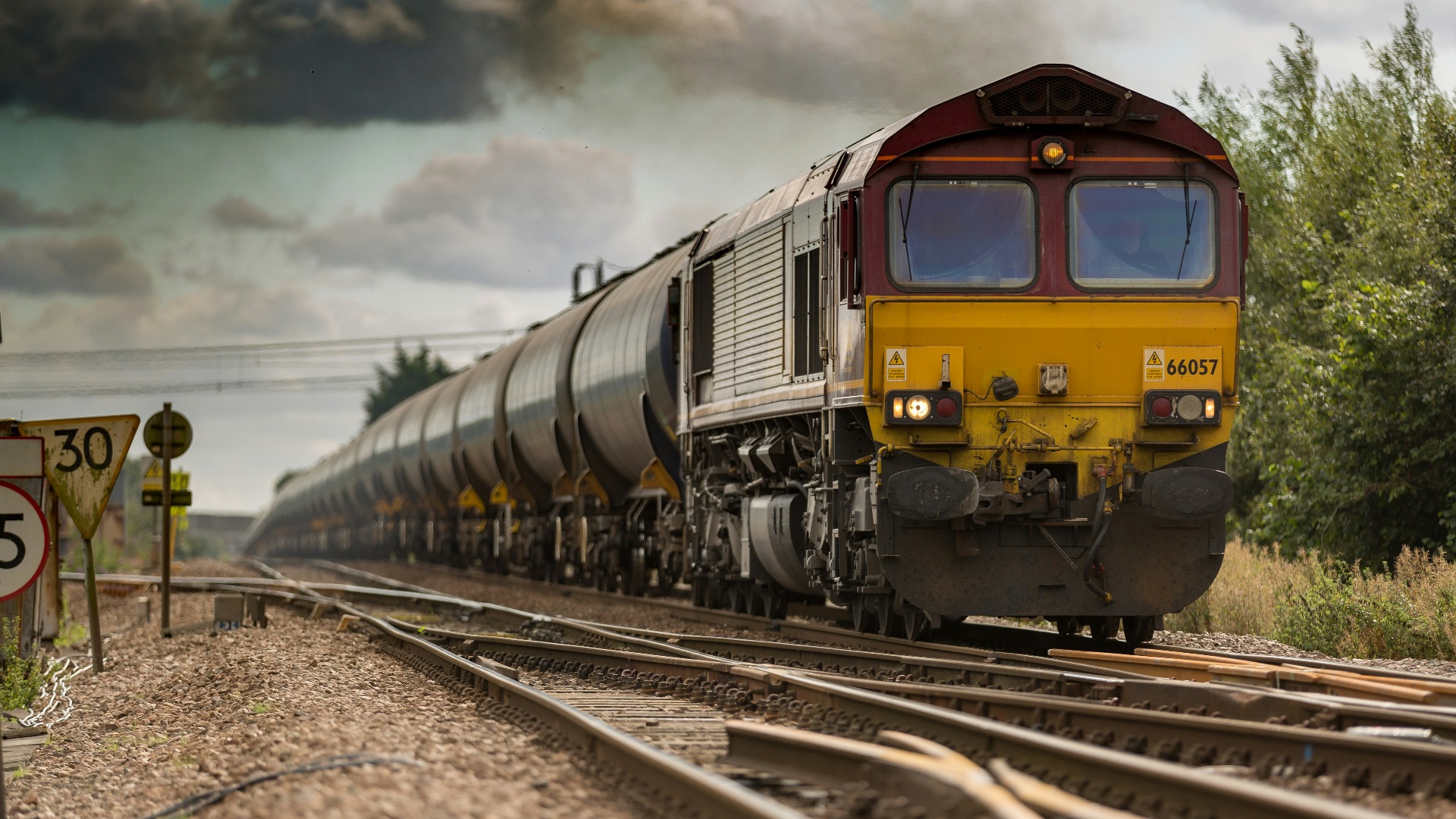
On February 8, 1986, one of the deadliest rail disasters in Canadian history unfolded on a stretch of track in the Rocky Mountain foothills near Hinton, Alberta. A VIA Rail passenger train and a Canadian National (CN) freight train collided head-on at a combined speed of roughly 160 miles per hour, killing 23 people and injuring 71 more. The scale of destruction was catastrophic, and the investigation that followed raised serious questions about the systems—and the people—responsible for keeping passengers safe.
What made this tragedy especially difficult to accept was that it was entirely preventable. The collision didn't happen because of a mechanical failure or a freak accident beyond anyone's control; it happened because of a series of human errors that went unchecked until it was too late. Understanding what went wrong that fateful morning means looking at the decisions made in the hours leading up to the crash, the safety gaps that existed within CN Rail at the time, and the lasting changes the disaster forced upon the Canadian railway industry.
The Events Leading Up to the Crash
The freight train, operated by CN Railway, had departed Edmonton in the early hours of February 8 and was traveling westbound through the mountains. The crew aboard—engineer John Edward "Jack" Hudson, brakeman Mark Edwards, and conductor Wayne Smith—had been on duty for several hours by the time they reached the stretch of track outside Hinton. They'd all had very little sleep; their constant on-and-off shifts made it nearly impossible to catch sustained rest of more than a few hours. It came as no surprise, then, when evidence gathered after the collision suggested that both Smith and Rud had likely fallen asleep at the controls, leaving the train running without anyone actively monitoring its speed or position.
The freight train had passed at least one signal telling the crew to reduce speed and prepare to stop, but those warnings went unheeded. The VIA Rail passenger train, the Super Continental, was carrying 95 passengers and 12 crew members and was traveling eastbound on the same single-track line. The CN train was supposed to yield and divert to a side track in order to let VIA Rail pass, but at 8:40 a.m., the two trains met on a curve, and the result was immediate and devastating.
Survivors described the impact as instantaneous and violent, with the front cars of both trains telescoping into each other on contact. The passenger train bore the worst of it; the locomotive and lead coaches were obliterated, and it was only the rear cars that remained largely intact. The 23 fatalities were concentrated almost entirely in the front section of the VIA train, where passengers had no chance to brace or evacuate before impact.
What the Investigation Revealed
The federal inquiry, led by Justice René Foisy, concluded in 1986 that the primary cause of the disaster was the incapacitation of the CN freight crew, most likely due to sleep deprivation. Toxicology reports found no evidence of alcohol or drugs in the crew members who died, which pointed investigators toward fatigue as the most probable explanation. The freight crew had reportedly had limited rest before their shift, and the scheduling practices CN Rail used at the time didn't adequately account for the risks of operating in the early morning hours on irregular sleep.
Conductor Wayne Smith survived the crash, as he had been riding in the caboose at the rear of the freight train rather than in the locomotive cab with engineer Jack Hudson and brakeman Mark Edwards. During the inquiry, Smith testified that he had repeatedly tried to reach the front crew by radio but received no response, and that he'd misjudged the train's speed, which is why he hadn't activated the emergency brake in the caboose. Investigators were skeptical of his account, though; the evidence suggested the entire crew had likely been asleep, and many observers believed Smith was unwilling to admit his own incapacitation given the legal and professional consequences he was facing.
The inquiry also found that CN Rail's safety culture had significant shortcomings. There was a lack of consistent oversight for crew alertness, and the existing "vigilance controls" (mechanisms designed to confirm an engineer was awake and responsive) were not functioning as an effective safeguard on the freight locomotive. Foisy's report was pointed in its criticism, noting that the railway industry had been aware of fatigue-related risks for years without taking sufficient action.
Beyond the immediate cause, the investigation raised broader concerns about the adequacy of Transport Canada's regulatory oversight. The report recommended stronger federal intervention in how railways monitored crew fitness for duty, and it called for more rigorous standards around scheduling, rest requirements, and onboard safety systems. These weren't minor procedural suggestions; they were fundamental changes the industry had resisted implementing on its own.
How the Disaster Changed Canadian Rail Safety
The Hinton disaster was a turning point for railway regulation in Canada. In the years following the inquiry, Transport Canada introduced stricter rules around crew rest periods and hours of service, aiming to reduce the conditions that had allowed fatigue to become a fatal factor. Railways were also pushed to upgrade their alertness monitoring systems, with deadman controls and vigilance devices receiving greater scrutiny across the industry.
The disaster also contributed to a broader national conversation about the tension between operational efficiency and passenger safety. Rail companies had long prioritized keeping trains on schedule and managing labor costs, sometimes at the expense of adequate rest for crews. Hinton made it harder for that trade-off to continue without public and regulatory pushback.
Four decades later, the Hinton collision is still studied in transportation safety circles as a case study in how systemic failures, not just individual mistakes, lead to disasters. The 23 people who died that February morning lost their lives not just because of one crew's error, but because a system with known vulnerabilities was never fixed in time. As tough as that is to swallow, it’s also what makes this tragedy impossible to forget. At the very least, it has helped make modern rail travel much safer today.
KEEP ON READING

20 Weirdest Historical Objects in Museums
Check Out the Pickled Heart of a Saint. Museums carry…
By Rob Shapiro Oct 1, 2025
20 Ocean Mysteries We Still Haven’t Solved
Unanswered Questions Of The Ocean. The ocean covers most of…
By David Davidovic Sep 1, 2025
10 Phenomenal Mythical Creatures & 10 That Are Just Plain…
Legends Both Majestic And Peculiar. Do you ever wonder why…
By Chase Wexler Oct 1, 2025
20 Historical Predictions That Turned Out To Be True
Crystal Ball Moments In History. Do you wonder what it's…
By Chase Wexler Sep 1, 2025
10 Presidents Who Never Served In The Military & 10…
Commanders And Civilians In Office. Power can rise from very…
By David Davidovic Sep 1, 2025
20 Wars That Could Have Ended Much Sooner Than They…
Wars That Lasted Far Too Long. Wars are often remembered…
By David Davidovic Sep 1, 2025