

I Was Graduating College, But My Father Chose His New Girlfriend's 'Surprise Trip' Over Me—Then My Aunt Showed Up With a Criminal File
I Was Graduating College, But My Father Chose His New Girlfriend's 'Surprise Trip' Over Me—Then My Aunt Showed Up With a Criminal File
The Kitchen Table Promise
I was seven years old the day we buried my mother, and I remember thinking the house had gotten bigger somehow. It hadn't, obviously. It was the same three-bedroom ranch it had always been, same worn carpet, same smell of her lavender candles still hanging in the air. But without her in it, every room felt like a gymnasium — all echo and empty space. Dad and I came home after the reception and the relatives had all filtered out, and it was just the two of us standing in the kitchen not knowing what to do with our hands. He pulled out a chair at the table and sat down, and then he pulled out the chair next to him, and I climbed up into it. He didn't say anything for a long time. I watched him look at the refrigerator, at the window, at the place where Mom used to stand when she made coffee. Then he put his big hand over mine and said, 'It's just us now, kiddo. We're a team.' I didn't fully understand what that meant at seven. But I held onto those words the way you hold onto a railing in the dark. The lavender smell faded over the following weeks, but his promise didn't.
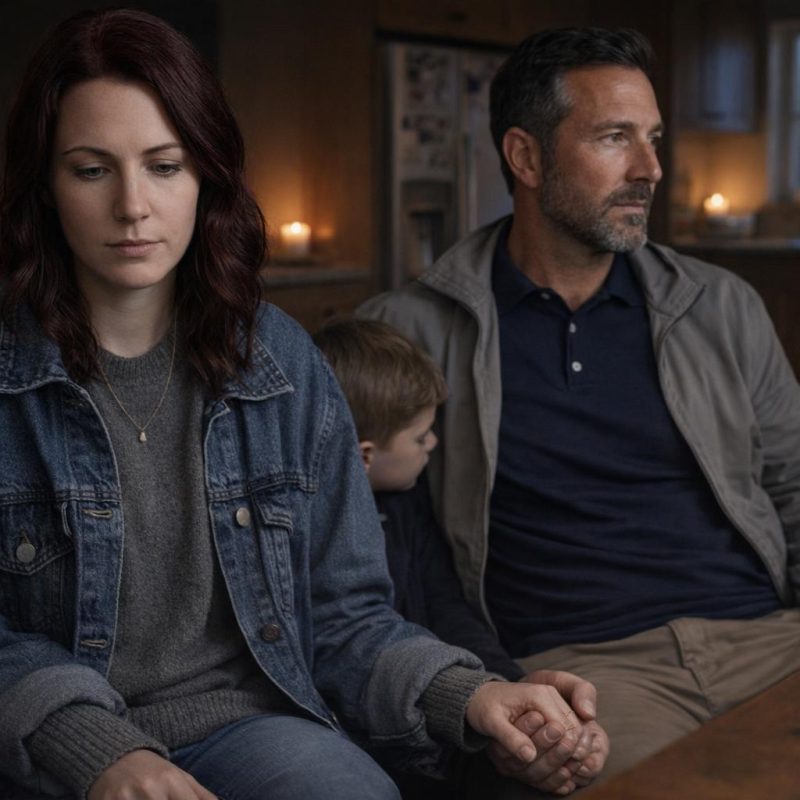 Image by RM AI
Midnight Tutorials
The night before second grade started, I told Dad I wanted my hair braided. I said it the way kids say things — casually, like it was obvious, like of course he would know how to do that. He didn't flinch. He just said, 'Okay, yeah, absolutely,' in that voice he used when he was buying himself time to figure something out. I went to bed and he stayed up. I didn't know that part until years later — that he'd sat at the kitchen table with his reading glasses on, watching YouTube tutorials on his laptop until past midnight, a throw pillow in his lap to practice on. By morning he'd gone through half a bottle of detangling spray and probably aged five years. He woke me up early and sat me down in front of the bathroom mirror and his hands were slow and careful and a little shaky. It took three tries. The braid was crooked. One side was tighter than the other and there were little bumps all the way down where he'd lost the tension. But it was a braid. It was real and it held and it was mine. I looked at myself in the mirror, and then I looked at him standing behind me — hair sticking up, eyes red from no sleep, grinning like he'd just won something.
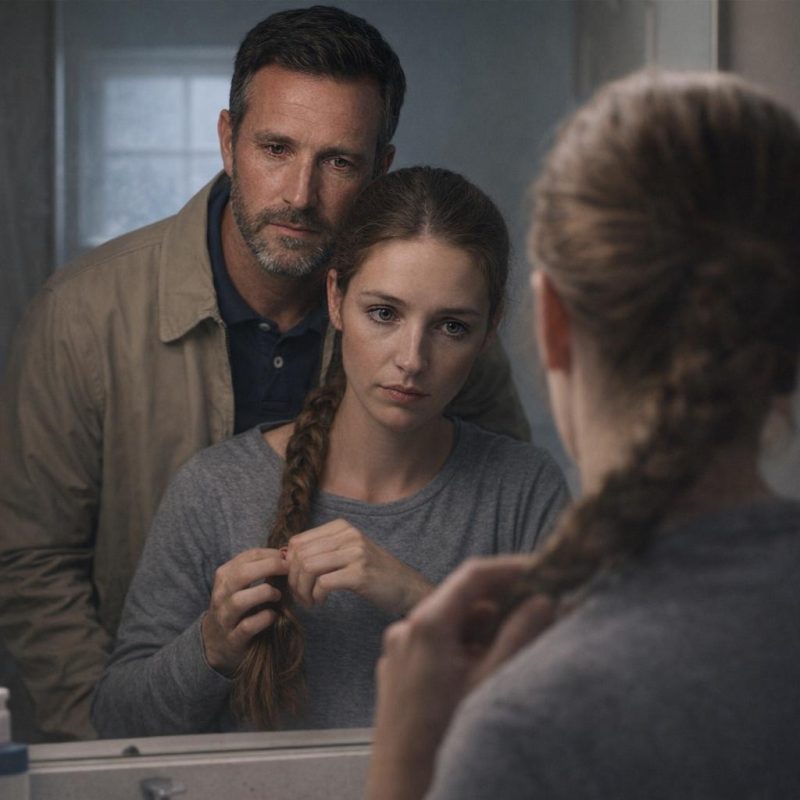 Image by RM AI
The Loudest Cheers
I was not a good soccer player. I want to be honest about that. I was the kid who drifted to the edge of the field and found interesting things in the grass while the actual athletes ran past me in a blur. Dandelions, mostly. Sometimes a beetle. My coach, to her credit, never benched me — she just stopped expecting much. But Dad showed up to every single game. Every one. Rain, cold, the ones that started at eight in the morning on a Saturday — he was there with his folding chair and his travel mug and his voice, which was, I cannot stress this enough, extremely loud. Other parents cheered in that polite, measured way. Dad cheered like he was watching the World Cup final and I was the entire starting lineup. 'That's my girl! Go, go, go!' — even when I was clearly not going anywhere, even when I was crouched down examining something near the corner flag. Kids teased me about it sometimes. I pretended it embarrassed me. And it did, a little, the way things embarrass you when you're ten and you care desperately what everyone thinks. But underneath that, something else lived — something warm and solid that I couldn't have named then. Even now, if I close my eyes, I can still hear his voice cutting clean through all the other noise on that field.
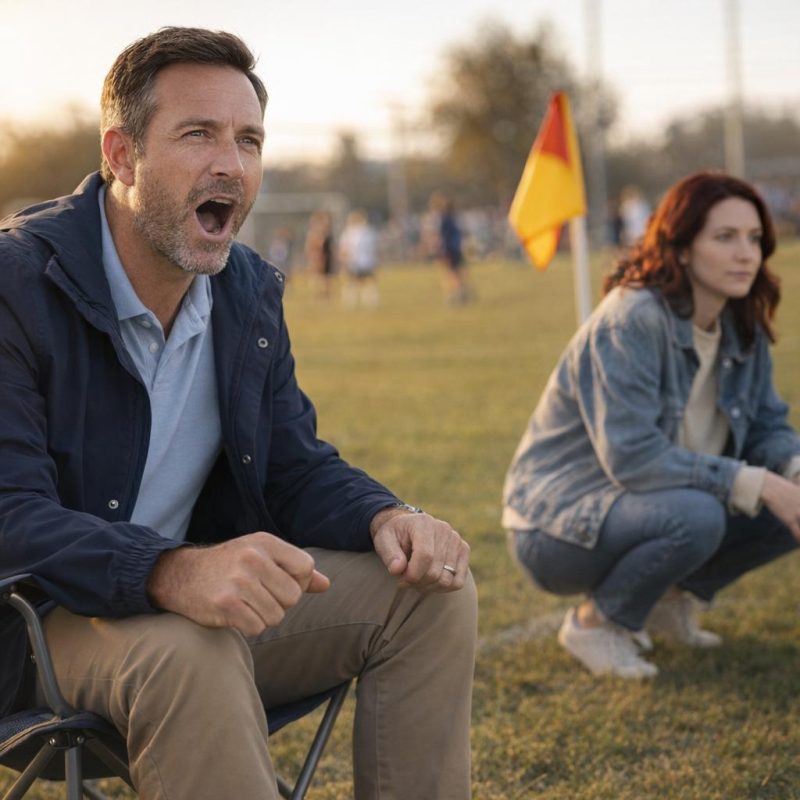 Image by RM AI
Two Against the World
Somewhere in the middle of elementary school, we stopped feeling like a broken family and started feeling like just — us. Our own thing. Friday nights were sacred: frozen pizza from the good brand, not the cheap one, and whatever movie I picked from the shelf, no questions asked. Dad learned to make my grandmother's chicken soup from a handwritten recipe card he'd found in a box, and he got it almost right, and we decided together that almost right was perfect. We had a secret handshake that took three months to finalize — it involved a fist bump, a finger wiggle, and a sound effect that I'm not going to describe here because it loses something in translation. We had inside jokes that would have made zero sense to anyone else. When something went wrong, one of us would say 'plot twist' and the other would groan and then we'd figure it out. I remember a neighbor asking me once if I wished I had brothers and sisters, and I thought about it genuinely for a second before saying no. I meant it. What we had felt complete in a way I couldn't articulate at nine years old. The world outside our little team was fine, but it wasn't necessary. We had each other, and that was the whole thing.
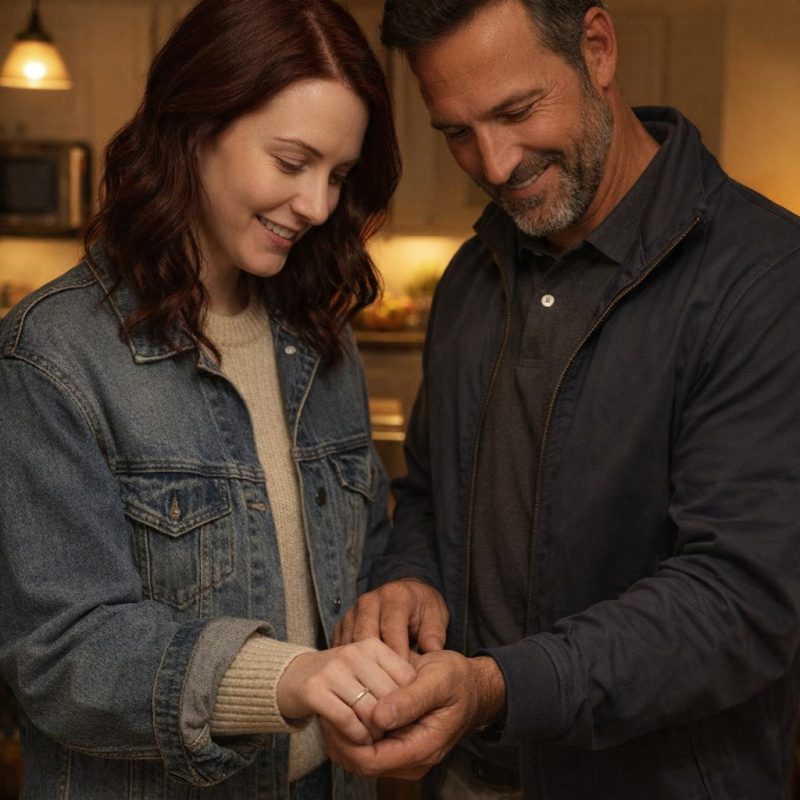 Image by RM AI
The Middle School Gauntlet
Middle school was its own particular kind of disaster, and Dad navigated it with me the way you navigate a minefield — carefully, sometimes badly, always trying. He sat across from me at the kitchen table and had the puberty talk using a library book and a lot of deep breaths, and I will give him full credit for not bailing even when his face went completely red. He drove me to the mall to find a dress for the seventh-grade dance and stood outside the fitting room holding my jacket and pretending to be very interested in a display of scarves. When my best friend at the time decided I wasn't her best friend anymore and told half the grade about it, he let me cry in the car for twenty minutes before he said a single word. Eighth grade was the worst year. There was a situation — a group chat, a rumor, a boy who didn't like me back and made sure everyone knew it — and by the time the final bell rang on the worst day of it, I just wanted to disappear. I walked out of the building with my head down, already dreading the bus, already dreading everything. And then I looked up. His car was in the parking lot. He was leaning against the hood with two gas station hot chocolates, like he'd known.
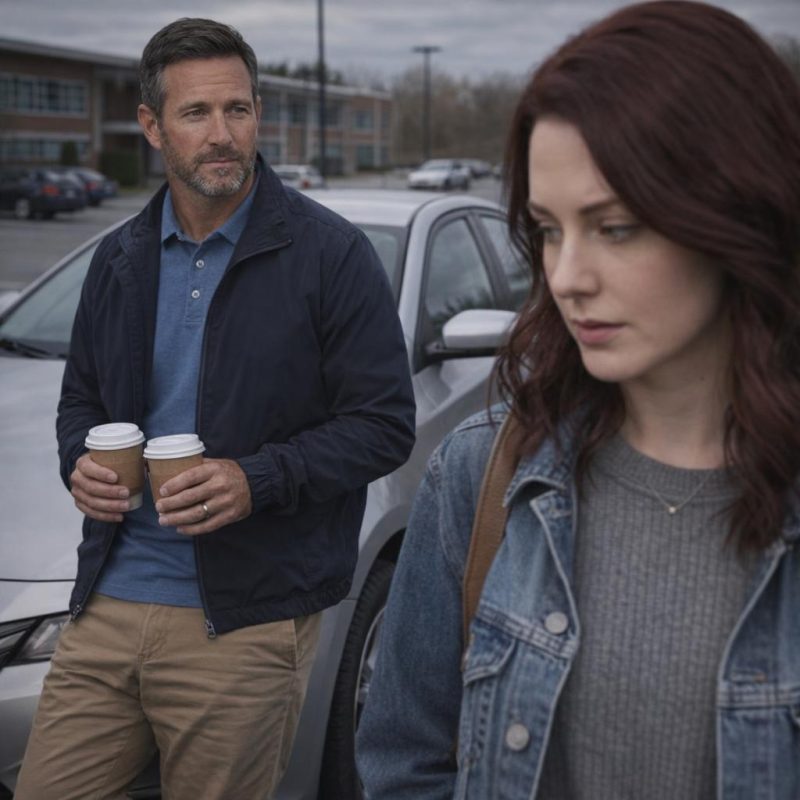 Image by RM AI
The High School Years
High school felt bigger in every way — bigger hallways, bigger stakes, bigger versions of everything that could go wrong. But Dad scaled up right alongside it. He was at every play, every concert, every awards ceremony, every single game even after I finally, mercifully, quit soccer. He bought a real camera junior year — not just his phone — and taught himself to use it by watching the same kind of tutorials he'd used for the hair braiding, which felt very on-brand. I started noticing things I hadn't noticed before, like how many of my friends' parents weren't there. Empty seats in the auditorium. Moms who sent texts instead of showing up. Dads who came to one game and called it a season. I didn't say anything about it, but I started paying attention differently. One afternoon senior year I found him in the living room with a shoebox on the coffee table. He was sorting through it — ticket stubs, programs, the little paper schedules they hand out at the door. Every play I'd been in. Every concert. Every ceremony going back to freshman year. He hadn't thrown a single one away. He looked up when I walked in, a little sheepish, like I'd caught him doing something private. The box was nearly full.
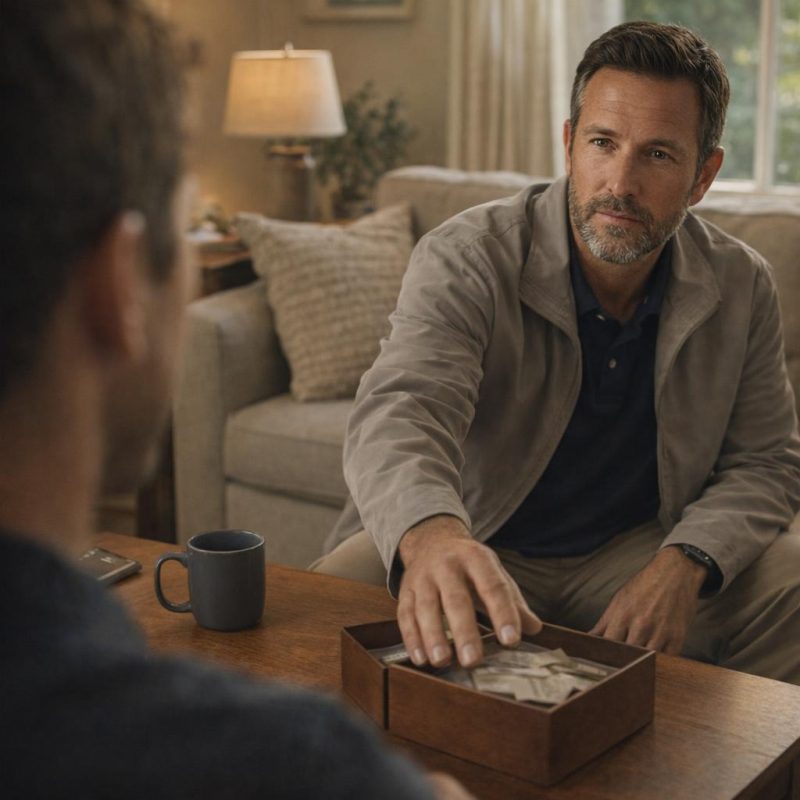 Image by RM AI
College Applications
Senior year, college applications took over our kitchen table the way they take over every senior's kitchen table — in stacks of paper and browser tabs and the particular low-grade panic of trying to summarize yourself in six hundred words or less. Dad was in it with me completely. He researched programs, made spreadsheets, drove me to four campus visits over two weekends without complaining once about the mileage. He read every draft of every essay and left comments in the margins in his cramped handwriting — not corrections, mostly, just things like 'this part sounds like you' or 'say more here.' The waiting period after we submitted was genuinely awful. I refreshed my email approximately nine thousand times. Dad pretended to be calm and I pretended to believe him. Then one afternoon in late March, I came home from school and there was an envelope on the kitchen table — thick, not thin, which meant something — from my first-choice school. I stood there staring at it for a second. Dad came in from the hallway, and I don't know how he knew, but he just walked over and stood beside me and put his hand on my shoulder. I picked up the envelope.
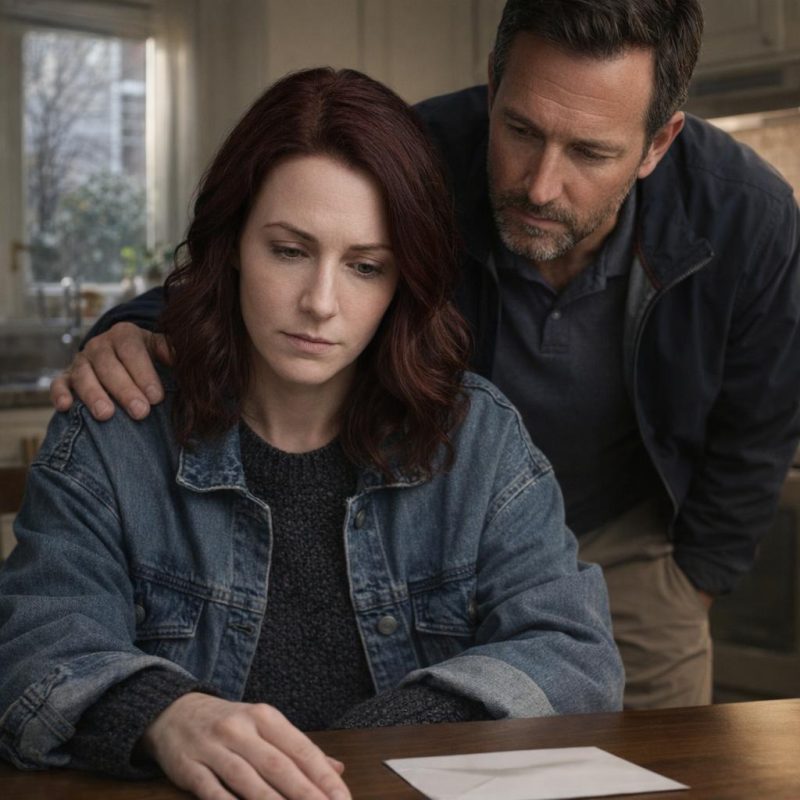 Image by RM AI
The Bittersweet Goodbye
Move-in day was a Saturday in late August, hot and bright, the kind of day that feels significant even when you're just hauling boxes up a stairwell. Dad had packed the car the night before with a precision that suggested he'd made a list, which he absolutely had. He carried the heavy things without being asked and assembled my desk chair from the flat-pack box in under twenty minutes, which I think was a personal record. He made my bed with the sheets we'd bought together, tucking the corners in the way he'd always done at home. We kept the conversation light — where to put the lamp, whether the mini-fridge fit under the desk — because the other conversation, the real one, was too big for a dorm room. When there was nothing left to unpack, we stood in the parking lot and he hugged me for a long time and told me he was proud of me, and his voice did the thing it does when he's trying not to cry. We promised to call every Sunday. He promised to send care packages. I watched his car until it turned out of the lot and disappeared. I went back upstairs and sat on the edge of my new bed, and the room held all that careful quiet around me.
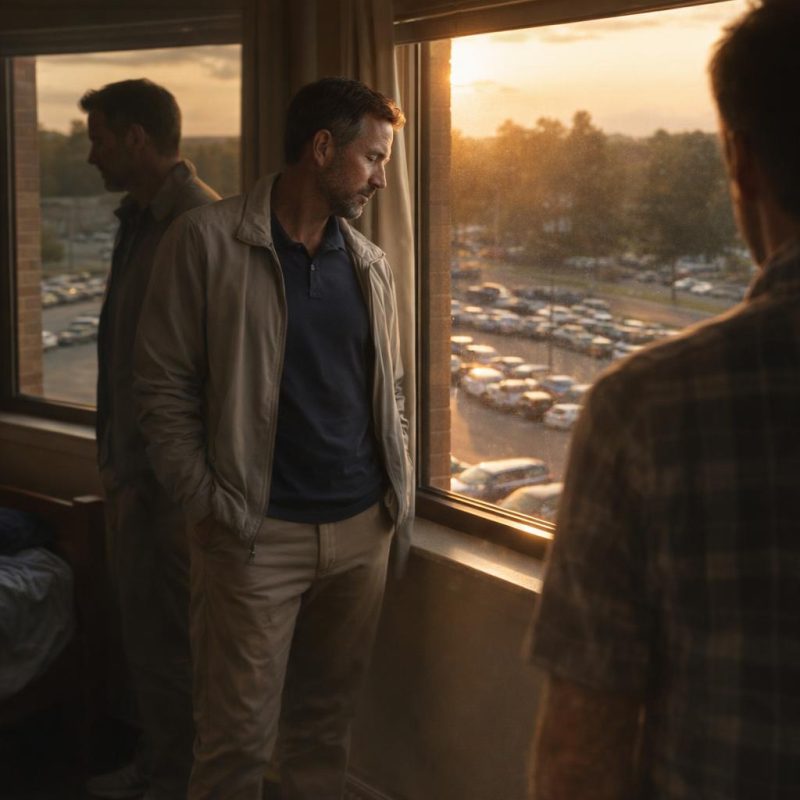 Image by RM AI
Friday Night Calls
Homesickness hit me in waves that first semester, usually around dinnertime when the dining hall was loud and I didn't know where to sit. I'd call Dad on Fridays, sometimes before I even made it back to my dorm room, standing outside on the quad with my backpack still on. He always picked up on the second ring. We had a whole system worked out — I'd go first, running through my week in whatever order it came to me, and he'd ask follow-up questions like he was taking notes. Which professor was the hard one. Whether the girl down the hall had stopped playing music at midnight. How the paper on the Reconstruction era had gone. Then it was his turn, and he'd tell me about work, about the neighbor's dog that kept getting into the yard, about what he'd made for dinner. Small things. The kind of things that don't seem worth saying until you're three hundred miles away and they're the only things keeping you tethered. By the time we said goodnight, the homesickness had usually loosened its grip a little. His voice, steady and familiar across all those miles, was enough to make the distance feel smaller than it was.
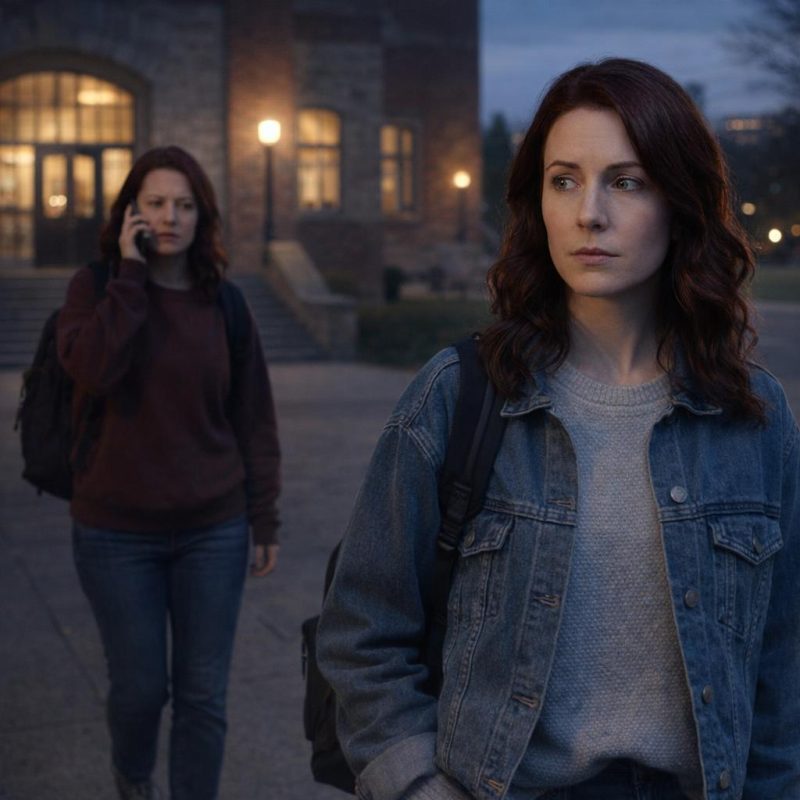 Image by RM AI
Thanksgiving Return
I drove home for Thanksgiving break with my windows down even though it was cold, because I needed the air and the noise and the feeling of moving toward something. I'd been counting down the days since mid-October. When I pulled into the driveway, Dad was already on the porch, and he came down the steps before I'd even turned off the engine. He hugged me the way he always did, both arms, no hesitation, and I felt something in my chest unknot that I hadn't realized had been tight. The house smelled like garlic and the specific brand of dish soap we'd always used, and my room was exactly as I'd left it — same lamp, same stack of books on the nightstand, same slightly crooked poster above the desk. He'd made my favorite soup and bought the good bread from the bakery on Fifth. We stayed up too late watching movies we'd seen a dozen times, and he laughed at all the same parts. It was like the months apart had just folded up and slipped away. The next morning I came downstairs and found the kitchen table set for two, the same mismatched mugs we'd always used sitting in their usual spots.
 Image by RM AI
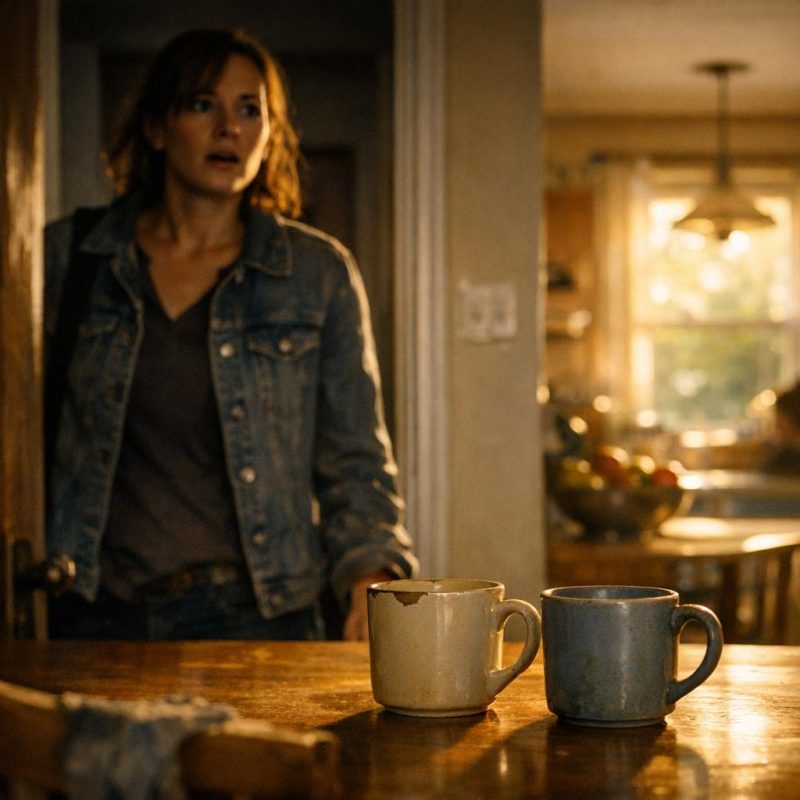 Image by RM AI
Sophomore Confidence
Sophomore year felt different from the first week. I knew where things were, I knew which dining hall had the better coffee, I knew which study rooms to book early on Sunday nights. I had friends I actually looked forward to seeing, a major I was genuinely interested in, and a sense that I was starting to figure out who I was outside of home. It was a good feeling, and I wanted to tell Dad about all of it, which meant our Friday calls got longer, not shorter. He never seemed to mind. I'd tell him about the internship applications I was starting to research, about the professor who'd pulled me aside after class to say my essay was strong, about the weekend trip my friends and I took to the state park. He celebrated every small thing like it was a headline. When I got a part-time job at the campus library, he called me back twenty minutes after we'd hung up just to say he'd forgotten to tell me he was proud. I'd roll my eyes a little, but I was smiling every time. Whatever was changing in me, whatever confidence I was slowly building, it was easier to trust because I knew he was on the other end of the line every Friday, steady as anything.
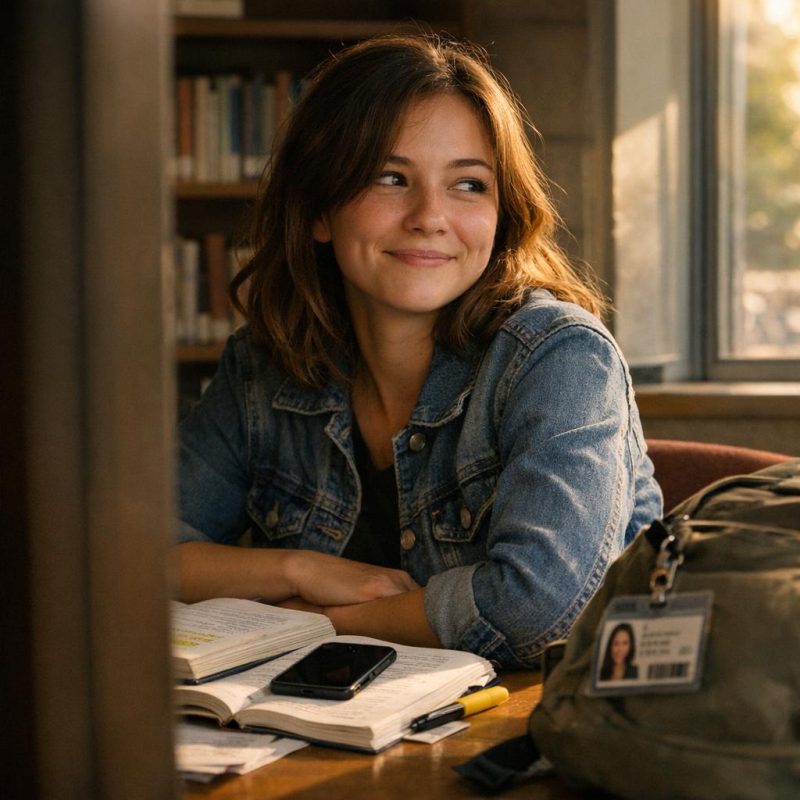 Image by RM AI
 Image by RM AI
Junior Year Planning
Junior year was the year everyone started talking about the future like it was arriving tomorrow. Suddenly every conversation in the dining hall was about internships and grad school and what you were going to do with your degree, and I felt the pressure of it even when I was trying not to. I brought it to Dad, the way I brought everything to Dad, and he talked me through it with the same patience he'd always had. He asked good questions — not the anxious kind, but the kind that helped me think. What did I actually want, not what did I think I was supposed to want. We talked about the graduation ceremony for the first time that fall, in a practical way, logistics and timing, and he was already thinking about it more concretely than I was. I told him I hadn't even looked up the date yet and he laughed and said that was fine, he'd already looked it up himself. I asked him if he was serious and he said he'd put in the request at work months ago, that he wasn't leaving anything to chance. I sat there with the phone pressed to my ear, and something about hearing that — that he'd already done it, already made sure — settled something in me I hadn't known needed settling.
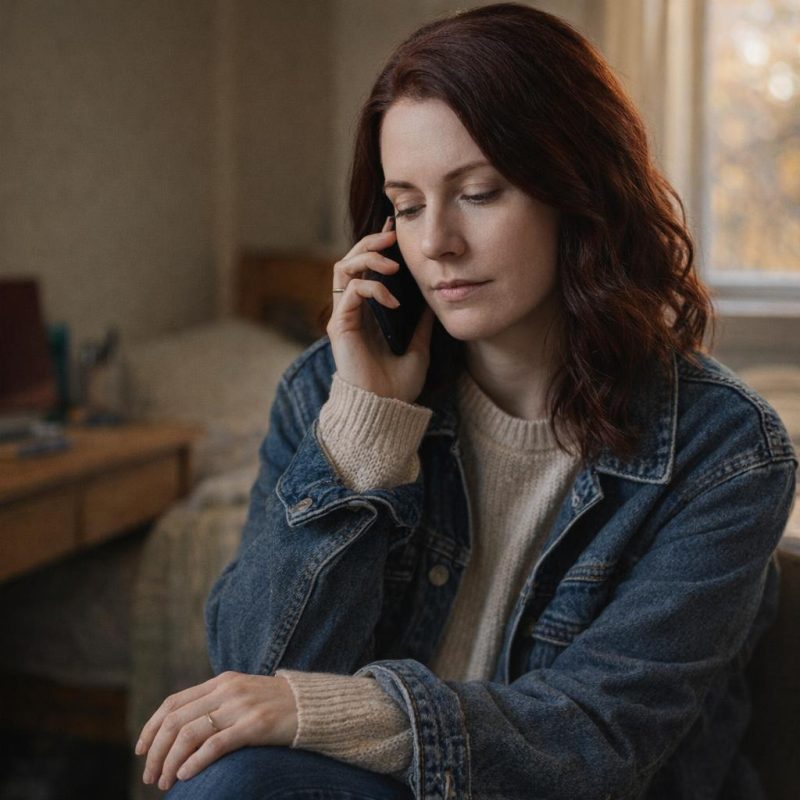 Image by RM AI
Senior Year Begins
Senior year arrived and I didn't know whether to feel excited or terrified, so I mostly felt both at once. My friends and I kept saying things like 'last first day' and 'one more year' and laughing about it, but underneath the jokes there was something real and a little heavy. Dad seemed to feel it too, even from a distance. Our calls that fall had a different quality — he asked more questions, listened more carefully, like he was paying attention to details he wanted to hold onto. He wanted to know about every class, every professor, every project I was working on. He asked about my friends by name and remembered things I'd mentioned weeks earlier. I'd catch myself in the middle of telling him something ordinary — a funny thing that happened in the library, a good meal I'd had — and feel this quiet awareness that there weren't that many of these conversations left before everything changed. Not that we'd stop talking. But the version of us that existed in this particular rhythm, me in my campus apartment, him at home, Friday nights on the phone — that version had an expiration date. I didn't say any of that out loud. I just let the calls run a little longer than usual, and I think he did too.
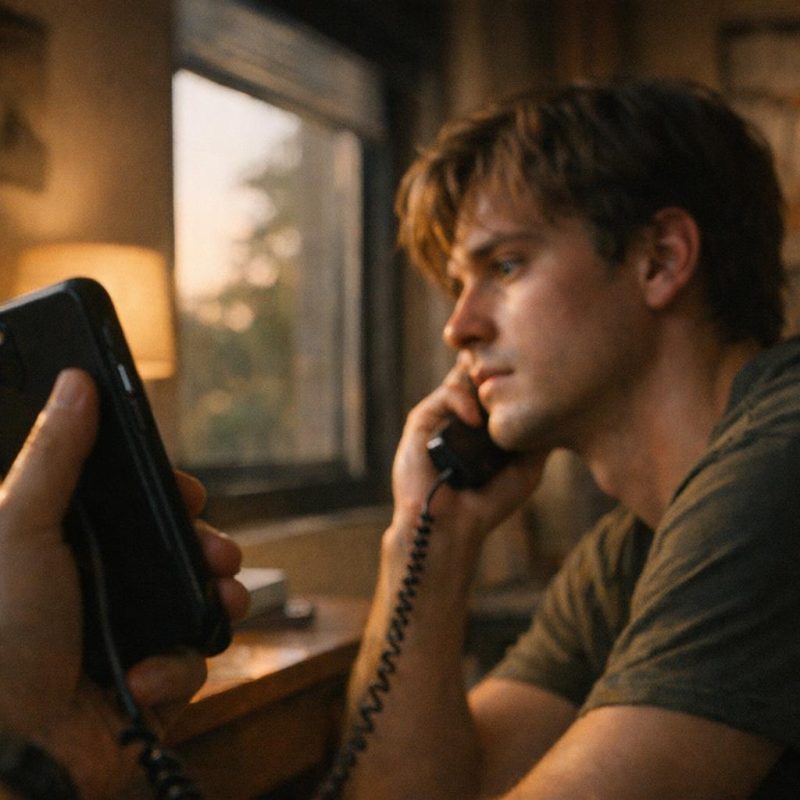 Image by RM AI
 Image by RM AI
The Shift in His Voice
It was a regular Friday in October, nothing different about it from my end — I'd made tea, I was sitting cross-legged on my bed, I had my notes from the week spread out around me the way I always did when we talked. But something about Dad's voice was off. Not bad off, just different. Lighter, maybe, in a way I couldn't quite name. He answered my questions the way he always did, but there were these small pauses, little gaps where his attention seemed to drift somewhere else before coming back. I asked him how work was and he said fine, good actually, and then moved on quickly. I asked if everything was okay and he said of course, why wouldn't it be, and laughed a little, which wasn't quite an answer. I told myself I was probably reading too much into it. He sounded happy, genuinely, and I wanted that for him — I'd always wanted that for him. He'd spent so many years making sure I was okay that sometimes I forgot to wonder whether he was. So I let it go. We said goodnight the same way we always did. But after I set my phone down, I sat there for a moment with that unfamiliar quality in his voice still turning over quietly in my mind.
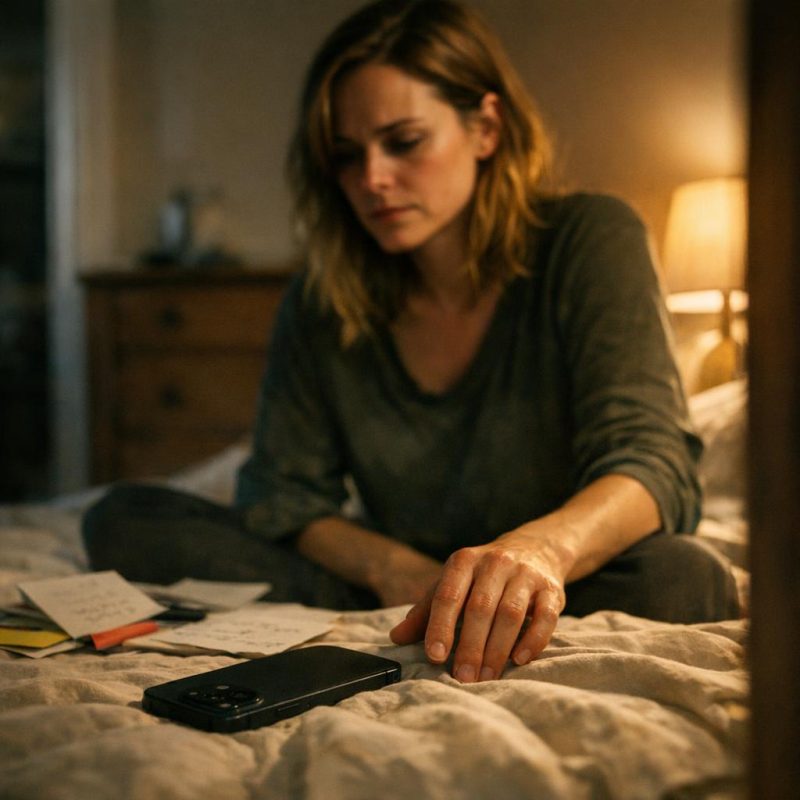 Image by RM AI
 Image by RM AI
The Dinner Invitation
He called on a Tuesday, which was already unusual. Dad was a Friday caller — that was the deal, that was the rhythm we'd built — so when his name came up on my screen mid-week, I felt a small flutter of something I couldn't quite name. He sounded fine, normal even, but there was a formality to the call that I wasn't used to. He asked about my schedule for fall break, whether I had plans, whether I'd be coming home. I said I hadn't figured it out yet. He said he'd like to take me to dinner, if I was free, and something about the way he said it — 'take me to dinner,' like a scheduled thing, like an appointment — made my stomach tighten just slightly. I asked if everything was okay and he said yes, absolutely, he just had something he wanted to talk to me about in person. His tone wasn't alarming, exactly. It wasn't the voice he used when something was wrong. But it wasn't quite the voice he used when everything was fine, either. I said yes, of course, just tell me when and where. We settled on a restaurant near home, Saturday of break. I hung up and sat with the phone in my hand, turning over what he might need to say that couldn't wait until Friday.
 Image by RM AI
Thai Food Confession
He was already at the table when I got there, which was unusual — Dad was always five minutes late, always. He'd ordered water for both of us and was turning his phone over in his hands when I sat down. We ordered, we made small talk, and then the food came and he barely touched it. He kept moving his pad thai around like he was looking for something in it. I asked him twice if he was okay. He said yes both times. Then, somewhere between the spring rolls and the second round of water, he set his fork down and told me he'd been seeing someone. Her name was Lisa. She was a healthcare administrator, he said, and she was — he paused here, searching for the word — good. She was good. I felt a small sting, not because he was seeing someone, but because of what came next: he'd been seeing her for almost eight months. Eight months of Friday calls, eight months of telling me everything, and this had been sitting there the whole time, unmentioned. I told him I was glad, that I wanted him to be happy, and I meant it. He looked relieved in a way that made me feel tender toward him. But I kept coming back to it, quietly, while we finished eating — eight months.
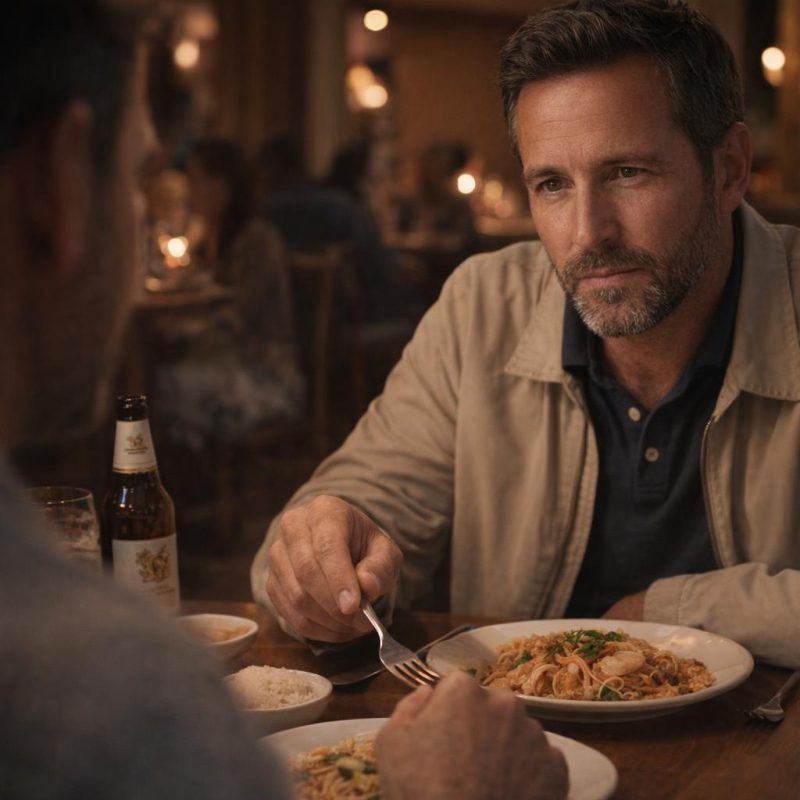 Image by RM AI
The Restaurant Meeting
Dad had picked a restaurant I'd never been to — the kind of place with cloth napkins folded into little swans and a menu that didn't list prices. I got there first and sat with my water, trying to feel open about the whole thing. I wanted to like her. I genuinely did. Lisa arrived about ten minutes later, and the first thing I noticed was how put-together she was — not just dressed nicely, but assembled, like every detail had been considered twice. She had this warm, practiced smile that she aimed at me the moment she spotted our table, and she said my name like she'd been saying it for years. She asked about my major right away, my thesis, what I wanted to do after graduation. All the right questions. I tried to ask her things back — where she'd worked before, how she and Dad had met exactly, what her family was like. Each time, something shifted in her expression, just slightly, and the answer that came out was smooth and general and somehow said nothing at all. Dad watched us from across the table with this hopeful, almost anxious look, like he was willing the evening to go well. I smiled and nodded and kept trying. Then she turned my question about her hometown into a question about my summer plans, and the smile never wavered once.
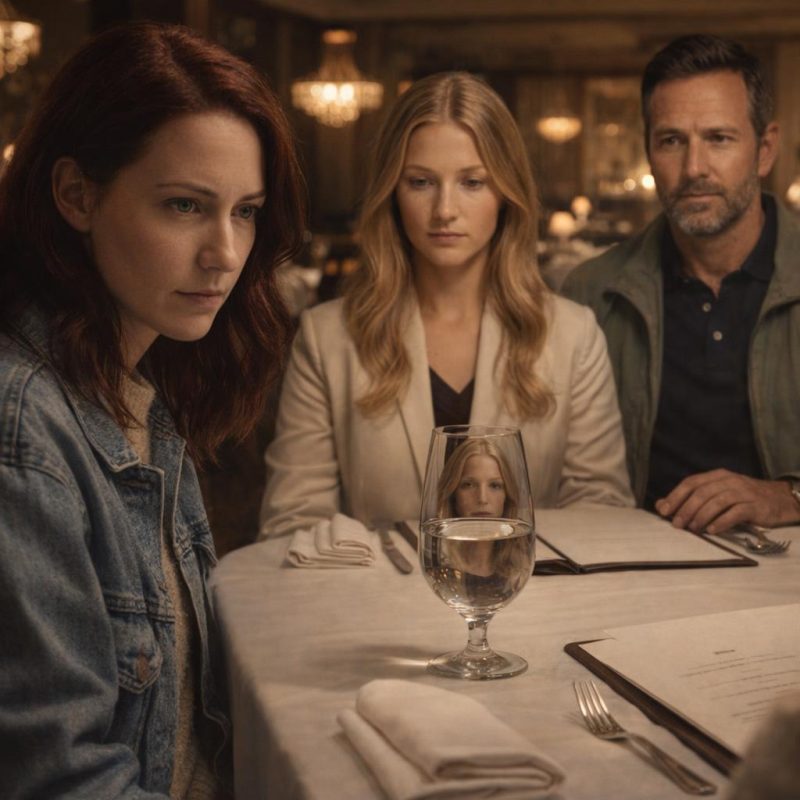 Image by RM AI
Processing the Unease
The drive back to campus took about forty minutes, and I spent most of it with the radio off. I kept replaying the dinner in my head, trying to figure out what was actually bothering me. Lisa had been perfectly pleasant. She'd asked good questions. She'd laughed at the right moments. So why did I feel like I'd spent two hours talking to a very convincing display window? I told myself I was probably just being protective. Dad had been on his own for a long time, and some part of me had gotten used to being the person he talked to about everything. Maybe this was just what it felt like to share him. I tried that explanation on for a while. It almost fit. But then I'd circle back to the way she'd redirected every personal question — not rudely, not obviously, just smoothly, like water finding a new path around a stone. I couldn't point to a single lie she'd told. I couldn't point to anything, really. I just kept coming back to the fact that I'd asked her a dozen questions and come away with nothing I could hold onto. Maybe she was just private. Lots of people were private. I merged onto the highway and told myself to let it go. The feeling didn't go anywhere.
 Image by RM AI
The First Snap
I waited a few days before calling Dad. I didn't want to seem like I was rushing to deliver a verdict, and I genuinely wanted to find the right words. When he picked up, he sounded lighter than he had in weeks, and for a minute we just talked — about my thesis deadline, about whether he'd gotten the gutters cleaned before the rain. Then I asked, as carefully as I could, whether Lisa had ever mentioned which hospital system she worked for, because I'd been curious after dinner and hadn't thought to ask. The silence on the other end lasted maybe two seconds. Then his voice changed. Not loudly — Dad never raised his voice — but there was an edge in it I had never heard before, something tight and defensive, like a door being pulled shut. He said he didn't understand why I was interrogating her before I'd even given her a real chance. He said I was being judgmental. That word landed hard. In fifteen years, through every argument and misunderstanding we'd ever had, he had never once called me judgmental. I didn't say anything back. I think I said something like okay, and we wrapped up the call shortly after. I sat with the phone in my lap for a long time after he hung up, in a silence that felt like something had shifted and I didn't know yet what.
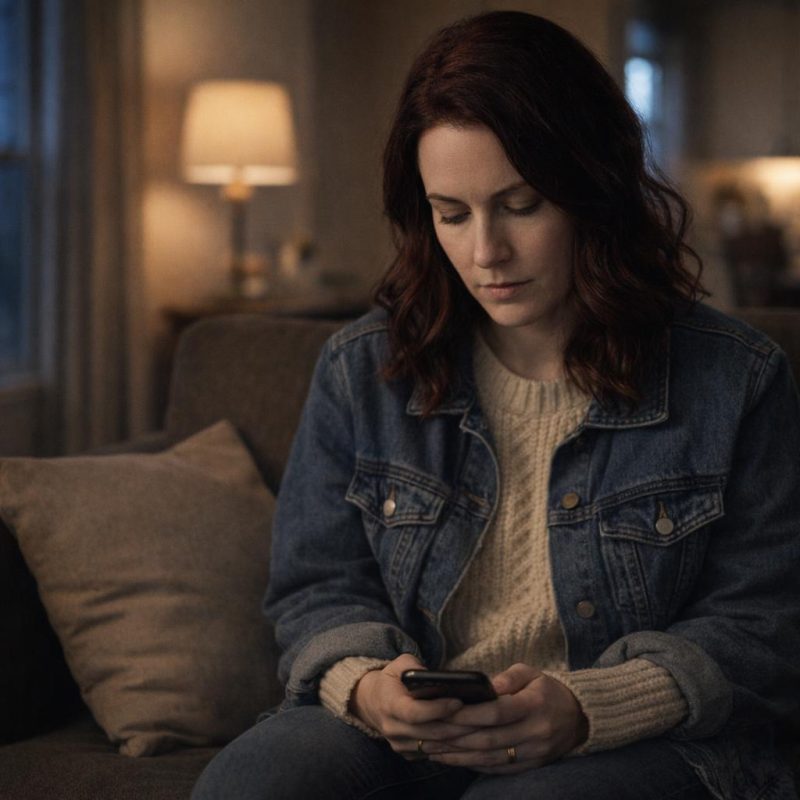 Image by RM AI
The Wall
After that call, something changed in the rhythm of us. Our Friday calls — the ones that had been a constant since I left for college — started getting shorter. He'd pick up, we'd exchange a few minutes of surface-level news, and then he'd say he had to go. Something with dinner, something with work, something vague that I couldn't argue with. I stopped mentioning Lisa by name because even a sideways reference made his answers go flat and clipped. I tried asking about his garden, his coworkers, the book he'd been reading for three months. He answered, but briefly, like he was rationing words. I kept telling myself it was a phase, that new relationships made people temporarily unavailable, that he'd come back around once things settled. I made excuses for him in my head the way I used to make excuses for group project partners who didn't pull their weight — generously, and with more patience than the situation probably deserved. Graduation was six weeks out. I'd been imagining that day since freshman year, and he'd been part of every version of it. I held onto that. He'd show up, and things would feel normal again, and whatever this distance was would dissolve in the parking lot of the stadium. I was mid-thought about which restaurant we'd go to after the ceremony when my phone buzzed and his name appeared — and then the call ended before I could even reach for it.
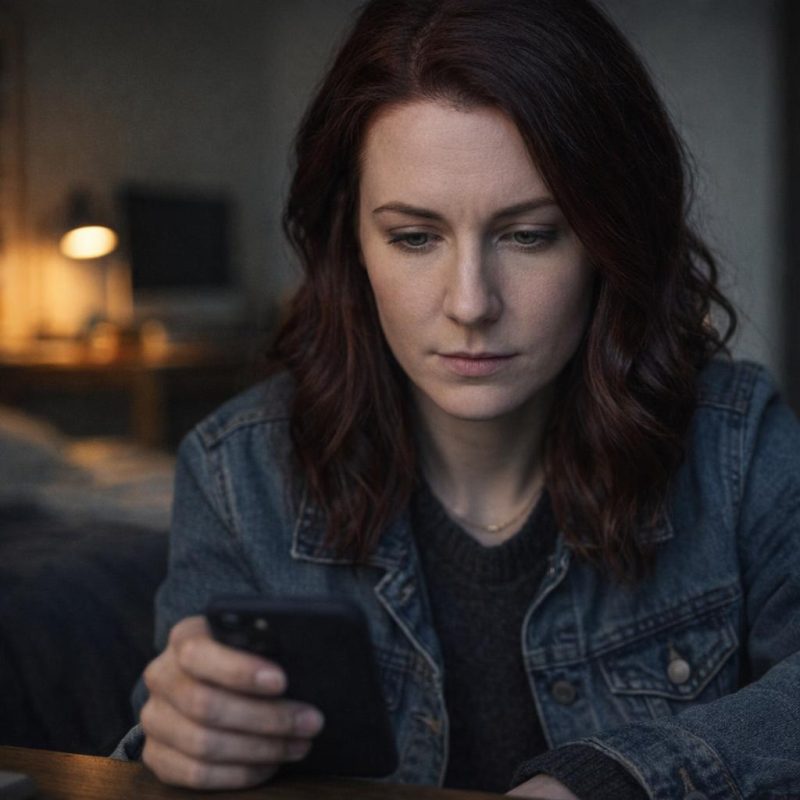 Image by RM AI
The Performance
There was a second dinner, about three weeks after the first. Dad suggested it, and I said yes because I wanted to try again — wanted to give Lisa a fair shot and give myself a chance to feel differently. She was already seated when we arrived, which I noticed but didn't read into. She stood to greet me with that same assembled smile, and within five minutes she was asking about my thesis defense, my plans after graduation, whether I'd thought about graduate school. The questions were good ones. Thoughtful, even. I answered them honestly, and she listened with her head tilted just slightly, the way people do when they want you to know they're paying attention. I kept waiting for the conversation to turn — for her to offer something back, some piece of herself in exchange. It didn't quite happen. When I asked what she thought about the healthcare field shifting toward more administrative roles, she gave me an answer that was articulate and confident and somehow didn't tell me anything about her specifically. Dad watched us from across the table with that same hopeful expression he'd worn the first time, like he was watching two people he loved figure out how to love each other. I wanted to give him that. I smiled and kept going. But the whole exchange had a quality I couldn't quite name — too even, too frictionless, like a conversation where all the rough edges had somehow worn away.
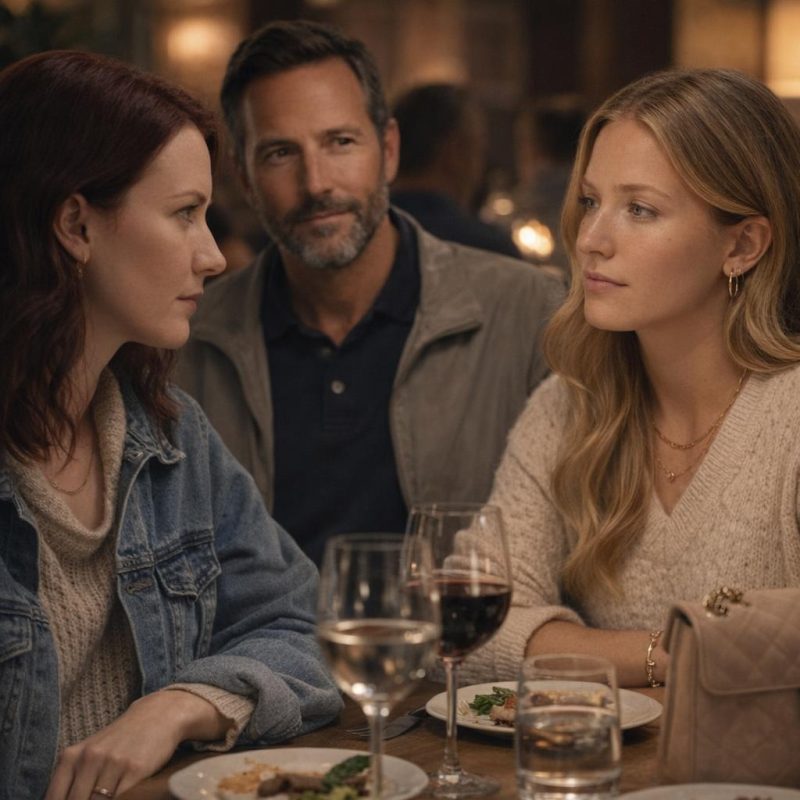 Image by RM AI
Healthcare Administration
Somewhere between the entrées and the dessert menu, I asked Lisa directly about her work. I kept it casual — just said I'd been curious since the last dinner, that healthcare administration sounded like demanding work and I wanted to understand what her day actually looked like. She smiled and said it was, that the field was always changing, that there was never a shortage of challenges. I nodded and asked which system she worked for — whether it was a hospital network or more of an outpatient setting. She said it varied, that her role touched a few different areas. I asked what her title was. She said something about oversight and coordination, delivered with the kind of confidence that made it sound like a complete answer. Dad was cutting his steak and didn't seem to register that I still didn't know anything more concrete than I had before the question. I tried once more — asked if she worked with physicians directly or more on the operational side. She said a bit of both, really, and then mentioned that the pasta here was supposed to be excellent and had I tried it. I hadn't. I looked down at my plate. I couldn't point to a single false thing she'd said. But I also couldn't have told you, if someone had asked me right then, what Lisa actually did for work. The absence of any real detail sat quietly between us like an uninvited guest.
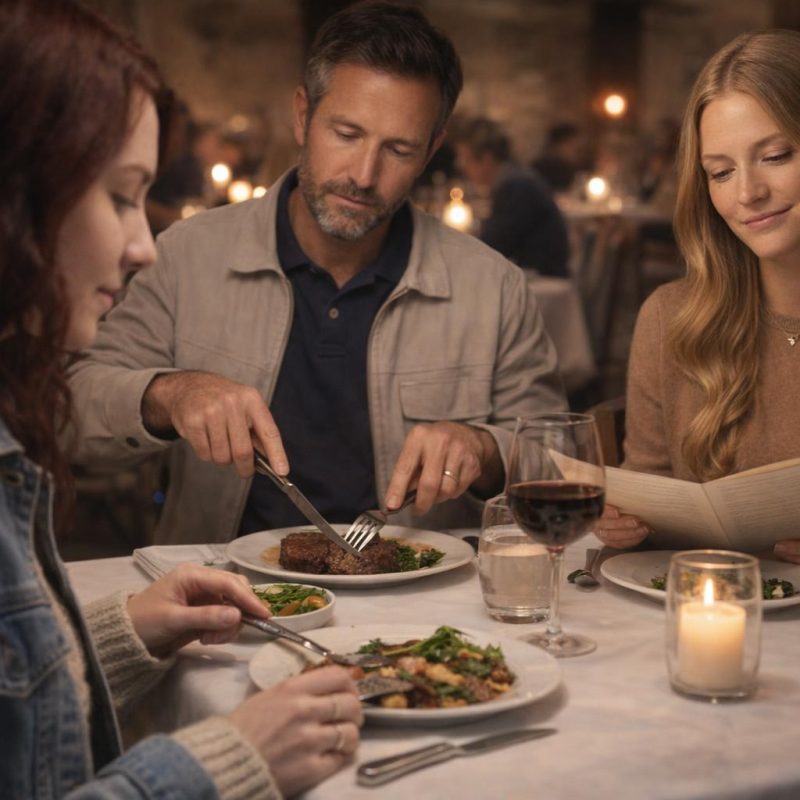 Image by RM AI
The Midwest
Later in the meal, Lisa mentioned offhandedly that she'd grown up in the Midwest — said it the way people do when they're explaining something about themselves, like it was context. I asked where exactly, genuinely curious. She said a small town, nothing anyone would know. I asked what state. She named one, then added that she'd moved around a lot as a kid, so it was hard to pin down. I asked if she ever went back, whether there were places she missed. She said small towns had a way of staying the same, which wasn't really an answer. I tried a different angle — asked if she had a favorite spot growing up, somewhere she'd taken people to show them where she was from. She smiled and said she'd always been more of a city person at heart. Dad was smiling too, nodding along like the conversation was going beautifully. I counted, quietly, in my head. That was the second deflection. I asked about her family — whether they were still in the Midwest, whether she got back for holidays. She said family was complicated, which I understood, and then she turned to Dad and asked if he'd looked into that restaurant he'd mentioned last week. I watched her reach across the table toward Dad's hand as she redirected the conversation entirely, and that was the third time a direct question about her life had simply ceased to exist.
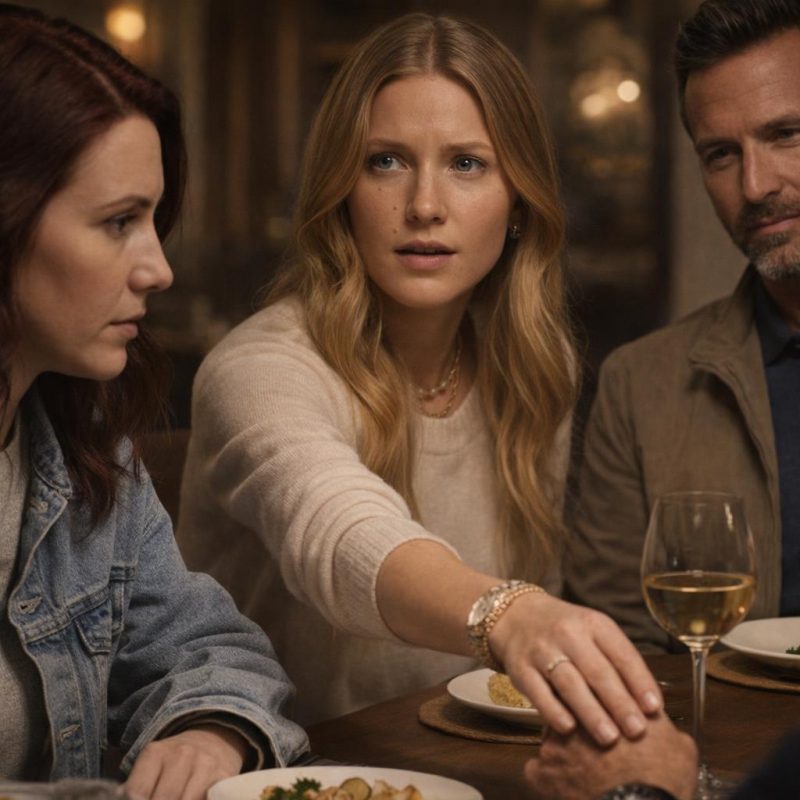 Image by RM AI
Meeting a Character
The dinner wrapped up the way those things do — the check came, there were compliments about the food, and we walked out into the parking lot together making the kind of small talk that fills the space between a meal and a goodbye. Lisa thanked me for coming, said it meant a lot to her, and when she hugged me it was warm and brief and perfectly calibrated. Dad hugged me longer. He pulled back and looked at me with this open, hopeful expression and asked what I thought. I told him she seemed lovely. He looked so relieved that I felt a small ache in my chest. On the drive home, I tried to do what I always did after meeting someone new — run back through the conversation and piece together a picture of who they were. Where they grew up, what they cared about, what their life looked like on an ordinary Tuesday. I couldn't do it. I had two hours of conversation and I couldn't fill in a single concrete detail. No workplace. No hometown I could find on a map. No family member with a name. No story that had a specific place or date attached to it. I'd asked, and she'd answered, and somehow I'd come away with nothing. I sat with that on the drive home, turning it over — not sure what it meant, only sure that something about it wasn't right.
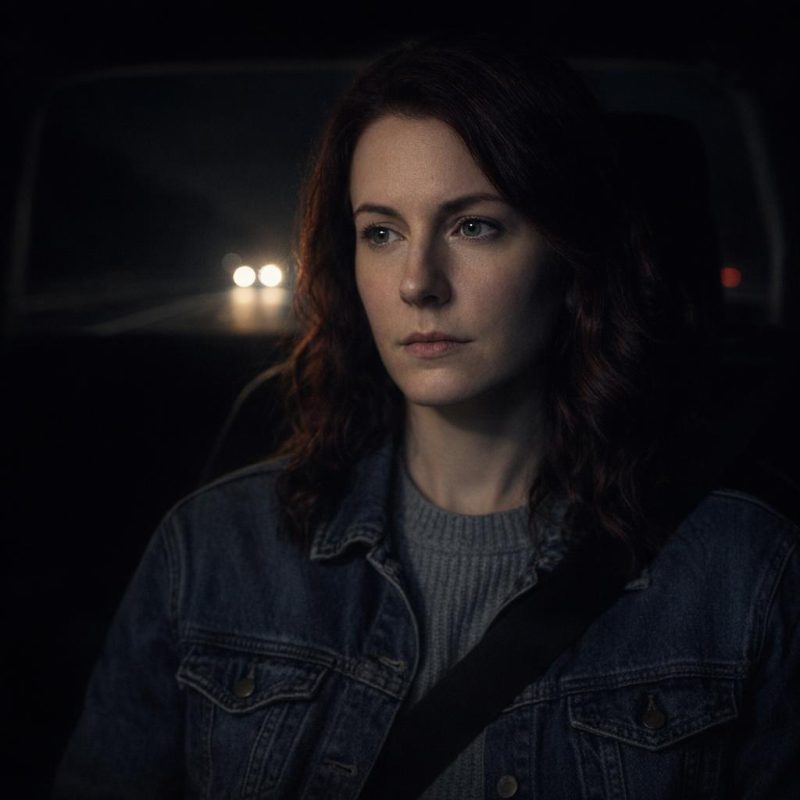 Image by RM AI
The Replay
I spent the next three days doing what I always do when something won't leave me alone — I picked it apart. I'd be in the middle of reading for class and suddenly I'd be back at that restaurant table, watching Lisa answer a question about where she grew up. She'd smiled and said something about moving around a lot as a kid, and I'd nodded like that explained everything, and somehow we'd moved on. I replayed it a dozen times. Then I started wondering if the problem was me. Maybe I was just used to having Dad to myself. Maybe watching him look at someone else the way he used to look at Mom had triggered something I hadn't dealt with. That felt uncomfortably possible. I'd been the center of his world for fifteen years, and here was someone stepping into that space, and maybe my gut was just dressed-up jealousy wearing the costume of intuition. I tried that theory on for a full day. It almost fit. But then I'd circle back to the same thing — I'd asked her four different questions about her life, and every single answer had dissolved into nothing I could hold onto. And I couldn't figure out why someone would answer that way, or what it meant that I kept noticing it.
 Image by RM AI
The Gentle Question
I rehearsed the call for about twenty minutes before I actually made it. I sat on my bed with my phone in my hand, running through different versions of the same question, trying to find the one that didn't sound like an accusation. I wanted to come across as curious, not suspicious. Interested, not interrogating. Dad and I always talked on Tuesday evenings, so I waited until then, hoping the routine would make everything feel normal. We talked about my classes first, and he asked about a paper I'd mentioned the week before, and for a few minutes it felt like us again — easy and warm and familiar. Then I took a breath and said something like, I was thinking about Lisa, and I'd love to know more about what she does — I feel like I didn't get a chance to really ask her at dinner. I kept my voice light. I was genuinely trying to give her a fair shot, trying to fill in the blank spaces with something real. I waited for his answer, turning the phone cord around my finger the way I always do when I'm nervous, choosing every word I'd said as carefully as I knew how.
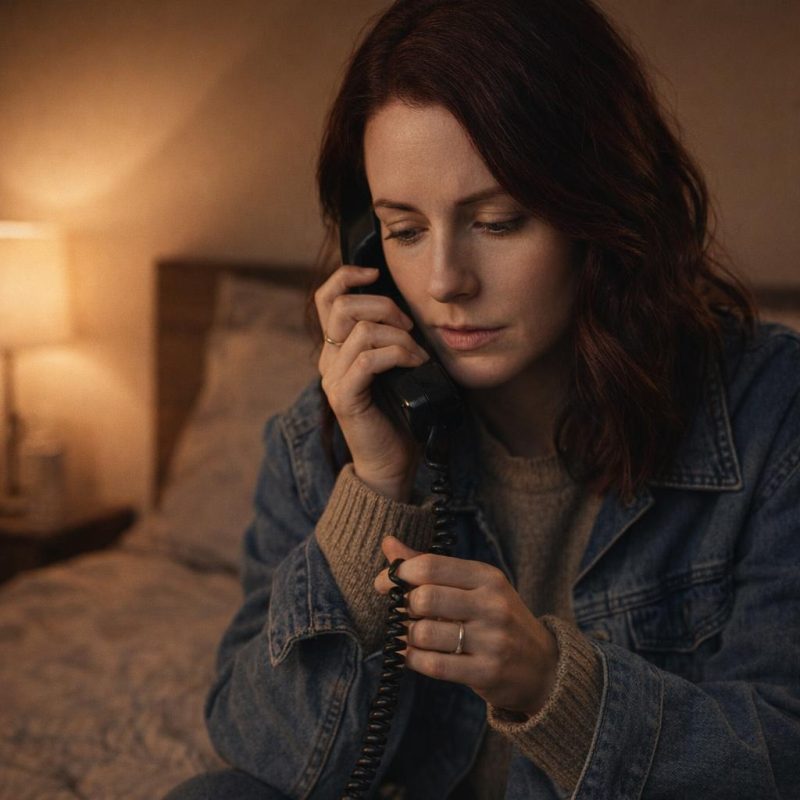 Image by RM AI
The Accusation
The shift in his voice was immediate. One second he was warm, and then I asked about Lisa and something just — closed. He said I was being judgmental. That I hadn't even given her a real chance. His tone had an edge I didn't recognize, clipped and cold in a way that made me pull the phone slightly away from my ear like I needed distance from the sound of it. I tried to explain that I wasn't criticizing her, that I was genuinely asking because I wanted to know her better. He didn't hear it. He said I was making things difficult, that I always had to find something wrong, and then he said I was being selfish. That word landed like something physical. In twenty-two years, through every argument we'd ever had — and there hadn't been many — he had never once called me selfish. I went quiet. I didn't know what to say to this version of him, this voice that sounded like my father but felt like a stranger wearing his face. I managed to say his name once, softly, like maybe that would reach him. It didn't. The word just sat there between us, and I couldn't find anything to put next to it.
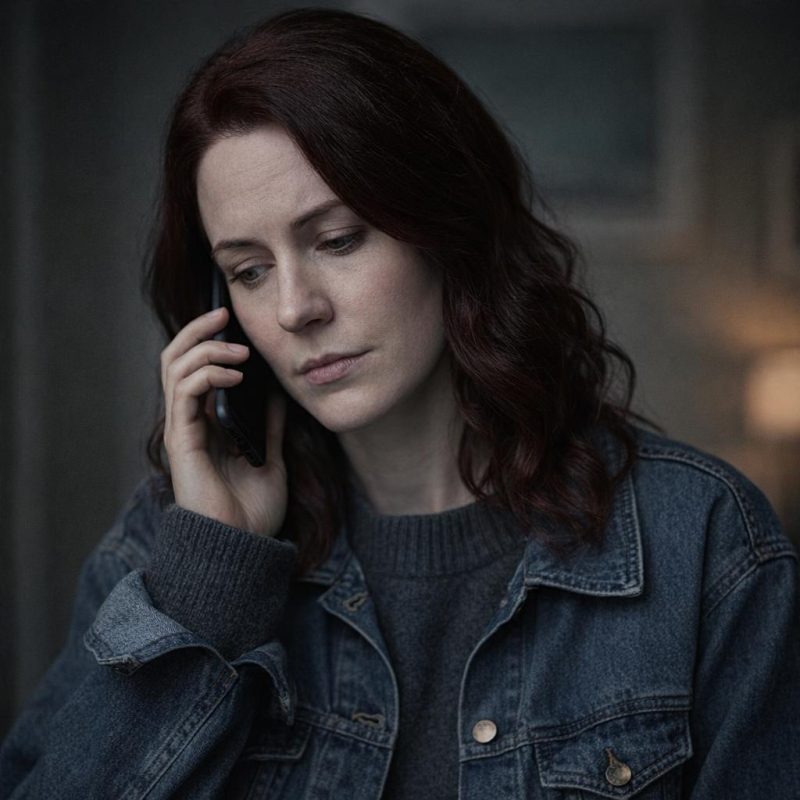 Image by RM AI
The Stranger's Voice
He ended the call without saying goodbye. There was no 'love you' at the end, no 'talk soon,' none of the small rituals we'd built up over years of phone calls. Just his voice going flat and then the line going quiet. I sat on my bed holding the phone long after the call dropped, staring at the screen. I kept replaying his words, trying to find the version of my father I recognized somewhere inside them. The man who used to sit on the edge of my bed when I had nightmares. The man who learned to braid hair from a YouTube tutorial because he didn't want me going to school looking like nobody cared. That man had never spoken to me the way this voice had. I turned the phone over in my hands. I thought about calling back. I thought about texting. I didn't do either. I just sat there in the quiet of my apartment, trying to figure out what had just happened to us, and whether it was something that could be undone. I'd had arguments with Dad before — small ones, the kind that blow over by morning. This felt different. This felt like something had shifted underneath us without warning. When I finally looked down at the screen, the call timer was gone — replaced by the flat, indifferent display of the time, and the silence of a dial tone I'd already missed.
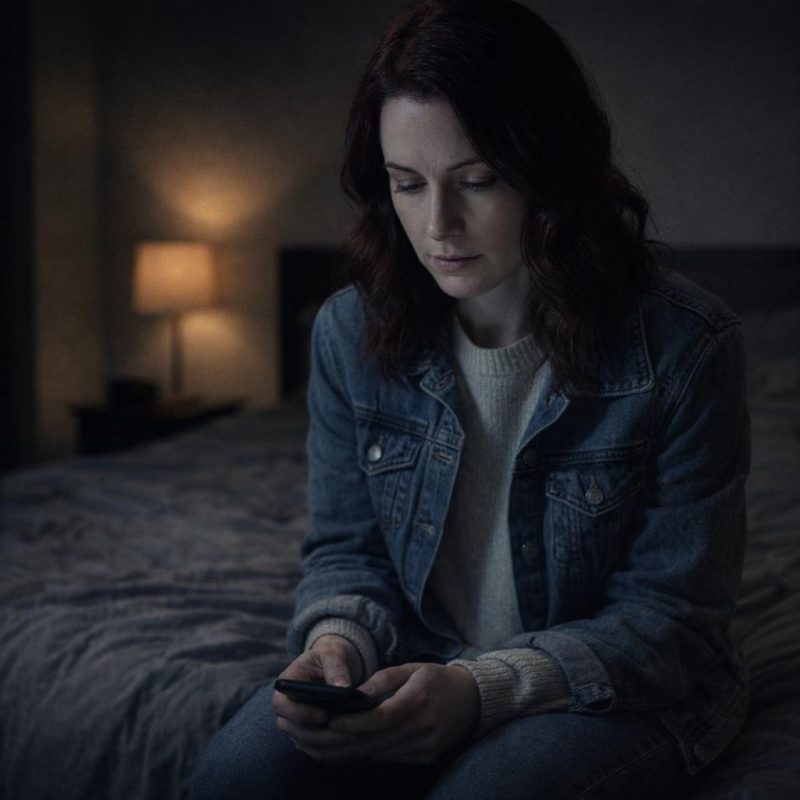 Image by RM AI
Surface Level
I called him four days later. I'd spent those four days going back and forth about whether to wait for him to reach out first, but in the end I couldn't stand the silence, so I dialed. He picked up on the third ring and his voice was pleasant — not warm exactly, but pleasant, the way you'd be with someone you didn't know well but wanted to be polite to. We talked about the weather where he lived. I told him about a professor who'd pushed back a deadline. He mentioned he'd been watching a documentary series. None of it meant anything. We were two people filling ten minutes with words that didn't touch anything real. Lisa's name didn't come up. The argument didn't come up. It was like we'd both agreed, without saying so, to pretend the last call hadn't happened. I kept waiting for him to crack open a little, to say something that sounded like him — a joke, a memory, a question about how I was really doing. He didn't. He said he had to get going and that he'd talk to me soon, and I said okay, and we hung up. I sat with the phone in my lap afterward, thinking about all the things we used to talk about, and how none of them had fit into that conversation.
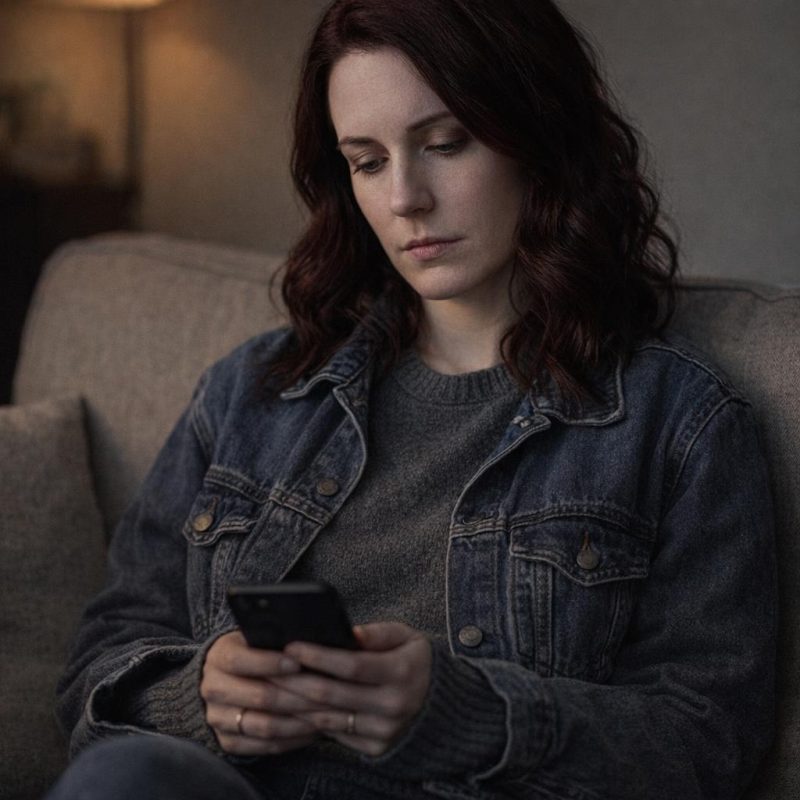 Image by RM AI
The Pattern
The next three calls followed the same shape. The first one lasted maybe twelve minutes before he said he had errands to run. The second was shorter — he was tired, he said, long week, needed an early night. The third barely made it to ten minutes before he mentioned a neighbor who needed help with something. Each reason was perfectly reasonable on its own. Taken together, they felt like a pattern I didn't know how to name. I stopped trying to stretch the conversations out. I stopped asking follow-up questions that might give us more to talk about. I just let them end when he signaled they were ending, said goodbye, and sat with the quiet afterward. Graduation was only a few weeks away, and I kept telling myself that things would reset when he saw me walk across that stage — that whatever this distance was, it would dissolve in person. I wanted to believe that. I needed to believe it. But on a Thursday evening, when he said he had to go after nine and a half minutes and I said of course, no problem, I stayed on the line a half-second too long and heard the click before I'd even finished saying goodbye.
 Image by RM AI
Counting Down
Finals arrived and I was grateful for them, honestly. Having something concrete to focus on — dates to memorize, arguments to structure, papers to finish — meant I had a legitimate reason to push everything else to the edges of my mind. I made a schedule. I went to the library. I did the work. But Dad kept slipping through anyway, the way thoughts do when you're trying not to have them. I'd be in the middle of an essay and suddenly I'd picture him in the audience at graduation — finding his seat, craning his neck to spot me in the crowd, the way he always got a little emotional at things like this even when he pretended not to. I wanted that image to be comforting. Mostly it just made my chest feel tight. Four years of work were coming down to one morning in a cap and gown, and the person I'd always imagined sharing it with felt further away than he'd ever been. I told myself it would be okay. I told myself the distance was temporary, that we'd find our way back to each other the way we always had. I put my head down and kept studying, and let the weight of the approaching ceremony settle quietly around everything else.
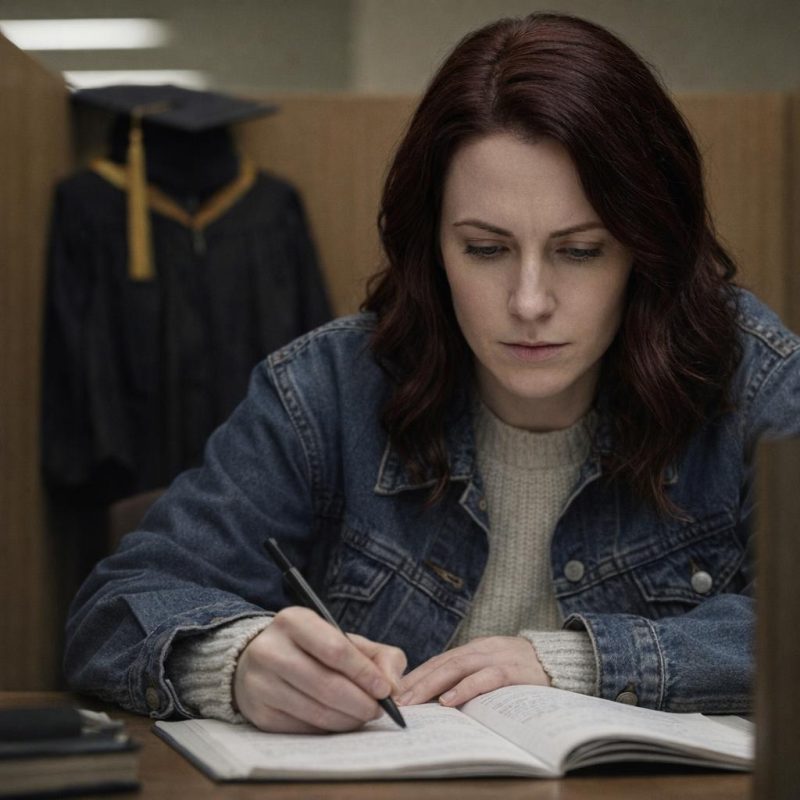 Image by RM AI
The Serious Call
Dad called on a Tuesday, which was normal, but the moment I heard his voice I knew something was different. It wasn't the cold edge from our argument — it was something else, something heavier. Like he was carrying a word he didn't want to say yet. I asked if everything was okay and he said yes, fine, but the yes came out slow and careful in a way that meant no. He said he needed to talk to me about something. I sat down on the edge of my bed without thinking about it, the way your body moves before your brain catches up. I asked what was going on. He said he just needed a minute, and then there was a pause — long enough that I could hear him breathing on the other end of the line. My heart was doing something uncomfortable in my chest. I thought about finals. I thought about graduation. I thought about all the things a father might call to say in a voice like that, and none of the options I landed on felt good. I waited, holding the phone tight, and the heaviness in his voice stayed with me even through the silence.
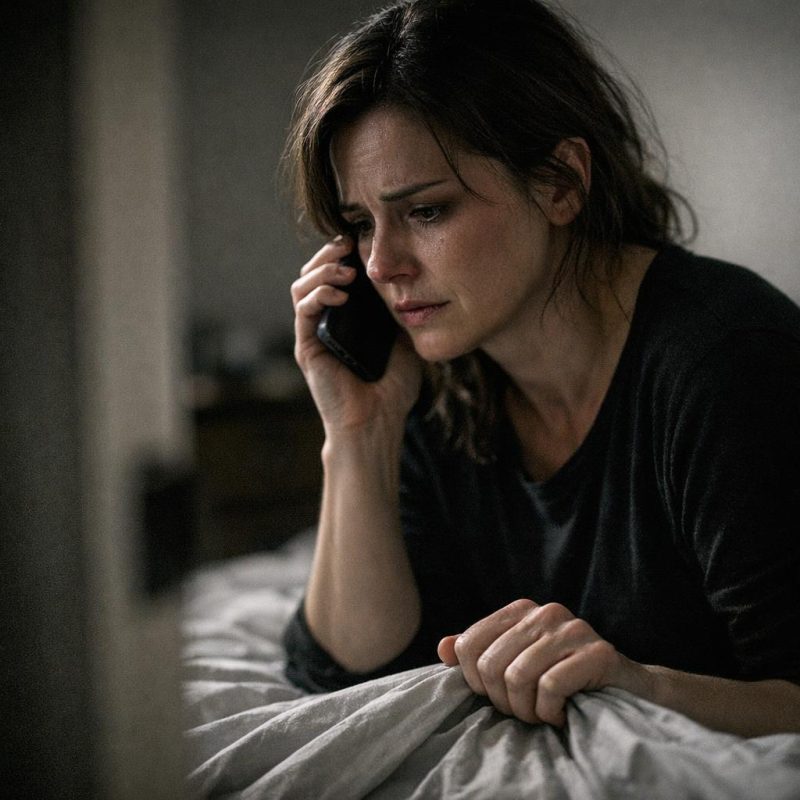 Image by RM AI
 Image by RM AI
The Bombshell
He said it quietly, like he was hoping the softness of his voice would cushion the blow. I actually laughed — a short, confused sound — because I thought I'd misheard him. I asked him to say that again. He did. The words came out the same way the second time, slow and careful, and I sat there on the edge of my bed with the phone pressed so hard against my ear it hurt. My dad had been at everything. Every single thing. Soccer games in the rain when he had to leave work early. School plays where I had two lines and he sat in the front row anyway. He had never, not once in my entire life, missed something that mattered to me. Graduation was supposed to be ours. Four years of late-night phone calls, of him asking about my professors and my papers and whether I was eating enough — all of it was supposed to end with him in those bleachers, watching me walk across that stage. I kept waiting for him to say he was joking. And then his voice came through the phone one more time, steady and quiet: he wasn't going to be there.
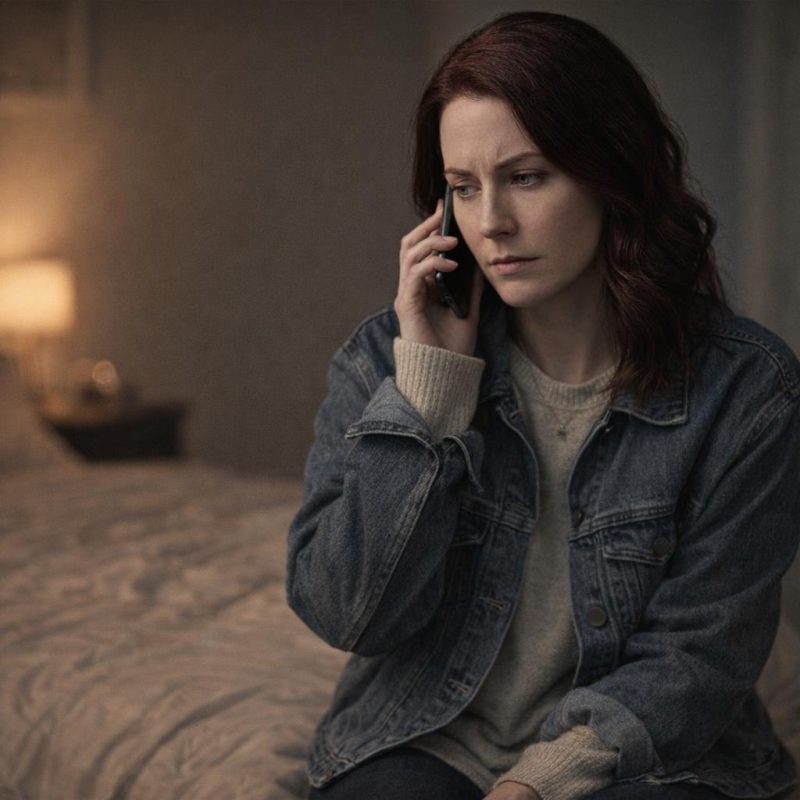 Image by RM AI
The Surprise Trip
He said Lisa had planned a surprise trip for them. A romantic getaway — he said those exact words, romantic getaway, and I had to pull the phone away from my face for a second just to breathe. He said she'd put a lot of effort into it, that she'd booked everything without telling him, and that he'd only just found out. I asked him when the trip was. He told me the dates. I made him repeat them. The trip started the Friday before my ceremony and ran through the following Monday. My graduation was Saturday morning. I asked if he could reschedule, if the flights could be changed, if anything could be moved. He said the bookings were already set, that it wasn't simple, that Lisa had gone to a lot of trouble. His voice was apologetic but there was something underneath it that sounded like a decision already made. I sat there doing the math in my head — the trip didn't just overlap with graduation weekend. It covered it completely, start to finish, with not a single hour to spare.
 Image by RM AI
Fifteen Years
I told him I needed him to understand something. I started talking and I couldn't stop. I told him about the soccer tournament in sixth grade when it rained so hard the field flooded and he stood on the sideline in a garbage bag he'd found in the car. I told him about the winter recital in eighth grade when I forgot my lines and looked out into the audience and found his face and somehow remembered them. I told him about the midnight kitchen sessions, him sitting behind me on a chair, working through my hair with a comb and his fingers while I fell half-asleep at the table. I told him he had promised me — promised, at that same kitchen table — that he would be there for every finish line, not just the small ones. Fifteen years. Not one missed game, not one empty seat, not one moment where I looked up and he wasn't there. I was trying to make him hear it, trying to make the weight of all those years land on him the way it was landing on me. I got through maybe half of it before my voice cracked straight down the middle.
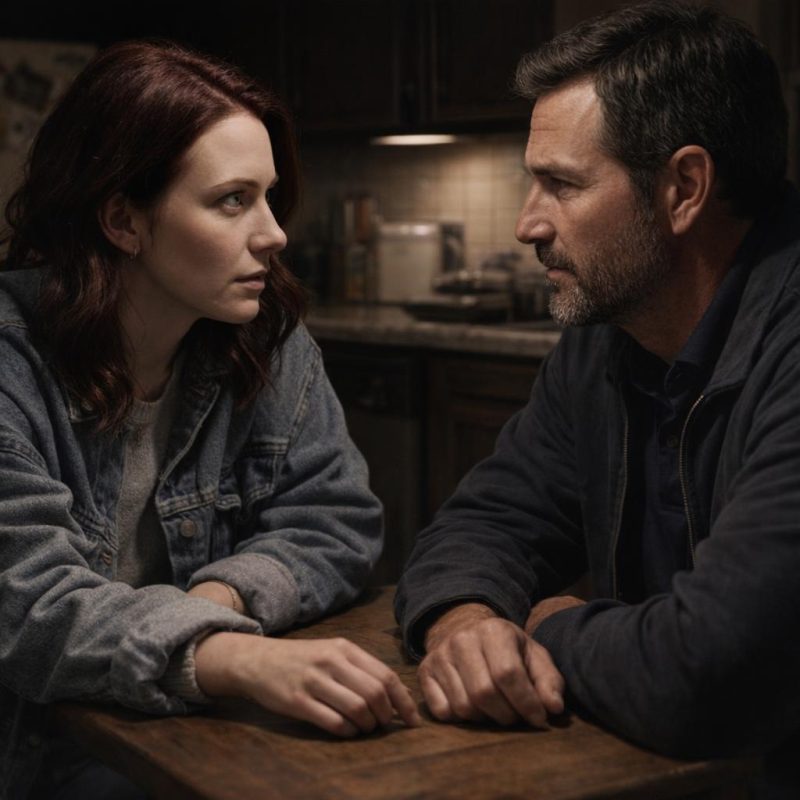 Image by RM AI
You're an Adult Now
He let me finish. I'll give him that. He waited until I'd gone quiet, and then he said it. He said I was an adult now. He said he had given me everything he had for fifteen years and that he needed to start living his own life too. He said he couldn't always put me first anymore, that I wasn't a child who needed him at every milestone, that Lisa was important to him and this trip was important to her. His tone wasn't cruel exactly, but it was final in a way I hadn't heard from him before — flat and decided, like a door that had already swung shut before I even knew it was closing. I wanted to argue. I wanted to say that being an adult didn't mean I stopped being his daughter, that needing him at graduation wasn't the same as needing him to tie my shoes. But the words didn't come out right, and he didn't leave much space for them anyway. When the call ended, I sat holding the phone in both hands, and the quiet that came after felt like something that couldn't be taken back.
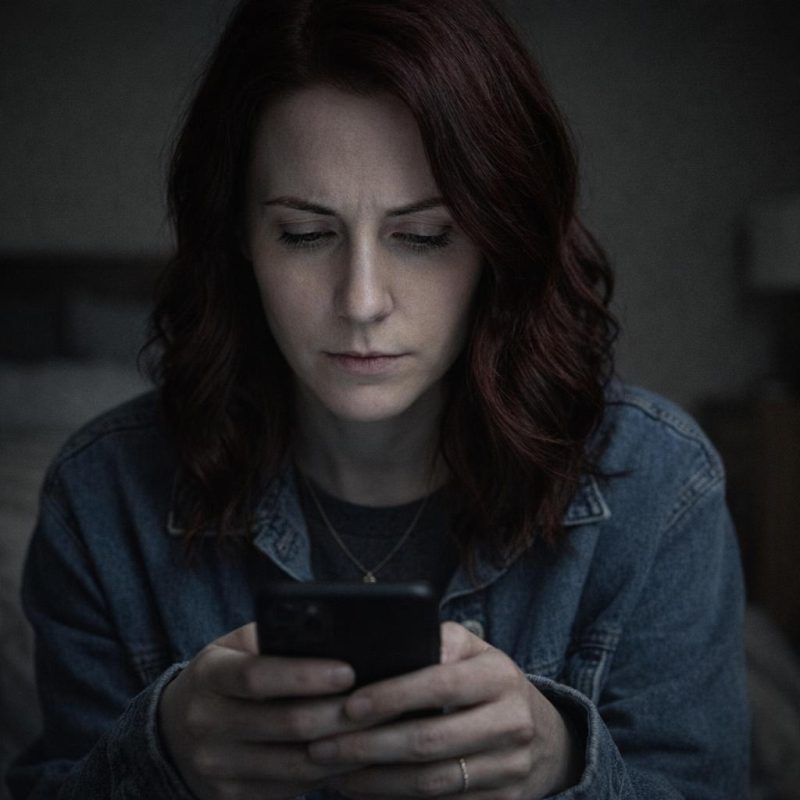 Image by RM AI
The Hang-Up
I hung up and I just — fell apart. Not the kind of crying where you feel it coming and brace yourself. The kind that hits before you can get a breath in, where your whole chest seizes and the sound that comes out doesn't sound like you. I sat on the floor with my back against the bed and I cried harder than I had since the day we buried my mom. That was the only comparison I had for it — that specific kind of grief, the one that lives in your body and not just your head. But this was different in a way that made it worse. My mom was gone and there was nothing to be done about that. My dad was still alive, still out there, still picking up the phone and making choices — and somehow that hurt more. I kept thinking about the person who used to braid my hair at midnight, who drove through flooded soccer fields, who promised me he'd be at every finish line. I didn't know where that man had gone. The father I'd grown up with felt further away than someone I'd lost, because at least with loss, you know what happened.
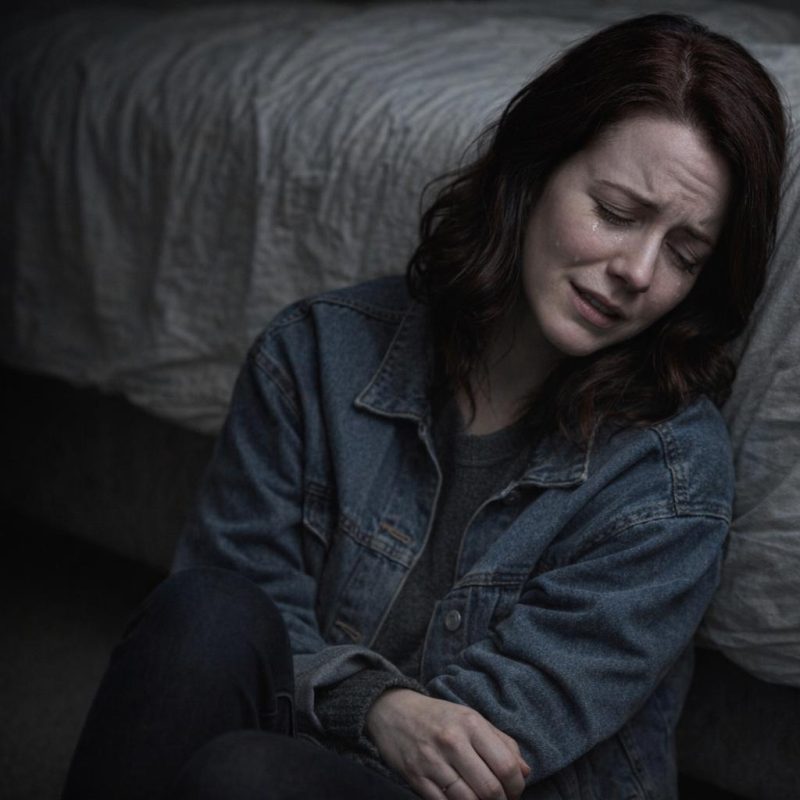 Image by RM AI
Finals in a Fog
Finals week came and I took my exams. I sat in those testing rooms and filled in answers and I must have done well enough because I passed everything, but I couldn't tell you what any of it felt like. It was like moving through water — slow and muffled and slightly unreal. My roommate kept asking if I was okay and I kept saying yes, just tired, finals stress, the usual. Other people in my building were making plans, talking about graduation dinners and which family members were flying in and whether they'd reserved a restaurant. I'd walk past those conversations and feel nothing. Not jealousy, not sadness exactly — just this flat, grey absence where something was supposed to be. I'd worked four years for this. Four years of papers and deadlines and 2 a.m. study sessions and calling my dad to read him my thesis introduction because he always knew what to say. The finish line was right there, close enough to touch — and where the joy should have been, there was only that same flat, grey nothing.
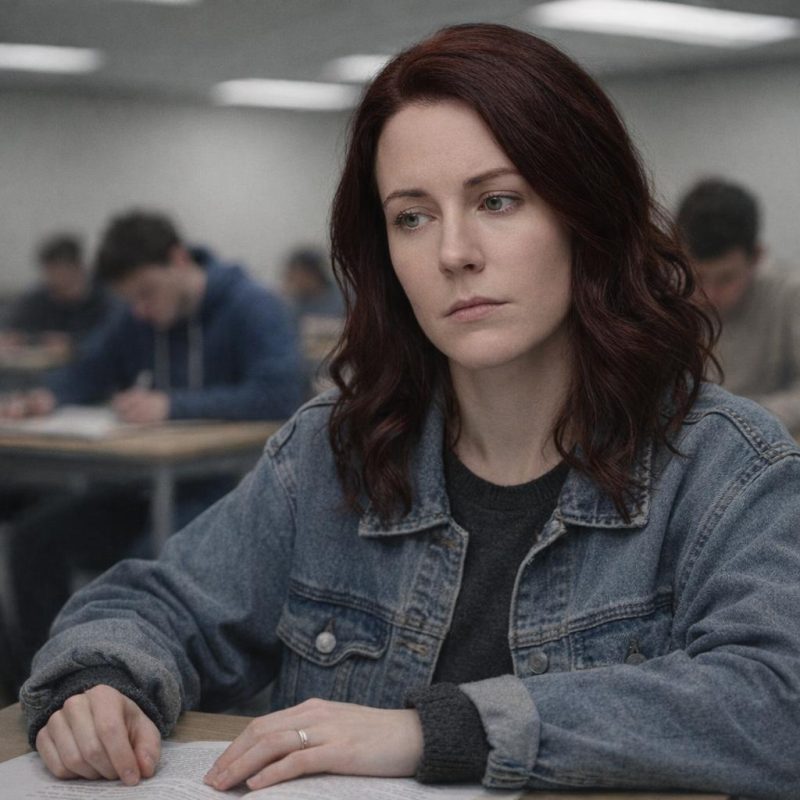 Image by RM AI
Ten Days of Silence
Ten days went by and neither of us called. I'd pick up my phone sometimes and stare at his name in my contacts and put it back down. I told myself I was waiting for him to reach out first, that I'd said everything I had to say and the next move was his. But somewhere around day seven or eight, I stopped waiting. It wasn't a decision exactly — more like something quietly giving way. I'd spent fifteen years being certain of my dad, certain of us, certain that whatever else fell apart in my life, that one thing was solid. And now I was sitting with the possibility that it wasn't. That Lisa had become the center of his life and I had become something he fit in around the edges when it was convenient. I didn't cry about it anymore. I just felt tired in a way that sleep didn't fix. By the time the tenth day passed, I wasn't angry. I wasn't even hurt in the sharp, immediate way I'd been on the phone. I'd just gone quiet inside, the way a room goes quiet when everyone has finally left and you stop expecting the door to open again.
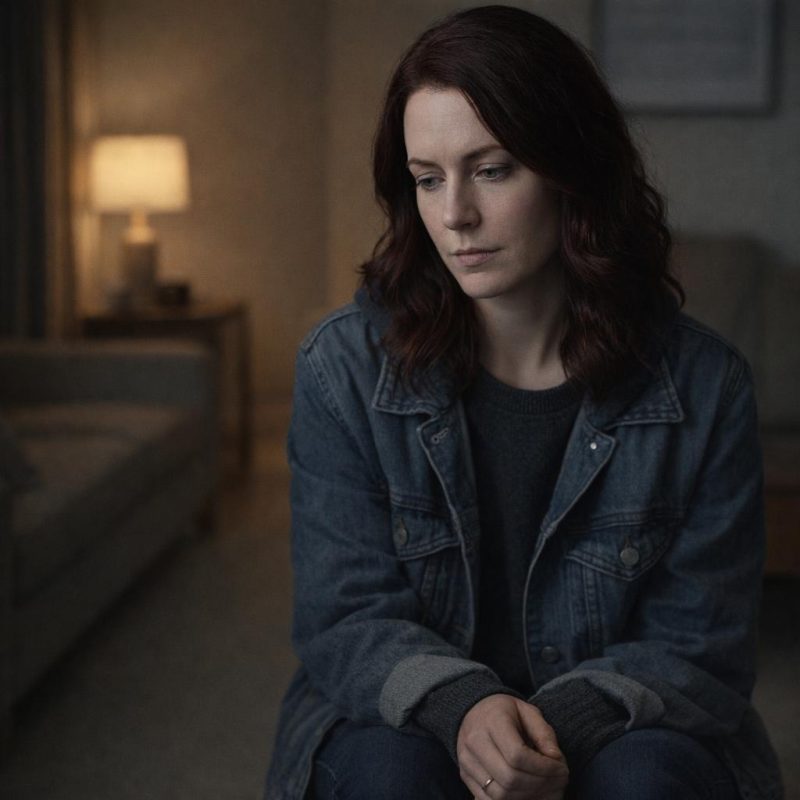 Image by RM AI
Graduation Week
Graduation week arrived and the campus transformed overnight. Families poured in with balloons and matching t-shirts and those big foam signs with their kid's name on them. The quad filled up with people taking photos in front of every building, every fountain, every patch of grass that looked remotely picturesque. I moved through all of it like I was behind glass. I picked up my cap and gown from the student center and tried it on in my room and stood in front of the mirror for a minute, and the person looking back at me seemed fine — seemed like someone who had earned this, who should have been happy. I went to the rehearsal alone and found my place in the alphabetical line and practiced the walk across the stage and smiled when the coordinator told us to smile. Other families were already staking out bleacher seats with blankets and coffee cups. I watched them from across the field and felt nothing I could name. Four years. A degree. The thing I'd worked toward since I was eighteen years old. And I stood there in my gown in the afternoon light, and it felt like watching someone else's life from very far away.
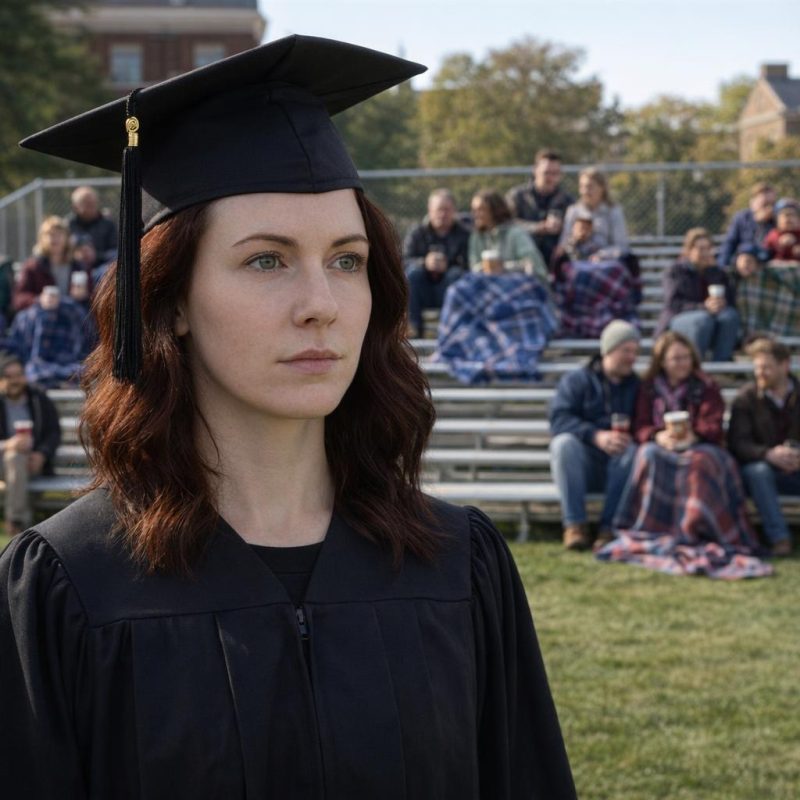 Image by RM AI
The Unannounced Arrival
I was sitting on my bed with my laptop open and a half-eaten bowl of cereal going soggy on the nightstand when someone knocked on my apartment door. Not a text first. Not a call. Just three solid knocks, the kind that mean business. I almost didn't answer — I figured it was my neighbor asking to borrow something again — but something made me get up. I pulled the door open and just stood there for a second, because the last person I expected to see in that hallway was my aunt Sarah. She looked different than I remembered. Smaller, somehow, and pale in a way that had nothing to do with the fluorescent lighting. She wasn't smiling. She wasn't doing the thing she always did where she pulled me into a hug before I could even say hello. She was just standing there, very still, her eyes finding mine with an expression that made my stomach drop straight through the floor. She asked if she could come in. I stepped back without saying a word. Both her hands were pressed flat against a manila folder held tight against her chest.
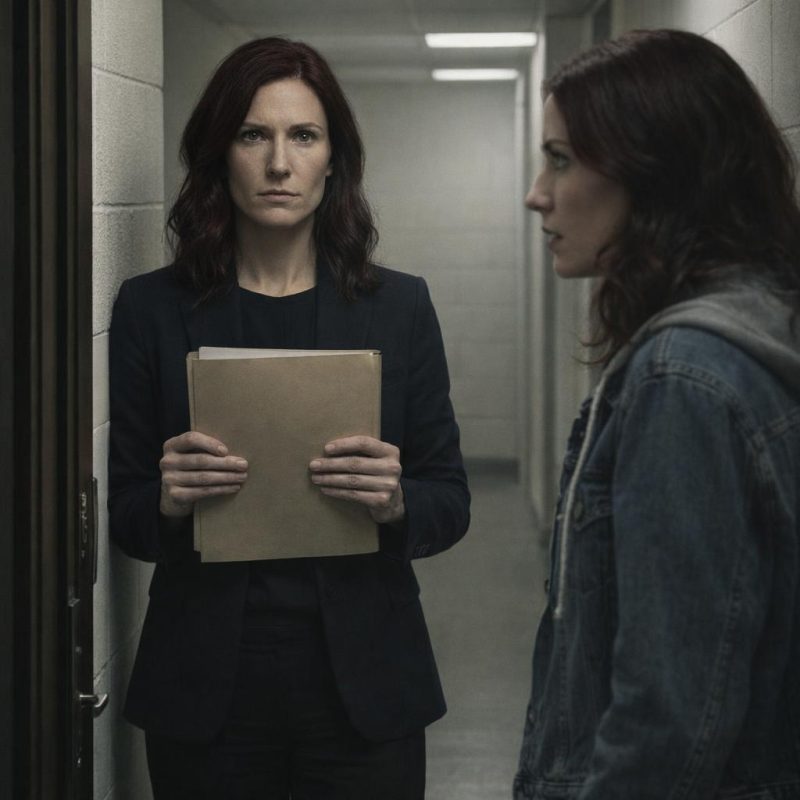 Image by RM AI
The Same Unease
She sat down at my kitchen table like someone who had been carrying something heavy for a long time and had finally found a place to set it down. I made tea because I didn't know what else to do with my hands. She wrapped both of hers around the mug and stared at it for a moment before she started talking. She told me she'd met Lisa at our cousin Dani's birthday party a few weeks back. Dad had brought her along, introduced her to everyone, the whole thing. Aunt Sarah said she'd smiled and shaken Lisa's hand and asked the normal questions — how did you two meet, what do you do, how long have you been together. And Lisa had answered every single one of them perfectly. Too perfectly. Every response landed smooth and complete, no hesitation, no loose ends, nothing you could actually grab onto. Aunt Sarah said she'd driven home afterward and couldn't shake it. She kept turning the conversation over in her head, trying to figure out what was bothering her, and she couldn't name it — but she knew the feeling. She looked up at me across the table then, and said, "You felt it too, didn't you." It wasn't really a question. And just like that, for the first time in months, I didn't feel like I was imagining things.
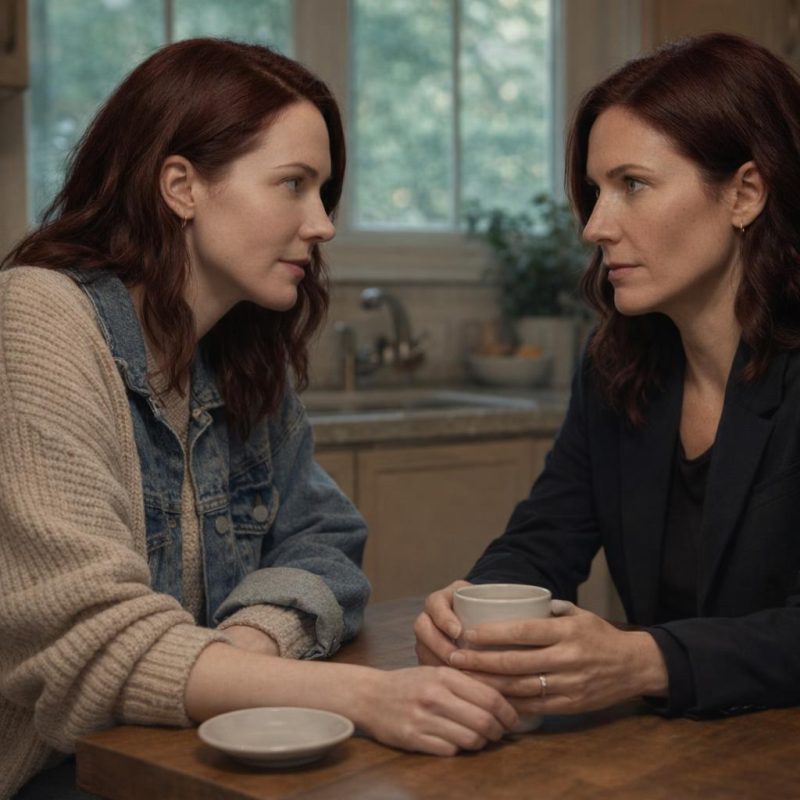 Image by RM AI
The Investigation
Aunt Sarah worked in insurance fraud investigation. I'd always known that in the vague way you know things about relatives — she'd mentioned it at holidays, I'd nodded, moved on. I had no idea what it actually meant until that night. She told me that after Dani's party, she couldn't let it go. She went back to her office the following Monday and ran a basic background check on Lisa using the name Dad had given the family. What came back was thin — too thin, she said, for someone Lisa's age. Like the record had been assembled rather than lived. So she pulled a contact she had at a firm that did deeper database searches, the kind that cross-reference across states and flag inconsistencies. She said she sat at her desk and watched the results come in and felt her stomach turn. She dug further. The more she found, the worse it got. She said she printed everything, put it in that folder, and got in her car. She didn't call ahead because she didn't want to say any of this over the phone. Then she stopped talking, and the silence between us stretched tight, and I heard the words she'd already said settle into something I couldn't unhear: she had found something, and she had driven straight to my door.
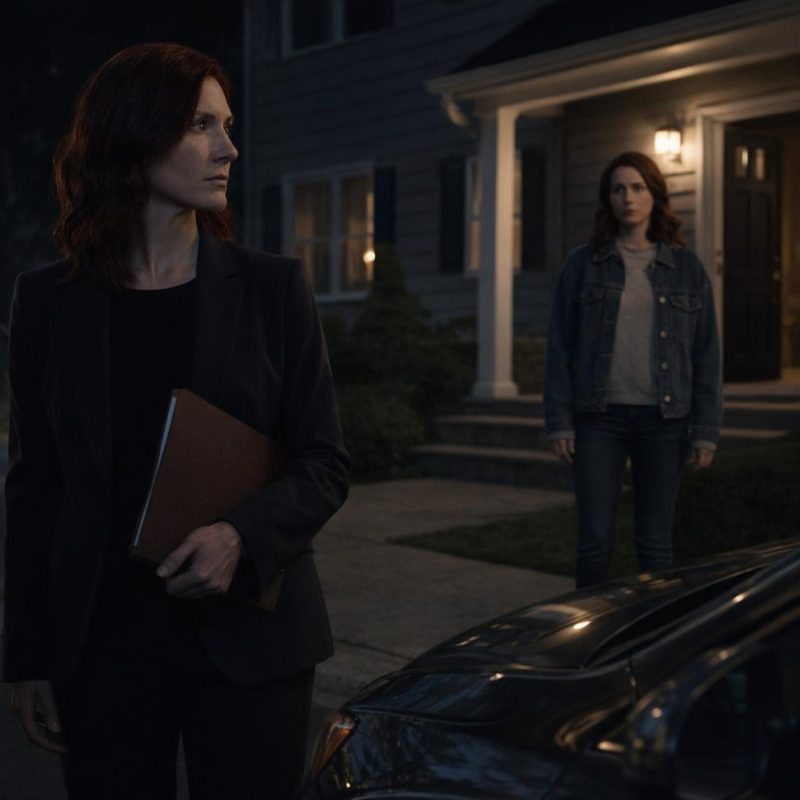 Image by RM AI
Before the Truth
The apartment had never felt so small. The refrigerator hummed. Somewhere outside a car passed with its bass turned up, and then it was gone, and the quiet came back even heavier than before. Aunt Sarah had the folder flat on the table in front of her, both palms resting on top of it. Her hands weren't steady. I could see that from where I was sitting. I'd pulled my chair around so we were at the corner of the table rather than across from each other, close enough that I could have reached out and touched her arm. I didn't. She took a long breath and looked at me, and the expression on her face was the one adults use when they're about to tell you something they wish they didn't have to say. She asked if I was ready. I said yes, even though every part of me wanted to say no, wanted to tell her to put the folder back in her bag and go home and let me keep not knowing for just a little longer. She nodded once. Her fingers found the edge of the folder and began to lift it open, and the papers inside shifted, and I caught a glimpse of something official at the corner — a photograph, a header, a seal — and the air in the room felt like it had stopped moving entirely.
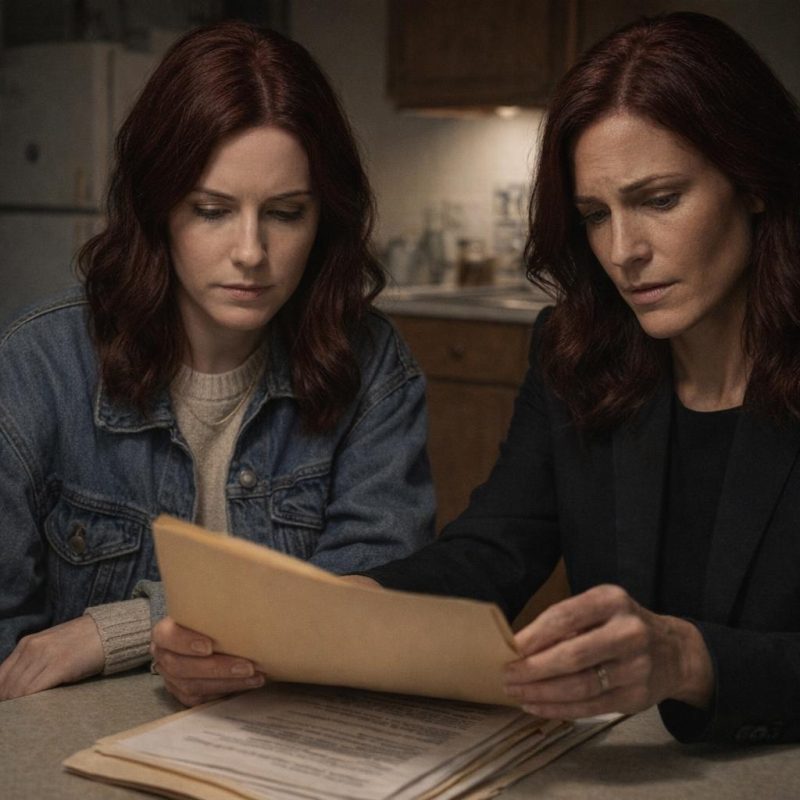 Image by RM AI
The Criminal File
She spread the documents across my kitchen table one by one, and I watched my understanding of the last several months rearrange itself completely. There were mugshots — actual mugshots — of a woman I recognized immediately. Same face, same posture, same careful smile, but the name printed beneath the photo wasn't Lisa. Aunt Sarah pointed to a column of aliases, six of them, each paired with a state and a date range. The criminal record ran across multiple pages: fraud, identity theft, financial exploitation of a vulnerable adult, charges filed in three different states, one conviction, two cases that had been settled or dropped. Aunt Sarah said she targeted widowers specifically — men who had been alone for years, who were lonely and trusting and had savings and no one watching closely enough. She found them, became exactly what they needed, and then she took everything. I sat there reading and my hands had gone completely numb. I turned to the last page Aunt Sarah had laid out, and there it was — a printed list, seven names, seven men, dates and locations and case numbers beside each one, and at the top of the column, the header read: Known Victims.
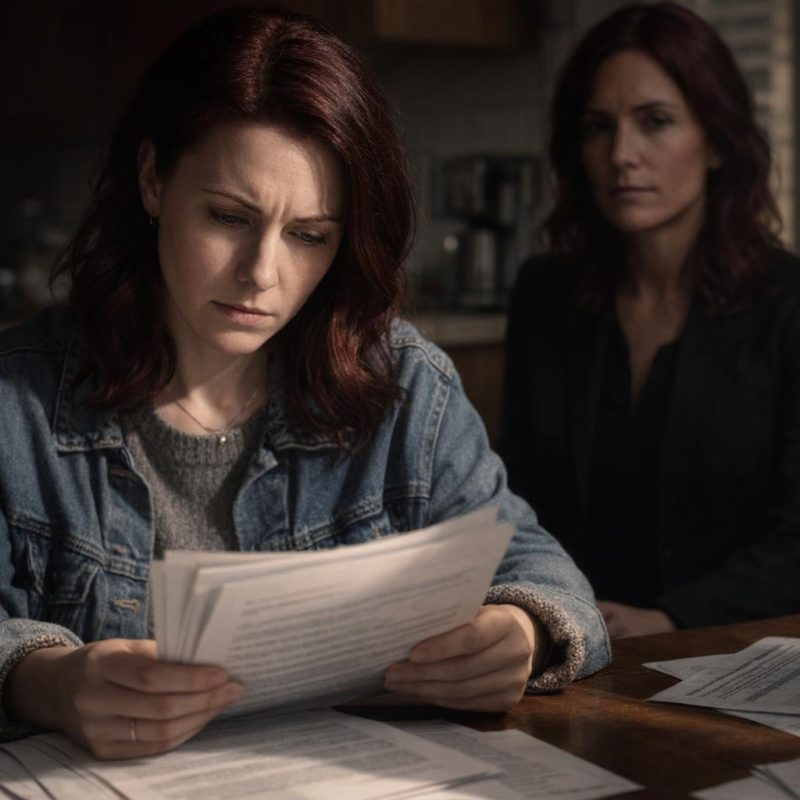 Image by RM AI
The Pattern
Aunt Sarah walked me through it methodically, the way you explain something to someone who needs to understand every step. She said the pattern was consistent across all the cases she'd found. Lisa would identify a target — widower, financially stable, socially isolated or recently withdrawn from his usual circle. She'd present herself as warm and uncomplicated, someone who asked nothing and gave everything. When family members expressed concern, she'd work on the target's perception of them — quietly, incrementally, never overtly. She'd reframe their worry as judgment. Their questions as control. Their presence as a threat to his happiness. Aunt Sarah said by the time the family realized something was wrong, the target was already defensive, already convinced that the people who loved him were the problem. I sat there and I heard every word, and I felt them land one at a time like stones dropping into still water. The surprise trip that had replaced my graduation. Dad's voice going flat and hard every time I tried to talk to him. The way he'd stopped calling just to call. The way he'd looked at me at dinner like I was someone he was learning to distrust. None of it had been him. I sat with that for a long time, and the grief of it settled into me like something that had always been there, waiting to be named.
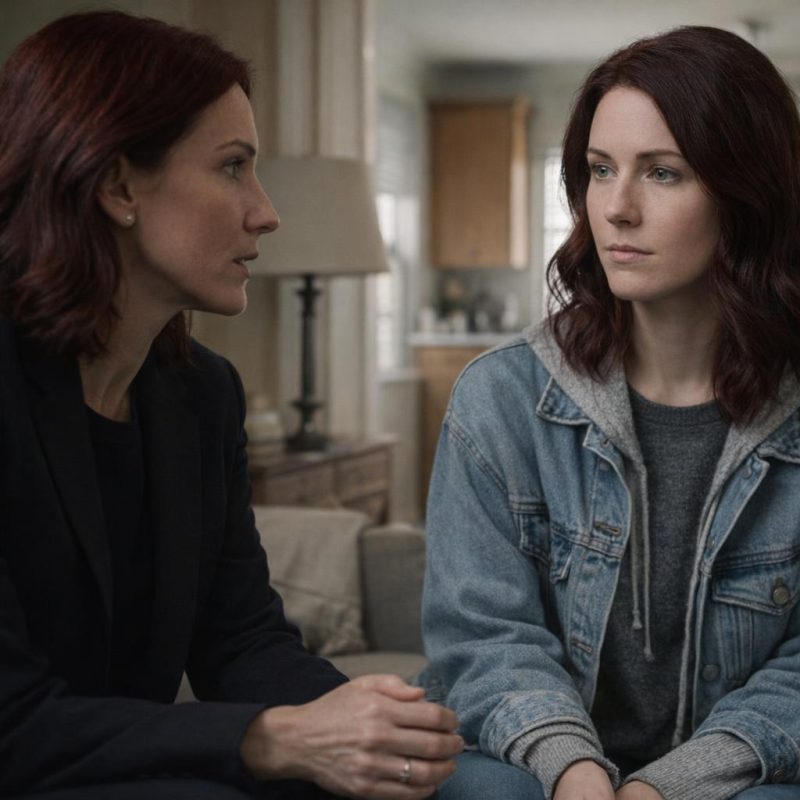 Image by RM AI
The Power of Attorney
Aunt Sarah reached into the folder again and pulled out a separate set of papers, clipped together at the corner. She set them in front of me without saying anything at first, just let me look. It was a power of attorney form — partially filled out, Dad's full name printed in the designated fields, his address, his date of birth. Aunt Sarah said she'd found evidence that Lisa had used this exact approach in two of the previous cases. She'd get the target away from home, somewhere unfamiliar, somewhere romantic and disorienting, and she'd present the paperwork as a practical thing, a just-in-case, something couples do. Away from his house, away from his routines, away from anyone who might ask questions. Aunt Sarah said the timing of the graduation weekend wasn't coincidental — with me occupied, with the family scattered, there'd be no one positioned to notice or intervene. She said Dad was likely days away from that trip. I looked back down at the form on the table, at my father's name printed in someone else's handwriting in the space where a signature would go.
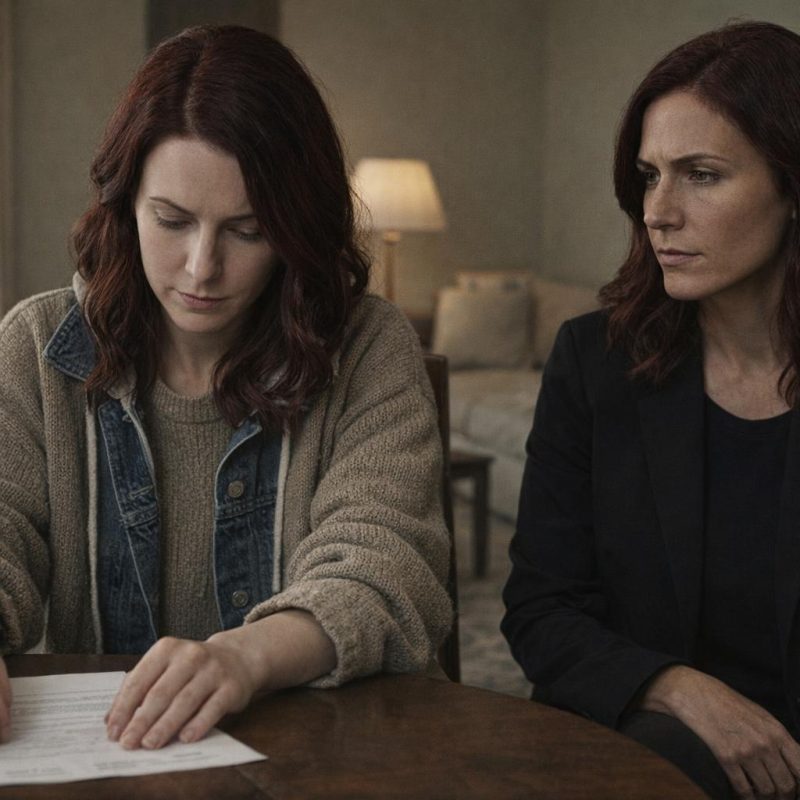 Image by RM AI
Not Selfish
I sat back in my chair and let it all move through me. Every phone call where his voice had that new edge to it. Every time he'd gotten defensive before I'd even finished a sentence. The dinner where he'd looked at me like I was being unreasonable, like I was the one making things hard. I had spent months believing that he had looked at everything we'd built together — fifteen years of just the two of us, Saturday morning pancakes and bad movies and him learning to braid my hair from a YouTube tutorial — and decided it wasn't worth protecting. I had believed he chose her. He hadn't. He'd been worked on, carefully and patiently, by someone who knew exactly which pressure points to find in a man who'd been alone too long and loved his daughter too much to think she could be used against him. His anger wasn't his. His distance wasn't his. Even his silence had been borrowed from someone else's script. I hadn't lost my father to a woman he loved. I'd lost him, temporarily, to someone who had convinced him I was the enemy — and the weight of that difference, the grief and the relief of it tangled together, sat in my chest like something I didn't yet have words for.
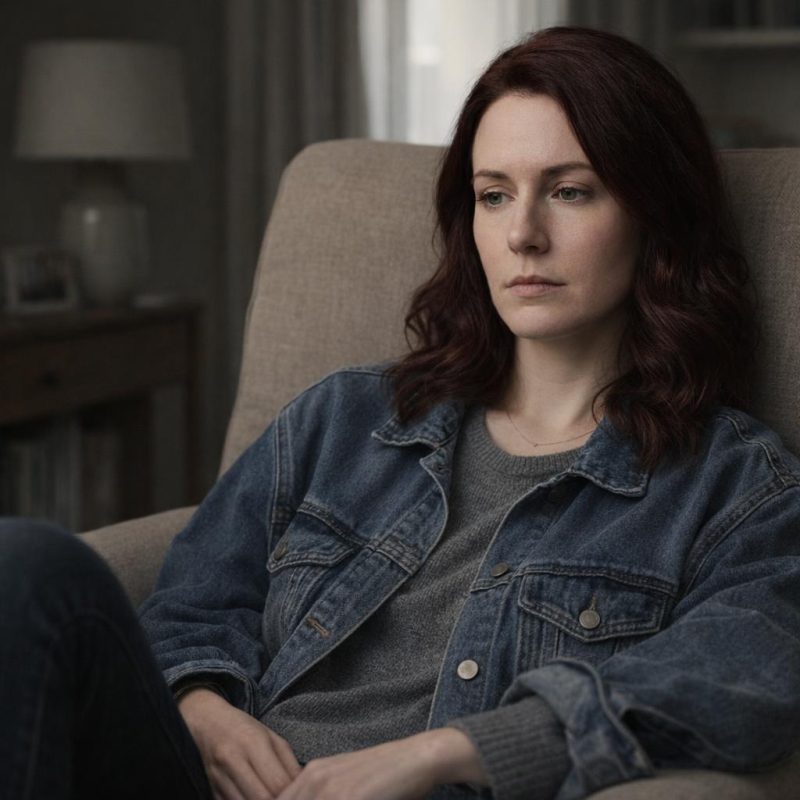 Image by RM AI
The Decision
I didn't let the feeling settle for long. I pushed back from the table, grabbed my keys off the counter, and looked at Aunt Sarah. 'We're going now,' I said. 'Right now, before she puts him in a car and drives him somewhere we can't reach him.' Aunt Sarah didn't argue, didn't ask if I was sure, didn't suggest we call first. She just stood up, gathered the documents back into the folder with both hands, and tucked it under her arm like it was the most important thing in the room — because it was. I thought about Dad standing in his kitchen, probably thinking he was about to leave on some romantic getaway, not knowing what was waiting for him at the end of it. I thought about how long Lisa had been patient, how carefully she'd moved, and I understood that we didn't have the luxury of being careful back. We had one shot at this. The folder was in Aunt Sarah's hands, the keys were in mine, and for the first time in months I knew exactly what I needed to do.
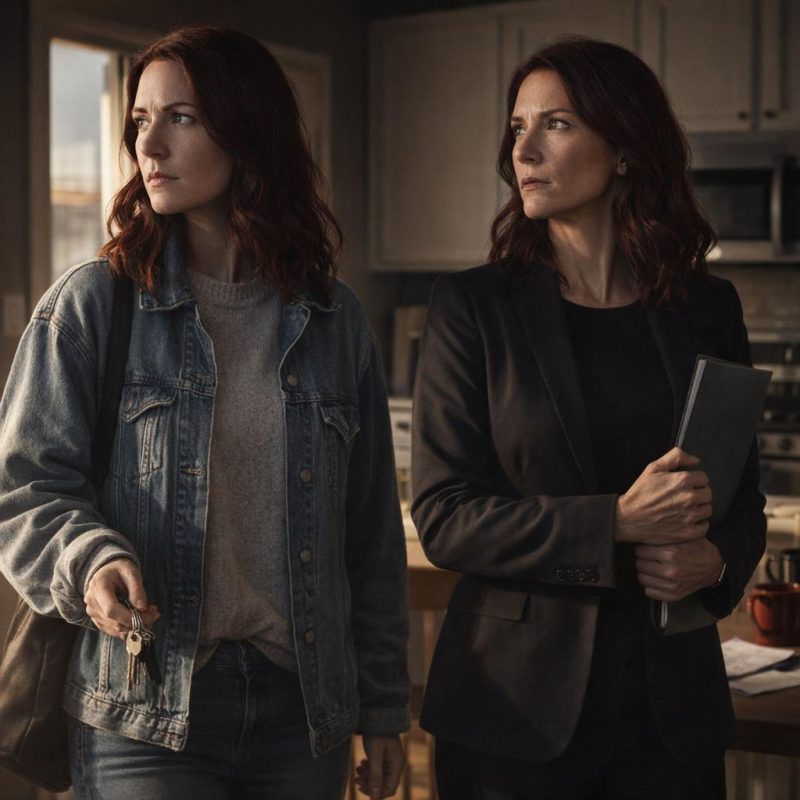 Image by RM AI
The Drive
I drove faster than I should have. Not reckless, but close — taking turns a beat too sharp, not fully stopping at the sign on Millbrook before rolling through. Aunt Sarah sat in the passenger seat with the folder flat across her lap, one hand pressed on top of it like she was keeping it from flying away. We didn't talk much. There wasn't anything left to say that the documents hadn't already said for us. My mind kept running through it anyway — how I'd start, what words would actually land, whether Dad would look at me the way he had at that dinner, like I was the problem. I kept telling myself he wouldn't. I kept telling myself that seeing it in black and white would be different from hearing it from me. The familiar streets started coming — the gas station on the corner, the oak tree that had always leaned too far over the sidewalk, the neighbor's fence that still needed painting. Everything exactly the same as it had always been, and nothing the same at all. I turned into the driveway and my foot came off the gas. Lisa's car was parked in front of the house.
 Image by RM AI
The Confrontation Begins
The front door wasn't locked. It never was in the middle of the day, and I didn't knock — I just pushed it open and walked in with Aunt Sarah right behind me. Dad was standing near the hallway entrance, looking confused in the way he gets when something's happening that nobody's explained to him yet. And Lisa was in the living room. She was dressed for travel — neat blazer, good shoes, the kind of put-together that takes time — and two suitcases stood beside the couch like they'd been waiting there all morning. She turned when she heard us come in, and the smile arrived right on schedule, warm and practiced and aimed directly at me. 'Oh, what a surprise,' she said, and her voice had that particular smoothness to it, the one I'd spent months not being able to name. Dad started to say something. Then Lisa's eyes moved to Aunt Sarah's hands. Just for a second — barely a flicker — her gaze dropped to the folder, and something shifted in her face. Not much. Just enough. The smile stayed in place, but the certainty behind it went somewhere else, and the room felt different in the quiet that followed.
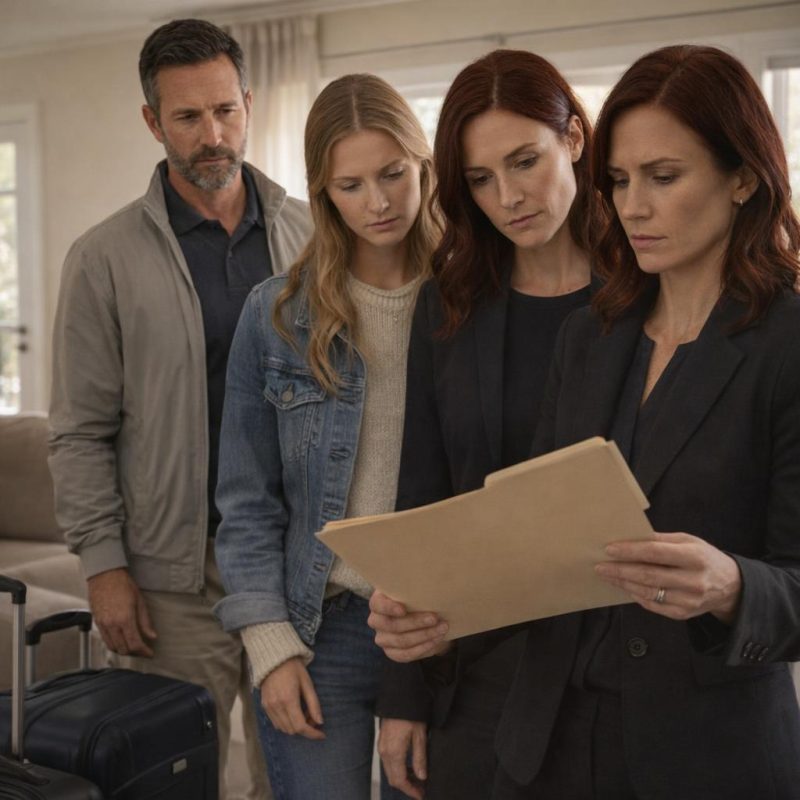 Image by RM AI
The Evidence
Aunt Sarah didn't wait for an invitation. She walked to the coffee table, set the folder down flat, and opened it. She didn't make a speech about it. She just started laying the pages out, one by one, methodical and unhurried, like she'd done this before or had imagined doing it enough times that it felt the same. Mugshots first — three of them, different hair colors, different names printed underneath. Then the criminal records, two states' worth, the charges typed in that flat bureaucratic font that makes terrible things look almost ordinary. Then a list of names I didn't recognize, with dollar amounts beside them. Previous victims, Aunt Sarah had told me. Real people who'd trusted someone who looked exactly like the woman standing six feet away from us. Dad moved closer to the table. He didn't say anything. He just stood there, leaning slightly forward, and I watched his face as his eyes moved across the pages — the mugshots, the names, the numbers — and the color in his face changed.
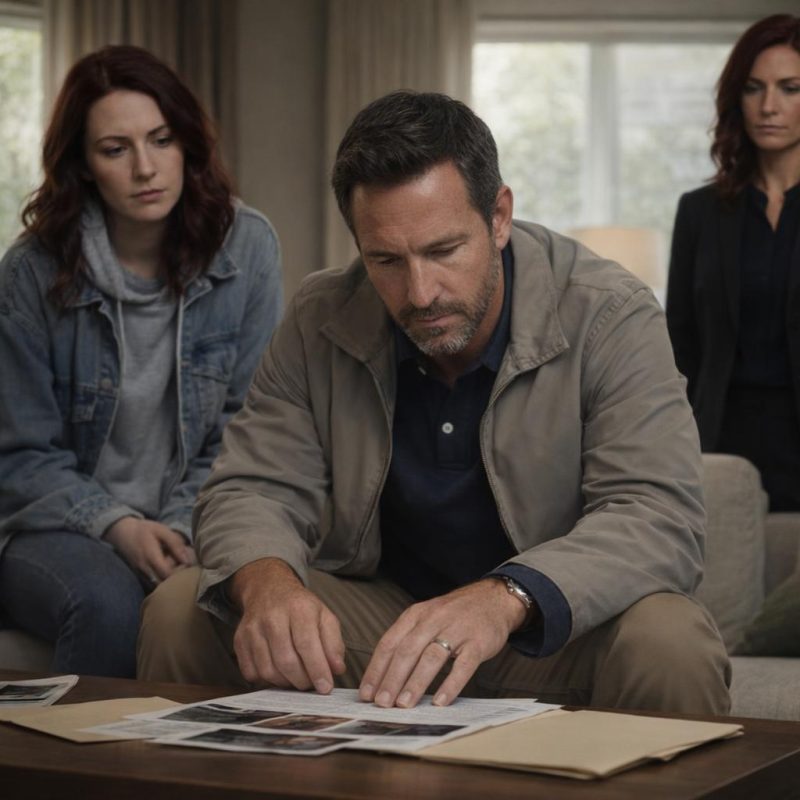 Image by RM AI
The Facade Crumbles
Lisa started talking. I'll give her that — she didn't freeze, didn't bolt, didn't go silent. She started talking immediately, and for about ten seconds the words came out in that same smooth register she always used, the one that made everything sound reasonable. It was a misunderstanding. The records were old. Someone had been using her identity for years and she'd been trying to sort it out. She said it all quickly, one explanation sliding into the next, and I could see her working to keep the rhythm of it steady. But the rhythm wasn't holding. Her voice had gone up half a pitch, and there was a pause before 'misunderstanding' that hadn't been there in any conversation I'd ever heard her have. Dad wasn't looking at her the way he used to. He was still looking at the table. He picked up one of the pages — the one with the mugshot that looked most like her, the one with a name that wasn't Lisa — and he held it for a long moment. When he finally looked up at her, something in his face had gone quiet and flat, and she stopped talking mid-sentence.
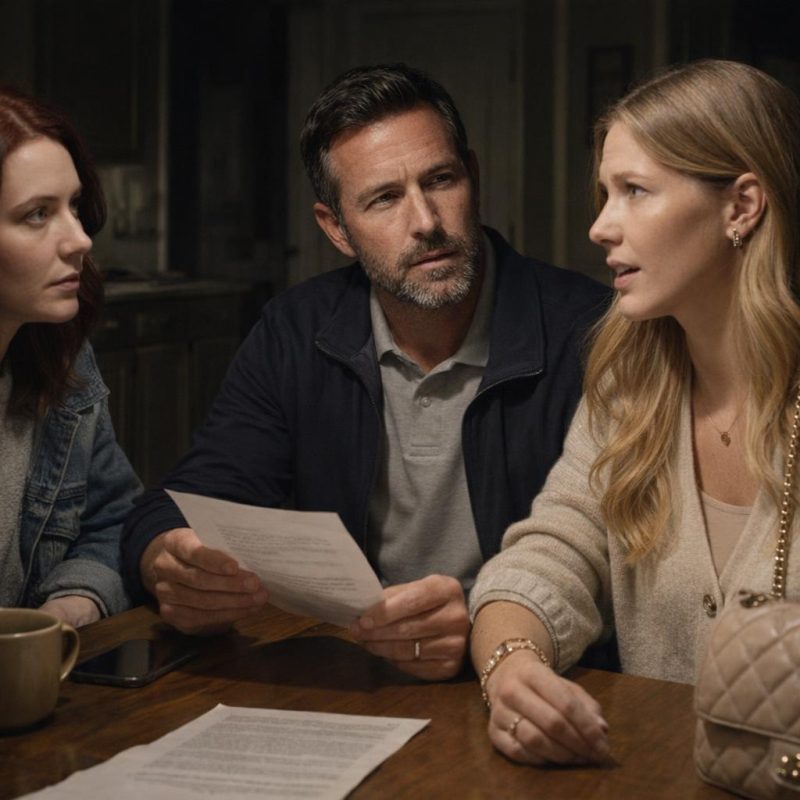 Image by RM AI
The Truth Spoken
I stepped forward and started talking to Dad directly, because he needed to hear it from me. I told him about the isolation — how every argument we'd had in the past year had started with something Lisa had said to him first, how she'd fed him small doubts about me until they'd grown into something he couldn't see past. I told him about the trip. How it wasn't a romantic getaway. How Aunt Sarah had found the paperwork — a power of attorney, drafted and ready, that would have given Lisa control over his finances the moment he signed it somewhere far from home, far from anyone who might ask questions. I told him she had done this before. That the names on that list were real people who had trusted someone exactly like her. Dad sat down on the arm of the couch while I was talking. He didn't interrupt. He just listened, and I watched his face move through something I didn't have a name for — not quite grief, not quite rage, something older and heavier than either. He looked at Lisa. She was standing very still near the suitcases. And then, in a voice I'd never heard him use before, he said her real name.
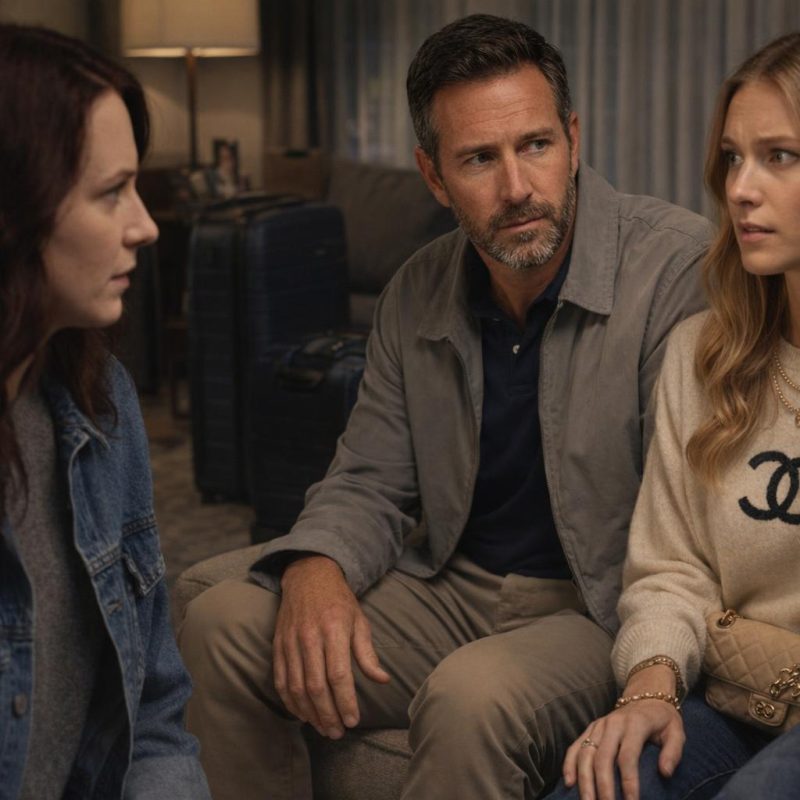 Image by RM AI
Calling the Police
Aunt Sarah already had her phone out. She'd been waiting for that moment, I think — waiting for Dad to land somewhere solid enough that she could move. She stepped into the hallway and made the call, her voice low and even, giving them Lisa's real name, the aliases, the case numbers from the documents, the outstanding warrants. I could hear her through the wall, calm and precise, and I was grateful for her in a way I didn't know how to measure. Lisa didn't move. She didn't reach for her bags, didn't look toward the door, didn't say another word. She just stood in the middle of the living room with her hands at her sides, and the posture that had always seemed so composed — that careful, deliberate stillness she carried everywhere — was gone. What was left didn't look like anything in particular. Dad sat on the couch with the documents spread across the cushion beside him, staring at them. I stood between them and didn't speak. The silence in that room had weight to it, and none of us moved inside it.
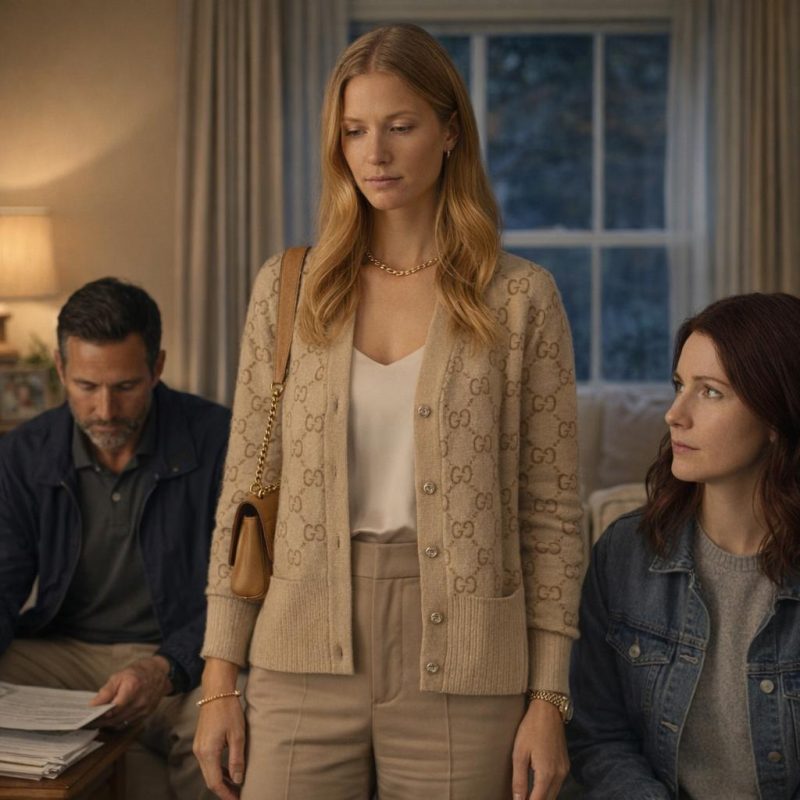 Image by RM AI
He Looked at Me
The police arrived in under fifteen minutes. Two officers, calm and efficient, who reviewed the folder with Aunt Sarah in the hallway while a third stayed in the living room with the rest of us. It didn't take long. They'd seen the warrants before we called, Aunt Sarah told me later — Lisa's real name had flags on it in two states. When they came back in and one of them began reading the charges aloud, Lisa stood exactly where she'd been standing. She didn't speak. She didn't look at Dad. She let them take her by the arm and walk her toward the door, and her face was as composed as it had ever been, except that now the composure looked like nothing — like a habit with nothing left behind it. I thought Dad would watch her go. I think part of me expected him to, the way you watch something leave that used to matter. But he didn't. He turned away from her before they reached the door, and he looked at me — really looked at me — and in his eyes was everything the past year had cost us, and the full weight of knowing it.
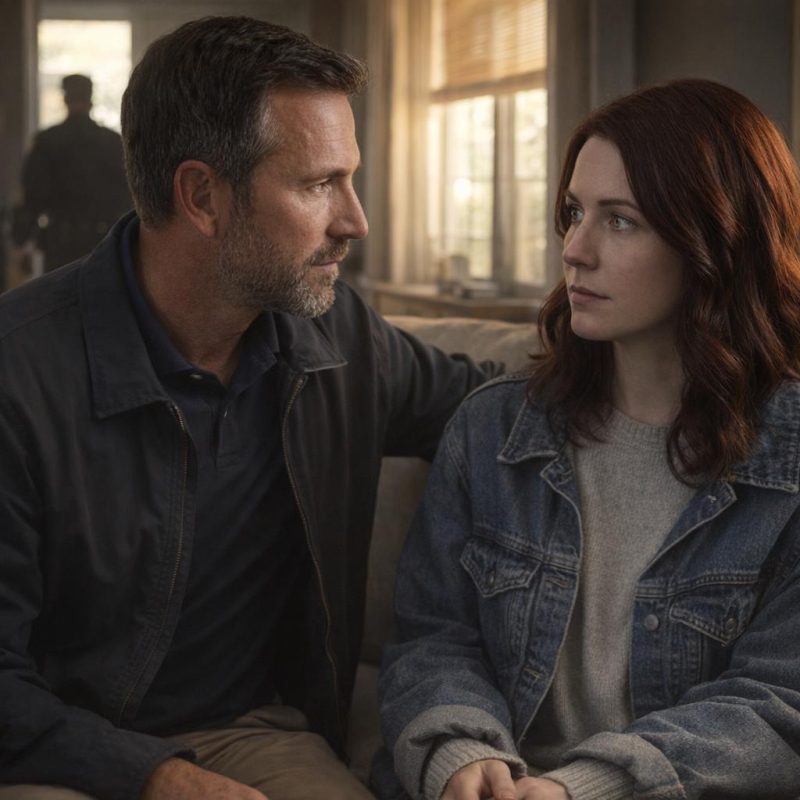 Image by RM AI
The Damage
After the door closed behind them, the house went so quiet it almost hurt. Dad moved to the kitchen table like he was walking through water — slow, deliberate, like his legs were doing the work but the rest of him had already given up. Aunt Sarah put the kettle on without being asked. I sat across from him and waited. He stared at the table for a long moment, and then he started talking. He told us about the joint account he'd opened because she said it would make things easier. He told us about the jewelry she'd asked for, the weekend trips she'd booked on his card, the investment opportunity she'd convinced him was a sure thing. His voice stayed mostly steady until it didn't. He said a number — the actual number — and I watched his jaw tighten around the shame of it. He said he'd been so sure she was different. He said he was sorry, over and over, like I was the one he owed the apology to. I reached across the table and put my hand over his. I told him it wasn't his fault. I meant it. But the number sat between us on that table like something physical — nearly forty thousand dollars, gone.
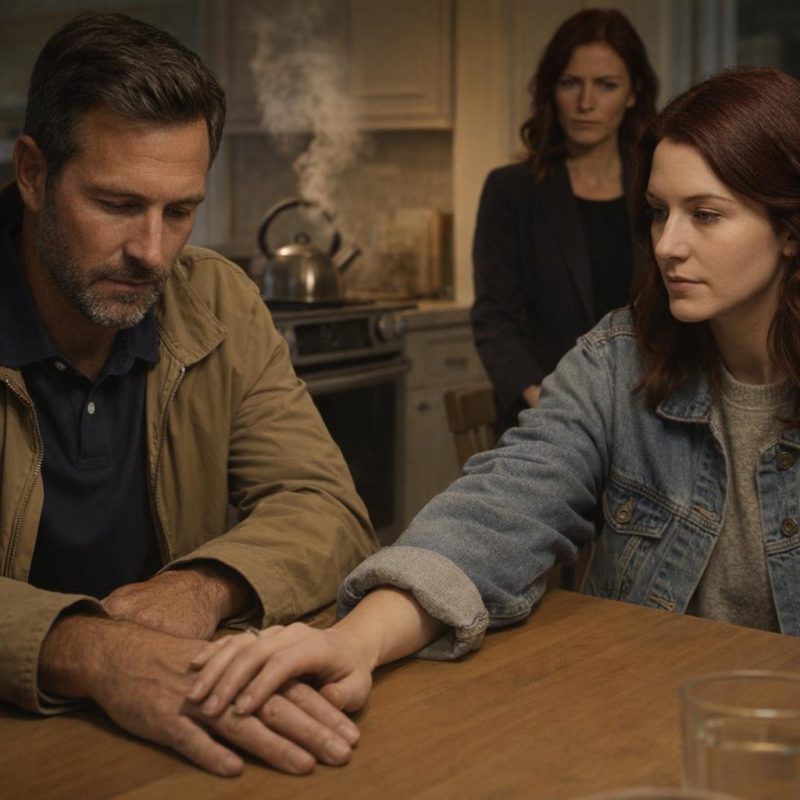 Image by RM AI
The Morning After
I don't think either of us actually slept. Dad took the couch and I took my bed, but every time I surfaced from something close to sleep I could hear him shifting around in the other room, and I knew he was awake too. At some point we both gave up and just sat together in the kitchen with bad instant coffee and the kind of silence that doesn't need filling. He apologized again. I told him again that it wasn't his fault. We went around that loop more than once. He talked about the early signs he'd missed, the things that hadn't added up, and I listened without interrupting because I think he needed to say it out loud more than he needed me to respond. By the time the sky started going pale outside my window, we'd talked through most of it — not resolved, not fixed, but aired out. He looked exhausted in a way that went past tired, the kind that lives behind the eyes. But he was there. He was sitting at my kitchen table on the morning of my graduation, and his hands were wrapped around a mug, and the worst of it was behind us. The light came through the window slow and thin, and the apartment settled into the kind of quiet that felt, for the first time in a long time, like it might actually hold.
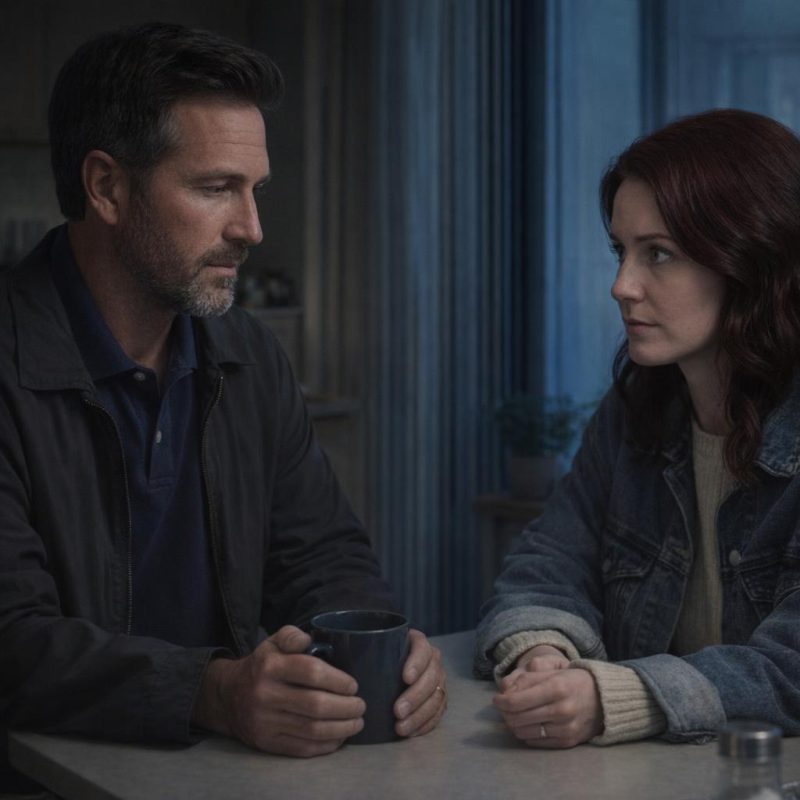 Image by RM AI
Front Row
I almost didn't feel nervous until I was actually in the cap and gown, standing in the staging corridor with two hundred other graduates, all of us shuffling forward in a line that moved about three inches every four minutes. Then the nerves hit all at once. Not about the degree or the handshake or the name being called — about whether everything that had happened in the last twenty-four hours had somehow made this moment smaller than it was supposed to be. It hadn't. I knew that the second I walked through the auditorium doors and the noise of the crowd rolled over me. I started scanning the rows before I'd even found my seat. I didn't have to look long. He was in the front row, exactly where he'd said he'd be, holding the folded program in both hands so tightly the paper had gone soft at the edges. His eyes were already red. He spotted me at the same moment I spotted him, and he sat up straighter, like he was trying to hold himself together by posture alone. I found my seat and faced forward and tried to breathe. When they finally called my name and I walked across that stage, I looked out into the front row — and there he was, on his feet, the program crushed completely in his hands.
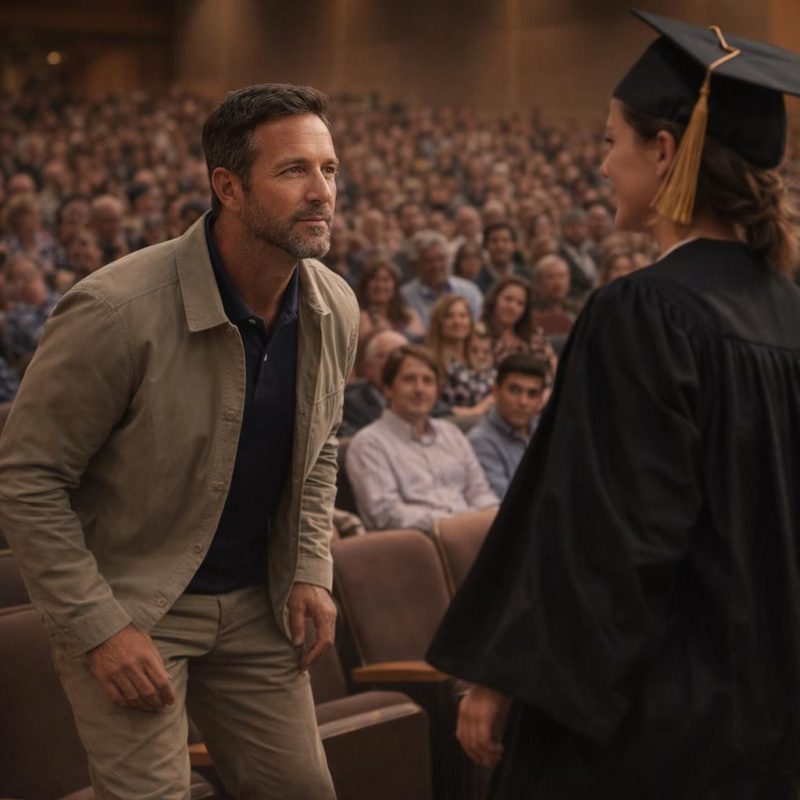 Image by RM AI
The Team
It took me ten minutes to find him in the crowd after the ceremony. Everyone was spilling out onto the lawn in a blur of gowns and camera flashes and families calling names across each other. I spotted him near the edge of the path, standing still while everyone moved around him, holding a small bouquet of flowers that looked like he'd grabbed them from a gas station on the way — which, knowing him, he probably had. I didn't care. I walked straight into him and he wrapped both arms around me and held on, and I could feel him shaking a little, the way people do when they've been holding something in for too long. When he finally pulled back, he looked at my face for a second, and then he reached up and ruffled my hair — the same way he used to when I was seven and had just done something he was proud of, messing up whatever I'd carefully arranged. I laughed. It surprised me, how easy it came. He said, 'I am so proud of you. I have always been so proud of you.' His voice cracked on the last word. I straightened my cap and looked at him — this tired, good man who had braided my hair and shown up for fifteen years — and he put his hand on my shoulder and said, 'We're still a team, kid. We're still a team.'
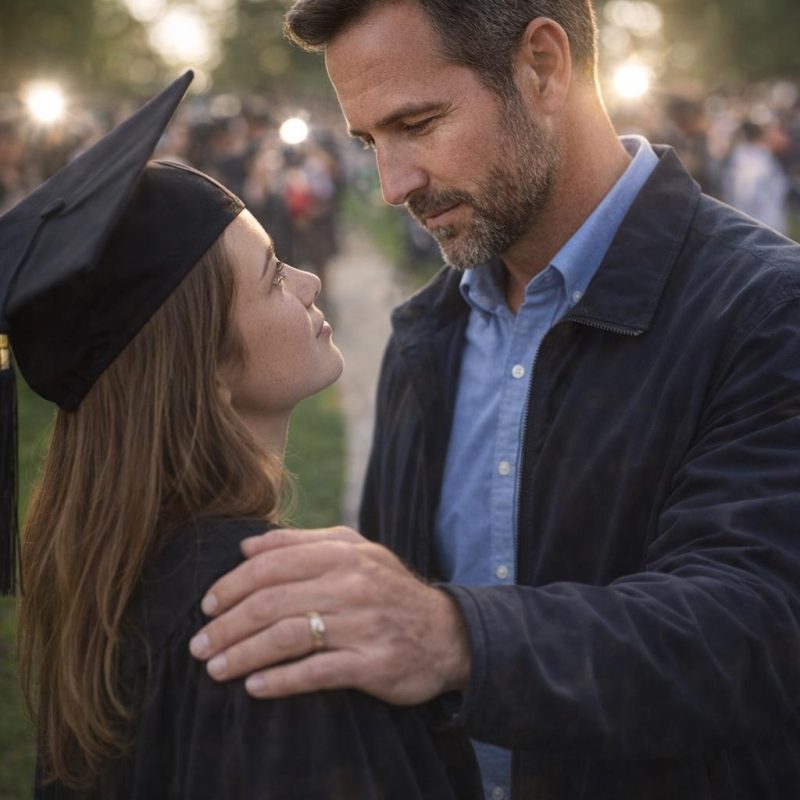 Image by RM AI
KEEP ON READING

The story of Ching Shih, the Woman Who Became the…
Unknown author on WikimediaFew figures in history are as feared…
By Emilie Richardson-Dupuis Dec 29, 2025
Einstein's Violin Just Sold At An Auction—And It Earned More…
A Visionary's Violin. Wanda von Debschitz-Kunowski on WikimediaWhen you hear…
By Ashley Bast Nov 3, 2025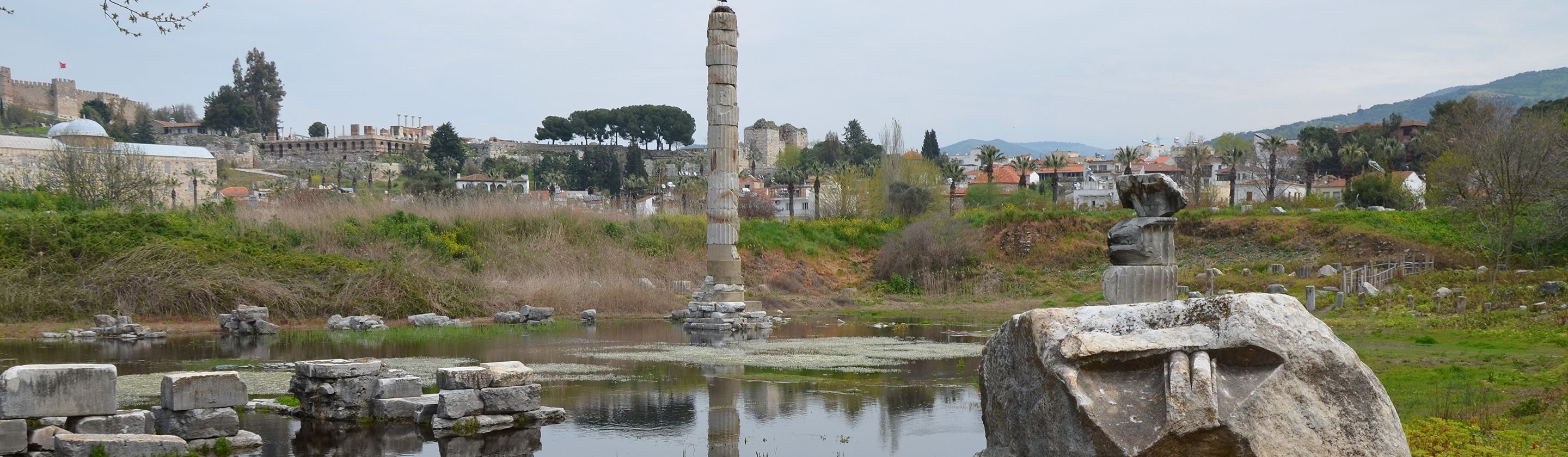
This Infamous Ancient Greek Burned Down An Ancient Wonder Just…
History remembers kings and conquerors, but sometimes, it also remembers…
By David Davidovic Nov 12, 2025
The Mysterious "Sea People" Who Collapsed Civilization
3,200 years ago, Bronze Age civilization in the Mediterranean suddenly…
By Robbie Woods Mar 18, 2025
20 Queens Who Deserved Better Husbands
Crowns Didn't Guarantee Kindness. History loves to romanticize royal marriages,…
By Cameron Dick Jul 2, 2026
20 Soldiers Who Defied Expectations
Changing the Rules of the Battlefield. You’ve probably heard plenty…
By Annie Byrd Feb 10, 2026