

The Weight of the House
I pull into the driveway and sit there for a moment with the engine running, hands still on the wheel. The house looks exactly the same — the white trim, the rose bushes Helen tended every spring, the wind chime she hung on the porch the year I turned twelve. It looks the same, and that's the part that breaks me a little. I cut the engine and make myself get out. Inside, the rooms are full of people — neighbors, cousins, a few faces I barely recognize — and the smell of coffee and casseroles fills every corner. My mother Patricia finds me near the door and pulls me into a hug that feels more exhausted than comforting, her arms thin and trembling. My father Robert stands near the fireplace, nodding at something a neighbor is saying, his face carved into the careful blankness of a man holding himself together. I move through the rooms slowly, touching the back of Helen's favorite chair, pausing at the shelf where she kept her small collection of ceramic birds. At the end of the hallway, her bedroom door stands half-open. I stop at the threshold and look in at the neatly made bed, the reading glasses folded on the nightstand, the afternoon light falling across the quilt she made herself. I can't make myself go in. The room just sits there, quiet and unchanged, waiting for someone who isn't coming back.
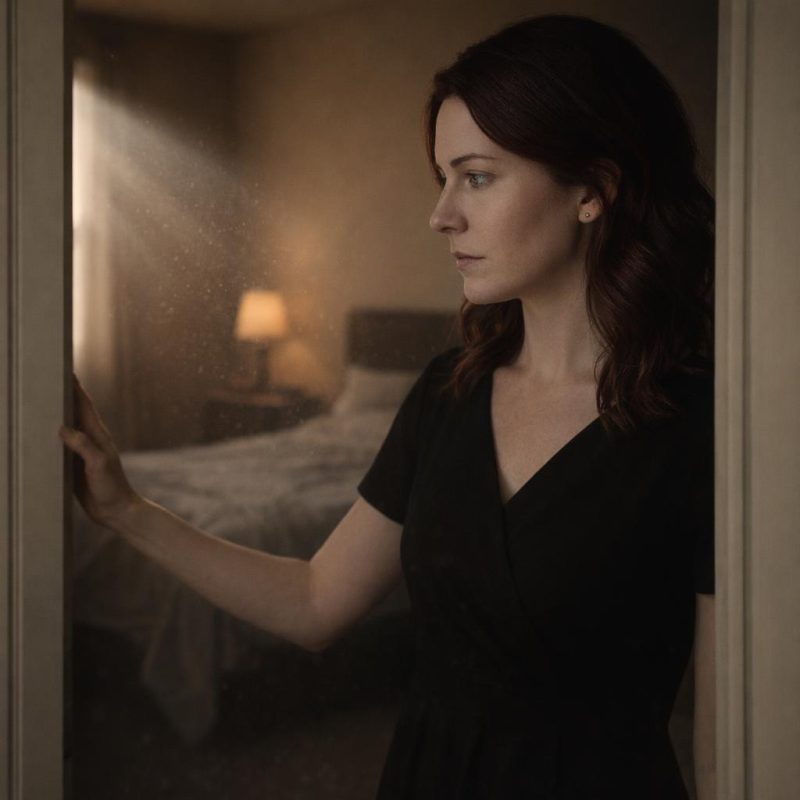 Image by RM AI
Fragments of Helen
I find my rhythm in the small rituals of a reception — accepting a cup of tea I won't drink, nodding through condolences, squeezing hands I barely remember. A neighbor named Dot corners me near the back window and asks about Helen's garden, and I tell her about the afternoon last month when Helen walked me through every bed, naming each plant like an old friend, her voice bright and certain even when her steps were slow. Dot tears up. I do too. Linda finds me in the kitchen a little while later, and she holds me for a long moment before pulling back to look at my face. She says Helen talked about my visits all the time, that it meant everything to her. I hold onto that. Robert drifts through the room like a man underwater — present but unreachable, pausing near the window with a glass he doesn't drink from, accepting handshakes with a tight nod. I help Patricia arrange the food on the counter, stacking napkins and straightening serving spoons just to have something to do with my hands. She moves beside me in silence for a while, and then she stops and looks toward the front door with a small frown pulling at her mouth. She says Sarah hasn't arrived yet, her voice low and worried, and something about the way she says it — the particular weight she puts on it — makes me glance up from the napkins.
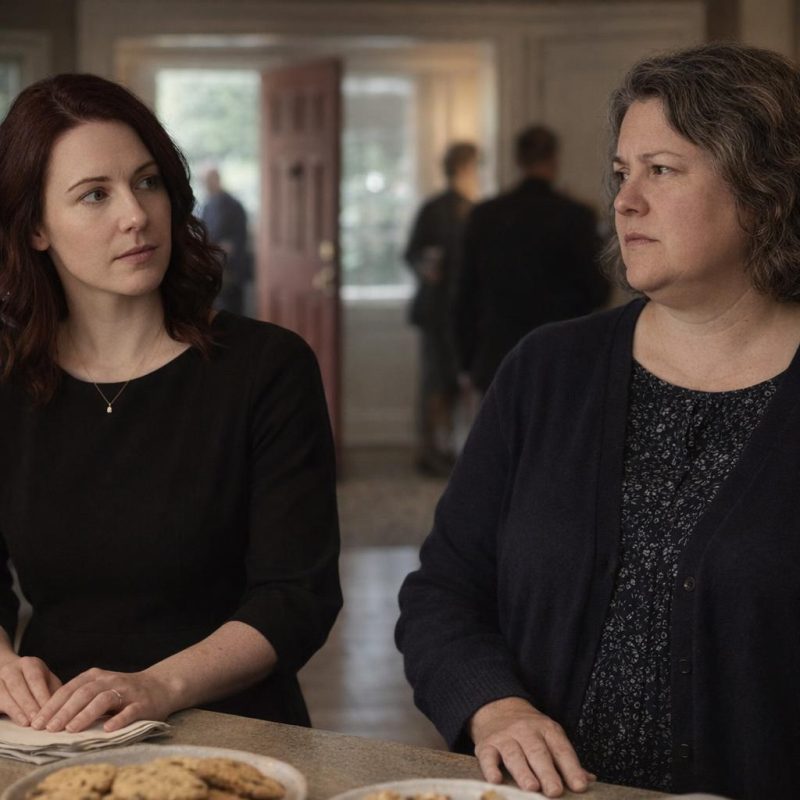 Image by RM AI
Sarah's Entrance
The front door opens about twenty minutes later and Sarah steps in, and the room shifts the way rooms do when someone arrives who commands attention without asking for it. Her black dress is perfectly fitted, her eyes visibly red-rimmed, and she moves with the careful steadiness of someone holding grief at arm's length. Mark follows a step behind her, carrying a large framed photograph of Helen — a good one, from maybe fifteen years ago, Helen laughing at something off-camera. Patricia crosses the room immediately and pulls Sarah into her arms, and Sarah leans into it, one hand pressed flat against Patricia's back. I hear her say she's so sorry she's late, that the drive was harder than she expected, that she had to pull over twice. I move toward her when Patricia steps back, and Sarah turns and accepts my hug briefly, her hands light on my shoulders. I tell her I'm glad she made it. She says she wouldn't have missed it. Then she steps back and her gaze moves across the room in a slow, unhurried sweep — taking in the relatives clustered near the fireplace, the neighbors by the food table, Linda standing near the hallway. There's nothing I can name in her expression. It's just the way she looks at a room, the way she always has. I turn back toward the kitchen and try to remember what I was doing before she arrived.
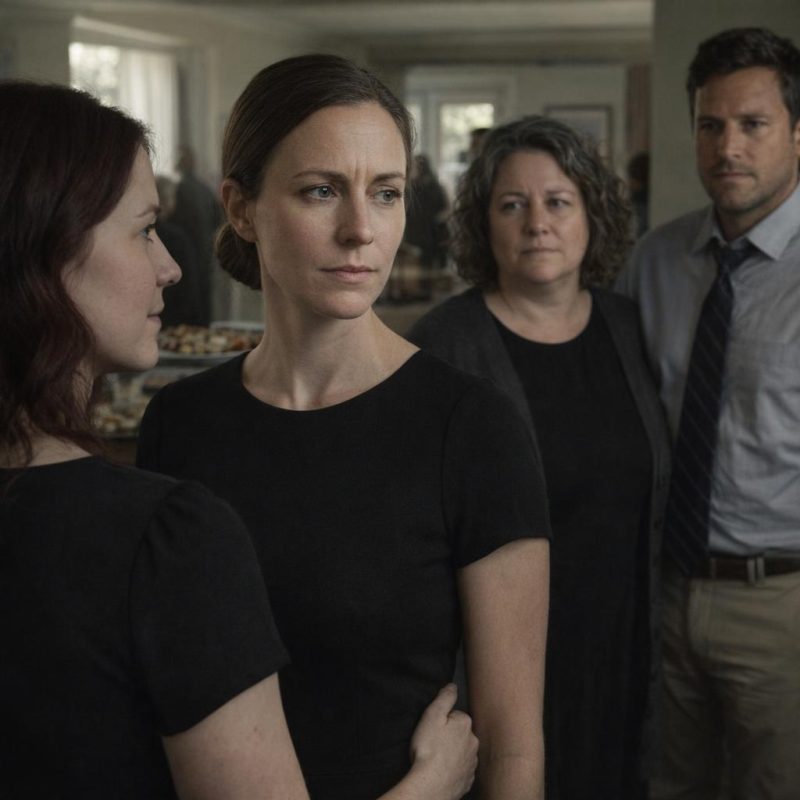 Image by RM AI
The Accusation
It starts with a simple question. One of my father's cousins — a man named Gerald I've met maybe three times — asks me warmly when my last visit with Helen was, the kind of small-talk question people ask at receptions without expecting anything complicated. I open my mouth to answer. I was there two weeks ago. I was going to say that. But before I get a word out, Sarah's voice comes from across the room, quiet and measured, like she's sharing something painful she's been carrying alone. She says she doesn't think Emma has been to see Gran in about five years. She says it gently, the way you say something you wish weren't true. The room doesn't erupt — it just goes still. Gerald's expression shifts. A few heads turn. I stand there with my mouth still half-open, the answer I was about to give dissolving somewhere in my chest. I look at Sarah. She's looking at the floor, pressing her lips together like she regrets having said it. I look at Patricia, whose face has gone confused and pained, her eyes moving between me and Sarah. Robert turns from the window and his gaze settles on me, and something in his expression closes off, like a door swinging shut. I want to say something. I want to say it's not true. But the words don't come, and the silence that fills the room in their place feels heavier than anything I know how to lift.
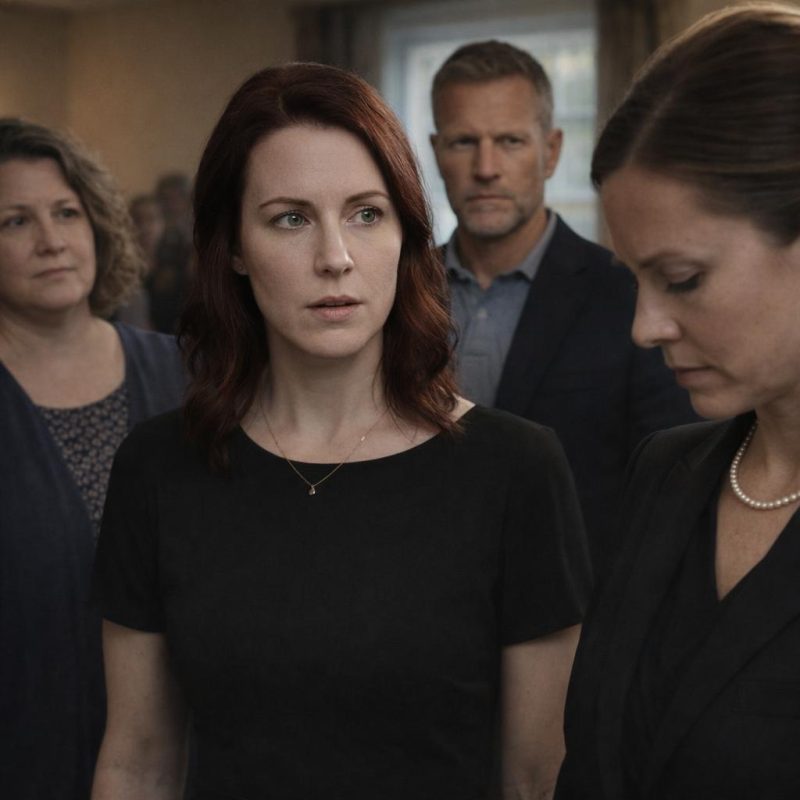 Image by RM AI
The Cold Shoulder
I don't know how to describe what happens to a room after something like that. It doesn't change all at once — it changes in small, quiet increments, like a tide going out. The cousin who hugged me when I arrived finds somewhere else to be. Gerald drifts toward the fireplace without finishing his sentence. I try to move toward Linda, thinking she'll understand, thinking she'll let me explain, but she takes a small step back when I get close — not dramatic, not unkind, just enough to put distance between us. I notice it. I feel it like a door closing. Robert crosses the room and positions himself near Sarah, one hand resting briefly on her shoulder, his posture settling into something protective. I watch it happen and I still can't make sense of it. I find Patricia near the kitchen doorway and I say her name, and she looks at me — or almost looks at me — and then her gaze slides sideways, past my shoulder, and she turns and walks back into the kitchen. I stand in the middle of the living room with people moving around me like I'm furniture, the warmth of an hour ago completely gone, and I still don't understand what just happened. I keep thinking there's been a mistake. I keep thinking someone is going to turn around and correct it. I'm still thinking that when Patricia turns away without meeting my eyes.
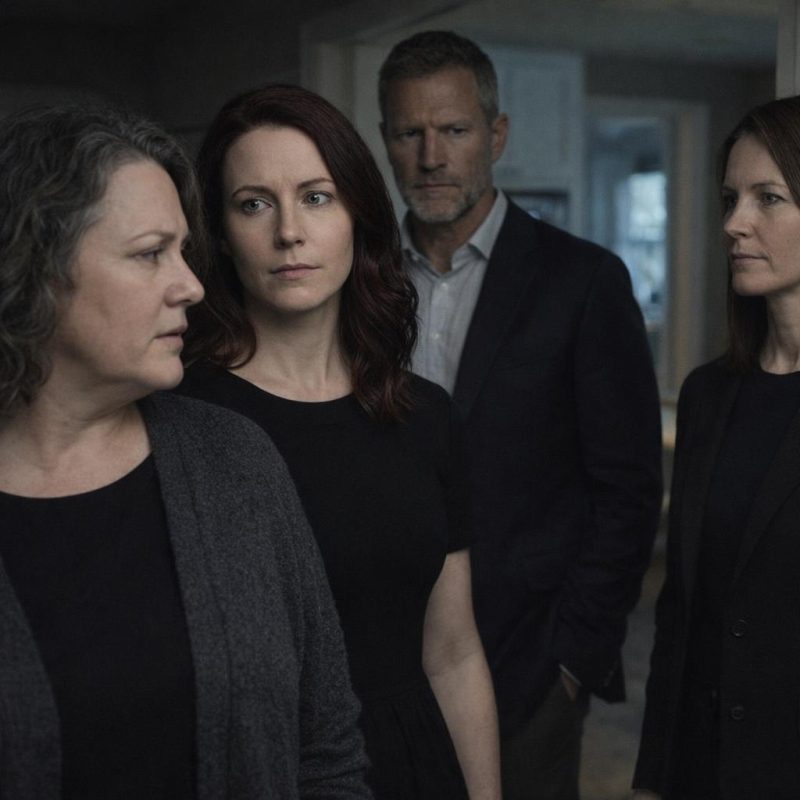 Image by RM AI
Defending the Truth
I find my voice somewhere near the kitchen doorway. I tell Patricia I was at Helen's house two weeks ago — two weeks, not five years. I tell her we sat at the kitchen table and drank tea from the blue pot Helen kept on the second shelf, and Helen told me the story about her brother sneaking cigarettes behind the church during the war, the one she always laughed at even though she'd told it a hundred times. Patricia shakes her head slowly, her expression pained, like she's hearing something she doesn't know what to do with. Robert steps closer and asks, in a voice that's careful and flat, why Helen never mentioned these visits to him. I tell him I brought groceries every Sunday for months — the same list every week because Helen liked things a certain way. Linda is standing near the hallway and I look at her, hoping for something, but her expression stays measured and still. Sarah is a few feet away, dabbing at her eyes with a folded tissue, not saying anything. I hear my own voice getting louder and I can't stop it — I'm listing details, specific details, the kind you only know if you were actually there, and none of it is landing. No one is nodding. No one is saying yes, of course. I look at my father, searching his face for something to hold onto, and what I find there is doubt — plain and settled, looking back at me from behind his eyes.
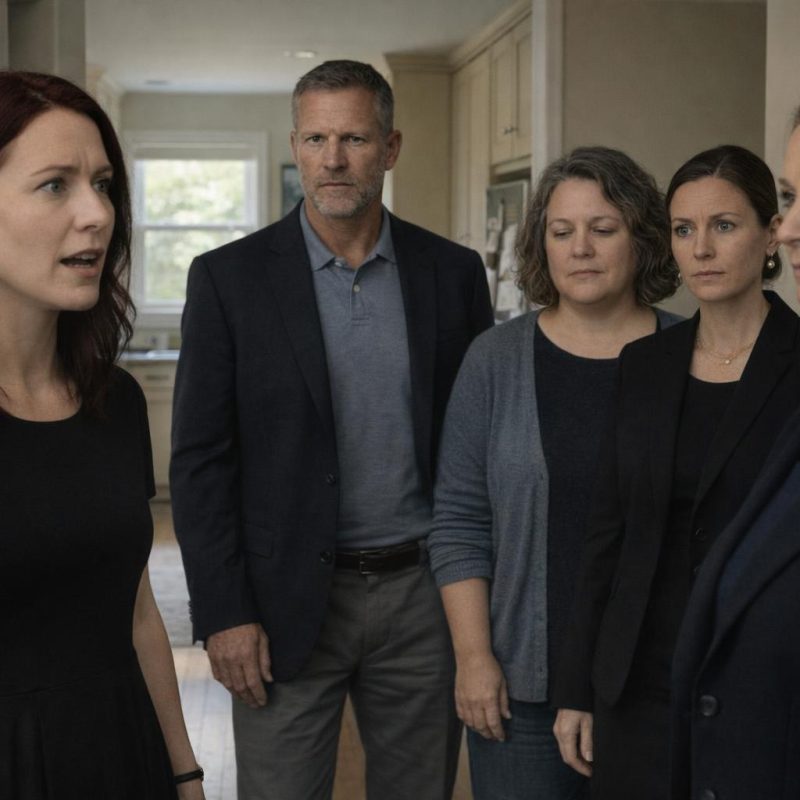 Image by RM AI
The Devoted Daughter
Sarah doesn't argue with me. She doesn't have to. She just starts talking, quietly, to the cluster of relatives near the fireplace, and one by one the room orients toward her the way a room does when someone is saying something people want to hear. She describes driving to Helen's house three times a week, sometimes more. She talks about sorting medications into the weekly pill organizer, about sitting in the waiting room at the cardiologist's office, about the nights she stayed late because Helen was anxious and didn't want to be alone. Patricia is crying openly now, nodding along, her hand pressed to her mouth. Robert stands with his arms crossed, his expression softened in a way I haven't seen all afternoon. Sarah's voice stays low and steady throughout — no performance in it, just the particular exhaustion of someone who has been carrying something heavy for a long time. Mark stands behind her and slightly to the left, his eyes fixed on the middle distance, not meeting anyone's gaze. I stand near the doorway and listen and I feel something strange happening — not quite doubt, but a kind of vertigo, like the floor has shifted a degree or two beneath me and I can't find my footing. Then Sarah mentions, almost as an aside, that she's been putting together a memorial slideshow from all the photos she organized, and something about the way she says it makes me go very still.
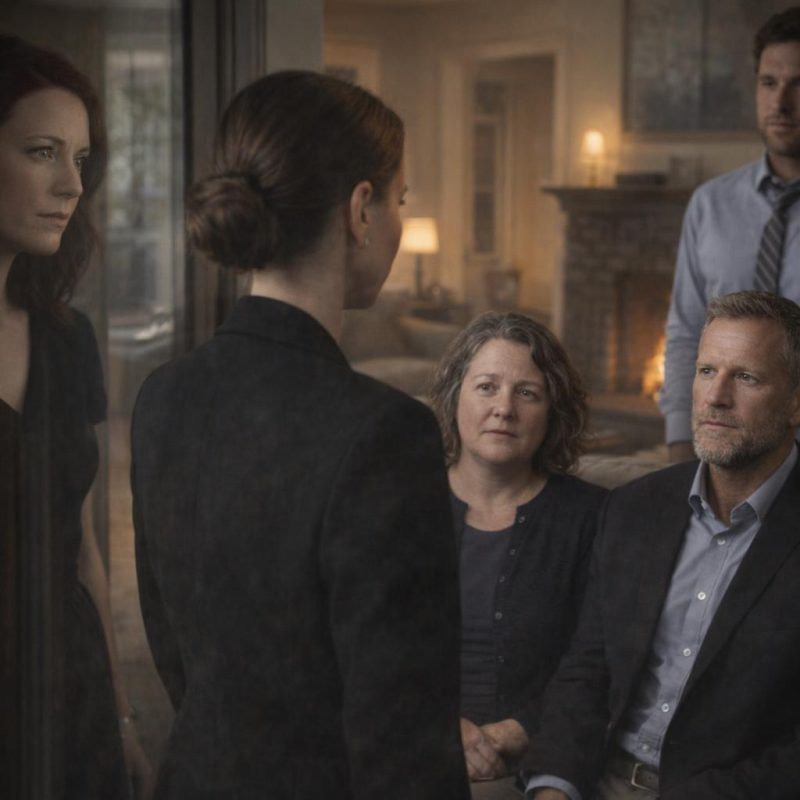 Image by RM AI
Parental Judgment
Patricia finds me near the back hallway after the room has thinned out a little. She doesn't raise her voice. She doesn't have to. She tells me she's disappointed — that word, specifically, delivered quietly and without decoration — that I let so much time pass without making the effort to see Helen. I start to explain again, and she holds up one hand, not unkindly, and says Sarah has no reason to lie about something like this. Robert appears at her shoulder and says he expected better from me, that family doesn't disappear on each other, and his voice carries the particular weight of a man who has already made up his mind. I ask them why they would believe Sarah over me, and the question comes out shakier than I want it to. Robert says Sarah was there. He says it simply, like it settles everything. I tell them I was there too, that I have been there, that I don't understand what is happening right now. Patricia looks at me for a moment with something in her face that might be sorrow, or might be pity, and then she says that Sarah was the one who showed up, and I wasn't, and that's what she knows. She turns and walks back toward the living room. I stay where I am in the hallway, and the sound of her footsteps fading away is the only thing I can hear.
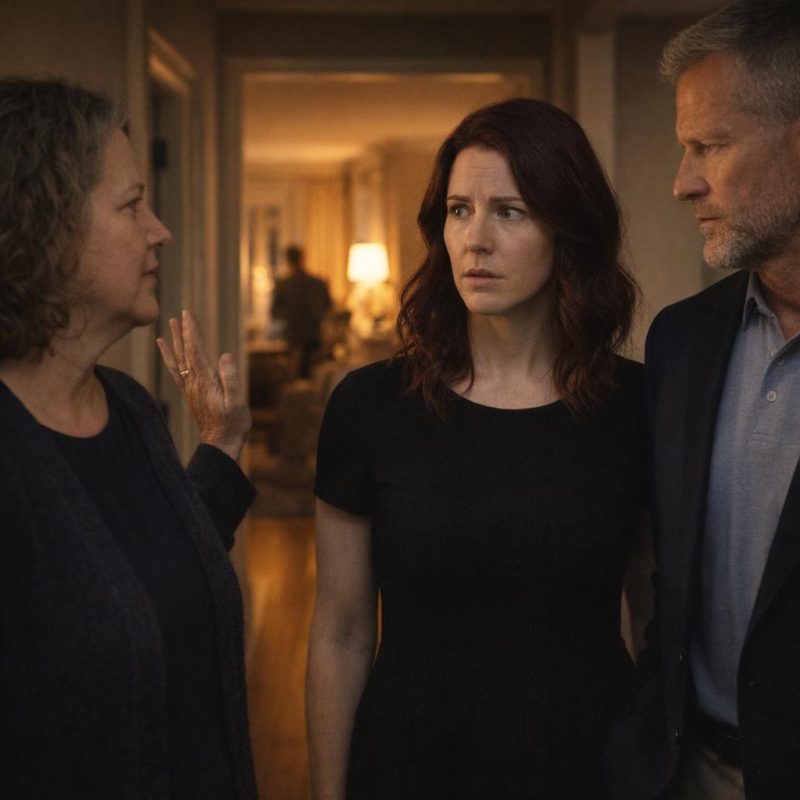 Image by RM AI
Retreat and Reflection
I find Helen's study at the end of the hallway and slip inside, pulling the door shut behind me. I lean against it and just breathe — in, out, in, out — until the sound of voices from the living room fades to something manageable. The room is exactly as she left it. Her reading glasses sit folded on top of a paperback, spine cracked at the bookmark. A half-finished square of knitting rests in a basket by the window. Her books line the shelves in the particular order she always insisted on, part alphabetical, part sentimental, a system only she fully understood. I cross to her chair — the old wingback with the worn armrests — and I sit down in it, carefully, like I'm borrowing something precious. I try to think through what just happened. My parents looked at me like I was a stranger making excuses. I go over my visits in my head, one by one, Sunday after Sunday, and they are real, they are solid, they are mine. I wonder for a moment if I'm misremembering something, if grief is doing something strange to my sense of time, and the thought frightens me more than the accusations do. Then I notice the cardigan draped over the back of the chair, and the faint scent of Helen's perfume rises from it, soft and unchanged.
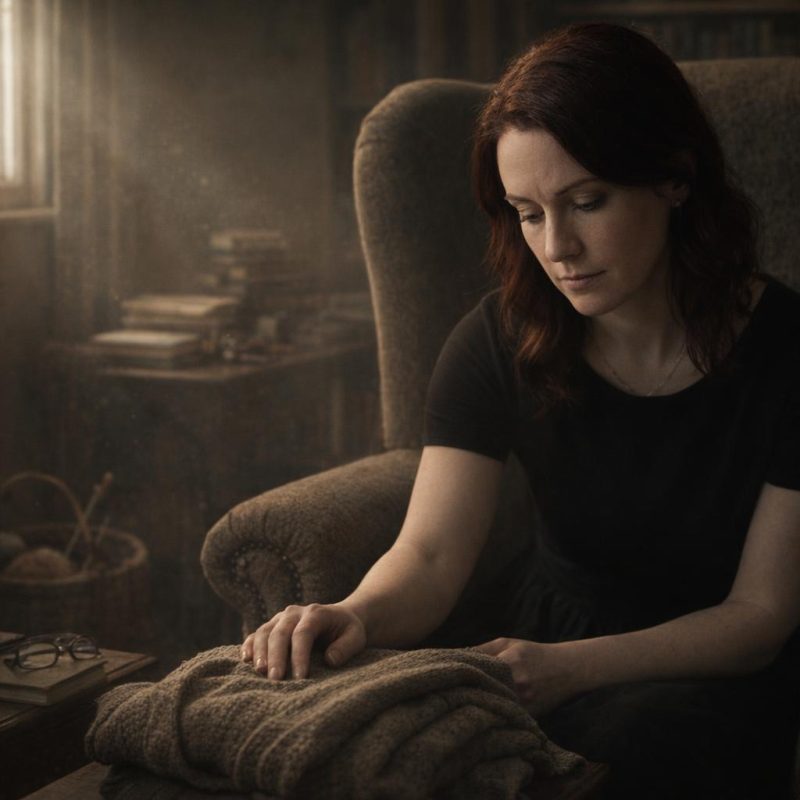 Image by RM AI
Sunday Afternoons
I close my eyes and let the memories come, because right now they are the only thing I trust. Every Sunday at two o'clock, I would pull up to Helen's house and she would already be at the window, watching for my car. She would have the kettle on before I was through the door. I remember the spring she got so excited about the peonies coming back — she made me crouch down in the garden with her to look at the first buds, both of us in our coats because it was still cold. We would sit at her kitchen table for hours, tea going lukewarm while she told me stories about growing up, about her mother's kitchen, about the dances she went to as a young woman. I brought groceries most weeks — she always pretended to protest and then quietly put everything away. I remember teaching her how to use the photo app on her tablet, and her laughing so hard at a blurry selfie we took that she had to set it down. Three weeks ago we went through the old albums together, and she laughed at a joke I made about a terrible family Christmas photo from the nineties. But then I remember something else from that afternoon — the way her expression shifted as she turned the page, something moving across her face that I couldn't quite read before it was gone.
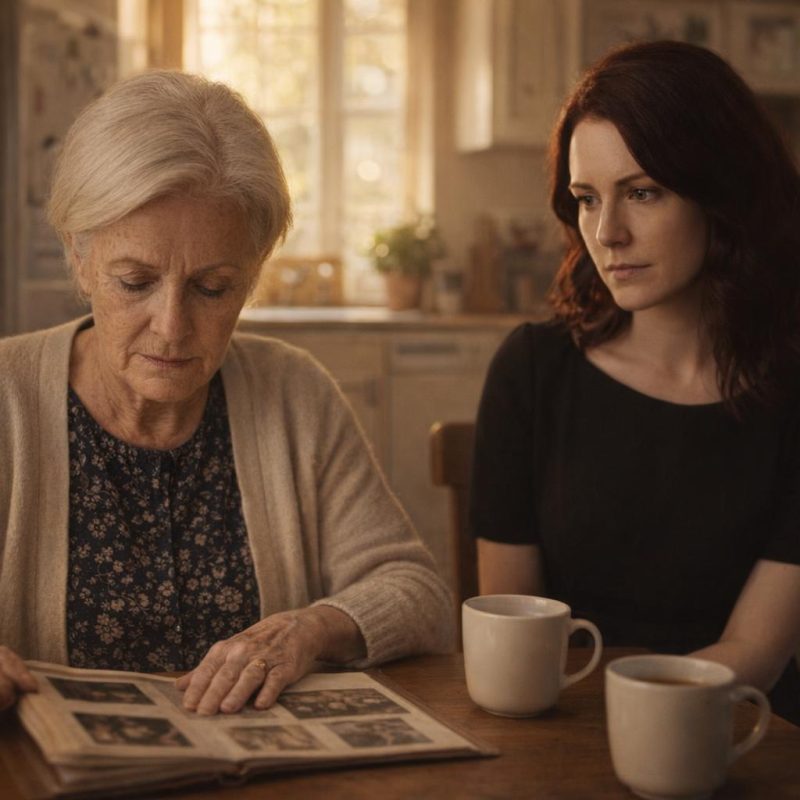 Image by RM AI
Evidence Dismissed
I go back out to the reception because staying hidden feels like admitting something I haven't done. I find my mother near the window and pull out my phone, opening the camera roll to show her — there are photos, dozens of them, me and Helen in the garden, at the kitchen table, on the front porch. Patricia glances at the screen for maybe two seconds and then looks away, telling me she can't do this right now, that today is not the day. I try Robert next. I tell him about the conversation Helen and I had last month about her sister Linda's visit, specific details, the kind you don't invent. He listens with his arms crossed and then says, quietly, that grief can do strange things to memory, that people fill in gaps without meaning to. I tell him I brought groceries every single week — I can show him the receipts on my banking app. Linda is standing nearby and she says, gently but firmly, that I might be confused about the timeline, that these things happen. My voice climbs higher than I want it to and I hear myself insisting, which only seems to confirm something for them. They are not angry. That almost makes it worse. They look at me with a kind of careful patience, like they are managing someone fragile, and when I finally stop talking, Patricia's face closes off completely, smooth and final as a door clicking shut.
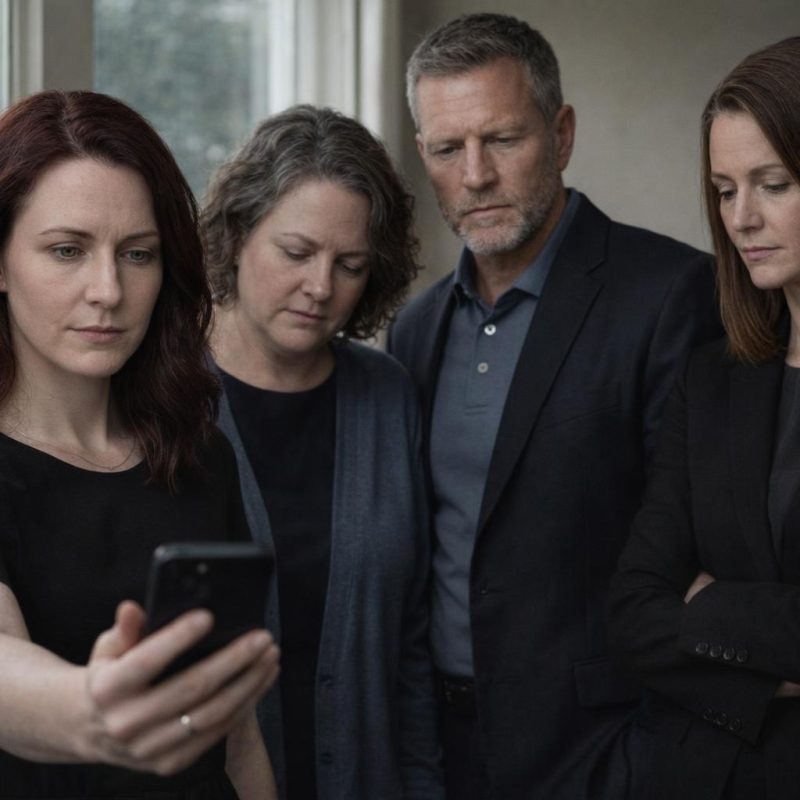 Image by RM AI
The Missing Memorial
I drift back through the living room and something starts to nag at me. Sarah had mentioned a memorial slideshow weeks ago — she brought it up at least twice, said she was putting together something special, that she had been collecting photos for months. I look around the room now and there is no screen, no laptop propped open, no printed photos arranged on a display board. The mantle, where Helen always kept framed family photos, is bare. I stop and look at it for a moment, certain I'm misremembering, but no — I can picture exactly which frames sat there, the oval one with Helen and Linda as young women, the small silver one from my parents' anniversary. I walk to the bookshelf along the far wall, the one where Helen kept her family albums, the big ones with the sticky plastic pages she'd had since the seventies. The shelf is empty. Not reorganized, not moved to another surface — empty, with faint dust outlines where the albums used to sit. I check the side table, the cabinet beneath the television. Nothing. Patricia passes through and I ask her about it. She says Sarah mentioned some kind of technical difficulty with the slideshow. I look back at the shelf, at the clean rectangular gaps in the dust where the albums had been.
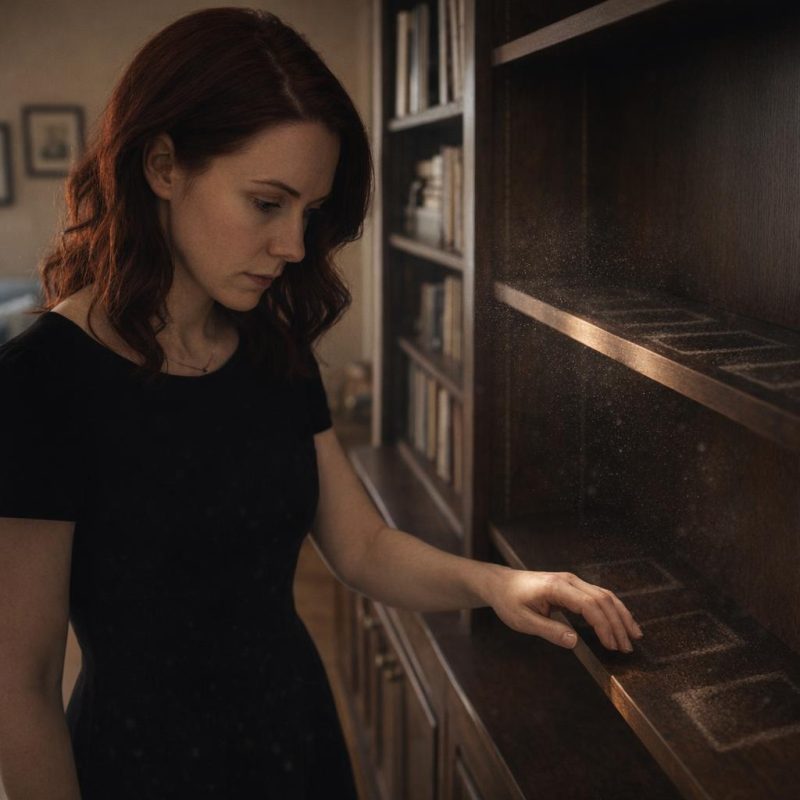 Image by RM AI
Digital Erasure
I slip into the bathroom off the hallway and lock the door. My hands are already moving before I've fully thought it through, opening the shared photo app that Sarah and I set up together months ago when we first started talking about the memorial. We had organized everything carefully — folders by year, by occasion, labeled and sorted. The app opens and the folders are there, all the names intact, every label in place. But when I tap the first one, it's empty. I tap the next. Empty. I go through all of them, one after another, and every single folder is hollow, just a name floating above a blank white screen. I navigate to the deletion log, the one the app keeps automatically, and the timestamp reads yesterday. All of it removed in a single session. I try the app's trash folder, thinking maybe there's a recovery option, but it's been cleared too — manually, because the app doesn't auto-empty the trash. My hands are shaking enough that I keep mis-tapping. Hundreds of photos, five years of Sundays, birthdays, ordinary afternoons — gone. I sit down on the closed toilet lid and stare at the screen, scrolling through folder after folder, and the white space inside each one seems to expand the longer I look at it.
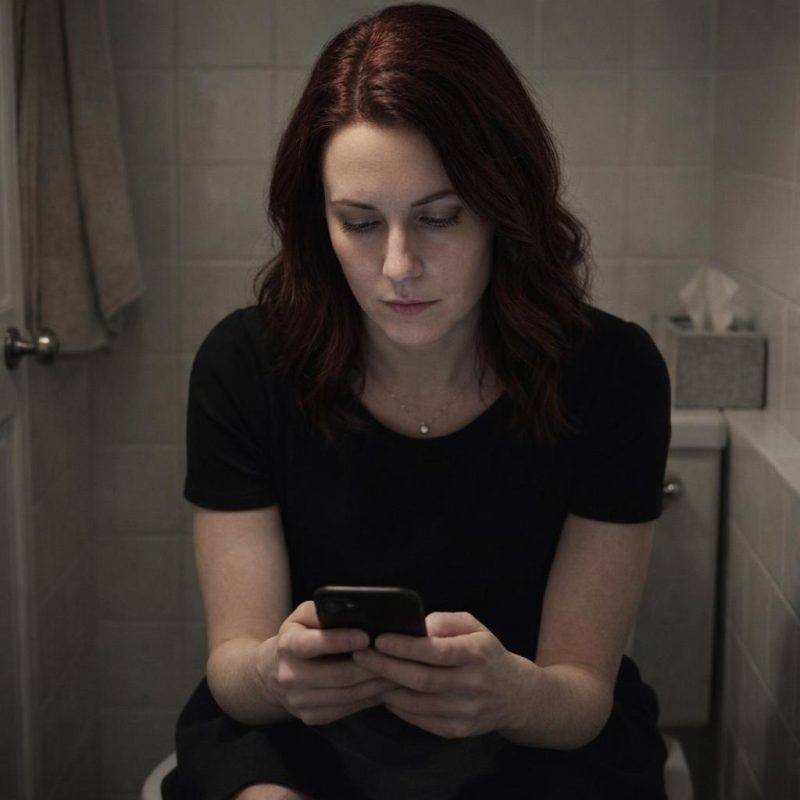 Image by RM AI
Confronting Sarah
I find Sarah in the kitchen, standing at the counter arranging white lilies into a vase with the focused attention of someone who knows they're being watched. I ask her directly — what happened to the memorial slideshow, and what happened to the shared albums. She sets down the stem she's holding and her expression moves into something that looks like grief mixed with frustration, the face of someone who has already been through something hard. She tells me the cloud service crashed two days ago, that she lost everything, that she spent hours on the phone with their support team trying to get it back. She says she's devastated — that word, specifically — about losing those photos, that they were irreplaceable, that she had put so much work into organizing them. Mark is standing near the kitchen doorway, and I notice him shift his weight from one foot to the other, his eyes moving to a point somewhere past my shoulder. I watch Sarah's face while she talks. The words are right. The timing is right. The expression is right. She touches the edge of the vase and says she just didn't want to make today worse by announcing it, that she thought it was better to say nothing than to upset everyone further. I nod and step back, and I can't find the specific thing that feels wrong, only that the whole explanation sits too neatly, too completely — more finished than I'd expect from something that had just fallen apart.
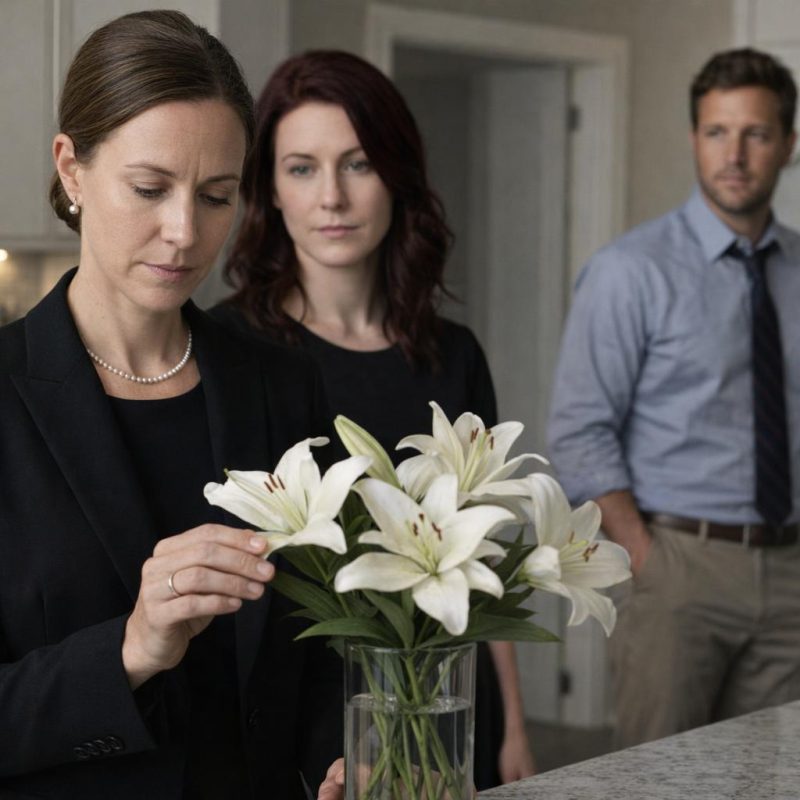 Image by RM AI
The Backup
I go back to Helen's study and lock the door behind me. My phone is already in my hand. I open the settings app and navigate to the automatic backup service — the one my phone has been quietly syncing to for years, separate from any shared album, separate from anything Sarah would have had access to. I set it up years ago after a phone died and I lost a month of photos, and I have barely thought about it since. The app takes a moment to load and I stand there with my thumb hovering over the screen, not breathing. The main folder appears. Inside it, a subfolder labeled with today's date sits at the top of the list, timestamped from this morning when my phone connected to the wifi here. Below it, folder after folder going back years, each one dated, each one intact. I tap the most recent one and the thumbnails begin to load, small squares filling in from the top of the screen downward — Helen's kitchen, Helen's garden, the wingback chair, the kitchen table with two mugs on it. My eyes fill and I have to blink hard to keep reading the screen. Then I see it at the bottom of the folder list, separate from the dated backups, labeled in my own words from months ago: *Helen — everything*.
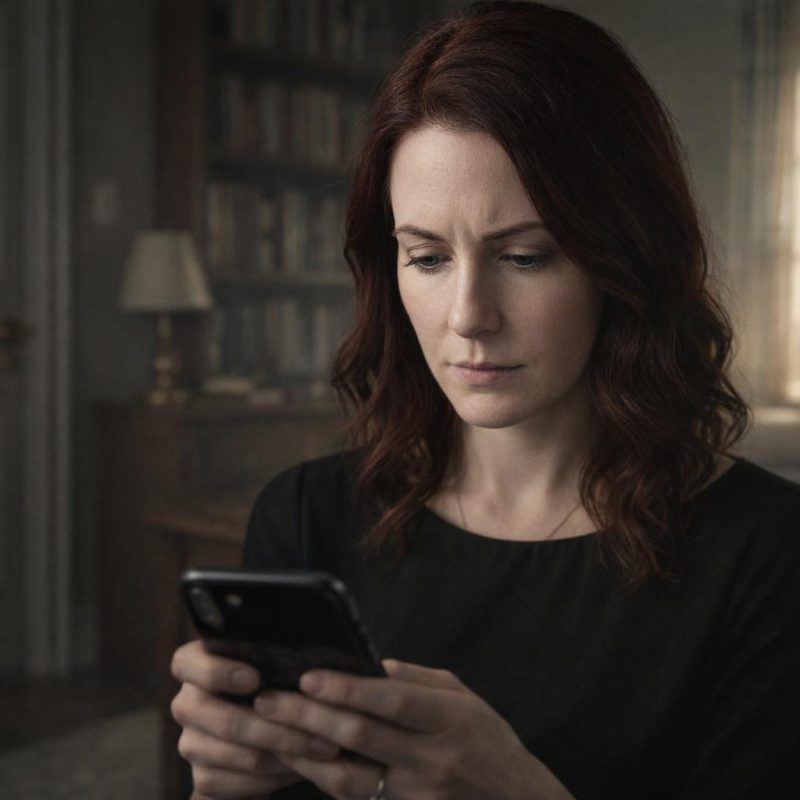 Image by RM AI
The Evidence
I sit in Helen's chair and start scrolling from the beginning. The photos are organized by date, the oldest first, and watching them load is like watching time run forward. There I am in Helen's garden in early spring, both of us in coats, crouching over the peonies. There's the kitchen table with the good teacups she only brought out for company, and she always brought them out for me. I scroll through birthdays, through ordinary Sunday afternoons, through the Christmas she insisted on making shortbread even though her hands were bothering her. The timestamps are there on every image — date, time, GPS coordinates placing us at her address, week after week after week. I count as I go, losing track and starting over, and by the time I reach the photos from this past year I'm somewhere past three hundred. Helen is smiling in almost all of them, bright-eyed and present, nothing like someone who had been abandoned. I keep scrolling, looking for images of the whole family, of other visitors, of anyone else who showed up the way I showed up. I find a handful of holiday gatherings, a birthday or two. But as I go through every folder, every year, searching for Sarah's face beside Helen's, I count fewer than a dozen.
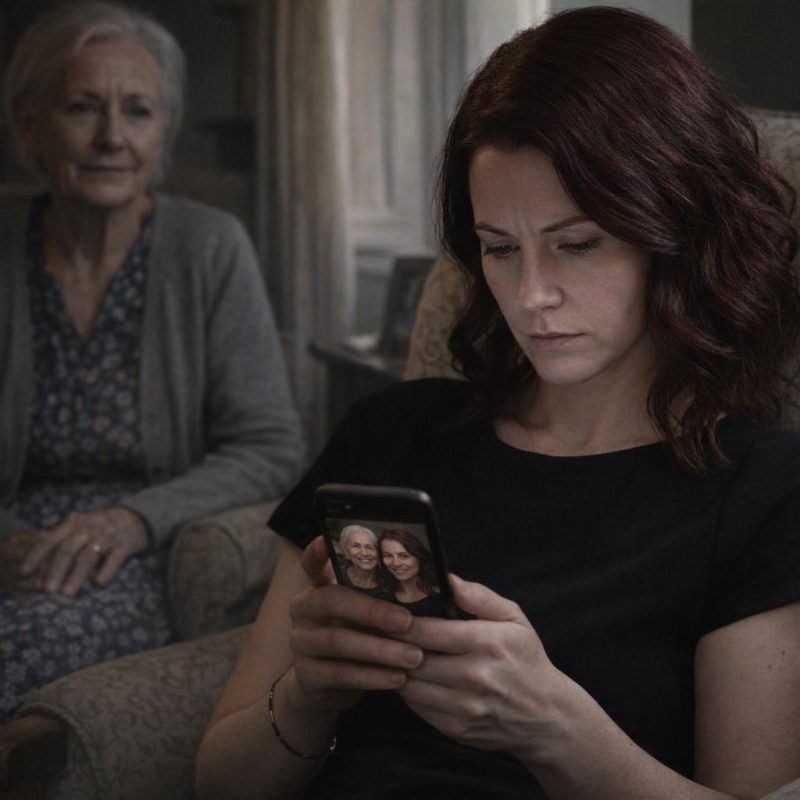 Image by RM AI
Helen's Concerns
I'm still sitting in Helen's chair, phone warm in my hand, when the memory surfaces — quiet at first, then louder. It was about two months ago, a Sunday afternoon, the two of us at the kitchen table with the good teacups out. Helen had set hers down carefully and said, almost as an aside, that she couldn't find her sapphire brooch. The one her mother had left her. I'd told her it was probably in the wrong jewelry box, that things get shuffled around, and she'd nodded slowly but hadn't looked convinced. I hadn't thought much of it at the time. She was in her eighties. Things got misplaced. I'd even helped her look through the top drawer of her dresser before I left, and when we didn't find it I'd said we'd look again next week. We never did look again. I let it go. And then, a few weeks later, she'd mentioned a gold bracelet she couldn't account for. Then the pearl earrings. Each time I'd offered the same gentle reassurance — wrong drawer, wrong box, easy to forget. She'd accepted it, but there was something in her expression I hadn't let myself sit with. I'm sitting with it now. I can still hear exactly what she said about the brooch: "I know where I keep it, Emma. I always put it back in the same place."
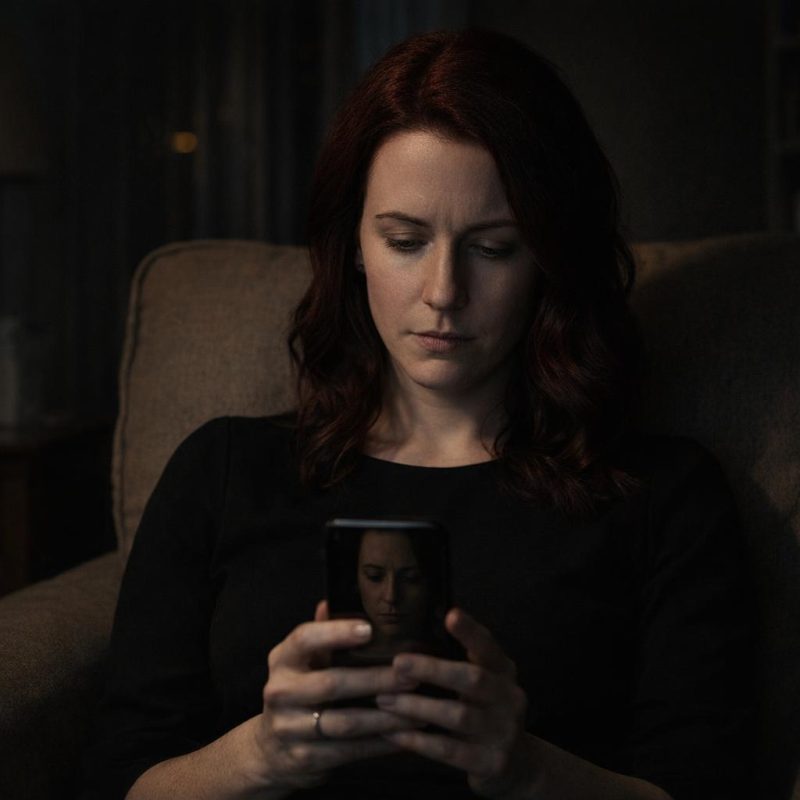 Image by RM AI
Patterns in Absence
I open the phone's photo app and start building a rough timeline in my head, scrolling back through the timestamps with more focus than before. My visits are easy to track — Sundays, almost without exception, plus the odd Wednesday when she had a doctor's appointment she didn't want to go to alone, plus every holiday, every birthday, the week she had that chest cold and I stayed three nights on her sofa. The pattern is so consistent it almost looks like a schedule. Then I search for Sarah. I filter by faces, by location, by year, and I go through every result carefully. Four photos across three years. In the first one, Sarah is standing near the back of the living room at what looks like Christmas, coat still on, bag still on her shoulder. In the second, she's at the edge of the frame at Helen's birthday, turned slightly toward the door. The other two are similar — present in the way someone is present when they've just arrived or are about to leave, never settled, never staying. I look at those four images for a long time. Then I look at my own — three hundred and something, spread across seasons, spread across years, full of teacups and garden dirt and Helen's face turned toward mine. The difference between the two sets of photos doesn't need any explanation. It just sits there, plain and heavy, in the light of Helen's study.
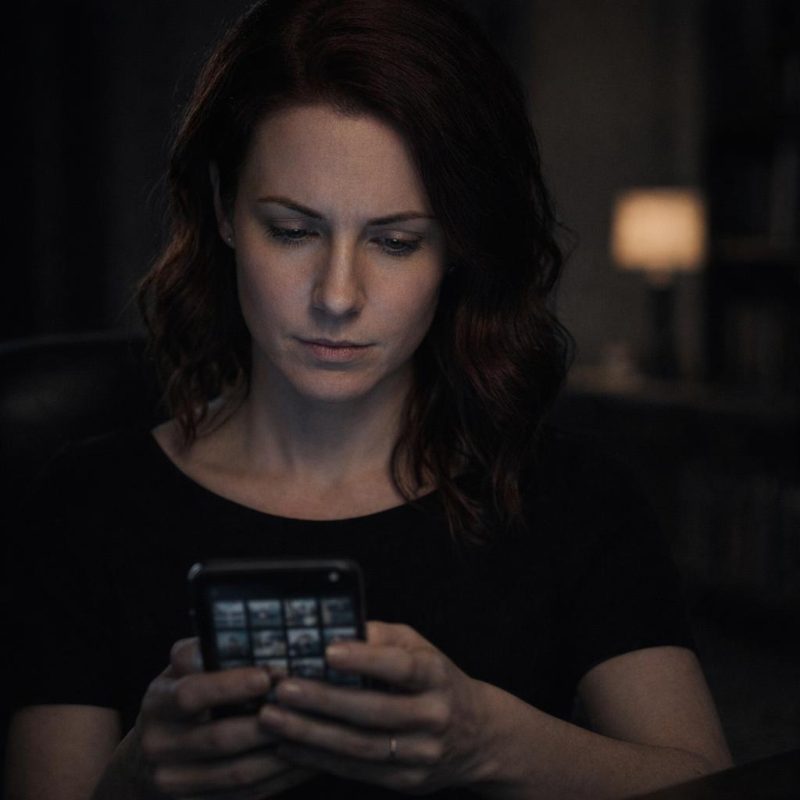 Image by RM AI
The Unspoken Warning
I set the phone face-down on the desk for a moment and let myself go back further. Helen had a way of asking questions that weren't quite questions — careful, sideways things that gave you room to answer or not. I remember her asking, maybe six months ago, whether Sarah seemed stressed lately. I'd said I didn't really know, that we weren't close, and Helen had nodded and gone quiet in a way that felt like she was filing something away. Another time she'd mentioned, almost in passing, that Sarah had asked to borrow money. More than once, she said. I'd assumed that was just family — people hit rough patches, they ask. I hadn't asked how much, or how often. I remember Helen changing the subject whenever Sarah's name came up in certain ways, like she was steering around something she didn't want to name out loud. And once — I'm sure of this now — she asked me not to mention a particular conversation to Sarah. I'd thought she was just being careful about family politics, the way she always tried to keep the peace. I hadn't pushed. I hadn't asked why. I look at the last photo I took of her, three weeks ago, standing in the doorway of this very room. She's smiling, but her eyes carry something I didn't notice when I took the picture — a tiredness that goes deeper than age, a worry she was holding very carefully behind her smile.
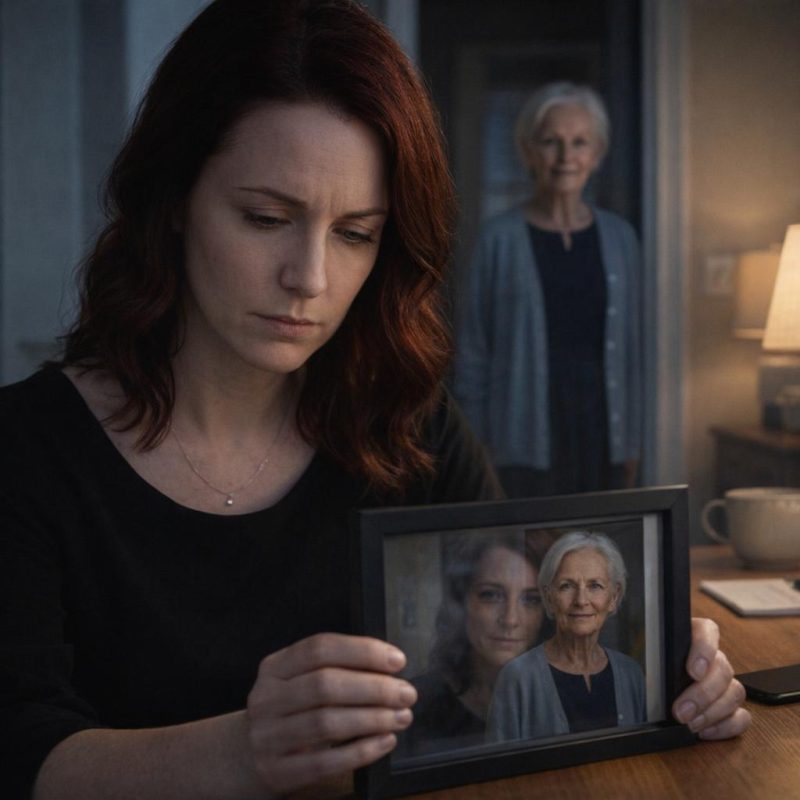 Image by RM AI
The Video File
I pick the phone back up and keep scrolling through the backup folders, not entirely sure what I'm looking for anymore — just looking, the way you do when something feels unfinished. Most of the folders are labeled by year or by category: photos, documents, contacts. I almost miss it. Tucked between a folder of scanned recipes and one labeled 'House Insurance 2022' is a folder with a name that stops my thumb mid-scroll. 'For Emma - Important.' The label is in Helen's handwriting style, the same careful way she titled everything, even digital files. Inside the folder there is one item. A video file. The timestamp reads three weeks ago — the same date as my last visit, the last Sunday I sat with her in this house. My chest tightens before I've even processed what I'm looking at. The file name is just my name. The video is twelve minutes and forty seconds long. I tap the thumbnail to expand it, and Helen's face fills the screen — not smiling this time, not the bright-eyed woman from the garden photos, but serious, composed, sitting in her bedroom with her hands folded in her lap like she's about to say something she has been thinking about for a very long time.
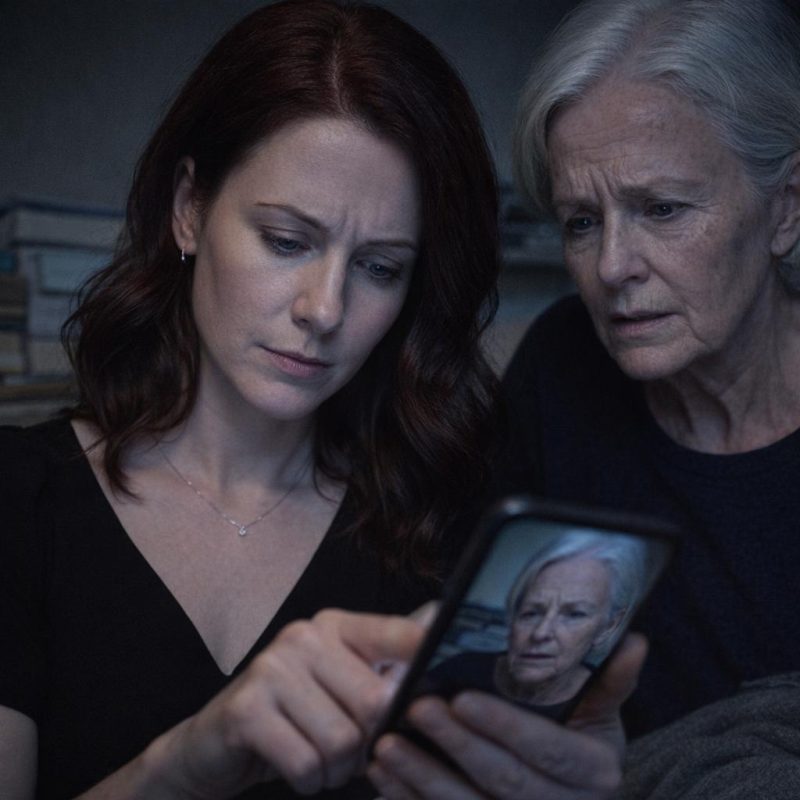 Image by RM AI
Helen's Testament
I lock the study door. My hands are shaking enough that I miss the bolt the first time. I sit back down in Helen's chair, hold the phone with both hands, and press play. Her voice comes through the speaker and I have to stop myself from making a sound — it's so completely her, that measured, unhurried way she had of speaking, like every word had been considered before it left her mouth. She says she's making this recording for me to find, that she hopes I find it soon, that she's sorry to leave me with any of this. Then she takes a breath and begins. The sapphire brooch first — she describes it precisely, the oval setting, the small chip on the lower left stone that she'd always meant to have repaired. Gone from the jewelry box where she had kept it for forty years. Then the gold bracelet, the one her sister Linda had given her for her seventieth birthday. Then the pearl earrings that had belonged to her own grandmother. A diamond ring she'd worn on her right hand since my grandfather died. An antique garnet necklace she'd bought herself on a trip to Edinburgh the year she turned sixty. She names each one steadily, without rushing, the way you'd read from a list you'd written and rewritten until you were sure you had it right. I'm crying before she finishes the third item, hearing her voice fill this quiet room, listing the things that had been taken from her one by one.
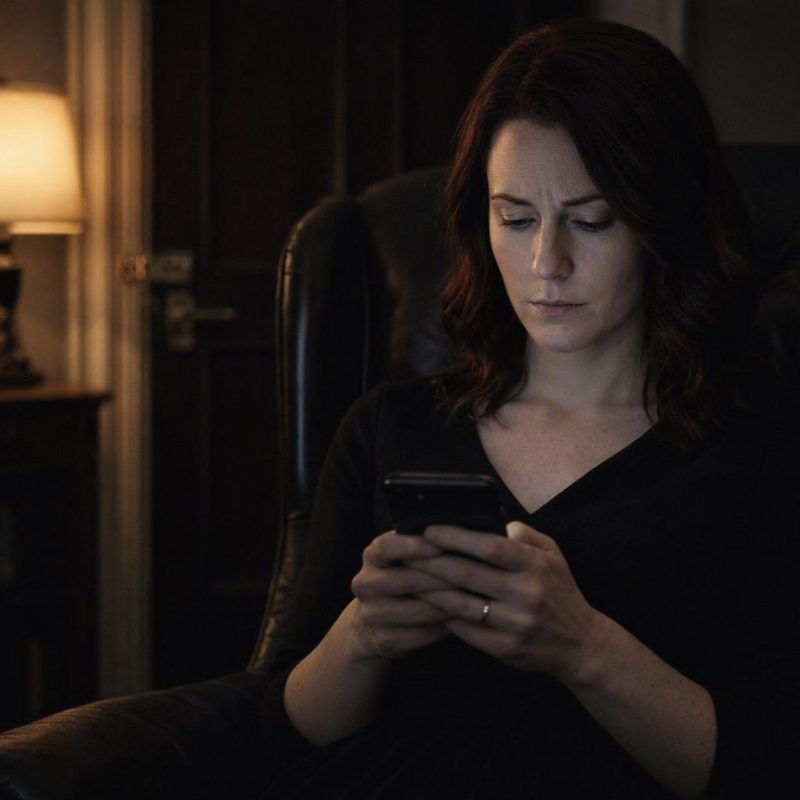 Image by RM AI
The Pattern Revealed
Helen doesn't stop after the list. She keeps going, her voice still steady, and she starts to explain how she worked it out. The brooch was the first thing she noticed, she says, and at first she did what I'd suggested — checked every drawer, every box, every coat pocket. She checked for weeks. Then the bracelet went missing, and that was when she started keeping the notebook. She holds it up to the camera briefly — small, blue, the kind you'd buy at a pharmacy — and I can see handwriting filling the pages, dates and descriptions in her careful script. She explains that she wrote down every item she owned, when she'd last seen it, and which days she'd had visitors in the weeks before it disappeared. She says she didn't want to believe what the dates were telling her. She went back through her calendar, cross-referenced everything twice, looked for any other explanation she could find. Her voice slows here, and her expression shifts — not anger, something quieter and more painful than anger, the look of someone who has had to sit with a hard thing long enough that the shock has worn away and only the sadness is left. She says she wishes she could have found another answer. I watch her on that small screen, this woman who always tried to see the best in everyone, struggling with what her own careful notes had shown her.
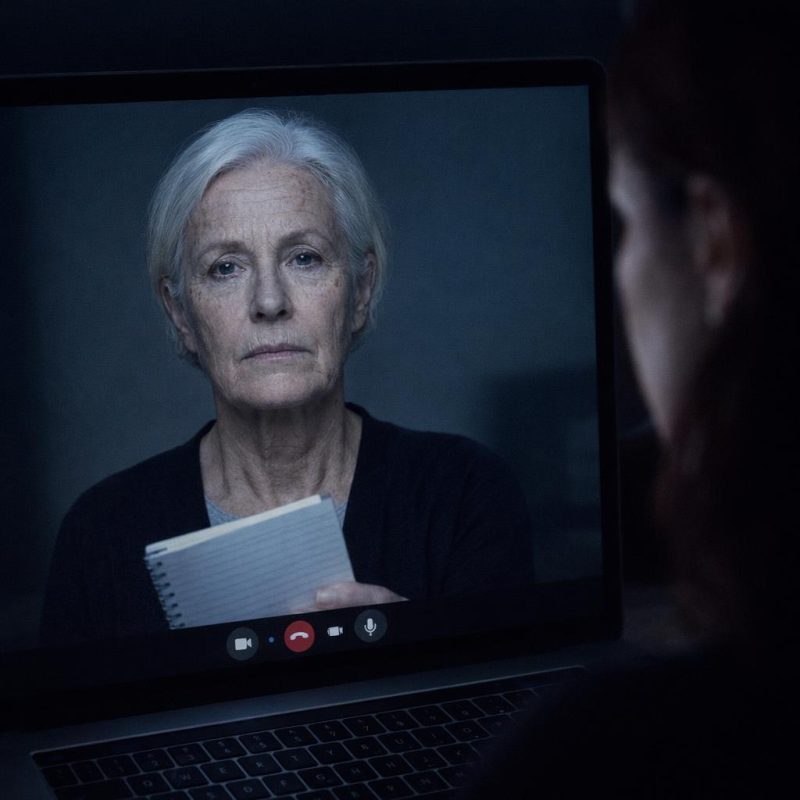 Image by RM AI
Sarah Named
Helen sets the notebook down on her lap and folds her hands over it. She's quiet for a moment — not the quiet of someone who has lost her train of thought, but the quiet of someone gathering themselves for something difficult. Then she looks directly into the camera. She says she checked the dates against her security system, the one my parents had insisted she install two years ago. The system logged every time the front door opened, with a timestamp. She'd gone through every entry for the past year and matched them against the notebook. She says she did this three times because she wanted to be wrong. Her voice pulls tight as she says it — not loud, not breaking, just tight, like something being held carefully in place. She says that on every date an item went missing, there was only one visitor logged in the window before she noticed it gone. She pauses. She says she needs me to know she didn't come to this lightly, that she loves her family, that this has been the hardest thing she has ever had to put into words. She looks down at the notebook once, then back up at the camera. And then she says Sarah's name.
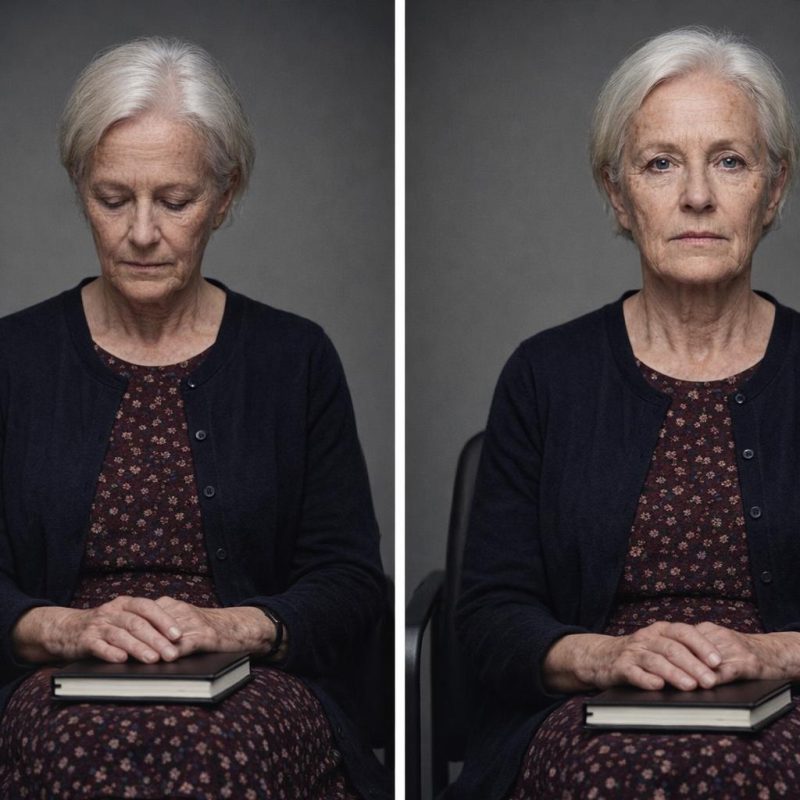 Image by RM AI
Financial Desperation
Helen doesn't linger on Sarah's name. She moves forward the way she always did when something needed to be faced — steadily, without drama. She says she asked Linda to help her look into things quietly, that she didn't want to involve anyone else, that Linda was the only person she trusted to be discreet. Her voice is soft when she talks about Linda, grateful. She says Linda found records — credit reports, public filings, things that are apparently available if you know where to look. She describes what Linda found without editorializing, the same way she'd listed the jewelry: Sarah's credit cards, several of them, carrying balances that had been growing for years. A mortgage that had fallen behind. She mentions Mark's business, a venture that had collapsed and left significant losses. Helen's face through all of this is sad in a way that is hard to watch — not vindictive, not satisfied, just deeply, quietly sorrowful, the way you look when you've confirmed something you desperately hoped wasn't true. She says she doesn't tell me this to make me angry at Sarah. She says she tells me because I deserve to understand the full picture. Then she reaches off-camera and holds up a printed page — a summary document, numbers visible in rows — and she reads the total aloud: two hundred and fourteen thousand dollars.
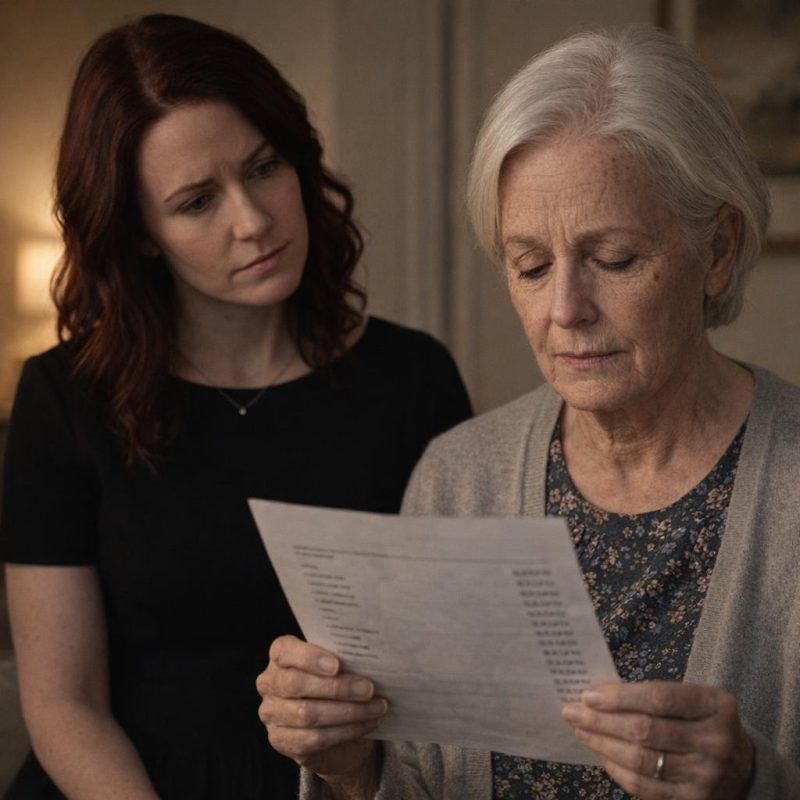 Image by RM AI
The Will Changes
Helen pauses on screen, and I watch her take a slow breath before she continues. She says she met with her lawyer four weeks ago — that she'd been thinking about it for longer than that, but four weeks ago she finally made the appointment and went through with it. She says she changed her will. She says it clearly, without flinching: she removed Sarah as a beneficiary entirely, and she left everything to me. She explains her reasoning the same way she explained everything — quietly, without cruelty. She says she cannot in good conscience reward what happened, that the money and the jewelry and the trust that went with them were not Sarah's to take, and that leaving things unchanged would have felt like a betrayal of her own values. She says she still loves Sarah. She says that part more than once, and I believe her — I can hear it in the way her voice catches slightly when she says the name. But love, she says, doesn't mean there are no consequences. She mentions that her lawyer documented her state of mind carefully during the signing, that there are notes and witnesses, that she wanted everything to be unambiguous. She says she created this video as one more layer of protection. Then she looks directly into the camera and says the lawyer's name — Thomas Brennan.
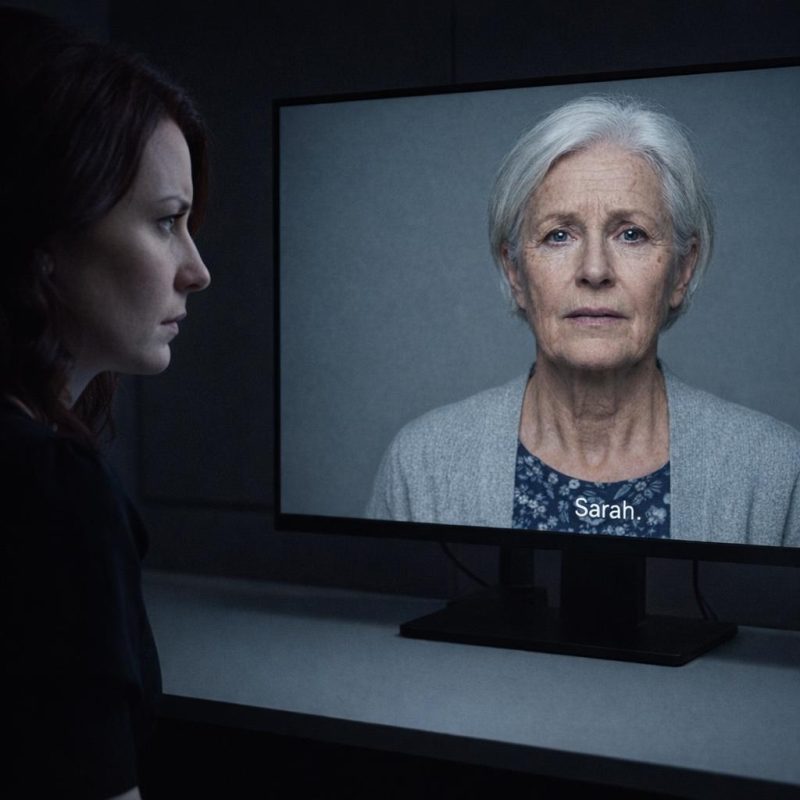 Image by RM AI
Emma's Devotion Documented
Helen shifts in her chair, and something in her expression softens in a way that makes my chest ache. She says she wants to talk about me now. She says it simply, like it's the most natural thing in the world, and then she starts describing my visits — Sunday mornings, five years of them, almost without exception. She talks about the groceries I'd bring, how I learned which brand of tea she preferred and never showed up without it. She mentions the afternoon I spent fixing the latch on her back gate, how I'd refused to leave until it was done properly. She talks about our conversations at the kitchen table, the way we'd lose track of time. She says I made her laugh more in those last two years than she'd laughed in a long time, and she wants that on record. Her voice fills with something I can only describe as warmth — not performed warmth, not the kind you put on for an audience, but the real kind, the kind that comes from years of small, accumulated moments. I'm crying by the time she finishes. I don't try to stop it. I just sit there in her study, in the chair she used to read in, and let her voice wash over me, and the grief of missing her settles into my bones like something permanent.
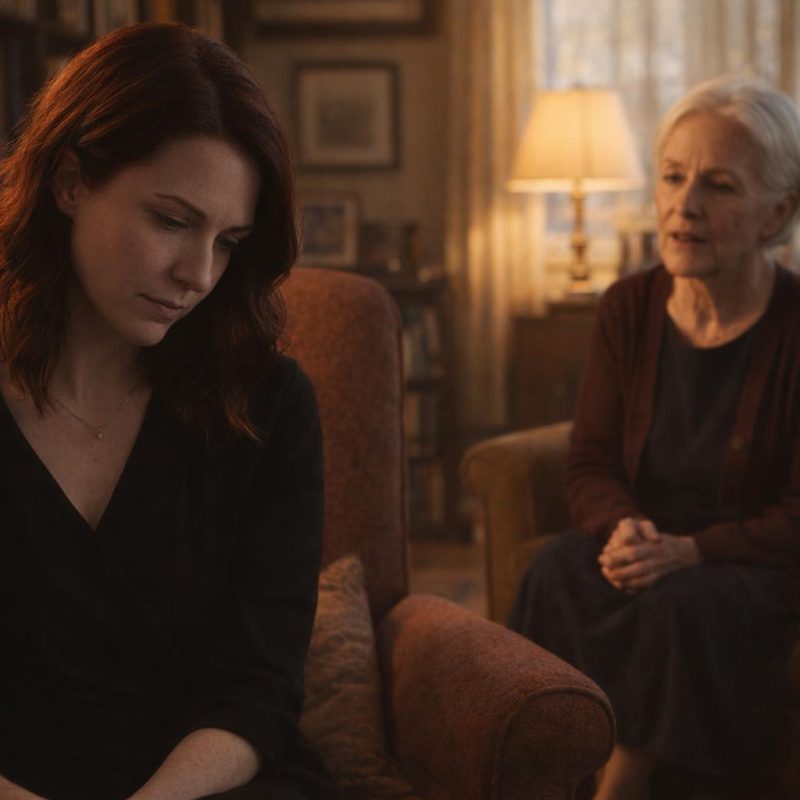 Image by RM AI
The Final Message
Helen looks at the camera for a long moment before she speaks again, and I get the sense she's choosing her words carefully — not because she's uncertain, but because she wants them to land exactly right. She says she's leaving this video in my cloud backup, that she figured out how to do it with help from her neighbor's grandson, and the thought of her quietly arranging all of this makes my throat tighten. She says she's also given copies to Thomas Brennan, that he has instructions to reach out to me after she's gone. She says she trusts me to know the right moment to share it — with the family, with whoever needs to see it — and that she has never doubted my judgment. She talks about her pride in who I've become, and she asks me, gently, to try to forgive Sarah if I can manage it someday, not for Sarah's sake but for my own. She says carrying that kind of weight is a heavy thing. Then she smiles — that particular smile of hers, the one that always made me feel like everything was going to be all right — and she says she loves me, that she has always loved me, and that she is not afraid. The screen goes still. Her smile stays with me long after the image fades.
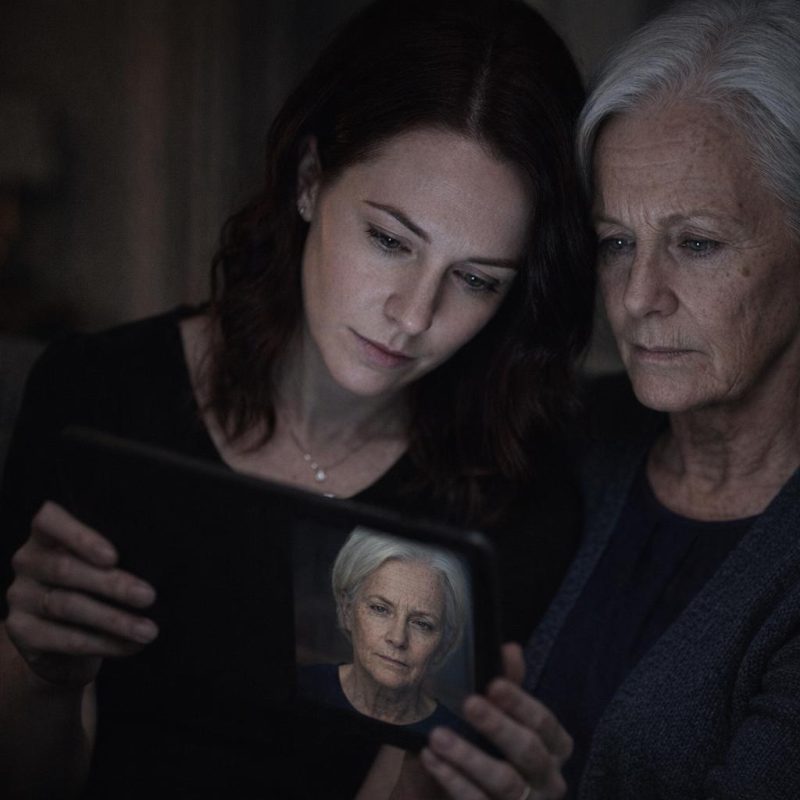 Image by RM AI
The Lawyer's Contact
I sit in the chair for another minute, just breathing. Then I wipe my face with the back of my hand and unlock my phone. My fingers are still unsteady as I open my contacts and scroll. I'm not sure what I'm expecting to find, but there it is — an entry I don't remember adding, labeled 'Gran's Lawyer,' with two numbers listed beneath it, one marked office and one marked mobile. The contact was saved three weeks ago. I stare at that date for a moment, thinking about Helen quietly making her arrangements, thinking about how much she must have planned without saying a word to anyone. I check the office number against the one Thomas Brennan said in the video and they match. I almost call right then, but something makes me pause — I want to be somewhere quieter, somewhere I can think clearly before I say anything to anyone. I switch over to my recent calls instead, and that's when I notice it: four missed calls from a number I don't recognize, all of them coming in during the last hour while I was sitting in this room watching the video.
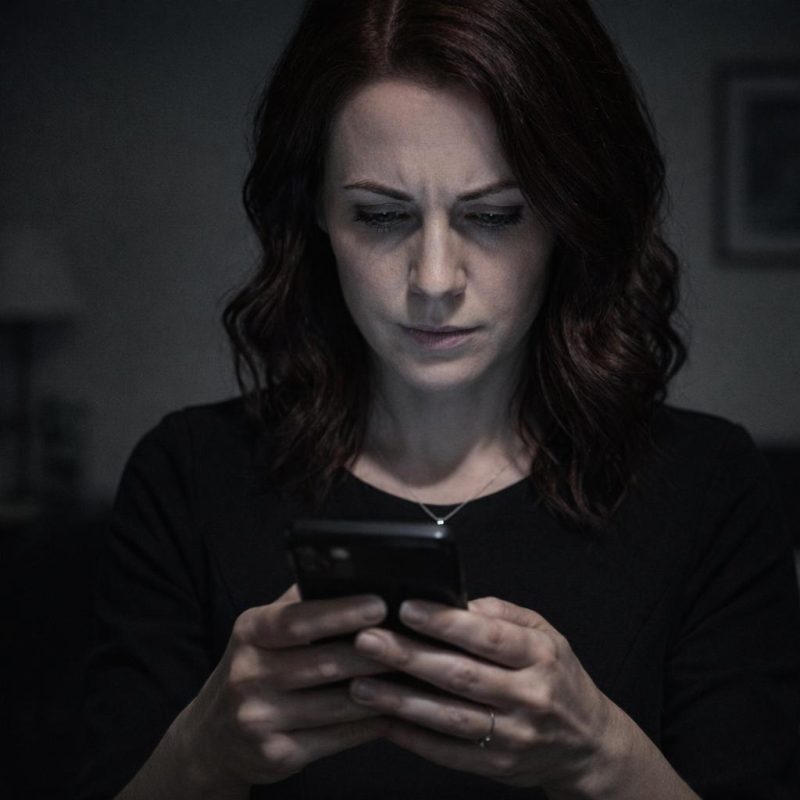 Image by RM AI
The Lawyer's Message
I press play on the voicemail and hold the phone against my ear. The voice is measured and professional — a man, older, unhurried in the way of someone who has delivered difficult news before and learned not to rush it. He introduces himself as Thomas Brennan, attorney, and says he's been trying to reach me since yesterday. He says he's calling regarding Helen's estate and that it's important I speak with him before any family discussions about the will take place. He pauses briefly before adding that he has information he's obligated to share with me directly, and that time may be a factor. He asks me to call him at either number as soon as I'm able. That's all. He doesn't explain further, doesn't give anything away beyond those careful, measured sentences. I save the voicemail to my files and sit with the phone in my lap. The reception is still going on somewhere beyond this door — I can hear the low murmur of voices, the occasional clink of something in the kitchen. But in here it's quiet, and the weight of what I've just heard settles over me like a second layer of grief, heavy and clarifying all at once.
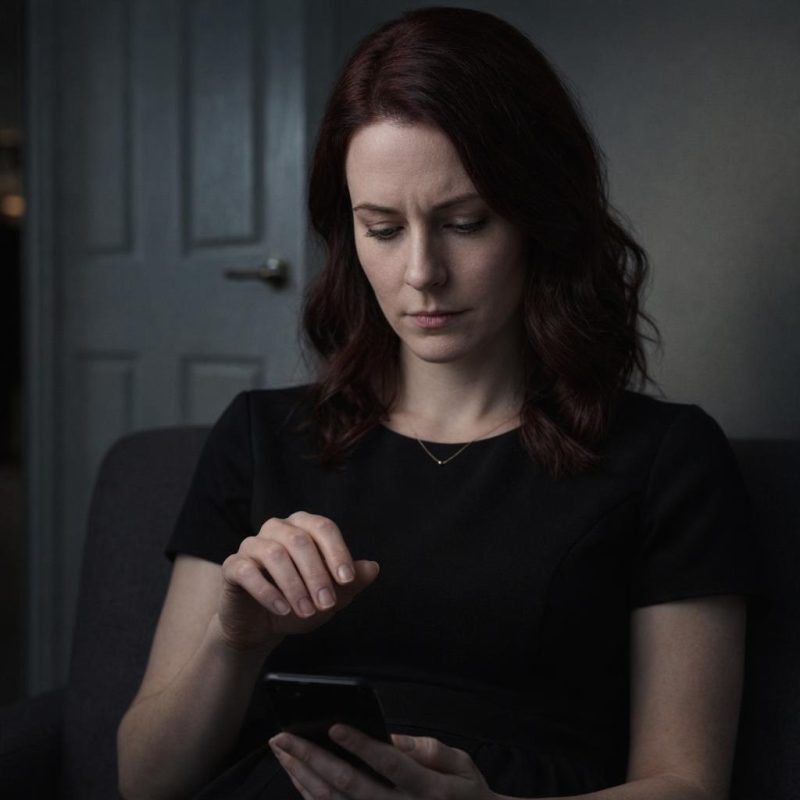 Image by RM AI
Proof in Hand
I open my email and send the video file to three different addresses — my personal account, my work account, and an old backup address I've had since college that I've never deleted. Then I open my cloud storage and upload it to two separate services, watching the progress bars move until both confirm complete. I create a new folder on my phone and start pulling in photos — five years of Sunday visits, more than I'd realized I'd saved. I sort them by date, oldest to newest, and the timeline they form is its own kind of record: groceries on the counter, the back gate with its new latch, tea mugs on the kitchen table, Helen laughing at something off-camera. I screenshot the metadata on several of them, the timestamps and location data sitting right there in the file information. I save Brennan's voicemail as an audio file and add it to the folder. Then I connect remotely to my laptop and back up everything there too. When it's done I sit quietly, phone in hand, the folders organized and labeled and waiting. The evidence isn't going anywhere now. Whatever happens next, it exists in more places than anyone could easily reach.
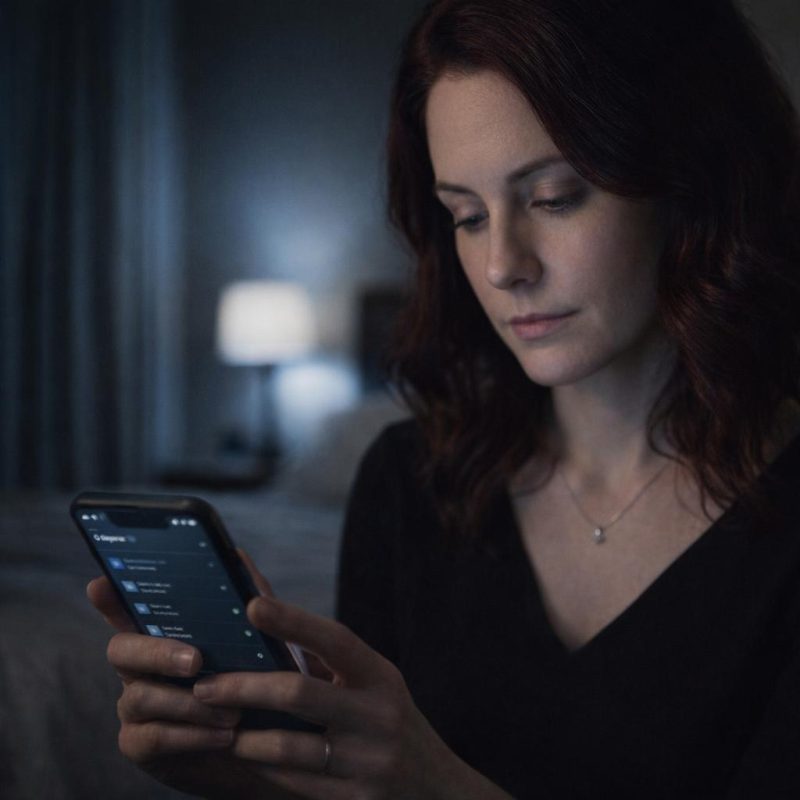 Image by RM AI
Return to the Reception
I unlock the study door and step into the hallway, pulling it closed behind me. The murmur of voices is louder now, coming from the living room, and I move toward it slowly. I stop just short of the doorway and listen for a moment before I go in. Sarah is standing near the fireplace, turned slightly toward the room the way someone stands when they want to be seen. My mother and father are on the sofa — my mother with a tissue folded in her hand, my father sitting straight-backed and still. A few other relatives are scattered around the room, and most of them are watching Sarah. Mark is behind her and to the left, looking at his phone. I step into the room and a couple of people glance over. My mother's eyes find mine for just a second before she looks away. Sarah doesn't miss a beat. She's talking about the funeral arrangements, about the flowers, about what Helen would have wanted, her voice carrying that particular quality it gets when she's performing for an audience — smooth and unhurried and just slightly too composed. I find a spot near the doorway where I can hear without being in the center of things, and I stay there, listening. Then Sarah's voice shifts, and she says something about the will reading being scheduled for Thursday.
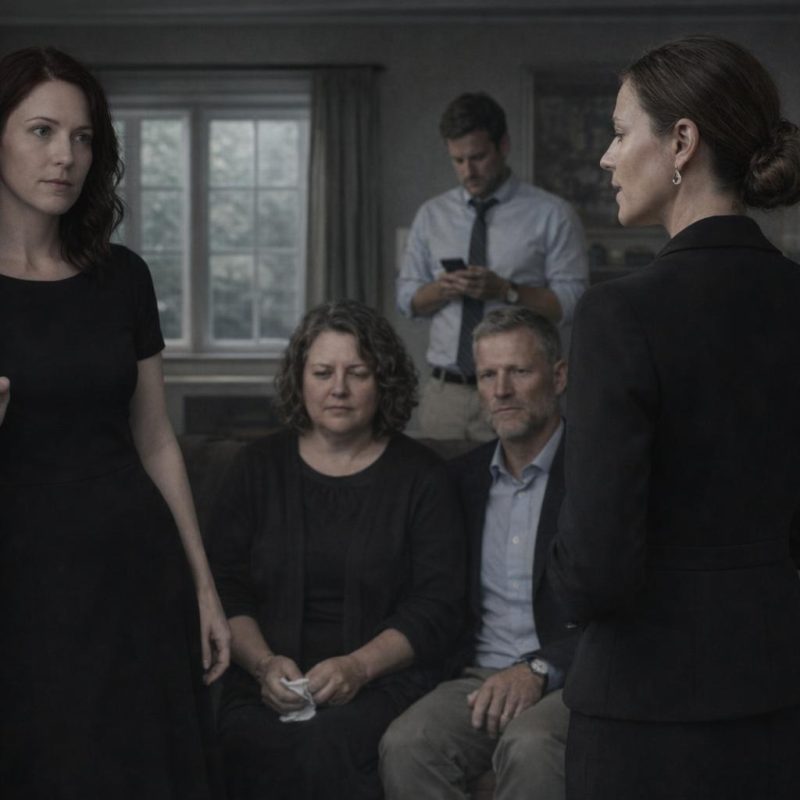 Image by RM AI
The Performance Continues
I don't move. I keep my expression neutral and stay where I am near the doorway, watching. Sarah is describing the final weeks of Helen's life now — the hospital visits, the decisions that had to be made, the weight of being the one who was there. My mother nods along, pressing the tissue to the corner of her eye. My father sits with his hands on his knees, jaw set, listening. Linda is across the room in the armchair by the window, and I notice she isn't nodding. She's watching Sarah with an expression I can't quite read — attentive, still, giving nothing away. Mark shifts his weight when Sarah mentions the financial arrangements that had to be handled, a small movement, barely visible, but I catch it. Sarah doesn't pause. She moves through the room as she talks, touching a shoulder here, squeezing an arm there, working the space the way someone works a room they've prepared for. I watch her cross to where my mother is sitting. She lowers herself onto the arm of the sofa and her hand comes to rest on my mother's shoulder, and my mother leans into it slightly, the way you lean into something solid.
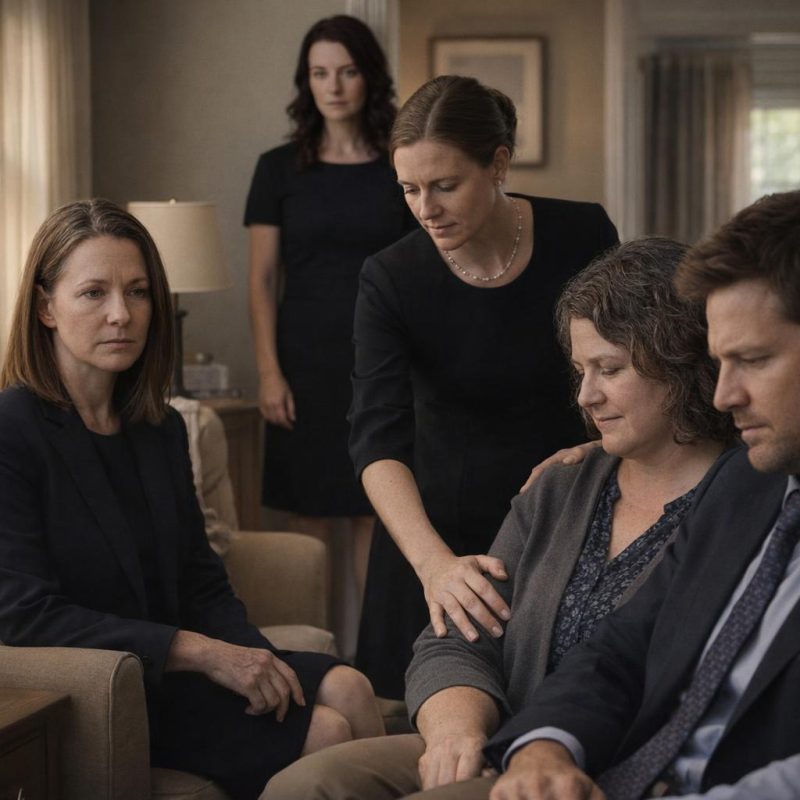 Image by RM AI
Testing the Connection
I keep my expression neutral and slide my hand into my pocket, fingers finding my phone. Sarah is still talking — something about the flowers, about what Helen would have wanted — and my mother is nodding, and I use the cover of that to open the casting app. My thumb moves slowly, deliberately, the way you move when you don't want anyone to notice your hands. The app scans for available devices on the network. I already know the WiFi password hasn't changed — Helen never changed it, not once in four years. The list populates. There it is: the living room television, third entry down. I tap it. For a half-second nothing happens, and my chest tightens. Then the screen across the room flickers to life.
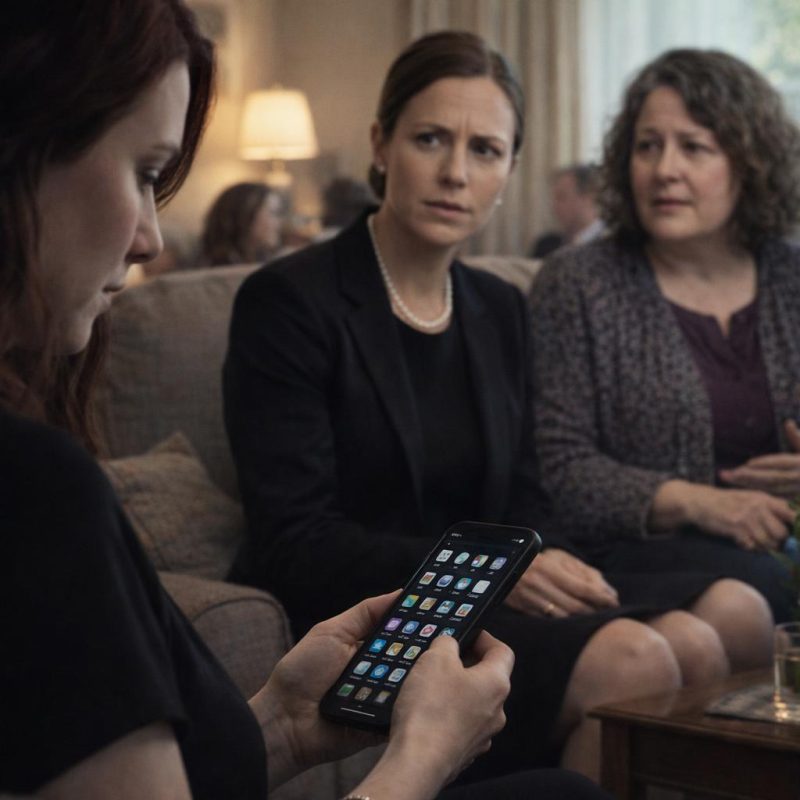 Image by RM AI
Sarah's Timeline
Sarah sets her glass down and shifts the conversation like she's been waiting for the right opening. She thinks we should finalize the memorial arrangements today — all of them, flowers, venue, the order of service. My mother looks up, a little surprised, and asks whether they might wait until after the will reading on Friday. Sarah shakes her head gently, says she doesn't want the family carrying that weight any longer than necessary, that it would be a kindness to get it done. My father nods along, says efficiency makes sense. Mark mentions they have commitments they can't push back, and Sarah agrees, says she needs to be home by tomorrow evening at the latest. I listen and say nothing. I watch her move through the logistics with the ease of someone who has already thought all of this through. The urgency has a shape to it I can't quite name, but it sits with me long after she stops talking.
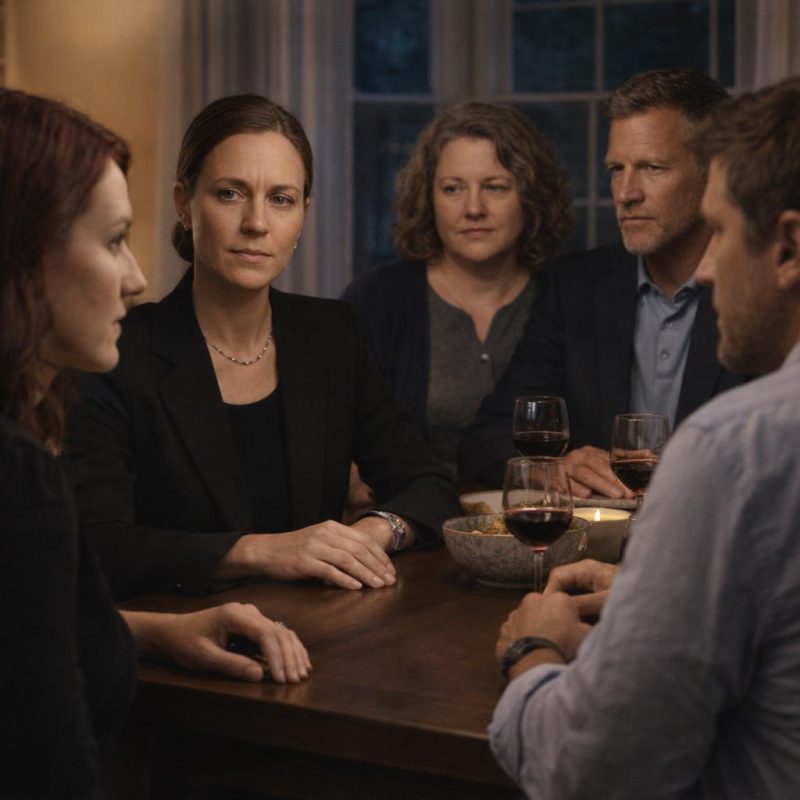 Image by RM AI
The Cold Treatment
I offer to help in the kitchen and my aunt Patricia waves me off without looking at me, her hands already busy with the platters. A cousin I grew up with walks past the doorway and her eyes slide right over me, like I'm part of the wallpaper. My father moves through the room speaking to everyone — a neighbor, a family friend, Mark — and when he reaches the space near me he turns slightly, just enough, and finds someone else to address. Linda catches my eye from across the room and holds it for a moment, something quiet in her expression, but she doesn't come over. I drift to the window and stand there with my hand in my pocket, fingers wrapped around my phone. The weight of it is the only thing that feels solid right now. My mother is at the far end of the room arranging a tray of food, and I watch her move from dish to dish, adjusting, straightening, and not once does she turn her face toward mine.
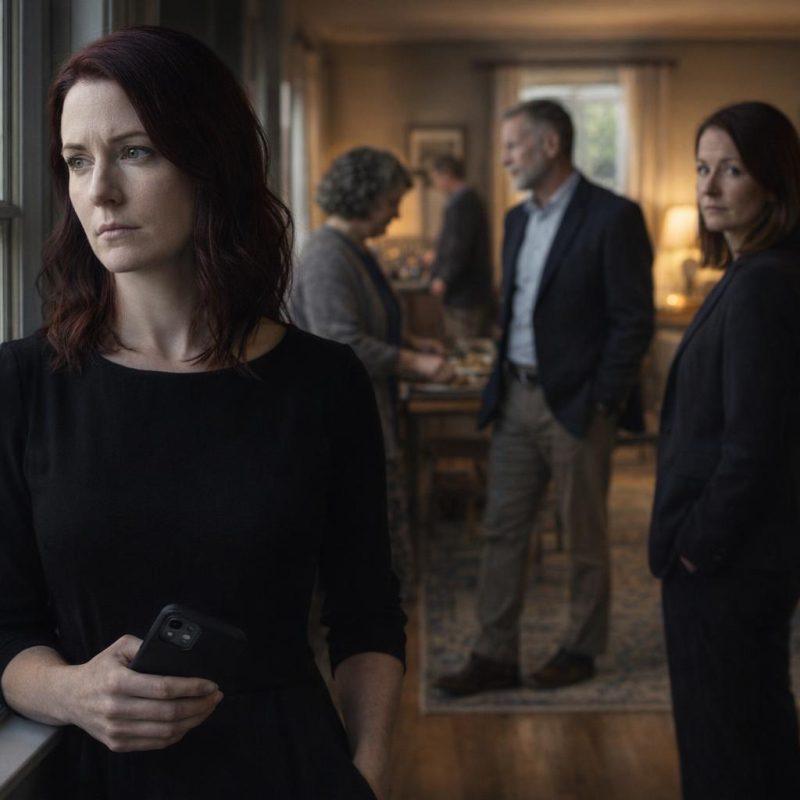 Image by RM AI
Friday's Appointment
Sarah mentions it almost in passing, the way you mention something you've already decided. The appointment is Friday at ten, she tells my mother — the lawyer's office downtown, the one Helen used for years. My father says he'll be there. Sarah suggests it should be immediate family only, keeps the language vague enough that no one pushes back. I'm standing near the edge of the room and I do the math quietly. Friday at ten. That's less than three days. I think about the video on my phone, about the casting app, about the living room television sitting twenty feet away. I think about what happens if I wait — if I let Friday arrive and let Sarah walk into that office with the story she's been telling everyone in this room. The date and time settle into me like something cold and final.
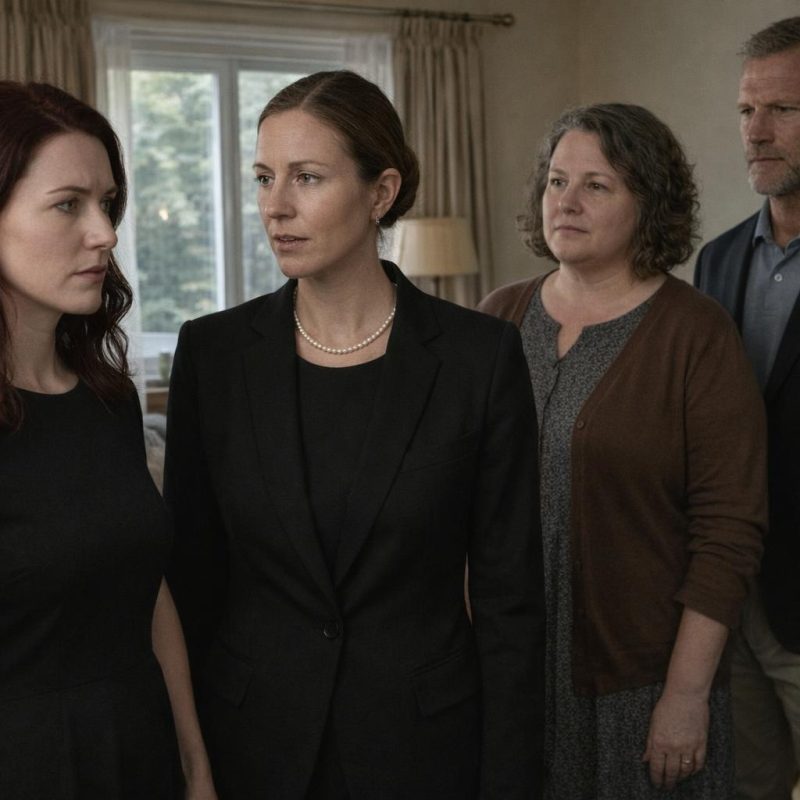 Image by RM AI
Multiple Backups
I excuse myself and find the bathroom at the end of the hall, lock the door behind me, and lean against the sink. My hands are steadier than I expect. I open my messages and type quickly — Jordan needs to know what I found, needs to have it before anything else happens today. I attach the video file, then the photos, and hit send. His reply comes back in under a minute: a string of disbelief and then, underneath it, I've got it. I'm here. I forward everything to my personal email as a second copy, then to a shared folder I set up with Jordan as backup. I check the folder. The files are there. I pull the small USB drive from my purse — I loaded it last night, just in case — and confirm it's still in the inside pocket. I open the sent folder and look at the confirmation sitting at the top of the screen: delivered, timestamp, his name.
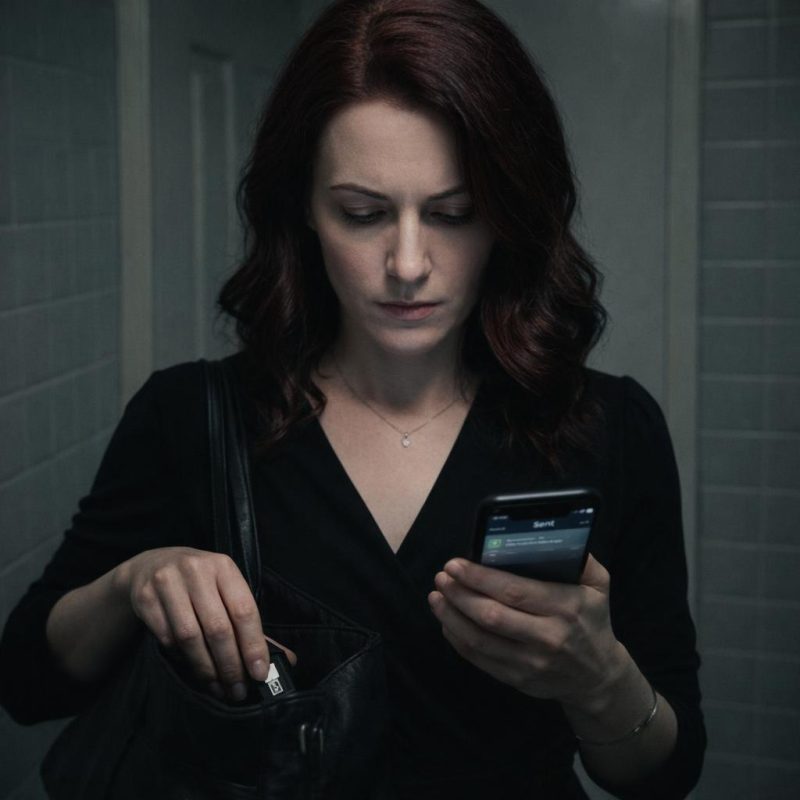 Image by RM AI
Coaching the Narrative
I'm in the hallway when I hear Sarah's voice drop to something quieter. I stop just short of the kitchen doorway and stay still. She's talking to my mother and Mark, and I can hear her clearly enough. She says my mother should mention how lonely Helen seemed in those last months — how she used to say she never heard from anyone. She tells Mark to keep it simple with the lawyer, just the facts, just what they witnessed. The phrase comes out twice: she was alone a lot toward the end. My mother asks something I can't fully catch, something about photographs, and Sarah says the technical problems explain all of that, that it's not complicated. I press my back against the wall and breathe through my nose. The phrases hang in the air of the hallway long after Sarah moves on to something else.
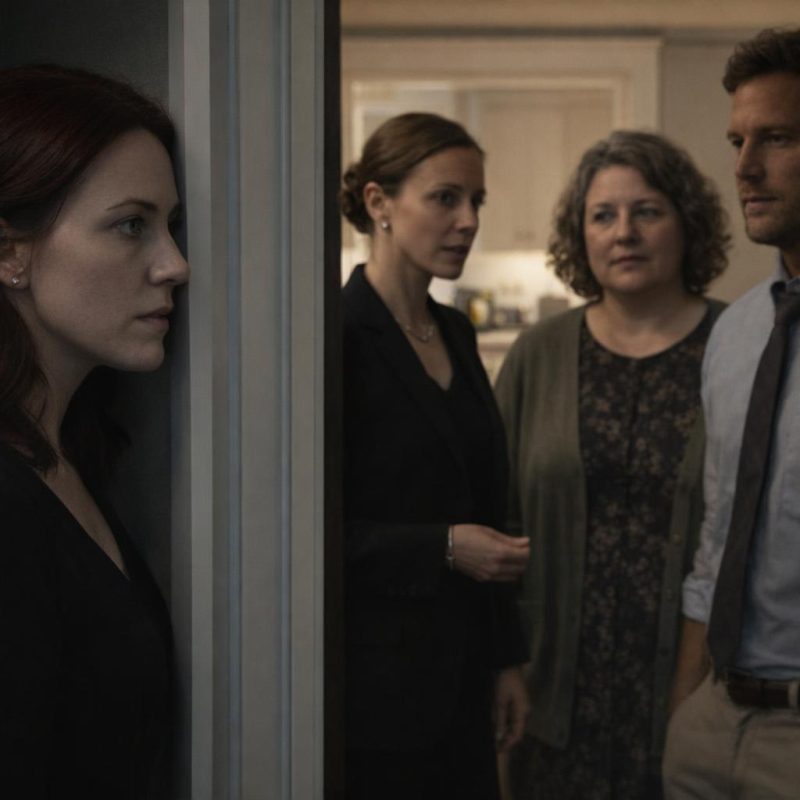 Image by RM AI
The Memorial Service Plan
Sarah calls everyone into the living room with the energy of someone opening a meeting she's already chaired. She has a plan — printed, actually, a single sheet she passes to my father — covering the venue, the order of service, the flowers. I wait for a pause and mention that Helen loved a particular piece of music, something she used to hum in the kitchen, and Sarah moves past it without stopping, says the playlist is already set. I try again when the flowers come up. Helen loved gardenias, I say. I remember her keeping them on the windowsill every spring. Sarah says she's already ordered lilies, that lilies are appropriate. My father looks at me and says Sarah knows best, that she was the one who was there. I close my mouth. I look at the television across the room, then back at the sheet of paper in my father's hands, and something in me goes very quiet and very still.
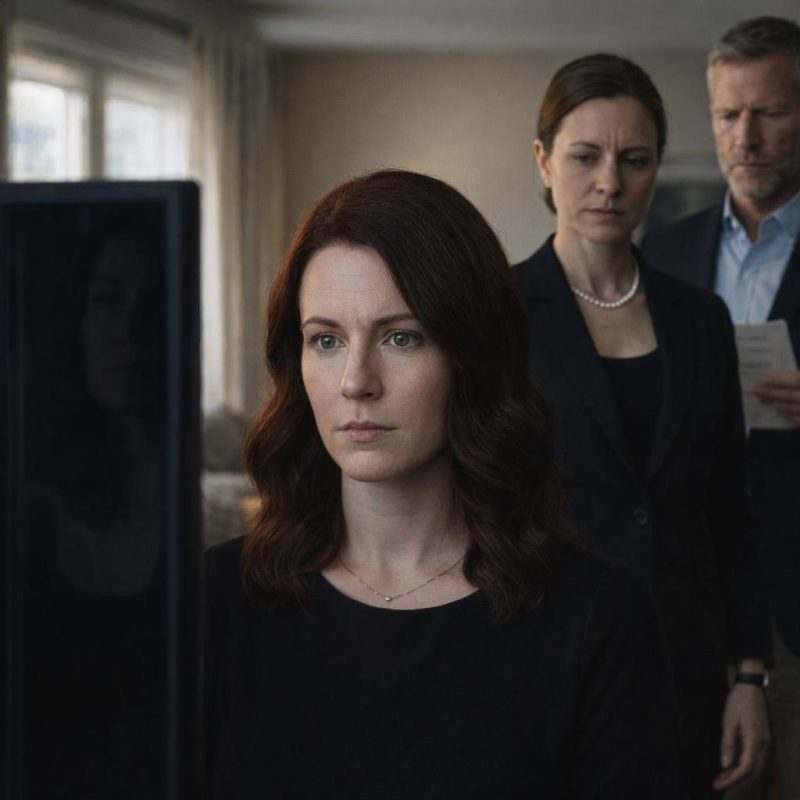 Image by RM AI
The Moment Arrives
I stand up. The movement is quiet but it's enough — Jordan always says I have a way of taking up space when I decide to, and right now I decide to. I walk to the center of the living room and I say, clearly, that there's something everyone needs to see before we go any further with any of this. The room doesn't go silent all at once. It goes silent in pieces — my father mid-sentence, a cousin setting down a cup, my mother looking up from the paper in her hands. Sarah's head comes up fast, eyes finding mine, and something shifts in her expression that she doesn't quite manage to smooth over in time. My mother asks what I'm talking about. My father says this isn't the time. I pull out my phone, walk toward the television, and say that actually, it is — that Gran wanted us to know the truth, and I'm not leaving this room until we do.
 Image by RM AI
Setting Up the Truth
My fingers are shaking as I open the casting app. I can feel everyone watching me — the weight of it, the confusion, the irritation — but I keep my eyes on the phone. Sarah is on her feet before I even get to the device list. She asks what I think I'm doing, her voice pulled tight, and I don't answer her. My mother says my name in that particular tone she has, the one that means please don't do this, please not today. My father takes two steps toward me and says that's enough, that this isn't the time or the place. I keep scrolling. Linda is still on the sofa, watching me with a puzzled expression, her head tilted slightly like she's trying to work out what I'm reaching for. Mark hasn't moved from where he's standing near the wall, but his face has gone pale and his eyes keep cutting to Sarah. I find the living room TV on the device list and I tap it. There's a pause — one of those awful pauses where everything could still go wrong — and then the television flickers, and the small connection icon appears in the corner of the screen.
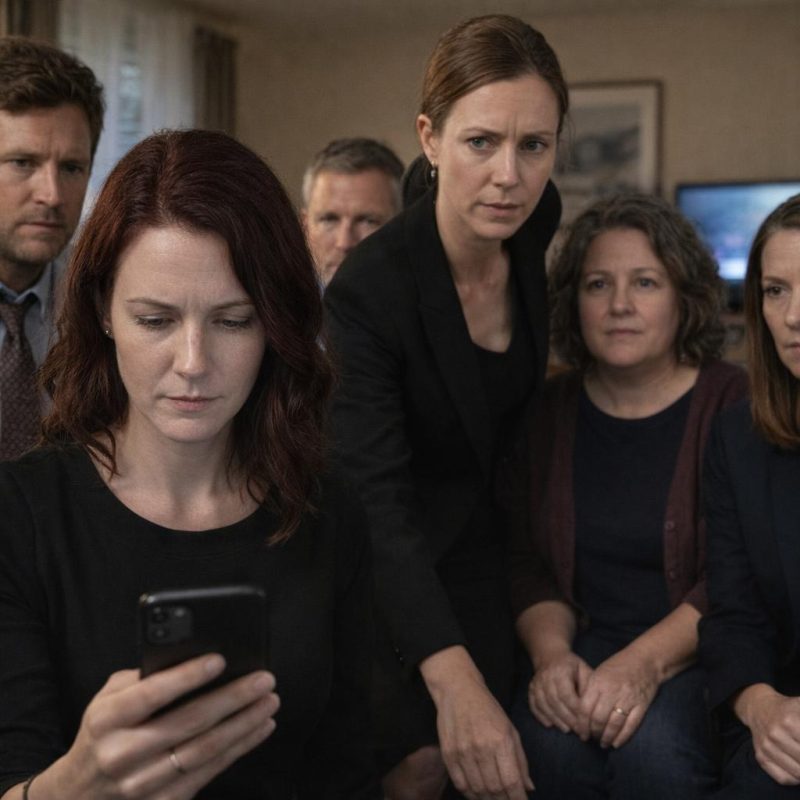 Image by RM AI
The Room Gathers
I turn to face the room and I ask everyone, as calmly as I can manage, to please sit down. Sarah says this is inappropriate. She says it's disrespectful to Gran's memory, that whatever I'm doing can wait, that today is not the day. Her voice is steady but her hands aren't — I notice that, the way her fingers press flat against her thighs. My mother looks between us with that expression she gets when she doesn't know which daughter to believe, and right now it breaks something small in me. My father says I've had enough chances to explain myself and that he's not going to stand here and watch me make a scene at my grandmother's funeral. Linda quietly moves to the end of the sofa and sits. Mark stays near the doorway, arms crossed, not quite looking at anyone. I wait. I wait until my father stops talking and my mother stops reaching for my arm and Sarah runs out of words. Then I open the video file on my phone, and I hold it up so the casting connection is live, and I stand there with my thumb hovering over the play button.
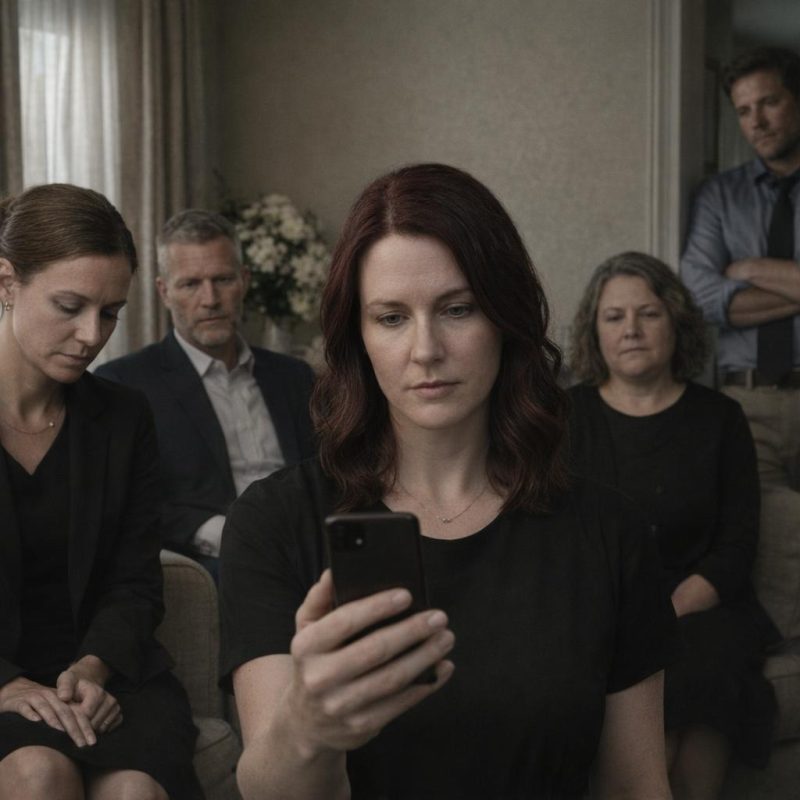 Image by RM AI
Helen Appears
I press play. For a half-second there's nothing — just the buffering circle spinning on the television screen — and then the image resolves, and Gran is there. She's sitting in her bedroom, the one with the blue curtains and the lamp she's had since before I was born, and she's looking directly into the camera with those sharp, clear eyes. My mother makes a sound I've never heard from her before, something between a gasp and a sob, and her hand flies up to cover her mouth. My father goes completely still. Linda leans forward on the sofa, both hands pressed together in her lap. I step back against the wall and I let go of everything — the argument, the accusations, the last hour of this terrible day — and I just watch their faces. Sarah hasn't moved. She's standing in the middle of the room staring at the screen, and whatever color was left in her face is gone now. Gran adjusts her position slightly, the way she always did when she was about to say something important, and then her voice fills the living room.
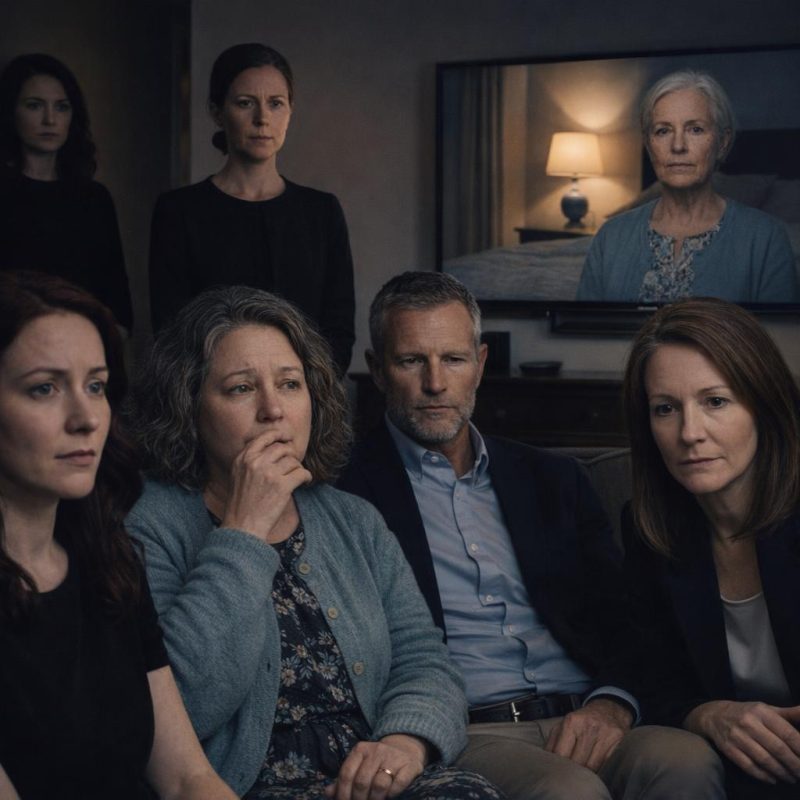 Image by RM AI
The Theft Revealed
Gran's voice is steady. She doesn't rush. She describes the sapphire brooch first — the one her mother gave her, the one she'd planned to pass down — and she says it disappeared after a visit in February. Then the gold bracelet, March. The pearl earrings, sometime in April, though she wasn't certain of the exact date. She holds her notebook up to the camera, turning the pages slowly so the writing is visible, and she explains that she started keeping records after the second item went missing. She cross-references the dates with her security system log, and she holds that up too — printed pages, timestamps, names. Her voice doesn't waver. My mother's hand finds my father's arm and grips it. Nobody speaks. I watch my father's jaw tighten and my mother's shoulders begin to shake. Linda's eyes are fixed on the screen, unblinking. Sarah stands exactly where she was, motionless, like something in her has simply stopped. Gran pauses, looks directly into the camera, and says the name clearly: it was Sarah who took them.
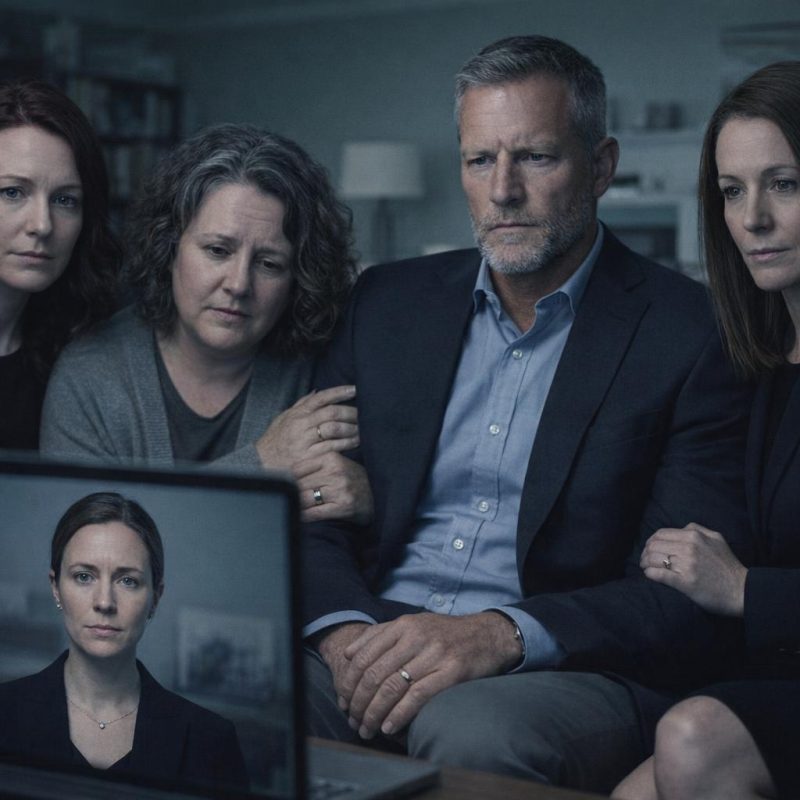 Image by RM AI
The Truth Inverted
Gran doesn't stop there. She keeps going, and her voice stays level, and every word lands in this room like something irreversible. She talks about my Sunday visits — five years of them, she says, almost every week without fail. She mentions the groceries I brought, the afternoons we spent at the kitchen table, the conversations about nothing and everything. She says I never asked for anything in return and she wants that on record. Then she says she changed her will on March fifteenth. She says Sarah was removed as a beneficiary because of the thefts, and she gives the lawyer's name and number clearly, twice, so there's no confusion. She says she knows Sarah has been struggling financially and that she's sorry for whatever led her here, but that she couldn't pretend she didn't know what she knew. My mother is crying openly now. My father hasn't moved. Sarah's mouth opens and then closes again. I feel something loosen in my chest — not relief exactly, more like the end of holding my breath for a very long time — and then Gran's voice shifts, and she begins explaining why she changed the will and what she needed the family to understand about the months leading up to it.
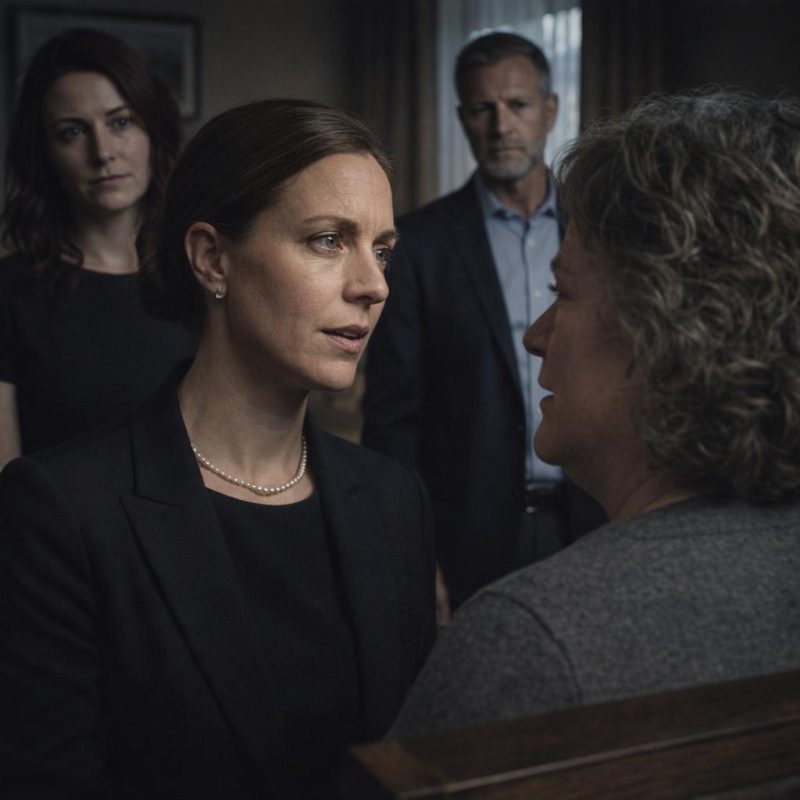 Image by RM AI
The Documented Timeline
Gran holds up the calendar. It's one of those large paper ones she kept on the kitchen wall, and she's marked it in blue pen — a small circle on almost every Sunday going back five years. She turns it slowly so the camera can see, and the marks are dense and consistent, week after week. She reads some of the entries aloud: groceries, she says, and then a date. Helped with the back garden. Stayed for dinner. Brought Jordan. She smiles a little when she says Jordan's name. Then she turns to a different section and her voice changes slightly — not harder, just quieter. She points to Sarah's visits. Four times in three years, she says. She reads the dates. She doesn't editorialize. She doesn't have to. My mother has stopped crying and gone very still. My father is staring at the screen with an expression I don't have a word for. Linda's hand is pressed over her mouth. Sarah hasn't sat down, hasn't spoken, hasn't looked away from the television. Gran holds the calendar up one more time, and then she reaches beside her and lifts the notebook — the same one she showed earlier — and holds both pages open, facing the camera.
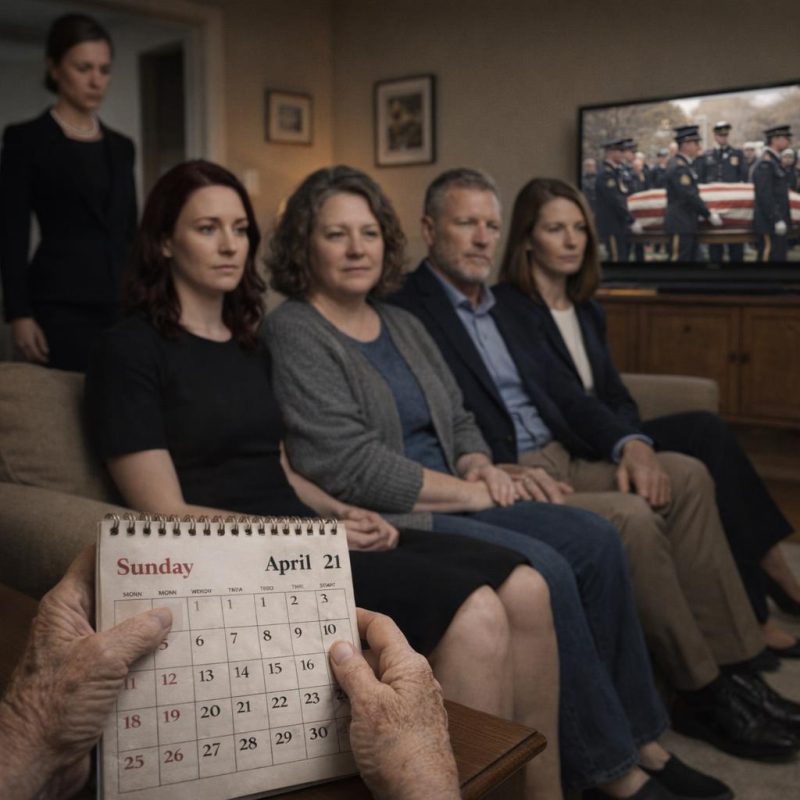 Image by RM AI
Helen's Love Letter
Gran sets the calendar down and looks directly into the lens, and I know — even from across the room, even watching it on a screen — that she's talking to me now. She says my name. She says she hopes I'm watching this with the people who need to hear it, and that she's sorry I had to carry any of this alone. She talks about the Sunday afternoons, the way I'd come in and put the kettle on without being asked, the way I'd sit with her even when there was nothing particular to say. She says those afternoons were some of the best of her last years. She says she's proud of the woman I've become — not because of anything I achieved, but because of how I showed up, quietly and consistently, when it mattered. She asks me to try to forgive Sarah if I can, not for Sarah's sake but for my own, and she says she understands if I can't. Her eyes fill as she speaks, and she doesn't look away from the camera. She says she loves me. She says she trusts me. And then, in the voice I've heard my whole life — warm and certain and completely hers — she says goodbye.
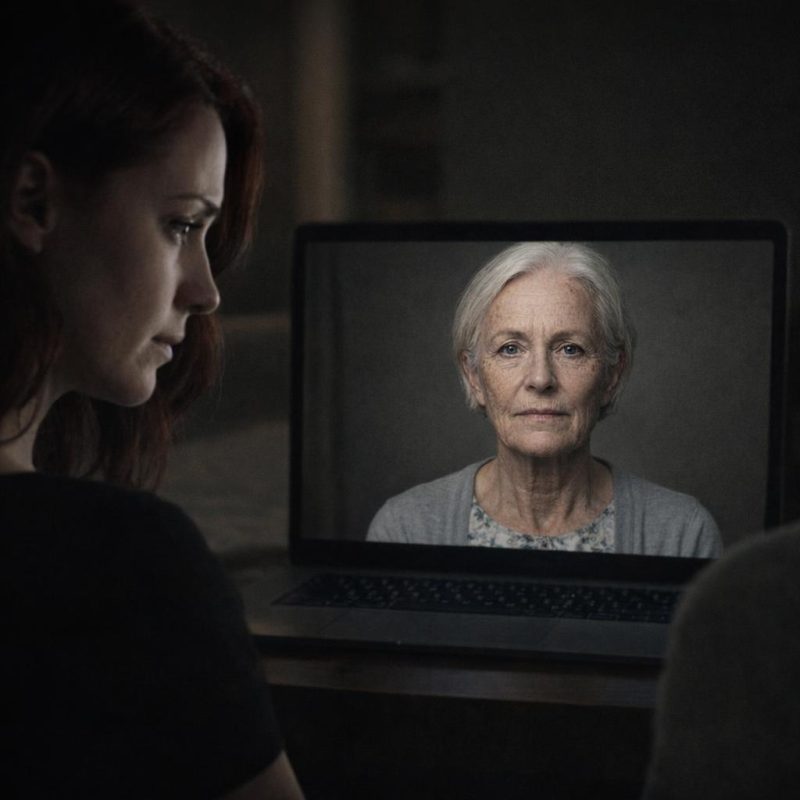 Image by RM AI
The Video Ends
The screen goes black. There's a brief flicker — the connection notification appears for a second, then disappears — and then there's nothing. Just the dark television and the room around it. I'm still standing against the wall, phone in my hand, and I don't move. My mother is on the sofa with tears running down her face, not wiping them, not moving. My father stands in front of the blank screen with his hands at his sides, staring at it like he's waiting for something else to appear. Linda's hand is still pressed over her mouth. Mark is in the doorway, looking at the floor. Sarah is standing exactly where she was when the video started, her face white, her arms at her sides. Nobody speaks. The room holds all of it — Gran's voice, her handwriting, her name for me — and the silence that follows is the kind that doesn't ask for anything.
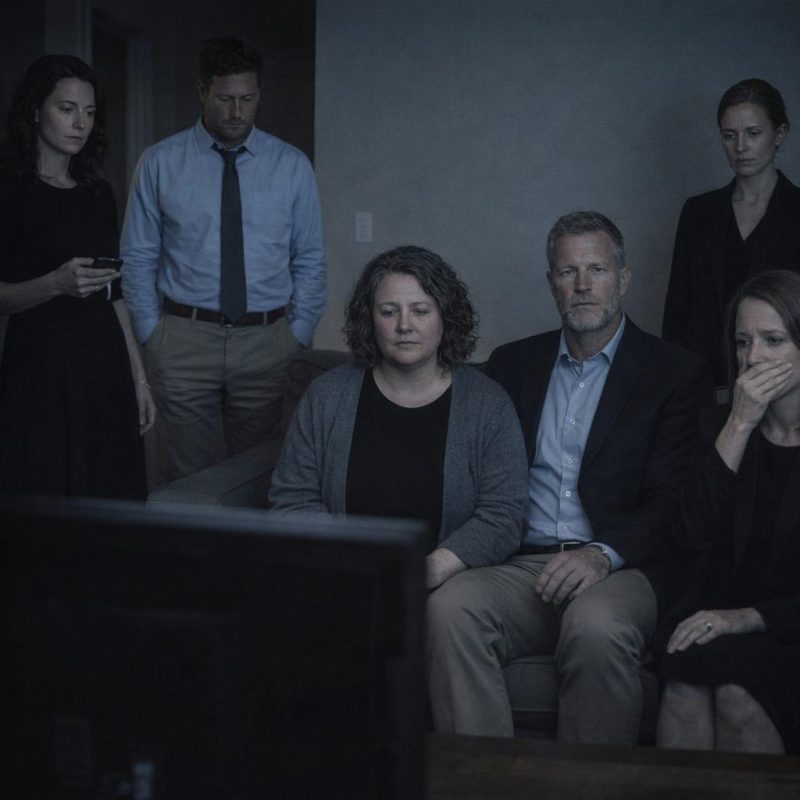 Image by RM AI
The Room Erupts
The silence breaks all at once. My mother is the first one on her feet, and the sound she makes isn't quite a word — it's something between a gasp and a sob. My father's chair scrapes back hard against the floor. Linda drops her hand from her mouth and turns toward Sarah with an expression I've never seen on her face before. Everyone is talking at the same time — my father's voice low and furious, Linda asking about the brooch, the pearl earrings, the ring Gran wore every single day. Mark takes a step backward into the doorway and seems to shrink into the frame. Sarah stands in the middle of it all, her mouth opening and closing, nothing coming out. I stay against the wall. I don't say a word. I don't need to. Gran already said everything. The room is loud and fractured and overwhelming, and I let it be all of those things, because this is what the truth sounds like when it finally gets air. Then my mother turns to Sarah, her voice cutting through everything else, and asks, "Is it true? Is any of it true?"
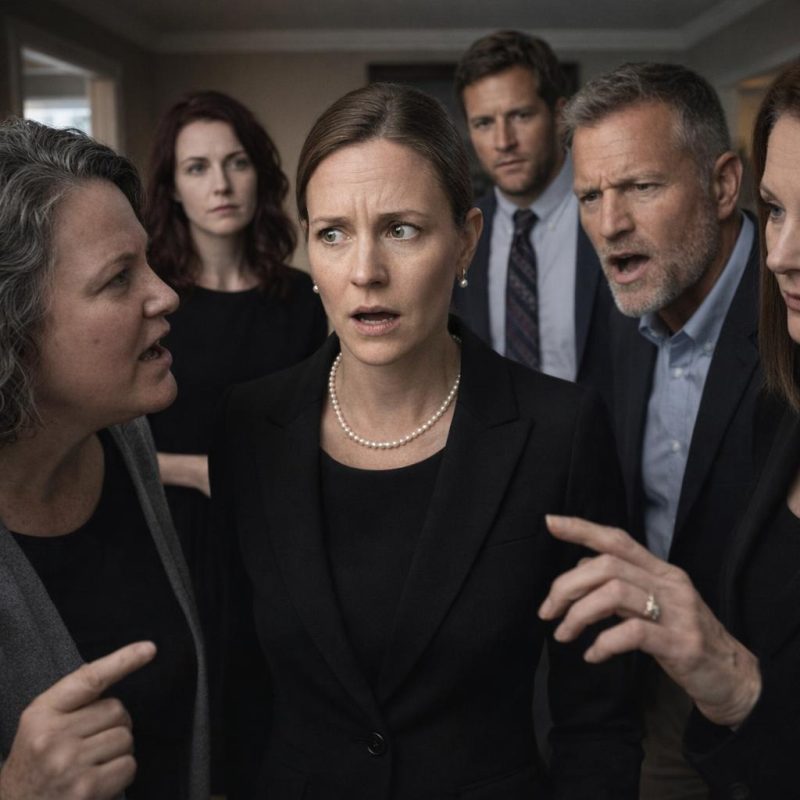 Image by RM AI
Sarah's Defense Crumbles
Sarah finds her voice. She says the video is old, that Gran was confused in her final months, that her memory wasn't reliable. She says it calmly at first, like she's explaining something obvious to people who should know better. My father tells her Gran looked perfectly lucid to him. Linda asks why Gran would lie about her own jewelry. Sarah pivots — says the pieces were misplaced, that Gran had a habit of moving things and forgetting where she'd put them. My mother pulls out her phone and reads back the dates Gran mentioned in the video, specific dates, specific pieces. Sarah's answer shifts again. She says she doesn't remember those dates. She says Gran sometimes got confused about who had visited and when. Linda's voice goes flat and precise: "Helen was not confused. I spoke to her two weeks before she died and she was sharp as she ever was." Sarah opens her mouth and closes it. She tries once more — something about how the video could have been recorded during a bad day, how grief does strange things to memory. Nobody in the room moves toward her. Her voice climbs higher, tighter, and the words start coming faster, like speed alone might make them land.
 Image by RM AI
The Accusation Reversed
My mother is the one who asks it. Her voice is quiet, which somehow makes it worse. She wants to know why Sarah told everyone I hadn't visited Gran. Why she stood up at the funeral and said what she said. Sarah tries to say she was mistaken about the timeline, that grief had clouded things, that she hadn't meant to imply — but Linda cuts her off and says her claims were not vague. They were specific. Dates. Details. A pattern. My father asks Sarah directly why she made those accusations today, in front of everyone, at Gran's funeral. Sarah starts to cry. Real tears, or something that looks like them. But nobody softens. My mother's face doesn't change. Linda's doesn't either. I stay where I am and I don't speak, because there's nothing left for me to add. The room has already done what I couldn't do alone. My father's voice comes through Sarah's crying, steady and final: "You stood in front of this family and tried to destroy your sister's name. On the day we buried your grandmother. That is what you did." The words settle into the room and stay there.
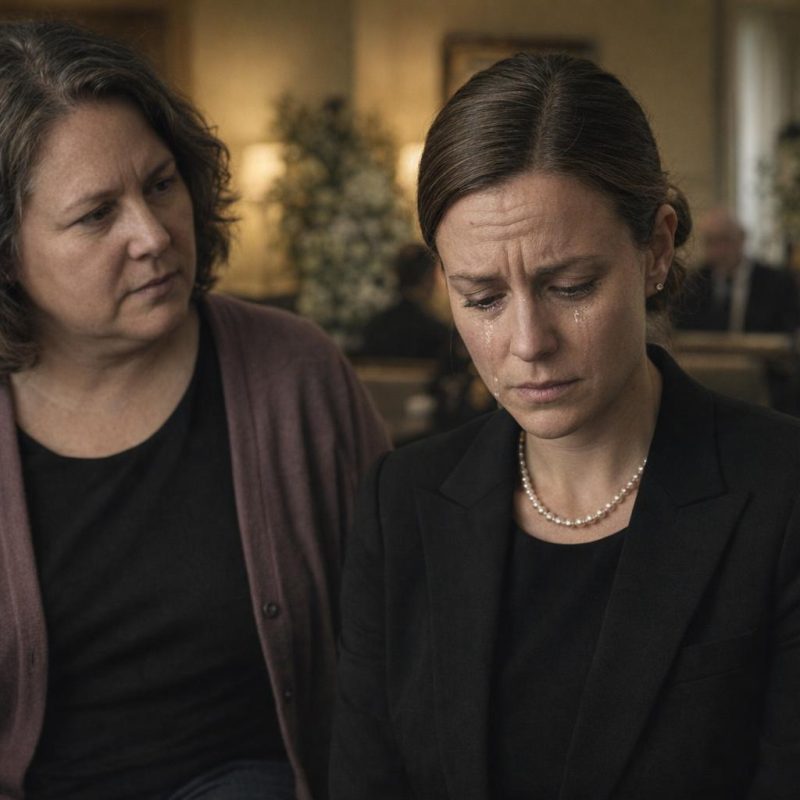 Image by RM AI
Mark's Admission
Mark speaks from the doorway. His voice is so quiet that the room goes still just to hear him. He says he knew. He says he knew about the jewelry, that he knew Sarah had been taking pieces over the past year. Sarah turns on him immediately — tells him to stop, her voice sharp and low, the performance of grief gone entirely. He doesn't stop. He says they were in debt. He says the number out loud: over two hundred thousand dollars. Credit lines, a second mortgage, payments they'd been missing for months. He says Sarah found the dealer first, that she handled the transactions, that he told himself it wasn't his place to interfere. My mother asks if he knew Sarah was lying about me. He looks at the floor. He doesn't say yes. He doesn't say no. He just stands there, jaw tight, and that silence is its own kind of answer. Linda asks about the dealer's name and Mark gives it without hesitating, like he's been waiting for someone to ask. Sarah has stopped crying. She's watching Mark with an expression I can't name, something past anger, past fear. The debt sat between all of us in that room like something that had always been there, just never spoken.
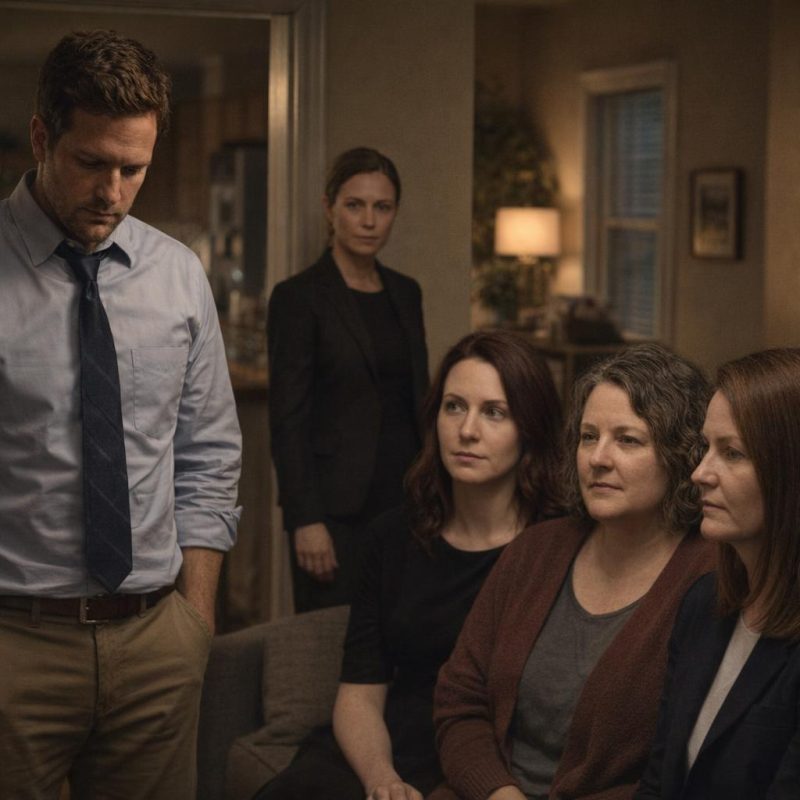 Image by RM AI
Parental Apology
Sarah and Mark are somewhere else in the house — I don't know where, and I don't look — when my mother crosses the room to me. She's still crying, not the performative kind, the kind that comes from somewhere deep and doesn't care who sees it. She takes my hands and she says she's sorry. She says it more than once. She says she should have known, should have asked, should have trusted what she knew about me instead of what she was told. My father comes to stand beside her, and his voice is thick in a way I've almost never heard from him. He says there's no excuse for how they treated me. That grief isn't an excuse. That being manipulated isn't an excuse. He says he should have been my father first. I tell them I understand. I tell them Gran knew the truth, and she made sure we'd all know it too. My mother asks how I can forgive them and I don't have a clean answer for that, because forgiveness isn't a switch. But I tell her we'll find our way back. Linda puts her hand on my shoulder and doesn't say anything. My mother pulls me in and holds on, and I let her, and the room is quiet around us.
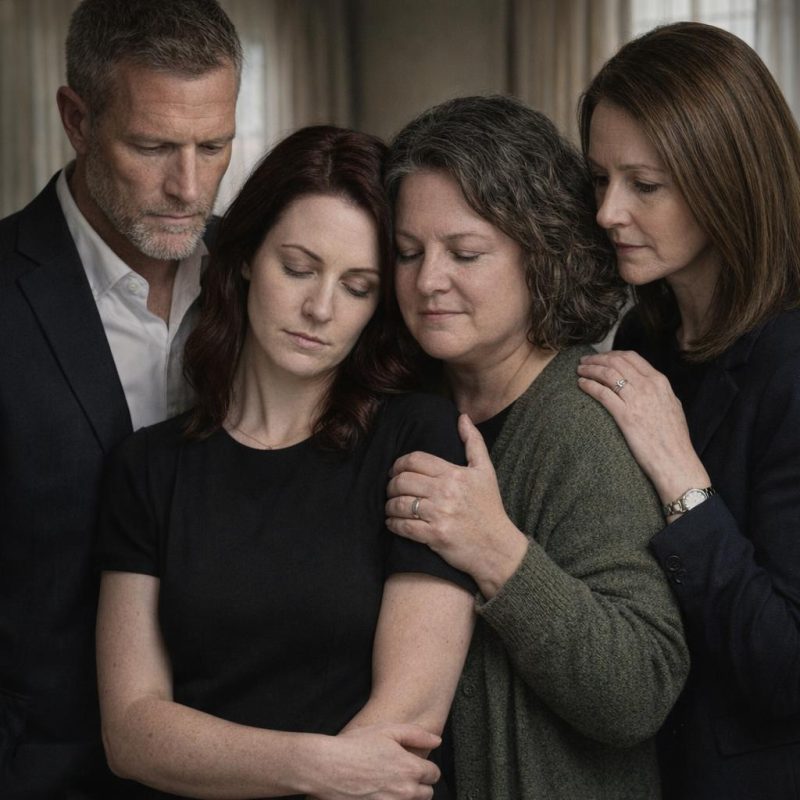 Image by RM AI
Linda's Confrontation
Linda is the one who stands up and takes charge. She's been quiet through the apologies, watching, and now she turns to face Sarah with the kind of expression I imagine she uses in boardrooms — no heat in it, just precision. She asks which pieces Sarah took and when. Sarah tries to say it was only a few things, minor items, nothing significant. Linda opens her phone and reads from a list — the pearl brooch, the sapphire ring, the gold chain with the locket, the diamond earrings Gran wore to every family Christmas. She reads each one slowly. She asks where Sarah sold them. Sarah looks at Mark. Mark gives the dealer's name again, adds the street, the neighborhood. Linda writes it down. She asks whether any of the pieces might still be recoverable, whether the dealer might still have them in inventory. My father says quietly that they need to call the police. My mother flinches but doesn't argue. Sarah's face has gone very still. Linda looks at her and asks, in the same flat, businesslike voice, "Where is the locket now? That one wasn't jewelry — that was Helen's. Where did it go?"
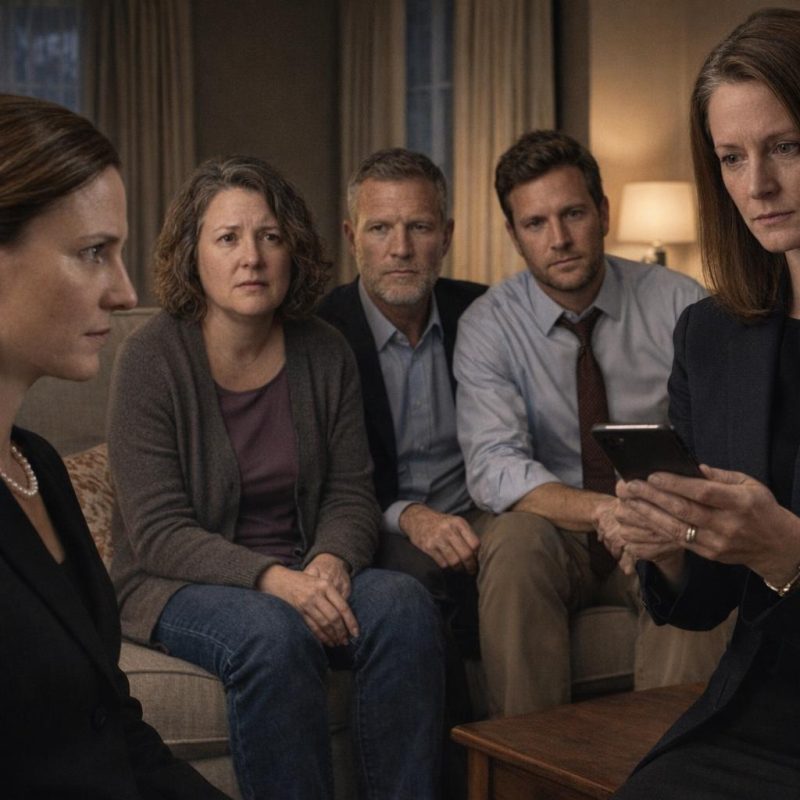 Image by RM AI
The Full Confession
Sarah breaks. Not dramatically — there's no collapse, no moment of theatrical remorse. She just stops fighting and starts talking. She says yes, she took the jewelry. She says they were months from losing the house, that the debt had been building for years, that she didn't see another way. She says she sold the pieces over the past year, a few at a time, telling herself Gran wouldn't notice, telling herself she'd find a way to replace them. She admits she deleted the photo albums from Gran's tablet — the ones with my visits, the timestamps, the evidence. She says she needed everyone to believe I had pulled away, that I'd been neglectful, that I didn't deserve what Gran had left me. She says if the family saw me as the granddaughter who abandoned Gran, the will wouldn't matter. She planned the accusation at the funeral. She says she and Mark went over what she would say. Mark, from the doorway, confirms it in a voice that sounds like a man who has already decided he has nothing left to protect. My mother makes a sound I won't forget. My father stands with his arms at his sides, very still. Sarah's voice, when she finishes, comes out flat and stripped of everything: "I needed it to work."
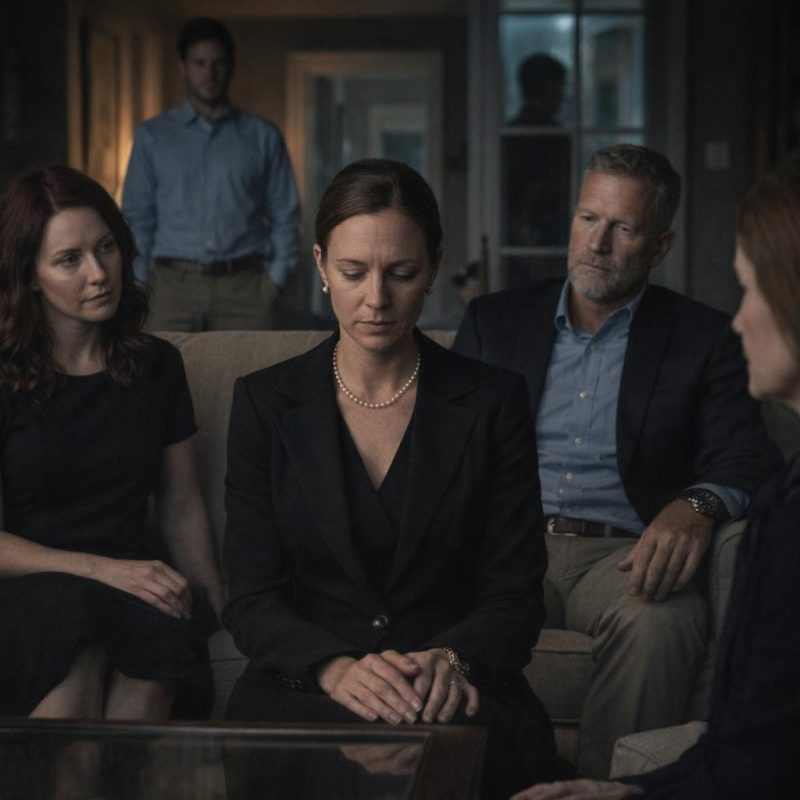 Image by RM AI
Calling the Authorities
My father doesn't hesitate. He pulls out his phone and dials. The room goes very quiet. He tells the dispatcher there's been a theft from a deceased family member's estate — jewelry, multiple pieces, significant value. He gives his name. He gives Sarah's name. His voice doesn't waver. My mother sits on the sofa with her hands in her lap, not protesting, just watching the floor. Linda steps into the hallway and calls Thomas Brennan. I can hear her voice through the wall, measured and clear, telling him what the video contained, what Sarah admitted, what Mark confirmed. She says he'll need to see the recording. He says he'll need to see it today. Sarah is sitting in the armchair with her face in her hands. Mark stands near the door, and when he asks quietly whether they should call a lawyer, nobody answers him. I stand in the middle of the room and I don't move. I think about Gran recording that video alone, knowing what she was doing, knowing what it would cost. Then the dispatcher's voice comes through my father's phone on speaker, asking him to confirm the suspect's current address.
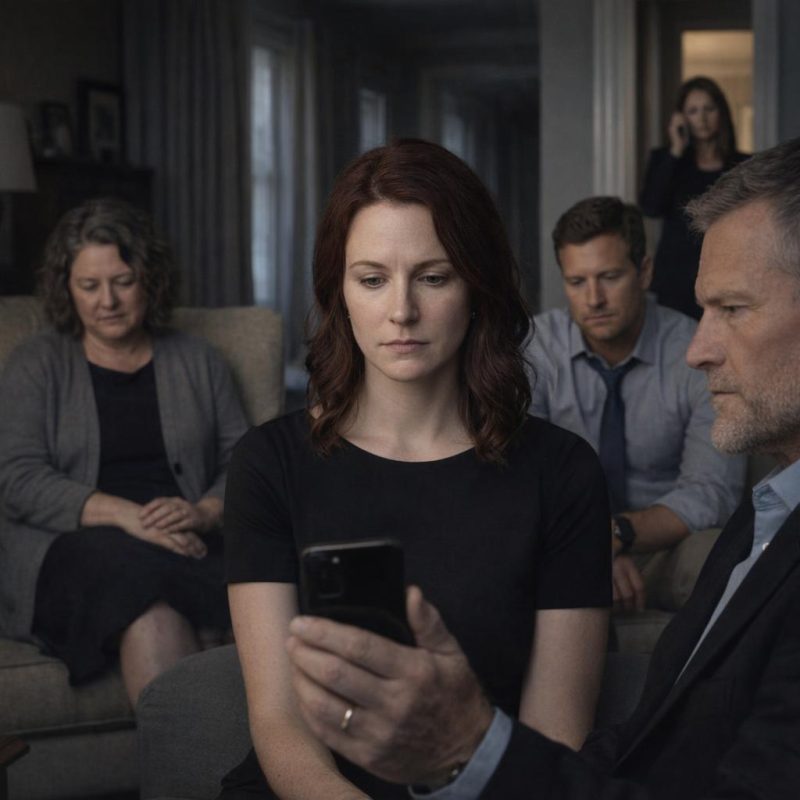 Image by RM AI
Sarah's Departure
Sarah lifts her face from her hands and looks at Mark. Something passes between them — no words, just a look — and then she stands. She smooths her jacket, and for a second she looks like she might say something to the room. She doesn't. 'We're leaving,' she says to Mark, and her voice is flat and even. My mother's head comes up. 'Where are you going?' Patricia asks. 'Sarah, where will you go?' Sarah doesn't answer. She picks up her bag and walks toward the door. Mark follows her, his eyes on the floor, not landing on anyone. My father says, quietly but clearly, that the police will want to speak with them. Sarah stops at the door. Her hand rests on the frame for just a moment. She still doesn't turn around. My mother starts to rise from the sofa, and my father puts his hand on her shoulder and she sinks back down. I watch my mother's face — the way it breaks and holds at the same time — and I feel the full weight of everything this cost. The door closes behind Sarah with a quiet click.
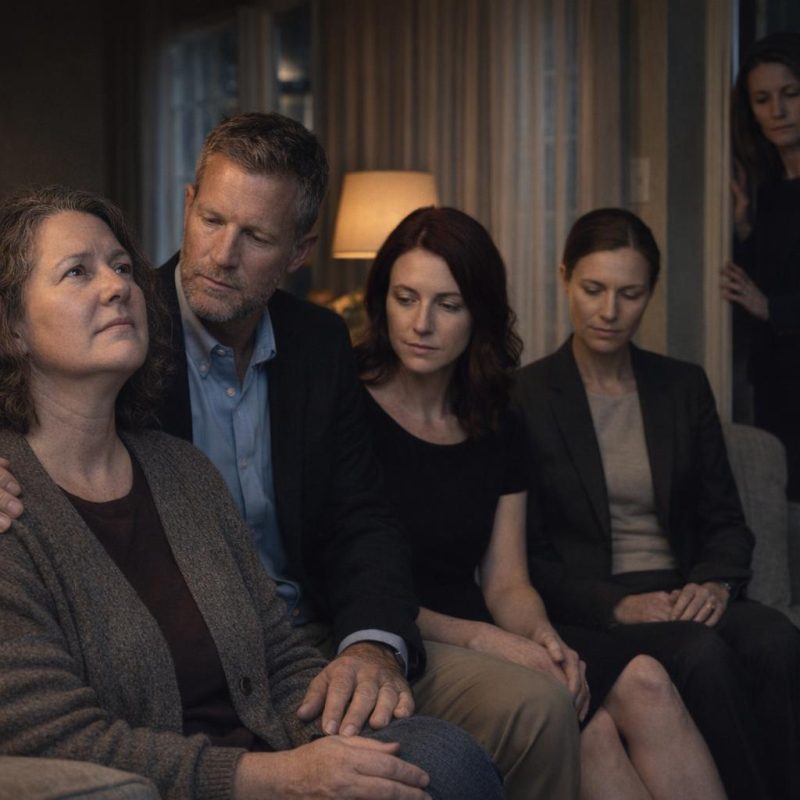 Image by RM AI
The Will Reading
Jordan picks me up an hour before the appointment and doesn't ask how I'm doing — he just holds my hand the whole drive over, and that's enough. Thomas Brennan's office is on the fourth floor of a building that smells like old paper and central heating. My parents are already seated when we arrive, side by side, my mother's hands folded tight in her lap. Linda is there too, and she catches my eye when I walk in and gives me a small, steady nod. Brennan is methodical. He lays out the documents in order, explains the timeline, confirms the will is dated March fifteenth and that Helen was assessed as fully competent at the time of signing. He reads the provisions without editorializing. The house goes to me. The majority of the assets go to me. Sarah is named in the document only to be explicitly excluded, the language precise and unambiguous. Brennan slides a copy across the table toward me. My father exhales slowly. My mother doesn't speak, but she reaches over and puts her hand briefly on my arm. I sit with the copy in front of me and think about Gran sitting alone with this lawyer, making sure I would be taken care of, making sure her wishes would hold. The room is quiet, and Gran's wishes are exactly what she said they were.
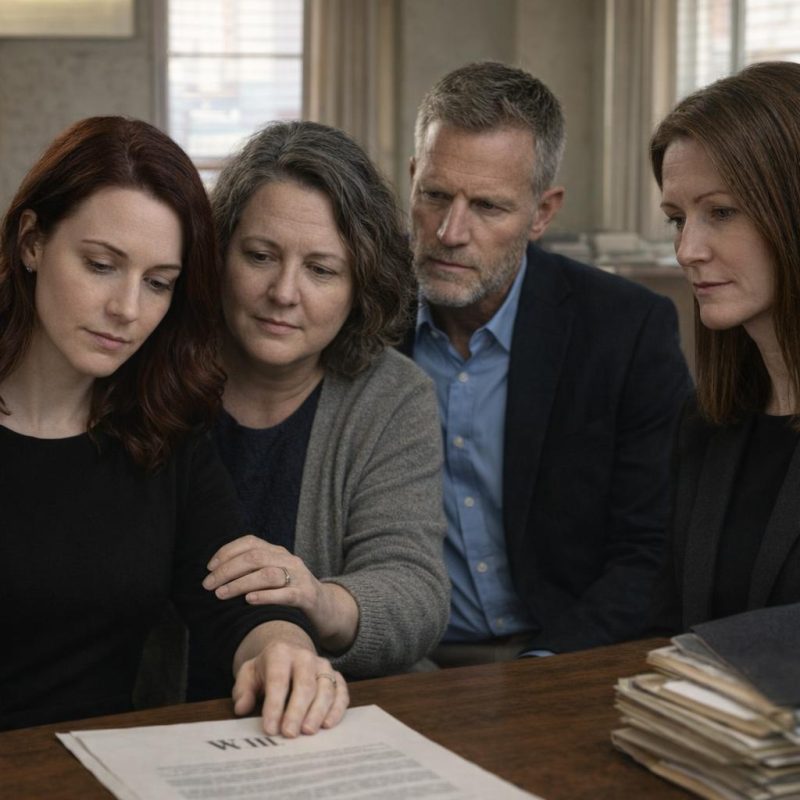 Image by RM AI
Rebuilding Trust
We meet at a small café a week after the funeral — neutral ground, Jordan's suggestion, and a good one. My parents are already there when we arrive, and they both look older than I remember. Not just tired. Older. My father stands when he sees me, which he never does, and my mother's eyes fill before I've even sat down. We order coffee nobody really drinks. My father speaks first. He says they should have trusted me. He says it plainly, no qualifications, and I can see how much it costs him to say it. My mother talks about how convincing Sarah was, how she played on every fear they had, and I let her finish before I tell them how it felt — the phone calls I made that went unanswered, the funeral where I stood apart from my own family, the weeks of believing I had lost them for good. My mother reaches across the table and takes both my hands. She says she is sorry. She says she will do better. I tell them it's going to take time, that I want to try but I need them to understand that. My father nods. Jordan's hand rests warm against my back. My mother's promise sits between us on the table, fragile and real, and I let myself hold it carefully.
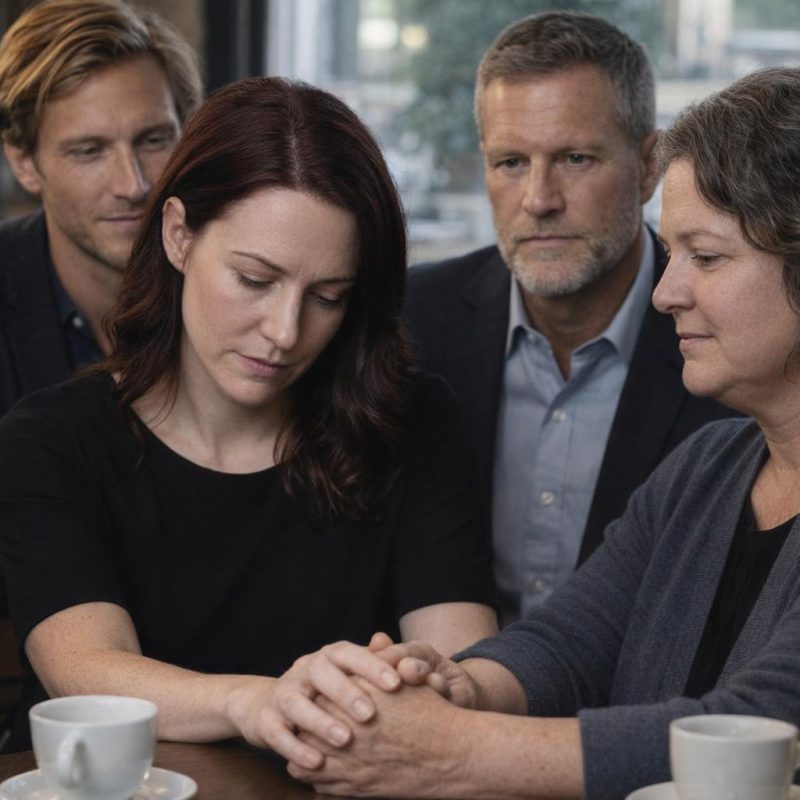 Image by RM AI
Helen's Garden
Gran's garden is exactly as she left it. The roses along the south fence, the lavender border she replanted every spring, the old iron bench where she used to sit with her morning tea. I spend two days getting it ready — pulling weeds, setting out chairs, arranging the photographs my mother helps me choose. There aren't many of us, just the people who actually knew her: my parents, Linda, Jordan, and a few of Gran's neighbors who loved her. Robert reads the passage she kept folded in her Bible, his voice steadier than I expect. Linda tells a story about Gran at twenty-three, laughing so hard at something she knocked a whole tray of dishes off a counter, and for a moment the garden fills with the kind of laughter Gran would have approved of. Jordan stands beside me the whole time, his shoulder against mine. When it's quiet again, I carry a single gardenia to the iron bench and set it down where she used to sit. I step back and look at the garden — her garden — and the gardenias along the far wall are in full bloom, white and heavy-headed, filling the air with the scent she loved best.
 Image by RM AI
KEEP ON READING

20 Greek Gods We Don't Often Talk About
Step Aside, Zeus. Greek mythology isn’t only about Zeus and…
By Elizabeth Graham Jan 16, 2026
10 Historic Courtship Practices That Should Be Brought Back &…
Old-School Dating Was a Mix of Charming & Unhinged. Historic…
By Emilie Richardson-Dupuis Jan 20, 2026
Pooches Of The Past: Extinct Dog Breeds
Unknown authorUnknown author on WikimediaDogs have been showing up in…
By Elizabeth Graham Jan 27, 2026
The 20 Craziest Silent Films Ever Made
When Silence Let the Madness Speak. Silent cinema didn’t just…
By Chase Wexler Jan 5, 2026
Legendary Tales: 20 Most Fascinating Mythical Creatures from Folklore
Mythological Beasts. Stories about mythical creatures endure for a simple…
By Christy Chan Jan 16, 2026
The three most expensive historical artifacts ever sold at auction
Attributed to Leonardo da Vinci on WikimediaAuctions are where history…
By Emilie Richardson-Dupuis Jan 9, 2026