


I Walked Into My Dad's Dealership In Work Clothes — One Salesman's Reaction Cost Him Everything
I Walked Into My Dad's Dealership In Work Clothes — One Salesman's Reaction Cost Him Everything
The Showroom Snub
So I walked into my dad's luxury car dealership on a Saturday afternoon wearing paint-splattered overalls and work boots. I'd been helping renovate my friend's apartment all morning, and I figured I'd stop by to check out the red convertible Dad had texted me about. The showroom was gorgeous as always, all gleaming marble and spotless vehicles positioned like art pieces under those dramatic lights. There were maybe four or five salespeople scattered around the floor, and I swear every single one of them looked right through me. I stood there for a solid three minutes near the entrance, waiting. One guy adjusted his tie and walked past me to greet an older couple who'd just arrived. Another pretended to be deeply absorbed in his phone. I started feeling that familiar heat creeping up my neck, you know? That mix of disbelief and anger when you realize what's happening. I made eye contact with this tall guy in an expensive suit, clearly the senior salesman from his confident stance, and started walking toward him. He looked me up and down with this expression I can only describe as disgust. When I finally got someone's attention, his first words made my blood boil.
 Image by RM AI
Sweetheart
This guy—his name tag said Trent—actually had the audacity to smile at me like he was doing me a favor. 'Listen, sweetheart,' he said, and I swear I almost lost it right there at the condescension dripping from that word. 'These vehicles start at eighty thousand dollars. There's a used car lot about three blocks down on Maple Street that might be more in your price range.' I just stared at him, waiting for the punchline that never came. He was completely serious. I told him I was here to look at the red convertible, and he actually laughed. Not a polite chuckle, but this dismissive bark of a laugh. 'That's a hundred and fifteen thousand, honey. Maybe save up for a few more years?' Other customers were starting to notice the interaction now, and I could feel their eyes on us. My face was burning, but not from embarrassment anymore. Pure rage. Then this absolute idiot made his biggest mistake. He reached out and grabbed my arm, his fingers pressing into my skin through the fabric of my overalls, trying to physically steer me toward the exit. I yanked my arm away and pulled out my phone, and the look of irritation on his face made me want to scream.
 Image by RM AI
The Call
I hit Dad's number on speed dial while Trent stood there with his arms crossed, this smug expression plastered across his face. 'What are you doing?' he asked, and I ignored him. The phone rang once. Twice. 'Let me guess,' Trent sneered, loud enough for the couple browsing nearby to hear. 'Calling your boyfriend to come down here and cause a scene? Trust me, sweetheart, we've dealt with that before. Security's on speed dial.' I kept the phone pressed to my ear, maintaining eye contact with him. On the third ring, Dad picked up. 'Hey honey, I'm upstairs in the office. You here to see the convertible?' His voice was warm and happy, completely unaware. 'Yeah, Dad,' I said clearly, making sure Trent could hear every word. 'I'm downstairs, but I'm having a bit of a problem with one of your salespeople.' There was a pause, then I heard movement. 'Stay right there.' The line went dead. Ten seconds later, the glass doors to the upstairs offices flew open with a bang that echoed through the showroom, and my father's footsteps thundered down the stairs like an approaching storm.
 Image by RM AI
Honey
Dad crossed the showroom floor in about five seconds flat, and I watched Trent's expression shift from smug to confused to concerned in rapid succession. 'Chloe!' Dad's voice boomed across the space, and every head in the dealership turned. He wrapped me in a tight hug, and I felt the tension in my shoulders finally release. 'Hey, honey. I'm so sorry—were you waiting long?' He said it loud enough for the entire showroom to hear, and I saw Marcus, another salesman I'd met at company events, freeze mid-conversation with a customer. Dad turned to Trent, his expression hardening. 'Did you help my daughter?' The color started draining from Trent's face in real-time. It was almost fascinating to watch. 'Your... daughter?' he stammered, and I actually saw his hands start to shake. Diana, the dealership manager, appeared from somewhere in the back, taking in the scene with sharp, assessing eyes. Trent started babbling excuses about not knowing, about just trying to help, about company policy. Dad held up one hand to silence him. 'You physically grabbed her arm,' I said quietly, and Dad's expression turned to stone. 'Pack your desk,' he told Trent, his voice deadly calm. 'You're fired. Effective immediately.' Trent turned white as a sheet when he realized who I was, and that his entire career had just imploded in under five minutes.
 Image by RM AI
The Walk of Shame
The next twenty minutes were the most uncomfortable I've ever experienced in that showroom, and I've been going there since I was a kid. Trent walked to his desk like he was moving through water, each step slower than the last. Nobody spoke. The other salespeople found sudden intense interest in their computer screens. Marcus caught my eye once and gave me this tiny supportive nod, but even he looked shaken. Diana stood with her arms crossed, watching Trent pack his personal items into a cardboard box someone had found. A photo frame. A coffee mug. Some papers. It felt both satisfying and weirdly sad at the same time. Dad stayed close to me, his presence protective and solid, occasionally glancing at Trent with an expression I couldn't quite read. When the paperwork was done, Trent carried his box toward the exit, refusing to look at anyone. Dad and Diana handled the purchase of the red convertible in record time—I think everyone just wanted the situation to end. As I drove away in my gorgeous new car, top down despite the cool air, I spotted Trent at the bus stop on the corner, box balanced on his lap. I couldn't resist waving as I passed, my satisfaction complete.
 Image by RM AI
Viral
Two days later, I was having coffee and scrolling through my phone when my best friend Sarah sent me a text: 'OMG is this YOU??' with a link attached. I clicked it and nearly spit out my drink. Someone had recorded the entire confrontation at the dealership and posted it online. I'm talking the whole thing—Trent's condescending 'sweetheart,' the attempted physical escort, Dad's dramatic entrance, even a shot of Trent's face when he realized who I was. The video had over two million views. Two million. The caption read: 'Sexist car salesman learns BRUTAL lesson about judging people by their clothes.' The likes and shares were climbing in real-time as I watched, the numbers practically hypnotic. I started reading through the comments, expecting universal support, ready for that warm validation feeling. And yeah, a lot of people were definitely on my side. 'He deserved it!' 'This is perfect!' 'Finally someone stands up to these jerks!' But then I scrolled further, and my stomach started to twist. 'She got him fired over her hurt feelings?' one comment read. 'Privileged rich girl ruins working man's life,' said another with hundreds of likes. 'He was rude but did he deserve to lose his entire livelihood?' The comments section was divided between people cheering for me and others calling me entitled, and I felt my first real stab of doubt.
 Image by RM AI
The Backlash Begins
By that evening, my Instagram DMs were flooded with messages from complete strangers. I made the mistake of reading them. 'You should be ashamed of yourself,' one person wrote. 'Do you have any idea what it's like to lose your job? To not know how you'll pay rent?' Another message said, 'Daddy's little princess threw a tantrum and destroyed someone's career. Must be nice to have that kind of power.' They kept coming, dozens of them, and each one felt like a small punch to the gut. I tried to tell myself they didn't understand the full situation, that they hadn't felt Trent's hand on my arm or heard the contempt in his voice. But their words burrowed under my skin anyway. I found myself typing and deleting responses, trying to explain, then feeling pathetic for needing to justify myself to strangers on the internet. Then one message arrived that made me freeze completely. No text, just a photo. It showed Trent at what looked like a birthday party, his arms around two small children—maybe five and seven years old—with huge smiles on their faces. The caption was simple: 'This is whose dad you got fired.' I stared at that photo for a long time, those kids' happy faces burning into my brain, and started seriously questioning if I'd overreacted.
 Image by RM AI
Keith's Opinion
Three days after the video went viral, my phone rang with a number I recognized: Keith, Dad's business partner. My stomach dropped even before I answered. Keith had always been the corporate face of the dealership, all business strategy and profit margins where Dad was passion and people. 'Chloe, hi. Got a minute?' His tone was friendly but strained. We made awkward small talk for about thirty seconds before he got to the point. 'Listen, I wanted to chat with you about this situation that's been making the rounds online.' My defenses went up immediately. He continued carefully, choosing each word like he was navigating a minefield. 'What happened was absolutely inappropriate, no question. Trent's behavior was unacceptable. But the publicity around this whole thing... it's becoming complicated for the company's image.' I asked him what he meant, though I already knew. 'We're getting calls from reporters. Some customers have expressed concerns about shopping at a place where, quote, nepotism results in immediate terminations. The optics are just...' He trailed off, then sighed. 'Between you and me, Chloe, it might have been better to handle things quietly instead of making such a public scene.' The words hit me like cold water, and I felt something crack inside my chest.
 Image by RM AI
Second Thoughts
That night, I couldn't sleep. I kept replaying the whole confrontation in my head, over and over, and Keith's words kept echoing louder each time. 'Making such a public scene.' Was that what I'd done? Made a scene? I stared at my ceiling at 3 AM, my confidence from a few days ago completely evaporated. The thing is, Trent had been rude, absolutely. But maybe he was just having a bad day. Maybe he'd dealt with entitled customers all morning and I was the last straw. Maybe he saw my work clothes and made an assumption that, okay, wasn't fair, but also wasn't intentionally cruel. And what had I done in response? I'd used my privilege as the owner's daughter to get him fired during the worst job market in years. I thought about his family, if he had one. Kids who needed health insurance? A mortgage? I'd been so caught up in my righteous anger that I hadn't considered the actual human cost of my actions. My dad had backed me up because he loved me, not necessarily because I was right. Maybe I should have just walked away instead of getting him fired.
 Image by RM AI
Marcus Reaches Out
Two days into my guilt spiral, I got a DM on Instagram from someone named Marcus. The profile pic showed him in a suit in front of the dealership. It took me a second to place him, then I remembered: he was one of the other salesmen who'd been there that day, the younger guy who'd looked uncomfortable during the whole confrontation. 'Hey Chloe,' his message read. 'I know this is random, but I was there when everything happened with Trent. Could we talk? Not trying to pile on or anything, just think you should know some things.' My first instinct was to ignore it. I didn't need more people telling me how badly I'd handled things. But something about the way he phrased it made me curious. I wrote back asking what he meant. His response came immediately: 'It's complicated. Not really something I can explain over text. Could we meet for coffee? There's something about Trent you need to know, but I can't discuss it over text.'
 Image by RM AI
Coffee Shop Confession
We met at a Starbucks halfway between my apartment and the dealership. Marcus looked nervous, kept glancing around like he was worried someone might see us. 'Thanks for coming,' he said, stirring his coffee without drinking it. 'I've been debating whether to reach out for days.' I told him it was fine, though I braced myself for another lecture about privilege and consequences. But that's not what happened. 'Look, what Trent did to you was wrong,' Marcus said. 'But the thing is, you're not the first. He's treated other customers the exact same way. I've seen it happen at least half a dozen times.' I felt my stomach drop. 'Why didn't anyone report it?' Marcus looked down at his cup. 'Some people did. HR never did anything. And the rest of us...' He trailed off, and I could see the shame on his face. 'We were scared of losing our jobs.' Then he pulled out his phone, his hand actually shaking slightly. 'Three months ago, I started recording him. I couldn't just keep watching it happen.' He pulled out his phone and showed me a video he'd secretly recorded three months earlier.
 Image by RM AI
Vanessa's Story
The video was shaky, obviously filmed discreetly from behind a desk. But the audio was clear enough. There was Trent, standing in front of an older woman, maybe in her fifties, wearing scrubs with cartoon characters on them. Nurse's uniform. 'Ma'am, I don't think you understand how financing works,' Trent was saying, his voice dripping with condescension. 'This vehicle is outside your price range. Significantly outside. Maybe you should look at our used inventory?' The woman's face flushed red. 'I make good money. I'm a surgical nurse, I've been pre-approved for—' 'Pre-approved doesn't mean you can afford it,' Trent interrupted. 'Trust me, I've seen people like you overextend themselves. It never ends well.' The way he said 'people like you' made my skin crawl. It was the exact same tone he'd used with me. The woman in the video gathered her purse with shaking hands and walked toward the exit. I could see tears forming in her eyes as she passed the camera. But unlike me, she had no powerful father to call, so she just left quietly with tears in her eyes.
 Image by RM AI
The File
I looked up from the phone, feeling sick. 'Why were you recording him?' Marcus sighed and pulled his coffee closer, like he needed something to hold onto. 'Because I knew if I reported it without proof, it would be my word against his. And Trent's been there longer, has relationships with management.' He paused. 'I've been documenting everything for months, hoping eventually I'd have enough to make a case that couldn't be ignored.' He scrolled through his phone, showing me file after file. Videos, voice recordings, even written notes with dates and times. 'I was afraid of losing my own job if I reported it. I have student loans, you know? And the economy's not exactly—' He didn't need to finish that sentence. I understood the fear of financial instability better than most people assumed. 'How many incidents do you have?' I asked, my voice barely above a whisper. Marcus's jaw tightened. 'Seven that I managed to document. Probably more that I missed.' He looked at me directly. 'But here's what's weird. He had recordings of seven different incidents, all following a strangely similar pattern.'
 Image by RM AI
 Image by RM AI
Too Similar
Marcus let me go through the files while he went to get us both refills. I sat there in that Starbucks, watching video after video on his phone, and with each one, a strange unease settled deeper into my chest. They were all so similar. Not just in Trent's behavior, but in his exact words. 'People like you.' 'You don't understand how this works.' 'Maybe you should look at something more appropriate.' The phrasing was almost identical across different customers, different situations, different days. There was a young guy in a hoodie who got the speech. An elderly couple who got a slightly gentler version but with the same underlying message. A Hispanic woman who was told she 'probably qualified for different financing programs.' Each time, the insults landed the same way, hit the same notes. As I watched the videos, something felt off about how Trent's insults were phrased almost identically each time. It wasn't the natural variation of someone being consistently rude. It was too polished, too rehearsed. It was like he was following a script, but that didn't make any sense.
 Image by RM AI
Tyler's Warning
I called Tyler that evening, my business partner at the consulting firm. I'd been keeping him updated on the whole situation, and I needed his perspective on what Marcus had shown me. Tyler listened to everything, then let out a long breath. 'Chloe, I'm going to be honest with you. You need to drop this.' I felt my defenses go up. 'Tyler, there's a pattern here. This guy was systematically—' 'I don't care if there's a pattern,' he interrupted. 'You've already become the rich girl who got a salesman fired over a viral video. If you keep pushing this, you're going to look obsessed, vindictive. It'll hurt your reputation, hurt our business.' His voice softened. 'I'm saying this as your friend. Let it go. You did what you did, Trent got fired, it's over. Digging deeper is only going to make things worse for you.' We talked for another twenty minutes, but he wouldn't budge. Tyler urged me to drop the whole thing, saying it would only hurt my reputation further. But I couldn't shake the feeling that there was something bigger going on that no one was seeing.
 Image by RM AI
Diana's Admission
Against Tyler's advice, I went back to the dealership the next afternoon. I found Diana in her office, and she looked surprised to see me. 'Chloe, hi. Is everything okay?' I closed the door behind me and sat down across from her. 'Diana, I need to ask you something. Had anyone complained about Trent before? Before my incident?' Her expression shifted, became guarded. She glanced at her computer screen, then back at me. 'I... there had been some feedback, yes. Customer complaints.' 'And what happened with those complaints?' I pressed. Diana looked uncomfortable, like she was trying to figure out how much to tell me. 'HR reviewed them. But no action was taken.' 'Why not?' She hesitated for a long moment, and I could see her weighing her loyalty to the company against something else. Finally, she looked away from me, staring at the wall. 'Corporate told me Trent was too valuable to lose. Those were their exact words.' I felt cold all over. When I asked why, she looked away and said corporate had told her Trent was 'too valuable' to lose.
 Image by RM AI
Image by RM AI
Sales Numbers
That night, I couldn't stop thinking about what Diana had said. 'Too valuable to lose.' I needed to understand what that meant. So I did something I'm not proud of—I used my father's login credentials to access the dealership's internal sales database. I know, I know. But I was desperate for answers. I pulled up Trent's records from the past two years and sat there staring at my laptop screen in complete confusion. His numbers were average. Like, middle-of-the-pack average. Some months he sold eight cars, some months twelve. He wasn't even in the top five performers at the dealership. Mark, the guy who'd helped me, consistently outsold him by at least thirty percent. I scrolled through quarter after quarter, looking for some spike in performance that would explain corporate's protection of him. Nothing. He was solidly mediocre. I sat back in my chair, my mind racing. If he wasn't bringing in exceptional revenue, if he wasn't this irreplaceable sales superstar, then why the hell would corporate consider him too valuable to fire?
 Image by RM AI
The Other Dealerships
I spent the next day making phone calls. My dad owned six dealerships across three states, and I started systematically calling the HR departments at each one, pretending to be doing a family business audit. What I discovered made my stomach turn. Trent hadn't started at the main dealership where I'd encountered him. He'd worked at four different locations in just three years. Four. The woman at the Portland location was the most forthcoming. 'Oh, Trent Morrison? Yeah, we had him for about eight months. He was transferred to Seattle after some customer complaints.' The pattern was identical everywhere. Complaints would come in—women feeling belittled, customers of color being dismissed, people in casual clothes being ignored. HR would document everything. And then Trent would be quietly transferred to another location instead of being fired. Not demoted. Not put on probation. Just moved somewhere else where he could start fresh with a new batch of unsuspecting customers. At each dealership, the same institutional protection. At each one, he'd been transferred rather than fired despite multiple complaints.
 Image by RM AI
Jennifer's Research
By this point, I knew I was in over my head. I needed professional help to figure out what was really going on. Tyler recommended someone—Jennifer Chen, a private investigator who specialized in employment cases. I met her at a coffee shop downtown and laid out everything I'd discovered. She listened without interrupting, taking notes on a small tablet. When I finished, she looked up at me with this intensity in her eyes. 'This pattern suggests something more organized than simple bias,' she said. 'Let me dig into his background. Employment history, social media, financial records if I can access them legally. Give me a week.' I agreed to her retainer fee on the spot. For three days, I heard nothing. I went to work, came home, tried to act normal. But I was checking my phone constantly, waiting. On the fourth day, she called. Her voice was tight, professional, but I could hear something underneath it. Urgency, maybe. Or concern. 'Chloe, I found something. You need to see this in person. Can you come to my office right now?' The way she said 'right now' made my heart start racing. 'I'm on my way,' I told her, and I was out the door before we even hung up.
 Image by RM AI
The LinkedIn Profile
Jennifer's office was in a nondescript building downtown. She had her laptop already open when I walked in, positioned so I could see the screen from across her desk. 'Trent Morrison has two LinkedIn profiles,' she said without preamble. 'The first one is what you'd expect—car salesman, work history at your father's dealerships. But the second one...' She turned the laptop toward me. The profile showed Trent, but under a business name: Morrison Consulting Group. His title was listed as 'Customer Authenticity Specialist.' I leaned forward, scanning the profile description. My hands started shaking as I read. 'What the hell is a customer authenticity specialist?' I asked, though part of me already dreaded the answer. Jennifer clicked to another section. 'According to his services page, he consults with luxury retailers on how to identify what he calls 'time-wasters'—customers who aren't serious buyers.' The language was corporate and polished, but I could read between the lines. Time-wasters. Pretenders. People who didn't look the part. He was advertising himself as a 'customer authenticity specialist' who helped dealerships identify time-wasters.
 Image by RM AI
The Testimonials
Jennifer scrolled down to the testimonials section, and I felt physically sick reading them. There were at least a dozen reviews from salespeople at other luxury retailers—not just car dealerships, but high-end jewelry stores, designer boutiques, luxury watch retailers. 'Trent's techniques have been invaluable for our team,' one read. 'We've saved countless hours by weeding out pretenders early in the process.' Another said, 'His methods for identifying genuine buyers versus window shoppers have transformed our approach to customer service.' The language was sanitized, professional, but I knew what they were really talking about. Discrimination. Profiling. Treating people like garbage based on how they looked. Then Jennifer pointed to one testimonial near the bottom. It was from a sales manager at a luxury car dealership in California. My eyes caught on one sentence and I had to read it three times to believe it. 'Trent's confrontational approach has generated significant online buzz for our dealership,' it said. 'His methods have gone viral multiple times, driving substantial traffic to our showroom.' One review mentioned that his methods had gone viral multiple times, driving traffic to their stores.
 Image by RM AI
The Video Cache
Jennifer was watching my face carefully. 'There's more,' she said quietly. She clicked to a different window—a spreadsheet with links. 'I found a private YouTube channel. It's not connected to his name directly, but the metadata led me there.' She clicked one of the links. The page loaded, showing a channel called 'Reality Check Retail.' It had dozens of videos, each with thumbnails showing blurred faces of people in what looked like retail settings. My throat went dry. 'These are all Trent?' Jennifer nodded. 'Hidden camera footage, from what I can tell. Watch this.' She played a clip—just thirty seconds. It showed a salesman I recognized as Trent talking down to a customer, his voice dripping with condescension. The person's face was blurred, but their humiliation was palpable even through the screen. I felt nauseated. 'He's been filming his interactions?' 'Dozens of them,' Jennifer confirmed. 'The channel isn't public—you need a link to access it. But here's the thing, Chloe.' She pulled up another document. 'These videos have been sold. As training materials to his consulting clients. He's monetizing them.'
 Image by RM AI
My Face
Jennifer's voice was gentle but firm. 'I need to show you something else. I'm sorry.' She scrolled through the video list, and my breath caught in my throat when I saw my own blurred silhouette in one of the thumbnails. Then another. Then a third. 'You're in three of his videos,' Jennifer said. She clicked on one. The title made me want to vomit: 'Entitled Princess Gets Reality Check.' I couldn't watch it. I couldn't see myself on that screen, couldn't hear whatever commentary Trent had added. 'Don't play it,' I said, my voice barely a whisper. Jennifer closed the window immediately. 'Look at this instead,' she said, pulling up the video details page. She pointed to the upload date and timestamp. My mind went blank for a second, then everything clicked into place with horrifying clarity. 'That's the same day,' I said slowly. 'The day I complained. The day he was fired.' 'Not just the same day,' Jennifer said. 'Look at the time. Seven forty-three PM.' I'd left the dealership around five. The timestamp showed he'd uploaded it the same evening he was fired—before I'd even driven my new car home.
 Image by RM AI
The Comments
I made myself look at the comments section on those private videos. I had to understand the full scope of what Trent was doing. There were hundreds of comments, all from people with generic usernames or first names only. 'Great technique on the jewelry store karen,' one read. 'Loved how you baited her into the outburst.' Another: 'This is gold. Using this approach tomorrow with the tire kickers.' They were discussing tactics. Strategies for provoking customers, for escalating situations, for getting what one commenter called 'the money shot'—the moment when someone lost their composure on camera. Jennifer scrolled down, and one exchange made me stop breathing. Someone had asked, 'How do you always know which customers will escalate? Some of mine just walk away.' I stared at Trent's response, reading it over and over. 'Pattern recognition,' he'd written. 'Look for people who seem uncomfortable or trying too hard to prove themselves. They're already on edge. Push the right buttons and they'll perform perfectly.' His response made my skin crawl.
 Image by RM AI
Selection Criteria
Jennifer pulled up another document from Trent's files, and this one made everything click into place. He'd written out his entire targeting methodology like it was some kind of business plan. 'Selection Criteria,' the header read, and underneath he'd laid out exactly what he looked for. People who showed 'confidence markers'—good posture, direct eye contact, expensive accessories mixed with casual clothes. He wrote that these customers were 'already telegraphing status but trying to downplay it,' which made them perfect targets. My hands went cold as I read through his notes. Designer watch with jeans? Check. Walking in like they belong? Check. Making eye contact instead of looking intimidated? Check. I'd done all of it. Jennifer looked at me and I saw the recognition in her face too. Every single thing he'd written described exactly how I'd presented myself that day. But the worst part was his reasoning. He called them 'high-value targets' because they'd create the most dramatic confrontations when dismissed.
 Image by RM AI
Image by RM AI
The Revenue Stream
Then Jennifer showed me something that made the whole scheme even more disgusting. She'd traced payments going into Trent's personal accounts from multiple sources—PayPal, Venmo, direct wire transfers. He wasn't just doing this for fun or YouTube views. Trent earned more from his consulting business than from his dealership salary. Way more. He sold the videos themselves for $50 a pop through a private platform. He charged $500 for one-on-one 'coaching sessions' where he taught other salespeople his techniques. He even had something called 'authenticity verification' where he'd review other people's confrontation videos and certify them as genuine for $200 each. Jennifer kept scrolling through bank statements, adding up numbers. My stomach turned with every new total. The guy had built an entire business around humiliating people, and he was making bank doing it. He'd made over $180,000 in the past year selling videos, training sessions, and 'authenticity verification' services.
Image by RM AI
Image by RM AI
Greg's Connection
But Jennifer found something even worse buried in those financial records. There were monthly payments to someone inside the company—$2,000 every month like clockwork, labeled as 'consulting fees.' She cross-referenced the account number with the company directory. It belonged to Greg, my father's regional HR director. The same Greg who'd dismissed multiple complaints about Trent over the years. The same one who always said Trent was 'too valuable' to discipline. Jennifer pulled up email exchanges between them, and there it was in black and white. Greg had been getting kickbacks from Trent in exchange for protection. Every time someone complained, Greg made sure it disappeared. Every time Trent's numbers came up short, Greg found a way to justify keeping him on. I felt sick. This wasn't just one rogue salesman gaming the system. This was institutional corruption, bought and paid for. That's why Trent was considered 'too valuable'—he was paying for his own immunity.
 Image by RM AI
The Other Victims
Jennifer spent the next two days doing something I couldn't have managed alone. Using the videos as evidence, she identified 23 other victims across four states who had been targeted by Trent's scheme. Each one followed the same pattern—someone walks in looking 'wrong' for a luxury purchase, Trent treats them like garbage, escalates until he gets a reaction, then posts it online. She found a Black doctor in Ohio who'd come in wearing scrubs after a shift. A Hispanic businessman in Texas wearing work boots with an expensive suit. A woman in Virginia who'd dressed casually for a Saturday test drive. Jennifer made spreadsheets showing the dates, locations, and outcomes. The pattern was undeniable. I sat there looking at face after face of people who'd been humiliated the same way I had. Most of them were women, people of color, or anyone who looked 'wrong' for a luxury purchase.
 Image by RM AI
Vanessa Returns
I needed to talk to someone who'd understand what this felt like. I tracked down Vanessa, the nurse from Marcus's video—the one who'd been dismissed when she came in wearing scrubs. It took some detective work, but I found her through the hospital system and sent a careful message explaining who I was. She agreed to meet with me at a coffee shop near her work. When I showed her what Jennifer and I had discovered—the videos, the money, the targeting system—her hands started shaking. She put her face in her hands and just cried. I didn't know what to say, so I just waited. After a few minutes, she looked up at me with this expression I'll never forget. It was pain and anger and something else. Determination. She wiped her eyes and said, 'I want to help you take him down.'
 Image by RM AI
Building the Case
Jennifer and I spent the next week compiling everything into a comprehensive report. We documented Trent's scheme with screenshots, financial records, victim testimonies, and the targeting methodology. We included the bribery payments to Greg with bank statements and emails. We created a timeline showing how complaints had been systematically buried. It was 89 pages of evidence, ironclad and devastating. I'd been nervous about showing it to my father, but I also thought once he saw the full scope, he'd have no choice but to act. We met in his office on a Tuesday afternoon. I handed him the report and watched him read through it. His face got harder with every page. When he finally looked up at me, I expected anger at Trent and Greg. I expected immediate action. But when I showed it to my father, his reaction wasn't what I expected.
 Image by RM AI
Robert's Hesitation
My father set the report down carefully, like it might explode. Then he said something that made my blood run cold. 'Chloe, if we expose this scheme publicly, we open the company to massive liability lawsuits from all these victims.' He started talking about legal exposure, about settlement costs, about insurance complications. He said Greg's involvement made it worse because it showed institutional knowledge. Every victim could claim the company knew and did nothing. He ran through worst-case scenarios—millions in damages, reputation destroyed, dealerships closing. I just stared at him. This was the evidence he'd asked me to find. This was justice for two dozen people who'd been targeted and humiliated. And he was talking about liability exposure. He suggested settling with Trent quietly instead of taking this public.
 Image by RM AI
Keith's Ultimatum
I thought that conversation was the worst of it, but then Keith called me directly the next morning. I don't know how he'd heard about the report so fast, but he clearly knew everything. His voice was calm, almost paternal, which somehow made it worse. He told me he understood my anger, that what Trent did was wrong, but I needed to think about the bigger picture. 'If you pursue this publicly, it could destroy the entire dealership network,' he said. He talked about the 300+ employees across all the locations. The families depending on those jobs. The local economies that relied on the dealerships. He made it sound like I'd be personally responsible for all that collateral damage. Then he went for the emotional kill shot. He said I needed to decide whether my pride was worth ruining my father's legacy.
 Image by RM AI
Tyler's Perspective
I was sitting in my apartment at midnight, staring at my phone, when Tyler texted asking if he could come over. I'd been avoiding him for two days because I knew what everyone was telling me to do—drop it, move on, protect the empire. When he arrived, I was a mess. I told him everything Keith had said about the 300 employees, the economic impact, my father's legacy crumbling. Tyler sat on my couch and listened to the whole thing without interrupting. Then he reminded me about something I'd told him when I first started my consulting business. I'd said I was building it on the principle that respect can't be bought or negotiated—it had to be absolute. He said, 'You told me that included respecting people's right to be heard, to have their pain acknowledged.' I felt something shift inside me. He was right. I'd been so focused on the fallout that I'd forgotten about the nineteen people who'd been treated like garbage. Tyler looked me straight in the eye and said, 'Whatever you decide, I'll stand by you, even if it means your father never speaks to us again, even if the business collapses.'
 Image by RM AI
Image by RM AI
The Victims' Forum
The next morning, I created a private online group and sent invitations to everyone I could identify from Vanessa's list who might want to connect. I made it clear there was no pressure—just a safe space to share if they wanted. Vanessa helped me reach out to people individually first so it wouldn't feel invasive. I honestly didn't know what to expect. Maybe a handful would join. Maybe no one would want to revisit their experiences. But within 48 hours, nineteen people had joined the group, and when they started sharing their stories, I had to take breaks from reading because it was so overwhelming. One woman wrote about being denied a test drive three times while watching white customers with worse credit get approved. A young guy described being followed around the showroom like a criminal. Someone else shared how Trent had literally laughed at them when they asked about financing options. The pattern was clear, but what really broke me was reading how many of them had blamed themselves, wondered if they'd done something wrong, dressed inappropriately, or weren't good enough. Their stories were worse than I'd imagined, and there were so many of them.
 Image by RM AI
Marcus's Evidence
Three days later, Marcus called me sounding nervous and asked if we could meet somewhere private. We ended up at a coffee shop two towns over. He looked terrible—like he hadn't slept. He said he'd been carrying something for over a year and couldn't do it anymore. Then he pulled out his phone and played me an audio recording. It was from a management meeting, and Greg's voice was unmistakable. In the recording, Marcus was bringing up complaints about Trent's behavior with customers, saying it was creating problems. Greg cut him off and said, 'Marcus, those 'problems' bring in an extra half-million a year in financing fees. Let it go.' Marcus had apparently pushed back, and that's when Greg said the part that made my stomach drop. He laughed—actually laughed—and said, 'Trent's confrontations are basically free advertising. The people who make it through buy higher-end models to prove something.' I sat there staring at Marcus's phone, realizing Greg hadn't just enabled Trent. He'd understood the entire scheme and actively protected it because it was profitable. In one recording, Greg laughed and said Trent's confrontations were 'basically free advertising.'
 Image by RM AI
The Attorney
I knew we needed professional help, so I hired Jennifer, a civil rights attorney who specialized in discrimination cases. She came highly recommended by someone in my consulting network. We met in her downtown office, and I brought everything—the victim testimonies, Vanessa's documentation, the video footage from Marcus, the audio recordings of Greg, the financial analysis. She spent two hours reviewing it all while I sat there trying not to chew through my fingernails. When she finally looked up, she seemed almost surprised. She said she'd been practicing for fifteen years and had handled dozens of discrimination cases, but this was different. The paper trail was exceptional. The victim count was substantial. The financial motivation was explicit. The institutional knowledge was documented in Greg's own words. She said most cases like this came down to 'he said, she said' credibility battles, but we had actual evidence of intent and profit motive. Then she leaned forward and told me we had one of the strongest cases she'd ever seen—if we were willing to go public with everything.
 Image by RM AI
Diana's Choice
I wasn't expecting Diana to reach out, but she called me from a blocked number and asked if we could talk off the record. When we met, she looked different—tired, older somehow. She said she'd heard about the attorney and the victim group, and she needed to tell me something. Diana admitted she'd known about Trent's pattern for over two years. She'd tried to address it internally, but every time she raised concerns, Greg would shut her down. Eventually, she'd stopped pushing because she was worried about her own job security. She said there'd been specific incidents where customers complained directly to her, and Greg had instructed her to offer them minor discounts to 'smooth things over' while keeping Trent on the floor. The guilt had been eating at her. Then she said something that surprised me—she wanted to testify about everything she'd witnessed and the pressure she'd faced to protect Trent. She was ready to give a formal statement to Jennifer, knowing it would probably destroy her career in the industry. She said she'd been complicit, but she was ready to make it right—even if it cost her everything.
 Image by RM AI
The Press Package
Jennifer and I spent the next week compiling everything into a comprehensive press package. We organized it like a legal brief—executive summary, timeline, victim testimonies (anonymized unless they'd consented to using their names), video evidence, financial records showing the profit pattern, Greg's audio recordings, Diana's sworn statement. It was seventy pages of meticulously documented discrimination. Jennifer had media contacts from previous high-profile cases, so she sent it to three major news outlets that specialized in investigative journalism. I thought maybe we'd hear back in a week or two—these places get tons of tips, right? But three different reporters responded within hours saying they wanted to run the story. One of them called it the most well-documented case of retail discrimination she'd seen. Another said the financial angle made it particularly newsworthy because it showed systematic exploitation for profit. The local paper said they could publish within 48 hours. The regional outlet wanted to do a feature with interviews. Suddenly this was real, and there was no taking it back. Three major news outlets responded within hours saying they wanted to run the story.
 Image by RM AI
Robert's Anger
My father didn't call me—he called Tyler first, apparently trying to go around me. When that didn't work, he called me directly, and I could hear the fury in his voice before he even said hello. A journalist had contacted him for comment on a story about systemic discrimination at his dealerships. He demanded to know what I'd done. I told him the truth—that I'd cooperated with an investigation into Trent's behavior and the management failures that enabled it. Robert went off about family loyalty, about how I was destroying everything he'd built, about how I'd betrayed him after he'd trusted me with the business. He actually said I was being 'manipulated by a few disgruntled customers' and that I was too naive to understand how business worked. Something in me snapped. I'd spent weeks wrestling with this decision, losing sleep, worried about hurting him. But listening to him dismiss nineteen victims as 'disgruntled customers' made me realize he'd never actually heard anything I'd said. I told him that protecting people who exploit others was the real betrayal, and I hung up while he was still yelling.
 Image by RM AI
The Article Drops
I barely slept the night before publication. The article was scheduled to go live at 6 AM, and I kept refreshing the news site every few minutes like that would make it appear faster. When it finally loaded, the headline hit like a punch: 'Luxury Dealership Salesman Ran Years-Long Discrimination Scheme for Profit.' They'd used everything—the victim testimonies, the financial data, Greg's recordings, Diana's statement. The reporter had done an incredible job laying out not just what Trent did, but how the entire management structure had protected and profited from it. I shared the link to the victim group first, then sat back and watched it spread. My phone started buzzing with notifications. People were sharing it on social media. Former employees were commenting with their own stories. By 9 AM, it had a few thousand shares. By 10, local TV news was picking it up. I went for a walk to clear my head, and when I checked my phone an hour later, I couldn't believe what I was seeing. By noon, it had been shared 50,000 times and Trent's name was trending nationwide.
 Image by RM AI
The Reversal
The whiplash was unreal. I started seeing comments from the same usernames who'd called me 'spoiled' and 'entitled' just two weeks ago, now praising me as a hero for exposing systemic discrimination. Local influencers who'd made videos mocking me suddenly posted apologies. One guy who'd literally called me a 'trust fund princess playing victim' was now sharing the article with the caption 'This is what real courage looks like.' My mentions were flooded with support—people thanking me, calling me brave, saying I'd changed their perspective. And honestly? It felt hollow. I kept scrolling through the comments, waiting to feel vindicated, waiting for that rush of 'I told you so' satisfaction. But it never came. Instead, I kept thinking about the victim testimonies in the article. The woman who'd been humiliated at a jewelry store in Chicago. The couple denied service at a boutique in Atlanta. The man filmed being escorted out of a watch shop in Miami. All of them targeted by people trained by Trent. All of them hurt before I'd done anything to stop it. But I didn't feel vindicated—I felt sick knowing how many others Trent had hurt before I stopped him.
 Image by RM AI
The Full Picture
Jennifer called me three days after the article broke. She'd been working with the investigative team on a follow-up piece, and what they'd found made the original story look like just the tip of the iceberg. 'Chloe, you need to sit down for this,' she said, and I could hear the strain in her voice. The investigation revealed that Trent's scheme had been running for six years. Six years. He'd been systematically targeting vulnerable customers, filming their humiliation, and packaging those interactions into training modules. Over 200 salespeople across 15 states had purchased his content. The financial forensics showed he'd generated over a million dollars in revenue from this operation. A million dollars built on humiliation and discrimination. 'He had tiers,' Jennifer explained, her voice shaking. 'Basic membership, premium content, one-on-one coaching sessions where he'd teach people how to identify and target specific demographics.' My stomach turned. This wasn't just about one asshole salesman with a nasty attitude. He'd built an entire underground industry teaching luxury retailers how to create viral discrimination moments for profit and ego.
 Image by RM AI
The Network
The follow-up article hit two days later, and that's when things exploded on a completely different scale. Investigators had traced Trent's network and found he wasn't alone—he was just one node in a larger operation of salespeople running similar schemes at high-end retailers nationwide. Boutiques, jewelers, car dealerships, even exclusive restaurants. They'd been sharing tactics, comparing 'success stories,' and coordinating their efforts through encrypted chat groups. One group had over 500 members. Jennifer sent me screenshots that made my blood run cold. They had rankings for who could generate the most 'engagement' from their discrimination videos. They shared tips on how to avoid legal consequences. They celebrated when their targets went viral. 'It's like they gamified cruelty,' Jennifer told me. Federal investigators were now involved, pulling records from dozens of businesses. The scope kept expanding—Arizona, Texas, New York, California. Every day brought new revelations about another retailer, another victim, another person who'd profited from systematic humiliation. The rabbit hole went deeper than anyone had imagined.
 Image by RM AI
Federal Interest
I was making breakfast when two FBI agents showed up at my apartment. They were polite, professional, and terrifyingly serious. Special Agent Morrison explained they were building a federal case for conspiracy to commit fraud and civil rights violations. They had Trent's financial records, communication logs, and client lists. They'd identified victims across seventeen states. And they needed my cooperation. 'Your case is unique because you documented everything in real-time,' Morrison said. 'You have the recordings, the timeline, the paper trail from your father's dealership. You're the connecting thread that ties this all together.' They wanted me to testify before a grand jury. They wanted access to every piece of evidence I had. They wanted me to help identify other potential victims and perpetrators. I felt my hands start shaking. This had started as me just wanting an apology for being treated like garbage at a car dealership. Now I was sitting across from FBI agents discussing a federal conspiracy case. 'This is bigger than one dealership, Ms. Peterson,' Morrison said. 'This is a coordinated effort to profit from discrimination.' They said my case could be the key to dismantling the entire operation.
 Image by RM AI
Greg's Arrest
I was at a coffee shop when Vanessa texted me a link to a live news feed. Greg was being arrested at the dealership, and cameras were everywhere. I watched on my phone as federal agents led him out in handcuffs, his face red and contorted with rage. Reporters were shouting questions. Onlookers were filming on their phones. It was a spectacle, and honestly, it should have felt like justice. But watching him get shoved into the back of an unmarked car, I just felt numb. Then I heard him screaming at the cameras. 'This is a witch hunt! I didn't do anything wrong!' His voice cracked with fury. 'That spoiled bitch destroyed innocent lives because she couldn't handle being told no! This is political correctness gone insane!' Even as they closed the car door, he kept shouting, his words muffled but still audible. My phone started buzzing with texts from people who were watching the same feed. Some were celebrating. Others were concerned about the fallout. But all I could think about was how he still didn't get it. Even with handcuffs on, even facing federal charges, he screamed that I'd destroyed innocent lives over political correctness.
 Image by RM AI
Trent's Response
Two days after Greg's arrest, Trent released a statement through his lawyer. I read it with Vanessa sitting next to me, both of us incredulous at the audacity. He called himself a victim of cancel culture. He claimed he was just a businessman helping dealerships protect themselves from scammers and time-wasters. 'I provided consulting services to help sales professionals identify serious buyers,' his statement read. 'I'm being persecuted for teaching people to be efficient with their time.' He painted himself as a martyr, someone being destroyed by a mob that couldn't handle 'uncomfortable truths about the industry.' My hands were shaking with rage when Vanessa's phone buzzed. The victims' group had put together a response—a video compilation of Trent's most vicious moments, pulled from the training materials seized by investigators. Clips of him laughing while describing how he'd humiliated people. Audio of him teaching others to target specific demographics. His own words, his own voice, his own face. It went live within an hour of his statement. Vanessa and I watched the view count climb—100,000, 500,000, 2 million. By the next morning, the video had been viewed 10 million times in 24 hours.
 Image by RM AI
The Lawsuit
The law firm handling the case called me in for a meeting. We were filing a class-action lawsuit on behalf of all identified victims—127 people so far, with more coming forward every day. The defendants were Trent, Greg, and the business entity that operated the dealership. Which meant my father's company. I sat in that conference room listening to the lawyers explain the legal strategy, and I couldn't focus on anything except seeing my father's name on the paperwork. Robert Peterson, named defendant. The man who'd taught me to ride a bike, who'd taken me to my first day of college, who I'd called crying to when my first serious relationship ended. Now listed alongside the people who'd systematically profited from discrimination. The lead attorney asked if I was okay with proceeding. I thought about all those victims. The ones who'd been humiliated before I was. The ones who'd suffered while my father looked the other way. I thought about what justice actually meant, even when it hurt. 'Yes,' I said. 'File it.' My father was named as a defendant—a fact that broke my heart but felt necessary.
 Image by RM AI
Keith's Betrayal
The bombshell dropped on a Tuesday morning. Keith—my father's business partner for over twenty years—leaked internal documents to the press. Emails, incident reports, HR complaints. All of it designed to make my father look solely responsible while Keith positioned himself as an innocent stakeholder who'd been kept in the dark. I found out when a reporter called asking for comment on 'Robert's years of negligence.' I hadn't even finished my coffee when the articles started appearing. But then I actually read the leaked documents, and something inside me crumbled. They weren't just Keith trying to save his own skin. They were real. Three years ago, a customer had filed a formal complaint about Trent. The email chain was right there—the customer describing discriminatory treatment, HR forwarding it to management, and my father's response: 'Trent's our top performer. Let's not overreact to one complaint. I'll speak with him informally.' There was no follow-up. No documentation of any conversation. No action taken. Just that one email, and then nothing. Keith had betrayed my father to save himself, that was clear. But the documents showed Robert had been warned about Trent three years ago but took no action.
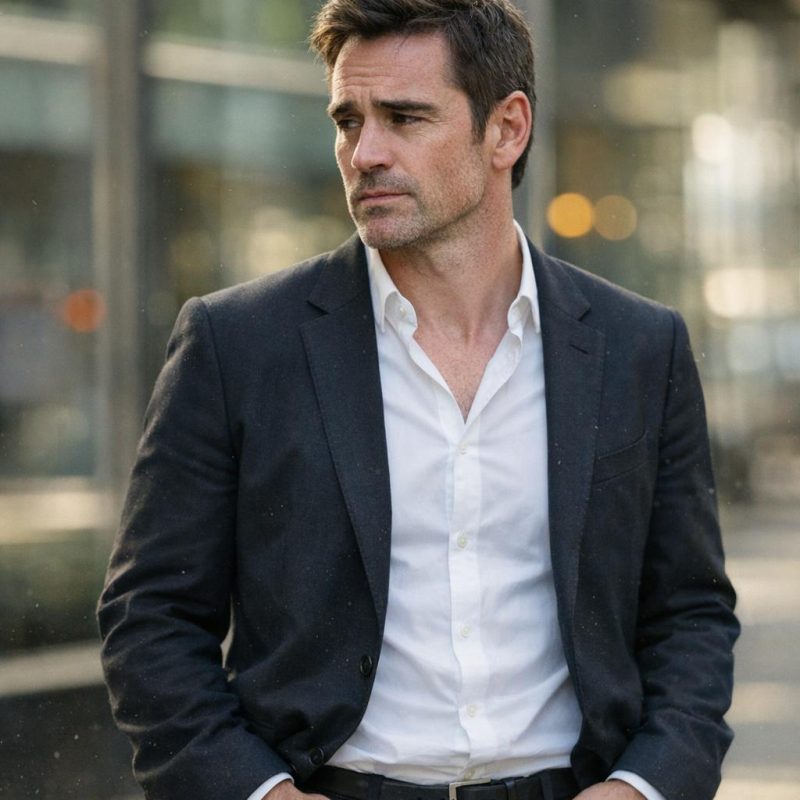 Image by RM AI
Robert's Confession
My father showed up at my apartment that evening without calling first. I almost didn't open the door. When I did, he looked like he'd aged ten years in a week—his eyes were bloodshot, his tie was loose, and he just stood there in my doorway not saying anything. Finally, I let him in. He sat on my couch and started talking, and what came out wasn't excuses or justifications. He told me he'd received that complaint about Trent three years ago and had brushed it off because Trent made the dealership so much money. He said he'd told himself it was just one disgruntled customer, that people exaggerate when they don't get the deal they want. He admitted he'd convinced himself that keeping a top performer was more important than investigating properly. 'I failed those people,' he said, his voice cracking. 'I failed you. I taught you to be better than this, and then I wasn't better than this myself.' He looked at me with tears in his eyes. 'I'm prepared to accept full responsibility for what happened under my watch, whatever that costs me.'
 Image by RM AI
Corporate Cooperation
The next morning, my father called an emergency board meeting and did something I never thought I'd see. He opened every company record to the investigators—no lawyers blocking access, no negotiations about scope. Every email, every HR file, every performance review from the past decade. Then he fired three managers who'd known about complaints and buried them. Just like that. Gone. His general manager of fifteen years tried to argue that they were 'following standard protocol for customer disputes,' and my father cut him off. 'There's nothing standard about systematic discrimination,' he said. His lawyers told him this level of cooperation could expose him to massive liability, that he was essentially building the case against himself. He told them he didn't care. 'I spent twenty years building this business on the idea that we treat people right,' he said to me later. 'Somewhere along the way I forgot that making money was supposed to be the result of that, not the reason for it.' It was going to cost him millions in settlements and lost business. But he said some things were more important than money—a lesson he'd apparently forgotten until now.
 Image by RM AI
The Trial Begins
The trial started on a Monday morning in a downtown courthouse that smelled like old wood and stress. I sat in the gallery with my father as fifteen victims took the stand one after another, each sharing how Trent's scheme had damaged their lives. A single father described being mocked about his work truck while his kids watched. A teacher talked about the panic attacks she developed around car shopping. A veteran explained how being treated like a criminal in front of other customers triggered his PTSD. Each story was worse than the last. Trent sat at the defense table in an expensive suit, his face blank, occasionally whispering to his attorneys. He looked bored. When Vanessa took the stand, I felt my father stiffen beside me. She was wearing a simple blue dress and she looked terrified. Her voice shook as she described how Trent had humiliated her in front of a packed showroom, how the other salespeople had laughed, how she'd felt so worthless afterward that she couldn't face her patients. She said she quit nursing for six months because his treatment had made her question whether she deserved respect in any professional setting. When she broke down crying on the stand, even the defense attorneys looked uncomfortable.
 Image by RM AI
Expert Testimony
The prosecution brought in Dr. Sarah Chen, a psychologist who specialized in discrimination trauma. She wasn't there to talk about any specific victim—she was there to explain what Trent's scheme actually did to people. Dr. Chen described how public humiliation triggers the same brain responses as physical threats, how being targeted based on appearance creates lasting anxiety, how systematic discrimination doesn't just hurt in the moment but reshapes how people see themselves. She walked through studies showing that people who experience this kind of treatment develop hypervigilance, avoid situations where they might be judged, and internalize the message that their worth is conditional. She used terms like 'dignity violation' and 'psychological assault.' The defense tried to argue she was being overdramatic, that hurt feelings weren't the same as real harm. Dr. Chen looked directly at the jury when she responded. 'Mr. Holloway didn't just hurt people's feelings,' she said calmly. 'He created a system designed to identify vulnerable people, exploit their insecurities for profit, and then profit again when they tried to prove their worth. That's not unethical business practice. That's psychological violence designed to profit from pain.'
 Image by RM AI
The Video Evidence
Then came the videos. The prosecution had found training recordings Trent had made for new salespeople he mentored—actual footage of him teaching his technique. The courtroom went silent as they played on the screens. There was Trent, sitting in what looked like a conference room, talking to a handful of younger guys about 'prospect qualification.' He explained how to spot 'tire kickers' and 'credit risks' by their appearance—clothing, vehicles, body language. He demonstrated the dismissive tone to use, the strategic ignoring, the way to make someone feel like they needed to prove themselves. And he was laughing the whole time. In one clip, he said the key was finding people who were 'desperate to be taken seriously' because they'd pay anything to be treated with respect. The camera caught him smirking when he said that. Then came the clip that made the entire courtroom gasp. Trent was talking about ideal targets, and he said, completely casually, 'The best ones are people who actually think they matter—like nurses who think scrubs are professional attire.' He laughed. 'Those people will sign anything just to prove they belong here.'
 Image by RM AI
My Testimony
When it was my turn to testify, I was weirdly calm. Maybe because I'd already lived through the worst of it. I described walking into the dealership in my work clothes, Trent's treatment, the humiliation of having my father intervene. But then I talked about what came after—discovering the scope of his scheme, reading the victim stories, realizing how many people had suffered while I'd been protected by privilege I didn't even know I had. The prosecutor asked me what I thought the case was really about. I looked at the jury. 'I'm one of the lucky ones,' I said. 'I had the resources to fight back. I had a father who owned the dealership. Most of Trent's victims didn't have that, and he knew it. He built his entire career on identifying people who couldn't fight back and exploiting that vulnerability.' I saw my father in the gallery, tears streaming down his face. 'Nobody should need wealth or connections or family influence to be treated with basic human dignity. The fact that I had those things doesn't make what happened to me worse—it makes what happened to everyone else even more inexcusable.' I said I was one of the lucky ones because I had the resources to fight back—and that shouldn't be required for dignity.
 Image by RM AI
Trent Takes the Stand
The defense called Trent to the stand, and I guess they thought his confidence would play well. He sat up there in his designer suit looking completely unfazed, explaining that he'd simply been doing his job. Sales, he said, was about qualifying prospects efficiently. He'd been protecting the dealerships from time-wasters and people who couldn't actually afford vehicles. Every dealership did some version of this—he'd just been better at it. His attorney walked him through his sales records, his customer satisfaction scores from actual buyers, his awards. They made him sound like a business genius who'd been unfairly targeted. Then came cross-examination. The plaintiff's attorney asked one simple question: 'Mr. Holloway, when you saw Vanessa in nursing scrubs, did you actually believe she was a fraudster?' Trent hesitated for just a second, and I saw his mask slip. 'In my experience, people who dress like that when shopping for luxury vehicles usually are.' The courtroom went dead silent. The attorney pressed: 'People like what, exactly?' Trent's jaw tightened. 'People like that,' he said, and his tone made it clear exactly what he meant. When he said 'people like that usually are,' even his own lawyers looked like they wanted to disappear.
 Image by RM AI
Closing Arguments
Closing arguments felt like two different versions of reality. The plaintiff's attorney stood before the jury and talked about the America we claimed to be versus the one Trent had created in those showrooms. She said this case was about whether dignity was something you earned through wealth and appearance, or whether it was a fundamental right that every person deserved regardless of how they looked or what they drove. She reminded them of Vanessa's tears, of the veteran's PTSD, of Trent's own words calling his victims 'people like that.' 'You get to decide,' she told the jury, 'what kind of society we actually live in.' Then the defense stood up and argued that Trent was a scapegoat for uncomfortable truths about how business actually works. They said every industry makes snap judgments, that sales was about efficiency, that one man was being destroyed for doing what the entire culture enabled. They painted him as a victim of changing social standards who'd become a convenient target for a larger conversation about inequality. It was almost compelling—that maybe this was bigger than one person, that maybe we were all complicit. I watched the jury's faces. Most of them weren't buying it. But some looked uncertain, and that was enough to make my stomach drop.
 Image by RM AI
The Verdict
The jury was out for four hours. Long enough that I started imagining every worst-case scenario, every way the system could fail us. Vanessa sat beside me gripping my hand so tight her knuckles went white. When the clerk called us back into the courtroom, my heart was hammering so hard I could barely hear. The jury foreman stood—a middle-aged woman who'd been taking notes throughout the entire trial—and the judge asked if they'd reached a verdict. 'We have, Your Honor.' Liable on all counts. Every single one. The room erupted before the judge could even slam her gavel. Trent's face went completely blank, like someone had unplugged him. The damages came next: $4.2 million to be split among all the victims. It was more than we'd hoped for, more than seemed possible. But honestly? The money wasn't what made me cry. It was when the foreman added, unprompted, that they hoped this verdict would send a message that everyone deserves respect—no matter what they look like, what they drive, or where they come from. That's when I completely lost it. Because someone had actually listened. A room full of strangers had decided that dignity wasn't negotiable, and that made all the difference in the world.
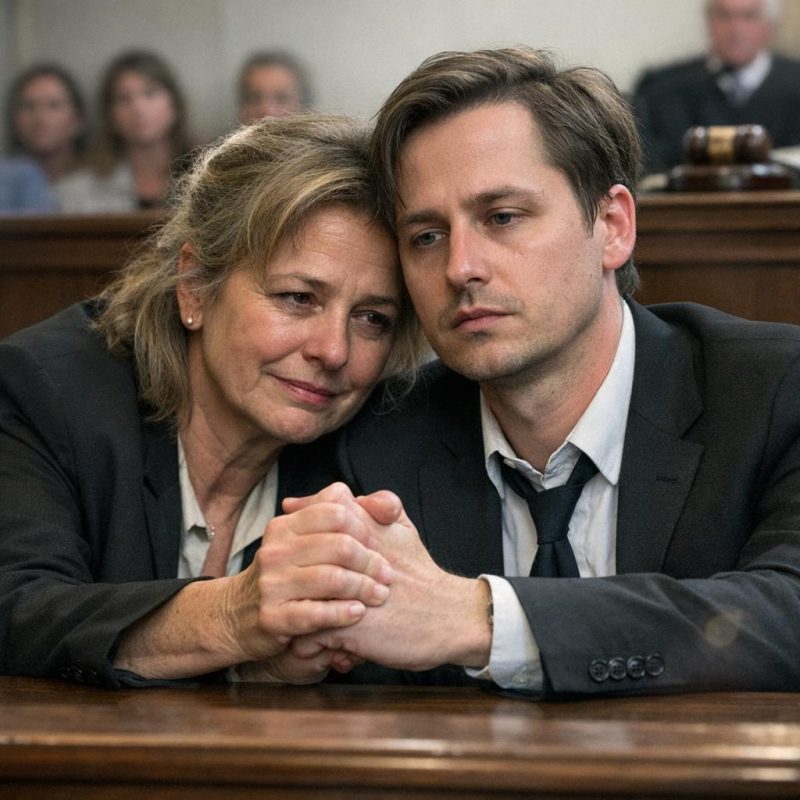 Image by RM AI
Federal Charges
I thought the civil case was the end of it. We'd won, the victims had their compensation, and Trent was financially destroyed. Justice served, right? But two weeks later, I got a call from the plaintiff's attorney telling me to turn on the news. There he was—my father's former golden boy—being led out of his apartment in handcuffs. Federal prosecutors had been building a case the entire time, and they'd just announced criminal charges against Trent and seventeen others in his network. Conspiracy to violate civil rights. Wire fraud for the fake credit applications. Even RICO charges because apparently this thing was so organized it qualified as racketeering. The press conference was surreal. The US Attorney stood there talking about systemic discrimination as a criminal enterprise, about how nobody was above the law regardless of their sales numbers. They'd flipped three of Trent's disciples who testified about the 'system' in exchange for lighter sentences. The whole operation was bigger and uglier than even I'd imagined. And here's the thing that made it real: Trent was facing up to fifteen years in prison if convicted on all counts. Not a settlement. Not a fine his family could write a check for. Actual prison time.
 Image by RM AI
New Policies
My father didn't wait for the criminal trial to finish. Within a month of the civil verdict, he'd implemented sweeping changes across every single dealership in his network. Mandatory respect and bias training for all staff—and I mean real training, not some video you could sleep through. Anonymous complaint systems that went directly to an outside firm, not internal HR. Diverse hiring practices with actual accountability metrics. Secret shopper programs where people of different backgrounds and appearances would test how they were treated. He even changed the commission structure so salespeople couldn't just cherry-pick who they thought would spend the most. It was everything I'd wanted to see years ago, and it was happening because he'd finally been forced to look at what he'd enabled. Then he did something that surprised me: he called and asked if I'd consult on the new policies, help review them from an insider's perspective. For months I'd been so angry at him, so convinced he'd chosen his business over basic human decency. But hearing the exhaustion and genuine regret in his voice, seeing the actual changes instead of just promises—something shifted. So for the first time since this whole nightmare started, I took a breath and said yes.
 Image by RM AI
Respect Earned
Six months later, I walked back into that same dealership where this whole thing had started. But this time I wasn't there to prove anything. I was trading in my red convertible for a family SUV because Tyler and I were expecting, and we needed something practical. Something with space for a car seat and strollers and all the chaos that was coming. I won't lie—walking through those doors again made my stomach flip. But everything felt different. The atmosphere, the energy, even the layout had changed. And you know who greeted me? Marcus. Remember him—the guy who'd been working there when Trent ruled the place, who'd seemed uncomfortable but never quite brave enough to speak up? He was the new showroom manager now. And here's what got me: he treated me exactly the same way he treated the elderly couple looking at sedans and the young guy in construction gear checking out trucks. No judgment, no assumptions, just genuine respect and attention. We talked about safety ratings and fuel efficiency, and he congratulated me on the baby without a single weird comment. As I drove off the lot in my sensible new SUV, watching Marcus help that construction worker in the rearview mirror, I realized this was what actual change looked like—not perfect, but real. Not because someone had walked in wearing work clothes to teach them a lesson, but because people had finally decided that everyone who walked through that door deserved the same basic human dignity.
 Image by RM AI
KEEP ON READING

20 Greek Gods We Don't Often Talk About
Step Aside, Zeus. Greek mythology isn’t only about Zeus and…
By Elizabeth Graham Jan 16, 2026
10 Historic Courtship Practices That Should Be Brought Back &…
Old-School Dating Was a Mix of Charming & Unhinged. Historic…
By Emilie Richardson-Dupuis Jan 20, 2026
Legendary Tales: 20 Most Fascinating Mythical Creatures from Folklore
Mythological Beasts. Stories about mythical creatures endure for a simple…
By Christy Chan Jan 16, 2026
Pooches Of The Past: Extinct Dog Breeds
Unknown authorUnknown author on WikimediaDogs have been showing up in…
By Elizabeth Graham Jan 27, 2026
The 20 Craziest Silent Films Ever Made
When Silence Let the Madness Speak. Silent cinema didn’t just…
By Chase Wexler Jan 5, 2026
20 Pieces Of Medieval Battle Gear That’ll Give You Nightmares
Tools Built To Crush, Pierce, And Finish The Job Up…
By Cameron Dick Jan 30, 2026