


I Walked Down the Aisle Alone After My Parents Chose My Sister's Brunch Over My Wedding—Then I Cut Them Off Completely
I Walked Down the Aisle Alone After My Parents Chose My Sister's Brunch Over My Wedding—Then I Cut Them Off Completely
The Morning of Everything
I woke up at six on my wedding day and actually felt hopeful. I know that sounds naive now, but you have to understand—my parents had promised. They'd said it three times in three separate phone calls. 'We'll be there, Claire. Of course we'll be there.' My mom had even texted me a photo of her dress the week before. David was still asleep beside me in our hotel room, and I just lay there watching the ceiling fan turn, imagining my dad walking me down the aisle. I'd pictured it so many times. All those other moments they'd missed—my college graduation, my promotion party, that time I ended up in the ER with appendicitis—those were different, I told myself. This was my wedding. Even they wouldn't miss this. I got up quietly and started getting ready, and for once, I let myself believe everything would be okay. The makeup artist was coming at eight. My bridesmaids would arrive at nine. Everything was on schedule. Then my phone rang at 7:42 AM, and I saw my mother's name on the screen.
 Image by RM AI
The Voicemail
I didn't answer. I just stared at the screen until it went to voicemail, and something in my chest already knew. David stirred behind me. 'Who's calling this early?' he mumbled. I waited thirty seconds, then played the message on speaker. My mother's voice was breathless, rushed, apologetic in that performative way I'd heard a hundred times before. 'Honey, I'm so sorry, but Maya's kitten got out and it's been hit by a car and she's absolutely hysterical, we're at the emergency vet right now, and your father's trying to calm her down but you know how she gets, and we just can't leave her like this, she needs us, you understand, don't you? You're so strong, Claire, you'll be fine, David's family will be there, we'll make it up to you, I promise.' The message ended. David was sitting up now, fully awake, staring at me. I didn't cry. That's the thing that surprised me most—I'd cried over smaller disappointments before. But right then, I just felt cold. Clear. Like I was seeing something I'd refused to look at directly for thirty years. I deleted the voicemail without replying and looked at myself in the mirror—something inside me had gone very still.
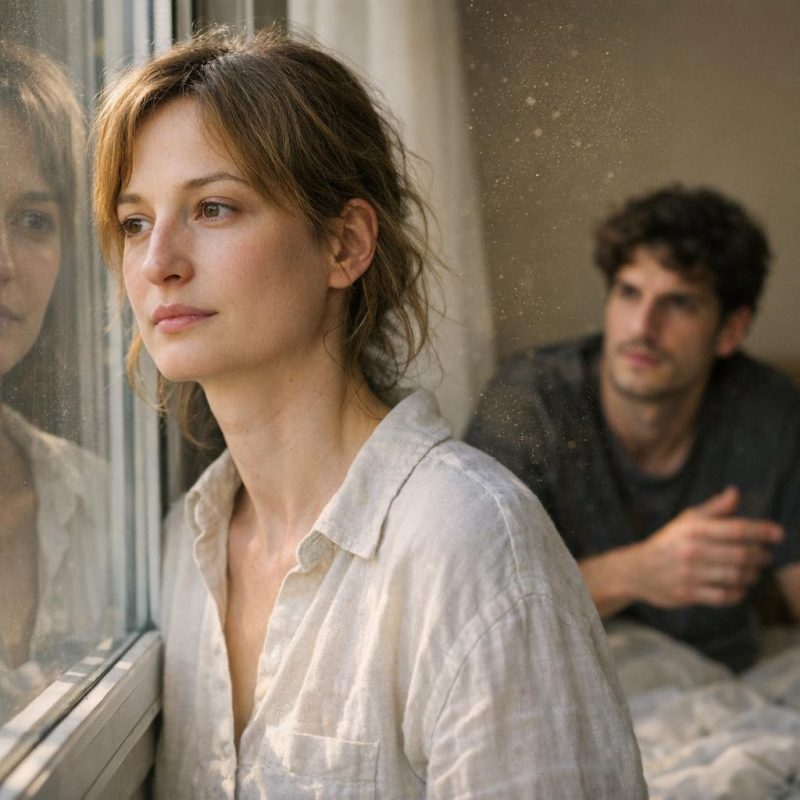 Image by RM AI
Walking Alone
David offered to have his father walk with both of us, but I said no. I wanted to do it alone. I know that sounds dramatic, but I needed everyone to see me walk down that aisle by myself. My bridesmaids kept asking if I was okay, and I just smiled and said my parents had a family emergency. Which was technically true. Maya's emergencies always qualified as family emergencies in our house. The church was full. David's entire extended family had flown in from Montreal. My cousins were there. My college friends. Everyone I'd invited showed up except the two people who were supposed to matter most. When the music started, I held my bouquet tight and walked. I didn't look at the empty seats in the front row. I looked at David, waiting for me at the altar with this expression like I was the only person in the world who mattered. And you know what? In that moment, I was okay. I said my vows. I meant every word. We kissed, and people cheered, and for a little while I actually forgot. As I walked back down the aisle as Mrs. Chen, my phone buzzed in Rachel's purse with a notification I would see later.
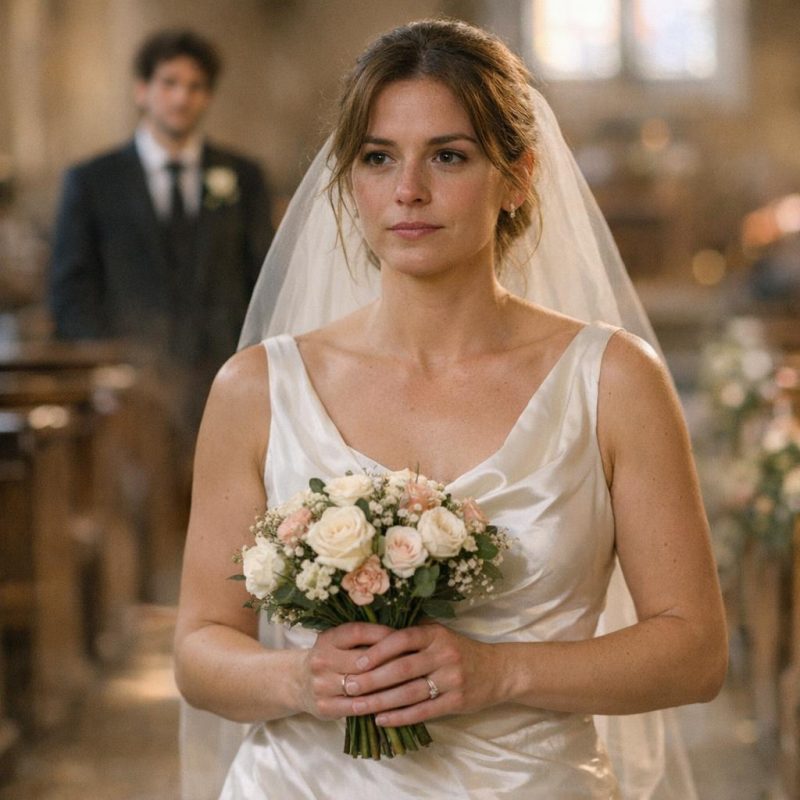 Image by RM AI
The Photo
The reception was beautiful. David's mom had helped coordinate everything, and the venue looked exactly how I'd imagined. We did our first dance. We cut the cake. I was genuinely happy, or at least I was doing a convincing job of pretending. Around nine PM, I finally checked my phone. Rachel had been holding it for me, and when she handed it back, there were forty-seven notifications. Most were congratulations messages. But right at the top was an Instagram alert: Maya had tagged me in a post. I opened it without thinking. The photo loaded slowly, and I remember that delay—those three seconds where I could still pretend everything was fine. It was my parents and Maya at some trendy brunch place downtown. Mimosas on the table. Sunshine streaming through floor-to-ceiling windows. My mother was laughing. My father had his arm around Maya. They looked relaxed. Happy. Celebratory, even. The timestamp said 2:47 PM—right when I was saying my vows. I zoomed in on the photo, looking for the kitten, for any sign of the emergency. There was no kitten in the photo—just mimosas, sunshine, and my sister's caption calling herself 'the Queen.'
 Image by RM AI
What Rachel Saw
I must have made a sound, because Rachel appeared at my elbow immediately. 'What's wrong?' she asked, and I couldn't even speak. I just handed her my phone. I watched her face as she looked at the photo, read the caption, checked the timestamp. Her expression went from confused to horrified in about five seconds. 'Claire,' she whispered, 'is this from today?' I nodded. She scrolled through the other photos Maya had posted—six in total, all from the same brunch. There were close-ups of their food, a selfie of Maya and our mom with matching flower crowns, a boomerang of champagne glasses clinking. Rachel kept shaking her head like she was trying to make sense of it. David was across the room talking to his uncle. He looked so happy. I wanted to keep him in that happiness for just a little longer. Rachel grabbed my hand. 'They said they were at an emergency vet?' Her voice was tight with anger I rarely heard from her. I nodded again. She looked back at the phone, then at me, and her next words came out in a whisper: 'They chose that over you?'
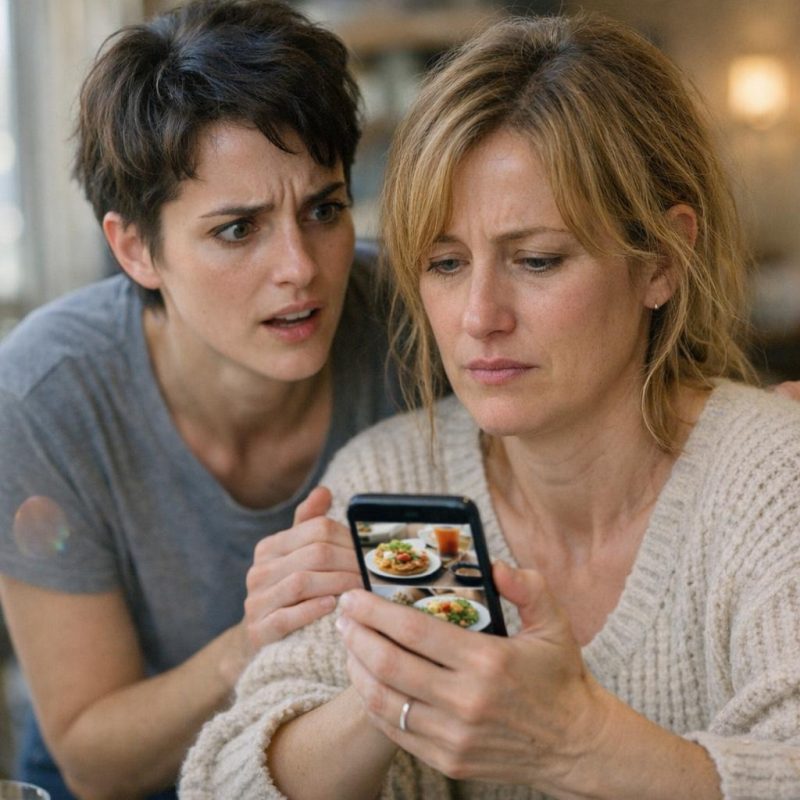 Image by RM AI
The Decision to Silence
Rachel wanted me to call them right then. She actually had my phone in her hand, ready to dial. But I took it back and said no. For the first time in my life, I wasn't going to chase after them for an explanation. I wasn't going to give them the chance to spin this into something understandable. Because here's what I'd realized standing there in my wedding dress, holding evidence of their betrayal: they'd made a choice. A clear, deliberate choice. And if I called them now, they'd just give me another version of the emergency vet story, maybe add some details about how traumatized Maya was, how I was being selfish for making my wedding day about me. I'd heard variations of that script my entire childhood. I told Rachel I was fine. I told her I wanted to enjoy the rest of my reception. And I did—I danced with David, I laughed with his cousins, I gave a speech thanking everyone for coming. Later that night, back in our hotel room, I finally told David everything. He held me and said all the right things, but I could see the anger in his eyes, the protectiveness. That night, I made a conscious choice not to call my parents. Instead, I turned off my phone and focused on my husband—the only person who had actually shown up.
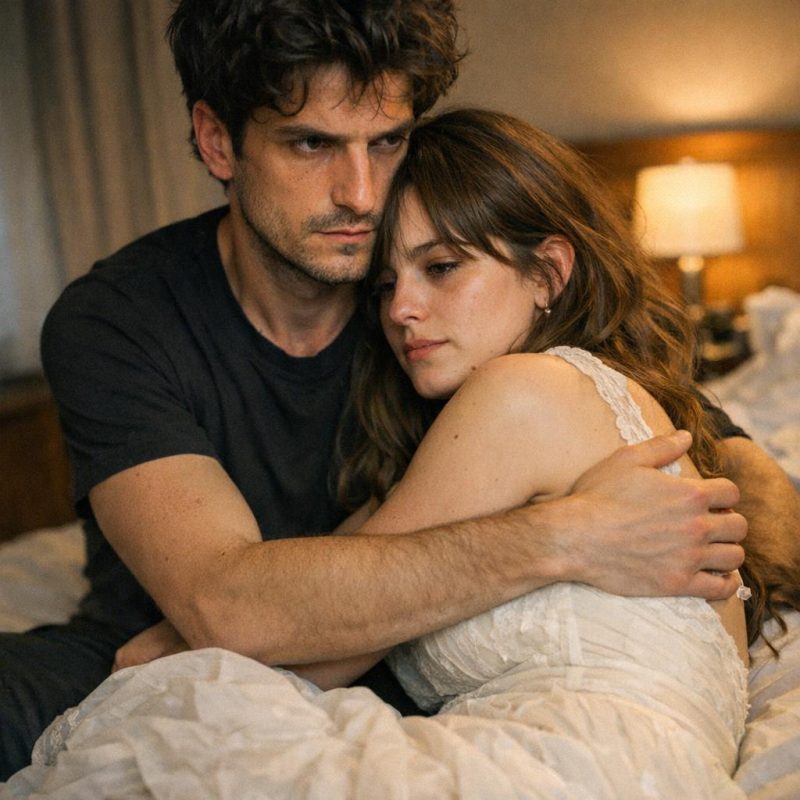 Image by RM AI
Honeymoon Silence
We flew to Costa Rica the next morning. David had planned this whole adventure—zip-lining, beach time, a cooking class in a tiny village. I'd promised myself I wouldn't think about my family, and for the most part, I succeeded. My phone stayed off. I didn't check email. I didn't look at social media. We hiked through rainforests and swam in waterfalls and ate fresh fish at sunset, and it was the most present I'd felt in years. David never pushed me to talk about it, but I knew he was waiting for me to decide what came next. On our last night there, we were sitting on our balcony watching the ocean, and he asked, 'Are you ready to deal with them when we get back?' I'd been expecting this question. I'd even prepared an answer—something mature about setting boundaries and having a calm conversation. But when I opened my mouth, different words came out. 'I don't think I am,' I said, and even as I said it, I realized I meant something bigger than just 'not yet.' On the last day, David asked if I was ready to deal with them, and I said something that surprised them both: 'I don't think I am.'
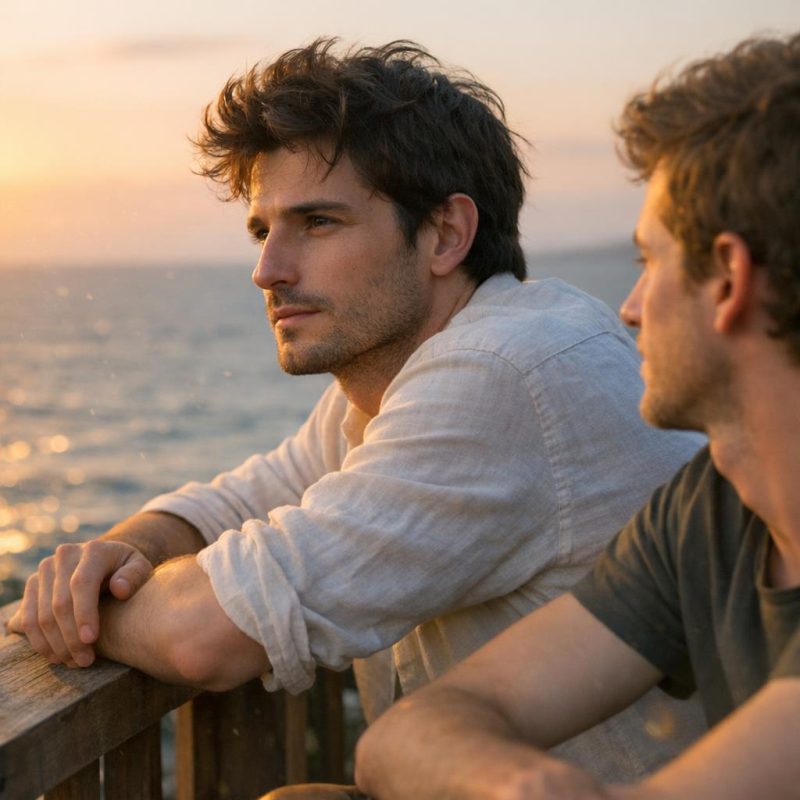 Image by RM AI
Grandmother's Legacy
On the flight home, I started thinking about money. Specifically, about the trust fund my grandmother Patricia had left me when she died five years ago. She'd been the only adult in my family who ever really saw me, and she'd left me a hundred and thirty thousand dollars with a note that said, 'For your future, Claire-bear. Build something beautiful.' I hadn't told my parents about it at first. But then my dad lost his job, and they were going to lose the house, and Maya was drowning in credit card debt from her 'entrepreneurial ventures,' and my mom called crying, and I just... I started writing checks. A little here for the mortgage. Some there for Maya's bills. Then more for their property taxes. More for Maya's car payment. More for the medical bills my dad's insurance didn't cover. I told myself I was helping family. That's what the money was for, right? Building something beautiful. Except I'd never told them where the money was coming from. And in five years, not once had they said thank you. Instead, for five years, Claire had been quietly using it to pay her parents' mortgage and Maya's debts—money they never thanked her for.
 Image by RM AI
The Messages
When we got back to the apartment, I plugged in my phone for the first time since the reception. It lit up like a Christmas tree. Thirty-seven messages from my parents. I stood there in the kitchen, still wearing my travel clothes, and started scrolling. 'Claire, send us photos!' 'Your father wants to see pictures of you in the dress.' 'Maya said the flowers looked beautiful, can you send some close-ups?' 'Did you get professional shots yet?' My mom had sent a string of texts asking if I could post more on social media because her friends were asking. My dad wanted to know if the photographer captured him dancing with me—except he hadn't been there to dance with me. David came up behind me and looked over my shoulder. 'Jesus,' he muttered. I kept scrolling. Message after message. Demands and requests and casual mentions of 'your special day' like they'd been part of it. Like they hadn't chosen bottomless mimosas and my sister's hangover over watching me get married. Not one of them said 'I'm sorry' or 'we messed up' or even acknowledged they'd missed the actual ceremony.
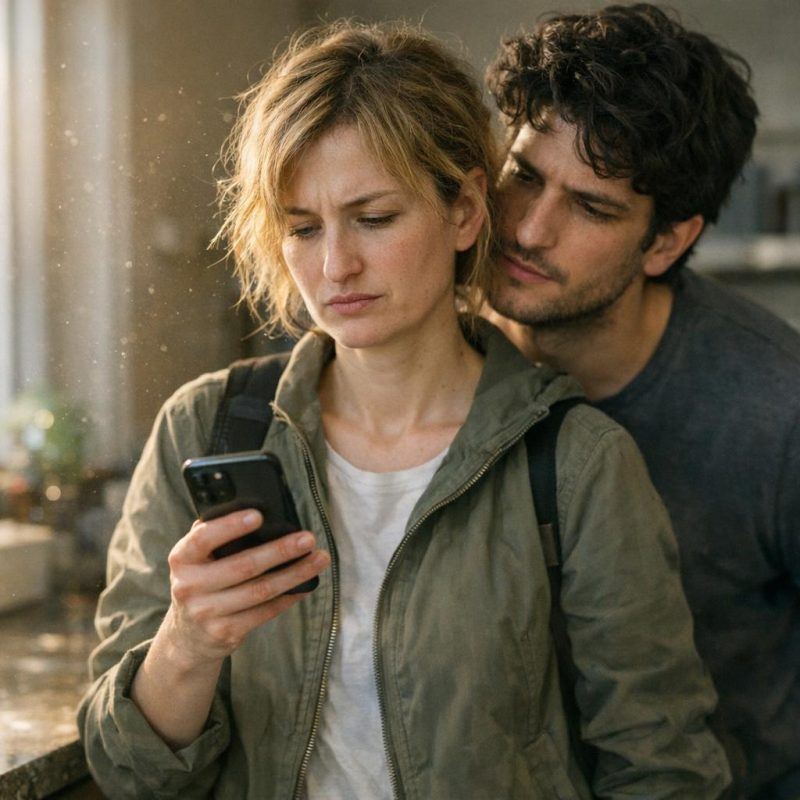 Image by RM AI
David's Offer
That night, David sat down next to me on the couch. He'd been quiet since we looked at the messages, which wasn't like him. 'Remember that job offer I got?' he said finally. 'The one in Seattle?' I remembered. Six months ago, his firm had wanted to transfer him to open a new branch. Better salary, better title, the kind of opportunity you don't turn down. Except I had turned it down. Well, I'd asked him to turn it down. Because how could I leave when my parents needed me? When Maya was always one crisis away from disaster? When I was the only thing holding the family together? 'They said the position's still open if I want it,' David continued. He wasn't looking at me. He was staring at his hands. 'We'd have to move in the next two months.' I opened my mouth to say what I'd always said—that I couldn't leave, that my family needed me here, that maybe in a few years when things were more stable. But what came out instead was, 'How soon can we go?'
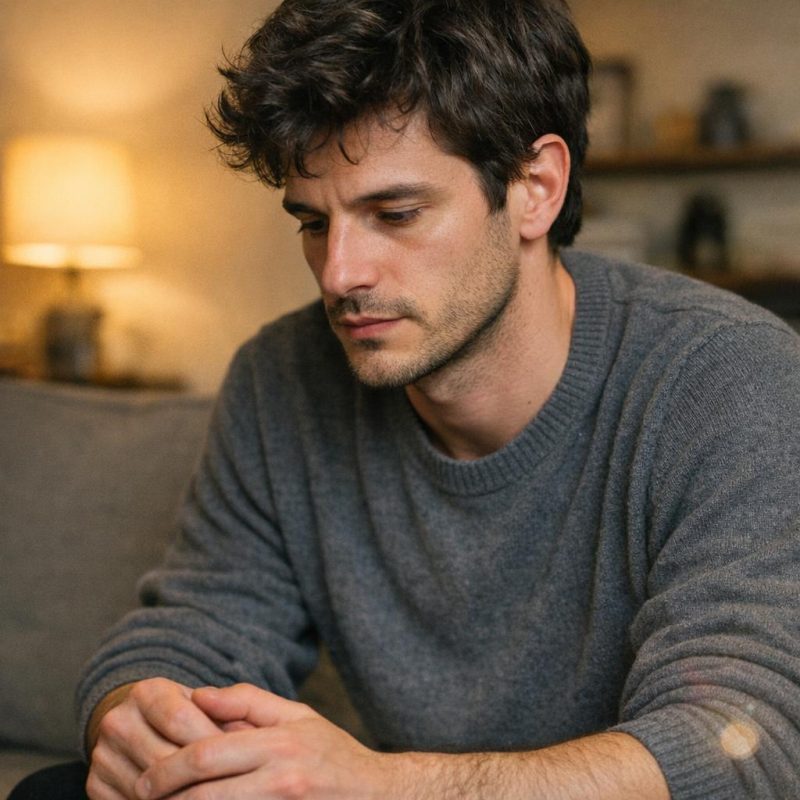 Image by RM AI
Closing the Account
I made the appointment for Tuesday afternoon. Marcus Chen had been my financial advisor since I'd inherited the trust fund, and he knew where every dollar had gone over the past five years. I walked into his office with my shoulders back and my decision already made. 'I want to stop all outgoing payments to my parents and my sister,' I said before I even sat down. 'Everything. The mortgage assistance, the debt payments, all of it. Effective immediately.' Marcus didn't look surprised. He'd probably seen this coming for years. He pulled up the accounts on his screen and started clicking through the automatic transfers I'd set up. 'This will free up about four thousand dollars a month,' he said. 'What would you like to do with it instead?' I thought about the house David and I had never been able to afford because I was too busy funding everyone else's lives. 'I want to use it for a down payment,' I said. 'We're buying a house in Seattle.' Marcus nodded and made a note. Then he asked, almost gently, 'Do your parents know you're doing this?' I smiled for the first time in days. 'They're about to.'
 Image by RM AI
The Screenshot
I sat at my laptop for three hours composing the email. The cursor blinked at me while I tried to find the right words. The first draft was angry—pages of everything they'd done wrong, every time they'd chosen Maya over me, every sacrifice I'd made that went unnoticed. I deleted it. The second draft was pleading—trying to explain how hurt I was, begging them to understand, asking them to see me for once. I deleted that too. The third draft was different. Cold. Clinical. Just facts. I opened my photos and found the screenshot I'd taken of my mom's Instagram story—the one with the mimosas and the sunshine and my sister's face pressed against my mother's cheek. I attached it to the email. Then I wrote three short paragraphs. What I'd done for them financially. What they'd done on my wedding day. What I was about to do next. I read it over six times, taking out every emotion, every plea, every hint that I wanted them to argue or apologize or explain. When I was done, it didn't sound like me at all. It sounded like someone who'd finally stopped hoping her parents would change.
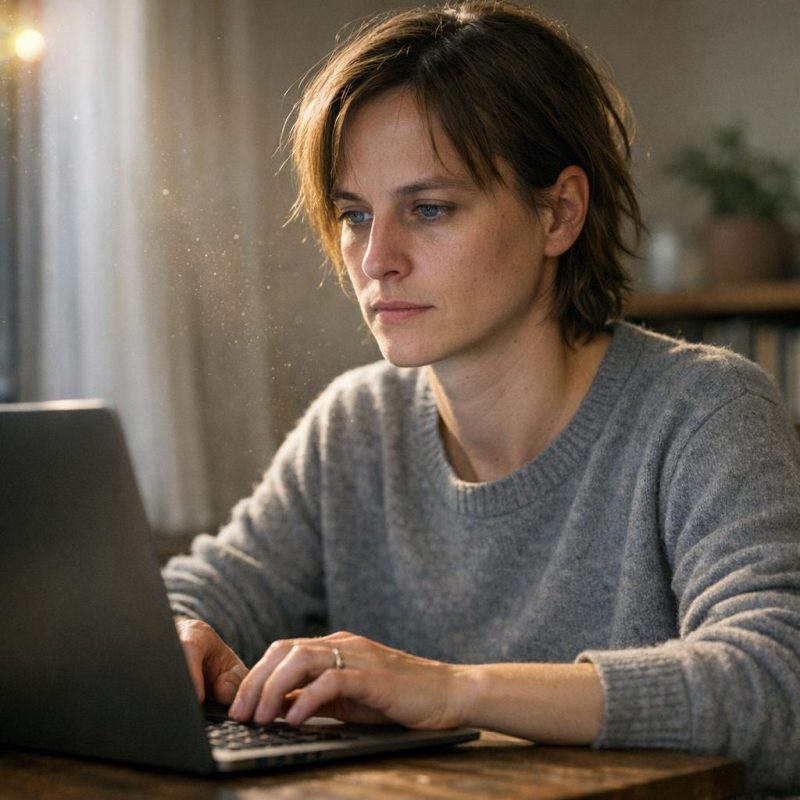 Image by RM AI
The Final Email
The email went out at 9:47 AM on a Wednesday. I'd timed it for after my dad would be at work and my mom would be having her morning coffee, scrolling through her phone. The subject line was just 'From Claire.' Inside, I'd laid it all out. Five years of payments. A hundred and thirty thousand dollars of my inheritance, gone. Their mortgage, their property taxes, their medical bills. Maya's credit cards, her car, her rent that one year she 'needed to find herself.' And then the wedding. The brunch they'd chosen instead. The Instagram photo, attached, showing exactly where their priorities had been. I told them I was done being the backup daughter. Done being the ATM they only remembered when they needed a withdrawal. The trust fund payments had stopped, I wrote, and I was using what was left for David and me. We were buying a house. We were moving to Seattle. And then, before I could second-guess myself, I opened my phone settings and changed my number. The new SIM card was already in my desk drawer. I swapped it out, powered the phone back on, and watched my old life disappear. I didn't wait for their response. I didn't need to hear their excuses. I was already gone.
 Image by RM AI
Marcus the Realtor
Marcus the realtor met us outside a Craftsman bungalow in the Ballard neighborhood. He was in his mid-forties, wore a purple scarf despite the mild weather, and had the kind of enthusiasm that would've annoyed me a month ago but now felt almost infectious. 'You're going to love the backyard,' he promised, unlocking the front door. The house was small—two bedrooms, one bath, nothing fancy. But it had wood floors that creaked in the right way and windows that let in actual sunlight and a kitchen where two people could cook together without bumping elbows. Then Marcus opened the back door, and I saw it. The yard wasn't huge, but it was ours. There was an old apple tree in the corner and enough space for a garden and a little patio where we could have coffee in the mornings. David squeezed my hand. 'What do you think?' he asked. I thought about my parents' house, where I'd spent so many years trying to hold everything together. I thought about always being on call, always being needed for the wrong reasons, always being the solution to someone else's problem. And standing in that backyard in Seattle, I realized something. For the first time in years, I could imagine a future where my decisions belonged to me.
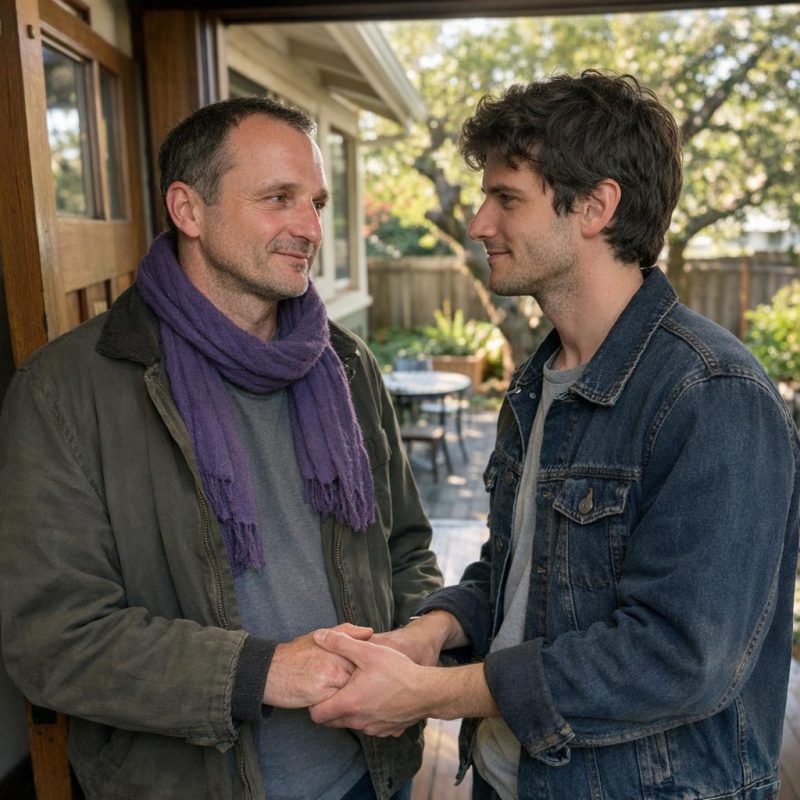 Image by RM AI
The First Week of Silence
A week went by. Then another day. I kept expecting the fallout—angry emails forwarded to my old accounts, messages sent through distant cousins, maybe even my parents showing up at the apartment. But there was nothing. Just silence. David and I packed boxes and toured the Seattle office and planned the logistics of the move. I signed the paperwork for the house. I updated my address with the bank. I went through all the motions of building this new life, and my family just... didn't react. 'Do you think they even read it?' I asked David one night. We were eating takeout on the couch, surrounded by half-filled moving boxes. 'Maybe they don't care enough to respond.' He shrugged, but I could see the concern in his eyes. 'Or maybe they're regrouping.' I didn't know which option bothered me more. Then, at eleven PM on a Friday, David's phone rang. We both stared at it. My mother's name lit up the screen—she'd clearly tried my old number first and somehow gotten his from her contacts. The phone rang and rang in the quiet apartment. David looked at me, waiting for permission. I shook my head. We let it go to voicemail, and I swear I stopped breathing until it finally stopped ringing.
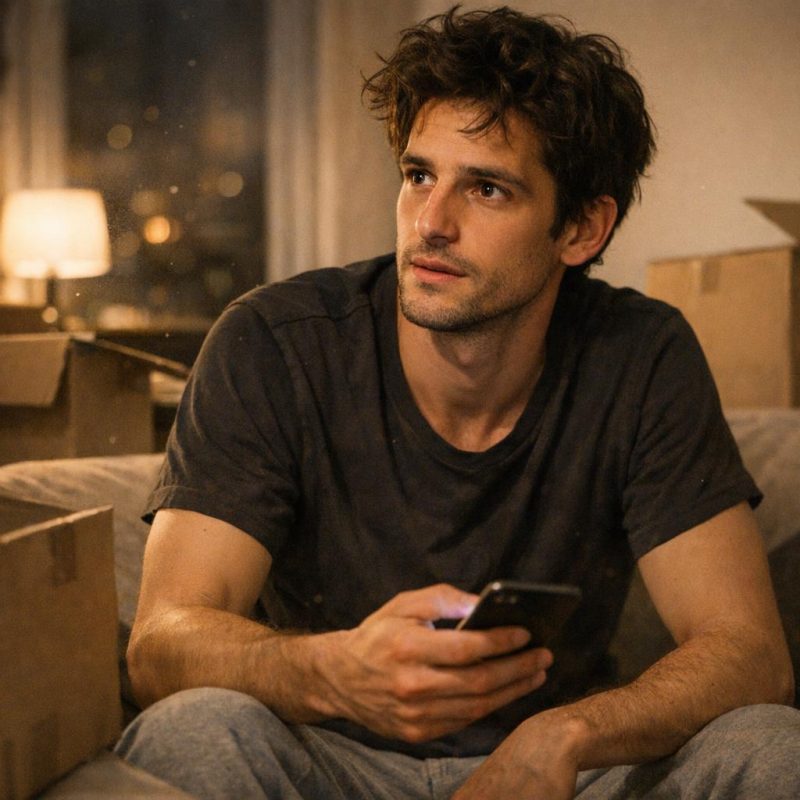 Image by RM AI
The Hysterical Voicemail
David put the phone on speaker, and we listened to the voicemail together. My mother's voice came through choked with sobs, barely coherent. 'David, please, I know Claire changed her number but we need to talk to her, this is an emergency, we're going to lose the house. The bank sent a foreclosure notice and I don't understand why the payments stopped, Claire always took care of it, and your father's beside himself, and Maya's lease is up next month and she can't afford to renew it without help, and I don't know what Claire is thinking, cutting us off like this with no warning, we're family, doesn't that mean anything?' She went on like that for two full minutes. Crying about the money, about the mortgage, about Maya's apartment and their property taxes and how could I do this to them. She talked about everything they were losing, every bill that was coming due, every way my absence was going to ruin their lives. You know what she didn't mention? Not once in that entire hysterical message? The wedding. Not an apology, not an acknowledgment, not even a single word about the day they'd skipped to get drunk at brunch with my sister. Just the money. I looked at David, and he looked at me, and I felt something inside my chest that had been cracked and bleeding for weeks finally seal itself shut.
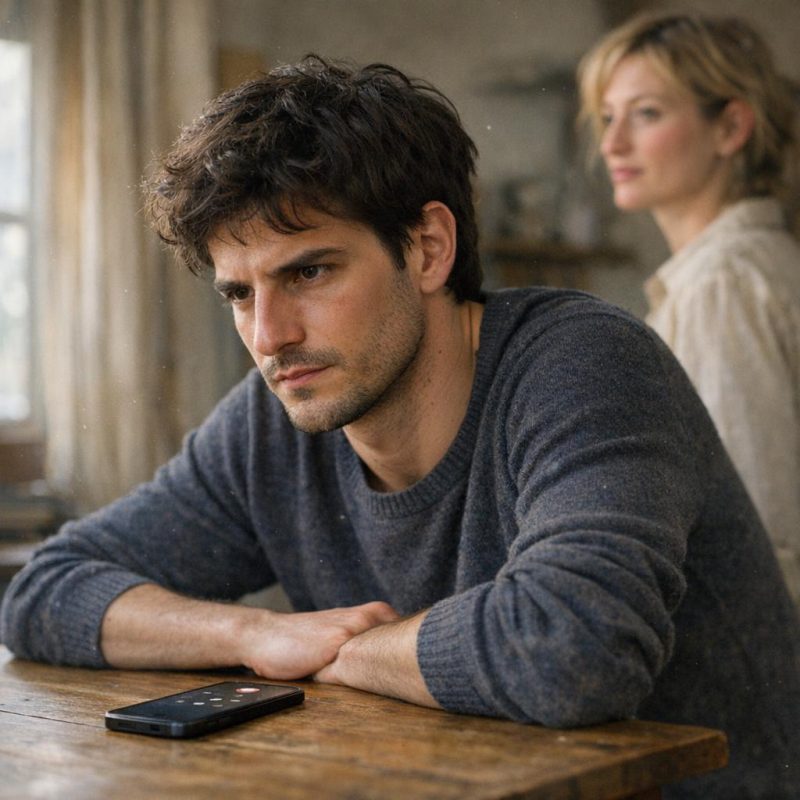 Image by RM AI
The Calls Multiply
Over the next three days, Linda and Robert left eighteen messages on David's phone. We listened to the first few together—more crying, more pleading about bills and foreclosures and how could Claire abandon them like this—but after that, I just couldn't. David would check them when they came in and give me the highlights, which were always the same: money, panic, guilt trips, the whole performance. Not once did they mention the wedding. Not once did they apologize for missing the biggest day of my life. It was all about what I owed them, what they were losing, how selfish I was being. The frequency got more intense too. Sometimes three calls in a single evening, back-to-back-to-back. My mother's voice getting more shrill, my father's getting angrier. They must have figured out that silence wasn't working because on the fourth day, Maya called too. I was in the kitchen when David's phone rang and I saw her name on the screen. For half a second, I wondered if she was finally going to say she was sorry. Then he put it on speaker, and I heard her tone—sharp, entitled, furious. Maya wasn't calling to apologize. She was calling to tell me exactly what she thought of me for cutting off her meal ticket.
 Image by RM AI
Olivia's Warning
I mentioned the harassment to my coworker Olivia during lunch the next day, just venting a little, and her whole face changed. Olivia's in her mid-thirties, brilliant with data analysis, and she'd once told me she hadn't spoken to her parents in six years. She put down her fork and looked at me very seriously. 'Claire, this is what we call an extinction burst,' she said. 'When you cut off a toxic dynamic, the other person escalates. They try harder, louder, meaner—anything to get the response they're used to getting from you.' She'd been through it herself, she explained. Her family had shown up at her apartment, called her workplace, sent letters through mutual friends. It lasted for months before they finally gave up. I felt a chill run through me because I'd thought the voicemails were bad, but Olivia was describing something much worse. 'You need to prepare yourself,' she said quietly. 'They're not going to stop just because you're not responding. In fact, that's exactly why they'll keep going.' She paused, and I could see the weight of experience in her eyes. 'They'll get worse before they give up—if they give up at all.'
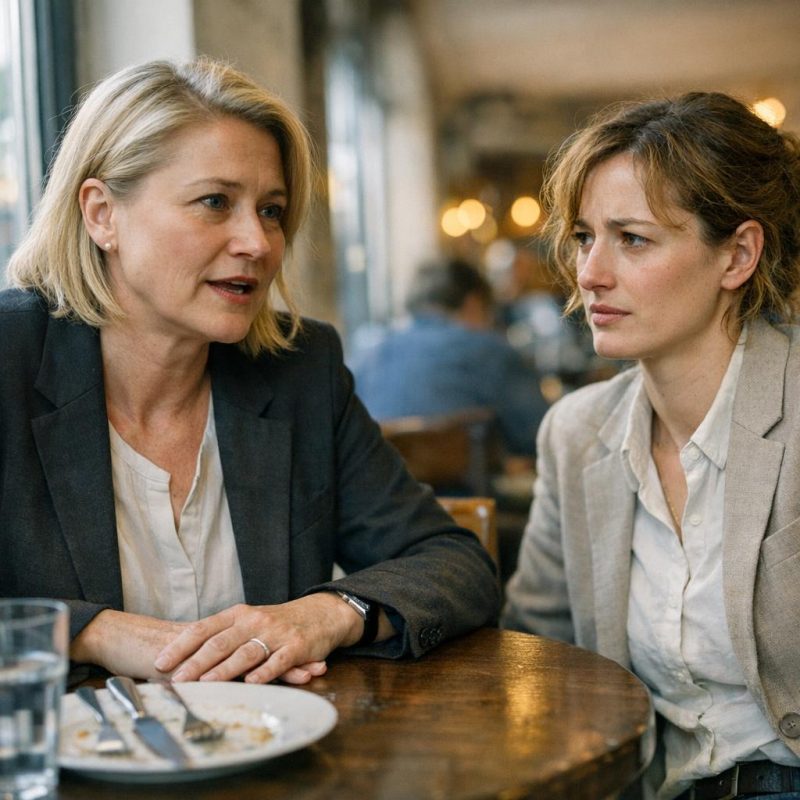 Image by RM AI
The Lawsuit Threat
Two days later, Robert left a voicemail that made my blood run cold. David played it for me that evening, and I listened to my father's voice—clipped, formal, threatening. He said he'd spoken to a lawyer. He said that the money I'd been using to support them had been 'family assets' and that cutting off access without notice constituted theft. He used words like 'fiduciary responsibility' and 'legal recourse' and said they were prepared to take action if I didn't come to my senses immediately. I sat there on the couch feeling dizzy, wondering if he was right, if somehow I'd screwed this up and they actually had a case. I'd been so sure the trust fund was mine, but what if there was some clause I'd missed, some legal technicality I didn't understand? The panic lasted about two hours. Then I called my financial advisor first thing the next morning and explained the situation. She pulled up my account, reviewed the trust documentation, and started laughing. Not unkindly—more like she couldn't believe someone had tried that line. 'Claire,' she said, 'that money has been legally yours since you turned twenty-five. They have absolutely no claim to it whatsoever.'
 Image by RM AI
The Move
The job offer in Seattle came through on a Thursday, and by Sunday night, Claire and David had packed up their entire apartment. We'd been talking about relocating for months anyway—David's company had a branch there, and I could work remotely—but the harassment made the decision urgent. We hired movers, broke our lease early, and just did it. Three days of chaos: bubble wrap and boxes and labeling everything while my phone buzzed constantly with calls I didn't answer. My parents didn't know we were leaving. I hadn't told them about the job interviews or the apartment search or any of it. Why would I? We weren't speaking. The moving truck pulled away from our building at dawn on Monday, and I sat in the passenger seat of our car watching the city disappear in the rearview mirror. David reached over and squeezed my hand. I felt exhausted, wrung out, but also something like relief. We were really doing this. Putting two thousand miles between us and them. As we merged onto the highway heading west, I realized I had no idea how long it would take for my parents to notice I was actually, physically gone—or if they'd even care about anything other than the money.
 Image by RM AI
The New House
Our new house in Seattle had a backyard. Not a huge one, but enough for a small garden and a maple tree that was just starting to show fall colors. I stood out there on our second morning, coffee in hand, looking at the fence line and the neighbor's cat sunning itself on the deck next door. The air smelled different here—cleaner, damper, like rain even when it wasn't raining. I kept waiting for the guilt to hit me, for that familiar ache of wondering if I'd done the wrong thing, if I was being too harsh, if I should just call them and smooth things over. But it didn't come. Instead, I felt light. Untethered in a good way, like I'd been carrying something heavy for so long I'd forgotten what it felt like to stand up straight. I took a deep breath and actually smiled. This was going to be okay. We were going to be okay. Then David opened the back door and called my name, and something in his voice made my stomach drop. 'Claire,' he said, 'someone's at the front door.' I turned and looked at him through the glass, and I knew from his expression that it wasn't a neighbor with a welcome basket.
 Image by RM AI
Aunt Helen's Visit
The visitor was Aunt Helen, my mother's older sister, standing on our porch with a suitcase and an apologetic smile. I hadn't seen her in almost two years—she lived in Phoenix and mostly kept to herself—but there she was, looking travel-worn and determined. 'I'm so sorry to just show up like this,' she said. 'Your mother gave me your address. I flew in this morning because I thought maybe I could help mediate this situation before it gets any worse.' David and I exchanged a look, but I let her in because Helen had always been kind to me, and I couldn't imagine she knew the whole story. We sat in our barely-furnished living room, boxes still stacked against the walls, and she talked about how worried everyone was. How Linda and Maya were 'devastated' by my sudden silence. How the family was falling apart and couldn't I please just talk to them, work this out like adults? She said it all so earnestly, like this was just a misunderstanding that could be solved with a phone call. So I asked her directly: 'Did my mother tell you why I cut them off?' Helen nodded. 'She said you just stopped responding one day, out of nowhere.' I waited. 'Did she mention my wedding?' Aunt Helen looked confused, her eyebrows drawing together. 'Your wedding?'
 Image by RM AI
The Other Side of the Story
I watched Helen's face very carefully as I explained. How my parents had RSVP'd yes, how I'd paid for their hotel rooms, how they'd promised to be there. How they'd skipped the entire ceremony and reception to get drunk with Maya at some brunch spot two hours away. Helen's expression shifted from confusion to disbelief to something close to horror. 'Wait,' she said slowly. 'Linda told me you eloped. She said it was a tiny thing at a courthouse and you didn't invite anyone.' I actually laughed at that, sharp and bitter. 'We had ninety guests, Aunt Helen. It was at a vineyard. David's entire family was there. My best friend walked me down the aisle because my parents were too busy getting mimosas with my sister.' Helen's mouth opened and closed. She looked genuinely shaken. So I pulled out my phone and showed her the Instagram photo—Maya's champagne glass, my mother's laughing face, the time stamp that proved exactly when and where they'd been. I watched the color drain out of Helen's cheeks as she stared at the screen. She looked up at me, then back at the photo, then at me again. 'Oh my God,' she whispered. 'Claire, I had no idea. She didn't tell me any of this.'
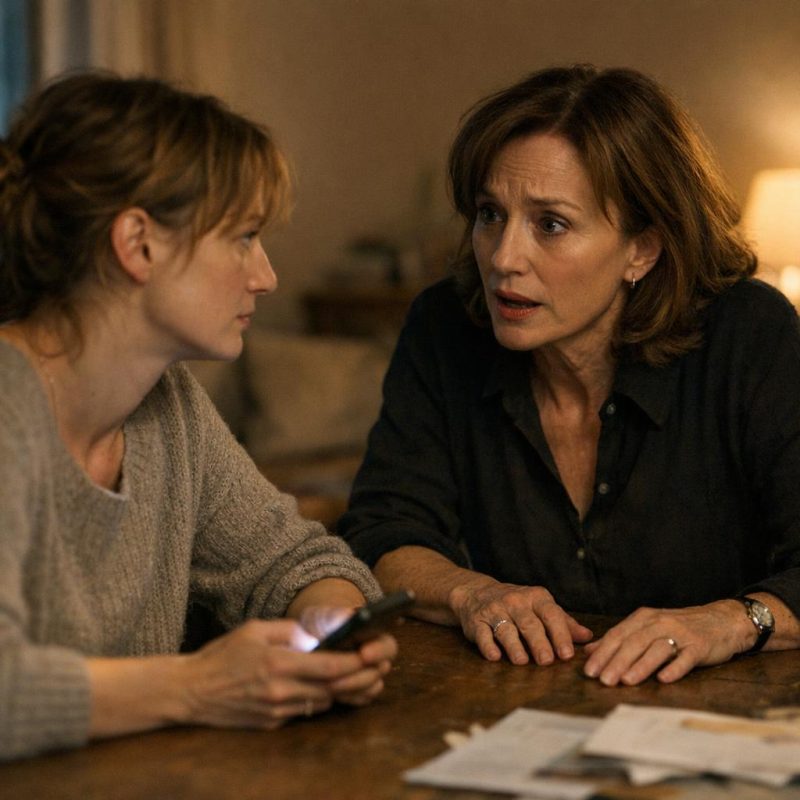 Image by RM AI
Helen's Apology
Aunt Helen put her face in her hands for a long moment. When she looked up, there were tears in her eyes. 'I am so, so sorry,' she said. 'I wouldn't have come here if I'd known the truth. I thought—God, I don't know what I thought. That you were just being stubborn about money or something. Not that they'd missed your wedding.' She apologized three more times before she left, promising she'd get a hotel and fly back to Phoenix in the morning. But as she stood at the door, she paused and turned back to me. There was something in her expression I'd never seen before—something tired and sad and knowing. 'Your mother has always rewritten history to make herself the victim,' she said quietly. 'Even when we were kids. I should have known she'd do it to you too.' She squeezed my hand, told me I'd done nothing wrong, and walked back to her rental car. I closed the door and leaned against it, feeling David's arm come around my shoulders. Helen's words kept echoing in my head: always rewritten history, always made herself the victim. I wondered how many other stories my mother had changed over the years, how many times she'd lied to make me look like the bad guy.
 Image by RM AI
The First Sunday
David and I set up our little table in the backyard that first Sunday morning. We'd bought muffins from the bakery near our new place, made coffee in our brand-new French press, and I'd even picked up fresh flowers at the farmer's market the day before. It was exactly the kind of quiet, normal brunch I'd always wanted. The sun was warm. The coffee was perfect. David kept making these terrible puns about our neighbor's garden gnome collection, and I actually laughed without checking my phone every thirty seconds. No one called. No one showed up unannounced with a crisis that needed immediate attention and money. No one guilt-tripped me about choosing my husband over family obligations. We just sat there, eating our muffins, talking about whether we should plant tomatoes or herbs in the little garden bed by the fence. It should have felt peaceful. It did feel peaceful, objectively. But I kept waiting for the other shoe to drop, for my phone to buzz with some emergency that would prove this peace was temporary. My shoulders were tense. My jaw was clenched. I realized I'd been bracing for a crisis that wasn't coming—and I had absolutely no idea how to just relax and accept that this was allowed to be easy.
 Image by RM AI
Maya's Email
Maya's email showed up in David's inbox three days later. The subject line was just: 'How could you?' David read it first while I was making dinner, and I saw his face change before he even called me over. She'd written this long, rambling message about how she 'never thought David would enable this kind of cruelty,' how I was 'punishing the whole family for one mistake,' how our parents were 'devastated and confused' about why I was being so vindictive. One mistake. That's what she called it. Missing my wedding, lying to extended family about it, trying to manipulate me into giving them money afterward—all of it was just 'one mistake' that I was apparently blowing out of proportion. There was no apology anywhere in the email. Not a single word acknowledging what they'd actually done. Instead, she spent four paragraphs explaining why I was the problem: too sensitive, too stubborn, too willing to throw away family over nothing. She signed it 'your heartbroken sister' like she was the victim in all this. I scrolled back up to the subject line and laughed, actually laughed, because the lack of self-awareness was almost impressive. The email contained no apology, only accusations that I was 'punishing the whole family' for one mistake.
 Image by RM AI
The Debt Revelation
Rachel forwarded me a screenshot two weeks later without any context, just: 'Thought you should see this.' It was a mutual friend's Facebook post—someone who apparently worked in the court system—mentioning that Maya was being sued by three different creditors. The post was vague enough not to be gossip but specific enough that I could Google the case numbers and confirm it. Two credit card companies and a personal loan servicer, all seeking judgments for unpaid debts totaling over forty thousand dollars. I sat there staring at my laptop screen, doing the math in my head. Maya's fancy brunches, her designer handbags, her renovated kitchen—all of it had apparently been built on credit, and my trust fund payments had probably been covering the minimum payments for years. Without that monthly cushion, the whole house of cards was collapsing right on schedule. I waited for the guilt to hit, for that familiar tug of family obligation to make me feel responsible for fixing this. I waited for the impulse to call David and ask if we should help. But nothing came. I just felt cold, detached curiosity, like I was reading about a stranger's financial problems. I realized that without her access to my trust fund payments, Maya's entire lifestyle was imploding—and I felt absolutely nothing.
 Image by RM AI
The Foreclosure Notice
Rachel's next message came exactly one week later: 'Your parents are losing the house.' She'd seen the foreclosure notice posted publicly—apparently it had been in the works for months. I read the message twice, then showed it to David without saying anything. He looked at me carefully, like he was trying to gauge my reaction before offering his own. 'Do you want to help them?' he asked quietly. 'No,' I said. The word came out so fast it surprised us both. I didn't have to think about it, didn't have to wrestle with it or weigh my options or consult my conscience. Just no, clean and simple, like someone had asked if I wanted a food I was allergic to. David nodded slowly, and I saw something that looked like relief cross his face. 'Okay,' he said. 'Just wanted to make sure.' We went back to watching our show, and I realized my hands weren't even shaking. A year ago, this news would have sent me into a panic spiral. I would've been on the phone immediately, asking how much they needed, figuring out payment plans, sacrificing our own stability to keep theirs intact. But now? I felt nothing except a weird sort of finality. David asked if I wanted to help them, and I said no so quickly it surprised us both.
 Image by RM AI
Therapy
I started seeing Dr. Brennan three weeks after Aunt Helen's visit. She specialized in family estrangement, which was apparently common enough to be its own therapeutic niche. Her office was small and calm, decorated in soft grays and blues that didn't demand anything from you. She didn't open with the usual therapist questions about my childhood or my marriage. Instead, she asked me to tell her why I'd come, and I found myself talking for twenty minutes straight about weddings and brunches and trust funds and the look on Aunt Helen's face when she realized she'd been lied to. Dr. Brennan listened without interrupting, just nodding occasionally and taking notes. When I finally stopped talking, she was quiet for a moment, like she was choosing her words carefully. 'I want to ask you something,' she said, 'and I want you to really think about the answer.' I nodded, expecting some question about my feelings or my boundaries or my childhood attachment patterns. Instead, she leaned forward slightly and looked me right in the eye. 'When did you realize you were funding your own mistreatment?' The question hit me like a physical thing, and I couldn't answer it because I was still trying to process the fact that someone had finally named what I'd been doing all these years.
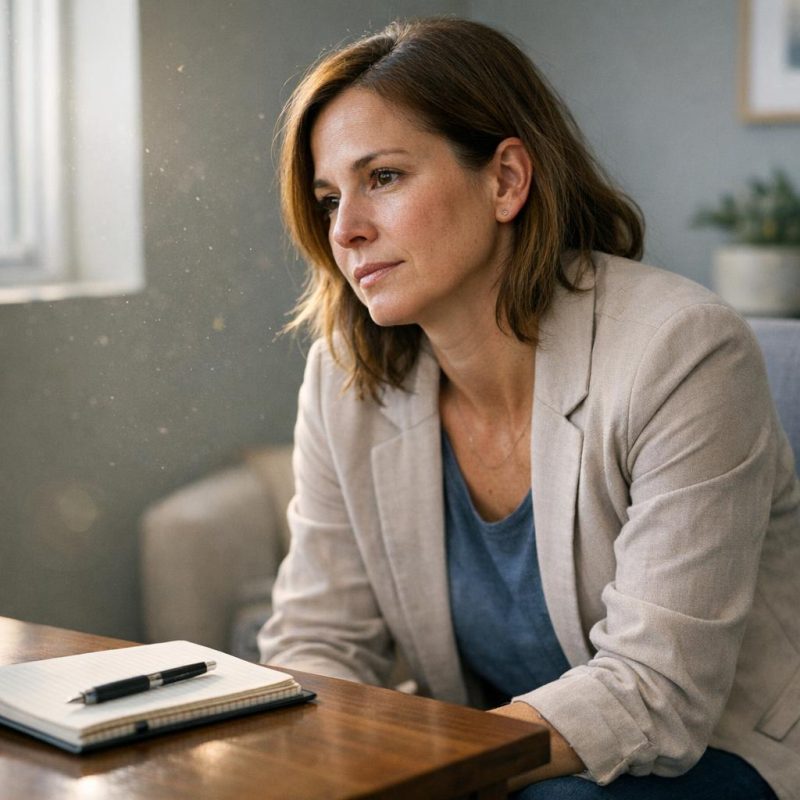 Image by RM AI
The Gift
The package arrived on a Tuesday afternoon. I didn't recognize the return address, but it was postmarked from my parents' city, so I opened it carefully, half-expecting some kind of guilt-trip care package. Inside was my grandmother's jewelry—the pieces she'd left me in her will, the ones my mother had been 'keeping safe' for me for the past six years. The garnet earrings, the silver bracelet with the turquoise stones, the little cameo pin my grandmother wore every Sunday. There was a note tucked between the velvet boxes, written in Maya's handwriting: 'Maybe this will remind you what family means. Some things are more important than grudges.' I stared at the note for a long time, trying to figure out if this was supposed to be an olive branch or another manipulation. The jewelry was beautiful, genuinely meaningful, but something about the whole thing felt wrong. How had she gotten my new address? David and I had been so careful. We'd updated our information with the bank, the insurance company, our employers—but we specifically hadn't shared it with my family. I looked at the package again, at the neat printing of my new address that I'd never given them. Maya had tracked me down somehow, and I suddenly felt exposed in a way I hadn't since moving. The note said 'maybe this will remind you what family means,' but all I could think about was how Maya had gotten my address in the first place.
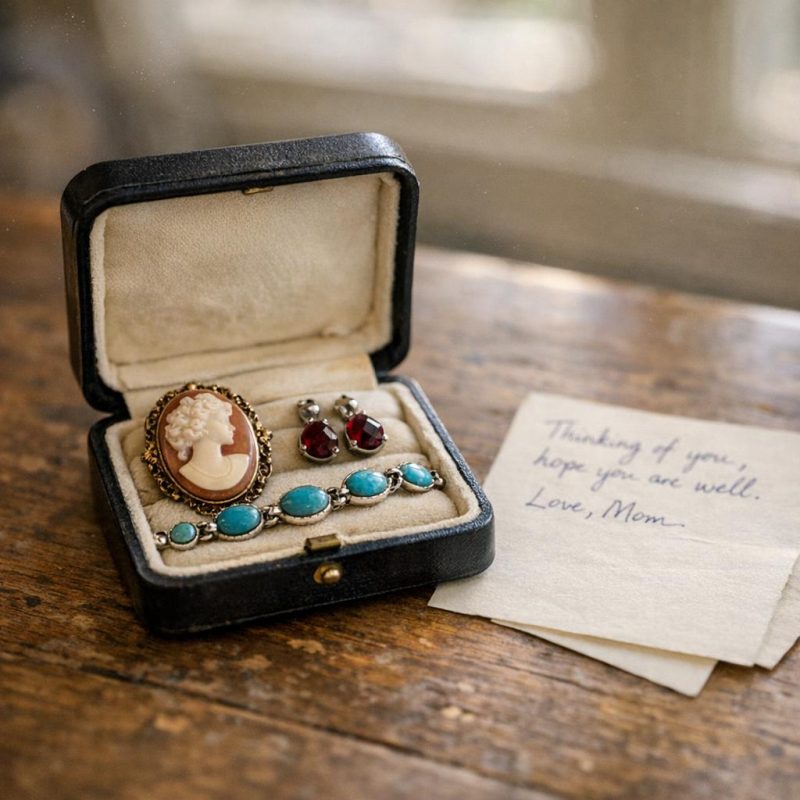 Image by RM AI
Marcus Confesses
I called Marcus the next morning, trying to keep my voice calm. 'Did you give my family my new address?' I asked. There was this horrible pause on the other end of the line, and I knew the answer before he even spoke. 'Oh God,' Marcus said. 'Someone called me last week saying she was your sister. She said she wanted to send you a birthday gift and needed the address. I thought—I mean, she knew so much about you, about the house, about the closing date. I didn't think twice about it.' He sounded genuinely mortified, apologizing over and over, explaining that he'd never meant to violate my privacy. I believed him. Maya was good at this kind of thing, always had been—presenting herself as reasonable and concerned, using just enough accurate information to seem trustworthy. Marcus wouldn't have had any reason to suspect her. 'It's okay,' I told him, even though it wasn't, not really. 'It's not your fault. She's very convincing.' We talked for a few more minutes, Marcus offering to be more careful in the future, to flag my file or something. But the damage was done. Maya knew where I lived now, which meant my parents knew, which meant the location I'd worked so hard to keep private was no longer a secret. Marcus apologized profusely, but I already knew my safe distance had been compromised.
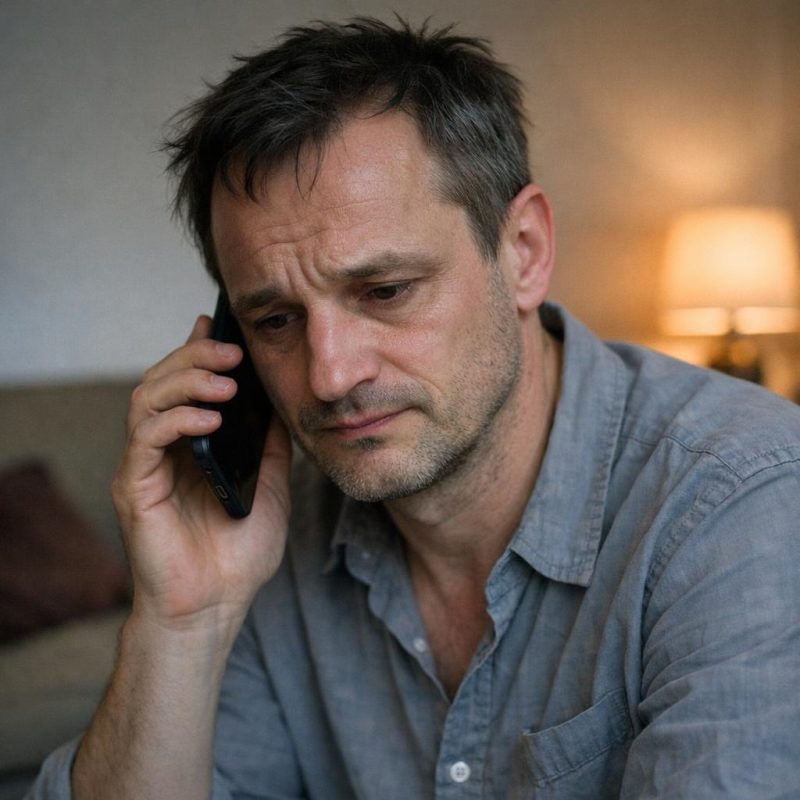 Image by RM AI
The Letter Campaign
The first letter arrived two days later. Then another. Then another. My mother's handwriting on expensive stationery, long rambling pages about how much she missed me, how family was supposed to forgive, how I was breaking her heart. Each one was more guilt-laden than the last, filled with Bible verses about honoring parents and quotes about the importance of family bonds. She never actually apologized for missing the wedding. She just wrote around it, acting like I'd cut her off for no reason, like I was the one being unreasonable. The fourth letter included a recipe for my favorite childhood cookies, written out in her careful script like that would somehow undo everything. And then the fifth letter came, and I knew immediately it was different because the envelope was thicker. Inside were photos from my childhood—me on my first day of kindergarten, our family at Disney World, Christmas mornings, birthday parties. Pictures of happier times that I'd honestly forgotten about, moments when things felt normal and safe. My mother had written on the back of each one: 'Remember when we were a family?' The photos felt like weapons, sharp little reminders of what I was supposedly throwing away. The fifth letter arrived with photos from my childhood—pictures of happier times that felt less like memories and more like emotional ammunition.
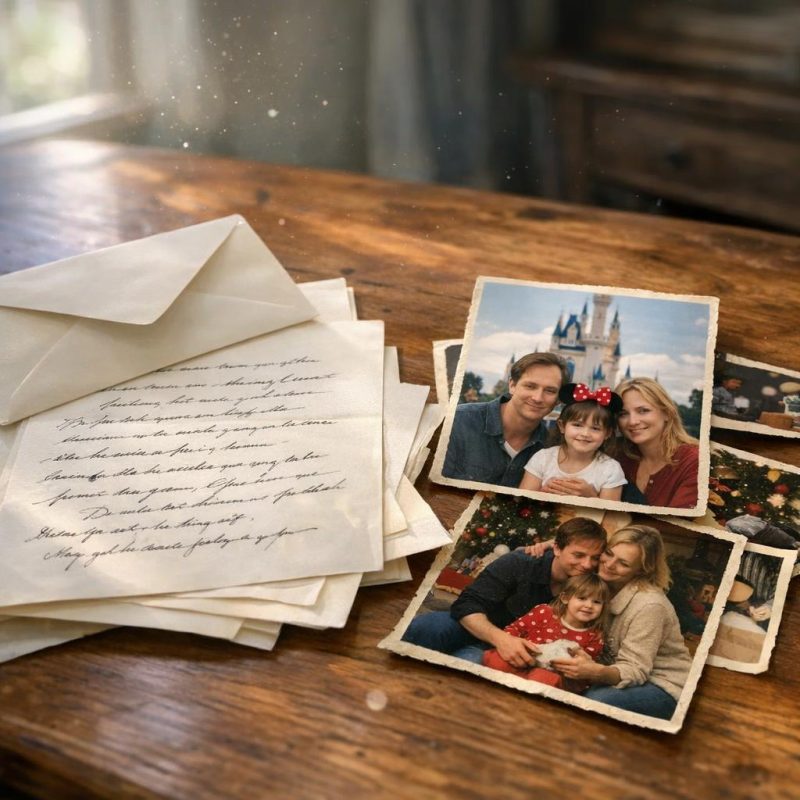 Image by RM AI
David's Worry
David found me standing in the kitchen at 2 AM, staring at the stack of letters I'd left on the counter. I hadn't even heard him come downstairs. 'How long have you been up?' he asked, his voice gentle but worried. I couldn't remember falling asleep in the first place. He'd been noticing things—how I picked at my meals, how I startled at every notification on my phone, how I'd stopped sleeping through the night. 'This is getting to you,' he said, and it wasn't a question. I wanted to tell him I was fine, that I could handle it, that I was stronger than some manipulative letters and guilt trips. But standing there in our kitchen with his hand on my shoulder, I felt something crack open inside me. 'It was easier when they weren't reaching out,' I admitted, my voice barely above a whisper. 'The silence felt clean, you know? Like I'd made a choice and that was that.' I looked down at the photos my mother had sent, all those smiling versions of myself who had no idea what was coming. 'But now it's like... they're everywhere, and I can't make it stop.' The struggle I'd been denying for weeks finally had words, and saying it out loud made it terrifyingly real.
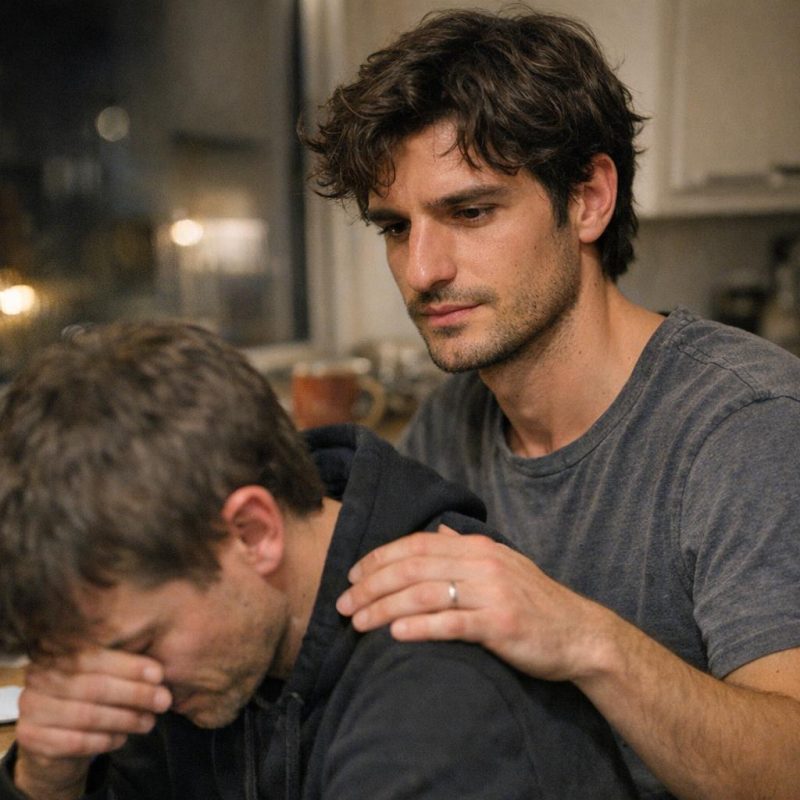 Image by RM AI
The Work Trip
David's work trip came at the worst possible time—a conference in Chicago he couldn't reschedule. He asked if I wanted to stay with Rachel while he was gone, and I almost said yes before catching myself. This was my home now. I couldn't let fear drive me out of it. The first night alone was fine, honestly. I kept myself busy, ordered takeout, watched a movie David would never sit through. But the second night felt different somehow. The house seemed bigger, every sound amplified. I was getting ready for bed, brushing my teeth in the upstairs bathroom, when I heard it. The doorbell. At 10 PM. I froze, toothbrush still in my mouth, staring at my reflection in the mirror. Nobody just drops by at 10 PM. Not friends, not neighbors, not delivery drivers. I crept to the bedroom window that overlooked the front porch, careful to stay behind the curtain. There was a car in our driveway I didn't recognize. The doorbell rang again, longer this time, more insistent. My phone was downstairs on the kitchen counter—I'd left it there while I got ready for bed, a stupid mistake I was now regretting. My heart was pounding so hard I could feel it in my throat as I stood there, completely alone, trying to decide what to do.
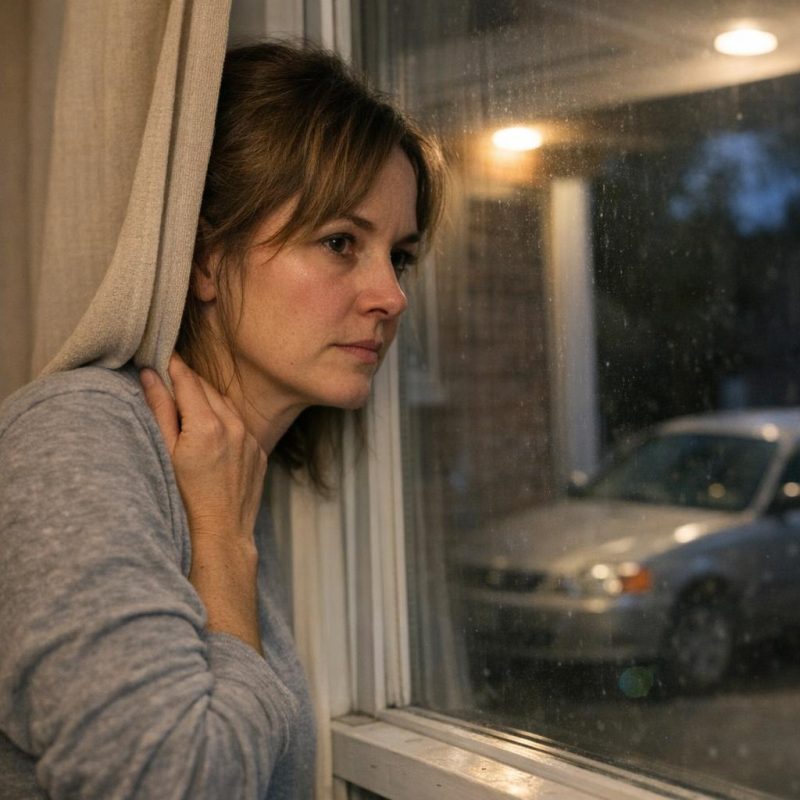 Image by RM AI
Maya at the Door
I forced myself down the stairs, grabbing my phone from the kitchen counter before moving toward the front door. Through the peephole, I could see her. Maya. My sister was standing on my porch at 10 PM, and she looked terrible—mascara streaked down her face, hair uncombed, wearing what looked like pajama pants and an oversized sweatshirt. She rang the doorbell again, then knocked. 'Claire? Claire, I know you're home. Please, I just need to talk to you.' Her voice was muffled through the door but I could hear the tears in it. 'I'm so sorry, okay? I'm so sorry about everything. Please just let me in so we can talk about this.' A month ago, maybe even a week ago, I might have opened the door. The sight of Maya crying would have triggered every protective instinct I'd spent my childhood developing. But standing there with my phone in my hand, I remembered the therapist's words about patterns. I remembered Maya showing up at the apartment. I remembered the letters, the photos, the relentless pressure. I unlocked my phone and dialed 911. 'I need to report a trespasser,' I said, my voice steadier than I felt. Maya heard me through the door and her crying stopped abruptly, replaced by stunned silence.
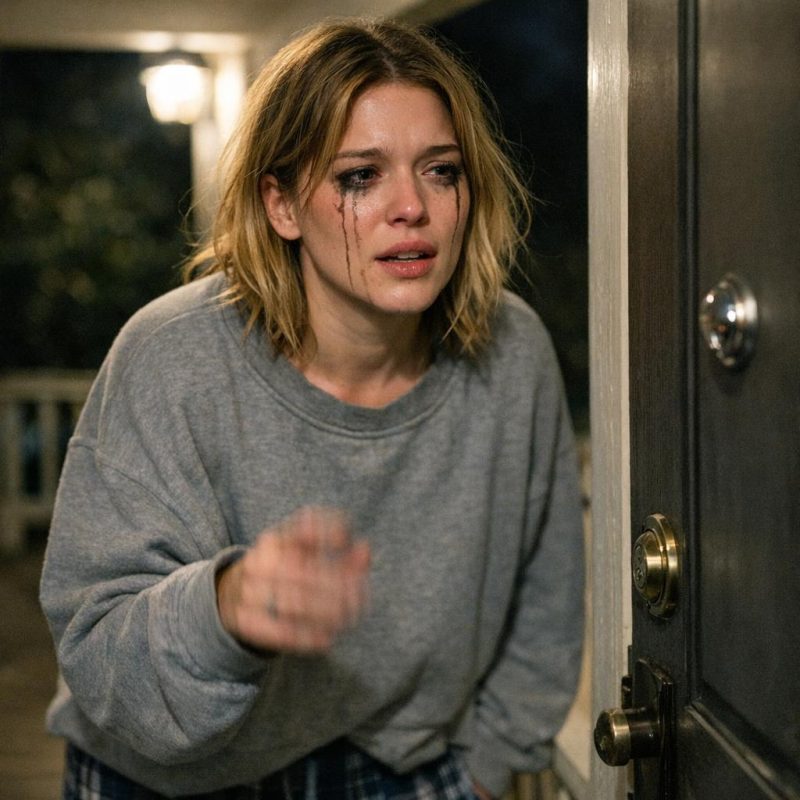 Image by RM AI
The Police Response
The police arrived in less than ten minutes—I stayed on the phone with the dispatcher the whole time, watching Maya through the peephole as she paced on my porch. When she saw the patrol car pull up, her whole demeanor changed. The tears stopped. Her face went hard. Two officers approached and I finally opened the door, staying behind it. 'This is my sister,' Maya told them, her voice dripping with disbelief. 'She called the police on her own sister.' The older officer looked at me. 'Do you want this person to leave your property?' I nodded. 'Yes. I've asked my family not to contact me. She showed up at 10 PM without permission.' They were professional about it, explaining trespassing laws to Maya, asking her to leave and not return without my explicit invitation. She stared at me the whole time like she couldn't believe what was happening. As she walked toward her car, she turned back. 'You were always so selfish!' she shouted, loud enough for the neighbors to hear. 'Always thought you were better than the rest of us!' The officers escorted her off the property, but I stood there in my doorway, watching her taillights disappear. And the strangest thing happened—instead of feeling guilty, I felt a bizarre clarity wash over me. Because I'd spent thirty years believing I was the selfish one, and hearing Maya say it out loud made me realize how completely backwards that had always been.
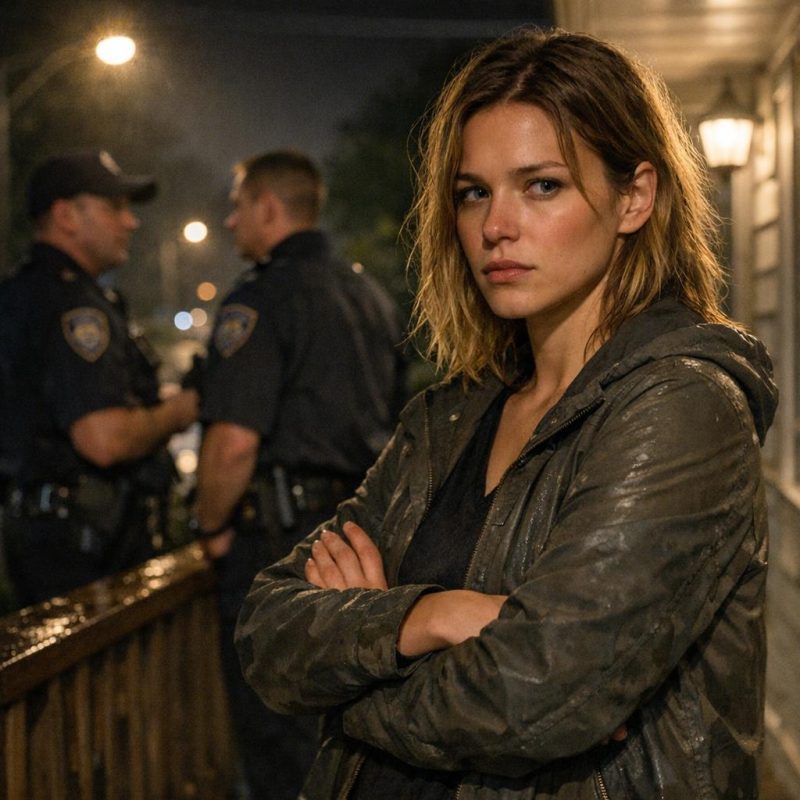 Image by RM AI
The Social Media Smear
I woke up the next morning to seventeen missed calls and twice as many text messages. My stomach dropped before I even started reading them. Maya had posted on Facebook overnight—a long, emotional screed about how she'd 'tried to reconcile' with me and I'd 'called the police on her like a criminal.' According to her post, our family was 'going through the darkest time' and I had 'abandoned them completely, refusing even to talk.' She made it sound like they were dealing with some tragedy, like I was a monster who'd turned my back on people in crisis. She didn't mention the wedding. She didn't mention the brunch. She didn't mention any of the actual reasons I'd gone no contact. The comments section was full of people I barely knew offering sympathy. 'Family is everything,' someone wrote. 'I can't imagine treating my sister this way,' said another. My phone buzzed with a text from Rachel: a screenshot of the post with three exclamation points. Then another screenshot showing the share count—it had been shared forty-three times. Then another showing extended family members commenting, cousins I hadn't spoken to in years weighing in on what a disappointment I was. None of them knew the truth, and Maya was banking on that.
 Image by RM AI
Rachel's Defense
Rachel called me an hour later. 'Don't read the comments,' she said. 'Just... don't. I'm handling it.' I wanted to ask what she meant, but she'd already hung up. Twenty minutes after that, my phone started buzzing with new notifications. Rachel had posted the photo—THE photo, the one from my wedding day showing my empty seats and, in the background, my parents and Maya clearly visible at a restaurant table with mimosas. She'd written out the whole story: the scheduled brunch on my wedding day, the morning-of text, the empty chairs at the ceremony, everything. She'd tagged Maya in it. The response was immediate and intense. People started commenting on Rachel's post, then going back to Maya's and calling her out. 'Wait, they skipped her WEDDING for brunch?' 'This is literally the opposite of what she said.' 'Imagine gaslighting someone this hard in public.' I watched it unfold in real-time, refreshing the page over and over like I couldn't quite believe it was happening. And then, suddenly, Maya's post disappeared. Just... gone. Deleted. As if it had never existed. But the internet doesn't forget, and Rachel's post was still up, still being shared, still accumulating comments from people who finally knew the truth.
 Image by RM AI
The Apology Email
The email came two days later. Subject line: 'I'm sorry.' My mother's name in my inbox after weeks of handwritten letters. I stared at it for over an hour, watching the cursor blink on my laptop screen, trying to decide if I even wanted to know what it said. Finally, I clicked. The email was long—three scrolling pages of text. But something felt off from the very first line. 'I'm sorry you're going through such a difficult time,' it started. Not 'I'm sorry I missed your wedding.' Not 'I'm sorry for hurting you.' She wrote about how hard the past few weeks had been for her, how she'd been 'devastated' by my silence, how the family was 'falling apart' without me there to 'keep everyone together.' She mentioned Maya's 'fragile state' and my father's 'disappointment.' She talked about her own sleepless nights, her own pain, her own suffering. Halfway through the third page, she finally mentioned the wedding—but only to say that she 'wished things had gone differently that day' and that 'we all have regrets.' That was it. No acknowledgment of what she'd actually done. No real apology for the choice she'd made. I closed my laptop and sat there in the silence of my living room, and I realized something crucial: this email proved she still didn't understand what she'd done wrong, and worse, she probably never would.
 Image by RM AI
Therapy Breakthrough
My therapist had me walk through my childhood during our next session, but she asked different questions this time. Not 'what happened' but 'what role did you play.' I told her about mediating fights between Maya and our parents. About being the one who could calm Maya down when she was upset. About how I learned to read everyone's moods and adjust myself accordingly. 'How old were you when this started?' she asked. I thought about it. 'Maybe seven? Eight?' She wrote something in her notes. 'Claire, what you're describing is called parentification. You were a child who was given adult emotional responsibilities. You weren't taking care of Maya because you wanted to—you were trained to do it.' The words hit me like cold water. 'Your family system needed someone to manage Maya's emotions, to smooth things over, to sacrifice themselves to keep the peace. You were cast in that role very young.' She leaned forward slightly. 'And here's what I want you to understand: none of this was your fault. You were never the problem. You were the solution they exploited.' I sat there in that quiet office, and something fundamental shifted in how I saw my entire life. Every emergency I'd handled, every crisis I'd managed, every time I'd put myself last—it had never been about love. It had been about a role I was forced to play before I was old enough to say no.
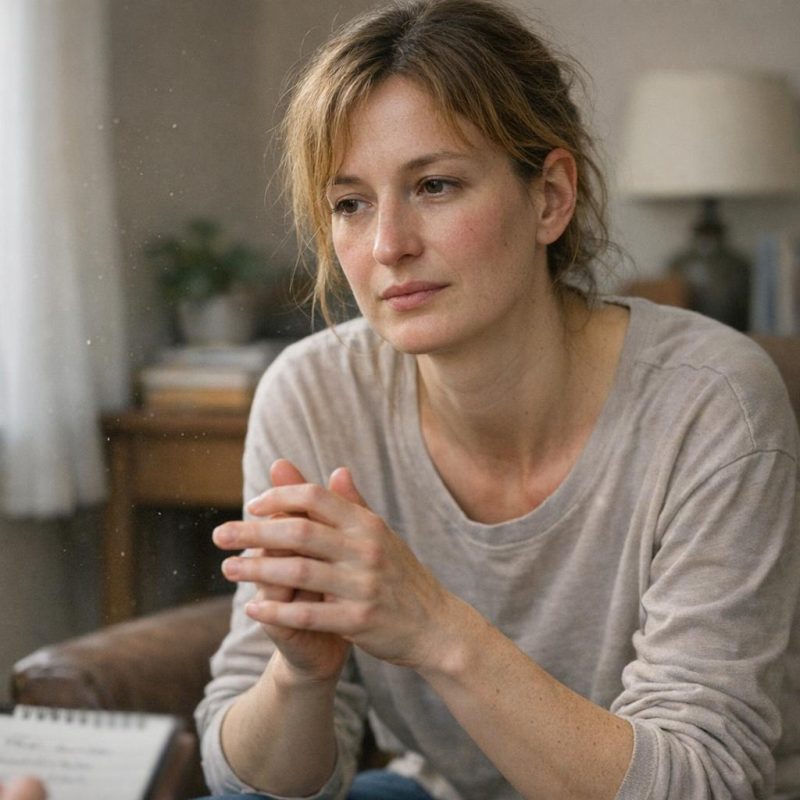 Image by RM AI
The Unexpected Call
David's phone rang during dinner about three weeks after my therapy breakthrough. He glanced at the screen, frowned, then handed it to me. 'It's for you,' he said. 'A lawyer?' I took the phone, confused. The voice on the other end was professional and calm—an estate attorney named Mr. Harrison who said he'd been trying to reach me about my grandmother Patricia's estate. I told him everything had been settled years ago, that I'd received my inheritance when she died. There was a pause. 'Yes, the primary distribution was completed,' he said. 'However, there are certain documents that were held in conditional trust. The conditions have now been met.' My fork was still in my hand, suspended over my plate. David was watching me with concern. 'What conditions?' I asked. Mr. Harrison cleared his throat. 'Your grandmother left specific instructions. These documents were to be released only under certain circumstances. Given the formal notice of estrangement that was filed with our office, you now qualify to receive them.' I had no idea what he was talking about. 'Can you come to my office this week?' he asked. 'There's one more document you need to see.'
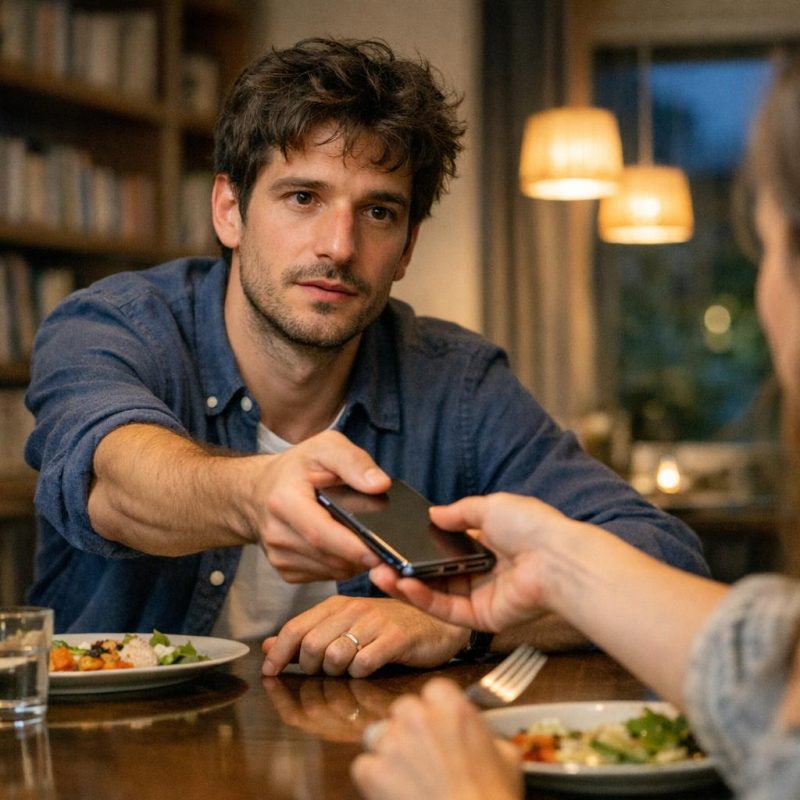 Image by RM AI
The Lawyer's Office
The law office was downtown, all dark wood and leather chairs that made every sound feel important. Mr. Harrison was older, maybe sixty-five, with reading glasses on a chain and a manila folder on his desk that he kept his hand on like it might escape. He explained that Patricia had worked with him for years, updating her will multiple times. 'Your grandmother was very specific about certain provisions,' he said. 'She left letters for you—personal correspondence that she wrote in the months before she passed.' I nodded slowly. 'Okay. Can I have them?' He opened the folder but didn't hand it over yet. 'Mrs. Patterson—your grandmother—she anticipated certain family dynamics. She hoped she was wrong, but she wanted to ensure that if she was right, you would have information that might help you.' Something cold settled in my stomach. Mr. Harrison's expression was grave, almost sympathetic. 'Your grandmother specifically instructed these be given to you if you ever cut ties with your parents.'
 Image by RM AI
Grandmother's Warning
I read the first letter in my car because I couldn't wait until I got home. Patricia's handwriting was shaky but determined, dated eight months before she died. She wrote about Linda—my mother—with a clarity that made my hands tremble. She described years of manufactured crises, each one designed to extract money. A 'broken furnace' that never existed. A 'medical emergency' that was a routine procedure. 'Investment opportunities' that were just cash grabs. Patricia had documentation, dates, amounts. She'd kept records of everything, watching the pattern repeat itself for decades. 'I enabled it,' she wrote. 'I gave her money every time because I thought that's what mothers do. I was wrong.' The letter went on for three pages. Near the end, her handwriting got more urgent, the pen pressed harder into the paper. 'Claire, I've watched your sister grow up under their influence. I've seen how they manage her emotions, how they reward her for creating drama. I see the same pattern with Maya—and I fear they are training her to do to you what Linda did to me.'
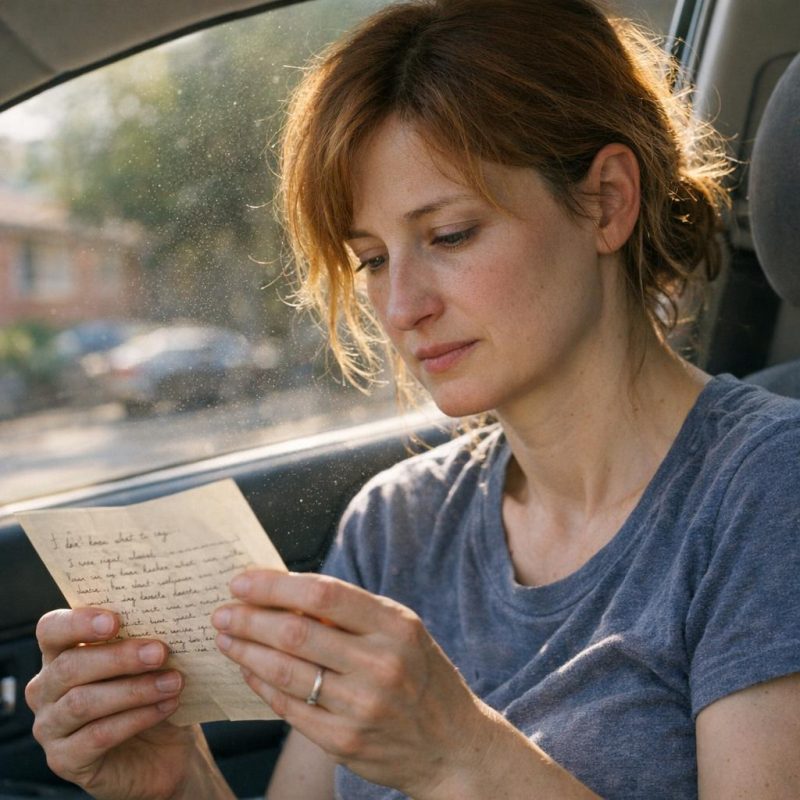 Image by RM AI
The Documentation
The second letter wasn't really a letter at all—it was a spreadsheet Patricia had handwritten, then typed up and printed. Every 'emergency' Linda had claimed for thirty years, with dates and the amounts Patricia had given her. I sat in my car staring at it, my brain trying to process what I was seeing. February 1998: 'Car accident,' $3,500. June 2003: 'Roof repair,' $8,000. November 2007: 'Maya's medical crisis,' $12,000. The list went on and on. But it was the dates that made my blood run cold. I pulled out my phone and started searching my own email archives, my old calendars. February 1998—that was when I'd won the regional science fair. June 2003—my high school graduation. November 2007—I'd gotten my first promotion at work. My hands were shaking so hard I almost dropped the paper. Every single 'emergency' on Patricia's list aligned with something good happening in my life. Every. Single. One.
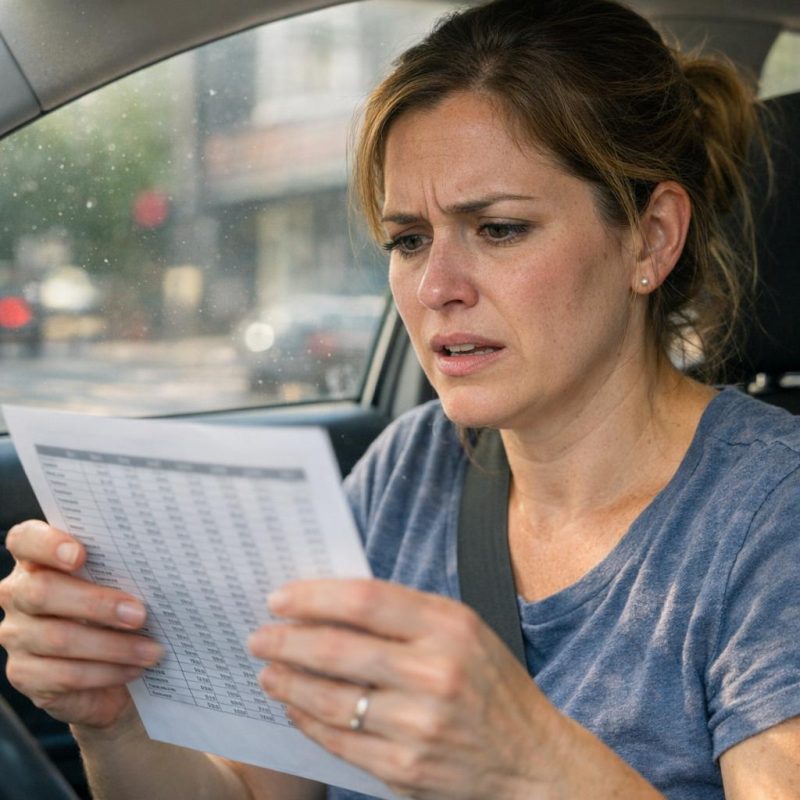 Image by RM AI
The Final Letter
The third envelope was thicker, heavier. Patricia's handwriting on the outside said simply: 'I'm sorry I didn't act sooner.' Inside was a letter explaining that two years before she died, she'd hired a private investigator. 'I needed to know if I was imagining patterns or if something real was happening,' she wrote. 'I needed documentation that couldn't be dismissed as an old woman's paranoia.' She described meeting with the investigator, giving him access to her financial records, asking him to observe the family dynamics. She'd paid him to dig into everything—bank accounts, phone records, whatever he could legally obtain. 'I never told anyone,' Patricia wrote. 'Not even you. I was afraid that if I was wrong, I would damage relationships beyond repair. But if I was right, I wanted you to have proof. I wanted you to have evidence when you finally needed it.' The letter ended there. But clipped to it was a business card—the investigator's contact information—and behind that, a thick report with a paper clip holding it together. The investigator's report was enclosed—and it contained evidence that changed everything I thought I knew.
 Image by RM AI
The Investigation Report
David sat beside me on the couch as I opened the investigator's report. It was professionally bound, maybe forty pages, with tabs dividing different sections. The summary page was clinical and direct: 'Subjects demonstrate coordinated behavior consistent with deliberate manipulation of target.' Target. That was me. I flipped through pages of surveillance notes, timeline analyses, financial tracking. Then I reached a section labeled 'Communications Evidence.' The investigator had somehow obtained text messages between Linda, Robert, and Maya. I don't know how—maybe Patricia had given him access to phone bills, maybe he had other methods. The messages were printed out, dated, timestamped. My hands went numb as I read them. Three weeks before my wedding, Linda to Robert: 'Claire's trust payment should hit next month. Perfect timing.' Robert to Linda: 'Maya's on board? She understands the plan?' Maya to Linda: 'Don't worry. I know what to do.' And then, circled in red pen by the investigator: 'Claire's wedding money should cover everything.' But the full meaning was still unclear to me—cover what? What plan?
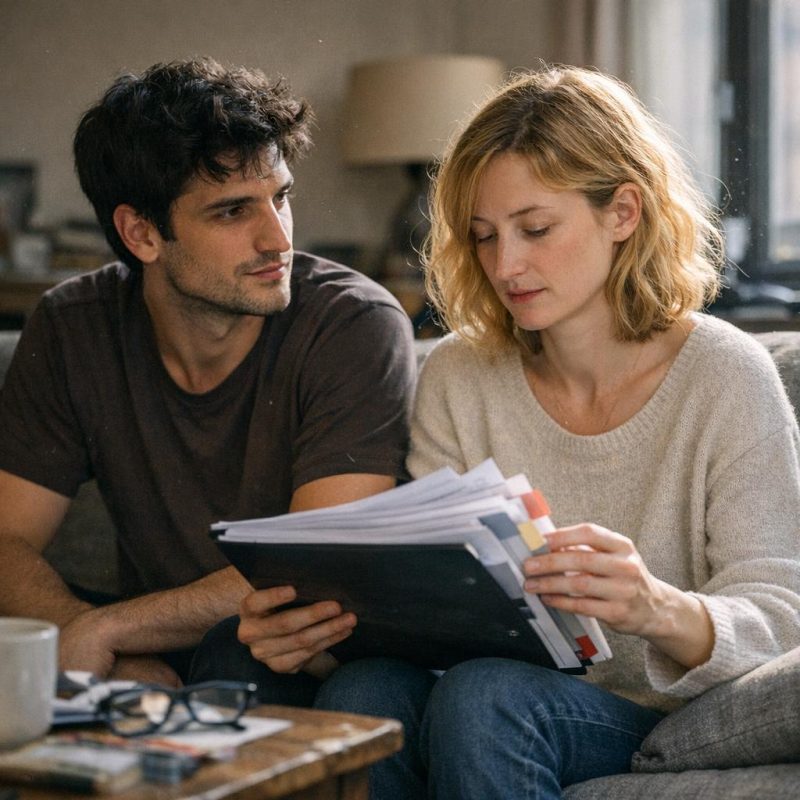 Image by RM AI
The Banking Records
The next section was labeled 'Financial Analysis,' and it contained copies of banking records. My trust fund statements were there—the one Patricia had set up for me years ago, the one that paid out quarterly. I'd always gotten the statements but honestly never looked at them that carefully. The money just appeared in my checking account every three months. Except according to these records, that's not what actually happened. The investigator had traced every payment. The trust paid out to an account in my name, yes—but it was a joint account. One I'd apparently signed paperwork for years ago but had forgotten about. And every time money hit that account, within hours there were automatic transfers. To accounts held by Linda and Robert. To accounts held in Maya's name. The investigator had highlighted these in yellow, page after page of them. Then I saw his handwritten note in the margin, and my vision tunneled: 'Subject appears unaware that emergency claims trigger automatic transfers from her trust.'
 Image by RM AI
The Pattern Revealed
I forced myself to turn to the conclusion page. David's hand was on my back, steadying me, but I barely felt it. The investigator's summary was typed in clean, professional language that made the horror of it somehow worse: 'Based on eighteen months of observation and documentation, subjects Linda, Robert, and Maya Patterson demonstrate a coordinated pattern of manufactured crises designed to exploit the target's emotional vulnerability and trigger trust fund disbursements. Pattern includes: timing emergencies to coincide with target's achievements, escalating emotional manipulation when target attempts to establish boundaries, and rotating crisis types to prevent pattern recognition. Each family member plays a defined role—Linda as primary emotional manipulator, Robert as validator, Maya as the perpetual victim requiring rescue. Financial records indicate this system has been operational for approximately 12 years, coinciding with the establishment of the target's trust fund.' My whole body had gone cold. But it was the final paragraph that destroyed me: 'Note: subjects' decision to skip target's wedding ceremony appears to be a calculated escalation—a deliberate test to determine if target has reached breaking point or will continue to comply with financial demands. Recommend target seek legal counsel immediately.' Every emergency had been staged, every crisis timed to maximize my guilt and financial compliance—including the wedding, which they had skipped deliberately to test if I would finally break or keep paying.
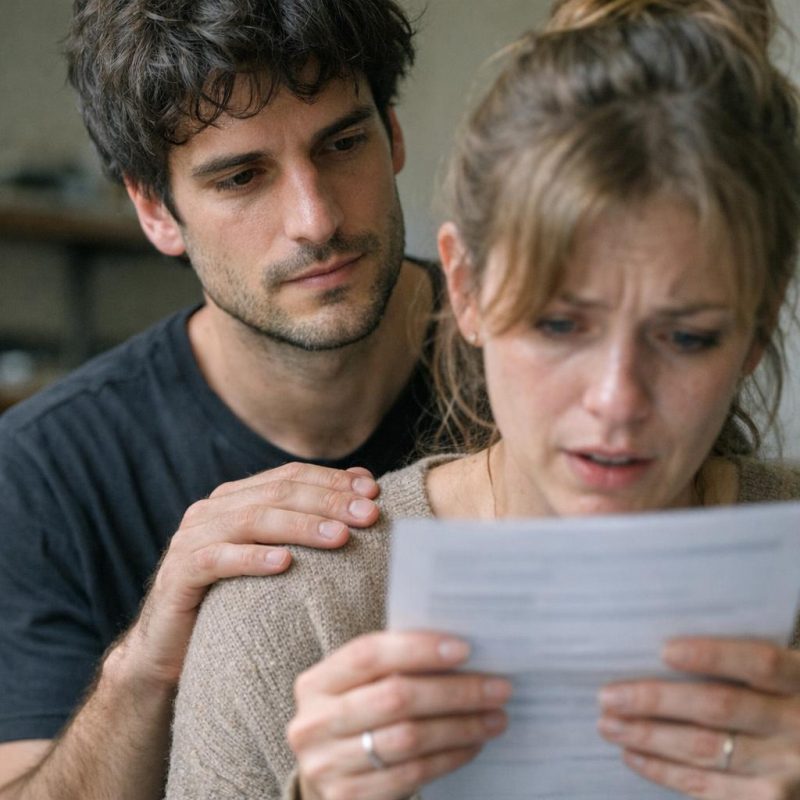 Image by RM AI
David's Rage
David finished reading the report in silence. I watched his face change—from concentration to disbelief to something I'd never seen in him before: pure rage. His hands were shaking. 'They planned this,' he said, his voice so low and controlled it was almost a whisper. 'They skipped our wedding on purpose. As a test.' He stood up so fast his chair scraped against the floor. 'I'm going over there right now. I'm going to tell them exactly what I think of their sick little game.' I'd expected his anger. Part of me wanted to feel it too, wanted to burn with that same righteous fury. But something strange had happened while reading that report. All the heat had drained out of me, leaving behind something colder and clearer. I caught his arm. 'Don't,' I said. He turned to me, confused, waiting for me to break down or beg him to let it go. Instead, I smiled—a smile I barely recognized on my own face. 'They already lost,' I told him. 'They just don't know it yet.'
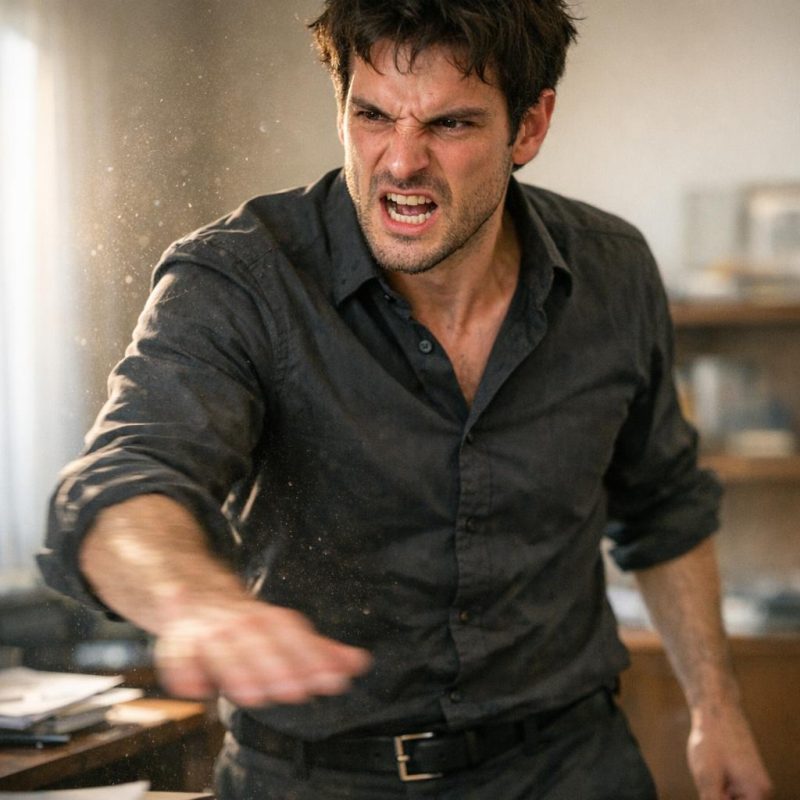 Image by RM AI
The Recorded Confession
The investigator's report included something I hadn't noticed at first—a small audio file labeled 'Recording 7.' David clicked it while I was still staring at the financial charts. At first, I didn't recognize the voices. Then I heard my mother laugh. 'Maya, you can't call her now, it's too soon after the wedding thing.' Maya's voice came through clearly: 'Mom, relax. She'll cool off in a week, maybe two. Remember when Dad had his fake heart scare? She came running with a check within three days.' There was the sound of movement, maybe Linda pouring something. 'This one's different though,' Linda said. 'She seemed really upset.' But then Maya laughed—actually laughed—and said the words that made my entire body go rigid. 'She'll come back—she always does when we push hard enough. Claire's too guilty to ever actually leave us.' David stopped the recording. I sat there, frozen, hearing that laugh echo in my head. They hadn't just manipulated me. They'd been confident, arrogant, certain I'd never be smart enough or strong enough to see through them. Maya laughed and said, 'She'll come back—she always does when we push hard enough.'
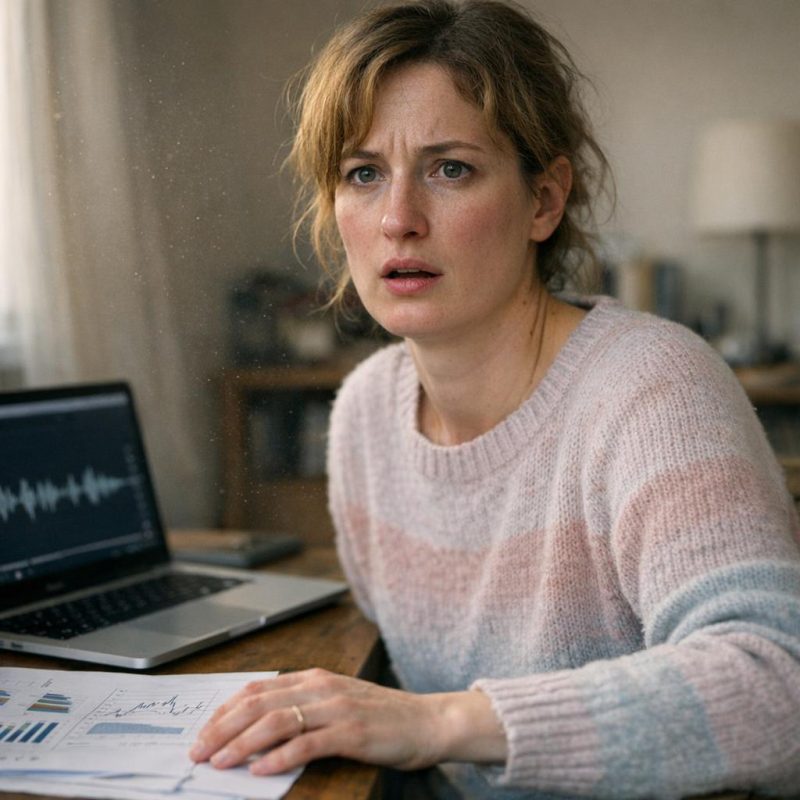 Image by RM AI
The Confrontation Call
I called my mother from a blocked number two days later. I'd thought about it constantly, rehearsed what I'd say, imagined her reactions. When she answered, her voice was cautious. 'Hello?' I didn't waste time. 'It's Claire,' I said, my voice calmer than I'd expected. 'I know about the scheme. All of it. The staged emergencies, the coordinated crises, the way you timed everything to my achievements. I know you skipped my wedding as a test.' I heard her sharp intake of breath. 'Claire, honey, what are you—' 'I have an investigator's report,' I continued. 'Eighteen months of documentation. Financial records. And recordings of you and Maya discussing your strategy.' The line went completely quiet. I counted the seconds in my head, feeling strangely powerful. One. Two. Three. Four. Five. When Linda finally spoke, her voice was different—higher, panicked, stripped of the warm mother-tone she always used. 'That's... that's ridiculous. You're being paranoid. We would never—' But her voice shook with panic, and we both knew she was lying.
 Image by RM AI
The Evidence Delivered
I composed the email at my kitchen table while David made coffee. The subject line was simple: 'Documentation.' I attached the investigator's full report—all forty-seven pages. Then the banking records showing the pattern of withdrawals and transfers. Then the audio files, including the one of Maya laughing. I addressed it to all three of them: Linda, Robert, Maya. My finger hovered over the send button for maybe ten seconds. Part of me—some old, trained part—wanted to give them a chance to explain, to apologize, to somehow make it not true. But I remembered Maya's laugh. I remembered walking down the aisle alone. I remembered twelve years of manufactured crises and middle-of-the-night phone calls and guilt that ate at me like acid. I clicked send. Then I added one more email, a follow-up with no attachments. Just a single line in the body: 'I know what you did, and I have proof.' David handed me my coffee. 'How do you feel?' he asked. I took a sip, tasting victory. 'Like I just won something.'
 Image by RM AI
The Panic
David's phone started ringing forty-three minutes later. They'd figured out I'd blocked their numbers, so they tried his instead. The first call was from my mother—David declined it. Then Maya. Then my father. Then my mother again. We sat on the couch watching his phone light up over and over like some kind of desperate morse code. 'Want me to answer?' David asked. I shook my head. 'Let them go to voicemail.' We listened to them later, one after another. Linda's voice was shaking: 'David, please, there's been a misunderstanding.' Maya's was defensive: 'I don't know what Claire thinks she found, but it's not what it looks like.' My father's first message tried denial, his second attempted anger. His third message was different—threatening. 'Claire needs to be very careful about making accusations,' he said. 'We have lawyers too, and slander is a serious offense.' I looked at David. He raised his eyebrows. So I sent one more email, just to my father: 'Fraud is also a serious offense. So is elder abuse if we want to get technical. Your move.' The calls stopped after that.
 Image by RM AI
Maya's Breakdown
Maya's email arrived at 11:47 PM. The subject line was 'Please read this.' It was long—probably a thousand words—and I could feel the desperation in every sentence. She claimed she'd been manipulated by our parents her whole life. That she was also a victim of their control. That she'd never wanted to hurt me and had only gone along with things because she was scared of them too. She said she was in therapy now, working through her own trauma, realizing how toxic our family system had been. 'I'm so sorry, Claire,' she wrote near the end. 'I know I don't deserve your forgiveness, but I hope someday you can understand that I was trapped too.' I read it twice. Part of me—that same old trained part—wanted to believe her. Wanted to think maybe Maya had been caught in the same web I had. Then I remembered the recording. I remembered her laugh, bright and confident and cruel. 'She'll come back—she always does when we push hard enough.' I moved the email to trash. Then I emptied the trash folder without responding.
 Image by RM AI
The Ultimatum
I drafted the final message carefully. David read it over my shoulder, nodding at each line. 'To Linda, Robert, and Maya,' it began. 'I am offering you one opportunity to resolve this situation without legal action. Effective immediately, you will cease all contact with me—no calls, no emails, no texts, no third-party messages, no attempts to reach me through friends or extended family. You will not discuss me on social media. You will not come to my home or workplace. In exchange, I will not pursue fraud charges, will not file police reports regarding the documented pattern of financial exploitation, and will not seek restraining orders.' I paused, then added the kicker: 'You have 24 hours to respond with written agreement to these terms. Any violation of this agreement, or any attempt to contact me after this period, will result in immediate legal action including restraining orders, police reports, and potential criminal charges. I have retained legal counsel and have documented everything.' I gave them 24 hours to respond—and warned that any violation would result in restraining orders and police reports.
 Image by RM AI
The Agreement
The document arrived by courier twenty-two hours later. It was official—printed on law firm letterhead, notarized, signed by all three of them. I recognized their lawyer's name; he handled their business affairs. The agreement used my exact language about no contact, then added clauses about confidentiality and mutual non-disparagement. Reading between the lines, I could see they were terrified I'd go public. My father's signature was a hard slash across the page. My mother's looked shaky. Maya had signed her full name in careful letters, like she was trying to maintain some dignity. David stood beside me as I read it. 'They actually did it,' he said quietly. 'They actually signed.' I set the document down and felt something shift inside me. For twelve years, I'd been trying to earn something from them—love, approval, acknowledgment of my worth. I'd paid and paid and paid, thinking eventually the balance would tip in my favor. But I read the document and realized I had won—not just my freedom, but my right to define my own worth.
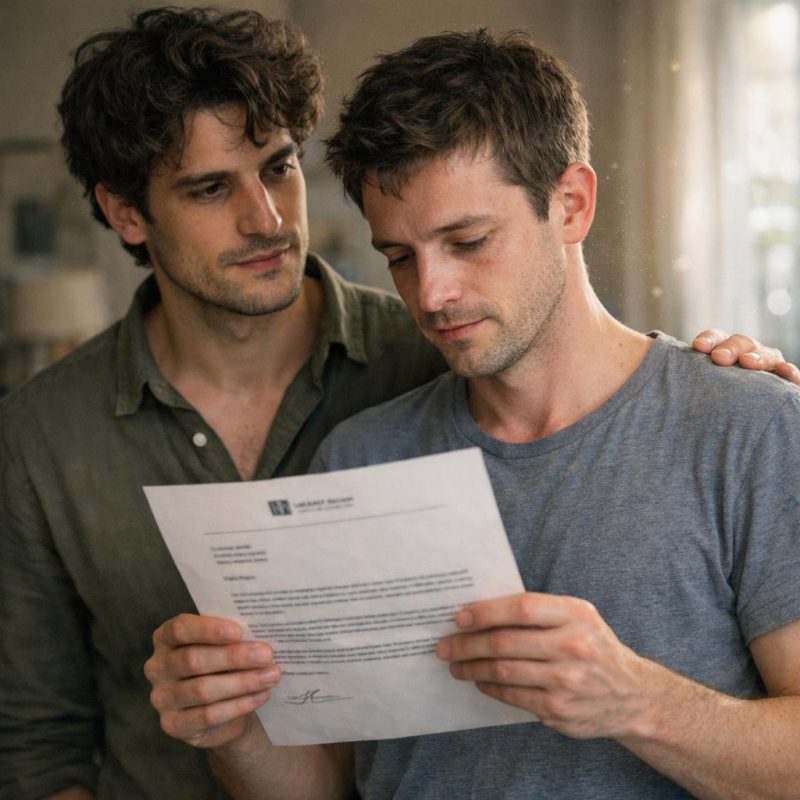 Image by RM AI
The Final Silence
The harassment stopped completely. My phone sat silent on the counter—no blocked numbers lighting up the screen, no frantic messages forwarded from David's office, no cryptic emails appearing in my spam folder. The first day of silence, I kept checking my phone, convinced I'd somehow missed something. The second day, I carried it with me everywhere, waiting for the inevitable crack in the wall. By the fifth day, David noticed me staring at it during dinner. 'They're done,' he said. 'They signed the agreement. They're actually done.' I wanted to believe him, but some part of me had learned to expect the other shoe to drop. Two weeks passed. Three. A month. I started leaving my phone upstairs when we ate dinner. I stopped flinching when the mail arrived. One evening, I stood in our backyard, watching the sun set behind the oak trees we'd planted that spring. David was inside making tea, and I could hear him humming something off-key. The air smelled like cut grass and honeysuckle. I realized I wasn't tensed for the next crisis, wasn't mentally rehearsing my responses to their next move. I was just standing in my yard, watching the light change. I was no longer waiting for the next crisis—I was simply living.
 Image by RM AI
Six Months Later
Six months passed, and I had not heard from my family once. Not a single text, email, or letter. The silence that had once terrified me became the background noise of my new life. David and I settled into routines that had nothing to do with crisis management—we went to farmers markets on Saturdays, tried new restaurants on weeknight dates, and actually used our living room for something other than legal strategy sessions. When Rachel texted to ask if she and Olivia could come over for dinner, I said yes without checking my calendar to see if I had emotional capacity for socializing. We cooked together, the four of us crowding into our kitchen, and Rachel told some ridiculous story about a client who'd tried to pay her in cryptocurrency. Olivia brought homemade tiramisu and a bottle of wine that cost more than I used to spend on groceries in a week. We sat around our table until midnight, and at some point, I realized I hadn't thought about my parents in weeks—not about the wedding, not about the trust fund, not about anything. The thought just floated through my mind and kept going, leaving no wake. I looked around at these people—real friends who'd shown up without obligation or drama—and I realized I had not thought about my parents in weeks.
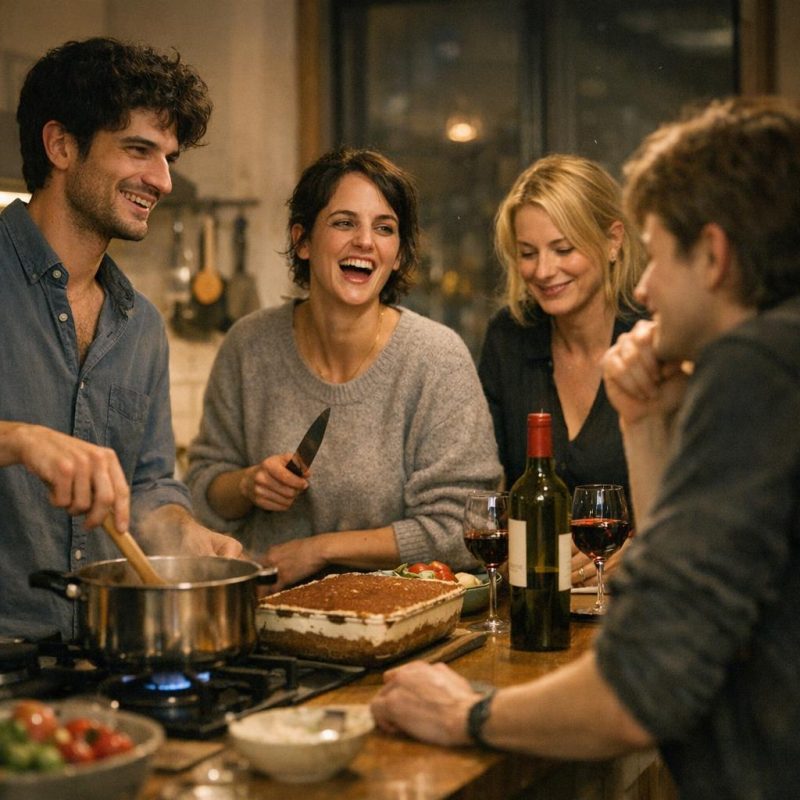 Image by RM AI
The Letter to Grandmother
I wrote a letter to my grandmother that night, knowing she'd never read it. I sat at the kitchen table with actual paper and a pen, something I hadn't done since college. 'Dear Grandmother,' I wrote, 'I wish I'd known you better. I wish I'd understood what you were trying to tell me all those years when you'd watch Mom orbit around Maya and then look at me with something I thought was pity. It wasn't pity, was it? It was recognition.' I told her about the wedding, about the trust fund, about the legal agreement. I told her about the silence and what it had given me. 'You saw who they were,' I wrote. 'You saw who I was. And you gave me the only thing that could save me—not just money, but proof that someone believed I was worth protecting. Someone thought I deserved better. You gave me permission to choose myself.' My hand cramped from writing, but I kept going until I'd filled three pages. I folded them carefully and put them in an envelope I'd never mail. At the bottom of the last page, I wrote: 'You gave me the tools to save myself—and I finally used them.'
 Image by RM AI
Sunday Brunch
David and I had Sunday brunch in our backyard the following weekend. Nothing fancy—just scrambled eggs, good coffee, and the newspaper spread across our patio table. The oak trees had grown taller since we'd planted them, their branches reaching toward each other like they were learning to touch. Sunlight filtered through the leaves, casting shifting shadows on the grass. I thought about all the Sunday mornings I'd spent at my parents' house, watching Maya hold court while I cleared plates and refilled coffee cups. How I'd positioned myself in her shadow, thinking that was just where I belonged. David reached across the table and squeezed my hand. 'What are you thinking about?' he asked. 'Trees,' I said, which was true enough. 'And shadows.' I looked at the patterns of light and dark on our lawn—shadows that moved with the wind, that changed with the sun, that belonged to our trees in our yard. They had nothing to do with Maya, nothing to do with my parents' approval or disappointment. They were just shadows, beautiful and temporary and mine. For the first time in my life, I was not the secondary character in someone else's story—I was the author of my own.
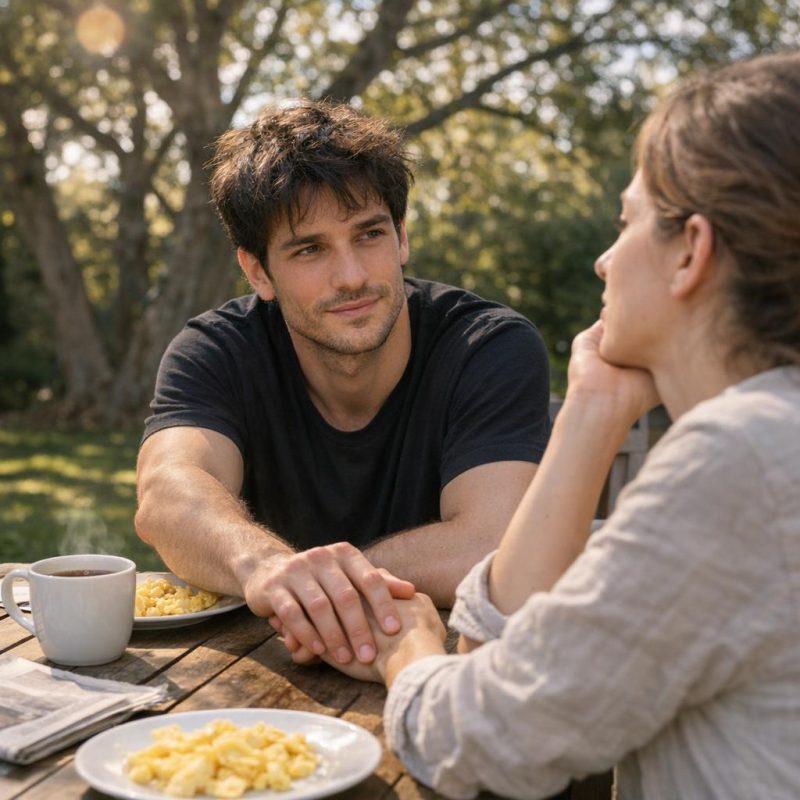 Image by RM AI
KEEP ON READING

The story of Ching Shih, the Woman Who Became the…
Unknown author on WikimediaFew figures in history are as feared…
By Emilie Richardson-Dupuis Dec 29, 2025
Einstein's Violin Just Sold At An Auction—And It Earned More…
A Visionary's Violin. Wanda von Debschitz-Kunowski on WikimediaWhen you hear…
By Ashley Bast Nov 3, 2025
This Infamous Ancient Greek Burned Down An Ancient Wonder Just…
History remembers kings and conquerors, but sometimes, it also remembers…
By David Davidovic Nov 12, 2025
The Mysterious "Sea People" Who Collapsed Civilization
3,200 years ago, Bronze Age civilization in the Mediterranean suddenly…
By Robbie Woods Mar 18, 2025
Why Hamilton Was Such A Success
Pete Souza on WikimediaWhen Lin-Manuel Miranda's Hamilton opened on Broadway…
By Breanna Schnurr Feb 12, 2026
20 Soldiers Who Defied Expectations
Changing the Rules of the Battlefield. You’ve probably heard plenty…
By Annie Byrd Feb 10, 2026