

I Used My Corporate Auditing Skills to Expose My Fiancé's Million-Dollar Fraud Scheme With His 'Daughter' on Our Wedding Day
I Used My Corporate Auditing Skills to Expose My Fiancé's Million-Dollar Fraud Scheme With His 'Daughter' on Our Wedding Day
The Ring and the Promise
I met Julian at a corporate networking event six months ago, and I'll be honest — I almost didn't go. It had been a long week, the kind where you eat lunch at your desk and forget to drink water, and the last thing I wanted was another room full of people handing out business cards. But I went, and somewhere between the second glass of wine and a conversation about commercial real estate valuations, Julian Ashford made me feel like the most interesting person in the room. That doesn't happen often when you're the auditor at the table. We talked for two hours straight. He called the next morning. By the third week, he was rearranging his schedule around mine, and I kept waiting for the catch — because there's always a catch — but it never came. Three months in, he took me to dinner at a restaurant I'd read about but never thought I'd actually sit inside, and he slid a ring across the table. He told me it had belonged to his grandmother. It was an oval-cut diamond set in platinum, simple and extraordinary at the same time, and when he put it on my finger, I felt something I hadn't felt in a long time — like I had finally stopped running toward something and actually arrived. That night, I sat on my apartment balcony long after I got home, and the weight of the diamond on my finger felt like the most solid thing I'd touched in years.
 Image by RM AI
The Country Club Consultation
Diane met me at the country club on a Tuesday morning with a clipboard, a headset, and the kind of calm efficiency that made me feel like everything was already under control. The venue was stunning — floor-to-ceiling windows overlooking manicured grounds, a ballroom that could seat two hundred without feeling crowded, and a catering team that apparently had a Michelin-starred consultant on retainer. Julian had arranged the meeting and told me to pick whatever I wanted, that this was my day and money was not a factor. I appreciated the sentiment, but I'm an auditor by trade — numbers are always a factor to me. Diane walked me through the premium package with the practiced ease of someone who had done this a thousand times: the floral arrangements, the champagne fountains, the custom menu, the string quartet for the ceremony and the DJ for the reception. She scheduled the engagement party for the following month, fifty guests from Julian's business and social circles, as a kind of preview event. Julian arrived halfway through the consultation, kissed me on the cheek, and told Diane to add the upgraded lighting package without even glancing at the price sheet. I smiled and tried to match his ease about it. Then Diane slid the preliminary cost estimate across the table, and I looked down at the number printed at the bottom of the page.
 Image by RM AI
Entering His World
The first real gathering with Julian's circle was a Saturday evening cocktail party at a private residence in the hills — the kind of house where the art on the walls probably cost more than my annual salary. I wore the black dress Julian had suggested and told myself I belonged there, which is something I'd learned to do in boardrooms and I figured it couldn't be that different. Julian kept his hand at the small of my back as he introduced me, and every introduction came with a small compliment — 'Victoria is a senior auditor, one of the sharpest financial minds I've met' — which I appreciated more than I let on. The conversations moved fast: property portfolios in Dubai, offshore investment structures, development projects in Southeast Asia. I held my own. I asked the right questions, used the right terminology, and watched a few of the men recalibrate their assumptions about me in real time, which was quietly satisfying. A woman in a green dress told Julian he'd done well for himself, and he laughed and said the feeling was mutual. I wasn't sure how to take that, but I let it go. By the end of the evening, I felt less like an outsider and more like someone still learning the geography of a new country. What stayed with me on the drive home wasn't my own performance — it was the way Julian moved through that room, unhurried and completely at home, like the whole world had been arranged for his comfort.
 Image by RM AI
The Late Wife's Shadow
It was over dinner at his place — a quiet Tuesday, nothing special — that Julian first talked about his late wife. He'd opened a bottle of red and was telling me about a property deal from years ago when something shifted in his expression, and he set down his glass and said her name. Margaret. He said she'd been healthy one year and gone the next, a sudden illness that moved faster than anyone expected, and that Chloe had been nineteen when it happened. He described the aftermath the way people describe surviving something — carefully, with long pauses. He said Chloe had never fully recovered from losing her mother, that she'd struggled in the years since, that she kept her distance from him now in ways that hurt but that he tried to understand. He hoped the wedding might change that. He hoped having a family again might reach her somehow. I reached across the table and covered his hand with mine, and I meant it. I told him I wasn't in a hurry, that I understood complicated family dynamics, that I would follow his lead with Chloe and give her whatever space she needed. He nodded and looked out the window for a moment. I didn't push for more. Some things don't need to be pressed. What I carried home that night wasn't the details of what he'd told me — it was the particular quality of his voice when he spoke about Margaret's death, low and careful, like he was still learning how to say it out loud.
 Image by RM AI
The Engagement Party Approaches
The night of the engagement party, I was ready an hour early, which is not like me — I'm usually the person finishing a report at the last possible minute. But I'd been thinking about this evening for weeks, and most of that thinking had circled back to one thing: meeting Chloe. Julian had described her as fragile and distant, and I'd spent a lot of time rehearsing how I'd introduce myself, what tone to strike, how to make her feel like I wasn't trying to replace anyone. I wanted to get it right. The ballroom looked extraordinary when I arrived — white flowers everywhere, champagne fountains catching the light, the string quartet already playing something soft near the entrance. Diane was moving through the space with her clipboard, redirecting catering staff with quiet precision, and guests had begun filtering in, the kind of people who arrive in cars I don't recognize and wear watches I can't price. Julian was already working the room, shaking hands, laughing at the right moments, and he caught my eye across the crowd and smiled in a way that settled my nerves a little. He'd seemed slightly tense earlier in the day, but he'd said he just wanted everything to be perfect, and I believed him. I was standing near the champagne table, trying to decide whether to get a glass before the formal welcome, when I heard a woman's voice rising sharply near the entrance — loud enough to cut through the music.
 Image by RM AI
The Accusation
I turned toward the entrance and the room seemed to turn with me. A woman in her mid-twenties was pushing past the door staff, her voice already at a volume that had stopped every nearby conversation cold. She was striking — dark hair, a red dress that looked expensive and wrong for the occasion — and she was pointing directly at Julian. I recognized her from the single photo he'd shown me. Chloe. She was shouting about a trust fund, about documents, about her mother's signature appearing on paperwork that her mother had never signed. The words came fast and specific: account numbers, transfer dates, a routing number she repeated twice like she'd memorized it. I stood completely still. Around me, guests had gone rigid, champagne flutes suspended halfway to mouths. Diane appeared at the edge of the room, her clipboard pressed to her chest, watching. Julian had gone pale — not flushed, not angry, just pale, the color draining from his face in a way I'd never seen before. He didn't move toward Chloe. He didn't speak. Two security staff reached her before he did, and she let them take her arms but kept talking, kept naming figures, kept pointing at Julian as they walked her backward toward the door. The last thing I heard before the ballroom doors closed behind her was a nine-digit number she screamed twice — a bank routing number, precise and specific, hanging in the sudden silence of the room.
 Image by RM AI
The Mental Health Explanation
Julian collected himself faster than I expected. Within a few minutes he was standing in the center of the room, one hand raised slightly, his voice measured and low, and the guests who had been frozen were now leaning in to hear him. He apologized for the disruption. He said Chloe had been under psychiatric care for the past two years, that she suffered from paranoid delusions that had worsened recently despite treatment, and that this was not the first time she had made accusations like these against family members. He said it with genuine-sounding sorrow, not defensiveness — the kind of tone that invites sympathy rather than questions. He said he loved his daughter and that her illness was the hardest thing he'd carried since losing her mother. Around the room, I watched heads nod slowly, watched shoulders drop from ears, watched the tension redistribute itself into something softer and more manageable. Diane had already signaled the catering staff to resume service, and within ten minutes the string quartet had started again and people were talking in small clusters, the way people do when they've collectively agreed to move past something uncomfortable. I stood beside Julian and smiled when I was supposed to smile and said the right things to the guests who came to offer quiet condolences about Chloe's condition. I wanted to believe him. I think I did believe him, mostly. What I kept coming back to, later, when I replayed the evening in my head, was not what Julian had said but the particular composure with which he had said it — smooth and practiced and entirely without hesitation.
 Image by RM AI
The Panic in His Eyes
The rest of the evening felt like watching a performance I couldn't quite follow. Julian was present in the way a person is present when they're working very hard at it — laughing at the right beats, refilling glasses, steering conversations — but something underneath had shifted. I noticed it in the small things first. He checked his phone four times in the span of an hour, each time angling the screen away from me before sliding it back into his pocket. He excused himself twice to take calls, both times moving to the far end of the corridor where I couldn't hear him. When guests asked follow-up questions about Chloe, his answers came out shorter than usual, clipped at the edges, missing the warmth he'd had when he addressed the room. Around nine o'clock he suggested we leave early, said he was exhausted and that the party had run its course. In the car, he didn't speak. Not a word for the entire twenty-minute drive — no music, no commentary, just the sound of the road and the city lights sliding past the window. I didn't push. I watched the streetlights and told myself that a man whose daughter had just caused a scene in front of fifty people was entitled to be quiet. We pulled into the garage and he reached for his phone before the engine had fully stopped, and I saw his hand — steady all evening, practiced and controlled — trembling against the screen.
 Image by RM AI
The Numbers I Couldn't Forget
I couldn't sleep. Julian was out beside me, breathing slow and even, and I lay there staring at the ceiling with the numbers running through my head like a ticker tape I couldn't switch off. That's the thing about auditor training — it doesn't clock out. Chloe had shouted those routing numbers in front of fifty people, and my brain had caught them the way it catches everything: automatically, precisely, without asking my permission. I kept telling myself she was unstable, that the whole scene had been a performance, that a person in that kind of distress doesn't produce legitimate international wire transfer codes from memory. Except the format was right. The prefix structure, the check digits, the sequence — it matched the SWIFT coding conventions I'd spent years working with. I tried to let it go. I rolled onto my side and watched the rise and fall of Julian's shoulder and thought about how much I loved him, how good the last eight months had been, how close we were to something I'd stopped believing I'd find. But the numbers were still there. And so were the dates she'd mentioned, and the amounts, and the specific language she'd used — language that didn't sound like grief or paranoia. It sounded like documentation. Around two in the morning, I slid out of bed as quietly as I could, padded down the hall to my home office, and wrote down everything Chloe had said before the memory could fade.
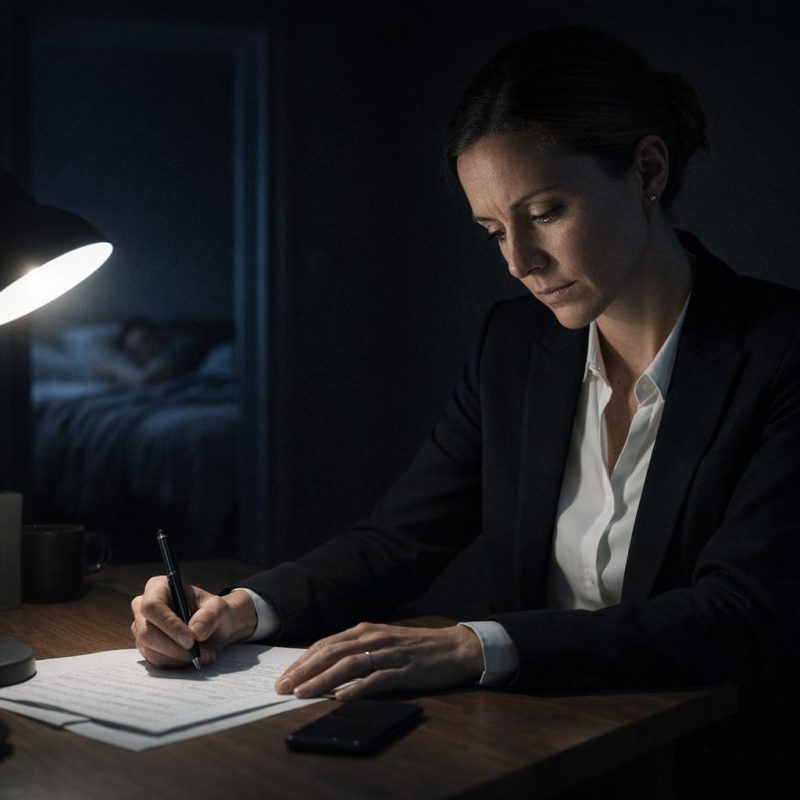 Image by RM AI
The Weight of Loyalty
The next day I went through the motions. Morning coffee, commute, back-to-back client calls, the usual rhythm of a Tuesday. Julian texted me three times before noon — a photo of the coffee shop near his office with a little heart, a reminder about the restaurant reservation Friday, a voice note that was just him saying my name and laughing at something in the background. I listened to it twice. That was the problem. He was so easy to love in the ordinary moments, so uncomplicated and warm, and every time I felt the pull toward my notes I thought about what it would mean to act on them. I'd built my entire professional reputation on one principle: follow the evidence, not the assumption. But that principle had always applied to other people's lives, other people's money. Applying it here felt like a different thing entirely. At lunch I sat at my desk and opened a blank document and stared at it for a long time. I thought about the routing numbers. I thought about Chloe's face — not the theatrics, but the moment just before, when she'd looked at Julian with something I still couldn't name. I thought about what it would cost me to be wrong in either direction. By the time Julian picked me up for dinner, he was all warmth and easy conversation, and I smiled and matched him beat for beat. When I got home that night, the document file was still sitting unopened on my desktop.
 Image by RM AI
The First Search
I told myself it was due diligence. Any sensible person marrying into significant wealth would want to understand their partner's business holdings — that was practically responsible, not suspicious. So on my lunch break three days later, I opened the public corporate registry databases I used for client work and typed in the name of Julian's primary development company. The first result was clean enough: a registered LLC, incorporated eight years ago, good standing, a business address in the financial district. Then I clicked through to the affiliated entities. There were four subsidiaries listed. Then I found the subsidiaries of those subsidiaries. I started a fresh spreadsheet and began mapping the structure the way I would for any client engagement — parent company at the top, branches below, ownership percentages where they were disclosed. By the time my lunch hour was nearly up, I had logged eleven distinct entities across three states and two foreign jurisdictions. Some shared registered agents. Some shared addresses that, when I cross-referenced them, turned out to be the same suite in a Delaware incorporation mill. None of that was automatically illegal — plenty of legitimate developers used layered corporate structures for liability protection and tax efficiency. I knew that. I kept reminding myself of that. I saved the chart to my personal encrypted drive and closed the browser. But I sat there for a moment longer than I needed to, thinking about the number of shell companies registered under Julian's corporate umbrella.
 Image by RM AI
The Performance
The charity gala was held in the ballroom of a hotel I'd been to twice before for client events — high ceilings, soft lighting, the kind of room that makes everyone look like they belong there. Julian was in his element. He moved through the crowd the way he always did at these things, hand at the small of my back, introductions smooth and unhurried, laughing at exactly the right volume. I played my part. I smiled at the investors he introduced me to, asked the right questions about their portfolios, accepted a glass of champagne I barely touched. I was watching, though. Not obviously — I'd learned years ago how to observe without appearing to. I noted which names came up more than once, which conversations Julian steered away from and which ones he leaned into, the way certain men greeted him with a particular kind of familiarity that felt less like friendship and more like business. Around nine o'clock, Julian fell into conversation with two men near the bar — older, European accents, the kind of tan you get from spending winters somewhere warm. I drifted close enough to listen while pretending to study the silent auction display. Most of it was standard developer talk, project timelines, zoning approvals. Then Julian mentioned a property transaction he'd recently closed, and I heard him say the words Cayman Islands.
 Image by RM AI
The First Discrepancy
I stayed late at the office on a Thursday, after the last of my colleagues had gone. The building had that particular after-hours quiet — the hum of the HVAC, the distant sound of a cleaning cart in the corridor — and I sat at my desk with the corporate database subscriptions open and worked through Julian's primary development company filing by filing. The quarterly revenue figures were the first thing that caught my attention. Real estate development follows recognizable cycles: slow quarters during permitting, spikes at closing, predictable gaps between project phases. What I was looking at didn't follow that pattern. The numbers moved in ways that didn't map to any project timeline I could find in the public records. Then I pulled the subsidiaries. Several of them showed significant registered capital — figures that suggested active, substantial operations — but their activity reports were nearly blank. Minimal transactions. No payroll filings. No vendor payments of any scale. I'd seen structures like that before, in client engagements I wasn't supposed to discuss. I told myself there were legitimate explanations. Tax structuring, dormant holding vehicles, entities kept open for future use. I built the spreadsheet carefully, column by column, date by date, keeping my notes neutral and factual the way I would for any professional engagement. By the time I finally closed my laptop and gathered my things, the office had gone fully dark around me. I drove home thinking about the gaps in the quarterly filings.
 Image by RM AI
The Auditor's Doubt
Julian made dinner that Saturday. Not ordered in, not a reservation — he actually cooked, which he did maybe four times a year, and he did it with the same focused attention he brought to everything. I sat on the kitchen counter with a glass of wine and watched him move around the space and thought: this is a real person. Not a file. Not a subject. A real person who drove two hours to sit with me in a hospital waiting room when my mother's diagnosis came back worse than expected, who held my hand through the whole conversation with the specialist without once checking his phone, who cried a little in the car afterward and didn't seem embarrassed about it. I had spent the better part of two weeks building spreadsheets about this man. The thought landed with a weight I hadn't anticipated. My career had trained me to find the anomaly, to treat complexity as a signal, to assume that where there was smoke there was at minimum a fire hazard. But wealthy people used layered corporate structures all the time for entirely legitimate reasons. I knew that. My own clients did it. I wondered, not for the first time, whether I was the problem — whether years of looking for fraud had made me constitutionally unable to accept that something good could simply be good. Julian set a plate in front of me and smiled, and I smiled back, and later that night I lay beside him and let myself rest in the memory of him in that hospital corridor, steady and present and asking for nothing.
 Image by RM AI
The Routing Numbers
I went back to the notes I'd written at two in the morning, the ones I'd told myself were just a precaution. The routing numbers were there in my own handwriting, precise and complete, exactly as Chloe had recited them. I used the professional database access I maintained through my firm — the same tools I used for international client engagements — and I ran them. The first number resolved immediately. It was a valid SWIFT-format identifier, active, associated with a correspondent banking network that processed high-value wire transfers through Caribbean jurisdictions. I sat with that for a moment and then ran the second number. Same network, different institution code, same regional cluster. I cross-referenced the specific codes against the dates Chloe had mentioned — the ones I'd almost dismissed as the ramblings of someone in crisis. The dates aligned with a transfer window that the network's own published documentation described as standard for large-scale asset movement. I kept my notes clinical. I wrote down what I found, not what I thought it meant. But I couldn't get past one thing: the routing structure Chloe had recited from memory, in the middle of a public confrontation, at a party, while visibly distressed — it matched a specific offshore banking network used for exactly the kind of high-value transactions she'd described.
 Image by RM AI
The Backup Files
I organized everything on a Sunday afternoon while Julian was at a golf lunch that was supposed to run until four. I had the apartment to myself and I worked the way I always work: methodically, without rushing. I created a master evidence file and structured it the way I structure every formal investigation — timeline first, then entity map, then source documents, then anomalies flagged by category. I made two encrypted backups, one to a secure drive I kept in my office safe and one to the private cloud account I used for sensitive client work, the one that wasn't connected to any of my firm's shared systems. I labeled each folder with the same naming convention I used professionally: date, subject identifier, document type. I was halfway through labeling the third subfolder when I stopped. I looked at the file path on my screen. The subject identifier I'd typed, without thinking, was the same format I used for fraud cases. Not for personal research. Not for background checks on a future spouse. For fraud cases. I sat back in my chair and looked at what I'd built — the timeline, the entity map, the flagged anomalies, the encrypted backups stored in two separate secure locations — and understood, with a clarity that felt like cold water, that I had been running a formal audit on my own fiancé.
 Image by RM AI
The Business Call
I came home forty minutes early because the client call wrapped faster than expected. I didn't announce myself — I just set my bag down quietly in the entryway the way I always do when I'm tired and don't want to make a production of arriving. Julian's office door was pulled almost shut, which wasn't unusual. What was unusual was his voice. I'd heard Julian on business calls hundreds of times. He had a particular register for them — smooth, unhurried, the kind of tone that made people feel like they were the only thing on his calendar. This wasn't that. This was clipped. Short sentences. Long pauses where he was clearly listening to something he didn't like. I stood in the hallway with my coat still on, not moving, telling myself I was just waiting for a natural moment to knock. His voice dropped lower and I caught fragments — something about a timeline, something about documentation. Then he said it plainly, no hedging, no softening: one point four million. The exact figure Chloe had thrown across the room at the engagement party.
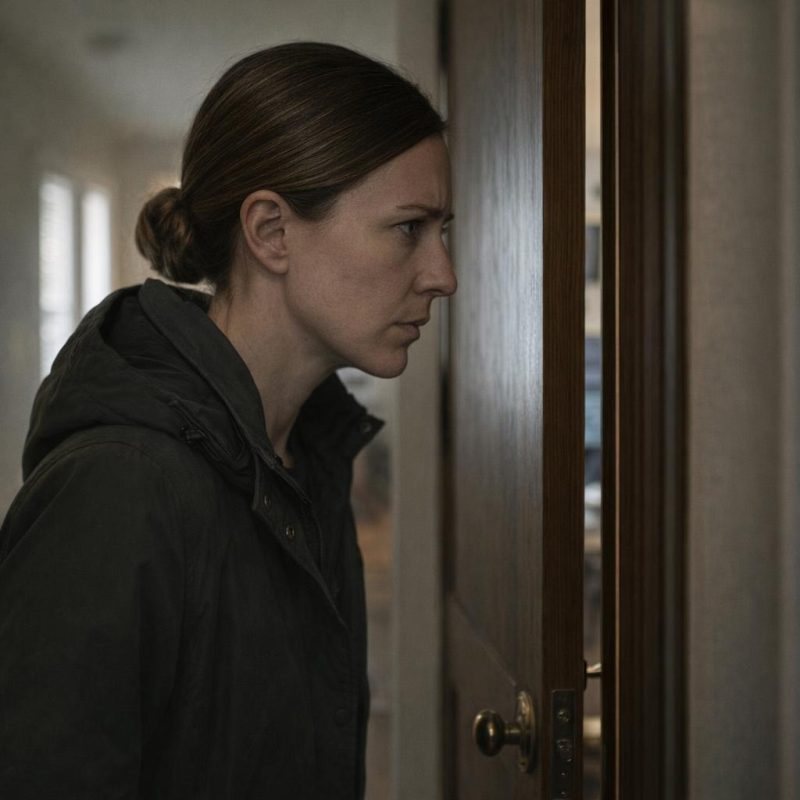 Image by RM AI
The International Transfers
I had a contact at a compliance firm who owed me a professional favor — the kind that gets traded quietly between people who work in financial oversight and never gets written down anywhere. I called in that favor on a Tuesday morning from my office with the door locked. By afternoon I had access to the international transaction database I needed. The routing numbers I'd pulled from Julian's corporate filings pointed to a correspondent banking chain that ran through three intermediary institutions before landing in accounts registered in jurisdictions I recognized immediately from my fraud casework. Wire transfers. Monthly, almost without exception, for the past eighteen months. The amounts weren't identical — they ranged from eighty thousand to just over four hundred thousand — but the pattern was consistent enough that I started building a separate column in my spreadsheet just to track the intervals. When I totaled the outbound transfers across the full eighteen-month window, the number sat at just over three point two million dollars. I checked my arithmetic twice. Then I sat back and looked at the column of dates running down my screen — each one a month apart, each one moving money somewhere it apparently needed to go — and the steadiness of it, the sheer unbroken rhythm of it over a year and a half, settled into me like something cold.
 Image by RM AI
The Loving Fiancée
The dinner party was at the Hargroves' place in the hills — twelve people, good wine, the kind of evening where everyone is performing a version of their best self. I performed mine without difficulty. I laughed at Julian's story about the Scottsdale deal. I touched his arm when he made a joke that landed well. I asked the right questions of the couple across from us and remembered their daughter's name from the last time we'd seen them. From the outside, I was exactly what I was supposed to be. Inside, I was working. When Julian mentioned a name I didn't recognize — a business associate, someone he described as a silent partner on a coastal development — I filed it without reacting. When he steered the conversation away from a question about his portfolio restructuring, I noted the pivot and let it go. I excused myself to the restroom around nine and typed four lines of notes into my phone before I went back to the table. Sitting back down, watching Julian refill my glass with the easy confidence of a man who had no idea he was being observed, I recognized the particular quality of my own attention. It was the same flat, patient focus I brought to executive interviews during a formal audit. The performance and the work had separated so cleanly I could barely feel the seam between them.
 Image by RM AI
The Shell Companies
Corporate registration records are public documents, which is something people who use them for questionable purposes sometimes seem to forget. I pulled filings for every business entity I could connect to Julian's name across seven states, using the same search methodology I'd use for any client engagement. Seven companies came back with structures that made me slow down. Minimal reported operational activity. Registered capital that didn't match any visible revenue stream. Each one listed Julian as sole director. The registered agents were different firms in different states, but the articles of incorporation read like variations on a single template — same clause language, same capital structure, same filing sequence. I cross-referenced the registration dates against my own records out of a habit I couldn't entirely explain to myself. Most of the dates meant nothing to me personally. I kept going down the list. The sixth company on my spreadsheet was registered in Delaware. I checked the date against my calendar and sat very still for a moment. Three days after Julian proposed to me — three days after he got down on one knee at that restaurant and I said yes and cried in a way I hadn't cried in years — someone had filed the paperwork to bring that company into existence.
 Image by RM AI
The Missing Millions
Probate records are another category of public document that people underestimate. Julian's late wife had established a trust before she died — I'd known that in the vague way you know things your partner mentions once and doesn't elaborate on. What I hadn't known was that the trust had been valued at just over eight million dollars at the time of its establishment, with Chloe listed as sole beneficiary. I found the original filing on a Thursday evening with a cup of tea going cold beside my laptop. Then I pulled every subsequent accounting document I could locate through the probate court's public portal. The current balance across the trust's documented accounts was somewhere under two million. I built a comparison table. The discrepancy was just over six million dollars across a five-year period, with the largest withdrawals concentrated in the past eighteen months — the same eighteen-month window as the offshore wire transfers I'd already mapped. I documented each gap with dates and the corresponding account entries. When I finished, I closed the laptop and sat at my kitchen table in the quiet. Six million dollars. The number didn't feel abstract the way large numbers sometimes do. It felt specific and heavy, the way a thing feels when you understand that it used to exist somewhere and now it simply doesn't.
 Image by RM AI
The Retrospective
I went back through every conversation I could reconstruct. Julian had mentioned offshore accounts maybe four months into our relationship — something about tax efficiency, a structure his accountant had recommended, entirely standard for someone with international holdings. I had nodded. I had accepted it. I remembered asking once, more directly, about his corporate structure, and he'd given me an answer that was technically detailed enough to sound thorough without actually answering the question I'd asked. I had let it go. I remembered him saying Chloe was irresponsible with money — careless, he'd said, the way some people just are — and I had filed that away as a father's mild frustration with an adult child. I remembered feeling quietly flattered that he talked to me about his finances at all, that he seemed to trust my professional judgment, that he treated me like a partner rather than someone to be managed. That was the part that sat worst. I had spent fifteen years developing the instinct to notice when an explanation was doing more work than the facts behind it could support. I had applied that instinct to dozens of executives who were far better at misdirection than Julian had ever needed to be. And I had switched it off, completely and without noticing, because I had wanted very badly to believe what he was telling me.
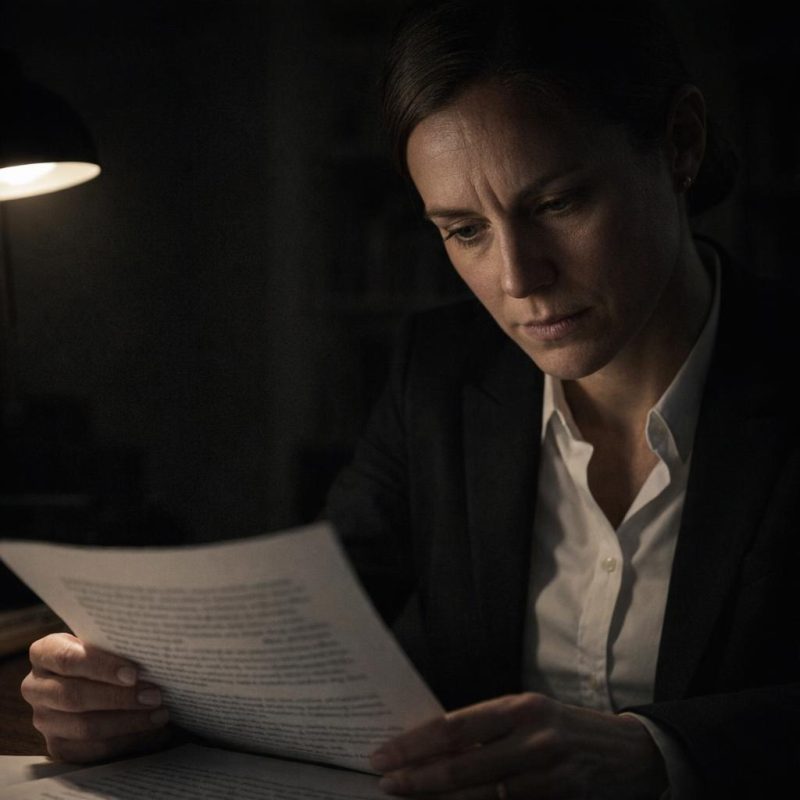 Image by RM AI
The Transaction Timeline
I built the timeline in a separate spreadsheet, color-coded by category: offshore transfers in one column, Julian's public business announcements in another, personal milestones in a third. I worked methodically, the way I always work, and I told myself I was just organizing data. The correlations started appearing before I was halfway through. A significant transfer — two hundred and forty thousand dollars — had cleared three days after our engagement was announced in the business section of the local paper. Another large movement had gone through the week after I was introduced to Julian's primary business partners at that dinner in March. I noted both without drawing conclusions, the way you're supposed to when you're building a case rather than confirming a theory. I kept going. Transfer amounts had increased in the months following my introduction to his social circle. I added that to the notes column without comment. Then I reached the bottom of the transfer log and found the most recent entry. The date was two weeks ago. The amount was three hundred and eighty thousand dollars, the largest single transfer in the entire eighteen-month record, and it had cleared four days after Julian and I had set the final wedding date.
 Image by RM AI
The Forensic Timeline
I spent a full weekend compiling everything into a single file. Corporate filings, transfer records, routing chains, probate documents, the registration dates, the timeline spreadsheet — all of it organized into a structure I knew from professional practice: source documents first, then the analytical layer, then the executive summary with flagged anomalies cross-referenced to supporting evidence. I included screenshots of every public record. I wrote the summary notes in the same neutral, declarative language I used in formal audit reports — no speculation, no characterization, just documented facts and the observable patterns they produced. I created a visual flow chart mapping the movement of funds from source accounts through the intermediary entities to the offshore destinations, with dates and amounts at each node. I made three encrypted backups using different storage systems. When I finally sat back and looked at the completed file on my screen, what struck me wasn't the scale of what I'd found or the months it had taken to get here. What struck me was the file itself — the clean structure of it, the cross-referenced exhibits, the summary that would hold up in front of any forensic accountant or federal examiner who opened it. It looked exactly like every serious fraud case file I had ever built in my professional life.
 Image by RM AI
The Cayman Connection
The routing chains all terminated at the same place. I'd spent three evenings working backward through the transfer records, and every major outflow — regardless of which intermediary entity it passed through — eventually landed at a single destination. The entity name was something deliberately bland: a string of initials followed by the word Holdings. No website. No listed officers in any of the public databases I could access. No press mentions, no filings in any jurisdiction I had clearance to search directly. It was the kind of name that was designed to disappear into a list of other names, and it had worked for years. I cross-referenced it against every registry I had access to through my professional network and came up empty each time. The only thing I could confirm was that it was registered in the Cayman Islands, which meant the ownership records were held under a separate regulatory framework — one that required a formal documentation request through international banking channels. I'd made that kind of request before, in a previous fraud engagement, and I knew the process. That evening I drafted the formal request using my firm's standard letterhead, attached the supporting documentation showing my professional standing, and submitted it through the appropriate international banking channel — the only route that could unlock the Cayman corporate registry for that entity.
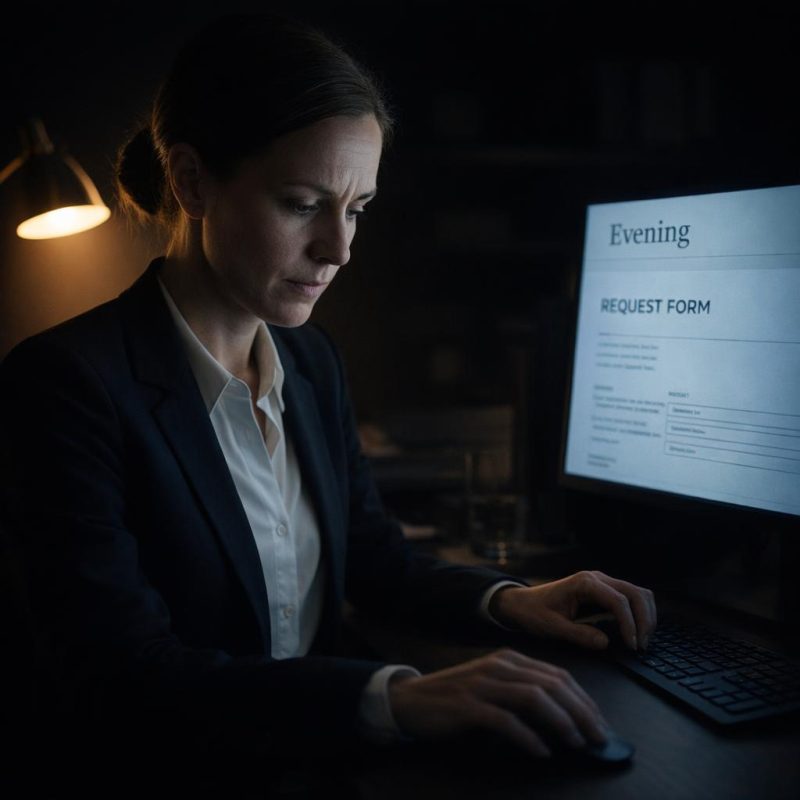 Image by RM AI
The Waiting
Those forty-eight hours were the longest I'd spent in a long time. I went to work. I sat through a budget review meeting and contributed three substantive points. I answered emails. I ate lunch at my desk. From the outside, nothing had changed. Julian texted me around noon with a photo of a venue centerpiece option — white orchids in a low glass bowl — and I texted back a heart and told him it was beautiful, because it was, and because I didn't know what else to say. We had dinner that night at the Italian place near his apartment, the one with the corner table we always requested. He talked about the honeymoon, about a property deal he was close to closing, about whether we should do a first dance or skip it. I listened and smiled and asked the right questions. I watched his hands move when he talked, the way they always did, and I felt the distance between what I was sitting across from and what I was carrying inside me like a physical weight. That night I lay awake beside him in the dark, listening to him breathe, checking the time on my phone every hour or so. The registry documents hadn't arrived yet. The ceiling above me held no answers. The quiet of the room settled around me like something I'd have to learn to carry.
 Image by RM AI
The Scale of It
The email arrived the next morning while Julian was in the shower. The subject line was clinical — Preliminary Transfer Summary, Reference Number attached — and the attachment was a single PDF, four pages. I opened it at the kitchen table with my coffee going cold beside me. The first page was a cover sheet. The second was a breakdown by calendar year. I read through the aggregate totals once, then again, then a third time because the number didn't feel real the first two times. Over five years, the total transferred to the offshore entity came to just over four million dollars. I sat with that for a moment. Four million. The transfers hadn't been evenly distributed — the earlier years showed smaller, more irregular amounts, but the activity in the most recent twelve months had accelerated sharply. The third page showed current account balance: one point four million dollars, still sitting there. I printed all four pages, hole-punched them, and added them to the evidence binder behind the routing chain exhibits. Then I closed the PDF and sat back in my chair. The shower was still running. Julian's coffee mug sat on the counter next to mine, waiting to be filled. I looked at the number I'd written in the margin of my notepad — $4,127,340 — and the ink just sat there on the page, perfectly still.
 Image by RM AI
The Cake Tasting
The bakery was in a converted brownstone on the west side, the kind of place with handwritten menus on chalkboards and staff who spoke about buttercream the way sommeliers speak about wine. Diane was already there when we arrived, clipboard in hand, a small smile that said she'd been there long enough to have opinions. The baker brought out six options on a tiered stand — lemon elderflower, dark chocolate ganache, vanilla bean with raspberry, two others I couldn't focus on. Julian tasted each one with genuine enthusiasm, turning to me after every sample, asking what I thought. I said the lemon was lovely. I said the raspberry was a strong contender. I smiled at the right moments and held his hand across the small table and watched Diane make notes in her precise, looping handwriting. The number from my notepad — $4,127,340 — sat somewhere behind my eyes the entire time, quiet and immovable. Diane walked us through delivery logistics, setup timelines, the window for final flavor confirmation. She was thorough and warm and completely professional, and I found myself grateful for the structure of it, the way the conversation had a shape I could follow without having to generate one myself. Then Julian leaned back in his chair, looked at Diane with that easy smile of his, and said money was no object — whatever I wanted, just put it on the account.
 Image by RM AI
The Registry Request
The confirmation email came through at half past nine that evening. The registry documents had been processed and would be delivered to my secure inbox by six the following morning. I read the message twice, then set my phone face-down on the desk. I'd been sitting in my home office for the better part of two hours by then, going through the evidence binder one more time — not because anything had changed, but because the act of reviewing it helped me think. The routing chains were solid. The transfer summaries were solid. The corporate filings were solid. What I didn't have yet was the ownership layer — the names behind the entity, the people who had actually signed the documents and held the authority to move those funds. I thought about what the records might show. One name, or several. A familiar name, or names I'd never encountered. I wrote out a short list of follow-up questions I'd need to address depending on what I found, and I added them to the back of the binder. Then I set my alarm for five-thirty, closed the laptop, and turned off the desk lamp. The apartment was quiet. The city outside the window made its low, constant sound. I sat in the dark for a moment before getting up, and the stillness of it felt like the last breath before something shifts.
 Image by RM AI
The Download
My alarm went off at five-thirty and I was already awake. I'd been lying there for twenty minutes, watching the ceiling go from black to grey. I got up quietly, took my laptop to the kitchen table, and opened my secure email before the coffee had finished brewing. The message was there. Large encrypted attachment, the access code in a separate message from my banking contact, exactly as promised. I entered the code and the file opened into a folder structure — corporate formation documents, a structure chart, a signatory register, and a subfolder labeled Passport Scans containing two files. My hands were steady. I'd trained myself over years of audit work to stay methodical when the material got serious, and I leaned on that now. I opened the corporate structure chart first and skimmed it, noting the formation date, the registered agent, the jurisdiction details. Then I navigated to the full document package and initiated the download to my secure external drive. The progress bar appeared at the bottom of the screen — a thin blue line moving left to right, slow and even, the passport scan files queued behind the corporate documents. I watched it move. The coffee maker finished its cycle behind me. Outside, the city was just beginning to come awake. The progress bar held at sixty-two percent, the passport scans still loading.
 Image by RM AI
The Authorized Signatories
The download finished while I was on my second cup of coffee. I opened the corporate structure document first, the way I would have in any professional engagement — entity formation before beneficial ownership, structure before identity. The offshore entity had been established three years ago, registered through a standard Cayman Islands formation agent. The document was clean and unremarkable in its layout, the kind of boilerplate structure I'd seen dozens of times in international fraud cases. What stopped me was the signatory register. I found it on page four, a single table with two rows. Two individuals. Both listed with equal authority — full signatory rights, unrestricted transfer access, no co-authorization requirement. No other directors. No other officers. No advisory board, no nominee structure, no additional layers. Just two names, two sets of identification numbers, and the notation that either party could act alone. I sat with that for a moment. Four million dollars, and the entire apparatus of it came down to two people. I wrote the word two in the margin of my notepad and circled it. Then I navigated to the passport scan subfolder and opened the first file.
 Image by RM AI
The First Passport
The image loaded slowly, top to bottom, the way scanned documents do. First the dark blue cover color of the passport page, then the photo box, then the face. I recognized him before the name field had finished rendering. Julian's passport photo was the kind that looked like him — slightly formal, the practiced composure he wore in professional settings. The document showed his full legal name, his date of birth, the passport issue date two years ago. Under occupation: real estate developer. I looked at it for a long moment. I'd suspected his name would be here. I'd built the entire evidence file around the possibility. But there's a difference between suspecting something and seeing it rendered in official government typography on a scanned identity document, and I sat with that difference for a moment before I did anything else. I saved a copy of the scan to my evidence folder, labeled it with the date and document type, and closed the file. The passport scan subfolder still showed one remaining file. The second icon sat there in the folder, unnamed in my understanding, waiting.
 Image by RM AI
The Transaction Patterns
The transaction ledger opened into a spreadsheet that ran to nearly four hundred rows. Three years of activity, deposits and withdrawals, each line timestamped to the day. I pulled up a separate window with the trust fund records I'd already documented and started cross-referencing. The deposit amounts matched — not approximately, not close enough to be coincidence, but exactly, down to the cent. Forty-seven thousand here, eighty-two thousand there, each one landing in the offshore account within seventy-two hours of leaving Chloe's trust. I built a secondary column tracking the withdrawal side and that's where the pattern shifted. For the first two and a half years, withdrawals were irregular — small amounts, spread out, no obvious rhythm. Then, about six months ago, the cadence changed. Larger amounts, more frequent, almost like someone had accelerated a timeline. I flagged that shift and kept scrolling. I wasn't looking for anything specific when I hit the date column near the bottom of the ledger. But then I stopped. A withdrawal dated the same weekend Julian and I had driven up the coast for my birthday. Another one the day after I'd introduced him to my colleagues at the firm's quarterly dinner. The dates matched my own calendar, one after another, each withdrawal timed to a moment I recognized from my own life.
 Image by RM AI
The Background Check
I logged into the professional records database I used for due diligence work and typed in the full name Julian had given me for Chloe — first, middle, last — along with her stated date of birth and the city he'd always said she was born in. The search ran for eleven seconds and returned nothing. I tried variations: middle name dropped, alternate spellings of the surname, a two-year window on either side of her birth year. Still nothing. I moved to marriage records and searched for Julian's name alongside the name of his supposed late wife, the one he'd mentioned in passing a handful of times, always with that particular quiet that I'd taken for grief. A marriage record came back, but the date on it was wrong — or rather, it didn't match the story. If Chloe was twenty-six now, and Julian had married her mother when that record said he did, the math didn't work. I pulled up the death certificate for Julian's wife next. It took three database queries to locate it, and when it loaded I read the date twice. Then I opened a blank document and started writing down the numbers, lining them up in a column the way I do when I'm reconciling accounts that won't balance. The birth certificate search field sat empty on my screen, no results returned for Chloe's name anywhere in the system.
 Image by RM AI
The Inconsistent Timeline
I laid the dates out in a clean timeline in my document. Julian's marriage: twenty-three years ago. His wife's death: the certificate said eight years ago, not seven the way Julian had always told it. Chloe's stated age: twenty-six. I did the subtraction three times because the first two felt wrong. If Chloe was twenty-six now, she was born three years before Julian's marriage. I sat with that for a moment. It didn't necessarily mean anything on its own — people have children outside of marriage, timelines get complicated, families don't always fit neat legal categories. I wrote that caveat in the margin of my notes and kept going. Julian had told me Chloe was nineteen when her mother died, old enough to handle it but young enough that it had shaped her. The death certificate said eight years ago. Twenty-six minus eight was eighteen, not nineteen. One year off. That could be a misremembering. People round numbers when they're talking about grief. But I'd been trained to treat every discrepancy as a data point, not an explanation, and I had three discrepancies now sitting in the same column. I saved the timeline document, flagged it, and submitted the employment and immigration records requests for Chloe using every identifier I had.
 Image by RM AI
The Search for Truth
The records request confirmation email arrived at 11:47 p.m. with an estimated processing time of one to three business days. I closed the laptop and sat back. The apartment was quiet in the way it gets late at night when the street traffic has thinned out and there's nothing left to do but wait. I thought about the stories Julian had told me about Chloe — the ones he'd offered over dinner in the early months, the ones that had made him seem like a devoted, complicated father doing his best. He'd described her grief after her mother's death in specific terms: the way she'd stopped eating for two weeks, the trip he'd taken her on to help her recover, the slow process of watching her find her footing again. He'd told those stories with his eyes slightly unfocused, the way people look when they're actually remembering something rather than performing it. I'd believed him. I'd found it moving. I thought now about the family photos he'd shown me on his phone — Chloe at a restaurant, Chloe at some event, Chloe laughing at something off-camera. All of them recent. All of them showing a woman in her mid-twenties. I couldn't bring a single childhood photo to mind. Not one. And whenever I'd asked about her schooling, her early years, he'd shifted the conversation so smoothly I hadn't noticed until now. The memory of his voice going quiet when he talked about his late wife settled over me and stayed there.
 Image by RM AI
The Employment History
The employment records arrived on the second day, mid-morning, in a compressed file from my database contact. I opened them at the kitchen table with a second cup of coffee going cold beside me. Chloe's work history loaded in a table format: employer name, dates of employment, job classification. I read through it twice before I set the cup down. There was no college listed anywhere in the supporting documentation. No professional certifications, no corporate employer, nothing that matched the vague but respectable career Julian had described when he talked about her — something in marketing, he'd said once, or maybe events management, he was never precise about it. What the records showed instead was a series of service industry positions going back eight years: a restaurant in the city, two retail jobs that lasted less than a year each, a hospitality role at a hotel. Sporadic. No clear upward trajectory. And then, five years ago, a gap in domestic employment that corresponded with a notation I almost missed: international work authorization, venue classification listed as adult entertainment, city of employment in a country I hadn't expected. Julian had told me Chloe had spent time abroad for work, something professional, something that had broadened her perspective. I looked at the venue classification again. Then I looked at the dates. The distance between what he'd described and what the records showed sat in the room with me, quiet and wide.
 Image by RM AI
The International Connection
I pulled the international employment records for the venue listed in Chloe's file. It took two database queries and a call to my contact who handled cross-border verification work, but the records came through within the hour. The venue was an upscale club in a city I'd never had reason to think about in connection with Julian. Chloe's employment classification was listed plainly: exotic dancer. The dates ran across a six-month window, five years ago, with a start date in early spring and a final recorded shift in late autumn of the same year. I noted the city, wrote it in my timeline document, and then opened the immigration records I had access to through my professional subscription. I searched Julian's name and passport number — the one from the scan I'd already documented — and filtered for international travel during that same six-month window. The results loaded in a list: three trips to that city. The first in the second month of Chloe's employment there. The second six weeks later. The third near the end of her recorded tenure at the venue. Each trip ran two to three weeks. Julian's name appeared in the travel log for the same city, on the same dates, in the same window as Chloe's employment record.
 Image by RM AI
The Missing Family Records
I spent the better part of two days running every search I could think of. Birth certificates across four states, using every name variation I had for Chloe. Adoption records, which require a court filing and leave a paper trail even when the details are sealed. Custody documents, guardianship filings, any legal instrument that would establish a parental relationship between Julian and Chloe in a court of record. I searched school enrollment records going back to when Chloe would have been elementary school age. I checked insurance beneficiary databases, the kind that surface when policies are contested or estates go to probate. I looked for any legal filing — any at all — in which both their names appeared in a familial context. I documented each search in a separate log: database accessed, search parameters, result count, date and time. The result count column was a long list of zeros. No birth certificate linking Chloe to Julian. No adoption order. No custody agreement. No guardianship filing. No school record showing Julian as a parent or emergency contact. No insurance document listing Chloe as a dependent. I'd been thorough enough in my professional work to know the difference between a gap caused by incomplete records and a gap caused by the absence of something that never existed. I added the final zero to the log and sat with the document open in front of me.
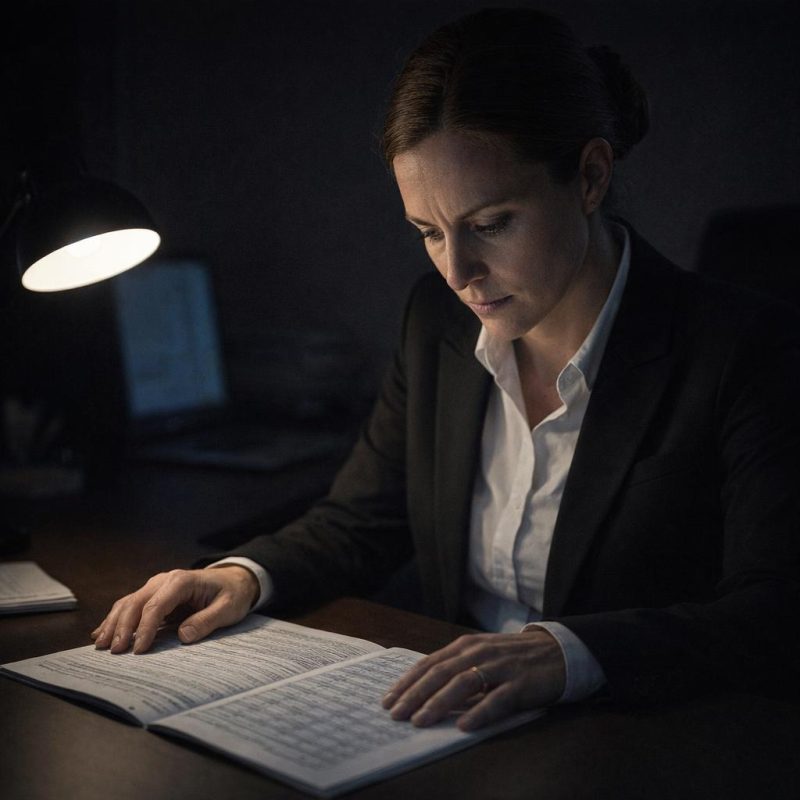 Image by RM AI
The Dancer
The archived promotional materials from the venue took longer to locate than the employment records had. My contact had to go through a third-party archive service, and the files that came back were a mix of scanned print materials and low-resolution digital images from what looked like an early-era website. I opened the image folder and started going through them. Most were generic venue shots — bar setups, stage lighting, crowd angles. Then I found the performer profiles. They were formatted like headshots with a stage name printed beneath each photo. I went through them one by one until I found her. The stage name was different, two words I didn't recognize as having any connection to the name Julian had given me. But the face was unmistakable. Chloe, five years younger, photographed in professional venue lighting with the kind of composed, practiced expression that comes from knowing how to work a camera. I cross-referenced the dates on the promotional materials against the employment records and the immigration file I'd built. Everything aligned. There was no prior record of Chloe in Julian's city, no social overlap, no shared history before the window of Julian's three visits abroad. I added the image file to my evidence folder and sat back. The photographs looked back at me from the screen, glossy and archived and completely at odds with every story I'd been told.
 Image by RM AI
The Relationship Evidence
I started with the hotel records because they were the most traceable. Travel bookings leave a paper trail that's almost impossible to fully erase — confirmation numbers, loyalty program entries, credit card charges that match to specific properties on specific dates. I pulled Julian's financial records alongside the travel data I'd already compiled and started cross-referencing. The first match came up within twenty minutes. A boutique hotel in Lisbon, four years ago, a suite booked under Julian's name with a second guest listed. The second guest's name matched the passport I'd already flagged. I kept going. Paris, two years later — a five-night stay at a property near the Marais, one suite, both names on the reservation. Santorini the following spring. A private villa rental, seven nights, the booking confirmation listing two adults. I found restaurant reservations attached to the same travel windows — tables for two at the kind of places where you book weeks in advance. I cross-checked the social media archives I'd pulled earlier and found photographs that matched the locations and the dates, images that had since been deleted from public profiles but survived in cached archive pulls. They were standing close in every one. Not the way a father and daughter stand. I kept my breathing even and kept documenting. The final file in the sequence was a suite reservation from eight months ago — Julian's name and Chloe's, one room, three weeks before he proposed to me.
 Image by RM AI
The Five-Year Timeline
I built the timeline in a spreadsheet, the way I would have approached any complex audit — one column for dates, one for event type, one for source documentation, one for corroborating evidence. It took most of the night. The earliest entry was five years ago: Julian's first recorded trip to the city where Chloe had worked at the venue. Three visits in a four-month window, each one documented through flight records and hotel bookings. Then a gap, followed by a series of wire transfers to an overseas account I'd already flagged. Chloe's immigration records showed her arrival in Julian's city approximately fourteen months after that first trip. I noted the date and kept building. Three years ago, Julian began introducing Chloe to his business circle. I had the social media posts, the event photographs, the tagged check-ins at charity dinners and industry functions. The framing was consistent from the first appearance: his daughter, visiting from abroad, settling in. Two years ago, the travel records showed them in Paris together. Santorini the following spring. The suite bookings, the restaurant reservations, the deleted photographs — I entered each one with its source file attached. Then I reached the bottom of the column and typed in the final entry: Julian's proposal to me, dated fourteen months after the Paris trip. I looked at the completed spreadsheet. The relationship column stretched back two full years before my name appeared anywhere in the record.
 Image by RM AI
The Fabricated Identity
The social media archive search took a different kind of patience. I wasn't looking for financial data — I was looking for the moment the story started. I searched Julian's public profiles going back six years, pulling every post, every tagged image, every mention of family. For the first three years, there was nothing. Business announcements, property launches, industry events, the occasional travel photograph. No mention of a daughter. No family references at all. Then, exactly three years ago, a single post appeared. A photograph of Julian at what looked like a charity reception, Chloe beside him in a formal dress. The caption read: *Proud to have my daughter join me this evening as she settles into her new home here.* I read it twice. The wording was careful — no specific details, no mention of her mother, no backstory. Just the label, dropped into public record like a flag planted in new ground. I searched forward from that date and found the same structure repeated: the word daughter, no elaborating detail, always in a context where the business audience would absorb the information without questioning it. I pulled the engagement party photographs next and found the same framing in the captions other guests had posted. I saved the original post with its timestamp and metadata. That post — Julian's verified business profile, exactly three years ago — was where the story of his daughter had begun.
 Image by RM AI
The Targeted Reputation
I pushed back from the desk and let myself think. Not about the documents — I'd been staring at documents for days. I thought about the dinners. The introductions. The specific way Julian had always positioned me when we walked into a room together. I remembered the first time he introduced me to his financial advisors, maybe four months into our relationship. He hadn't said *my girlfriend* or *someone I'd like you to meet.* He'd said, *This is the woman who keeps Fortune 500 companies honest.* Everyone had laughed, including me. I'd thought it was charming. I thought about the industry gala where he'd steered me toward a cluster of developers and mentioned, almost in passing, that I'd led three major compliance audits in the past year. I remembered him asking me once, over dinner, whether my firm's reputation extended to international clients. I'd talked for twenty minutes about cross-border audit standards. He'd listened with what I'd taken for genuine interest. There were other moments — him mentioning my credentials to people I'd only just met, suggesting I might enjoy reviewing his business accounts as a kind of intellectual exercise, asking whether my professional standing would survive a period of independent consulting. I'd filed each one away as the enthusiasm of a proud partner. Sitting here now, pulling those moments back out and laying them in sequence, something about the pattern felt different than it had at the time.
 Image by RM AI
The Complete Betrayal
The second passport scan was near the bottom of the Cayman Islands registry file. I almost missed it because I'd been focused on Julian's documentation, but the account number matched, and I opened it. Chloe's photograph looked back at me from the screen. Her name was listed as co-signatory with equal authority over the account. I sat very still. I went back through everything — the offshore account, the 1.4 million dollars, the fabricated father-daughter story, the deleted photographs from Lisbon and Paris and Santorini, the hotel suites, the timeline I'd built across two sleepless nights. It wasn't a father and daughter relationship. It had never been. She was his partner. His actual partner. And I was the piece they'd needed to complete the structure. My professional reputation, my clean compliance record, my name attached to his domestic finances through marriage — that was what the evidence showed. The passport scan, the co-signatory line, the offshore account balance, the travel records, the fabricated identity: each document pointed to the same conclusion. Once we were married, his liabilities would become mine. His creditors, his regulators, his exposure — all of it would carry a second name, a name with an unblemished record. The 1.4 million sat in an account they both controlled. I was the open door. They were the ones holding the key.
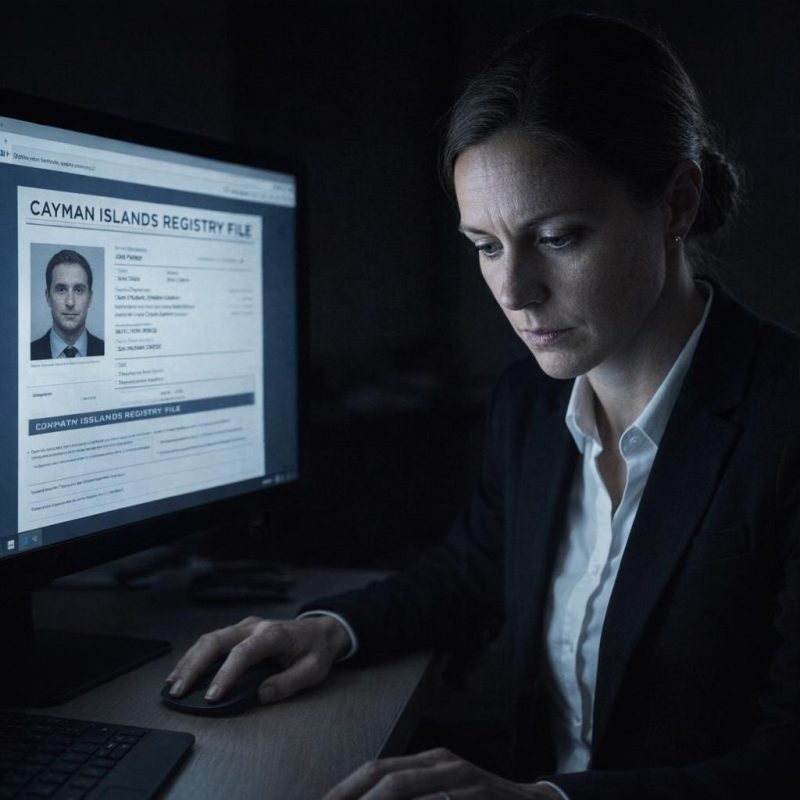 Image by RM AI
The Cold Calculation
I didn't move for a long time after that. The evidence folder sat open on my screen — forty-three files, organized by category, each one sourced and cross-referenced and timestamped. I'd built tighter cases for clients with less documentation than this. I knew what it added up to. Wire fraud. Money laundering. Identity fabrication. Conspiracy. The kind of file that federal prosecutors don't have to work hard to present to a jury. I thought about calling someone. My sister, maybe, or a friend who'd known me before Julian. I picked up my phone and put it back down. There was nothing to say yet that wouldn't require me to explain everything from the beginning, and I didn't have the energy for that version of the conversation. What I had was the evidence. What I had was the timeline, the passport scans, the hotel records, the deleted photographs, the offshore account with both their names on it. I thought about Julian's face at dinner last week — the easy smile, the hand on my back, the way he'd talked about the honeymoon like it was something he was genuinely looking forward to. I let myself feel that for exactly as long as it took to close the emotion down. Then I opened a new document and started writing the executive summary. The grief could wait. The work couldn't.
 Image by RM AI
The Perfect Performance
Julian texted at noon asking if I'd thought any more about the centerpiece flowers. I typed back that I was leaning toward the white ranunculus, that they'd photograph better than the peonies. He sent a heart emoji. I stared at it for a moment, then put the phone face-down and went back to the evidence file I'd been cross-referencing. He called at six to ask about dinner. I said yes, named a restaurant near his office, and spent forty minutes getting ready with the same care I'd taken every other time. Over the table I asked about a property deal he'd mentioned the week before. He talked for twenty minutes. I asked follow-up questions. I laughed at the right moments. When he reached across the table and covered my hand with his, I turned my palm up and held his fingers the way I always had. We talked about the guest list. I suggested we finalize the seating chart by the end of the week. He said he loved how organized I was. I said I learned from the best and watched him take the compliment without any visible hesitation. Outside the restaurant he pulled me close and said something about how lucky he was. I told him I felt the same way. I kissed him goodnight at the curb, his hands warm on my face, and thought about the name of the federal financial crimes unit I planned to call first thing in the morning.
 Image by RM AI
The Evidence Package
I worked through the night with the kind of focus I usually reserved for the final stage of a major audit. The evidence package had to be prosecution-ready — not just accurate, but structured so that someone encountering it cold could follow the logic from the first page to the last without needing me to explain anything. I organized it into seven sections: corporate filings, offshore account documentation, passport scans with co-signatory confirmation, travel and hotel records, the fabricated identity timeline, the romantic relationship evidence, and the executive summary. Each section had a cover sheet listing the documents it contained, their sources, and the chain of custody for anything I'd obtained through third-party channels. The executive summary ran to four pages. It opened with the offshore account and worked backward through the evidence, connecting each piece to the next in the sequence a prosecutor would need. I named the fraud statutes. I cited the specific transactions. I noted the dates on which Julian had introduced me to his financial advisors and cross-referenced them against the offshore account activity in the same period. When I finished, I created three encrypted copies — one on a secure cloud partition, one on a physical drive I locked in my desk, one formatted for transmission. I read through the executive summary one final time. It was clean, precise, and complete. Whatever I had felt in the hours before I started writing it, what remained now was the quiet, settled weight of work done exactly right.
 Image by RM AI
The Decision Point
I sat at my desk for a long time after I finished the evidence package, the FBI Financial Crimes Division contact page open on my screen. The cursor hovered over the phone number. I'd looked it up three times already — not because I'd forgotten it, but because each time I pulled it up I was making sure I still meant to use it. I did. Reporting Julian meant the engagement was over. It meant my name would appear in federal case files, that I'd be interviewed, deposed, possibly called to testify. It meant the life I'd spent the last eighteen months building — the dinners, the travel, the future I'd genuinely believed in — would be dismantled in a federal courtroom. I knew all of that. I'd known it since the night I found the offshore account. What I hadn't expected was how quiet the decision felt once I'd actually made it. No panic. No second-guessing. Just the clean, still certainty of someone who has already done the hard work and is ready for what comes next. I closed the laptop. The encrypted drive sat on the desk beside my coffee cup, the room around me ordinary and unhurried. Outside, the city moved through its evening without knowing anything had changed. Inside, everything had.
 Image by RM AI
The Federal Contact
The FBI field office downtown looked exactly like what it was — a building designed to feel unremarkable from the outside. I checked in at the front desk, gave my name, and waited twelve minutes before a woman in her mid-forties came through the security door and introduced herself as Agent Chen from the Financial Crimes Division. She had the kind of economy of movement that comes from years of doing exactly this — no wasted gestures, no small talk beyond what was necessary. We sat across from each other in a conference room with fluorescent lighting and a laminate table, and I opened my evidence package. I walked her through all seven sections in order. She didn't interrupt. She made notes in a small spiral notebook, pausing occasionally to examine a document more closely — the offshore account records, the passport scans, the co-signatory confirmation. When I explained how the fabricated relationship had been used to obscure the movement of funds, she nodded once, slowly, like someone confirming a calculation they'd already run in their head. When I finished, she set her pen down and looked at me across the table. "Wire fraud, money laundering, and grand larceny," she said. "This evidence supports all three charges. We're opening a full federal investigation."
 Image by RM AI
The Undercover Operation
Agent Chen slid a single-page document across the table — a cooperating witness agreement. She explained what it required: I would maintain my engagement to Julian and continue with the wedding plans as though nothing had changed. I would use my access to document any ongoing financial activity. I would communicate with her team only through an encrypted channel they would set up on a secondary device. I would not confront Julian or Chloe, not alter my behavior in any way that might signal the investigation. I asked how long. She said they needed enough time to build the criminal case and execute the arrest warrants simultaneously, so nothing could be moved or destroyed. Weeks, not months. I signed the agreement. She walked me through the communication protocols — check-ins at set intervals, a specific phrase to use if I felt my safety was at risk, a contact number that would route directly to her. I listened carefully and took no notes, because I wasn't supposed to have notes. On the drive home, I sat at a red light and watched the city move around me — people walking dogs, a couple arguing outside a restaurant, a delivery driver checking his phone. All of it ordinary. All of it completely separate from what I had just agreed to become. The weight of it settled somewhere behind my sternum and stayed there.
 Image by RM AI
The Power of Attorney
I brought it up over dinner, three days after I signed the cooperating witness agreement. I'd chosen the timing carefully — Julian was relaxed, two glasses of wine in, pleased with himself about a deal he'd closed that afternoon. I told him I'd been thinking about the wedding expenses and how inefficient it was going to be with our finances still completely separate. I said it felt like we were already a partnership in every way that mattered, and that having me manage the pre-wedding accounts would save us both time and paperwork. I used the word 'streamline' twice. Julian smiled at that — he liked efficiency almost as much as he liked the idea of me handling logistics so he didn't have to. I told him my attorney had drafted a temporary power of attorney covering his domestic accounts, limited in scope, easy to dissolve after the honeymoon. I slid the documents across the table with the same calm I'd use presenting a client deliverable. He glanced at them, asked one question about the duration, and I answered it without hesitating. He reached for the pen. I watched him sign his name across the bottom of each page, unhurried, completely at ease, with no idea what he had just handed me.
 Image by RM AI
The Bride-to-Be
Diane was exactly as I remembered her — clipboard in hand, headset around her neck, moving through the bridal suite with the focused efficiency of someone who had managed a hundred of these fittings and intended this one to go perfectly. She talked through the day-of timeline while the seamstress made the final adjustments to the hem. I confirmed the flowers, the catering, the string quartet for the ceremony. I reviewed the seating chart for two hundred guests and approved the last three table assignments she'd been waiting on. I smiled at the right moments. I said 'it's all coming together' at least twice, because that was what a bride said at her final fitting. My phone was face-down in my bag, but I could feel it. Twice during the appointment I excused myself to the restroom and sent encrypted check-ins to Agent Chen — the legal filings to freeze Julian's domestic accounts were moving through the system, and I needed to confirm the offshore freeze would execute simultaneously. Both times I came back, smoothed my dress, and let Diane tell me how beautiful I looked. She held up a small mirror so I could see the back of the gown. I looked at my own reflection — white dress, composed face, the whole picture of a woman about to get married. The federal freeze confirmation was sitting in my encrypted inbox.
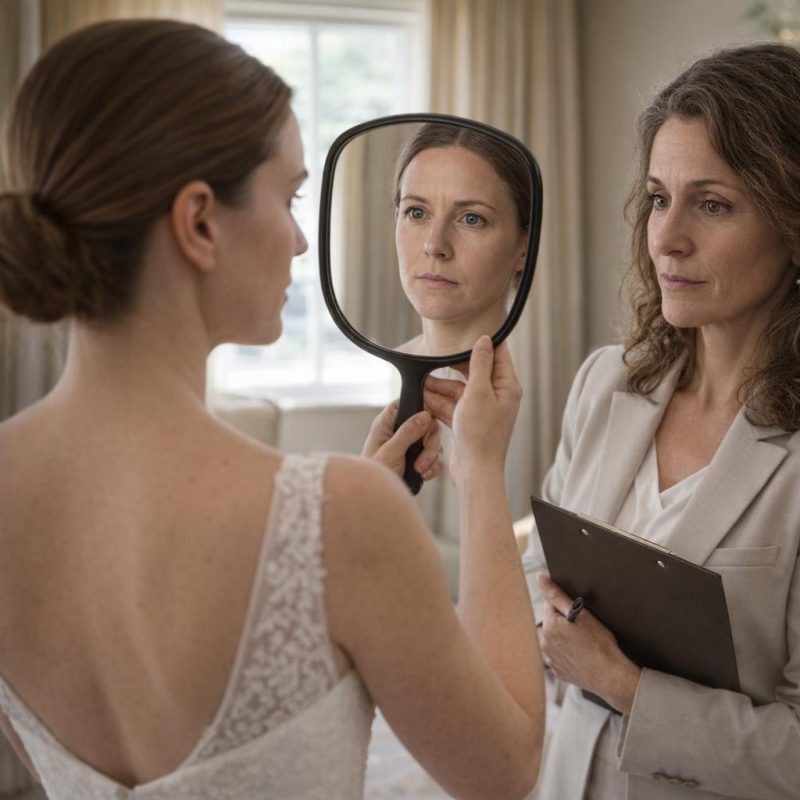 Image by RM AI
The Account Freeze
I filed the emergency motions at 9:47 in the morning, using the power of attorney Julian had signed over dinner. The domestic accounts went first — three filings, each citing the active fraud investigation, each routed through the federal court system with Agent Chen's case number attached. I sat at my kitchen table with my laptop and a second phone running the encrypted channel, and I worked through the list methodically, the way I would work through any audit. Agent Chen's team executed the offshore freeze on the Cayman account at the same moment, coordinated to the minute so nothing could be moved between notifications. One point four million dollars, locked. Every connected account, locked. The digital monitoring systems stayed active — any access attempt would be logged and flagged in real time. I closed each filing confirmation as it came through, stacking them in the secure folder the same way I'd organized the evidence package. When the last confirmation arrived, I read it twice. Then I forwarded it to Agent Chen with a single line: all filings complete. Her reply came back in under four minutes: "All accounts confirmed frozen. Arrest warrants in preparation."
 Image by RM AI
The Rehearsal Dinner
The rehearsal dinner was held at a restaurant on the forty-second floor with a view of the city that Julian had specifically chosen because it photographed well. Fifty guests, open bar, a menu he'd approved himself. He gave a toast about twenty minutes in — something about finding the person who makes you want to be better, about timing and luck and knowing when something is real. People raised their glasses. I raised mine. Chloe spoke briefly after him, a few sentences about being glad her father had found happiness, about looking forward to what came next for their family. She smiled at me when she said it. I smiled back. I watched the two of them move through the room the rest of the evening — the small glances they exchanged when they thought no one was paying attention, the half-second of something passing between them when Julian mentioned the honeymoon itinerary. I noticed. I always noticed now. When it was my turn, I stood and thanked Julian for changing my life, and I meant it in ways he would never understand. I sat back down and let the dinner continue around me — the laughter, the clinking glasses, the easy confidence of two people who believed tomorrow was theirs. The arrest warrants were being finalized across town, and neither of them had any idea.
 Image by RM AI
The Wedding Morning
I was awake before my alarm. I made coffee, sat at the kitchen table in the quiet, and contacted Agent Chen at six-fifteen. She confirmed that agents were already in position at the church — plainclothes, distributed across the venue, indistinguishable from guests. The arrest warrants had been signed the previous evening. She walked me through the signal one final time: once Julian and Chloe were both present at the altar, I would touch my left ear. That was all. Everything after that was the federal government's problem. I asked if there was anything that could go wrong at this stage. She said the operation was clean. I thanked her and ended the call. I set the phone down and looked at the wedding gown hanging on the back of the closet door — ivory silk, hand-stitched beading along the bodice, the most expensive thing I had ever worn. I'd chosen it before I knew what Julian was. I put it on anyway, slowly and carefully, the way I did everything now. I stood in front of the mirror for a moment. I looked exactly like a woman about to get married. I knew precisely what was going to happen, in what order, and to whom. The calm that had settled over me in the days since I'd signed the cooperating witness agreement had not lifted — it had simply become the ground I was standing on.
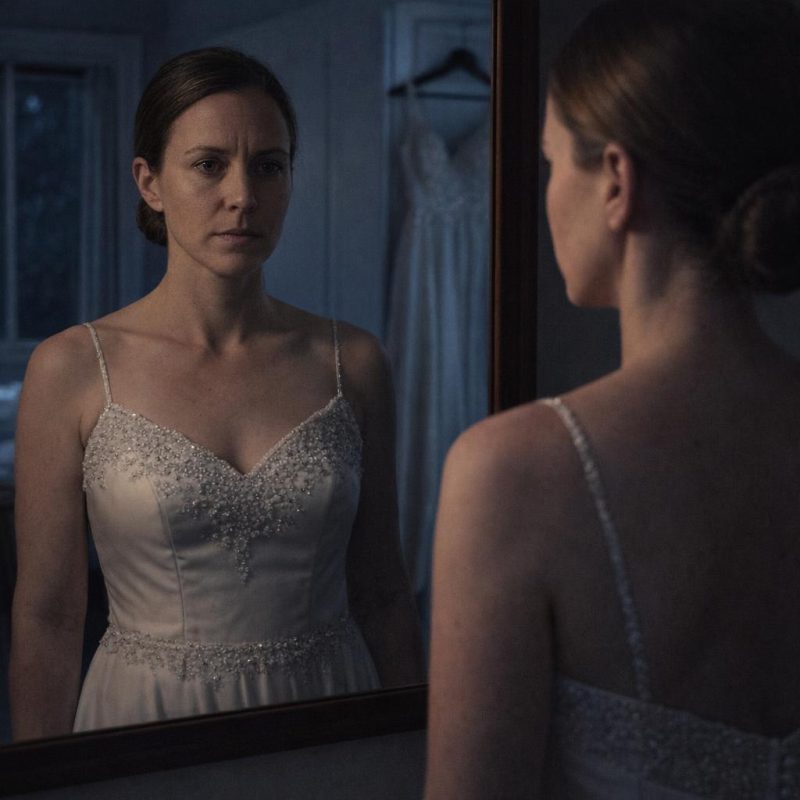 Image by RM AI
The Altar
The church was full. Two hundred people in pressed suits and silk dresses, filling every pew, the kind of crowd Julian had always wanted around him. I walked down the aisle slowly, bouquet in both hands, eyes forward. The organ played. People smiled. Julian stood at the altar in his charcoal suit, silver cufflinks catching the light, looking exactly like a man who believed he had won. Chloe sat in the front row in a pale blue dress, composed and satisfied. I took my place. The priest began, his voice carrying through the vaulted space, and I listened to the words without hearing them. I was counting. Julian reached for my hand. I let him take it. His grip was warm and confident. The priest paused at the traditional moment and asked if anyone present had cause to object. No one spoke. The silence lasted exactly three seconds. I raised my left hand to my ear and touched it once. Julian's eyes moved to my hand. His smile flickered — just slightly, just for a moment — and then the doors at the back of the church swung open.
 Image by RM AI
The Arrests
Agent Chen came through first, badge raised, four agents flanking her in a tight formation. The organ stopped mid-note. Agent Chen's voice filled the church, clear and unhurried, reading the charges — grand larceny, wire fraud, international money laundering — as if she were reading a grocery list. Julian dropped my hand. He opened his mouth and one of the agents was already moving, already turning him by the shoulder, already snapping the cuffs into place before a single word came out. Chloe screamed. It was a raw, theatrical sound that bounced off the stone walls and scattered through the flower arrangements. Two agents brought her to her feet while she twisted and shouted my name like an accusation. I reached into the small clutch I had carried down the aisle and handed Agent Chen the drive — the complete financial ledgers, the frozen account documentation, everything. Julian looked at me then. His face had gone completely still, the practiced confidence drained out of it, replaced by something I had no interest in naming. Chloe was still shouting as they walked her toward the doors. The guests sat without moving, without speaking, two hundred people watching in absolute silence as both of them were led out of the church. I stood at the altar in my wedding dress and watched them go.
 Image by RM AI
The Aftermath
The days after the wedding were quieter than I expected. I spent most of them in a federal building downtown, sitting across from prosecutors with a legal pad and a cup of bad coffee, walking them through everything — the shell companies, the layered transfers, the timeline I had reconstructed transaction by transaction. Agent Chen told me on the third day that the evidence package I had assembled was among the most organized she had seen from a cooperating witness. I didn't take it as a compliment exactly. It was just the work. I started seeing a therapist that same week, a woman with a calm office and no particular interest in rushing me toward conclusions. I told her the facts first, the way I always did, and she let me. My colleagues at the firm sent messages — careful, kind ones, the kind people send when they aren't sure what the right thing to say is. I appreciated them more than I could explain. I was sleeping better than I had in months, which surprised me and then didn't. The manipulation had been exhausting in ways I was only beginning to measure. I was sitting at my kitchen table one evening, the same table where I had made that six-fifteen call on my wedding morning, when my phone lit up with a notification from the federal case portal — Julian and Chloe had been denied bail.
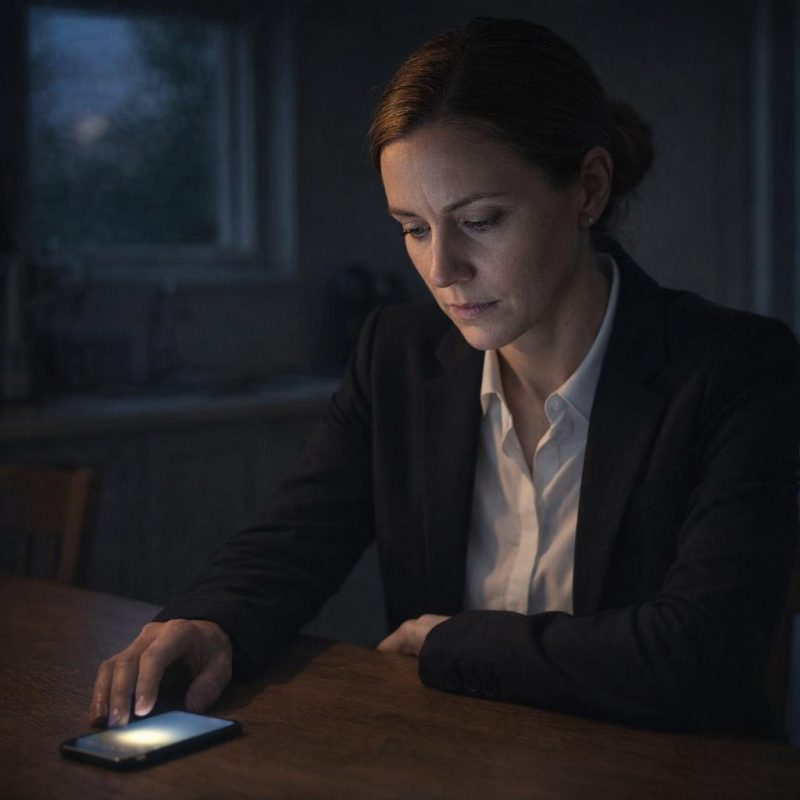 Image by RM AI
The Truth as Weapon
I thought about it a lot in the weeks that followed — not the wedding, not the arrest, but the moment I had first pulled Julian's financials and felt something was wrong. That instinct, that trained refusal to accept a number that didn't reconcile, had been the thing that saved me. They had chosen me because of what I did for a living, because a corporate auditor on the arm of a real estate developer lent the whole operation a kind of credibility. What they hadn't accounted for was that I would actually look. I had spent years learning to find the thing that wasn't supposed to be found, to follow a discrepancy past the point where most people stopped asking questions. I turned that skill on the person who thought he knew me best, and it held. The betrayal was real — I wasn't going to pretend otherwise, and my therapist wasn't going to let me even if I tried. But I had not been passive. I had not waited to be discarded. I had gathered the evidence, signed the agreement, put on the dress, and walked down the aisle on my own terms. The pain was mine to carry. So was the outcome. I closed the case file on my laptop, set it aside, and for the first time in longer than I could remember, I decided what I wanted to do next.
 Image by RM AI
KEEP ON READING

20 Greek Gods We Don't Often Talk About
Step Aside, Zeus. Greek mythology isn’t only about Zeus and…
By Elizabeth Graham Jan 16, 2026
10 Historic Courtship Practices That Should Be Brought Back &…
Old-School Dating Was a Mix of Charming & Unhinged. Historic…
By Emilie Richardson-Dupuis Jan 20, 2026
Pooches Of The Past: Extinct Dog Breeds
Unknown authorUnknown author on WikimediaDogs have been showing up in…
By Elizabeth Graham Jan 27, 2026
The 20 Craziest Silent Films Ever Made
When Silence Let the Madness Speak. Silent cinema didn’t just…
By Chase Wexler Jan 5, 2026
Legendary Tales: 20 Most Fascinating Mythical Creatures from Folklore
Mythological Beasts. Stories about mythical creatures endure for a simple…
By Christy Chan Jan 16, 2026
The three most expensive historical artifacts ever sold at auction
Attributed to Leonardo da Vinci on WikimediaAuctions are where history…
By Emilie Richardson-Dupuis Jan 9, 2026