

I Thought I Raised a Good Son—Then My Ex-Daughter-in-Law Sent Me a Package That Shattered Everything I Believed
I Thought I Raised a Good Son—Then My Ex-Daughter-in-Law Sent Me a Package That Shattered Everything I Believed
The Garden and the Good News
The roses were finally thriving again after that awful aphid infestation in June. I was on my knees in the garden, pruning shears in hand, when I realized I hadn't thought about Mark's divorce all morning. Three years of watching my son go through hell, and now it was finally over. The papers had been signed last week. He was free from Emily and all her chaos—the mood swings, the accusations, the drama that had consumed his life. I remembered how exhausted he'd looked at Christmas, how thin he'd gotten during the separation. Now maybe he could rebuild. Maybe he could find someone stable, someone who appreciated what a good man he was. I wiped my forehead with the back of my gardening glove and smiled at the pale pink blooms. My son had always been resilient, ever since he was a little boy. He'd weather this and come out stronger. The evening air was getting cool, so I gathered my tools and headed inside, feeling lighter than I had in months. I told myself Emily was just bitter—but I had no idea what was coming in three days.
 Image by RM AI
Sunday Call Tradition
Mark called right at eleven on Sunday morning, like he always did. 'Mom? You busy?' His voice sounded brighter than it had in years, and I felt my chest swell with relief. We talked for nearly an hour—about his work, about the new apartment he was setting up, about how good it felt to finally have his life back. 'I couldn't have gotten through this without you,' he said, and I heard genuine emotion in his voice. 'Emily tried to turn everyone against me, but you never wavered. You believed me when no one else did.' I told him that's what mothers do. We believe in our children. We see who they really are beneath all the accusations and lies. He laughed a little, that warm laugh I remembered from when he was younger. 'I mean it, Mom. You kept me sane. When she was telling everyone I was controlling, that I was manipulating her—you knew better.' I did know better. I'd raised him. I knew his heart. Before we hung up, I promised I'd come visit his new place next weekend. He thanked me for never doubting him—and I promised I never would.
 Image by RM AI
Memories of Emily
I kept thinking about Emily that afternoon, remembering when she'd stopped coming to family dinners. It had been gradual at first—she'd cancel at the last minute, claiming headaches or work stress. Then she stopped returning my calls altogether. Mark had explained it gently, like he was trying to protect my feelings. 'She's having one of her episodes, Mom. The therapist says she's struggling with paranoia.' He'd shown me text messages where she'd accused him of poisoning her mind against her own family. Wild stuff. Completely irrational. I'd tried to be understanding—mental health is so important, and I'd never wanted to judge her. But as the months went on, Mark shared more. How she'd maxed out credit cards on shopping sprees she couldn't remember. How she'd scream at him in the middle of the night about things that never happened. How she'd once called the police claiming he'd locked her out, when he'd been at a work conference two states away. I'd felt so sorry for my son, dealing with all that instability. I wondered why she never reached out to me directly, but Mark said she blamed me for taking his side.
 Image by RM AI
The Unexpected Package
The package arrived on a Wednesday afternoon, plain brown paper with my address printed in generic labels. No return address. No name. Just sitting there on my front porch when I got back from the grocery store. I almost tossed it aside—I wasn't expecting anything—but curiosity got the better of me. Inside was a small digital voice recorder, the kind you'd use for lectures or meetings, and a stack of bank statements held together with a rubber band. No note. No explanation. Nothing to tell me who'd sent it or why. My first thought was that it was meant for someone else, a mistake by the postal service. But my name and address were correct. I turned the recorder over in my hands, saw that it was cued up to play. The statements were from a bank I didn't recognize, but I caught Mark's name on the top page before I looked away. My heart started beating faster, though I couldn't have said why. Something about the anonymity of it felt wrong. Intrusive. My hands shook as I stared at the recorder—should I press play, or should I call Mark first?
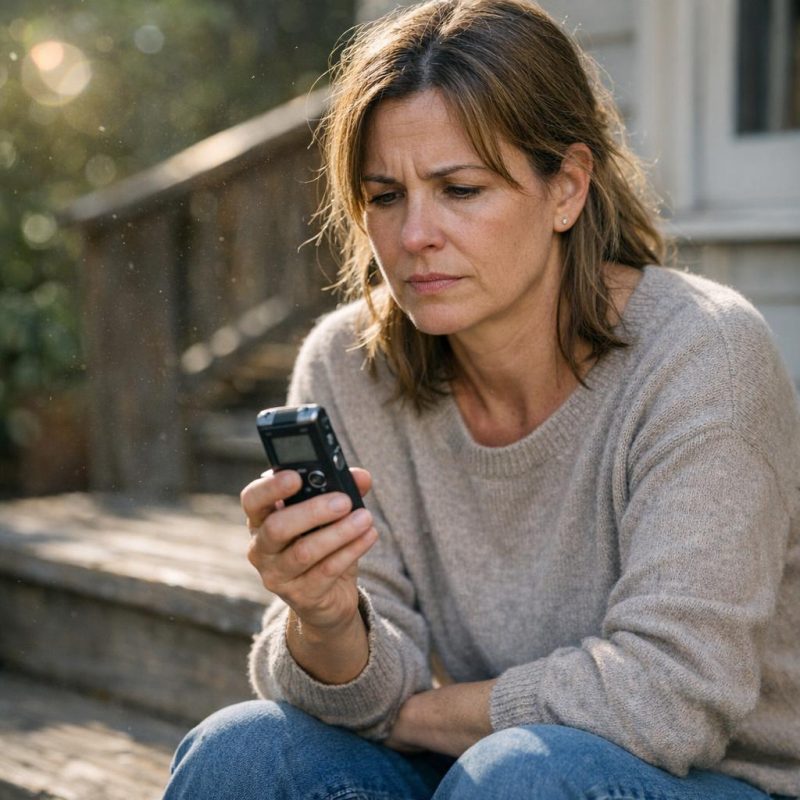 Image by RM AI
The First Recording
I pressed play. Mark's voice filled my kitchen, crystal clear and unmistakable. But it didn't sound like my son. It sounded cold. Calculated. 'The joint accounts are almost drained,' he was saying to someone. 'I've been moving money for months. She has no idea—she doesn't even check the statements anymore.' There was laughter in the background, someone else's voice I didn't recognize. 'What if she lawyers up?' the other person asked. Mark scoffed. 'With what money? Besides, I've documented everything. The shopping, the instability, the irrational behavior. It's all there in black and white. She'll never prove anything—and Mom will believe whatever I tell her.' I hit stop so hard I nearly dropped the recorder. My vision blurred. This had to be fake. AI or something, someone trying to mess with Mark during the divorce. But that was his voice. I knew my own son's voice. The casual cruelty in it. The confidence. I sat down at the kitchen table because my legs wouldn't hold me anymore. I stopped breathing when he said, 'She'll never prove anything—and Mom will believe whatever I tell her.'
 Image by RM AI
Denial in the Garden
I went straight to the garden because that's where I've always gone when the world doesn't make sense. My hands were still shaking as I grabbed the pruning shears and started working on the roses, cutting away dead blooms without really seeing them. It had to be out of context. Mark must have been venting to a friend, exaggerating out of frustration. People say things they don't mean when they're angry, when they're hurt. Emily had put him through hell—maybe he'd just been blowing off steam, talking tough to feel in control again. The recording could have been edited. Spliced together from different conversations. That happens all the time now, doesn't it? People manipulate audio to destroy reputations. I thought about calling him right then, giving him a chance to explain, but something stopped me. Fear, maybe. Or the terrible weight of that voice—his voice—saying Mom will believe whatever I tell her. I deadheaded a wilted rose and told myself there had to be an explanation—but the bank statements were still sitting on my kitchen table.
 Image by RM AI
The Bank Statements
I made myself go back inside as the sun was setting. Made myself sit down. Made myself look at those bank statements. The first page showed a joint checking account in Mark and Emily's names. I saw the withdrawals immediately—$5,000 here, $8,000 there, $12,000 in a single day. Dozens of them over six months. Mark had told me Emily was shopping compulsively, that she'd emptied their savings on designer clothes and expensive dinners with friends. But these weren't charges to stores. They were transfers. Wire transfers and cashier's checks. I flipped through page after page, my stomach churning. The second document showed where the money had gone. An account opened in Mark's name alone. Then another. And another. The dates made my blood run cold—accounts opened eight months before Mark said they'd even discussed separation. Before he claimed things had gotten 'really bad' with Emily. This wasn't impulsive. This wasn't reactive. This was planned. Every destination account had Mark's name on it, opened months before they even separated.
 Image by RM AI
Coffee with Margaret
Margaret and I met at our usual café Thursday morning, same corner table we'd claimed every week for the past five years. She was already there when I arrived, waving with that warm smile that's gotten me through more rough patches than I can count. 'You look tired,' she said immediately, and I waved it off. Told her I'd just been working too hard in the garden. She ordered her cappuccino and I got my Earl Grey, and we fell into our normal rhythm—talking about her grandkids, about the book club meeting next week, about anything that wasn't the package sitting on my kitchen counter. I could feel her watching me, though. Margaret's known me since our kids were in elementary school together. She can read me better than anyone. 'Linda, are you sure you're okay?' she asked halfway through, reaching across to touch my hand. 'You seem a million miles away.' I forced a smile and blamed it on not sleeping well. Changed the subject to her daughter's new job. But inside I was screaming. Margaret asked if I was feeling well, and I lied—but I wondered if she could see the cracks forming.
 Image by RM AI
The Private Investigator Entry
I went back through the bank statements that night, spreading them across my dining table like evidence at a crime scene. My reading glasses kept sliding down my nose as I scanned line after line, looking for I didn't even know what. Then I found it. Third page, highlighted in yellow by Emily—a recurring payment to something called 'Sentinel Investigations.' Five hundred dollars. Every single month. For three years straight, starting just six months after Mark and Emily's wedding. I pulled out my phone and googled the name. Private investigators. Background checks. Surveillance services. My hands started shaking so badly I had to set down my tea before I spilled it everywhere. Why would Mark need to track his own wife? If Emily was really as unstable as he'd claimed, wouldn't he just… leave? Get help? Call me? The payments stopped abruptly in March, right around the time Emily moved out. I sat there staring at those numbers until they blurred together, my mind racing through a dozen explanations that all felt wrong. The question kept circling back, making my stomach turn: Why would Mark need to track Emily if she was the unstable one?
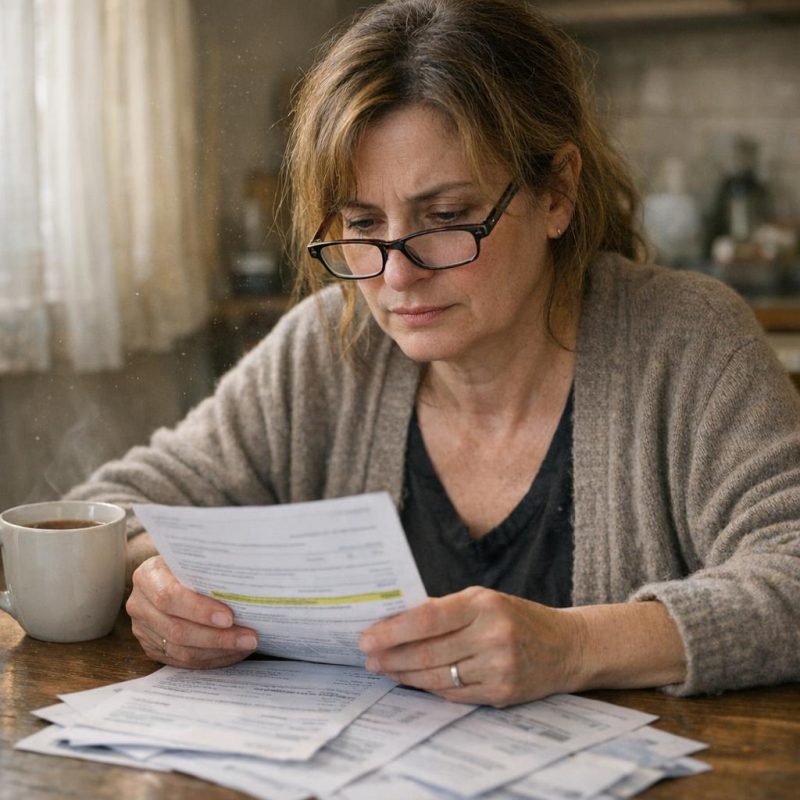 Image by RM AI
Replaying the Words
I couldn't stop myself. I went back to the recording that same night, the one I'd only made it halfway through before. This time I forced myself to listen to every word, sitting in my darkened living room with my phone pressed against my ear like a confessional. Mark's voice filled my head, and God help me, I heard it differently this time. That tone I'd always thought was exasperation—it wasn't. It was calculated. Cold. Clinical. 'She'll probably call you crying again,' he'd told whoever was on the other end. 'Just remember what we discussed. Document everything. I need a pattern.' Document everything. I need a pattern. Those words made my blood run cold. He wasn't venting to a friend about a difficult marriage. He was strategizing. Building a case. There was no anger in his voice, no hurt, no love gone wrong. Just this terrifying efficiency, like he was discussing a business problem that needed solving. I hit pause and sat there in the dark, my heart hammering against my ribs. He spoke about Emily like she was a problem to be solved, not a person he had once loved.
 Image by RM AI
The Weight of Sundays
Sunday morning I sat in my usual pew at church, barely hearing the sermon. Instead, I was counting backwards in my head, remembering. Mark always called on Sundays. Always. For the past three years, like clockwork, my phone would ring around two o'clock, right after I got home and made myself a sandwich, right when the house felt emptiest and the silence pressed in hardest. I'd told myself it was because he was thoughtful, because he knew I'd be alone after church and wanted to check in. But now I pulled out my phone and scrolled back through months of call logs. Every single Sunday. Two-fifteen. Two-oh-seven. One fifty-three. Never Monday. Never Saturday. Always Sunday afternoon, always when I was feeling that particular brand of loneliness that comes after sitting in a church full of families. He'd ask how I was doing, let me talk about the service, about the garden, about how quiet the house was. Then, so naturally, he'd mention Emily. 'She had another episode this week, Mom.' I wondered if he had been timing those calls deliberately—but that thought felt like betrayal.
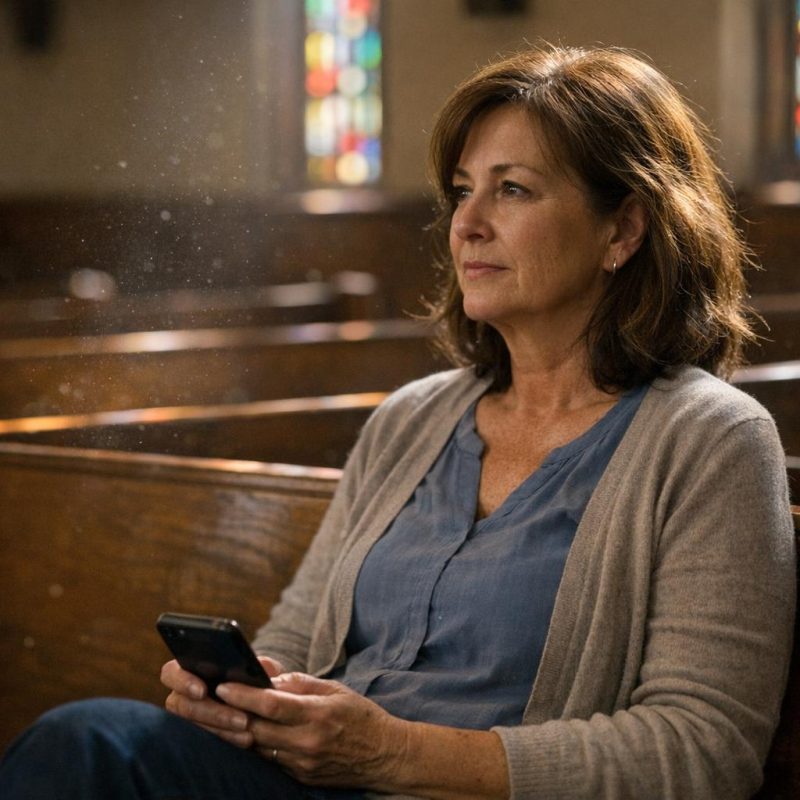 Image by RM AI
The Flowers He Brought
The memory hit me while I was washing my teacup Monday morning. Peonies. Mark had brought me peonies last May, a huge bouquet, my absolute favorite. I'd been so touched I'd actually cried. 'Just because,' he'd said, kissing my cheek. 'Just because I love you, Mom.' But that was right after he'd told me about Emily throwing dishes at him, wasn't it? I set down the cup carefully and walked to my calendar, the one I keep by the phone where I mark down visits and calls. Flipped back through the months. April—roses, the day after he'd described Emily's 'screaming fit' at dinner. February—tulips, right after the story about her driving recklessly with him in the car. October—chrysanthemums, following the tale about her emptying their bank account in a 'manic episode.' Every single time. How had I not seen it? The flowers always came after he'd planted some new horror story about Emily in my mind, always with that same sweet smile and 'just because.' My stomach turned over, sour and sick. Were those flowers gifts, or were they bribes to keep me on his side?
 Image by RM AI
Searching for Emily's Number
I knew I had to call her. The thought terrified me, but I couldn't unknow what I'd seen, couldn't unhear what I'd heard. Tuesday afternoon I dug through my old phone, the one I'd kept in my desk drawer after upgrading last year. Emily's number was still there, saved under 'Emily (Mark's wife)' with a little heart emoji I'd added when they first got married. God, I'd been so happy for him then. My hands were actually trembling as I transferred the contact to my new phone. I must have picked it up and set it down twenty times over the next hour. What would I even say? 'Sorry I believed my son over you'? 'Sorry I thought you were crazy'? The words felt too small, too pathetic for what I was starting to understand I'd done. I made myself a cup of tea. Let it go cold. Made another one. The phone sat on my kitchen table like an accusation. Outside, the sun was setting, painting my garden in gold and shadow. I finally picked up the phone, pulled up her contact, my heart absolutely pounding in my ears. I stared at her name on my screen for twenty minutes before I finally pressed call.
 Image by RM AI
 Image by RM AI
Emily Answers
She answered on the first ring. I wasn't expecting that. I'd half-hoped it would go to voicemail so I could hang up and pretend I'd tried, give myself more time to figure out what to say. But there she was, her voice coming through the speaker before I'd even caught my breath. 'Hello?' Not angry. Not bitter. Just… empty. Hollow. Like someone had scooped out everything vital and left only the shell. I opened my mouth and nothing came out at first. 'Emily,' I finally managed. 'It's Linda. Mark's mother.' Silence on the other end, and I braced myself for her to hang up, to tell me exactly where I could go and what I could do when I got there. God knows I deserved it. But instead, I heard her take a slow breath, almost like she'd been expecting this. Like she'd been waiting. 'Linda,' she said quietly, and something in her tone made my eyes sting with tears I had no right to cry. 'I wondered when you'd call.'
 Image by RM AI
The Dementia Lie
The conversation that followed felt like falling. Emily's voice stayed calm, almost detached, as she answered my fumbling attempts to apologize, to explain why I was calling. 'Did Mark ever tell you why I stopped coming to Sunday dinners?' she asked. I told her what he'd said—that she'd felt unwelcome, that my comments about her cooking had hurt her feelings. She laughed, but it was the saddest sound I'd ever heard. 'No, Linda. Mark told me you had early-stage dementia. He said your doctor recommended limiting stressful interactions, and that seeing me—seeing us together—would trigger your decline.' The world stopped. Just completely stopped. 'He said you were forgetting things,' Emily continued, her voice still eerily steady. 'That you'd become paranoid and accusatory, that you'd started making up stories. He told me that if I cared about you at all, I needed to stay away.' My dementia. My greatest fear since watching my own mother disappear into Alzheimer's, something I'd confided to Mark during a particularly hard night years ago. He'd held my hand and promised to always be honest with me if he saw signs. I felt the ground shift beneath me—he had used my greatest fear to keep us apart.
 Image by RM AI
Emily's Hollow Voice
I don't know how long I sat there in silence after that, phone pressed to my ear, unable to form words. Finally I managed to ask the question that had been gnawing at me since she first answered. 'Emily, why do you sound so… calm?' I expected anger, tears, something with heat in it. But her voice stayed flat, almost clinical. 'Therapy,' she said simply. 'Three times a week since March. PTSD treatment, actually. My therapist specializes in helping people who've experienced sustained psychological abuse.' She said it like she was reading from a grocery list, no emotion at all. 'I have to stay detached when I talk about it, Linda. If I let myself feel it all at once, I can't function. So I've learned to separate the facts from the feelings, at least for now.' I heard her take another one of those slow, measured breaths. 'Do you know what gaslighting does to a person? Really does? It's not just manipulation. It's systematic dismantling. He made me question every memory, every perception, every instinct I had.' Her voice finally cracked, just slightly. 'He made me doubt everything, Linda. Even my own sanity.'
 Image by RM AI
Who Sent the Package?
My voice came out strangled when I finally managed to ask her. 'Emily, did you send me a package? A few days ago? With recordings and bank statements inside?' There was a pause on the other end, long enough that I wondered if the line had gone dead. 'What package?' she said, and I could hear genuine confusion in her voice. 'Linda, I don't know what you're talking about. I haven't sent you anything.' My hands went cold. 'But… but if you didn't send it, then who—' 'I have no idea,' she interrupted, and now she sounded worried too. 'What was in it? What kind of recordings?' I told her, briefly, about the voice recorder with her voice on it, the bank statements, the note that said simply 'You raised him.' She went quiet again, and when she spoke, her voice had that clinical detachment back. 'Someone else knows,' she said softly. 'Someone else saw what he did to me.' The implication settled over me like ice water. If Emily didn't send the package, then who did—and what else did they know?
 Image by RM AI
The End of the Call
We talked for a few more minutes, circling around the mystery of the package sender, but neither of us had answers. Emily's voice grew tired, that flat calm starting to crack at the edges. 'Linda,' she said finally, 'I understand if you don't believe me. About any of this. I know what it's like to be his mother, to think you know who he is.' She paused, and I heard her take one of those slow, measured breaths. 'But I needed to tell you the truth anyway. Not for him. For me.' 'Emily—' I started, but she cut me off gently. 'I need to go now. My therapist says I can only do these conversations in small doses. Take care of yourself.' The line went dead before I could respond. I sat there in my kitchen, phone still pressed to my ear, listening to the silence. The package sat on the counter where I'd left it, those awful bank statements visible through the plastic. The roses outside my window swayed in the breeze, oblivious and beautiful. I sat in silence, holding the phone, wondering if I'd just spoken to the real victim all along.
 Image by RM AI
Roses and Regret
I went outside to my garden because I didn't know what else to do. My hands needed something to touch, something familiar and real. The roses were in full bloom, that deep red variety I'd been so proud of this season. I'd spent years learning to cultivate them properly, understanding that you had to prune carefully, remove the diseased parts before they spread. But standing there among them now, they felt different. Beautiful on the surface, yes, with those perfect velvet petals. But underneath? Nothing but thorns, waiting to draw blood if you weren't careful where you placed your hands. I touched one of the blooms, and the metaphor felt so obvious it was almost painful. How many times had I told Mark's girlfriends that relationships required pruning too? That you had to cut away the problems, the misunderstandings, the little hurts before they grew into something bigger? God, I'd probably told Emily that exact thing. I'd probably looked her in the eye and told her to work harder, to be more understanding, to trim away her own needs for the sake of my son. I wondered how many other things I had pruned away without questioning why.
 Image by RM AI
The Sunday Dinner Invitation
I came back inside and picked up my phone before I could talk myself out of it. My fingers shook as I opened the text thread with Mark. We had a standing Sunday dinner tradition, just the two of us, had for years. Every week, my house, my cooking, our time together. I hadn't invited him this week yet. He'd probably been waiting to hear from me. I typed out the message: 'Sunday dinner at my place? The usual time?' Short, normal, exactly what I always sent. But this time I had the package sitting on my counter, those bank statements with his signature, that voice recorder with Emily's desperate voice. This time I wasn't inviting my son for pot roast and small talk. This time I was inviting him to answer for what he'd done. My thumb hovered over the send button for a long moment. Once I sent this, once he showed up and I confronted him, everything would change. There would be no going back, no pretending I didn't know. I sent the text, my finger trembling over the send button—there was no going back now.
 Image by RM AI
Mark's Cheerful Reply
His reply came through almost immediately, like he'd been waiting by his phone. 'Absolutely! I'll bring that Pinot Noir you love. Need me to pick up anything else? Maybe some of those butter cookies from the bakery?' Three texts in rapid succession, each one warmer than the last. A string of emojis—a wine glass, a heart, a smiling face. The same cheerful, thoughtful son I'd always known. Or thought I'd known. I stared at the messages, feeling something twist in my chest. How could this be the same person Emily had described? The man who'd isolated her from her friends, who'd controlled every dollar she spent, who'd made her question her own sanity? But then I thought about those bank statements. His signature, clear as day, on accounts he'd sworn to Emily didn't exist. I thought about that voice recorder, her terror so palpable you could practically touch it. And here he was, asking about butter cookies. Making sure I had my favorite wine. Being the perfect, attentive son. His cheerfulness felt obscene now, like watching a stranger wear my son's face.
 Image by RM AI
Margaret's Concern
Margaret called that evening, just as the sun was setting. 'You haven't been answering my texts,' she said without preamble. 'What's going on, Linda?' I almost told her. God, I wanted to. I opened my mouth and the words were right there—Emily called me back, someone sent me evidence, I think my son might be a monster. But something stopped me. Maybe it was loyalty, that bone-deep instinct to protect your child. Maybe it was shame, knowing I'd defended him to everyone including Margaret herself. Maybe I just wasn't ready to say it out loud yet, to make it real. 'I'm fine,' I lied. 'Just tired. You know how it is.' She was quiet for a moment, and I could practically hear her deciding whether to push. 'Linda,' she said finally, 'I've known you for thirty years. You're not fine.' 'Margaret—' 'I'm not going to force you to talk. But I'm here when you're ready.' She paused. 'Promise me you'll be careful,' Margaret said, and I wondered what she had seen in my eyes.
 Image by RM AI
Image by RM AI
Preparing the Table
Sunday morning I set the dining room table, but not with plates. I laid out the bank statements first, spreading them across the polished wood in chronological order. Emily's signature on the joint account application. Mark's signatures on the withdrawal slips, each one draining a little more. The final statement showing a balance of $43.27. Then I placed the voice recorder in the center, right where the centerpiece usually went. That little silver device that held Emily's terror, her confusion, her desperate attempts to hold onto reality while Mark dismantled it piece by piece. I'd charged it overnight, made sure it was ready to play. The note went beside it: 'You raised him.' Three words that had been haunting me for days. I stepped back and looked at what I'd created. It looked wrong, fundamentally wrong. Where there should have been good china and Sunday roast, there was evidence of destruction. Where there should have been family warmth, there was proof of betrayal. The afternoon light came through the windows, making everything look too bright, too sharp. I stepped back and looked at the table—it looked like a crime scene, not a family dinner.
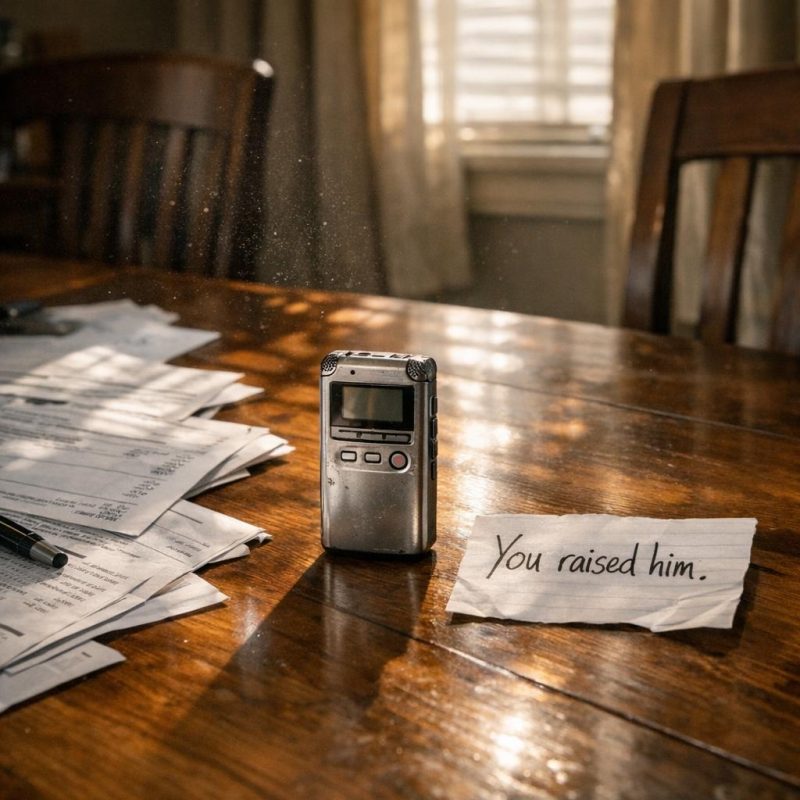 Image by RM AI
The Knock at the Door
The knock came at exactly three o'clock. Mark was always punctual for our Sunday dinners. I could see him through the front door window, holding a bottle of wine in one hand and a bouquet of daisies in the other. My favorites. He'd remembered, like he always did. I opened the door and he smiled at me, that warm, genuine smile I'd seen a thousand times. 'Hi, Mom,' he said, leaning in for our usual hug. He smelled like his cologne, the expensive kind he always wore. Same as always. Everything was the same as always, except nothing was. 'The daisies looked so good at the market, I couldn't resist,' he was saying, pressing them into my hands. 'And I got two bottles of the Pinot, just in case.' He stepped inside, comfortable and easy, already heading toward the kitchen like he'd done every Sunday for years. He had no idea what waited for him in the dining room. No idea that I knew. He kissed my cheek, and I felt like I was embracing a ghost.
 Image by RM AI
The Evidence Revealed
'I need to show you something,' I said, leading him toward the dining room. My voice sounded steadier than I felt. He followed me, chattering about traffic on the highway, completely oblivious. When we reached the doorway, I stepped aside and let him see it all—the bank statements spread across the table like evidence at a crime scene, the recorder sitting in the center like a small, dark witness. The daisies were still in my hand, suddenly absurd. I watched his face change. The smile didn't just fade—it evaporated, like water on hot pavement. His eyes moved from the papers to the recorder, then to my face. I saw him calculating, processing, searching for the right response. The silence stretched between us, thick and suffocating. His jaw tightened. The muscle in his cheek twitched the way it used to when he was a boy caught in a lie, but this was different. This wasn't childhood mischief. This was something dark and deliberate, something I'd refused to see. For three seconds, he said nothing—then his face twisted into something I'd never seen before.
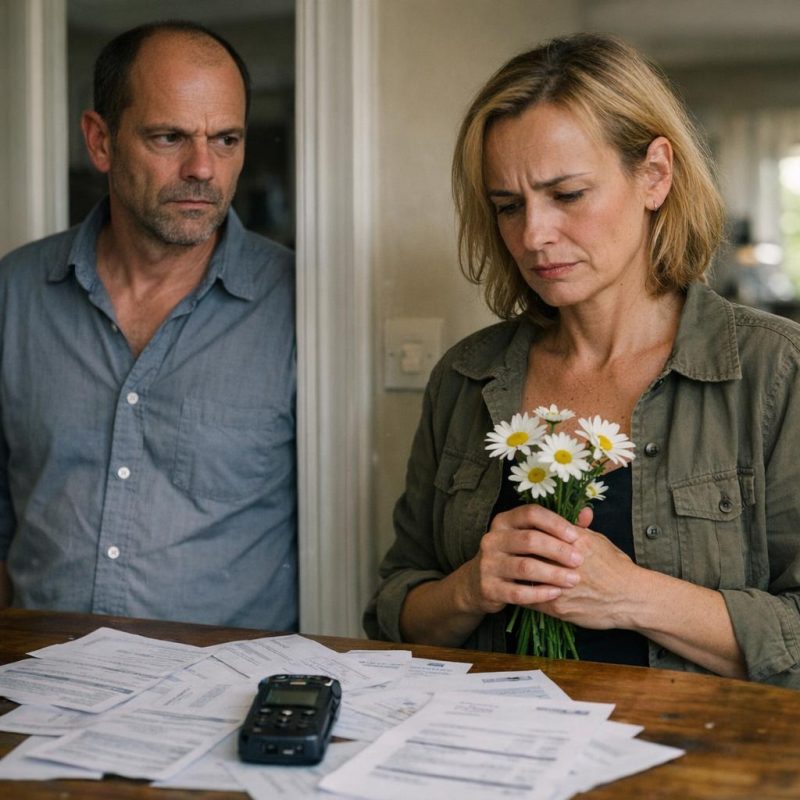 Image by RM AI
The Mask Falls
'How much did she pay you?' The words came out cold and sharp, nothing like the warm tone he'd used at the door. I blinked, not understanding. 'What?' I asked. 'How much did Emily pay you to turn against me?' His eyes had gone flat, emotionless, like looking at a stranger. 'Mark, I—' 'Don't,' he snapped. 'Don't pretend this is about justice or doing the right thing. She got to you somehow. What did she offer? Money? Did she cry on your shoulder? Play the victim?' I couldn't believe what I was hearing. No denial. No shock. No horror at being accused of financial abuse and manipulation. Just cold, calculating rage that I'd found out. 'She didn't pay me anything,' I said quietly. 'She sent me proof of what you did.' 'Proof?' He laughed, but it was bitter and sharp. 'You mean her version of events. Her lies.' But I could see it now—the way his face had changed, the mask sliding off to reveal something calculating underneath. 'You're choosing her over your own blood?' he hissed, and I realized I'd never really known him at all.
 Image by RM AI
No Denial
I kept waiting for him to deny it. To tell me Emily had fabricated the statements, doctored the recordings, made it all up out of spite. That's what an innocent person would do, right? But instead, he crossed his arms and looked at me like I was the unreasonable one. 'She made everything difficult, Mom. Everything. I needed access to that money for my career, for our future, and she fought me every step of the way.' My stomach turned. 'That money was hers, Mark. From her mother.' 'And she was my wife,' he shot back. 'What's hers was supposed to be ours. But she wanted to control everything, keep it all to herself like some kind of miser.' I couldn't breathe. He wasn't denying it. He was justifying it. 'You isolated her from her friends,' I said, my voice shaking. 'You told her she was crazy.' 'She was falling apart,' he said flatly. 'Someone had to take charge. Someone had to be the adult.' The daisies fell from my hand to the floor. I'd raised this man. Fed him, loved him, believed in him. 'She was weak, Mom. I did what I had to do to protect myself.'
 Image by RM AI
The Ultimatum Delivered
I forced myself to speak through the nausea. 'You're going to return every cent you took from her account. You're going to sign over the house—it was bought with her inheritance, and you know it. And you're going to do it within the week.' He stared at me like I'd grown a second head. 'Or what?' 'Or I send these recordings to your firm. To the partners. I'll make sure everyone knows exactly what kind of man you are.' I watched him process this, saw the calculations happening behind his eyes. For a moment, I thought he might actually be scared. But then his expression shifted into something almost amused. 'You're bluffing.' 'Try me,' I said, but my hands were shaking. 'Mom, think about what you're saying. Think about what this would do to our family. To your reputation. You'd be the mother who destroyed her own son's career.' 'You destroyed it yourself,' I said. 'I'm just giving you a chance to make it right.' He laughed—actually laughed—and said, 'You wouldn't destroy your own son.'
 Image by RM AI
Testing Her Resolve
He moved closer, and I had to fight the urge to step back. 'Remember when Dad left?' he said softly. 'Remember who stayed up with you all those nights when you couldn't stop crying? Who mowed the lawn every week because you couldn't afford a landscaper? Who drove you to every doctor's appointment when you thought you had breast cancer?' Each word was a weapon, carefully aimed. 'I did, Mom. Me. Not Emily. Not any of your fair-weather friends. I took care of you.' The guilt hit me like a wave, exactly as he intended. But underneath it, something else stirred—a cold, clear anger. 'Yes,' I said. 'You did. And I was grateful. I am grateful.' 'Then why are you doing this?' His voice cracked perfectly, just enough emotion to seem genuine. But I could see it now—the manipulation, the calculated performance. This was what Emily had lived with. This push and pull, making her doubt her own reality. 'Because being a good son when it suited you doesn't give you the right to destroy someone's life,' I said. 'After everything I've done for you,' I said quietly, 'you turned into this.'
 Image by RM AI
The Deadline
'You have one week,' I said. My voice came out stronger than I felt. 'One week to return the money and sign over the house. If you don't, I'm sending everything to your firm on Monday morning.' 'Mom—' 'I'm not finished.' I picked up the recorder, held it between us like a shield. 'You'll also leave Emily alone. No contact. No lawyers pressuring her to settle. No mutual friends asking her to reconsider. You're going to let her go.' He opened his mouth, closed it again. The charm was completely gone now, replaced by something cold and assessing. I could see him trying to decide if I was serious, if I'd really follow through. 'You'll regret this,' he said finally. Not a threat, exactly. Just a statement of fact, like commenting on the weather. 'Maybe,' I agreed. 'But I'll regret doing nothing even more. Now please leave my house.' He stared at me for another long moment, then grabbed his coat from the chair. The wine bottles stayed on the counter. The daisies lay scattered on the floor. He walked out without another word, and I locked the door behind him with shaking hands.
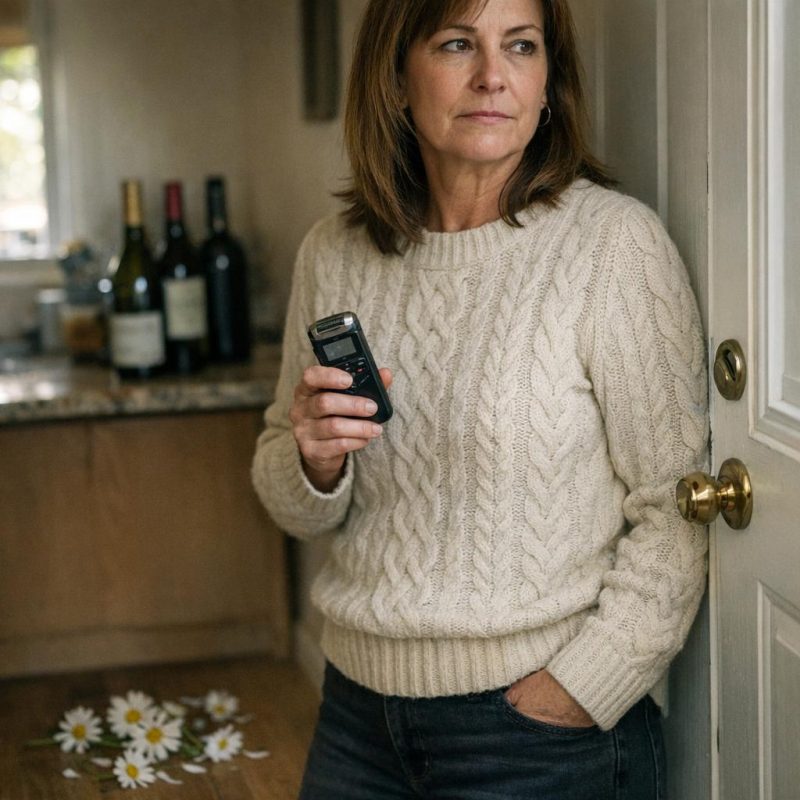 Image by RM AI
The Longest Week
The first day was the worst. I kept replaying the confrontation, wondering if I'd been too harsh, if there was something I'd missed, some explanation that would make it all make sense. But then I'd look at the bank statements again, listen to Emily's trembling voice on the recordings, and the doubt would fade. By day three, I'd stopped sleeping properly. I'd lie awake imagining Mark showing up at my door, or worse—imagining him doing nothing at all, calling my bluff, forcing me to actually follow through. Could I really destroy my son's career? Could I live with myself if I did? Could I live with myself if I didn't? Margaret called twice. I let it go to voicemail both times. I wasn't ready to explain, wasn't ready for her questions or her judgment or even her support. On day five, a lawyer's letter arrived—not from Mark, but from Emily's attorney, acknowledging receipt of the evidence I'd forwarded. That was something, at least. Day six passed in a fog of anxiety and chamomile tea. Every time the phone rang, my heart stopped—but it was never him.
 Image by RM AI
Margaret's Visit
Margaret didn't call on day seven. She just showed up, let herself in with the key I'd given her years ago, and found me at the kitchen table surrounded by cold coffee and unopened mail. 'Okay,' she said, sitting down across from me. 'Enough. What's going on?' I'd been holding it together for a week, but something about herDirectMessage tone—no-nonsense, no judgment, just demanding the truth—broke something open in me. So I told her. Everything. The package, the recordings, the bank statements. The confrontation with Mark. The ultimatum. The silence that followed. She listened without interrupting, her face getting paler as I talked. When I finished, she sat back in her chair and let out a long breath. 'Jesus, Linda.' 'I know.' 'No, I mean—Jesus. All this time, we thought...' She trailed off, shaking her head. 'I thought I knew him,' I said, and my voice cracked. 'I thought I raised him better than this.' Margaret reached across the table and took my hand. Her grip was warm and solid and real. Margaret held my hand and said, 'You're doing the right thing,' but I wasn't sure I believed her.
 Image by RM AI
The Lawyer's Envelope
The legal envelope arrived on day six, thick and official with a law firm's return address I didn't recognize. I stood at the kitchen counter with a butter knife, my hands shaking as I sliced it open. Inside were transfer documents for Emily's house—all signed and notarized by Mark—along with bank statements showing the money being returned to her account. Everything I'd demanded. Everything he'd done. I spread the papers across the counter and just stared at them, feeling something cold settle in my chest. Part of me was relieved. He'd listened. He'd made it right. But another part—the part that had been learning to see clearly these past weeks—couldn't help but notice how quickly he'd complied. How efficiently. Like he'd been prepared for this possibility all along. Like he'd calculated the cost and decided it was worth paying. I thought about the voice recorder still sitting in my dresser drawer, about all the things Emily had said about manipulation and control. Mark had given Emily back what he'd stolen, yes. But I wondered if he thought this transaction would buy my silence forever.
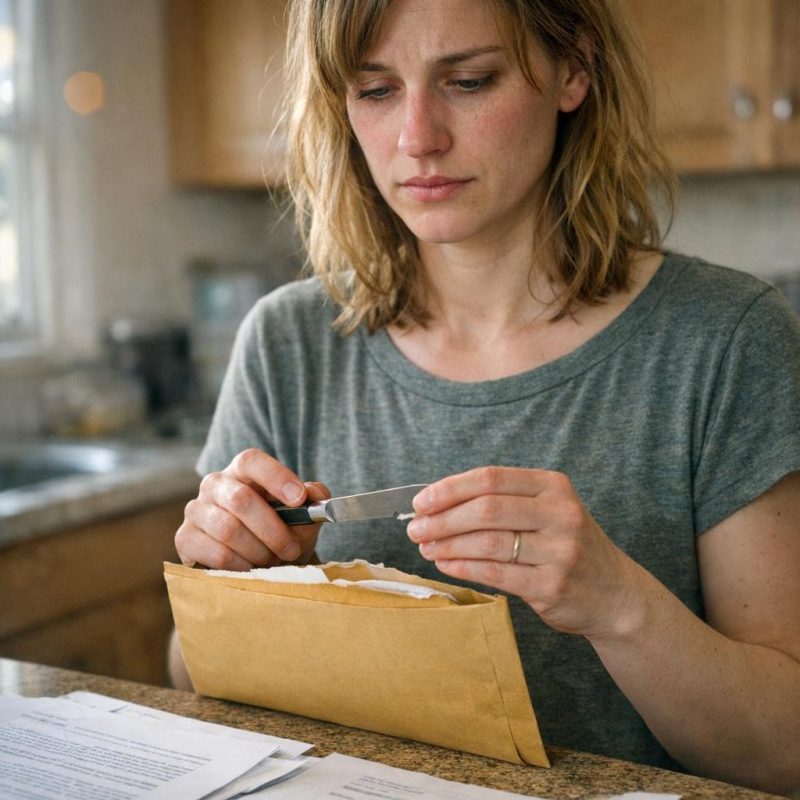 Image by RM AI
Calling Emily with Good News
I called Emily that afternoon, my heart pounding as the phone rang. 'Hello?' Her voice was cautious, uncertain. 'Emily, it's Linda. I have news. He did it. He signed everything over. The house, the money—it's all being returned to you.' Silence. Then a sound I'll never forget—this broken, gasping sob that made my own eyes flood with tears. 'What? I don't... Linda, are you sure?' 'I have the documents right here. We'll need to go to the lawyer's office to finalize everything, but yes. It's real.' She was crying openly now, and I found myself crying too, standing in my kitchen with the phone pressed to my ear. 'I can't believe you did this,' she said between sobs. 'I can't believe you actually made him...' 'You deserved to be heard,' I said. 'You deserved better than what he did to you.' 'Why are you doing this for me?' she asked, her voice raw and honest. I looked at the papers spread across my counter, at the evidence of my son's cruelty. 'Because I'm doing it for both of us,' I realized, and meant it more than I'd meant anything in weeks.
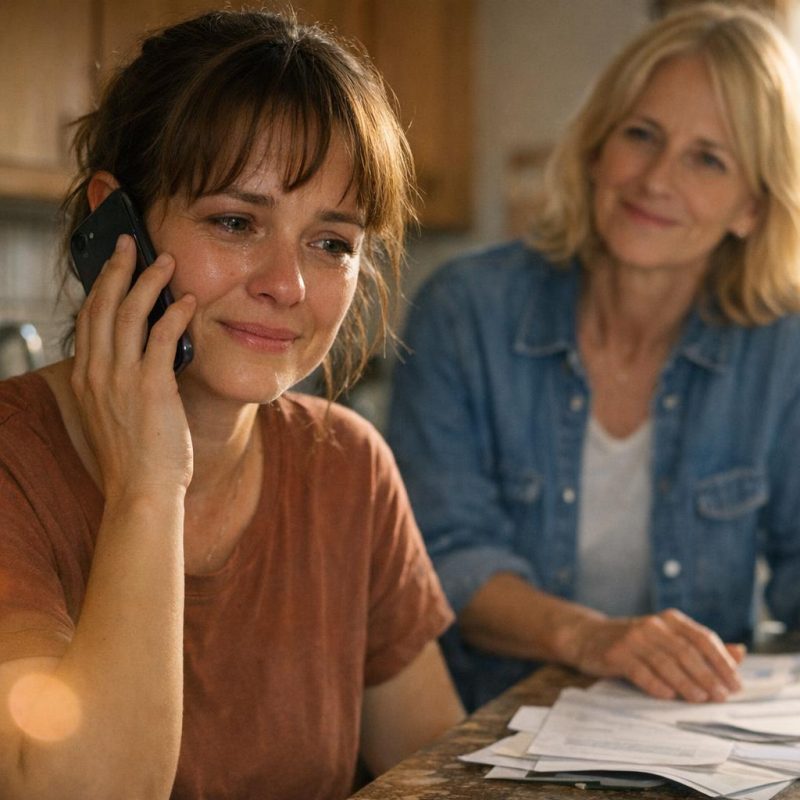 Image by RM AI
The House Transfer
The lawyer's office was downtown, all glass and chrome and uncomfortable chairs. I sat beside Emily as the attorney explained each document, watching her hands shake as she held the pen. She looked smaller than I remembered, thinner, like the stress had physically diminished her. But there was something else in her face too—something like hope, cautious and fragile. She signed her name slowly, carefully, on each page. The attorney notarized everything with efficient stamps and flourishes, explaining that the house title was now back in her name, that the bank transfers would complete within forty-eight hours. Emily nodded, but I don't think she really believed it yet. I could see it in her eyes—the fear that this was somehow a trick, that it would all be taken away again. When the final signature was done, when the attorney stood and shook our hands and congratulated Emily, she turned to me. Her eyes were full of tears. 'Thank you for believing me,' she whispered. Just five words, but they carried the weight of everything she'd been through, all the people who hadn't listened, who'd chosen Mark's charm over her truth. I squeezed her hand and nodded, not trusting my voice to answer.
 Image by RM AI
Mark's Silence
Mark didn't call after the transfer was complete. No text, no visit, nothing. The silence stretched from days into a week, and I found myself checking my phone obsessively, waiting for his rage or his justifications. But there was nothing. At first, I thought maybe he was ashamed, maybe finally confronting what he'd done. But the more I sat with that silence, the more it felt calculated. Strategic. He'd paid his debt, returned what he'd stolen, and now he expected me to be satisfied. To go back to being his mother, his defender, his cover. He thought this transaction had settled everything between us. That I'd gotten what I wanted—Emily restored, justice served—and now I'd go back to keeping his secrets. The realization made me feel sick. I went upstairs to my bedroom and opened the dresser drawer where I'd hidden the voice recorder, the one with Emily's testimony and my confrontation with Mark. The small black device sat there like a loaded gun. I picked it up, felt its weight in my palm, and thought about everything I'd learned about my son in these terrible weeks. Mark's silence wasn't remorse. It was confidence. And I held the voice recorder in my hand and knew what I had to do next.
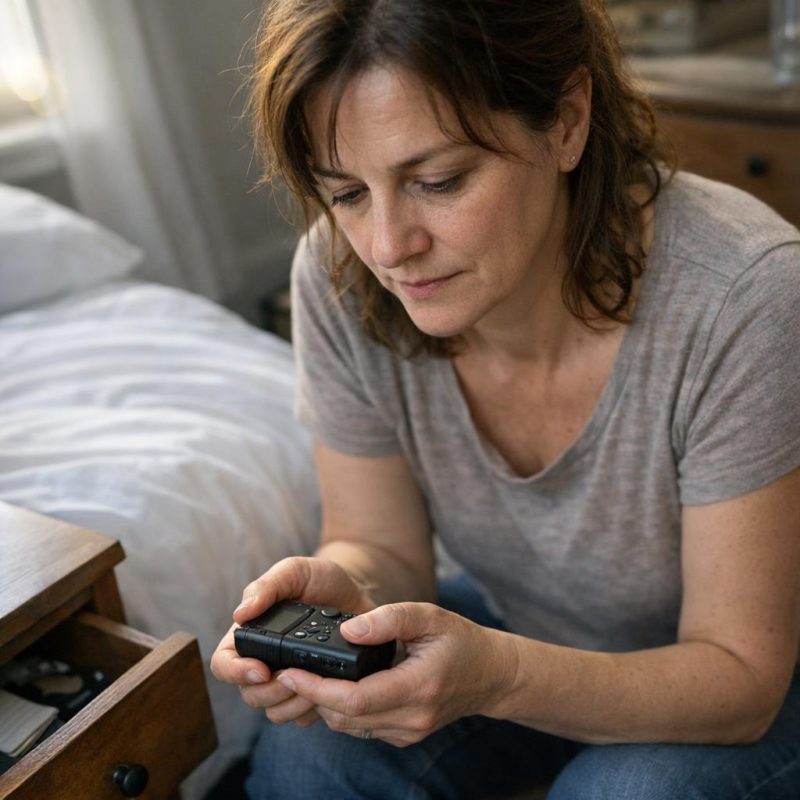 Image by RM AI
The Ethics Board Address
I'd never thought of myself as someone who reported people. That's what I told myself as I sat at my laptop that night, cursor hovering over the search bar. But what was the alternative? Letting Mark think this was over? I typed in his accounting firm's name and found their website—professional photos, mission statements about integrity and client trust. The ethics board contact information was buried in a footer link, almost like they didn't want it found. I clicked through and found myself staring at a complaint form. 'Nature of ethics violation,' it asked. My hands froze over the keyboard. This was my son. My boy who'd collected rocks and built elaborate train sets and called me every Sunday. But he'd also stolen from his wife, gaslit her into thinking she was losing her mind, and showed no remorse when confronted. I started typing. Deleted it. Started again. The third time, my fingers found the words: 'Financial abuse of spouse, misuse of professional knowledge for personal gain, systematic deception.' I attached digital copies of the bank statements, wrote a brief explanation. My hand hovered over the mouse for what felt like forever, my heart pounding so hard I could feel it in my throat. I typed the email three times before I finally found the courage to press send.
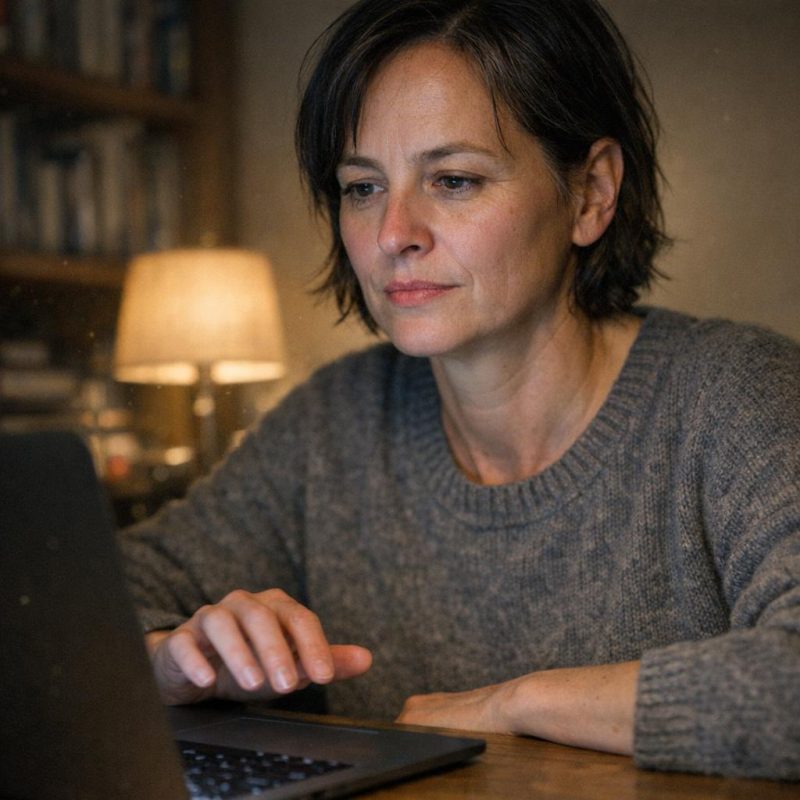 Image by RM AI
Copies and Evidence
The next morning, I drove to the print shop downtown and made copies of everything. Bank statements, transaction records, my handwritten timeline of events—all of it. The clerk fed page after page into the machine without looking at them, thank God, because I felt like everyone could see what I was doing. Like I was wearing a sign that said 'Betraying My Son.' But I wasn't betraying him, was I? I was just refusing to protect him from the consequences of his own choices. That's what I told myself as I organized everything into folders at home, sorting them by date and category. One set for the police—Margaret had convinced me that financial abuse was a crime, that Emily could press charges if she wanted to. One set for Emily's lawyer. One set for my own records. I used a label maker for each folder, the machine's clicks punctuating the silence of my empty house. 'Evidence—Financial Abuse—Mark Patterson.' Seeing his name there, in those neat black letters, made it real in a way nothing else had. I stacked the folders carefully, perfectly aligned. This was the point of no return. I labeled each folder carefully, knowing that once I did this, there would be no protecting Mark anymore.
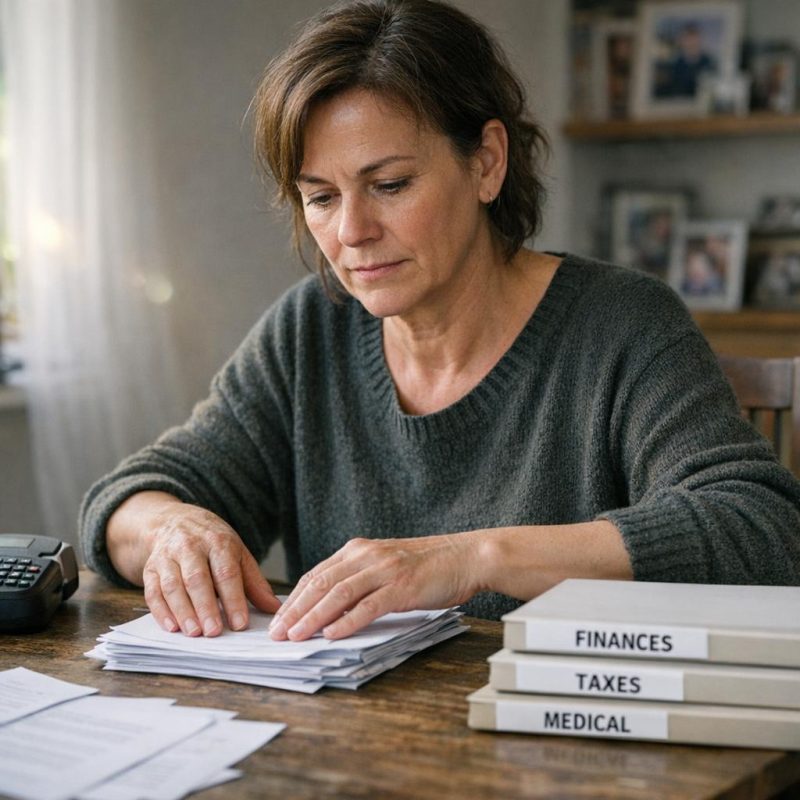 Image by RM AI
The Anonymous Sender
The note appeared in my mailbox three days later, tucked between a grocery store flyer and the water bill. No envelope, just a single sheet of white printer paper folded in half. I opened it standing right there by the mailbox, and my breath caught. Five words in Times New Roman, printed and anonymous: 'You did the right thing.' That was it. No signature, no return address, nothing to indicate who'd sent it or how they knew what I'd done. I looked up and down the street like I'd catch someone watching, but there were only the usual cars, the usual neighbors going about their usual business. My hands were shaking as I went inside and laid the note on my kitchen table. I stared at it for a long time, trying to make sense of it. Someone knew. Someone had been following this situation closely enough to know I'd reported Mark, to know I'd helped Emily. But who? And why would they care? The note felt supportive, even kind—but there was something unsettling about it too. About being watched, about having an audience I hadn't known existed. Someone had been watching this whole time—but who, and why were they helping?
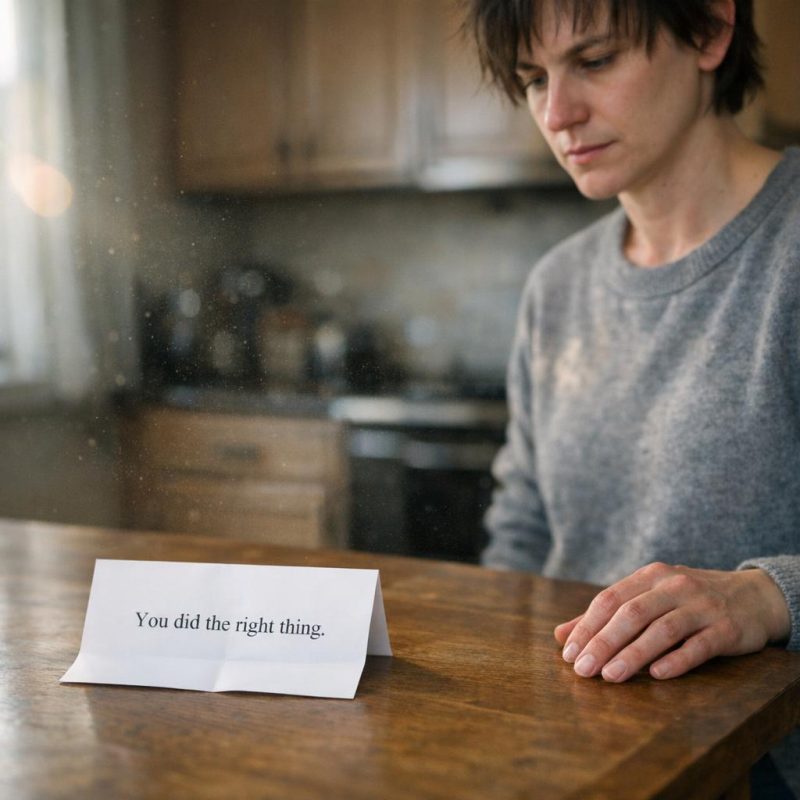 Image by RM AI
Margaret's Theory
Margaret came over that evening, and I showed her the note. She held it up to the light like that would reveal something, then set it down with a thoughtful frown. 'You know what I think?' she said. 'I think it might be someone else he hurt.' The words hung in the air between us. 'What do you mean?' I asked, though part of me already knew. 'Think about it, Linda. Mark's what, thirty-eight? He's been in relationships before Emily. He's had other jobs, other opportunities to use his skills the way he used them with her. You don't just wake up one day and suddenly know how to systematically steal from your spouse and cover your tracks.' She was right, and I hated that she was right. 'This person—whoever sent this—they know the pattern. They recognize it. Maybe they lived through it too.' I thought about Emily's words about gaslighting and isolation, about how specific Mark's tactics had been. Like he'd practiced. Like he'd refined his methods over time. My stomach turned. How many Sunday dinners had I hosted while Mark was destroying someone else's life? How many times had I bragged about my successful, charming son while someone out there was trying to recover from what he'd done to them? I felt sick wondering how many other people Mark had destroyed while I smiled and served Sunday dinner.
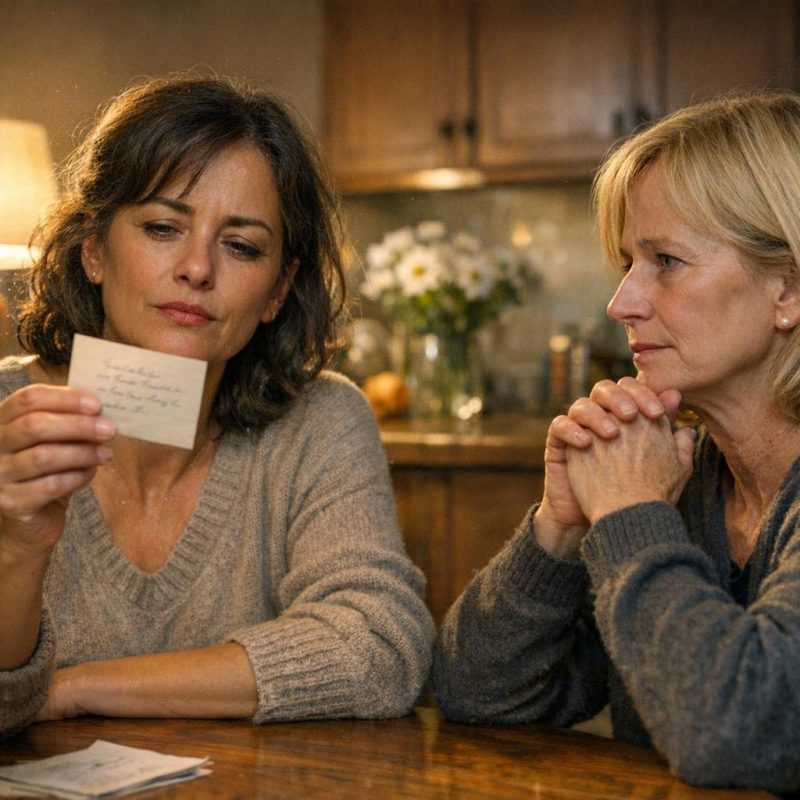 Image by RM AI
Sleepless Nights
I didn't sleep that night. Or the next one. I kept lying there in the dark, replaying every Sunday dinner, every phone call, every time Mark had casually mentioned Emily being 'difficult' or 'emotional.' The ceiling became a movie screen of my failures. I remembered when he'd told me Emily didn't want to come to my birthday dinner because she was 'having one of her moods.' I'd felt hurt, maybe even a little annoyed with her. Now I wondered what he'd actually said to her. What excuse had he given her about why they couldn't come? Had he told her I didn't want her there? The scenarios multiplied in my head like weeds. Every memory now had two versions—the one I'd believed and the one that might have actually been true. I kept thinking about all those times I'd sided with him, defended him, made excuses for him. I'd been so proud of how close we were, how he called me every week. But what if that closeness had been part of his strategy? What if he'd kept me close so he could control the narrative? My mind circled these questions like a dog chasing its tail, never finding rest. I wondered if a mother ever really knows her child, or if we only know the version they let us see.
 Image by RM AI
The Police Station
I walked into the police station on a Tuesday morning with the voice recorder and all the bank statements in a folder that felt like it weighed a hundred pounds. My hands were shaking so badly the desk officer asked if I needed to sit down. I told him I needed to file a report about financial abuse and psychological manipulation. He looked confused—maybe because I was reporting my own son, maybe because I'm a sixty-two-year-old woman who probably looks like someone who bakes cookies, not someone who turns in her child. They sent me to a detective who listened to the recordings and reviewed the documents. She was professional, thorough, asked detailed questions I couldn't always answer. I signed forms. I gave my statement. The whole time, I felt like I was watching myself from outside my body, wondering who this woman was who could do this to her own son. When we finished, the detective walked me to the door. She had kind eyes, but I could see something else there too—judgment, maybe, or confusion about my choice. The officer looked at me with pity and said, 'Ma'am, are you sure you want to do this to your own son?'
 Image by RM AI
Emily's Statement
The police contacted Emily three days later. The detective called to tell me Emily had come in voluntarily and provided a statement that documented everything—the financial control, the isolation, the constant criticism disguised as concern, the way he'd monitored her phone and computer. She'd kept records I didn't even know existed. Journals with dates and times. Screenshots of his texts. A list of friends and family members he'd gradually pushed out of her life. I sat in my kitchen listening to the detective explain how thorough Emily's documentation was, and I felt this strange mix of pride and horror. Pride that she'd been strong enough to keep track, smart enough to know she'd need proof. Horror that she'd had to live that way, documenting abuse like a scientist recording an experiment. The detective's voice was careful when she told me what came next—Emily's testimony was comprehensive enough to build a solid case. 'She was meticulous,' the detective said. 'Almost like she knew one day she'd need to prove what happened to her.' My throat felt tight. The detective told me Emily's testimony was the most comprehensive case of financial and psychological abuse she'd seen in years.
 Image by RM AI
The Firm's Response
Mark's accounting firm moved fast once the police contacted them. Within a week, he was suspended pending an internal investigation. They wanted to review the recordings, the financial evidence, everything. I hadn't thought about his job when I went to the police—or maybe I had and just couldn't let myself consider what it would mean. An accountant who steals from his wife and manipulates finances probably isn't someone you want handling your clients' money. They were protecting themselves, I understood that. But it felt like dominoes falling, each one triggering the next, and I was the one who'd pushed the first piece over. His boss called me—actually called me—to thank me for bringing this to their attention. Professional, cordial, like we were discussing a minor scheduling issue instead of my son's career imploding. Two days later, I received a formal letter on company letterhead. It thanked me for my 'civic duty' and assured me they took matters of professional ethics seriously. The words blurred on the page. I received a formal letter thanking me for my 'civic duty,' and I felt like I'd signed my son's death warrant.
 Image by RM AI
The Furious Call
Mark called me at eleven o'clock at night, and I knew from the first second what kind of call it would be. His voice was pure rage—screaming so loud I had to hold the phone away from my ear. He called me a traitor, a vindictive old woman, a pathetic fool who'd believed lies from his 'psychotic ex-wife.' The words came fast and vicious, each one designed to wound. He said I'd destroyed his life, ruined his career, turned his own mother against him. 'Everything I worked for,' he shouted, 'everything I built—you destroyed it all for that manipulative bitch!' I let him rage. What else could I do? I'd known this call was coming since the day I walked into that police station. When he finally ran out of steam, there was just heavy breathing on the line. 'How could you do this to me?' he asked, and his voice cracked. For just a second, he sounded like my little boy again. That's what hurt most—that tiny glimpse of the child I'd raised. 'You were supposed to love me no matter what,' he shouted, and I quietly replied, 'I did—that's why this hurts so much.'
 Image by RM AI
Emily's Gratitude
Emily showed up at my door on a Saturday afternoon with a small potted plant—a succulent in a blue ceramic pot. She looked different than the last time I'd seen her. Lighter, somehow. The shadows under her eyes had faded. She was wearing a yellow blouse I'd never seen before, something bright and hopeful. We sat in my garden, and she told me she'd started therapy, that she was learning to trust her own perceptions again. 'I keep catching myself apologizing for things that aren't my fault,' she said with a small laugh. 'My therapist says it'll take time to unlearn.' She told me about a new job she'd applied for, about reconnecting with friends Mark had driven away. She was building a life again, piece by piece. Before she left, she pressed the little plant into my hands. 'Succulents are survivors,' she said. 'They can thrive even after they've been neglected.' Her eyes were bright with tears. 'You gave me my life back,' she said, and I wondered if I'd ever forgive myself for taking so long.
 Image by RM AI
The Investigation Deepens
Detective Chen called me on a Wednesday morning. Her voice was careful, measured—the tone you use when you're about to deliver news someone won't want to hear. They'd been investigating Mark's background, she said, talking to people from his past. They'd found a woman named Rebecca who'd dated Mark about seven years ago, before he met Emily. She'd recognized his name when the police contacted her during their investigation. Rebecca's story was eerily familiar—the same pattern of financial control, the same gradual isolation from friends and family, the same cycle of criticism disguised as concern. She'd kept some records too. Text messages, emails, bank statements showing unauthorized transfers. She'd never reported it because she'd been too ashamed, too confused, too convinced it was somehow her fault. But now she was willing to testify. Now she understood it wasn't just her. Detective Chen's voice was gentle when she told me this, like she knew it would break something inside me. There had been someone before Emily—and I'd never known, never asked, never suspected.
 Image by RM AI
The Full Picture
Detective Sarah Chen asked me to come to the station to go over everything they'd found. She spread it all out on a conference table like pieces of a puzzle—Emily's documentation, Rebecca's testimony, the voice recordings, financial records, phone logs. She walked me through the complete timeline of what Mark had done. How he'd systematically isolated Emily from me by lying to both of us about what the other had said. How he'd used my health scares to make Emily feel guilty for 'stressing me out' when she tried to reach out. How he'd controlled every dollar while making it look like she was the irresponsible one. How he'd hired a private investigator to follow her, then used that information to make her think she was losing her mind. How he'd positioned himself as the victim—the long-suffering husband with the unstable wife. Every detail was calculated, refined, practiced. The detective showed me how he'd used the exact same tactics with Rebecca seven years earlier. 'It's called coercive control,' Detective Chen explained. 'It's systematic, intentional, and in your son's case, remarkably sophisticated.' She looked at me with something like sympathy. The detective said, 'Your son is a textbook case of coercive control,' and I finally understood I'd been his accomplice all along.
 Image by RM AI
Reframing the Past
I went home and pulled out every photo album, every scrapbook, every card Mark had ever sent me. The Sunday phone calls—I'd thought they showed devotion, but now I saw him asking pointed questions about Emily. 'How is she doing, Mom? She seems stressed when I talk to her.' He'd been gathering intelligence. The flowers he sent after my heart scare—he'd used that health crisis to tell Emily she was 'killing me with worry' when she tried to confide in me about their problems. The generous birthday checks—they'd come right after he'd drained Emily's personal account, making himself look like the successful, thoughtful son while she appeared too broke to even send a card. I found a photo from their wedding where he had his arm around my shoulders, both of us beaming. Emily stood slightly apart, already isolated even then. Every holiday dinner where he'd insisted Emily was 'too tired' to come—he'd been cutting the threads that connected her to me, one careful snip at a time. I'd praised him for being such an attentive son, for checking in so regularly, for caring about his mother. God, I'd been so proud. Every kind gesture had been a chain, every phone call a manipulation, and I'd helped him forge them.
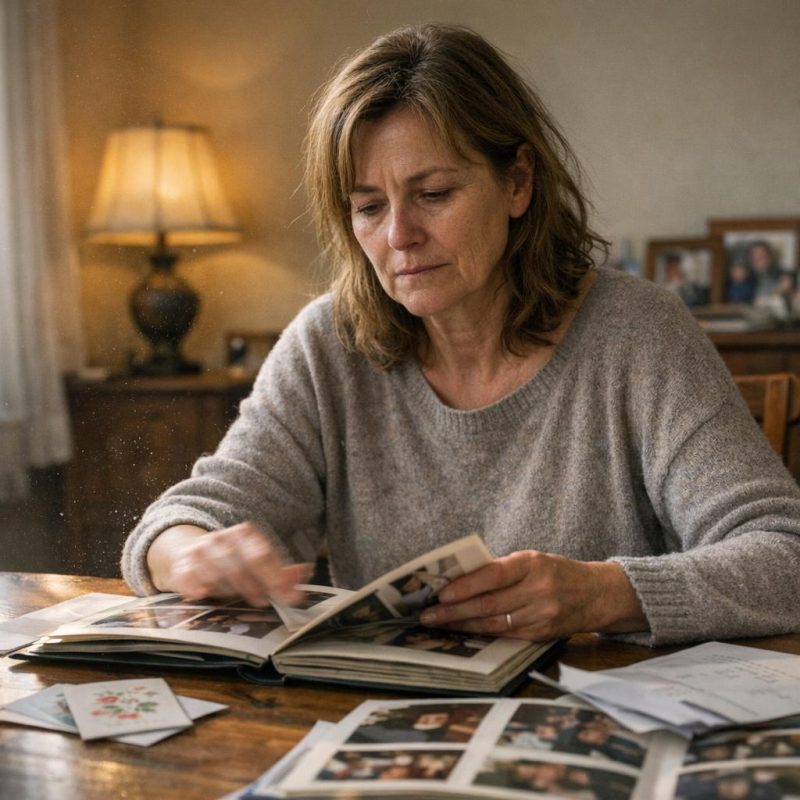 Image by RM AI
The Previous Victim
Detective Chen connected me with Sarah Mitchell, the girlfriend who came before Rebecca. We met at a quiet coffee shop, and she was in her mid-forties now, composed but cautious. 'I'm only talking to you because maybe it'll help,' she said, stirring her tea without drinking it. Then she told me everything. The same pattern—the gradual isolation from friends, the financial control disguised as 'helping her budget,' the way he'd turn her own words against her until she questioned her sanity. He'd convinced her she had anger issues when she finally pushed back against his rules. He'd told his friends she was unstable, jealous, paranoid. When she tried to leave, he'd threatened to tell her employer she'd stolen from him—a complete lie, but convincing enough to terrify her. 'I was twenty-six,' Sarah said. 'He was only twenty then, and he was already this good at it.' She'd eventually escaped by moving across the country without telling him where she was going. Changed her phone number, blocked all mutual contacts, started over completely. 'I tried to tell people,' Sarah said, her hands trembling slightly around her cup, 'but he was so good at making me look crazy.'
 Image by RM AI
The Arrest
Detective Chen called me early on a Tuesday morning. 'We're executing the arrest warrant today,' she said. 'I thought you'd want to know before you see it on the news.' I didn't go to watch—I couldn't—but I sat in my living room with the TV on, waiting. The noon broadcast showed police cars outside Mark's downtown apartment building. They brought him out in handcuffs, wearing the navy suit I'd helped him pick out for job interviews years ago. Professional to the end. The reporter said something about charges including financial fraud, identity theft, and coercive control under the new domestic abuse statutes. They listed the counts, and there were so many. Emily stood with the prosecutor on the courthouse steps, Rebecca beside her, both of them looking exhausted but upright. Mark's lawyer was already making statements about 'misunderstandings' and 'marital disputes.' But what I remember most was the footage of Mark being led to the police car. He looked directly at the camera with that same blank expression I'd seen a thousand times and couldn't read. I watched the news footage of him in handcuffs, and he looked directly at the camera as if he could see me through the screen.
 Image by RM AI
The Media Storm
By the next morning, reporters were camped outside my house. The story had everything they wanted—wealthy family, attractive defendant, multiple victims, a mother who'd turned on her son. They knocked on my door at seven a.m. They called my phone every fifteen minutes. A van with a satellite dish parked across the street, and my neighbors started peeking through their curtains. Detective Chen came by to check on me. 'You don't have to talk to them,' she said, but I knew they wouldn't leave until they got something. So I walked outside that afternoon and stood on my porch. Microphones appeared from everywhere. They asked if I felt guilty. They asked if I'd known all along. They asked what kind of mother turns in her own child. I thought about staying silent, about hiding inside until they got bored. But Emily had stood on courthouse steps and told her truth. The least I could do was stand on my own porch and tell mine. 'My son hurt people systematically and deliberately,' I said. 'That's not something a mother should protect.' One reporter asked if I regretted it, and I said, 'I regret not seeing it sooner.'
 Image by RM AI
The Trial Preparation
The prosecutor, a sharp woman named Jennifer Walsh, called me to her office two weeks before the trial. She explained that my testimony would establish Mark's pattern of manipulation—how he'd used me as a weapon against Emily, how he'd cultivated my trust specifically to isolate her more effectively. 'Juries need to understand this wasn't just a bad marriage,' she said. 'This was calculated, long-term abuse. You can show them that.' We went through my testimony again and again. The voice recorder evidence. The bank statements. The timeline of my 'health scares' and how Mark had weaponized each one. How he'd forged my signature on documents. How he'd impersonated me in emails to Emily's family. Emily would testify about the abuse itself. Rebecca would establish the pattern. Sarah would show how far back it went. But I would show the jury exactly how sophisticated his manipulation was—how he'd fooled even the person who'd known him since birth. 'Defense will try to paint you as a bitter ex-mother-in-law,' Jennifer warned. 'They'll suggest you're taking Emily's side in a divorce.' I told her I understood. The prosecutor told me my testimony would be crucial, and I wondered if I had the strength to look Mark in the eye.
 Image by RM AI
The Courtroom
The courthouse was nothing like I'd imagined—no grand marble halls, just institutional hallways and worn carpet. Emily was there with her victim advocate, looking pale but determined. Rebecca gave me a small nod from across the waiting area. Sarah Mitchell sat alone near the window, the woman who'd run across the country to escape what Emily had endured. I'd worn my navy suit, the one I usually saved for garden club presentations, because I wanted to look credible, maternal, trustworthy. Exactly what Mark had counted on me being when he'd used me. Jennifer Walsh reviewed my testimony one final time. 'Just tell the truth,' she said. 'That's all we need.' Then the bailiff opened the courtroom doors and I walked in. The jury box was full of ordinary people—a retired teacher, a construction worker, a young woman who reminded me of Emily. And there, at the defense table, sat Mark. His hair was neatly trimmed. His suit was impeccable. He looked like every mother's dream son, and that was precisely the problem. He didn't look at me as I entered. When they called my name, I stood up and walked to the witness stand, my legs barely holding me.
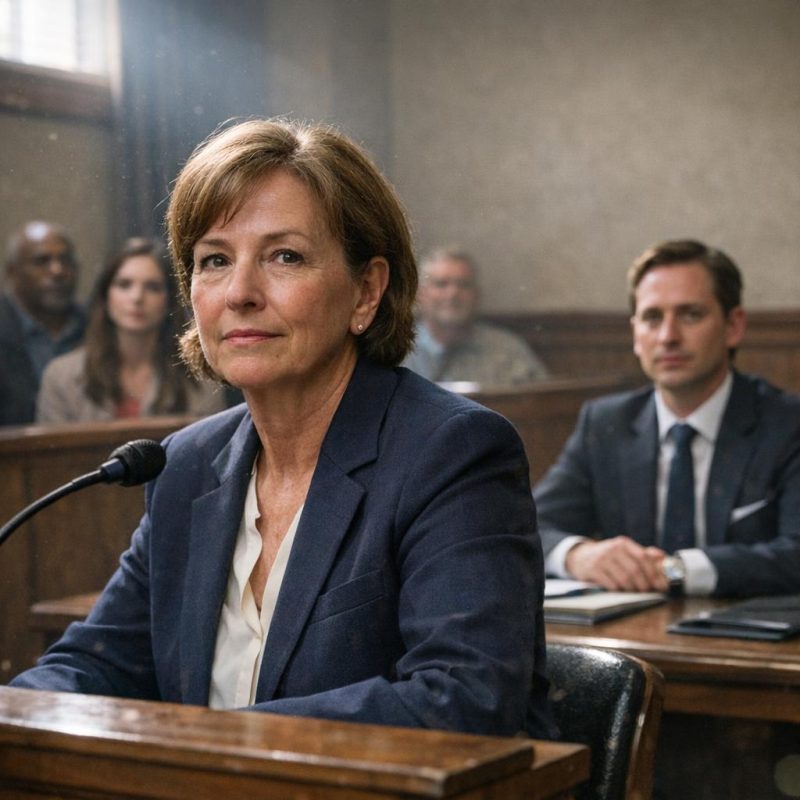 Image by RM AI
Testimony
The oath felt heavier than it should have—my hand on the Bible, promising to tell the truth about my own son. Jennifer started gently, walking me through the basics. How long had I known Emily? What kind of relationship had we had? When did things start to change? I explained about the voice recorder, about hearing Mark's voice saying things I'd never said. About the emails sent from an address that looked like mine but wasn't. About the forged signatures on financial documents. 'Did you give your son permission to impersonate you?' Jennifer asked. 'No,' I said. 'Never.' She showed me the bank statements, the phone logs, the timeline of my health scares and how Mark had used each one. I watched the jury take notes, their faces growing more serious. Then Mark's lawyer stood for cross-examination. He was younger than I expected, aggressive in that careful lawyer way. He asked if I was 'aware' I was destroying my son's life over what amounted to 'marital drama.' He suggested I was biased, emotional, manipulated by Emily. He implied I was a bitter older woman who'd been fooled. I looked at Mark then, really looked at him, and saw absolutely nothing in his eyes. Mark's lawyer asked if I was aware I was destroying my son's life, and I said, 'I'm aware he destroyed his own.'
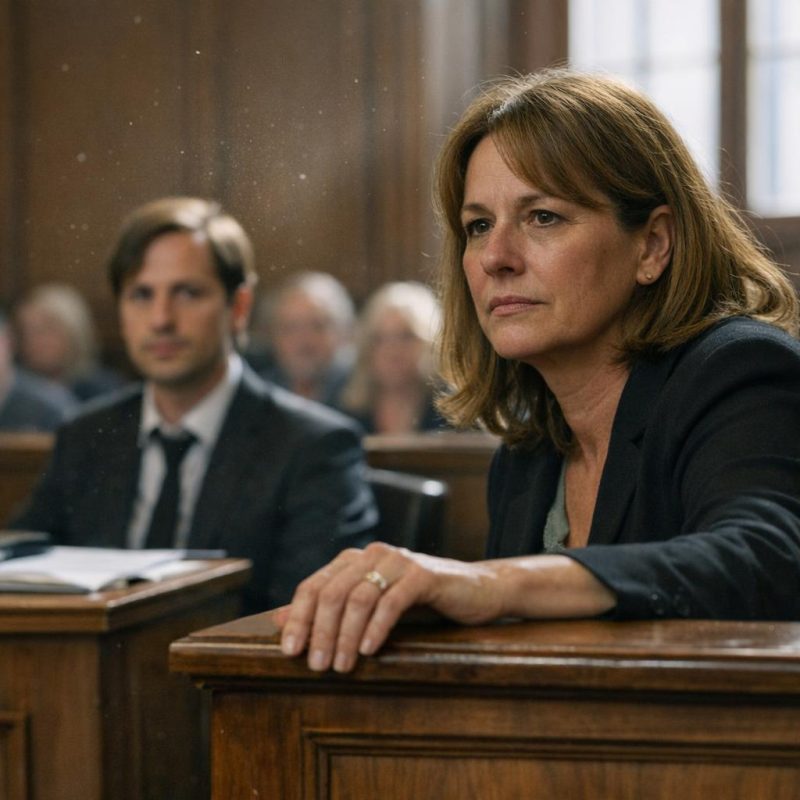 Image by RM AI
The Verdict
The jury deliberated for six hours. We waited in separate rooms—Emily with her advocate, me with Detective Chen, Mark somewhere with his lawyers. When the bailiff called us back, my heart was pounding so hard I thought everyone could hear it. The jury foreman was a middle-aged man who looked like he could have been Mark's father. 'On the count of financial fraud, we find the defendant guilty. On the count of identity theft, we find the defendant guilty. On the count of coercive control...' Guilty. Guilty on all charges. Mark's face never changed. The judge sentenced him to five years in state prison, followed by probation and mandatory restitution to both Emily and Rebecca. He'd have to pay back every dollar he'd stolen, every cent he'd hidden. His professional licenses would be revoked. He'd be registered as a domestic abuser. The bailiff approached to lead him away. That's when Mark finally looked at me—really looked at me for the first time since I'd walked into that courtroom. His face was still blank, still unreadable, but his lips moved silently. As they led him away, Mark turned to me and mouthed, 'I hope you're happy,' and I realized I would never be, not completely.
 Image by RM AI
Walking Out Alone
We walked out of that courthouse together—Emily, Detective Chen, and me. The sunlight hit my face like a slap, too bright after hours under those fluorescent lights. Emily was shaking, her whole body trembling despite the warm afternoon. Detective Chen stayed with us until we reached the courthouse steps, then squeezed my shoulder once before heading back inside. Emily and I stood there on the concrete, two women who'd been strangers six months ago, now bound together by the wreckage Mark had left behind. People rushed past us—lawyers in expensive suits, families arguing about parking tickets, teenagers on their phones. The normal world kept spinning like nothing had happened. But something had happened. Everything had happened. Emily looked at me with those exhausted eyes, the ones that had seen too much but were finally, finally beginning to heal. She'd testified with such quiet strength, never wavering even when Mark's lawyers tried to twist her words. I'd watched her refuse to be broken one more time. Now we stood in the sunlight, neither of us quite sure what came next. 'It's over,' Emily whispered, and I nodded, though I knew the real work of healing was just beginning.
 Image by RM AI
First Sunday Without Him
The first Sunday after the trial, I woke up at seven like always. For thirty-five years, Sunday mornings meant waiting for Mark's call—first from college, then from his apartment, then from the house he'd shared with Emily. My phone sat on the kitchen counter, silent. No call would come. Not that week, not next week, not for five years if he even bothered after that. I stood there staring at that quiet phone like it might suddenly ring anyway, like maybe this had all been some terrible dream. But my coffee got cold while I waited, and the phone never made a sound. The silence felt like freedom and abandonment all tangled together, like cutting off a diseased branch—necessary but brutal. I'd lost my Sunday ritual, my connection to the boy I'd raised. Except he'd never been that boy, had he? That was the thing I kept learning over and over. Around noon, I did something I hadn't planned. I made tea for two instead of one, set out the good cups, and texted Emily an invitation. And Emily arrived right on time.
 Image by RM AI
Tending the Roses Together
Emily showed up with gardening gloves in her purse, like she'd known somehow that I'd need help with the roses. We worked side by side in the afternoon sun, pruning back the damaged stems, clearing away the dead growth that had accumulated over the winter. She was gentle with the plants, careful not to cut too much at once. We didn't talk about Mark at first—just focused on the work, on the rhythm of cutting and clearing. But eventually, she started telling me about her therapy sessions, about learning to trust herself again. I told her about the guilt that still woke me up at three in the morning, the wondering if I'd missed signs when he was younger. 'You can't go back,' she said softly, examining a new bud on one of the climbers. 'None of us can. We can only decide what we do from here.' The roses were responding to the pruning already, sending up fresh growth where we'd cut away the rot. It was slow work, patient work, the kind that doesn't show results overnight. Emily asked me if I thought people could really change, and I said I didn't know about people, but I knew gardens could.
 Image by RM AI
Sunlight and Truth
It's been six months since that package arrived and turned my whole world inside out. The roses in my garden are blooming better than they have in years—full, healthy, reaching toward the sun without anything blocking their light. I lost my son that day I opened Emily's package, or maybe I lost him years ago and just didn't want to see it. Either way, the boy I thought I'd raised never really existed. That's a grief that doesn't fade quickly. But I gained something too. I gained the ability to look at myself in the mirror without flinching. I gained Emily's friendship, built on truth instead of the lies Mark had woven around all of us. I gained the knowledge that when it mattered most, I chose what was right over what was comfortable. Some of my old friends still don't speak to me—they think I betrayed my own blood. Maybe I did. But I sleep at night now, really sleep, without Mark's victims haunting my dreams. The roses don't lie. They show you exactly what they are, what they need, how they'll respond to care or neglect. I lost my son that day, but I found something more valuable—the courage to choose what's right over what's comfortable, and the roses have never been more beautiful.
 Image by RM AI
Image by RM AI
KEEP ON READING

The War Fought Over a Bucket
Zairon on WikimediaIn November 1325, a group of Modenese soldiers…
By Cameron Dick Apr 9, 2026
The 20 Most Common Names You Hear Repeatedly In History…
Names Rich With History. Remembering dates and places throughout history…
By Cathy Liu Apr 9, 2026
10 Book Bans That Backfired & 10 That Worked
When Censorship Misfires. Book bans get talked about as if…
By Cameron Dick Apr 8, 2026
20 Times in History Fashion Trends Were Genuinely Dangerous
Looking Stylish Hasn't Always Been a Safe Hobby. Fashion has…
By Emilie Richardson-Dupuis Apr 8, 2026
20 Historical Figures Who Were More Dangerous Than They Seemed
Power Hidden Behind a Calm Face. History is full of…
By Annie Byrd Apr 8, 2026
20 Historical Figures You Probably Share DNA With
Do You Have Famous Ancestors?. It’s easy to think of…
By Sara Springsteen Apr 8, 2026