

I Spent Weeks Planning My 40th Birthday Party—My Husband Spent It Trying to Humiliate Me in Front of Everyone, But He Forgot One Crucial Detail
I Spent Weeks Planning My 40th Birthday Party—My Husband Spent It Trying to Humiliate Me in Front of Everyone, But He Forgot One Crucial Detail
The Sound of Packing Tape at Dawn
I woke up at five-fifty on the morning of my fortieth birthday to a sound I couldn't immediately place — a low, rhythmic tearing, like something being sealed shut. For a moment I lay still, listening, telling myself it was probably nothing. Then I heard it again, coming from the garage. I pulled on my robe and padded down the hallway, the house cold and quiet around me, the kind of quiet that feels wrong before the day has even started. Marcus was crouched on the concrete floor surrounded by cardboard boxes, a roll of brown packing tape in his hand. He didn't look up when I pushed the door open. The garage smelled like dust and cold air, the overhead bulb throwing a pale yellow light across the stacked boxes. I asked him what he was doing. He muttered something about clearing things out, still not looking at me, pulling another strip of tape across a flap. That was when I noticed the edge of something pale and delicate peeking out from the nearest box — the soft blue-and-white pattern I would have recognized anywhere. My grandmother's porcelain. I stood in the doorway in my robe, the cold settling into my feet, and the silence between us sat heavier than anything he could have said.
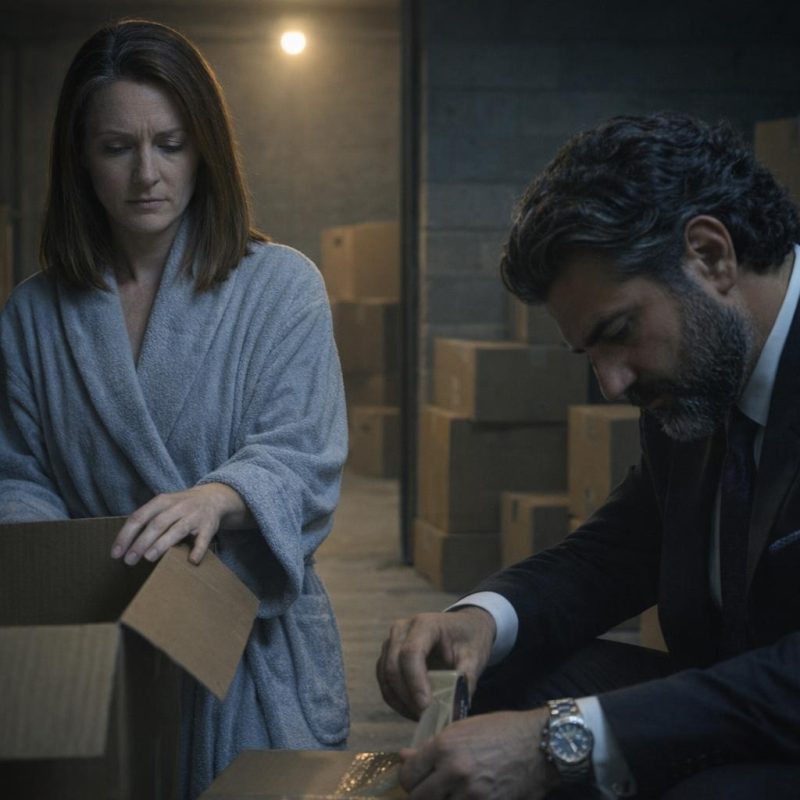 Image by RM AI
Grandmother's Porcelain in Cardboard
I stepped further into the garage, the concrete floor cold through my socks, and crouched down to get a better look. It was definitely her tea set — the one my grandmother had brought over decades ago, wrapped in newspaper and tucked inside a suitcase because she hadn't trusted it to the movers. The pale blue forget-me-nots on each piece, the gold rim worn soft with age. I told Marcus the porcelain was fragile, that it needed proper padding at the very least. He didn't answer. He just kept working, pulling items from a shelf and setting them into the box with the kind of efficiency that suggested he'd been at this for a while before I woke up. I watched him lift the small creamer — the one with the hairline crack my grandmother had always called its character — and I started to say something again. He still didn't respond, just kept moving. I told myself maybe he hadn't heard me. I told myself a lot of things in those few seconds. Then he picked up one of the teacups and dropped it into the box without any wrapping at all.
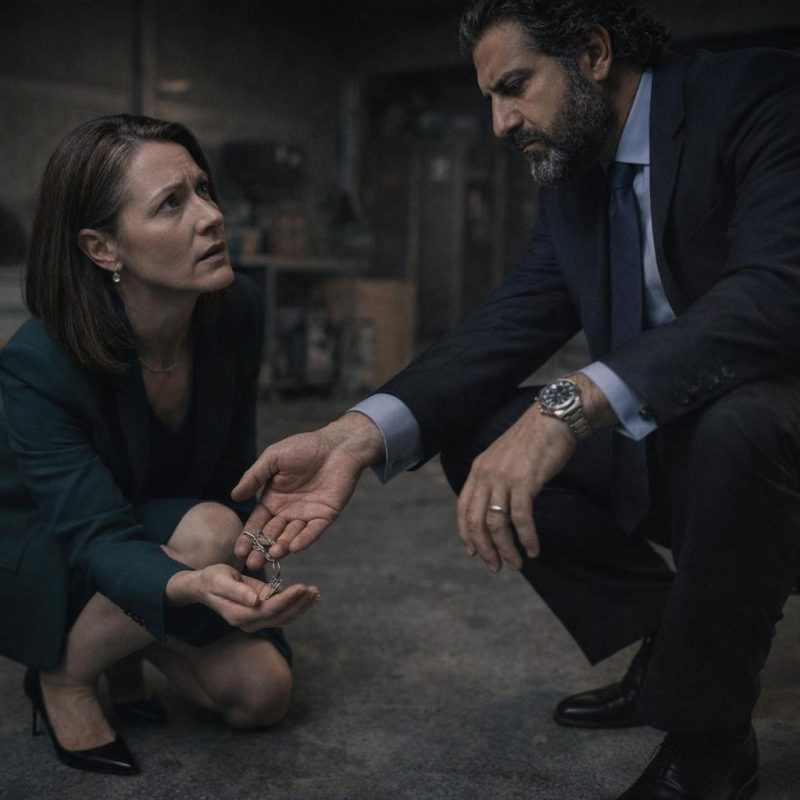 Image by RM AI
Spring Cleaning in February
I asked him directly — why was he packing now, today of all days, and what exactly was going into those boxes. He said it was spring cleaning. I pointed out, as evenly as I could manage, that it was February. He shrugged without looking up, the tape gun making that sharp ripping sound again. I asked if any of this had something to do with the party, whether he was trying to clear space for the guests or move things out of the way. He said the party was exactly what I should be thinking about, that forty people were arriving in a few hours and I should be getting ready instead of standing in the garage asking questions. His tone wasn't sharp, exactly. It was something flatter than that — the kind of voice that doesn't leave room for a follow-up. I noticed he still hadn't met my eyes, not once since I'd walked in. I stood there for another moment, watching the back of his head, trying to find something in his posture that would make the morning make sense. Then he said it again, quieter this time, almost to himself: get ready for the party. The flatness in his voice when he said it stayed with me long after I turned and walked back into the house.
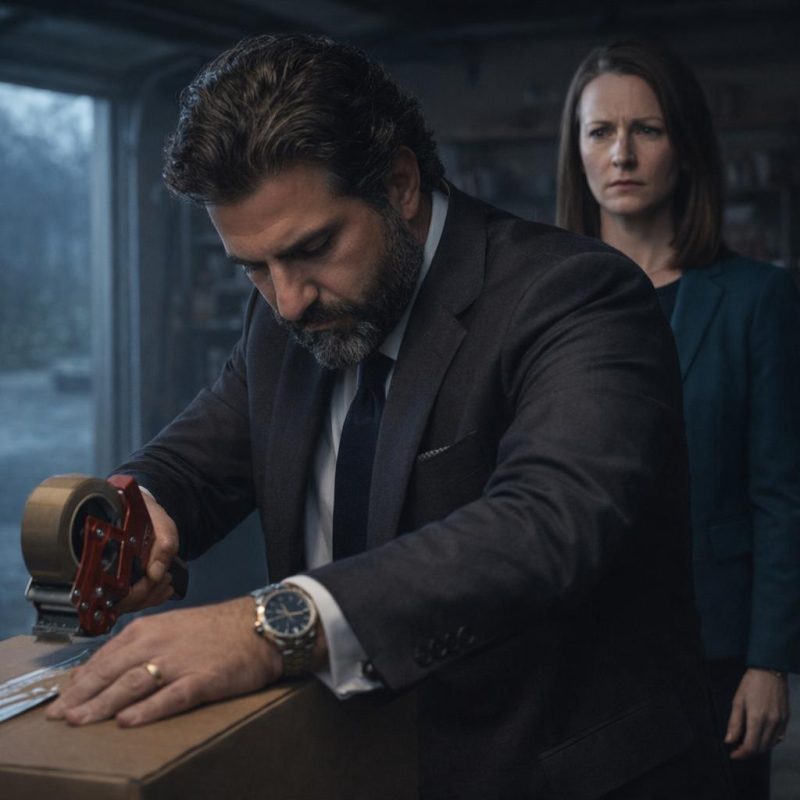 Image by RM AI
Playing the Part
I stood in the kitchen for a moment after coming back inside, one hand resting on the counter, listening to the muffled sounds of tape and cardboard from the garage. Three weeks I had spent on this party. The menu, the flowers, the playlist, the seating — all of it carefully thought through, all of it mine. Forty people who mattered to me were going to walk through that door in a few hours, and I was not going to let whatever was happening in the garage pull me sideways before they arrived. I told myself I would ask again after the party, when the guests were gone and the house was quiet and there was no reason for either of us to perform. I told myself the porcelain was probably fine. I told myself a lot of things. I went upstairs, ran the shower hot, and stood under it longer than I needed to. By the time I was dressed and standing in front of the mirror, the knot in my stomach hadn't loosened — but I had made a decision, and decisions have a way of steadying you even when the ground underneath them isn't solid. I smoothed the front of my dress and looked at my reflection, and the choice to wait settled over me like a costume I had worn before.
 Image by RM AI
Crostini and Champagne
By ten o'clock I was in the kitchen and moving with purpose, which is the only way I know how to manage a morning that has already gone sideways. The crostini went into the oven in two batches, and I stood over the counter slicing the toppings while the bread browned, the smell of toasted olive oil filling the room in a way that almost felt normal. I arranged the finished pieces on the silver platters I'd polished the night before, then moved the champagne bottles into the ice buckets I'd set up along the sideboard. I had a printed timeline — I always have a printed timeline — and I worked through it item by item, checking things off with a pen I kept tucking behind my ear and then forgetting about. It helped, having the list. It gave the morning a shape. Marcus had been outside for most of the past hour, and I'd been grateful for the distance. But the kitchen window faces the back lawn, and sound carries in this house more than people expect. His voice came through the glass in fragments — clipped, directive, the particular register he uses when he expects to be obeyed without question. I couldn't make out the words at first. Then his voice rose, sharp and carrying, and I heard him barking orders at someone just beyond the window.
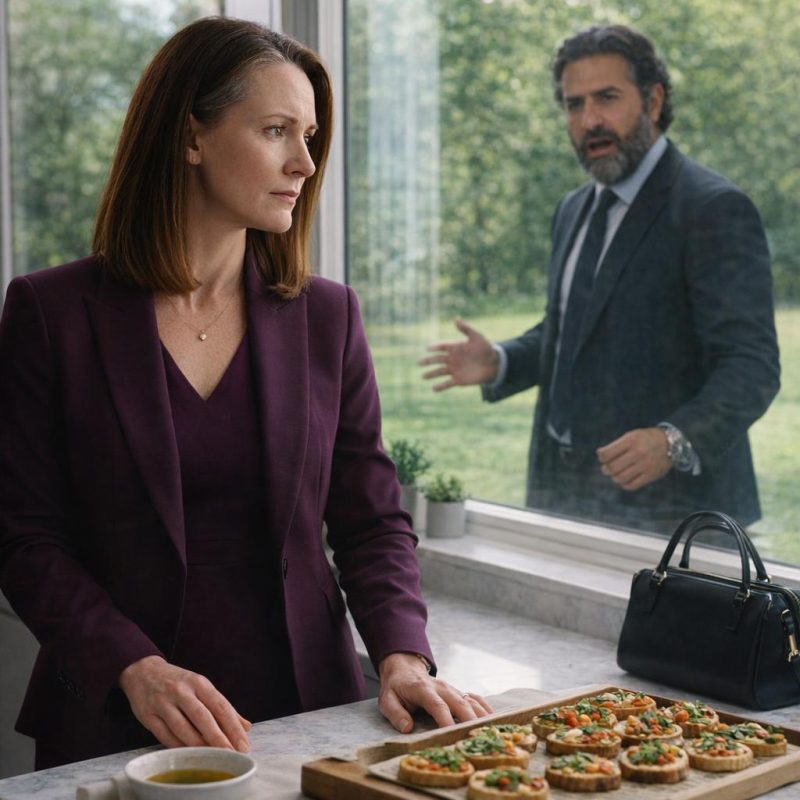 Image by RM AI
The Lawn Display
I set down the serving spoon and moved to the window. Marcus was on the lower lawn, maybe thirty feet out, and he wasn't alone — one of the catering staff was with him, a young man I didn't recognize, holding one end of something while Marcus directed him with short, impatient gestures. There was a large tarp on the grass, covering something bulky and low to the ground, the kind of shape that could have been a table or a sculpture or almost anything. Marcus crouched beside it, adjusting the angle of a spotlight he'd positioned on a short stand nearby. I hadn't seen the spotlight before. I didn't know where it had come from. He moved it a few inches to the left, then stepped back and looked at the covered shape the way you look at something you've been planning for a while. I assumed it was the surprise he'd mentioned a few weeks ago — something he'd been vague about in that way he sometimes was, as though the vagueness itself was part of the gift. The setup looked more elaborate than I'd expected for a birthday decoration, but I told myself I was probably reading too much into it. I watched him crouch down and adjust the spotlight one more time, its beam aimed directly at whatever was under the tarp.
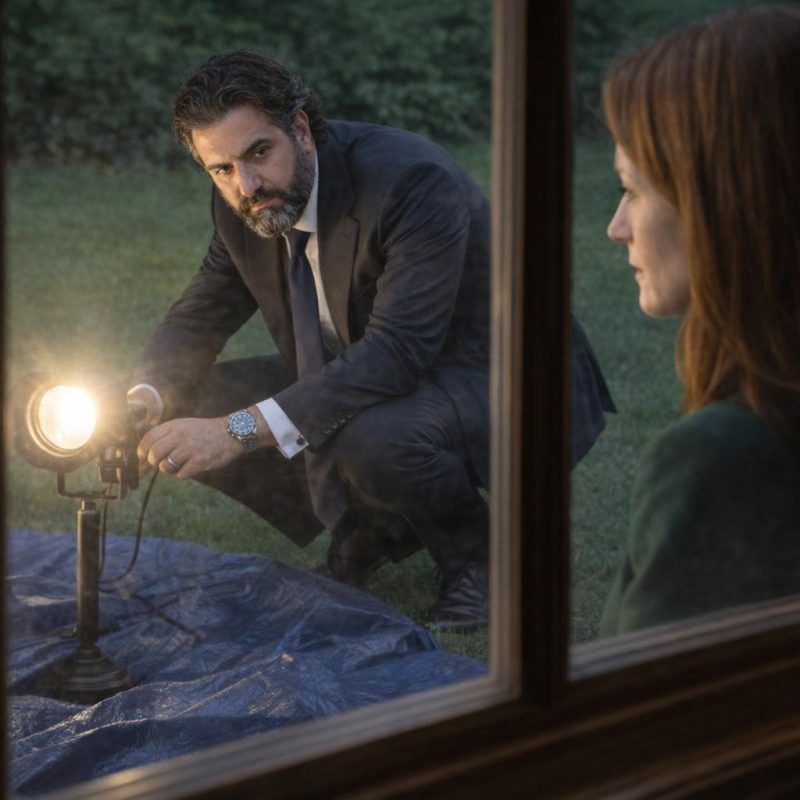 Image by RM AI
Boxes in Motion
I went back to the platters, but I kept finding reasons to return to the window. The second time I looked out, Marcus was crossing the lawn with a box in his arms — one of the ones from the garage, I was almost certain of it. He set it down near the tarp and went back. Then again. I watched him make trip after trip, moving with the kind of focused energy he usually reserves for things he considers important. The pile beside the covered shape grew steadily: boxes stacked two and three high, some of them taped shut, some still open at the top. I recognized the shape of a lamp shade poking out of one. I thought I saw the corner of a picture frame in another. My hands had gone still over the appetizer tray without me noticing. I tried to think of a reason why party decorations would require this many boxes moved from the garage to the lawn, and I couldn't come up with one that felt right. I counted them as he carried them out, losing track once and starting over. By the time he made his last trip back to the garage, I had counted at least a dozen boxes stacked on the lower lawn.
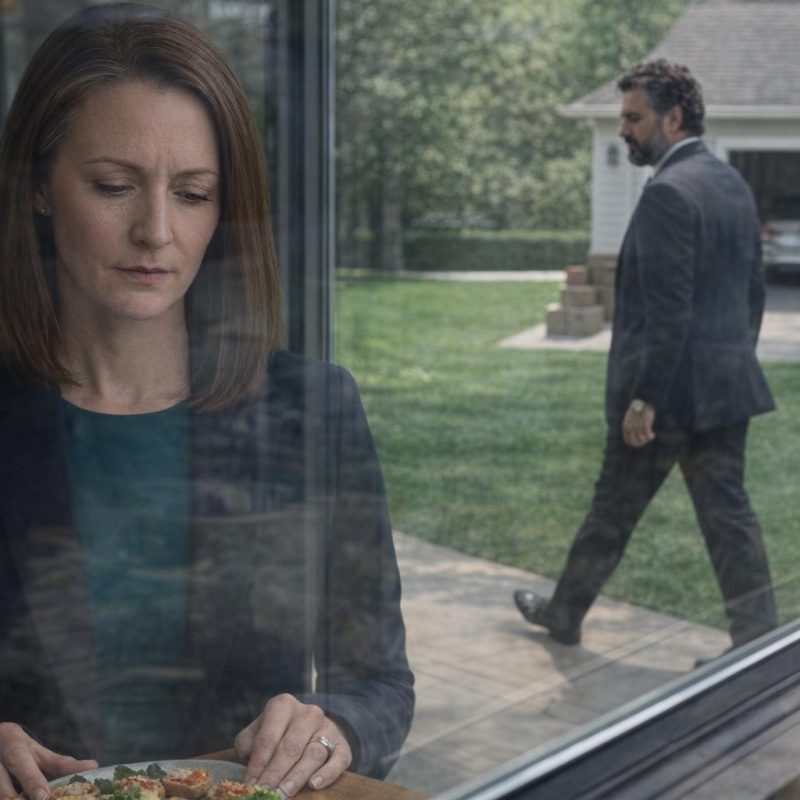 Image by RM AI
The Smell of Rosemary
I made myself go back to the food. The last tray needed garnishing, and I pulled the fresh rosemary from the cutting board and worked it between my fingers before pressing small sprigs alongside each piece, the sharp green smell rising up and cutting through everything else in the kitchen. It was the kind of task that usually settles me — something small and precise, something I can control. The kitchen smelled the way it was supposed to smell: herbs and warm bread and a faint sweetness from the champagne chilling nearby. I focused on that. I focused on the tray. Outside, Marcus was still talking, his voice carrying in and out through the window in waves. I caught fragments — something about the order of things, something about timing. I told myself it was logistics, that parties have logistics, that I was letting the morning get inside my head. Then his voice rose again, clear enough this time that I caught the words without trying: he said something about the spotlight, and when to turn it on, and a staff member's voice came back confirming they understood the timing.
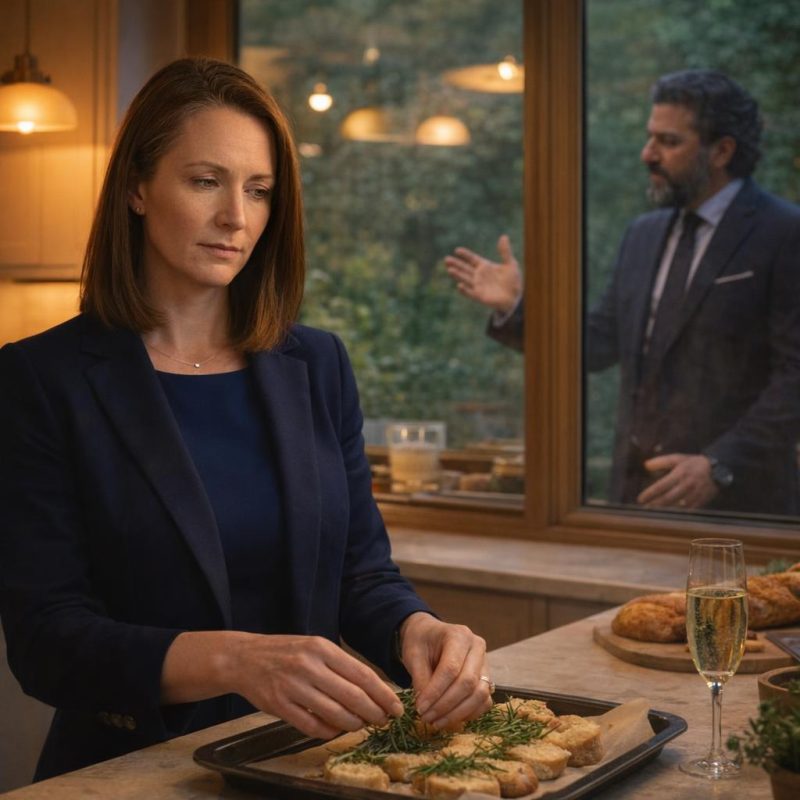 Image by RM AI
Luxury Vehicles in the Driveway
They arrived exactly at four, the way people do when they want to signal that they respect your time without actually caring about your occasion. I heard the crunch of gravel first, then the low purr of engines cutting off one by one. I watched from the front window as the SUVs lined up along the driveway — dark, gleaming, the kind of vehicles that cost more than most people's annual salary. The women stepped out in silk and linen, carrying gift bags with tissue paper fanning out at the top, bottles of wine tucked under their arms. I smoothed my dress, checked my expression in the hallway mirror, and opened the front door. The smiles came easily enough. I had been practicing them for years. Happy birthday, they said, one after another, and I said thank you, I'm so glad you're here, and I meant none of it and all of it at once. Marcus appeared at my shoulder almost immediately, impeccable in his charcoal suit, shaking hands and laughing that big, room-filling laugh of his. He was good at this part. I stood beside him and accepted the first birthday wish with a smile that felt like something I was wearing rather than something I felt.
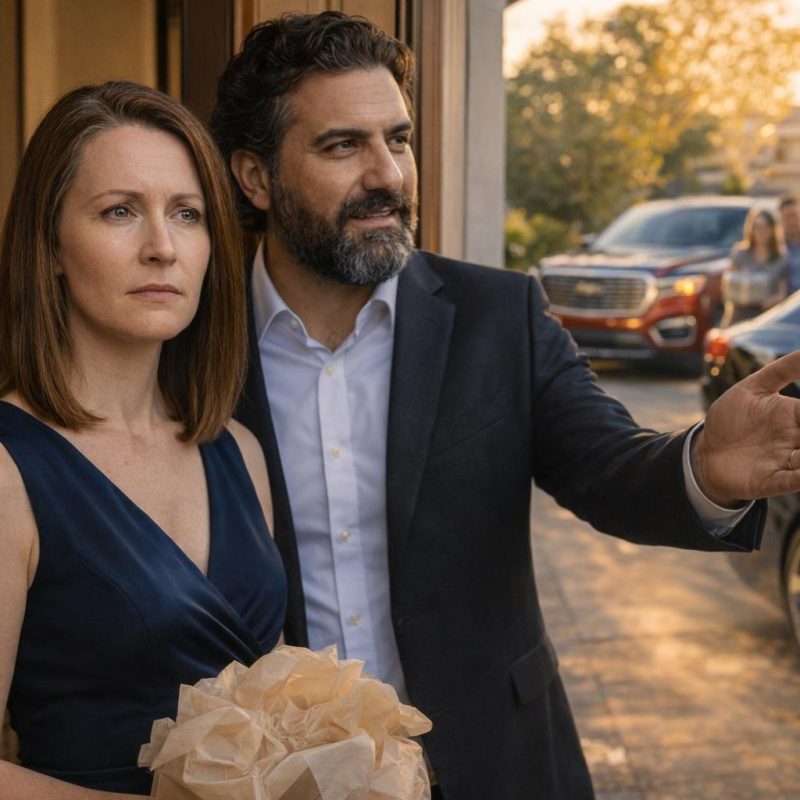 Image by RM AI
Hollow Wishes
The lawn filled up faster than I expected. By five o'clock there were forty, maybe fifty people moving between the tables, the bar, the appetizer stations I had spent two weeks planning. They complimented the house — the string lights, the flower arrangements, the way the catering staff moved quietly and efficiently through the crowd. I thanked them. I smiled. I asked about their children, their summer plans, their recent trips. I was good at it too, in my own way. But somewhere around the third or fourth conversation, I noticed that I was listening to myself from a distance, like a recording playing back on a slight delay. Marcus had claimed the outdoor bar as his territory within the first twenty minutes. I could hear him from wherever I stood — that laugh, those stories, the particular cadence he used when he wanted people to feel like they were the only ones in the room. His business partners clustered around him, leaning in, nodding. The sun dropped another degree toward the tree line. I accepted another birthday wish from a woman whose name I had already forgotten, and the words thank you, that means so much settled in my mouth like something I was reciting rather than saying.
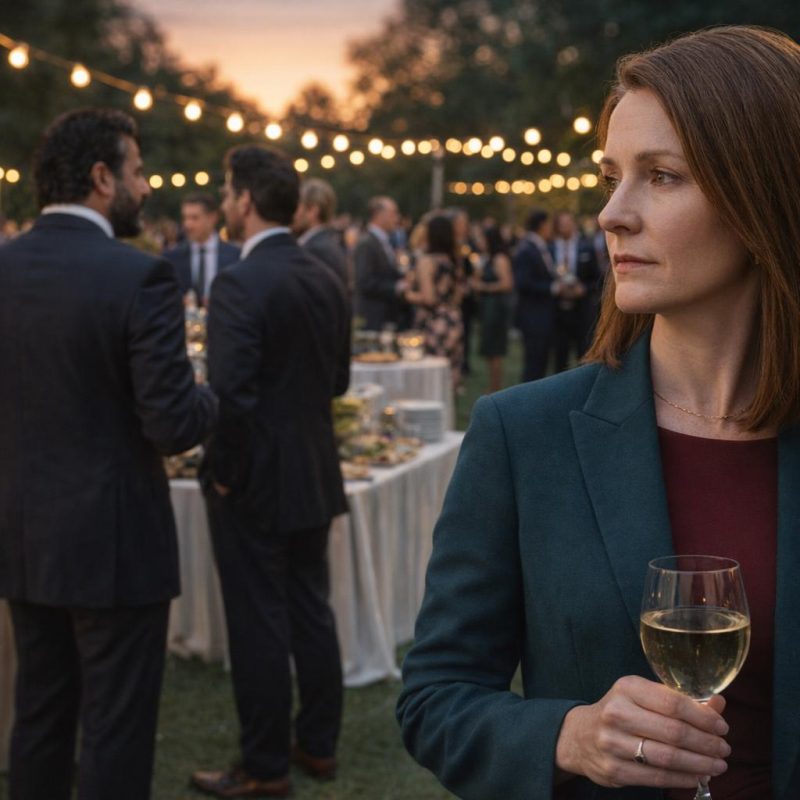 Image by RM AI
Pivoting Away
I tried four times. I want to be precise about that, because it would be easy to say I imagined it or that I was being too sensitive. Four times I crossed the lawn and positioned myself at the edge of a group where Marcus was talking. The first time, he was mid-story about a business deal in Frankfurt. I stepped in beside him and he shifted — not dramatically, just a quarter-turn, enough to angle his shoulder toward the man across from him and away from me. The conversation moved to golf. I don't play golf. The second time, I managed to say something about the food, and he smiled at me the way you smile at a child who has interrupted adult conversation, then turned to ask the couple beside us about their vacation in Portugal. The third and fourth times were variations on the same theme. Each time, the group followed his lead without seeming to notice they were doing it. I was never asked to leave. I was never acknowledged enough to be dismissed. I just found myself standing at the outer edge of the circle, holding my champagne glass, the conversation flowing around me the way water moves around a stone it has long since stopped noticing.
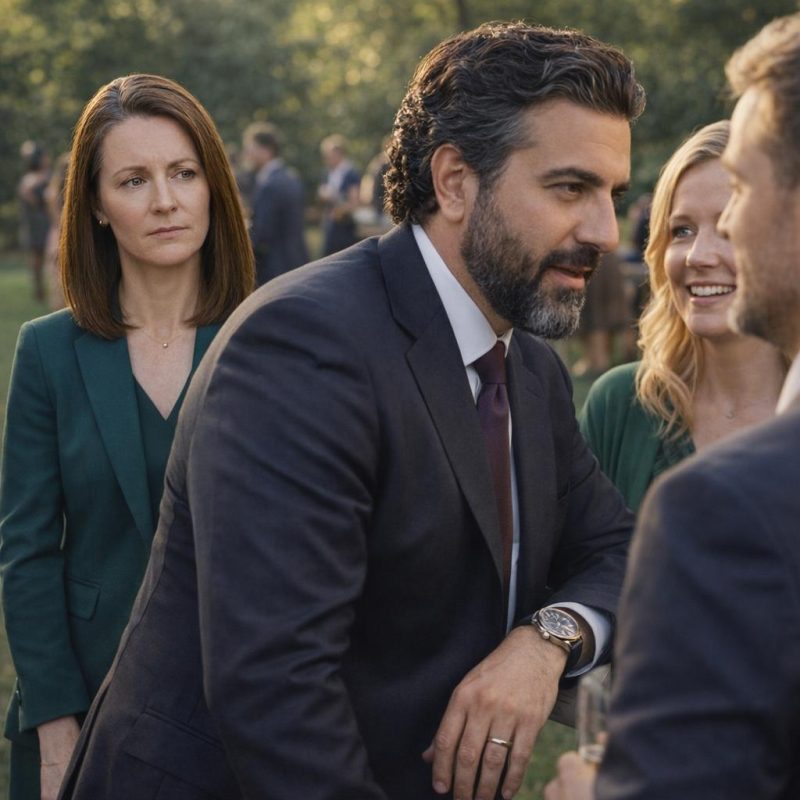 Image by RM AI
The Antique Hobby
I was near the bar refilling champagne glasses when I heard it. I wasn't trying to listen — I was focused on the pour, on keeping the foam from spilling over the rim, on the small precise task in front of me. Marcus was standing maybe six feet away with two of his business partners, the ones who always laughed a beat too late at his jokes. I caught the words antique collection first, and then little hobby, delivered in that particular tone he used when he wanted something to sound affectionate but land as condescending. One of the partners asked what he meant — I heard the question clearly, a polite murmur of curiosity. I kept my eyes on the champagne glass. I kept my hand steady. Then Marcus said it was finally being dealt with, his hand sweeping out toward the lower lawn.
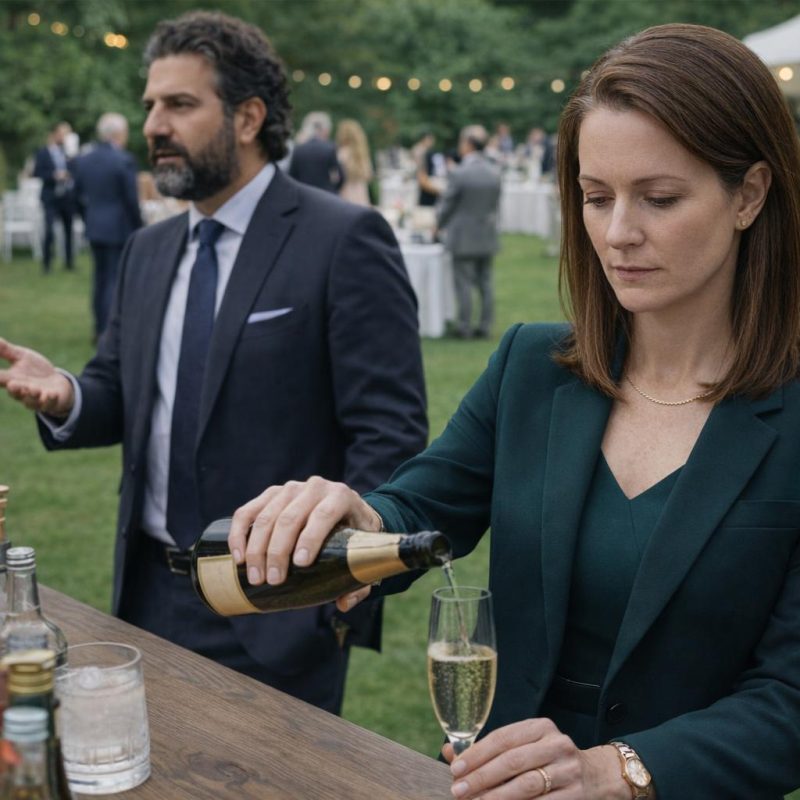 Image by RM AI
Holding Court
I found a position near the appetizer table where I could stand without being conspicuous and watch. Marcus had fully claimed the outdoor bar by then, the way he claimed every room he decided mattered. He was telling a story about a business trip — Tokyo, I think, or maybe Singapore, the details blurred together after the first telling — and his voice carried across the entire lawn without him seeming to try. Guests drifted toward him the way people drift toward warmth. He laughed at his own punchlines before he reached them, and the people around him laughed along, that polite social laughter that has more to do with proximity than humor. He ordered another round for the group with a wave of his hand, and the bartender moved immediately. I watched a woman I had known for six years lean in to catch something he said, her face lit up with attention she had never once turned in my direction tonight. The sky behind him had gone a deep, saturated blue at the edges. It was my party. My fortieth birthday. And his voice was the only sound that seemed to fill any of it.
 Image by RM AI
Maintaining the Facade
I kept moving. That was the only strategy I had left — keep moving, keep the tray level, keep the smile in place. I refilled glasses for people who barely looked up to thank me. I cleared plates from the cocktail tables, stacking them quietly onto the catering cart near the side gate. I checked in with the staff twice, confirmed the timing on the main course, made sure the dessert station was fully stocked. Useful things. Necessary things. Things that gave my hands something to do while the rest of me went somewhere quieter and further away. Marcus never looked in my direction. Not once in the hour I spent moving through that crowd did his eyes find me. I told myself it didn't matter, that hosts are supposed to be invisible, that the best parties run themselves. I told myself a lot of things. The sky had gone orange and pink above the tree line, the kind of sunset that would have made me stop and breathe on any other evening. I noticed it the way you notice something beautiful when you are too tired to feel it, and I kept my smile exactly where it needed to be.
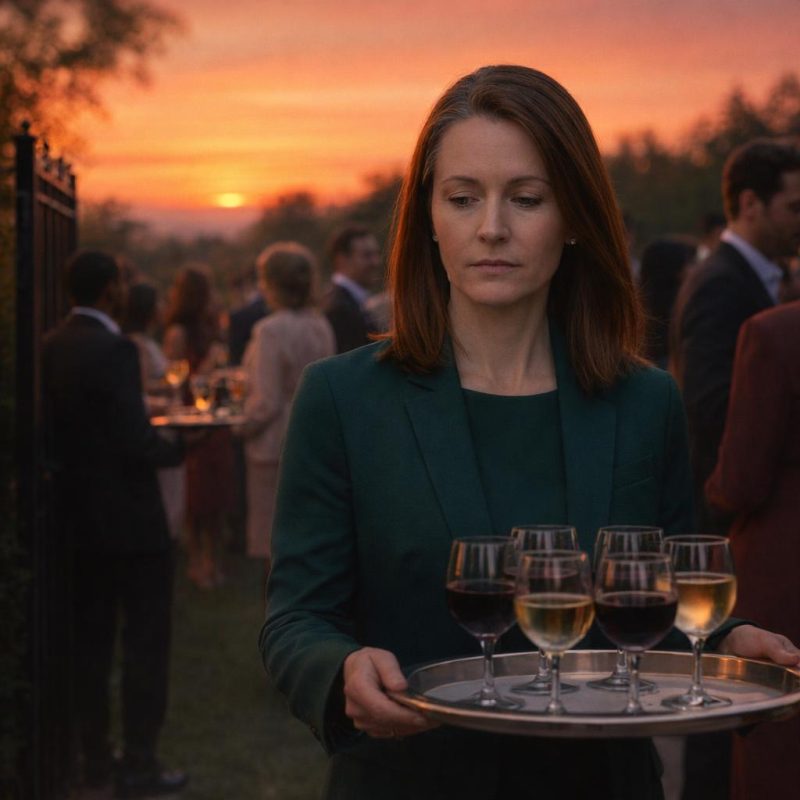 Image by RM AI
The Golden Hour
The golden hour hit the lawn all at once, the way it does in late summer — one moment the light is ordinary and the next everything is amber and long-shadowed and almost unbearably pretty. The temperature dropped a degree or two and I heard the shift in the crowd, that slight softening that happens when people feel the evening beginning. A few guests drifted closer together. Someone laughed at something warm and unguarded. For about thirty seconds I let myself just stand there and feel it, the beauty of the thing I had built, the flowers and the light and the sound of people who were, whatever else was true, genuinely enjoying themselves. Then I saw Marcus. He had stepped back from the bar, just slightly, and he was looking at his watch — not the casual glance of someone checking the time, but the focused, deliberate look of someone confirming something. He held the watch a beat longer than necessary. Then his eyes moved, slow and certain, toward the lower lawn and the spotlight setup waiting there in the fading light.
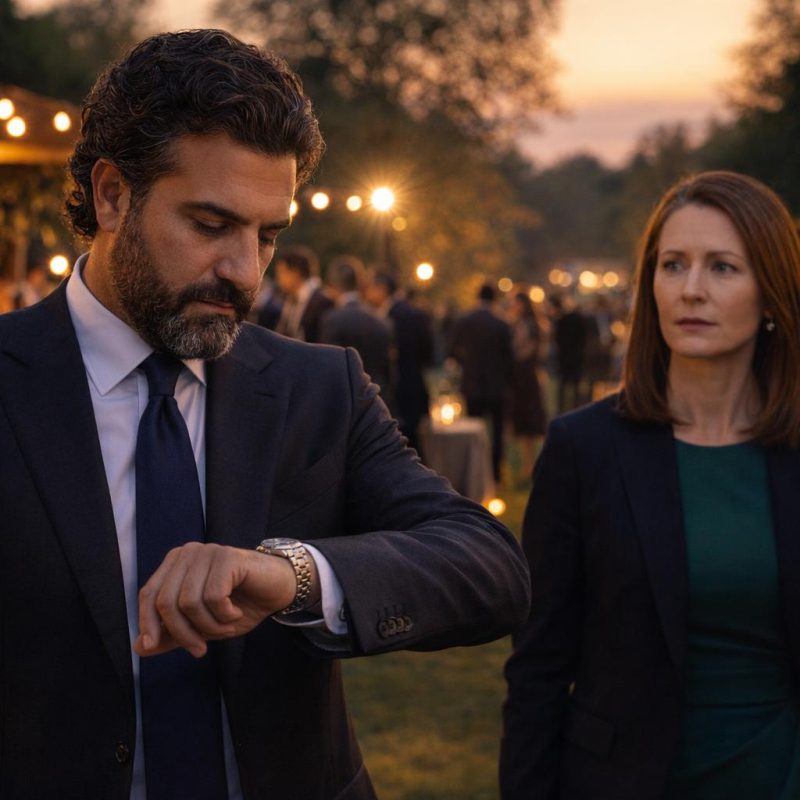 Image by RM AI
Sensing the Shift
I noticed the shift in the guests before I could name what I was seeing. It started with a woman near the rose beds — she glanced at Marcus, then at me, then back at Marcus, something careful moving across her face. Her husband leaned down and she said something close to his ear. They both looked in my direction at the same moment, and neither of them smiled. A business partner I had met twice at company dinners had gone quiet in a way that felt different from ordinary quiet. Someone touched my arm and asked, gently, if everything was all right, and I said of course, it's a party, and laughed the way you laugh when the answer is the only one available to you. Marcus's voice boomed from the bar, another story, another wave of polite laughter. I turned back to the woman near the rose beds. She was still watching me, and when our eyes met she didn't look away quickly the way people do when they've been caught staring. She held my gaze for a moment with an expression I couldn't name — something between sympathy and discomfort — and it sat on me like a weight I hadn't agreed to carry.
 Image by RM AI
Garden Lights
The automatic lights came on the way they always did at dusk — quietly, in sequence, the soft white pools spreading across the patio stones and up through the rose beds. For a moment it was almost beautiful. Guests lifted their faces toward the garden, and someone near the fountain said something appreciative about the ambiance. I had chosen those lights myself, two summers ago, spent an entire afternoon with the installer getting the angles right. I remembered that afternoon now for no reason I could name. The conversations around me had settled into the comfortable hum of a party finding its rhythm, and I let myself stand in it for a moment, glass in hand, watching the light move across familiar ground. Marcus had drifted toward the far end of the patio. I noticed him without meaning to — the way you notice a sound that doesn't quite fit the room. He was facing the lower lawn, hands loose at his sides, and there was something in his posture that made me look past him, down toward the grass. The garden lights didn't reach that far. But something else did. A single beam, much brighter than the rest, clicked on and swept the lower lawn in hard white light.
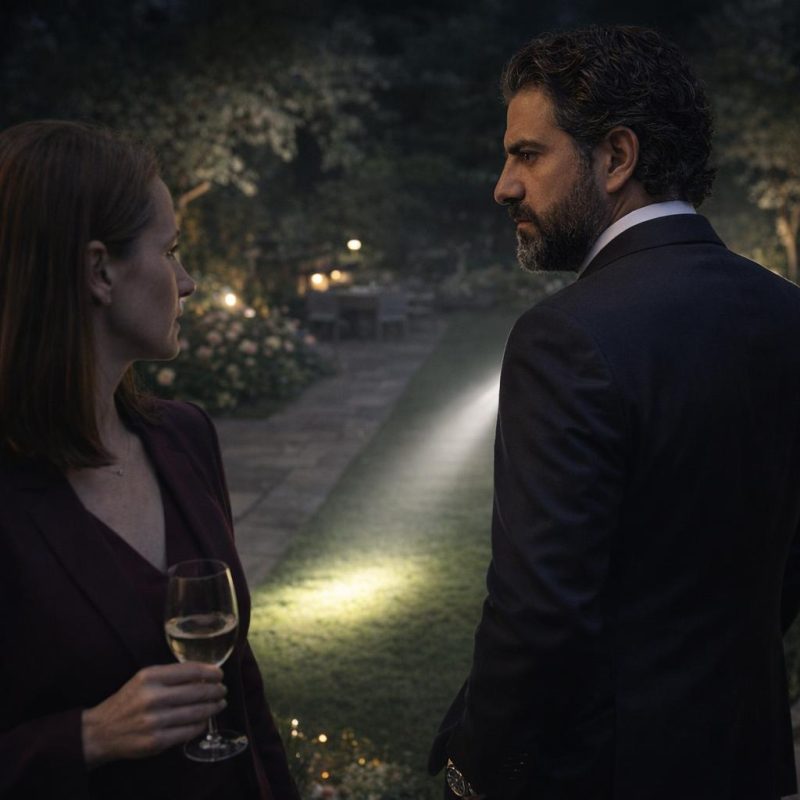 Image by RM AI
Positioning
Marcus stepped away from the bar without finishing his drink. I watched him set the glass down on the stone ledge — not carelessly, but with a kind of deliberate placement that made me notice it. He moved through the clusters of guests with his shoulders back, nodding once to someone who called his name, not stopping. He walked to the center of the patio, the spot where the flagstones opened up and the sightlines were clearest in every direction. I had seen him work a room before. I had watched him position himself at the head of a dinner table, at the front of a boardroom, at the edge of a stage. He knew how to stand where people would look. He turned to face the lawn, and for a moment he just stood there, scanning the gathered guests the way you scan a room before you speak. He glanced once toward the spotlight on the lower lawn. Then he looked back at the crowd. My heart had picked up a beat I didn't ask for. The conversations around me continued — someone laughed, a glass clinked — and none of it touched me. I stood near the house and watched him, and a stillness came over me that had nothing to do with calm.
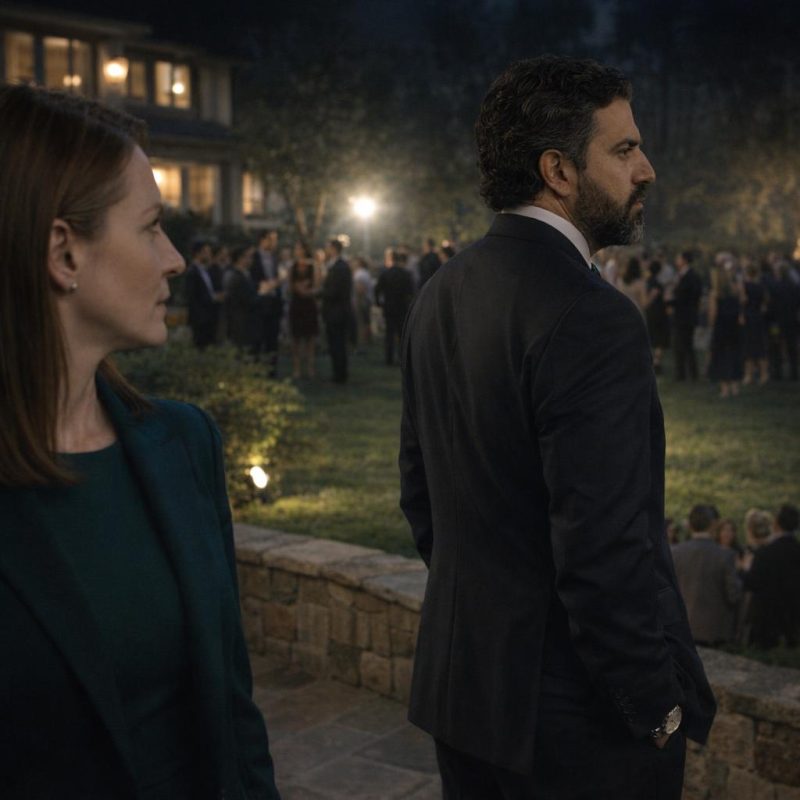 Image by RM AI
Crystal and Silver
He reached for the spoon first. I saw him lift it from the linen-covered table beside him — silver, the good set I had chosen for the evening — and I knew what came next before it happened. The tap against the crystal was sharp and clean, the kind of sound that cuts through everything. One strike. Then two. Then a third. Conversations stopped mid-sentence. Someone near the rose beds turned mid-laugh and let the laugh die. A group by the fountain went quiet in a ripple, one person after another, until the whole lawn had gone still. It happened faster than I expected. Forty people, and not one of them kept talking. Marcus stood in the center of the patio with the spoon still raised, and he waited — actually waited, letting the silence build until it was complete. I had not moved from my spot near the house. My feet felt planted. I was aware of my own breathing, aware of the glass in my hand, aware of the way the spotlight on the lower lawn threw everything beyond the patio into sharp relief. Marcus lowered the spoon. He looked out over the gathered faces, and every one of them looked back at him.
 Image by RM AI
Everyone's Attention
He smiled first. That wide, practiced smile that filled a room and asked nothing of you except that you smile back. Most people did. I watched it move across the faces nearest to him — a reflex, the way you laugh when someone else laughs, before you've heard the joke. Then he drew a breath, and his voice came out at a register I had never heard from him in a private room. It was bigger than his usual voice, rounder, carrying the kind of warmth that sounds genuine until you've heard it enough times to know the difference. He looked out over the lawn, over the upturned faces, over the soft white light and the crystal glasses and the forty people who had come to celebrate my birthday. He looked, for all the world, like a man about to say something wonderful. I felt my breath catch somewhere in my chest and stay there. And then he said it — clear and bright and aimed at every person on that lawn — "Everyone, if I could have your attention," in a voice I had never heard before.
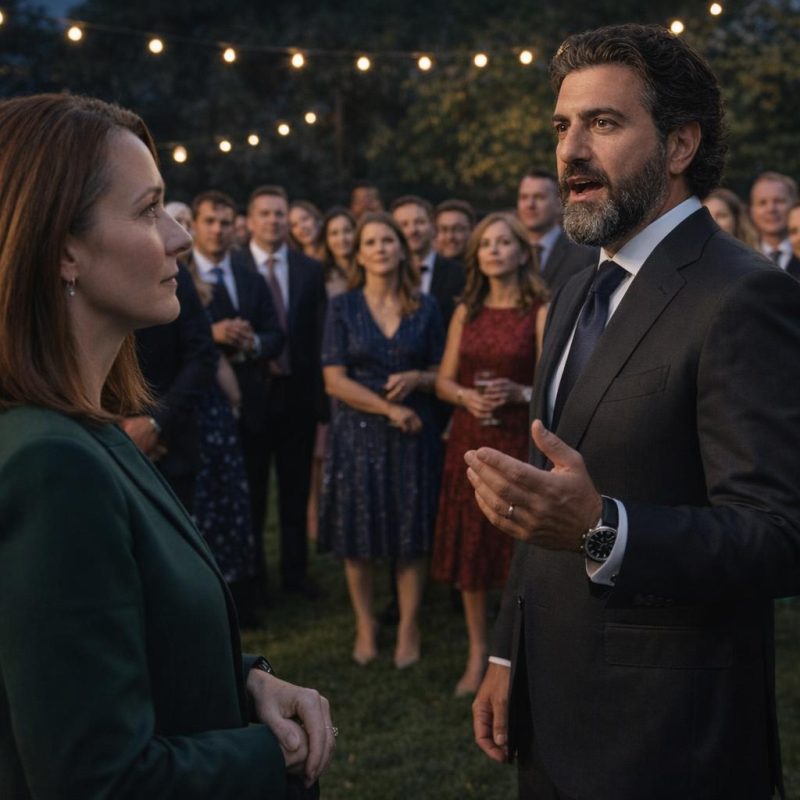 Image by RM AI
Toward the Patio Edge
He gestured toward the patio steps with one broad sweep of his arm, the way a tour guide gestures toward something worth seeing. "Come on down," he said, easy and warm, like it was the most natural thing in the world. People moved. That was the part that stayed with me — how quickly they moved. Forty people who had been standing with their drinks and their conversations simply turned and followed him, the way a current turns. Someone near me murmured, "What is this?" and the woman beside her shrugged and smiled and stepped forward anyway. I moved too. I don't know exactly when I started walking, only that my legs were carrying me toward the stone railing along with everyone else, and I hadn't made a decision about it. Marcus led the group down the steps and along the path toward the lower lawn, his pace unhurried, his posture easy. He didn't answer the few questions I heard called out behind him. He just kept walking. The spotlight grew brighter as we approached, the beam harder and more insistent the closer we got. I gripped the stone railing as I reached it. Around me, the murmuring had softened into something quieter, and I felt the weight of forty people moving as one body behind him.
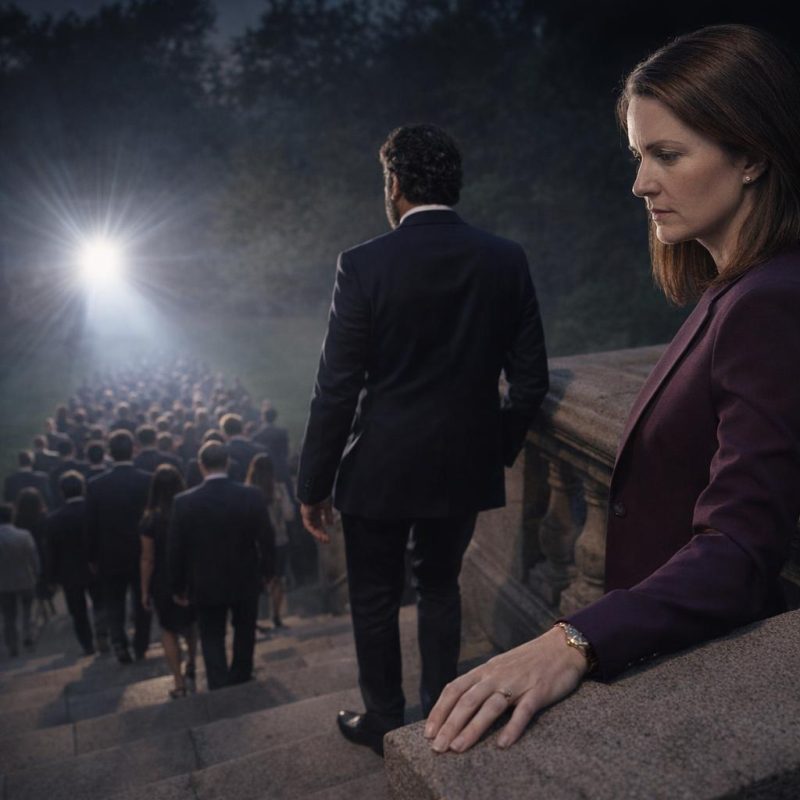 Image by RM AI
The Spotlight's Target
I looked down before I was ready to. The spotlight was merciless — the kind of light that leaves nothing soft, that flattens shadow and picks out every edge and corner. And there, on the lower lawn, was a pile that took me a moment to understand. Not because it was unclear. Because it was mine. My grandmother's armoire stood at the back of it, the dark walnut I had refinished myself the summer after she passed, the brass handles she had polished every week for forty years catching the white light in small hard points. In front of it, stacked without care, were boxes I recognized — the spines of books visible through the open flaps, the kind of books you don't replace. My collection of vintage clocks had been arranged in a loose cluster to one side, some of them tilted, one lying on its face. The porcelain from the morning sat in open cartons, nested in newspaper that wasn't enough. Guests around me had gone quiet in a different way than before — not the polite quiet of attention, but the held-breath quiet of people who weren't sure what they were seeing. Someone whispered something I didn't catch. I stood at the railing and looked at my grandmother's armoire, and something in my chest went very still.
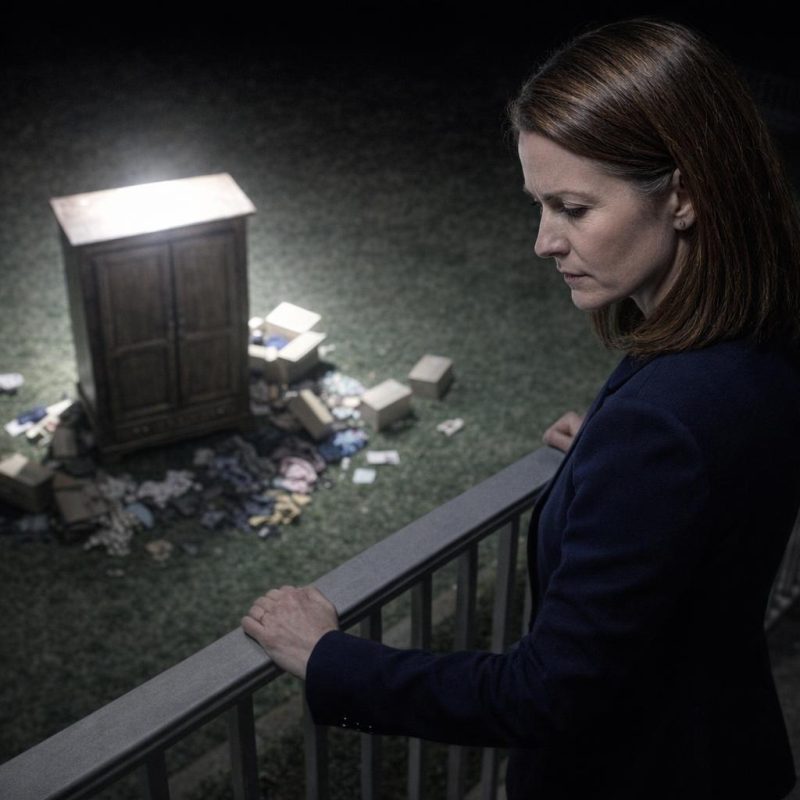 Image by RM AI
A Fresh Start
Marcus turned to face the crowd. He was smiling — not the broad performance smile from before, but something smaller and more satisfied, the kind of smile that belongs to a person who has been waiting a long time to say something. He spread his hands wide, a generous gesture, the gesture of a man presenting something he was proud of. "I wanted to do something special tonight," he said, his voice carrying easily across the lawn. "Something meaningful. Because forty is a milestone, and milestones deserve more than a card." A few people nodded. Someone near the back made a small sound of agreement before they understood what they were agreeing to. Marcus looked at me then — directly, deliberately, holding my gaze for just a beat too long before he looked back at the crowd. "So I put together a little something," he said. He turned toward the pile on the lawn, and he swept his arm out toward it the way you gesture toward a wrapped present, toward something you've chosen with care. "A gift," he said, the word landing bright and clean in the night air, his hand still extended toward everything I owned that he had pulled out of our house and stacked under a spotlight.
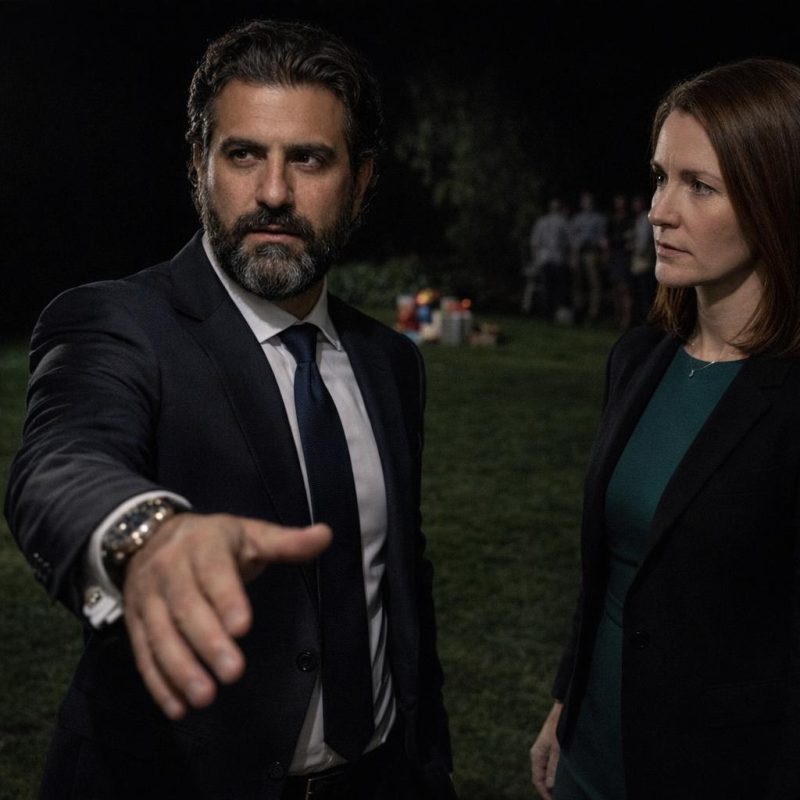 Image by RM AI
Museum of Junk
He kept going. That was the part I hadn't prepared for — that he would just keep going, his voice steady and almost cheerful, while forty people stood in the spotlight's edge and listened. He said he had been patient. He said he had tried to be supportive. He gestured at the armoire, at the clock collection, at the open cartons of porcelain, and he called it — without lowering his voice, without any hesitation — a museum of junk. Someone near me made a sharp intake of breath. Marcus didn't pause. He said he was tired of living surrounded by clutter, that the house had never felt like a home to him, that every room held something that belonged to a different life. He used the word clutter twice more. He looked at me while he said it, not with anger, but with the calm of someone who had decided something and was simply announcing it. I felt heat climb my face. I didn't look away from him. I couldn't. Around me I heard the shift — the uncomfortable shuffle of feet, a cough from somewhere to my left, the silence of people who didn't know where to put their eyes. And then Marcus paused, looked out at the crowd, and let the word "worthless" hang in the air between us.
 Image by RM AI
Tomorrow's Dump Run
He wasn't finished. I understood that the moment his expression shifted — not into anger, not into anything raw or unguarded, but into something almost pleasant. He said the word 'tomorrow' like it was a gift he was offering the room. He said the truck was already scheduled. He named the dump — actually named it, the way you'd name a restaurant you'd made a reservation at — and said everything on the lawn would be loaded and gone by nine in the morning. Someone near the back said his name, low and sharp, the way you'd say it to a dog edging toward traffic. Marcus didn't even glance in that direction. I heard a gasp from somewhere to my right, then another, then the particular silence of forty people who had stopped breathing at the same moment. My hands found the stone railing behind me. I gripped it hard enough that the edge bit into my palms. The spotlight overhead made the whole lawn look overexposed, too bright, every face bleached and strange. And Marcus stood at the center of it all, looking out at the crowd with a smile that hadn't moved an inch, and told them the truck would be there at eight.
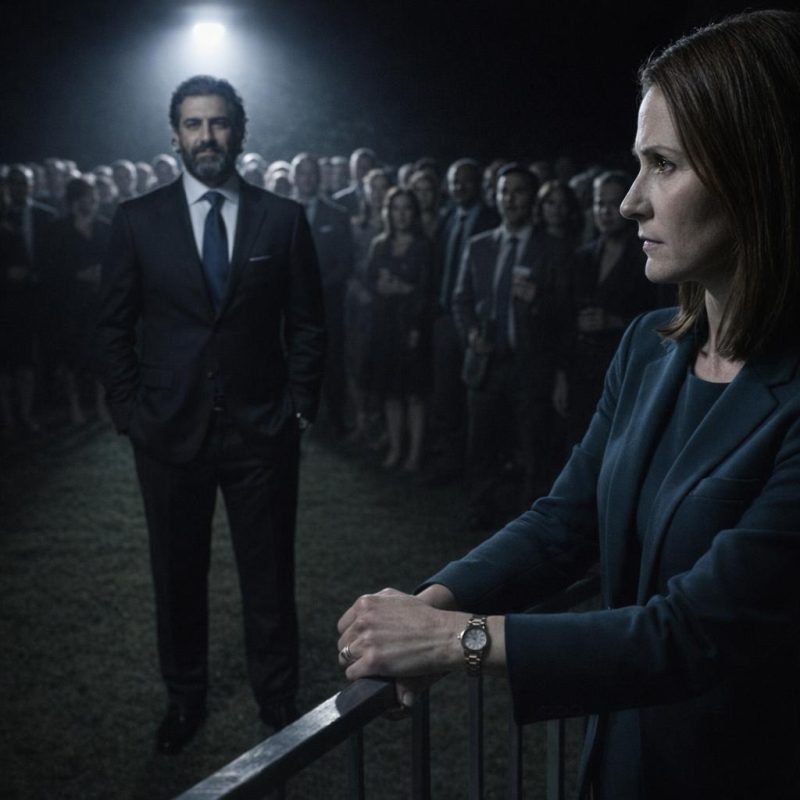 Image by RM AI
Legal Separation
He held up one hand, the way a speaker does when they want the room to know they're not quite done. 'One more thing,' he said. The lawn had already gone quiet, but this was different — this was the silence of people bracing. He paused long enough to make sure every face was turned toward him. Then he said it. He said he was filing for legal separation. He said it the way you'd announce a home renovation — matter-of-fact, almost bored, like the decision had been made so long ago it barely warranted the breath. Someone near the fountain made a sound that wasn't quite a word. Marcus continued. He said the house would be going on the market. He let a beat pass, and then he added the word 'empty' — slowly, with emphasis, as if he wanted it to land separately from everything else. No one spoke. No one moved. I heard my own breathing, shallow and too loud in my ears. The world had narrowed down to the spotlight and his voice and the stone railing still pressed against my palms. And then even his voice stopped, and what was left was a silence so complete it seemed to swallow the music, the fountain, the night itself.
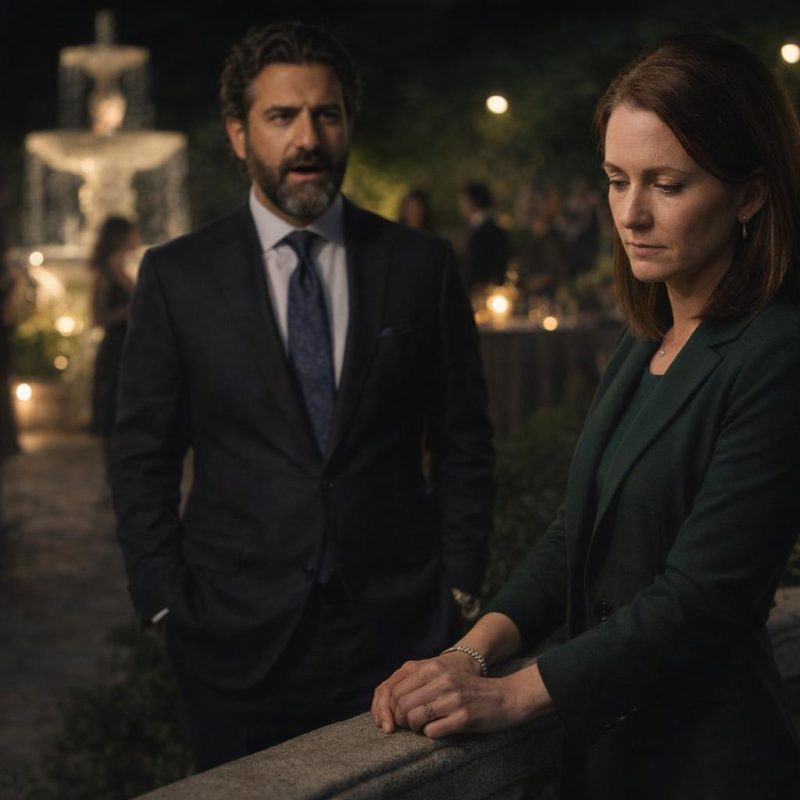 Image by RM AI
Forty Faces
I turned my head. I don't know exactly when I did it — somewhere in the silence after his last word — but I turned and I looked at them. Forty people. People I had cooked for, celebrated with, sat beside at hospital waiting rooms and holiday tables. I looked for something in their faces. What I found was harder to hold than anger would have been. A woman near the rose hedge had her hand pressed flat against her mouth, eyes wide and fixed somewhere past my shoulder. A man I'd known for eleven years was staring at the grass, jaw tight, like he was studying something in the roots. A few people caught my eye for just a fraction of a second before they looked away — quickly, the way you look away from an accident. No one stepped forward. No one said my name. No one moved toward me at all. Marcus was still watching me from the patio, I could feel it, that steady patient attention of his. And I stood there in the middle of all those people, in the middle of my own party, and understood what it felt like to be completely surrounded and completely alone at the same time.
 Image by RM AI
Expecting Tears
When I finally brought my eyes back to Marcus, he was already looking at me. He had been looking at me, I think, the whole time I was scanning the crowd — waiting for me to come back to him, the way you wait for a punchline to land. He was smiling. Not the social smile he wore for clients or the performative warmth he turned on at dinner parties. This was something quieter and more settled, a smile that lived behind his eyes as much as on his mouth. He was waiting. I could see it in the way he held himself — shoulders easy, weight balanced, glass loose in one hand — the particular stillness of someone who has said the thing they came to say and is now simply watching for the result. The guests were watching both of us. I could feel the crowd's attention swinging between us like a pendulum, waiting to see which way this would break. I didn't cry. I didn't speak. I stood at the railing with my hands still pressed against the stone and I looked at him, and I let the moment stretch. And what I saw on his face, clear as anything in that overexposed light, was pure satisfaction.
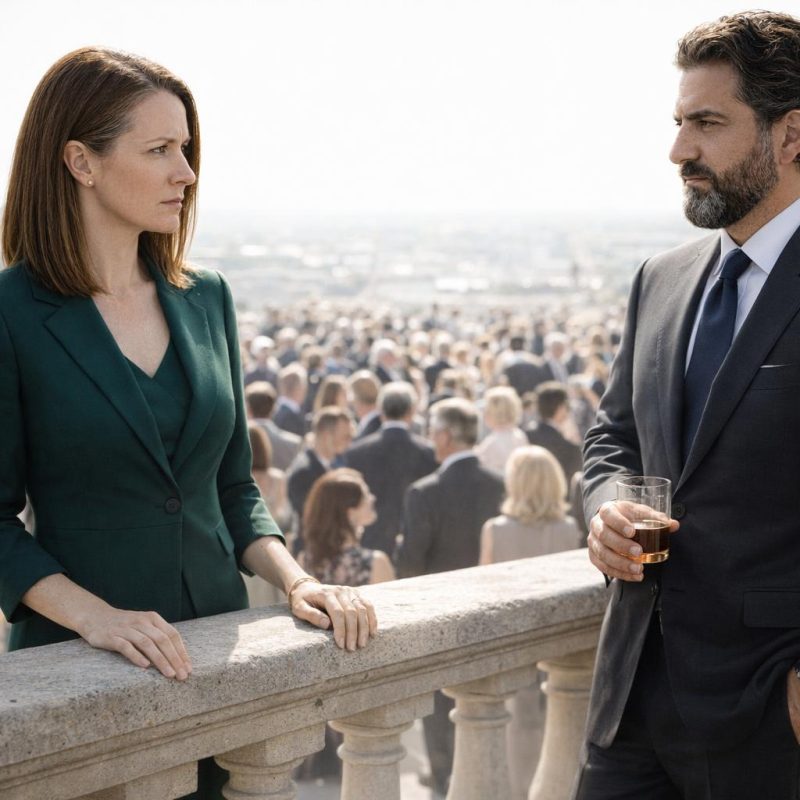 Image by RM AI
Scotch and Threats
He crossed the patio toward me. He moved unhurried, nodding once at a couple near the drinks table as he passed, as if this were any other party moment and he were simply circulating. When he reached me he didn't stop at a conversational distance. He came close — close enough that I could smell the scotch before he even leaned in. His voice dropped to something that wouldn't carry past my ear. He said I had until Monday. He said to clear my trash off his grass. Then he said the locks were being changed tonight — not tomorrow, tonight — and his tone was the same flat, administrative tone he used when he was scheduling contractors. He pulled back. He turned toward the crowd and his smile came back up like a light switching on, easy and practiced, and he lifted his glass slightly as if acknowledging applause that hadn't come. I didn't move. I stood exactly where I was, hands at my sides, the stone railing a foot behind me. The night air was warm and the fountain was still running somewhere below the lawn and the only thing I could focus on, the only thing that felt entirely real in that moment, was the smell of expensive scotch still hanging in the space between us.
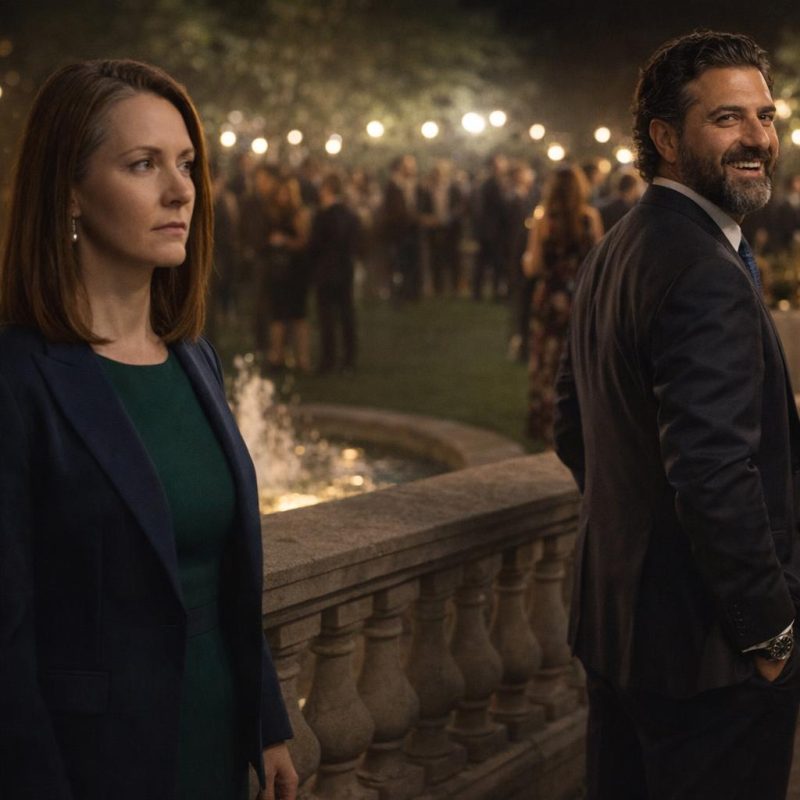 Image by RM AI
Strange Clarity
I looked down at the pile on the lawn. The spotlight caught the edge of my grandmother's armoire — the brass fittings, the carved scrollwork along the top panel that she had shown me with her finger when I was seven years old, tracing each curve and telling me the name of the wood. The porcelain was stacked in open cartons beside it, the clock collection wrapped in cloth that had come loose at one corner. All of it sitting on the grass under party lights, surrounded by people holding champagne flutes. I waited for the panic to come back. It had been there a moment ago — tight and airless, pressing up behind my sternum. But standing there looking at those things, something shifted. The tightness didn't build. It drained. What moved in to replace it wasn't grief and it wasn't rage. It was quieter than either of those. It was the particular feeling of a decision that has already been made, settling into place. Marcus was still watching me from across the patio. I took one slow breath. My hands were steady.
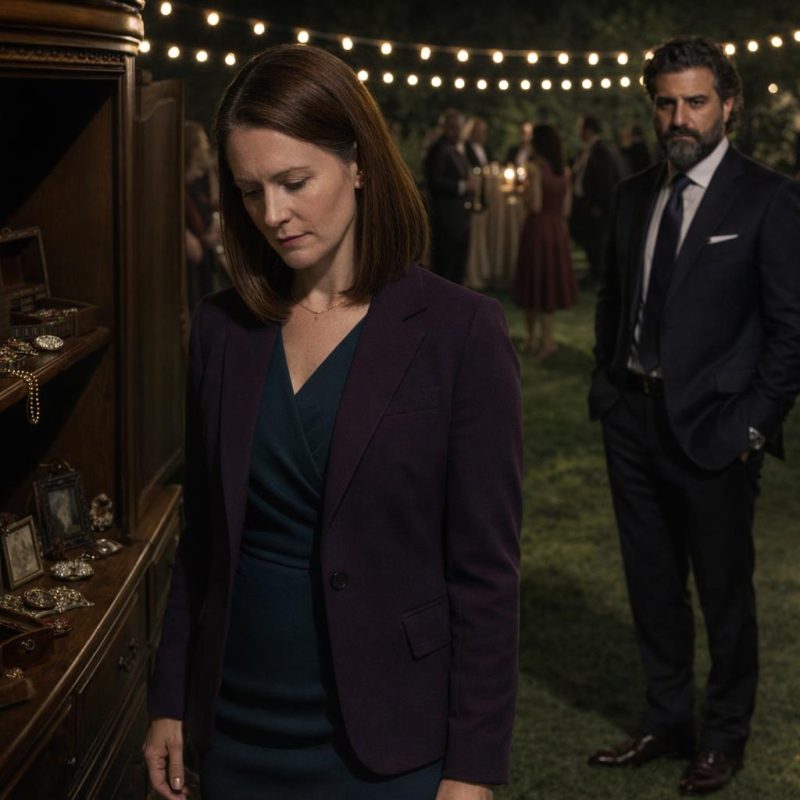 Image by RM AI
Walking Down
I let go of the railing. I stepped away from it without looking back at Marcus, without looking at the guests, without looking at anything except the stone steps that led down from the patio to the lower lawn. I walked toward them. My heels were low enough that the steps weren't difficult, but I took them slowly anyway — one at a time, hand not touching the iron rail, back straight. I heard the shift behind me before I heard anything specific: the small collective adjustment of forty people turning to follow a movement. No one spoke. The fountain was still running. Somewhere above me the string lights swayed once in a breath of wind. I kept my eyes on the pile at the bottom of the lawn, on the armoire and the cartons and the cloth-wrapped clocks catching the light. Marcus was somewhere behind me on the patio — I didn't need to look to know he was watching. I reached the bottom step and my heel met the stone, and the sound of it — clean and deliberate in all that silence — was the only answer I had given anyone all night.
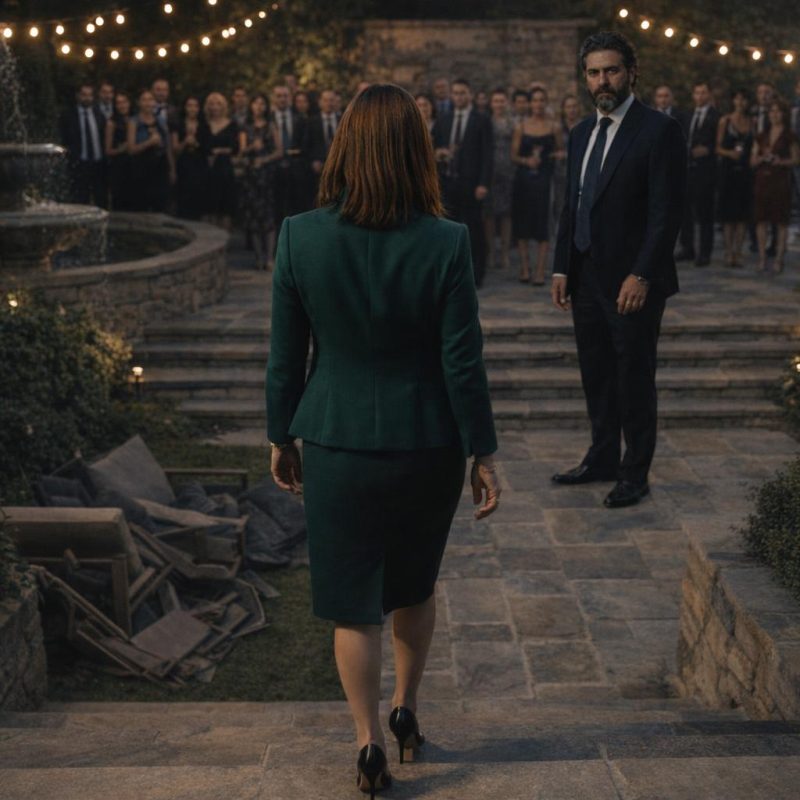 Image by RM AI
The Crowd Follows
I heard them follow. Not all at once — it started with one set of footsteps, then another, the hesitant shuffle of people who weren't sure if they were witnessing something private or something meant to be seen. I didn't turn around. I kept walking across the lower lawn toward the pile, the grass soft under my heels, the spotlight ahead of me growing brighter the closer I got. Behind me I heard a whisper — a woman's voice, low and urgent — and then silence again, because whoever she'd asked hadn't answered. The footsteps kept coming. I could feel the distance between us, the careful gap they were keeping, the way a crowd follows something it doesn't yet understand. Marcus was among them — I was certain of that without looking, the same way you're certain of weather before you step outside. I reached the edge of the pile and stopped. I stood with my back to all of them, the armoire directly in front of me, the brass fittings warm under the light. And I felt it then — the full weight of every set of eyes on my back, pressing in, waiting.
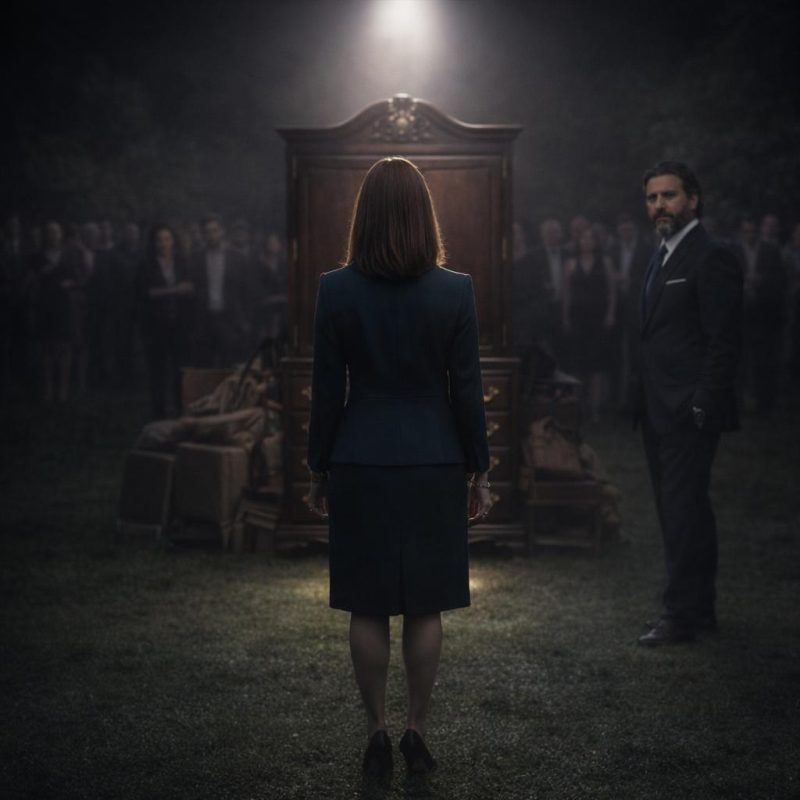 Image by RM AI
The Iron Box
I turned to the nearest open box and crouched down, my heels sinking slightly into the soft grass. The box was one Marcus had packed that morning — I recognized the haphazard way he'd folded things, the careless layering of objects that had taken me years to collect. I moved aside a folded tablecloth, then a stack of old letters bound with twine, and my fingers found something that stopped me. It was heavy. Heavier than I expected for its size. I closed my hand around it and pulled it free, and even before I looked at it I knew the shape — the cool, dark weight of it, the faint roughness of the iron surface worn smooth in places from decades of handling. I stood up slowly. It sat in both my palms, small and dense and dark, the kind of object that looks like nothing until you understand what it is. Behind me I could hear the crowd holding its breath, the silence so complete I could hear the grass shifting in the faint breeze. I stepped forward into the full reach of the spotlight and lifted my grandfather's iron box into the light.
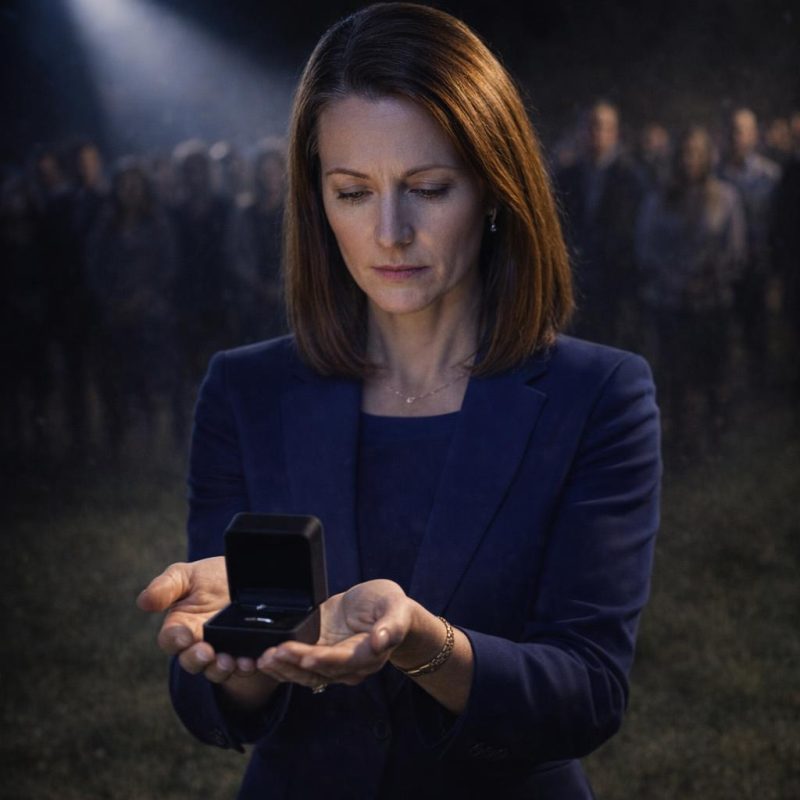 Image by RM AI
Penniless Tinkerer
The box sat in my hands and I just held it for a moment, feeling the weight of it settle. My grandfather had kept it on the corner of his workbench for as long as I could remember — this small, unremarkable thing that nobody ever thought to look at twice. Marcus certainly never had. I could hear his voice in my memory, clear as anything, from a dinner party maybe three years back, when someone had asked about my family. He'd laughed that big, room-filling laugh of his and said my grandfather had been a penniless tinkerer who spent his life fiddling with things that never amounted to anything. The table had laughed with him. I had smiled and said nothing. I remembered another time, when I'd brought a box of my grandfather's things into the house and Marcus had looked at the iron box specifically and asked why I was keeping scrap metal. I hadn't answered that time either. I had just put it away. Standing there now, I turned slightly toward Marcus. He was walking closer, his smirk still in place, the expensive cut of his jacket catching the light, his chin lifted with the particular confidence of a man who had never once considered he might be wrong.
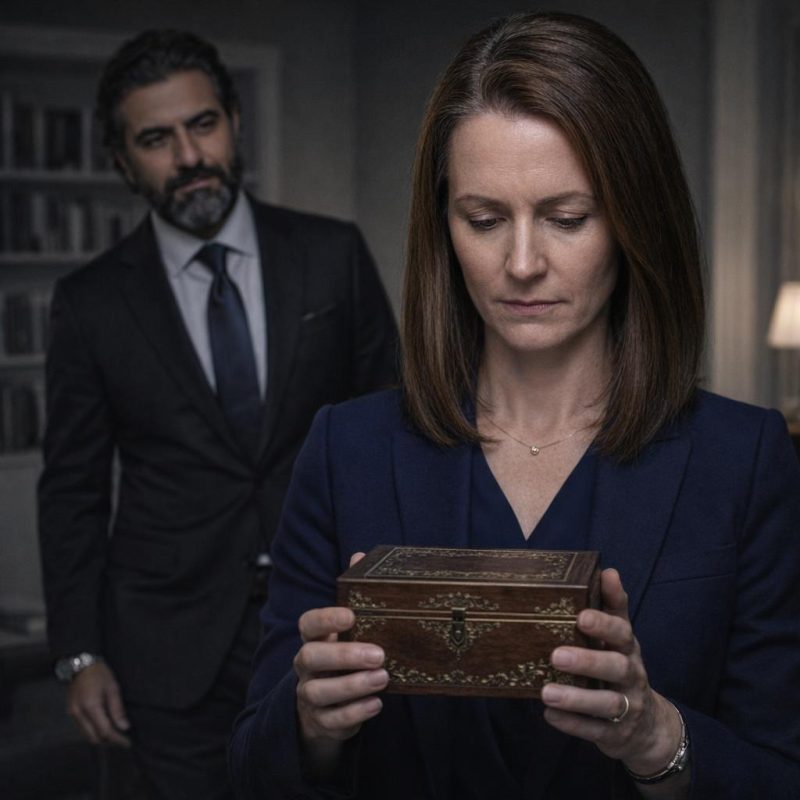 Image by RM AI
Scrap Metal
He came up beside me the way he always did in public — close enough to seem like a united front, far enough to make clear he was the one in charge. He looked down at the iron box in my hands and his mouth curved into something that wasn't quite a smile. Then he said it loud enough for the whole lawn to hear. He asked if I was planning to take the scrap metal first. There was a beat of silence, and then a few of his business associates laughed — that particular kind of laugh, the one that comes out a little too fast and a little too short, the kind that sounds more like relief than amusement. I didn't look at them. I didn't look at Marcus. I looked down at the box in my hands, at the dark iron surface, at the small latch on the front that I had opened exactly once before, years ago, when my grandfather first showed me what was inside. Marcus was still smiling. I could feel it without seeing it, the way you feel a draft from a door that hasn't fully closed. The nervous laughter from his associates rippled out across the lawn and then faded, and the silence that followed it was a different kind of silence entirely.
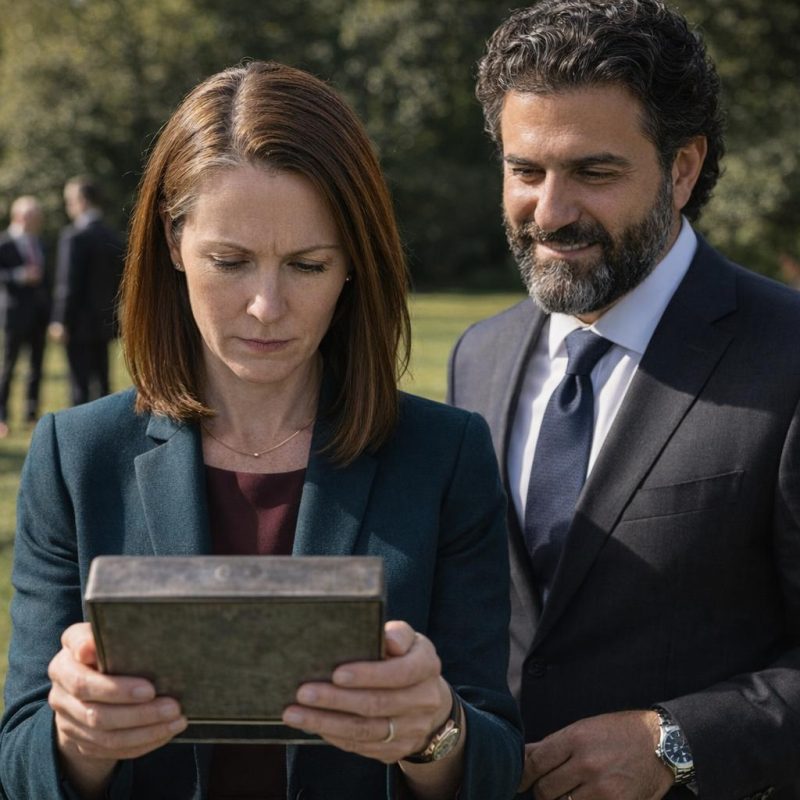 Image by RM AI
Opening the Box
I looked down at the latch. It was small and simple — a flat iron tongue that slid to one side — and my thumb found it without any searching, the way your hands remember things your mind has half-forgotten. I pressed it and felt it give. The hinges were old and they creaked, a small sound that in the stillness of the lawn felt much louder than it was. The box opened. The spotlight fell directly into it, and I saw the papers the way I had seen them once before, years ago, in my grandfather's workshop with the afternoon light coming through a single dusty window. They were thick. The kind of thick that comes from paper that was made to last, not the thin stuff that yellows and crumbles. The top document had a gold seal embossed near the bottom edge, the kind of seal that belongs to a notary or a county office, the kind that means something was witnessed and recorded and made official. Marcus stepped closer. I heard the shift of his shoes on the grass. Around us, the guests leaned in almost as one, and the whole lawn went so quiet I could hear the faint hum of the spotlight above me. I held the box steady and let the weight of what I was about to show them settle fully into my hands.
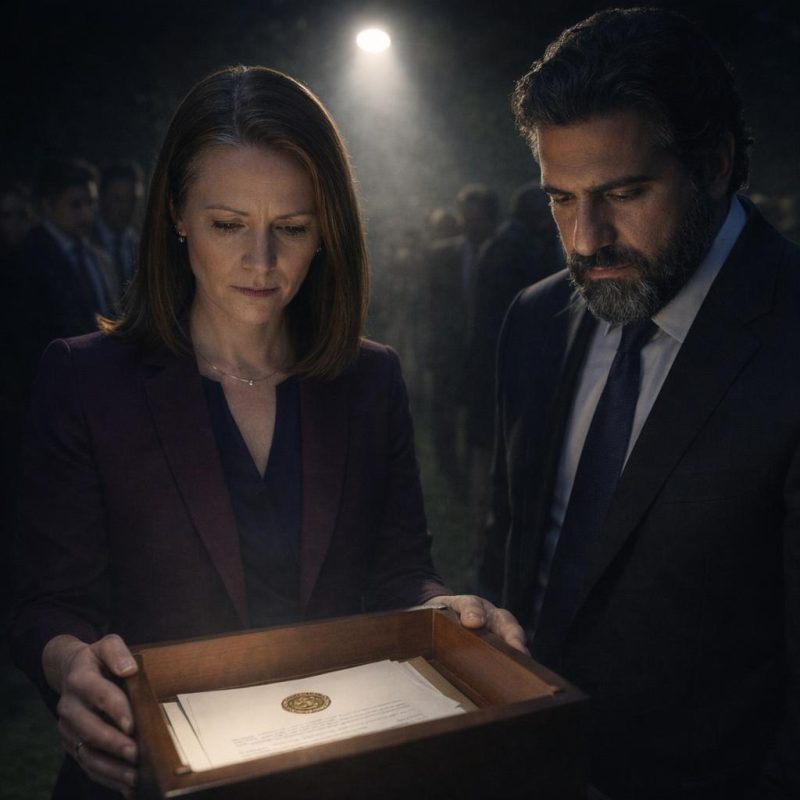 Image by RM AI
Property Deeds
I lifted the top document carefully and held it so the light could reach it. Property deeds — original ones, not copies. I could tell by the texture of the paper, the way the ink had pressed into it rather than sitting on top, the slight unevenness of the type from an old machine. There were several of them, each one folded once along the center, each one bearing a description of land in the careful, formal language that county recorders used decades ago. Beneath them was a single thicker document, folded differently, with a blue cover sheet that I recognized from the one time my grandfather had walked me through it. A land trust agreement. Notarized. His signature was at the bottom in the dark, deliberate ink of a man who had signed his name with intention. I ran my thumb along the edge of the stack without disturbing the order. Marcus was staring at the papers now. I could see him in my peripheral vision, his head tilted slightly forward, his eyes moving across the documents the way eyes move when they're trying to read something upside down and sideways at the same time. He hadn't said anything. The gold seal on the trust agreement caught the light and held it.
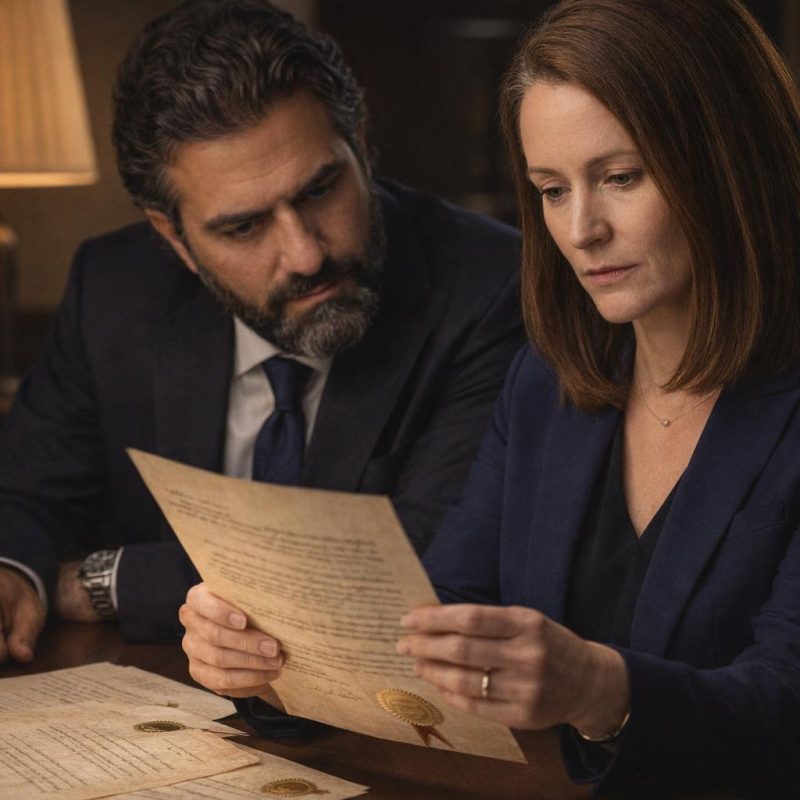 Image by RM AI
Turning to Face Him
I turned. Not gradually — I turned fully, so that I was facing Marcus directly, the spotlight at my back now, the papers in my hands angled so the light fell across them. The gold seal caught it immediately, a small bright point in the middle of everything. Marcus was closer than I expected. He'd moved without me noticing, and now he was only a few feet away, and I could see his face clearly — the way the smirk had gone still, not disappeared exactly, but frozen, like a expression that had been interrupted mid-arrival. His eyes moved from the documents to my face and then back to the documents. The guests behind him had gone completely silent. No one shifted. No one whispered. The only sound was the faint electrical hum of the spotlight and somewhere far off, the sound of the catering staff moving inside the house, unaware of what was happening on the lawn. I took a slow breath. I had been waiting for this moment for longer than I could have explained to anyone standing there, and now that it had arrived I felt something settle in my chest — not triumph, not yet, just steadiness. I watched Marcus's eyes drop to the seal again, and his expression began to change.
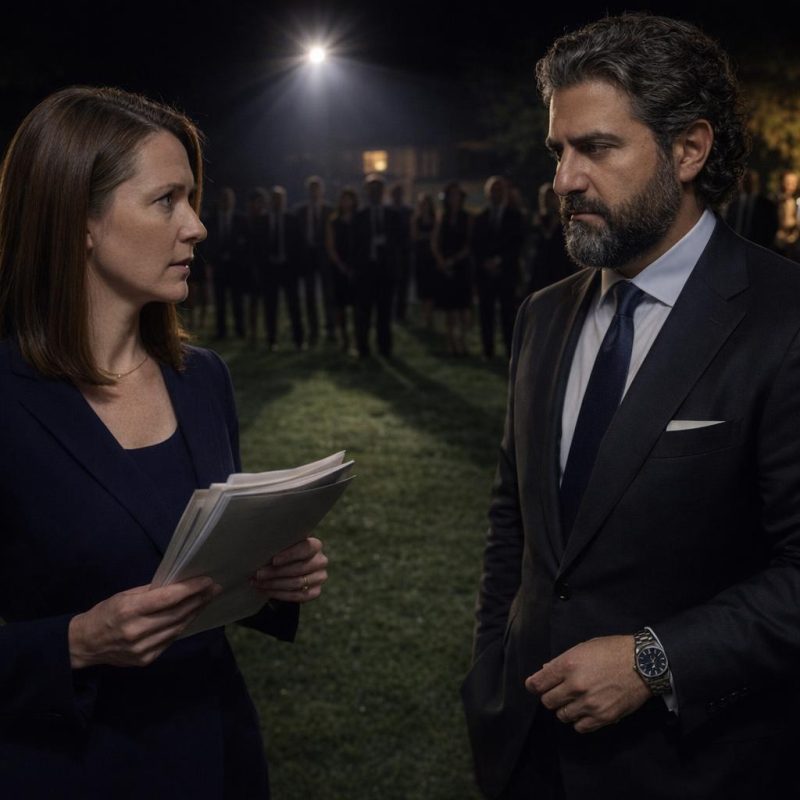 Image by RM AI
Loud Enough for All
I opened my mouth and I made my voice carry. Not shouting — I didn't need to shout. The lawn was quiet enough that a normal speaking voice would have reached the back row, and I wanted this to be clear, not frantic. I wanted every person standing on that grass to hear every word without straining. I said that before we talked about what was being thrown away tonight, there was something people should understand about what my grandfather actually left behind. Marcus was watching me. I could see him in the center of my vision, very still now, his arms at his sides, the smirk entirely gone. The guests hadn't moved. A woman near the back had her hand pressed to her collarbone. Someone's champagne glass caught the light as they lowered it slowly, as if they didn't want to make a sound. I kept my eyes level and my shoulders back and I spoke the way my grandfather had always told me to speak when something mattered — like the words had weight and you were placing them down carefully, one at a time. The steadiness in my own voice surprised me. I had expected to feel the shake of it, the way your body sometimes betrays you in the moments that count most. It wasn't there.
 Image by RM AI
Something Wrong
I said the words plainly. I told them what the documents were. I told them what the land trust contained, and what it meant, and whose name was on it. I kept my voice even and I watched Marcus as I spoke. The change in his face happened in stages. The stillness first — that frozen quality I'd noticed a moment before, the expression that had stopped mid-arrival. Then something underneath it began to shift. The color went out of his face the way it goes out of a room when a cloud passes over the sun — not all at once, but steadily, from the center outward. His eyes dropped to the documents in my hands, then came back to my face, then dropped again. He took one small step forward, almost involuntary, the way a person steps toward something they need to see more clearly. His mouth opened slightly and then closed. He looked at the gold seal. He looked at my face. And then the last of the color drained from his cheeks, leaving him grey under the harsh white light.
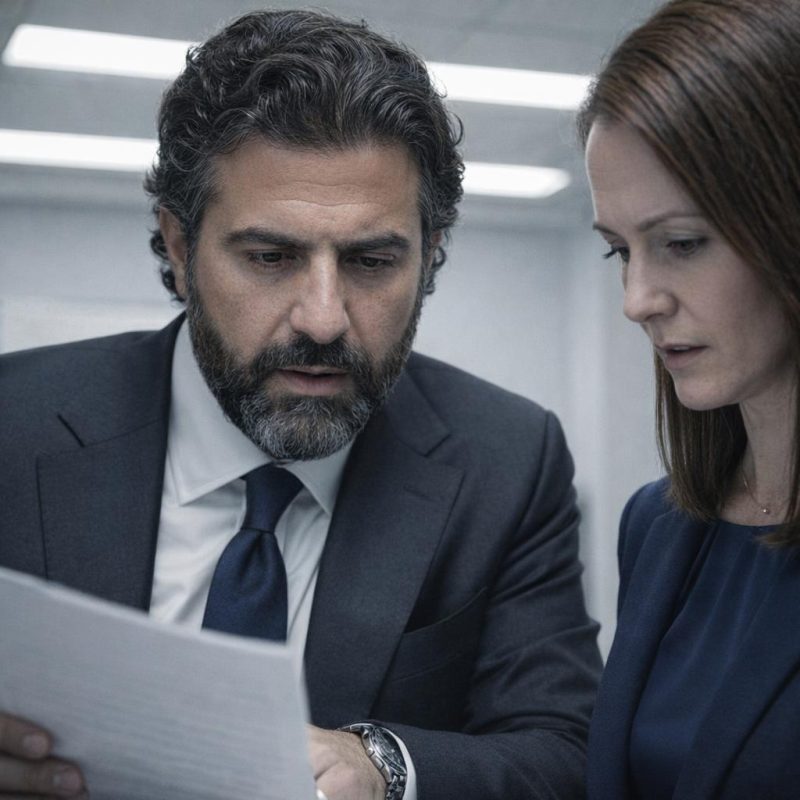 Image by RM AI
The Family Estate
I looked at Marcus directly and said, "You're right about one thing." My voice came out steadier than I expected, and I let the silence hold for just a moment before I continued. "A fresh start," I said. "That is exactly what I need." I watched his expression shift — a flicker of satisfaction, the beginning of a smirk — and I let it form before I kept going. I told him my grandfather had not left me junk. I said it clearly, loud enough for every person on that lawn to hear. My grandfather had left me the family estate. I held up the property deeds, both hands, so the gold seal caught the light from the spotlight overhead. The paper was heavy and formal and real. Around me I could feel the crowd leaning in — the shift in posture, the tilt of heads, the way conversations died mid-syllable. Marcus's eyes dropped to the documents. He looked at the seal. He looked at my face. He hadn't moved, hadn't spoken, and the expression he'd been wearing — that practiced, superior calm — had gone somewhere I couldn't quite name. The weight of what I had just said settled over the lawn like the moment before a storm breaks, when everything goes still and the air changes and no one speaks.
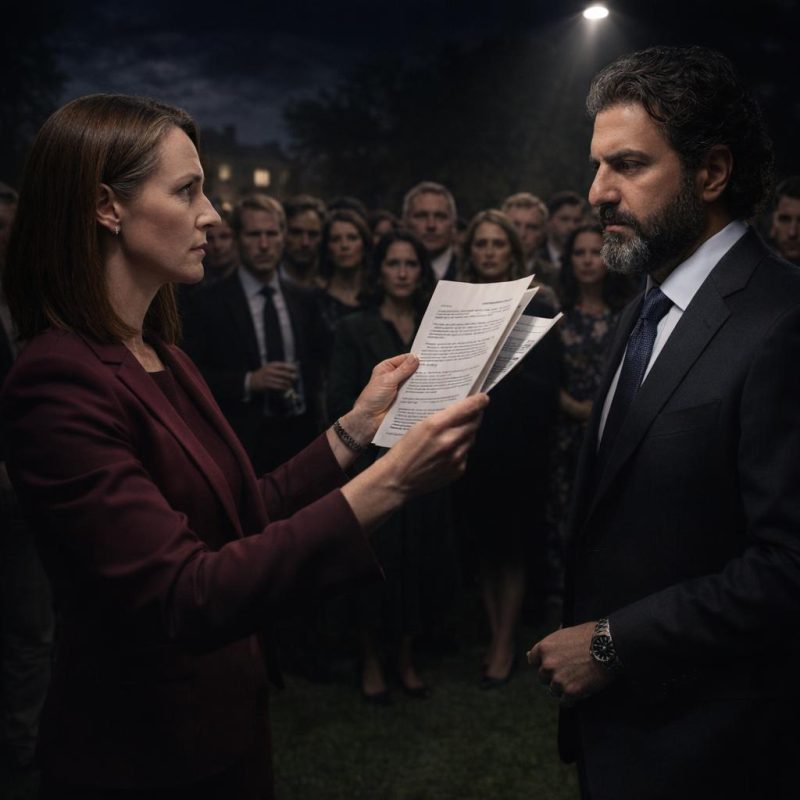 Image by RM AI
Ninety-Nine Years
I kept my voice even and turned slightly so I was speaking to the whole crowd, not just to Marcus. I explained what a ground lease is — simply, without condescension, the way you explain something to people who are smart enough to understand it once someone bothers to lay it out. The house, I said, was built on my family's land. Not purchased land. Not land Marcus had ever owned or paid for. My family's land, held in a trust my grandfather established decades before Marcus and I ever met. The term of that lease was ninety-nine years. I held up the land trust agreement alongside the deeds, and I watched people's eyes move to the documents. A few of Marcus's business partners exchanged glances — quick, sideways looks that carried more weight than they probably intended. Some of the other guests nodded slowly, the kind of nod that means the pieces are beginning to connect. Marcus had gone very still. His hands, which had been moving all evening — gesturing, adjusting his cuffs, reaching for his glass — had stopped entirely. He stood with them at his sides, and I could see him processing, working through what I was saying, trying to find the angle where it stopped meaning what it clearly meant. The understanding beginning to settle across some of those faces was something I had been waiting a long time to see.
 Image by RM AI
Last Tuesday
I raised my voice just slightly — not to shout, but to make sure every single person on that lawn heard the next part without question. The lease, I said, had a fixed term. Ninety-nine years, as I had just explained. And that term had expired. Last Tuesday. A sound moved through the crowd — not quite a gasp, more like a collective intake of breath, the kind that happens when something lands before people have fully processed it. I watched it ripple outward from the front row to the back. Marcus went completely rigid. I saw it happen — the stillness that had been careful and controlled became something else entirely, something locked and involuntary. I told them I had chosen not to renew it. Those words seemed to hit him differently than the others. His jaw tightened. His eyes came back to the documents in my hands with an intensity that hadn't been there before, and then he stepped forward — one step, then another — and his hand came up and reached for the papers.
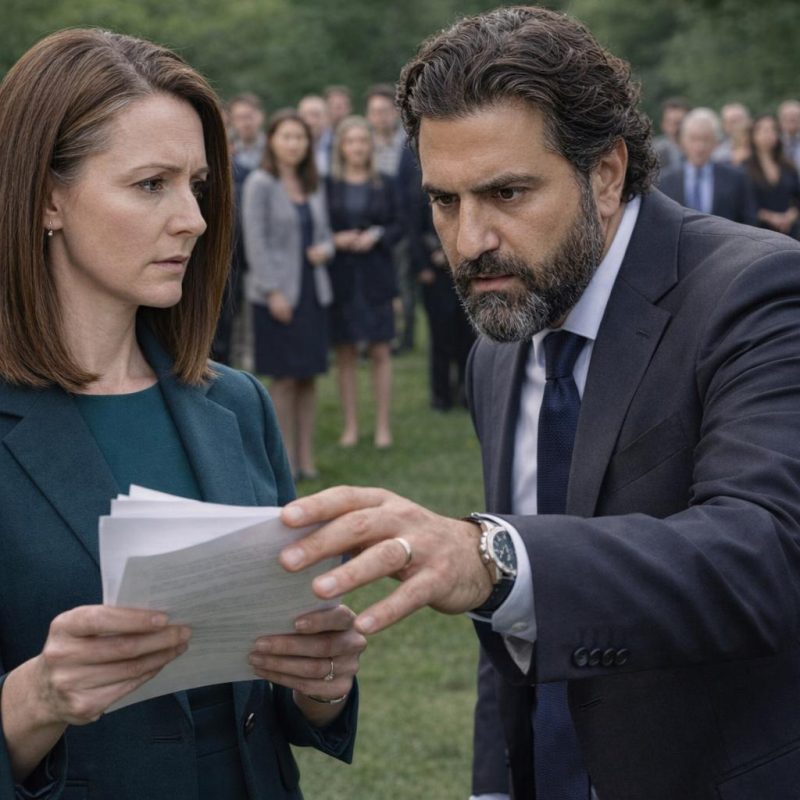 Image by RM AI
Sold to Conservation
I stepped back and kept the documents out of his reach. "I sold the land yesterday," I said. I named the conservation group — said it clearly, let it sit in the air. A land preservation organization that had been interested in the acreage for years, I explained, and had moved quickly once I made contact. Under the terms of the ground lease, I continued, the structure built on the land belongs to the landowner when the lease expires unreneged. That landowner was me. I had the demolition permit — I held it up alongside the deeds — signed and filed the previous afternoon. The plot, I said, would be restored to its natural state. For a moment the lawn was absolutely silent. Then Marcus made a sound I had never heard from him before — something between a word and a breath that didn't become either. His business partners, the men he had spent the evening impressing, took a visible step away from him, a small collective movement that no one announced but everyone noticed. The crowd murmured, voices low and urgent, people turning to the person beside them. I stood perfectly still with the documents in my hands and watched the moment Marcus understood that the house, the equity, the address he had built his entire identity around — none of it had ever truly been his.
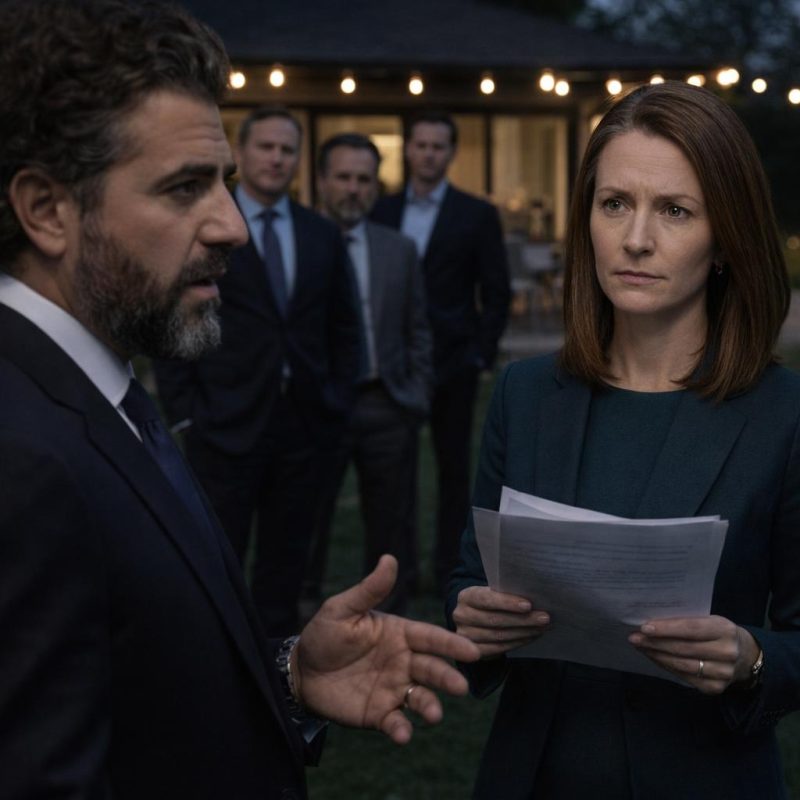 Image by RM AI
No Equity
I turned to face his business partners directly. I wanted them to hear this part without any ambiguity. Marcus had used the house as collateral, I said — had leveraged its equity in deals, in agreements, in the kind of handshake arrangements that depend on a man's assets being exactly what he claims they are. I watched their faces as I said it. One of them already had his phone out, thumb moving. Another had his arms crossed and his eyes fixed somewhere past Marcus's shoulder. The house, I continued, carried no equity now. The land beneath it was no longer his, no longer available, no longer a foundation for anything. The demolition permit was already signed. Whatever Marcus had promised them, whatever he had put forward as security, had been built on something that no longer existed in the way he had represented it. Marcus tried to speak. His mouth opened and I heard the beginning of a sound — not a word, just the shape of one — and then it stopped. His hands were shaking. I could see the sheen of sweat at his temple under the spotlight, which had not moved and was not kind. The house was built on land that no longer supported it.
 Image by RM AI
Bags Already Packed
I let the silence hold for one more moment. Then I turned and pointed toward the front gate. "Marcus," I said, "look at the gate." He turned. Everyone turned. A black car was parked just beyond the entrance, engine running, exhaust faint in the evening air. I told him his suitcases were in the trunk. I said it the same way I had said everything else that evening — plainly, without drama, as a statement of fact. The staff had packed them during his speech, while he was standing at that microphone telling our guests about fresh starts and minimalism and the things he believed I deserved. Every bag. Every suit. Everything he had brought into a house that had never been built on land he owned. His mouth opened. No sound came. He looked at the car, then at me, then back at the car. Around us, guests had followed my gesture, and there was no one on that lawn who wasn't looking at the same thing — the black car sitting at the gate with its engine running.
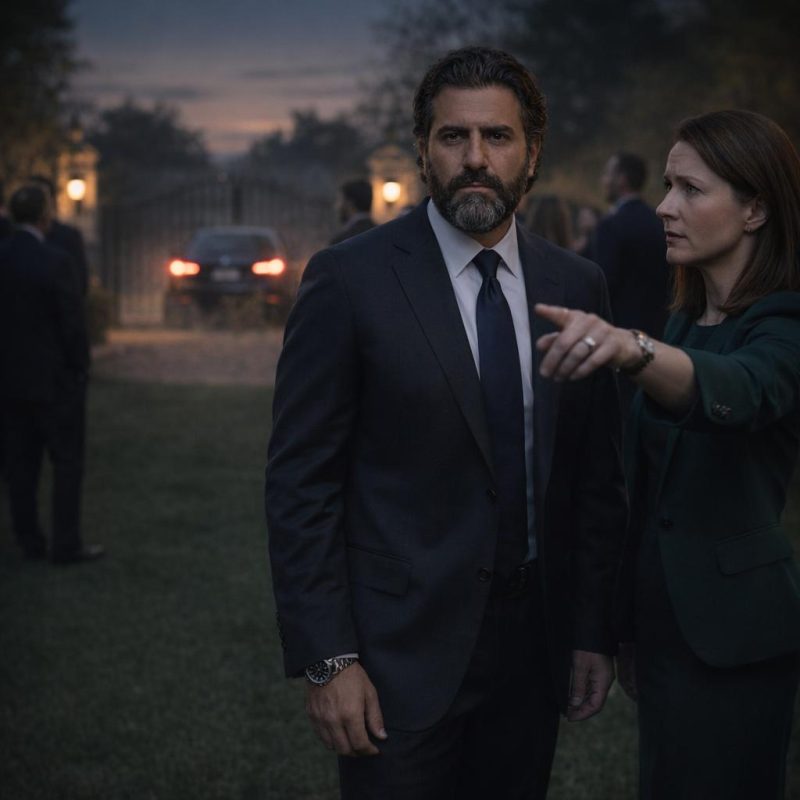 Image by RM AI
Ten Minutes
I looked at my watch. "You have ten minutes," I said. I kept my eyes on him when I said it. Ten minutes to remove himself from the property. I reminded him — and I made sure the guests heard this too — that he had told me I had until Monday. He had stood at that microphone and given me a deadline, a timeline, a window to clear out of a life he had decided was over. I told him he had until the end of this conversation. His face twisted. I watched him try to find the words — I could see the effort of it, the way his mouth moved without producing anything coherent, the way his eyes moved from me to the crowd to the car and back again, searching for something that wasn't there. The guests were completely silent. No one shifted. No one whispered. I did not move, did not look away, did not offer him anything to hold onto. The symmetry of it settled between us in the quiet — his deadline and mine, his ten minutes and the one he had handed me — and I let it stand there without saying another word.
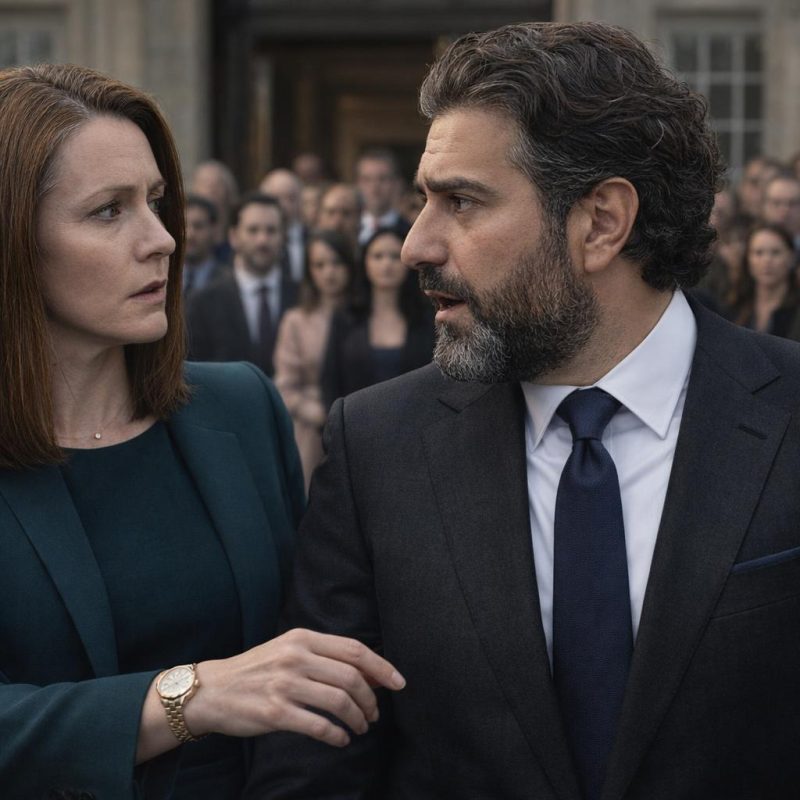 Image by RM AI
Claiming It Was a Joke
He finally spoke. "This is a joke," he said. His voice came out wrong — too high, too fast, the careful authority he'd carried all evening gone somewhere it wasn't coming back from. "I didn't mean any of it. It was a bit, it was — we were having fun, everyone was having fun." He looked at his business partners. They didn't move. One of them had his phone pressed to his ear, turned slightly away. Marcus looked back at me. "We can work this out," he said. "Evelyn, come on. We can talk about this." I shook my head. He took a step toward me and I stepped back, the same way I had stepped back from his reaching hand twenty minutes earlier, and the distance between us stayed exactly what I had made it. He looked at the crowd — at the faces of people who had known him for years, who had laughed at his jokes and attended his dinners and accepted his version of things without question. None of them offered him anything. The crack in his voice when he said we could work it out was the last sound that carried any real weight across that lawn.
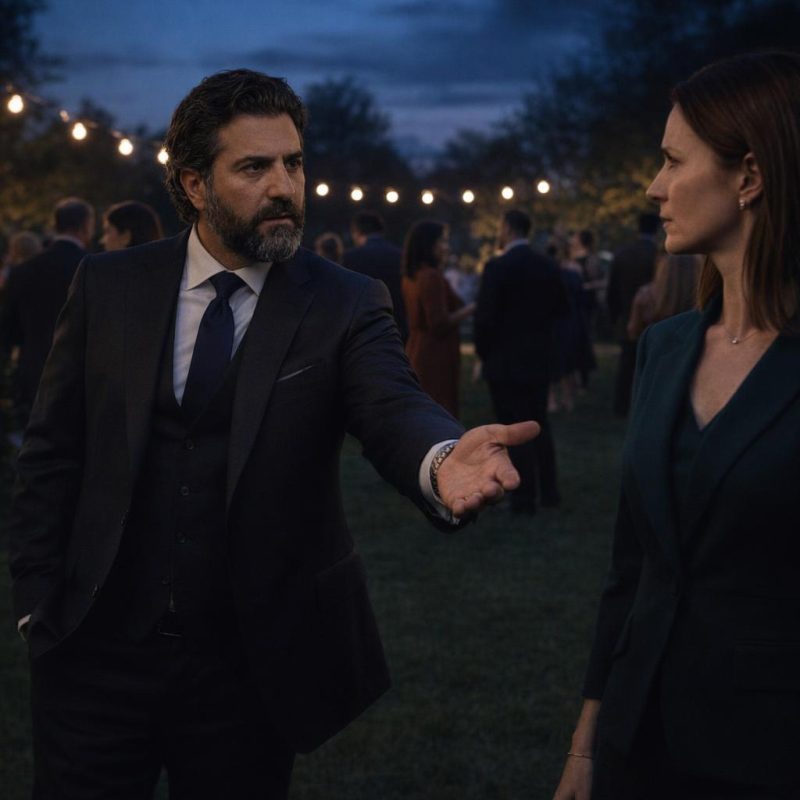 Image by RM AI
Moving Toward the Cars
It started with one person. A woman near the back — someone's wife, someone's plus-one — turned toward the driveway without a word. No goodbye, no backward glance, just a quiet pivot and the sound of heels on gravel. Then the man beside her followed. Then two more. It happened the way these things always happen when the social contract breaks: not all at once, but in a current, each person reading the room and deciding they had somewhere else to be. Marcus turned to watch them go. He said something — I couldn't make out the words — and nobody responded. One of his business partners walked past him close enough to brush his shoulder and didn't slow down, didn't turn his head, didn't offer so much as a nod. Marcus reached out a hand toward the man's arm and the man kept walking. The catering staff had already begun folding things up near the edges of the lawn, moving with the quiet efficiency of people who had seen this kind of evening before. Car doors opened. Engines turned over. The sound of it carried across the yard in the warm night air. I stood near my grandmother's armoire and watched the first set of headlights sweep across the hedge and disappear down the drive.
 Image by RM AI
Financial Collapse
The business partners left in a cluster, moving fast, the way people move when they want distance without making it obvious they want distance. None of them spoke to Marcus. He tried — I watched him step toward the tallest one, a man I'd sat across from at dinner parties for six years, and say something with his hands open, the gesture he used when he wanted to seem reasonable. The man looked at him for exactly two seconds and kept walking. Another one was already on his phone before he reached the driveway, his voice low and clipped, one hand pressed to his free ear to block out the noise of the departing crowd. I couldn't hear everything. I didn't need to. The words that carried across the lawn clearly enough were breach of contract.
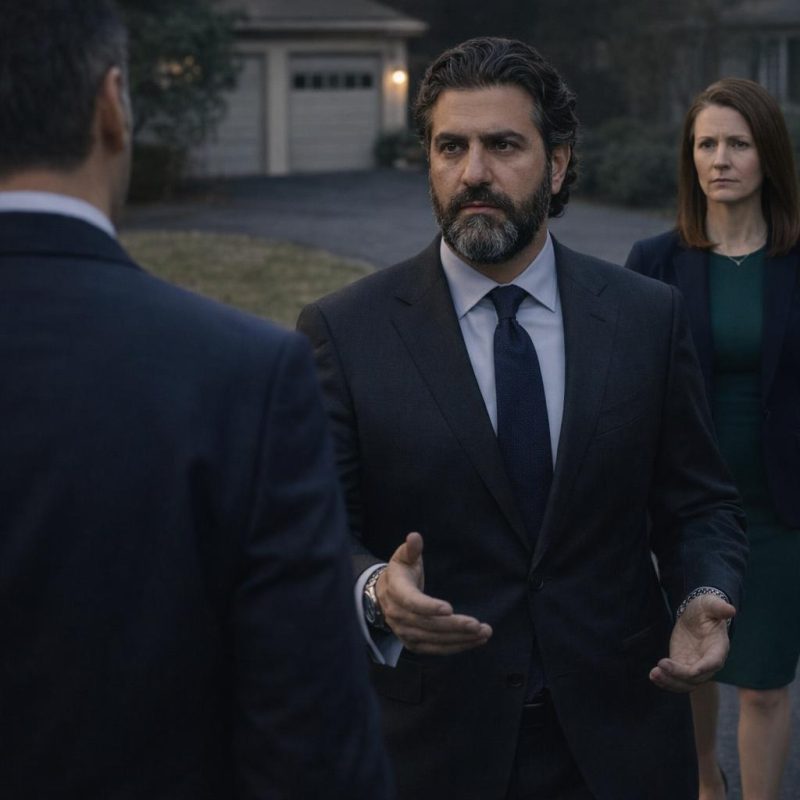 Image by RM AI
Alone on the Lawn
The last car was a dark sedan that had been parked at the far end of the drive. I watched its tail lights glow red at the turn, then wink out as it rounded the hedge and was gone. After that, nothing. The catering staff had slipped away sometime in the last few minutes — I hadn't noticed exactly when, only that the folding tables near the far edge of the lawn were bare and the soft clatter of glassware had stopped. The spotlight Marcus had rented for the occasion was still running, still aimed at the center of the lawn, still illuminating the pile of my belongings stacked there like evidence. He stood near it. He hadn't moved much in the last several minutes, just shifted his weight once or twice, turned his head toward the driveway as each car left. Now there was no one left to turn toward. Just the two of us and the hum of the generator powering the light and the smell of cut grass and whatever was left of the evening. The silence that settled after the last engine faded was the kind that has weight to it.
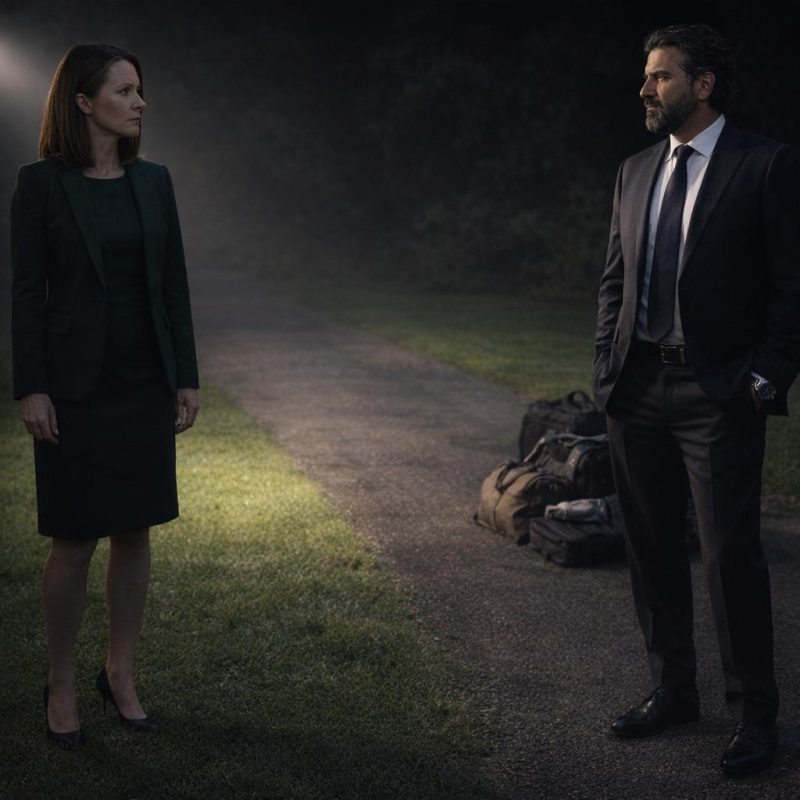 Image by RM AI
Flat Champagne
He still had the champagne glass. I don't know why that detail stayed with me, but it did — the way he was holding it, loosely, at his side, like he'd forgotten it was there. The bubbles had long since gone. He was facing the driveway, staring at the empty stretch of gravel where two hours ago there had been valets and arriving guests and the particular energy of people who believed they were somewhere important. None of that was left. Just the gravel and the dark and the sound of something small moving in the hedges. He didn't speak. He didn't look at me. His shoulders had dropped in a way I hadn't seen before — not the deliberate ease he usually performed, but something that had gone out of him without his permission. The spotlight caught the side of his face and made the shadows under his eyes look deep. The champagne glass hung from his fingers, and his whole body had gone very still.
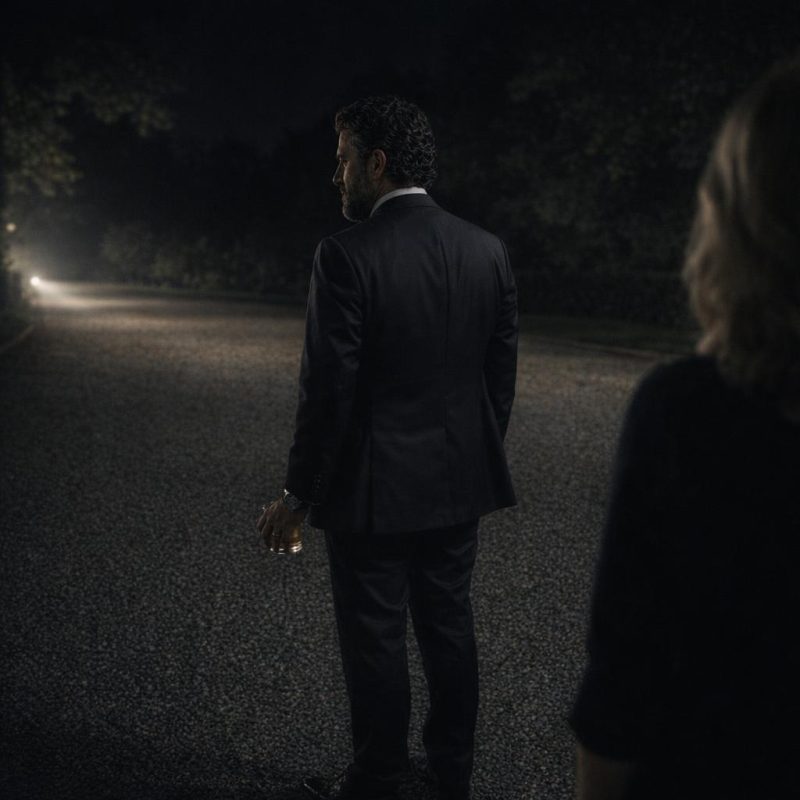 Image by RM AI
Grandmother's Armoire
I walked across the lawn toward the armoire. My heels sank slightly into the grass with each step, and I didn't hurry. When I reached it I ran my hand along the top edge — the carved scrollwork my grandmother had always called her favorite detail, worn smooth in the places her hands had worn it smooth before mine. I turned around and sat down on it. The wood held me the way old solid things hold you, without give, without complaint. I looked up. The moon had come up while we weren't paying attention, pale and full above the tree line. Marcus hadn't moved. He was still standing in the same spot, still holding the glass, still facing the driveway as though someone might yet come back down it. I let my hands rest flat on the wood on either side of me. Whatever I had been carrying in my chest all evening — the tension, the waiting, the years of small erosions — I felt it ease. The armoire was exactly where it had always been, solid and unhurried beneath me.
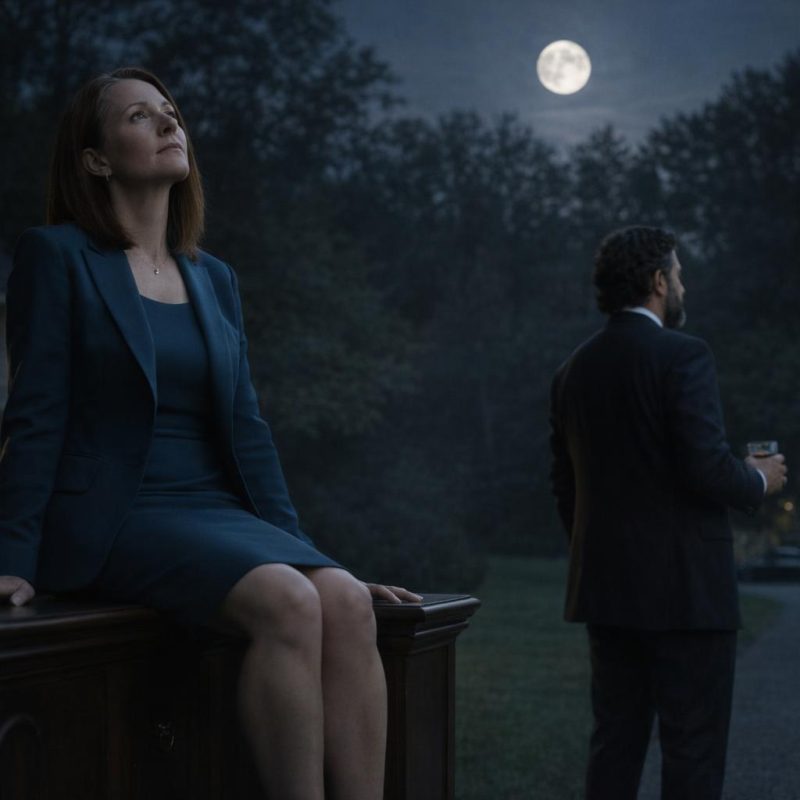 Image by RM AI
The First Call
The silence didn't last. His phone went off first — a sharp, insistent ring that cut through the quiet and made him flinch. He fumbled for it, his hand going to the wrong pocket first, then the right one. I watched him pull it out. His fingers weren't steady. He looked at the screen for a moment, and something moved across his face that I couldn't quite name — not surprise exactly, more like a man watching a door he'd hoped wouldn't open swing wide anyway. He pressed the phone to his ear. The voice on the other end was audible from where I sat on the armoire, not the words, just the pitch and the pace of it — fast, sharp, not interested in being interrupted. Marcus opened his mouth once and closed it. He tried again. The voice kept going. When it finally paused, he said, in a voice I barely recognized as his, "I can explain."
 Image by RM AI
Ten Calls in Ten Minutes
That call ended and the phone rang again before he'd lowered it from his ear. He answered it. Same pitch on the other end, different voice — higher, faster, the kind of anger that doesn't wait for a response. I sat on the armoire and counted. He paced a short line in the grass, back and forth, the spotlight following him nowhere. He tried to say something about the land on the third call — I caught the word clearly, land, and then something about timing, and then the caller cut him off. The fourth call he barely got a word in at all. By the fifth he had stopped pacing and was just standing there, one hand pressed to the back of his neck, nodding at things the person on the other end couldn't see. His jacket had come open. His hair, which had been immaculate at the start of the evening, had lost its shape. I had counted six calls when the seventh started before the sixth was finished.
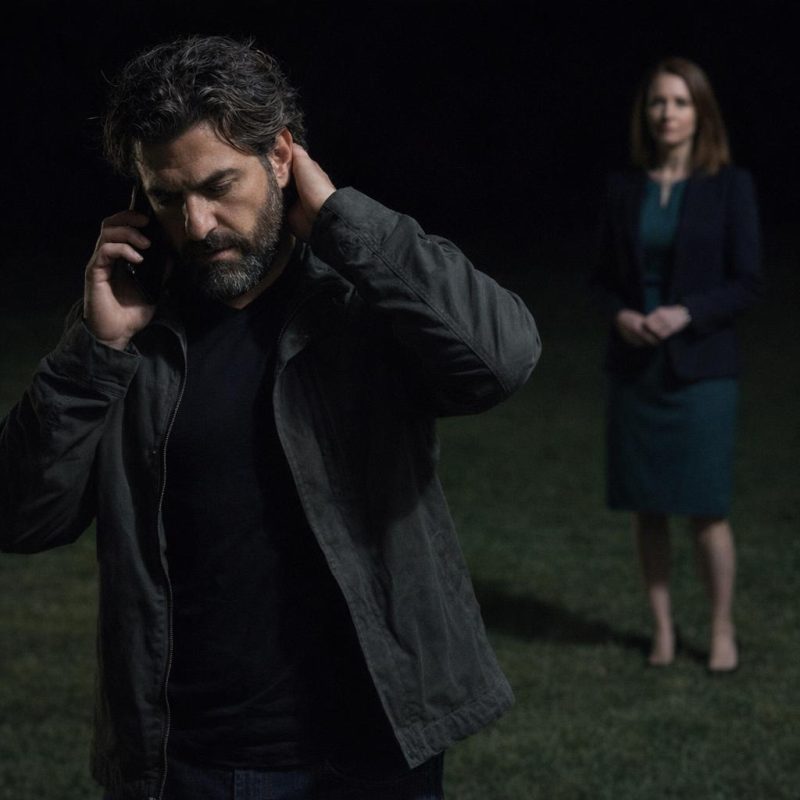 Image by RM AI
Ignoring the Lawyers
On the eighth or ninth call I caught a name on his screen when he turned toward the light — one of his firm's lawyers, a name I recognized from documents I'd signed over the years. Marcus was talking fast now, his free hand moving in short, chopped gestures, the kind he used when he was trying to reassert control over a conversation that had already left him. He glanced at me once. I looked back at him without expression. He looked away. Then I felt it — a vibration in my pocket, low and insistent. I didn't reach for it. It went still. Then it started again. Marcus said something to his lawyer and looked at me again, more pointed this time, and mouthed something I didn't try to read. I kept my hands flat on the armoire. My phone went quiet for a moment, then started again, and I left it there.
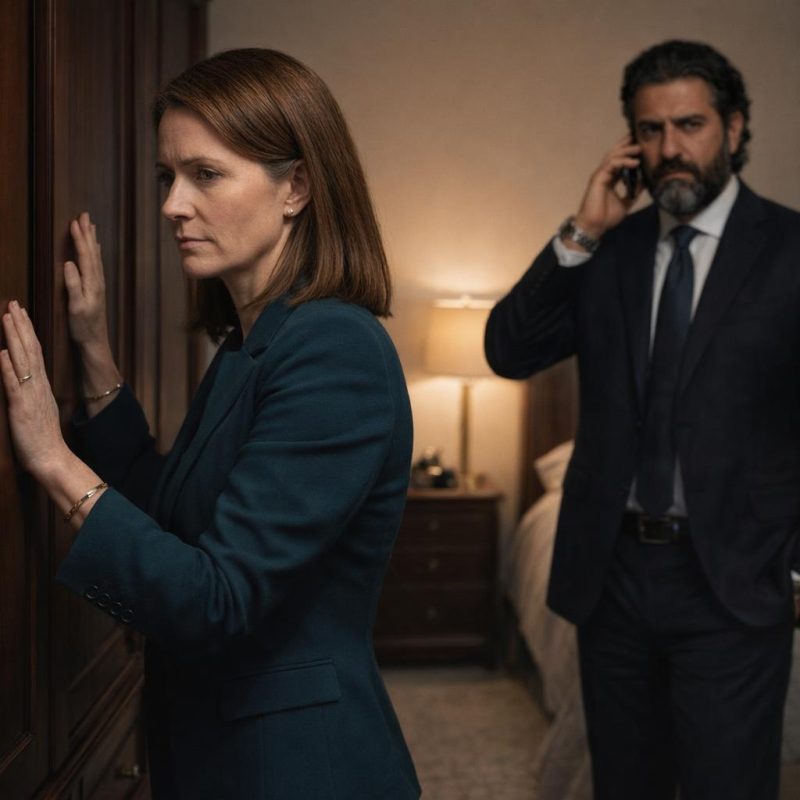 Image by RM AI
Reclaimed Everything
Marcus was still on the phone when I stopped listening to him entirely. I sat on top of my grandmother's armoire — the one he'd called an eyesore, the one he'd tried to throw away — and I looked at everything spread across the lawn in the spotlight's glow. The porcelain my grandmother carried from her mother's house. The clocks I'd collected over twenty years, each one chosen because something about it made me stop and look twice. The books Marcus had called clutter, stacked in careful rows because I'd always known exactly where each one belonged. He'd called all of it junk. He'd said it with such certainty, the way he said everything — like his opinion was the final word on what had value and what didn't. I could hear him behind me now, his voice cracking at the edges, something wet in it that I hadn't heard before. I didn't turn around. I didn't need to. I had spent over a decade in a house I owned, on land that had been in my family for generations, slowly shrinking myself to fit the space he decided I deserved. I looked at my grandmother's things, my books, my clocks, my forty years of accumulated life — and I understood, with a clarity that settled into my bones, that the land had always been mine, and now everything on it was too.
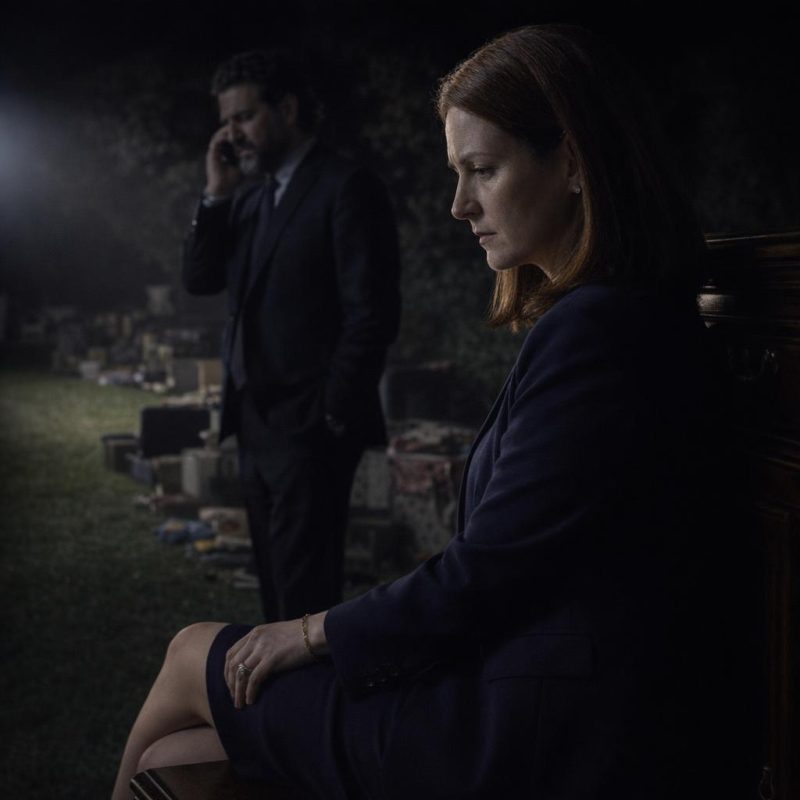 Image by RM AI
The Black Car Leaves
He ended the call eventually. I heard the silence before I heard his footsteps on the grass. When I finally turned, he was standing a few feet away, looking at me with an expression I couldn't quite name — not anger anymore, something flatter than that, something that had run out of fuel. He opened his mouth once and closed it. I didn't say anything. There was nothing left that needed saying, and I think some part of him understood that, because he didn't try again. He straightened his jacket — that automatic, reflexive gesture he always made when he needed to feel composed — and then he turned and walked toward the gate. I watched him cross the lawn, past the empty tables and the folded chairs, past the catering setup that had gone cold hours ago. He reached the black car idling at the gate. He opened the door, got in, and pulled it shut behind him. The engine turned over. The headlights swept across the grass as the car reversed, then straightened, then moved down the drive. I stood at the edge of the spotlight and watched the tail lights shrink to two small red points at the end of the road. Then they were gone, and the night folded back in around me, and the quiet that followed was the softest thing I had felt in years.
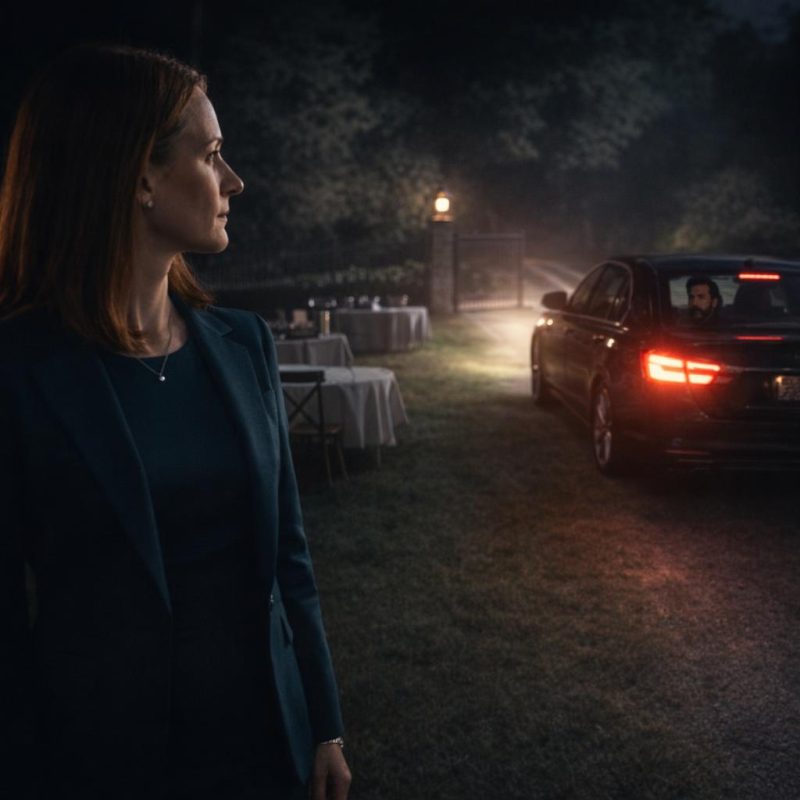 Image by RM AI
Forty Years of Memories
I didn't go inside right away. I sat back down on the armoire and let the stillness settle. The spotlight was still running, throwing a warm circle of light across the lawn, and everything inside it looked almost deliberate — like a collection someone had arranged with care, which I suppose was exactly what it was, just not in the way Marcus had intended. I picked up one of the porcelain pieces my grandmother had kept wrapped in cloth for decades, turning it over in my hands the way she used to. I looked at the clocks lined up along the edge of the armoire, their faces catching the light. I looked at the books, the small framed photographs, the things Marcus had loaded into boxes and set out here as a kind of punishment, not understanding that he'd actually given me something. He'd called it all junk. He'd said it without hesitation, the way you dismiss something you've already decided doesn't matter. But I knew what it was. It was forty years of a life I had actually lived — my grandmother's hands, my own curiosity, every small choice I'd made about what was worth keeping. I sat there on the lawn with all of it around me, and the gratitude I felt wasn't loud or triumphant. It was just steady, and deep, and entirely mine.
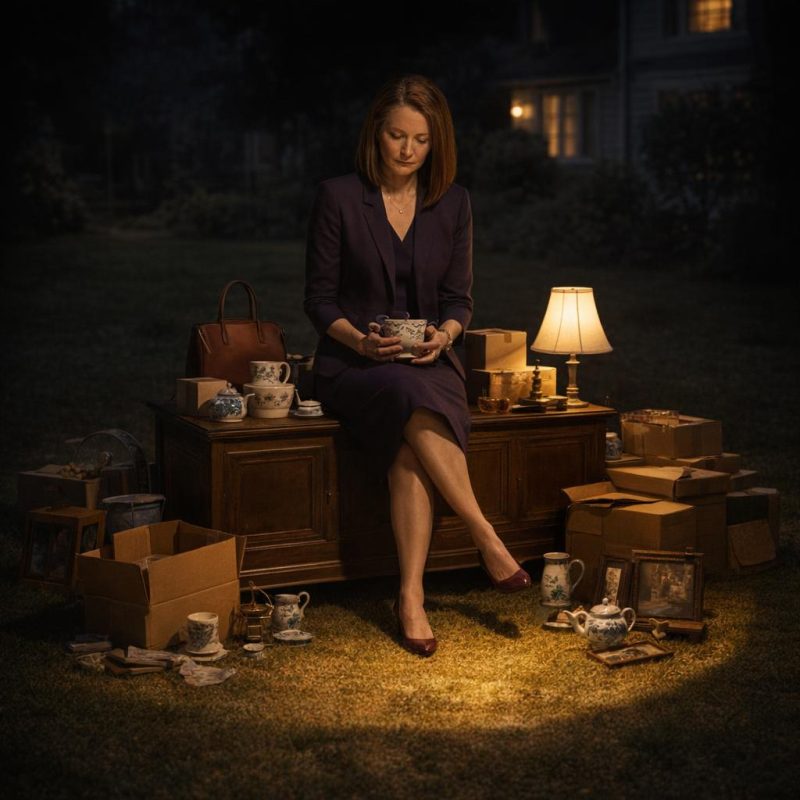 Image by RM AI
Space and Freedom
Eventually I stood up. My back ached from the armoire's edge and the grass was damp through my shoes, but I didn't move toward the house yet. I just stood there and looked at the lawn — at the empty space where the tables had been, where the guests had stood with their drinks, where Marcus had made his little speech and waited for me to crumble. The caterers were long gone. The guests were gone. The black car was gone. The spotlight was still on, illuminating my things in a quiet, steady circle, and beyond it the rest of the property stretched out in the dark — the old oak at the far fence line, the stone path my grandmother had laid herself, the house that had never once belonged to him no matter how many years he'd spent inside it. I thought about all the space I hadn't let myself imagine. The rooms I could rearrange. The walls I could fill. The mornings I could move through without measuring my words or my footsteps against someone else's mood. The moon was high and the air had gone cool and the night felt enormous in the best possible way. I breathed it in. The land was mine, the night was mine, and the future was finally mine to fill.
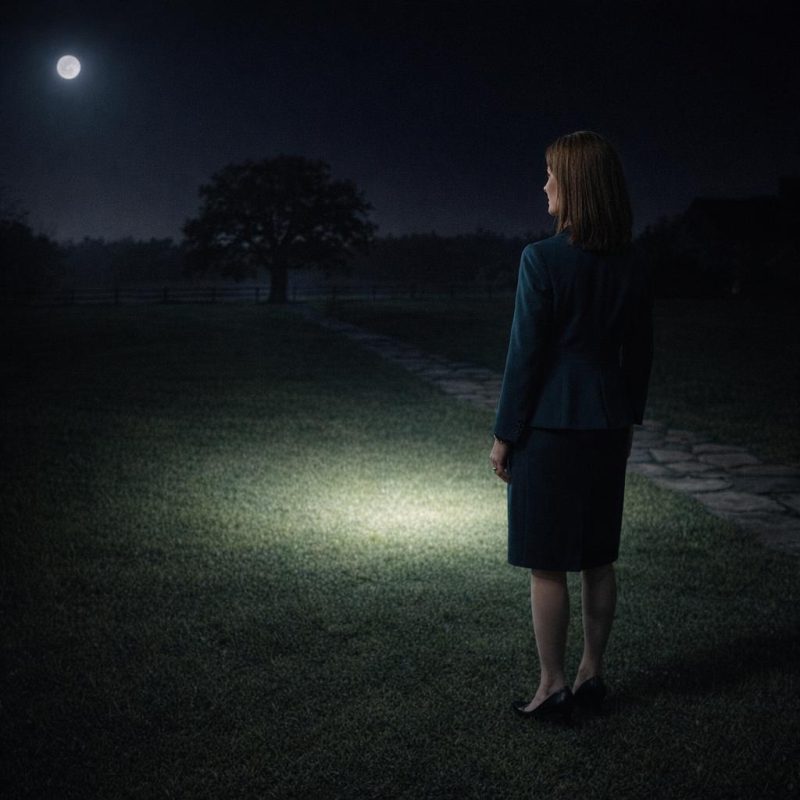 Image by RM AI
KEEP ON READING

20 Greek Gods We Don't Often Talk About
Step Aside, Zeus. Greek mythology isn’t only about Zeus and…
By Elizabeth Graham Jan 16, 2026
10 Historic Courtship Practices That Should Be Brought Back &…
Old-School Dating Was a Mix of Charming & Unhinged. Historic…
By Emilie Richardson-Dupuis Jan 20, 2026
Pooches Of The Past: Extinct Dog Breeds
Unknown authorUnknown author on WikimediaDogs have been showing up in…
By Elizabeth Graham Jan 27, 2026
The 20 Craziest Silent Films Ever Made
When Silence Let the Madness Speak. Silent cinema didn’t just…
By Chase Wexler Jan 5, 2026
Legendary Tales: 20 Most Fascinating Mythical Creatures from Folklore
Mythological Beasts. Stories about mythical creatures endure for a simple…
By Christy Chan Jan 16, 2026
The three most expensive historical artifacts ever sold at auction
Attributed to Leonardo da Vinci on WikimediaAuctions are where history…
By Emilie Richardson-Dupuis Jan 9, 2026