

I Spent 10 Hours Making Thanksgiving Dinner—Then My Husband Stood Up and Announced He Was Divorcing Me in Front of 20 Guests. Big Mistake.
I Spent 10 Hours Making Thanksgiving Dinner—Then My Husband Stood Up and Announced He Was Divorcing Me in Front of 20 Guests. Big Mistake.
The Kitchen Before Dawn
I was up before four, which wasn't unusual for a holiday. The house was completely dark except for the kitchen, and I moved through it the way you move through a space you know by feel — reaching for the cutting board without looking, finding the good knife by its weight in the drawer. I'd been planning this menu for two weeks. Twenty people. Herb-infused stuffing with sourdough and fresh sage, hand-crimped pumpkin pies, roasted root vegetables with thyme, cranberry sauce made from scratch the way my mother taught me. I started with the vegetables because they take the longest — carrots, celery, parsnips, onions, all of it chopped fine while the coffee brewed and the sky outside stayed black. The cinnamon and cloves went into the pie filling first, and within an hour the whole kitchen smelled like something out of a memory. I wanted everything to be perfect. I always wanted everything to be perfect. By the time the first gray light started showing through the window above the sink, I had four dishes prepped and a fifth on the stove. The knife was familiar in my hand, and the house around me was completely, utterly still.
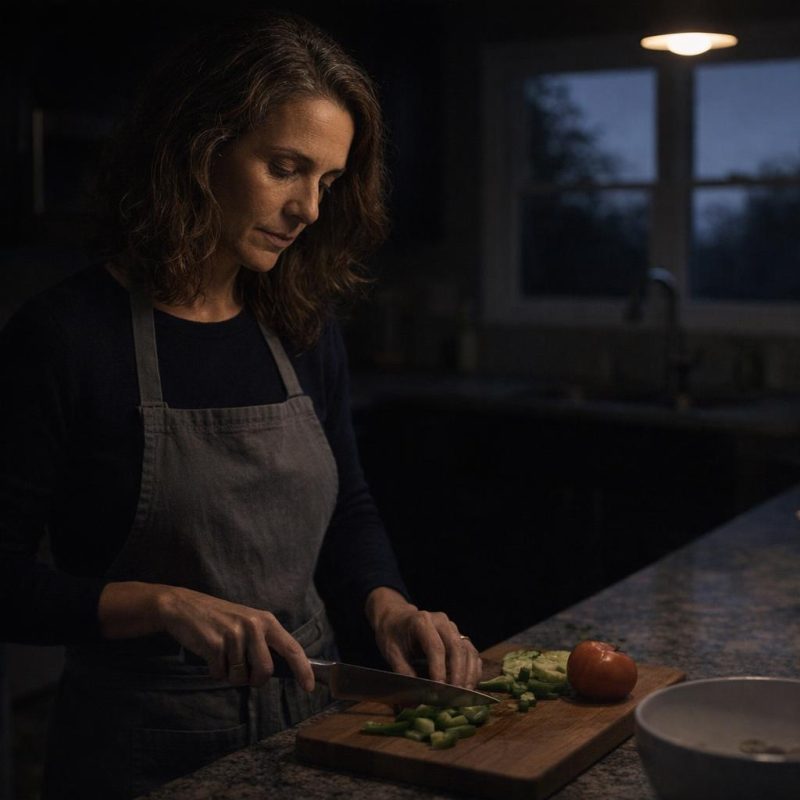 Image by RM AI
The Expensive Vintage
I heard him before I saw him — the heavy, unhurried footsteps that meant Richard was awake and moving through the house on his own schedule. I'd been hoping, in the small quiet way I'd learned not to examine too closely, that he might come in and offer to help. Set the table, maybe. Carry something. Anything. He pushed through the kitchen door and I looked up from the stove with what I'm sure was an embarrassingly hopeful expression. He didn't say good morning. He didn't look at the dishes lined up on the counter or the flour still dusted across my forearms. His eyes went straight to the wine fridge. He stood in front of it for a moment, scanning the bottles with the focused attention he never seemed to have for anything I cooked, and then he pulled out the Barolo — the good one, the one I'd been saving for the dinner table. He popped the cork with the ease of someone who has never once considered whether it was too early, poured himself a generous glass, and walked out through the sliding doors to the patio without a word. I stood at the stove with a wooden spoon in my hand and watched him through the glass doors as he settled back into the lounge chair, phone already in hand.
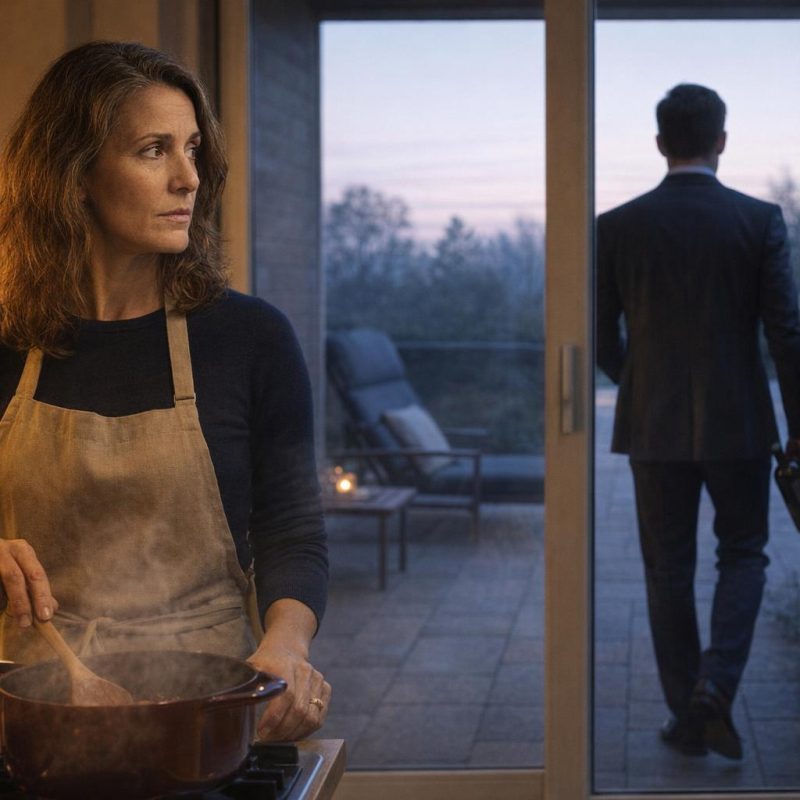 Image by RM AI
The Weight of the Turkey
By mid-morning the kitchen had turned into something close to a sauna. Both ovens were running, the stovetop had four burners going, and I'd tied my hair back twice already. I didn't mind the heat, exactly — it was the kind of discomfort that feels earned when you're working toward something. I checked the turkey every thirty minutes, pulling the heavy roasting pan out with both hands wrapped in thick oven mitts, tilting it to collect the juices and brushing them back over the skin in long, careful strokes. It was coming along beautifully. The skin had gone from pale to a deep, even gold, the kind of color that takes patience and attention and doesn't happen by accident. I slid the pan back in, straightened up, and pressed my hands into the small of my back for a moment. My shoulders had been aching since about nine. The stuffing was resting, the pies were cooling on the rack, the cranberry sauce had set. Everything was on track. I wiped my face with a dish towel and leaned against the counter for just a second, looking at the bird through the oven glass. The skin was perfect. My shoulders were not.
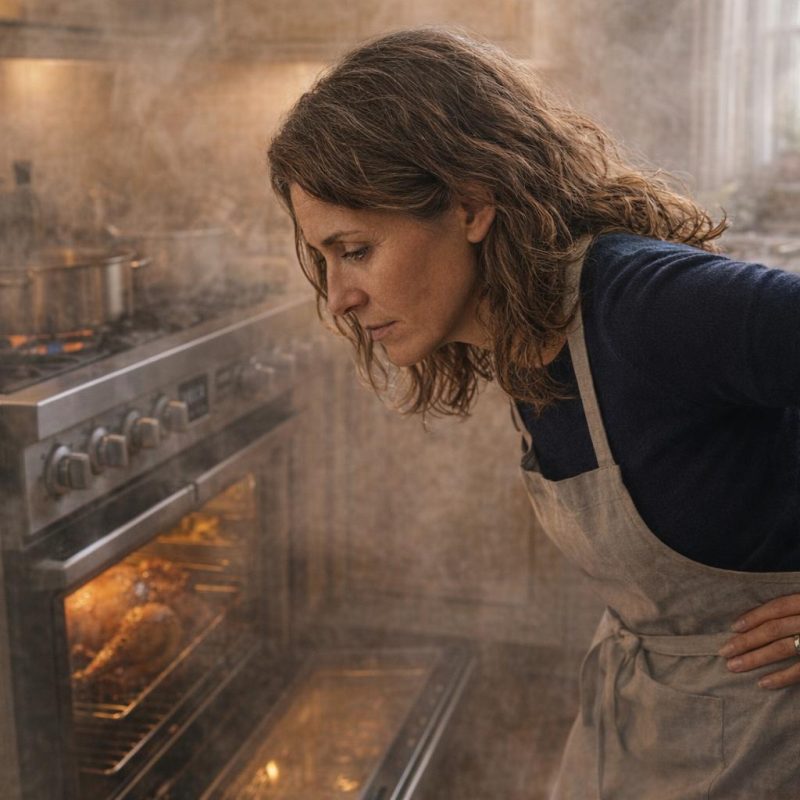 Image by RM AI
Five O'Clock Arrivals
The doorbell rang at exactly five o'clock, and something in me exhaled. I'd been running on adrenaline and coffee since before dawn, and the sound of that first ring felt like a signal that the hardest part was over — now I just had to be a person instead of a one-woman catering operation. I smoothed my apron, pulled it off, and went to the door. They came in waves after that, coats and cold air and the particular noise of a house filling up — greetings layered over each other, someone laughing at something before they'd even gotten through the door, the smell of outside mixing with the warm spiced air from the kitchen. I moved between the entryway and the dining room, taking coats, pointing people toward drinks, making sure the cheese board I'd assembled that afternoon was visible and approachable on the sideboard. I'd spent forty minutes on that cheese board. Nobody mentioned it, but that was fine. That was always fine. By the time the last of the early arrivals had settled in, the house had transformed completely — the quiet tension of the morning replaced by something that felt, at least on the surface, like warmth. The last dish slid into its place on the warming rack, and the rooms around me hummed with voices.
 Image by RM AI
Diana's Knowing Look
Diana arrived about twenty minutes before the main wave, which was exactly like her. She came through the door with a bottle of wine and a look on her face that she was trying to keep neutral, and I knew immediately that she wasn't fooled by any of it. We'd been best friends since college. She could read me the way you read a room you've lived in for years — by what's out of place, not what's there. I hugged her and said something cheerful about the wine, and she hugged me back a beat longer than a casual hug, which told me everything about what she was seeing. She stepped back and looked at me — really looked, the way people almost never do at parties — and I watched her take in the concealer I'd applied over the shadows under my eyes, the set of my jaw, the smile I'd been practicing since noon. I started to say something about the food, because that was easier, and she let me, because she's kind. She followed me toward the kitchen and I talked about the turkey and the stuffing and the pies, and she listened and nodded and made the right noises. Then I turned to check on the appetizer tray, and when I glanced back, I saw her eyes move from my face to the kitchen chaos and back again.
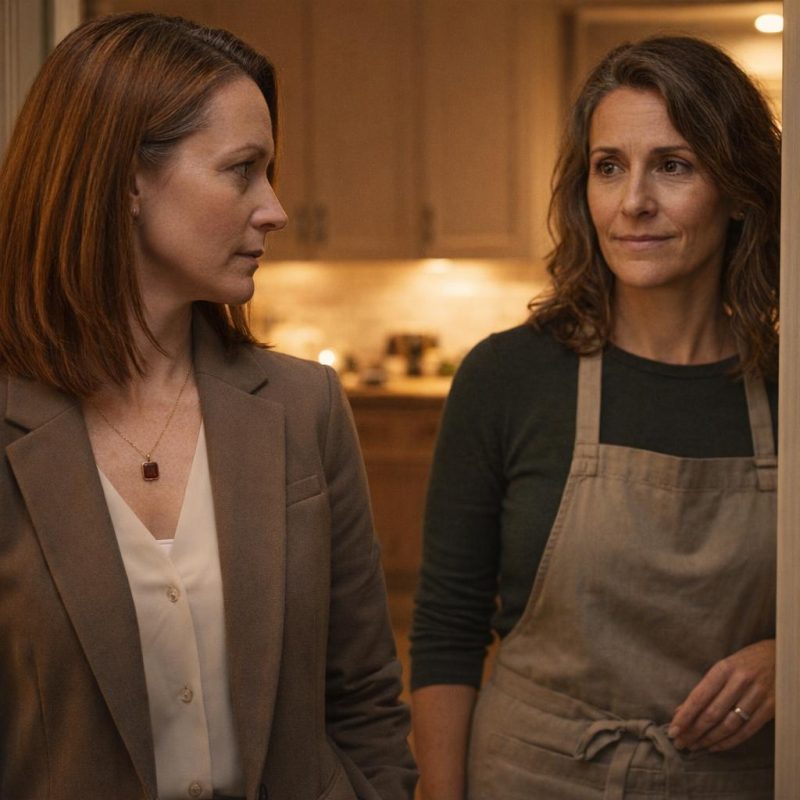 Image by RM AI
Richard Takes the Stage
Richard found his audience the moment enough people had arrived to constitute one. I watched it happen the way you watch weather change — a shift in the room's center of gravity, everyone slowly orienting toward the loudest point. He had the good scotch out, the bottle he kept for guests he wanted to impress, and he was pouring with the generosity of a man who has never once worried about the cost of anything. I heard him launch into a story about a deal he'd closed in October, his voice carrying easily over the music I'd spent twenty minutes selecting. Diana caught my eye from across the room and I gave her the small smile that meant I'm fine, don't worry, which she accepted without entirely believing. I slipped back into the kitchen to check the warming trays, refilled the bruschetta platter, restocked the cocktail napkins, and came back out to find the circle around Richard had grown by three people. He was gesturing with his glass, animated and expansive, and nobody in that circle was looking toward the kitchen. I moved along the edges of the room, keeping glasses full, making sure the appetizer trays stayed replenished, while Richard's voice rolled on over the music and the conversation and everything else.
 Image by RM AI
The Boardroom at Home
I lost count of how many times I circled the room. Refill the bruschetta, check the crab dip, swap out the napkins, smile at whoever caught my eye, keep moving. It had a rhythm to it, almost meditative, if you didn't think too hard about the fact that you'd been on your feet for fourteen hours. Richard had migrated toward the far end of the living room where a cluster of the men had gathered — Marcus was there, a couple of Richard's golf friends, a few others — and the conversation had taken on the particular energy of men competing to sound impressive. I caught fragments as I passed: quarterly returns, a development deal in the warehouse district, someone's portfolio up thirty percent. Richard was in his element. He stood at the center of that group the way he always did, shoulders back, drink in hand, voice pitched just loud enough to carry. I was coming back from the kitchen with a fresh tray of stuffed mushrooms when I heard him quote a specific dollar figure, and the men around him let out a low, appreciative whistle.
 Image by RM AI
Sarah's Arrival
I was setting down the mushroom tray when I heard the front door open again, and I looked up to see my younger sister Sarah stepping inside, unwinding her scarf and scanning the room with the quick, assessing look she'd had since she was a kid. She always walked into a space like she was taking inventory. I watched her eyes move across the room — the cluster of men around Richard, the half-empty appetizer trays, Diana standing near the bookshelf with a glass of wine and a careful expression — and then her gaze found me across the crowded living room. She went still for just a second. I knew that look. It was the one she'd been giving me at family gatherings for the past two years, the one that said I see what's happening here and I don't like it and I'm right here. I gave her a small nod, the kind that means I'm okay, and she gave me one back that meant she wasn't entirely convinced but she'd let it go for now. She made her way toward me through the guests, stopping to say hello to Diana, and by the time she reached me and squeezed my arm, something in my chest had loosened just slightly. We didn't need to say anything. We never did.
 Image by RM AI
The Feast Revealed
I started making trips from the kitchen to the dining room with both arms full, and I want you to understand — I had been on my feet since six that morning. The mashed potatoes went out first, smooth and buttery in the big white serving bowl I'd had since before the marriage. Then the green bean casserole, the sweet potato dish with the toasted pecans, the cranberry sauce I'd made from scratch with orange zest. I set each one down carefully, arranging them so there was still room for the main event. People started noticing. A woman near the end of the table leaned over and said, 'Did you make all of this yourself?' and when I said yes, she shook her head like she couldn't quite believe it. Someone else said the rolls smelled incredible, and they did — I'd pulled them out at exactly the right moment, golden and soft. Diana caught my eye from across the table and gave me a small, warm smile. Sarah squeezed past two guests to get a better look and whispered, 'You outdid yourself.' I set down the last dish and stood there for just a second, taking it all in. Ten hours of work, and it looked exactly the way I'd pictured it.
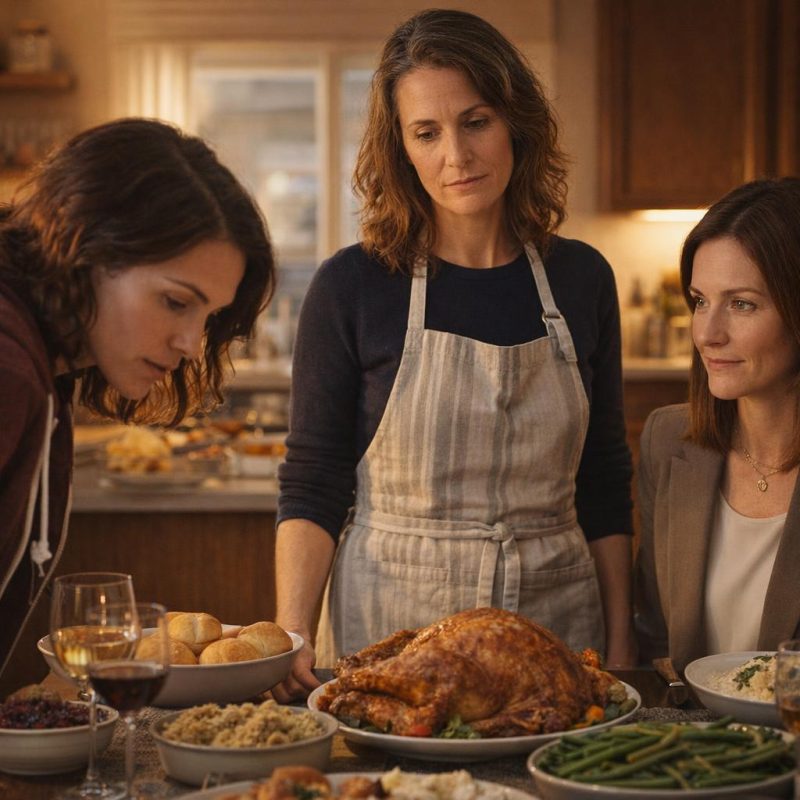 Image by RM AI
The Golden Centerpiece
I went back to the kitchen one last time and lifted the turkey off the rack. It had come out perfectly — deep golden brown all over, the skin tight and crackling, the whole bird smelling of rosemary and butter and something that just said Thanksgiving. I carried it out with both hands, and the room actually went quiet for a second when I set it in the center of the table. Someone said 'oh wow' under their breath. I straightened up and looked around at twenty people seated at my table, glasses full, faces warm from the wine and the heat of the house, and I felt something I hadn't felt in a long time — genuinely, quietly proud. I asked everyone to find their seats, and there was the usual shuffle and scraping of chairs, and then I finally sat down myself. I smoothed my napkin across my lap and let out a slow breath. The table looked beautiful. I had made it look beautiful. I reached for my own wine glass and glanced toward the head of the table, where Richard had settled into his chair. He was watching me with an expression I couldn't quite read — still, flat, like he was waiting for something I didn't know was coming.
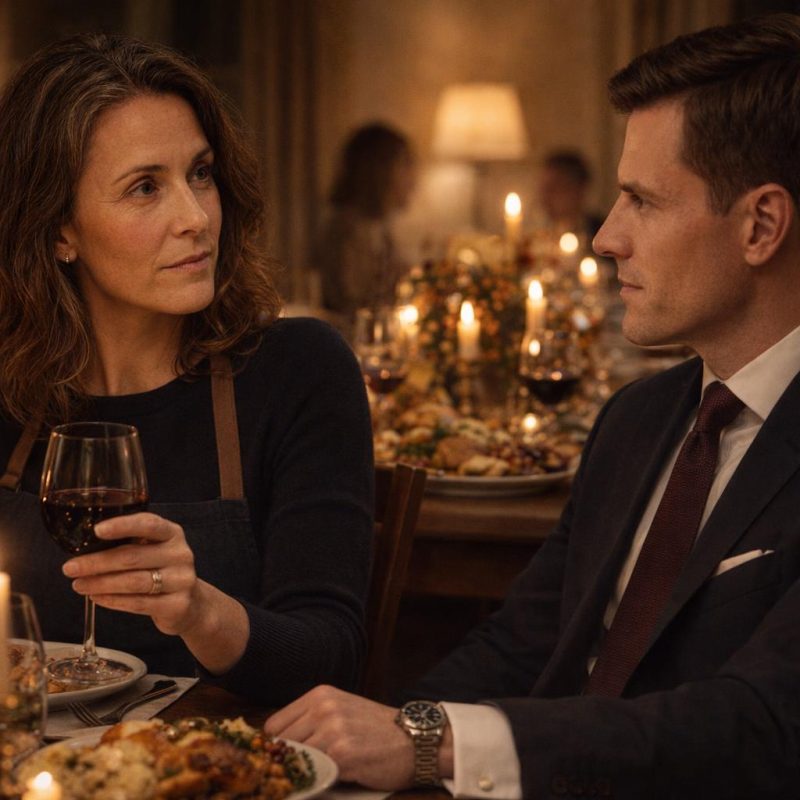 Image by RM AI
The Crystal Ring
The conversation had just started to pick up again — someone was asking about the cranberry sauce, someone else was laughing at something near the far end of the table — when I heard it. A sharp, clear ringing, the kind that cuts right through a room. Richard had picked up his crystal wine glass and was tapping it with a silver spoon, slow and deliberate, and the sound bounced off the walls and the ceiling until every voice dropped away one by one. I looked up. He was already pushing back his chair, already rising to his feet, and there was something in the way he moved — unhurried, almost theatrical — that made the back of my neck prickle. He reached into the inside pocket of his jacket and pulled out a thick envelope, holding it loosely at his side like it was nothing, like it was just a prop. I didn't understand what I was looking at. I thought for one strange second that maybe he was going to make a toast, that this was some kind of surprise I hadn't been told about. Twenty people had gone completely still around the table, forks halfway to plates, glasses suspended in mid-air. The last note of the ringing faded, and the room held its breath.
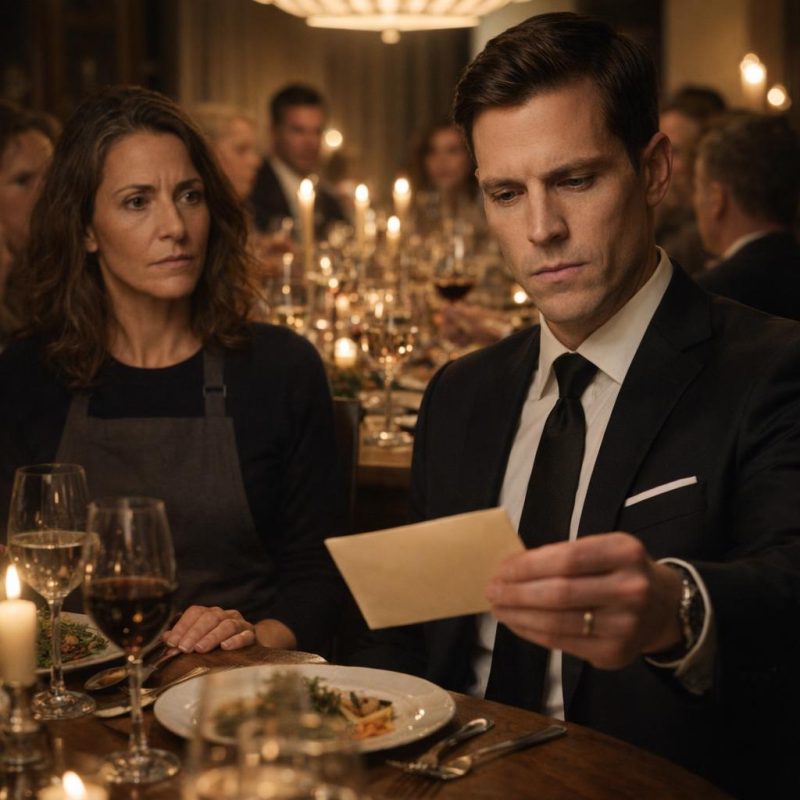 Image by RM AI
The Envelope on the Plate
He looked around the table first, making sure he had every single person's attention, and then his eyes came to me. He said something — I honestly couldn't tell you the exact words in that moment, something about having an announcement, something about how this seemed like the right time — and then he reached across and tossed the envelope toward my plate. Not handed it. Tossed it. It slid across the tablecloth and landed on the china with a heavy, flat sound, right next to the turkey I had spent ten hours making. I stared at it. It was thick, the kind of thick that means a lot of pages, and my name was typed on the front in a font that looked official and cold. The table was completely silent. I could feel twenty pairs of eyes moving between Richard and me, and I could feel Sarah somewhere to my left going very still, and Diana across from me barely breathing. I didn't reach for it. I just sat there with my hands in my lap, looking at this envelope sitting on my plate, and my heart had started doing something strange and fast inside my chest.
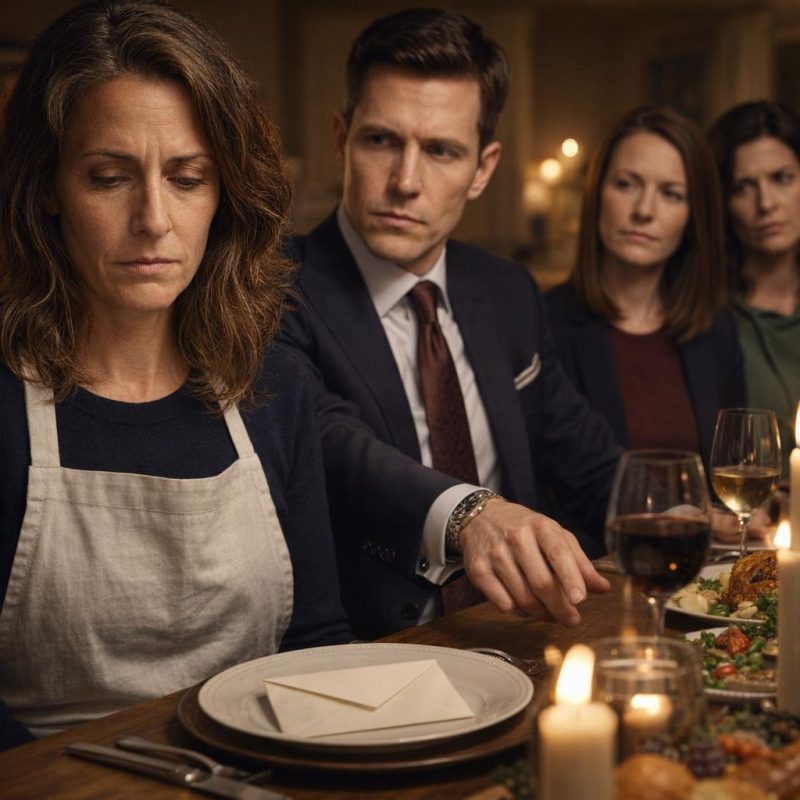 Image by RM AI
The Public Announcement
He said it clearly, loudly, in the voice he used when he wanted a room to know he was the most important person in it. He said he was filing for divorce. He used my name. He said it like he was making a business announcement, like he was wrapping up a quarterly report, and the word 'divorce' went out across that silent dining room and landed on every single person at the table. I heard someone near the far end make a small, involuntary sound. I saw a woman put her hand over her mouth. I didn't move. I don't know how I didn't move, but I didn't. I sat with my back straight and my hands still in my lap and I looked at him standing there at the head of the table, and I kept my face as still as I could make it. I was not going to cry in front of twenty people. I was not going to beg. Whatever was happening inside me — and something was happening, something cold and disorienting — I was keeping it behind my eyes. The candles on the table were still burning. The turkey was still sitting there, golden and perfect. And the word he had just said hung in the air above all of it like smoke.
 Image by RM AI
The Joke Artist
He wasn't finished. He smiled — actually smiled — and kept going, and what came next was worse than the announcement. He told the room that my art career was a joke. He said it exactly like that, 'a joke,' with a little laugh underneath it, like he was sharing something everyone already privately agreed with. He said the house was in his name. The cars were in his name. The accounts were in his name. He said I'd be out by Monday, that I had nowhere to go and nothing to fall back on except my little hobby. He was still talking, still moving through it, and something about the ease of it made my skin go cold. Sarah made a sharp sound beside me that she cut off before it became words. Diana had gone completely rigid across the table. I sat very still and let him talk, and somewhere in the middle of it something shifted in me, quiet and deep, like a door closing in a room I hadn't known was open. I didn't look away from him. I watched him finish, watched him settle back into that smug, satisfied expression, the one that said he had just won something, that this had gone exactly the way he'd wanted it to go.
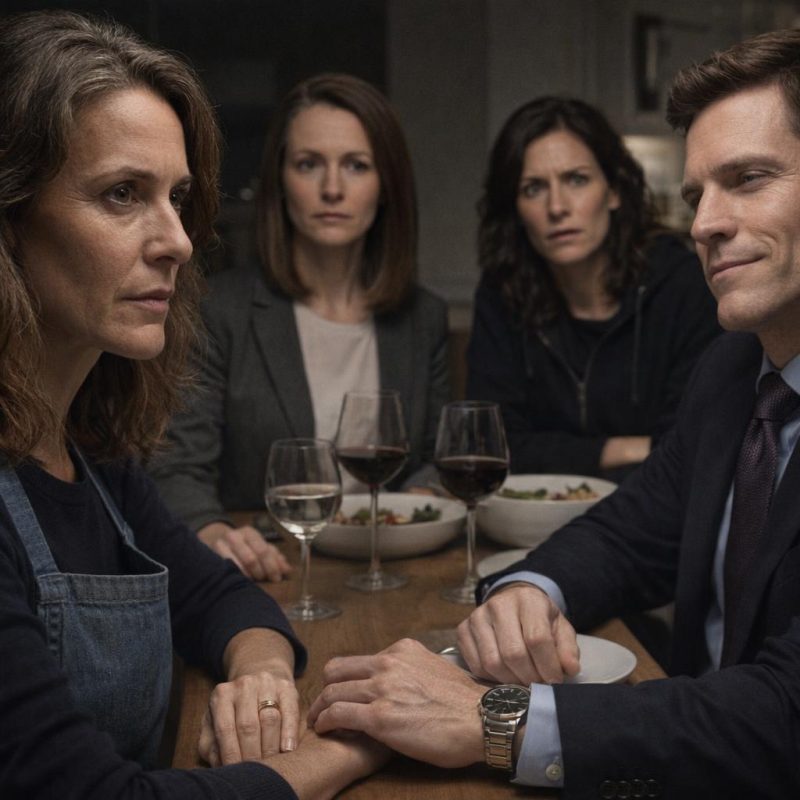 Image by RM AI
The Silent Table
Nobody spoke. I mean nobody — not one of the twenty people at that table made a sound. I could hear the candles. I could hear the faint tick of the clock in the hallway. Someone's chair shifted slightly and it sounded enormous in that silence. I looked down the table and saw faces frozen mid-expression, people who had been laughing and eating twenty minutes ago now sitting with their hands in their laps like they were waiting to be told what to do. Marcus was staring at the tablecloth, jaw tight, not looking at Richard, not looking at me. Richard was still standing, still wearing that expression, and I could feel him waiting for me to fall apart, waiting for the tears or the pleading or whatever scene he had scripted in his head. I wasn't going to give it to him. I kept my breathing even. I kept my shoulders back. And then, under the table, something found my hand — warm fingers, quiet and certain, pressing into mine without a word. I didn't have to look to know it was Diana. I just felt her fingers close around mine beneath the tablecloth.
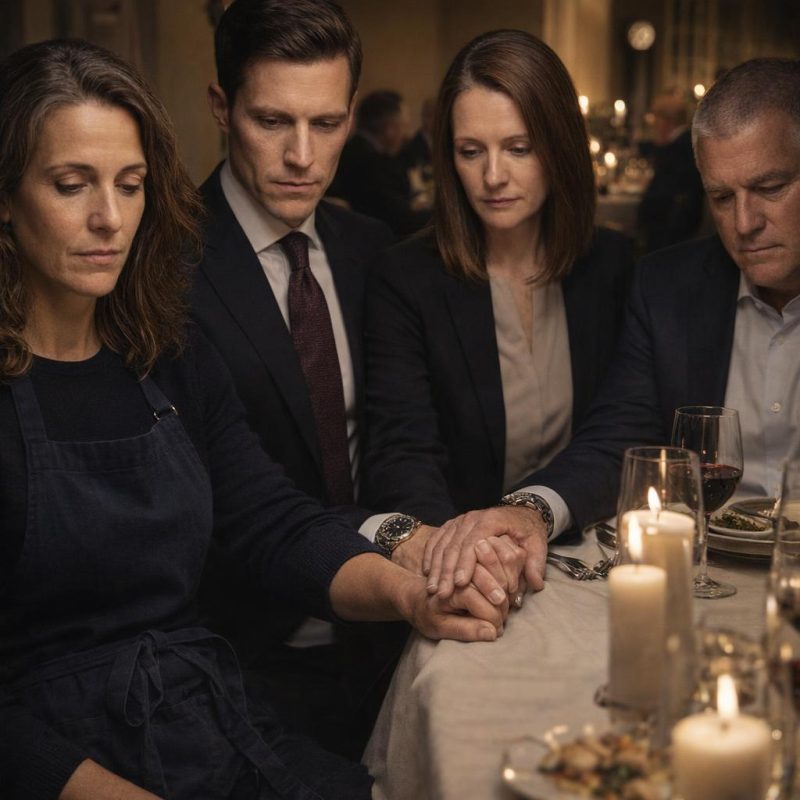 Image by RM AI
The Pointed Finger
I held Diana's hand for exactly three seconds. Then I let go, placed both palms flat on the table, and stood up. I didn't rush it. I took my time getting to my feet, and the room watched every second of it. Richard's expression flickered — just slightly, just enough — because I don't think he had planned for this part. I looked at him for a long moment without saying anything, and then I turned and looked at the front door, and then I raised my right arm and pointed at it. Straight. Steady. My voice came out low and even, and it carried across that silent room without any effort at all. I told him to get out of my house. Not our house. My house. I said it once, clearly, and I did not look away from him, and I did not lower my arm. Sarah had gone completely still beside me. Diana hadn't moved. Every single guest at that table was watching, and the only sound in the room was the faint creak of the house settling, and my finger was still pointing at that door.
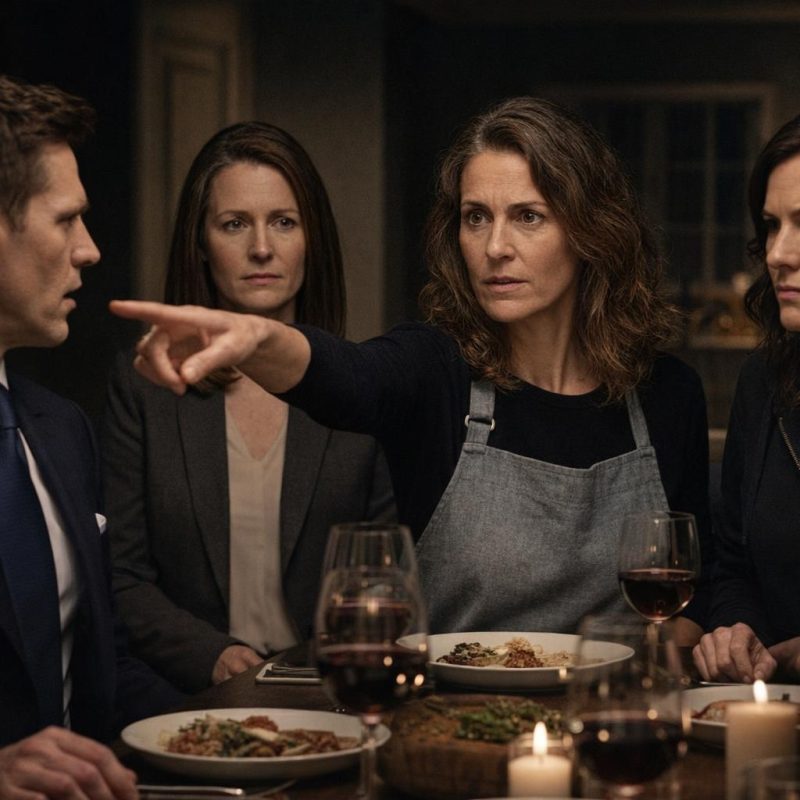 Image by RM AI
His House
He laughed. That was the first thing he did — he actually laughed. It came out sharp and short, the kind of laugh that's meant to cut, and it bounced off the walls of that silent dining room like something thrown hard against stone. Marcus shifted in his seat. Sarah's jaw tightened. Richard straightened up, adjusted the cuff of his jacket, and looked at me the way he always looked at me when he thought he'd already won something. He said it wasn't my house. He said it with that particular smile he saved for moments when he wanted an audience, slow and deliberate, letting the words land for everyone at the table to hear. He reminded me whose name was on the mortgage, whose income had paid for every square foot of it, whose house this actually was. He spread his hands open like he was presenting evidence. Diana hadn't moved. I hadn't moved either. I just stood there with my arm still raised, watching him, and I let him finish every single word of it. And then his laugh came again — shorter this time, harder, filling the room with a sound that had no warmth in it at all.
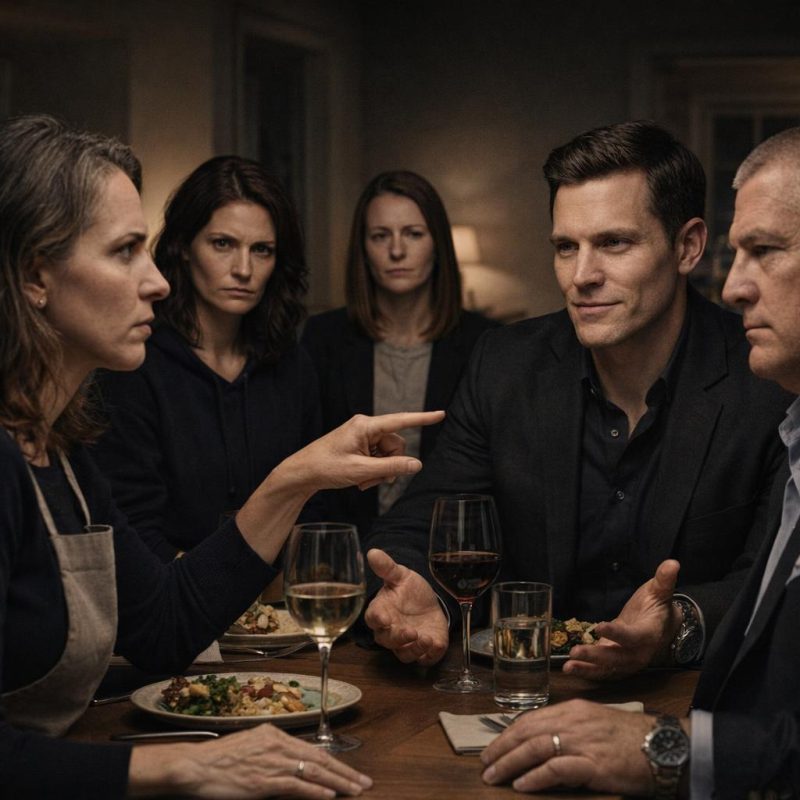 Image by RM AI
Check the Deed
I waited until the echo of it died completely. Then I lowered my arm, smoothed the front of my dress with one hand, and looked at him with a steadiness I hadn't known I possessed until that moment. I told him he should check the deed. I said it quietly, the way you'd mention something obvious to someone who'd simply forgotten to look. I told him there had been some recent legal filings he might want to review — filings my attorney had handled — and that the paperwork was all very much in order. I didn't elaborate. I didn't need to. Richard's smile flickered at the edges, just slightly, the way a candle does when a window opens somewhere in the house. He started to say something and then stopped, which was unusual for him. Marcus leaned forward an inch. Sarah looked at me from across the table, and I could see her trying to read my face, trying to understand what I'd just said and what it meant. I picked up my water glass, took a slow sip, and set it back down without a sound. My voice, when I'd spoken, had been the steadiest thing in the room.
 Image by RM AI
The Embezzlement
The room was still holding its breath. Richard had recovered enough to look dismissive again, which was his default when he felt the ground shift — he'd learned early that confidence could substitute for understanding if you wore it fast enough. So I helped him understand. I told him, calmly and clearly, that I had discovered discrepancies in our joint holdings. I said the word discrepancies first, and then I said the real word: embezzlement. I said it the way you'd read a line from a document — flat, precise, without drama — because the word itself was dramatic enough without any help from me. I watched it travel around the table. I watched it reach Marcus, who went very still. I watched it reach Catherine, two seats down, whose hand stopped moving above her plate. Richard's expression did something complicated then — the dismissiveness cracked, and underneath it was something I hadn't seen on his face in a long time, something that looked almost like exposure. He opened his mouth. He closed it. The guests sat in absolute silence, and the word I had spoken seemed to settle over the table like a second tablecloth, heavy and impossible to lift.
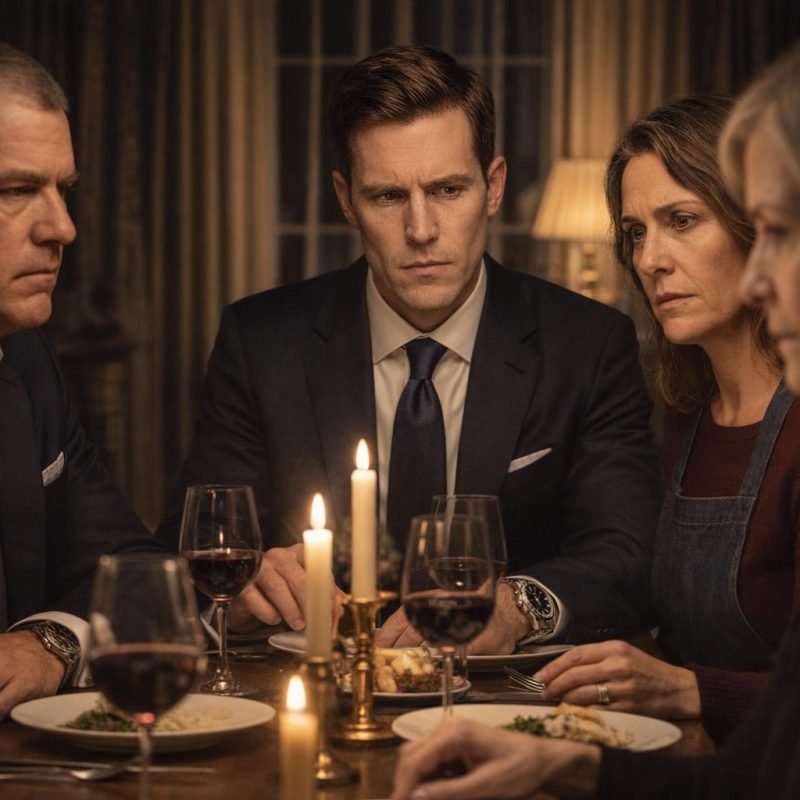 Image by RM AI
The Vanishing Smile
He found his voice again after a moment. He told me I didn't know what I was talking about. He said it with a version of the smile, but the smile was working harder now, visibly working, the way a person smiles when they're trying to convince themselves as much as anyone else. I let him say it. Then I told him that my attorney had been thorough, that the filings were complete, and that the protections on our shared assets were documented and filed. I didn't raise my voice. I didn't need to. Catherine made a sound from her end of the table — a small, sharp intake of breath. Marcus had both hands flat on the tablecloth and was staring at the centerpiece. The smile left Richard's face. Not gradually — it just went, like a light switching off, and what replaced it was something harder and much less composed. His eyes moved around the room once, quickly, taking inventory of who was watching, and then his hand dropped to his jacket pocket and came out with his phone.
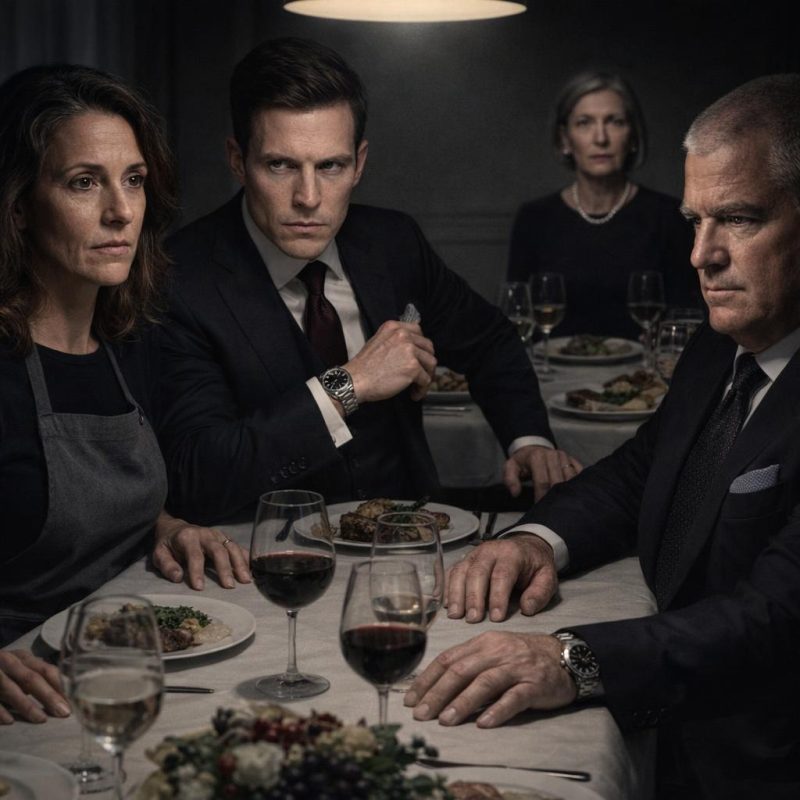 Image by RM AI
Catherine's Gasp
I told him again to leave. Same words, same tone, same steadiness. This time there was no laugh. Catherine said his name from her seat — just his name, once, in a voice that was pulled tight — and he glanced at her and then looked away, which told me everything about how this moment felt to him. He straightened his jacket. He picked up his phone from the table where he'd set it. He looked at me for a long moment with an expression I couldn't quite name, something between fury and the particular humiliation of a man who has just discovered that the audience he chose for his performance has turned. Then he moved. He walked the length of the dining room without looking at anyone, past the guests who had come to his Thanksgiving table, past the sideboard with the good china, past the doorway where the smell of the kitchen still hung warm in the air. All twenty people at that table watched him go. Sarah reached over and found my hand under the table. I stood where I was, still and quiet, and listened to his footsteps cross the foyer toward the front door.
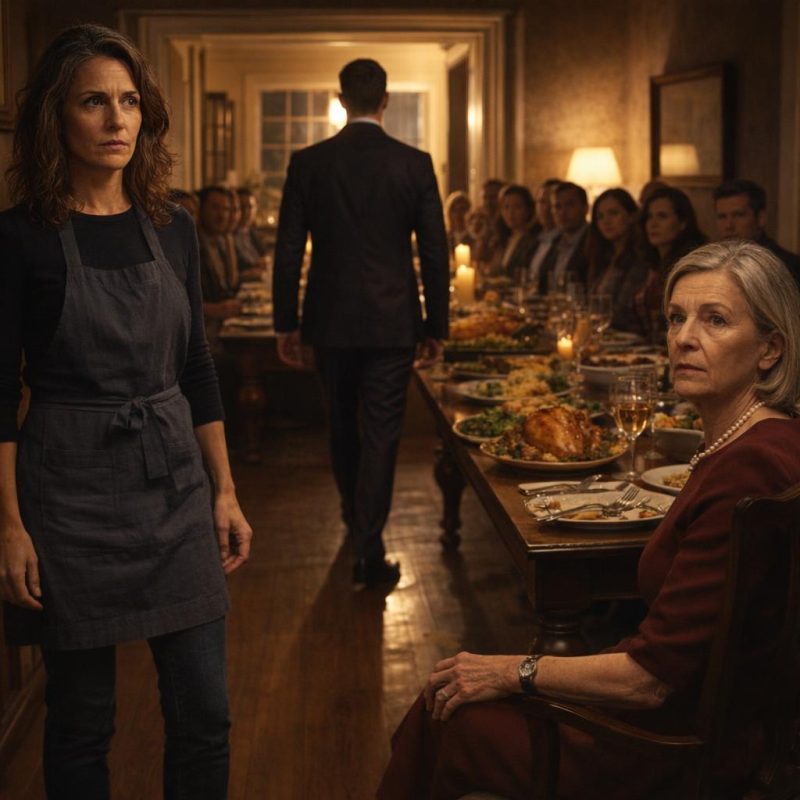 Image by RM AI
The Drive Away
The front door closed. Not a slam — he was too careful about appearances for that, even now — just a firm, deliberate click that carried back through the house. A few seconds later the porch light caught the movement of him crossing the driveway, and then we heard the car. The engine turned over, and the sound of it filled the window for a moment, and then it began to pull away, and then it faded, and then it was gone. I sat back down at my place at the head of the table. I picked up my fork. I set it back down. Around me, twenty people sat in a silence so complete I could hear the candles. Catherine had both hands in her lap and was looking at the tablecloth. Marcus was looking at the door. Diana was looking at me. Sarah was still holding my hand from when she'd reached for it, and I hadn't let go yet. Outside, the November dark had swallowed the sound of the engine entirely, and the dining room held the quiet of it like a room holds warmth after the fire goes out.
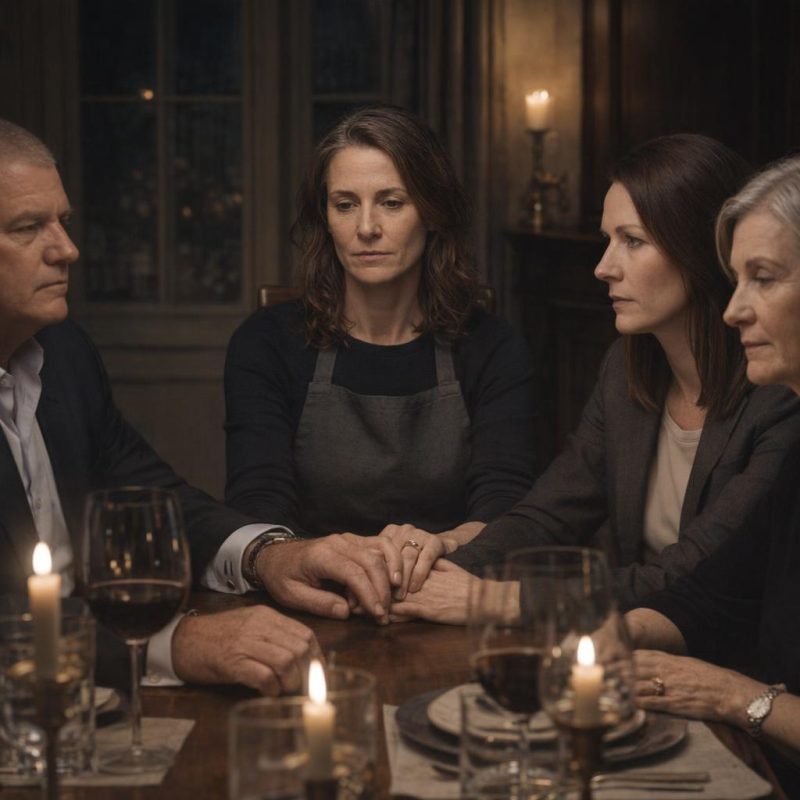 Image by RM AI
The Panicked Call
Nobody spoke for a long moment. Then Diana reached for the wine and refilled her glass, and that small ordinary sound seemed to give the room permission to breathe again. Sarah poured water. Someone at the far end of the table cleared their throat softly. I was about to say something — I'm not sure what, something about the pie, something to bring us back to the surface — when I heard it. His voice, coming through the dining room window from the driveway. He hadn't left. The car was still out there, engine idling, and his voice was rising in that particular register he used when he was talking to someone who wasn't giving him what he wanted. I couldn't make out most of it. Fragments came through the glass — account, immediately, I need you to — and then a pause, and then his voice climbing again. Catherine had gone very still. Marcus was staring at the window. I stayed in my seat and kept my hands flat on the table, and the next word that came through the glass was frozen, and then a beat of silence, and then frozen again.
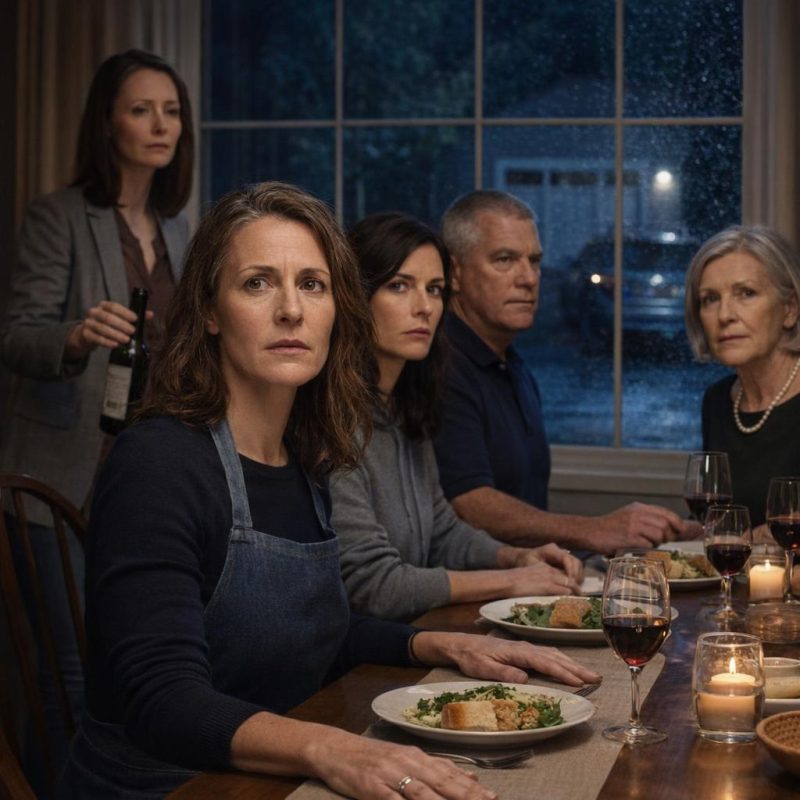 Image by RM AI
The Joke Artist's Victory
Nobody at the table looked at me directly after that. They looked at their plates, or at the window, or at each other — but I could feel the understanding moving through the room the way heat moves through a house, room by room, quiet and inevitable. Diana's eyes found mine across the table and she pressed her lips together in something that wasn't quite a smile but was close. Sarah's hand came to my shoulder, just briefly, just a touch, and then she picked up her fork like we were going to finish this meal because of course we were. Marcus was very still. Catherine sat with her hands folded and her eyes fixed somewhere past the centerpiece, and I didn't look at her long enough to read her expression. Outside, Richard's voice had gone lower now, more controlled, the way it got when he was trying to manage something that wasn't cooperating. I reached for the serving spoon and offered the sweet potatoes to the woman on my left. The table had gone from frozen to something quieter, and the guests who had come here expecting a pleasant holiday dinner were sitting with the slow understanding that the woman at the head of the table had been ready for this evening all along.
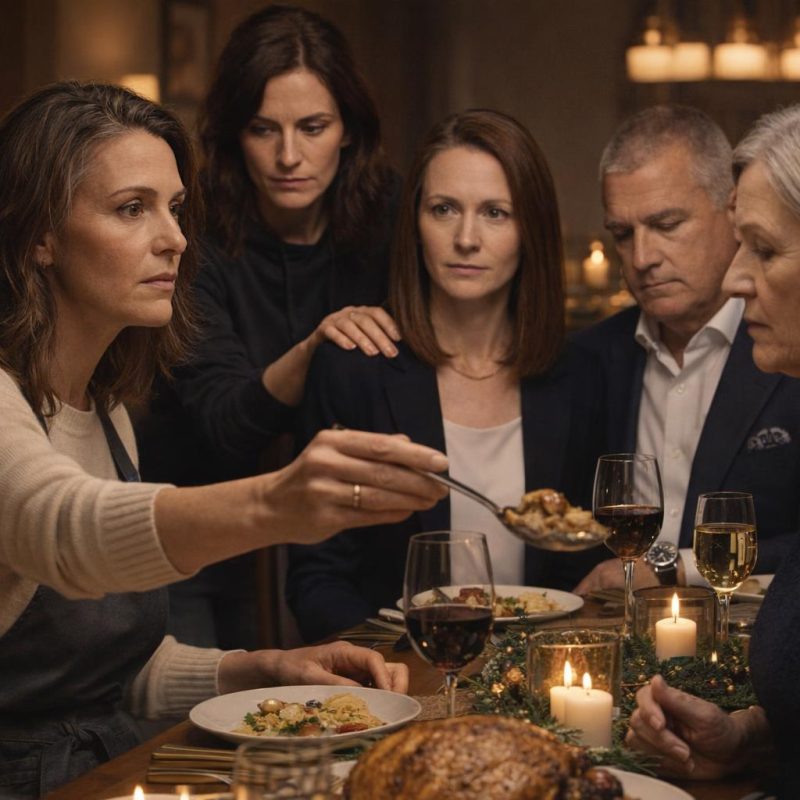 Image by RM AI
Weeks Earlier
Let me back up. Because what happened at that Thanksgiving table didn't come out of nowhere — it came out of a Tuesday evening in early October when I sat down at the kitchen desk to pay the quarterly insurance bill and pulled up our joint savings account. I wasn't looking for anything. I was just doing what I always did, the quiet administrative work of keeping a household running. The balance was lower than I expected. Not dramatically, not in a way that would make anyone panic at first glance, but enough that I scrolled back through the transaction history and counted twice. There was a transfer — a wire, actually — to an account number I didn't recognize. The amount was four thousand dollars. I sat there for a moment, trying to place it. A contractor we'd paid? A tax installment I'd forgotten? I went through my email, checked the folder where I kept receipts and invoices, and came up empty. Richard was at a client dinner. The house was quiet. I printed the statement and set it on the desk in front of me, and the account number I didn't recognize sat there on the page, waiting.
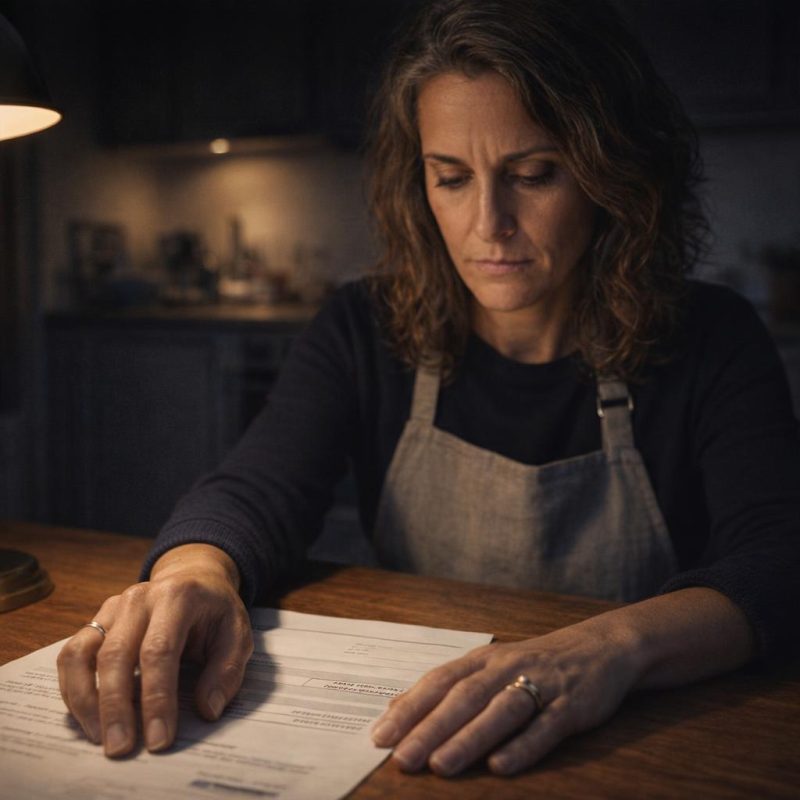 Image by RM AI
The Missing Funds
I didn't say anything to Richard that week. I told myself it was probably nothing — a misfiled payment, an automatic renewal I'd forgotten to track. But I pulled the previous three months of statements anyway, and then six months, and then I went back a full year. I spread them across the kitchen table on a Saturday morning while he was at the gym, and I started marking the withdrawals I couldn't account for with a yellow highlighter. By the time I was done, there were eleven marks on the page. Eleven. And when I lined them up by date and cross-referenced my own calendar — the art show in Portland in March, the long weekend I'd spent at Sarah's in July, the conference trip Richard had encouraged me to take in September — the marks and the dates kept landing in the same place. Every single withdrawal had cleared while I was somewhere else. I sat back in my chair and looked at the yellow lines running down the page. Maybe it was coincidence. I told myself that. I said it out loud, quietly, to the empty kitchen. But my stomach had already decided something my brain wasn't ready to say, and the feeling didn't go away when I stacked the papers back into a neat pile.
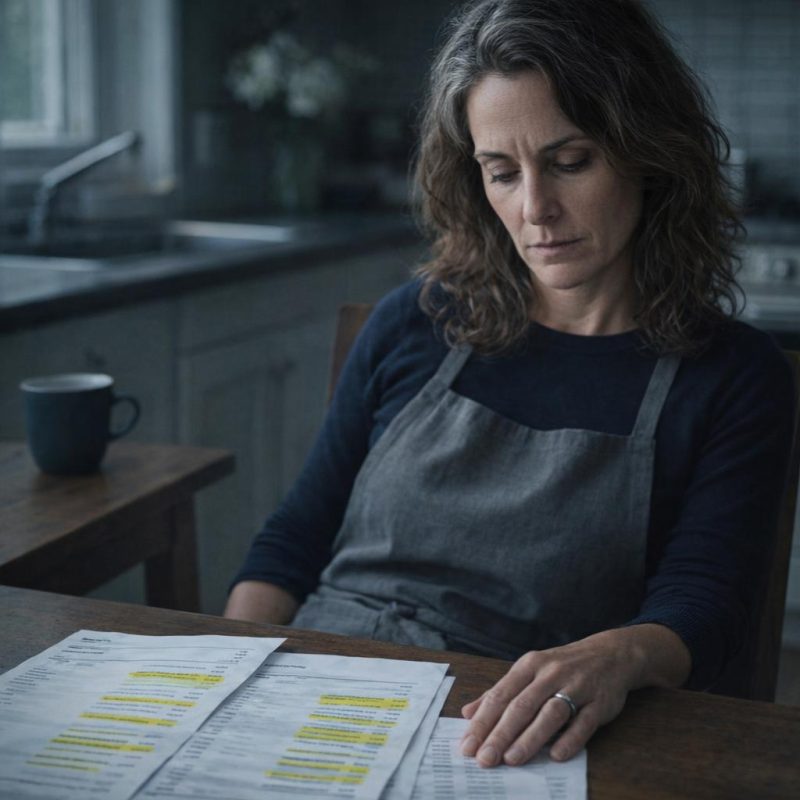 Image by RM AI
Michael's Office
I found Michael through a referral from a colleague of Diana's — someone who handled financial litigation and didn't advertise. His office was on the fourteenth floor of a building downtown, quiet and deliberately unremarkable, the kind of place designed to feel like nothing important was happening inside it. I brought the printed statements in a manila envelope and sat across from his desk feeling slightly ridiculous, like I was about to be told I'd miscounted. He didn't make me feel ridiculous. He asked me to walk him through what I'd found, and he listened without interrupting, making notes in a small leather notebook with a pen that moved steadily across the page. When I finished, he went through the statements himself, slowly, turning each page with the same unhurried attention. He asked about the account number on the first transfer. I told him I'd searched it and found nothing connected to any vendor or service we used. He nodded and made another note. Then he looked up and said, in the same calm, even tone he'd used for everything else, that what I was describing had the characteristics of embezzlement — and the word landed in the room like something dropped from a height.
 Image by RM AI
The Documentation Begins
Michael gave me a plain manila folder before I left his office and told me to use it to organize everything I could find — originals where possible, photographs where not. He said to work when I had the house to myself and to keep the folder somewhere Richard wouldn't come across it by accident. I started that same week. Richard left for the office by eight most mornings and rarely came home before seven, which gave me a reliable window. I photographed every statement going back eighteen months, cross-referenced the wire transfers against our household expense log, and built a simple timeline in a notebook — date, amount, account number, where I was that day. I kept the notebook inside a hollowed-out art reference book on the studio shelf, the kind of book no one picks up unless they're looking for it. I was careful. I was slower and more careful than I'd ever been about anything. Each time I added a page to the folder, I felt the weight of it shift slightly — not heavier exactly, but more solid, more real. By the end of the second week, the stack of documented transfers on my desk had grown to something I couldn't dismiss as a misunderstanding.
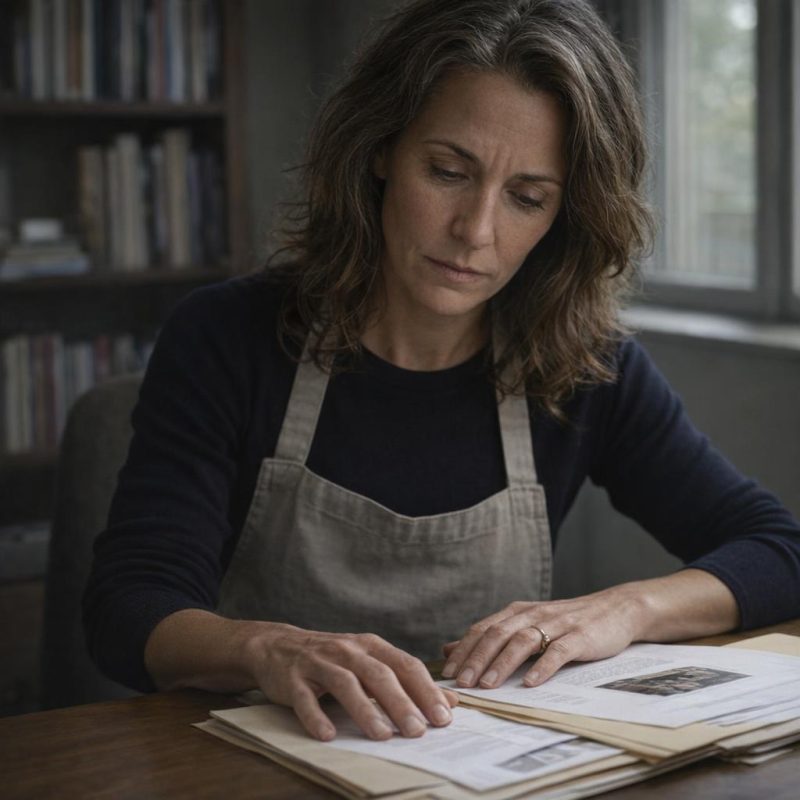 Image by RM AI
The Pattern Emerges
It was the older statements that undid me. I'd been focused on the past year, but Michael had asked me to go back as far as I could access, so I requested records from the bank going back three years and sat with them one afternoon when the house was empty and the light outside had gone flat and grey. The transfers didn't start a year ago. They started twenty-six months back — a smaller amount at first, almost modest, the kind of number that would read as a rounding error if you weren't paying attention. Then they grew. Steadily, incrementally, spaced far enough apart that no single month looked alarming on its own. I traced them forward through time with my finger, watching the amounts climb, and the picture that assembled itself across the kitchen table was not the picture of a mistake or an oversight. I added the pages to the folder and sat there for a long time after, not moving. The afternoon light faded. I didn't get up to turn on a lamp. Twenty-six months was not a blip or an anomaly — it was a span of time that held inside it two anniversaries, a vacation we'd taken together, a dinner party I'd spent three days preparing for, and I sat with all of that settling over me like something very heavy and very quiet.
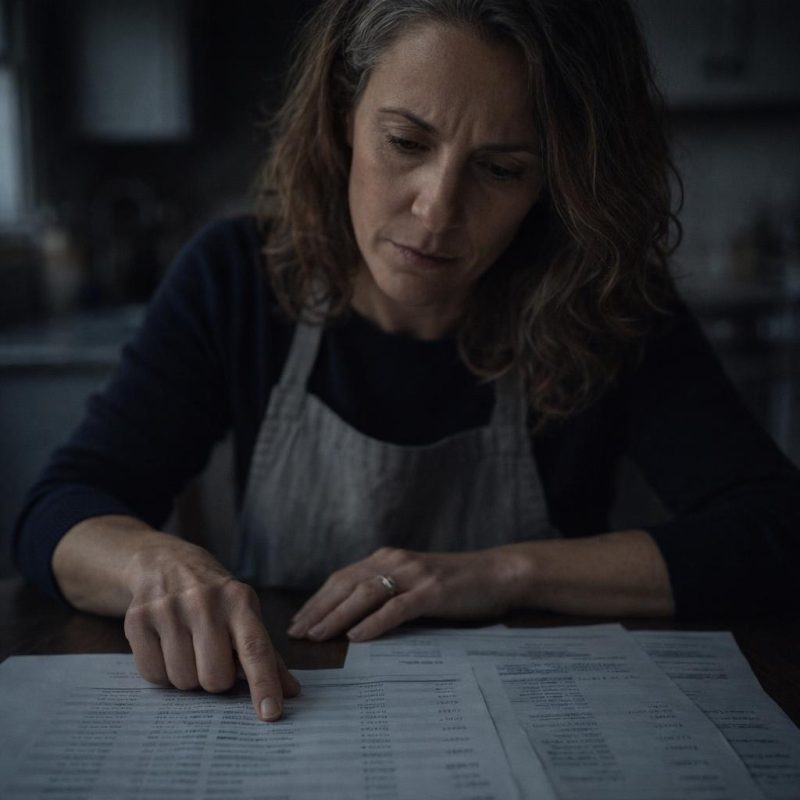 Image by RM AI
The Full Extent
Michael's office felt smaller the second time, or maybe I just took up less space in it. He had a summary report prepared — a single document, four pages, with the transfers organized chronologically and a total at the bottom of the last page. He walked me through it methodically, explaining each category of movement, the accounts involved, the pattern of timing. His voice stayed level and professional throughout, which I was grateful for. I followed along on my own copy, turning pages when he turned pages, and I managed to stay steady until I reached the last page and saw the number. It was not a number I had let myself calculate on my own, even though the pieces had all been in front of me. Seeing it typed and totaled and sitting at the bottom of an official document was different from suspecting it. My hands tightened on the paper. I didn't cry. I didn't say anything for a moment. Michael waited, which told me he had done this before and knew what the pause meant. I set the report down on the edge of his desk and looked at the window, and then I looked back at the page, and the number was still there, unchanged, patient, taking up exactly as much space as it had always taken up.
 Image by RM AI
Legal Protections
Michael set his copy of the report aside and folded his hands on the desk, and his voice shifted into something I can only describe as organized urgency — calm on the surface, but with a structure underneath it that told me every word had been chosen in a specific order for a specific reason. He said the most important thing right now was speed and silence. He explained that I needed to secure the deed to the house — our house, the one I'd lived in for six years — by filing a protective interest claim before any further transfers could complicate ownership. He talked about freezing the joint accounts, about the difference between a freeze and a closure, about why the sequence mattered. He outlined a protective order that would prevent asset movement while the financial picture was being formally assessed. I took notes on a legal pad he slid across the desk. My handwriting was steadier than I expected. He said I should not change my behavior at home, should not give Richard any indication that anything had shifted, and should not discuss this with anyone who might mention it in Richard's presence. I nodded at each point. When he finished, the legal pad had two full pages of notes, and the quiet, even pace of his voice had carried inside it something that felt, underneath all the procedural language, like genuine alarm.
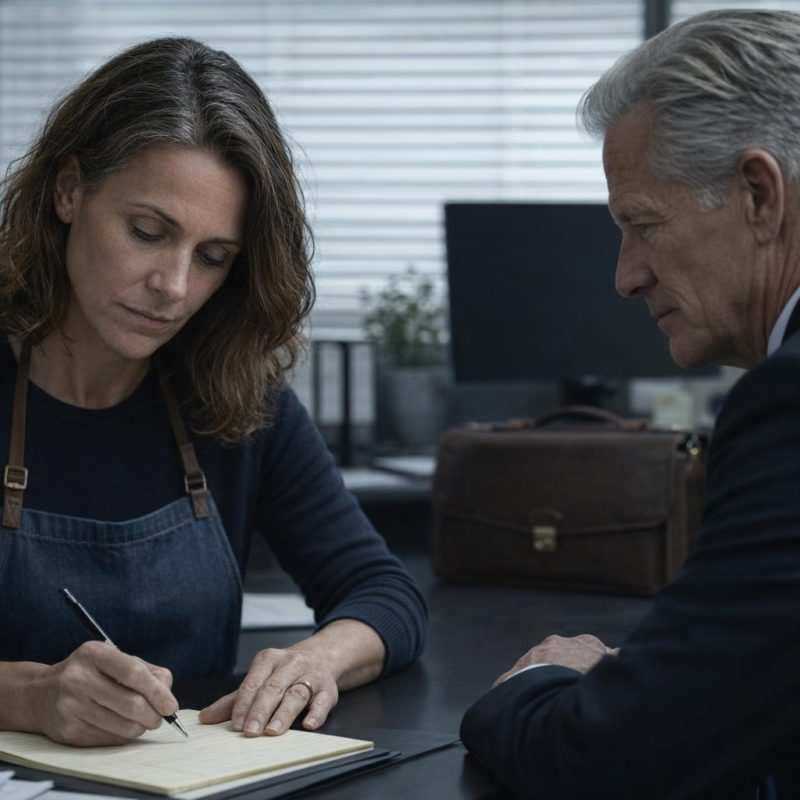 Image by RM AI
The First Filing
The documents were ready four days later. I went back to Michael's office on a Thursday morning, told Richard I had an appointment with my gallery contact about the spring show, and sat down across from Michael's desk for the third time. He walked me through each form before I signed it — what it did, what it protected, what it prevented. The protective order on the property. The freeze request on the joint accounts. The formal documentation of the financial discrepancies for the court record. I read each page carefully, which Michael seemed to expect, because he waited without rushing me. When I picked up the pen, my hand was steady. I signed my name six times across three documents, and each time I set the pen down, Michael dated and initialed beside my signature and moved the page to a separate stack. When the last form was signed, he said he would file that afternoon and that I would have confirmation by end of business. I thanked him. He nodded once, the way someone nods when the work is serious and the pleasantries feel beside the point. I looked down at the final page — my signature still dark and fresh on the line, the ink not yet fully dry — and something that had been coiled tight in my chest for weeks held its breath and waited.
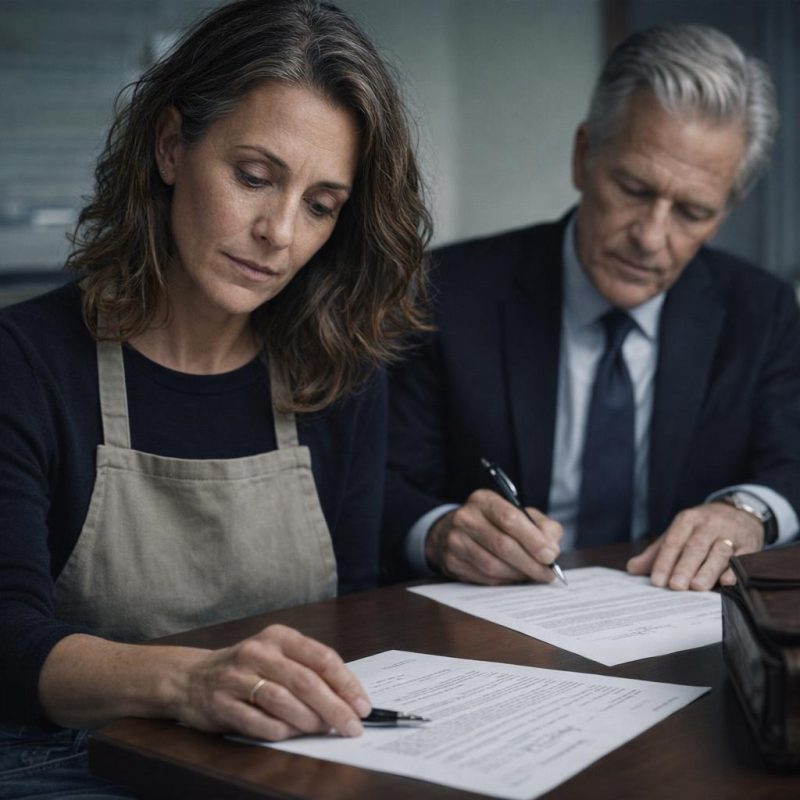 Image by RM AI
The Deed Transfer
Richard left for his business trip on a Tuesday morning, rolling his carry-on out the front door with barely a glance back. I waited until his car had turned off the street, then I called Michael's office and confirmed the appointment I'd already scheduled. The drive over felt different from the others — quieter, somehow, like the city itself had slowed down. Michael had everything prepared. The deed transfer paperwork was laid out in order, each page tabbed and ready. He walked me through the language carefully, the same way he always did, and I read every line before I signed. It wasn't a long process, not really. Maybe forty minutes from the time I sat down to the time Michael gathered the final pages into a folder and told me he would file that afternoon with the county recorder's office. I thanked him and shook his hand, and he nodded in that measured way of his that meant the work was done and done correctly. I drove home and parked in the driveway and sat there for a moment before going inside. The house looked exactly the same as it always had — the same shutters, the same front walk, the same hydrangeas I'd planted three summers ago. But something had shifted underneath all of it, quiet and permanent and entirely mine.
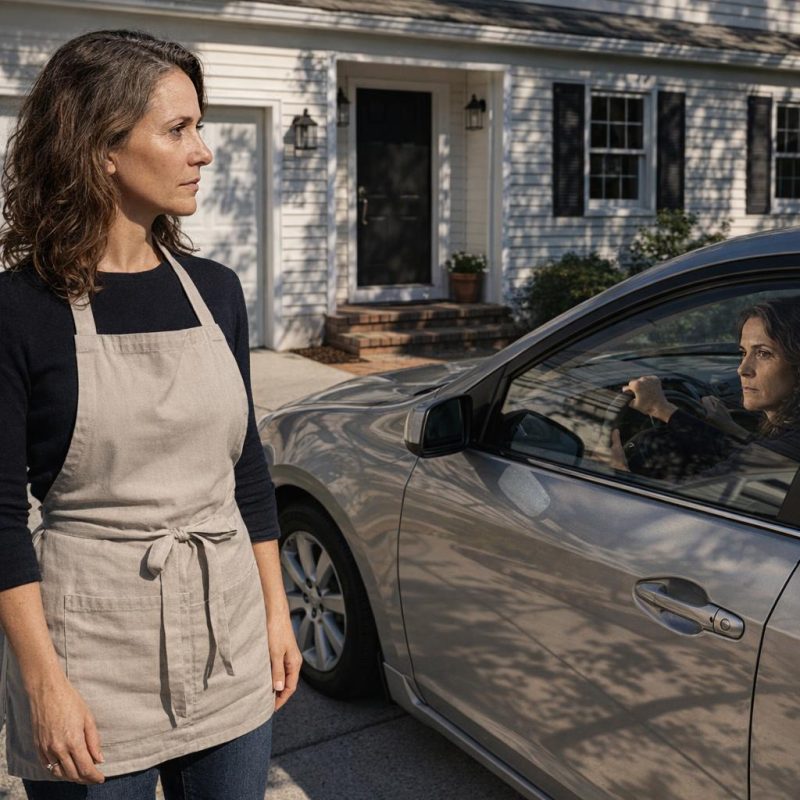 Image by RM AI
The Performance
Richard came home that Friday in a good mood, which was its own kind of weather system — unpredictable and requiring careful navigation. I had chicken roasting in the oven and a salad already dressed, the kitchen warm and smelling the way it always did on evenings he expected dinner waiting. He dropped his bag by the stairs, loosened his tie, and settled into his chair at the head of the table like a man who had never once questioned whether the chair belonged to him. I asked about his meetings. He talked. I listened and refilled his water glass and made the small sounds of interest that kept the conversation moving without requiring much from me. He mentioned Marcus, mentioned a deal that was apparently going well, mentioned a client dinner the following week. I said the right things at the right moments. The chicken was good — I knew it was good — and he ate without commenting on it, which was its own kind of comment. After dinner he moved to the living room and I cleared the table and washed the dishes, my hands moving through the familiar motions while the water ran warm over my wrists. The evening settled into its usual shape around me, ordinary and unremarkable on every surface, and I carried what I knew the way you carry something fragile — carefully, and close.
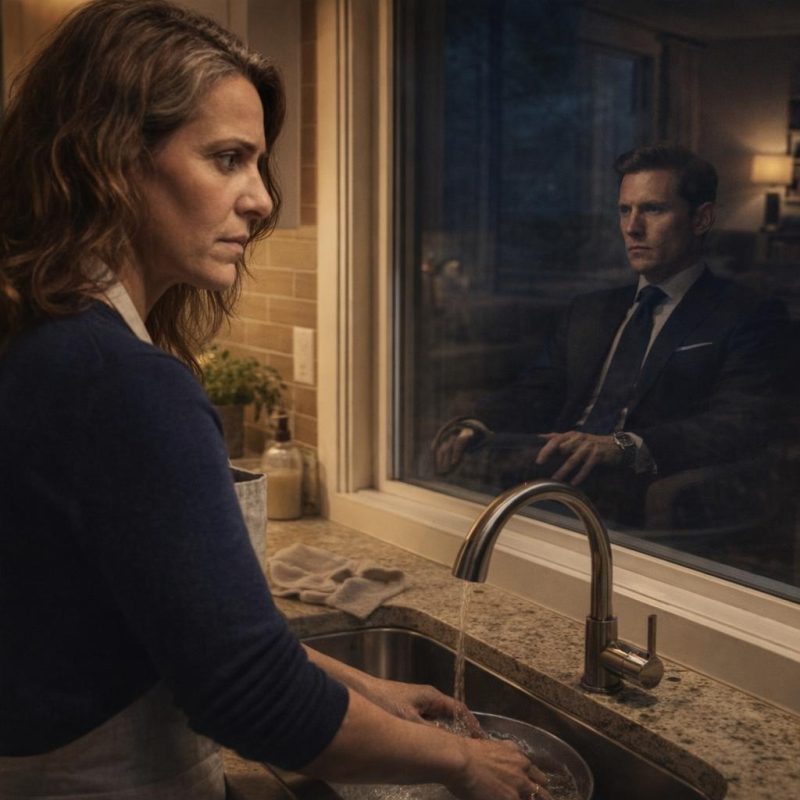 Image by RM AI
The Asset Transfer
Michael had been clear from the beginning that every transfer had to be documented, legal, and traceable — nothing that could be challenged later as concealment. I understood that. I wanted it that way. We met on a Wednesday morning, and he had already identified which funds qualified for protected transfer under the circumstances he'd outlined in our earlier meetings. He walked me through each transaction before we initiated it, explaining the account structure, the legal basis, the paper trail we were creating on purpose. I asked questions when I didn't understand something, and he answered them without making me feel slow for asking. There were four transfers in total. Each one required my authorization, my signature on the accompanying documentation, and a timestamp that Michael's office would retain in the file. The amounts weren't small. Seeing them laid out on paper made something in my stomach tighten, not from doubt but from the sheer reality of what I was doing — the size of it, the permanence of it. Michael kept his voice even throughout, methodical and calm, which helped. When the last form was signed and the final authorization submitted, we both looked at the screen where the confirmation was still loading. Then the status changed, and the word appeared: Confirmed.
 Image by RM AI
Let Him Move First
I asked Michael directly, near the end of that same meeting, when I should act. I'd been turning the question over for weeks — whether to file first, whether to confront Richard, whether to force the issue before he had a chance to do it on his terms. Michael leaned back slightly in his chair and was quiet for a moment before he answered. He said my legal position was already strong, but that it would be strongest if Richard moved first — especially if he did it publicly, in front of witnesses. He said that if Richard initiated, everything I'd put in place would be ironclad, and any attempt he made afterward to challenge the asset protections or the deed transfer would be significantly harder to argue. He said the word 'ironclad' the way lawyers say words they mean precisely. I asked what I was supposed to do in the meantime. He said: keep your routine, don't signal anything, and wait. I sat with that for a moment. It wasn't the answer I'd wanted — I wanted to be done, wanted the thing to be over — but I understood the logic of it. Michael slid a single page across the desk, a summary of everything filed and protected, and said, 'When he moves, you'll be ready.'
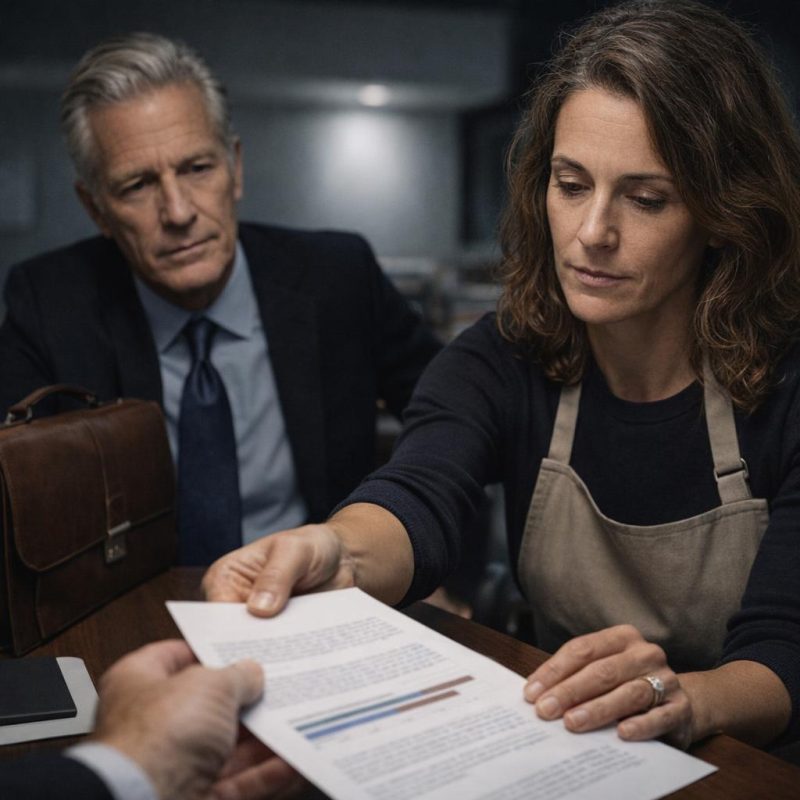 Image by RM AI
The Increased Arrogance
The shift in Richard happened gradually and then all at once, the way those things do. He'd always had a particular kind of confidence — the loud, room-filling kind that required an audience — but in the days leading up to Thanksgiving it took on a different quality. He was more dismissive than usual, quicker to cut me off mid-sentence, quicker to look through me rather than at me. He came home later, smelling of expensive scotch and something self-satisfied that I couldn't name. He stopped asking about my day entirely, which wasn't unusual, but the way he stopped felt different — like he'd decided the question was no longer worth the performance. I noticed all of it and said nothing. I kept cooking, kept the house running, kept my voice pleasant when he spoke to me. One evening I was in the kitchen finishing the prep list for Thanksgiving when I heard him in the hallway, his voice low and easy, clearly on the phone with someone. I wasn't trying to listen. But then I heard him say the words 'Thanksgiving dinner,' and I went very still at the counter.
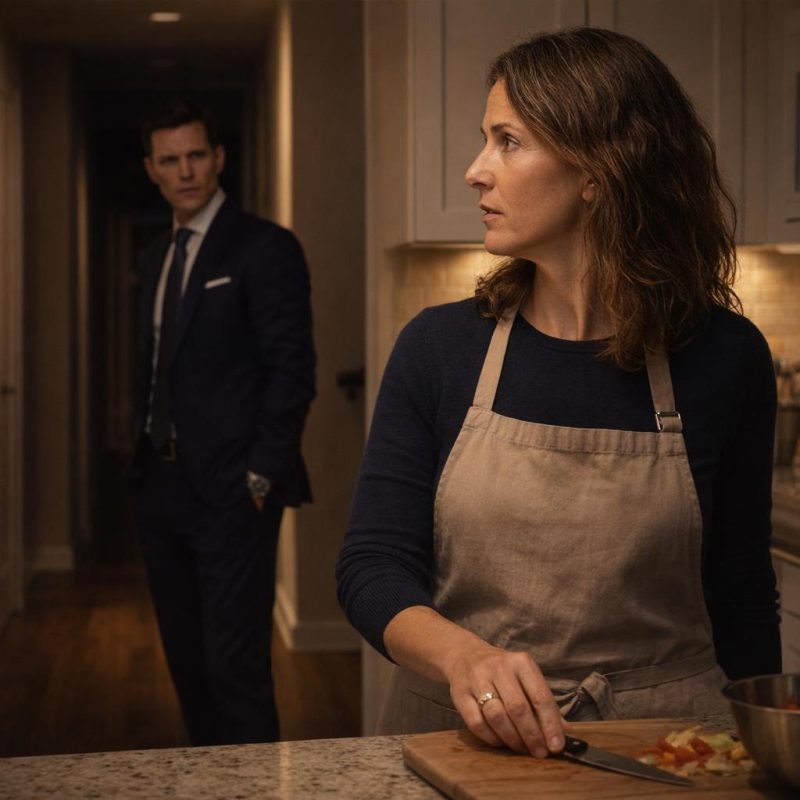 Image by RM AI
The Sensing
The next morning Richard asked me, over coffee, who exactly was coming to Thanksgiving. It wasn't the question itself that caught my attention — we'd hosted before, he knew the general shape of the guest list — it was the way he asked it. Specific. Deliberate. He wanted names. He asked whether Robert and Amanda were coming, whether my sister Sarah would be there, whether I'd invited anyone from the gallery. I told him yes to all of it, keeping my voice easy, watching his face for something I couldn't quite identify. He nodded slowly, and something in his expression settled in a way I couldn't read. Then he asked about the seating — how many at the main table, whether we'd need the extension leaf. Richard had never once in our marriage asked about the seating arrangement. I said I hadn't finalized it yet. He said to let him know, and went back to his coffee like the conversation had been perfectly ordinary. I stood at the sink after he left the room and turned the exchange over in my mind, looking for the shape of it. Something was gathering at the edges of the week, something I couldn't see clearly yet, and the feeling of it sat in my chest like a held breath that hadn't found its release.
 Image by RM AI
The Final Protections
I met with Michael two days before Thanksgiving. I told him about Richard's questions — the guest list, the seating, the phone call I'd half-overheard. Michael listened without interrupting, his pen resting still on the legal pad in front of him. When I finished, he asked a few clarifying questions, then pulled out the summary page he'd given me after our last meeting and went through it item by item. The deed transfer: filed and recorded. The account protections: active and documented. The financial discrepancy records: complete and in the court file. The protective order on the property: in place. He went through each one with the same measured calm he brought to everything, and by the time he reached the bottom of the page I felt something in my shoulders release that I hadn't realized I'd been holding. He said my position was as solid as it could be made. He said that whatever happened in the next few days, I was protected. I asked if there was anything else I should do. He shook his head and said, 'You've done the work. Now you wait.' I drove home through the grey November afternoon, the bare trees lining the road, and for the first time in months the waiting didn't feel like helplessness — it felt like the last quiet moment before something I was finally ready for.
 Image by RM AI
Thanksgiving Eve
Thanksgiving Eve arrived cold and clear, the kind of night that makes the lights inside look warmer than they are. I'd spent most of the day in the kitchen — stock simmering, pies cooling on the rack, the good tablecloth already pressed and laid out. Richard had been home since mid-afternoon, moving through the house with an ease that felt studied, like a man who knew exactly how the next twenty-four hours were going to go. He poured himself a drink without offering me one. He made a phone call in the study with the door most of the way closed. He came to the kitchen doorway once and watched me work for a moment without saying anything, then walked away. I kept my hands moving and my face neutral. Around nine o'clock I was carrying a stack of folded napkins through the hallway when I saw him through the open study door. He was standing at his desk, his back half-turned to me. He pulled open the bottom drawer, reached in, and drew out a thick envelope. He held it for just a second — his posture unchanged, shoulders square — and then he slipped it into the inside pocket of his jacket, which was hanging on the back of his chair.
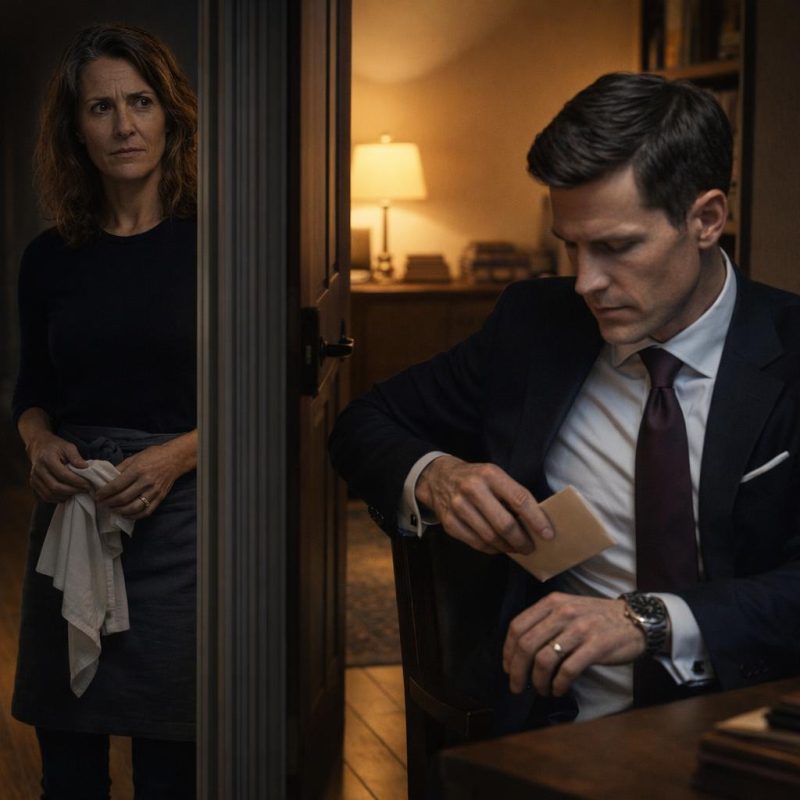 Image by RM AI
The Morning of Thanksgiving
I woke before the alarm, the way I always do on Thanksgiving, except this time my eyes opened into the dark and the first thing I saw — behind my eyelids, clear as a photograph — was Richard's hand sliding that thick envelope into his jacket pocket. I lay still for a moment, listening to the house. The furnace ticked. Somewhere down the hall, a door was already open; I could tell by the way the air moved. He was up. I pulled the covers back slowly and sat on the edge of the bed, feet on the cold floor, and let myself breathe. Michael had been clear: let him move first. I didn't know what was in that envelope, and I wasn't going to pretend I did. Whatever Richard was planning, I had done what I could to be ready. I didn't know exactly what he'd planned for today, and I wasn't going to pretend I did. But I felt as steady as I had in months. I stood up, smoothed the sheets out of habit, and walked to the window. The sky outside was still dark, just the faintest gray at the edges. Twenty people were coming to dinner. The house smelled faintly of yesterday's pies. I stood there in the quiet, and something settled in my chest — not peace exactly, but the steady, bone-deep sense that today was going to change everything.
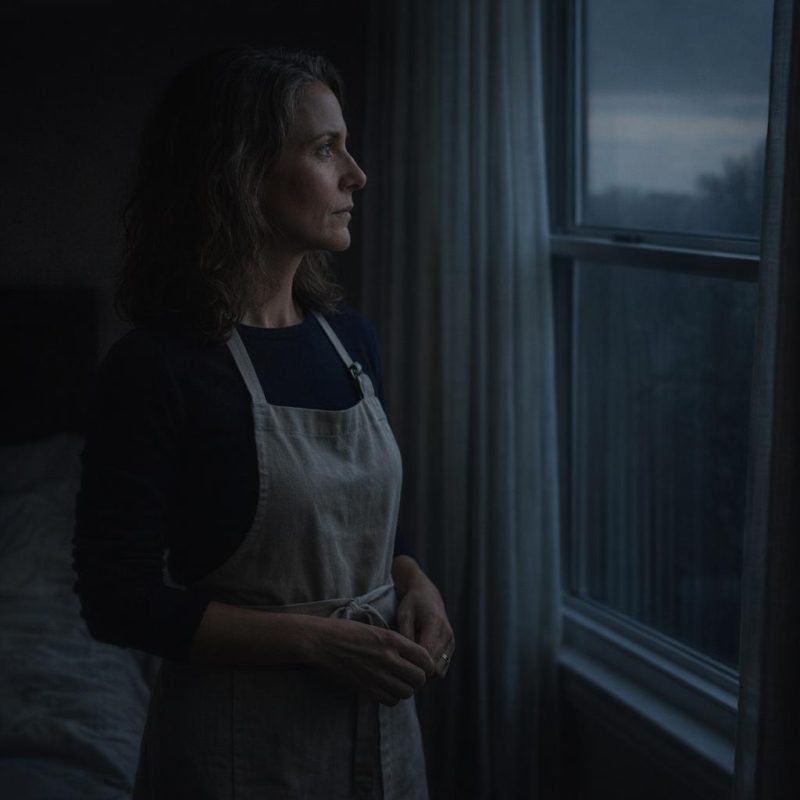 Image by RM AI
The First Chop
I was in the kitchen by four-thirty, the overhead light still too bright for that hour, the rest of the house dark and silent. I'd done this so many times — the onions first, then the celery, the carrots, the herbs — that my hands knew the order without being told. The knife found its rhythm almost immediately, that steady rock-and-press that turns a pile of vegetables into something useful. I'd always found a kind of peace in it. This morning felt different, though. Not anxious, exactly. More like alert. I was aware of every sound from the rest of the house — the creak of a floorboard upstairs, the distant sound of a shower running, then stopping. Richard moving through his morning. I kept my eyes on the cutting board and my hands moving. The stock pot was already on low. The turkey had been brining since yesterday afternoon. There were twenty people coming, and every dish on the menu was something I'd made a hundred times before. I knew this kitchen. I knew this work. What I also felt — quietly, without letting it show on my face — was that this Thanksgiving was different from the ones before it. Something had shifted in me over the past few months, something I was still learning to trust. The knife kept moving, steady and sure, and I let the weight of the waiting settle into the rhythm of it.
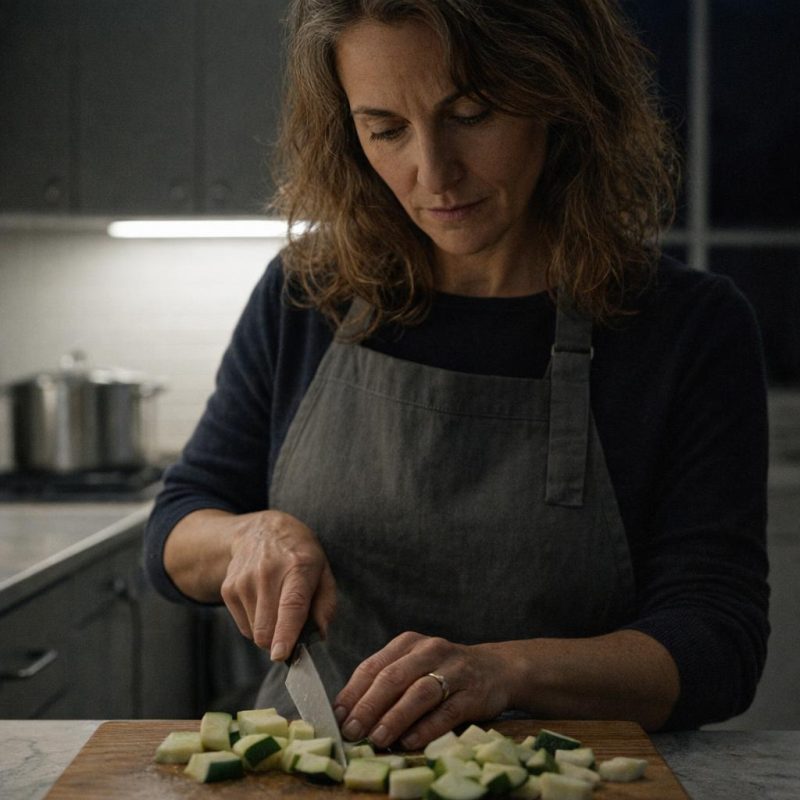 Image by RM AI
The Wine and the Patio
He came into the kitchen around ten, still in his weekend clothes, looking like a man with nowhere to be and nothing to worry about. He didn't say good morning. He didn't look at the roasting pan, the four side dishes already underway, the pies lined up on the counter. He opened the refrigerator, moved a few things aside, and pulled out the bottle of Burgundy I'd been saving for the table — the good one, the one I'd set aside for dinner. He poured himself a glass without a word, recorked it, and tucked it under his arm. Then he walked through the sliding door to the patio, pulled his chair into the thin November sun, and sat down like a man who had already won something. I watched him through the glass. He had his phone out, scrolling, completely at ease. His jacket was still hanging on the hook by the front door where he'd left it last night. I'd walked past it twice that morning already. I thought about the envelope I'd seen him slip into the inside pocket the night before. I didn't know exactly what he thought was going to happen tonight, but something in the set of his shoulders suggested he felt certain about it — and that ease, watching him sit there with my wine and his phone and his relaxed posture, was the thing I kept turning over in my mind.
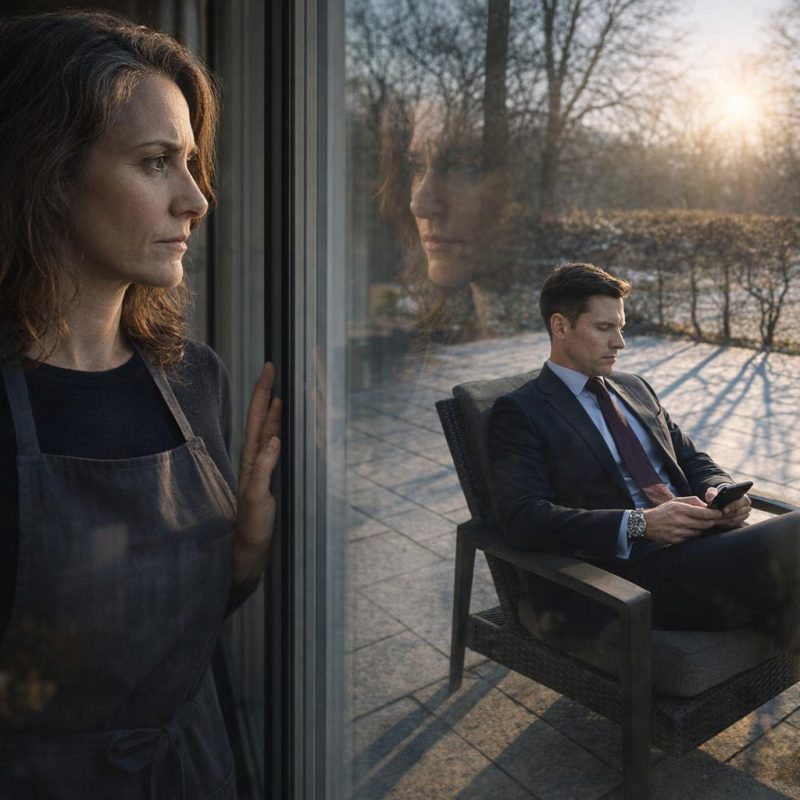 Image by RM AI
The Guests Arrive
The doorbell rang at five o'clock on the dot, and after that the house filled up fast. Coats and voices and cold air coming in with every new arrival, the hallway suddenly crowded with people I'd been feeding for years. Diana came in with a bottle of wine and squeezed my hand without saying anything, which was exactly what I needed. Sarah was right behind her, already scanning the room the way she always does, her eyes finding mine across the heads of other people. I smiled at her. She smiled back, but it was the careful kind — the kind that means she was watching. I moved through the next hour on autopilot: taking coats, directing people toward the drinks, checking on the turkey, answering the same three questions about the stuffing. Richard worked the room from the other side, laughing too loud at his own jokes, refilling glasses, performing the gracious host with the ease of long practice. I let him. Every time I passed the front hallway, I glanced at the row of hooks by the door. His jacket was still there, dark wool, hanging slightly heavier than the others. I thought about the envelope I'd seen him tuck into the inside pocket the night before — just a corner of it had been visible when the lapel shifted as he moved. I carried a platter of appetizers into the living room and kept my face warm and open, and I did not look at the jacket again.
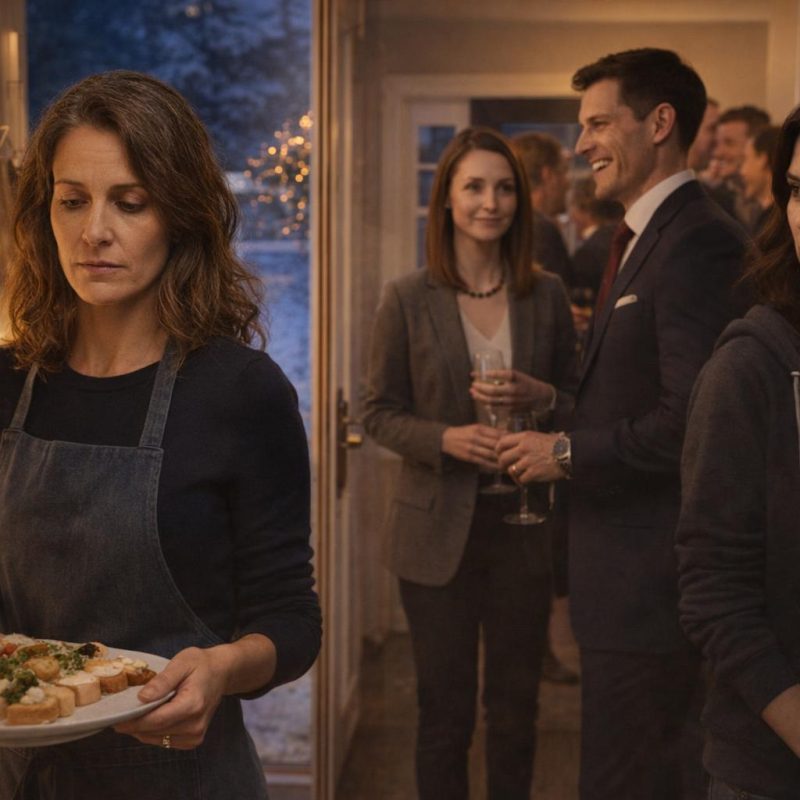 Image by RM AI
The Truth Revealed
The room had gone so quiet I could hear the candles. Richard was still standing at the end of the table, the divorce papers in his hand, his face arranged into the expression of a man delivering a verdict. I let him finish. Then I stood up. I told him — and I told everyone at that table — that I'd been working with an attorney named Michael since September. That I'd found irregularities in the business accounts back in the summer, the kind that don't appear by accident, and I'd spent three months documenting every transaction I could access. That by October, Michael had helped me secure the deed to this house in my name alone. That the joint accounts had been restructured. That copies of everything — every statement, every transfer, every record I'd been able to pull — were already with Michael's office and, as of two days ago, with a second attorney. Richard's face changed. I watched it happen. Marcus, across the table, went very still. Catherine's hand stopped moving on her wine glass. I kept my voice level. I said that I hadn't known exactly when Richard was going to make his move, but I'd known since September that he was going to make one. I said I'd spent ten hours cooking this meal, and I'd spent three months making sure that when this moment came, I'd be standing on solid ground. I looked at Richard and told the table I'd been building my case since September.
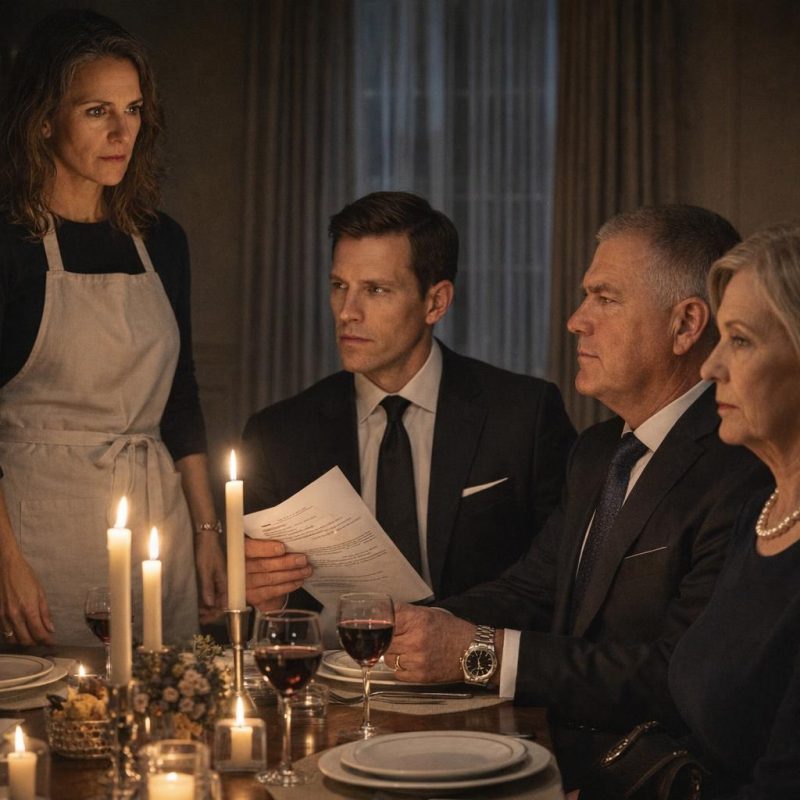 Image by RM AI
The Proud Looks
The silence after I finished speaking had a different quality than the silence before. Before, it had been shock — the held-breath kind, everyone waiting to see what came next. Now it was something more like the moment after a storm passes, when the air is still charged but the worst of it is over. People were looking at each other, recalibrating. Marcus had his eyes on the tablecloth. Catherine sat very straight, her wine glass untouched, her expression unreadable in the way that meant she was working hard to keep it that way. Robert cleared his throat quietly. Amanda, beside him, had both hands flat on the table like she was steadying herself. Sarah was the first one whose face I really saw — she was looking at me with something fierce and bright in her eyes, her jaw set, and I had to look away before I lost my composure entirely. Diana was at the far end of the table. She'd been quiet through all of it, which wasn't like her, and when I finally met her eyes she didn't say anything out loud. She didn't have to. Her lips moved, slow and deliberate, and I read them clearly across the length of the table: I knew it.
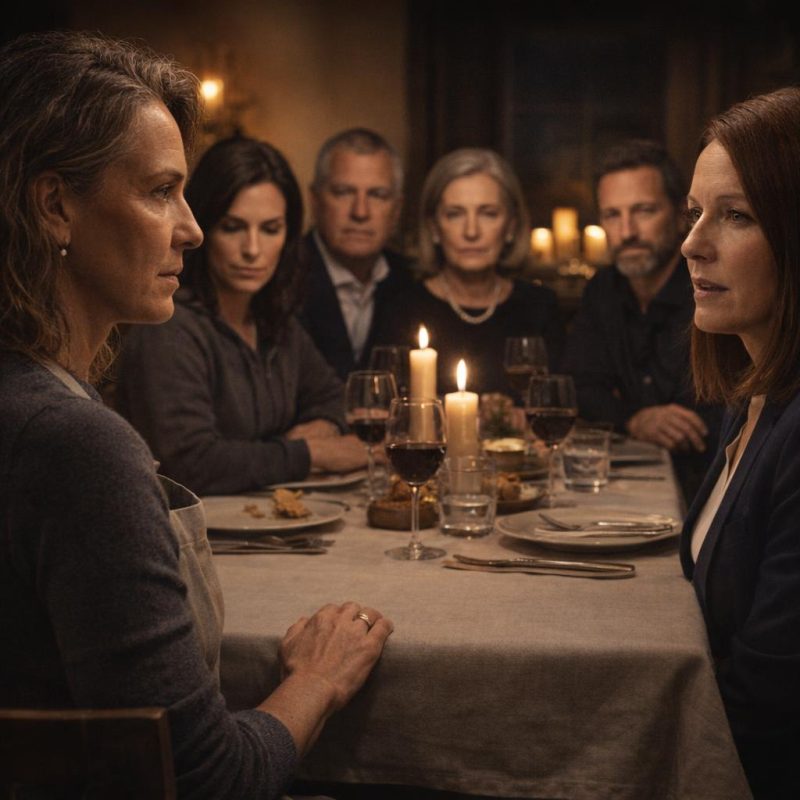 Image by RM AI
The Rally
It happened gradually, the way warmth comes back into a room after a window's been closed. Robert spoke first — quietly, to no one in particular — saying that he was sorry, that he hadn't known, that he wished he'd said something years ago. Amanda reached across and put her hand over mine for a moment without making a production of it. Diana moved her chair closer to Sarah's end of the table, and the two of them started talking in low voices, the kind of conversation that had clearly been waiting a long time to happen. Even Marcus, who had been studying the tablecloth for the better part of ten minutes, looked up and said, simply, that Richard had made his own choices and that he wasn't going to pretend otherwise. I didn't know what to do with that, exactly, but I nodded. Catherine hadn't moved from her chair. She wasn't crying, wasn't speaking — just sitting with her hands folded in her lap, looking at the centerpiece I'd arranged that morning with the last of the autumn flowers from the yard. I didn't go to her and she didn't come to me, and that felt right. Sarah pulled her chair next to mine and leaned her shoulder against me, and I felt the room settle — not back to what it had been, but into something new, something that had room in it for all of us to breathe.
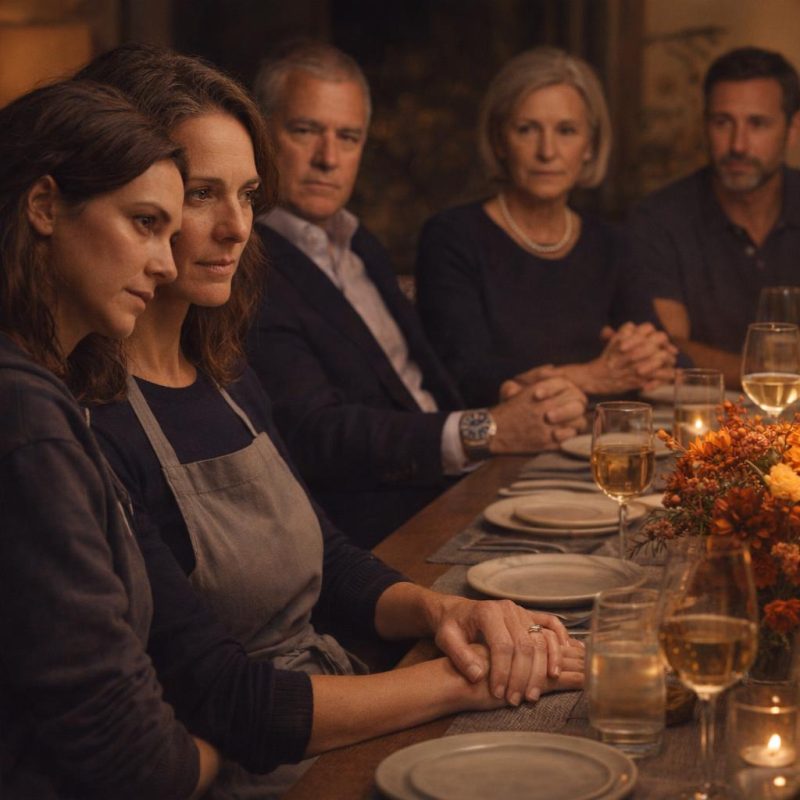 Image by RM AI
The Dinner Continues
Someone — I think it was Robert — said we should eat, and that was all it took. Diana started passing the sweet potatoes. Sarah carved the turkey with more confidence than the task required, and when she set the first plate down in front of me she said, 'This is the best bird you've ever made,' and I laughed, which surprised me. It was the first real laugh I'd had all day. The food was good — genuinely, embarrassingly good, the kind of meal that makes people go quiet for a moment before they start talking again. Amanda asked about the brine. Robert had two helpings of the stuffing. Somewhere between the second round of wine and the pie, the conversation found its way to my paintings — Diana brought it up, mentioning the gallery, mentioning Jennifer's name, and suddenly people were asking questions I hadn't expected to answer at a Thanksgiving table. Sarah told the story of the first piece I'd sold, which she'd witnessed and which she told better than I ever could. I sat at the head of my own table, in my own house, eating food I had made with my own hands, and I listened to people talk about my work like it was something worth talking about. The evening had become something I hadn't planned for and hadn't known to want — not the dinner I'd spent ten hours making, but a celebration I hadn't known I needed.
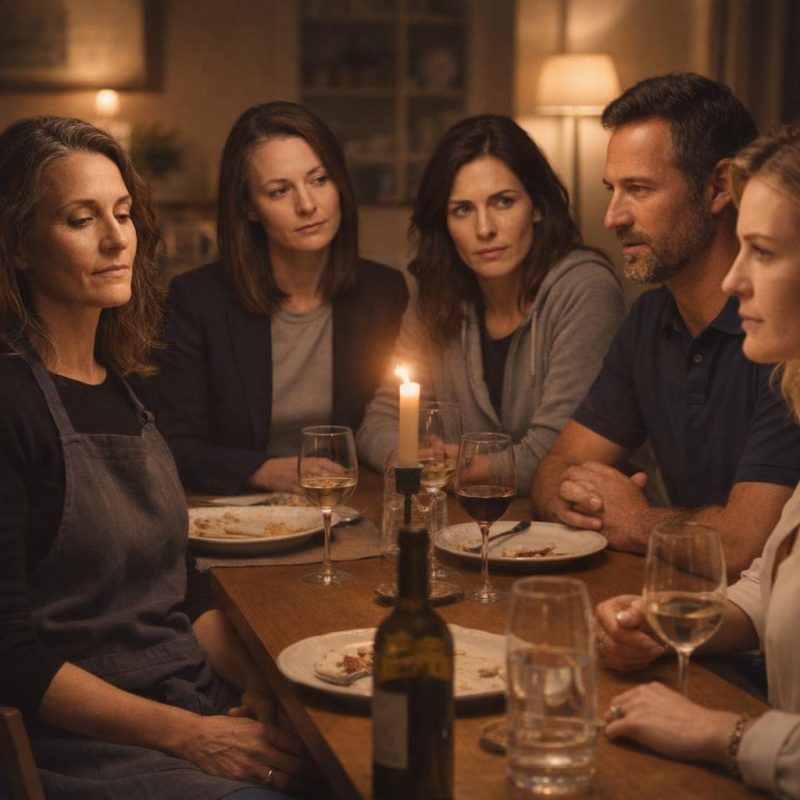 Image by RM AI
The Departures
The evening wound down the way good evenings do — slowly, reluctantly, with people lingering in doorways longer than they needed to. Robert was the first to put on his coat, and he hugged me in that quiet, solid way that men who don't know what to say sometimes do, which said everything. He told me I was going to be fine, and I believed him more than I expected to. Amanda was right behind him, and she held both my hands for a moment before she let go. She said she meant it about the gallery opening, that she wanted to come, that she'd been following my work and hadn't said so because she hadn't known how. I told her I was glad she said it now. Diana and Sarah stayed after the others filtered out, helping me wrap the leftover pie and stack the dishes without being asked, moving through my kitchen like they'd always belonged there. We didn't talk much. We didn't need to. When Amanda finally stepped through the front door into the cold night air, she turned back and said, 'Call me if you need anything — anything at all.'
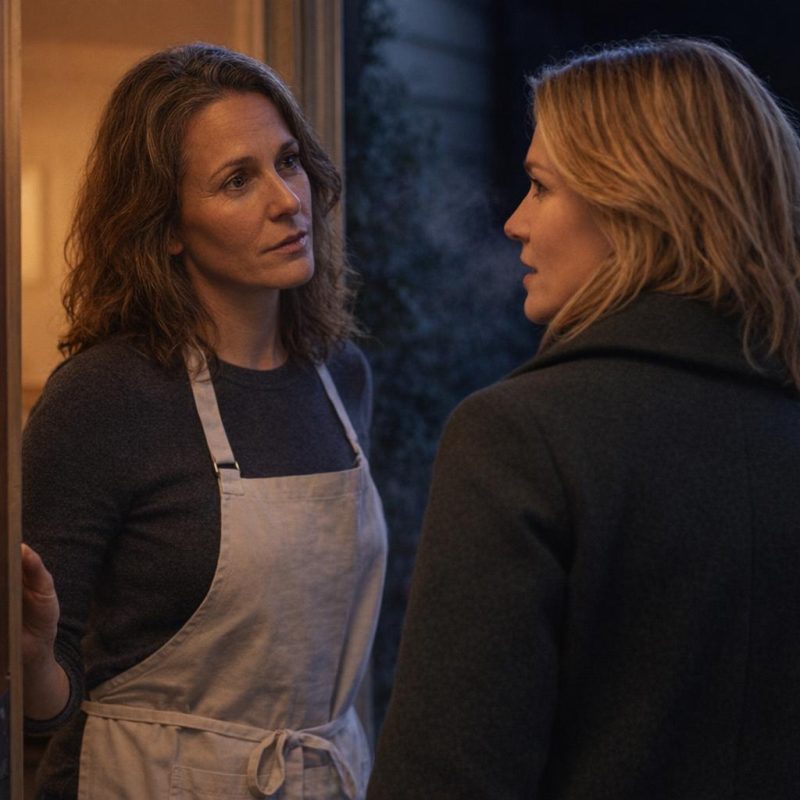 Image by RM AI
The House Alone
After Diana and Sarah left, I stood in the middle of the living room and just listened. The house was quiet in a way it hadn't been in years — not the tense, held-breath quiet of waiting for Richard to come home, but something else entirely. I walked through each room slowly, the way you do when you're seeing something for the first time even though you've seen it a thousand times before. The kitchen still smelled of roasted turkey and brown butter and the faint sweetness of the pie. The dining table held the ghost of twenty people who had just eaten and laughed and, for a few hours, made this house feel like mine. I ran my hand along the back of the chair at the head of the table — my chair, the one I'd sat in tonight without apology. I thought about the mortgage documents in the filing cabinet, the deed with my name on it, the years of payments I had quietly tracked and kept records of. Richard had announced his departure like it was a punishment. He hadn't understood what he was leaving behind. The house was still and cool and completely, legally mine.
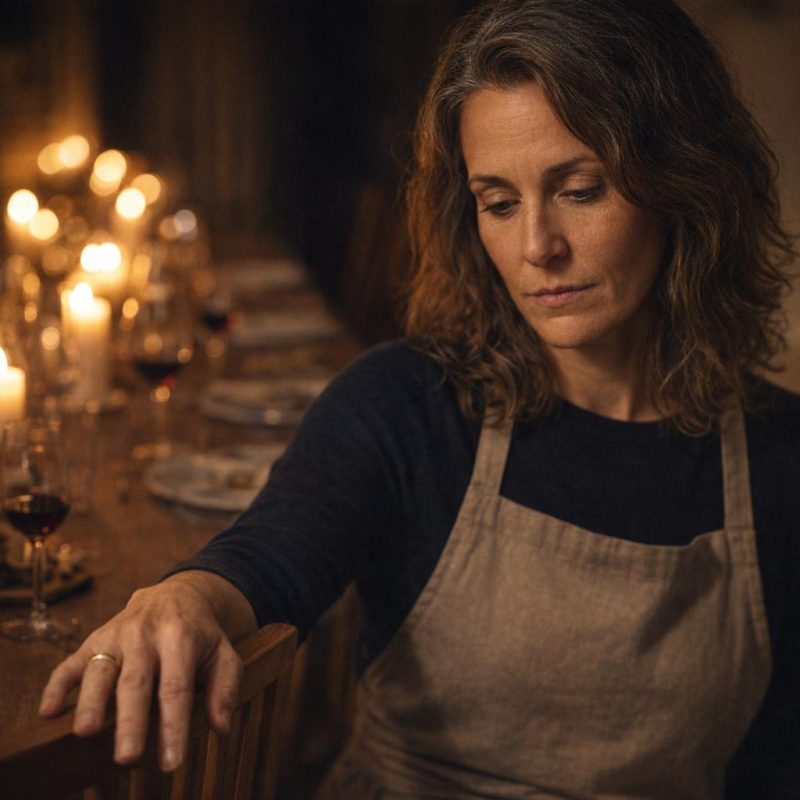 Image by RM AI
The Legal Contact
It was four days after Thanksgiving when Michael called. He didn't open with pleasantries — that wasn't his style. He told me that Richard's attorney had reached out that morning, and that the tone of the call had been interesting. I drove to Michael's office that afternoon and sat across from him at the wide oak desk while he walked me through it. Richard's lawyer had come in looking to negotiate, which Michael said was already a telling sign. You don't negotiate when you have leverage. You negotiate when you're trying to minimize damage. Michael laid out what we had — the documentation, the timeline, the transfers — and explained that Richard's position was, in his measured legal language, 'significantly compromised.' I asked him what that meant in plain terms. He said it meant Richard couldn't fight the embezzlement evidence without exposing himself to consequences far worse than a divorce settlement. His attorney knew it. Richard almost certainly knew it. I sat in that chair and felt something I hadn't expected: not triumph exactly, but a deep, settled calm. All those months of careful record-keeping, all those quiet evenings photographing documents and saving files — none of it had been paranoia. It had simply been preparation, and preparation, it turned out, had been enough.
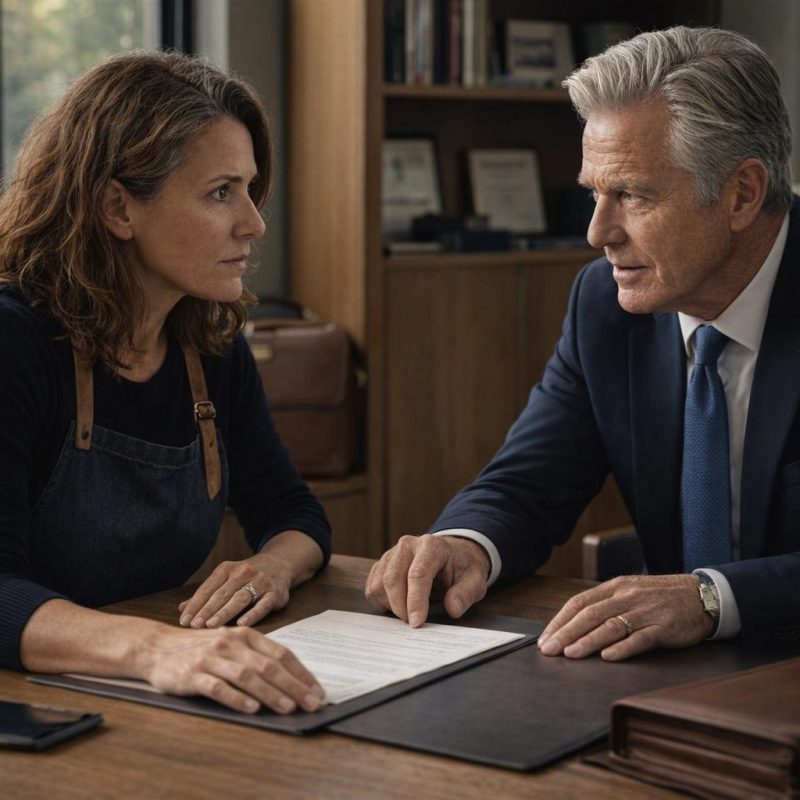 Image by RM AI
The Intimidation Attempt
Richard didn't take the news quietly. The calls started the day after Michael's meeting with his attorney — three in one afternoon, each one going to voicemail because Michael had told me not to pick up. I listened to the first message once and deleted it. His voice was tight and clipped, the way it got when he was performing anger for an audience of one, and the words were the kind designed to make you feel small and foolish and outnumbered. His lawyer sent two letters in the same week, both of them full of language meant to sound like power. Michael read them, flagged the relevant parts, and handled every response himself. I didn't write a single word back to Richard. I didn't call. I didn't text. When a message came through on a Thursday evening that was clearly meant to rattle me — something about what I thought I was doing, something about consequences — I read it once, set my phone face-down on the kitchen counter, and went back to the painting I'd been working on. The canvas was a study in blues and grays, something I'd started the week after Thanksgiving, and it was coming together better than anything I'd made in years. When I picked up the phone again an hour later, I noticed my hands were completely steady.
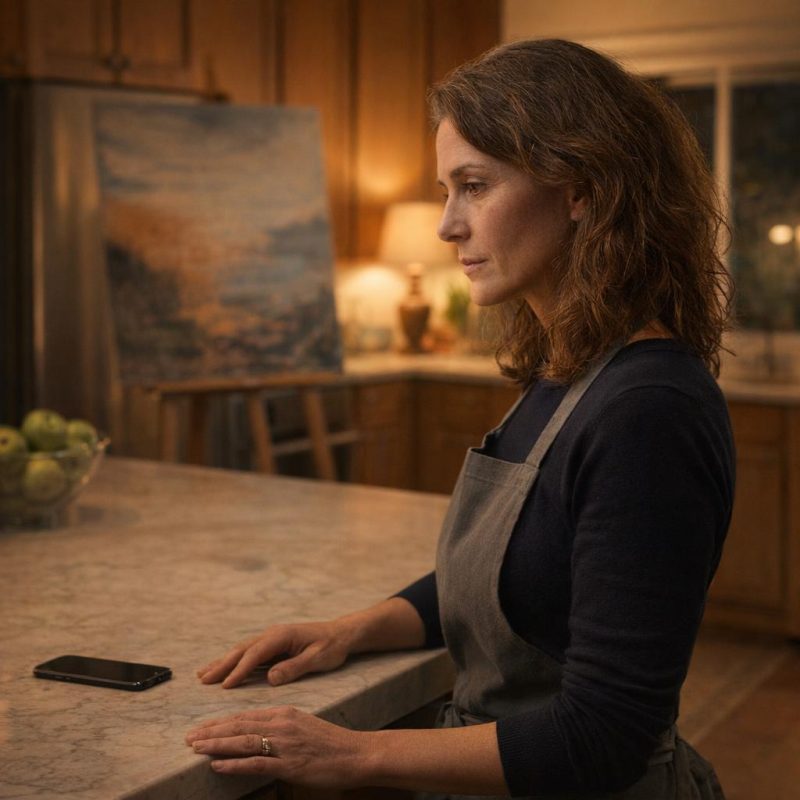 Image by RM AI
The Documentation Presented
The formal meeting happened on a Tuesday, two and a half weeks after Thanksgiving. Michael had arranged it with Richard's attorney — not a mediation, just a presentation of what we had. I sat to Michael's left and watched him open the first folder. He was methodical about it, the way a surgeon is methodical: no drama, no flourish, just one document placed after another in a sequence that told a story so clearly it barely needed narration. The bank transfer records. The shell account documentation. The timeline Michael had reconstructed, month by month, showing the pattern of withdrawals that had quietly drained the joint accounts over three years. Richard's attorney was a man in his late fifties with a practiced neutral expression, and I watched that expression shift as the folders accumulated. He asked a few questions. Michael answered each one with another document. At some point the attorney stopped asking questions and started making notes. I didn't say anything through most of it — there was nothing I needed to say. The evidence didn't require my voice. By the time Michael closed the last folder and folded his hands on the table, the room had a particular quality to it, the kind that comes when every argument has already been answered before it could be made.
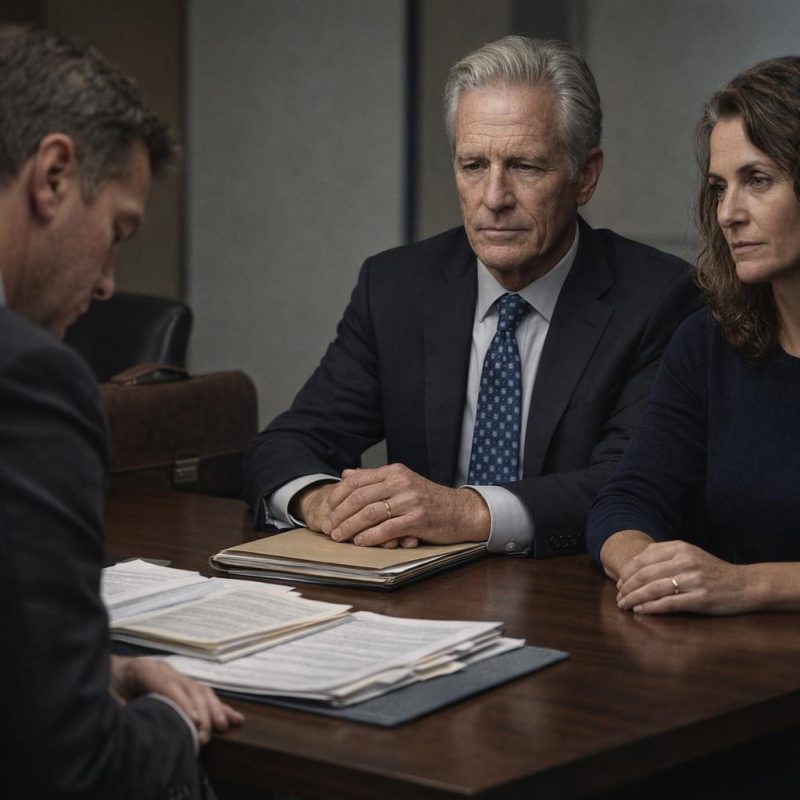 Image by RM AI
The Collapse
Michael called me the next morning before I'd finished my first cup of coffee. He said Richard's attorney had contacted him late the previous evening. I set my mug down and waited. Michael had a way of delivering information without editorializing, which I'd come to appreciate — he gave you the facts and let you feel whatever you needed to feel about them. He told me the attorney had indicated that Richard understood the situation and was prepared to discuss resolution. I asked what that meant. Michael said it meant they weren't making demands anymore. He said Richard's attorney had asked, specifically, what I was looking for in terms of settlement. I sat with that for a moment. Three months ago, Richard had stood up at my Thanksgiving table in front of twenty people and announced he was leaving, like he was doing me a favor, like he held every card in the deck. He had spent the weeks since then sending threatening messages and aggressive legal letters, trying to make me feel cornered. And now his attorney was on the phone with Michael asking what I wanted. I asked Michael to repeat it, just to hear it again. He did, without impatience: they were asking what I wanted.
 Image by RM AI
The Settlement Terms
Michael and I spent the better part of two days going through the settlement terms, line by line. I kept the house — that was never in question, not with the documentation we had and my name already on the deed. Richard would pay back the full amount of the embezzled funds, structured as a lien against his share of the business assets so there was no way to defer or disappear it. I received a significant portion of the joint investment accounts, the ones he'd been quietly drawing down, calculated against what they should have held if the transfers had never happened. He covered my legal fees in full. Michael had drafted the language carefully, making sure every clause was specific and enforceable, no room for creative interpretation later. Richard's attorney pushed back on two items. Michael held firm on both. By the end of the second day, the pushback had stopped. I sat in Michael's office on a gray December afternoon and read through the final draft slowly, the way you read something you want to remember. Every line represented something I had built, something I had protected, something I had refused to let be taken from me. Michael slid the summary sheet across the desk, and I read the settlement terms that gave me everything I had earned.
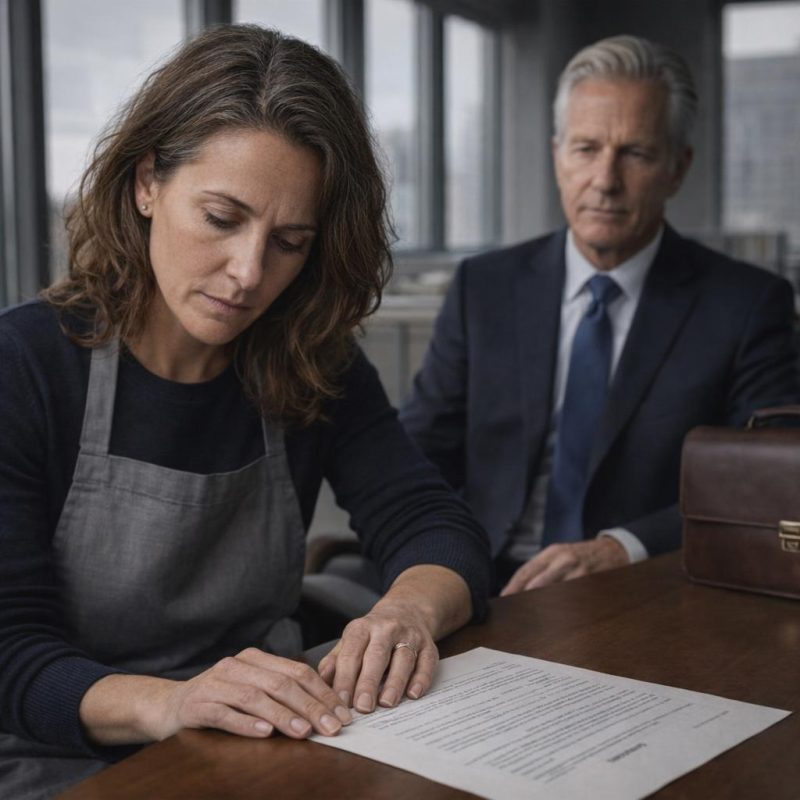 Image by RM AI
The Final Signatures
We met at Michael's office on a Thursday morning in December, ten days before Christmas. Richard arrived with his attorney and sat across the conference table without looking at me directly, which I noticed but didn't remark on. He looked tired in a way that expensive clothes couldn't fix — the kind of tired that comes from weeks of losing. Michael set the documents in front of each of us in turn, organized and tabbed, and walked through the signing order with the calm efficiency I'd come to rely on. I signed my name on each page with a hand that didn't shake once. I'd practiced nothing. I'd rehearsed nothing. My hand was simply steady because I had nothing left to be afraid of. Richard's attorney leaned over and said something quiet to him before the first signature, and Richard picked up his pen. I watched him work through the pages — the house, the accounts, the lien, the legal fees — each tab representing something he had assumed would always be his, each signature a concession he had never imagined making when he stood up at my dinner table two months ago and thought he was ending something on his own terms.
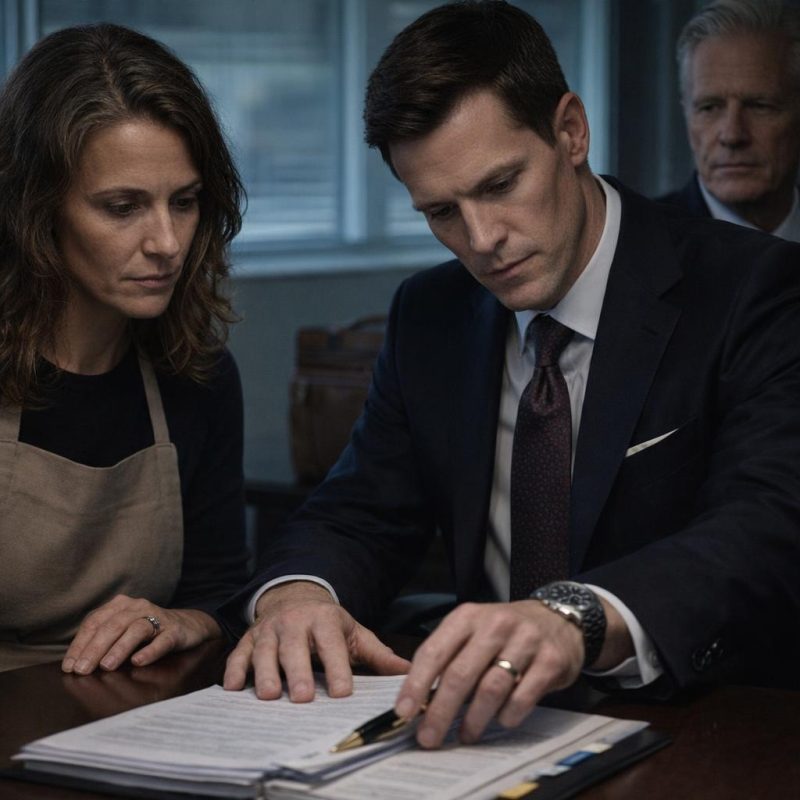 Image by RM AI
The Legal Conclusion
The courthouse was quieter than I expected for a Tuesday morning. Michael had told me the hearing would be brief — the settlement terms were already agreed upon, the documentation was thorough, and judges don't linger when both parties have signed everything and the math is clean. He was right. We sat in a small courtroom that smelled like old carpet and recycled air, and the judge reviewed the file with the focused efficiency of someone who had done this ten thousand times. Richard wasn't there. His attorney represented him, which told me everything I needed to know about how Richard felt about watching this play out in person. The judge asked two clarifying questions — both directed at Michael — and then picked up his pen. I watched him work through the signature block at the bottom of the decree, unhurried, methodical. Michael leaned over and said quietly, "That's it. It's done." I nodded, but I didn't speak. I just sat there holding my copy of the decree, the judge's signature still fresh on the page, and felt the particular weight of a door closing on something that had taken years to build and two months to dismantle.
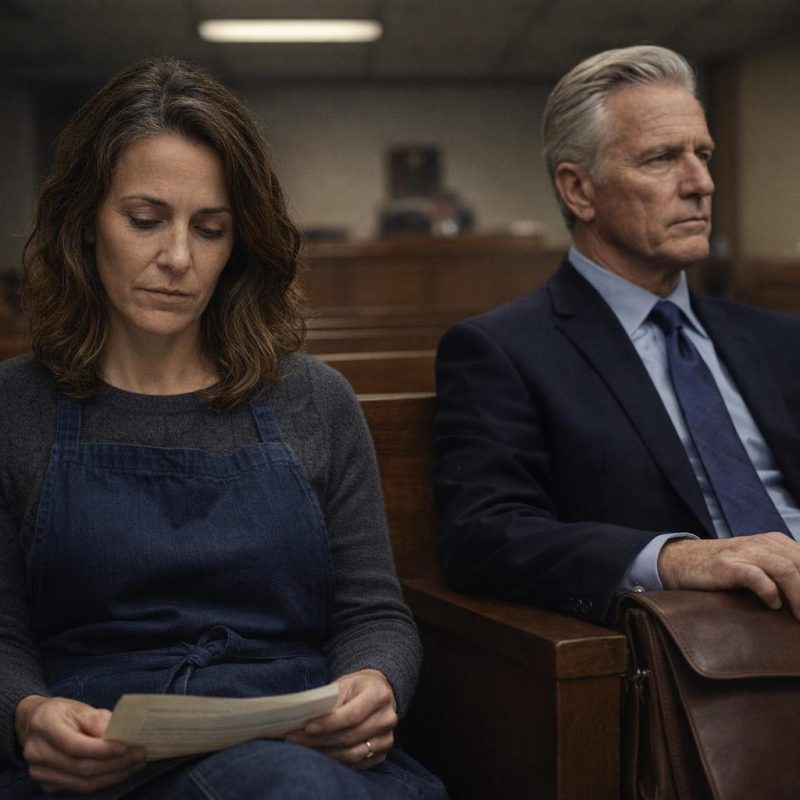 Image by RM AI
The Renovation
It started with the paint. I'd lived with Richard's choices for so long — the cold grays, the aggressive charcoals, the palette of a man who thought restraint was the same thing as taste — that standing in the paint aisle with my younger sister Sarah felt almost disorienting. She held up a warm terracotta swatch and raised her eyebrows. "This one," she said, like it was obvious. It was. We painted the living room that weekend, and then the hallway, and then I couldn't stop. The leather sectional Richard had picked out — the one I'd always hated — went to a consignment shop on a Wednesday. I replaced it with a linen sofa in a soft sage green that made the room feel like it could breathe. Sarah helped me clear out the spare bedroom and we built the shelving ourselves, badly at first and then better, and I set up my easels and my supply drawers and my reference boards and stood in the middle of what was now, unmistakably, a studio. The house still had the same bones. But it felt like mine for the first time — like something I had chosen rather than inherited.
 Image by RM AI
The Gallery Offer
Jennifer had been following my work for almost three years before she called. I knew her from a group show I'd participated in the previous spring — she'd stopped in front of two of my pieces for a long time without saying anything, which I'd learned was her version of a compliment. When she called in January she didn't lead with pleasantries. "I want to give you a show," she said. "A real one. Solo. Six weeks from now if you can get me fifteen to eighteen pieces." I sat down on the edge of my studio stool and looked at the canvases stacked against the wall. I had eleven finished. I told her I could do it. She told me the gallery had been waiting for work like mine — work that had something personal in it, something that had actually cost the person who made it. I didn't tell her how much it had cost. She probably already knew, the way people in her world tend to know things. After I hung up I stayed in the studio for a long time, surrounded by the smell of linseed oil and dried paint, and let the quiet settle around me like something I had finally earned.
 Image by RM AI
The Opening Night
The gallery was full by seven-thirty. I stood near the back wall with a glass of wine I kept forgetting to drink and watched people move through the space — stopping, leaning in, reading the small cards beside each piece. Diana found me first, wrapping both arms around me and saying nothing for a moment, which was exactly right. Sarah arrived with flowers I told her were unnecessary and she ignored me completely. Michael came in a dark blazer and shook my hand with both of his, which from him felt like a standing ovation. Jennifer worked the room with the practiced ease of someone who had done this a hundred times, steering collectors toward the larger canvases, pausing to introduce me to people whose names I recognized from the arts section of the paper. Two pieces sold before eight o'clock. A woman I'd never met told me the painting in the far corner had made her cry, and she said it like it was a gift she was giving me, and I think it was. I had walked into that Thanksgiving dinner ten months ago as someone's wife and someone's host and someone's domestic arrangement. I walked out of that gallery as someone who had built something real from everything he had tried to take.
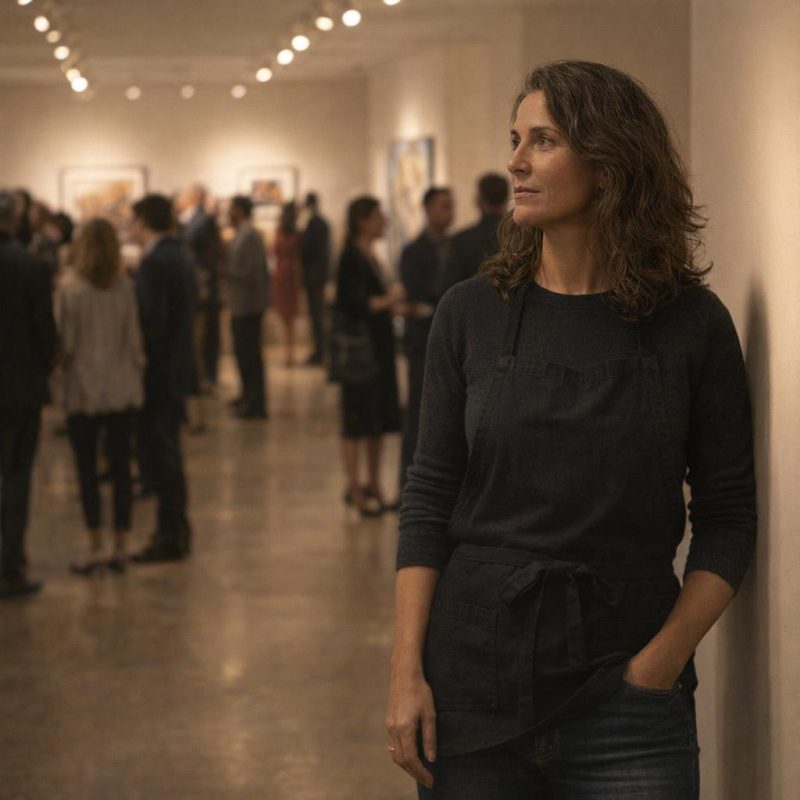 Image by RM AI
KEEP ON READING

The 10 Youngest Monarchs In History & The 10 Oldest
Age Is Just A Number. Imagine being crowned king or…
By Chase Wexler Mar 11, 2025
You Think You Have Problems? These Royal Families Were Cursed
Boasson and Eggler St. Petersburg Nevsky 24. on WikimediaHeavy is…
By Ashley Bast Dec 5, 2025
You Can Thank This Greek-Canadian For Creating Pineapple On Pizza…
Love it or hate it, pineapple on pizza sparks debate…
By David Davidovic Dec 1, 2025
Yes, Female Gladiators Existed, And Here's Everything You Need To…
History of Women in Combat. Most people picture gladiators as…
By David Davidovic Jan 17, 2026
Yes, Australians Once Lost A Battle Against Flightless Birds
David Clode on UnsplashIn 1932, the Australian military went to…
By David Davidovic Nov 24, 2025
The Y2K Bug: Why Did Everyone Think Year 2000 Was…
Alan W on UnsplashOn December 31, 1999, people all over…
By Christy Chan Dec 22, 2025