

I Spent 10 Years Building Our Company. My Brother Took 10 Minutes to Destroy My Life. So I Took His Empire Down in 20.
I Spent 10 Years Building Our Company. My Brother Took 10 Minutes to Destroy My Life. So I Took His Empire Down in 20.
Ten Years in a Cramped Garage
People always ask me how we built Sterling Logistics from nothing, and I never know where to start. The honest answer is: a garage in Millbrook, a rented Freightliner with a cracked side mirror, and two brothers who were too stubborn to admit they had no idea what they were doing. That was ten years ago. Leo handled the phone calls, the handshakes, the pitch meetings where he'd walk in wearing a blazer he'd bought on clearance and somehow convince people he was already successful. I handled everything else — the route planning, the fuel logs, the invoices, the insurance renewals, the driver schedules. We split the work the way we split everything growing up: Leo got the spotlight, I got the spreadsheets. And honestly? I didn't mind. The spreadsheets were where the real company lived. By year three we had eight trucks. By year seven, twenty-two. Now we were sitting at forty long-haul rigs, contracts with four regional distributors, and a ten-year anniversary gala two weeks out. I'd spent the better part of a decade watching those numbers climb, and standing in the middle of it all, I felt the full weight of what we'd built together.
 Image by RM AI
The Merger Announcement
Leo dropped the merger news at Sunday dinner, the way he always dropped big news — casually, between bites, like it was something he'd almost forgotten to mention. A major national logistics firm had approached us. Preliminary talks were already underway. The deal, if it closed, would value Sterling at somewhere north of forty million dollars. My fork stopped halfway to my plate. Forty million. I ran the numbers in my head automatically, the way I always do, and they held up. We'd built something worth that. We actually had. My dad pushed back from the table and raised his glass before Leo even finished the sentence. He talked about Leo's vision, Leo's instincts, Leo's ability to see the big picture. My mom was already tearing up. I jumped in at one point to mention that our operational metrics were in strong shape for due diligence — clean maintenance records, solid driver retention, consistent on-time delivery rates. My dad nodded like I'd read a weather report. Leo caught my eye across the table and gave me that easy grin of his, the one that said thanks for handling the boring stuff. And I smiled back, because that's what I always did. I told myself it didn't sting. Then my dad raised his glass a second time, and I watched the look that crossed Leo's face when the toast landed — pure, uncomplicated pride, every bit of it aimed at him.
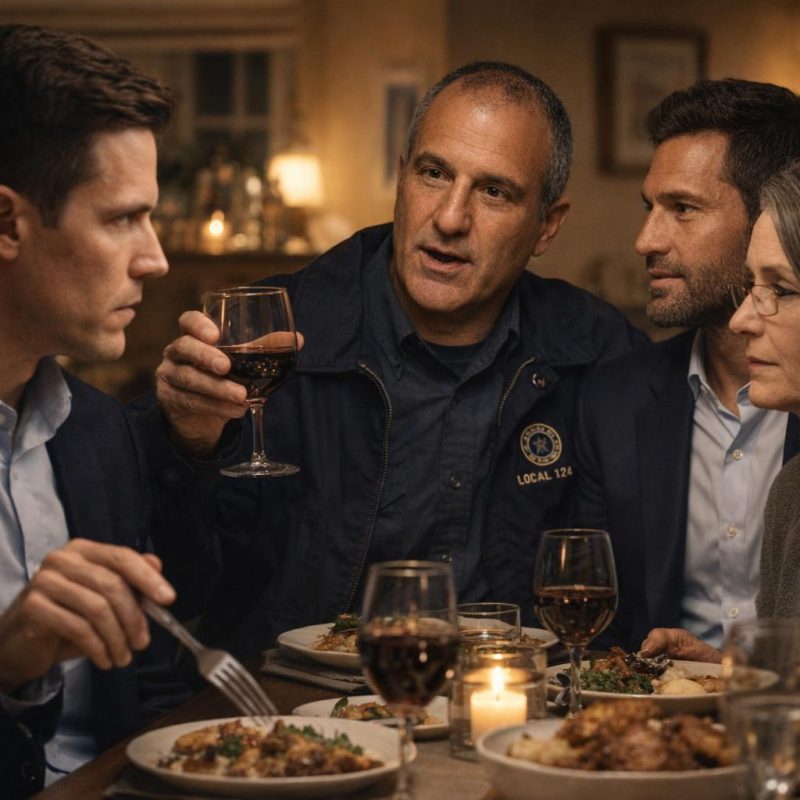 Image by RM AI
Division of Labor
The weeks leading up to the merger due diligence had a rhythm to them, and I settled into it the way I always settled into heavy workloads — head down, coffee going cold on the desk, spreadsheets open on two monitors. Leo was in and out of the office constantly, flying to meetings I only heard about secondhand. He'd stop by my desk on his way out the door, jacket over one arm, already on his phone, and say something like 'you've got it covered, right?' and I'd say yes, because I always did. Vanessa stopped by one afternoon with lunch for him — some kind of Thai place in a paper bag, smelling like lemongrass — and the two of them stood in the hallway outside my office for a few minutes before he left for another investor meeting. She waved at me through the glass. I waved back. I spent that afternoon pulling together operational metrics for the due diligence package: truck utilization rates, maintenance cost per mile, driver turnover numbers. Everything looked solid. Better than solid, actually. I was proud of those numbers in the quiet, private way I was proud of most things I built. When Leo finally left for the day, the office went still. Just the hum of the HVAC and the cursor blinking on my screen, and the particular quiet of a place that runs because someone stayed behind to keep it running.
 Image by RM AI
The First Discrepancy
It was a Tuesday afternoon in late October when I first noticed it. I was working through the monthly maintenance invoices — routine stuff, the kind of line-item review I'd done a hundred times — when one entry stopped me cold. An invoice from a vendor called Meridian Fleet Services, billing us for routine maintenance on a single long-haul rig. The amount was $14,800. For one truck. One service visit. I cross-referenced it against our master service log. Nothing. No matching entry, no work order, no technician sign-off. I checked the truck ID against our fleet roster. The rig existed — it was one of our newer long-haul units — but there was no record of it being serviced by Meridian or anyone else that month. I sat back and looked at the invoice again. The amount bothered me in a specific way I couldn't quite articulate yet. It wasn't outrageous enough to be an obvious mistake, but it was too clean — a perfectly round number, no parts breakdown, no labor hours itemized. Just a flat fee and a vendor name I didn't immediately recognize. I flagged it in the system and made a note to follow up with accounting. Probably a misfiled work order, I told myself. These things happened. But I kept coming back to that number — too round, too clean, sitting there without an explanation.
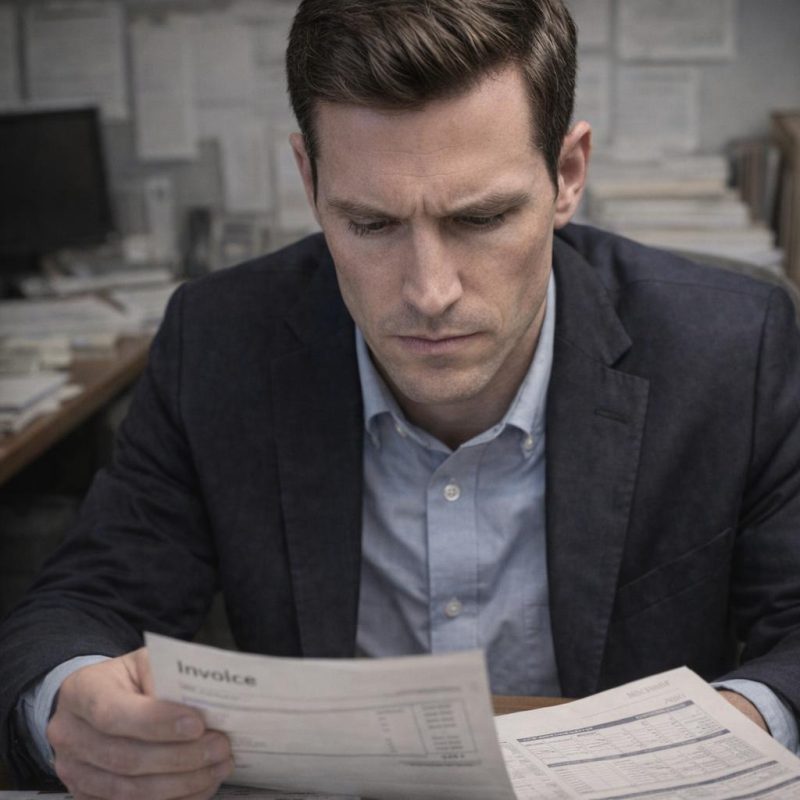 Image by RM AI
Offshore Accounts
Two weeks later I was deep in the due diligence package, pulling together every financial record the acquiring firm's team had requested, when I went back to the Meridian invoice. I'd meant to follow up sooner, but the merger prep had swallowed everything. I pulled up the offshore maintenance account — we used it for servicing rigs that ran international cross-border routes — and started working through the transaction history. I found the original Meridian invoice. Then I found three more. Same vendor. Same format. Same flat-fee structure with no itemized breakdown. Amounts of $12,400, $15,200, and $11,600. I opened the service log database and searched by vendor name. No results. I searched by the truck IDs listed on the invoices. No matching service records for any of them. I sat there for a moment, tapping my pen against the desk. My first thought was that there had to be a separate filing system for offshore maintenance work — something set up before I'd taken over the account reconciliation, maybe a legacy process I'd never been looped in on. That was the most logical explanation. I made a note to ask Sarah in accounting whether she'd seen documentation filed separately for this vendor. Then I pulled up the offshore account summary one more time, and there they were: three more invoices I hadn't opened yet, each one from Meridian, each one with no matching service record in the system.
 Image by RM AI
Running the Numbers
I took the whole thing home with me that Friday. Not physically — I exported the data to my laptop and spent the weekend at my kitchen table with a pot of coffee and a legal pad, working through it the way I work through any problem that doesn't immediately resolve: methodically, from the beginning. I built a pivot table sorting maintenance spending by vendor, truck ID, and billing date. The domestic vendors were clean — invoices matched service records, amounts were itemized, everything reconciled the way it should. The offshore accounts were different. Every Meridian invoice clustered in the same months: March, July, and October of the previous year. I pulled Leo's travel calendar from the shared company drive and laid it next to the billing dates. He'd been traveling for investor meetings during all three windows. I stared at that for a while. It could mean anything. Leo traveled constantly during merger prep — those months weren't unusual. The offshore vendor probably just had a different reporting cycle, or filed documentation through a channel I hadn't mapped yet. I told myself I was pattern-matching on incomplete data, which is the most dangerous thing an analyst can do. I needed the actual service logs, not just the invoices. I needed to see the paper trail on the other end. I closed the laptop around midnight and sat there in the kitchen light, looking at the columns that should have matched but didn't.
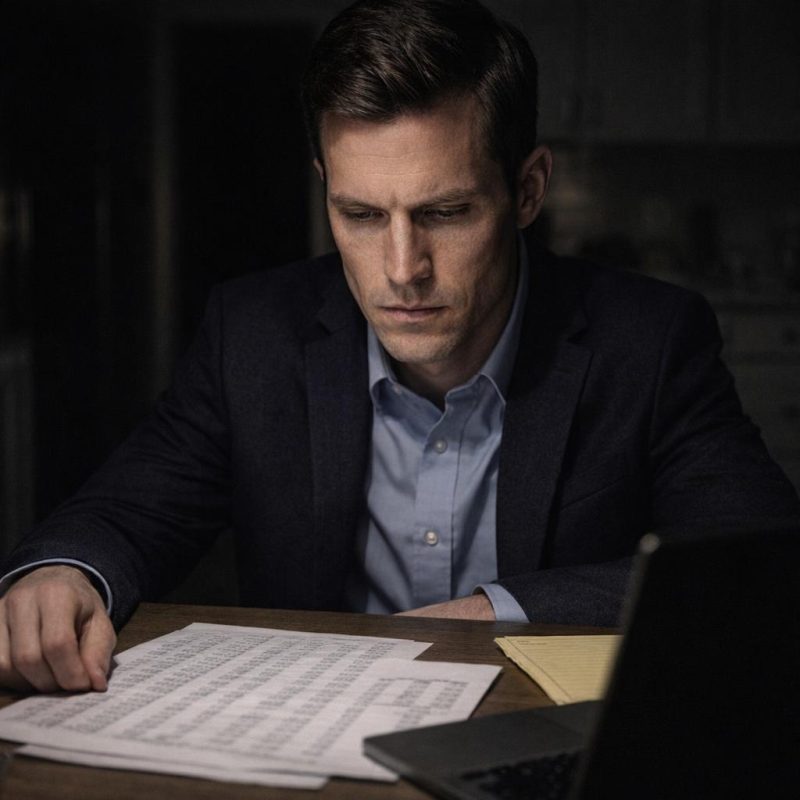 Image by RM AI
Missing Service Logs
I was at the office by six-thirty Monday morning, before anyone else arrived. I wanted the full database access and the quiet to work through it without interruption. I ran the search three different ways: by vendor name, by truck ID, and by date range covering every Meridian invoice in the system. Each search came back the same — no matching service records. Zero results. I tried alternate spellings of the vendor name in case there'd been a data entry inconsistency. Nothing. I checked whether any of the truck IDs had been reassigned or retired from the fleet. They were all active units, currently on routes. I went down to the records room on the second floor, where we kept physical documentation going back to the company's founding. The filing system down there was old-school — hanging folders, labeled by category and year. I found the section for maintenance records without any trouble. Domestic records were thick, organized, exactly what I expected. I worked my way along the cabinet until I found the label I was looking for. The folder was there. The label was typed, the tab was clean, the folder itself was in good condition. I pulled it out and opened it, and when I looked inside, I found nothing — not a single page, not a misfiled document, not even a blank form. I stood there in the records room holding an empty folder, and then I opened it again, as if something might appear the second time.
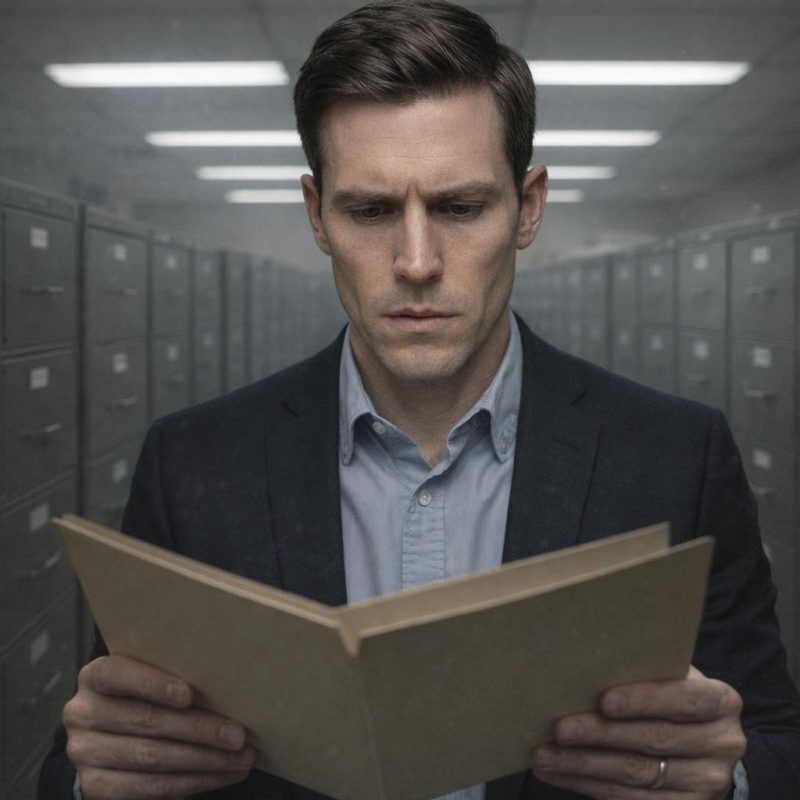 Image by RM AI
Sarah's Confirmation
I waited until mid-morning to talk to Sarah, when the office had filled up enough that a closed door wouldn't look unusual. She had a corner office two doors down from mine, small and perpetually organized, the kind of workspace that told you everything you needed to know about how her mind worked. I knocked, she waved me in, and I closed the door behind me. I kept it casual at first — asked how the due diligence prep was going on her end, whether she'd run into any documentation gaps. Then I pulled up the Meridian invoices on my laptop and turned the screen toward her. I asked if she'd seen anything like this in the offshore maintenance accounts. She looked at the screen for maybe three seconds before she looked back at me. She had, she said. She'd flagged those exact invoices — and a few others I hadn't found yet — about three months ago. She'd put together a summary and brought it to Leo directly. He told her he'd look into it and handle it. She'd assumed he had, since she never heard anything back. I kept my expression neutral. I asked her if she'd documented the conversation. She had — an email, sent and read. I thanked her and said I'd follow up. I walked back to my office and sat down at my desk, and the only thing I could think was that Leo had never said a word to me about any of it.
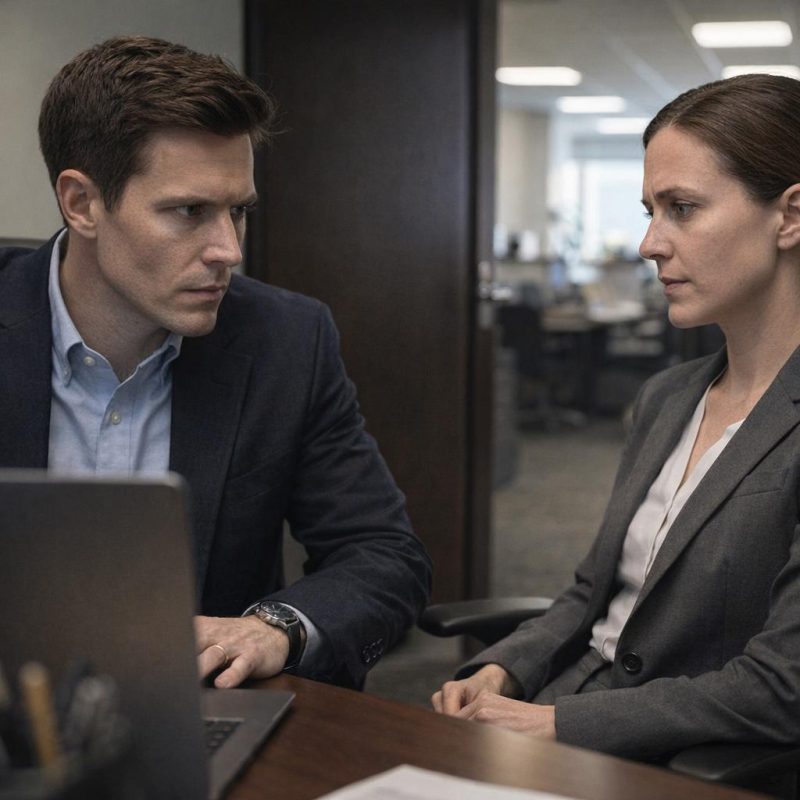 Image by RM AI
Cross-Referencing the Fleet
I pulled the master fleet registry from the operations database that afternoon — the same file I'd helped build when we first digitized the records six years ago. Every truck we'd ever owned, leased, or decommissioned was in there, assigned a unique ID that followed it from acquisition to disposal. I printed the offshore maintenance invoices and laid them next to the registry on my desk, then started going through them line by line. Most of the IDs matched. But some didn't. I checked them twice, thinking I'd misread a digit — a six that looked like an eight, a transposed number somewhere. I hadn't. I cross-referenced against the decommissioned vehicles list next, thinking maybe the invoices were pulling from old records by mistake. A few of the ghost IDs matched trucks we'd sold off three and four years ago. The rest matched nothing at all — no purchase record, no lease agreement, no disposal entry. I sat back and looked at the two lists side by side. I told myself data entry errors happen. I told myself there were a dozen boring explanations for this. But the mismatches weren't scattered randomly across the invoices — they clustered, they repeated, and some of those truck ID numbers didn't exist anywhere in our system.
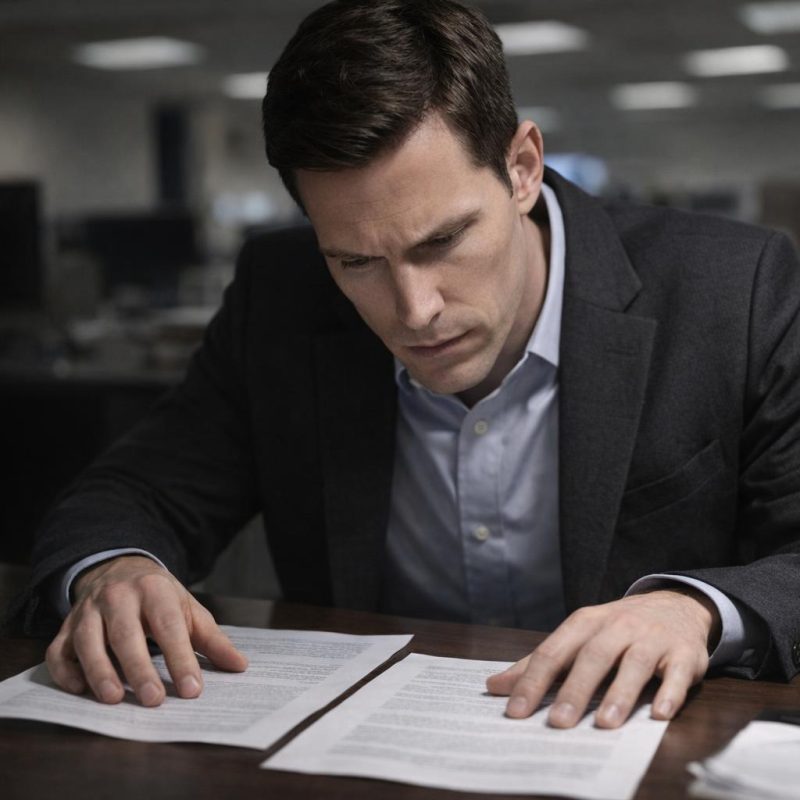 Image by RM AI
The Shell Companies
The vendor names on the invoices had always looked slightly off to me — generic, forgettable, the kind of names that don't stick. Gulf Coast Fleet Services. Meridian Maintenance Solutions. Trans-Southern Logistics Support. I started with basic searches, the kind anyone could do in twenty minutes. Nothing came back. No websites, no Yelp listings, no LinkedIn pages, no news mentions. I moved to state business registration databases and found incorporation records, but they were thin — registered agents, no officers listed, addresses that turned out to be mail forwarding services in strip malls. I checked the phone numbers on the invoices. Two were disconnected. One rang to a voicemail that had never been set up. I ran the incorporation dates and something made me stop. The companies hadn't been around for years. Most had been registered within a tight window — a span of about five months, two years back. Different states, different registered agents, but the same hollow structure underneath. No employees. No physical footprint. No evidence that any of them had ever done a single day of actual work. I sat at my desk with the search results open across three browser tabs and tried to think of a reasonable explanation. The cursor blinked. The office hummed around me. I couldn't find one.
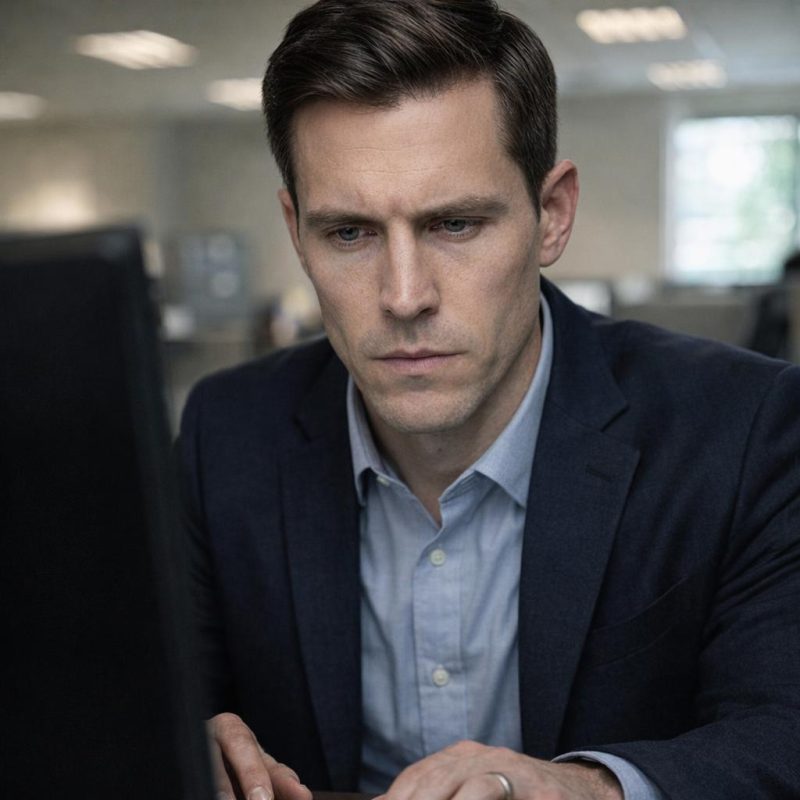 Image by RM AI
Building the Documentation
I stopped using the company network for any of this after that. I started bringing my personal laptop in, tucked into my bag, and doing the sensitive work on it during lunch or after most people had cleared out. I created an encrypted folder — nothing fancy, just a password-protected archive with a name that wouldn't mean anything to anyone who stumbled across it. Then I started moving everything into it. The offshore invoices, sorted by date and vendor. The fleet registry with the mismatches highlighted. Screenshots of the empty maintenance records folder. The vendor research, with the incorporation dates and mail-drop addresses laid out in a clean table. I included a copy of Sarah's email — the one she'd sent to Leo flagging the discrepancies, timestamped, marked as read. I built a timeline next, mapping invoice dates against Leo's travel calendar, which I still had access to through the shared scheduling system. I worked until nearly ten o'clock two nights in a row, cross-checking figures, making sure every document was labeled and sourced. By the end of the second night, the folder had grown to forty-three files. I closed the laptop and sat in the quiet of the empty office, the fluorescent lights humming overhead, looking at the black screen. Forty-three files that I still couldn't fully explain, and that I couldn't make disappear no matter how much I wanted to.
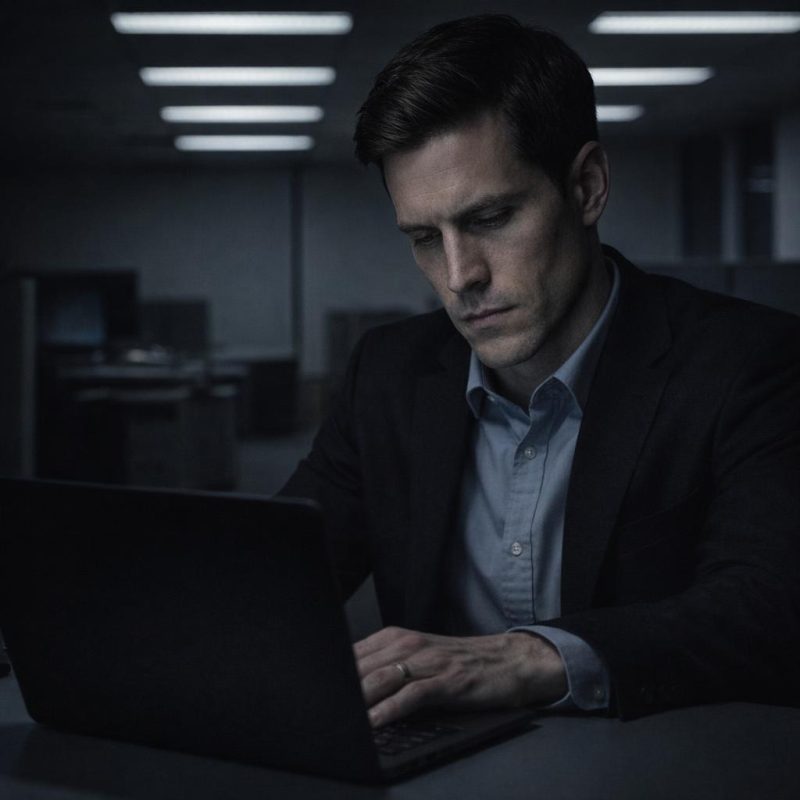 Image by RM AI
The Drivers' Pensions
The pension fund structure was something I'd set up myself eight years ago, back when we had twelve drivers and I was still doing the benefits administration out of a spreadsheet. We'd grown it carefully — matched contributions, conservative investments, the kind of fund a small logistics company could actually sustain. Forty drivers now. Forty families. I pulled the fund's most recent solvency report and started running the numbers against what I was finding in the offshore accounts. If the company's actual cash position was materially weaker than what we'd been reporting — and the offshore billing suggested it was — the fund's coverage ratio dropped below the threshold that would trigger mandatory disclosure. A disclosure like that, mid-merger, would freeze everything. Benefits, contributions, the whole structure. I was still sitting with that when I heard the loading dock door bang open and saw Tom come through it, still in his uniform, a coffee thermos in one hand. He'd just finished a run from Memphis, he said, fourteen hours round trip. He looked tired in the way that becomes permanent after enough years on the road. We talked for a few minutes about nothing — traffic on I-40, the new dispatch software he didn't trust. Then he mentioned, almost as an aside, that he'd finally started putting real money into his pension contributions because his oldest was looking at colleges. I watched him head toward the break room, and then I looked back down at the solvency report, and Tom Rodriguez's name was right there on the roster, third line from the top.
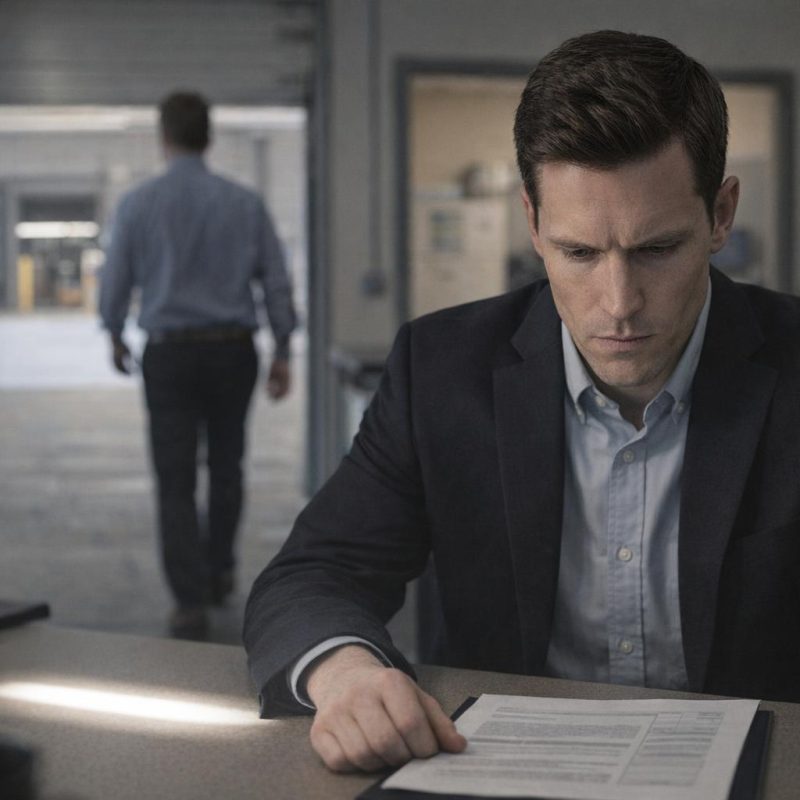 Image by RM AI
Tracing Ownership
I spent the better part of three evenings running the shell companies through every corporate registry database I could access without a paid subscription — Delaware, Nevada, Wyoming, then the offshore filings I could reach through public records aggregators. The structure was layered. Gulf Coast Fleet Services was owned by a holding company registered in Delaware. That Delaware company was owned by another entity incorporated in the Cayman Islands. The Cayman entity pointed to a Panama-registered company with a registered agent I'd seen listed on two of the other shells as well. I mapped it out on paper, an actual hand-drawn diagram, because I needed to see the shape of it. Every company in the chain had been incorporated within the same six-month window I'd already identified. The registered agents were all professional corporate service providers — the kind of firms that incorporate hundreds of entities a year for a flat fee and ask no questions. There were no individual names anywhere in the beneficial ownership filings. Just layers of companies pointing at other companies, each one dissolving into the next. I sat at my kitchen table after midnight with the diagram spread out in front of me, the incorporation dates circled in red pen. The pattern was consistent across every branch of the chain — same window, same structure, same absence of any human being attached to any of it.
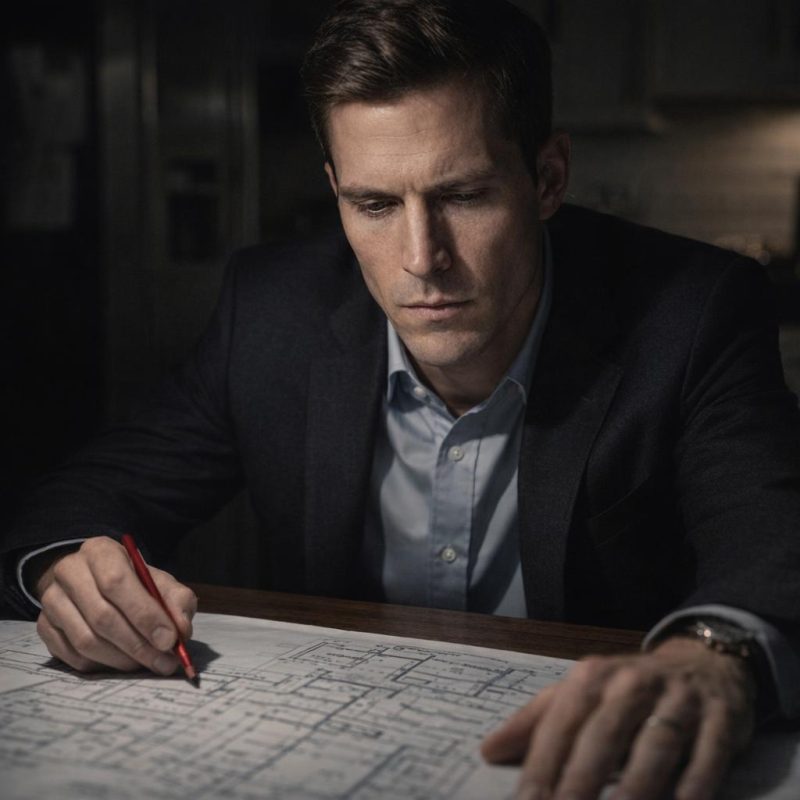 Image by RM AI
Looking for Innocence
I gave myself two full days to find the innocent explanation. I needed to know I'd looked. I started with tax structures — some companies use offshore entities for legitimate maintenance cost allocation, particularly if they operate across state lines. I spent an afternoon reading IRS guidance and industry white papers. Nothing I found matched what Sterling was doing. I called a contact at a freight association, kept it hypothetical, asked if he'd ever seen offshore maintenance billing structured through shell vendors. He hadn't, and he'd been in logistics for twenty-two years. I went back through the internal systems looking for a parallel maintenance tracking database — something I might have been excluded from, a system Leo had set up separately that I simply didn't have credentials for. I found nothing. I pulled Leo's travel records and checked whether he'd ever visited the cities where the supposed maintenance facilities were supposedly located. The dates didn't line up. I tried every angle I could think of, and I kept notes on each one, because I wanted the record to show I'd tried. By the end of the second day, I had a page and a half of dead ends. Every alternative I'd tested had collapsed under the weight of the truck IDs that didn't exist, the vendors with no employees, the addresses that led to mail drops. I closed the notebook and sat with the silence of having run out of other possibilities.
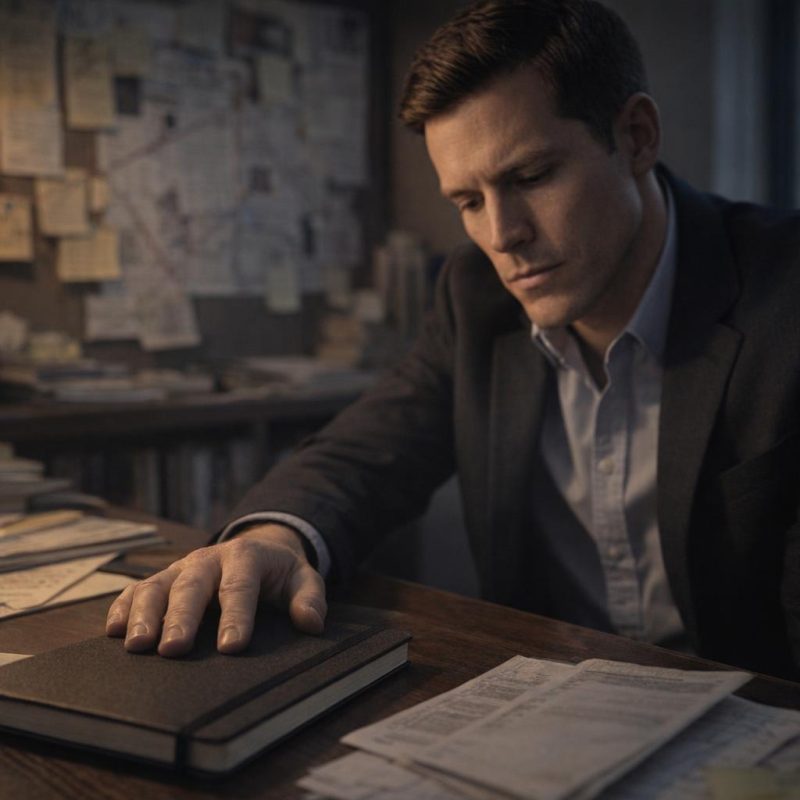 Image by RM AI
The Scale of It
I built the master spreadsheet on a Sunday, when the house was quiet and I had no reason to stop. I pulled every suspicious invoice into a single workbook — date, vendor, truck ID, amount, and a column flagging whether the truck ID existed in the registry. Then I ran the sum. I checked it twice, because the number didn't look right the first time. It didn't look right the second time either, but it was correct. Eighteen months of offshore maintenance invoices to vendors that showed no evidence of providing actual services, billed against trucks that didn't exist or hadn't been on the road in years. I calculated it as a percentage of total reported maintenance costs for the same period. Nearly fifteen percent. I sat back and thought about what fifteen percent of maintenance costs meant for a company our size — what it meant for cash reserves, for debt covenants, for the financial statements we'd been filing. I thought about the merger due diligence that was already underway, the auditors who would eventually get to the maintenance accounts. I thought about what they would find when they did. Then I looked back at the bottom of the spreadsheet, at the figure sitting there in the totals row: $3,247,814.
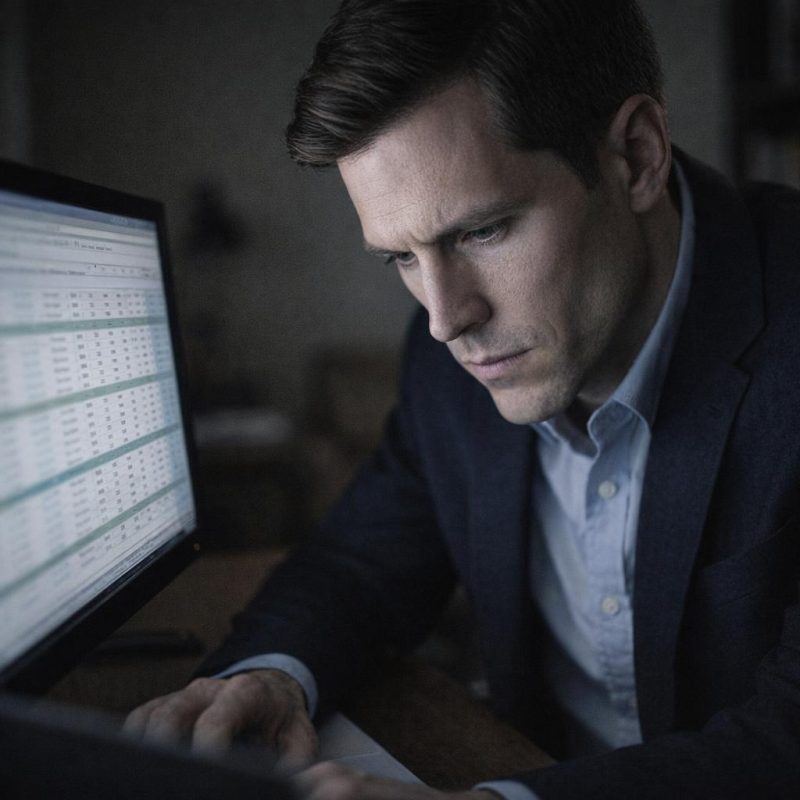 Image by RM AI
Merger Timing
I added one more column to the spreadsheet the next morning — merger milestone dates, pulled from the deal timeline Leo had shared with me back when he still included me in those conversations. First contact with the acquiring firm. Letter of intent. Preliminary valuation. Each round of due diligence. I mapped the offshore invoice totals against each milestone and let the chart render. The early invoices were small. Scattered. The kind of amounts that could pass for noise in a quarterly review. But somewhere around the time the letter of intent was signed, the billing volume climbed. It didn't drift up gradually — it stepped up, invoice by invoice, month by month, tracking the deal's progression like a shadow. The largest single-month total fell in the same quarter as the preliminary valuation. I sat with the chart for a long time, turning it over in my mind, trying to find the reading of it that didn't feel like what it looked like. I wondered if it was coincidence. I wondered if I was connecting dots that weren't meant to connect. But the numbers didn't care what I wondered. On the chart, the line of fraudulent invoice totals and the merger timeline rose together in near-perfect parallel, and the spike — the sharpest single jump in the entire eighteen-month dataset — landed on the exact month merger talks formally began.
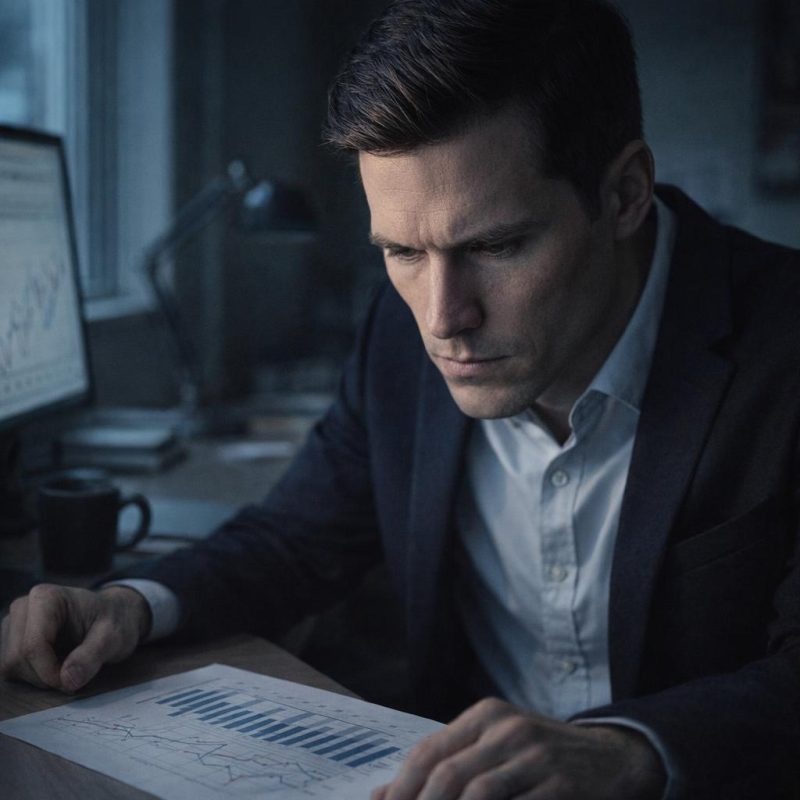 Image by RM AI
Gathering Physical Proof
Spreadsheets weren't going to be enough. I knew that the moment I sat back and looked at what I'd built — eighteen months of invoice data, shell company ownership chains, a correlation chart that would make any forensic accountant's jaw drop. It was compelling. It was thorough. And in a boardroom with a good lawyer on the other side, it was also entirely circumstantial. Numbers on a screen don't bleed. They don't stand in an empty lot and stare back at you. I needed something physical. Something a camera could capture and a GPS timestamp could verify. The invoices listed three maintenance facilities — addresses I'd cross-referenced against county business registries and come up empty every single time. No permits. No utility accounts. No business licenses. Nothing that said a single wrench had ever been turned at any of those locations. I cleared my schedule for Thursday, told the office I had a vendor meeting out of county, and pulled up the satellite images one more time. Two of the addresses looked like industrial parcels. The third was in a strip mall. I printed the maps, the addresses, and the invoice summaries — one packet per location, paper-clipped and labeled — and laid them out on my desk in a row.
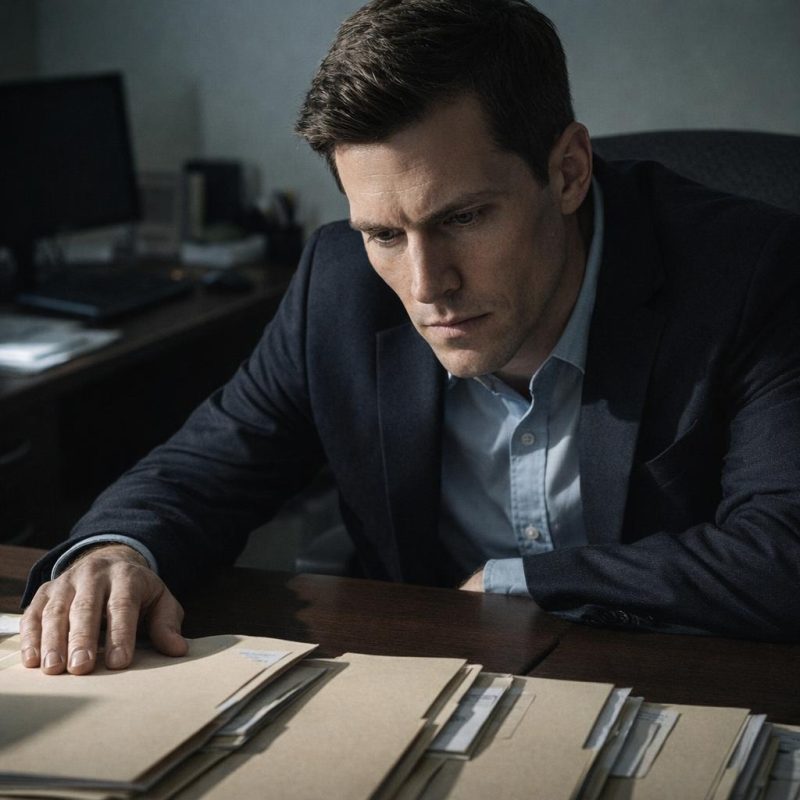 Image by RM AI
The Empty Lots
The first address was forty minutes outside the city, off a state route I'd never had reason to take. I pulled into the industrial park just after eight in the morning, coffee going cold in the cupholder, and followed the GPS to the lot number listed on fourteen separate maintenance invoices. There was nothing there. Not a building, not a fence line, not a gravel pad. Just a flat rectangle of weeds and cracked asphalt with a rusted survey stake at one corner. I got out and took photos anyway — wide shots, close-ups of the stake, a GPS screenshot with the coordinates locked. The second location was worse somehow. An abandoned warehouse with plywood over the windows and a padlock on the door that had been there long enough to rust through. The third was a UPS Store in a strip mall between a nail salon and a tax preparer. I sat in the parking lot for a long time after that last one, engine running, looking at the storefront. Forty trucks. Eighteen months of service records. Three point two million dollars in invoices. All of it supposedly processed through a mailbox in a strip mall and two addresses that hadn't seen a working business in years. I turned the engine off. The parking lot was completely quiet around me.
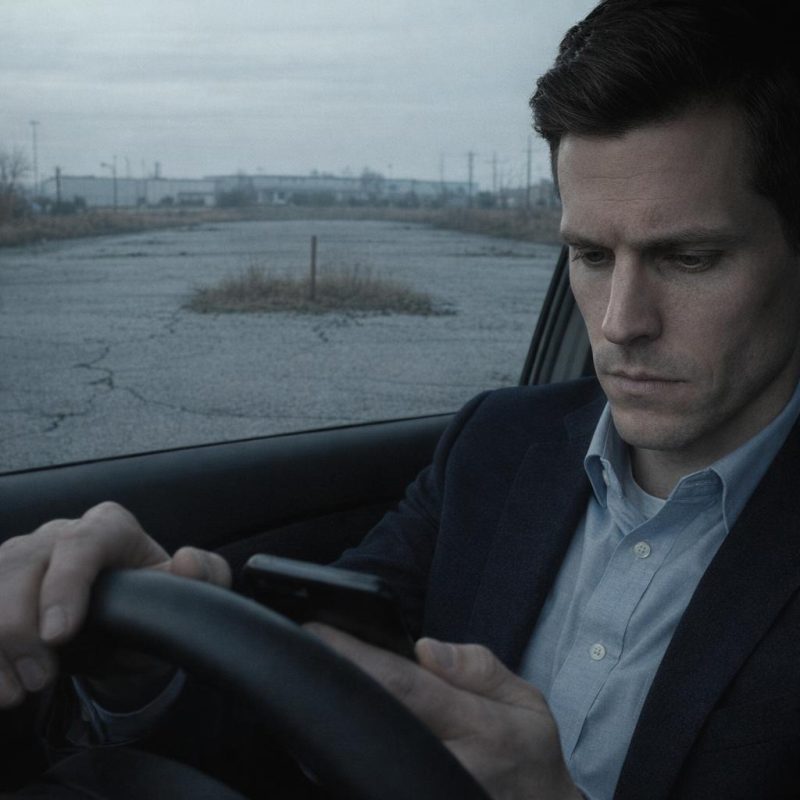 Image by RM AI
Documenting the Ghost Fleet
I spent the better part of two days turning what I'd found into something airtight. Every photo got uploaded to the encrypted folder — timestamped, geotagged, labeled by invoice number. I built a master document that matched each fraudulent invoice to its corresponding address, with a column for what the invoice claimed was there and a column for what I'd actually found. Empty lot. Abandoned warehouse. Mail forwarding service. I added the GPS coordinates and the timestamps from my phone, which put me at each location on a specific date and time, standing in front of nothing. Then I pulled the shell company ownership charts back in — the ones I'd traced through the state registry filings — and added them as an appendix. The full picture was there now. Not a theory. Not a pattern I'd noticed and couldn't explain. A documented structure, with evidence at every link in the chain. I backed everything up to three separate locations: the encrypted cloud folder, an external drive I kept in my desk drawer, and a second drive I took home that night and put in the back of my closet. When I finally closed the laptop, the evidence folder had grown to over four hundred files. I sat at the kitchen table with the drive in my hand, and the weight of it — the actual, physical weight of a thing that small — felt completely wrong for what it contained.
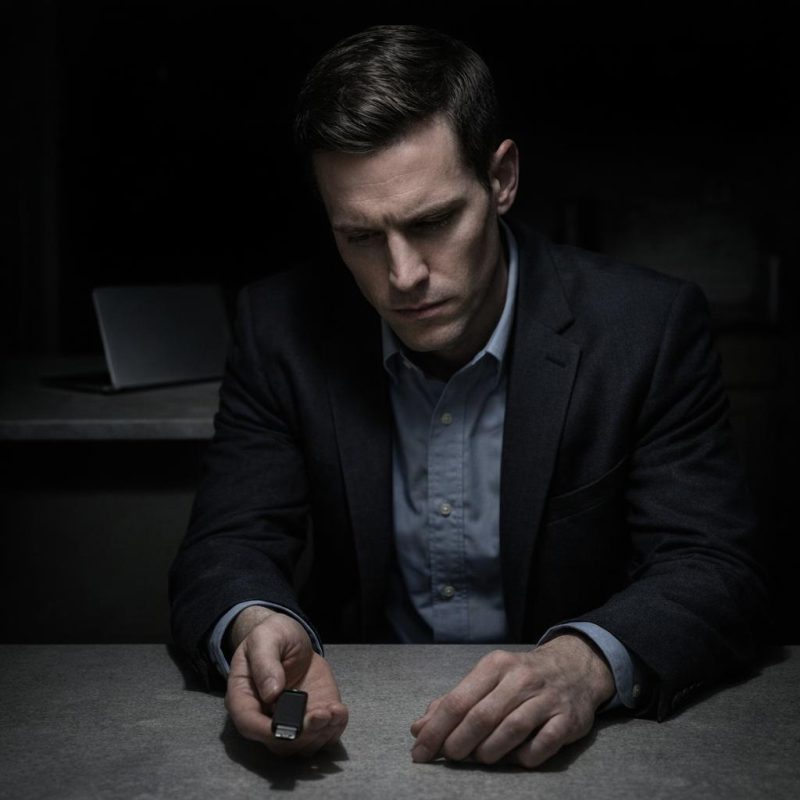 Image by RM AI
The Spreadsheets
I printed everything the morning before I planned to go to Leo. The master spreadsheet ran to eleven pages. I added the photos — six per page, labeled, with coordinates in the caption — and the shell company charts, and the invoice-to-address comparison table. Forty-three pages total. I squared the stack against the desk edge and slid it into a manila folder, and then I stood there for a moment looking at it. I'd been over the numbers so many times they'd stopped feeling like numbers. They felt like a problem we needed to solve together. That was how I kept framing it in my head — together. Leo had built the operations side of this company from the ground up. He knew every vendor relationship, every contract, every handshake deal that had never made it into writing. If someone had been running invoices through the maintenance accounts without his knowledge, he was going to want to know. He was going to be angry. He was going to want to fix it. I told myself that maybe a dozen times while I was printing. I picked up the folder, tucked it under my arm, and walked out of my office toward the end of the hall where Leo's door was.
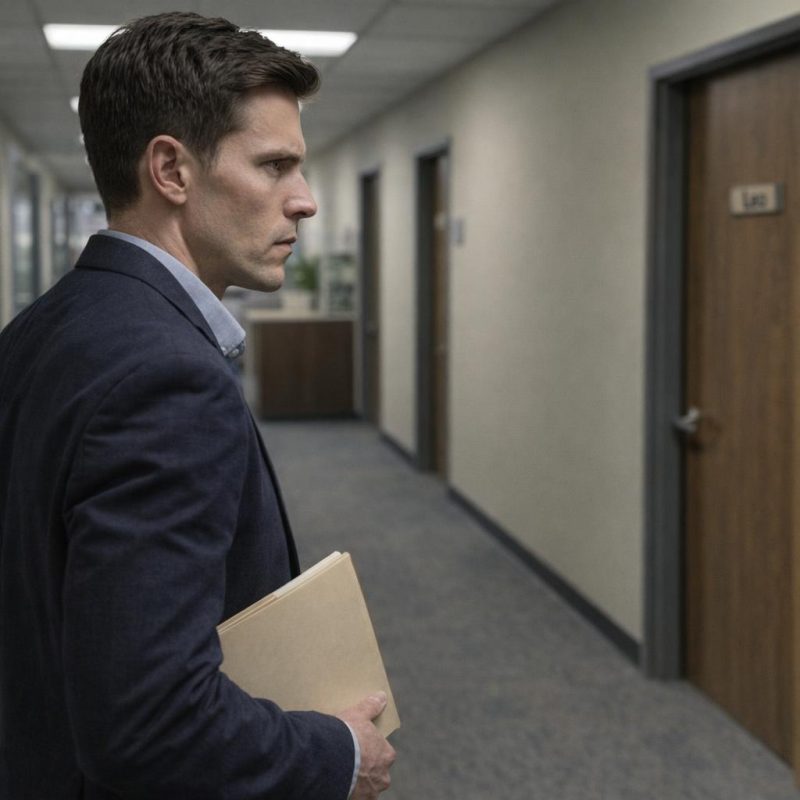 Image by RM AI
Preparing the Presentation
I'd gone back to the presentation twice the night before, restructuring the order so it built logically — context first, then the invoice anomalies, then the address verification, then the shell company trail. I wanted it to feel like a discovery we were making together in real time, not an accusation I was walking in to deliver. I practiced the opening out loud in my apartment, standing in the kitchen with the folder on the counter. Something like: 'I found some discrepancies in the maintenance accounts I want to walk you through.' Not 'I think someone's been stealing from us.' Not 'I need you to explain this.' Just: here's what I found, here's what I checked, here's what doesn't add up. I wrote out the talking points on a notepad and crossed off the ones that sounded confrontational. I reminded myself that Leo had as much to lose from this as I did — more, maybe, given how visible he was. He'd want to get ahead of it. He'd want to call the auditors, loop in legal, figure out how far it went. We'd been building this company for ten years. A problem this size, you don't hide from your partner. You fix it. I picked up the folder from the counter and held it in both hands, and it was heavier than forty-three pages of paper had any right to be.
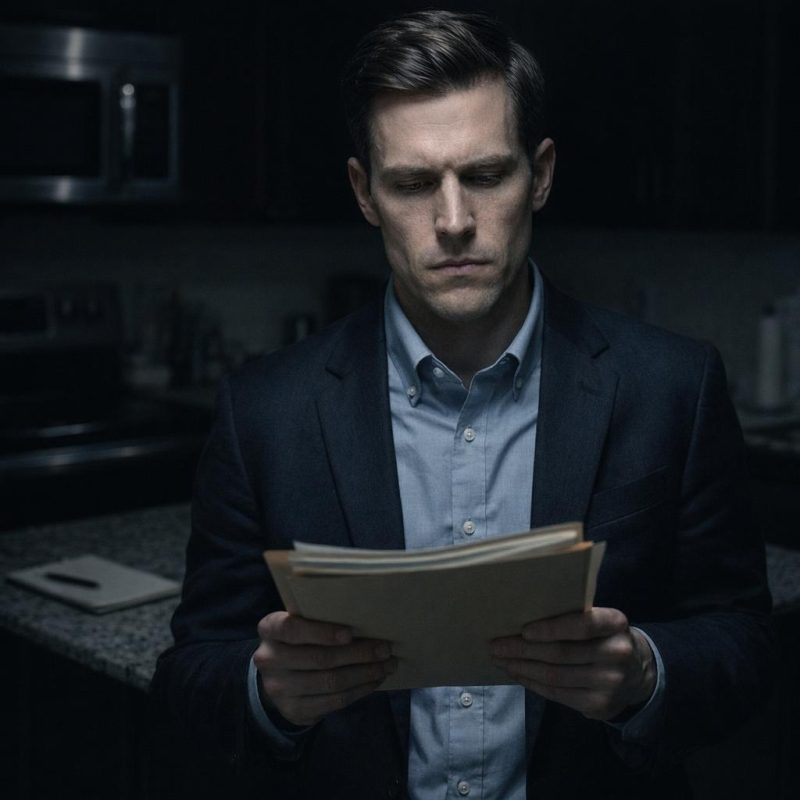 Image by RM AI
The Backup
I told myself it was just good practice. Standard data hygiene before any significant financial conversation — you make sure you have a clean copy of the records somewhere outside the primary system. That was all it was. I sat down at my desk around nine that night, opened the admin panel, and started the mirror. Full server backup: financial records going back to the company's founding, all vendor contracts, the complete email archive, operational logs, the original invoice files before any of them had been touched or moved. It took a little over two hours. While it ran I made coffee I didn't drink and read the same paragraph of a news article four times without retaining any of it. I wasn't worried. I just liked having a backup. That's what I told myself. When it finished I copied the drive, put one copy in my desk drawer at the apartment and mailed the second to my own P.O. box across town — another thing I told myself was just routine. I sat back down at the desk and looked at the laptop screen. The progress bar had completed, the final server mirror sitting quiet and full on the drive in front of me.
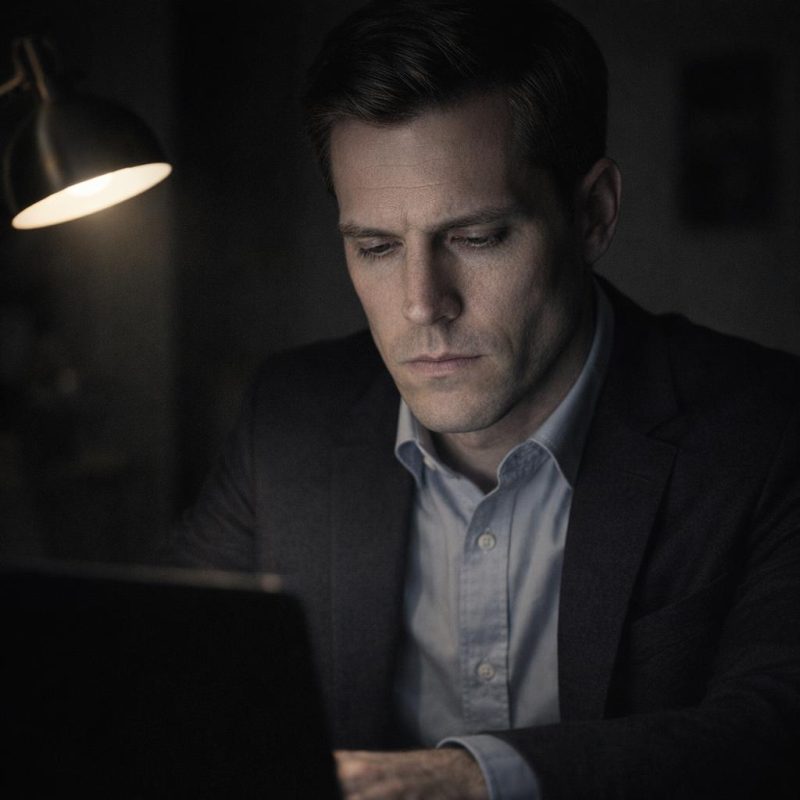 Image by RM AI
Scheduling the Meeting
I sent the calendar invite at 8:47 in the morning — a private block, two hours, marked confidential, subject line reading 'Q3 Financial Review — Internal.' I kept the language vague on purpose. I didn't want Leo walking in already defensive, already trying to remember what was in the maintenance accounts. I wanted him to see the numbers fresh, the same way I had. I requested no interruptions and blocked the time on both our calendars before he could fill it with something else. Then I waited. I had a vendor call at ten that I got through on autopilot, and a contract renewal I was supposed to review that sat untouched in my inbox. Every time my email refreshed I glanced at it. I kept telling myself there was nothing unusual about any of this — brothers had financial conversations all the time, partners flagged discrepancies, that was how a healthy business operated. By early afternoon I'd rehearsed my opening line so many times it had stopped sounding like words. I was refilling my coffee when my phone buzzed on the counter. I picked it up, and there it was: Leo's reply, timestamped 2:14 p.m. — one word, no punctuation, no follow-up question: 'Confirmed.'
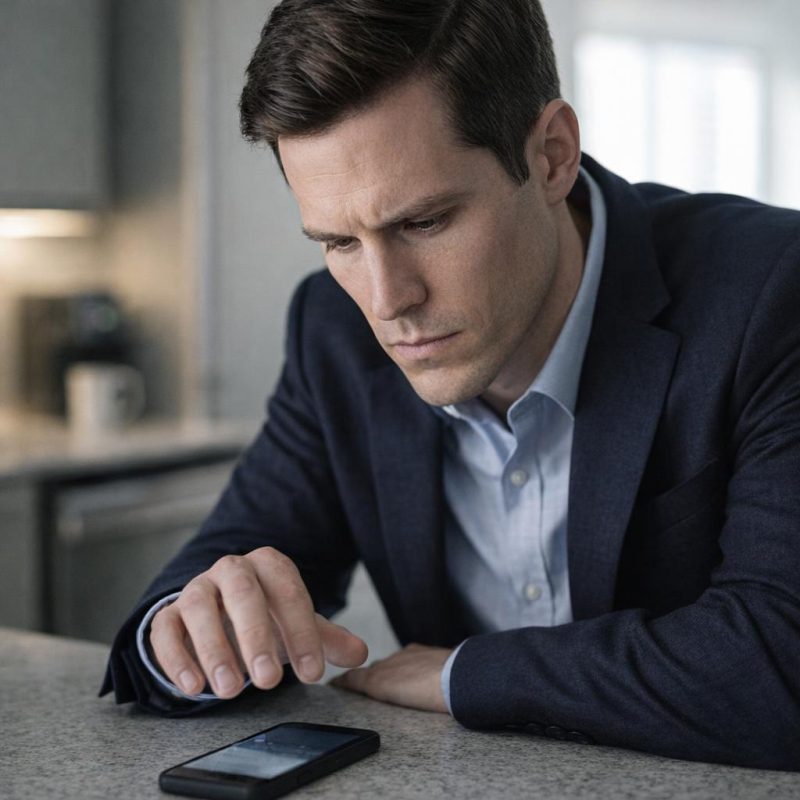 Image by RM AI
Diplomatic Rehearsal
I stood in front of the bathroom mirror that night and ran through it again. 'I've been going through the maintenance accounts and I found some numbers I want to understand better.' Too passive. 'There are invoices in the system that don't match our vendor records.' Better. More factual. I tried it a few different ways, watching my own face for the thing I didn't want Leo to see — the part that had already decided something was wrong. I kept smoothing it out. Kept pulling it back toward neutral. Leo would have an explanation. A vendor who'd moved locations and hadn't updated the paperwork. A bookkeeping error that had compounded over several quarters. An admin who'd been cutting corners on the address verification. There were a dozen ways this could have happened without anyone meaning for it to. I rehearsed the responses too — nodding along, saying 'that makes sense,' giving him room to walk me through it. I wanted to be the kind of person who came to his older brother with a problem and left with a solution. I practiced until the words felt smooth and the tone felt right. Then I looked at myself in the mirror, really looked, and the person looking back at me had the folder tucked under one arm and both hands gripping the edge of the sink.
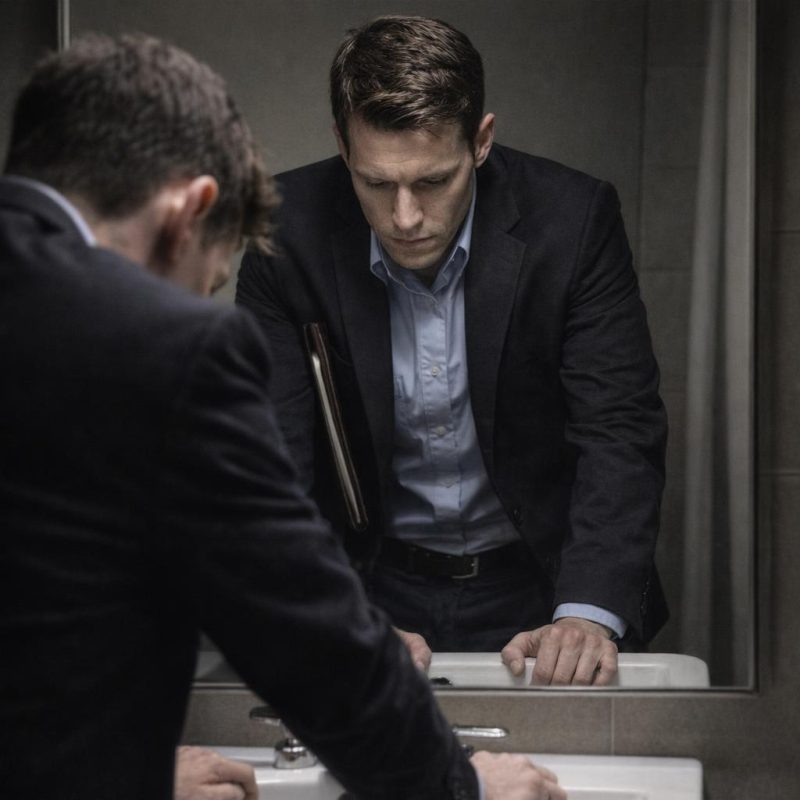 Image by RM AI
The Walk to Leo's Office
I'd walked that hallway a thousand times. Past the framed logistics maps on the wall, past the glass-walled conference room where I'd spent more late nights than I could count, past the assistant's desk where Karen always had a coffee waiting on Mondays. That morning I nodded to the same people I always nodded to, kept my pace even, kept my face neutral. The folder was tucked under my arm. I'd printed everything — the vendor addresses, the invoice discrepancies, the shell company trail — twelve pages of clean, organized evidence. I wasn't going in to accuse anyone. I was going in to solve a problem with my older brother, the way we'd always solved problems. That's what I kept telling myself. Leo's office was at the end of the hall, corner suite, glass on two sides. I could see the door from twenty feet away. I checked my watch — right on time for the meeting I'd requested. I was almost there when I noticed them. Two men in dark suits standing just outside Leo's office door, neither of them anyone I recognized.
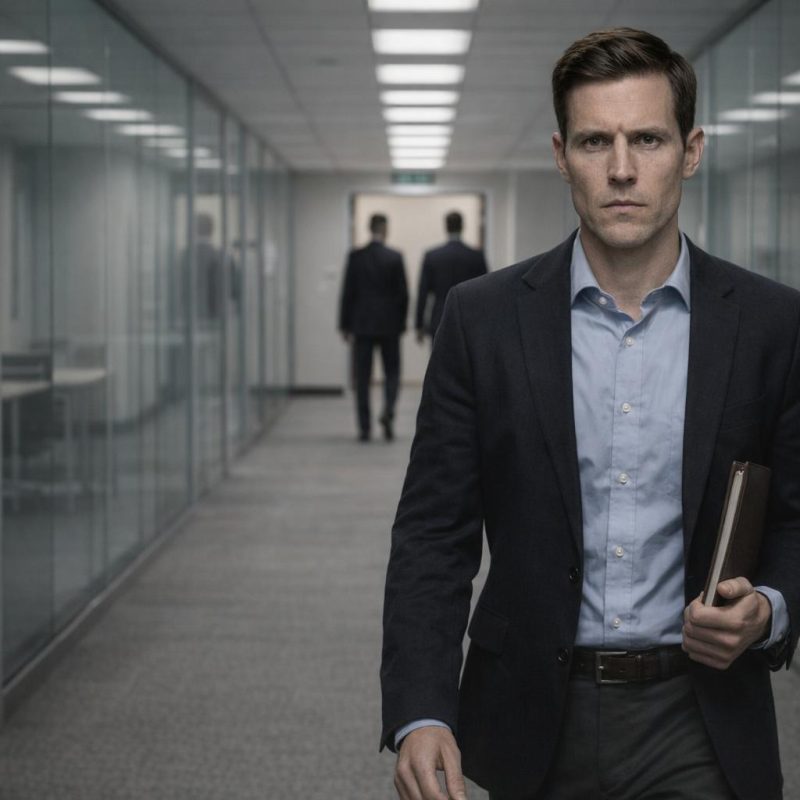 Image by RM AI
The Button
I knocked twice and Leo called me in, same as always. The office looked the same — the city view, the mahogany desk, the framed photo of the two of us at the company's fifth anniversary. I started talking before I'd even fully closed the door behind me. Something about the vendor accounts, the discrepancies I'd flagged, the numbers that didn't line up. I had the folder open in my hands. Leo didn't look at it. He didn't lean forward or ask me to walk him through it. He just watched me with an expression I couldn't read — not surprised, not concerned, not anything I recognized. I kept talking. I said I thought we needed to get ahead of this before the merger due diligence hit it. He let me finish one sentence. Then he reached across the desk, pressed a button on the intercom, and sat back in his chair. The door opened behind me. I turned. Marcus Webb walked in first, broad shoulders filling the frame, and another man I didn't know came in behind him. I looked back at Leo. He was already looking past me. The door clicked shut, and the sound of it was the only thing in the room.
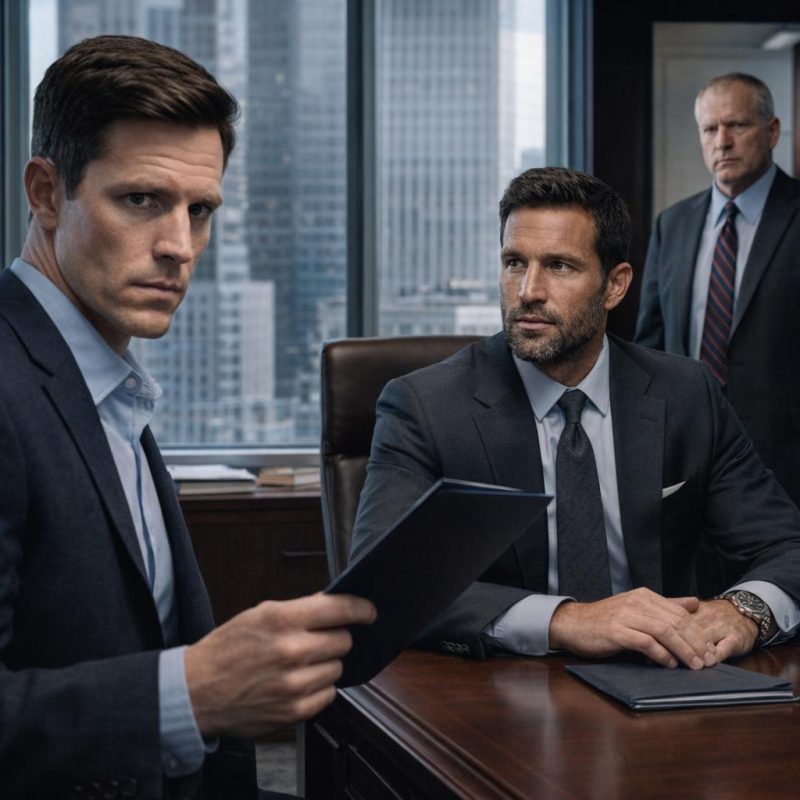 Image by RM AI
Mental Breakdown
Leo stood up from behind the desk, and when he spoke, he spoke to Marcus. Not to me. He said my name once, in passing, the way you'd reference a file number. He told Marcus I'd been showing signs of instability for several weeks. That I'd become fixated on financial irregularities that didn't exist. That I'd been making accusations against staff and creating a hostile environment. I said his name. He kept talking. He said my behavior had become a liability to the merger timeline, that the board had been made aware, that this was a decision that hadn't been made lightly. I said his name again, louder. Marcus shifted his weight but didn't look at me. The other guard kept his eyes on the middle distance. Leo straightened his jacket, picked up a pen from the desk, and said that this was being done for the sake of the family. He said it the way you'd read a line from a prepared statement — measured, final, already decided. I stood there with the folder still in my hands and the words for the sake of the family hanging in the air between us.
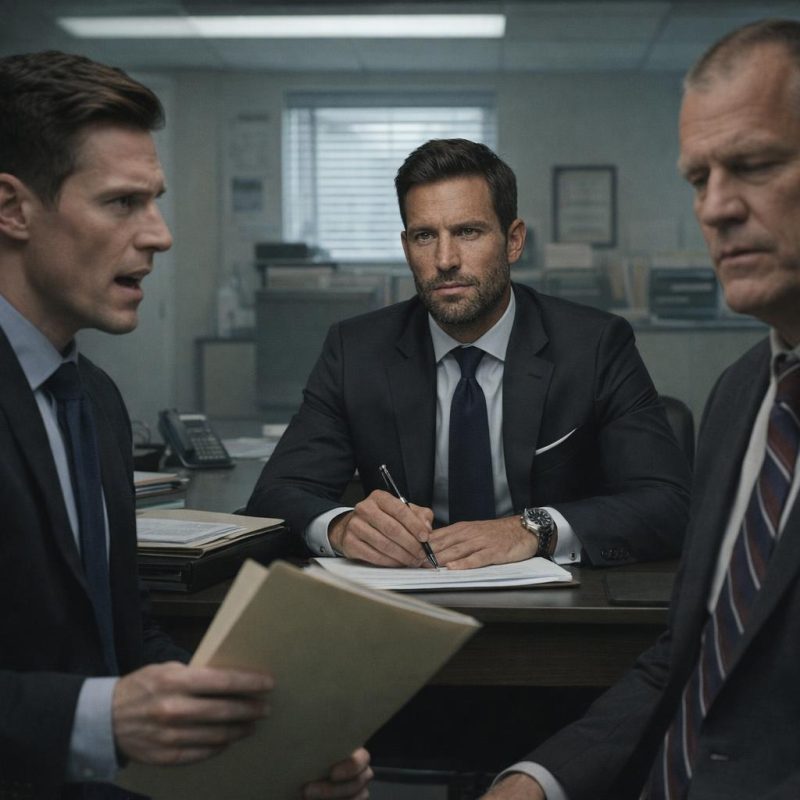 Image by RM AI
The Termination Papers
I was still standing there when the side door opened and Michael walked in carrying a leather folder. He set it on Leo's desk without looking at me. Leo slid it across the surface toward me like it was a routine document, something that needed a signature before end of day. I looked down. My name was already typed at the top — full legal name, title, board seat number. The language cited mental health concerns and fiduciary liability. It said I was being removed from the board effective immediately, that my equity stake would be held in trust pending a review, that I was to vacate all company premises and cease contact with clients, vendors, and staff. Michael stood with his hands clasped in front of him, eyes fixed on a point somewhere past my left shoulder. Leo uncapped a pen and set it on top of the papers. I didn't pick it up. I just stood there reading, and then I turned to the second page, and that's when I saw Michael's signature already on the documents — dated from the day before this meeting.
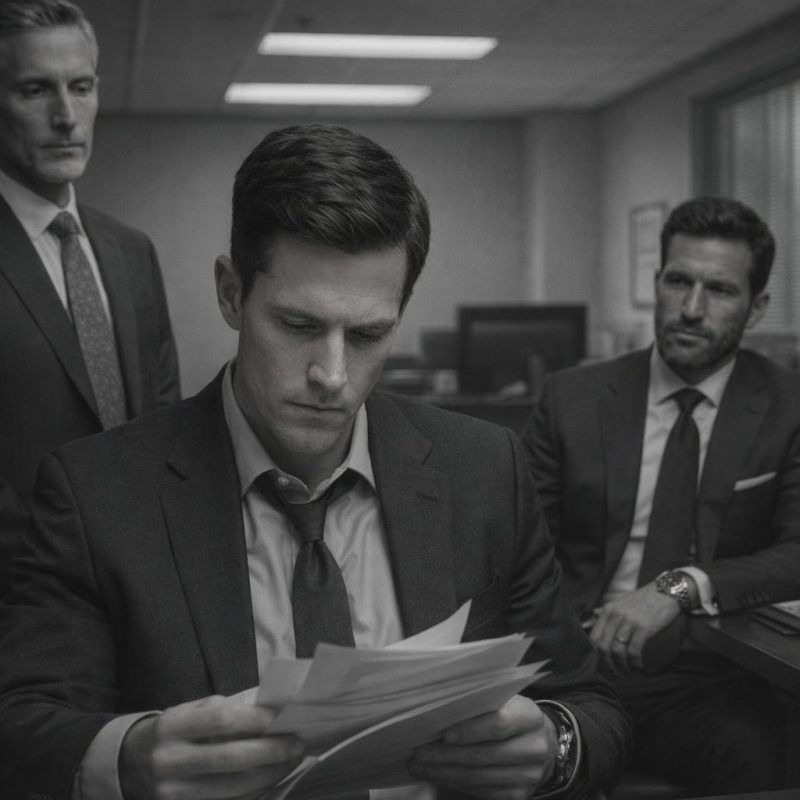 Image by RM AI
The Security Escort
Marcus asked me quietly to come with him. He didn't touch me. He just stepped to the side and held the door open, and something in his posture made it clear that the asking was a formality. I left the folder on Leo's desk. I don't know why — maybe I thought someone would look at it later. We walked out through the main floor, Marcus on my left, the other guard a half-step behind. I kept my eyes forward. I heard the office go quiet around me, that particular silence when a room full of people all stop pretending to work at the same moment. I passed the row of analyst desks. I passed the break room where I'd eaten lunch alone more times than I could count. I passed Sarah's desk and I saw her look up, just for a second, before she looked back down at her screen. She didn't say anything. Nobody did. At the front entrance Marcus held out his hand and I gave him my keycard and my building access badge without being asked. He nodded once, something almost apologetic in it. The glass doors closed behind me, and the silence of the office followed me all the way out.
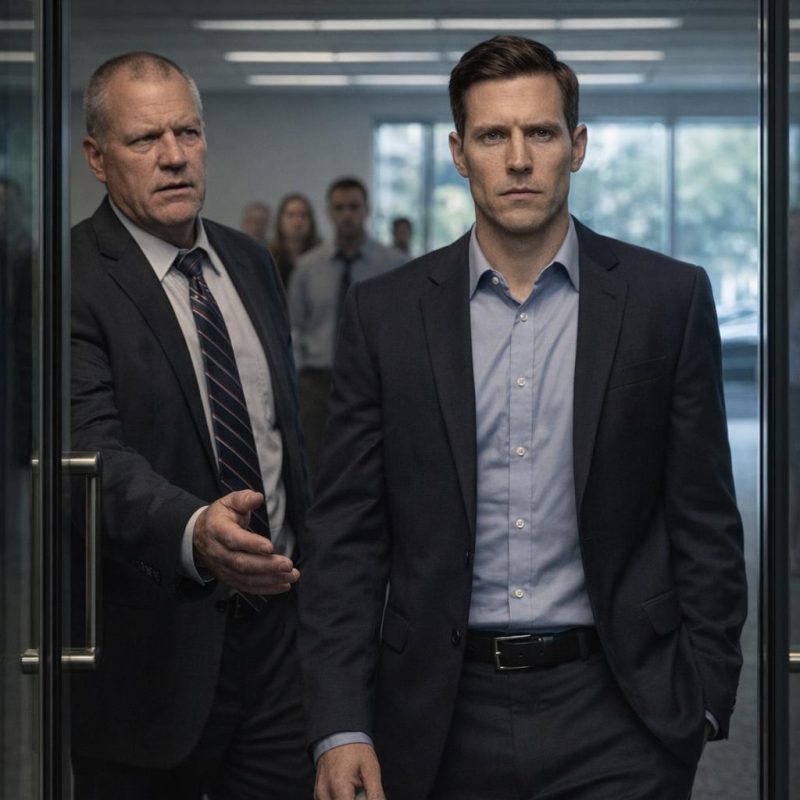 Image by RM AI
Locked Out
I sat in my car in the visitor lot for a while before I tried anything. First the parking garage remote — the gate didn't respond. Then I pulled out my laptop and tried to log into company email. Invalid credentials. I sat with that for a moment, then picked up my phone and called Vanessa. The call didn't ring. It went straight to a generic voicemail that wasn't hers, the kind you get when a number has been blocked. I tried Frank next. It rang four times and went to voicemail. I tried again. Same thing. I sent a text to Patricia asking her to call me when she had a chance, keeping it calm, keeping it normal, like I was just checking in. A few minutes later an unknown number sent me a single text: *Do not contact the family. Legal counsel has been advised.* I read it twice. I sat there in the visitor lot of the building I'd helped build, locked out of every system, blocked on every number, the afternoon light going flat around me. I called Patricia's number one more time. It rang once, then connected to a message saying the number was no longer in service.
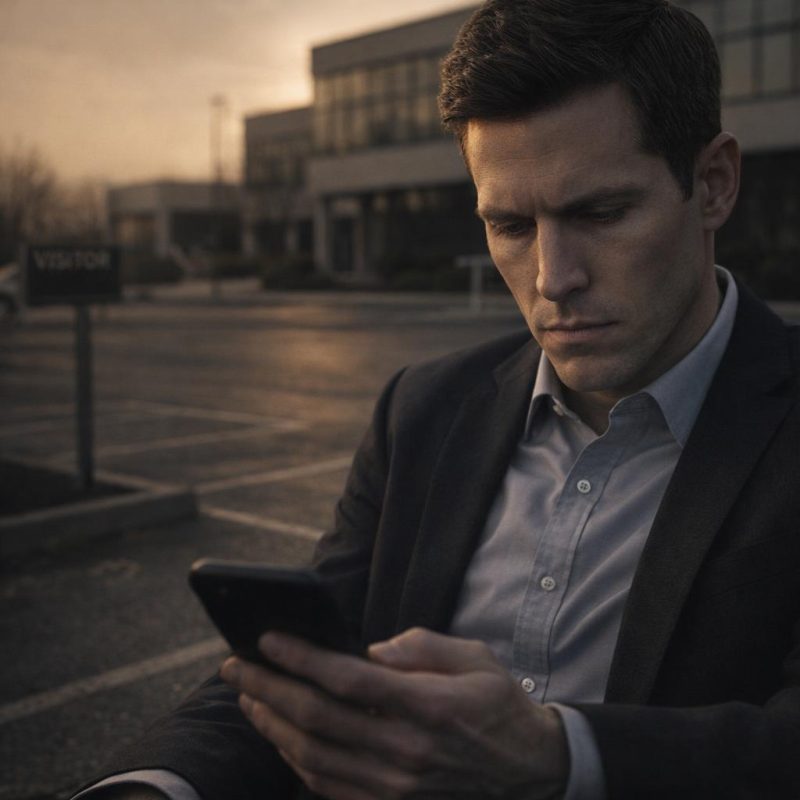 Image by RM AI
The Dark Apartment
I didn't leave the apartment for three weeks. I'm not proud of that, but it's the truth. I ordered food when I remembered to eat. I slept at wrong hours. The curtains stayed closed most of the time. At some point I started leaving the television on just to have noise in the room, and that's how I found out about the gala. Local business news, a segment on Sterling Logistics' upcoming tenth anniversary celebration. They called it a milestone. They talked about the merger, the growth trajectory, the company's bright future. They mentioned my departure once, briefly, as a health-related transition. That was the phrase they used. Health-related transition. I watched them cut to footage of Leo at some kind of press event, smiling in a suit that cost more than my first car, talking about the decade of work that had built the company into what it was today. No mention of my name. No mention of the years I'd spent in spreadsheets while he was in photo shoots. The segment ended and the anchor moved on to weather, and the television screen held Leo's face for one more second before it cut away.
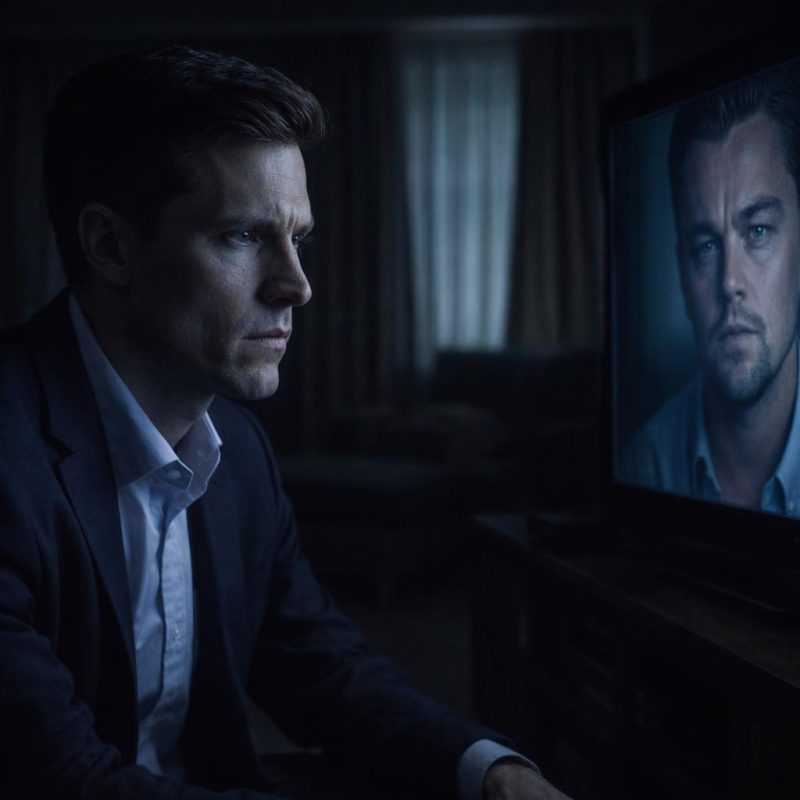 Image by RM AI
Cease and Desist
The courier knocked on a Tuesday morning, three days after the gala announcement aired. I signed for the envelope without thinking — I was still in the habit of signing for things, still going through motions. The return address was a law firm I didn't recognize, downtown, the kind with four surnames and no website personality. I opened it at the kitchen table. It was two pages, single-spaced, formal letterhead. It informed me that I was to remain no less than five hundred feet from the Grand Regency Hotel on the date of the Sterling Logistics tenth anniversary gala. It cited trespassing, harassment, and potential disruption to a private corporate event. It said that any violation would result in immediate arrest and prosecution. Leo was listed as the complainant, with a line about safety concerns for guests and staff. I read it twice, then a third time. I set it down and picked it up again. There was something about the weight of it — the formal language, the case numbers, the firm's embossed seal at the top — that made everything feel different from the texts and the blocked calls and the locked credentials. Those had felt like panic. This felt like something else. I sat at the kitchen table with the letter in front of me, and the legal letterhead made it all feel permanent.
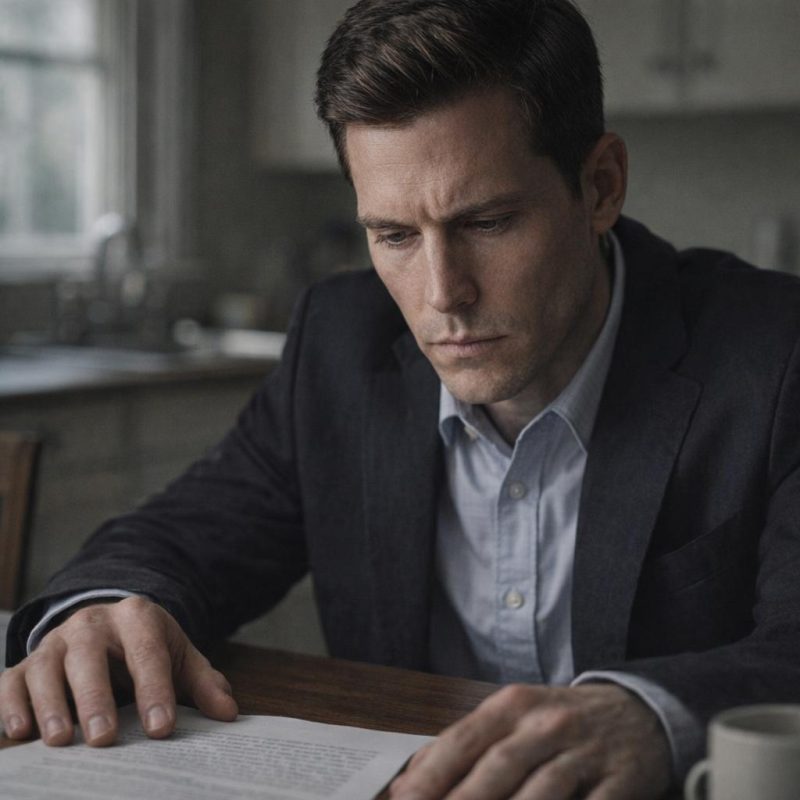 Image by RM AI
The Presentation Software
I was sitting at the kitchen table with that restraining order still in front of me when it hit me — not like a plan, more like a memory surfacing. Three years ago, Leo had wanted a custom presentation system for the company's major events. Something slick, something that would impress clients. He'd handed me the project because I was the one who actually understood the backend. I spent four months writing the control interface from scratch — the queue management, the display triggers, the remote access module. I built the whole thing. The LED wall system at the Grand Regency had been installed specifically for Sterling Logistics events, and my software was running it. I pulled up my old development drive and found the documentation folder exactly where I'd left it. The credentials were in a separate file, the kind of thing you keep because you never know when you'll need to push a patch. I opened the terminal almost out of habit, typed in the master access string, and waited. The system didn't reject me. My employee account was gone, my email was dead, my badge credentials had been wiped — but the software credentials were tied to the application itself, not to my HR profile. Nobody had thought to revoke them. I sat there in the quiet of my apartment, the restraining order on one side of the table and my laptop on the other, and let that fact settle over me.
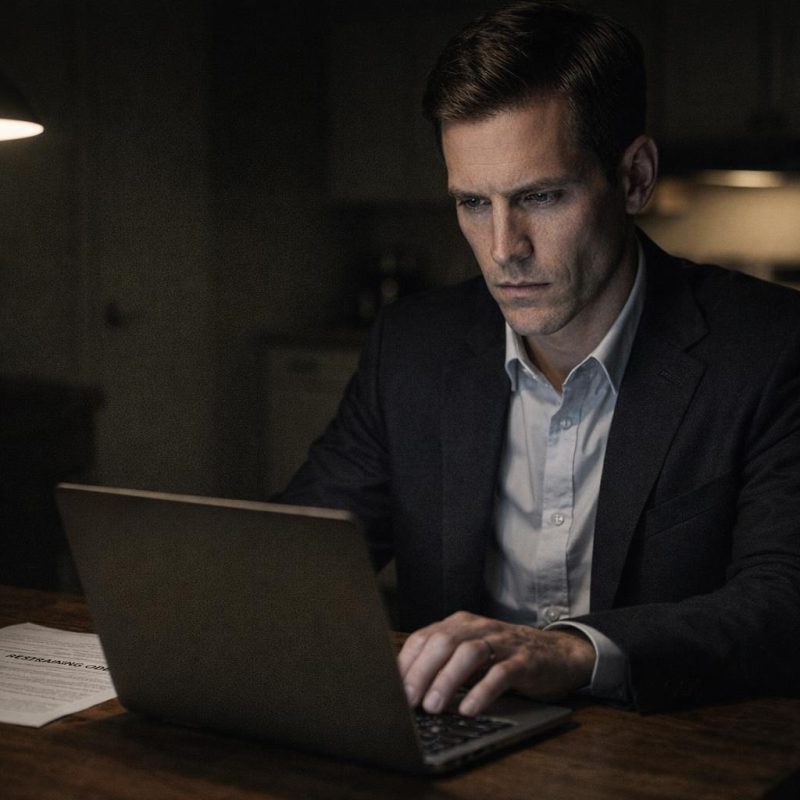 Image by RM AI
Planning the Infiltration
I didn't let myself get excited. I'd been burned enough times to know that a door that looks open isn't always a door you can walk through. So I treated it like a technical problem and nothing else. I pulled up everything I could find on the Grand Regency's network infrastructure — public filings, vendor contracts listed in the hotel's event services documentation, a tech forum thread where a contractor had complained about the property's WiFi segmentation setup. The presentation system was on its own subnet, but it still needed a physical network to talk to. The hotel used a separate service-staff WiFi band for back-of-house operations — catering tablets, loading dock scanners, that kind of thing. The band wasn't enterprise-secured. It was the kind of setup a mid-size hotel installs and forgets about. I sketched out the network topology on a legal pad, mapping the access points against the building's floor plan from the hotel's own event brochure. If I could get within range of the loading dock, I could connect to that service band without setting foot inside the building. The restraining order said five hundred feet from the hotel entrance. It didn't say anything about the alley behind it. I was still just mapping possibilities, still just running numbers — and then I opened the original installation connection logs and found the hotel's unsecured service WiFi network listed right there.
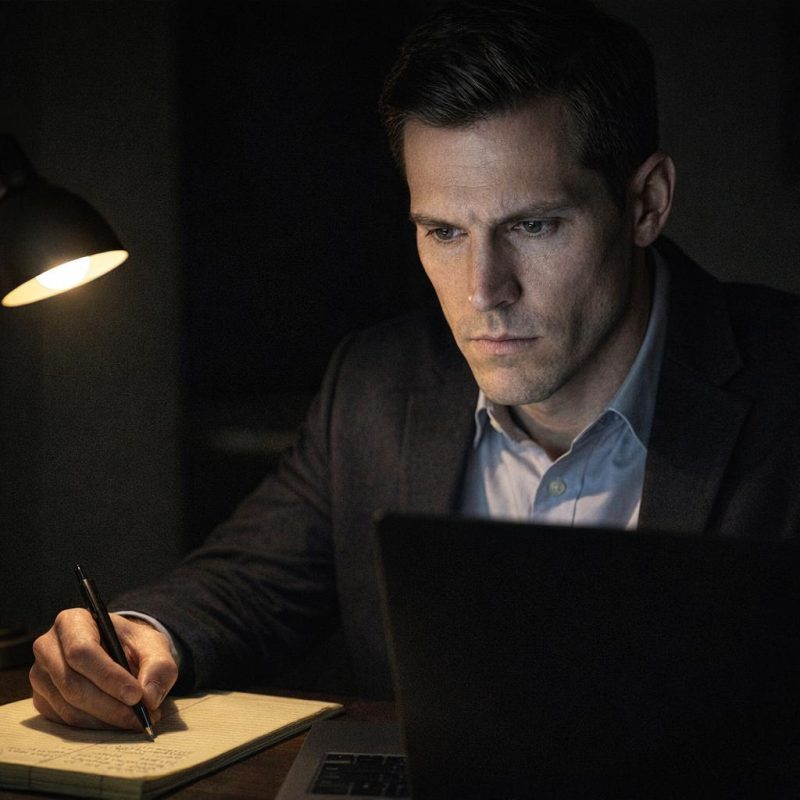 Image by RM AI
Building the Weapon
I opened the video editing software on a Thursday night and sat there for a minute before I touched anything. I wanted to be methodical about this. Not angry, not rushed — methodical. I created a new project folder, labeled it with a date string instead of a name, and started importing files. The spreadsheets went in first — the fraudulent invoices, the maintenance account disbursements, the vendor payments to addresses that didn't exist. I formatted each one so the key figures were visible at a glance, the kind of thing you could read from twenty feet away on a large display. Then the photos: the empty lots, the abandoned warehouse, each one with its GPS coordinate overlay matched against the invoice address. I built the shell company ownership charts as clean graphics — boxes and arrows, nothing fancy, just clear. The audio was harder. I had recordings from company all-hands meetings, quarterly reviews, Leo's voice walking through budget line items with the confidence of someone who had never once been questioned. I pulled the clips that were relevant and dropped them into the timeline. Watching the sequence come together — his voice laid over the spreadsheet figures, the numbers scrolling while he talked about growth and investment — something about it felt very still and very precise. I rendered a rough cut and played it back once. The timeline showed Leo's voice running directly over the spreadsheet evidence, column by column, number by number.
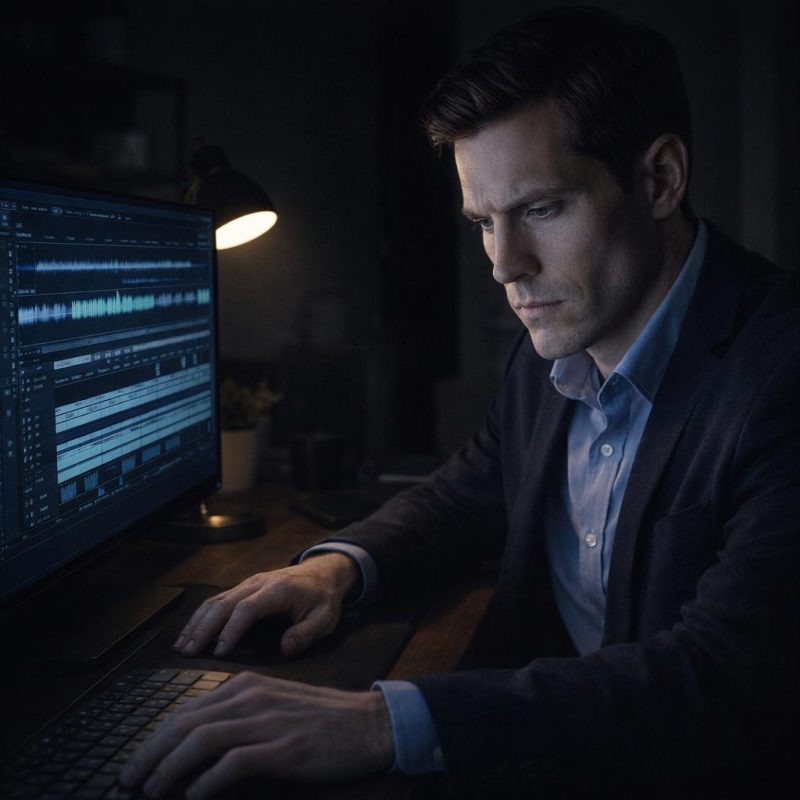 Image by RM AI
Testing the Backdoor
The night before I tested the connection, I drove past the Grand Regency twice just to get the geography right. The loading dock sat in an alley off the side street, screened from the main entrance by a service wall. I parked there the following evening around nine, engine off, laptop open on the passenger seat. The alley was quiet — a kitchen exhaust fan running somewhere, a dumpster, a single yellow light above the dock door. I connected to the service WiFi band. It took about forty seconds to authenticate. No prompt, no security challenge, just a connection indicator going green. I opened the terminal and typed in the master credentials for the presentation system. The login screen loaded. I was in. I navigated to the file queue — the staging area where presentation assets sat before being pushed to the display. It was empty except for a hotel logo screensaver file. I uploaded a small test file, a blank slide with a single text line, just to confirm the pipeline worked end to end. I watched the progress bar move. It finished. I refreshed the queue, and the test file was sitting there in the presentation system's staging list, right alongside the hotel's screensaver, waiting to be called.
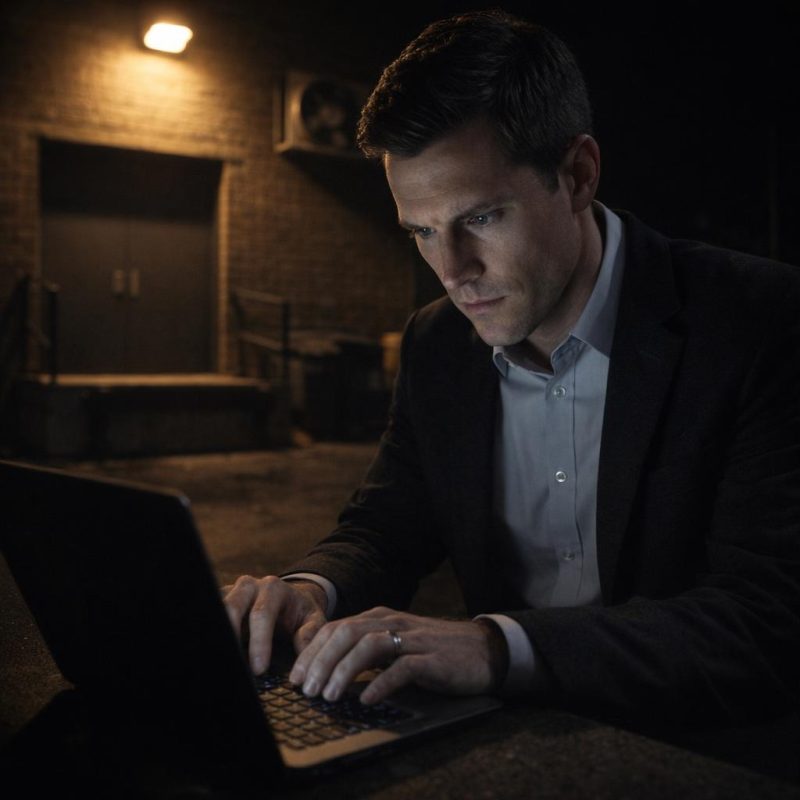 Image by RM AI
The Gala Schedule
The gala program was posted on the Grand Regency's event page, listed under a public-facing corporate events calendar. I printed it out and spread it across the kitchen table next to my legal pad. It was a full evening — cocktail hour, dinner service, a tribute video segment, Leo's keynote address, and then the formal signing ceremony for the merger. Each segment had an estimated time block. I went through it with a highlighter and a pen, marking transitions, noting when the room's attention would be divided and when it would be focused. The tribute video slot was interesting — it was scheduled midway through Leo's keynote, the point where the lights would dim and the LED wall would take over the room. That was the obvious window. But I kept reading. Near the end of the program, there was a line I'd almost missed: *Richard Hartwell, CEO of Hartwell Capital Group, will join Leo Sterling on stage to formalize the merger agreement.* That was the moment. Not the tribute video slot, not the opening remarks — that specific moment, when both of them were standing at the podium in front of every investor, every board member, every journalist in the room. I set the highlighter down. The program sat on the table, that one line circled in blue ink, and I stayed with it for a long time.
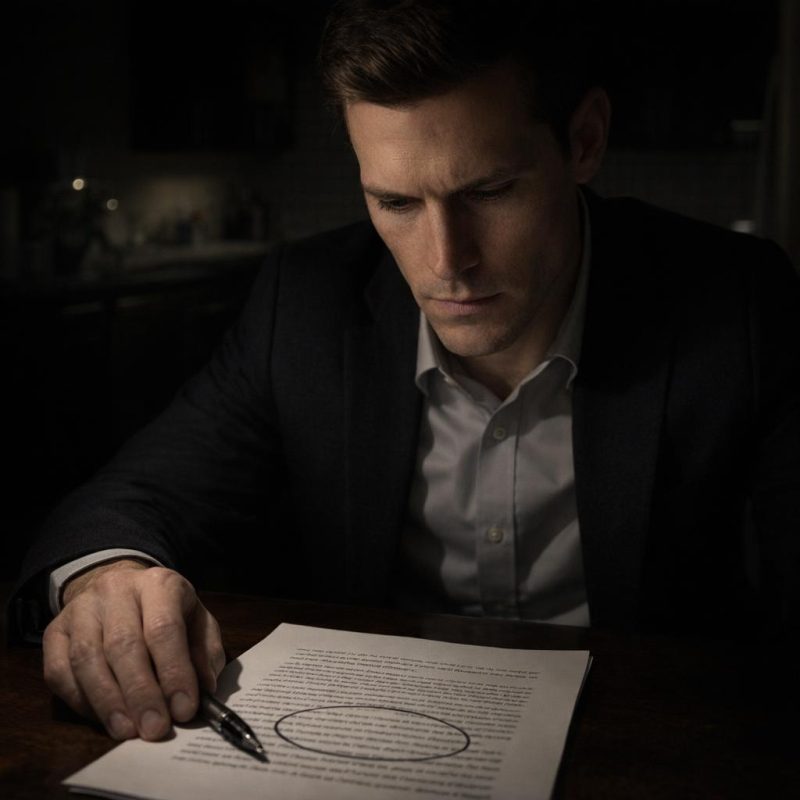 Image by RM AI
Refining the Message
I went back through the video three times before I touched the edit. The first pass was for pacing — I was looking for anywhere the sequence dragged, anywhere a viewer's attention might slip before the next piece of evidence landed. The second pass was for legibility. The LED wall at the Grand Regency was large, but the room would be full and some people would be watching from distance. I enlarged every spreadsheet frame, bumped the font size on the invoice figures, made sure the GPS coordinate overlays on the lot photos were readable without squinting. The third pass was for sequence logic — did each piece of evidence build cleanly on the one before it? I moved two clips, tightened a transition, cut a redundant audio segment where Leo repeated himself. The audio from the quarterly reviews was clear enough without enhancement. His voice, the numbers, the dates — it all tracked. I rendered the final cut at the display system's native resolution, the highest the hardware would accept. The file size came out to just under two gigabytes. I played it back one last time from beginning to end, sitting in the dark with the laptop screen the only light in the room. Twenty minutes. Everything fit inside twenty minutes — the invoices, the empty lots, the shell companies, the audio, all of it laid out in sequence, each piece connecting to the next.
 Image by RM AI
The Dashcam Footage
I had the dashcam footage on a separate drive — recordings from the three visits I'd made to the ghost fleet yards, the empty industrial park, the abandoned warehouse off Route 9. I'd been running the camera out of habit more than anything else, the kind of thing you do when you're not sure what you're documenting but you know you should document something. I pulled the clips and went through them frame by frame. The GPS timestamp was embedded in the lower corner of every recording, and the coordinates matched the invoice addresses down to the decimal. I cut together a sequence: the camera rolling up to each location, the empty lot filling the frame, the address visible on a faded sign or a fence post, the coordinates locked in the corner. It was the kind of footage that didn't need explanation. After I finished the dashcam sequence, I went back into the archived phone recordings from the company server backup — files I'd pulled months ago and hadn't fully catalogued. I was looking for anything related to the maintenance accounts. I found a call log from fourteen months back and started working through it. Most of it was routine. Then I hit a clip about eight minutes in, Leo's voice, mid-conversation, relaxed and unhurried, and I heard him say: *nobody cares about the drivers.*
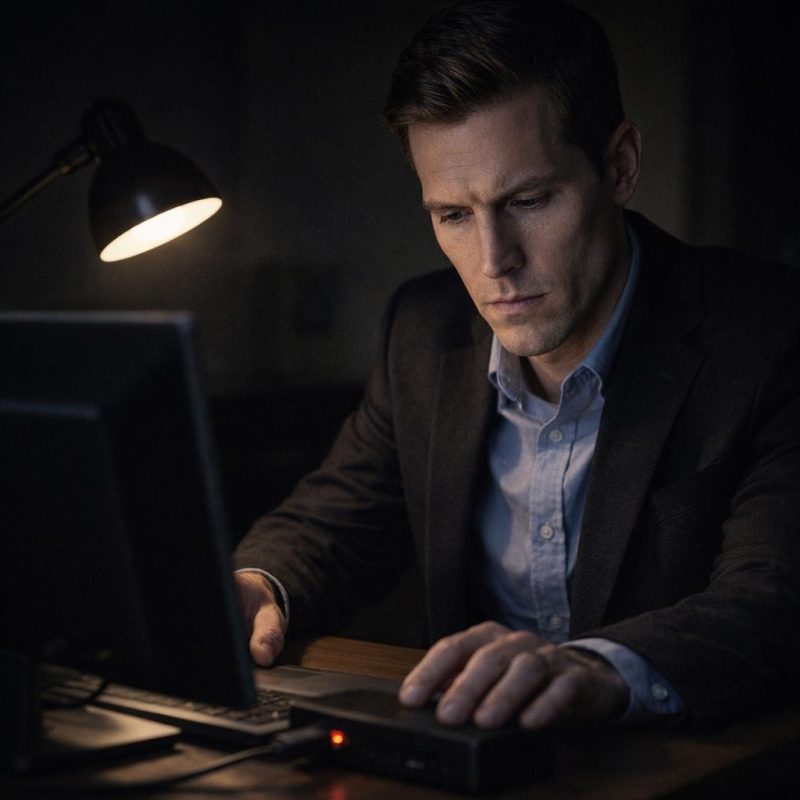 Image by RM AI
The Final Review
I spent the better part of two days going back through everything. Not because I doubted what I had — I didn't — but because I needed to be certain that every number, every date, every coordinate was exactly right. I pulled the original invoices and checked each fraudulent amount against the video frame where it appeared. I cross-referenced the GPS coordinates in the dashcam footage against the addresses on the maintenance account disbursements, line by line. I verified the shell company ownership chains using the state incorporation records I'd downloaded months earlier, confirming each link in the sequence was documented and traceable. The audio clips I checked for context — I wasn't going to take anything out of a conversation in a way that changed its meaning. What Leo had said, he had said plainly, in full sentences, with no ambiguity about what he meant. I formatted the final video file, confirmed the codec matched the display system's specifications, and ran a checksum on the upload package to make sure nothing had corrupted during the render. Then I opened the remote access terminal, navigated to the presentation system's staging queue, and loaded the upload sequence. The file sat ready in the transfer window, two gigabytes, everything I had built over the past months compressed into twenty minutes of evidence. The cursor rested on the upload button, and I left it there.
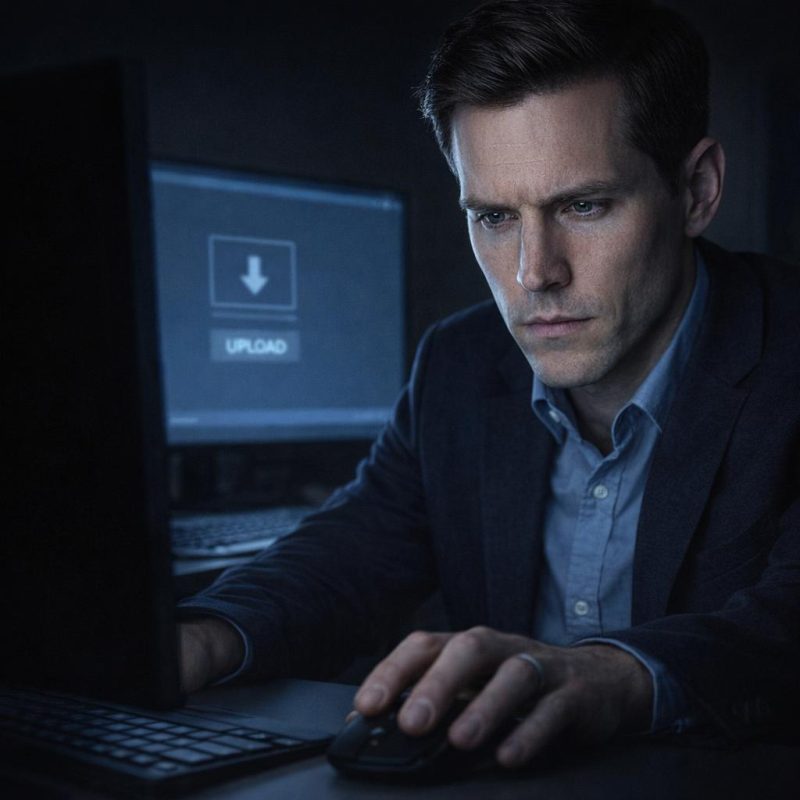 Image by RM AI
File Integrity Check
I ran the integrity check one more time, even though I'd already run it twice. That's just how I'm wired — I don't trust a thing until I've verified it from three different angles. The file format matched the LED wall system's codec specifications exactly. I tested the upload path again, watching the connection handshake complete in under two seconds, stable and clean. The remote access credentials still worked. I'd backed the file up to three separate drives — one in my apartment, one in a safety deposit box two miles away, one encrypted on a cloud server I'd set up under a name that had nothing to do with me or Sterling. The timing sequence was locked: the video would trigger at the forty-minute mark of the gala presentation, right when Leo would be standing at the podium accepting the industry award. I'd checked the staging queue, confirmed the file sat at the top of the playlist, confirmed the autoplay flag was set. There was nothing left to verify. I leaned back in my chair and let the quiet of the apartment settle around me, and for the first time in months, the weight in my chest felt less like dread and more like stillness.
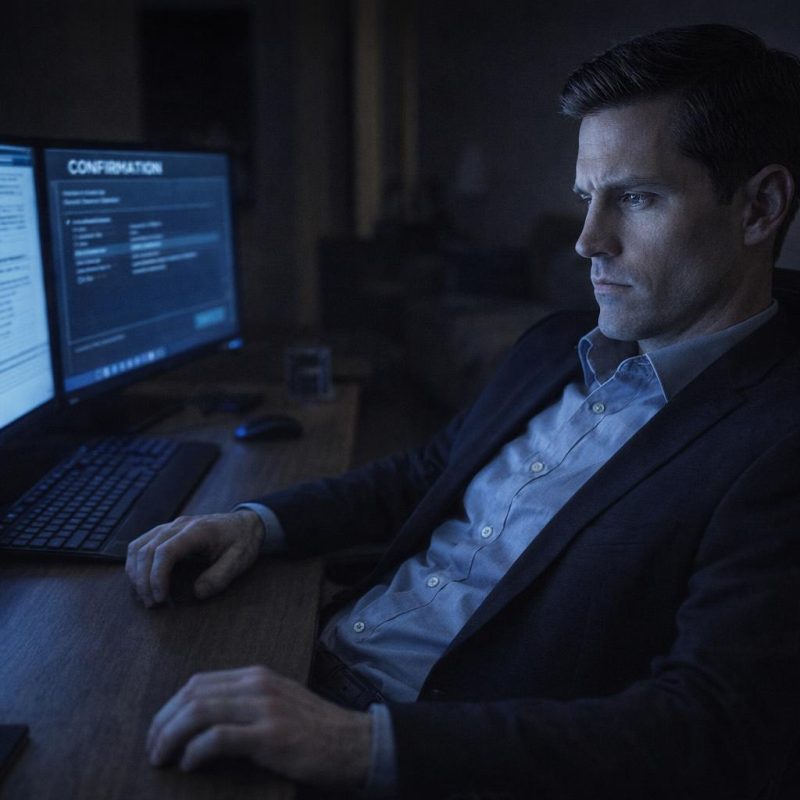 Image by RM AI
The Encrypted Folder
I wasn't planning to go back through the server backup again. I'd already pulled everything I needed — the invoices, the disbursement records, the shell company chains. But something made me open the directory one more time, maybe just to confirm the folder structure matched what I'd documented. I was scrolling through the file tree when I noticed it sitting between two folders I'd already catalogued. I'd missed it the first time because the label didn't follow Leo's usual naming convention. His other folders were labeled by year or department — clean, corporate, predictable. This one was different. The modification timestamps were recent, the most recent one dated just eleven days ago. I clicked on it and got an immediate prompt I didn't recognize — not the standard Windows encryption dialog, not the company's document management system. Whatever was protecting this folder, Leo had set it up separately, outside the normal IT infrastructure. I sat there staring at the label on my screen: RH_Correspondence.
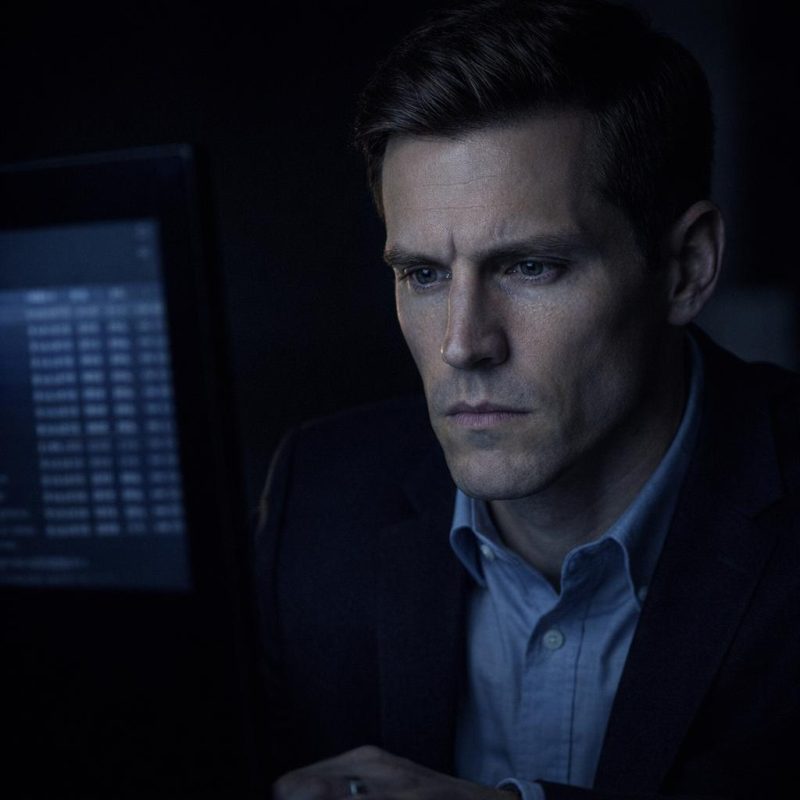 Image by RM AI
Breaking the Encryption
I started with the obvious passwords — Leo's birthday, Vanessa's birthday, the company founding date, the combinations he used on his other encrypted files. None of them worked. I pulled up a brute-force utility I'd used before on corrupted archives and configured it to run dictionary attacks against the encryption layer. The software estimated somewhere between six and fourteen hours depending on key length. I made a pot of coffee, pulled a legal pad over, and started writing down every password pattern I'd ever seen Leo use — his college jersey number, the street address of our parents' first house, the date of his first sales award. I fed each one into a custom wordlist and let the algorithm chew through the combinations. Around two in the morning the progress bar crossed fifty percent. I watched it for a while, then forced myself to lie down on the couch without actually sleeping, one eye on the laptop screen across the room. By five-thirty the apartment was gray with early light, my coffee had gone cold twice, and the progress bar sat at ninety percent.
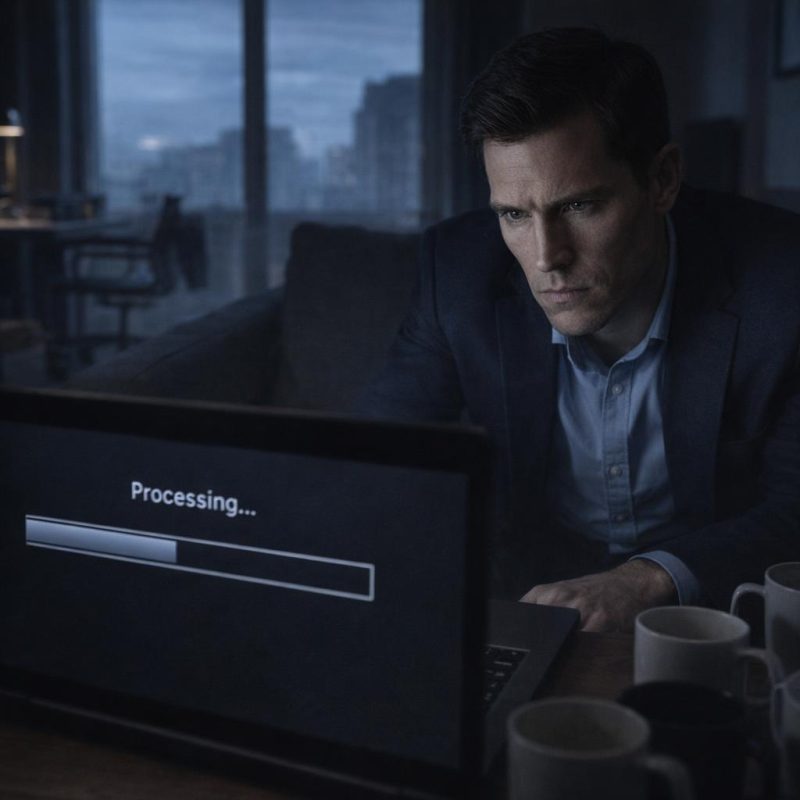 Image by RM AI
Almost There
I sat up from the couch and moved back to the desk. The progress bar had been at ninety percent for twenty minutes, which the software's documentation said was normal — the final pass was the most computationally intensive. I made a fresh cup of coffee mostly just to have something to do with my hands. I thought about what might be inside. More invoices, maybe. Correspondence with Michael about the legal structure. Something related to the merger terms I hadn't seen. I ran through the possibilities methodically, the way I always do, trying to keep my expectations calibrated so I wouldn't miss something important by looking for something specific. Whatever was in there, I told myself, it was additional context. The gala plan was solid with or without it. I sat back down, wrapped both hands around the mug, and watched the final percentage points tick upward one by one. Then the laptop speakers emitted a single soft chime, and the folder unlocked.
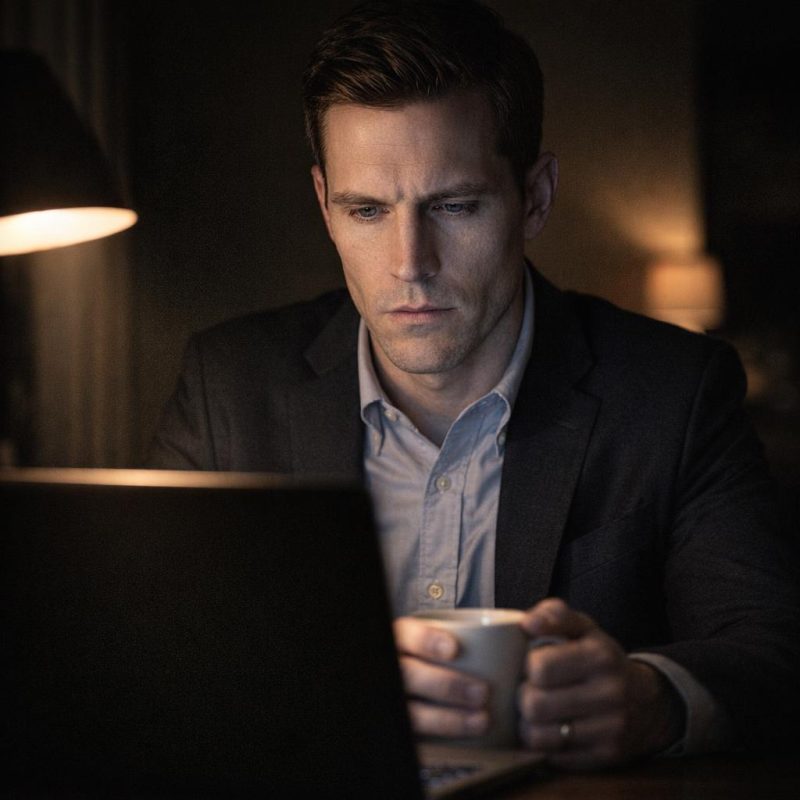 Image by RM AI
The Blackmail Emails
The first email was dated eighteen months ago, sent from a private domain I didn't recognize. The sender name was R. Hartwell. I opened it and read it twice before I moved on to the next one. Hartwell had found something — a discrepancy in Sterling's maintenance accounts, small enough that it hadn't triggered an audit flag, but large enough that someone who knew what to look for would see it immediately. He laid it out in the email with the calm precision of someone who had done this before. He wasn't asking Leo to explain himself. He was telling Leo what was going to happen next. The emails that followed built on each other in a sequence I had to read slowly to fully absorb. Hartwell wanted the offshore scheme expanded — not because he needed the money, but because inflating the apparent losses would depress Sterling's valuation ahead of the merger. The emails made it plain: acquire the company at a fraction of its real worth, with Leo's cooperation secured through the threat of exposure. I scrolled to the email dated four months before my termination and read the line that made my stomach drop: *If you don't expand the disbursement schedule by Friday, I send the file. All of it. Leo Sterling's name on the original account, the full audit trail, everything.*
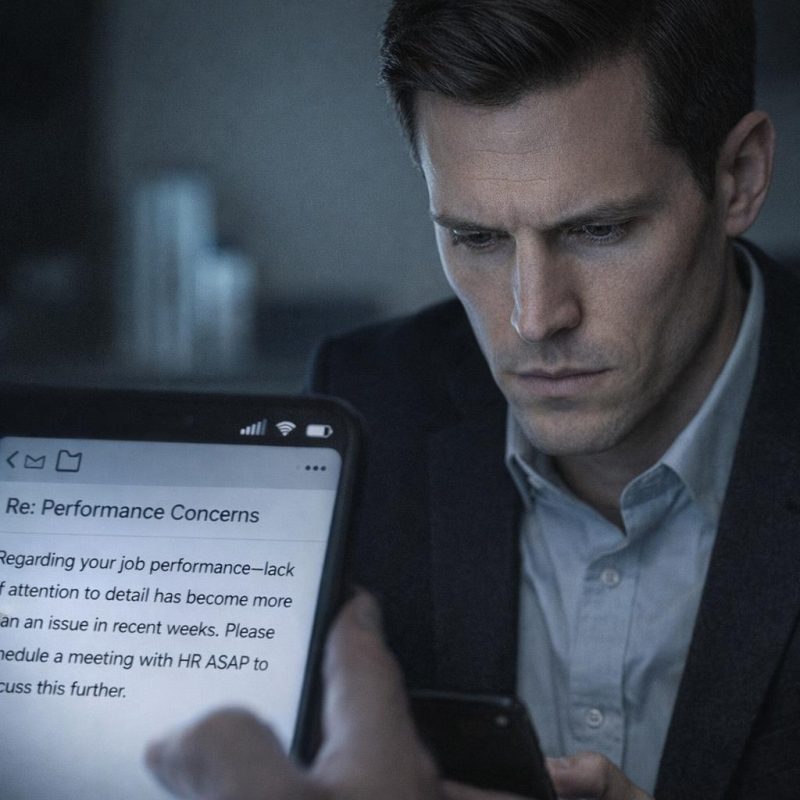 Image by RM AI
Reframing the Betrayal
I read through all of them in order, from the first one to the last. It took me almost two hours. In the early emails, Leo pushed back — not hard, not the way I would have, but he pushed. He asked for more time. He suggested alternatives. He told Hartwell twice that he wanted out. Hartwell's responses were short and consistent: the terms weren't negotiable, and the clock was always running. By the sixth month the resistance in Leo's replies had flattened out. He stopped suggesting alternatives and started asking for operational details. That was the moment, reading it in sequence, where I could see exactly when my older brother stopped fighting and started complying. The cold, clipped way he'd spoken to me in those final weeks before my termination — I'd read it as contempt. Sitting here now, I could see it differently. It looked more like a man who had run out of options and was trying not to let anyone see how badly he was drowning. That didn't make what he did to me forgivable. He still signed the termination papers. He still let them put my name on the original account. But the picture I'd been carrying for months — Leo as the architect of all of it — sat differently now, heavier and more complicated than I'd wanted it to be.
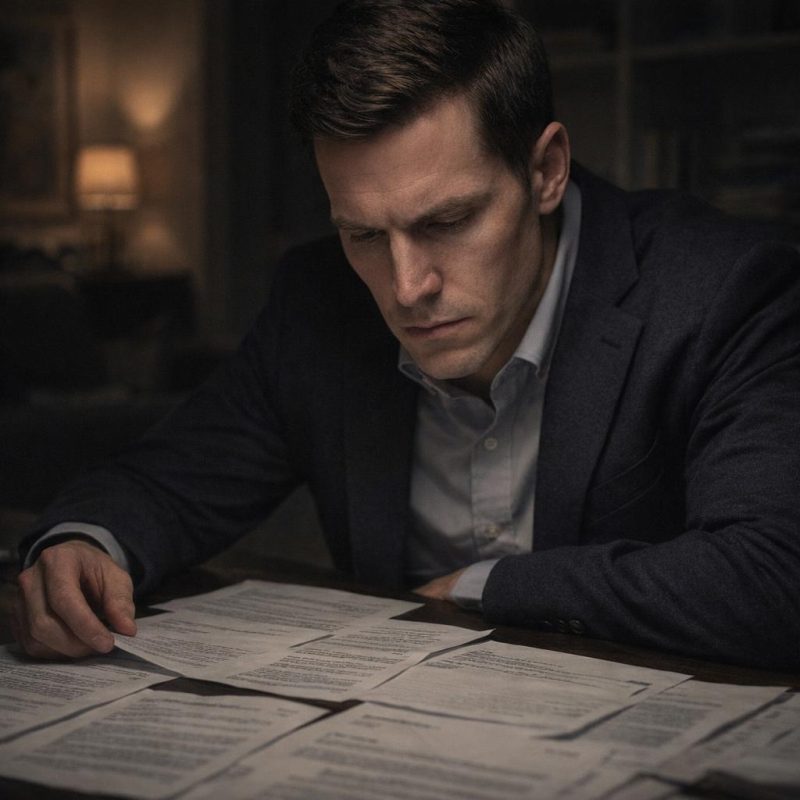 Image by RM AI
The Dual Case
I reopened the video project around noon and started rebuilding the timeline from the beginning. The original cut ran twenty minutes and told a clean story: fraud, shell companies, falsified invoices, termination. It was accurate. It just wasn't complete. I added a new section at the front — Hartwell's first email, screenshotted and annotated, the date and sender domain clearly visible. Then I laid in the sequence of demands, each one timestamped, each one showing the pressure ratcheting tighter. I included Leo's early resistance, because leaving it out would have been its own kind of dishonesty. I added the valuation analysis I'd run three weeks ago, which now made a different kind of sense — the depressed numbers weren't just fraud, they were the mechanism of a takeover. I restructured the narrative so the viewer would understand Hartwell before they judged Leo, because the order mattered. By early evening I had a cut that ran twenty-six minutes and held together the way a well-built argument holds together — every piece load-bearing, nothing decorative, nothing missing. I saved the project file and sat back, and the quiet satisfaction of having built something that was finally, fully true settled over me like the room itself had exhaled.
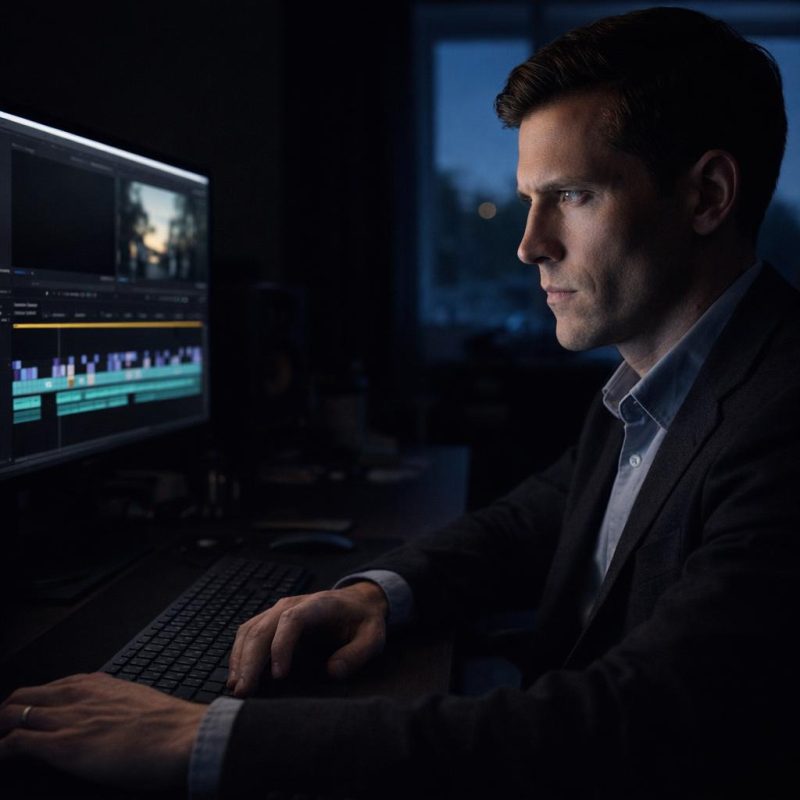 Image by RM AI
Justice Not Revenge
I watched the full twenty-six minutes one final time from the beginning, the way you read a contract before you sign it — looking for the thing you missed, the clause that changes everything. It held. The evidence against Hartwell was documented and traceable: the blackmail emails, the valuation manipulation, the merger structure that was never a partnership. Leo's role was documented too — not softened, not excused, but contextualized. He had still signed my termination. He had still let my name sit on that original account. Coercion explained the shape of what happened; it didn't erase his choices. I added one more section near the end: the drivers' pension fund exposure, the specific accounts Hartwell's acquisition structure would have raided, the names of the men and women who would have lost retirement income they'd spent decades earning. I thought about Tom, who'd driven the same route for eleven years and wore the company uniform like it meant something, because to him it did. This wasn't just about what Leo and Hartwell had done to me. It was about what they were going to do to all of them. I moved the cursor to the save button, clicked it, and watched the filename update: Sterling_Complete_Final_v2.mp4.
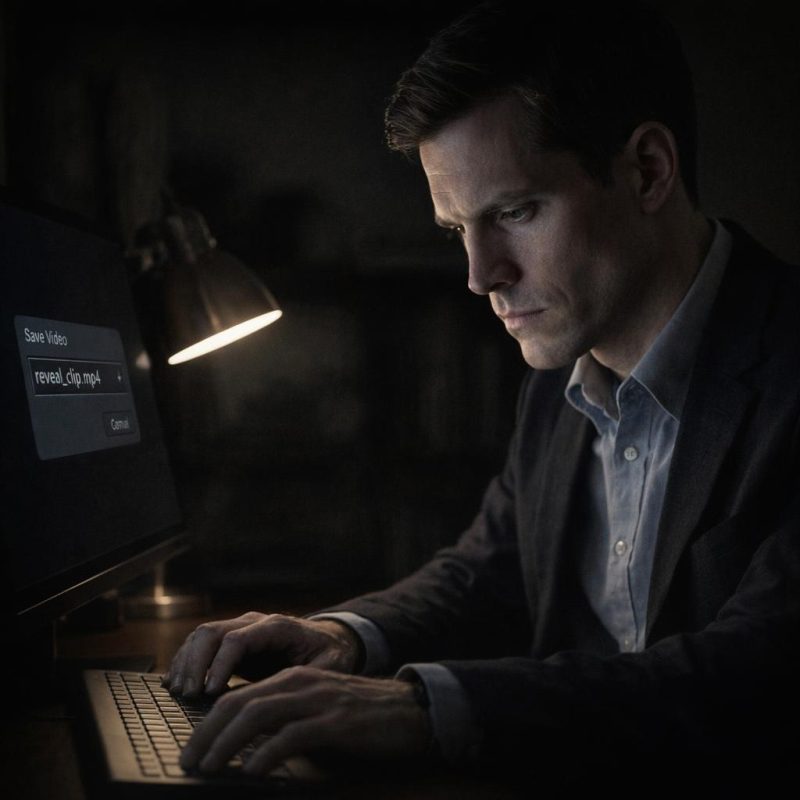 Image by RM AI
The Day Before
I didn't sleep much the night before, but it wasn't anxiety keeping me awake — it was the opposite. A strange, flat calm had settled in, the kind that comes when every decision has already been made and there's nothing left to second-guess. I ran the remote connection test one more time around ten in the evening, watching the cursor move across the presentation system's interface from my laptop like I was reaching through a wall. It responded cleanly. I uploaded the final video file to the queue and confirmed the filename matched exactly: Sterling_Complete_Final_v2.mp4. Then I printed the gala schedule and went through it line by line with a highlighter, marking Leo's speech window, the tribute video slot, the approximate time Richard would be seated at the head table. I packed the laptop, both backup drives, and the connection hardware into a single bag and set it by the door. Around midnight I drove past the Grand Regency, slow enough to clock the alley entrance behind the loading dock, the sight lines, the distance from the service entrance to the ballroom wing. Everything was where I'd mapped it. I came home, made tea I didn't finish, and sat in the quiet of the apartment. Tomorrow had a shape to it now. I could feel the edges of it, solid and certain, and that was enough to let me rest.
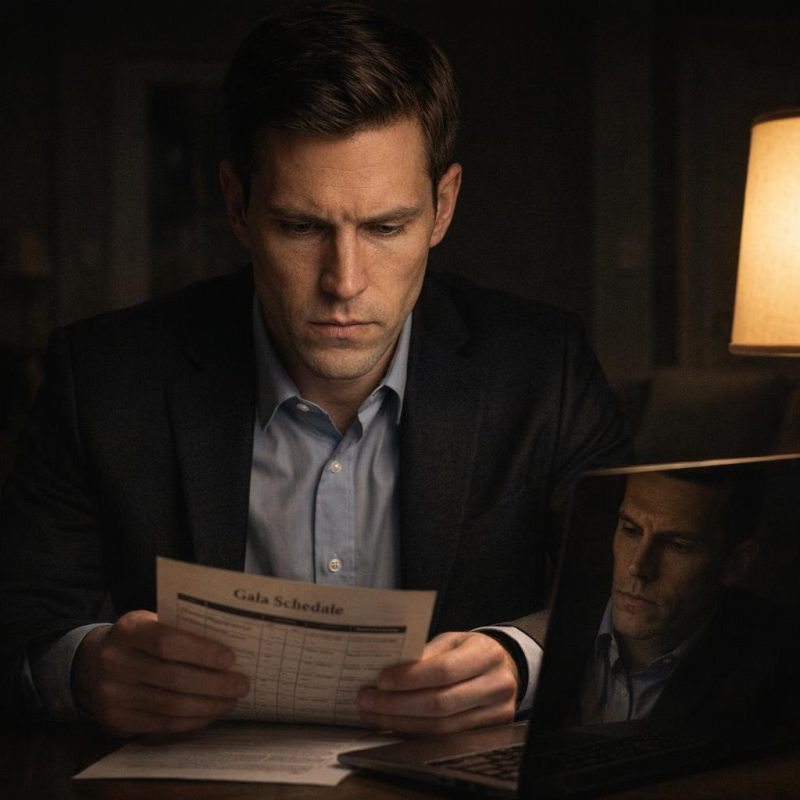 Image by RM AI
Gala Day
I was up before five. Not because I'd set an alarm — I just was. I made coffee, drank it standing at the kitchen counter, and went through the plan one more time in my head the way you run a preflight checklist: not because you expect to find something wrong, but because the discipline of checking is the point. I pulled out the equipment bag and tested every component on the kitchen table. Laptop, both backup drives, the wireless adapter, the connection cable I'd never need but packed anyway. Everything powered on. Everything connected. I dressed in dark slacks and a plain charcoal jacket — nothing that would stand out in a hotel alley at dusk, nothing that would read as anything other than a man sitting in a parked van. I wasn't going inside. I didn't need to. By mid-afternoon I'd repacked the bag twice, not because anything was wrong but because my hands needed something to do. At four-thirty I carried the bag down to the van, loaded it into the back, and climbed into the driver's seat. The Grand Regency was twenty-two minutes away in light traffic. I pulled out of the parking lot and pointed the van toward it.
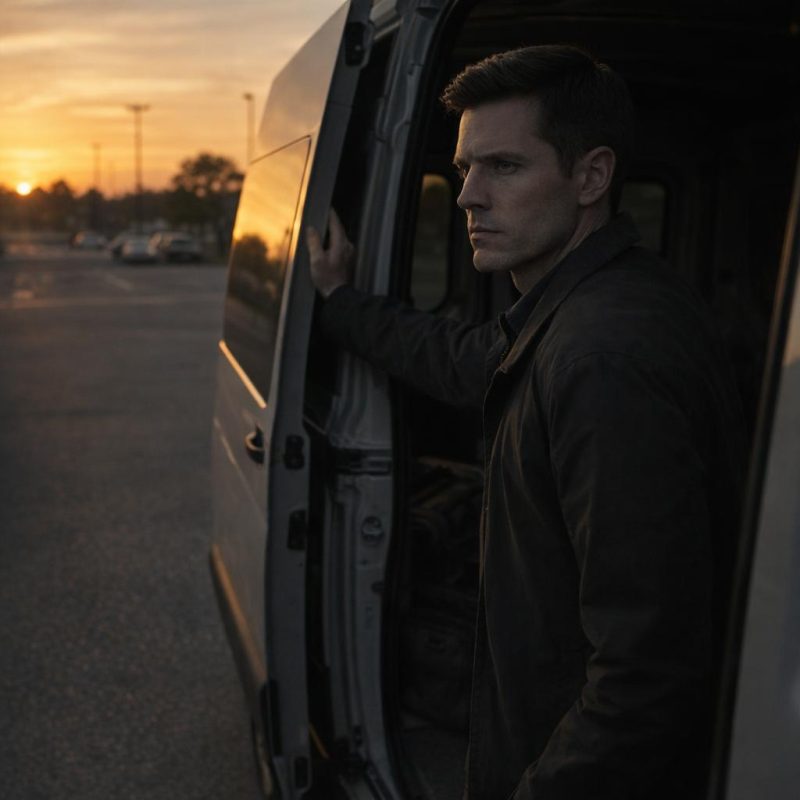 Image by RM AI
Position Secured
The alley behind the Grand Regency was exactly what I'd scouted — narrow, poorly lit, smelling of kitchen exhaust and damp concrete. I pulled in past the loading dock and parked where the van would be invisible from the street but close enough to the building that the service WiFi signal came through strong. I'd found the network weeks earlier during a dry run: unsecured, hotel infrastructure, the kind of thing a catering crew or AV contractor would use without thinking twice. I connected, ran the authentication bypass I'd prepared, and was inside the presentation system in under four minutes. I confirmed the video file was still sitting in the queue where I'd placed it. It was. I pulled up the live stream on the tablet and propped it against the dashboard. The ballroom was filling. Women in floor-length gowns, men in tuxedos, waitstaff moving between tables with practiced efficiency. The chandeliers were up full. The LED wall at the back of the stage glowed a soft Sterling blue. I could see the head table from the camera angle — eight seats, white linens, crystal glasses already poured. I set the laptop on the passenger seat, positioned the tablet where I could watch both screens at once, and settled back. Outside, the alley was quiet. The van held the dark around me like something patient.
 Image by RM AI
The Speech Begins
Leo took the stage at seven forty-three. I watched him walk out on the tablet screen — unhurried, comfortable in the tuxedo the way men are when they've worn them enough times that it stops feeling like a costume. He was holding a champagne flute loosely at his side, and the room responded to him the way rooms always responded to Leo: a warm swell of applause, a few people rising from their seats. He smiled like he'd earned it. He set the glass on the podium and thanked the guests for being there to celebrate what he called a milestone in Sterling's history. Then he started talking about integrity. He used that word three times in the first two minutes — I counted. He talked about the company's founding values, about what it meant to build something honest in an industry that rewarded shortcuts. He talked about family. He talked about transparency. I watched Richard sitting at the head table, one hand resting on the stem of his wine glass, nodding at the right intervals with the practiced ease of a man who had attended a thousand of these events and knew exactly how to look like he belonged at the center of one. Leo's voice carried through the tablet's small speaker, warm and measured and utterly convincing. The word transparency sat in the air of the van long after he'd moved past it.
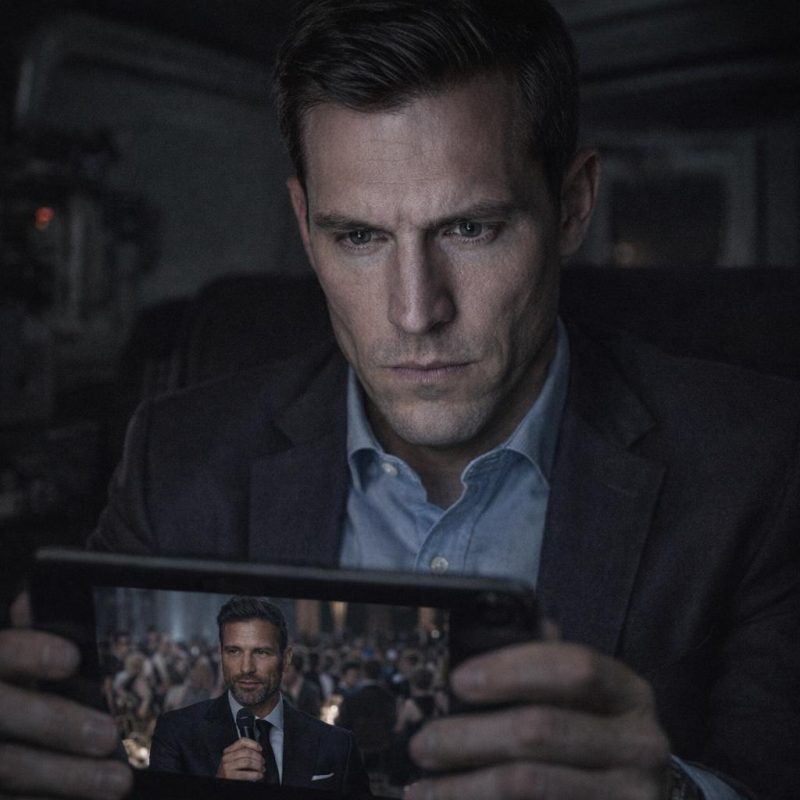 Image by RM AI
The Mention
About eight minutes into the speech, Leo paused. He looked down at the podium for a moment — a beat that read as genuine emotion to anyone who didn't know him — and then he looked back up at the room. He said there was someone who should have been there tonight but couldn't be. He said his younger brother had been dealing with some serious personal health struggles and wasn't able to attend. He said it quietly, with exactly the right amount of weight. He said the company wouldn't exist without his brother's early contributions, that he carried that with him every day, that he hoped everyone would join him in wishing his brother well. He said my name. And the room gave him what he was asking for — a low, collective murmur of sympathy, the sound of three hundred people feeling something on my behalf based entirely on a story Leo had just invented in real time. I sat in the dark van with my hand resting on the keyboard and listened to that sound come through the tablet speaker. My finger was already on the enter key.
 Image by RM AI
Execute
Leo let the sympathy settle for exactly the right number of seconds — he always knew how long to hold a moment — and then he lifted his chin and told the room it was time to look back at where Sterling had come from. He said they'd prepared a tribute video, a look at the company's history and the vision that had brought them to tonight. He gestured toward the LED wall. The ballroom lights began to dim. I watched on the tablet as Leo turned slightly toward the head table, his hand extended in Richard's direction, the beginning of an introduction forming on his lips. I pressed enter. There was a half-second delay — long enough that I felt it in my chest — and then the LED wall stopped being Sterling blue. It went red. Not a fade, not a transition. A hard cut to red, and then the first spreadsheet appeared, blown up to fill the entire screen, every line item sharp and readable from the back of the room.
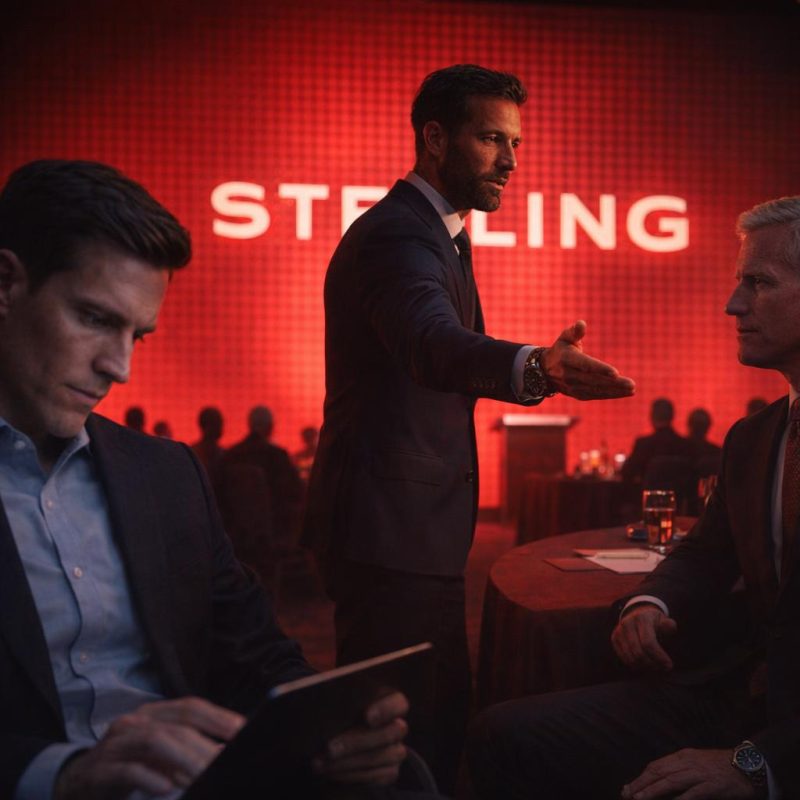 Image by RM AI
The Evidence Plays
The ballroom went quiet in stages. First the people nearest the screen, who could read the numbers. Then the ripple outward as the people behind them looked up from their conversations and tried to understand what they were seeing. Leo's voice cut off mid-syllable. The spreadsheets gave way to the property photos — empty lots with GPS coordinates stamped in the corners, the addresses matching the invoice line items still visible at the edge of the frame. Then my voice came through the speakers, narrating the shell company ownership chains, calm and flat and clinical, the way I'd recorded it. I watched the tablet screen. Guests were pulling out phones. A woman near the center of the room stood halfway out of her chair to get a better angle. The Hartwell blackmail emails appeared next, timestamps and subject lines enlarged, the language unambiguous. Someone near the back said something I couldn't make out, and then the room was full of low, urgent voices all at once. On the tablet, I could see Richard's chair. He was on his feet, jacket buttoned, moving toward the far end of the head table in the direction of the side exit.
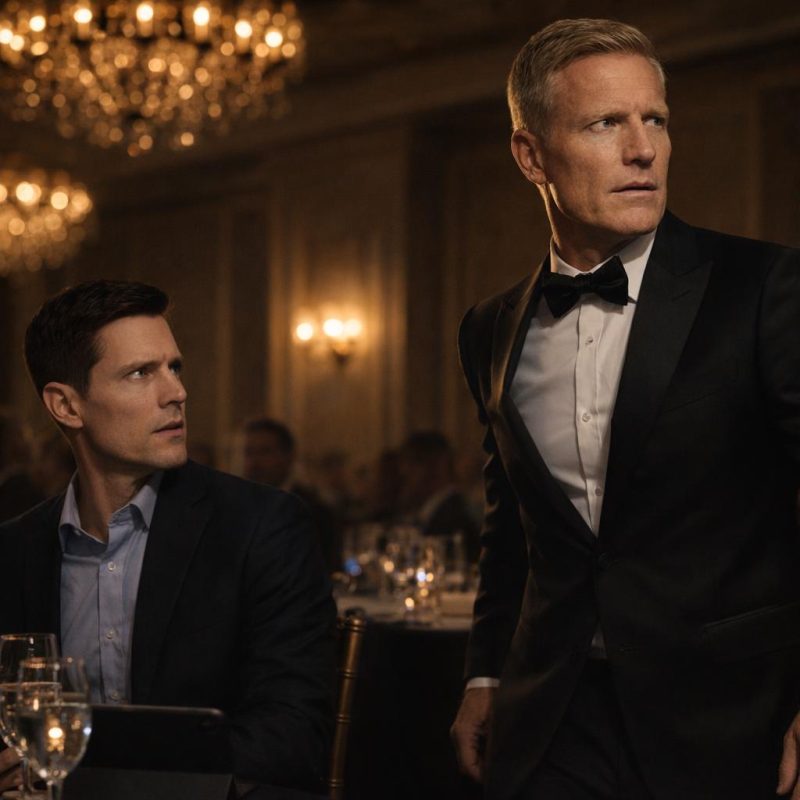 Image by RM AI
The Collapse
The camera on the live stream was fixed on the stage, and it caught Leo full in the face. He was still standing at the podium. He hadn't moved. His hand was still extended from the half-finished gesture toward Richard's empty chair, and the color had gone out of him — not a flush, not a flinch, but a slow draining, like something underneath the surface had given way. The merger CEO, who had been seated two chairs down from Richard, stood without a word and walked off the stage. No announcement, no apology, no acknowledgment of the room. He simply left. The LED wall kept playing. The final section came up — the pension fund exposure, the account structures, the names of the drivers and warehouse staff whose retirement income sat inside the acquisition target. The ballroom had stopped being a gala. People were standing in clusters, phones raised, voices low and urgent. Leo hadn't moved from the podium. He was still there when the video ended and the screen went dark and the room fell into a silence so complete I could hear the ventilation hum through the tablet speaker.
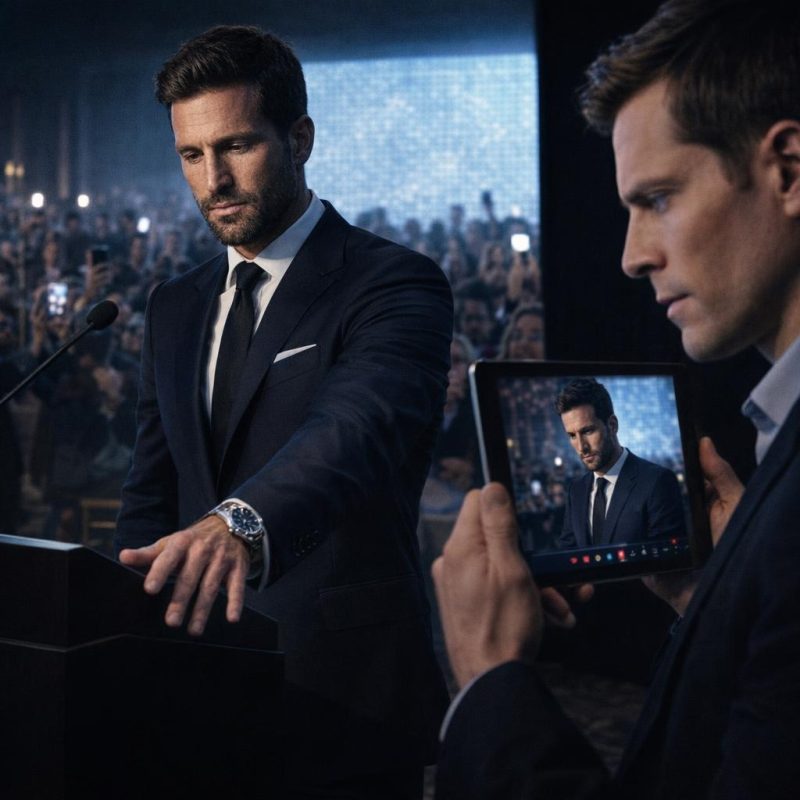 Image by RM AI
Mission Accomplished
The video ended and the screen went dark and I watched the ballroom dissolve into chaos on the live stream — people moving in every direction, phones raised, voices I couldn't hear but could read in the shape of their mouths. Security personnel were pushing through the crowd toward the stage. I'd seen enough. I closed the laptop, folded it under my arm, and disconnected the WiFi dongle. No rush. No panic. I'd planned the exit the same way I'd planned everything else — methodically, without drama. The van was where I'd left it, tucked in the service alley behind the hotel, engine cold. I started it, checked the mirrors, and pulled out at the speed of someone who had somewhere ordinary to be. I didn't look back at the building. I didn't need to. Leo and Richard had the evidence they'd earned, and the people who needed to see it had seen it. The weight I'd been carrying for three weeks — the spreadsheets, the burner phones, the sleepless arithmetic of it all — had settled into something quieter. Not triumph. Just completion. I turned onto the main road, and in the rearview mirror the Grand Regency shrank and disappeared behind me.
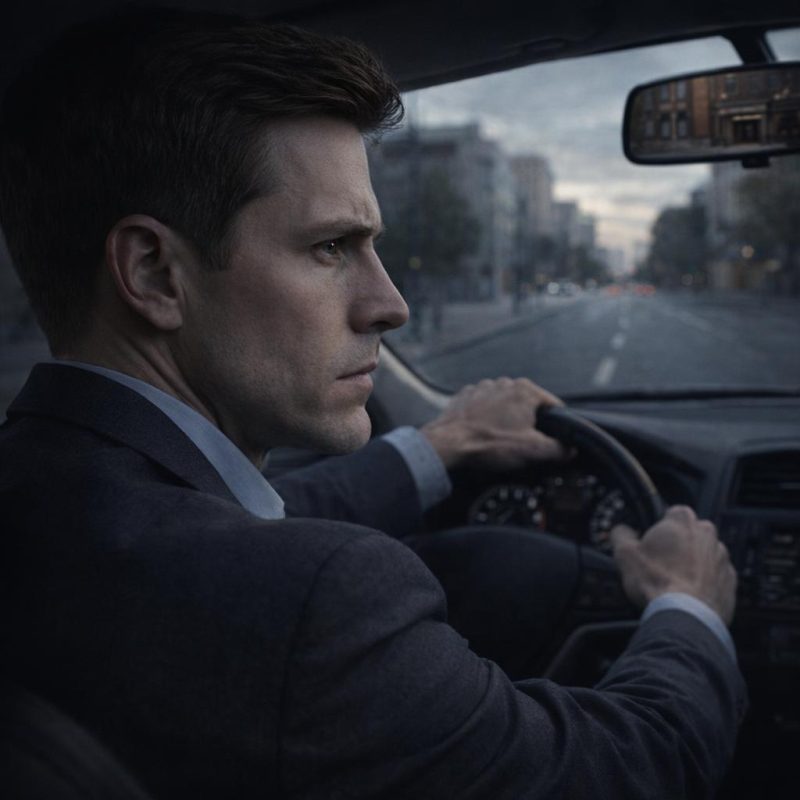 Image by RM AI
Driving Into the Night
I drove without a destination for a while, just moving through the city as the night came down around me. The streets were still busy — restaurants emptying, cabs cutting lanes, the ordinary machinery of a Thursday evening. My phone started buzzing somewhere around the third mile. I didn't pick it up. At a red light I glanced at the screen: news alerts, three of them in a row, each one a variation on the same headline. Sterling Logistics. Gala. Scandal. One of them had a photo of the Grand Regency entrance with blue and red light strobing across the facade. I set the phone face-down on the passenger seat and kept driving. I'd expected to feel something cleaner than this — relief, maybe, or the cold satisfaction I'd imagined during all those nights running numbers at my kitchen table. What I actually felt was closer to tired. Not the tired that sleep fixes. The kind that settles into your joints and stays. I thought about Tom and the other drivers, about Sarah, about the pension line items I'd memorized until they felt like names. I thought about what came next, which was a question I hadn't let myself ask until now. The road ahead was quiet, and I let it stay that way.
 Image by RM AI
The Arrests
I pulled off around midnight and found an all-night diner two blocks from the highway on-ramp — the kind of place with laminate menus and a coffee pot that never empties. I took a stool at the counter and ordered black coffee and didn't look at the television above the register until the woman next to me said, quietly, "Lord." The screen was showing the Grand Regency entrance. The chyron read BREAKING: STERLING LOGISTICS CEO ARRESTED AT CHARITY GALA. I watched Leo come through the hotel doors flanked by two officers, his hands behind his back, his suit jacket still on. He looked like he was trying to hold his face together and not quite managing it. The segment cut to a second clip — Richard being walked to a police vehicle near the parking structure, one hand on his head, the other held by an officer. The anchor mentioned the pension fund exposure, said investigators had been handed documentation at the scene. A gala attendee being interviewed outside said she'd had no idea. I wrapped both hands around the coffee mug and held it. I'd destroyed my family tonight. I'd also protected forty-three drivers who'd spent their careers trusting that the company would keep its word. I sat with both of those things, and neither one canceled the other out.
 Image by RM AI
The Final Chapter
I sat in that diner until the coffee went cold and the breakfast crowd started filtering in. Ten years. That's what I kept coming back to. Ten years of route optimization and compliance filings and quarterly reviews that nobody read except me. Ten years of being the brother who handled the boring work while Leo handled the room. And then three weeks — three weeks of isolation and burner phones and spreadsheets that told a story I hadn't wanted to believe — to undo what he'd built on top of it. I thought about my parents. Frank would never forgive me. Patricia would try, quietly, in the way she tried to fix everything, and it wouldn't be enough. I'd made peace with that somewhere around the second week, when I understood that protecting the truth and protecting my family were not the same choice. The drivers' pensions were safe. The account structures were in the hands of people who knew what to do with them. Leo and Richard were in custody. None of that came free. I left cash on the counter, walked out into the early morning, and stood beside the van for a moment. I didn't know what came next — not the job, not the family, not any of it. But I knew what I'd done and why I'd done it, and that was enough to take the next step. I got in, pulled onto the road, and kept going.
 Image by RM AI
KEEP ON READING

The story of Ching Shih, the Woman Who Became the…
Unknown author on WikimediaFew figures in history are as feared…
By Emilie Richardson-Dupuis Dec 29, 2025
Einstein's Violin Just Sold At An Auction—And It Earned More…
A Visionary's Violin. Wanda von Debschitz-Kunowski on WikimediaWhen you hear…
By Ashley Bast Nov 3, 2025
This Infamous Ancient Greek Burned Down An Ancient Wonder Just…
History remembers kings and conquerors, but sometimes, it also remembers…
By David Davidovic Nov 12, 2025
The Mysterious "Sea People" Who Collapsed Civilization
3,200 years ago, Bronze Age civilization in the Mediterranean suddenly…
By Robbie Woods Mar 18, 2025
20 Greatest Ancient Athletes In History
Ancient Olympics. Long before modern stadiums and multimillion-dollar endorsements, athletes…
By Sara Springsteen May 1, 2026
20 Soldiers Who Defied Expectations
Changing the Rules of the Battlefield. You’ve probably heard plenty…
By Annie Byrd Feb 10, 2026