

I Restored My Sister's Antique Quilt and Discovered a Family Secret That Someone Was Willing to Kill For
I Restored My Sister's Antique Quilt and Discovered a Family Secret That Someone Was Willing to Kill For
The Call That Changed Everything
I was sorting a stack of vintage calico on a Tuesday afternoon — the good kind of Tuesday, quiet and unhurried, with the light coming in at just the right angle — when my phone rang and Sarah's name appeared on the screen. We don't talk often. That's not a complaint, just a fact about the thirty years we've spent building separate lives in separate directions. She went back to the coast, took over the family property, learned to read tides and salt shipments. I stayed inland and learned to read thread counts and dye lots. We love each other in the way people do when they've stopped trying to understand each other. So when she asked if I'd restore Grandma's Heritage Quilt for the town bicentennial, I said yes before she finished the sentence. Of course I did. That's what we do — we fix things instead of talking about them. She mentioned moth damage in the attic, said the quilt needed proper hands, and I told her I'd clear my schedule. The conversation was practical, efficient, the way ours always are. But there was something underneath it. A slight catch in her breath between sentences, a tremor so small I almost talked myself out of having heard it at all.
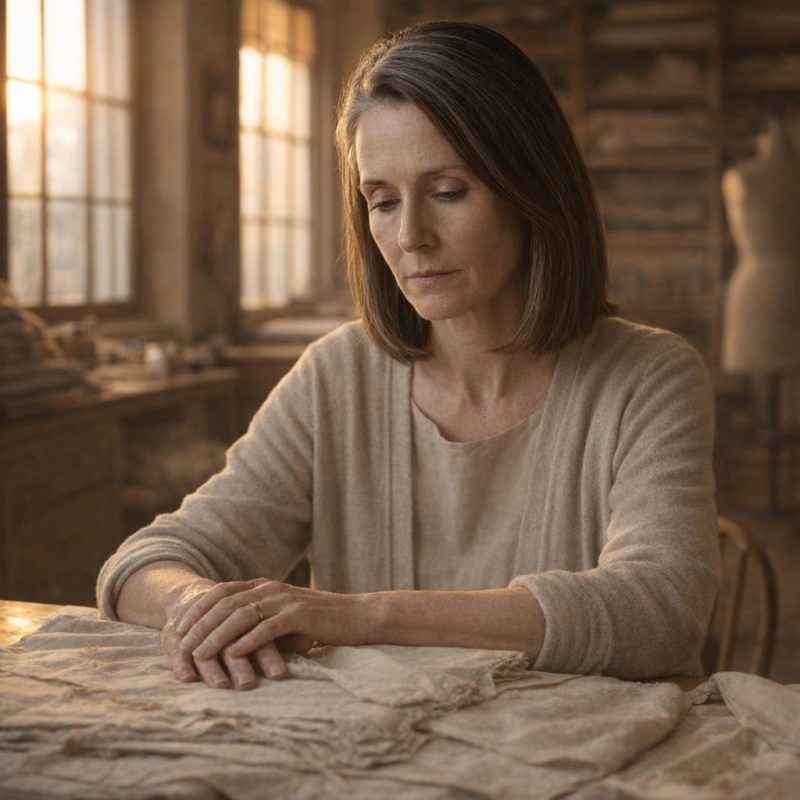 Image by RM AI
Preparing the Studio
I spent the next morning setting up my worktable the way I always do before a significant restoration — methodically, almost ritually. The daylight-balanced lamps went up first, positioned to eliminate shadow from every angle. Then the magnifying stand, the archival tissue, the tray of specialized needles arranged by gauge. I laid out my documentation kit: the camera, the measuring tape, the condition-report forms I've been using for nearly twenty years. There's a comfort in this preparation, usually. A kind of professional settling-in that tells my hands the work is about to begin. But that morning the comfort didn't come. I kept stopping for no reason I could name — standing in the middle of the room, listening to the house. The light felt fine. The tools were all where they belonged. Nothing was out of place. I told myself it was just the strangeness of working on a family piece, that the personal stakes were making me jumpy. I reorganized the needle tray twice. I rechecked the lamp angles. And then, without quite deciding to, I walked to each window in the craft room and checked that every latch was fastened tight.
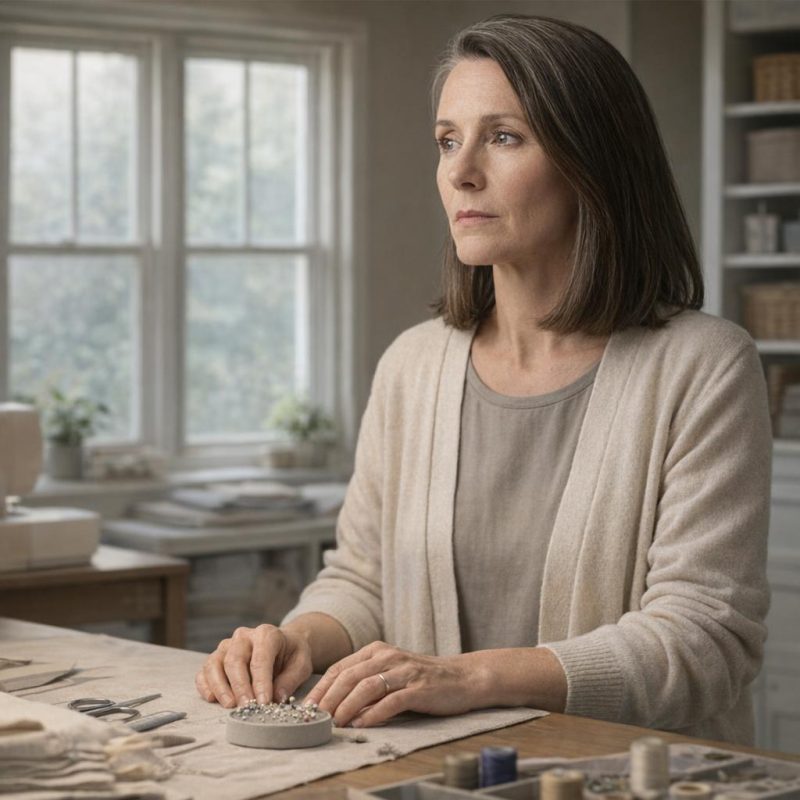 Image by RM AI
The Delivery
Sarah arrived two days later, a Thursday, driving up in her truck with the cedar trunk loaded in the bed. I'd expected her to come in, have tea, maybe sit with me while I did the initial unwrapping. That's what I'd pictured, anyway — some version of the two of us being sisters for an afternoon. She carried the trunk inside herself, wouldn't let me help, set it down in the craft room with a careful deliberateness that seemed like more than just caution about the contents. I put the kettle on. She said she couldn't stay, that there was a salt shipment coming in that afternoon and she had to be there to sign for it. I didn't push. The trunk was beautiful — old cedar, brass fittings, the wood still fragrant — and I told her so, hoping it might slow her down a little. She nodded, said Grandma had kept it well. Then she moved toward the door and I followed her out to the porch, and we said the kind of goodbye that's really just two people running out of safe things to say. She stepped outside. I watched her reach back and grip the doorframe before she turned to go, her knuckles white against the painted wood.
 Image by RM AI
First Examination
I waited until Sarah's truck had turned off the street before I went back to the trunk. There's a protocol to opening something like this — you don't rush it. I photographed the exterior first, then the brass latches, then lifted the lid slowly and let the smell come up to meet me before I looked. Cedar and lavender and something older underneath, the particular dry sweetness of fabric that has been kept carefully for a very long time. The quilt was folded in quarters, wrapped in unbleached muslin, with small lavender sachets tucked at each corner. Whoever had stored it last had known what they were doing. I lifted it out with both hands and carried it to the worktable, and when I unfolded it under the lamps I actually stopped breathing for a moment. Log Cabin pattern, nineteenth-century, the kind of needlework that takes years and a particular quality of patience I find humbling even now. The silk squares in the light strips were still luminous — pale gold, ivory, a soft rose that hadn't faded to nothing. My great-grandmother had started it, my grandmother had finished it, and you could see the conversation between their hands in the seams. I stood there a long time, just looking, while the scent of lavender and old dust filled the studio around me.
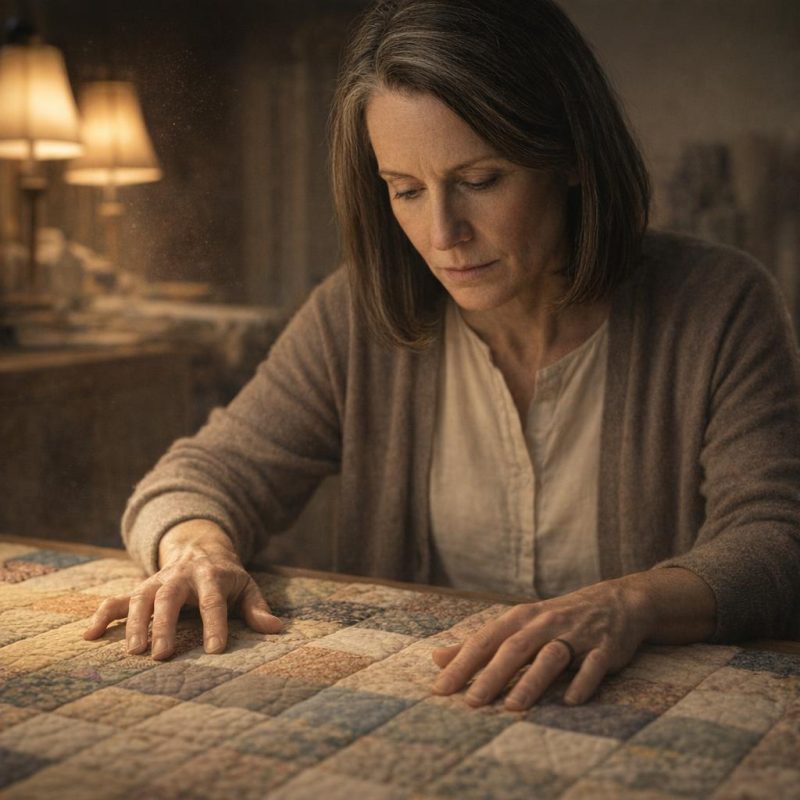 Image by RM AI
Mapping the Damage
The damage assessment took most of the following day. I work in sections, always — border to center, exterior to interior, the way you read a document before you annotate it. The borders told a familiar story: moth damage along two edges, some silk splitting at the stress points, a few areas where the backing had pulled away from the top. Expected wear for a piece this age, nothing that surprised me. I photographed each problem area and noted it on the condition form, moving inward in a slow grid. The center panels were where things got strange. Log Cabin quilts follow a logic — light and dark strips radiating from a central square, the mathematics of it consistent and intentional. You can almost predict what you'll find before you look. But the center of this quilt didn't follow the logic. The strips shifted direction without reason. Silk squares appeared in positions that served no structural or aesthetic purpose I could identify. Some sections looked rushed, the stitching uneven in a way that didn't match the careful hand visible everywhere else. I went back over it twice with the magnifying glass, thinking I was misreading the pattern. I wasn't. The mathematical logic of the Log Cabin construction broke down completely in the center.
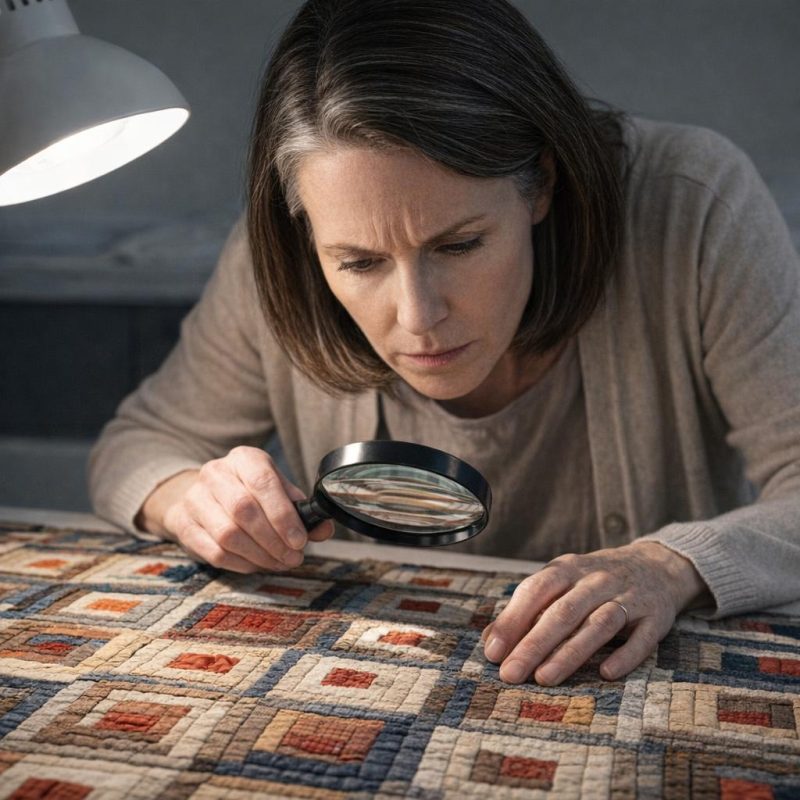 Image by RM AI
The Thick Patch
I told myself it wasn't unusual. Quilts made across generations sometimes show inconsistencies — a second maker who didn't fully understand the first one's intentions, or a section completed in haste, or fabric added later to repair damage that had since been repaired again. There were reasonable explanations. I kept working, moving my fingers slowly across the center panels in the way I always do when my eyes need a second opinion. Touch tells you things that light doesn't. I can feel a weak seam before I see it, identify a later repair by the slight ridge where new thread meets old. My fingers moved across the dark green velvet section near the center and stopped. I pressed gently, the way you test a bruise. The velvet was noticeably thicker than the surrounding fabric — not slightly, but significantly, in a way that didn't distribute the way batting does. I pressed again. The resistance was wrong. Batting from this period compresses in a particular way, yields in a particular way, and I have handled enough of it over forty years to know the difference without thinking. Whatever was beneath that velvet, the texture didn't match any batting I'd encountered in forty years of conservation work.
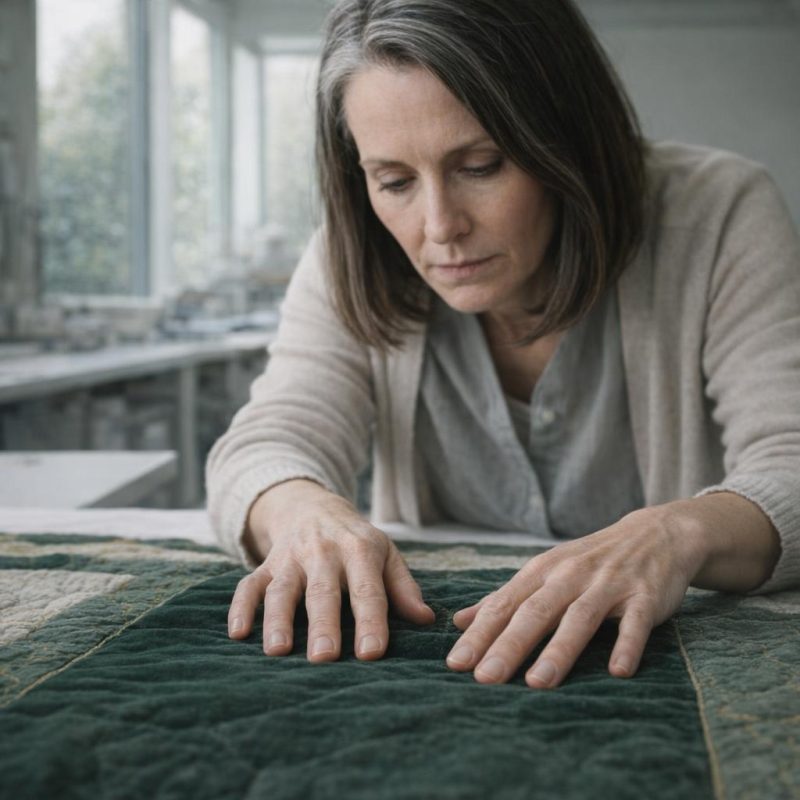 Image by RM AI
The First Week
I made a decision that first week to leave the center alone and work outward. It was the professionally correct choice — stabilize the borders before addressing the interior, don't introduce new stress to a compromised piece. I told myself that every morning when I sat down at the worktable. The border restoration was exacting work, the kind that demands everything you have and gives back a particular quiet in return. Thread by thread, I removed the rotted silk from the damaged edges, working under magnification, my breathing slow and my hands steady. I've done this kind of work for decades and it has always settled me — the smallness of the task, the way the world narrows down to a single stitch, the meditative rhythm of it. That week it didn't settle me. I'd finish a section, set down my tools, and find my thoughts had drifted back to the center of the quilt without my permission. The thick velvet patch sat at the edge of my awareness the way a word sits on the tip of your tongue — not urgent, not defined, just present. I'd look up from the borders and my eyes would go straight to it. The work was good. The progress was real. But the meditative rhythm of it failed to quiet my mind.
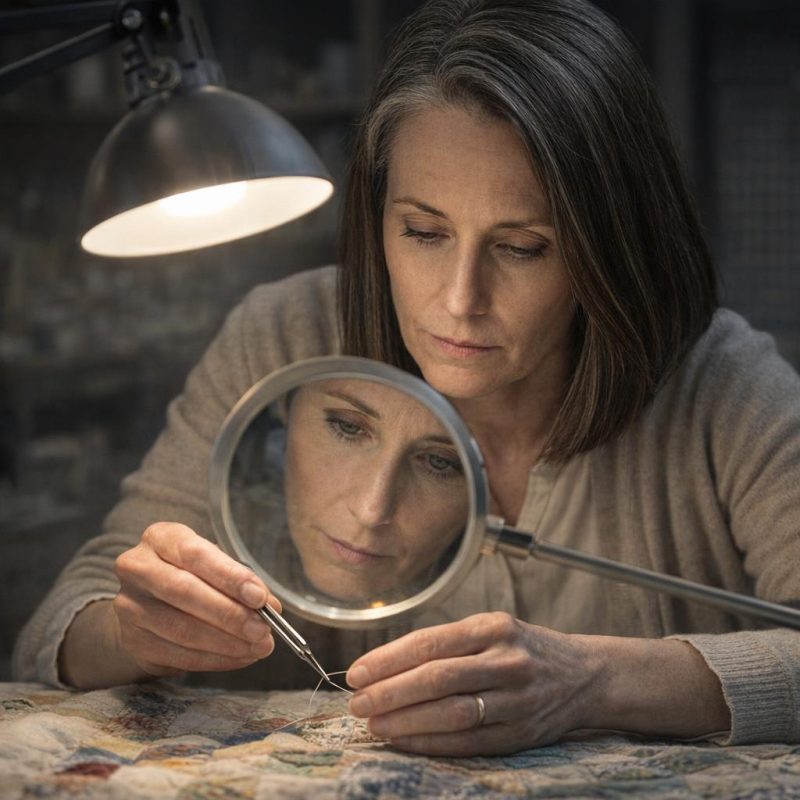 Image by RM AI
Strange Questions
Sarah called every evening that week, right around seven, just as I was putting my tools away. The first call I assumed was sisterly concern — she'd sent me a family heirloom, it was natural she'd want to know how it was going. But she didn't ask how it was going. She asked if I'd noticed anyone walking past the house more than once. She asked if there were any cars parked on the street that I didn't recognize. The second evening she asked the same things, in almost the same order. By the third call I'd started paying attention to the pattern. I'd answer, tell her nothing seemed out of the ordinary, and she'd go quiet for a moment before moving on to something else — the weather, the salt shipment, nothing. She never once asked about the quilt's condition. Not about the silk, not about the moth damage, not about how long the restoration might take. A week of evening calls and not a single question about the fabric she'd driven two hours to deliver to me. On the seventh call, just before she said goodnight, she asked me directly whether I'd had any sense that someone had been watching the house.
 Image by RM AI
The Pattern Emerges
The eighth call came at seven-oh-three, same as the others. Sarah asked about the weather first — she always did now, like it was a warm-up exercise — and then she asked whether my neighbor Margaret had stopped by lately. I told her no. She asked if I'd had any visitors at all. I told her no again. And then she asked, almost as an afterthought, whether I'd left the house that day. I said I'd walked to the post office in the morning. There was a pause, just a half-second too long, before she moved on. I sat with the phone against my ear after we hung up and went back through every call in my head, laying them out like fabric swatches on a table. She never asked about the quilt. She never asked about the silk thread or the moth damage or whether I'd found anything unusual in the border work. Every question she'd asked across eight evenings was about who had been near me, who had seen me, whether I'd been alone. The pattern was right there, plain as a seam line once you knew to look for it. She wasn't checking on the restoration at all. She was checking on me — on whether anyone else had been close enough to see what I was working on.
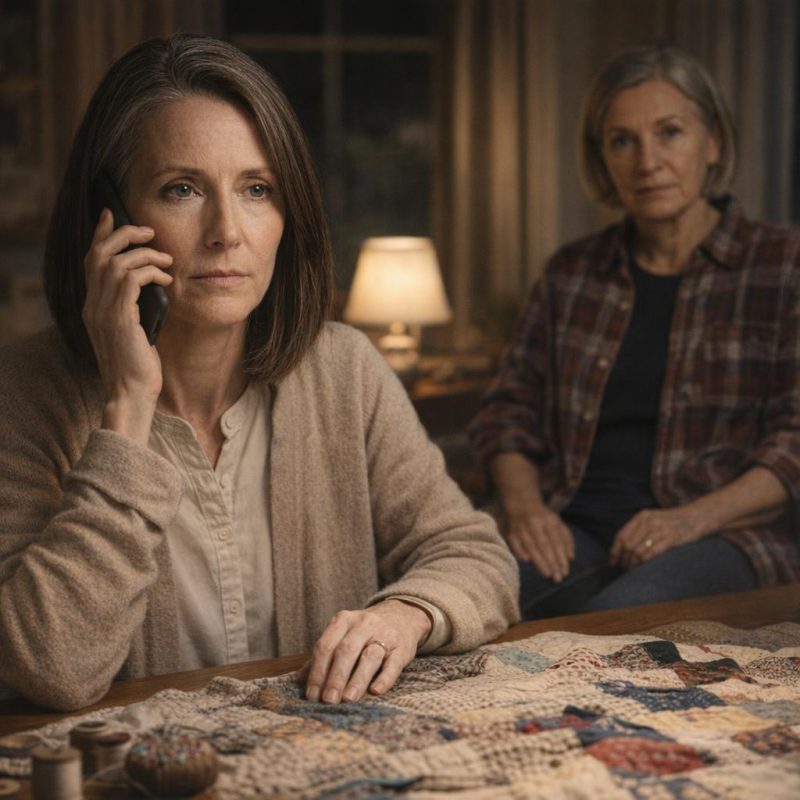 Image by RM AI
Approaching the Heart
By the tenth day I'd finished the border work, and I let myself feel good about it for exactly as long as it took to photograph the completed sections. The repairs had gone well — the silk had accepted the new thread without puckering, and the damaged corner I'd been most worried about had come back cleanly. I documented everything the way I always do, methodical and thorough, each photograph labeled and filed. Then I set the camera down and looked at what was left. The center panels. I'd been aware of them the whole time, the way you're aware of a difficult conversation you've been putting off. The thick velvet patch sat at the heart of the quilt, darker than everything around it, slightly raised in a way I'd been telling myself was just uneven batting. I laid out fresh tools — a finer needle, the small curved scissors, the magnifying lamp angled just so. Professional preparation. The kind of routine that usually settles my nerves. But my hands moved more slowly than usual as I arranged everything, and when I finally pulled the quilt closer under the lamp, I didn't start right away. I just sat there with the center of it under the light, feeling the particular weight of something I hadn't yet allowed myself to name.
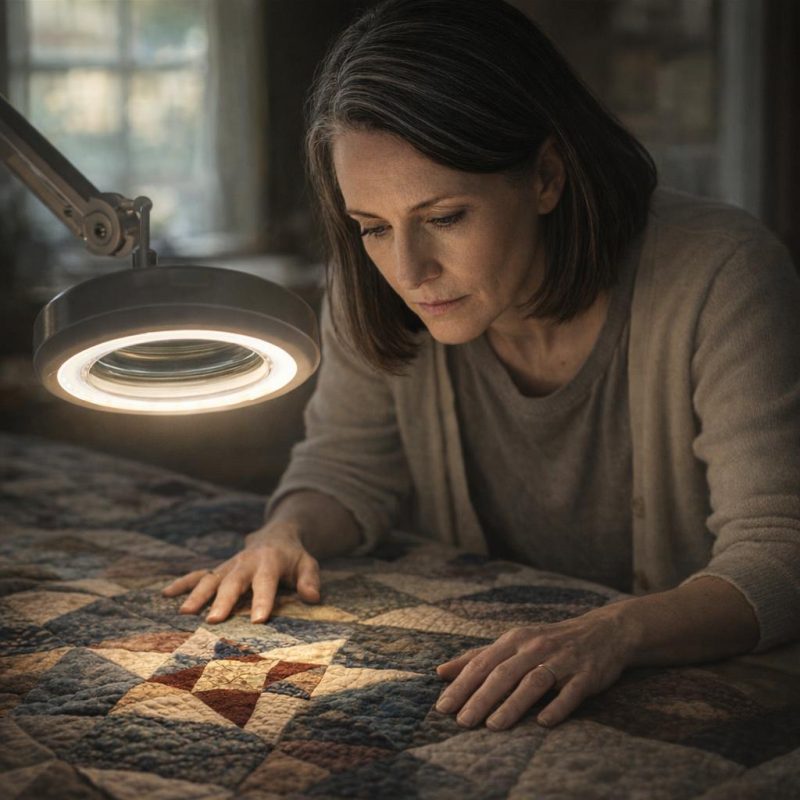 Image by RM AI
The Wrong Color
I started with the center squares the way I always start — observation before intervention, no assumptions. Under the magnifying lamp the navy fabric looked almost black at first, dense and close-woven in a way that didn't quite match the surrounding patchwork. I noted the color in my log and then stopped, pen hovering. In a traditional Log Cabin quilt, the center square is red. Always red. The red represents the hearth, the fire at the heart of the home — it's one of the oldest and most consistent conventions in American quilting. You see variations in the border fabrics, in the light and dark arrangements, in the choice of prints versus solids. But the center square is red. I'd restored dozens of Log Cabin quilts over the years and I'd never once seen navy used there. I turned the quilt slightly under the lamp and examined all three center squares in sequence. Navy. All of them. I wrote down several possible explanations — a maker working outside the tradition, a deliberate aesthetic choice, fabric substitution due to scarcity. I wrote them down and then I looked at them and none of them felt right. The color sat wrong in the pattern the way a wrong note sits wrong in a familiar song — technically possible, but impossible to unhear once you'd noticed it.
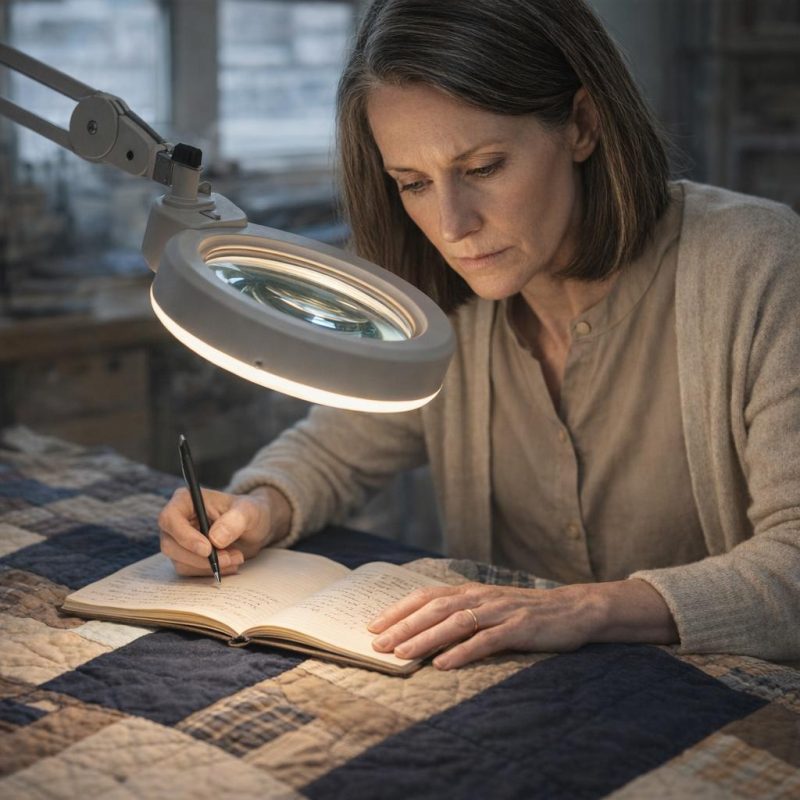 Image by RM AI
The Hidden Object
I positioned the quilt under the lamp and began unpicking the velvet patch the way I approach any delicate work — slowly, with the smallest seam ripper I own, one stitch at a time. The velvet was old but the stitching was surprisingly tight, almost defensive in its density, and I had to concentrate to keep from pulling the surrounding fabric. I'd worked maybe a quarter-inch of the edge when the needle I was using to guide the fabric met resistance. Not the soft give of compressed batting, not the slight drag of a folded seam allowance. Something else. I stopped. I pressed the needle tip gently against the same spot and felt it again — a flat, unyielding surface beneath the velvet, smooth and rigid in a way that batting simply isn't. I moved the needle a half-inch to the left and pressed again. Same resistance. I sat back and looked at the patch without touching it, my heart doing something irregular in my chest. Then I leaned forward, repositioned the needle at the edge of the area I'd felt, and pressed down one more time — and there it was again, hard and flat and absolutely certain beneath my fingertip.
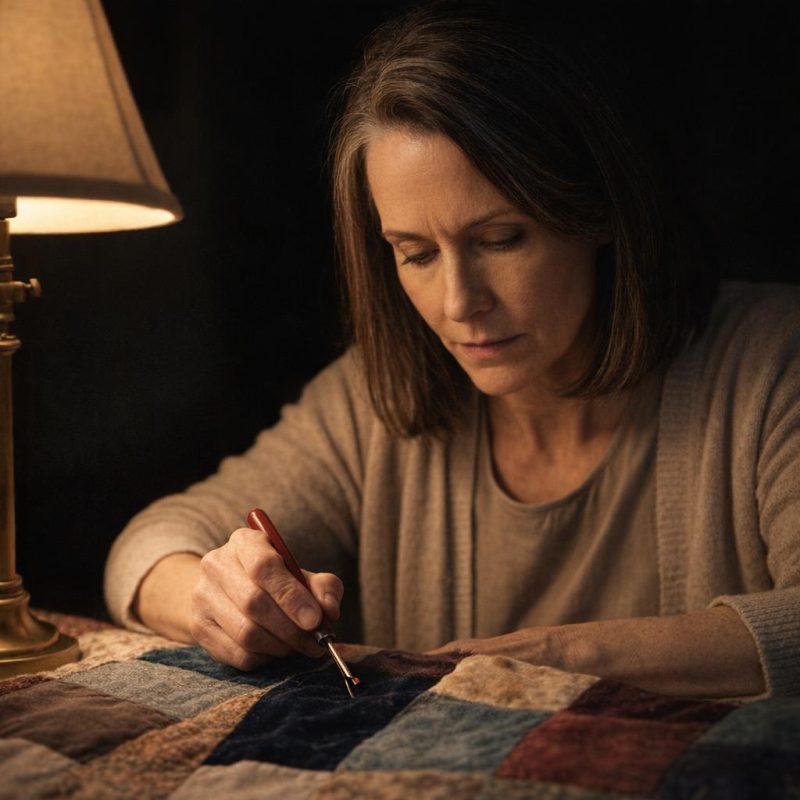 Image by RM AI
The Choice
My first instinct was to call Sarah. I actually reached for my phone, had it in my hand, thumb hovering over her name. But I put it back down on the worktable without dialing. I told myself it was professional habit — that I needed to assess what I was dealing with before I could describe it to anyone, that calling her with nothing more than 'I felt something hard under the velvet' wasn't useful information. That was the rational version. The honest version was that something about Sarah's eight evenings of careful questions had made me want to understand this on my own terms first. I retrieved my seam ripper from the tool roll and held it for a moment, turning it in my fingers. I knew what I was doing. I was choosing to open something that wasn't mine to open without permission, and I was dressing it up in professional language to make it feel less like a transgression. The rationalization was thin and I knew it was thin. But the object beneath that velvet was real, and it was hidden inside a quilt that had been in my family for generations, and I had spent thirty years learning how to read fabric. I set the seam ripper against the first stitch of the velvet patch, the tip just touching the thread, and held it there.
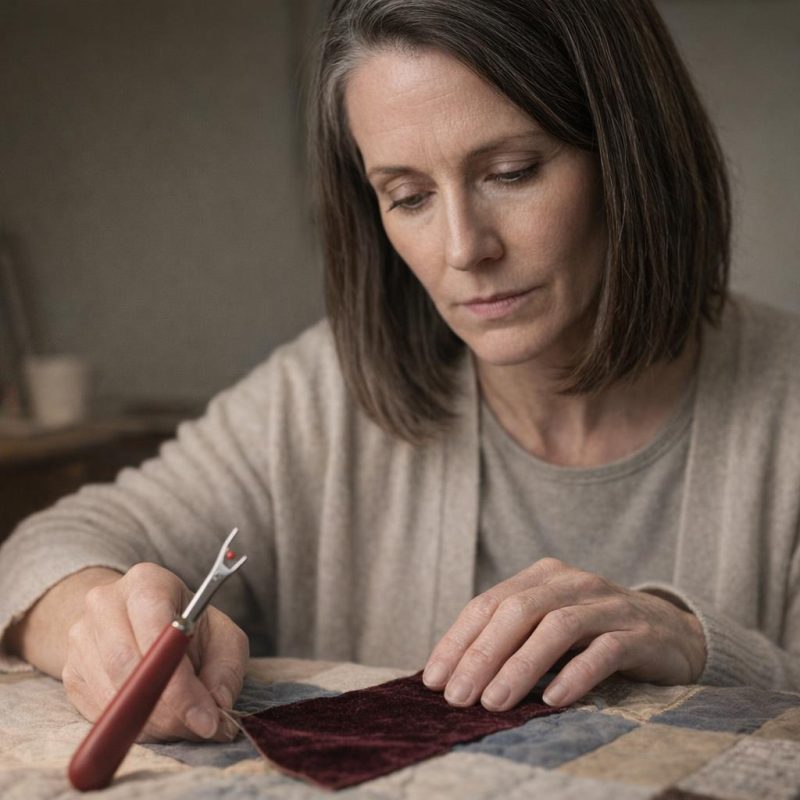 Image by RM AI
Opening the Compartment
I worked one stitch at a time, the way the work demanded. The velvet was hand-sewn with a thread that had aged to a dark amber, and each stitch released with a small, precise sound that seemed very loud in the quiet of the workroom. I kept my breathing even. I kept my hands steady. After the first dozen stitches I had perhaps half an inch of gap, and I could feel the slight give of the layers separating, the batting on either side pulling gently apart. I continued. The seam ripper moved in small increments, each one deliberate, each one committed. When I reached two inches I stopped, not because I'd planned to stop there but because my hands made the decision before my mind did. I set the seam ripper down on the table beside the quilt and looked at what I'd made. A two-inch gap in the velvet, the edges of the fabric curling slightly away from each other the way old fabric does when a seam is released after decades of tension. Between the separated batting layers, where the light from the magnifying lamp reached only partway in, there was darkness — a deliberate space, a pocket that had no business being there, holding whatever it had been holding for longer than I could guess.
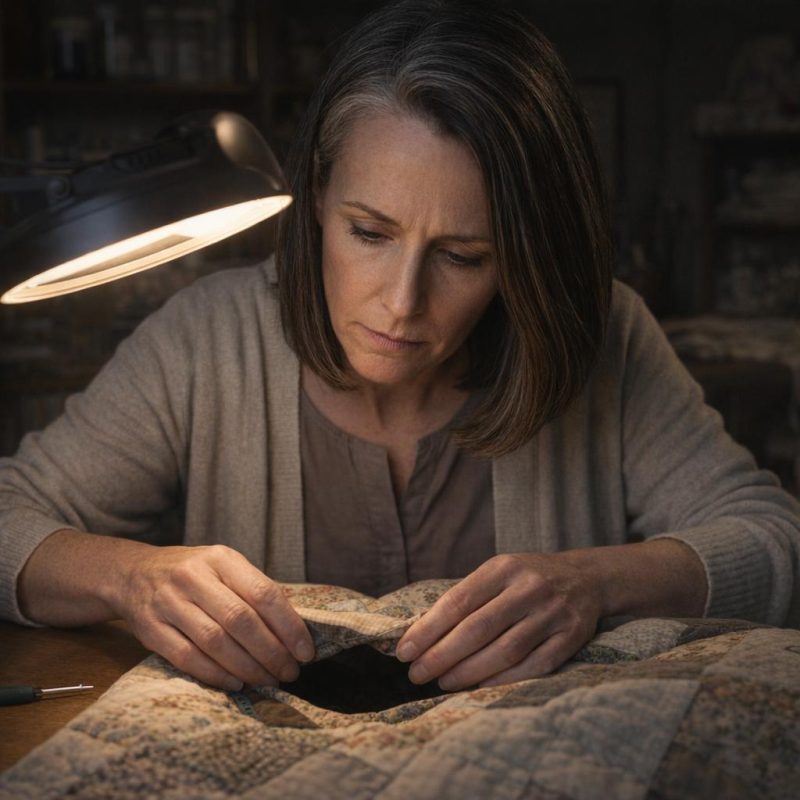 Image by RM AI
The Sealed Envelope
I got my finest tweezers from the conservation kit — the ones I use for fragment work, with the angled tips — and I sat back down at the lamp. My hands were not entirely steady. I noticed that without judgment, the way you notice weather. I positioned the tweezers at the edge of the gap and eased them between the batting layers, feeling for the object I'd sensed with the needle. The tweezers found it almost immediately: something smooth, flat, and slightly yielding at the edges. I adjusted my grip and drew it out slowly, keeping the angle shallow to avoid stress on the surrounding fabric. What emerged was an envelope. Small — perhaps four inches by three — and made of vellum rather than paper, the kind of heavy translucent material that was used for formal documents in another century. The color had gone the deep yellow of old bone. I held it by the edges the way I'd hold any fragile artifact and brought it fully into the light. The surface was unmarked except for a seal on the back flap — a disc of dark red wax, pressed with a crest I didn't recognize, intact after what must have been decades inside that hidden seam.
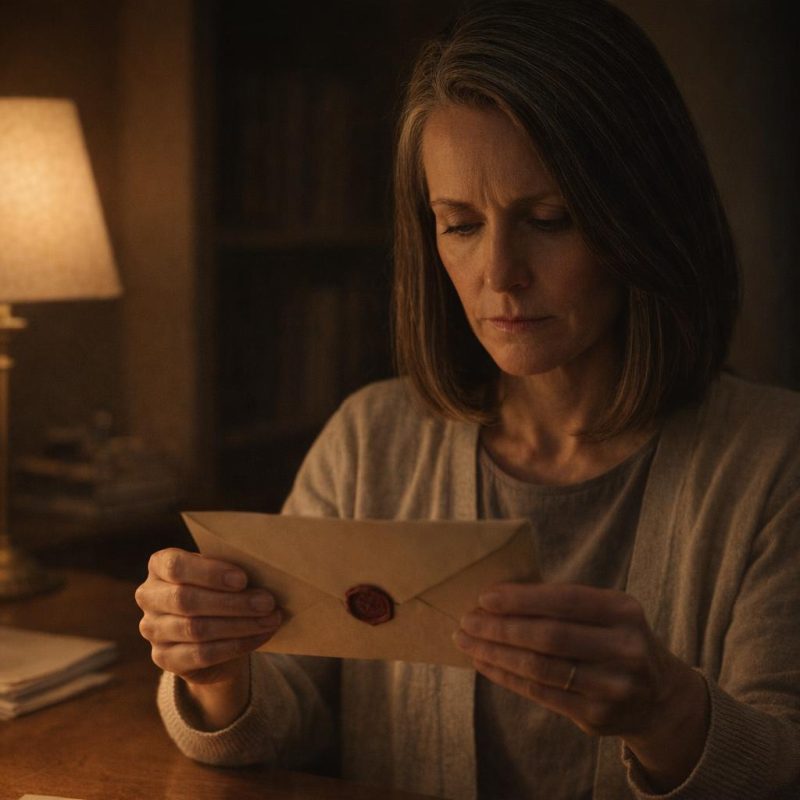 Image by RM AI
The Uniform Pieces
I set the envelope carefully on the clean cloth beside the quilt and turned back to the navy squares. Something about the texture had been nagging at me since the previous day, and now, with the hidden compartment open and the envelope sitting in front of me, I needed to understand what I was actually looking at. I brought the magnifying lamp close and pressed my fingertip lightly against the surface of the nearest center square. Then I reached for my thread-count loupe and looked properly. The weave was tight and diagonal — a twill construction, not the plain weave you'd expect from dress silk or quilting cotton. I moved to the second square and then the third, checking each one in turn. The same structure throughout. I'd handled enough historic textiles to know what a twill weave at that weight and density meant. I turned the edge of one square back carefully where the seam allowance allowed and looked at the underside, at the way the fibers lay. The material was wool. Dense, tightly milled, dyed a uniform navy that had held its color across what looked like well over a century. Not silk. Not cotton. The kind of fabric that was cut to a pattern and sewn to a specification — the kind that was never meant to end up in a quilt at all.
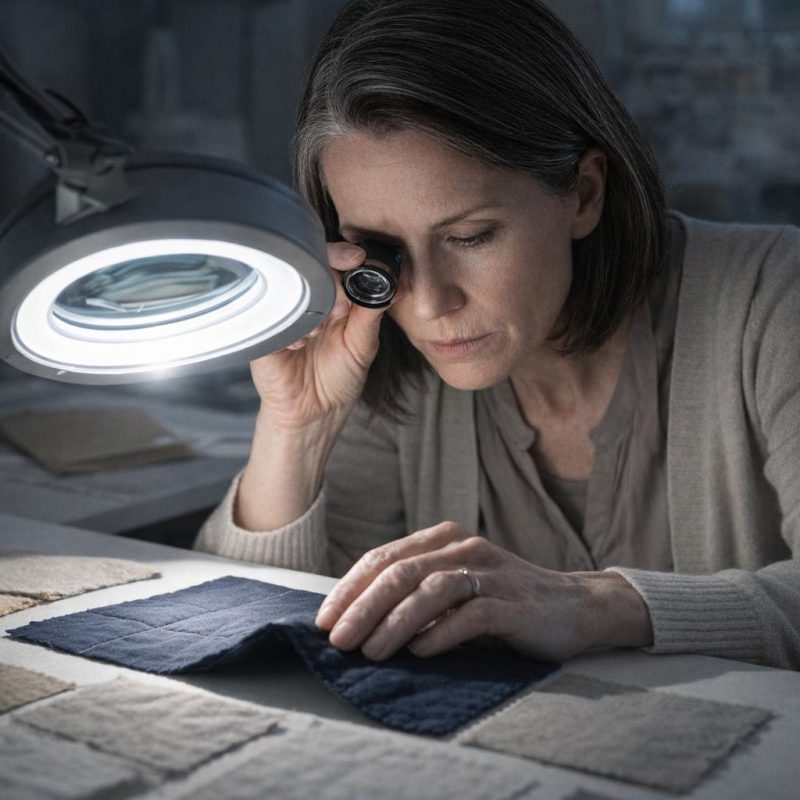 Image by RM AI
The Unopened Secret
I didn't open it that night. I told myself I was being careful — that the wax seal deserved proper attention, that I needed better light, that I was tired and my hands weren't steady enough for vellum that old. All of that was true. None of it was the real reason. I set the envelope on the clean cloth beside the quilt and pulled my stool back a few inches, as if a little distance would help me think. It didn't. I made tea I didn't drink. I turned the worktable lamp down and then back up again. I sat in the chair by the window for a while and watched the dark outside, and then I came back to the table because I couldn't stay away. The envelope just sat there, patient and sealed, holding whatever it had been holding for over a century. By midnight the silence in the studio had a weight to it I couldn't name. By two in the morning I had stopped pretending I might sleep. I sat on my stool with my hands in my lap and the lamp burning and the whole room perfectly still. And then, somewhere around three, I reached for it.
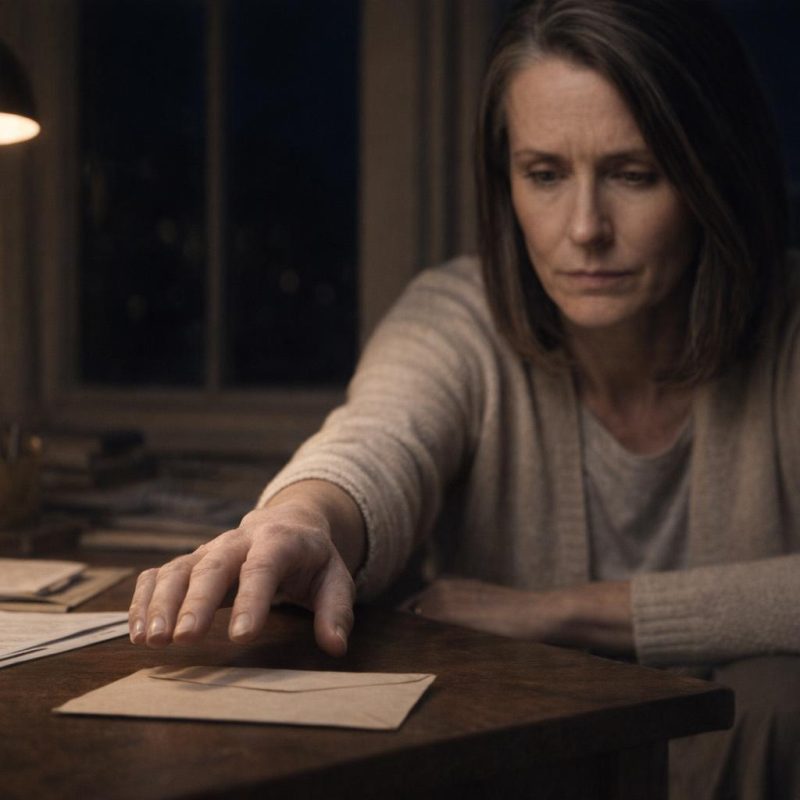 Image by RM AI
The Deed and Maps
My thumbnail found the edge of the wax seal and I worked it loose slowly, the way I would with any fragile historic document — no tearing, no forcing, just steady patient pressure until the seal lifted clean. The vellum envelope was stiff with age but intact. I set the seal aside on a piece of archival tissue and opened the flap. There was no letter inside. I had half-expected a letter. Instead my fingers found a folded document, heavy and slightly brittle, and beneath it something that crinkled differently — thinner, more flexible. I unfolded the first document on the worktable and smoothed it flat with the side of my palm. It was a property deed, handwritten in the formal copperplate of the previous century, the ink faded to a warm brown but still fully legible. The second document was a map — hand-drawn, careful, the kind of measured survey work someone had done with real intention. Then a third, and a fourth. Each one showed the same plot of land from a slightly different angle or scale, the boundaries marked in ink, a small square labeled in cramped script that I had to bring the loupe close to read. The hardware store. I spread them all across the worktable and stood back, and the maps lay there in the lamplight like something that had been waiting a very long time to be seen.
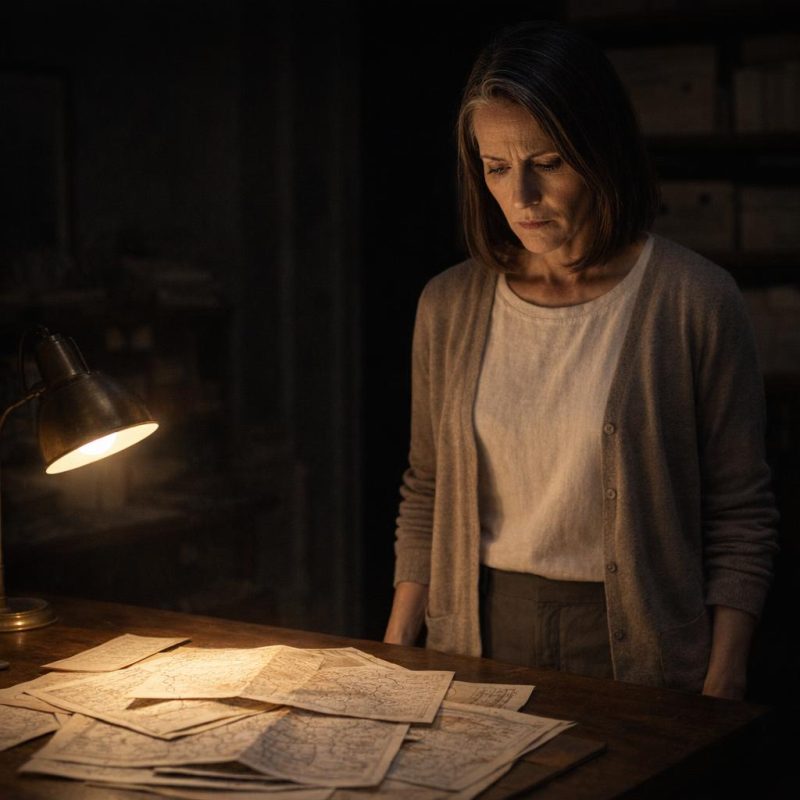 Image by RM AI
The Wrong Dates
I went back to the deed first. The copperplate was formal and precise — the kind of legal hand that took training — and I read through it slowly, tracking the language, the plot descriptions, the names of the parties. Then I got to the date and I stopped. I read it again. I set the loupe down and found my notebook and wrote the date out by hand, then wrote beside it the date I knew from the family history — the year our great-great-grandparents had established the property claim, the year that appeared in every official record I had ever seen connected to that land. The difference was not a small clerical error. It was not a transposed digit or a smudged numeral. The deed in front of me was dated twenty years earlier. Twenty years before the family was supposed to have any claim to that land at all. I sat with that for a long time. I checked the maps for their own dates and found the same figures, consistent across all four documents. I knew enough about historic land records to understand what a twenty-year discrepancy could mean — what it seemed, at least on its face, to point toward. I turned the deed over carefully and set it back down. The date sat there in faded ink, patient and unchanged, and I had no way to make it mean something other than what it said.
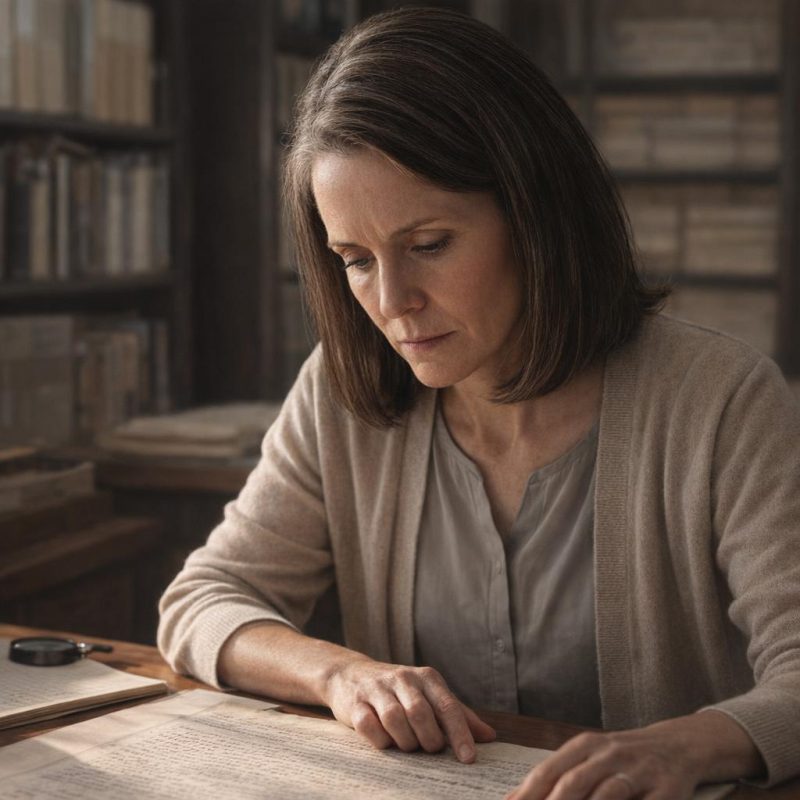 Image by RM AI
The Modern Note
I was sliding the deed back toward the envelope when I noticed the paper. It had been folded inside the last map, tucked flat against it so neatly I'd almost missed it. The texture was wrong the moment I touched it — too smooth, too uniform, nothing like the aged vellum and rag paper of the other documents. I unfolded it carefully. It was modern paper, the kind you'd run through a printer, though this had been written by hand. I recognized the handwriting before I'd finished reading the first line. I'd grown up watching that handwriting on birthday cards and grocery lists and notes left on the kitchen counter. The looping lowercase letters, the way the sevens were crossed, the particular slant that leaned just slightly too far to the right. It was Sarah's. The note was a list — names, maybe a dozen of them, arranged in a column down the left side of the page. Below the names, underlined twice, was a date. Two weeks from now. I stood at the worktable with the modern paper in my gloved hands, the century-old deed spread beside it, and looked at my younger sister's loopy handwriting on paper that had no business being there.
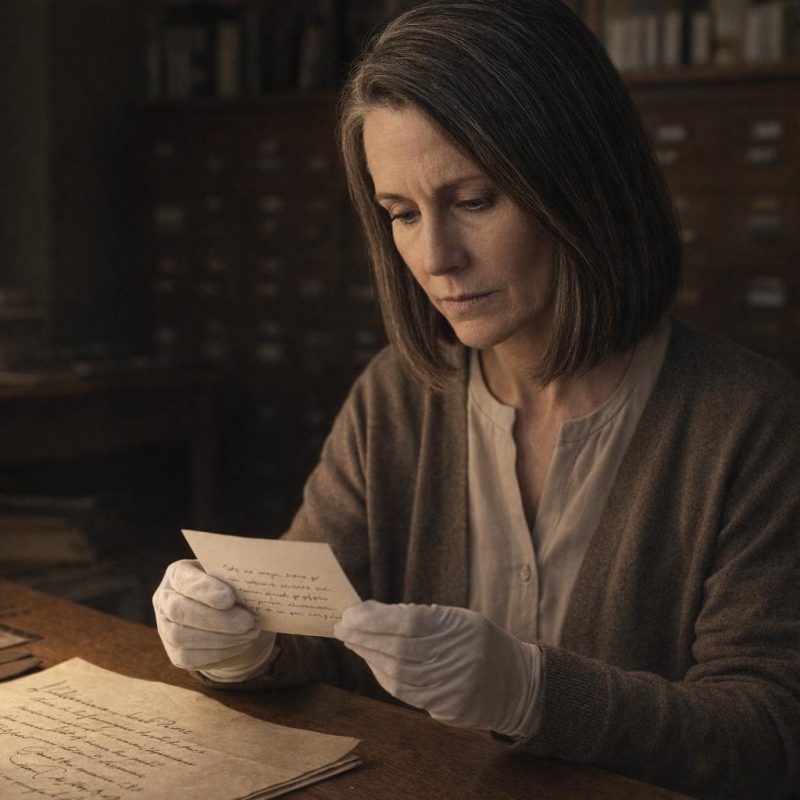 Image by RM AI
Sarah's List
I read through the names twice, then a third time. Some of them I didn't know. But enough of them I did. Deputy Mayor Patricia Kendall was near the top — I'd seen her name in the local paper a dozen times in the past year, always in connection with the downtown revitalization push. Below her were three names I associated with the development consortium that had been buying up parcels along the old commercial corridor. A county assessor. A man whose name appeared on the signage of the largest real estate office in town. I didn't know what Sarah's connection to any of these people was, or why her name was on a piece of paper tucked inside a century-old quilt alongside theirs. The date underlined at the bottom was two weeks out, and I didn't know what it marked either — a meeting, a deadline, something else entirely. What I kept coming back to was the weight of it. Sarah had never said a word to me about any of this. Whatever she had been carrying — whatever had made her pack up the quilt and ship it to my studio without a real explanation — she had been carrying it alone, and for long enough that it had settled into something dense and unspoken between us.
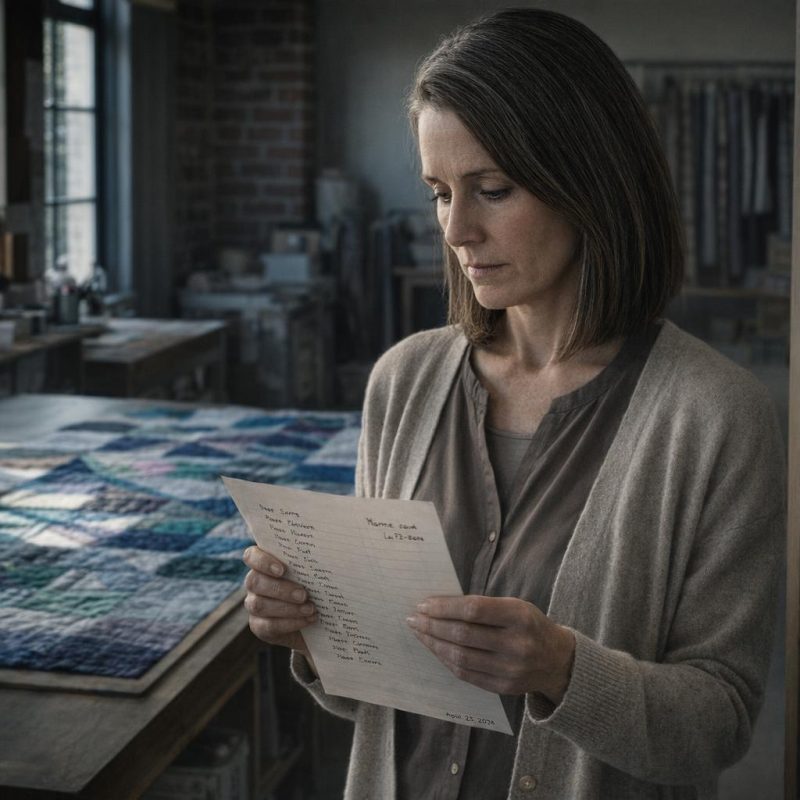 Image by RM AI
The Bicentennial Connection
I almost missed the bicentennial flyer. It had been sitting on the corner of my desk since the week Sarah shipped the quilt — I'd set it there meaning to look at it and then forgotten it under a stack of conservation notes. I pulled it out now and smoothed it flat. The town's bicentennial ceremony. Two hundred years of local history, artifacts and family heirlooms on display, historians and archivists invited to examine the collection. I scanned down to the event date and felt something go still in my chest. It was the same date Sarah had underlined on her note. The same day, two weeks out. The flyer mentioned that prominent local families had been asked to contribute heirlooms for the historical exhibition — quilts, documents, photographs, anything that spoke to the town's founding. The hardware store was listed by name as one of the featured properties. Sarah would have been expected to bring something. The quilt would have been the obvious choice — the oldest thing in the family, the most visually striking, the kind of piece that draws a conservator's eye from across a room. I set the flyer down on top of Sarah's note and looked at the date circled in red at the bottom of the page.
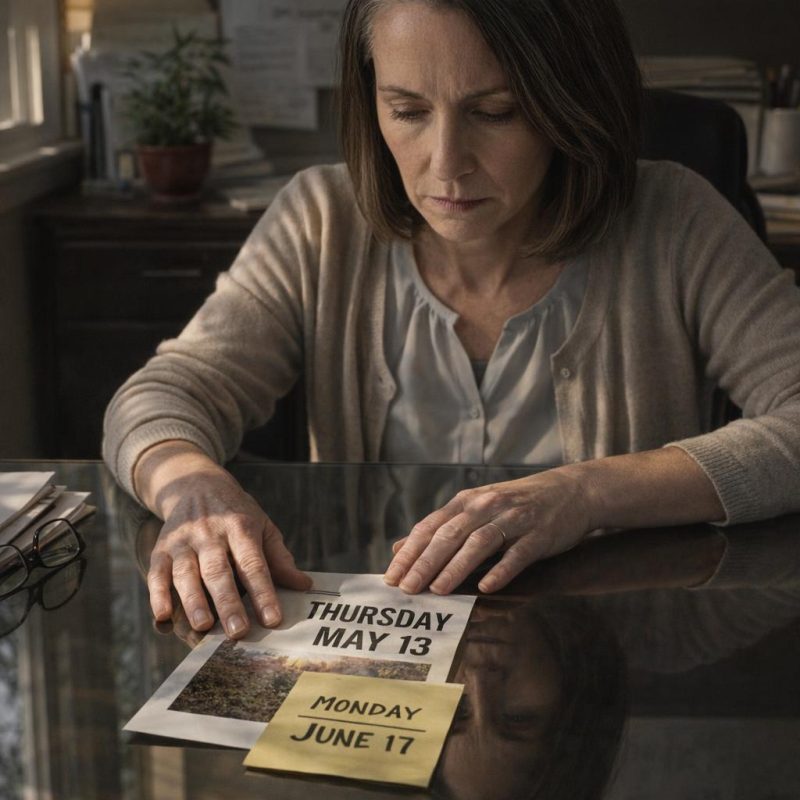 Image by RM AI
The Isolated Studio
I looked up from the worktable and around the studio — really looked, the way you do when something familiar suddenly reads differently. The nearest house was half a mile down the road. The lane to my property wasn't visible from the highway. I didn't have regular visitors; the few colleagues who came out here called first and gave me notice. Sarah knew all of that. She'd visited enough times over the years to know exactly what kind of place this was — quiet, self-contained, the sort of studio where work happened without interruption or observation. It seemed possible, standing there, that the location had mattered to her when she decided where to send the quilt. Whether she'd thought it through or simply reached for the most private place she knew, I couldn't say. I'd always thought of the isolation as a professional asset — the stillness that good conservation work requires. Standing there in the lamplight with the documents spread across my table, I turned that thought over slowly. The quiet I had always valued, the distance from town, the habit of working alone — it looked different now. What had felt like the right conditions for careful work felt, in that moment, like something else entirely.
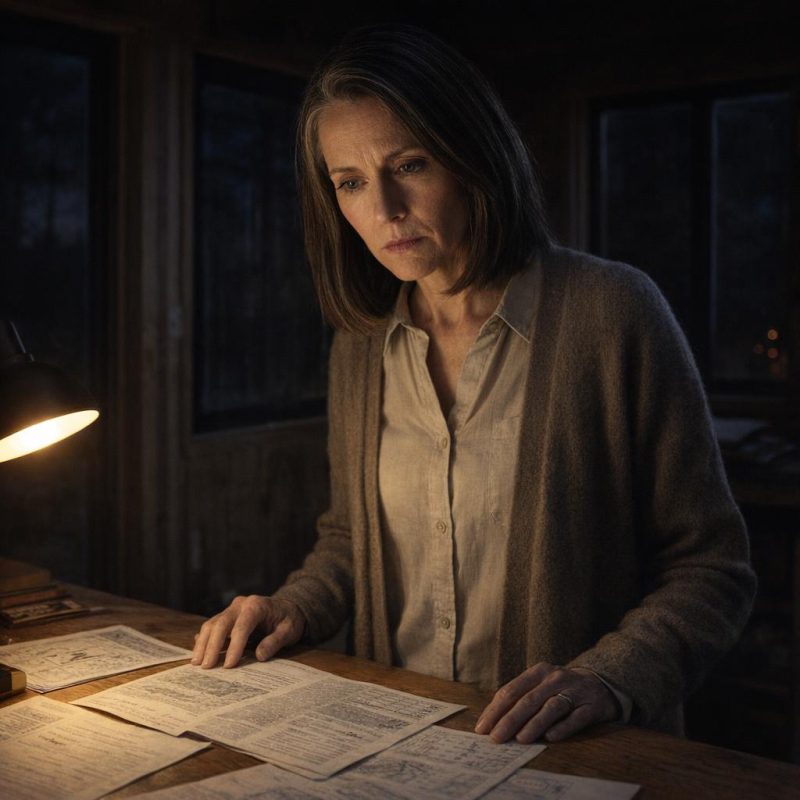 Image by RM AI
The Accomplice
I stood at the worktable for a long time without touching anything. The deed. The maps. Sarah's note with its column of names and its underlined date. The quilt itself, spread across the conservation surface where I'd been working on it for weeks with the same care I gave every piece that came through my studio. I had treated it as an heirloom. I had documented its construction, catalogued its materials, noted the unusual wool in the navy squares. I had found the hidden compartment and removed its contents with clean gloves and archival tools, following every protocol I knew. And in doing all of that correctly, methodically, professionally — I had also done exactly what the documents needed done. They were out of the quilt now. They were on my table. They were in my hands. If the deed meant what it appeared to mean — if the dates held up and the discrepancy was real — then the family's land claim seemed to rest on ground that had belonged to someone else first. The hardware store, the property, the decades of prosperity built on top of it — all of it traced back to a date that didn't match. I had come into this as a conservator. I looked at the quilt spread before me, and it was no longer an heirloom.
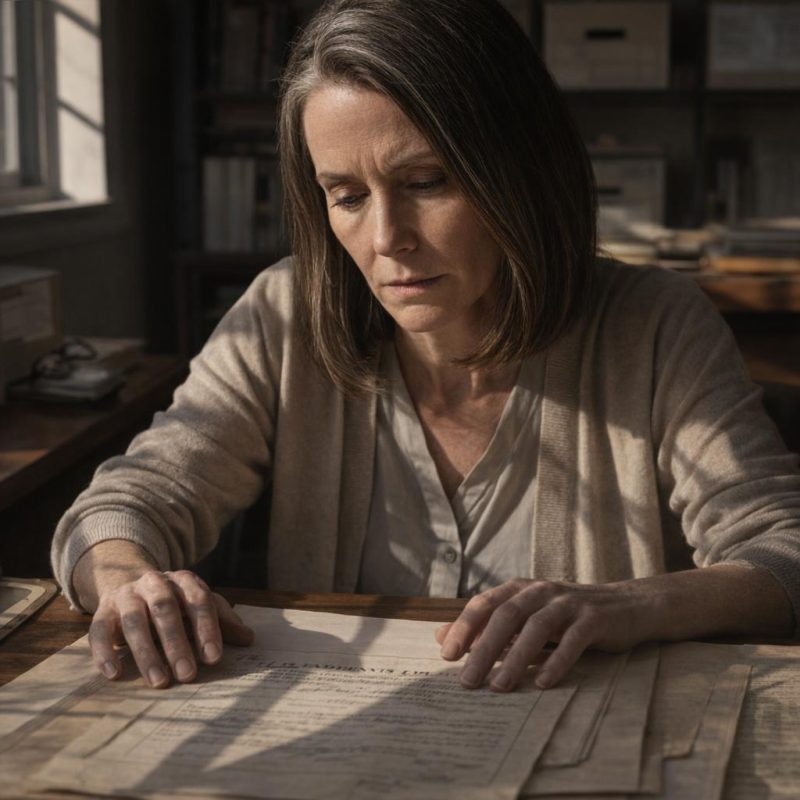 Image by RM AI
The Sleepless Night
I didn't sleep. I lay on top of the covers fully dressed, listening to the house the way you listen to a stranger's breathing in a dark room — waiting for the rhythm to change. The old farmhouse had always settled at night, the kind of creaking and popping I'd grown up with and stopped hearing decades ago. That night I heard every single one. A groan from the hallway floorboards sent me upright at midnight. A branch scraping the studio window at two in the morning had me on my feet with my hand on the bedside lamp. I kept thinking about the documents hidden under the false bottom of my flat-file drawer — the deed, the maps, Sarah's note — wrapped in acid-free tissue like they were just another archival project. I wondered who else might know they existed. I wondered if Sarah had told anyone. I wondered if the quilt itself had been watched, tracked somehow, before it ever arrived at my studio. By four in the morning I had stopped trying to sleep and was just lying there, staring at the ceiling, every shadow in the room sitting heavy and still around me.
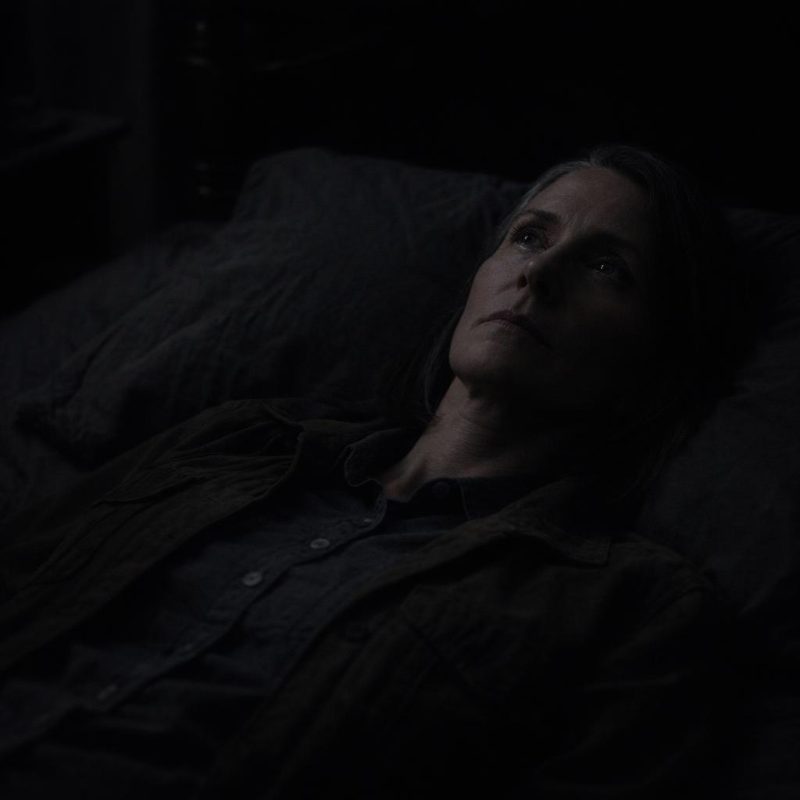 Image by RM AI
The Careful Call
I called Sarah just after sunrise, when the light was still thin and gray through the studio windows. I had rehearsed it in my head while the coffee brewed — keep it short, keep it professional, give her nothing to pull at. She picked up on the second ring, and I told her the silk in the center panel was more damaged than I'd initially assessed. I said the fibers were fragile in ways that didn't show up until I got deeper into the work, that I'd need at least three more weeks, possibly four. I kept my voice even. I talked about thread count and humidity levels and the particular challenges of nineteenth-century dyes. All of it true enough in the abstract, none of it the reason I was calling. Sarah said that was fine, that she understood, that she trusted my judgment. She didn't ask questions. She didn't push back. The conversation lasted maybe four minutes and ended with her saying she'd check in later in the week. I set the phone down on the worktable and stood there in the quiet studio, listening to the sound of my own voice still hanging in the air — steady, measured, completely ordinary.
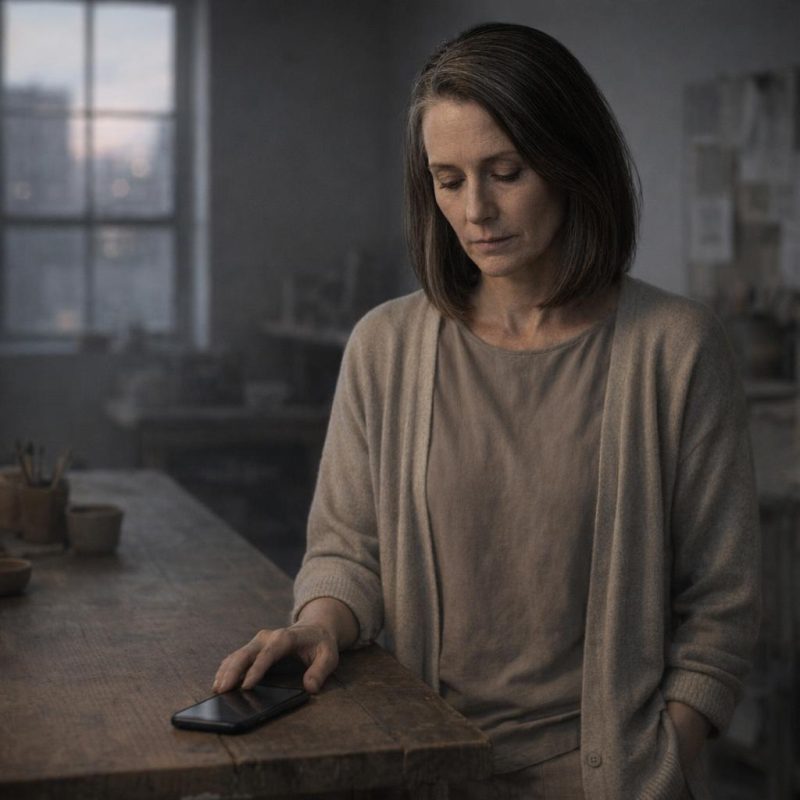 Image by RM AI
The Cold Warning
The phone rang again before I'd even moved away from the worktable. I assumed I'd forgotten to tell her something, some detail about pickup or insurance, and I answered without thinking. But the voice on the other end wasn't the same voice I'd just spoken to. It had the same cadence, the same vowels, but the warmth was gone — stripped out completely, like something had been switched off between one call and the next. Sarah told me to focus on the center panel. She said it clearly, without preamble, without the softness she'd used four minutes earlier. She said the center was the only part that mattered, that I should finish it and not worry about the rest. I started to ask what she meant — the restoration plan we'd agreed on covered the whole quilt, not just the center — but she talked over me, not loudly, just firmly, like the question wasn't worth answering. Then the line went quiet. I stood there holding the phone, the studio completely still around me, trying to understand what had just changed in the thirty seconds between one call and the next — and whether the change had come from her, or from something that had happened to her.
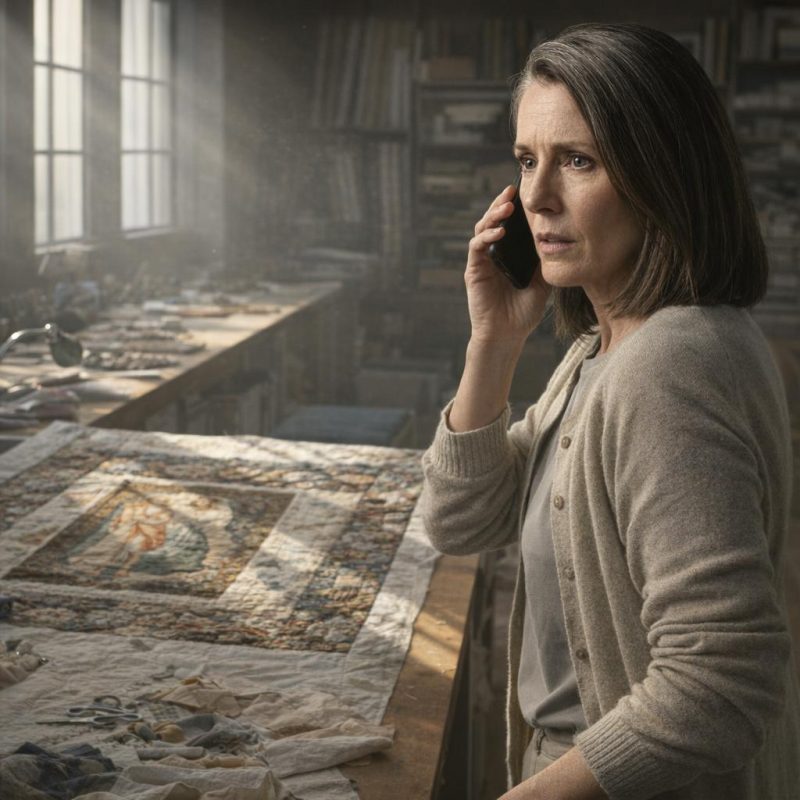 Image by RM AI
The Map of Betrayal
I went back to the worktable and stood over the quilt without touching it. I had spent weeks with this piece — measuring, documenting, stabilizing loose threads with a needle so fine it barely caught the light. I had treated it with the same care I gave every artifact that came through my studio, the same respect I believed every made thing deserved. Now I looked at it and felt something I couldn't quite name. The center panel spread out under the work lamp, its navy and cream squares precise and deliberate, each stitch placed by hands that had known exactly what they were hiding. My great-grandmother had sewn this. My grandmother had kept it. Sarah had brought it to me. Three generations of women in my family, and somewhere in that chain the concealment had become inheritance — passed down as carefully as the quilt itself. I thought about the deed folded inside the flat-file drawer. I thought about Sarah's voice on the phone, cold and stripped of everything familiar. I thought about what it meant to preserve something that had been built to obscure a wrong. My hands hovered over the fabric, close enough to feel the faint warmth of the lamp through the weave, and I could not make myself touch it.
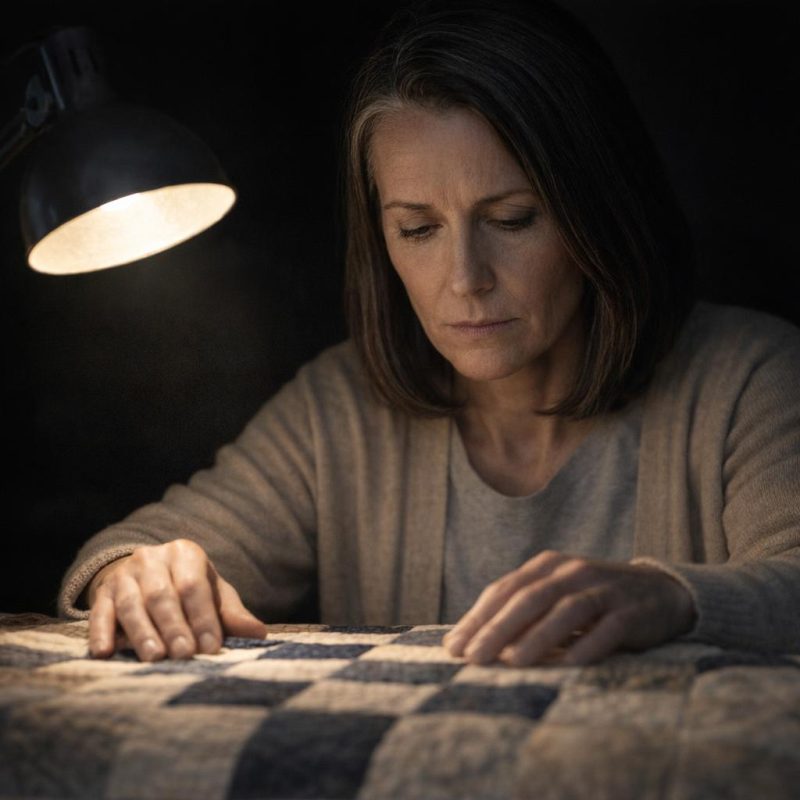 Image by RM AI
The Library Research
I drove to the town library the next morning, taking the long route and watching my mirrors more than I should have. I told myself I was being careful, not paranoid — there was a difference, even if the line between them had started to blur. The library opened at nine and I was there at five past, with a notepad and a pair of reading glasses and nothing that would make me look like anything other than a woman doing local history research. I asked the librarian at the reference desk about historical property records — county deed books, land transfer registers, anything from the latter half of the nineteenth century. She was helpful and unhurried, the kind of librarian who takes the question seriously, and she disappeared into the back for nearly twenty minutes before returning with two archival boxes and a pair of cotton handling gloves she set beside them without being asked. I found a table near the window, away from the other patrons, and set up quietly. The boxes smelled of old paper and dry storage. I put on the gloves, lifted the first lid, and asked her if she could also pull the property transfer records specifically from the eighteen-eighties.
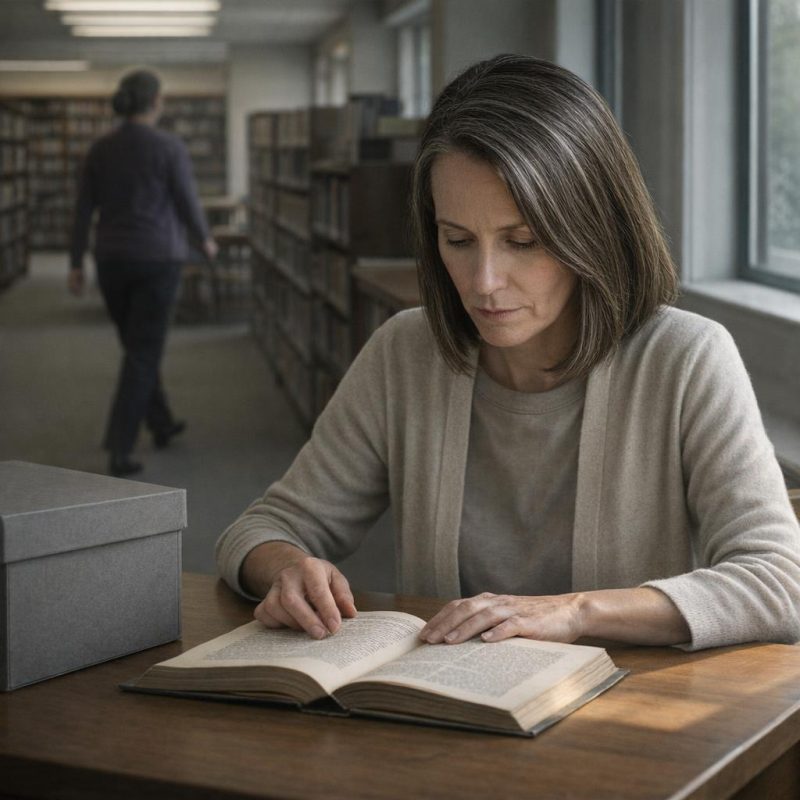 Image by RM AI
The Missing Records
The records from the eighteen-eighties were incomplete. Not randomly incomplete the way old documents get — water-stained here, a torn corner there — but incomplete in a way that had a shape to it. The pages covering the years 1881 through 1884 were simply gone. Not damaged, not illegible — gone. The register jumped from an entry dated late 1880 to one from early 1885, with nothing in between but a faint discoloration along the binding where pages had once been attached. I went through both archival boxes twice, checking every folder, every loose sheet. I found records from the 1870s. I found records from the 1890s. The gap held. I set the deed dates from my flat-file drawer against what I was looking at, working from memory because I hadn't dared bring the originals. The years matched. The missing pages covered exactly the window when the land transfer would have been recorded — or when a fraudulent one might have needed to disappear. I sat back in the library chair and looked at the empty space in the register where four years of property history should have been, and the silence of that absence pressed down on me like something with actual weight.
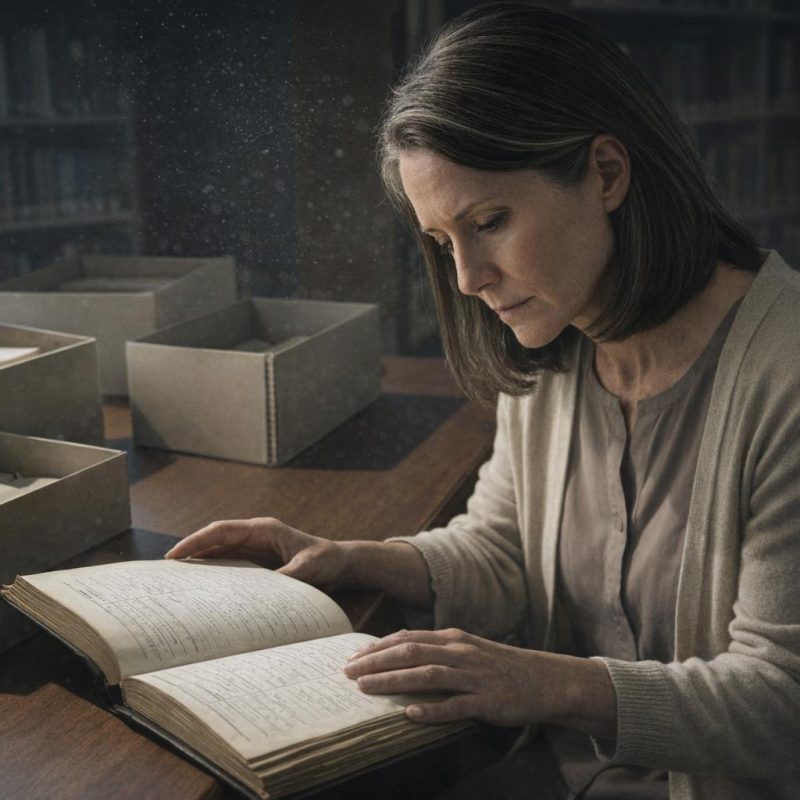 Image by RM AI
The Watching Car
I noticed the car on a Tuesday afternoon, a dark sedan moving slowly past the studio on the county road. I was at the window adjusting the blinds against the afternoon glare and I watched it pass without thinking much about it — people took that road all the time. Two hours later I was at the worktable when the sound of a car engine made me look up, and the same dark sedan rolled past again, the same unhurried pace, slowing almost imperceptibly near my driveway before continuing on. I told myself it was nothing. Wednesday morning I was in the kitchen before seven when I heard it again, and I got to the window in time to see the tail end of a dark sedan — the same shape, the same color — moving away from the house. I couldn't see the driver either time. The windows were tinted enough that the interior was just shadow. I stood at the kitchen window after it disappeared around the bend, my coffee going cold in my hand, and I understood that whatever I had been telling myself about coincidence had run out of room to stand.
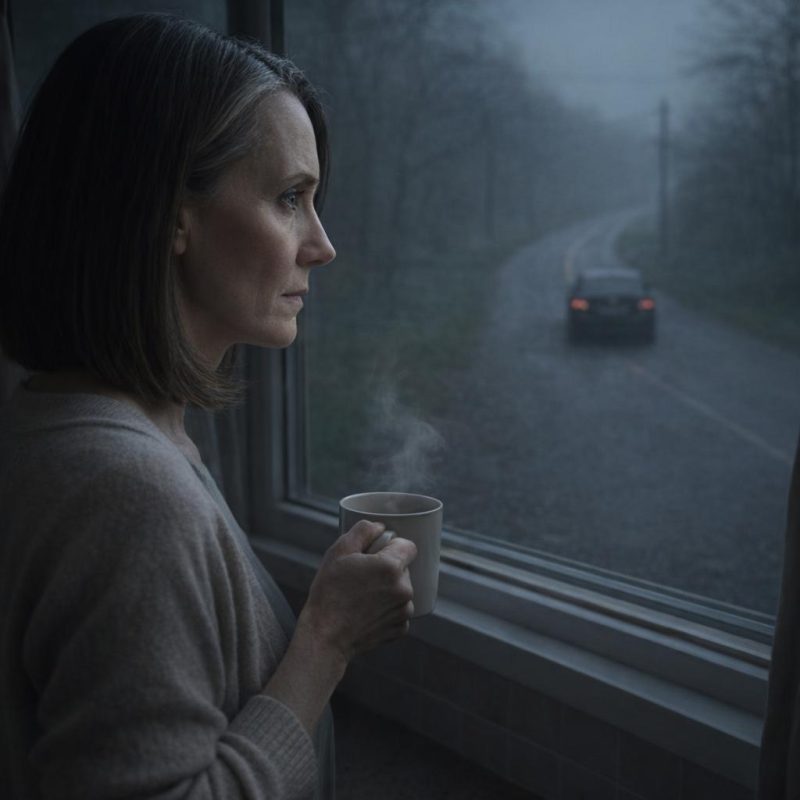 Image by RM AI
The Developer's Visit
The knock came on a Thursday morning, two sharp raps on the studio door, the kind that expect to be answered. I wasn't expecting anyone. I set down the magnifying loupe I'd been using and crossed to the door, and when I opened it the man on my porch was tall and silver-haired, dressed in the kind of expensive casual wear that works hard to look effortless — a linen shirt, dark trousers, leather shoes that had no business being on a gravel driveway. He smiled immediately, the kind of smile that arrives before the words do. He said his name was James Thornton, that he was a local developer, that he'd heard through a mutual acquaintance that I did exceptional restoration work. He said he'd been thinking about commissioning a piece and wondered if he might come in and see the studio. His voice was easy and unhurried. His eyes were a pale, flat blue, and they moved past me into the room before I'd said a word — not curious the way a client's eyes move, but scanning, the way you look for something specific when you already know it's there.
 Image by RM AI
The Performance
I led him to the worktable without rushing, the way I would with any client — measured steps, a brief explanation of the studio's light sources, the kind of professional patter that fills space without giving anything away. The quilt was spread flat under the daylight lamp, and I had positioned the velvet patch carefully before he arrived, angling it just enough to cover the seam where the compartment had been. James moved to the table and looked down at it with what I can only describe as studied appreciation — the kind that performs interest rather than feeling it. He asked about the Log Cabin pattern, and I told him what I always tell clients: the light and dark halves, the symbolic hearth at the center, the way Victorian women used the pattern to encode domestic meaning. He nodded slowly. His hands came down to the fabric, fingers tracing one of the dark border strips, and I watched those hands the way you watch something you don't entirely trust. I kept talking. I kept my voice even and my posture open and my face arranged into the expression of a woman who had nothing to hide. My own hands rested at my sides, perfectly still, and the effort of keeping them there was the only honest thing in the room.
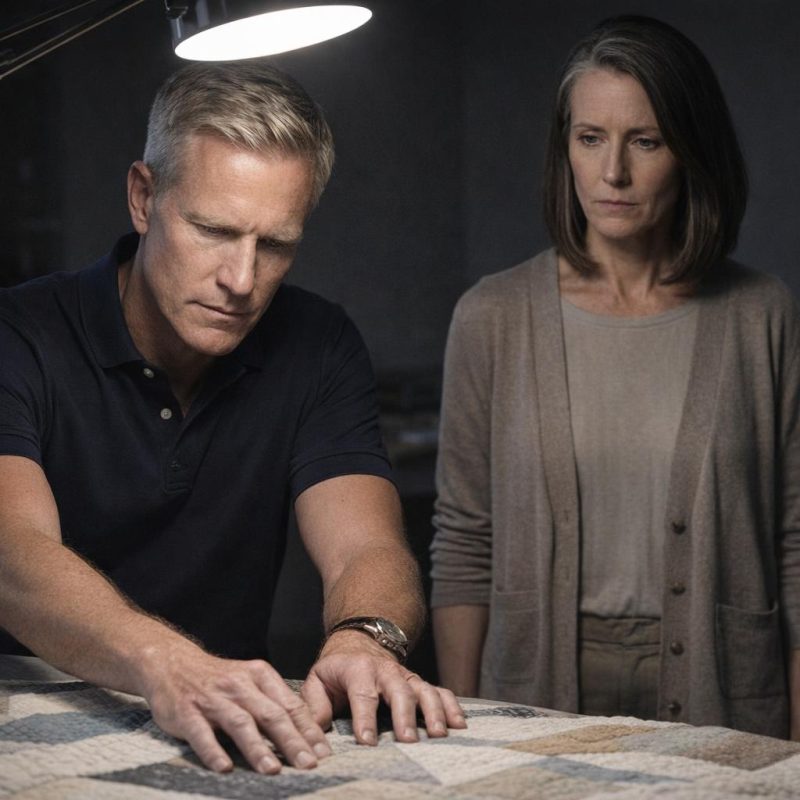 Image by RM AI
The Probing Questions
He didn't leave right away. He circled the table slowly, asking questions that started general and narrowed in ways I couldn't quite predict. He asked about the batting material, about the thread count in the backing, about whether older quilts in this region tended to use wool or cotton for the center panels. Each question landed a little closer to the middle of the quilt. I answered with technical detail — the kind of answer that sounds thorough and reveals nothing — and I watched his face for the flicker I was waiting for. Then he asked directly whether the center construction showed anything unusual, whether the navy squares in particular had any structural irregularities. I said I'd found moth damage in the batting, some oxidation along the seam lines, nothing unexpected for a piece this age. He made a small sound that wasn't quite agreement. He leaned over the center panels one more time, his pale eyes moving across the fabric in a slow, methodical sweep that had nothing to do with admiring the needlework. Then he straightened, thanked me for my time, said he'd be in touch about the commission, and walked out. I stood at the worktable after the door closed, my hands finally gripping the edge of it, and I couldn't shake the precision of his interest in those center panels.
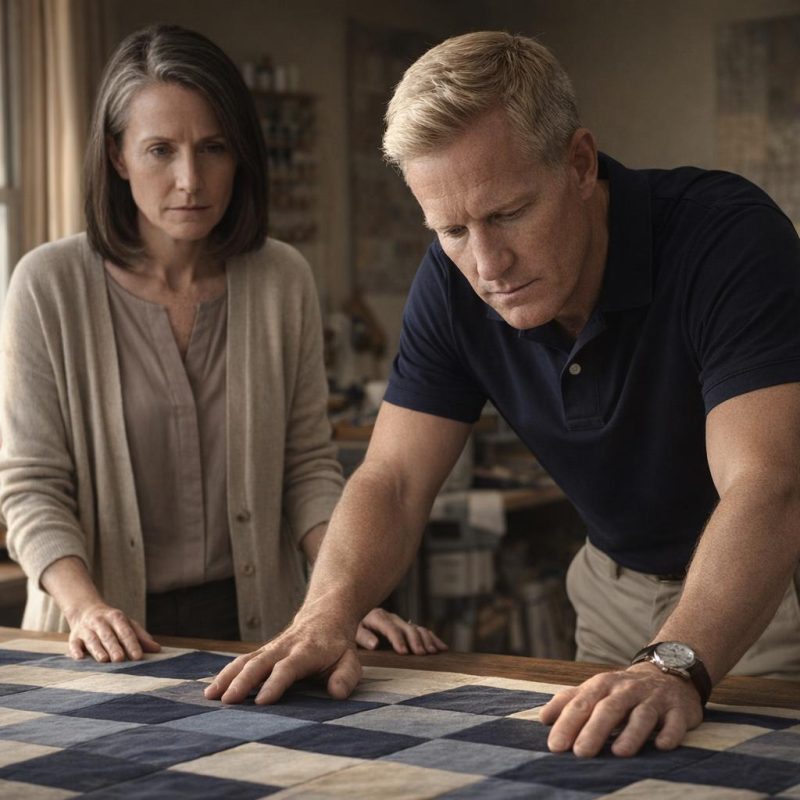 Image by RM AI
Documenting Evidence
The moment his car cleared the end of the drive, I locked the studio door and got to work. I photographed every document with my phone — the deed first, holding it flat under the daylight lamp and shooting it from three angles, then the hand-drawn maps with their faded property lines, then Sarah's note, which I photographed last and handled the least. I drove into town that afternoon and used the print shop on Caldwell Street, the one run by a retired teacher who doesn't make conversation, and I printed three sets on plain paper. Back at the house, I moved quickly. The first copy went into the false bottom of my bedroom cedar chest, under a layer of folded linen. The second I rolled into a zip-lock bag and tucked into the spare tire well of my car, beneath the jack. The third I sealed inside a waterproof plastic bag I'd bought at the hardware store years ago for storing seed packets, and I carried it to the far corner of the garden where the rosemary grows thick enough to hide the disturbed soil. I pressed the bag down into the earth, smoothed the ground over it, and stood up with dirt on my knees and my heart still going too fast. The bag was sealed and buried, and the garden looked exactly as it always had.
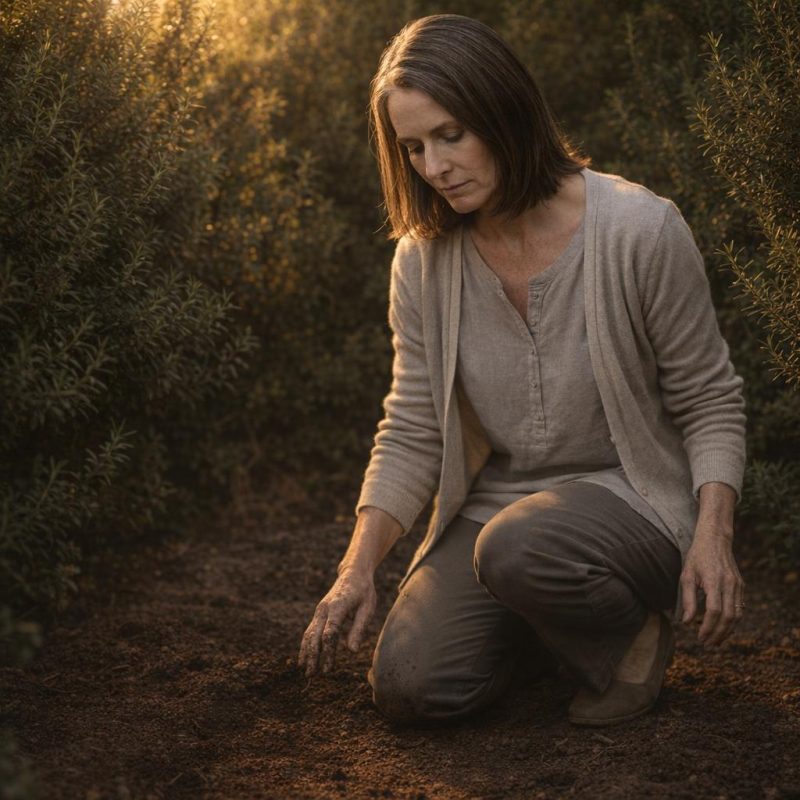 Image by RM AI
Choosing an Ally
I sat at the kitchen table that evening with a cup of tea I didn't drink and thought about who I could tell. The police felt like the obvious answer, and I turned it over for a long time — but what did I actually have? Old documents, a note from my younger sister, a developer who'd asked pointed questions about a quilt. Nothing that added up to a crime anyone could charge. I needed someone who understood the historical context, who could look at those property boundaries and tell me what they meant in terms of current land value, current ownership, current stakes. I thought about the county historical society, but those people were tangled up with every founding family in the region. I thought about a lawyer, but that felt premature and expensive and loud. Then I remembered an article I'd read two winters ago in the regional heritage journal — a piece about disputed land grants in the township's early records, written by a historian at the state university named Marcus Webb. He wasn't local. He had no obvious ties to the families involved. He'd written about exactly this kind of gap in the documentary record, and he'd written about it carefully, without naming names he couldn't prove. I pulled up the article on my laptop and read it again. I couldn't carry this alone.
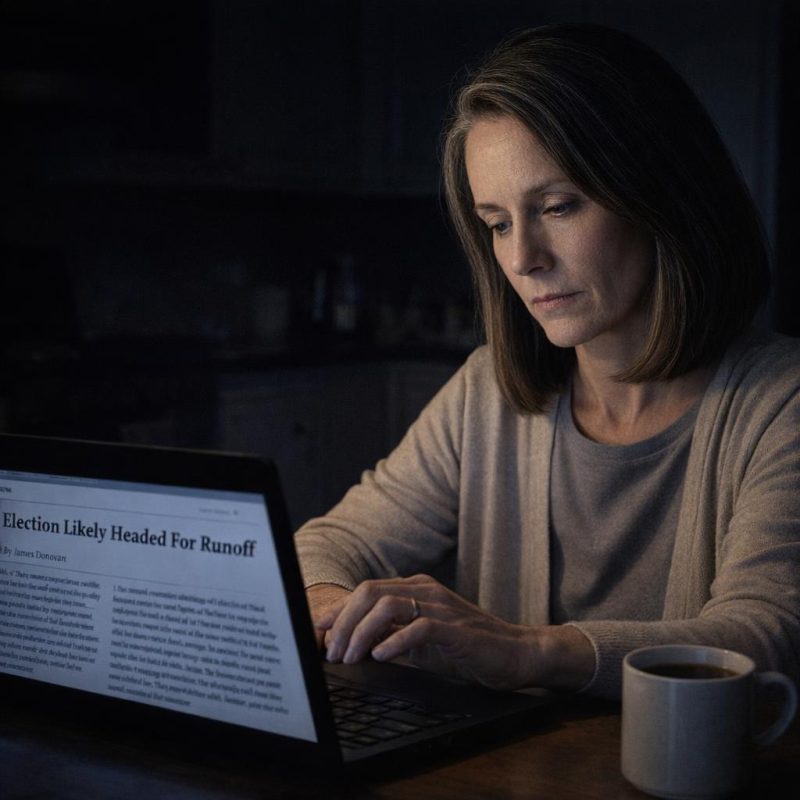 Image by RM AI
The Historian's Number
I found his university profile without much trouble — a faculty page with a small photo, a list of publications, and an email address that ended in .edu. He looked exactly like someone who spent his days in archives: wire-rimmed glasses, a slightly distracted expression, a tweed jacket in the photo that I suspected wasn't ironic. I drafted the email four times. The first version said too much. The second said almost nothing. The third was so hedged it would have read as spam. The fourth I kept short and specific enough to be intriguing without being explicit: I told him I was a textile conservator who had come across historical property documents during a restoration project, that the documents appeared to relate to land transfers in the township's founding period, and that I was hoping to speak with someone who understood the regional record. I said I would appreciate discretion. I said I was available to meet at his convenience. I read it over three times, checking each sentence the way I check a seam — for anything that might give too much away, for anything that might be misread. Then I moved the cursor to the send button and sat there for a moment, aware that once I did this, I would no longer be the only person who knew, and I pressed send.
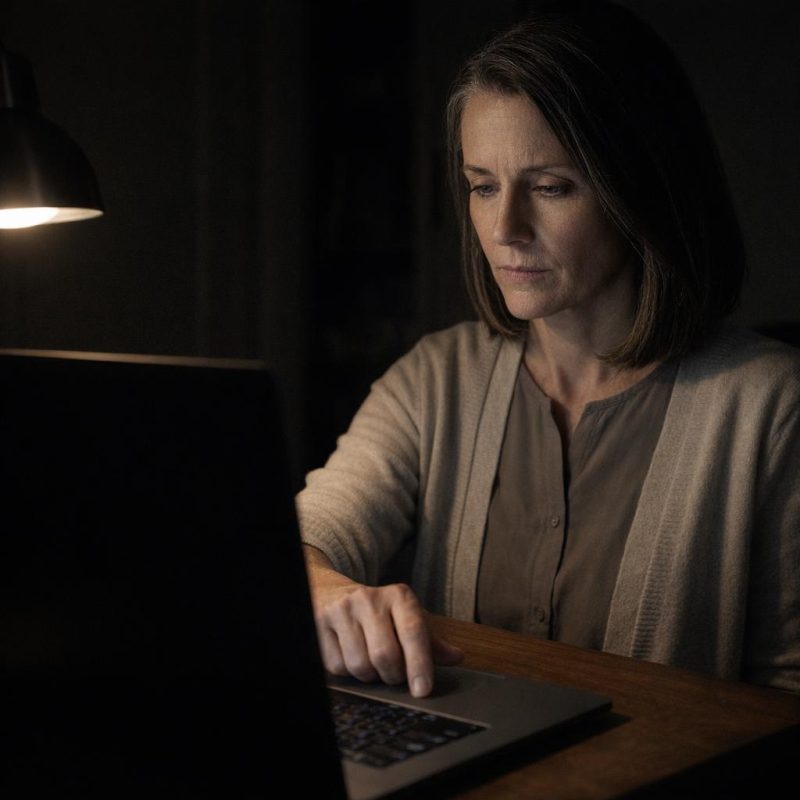 Image by RM AI
The Meeting
He replied within a day, which surprised me, and we agreed to meet at a coffee shop in the university town, forty minutes from my studio. I arrived early and took a corner table with my back to the wall — a habit I hadn't had before that week. Marcus came in ten minutes later, slightly out of breath, tweed jacket exactly as advertised, a canvas bag over one shoulder that looked like it held more paper than a person should carry. He shook my hand and sat down and immediately leaned forward in a way that told me he was already interested before I'd said anything. I showed him the photographs on my phone, starting with the deed. He took the phone from me carefully, the way you handle something fragile, and studied the image for a long time without speaking. I showed him the maps next, and that's when something shifted in his expression — a sharpening, a stillness. He asked me where I'd found them. I told him they were hidden inside a family quilt, in a compartment sewn into the lining. He set the phone down on the table between us and looked at me over his glasses. He didn't say anything for a moment, and the coffee shop noise went on around us, ordinary and indifferent, while I sat with the strange lightness of having finally told someone.
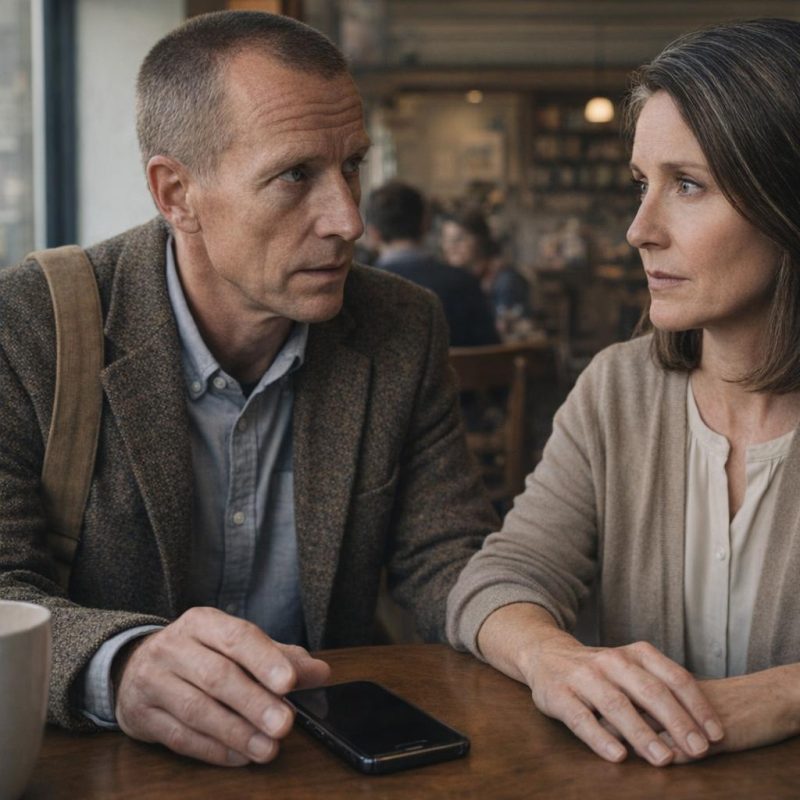 Image by RM AI
The Committee Investigation
He didn't ask me to explain further right away. Instead he sat back and said, quietly, that he wasn't entirely surprised. The bicentennial committee — a group assembled to produce an official town history for the upcoming anniversary — had already flagged irregularities in the founding property records. Several of the oldest family land claims had gaps in the chain of title, places where the documentation jumped forward by years without explanation. The committee had brought in two outside researchers to look at the gaps, and what they'd found so far was incomplete but troubling: transfers that didn't match the dates in the county ledger, signatures that appeared on documents years after the signatories had died. Marcus said all of this in a measured, academic tone, but his hands were flat on the table and he wasn't looking at his coffee. Then he asked if I would be willing to share the original documents with the committee's researchers. I told him I needed to think about it. He nodded like he understood, but something in his expression shifted in a way I couldn't quite read. I didn't know yet whether that was good or bad. What I did know, sitting there in that ordinary coffee shop with the afternoon light coming through the window, was that whatever I'd stumbled into was already in motion without me, and had been for longer than I'd known.
 Image by RM AI
The Deputy Mayor's Warning
I got home just after dark. I'd barely set my bag down when headlights swept across the studio window — a car pulling slowly up the gravel drive, unhurried, like it belonged there. I stood in the kitchen doorway and watched it park. The woman who stepped out was put-together in a way that read as deliberate even in the dark: tailored coat, heels on gravel, auburn hair that caught the porch light. She walked to my door with the ease of someone who expected it to open. I didn't recognize her, but something about the way she moved made me take a breath before I reached for the handle. She introduced herself as Patricia Kendall, deputy mayor, and said she hoped she wasn't interrupting. Her voice was warm and her smile was the kind that arrives fully formed. She said she'd heard I'd been meeting with Marcus Webb about some old property documents, and that she just wanted to have a friendly conversation about the kinds of complications that could arise when old records got taken out of context. She said some history, handled carelessly, had a way of hurting people who didn't deserve it — good families, long-established businesses, reputations built over generations. She mentioned the hardware store on Caldwell Street by name. Her tone never changed. I had opened the door to find Patricia Kendall's practiced smile, and it hadn't moved once.
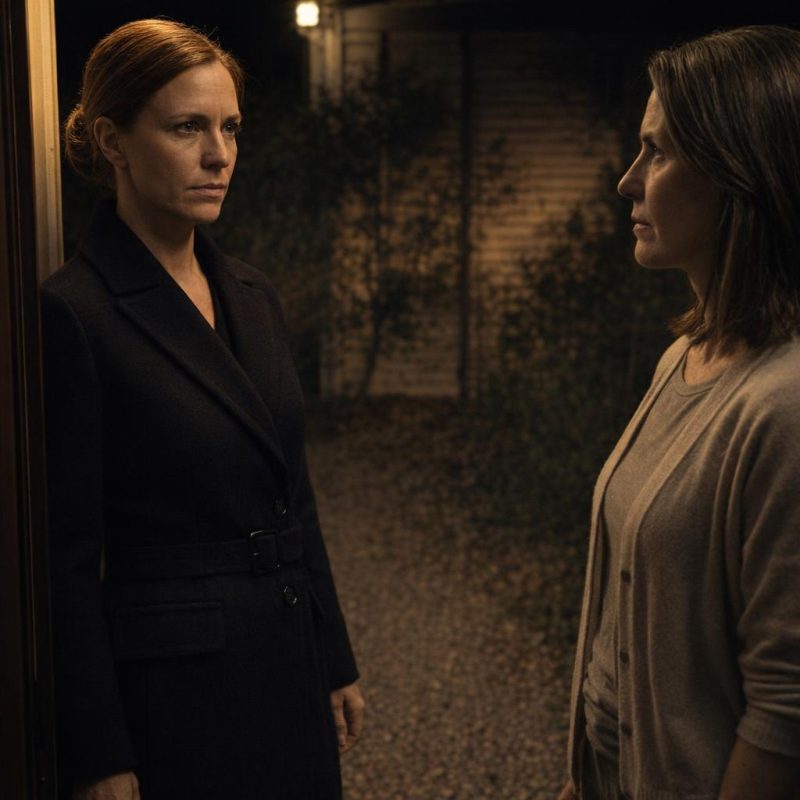 Image by RM AI
The Unanswered Phone
The moment Patricia's taillights disappeared down the gravel drive, I picked up my phone and called Sarah. It rang four times and dropped to voicemail. I left a message — calm, measured, just asking her to call me back. Then I tried the hardware store line. That rang longer and went nowhere. I stood in the kitchen with the phone in my hand and tried to think clearly. Two hours later I called again. This time I didn't bother keeping my voice steady. I told her I needed to talk to her tonight, that it was important, that Patricia Kendall had shown up at my door and mentioned the store by name. I said please. By nine o'clock I'd called six times between the two numbers. Each call went the same way — a few rings, then silence, then the mechanical patience of a voicemail prompt. I stopped leaving messages after the fifth one because I'd run out of ways to say the same urgent thing without sounding like I was unraveling. I set the phone face-up on the workbench and watched it. The studio was quiet around me, and the quiet where Sarah's voice should have been pressed in from every direction.
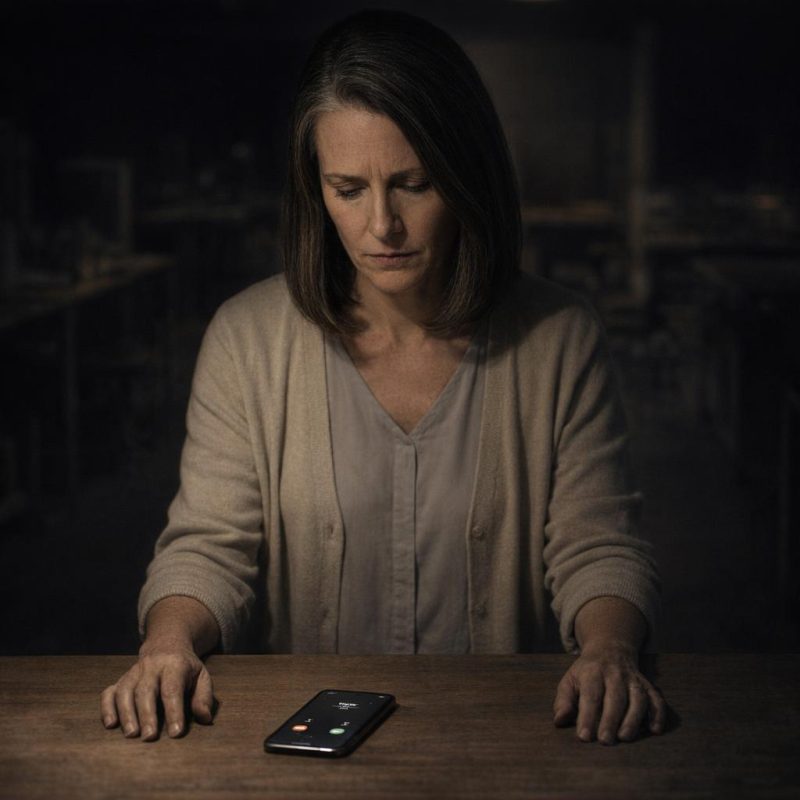 Image by RM AI
The Waiting
I was awake before five, reaching for my phone before I'd fully surfaced from sleep. Nothing. No missed calls, no texts, no voicemail notification. I set it back down and lay there staring at the ceiling until the light changed. I made coffee I didn't drink and sat at the workbench with the quilt spread in front of me, but I couldn't focus on it. Every few minutes my eyes went back to the phone. I tried Sarah at noon — cell first, then the store. Both went to voicemail. I thought about driving over there. I sat with that thought for a long time, turning it over. Something kept stopping me. Maybe it was the memory of Patricia's smile, the way she'd said good families and long-established businesses without ever raising her voice. Maybe it was the feeling that I didn't fully understand what I'd be walking into. So I stayed. I made a list of everything I knew and everything I didn't, and the second column was much longer than the first. By late afternoon I'd stopped checking the phone every few minutes and started checking it every few seconds, and the dread that had settled into my chest that morning had only grown heavier with each hour that passed without word.
 Image by RM AI
The Drive to Town
By mid-morning the next day I couldn't sit still any longer. I'd been telling myself to wait, to be careful, to think it through — but two days of silence had worn through all of that. I grabbed my keys and got in the car. The drive to town takes about twenty minutes on a good day, and I spent most of it rehearsing what I'd say. I'd start calm. I'd ask her directly about the note, about Patricia's visit, about why she'd gone dark on me. I'd give her a chance to explain before I said anything I couldn't take back. The fields on either side of the road blurred past and I kept my hands steady on the wheel even though my chest wasn't steady at all. When I turned onto Main Street I could already see the hardware store halfway down the block. I slowed without meaning to. The sidewalk in front was empty. No cars along the curb. I pulled into the small lot beside the building — the windows dark, a hand-lettered closed sign hanging crooked against the glass.
 Image by RM AI
The Break-In
I sat in the car for a minute, then got out. I tried the front door anyway — locked, no give at all. I pressed my face to the glass but couldn't see movement inside, just the dim shapes of shelving and the dark counter at the back. I walked around the side of the building into the alley. The rear of the store faced a narrow lane between two brick walls, and the back door was set into a shallow alcove. I noticed it from several feet away. The door was pulled shut, but the frame around it was wrong — the wood along the edge had a ragged, pale look, like something had been driven into it. I got closer. Fresh scratches ran across the metal plate around the lock, bright against the tarnished surface, and when I looked at the door frame itself I could see where the wood had split and splintered outward, the grain torn rather than cut. The door wasn't latched. It sat slightly proud of the frame, held only by its own weight. Whatever had happened here hadn't happened long ago — the exposed wood was still pale, not yet darkened by weather. I stood in the alley with my heart going too fast, staring at the splintered wood around the lock.
 Image by RM AI
The Truth About the Note
I don't know how long I stood there. Long enough that the cold from the brick wall beside me had worked through my jacket. I was still staring at the damaged frame when I heard it — my name, spoken quietly from somewhere behind me in the alley. I spun around. Sarah was standing maybe ten feet back, pressed against the far wall in the shadow between two dumpsters. She looked like she hadn't slept in days. Her jaw was set the way it gets when she's holding herself together by force of will, and her eyes were moving past me toward the street even as she spoke. She said the note wasn't hers. She said she'd never written it, never put anything inside the quilt, never knew there were documents hidden in it at all. She said James Thornton had forged her handwriting — that he'd planted the note years ago, before the quilt ever came to me, and that she'd only figured it out recently when she found evidence he'd been inside the store. She said her cold phone call had been a warning, that she'd been afraid someone was listening. She said she was sorry. She looked it. I stood in that alley with the broken door behind me and my sister's exhausted face in front of me, and I heard her say my name again, softer this time, like she was asking if I was still there.
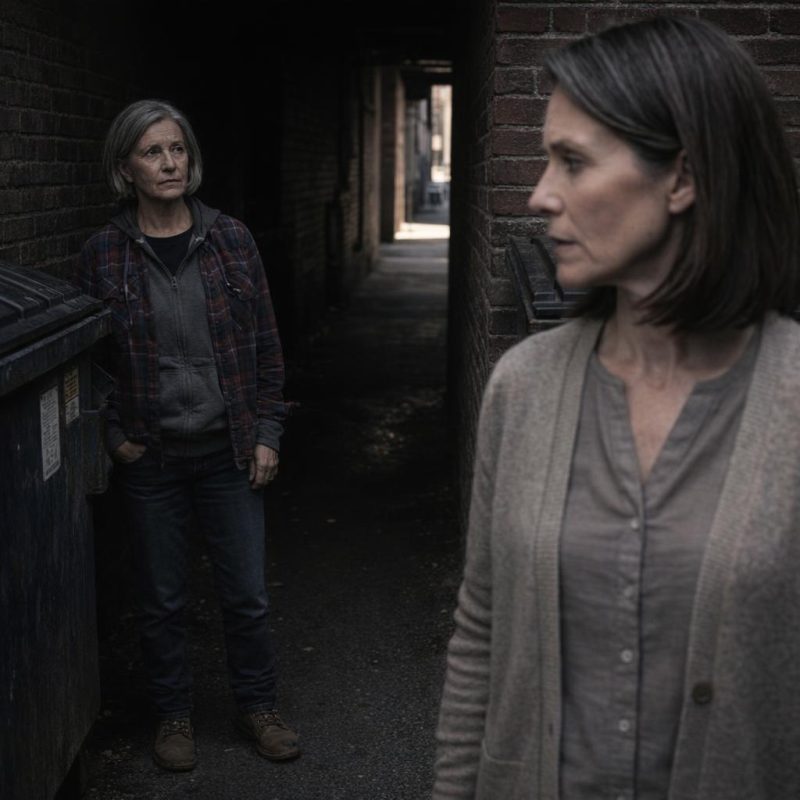 Image by RM AI
The Real Story
We moved away from the store and walked without talking until we reached the small park two blocks over. Sarah sat on the edge of a bench and I sat beside her and she told me everything. Five years ago, James Thornton had appraised the property next to the hardware store as part of a development survey. During that process he'd found the hidden documents — she didn't know exactly how, only that he'd come to her afterward with copies and a very clear message: stay quiet, or he'd make sure the store's ownership history became a legal problem she couldn't afford to fight. He wanted the land corridor for a development project, and the bicentennial celebration was going to bring historians and journalists and public attention to exactly the records he needed buried. For five years she'd done what he said. She'd kept her head down, kept the store running, tried not to think about it. Then he'd told her to give me the quilt — said it needed professional restoration before the town's historical display. She hadn't understood why until the note surfaced and she started putting it together. He'd forged her handwriting to create a paper trail that would make us both look like we'd been hiding the documents ourselves. She looked at her hands while she talked. When she finished, the park was very quiet, and I understood that Thornton had been pulling threads in both our lives for years without either of us seeing the full shape of it.
 Image by RM AI
Sisters in Danger
We sat there for a while after Sarah stopped talking. I kept turning it over — the quilt, the note, Patricia's visit, the broken door — and it all fit now in a way that made my stomach drop. Sarah said she'd been trying to protect me by staying distant, that she'd thought if I didn't know the full picture I'd be safer. I told her that hadn't worked out. She almost smiled. Then I told her about the photographs I'd taken of the documents, the copies I'd made and stored off-site. Her face shifted — relief and fear arriving at the same moment, which is a hard combination to look at on someone you love. She said Thornton had broken into the store looking for anything that could connect her to the documents. He knew I had them. We were both in this now whether we wanted to be or not. I said I knew that. She nodded slowly, and for the first time in longer than I could remember we were sitting on the same side of something instead of across from each other. The afternoon light was going flat and gray around us, and neither of us spoke for a moment, just sat with the full weight of what we were up against and the quiet fact that we were no longer facing it alone.
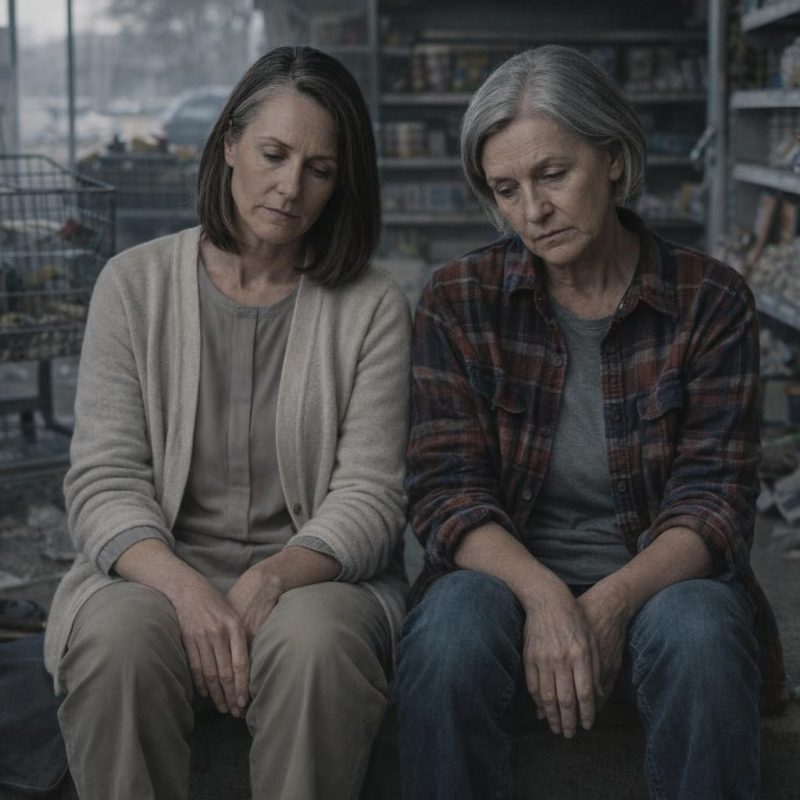 Image by RM AI
The Plan to Expose
Sarah's first instinct was to leave — pack what she could, close the store, disappear somewhere until it blew over. I understood the impulse. I'd had versions of it myself over the past week. But I told her running would only hand Thornton exactly what he needed. If we vanished now, with the forged note already in existence and the documents unaccounted for, we'd look guilty of everything he'd set us up for. She knew I was right. She just didn't like it. The bicentennial was four days away, and I said that was our window. Marcus Webb had the academic standing to authenticate the documents publicly — he'd been researching the land records for months and he already had context for what they meant. If we brought everything forward at the event, in front of the town, with Marcus standing beside us, Thornton couldn't quietly make it go away. Sarah sat with that for a long moment. She said Marcus was a risk. I said staying silent was a bigger one. She looked out across the park, jaw tight, and then she gave a single nod. We started talking through the details as the light faded, and somewhere in the middle of it I felt the fear shift into something steadier — not confidence exactly, but the settled resolve of people who have stopped waiting to be found and decided to step forward instead.
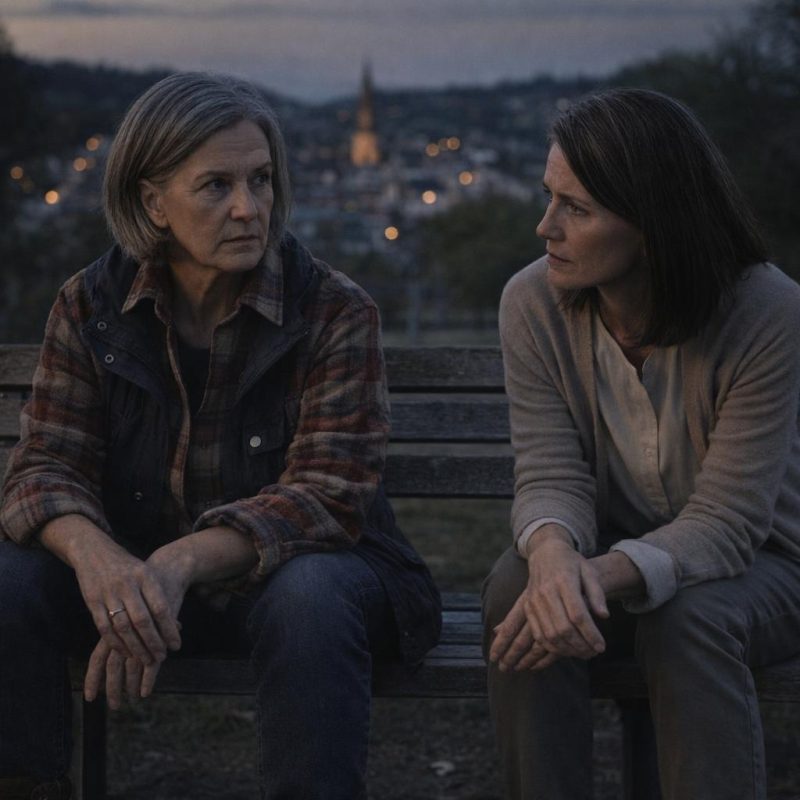 Image by RM AI
Gathering the Evidence
We drove back to the studio without talking much. Sarah sat with her hands folded in her lap, staring out the passenger window, and I kept both hands on the wheel and focused on the road. When we got inside, I locked the door behind us and pulled the blinds. The bedroom copy came out first — I'd tucked it inside a hardcover on the shelf, spine-out, nothing to distinguish it. Then I went to the car and retrieved the envelope I'd wedged under the spare tire. The buried copy took us a few minutes in the garden, my fingers cold in the dirt, but it was exactly where I'd left it, sealed in its plastic sleeve. Sarah stood at the worktable while I laid everything out, and I watched her face as she read through the original documents from the quilt for the first time — the land transfer records, the forged signatures, the chain of title that had been quietly rewritten over a century. She picked up the forged note and held it close, turning it in the light, and I could see her jaw tighten as she recognized what it meant. We photographed everything again, twice, and I started building a timeline on a legal pad. The evidence, laid out in sequence, was more than I'd let myself fully absorb until that moment. I spread all three document copies across the worktable side by side.
 Image by RM AI
Marcus Connects the Dots
Marcus arrived forty minutes after I called him, still in his jacket, a little breathless. He didn't say anything at first — just stood at the worktable and started reading. Sarah and I gave him space. He went through the land transfer records slowly, then the forged note, then the timeline I'd written out on the legal pad. He asked me twice to confirm where the originals had been hidden, and I told him again about the quilt lining, the stitched pocket, the way whoever had concealed them had known exactly what they were doing. Then he sat down, took off his glasses, and rubbed the bridge of his nose. He said Patricia Kendall's name first, which surprised me — I hadn't mentioned her. He explained that he'd been tracking a series of quiet property acquisitions in the historic district for months, all of them connected through a shell company he hadn't been able to fully trace. The fraudulent land claims from the original theft, he said, were the legal foundation those acquisitions were built on. Thornton had the political leverage; Patricia had the development capital. The bicentennial wasn't just a civic event to them — it was a deadline. Once the ceremony passed and the town's attention moved on, the rezoning applications were already drafted and waiting. He turned his laptop around and showed us the map he'd been building — property lines, acquisition dates, shell company names, and at the center of it, both of their names.
 Image by RM AI
The Bicentennial Approach
We stayed at the worktable until well past ten, going over the plan until every piece of it felt solid. Marcus would take the podium during the historical presentation segment — he already had a slot on the program, which none of us had thought to be grateful for until now. He would present the land records as a historical finding, walk the audience through the chain of title, and then introduce the forged note and what it connected to in the present day. I would bring the quilt. Sarah would be there to speak to the threats directly, in her own words, in front of the media and the bicentennial committee and whoever else was standing in that square. Thornton and Patricia would be in the audience. There was no version of this where they could quietly intervene once Marcus had the microphone. We rehearsed the sequence twice. Marcus was calm and precise the way academics get when the material finally justifies the years they've spent on it. Sarah was quieter, but she didn't waver. When we finally turned off the worktable light and stood in the near-dark of the studio, I felt the full weight of what we were walking toward settle across my shoulders — not dread exactly, but the particular gravity of a decision that has already been made and cannot be unmade.
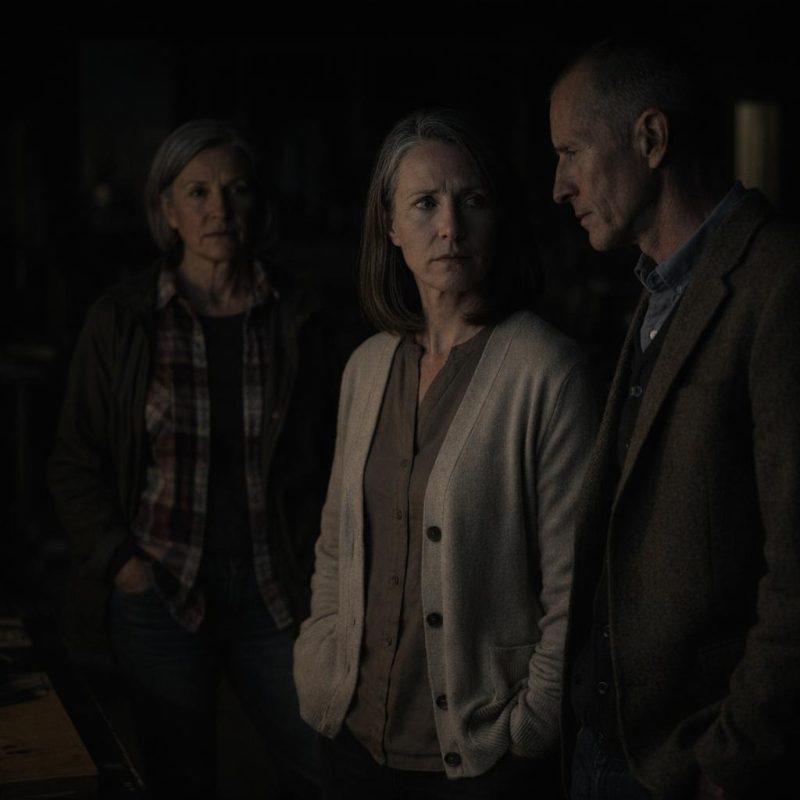 Image by RM AI
The Offer
They arrived at eight-fifteen the next morning, a dark sedan pulling slowly into the gravel drive. I saw them through the studio window before they knocked — Thornton in a pale linen shirt, unhurried, and Patricia just behind him in a charcoal blazer, her auburn hair perfect in the early light. Sarah was already beside me. We let them knock twice before I opened the door. Patricia spoke first, her voice warm and measured, saying she hoped we could all sit down together and find a sensible path forward. Thornton set the briefcase on the worktable without being invited to, and Patricia explained the terms as though she were presenting a reasonable business arrangement to reasonable people. Two hundred thousand dollars, cash. A contract. NDAs for both of us. All documents surrendered and destroyed. She said it was about protecting the town's history from unnecessary disruption, about keeping things clean for everyone involved. Thornton didn't say much. He just stood with his hands in his pockets and watched us with those flat blue eyes while Patricia talked. I looked at Sarah. She looked at me. Neither of us touched the briefcase. Patricia finished speaking and let the silence sit, still smiling, still projecting the particular warmth of someone who has never once considered that the answer might be no. The briefcase sat open on my worktable, the banded stacks of bills catching the morning light.
 Image by RM AI
The Refusal
I reached over and closed the briefcase. The latch clicked, and Patricia's smile didn't move, but something behind her eyes did. I told them the answer was no. Sarah said it too, quietly, standing just off my shoulder — not loud, not dramatic, just certain. I told them we would be at the bicentennial ceremony the following morning, and that everything we had would be presented there. Patricia's smile finally dropped. It didn't fade gradually — it simply stopped, like a light switched off, and what was underneath it was something harder and much less interested in being liked. Thornton's voice, when he spoke, came out flat and deliberate. He said we didn't understand what we were involving ourselves in. Patricia said something about reputations, about how quickly things could become complicated for people who inserted themselves into matters they didn't fully understand. Thornton added that accidents happened, especially to people who weren't careful. Neither of them raised their voices. That was the part that stayed with me — how quiet it all was, how ordinary the room still looked with the morning light coming through the blinds and the briefcase sitting on the edge of my worktable. They left without another word. The door closed behind them, and the studio held the silence of everything that had just been said without being said.
 Image by RM AI
The Attack
We stayed in the studio too long. I knew it even as the hours passed — we should have left, gone somewhere public, somewhere with people around us. But we kept working, cross-referencing documents, and by the time the light outside had gone fully dark we were still at the worktable. The sound came from the front — a sharp crack of glass, then a second one. Sarah grabbed my arm before I'd fully processed what I was hearing. Two figures moved through the broken front window, and I didn't wait to see more. I snatched the quilt from the conservation rack and Sarah swept the document envelope off the table and we ran. The back hallway was dark and I hit my shoulder on the doorframe but kept moving. Behind us I could hear footsteps, something heavy knocked over, a voice saying something I couldn't make out. Sarah hit the back door with both hands and it swung open into the night air. One of them was close — I could hear breathing behind me, the crunch of gravel underfoot. Sarah's car was in the driveway and she had the keys already out, some instinct I was grateful for. We got in. She had the engine running before my door was fully shut. The tires threw gravel as she reversed hard and swung onto the road, and I held the quilt against my chest and didn't look back until the studio lights had disappeared behind the tree line.
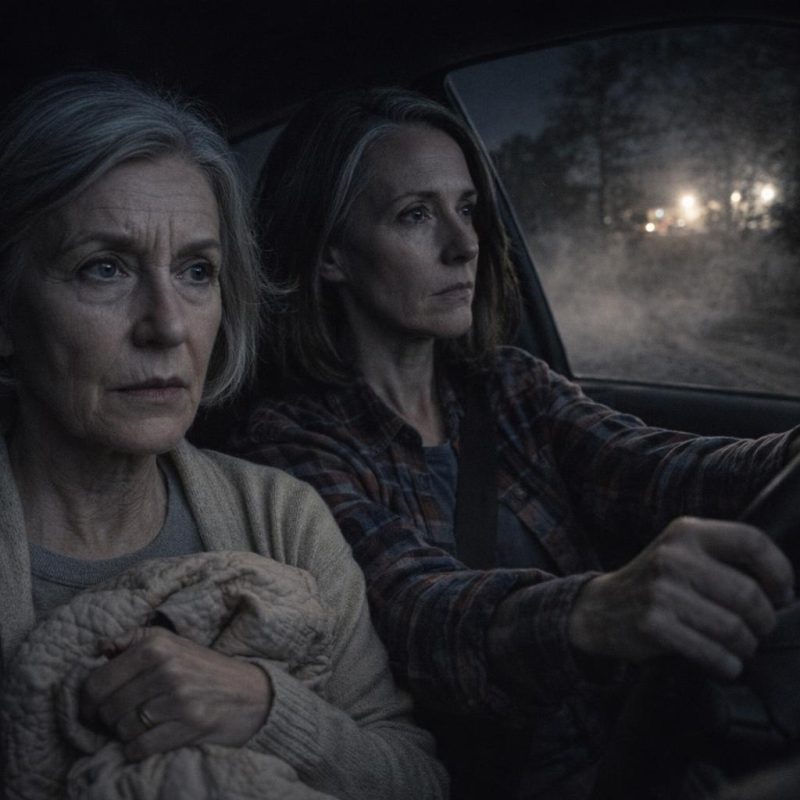 Image by RM AI
Calling for Help
Sarah drove straight to the police station without either of us suggesting it — we just both knew. It was past eleven when we walked through the front door, the quilt still bundled under my arm and the document envelope in Sarah's hands. The officer at the desk took one look at us and called for someone senior. Detective Ramos came out of a back office still holding a coffee mug, dark hair pulled back, eyes that moved quickly over both of us and then over what we were carrying. She brought us into a small room with a table and fluorescent light and she listened without interrupting while I laid out the documents and Sarah described the threats, the break-in, the men who had come through the front window. Ramos examined the forged note for a long time, turning it carefully, asking me twice about its provenance and the condition it had been in when I found it inside the quilt. She asked Sarah to describe Thornton's exact words from that morning. She wrote everything down in a small notebook, precise and unhurried. Then she stepped out briefly and came back with two other officers. She sat back down across from us, set her notebook flat on the table, and said she believed us — that the evidence was consistent, the pattern was clear, and she was opening a formal investigation tonight.
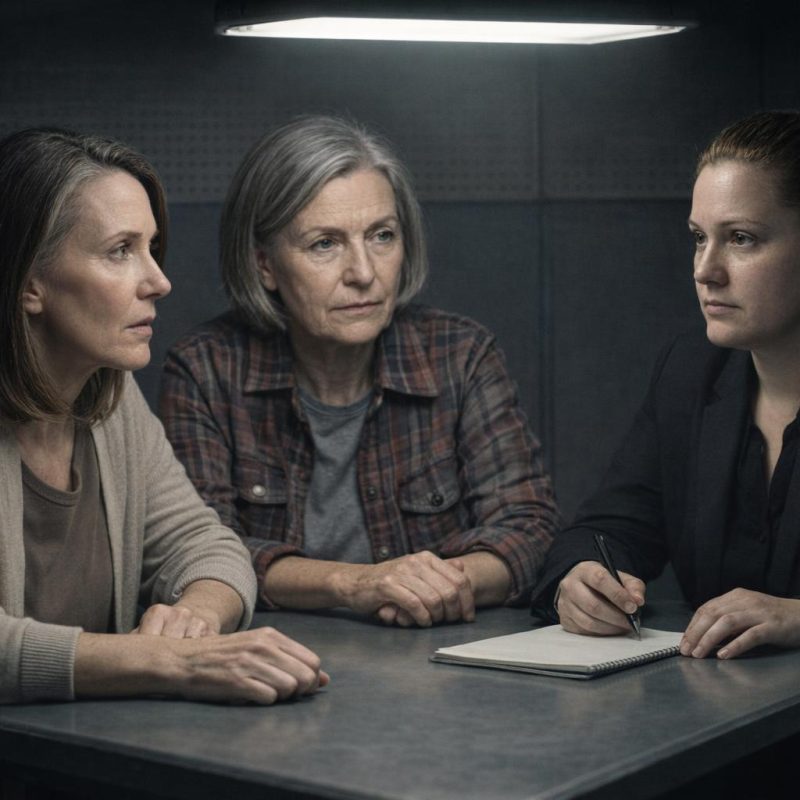 Image by RM AI
The Public Revelation
The town square was full by noon — families with strollers, older couples with lawn chairs, local media with cameras set up along the perimeter. I stood near the back of the crowd with Sarah, the quilt folded over my arm, and watched Marcus take the podium during the historical presentation segment. He started with the land records, walking the audience through the original township grants, the chain of title, the quiet rewriting that had happened over a century. People were polite at first, the way crowds are when they expect something ceremonial. Then he introduced the forged note. He explained what it connected to — the shell company acquisitions, the rezoning applications, the two names at the center of it. I saw heads turn in the audience. Thornton was near the front, Patricia beside him, and I watched Patricia's hand close around her program and go still. Detective Ramos and two officers were already moving through the crowd from different angles before Marcus finished his last sentence. Patricia stood up first. Thornton turned, saw the officers, and for one moment his face showed something I hadn't seen on it before — not calculation, not cold confidence, just the plain fact of being caught. Ramos said something to him I couldn't hear from where I stood. He didn't resist. The cameras were rolling when they walked him out of the square, his hands cuffed behind him, the crowd parting around them in stunned silence.
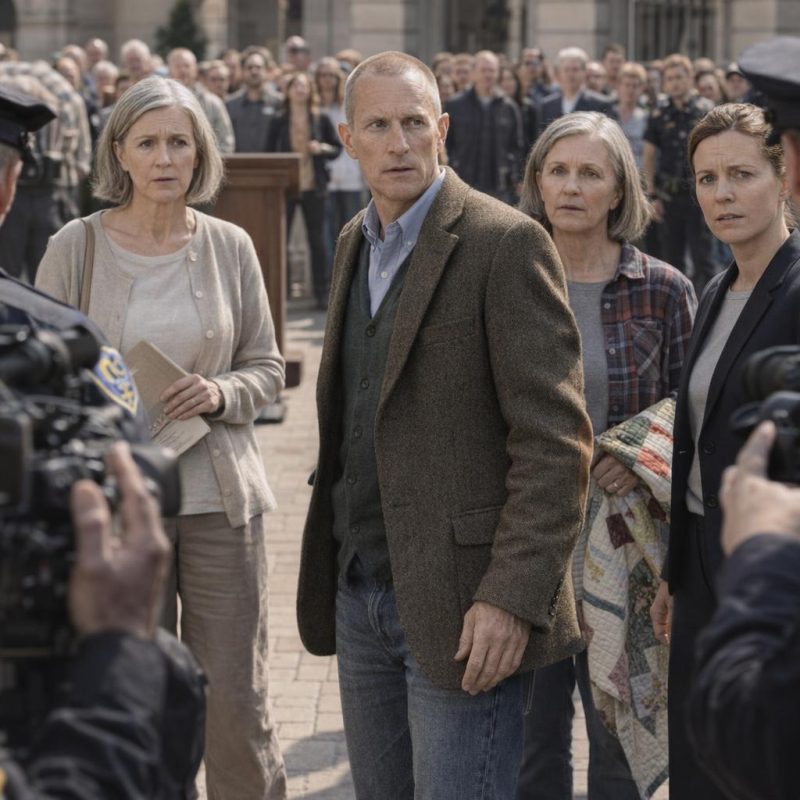 Image by RM AI
The Aftermath
Detective Ramos found us near the edge of the square about twenty minutes after they walked Thornton out. She had a folder under her arm and the look of someone who had been waiting a long time to deliver good news. She told us the charges were multiple — fraud, bribery, conspiracy to suppress public records. Patricia was being processed separately. What neither Sarah nor I had fully understood until that moment was how far back it went. Ramos opened the folder and walked us through it: three sitting council members, a former county assessor, two planning officials whose signatures appeared on rezoning documents that should never have been approved. The development scheme had been running for nearly fifteen years, layered under shell companies and quiet land transfers that only looked routine if you didn't know what you were looking for. Our family's name was in the records too — not as perpetrators, Ramos was clear about that, but as people who had been used and kept in the dark. She said the word whistleblowers without any ceremony, like it was simply the accurate term. Marcus stood beside us taking notes, already thinking about the historical research that would follow. The town council had called for a full public accounting before the afternoon was out. Ramos set the open folder on the table between us, and the list of implicated names ran to a second page.
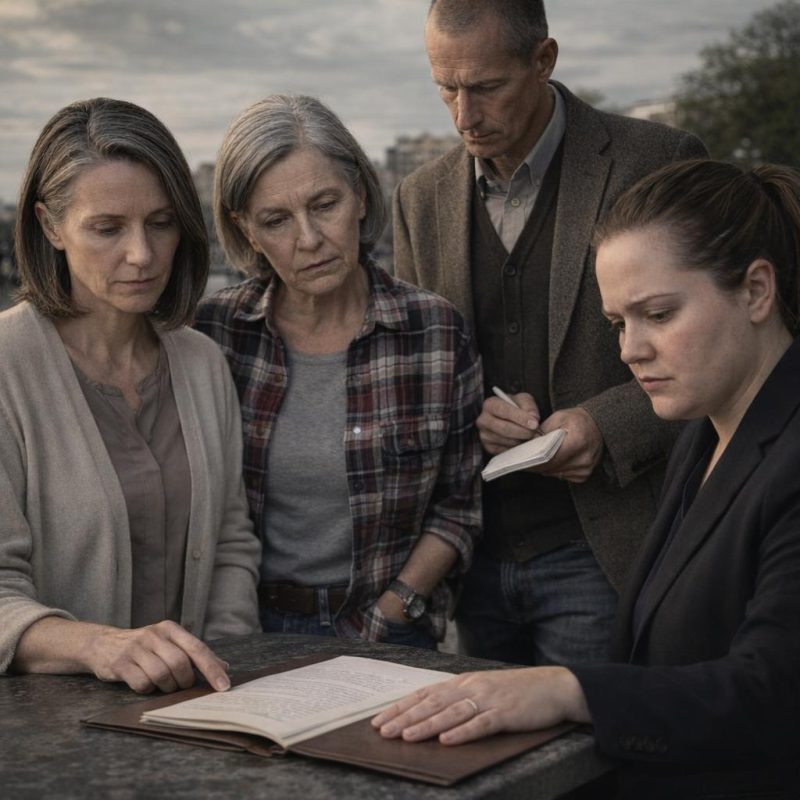 Image by RM AI
Reckoning with History
The bicentennial committee reconvened two weeks later in the town hall meeting room, and this time the chairs were filled with people who hadn't been there before — descendants of the families whose land had been taken, some of them driving hours to attend. Marcus presented his full research without softening any of it. He named the families. He named the acreage. He read from the original deeds and then from the documents that had quietly replaced them, and the room stayed very still while he did. Sarah and I sat together near the middle of the room. When the floor opened for comment, she spoke first. She said our family had benefited from something we hadn't earned, and that she'd spent years not wanting to look at it directly, and that she was sorry. I didn't have anything to add that was better than that, so I just said I agreed with my younger sister. A woman in the third row — one of the descendants — said she hadn't come looking for an apology, she'd come looking for acknowledgment, and that this was a start. The hardware store's future was still unresolved. The restitution process was going to take time, and everyone in that room seemed to understand it. I walked out into the late afternoon and the weight of all those years of silence sat differently now — not gone, but finally named.
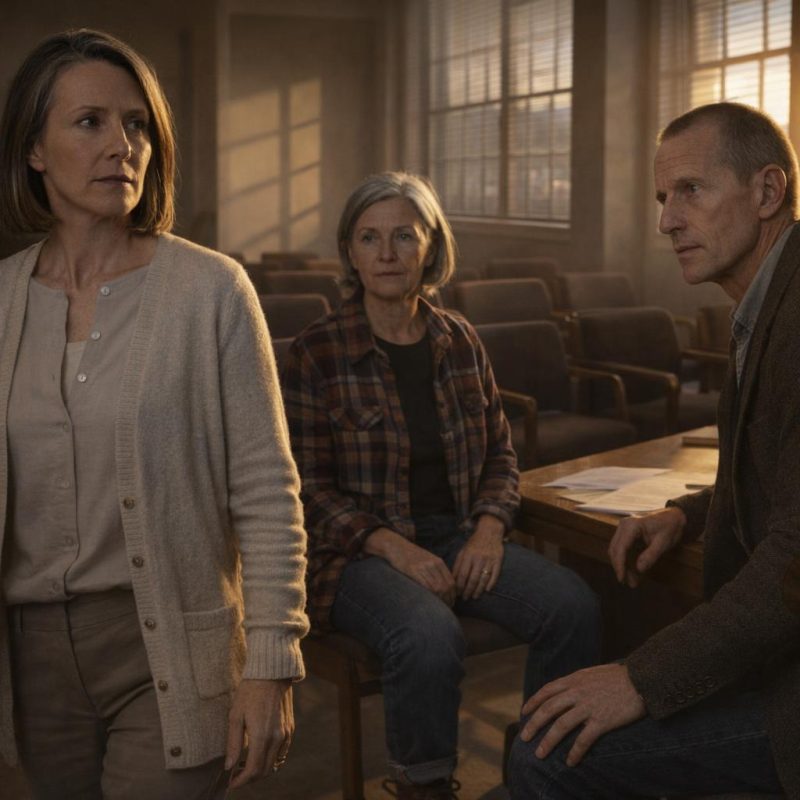 Image by RM AI
Restoring What Matters
I set up my worktable in Sarah's back room the following Saturday, the good light coming in from the east window the way I remembered it from when we were kids and this had been our grandmother's sewing room. Sarah came in with two mugs of coffee and set one beside my magnifying lamp without asking if I wanted it. We didn't talk much at first. I showed her how to thread the curved needle for the binding repair, how to match the tension so the new stitches wouldn't pull against the old ones. She had calloused hands and she was careful with them, more careful than I expected. At some point she said she was sorry for the years she'd kept me at arm's length, that she'd been so ashamed of what she half-knew that it was easier to keep everyone away. I told her I hadn't made it easy to come close either. That I'd been so focused on doing things correctly that I'd sometimes forgotten to just be her sister. She laughed a little at that — a short, surprised sound — and said that was probably the most honest thing I'd said in thirty years. We worked through the afternoon, the quilt slowly coming back together under our hands, and by the time the light shifted I couldn't remember the last time a room had felt that quiet and that full at the same time.
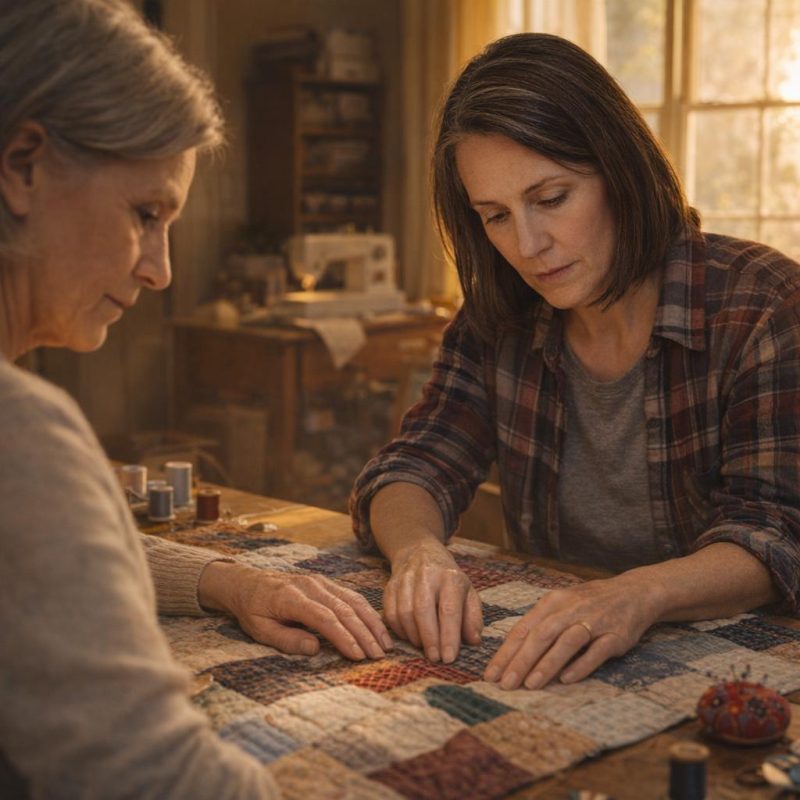 Image by RM AI
The Honest Display
The museum opened the exhibition on a Thursday evening in early October, and the Heritage Quilt hung at the center of the main gallery under careful conservation lighting that I had helped them calibrate. Marcus had written the wall text himself — three panels that started with the original land grants, moved through the theft and the forgery, and ended with the arrests and the ongoing restitution process. The hidden documents were displayed in a case beside the quilt, the forged note behind archival glass with a typed explanation of what it had concealed and what it had eventually exposed. Sarah and I arrived together. We stood in front of the quilt for a long time without saying anything. A family came and stood beside us — two adults and a teenage girl who leaned in to read the labels carefully, her finger tracing the panel text without touching the glass. I heard her ask her mother what restitution meant, and I heard her mother answer in a low, steady voice. More people filled in around us. The quilt hung there in the light, every repaired seam visible if you knew where to look, its full history documented on the wall beside it — not the history anyone had intended it to carry, but the true one.
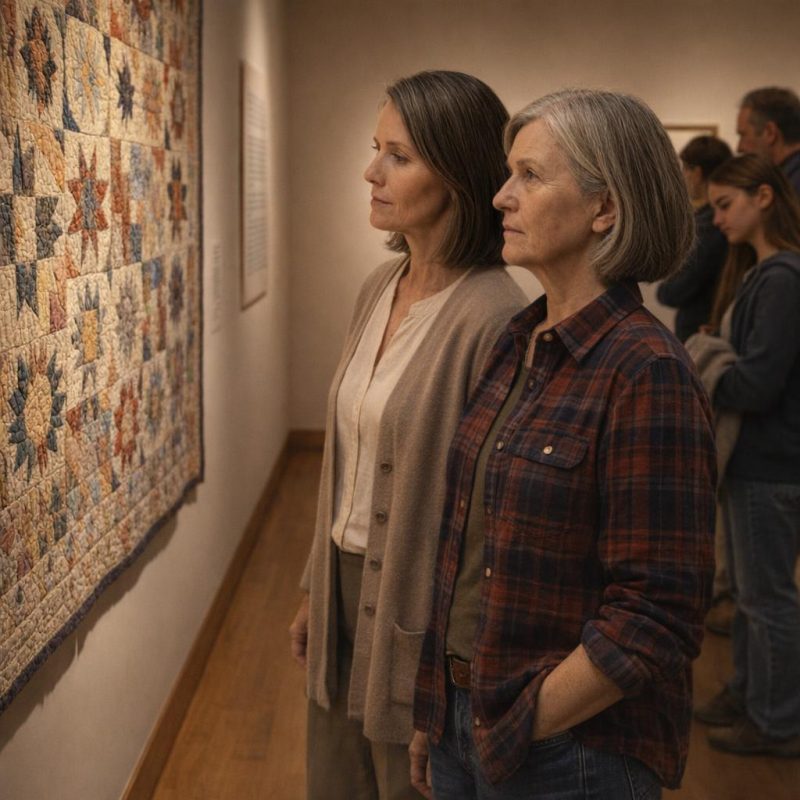 Image by RM AI
KEEP ON READING
10 Greatest Quarterbacks Of All Time & 10 That Are…
Do You Disagree?. Few topics in sports generate as much…
By Farva Ivkovic Dec 2, 2025
The story of Ching Shih, the Woman Who Became the…
Unknown author on WikimediaFew figures in history are as feared…
By Emilie Richardson-Dupuis Dec 29, 2025
20 Shakespearean Words, Translated For A Modern Audience
What’s In A Word?. Shakespeare was a wordsmith of the…
By Breanna Schnurr Dec 17, 2025
20 Inspiring Stories From Native American History
Incredible Stories Of Resilience And Endurance. Many of us didn't…
By Ashley Bast Dec 17, 2025
You Think You Have Problems? These Royal Families Were Cursed
Boasson and Eggler St. Petersburg Nevsky 24. on WikimediaHeavy is…
By Ashley Bast Dec 5, 2025
MH370: The Plane That Can't Be Found
Anna Zvereva from Tallinn, Estonia on WikimediaEleven years after Malaysia…
By Christy Chan Dec 10, 2025