

Starting Over at Sixty-One
I never expected to fall in love again at sixty-one. After my husband passed, I spent eight years telling myself that chapter was closed — that companionship like that only comes around once, and I'd had my turn. My kids would nudge me toward dating apps or mention a widower from church, and I'd smile and change the subject. I wasn't bitter about it. I just didn't believe it was possible anymore. Then I met Richard at a mutual friend's dinner party, and something shifted. He wasn't flashy or trying too hard. He just listened — really listened — when I talked about my garden, my grandchildren, the trip to Portugal I'd always wanted to take. A week later he remembered I'd mentioned my favorite tea and showed up with a box of it. Small things. But after years of silence in a house built for two, small things meant everything. We dated for a year, taking it slowly, and somewhere in that year I stopped being surprised by how good it felt and started just being grateful. When he asked me to marry him, I said yes before he finished the sentence. Standing at the front of that small room with our closest friends around us, his hand warm and steady in mine, I felt something I hadn't felt in a very long time — like I was exactly where I was supposed to be.
 Image by RM AI
Emily's Smile in the Pictures
We kept the wedding small on purpose — just close friends, a few neighbors, and my two children. I didn't want a production. I wanted it to feel real, and it did. Richard was warm and gracious with everyone, shaking hands, remembering names, making people laugh without trying too hard. Michael gave me a hug and said congratulations with that quiet sincerity he's always had, and I appreciated it more than he probably knew. But it was Emily who surprised me most. She had been a little reserved in the weeks leading up to the wedding — nothing I could put my finger on, just a slight distance — and I'd told myself it was just the strangeness of watching your mother remarry. But that day, she was present. Fully present. She smiled through every photograph, laughed at Richard's toast, and helped me fix my hair before the ceremony without being asked. I kept watching her, half-waiting for something to cloud over, and it never did. When the afternoon wound down and guests started drifting toward the door, she found me near the window. She pulled me into a hug that lasted longer than usual, her arms tight around my shoulders, and then she whispered something close to my ear — that she only wanted me to be happy.
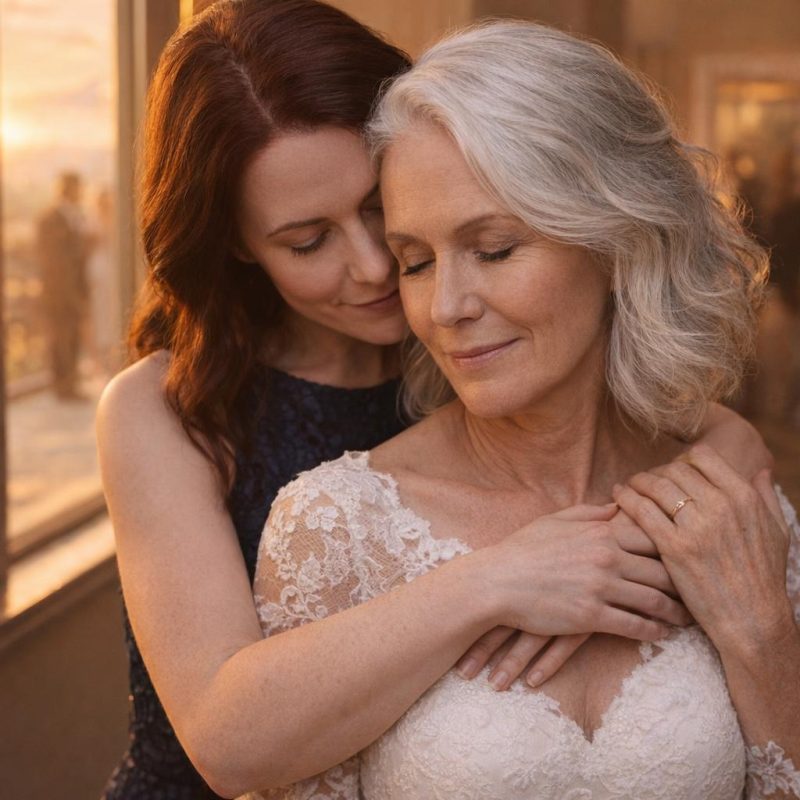 Image by RM AI
Three Weeks of Ordinary Happiness
The three weeks after the wedding were the quietest kind of good. Nothing dramatic, nothing worth writing home about — just the steady, ordinary pleasure of not being alone anymore. Richard made coffee every morning before I was fully awake, and by the time I came downstairs it was already waiting on the counter, exactly the way I liked it. We'd sit together at the kitchen table with the morning light coming through the window, sometimes talking, sometimes just reading, and it felt natural in a way I hadn't expected so soon. He remembered to pick up the brand of bread I liked. He asked about my friends by name. He'd leave little notes on the counter if he went out early — nothing elaborate, just a line or two so I wouldn't wonder where he'd gone. I know that sounds like a small thing, but after years of a quiet house, it wasn't small to me at all. I felt grateful in a way that was almost embarrassing, like I kept waiting for the other shoe to drop simply because things were going well. But nothing dropped. The house felt warmer with him in it, fuller somehow, and I let myself stop bracing for something to go wrong. Those mornings — coffee cooling in my hands, the day not yet started — settled into me like something I hadn't known I was missing.
 Image by RM AI
The Ultimatum
She showed up on a Tuesday afternoon without calling first. I heard the knock and opened the door to find Emily standing on the step with her eyes red and her jaw set in that way she has when she's been crying and trying to stop. I brought her inside and put the kettle on, thinking maybe something had happened with the kids or with Robert. She sat at the kitchen table and didn't say anything for a moment, just pressed her hands flat against the surface like she was steadying herself. Then she looked up at me and said that if I stayed married to Richard, she would not allow me to see my grandchildren. Not a threat delivered in anger — she said it quietly, which somehow made it worse. I asked her what she meant. I asked her what Richard had done. She said she was protecting her family and that I needed to choose. I asked her to explain, to give me something I could actually hold onto, and she kept saying she couldn't get into it right now. I followed her to the door when she stood to leave, asking her to stay, asking her to talk to me, and she just shook her head. The door closed behind her, and I stood in my own hallway not understanding a single thing that had just happened, her words still hanging in the air between us like a wall I had no idea how to cross.
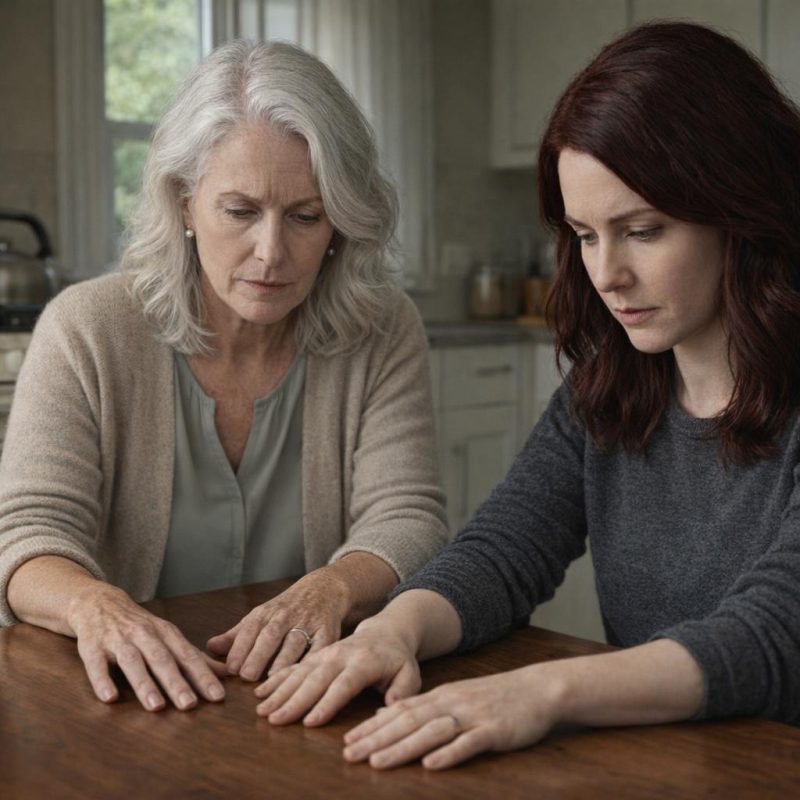 Image by RM AI
No Answers, Only Silence
I called her that evening. No answer. I called again the next morning, and the morning after that. I left voicemails that started measured and ended with my voice cracking — asking her to please just talk to me, to tell me what I'd done wrong, to give me something. At one point she sent a single text: I'm protecting my family. That was it. No follow-up, no explanation, nothing I could respond to in any way that would open a door. Richard sat with me through most of it, and I could see he was trying to be steady for me even though he looked as lost as I felt. I asked him directly one evening — had something happened between them, had he said something that might have landed wrong, was there anything he could think of? He shook his head slowly and said he genuinely didn't know. I believed him, but believing him didn't make the silence from Emily any easier to sit with. I went over every conversation I could remember from the weeks before the wedding, every family dinner, every phone call, looking for the moment I must have missed. I couldn't find it. The not-knowing was its own kind of pain, separate from the loss itself. By the end of the week I had stopped expecting her to pick up, but I kept calling anyway, and that evening I heard her voicemail greeting for the seventh time that day.
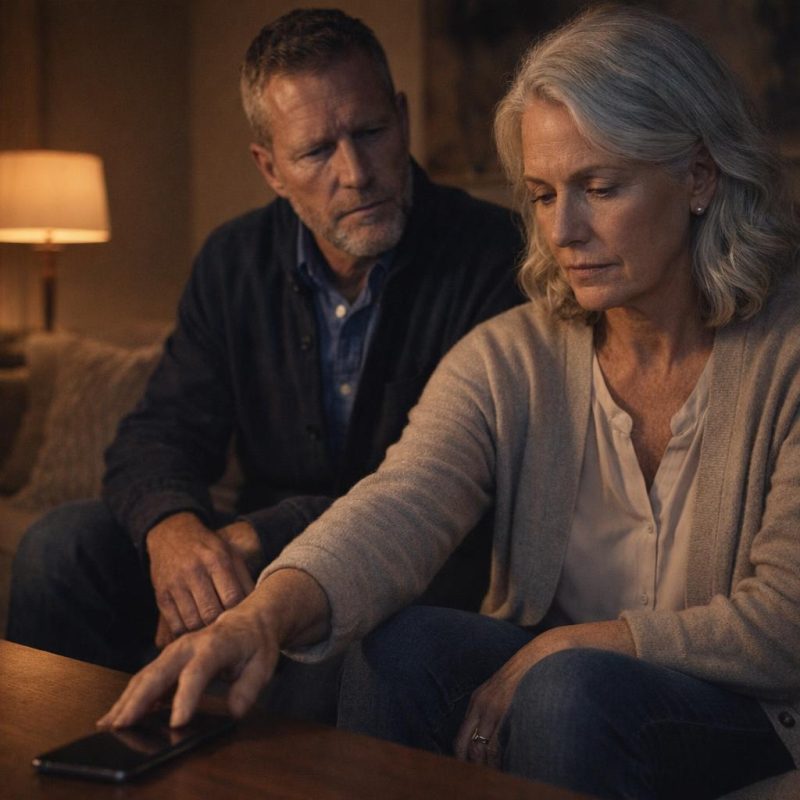 Image by RM AI
Richard's Confusion
I finally sat Richard down and asked him plainly — not gently, not carefully, just plainly — whether there was anything between him and Emily that I didn't know about. Something he'd said, something that had happened before the wedding, anything at all. He didn't get defensive. He just went quiet for a moment, like he was genuinely searching his memory, and then he walked me through every interaction he could recall. The dinner where he'd complimented her cooking. The afternoon he'd helped Robert carry furniture. The time he'd offered to watch the grandchildren so Emily and Robert could have a night out. He couldn't find anything. He said he'd thought they were getting along fine, that she'd seemed warm enough at the wedding, and that her sudden change made no sense to him. He offered to call her himself, to meet with her, to do whatever it took to clear the air. He seemed hurt in a quiet way — not dramatic about it, just genuinely confused that someone would think he'd done something wrong without telling him what it was. I watched his face as he said it, the way his brow stayed furrowed and his hands stayed open on the table, and I couldn't find anything in his expression that looked like a man who knew what he'd done.
 Image by RM AI
Michael Stays Neutral
I called Michael a few days later, hoping that maybe he'd heard something from Emily — some detail she'd shared with her brother that she hadn't been willing to give me. Michael has always been the steadier one, less likely to escalate, and I thought if anyone could help me understand what was happening, it might be him. He picked up on the second ring, which I took as a good sign. I explained the situation as calmly as I could — the ultimatum, the unanswered calls, the single text about protecting her family. He listened without interrupting, which I appreciated. Then he was quiet for a moment, and I waited. He said he didn't want to get in the middle of it. I asked him if he knew anything, if Emily had said something to him, and he said he hadn't heard specifics. He thought she was probably overreacting to something, his words, but he said it wasn't his place to get involved. I asked him what I was supposed to do, and he said to try to keep the peace, to give Emily some time, that things like this usually sorted themselves out. I told him I didn't have the luxury of waiting indefinitely when my grandchildren were being kept from me. He said he understood, but he still wouldn't take a side. Before we hung up, he said it again — that Emily was probably overreacting, but he wouldn't get involved.
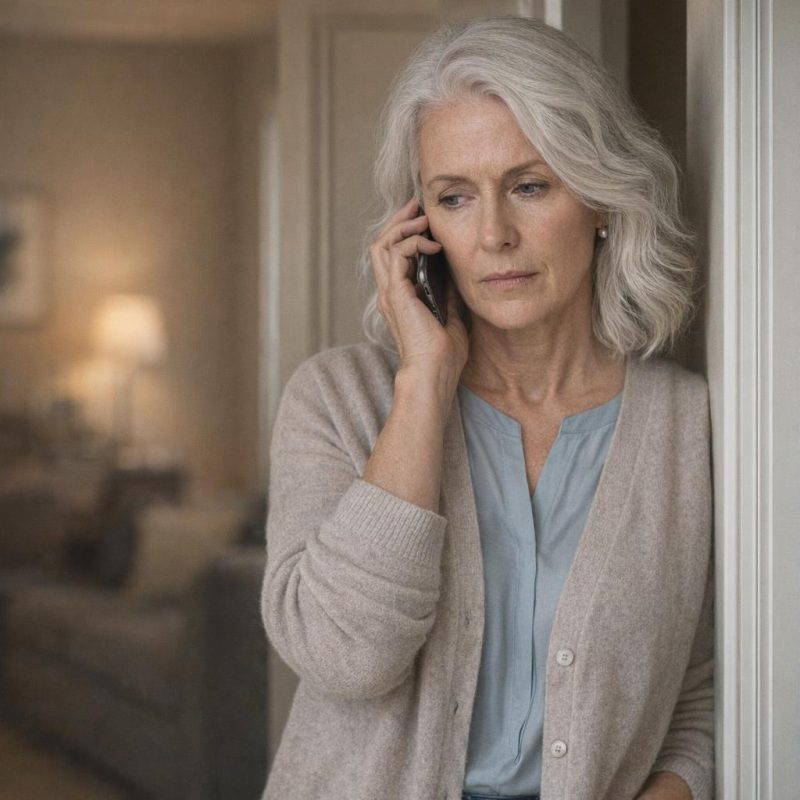 Image by RM AI
Conflicting Advice
I made the mistake of telling a few close friends what was happening, hoping that talking it through might help me find some clarity. It didn't. One friend — someone I'd known for nearly twenty years — told me gently but firmly that no marriage was worth losing your grandchildren over, that Richard and I had only been together a short time and I should think carefully about what I was risking. Another friend said almost the exact opposite: that Emily had given me no evidence of anything, that I'd be throwing away a real and loving marriage based on nothing more than a feeling my daughter couldn't explain. A third told me to wait it out. A fourth said waiting would only make things worse. Someone pointed out that Emily might know something I didn't, that there could be a reason she wasn't ready to share yet. Someone else said that if there were a real reason, Emily would have said so by now. I sat with all of it after everyone had gone home, turning each piece of advice over like I was looking for the one that fit, and none of them did. They all made sense in isolation and contradicted each other completely. I was no closer to knowing what to do than I'd been the day Emily walked out my door. I set my mug down on the table, looked at the quiet room around me, and said out loud to no one — I don't know what to do.
 Image by RM AI
Blocked and Returned
The first time I called and got the three-tone disconnect signal, I thought it was a mistake. I tried again. Same thing. I borrowed Richard's phone and dialed her number, and it rang twice before going to voicemail — which told me everything I needed to know. She hadn't blocked his number. She'd blocked mine specifically. I stood in the kitchen holding his phone and didn't say anything for a long time. I tried texting from a neighbor's phone a few days later. No response. I sent birthday gifts for my grandson and my granddaughter — wrapped carefully, with cards I'd spent too long writing, trying to say the right things in the right amount of space. They came back about two weeks later in a flat-rate box, still sealed, no note inside. Richard was standing in the doorway when I opened the outer packaging and saw what was inside. He didn't say anything. There wasn't anything to say. I set the box on the kitchen table and sat down across from it. The weeks that followed were the quietest of my life — not peaceful quiet, but the kind that presses in on you. I kept thinking about my grandson's laugh, my granddaughter's habit of grabbing my hand without asking. Those wrapped gifts sat on the table for three days before I could bring myself to move them.
 Image by RM AI
The School Recital
I found out about the recital the way you find out about things you weren't supposed to know — scrolling through social media late on a Tuesday night when I couldn't sleep. A mutual acquaintance had shared a photo from the school's community page: a stage decorated with paper stars, rows of small chairs, and a program listing the performers. My grandson's name was right there in the third row. I stared at the screen for a long time. The recital was in four days. I hadn't been told. I hadn't been invited. I told myself maybe it was an oversight, that maybe Emily just hadn't gotten around to it, and I almost believed that for about an hour. Then I called the school the next morning, as calmly as I could manage, and asked about attending. The woman on the phone was kind but careful. She said the family had provided a guest list and that my name wasn't on it, and that she was sorry but those were the instructions they'd been given. I thanked her and hung up. Richard found me sitting at the kitchen table afterward and put his hand on my shoulder, and I couldn't explain to him what it felt like to be formally excluded from my own grandson's life by a list with my name left off it. That night I opened my laptop, and there it was again — my grandson's name printed in the third row of a program I hadn't been meant to see.
 Image by RM AI
Quiet Phone Calls
It started small enough that I almost talked myself out of noticing it. Richard would step into the hallway to take a call, or I'd hear his voice drop mid-sentence when I walked into the room. The first time it happened I didn't think much of it — people take private calls, that's not unusual. But it kept happening. Three times in one week I walked in on him mid-conversation and watched him shift his posture, lower his voice, wrap things up quickly. He'd come back into the room looking composed, and if I asked who it was he'd say something vague — an old friend, someone from his previous neighborhood, nothing important. I didn't push. I told myself I was already on edge from everything with Emily, that I was reading things into ordinary moments because I was hurting and looking for somewhere to put it. That was probably true. But the feeling didn't go away. I'd be washing dishes or folding laundry and I'd hear his voice from the other room, low and careful, and something in me would go still and just listen without meaning to. I never caught a name. I never heard anything I could point to. Most nights I convinced myself it was nothing. But some nights I lay in the dark and the memory of it sat with me — the sound of Richard's voice dropping to a whisper in the next room.
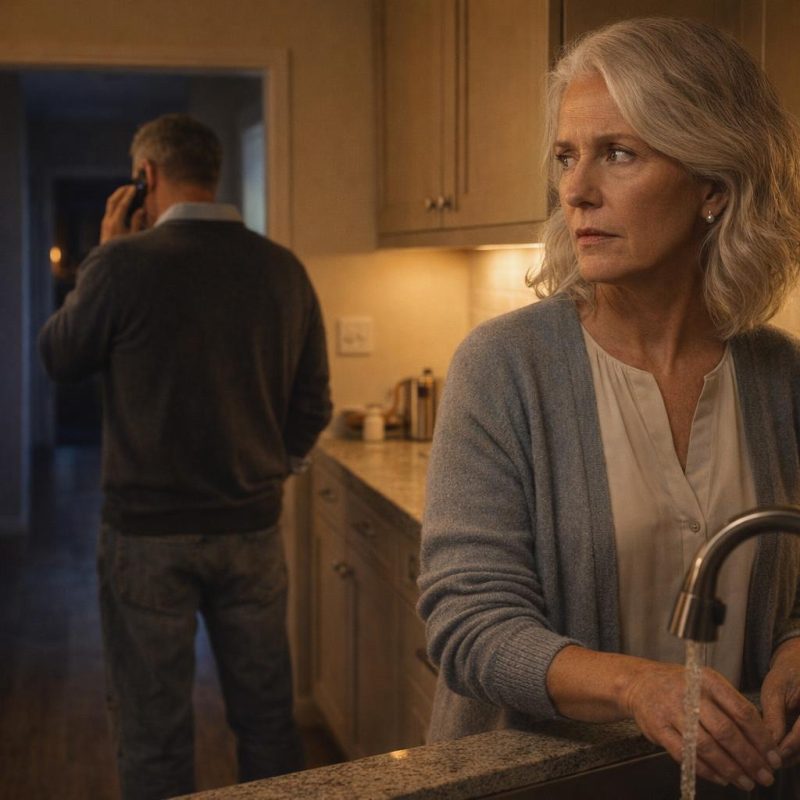 Image by RM AI
Imagination Running Wild
Three in the morning has a way of making everything feel true that probably isn't. I'd been lying there for two hours listening to Richard breathe, steady and even, while my mind ran through the same loops it had been running for weeks. I'd already gone through the obvious questions a dozen times — had he been honest about his finances, had there been other marriages he hadn't mentioned, was there something in his past he'd glossed over. I'd told myself each time that I had no evidence of anything, that I was doing this to myself. But that night something shifted. I started thinking about Emily's certainty. Not her anger — I'd made some peace with the anger — but the certainty. She hadn't wavered. She hadn't offered to talk it through or asked me to wait while she figured out how to explain herself. She'd come in with her mind already made up, like she'd been sitting with this for a while before she ever walked through my door. And lying there in the dark, I started asking a question I hadn't let myself ask before: what if she knew something specific? What if someone had told her something about Richard — something I didn't know, something I hadn't thought to look for? I sat up in bed, the room dark and quiet around me, and the thought that followed stopped me cold.
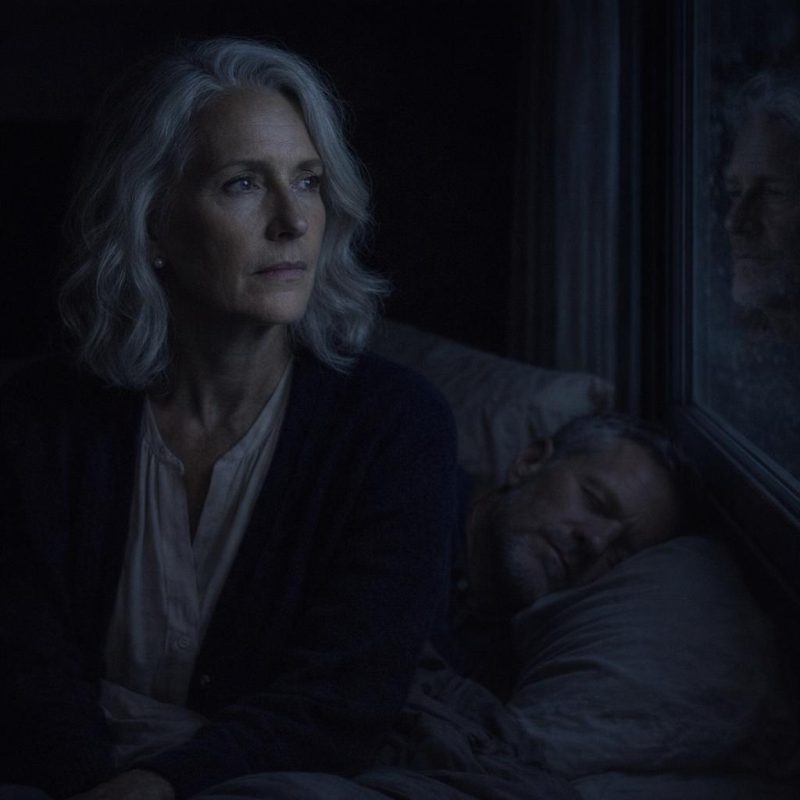 Image by RM AI
Second-Guessing Everything
I started going back through everything. Not in a dramatic way — I wasn't pulling out journals or making timelines. It was more like a low hum that ran underneath my days. I'd be making coffee and suddenly I'd be replaying the first time Richard had mentioned his late wife, trying to remember exactly what he'd said and whether anything had felt off. I'd be in the car and I'd find myself reconstructing a conversation from six months ago, turning it over, looking at it from a different angle. Richard was kind through all of it. That was almost the hardest part. He'd bring me tea without being asked, check in gently when I went quiet, never once pushed me to talk about Emily or demanded to know what I was thinking. His patience was real — I could feel that. And yet I kept looking at him across the dinner table and wondering what I didn't know. I felt guilty about it constantly. He hadn't done anything wrong that I could see, and here I was mentally auditing our entire relationship like I was looking for a discrepancy in the books. I knew it wasn't fair. I also couldn't stop. By the end of most days I was tired in a way that had nothing to do with sleep — the particular exhaustion of questioning every memory I had of the man sitting across from me.
 Image by RM AI
Richard's Patience
Richard never once told me I was being unfair. Looking back, I think that might have been the most generous thing he did through all of it. He'd reach for my hand at dinner and I'd let him hold it for a moment before I found some reason to pull away — to refill my glass, to check something on the stove, small retreats that weren't really about any of those things. He had to have known. He wasn't oblivious. But he never called it out, never made me feel accused of anything, never said the words I probably deserved to hear, which were something like: I can see you don't fully trust me right now, and I wish you'd just say so. Instead he kept showing up. He drove me to my doctor's appointment without being asked. He fixed the cabinet hinge I'd been ignoring for months. He left a cup of tea on my nightstand on the mornings I stayed in bed too long. I appreciated all of it and I hated that I appreciated it, because gratitude felt like it should come with trust and I couldn't seem to make the two things line up. One evening I pulled my hand back from his without thinking, just a reflex, and I caught the look on his face before he smoothed it over — something quiet and sad that he didn't let stay long, but that I saw.
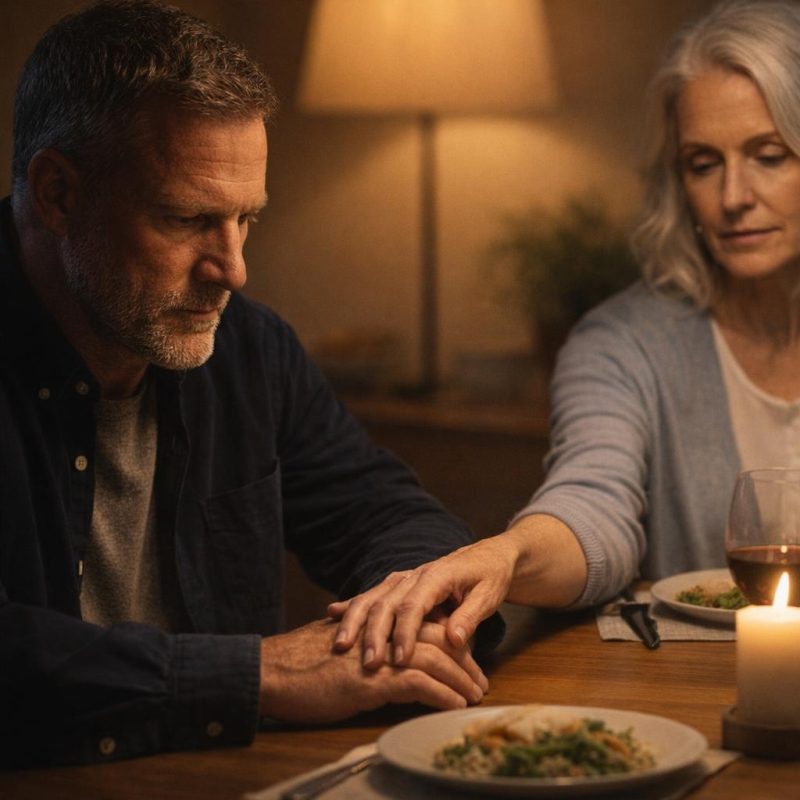 Image by RM AI
Possible Explanations
I sat down one afternoon with a legal pad and a pen and told myself I was going to be rational about this. I was going to write down every possible explanation for what Emily had done and look at them like a reasonable adult instead of lying awake cycling through them at three in the morning. So I wrote. I wrote that maybe she'd heard a rumor from someone and hadn't wanted to tell me the source. I wrote that maybe Richard had a financial history she'd somehow found out about — debt, or a lawsuit, something that hadn't come up. I wrote that maybe there had been another marriage, or a relationship that had ended badly and left a trail I didn't know about. I wrote that maybe she'd hired someone to look into him, the way people do now, and found something that looked worse than it was. Each item on the list felt both plausible and unlikely, and I kept writing. The list got longer. Some of the possibilities I crossed out almost immediately. Others I stared at for a while. I was nearly at the bottom of the page when I stopped and held the pen over the paper for a long moment, because the next thing I was about to write was the one I'd been avoiding the whole time — the possibility that frightened me more than any of the others, the one I hadn't let myself put into words until right then.
 Image by RM AI
Searching Through Belongings
Richard had a dental appointment that Thursday morning, which gave me about two hours. I told myself I wasn't going to do it right up until the moment his car turned out of the driveway, and then I stood in the hallway for about thirty seconds before I walked into the study. I started with the bookshelf — not because I expected to find anything there, but because it felt less invasive than the desk, a way of easing into something I already knew I shouldn't be doing. I checked the closet shelf, the box he kept his watch collection in, the jacket pockets hanging near the door. Nothing. Just the ordinary accumulation of a person's life: receipts, a spare set of keys, a folded piece of paper that turned out to be a grocery list from months ago. I felt relieved and foolish in equal measure. I almost stopped. I told myself I'd found nothing because there was nothing to find, that I should put everything back and make a cup of tea and wait for him to come home and just be his wife. I stood in the middle of the study for a moment with that thought. Then I crossed to the desk, pulled out the chair, and sat down. The center drawer held pens and a phone charger and a small notebook. I moved it aside. And then I reached for the handle of the deeper drawer on the right — the one where Richard kept his personal papers.
 Image by RM AI
The Photograph
The deeper drawer was heavier than I expected. Inside there were folders, a small stack of envelopes held together with a rubber band, and underneath all of it, a hardcover book I didn't recognize — something old, with a faded green spine. I almost set it aside. Instead I picked it up, and when I did, something slipped out from between the pages and landed face-down on the desk. A photograph. I turned it over slowly. Richard was younger in it — maybe late forties, early fifties — standing outside somewhere sunny, his arm around a woman. She was laughing, her head tilted slightly toward him. She looked happy. He looked happy. I told myself it was nothing, that people have histories, that a photograph doesn't mean anything on its own. I turned it over again and studied her face more carefully. The shape of her jaw. The way her eyes crinkled at the corners. The particular angle of her smile. My chest went tight in a way I couldn't explain. I set the photo down on the desk and stepped back, and then I picked it up again because I couldn't stop looking at her — at the woman who looked so much like my daughter that my hands had started to shake.
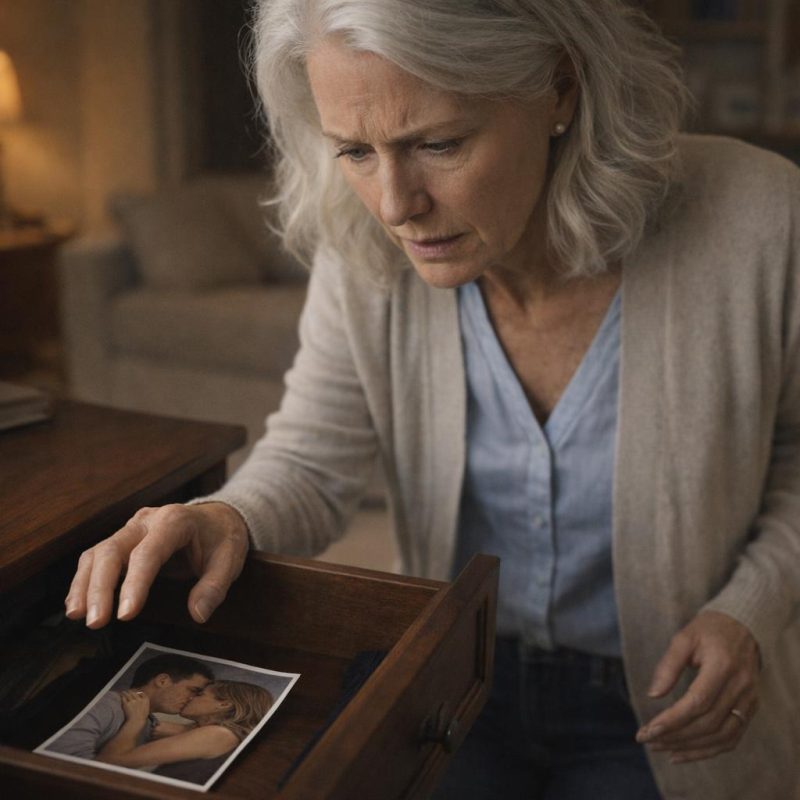 Image by RM AI
The Confrontation
I waited until after dinner. I didn't want to do it over a meal, didn't want to do it while I was still shaking, so I sat with it for hours and then I put the photograph on the kitchen table between us and asked him who she was. Richard went still. Not guilty-still — more like the stillness of someone who has been caught off guard by something they thought was safely in the past. He picked up the photo and looked at it for a long moment. Then he told me. Her name was Diane. She had been Emily's college roommate, years and years ago. After his wife passed, he said, he'd been lonely and lost, and Diane had reached out through mutual connections. They'd dated briefly — a few months, nothing serious, and it had ended kindly before things got complicated. He said it was over long before he ever met me. I asked him why he'd never mentioned it. He said it hadn't seemed relevant. He said a lot of things after that, careful and measured, and I sat across from him and listened to every word. When he finished, the kitchen was very quiet. I didn't know what I believed. I just sat there in the silence, turning the photograph over in my hands, feeling the weight of a coincidence I couldn't quite put down.
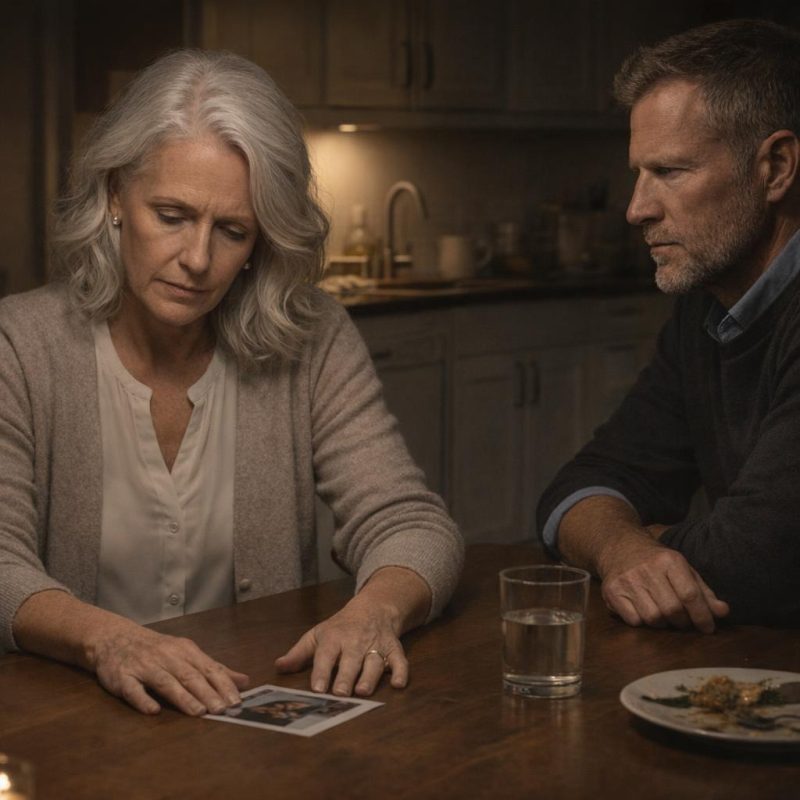 Image by RM AI
Processing the Revelation
I kept thinking about it the next morning while Richard was in the garden. Diane. Emily's college roommate. The woman in the photograph. I tried to line up the timeline the way Richard had described it — his wife's death, the grief, the brief relationship, the clean ending — and it almost made sense. Almost. But I kept snagging on the same question: had Emily known? Had she known Richard had dated her old roommate, and if she had, why had she never said a word? I tried to remember if Emily had ever mentioned a Diane, and I couldn't pull up a single conversation. I tried to remember if Emily had seemed strange when she first met Richard, if there had been a flicker of something I'd missed. I couldn't be sure. Richard had been consistent, patient, willing to answer every question I put to him. He didn't seem like a man hiding something. But then again, I wasn't sure what a man hiding something was supposed to look like. I walked back through the house slowly, past the study, past the bookshelf, past the desk where I'd found the photograph. The connection between Richard and my daughter's past sat in my chest like something I couldn't swallow and couldn't put down.
 Image by RM AI
The Diner Meeting
Emily had been putting me off for weeks, so when she finally agreed to meet at a diner near her side of town, I drove there telling myself to stay calm, to listen, to not push too hard. She was already in a booth when I arrived, her hands wrapped around a coffee mug, her shoulders up near her ears. I slid in across from her and said I was glad she'd come. She nodded but didn't smile. We talked around things for a few minutes — the kids, the weather, nothing real — and then I asked her directly what was behind all of this. That's when her expression shifted. She said Richard wasn't who I thought he was. She said men like him found women who were alone and grieving and vulnerable, and they were very good at being exactly what those women needed. I asked her what she meant by men like him. She said she'd heard things. I asked her from whom. She got defensive, said it didn't matter where she'd heard it, that I needed to take it seriously. I told her I was taking it seriously, but I needed something concrete, not just a feeling. She looked at me across the table, jaw tight, and said that Richard had done this before.
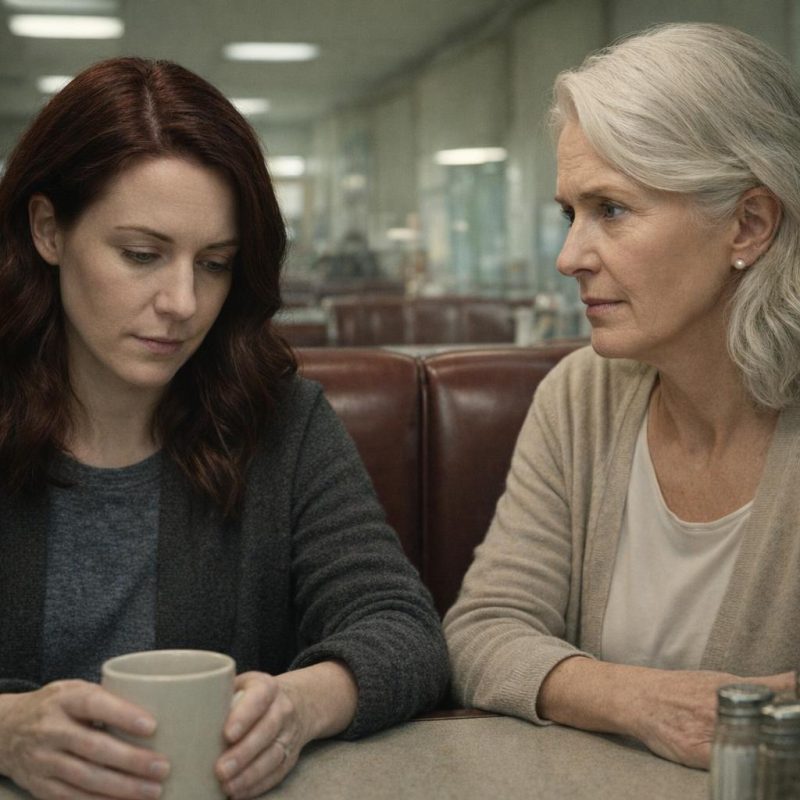 Image by RM AI
More Confused Than Ever
I sat in my car in the diner parking lot for a long time after Emily went back inside. The engine was off. I didn't move. She'd said it with such certainty — that Richard had done this before — and then she'd shut down the moment I asked her to explain what that meant. No names. No dates. No specifics I could hold onto or check. Just the accusation, hanging there between us like smoke. I drove home on autopilot, replaying the conversation in pieces. Part of me wanted to believe she was protecting me, that she'd stumbled onto something real and was scared for me in a way she didn't know how to say. Another part of me kept circling back to the fact that she'd given me nothing. No proof. No source. Just her certainty and her fear and the way she'd looked at me like I was already lost. I pulled into the driveway and sat there a little longer before going inside. Richard was in the living room reading, and he looked up and asked how it went. I said fine. I didn't know what else to say. Emily's words were still loud in my head, and the silence around them — the absence of anything solid to hold — felt heavier than the words themselves.
 Image by RM AI
Deciding to Investigate
I made a decision that night after Richard fell asleep. I lay there in the dark staring at the ceiling, and I thought about what I actually knew versus what I'd been told. Richard's explanation about Diane had been calm and detailed. Emily's accusations had been urgent and empty. Neither one of them had given me anything I could verify on my own. That was the problem. I was standing in the middle of two people I cared about, taking turns believing each of them, and it wasn't working. I needed facts. Not reassurances, not warnings — actual facts. I thought about what I knew of Richard's history: the town he'd lived in before, the neighborhood he'd described, the years he'd spent there with his late wife. There were people who would remember him. Neighbors. People who'd known him before I existed in his life. I could go there. I could ask questions without Richard knowing what I was looking for, without Emily knowing I was still trying to make up my own mind. It felt like a betrayal and a necessity at the same time. I pulled the blanket up and closed my eyes, and somewhere in the quiet of that room, I made my peace with the fact that I was going to have to find the truth myself.
 Image by RM AI
Planning the Trip
I spent two days looking up the town online — the neighborhood Richard had described, the street name he'd mentioned once in passing, the general area where he'd said he and his late wife had built their life. I found enough to know where to start. Then came the harder part. I told Richard over breakfast that I needed a few days away. I said everything that had happened — the photograph, the conversation with Emily, all of it — had left me needing space to think, and that I couldn't do that thinking here, in our house, with him in the next room. He put his coffee down. He looked at me for a moment without speaking, and I could see it cost him something. He said he understood, that he didn't want to make me feel trapped, that I should take whatever time I needed. He offered to stay at his brother's if that would be easier. I said no, I needed to be the one to go. I told him I'd be back in a few days. I packed a bag that evening while he sat quietly in the living room, and I felt the guilt of it settle into my shoulders with every item I folded. The next morning I kissed him goodbye at the door, and when I said I'd call when I arrived, I watched his face go through something I couldn't quite name.
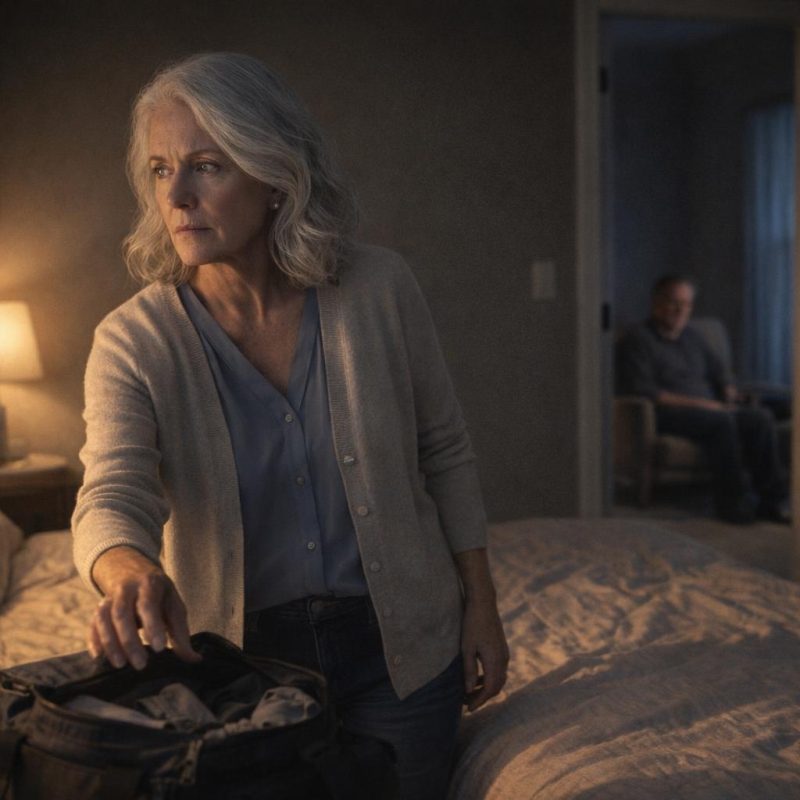 Image by RM AI
Arriving in Richard's Past
The drive took just under three hours. I'd printed out a map the old-fashioned way because I didn't want the route saved anywhere, which told me something about the state I was in. The town was smaller than I'd imagined — a main street with a hardware store and a diner, neighborhoods fanning out behind it in quiet grids. I found the street Richard had mentioned without much trouble and drove down it slowly, looking at the houses. One of them had been his. I wasn't certain which, but I had a number I'd found in an old property record, and when I matched it to the mailbox, I sat in the parked car for a long time just looking at it. It was an ordinary house. Pale yellow siding, a covered porch, a garden that someone was still tending. I thought about the life that had been lived there before I knew Richard existed. I thought about his late wife, about the years I had no access to, about all the things a person carries that never make it into conversation. I reminded myself why I'd come. I got out of the car, walked to the house next door, and knocked. After a moment, the door opened.
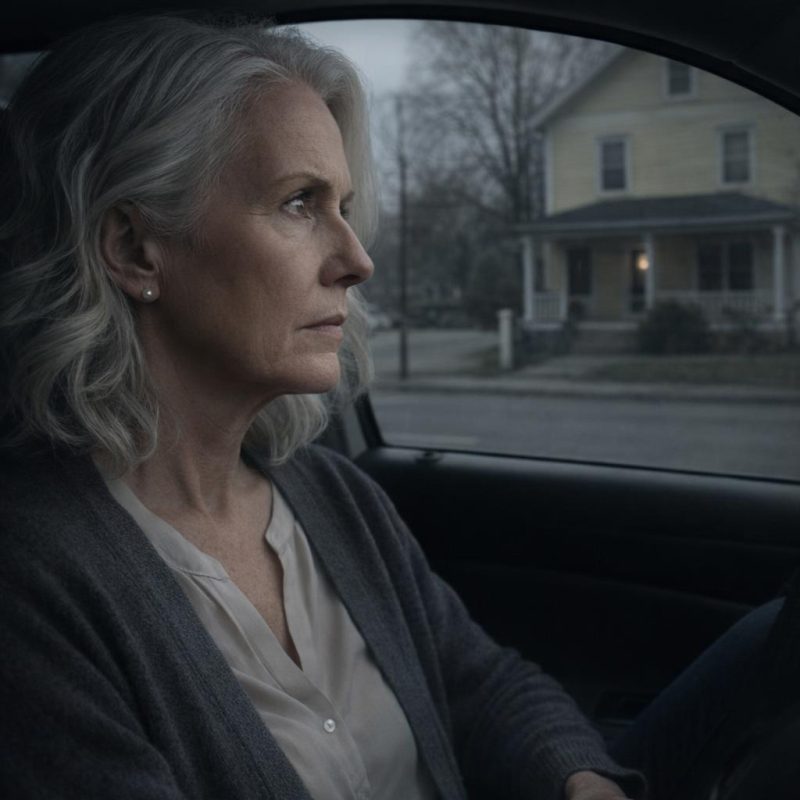 Image by RM AI
The First Neighbor's Story
An older woman answered the door — maybe mid-seventies, white hair pinned back, a dish towel still in her hands. I introduced myself as a friend of Richard's, said I was in the area and had always been curious about the neighborhood. It wasn't entirely a lie. She smiled before I even finished the sentence. She remembered Richard immediately, said his name like it was a pleasant thing to say. I asked if she'd known him well. She said well enough — well enough to know he was one of the good ones. She told me about his wife's illness, how it had gone on for years, how Richard had never once complained or asked for help unless he absolutely had to. She said she used to watch him walk to the pharmacy in the early mornings before his wife was awake, so she wouldn't worry about the cost of things. I stood on her porch and felt something loosen in my chest that I hadn't realized was clenched. She talked about him the way you talk about someone you genuinely miss having nearby. Then she looked at me with a small, certain smile and said he was simply the kindest man on the whole street.
 Image by RM AI
More Positive Memories
I knocked on four more doors that afternoon. Not everyone answered, but three did, and every single one of them remembered Richard. A man two houses down said Richard had organized a neighborhood cleanup the spring after his wife passed — said it seemed like Richard needed something to do with his hands, and that the whole block had shown up because of him. A woman across the street mentioned the community center, how Richard had volunteered there for a couple of years, helping coordinate meals for seniors who couldn't get out easily. She said he'd never made a big deal of it, just showed up every week. The last neighbor I spoke to was a younger woman, maybe early forties, who said she'd only moved in near the end of Richard's time on the street, but that he'd brought over a casserole the week she arrived and introduced himself without being asked. None of them had a single hard word to say. I thanked each of them and walked back to my car feeling lighter than I had in weeks. I sat behind the wheel for a moment, the late afternoon sun coming through the windshield, and let myself sit with the quiet possibility that Emily had simply been wrong.
 Image by RM AI
Stories That Don't Match
I'd booked a room at a small motel on the edge of town, nothing fancy, just a place to sit and think before the drive back. I spread my notes out on the bed and looked at them. On one side, I had everything the neighbors had told me — the pharmacy walks, the volunteer shifts, the casserole, the cleanup. On the other side, I had Emily's words, the ones she'd delivered with such certainty: that Richard was dangerous, that he was after something, that I was too close to see it. I tried to hold both things at once and couldn't. The people on that street had known Richard for years, had watched him through the hardest stretch of his life, and not one of them had a single reservation. But Emily wasn't a person who invented things out of nothing. She was my daughter. She'd been frightened, genuinely frightened, and I'd seen it in her face. I kept turning it over, looking for the place where the two pictures of the same man could possibly fit together. I couldn't find it. I turned off the lamp and lay in the dark, and the confusion settled over me like something with real weight.
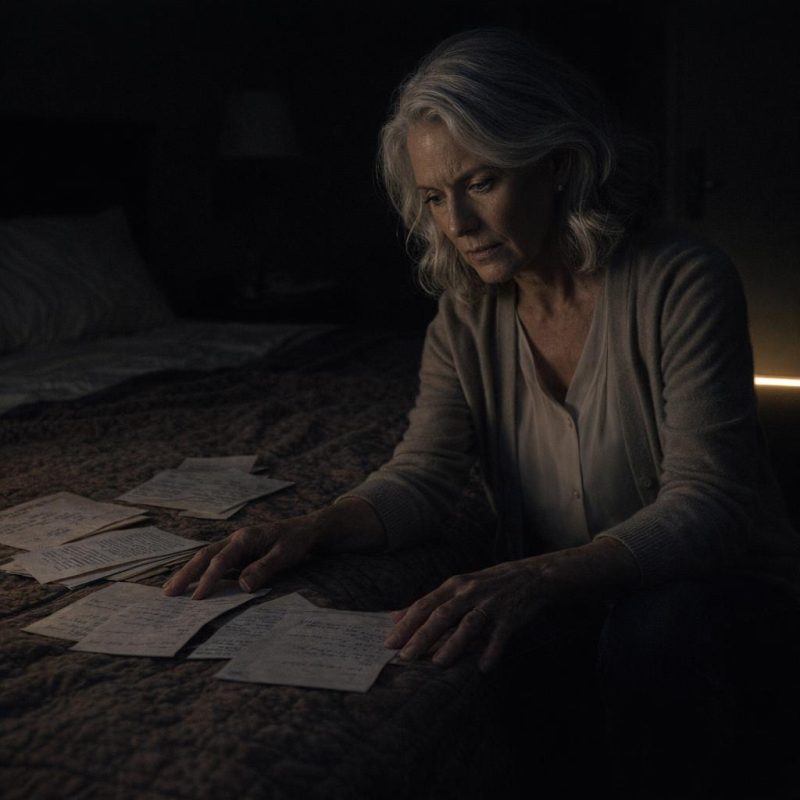 Image by RM AI
The County Records Office
The county records office was a low brick building just off the main road, the kind of place that smells like old paper and central air conditioning. I'd looked up the hours the night before and arrived right when they opened. The woman at the front desk was polite and efficient, and I explained that I was trying to locate any public documents associated with a name — Richard's full name — from roughly the past fifteen years. She didn't ask why. I suppose people come in with all kinds of reasons. She typed for a while, scrolled, typed again. I stood at the counter and told myself I was being thorough, not paranoid, that any reasonable person in my situation would want to know what was in the public record. I almost believed it. The clerk frowned slightly at her screen, not in an alarmed way, just the small focused frown of someone reading carefully. She said she'd found a few entries and asked if I wanted her to pull the physical file. I said yes. She disappeared through a door behind the desk, and a minute later she came back and set a manila folder on the counter — Richard's full name typed across the tab in plain black letters.
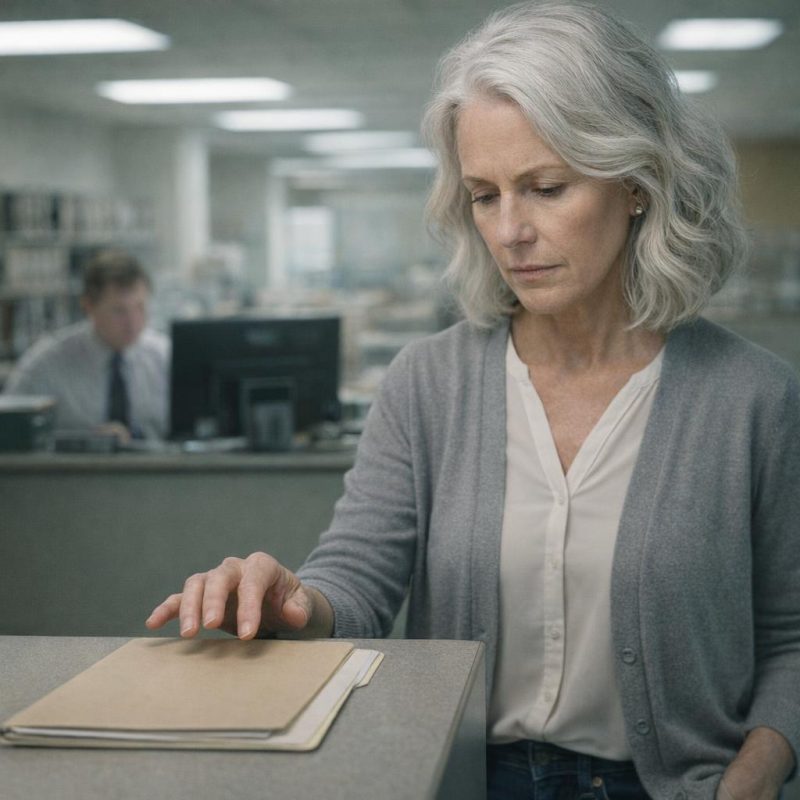 Image by RM AI
The Inheritance Dispute
The file wasn't thick, but it was enough. The clerk set it on the counter and stepped away to give me space, and I opened it with hands that weren't quite steady. The documents were legal filings — a civil case, several years old, involving the estate of a relative of Richard's who had died without a clear will. Richard's name appeared as a claimant. There were other names too, people I didn't recognize, and the language was the dense, dry kind that takes effort to parse. But the shape of it was clear enough: a dispute over what was owed, who had been promised what, accusations going back and forth between family members. It had gone on for over a year. I read through the summary pages twice. In the end, Richard had received nothing — the case had been decided against him, or settled in a way that left him with no share of the estate. I photographed each page carefully with my phone. What stayed with me wasn't the outcome. It was the fact that in a year of dating and several months of marriage, Richard had never once mentioned that any of this had happened.
 Image by RM AI
Driving Home in Silence
I was back on the highway by early afternoon, the file photographs sitting in my phone, the neighbors' voices still somewhere in my head. I tried to let the drive settle me the way long drives sometimes do, but it didn't work. Every time I reached for the comfort of what the neighbors had said — the pharmacy walks, the volunteer shifts, the casserole — the legal documents came right behind it. A man could be genuinely kind and still have things he kept hidden. I knew that. People compartmentalize. They protect themselves from their own embarrassing chapters. But I also knew that Richard and I had talked about our pasts, had sat at the kitchen table over coffee and traded the kinds of stories you only tell someone you're building a life with. He'd had the opportunity. More than once. And he hadn't said a word about any of it. I didn't know what that meant. I wasn't sure I was ready to find out. The miles went by and the light changed and I just drove, too tired to reach any conclusions, the questions sitting with me in the car like passengers I hadn't invited.
 Image by RM AI
Richard Waits
The house was lit when I pulled into the driveway, which meant Richard was still up. It was past nine. I sat in the car for a moment before going in, not sure what expression I was going to walk through the door wearing. He was in the living room when I entered, sitting in the armchair with a book open in his lap that he clearly hadn't been reading. He looked up the second I came in, and the relief on his face was immediate and unguarded — the kind you can't manufacture. He asked where I'd been, said he'd been worried, that I hadn't answered my phone. I told him I'd needed some time to think, that I'd driven out to clear my head. It wasn't a lie, exactly. He didn't push. He just nodded and said he was glad I was home safe, and something in the way he said it made the guilt move through me in a slow, uncomfortable wave. I set my bag down and said I was tired, that we'd talk tomorrow. He said okay. I went to the kitchen to get a glass of water and stood there in the quiet, the photographs still on my phone, the question I hadn't asked yet sitting somewhere just behind my sternum.
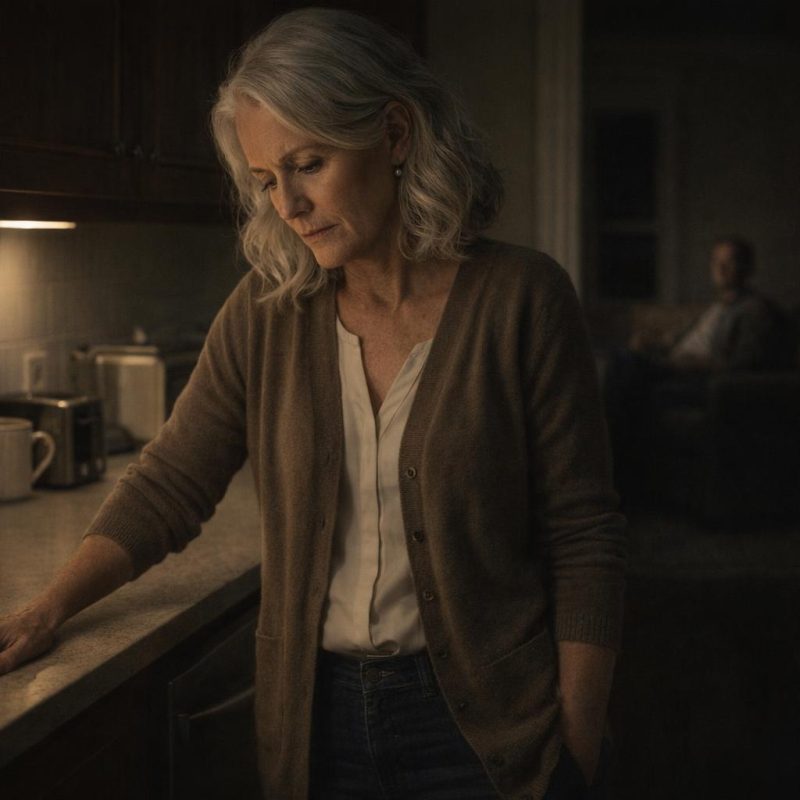 Image by RM AI
The Question Carol Can't Avoid
I waited until the next morning, when the coffee was made and the light was ordinary and there was no good reason to keep putting it off. I sat down across from Richard at the kitchen table and told him I needed to ask him something directly. He put his mug down and looked at me, and I pulled out my phone and set it between us with the photographs of the documents on the screen. I watched his face. He looked at the first image for a long moment without speaking. Then he said yes, he knew what it was. I asked him why he'd never told me. He was quiet for a moment, and then he said it was one of the ugliest periods of his life — that after his wife died, a branch of the family he'd barely been close to had contested the estate, dragged his name through things he was ashamed of, and that he'd come out of it with nothing except the wish to never think about it again. He said he hadn't told me because he'd wanted to leave it behind, not because he had anything to hide. I heard what he said. I believed, maybe, that he meant it. But he looked at me across the table and said quietly, "I should have told you. I know that."
 Image by RM AI
Trust Damaged
I kept telling myself it was reasonable. People carry old wounds. People don't volunteer every painful chapter of their past just because they fall in love. I understood that, in theory. But understanding something and feeling settled about it are two different things, and I couldn't get settled. Richard moved around the house that day like he was trying to give me space without actually leaving, and I appreciated the gesture even as it made me more anxious. He'd said he was ashamed. He'd said he wanted to leave it behind. I believed he meant those words when he said them. What I couldn't stop turning over was the question of what else he might have decided to leave behind without telling me. Not because I thought he was lying. But because I'd learned, in one morning, that there was a whole legal chapter of his life I hadn't known existed. And if there was one, there could be others. That night I lay in the dark listening to him breathe, and the question just sat there with me, quiet and stubborn, refusing to dissolve.
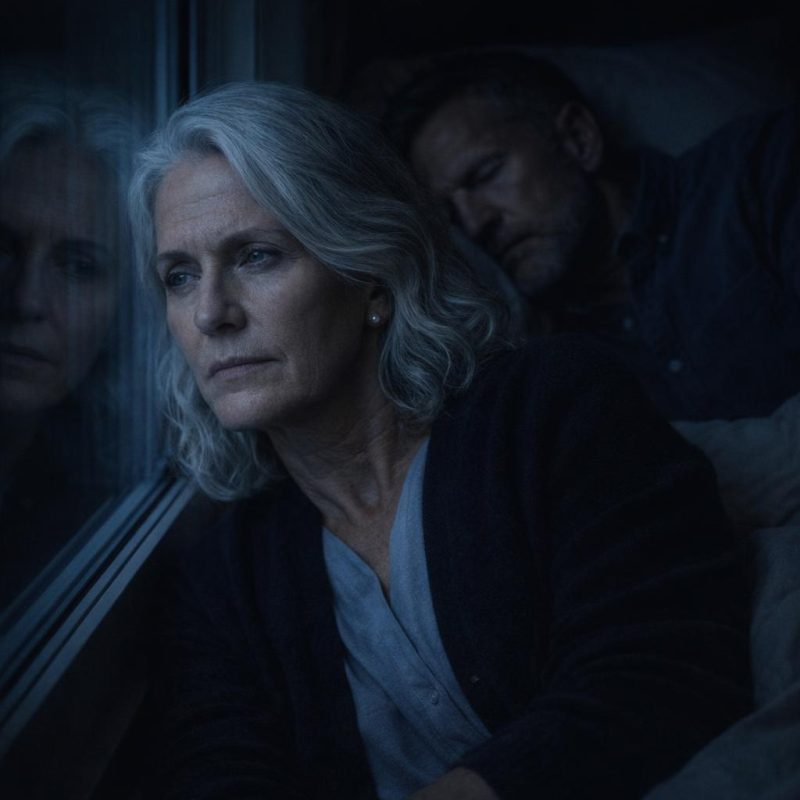 Image by RM AI
Emily Escalates
The call came on a Tuesday afternoon from a cousin I hadn't spoken to in almost two years. She opened with small talk, which should have been my first warning, because she never called for small talk. Then she asked, carefully, whether everything was all right at home. I said yes. There was a pause, and then she asked if Richard was — she searched for the word — if he was someone I felt safe with. I went very still. I asked her what she meant. She said she'd heard some things, that someone had reached out to her, and she just wanted to make sure I was okay. I pressed her, and she admitted that Emily had called her. Not just her, she thought — she'd heard Emily had been reaching out to others in the family too, warning them to be careful, suggesting they keep their distance from our house. Richard was in the next room. I don't know how much he heard, but when I looked up he was standing in the doorway, and the expression on his face told me he'd heard enough. I set the phone down after we said goodbye, and the quiet that settled over the house felt like something had permanently shifted inside it.
 Image by RM AI
The Grandchildren's Silence
I heard it secondhand, the way you hear the worst things — through someone who thought they were being kind by telling me. A family member mentioned, almost in passing, that Emily had told the children they weren't to bring up my name at home. Not that they couldn't see me, though that was already true. But that my name itself had become something to avoid, something that didn't belong in their daily life anymore. I sat with that for a long time before I could even process what it meant. My grandson was eight years old. My granddaughter was five. They were at an age where the world is shaped entirely by what the adults around them say and don't say. If my name disappeared from their house, I would start to disappear from their memory too — slowly, the way things do when no one mentions them. Richard tried to say something comforting that evening and I couldn't hear it. I just kept thinking about my grandson, about his face, about the way he used to run to the door when I arrived. A few days later, the same family member told me something else — that my grandson had asked his mother who I was.
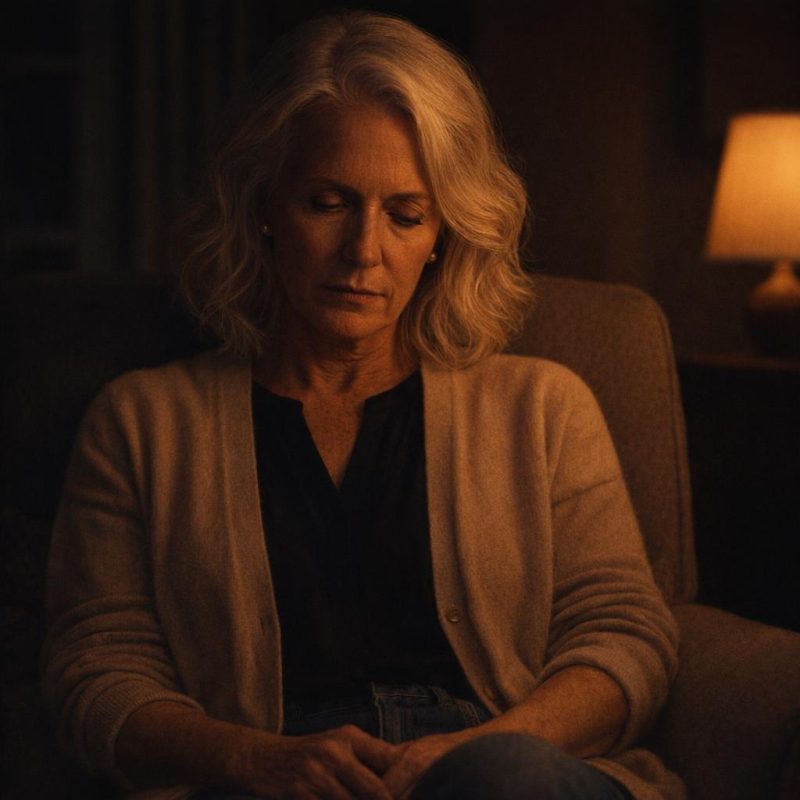 Image by RM AI
Richard's Admission
Richard asked me to sit down with him on a Sunday morning, and something in his voice made me put my coffee down and actually listen. He said he needed to tell me more than he had before. He talked about the months after his first wife died — how a branch of the family he'd trusted had turned on him, accused him of manipulating her in her final years, of positioning himself to benefit from her estate. He said the accusations had been ugly and public enough that people he'd known for decades had pulled away. He'd fought it, and he'd lost anyway, not the legal case exactly, but the relationships, the standing, the version of himself he'd been before it started. He said he came out of it with nothing — no inheritance, no vindication, just the exhaustion of having been dragged through something he hadn't deserved. When he finished talking, his voice had gone rough and his eyes were wet, and he looked at me like a man who had just handed over something he'd been carrying alone for a very long time. I felt the guilt move through me like a cold current. I still couldn't fully let go of my doubts. But I sat there watching his tears and felt ashamed of myself for adding to his pain.
 Image by RM AI
Isolation Deepens
The weeks after that conversation were the loneliest of my life, and I say that as someone who spent the first year after my divorce eating dinner alone at a kitchen table set for one. This was different. I had a husband in the house, and I still felt completely alone. I couldn't talk to Richard without the doubt creeping back in, and I couldn't talk to Emily because she wasn't speaking to me. Michael had made his position clear months ago — he wasn't getting involved, and I'd stopped expecting him to. My friends had been patient and kind in the early weeks, but I could feel them pulling back, not out of cruelty, just out of the ordinary limits of what people can hold for someone else's crisis. I'd stopped calling them because I had nothing new to say and I was tired of hearing my own voice go over the same ground. I sat in the living room one evening while Richard read in the other chair, and I looked around at the life I'd built and felt like a stranger in it. I thought about who I could call, who I could say the whole truth to without editing myself. There was no one.
 Image by RM AI
Emily's Campaign Continues
Word kept reaching me, the way it does in families — sideways, through people who weren't sure whether to say anything but said it anyway. An aunt had stopped returning my calls. A cousin who used to check in every few weeks had gone quiet. Another relative sent a brief, careful message saying she hoped things settled down soon, which told me she'd heard something without telling me what. Emily was still at it. I didn't know exactly what she was saying or to whom, but I could map the silence spreading outward from her like rings on water. Richard noticed too. He didn't say much about it, but I could see it in the way he'd go still sometimes when I mentioned a family name, waiting to hear whether that person had pulled away as well. He was patient in a way that cost him something — I could see the cost, even if he didn't name it. I tried once to think of a way to get ahead of it, to call people myself and offer some kind of explanation, but I didn't know what explanation to give. The divide kept widening, and I had no way to reach across it.
 Image by RM AI
The Unbearable Weight
There was a morning, maybe six weeks into all of it, when I woke up and couldn't find a reason to get out of bed right away. Not because I was sick. Just because the weight of everything had become physical somehow, like it had settled into my chest and my limbs overnight. I missed my grandchildren in a way that was almost unbearable — not a sad thought but an actual ache, the kind that catches you off guard when you see a child's drawing or hear a certain laugh from somewhere outside. I hadn't seen them in weeks. I didn't know what they'd been told, or what they were thinking, or whether they were asking about me. Richard brought me coffee that morning and sat on the edge of the bed and didn't say anything, which was the kindest thing he could have done. But his presence was also part of what had brought me here, and I couldn't unknot those two things. I had no proof of anything. I couldn't prove he was hiding something, and I couldn't prove he wasn't. I couldn't prove Emily was wrong, and I couldn't prove she was right. I just sat there holding the mug, wondering how much longer I could carry all of it.
 Image by RM AI
An Unexpected Visitor
Richard had gone out to run errands that afternoon, and I was grateful for the quiet. I'd been sitting at the kitchen table with a cup of tea I hadn't touched when the knock came — two firm raps, not the tentative kind. I wasn't expecting anyone. I went to the door and opened it to find a woman I had never seen before standing on my front step. She was in her late thirties, with dark hair pulled back and an expression that was trying hard to stay composed. She looked at me for a moment like she was making sure she had the right house. Then she said she was sorry to show up without calling, that she knew it was strange, but that she needed to speak with me. I asked her who she was. She took a breath, and said her name was Sarah — and that she was Richard's daughter.
 Image by RM AI
Sarah's Warning
I stepped back from the door and asked her to come in. My hands were steady but my mind wasn't. Sarah sat across from me at the kitchen table — the same table where I'd been sitting alone with my cold tea — and she didn't waste time. She told me she hadn't spoken to Richard in almost four years. That she had believed things about him that she now knew weren't true. Someone in the family had fed her stories, she said. Small things at first, then bigger ones. Things that made Richard sound careless, dishonest, even dangerous. She had believed every word because it came from someone she trusted. It wasn't until she started asking questions on her own — after a falling out with that same person — that she found out the stories didn't hold up. Dates were wrong. Events had been twisted. Some things had never happened at all. She said she had wasted years being furious at a man who hadn't done anything to deserve it. Her voice was quiet when she said it, and I could hear how much that cost her. Then she looked at me steadily and said she thought someone had done the same thing to my daughter. I didn't say anything for a long moment. The kitchen was very still, and something in my chest had gone soft in a way I hadn't expected.
 Image by RM AI
Following the Trail
We stayed at that table for a long time. Sarah asked if I had paper, and I found a notepad in the kitchen drawer. She suggested we write things down — not to draw conclusions, she said, just to look at what was actually there. I tried to remember when Emily's attitude toward Richard had first shifted. It hadn't been immediate. In the early months, Emily had been cautious but not hostile. There had been a dinner, maybe eight months before the wedding, where something felt different — a tightness in Emily's voice when she asked Richard questions, a look she exchanged with Robert that I hadn't known how to read at the time. I wrote it down. Sarah asked what kinds of concerns Emily had raised. I listed them as best I could: Richard's finances, his past, whether he had been honest with me about his first marriage. Sarah nodded slowly at each one, and I noticed her expression didn't change — like she had heard these before. She shared a little of her own experience then, the specific shape of the doubts that had been put in her head, and I found myself writing faster. I couldn't say yet what it all added up to. But sitting there with Sarah, working through it carefully, I felt less like I was drowning and more like I was finally standing on solid ground.
 Image by RM AI
Half-Truths and Misunderstandings
Richard came home while Sarah and I were still at the table, and I introduced them. The moment was awkward and tender at the same time — a father and daughter standing a few feet apart, neither one sure of the footing. They spoke quietly for a few minutes while I made coffee, and then the three of us sat down together. I had pulled up old text threads on my phone, going back almost two years. Sarah asked me to read out the ones where Emily had first mentioned concerns about Richard. As I read them aloud, something started to feel off. Emily had described a conversation with Richard a certain way — said he had been evasive about money, that he had changed the subject when she asked about his finances. But Richard was sitting right there, and when I read it to him, he shook his head. He remembered that conversation. He said he had answered her questions directly and that Emily had seemed satisfied at the time. I went back and looked at the original exchange between Emily and me. The wording Emily had used didn't match what I remembered her saying right after it happened. It was close — but not quite right. Sarah leaned over and pointed to a date on the screen. Then I scrolled further and found a separate thread I had almost forgotten — a string of messages between Emily and me where the story had shifted in a way I couldn't account for.
 Image by RM AI
The Unlikely Source
We spread everything across the table — the notepad, my phone, a few printed emails Sarah had brought with her. Sarah asked me to think about who had been present at the moments when Emily's doubts seemed to sharpen. I went back through it slowly. The dinner where Emily's tone had changed — Frank had been there. The phone call where Emily first used the word dangerous in connection with Richard — she had mentioned speaking with Frank earlier that day. The afternoon Emily had shown up at my door with a list of financial questions she wanted me to ask Richard — I remembered now that she had come straight from Sunday lunch at Frank and his wife's house. I hadn't thought anything of it at the time. Frank had always been polite to me, a little formal, but never unkind. He had expressed some reservations about the remarriage early on — gently, the way someone might if they were simply being careful. Richard, when I asked him, said Frank had reached out to him once, not long after we got engaged, asking detailed questions about his pension and whether he had a will. Richard had thought it was just a protective father-in-law being thorough. I had thought so too. But now, looking at the notepad, Frank's name appeared at the edge of nearly every moment I had marked.
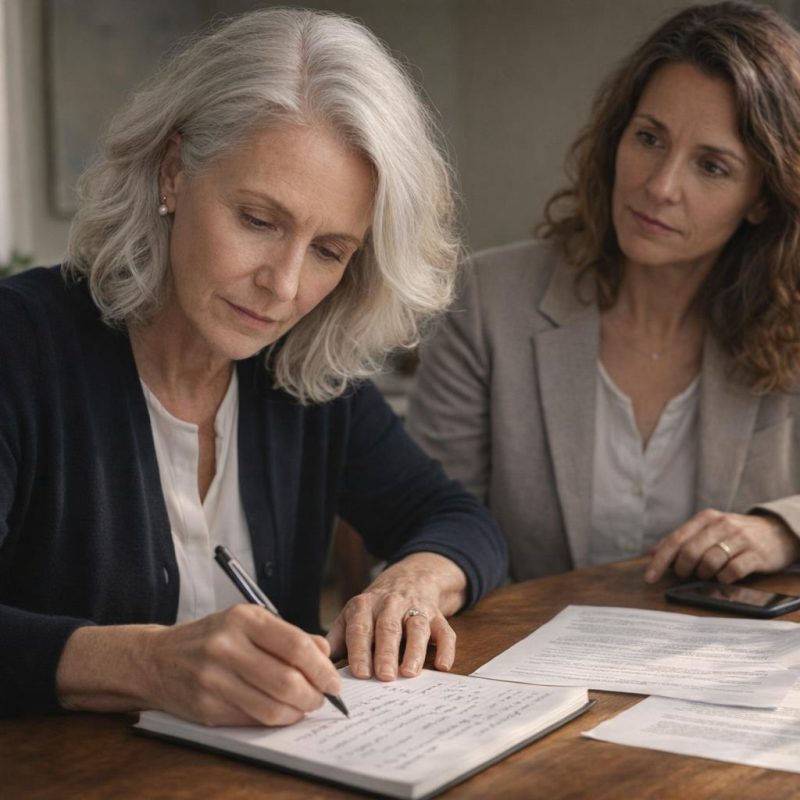 Image by RM AI
The Inheritance Scheme
Sarah had kept some of the documents Frank had shared with Emily — Emily had forwarded them to Robert, and Robert had left them in a shared folder Sarah still had access to. We went through them together. There were printouts about inheritance law, about how remarriage could affect estate distribution, about what happened to assets when a surviving spouse remarried without a prenuptial agreement. They were real documents, technically accurate, but they had been selected and arranged to tell a specific story — that Richard was a financial threat to Emily's children. Frank had been building this case for a long time. Richard sat beside me and didn't say a word as I read through page after page. Then Sarah opened her laptop and showed me an email thread she had found in that same folder. Frank had been corresponding with someone — a name I didn't recognize, but the signature line identified him as an estate attorney. The emails were dated three years back. Three years. Richard and I hadn't even met yet. Frank had been asking about Carol's estate — my estate — and what options existed to protect a son's inheritance if a widowed parent remarried. I read the opening line of that email twice, then a third time, and my hands went very still on the table.
 Image by RM AI
The Full Picture
Sarah printed the timeline we had built and laid it flat on the table. It ran almost four years. Frank had started asking questions about my finances not long after my first husband died — before Richard, before any remarriage was even a possibility. He had introduced the idea of risk to Emily in small doses: a comment here, an article there, a gentle question about whether I had updated my will. By the time Richard appeared in my life, Emily had already been primed to see him as a threat. Every innocent thing Richard did had a ready-made frame waiting for it. A question about our travel plans became evidence he was after my money. A conversation about combining finances became proof he was trying to take control. Frank had fed Emily just enough to keep her frightened without ever saying anything she could directly challenge. Richard sat with his hands folded on the table, looking at the pages, and I watched his jaw tighten once and then go still. Sarah pointed to a cluster of dates in the middle of the timeline — the months just before Emily delivered her ultimatum — and I could see how the pressure had been turned up deliberately in that window. Frank had known exactly when Emily would be most afraid for her children. I sat there looking at four years of careful, patient work laid out in front of me, and I couldn't find a single gap in it.
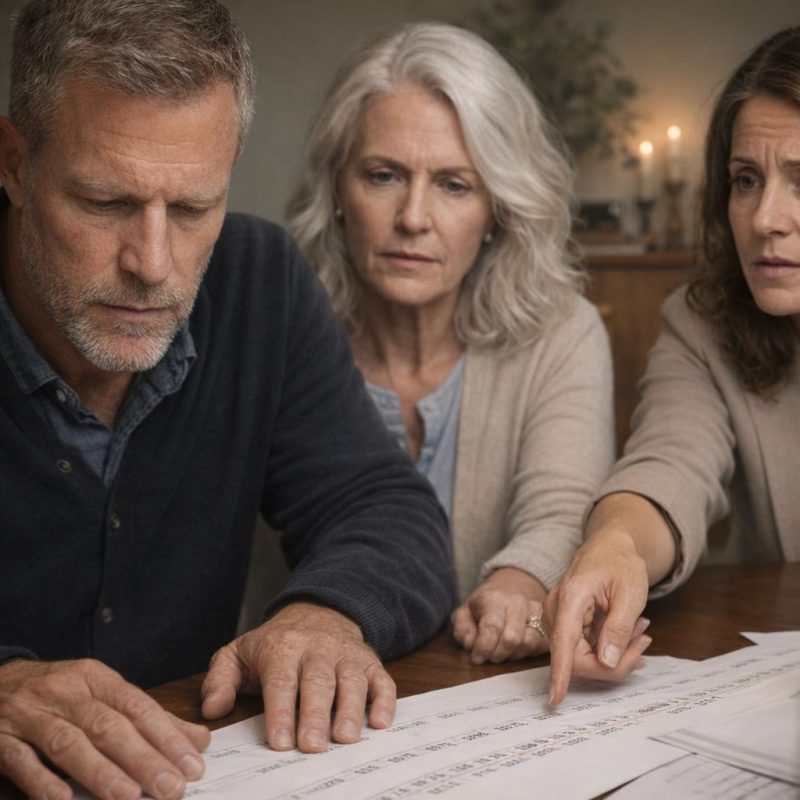 Image by RM AI
Richard Vindicated
Sarah stepped outside to make a phone call, and Richard and I were alone for the first time since the morning. I turned to him and I didn't know how to start, so I just said it plainly: I was sorry. I told him I had doubted him. That there had been weeks — more than weeks — when I had looked at him and wondered if Emily was right. He didn't flinch. He said he knew. He said he had watched me pull back and had understood why, even when it hurt. I told him that wasn't good enough, that he deserved better than a wife who let other people's fears become her own. He reached over and took my hand and said that I had been trying to protect myself, and that he had never once blamed me for that. He said the hardest part hadn't been the accusations — it had been watching me carry the weight of them alone. I didn't cry, but it was close. I thought about all the evenings I had been distant, all the questions I had asked with an edge in my voice, all the small ways I had kept a door between us. He had stayed through all of it. He had been patient in a way I wasn't sure I deserved. We sat there together in the quiet kitchen, and the weight of those months settled over me like something I would carry for a long time.
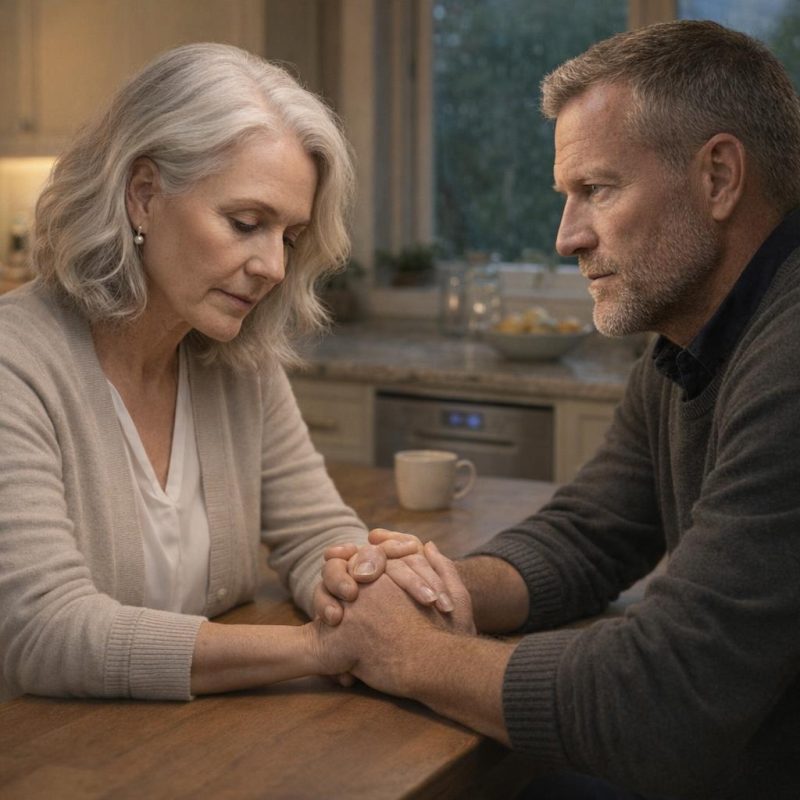 Image by RM AI
Emily's Innocence
When Sarah came back inside, the three of us sat quietly for a while. I kept thinking about Emily — not with anger anymore, but with something that ached differently. Sarah said it gently: Emily had done exactly what Sarah herself had done. She had taken in information from someone she trusted as family, someone who had been in her life for years, and she had believed it because she loved her children and the fear had felt real. That was the part I kept coming back to. Emily's fear had been real. The sleepless nights, the ultimatum, the months of silence — none of that had been performance. She had genuinely believed she was standing between her children and something dangerous. Frank had given her just enough to make the danger feel concrete. Richard said it quietly, almost to himself: Emily had been trying to protect her family. That was all she had ever been doing. I thought about my daughter's face the last time I had seen her — the tension in her jaw, the way she had held herself like someone bracing for impact. She hadn't been cruel. She had been terrified. And she had been carrying that terror alone, fed by someone she had no reason to doubt. The heartbreak of it settled into me slowly, the way cold does — not all at once, but deep.
 Image by RM AI
Preparing to Confront Emily
We spread everything across the kitchen table — the printed emails, the financial documents, the timeline Sarah had helped me piece together. Looking at it all laid out like that made my stomach turn. It was so clear, so methodical, and I kept thinking about how long Emily had been living inside a fear that someone else had built for her. Sarah organized the pages into a folder, putting the most damning evidence on top — the attorney correspondence, the dates that proved Frank had been moving pieces long before Richard ever walked into my life. Richard sat across from me and said quietly that I didn't have to do this alone, that he would be right there however I needed him. I told him I had to try. I had to look my daughter in the eye and show her what had actually happened, even if she threw it back at me. The thought of her refusing to listen made my chest tight in a way I hadn't felt since the night she first delivered that ultimatum. Sarah squeezed my hand and said Emily deserved the chance to know the truth, whatever she chose to do with it. I nodded. I picked up my phone. My hands were steadier than I expected when I pressed Emily's name and listened to it ring for the first time in months.
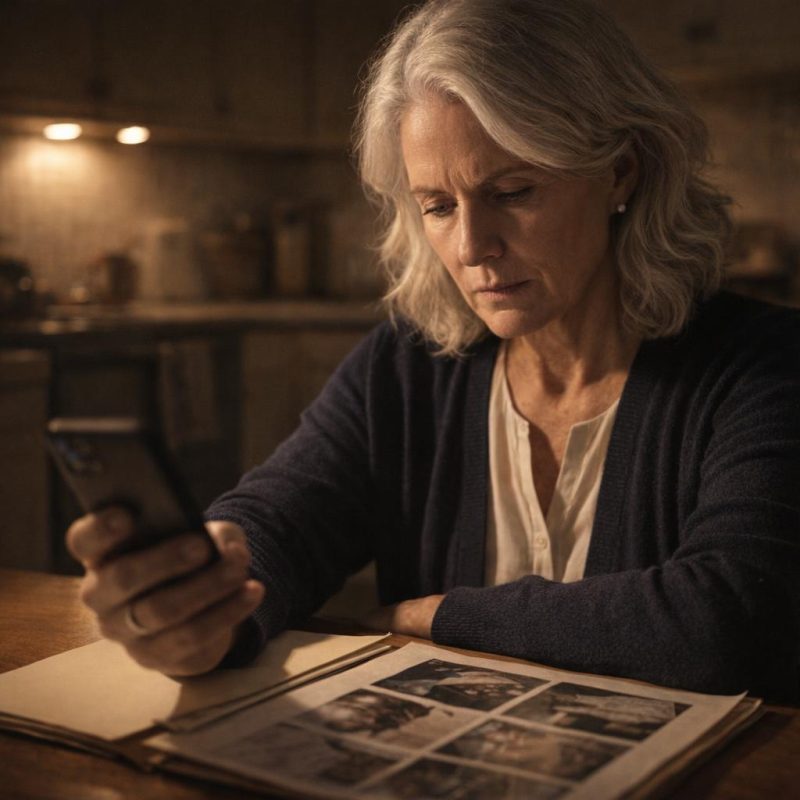 Image by RM AI
Emily Refuses to Listen
We met at a coffee shop halfway between our houses — neutral ground, I had thought, as if geography could soften what I was about to say. Emily was already there when Sarah and I arrived, sitting with her hands wrapped around a mug, her jaw set in that way I recognized from when she was a teenager bracing for a fight. I slid the folder across the table and asked her to just look. She did look — I'll give her that. She turned the pages slowly, her eyes moving across the dates and the attorney's name and the correspondence that predated Richard by years. Then she closed the folder and pushed it back toward me. She said I was making excuses. She said Frank had been family for over a decade and that a few printed pages didn't change what she knew in her gut. Sarah tried to speak, told Emily she had lived through her own version of Frank's interference, but Emily cut her off. She said it was convenient that Richard's own daughter had shown up to defend him. She looked at me then, her eyes hard and wet at the same time, and said I had chosen Richard over my own daughter. Her voice was flat and certain, and the folder sat untouched between us on the table.
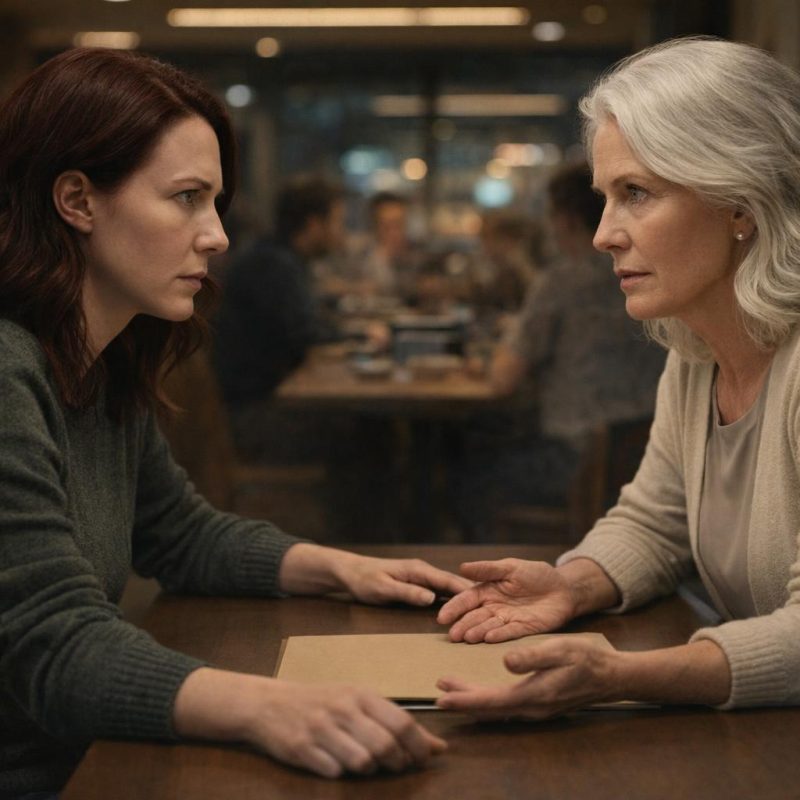 Image by RM AI
The Worst Argument
Sarah stepped outside to give us space, and that was when it got worse. Emily's voice rose in a way I hadn't heard since she was a teenager, raw and cracking at the edges. She said I had let a man I'd known for barely two years dismantle everything she had trusted about me. I told her Frank had been feeding her lies, that I had the proof right there, that I needed her to hear me. She said she didn't want to hear it. She said I had missed her son's birthday and her daughter's first day of school and that I had chosen that over them — over my own grandchildren. Every word landed somewhere specific, somewhere she knew it would. I kept my voice as steady as I could and told her I hadn't chosen anything, that I had been trying to protect our family from someone who was using her love for her children against her. She laughed — not a warm laugh — and said that was exactly the kind of thing someone said when they had nothing real left to offer. Then she picked up her bag and told me she would never forgive me for what I had done to this family. The door closed behind her. The coffee shop noise carried on around me, indifferent, and I sat in the silence she had left behind.
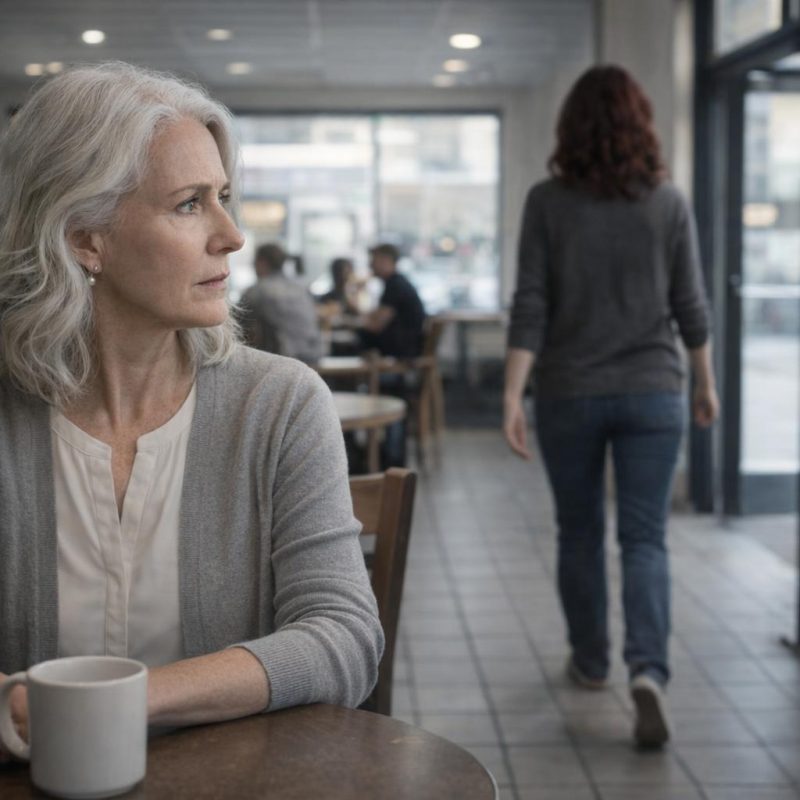 Image by RM AI
Waiting in Silence
Three weeks passed. Then four. I kept my phone on the table beside me at meals, face up, volume on. Richard never said anything about it. He just quietly refilled my coffee and sat with me through the evenings when I couldn't find anything to say. Sarah called every few days, checking in, keeping her voice light in a way that told me she was worried. I thought about my grandson's laugh, the way he used to run to the door when I arrived. I thought about my granddaughter's curls and the way she smelled like baby shampoo even though she was well past the baby stage. I had missed so much already. The thought of missing more felt like something I couldn't carry and couldn't put down. I didn't call Emily. I had promised myself I wouldn't — that I had said everything I could say and that pushing harder would only close the door further. But the not-calling was its own kind of weight. Richard told me one night that Emily was a good mother, and that good mothers eventually followed the truth wherever it led, even when it was painful. I wanted to believe him. Some mornings I almost did. The days were very quiet, and the quiet had a particular quality to it — not peaceful, just waiting.
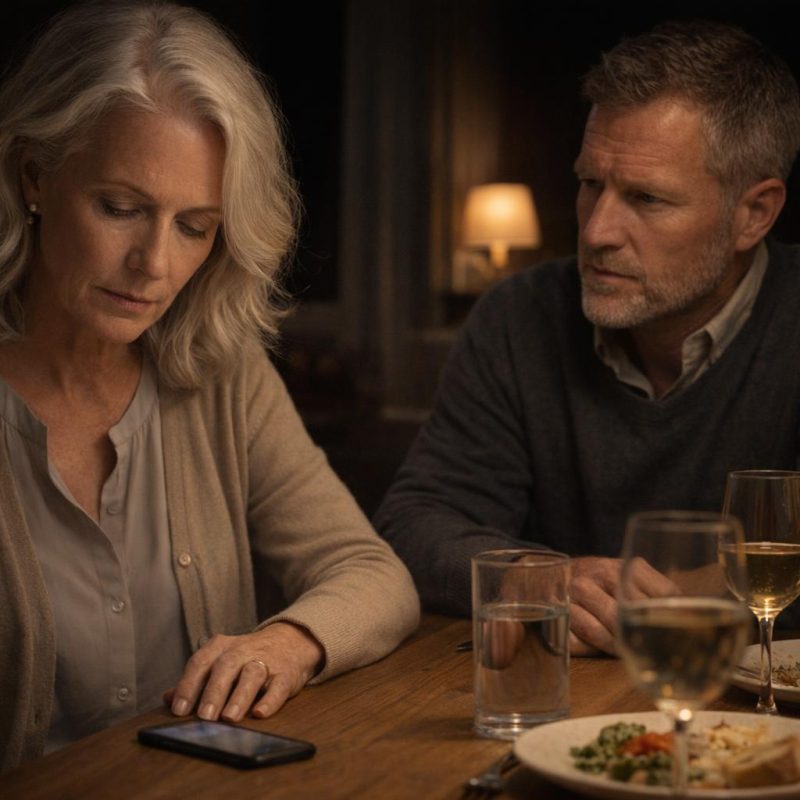 Image by RM AI
Emily Investigates
Sarah called on a Tuesday afternoon, and I could hear something different in her voice before she even said anything — a careful brightness, like she was carrying something fragile. She told me she had heard from a mutual friend of hers and Emily's, someone who had run into Emily at the school pickup line. Emily had been asking questions. Not about Richard, not about me — about Frank. She had been going back through things, checking dates, asking Robert about conversations she had previously taken at face value. Sarah said she didn't know how far Emily had gotten or what she had found, but the fact that she was looking at all felt significant. I sat down at the kitchen table and pressed my hand flat against the wood, just to feel something solid. Richard was in the doorway and I looked at him and he shook his head gently, a small warning not to build too much on it yet. He was right. I knew he was right. Emily could investigate and still decide the evidence wasn't enough. She could find the same documents I had shown her and read them differently. I had been here before — the edge of hope — and I knew how far the drop was if it didn't hold. But something had shifted in me anyway, something small and stubborn, and I let it stay.
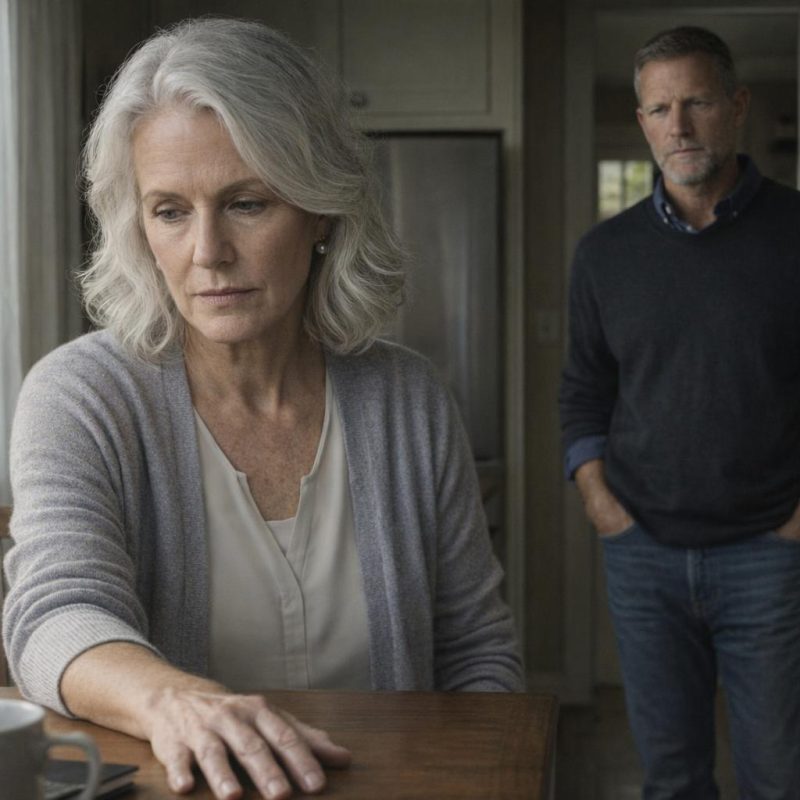 Image by RM AI
The Attorney Conversation
Richard and I were sitting in the living room that evening when he mentioned, almost offhandedly, that he hoped Emily had found the attorney correspondence — the early letters, the ones with the dates that couldn't be explained away. I told him those were the ones I kept coming back to myself. There was a conversation in that file, a documented exchange between Frank and an estate attorney, that had taken place nearly three years before Richard and I had even been introduced. Frank had been asking about spousal inheritance rights, about how a new marriage could affect an existing estate plan. Three years. Emily had grown up watching Frank sit at holiday tables and offer advice and call himself family, and all that time he had been thinking about what I owned. I thought about Emily reading that document for the first time — really reading it, without me in the room to make her feel defensive — and I wondered if it had the same effect on her that it had on me, that cold, slow settling of something you can't un-know. Richard had gone to the kitchen to make tea when my phone lit up on the cushion beside me. It was a text from Emily. Four words: *Can we talk soon?*
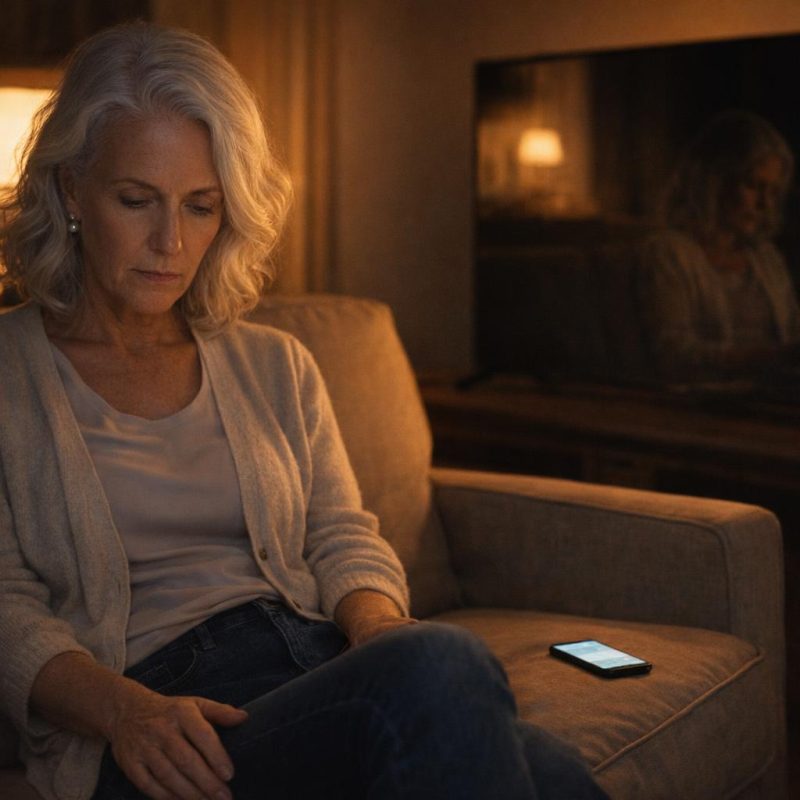 Image by RM AI
Emily's Breakdown
She was on my porch the next morning before I had finished my first cup of coffee. I opened the door and she was standing there with her eyes already red, her arms crossed tight over her chest the way she held herself when she was trying not to fall apart. I stepped back and she came inside and then she just — stopped holding it together. She said she was sorry. She said it over and over, in between the kind of crying that doesn't have any dignity to it, the kind that comes from somewhere deep and long-held. She told me she had found the attorney letters, that she had sat with them for two days before she could even call Robert, that she had gone back through every conversation with Frank and felt sick at how easily she had believed him. She said she had let fear make her cruel to the one person who had never given her a reason to doubt. Richard came in from the kitchen, took one look at us, and quietly excused himself to the backyard. Emily watched him go and then looked at me and said she had been so wrong about him, about all of it. Her face was open in a way I hadn't seen in years — no jaw tension, no bracing — just her, undone and honest, asking me with her eyes if there was anything left to come back to.
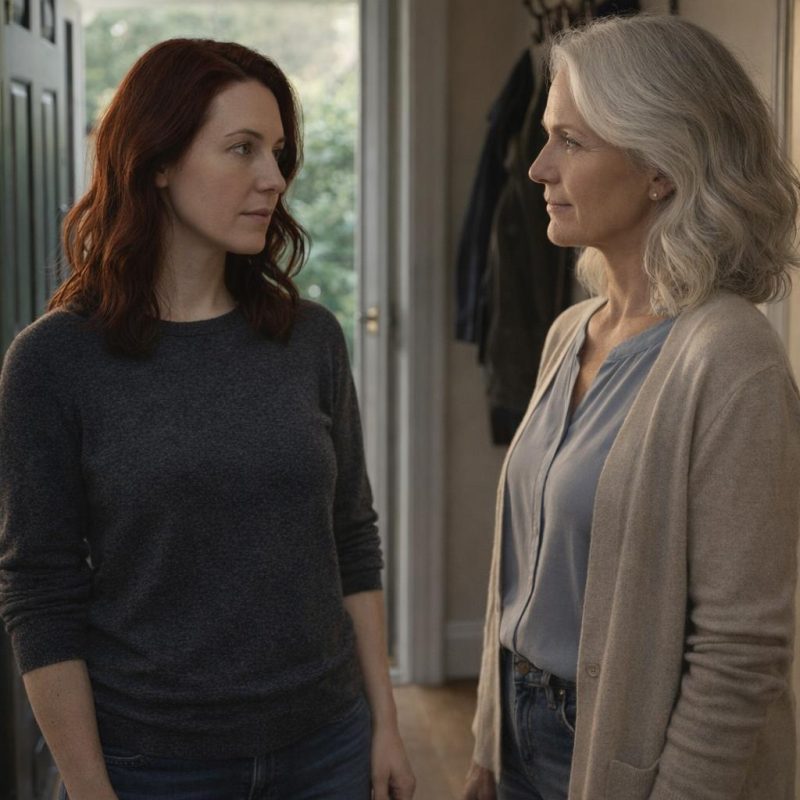 Image by RM AI
The Reunion
We held each other for a long time. I told her I forgave her — not because the hurt wasn't real, but because she was my daughter and I had never stopped wanting her back. She pulled away and wiped her face and said there was something else, that she had brought someone with her, two someones. She had left them in the car because she hadn't been sure I would want to see her, let alone them. I told her to go get them. She went out the front door and I stood in the hallway, my hand on the wall, trying to breathe evenly. Richard appeared at the end of the hall and looked at me with those quiet eyes of his, then nodded once and slipped out the back without a word, giving us what we needed. I heard the car doors. I heard small voices. I heard feet on the porch steps — one set heavier, one set quick and light. Emily pushed the front door open, and there they were, my grandson and my granddaughter, standing in the doorway with their eyes wide and uncertain, looking at me like they weren't sure if they were allowed to run.
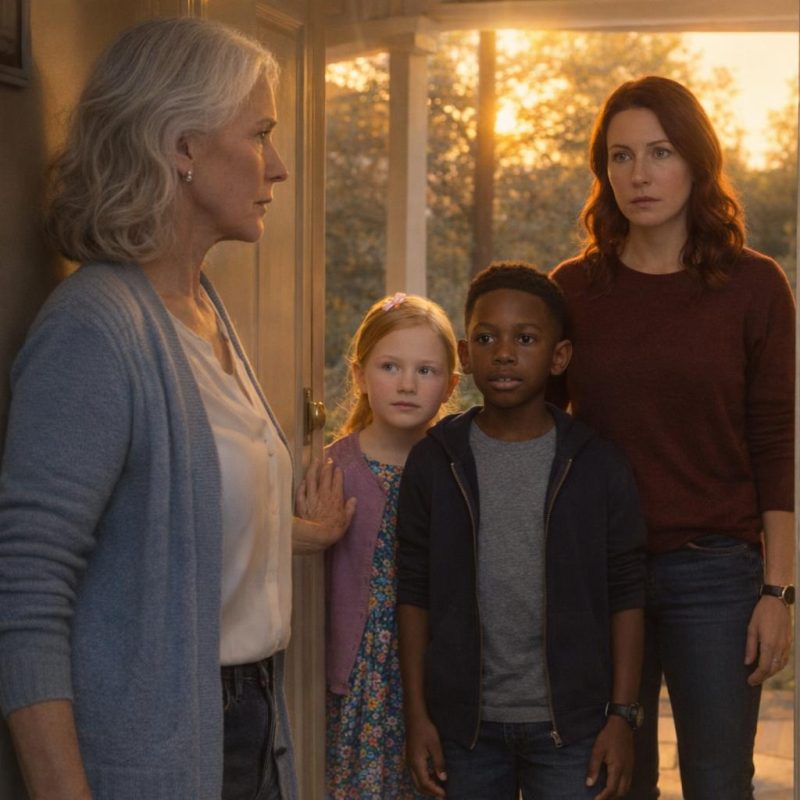 Image by RM AI
Richard's Grace
I didn't have to say a word. My grandson took one look at me and ran, and I caught him and held on like I was afraid he'd disappear. My granddaughter was slower, more cautious, but she came too, and I buried my face in her curls and just breathed. Emily stood in the doorway watching us, and I could see it on her face — the weight of everything she'd cost us both. We stayed like that for a while, the three of us tangled up on the hallway floor, until I heard the back door open. Richard came in quietly, the way he always did, like he was trying not to disturb anything good. He stopped when he saw us. Emily looked up and saw him, and I watched something move across her face — shame, maybe, or the beginning of something softer. Richard smiled at her. Not a careful smile, not a polite one. Just warm and easy, like she was someone he was glad to see. He crouched down and asked my grandson if he remembered him, and my grandson said yes and showed him a loose tooth. Emily said, quietly, that she was sorry. Richard said he understood she had been trying to protect her children. Then he sat down on the floor with the rest of us, and that was that. His eyes found mine across the room, and the corners of his mouth turned up — gentle and unhurried, asking for nothing.
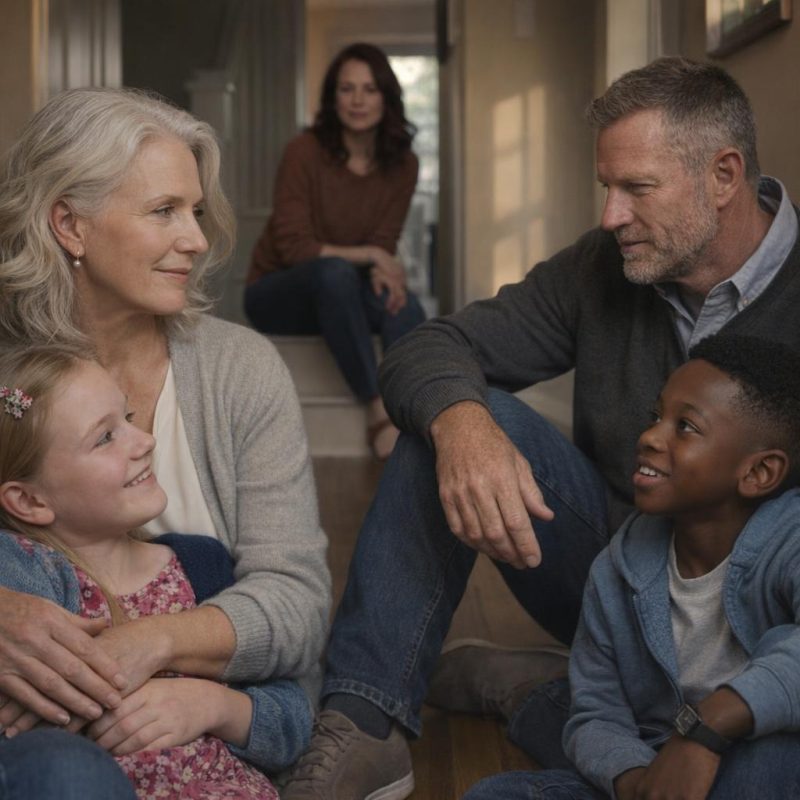 Image by RM AI
Slow Healing
The months that followed weren't easy, but they were real. Richard and Emily didn't become close overnight — that would have been too neat, too convenient. What they did was talk, honestly and sometimes uncomfortably, about what had happened and why. Emily admitted she had been fed fear and had swallowed it whole. Richard told her he didn't blame her for protecting her family. It wasn't a single conversation that fixed things. It was a dozen small ones, over dinners and phone calls and one long afternoon on my back porch when the kids were running through the sprinkler and nobody was pretending anymore. Michael came back around too. He showed up one Saturday with coffee and an apology that was short and genuine — he said he should have been braver, and I told him I was just glad he was there. My grandchildren stopped looking uncertain when they walked through my door. My granddaughter started leaving drawings on my refrigerator. My grandson asked Richard to help him with a school project about bridges, and Richard spent two hours at the kitchen table with him, completely absorbed. I watched all of it and tried not to hold it too tightly. Trust, I was learning, doesn't announce itself. It just quietly shows up one day and starts making itself at home.
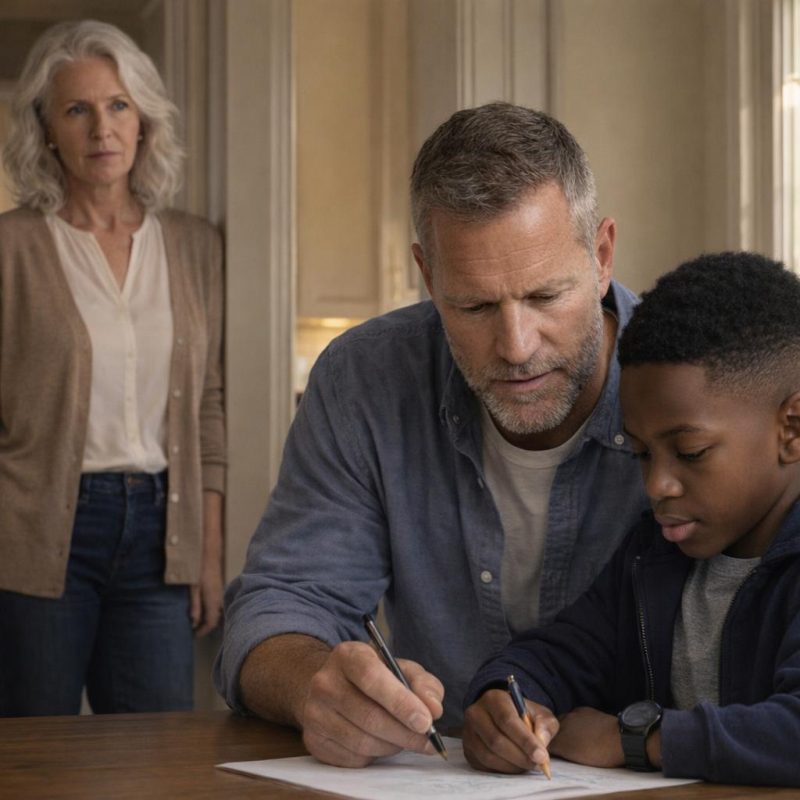 Image by RM AI
Frank's Isolation
Frank didn't go quietly, but he did go. It started with Robert. Once Robert understood what his father had done — the inheritance threats, the whisper campaign against Richard, the way Frank had used Emily's love for her children as a lever — something shifted in him that I don't think ever fully shifted back. He confronted Frank directly, and Frank did what Frank always did: he said he had been protecting the family, that no one appreciated what he'd sacrificed, that they would all understand someday. But the story didn't hold. Other relatives started coming forward with their own versions of Frank's interference — a cousin whose business decision had been quietly sabotaged, an aunt who had been turned against her own son over a fabricated slight. The pattern was older and wider than any of us had known. Emily confronted him too, and I heard it was not a gentle conversation. Frank tried the same justifications, and Emily, who had spent months rebuilding what his manipulation had cost her, was not moved. One by one, people stopped calling. Stopped inviting him. Robert still saw his father occasionally, out of obligation more than warmth, and I didn't judge him for it — that's a complicated grief, loving someone who caused harm. But Frank's world had grown very small, and somewhere in the quiet of my own life, I found I could sit with that without any satisfaction, just a kind of tired, settled peace.
 Image by RM AI
The Choice That Saved Us
Looking back, the hardest part was never the choice between Richard and Emily. People kept framing it that way — as if I had to pick a side, as if love were a finite thing that had to be divided. The hardest part was refusing to make that choice before I knew what was actually true. It would have been so much easier to give in. To let Emily's fear become my fear, to step back from Richard to keep the peace, to tell myself I was being a good mother. I almost did it. There were nights I came very close. But something in me kept asking why, kept pulling at the threads, kept insisting that the people I loved deserved better than a decision made in panic. That stubbornness — I used to think of it as a flaw — turned out to be the thing that saved us. Richard and I were stronger for having been tested. Emily and I were more honest with each other than we had ever been. My grandchildren knew my kitchen, my voice, the way I laughed at my own jokes. Michael was back at the table. None of it was perfect. Families aren't. But we were together, and we had gotten there by choosing truth over the easier story, and that felt like something worth holding onto.
 Image by RM AI
KEEP ON READING
The Deadly Beer Flood That Sounds Too Strange To Be…
en.wikipedia.org on GoogleOn the afternoon of October 17, 1814, a…
By Cameron Dick Jun 25, 2026
The Pope Whose Corpse Was Put On Trial
Cavallieri, 1588 on WikimediaIn January 897, a dead man was…
By Cameron Dick Jun 25, 2026
The History of Training Circus Animals
Svetlana Zhigulskiy on UnsplashThe history of training circus animals goes…
By Elizabeth Graham Jun 25, 2026
20 Royal Heirs Raised By People Who Weren’t Their Parents
Definitely Not The Ordinary Family Life. Being a royal child…
By Elizabeth Graham Jun 25, 2026
The Man Who Predicted the Titanic Sinking 14 Years Before…
Unknown authorUnknown author on WikimediaYou have likely heard countless fascinating…
By Sara Springsteen Jun 25, 2026
How the Little Ice Age Doomed Greenland's Vikings
Internet Archive Book Images on WikimediaThe Norse settlers of Greenland…
By Emilie Richardson-Dupuis Jun 25, 2026