

I Spent 33 Years Being the Company's Most Loyal Employee—Then They Tried Use It Against Me
I Spent 33 Years Being the Company's Most Loyal Employee—Then They Tried Use It Against Me
Thirty-Three Years and Counting
Fourteen months. That's what I had left when I finally let myself count. Thirty-three years at the same company — through two mergers, three rounds of layoffs, five different supervisors, and one particularly brutal budget crisis that had half the floor convinced we were all done — and I was still there, still at my desk, still doing the work. I started fresh out of college, twenty-eight years old with a business degree and a lot of nervous energy, and somewhere along the way the nervous energy turned into something steadier. Something I was actually proud of. People at the company knew my name not because I was loud or political about it, but because when something needed to be done right, I was the one who did it. I never called in sick unless I was genuinely sick. I never let a deadline slip if I could help it. I built a reputation the slow, unglamorous way — one accurate report at a time, one problem quietly solved before it became anyone else's headache. Fourteen months felt close enough to touch. I'd sit at my desk some mornings and just let myself feel it — the finish line finally visible after all those years of running. I wasn't bitter about the time it had taken. I was just ready.
 Image by RM AI
The Woman Who Kept the Records
If you'd asked anyone on that floor who kept the most detailed records, they would have said my name without hesitating. I had a system — a personal notebook I kept separate from the official files, where I logged every significant decision, every vendor change, every discrepancy I caught and corrected. Not because anyone asked me to. Because I'd learned early on that institutional memory lives in people, not servers, and people leave. I'd seen too many situations where something went sideways and nobody could reconstruct what had actually happened or why. I didn't want to be part of that problem. Over the years I'd trained probably forty or fifty employees — some of them now in management positions — and I always told them the same thing: document everything, fix the small problems before they become big ones, and never let your ego get in the way of asking a question. I caught a misfiled vendor contract once that would have cost the company a significant penalty if it had gone unnoticed. Nobody made a big deal of it. That was fine with me. I wasn't doing it for the recognition. I was doing it because it was right. So when a woman I'd trained nearly eight years earlier stopped by my desk one afternoon, eyes a little glassy, and said she just wanted to thank me for teaching her how to actually do the job — I didn't know what to say. Then she handed me a card, smiled, and walked away.
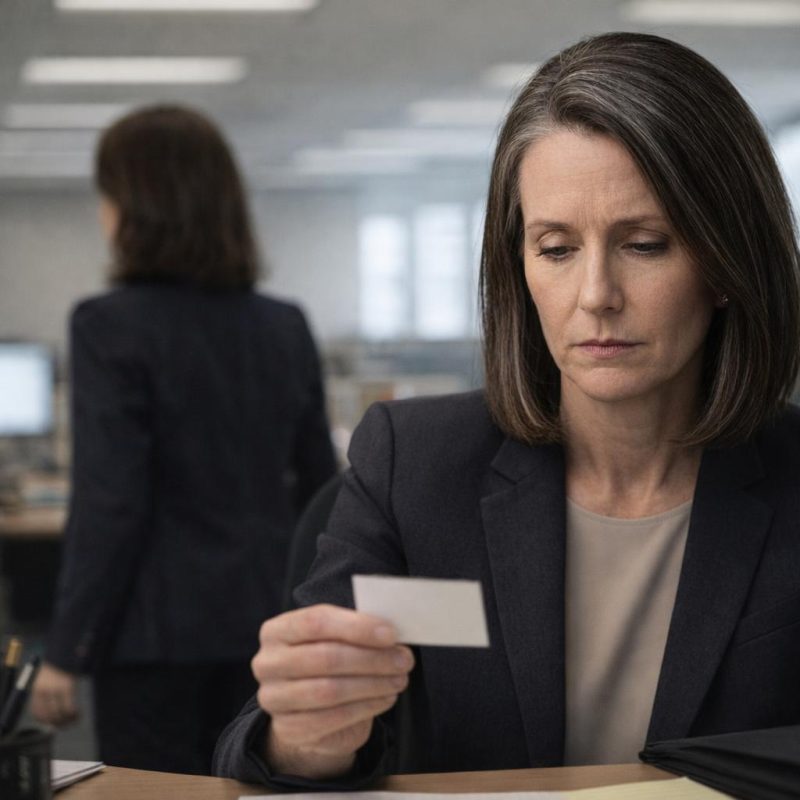 Image by RM AI
The Road Trip We Never Took
My husband Frank used to say we'd take the trip when I retired. The Pacific Coast Highway, all the way down from Oregon — no schedule, no agenda, just the two of us and whatever we felt like stopping to look at. We talked about it for years. We'd pull up photos on the laptop after dinner and argue pleasantly about which towns were worth an overnight and which ones we could drive through. He had a whole list saved in a folder he called 'Someday.' He passed four years before I was set to retire, and for a long time I couldn't think about that trip without it feeling like a wound. But somewhere in the last year or so, something had shifted. I started thinking about it differently — not as something we'd lost, but as something I could still carry forward. I was going to take that drive. I was going to stop at every town on his list. I had a granddaughter who was seven now and already asking when Grandma was going to have more time, and I had a garden that had been running on neglect and good luck for the better part of a decade. Retirement wasn't an ending anymore. It felt like a door I'd been standing in front of for a long time, and I was finally close enough to reach the handle. Some evenings I'd sit quietly and I could still hear Frank's voice, easy and certain, saying we'd get there someday.
 Image by RM AI
Another Tuesday Morning
Most of my days looked pretty much the same, and I mean that in the best possible way. I'd arrive a few minutes early, make my coffee, and pull up my task list before anyone else had fully settled in. That particular Tuesday I caught a discrepancy in a vendor invoice before it made it to accounts payable — a line item that had been duplicated, probably a data entry error, nothing dramatic, but the kind of thing that compounds if you let it slide. I flagged it, sent a note to the right person, and moved on. Around mid-morning a newer employee named Priya came over looking slightly panicked about the filing system for archived purchase orders. I walked her through it twice, slowly, and made sure she understood the logic behind the structure rather than just the steps. That matters. Steps you can forget; logic sticks. I processed a stack of purchase orders after lunch, updated three vendor records, and cross-referenced a payment schedule that had been sitting in my queue since the previous week. By four o'clock I had worked through everything on my list. I opened my notebook — the personal one, not the official system — and wrote down each completed task in my usual shorthand, the way I had done nearly every workday for the better part of two decades. I closed the cover and set it in my desk drawer, and the day felt exactly as it should.
 Image by RM AI
The Unexpected Announcement
Lawrence had been the operations director for as long as most of us could remember — twenty years, give or take, which in corporate terms is practically a geological era. He wasn't flashy, but he was consistent, and consistency counts for something. So when he called an all-staff meeting on a Wednesday afternoon with no advance notice and no agenda listed, people noticed. The conference room filled up with the particular energy of people who are trying to look calm while quietly running through worst-case scenarios. Lawrence stood at the front looking tired in a way I hadn't quite registered before — not just end-of-week tired, but something deeper, like a man who had been carrying something heavy for a while. He thanked everyone for their work, said a few things about the company's future that were warm but vague, and then announced that he would be retiring, effective immediately. The room went very still. Twenty years, and he was leaving without a transition period, without a farewell lunch already on the calendar, without any of the usual ceremony. People exchanged glances. Someone near the back asked if everything was all right, and Lawrence smiled in a way that didn't quite answer the question. I wished him well and meant it. I told myself it was probably a personal decision — health, family, something private — and that it wasn't my place to speculate. But the word that kept coming back to me on the drive home was immediately.
 Image by RM AI
New Leadership on the Horizon
The company moved quickly. Within a week of Lawrence's announcement, an email landed in everyone's inbox from senior management — subject line: 'Exciting Leadership Update.' I'd been around long enough to know that 'exciting' in a corporate subject line usually means 'significant change is coming whether you like it or not,' so I read it carefully. The new operations director had an impressive background — fifteen years in corporate restructuring, multiple turnaround projects, a string of credentials that looked good on paper. Management's language was confident and reassuring in the way that management language always is, full of phrases like 'seamless transition' and 'building on our strong foundation.' I appreciated the effort, even if I'd heard similar language before mergers that turned out to be anything but seamless. I told myself to keep an open mind. Every new leader deserves a fair chance, and I'd worked under enough of them to know that first impressions cut both ways — sometimes the ones who came in loudest were the least effective, and sometimes the quiet arrivals turned out to be exactly what a team needed. I made a note to be helpful, to be available, and to give the new director whatever institutional knowledge would make the transition easier. I was fourteen months from retirement. The last thing I wanted was unnecessary friction. I pulled up the email one more time and read the start date: the new operations director would be in the building in two weeks.
 Image by RM AI
Preparing for the Handover
I've always believed that the most useful thing you can leave behind at a job is clarity. Not a legacy, not a monument — just clear, organized information that means the next person doesn't have to spend six months reinventing the wheel. So when it became obvious that the transition was going to move fast, I got to work. I pulled every key operational file I was responsible for and went through them methodically — flagging anything outdated, correcting anything that had drifted from current practice, and making sure the logic behind each process was documented, not just the steps. I updated the vendor contact lists, which had gotten a little ragged around the edges, and rebuilt the payment schedule reference sheet from scratch because the existing one had too many manual overrides that nobody had ever explained in writing. I created three binders — one for recurring procedures, one for vendor relationships and contract timelines, one for ongoing projects with current status notes. Each one had a table of contents and a brief explanatory note at the front explaining how to use it. It took most of a week. A couple of colleagues stopped by and asked what I was doing, and I told them I was just getting organized. That was true, as far as it went. When I set the last binder on the shelf beside the others and stepped back to look at them, thirty-plus years of institutional knowledge sat there in three inches of labeled spine.
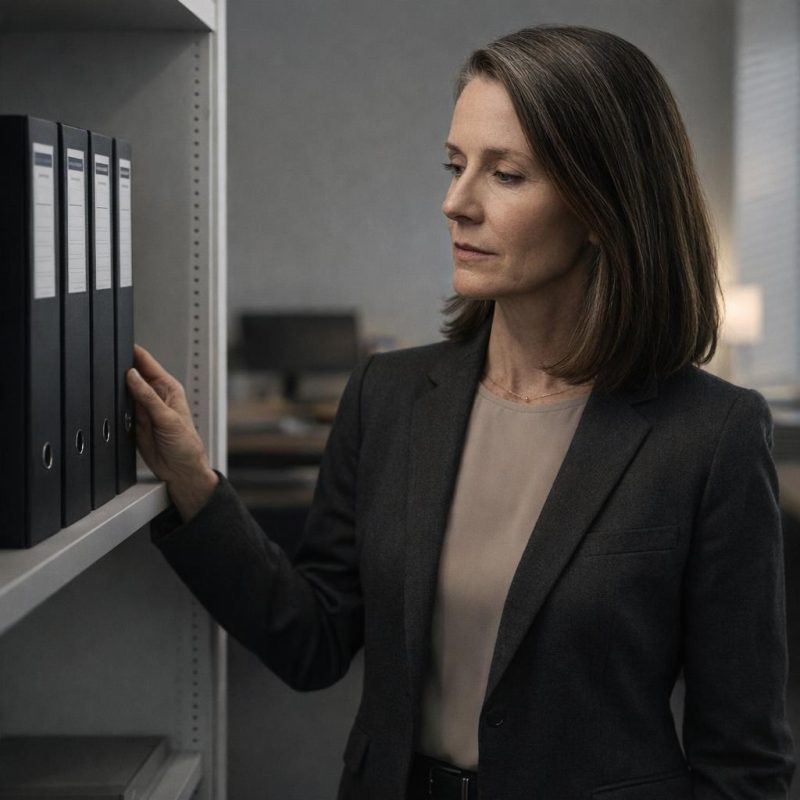 Image by RM AI
The Arrival of Marcus Westfield
Marcus arrived on a Tuesday, which somehow felt appropriate — no fanfare, just a regular workday suddenly containing a new variable. He was younger than I'd expected, late forties maybe, with the kind of polished confidence that fills a room without seeming to try. The suit was impeccable. The handshake was firm and unhurried. He made a point of learning names immediately, which I noticed and gave him credit for. His introductory remarks to the staff were energetic without being exhausting — he talked about the company's potential, about building on what was already working, about wanting to understand the operation from the ground up before making any changes. That last part I appreciated. I'd seen too many new leaders arrive with their conclusions already formed. He smiled often, and the smile was easy and warm. He said he had an open-door policy and seemed to mean it, at least in that first meeting. He made a specific point — twice, actually — about wanting complete honesty from everyone on the team, said he couldn't do his job without it, said transparency was the only way a team like this could function well. I sat near the back and watched him work the room, trying to take an honest measure of the man. He was good at this, clearly. Whether good at this and good at the job were the same thing remained to be seen. The word transparency hung in the air of the conference room long after the meeting ended.
 Image by RM AI
The Charm Offensive
The first week, Marcus made a point of meeting with everyone individually — not in groups, not in passing, but one-on-one, door closed, full attention. When my turn came, I sat across from him in his office and tried to stay measured. He asked about my background, my role, how long I'd been with the company. I told him thirty-three years, and he leaned back in his chair and let out a low whistle that felt genuine. He said he'd heard my name come up more than once already, that people spoke about my work with real respect, and that in his experience, institutional knowledge like mine was the hardest thing to replace and the easiest thing to lose. He asked what I thought the department did well and where I saw room for improvement. I gave him honest answers, and he listened — actually listened, not the kind of listening that's really just waiting. He said he wanted people like me at the table when decisions got made, not sidelined. I walked back to my desk feeling something I hadn't expected to feel: cautiously hopeful. Maybe this would be fine. Maybe he was exactly what he appeared to be. Then, just before five, he stopped by my desk and said, quietly, that he was glad I was here — and that he meant it.
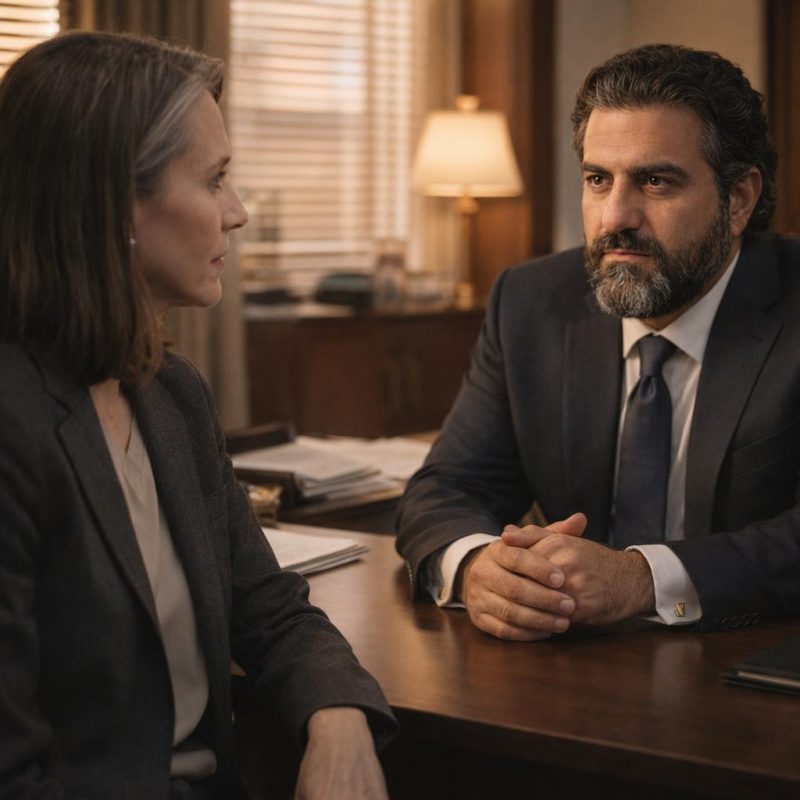 Image by RM AI
Bold New Directions
By the end of his second week, Marcus had scheduled an all-staff presentation to lay out his vision for the company's future. The slides were polished, the language was confident, and the plan was ambitious — new procurement systems, restructured reporting lines, a push toward what he called streamlined decision-making. Some of it made sense to me. Modernizing the filing infrastructure was long overdue, and I'd said as much for years. But other pieces moved faster than I thought was wise. Approval chains that had existed for good reasons were being compressed. Vendor verification steps that I'd always considered standard were being flagged as redundant. I told myself this was normal. New leadership always comes in wanting to put their stamp on things, and not every instinct they have is wrong. I'd seen enough transitions to know that the first wave of changes usually looks more dramatic than it turns out to be. I took notes. I asked a few clarifying questions during the Q&A, and Marcus answered them smoothly, crediting me in front of the room for thinking carefully about implementation. People around me nodded. The presentation ended on an upbeat note, and most of my colleagues filed out looking energized. I stayed in my seat a moment longer, watching the last slide fade from the screen.
 Image by RM AI
The Replaced Report
It started with a routine cross-check — the kind of thing I did without thinking after three decades. I needed to pull a quarterly financial summary I'd submitted the previous week to answer a vendor question, and when I opened the file in the system, something stopped me. The numbers weren't what I'd written. Not dramatically different, not obviously wrong at a glance, but different enough that I sat up straighter and looked again. A line item I'd flagged for follow-up had been smoothed over. A notation I'd included in the summary section was gone. I went back to my desk drawer and pulled out the handwritten notes I kept as a habit — old-fashioned, I know, but thirty-three years had taught me the value of paper. My notes matched my memory exactly. The version in the system did not. I checked the document history, but the edit log showed nothing useful, just a generic system update timestamp. I sat there for a few minutes trying to think of a reasonable explanation. Maybe there'd been a formatting migration when the new system rolled out. Maybe someone had consolidated documents and pulled the wrong version. There were explanations. I just didn't have one yet. I closed the file and set my notes on top of my keyboard, and the unease settled in quietly, the way it does when something small refuses to stop bothering you.
 Image by RM AI
Missing Purchase Orders
The vendor question that had sent me back to the files in the first place turned out to need more than just the summary — I needed the original purchase orders to trace the full transaction history. That should have taken me ten minutes. I knew exactly where those files lived; I'd organized that system myself years ago. But when I pulled up the folder, the orders weren't there. I checked the backup directory. Not there either. I searched by vendor name, by date range, by document number. Nothing. Three purchase orders, covering transactions from the previous quarter, were simply gone — no deletion notice, no archive flag, no forwarding note to indicate they'd been moved. I sat back and thought carefully. Misfiled documents happened. System migrations ate things occasionally. I'd seen both. But these weren't obscure files buried in a rarely-used subfolder — they were active records from a current vendor relationship, exactly the kind of thing that should have been untouchable during any system transition. I wrote down the document numbers from memory, noted the date range, and flagged it in my personal log. I told myself I'd ask about it in the morning, that there was probably a straightforward explanation I was missing. But I kept the note anyway. Three purchase orders, completely gone from the files.
 Image by RM AI
The Vendor Calls
The first call came on a Tuesday morning — a vendor I'd worked with for years, polite but clearly frustrated, asking about an invoice that was now sixty days past due. I pulled up my records while she was still on the line. I had the processing confirmation right there: date stamped, reference number intact, everything showing it had gone through months ago. I told her I'd look into it and call her back. I did, and I couldn't find where the payment had gone. Two days later, a second vendor called with almost the same complaint — different invoice, different amount, same story. Processed on my end, according to my records. Unpaid, according to theirs. I spent the better part of an afternoon going back through my documentation, checking and rechecking. My records were clean. My processing logs were consistent. Whatever had happened to those payments after they left my desk, I couldn't trace it from where I sat. I flagged both cases in writing and sent a note up the chain asking for clarification. I kept my tone professional and factual, the way I always did. Then the third call came in, same pattern, same confusion, and I sat at my desk after hanging up with a feeling I couldn't quite name — not panic, not anger, just a low, steady unease that had stopped feeling like coincidence.
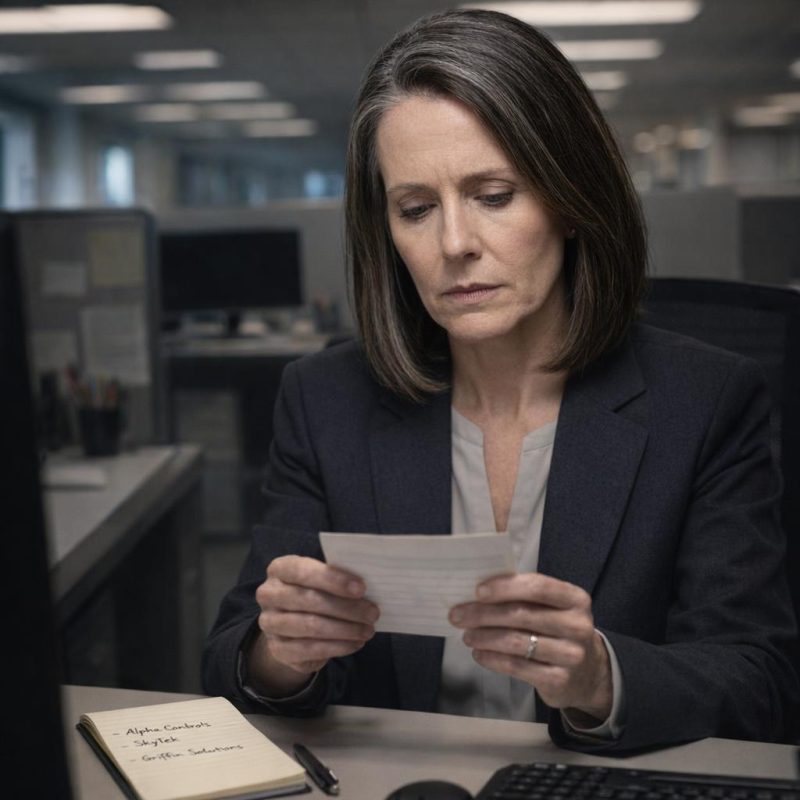 Image by RM AI
Leadership Is Handling It
I brought it to Marcus directly, which felt like the right thing to do. I laid it out clearly — the revised report, the missing purchase orders, the vendor calls — and I kept my voice even and my language precise. I wasn't accusing anyone of anything. I was flagging discrepancies that needed an explanation. He listened with his full attention, the way he always did, and when I finished he nodded slowly and thanked me for my diligence. He said the vendor payment issues were a known transition problem being handled at the systems level, that the new platform had created some routing delays that finance was already working through. He said the document questions were part of a broader records consolidation he'd authorized. He said I shouldn't worry, that leadership had it covered. I asked, as specifically as I could, whether I should be doing anything differently on my end to prevent further discrepancies. He smiled and said I was doing everything right, that he appreciated my attention to detail, and that he'd make sure the right people were looped in. I thanked him and left his office. Standing in the hallway afterward, I tried to decide whether I felt reassured. The words had been right. The tone had been warm. But I walked back to my desk carrying the same unease I'd walked in with, and it hadn't gotten any lighter.
 Image by RM AI
The Nervous Executive
I'd known Lawrence by sight and by reputation for years — senior executive, steady presence, the kind of person who moved through the office with the unhurried confidence of someone who'd been there long enough to stop proving himself. So when I started noticing something different about him, it caught my attention. He looked tired in a way that went beyond a bad week. His suits, always impeccable before, had started looking like he was sleeping in them. In the hallway one morning, I tried to catch his eye to ask a straightforward question about a budget line that touched his department. He saw me coming — I'm certain of that — and found somewhere else to be before I got within ten feet of him. I told myself he was busy. I told myself I'd catch him later. But it happened again the next day, and the day after that. A quick pivot toward a side corridor. A sudden interest in his phone. Once, a sharp turn back into a conference room he'd just left. It was the kind of avoidance that has a texture to it, distinct from just being preoccupied. I couldn't explain why a senior executive would be going out of his way to avoid a conversation with me. But one afternoon I rounded the corner near the executive suite and he was standing just outside his office door — and the moment he saw me, he was gone.
 Image by RM AI
The Silent Office
The office had always had a rhythm to it — the particular noise of a floor full of people who'd worked together long enough to be comfortable. I knew that rhythm the way you know the sounds of your own house. So when it started changing, I felt it before I could name it. Younger colleagues who used to stop by my desk for questions had started routing those same questions elsewhere. Eye contact in the hallway got shorter. Conversations I walked into seemed to find their natural end a little faster than they used to. I told myself people were busy, that the new systems had everyone stressed, that I was reading too much into normal workplace friction. Then one afternoon I walked into the break room and there were four of them — people I'd worked alongside for years — mid-conversation, relaxed, laughing at something. The room didn't go dramatically silent. It was subtler than that, and somehow worse: voices dropped, postures shifted, and two of them found reasons to check their phones. Nobody was rude. Nobody said anything unkind. But by the time I'd poured my coffee and turned around, the conversation was over and the room had mostly emptied. I carried my cup back to my desk and sat down. The four of them had gone quiet the moment I walked in.
 Image by RM AI
Whispers and Silence
The isolation had been building for weeks, but that Tuesday it felt different — sharper, more deliberate in a way I couldn't quite name. I'd walk past a cluster of colleagues near the copy room and the conversation would drop to nothing, not all at once but in that gradual, self-conscious way that's somehow worse than a sudden silence. People I'd trained, people I'd covered for during their vacations, people who used to bring me coffee just because — they were all still perfectly polite. Nobody was cold. Nobody was unkind. But there's a particular kind of loneliness in being surrounded by people who are working hard not to include you, and I was living in it. I started taking longer routes to the kitchen just to avoid the awkwardness of walking through the main floor. I ate lunch at my desk three days in a row. I told myself I was imagining things, that thirty-three years of institutional memory didn't just evaporate from people's regard overnight. Then on Thursday afternoon I turned the corner near the east conference rooms and heard my name — clearly, unmistakably — before the two people saying it looked up and saw me standing there.
 Image by RM AI
The Personal Archive
That night I sat at my kitchen table with a legal pad and wrote down everything I could remember from the past several weeks. Not just the big things — the silences, the rerouted questions, my name in that hallway — but the small ones too. The date a particular report had gone missing from the shared drive. The afternoon I'd been left off a meeting invitation that I would normally have been included in automatically. The way a certain set of files had been reorganized without any announcement or explanation. I'd always been a careful record-keeper at work; it was part of the job, part of who I was. But this felt different. This felt like something I was doing for myself, not for the company. I made copies of documents I thought might matter and kept them at home in a manila folder I tucked into the back of my filing cabinet. I dated everything. I noted names when I could remember them. I didn't know what I was preparing for, exactly — I just had a feeling, the kind that sits low in your chest and doesn't move, that the details were going to matter. When I finally closed the notebook, the kitchen was quiet around me and the clock on the microwave read nearly midnight.
 Image by RM AI
Behind the Conference Room Door
I wasn't trying to overhear anything. I was cutting through the third-floor corridor on my way back from the records room, arms full of binders, when I noticed the conference room door was open about four inches — not enough to see inside, but enough to hear. The voices were raised, which was unusual. Marcus and Lawrence, I was almost certain, though I slowed my steps without meaning to. The words came in fragments: something about a timeline, something about numbers that didn't reconcile, and then Lawrence's voice, higher and tighter than I'd ever heard it, saying something about exposure. I caught the word auditors clearly. Then Marcus, lower and steadier, cutting him off. I was maybe six feet past the door when the voices stopped entirely. Not tapered off — stopped, the way a radio cuts out. I didn't turn around. I kept walking, kept my pace even, kept my face neutral the way you learn to do after three decades in an office. I made it to the stairwell before I let myself exhale. I didn't know what they were arguing about or what the numbers meant. But I stood there on the landing with my binders pressed against my chest, and the phrase that stayed with me — the one I could still hear clearly in Lawrence's voice — was someone has to own this before the auditors get here.
 Image by RM AI
The Friendly Lunch Invitation
Marcus stopped by my desk the next morning. That alone was unusual — he wasn't someone who came to you; you went to him. But there he was, leaning against the partition with that easy, practiced smile, asking how I was doing in a tone that suggested he genuinely wanted to know. He complimented the Hendricks account reconciliation I'd finished the week before, called it meticulous, said the word like it meant something personal to him. He asked about my weekend. He remembered, or appeared to remember, that I'd mentioned my sister was visiting. It was warm and attentive and completely unlike our normal interactions, which were professional and efficient and fine, but never warm. I answered his questions carefully, kept my own tone pleasant, gave him nothing he hadn't asked for. I was thinking about the conference room. I was thinking about Lawrence's voice going tight around the word exposure. I was thinking about the way the conversation had stopped the moment I passed that door. Marcus was still talking — something about wanting to take me to lunch, about honoring the kind of institutional knowledge that was genuinely rare, about how much my contributions deserved to be recognized properly. He said it all with complete ease. Then he smiled again and said he'd have his assistant send over a time that worked.
 Image by RM AI
The Lunch That Felt Like an Interview
We met at a restaurant two blocks from the office — quiet, good lighting, the kind of place where people have conversations they don't want overheard. Marcus was already seated when I arrived, jacket on, menu closed, which told me he'd been there long enough to decide. He ordered for himself without looking at the menu again and spent the first ten minutes doing what he did well: making you feel seen. He talked about my early years at the company, referenced projects I'd nearly forgotten, said my name with a warmth that felt almost paternal. I ate my salad and listened and said thank you at the right moments. Then the questions started. Careful ones, spaced out between compliments so they didn't feel like an interrogation. Did I keep personal notes on my projects, or did everything live in the system? How far back did my own records go? Did I make copies of approval documents, or did I rely on the shared drive? He framed each question as curiosity, as admiration for my thoroughness. I answered in generalities. I said I tried to keep things organized. I said the system was usually reliable. I didn't mention the manila folder in my filing cabinet at home. I didn't mention the legal pad. I smiled and said the chicken was excellent. But driving back to the office afterward, I couldn't shake the weight of how specific his questions had been.
 Image by RM AI
The HR Summons
The email from Jennifer arrived on a Wednesday afternoon, flagged as a meeting request with no subject line beyond 'Discussion — Please Confirm Availability.' The body was three sentences. She introduced herself as being from Human Resources, noted she'd like to meet at my earliest convenience, and asked me to confirm a time from the attached calendar link. That was it. No context, no agenda, no indication of what the discussion would cover. I read it twice, then a third time, as if more words might appear. I went back through the last several months in my head, methodically, the way I'd approach a reconciliation — looking for anything that might have triggered a formal HR process. I came up empty. My performance reviews had been strong. I hadn't filed any complaints, hadn't been named in any that I knew of. I'd taken all my required trainings. There was nothing I could point to. But the timing sat wrong. The lunch with Marcus had been less than a week ago. The conference room conversation was still fresh. I confirmed the meeting for Friday morning and then sat very still at my desk for a moment, the calendar notification blinking on my screen, the formal, careful language of Jennifer's email settling over me like something I couldn't quite put down.
 Image by RM AI
The Retirement Papers
Marcus's assistant called me down to his office on a Thursday morning, no explanation given. When I walked in, Marcus was standing behind his desk rather than sitting, which I noticed immediately — it was a posture that said he'd been waiting, that this was a moment he'd prepared for. He smiled and said, 'Diane, I'm really glad you've decided to do this. It takes real grace.' I stopped just inside the door. I had no idea what he was referring to. I asked him what he meant. He looked briefly surprised, then smoothed it over and said something about transitions being difficult but that I was handling it with the dignity he'd always expected from me. Then he slid a folder across the desk. Inside was a document — several pages, formatted on company letterhead — with my name printed at the top. It was a retirement announcement. There was a severance outline, a prepared statement about my years of service, and a final page that I had to read twice before the words fully registered. The statement, written in my name, in the first person, acknowledged administrative oversights and accounting discrepancies during my tenure and expressed my wish to step aside so the company could move forward. My name was printed on the signature line. I had never seen any of it before.
 Image by RM AI
Walking Out Without Signing
I read every page. Marcus stood across the desk and let me, which told me he expected the reading to end in a signature. The severance number was real money — enough that I understood it was meant to be persuasive. The language in the statement was careful, almost gentle, the kind of phrasing that sounds like accountability until you read it slowly enough to see what it's actually saying. Administrative oversights. Accounting discrepancies during my tenure. Errors I take full responsibility for. I set the folder down on the edge of his desk. I told Marcus I wasn't going to sign anything that day. His expression shifted — not dramatically, but enough. The ease went out of it. He said something about this being the cleanest path forward for everyone, that people would remember my loyalty, that sometimes protecting an institution meant absorbing difficult things. I said I understood what he was telling me, and that my answer was still no. I picked up my bag. He said my name once more, in a tone I couldn't quite read, as I turned toward the door. I walked out of his office, down the corridor, and back to my desk without stopping. My hands were steady. My mind was already moving toward what came next. I had not signed a single page.
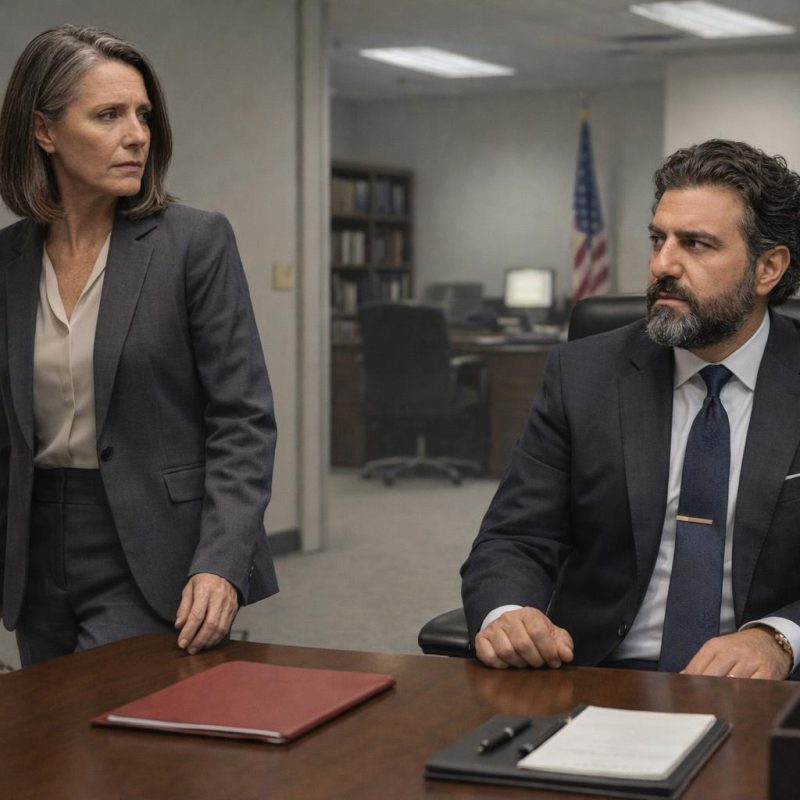 Image by RM AI
The Changed Expression
I sat in my car for a long time before I started the engine. The parking lot was mostly empty by then, and the building behind me looked exactly the same as it always had — same glass doors, same company logo, same everything. But something had shifted, and I couldn't stop turning it over. It wasn't what Marcus had said that stayed with me. It was his face. The moment I set that folder down and told him no, the warmth just — left. Not gradually. Not with any visible effort. It was there and then it wasn't, like a light on a switch. Thirty-three years of working in that building, and I'd never seen anything quite like it. I'd always thought of Marcus as polished, maybe a little too smooth, but professional. What I saw in that office wasn't professionalism. I didn't know exactly what it was, but it didn't feel like anything good. I sat there with my hands on the steering wheel, trying to think clearly. I was scared — I won't pretend otherwise. But underneath the fear there was something steadier, something that told me walking out without signing was the right call. I needed to call Carol. I needed to talk to someone who would understand what I was looking at. The image I kept coming back to was Marcus's face in the moment the smile disappeared.
 Image by RM AI
Locked Out
I came in the next morning the same way I always did — coffee in hand, a few minutes early, nothing to signal that anything was wrong. I'd made a decision on the drive in to act normal, to give nothing away. I set my bag down, settled into my chair, and opened my laptop. The login screen came up fine. Then I tried to pull up the accounts receivable files I'd been working on, and the screen threw back a message I'd never seen on my own computer before: Access Restricted. I thought it was a glitch. I tried a different system. Same thing. I tried the shared drive where I kept project records going back years. Locked. I sat very still for a moment, then picked up the phone and called the IT help desk. The person who answered was polite and clearly uncomfortable. He told me the restriction had come through from management — he couldn't say more than that, and his voice had the careful flatness of someone reading from a script. I thanked him and hung up. I looked around the office. Nobody was watching me, or at least nobody appeared to be. I thought about the timeline: I'd refused to sign yesterday afternoon, and by this morning my access was gone. I straightened my notepad on the desk, folded my hands, and stared at the screen still showing the words: Access Restricted.
 Image by RM AI
The Averted Eyes
I'd worked alongside some of these people for over a decade. There was a woman two rows over who used to bring me birthday cake every year without fail. There was a man near the copy room who'd asked my advice on his daughter's college applications. That morning, walking through the office, I might as well have been a stranger. Eyes dropped when I came near. Conversations shifted. Someone who'd waved at me every single morning for six years suddenly found something urgent to study on his monitor the moment I turned the corner. I told myself I was imagining it. I kept walking, kept my chin up, kept my expression neutral. But I wasn't imagining it. The birthday-cake woman gave me a tight, pained smile and turned back to her screen before I could say a word. I stopped at the break room to refill my coffee and two people left almost immediately, their voices dropping to nothing as they moved away. I stood there with the coffee pot in my hand, feeling something I hadn't expected — not just fear, not just anger, but a specific kind of grief that comes from watching people you trusted choose the easier side. I was almost back to my desk when I heard it, clear enough from a nearby cubicle that there was no mistaking it: financial mismanagement.
 Image by RM AI
The Nervous Ally
I was almost to my car when I heard footsteps behind me, moving fast and then slowing down deliberately. I turned around and it was Tom — late twenties, one of the junior analysts, someone I'd always liked for his careful work. He looked terrible. His eyes were scanning the parking lot in every direction before he'd even said hello, and he was holding his jacket closed at the collar like he was cold, though it wasn't cold. He said he was sorry about what was happening to me. He said it quietly, almost under his breath, and I could see it was costing him something to say even that much. I told him I appreciated it. He nodded, looked over his shoulder again, and then said that he wanted me to know — without getting into specifics, without putting anything in writing — that some of the people in the department had been given instructions. About emails. About what to keep and what not to keep. He said he couldn't say more than that, that he had a family and he was scared, and I told him I understood completely and that I wasn't going to put him in a difficult position. He looked relieved and miserable at the same time. He started to walk away, then stopped and turned back. His voice was barely above a whisper when he said they made us delete everything from March.
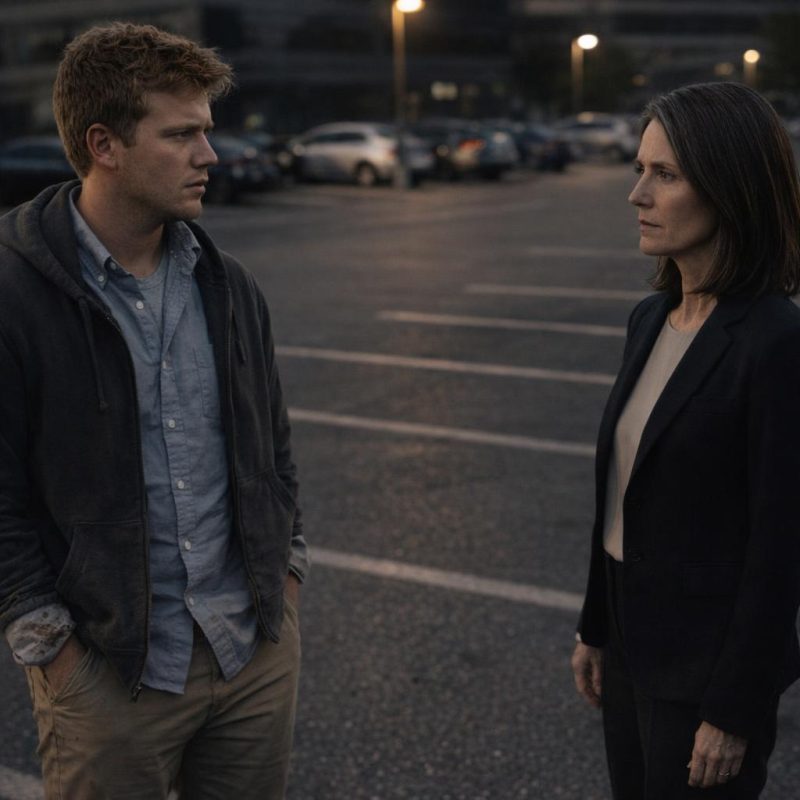 Image by RM AI
Calling Carol
I called Carol that evening from my kitchen table, after I'd eaten something I barely tasted and sat with the quiet for as long as I could stand it. Carol and I had known each other for almost twenty years — she'd spent most of her career as a corporate auditor before she retired, and she had a way of listening that made you feel like every word was being filed and cross-referenced in real time. I told her everything. The retirement papers, the language in the statement, Marcus's face when I said no, the locked computer access, the whispers in the office, and what Tom had told me in the parking lot. She didn't interrupt. When I finished, there was a pause, and then she started asking questions — specific, methodical questions about dates and document language and who had been present at which meetings. Her tone had shifted somewhere in the middle of my story, gone from warm and concerned to something quieter and more focused. She said it sounded like a scapegoat situation. She said those words carefully, like she'd seen the shape of it before and was being precise. Then she said she wanted to see everything I had — any records, any notes, anything I'd kept at home. She said she'd help me go through it. I sat there in my kitchen holding the phone after we'd said goodbye, and the relief of hearing her say she'd help settled over me like something solid.
 Image by RM AI
The Personal Archive
I started in the spare bedroom closet, where I'd always kept my work notebooks going back years. I pulled them out one by one — spiral-bound, dated on the spine in my own handwriting, filled with meeting notes and follow-up items and questions I'd written down so I wouldn't forget to ask them. There were more than I'd remembered. I moved to the filing cabinet and found the printed email threads I'd kept from projects that felt important at the time, the kind of thing you save without knowing exactly why. I found calendars going back almost a decade, each one with handwritten notes in the margins — names, times, brief descriptions of what had been discussed and with whom. I'd always been this way. My mother used to tease me about it, said I documented everything like I was preparing for a trial I didn't know was coming. Standing in that spare room surrounded by years of careful record-keeping, I thought about her saying that and felt something catch in my chest. I organized everything into stacks by year, then by category. I found receipts from business lunches, printed agendas from quarterly reviews, handwritten reminders from meetings I'd long since stopped thinking about. By the time I was done, the dining room table was covered. I stood back and looked at it — decades of careful habits, stacked and sorted and waiting.
 Image by RM AI
A Former Supervisor Speaks
Robert called on a Tuesday evening, and I almost didn't pick up because I didn't recognize the number. I'm glad I did. He said he'd heard through some former colleagues that things had gotten difficult for me, and that he'd been sitting with something for a long time and felt like he needed to say it. Robert had been my supervisor for almost four years before he left the company abruptly about eighteen months ago. I'd always assumed it was a personal decision — he'd never said otherwise, and I hadn't pushed. He told me that in the months before he resigned, he'd been asked to sign off on a series of documents. Financial approvals, authorization forms, things that were presented to him quickly and without much context. He said he'd asked questions and been told the details were above his level, that it was a formality, that everything had already been reviewed. He said he'd had a bad feeling about it but signed anyway, and that he'd regretted it ever since. His voice was steady but I could hear the weight in it. He said leaving felt like the only option he had at the time, but that walking away hadn't made the guilt any easier to carry. He paused for a long moment, and then he said it plainly: they told me to sign or they'd find a reason to let me go.
 Image by RM AI
Sorting Through the Evidence
Carol cleared her dining room table completely before I arrived, which told me she was taking this seriously. I spread everything out the way I'd organized it at home, and she stood at the edge of the table for a moment just looking at it all before she said anything. Then she put on her reading glasses and got to work. She moved through the notebooks methodically, asking me to talk her through entries she couldn't fully decode from context — shorthand I'd developed over years, abbreviations that made sense to me but needed translation. She had a yellow legal pad beside her and she wrote as I talked, building a running list of dates and names and transaction references. When she found something that made her pause, she'd set it aside in a separate stack without comment and keep moving. That separate stack grew steadily through the afternoon. We cross-referenced my calendar entries against the printed email threads, and Carol would occasionally ask me to confirm a date or clarify who had been copied on a message. She didn't editorialize. She didn't tell me what she thought it meant. She just kept building the timeline, one entry at a time, with the patience of someone who had done this kind of work for thirty years and knew that the picture only emerged if you were willing to sit with the pieces long enough. By early evening, the legal pad was nearly full, and the table between us held the careful shape of something that was starting to look like a record.
 Image by RM AI
The Signature Discrepancies
We were still at Carol's table when she shifted from the email threads to the approval records, and that's when things got quieter between us. She had a stack of printed signature logs — electronic timestamps on purchase approvals — and she started laying them out in a row while I pulled up my calendar notes from the same periods. The first one she flagged was from a Thursday in February. The approval timestamp showed 2:14 in the afternoon, local time. My notes showed the approving executive had been at a regional conference in Phoenix that day — I'd noted it because I'd had to reroute a question to someone else when he was unreachable. Carol didn't say anything. She just set it in the separate pile and moved to the next one. Then the next. By the time we'd worked through eight months of records, she had six approvals flagged, each one timestamped during a period when my calendar showed the signer somewhere else entirely. She finally took off her reading glasses and set them on the table. "These aren't data entry errors," she said. "Errors don't follow a pattern." I looked at the six flagged pages lined up in a row, each one representing a moment when someone had supposedly been in two places at once, and the weight of what that meant settled over the room like something neither of us was quite ready to name.
 Image by RM AI
The Out-of-State Approvals
We kept going after dinner, which neither of us had really eaten. Carol made coffee and I spread my travel-schedule notes across the end of the table while she pulled up a spreadsheet she'd started building from the flagged approvals. We were looking for a pattern, and the more we looked, the clearer it became that we were finding one. Three of the flagged approvals clustered around a four-day window in March — a window my notes confirmed was the annual operations conference in Atlanta. I had the conference agenda in my files because I'd helped coordinate the travel arrangements that year. Carol cross-referenced the approval timestamps against the transaction amounts and wrote the totals in the margin of her legal pad without comment. They weren't small numbers. She circled each one slowly, then drew a line connecting them. "Same window, same approval chain, same dollar range," she said, more to herself than to me. I went back through my notes looking for any other conference periods, any other stretches where the senior team had been documented as out of state. I found two more. Carol added them to the spreadsheet. When she turned the laptop so I could see the full list, there were five major transactions, all carrying the same signatures — every single one of them processed while the executives who signed them were supposed to be at a conference three states away.
 Image by RM AI
The Deleted Emails
The second call came on a Tuesday evening, about a week after Tom had first reached out. I didn't recognize the number, but something made me pick up anyway. It was a woman named Patrice — I'd worked alongside her in the contracts division for almost four years. She spoke quietly, like she was worried about being overheard, and she got to the point fast. She said she'd heard through Tom that I was asking questions, and she needed me to know what had happened to her in March. Her supervisor had called her into a closed-door meeting and told her to go through a specific folder of emails and delete anything referencing the Q4 vendor reconciliation. She'd been told the files were being "consolidated" and that she shouldn't discuss it with anyone. She did what she was told because she had a mortgage and two kids and she didn't think she had a choice. Then she said something that stopped me cold: she wasn't the only one. She knew of at least two other people on her floor who'd been given similar instructions around the same time, different folders, same directive — delete and don't talk about it. I sat with the phone in my hand after she hung up, thinking about all those people quietly following orders they didn't understand, each one alone with it, each one afraid. The orders had gone out to multiple people across multiple departments, and none of them had been given a reason.
 Image by RM AI
The Pattern Emerges
Carol called me back to her house three days later. She'd been working on the timeline while I was following up on the calls, and when I walked in, the dining room table looked different — she'd taped a long sheet of butcher paper across the full length of it and marked it out in months. Each flagged transaction had its own entry, color-coded by approval chain, with the corresponding travel records and email deletions noted below in a smaller hand. She walked me through it without rushing, pointing to each cluster of entries and explaining what she'd found connecting them. The approvals clustered around specific reporting periods — the ends of quarters, the weeks just before internal audits. She'd also noted where the email deletions Patrice and Tom had described fell on the same paper, and those dates sat right alongside the approval clusters, close enough that the proximity was hard to ignore. "This isn't a few people making mistakes," Carol said, capping her marker. "Mistakes don't organize themselves around the calendar like this." I stood at the edge of the table and looked at the full length of the timeline — months of entries, each one documented, each one connected to the next by dates and signatures and paper trails that someone had clearly hoped wouldn't survive — and the scale of what I was looking at was larger than anything I'd let myself imagine before that moment.
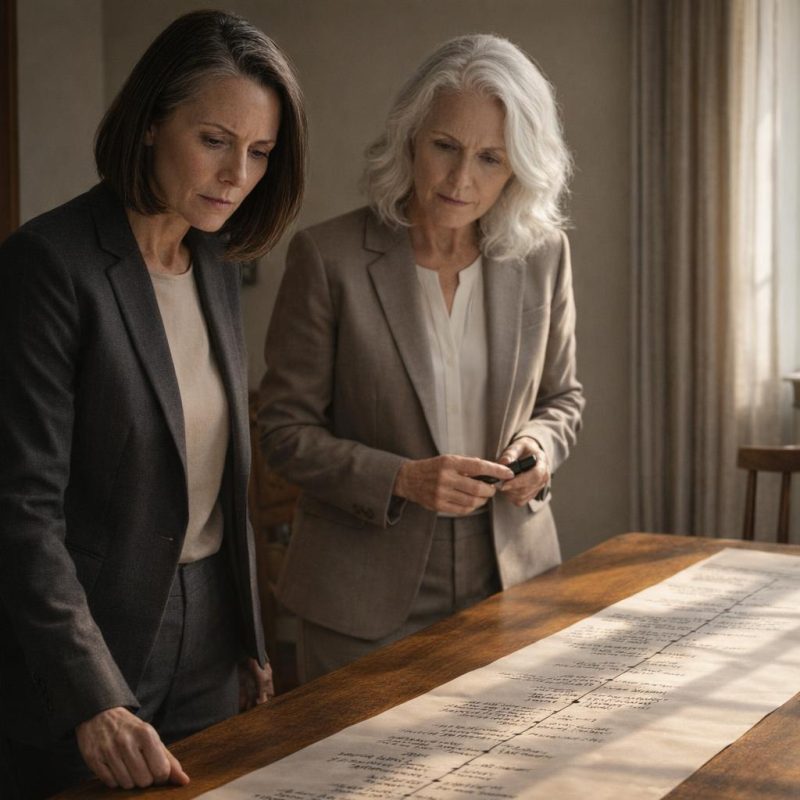 Image by RM AI
The Mailroom Manager's Memory
Ed Morrison had retired from the mailroom about eighteen months before I left the company, but he still met a rotating group of former colleagues for breakfast every other Wednesday at a diner near the old office. I'd heard about the breakfasts through the grapevine and reached out to him through a mutual contact. He called me back the same afternoon, cheerful and unhurried, and when I explained what I was looking into, he went quiet for a moment and then said, "You know, I kept my logs. " Ed had maintained a personal routing record for what he called "special deliveries" — sealed envelopes marked confidential that required a signature on both ends. He'd started the habit years earlier after a dispute over a misdirected document, and he'd never stopped. He still had the logs in a binder in his garage. We met at the same diner the following Wednesday, and he brought the binder. The entries were handwritten, neat and dated, each one listing the sender, the recipient, the time of pickup, and the time of delivery. I compared the dates against the timeline Carol and I had built, right there at the table over coffee. The envelope exchanges Ed had logged fell within days — sometimes within hours — of the approval timestamps we'd flagged. Some people just do their jobs right, quietly and completely, and it turns out that matters more than anyone tells you at the time.
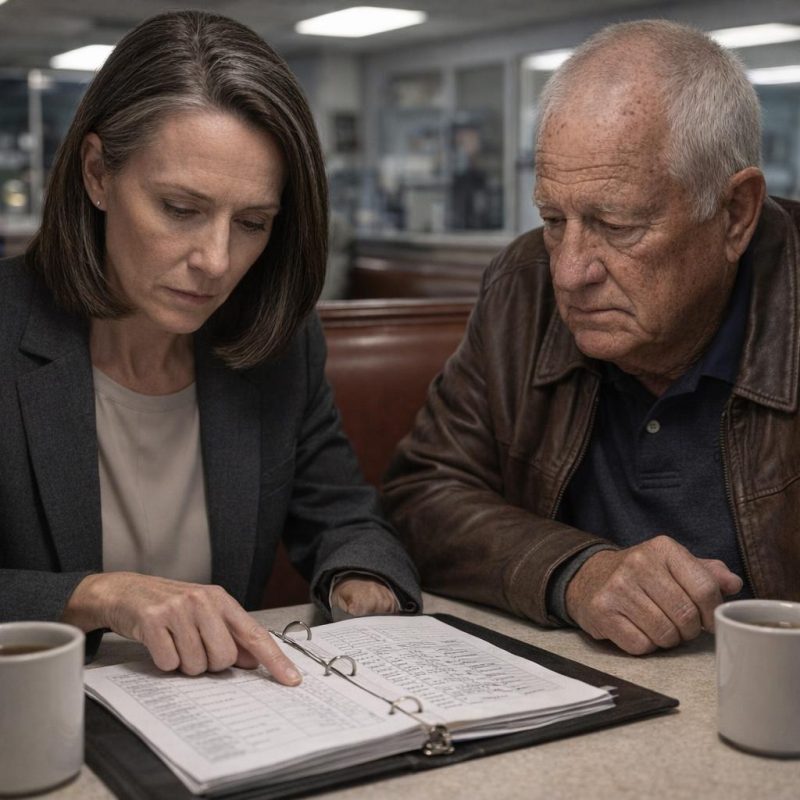 Image by RM AI
The Replacement's Confession
The call came on a Thursday night, late enough that I almost didn't answer. The voice on the other end was young and unsteady, and it took me a moment to place it. She introduced herself as Angela — she'd been hired into my old position about two months after I left. She was crying in that controlled way people cry when they're trying to hold it together and not quite managing. She said she'd been going back and forth for weeks about whether to call, and she was sorry it had taken her this long. Then she told me what she'd been instructed to do. She was told it was a records cleanup, routine housekeeping. But the instructions were detailed in a way that didn't feel routine. She was told to make it appear that a series of major purchase approvals had been authorized by a single person — and that person was me. She'd been given a list of transaction numbers and told to adjust the approval attribution. She offered to send me the written instructions she'd received. I thanked her and told her to hold onto everything. After I hung up, I sat in the kitchen for a long time, and the thing I kept coming back to wasn't anger, exactly — it was the strange, steadying feeling of having the shape of something confirmed that I'd only been able to sense before.
 Image by RM AI
The Envelope Dates
Carol and I spread Ed's routing logs across the dining room table alongside the transaction timeline she'd built, and we went through them entry by entry. She had a ruler and a red pen, and every time an envelope exchange date from Ed's binder landed within forty-eight hours of a flagged approval on her timeline, she drew a connecting line. It didn't take long before the page was covered in red lines. The first cluster matched the February approval — the one timestamped while the executive was supposedly in Phoenix. Ed's log showed a sealed confidential envelope exchanged between two senior offices two days before that timestamp. The March cluster was even tighter: three envelope exchanges in a four-day window, all of them falling inside the Atlanta conference period, each one corresponding to a backdated transaction on Carol's chart. Carol worked without commentary, just the quiet scratch of her pen and the occasional sound of pages turning. When she finished the last entry, she set the ruler down and looked at the full spread of connecting lines. "Independent corroboration," she said. "Ed's records don't know anything about your calendar notes. Your calendar notes don't know anything about the approval timestamps. But they all land on the same dates." I looked at the table — the logs, the timeline, the red lines running between them — and every single envelope exchange Ed had logged matched a backdated transaction on Carol's chart, without a single exception.
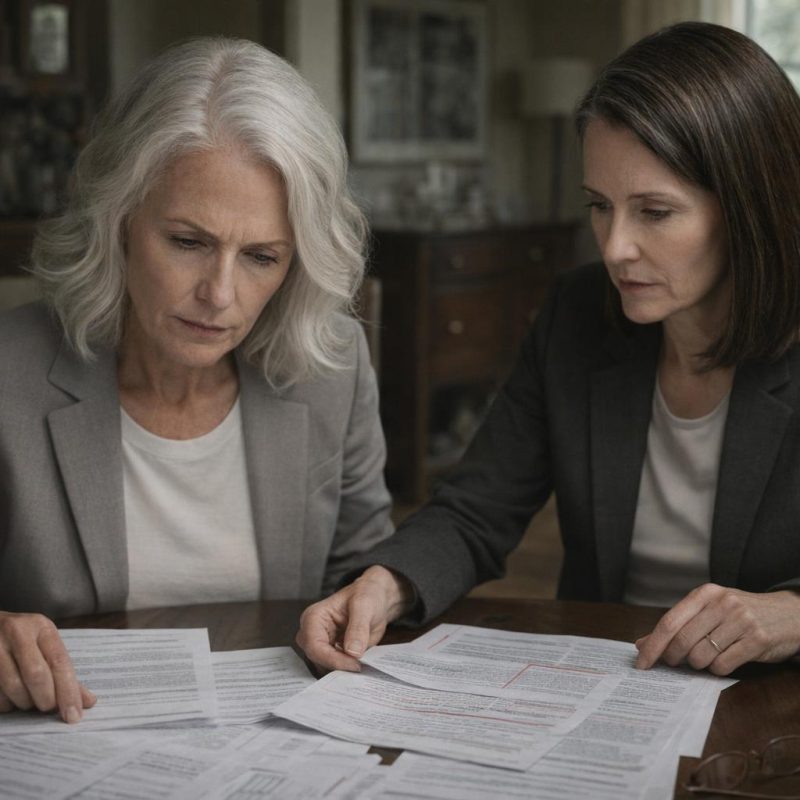 Image by RM AI
Assembling the Timeline
Carol spent the better part of two days turning everything we had into a single master document. She printed it out and brought it to my kitchen table on a Saturday morning, and we went through it together page by page. She'd organized it chronologically, starting with the earliest flagged approval and running forward through the email deletions, the envelope exchanges, Angela's account of the altered records, and Robert's experience of being pressured to sign documents before he left. Each entry had a source notation — my calendar, Ed's routing log, a printed email, Angela's written instructions. Where two independent sources confirmed the same date or the same transaction, Carol had marked it in bold. The picture that emerged wasn't chaotic. It was orderly in a way that was harder to look at than chaos would have been. Responsibility had moved, entry by entry, away from the people who'd made the decisions and toward the people who'd simply been present — the ones who'd processed paperwork, followed instructions, and trusted that the system they worked inside was operating in good faith. I read through the last page slowly. The timeline ran across nearly fourteen months, and every piece of it was sourced and cross-referenced, and the whole of it sat there on my kitchen table in the quiet of a Saturday morning, patient and complete.
 Image by RM AI
The Pattern of Powerlessness
Carol set down her pen and leaned back in her chair, and for a long moment neither of us said anything. We'd been going through the testimony page by page — Robert's account, Tom's, Angela's, and three others Carol had tracked down through her own network, former employees who'd left quietly and hadn't said much publicly about why. What she'd found, laid out in sequence, was a pattern so consistent it stopped feeling like coincidence somewhere around the third name. Every person who'd been pressured or pushed out had been close to retirement, or in a role that could be eliminated without much explanation, or simply someone without the institutional standing to push back effectively. Robert had questioned an approval and found himself signing documents he didn't fully understand before walking out the door. Two others had noticed discrepancies in quarterly reports and been quietly reassigned before anything was formally documented. I looked at the list and felt something settle in my chest that wasn't quite fear and wasn't quite anger. I fit the profile. I fit it almost exactly — the tenure, the age, the reputation for keeping my head down and doing the work without making noise. Carol didn't say it out loud, and I didn't either. We just sat there with the names between us, and the weight of how many people had been used before anyone thought to count them.
 Image by RM AI
The Dead End
We spread everything across the table again — the routing logs, the printed emails, Angela's written account, the backdated approvals, Tom's notes about the deleted files. Carol had been an auditor for nearly thirty years, and watching her work through a document set was like watching someone read a language most people couldn't see. She moved methodically, cross-referencing dates, flagging inconsistencies, building the connective tissue between sources. After about an hour she sat back and pressed her fingers together in front of her mouth, which I'd learned meant she was about to say something I wasn't going to like. "We can prove the cover-up," she said. "The backdating, the deletions, the pressure on employees — that's all here, and it's solid." She paused. "But we don't have what's underneath it. We can show someone worked very hard to hide something. We can't yet show what that something is." I stared at the table. All of it — months of careful gathering, every conversation and printed page and late-night cross-reference — and we were standing at the edge of a hole we couldn't see the bottom of. Carol said we needed the original financial records, the ones that predated the alterations. Without those, we had the shape of a crime but not its substance. I told her I wasn't stopping. She said she knew that. Then she said she might know someone who could help us find what we were missing.
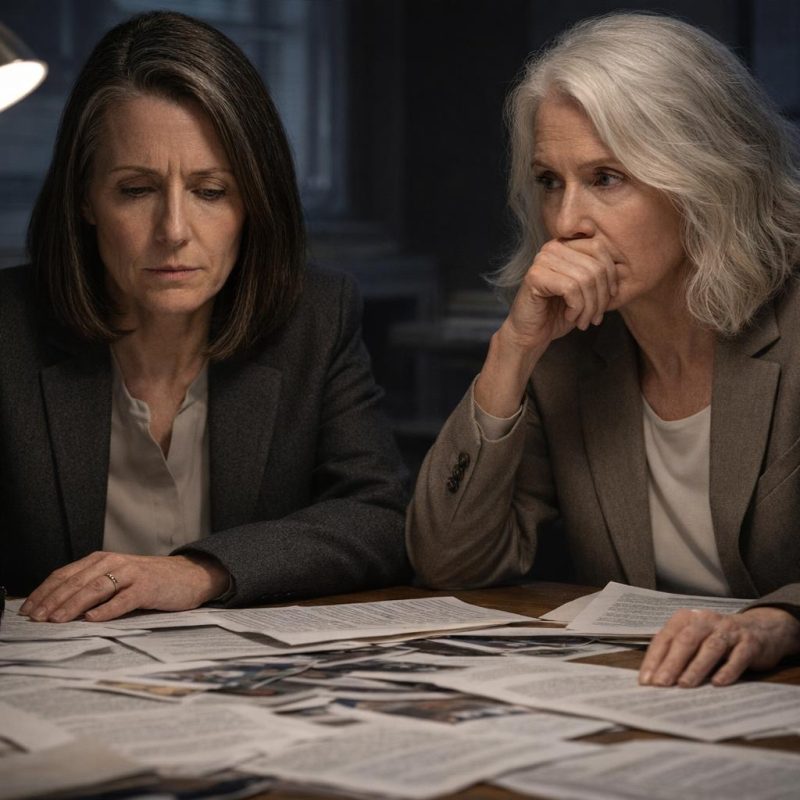 Image by RM AI
The Financial Records
Carol's contact was a former colleague from her auditing days, someone she trusted and who still worked in corporate financial review. She didn't tell me his name, and I didn't ask. What she told me was that he'd agreed to pull older quarterly reports — the ones filed before the current administration had full control over what got archived and what quietly disappeared. It took four days. When Carol called me to come over, her voice was careful in a way that made me drive faster than I normally would. She had the reports spread across her dining room table when I arrived, the older ones on the left and the current documentation on the right, with her handwritten comparison notes running down the center. She walked me through it slowly. The older reports showed losses — significant ones, spread across two fiscal years, tied to a series of business decisions and investments that had performed badly. In the current documentation, those losses had been absorbed, reclassified, redistributed across line items in ways that made them nearly invisible unless you knew exactly what you were looking for. Carol did. She pointed to a figure near the bottom of the second comparison page and told me to look at the total. I looked. The number was in the millions — not a rounding error, not a bad quarter, but years of damage that had been carefully papered over and hidden from view.
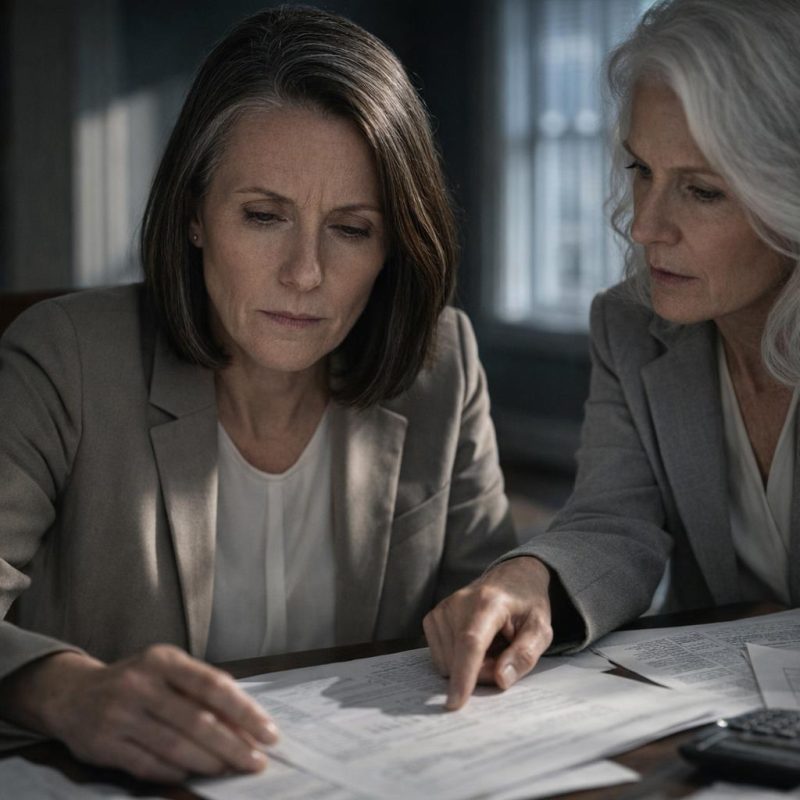 Image by RM AI
The Pieces Come Together
Carol poured us both coffee and sat down across from me, and I could tell she'd already worked through the logic before I arrived. She explained it the way she used to explain audit findings to boards — methodically, without editorializing, letting the facts carry the weight. When losses of that scale surface in a company, she said, someone has to account for them. External auditors don't accept "it just happened" as an answer. They look for the person whose name is on the approvals, whose signature appears on the relevant documents, whose department processed the transactions. I thought about the retirement papers Jennifer had pushed across the desk to me. I thought about the backdated approvals with my name attached. I thought about Angela being told to erase my work history and rebuild the records from a different starting point. Carol was still talking, connecting the timing of the record alterations to the standard audit cycle, explaining when outside reviewers would typically be scheduled to arrive. Something cold moved through me as the pieces lined up. The retirement papers wouldn't just have ended my career. Signed and filed, they would have placed me squarely inside the paper trail — a long-tenured employee who'd processed the relevant approvals, accepted a quiet exit, and was no longer around to offer any other account of what had happened. They needed someone to own the losses before the auditors walked through the door.
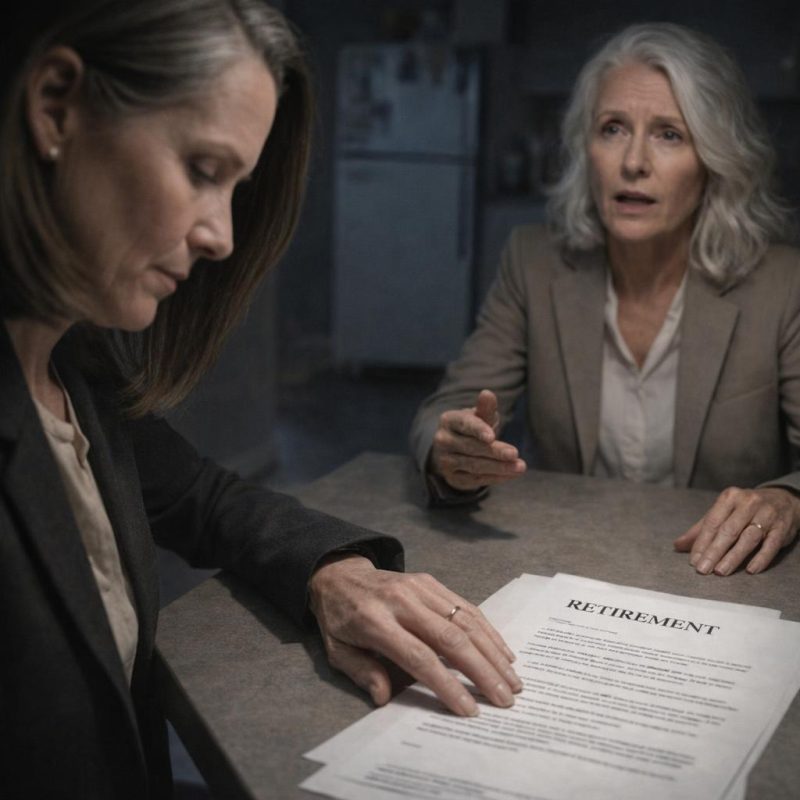 Image by RM AI
The Deliberate Scheme
Carol's contact had sent one more file — internal emails, the kind that were never meant to leave the building. Carol printed them and handed them to me without saying anything first, which told me she'd already read them and wanted me to see them without her framing in the way. The earliest one was dated eleven months before Marcus ever set foot in my department. It was a short exchange between two senior addresses I recognized, and it used my name. Not as a subject of concern or a person to be consulted — as a solution to a problem. They'd assessed my tenure, my age, my proximity to retirement, and my history of working without complaint. One line noted that someone with my profile was unlikely to retain legal counsel or mount a formal challenge. Another said that my reputation for thoroughness would make the attribution credible. Marcus's name appeared four emails later, assigned a role and a timeline. I set the last page down on Carol's table and looked at the date on that first email again. Eleven months of groundwork, mapped out in plain language, before he'd ever smiled at me across a conference room table.
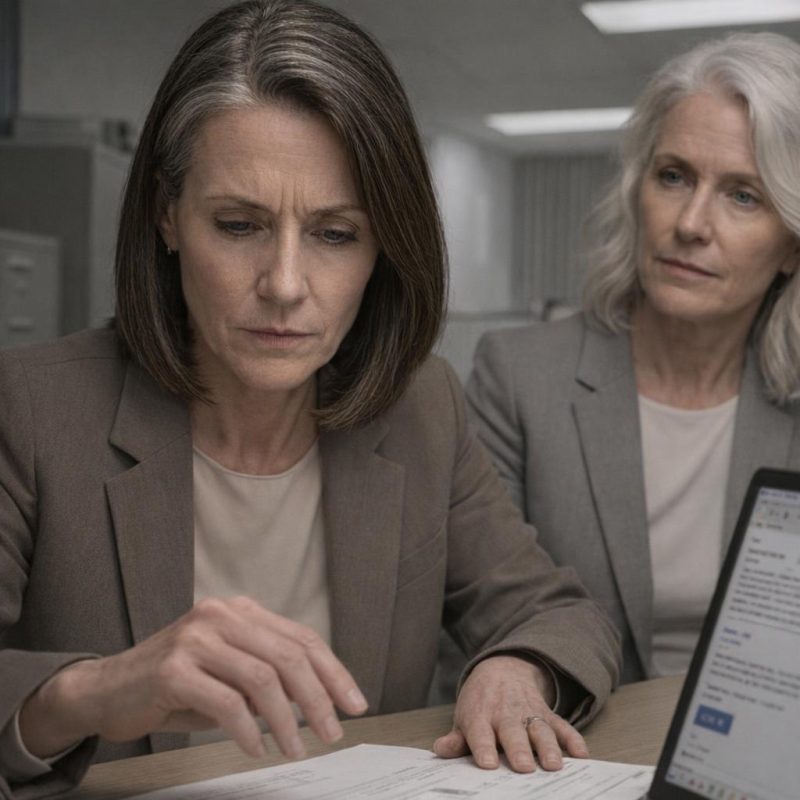 Image by RM AI
The Profile of a Target
I took the printed emails home and read them again at my own kitchen table, alone, without Carol there to help me process them in real time. I needed to sit with them without anyone watching my face. They had studied me. Not in a general way — specifically, carefully, the way you study something you intend to use. They'd noted that I kept to myself, that I didn't have close allies in senior leadership, that I'd never filed a complaint or raised a formal objection in thirty-three years. They'd noted my age as an asset to their plan, not a characteristic of a person. One email described my long tenure as lending "documentary credibility" — meaning that my name on approvals would look authoritative rather than suspicious. Marcus had arrived already knowing which questions to ask, which compliments would land, how to make himself seem like someone worth trusting. I'd thought I was being careful. I'd thought my instincts were working. And they had been — I'd felt the wrongness of it from nearly the beginning. But feeling it and being able to name it are different things, and they'd counted on that gap. I sat at the table for a long time after I finished reading. The coffee went cold. Outside, the neighborhood was quiet. What settled over me wasn't grief exactly, and it wasn't rage — it was something steadier than either, the kind of clarity that doesn't leave once it arrives.
 Image by RM AI
Everything Reframed
I didn't sleep much that night. I lay in the dark and let the timeline run through my head from the beginning, and this time I watched it with different eyes. Marcus walking into my department for the first time, that easy confidence, the way he'd made a point of stopping at my desk. I'd taken it as professional courtesy. The lunch — his questions about how I organized approvals, which systems I used, how far back my documentation went. I'd thought he was getting oriented. The afternoon he'd overheard me on the phone and his manner had shifted, become warmer, more attentive — I'd wondered at the time if I'd misjudged him. I hadn't misjudged him. I'd just been reading a performance without knowing it was one. Every compliment about my records, every expression of respect for my experience, every small gesture of collegial warmth — it had all been information-gathering dressed in the language of kindness. The retirement papers had been the last step in something that started nearly a year before I ever saw them. I'd felt the wrongness of it in pieces, in moments I couldn't quite explain to myself, and I'd been right every single time. That part didn't make me feel better, exactly. But it meant something to me, in the quiet of that room, that my instincts had never actually failed me — I just hadn't had the full picture to set them against.
 Image by RM AI
Preparing the Counter-Attack
Carol came over on a Tuesday morning with a fresh legal pad and a box of file folders, and we spent most of the day building the presentation from the ground up. She'd done this kind of work before — organizing evidence for formal review — and she moved through it with the focused efficiency of someone who knew exactly what outside auditors needed to see and in what order. We assembled everything: the timeline with source notations, the backdated approvals, Tom's account of the deleted emails, Angela's written record of her instructions, Robert's testimony about the documents he'd been pressured to sign, Ed's routing logs, Carol's financial comparison showing the hidden losses, and the internal emails naming me as the intended scapegoat. Carol explained why internal reporting wasn't an option. The same people who'd built this would control where an internal complaint landed and how quickly it disappeared. We needed independent eyes — people with no stake in the outcome and the authority to compel records. She'd identified the state auditing board as the right channel. They had jurisdiction, they operated outside the company's reach, and a submission of this scope would require a formal response. I looked at the completed report sitting in its folder on my kitchen table — every source cited, every date confirmed, every name accounted for. Then I picked up the phone and called the number Carol had written down, and I told the person who answered that I had something they needed to see.
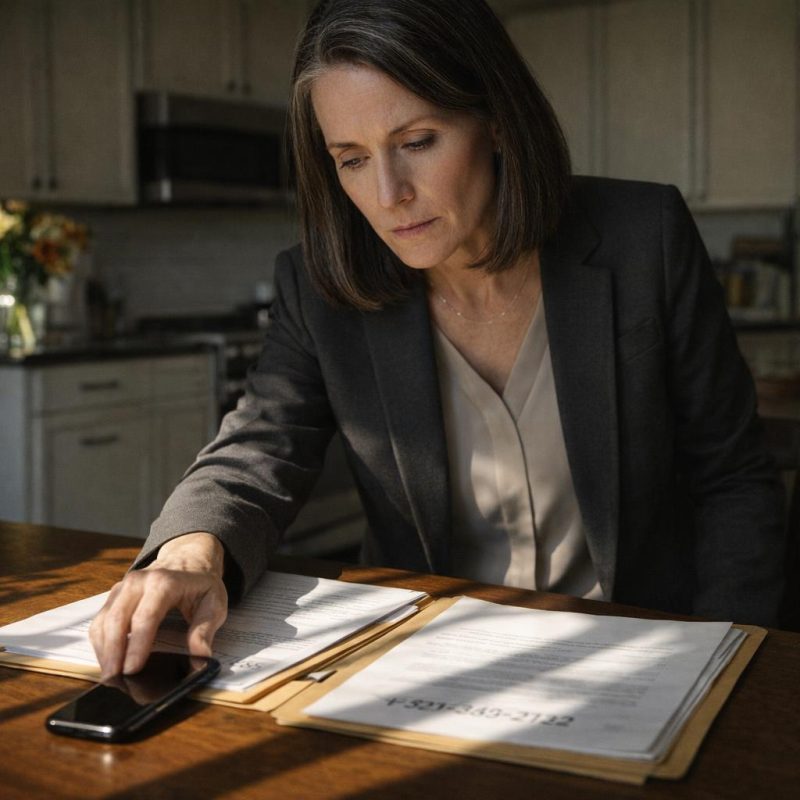 Image by RM AI
Submitting the Evidence
We drove to the state auditing board's office on a Wednesday morning, Carol carrying the folder and me carrying a second copy in my bag because she'd insisted on redundancy. The senior auditor who met with us was a quiet man in his late fifties who didn't say much while we walked him through the timeline, just made careful notes and occasionally asked us to pause so he could re-read a document. He asked about the routing logs, about the backdated approvals, about the gap between what the internal records showed and what Carol's financial comparison had turned up. When we got to the emails naming me as the intended scapegoat, he set his pen down and looked up. He said this was exactly the kind of submission that warranted a full formal review. He explained the process — independent access to company records, confidential witness interviews, a timeline of several weeks before any findings would be issued. I gave him contact information for Tom, Angela, Robert, and Ed, and he promised each of them would be approached carefully and confidentially. We shook hands at the door and Carol and I walked back to the car without saying much. I'd done everything I could do. The folder was out of my hands now, and the quiet that settled over me on the drive home felt less like peace and more like the stillness that comes after something that can't be undone.
 Image by RM AI
The Auditors Arrive
They arrived on a Thursday, four of them, carrying identification and a formal letter of authority that the front desk receptionist clearly hadn't been briefed on. I was at my desk when the whispers started moving through the floor. Someone said auditors. Someone else said state. I kept my eyes on my screen and my hands steady. Within twenty minutes, Marcus and Lawrence were in Lawrence's office with the door shut, and I could see through the glass partition that neither of them was sitting down. The auditors split up — two went to the records room, one went to HR, and one set up in a conference room and began calling people in one at a time. I was called in around eleven. I answered every question directly and handed over the personal documentation I'd brought with me, the copies I'd kept at home all those months. The auditor across the table from me didn't react much, just wrote and nodded, but when I finished he said my records were unusually thorough. I took that as a compliment. By early afternoon, Lawrence's door was open again and he was standing at his window with his back to the floor. Marcus was nowhere I could see. Then one of the auditors crossed the main floor carrying a thick accordion file, walked past the reception desk without stopping, and pushed open the door to the executive suite.
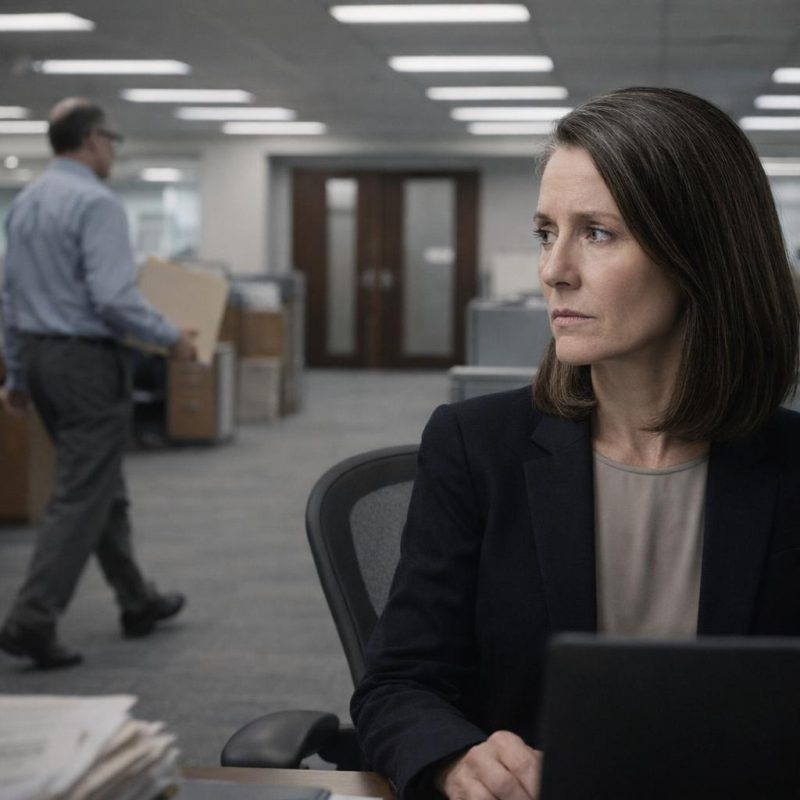 Image by RM AI
Lawrence's Sudden Retirement
The company-wide email came on a Monday at 8:47 in the morning. I read it twice before I fully processed what it said. Lawrence was retiring, effective immediately, citing personal reasons and a desire to spend more time with family. The message thanked him for his years of dedicated service and wished him well in the next chapter of his life. It was the kind of email that says everything by saying nothing. By noon, I could see him from across the floor, moving through the hallway with a banker's box under each arm, eyes fixed straight ahead. He didn't stop to say goodbye to anyone. He didn't look toward the cluster of people near the break room who'd gone quiet when they saw him. A few colleagues exchanged glances. Someone near me said, under their breath, that the timing was interesting. I didn't say anything. I knew the auditors had spent the better part of two days with him. I knew what was in those files. Whatever he'd been told in those sessions, it had been enough to make thirty years of seniority feel less valuable than a clean exit. I watched him push through the lobby doors and disappear, and I thought about all the months I'd spent wondering if any of this would ever catch up to the people responsible. The box he carried out was smaller than I would have expected. That detail, for some reason, was the one that stayed with me.
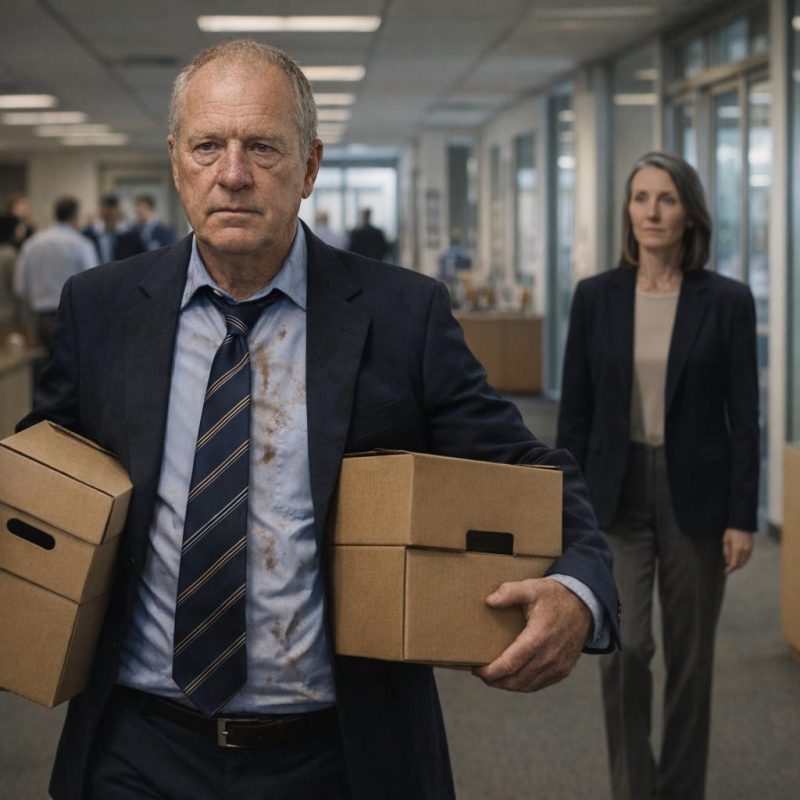 Image by RM AI
The Attorney's Request
The voicemail from Mitchell was measured and careful, the way a man sounds when he's been coached on exactly what to say and what not to. He introduced himself as the company's legal counsel, said he was reaching out at the direction of senior leadership, and asked if I'd be willing to meet at my convenience to discuss the current situation and explore a path forward. At my convenience. I played it twice. I called Carol before I called him back. She listened to the whole thing and then said, 'They're scared.' She advised me not to meet alone under any circumstances, and I'd already decided that before she finished the sentence. I called Mitchell back and told him I'd be happy to meet, but that my friend Carol, a former corporate auditor, would be present. There was a brief pause before he agreed. We set the meeting for the following Thursday at a neutral location — a conference room at a downtown law office that neither of us had a prior relationship with. I spent the days before it going back through my documentation, not because I needed to refresh my memory but because I wanted to walk in with everything organized and nothing left to chance. The night before, Carol and I went over every likely scenario. I went to bed early and slept better than I had in months. Something had shifted, and I could feel it — the meeting was happening on my terms, not theirs.
 Image by RM AI
The Settlement Offer
Mitchell arrived with another attorney, a younger woman who took notes and said almost nothing the entire meeting. He was polished and careful, every sentence constructed to give away as little as possible while still moving toward whatever he'd come to say. He acknowledged that the company had been reviewing certain internal records in connection with the ongoing audit. He said that in the course of that review, they had identified information that was, in his words, inconsistent with certain prior characterizations of events. Carol didn't blink. I didn't either. He said the company valued my years of service and wanted to resolve the matter in a way that was fair and mutually beneficial. Then he slid a folder across the table. Inside was a settlement figure — a number that was, I'll admit, larger than I'd expected — along with a draft confidentiality agreement that ran to eleven pages. The terms were straightforward: I would accept the payment, I would sign the NDA, and I would agree never to discuss the circumstances of my departure or the events leading up to it with anyone. No admission of wrongdoing from the company. No correction of the record. No acknowledgment that what they'd done to me was wrong. Just money, and silence. Carol put her hand flat on the table and looked at me. I looked at the folder. Then Mitchell said the offer was time-sensitive, and I almost laughed out loud.
 Image by RM AI
Diane's Terms
I pushed the folder back across the table and told Mitchell I wasn't interested in confidentiality. I told him I wanted five things, and I was going to say them once. First, a written correction issued to every employee who had received communications suggesting I bore any responsibility for financial irregularities. Second, full restoration of my retirement benefits, calculated from my original hire date, with any withheld amounts paid retroactively. Third, financial compensation for the damage done to my professional reputation and the months of documented stress and lost income. Fourth, formal letters sent company-wide acknowledging that the accusations against me were without foundation. And fifth, no confidentiality clause of any kind — I reserved the right to discuss what had happened to me, to anyone, at any time. Carol had helped me draft the language the night before, and I delivered it without notes. Mitchell's pen had been moving when I started. It stopped somewhere around the third item. By the time I finished, he was very still. The younger attorney had stopped writing too. Mitchell said he would need to consult with company leadership before responding to any of those terms. I told him that was fine, and that I wasn't in a hurry. Carol said, quietly, that we'd need responses in writing. Mitchell looked across the table at me, and his expression shifted — something tightened around his eyes and jaw, a look I recognized as a man recalculating what he was dealing with.
 Image by RM AI
The Disappearing Act
Carol called me on a Tuesday evening, and I could tell from the first two words that she had something. She said she'd been in touch with a former colleague who still worked at the company, someone she trusted, and that Marcus hadn't been seen in the office in three days. His phone was going straight to voicemail. His assistant was telling people he was unavailable without giving a reason or a return date. On top of that, another senior executive — someone who'd been in the same orbit as Marcus and Lawrence for years — had announced an indefinite leave of absence for undisclosed personal reasons. Carol said the floor was buzzing. People were connecting dots they hadn't been willing to connect before. The auditors were still on-site, still pulling records, still requesting interviews. I sat with all of that for a moment. I thought about the settlement offer sitting unanswered on Mitchell's desk, the folder I'd pushed back across the table, the five demands I'd laid out without flinching. I thought about how different this felt from those early months when I'd been sitting alone at my kitchen table wondering if anyone would ever believe me. Carol said, 'I think they're cutting their losses.' I didn't disagree. Then she said she'd just gotten a message from her contact — Marcus's corporate badge had been deactivated that morning.
 Image by RM AI
The Company Capitulates
Mitchell called on a Friday afternoon, and his voice was different — quieter, more deliberate, stripped of the careful optimism he'd carried into that conference room. He said the company had reviewed my terms and was prepared to meet all of them. All of them. The written correction would go out to every employee within ten business days. My retirement benefits would be fully restored with retroactive payment covering everything withheld since my departure. The compensation figure he named for reputational damages was fair — more than fair. The letters acknowledging my innocence would go out under the signature of the acting CEO. And there would be no confidentiality clause. I could discuss what had happened to me with anyone I chose, at any time, for the rest of my life. Carol was sitting across from me at my kitchen table when the call came in, and she'd been taking notes the whole time. When I hung up, she looked at her legal pad and then looked at me and said, 'That's everything.' We spent the next two hours going through the draft documents he emailed over, Carol checking every clause and margin note while I read each page twice. By the time we finished, the light outside had gone from afternoon gold to early evening gray. I set the last page down on the table and sat back in my chair, and the weight of the past year settled over me and then, slowly, began to lift.
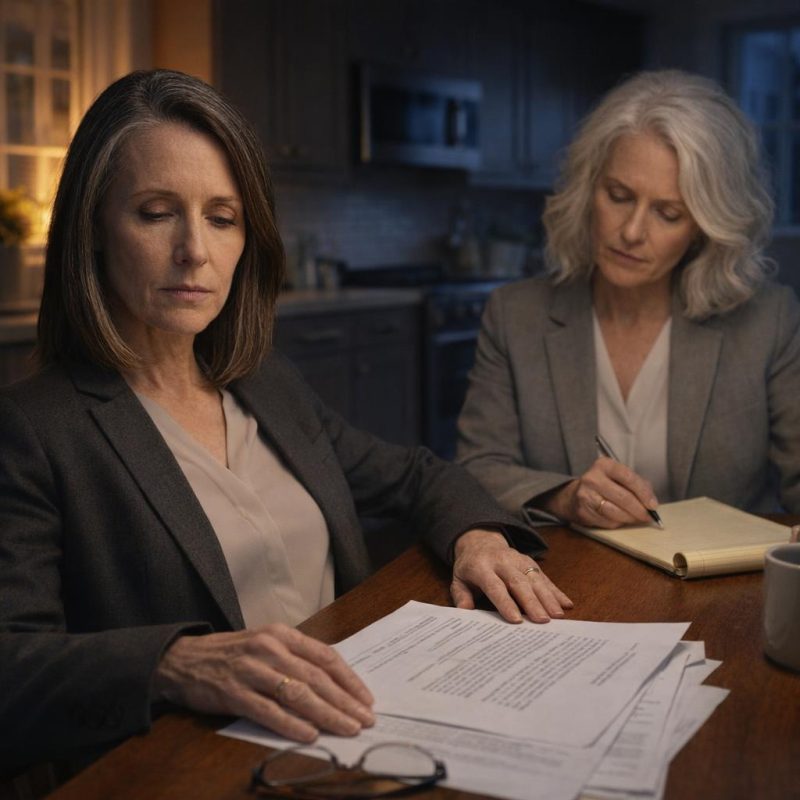 Image by RM AI
The Letters Go Out
The letter arrived on a Tuesday, and I almost didn't open it right away. I recognized the company letterhead and set it on the kitchen counter while I made my coffee, taking my time the way I'd learned to take my time with things that mattered. When I finally sat down and unfolded it, I read it twice before I let myself feel anything. It was addressed to all current and former employees. It stated, in plain and unambiguous language, that the internal investigation had concluded, that the accounting irregularities identified during my tenure had been traced to actions taken by individuals who were no longer with the organization, and that I bore no responsibility for any of the failures that had been attributed to me. It said my record had been corrected. It said the company regretted the harm caused by the inaccurate characterizations that had circulated. By the end of that day, my phone had more messages than I could count — people I hadn't heard from in months, some in years, saying they were glad the truth had come out, that they'd never believed it, that they were sorry they hadn't said so sooner. A few of those messages made me cry. Most of them made me smile. I set the letter flat on the table, smoothed it once with my palm, and read my name in that second paragraph one more time.
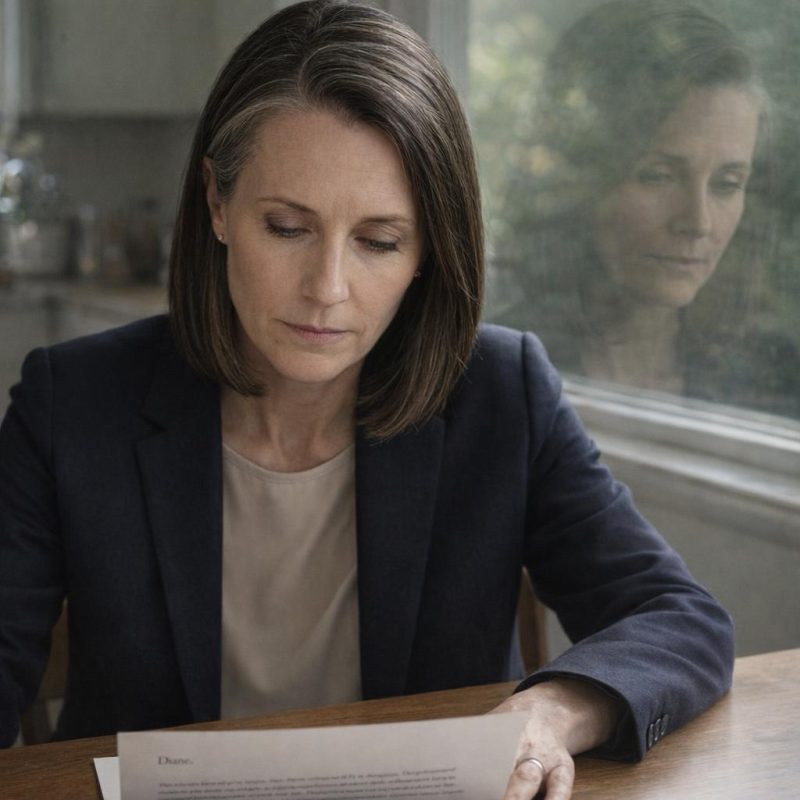 Image by RM AI
The Last Walk Out
They gave me a Tuesday morning to come in and collect my things, and I drove over in no particular hurry. The building looked exactly the same from the outside — same glass doors, same parking lot, same faded stripe on the curb where I'd parked for thirty-three years. Inside was quieter than I remembered. A few people looked up when I walked through, and a handful came over — Linda from accounts payable, young Marcus from the mailroom who had nothing to do with any of it, a woman from HR whose name I'd always mixed up but whose face I was glad to see. They thanked me. One of them said, quietly, that what I'd done had mattered. A couple of others kept their eyes on their screens, and I didn't hold it against them. I packed my notebooks, my desk calendar, the small framed photo I'd kept by my monitor for years. I walked the long way to the elevator, past the conference room where Jennifer had handed me that retirement package like it was a favor, past the corridor where I'd spent more hours than I could calculate doing work I was proud of. Thirty-three years of careful, honest work. They had counted on me being too quiet to fight back. I took the elevator down, walked through the lobby, and stepped out into the morning air feeling exactly like myself.
 Image by RM AI
The Road Trip
My husband had kept an old road atlas in the hall closet, the kind with the spiral binding and the pages soft from handling. He'd marked a route in blue pen years ago — through the hill country, up along the coast, ending somewhere near a lighthouse he'd read about in a magazine. I'd looked at that atlas more times than I could count over the past two years, and I'd always found a reason to wait. I stopped waiting. I loaded the car on a Saturday morning in early spring, put the atlas on the passenger seat, and drove. I followed his blue line as faithfully as I could, stopping when something caught my eye — a roadside garden in full bloom, a diner where the coffee was strong and the owner wanted to talk about her grandchildren, a stretch of highway where the light came through the trees at an angle that made me pull over just to sit with it. I thought about my granddaughter and the things I wanted to show her someday. I thought about Carol, and Ed, and Tom, and Robert, and Angela, and what it had cost each of them to tell the truth. I thought about how close I had come to losing everything I'd spent a lifetime building. Somewhere along the coast, with the window down and the salt air coming in, I understood that this was not an ending at all.
 Image by RM AI
The Cards in the Notebook
The cards started arriving about three weeks after the letter went out, and they kept coming for longer than I expected. Some were short — just a line or two, a name I recognized from a department I'd barely crossed paths with. Others were several pages, handwritten, careful. One woman said she'd watched what happened to me and had been afraid to speak up about something at her own job, and that seeing how things turned out had given her the courage to finally say something. That one I read three times. I kept them all in one of my old purchasing notebooks — the same kind I'd used for thirty-three years to log vendor contacts and order confirmations and the small details that nobody else thought to write down. It seemed right. The habits that had saved me were the same habits I'd practiced every ordinary day without thinking much about them: write it down, keep the copy, tell the truth, don't let anyone rush you past something that doesn't add up. I wasn't loud. I wasn't powerful. I didn't have allies in the right offices or a lawyer on retainer. What I had was a notebook, a clear conscience, and enough patience to outlast people who assumed I wouldn't. I opened the notebook on my kitchen table one afternoon, the cards tucked neatly inside, and understood that the most durable thing I'd ever built wasn't a career — it was a record of who I had been all along.
 Image by RM AI
KEEP ON READING

The story of Ching Shih, the Woman Who Became the…
Unknown author on WikimediaFew figures in history are as feared…
By Emilie Richardson-Dupuis Dec 29, 2025
Einstein's Violin Just Sold At An Auction—And It Earned More…
A Visionary's Violin. Wanda von Debschitz-Kunowski on WikimediaWhen you hear…
By Ashley Bast Nov 3, 2025
This Infamous Ancient Greek Burned Down An Ancient Wonder Just…
History remembers kings and conquerors, but sometimes, it also remembers…
By David Davidovic Nov 12, 2025
The Mysterious "Sea People" Who Collapsed Civilization
3,200 years ago, Bronze Age civilization in the Mediterranean suddenly…
By Robbie Woods Mar 18, 2025
The Deadly Beer Flood That Sounds Too Strange To Be…
en.wikipedia.org on GoogleOn the afternoon of October 17, 1814, a…
By Cameron Dick Jun 25, 2026
20 Soldiers Who Defied Expectations
Changing the Rules of the Battlefield. You’ve probably heard plenty…
By Annie Byrd Feb 10, 2026