I Refused to Hold My Flight for a Famous Actor—His Assistant's Empty Seat Exposed a Scandal That Changed Everything
I Refused to Hold My Flight for a Famous Actor—His Assistant's Empty Seat Exposed a Scandal That Changed Everything
The Famous Passenger in 2A
Thirty-one years. That's how long I'd been doing this job when the flight that changed everything departed Los Angeles on a Tuesday morning in October. I was fifty-eight years old, and I'd worked that LAX-to-JFK route more times than I could count — early departures, red-eyes, holiday rushes, the whole spectrum. I knew the rhythm of a boarding sequence the way some people know their own heartbeat. I knew which passengers would ask for a pillow before I offered one, which ones would pretend to sleep to avoid conversation, and which ones would make my morning interesting in ways I hadn't asked for. He boarded about fifteen minutes before departure, escorted by one of our airline representatives — a detail that already told me something about the morning ahead. The baseball cap was pulled low, the designer jacket was studied-casual, but there was no disguising that particular kind of bearing, that expectation of space and deference that follows certain people like a second shadow. He settled into 2A without making eye contact, arranged his carry-on with the practiced efficiency of someone who flew constantly, and accepted the pre-departure water I offered with a nod that was technically polite. I'd served heads of state, rock legends, and Fortune 500 executives in that same seat. I poured the water, smiled, and moved on. Three decades had taught me that the ones who expected the world to bend for them rarely noticed when it didn't — at least not right away.
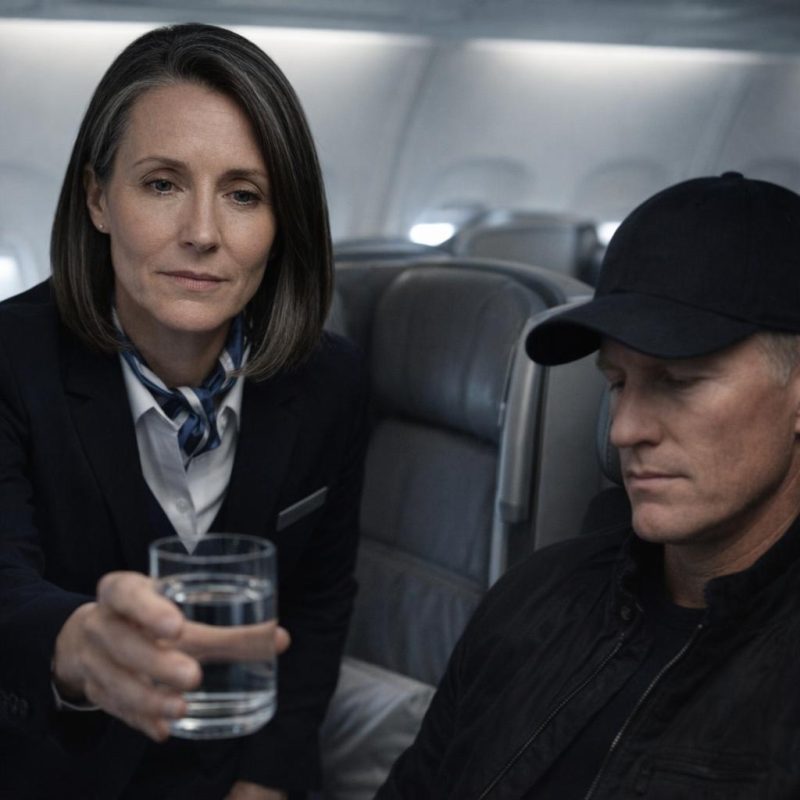 Image by RM AI
The Missing Assistant
The boarding process moved along the way it always does — a steady stream of passengers finding overhead bin space, settling in, pulling out headphones and tablets and the particular armor people wear when they're about to be sealed into a metal tube for five hours. I worked my way through the first class cabin, checking in with each passenger, making sure everyone had what they needed before we closed up. He was arranging things in the seat pocket when I came back around — phone, earbuds, a slim leather document case that he tucked into the pocket with a kind of deliberate care. That's when he mentioned it, almost as an aside, the way you'd mention you'd forgotten your umbrella. His assistant was supposed to be traveling with him. The seat beside him, 2B, was empty. I glanced at it and told him we were about forty minutes from departure, that there was still time. He waved a hand — not dismissive exactly, more like the information was beside the point. He said the name once, Eric, and told me the kid was probably just running late. His posture was relaxed, his tone easy. But then he said the name again — Eric — and something in the second saying of it had an edge underneath it that his easy posture didn't quite match.
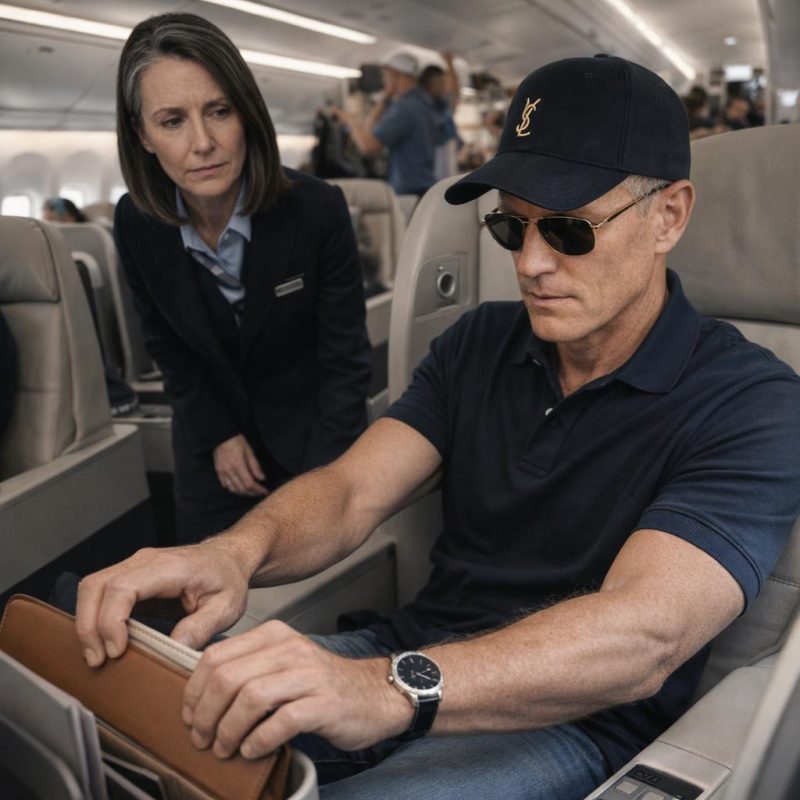 Image by RM AI
We're Not Leaving
We were maybe three minutes from closing the cabin door when I made my final pass through first class. The boarding door was still open, the jet bridge still attached, but the gate agent had already radioed that the last of the checked passengers had boarded. I was moving toward the front to signal we were ready when he stopped me. Not loudly — he didn't need to be loud. He simply said my name, the one on my name tag, and when I turned, he was looking at me with the kind of calm that people use when they want you to understand they are very serious without having to raise their voice. He said the aircraft was not leaving. Just like that. Flat, declarative, the way you'd state a fact about the weather. He pointed to the empty seat beside him without looking at it, the way you point at something you've already decided about. I stood there for a moment, processing the gap between what he'd said and what the situation actually allowed for. The other passengers in first class had gone very still in that particular way people go still when they're pretending not to listen. I kept my expression neutral and my voice even. The silence that followed his words settled over the cabin like something with actual weight.
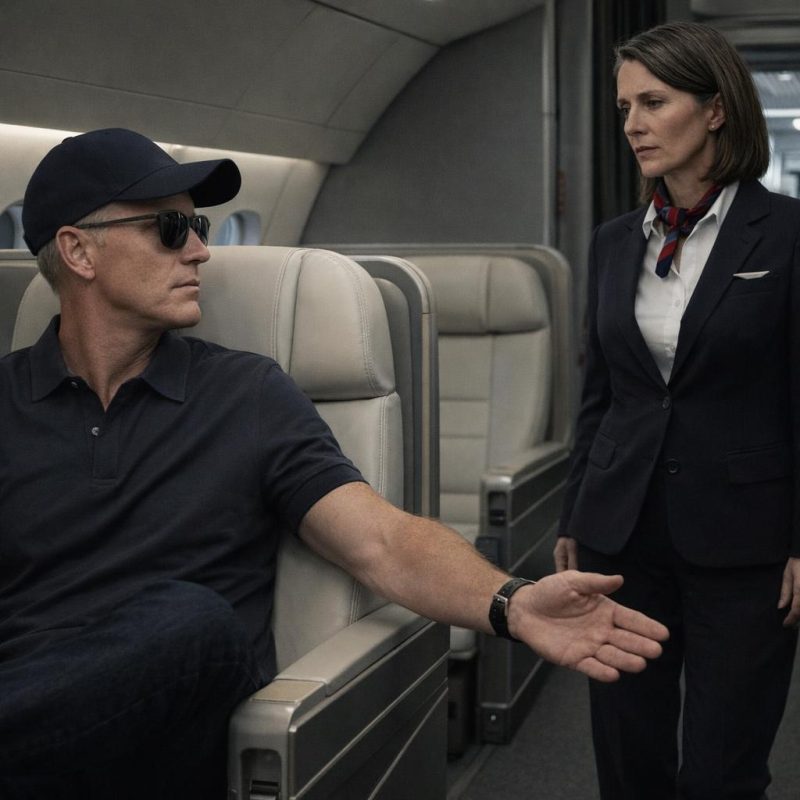 Image by RM AI
Tell the Captain Who's Asking
I told him, as calmly as I could, that I understood his concern and that I would check on the situation. He shook his head before I'd finished the sentence. He wanted ten minutes, he said. Just ten minutes for Eric to get to the gate. Then he told me to inform the captain who was making the request. He said it without any particular heat, which somehow made it land harder than if he'd been angry about it. I explained that we had a departure slot — that missing it meant delays that affected not just our flight but connections and scheduling across the board, that there were over two hundred other passengers aboard whose plans mattered too. He listened to all of that with the patience of someone who has heard reasonable explanations before and found them largely irrelevant. He mentioned that he flew with our airline constantly, that he was a loyal customer, that surely this was the kind of situation where some flexibility was possible. He wasn't wrong that he flew with us often — I'd actually seen his name on manifests before. But frequent flyer status and departure slots exist in entirely separate universes. I kept my tone warm and my position clear. What stayed with me, even as I prepared to walk toward the cockpit, was the absolute certainty in his voice — the assumption that once the captain heard his name, the answer would simply change.
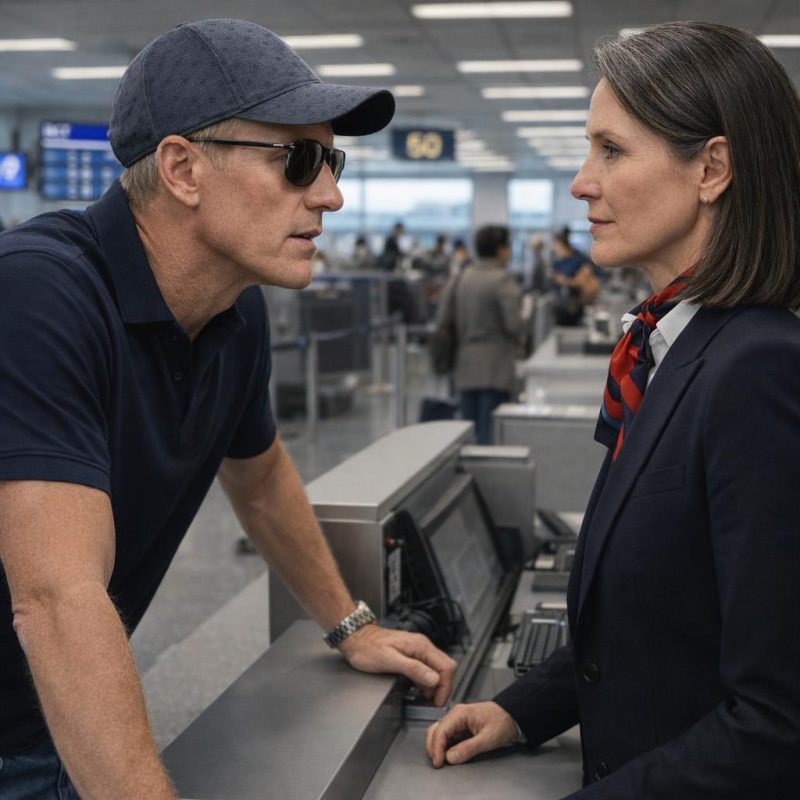 Image by RM AI
And Tell Him I'm Not Asking
I turned to head toward the cockpit and had taken maybe two steps when he spoke again. He said he wasn't asking. The words were quiet but they carried — the kind of quiet that's designed to carry, that fills a space without effort. I stopped and turned back. His expression hadn't changed much, but there was something more settled in it now, a line drawn. I told him I heard him and that I would speak with the captain. I kept my voice level and my face professional, the way thirty-one years teaches you to do when a situation is tilting somewhere you'd rather it didn't. What I was aware of, even as I said it, was that the cabin had shifted. The man in 3A had stopped typing. The couple across from him had gone quiet mid-conversation. And the woman directly across the aisle from 2A — she'd had a magazine open in her lap since boarding, one of those thick glossy ones — she lowered it slowly and looked straight at him, then at me, with the open attention of someone who had stopped pretending entirely.
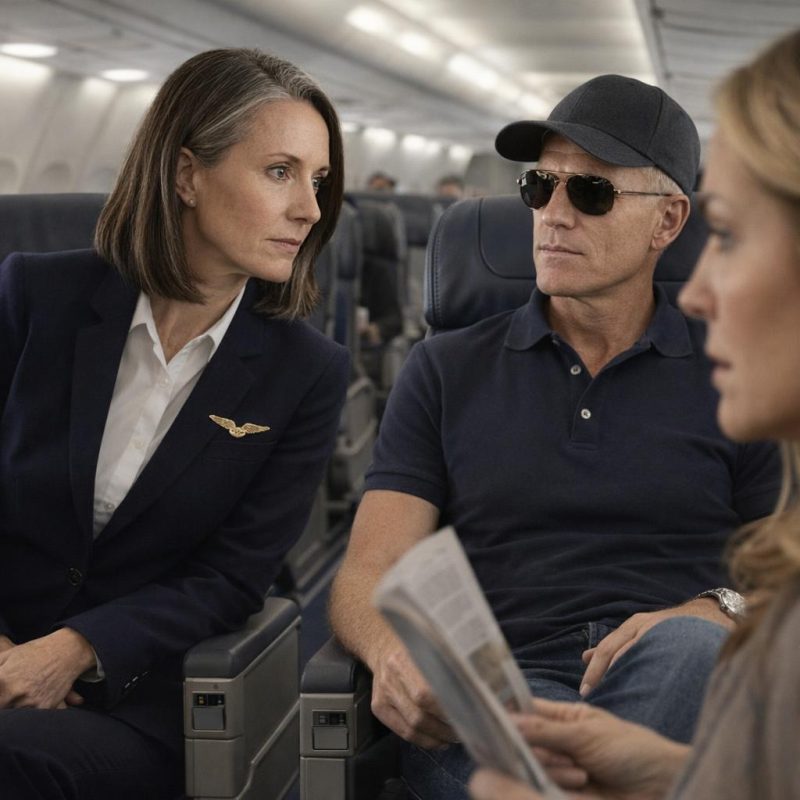 Image by RM AI
The Audience in First Class
I walked toward the cockpit at a pace that I hoped read as purposeful rather than rattled, because I was not going to give the first class cabin anything more to watch than it already had. And it was watching — all of it. The man in 3A had given up entirely on his laptop. The couple behind him were murmuring to each other in low voices, their eyes tracking me as I moved. The woman with the magazine had set it face-down on her tray table. Even the passenger in 1A, who had barely looked up since boarding, had shifted in his seat to get a better angle. I'd worked enough flights to know that first class passengers pride themselves on their studied indifference — the performance of being too important to notice what's happening around them. That performance was over. I kept my eyes forward and my shoulders square. Behind me, he was still in 2A, and I could feel the weight of his confidence at my back — the certainty that this was a temporary inconvenience, that the answer coming back from the cockpit would be the one he'd already decided on. The cabin had stopped being a collection of separate private bubbles. It was one room now, with one situation unfolding in it, and everyone in it knew it.
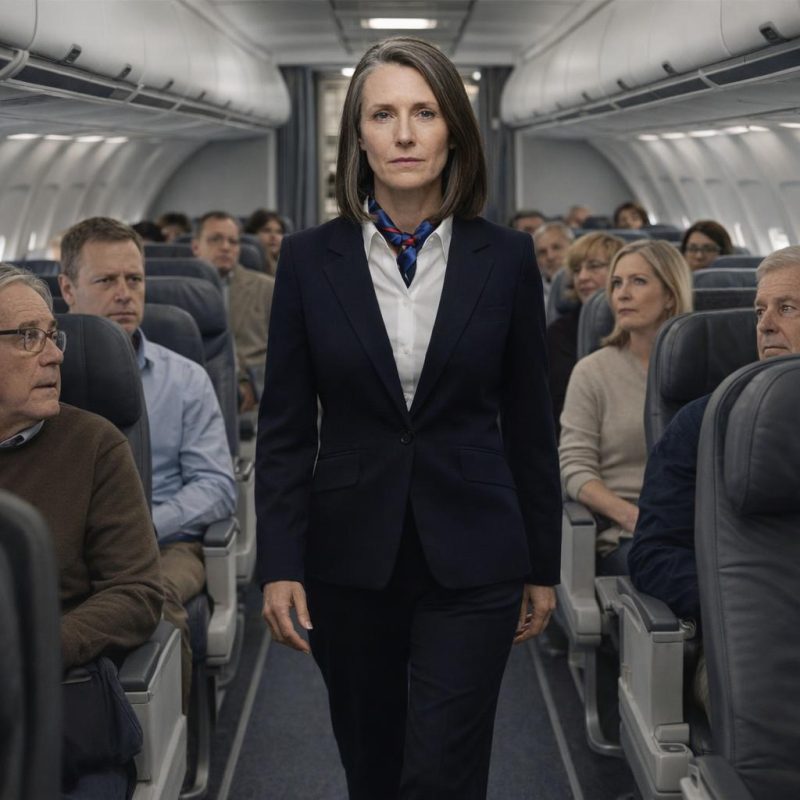 Image by RM AI
Captain Ray's Decision
Ray was running through his pre-departure checklist when I stepped into the cockpit and pulled the door mostly closed behind me. I'd worked with Ray for going on twelve years, and one of the things I'd always appreciated about him was that he could read a situation from a person's posture before they'd said a word. He looked up from his instruments and waited. I laid it out for him plainly — the passenger in 2A, the missing assistant, the demand for a ten-minute hold, and the instruction to make sure the captain knew who was asking. Ray's expression didn't change much. He picked up the radio and checked in with the gate agent, who confirmed that the missing passenger had checked in for the flight but had not presented at the gate. Ray set the radio down and looked at the departure clock on the instrument panel. I watched him take in the numbers. He didn't deliberate long. He looked back at me with the steady, unhurried calm of someone who has made ten thousand operational decisions and finds this one straightforward, and he said the aircraft was leaving on schedule — no hesitation, no qualifier, just those four words sitting there like something that had already been decided before I'd even walked in.
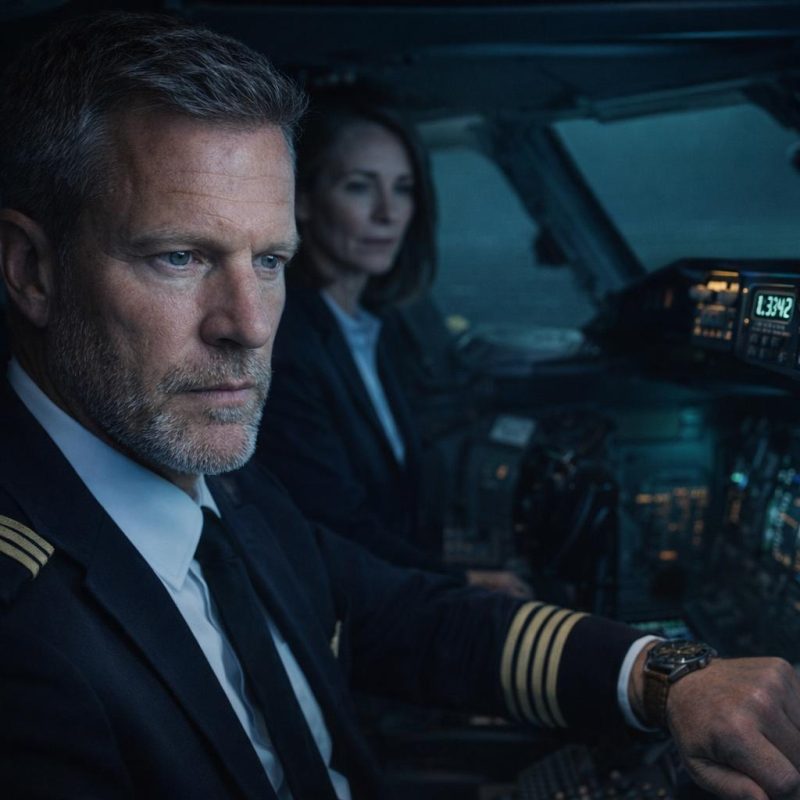 Image by RM AI
Delivering the Answer
I walked back through the first class cabin knowing that every set of eyes in it was tracking me. I stopped at row 2 and crouched slightly so I wasn't talking down at him — a habit from years of delivering news people didn't want, a small gesture toward dignity in an undignified moment. I told him the captain had reviewed the situation and that we would be departing on schedule. I said it clearly and without apology, because there was nothing to apologize for. He looked at me for a moment without speaking. I'd seen a lot of reactions to unwelcome news over the years — anger, bargaining, the tight-lipped silence of someone composing themselves. What crossed his face in that first second was something I hadn't quite expected from him: surprise. Genuine surprise, the unguarded kind, there and gone before he could arrange his expression back into something more controlled. He'd been so certain the answer would be different. Whatever he'd expected when he told me to tell the captain who was asking, it wasn't this. The first class cabin was very quiet. He looked away from me toward the empty seat beside him, and for just a moment, before the composure came back and he began to think about what to do next, the confidence he'd carried since he boarded simply wasn't there.
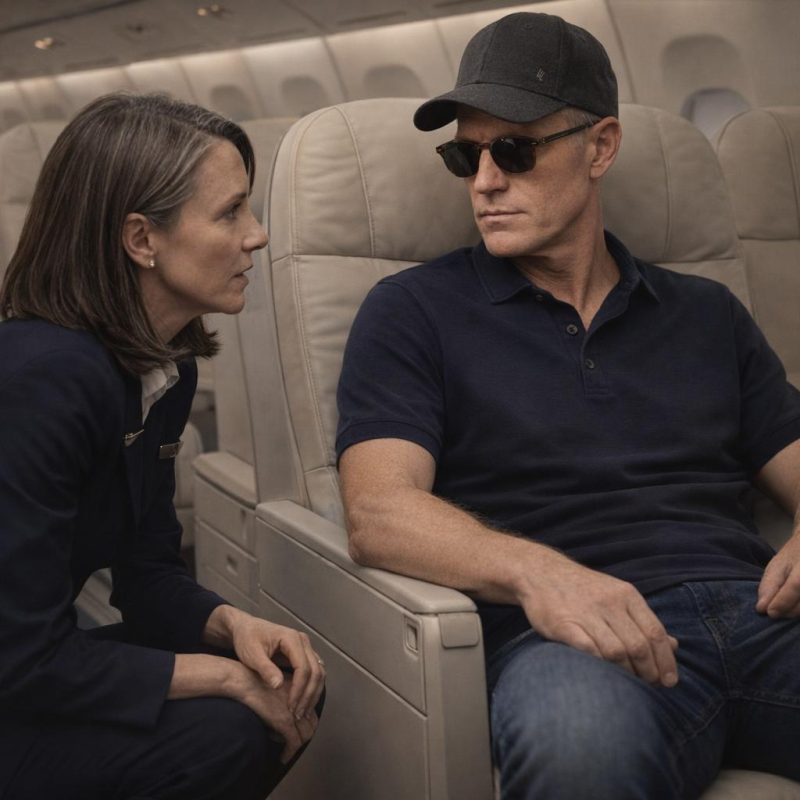 Image by RM AI
Get the Captain Out Here
He recovered faster than I expected. The surprise I'd caught on his face lasted maybe three seconds before something else moved in — a kind of recalibration, a decision being made. He straightened in his seat and told me he wanted to speak with the captain directly. Not a request. A statement. I explained, as calmly as I could, that Captain Ray was preparing the aircraft for departure and wasn't available to come into the cabin. That was the wrong answer. He told me I didn't understand who I was dealing with — that he brought more publicity to this airline in a single social media post than their entire marketing budget generated in a quarter. He said it loud enough that I didn't have to look around to know the other passengers in first class were hearing every word. Then he pulled out his phone and held it up like evidence, telling me he had the CEO's personal number and wasn't afraid to use it. I kept my expression neutral. I'd been doing this job for over two decades and I'd heard variations of that threat before, though rarely delivered quite so publicly. The first class cabin had gone completely still — no rustling, no drink orders, no quiet conversations. Just the low hum of the aircraft systems and the sound of a man who was used to getting his way, realizing he might not.
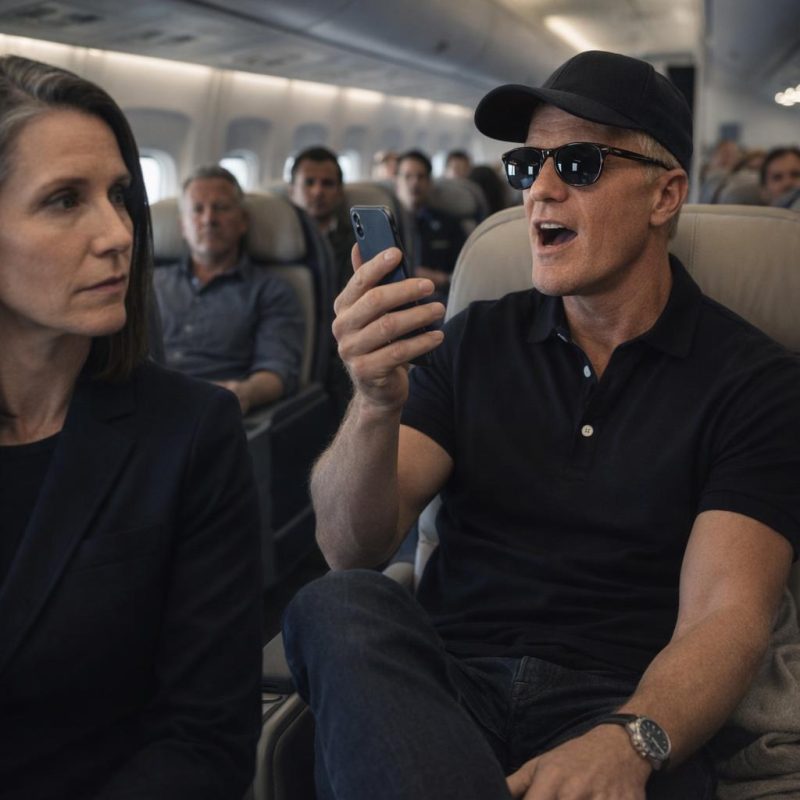 Image by RM AI
The Cockpit Door Opens
I was still standing at the front of the cabin, trying to decide how to respond to the CEO comment, when I heard the cockpit door open behind me. I turned. Ray stepped out — not hurried, not dramatic, just steady and deliberate the way he always moved when something needed handling. He was in full uniform, cap on, and he had the kind of presence that didn't require volume to fill a room. I'd worked alongside Ray for years and I'd seen him de-escalate situations that should have ended in diversions, always with that same unhurried calm. He glanced at me briefly — just a look, nothing more — and then he walked toward row 2. The first class passengers who had been pretending not to watch stopped pretending. The actor looked up from his phone, and I saw something shift in his expression. He'd been building toward something, working himself up, and then Ray was simply there, standing in the aisle, waiting for him to speak first. The actor opened his mouth — and his face changed.
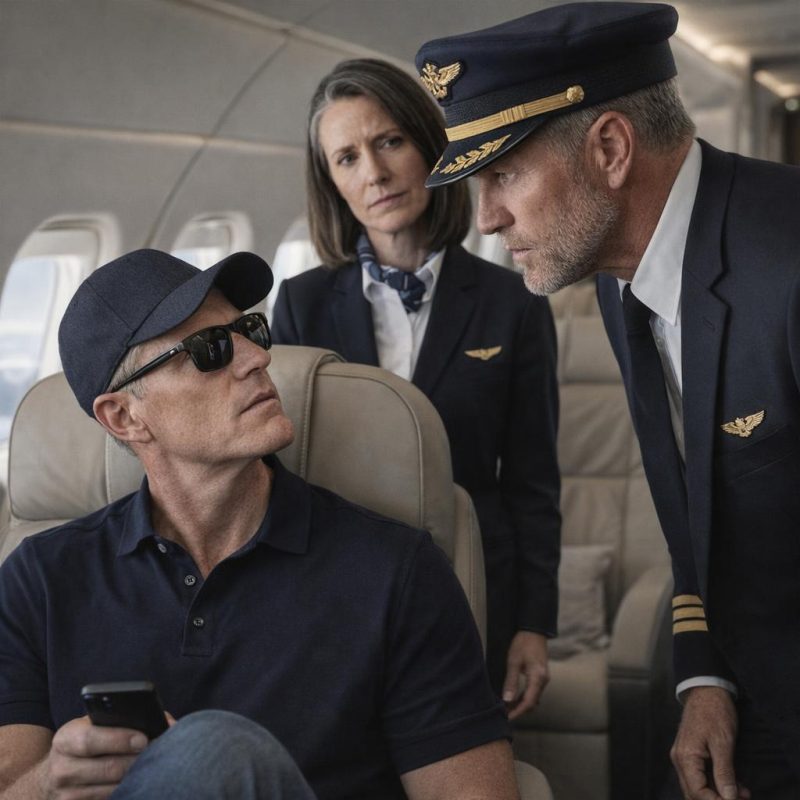 Image by RM AI
You Purchased a Seat, Not the Airplane
The actor launched into it immediately — the assistant, the delay, the inconvenience, the fact that he was a paying customer and a public figure and that some accommodation should have been made. He kept his voice measured at first, almost reasonable, like he was presenting a business case. Ray listened without interrupting. He stood in the aisle with his hands loose at his sides and let the man finish. When the actor was done, Ray asked him one question: why was the assistant late? The actor said that wasn't relevant. Ray said, quietly, that it was relevant to the hundred and eighty-six other passengers who had managed to arrive on time. The cabin went so still I could hear the ventilation system. Then Ray told him, in the same even tone he might use to read a weather report, that he had purchased a seat on this aircraft — not the aircraft itself. He said it without heat, without satisfaction, without any of the edge I might have put into it if I'm being honest with myself. He just said it, plainly, the way you state a fact that doesn't require argument. The actor stared at him. Nobody in first class moved. The words had landed somewhere they couldn't be taken back from, and the quiet that followed had a weight to it that I felt in my chest.
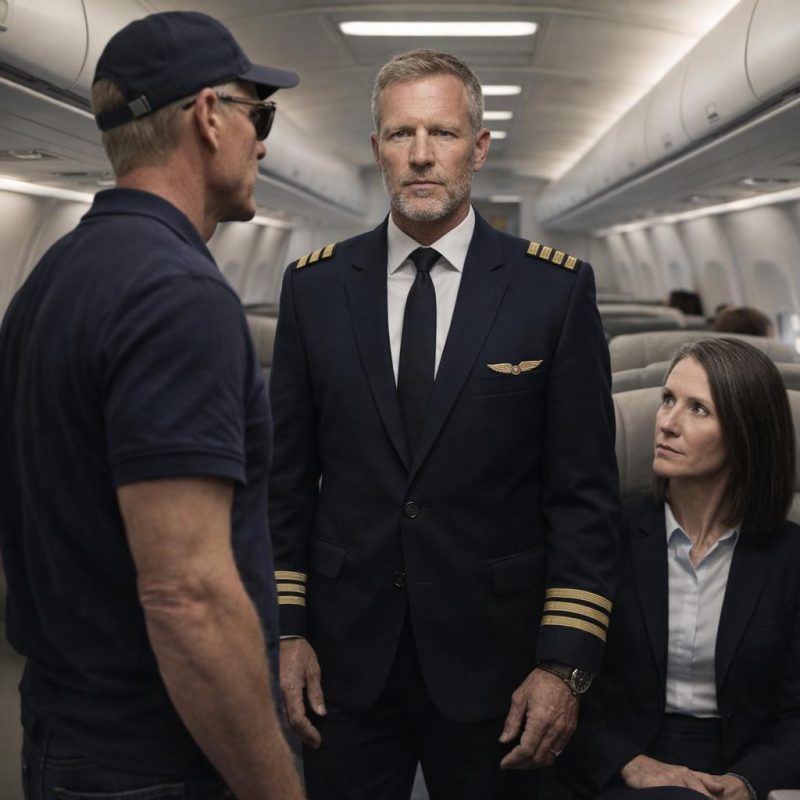 Image by RM AI
The Choice
Ray gave him a moment — not a long one — and then he laid it out simply. Two options. The actor could remain in his seat and travel with us to the destination, or he could collect his belongings and deplane now and wait for his assistant on the next available flight. Either choice was fine. What wasn't an option was the aircraft sitting at the gate any longer. Ray said it the way you'd explain a gate change to a confused traveler — no malice, no triumph, just information. I watched the actor's jaw tighten. He started to say something, stopped, and then his eyes moved across the cabin. I followed his gaze. Every passenger in first class was watching him. Not pretending to read, not staring at phones — watching, openly, the way people watch when they've given up the pretense of minding their own business. Whatever calculation he ran in those few seconds, it landed where I expected it to. He settled back into his seat without another word. Ray nodded once, turned, and walked back to the cockpit. The door closed behind him. I exhaled slowly and began moving through the cabin to prepare for departure, telling myself the hard part was over.
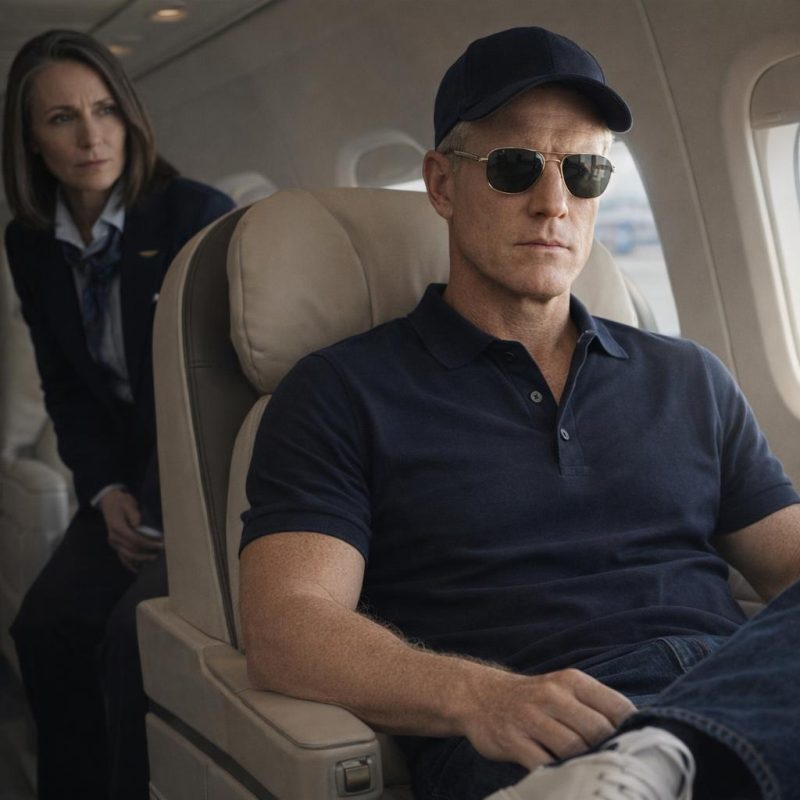 Image by RM AI
The Gate Calls
The boarding door was thirty seconds from closing when the crew phone at the front of the cabin buzzed. I picked it up expecting the gate agent to confirm we were clear. Her voice was professional as always, but something in the cadence was off — a slight hesitation before she spoke, a careful flatness that didn't match the routine check-in I was expecting. She asked me to come to the boarding door. I told her we were about to close out. She said she knew, and asked me to come anyway, and then she added — quietly, like she was making sure no one near her could hear — that I shouldn't announce anything over the PA. I stood there for a second with the handset against my ear, trying to read what I'd just heard. Gate agents don't ask you to come to the door without a reason, and they don't ask you to keep quiet about it unless the reason is something they don't want broadcast through the cabin. I set the phone down and moved toward the boarding door, keeping my pace even so nothing in my body language would draw attention from the passengers behind me. I didn't know what I was walking toward, but the careful way she'd said it stayed with me.
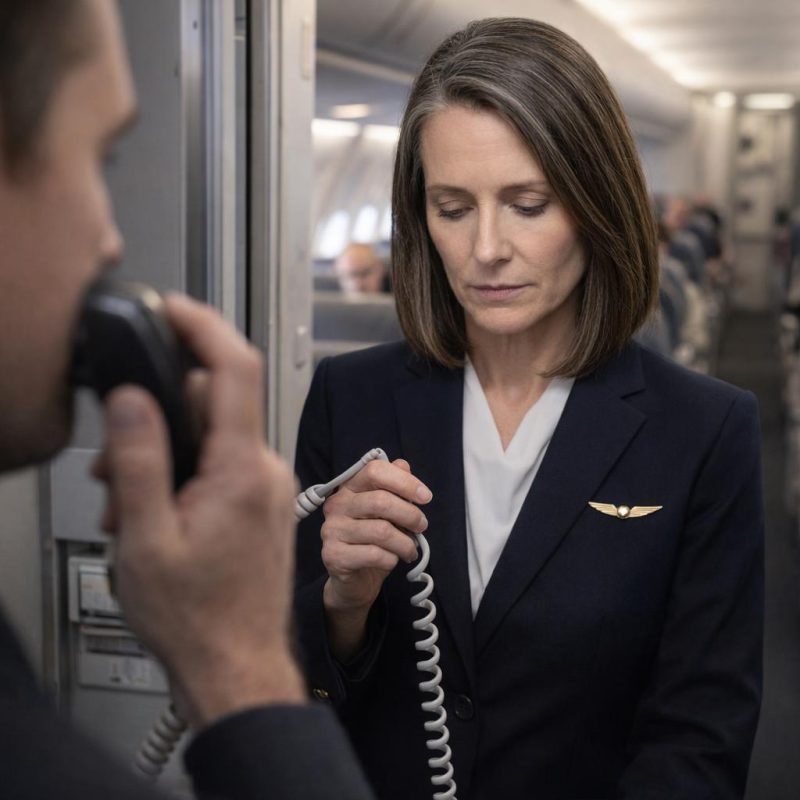 Image by RM AI
Please Don't Tell Him I Made It
I stepped through the boarding door and he was standing right there in the jetway — the assistant, Eric, the young man whose empty seat had started all of this. He was breathing hard, like he'd run the length of the terminal, and his shirt was damp at the collar. He had a leather document case tucked under one arm and he was holding it the way you hold something you're afraid of losing, both hands, close to his body. The gate agent stood a few feet back, watching us with an expression I couldn't quite read. Technically the door hadn't closed yet. He could still board. I looked at him and waited for him to step forward, and he didn't. Instead he leaned in slightly and spoke low, almost under his breath, and what he said stopped me cold. He asked me not to tell the actor he'd made it. Not to mention he'd been here at all. I didn't respond right away. I looked at him — really looked — trying to understand what I was hearing. He glanced past me into the cabin, just a quick look, and the expression on his face in that moment wasn't relief at having almost made his flight. It was something closer to dread.
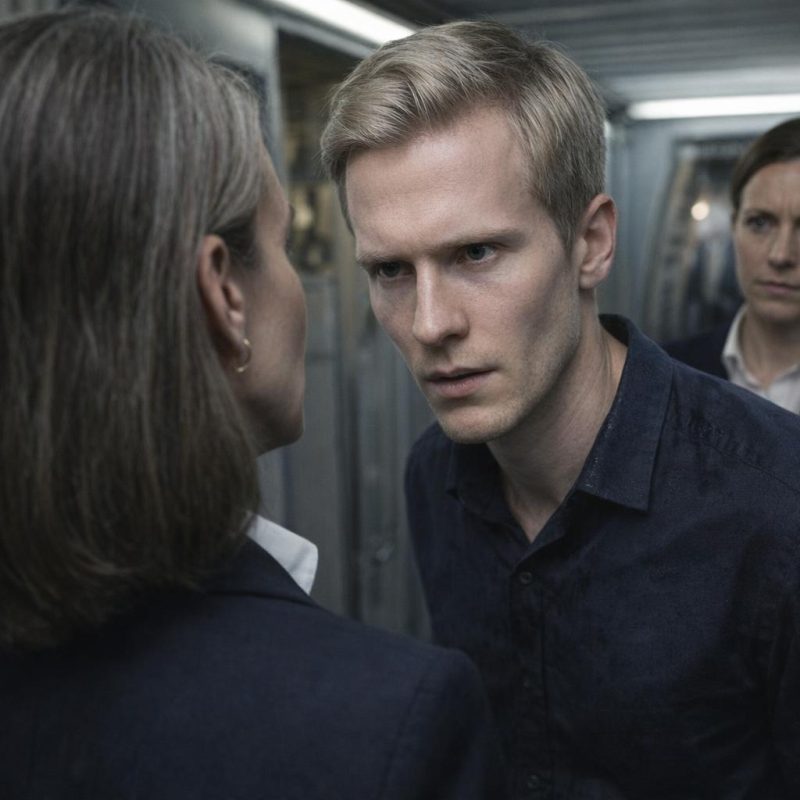 Image by RM AI
Tell Him I Missed It
I kept my voice low and asked him why. He looked down at the document case, then back at me, and for a moment I thought he wasn't going to answer at all. Then he said he wasn't getting on that plane. Not today. Not with him. He didn't say who he meant by him, but he didn't need to. The gate agent stepped forward and said they needed to close the door, that we were already past the window. I held up one finger — just a second — and looked back at Eric. I wanted more than that. I wanted to understand what was happening, why a young man who had apparently run through an airport to reach this gate was now refusing to walk ten feet onto the aircraft. But there wasn't time, and whatever was going on, he'd already made his decision. He told me to just go. He said it quietly, without drama, like he'd been sitting with the choice for a while and had already made peace with it. Then he took one step back, away from the door, away from the aircraft, and I watched him move out of reach of the jetway threshold.
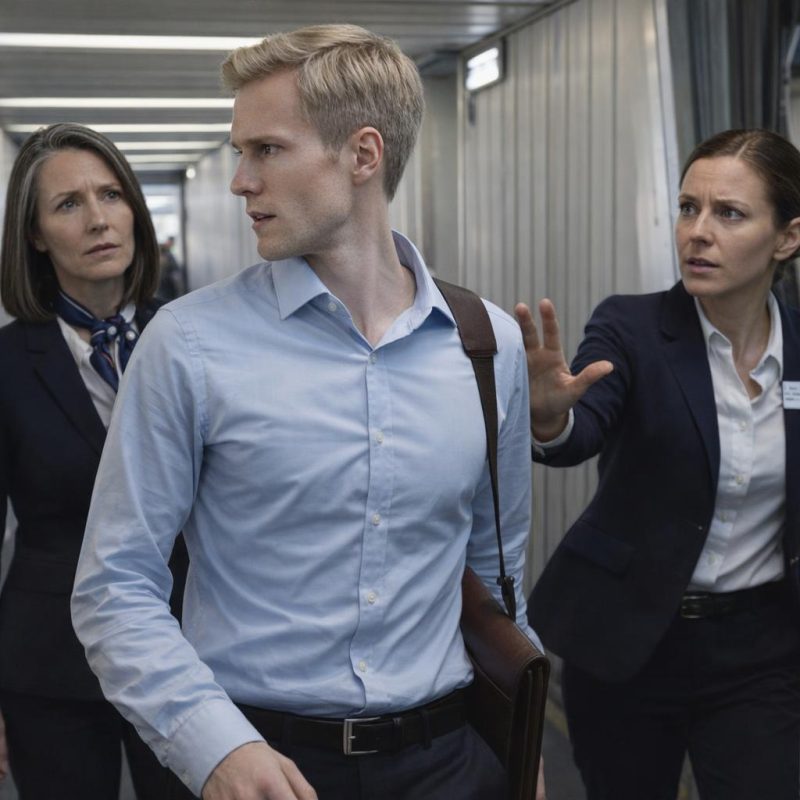 Image by RM AI
Departure Without Eric
The boarding door sealed with the soft mechanical thud I'd heard thousands of times, and I stood there for a moment before turning back toward the cabin. Eric's seat was empty. The actor was in his, reclined slightly, eyes forward, apparently satisfied that the situation had resolved itself in the most acceptable way available to him — his assistant had simply missed the flight. He didn't know what I knew, which wasn't much, but it was something. I moved through my pre-departure checks on autopilot, running through the motions while my mind kept circling back to the jetway. The sweat on Eric's collar. The way he'd held that document case. The look on his face when he'd glanced into the cabin — not the look of someone who'd missed a flight and was frustrated about it, but something quieter and more deliberate than that. I didn't know what he was afraid of. I didn't know what was in that case or why getting on this particular aircraft felt like something he couldn't do. The plane pushed back from the gate and began its slow turn toward the taxiway, and I carried with me the plain, strange fact that Eric had made it to the gate, had been close enough to board, and had walked away anyway.
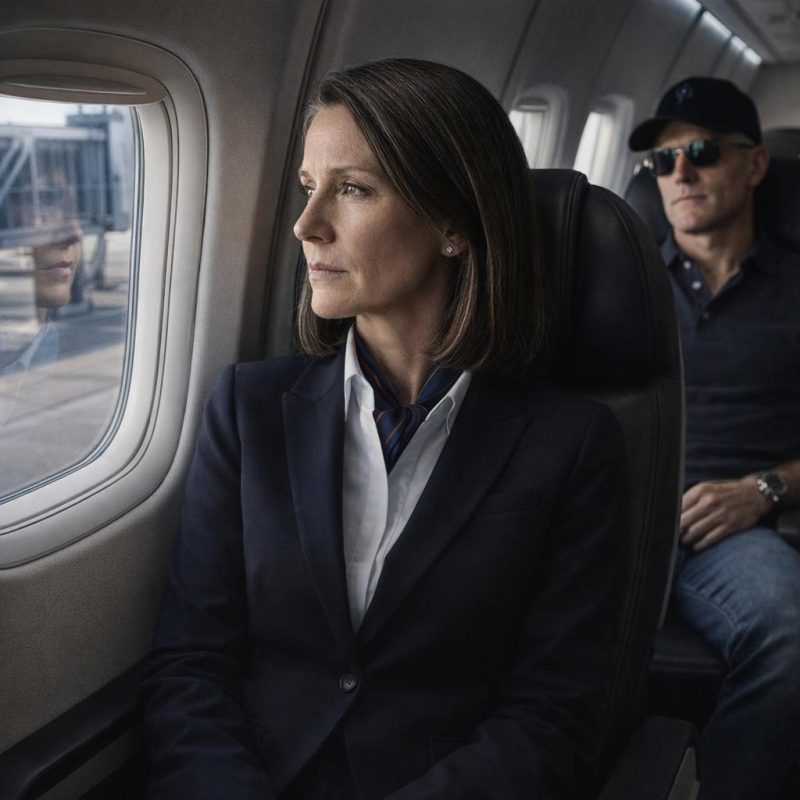 Image by RM AI
Did Eric Board?
We leveled off somewhere over the Rockies and I moved through first class with the drink cart, doing what I always do — keeping my hands busy and my face neutral. He called me over before I'd even finished the first row. Polite enough, the way people are when they want something and haven't decided yet how hard to push for it. He asked whether his assistant had made the flight. I told him no, his assistant had not boarded. He nodded slowly, like he was processing that, and I moved on. Twenty minutes later he flagged me down again. Same question, slightly different phrasing — had I seen his assistant at the gate, had there been any word. I told him again, calmly, that his assistant had not boarded the aircraft. That was true. It was the whole truth I was offering him, and I kept the rest of it — the jetway, the document case, the look on Eric's face — filed away somewhere he couldn't reach. I topped off a water glass two rows back and tried to settle into the rhythm of the service. Then his call light came on a third time. When I walked over, he asked it again — had his assistant boarded, had there been any word at all — and his voice had pulled a little tighter than before, his eyes not quite leaving my face while he waited for the answer.
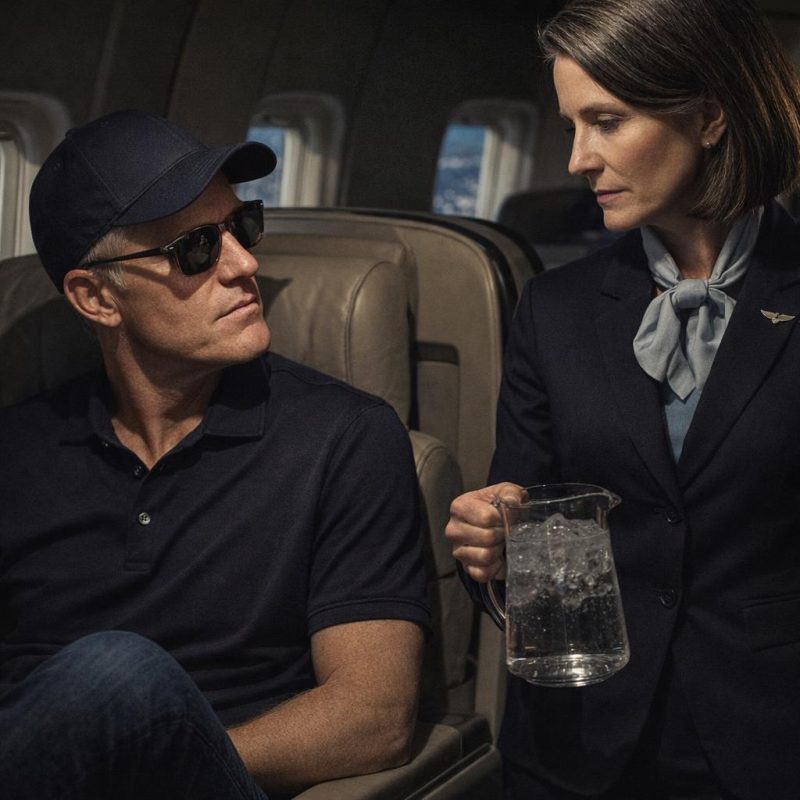 Image by RM AI
The Documents
The fourth time he called me over, the question had changed. He wasn't asking about Eric anymore — not exactly. He leaned forward slightly and asked whether anyone had mentioned if his assistant had his documents with him when he left the gate area. I kept my expression even. Documents. That was the word he used, and he used it carefully, like he'd been sitting on it for a while. I told him I had no information about any documents. He pressed a little — had anyone said anything about a case, a bag, anything Eric might have been carrying. I said I wasn't aware of anything like that, which was as close to the truth as I could get without lying outright. I moved back toward the galley and stood there for a moment with my back to the cabin. Something had shifted in the texture of his concern, and I'd felt it the second he said the word documents instead of Eric. Up until that point I'd told myself he was worried about his employee — that whatever was going on, there was at least some ordinary human concern underneath it. But the way his voice had changed when he asked about the case, the way his eyes had gone somewhere else entirely, made me wonder whether the documents mattered to him more than the person carrying them.
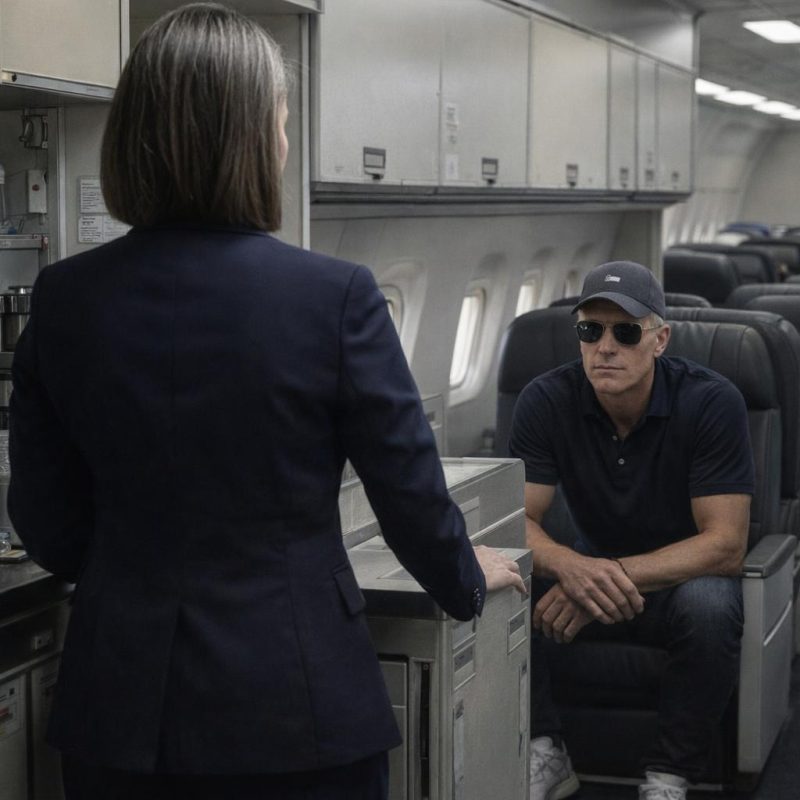 Image by RM AI
The Five Hundred Dollar Offer
It was somewhere over Nevada when he called me over again. The cabin had gone quiet — most of first class had settled into movies or sleep — and he waited until I was close before he spoke. He said he'd like to make it worth my while. He said five hundred dollars, cash, if I'd use the aircraft phone to contact operations and find out exactly where Eric was. Not approximately. Exactly. I looked at him for a moment before I answered. I told him I appreciated the offer but that wasn't something I was able to do, and that using the aircraft phone for personal passenger inquiries wasn't within my role. He started to say something else and I told him, gently but clearly, that my answer wasn't going to change. He sat back. The confidence he'd carried onto the plane — that particular ease that comes with being someone who usually gets what he asks for — had gone somewhere. His hands were resting on the armrests and they weren't quite still. I'd seen passengers get anxious on flights before, the white-knuckle kind, the ones who grip things and count minutes. This didn't look like that. This looked like a man doing arithmetic in his head and not liking the numbers, and the five hundred dollars had been less an offer than a measure of how badly he needed the answer.
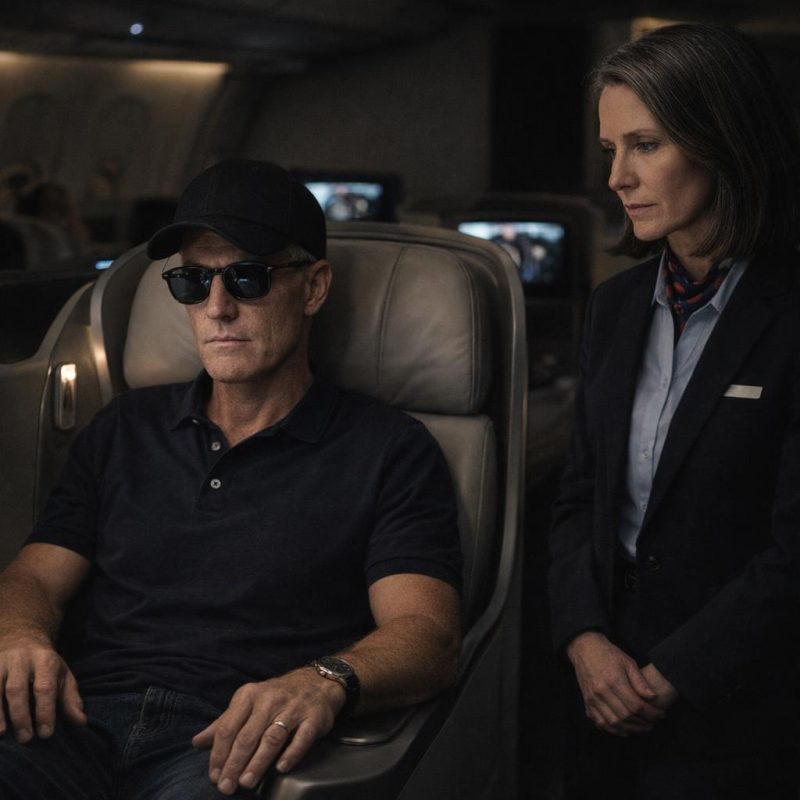 Image by RM AI
Did Anyone Speak to You Privately?
He let about forty minutes pass before he called me over again. I'd been hoping the quiet meant he'd settled, but when I reached his row I could see he hadn't. He asked me, in a voice that was lower than before, whether anyone from the gate had spoken to me privately before we departed. I kept my face still. It was a specific question — not had I seen anything, not had there been any confusion at the gate, but had anyone spoken to me privately. I told him that gate departures involved a lot of coordination and that I'd spoken with several staff members in the normal course of boarding. He watched my face while I said it. I held his gaze and kept my answer simple, because what I'd said was true and I had nothing to add to it. He nodded, slowly, and I excused myself and moved back toward the galley. I stood there with a beverage cart between me and the rest of the cabin and turned the question over in my mind. Of all the things he could have asked — about delays, about Eric's phone, about whether anyone had seen which direction he'd gone — he'd asked specifically about private conversations at the gate, and I couldn't stop thinking about why that particular detail would matter to him.
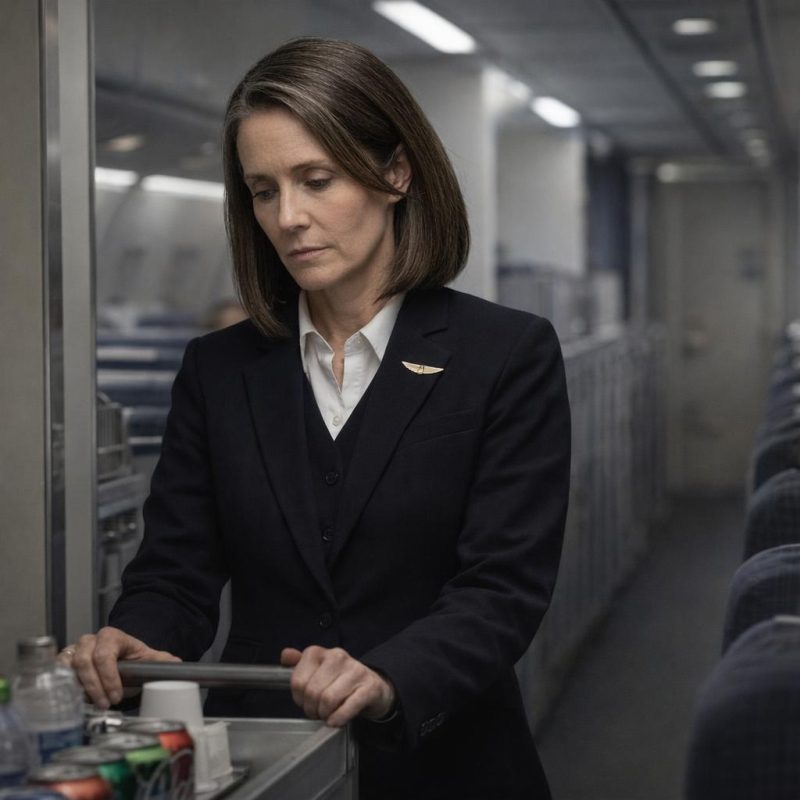 Image by RM AI
Typing Messages
For the better part of an hour after that, he left me alone. I noticed because the absence of his call light was its own kind of presence. I passed through first class twice during the service stretch and both times he had his phone out, screen angled slightly away from the aisle, fingers moving across it in short rapid bursts. Not scrolling — typing. He'd send something, set the phone face-down on the tray table, stare at the seat back in front of him for thirty or forty seconds, then pick it up and start again. His expression during the typing was concentrated in a way that had nothing relaxed in it. Between messages he'd glance toward the window, or down at the tray table, and once I caught him looking at the empty seat beside him with an expression I couldn't name. The easy authority he'd carried at the gate — the assumption that things would arrange themselves to his satisfaction — was completely gone. He looked like a man waiting for a reply that wasn't coming, and the longer the flight went on, the more the waiting seemed to cost him. I finished restocking the galley cart and came back through the cabin one more time. He was typing again, shoulders drawn up slightly toward his ears, the tension in them visible even from the aisle.
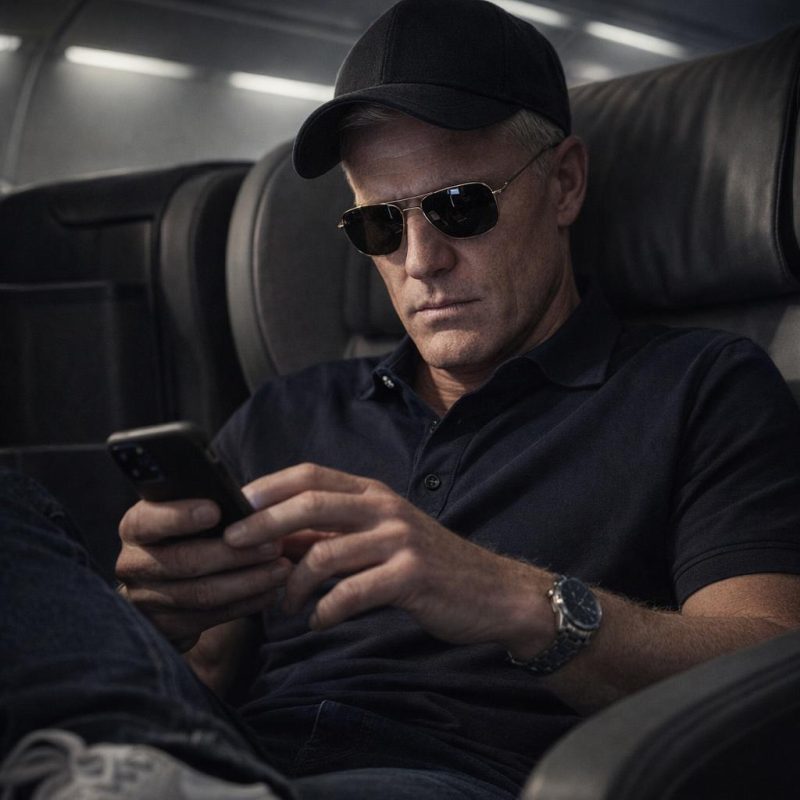 Image by RM AI
The Second Bribe Attempt
He called me over again about an hour before descent. I'd seen it coming — he'd been watching the aisle for a few minutes, that particular kind of watching where someone is working up to something. When I reached him he didn't open with pleasantries this time. He said he understood my position, and then he named a higher number. He said he just needed to know that Eric was all right, that he wasn't trying to cause any trouble, that it would stay between us. His voice was quieter than it had been at any point in the flight, and there was something in the quietness that felt less like discretion and more like effort — like keeping it low was taking concentration he didn't have much left of. I told him the same thing I'd told him before, in the same tone, and I meant it the same way. He didn't argue. He just nodded and looked down at his hands, which were gripping the armrests with more pressure than the situation called for. A woman across the aisle had glanced over twice during our exchange, the way passengers do when they sense something off-register in the cabin. I stepped back and straightened my jacket. The man who had boarded this flight with the particular confidence of someone accustomed to being accommodated had spent the last four hours becoming someone I almost didn't recognize.
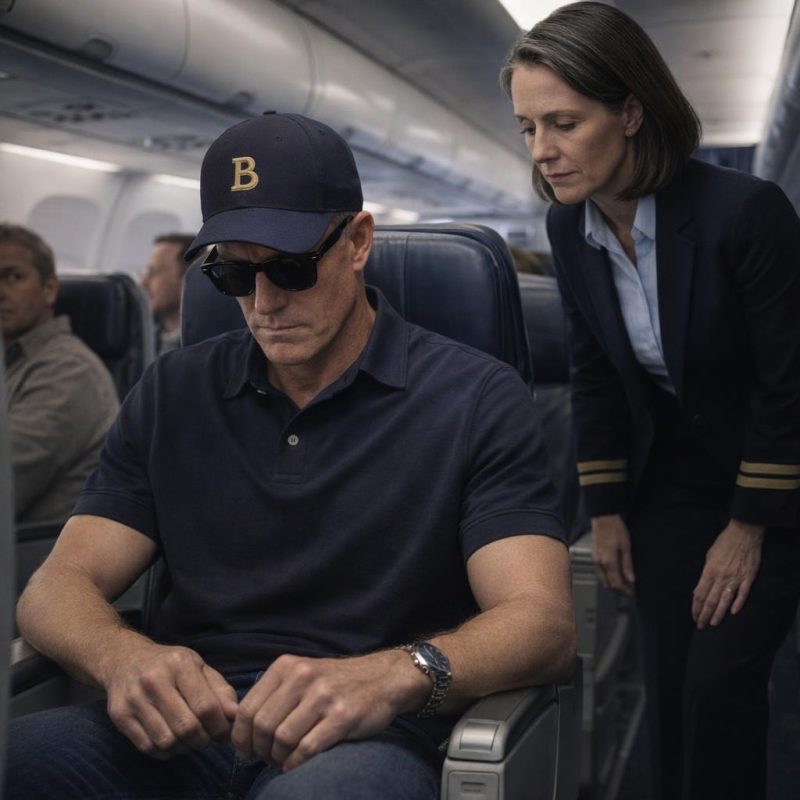 Image by RM AI
The Stare Toward the Empty Seat
I started noticing it during the meal service — the way his eyes kept going to the seat beside him. Not a glance, not the absent kind of looking you do when your mind is somewhere else. He'd finish a thought, or set his phone down, and his gaze would move to that empty space and stay there. I watched it happen three times in the span of twenty minutes. The seat had been empty since pushback, and by now the cabin had the settled feeling of a long flight in its final hours, most passengers reclined or drowsy. But he wasn't settled. The fourth time I passed his row he was staring at the tray table of the empty seat — the one that would have been Eric's — with an expression that had gone somewhere past worry into something harder to read. I slowed without stopping, the way you learn to do, and kept moving. A few minutes later I came back through from the galley and he had his hand extended toward the empty seat, fingers spread slightly, reaching toward the tray table as though he expected to find something resting on it.
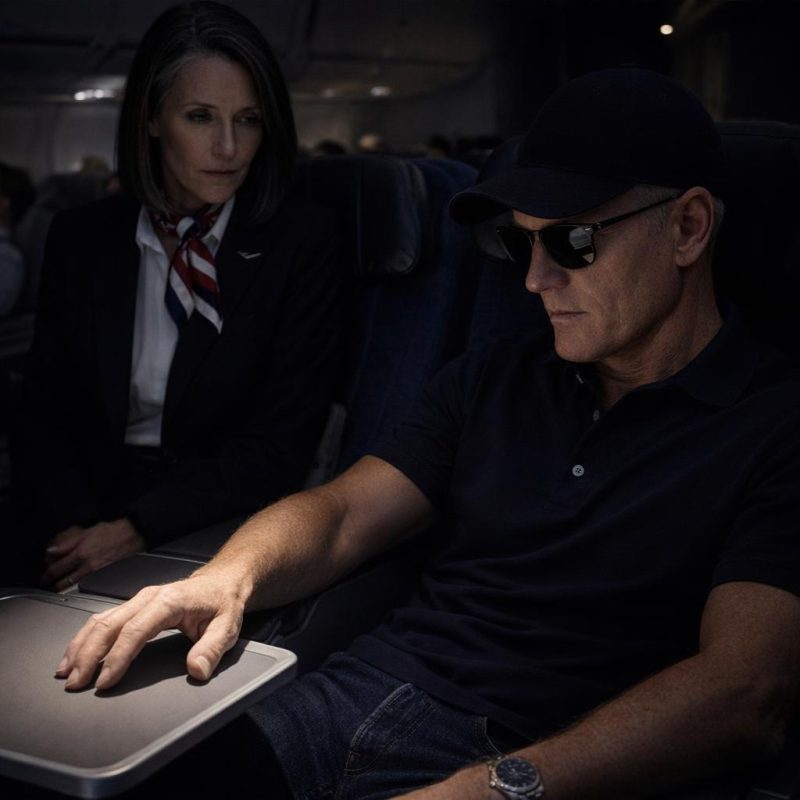 Image by RM AI
The Question That Stayed
We were maybe thirty minutes from descent when I found a quiet moment in the galley and let myself think. I'd been storing things all flight — the questions, the offers, the way his hands had moved — and I went back to the one that kept surfacing above the rest. Had anyone from the gate spoken to me privately. That was what he'd asked. Not had there been a problem at the gate, not had Eric said anything on his way out. Privately. The word had a precision to it that I kept turning over. Gate departures are busy and loud and public. If he was worried about a private conversation, he had a specific kind of conversation in mind — not a logistics question, not a routine exchange. I thought about Eric's face in the jetway doorway, the way he'd looked into the cabin before he turned and walked away. I thought about the document case and the sweat on his collar and the particular quality of his expression, which had not been the expression of someone who'd simply missed a flight. The actor hadn't asked me what Eric had said. He'd asked whether anyone had spoken to me privately. That distinction — the who, not the what — sat in the back of my mind and wouldn't move.
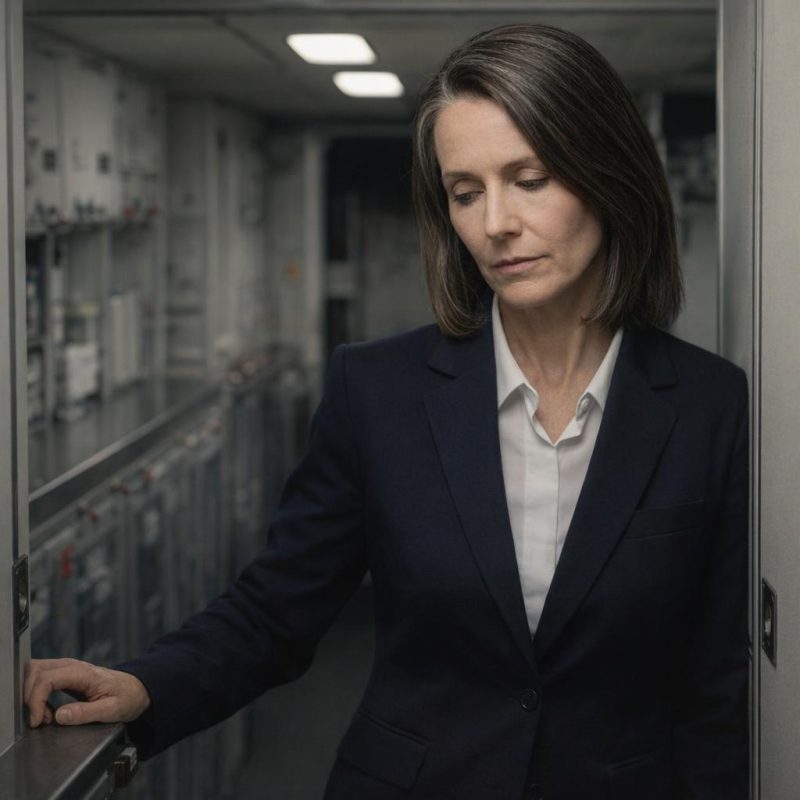 Image by RM AI
Watching the Clock
I gave myself something to do — restocking the forward galley, checking the beverage cart, the small routines that keep your hands busy when your mind won't settle. But I kept finding my eyes drifting back to seat 2A. He'd been quiet since our conversation, which I'd expected. What I hadn't expected was the watch. The first time I noticed, I thought nothing of it — passengers check the time, that's ordinary. The second time, maybe five minutes later, I paid a little more attention. By the third time, I was watching the pattern. He'd look at his watch, then pull out his phone, then look at the watch again, as though he was comparing two different answers and neither one satisfied him. His leg had started bouncing somewhere around the second hour, a low, restless movement he didn't seem aware of. The easy confidence from earlier — the way he'd leaned back and spoken to me like someone accustomed to getting what he asked for — that was gone. Whatever he was calculating, it had nothing to do with the in-flight menu. I turned back to the galley and counted cups. When I looked up again, he was checking his watch for the fifth time in ten minutes.
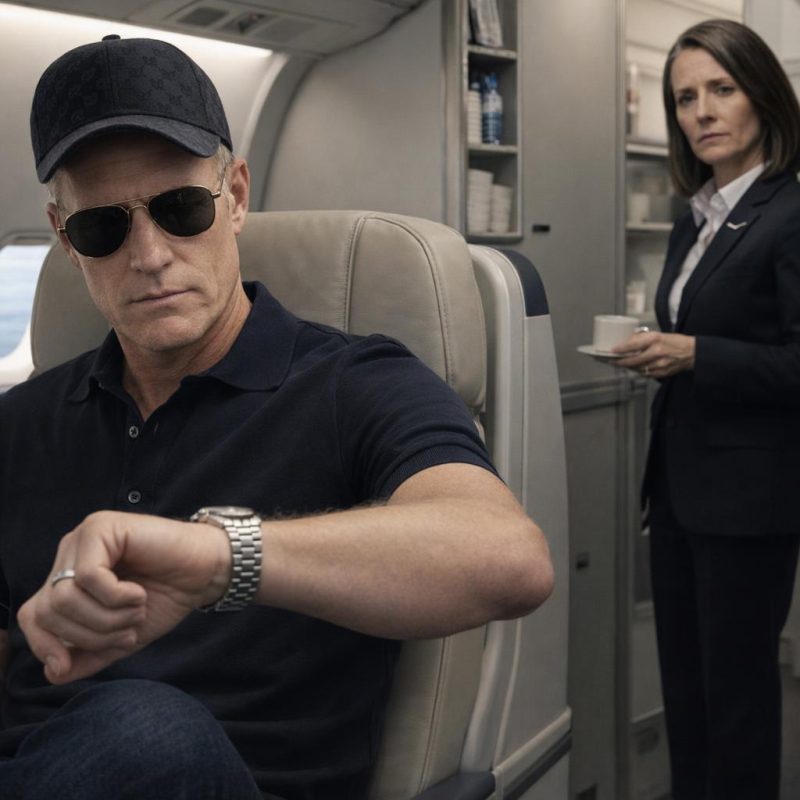 Image by RM AI
The Other Passengers Notice
I wasn't the only one who'd noticed. The woman in 1C had been watching him on and off for the past twenty minutes — I caught her glancing over her shoulder twice, then leaning slightly toward the man beside her to say something low. A couple across the aisle had stopped their conversation entirely and were doing that thing people do when they're pretending to look at nothing in particular. Earlier in the flight, when he'd been loud and certain and working the room with that particular brand of charm that expects to be received well, they'd all been aware of him in the way you're aware of someone who takes up more space than their seat. Now the awareness had shifted into something quieter and less comfortable. The man who'd made a point of being recognized was sitting hunched forward, jaw tight, phone face-up on his knee. Nobody was starstruck anymore. I moved through the cabin doing my checks, keeping my expression neutral the way you learn to after enough years in this job. Whatever they were thinking, I wasn't going to add to it. But I felt it — the way the room had quietly rearranged itself around him, and not in the direction he would have wanted.
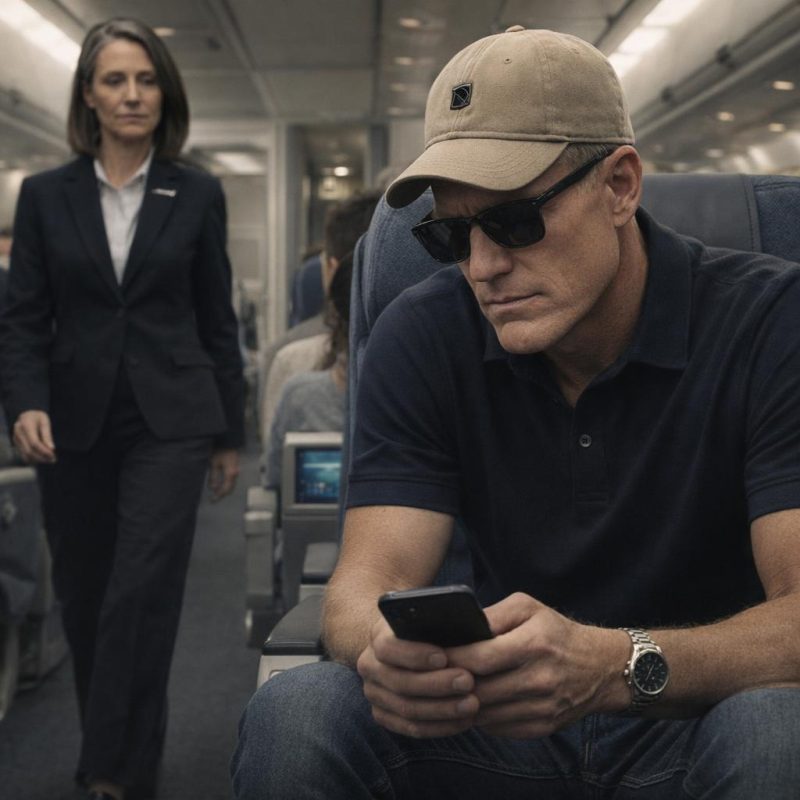 Image by RM AI
The Final Hour
Somewhere in the final hour, he stopped pretending. I don't know exactly when it happened — I was running through the landing checklist, collecting cups, doing the things that need doing before descent — but when I came back through the cabin, he was sitting forward with his phone held in both hands, elbows on his knees, staring at the screen. Not scrolling. Not typing. Just watching it, the way you watch a door you're waiting for someone to come through. He hadn't touched the food I'd brought him an hour ago. The glass of water beside him was still full. The baseball cap was pushed back on his head and he wasn't making any effort anymore to look like someone who had everything under control. I finished my pass through the cabin and returned to the galley. Through the curtain I could still see the edge of his seat, the slight forward lean of his shoulders. I've worked enough flights to know the difference between someone who's tired and someone who's waiting. He had the particular stillness of a person bracing for news they already suspect won't be good.
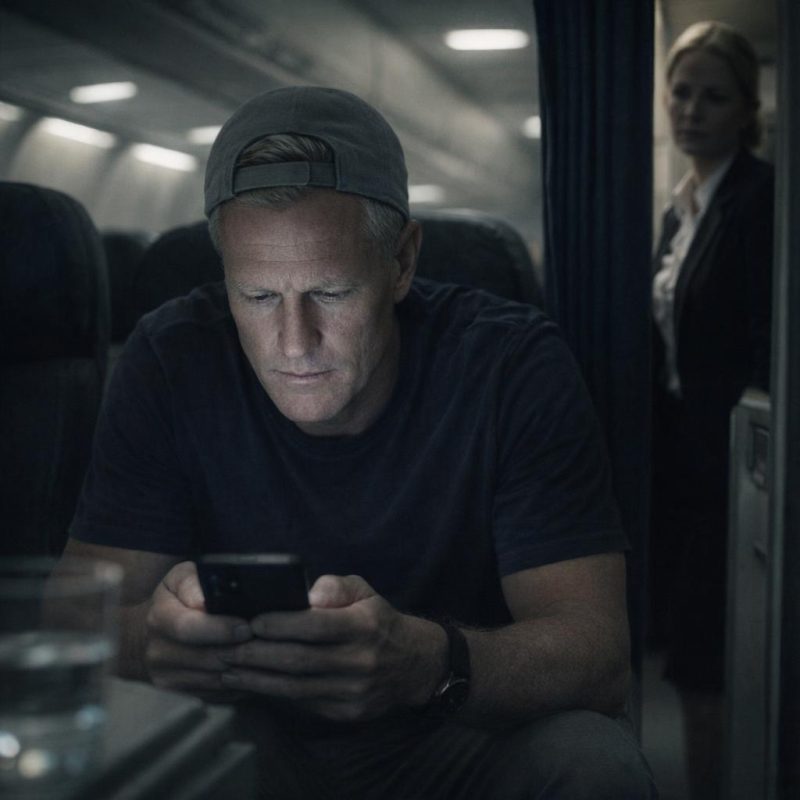 Image by RM AI
Descent Into New York
We were maybe forty minutes out when the calls started. I knew passengers weren't supposed to be on their phones during descent prep, and I knew I'd have to say something, but I gave it a moment first because the look on his face stopped me. He had the phone pressed hard against his ear, body turned toward the window, one hand flat against the seat back in front of him. His voice was low — low enough that I couldn't make out full sentences from where I stood, just the rhythm of it, clipped and urgent, the kind of tone that doesn't leave room for pleasantries. He ended the first call and immediately dialed again. Then a third. Other passengers had gone very still in the way people do when they're listening without wanting to appear to be listening. I moved up the aisle to remind him about the phone policy, and as I got close enough to hear, he was mid-sentence, his voice tight and controlled. I caught fragments — a name I didn't recognize, something about timing, something about a car. Then, just before I reached him, clear enough that I heard it without trying: "Where is he right now?"
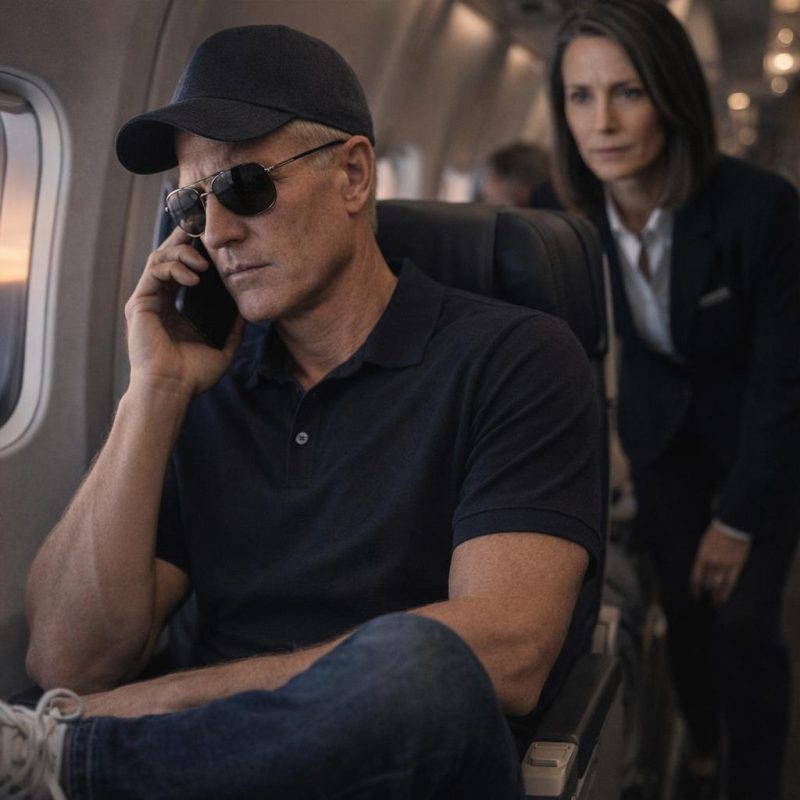 Image by RM AI
Final Approach
I asked him to end the call and he did, but only because his phone rang again before I finished the sentence. He held up one finger — the universal gesture for one moment — and answered it. I decided to let it go for thirty seconds and watch. He didn't say anything after hello. He just listened, and I watched his face do something I hadn't seen it do the entire flight. The easy control he'd been holding onto, even through the anxiety of the last hour, slipped. His jaw tightened first, then his hand — the one gripping the armrest — went white at the knuckles. His eyes moved to the window and stayed there, fixed on nothing. Whatever was coming through that phone, he wasn't arguing with it, wasn't negotiating, wasn't performing. He was just receiving it. The call lasted maybe ninety seconds. He ended it without speaking, set the phone face-down on his knee, and sat very still. I had already turned back toward the galley when I glanced over my shoulder one more time. The color had gone out of his face entirely.
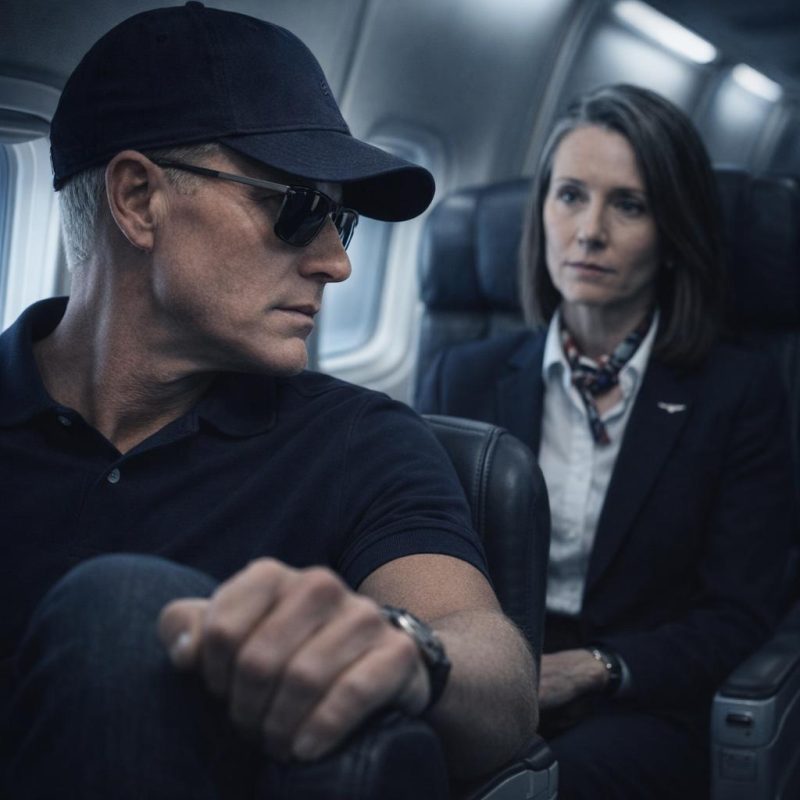 Image by RM AI
Landing
We touched down hard and clean, the way JFK landings often go, and before the wheels had fully settled he was already reaching for his seatbelt. I was at the front of the cabin and I called back clearly — "Please remain seated until the aircraft comes to a complete stop" — the standard language, the language I've said ten thousand times. He stood up anyway. Not defiantly, not the way he'd pushed back earlier in the flight. This was different. He stood because he seemed to have forgotten there were rules, or because the rules had stopped mattering to him in the way they stop mattering when something else is pressing harder. A few passengers watched him. Nobody said anything. He reached up for the overhead compartment and I watched his hand close around the handle of his bag, and even from where I stood I could see it — the slight, unmistakable tremor in his fingers as he pulled the bag free, his hands shaking in a way that had nothing to do with turbulence.
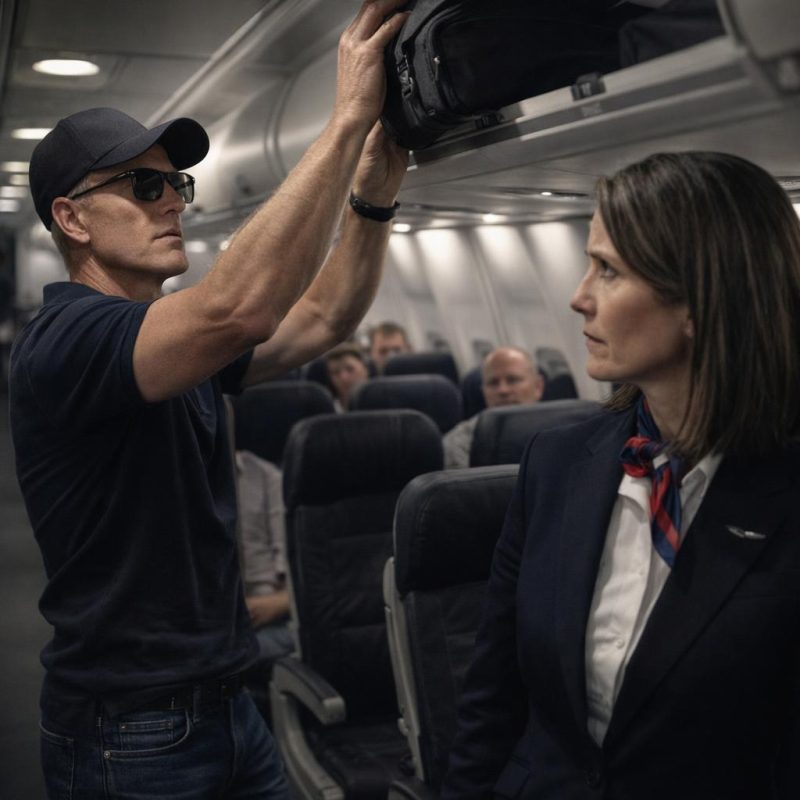 Image by RM AI
The Waiting Party
We were still taxiing toward the gate when I moved to the forward door to begin my arrival checks. Force of habit — I always look through the jetway window before we dock, just to get a sense of what's waiting. Usually it's a ground crew member, maybe a wheelchair attendant, sometimes a gate agent with a connection update. This time there were two people standing back from the door, far enough that they weren't in anyone's way, close enough that they were clearly there for a reason. Both in business attire — not airline staff, not ground crew. A man in a dark suit carrying a briefcase, and a woman beside him in what I can only describe as a power suit, the kind that signals a certain level of authority before anyone opens their mouth. They weren't looking at their phones. They weren't talking to each other. They were just standing there, facing the door, with the particular stillness of people who have already decided what they're going to say and are simply waiting for the moment to say it. Behind me, I could hear him still moving around, still gathering his things. He hadn't seen them yet. The quiet in that jetway had a weight to it that I felt even through the glass.
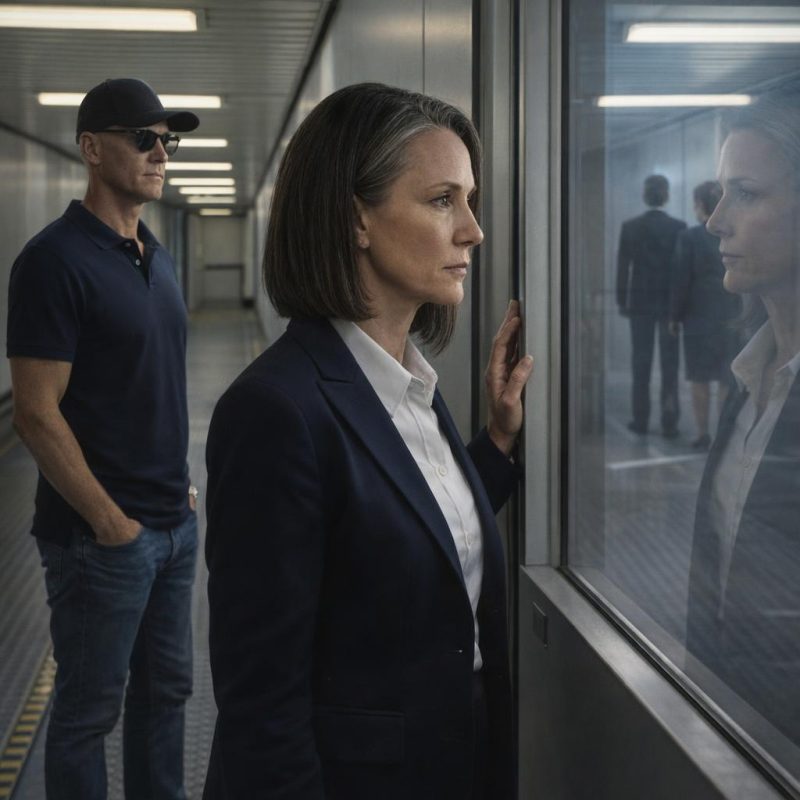 Image by RM AI
The Actor Sees Them
The door opened and the jetway filled with the particular rush of pressurized air meeting terminal air, that brief equalization you stop noticing after your first hundred flights. He was first off — he'd made sure of that, positioning himself at the front of the cabin before we'd even finished docking. He stepped through the door and into the jetway, and I stayed in the doorway to manage the flow of passengers behind him. He took two steps and stopped. Not slowed down, not hesitated — stopped, the way you stop when something in front of you doesn't match what you were expecting. The production attorney and the studio executive hadn't moved. They stood exactly where I'd seen them through the window, briefcase in hand, expressions composed and unreadable. No handshake extended. No greeting offered. He stood between them and the aircraft, and I watched from the doorway as something moved across his face — not surprise exactly, more like the particular look of a person who had been hoping, right up until this moment, that a thing wasn't going to happen, and now understood that it was.
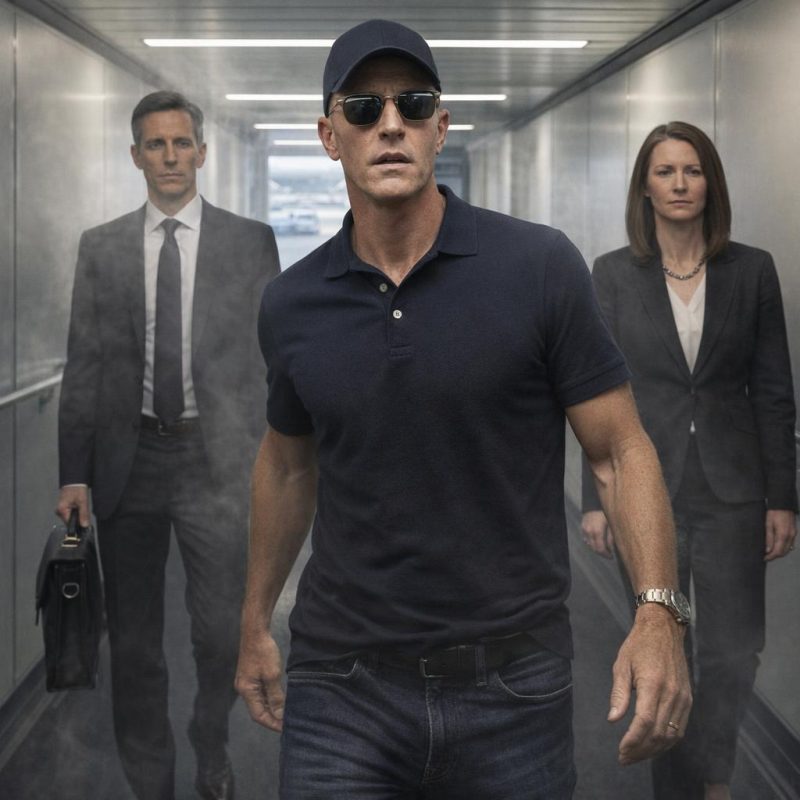 Image by RM AI
Where Is Eric?
His first word out of the jetway was a name. Not a greeting, not a question about what was happening — just "Eric." Loud enough that the passengers filing out behind him slowed their pace without meaning to, that instinctive human response to someone else's urgency. The production attorney didn't answer. The studio executive didn't answer. They stood exactly where they'd been standing, expressions composed, and the silence that followed his question was the kind that has weight to it. He asked again — "Where is Eric?" — and this time there was an edge in it, something that wanted to sound like authority but landed closer to alarm. The studio executive gestured toward the terminal, a calm, practiced motion that invited him to walk with them and offered nothing else. He didn't move immediately. He looked from one face to the other, and I watched from the aircraft doorway as he seemed to be calculating something, running through options I couldn't see. A few passengers had stopped pretending not to watch. The attorney said something low and close, and whatever it was, it got him moving. They turned toward the terminal together, and his question hung in the jetway air behind them, still unanswered, still there.
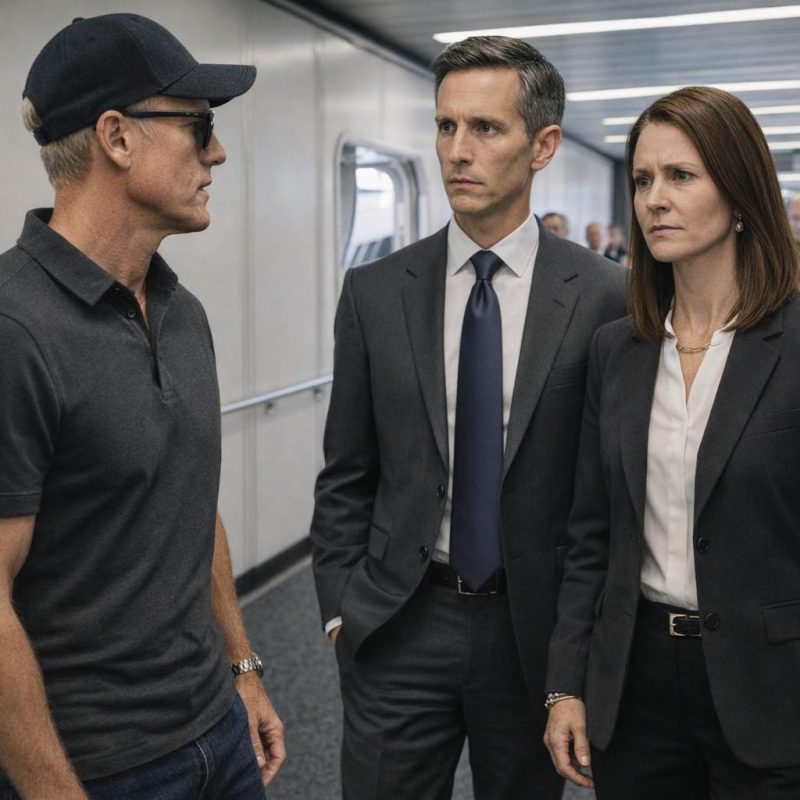 Image by RM AI
Leaving With Them
I stayed in the doorway and watched them go. The attorney took the left side, the studio executive the right, and he walked between them through the terminal corridor in a way that didn't look like three people leaving together. It looked like something else entirely. His posture was the thing that stayed with me. On the ground in Los Angeles, he'd moved through the gate area like someone accustomed to space opening up ahead of him. Now his shoulders were forward, his chin down, the baseball cap pulled low in a way that no longer read as incognito travel but as something closer to cover. He didn't look back at the aircraft. He didn't look at the other passengers who had filtered out around them and were now slowing, turning, doing the quiet math that strangers do when something feels off in a public space. The three of them moved through the crowd and the crowd parted, not out of recognition this time, but out of that other instinct — the one that reads a formation and steps aside. I watched until they turned a corner past the gate signage and disappeared, and the only word I had for what I'd just seen was that it looked exactly like someone being walked out.
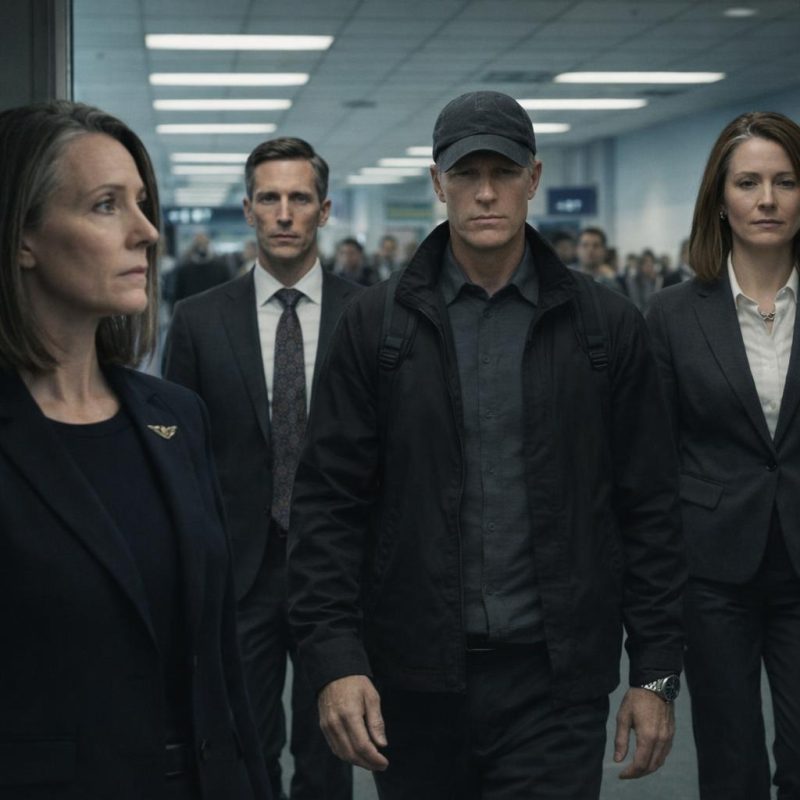 Image by RM AI
Processing the Arrival
The last passengers trickled past me and I stayed in the doorway longer than I needed to, the jetway emptying out around me. I kept turning the morning over in my mind — not the flight itself, but the hour before it. Eric at the gate, that leather document case held against his chest like he was afraid someone would take it from him. The look on his face when I told him the door was closing — not disappointment, not frustration, something more complicated than either of those. And then the flight itself, the actor's questions that hadn't quite fit the situation, the way his attention kept pulling toward the front of the cabin, toward his phone, toward anything that might tell him something he was waiting to hear. And now this: a production attorney and a studio executive standing at the gate in New York, no greeting, no handshake, just that composed and deliberate stillness. I didn't know what connected Eric's refusal to board with the people who had been waiting on the other end of this flight. I didn't know what was in that leather case, or why it seemed to matter so much to so many people. What I had were pieces — Eric's face, the actor's questions, the attorney's briefcase, the executive's expression — and none of them fit together yet.
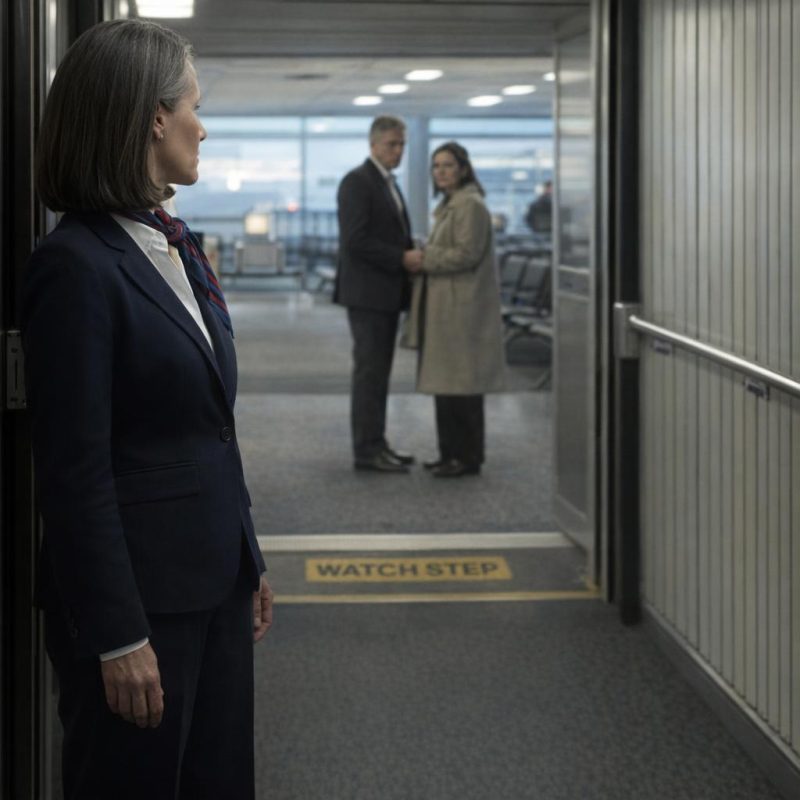 Image by RM AI
The Call From Management
My phone rang the next morning before I'd finished my first cup of coffee. It was airline management — not unusual after an irregular departure, but the tone of the call was different from the routine check-ins I was used to. They asked how I was, which they don't always do, and then they got to it. There had been requests, they said. From lawyers. Specifically about what had happened before departure on yesterday's flight. They wanted statements from the crew — documented, detailed, covering the sequence of events at the gate. I asked if this was standard procedure and there was a pause before the answer, which told me more than the answer did. They said other crew members had already been contacted, that everyone who had been working that departure was being asked to provide an account. They wanted specifics: timing, conversations, anything I'd observed in the gate area before the door closed. I told them I'd cooperate fully, which I would, and I asked if there was anything I should know going in. They said the legal team would explain the context when we spoke. I set the phone down and stood in my kitchen for a moment, the coffee going cold beside me, turning over the word they'd used — because "lawyers want statements about the departure" was not a phrase that pointed toward anything routine.
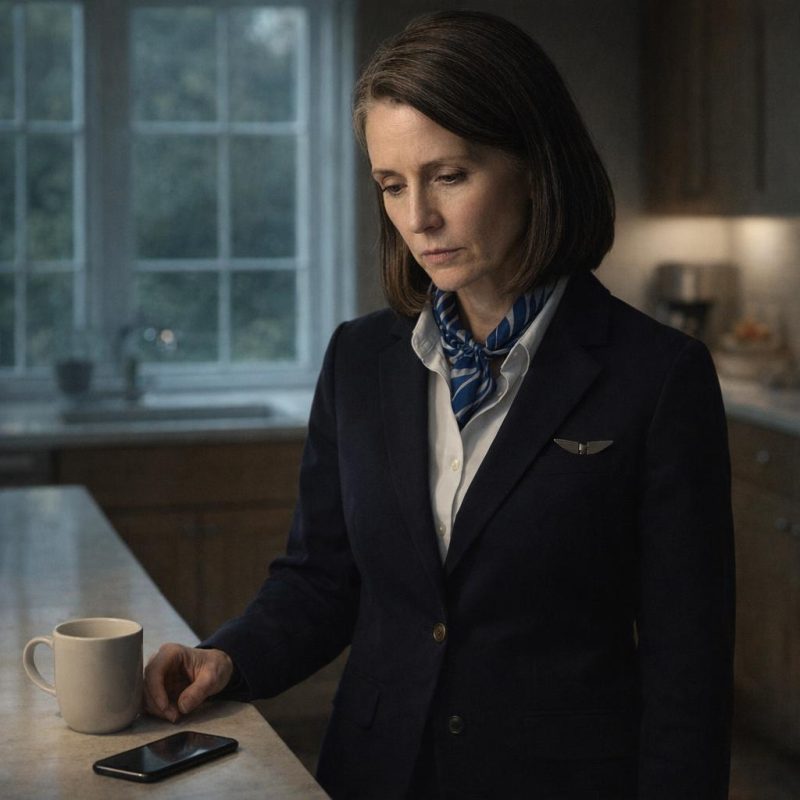 Image by RM AI
Reviewing the Details
I sat down at my kitchen table with a notepad and started from the beginning. Not from when we pushed back, but from the moment I first saw him in the gate area — the baseball cap, the way he'd positioned himself apart from the other passengers, the expectation in his posture that the situation would arrange itself around him. I wrote down his question about whether Eric had his documents. I wrote down the offer — the money, the ask that I contact operations to find out if his assistant had checked in somewhere else in the terminal. I wrote down his question about whether I'd overheard anything at the gate, whether there had been any private conversations he might not have been aware of. Each item on its own had seemed like the behavior of a difficult, anxious passenger. Written down in sequence, one after another, they looked different. Not dramatically different — I still couldn't tell you what any of it meant — but the shape of it was there on the page in a way it hadn't been in my memory. He had asked a lot of questions for someone who was supposed to be a passenger. And almost all of them had circled back to the same point: Eric, and what Eric might have said or done or carried before that door closed. I sat with that pattern for a long time before I wrote another word.
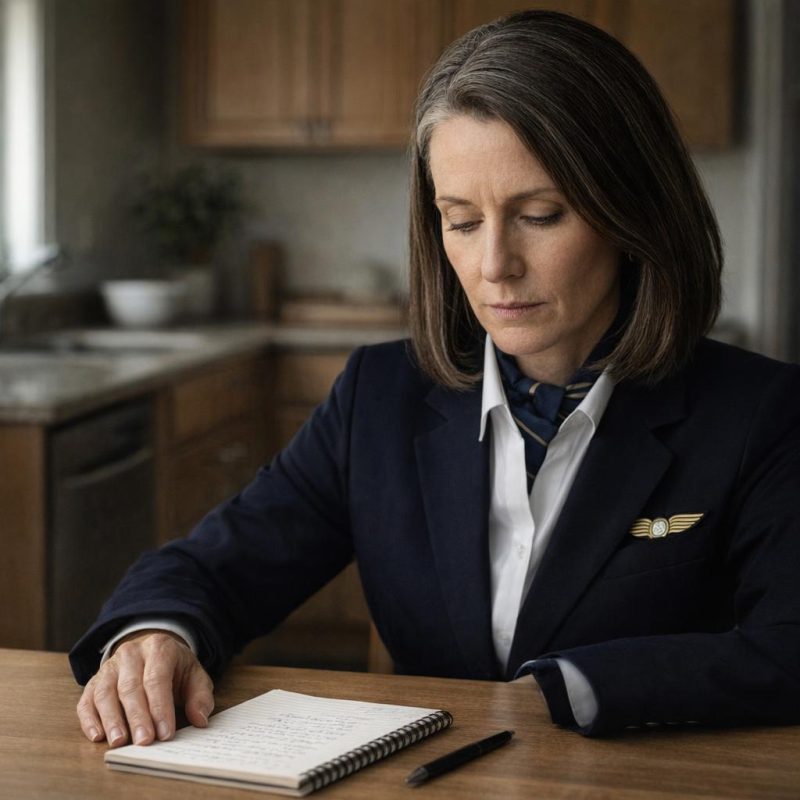 Image by RM AI
Colleagues Share Their Experiences
Ray called me that afternoon, which wasn't a surprise once management had told me the whole crew was being contacted. We'd worked enough years together that we didn't need much preamble. He confirmed he'd been asked about the pre-departure confrontation at the aircraft door — the actor's demand that we hold the flight, the exchange on the jetway. Ray had given his account the same way he did everything: straightforward, factual, no editorializing. He said the legal team had been thorough. I spoke with one of the other flight attendants too, a woman who'd been working the back of the cabin, and she mentioned that he'd made several phone calls during the flight — more than she'd seen from a single passenger in a long time, and each time he'd moved to the same spot near the window, angling away from the aisle. She'd noticed because he'd waved her off twice when she came by with the cart. Between the three of us, a picture was forming that none of us had seen clearly from our individual positions. His anxiety hadn't started when we landed. It had been there the whole flight, steady and contained, focused on something none of us had been able to name at the time. Sitting with what we'd each separately noticed, the shape of his desperation across those hours settled over me like something I hadn't wanted to see.
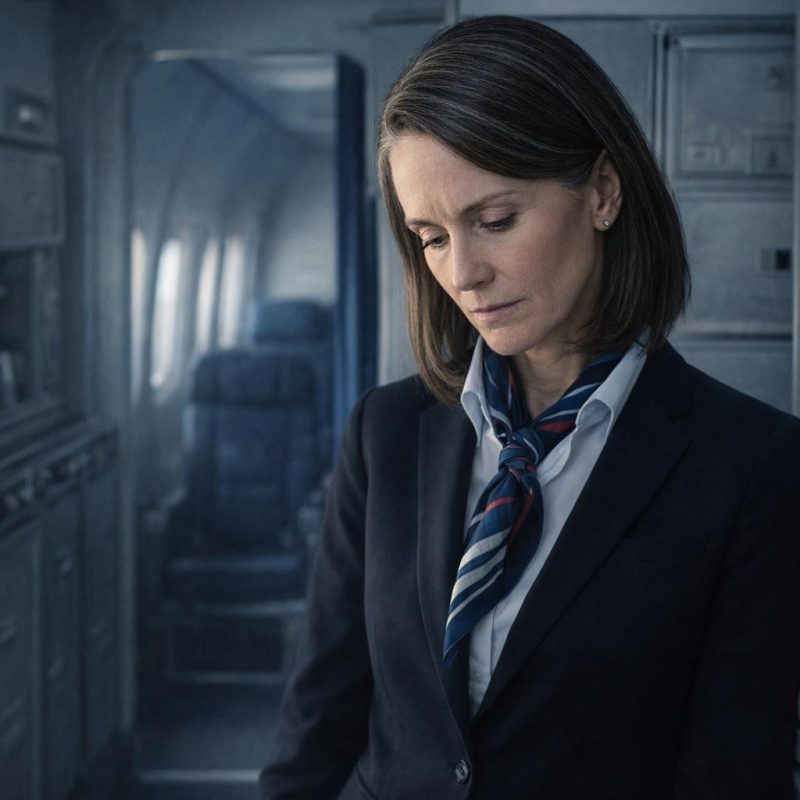 Image by RM AI
Questions About Eric
The interview with the legal team was conducted over the phone, two attorneys on the line, one asking questions and one I could hear taking notes in the background. They were methodical. They started with the gate area — what I'd observed, what had been said, the sequence of events leading up to door closure. I walked them through it the same way I'd written it in my notes. They asked about the actor's demeanor, his specific requests, the exact wording of things he'd said to me. Then they shifted, and the questions changed register. They asked about Eric. When had I first seen him. What he was carrying. What he'd said to me at the boarding door. I told them what I remembered — the leather document case, the urgency in his face, the way he'd asked me to tell the actor he hadn't made it, as though the message itself mattered as much as the fact. They asked whether the actor had seen Eric at the gate before I'd closed the door. I said I didn't believe so, that Eric had come to the door after boarding was complete. There was a pause, and then one of them asked, in a tone that was careful and precise: "What time exactly did Eric arrive at the boarding door?"
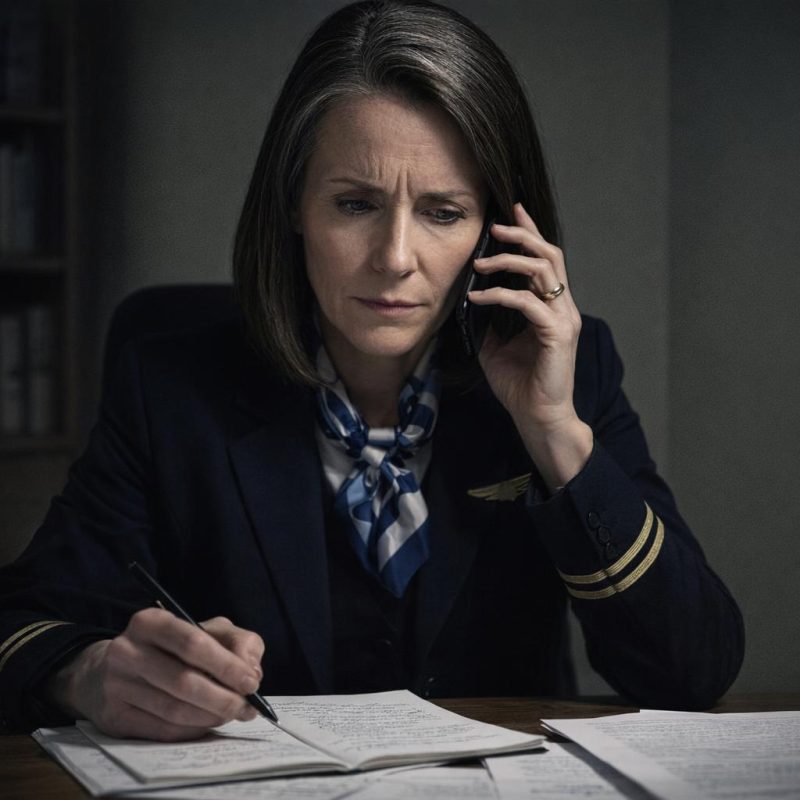 Image by RM AI
Waiting for Answers
I gave them the best answer I could — I'd noted the time when I closed the door, and Eric had arrived just before that, close enough that I could narrow it to a window of a few minutes. They thanked me and said I'd been thorough. They told me I might be contacted again as the matter developed, and that I should keep my notes. They didn't tell me what the matter was. I asked, carefully, whether there was anything they could share about what this concerned, and one of them said only that it was an ongoing legal situation and that my account had been helpful. Then the call ended. I sat at my kitchen table with my notepad in front of me and the line gone quiet, and I thought about Eric's face at that boarding door — the fear in it, and the strange relief underneath the fear, like someone who had just made a decision they weren't sure they could live with and had decided to live with it anyway. I thought about the actor walking out of the terminal between two people who hadn't answered a single one of his questions. I had given my account as accurately as I could, and somewhere on the other end of it, people who knew more than I did were assembling something I still couldn't see. The not-knowing sat with me, quiet and unresolved, long after I set the notepad down.
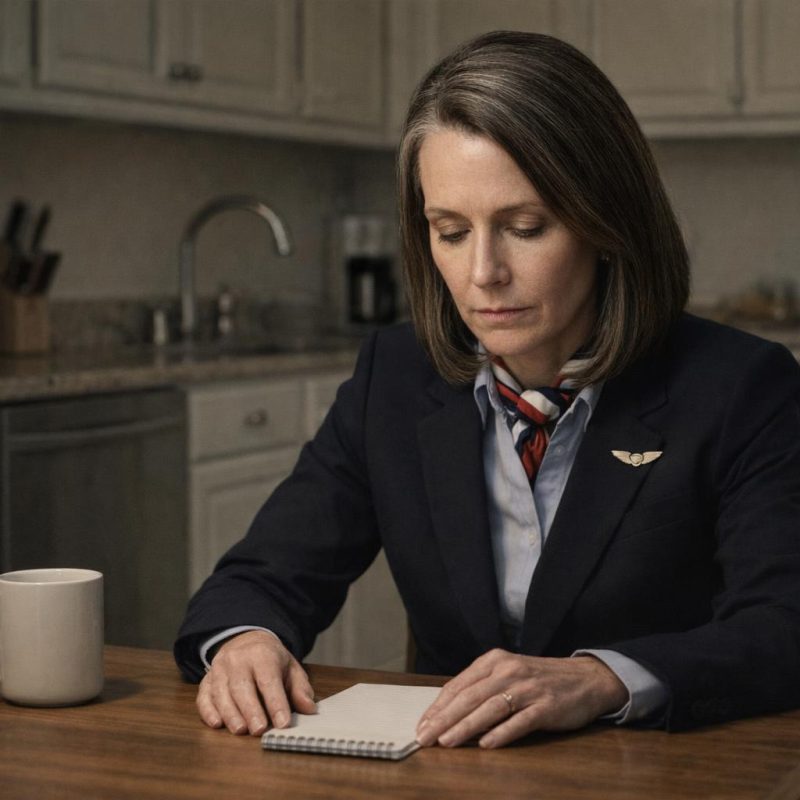 Image by RM AI
More Questions From Legal
They called again about a week later. Same careful tone, same measured pace, but this time the questions were more specific. They wanted to know exactly what the actor had said about documents — not a general summary, but the precise wording, as close as I could recall it. I went back to my notes. He had asked me whether his assistant had been carrying anything when he came to the door. He had used the word "materials" at one point, then corrected himself and said "paperwork." He had asked whether Eric had said anything to me about what he was holding. I read each detail back to them slowly, and I could hear someone on the other end writing. They asked about the bribe — how he had phrased it, whether he had named a specific amount, whether he had framed it as a tip or something else. I told them he had called it a gratuity, and that he had made it conditional on information. They asked about his question regarding private conversations at the gate — whether I had spoken with anyone, whether Eric had said anything to me before boarding. I answered everything I had. When the call ended, I sat with my notes spread across the table, and the word "paperwork" sat in the middle of all of it, heavier than it had seemed at the time.
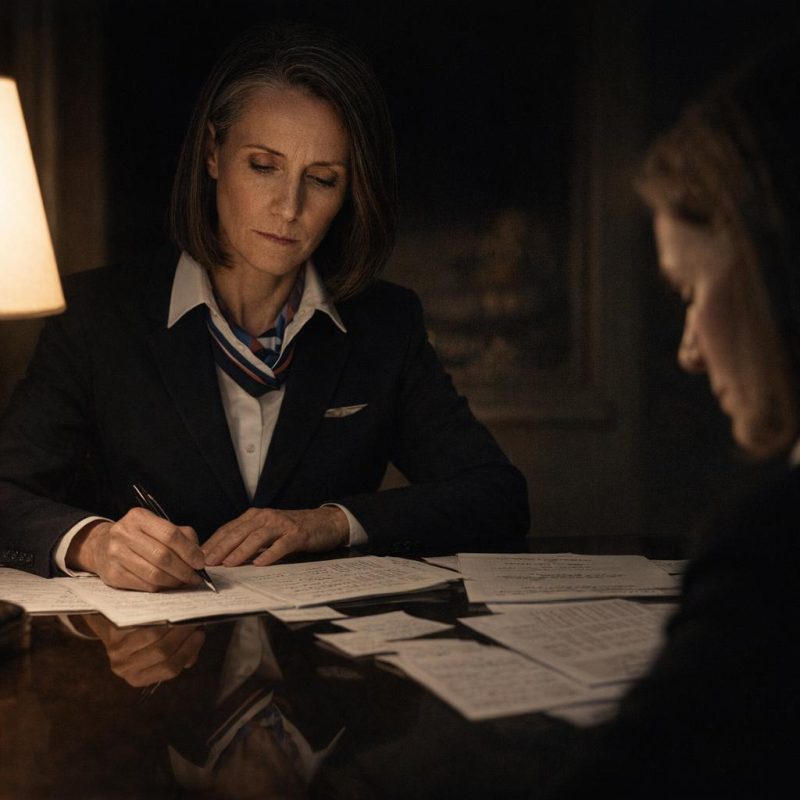 Image by RM AI
The Timeline Matters
The next call came two days after that, and this time they wanted the sequence laid out precisely — not just what happened, but when. They asked me to walk through the final minutes at the gate in order: when I had positioned myself at the boarding door, when I had made the decision to close, when Eric had appeared. I told them he had arrived just before I secured the door — close enough that I had paused, assessed, and made a judgment call. They asked me to estimate the window in minutes. I gave them two to three. They asked whether the actor, seated in first class, would have had a sightline to the boarding door from his position. I thought about the cabin layout and told them no — the door was behind the forward bulkhead from his seat, and he had remained seated throughout. They asked whether any other crew member had been at the door when Eric arrived. I told them I had been alone at that position. They confirmed the gate records matched my account. I could feel the shape of what they were building — a precise, documented sequence with no gaps. Then they asked me whether, given the timing, the actor could have seen Eric at the boarding door at all.
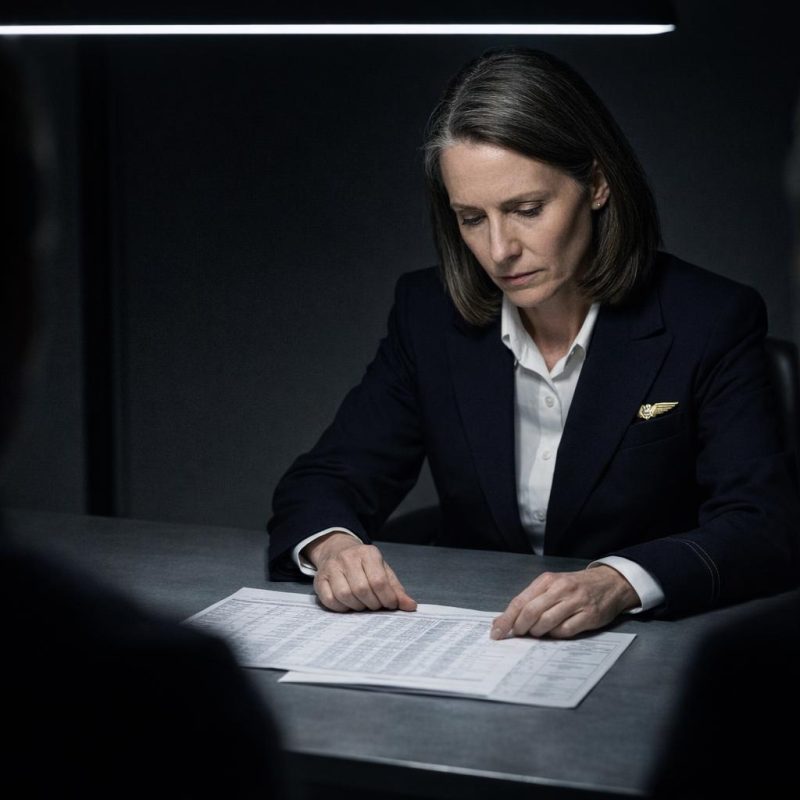 Image by RM AI
Security Footage
I told them no — the actor could not have seen Eric at the boarding door. His seat position, the bulkhead, and the fact that he had remained seated the entire time made that impossible. They acknowledged my answer and then said something that stopped me: they mentioned that security footage from the gate area had been reviewed. They said the cameras had captured the boarding door, the jetway entrance, and the surrounding gate space. They told me the footage confirmed Eric's arrival at the door within the window I had described. It also showed him leaving the gate area after the aircraft had pushed back. I had given my account from memory and from the notes I had kept, and I had tried to be as precise as I could — but hearing that the cameras had recorded all of it, that the sequence I had described was visible on footage that existed independently of anything I said, settled something in me. Gate records showed his check-in time and his movement through the terminal. My account and the objective record matched. They thanked me again and said my recollections had been consistent and detailed. Then they told me the footage confirmed everything I had witnessed.
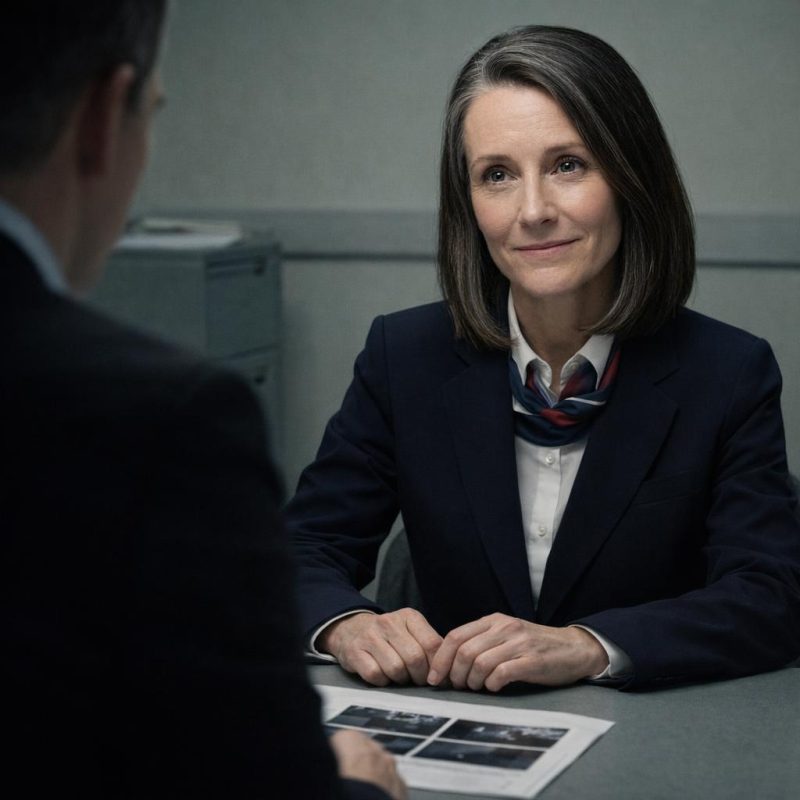 Image by RM AI
What Happened After We Left
They asked whether I had any knowledge of what Eric had done after the aircraft departed. I told them honestly that I didn't — once the door closed and we pushed back, whatever happened in that terminal was outside my awareness entirely. I had been focused on the flight, on the passengers, on doing my job. They said they understood. There was a brief pause, the kind that comes before something significant, and I found myself sitting up a little straighter without meaning to. I thought about Eric at that door — the leather document case held tight against his body, the look on his face that I had never quite been able to categorize. He had somewhere to be. I had sensed that much, even then. Whatever he had been carrying, he had not been a man with nowhere to go. The questions they had been asking — the timeline, the sightlines, the footage, the gate records — they were building toward something specific, and I could feel the edges of it without being able to see the center. Then they told me that after the aircraft pushed back, Eric had met with an attorney in the terminal.
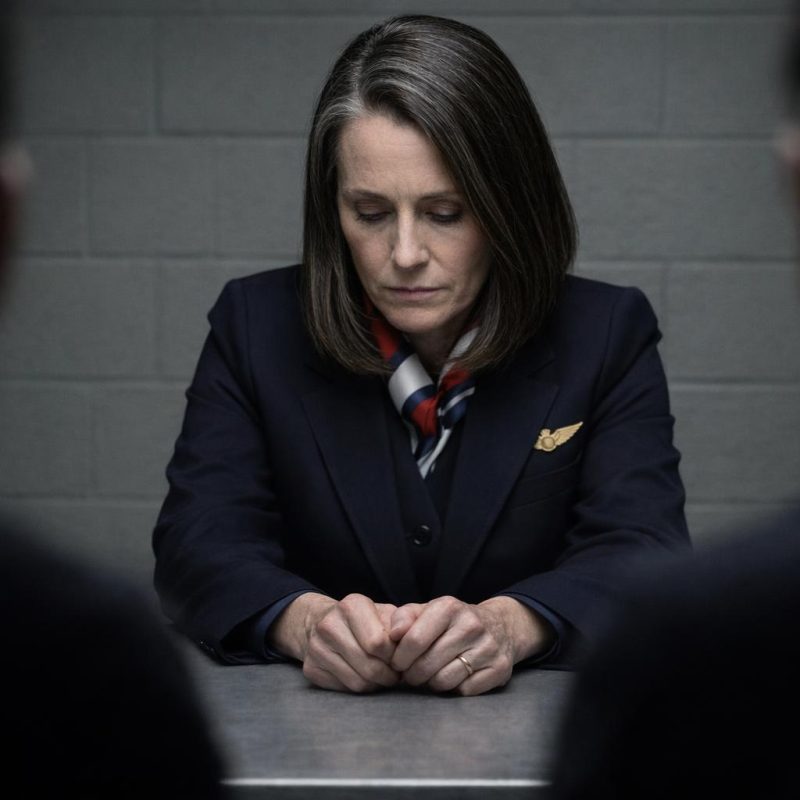 Image by RM AI
The Truth About Eric
They explained it to me carefully, in the measured way people use when they are delivering information they know will land hard. Eric had discovered financial irregularities in the actor's charitable foundation — invoices, expense records, emails. He had copies of all of it in the leather case. The actor had known for some time that questions were coming about the foundation's finances, and he had needed Eric in New York. Not for the reasons he had given. He needed Eric on that plane, in a seat with no exit, for five hours. The legal team said the actor's security representative had been positioned at the gate specifically to make sure Eric boarded. Eric had spent the final hour before departure deciding whether to get on that flight or walk away from everything — his job, his income, his professional life — and hand what he had to someone who could use it properly. His attorney had been waiting in the terminal the entire time. The actor's demand to hold the plane, his frantic questions about documents, his offer of money — all of it snapped into focus at once, sharp and complete. And then the person on the phone said the words charity fraud, and everything I thought I had understood about that flight rearranged itself entirely.
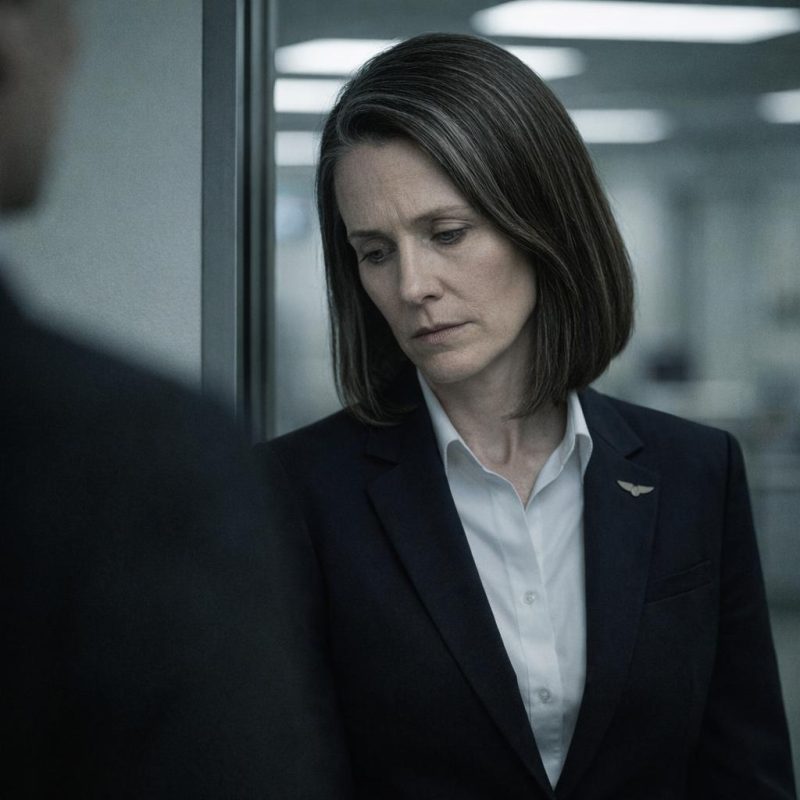 Image by RM AI
Understanding the Desperation
I sat with the phone in my hand for a long moment after they finished speaking. I thought back through the flight — not the way I had been thinking about it for weeks, as a difficult passenger and a strange interaction, but with everything I now knew laid over it like a transparency. His questions about whether Eric had his documents. I had read it as an employer annoyed about misplaced paperwork. His offer of money for information about Eric's whereabouts. I had read it as entitlement, a man accustomed to buying cooperation. His question about whether I had spoken privately with anyone at the gate — that one had seemed odd to me even at the time, and now I understood why it had mattered so much to him. His fixation on the empty seat beside him. He had watched that seat for the entire flight, and I had read it as irritation. What I had actually been watching was a man tracking the absence of something he could not afford to lose. Every question, every offer, every moment of barely contained agitation — it had all been the same thing, playing out in front of me in a pressurized cabin at thirty-five thousand feet. The weight of what I had been standing in the middle of, without knowing it, settled over me quietly.
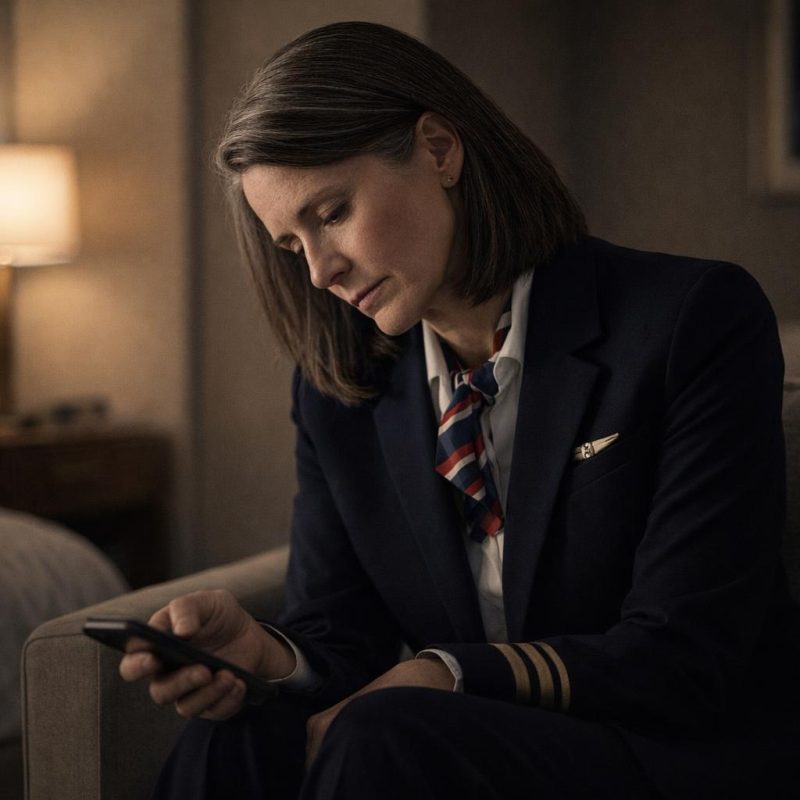 Image by RM AI
The Paperwork Eric Refused
They told me about the documents Eric had refused to sign. Approval forms, backdated to make it appear that Eric had personally authorized a series of expenses charged to the foundation. The dates on the forms predated Eric's awareness of the problem. If he had signed them, the paper trail would have pointed directly at him. The legal team explained that the actor had intended to use the five-hour flight to work on Eric — isolated, airborne, with no way to consult anyone and no exit available until they landed in New York. His security representative at the gate had been there to make sure Eric got on the plane. Once the door closed, there would have been nowhere for Eric to go and no one he could call. I thought about that leather case, held so tightly against Eric's body that his knuckles had been pale. He had been carrying the evidence that would have been used against him if he had boarded. He had stood at that door and made a choice that I had witnessed without understanding, and then he had walked back through the terminal to the attorney who had been waiting for him. The manipulation he had walked away from sat with me in a way I hadn't expected — quiet, and very heavy.
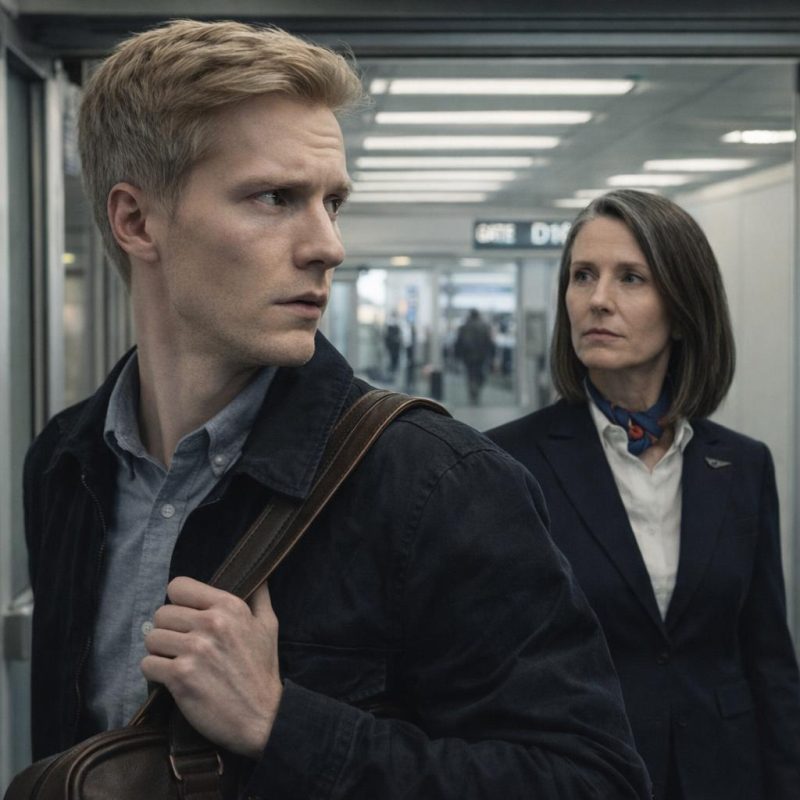 Image by RM AI
The Foundation Scandal
They described the foundation in more detail. The actor had launched it in connection with his most recent film — a project with a humanitarian theme, the kind of thing that generates press coverage and goodwill and encourages fans to open their wallets. He had appeared at fundraising events. He had spoken publicly about the causes the foundation supported. The promotional material tied the foundation directly to the film's release, and donations had come in from people who believed in what he was publicly representing. Eric had started noticing discrepancies in the expense records — charges that had no connection to any charitable purpose, invoices for things that benefited no one the foundation was supposed to serve. The actor had known an audit was approaching. He had needed those backdated approval forms signed before the auditors arrived, and he had needed Eric on a plane to New York where the pressure could be applied without interference. I listened to all of it and felt something cold settle in my chest — the gap between the public image and what Eric had found in those records. Then the legal team told me the total amount of money involved.
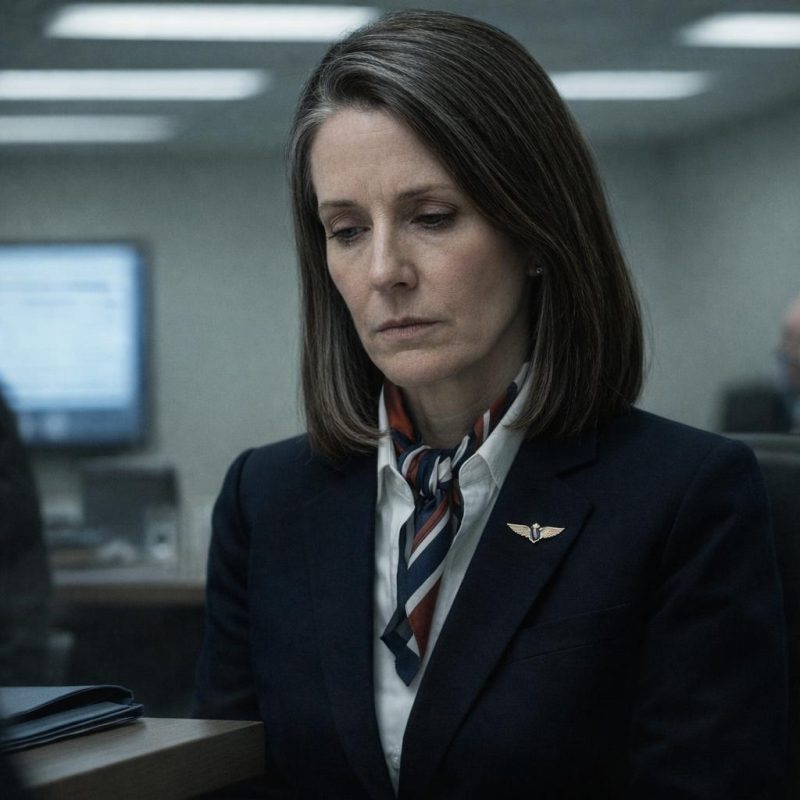 Image by RM AI
Eric's Courage
After the legal team finished walking me through everything, I kept coming back to Eric standing at that boarding door. I could picture him exactly — the leather document case clutched against his chest, the sweat on his forehead, the way his eyes had that particular quality of someone who has already made a decision and is just waiting for the moment to act on it. He had been ordered to get on that plane. His employer had made the expectation clear, and Eric would have understood what refusing meant — not just for his job, but for whatever retaliation a man with that kind of money and influence could arrange. He wasn't a whistleblower with a legal team behind him yet. He was a young assistant standing alone at a gate, holding documents that could end his career and possibly worse, trying to buy himself a few hours. That whispered request he made to me — asking me to note that he'd been there — I had taken it as an odd, nervous moment. Now I understood it for what it was: a small, careful act of self-preservation from someone who had already decided he wasn't getting on that plane. He stepped backward knowing exactly what it would cost him. That kind of courage doesn't announce itself. It just quietly holds its ground.
 Image by RM AI
The Actor's Defense
The actor's legal team moved fast. Within days of Eric's attorney making contact with investigators, a statement went out describing Eric as a disgruntled former employee who had misunderstood routine business expenses and was attempting to damage his employer's reputation out of personal grievance. It was a clean, practiced response — the kind that gets drafted before the crisis fully arrives. I read it and felt something tighten in my chest, not because I believed it, but because I knew how effective that kind of framing could be when the person delivering it had resources and a publicist and years of goodwill built up in front of cameras. Then Eric's attorney responded. The emails came out — not summaries, not paraphrases, but the actual correspondence, timestamped and specific. They showed the actor directing Eric to sign backdated approval forms. They showed him referencing the New York trip by name. They showed him aware of exactly which expenses were under scrutiny and why the signatures needed to exist before the auditors arrived. The statement about a disgruntled employee who had misunderstood ordinary expenses didn't survive contact with those emails. Within days of their release, the actor's legal team stopped making public statements entirely.
 Image by RM AI
The Emails
The emails were sent in the days immediately before that Los Angeles flight, and once I read the summaries the investigators shared with me, the sequence of events clicked into place with a clarity that was almost uncomfortable. The actor had written to Eric directly — not through an intermediary, not in vague language that could be interpreted multiple ways. He had named specific documents. He had referenced specific dates that the forms needed to carry. He had mentioned the New York trip and the importance of having everything signed and in order before they landed. One message used the phrase 'before anyone starts asking questions,' which, given what the auditors were preparing to do, left very little room for interpretation. Eric had kept every one of those messages. He hadn't deleted them, hadn't forwarded them anywhere that might have compromised their integrity — he had simply held onto them, quietly, while the pressure to board that plane built around him. The investigators told me the emails had been preserved on a personal device Eric maintained separately from his work accounts. I thought about him standing at that gate, holding the document case, knowing those messages existed. The correspondence sat in the record now, in black and white, exactly as he had written it.
 Image by RM AI
The Airline Records
I hadn't thought much about the airline's own records until the investigators mentioned them. It turned out that the timestamps embedded in the gate system — check-in logs, boarding door activity, pushback confirmation — told a story that was entirely independent of anything Eric or I had said. The records showed Eric had checked in for the flight. They showed his arrival at the boarding door within the window when boarding was still active. They showed the aircraft door closing and the plane pushing back while Eric's badge was still registering inside the terminal. There was no gap in the sequence that could support a claim he had simply been late, or that he had missed the flight through confusion or delay. The records established, with the kind of precision that only automated systems produce, that Eric had been present and had chosen not to board. My own statement corroborated what the timestamps already showed — but the timestamps didn't need me. They had existed from the moment the gate agent logged the door closure, indifferent to whatever anyone later claimed about what had happened. I had spent thirty years watching how quickly the details of a moment can get disputed or reframed. There was something quietly satisfying about a record that simply could not be argued with.
 Image by RM AI
My Formal Statement
When the investigators asked me to give a formal statement, I sat down and went through it methodically, the way I would reconstruct any incident report — start at the beginning, stay with what I observed, don't editorialize. I described the actor boarding, the way he scanned the cabin before settling, the question he asked me about whether his assistant had his documents. I gave them his exact words as precisely as I could recall them. I described the five-hundred-dollar offer for information about what Eric might have said to me at the gate. I told them about his repeated attempts during the flight to find out where Eric was and why he hadn't boarded, the way his composure had frayed in increments as the hours passed and no answer came. I described the production attorney meeting him at the gate in New York, the brief exchange I had witnessed, the shift in the actor's bearing when he understood the situation had moved beyond his control. The investigator taking my statement was thorough and unhurried. She asked me to repeat certain details, to confirm specific phrasing. At the end of the session, she read a portion of my statement back into the record — and I heard my own words, flat and precise in the official transcript, entered as evidence.
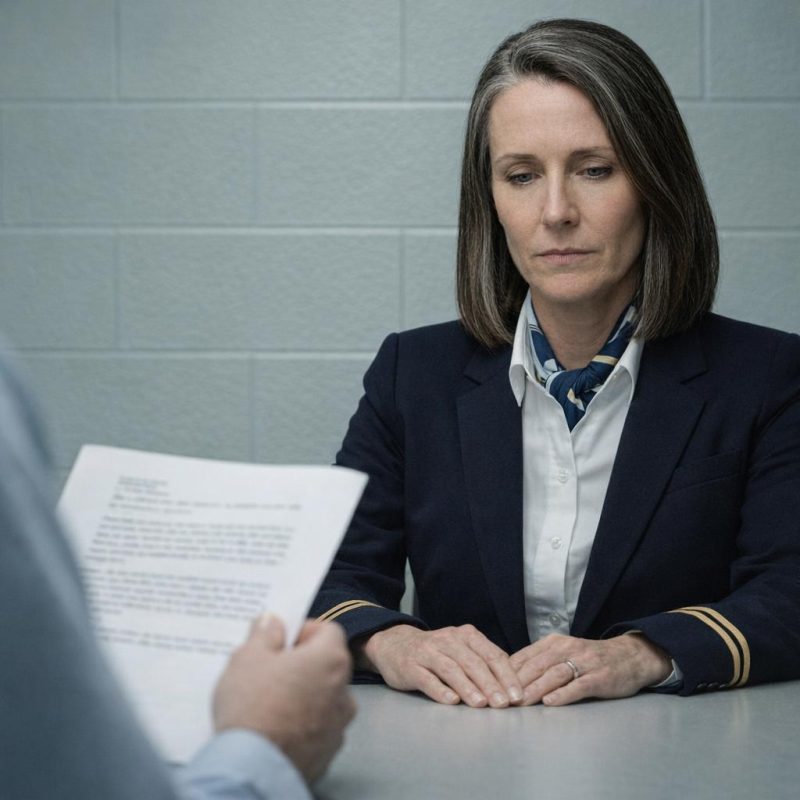 Image by RM AI
My Documents
The investigators came back to one detail more than any other. During the flight, when the actor had first approached me, he hadn't asked whether Eric had the documents or the paperwork or the case. He had asked whether Eric had his documents. The possessive was specific, and I had noted it at the time without fully understanding why it registered. In the formal statement I had used his exact phrasing, and now the investigators wanted me to confirm it again — to be certain I wasn't paraphrasing, wasn't smoothing the language into something more general than what he had actually said. I told them I was certain. I had been doing this job long enough to know when a passenger's word choice is worth remembering, and something about the way he said it — the possessiveness of it, the urgency underneath — had lodged in my memory before I even understood why. The investigators explained that the distinction mattered because it spoke to his awareness of what was in that case. Not general paperwork. Not his assistant's belongings. His documents. Two words that placed him in direct relationship to the contents of the leather case Eric had been carrying, and to everything those contents represented.
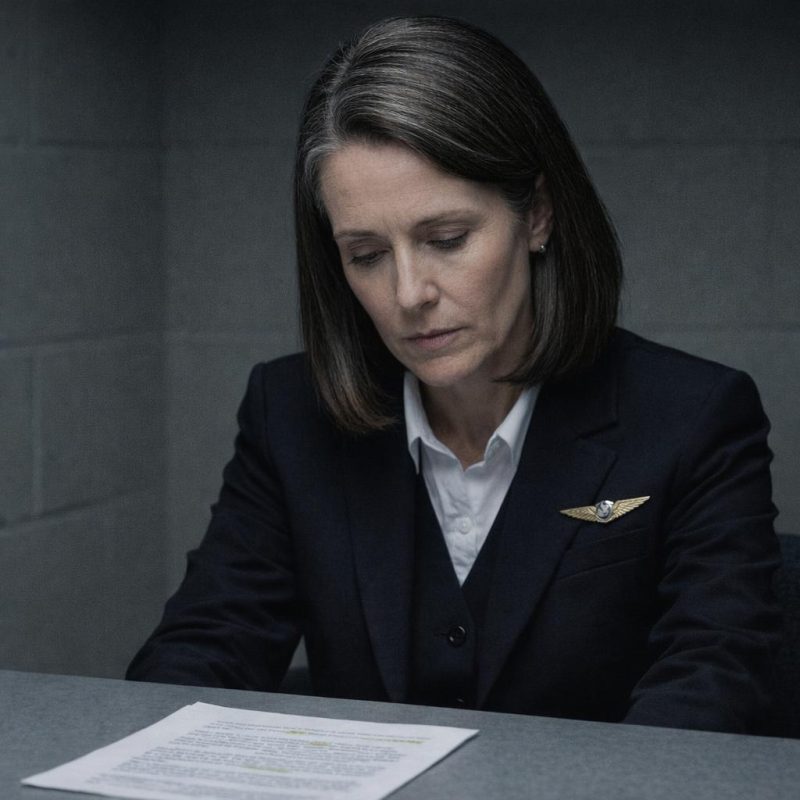 Image by RM AI
The Independent Review
Months passed. I flew my routes, filed my reports, went about the ordinary rhythms of the job. I had given my statement, answered the follow-up questions, and then the investigation moved into phases that didn't involve me. I followed the coverage when it surfaced — and it surfaced in pieces, the way these things do, a legal filing here, a brief mention in an entertainment news cycle there. Then the foundation released the results of its independent review. I read the announcement on my phone between flights, sitting in a crew lounge in Denver. The review had uncovered extensive improper spending across multiple areas of the foundation's operations. Several people connected to its management had been identified. Specific expenses were cited as having no charitable purpose. The language was careful and institutional, but the substance was exactly what Eric had described to me in that conversation with the legal team — the gap between the public image and what the records actually showed. The foundation announced major changes to its oversight structure and confirmed that funds would be repaid. I set my phone down on the table and looked at the departure board across the room. Then an alert came through on my screen: the foundation's board had scheduled a press conference for the following morning.
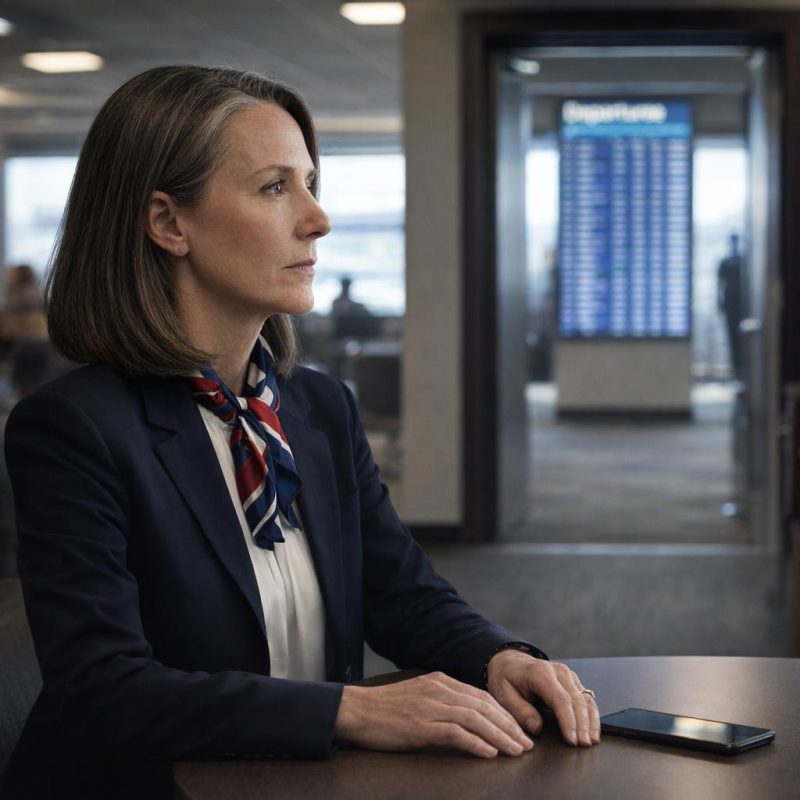 Image by RM AI
The Settlement
The actor released a statement saying he had not intentionally misused charitable funds and that he had trusted others to manage the foundation's operations appropriately. He announced he was stepping back from his role with the organization to allow the reform process to proceed without distraction. Several executives connected to the foundation's management were removed. A civil settlement was reached that required substantial repayment and mandated new governance procedures — independent oversight, regular audits, a restructured board with no ties to the film's production company. Eric's records were cited in the settlement documents as central to establishing the timeline and the nature of the expenses in question. I read through the coverage carefully, the way I had read every development in this story since that flight. The foundation would continue under new management, with the reforms the settlement required. The people who had donated money because they believed in what was being publicly represented would see some portion of it returned to the purposes they had intended. None of it undid what had happened, and the actor's statement ensured that no one would ever hear him say it plainly. But the changes were real, and they had started with a young man in a sweaty shirt stepping backward from a boarding door, holding a leather case, choosing not to get on the plane.
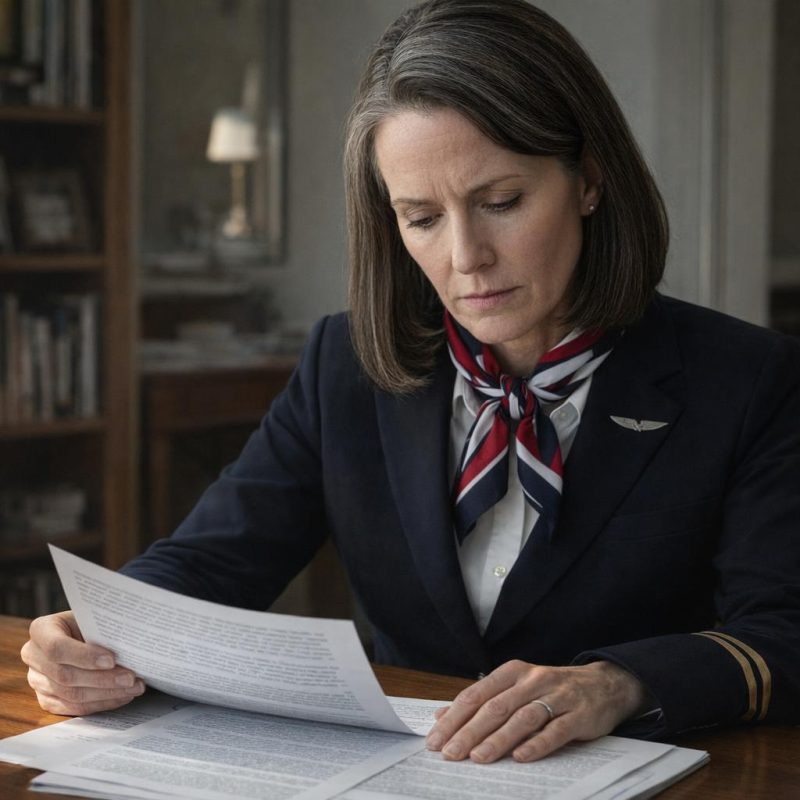 Image by RM AI
The Captain's Role
About a year after the settlement, I worked a transatlantic route with Ray — same pairing, same easy rhythm we'd had for decades. Somewhere over the Atlantic, during a quiet stretch between service rounds, I told him about Eric's message. I explained what Eric had said: that if the flight had waited even ten more minutes, the actor's security representative would have reached the gate. That Eric believed he would have been pressured back onto the plane. That the leather case and everything inside it would have been out of his hands before he ever reached his attorney. I watched Ray's face while I talked. He listened the way he always listened — steady, unhurried, giving nothing away. When I finished, he was quiet for a moment. Then he shrugged, the way only someone with thirty-plus years in a cockpit can shrug, and said, "I was just trying to leave on time."
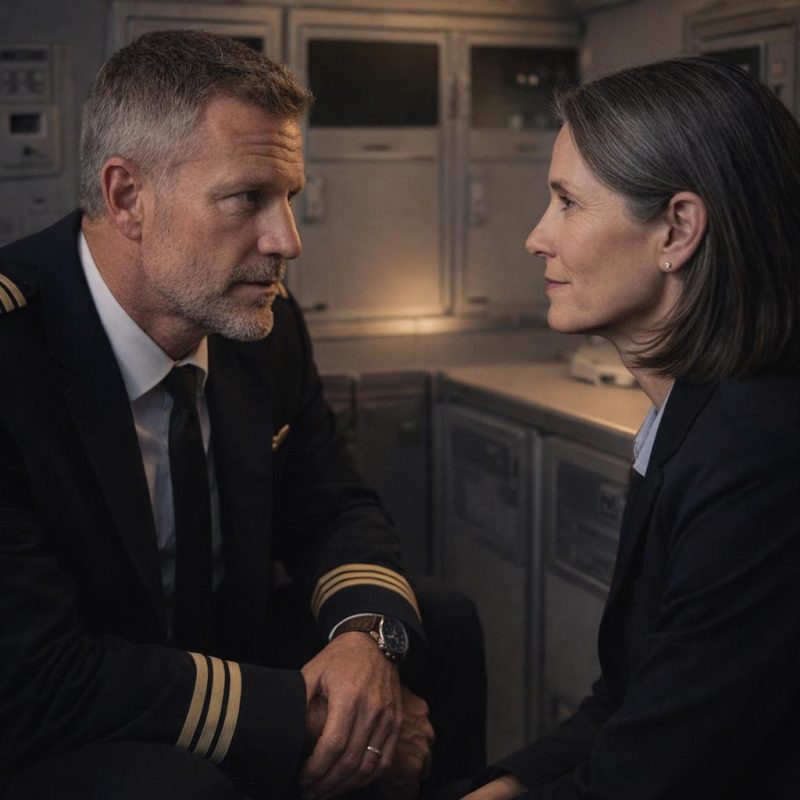 Image by RM AI
Eric Reaches Out
Eric reached out about four months after the civil settlement closed. The message came through his attorney's office — a short, careful note, but warm in a way that surprised me. He thanked me for not saying anything to the actor when he stepped back from the boarding door. He said he had been terrified I would call out to the gate, or that someone would flag the actor before the door closed. Then he explained the part I hadn't known. The actor's security representative had been en route to the gate that morning — maybe ten minutes out. If Ray had held the flight, even briefly, that man would have reached Eric before Eric reached his attorney. The documents would have been gone. Eric said he wasn't sure he would have had the nerve to walk away a second time. But the plane left on time, and that window was enough. He met his attorney in the terminal, handed over the case, and didn't look back. He ended the note by saying he hoped I knew that an ordinary morning had mattered more than I probably realized. I read it twice, sitting at my kitchen table, and the quiet that followed felt like something I hadn't known I was waiting for.
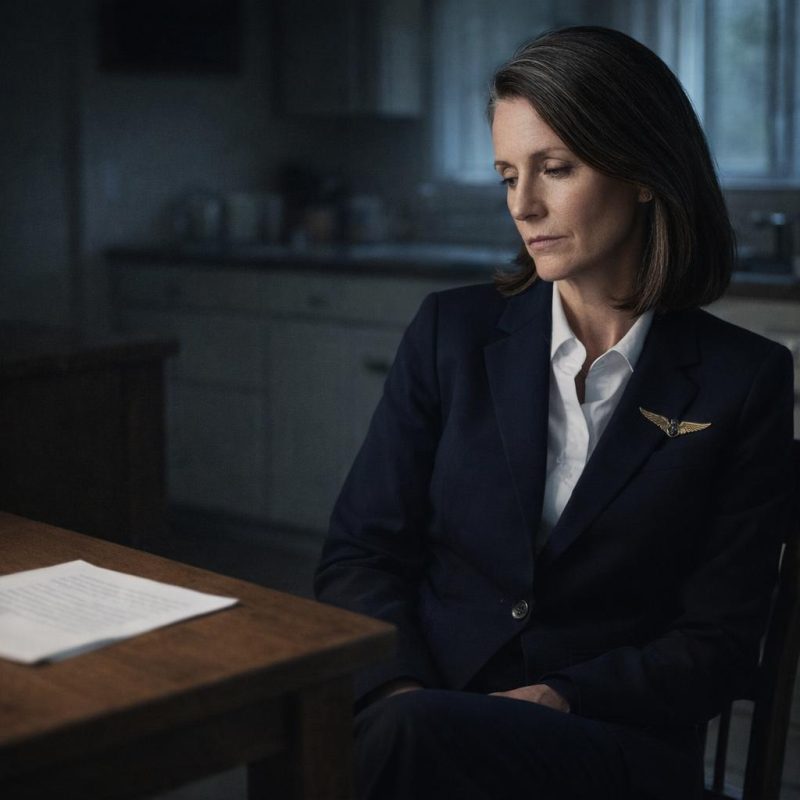 Image by RM AI
What I Learned
I've been a flight attendant for thirty-one years. In that time, I've watched the rules bend for famous passengers more times than I can count — delayed departures, overlooked violations, gate holds that inconvenienced three hundred people because one person in first class wasn't ready. I'd seen it so often that I'd stopped being surprised by it. What surprised me, that afternoon, was that it didn't happen. Ray didn't hold the flight. He didn't make an exception. He did exactly what the job required, for exactly the reason the job required it — because we had a schedule, and three hundred people on board, and a runway slot we weren't going to waste. He had no idea what was at stake. He wasn't making a statement. He wasn't protecting anyone. He was just doing his job correctly, the way he had done it for thirty years, and that turned out to be enough. I think about that sometimes when the work feels routine. Procedure exists for reasons we don't always get to see. Saying no to the wrong request, at the right moment, for the simplest possible reason — that can be the thing that changes everything. Not because you knew it would. Just because you held the line.
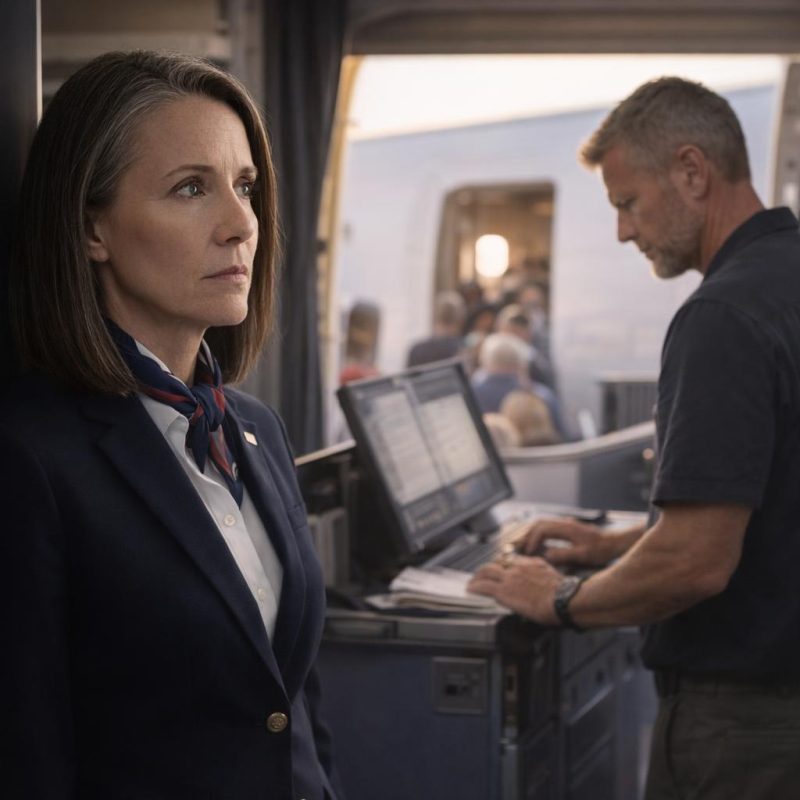 Image by RM AI
You Purchased a Seat, Not the Airplane
I've never forgotten what Ray said to the actor in first class that morning. I was standing close enough to hear it clearly: you purchased a seat, not the airplane. He said it without drama, without particular emphasis, the way you'd state any fact that wasn't worth arguing about. He had no idea. He didn't know about the leather case, or the documents inside it, or the young man in the sweaty shirt who was standing at the boarding door trying to find the courage to walk away. He didn't know that a security representative was moving through the terminal toward that gate. He didn't know that ten minutes was the difference between Eric reaching his attorney and Eric losing everything he'd gathered. Ray was enforcing procedure. That was the whole of it. But those words — you purchased a seat, not the airplane — sent us down the runway without Eric, without the case, without the one thing the actor needed most to keep close. I carry that afternoon with me the way I carry a lot of things from this job: quietly, and with more weight than it probably looks like from the outside. The plane left on time, and that was the moment that changed everything.
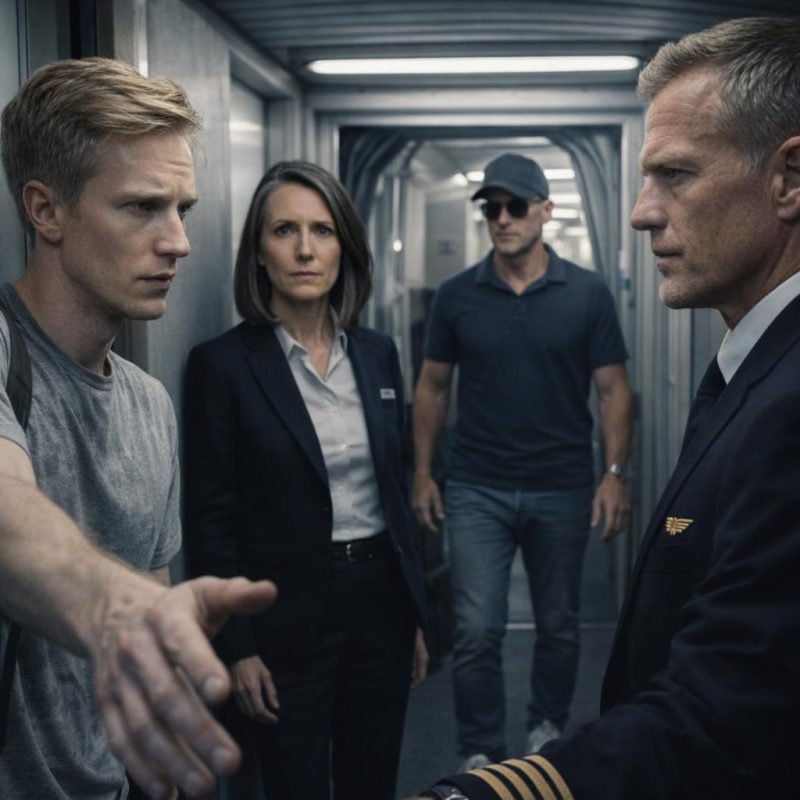 Image by RM AI