

I Quit My Job After 5 Years—Then Discovered My Boss Had Been Planning to Frame Me for Fraud the Whole Time
I Quit My Job After 5 Years—Then Discovered My Boss Had Been Planning to Frame Me for Fraud the Whole Time
The Precision of Sunlight
I pushed through the revolving door of the Sterling Building at 8:17 AM, same as always. The lobby smelled like recycled air and floor wax, and the security guard nodded without looking up — the same nod he'd given me every morning for five years. I took the elevator to the fourteenth floor, set my bag on my desk, and listened to the office come alive around me the way it always did. The coffee maker in the break room cycled through its startup hiss. The mail cart squeaked past at exactly 10:00 AM, its left wheel catching on the same patch of carpet it always caught on. The air conditioning rattled twice before settling into its low, steady drone. I knew every sound in this place the way you know the sounds of your own house at night. But somewhere between hanging up my jacket and opening my laptop, something shifted — not dramatically, not in any way I could point to. The rhythms were all there, every one of them, exactly where they were supposed to be. They just didn't feel like mine anymore. I sat at my desk and tried to name what was wrong, and couldn't. Five years, three months, and four days of this place pressed against my chest like something I'd been carrying too long to notice the weight of.
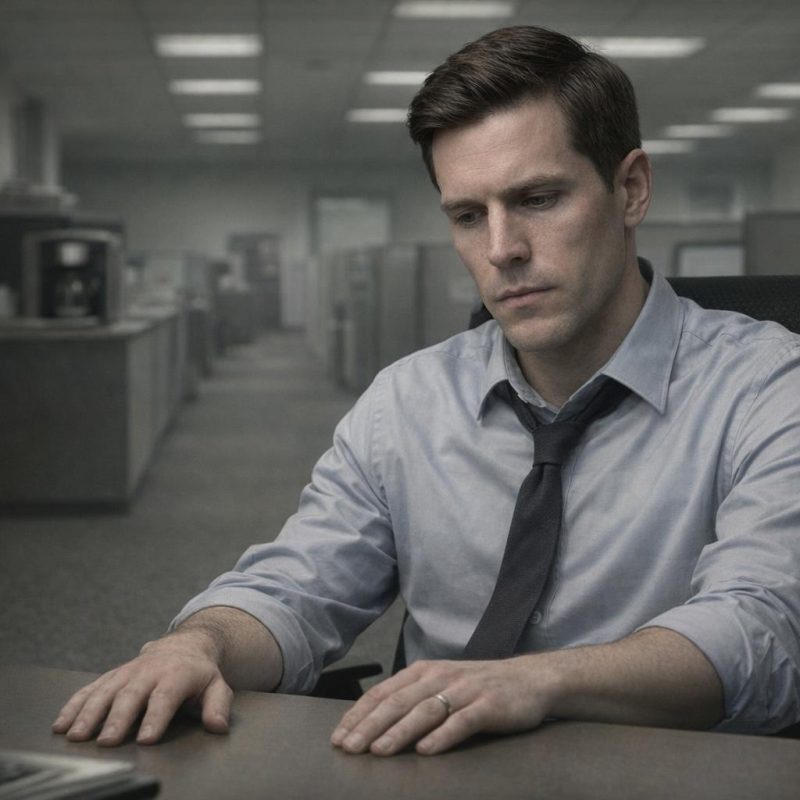 Image by RM AI
The Third Meeting
David arrived at 7:45 AM, same as every morning. I'd been in early enough to watch him come through the glass doors — dark suit, not a crease out of place, coffee cup already in hand before he even reached the break room to make his two espresso shots. He never made eye contact before his third meeting of the day. I'd noticed that pattern months ago and filed it away the way I filed everything: quietly, without making anything of it. We'd started at Miller & Associates within six months of each other, back when we were both analysts running the same kinds of reports. Somewhere along the way, our paths had split. His had gone up. I'd told myself it was because he was better at the social architecture of the place — the lunches, the hallway conversations, the way he could walk into a room and make everyone feel like they were already on his side. I'd told myself that was a different skill set, not a better one. Then, around 11:00 AM, I passed the small conference room on my way back from the printer. The door was cracked. I heard David's voice, smooth and unhurried, walking the executive team through the quarterly risk analysis I had spent three weeks building — and not once, in the four minutes I stood there, did he say my name.
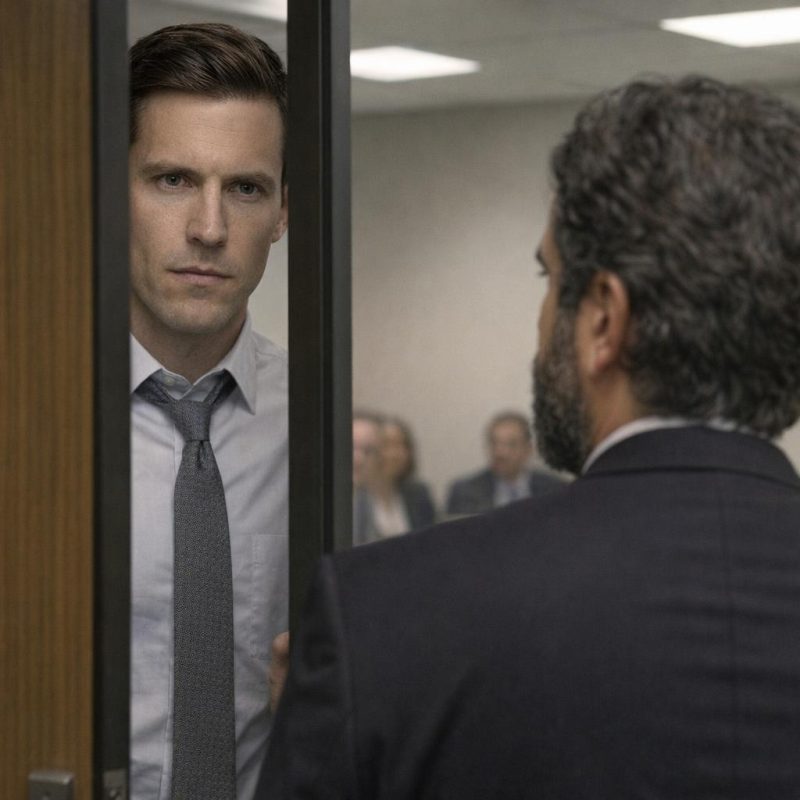 Image by RM AI
Sarah's Warning
Sarah had said it almost exactly a year ago. We were at the kitchen table on a Sunday night, and I was going over some notes for a presentation, and she'd set down her tea and looked at me in that way she had — like she'd already worked out the answer to a problem I hadn't finished asking yet. She said, 'He's using you, Ethan. You do the work and he takes the room.' I remember I didn't get angry. I just smiled in that patient, slightly condescending way I'm not proud of now, and told her she didn't fully understand how things worked at a firm like Miller & Associates. I said that credit was fluid in collaborative environments, that visibility came with time, that David was my manager and that's how the structure worked. She didn't argue. She just picked up her tea and said, 'Okay,' in a tone that meant she wasn't convinced but she was done trying. I'd thought about that conversation a few times over the past year, always with the same mild defensiveness. But sitting at my desk after the conference room, I thought about it differently. I hadn't been wrong about the structure. I'd just been wrong about what David was doing inside it. Her words sat in my chest now with a weight they hadn't carried before.
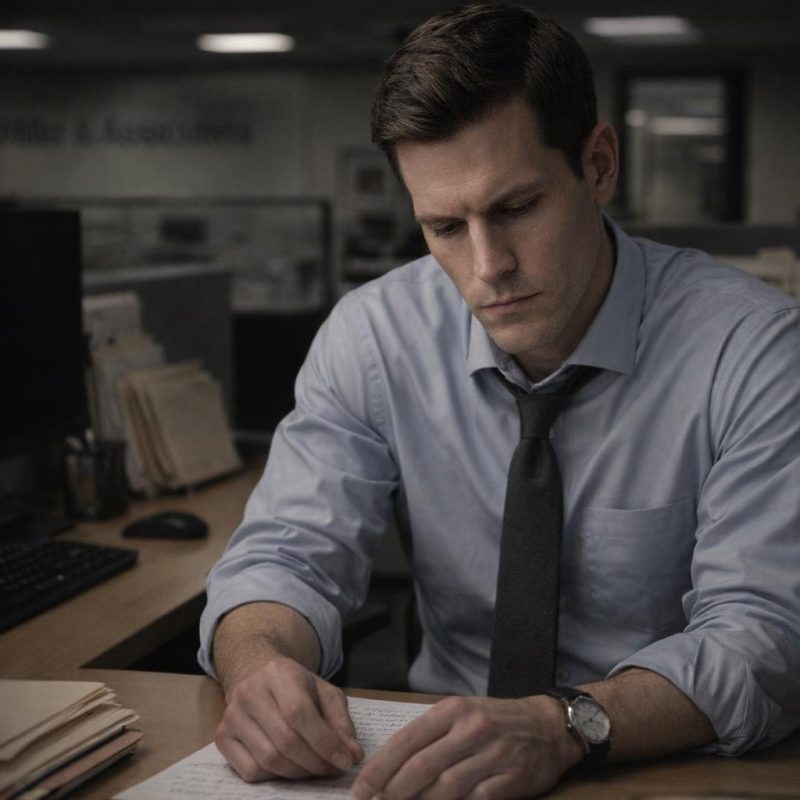 Image by RM AI
The Late Hours
By 7:30 PM the floor was empty. The overhead lights had switched to their after-hours setting — half of them off, the rest dimmed to something that felt more like an apology than illumination. I was still at my desk, working through a routing algorithm that had been giving me trouble for two days. I liked the office at this hour. I always had. The quiet made it easier to think, and there was something satisfying about being the last one there, about the idea that the work I was doing mattered enough to stay for. I'd built my whole approach to this job on that idea. Show up early, stay late, produce work that speaks for itself. It had always felt like enough before. The algorithm wasn't cooperating, and I kept running the same logic loop, and somewhere around the third pass I caught myself wondering — not for the first time, but more insistently than usual — whether any of this was landing anywhere. Whether the hours I put in were accumulating into something, or just accumulating. I saved the file, closed my laptop, and sat for a moment in the half-dark. The hum of the building's ventilation system filled the silence. I looked at the empty desks around me, each one dark and tidied for the night, and I couldn't say with any certainty who, if anyone, would notice what I'd left behind on that server when I finally walked out.
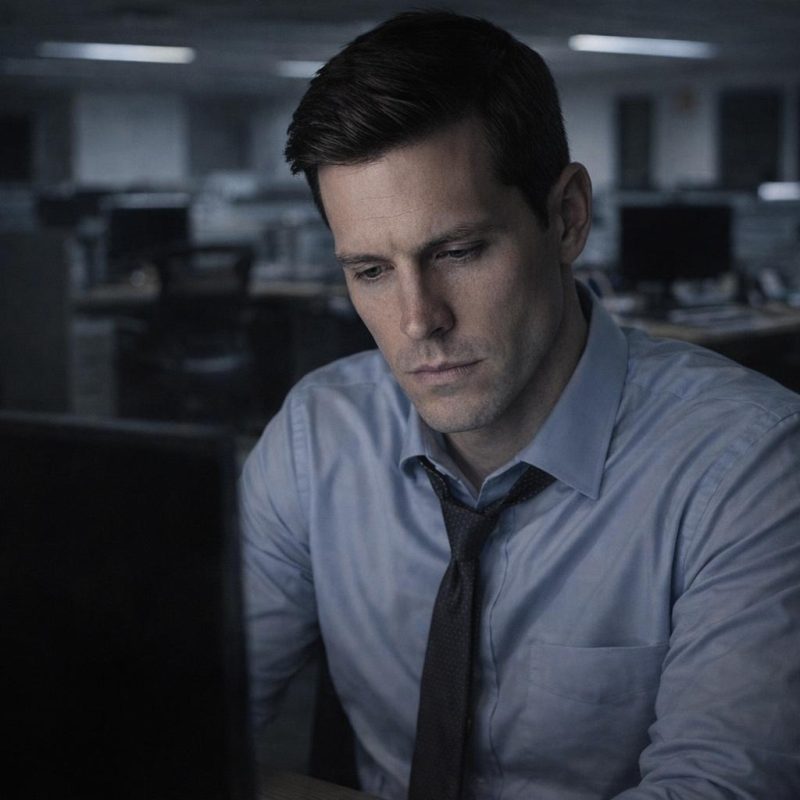 Image by RM AI
The Patent Filing
It was a routine documentation review — the kind I did every quarter as part of my department responsibilities. Patent filings, IP registrations, internal disclosures. I'd done it a dozen times without finding anything more interesting than a formatting error. I was maybe twenty minutes in when I pulled up a filing I didn't recognize. The title was close enough to my own project nomenclature that I almost scrolled past it. I didn't. The application was for a software architecture framework. Modular, event-driven, built around a specific kind of asynchronous queue management I'd spent the better part of four weekends designing in my home office. David's name was listed as primary inventor. I sat with that for a moment, telling myself there had to be an explanation — a parallel development, a miscommunication somewhere in the filing process. Then I opened the technical documentation attached to the application. The architecture diagrams were mine. The variable naming conventions were mine. And there, in the implementation notes, were my code comments — the shorthand I used, the specific way I bracketed edge cases, the exact phrasing I'd written at 11 PM on a Saturday in my own apartment. I scrolled slowly, line by line, and my hands had gone very still on the keyboard. The comments were still there, word for word, under David's name.
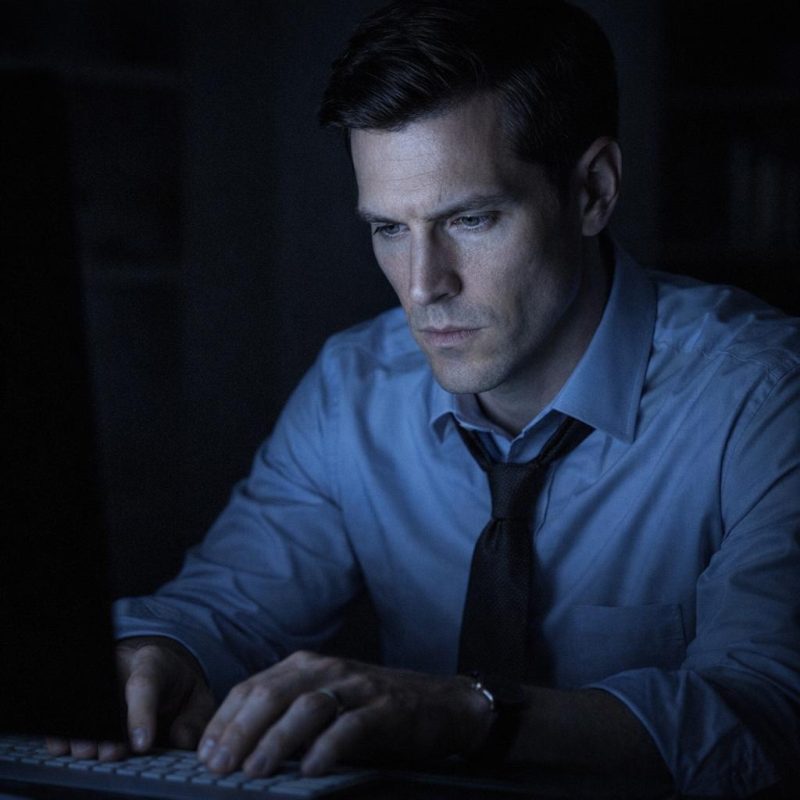 Image by RM AI
The Decision Not to Confront
My first instinct was to walk down the hall and put the patent filing on David's desk and ask him, calmly, to explain it. I sat with that instinct for about four minutes before I let it go. I'd watched David handle conflict before. I'd seen him take a straightforward disagreement and reshape it, mid-conversation, into something where the other person ended up apologizing. He had a way of introducing just enough ambiguity — a shared meeting here, a cc'd email there — that by the end you weren't sure what you'd actually contributed versus what you'd imagined. If I walked in there with the patent filing, he'd talk about collaborative development environments. He'd mention the team brainstorming sessions. He'd be calm and slightly puzzled, like he was genuinely sorry I'd misread the situation. And I'd leave that conversation with less ground than I'd walked in with. So I didn't go. I went back to my desk, and I thought about it differently. Not what I felt, but what I could prove. What I had, and what I needed. I opened my personal laptop — not the company machine — and created a new folder. I set the encryption, chose a password I hadn't used anywhere else, and typed the folder name. I looked at the word on the screen for a moment before I closed the lid. The folder was labeled 'Documentation.'
 Image by RM AI
The Final Month Begins
I gave myself thirty days. Not a countdown I announced to anyone — just a number I held in my head while I kept showing up at 8:17 AM and doing the work and saying the right things in the right meetings. Every evening I transferred files to my encrypted folder: emails with timestamps, code commits with version histories, design documents with my initials buried in the metadata. I was careful about it. Nothing dramatic, nothing that would flag on a system audit. Just a steady, methodical record of what I'd built and when I'd built it. I told myself it was insurance. That if I ever needed to demonstrate what I'd contributed to this firm, I'd have the receipts. It kept the anger at a manageable distance — gave it somewhere to go that wasn't a confrontation I'd lose. I was three weeks into the thirty days when I was searching my sent folder for an old client file and stumbled into a thread I hadn't seen before. It had been forwarded up the chain — senior management, two directors, the head of client relations. The subject line referenced the Hargrove account presentation. I'd delivered that presentation. I'd built every slide, run every number, handled every follow-up question in the room. The thread was four emails long. David's name was on all four. Mine wasn't on any of them.
 Image by RM AI
The First Draft
I opened a blank document at 9:45 PM and stared at it for longer than I'd like to admit. I knew what I wanted to say. The problem was that every version of it came out wrong — too bitter, or too vague, or so carefully neutral it said nothing at all. I wanted them to understand what they were losing. Not in an arrogant way, just in an accurate one. I wanted the letter to be the kind of thing someone read and set down slowly. I typed an opening sentence and deleted it. Typed another and deleted that too. I tried starting with gratitude and it felt dishonest. I tried starting with the facts and it felt like a complaint. I tried starting with the future — what I was moving toward — and that felt closest to right, but still not quite. Around 10:20 PM I landed on something I could live with. Professional, measured, specific enough to mean something without being specific enough to invite a conversation I didn't want to have. I read it through twice, made two small edits, and then typed the phrase I'd been circling around for weeks. The document saved automatically. I didn't close it. I just sat there in the quiet of my home office, the screen the only light in the room, the cursor blinking steadily after the words 'effective immediately.'
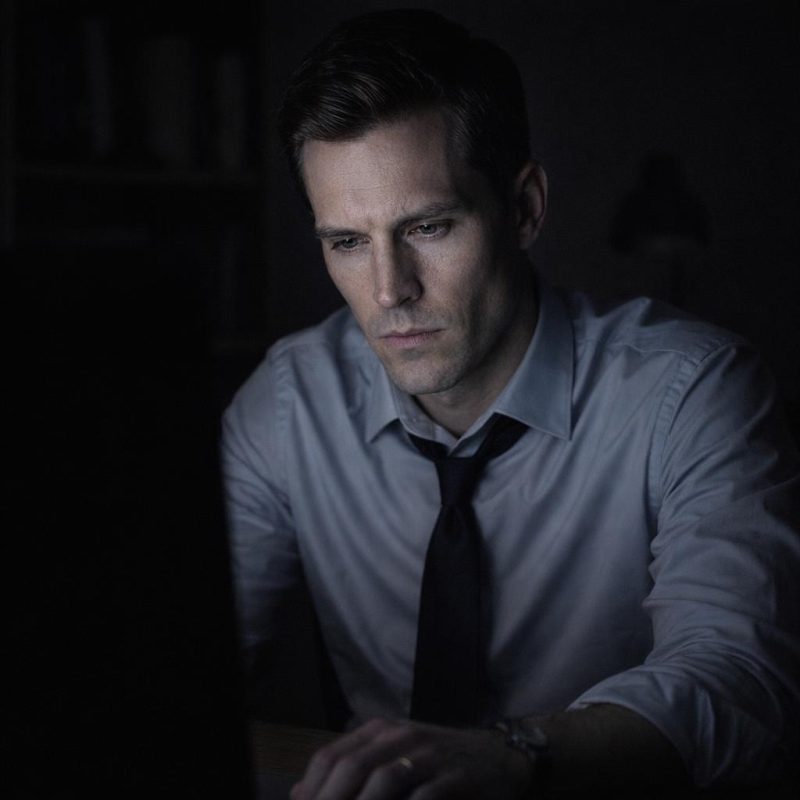 Image by RM AI
Revision and Doubt
Sarah found me at the desk around eleven, still staring at the same paragraph I'd been staring at for forty minutes. She didn't say anything at first — just leaned over my shoulder and read. I watched her eyes move across the screen. 'It's good,' she said finally. 'It was good the last three times too.' I told her this was the seventh version. She pulled up a chair. She'd been telling me for a year that David would never give me what I was looking for — not credit, not acknowledgment, not even a clean exit. I knew she was right. I just kept thinking that if I found the exact right words, the letter would do something a confrontation couldn't. Force him to see it. Force him to sit with it. Sarah put her hand on my arm and said, 'He's not going to read it the way you need him to.' And I knew that too. I saved the document without closing it and sat back. The cursor blinked in the silence between us, patient in a way I wasn't managing to be.
 Image by RM AI
The Final Version
By Sunday night I had something I could actually send. Not perfect — I'd stopped believing in perfect somewhere around revision four — but honest and clean and professional enough that I wouldn't be embarrassed by it later. I read it through one final time. It said what I'd done, what I was worth, and that I was leaving. It didn't say why in any way that could be used against me. It didn't beg for anything. I'd spent a week trying to thread that needle and I thought I'd finally done it. I opened my email, pasted the letter into the body, addressed it to Jennifer in HR with David copied, and saved it as a draft. The cursor sat on the Send button. I held it there for a moment — longer than I expected to. My hand didn't move. Something about the finality of it pressed back against me, not hard enough to change my mind, but hard enough to make me feel the weight of it. I closed the laptop and left it on the desk.
 Image by RM AI
Monday Morning
I got to the office at 7:52 on Monday morning. The Sterling Building looked exactly the way it always did — lobby lights up, security desk staffed, the elevator bank already cycling. I sat down at my desk, logged in, and opened my email. The draft was right there, sitting in the folder where I'd left it. I didn't read it again. I'd read it enough times that reading it again would only give me another reason to change something, and I was done changing things. I clicked Send at 8:04 AM. The message disappeared from the draft folder. A small confirmation banner appeared at the top of the screen — Sent — and then it was gone too. Around me the office was doing what it always did on Monday mornings: keyboards, coffee cups, someone's phone ringing twice and going to voicemail. Nobody looked up. Nobody knew. I turned back to my screen and sat with the strange, hollow quiet that had settled over my desk like the room had shifted one degree and only I could feel it.
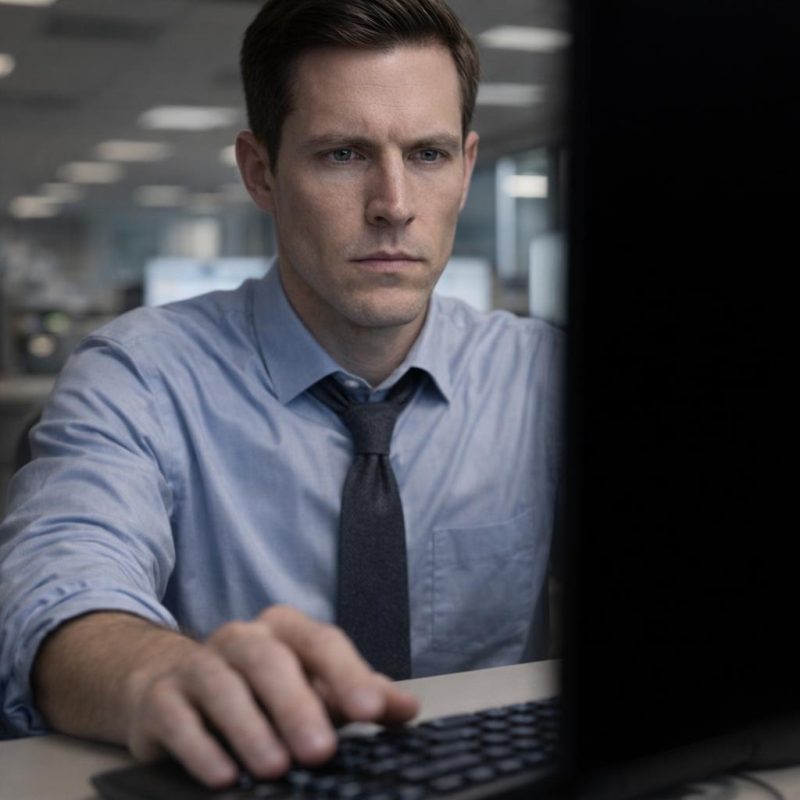 Image by RM AI
The Spinning Icon
The automated receipt confirmation was supposed to take about three minutes. I knew this because I'd sent enough formal correspondence through the company system to have timed it before. I watched the inbox refresh. Three minutes passed, then five. Around me, Monday morning kept moving — someone rolled a chair back hard enough to scrape the floor, a printer across the room cycled through a long job, two people from the analytics team walked past my desk talking about a client call. I kept my eyes on the screen. At 8:19 the confirmation arrived. I clicked it open. The standard language was all there — message received, logged, routed to the appropriate parties. But below the standard footer there was a small flag I hadn't seen on a confirmation before: Attachment Detected — Pending Security Review. I hadn't attached anything to my resignation email.
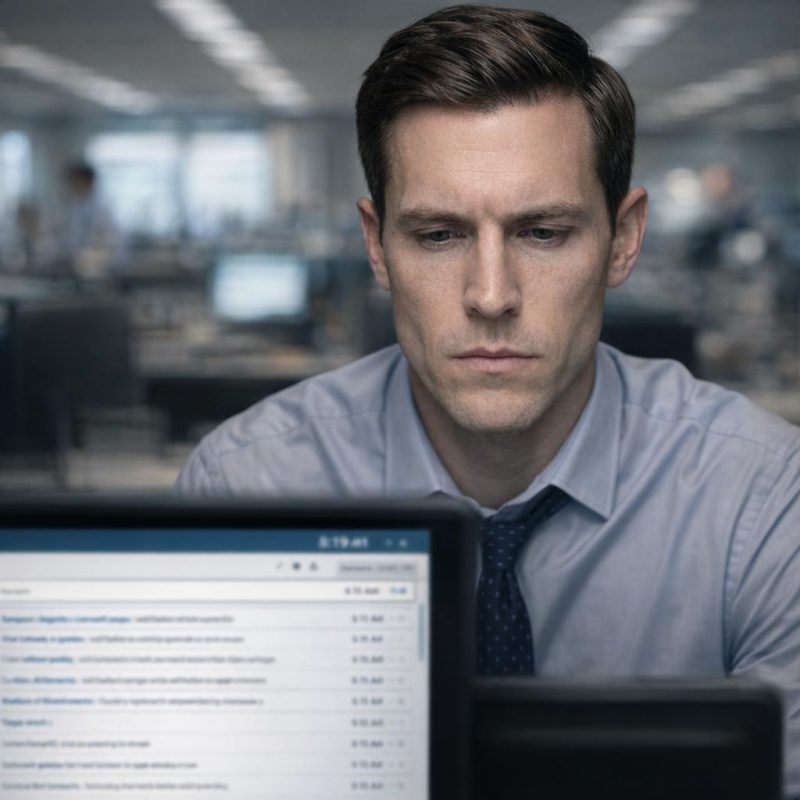 Image by RM AI
The Temperature Drops
By mid-morning I could feel it. Not see it exactly — feel it. The way a room changes temperature when something shifts that nobody's named yet. Marcus from the analytics team, who'd eaten lunch with me at least twice a week for three years, took a different route back from the printer. Diane from compliance looked up when I passed her desk, then looked back down without the usual nod. A conversation near the coffee station stopped when I got close enough to hear it. I told myself it was in my head. People were busy. Monday mornings were like that. But David was visible twice before noon — once near the conference rooms, once at the far end of the floor — and both times he moved through the space without his eyes landing anywhere near me. Not a glance, not a pause. I'd worked for the man for five years. Something had changed in the office before I'd even had a chance to clear my desk, and I had no idea what it was or how far it had spread. The distance between me and everyone else felt less like space and more like a wall I hadn't seen being built.
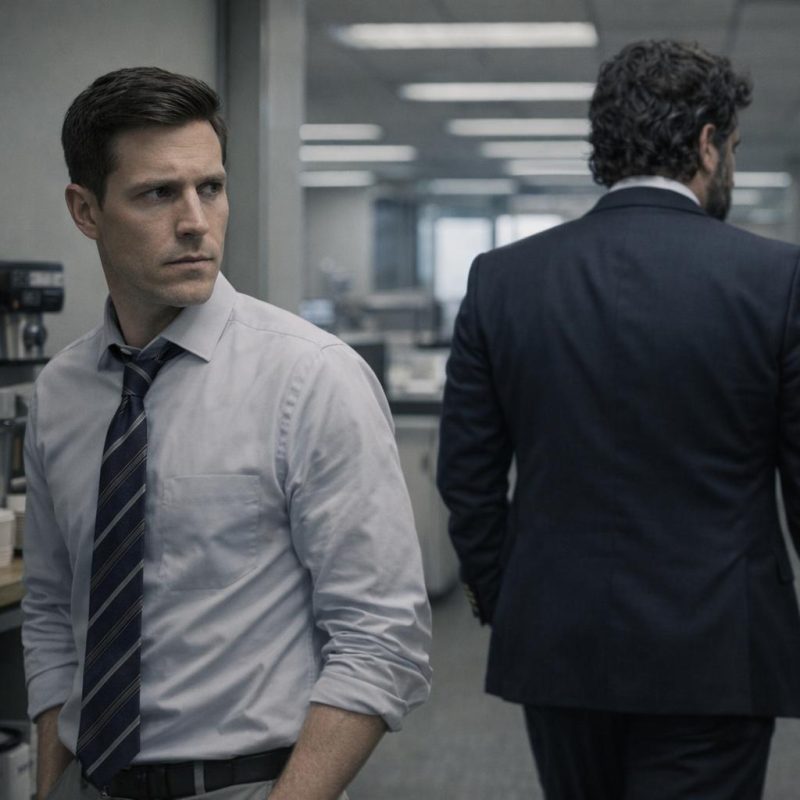 Image by RM AI
The Breakroom Silence
I went to the breakroom at 10:30 because I needed coffee and because I was tired of sitting at my desk feeling like I was behind glass. Tom, Priya, and Garrett were in there — people I'd worked alongside for years, people I'd covered for during crunch weeks and who'd covered for me. They were mid-conversation when I walked in. Tom saw me first. Something moved across his face — not hostility, more like discomfort — and then he checked his watch and said he had a thing. Priya remembered a call she needed to make. Garrett didn't offer an explanation at all; he just picked up his mug and left. The whole sequence took maybe forty-five seconds. I stood at the counter and poured my coffee and told myself it was a coincidence, even though I knew the word didn't fit. The breakroom hummed with the refrigerator and the fluorescent lights and nothing else. I didn't move to leave. I just stood there while the coffee went cold in my hand, the room settling around me in a silence that had nothing accidental about it.
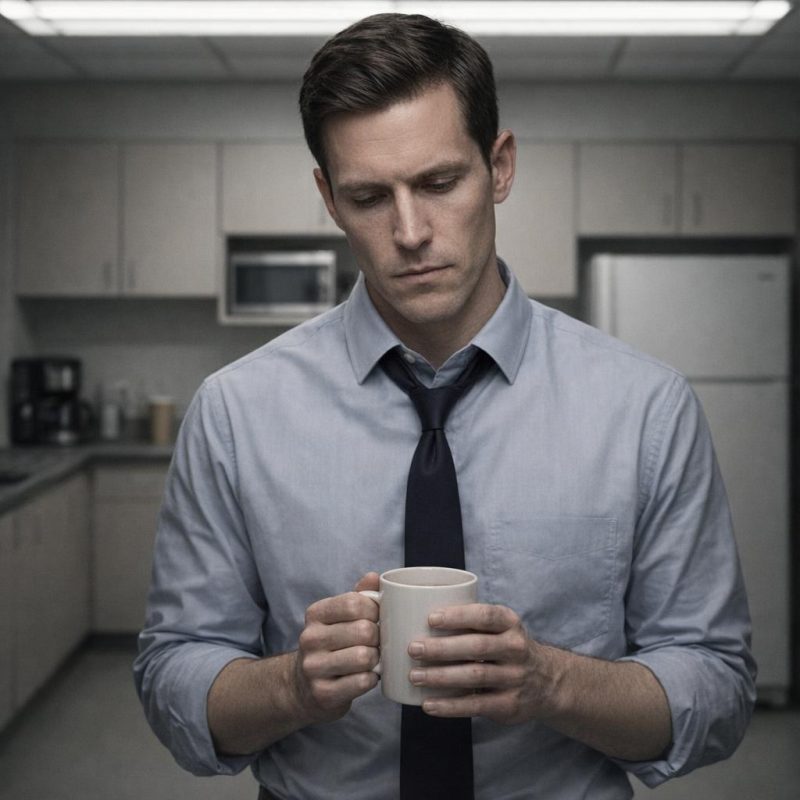 Image by RM AI
David's Silence
I passed David in the hallway three times that day. The first was around nine, near the copy room. I nodded. He walked past me like I was a column he'd learned to navigate around. The second was before lunch, by the elevators. I said his name — just his name, nothing attached to it. He pressed the button and waited, his eyes on the floor indicator above the doors. The third time was mid-afternoon, and I'd stopped expecting anything by then, so I just kept walking. What I wasn't prepared for was what came after. I was heading back to my desk when I heard it — laughter, easy and unguarded, the kind that fills a hallway. I turned. He was standing at the far end of the hall, near the window alcove where we used to spread out project documents and talk through the numbers, and he was laughing with a junior analyst I barely recognized, at ease in a way I hadn't seen from him in some time.
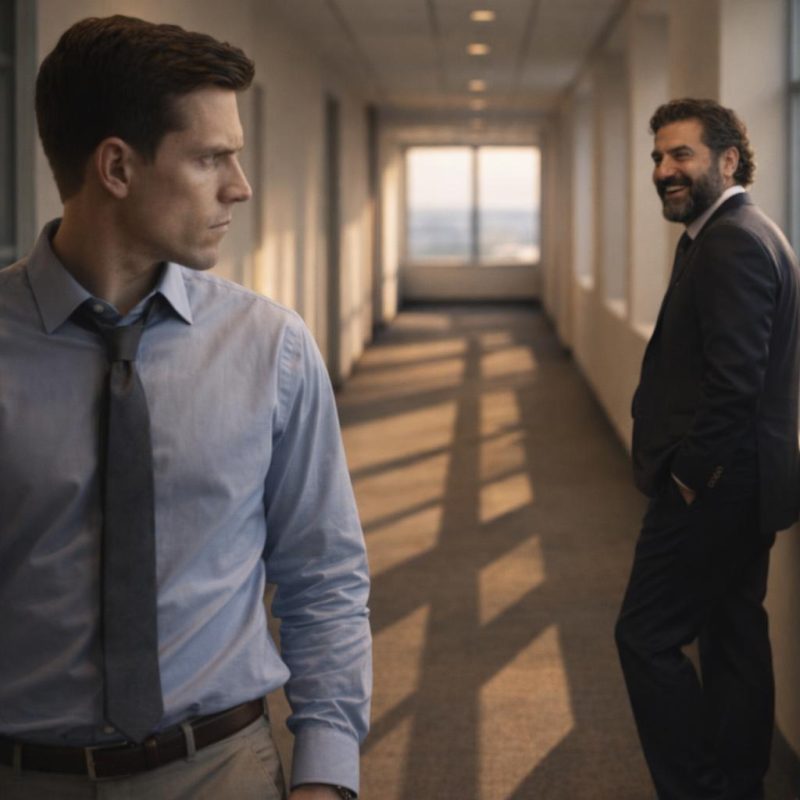 Image by RM AI
Two Weeks Notice
By Wednesday I had stopped expecting the isolation to lift. I counted the days the way you count miles on a long drive — not because it helps, but because it gives you something to do with the waiting. Eight days left. Then seven. The office moved around me like I was furniture that had already been scheduled for removal. I kept my head down, finished what I could finish, and tried not to read anything into the silences. On Thursday afternoon I needed to pull a file from the third-floor conference room — project documentation I'd built over eighteen months that I wanted to review before my last day. I badged in at the reader beside the door. The light stayed red. I tried again, slower. Red. I stood there for a moment looking at the panel, then at the door, then back at the panel. My access to that room had never been restricted before. Standard protocol was badge access until the final day of notice, sometimes beyond. It was Thursday of my first week out.
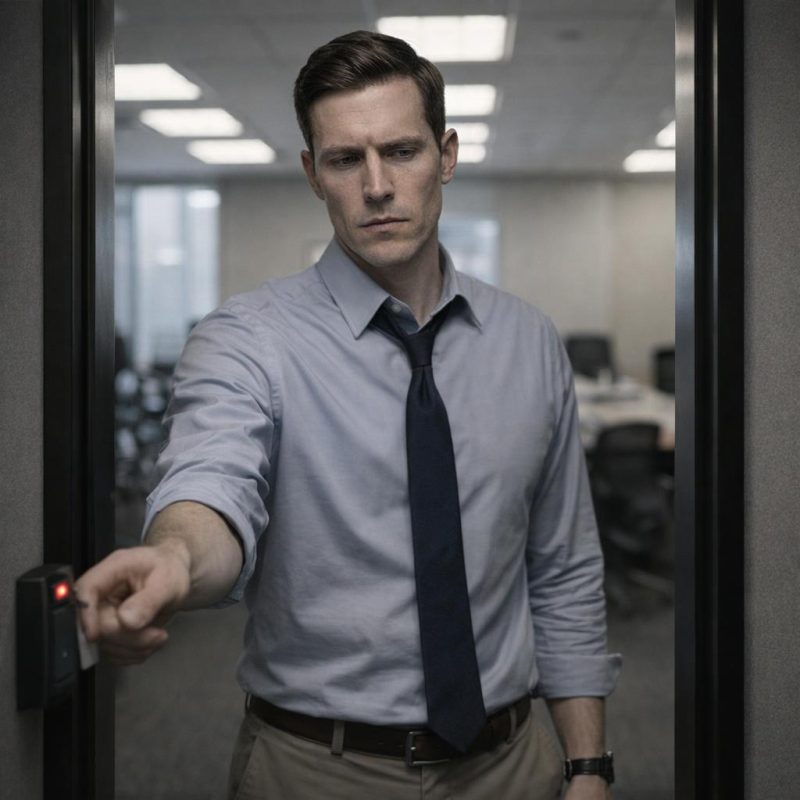 Image by RM AI
The Final Friday
My last Friday arrived the way last days usually do — quietly, without ceremony, the calendar just running out of road. I got in early, which felt absurd in retrospect, and spent the first hour finishing documentation nobody had asked me to finish. Around nine I pulled a small cardboard box from the supply closet and set it on my desk. That was the whole project: one box. I wrapped the ceramic mug I'd bought my first week in a paper towel, tucked the photo of Sarah face-up on top, and set the lucky stapler — the one that had been on my desk through three promotions — in the corner of the box like it deserved its own seat. The office moved around me the way it always had. Keyboards clicking. Someone laughing near the kitchen. A phone ringing twice and going to voicemail. Nobody stopped by. Nobody said much. I had expected a standard exit interview with Jennifer in the third-floor HR suite at four-thirty — that was the protocol, that was always the protocol. Then at two-fifteen an internal message appeared on my screen telling me the exit interview had been relocated to an off-site address twelve blocks away.
 Image by RM AI
The Box of Belongings
I left the message open on my screen and looked at the box. The ceramic mug. The photo of Sarah. The stapler. Three items in a box that could have held twice as many without feeling full. I sat with that for a minute — the arithmetic of it. Five years. Eighteen months on the demand-forecasting algorithm alone. The late Thursdays when I'd stayed past nine because the model wasn't converging and I couldn't leave it broken. The quarterly presentations I'd rebuilt from scratch because the first drafts weren't good enough. The documentation, the version histories, the handoff notes written for people who never asked for them. None of that fit in the box. None of it was coming with me. The mug had a small chip on the handle I'd never gotten around to noticing until right then. Sarah's photo was from a camping trip three summers ago — she was laughing at something off-camera, and I couldn't remember what. The stapler still worked perfectly. I sat there with the box on the corner of my desk and the off-site address sitting in my inbox, and the afternoon felt like it was holding its breath around me.
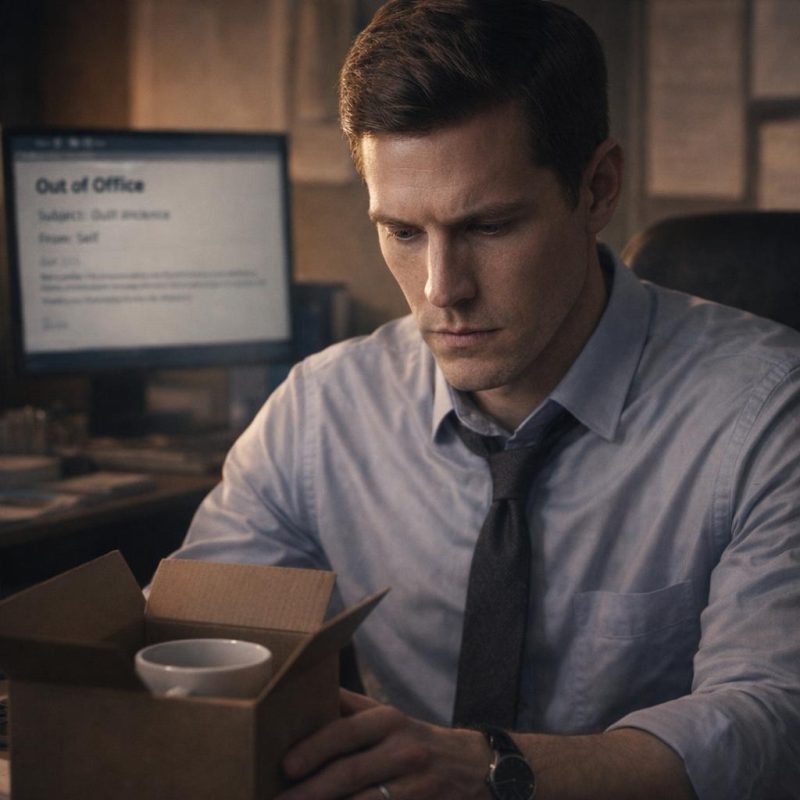 Image by RM AI
4:30 PM
I badged out of the Sterling Building at 4:15 PM with the box under one arm and my bag over the other shoulder. The parking lot was half-empty by then, the late-afternoon sun cutting long shadows across the asphalt. I set the box on the passenger seat — Sarah's photo still face-up, the stapler wedged against the side — and pulled up the address on my phone. Twelve blocks. An office park I didn't recognize, a suite number, nothing else. No company name in the message. No explanation for why HR would conduct an exit interview off-site when there was a perfectly functional HR suite on the third floor. I sat behind the wheel for a moment before starting the engine. Standard protocol was standard for a reason. Deviations from it usually meant something had changed, and changes on a final Friday, in my experience, were rarely administrative conveniences. I told myself I was probably overthinking it. I told myself that twice. The engine turned over and I pulled out of the space, and the feeling that something was already in motion — something I hadn't been told about — settled into my chest and stayed there.
 Image by RM AI
The Courier
I had the car in reverse and my hand on the wheel when a knock came at the driver's side window. Sharp, two knocks, the kind that expects an answer. I put it back in park. The man standing outside wasn't anyone I recognized — mid-thirties, generic courier uniform, a company name on the chest I'd never seen before. He was holding a large envelope, the kind with a reinforced back, and he held it up toward the glass with the practiced patience of someone who does this forty times a day. I cracked the window. He asked if I was Ethan. I said yes. He said he had a delivery requiring in-person confirmation and slid a small electronic pad through the gap for my signature. I signed without thinking — which I would think about later — and he pulled the pad back and held the envelope out through the window. It was heavier than it looked. The return address showed a legal firm I had never heard of, the seal embossed in dark blue on the upper left corner, and my full name typed on the front in a font that looked like it had come off a very expensive printer. I took the envelope from his hand.
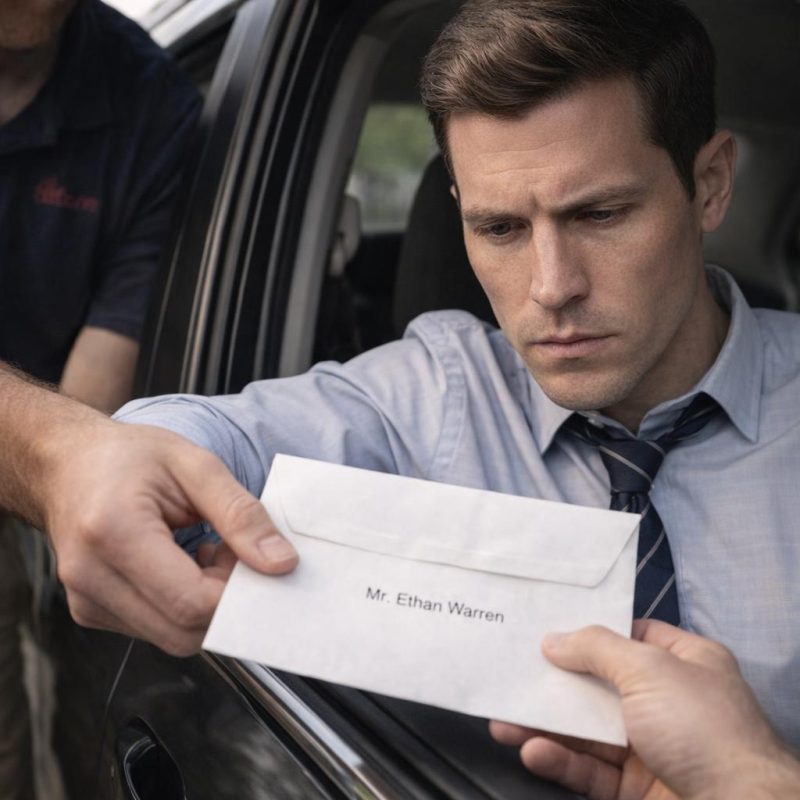 Image by RM AI
The Weight of the Envelope
The courier was already walking away by the time I set the envelope on the passenger seat. I watched him cross the parking lot without looking back, get into an unmarked white sedan, and pull out onto the street. Then it was just me and the box and the envelope and the engine idling. I picked the envelope up and turned it over. The legal firm's name was embossed on the back flap — Hargrove & Selin, LLP — and I ran the name through everything I knew about the company's outside counsel, every firm name I'd seen on contracts or compliance filings in five years. Nothing. I set it back down on the seat. It landed with a weight that felt disproportionate to its size, the way dense things do. My name was on the front. My full legal name, spelled correctly, with my middle initial. Someone had known exactly where I would be parked and exactly when I would be leaving. The 4:30 appointment was still in my calendar, twelve blocks away, and I had seven minutes to get there. I sat with the envelope on the seat beside me and the engine running, and I did not move.
 Image by RM AI
Opening the Seal
I turned the engine off. The 4:30 appointment could wait. I worked my thumb under the envelope's back flap and tore it open — not carefully, not the way you open something you're expecting — and pulled out the contents. The stack was thick, at least thirty pages, held together with a binder clip. The paper had a specific weight to it, the kind used for internal printing at Miller & Associates. I knew that paper. I'd printed on it for five years. The header formatting on the first page was the company's internal style — the font, the margin widths, the footer structure with the document control number in the lower right corner. These were not documents that were supposed to exist outside the company's secure document servers. I flipped through the first few pages slowly, my hands not entirely steady, trying to get a sense of the scope before I read anything closely. The pages were dense with text, memo formatting, dates going back years. Then I stopped and went back to the first page. Centered at the top, in the company's standard header font, were two words: REDUNDANCY PROTOCOL. Beneath them, on the line marked Subject, was my name.
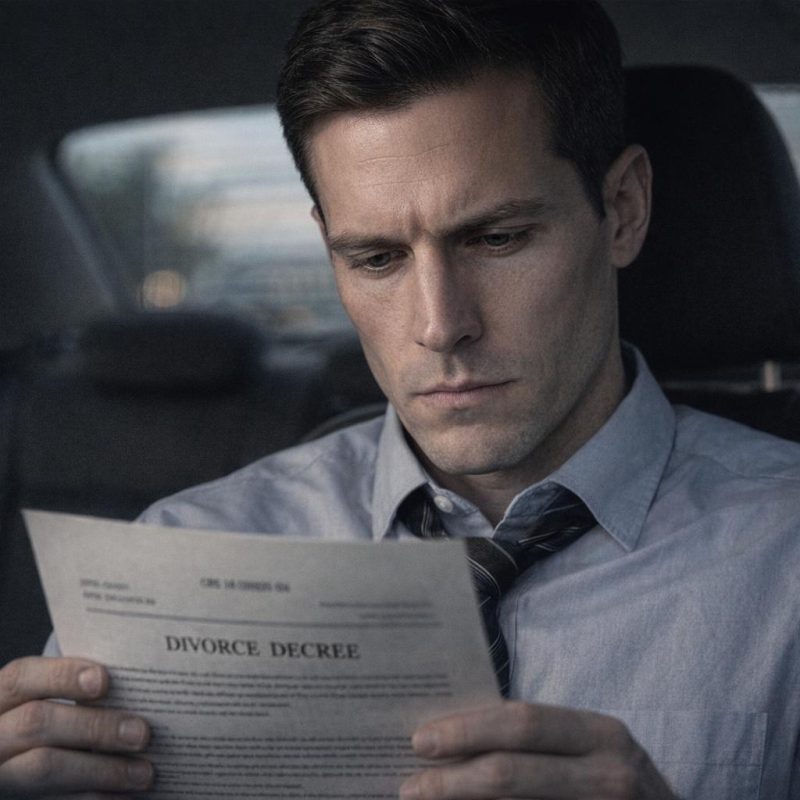 Image by RM AI
The Redundancy Protocol
I read the first memo twice before the words stopped sliding around. The language was procedural, the kind of flat institutional prose that makes terrible things sound like scheduling logistics. References to 'managing the transition period.' References to 'knowledge transfer timelines.' References to 'portfolio consolidation upon departure.' The memos were dated three years back — three years, when I had been mid-project on the demand-forecasting work, when I had no thought of leaving, when I was still putting in the late Thursdays and believing they meant something. These transition memos had been written while I was staying late to fix models I thought mattered. I kept reading. The stack was organized chronologically, and the further I got, the more specific the language became. Less about timelines, more about assets. My assets. The algorithms I'd built, the client relationships I'd documented, the proprietary forecasting methodology I'd spent eighteen months developing. Each one listed, each one categorized. Then I reached a memo near the middle of the stack, dated two and a half years ago, and I stopped. It was a single page. At the top it read: PROJECT OWNERSHIP TRANSFER — PORTFOLIO REASSIGNMENT. David's name was listed as the designated recipient of my entire project portfolio.
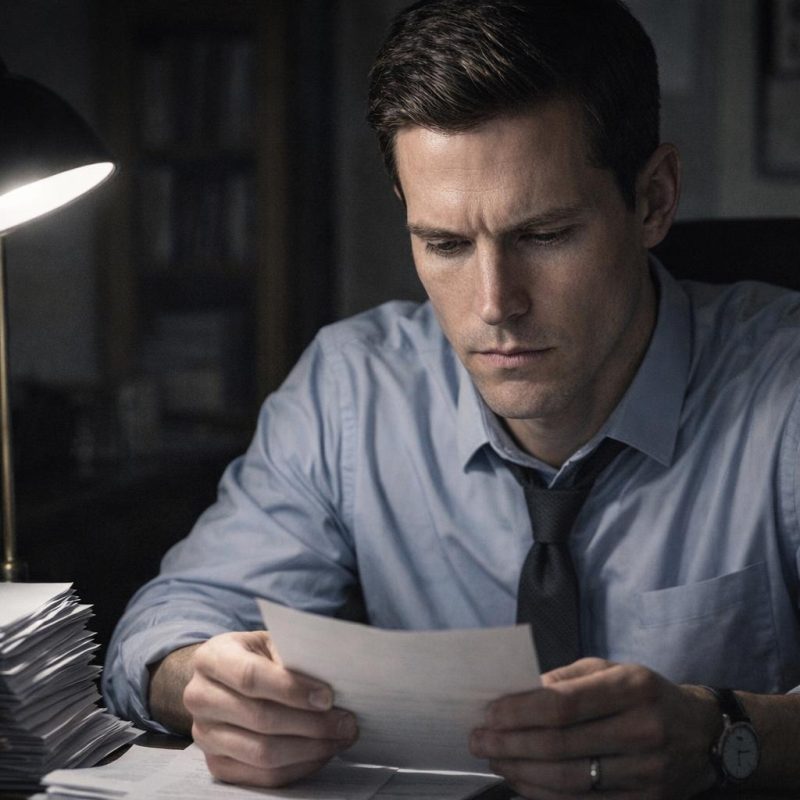 Image by RM AI
The Audit Timeline
I set that memo aside and kept going. Near the back of the stack, the documents shifted from personnel language to financial language. I found what looked like an internal audit schedule — a calendar grid, quarterly intervals, departmental sign-off requirements listed by role. I ran my finger down the column until I found my department. My name was in the signatory field. The required sign-off date was listed as the Friday of the week after I had actually resigned — one week after I had already walked out. I checked the date twice. Then I checked my resignation date against it, doing the arithmetic in my head the way I always do when something doesn't add up. I had left seven days before I was supposed to put my name on the departmental financials. The line on the page read: REQUIRED SIGNATORY — E. CALLOWAY — AUDIT CERTIFICATION DATE: the date printed there in the document's standard font, clean and unambiguous, one week past.
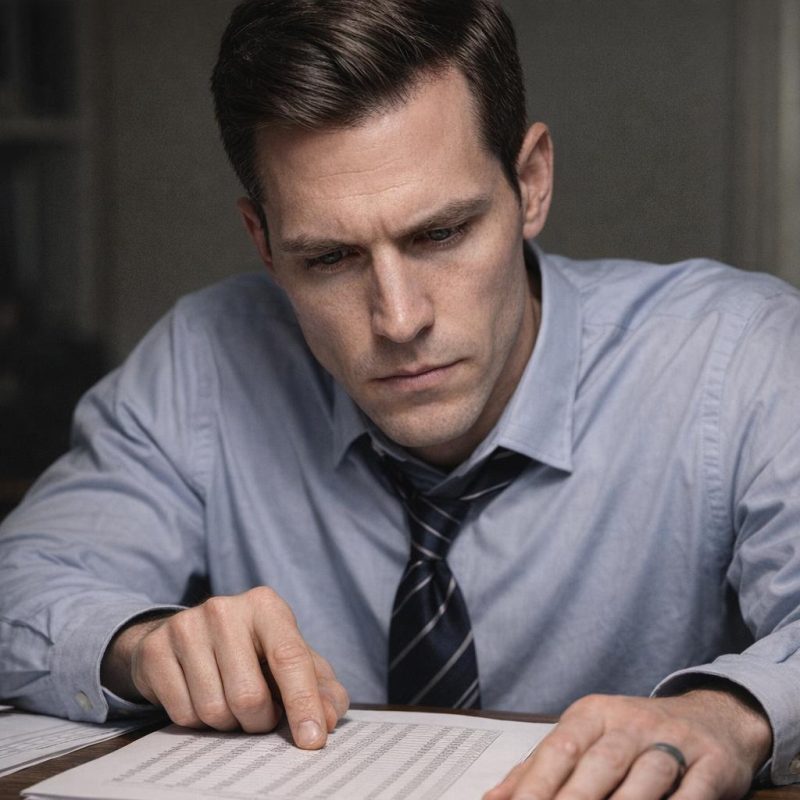 Image by RM AI
Accounting Discrepancies
I kept going through the stack. The next section was spreadsheets — printed copies, multiple pages, columns of figures broken down by quarter. I recognized the format immediately. These were departmental budget reports, my department's budget reports, and I had signed off on versions of these every quarter for the past five years. Except these weren't the versions I had signed. The line items were the same, the category headers were the same, but the numbers were different in ways that were small enough to miss on a quick pass and large enough to matter if you were looking. Vendor payments that didn't match the contracts I remembered approving. Reimbursement entries with no corresponding receipts. Allocation figures that shifted between quarters in patterns that didn't track to any project timeline I recognized. Someone had annotated the margins in red ink — not handwriting, printed sticky notes affixed to the pages — and the notes referenced the audit review process by name, with language indicating the irregularities would fall under my oversight designation. I read each note carefully. Most of them were procedural. Then I turned to the last page and found one highlighted in yellow, the text standing out against the white paper, and I read it: 'Brooks will sign without detailed review per established pattern.'
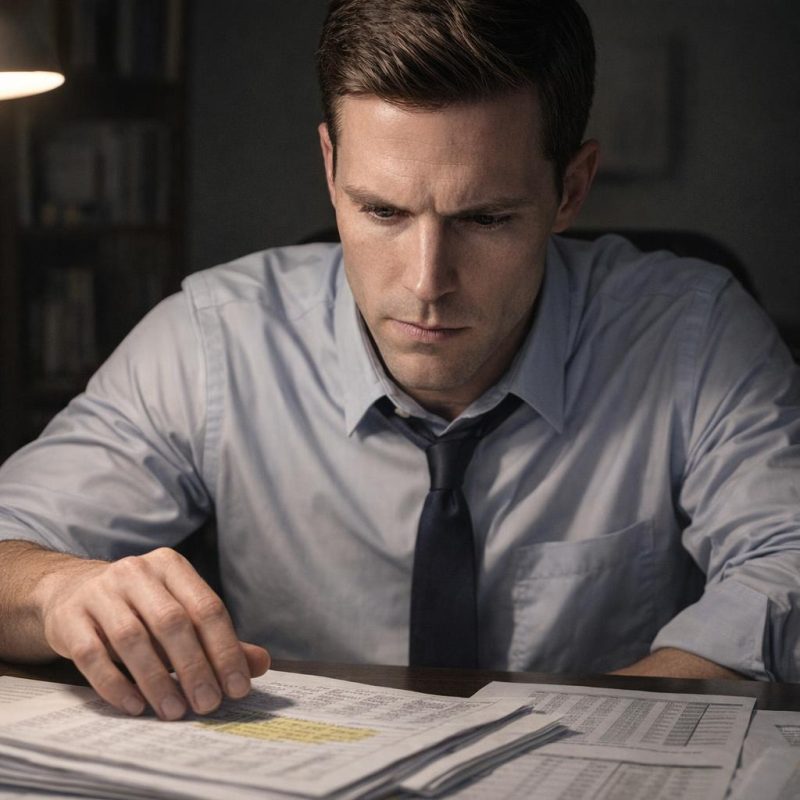 Image by RM AI
The Missing Millions
I spread the spreadsheets across the kitchen table when I got home that evening — I'm getting ahead of myself, but I need to explain what I found before I explain what I did with it. I went back through every quarterly report in the stack, page by page, and I started running the numbers the way I always do: manually, in the margins, checking each figure against the ones adjacent to it. The discrepancies were small per quarter. That was the point. Fifty thousand here, eighty thousand there, buried inside line items broad enough to absorb the variance without triggering an automatic flag. But when I added them across all the quarters represented in the stack — eighteen months of reports — the number I kept arriving at was just under three million dollars. I checked my arithmetic four times. I got the same answer each time. Three million dollars, moved out of my department's budget in increments small enough to look like rounding errors to anyone who wasn't sitting down with a calculator and enough time. The pattern was too consistent, the intervals too regular. I sat there with the spreadsheets laid out in front of me, and the number just sat there too, not getting any smaller.
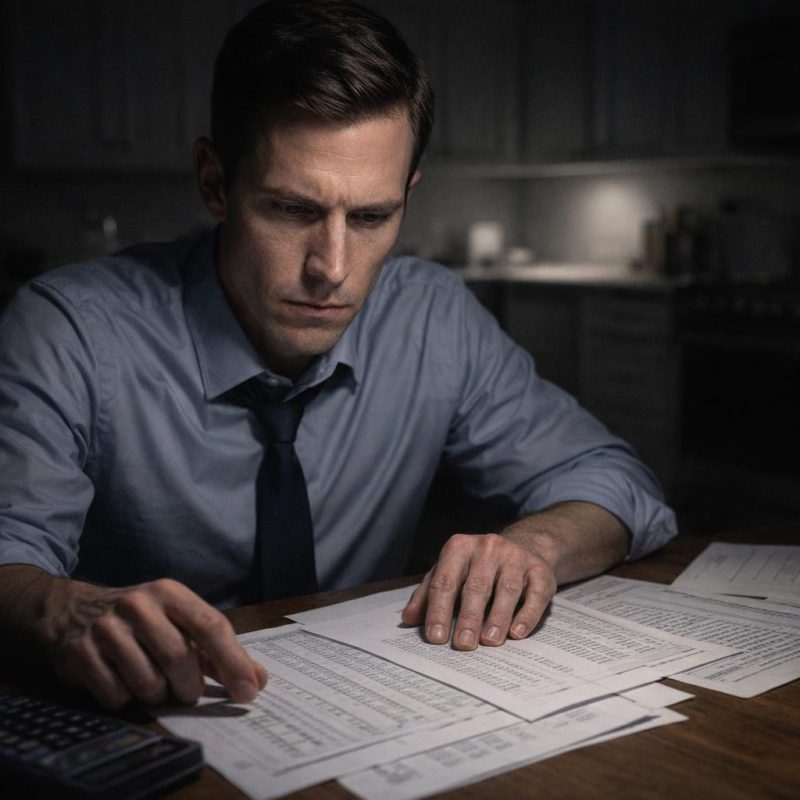 Image by RM AI
The Handwritten Note
I lifted the last spreadsheet off the stack expecting blank table underneath. Instead there was a single sheet of plain paper — no letterhead, no printed header, nothing to identify where it had come from. The handwriting on it was neat but unfamiliar, not a hand I recognized from five years of memos and sign-off sheets. I had seen enough of David's handwriting, Jennifer's handwriting, the handwriting of half a dozen colleagues, and this wasn't any of them. The note was short. Seven words on the first line, four on the second. 'They thought you wouldn't notice the math. They were wrong.' That was all. No signature, no date, no indication of who had put this at the bottom of a stack of documents and left it in a parking lot for me to find. I read it twice, then a third time. Someone inside that building had watched what was happening, had gathered these documents, had gone to the trouble of getting them to me, and had apparently believed I was capable of understanding what they meant. I had spent the last several hours alone with a stack of paper that felt like it was closing in on me. That note made the room feel slightly less small.
 Image by RM AI
The USB Drive
I turned the note over. Taped to the back, flush against the bottom edge so it wouldn't shift, was a USB drive. It was small — shorter than my thumb, no brand marking, no label, nothing printed on the casing. Just a plain black rectangle held in place with two strips of clear tape. Below it, in the same neat handwriting as the note on the front, were four lines of instructions. The first said to use a secure computer. The second specified non-networked — not just offline, but a machine that had never connected to the company's systems. The third said not to open the files on any device that had ever touched the Miller and Associates network. The fourth said: 'You'll understand why when you see what's on it.' I peeled the drive carefully off the tape and held it between my fingers. It weighed almost nothing. Whatever was on it, the person who had put this envelope together had been careful enough to think about network security, careful enough to anticipate exactly the kind of precaution that would matter if the contents were what I was starting to think they might be. I closed my hand around it and sat there in my car in that parking lot, holding something I couldn't yet open.
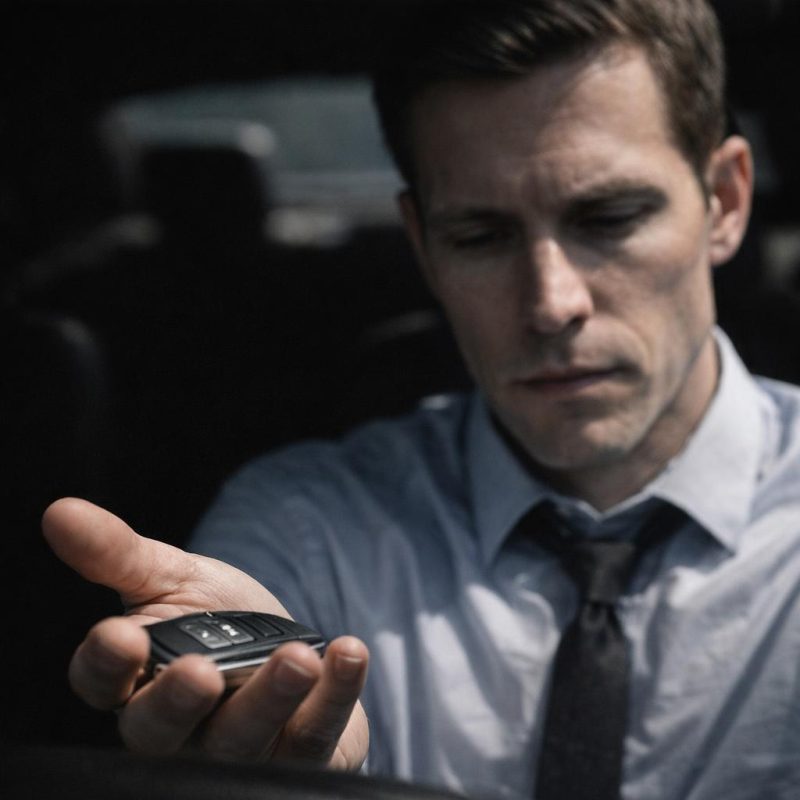 Image by RM AI
The Drive Home
I put the envelope on the passenger seat and set the USB drive on top of it, then I pulled out of the parking lot and pointed the car toward home. My box of office belongings was in the back seat — the coffee mug, the desk calendar, the framed photo of Sarah and me from our trip to Portland two years ago. It felt like a different life. I drove through the city on autopilot, the kind of driving you do when your hands know the route and your mind is somewhere else entirely. What I kept coming back to was the arithmetic. Three million dollars. Eighteen months. Quarterly increments small enough to disappear into normal budget variance. My name in the signatory field of an audit certification I had never been asked to complete. A note suggesting I would have signed it without looking closely. I had almost done exactly that, every quarter, for five years — signed the versions they gave me, trusted the figures, moved on to the next item on the agenda. The envelope sat on the seat beside me, and the drive sat on top of it, and I didn't have a plan yet, only the understanding that whatever was on that drive, I needed a computer that had never been anywhere near Miller and Associates to read it.
 Image by RM AI
Sarah's Reaction
Sarah was in the kitchen when I came through the door. She took one look at my face and didn't say anything — just waited. I set the envelope on the counter between us and told her to read it. She went through the documents the way she goes through everything: methodically, without interrupting herself, turning each page with the same careful attention she gives to anything that matters. I watched her expression move. The concern was there from the first page, the slight tightening around her eyes that I know means she's processing something she doesn't like. By the third or fourth page it had shifted into something harder. She set the last sheet down flat on the counter and was quiet for a moment. 'They were going to put this on you,' she said. It wasn't a question. I told her yes, that was what it looked like. She picked up the USB drive and turned it over in her hand, reading the handwritten instructions I had left folded beside it. She looked up. 'Do you still have your old laptop?' she said. 'The one from before we moved. The one that's never been on a work network.'
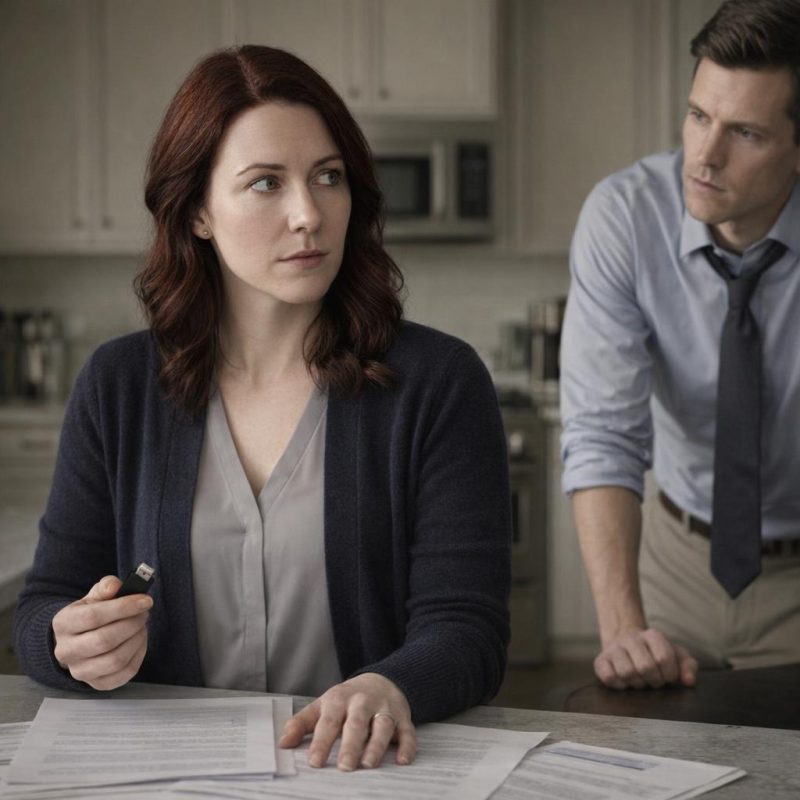 Image by RM AI
The Old Laptop
I went to the hall closet and dug past the winter coats and the box of cables we keep meaning to sort through. The laptop was on the top shelf in a nylon sleeve, exactly where I had put it when we moved into this apartment four years ago. It was the machine I had used through the last two years of graduate school — a mid-range model that had been adequate then and was outdated now, running an operating system two versions behind. I had never connected it to anything at Miller and Associates. It had never touched that network. I carried it to the kitchen table and plugged it in, and we waited while it charged enough to boot. Sarah sat across from me. The startup sequence took longer than I remembered, the old system grinding through its checks with the patience of something that had been asleep for years. When the desktop finally appeared, I set the USB drive on the table between us. The kitchen was quiet. Outside, the city was doing whatever the city does at ten-thirty on a weeknight. In here, it was just the two of us and a small black drive and whatever someone had decided we needed to see.
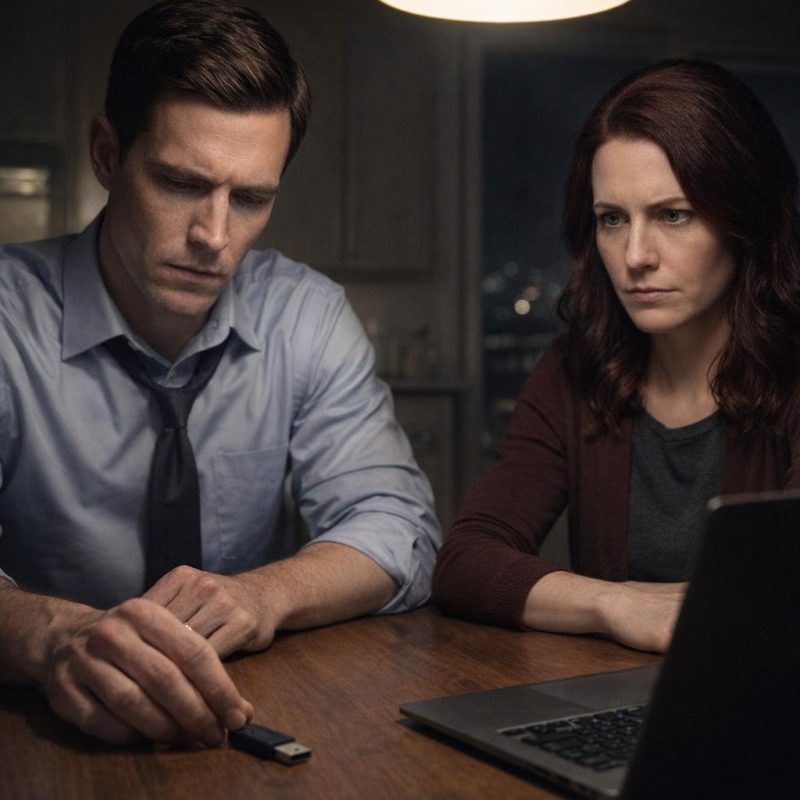 Image by RM AI
Five Years of Evidence
I picked up the drive and plugged it into the side port. The laptop took a moment, then the file explorer opened on its own. Five folders appeared on the screen, each one labeled with a year. The first year matched my start date at Miller and Associates. The last matched the current year. Five years, one folder each, arranged in a clean column on the screen. I clicked the first one open. The files inside numbered in the hundreds — spreadsheets, PDFs, what looked like email exports, document scans. I clicked the second folder. More of the same, more files, different dates. I went through each folder in sequence without opening individual files, just looking at the volume, the organization, the timestamps. Whoever had put this together had been doing it for a long time, collecting and cataloguing with a consistency that matched the pattern in the printed spreadsheets I had found in the envelope. Sarah leaned in beside me and didn't say anything. I didn't say anything either. The five folders sat on that old screen, and the years they represented were the same five years I had spent at that company, and the weight of that correspondence settled over the kitchen table like something that had always been there, waiting to be seen.
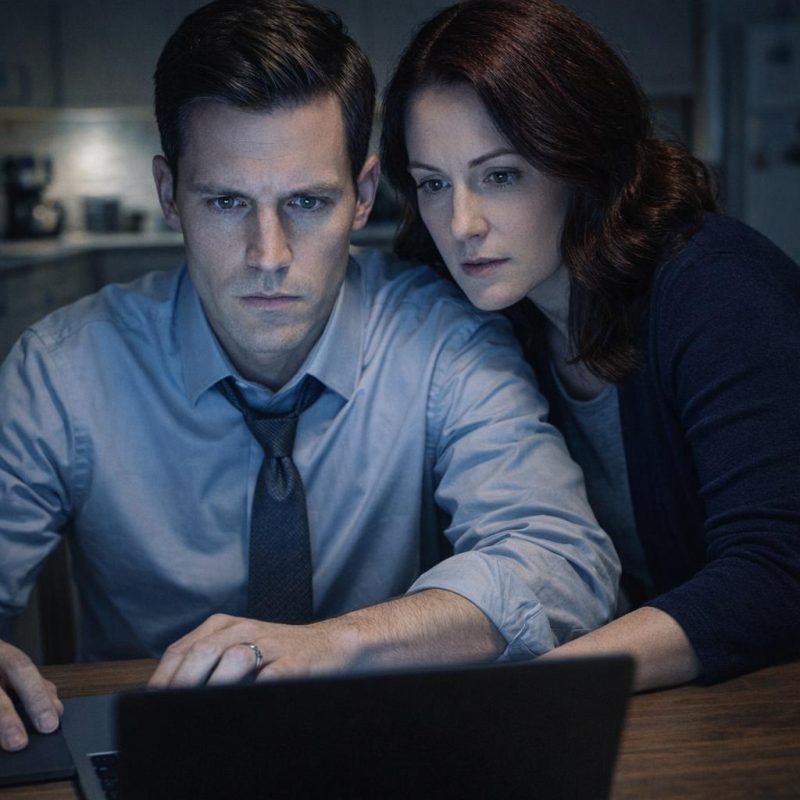 Image by RM AI
The Digital Trail
I started with the first folder — the one that matched my first year at Miller and Associates. The files were sorted into subfolders: spreadsheets in one, email exports in another, scanned transaction records in a third. Whoever had organized this hadn't done it casually. Every file was named with a date prefix, a document type, and a reference number that matched across categories. I opened one of the spreadsheets and found line items going back to my first quarter — budget allocations, fund transfers, vendor payments, all timestamped and cross-referenced. Sarah pulled her chair closer and started working through the email exports while I stayed on the transaction records. The numbers in the spreadsheets didn't match the quarterly reports I had signed off on. The gaps weren't rounding errors. They were consistent, patterned, and they ran in one direction. I flagged three of them and moved to the email folder Sarah had open. She pointed at the screen without saying anything, and I leaned in. The email was short — sent from David's company account, authorizing a wire transfer to a vendor account. I scrolled to the quarterly board report filed the same period. The vendor account didn't appear anywhere in it.
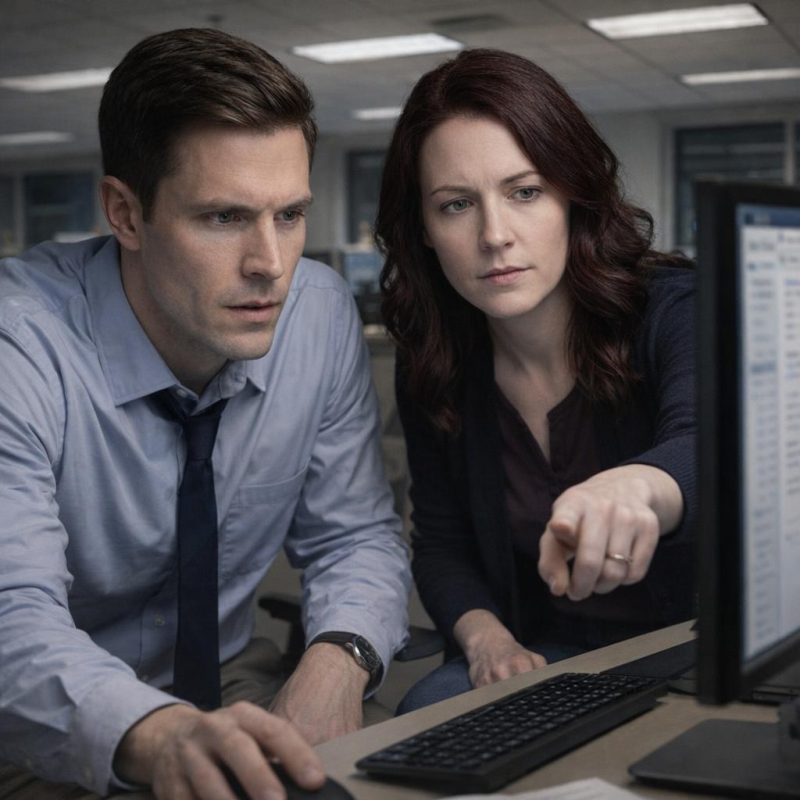 Image by RM AI
Beyond Personal Vendetta
I sat back and stared at that email for a long moment. Then I clicked out of the first year's folder and opened the second. Same structure, same organization, same pattern of transfers running parallel to the official records. I went through the third folder, then the fourth. By the time I opened the fifth, I had stopped being surprised by what I was finding and started paying attention to something else — the department labels on the files. My division was there, but so were three others. Operations. Procurement. Client Services. Each one had its own subfolder, its own set of spreadsheets, its own email chains. The transfers in those folders followed the same structure as the ones in mine, but the vendor accounts were different, and the senior manager names attached to the authorization chains were names I recognized from the company directory — people two and three levels above me. Sarah said quietly, "This isn't just your department." I already had the same thought forming. What I had assumed was a problem contained to my floor, something aimed at me specifically, was documented across four divisions of the company. The total figures, when I added the visible amounts across all five folders, ran well past three million dollars.
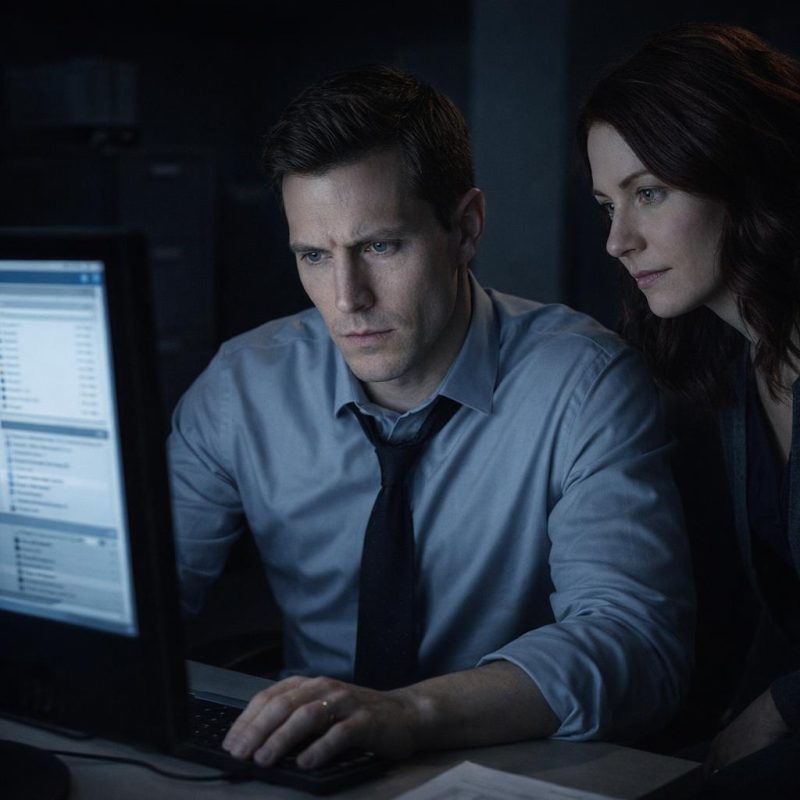 Image by RM AI
Sarah's Counsel
Sarah was the one who said it plainly. "You can't sit on this. This is federal." I told her I wasn't sure — that I wanted to understand what we had before involving anyone else, that I needed more time to go through the files. She shook her head. "Ethan, you have a USB drive someone left on your car, documents showing fraud across four divisions, and your name is probably already on a list somewhere. You don't have time to wait." She was right and I knew it, but knowing it didn't make the next step feel any smaller. We spent the next hour at the kitchen table with her laptop open, searching for which federal agency handled corporate fraud of this scale. Securities fraud pointed toward the SEC. Wire fraud pointed toward the FBI. The transfers in the files crossed state lines, which pushed it further toward federal jurisdiction. Sarah found a breakdown on a legal resource site that laid it out clearly — the FBI's white-collar crime division handled exactly this kind of case. I wrote down the information while she read it aloud. The local field office had a public intake line. I stared at the number on the notepad in front of me.
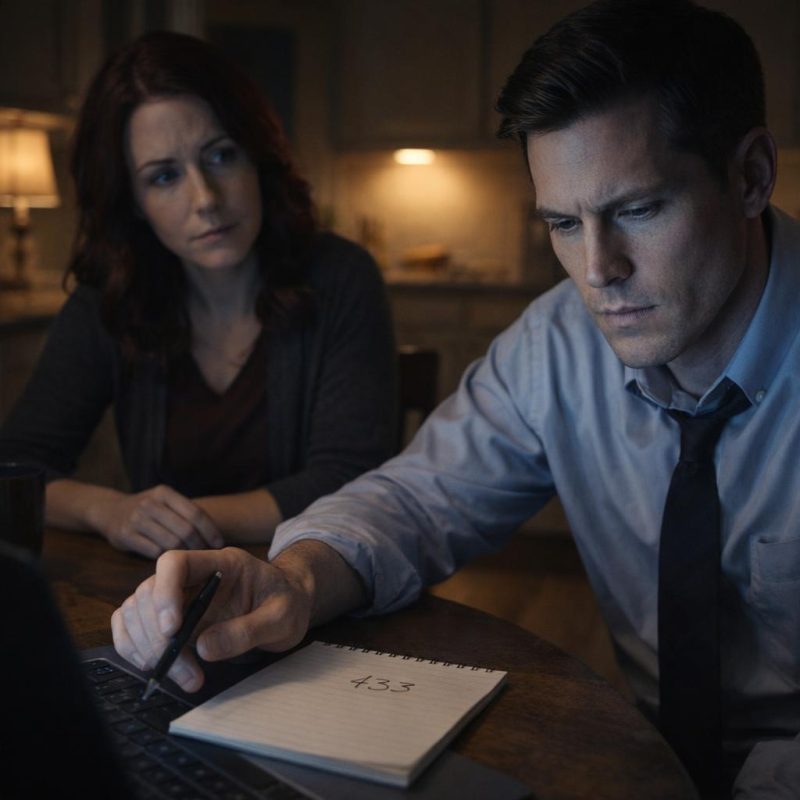 Image by RM AI
The Sleepless Night
Sarah fell asleep sometime after midnight. I lay beside her in the dark and listened to the house settle. The USB drive and the printed documents were still on the kitchen table — I had left them there deliberately, as if putting distance between me and them might slow down what was already in motion. It didn't help. My mind kept cycling back through the files. The email with David's name on it. The vendor accounts that didn't appear in any official report. The four divisions, the five years, the figures that added up to something much larger than I had initially understood. I thought about the phone call I was going to make in the morning. I had written the number on a notepad and left it next to the documents. Nine digits that would hand all of this to people with the authority to do something I couldn't do alone. I thought about the people at Miller and Associates who had no idea what was sitting inside those folders. I thought about whether I was reading the evidence correctly, whether there was an explanation I hadn't considered, whether I was about to make a call I couldn't take back. The ceiling above me didn't offer anything. The house was quiet, and the morning felt very close.
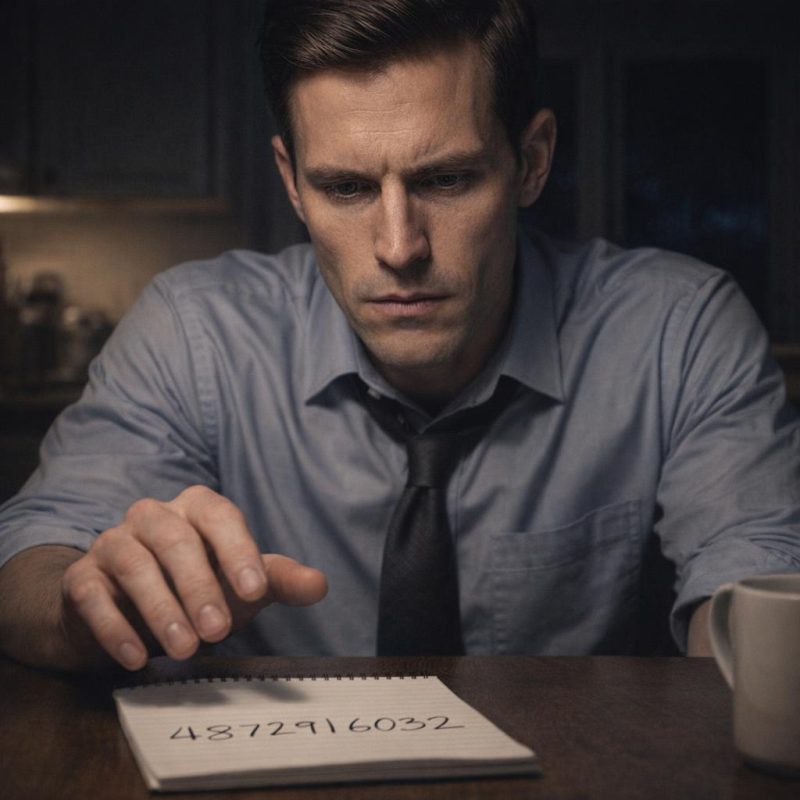 Image by RM AI
The Phone Call
Sarah left for work at eight. I made coffee I didn't drink and sat at the kitchen table with the notepad in front of me until the clock on the microwave read 9:00. Then I picked up my phone and dialed. The line connected after two rings. I told the intake specialist my name, that I was a former employee of Miller and Associates, and that I had documentary evidence of what appeared to be systematic wire fraud across multiple divisions of the company. She didn't interrupt. She asked me to describe the nature of the documents, how I had obtained them, and whether I had retained copies. I answered each question as precisely as I could. When I mentioned the USB drive and the volume of files it contained, she put me on a brief hold. When she came back, her tone was the same — measured, procedural — but she asked me to come in that afternoon. She gave me an address for the local field office and told me to bring everything: the drive, the printed documents, anything else I had. Two o'clock. I wrote it on the same notepad as the phone number. I set the phone down on the table and looked at what I had written. The appointment sat there on the page, and the weight of what I had just set in motion settled over the kitchen like something solid.
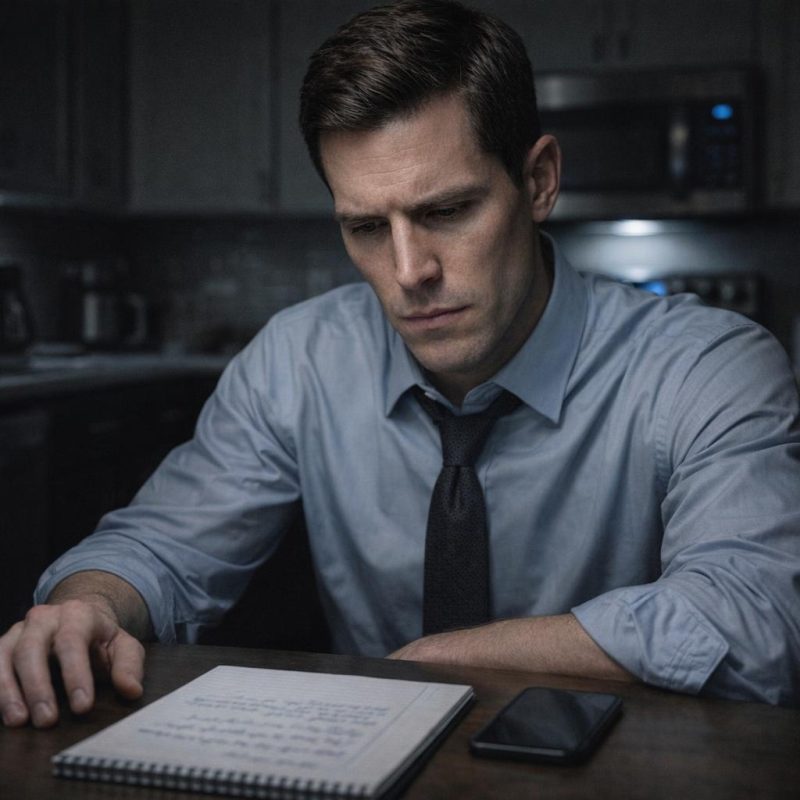 Image by RM AI
Agent Torres
I arrived at the field office at ten minutes before two and told the front desk why I was there. A few minutes later, a woman in her early forties came through the security door and introduced herself as Agent Torres. She had a focused, unhurried quality — the kind of presence that didn't waste motion. She led me to a conference room, closed the door, and sat across from me without preamble. I laid out everything on the table: the printed documents from the envelope, the USB drive, the notepad with my own notes from the night before. She went through the printed materials first, methodically, turning pages without comment. Then she plugged the drive into a government-issue laptop and worked through the folder structure in silence. She asked me questions as she went — how long I had worked at Miller and Associates, what my role had been, how I had come to receive the envelope. I answered each one. After about forty minutes, she closed the laptop and looked at me directly. She said the evidence appeared substantial. Then she asked whether I was prepared to cooperate fully with the investigation.
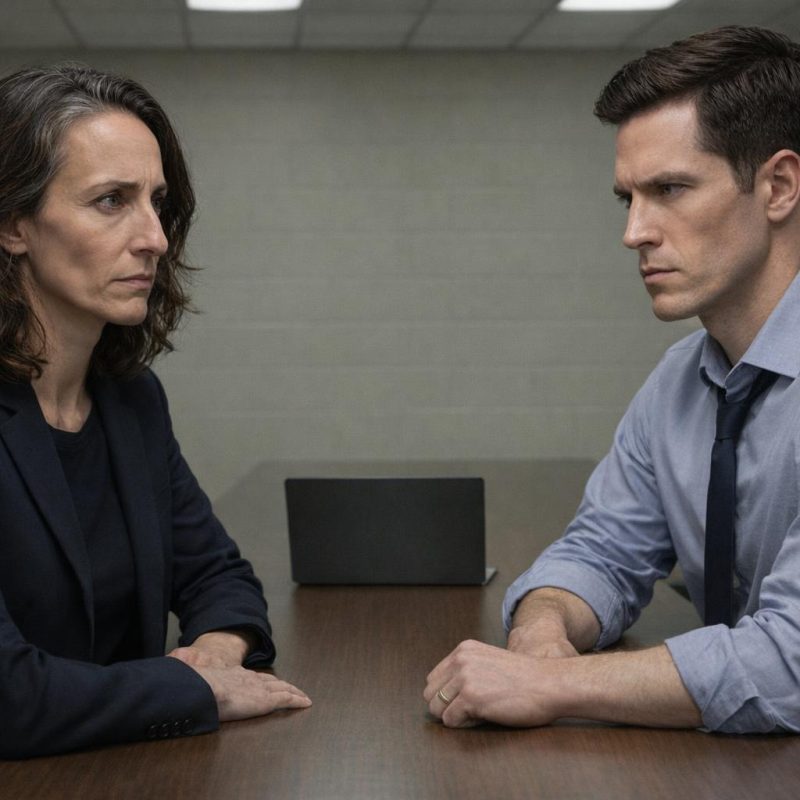 Image by RM AI
Full Cooperation
I told her yes. She nodded once, like she had expected that answer, and then she explained what full cooperation actually meant. There would be multiple interviews — some of them long, some of them covering the same ground more than once as the team built out the timeline. Every document on the drive would need to go through authentication, which meant forensic analysis of the metadata, the file creation dates, the email headers. That process alone could take weeks. Building a case of this scope, she said, could take months — possibly longer depending on what the documents led to. I would need to be available, responsive, and prepared to provide detailed testimony about my own role and observations during my time at the company. She slid the USB drive into an evidence bag and labeled it while she talked. Then she made copies of the printed documents on a machine in the corner of the room and handed the originals back to me. The meeting ran past five o'clock. By the time I walked out of the field office, the afternoon light had gone flat and the drive was no longer in my possession. I sat in my car in the parking lot for a few minutes, hands on the wheel, and let the length of the road ahead settle over me.
 Image by RM AI
The Whistleblower's Identity
The next morning I was at the kitchen table with coffee when my phone rang. It was Agent Torres. She said the forensic team had begun preliminary work on the drive overnight and that there had been a development. The person who had assembled the files — the one who had left the envelope on my car — had contacted the field office directly and identified themselves. They wanted to meet with both of us together. I asked who it was. She said the name clearly: Robert Chen. I turned it over in my mind. Robert Chen. I went through every name I could place from five years at Miller and Associates — my department, the adjacent teams, the senior managers whose names had appeared in the files. The name didn't surface anywhere. I told Agent Torres I didn't recognize it. She said that was fine, that he had anticipated as much, and that she was scheduling a meeting for the following morning. I wrote the name on the notepad that still sat beside my coffee cup. Robert Chen.
 Image by RM AI
The First Interview
The FBI field office had a conference room that smelled like recycled air and old coffee, and I sat across from Agent Torres at a table that felt too wide for the conversation we were about to have. She had a legal pad, a recorder, and a stack of folders she didn't open right away. She started with the basics — how long I'd been at Miller and Associates, what my department handled, who I reported to. Then she went deeper. She asked about the quarterly audit procedures, who had sign-off authority on budget transfers, which managers had system access to the financial approval chain. I answered everything. I named David. I named two other senior managers whose access I knew about from shared approval workflows. I described the redundancy protocol process, the way budget variances got flagged, the specific thresholds that triggered review. She wrote without stopping. Four hours passed and I barely noticed. By the time she set her pen down and said we'd continue in a second session, something in my chest had loosened in a way I hadn't expected. I had spent weeks carrying all of it alone — the documents, the suspicion, the careful silence. Saying it out loud to someone who had the authority to do something with it felt different than I had imagined it would.
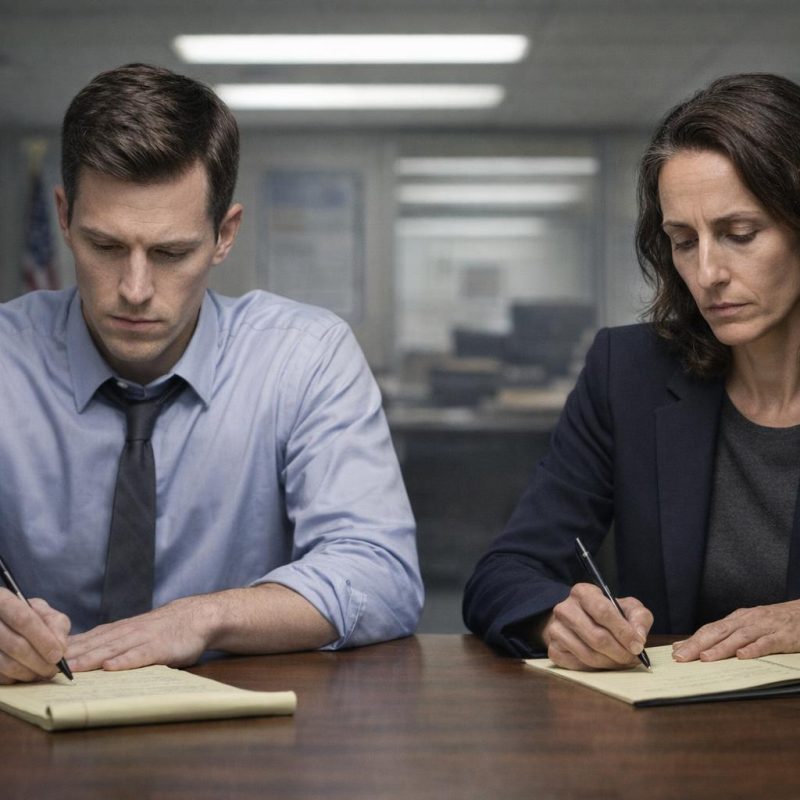 Image by RM AI
Other Departures
The second session started two days later, and about an hour in, Agent Torres shifted the conversation in a direction I hadn't anticipated. She said the FBI had identified a number of former Miller and Associates employees whose departures had drawn scrutiny, and she wanted to know if I recognized any names from her list. She read them slowly, one at a time. I recognized two — a project manager from the operations floor I'd seen in meetings maybe a handful of times, and someone from client services whose name had appeared on a shared distribution list. The rest were unfamiliar. She asked if I'd worked directly with any of them. I hadn't. She asked if I knew why they'd left. I didn't. What struck me was the span of it — she mentioned the departures stretched across the past five years, and the employees had come from different departments, different floors, different reporting structures. There was no obvious thread connecting them, at least not one I could see. I asked her what they had in common. She said she wasn't in a position to share that yet, but that my answers were helpful. I sat with the list of names after she moved on, turning them over in my mind, each one a person I'd never known who had apparently left under circumstances someone at the FBI thought were worth examining.
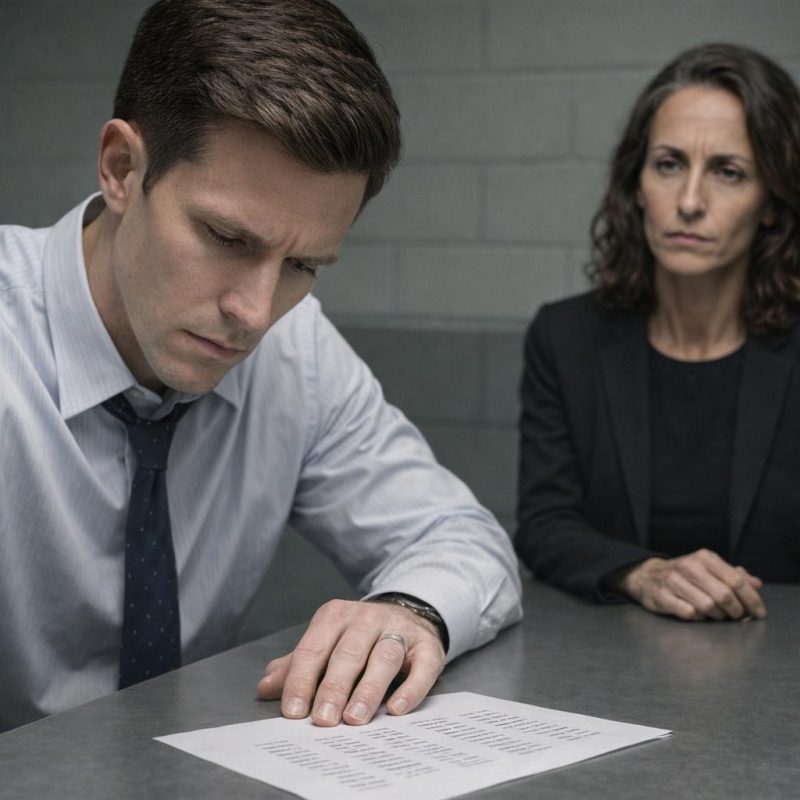 Image by RM AI
The Timeline
Toward the end of that second session, Agent Torres spread a timeline chart across the table between us. It was a horizontal grid with dates running left to right across five years, and at various points along the line there were markers — each one labeled with a name and a departure date. She was explaining something about document sequencing when I stopped listening and started reading. The names matched the ones she'd read to me earlier. But beside each departure marker, there was a second notation — a title change, a budget expansion, a restructuring announcement. I leaned forward without meaning to. The notations weren't random. Each one corresponded to a specific person at the company. I traced the line with my eyes from left to right, one marker to the next, and the same name appeared beside each one — sometimes as the direct beneficiary of a restructuring, sometimes as the newly appointed lead of a department that had just lost its previous head. Agent Torres had stopped talking. I could feel her watching me from across the table. I kept my eyes on the chart and followed the line all the way to the right, to the most recent marker, which had my departure date on it. David's name was printed beside every single one.
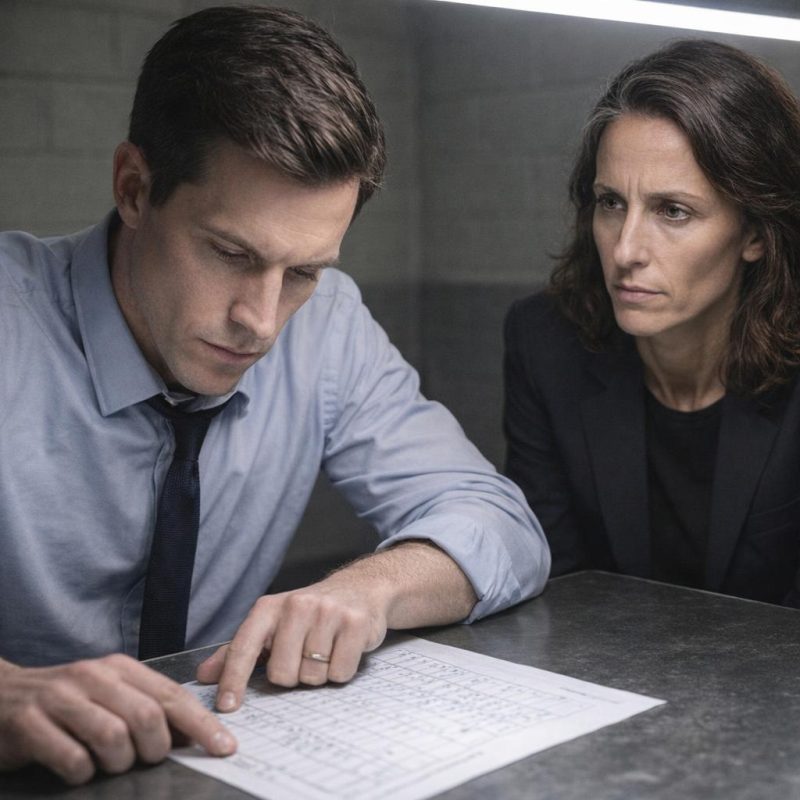 Image by RM AI
The Whistleblower's Request
Agent Torres let the silence sit for a moment before she gathered the chart back into her folder. She said there was something else she needed to tell me about Robert Chen. I'd been thinking about that name since she'd first mentioned it — the person who had assembled the files, who had left the envelope on my car, who had contacted the field office directly. She said his request to meet was unusual. Typically, a witness in an active investigation provided testimony through the bureau, not through another subject of the same case. But Robert had been specific: he wanted to speak with me directly before he gave his full statement. She said she'd agreed to allow it, with conditions — she would be present, and the meeting would take place the following afternoon at a location outside the field office. A coffee shop a few blocks away. I asked her why he wanted to meet me personally. She said Robert had told her he would explain that himself. There was something careful in the way she said it — not evasive, just measured, like she was holding a door open without telling me what was on the other side. I wrote the time and address on the back of my notepad. The question of why Robert Chen needed to look me in the eye before he said another word stayed with me the entire drive home.
 Image by RM AI
David's First Victim
Robert Chen was already at a corner table when Agent Torres and I walked in. Mid-forties, tired eyes, a coffee he hadn't touched. He stood when he saw us and shook my hand with both of his, which caught me off guard. We sat down and he didn't waste time. He said he'd worked at Miller and Associates five years ago — not as a staff member, but as David's business partner. They had built the firm's financial services division together. Then he described what happened. David had begun taking credit for his work in client presentations. Meetings Robert should have led started happening without him. A redundancy protocol appeared with his name on it, tied to accounting discrepancies he hadn't caused. He was supposed to sign an annual audit that, he later understood, would have placed the liability for those discrepancies directly on him. He quit one week before the signature deadline, and within four months David had been promoted into the role Robert had built. I sat across from him and listened. Agent Torres was writing. Robert looked at me steadily and said: the protocol they prepared for you — the language, the structure, the audit trigger — it was identical to mine.
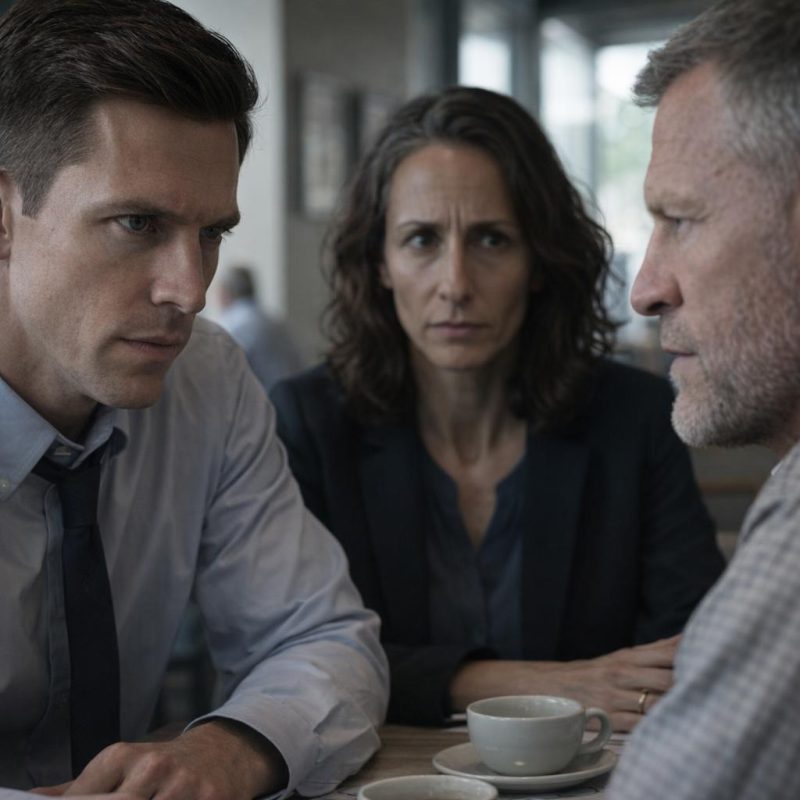 Image by RM AI
The Identical Playbook
Robert kept talking and I kept listening, and somewhere in the middle of it I stopped hearing his story and started hearing mine. He described how the credit-stealing had started small — a slide deck attributed to David in a client meeting, a proposal that went out under David's name alone. Then it escalated. Robert found himself excluded from the meetings where his own work was being presented. Colleagues who had collaborated with him closely began routing questions to David instead. He said it happened gradually enough that he'd spent months wondering if he was misreading things. Then the redundancy protocol appeared. His name at the top. A list of accounting discrepancies in his department that he had never seen before. The annual audit was scheduled six weeks out, and his signature was required on the final sign-off page. He found the trap one week before the deadline — a colleague in accounting showed him what the liability language actually meant if he signed. He walked out the next morning. Agent Torres turned a page in her notes without looking up. Robert folded his hands on the table and looked at me. He said David had not changed a single element of the approach. The slide decks, the isolation, the protocol structure, the audit timing, the signature page — every detail he had just described matched what I had lived, word for word.
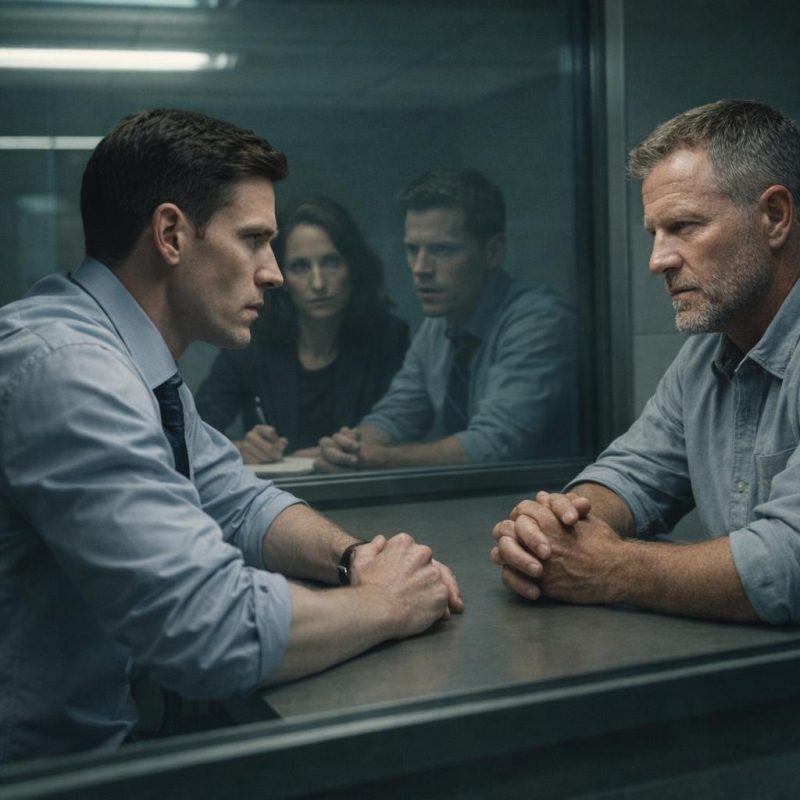 Image by RM AI
Why Robert Stayed
I asked him why he stayed. After everything — after being pushed out of something he'd built, after watching David take credit for five years of his work — why had he taken a lower position in the accounting department and stayed inside the same company? Robert wrapped both hands around his coffee cup and was quiet for a moment. He said he'd known, from the day he walked out, that David would do it again. The scheme was too clean, too effective, and David had faced no consequences. Robert said he couldn't prove what had happened to him with only his own case — one departure, one set of documents, one person's account. It would have looked like a disgruntled former partner. He needed the pattern. He needed David to repeat it, and he needed to be positioned to document it when he did. So he took the accounting role. It gave him access to financial records across divisions. He watched. He waited. He said five years was a long time to sit with something like that, but he hadn't seen another option. When my resignation disrupted the timeline before the audit could be completed, he recognized the moment and moved. Agent Torres set her pen down briefly, then picked it up again. The room was quiet except for the ambient noise of the coffee shop around us, and I sat with the weight of what it meant to wait five years for a single chance to make something right.
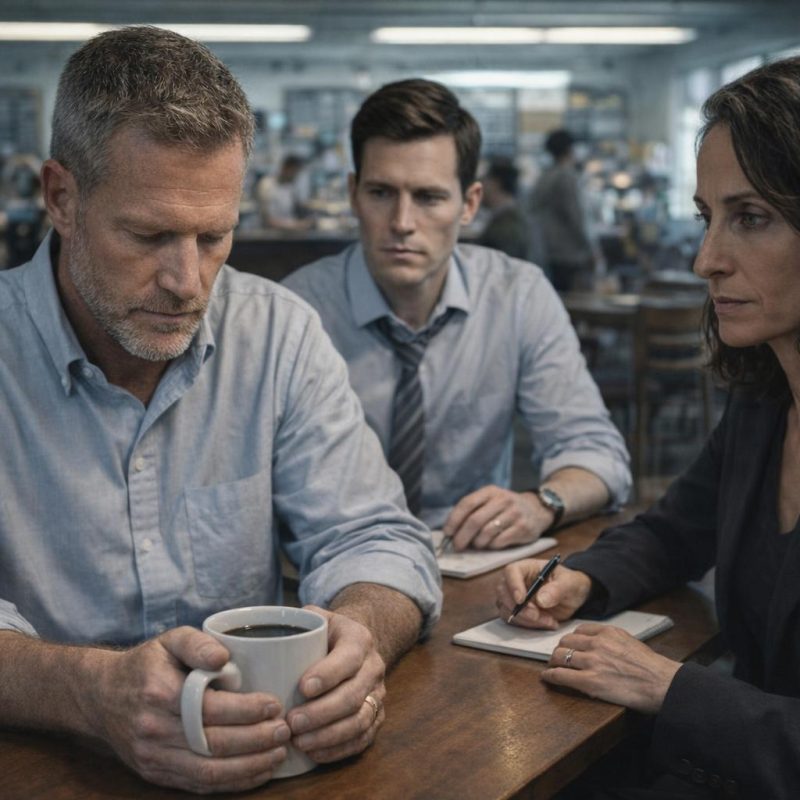 Image by RM AI
The Accounting Position
Robert explained what the accounting position had actually given him access to. Individual department heads could see their own budget lines, their own approval chains, their own quarterly variances. Robert, sitting in the accounting department, could see across all of them. Every transfer, every flagged discrepancy, every restructuring that moved funds between divisions. He said he had spent five years pulling thread after thread and documenting where each one led. He had tracked suspicious transfers through Operations, Marketing, and Client Services. He had identified a pattern of funds routed through accounts that didn't correspond to any active vendor or project. He had connected those accounts to offshore structures that appeared in none of the company's official filings. His own case and mine were two data points in a much larger record. Agent Torres said quietly that the documentation Robert had provided was among the most comprehensive she had seen in a case of this type. Robert didn't react to that. He just reached into the bag beside his chair and set a second folder on the table — thicker than anything I'd seen from him before. Five years of patience, assembled page by page, sitting between the three of us in a quiet coffee shop like it had always been waiting for exactly this moment.
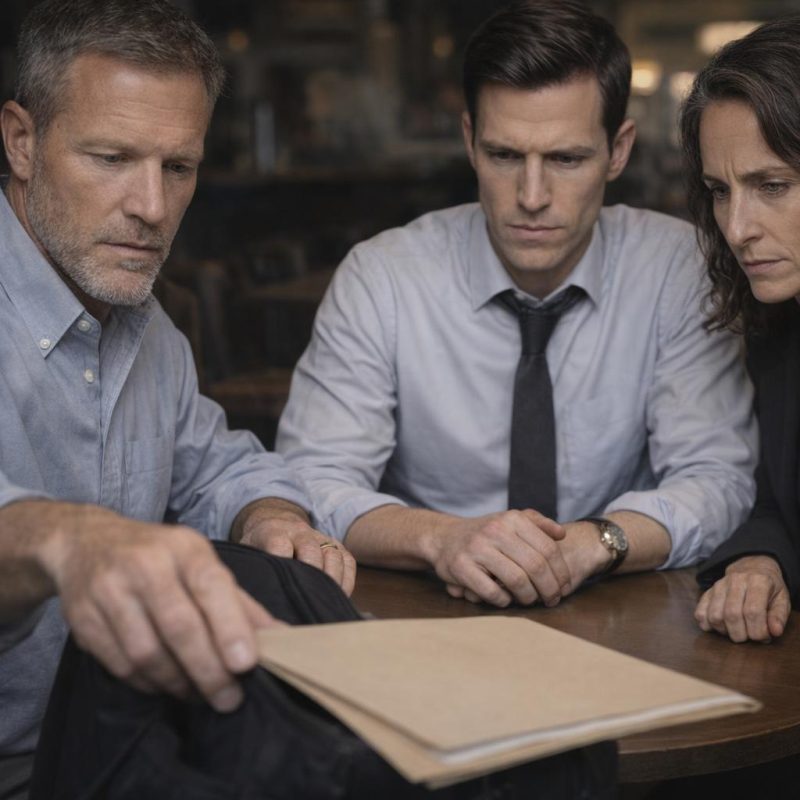 Image by RM AI
Three More Victims
Robert opened the second folder slowly, like he'd been waiting five years for the right moment to do it. The first file was a man named Garrett — Operations, pushed out three and a half years ago. Robert had his performance reviews, his project documentation, his termination paperwork, and a transfer record showing funds routed through a vendor account that had been opened two weeks before Garrett's last day. The second file was a woman named Priya — Marketing, gone two years ago. Same pattern: her campaign framework lifted wholesale, her name removed from the internal pitch deck, a discrepancy flagged in her budget line the week before she resigned. The third was a man named Cole — Client Services, eighteen months back. His client retention model, his methodology, his numbers — all absorbed into a division restructuring that David had personally overseen. Each departure had been followed by a promotion or an expanded portfolio for David. Agent Torres spread the files across the table and said quietly that five victims over five years wasn't a pattern anymore — it was a system. I looked at the photographs clipped to each folder. Three people I had never met, who had sat at desks I would never see, and had their work taken from them the same way mine had been taken from me.
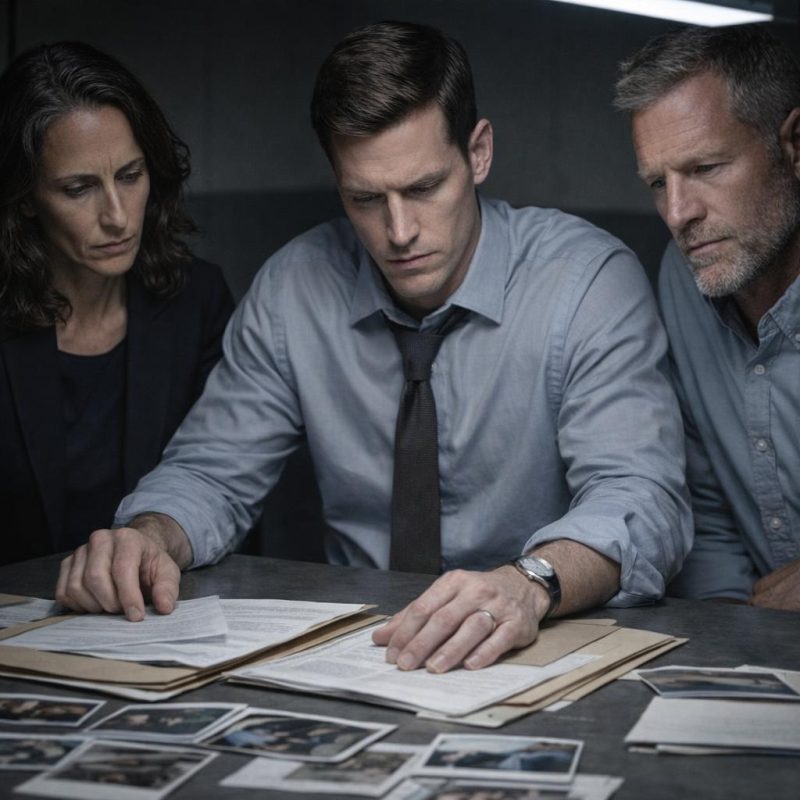 Image by RM AI
The Pattern Confirmed
Agent Torres didn't rush through her summary. She went file by file, cross-referencing dates, transfer records, and departure timelines with the kind of methodical precision that made it clear she had been building toward this conclusion long before today. When she finished, she set her pen down and said the pattern was unambiguous — five victims, five departures, five instances of expanded authority following each one, all tied to the same offshore account structures. She said the documentation Robert had assembled, combined with my own records and the audit trail I had preserved, gave federal prosecutors more than enough to move forward. Wire fraud. Conspiracy. Potentially embezzlement. She said the FBI was opening a full criminal investigation, effective immediately, and that federal prosecutors would be brought in within the week. Robert sat very still across from me. I don't think either of us said anything for a moment. Five years of his patience and a few months of mine had just become something official and irreversible. Agent Torres gathered the folders into a neat stack and told us both to keep our phones on. The company would be raided within weeks, she said. David had no idea what was coming.
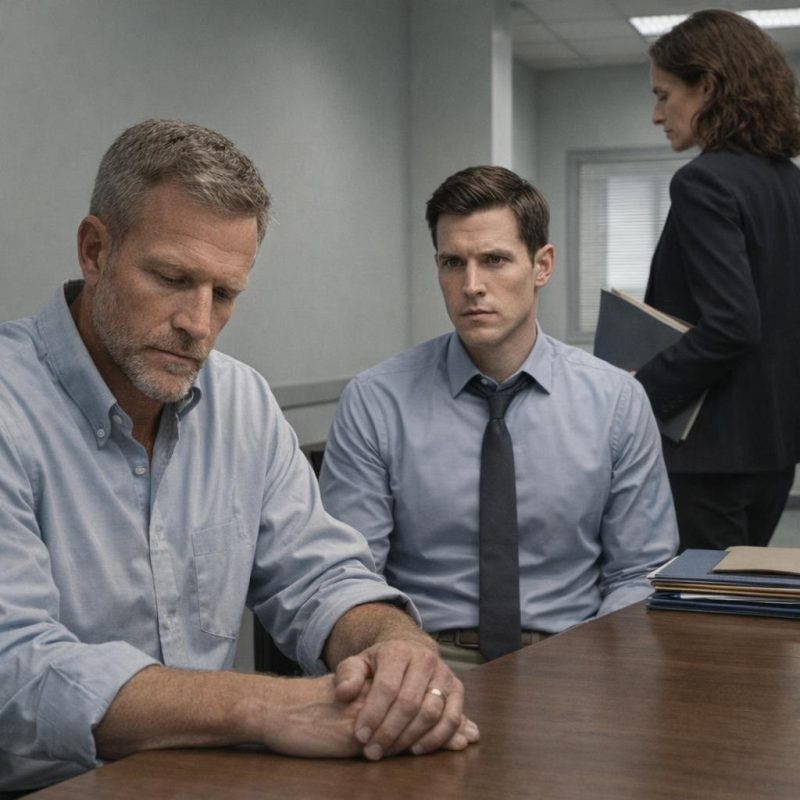 Image by RM AI
The Waiting Period
The two weeks that followed were the strangest I had experienced through any of this. Agent Torres checked in every few days — brief calls, careful language, enough to confirm that the prosecutors were reviewing the files and the operational planning was moving forward. She didn't give specifics, and I didn't push for them. Robert and I had one coffee during that stretch, sitting across from each other at the same place we'd met with Torres, not saying much. We both knew what was being assembled. We both knew David was still walking into the Sterling Building every morning, still running his meetings, still signing off on whatever came across his desk. That was the part that sat heaviest. Not anger, exactly — more like the particular discomfort of holding information that changes everything while the world around it hasn't shifted yet. Sarah asked me once during that stretch how I was doing, and I told her I was fine, which wasn't entirely true. I was waiting. Robert was waiting. The prosecutors were building something that couldn't be undone, and David was somewhere across the city, completely unaware that five years of careful documentation had finally caught up with him.
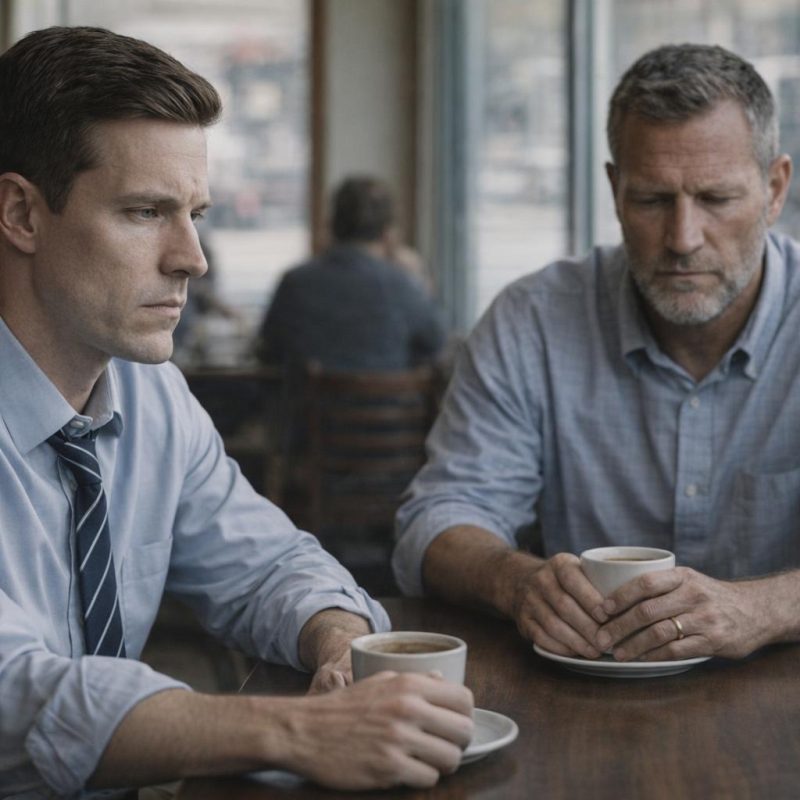 Image by RM AI
The Morning of the Raid
My phone rang at 6:31 in the morning. I was already awake — I'd been awake for an hour, which had become something of a habit over the past two weeks. Agent Torres didn't waste time on pleasantries. She said federal agents were moving on Miller and Associates within the hour, that warrants had been issued, and that I should expect to see news coverage by midday. She told me to stay away from the building and to keep my phone close. The call lasted maybe ninety seconds. I set the phone down on the kitchen counter and Sarah looked at me from across the room, still holding her coffee mug with both hands. I told her it was happening. She set the mug down carefully and came around the counter and we stood there together in the kitchen, not saying much, the morning light coming in flat and gray through the window. There was nothing left to do. Every document had been filed, every conversation had been had, every thread Robert had spent five years pulling had been handed to people with the authority to act on it. The kitchen was quiet around us, and somewhere across the city, the morning was about to go very differently for David than he expected.
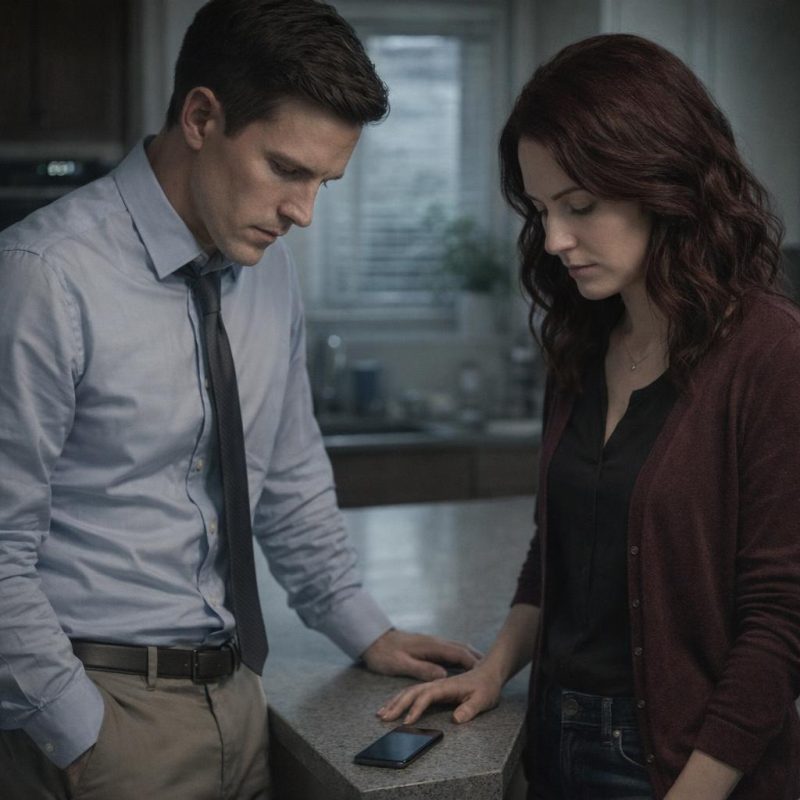 Image by RM AI
The News Coverage
The lead story hit at 12:07. I had the television on before noon, sitting on the couch with Sarah beside me, and when the anchor cut to live footage outside the Sterling Building I felt something go very still inside my chest. There were federal vehicles on the street. Agents in jackets moving through the lobby entrance. The reporter was describing a multi-year fraud investigation into Miller and Associates, multiple arrests, documents and computers being seized from the executive floor. Then the footage cut to the building's side entrance, and there was David. He was in a suit — of course he was in a suit — but his hands were cuffed in front of him and two agents flanked him on either side. He was looking at the ground. The reporter said his name. The chyron at the bottom of the screen spelled it out. They replayed the clip twice more during the broadcast, and each time I watched it I noticed the same thing: without the corner office, without the title, without the room arranged to project his authority, he looked like exactly what he was. Sarah reached over and put her hand over mine, and I let the image settle over me like something I had needed to see for a very long time.
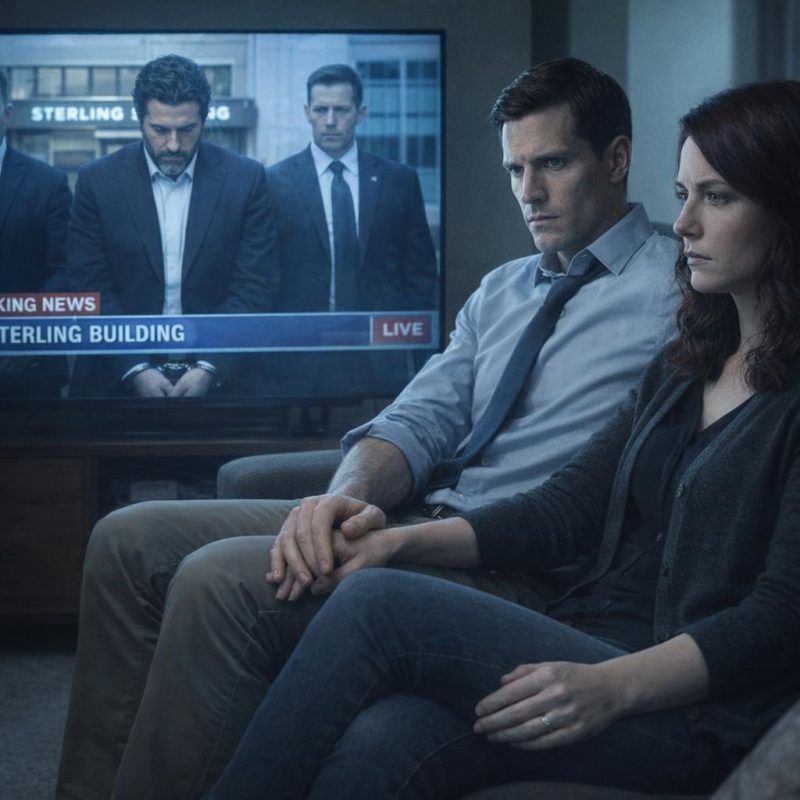 Image by RM AI
The Scope Expands
We kept the television on through the afternoon. By the evening news cycle, the story had grown. The anchor led with an update: the investigation had expanded beyond David Mitchell. Federal prosecutors had named three members of Miller and Associates' board of directors in the filing — complicity in the fraud scheme, approval of promotions they knew were built on stolen work and manipulated financials, active participation in covering the missing funds. Sarah and I sat with that for a moment. I had known David had operated inside a structure that allowed it, but I had assumed the structure was passive — indifferent, not complicit. The board had approved every promotion. They had signed off on every restructuring. They had seen the same numbers Robert had seen from the accounting department, and they had let it continue. The reporter said additional arrests were expected. The company's offices remained sealed. Sarah said quietly that she didn't think Miller and Associates was going to survive this, and I thought she was probably right. I had spent five years inside that building believing the institution itself was sound, that the problem was one man operating beneath its notice. The evening news was still running when I understood how wrong I had been — and that the corruption had reached far higher than David.
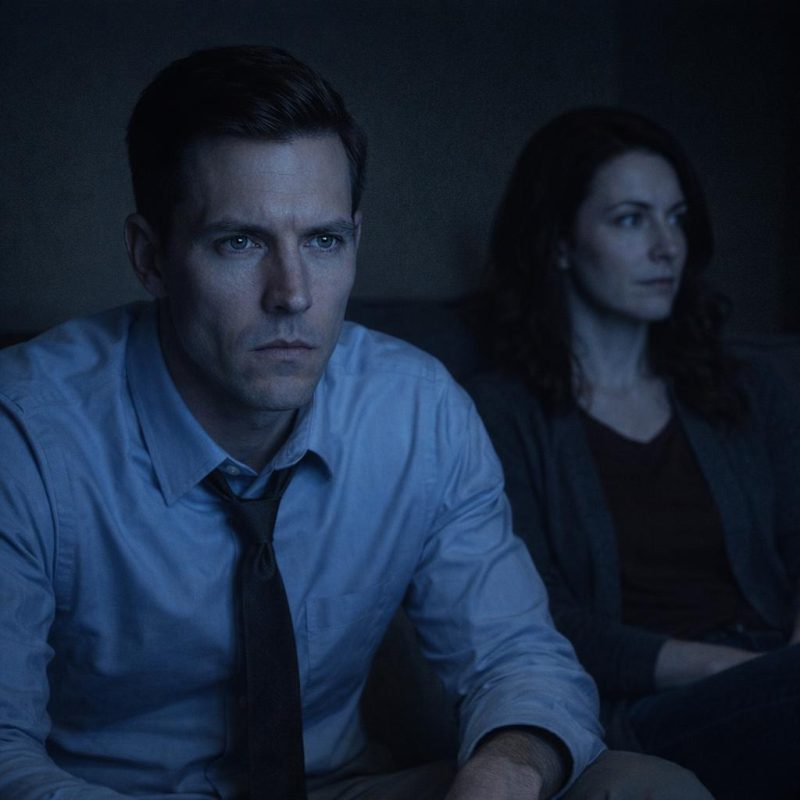 Image by RM AI
Intellectual Property Returned
My attorney called on a Thursday afternoon, about ten days after the raid. I was at my desk at home, working through the framework for the startup's first product roadmap, when my phone lit up with her name. She didn't bury the lead. The intellectual property transfer had been approved. The patent that had been filed under David's name — the one built on the framework I had developed over eighteen months — was being corrected through the federal process. My name would be listed as the sole inventor. The company's claim to the underlying methodology had been invalidated as part of the fraud proceedings. Everything I had built was legally mine again. I sat there for a moment after she finished talking, just holding the phone. Sarah came in from the other room when she heard me go quiet, and I told her. She crossed the room and hugged me hard, and I let her, and for a few seconds I didn't think about next steps or timelines or what came after. When she pulled back she was smiling, and I looked down at the product roadmap open on my desk — the one I had been building on a foundation I could now legally stand on. The official correction notice arrived in my email while we were still standing there: my name, the patent number, the date.
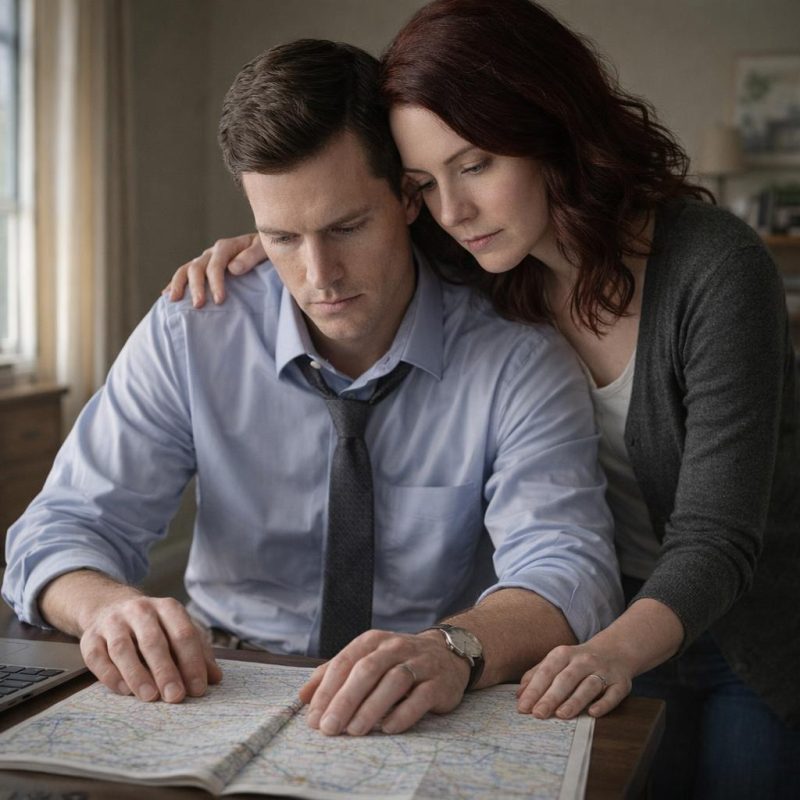 Image by RM AI
The Criminal Case Proceeds
Agent Torres called the following Monday. Her tone was the same as it always was — direct, unhurried, precise — but there was something settled in it that hadn't been there before. She told me the formal charges had been filed. David Mitchell: wire fraud, conspiracy, embezzlement. The three board members: the same, plus additional counts related to the cover-up. She said the prosecution's case was strong — the documentation Robert had assembled over five years, combined with my own records and the audit trail from the IP filings, gave the federal prosecutors more material than most white-collar cases ever produced. She said Robert and I would both be called as witnesses. She said the trial was expected to begin within six months. I asked her how confident she was. There was a brief pause, and then she said she had been doing this for sixteen years and she had rarely seen a case this well-documented go any direction other than conviction. I thanked her and sat with the phone in my hand after she hung up. Six months. A courtroom. David Mitchell, the board members, and five years of documented fraud laid out in front of a federal jury — and I would be there to testify to every detail of what he had done.
 Image by RM AI
Miller & Associates Collapses
I found it on a Tuesday morning, buried in the business section between a merger announcement and a quarterly earnings report. Miller & Associates had filed for Chapter 11 bankruptcy protection. The article was three paragraphs long and clinical in the way business journalism tends to be — client terminations, legal liabilities estimated in the tens of millions, staff reductions already underway. The Sterling Building, which I had walked into five days a week for five years, was listed among the assets to be liquidated. Sarah was reading over my shoulder before I finished the second paragraph. She didn't say anything at first, just set her hand on my arm. I had expected to feel something clean — relief, maybe, or satisfaction. What I actually felt was more complicated than that. Five years of early mornings and late nights, of work I had genuinely believed in, of a career I had tried to build with real care — all of it had happened inside a structure that was rotten at its foundation. The fraud hadn't just destroyed David's reputation. It had consumed the entire company around him. I closed the laptop and sat back. Miller & Associates had filed its last report.
 Image by RM AI
The New Office
The office was small enough that I could cross it in eight steps. Two desks, a whiteboard covered in diagrams I had drawn myself, a window that looked out onto a parking structure rather than a skyline. Nothing like the thirty-second floor at the Sterling Building. I had spent the first week just standing in the middle of it, trying to get used to the fact that everything in the room — the equipment, the plans, the IP filings stacked in the corner — belonged to me. Sarah brought coffee on a Thursday afternoon and stood in the doorway for a moment before she came in, looking at the whiteboard the way she sometimes looked at things she was quietly proud of. The two people I had hired were careful and sharp and asked good questions, which was more than I could say for most of the teams I had worked with at Miller. There was no politics in the room. No one was watching to see what I produced so they could attach their name to it. I had built the first version of the platform in a conference room I was renting by the hour, and now it was running on a server I owned. The work felt different when it was yours — heavier in some ways, but solid in a way I hadn't felt in years.
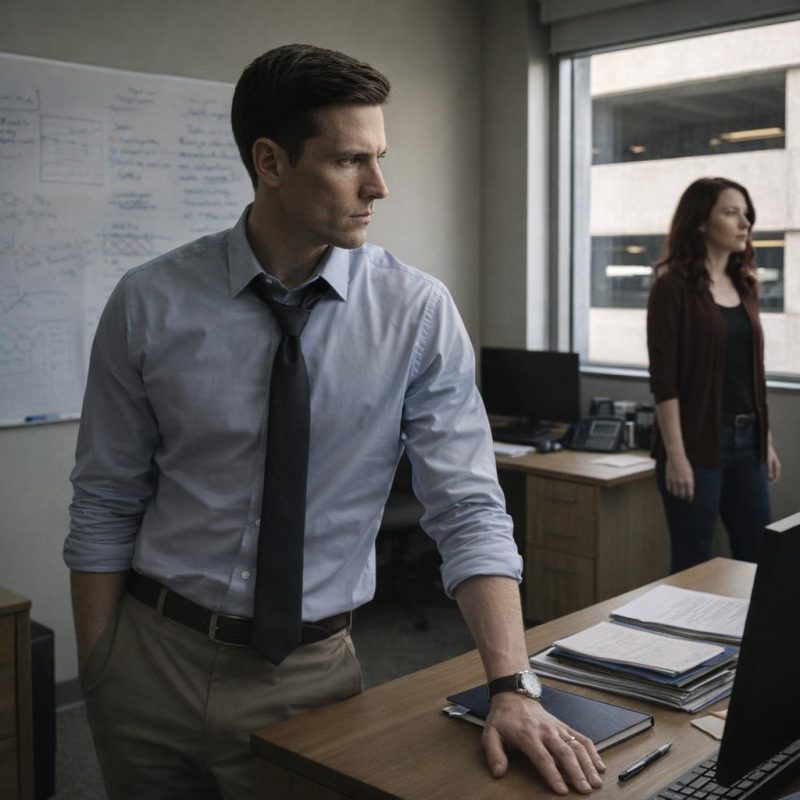 Image by RM AI
The Power of Silence
Sarah asked me once, a few weeks after everything had settled, whether I wished I had confronted David directly — whether I thought it would have changed anything. I sat with the question for a while before I answered. The resignation letter I had agonized over for three days had been, in the end, less important than the act of submitting it. The words I had chosen, the careful phrasing, the professional tone I had worked so hard to maintain — none of that had mattered as much as the simple fact of my absence. When I walked out of Miller & Associates without signing that audit, I disrupted something David had been counting on. He needed me in the room. He needed my name on the paperwork. The moment I stopped participating, the whole structure he had built around my work started to come apart. Robert had told me something similar — that the most dangerous thing you can do to someone running a scheme like David's is to simply stop being useful to them. I hadn't confronted him. I hadn't made accusations I couldn't yet prove. I had just left. And in leaving, I had left a silence that turned out to be louder than anything I could have said.
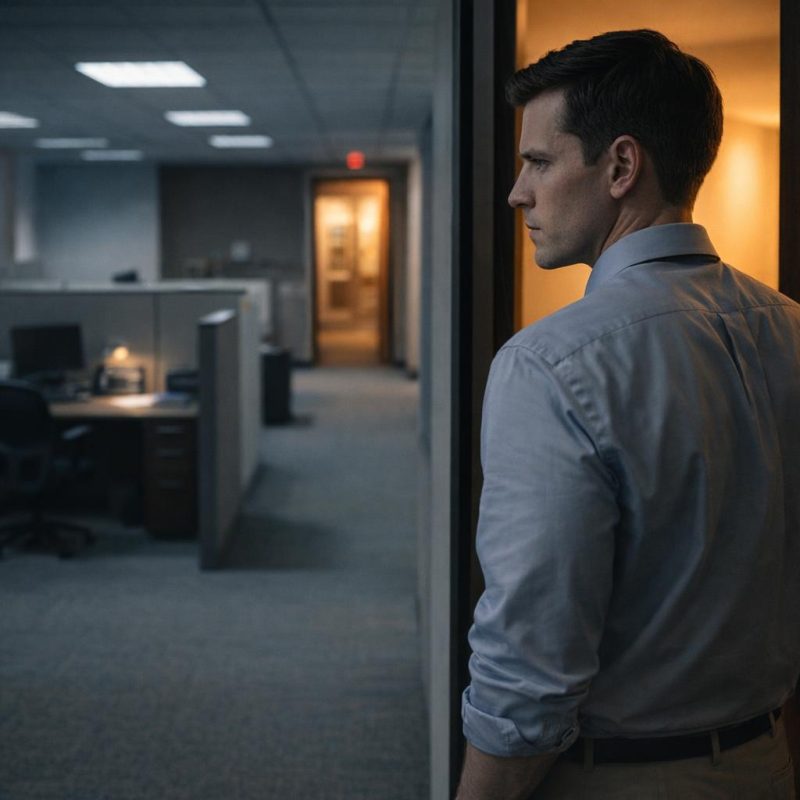 Image by RM AI
Hard-Won Peace
The trial started on a Wednesday. I watched the first ten minutes of coverage on my laptop, propped against a stack of binders on my desk, Sarah sitting across from me with her coffee going cold. The footage was brief — David in a dark suit, flanked by his attorneys, walking into the federal courthouse without looking at the cameras. The anchor read the charges in the flat, procedural tone that serious things deserve. Wire fraud. Conspiracy. Embezzlement. I had heard those words before, from Agent Torres, from the prosecutors, from my own memory of the documents Robert had handed me in that parking garage. Hearing them attached to David's name in a public broadcast felt different. Sarah reached across the desk and squeezed my hand once, then let go. I thought about Robert, who had waited five years for this. I thought about the resignation letter, the audit I had refused to sign, the IP filings I had pulled together in the weeks after I left. None of it had felt like enough at the time. All of it, it turned out, had been exactly enough. I closed the laptop, looked around the office — my office, my work, my name on the incorporation documents — and turned back to the window where the morning light was coming in clean and steady.
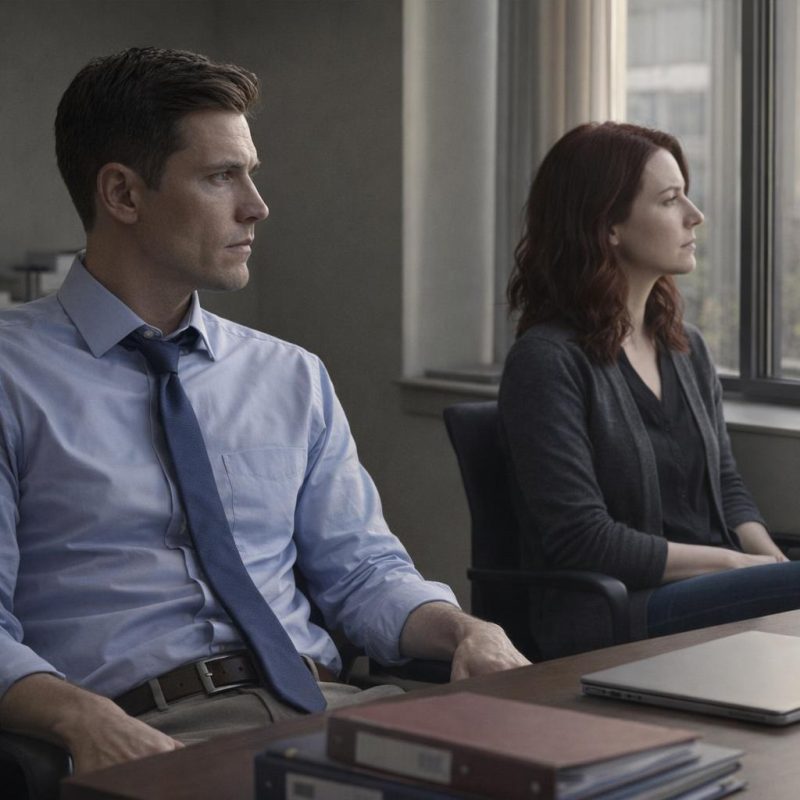 Image by RM AI
KEEP ON READING
The Brutal Realities Of Gladiator Life Beyond the Arena
David Cruz asenjo on PexelsWhen most people think of gladiators,…
By Rob Shapiro Mar 31, 2026
The Volcano Winter That Nearly Toppled Europe
Collin Ross on UnsplashMost people, if asked to name a…
By Cameron Dick Mar 31, 2026
From School Plays To Starting A Cult: 20 Of The…
The Books That Made Us. Many people will tell you…
By Farva Ivkovic Jan 31, 2025
20 Facts About Jane Grey, The Forgotten Queen Of England
A Quick, Messy, and Tragic Reign. Lady Jane Grey never…
By Maria Cruz Jan 31, 2025
20 Priceless Historical Art Pieces Rescued By The Monuments Men
Protecting Human History. While the soldiers on the front lines…
By Sara Springsteen Mar 31, 2026
Almost Every Ancient Statue Has a Missing Nose, And It's…
Gary Todd from Xinzheng, China on WikimediaWalk through the classical…
By Elizabeth Graham Mar 31, 2026