

I Followed My Husband to His 'Work Trip' in Miami and Discovered the Truth Wasn't What I Expected
I Followed My Husband to His 'Work Trip' in Miami and Discovered the Truth Wasn't What I Expected
The Tuesday Evening Routine
Tuesday evenings had their own rhythm in our house, and I'd stopped noticing how practiced it had become. I stood at the kitchen counter with a piping bag in one hand and a photo reference on my tablet, working the third tier of a birthday cake for a client who wanted buttercream roses in three shades of coral. The house smelled like vanilla and warm sugar, which I'd always found steadying. Eric was in his office down the hall — I could hear the occasional click of his keyboard, the low murmur of a conference call wrapping up. He came out around seven, poured himself a glass of water, and asked if I needed anything from the kitchen. I said no. He said the Henderson account was giving him grief. I said that sounded frustrating. He nodded and went back. We ate dinner in shifts, which had become normal somewhere in the last couple of years without either of us deciding it. I finished the cake around nine, cleaned the counter, and stood in the doorway of his office for a moment — he was already back at his screen, shoulders curved forward, glasses catching the monitor light. I didn't say anything. Neither did he. The silence between our two rooms had its own texture by then, familiar and unremarkable, like furniture we'd both stopped seeing.
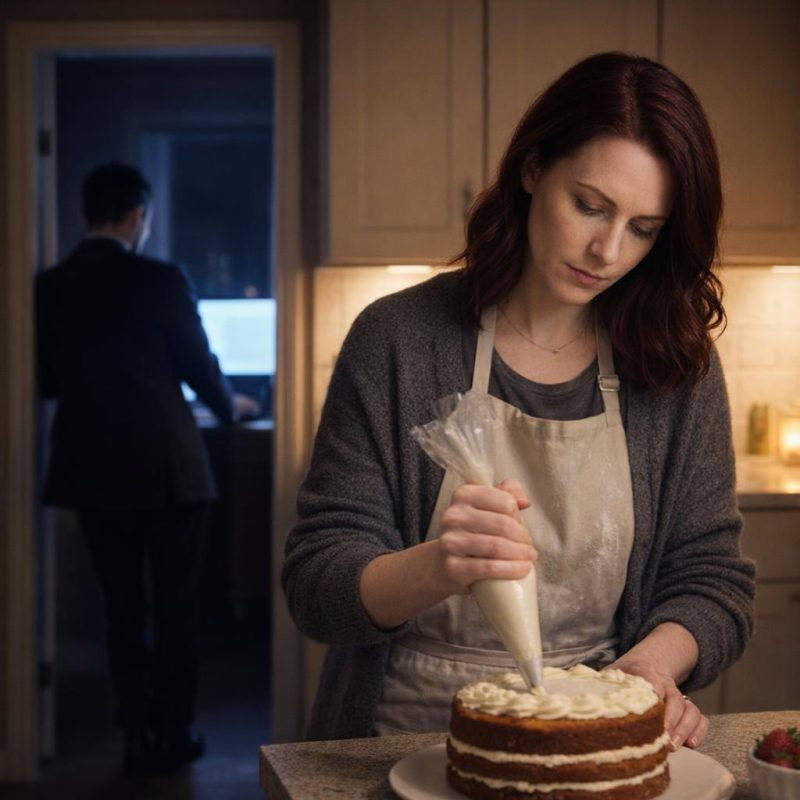 Image by RM AI
Ellie's Science Project
Ellie had decided her volcano needed to erupt in three colors, which meant we spent most of Thursday evening at the dining table with papier-mâché paste drying on our elbows and food coloring staining our fingernails pink. She was nine and completely serious about the whole project, explaining the chemical reaction to me in a tone that suggested I might not fully grasp it. I loved her so much in those moments it almost hurt. Around six she looked up and asked, in that careful way she had, why Dad never helped with projects anymore. I told her Dad had a lot of deadlines right now. She nodded like she was filing that away for later. Eric called from his office at six-thirty to say he'd eat whenever, he had a deadline, don't wait. I heated his plate and left it on the counter. I put Ellie to bed at eight-thirty and told her about the time Eric had helped me build a model of the solar system in college, how he'd stayed up until two in the morning getting Saturn's rings exactly right. She liked that story. She asked if he'd come to her recital next week and I said of course he would. I turned off her lamp and went back downstairs. The kitchen was quiet. His plate sat on the counter exactly where I'd left it, untouched and cold.
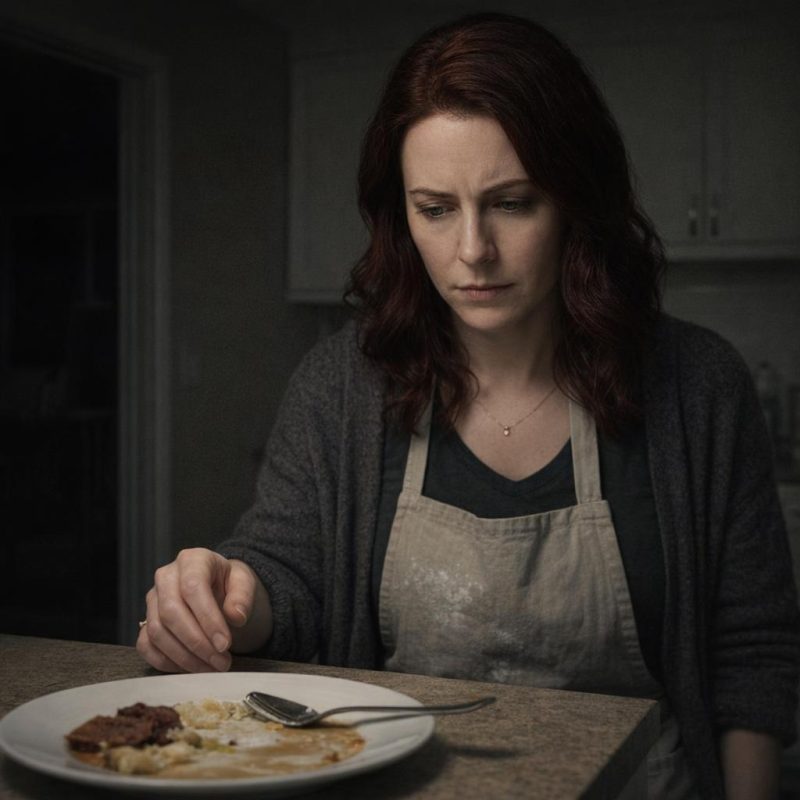 Image by RM AI
The Password Change
It was a Saturday morning, ordinary in every way — coffee brewing, Ellie at her grandmother's for the weekend, Eric in the shower. His phone was on the kitchen table and I reached for it without thinking, the way you do after years of sharing a life, just to check the weather before I decided whether to walk to the farmers market. I typed in the four digits I'd known for three years and the screen stayed locked. I tried again, slower. Still nothing. I set it back down and stood there for a second, trying to remember if he'd mentioned changing it. He hadn't. When he came downstairs I mentioned it casually, the way you mention that the milk is almost out. He said his company had rolled out new security protocols — IT required everyone to update passwords and device codes every ninety days now. He said it with the easy confidence of someone reciting a fact, poured his coffee, and asked if I wanted to walk to the market. I said sure. We went. It was a perfectly nice morning. But the explanation sat in the back of my mind the way a small stone sits in a shoe — not painful exactly, just present, just slightly wrong in a way I couldn't quite name and didn't know what to do with.
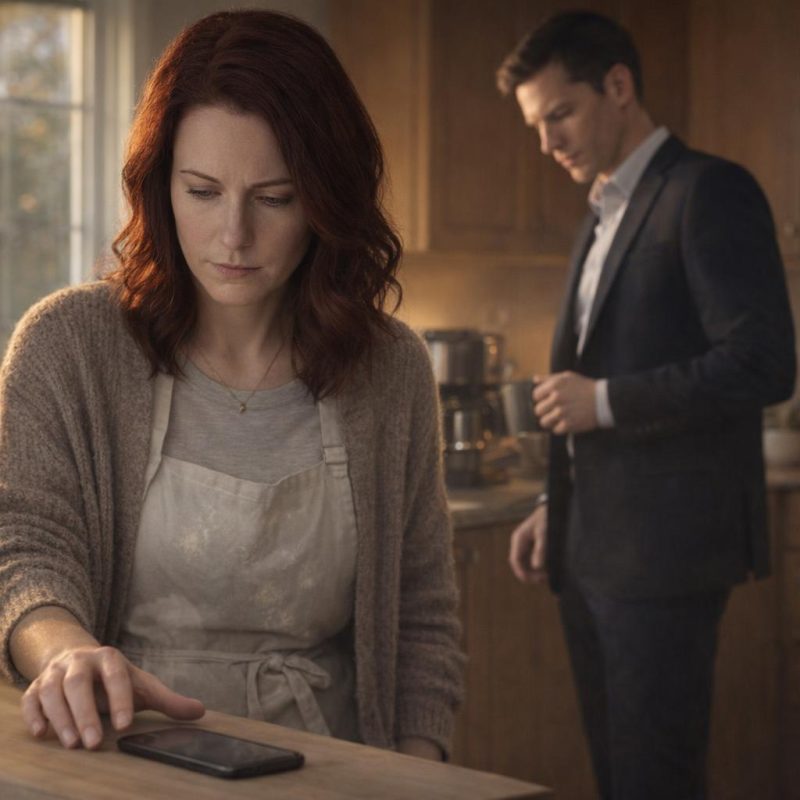 Image by RM AI
Late Night Calls
I woke up at two in the morning to the particular cold of an empty space beside me. Eric's side of the bed was flat and undisturbed, his pillow still dented from earlier. I lay still for a moment, listening, and then I heard it — his voice, low and careful, coming from the direction of the balcony. The sliding door was pulled almost shut. I couldn't make out words, just the cadence of it, the measured pace of someone choosing what to say. I lay there in the dark and stared at the ceiling and told myself it was a work call. He had clients in London, in Singapore — time zones that didn't care about our sleep schedule. After maybe twenty minutes I heard the door slide open and his footsteps cross the room. He got back into bed with the careful movements of someone trying not to wake anyone. I made a small sound, like I'd just surfaced from sleep, and asked what time it was. He said just after two, sorry, client in a different time zone, go back to sleep. I said okay. He settled beside me and his breathing evened out within minutes. I stayed awake longer than I should have, listening to the ordinary sounds of the house, the hum of the refrigerator, the distant street, the careful quiet he'd left behind him when he closed that door.
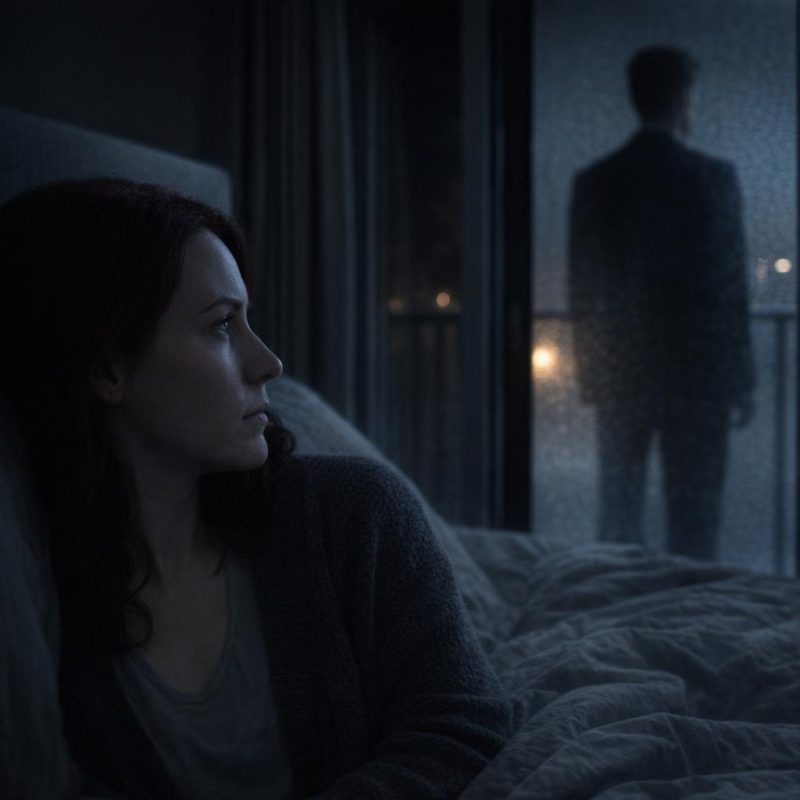 Image by RM AI
The Missed Recital
Ellie had practiced that piece for six weeks. I'd heard it every evening after dinner — the careful repetition, the places where she'd stumble and start again, the night she finally played it all the way through without stopping and came running into the kitchen to tell me. Eric had promised he'd be there. He'd said it twice, once at breakfast and once when she'd reminded him the night before, and she'd gone to bed satisfied. We saved him a seat in the third row, right on the aisle so he could slip in if he was running late. Ellie kept her eyes on the door during the opening remarks. I watched her watch the door. The auditorium filled with the particular warmth of a school event — other parents with their phones out, younger siblings squirming in seats, the smell of someone's coffee in a travel mug. When Ellie's class filed onto the stage she was scanning the audience, and I could see the exact moment she found our row and registered the empty seat beside me. She played beautifully anyway. She always did. I filmed the whole thing, holding my phone steady, trying to capture what he was missing. My own phone buzzed in my pocket halfway through the piece. I didn't look at it until the applause started. It was a text from Eric — urgent client call, so sorry, so proud of her. I looked up, and Ellie was still searching the audience for her father's face.
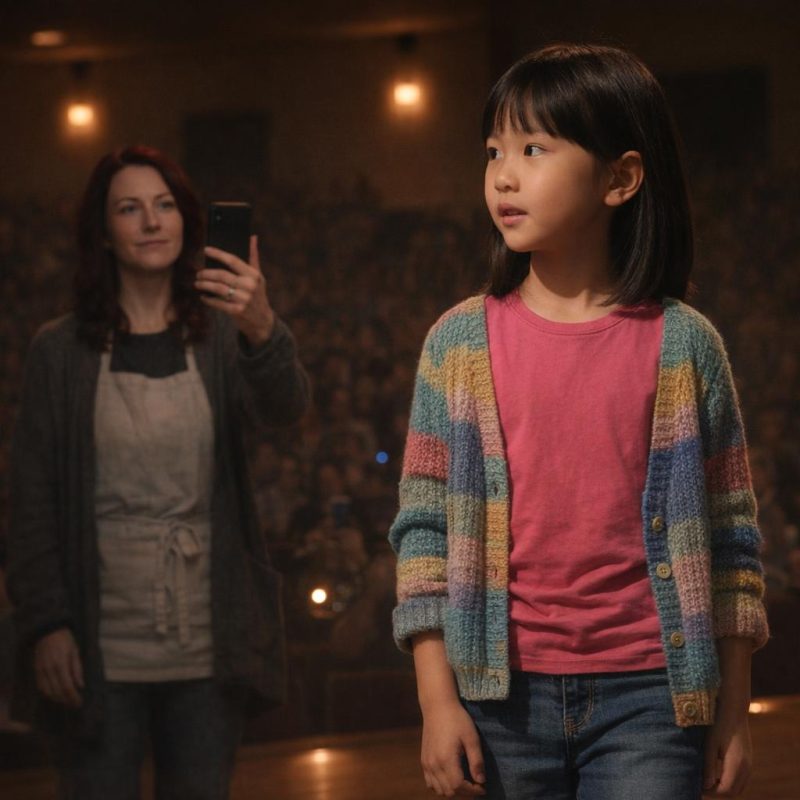 Image by RM AI
The Joint Account
I did the household budget on the last Friday of every month — not because I enjoyed it, but because someone had to and Eric had stopped remembering to. I sat at my desk with a mug of tea going cold beside me and pulled up the joint account statements, the way I always did, scanning for anything that needed to be moved or paid. Most of it was routine. Groceries, utilities, Ellie's piano lessons, the quarterly insurance payment. I was almost done when I saw it — a cash withdrawal from three weeks ago, eight hundred dollars, no memo, no explanation attached. I sat with it for a moment. I tried to think if Eric had mentioned needing cash for anything. A car repair, maybe, or something for the house. Nothing came to mind. I scrolled back through the previous months to see if there were others like it. There weren't, not that size. I thought about asking him that evening, just casually, the way I'd asked about the phone passcode. But something made me pause. I closed the laptop and finished my tea and told myself it was probably nothing — a forgotten explanation, a purchase that made sense in context. I'd wait and see. The statement sat in a browser tab I didn't close, the withdrawal amount and its date still visible on the screen.
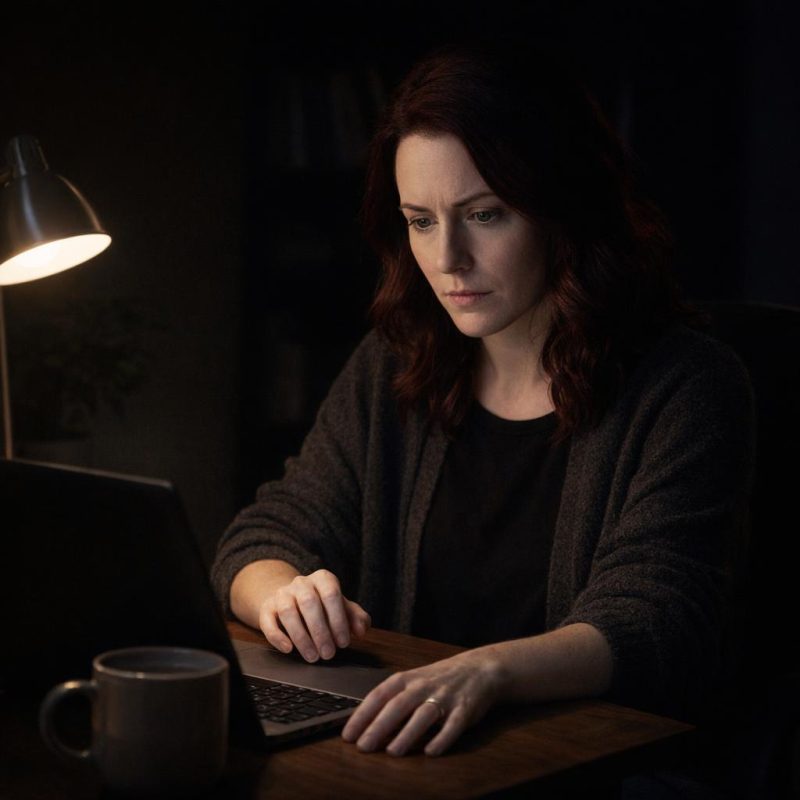 Image by RM AI
The PTA Meeting
The PTA meeting was at seven and I arrived with a plate of lemon bars and my most reliable smile. Ellie went straight to the corner where the other kids had gathered around someone's tablet, and I found a seat near the refreshments table and made the rounds — school carnival planning, the new reading program, whether the parking situation at drop-off could ever actually be fixed. I was good at this part. I knew how to be present and pleasant and give the impression of a woman whose life was running smoothly. The fundraiser discussion wrapped up and people drifted toward the coffee, and I ended up in a small cluster near the window. One of the other mothers — I didn't know her well, just enough to exchange pleasantries at pickup — was talking about a couple from the neighborhood, someone I only vaguely recognized by name. Her voice dropped the way voices do when the information is both terrible and irresistible. Apparently the husband had been seeing someone for almost a year. The wife had found out through the credit card statements. Everyone in the circle made the appropriate sounds of sympathy and disbelief. I made them too. But something had shifted in my chest, some small cold thing settling into place, and I stood there holding my coffee cup with the eight-hundred-dollar withdrawal drifting back into my mind — and my stomach went uneasy in a way I couldn't quite explain.
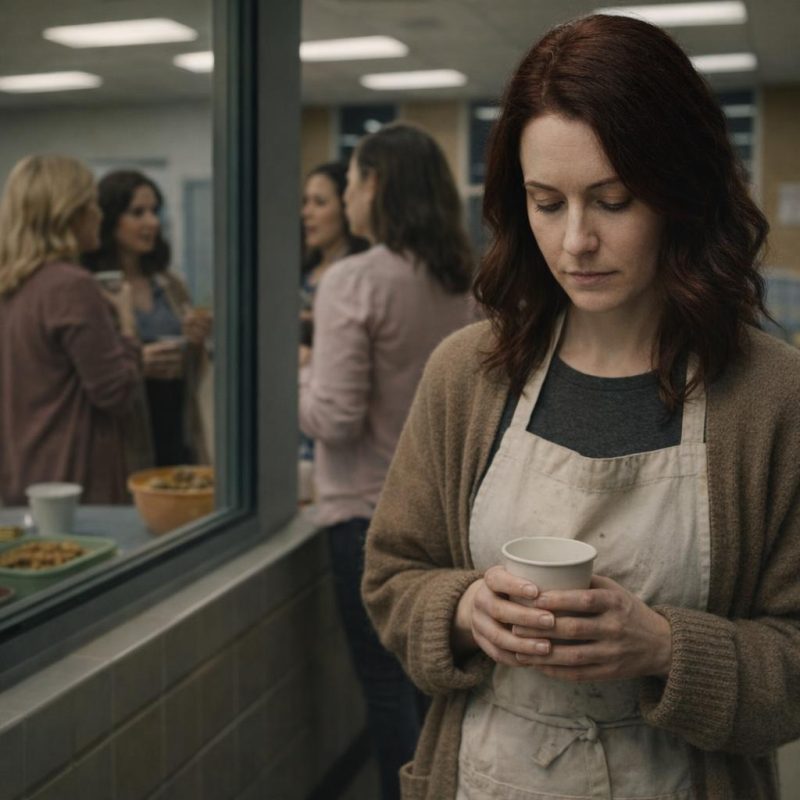 Image by RM AI
Coffee with Mom
My mother and I had a standing coffee date at a place downtown that had been there since I was in high school — same mismatched chairs, same handwritten menu board, same reliable quiet on weekday mornings. She was already there when I arrived, hands wrapped around her mug, and she looked at me the way she always did, like she was taking a quick inventory and deciding what to say about it. We talked about Ellie's recital, about a cake commission I had coming up, about whether the spring carnival was going to be as chaotic as last year's. I mentioned, somewhere in the middle of it, that Eric had been putting in long hours lately. She asked how long. I said a few months, maybe. She nodded and was quiet for a moment, and then she asked how I was doing — not how things were going, not how Eric was, but how I was doing, specifically. I said I was fine, just a little tired. She didn't push. She refilled my coffee from the carafe on the table and told me that marriages go through seasons, that she and my father had had stretches that felt like winter, and that the important thing was knowing the difference between a hard season and something else. I didn't ask her what the something else was. I didn't need to. I sat with my hands around my mug and let the warmth of her being there settle over me like something I hadn't known I needed.
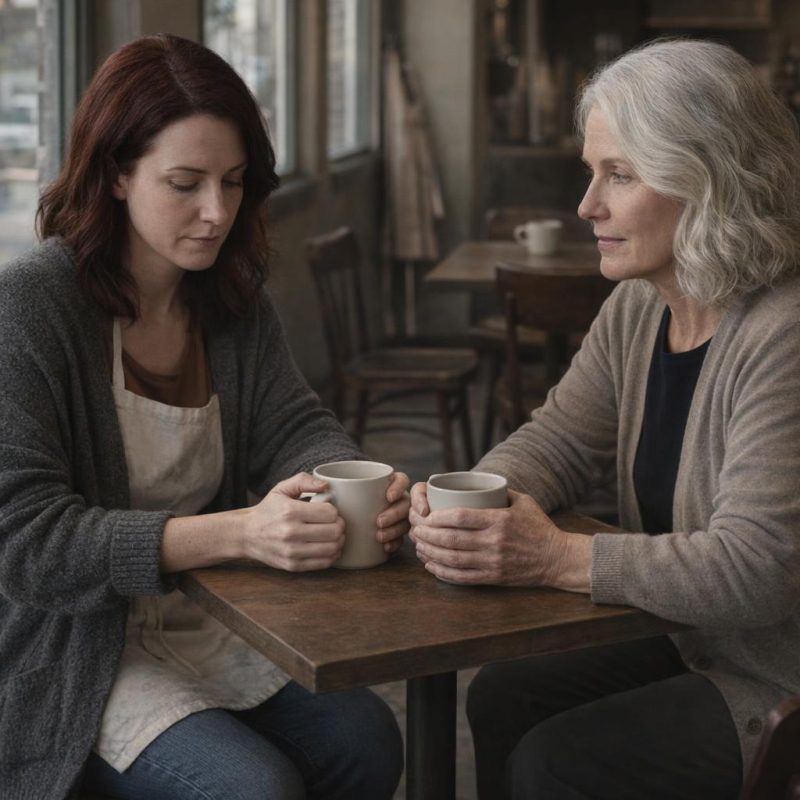 Image by RM AI
The Doubt
I lay there in the dark listening to Eric breathe and tried to build a case against myself. Password changes happen. People get busy. Nine years is a long time, and long times have a way of smoothing everything down until it's just routine and grocery lists and someone's breathing on the other side of the bed. I ran through the list in my head — the late calls, the cash withdrawal, the way he'd missed Ellie's recital rehearsal without seeming all that sorry about it — and then I turned each one over and looked for the boring explanation. Work stress. Distraction. The kind of drift that happens when two people stop checking in. Maybe I was the one who had changed. I'd been so deep in cake orders and school pickups that maybe I'd stopped being interesting to come home to. That thought sat on my chest for a while. But then I thought about the way he'd angled his phone away from me at dinner last Tuesday, just slightly, just enough, and something in me went quiet and still and started paying closer attention.
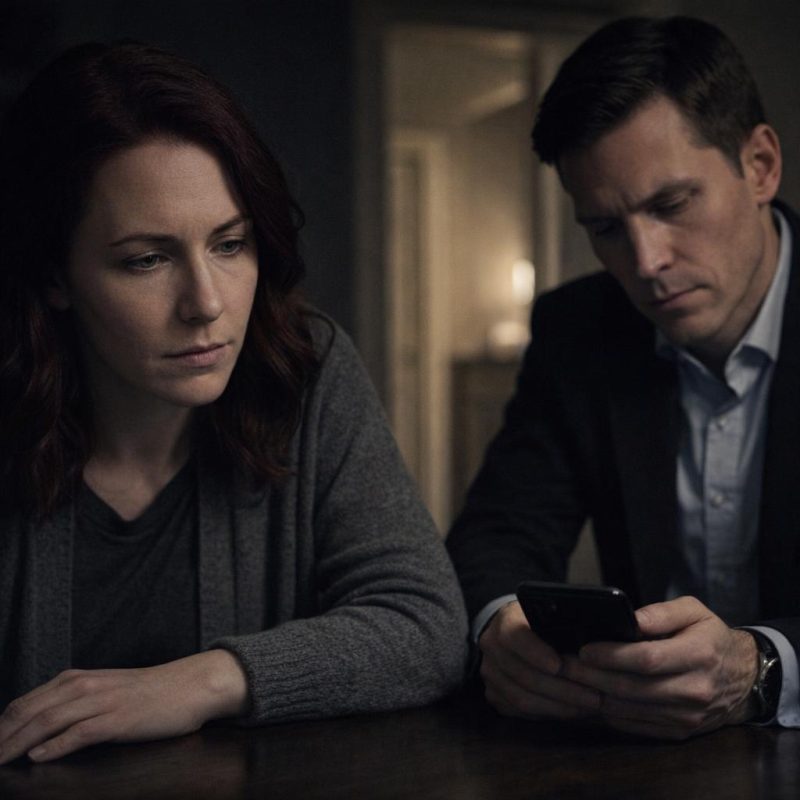 Image by RM AI
The Balcony Ritual
The third time it happened that week, I was ready. I heard him ease out of bed around midnight, the careful way he moved when he thought I was asleep — slow, deliberate, no rustling. I kept my breathing even and watched through my lashes as he picked up his phone from the nightstand and slid the balcony door open just wide enough to slip through, then pulled it shut behind him. The bedroom went quiet. I waited a beat, then turned my head just enough to see him through the glass. He was standing with his back mostly to me, one hand braced on the railing, phone pressed to his ear. His shoulders were different than they were on work calls. On work calls he paced, shifted his weight, ran a hand through his hair. Out there he was still. Relaxed in a way I hadn't seen in months. At some point he smiled at something — I could tell from the way his head dipped slightly, the way his whole posture softened. Twenty minutes later he came back to bed and was asleep within minutes. I lay there staring at the ceiling, and the shape of his shoulders through the glass stayed with me long after the room went dark again.
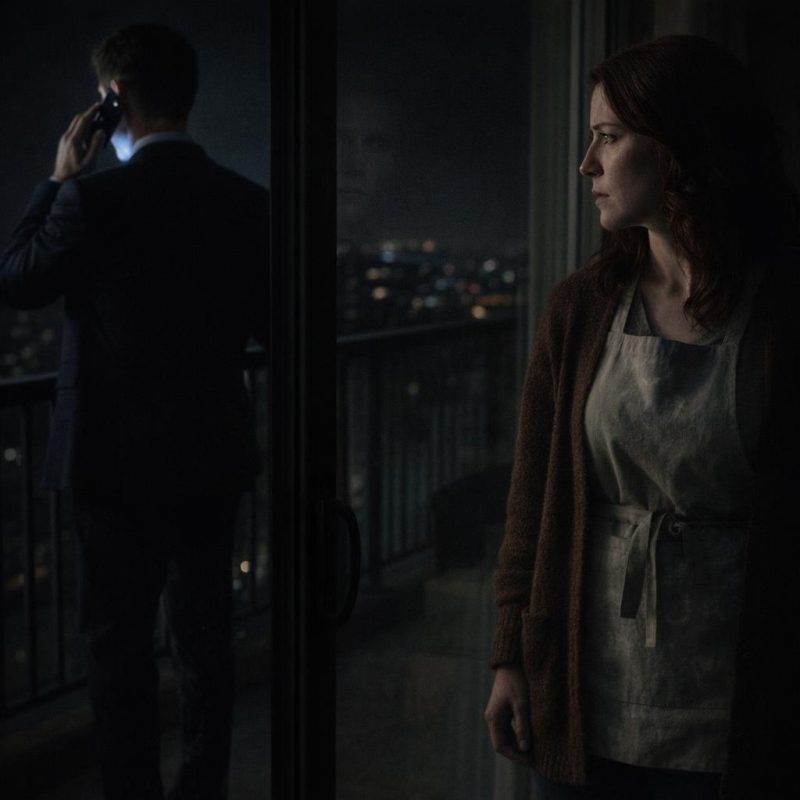 Image by RM AI
The Corporate Excuse
I picked a Saturday morning, when Ellie was at her friend's house and the kitchen felt neutral enough for a real conversation. I asked him, as casually as I could manage, whether everything was okay at work. He looked up from his coffee and said yes, actually, there was a lot going on — a major deliverable coming up, stakeholder alignment issues, the team needing to circle back on some key metrics before the end of the quarter. He used the word 'bandwidth' twice. I nodded and said it sounded stressful, and offered to take more off his plate at home so he could focus. He thanked me and said it was just something he needed to work through, that it would settle down soon. He said it the way you'd read a prepared statement — not unkindly, but with a kind of smoothness that didn't leave room for follow-up questions. I watched his hands around his mug. I thought about how I'd once been able to tell the difference between his tired voice and his stressed voice and his distracted voice. Sitting there, I wasn't sure which one I was hearing. The explanation made sense on the surface. I just couldn't shake the feeling that something about it sat too neatly, too finished, like a door already closed before I'd knocked.
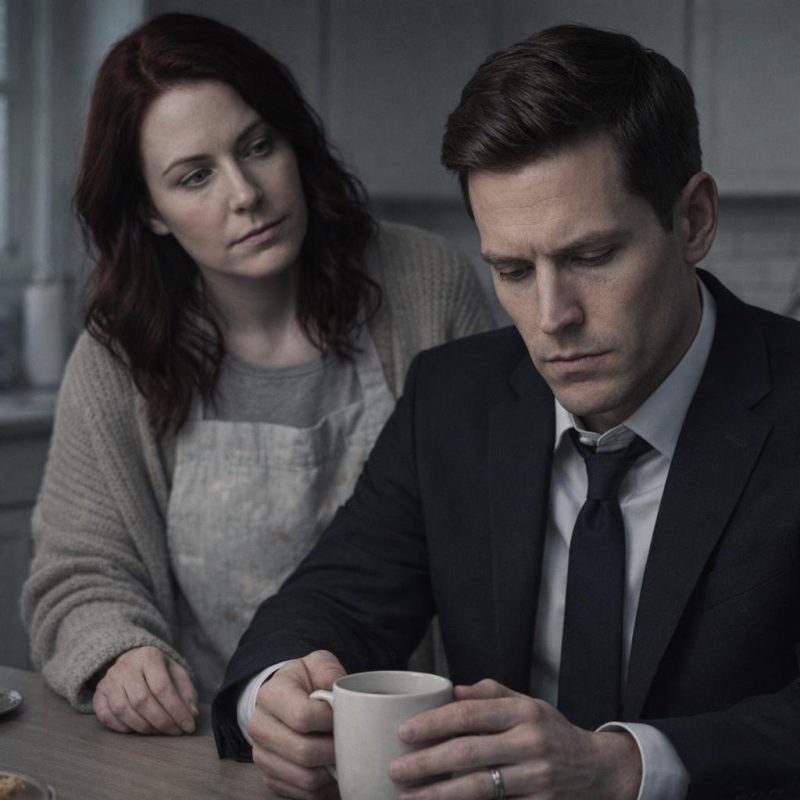 Image by RM AI
The Second Withdrawal
I told myself I was just checking the balance. That's how it starts, isn't it — you tell yourself it's routine, that you're just being responsible, that you're not looking for anything specific. I logged in during my lunch break while Ellie was at school and the house was quiet, and I scrolled through the recent transactions the way you do when you already have a bad feeling but haven't admitted it yet. The grocery runs, the gas station, the subscription services. And then there it was, five days ago: a cash withdrawal for twelve hundred dollars. No note, no context, no corresponding purchase anywhere in the account. My stomach dropped in a way that was different from the first time — less surprise, more confirmation of something I'd been trying not to name. The first withdrawal had been eight hundred. Now twelve hundred. I sat there with the laptop open and the cursor blinking and my lunch going cold beside me, and then I opened a new browser tab and typed 'signs your husband is having an affair.'
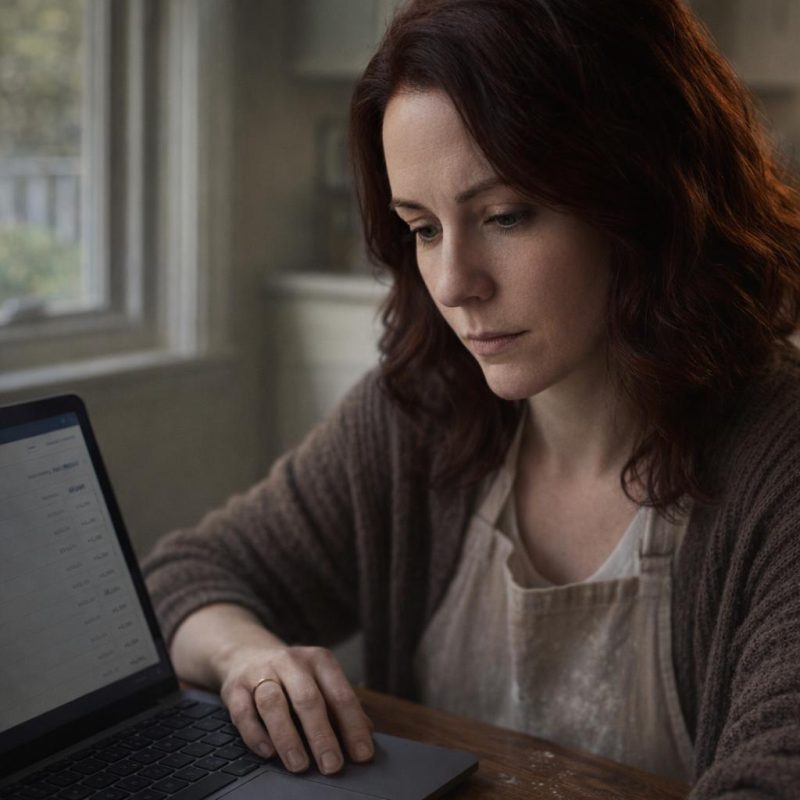 Image by RM AI
The Search History
I read four articles. Then six. Then I lost count. They all had the same basic architecture — numbered lists with headers like 'emotional withdrawal' and 'unexplained expenses' and 'increased phone privacy' — and I sat there in the kitchen with my coffee going cold and made the kind of mental checkmarks you can't unmake. Changed passwords. Check. Late-night calls he stepped away to take. Check. Missing events without much of an apology. Check. Cash withdrawals with no explanation. Check. One article said that financial secrecy was one of the most reliable early indicators, that people conducting affairs often moved to cash to avoid a paper trail. I read that sentence twice and felt something cold move through me. Another article said that emotional distance often preceded physical distance, that a partner pulling away conversationally was frequently the first sign. I thought about the word 'bandwidth.' I thought about the way he'd thanked me for offering to help and then closed the door on the conversation. I closed all the browser tabs one by one, like that would help. It didn't. The pattern had already settled somewhere behind my sternum, quiet and cold and impossible to unfeel.
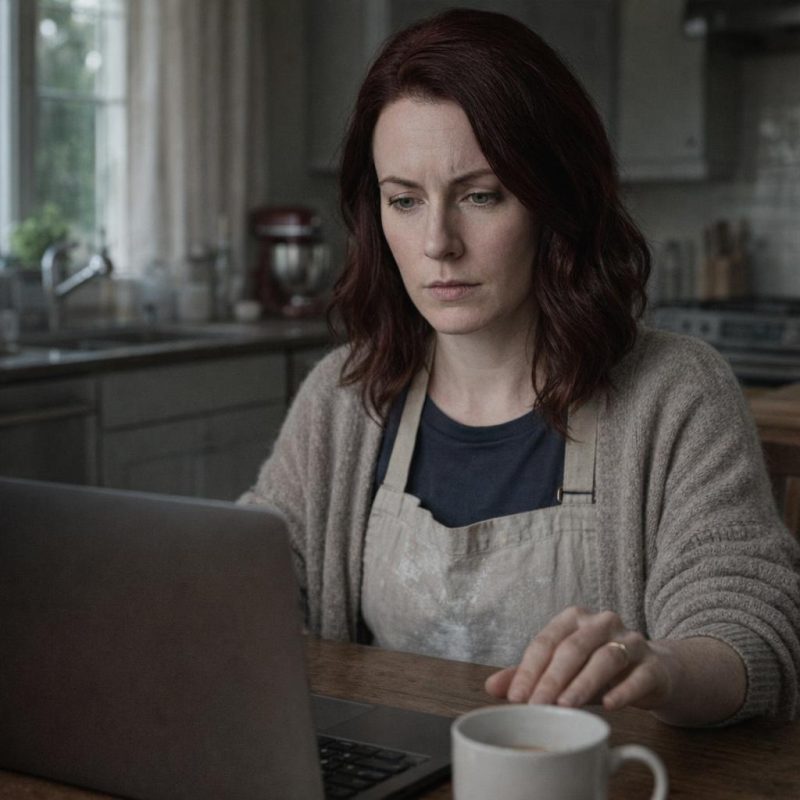 Image by RM AI
The Other Woman
I sat in the car outside Ellie's school for twenty minutes after drop-off, engine running, going nowhere. My mind had started doing something I couldn't stop — building her. The other woman. I gave her an age first: late twenties, probably. Then a context: someone from his office, someone who understood the difference between a stakeholder and a shareholder, who could talk about deliverables without her eyes glazing over. I pictured her in the kind of clothes that don't wrinkle, at a desk that didn't have a permission slip and a dried-out marker on it. No flour under her nails. No school pickup schedule. She probably laughed at his work jokes and asked follow-up questions about his projects, and I imagined him leaning forward across a table, animated in a way he hadn't been with me in months. I knew I was doing it — I knew I was constructing something out of my own insecurities and handing it a face — but I couldn't stop. The image kept sharpening, filling in details I had no basis for, until she felt almost real. I finally put the car in reverse and pulled out of the lot, but she came with me, sitting in the passenger seat all the way home.
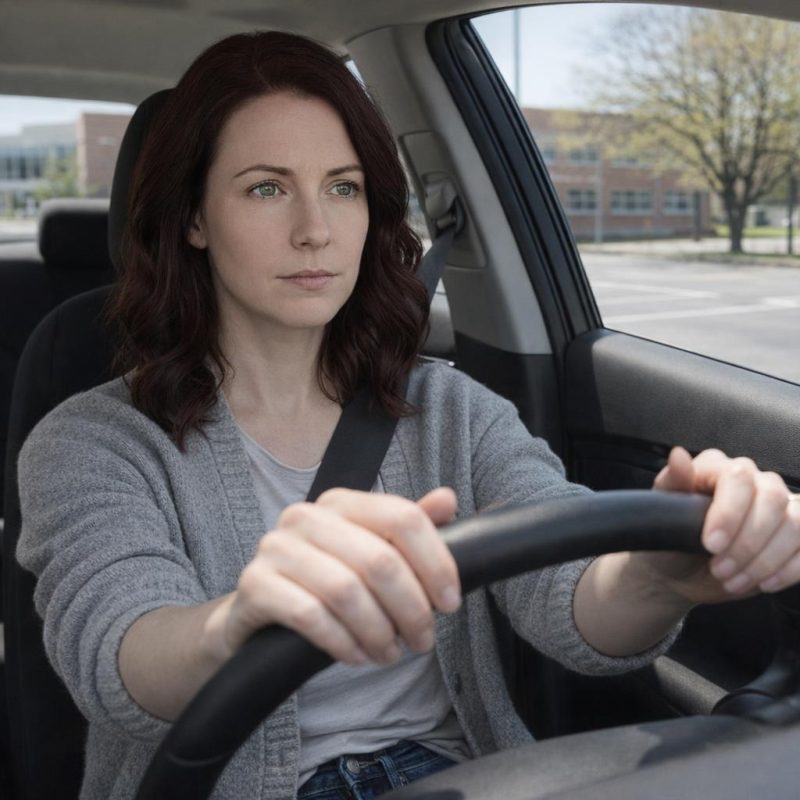 Image by RM AI
The Spring Carnival
The spring carnival was exactly the kind of event I was good at. I had sixty cupcakes in carriers, a folding table with a gingham cloth, and nine years of practice smiling through things. Ellie ran ahead to the ring toss the moment we arrived, and I set up my table and fell into the rhythm of it — handing out cupcakes, chatting with parents, laughing at the right moments, being the person everyone expected me to be. It was almost a relief, having a role that required nothing complicated. Ellie came back twice to show me prizes, a plastic ring and a small stuffed bear, and both times I made my face do exactly what it was supposed to do. I was in the middle of a conversation about the summer reading program when one of the other parents — a woman I knew from the pickup line — mentioned she'd seen Eric downtown last week. At a restaurant on Fifth. She said it casually, the way you mention something you don't think twice about. Then she glanced at me and added, almost as an afterthought, that he hadn't been alone.
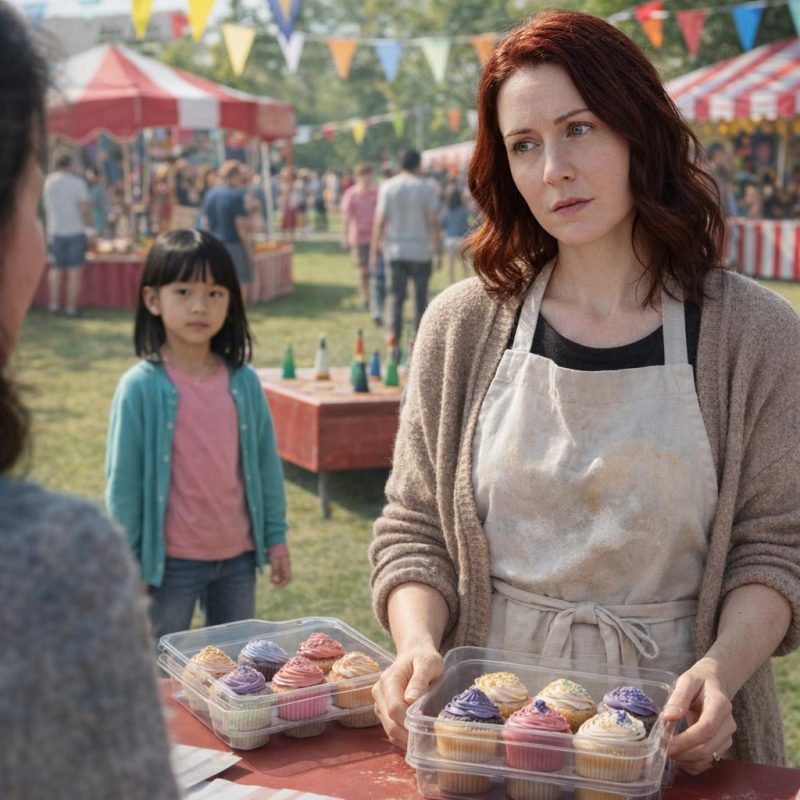 Image by RM AI
The Email
I heard the shower turn on and stood in the kitchen for a moment, just listening to the water run. His laptop was open on the counter where he'd left it, screen still lit. I told myself I wasn't going to look. Then I pulled it toward me. I went straight to his email — no hesitation, which told me I'd already made the decision before I'd admitted it. I scanned the subject lines, moving fast, not sure what I was looking for until I saw it: a confirmation email from a Miami vacation rental company, sent four days ago. I clicked it open. The booking was for next week — five nights, a two-bedroom property in Miami Beach. The dates were ones he hadn't mentioned to me. He hadn't said a word about Miami, about travel, about anything that would explain a five-night rental on the other side of the country. The shower was still running. I stood there with the confirmation on the screen in front of me, the check-in date, the address, the total charge, all of it sitting there in plain black text.
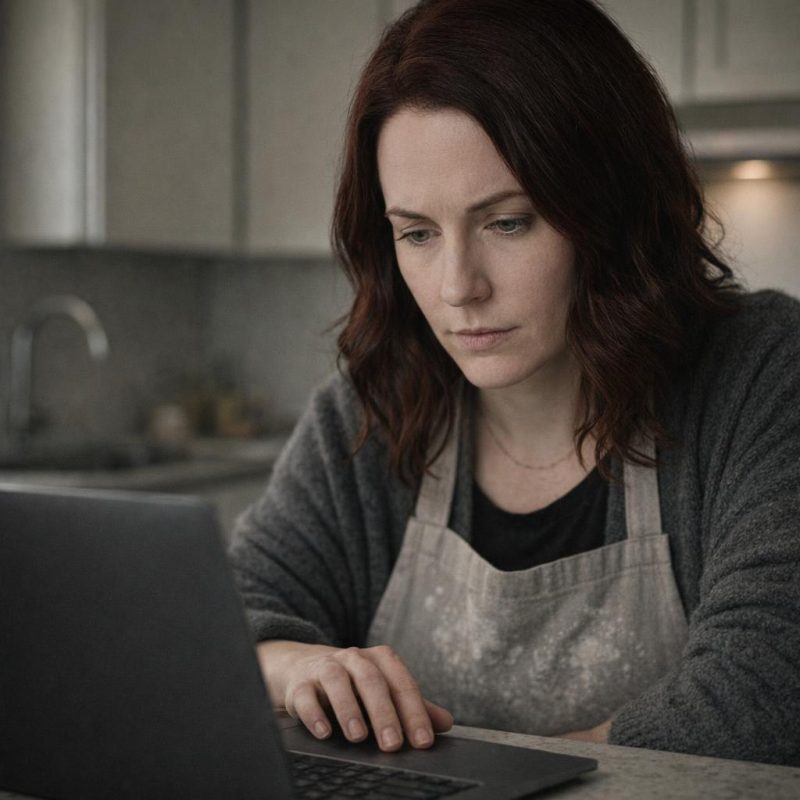 Image by RM AI
The Unfamiliar Name
I stood there with the shower still running and made myself read the whole thing again, slower this time. The property address, the check-in date, the total charge — I'd clocked all of that the first pass. But I'd skimmed right over the name on the booking. I scrolled back up and found it in the guest details field: a single name, something that could have belonged to anyone. Not Eric. Not a name I'd ever heard him mention — not a colleague, not a client, not anyone from the handful of work stories he actually bothered to bring home. I stared at it for a second, trying to place it, turning it over like a piece of a puzzle that didn't match any edge I had. I couldn't even tell from the letters whether it was a man or a woman. My heart was doing something unpleasant behind my ribs. Then I closed the email, pushed the laptop back to exactly where he'd left it, and moved to the other side of the kitchen — but not before I'd grabbed my phone off the counter, opened the camera, and taken a screenshot of the screen.
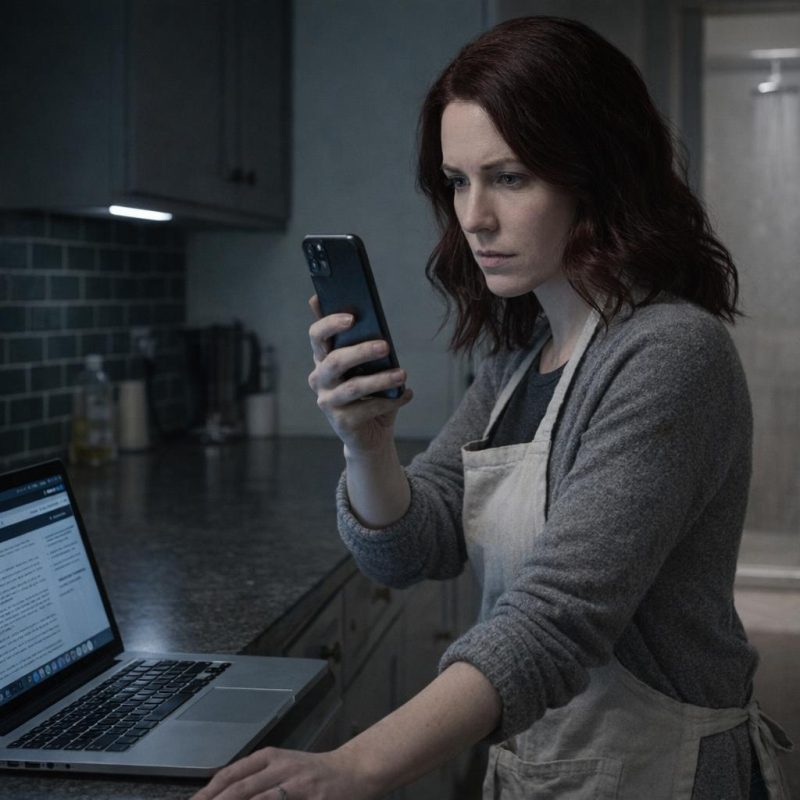 Image by RM AI
The Research
Eric left for work at his usual time the next morning, and I waited until I heard his car back out of the driveway before I opened my laptop. I typed the address from the screenshot into the search bar and hit enter. The property listing came up on the second result — a boutique rental site, the kind that uses words like 'curated' and 'intimate escape.' I clicked through the photos slowly. It was a bungalow, small and white, sitting close enough to the water that you could probably hear the waves from the porch. There was a porch. There were string lights. There was a bedroom with a king-sized bed and gauzy curtains and a window that looked straight out at the ocean. Nothing about it said conference room. Nothing about it said client meeting or deliverable timeline or any of the other phrases Eric used to describe his work life. It said two people, a bottle of wine, and nowhere to be. I sat with the laptop open in front of me, the photos cycling through on the listing page, and I couldn't stop my mind from filling in the picture — Eric on that porch, someone beside him, the ocean doing its indifferent thing in the background.
 Image by RM AI
The Decision
I sat at my desk for a long time with two browser tabs open — the rental listing on one side, a flight booking site on the other. I kept telling myself there was a reasonable explanation. I kept not believing it. The sensible thing was to ask him directly, to sit him down and say, 'I saw the email, I saw the name, I need you to explain this to me.' I drafted that conversation in my head at least four times. Each time it ended with him having a smooth answer I couldn't disprove, and me feeling smaller for having asked. I didn't want to be managed. I wanted to know. So I looked at the flights. His itinerary, the one I'd photographed from the screen, had him landing Tuesday afternoon. There was a flight that would put me on the ground three hours after him — enough time for him to get to the rental, settle in, stop watching the arrivals board. I sat there with my finger hovering over the confirm button for probably two full minutes. Then I pressed it. The confirmation email landed in my inbox with a cheerful little chime, and I closed the laptop and sat very still, the decision already done, already solid, already mine.
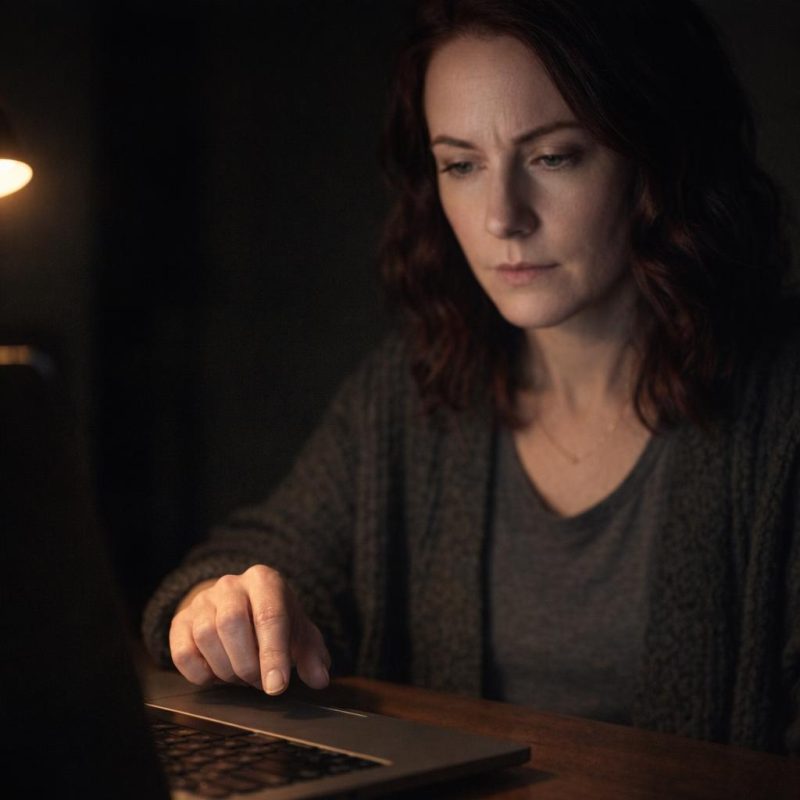 Image by RM AI
The Elaborate Cake
I was on the second tier of a three-tier anniversary cake when Eric came through the back door, still in his work jacket, loosening his tie. The cake was white fondant with hand-piped gold filigree — forty hours of someone else's marriage, right there on my kitchen counter. He set his bag down and said there was a situation at work, a client in Miami who needed someone on the ground by Wednesday, last-minute, he was sorry about the timing. I kept my piping bag steady and said that sounded stressful. He said it was, a little, but the deliverables were time-sensitive and there wasn't really a choice. I said I understood. He looked almost relieved by that, which was its own kind of information. I finished the section I was working on, set the piping bag down, and told him I'd help him pack. He said he didn't want to pull me away from the cake. I said it was fine, I needed a break anyway. I went to the bedroom closet and pulled out his favorite suitcase — the hard-shell navy one he always took on longer trips — and set it open on the bed, and started pulling his dress shirts from the rack one by one.
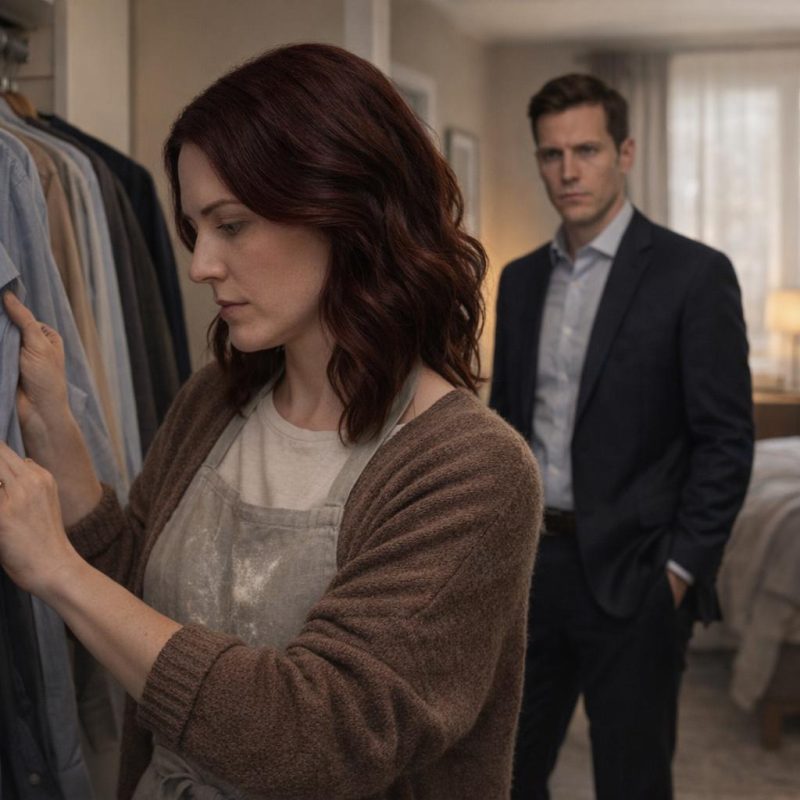 Image by RM AI
The Tuesday Evening Departure
He stood in the kitchen doorway while I wiped down the counter, and he walked me through the whole thing like a quarterly review. Stakeholder alignment with the Miami client had reached a critical juncture. The deliverable timeline couldn't absorb another remote call. His physical presence was, unfortunately, non-negotiable. He'd circle back once he landed, keep me posted on the schedule. I nodded at the right intervals. I asked what time his flight was, which terminal, whether he'd need a car service or was planning to drive to the airport. He answered each question with the mild surprise of a man who hadn't expected to be asked, which told me he'd prepared for resistance and gotten none. I asked if he knew yet which hotel the company had booked. He said he thought it was a Marriott near the convention center, something like that, he'd confirm once the travel team sent the details. I said that sounded fine. He adjusted his glasses and said he appreciated how understanding I was being about the short notice. I told him it wasn't a problem. The kitchen felt very quiet after that, the two of us standing in it with all the things neither of us was saying filling up the space between us like water rising in a sealed room.
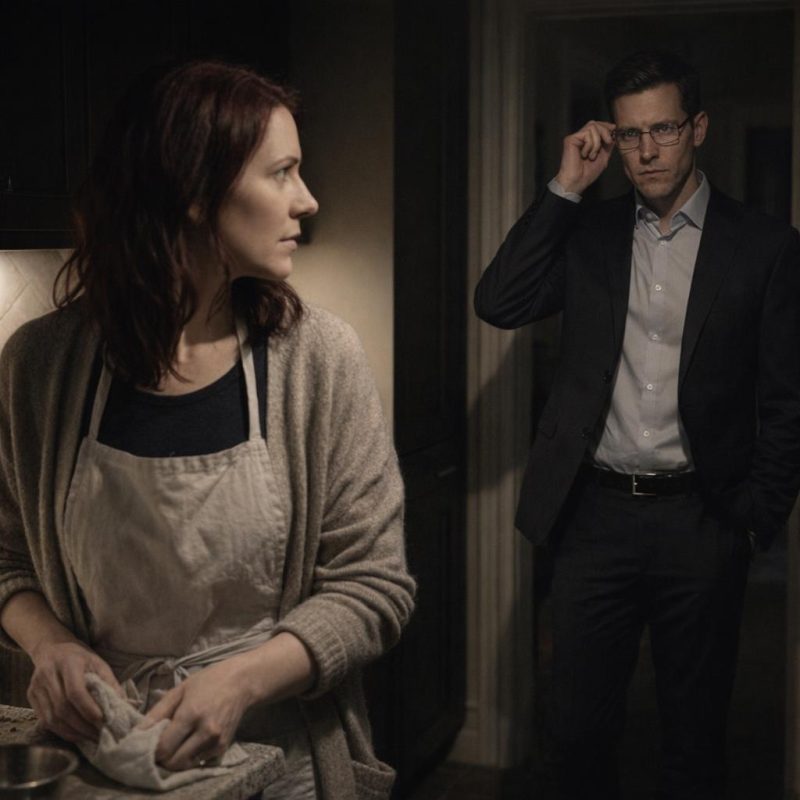 Image by RM AI
The Careful Packing
I pulled his shirts from the closet the way I pull a cake from the oven — carefully, with both hands, no sudden movements. He sat on the edge of the bed and told me the Tuesday dinner would probably be business casual, but Wednesday's client presentation required the charcoal Oxford, the one with the French cuffs. I laid it flat on the bed and folded the sleeves back with the same precision I use when I'm smoothing fondant over a sharp corner — pressure even, no air pockets, no wrinkles. He said the navy one was fine for travel. I folded the navy one. He said he thought he'd need three days' worth, maybe four to be safe. I folded four. My hands were not entirely steady. I kept them moving so he wouldn't notice, kept the rhythm going — fold, smooth, stack — because stopping felt more dangerous than continuing. He thanked me and said I didn't have to do this. I said I wanted to. He accepted that without question, which was either trust or inattention, and I wasn't sure anymore which one I'd prefer. I pressed the last shirt flat against the bottom of the suitcase and felt the trembling in my hands, and heard my own voice, even and unhurried, asking if he wanted me to add the travel umbrella.
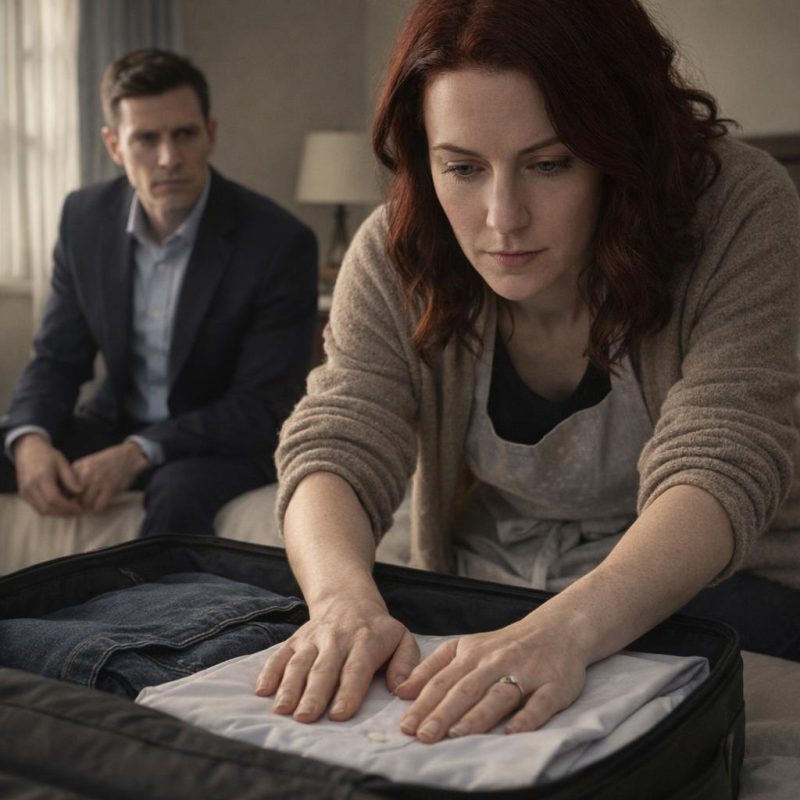 Image by RM AI
The Airport Kiss
He loaded the navy suitcase into the trunk himself while I stood in the driveway in my cardigan, arms crossed against the morning chill. He came around to where I was standing and kissed my cheek — a quick, dry press, the kind you'd give a colleague at the end of a conference. He said he'd call when he landed. I said to have a safe flight and good meetings. He said he would. He got in the car, backed out of the driveway in his careful, signaling way, and turned onto the street. The moment his taillights shrank to two small points and disappeared around the corner, I went inside, walked straight to the kitchen table, and opened my laptop.
 Image by RM AI
The Arrangement
My mother picked up on the second ring, which she always does, as if she's been waiting. I told her I had a client situation — a wedding cake order that had gone sideways, a bride in a panic, I needed to go in and fix it tonight and possibly stay over at the studio. She said of course, bring Ellie by whenever, she'd make up the pull-out bed and they'd watch a movie. I said thank you, I was sorry for the short notice. She said don't be silly. I packed Ellie's overnight bag while Ellie stood beside me suggesting which stuffed animals were essential versus optional, and she was so genuinely excited about Grandma's pull-out bed that it made something tighten in my chest. I drove her over, kissed her forehead at the door, watched my mother take her hand and pull her inside toward the smell of something warm on the stove. On the drive back, I kept turning the phone call over in my mind — how the words had come out without hesitation, how the story had assembled itself in my mouth before I'd even finished deciding to tell it. The ease of it sat with me the whole way home, quiet and a little unsettling.
 Image by RM AI
The Flight Booking Confirmation
I sat at my desk with the confirmation email open on my laptop, reading it for probably the fourth time. Flight 1847, departing Raleigh-Durham at 5:15 PM, arriving Miami International at 8:47 PM. Three hours after Eric's scheduled landing. I'd chosen that gap on purpose — enough time for him to collect his bag, pick up the rental, and get settled at the address I had saved in my maps app under the contact name 'Client Ref.' My overnight bag sat by the door: one change of clothes, my charger, my toiletry case. I'd packed it the way I pack for a one-night client shoot — light, functional, no room for second-guessing. The rental address was a bungalow near the coast. I'd looked it up on Street View until I could picture the driveway, the front porch, the kind of neighborhood where nobody would notice a woman sitting in a parked car. I kept telling myself I could still close the laptop and go to bed. I kept not doing it. I'd been investigating the edges of something for weeks, and this felt like the moment where I either stepped back or stepped through. My phone buzzed on the desk — the airline's 24-hour check-in notification, right on schedule.
 Image by RM AI
The Drop-Off
Ellie talked the entire drive over, which she always does when she's excited — a running commentary on which movies she and my mom should watch, whether popcorn counted as dinner if you ate enough of it, and whether Grandma's cat would sleep on the pull-out bed with her. I answered when she paused for breath and kept my eyes on the road. My mom was already at the door when we pulled up, like she'd heard the car from two rooms away. Ellie launched herself up the porch steps with her backpack bouncing, and my mom caught her in a hug and looked at me over her shoulder with that particular expression she has — the one that doesn't ask anything out loud. I carried Ellie's bag to the door and my mom squeezed my hand once, firm and brief, and didn't say a word. I crouched down and pulled Ellie into a hug that lasted longer than usual. She smelled like the strawberry shampoo I'd been buying since she was four, and she hugged me back with her whole body the way kids do when they're not yet self-conscious about it. I told her I loved her and to be good for Grandma. She said obviously, Mom, and ran inside. I stood on the porch for a moment after the door closed, holding the warmth of that hug against everything I was walking toward.
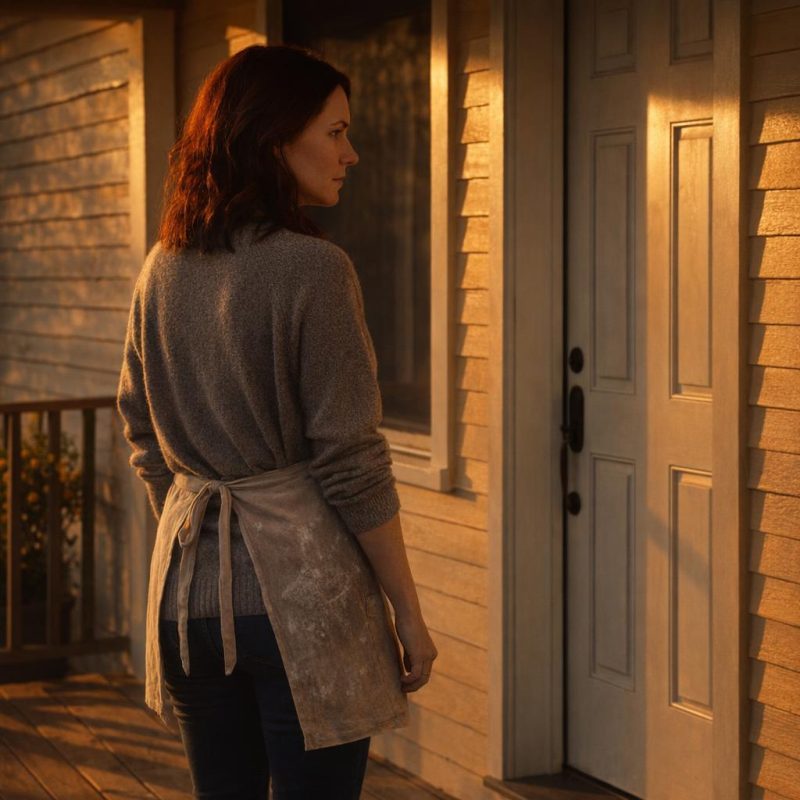 Image by RM AI
The Airport
I parked in long-term and took the shuttle to the terminal, sitting between a man in a navy suit with a rolling carry-on and a woman reading something on her tablet, both of them looking like people who did this every week. I probably looked like that too, from the outside. Small bag, quiet face, moving on autopilot through the check-in kiosks and the security line. I put my shoes in the bin and watched my bag go through the scanner and collected everything on the other side without really registering any of it. The airport was doing its usual thing — families with strollers, gate agents making announcements, a cluster of college kids near a charging station. I bought a coffee at a stand near my gate because it gave me something to hold, and I sat with it untouched until the cup went cold. I kept checking the maps app, the address still pinned there, the little red marker sitting on a street I'd never been to. When the gate agent called boarding, I stood up and joined the line without deciding to. I found my seat near the back, window side, and tucked my bag in the overhead bin.
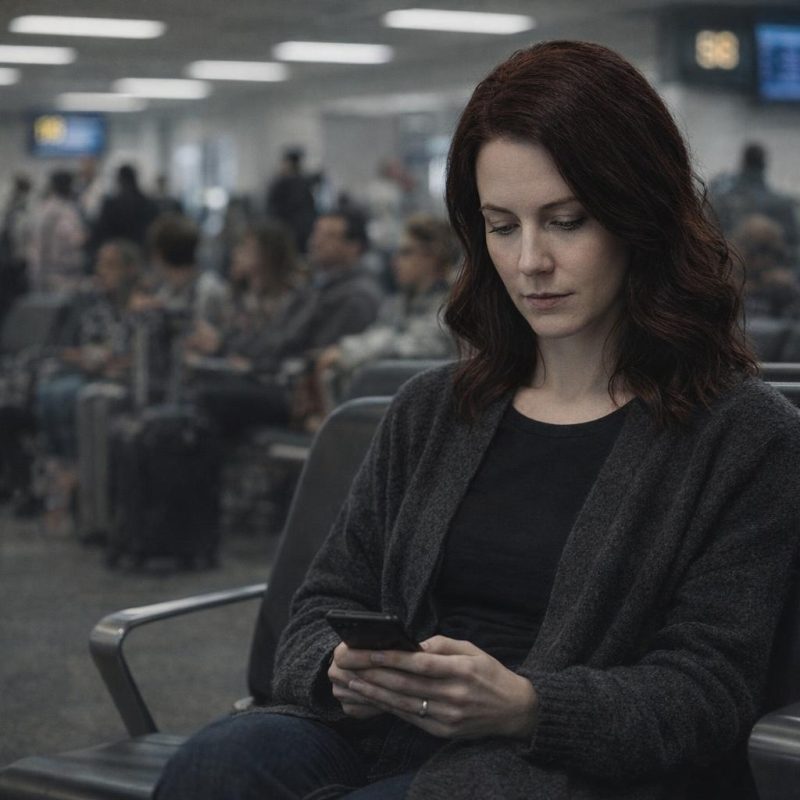 Image by RM AI
The Flight
The plane lifted and Raleigh tilted away beneath me — the grid of lights shrinking until it looked like something I'd designed on a screen rather than a place I actually lived. I pressed my forehead against the cold window for a moment and then sat back. I'd been running scenarios in my head since I booked the ticket, and the flight didn't stop them. I imagined pulling up to the bungalow and seeing lights on inside. I imagined a car in the driveway that wasn't a rental. I imagined knocking and the door opening and having to say something coherent while my whole understanding of the last nine years rearranged itself. I rehearsed sentences and discarded them. I tried to think about what I actually wanted to happen — what the best possible version of tonight looked like — and I couldn't get there. The flight attendant came by and I shook my head and she moved on. I pulled the magazine out of the seat pocket and stared at a page about kitchen renovations without reading a single word. Two hours and change. The engines held their steady note beneath everything, indifferent to what I was flying toward, and the scenarios kept cycling through whether I wanted them to or not.
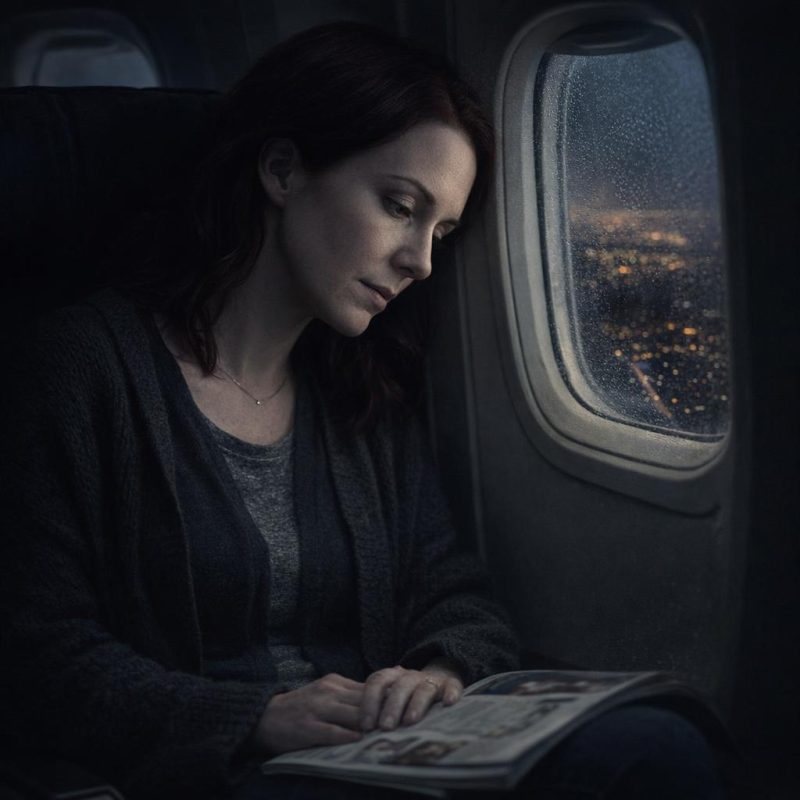 Image by RM AI
The Landing
The wheels hit the runway and I felt it in my back teeth. Miami International was exactly as bright as I remembered from a trip years ago — all that white light and moving walkways and the particular smell of recycled air mixed with something tropical leaking in from the sliding doors. Everything felt slightly too saturated, like a photo with the contrast pushed too high. I followed the signs for ground transportation past a family taking a selfie in front of a flamingo display, past a gift shop selling coconut candies and miniature palm trees, past a man in a Hawaiian shirt who looked genuinely thrilled to be there. I picked up my rental car with minimal conversation — handed over my license, signed the screen, took the keys. The woman at the counter said enjoy your stay and I said thank you and meant neither of us any harm by it. In the parking structure I sat in the car for a moment before starting it, the GPS already loaded with the address, the little blue line threading through streets I didn't know. Outside the structure, the air came through the window warm and salt-edged, and the palm trees along the exit road moved in a slow, easy way that had nothing to do with why I was there. I pulled out and followed the route, the cold purpose in my chest sitting perfectly still against all that warmth.
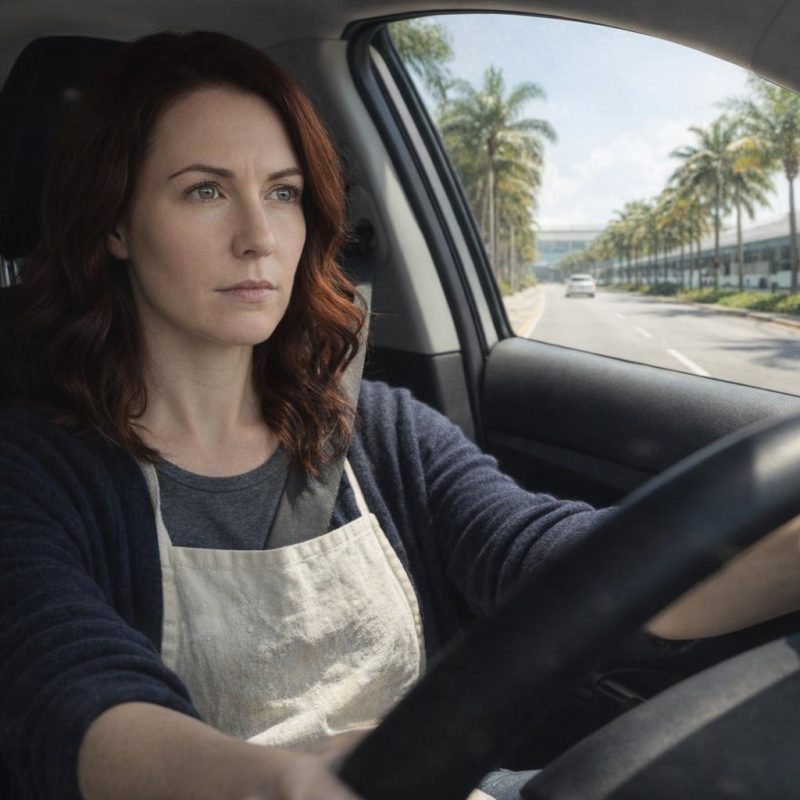 Image by RM AI
The Drive
The GPS took me through the kind of Miami I hadn't expected — not the postcard version, just regular streets with convenience stores and apartment buildings and traffic lights that cycled through without caring where anyone was going. Then it shifted, the neighborhoods getting quieter, the streets narrowing, more trees, the occasional glimpse of water between houses. I passed a restaurant with people eating outside under string lights, laughing at something, and it felt like watching a scene through glass. The GPS said five minutes in its calm, uninvested voice, and something in my chest pulled tight. I turned down the volume so I could think, then turned it back up because I didn't want to miss a turn. Four minutes. Three. The bars and restaurants fell away and the street got residential — small houses set back from the sidewalk, cars in driveways, porch lights on. The GPS said turn right in two hundred feet and I turned right, and the street that opened up in front of me was quiet and dark-edged and lined with low palms, and somewhere at the end of it was the address I'd been carrying in my phone for three days.
 Image by RM AI
The Rental Car
I parked a full block down and cut the engine. From where I sat I could see the bungalow — small, pale-colored, a light on behind what looked like a front window. There was a car in the driveway. I pulled up the rental confirmation email on my phone and checked the plate number I'd photographed off the document Eric had left on his desk, and I looked at the car in the driveway, and the numbers matched. I sat with that for a moment. I'd spent weeks telling myself I might be wrong, that there was probably an explanation, that I was the kind of person who noticed patterns that weren't there. The plate number didn't care about any of that. My hands were still on the steering wheel and I noticed they were gripping it harder than necessary, my knuckles pale in the low light. I made myself breathe — in through the nose, the way I do when I'm piping a detail that requires a steady hand. It didn't help as much as it usually does. The bungalow sat there at the end of the block, lit and quiet, and the fact of his car in that driveway settled into me the way heavy things do — not all at once, but completely.
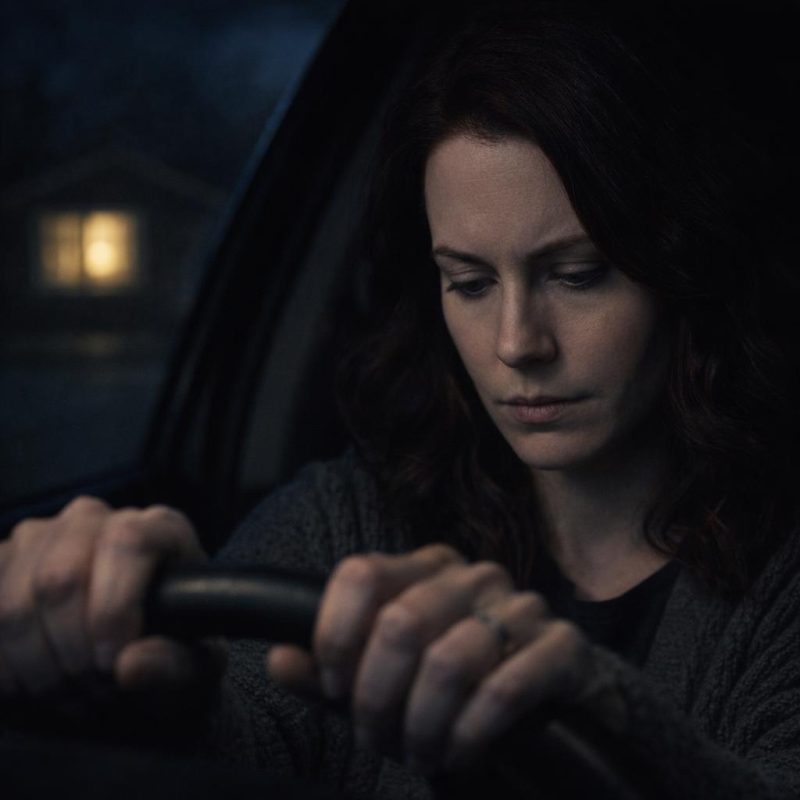 Image by RM AI
The Approach
I got out of the car. I don't remember deciding to — one moment I was sitting there and the next I was on the sidewalk with my phone in my hand, the camera app open, the screen casting a faint light I immediately dimmed. The street was quiet. Someone a few houses down had a sprinkler going, and the salt air came in off the water mixed with something floral, jasmine maybe, from a hedge along the nearest fence. I walked toward the bungalow slowly, staying on the far edge of the sidewalk, watching the lit window. The curtains were open a few inches. I could see the warm yellow of a lamp inside, the edge of what looked like a table. My heart was doing something irregular and unhelpful. I reached the low gate at the edge of the property and stopped, and that's when I heard it — voices from inside, carrying through the open window into the night air. Two of them. Both male.
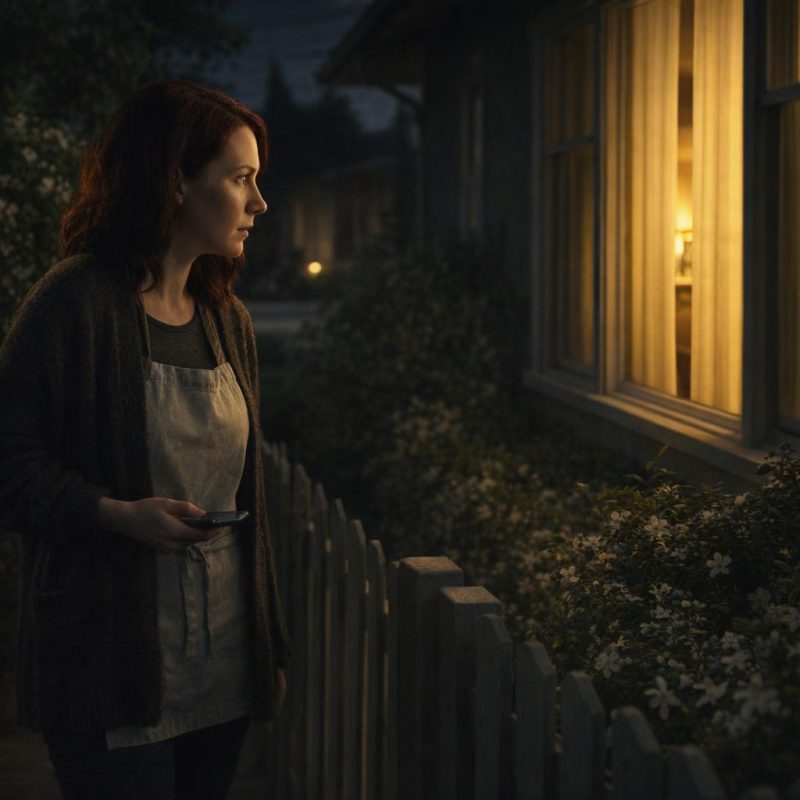 Image by RM AI
The Unexpected Sound
I'd spent the whole drive over building a picture in my head — some version of a woman, younger probably, someone who laughed at Eric's jokes and didn't ask where he'd been. I had the whole scene drafted like a mood board I couldn't stop editing. So when the laughter came through that open window, warm and low and unmistakably male, it knocked every layer of that image flat. Not Eric's laugh. Deeper. Older. The kind of laugh that comes from somewhere settled, from a person who's lived long enough to find things genuinely funny rather than just politely amusing. I stood there at the edge of the porch, one hand still near the gate latch, and I couldn't move. My brain kept trying to reload the file it had prepared and kept getting an error. A woman. I had been so certain there was a woman. I pressed my back against the side of the hedge and listened, and the laugh came again — easy, unhurried, like it belonged in that room. My whole theory sat somewhere behind my sternum, quietly coming apart at the seams.
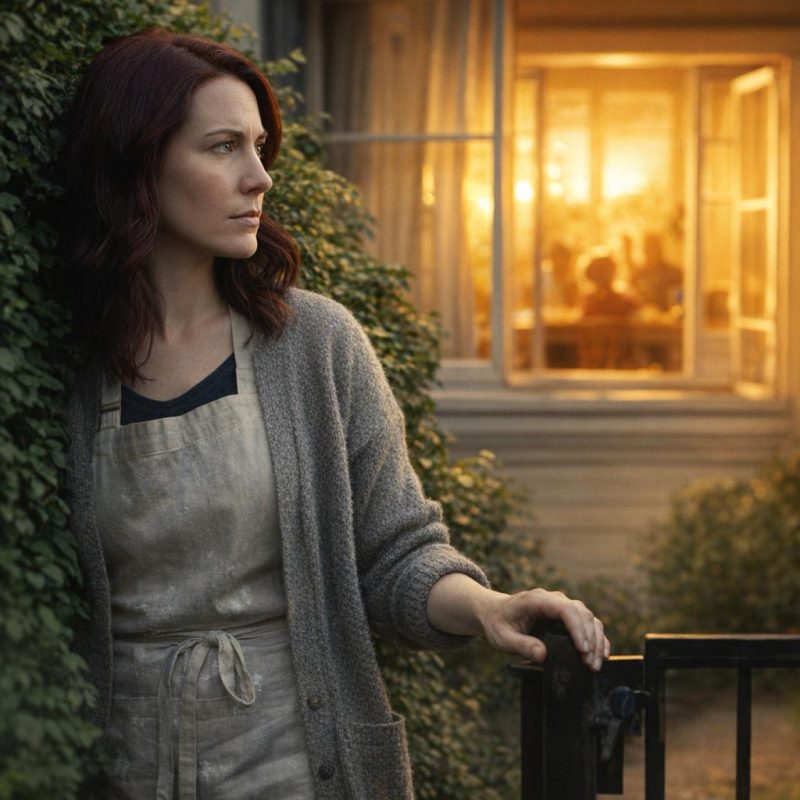 Image by RM AI
The Screen Door
I edged along the side of the porch until I could see through the screen door. The mesh was fine enough to blur the edges of things, but the lamp inside was bright and the room was small, so I could make out most of it. Eric was sitting at a table — not hunched over a laptop, not on his phone, just sitting, the way he almost never sits. His shoulders were down. His hands were loose on the table. I hadn't seen his posture look like that in years, maybe longer. The table itself was covered in things that didn't belong in any version of Eric I knew: old photographs, some of them black and white, curling at the corners the way old prints do. Spread across one end were what looked like hand-drawn blueprints, the kind done on drafting paper with pencil lines, nothing like the clean digital files he brought home from work. I couldn't see who was across from him. Just an arm, a sleeve, the edge of a hand resting near one of the photographs. The whole scene felt like a page from someone else's album, laid out under that warm lamp light.
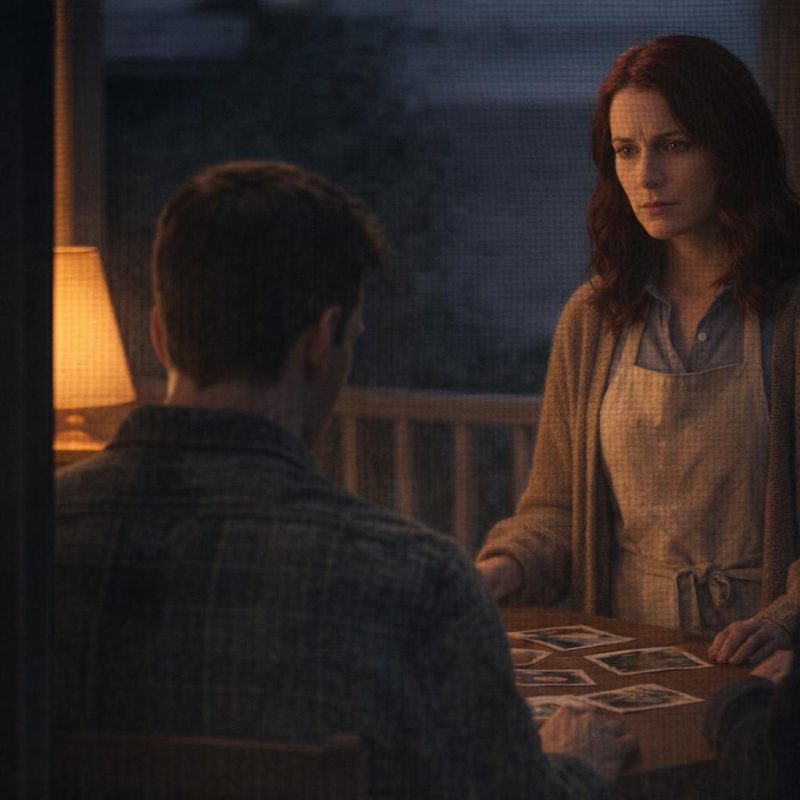 Image by RM AI
The Other Man
I shifted a few inches to the left, slow enough that the porch boards wouldn't register the weight. The screen door gave me a narrow angle and I had to tilt my head to use it. That's when I saw him — the other person at the table. He was older, late sixties at least, and thin in the way that suggests something more than age. His wrists were visible below his cuffs and they were narrow, the skin sitting loose over the bones. But he was leaning forward, animated, one hand moving over the photographs like he was pointing out landmarks on a map. He was talking and Eric was listening, really listening, chin slightly down, the way he used to listen to me when we were first together. The man's face was still mostly turned away, just the line of his jaw and the side of his nose visible from where I stood. But something about the way he moved his hands — a particular tilt of the wrist when he gestured, a way of holding his fingers slightly spread — snagged on something in my memory I couldn't quite pull forward.
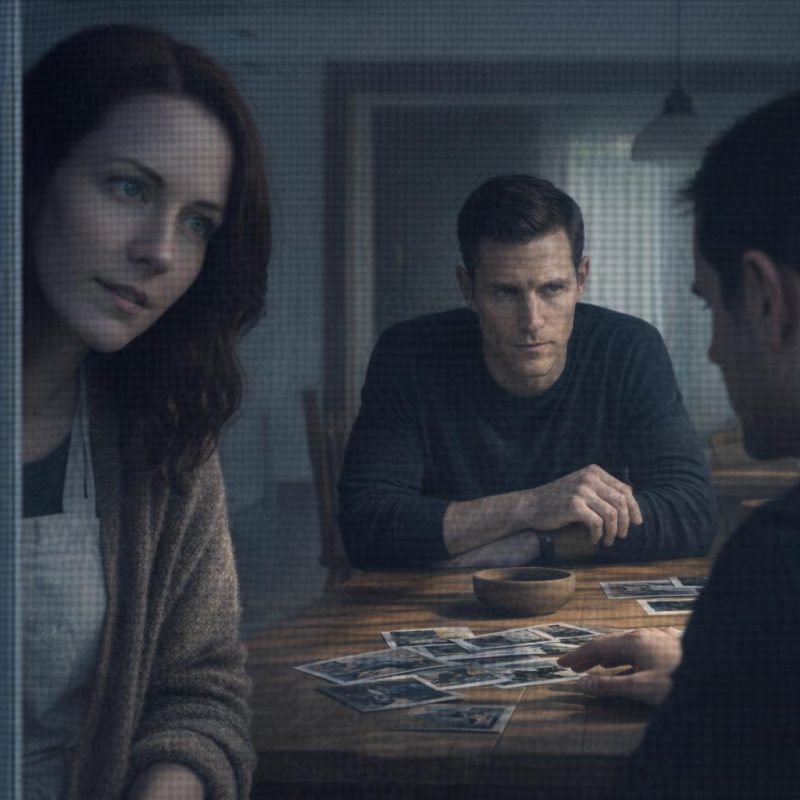 Image by RM AI
The Eyes
I don't know what made him turn. Maybe the conversation shifted, maybe he was reaching for one of the photographs. But he turned his head toward the lamp, and the light caught his face fully, and I stopped breathing. His eyes were the same shape as Eric's — that particular combination of deep-set and slightly hooded, the same pale grey-green that I'd looked at across a thousand dinner tables. Not similar. Not reminiscent. The same. The lines around them were deeper, the skin beneath them thinner, but the eyes themselves were Eric's eyes sitting in an older face. I gripped the edge of the door frame without meaning to. My mind started running through explanations the way you flip through channels looking for something that makes sense — an uncle, a cousin, someone Eric had never mentioned. But the resemblance wasn't the kind you explain away with a shared gene pool two generations back. It was direct. Immediate. The kind of resemblance that only goes one direction. I stood there in the dark outside that screen door, and those eyes looked right past me toward the lamp, and I couldn't move.
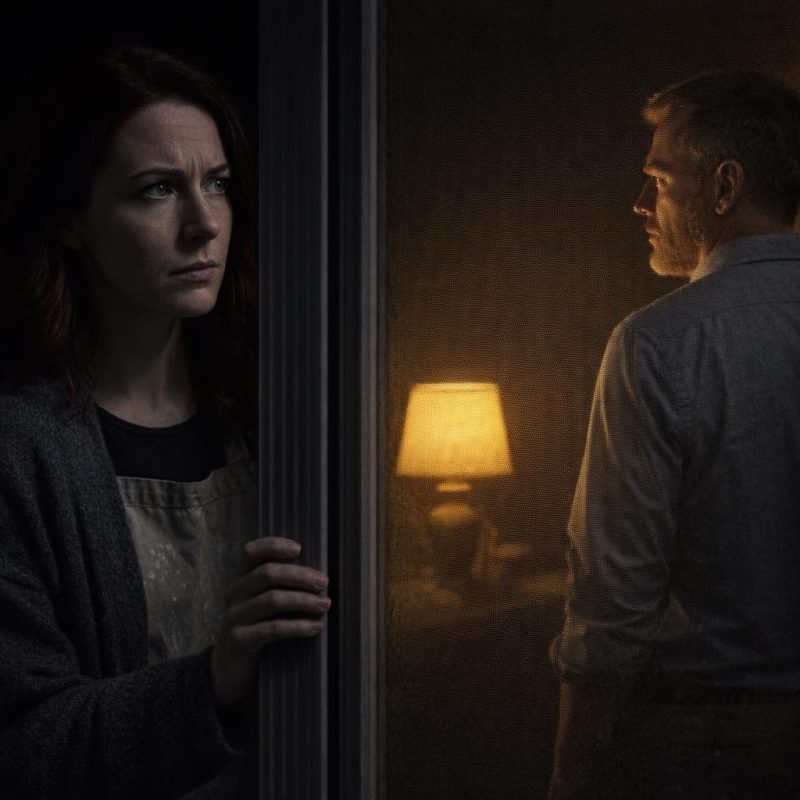 Image by RM AI
The Conversation
I pressed myself flat against the wall beside the screen door and made myself breathe slowly. Their voices were clearer now. The older man was talking about a house — not this one, somewhere else, somewhere cold by the sound of it — and how he'd always meant to go back. Eric said something I couldn't fully catch, something about it being too late for some things and not for others. Then the older man said, quietly, that there were things he wished he'd done differently, and that he was sorry for the time that had slipped away. The word time landed in my chest like a stone dropped in still water. Eric's voice when he answered was lower than I'd ever heard it in our kitchen, in our bedroom, in any room of our shared life. It wasn't his work voice or his tired voice or his careful voice. It was something rawer than any of those. I was still trying to sort through what I was hearing when Eric leaned forward across the table, and in a voice I barely recognized, said, "I know, Dad."
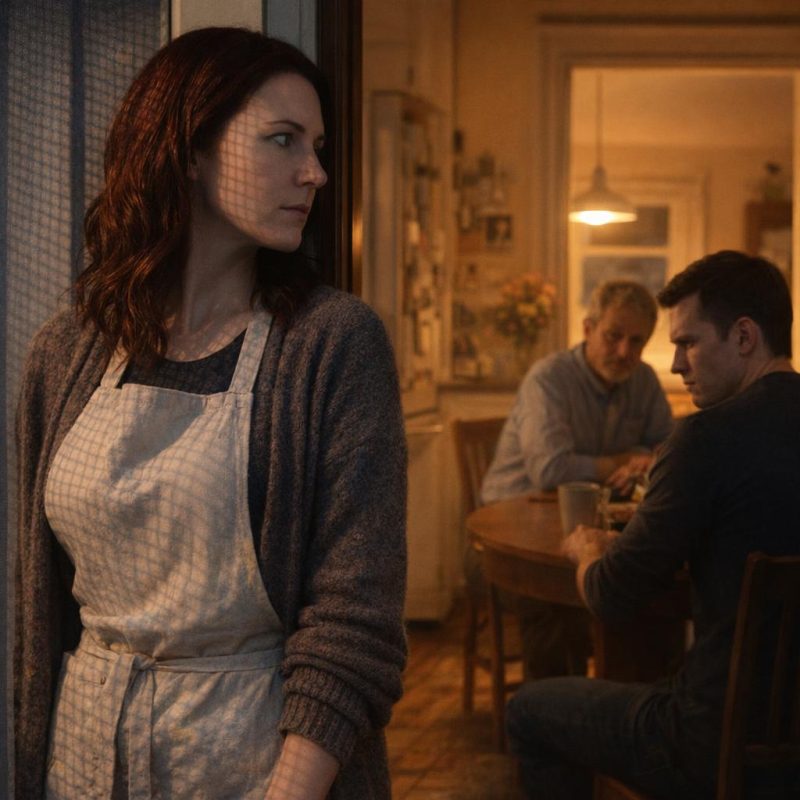 Image by RM AI
The Dead Father
Dad. The word just sat there in the night air like it had every right to be there, like it hadn't just rearranged everything I thought I knew. Eric had told me his father died of a heart attack when Eric was twenty-two. A funeral he didn't attend because they were estranged, a man he'd described as absent and then gone, a chapter he'd closed before I ever met him. He'd told me that story early on, the way you tell someone the hard parts of yourself to see if they'll stay. I had stayed. I had held that grief like it was something real and fragile, had never pushed on it, had given it the careful distance he seemed to need. And now I was standing outside a screen door in Miami in the dark, and the man Eric had told me was dead was sitting three feet away, pointing at old photographs and talking about lost years. I didn't move. I didn't make a sound. The jasmine from the hedge was still in the air, and the sprinkler down the street was still going, and the world was carrying on exactly as it had been, indifferent to the fact that a decade of my marriage had just shifted under my feet.
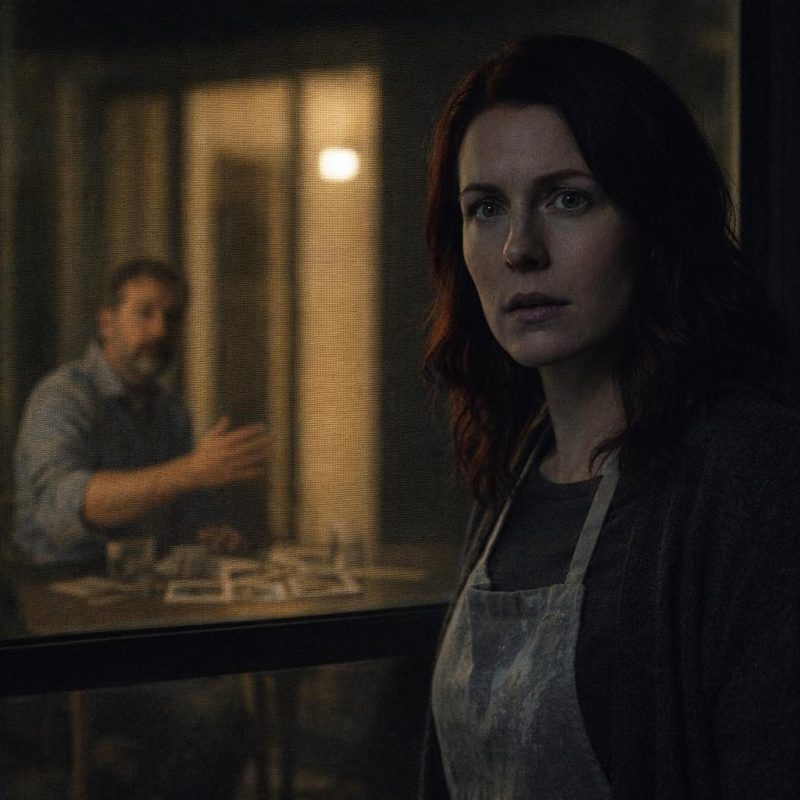 Image by RM AI
The Secret Reconciliation
I should have left. I know that now. But I couldn't make myself move, not yet. Eric picked up one of the photographs and held it toward the lamp, and the man — his father, Robert, I heard Eric use the name once, softly — leaned in to look at it with him. Eric smiled. Not the smile he uses at dinner parties or in photographs, the one that sits on the surface and doesn't go anywhere. This one moved through his whole face. Robert said something and pointed at the photo and Eric laughed, a short surprised sound, and shook his head with a kind of wondering disbelief. His shoulders were open. His hands were easy. He looked like a person I had never met. I had spent nine years sleeping beside this man, making his coffee, raising our daughter with him, building what I thought was a shared life, and I had never once seen him look the way he looked right then — unguarded, unheld, like he'd finally set something heavy down. The photographs lay between them on the table, and I stood outside in the dark, and the glass between us felt thicker than any screen door.
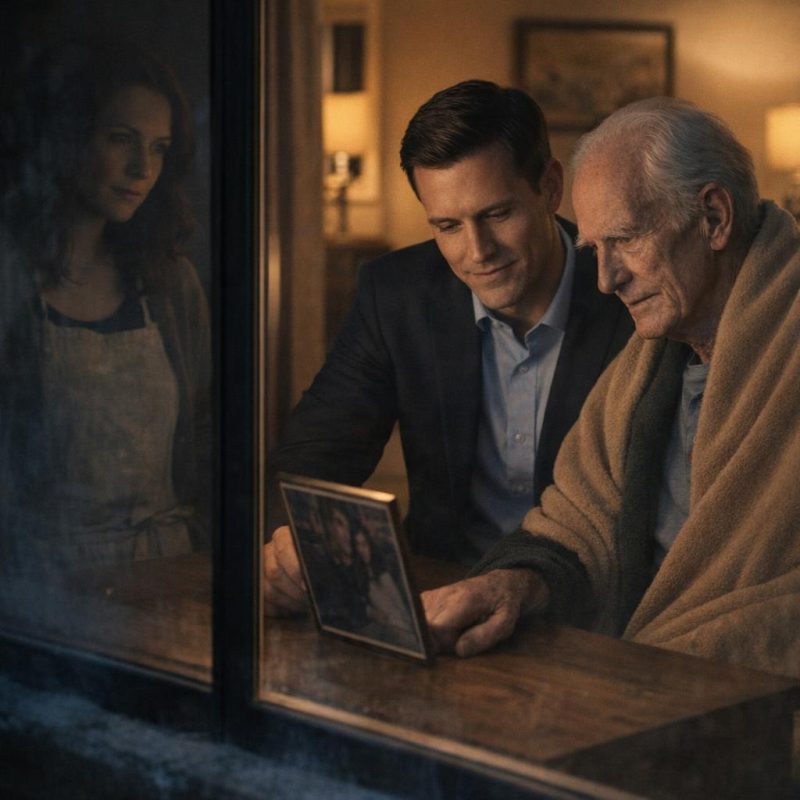 Image by RM AI
The Stranger in My Bed
I backed away from the porch one careful step at a time, watching my feet on the boards, not breathing until I hit the grass. Then I walked back to the rental car the way you walk when your legs are doing the work without any instruction from you. I got in. I closed the door quietly, out of habit, like I was trying not to wake someone. The street was still the same street. The sprinkler was still going. I sat in the driver's seat with my hands in my lap and tried to locate the feeling I'd expected to have — the sick vindication of being right, the clean awful certainty of an affair confirmed. It wasn't there. What was there instead was harder to name. No other woman. No hotel room with someone younger. Just an old man with Eric's eyes, alive in a bungalow in Miami, looking at photographs of a life Eric had told me was sealed and buried before we ever met. I'd followed my husband across the country expecting to find one kind of lie, and I'd found something else entirely — something that had been folded into the foundation of our marriage from the very beginning. I put the key in the ignition. The engine turned over in the dark, and I sat there with my hands on the wheel, not moving, not yet sure which direction I was going.
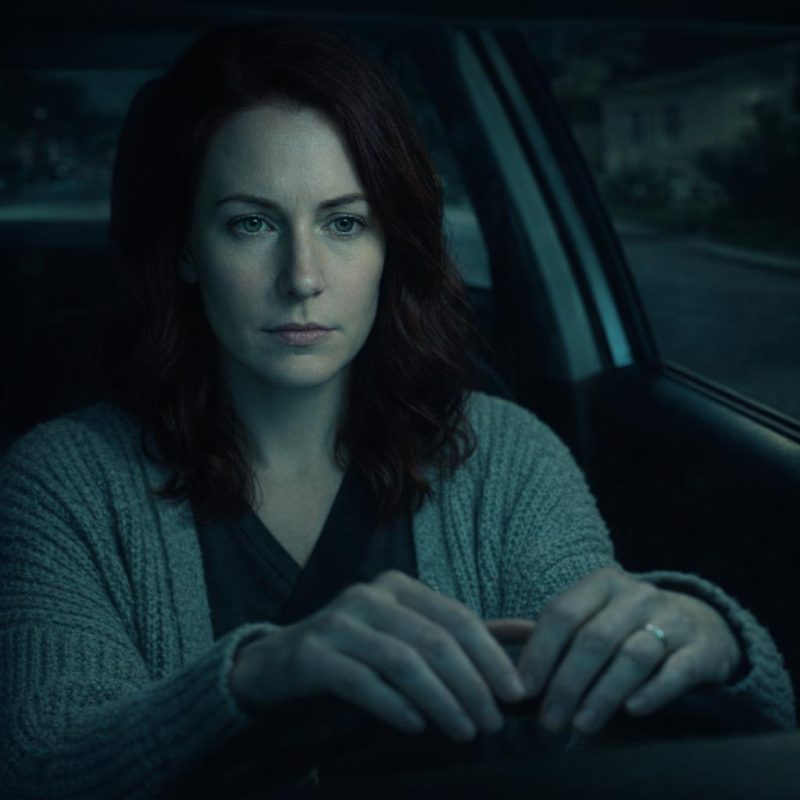 Image by RM AI
The Different Betrayal
I sat in that rental car for a long time. Long enough for the sprinkler to finish its cycle and go quiet. Long enough for the street to feel completely indifferent to what I'd just seen. I kept waiting for the relief to arrive — the clean, awful relief of being right about an affair, of having a name and a face to attach to all those late nights and locked screens. It never came. What came instead was something slower and stranger. No other woman. No hotel room. Just an old man with Eric's exact eyes, alive and breathing in a bungalow in Miami, holding photographs of a life Eric had told me was over before I ever knew him. I turned that over and over in my mind, trying to find the edges of it. Nine years. We'd been married nine years. I'd held his hand at a funeral that never happened. I'd stopped asking about his family because he'd made the grief feel so real, so sealed, that pressing on it felt cruel. And the whole time, the whole time, there had been this. A father. A secret. A version of Eric I had never been trusted to know. The lie wasn't about desire. It was about something deeper, and somehow that made the hollow feeling in my chest sit heavier than anything else could have.
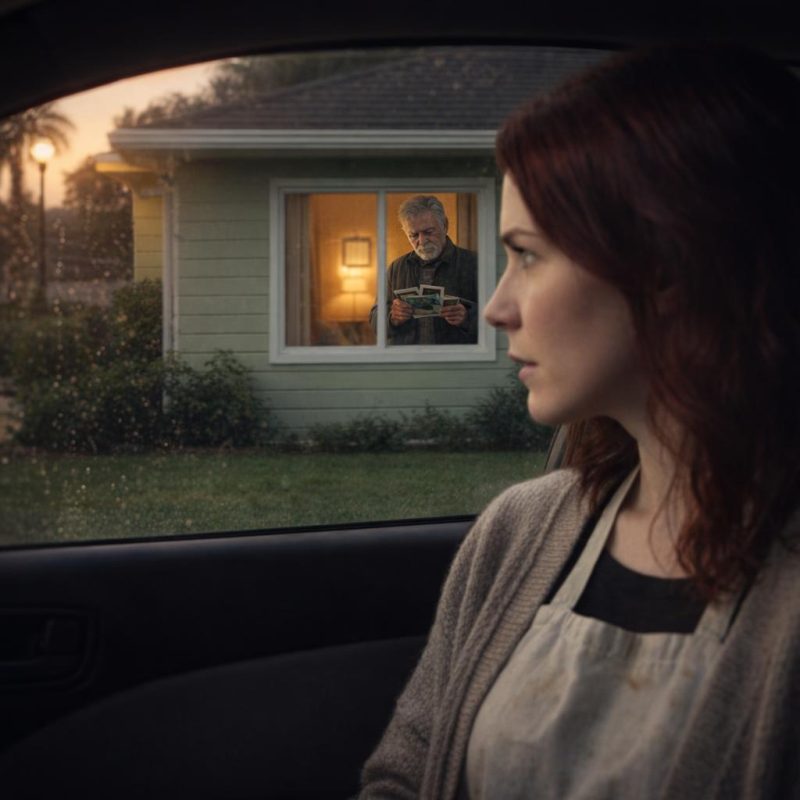 Image by RM AI
The Estranged Father
I didn't drive away. I know I should have. Instead I sat there in the dark with the engine off, watching the warm rectangle of light that was the bungalow's front window. I could see them moving inside — Eric's familiar silhouette, the careful way he held himself, and beside him the smaller, slower shape of Robert. They were still at the table. Eric had spread something out between them, papers or photographs, and Robert leaned over them with the deliberate effort of someone for whom leaning takes something. I watched Eric reach across and point at something on the page, and Robert nodded, and there was a gentleness in that exchange that I had never once seen Eric bring home to Raleigh. That was the part that got me. Not the lie itself, not even the years of it — but the softness. Eric had a softness in him, and he'd been spending it here, in this city, in this small house, with this man I wasn't supposed to know existed. The cash withdrawals, the late calls, the trips that ran a day longer than they needed to — it all rearranged itself into a shape I could finally read. I sat with the weight of what Eric had kept from me, and the window stayed lit, and I didn't move.
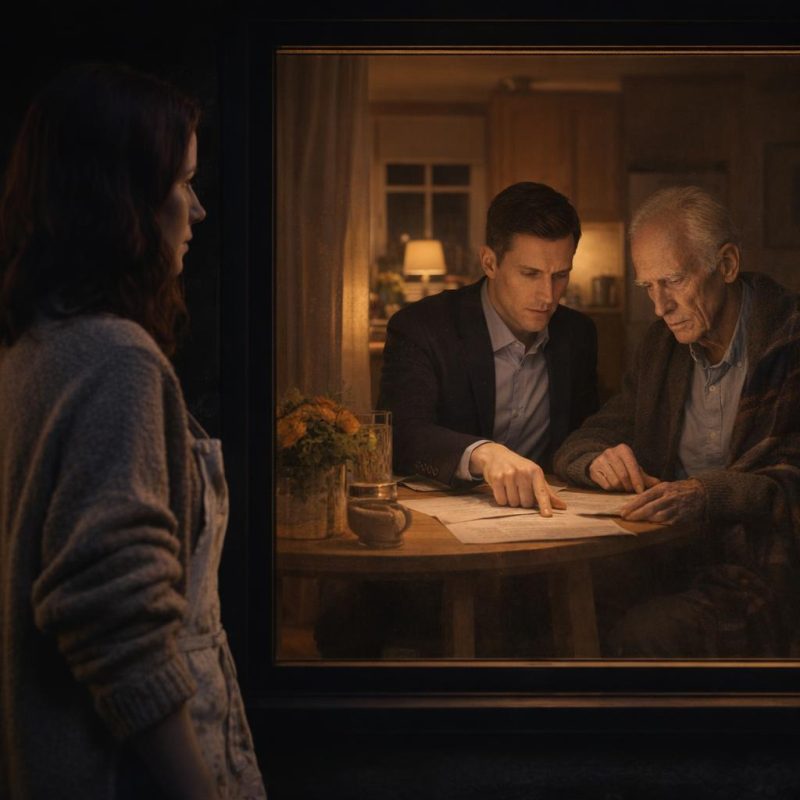 Image by RM AI
The Hotel Room
Eventually I made myself drive. I didn't have a destination, just a direction — away from that street, away from that window. I found a hotel near the airport, one of those places designed to feel like nowhere in particular, and I pulled into the lot and sat in the car for another few minutes before I could make myself go inside. The clerk asked me something about rewards points and I said yes to whatever it was. I took the key card. I found the room. I sat on the edge of the bed in my clothes and stared at the wall, which was beige and offered nothing. At some point I took my phone out. I pulled up Eric's contact — his name, his number, the little photo thumbnail I'd never bothered to update, him squinting into the sun at Ellie's birthday two summers ago. I thought about calling. I thought about texting. I thought about driving back to that bungalow right now and knocking on the door and making him say it out loud to my face. Then I thought about waiting until we were both home in Raleigh, on familiar ground, where Ellie wasn't three states away and I wasn't running on no sleep and raw shock. I couldn't decide. I just kept opening his contact and closing it again, his name sitting there on the screen, waiting.
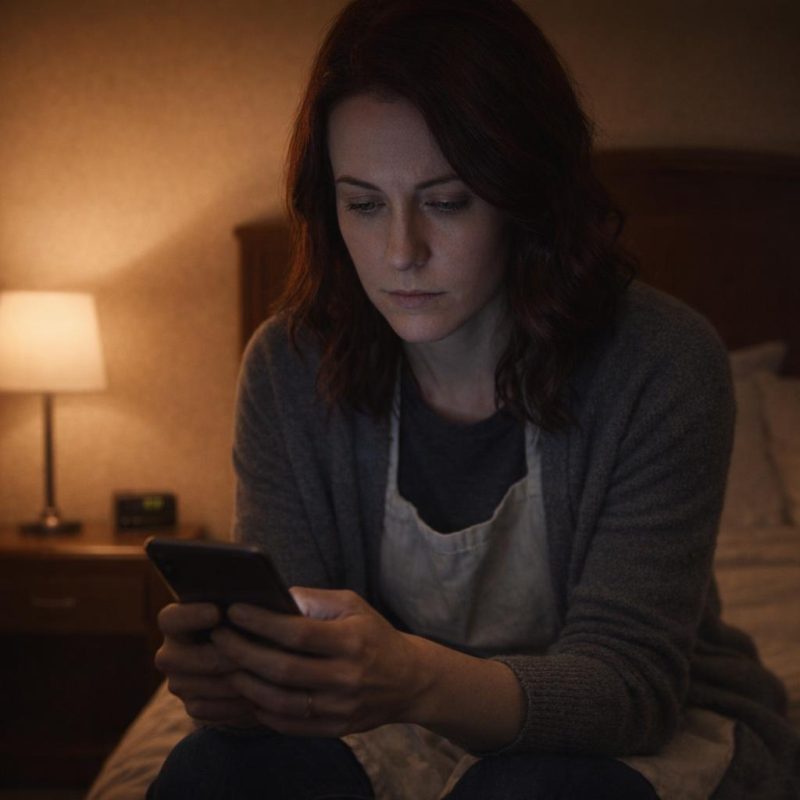 Image by RM AI
The Sleepless Night
I didn't sleep. I lay on top of the covers in the dark and let my mind do what it was going to do anyway, which was go back. All the way back. I remembered the first time I'd asked Eric about his family — early on, maybe our third or fourth date, that Italian place on Glenwood where the tables were too close together. He'd gone quiet in a way I'd read as grief, and I'd reached across and covered his hand with mine, and he'd let me, and I'd thought: this is a man who has lost something real. I built so much on that moment. I built my understanding of why he held back, why he kept parts of himself behind glass, why he could be present in a room and still feel unreachable. I told myself it was loss. I told myself some people carry their grief like a second skeleton, invisible but load-bearing. I made room for it. I shaped myself around it. Every time he deflected a question about his childhood, every time he changed the subject when family came up at holidays, every time he said there was no one on his side to invite — I had accepted it. I had accepted all of it. And now I was lying in a hotel room in Miami, staring at a ceiling I didn't recognize, and the foundation I'd built our marriage on had a crack running straight through it from the very beginning.
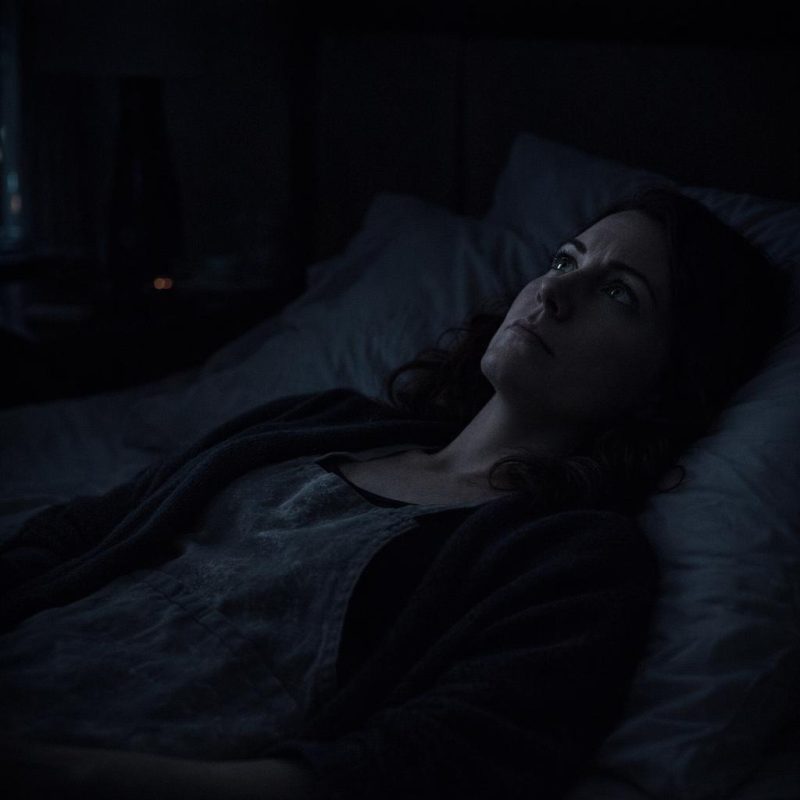 Image by RM AI
The Truth Revealed
I was back on that street before eight in the morning. I'd barely touched the coffee I'd made from the little in-room machine, and my hands weren't entirely steady, but I knew if I waited any longer I'd talk myself out of it. I parked in the same spot. I walked up the same path. The sprinkler was off this time, and the neighborhood was quiet in that particular early-morning way, birds and nothing else. I knocked. For a moment there was only silence, and then footsteps, and then the door opened and Eric was standing there in yesterday's clothes, and I watched the color leave his face like someone had pulled a plug. He said my name. Just my name, nothing else, in a voice I'd never heard from him before. I said I knew. I said I'd been there the night before, that I'd seen them through the window, that I knew his father was alive. Eric's mouth opened and closed. He looked, for the first time in as long as I could remember, like a man with nowhere to go. And then there was movement behind him — slow, careful movement — and Robert appeared in the doorway, and Eric turned, and the two of them stood there together, and I looked at the man who was supposed to be dead, and Eric's shame was written across every inch of him.
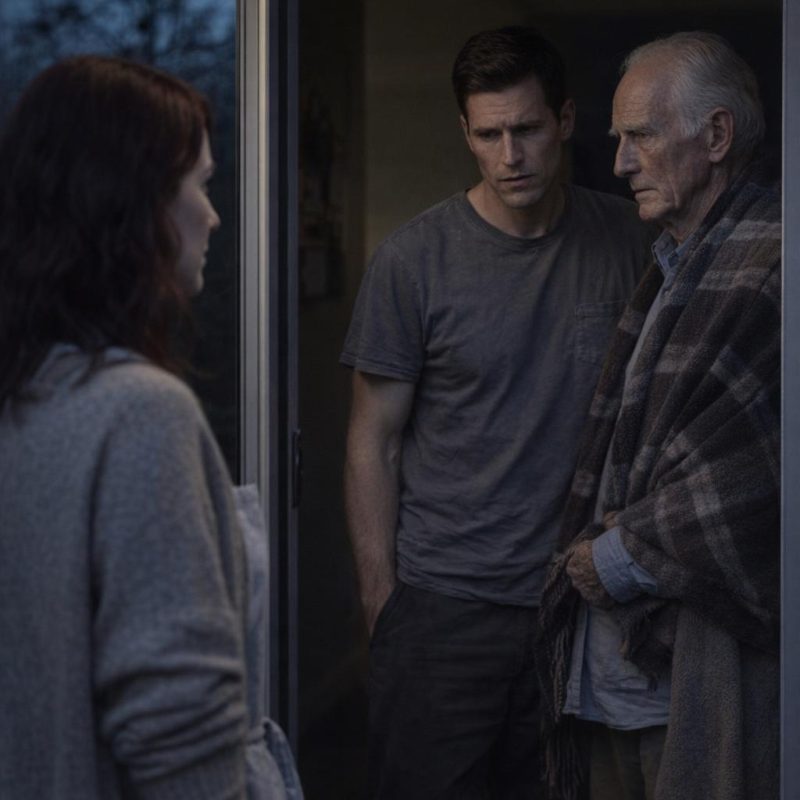 Image by RM AI
The Confrontation Begins
Eric stepped back without a word and I walked in. The bungalow was small and warm and smelled like coffee and something medicinal underneath it. Robert moved to the armchair in the corner and lowered himself into it slowly, the way people do when their body has become a negotiation. I stood in the middle of the room and looked at my husband. I asked him. I kept my voice level because I needed to, because if I didn't hold onto level I wasn't sure what would come out instead. I asked him why. Why he had told me his father was dead. Why he had let me believe it for nine years. Why, every single time he could have said something — when we got engaged, when Ellie was born, when I asked him once if he ever wished he had more family — he had looked me in the eye and chosen the lie. Eric stood with his arms at his sides and his jaw working like he was trying to locate words in a language he'd forgotten. He said it was complicated. He said it started before us and he didn't know how to undo it. He said he was sorry, and then he said it again, and neither time did it sound like enough. Robert sat very still in his chair, his hands folded, his eyes on the floor. Then Eric's voice pulled tight and cracked somewhere in the middle of the next sentence, and whatever came after it broke apart before it reached me.
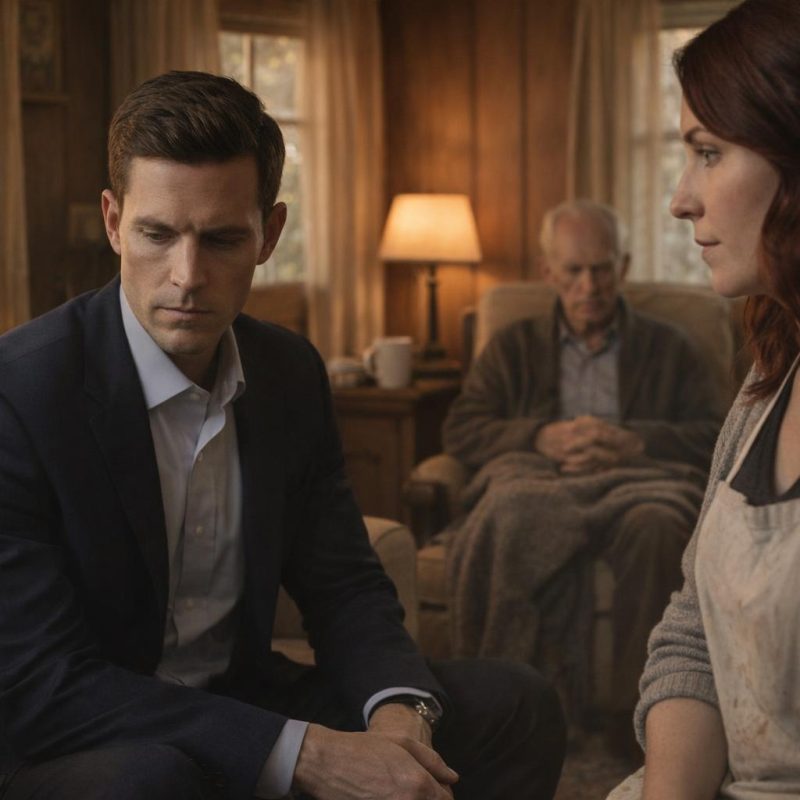 Image by RM AI
The Night Alone
I left when I couldn't stay anymore. I didn't slam the door. I just walked out, got in the car, and drove back to the hotel with the radio off and the windows up and tears coming down my face in a way I couldn't have stopped even if I'd tried. In the room I sat on the floor with my back against the bed, which felt more honest somehow than sitting on top of it, and I let myself cry the way I hadn't let myself cry since I'd first found the burner phone. Not the tight, controlled kind. The other kind. The kind that comes from somewhere below your ribs and doesn't ask permission. I cried for the marriage I thought I had — the one where Eric was a man shaped by grief, doing his best, and I was the person he'd chosen to do it with. I cried for every moment I'd given him grace for his distance, every time I'd told myself he just needed space, every time I'd made myself smaller so his silence had more room. And somewhere in the middle of all of it, something shifted — not resolved, not better, just different. His distance had never been about me. It had never been about something I lacked or failed to give him. It had been about shame he'd been carrying since before I existed in his life. The hotel room held that quiet around me, and I sat in it for a long time.
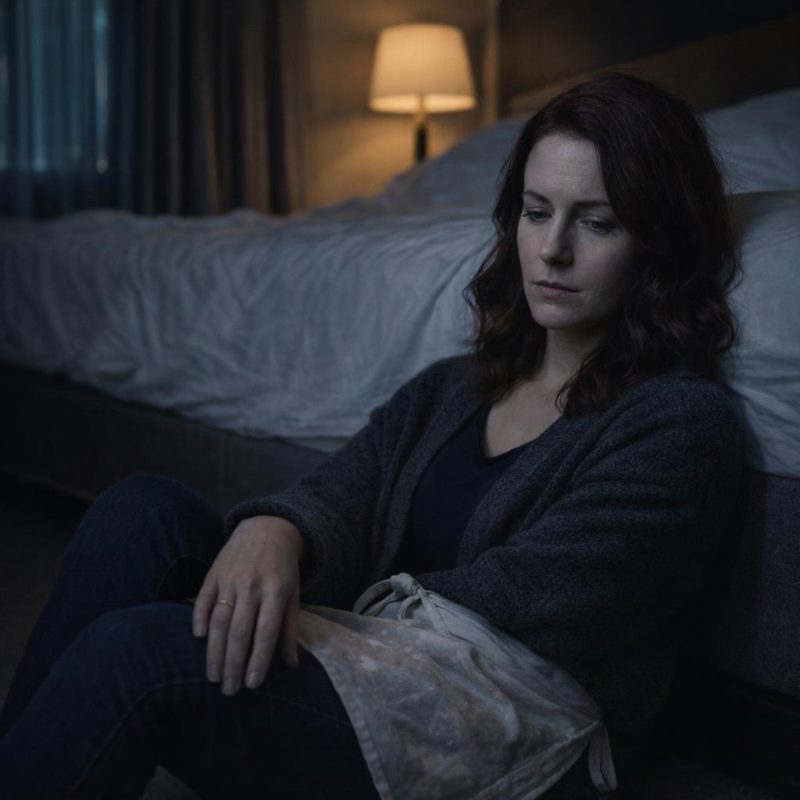 Image by RM AI
The Marriage Review
By morning I had coffee and a yellow legal pad I'd found in the desk drawer, and I sat at the small table by the window and did what I do when I can't make sense of something — I made a list. Not of grievances, exactly. More like a timeline. The beginning, when Eric's story about his father had felt like intimacy, like he was trusting me with something tender. The middle years, when his emotional walls had become so familiar I'd stopped noticing them as walls and started treating them as architecture. The way he used corporate language even at home — deliverables, bandwidth, capacity — and how I'd always thought it was just a habit from work, a tic, when maybe it was something else entirely, a way of keeping every conversation at a managed distance. I thought about the decisions we'd made together — where to live, whether to have another child, how much of ourselves to invest in his career versus mine — and how all of them had been made with Eric holding this one enormous thing back. I hadn't been building a marriage with my whole husband. I'd been building it with the version of him he'd decided I was allowed to have. I looked at the list for a long time. I thought about Ellie. I thought about nine years. Outside the window, Miami was already bright and indifferent, and I sat with the full weight of every wall I had quietly learned to call a room.
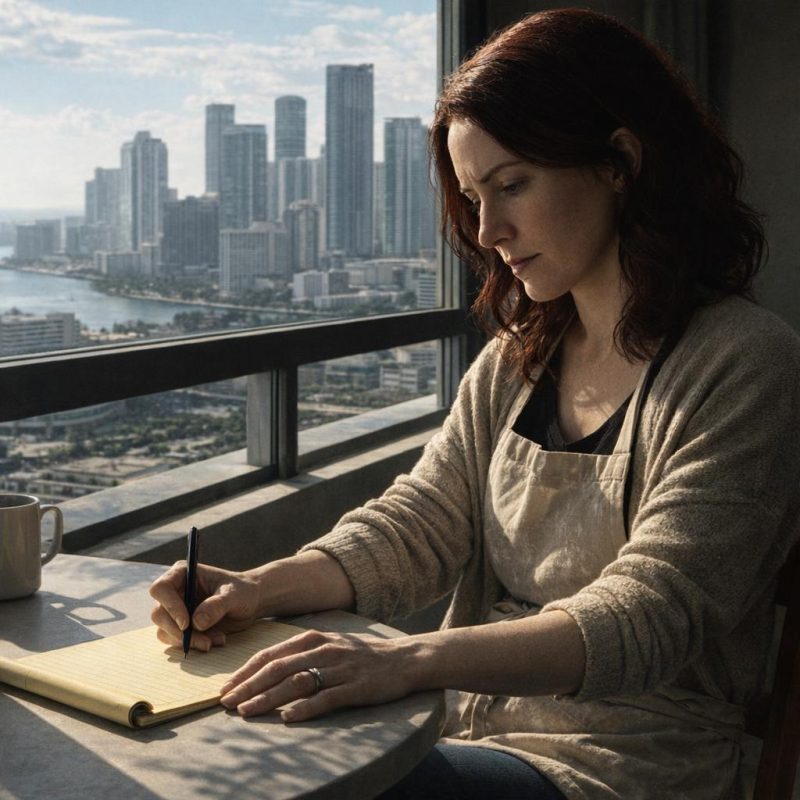 Image by RM AI
The Decision Point
I called Mom from the edge of the hotel bed, still in yesterday's clothes, the yellow legal pad on the nightstand beside me. She picked up on the second ring, and before I could even say hello I heard Ellie in the background — bright and loud and completely herself, telling Mom that the pancakes she'd made were shaped wrong and could they please try again. I laughed before I could stop myself. Mom came back on and said, 'She's fine, honey. We're fine.' There was a pause, the kind she's always been good at, the kind that means she's listening for what I'm not saying. 'Are you okay?' she asked, and her voice was careful and warm and I had to press my lips together for a second before I answered. I told her I was okay. I told her I just needed one more day. She didn't ask why. She didn't push. She just said, 'Okay, sweetheart. We'll be here.' After I hung up I sat with the phone in my lap and thought about Ellie's voice, how easy and unguarded it was, how she had no idea that the shape of her family was something I was sitting in a Miami hotel room trying to figure out.
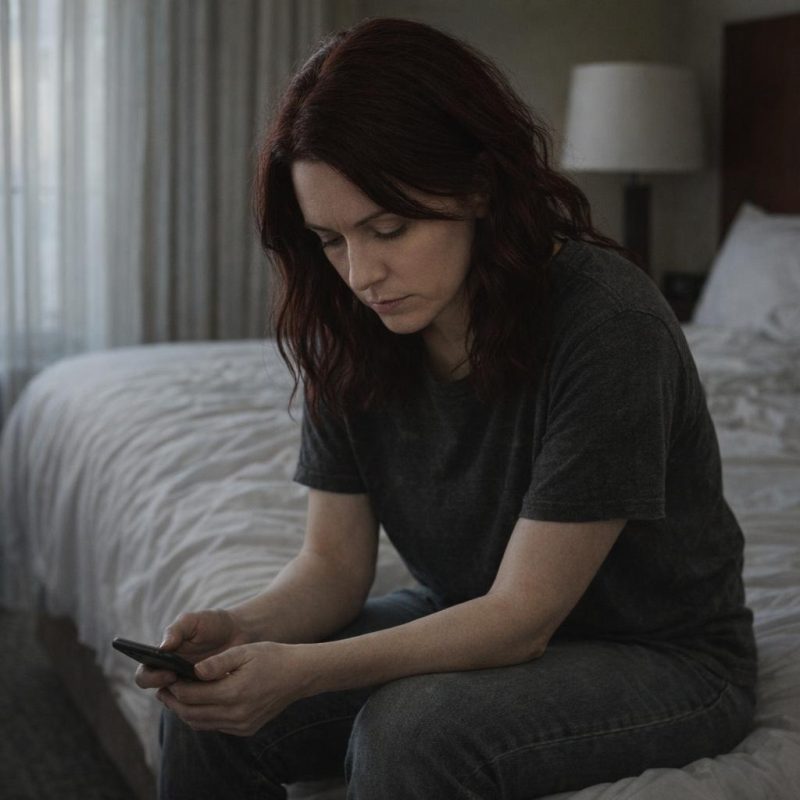 Image by RM AI
The Return
I woke up the next morning with the kind of clarity that comes not from resolution but from exhaustion — the point where you stop circling and just move. I showered, dressed, drank the bad hotel coffee standing at the window, and watched the street below fill up with ordinary people having an ordinary Tuesday. Then I got in the car. I didn't rehearse a speech exactly, but I ran through what I needed: the full story, no managed version of it, no corporate-language distance. I needed to understand what had actually happened and why, and I needed to hear it from Eric's mouth in a room where he couldn't leave. I drove the familiar route without checking the map this time. When I pulled up to the bungalow I parked directly in front — no side street, no pretending I wasn't there. I sat in the car for maybe thirty seconds. Then I walked up to the door and knocked, and I stood there in the morning heat with my hands loose at my sides, waiting for it to open.
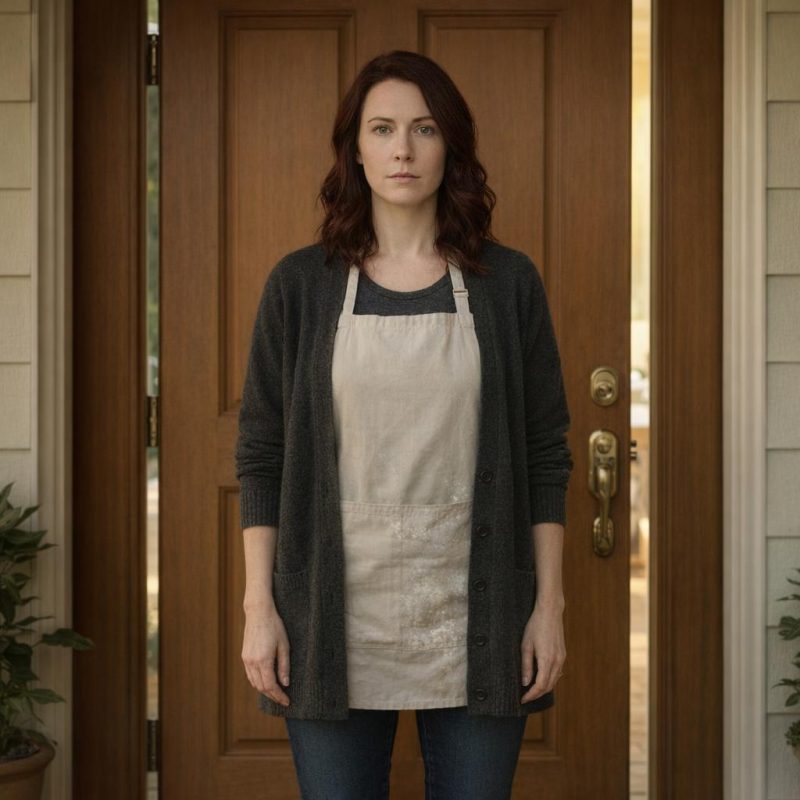 Image by RM AI
Eric's Story
We sat at the small kitchen table, the three of us, with coffee going cold in front of us. Eric talked for a long time. He said Robert left when he was twelve — not a dramatic exit, just a slow disappearance that completed itself one afternoon when Eric came home from school and his father's things were gone. He described the years after: the phone calls that came and then stopped, the birthday cards that arrived late and then not at all, the one visit when Eric was fifteen where Robert showed up smelling like bourbon and left before dinner. He said every time he'd let himself hope, something broke it. He said at some point it became easier to say his father was dead than to explain a man who had chosen alcohol over his own kid, over and over, until the choosing became the whole story. Robert sat across from me with his hands folded on the table and didn't flinch from any of it. He said, 'Everything he's telling you is true. I was not the father he deserved.' His voice was quiet and without excuse. I didn't say anything for a long time. The kitchen held all of it — the years, the silence, the boy Eric had been — and none of us moved to break it.
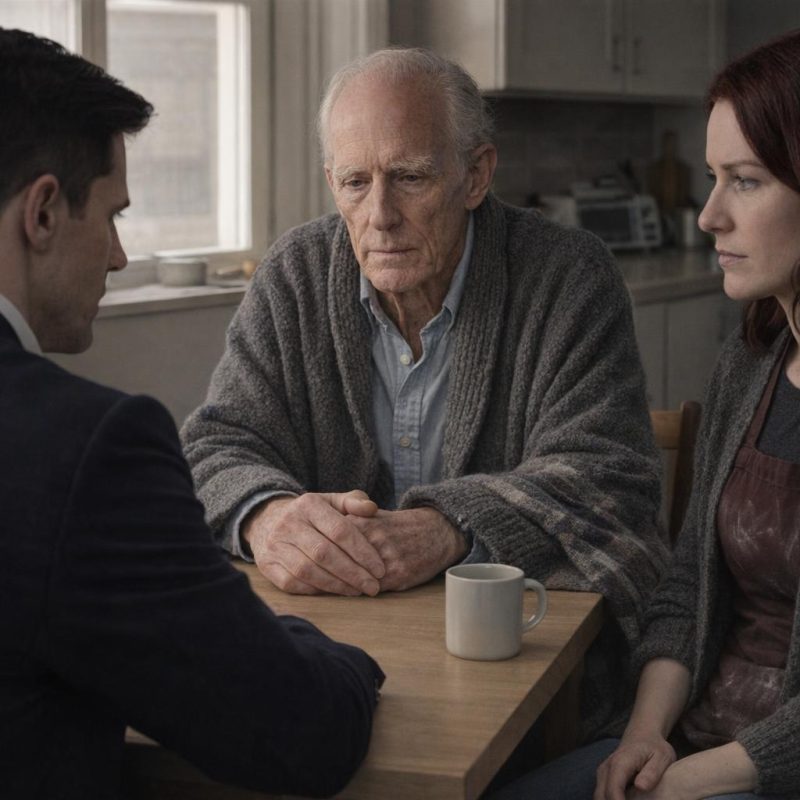 Image by RM AI
Robert's Illness
Robert was the one who told me about the diagnosis. He said it plainly, the way people do when they've had time to get used to a sentence that should be impossible to get used to — late-stage pancreatic cancer, months rather than years, the math already done. He said he'd written Eric a letter six months ago because he didn't want to die with the silence still between them. He said he almost didn't send it. Eric picked up from there and said he almost didn't open it — that it sat on his desk for four days before he finally did, and that when he read it he sat in his car in the work parking lot for an hour before he drove home. He said he didn't know how to tell me. He said every time he tried to find the words, the whole architecture of the lie he'd already told came down on top of him. I looked at Robert across the table — the thinness of him, the careful way he held himself, the eyes that were exactly Eric's eyes — and felt my anger shift into something more complicated and harder to name. The weight of the time they didn't have pressed down on the room like something physical.
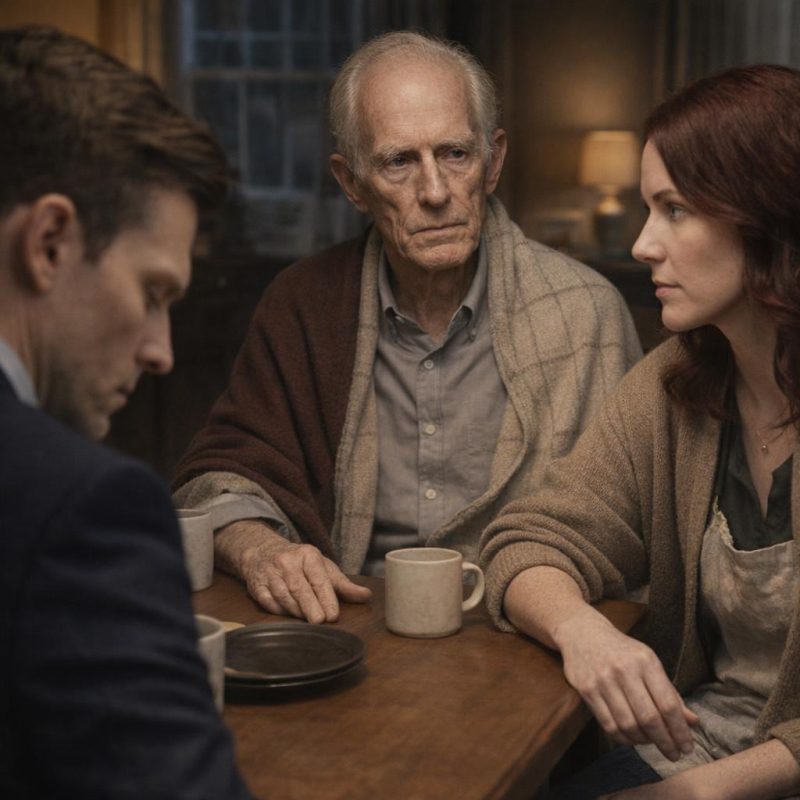 Image by RM AI
Why He Lied
I asked Eric directly: why dead? Why not estranged, why not complicated, why not just 'we don't talk'? He was quiet for a moment. Then he said that when we first started dating, I'd asked about his family and he'd seen the way I looked at him — like he was someone worth knowing, someone whole — and he'd been terrified of losing that before it had even started. He said 'estranged' required an explanation, and every explanation led back to the same place: a twelve-year-old boy whose father looked at him and left anyway. He said he'd spent his whole life trying not to be that boy in anyone's eyes, especially mine. He said the lie felt like protection at first, and then it became a room he'd walled himself into, and by the time we were married and Ellie was born and years had passed, he couldn't find a door back out without the whole thing collapsing. He wasn't crying, but his voice had gone somewhere stripped and flat, the corporate cadence completely gone. Robert looked at the table. I looked at Eric. I had spent nine years thinking his walls were just his personality, just the way he was built — and sitting there I understood for the first time that he had built them himself, one careful brick at a time, out of pure shame.
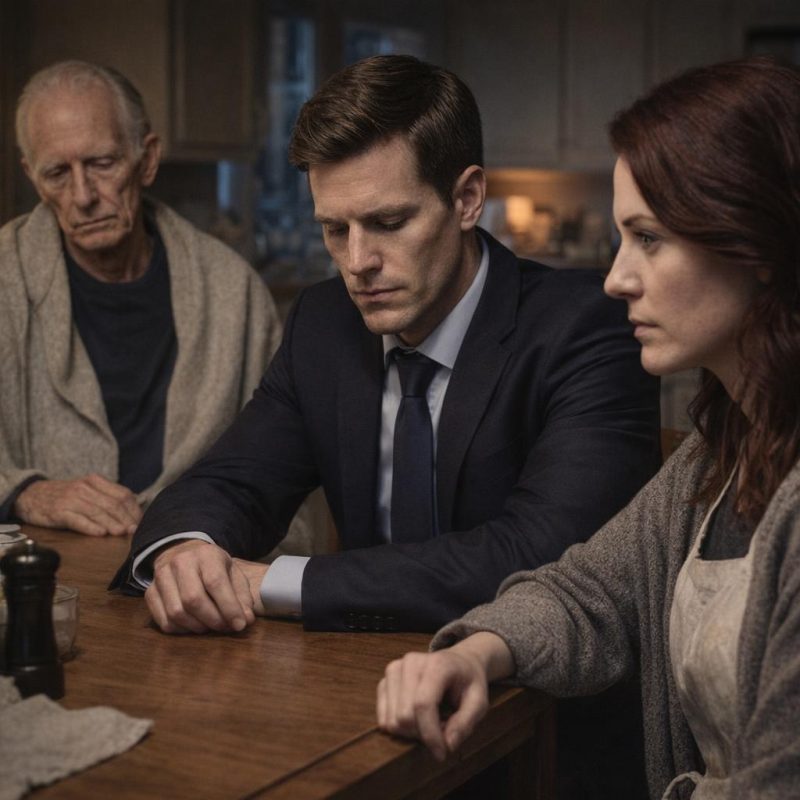 Image by RM AI
Meeting Robert
Eric stepped outside to get some air, and for a few minutes it was just Robert and me at the table. I asked him what his life had looked like, the years in between. He told me without softening it — the drinking, the jobs that didn't hold, the relationships that ended the same way, the long stretch of years where he'd been too deep in it to see what he was losing. He said, 'I told myself Eric was better off. That's what people tell themselves.' He said he'd gotten sober eleven years ago, that he'd thought about reaching out a hundred times and talked himself out of it every time because he figured Eric had built something good and he didn't want to be the thing that cracked it. He looked at me steadily when he said that, and I believed him. He said he understood what Eric had put me through with the lie, that it wasn't fair and he knew his letter had set it in motion. Then he folded his hands on the table and said, 'I understand if you can't forgive him for this.'
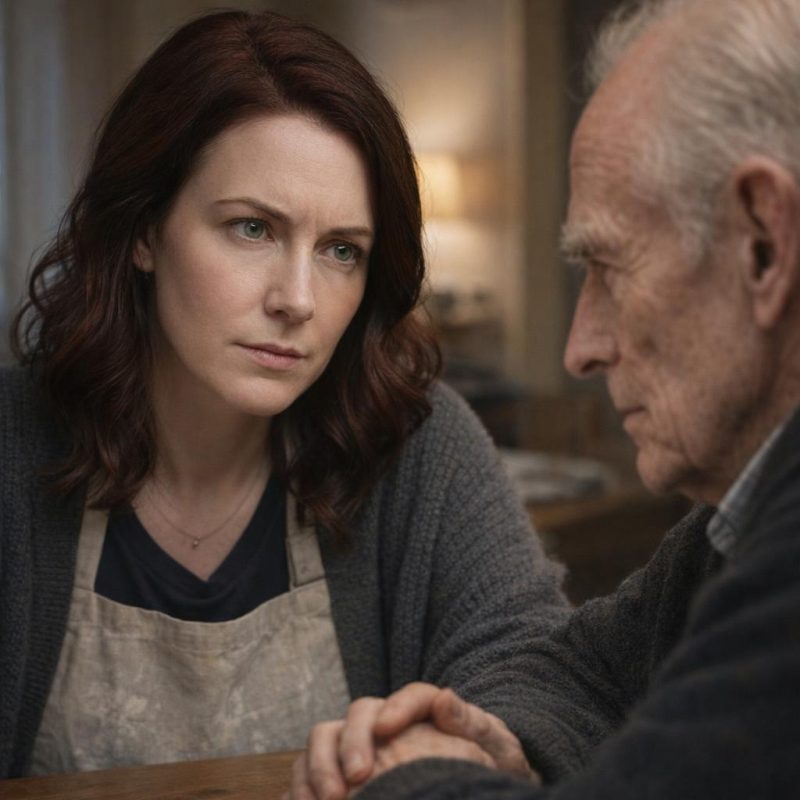 Image by RM AI
The Withdrawals Explained
Eric came back inside and without saying much he went to the bedroom and returned with a manila folder, the kind with the little metal clasp. He set it on the table and opened it. There were bank statements with transactions highlighted in yellow marker, and behind them a stack of receipts — printed flight confirmations between Raleigh and Miami, a lease agreement for the bungalow, and medical billing statements from an oncology practice in Miami with Robert's name at the top. The numbers were not small. Eric had been paying for treatment supplements, for the rental, for the flights, quietly and consistently for six months. He pointed to each category without editorializing, just letting the paper speak. I picked up one of the medical bills and looked at the date, then looked at the flight receipt behind it, then looked at Eric. He'd been carrying all of this — the grief of it, the cost of it, the secrecy of it — in a manila folder with a metal clasp, alone. The receipts lay spread across the table between us, each one a small record of something he had done in the dark.
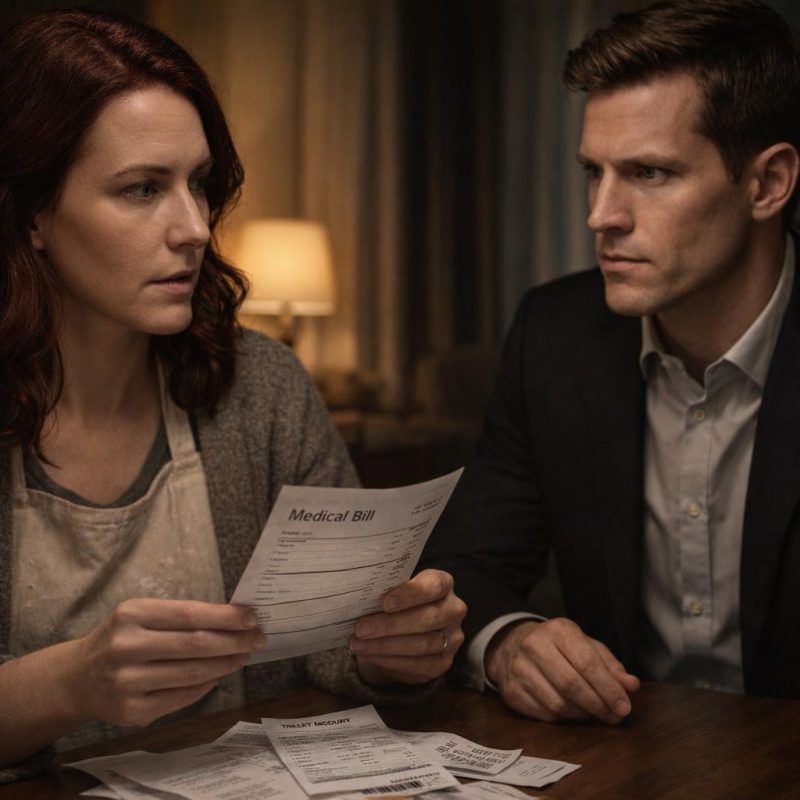 Image by RM AI
The Trust Broken
I waited until Robert had moved to the small couch in the other room before I said what I needed to say. I told Eric I understood — I meant it, I actually did — but that understanding wasn't the same as being okay, and I needed him to hear the difference. I told him that for nine years I had been making decisions about my life, our life, based on a version of him he'd decided was safe to show me. I told him that every time I'd thought we were being honest with each other, there had been this enormous thing sitting underneath it, and I hadn't known, and that mattered. I said his fear of being seen as broken had done the very thing he was afraid of — it had broken something. He sat across from me and didn't argue, didn't reach for the corporate language, didn't manage the conversation. He just listened, and that stillness was both the most present I'd seen him in years and somehow the hardest thing to look at. I told him I didn't know if we could come back from this, and I watched his face as I said it.
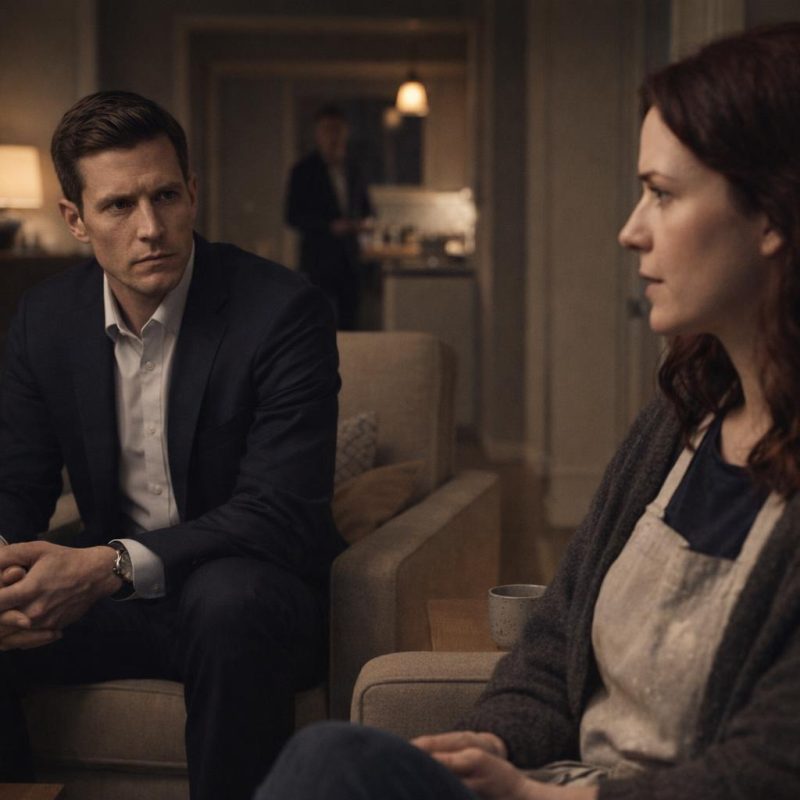 Image by RM AI
The Breaking Point
I stood up slowly, the way you do when your legs aren't entirely sure they'll hold. I told Eric I needed time — not a few hours, not a night in the same hotel room with his father sleeping on the other side of a thin wall. Real time. Space to think without having to look at his face and feel everything at once. I said I was flying back to Raleigh today, alone, and I watched something in him go very still. He asked, quietly, if I was leaving him. I told him I didn't know yet, and I meant that — it wasn't cruelty, it was the most honest thing I'd said in days. Robert hadn't moved from the couch, but I could feel him watching, and I thought about what it costs a family when someone disappears rather than faces the hard thing. I didn't say that out loud. I picked up my bag, and Eric didn't argue, didn't reach for me, didn't try to manage the moment into something more bearable for himself. He just sat there. I walked to the door, turned the handle, and stepped out into the hallway without looking back.
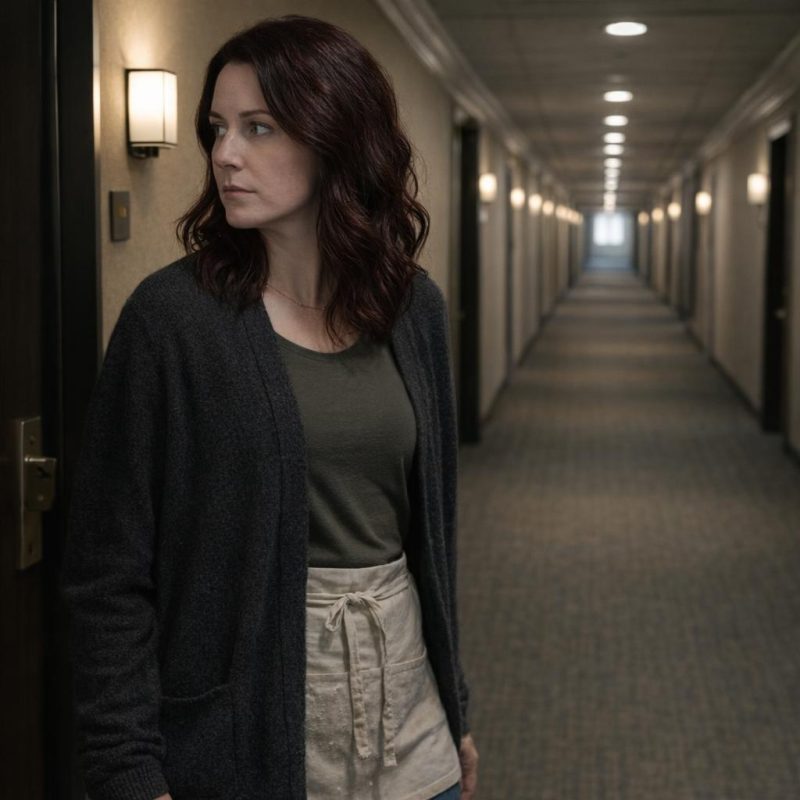 Image by RM AI
The Flight Home
The seat by the window was mine and I took it like a small act of self-preservation — something that was just for me, no negotiating, no checking whether someone else needed it more. Miami shrank below the clouds until it was just a smear of blue and white and then nothing, and I let it go. I thought about Ellie the whole flight. Not in a panicked way, more like holding something fragile and warm in both hands. I kept asking myself what kind of example I wanted to set for her — not just about marriage, but about what you do when someone you love has been less than honest, when the reasons are complicated and the hurt is real anyway. I thought about whether trust was something you rebuilt the way you re-ice a cake that's gone wrong, layer by careful layer, or whether some structural damage just meant you started over. I didn't land on an answer. The flight attendant came by twice and I didn't notice either time. Outside the window there was nothing but cloud and the particular grey-white light of being between places, and I sat in it, not yet home and not yet sure what home was going to mean.
 Image by RM AI
Coming Home
My mom's front door opened before I even knocked, which meant Ellie had been watching the window. She hit me somewhere around the midsection, arms locked, face pressed into my jacket, and I held on longer than I usually would. My mom stood in the doorway with that look she has — the one that says she sees everything and is choosing, for now, to say nothing. Ellie pulled back and looked up at me with those bright eyes that catch more than they should at nine years old. She asked where Daddy was. I told her Daddy was still in Miami but he'd be home soon, and I kept my voice even and my face as open as I could make it. It wasn't a lie, exactly. It was the smallest true thing I could offer her without handing her something she wasn't built to carry yet. My mom touched my arm as I stepped inside, just briefly, and her eyes said we'll talk, and I nodded. I drove Ellie home through streets that looked exactly the same as they always had, and she chattered about something that happened at Grandma's, and I listened, and the house when we got there felt like a question I didn't know how to answer yet. She fell asleep that night with her hand curled near her cheek, and the quiet of her room settled around me like something I hadn't earned but needed anyway.
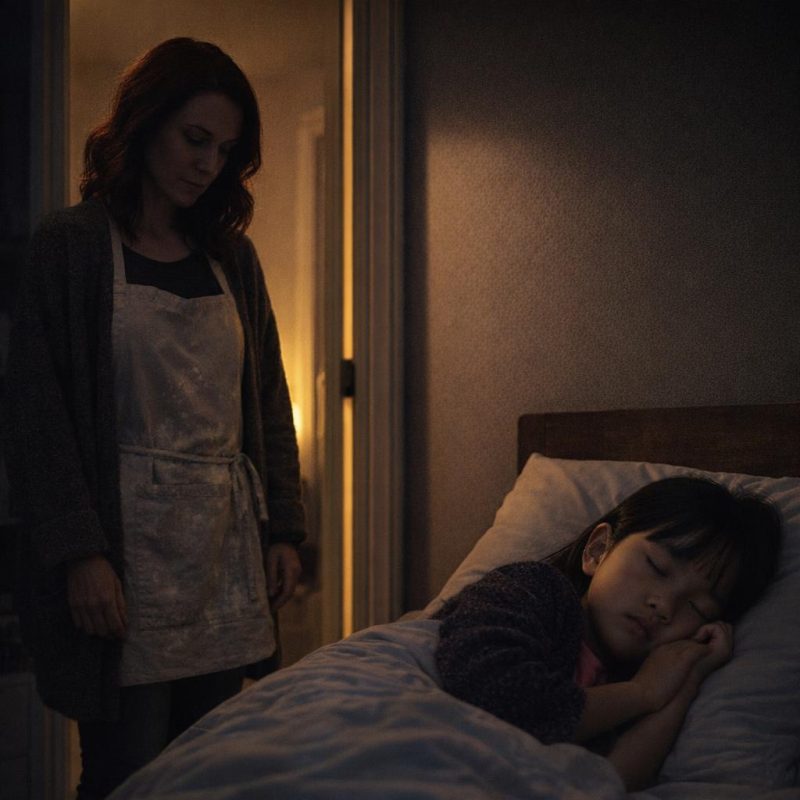 Image by RM AI
The New Reality
Three days felt like the right amount of time and also nowhere near enough. I was at the kitchen table when I heard his key in the lock — the same table where I'd first started noticing the gaps, where I'd sat with my coffee and my suspicions and told myself I was probably imagining things. He came in quietly, set his bag down, and didn't try to fill the silence with anything. He looked tired in a way that went past the flight. He told me Robert had weeks, not months, and I felt the weight of that land without knowing exactly where to put it. We sat across from each other and I told him I was willing to try — therapy, honest conversations, the slow uncomfortable work of figuring out if what we had was worth rebuilding or just a structure we'd both been maintaining out of habit. I told him I couldn't promise the outcome. He said he understood, and for once I believed him. We agreed to take it one honest conversation at a time, which sounded simple and was probably the hardest thing either of us had ever committed to. He reached across the table and I looked at his hand there, and then I looked at him, and I said, "Okay. Let's start."
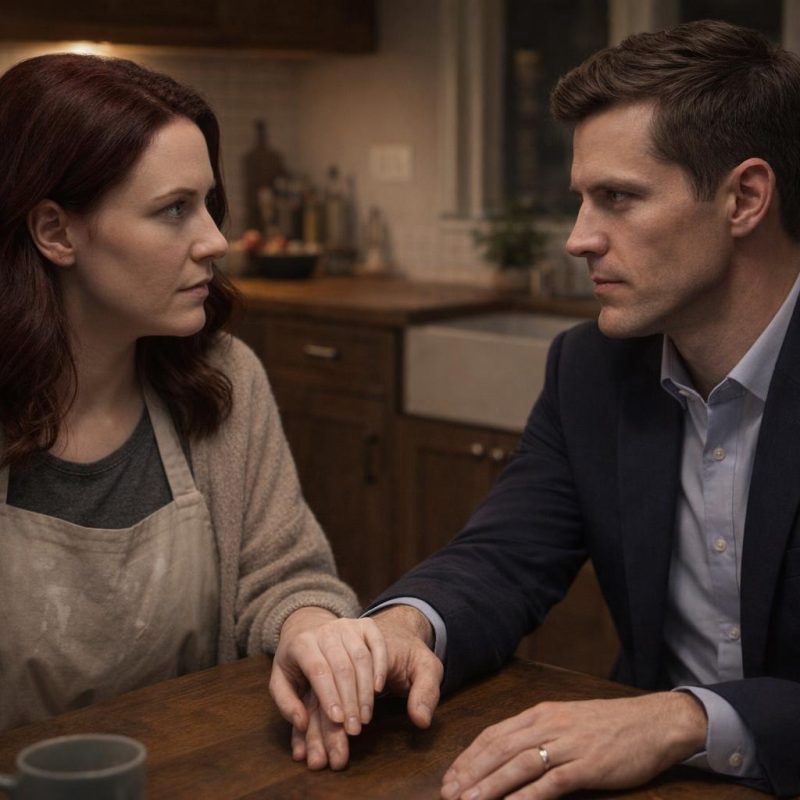 Image by RM AI
KEEP ON READING
The Brutal Realities Of Gladiator Life Beyond the Arena
David Cruz asenjo on PexelsWhen most people think of gladiators,…
By Rob Shapiro Mar 31, 2026
The Volcano Winter That Nearly Toppled Europe
Collin Ross on UnsplashMost people, if asked to name a…
By Cameron Dick Mar 31, 2026
From School Plays To Starting A Cult: 20 Of The…
The Books That Made Us. Many people will tell you…
By Farva Ivkovic Jan 31, 2025
20 Facts About Jane Grey, The Forgotten Queen Of England
A Quick, Messy, and Tragic Reign. Lady Jane Grey never…
By Maria Cruz Jan 31, 2025
20 Priceless Historical Art Pieces Rescued By The Monuments Men
Protecting Human History. While the soldiers on the front lines…
By Sara Springsteen Mar 31, 2026
Almost Every Ancient Statue Has a Missing Nose, And It's…
Gary Todd from Xinzheng, China on WikimediaWalk through the classical…
By Elizabeth Graham Mar 31, 2026