

I Let Neighbors Use My Pool to Be Friendly, But My Daughter Noticed Something That Made My Blood Run Cold
I Let Neighbors Use My Pool to Be Friendly, But My Daughter Noticed Something That Made My Blood Run Cold
The Pool Invitation
We'd lived on Sycamore Drive for almost two years, and I still didn't know most of our neighbors by name. That bothered me more than I let on. I'd grown up in a neighborhood where people actually talked to each other, where someone always had a casserole ready when things went sideways, and I wanted that for us here. So one evening in late June, while David and I were sitting out by the pool after dinner, I said it out loud — what if we just invited people to use it? David set down his glass and smiled at me like I'd said something genuinely good. He said it was a great idea, that people would love it, that it was exactly the kind of thing that builds a real community. We talked through some basic ground rules — no glass near the water, a reasonable cutoff time, nothing too complicated. I drafted a short note that night, friendly and low-pressure, and slipped copies into six mailboxes the next morning. Walking back up the driveway, I felt lighter than I had in months. Maybe this was how it started — not with some grand gesture, but with a pool and an open gate and a little bit of hope.
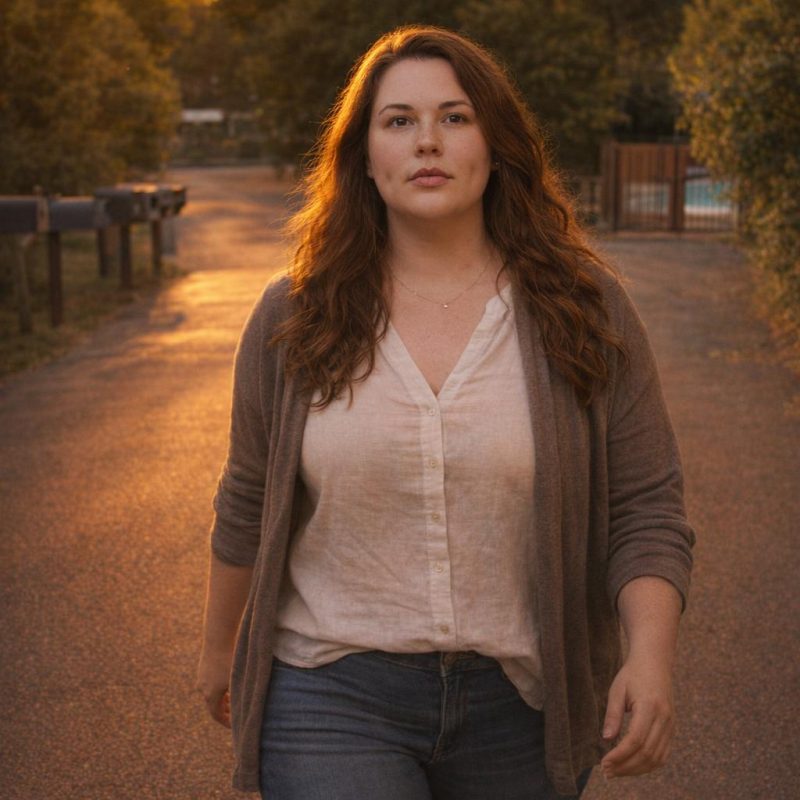 Image by RM AI
First Takers
The responses came faster than I expected. By the next afternoon, two families had already texted to say thank you, and one woman from three houses down — I'd waved to her maybe twice — sent a message that said she'd been hoping to meet us properly for ages. David ran into someone at the grocery store that same week, a guy who'd apparently seen the note and was asking about it, and David told him he was more than welcome. I spent a Saturday morning setting up the shed with extra towels, a hook for keys, and a little basket of sunscreen and hair ties. It felt good, honestly. Like I was finally doing something instead of just meaning to. The first scheduled evening came around, and I kept glancing out the kitchen window, half-expecting something to go wrong. But the yard looked peaceful, the water caught the last of the light, and I felt that particular kind of satisfaction that comes from following through on something you said you'd do. I was just about to head upstairs when I heard a soft knock at the back gate.
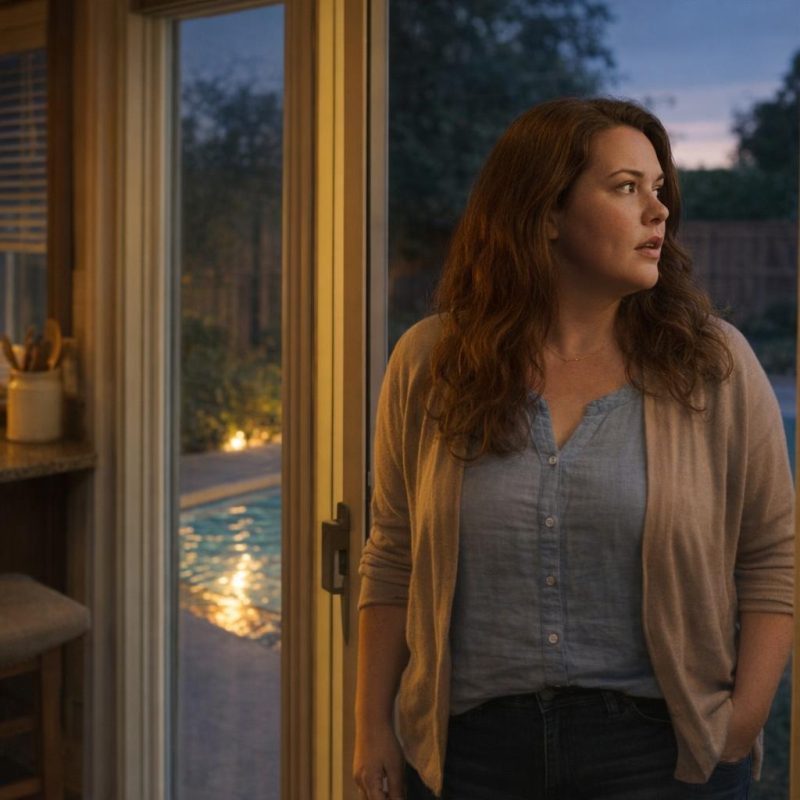 Image by RM AI
Lily's Rules
Lily had opinions about the pool situation from the start, which honestly didn't surprise me. She was eleven and already the kind of kid who noticed when things weren't organized properly. She sat down at the kitchen table one morning with a blank sheet of paper and announced that we needed rules — real ones, not just the stuff I'd mentioned in the note. We spent an hour on it together, going back and forth. No running on the deck. Shower before entering. Sign in on the sheet by the gate. That last one was her idea, and I thought it was a smart one. She wanted to know who was coming and going, she said, which made me smile because it sounded exactly like something I would have said at her age. David wandered through at some point, glanced at the list, and said it looked thorough. Three more neighbors had confirmed by then — a retired couple from the corner and a woman who worked nights and wanted early-morning access. I laminated the rules sheet myself and Lily carried it outside to post it by the gate, smoothing the edges carefully against the wood. I stood in the doorway watching her, and there was something so steady and sure about the way she pressed each corner flat.
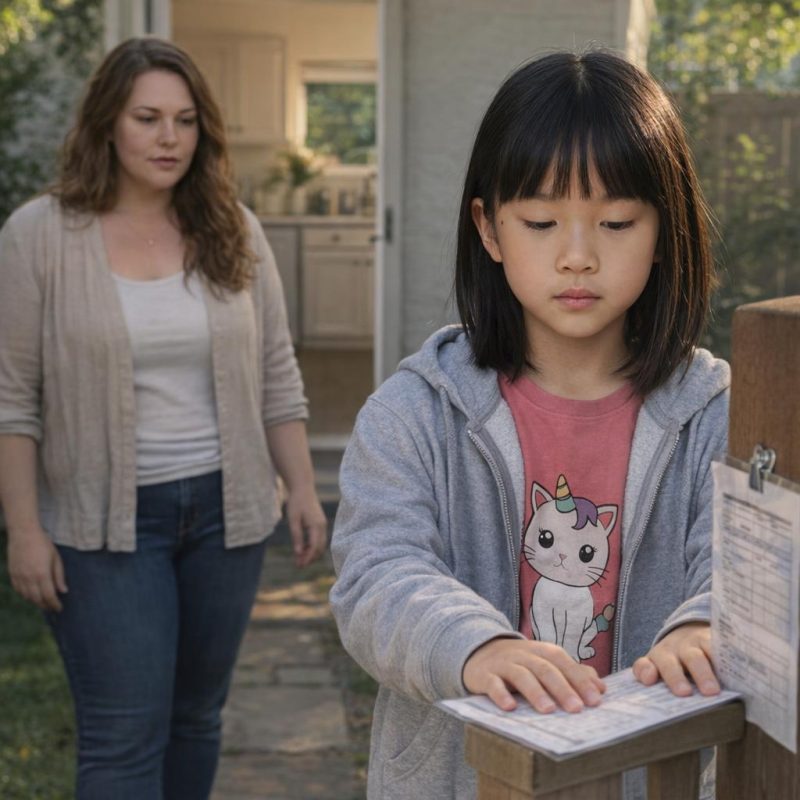 Image by RM AI
Rachel and Tom
Rachel and Tom showed up on a Thursday evening, right on time, which I appreciated. Rachel had dark hair pulled back neatly and one of those smiles that's warm but doesn't give much away. Tom was quieter — he thanked me at the gate, signed the sheet without being asked, and that was more or less the extent of our conversation. I offered them both something to drink and Rachel said no thank you in a way that was perfectly pleasant and also completely final. They swam for about half an hour, side by side, not talking much from what I could tell through the kitchen window. When they came back to the gate to leave, Rachel said it had been lovely and Tom gave a small nod that seemed to mean the same thing. David came out just as they were heading down the side path and exchanged a few words with Tom — something about the weather, I think — and then they were gone. I stood by the back door for a moment after the gate clicked shut. The yard was still, the water settling back to flat. It was a perfectly nice visit. I couldn't have said why the quiet they left behind felt heavier than the quiet before they'd arrived.
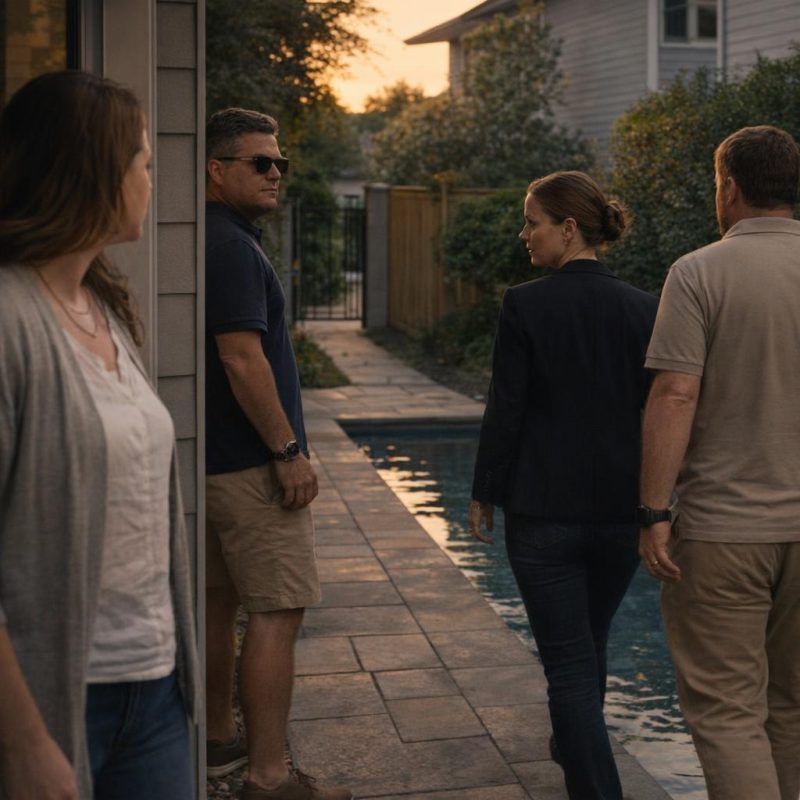 Image by RM AI
Extended Hours
Things had been going smoothly for a couple of weeks when David brought up the idea of extending the hours. He mentioned it casually over dinner — said a few neighbors had asked him whether later slots were possible, that some people didn't get home from work until eight or nine and felt bad about rushing. It made sense to me. I worked from home and the pool noise didn't bother me much, and honestly it felt good to be accommodating. I said sure, eleven seemed reasonable as a cutoff, and David said he'd take care of updating the schedule and letting everyone know. I didn't think much of it. He was good at that kind of thing — organized, efficient, always happy to handle the logistics so I didn't have to. I went out the next morning to check on the towel supply in the shed, and when I passed the gate I stopped. The new schedule was already there, printed cleanly on cardstock and slipped into the plastic sleeve we'd mounted on the post — time slots filled in, names beside them, the cutoff listed as eleven pm.
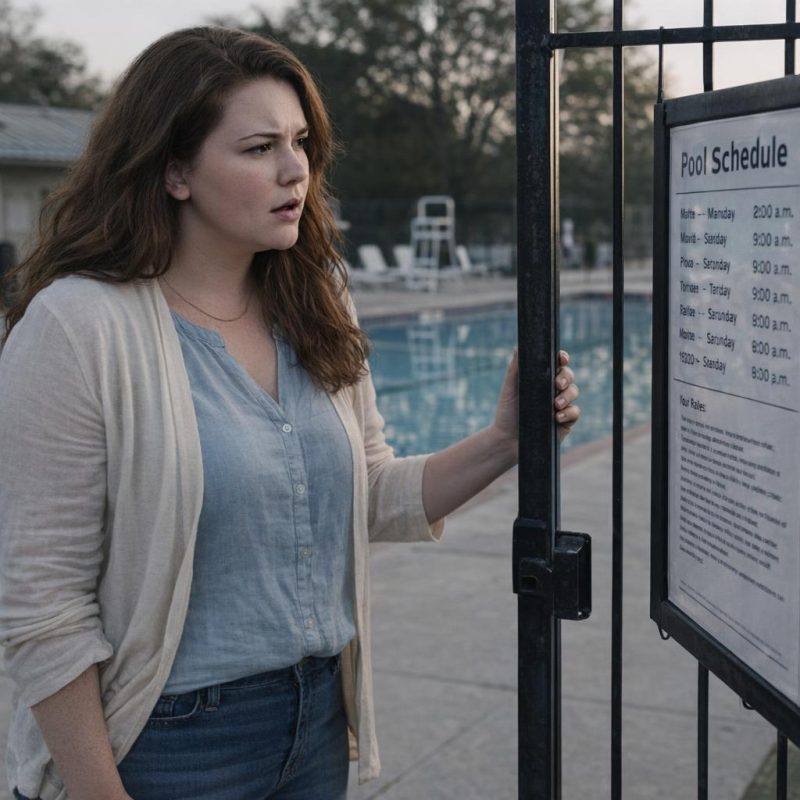 Image by RM AI
Marcus Arrives
Marcus introduced himself on a Wednesday night, just after ten. He knocked at the gate the way someone does when they're pretty sure they have the right place but want to be polite about it anyway — two quick taps, then a step back. He was maybe forty, easy smile, a little rumpled around the edges in a way that felt genuine rather than careless. He apologized right away for the hour, said his shift didn't end until nine-thirty and he'd been hoping to catch some air before bed. I told him it was no trouble at all, which it wasn't. He signed the sheet, slipped into the pool, and spent most of his time floating on his back with his phone resting on the deck beside him, screen lighting up every few minutes. He wasn't loud or demanding — just a person unwinding after a long day, which I understood completely. When he left he thanked me twice and said he'd see me Saturday. David, who'd been reading in the living room, came to the back door as I was locking up and said Marcus seemed like a solid guy, easy to have around. I glanced at the schedule on the gate. The ten-thirty slot now had Marcus's name written in beside it.
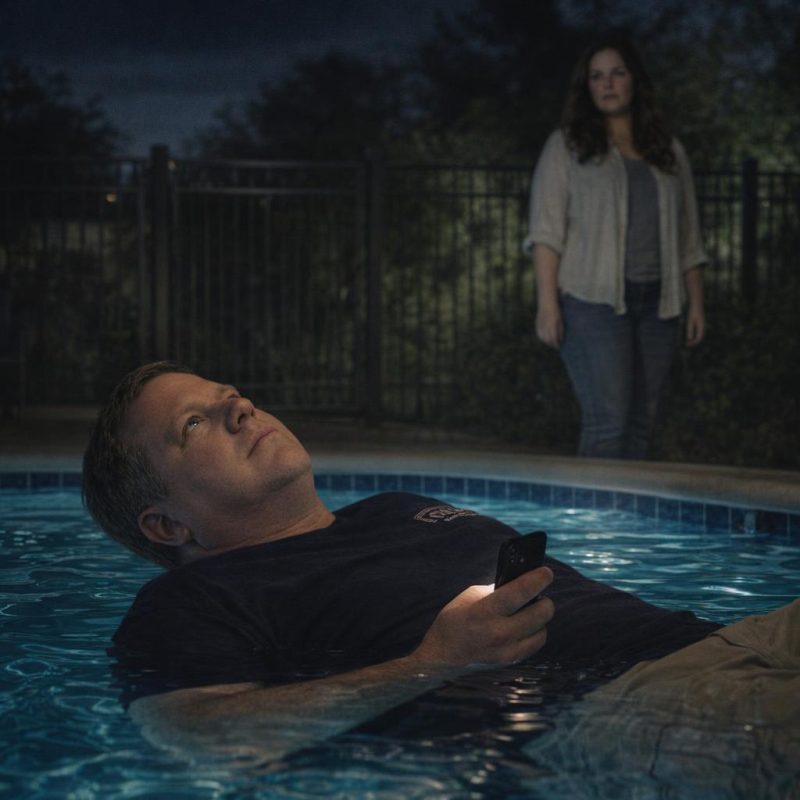 Image by RM AI
Weekly Rhythm
By the third week, the whole thing had settled into something that felt almost effortless. Rachel and Tom came Tuesdays and Fridays without fail, always on time, always gone within the hour. Marcus had his Wednesdays and Saturdays. A few other neighbors filled in the remaining slots — the retired couple on Sunday mornings, the night-shift woman on Monday before work. I'd stopped hovering by the kitchen window and started just living my evenings normally, which felt like a small victory. David said one night that it was working out better than either of us had expected, and I agreed. It was the kind of thing that sounds simple but actually takes a little faith to pull off — opening your space to people and trusting them to treat it well. That particular Saturday, Marcus had been the last scheduled visitor, and his slot ended at eleven. I waited a few minutes past, then went out to lock the gate. The latch moved freely in my hand. The gate was already unlocked.
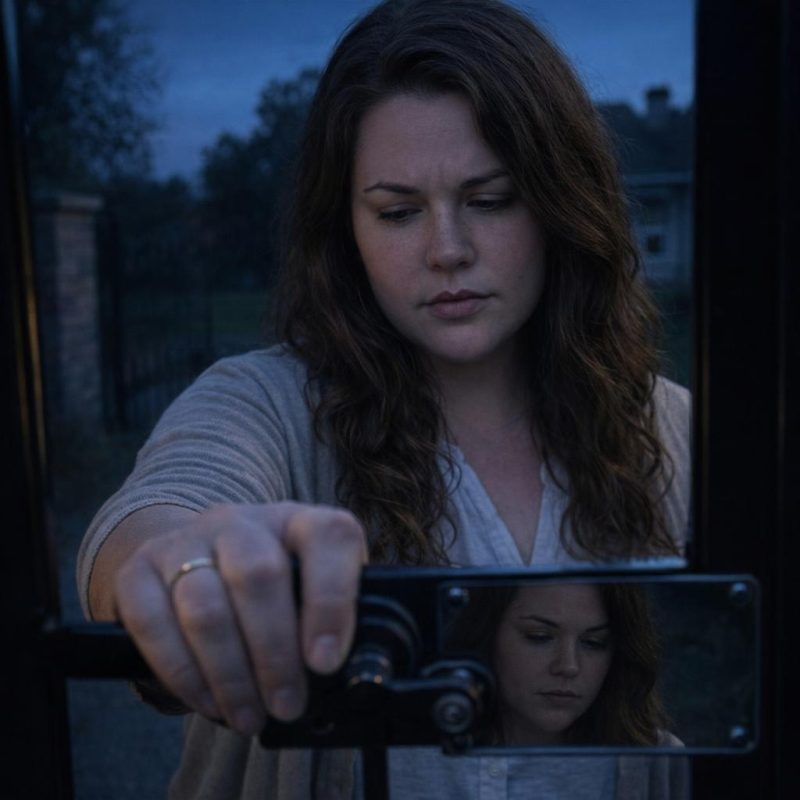 Image by RM AI
Staggered Arrivals
I told myself it was nothing — Marcus had probably just forgotten, or maybe I'd been the one who hadn't latched it properly the night before. I locked it, went inside, and didn't mention it to David. But something about it stayed with me, the way small things sometimes do when you can't find a clean explanation. Over the next few days I started paying closer attention to the timing of visits, not in any deliberate way, just noticing. Rachel and Tom would be heading down the side path just as Marcus was coming up the street. The Sunday couple would leave, and twenty minutes later someone else would arrive. It had been over a week since any two visitors had overlapped, even by a few minutes. I brought it up with David one evening, keeping my voice light — said it was funny how well everyone seemed to space themselves out. He shrugged and said people were probably just being considerate, not wanting to crowd each other. That was probably it. I went back to the dishes and let the thought go. But it sat with me quietly through the rest of the evening, that sense of a pattern I could see the shape of but couldn't quite name.
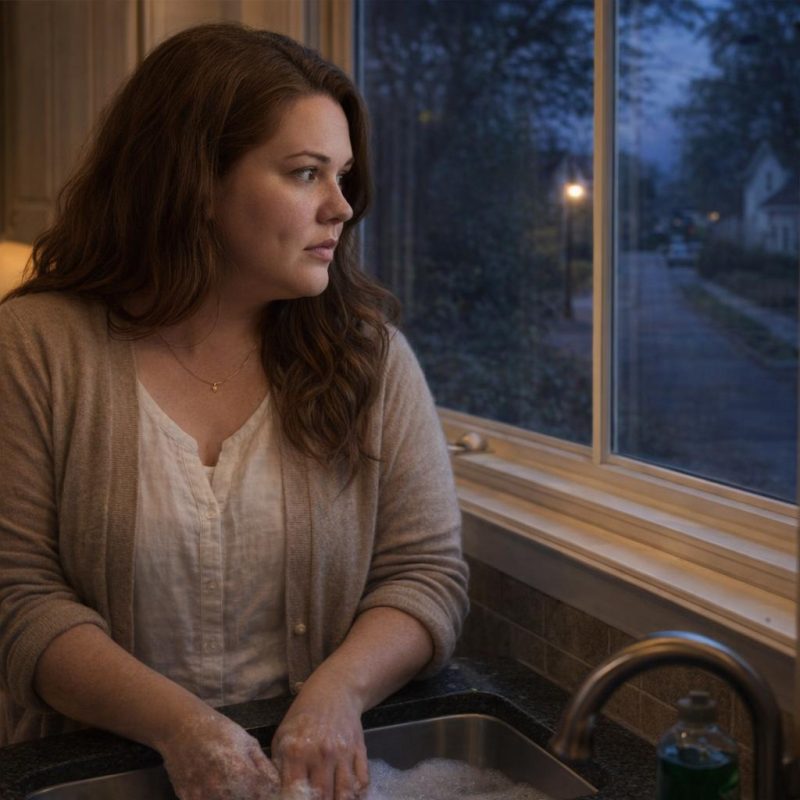 Image by RM AI
Coordinated Precision
I started timing them without meaning to. That's the part that embarrassed me a little — I wasn't sitting at the window with a stopwatch, I just happened to glance up when Rachel was heading back down the side path, and then I happened to still be in the kitchen when Tom came through the gate about four minutes later. Four minutes. I told myself it was nothing, just people being considerate, not wanting to crowd each other the way David had said. But then it happened again the next evening. Rachel left, and I counted — not on purpose, just in my head — and Tom appeared right on schedule. I watched it repeat over three evenings in a row, always that same narrow gap, never overlapping, never running long. I thought about mentioning it to David again but stopped myself. What would I even say? That our neighbors were being too polite? That the timing felt a little too tidy? It sounded ridiculous when I tried to put it into words. So I didn't say anything. I just stood at the kitchen window and let the feeling settle, a little uncomfortable with how closely I'd apparently been paying attention.
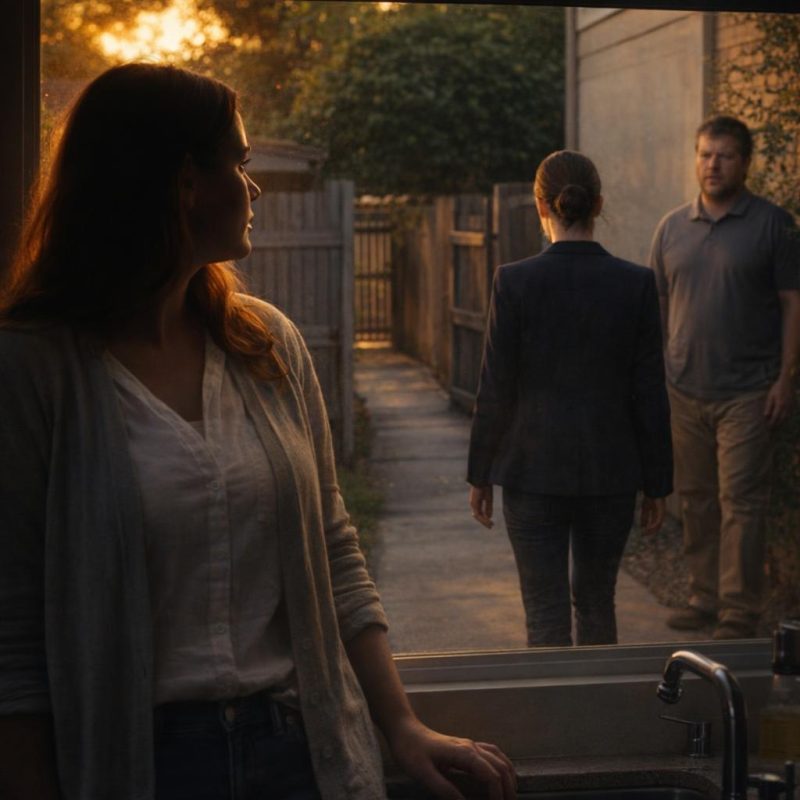 Image by RM AI
No Overlap
I did something I'm a little embarrassed to admit — I went back through my memory of the last two weeks and tried to think of a single time two neighbors had been at the pool at the same time. I couldn't come up with one. Not once. Rachel and Tom always came separately. Marcus had his own window. The Sunday couple never crossed paths with anyone. I told myself it was probably just how the schedule had worked out, people with their own routines naturally falling into different slots. Then Marcus came by on a Tuesday afternoon, same as usual. He swam his laps, dried off, made small talk about the weather while he gathered his things. Normal enough. Except I noticed him glance at his watch while he was still in the water. Then again when he was toweling off. Then a third time right before he said goodbye — a quick, almost automatic check, like he was running against a clock I couldn't see. I watched him check it once more as he reached the gate, then he lifted a hand in a wave and walked away down the street.
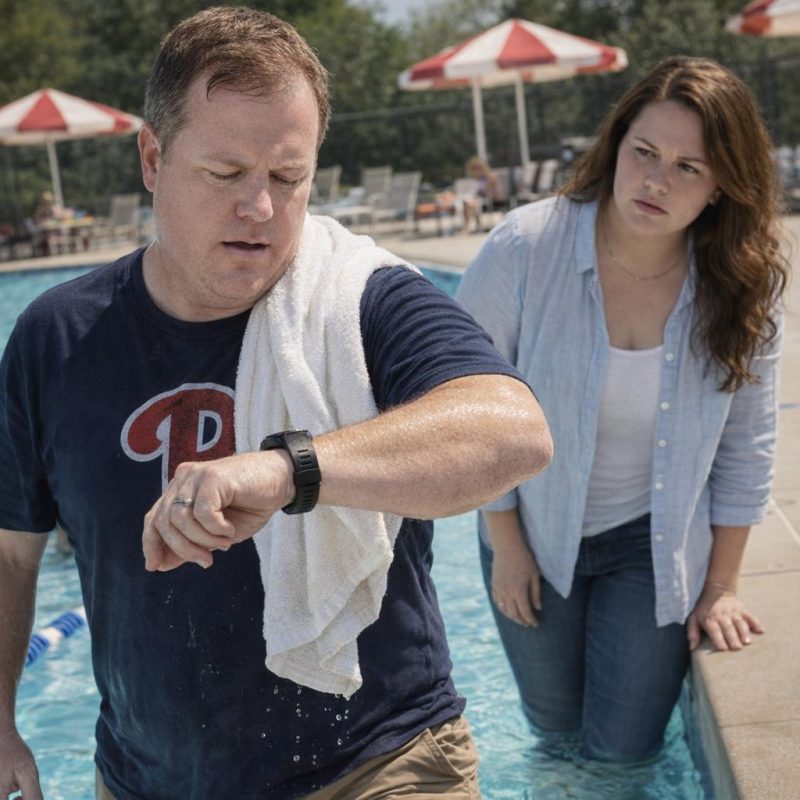 Image by RM AI
Tracking Time
I found a small notebook in the kitchen drawer — the kind I usually used for grocery lists — and I started writing things down. Arrival time, departure time, who it was. I told myself it was just curiosity, that I'd probably look at it after a week and laugh at myself for being so thorough about something so ordinary. Lily caught me at it one afternoon, leaning over my shoulder with that look she gets when she's decided something is interesting. She asked what I was tracking. I said I was just keeping an eye on the pool schedule, making sure it wasn't getting too busy. She accepted that and wandered off, and I went back to my columns. By the end of the week I had seven entries. The gaps between departures and arrivals ranged from three minutes to six. Nobody had overlapped. The times sat there in two neat columns — in on the left, out on the right — and the regularity of it was hard to look away from. I closed the notebook and put it back in the drawer, but I kept thinking about those numbers, lined up so evenly on the page.
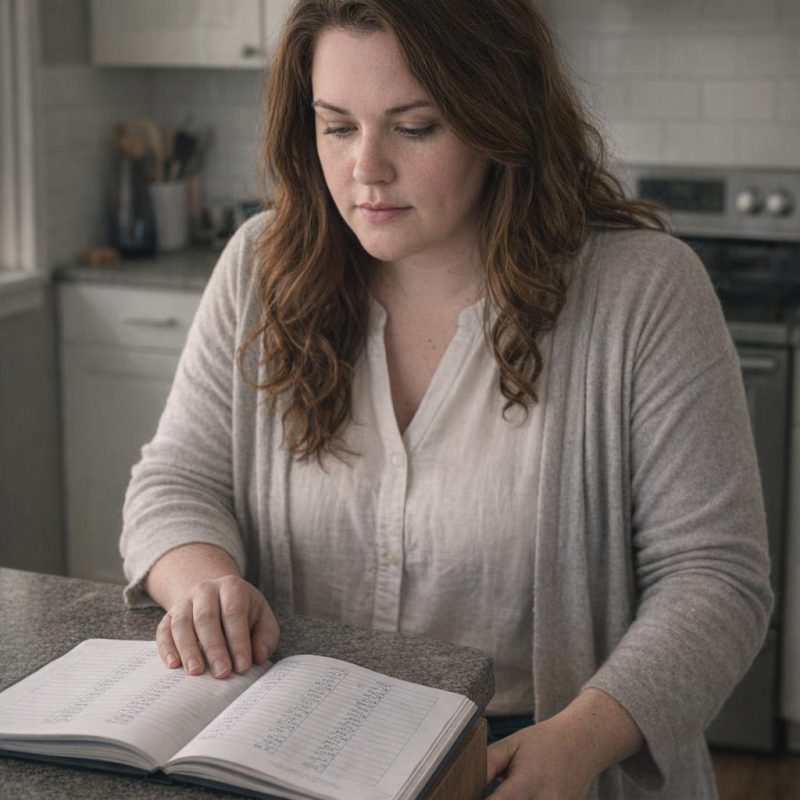 Image by RM AI
Distant Parking
Rachel and Tom came by together on a Thursday evening, which was unusual enough that I noticed it right away. I was pulling weeds near the front garden when I saw them coming up the street on foot, and I waved and offered them the driveway — told them they were welcome to pull in anytime, no need to park down the block. Rachel smiled and said that was so kind, but they liked the walk, it was good for them after sitting all day. Tom nodded and said something about not wanting to impose on the driveway space. It was perfectly pleasant. I thanked them and went back to my weeding. But after they went through the gate I stood up and looked down the street, and I counted the houses between where they'd parked and mine. Four houses. I stood there for a moment thinking about it, and then I thought about how I'd never once seen any of them pull into the driveway, not Marcus, not the Sunday couple, not anyone. I'd offered before and always gotten some version of the same polite refusal. I looked at my empty driveway and couldn't think of a single reason that made sense.
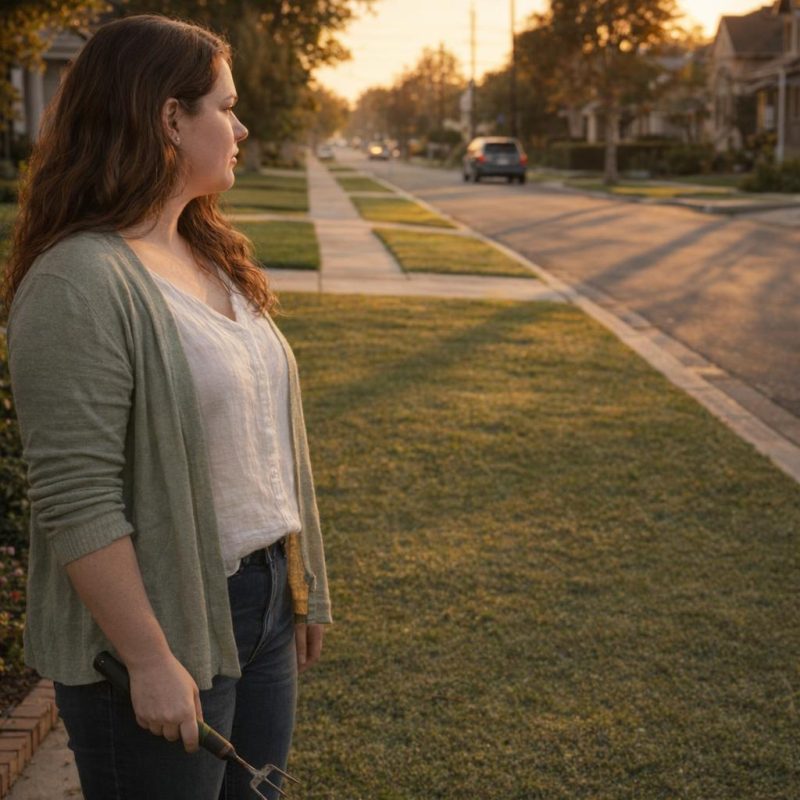 Image by RM AI
Four Houses Down
The following Tuesday I watched Rachel come up the street again, and I paid attention this time. She walked past the first empty curb space without slowing down. Then the second. Then the third. She'd parked in almost exactly the same spot as last time — four houses down, give or take a few feet. I stood back from the window so she wouldn't see me watching, which made me feel a little silly, but I stayed there anyway. She walked the whole stretch of pavement at an easy pace, not rushed, not like someone who'd parked far away by accident and was making the best of it. She looked comfortable with the distance. After she came through the gate I went back to my notebook and added the entry, and then I flipped back through the previous pages. The spot varied slightly — sometimes three and a half houses, sometimes four and a bit — but it was always in that same general range, always past the empty spaces closer to the house. I closed the notebook and sat with it for a while. I couldn't explain it, and I wasn't sure I was supposed to be able to. But the distance had stopped feeling like courtesy.
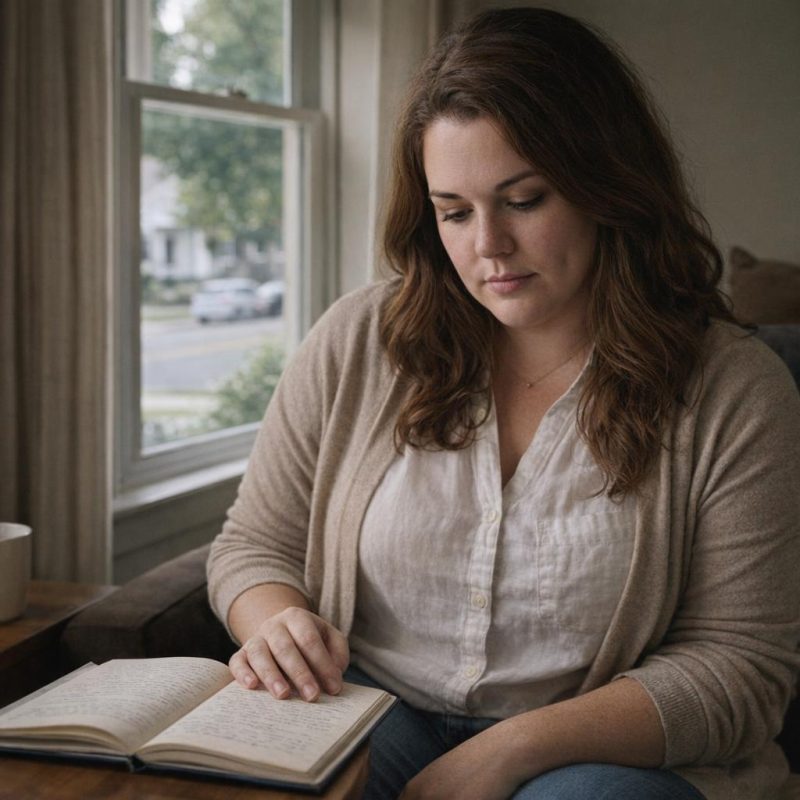 Image by RM AI
Vague Answers
I decided to just ask. I kept it casual — waited until Rachel was heading out one evening and fell into step with her toward the gate, and mentioned that she was always welcome to park closer, that the spaces right out front were usually free. She laughed a little and said she genuinely enjoyed the walk, that it helped her decompress after work. I said something like, even on rainy days? And she said oh, especially then, something about the fresh air. It was a perfectly nice answer. A few days later I tried the same thing with Tom, a little more directly — asked if there was a reason he parked so far down the block. He looked slightly caught off guard, then smiled and said he didn't want to take up space in case we needed it, that it just felt more considerate. I thanked him and let it go. But walking back inside I kept turning both answers over in my head. They weren't rude. They weren't strange, exactly. They were just — thin. Like the kind of answer you give when you haven't thought about the real one yet, or maybe when you have. I sat down at the kitchen table and stayed there with that hollow feeling for a while.
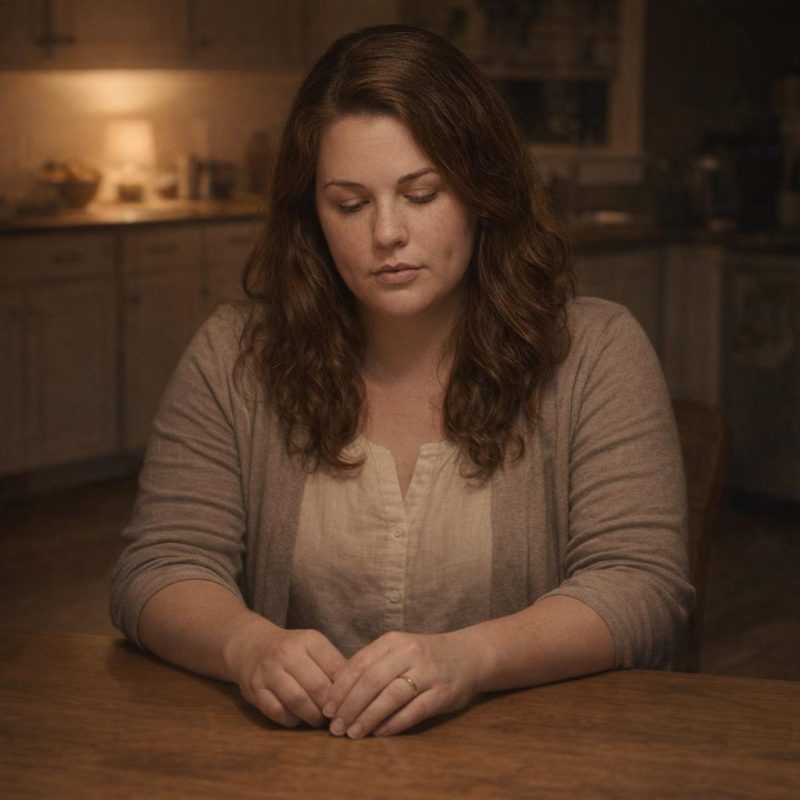 Image by RM AI
Marcus Too
I started watching for where people came from, not just when they arrived. Tom showed up one afternoon from the direction of Birchwood, which runs parallel to our street — he would have had to loop around the whole block to come from that angle. I stood at the front window and watched him turn the corner, and something about the route felt off, like he'd added distance on purpose. Then Marcus came by two days later, and he appeared from the opposite direction entirely, coming from the far end of the street rather than from his own house, which was closer the other way. I checked my notebook. I'd never paid attention to direction before, only time. I added a new column. Over the next few visits I confirmed that nobody was parking on our street at all — not on the near end, not in front of the house, not even a block away on the same road. They were all coming from different directions, different side streets, different distances. I set the notebook down on the table. Then I looked up, and Marcus was walking past the front of the house from the wrong direction entirely — the far end of the street, nowhere near where he lived.
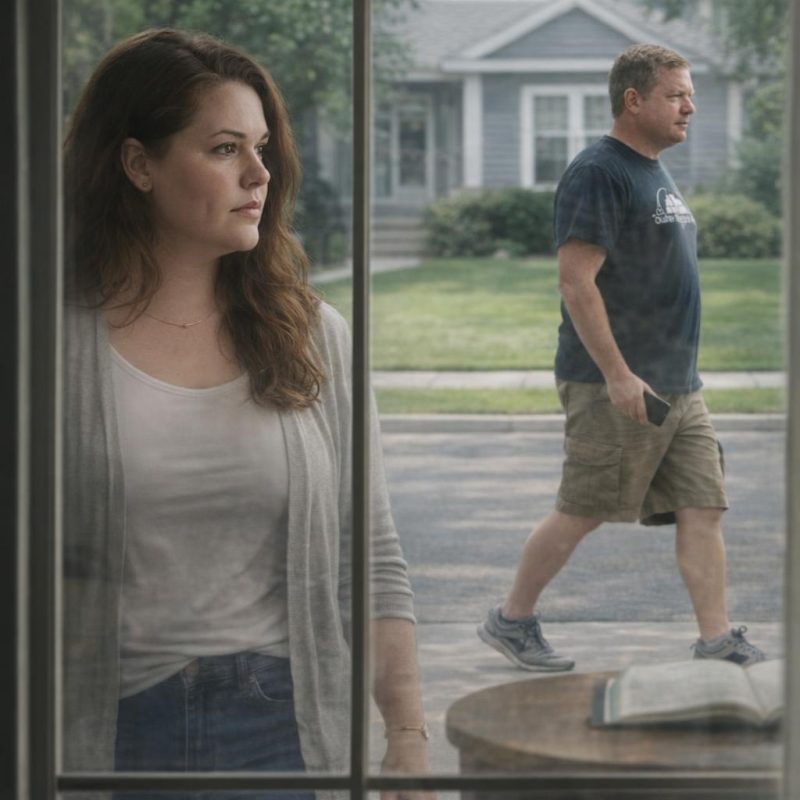 Image by RM AI
David's Dismissal
I brought it up with David after dinner, spreading my notebook open on the kitchen table and walking him through it — the timing gaps, the parking distances, the directions people were coming from. I kept my voice even, tried to present it like I was just sharing something curious rather than something that had been sitting in my chest for two weeks. David listened, leaning back in his chair with his arms crossed, and when I finished he was quiet for a second before he said people probably just liked the walk, that it was a nice neighborhood and nobody wanted to feel like they were crowding us. I said it wasn't just one person, it was all of them, every single time. He smiled a little and said I had a talent for noticing things, said it like it was a compliment, but the next part came out gentle and careful — that sometimes a pattern is just people being polite, and that I might be reading into it more than was there. I started to say something about the directions, about how Marcus had come from the wrong side of the street entirely, and David's voice shifted — not sharp, not unkind, just a register I didn't quite recognize — and I stopped talking.
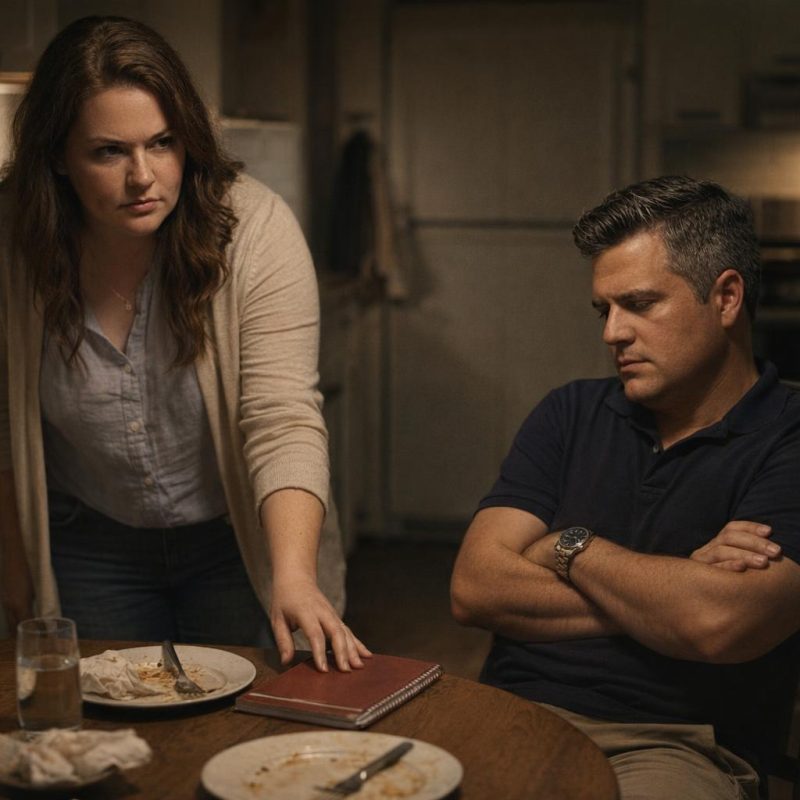 Image by RM AI
Trying to Ignore It
I told myself to stop. I actually said it out loud one morning while I was loading the dishwasher — just stop, Emma, let it go. The arrangement was fine. The neighbors were fine. David was right that I had a habit of turning small things into puzzles, and maybe that's all this was. So I made a deal with myself: no more notebook, no more timing arrivals, no more counting which direction people came from. I was going to be a normal person who let her neighbors use her pool and didn't treat it like a crime scene. Rachel showed up that afternoon right on schedule, towel over her shoulder, sunglasses already on, and I made myself go inside and start on the grocery list I'd been putting off. I got through produce. I got through dairy. I was doing fine. And then I was standing at the kitchen counter and I realized my eyes weren't on the list anymore — they were on the front window, watching the street, when I was supposed to be watching the pool.
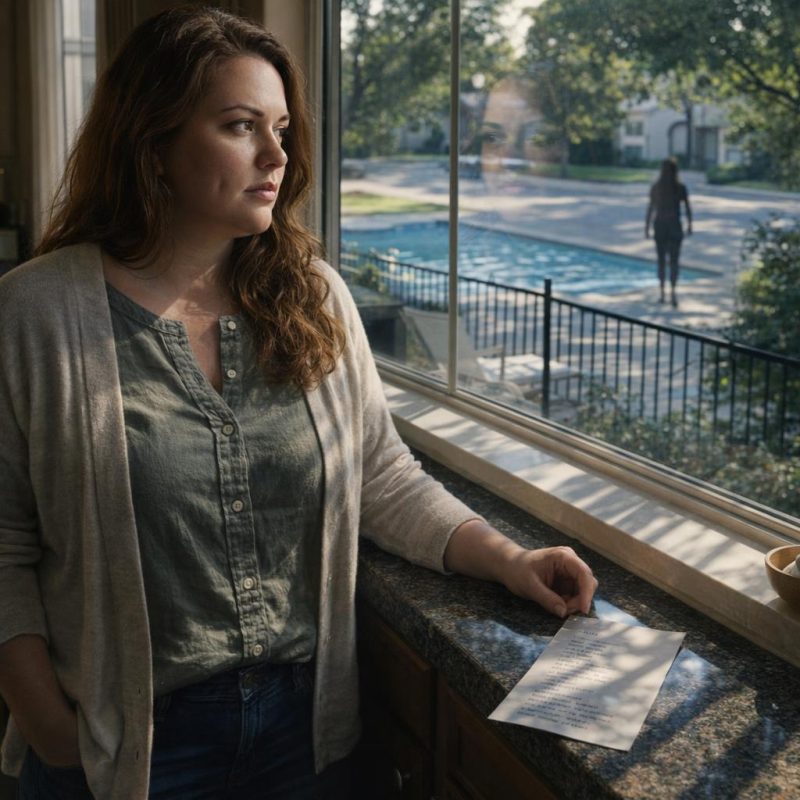 Image by RM AI
Checking Surroundings
It was a Tuesday evening when I first noticed it with Tom. He came through the side gate the way he always did, but he stopped just inside it — one hand still on the latch — and looked up and down the street before he let it close behind him. Not a casual glance. A slow, deliberate scan, left then right, then a quick look toward the Hendersons' front window next door. I was standing back from the kitchen window so he couldn't see me, and I told myself he was probably just checking the weather, or maybe he'd heard something. People look around. It doesn't mean anything. But then Marcus did the same thing three nights later. Same pause at the gate, same look left, same look right, same brief check toward the neighboring houses before he stepped fully into the backyard. Two different people, same sequence, same unhurried care. I couldn't explain it and I couldn't unknow it, and I stood there in the dark kitchen long after Marcus had settled into the water, carrying the strange, heavy feeling of watching someone who didn't want to be watched.
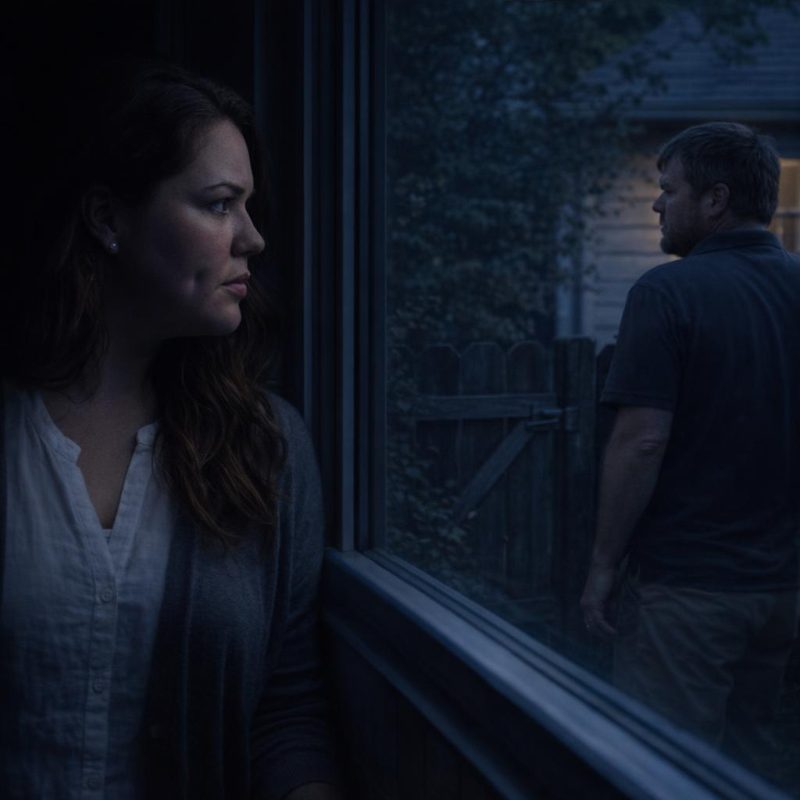 Image by RM AI
Considering Ending It
I drafted the message on a Thursday afternoon while Lily was doing homework at the kitchen table. Something like: Hey everyone, we've loved having you use the pool this summer, but we're going to close it to guests for the rest of the season — family stuff, nothing personal. I read it back three times. It was polite. It was reasonable. Nobody could argue with family stuff. My thumb hovered over send for a long moment before I closed the app without doing anything. Lily looked up from her worksheet and asked if something was wrong with the pool. I said no, why. She shrugged and said I'd been looking at my phone weird. I told her I was just thinking about something, which was true, and she went back to her homework. The thing was, I didn't have a reason I could actually say out loud. Nobody had done anything wrong. Nobody had been rude or made me uncomfortable directly. It was all just — feeling. And you can't send a message that says I'm ending this because something feels off and I can't tell you what it is. I put my phone face-down on the counter and sat with the quiet relief of imagining the backyard empty again, and the guilt that came right alongside it.
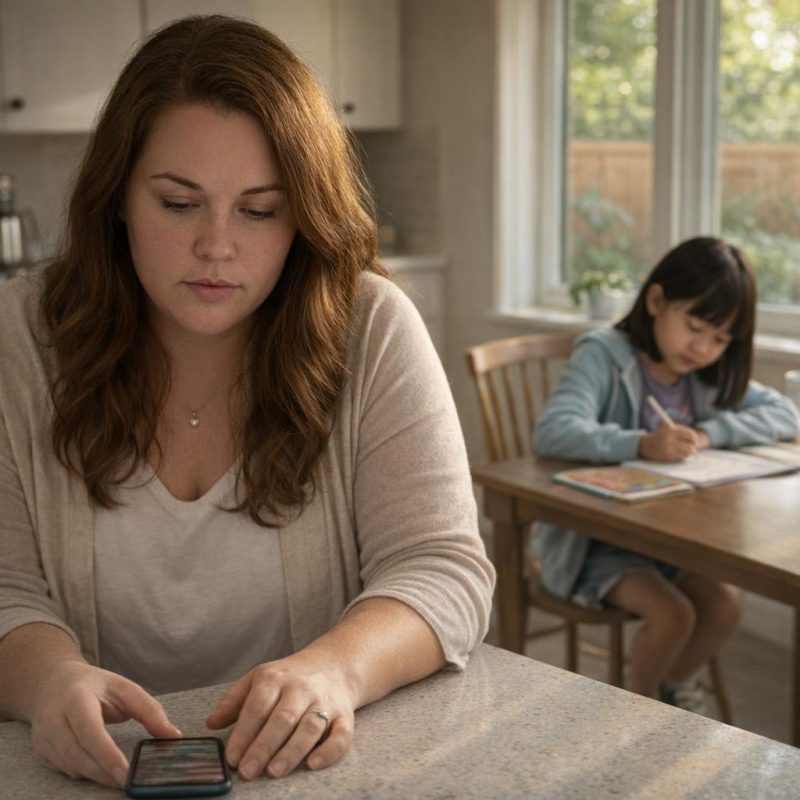 Image by RM AI
David Insists
I brought it up again with David on a Friday night, keeping it vague — just said I was thinking about wrapping up the pool arrangement before the end of summer, that it had been a nice thing but maybe it had run its course. He set down his fork and looked at me with that patient expression he gets, the one that means he's about to be very reasonable at me. He said the neighbors had mentioned how much it meant to them. He named Marcus specifically, said Marcus had told him it was the highlight of his week, and then he mentioned Tom and Rachel too, said they'd both expressed real gratitude. I felt the familiar pull of guilt. David said it would be a shame to pull back now when the whole thing was going so well, that this was exactly the kind of community connection that was hard to build and easy to lose. I said okay, maybe I'd wait. He smiled and squeezed my hand and went back to his dinner. Later, walking past his office on the way to get a glass of water, I heard his voice through the half-open door — low and even, clearly on a call — and caught the word schedule.
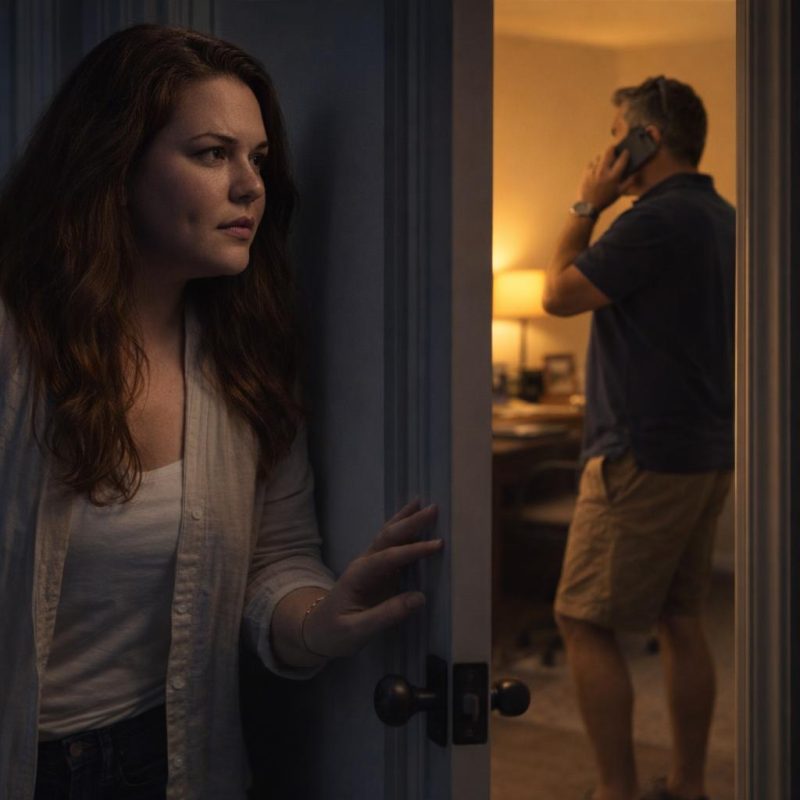 Image by RM AI
Staying Awake
After that I started staying up. Not obviously — I didn't sit in a chair by the window with a notepad or anything like that. I'd just find a reason to be in the kitchen when Marcus had his late slot, lights off, standing back far enough from the window that I was pretty sure I was invisible from outside. He always arrived on time. He'd come through the gate, drop his towel on the chair he seemed to prefer, and swim his laps with the same steady rhythm every visit — back and forth, back and forth, no variation. Nothing happened. He swam. He got out. He dried off. He left. I did this three nights in a row and each time I came away with nothing except the low hum of the pool filter and the particular tiredness that comes from concentrating hard on something that refuses to give you anything back. By the third night I was starting to feel genuinely foolish, standing in my own dark kitchen at eleven o'clock watching a neighbor do laps. The filter ran its quiet cycle. The backyard sat still and ordinary under the porch light, and I stood there in the dark with the weight of all that watching and nothing to show for it.
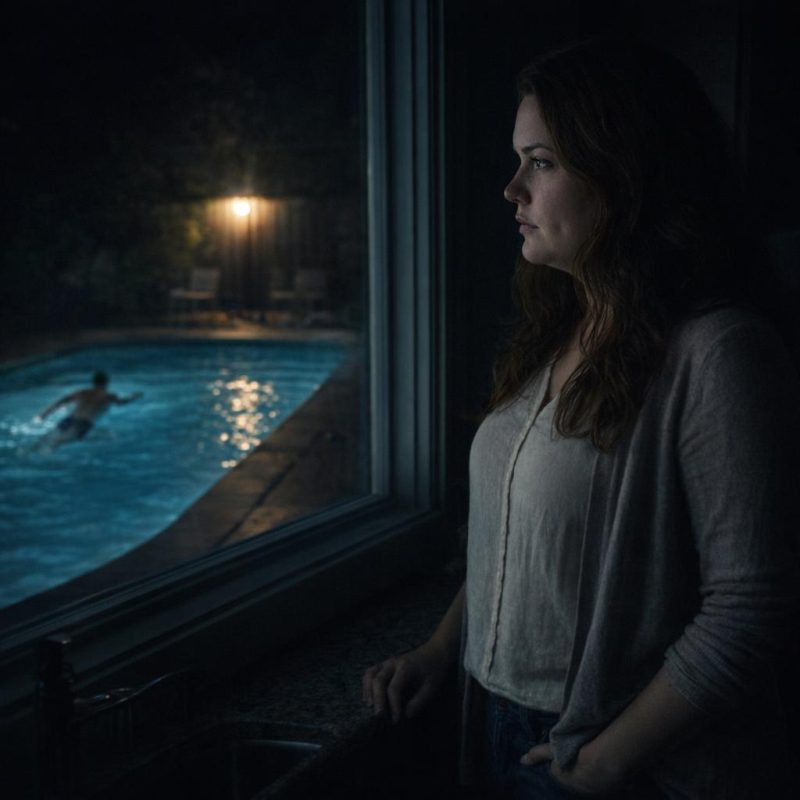 Image by RM AI
Lily Mentions Something
It came up the way things do with Lily — sideways, while we were doing something else entirely. We were folding laundry on the couch, some show on in the background neither of us was really watching, and she said casually that she'd seen some of the neighbors talking on the patio. Not swimming, just talking. I kept my hands moving on the shirt I was folding and asked when she'd seen that. She said a few times, from her bedroom window — she'd noticed the light on the patio and looked out. I asked what they were doing exactly, and she said just standing there talking, and then they'd leave. I asked if it was always the same people and she thought about it and said not always, sometimes it was one person, sometimes two. She didn't seem to think it was interesting, just something she'd noticed. I said thanks for telling me and she went back to the laundry like it was nothing. But I sat there with a shirt half-folded in my hands, turning over what she'd said. I hadn't seen anyone lingering on the patio. I'd been watching the pool. The moment stretched out between us while the show played on and Lily reached for the next item in the basket, unbothered.
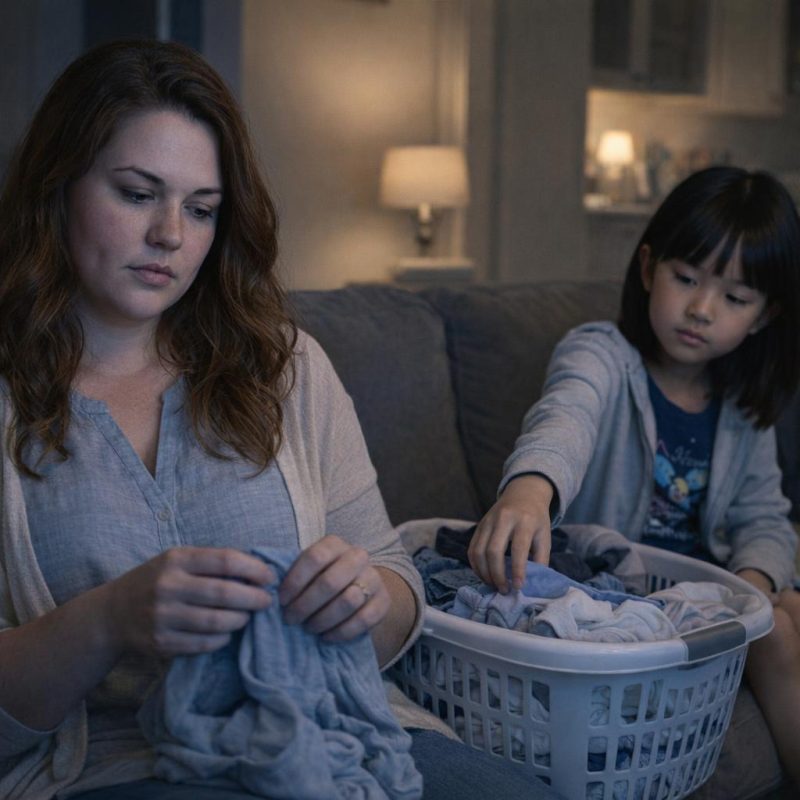 Image by RM AI
The Upstairs Window
The next evening I asked Lily if she wanted to sit with me upstairs for a bit, and she gave me the look that meant she knew something was going on but she was willing to play along. We settled into the chair by her window with the light off, the backyard visible below us in the early dark. Rachel arrived at her usual time, came through the gate, set her things down. I watched her settle into the water and thought maybe Lily had just caught people saying goodbye to each other on their way out, the way you do. Then I noticed someone already standing near the patio table — near the far edge of the light — and I hadn't seen them come in. Rachel finished her swim faster than usual, maybe twenty minutes, and climbed out. She toweled off and moved toward the patio, and the other figure stepped closer. I couldn't hear anything through the glass. I could only see the two of them standing there in the yellow porch light, heads angled toward each other.
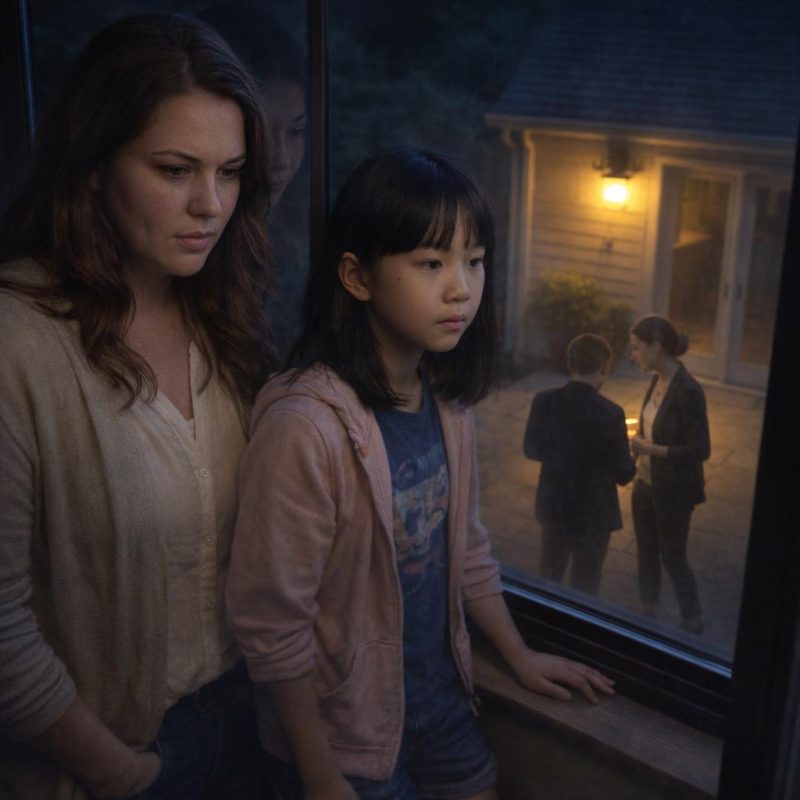 Image by RM AI
Brief Conversations
I watched the same thing happen twice more over the next few nights, each time from the upstairs window with Lily beside me. Tom came on Wednesday, swam his usual quiet laps, and when he climbed out there was someone already waiting near the patio table — not swimming, not using the yard for anything, just standing there. They spoke for a moment, heads close, and then Tom picked up his bag and left through the gate. The whole exchange lasted less than thirty seconds. Marcus on Friday, same pattern — finished his swim, moved toward the patio, brief exchange with someone I couldn't quite make out in the low light. I couldn't hear a word either time. I couldn't see faces clearly enough to be certain of anything. Lily sat next to me without saying much, and I didn't say much either, because I didn't know what I would have said. Whatever was happening down there, it was quick and quiet and it kept happening, and the exchange I watched on Friday night lasted less than thirty seconds.
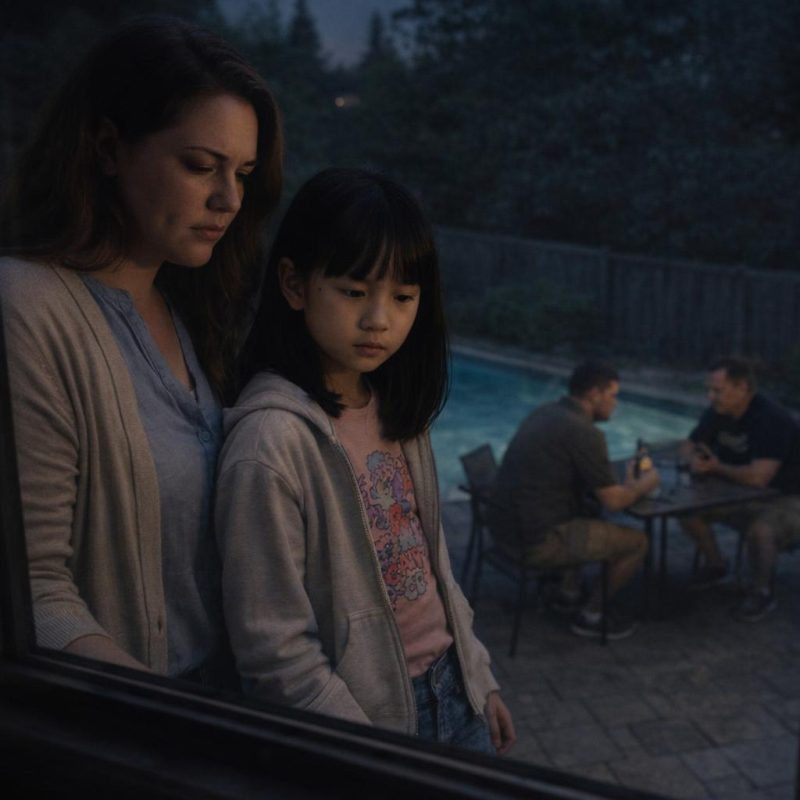 Image by RM AI
Something Exchanged
It was Lily who said it first. We were at the upstairs window again, watching Rachel finish her laps, and Lily leaned close to the glass and whispered, "Mom. Did you see that? She just gave him something." I hadn't caught it — I'd been watching Rachel's face, not her hands — but I shifted my focus and waited. Rachel had moved to the patio table where someone was standing just at the edge of the light, and they were close, closer than you'd stand with a stranger. I told myself it was nothing. People hand each other things all the time — a phone, a towel, a drink. But Lily kept watching without blinking, and something about her stillness made me watch harder too. The next time Rachel's hand moved toward the other person, I was ready. It was fast. A small object, maybe the size of a fist or smaller, passed from one palm to the other in less than a second. I couldn't tell you what it was. The light wasn't good enough and the angle wasn't right. But something moved between those two hands, quick and deliberate, and then it was gone.
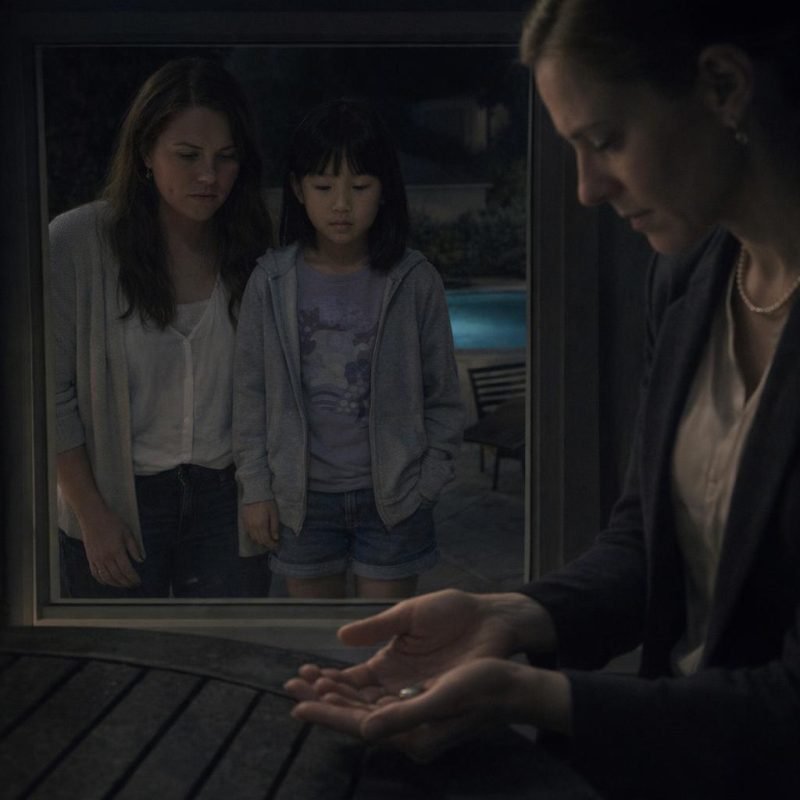 Image by RM AI
Car Keys
Two nights later, Tom showed up right at dusk. I was already at the window — Lily beside me, both of us quiet — and I watched him come through the gate with his swim bag over one shoulder. Rachel was already there, sitting at the patio table like she'd been waiting. They didn't hug. They barely even looked at each other the way you'd look at a friend. Tom set his bag down, reached into his pocket, and held something out toward her. Rachel took it without hesitation. I leaned closer to the glass. The porch light caught it just right — a key fob, the kind with the rubber buttons on top, dangling from a short ring. No question. I'd seen enough of those in my own hand to know exactly what I was looking at. Rachel closed her fingers around it, said something I couldn't hear, and then turned and walked toward the street. Not toward her own car. Toward the street. Lily didn't say a word. Neither did I. The key fob had caught the light for only a second, but that metallic glint was unmistakable.
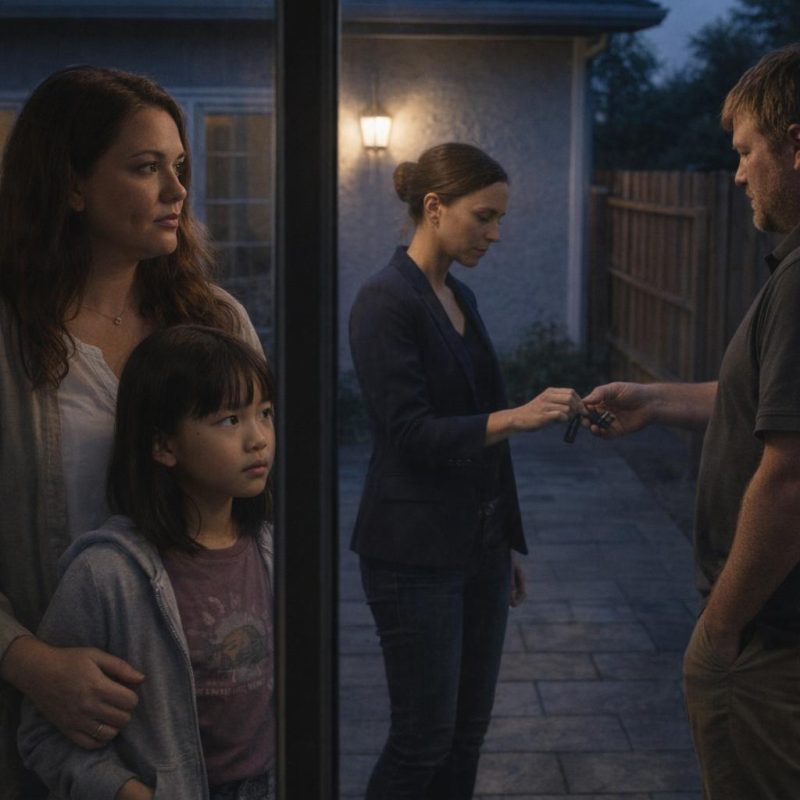 Image by RM AI
Wrong Vehicle
Marcus came on a Thursday, which was unusual — he'd always been a Friday. I noticed his SUV when he pulled up, a dark green one I'd seen in the neighborhood before, parked two houses down. He came through the gate with his usual easy wave toward the house, like he knew I might be watching, and I gave a small wave back from the window out of habit. He swam for maybe twenty minutes, nothing unusual, same quiet back-and-forth laps. Then he climbed out, toweled off, and spent a few minutes at the patio table. I couldn't see if anyone else was there — the angle was wrong from where I was standing. He picked up his bag, came back through the gate, and I tracked him down the front path the way I always did now. He didn't turn left toward the green SUV. He turned right. I watched him walk about four houses down and stop at a silver sedan I had never seen before. He opened the driver's door, tossed his bag across to the passenger seat, and pulled away from the curb without looking back. I stood at the window and watched Marcus drive away in a car that wasn't his.
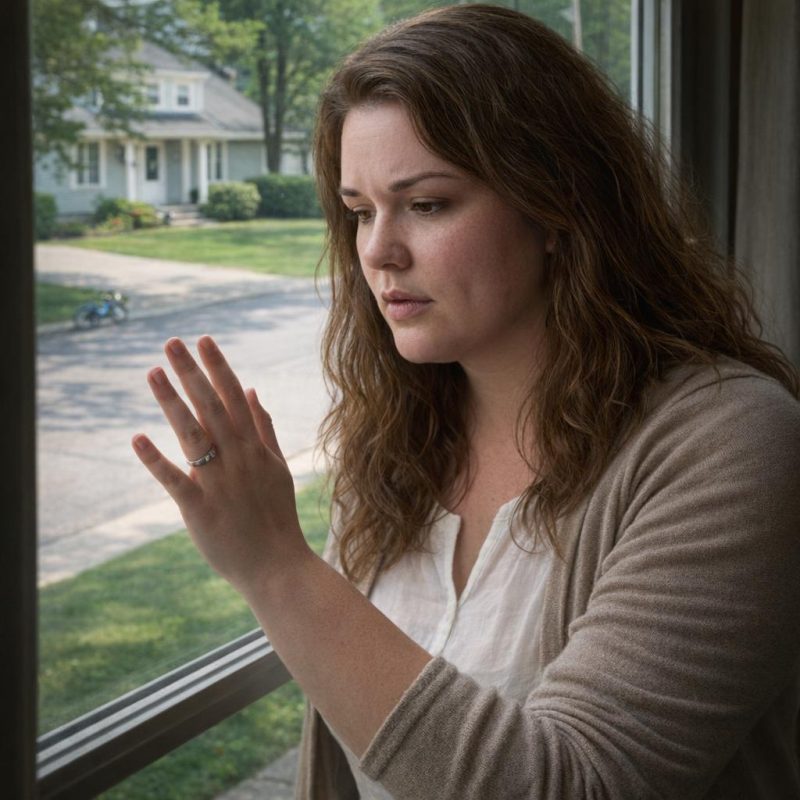 Image by RM AI
Rachel's Car
I started paying attention to the cars before they even came through the gate. Rachel arrived on a Tuesday evening in a white hatchback and parked it halfway down the block. About ten minutes later, Tom pulled up in his silver sedan — the same one I'd watched Marcus drive away in — and parked it on the opposite side of the street. They met briefly on the patio, maybe three minutes, and then Tom came back through the gate alone and walked toward his car. Except he didn't get in. He kept walking. Rachel came out through the gate a minute behind him, turned in the direction of Tom's sedan, and got in on the driver's side. I watched her pull away from the curb in Tom's car. Tom's silver sedan. The white hatchback Rachel had arrived in sat exactly where she'd left it, parked and empty. Tom was somewhere down the block, presumably in a car I hadn't tracked. I pressed my hand flat against the window frame and just stood there. They were swapping. That was the only word for it. They were arriving in one vehicle and leaving in another, every single time, and the wrongness of it had settled somewhere deep and wouldn't move.
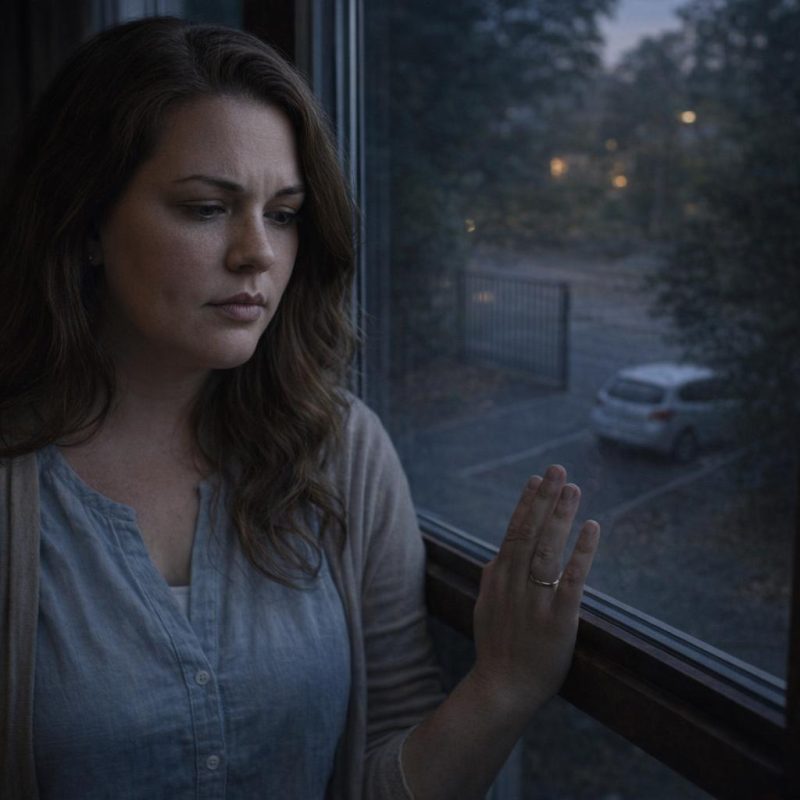 Image by RM AI
Confirming the Pattern
I got a notebook from the kitchen drawer — one of Lily's old school ones, still half-blank — and I started writing things down. Date, time, who arrived, what they drove, what they left in. I did it for three nights straight. Marcus: arrived in a grey pickup, left in a blue compact. Rachel: arrived in the white hatchback, left in Tom's sedan. Tom: arrived in a black crossover I didn't recognize, left on foot and then — I lost him, but his crossover was still there an hour later when I checked. I wrote down every plate number I could make out from the window, squinting at the street in the low light with my phone camera zoomed in as far as it would go. The pattern held every single time. Nobody left in the car they came in. Not once. I flipped back through the pages and read my own handwriting — the columns of times and plates and vehicle colors — and there was no way to explain it away as coincidence or forgetfulness or anything innocent I could think of. The notebook page was filled with mismatched arrivals and departures, and the columns didn't lie.
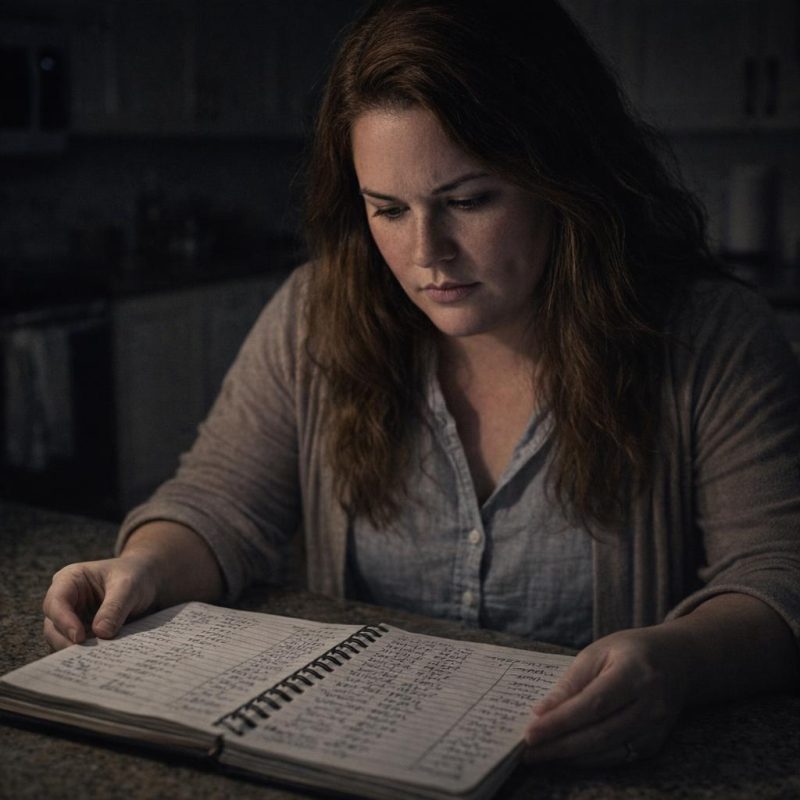 Image by RM AI
Why Swap Cars
After Lily went to bed, I sat at the kitchen table with my laptop and typed into the search bar: "why would someone swap cars secretly." I felt a little ridiculous doing it, like I was overreacting, like there was going to be some completely boring explanation that made me feel foolish. The first few results were about car sharing apps and rental logistics. Fine. Normal. I scrolled past those. Then came the forums — Reddit threads, a few true crime adjacent blogs — and the explanations got less boring fast. People swap vehicles to shake a GPS tracker installed by a suspicious spouse. People swap to avoid being followed. People swap to make their movements harder to trace if someone is watching their plates. I read that last one twice. There were also references to infidelity, to people who didn't want their location history showing up on a shared phone plan, to avoiding surveillance from someone who knew their car on sight. I sat back in my chair and stared at the screen. None of it felt good. All of it felt possible. Then I scrolled down one more time and a search result loaded that stopped my hand on the trackpad — an article about GPS tracking evasion, and the specific methods people use to stay off the grid.
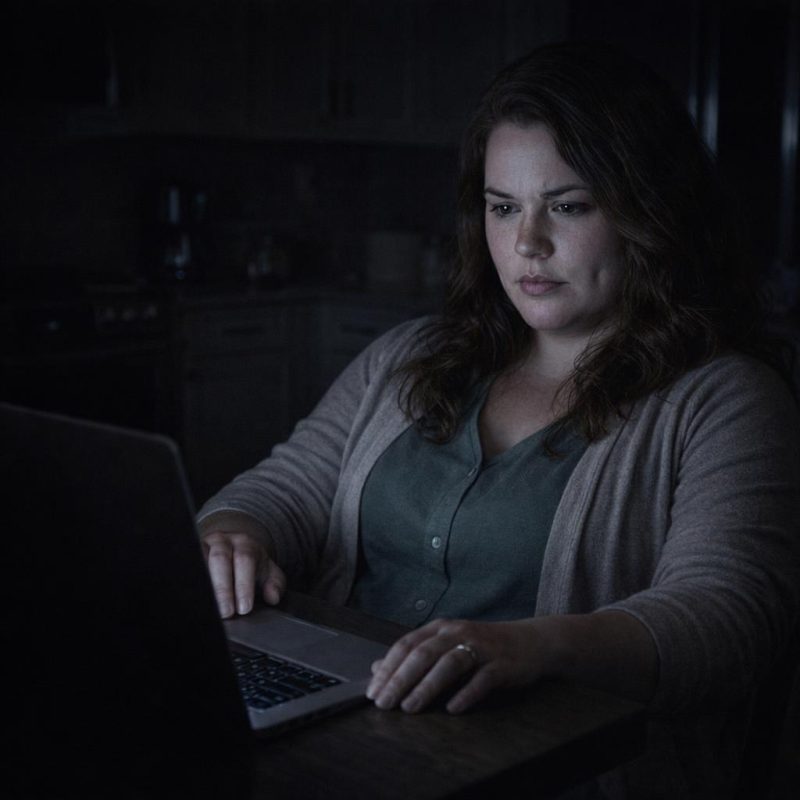 Image by RM AI
Possible Reasons
I closed the laptop before David came into the kitchen. He poured himself a glass of water, asked if I was coming to bed soon, and I said yes, soon, just finishing something. He didn't ask what. I sat there after he left and tried to line up the possibilities in some kind of order. GPS trackers — meaning someone's spouse had put one on their car and they suspected it. That would explain the swaps. It would mean the pool visits were cover, a reason to be in the neighborhood, and the real point was the handoff. Or infidelity — two people, or more than two, moving around in ways that would be hard to trace. That might explain the secrecy, the quick exchanges, the way nobody lingered. Or something else entirely, something that required avoiding surveillance more broadly, not just a jealous partner but something that made license plates a liability. I didn't know which one was true. I wasn't sure I wanted to. Each option sat in my chest like a stone, and none of them were the kind of thing you could unknow once you'd thought them through. I sat at the kitchen table in the quiet, and the weight of not knowing which truth was worse pressed down and stayed.
 Image by RM AI
Blind Spots
The next morning I walked the block slowly, the way you do when you're pretending to check the mail or get some air. I was looking at cameras. The Hendersons had one above their garage, angled at their driveway. The house on the corner had a doorbell camera facing the front path. I pulled up the HOA security map on my phone — they'd sent it out two years ago when the neighborhood watch program started — and I cross-referenced what I was seeing with what was listed. There were six cameras total covering the street and the main entry points. I walked back to my own house and stood at the edge of the yard, looking at the angles. The front of my property was partially visible from the corner camera, but only the driveway and the front door. I walked around to the back. The pool area sat behind the fence line, below the sight line of every camera I'd just mapped. No angle from the street reached it. No neighbor's camera pointed that direction. I checked twice, walking the perimeter, holding my phone up to test the sightlines. The pool area didn't appear on a single feed. Every camera on the block missed it completely.
 Image by RM AI
Camera Coverage
I pulled up the HOA security map on my phone — the one they'd emailed out two years ago when the neighborhood watch program launched — and I sat at the kitchen table and really looked at it. The map used color coding: green for covered zones, gray for gaps. My front yard was green. The driveway was green. The side path along the fence was green. I traced my finger across the screen to the back of the property. Gray. The entire rear yard, the patio, the pool — all of it sat inside a documented gray zone. This wasn't something I'd pieced together from walking the block. It was right there in the official record, filed and distributed to every household on the street. The HOA had known about this gap for two years. Anyone who'd read the email would have known. I set my phone face-up on the table and stared at the ceiling for a moment. Then I looked back down at the map. My property sat there in gray, a blank space in the middle of everything covered.
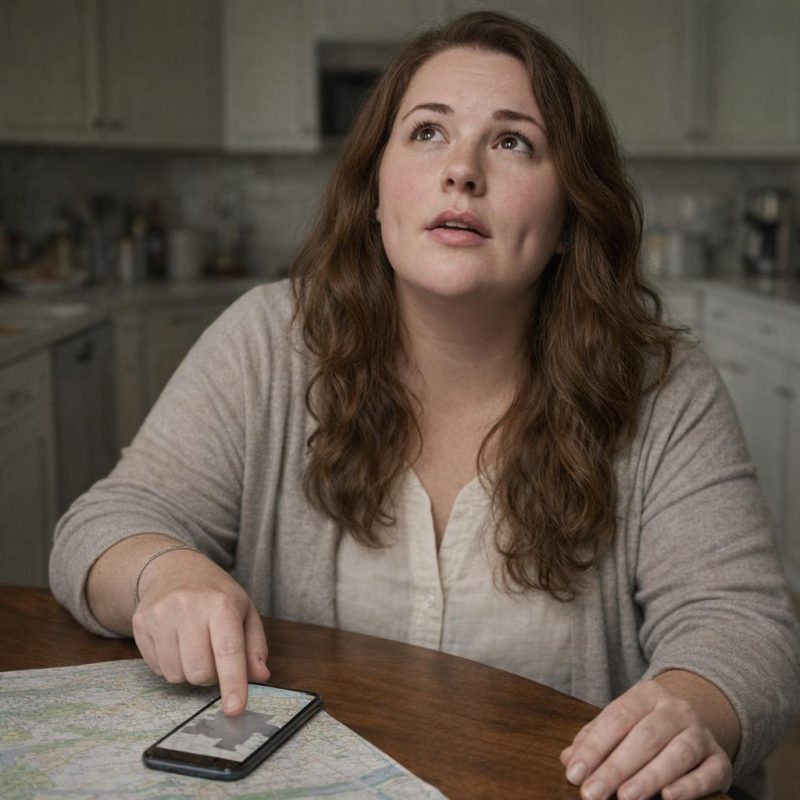 Image by RM AI
Road Visibility
I walked the perimeter of my own yard like I was seeing it for the first time. The back fence ran six feet high, solid wood panels with no gaps between the boards. The landscaping along the south side — the arborvitae I'd planted three summers ago because I wanted privacy from the street — had filled in completely. I stood at the gate and looked toward the road. Nothing. You couldn't see the pool from the sidewalk. You couldn't see the patio. You couldn't even see the back corner of the house. I walked to the far end of the block and looked back. Same result. Then I checked the neighboring houses — the angles of their windows, the height of their rooflines. The Hendersons' second floor faced the front. Tom and Rachel's side windows looked toward their own yard, not mine. There was no sightline into my backyard from any direction. I'd chosen this house partly because of that privacy. I'd been proud of it, actually. Standing there in the afternoon quiet, I felt the pride drain out of me completely, replaced by something I didn't have a clean word for yet.
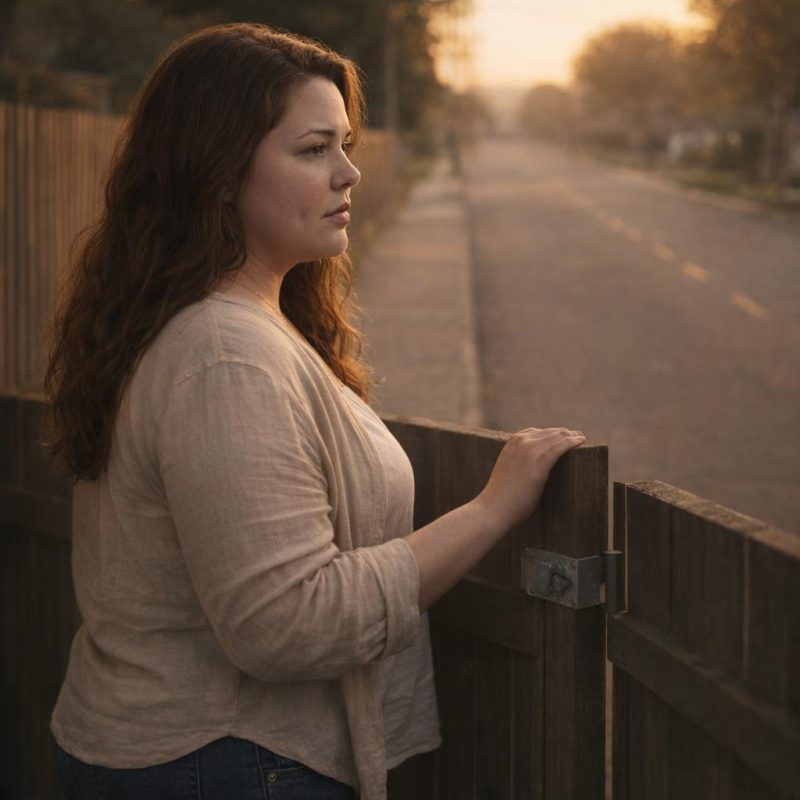 Image by RM AI
Setting Up
I drove to the hardware store the next morning and bought a small wireless camera — the kind people use for package theft, small enough to sit in the eave of a roofline without drawing attention. I told myself I was just being careful. I told myself I might be wrong about all of it. I installed it that afternoon while David was at work, tucking it into the corner where the patio overhang met the back wall of the house. The angle covered the full length of the patio and the gate. I pulled up the feed on my phone and walked to the far end of the yard to test it. The image was sharp. Clear enough to read a license plate if someone held their keys at chest height. I saved the app under a folder I labeled 'Home.' I didn't tell David. I wasn't sure how to explain it, and I wasn't ready to have that conversation yet. Marcus was scheduled to use the pool on Thursday. I set the camera to record continuously and went back inside to wait.
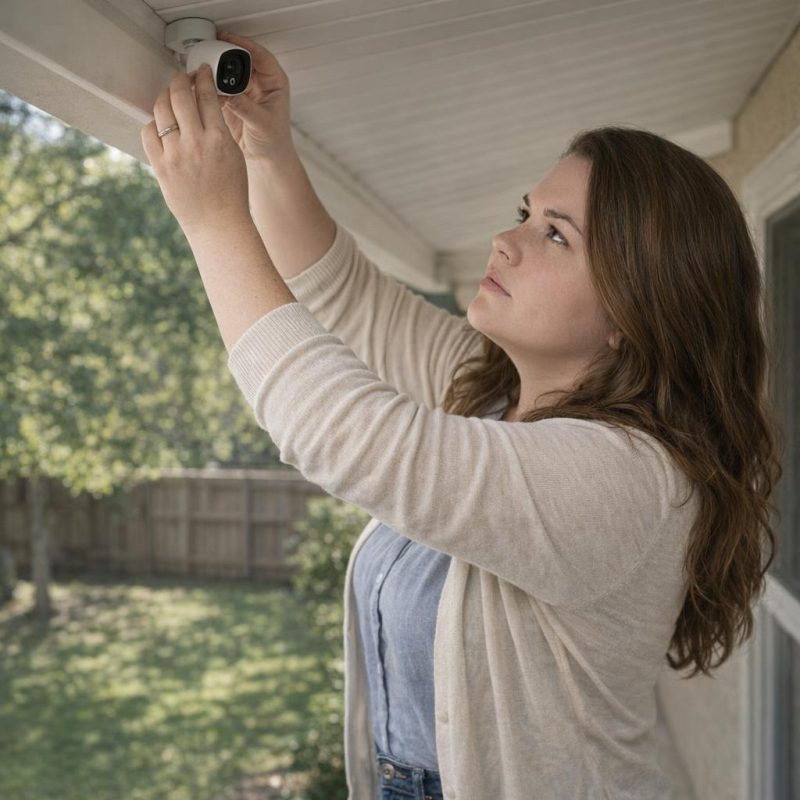 Image by RM AI
Clear Evidence
Thursday came and I watched the feed from my phone in the kitchen. Marcus arrived at the gate right on time, the way he always did. Rachel was already on the patio — I hadn't even heard her come through. They stood close together near the far end of the table, and I watched Marcus reach into his jacket pocket. The camera caught it cleanly. He held out a set of keys. Rachel took them, turned them over once in her hand, and slipped them into her bag. Then she handed him a different set. The whole exchange took maybe fifteen seconds. Marcus went to the pool. Rachel left through the side gate. I sat at the kitchen table with my phone in both hands, replaying the clip. Over the next two weeks, I watched the same pattern play out four more times — different combinations, same motion, same patio, same unhurried transfer. I saved every clip to my phone and backed each one up to the cloud. The video showed keys passing from hand to hand in perfect detail.
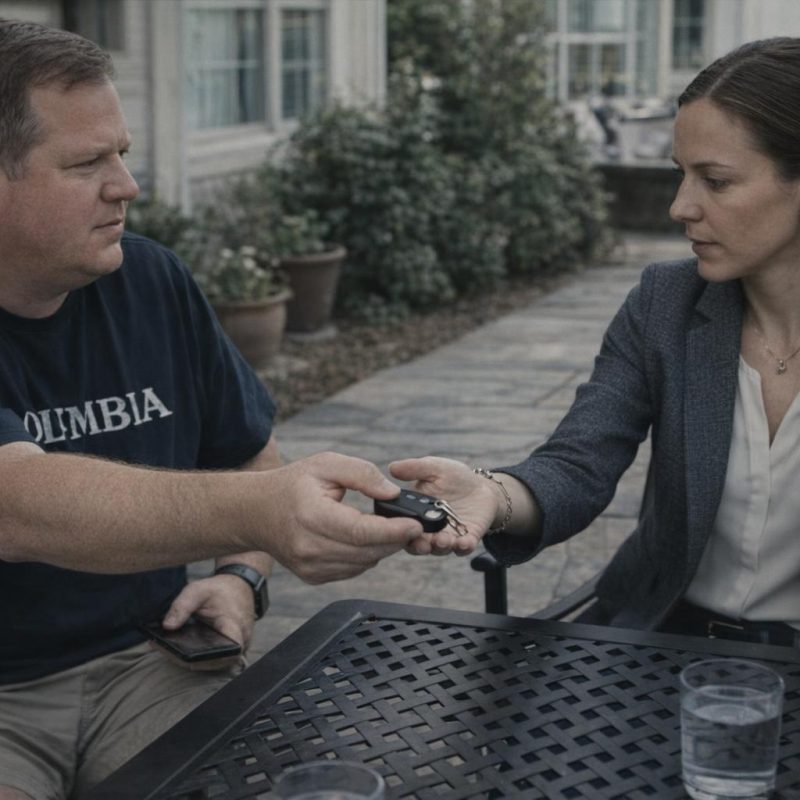 Image by RM AI
Documentation
I opened my laptop and started a spreadsheet. Date, time, who arrived, who was already there, vehicle description, any plates I could pull from the driveway camera at the front of the house. I went back through every clip and matched each one to a row. Five exchanges over sixteen days. I noted which keys looked like car fobs and which looked like standard cut keys. I noted how long each person stayed after the exchange. I cross-referenced the arrival times against the pool visit schedule — every swap had happened during a scheduled visit, never outside one. I saved the spreadsheet to a folder I'd created separately from my regular documents. Then I went back to the video files and renamed each one with the date and the names of the people in the frame. I burned a backup copy to a USB drive and put it in the zippered pocket of my winter coat in the closet. When I was done, I sat back and looked at the screen. Then I opened a new folder on my laptop and labeled it 'Pool Evidence.'
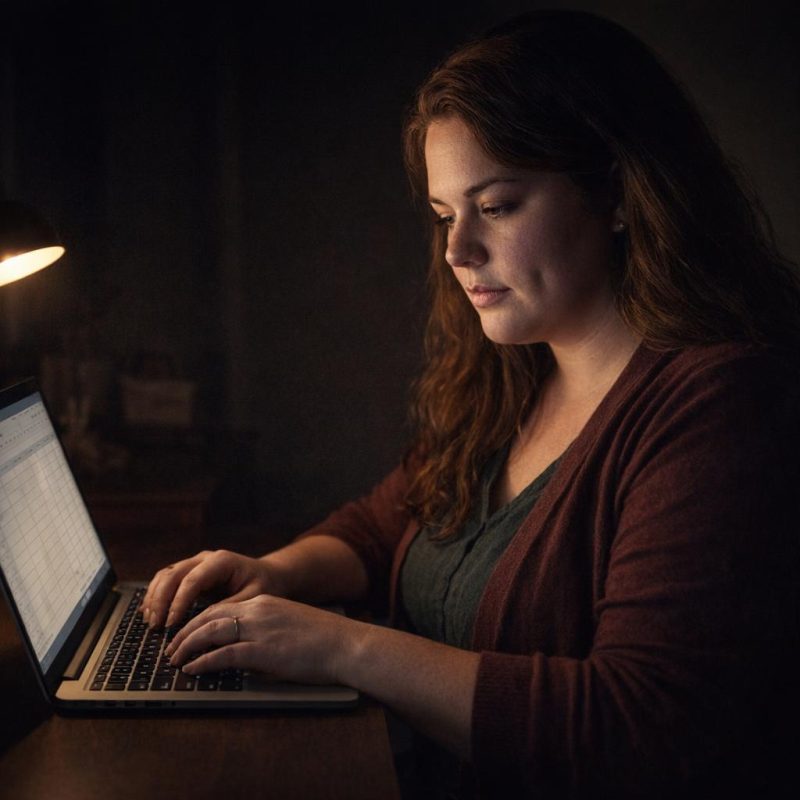 Image by RM AI
Building the Case
Three weeks of documentation. That's what I had. I went through it all one more time on a Sunday afternoon while the house was quiet — the spreadsheet, the video clips, the written notes I'd been keeping in a notebook I stored under the bathroom sink. Fifteen entries in the spreadsheet. Eleven video clips. Six pages of handwritten notes with timestamps and descriptions. I'd captured four different vehicles, three sets of neighbors, and what looked like at least two distinct types of keys changing hands. I backed everything up to a second cloud account I'd created with an email address David didn't know about. Then I printed the spreadsheet and the clearest still frames from the video and put them in a manila envelope. I sealed it and wrote the date on the front. I sat at the desk for a long time after that, not moving. The folder on my laptop had grown from one file to dozens, and each new addition had felt less like progress and more like weight.
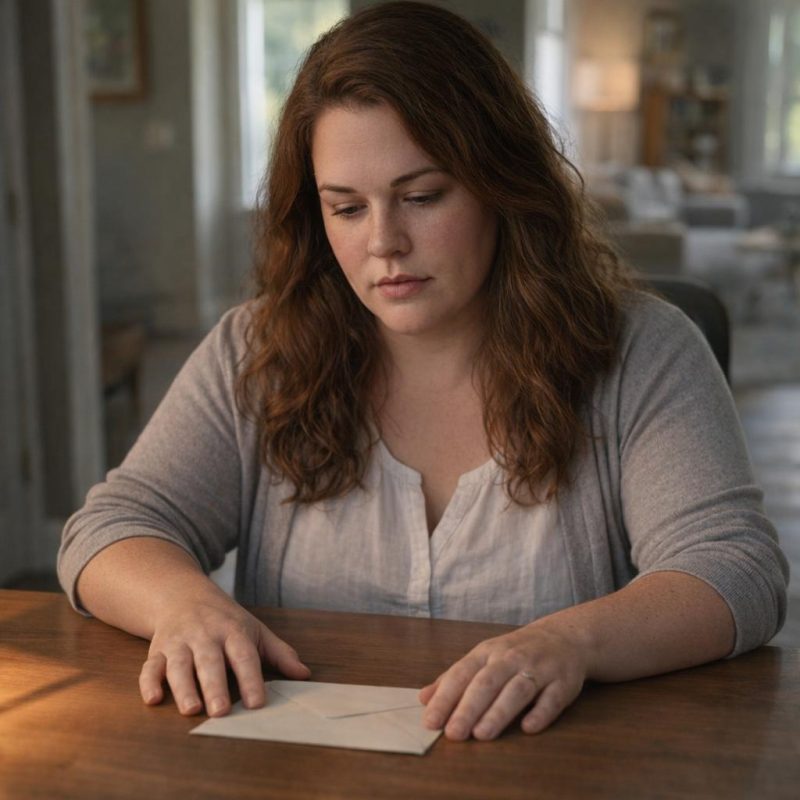 Image by RM AI
Confronting Rachel
I caught Rachel at the gate on a Tuesday morning, before she could get to the pool. I'd been thinking about how to do this for days, and I'd decided that direct was better than careful. I asked her plainly — what were the keys she and Marcus had been exchanging on my patio? She looked at me for a moment without blinking. Then she said I must have misunderstood what I saw. I told her I had it on video. She didn't flinch. She said it was probably a misunderstanding, that things could look a certain way on camera and mean something completely different. Her voice stayed even the whole time. She didn't raise it, didn't stumble, didn't ask to see the footage. She just stood there with her hands folded in front of her and said she was sorry I was upset, and that she hoped we could clear it up. I watched her walk through the gate and set her bag down by the pool chair like nothing had happened. I stood at the fence for a moment longer, and what stayed with me wasn't what she'd said — it was the careful blankness that had settled over her face the moment I mentioned the video.
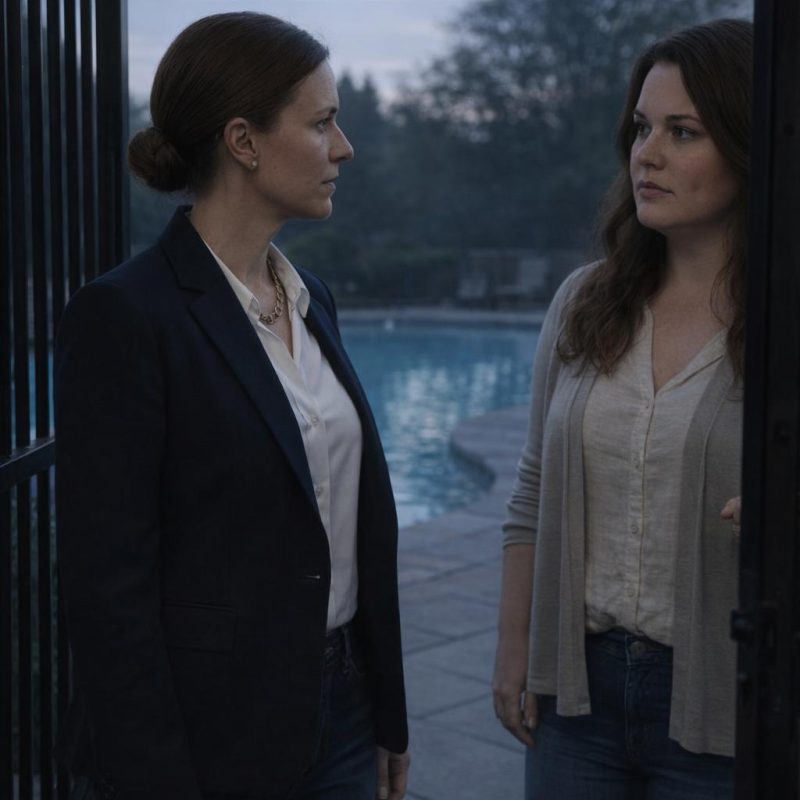 Image by RM AI
The Wall
I talked to Tom the next afternoon, catching him as he came through the side gate. I asked him the same thing I'd asked Rachel — what were the keys, what was the exchange, what was actually happening on my patio. He stopped walking and looked at the ground for a second. Then he said he didn't know what I was referring to. I told him I had video. He said he couldn't discuss it. Not that I was wrong, not that there was nothing to discuss — just that he couldn't. I pushed a little harder and he repeated it, same words, same flat tone. He went to the pool and didn't look back. I found Marcus near the equipment shed an hour later and tried again. He was more uncomfortable than Tom had been — he kept shifting his weight, checking his phone, not quite meeting my eyes. He said it was complicated. I told him complicated wasn't an answer. He was quiet for a moment, and then he said, almost under his breath, 'You should ask whoever gave us the schedule.'
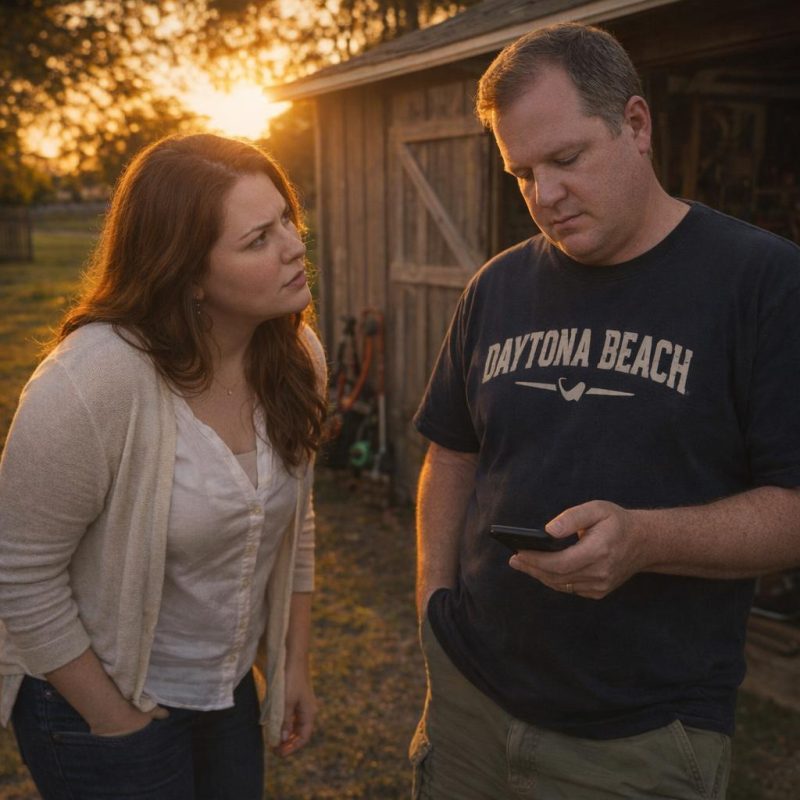 Image by RM AI
Tom's Refusal
I caught Tom near the side gate the next afternoon and asked him directly — who gave them the schedule, and what were the vehicle swaps actually about. He stopped walking. He looked at the ground for a second, the way people do when they're deciding something, and then he said he couldn't discuss it. I told him I had video. I pulled it up on my phone and held it out so he could see the key exchanges, the timing, the whole thing. He looked at the screen. He didn't deny it. He said, quietly, that yes, there had been swaps, but that he couldn't explain them. I asked who else knew about the arrangement. He said he wasn't in a position to say. I asked who had given them the schedule in the first place. Same answer. Same flat, careful tone. I tried a different angle — I asked if he understood that this was my property, my gate, my pool. He said he understood. And then he walked past me toward the water and didn't look back. I stood there in the afternoon heat, the silence between us sitting heavier than anything he'd actually said.
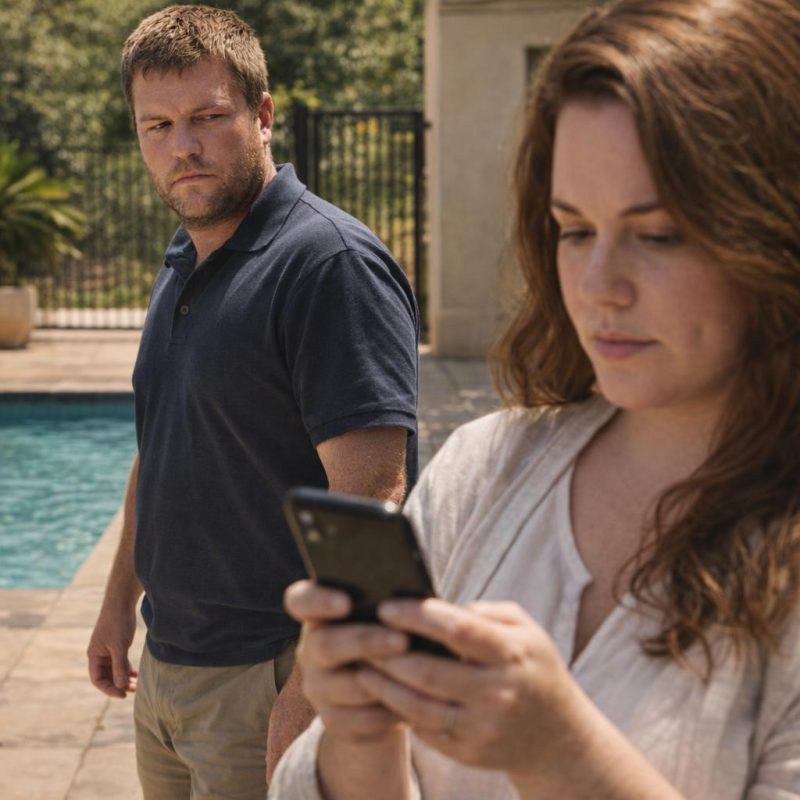 Image by RM AI
Others Know
Marcus was still near the equipment shed when I found him, and he looked like he'd been hoping I wouldn't. I asked him the same questions I'd asked Tom — the schedule, the swaps, who was behind it. He shifted his weight from foot to foot and kept glancing at his phone like he was waiting for a reason to leave. He said the timing had been coordinated, and that yes, others had been given the same information. I asked how many people. He said a few. I asked who had provided the schedule. He went quiet. I told him I wasn't angry at him specifically, that I just needed to understand what had been happening on my own property. He said he was sorry, that it had seemed straightforward at the time, that he hadn't thought it would be a problem. I asked again who had organized it. He looked past my shoulder and said he really couldn't get into that. What stayed with me wasn't his evasion — it was the word he'd used. Organized. Someone had organized this. Multiple people, a schedule, coordinated timing. I stood there after he walked away, trying to absorb the shape of something much larger than I'd expected.
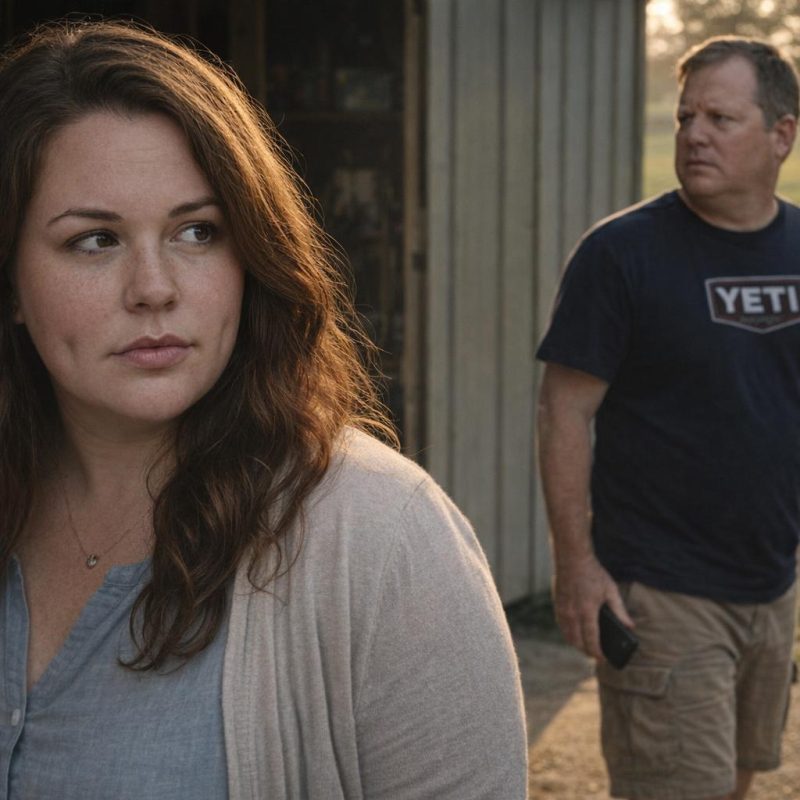 Image by RM AI
Gate Codes
I stayed with Marcus a little longer, because something he'd said was still pulling at me. If multiple people had been given the same information, someone had to have sent it. I asked him how he'd gotten the gate code in the first place. He looked uncomfortable. He said it had come in a text. I asked if someone had knocked on his door, or handed him a note, or told him in person. He shook his head. Just a text, he said. I asked if he still had it. He hesitated, and I could see him working through whether to answer. I told him I wasn't going to do anything with his number, I just needed to understand how the code had gotten out. He said the message had included the code, the timing, and where to park so the cars wouldn't be visible from the street. I felt something cold move through me at that last part — the parking instructions, the camera angles, the level of detail. I asked who had sent it. He looked down at his phone and then back at me, and I could see him deciding. Then he said, almost quietly, that the code had come in a text message.
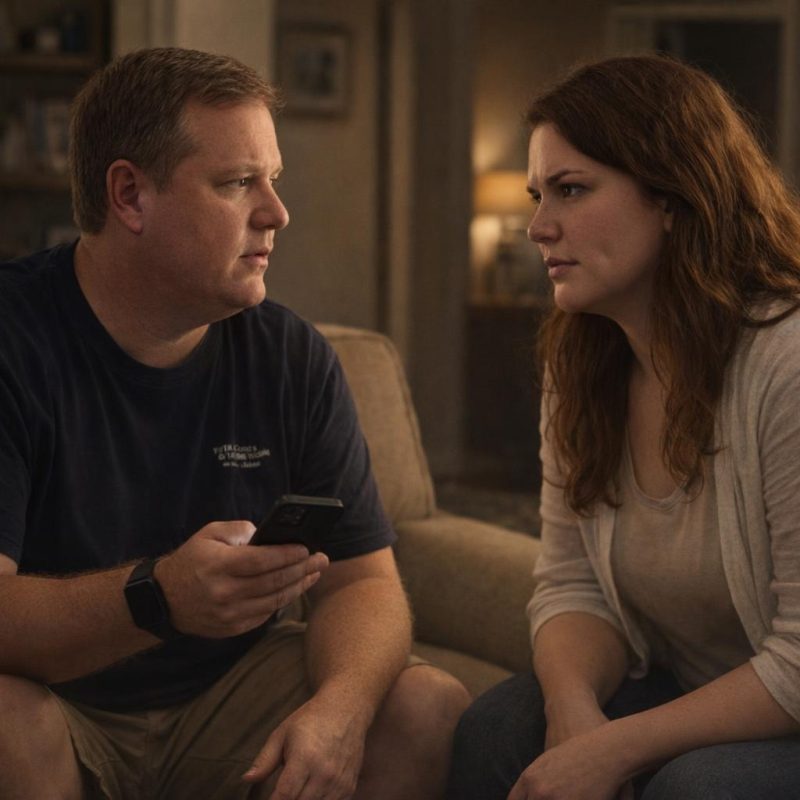 Image by RM AI
David's Number
I asked Marcus to show me the message. He hesitated for a long moment, long enough that I thought he was going to say no. Then he unlocked his phone and held it out, screen first, and I looked at the thread. The messages were detailed — gate code, timing windows, parking instructions, a note about which days the pool would be clear. Whoever had sent them knew the property well. Knew our schedule. I scrolled up slightly to see the top of the thread, where the contact name sat above the first message. My chest went tight before my brain caught up. The name at the top of Marcus's message thread was David.
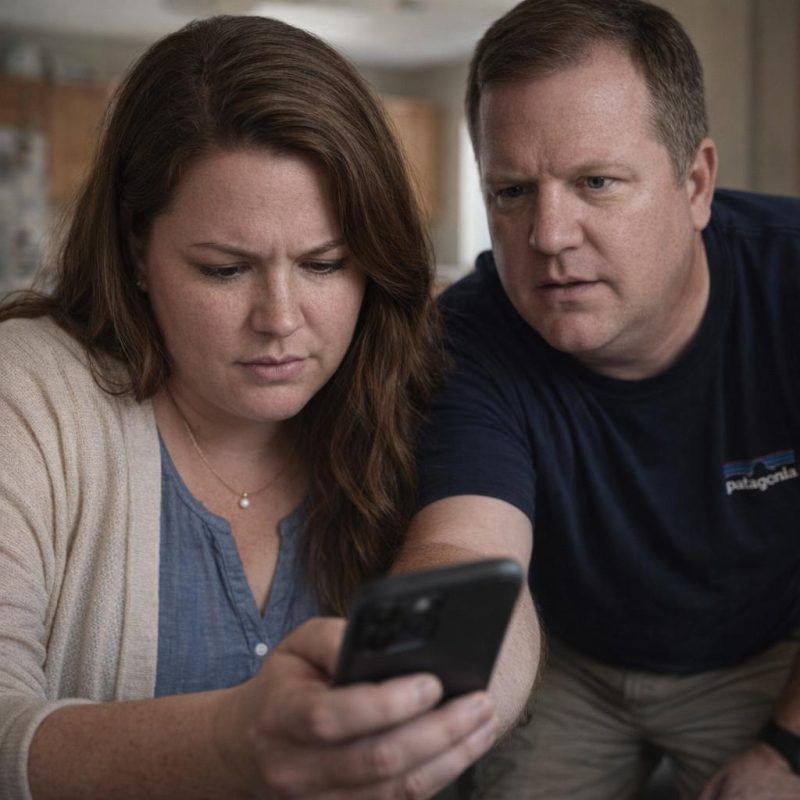 Image by RM AI
David's Spreadsheet
David had gone out that evening, and I sat at his desk for a moment before I opened his laptop. I told myself I was probably wrong. I told myself there was an explanation. His desktop was tidy — organized in a way I'd never paid attention to before. I found a folder labeled 'Pool Arrangements' in under a minute. Inside it were subfolders sorted by month. I opened the most recent one and found a spreadsheet. It took me about ten seconds to understand what I was looking at. There were columns for neighbor names, time slots, vehicle descriptions, and amounts. Dollar amounts. Paid, pending, confirmed. Tom and Rachel had a row. Marcus had a row. There were two names I didn't recognize at all. David had been charging people to use our pool as a staging area for vehicle swaps, and he'd been tracking every payment. My hands were completely steady, which surprised me. I felt cold in a way that had nothing to do with the air conditioning. I scrolled to the next tab, and at the top of the screen I saw the file was labeled 'Pool Schedule - Client Payments.'
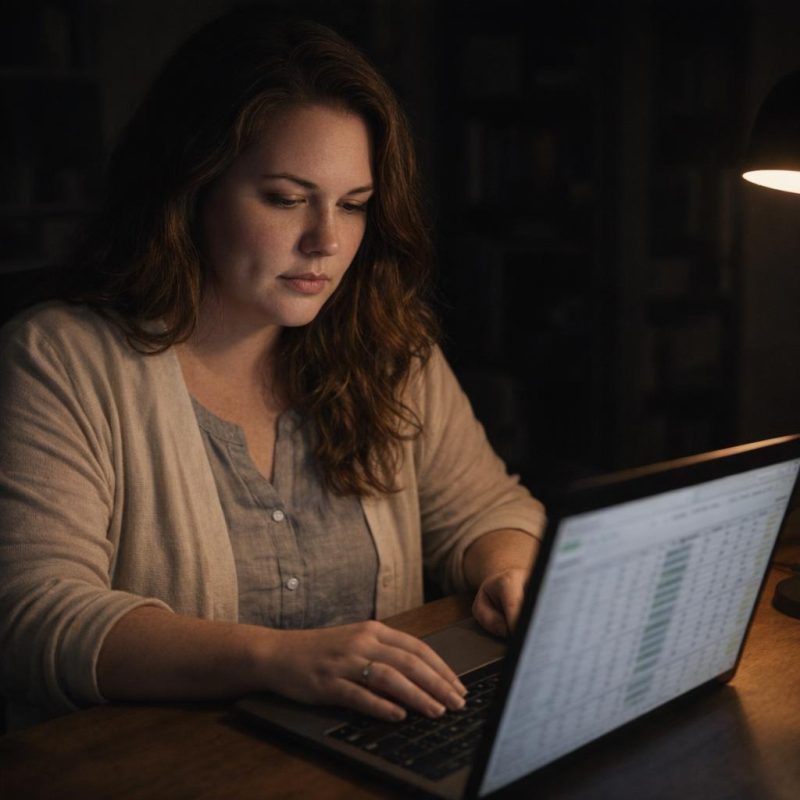 Image by RM AI
The Text Messages
I didn't close the laptop. I went to his messages next, pulling them up on his phone, which he'd left charging on the nightstand. I found the group thread first — five people, including Marcus and Tom, with a name David had given the chat that made my stomach turn: 'Pool Access Group.' The messages went back months. He'd sent gate codes with instructions on which entrance to use. He'd sent reminders about parking placement. There was a message from early summer where he'd written out, in plain language, which corner of the yard sat outside the camera's range. He'd told them. He'd mapped it out and told them. I kept scrolling. There were individual threads too — separate conversations with each person, some of them including payment confirmations, some of them troubleshooting timing conflicts. One message from Rachel asked if the schedule would change while we were on vacation. David had replied within minutes with updated times. I forwarded everything I could to my own number, screenshot what I couldn't forward, and kept moving. My hands were still steady. My jaw was tight. I scrolled through months of messages I had never known existed.
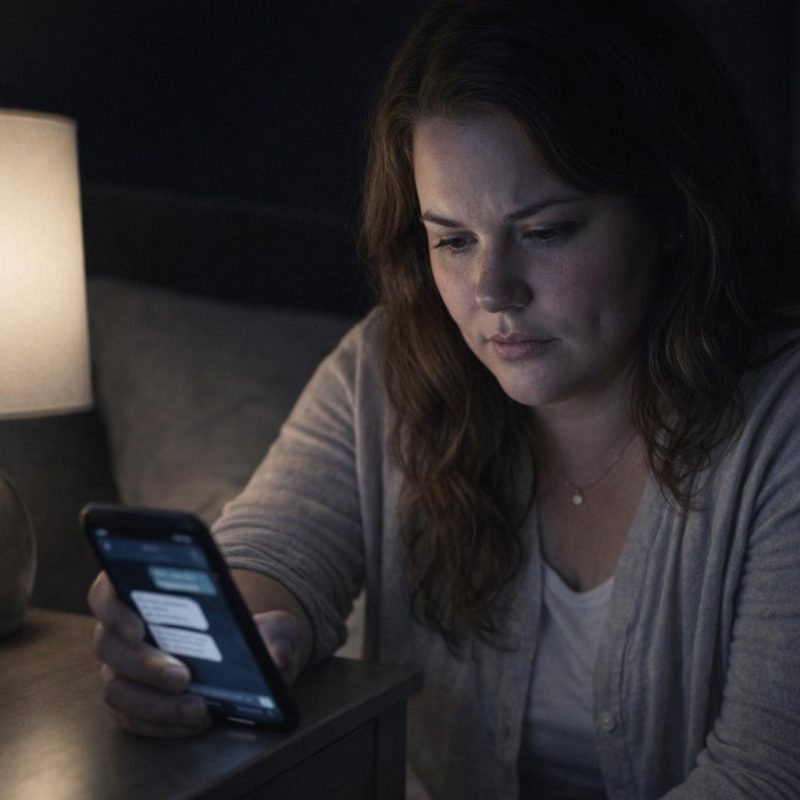 Image by RM AI
Two Weeks Before
I went back to the spreadsheet and looked at the dates. The first entry was timestamped two weeks before I'd suggested letting the neighbors use the pool. I sat with that for a long time. I remembered the conversation — I'd brought it up over dinner, feeling good about it, feeling like a generous neighbor. I remembered David saying it was a great idea, that it was exactly the kind of thing that built community. He'd been enthusiastic in that easy, warm way he had. I'd felt proud of myself for thinking of it. I scrolled back through my own memory of that week, trying to find the moment the idea had actually come from. There had been a comment he'd made about the neighbors, something about how the pool sat empty most afternoons. A question about whether we ever thought of sharing it. I'd taken that thread and followed it somewhere I thought was my own. The first coordination message had been sent before I ever opened my mouth at that dinner table. I sat in the quiet of his office, the screen still glowing in front of me, and felt the hollow ache of understanding I'd never had the idea at all.
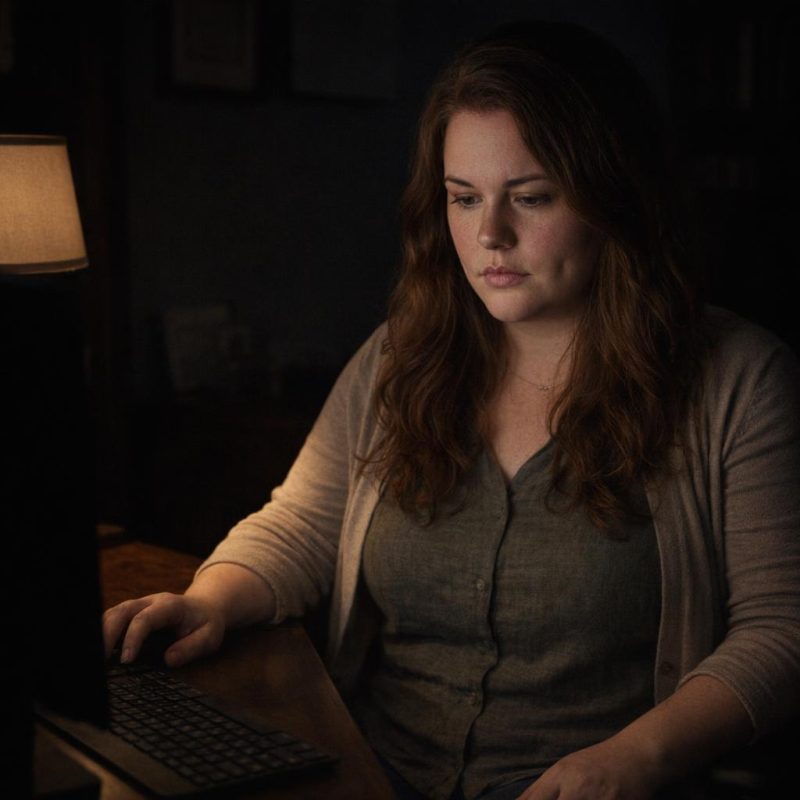 Image by RM AI
Copying Evidence
I gave myself two minutes to sit with it, and then I got up and got to work. I found a USB drive in the kitchen junk drawer and plugged it into his laptop. I copied the entire 'Pool Arrangements' folder — every subfolder, every spreadsheet, every document. While that transferred, I went back to his phone and forwarded the remaining message threads to my email, the ones I hadn't gotten to yet. I took screenshots of the payment confirmations and the group chat header with all five names visible. I saved everything to the USB drive and then opened my cloud storage on my own phone and uploaded the screenshots there too. Three separate locations. I wasn't taking any chances. When the transfers were done, I checked the laptop's recent files list to make sure nothing looked disturbed. I closed the folders in the same order I'd opened them. I set his phone back on the nightstand at the same angle it had been. I carried the USB drive to my own bag and zipped it into the inside pocket. Then I sat back down in his chair and watched the final cloud upload finish, the progress bar reaching one hundred percent.
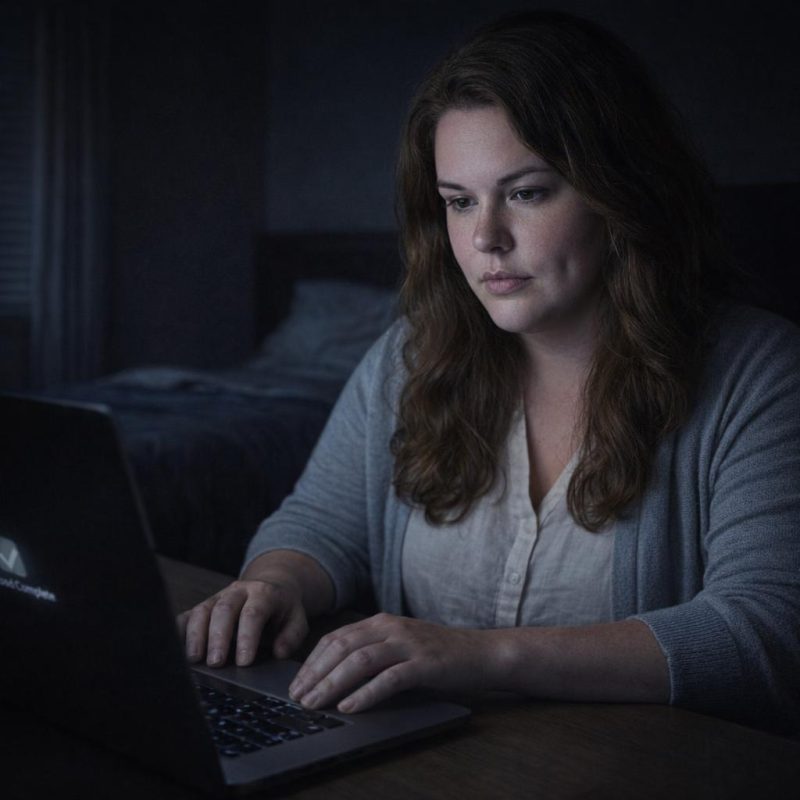 Image by RM AI
The Lawyer
I found a family law attorney through a referral from a coworker — someone who handled civil matters and had experience with fraud cases. I called from my car in a parking lot two miles from the house, and I got an appointment for the next morning. I told David I had a dentist appointment. The lawyer's office was quiet and smelled like old paper, and I sat across from a woman in her fifties who listened without interrupting while I laid out everything — the spreadsheets, the payment threads, the vehicle rotations, the fact that my property had been the hub. She asked a few precise questions. How long had this been going on? Had I signed anything? Had I received any money? I answered every one. She made notes on a yellow legal pad and didn't look up when she said it. She told me the arrangement had been operating on my property, under my name, and that depending on how authorities chose to interpret my level of awareness, I could be considered an accessory.
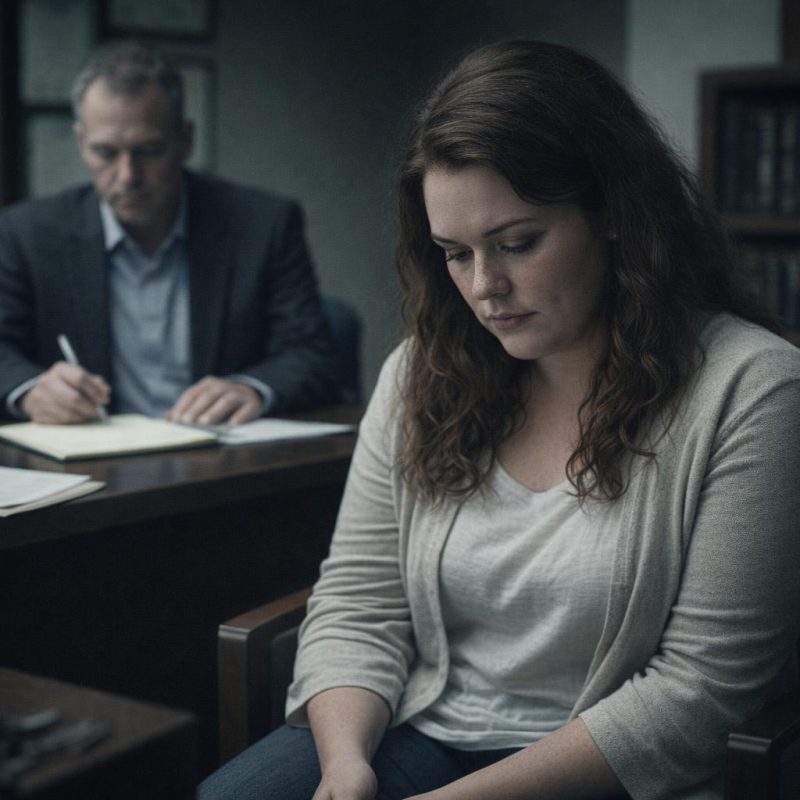 Image by RM AI
Revoking Access
I drove home with the lawyer's words still sitting in my chest and I didn't waste any time. Lily was in the living room doing homework when I came through the door, and I told her I needed her to stay inside for a bit. She looked up at me with those sharp eyes of hers and asked if everything was okay. I told her it would be. I went straight to the backyard and pulled up the gate code panel on the wall beside the fence. The system let me access the admin menu with the master code I'd set up years ago and never changed. I deleted every secondary code in the list — the one I'd given Rachel and Tom, the one Marcus had, the one David had added without telling me. Then I sent a single group message to all three neighbors: pool access is revoked effective immediately, please do not attempt entry. I didn't explain. I didn't apologize. Lily appeared in the back doorway and asked what was happening. I told her the pool arrangement was over and that I'd explain everything soon. She nodded slowly, watching me. I pressed confirm on the final deletion and the panel flashed: All Codes Deleted.
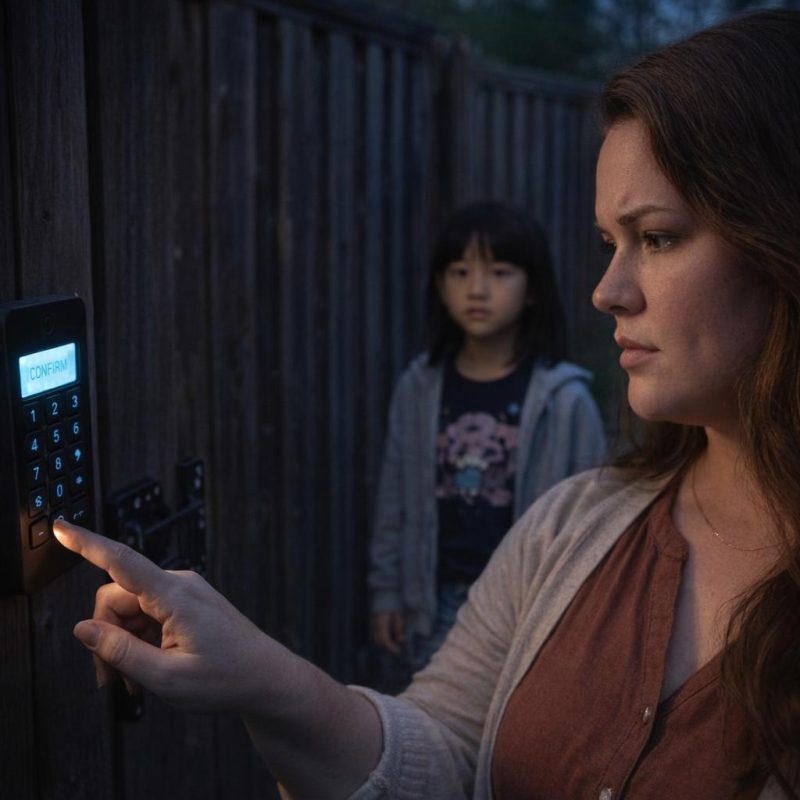 Image by RM AI
The Confrontation
I waited until Lily was at her friend Maya's house for the afternoon before I set everything out on the kitchen table. I printed the spreadsheets at the library that morning — twelve pages, clean and organized, exactly the way David had kept them. I laid them out in order alongside the forwarded message threads and the payment confirmations. When David came in from the garage and saw the table, he stopped walking. I didn't say anything right away. I let him look. He asked what all of this was, and his voice came out careful, measured, like he was buying himself a second to think. I told him I knew about the coordination service. I told him I knew about the fees, the clients, the vehicle rotations, and the fact that our backyard had been the operational center of it. I slid the spreadsheet with his own column headers across the table toward him. He sat down slowly. The color left his face in a way I'd never seen before — not embarrassment, something closer to the particular stillness of a person who has run out of road. I asked him to explain it to me. He opened his mouth and closed it again. The silence between us stretched out wide and stayed there.
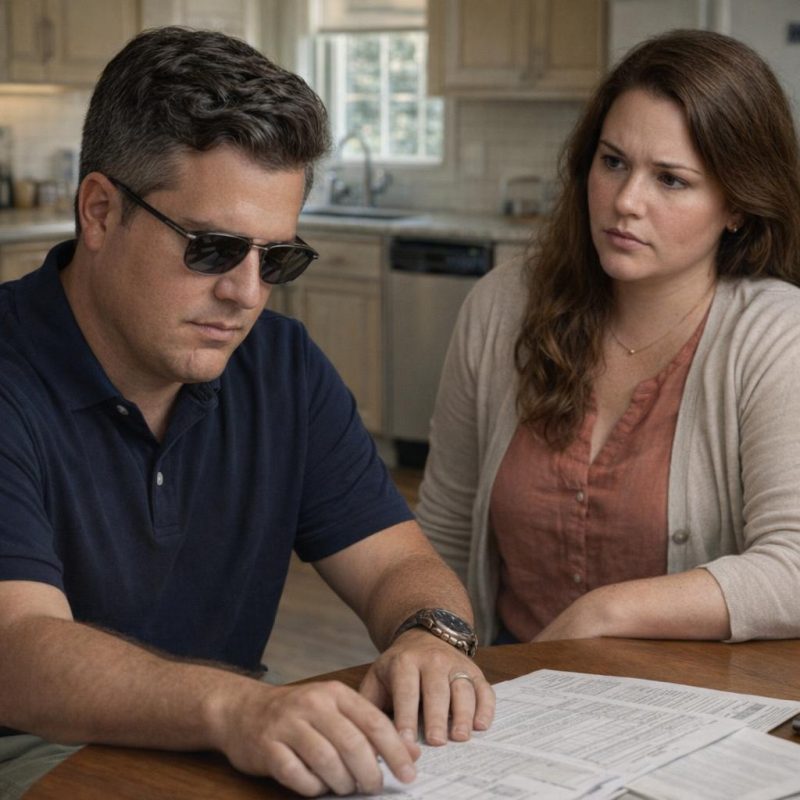 Image by RM AI
Financial Benefit
He started talking in that low, careful way he had when he was trying to manage a situation. He said it had started small. A neighbor needed help coordinating a registration swap and didn't know how to navigate it, and David had figured it out for them. Word spread. He said people were willing to pay for someone who knew what they were doing, someone who could keep it organized and quiet. I asked him how much. He paused. Two hundred dollars a month, per client. I asked how many clients. He looked at the table. At peak, he said, around eight. I did the math in my head without saying it out loud — sixteen hundred dollars a month, month after month, running through our backyard, under my name, without a single word to me. He said he didn't think it would hurt anyone. He said it was a service people genuinely needed. He said it like that made it reasonable, like the logic of demand was supposed to dissolve everything else. I didn't argue with him. I just sat there while he listed the amounts, his voice getting quieter with each one, and the weight of hearing those dollar figures spoken out loud in our kitchen settled over me like something I couldn't lift.
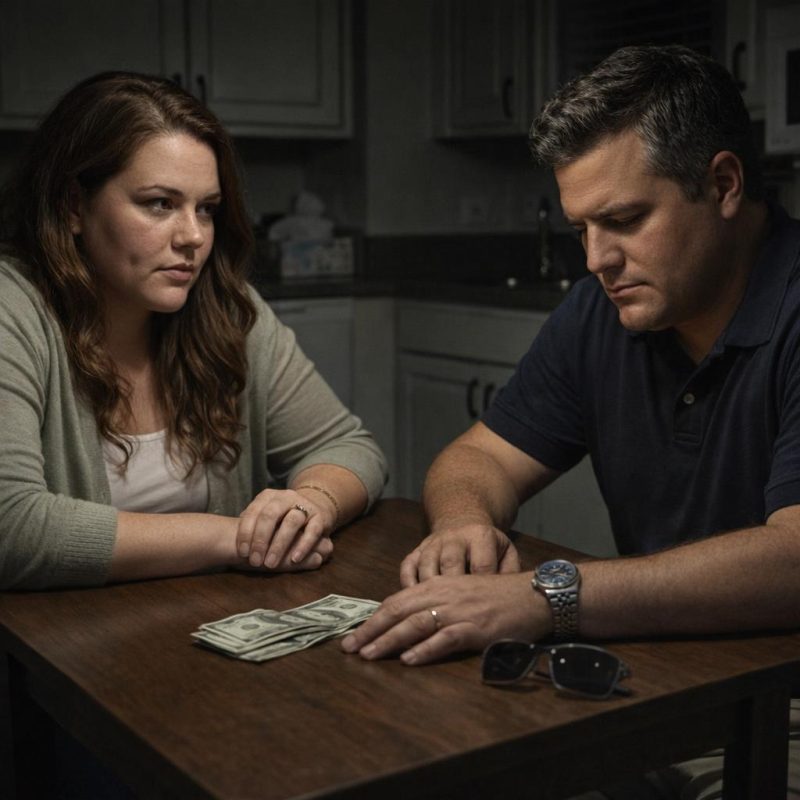 Image by RM AI
Multiple Neighborhoods
Then he kept talking, and that's when it got worse. He said our property wasn't the only location. He'd started with our backyard because it was convenient, but as the client list grew he'd brought in other properties — people he'd connected with through online forums, homeowners in other neighborhoods who were willing to let him use their driveways and back gates in exchange for a cut. He named three other neighborhoods. He said at one point he was coordinating swaps across six different locations. I sat very still. I asked him how long. He said close to two years. Two years of spreadsheets and payment threads and rotating vehicles through a network of properties, and I had been handing out pool schedules and thinking I was being a good neighbor. He tried to say that most of the other property owners knew what they were agreeing to, that it was all voluntary, that nobody had been forced into anything. I didn't respond to that. I just looked at him across the table, at the man I had been married to, and tried to find the edges of something I thought I'd understood completely. The scope of what he'd built sat between us, and I couldn't find the bottom of it.
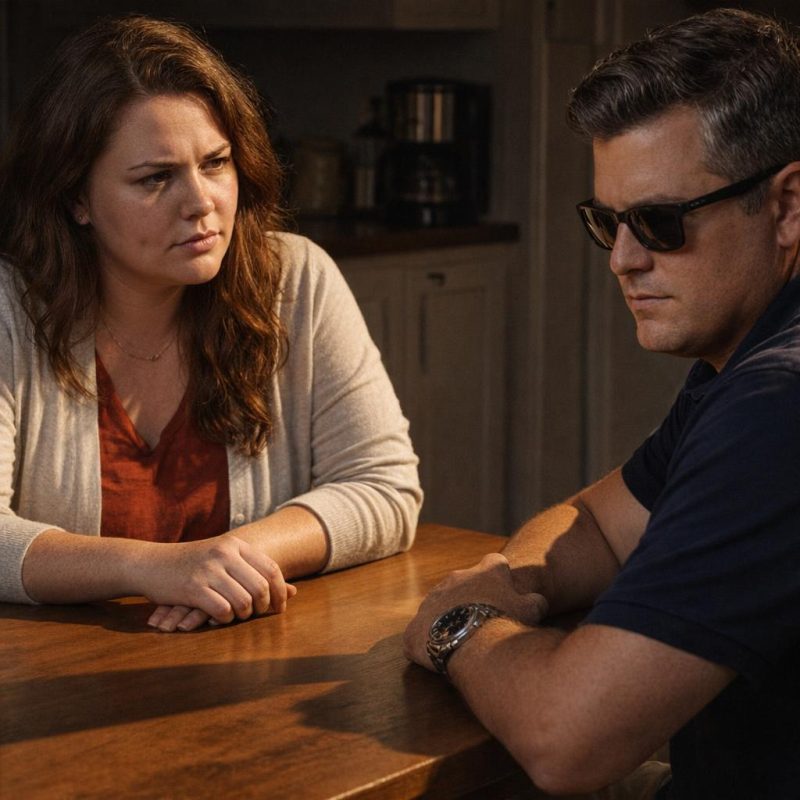 Image by RM AI
Involving Authorities
I called the non-emergency line the next morning and was transferred twice before I reached someone in the fraud division. I explained what I had — the spreadsheets, the payment records, the message threads, the video footage from our own security camera showing the vehicle rotations. The officer on the phone asked me to come in. I brought the USB drive and a printed summary the lawyer had helped me organize. The detective who met with me was methodical and unhurried. He went through each document carefully, asked clarifying questions about dates and locations, and took the USB drive into evidence. I told him about the other neighborhoods David had named. He wrote everything down without reacting much, which I'd expected. What I hadn't expected was when he looked up from his notes, set his pen down flat on the desk, and told me they had been looking for this network.
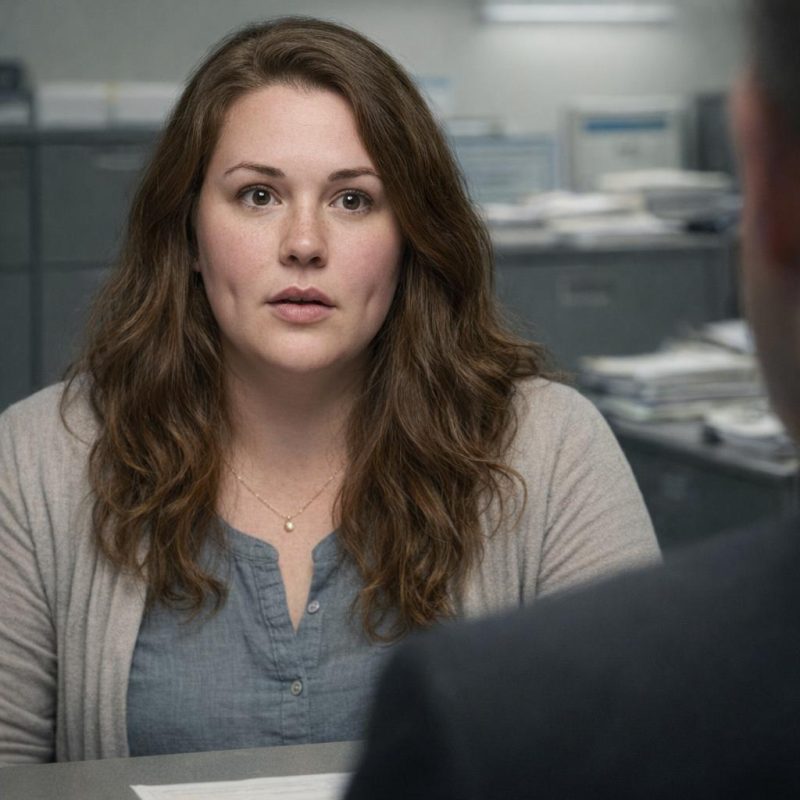 Image by RM AI
Neighbors Scatter
Things moved fast after that, and the neighborhood felt it. Within a week of the investigation opening, Rachel and Tom stopped answering their door. I saw Tom's car in the driveway twice and knocked both times — nothing. Their blinds stayed closed. Marcus left three voicemails on my phone, each one angrier than the last, calling me a troublemaker, saying I'd destroyed something that wasn't hurting anybody, that I should have come to him first. I didn't call back. Two other families on the street — ones I'd barely spoken to but whose names had appeared in David's records — put their houses on the market within ten days. A real estate sign went up on the corner lot on a Tuesday morning and another one followed by Thursday. I stood at my front window and watched the street I'd moved onto four years ago thinking I'd found the right kind of place to raise Lily, and I tried to remember what it had felt like before I knew any of this. By the end of that second week, Rachel's house went dark — no porch light, no interior lights after sunset, no movement — and it stayed that way.
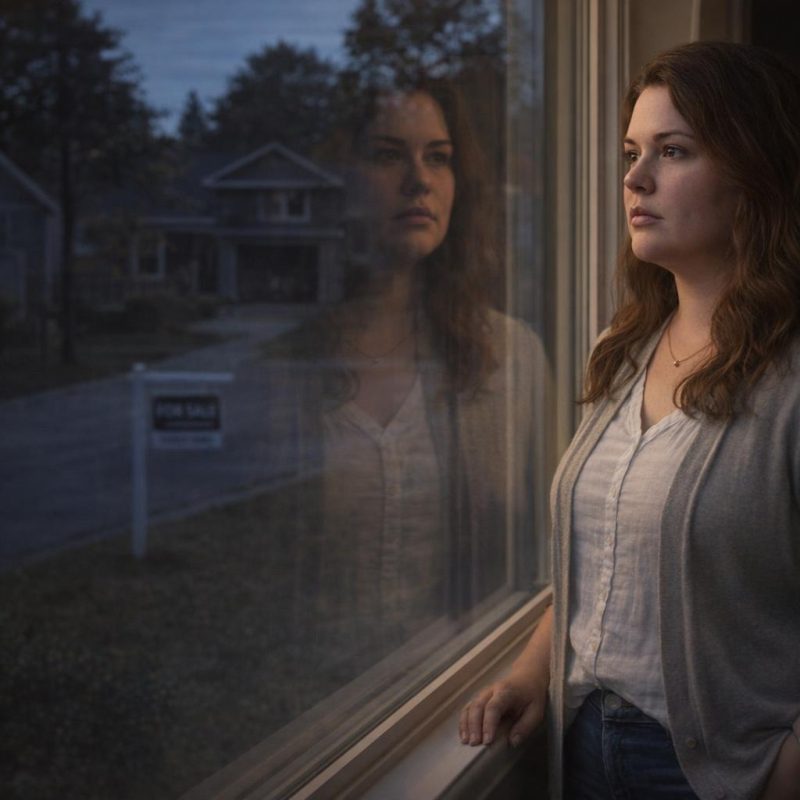 Image by RM AI
Legal Investigation
The detective called me twice that week with updates, and each call added something new to the picture. Authorities had interviewed eleven of David's clients across four neighborhoods. The coordination network had touched six properties in total. David's records — the same ones I'd copied onto that USB drive — gave investigators a complete map of the operation, and the documentation was apparently cleaner and more thorough than anything they usually worked with. The detective told me my cooperation had been noted and that I was not a target of the investigation. I exhaled when he said that in a way I hadn't been able to exhale in weeks. David had retained a lawyer by then, a man I'd never met who called the house once and spoke to David in the kitchen while I sat in the living room and listened to the low murmur of their voices through the wall. I couldn't make out most of it. But near the end of the call, David's lawyer's voice rose just enough to carry, and I heard him tell David to prepare for charges.
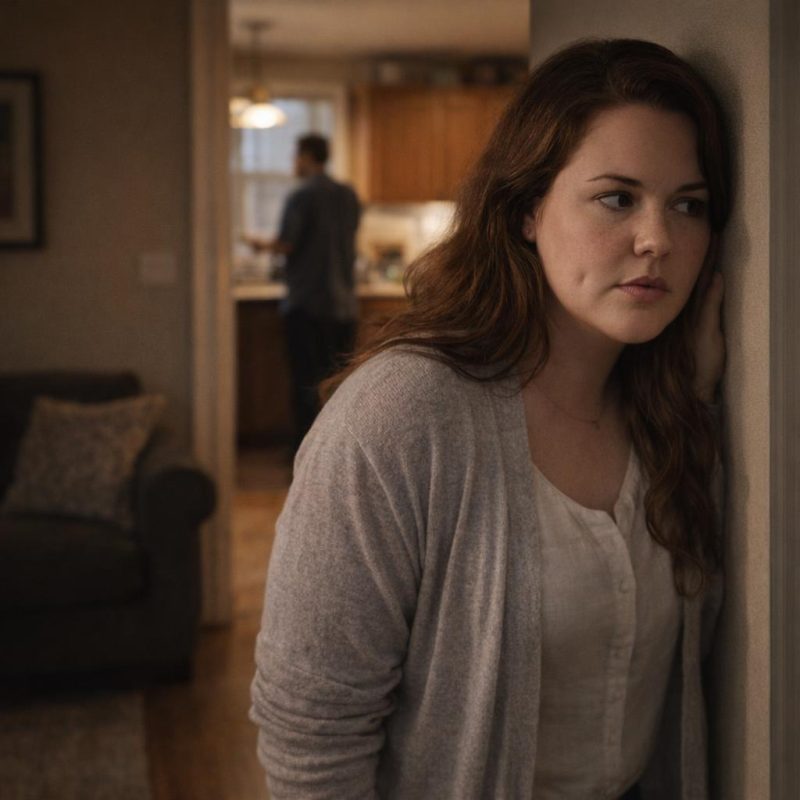 Image by RM AI
Consequences Unfold
The plea agreement was signed on a Tuesday morning in a conference room that smelled like stale coffee and carpet cleaner. I sat across the table from David and his attorney, and I watched David pick up the pen. He didn't look at me. His lawyer had explained the terms the week before — reduced charges in exchange for full cooperation, testimony against the broader network, and a formal acknowledgment of what he'd done. David had nodded through all of it with that same measured calm he'd always had, the one I used to mistake for steadiness. My final statement to the detective had been submitted the Friday before, and the investigator told me it had helped close several remaining gaps in the case. Tom and Rachel were facing separate charges. Two other neighbors from the coordination network had already entered their own proceedings. The whole thing was unwinding the way these things apparently do — slowly, then all at once. I'd given everything I had to give. And when David set the pen down on the table and slid the signed pages toward his attorney, I felt something in my chest go very quiet — not relief exactly, just the particular stillness of watching something finally, irrevocably end.
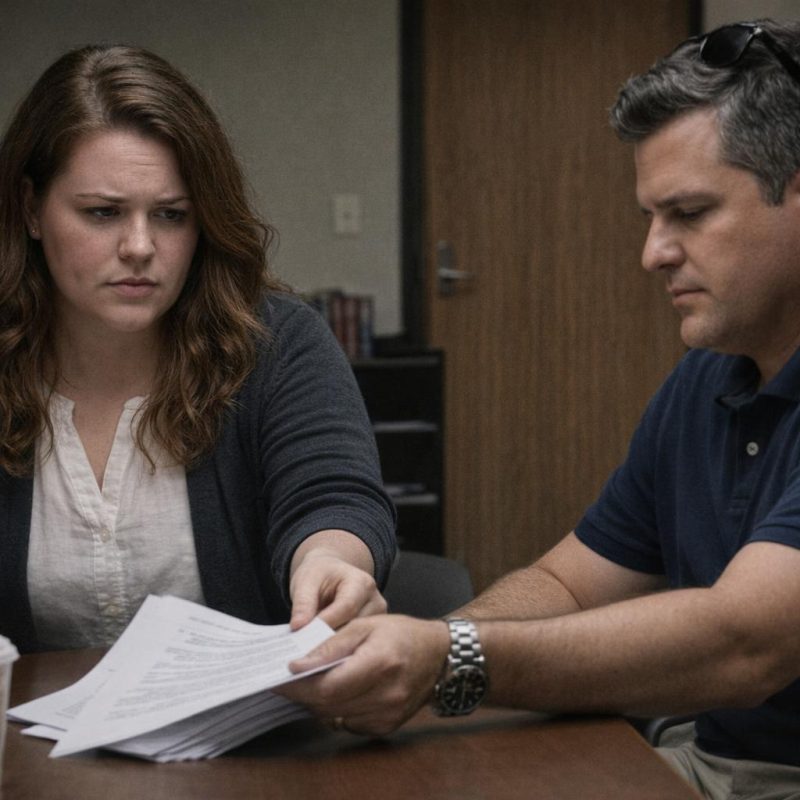 Image by RM AI
Filing for Separation
I met with the attorney on a Thursday afternoon, just me, in a small office with a window that looked out onto a parking garage. She walked me through everything — asset division, the separation filing, what the timeline would look like. I'd done enough research beforehand that most of it wasn't a surprise, but hearing it laid out in plain language made it real in a way the research hadn't. I signed the initial paperwork before I left. That evening I sat with Lily at the kitchen table and told her as gently and honestly as I could. I said that David and I weren't going to be living together anymore, that it wasn't her fault, and that I was going to make sure she was okay through all of it. She was quiet for a long moment, and then she asked if we were going to have to move. I told her probably yes, eventually, but that we'd find somewhere good. She nodded slowly, like she was filing that away. I spent the next hour after she went to bed looking at rental listings and running numbers in a notebook, and somewhere in the middle of all of it I realized I wasn't afraid. Sad, yes. Tired, absolutely. But underneath all of that was something solid — a quiet certainty that this was exactly the right path.
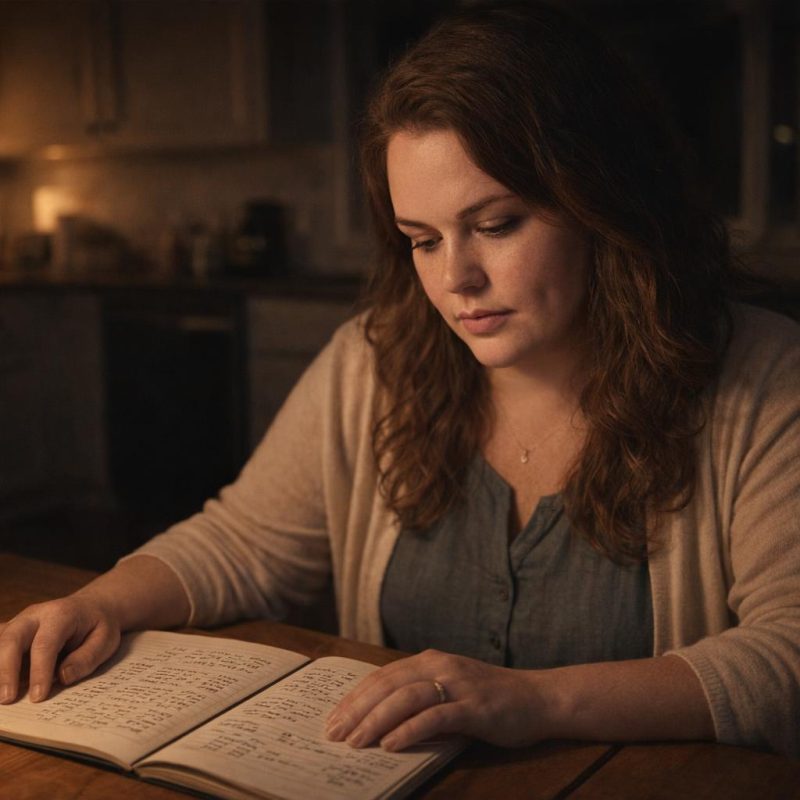 Image by RM AI
Processing Together
A few days later, Lily and I were sitting on the back porch after dinner when she asked me to explain what had actually happened — not the gentle version, but the real one. She was old enough, she said, and she'd already figured out more than I'd told her. I took a breath and I told her. I kept it age-appropriate, but I didn't soften it into something unrecognizable. I told her that David had been doing things that hurt people, that I'd found out and reported it, and that what he did was wrong. She listened without interrupting, which wasn't like her, and when I finished she said, very quietly, that she'd known something was off for a long time. I told her she'd been right, and that I was sorry she'd had to carry that feeling without knowing what to do with it. She got angry then — not at me, but at the situation, at the unfairness of it — and I let her be angry. I didn't try to fix it or rush her through it. We sat there until the light faded and the yard went dark around us, and at some point she reached over and took my hand without saying anything, and I held on, and the warmth of her hand in mine was enough.
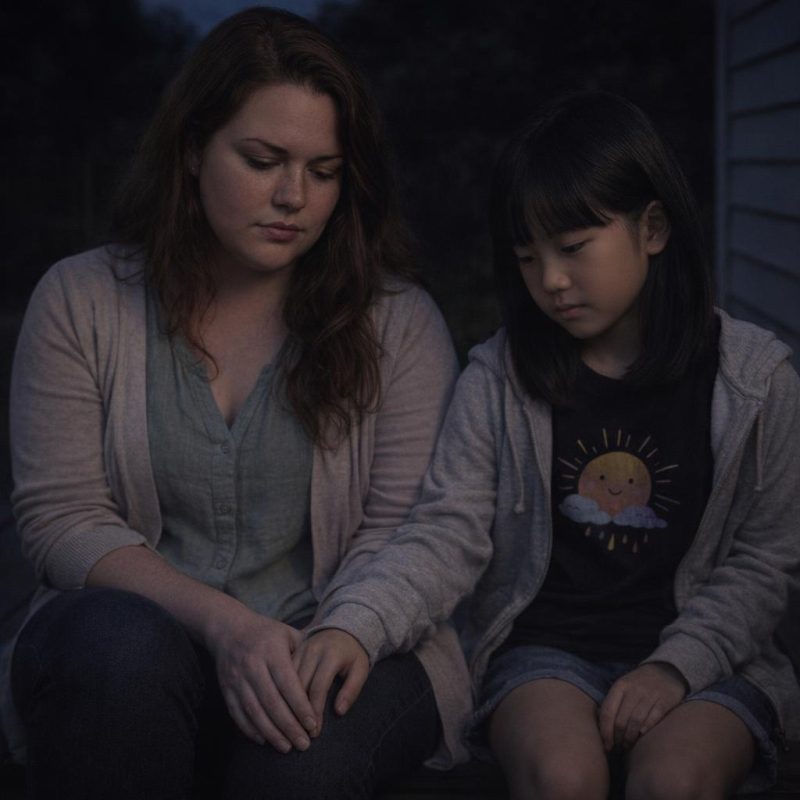 Image by RM AI
Reclaiming the Space
Two weeks later, I had the pool drained. It took a full day, and I stood at the kitchen window for part of it watching the water level drop, thinking about everything that had started and ended in that backyard. When it was empty I had it covered — a proper fitted cover, locked down at the edges. I took down the little sign I'd made when the neighbor arrangement first started, the one with the pool rules written in marker on a laminated sheet. I stood there holding it for a second, then dropped it in the recycling bin. Lily and I spent the following Saturday pulling up the old pool furniture and stacking it by the curb. In its place we laid out a patch of garden bed — nothing fancy, just a rectangle of turned soil and a flat of seedlings we'd picked out together at the nursery. Lily planted most of them herself, pressing each one in with both hands. We didn't talk much while we worked. We didn't need to. By the time we finished, the yard looked different — quieter, more like ours. I walked back to the gate, turned the key in the padlock, and stood there for a moment: the gate locked, the water still, the space finally mine again.
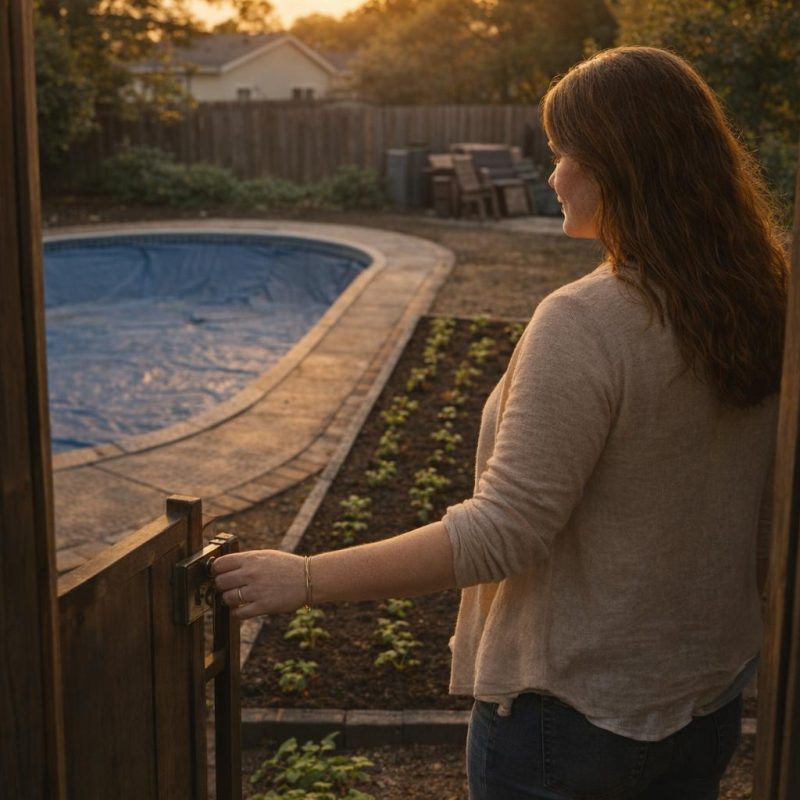 Image by RM AI
KEEP ON READING
10 Greatest Quarterbacks Of All Time & 10 That Are…
Do You Disagree?. Few topics in sports generate as much…
By Farva Ivkovic Dec 2, 2025
The story of Ching Shih, the Woman Who Became the…
Unknown author on WikimediaFew figures in history are as feared…
By Emilie Richardson-Dupuis Dec 29, 2025
20 Shakespearean Words, Translated For A Modern Audience
What’s In A Word?. Shakespeare was a wordsmith of the…
By Breanna Schnurr Dec 17, 2025
20 Inspiring Stories From Native American History
Incredible Stories Of Resilience And Endurance. Many of us didn't…
By Ashley Bast Dec 17, 2025
You Think You Have Problems? These Royal Families Were Cursed
Boasson and Eggler St. Petersburg Nevsky 24. on WikimediaHeavy is…
By Ashley Bast Dec 5, 2025
MH370: The Plane That Can't Be Found
Anna Zvereva from Tallinn, Estonia on WikimediaEleven years after Malaysia…
By Christy Chan Dec 10, 2025