

The Envelope
It arrived on a Tuesday, which I remember because Tuesdays were always the dullest day of my retirement week — no garden club, no library volunteer shift, just the slow drip of morning coffee and whatever the rain decided to do. I'd pulled on my jacket to check the mail mostly out of habit, the kind of habit that forty years of teaching middle school geography will drill into you whether you want it or not. The mailbox held the usual assortment of grocery circulars and a water bill, and then, underneath all of it, a thick cream-colored envelope that felt immediately different from everything else. Heavier. More deliberate in its construction. I carried it inside and set it on the kitchen table before I even took my jacket off. The return address said Legacy Heritage Land Trust, printed in a typeface that suggested old money and permanence. Inside was a deed — an actual, notarized deed — for five acres of land in the high country, made out in my name, at no cost whatsoever. There was a cedar scent to the paper, faint but real, like something that had been stored somewhere clean and dry for a long time. I sat there in the kitchen with the rain tapping against the window, turning the document over in my hands, and ran my thumb slowly across the gold-embossed seal pressed into the lower corner, feeling the weight of it settle against my skin.
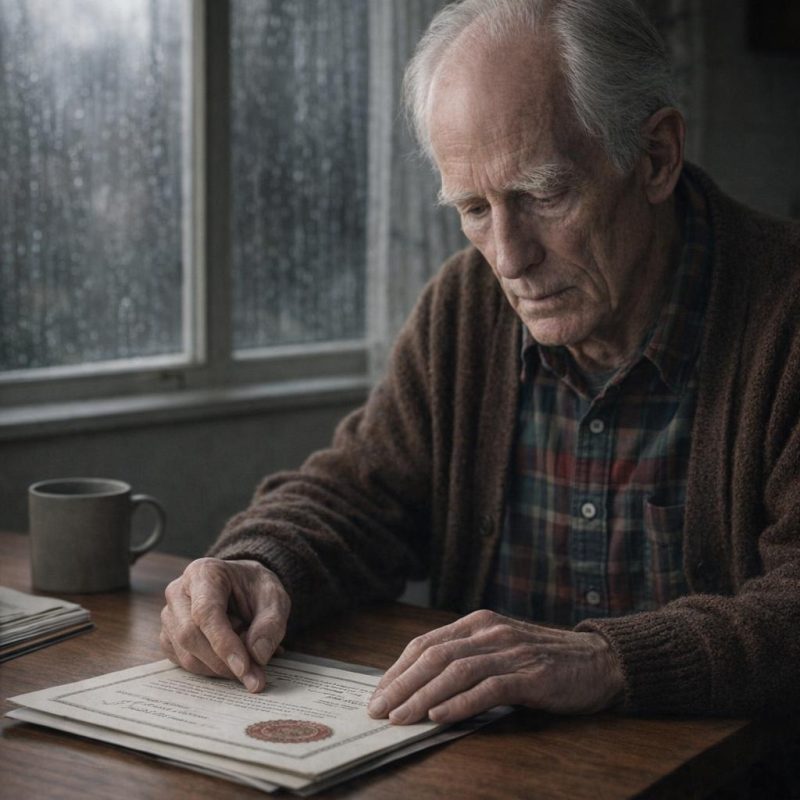 Image by RM AI
The Fine Print
I read the deed three times at the kitchen table, the way I used to read student essays I suspected of being too good to be entirely honest. The language was dense and formal, the kind of legal prose that seems designed to exhaust you into compliance, but I'd spent four decades teaching kids to read carefully and I wasn't about to stop now. Legacy Heritage was described as an exclusive gated community for senior residents in the high country — stone cottages, communal gardens, shared amenities, the whole pastoral fantasy rendered in careful legalese. A glossy brochure had been tucked behind the deed, and it showed exactly what the words promised: flagstone paths between tidy cottages, raised garden beds, a dining hall with exposed timber beams. The deed referenced something called the Foundational Outreach Program, which apparently explained why select individuals were being offered land at no cost — a community-building initiative, the document said, to attract residents of good standing. I had to take possession within thirty days or the offer lapsed. I noted all of this methodically, the way I noted anything, and then I came to a clause near the top of the first paragraph that I'd somehow skimmed past twice. It described the land grant as contingent upon permanent residency within the Legacy Heritage community boundaries — but I set that aside as the kind of boilerplate language lawyers insert to justify their billing hours, and turned back to the brochure.
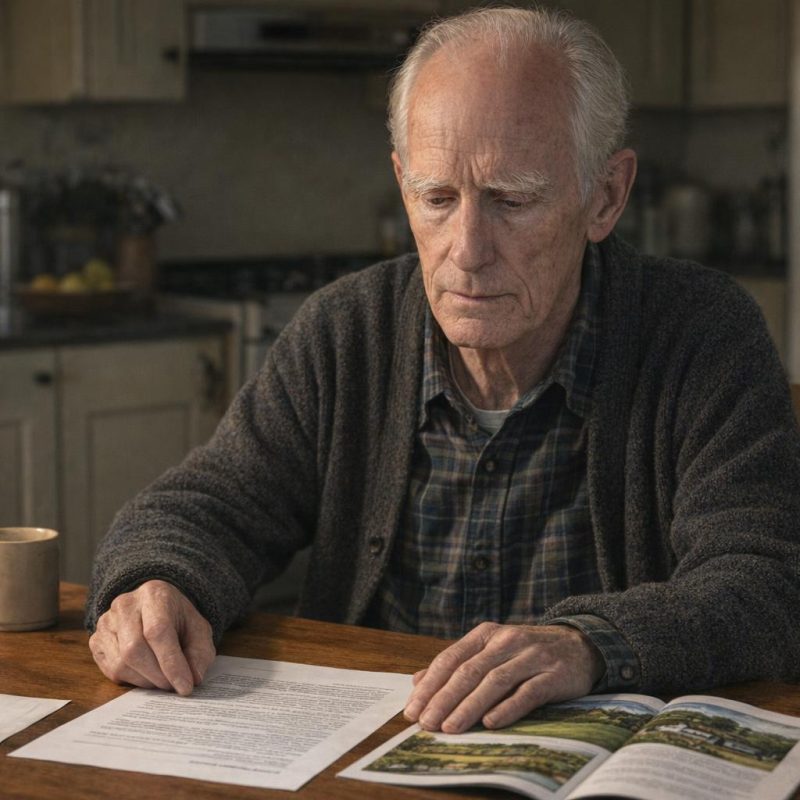 Image by RM AI
Sarah's Warning
I called Sarah that same evening, which in hindsight I should have known would go exactly the way it went. She picked up on the second ring, and I could hear the particular quality of her attention shift the moment I said the words free land — that sharpening behind her voice that meant she was already composing her objections before I'd finished the sentence. I told her about the deed, the brochure, the Foundational Outreach Program, the five acres in the high country. I tried to keep my tone measured and factual, the way I'd always tried to present things to her, but I could feel my own enthusiasm leaking through the edges. She didn't let me finish. She said it was an internet scam, that these things targeted retirees specifically, that nobody gives away land, that I needed to call the county recorder's office and verify the parcel number before I did anything else. I told her the deed looked legitimate, that it was notarized, that I wasn't born yesterday. She said that was exactly what the scammers were counting on. We went back and forth like that for a while, her voice getting sharper and mine getting more stubborn, until she said the thing that lodged itself in me like a splinter: land is never free, Dad. There's always a cost. I told her I'd think about it, which we both understood to mean I wouldn't, and we said goodnight with the kind of careful politeness that covers unresolved arguments. After I hung up, the kitchen felt very quiet, and her words just sat there in the air.
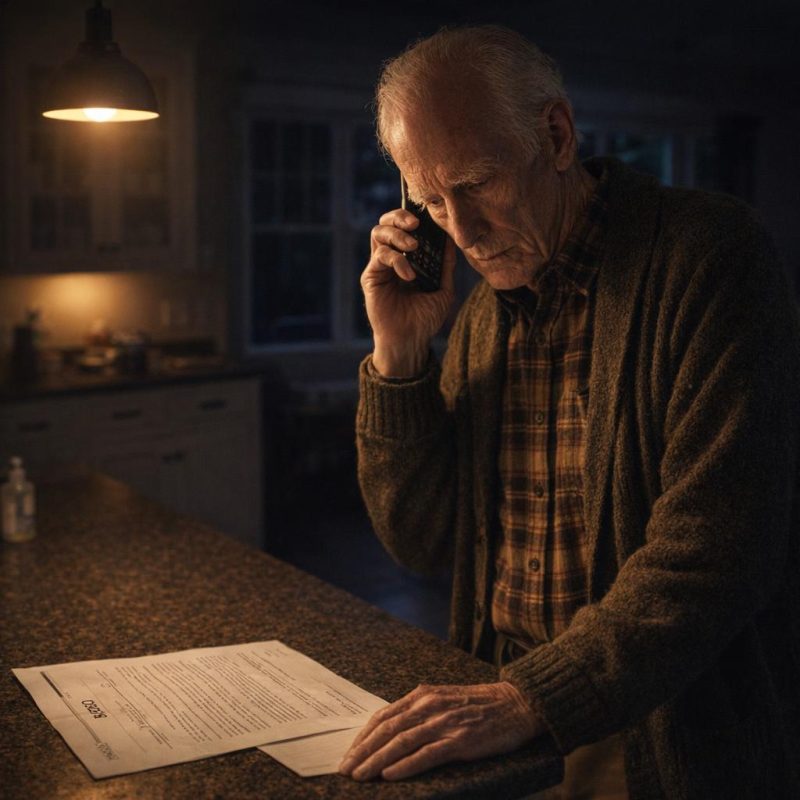 Image by RM AI
Packing for Paradise
I spent the next two days doing exactly what Sarah would have wanted me to do — I verified the parcel number with the county recorder's office, I looked up Legacy Heritage Land Trust online, I found their registered nonprofit status and their Better Business Bureau listing and a handful of testimonials from residents who described the community in terms that matched the brochure almost word for word. Everything checked out, or checked out well enough for a man who had spent forty years teaching twelve-year-olds to evaluate sources. By Thursday morning I had made my decision, and by Friday afternoon my rugged SUV was packed with two weeks of practical clothing, my good rain gear, my field guides, a case of canned goods, and the deed in a manila folder on the passenger seat. I packed the way I'd always packed for anything — methodically, without excess, with the quiet satisfaction of a person who knows what they actually need. I told myself this was the retirement gift I had earned through four decades of grading papers and mediating cafeteria disputes and showing up every single day regardless of how I felt. The world could be generous. Sarah's certainty that it couldn't had always struck me as a sadness more than a wisdom. I locked the front door, stood on the porch for a moment looking at the garden I'd planted in the spring, and felt the particular warmth of a man who is about to prove a point settling into my bones.
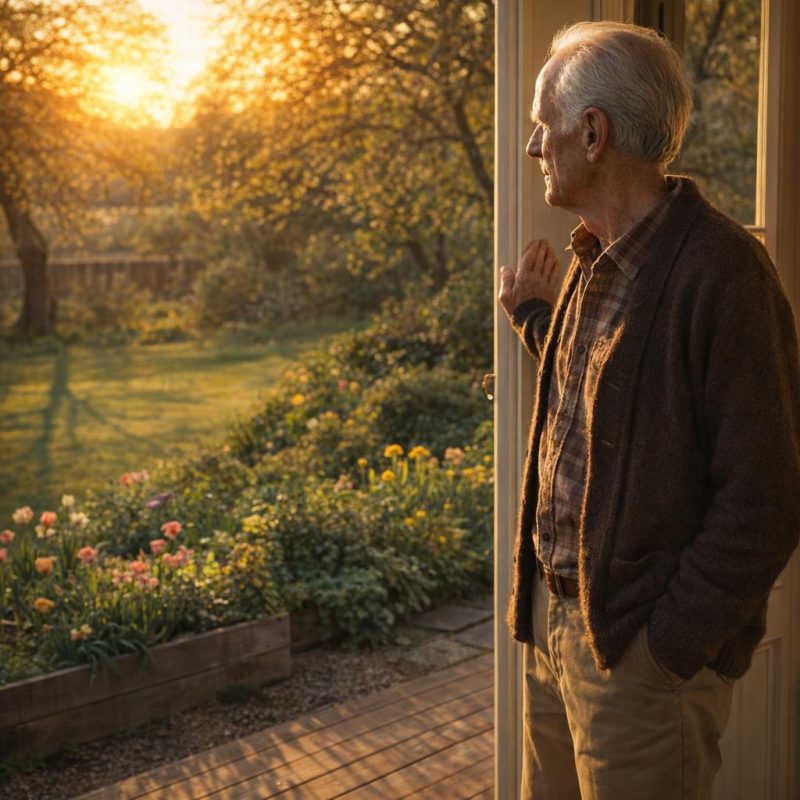 Image by RM AI
Leaving Home
I left before six on Wednesday morning, while the neighborhood was still dark and the streetlights were doing their best against the early autumn fog. I'd set the alarm for five, which I hadn't needed — I was already awake at four-thirty, lying in the dark with the particular alertness of someone who has somewhere to be. The SUV was already loaded, so there was nothing to do but make coffee in a travel mug, lock up, and go. I backed out of the driveway slowly, the way I always did, and then I sat at the end of the drive for just a moment and looked back at the house. The porch light was on, the way I'd left it, throwing a yellow circle onto the front steps. The garden beds were tidy. The gutters I'd cleaned in September were clean. Everything was exactly as I'd left it, which was exactly as it should be. I pulled onto the street and drove. The suburbs unfolded around me in the familiar sequence — the elementary school, the pharmacy, the intersection where I'd waited for the light ten thousand times — and then, gradually, they began to thin. Strip malls gave way to gas stations gave way to open road. The sky was lightening ahead of me, going from grey to pale gold at the horizon, and the mountains were a dark suggestion in the distance. In the rearview mirror, the last familiar rooftop slipped behind a curve, and then it was gone.
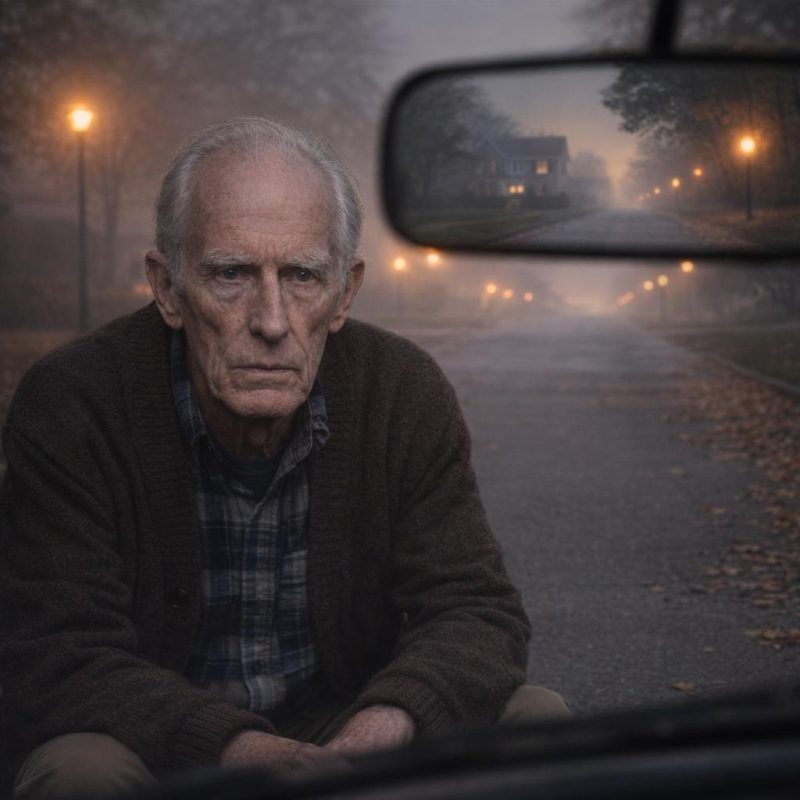 Image by RM AI
The Mountain Road
The drive was the kind of thing I used to describe to my students when we covered physical geography — the way a landscape can change so completely over the course of a few hours that it feels like traveling between different worlds. The suburbs dissolved into farmland, the farmland folded into rolling hills, and then the hills began to climb and sharpen until they were something else entirely. By mid-morning I was in the mountains proper, the road winding through stands of aspen gone gold with the season, the peaks above the treeline carrying fresh snow that caught the light in a way that made me reach for my sunglasses. I pulled over once at a wide spot in the road just to stand outside and breathe. The air was different up here — thinner, colder, carrying the smell of pine resin and something mineral underneath it, the smell of altitude. I'd taught the water cycle and the rain shadow effect and the mechanics of orographic lift for decades, and standing there I felt the particular pleasure of a person who has always loved a subject finally standing inside it. The road ahead curved up and disappeared into the trees, and the valley I'd driven through was already far below, the river through it catching the light like a thread of silver. I got back in the SUV and kept driving, and the mountains filled the windshield completely, and something in my chest opened up in a way it hadn't in a long time.
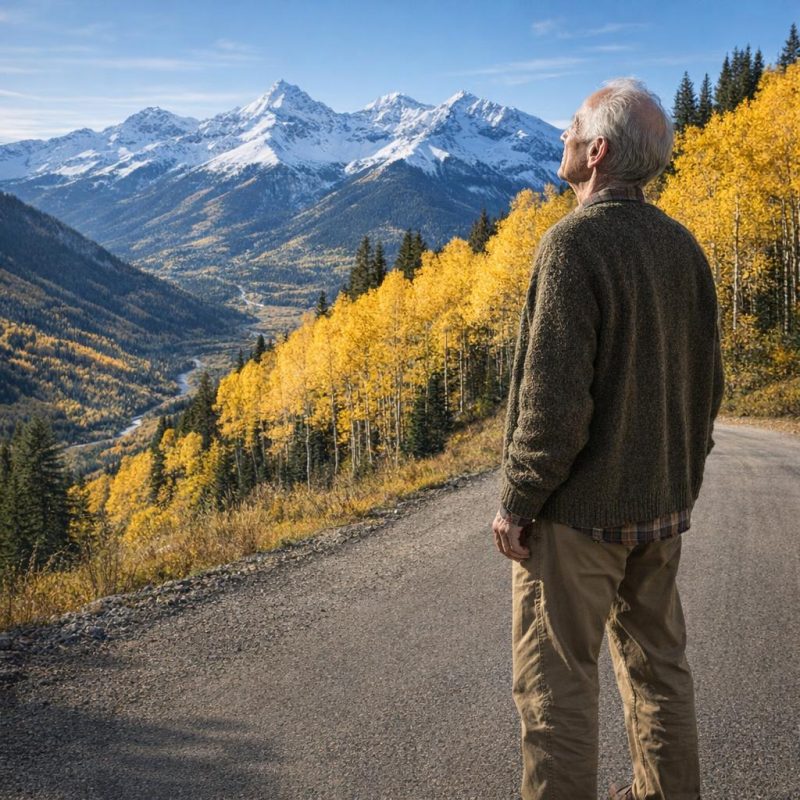 Image by RM AI
Off the Grid
Somewhere around the third hour of mountain driving, the GPS directed me off the main highway onto a county road I wouldn't have found on my own. The pavement was narrower there, the center line faded to almost nothing, and the trees pressed closer on both sides. I followed the directions without much concern — remote areas have remote roads, and I'd driven worse in my time. But then the county road gave way to a smaller road, and that road gave way to what the GPS was calling a private access route, which in practice meant a gravel path barely wide enough for the SUV, winding up through dense pine and spruce so thick the sky was reduced to a narrow strip overhead. The gravel crunched under my tires in a way that felt very loud in the quiet. I checked the GPS — still showing my route, still showing the destination ahead. I checked my mirrors out of habit. Nothing behind me but trees and the settling dust from my own passage. It was around this point that I noticed my phone, sitting in the cupholder where I'd left it. I picked it up to check the time and saw the signal bars in the corner — two bars, then one, then the icon flickered and went dark.
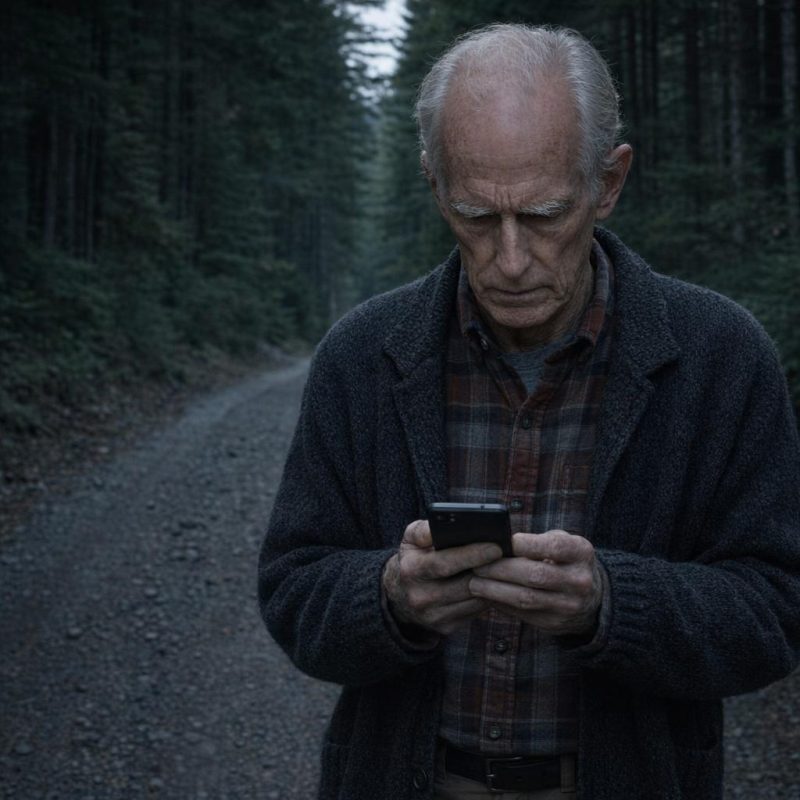 Image by RM AI
The Climb
The gravel road kept climbing. That was the thing I noticed most — it never leveled off, never gave me a flat stretch to catch my breath, just kept angling upward in long switchbacks that pressed me back into my seat. The air coming through the vents was noticeably colder now, and thinner in a way I could feel in my chest when I breathed too quickly. The forest on both sides had gone from mixed pine and spruce to something denser and darker, the trees older and closer together, their canopy blocking most of the afternoon light. I checked my phone twice more out of habit — no signal either time, just the empty icon sitting there. I told myself this was expected. Remote mountain property doesn't come with cell towers. The GPS was still functioning on its cached map, the little arrow crawling up the road toward the destination marker, and I focused on that. The gravel crunched and popped under the tires. A raven crossed the road ahead of me and disappeared into the trees without a sound. I came around a long curve, the road straightening for the first time in miles, and the forest opened abruptly into a clearing — and there, spanning the full width of the road with no gap on either side, stood a massive iron gate.
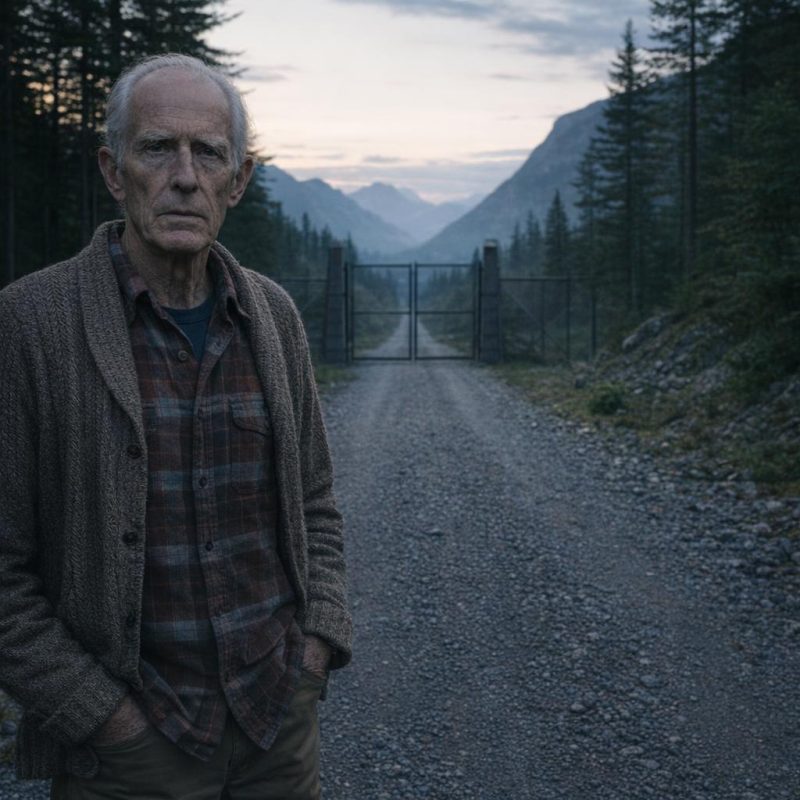 Image by RM AI
The Gate
I rolled down my window and the mountain air hit my face immediately — sharp and cold in a way that felt different from the drive up, more final somehow. There was no guardhouse, no booth, just the gate and a small grey intercom box mounted on a post at driver's-side height. I pressed the call button and got a burst of static, then silence, then a voice so flat and even it barely sounded like a person. It asked for my access code. I dug the welcome packet out of the passenger seat, found the six-digit number printed under the Legacy Heritage letterhead, and read it aloud. There was a pause — longer than felt necessary — and then the gates groaned and began to swing inward, the hinges protesting like they hadn't moved in a while. I pulled forward slowly, watching the gap widen, and eased through. The chain and padlock securing the gate weren't mounted on the outside where a visitor would reach them — they were on the interior side, the side you'd only be able to reach once you were already through.
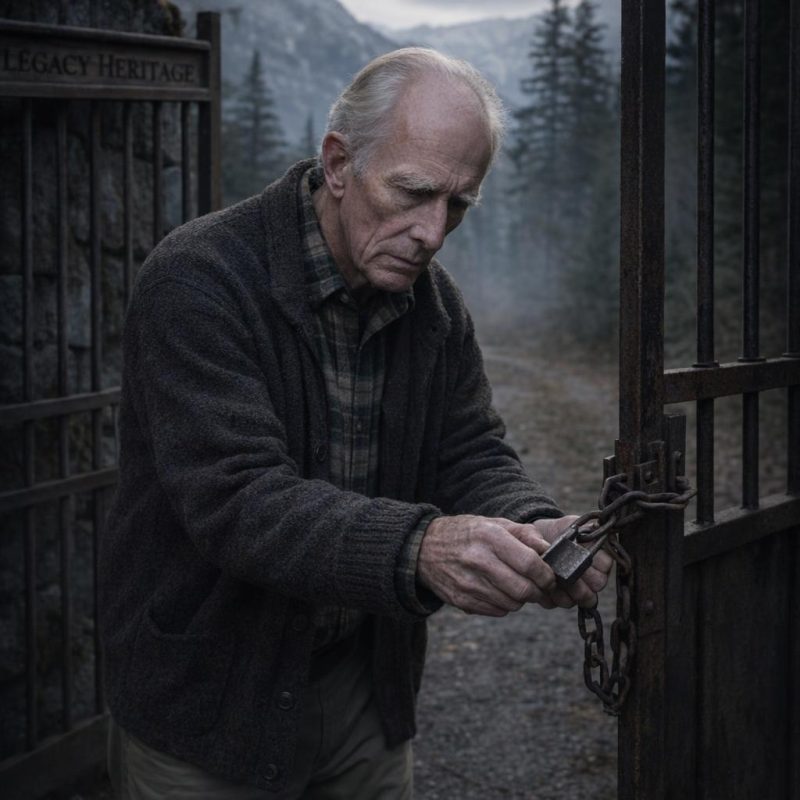 Image by RM AI
The Village
The road past the gate wound for another mile through forest so dense the headlights barely helped, even in the late afternoon. When the trees finally broke open, I stopped the car and just sat there for a moment. The brochure had shown a warm cluster of timber-frame homes with window boxes and smoke curling from stone chimneys, the kind of image that makes you think of a ski village in a magazine. What I was looking at was a ring of identical prefabricated cabins arranged in a strict circle around a central courtyard, each one the same grey-brown color, the same dimensions, the same small porch with the same two plastic chairs. The communal hearth in the center of the courtyard was cold — no ash, no wood stacked nearby, nothing to suggest it had been used recently. A few people sat on their porches, but none of them were talking to each other. None of them looked up when I pulled in. I found the cabin marked with my plot number and parked in front of it. I sat in the car for a moment with the engine running, looking at the courtyard, and the stillness of it pressed down on me like something with actual weight.
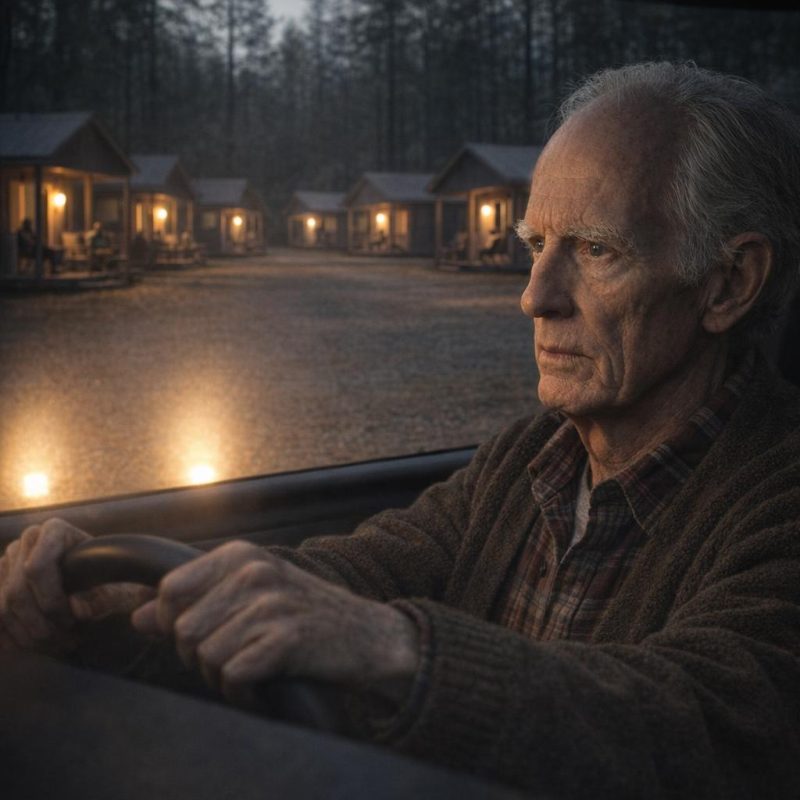 Image by RM AI
Margaret's Pity
I climbed out of the SUV and stretched, trying to look like a man arriving somewhere he'd chosen to be. The woman on the neighboring porch didn't move to wave or call out a greeting. She just stood there in an oversized wool coat that swallowed her frame, grey hair loose around her face, watching me with an expression I couldn't quite name at first. It wasn't unfriendly exactly. It was something closer to pity. I crossed the gravel toward her with what I hoped was a reasonable smile and asked if she knew where the check-in office was. She didn't answer right away. She looked at me the way you look at someone who's just told you they've made a decision they can't take back. Then she leaned slightly forward and said, in a voice barely above a whisper, that I should have listened to whatever warnings I'd been given before I came up here. She didn't elaborate. She just pulled her coat tighter and sat back down in her chair and looked out at the cold courtyard. I stood there on the gravel for a moment, telling myself she was probably just eccentric, that every community has its pessimists. But her words had already settled somewhere low in my stomach, and they didn't feel like nothing.
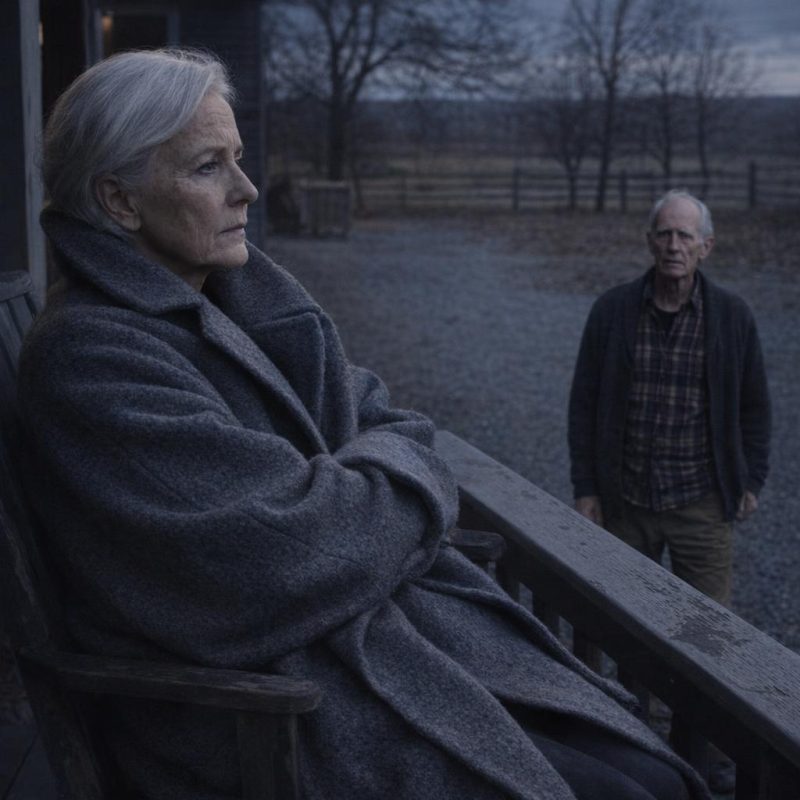 Image by RM AI
The Office
The check-in office was a squat timber building set slightly apart from the cabin ring, no windows on any wall I could see. Inside, the air smelled like fresh lacquer and something underneath it I couldn't identify. The desk was enormous and clearly expensive — dark walnut, polished to a mirror finish — and it looked absurd in that room, like a piece of furniture that had been delivered to the wrong address. The man behind it didn't look up when I came in. He had silver hair slicked back from a face that gave nothing away, and he was wearing a suit that cost more than my first car. He slid a set of keys and a thick stack of papers across the desk without a word. I told him I appreciated the welcome but that I'd really just like to walk the land first, get a sense of the property before signing anything. He looked up then, for the first time, and his eyes were a flat grey that reminded me of the sky before a storm. He said the deed I'd accepted at the seminar wasn't a deed in the traditional sense. He said it was, and I remember the exact phrase because it stopped me cold, a binding residency agreement.
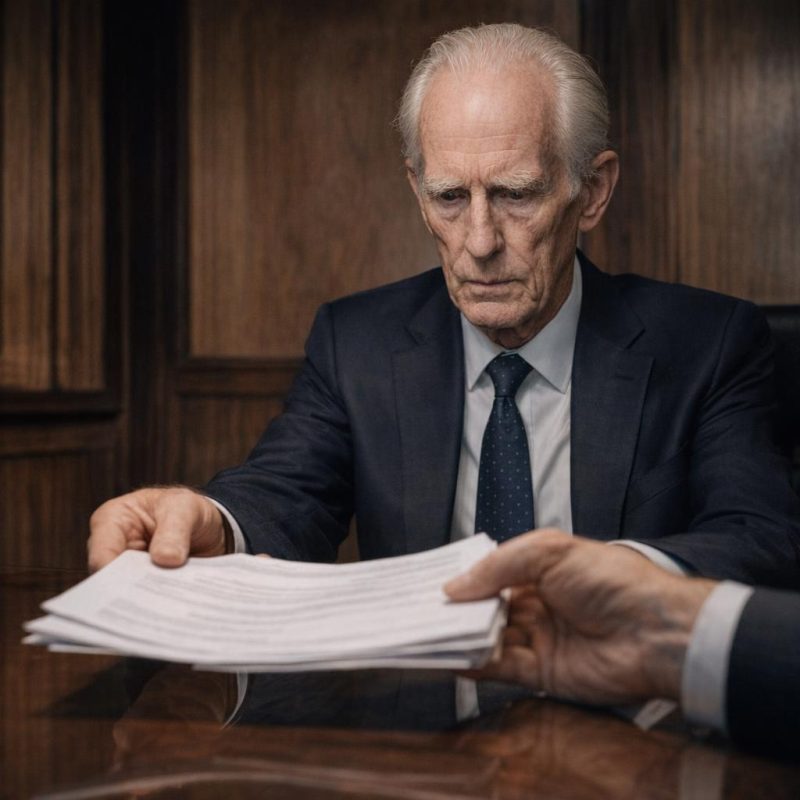 Image by RM AI
The Sabotage
I walked back to the SUV faster than I meant to, the gravel loud under my feet in the quiet. My hands were unsteady when I reached for the door handle. I got in, put the key in the ignition, and turned it. There was a single dry click — nothing else. I tried again. Same click, same silence. I sat there for a moment, then tried a third time, and the fourth, and the fifth, and each time the engine gave me nothing but that hollow mechanical sound. I got out and went around to the front and popped the hood. I'm not a mechanic, but I know what an engine is supposed to look like, and I know what I was looking at wasn't right. Several wires had been cut — not frayed, not worn through, but cut cleanly, the copper ends still bright, the kind of bright that means recent. I stood there with my hands on the edge of the hood, looking at those clean copper ends, and the only thought I could hold onto was that I had been inside the office for maybe fifteen minutes. The silence where the engine should have been felt enormous.
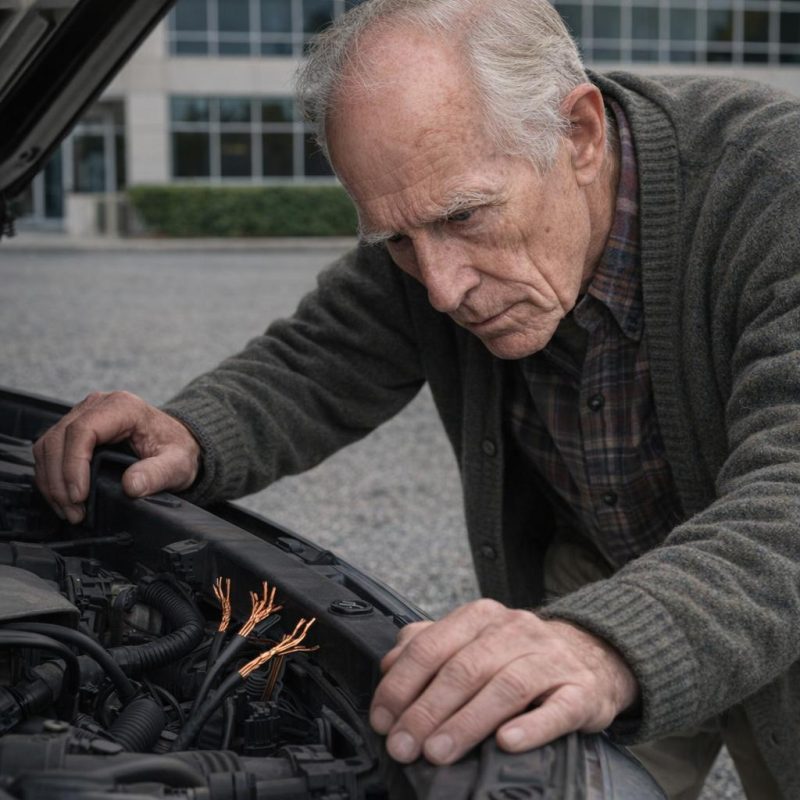 Image by RM AI
No Way Out
I found Margaret on her porch where I'd left her and asked if there was a phone I could use, or a mechanic in the area, or anyone who could come up the mountain road. She shook her head before I finished the sentence. I asked about the gate — whether I could walk out, whether it would open for a person on foot. She shook her head again, slowly, the way you shake your head at something that stopped being a question a long time ago. She told me the gates didn't open for residents' vehicles anymore. She said delivery trucks came on Mondays, and that was the only time the gate moved. I asked if I could ride out with a delivery truck, flag someone down, get a message out. She looked at me then, really looked at me, and said the trucks only bring things in. They don't take things out. I stood on the bottom step of her porch with my hands in my jacket pockets, trying to think of the next logical question, the next practical step, the way I'd always approached a problem. But there was nothing in her eyes that left room for a next step — just a flat, exhausted emptiness that had clearly been there for a very long time.
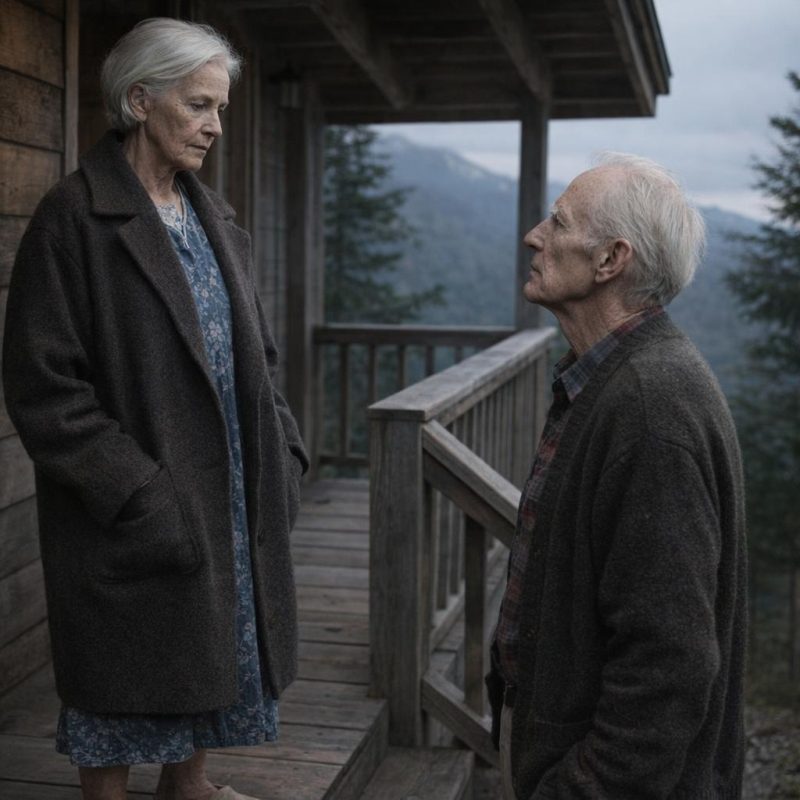 Image by RM AI
The Perimeter
I spent the better part of an hour walking the outer edge of the property, telling myself I was just getting oriented, just learning the layout. The forest pressed right up to the boundary on every side — no trails leading out, no gaps in the tree line, nothing that looked like a path a person could follow. The ground beyond the last cabin row was uneven and root-tangled, the kind of terrain that would be genuinely difficult in daylight and dangerous in the dark. I was about three-quarters of the way around when I noticed the wire. It ran between posts set at regular intervals, partially obscured by the undergrowth, strung at roughly chest height. I almost missed it. I stopped and looked at it for a moment, then crouched to follow its line in both directions — it ran as far as I could see in either direction without a break. I stood back up slowly. There was a sound coming from it, low and steady, a vibration more than a noise, the kind of hum that lives at the edge of hearing. I reached out and touched the wire with two fingers.
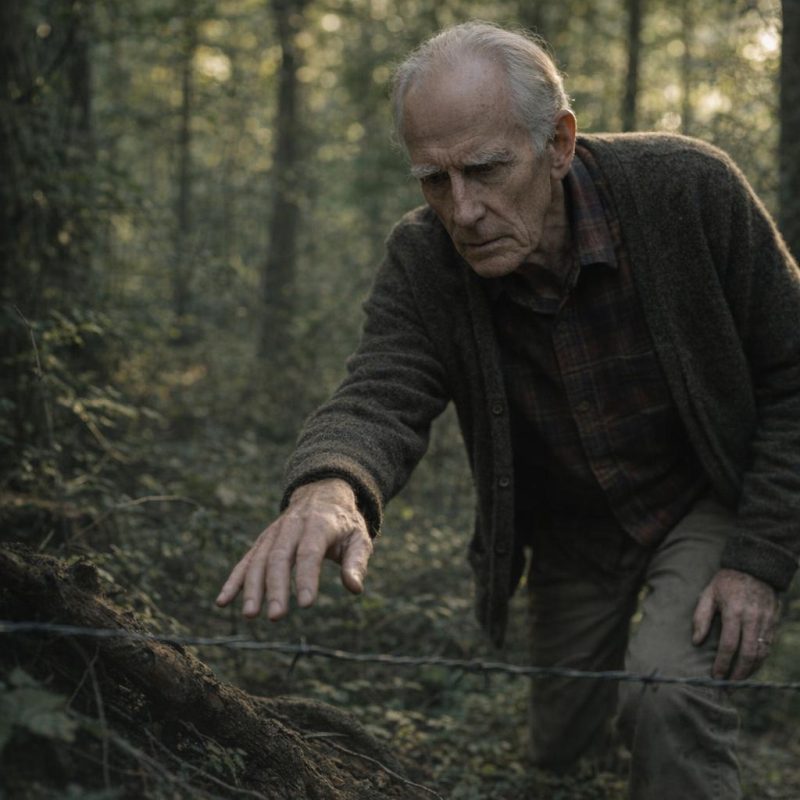 Image by RM AI
The Contribution
I pulled my hand back and stood there for a moment, then made my way to the central courtyard, where a small group of men were gathered near the cold hearth. They were talking in voices low enough that I had to step close to hear anything at all, their eyes moving to the surrounding porches and back as they spoke. I caught fragments — something about a contribution, something about a final harvest — and none of it connected to anything I had a framework for. I introduced myself and said I was new, which felt like the most useless sentence I'd ever spoken. Most of them looked away. One of them didn't. He was early sixties, with silver-streaked black hair and glasses that had been cracked and repaired with what looked like electrical tape, wearing a jacket that had once been expensive. He had the bearing of someone who'd spent decades in a boardroom and was still trying to hold onto the posture of it. He stepped closer and his voice dropped further. He said the free land was bait — that much he'd worked out. Then his hand closed around my forearm, firm and urgent, and he said they needed our names and our histories.
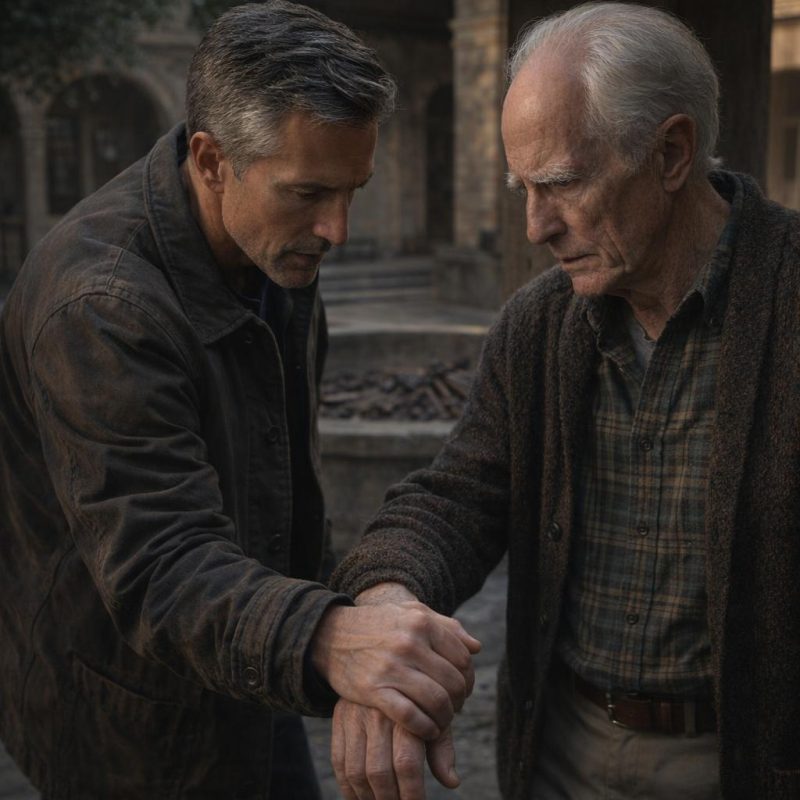 Image by RM AI
The Orientation Film
The man with the cracked glasses — Edward, he'd said his name was — slipped back into the crowd before I could ask him anything else, and I stood there in the courtyard trying to look like someone who wasn't quietly coming apart. The sun dropped behind the peaks faster than I expected, and the long shadows that followed felt less like evening and more like something closing. Then, without any announcement, a massive screen rose from the far end of the courtyard — hydraulic, smooth, clearly not improvised — and the orientation film began. The production quality was unsettling. Sweeping drone footage of the property, a warm baritone voice talking about legacy and contribution and the rare privilege of giving something lasting to the world. Legal documents flashed across the screen in rapid succession, dense paragraphs of text gone before I could fix on a single clause. I leaned forward, squinting, trying to catch anything — a date, a jurisdiction, a number — and caught nothing. Then a list of names appeared, white text on dark background, maybe forty names arranged in neat rows. I scanned it without thinking, the way you scan a class roster. My name was at the bottom, pulsing in sickly neon green.
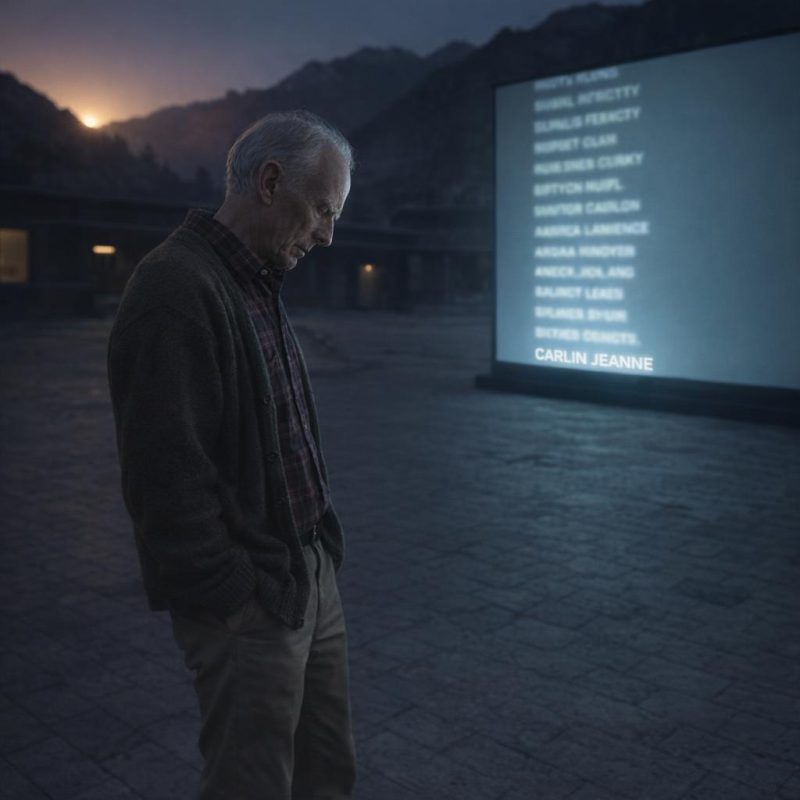 Image by RM AI
The Welded Gate
I moved before I'd made a conscious decision to move. The screen was still playing behind me as I crossed the courtyard and broke into something close to a run, heading for the main gate at the property's entrance. I told myself I could climb it, or find a gap in the bars, or that maybe the lock was the kind that could be worked from the inside. The road I'd driven in on was out there somewhere in the gathering dark, and if I could just reach it, I could flag someone down, I could walk to the nearest town, I could do something. The gate was iron, tall, set between two stone pillars, and I grabbed the bars with both hands and pulled. Nothing. I moved along the frame looking for the latch mechanism and found instead a line of fresh weld beads running the full length of the gate's seam — thick, uneven, the kind of work done in a hurry. I pressed my palm flat against the nearest bead. It was still warm. I stood there with both hands wrapped around the bars, looking out at the empty road I had driven in on four hours ago, the metal cooling slowly against my skin.
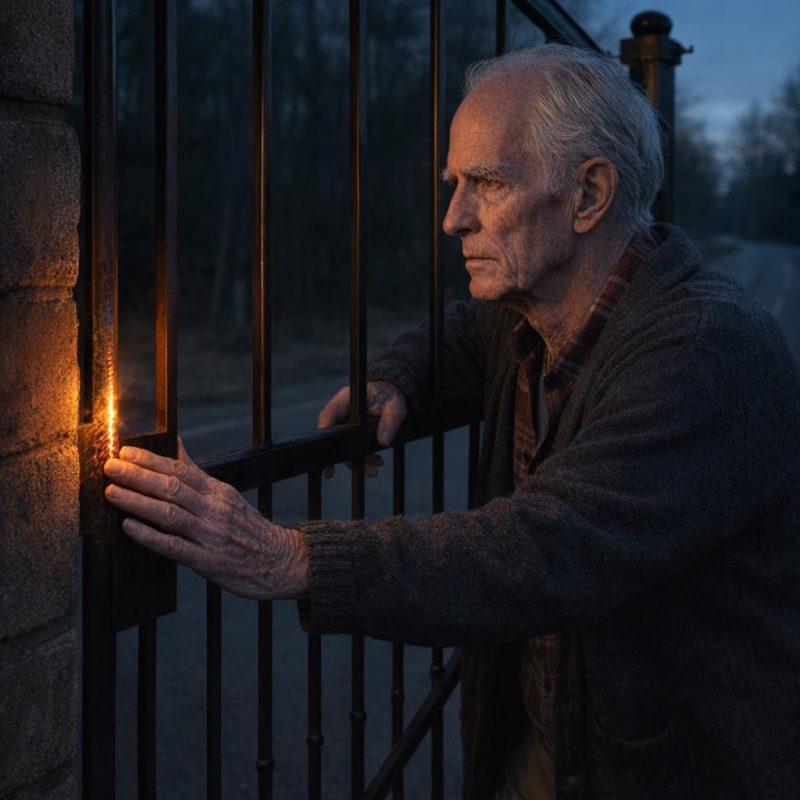 Image by RM AI
The Price
I don't know how long I stood there. Long enough for the last of the light to go and for the cold to move in off the mountain in a way that felt personal. Sarah had told me. That was the thought that kept surfacing, the one I kept pushing back down because it was too uncomfortable to hold for long. She had sat across from me at my kitchen table three weeks ago and said, Dad, nothing is free, and I had smiled the way you smile at someone who doesn't understand how the world works yet, even when they're thirty-four and a lawyer and have been right about most things. I had wanted to prove something. I wasn't even sure what, exactly — that I was still sharp, maybe, that retirement hadn't made me soft, that I could spot an opportunity and take it without needing anyone's permission. I had driven up here with my duffel bag and my reading glasses and my absolute certainty that I knew what I was doing. The road beyond the gate was dark and empty. No headlights. No sound except wind moving through the pines. I had walked into this willingly, signed whatever they put in front of me, handed over every piece of myself they asked for. The understanding of that settled into my bones like the cold.
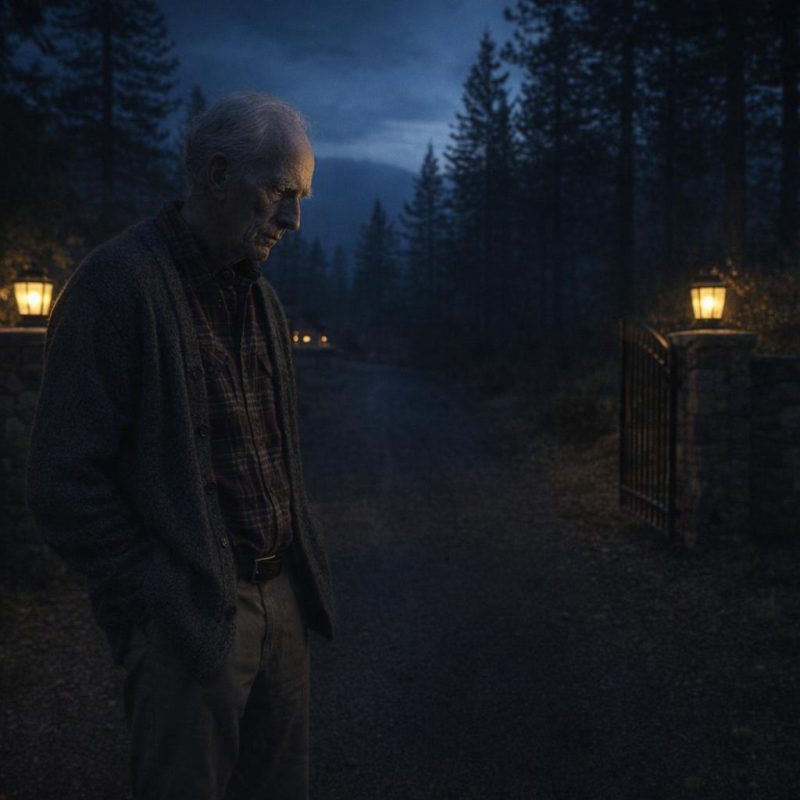 Image by RM AI
The First Night
Eventually I let go of the bars and walked back. There wasn't anything else to do. The cabin they'd assigned me was near the eastern edge of the property, a low structure with a single window and a door that opened inward. Inside: a cot with a wool blanket, a small table, a lamp with a pull chain, a bathroom the size of a closet. No phone. No clock. No mirror. I sat on the edge of the cot and made myself breathe slowly, the way I used to tell students to breathe before a test they were convinced they'd fail. Panic was a luxury I couldn't afford right now. What I needed was to think clearly — about the gate, about the screen, about Edward's hand on my forearm and the words he'd said. They needed our names and our histories. I didn't know yet what that meant, but I knew it mattered. I needed to stay calm, stay observant, and find whoever else in this place still had enough fight left to be useful. I stood up, pulled the lamp chain, and lay down on the cot in the dark. Then I heard the lock engage on the other side of the door — a clean, mechanical click from the outside.
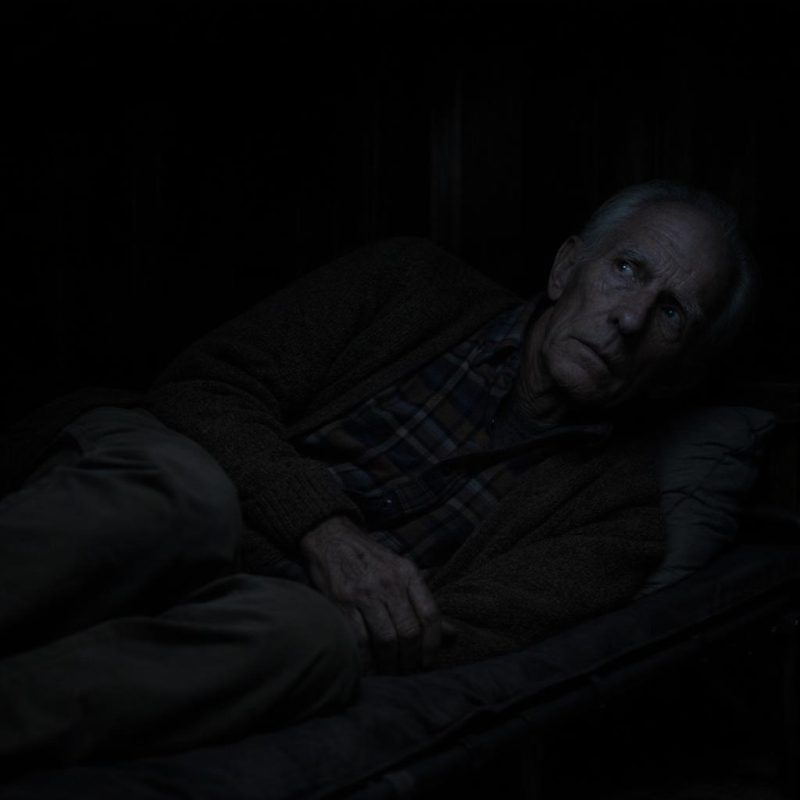 Image by RM AI
The Morning Bell
The bell was loud and had no warmth to it — a flat, institutional clang that pulled me out of a shallow sleep at exactly six. I lay still for a moment, staring at the ceiling, cataloging where I was and why, which took longer than it should have. The tray was already there when I sat up: slid through a horizontal slot cut low in the door, the kind of slot I hadn't noticed the night before. Oatmeal, still faintly warm. A paper cup of coffee. An apple. I ate because I understood, in a detached and practical way, that I needed to. Through the single window I watched the other residents emerge from their cabins one by one, moving across the frost-stiffened ground toward the central courtyard. There was no conversation between them. No one paused to wait for a neighbor or called out a greeting. They moved at the same unhurried pace, heads slightly down, following a path worn into the dirt by what must have been months of the same morning walk. I watched until the last of them had passed, then I put on my jacket and followed. The quiet that hung over the whole property had a texture to it — not peaceful, but practiced.
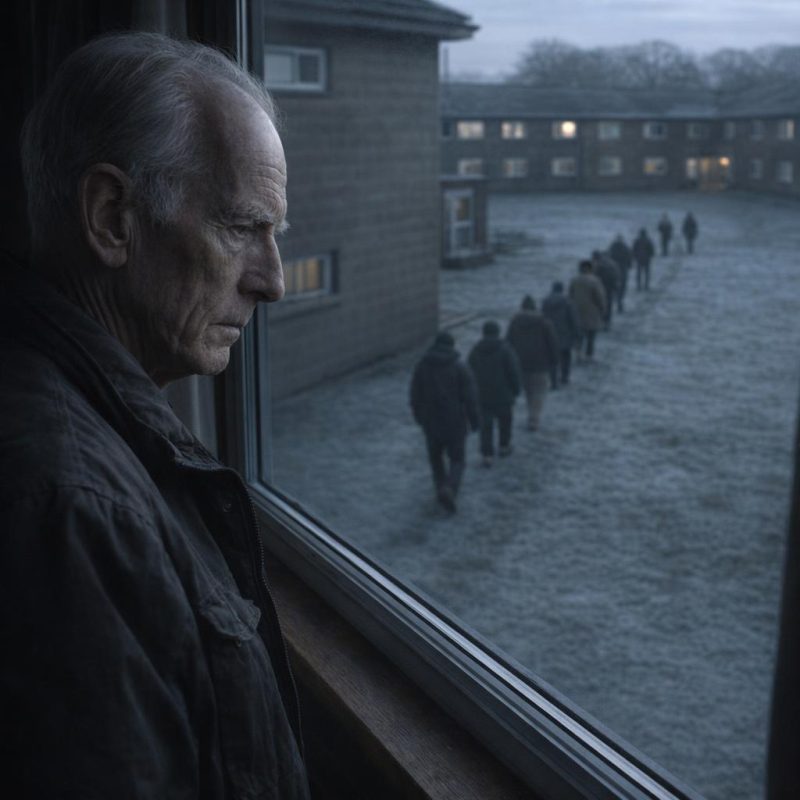 Image by RM AI
The Courtyard Gathering
There were perhaps thirty of them gathered in the courtyard by the time I arrived, arranged in a loose formation that wasn't quite a line and wasn't quite a crowd. No one spoke. I took a position near the edge and looked for faces I recognized. Margaret was there — I spotted her near the center, her oversized wool coat swallowing her thin frame, her eyes fixed on the ground in front of her feet. Edward stood closer to the far side, hands in his pockets, jaw set. Neither of them looked up when I arrived. The speakers mounted on the poles crackled once, and then a recorded voice began reading the day's schedule in a tone that was neither warm nor hostile — just flat and precise. Breakfast had already been delivered. Morning work assignments would begin at seven-thirty. Lunch at noon. Afternoon documentation session at two. Evening assembly at six. The voice clicked off. No one moved for a moment, and then, as if responding to a signal I hadn't heard, the group began to disperse toward their assigned tasks. I stood and watched them go — the slow shuffle of it, the absence of complaint or question or even a shared glance between neighbors. The weight of their compliance settled over the courtyard like weather.
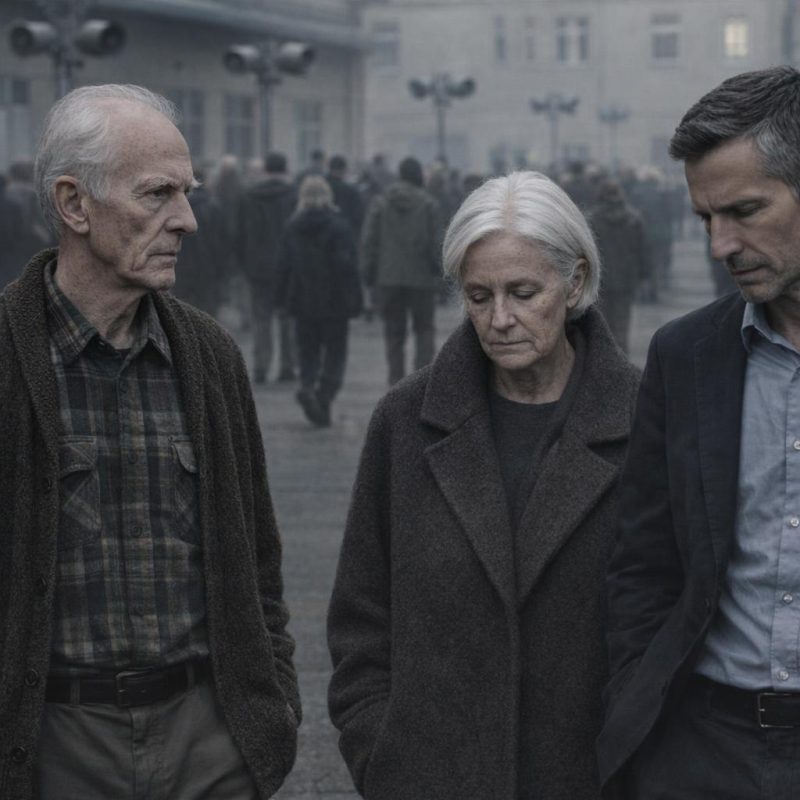 Image by RM AI
Edward's Approach
The courtyard emptied in under two minutes. I was still standing near the cold hearth, turning the morning over in my mind, when Edward appeared at my elbow. He didn't approach from across the open ground — he was simply there, the way someone is when they've learned to move without drawing attention. His cracked glasses caught the pale morning light. He glanced toward the nearest speaker pole, then back at me. 'The contribution,' he said, low and even. 'They mentioned it in the film last night.' I told him I'd seen it. He nodded like that confirmed something. He said he'd been here eleven weeks and had spent most of that time trying to understand what the word actually meant in this context. He'd talked to people who'd been here longer. He'd watched the staff. He'd read everything they put in front of him as slowly as they'd allow. 'They're building something out here,' he said, his voice dropping further, eyes moving once more to the perimeter. 'Something that needs a foundation.' He paused, and I waited, because I'd spent thirty years in classrooms and I knew when someone was working up to the part that mattered. He looked at me steadily. 'We're the raw material.'
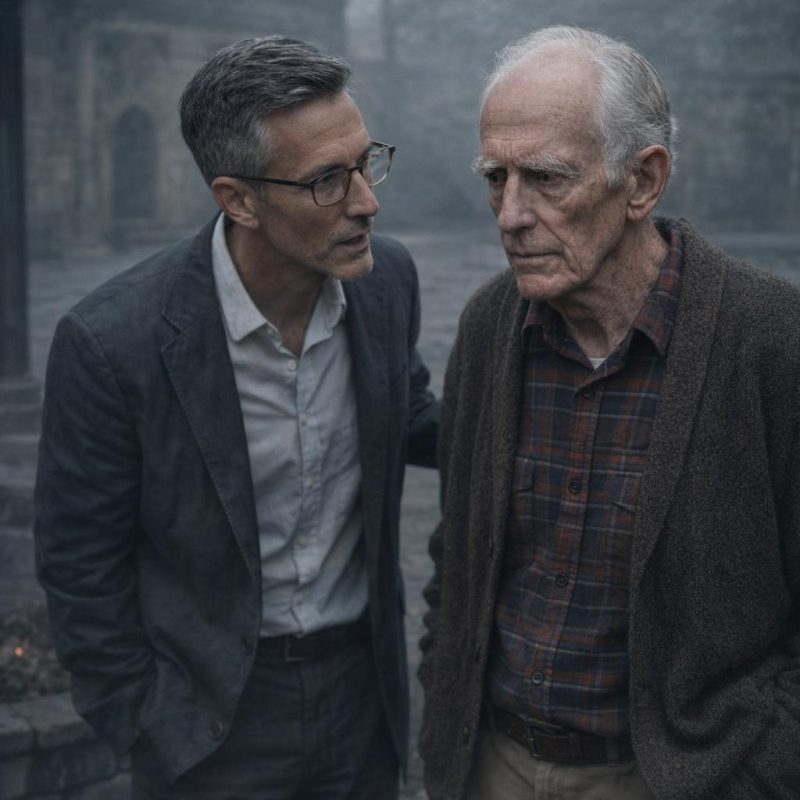 Image by RM AI
The Documentation Room
A staff member came for me at two o'clock, as announced. Young, expressionless, wearing the same grey polo shirt I'd seen on every staff member since I arrived. He didn't explain where we were going, just gestured toward the main building and walked. I followed, because the alternative wasn't clear to me yet. The room he led me to was small and windowless, lit by a single overhead fluorescent that buzzed at a frequency designed, I was fairly certain, to make thinking difficult. A metal table. A metal chair. And on the table, a stack of forms thick enough that my first thought was that someone had made a clerical error. He set a pen down beside the stack and told me to take my time. Then he stepped outside and closed the door. I sat down and picked up the first page. Employment history going back thirty years. Educational records. Family members' names and contact information. Then the next page: property records, account numbers, the name of my bank. The page after that asked for my Social Security number, my date of birth, and the document number from my birth certificate. I set that page down and looked at the rest of the stack — every detail of a life, laid out in neat numbered fields, waiting to be filled in.
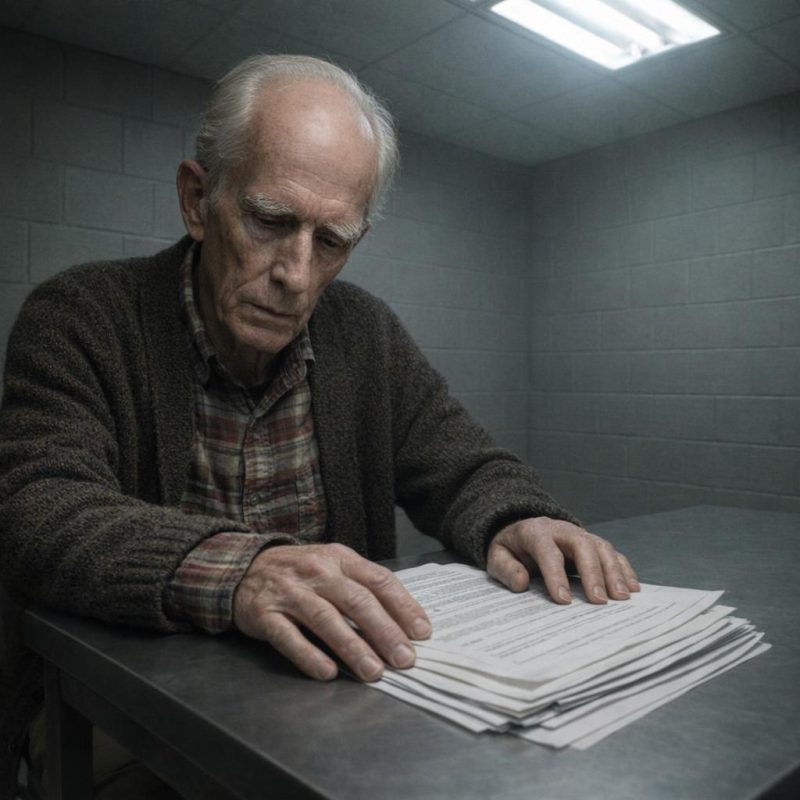 Image by RM AI
Mandatory Dinner
The bell rang at exactly six o'clock — not a second early, not a second late. I'd been watching the clock on the wall of my cabin since five-thirty, and when it sounded I felt something cold settle in my chest. We filed out in ones and twos, nobody speaking, and I followed the path toward the main building where warm light spilled from tall windows. Inside, the dining hall smelled of institutional food and pine cleaner. Long tables ran in parallel rows, and at every seat sat a white card and a plated meal — the same meal, as far as I could tell, at every single place. Roasted chicken, green beans, a dinner roll. I found my card near the middle of the second table. Margaret was already seated to my left, her wool coat still on despite the warmth of the room, her eyes fixed on her plate. To my right sat a broad-shouldered man with a white beard and calloused hands wrapped around a glass of water — his card read Frank, with a number beneath his name. Staff members stood at intervals along the walls, arms loose at their sides, watching. Nobody spoke above a murmur, and even that died quickly. I picked up my fork and looked down the length of the table at the row of name cards, each one paired with a number, running the full length of the room.
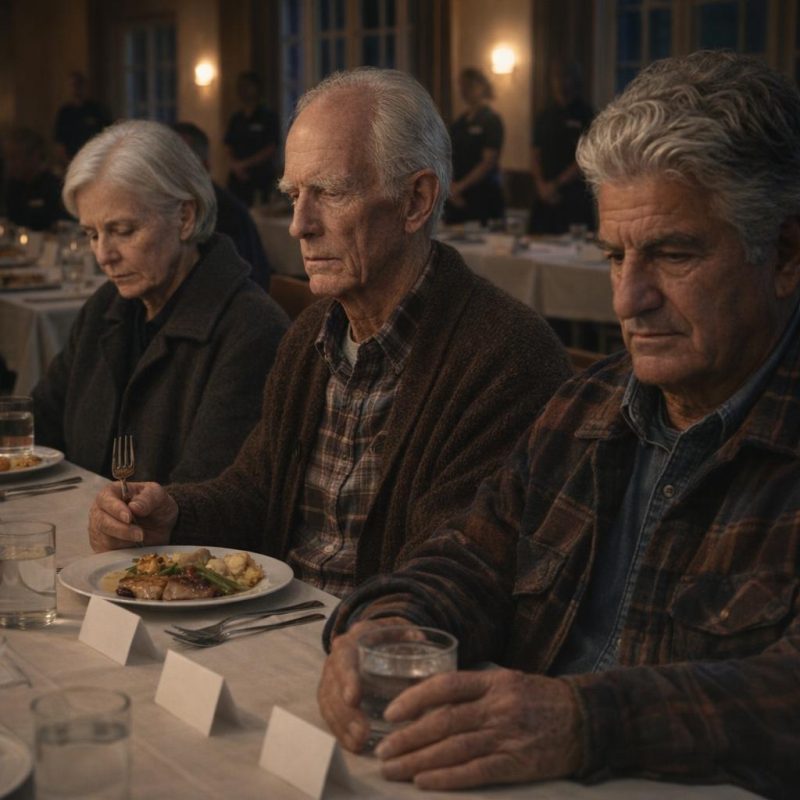 Image by RM AI
The Security Chief
I was halfway through the chicken when the door at the far end of the hall opened and a man walked in who was not dressed like the other staff. Combat boots on the wooden floor, each step deliberate and heavy. Tactical gear, dark sunglasses despite the indoor light, hair buzzed close to the skull. He moved between the tables at an unhurried pace, and the effect on the room was immediate — the low murmur that had survived dinner dropped away entirely. Margaret's fork stopped moving. Frank set his water glass down without a sound. I kept my eyes on my plate and tracked the man's progress by the sound of his boots. He moved up one row and down the next, pausing occasionally, and I felt the pause before I understood it — the footsteps stopped directly behind my chair. I counted to five before they started again. I didn't turn around. I didn't look up. I just sat there with my fork in my hand, listening to those boots cross the room and exit through the far door, and the silence he left behind settled over the tables like something with actual weight.
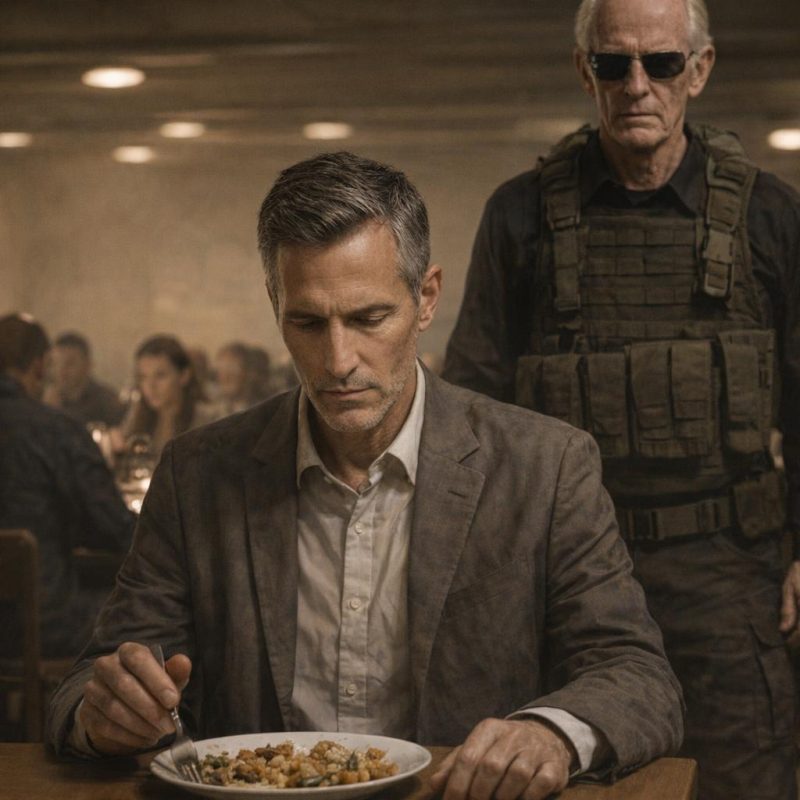 Image by RM AI
Night Reconnaissance
The lock on my cabin door clicked at nine o'clock, same as the night before. I lay on the narrow bed fully dressed and waited. The mountain cold came through the walls in slow degrees, and by midnight the cabin was dark enough that I couldn't see my own hand in front of my face. The bathroom window was small — I'd measured it with my forearm that afternoon — but I'm a lean man and I'd taught myself not to be precious about discomfort. I worked the latch free without noise, pushed the frame out, and pulled myself through into the cold air. The ground was rocky and uneven. I moved along the fence line slowly, staying low, letting my eyes adjust. The fence itself was chain-link topped with wire, and at intervals there were small yellow markers I hadn't been able to read from a distance. Up close, the symbols were clear enough: a lightning bolt inside a triangle. I noted the spacing between posts, the depth of the footings where I could see them, the way the wire ran taut between each anchor. Most of the perimeter was solid. But near the northeast corner, the fence line met a large rocky outcrop, and where the rock jutted out, there was a gap between the chain-link and the stone face that the installers hadn't fully closed.
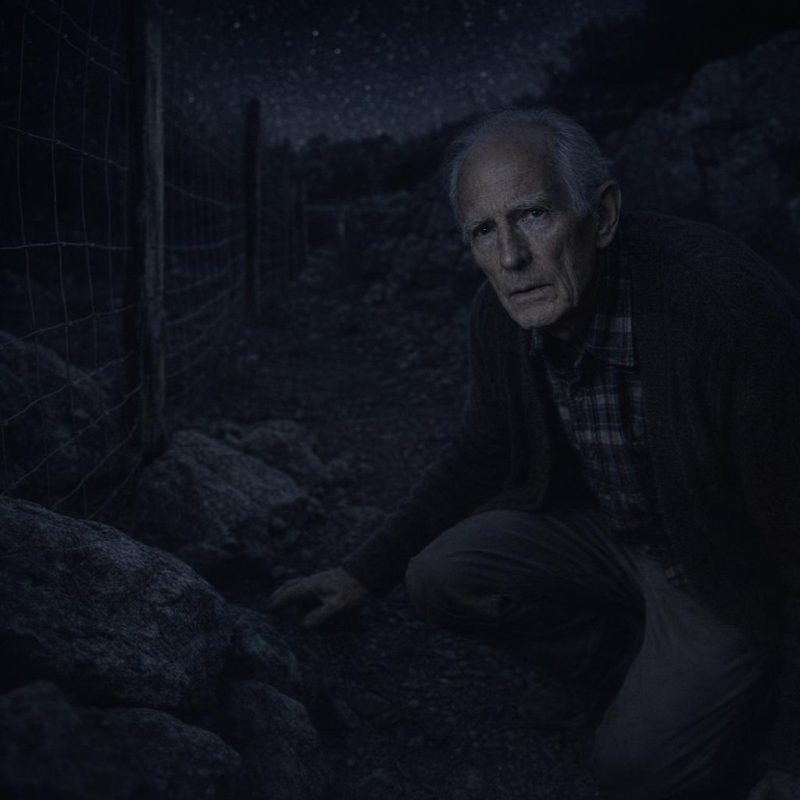 Image by RM AI
The Shock
I went back the next night. I'd spent the day turning the gap over in my mind, measuring it against what I remembered of my own dimensions, convincing myself it was possible. The rocky outcrop was rougher in the dark than I'd remembered, and I had to pick my footing carefully to get into position. The gap was maybe fourteen inches between the chain-link and the stone face — tight, but I'd thought it through. I turned sideways, pressed my back against the rock, and began to ease myself through. I was almost clear when the left sleeve of my jacket caught the bottom wire. What happened next didn't feel like electricity at first. It felt like the world ending in a single instant — a white crack of force that threw me backward off the rock and slammed me into the ground. My muscles locked. My jaw clenched so hard I tasted blood. I lay on my back in the dark, staring up at the sky, every nerve in my body still firing in long, rolling waves. I couldn't move my left arm. I couldn't hear anything except a high ringing tone. When I finally managed to roll onto my side and push myself up, my hand was shaking so badly I couldn't close my fingers. The wire hadn't just shocked me. Whatever was running through that fence, it had been enough to kill me if the contact had lasted one second longer.
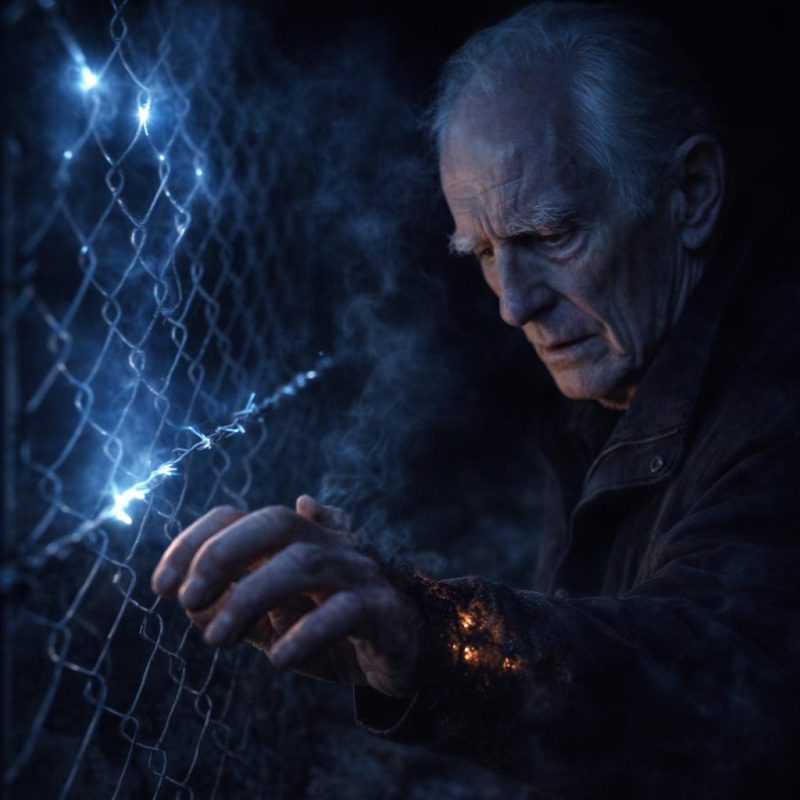 Image by RM AI
The Medical Exam
A staff member knocked on my cabin door at seven the next morning and told me, without explanation, to report to the medical building. I went, because refusing didn't seem like a productive option yet. The building was clean and bright in a way that felt out of place — white walls, antiseptic smell, equipment that looked expensive and current. A woman in pristine scrubs met me at the door. She introduced herself as Dr. Reeves and gestured to an examination table with the practiced efficiency of someone who had done this many times. She looked at the burns on my left forearm without asking how I'd gotten them, which told me she already knew. She pressed gently around the edges, noted the depth, and began writing. She asked about my blood pressure history, my cardiac record, any history of seizures. She asked whether I took blood thinners. She asked about my sleep, my diet, my stress levels before I arrived. I answered some questions and deflected others, watching her pen move across the pages of a thick file with my name printed on the tab. Every answer I gave, she wrote down. Every measurement she took, she wrote down. She didn't offer a diagnosis. She didn't explain what the information was for. She just kept writing, her expression professionally neutral, the pen moving in steady, unhurried strokes across page after page.
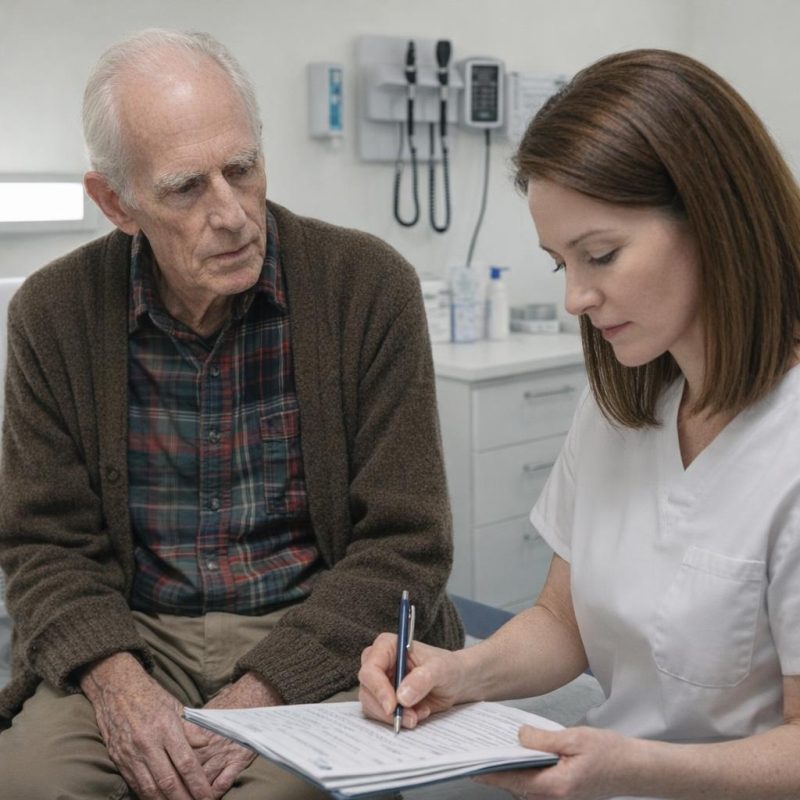 Image by RM AI
The Verification Process
Dr. Reeves wasn't finished after the examination. She set her clipboard down and produced an electronic fingerprint scanner from the cabinet behind her, the kind I'd seen at government offices. She explained, in the same even tone she'd used for everything else, that biometric documentation was standard procedure for all residents — a health and safety requirement, she said, for a community this remote. I pressed each finger to the glass plate and watched the green light sweep beneath them. After that came dental impressions, which she took herself with professional equipment, mixing the compound and fitting the tray with the confidence of someone cross-trained beyond a single specialty. Then a blood draw — three vials, labeled and set in a rack. She photographed me from the front, both profiles, and the back of my neck. She documented a scar on my right forearm from a woodworking accident twenty years ago, a birthmark below my left shoulder blade, a healed fracture visible in the knuckle of my right index finger. She catalogued each one in the file with the same methodical patience. When she finally capped her pen and closed the folder, the file was nearly an inch thick. I sat on the edge of the examination table and looked at what she'd assembled — every physical fact of me, organized and complete, filed under my name.
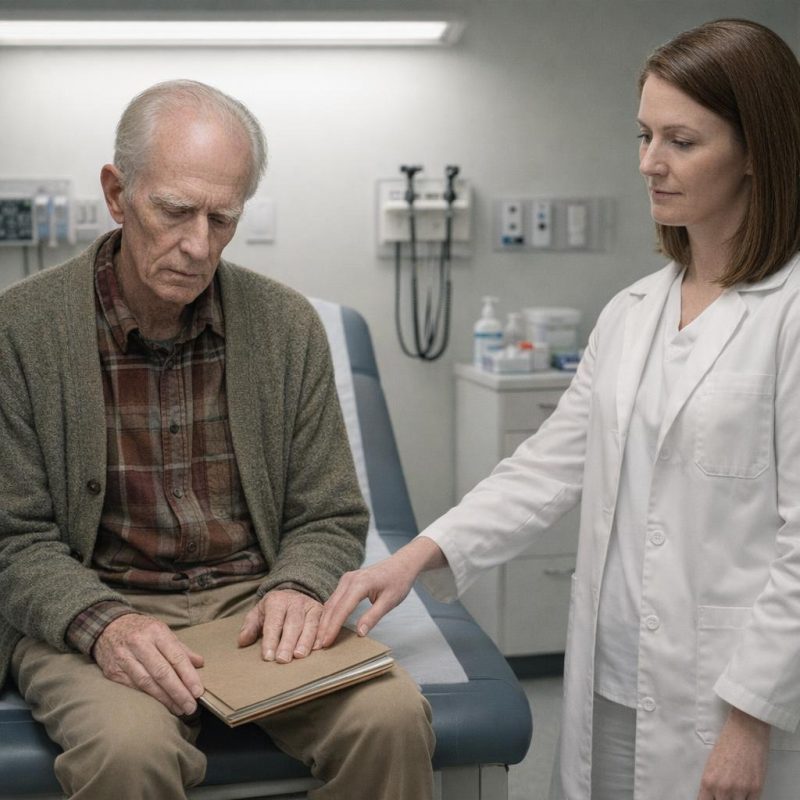 Image by RM AI
Frank's Revelation
The recreation hour was forty-five minutes, not an hour, and it happened in a fenced courtyard behind the main building. Most residents walked slow circuits or sat on the wooden benches along the wall. I was on my second circuit when Frank fell into step beside me. He didn't look at me directly. He kept his eyes forward and his voice low, and he talked about the weather with enough conviction that anyone watching from a distance would have seen two men discussing cloud cover. What he was actually saying was something else entirely. He told me there were seven of them — residents who had been watching, comparing notes, keeping track of patterns in the schedule and the staffing rotations. He said they'd noticed me the first day. He said my fence attempt the night before last had been seen by two of them from a window, and that it had confirmed something they'd wanted to know about me. He said the word carefully, like a man who had learned to be careful with words: resistance. He said there was a meeting, after lights out, and that I should come if I was willing. I kept walking beside him, matching his pace, and I looked at his profile — the white beard, the broad shoulders slightly stooped, the calloused hands clasped behind his back — and what I saw there was not the desperation I'd felt since I arrived, but something older and quieter and harder to extinguish.
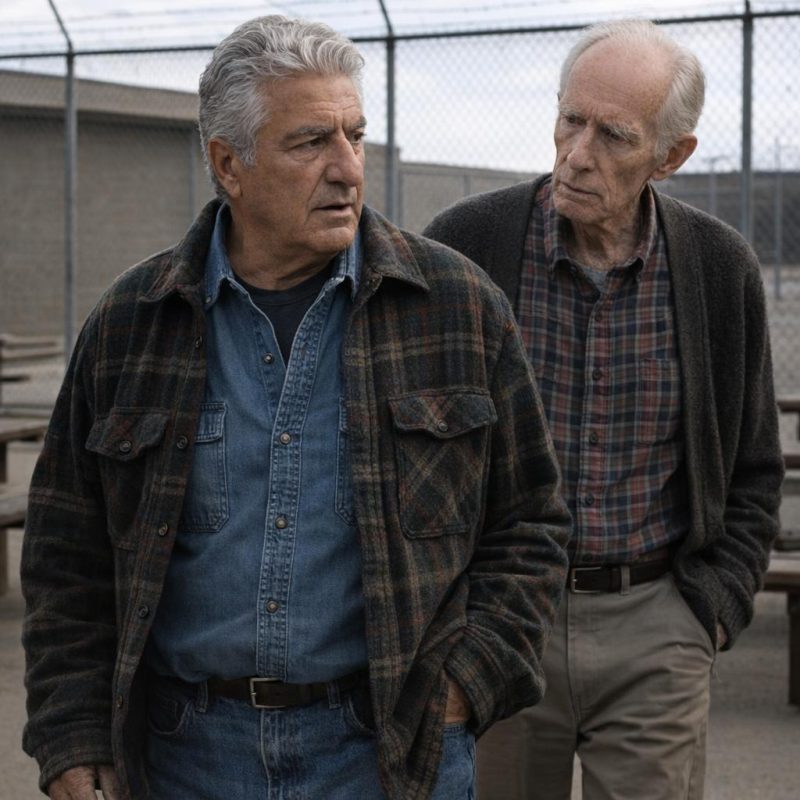 Image by RM AI
The Secret Meeting
I went through the bathroom window again at midnight. The burns on my forearm pulled when I pushed off the sill, but I didn't stop. Frank was already at the storage building when I got there, standing in the shadow of the eave with three others I recognized from the dining hall — and Edward, which surprised me. Edward looked like he hadn't slept in days, his cracked glasses repaired with a strip of tape, but he was there. We stood in a loose circle in the dark, close enough to speak without carrying sound. Frank did most of the talking. He'd mapped the delivery truck schedule over four months — Tuesdays and Fridays, always between six and seven in the morning, always the same driver, always a window of approximately four minutes when the gate mechanism cycled and the outer camera on the east post swept away from the road. Edward had been tracking the documentation process and said the intake paperwork for new residents followed a pattern he'd identified across multiple arrivals. Frank let him finish, then looked around the circle at each of us in turn, and said that they hadn't been guessing or improvising — they had been planning this for six months.
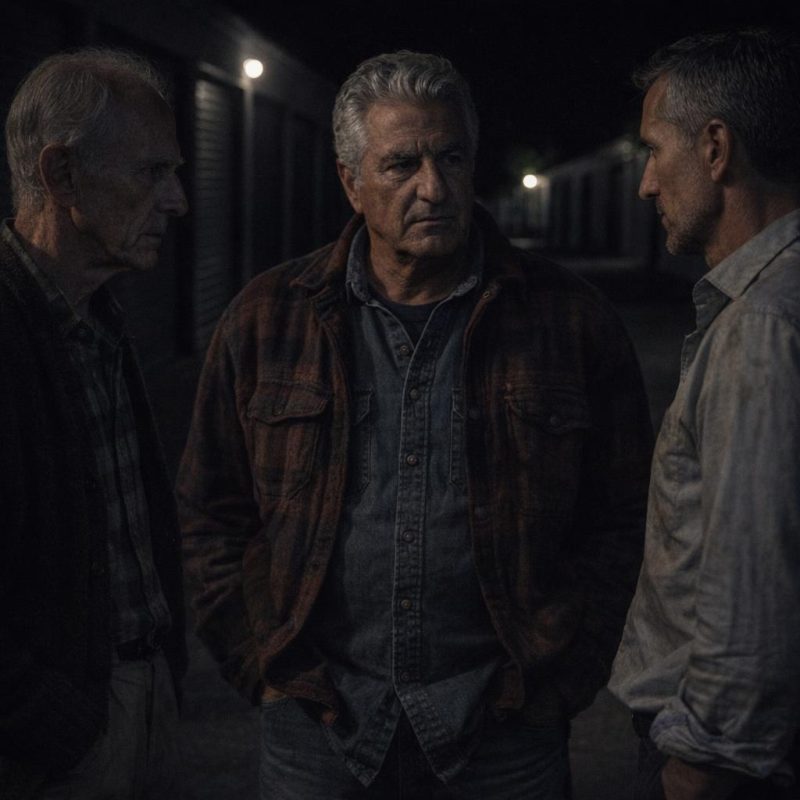 Image by RM AI
The Delivery Schedule
Frank pulled the calendar from behind a loose board in the storage building's back wall — a single folded sheet of paper that had been filled in so carefully it looked almost printed. He spread it flat on the floor between us and held his flashlight low so the beam wouldn't carry. Twelve months of Monday deliveries, each one marked with the arrival time, the gate cycle, and the duration the truck stayed inside the perimeter. Seven-fifteen in the morning, give or take three minutes. Gate closed again by seven-forty-five at the latest. Thirty minutes, sometimes less. The drivers never left the cab, he said — not once in a year. The Security Chief was always positioned at the east post during the window, always facing inward toward the residents, never toward the road. Edward leaned in and traced one finger along a row of dates without touching the paper, like he was afraid to smear something. I looked at the columns of small, precise handwriting and thought about what it had taken to produce them — the patience, the discipline, the months of watching without being caught. Frank hadn't been guessing at any of this. Every number on that page had cost him something. I sat with that thought for a long time after he folded the calendar back up and tucked it away.
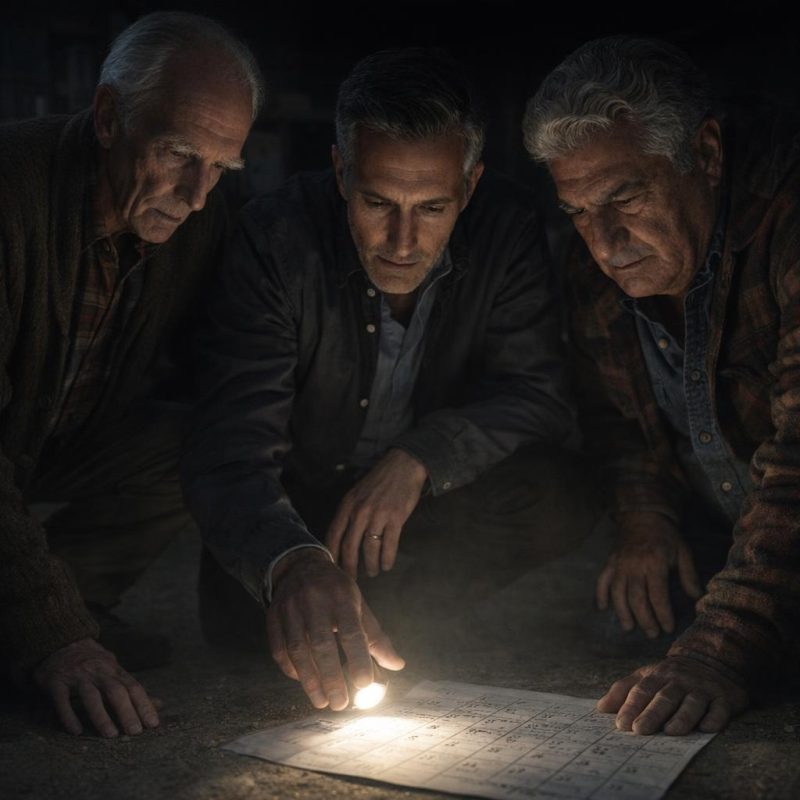 Image by RM AI
The Failed Signal
Monday morning came faster than I expected. I told myself I was just going to observe, get a feel for the timing, see whether Frank's numbers held. But when the truck rolled through the gate at seven-eighteen and the driver's window was right there, maybe forty feet away, I stopped thinking and started moving. I crossed the courtyard at what I hoped looked like a casual pace and raised one hand, trying to catch the driver's eye. I mouthed the words slowly — help, please, help — and kept my hand up. The driver looked straight ahead. He didn't turn, didn't blink, didn't adjust his mirrors. Then a hand came down on my shoulder from behind, firm and unhurried, and I didn't have to look to know whose it was. The Security Chief steered me away from the gate without a word, his grip neither rough nor gentle, just absolute. I let him move me because there was no other option. The truck finished its cycle. The gate closed. He walked me back toward the cabins at the same measured pace he'd used to intercept me, his hand still on my shoulder the whole way, and I felt the weight of it long after he finally let go.
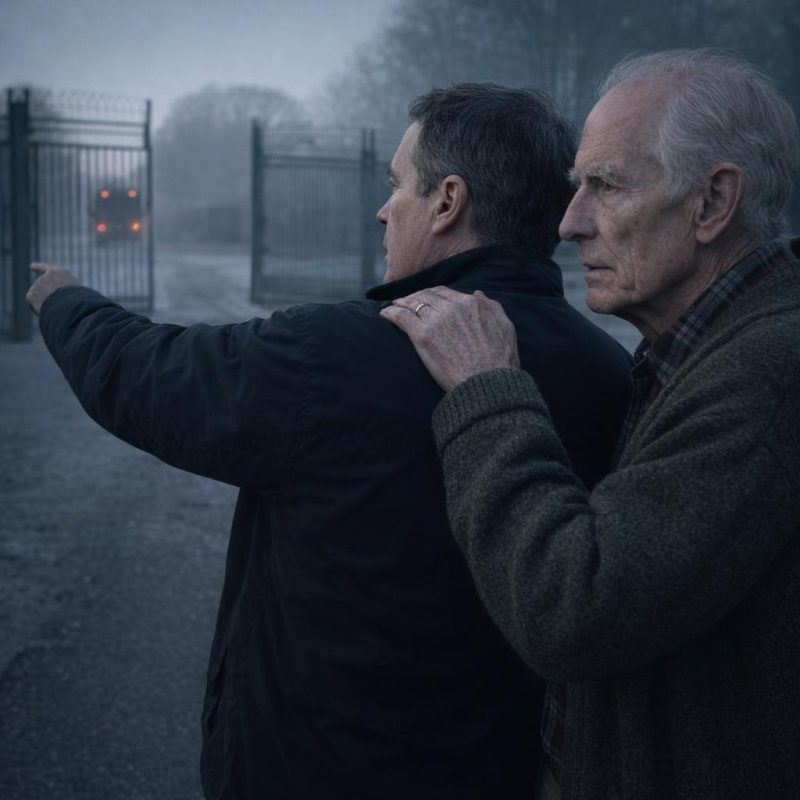 Image by RM AI
Isolation
He didn't take me back to my cabin. He walked me past it, around the side of the main building, and down a set of concrete stairs I hadn't noticed before. The room at the bottom was small — maybe eight feet by ten — with a cot, a sink, and a single bare bulb that he switched off when he left. The door had no handle on the inside. I heard the lock turn, and then his footsteps going back up the stairs, and then nothing. The first day I spent mostly standing, running my hands along the walls, measuring the space. The second day I sat on the cot and tried to think through everything Frank had told me, every detail of the calendar, every number. The third day was harder. The slot in the door opened once each morning — a tray slid through, then the slot closed again. Water came from the sink. The silence was the worst part, not because it was frightening but because it was so clearly designed to be. I thought about the other residents who had probably sat in this same room, on this same cot, and what it had done to them. It hadn't done that to me. Whatever they were trying to drain out of me down here, I could feel it hardening instead into something else entirely. Then the fourth morning came, and I heard the lock turn, and the footsteps faded away.
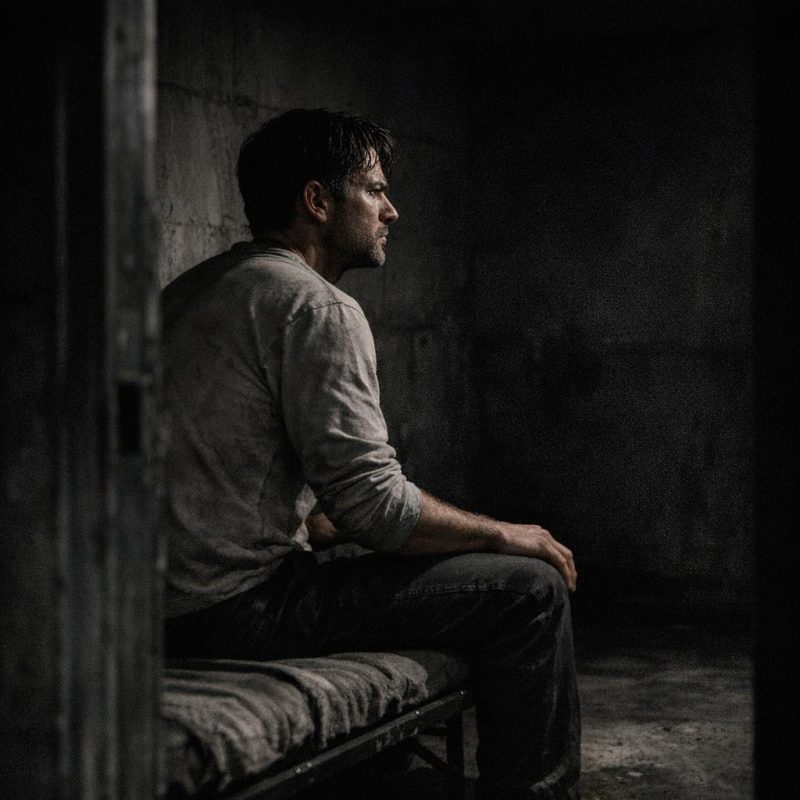 Image by RM AI
Emerging Harder
The Security Chief opened the door and stood aside without a word. My legs were unsteady on the stairs — three days on a cot in a concrete box will do that — and I gripped the railing going up. He walked me back across the compound in the early morning light, the same measured pace as always, and unlocked my cabin door from the outside. Then he left. I stood in the middle of the room for a moment, just breathing the different air. The cabin smelled like wood and dust and something faintly green from the trees outside, and after three days of concrete and recycled silence it hit me harder than I expected. I drank two full glasses of water from the tap. I sat on the edge of my own bed and pressed my palms flat against my thighs until my hands stopped shaking. Then I got up and looked in the small mirror above the dresser. I'd seen my own face ten thousand times. I knew what tired looked like on it, what worry looked like, what grief looked like. What I saw in that mirror wasn't any of those things. The eyes looking back at me were quieter than I remembered, and considerably colder.
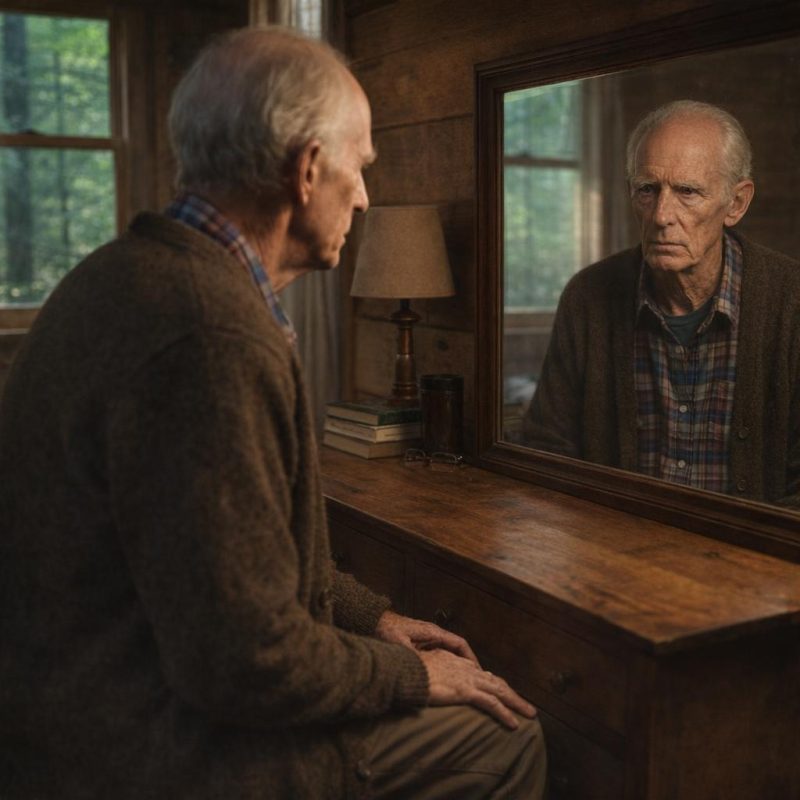 Image by RM AI
Edward's Disappearance
Morning assembly was a head count dressed up as a community gathering — the Director's staff had always been careful to make it feel voluntary, but attendance was noted and absences were followed up on. I'd learned to scan the courtyard quickly, matching faces to positions. That morning I counted twice before I accepted what I was seeing. Edward wasn't there. I worked my way around the edge of the group until I reached Margaret, who was standing slightly apart from the others with her coat pulled tight despite the mild air. I asked her quietly if she'd seen Edward that morning. She shook her head. Her eyes were wet, and she pressed her lips together and looked away, and that was all the answer she gave me. I didn't push her. After the assembly dispersed I walked the long way back toward my cabin, taking the path that ran past Edward's. His door was standing open. I stopped in the doorway and looked inside. The cot was stripped. The small shelf above it was bare. The cracked glasses he'd repaired with tape, the notebook he'd carried everywhere, the single photograph he'd kept propped against the wall — all of it was gone, and the room had the particular emptiness of a space that had been cleared deliberately and recently.
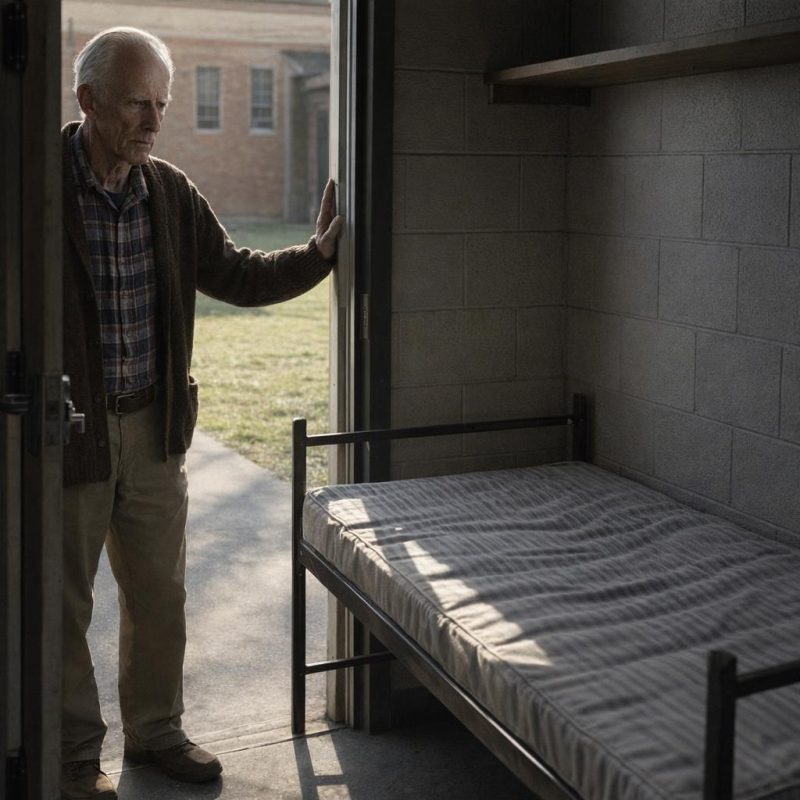 Image by RM AI
Increased Surveillance
The Director appeared at the evening meal two nights after Edward vanished — which was unusual enough on its own that the dining hall went quieter the moment he walked in. He didn't sit. He stood at the front of the room in his dark suit with his hands clasped behind his back and spoke in the measured tone of someone accustomed to being listened to. He said that in light of recent events, security protocols were being enhanced for the protection and wellbeing of all residents. He said it the way you'd announce a new amenity. The Security Chief and two staff members spent the following hour mounting cameras on poles throughout the courtyard while we finished eating. I watched through the dining hall windows as the poles went up — one near the main gate, one at the corner of the storage building, two more angled toward the cabin row. By the time I walked back to my cabin that night, there were new cameras above three of the four cabin doors I passed, their small red indicator lights blinking steadily in the dark. I lay down on my cot and stared at the ceiling and thought about Edward's empty room, and the Director's careful phrasing, and the blinking red light I could see through my window from where I lay. The feeling of being watched had always been present here. Now it had a shape.
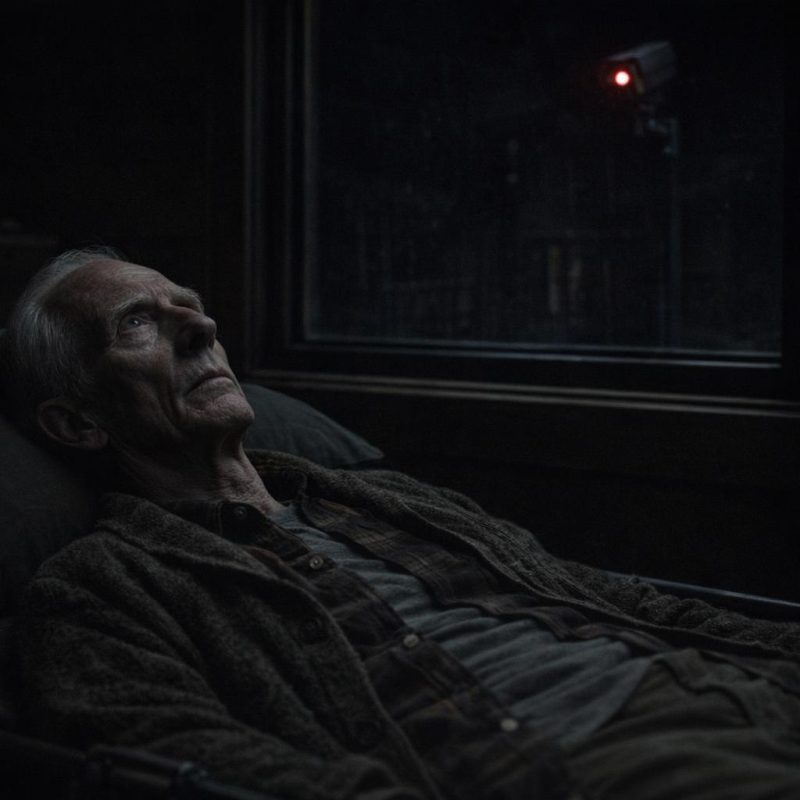 Image by RM AI
The Overheard Conversation
Work duty rotated through the residents on a posted schedule, and that week my assignment was the dining hall — wiping tables, sweeping, restacking chairs after the morning meal. It was the kind of task that made you invisible, which was the only reason I heard what I heard. The kitchen door was propped open about four inches, and two staff members were talking inside while they worked. I kept moving the broom in slow, even strokes and didn't look up. One of them mentioned a transfer timeline, something about six to eight weeks for processing. The other one said the documentation on a particular file was complete and that buyers were waiting on it. I didn't catch a name at first. I kept sweeping. Then the first voice said the file had been sitting ready for two weeks and asked why the delay, and the second one said something about confirmation of a clean title — whatever that meant in this context — before anything moved forward. I set the broom against the wall and crouched down to collect a pile of swept debris with the dustpan, taking my time, not moving toward the door. The voices dropped lower and I lost the thread of it. I finished my work duty and walked back out into the courtyard and stood in the thin morning sun, and the word buyers just sat in my mind and wouldn't move.
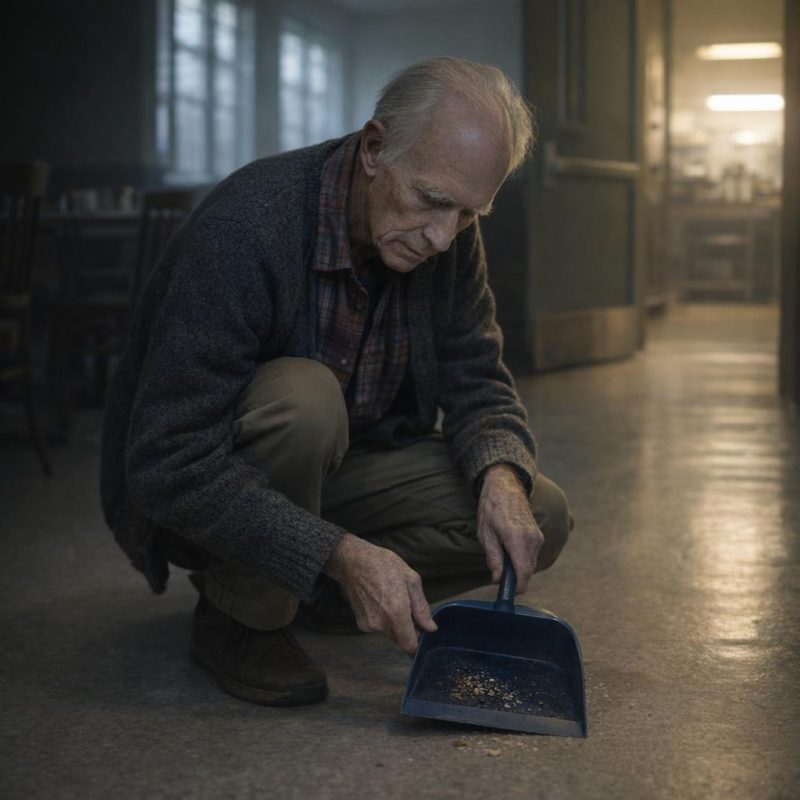 Image by RM AI
The Hidden Files
I waited until well after midnight before I went out the bathroom window. The main building's basement door — the one the Security Chief had used to bring me to the isolation room — had a standard keyed lock, and I'd spent three days in that room studying the door frame. The latch bolt had maybe a quarter inch of play. It took me longer than I'd like to admit, working in the dark with a folded piece of cardboard I'd been saving, but the door eventually gave. Inside, past the isolation room, there was a second door I hadn't seen before. It opened into a long narrow room lined on both sides with metal filing cabinets, each drawer labeled with a number and a name. I moved the flashlight slowly along the labels. I recognized names from the dining hall, from morning assembly, from the cabin row. Margaret's name. Frank's name. Names of people who had been here longer than me, and names of people who had arrived after. The files were thick — not just intake forms but page after page of documents I couldn't immediately make sense of, dense with numbers and signatures and what looked like official seals. I found the cabinet with my name on it near the far end of the room. I pulled the drawer open and lifted out my file, and even in the low light I could see how much was in it — the folder was nearly an inch thick, and I hadn't been here long enough to explain that.
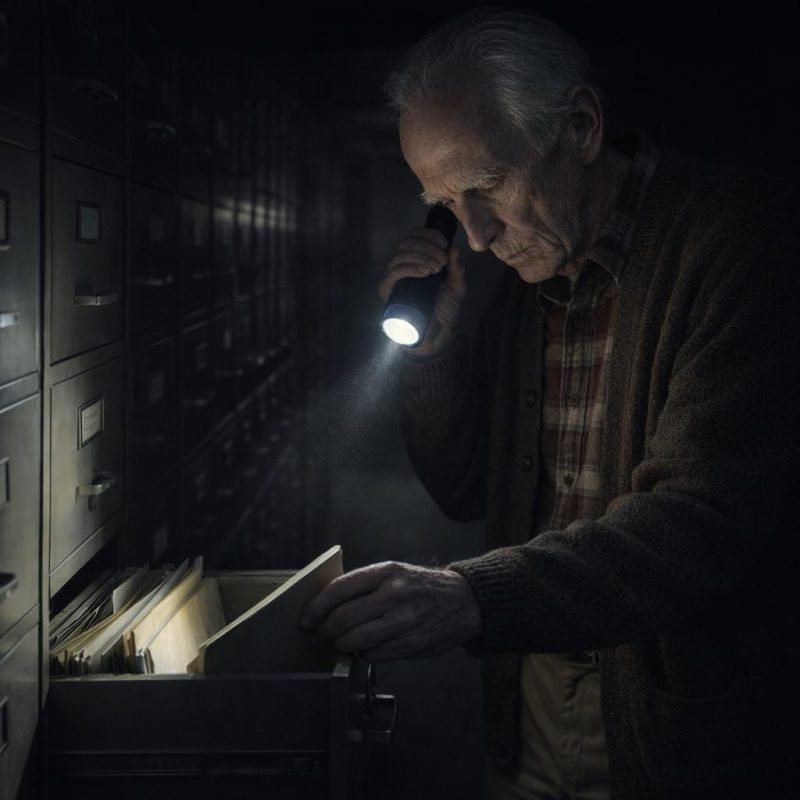 Image by RM AI
The Financial Transfers
I set the flashlight on top of the cabinet and started going through the pages slowly, the way I used to grade papers — methodically, one at a time, not letting myself skip ahead. The first few sheets were what I expected: intake forms, the property agreement, the waiver I'd signed without reading carefully enough. Then the pages changed. Bank account numbers I recognized as my own appeared at the top of transfer authorization forms, each one bearing a signature that looked close enough to mine to pass a casual inspection. Below the account numbers were routing codes, transfer amounts, and dates — none of them in the past. They stretched forward, six months out, some of them further. Property deed assignments came next, my home address printed clearly at the top, with language about asset reassignment and beneficiary designation that I had to read three times before the words stopped sliding past each other. There were legal seals I didn't recognize on letterhead I'd never seen. I stood there in the narrow room with the flashlight balanced on the cabinet, turning pages I couldn't fully understand, feeling the folder grow heavier in my hands with each one. I didn't know yet what all of it meant. But I knew it was more than a retirement community had any reason to have. I slid the folder back into the drawer and stood very still, the weight of all that documentation pressing against my ribs.
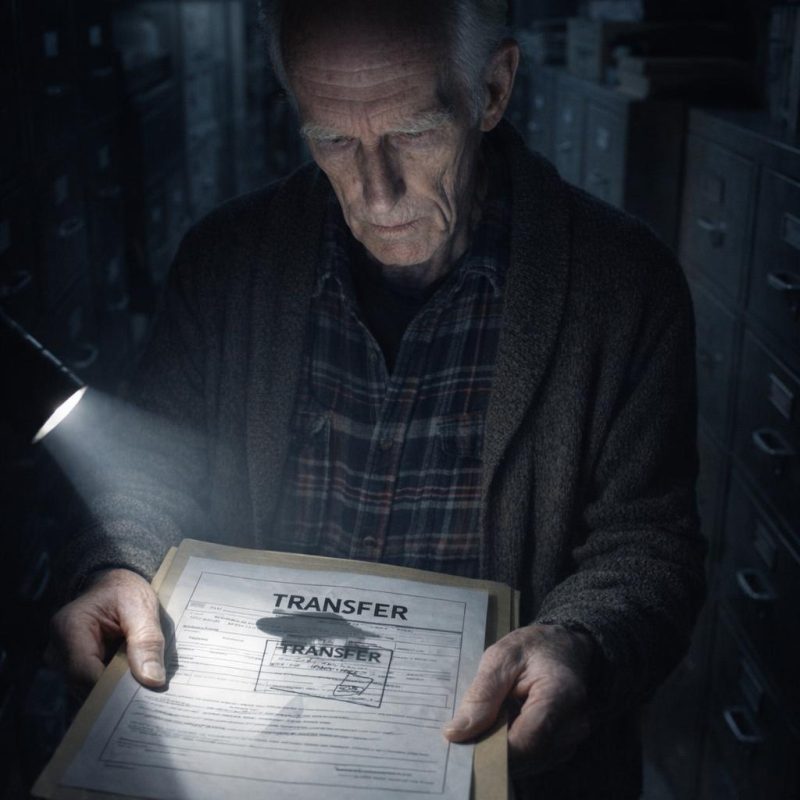 Image by RM AI
Nearly Caught
I had just pushed the drawer shut when I heard it — footsteps, directly above me, crossing the floor in a slow and deliberate pattern. I stood completely still and listened. The steps moved toward what had to be the stairwell. I had maybe thirty seconds. I swept the flashlight off the cabinet, clicked it off, and moved as fast as I dared in the dark toward the far end of the room. There was a door I'd noticed when I came in, narrower than the others. I pulled it open and stepped inside. Shelving units, cleaning supplies, the sharp smell of bleach. I pulled the door to within an inch of closed and pressed myself against the back wall. The footsteps reached the bottom of the stairs. A light came on in the file room — brighter than my flashlight, flooding the gap at the door's edge. I recognized the Security Chief's silhouette through the crack: the buzz cut, the tactical gear, the unhurried way he moved through a space he owned completely. He walked the length of the room. He stopped near the cabinet where my file had been. I stopped breathing. He stood there for what felt like several minutes, then checked two other drawers, then walked back toward the stairs without hurrying. The light went out. His footsteps climbed away and faded. I stayed in the closet for a long time after that, not moving, the sound of my own heartbeat filling the darkness.
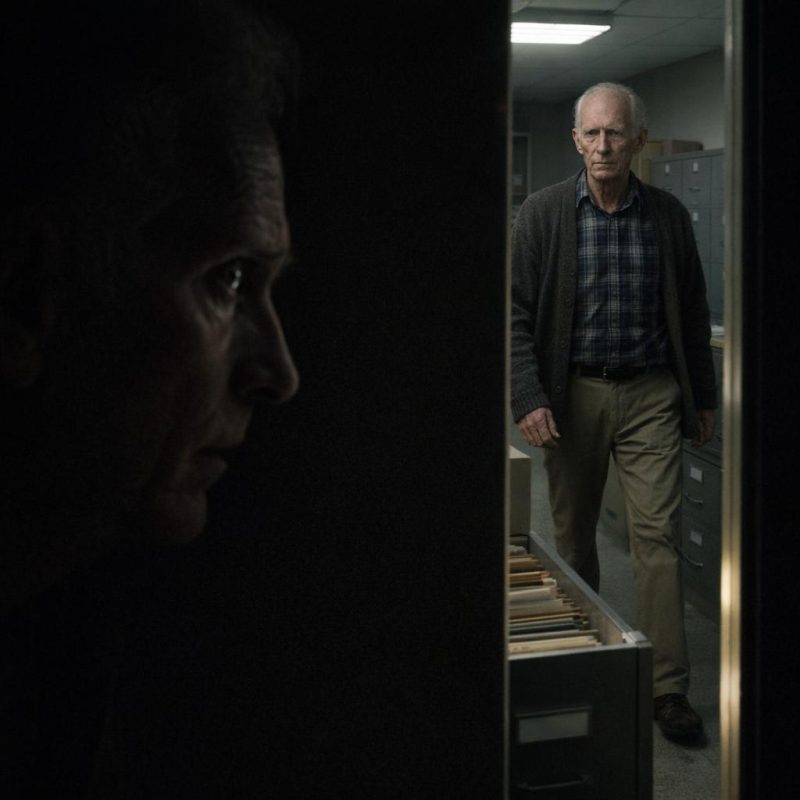 Image by RM AI
The Summons
I was back in my cabin before four in the morning, and I didn't sleep after that. I lay on top of the covers with my clothes still on, staring at the ceiling, running through everything I'd seen in that file room and trying to make sense of it. By the time pale light started coming through the window, I'd convinced myself that the Security Chief had noticed something — a drawer not quite flush, a smudge on the cabinet, something I'd missed in the dark. The knock at my door came just after breakfast. I hadn't gone to the dining hall, so I heard the footsteps on the porch before the knock, and I was already standing when the door opened. A staff member I didn't recognize by name slid a folded note across the threshold without making eye contact and left before I could say anything. The note was on Legacy Heritage letterhead, the logo embossed at the top in that same dark green I'd seen on every official document since I arrived. The language was formal and brief: I was to report to the Director's office at two o'clock that afternoon. No reason given. No explanation offered. I sat down on the edge of the bed and looked at the clock. It was not yet eight. I spent the next six hours in that cabin, watching the morning stretch out in front of me like something I had to survive. I read the note a third time, my hands shaking.
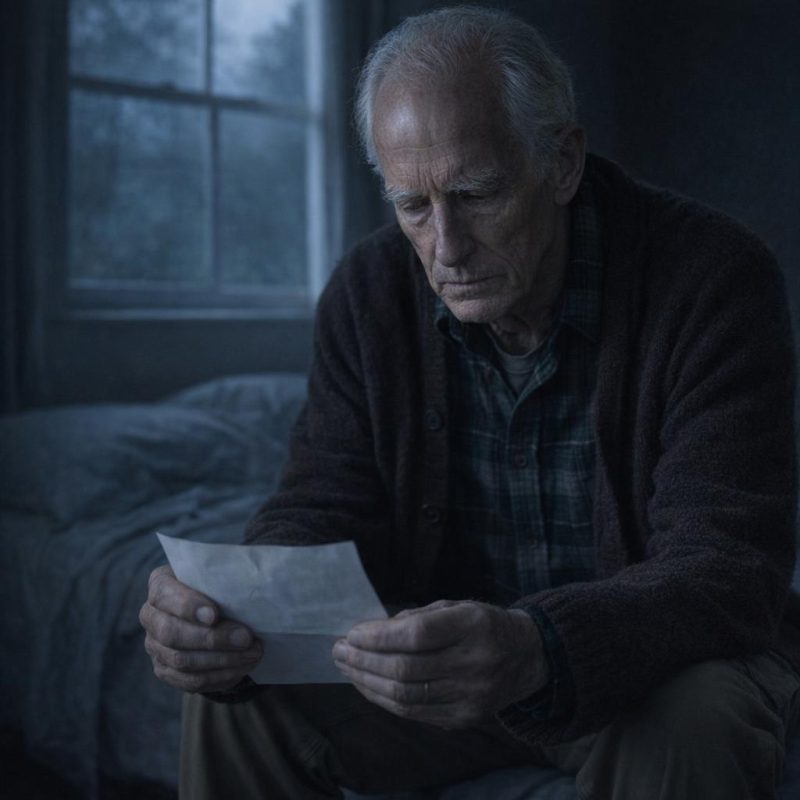 Image by RM AI
The Director's Office
I walked into the Director's office at exactly two o'clock. I'd made a decision on the way over: whatever happened, I wasn't going to show him anything he could use. The office was smaller than I'd imagined — no windows, a single lamp on the corner of the desk throwing most of the room into shadow. He was sitting behind the desk when I entered, and he didn't look up immediately. He let me stand there for a moment, which I understood was the point. The desk was dark wood, expensive, the kind of surface that's meant to communicate something about the person behind it. When he finally looked up, his expression was the same flat, composed arrangement I'd seen at orientation — nothing readable in it, nothing warm. He gestured to the chair across from him without speaking. I sat. My file was open on the desk between us. I could see the pages from where I sat — not the intake forms, not the property agreement. The pages that were face-up were the ones I'd spent the night trying to understand: the transfer authorizations, the account numbers, the future-dated documents with the legal seals I didn't recognize. He still hadn't said a word. He folded his hands on the desk and looked at me with those flat grey eyes, and I looked back at my file open to the financial transfer pages.
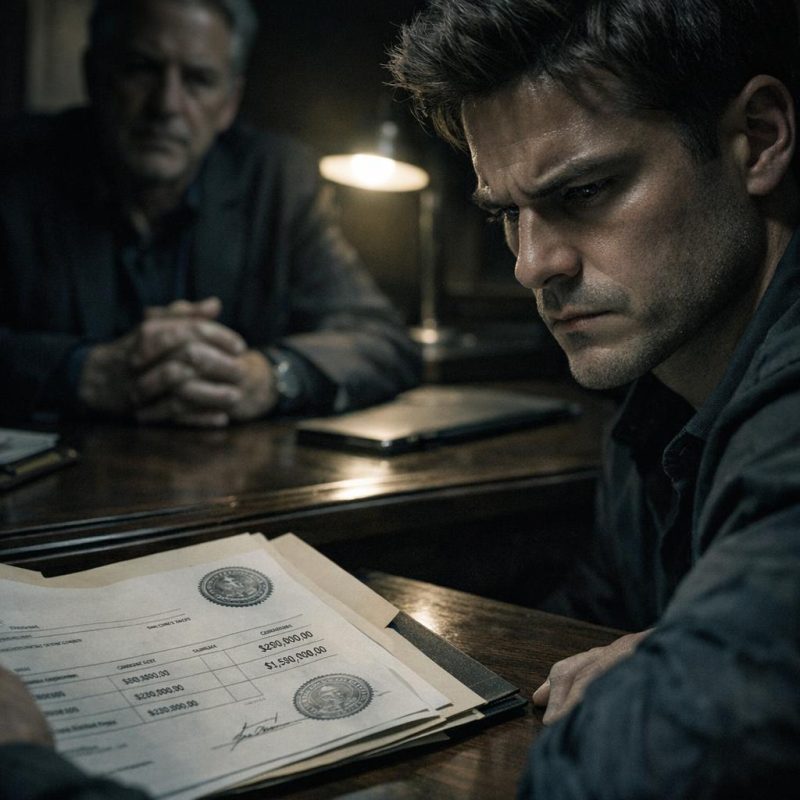 Image by RM AI
The Truth Revealed
He didn't ask me about the file room. He didn't ask me anything. He just started talking, in the same measured tone he'd used at orientation, as if he were explaining a policy change at a staff meeting. Legacy Heritage, he said, was not a retirement community. It was a service. Wealthy individuals — people with legal problems, people who needed to stop being who they were — paid a significant sum to become someone else entirely. Not a fake identity, he was careful to say. A real one. A documented, verifiable, fully lived life, transferred from one person to another. The elderly residents were chosen specifically because their backgrounds were clean, their credit histories long, their paper trails deep and credible. Every medical exam, every fingerprint, every photograph — all of it was identity verification, building a complete profile that could be handed to a buyer. The residents were kept alive and isolated because a death certificate would create a conflict. As long as we were here, our identities could exist out in the world without contradiction. He said all of this without raising his voice, without any particular emphasis, the way someone explains a process they've explained many times before. I sat across from him and felt the room tilt slightly, the way it does when something you half-suspected turns out to be so much worse than you'd let yourself imagine. Then he said it plainly, without pausing: my identity had already been sold.
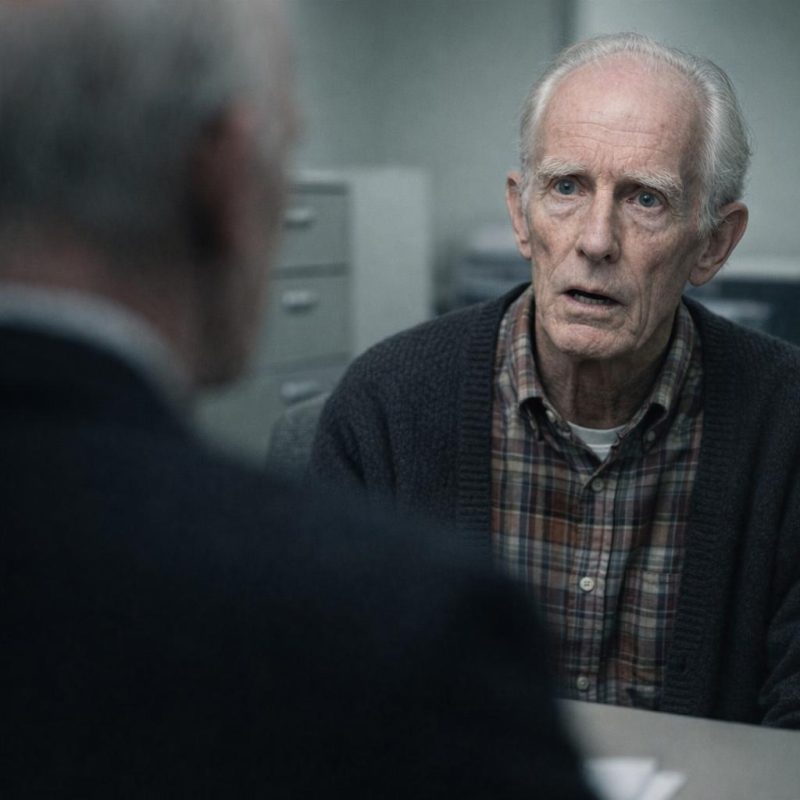 Image by RM AI
The Documentation Process
He walked me through it the way a contractor walks a client through a completed renovation — item by item, no apology, just the facts of what had been done. The fingerprints collected during the medical intake had been transferred to the buyer's file. The dental records, the blood work, the photographs taken at orientation — all of it packaged and verified. My social security number, my credit history, my property records: reassigned through the transfer authorizations I'd seen in the file room, the ones with the future dates that hadn't made sense to me the night before. They made sense now. The buyer would assume those accounts gradually, the transfers timed to avoid triggering any automated flags. My home, my financial history, my documented existence — handed over in stages, like a relay. He spoke without inflection, and I sat across from him trying to hold each piece of information still long enough to understand it before the next one arrived. Then he mentioned the orientation film. The list of names that had scrolled across the screen during that first week — names I'd assumed were donors, or founders, or some kind of honorific roll call. He said it without particular emphasis, as if it were a minor administrative detail. That list was a transfer manifest: every name on it someone whose identity had already been handed to a buyer.
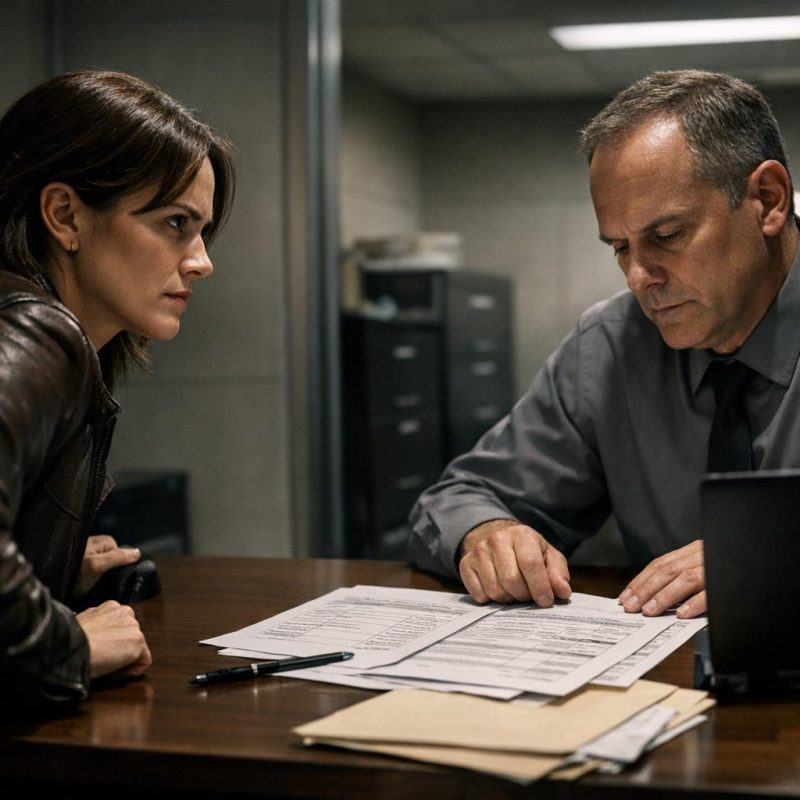 Image by RM AI
Already Gone
He reached into the desk drawer and slid a manila envelope across to me. Inside were photographs, printed on plain paper, the kind of images pulled from a surveillance feed. The man in them was in his sixties, similar build to mine, hair a shade darker but close enough. In the first photograph he was sitting at my kitchen table — my table, the one with the water stain near the left corner that I'd always meant to sand out. He had a coffee mug in front of him and he was reading something, completely at ease. In the second photograph he was in my bedroom, standing at the window I'd looked out of every morning for eleven years. In the third he was wearing my grey flannel shirt, the one I'd left hanging on the hook by the back door. The Director said the buyer had been studying recordings of me for weeks — my speech patterns, my posture, the way I moved through a room. He said it the way you'd describe a preparation process, something thorough and professional. I set the photographs down on the desk and looked at them for a moment without speaking. There was no word that fit what I was feeling — not anger exactly, not grief exactly, something underneath both of those. The stranger's face looked back at me from my kitchen, my bedroom, my life, wearing it all like a costume he'd already broken in.
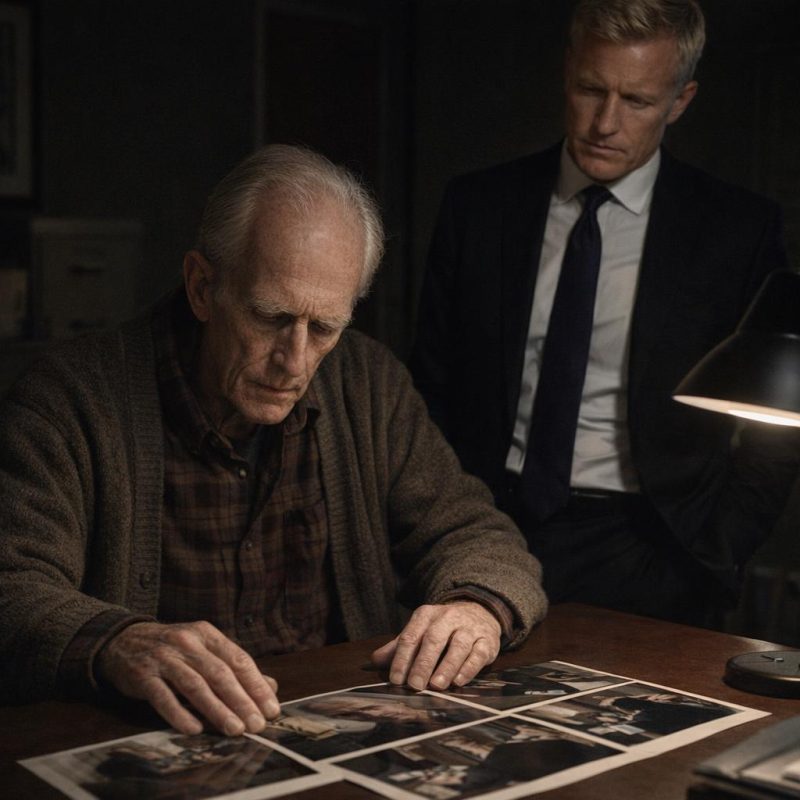 Image by RM AI
The Compliance System
He leaned back in his chair and explained the arrangement with the same clinical patience he'd used for everything else. I would remain at Legacy Heritage indefinitely. I would have my cabin, my meals, access to the grounds within the established boundaries. Medical care would be provided — good medical care, he said, because keeping residents healthy was operationally important. If I died, a death certificate would enter the public record and create a conflict with the buyer's existence. So it was in everyone's interest, he said, that I remain alive and well and entirely unreachable. He used the phrase mutually beneficial without any apparent awareness of how it sounded. I would never be harmed, he said. I would simply never leave. He said it the way someone describes a long-term lease — the terms are fixed, the arrangement is stable, there's nothing left to negotiate. I sat across from him and didn't say anything, because there was nothing to say that would have mattered in that room. I thought about the file room, about the names on that orientation list, about Margaret's hollow eyes and Frank's careful silences. I thought about Sarah, who had tried to warn me and whom I had no way to reach. The lamp cast its single pool of light across the desk between us, and I sat inside the clinical efficiency of the trap closing around me.
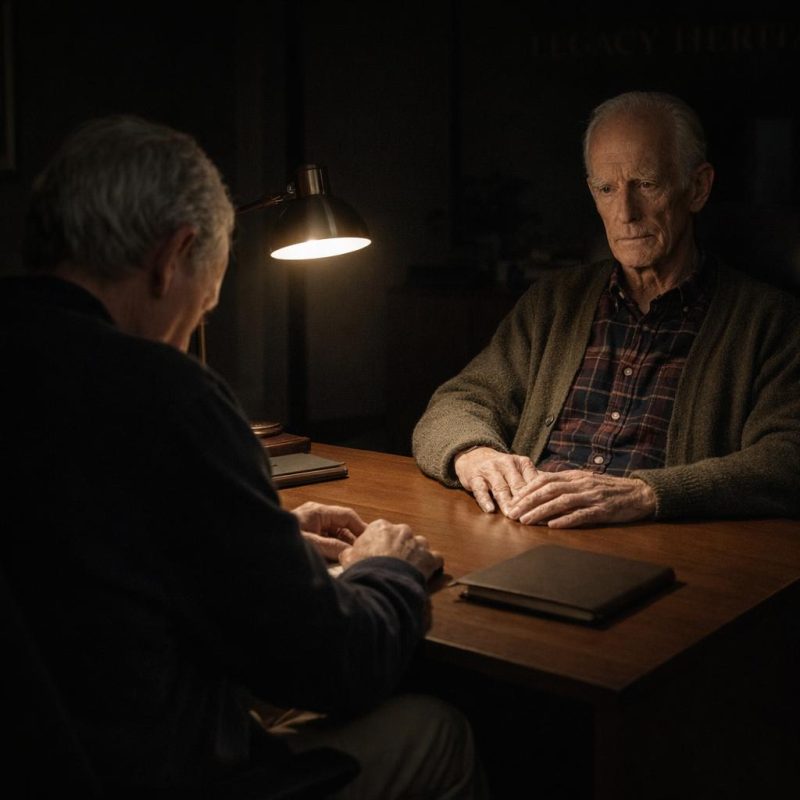 Image by RM AI
Edward's Fate
I asked about Edward before I could stop myself. The Director didn't pause, didn't shift in his chair — he answered the way someone answers a question about a delayed shipment. Edward's buyer had requested early activation, he said. The timeline was moved up, the documentation completed ahead of schedule, and Edward had been transferred to a more secure facility in another state. He said transferred the way you'd say relocated. I asked if Edward was alive. The Director said of course, as though the question were slightly beneath him. Keeping residents alive was operationally essential — I'd already been told that. I sat with that for a moment, trying to hold onto the fact that Edward was somewhere, breathing, even if I'd never know where. Then the Director said something that pulled the floor out from under me. Legacy Heritage wasn't a single operation, he said. There were other facilities — similar model, similar capacity, thirty to forty residents each at various stages of processing. He said it the way someone mentions branch offices. I sat across from him and felt the scale of it open up like a hole beneath my feet.
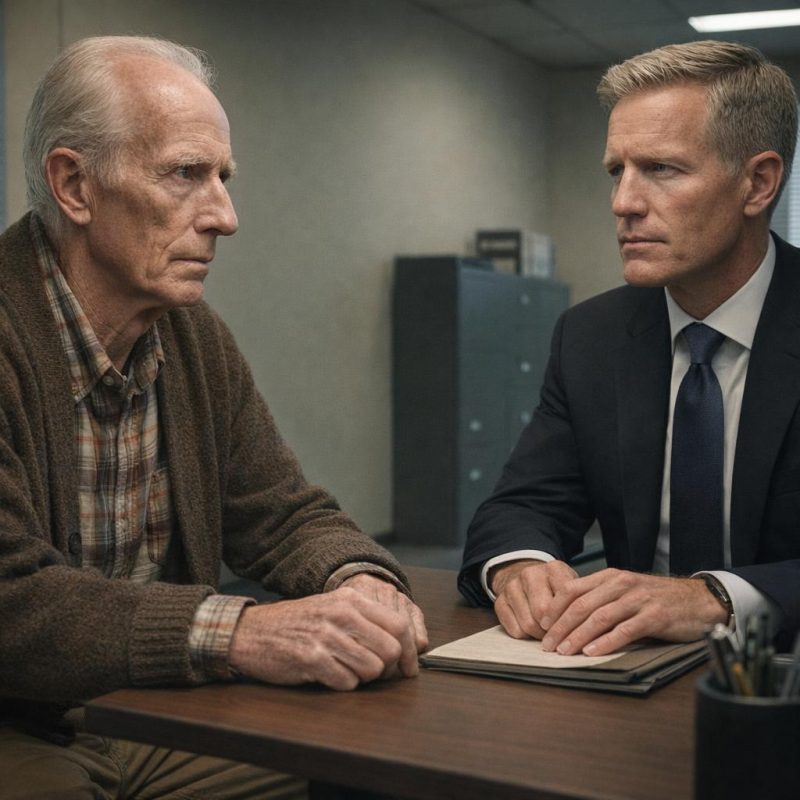 Image by RM AI
The Meeting Ends
He stood from behind the desk the way men like him always stand — unhurried, certain the room will wait for them. There was remaining paperwork to complete, he said. A final medical verification scheduled for the following week. He expected my full cooperation going forward, and he said it without any particular emphasis, the way you'd remind someone to return a library book. I said nothing. He walked me to the door himself, which I hadn't expected, and held it open with the same flat courtesy he'd used throughout. I walked back through the corridor and out into the cold morning air, and the door clicked shut behind me with a sound that was almost polite. By the time I reached the path back to my cabin, his words had settled into something I could use. Full cooperation. Final verification. Next week. He had just handed me a deadline without meaning to, and I understood exactly how much time I had left to work with. I walked faster.
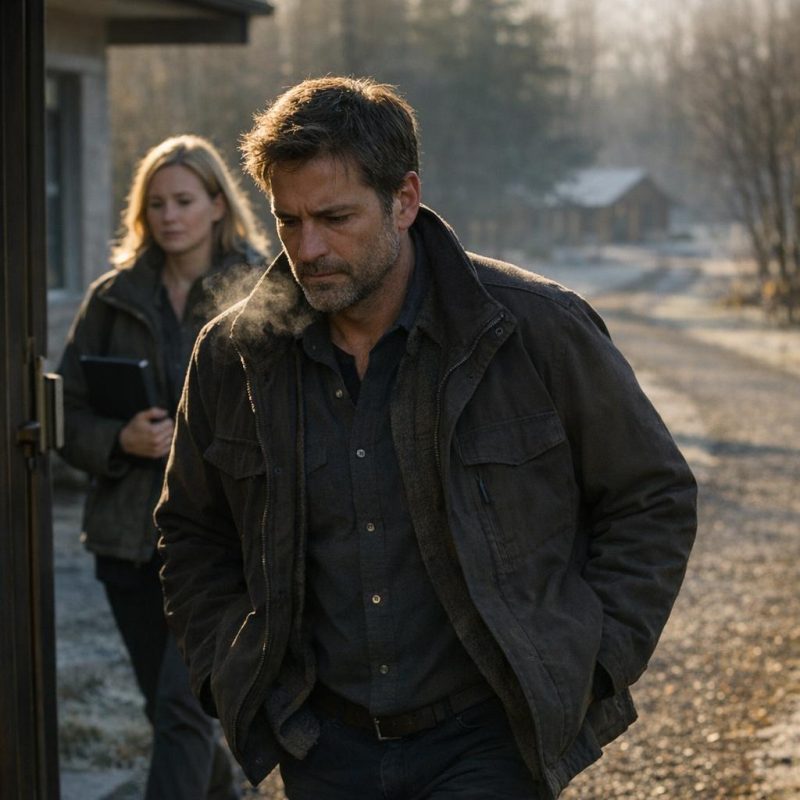 Image by RM AI
The Resistance Plan
Frank had chosen the back corner of the laundry building — far enough from the nearest camera that we could speak in low voices without being read. There were four of us, including Margaret, who had come despite everything, her wool coat pulled tight around her thin frame. I told them what the Director had told me. Multiple facilities. Thirty to forty residents each. Edward already transferred. I watched their faces absorb it, and nobody spoke for a moment. Then Frank spread a hand-drawn map across the folding table and walked us through it one more time. Monday's delivery truck arrived at seven-fifteen. The gates stayed open for roughly thirty minutes while the driver and one staff member unloaded. The Security Chief would be positioned near the loading dock, which meant the left side of the gate would have the thinnest coverage. Someone would need to create a distraction near the supply cart while the rest of us moved toward the gate. Thirty minutes, he said. Maybe less. We had to be through the gate and into the tree line before Morrison got his radio up. We stood around that map in the dark, and the weight of what we were about to attempt settled over the room like weather.
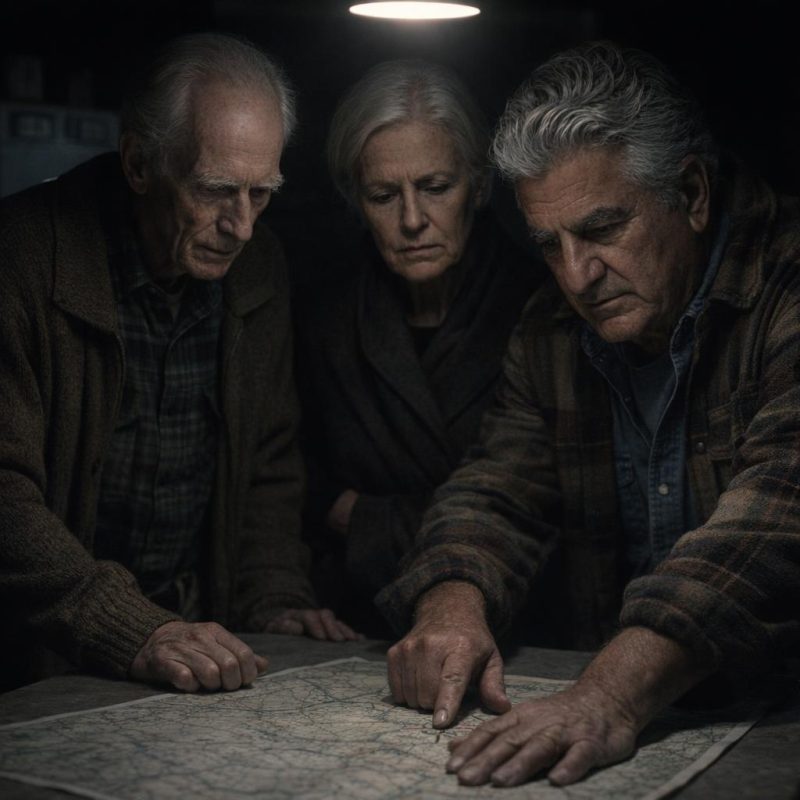 Image by RM AI
Monday Morning
The six o'clock bell rang and I lay still for three full seconds before I made myself get up. I dressed in layers the way Frank had told me to — nothing that would catch on branches, nothing bright. I left my reading glasses on the nightstand. I wouldn't need them in the forest, and I didn't want anything slowing me down. Breakfast was powdered eggs and weak coffee, and I ate every bite because Frank had said to, because your body doesn't care about your nerves when it needs fuel. The courtyard assembly ran the same as every other Monday — the Security Chief moving along the perimeter, residents standing in their usual clusters, the morning announcements delivered through the same crackling speaker. Frank was near the supply building, hands in his pockets, not looking at me. Margaret stood two rows back, her face as hollow and still as it always was. I found my place in line and stared at the speaker and breathed. The truck was due in seventy-five minutes. Around me, the morning moved through its ordinary paces, indifferent to everything we were carrying inside it.
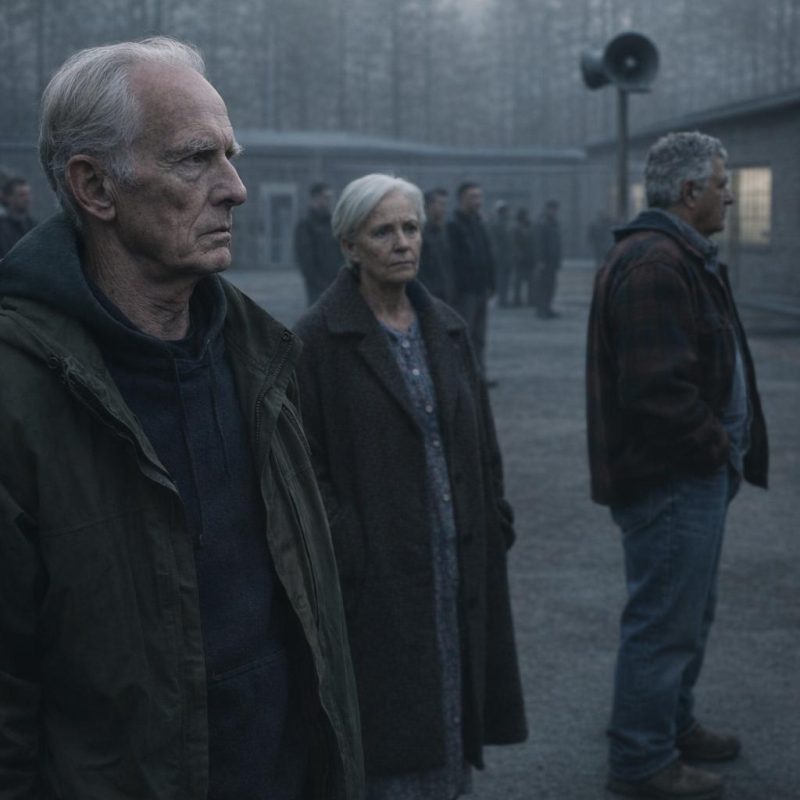 Image by RM AI
The Delivery Arrives
At seven-thirteen I heard the engine before I saw the truck — a low diesel rumble coming up the access road, growing until the gates groaned and began to swing inward. The truck rolled through slowly, the driver navigating the narrow gap with practiced ease, and for a moment the open gate framed a rectangle of grey morning sky and pine trees and the road beyond. I had to look away from it. Frank was at the supply cart near the loading dock, adjusting a stack of boxes with the unhurried patience of a man who had nowhere to be. The Security Chief stood at the dock's edge, watching the driver maneuver. I counted the others in my peripheral vision — two near the garden wall, one by the laundry building. We were in position. Frank set his hand flat on top of the cart and left it there. That was the signal. I took one breath, slow and deliberate, the kind you take before stepping off something high. My feet were already moving before I'd consciously decided to move them, and the gate was still open, and the trees beyond it were real.
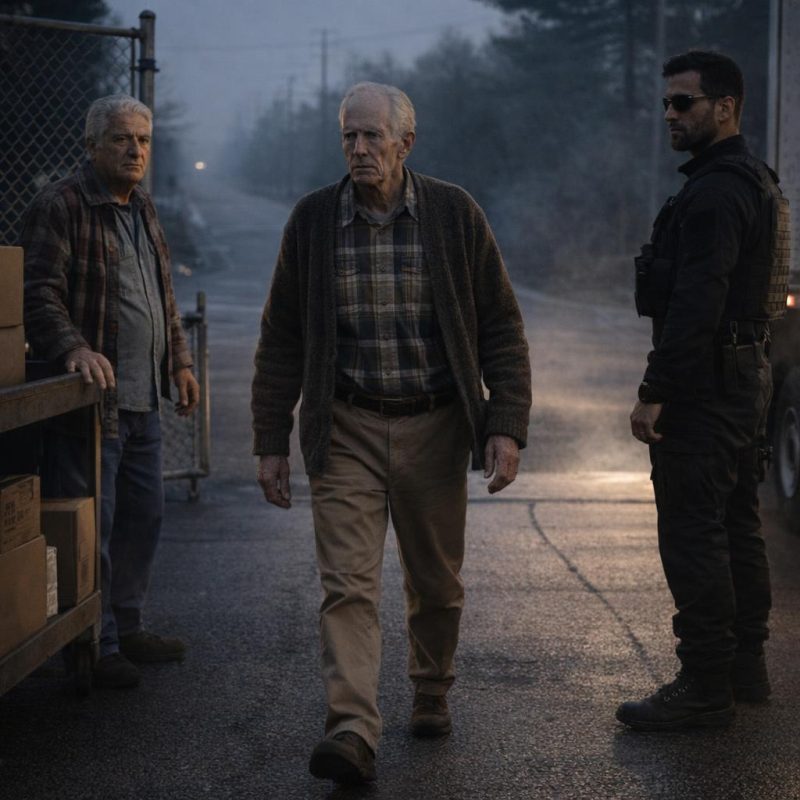 Image by RM AI
The Chase Begins
Frank hit the cart hard with both hands and the whole thing went over — boxes of dry goods exploding across the loading dock, cans rolling in every direction, the crash enormous in the morning quiet. The alarm came three seconds later, a single sustained wail that split the air and didn't stop. I was already running. The gate was forty yards away, then thirty, then twenty, and I could hear shouting behind me and the sound of boots on gravel. I didn't look back. The gravel gave way to packed dirt and the gate was right there, the gap still wide enough, the pine trees on the other side close enough that I could see individual branches. I heard the Security Chief's voice cut through the alarm — sharp, commanding, close — and I heard his footsteps change rhythm as he stopped supervising the dock and started moving in my direction. I crossed the threshold of the gate.
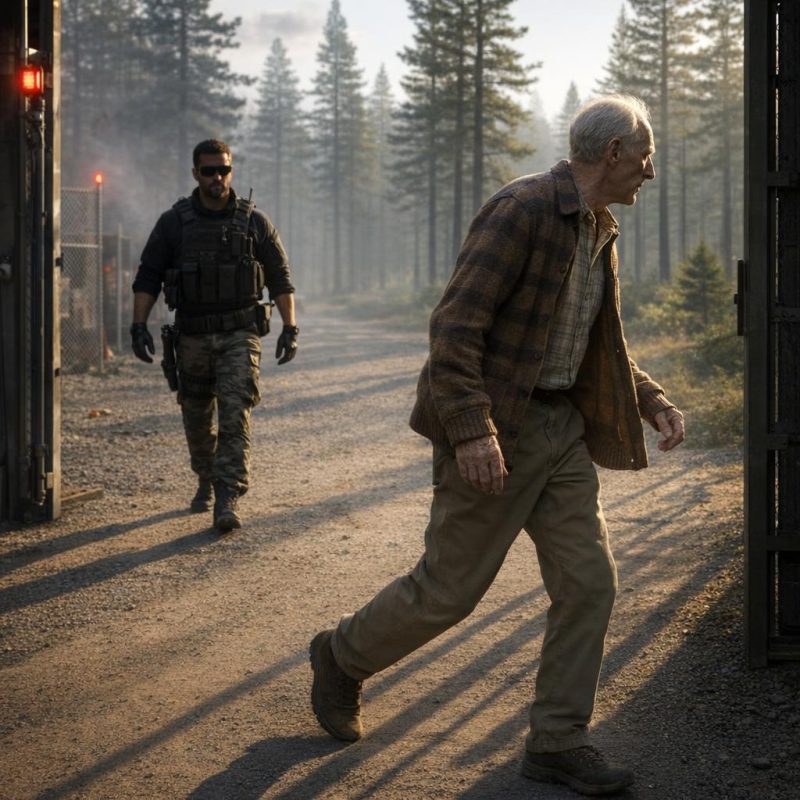 Image by RM AI
Frank's Sacrifice
I felt the hand close on my shoulder before I heard him — the Security Chief's grip hard and certain, yanking me backward off my stride. My feet scrambled on the gravel just inside the gate and I went sideways, and I thought that was it, that was the end of it. Then something hit Morrison from the left with enough force to take both men off their feet. Frank. He came in low and drove his shoulder into Morrison's ribs, and they went down together in a heap of arms and tactical gear and gravel, and the grip on my shoulder was gone. I stumbled forward through the gate. I made it three steps into the trees before I turned back. I don't know why I turned back. Frank was on the ground, Morrison's weight across him, and Frank wasn't trying to get up. He had one arm pinned under Morrison's knee and the other flat on the gravel, and he was looking straight at me through the gap in the gate. His eyes were steady. He gave one small nod, the kind that means go, and I turned and ran into the trees.
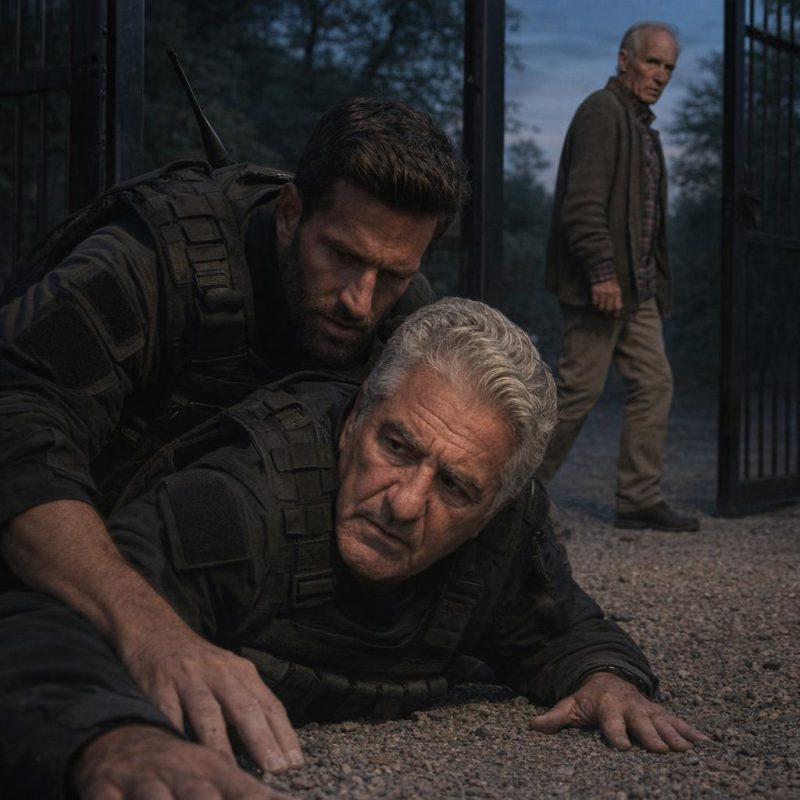 Image by RM AI
Into the Forest
The forest floor was nothing like I'd imagined during all those nights of planning. Roots came up without warning and the ground was uneven and soft in patches, and twice I went down hard on my hands and knees before I got my footing right. Branches caught my face and my forearms and I kept my head down and ran anyway, because stopping wasn't a choice I had anymore. Behind me I could hear voices — more than one, spreading out, which meant they weren't just following my path but fanning wide to cut me off. I angled left toward the ridge Frank had marked on the map, where the tree cover was thickest and the terrain would slow anyone in tactical gear more than it would slow me. I was breathing in ragged pulls and my left knee had started to throb from the second fall, but I kept moving. Then, beneath the shouts and the crunch of my own footsteps, I heard something new — engines. More than one. Starting up somewhere behind me on the road that ran along the facility's perimeter.
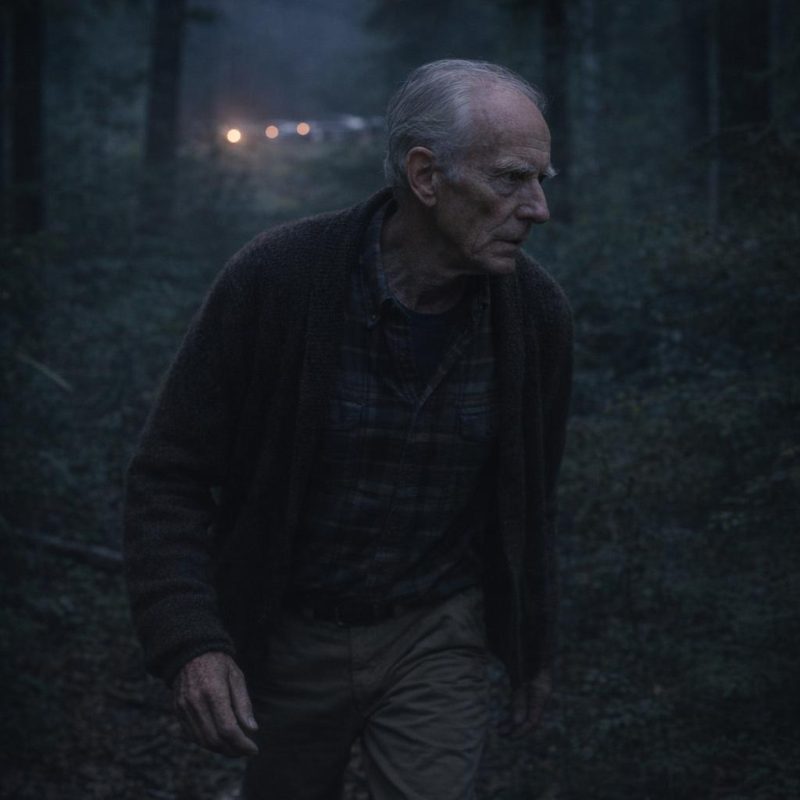 Image by RM AI
The Highway
I don't know exactly when the tree line ended and the pavement began — my legs just stopped catching on roots and the ground went hard and flat beneath me, and I stumbled out onto the county highway and went down on one knee in the middle of the lane. I stayed there for a moment, hands on the asphalt, chest heaving, trying to pull in enough air to keep moving. The scratches on my face were bleeding in thin lines and my palms were torn up from the falls in the forest, and when I finally pushed myself upright my legs were shaking so badly I had to spread my feet wide just to stay standing. The road was empty in both directions. No houses, no lights, nothing but dark tree walls on either side and the faint smell of pine and my own sweat. I turned in a slow circle, listening for engines behind me in the woods, and heard only the wind. I had made it out. I didn't know what came next, and I was too exhausted to think past the next ten seconds. Then, around the curve to the south, two headlights appeared.
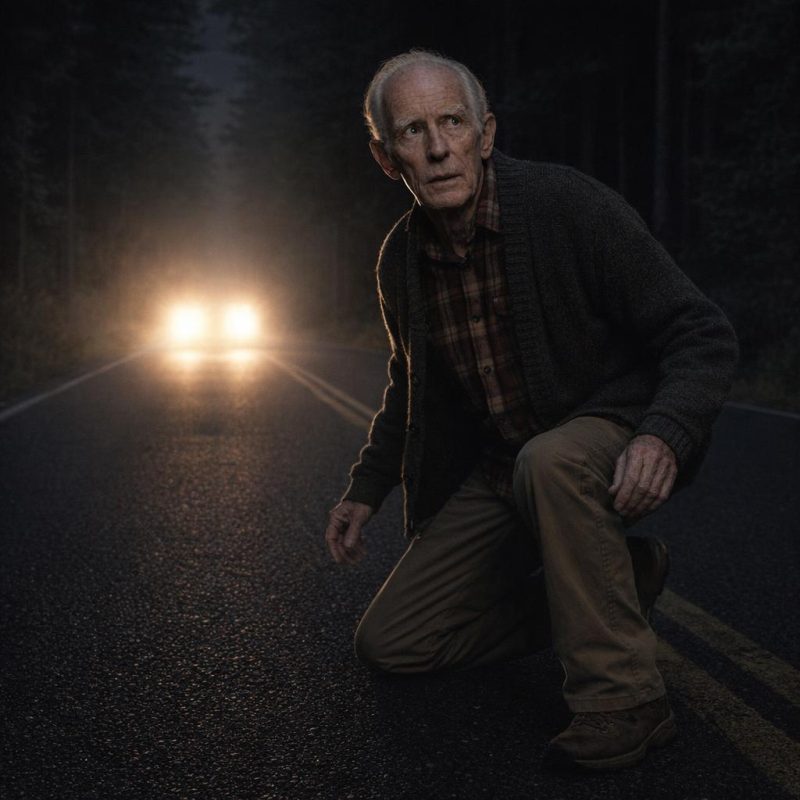 Image by RM AI
The Rescue
The cruiser slowed before it reached me, and I raised both hands because I didn't know what else to do — I was standing in the middle of a state highway at what must have been two in the morning, bleeding, barely upright. The trooper got out with one hand near his belt and called out to ask if I was all right, and I said no, I was not all right, and I told him my name and told him I had just escaped from a facility called Legacy Heritage about three miles east through the woods. He looked at my face, at my hands, at the state of my clothes, and whatever he'd been about to say next he didn't say. He got on his radio instead. I heard him request backup and an ambulance, and I heard him give coordinates, and then he came around the front of the cruiser and guided me to the back seat and put a foil blanket around my shoulders and handed me a water bottle. I drank half of it without stopping. He asked me to stay calm and said help was coming, and I nodded and leaned my head back against the seat. The door closed, and the warmth of the cruiser's interior settled around me like something I had almost forgotten was possible.
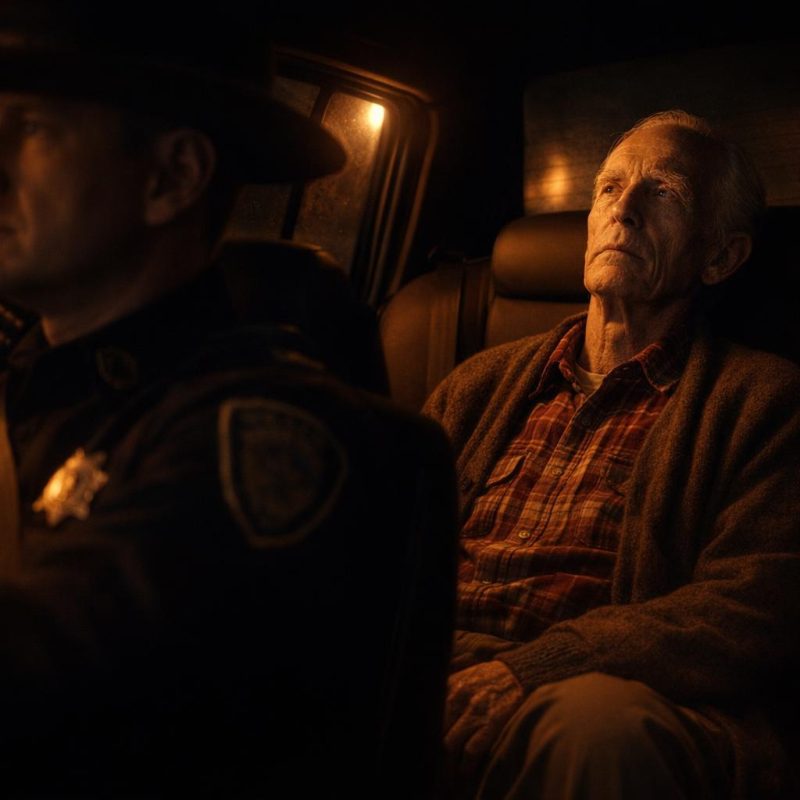 Image by RM AI
The Investigation
They came in the early morning — two agents from the FBI's financial crimes unit, badges out, voices measured, a recorder on the table between us. I was still in a hospital gown with an IV in my arm and butterfly closures on three of the deeper cuts, and I talked for six hours the first day and four the second. I told them about the Director, about the intake process and the documents I'd signed without understanding what I was signing. I described the Security Chief and the way the perimeter worked, the cameras, the locked gates. I told them about Dr. Reeves and the medical files and what I believed they were being used for. I gave them Edward's name and Margaret's name and the names of every other resident I could remember, and I told them what Frank had built in the basement and how the resistance had operated. The agents didn't look surprised by much of it, which told me they had already been building something before I walked out of those woods. By the end of the second day they confirmed a coordinated raid was being organized. I signed my statement and they left, and I sat in the quiet of the hospital room with the hum of the monitors around me, and for the first time in weeks the act of telling the truth felt like something solid I could stand on.
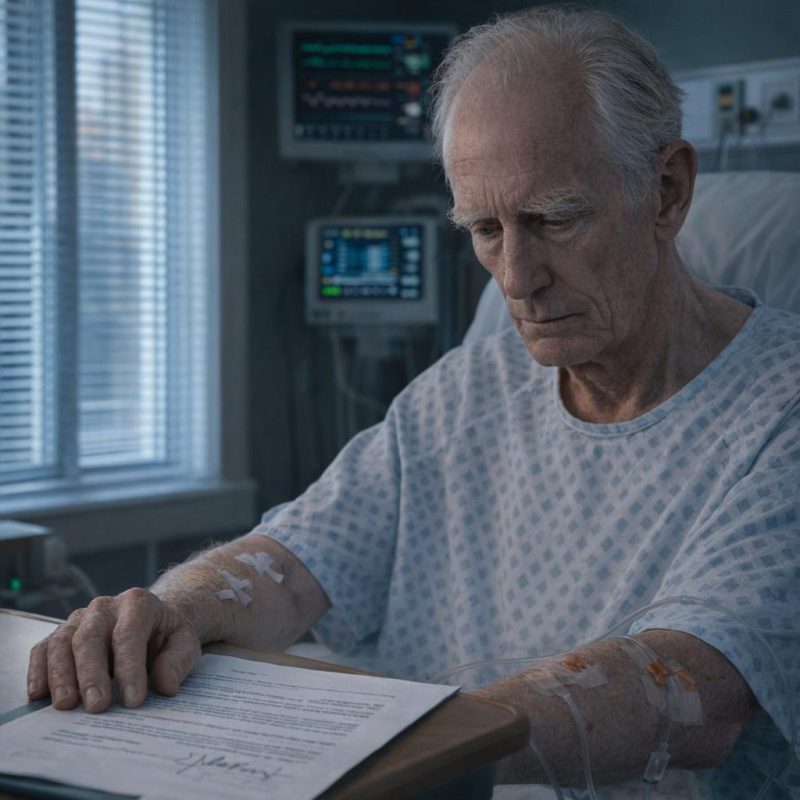 Image by RM AI
Coming Home
Three weeks later I stood on the front walk of my own house and it looked smaller than I remembered, or maybe I was just different. Sarah was beside me — my daughter, who had warned me from the beginning and never once said I told you so, not even now. Federal marshals had been inside for most of the morning, and when they brought the man out in handcuffs — the man who had been living in my house, using my name, drawing on accounts I'd built over forty years — he didn't look at me. I looked at him. I wanted to remember the face so I could understand it later, when I had the distance for it. The agents told me Legacy Heritage and five similar facilities had been shut down in the raid, that the Director and his staff were facing federal charges, that Margaret and the others had been freed. But many of the residents' identities were already deep into the system, already compromised in ways that would take years to untangle. Sarah took my hand as the marshals' vehicles pulled away, and I held on. The house was mine again on paper, but the work of making it mine in every other sense — the accounts, the records, the legal threads that made up a life — stretched out ahead of me like a road I hadn't yet learned to read.
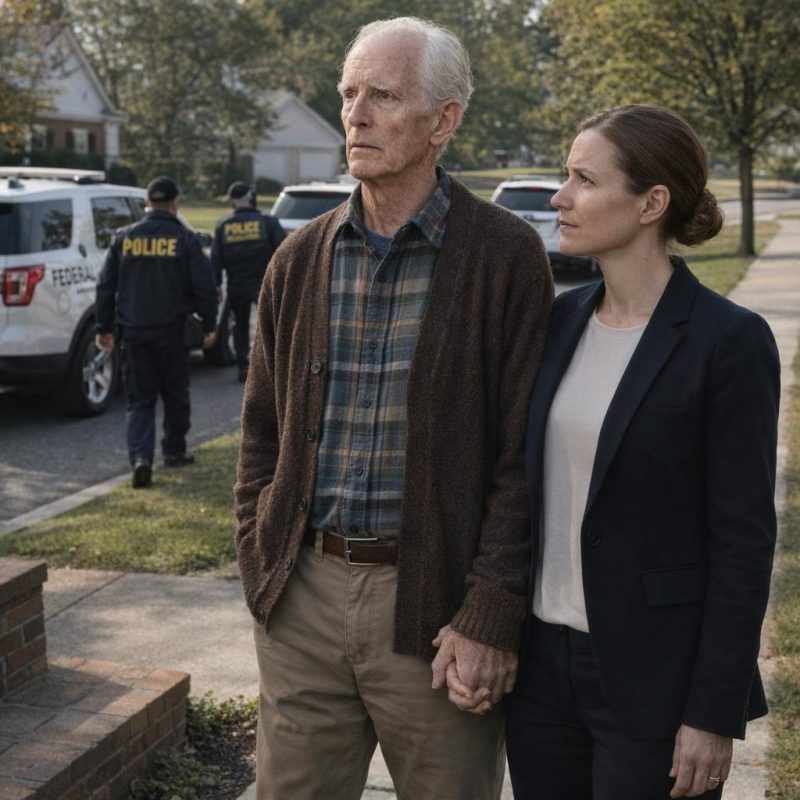 Image by RM AI
KEEP ON READING
20 Greek Gods We Don't Often Talk About
Step Aside, Zeus. Greek mythology isn’t only about Zeus and…
By Elizabeth Graham Jan 16, 2026
10 Historic Courtship Practices That Should Be Brought Back &…
Old-School Dating Was a Mix of Charming & Unhinged. Historic…
By Emilie Richardson-Dupuis Jan 20, 2026
Pooches Of The Past: Extinct Dog Breeds
Unknown authorUnknown author on WikimediaDogs have been showing up in…
By Elizabeth Graham Jan 27, 2026
The 20 Craziest Silent Films Ever Made
When Silence Let the Madness Speak. Silent cinema didn’t just…
By Chase Wexler Jan 5, 2026
Legendary Tales: 20 Most Fascinating Mythical Creatures from Folklore
Mythological Beasts. Stories about mythical creatures endure for a simple…
By Christy Chan Jan 16, 2026
The three most expensive historical artifacts ever sold at auction
Attributed to Leonardo da Vinci on WikimediaAuctions are where history…
By Emilie Richardson-Dupuis Jan 9, 2026