

The Jacket Flag
I am not a good flyer. I want to be clear about that upfront, because it matters. I'm the person who checks the departure gate four times, who gets to the airport two hours early for a domestic flight, who has a whole system. And the cornerstone of that system — the thing that keeps me from white-knuckling it from takeoff to landing — is the window seat. Not the aisle. Not the middle. The window, where I can press my forehead against the cold plastic and watch the ground shrink away and convince myself that everything is fine. So when I boarded early, which I always do because I pay the extra twelve dollars for early boarding without a single regret, I made a beeline for row 12. Seat A. My seat. I tucked my carry-on in the overhead bin, unfolded my black winter jacket, and laid it carefully across the seat cushion — the universal signal for 'this spot is claimed, please keep moving.' Then I slipped up to the front lavatory before the boarding crowd hit, because I'd learned that lesson the hard way on a flight to Denver. When I came back out and saw my jacket still there, my row still mostly empty, I felt the specific, quiet relief of a person whose plan had actually worked.
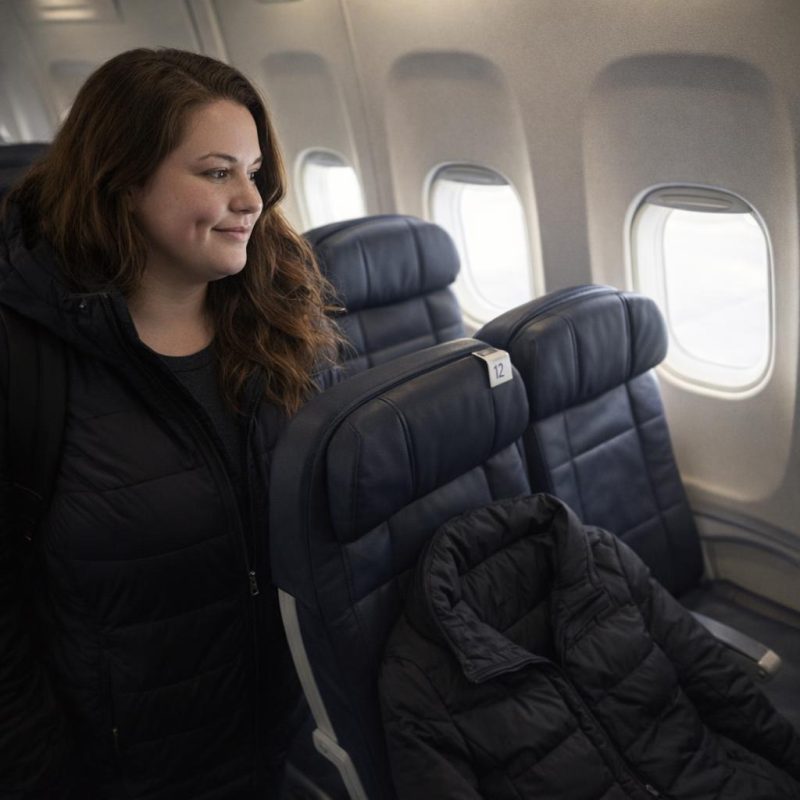 Image by RM AI
Someone in My Seat
The boarding crowd had thickened by the time I squeezed back through the aisle, and I was already doing that awkward shuffle-and-apologize dance you do when everyone's trying to stow bags at the same time. I got to row 12 and stopped. There was a woman in my seat. Blonde, expensive-looking, flipping through a magazine like she'd been there for hours. My jacket — my black winter jacket that I had deliberately placed on that seat — was crumpled on the floor under the seat in front of her. I stood there for a second, genuinely confused, doing the mental math. Maybe she'd made a mistake. It happens. I leaned in and said, as nicely as I could manage, 'Hey, I'm so sorry, but I think you might be in my seat — I'm 12A.' She turned a page. Not a glance up, not a 'one second,' not even the polite acknowledgment of someone who knows they're in the wrong seat and is buying time. Just a page turn. In the middle seat, a guy in a grey button-down — Marcus, I'd learn later — had his eyes fixed on his phone like the screen contained the secrets of the universe. The aisle kept filling up behind me, and she still wouldn't look up.
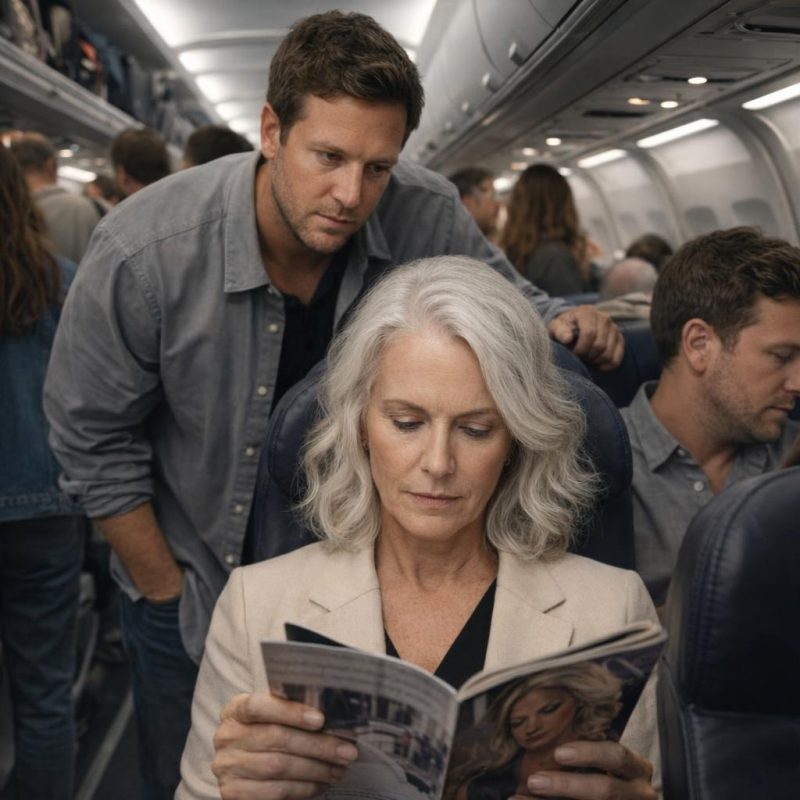 Image by RM AI
Medical Necessity
I tried again, a little louder this time, because the boarding noise was picking up and I genuinely thought maybe she hadn't heard me. She had heard me. She set her magazine down with the careful precision of someone who wanted me to know I was an inconvenience, and told me she needed the window seat for medical reasons. Her eyes, she said. Something about light sensitivity. She said it the way people say things they've rehearsed — smooth and flat, no room for follow-up questions. I asked, as gently as I could, if she had documentation or if maybe we could talk to a flight attendant, because I had a boarding pass that said 12A and I wasn't trying to be difficult. That's when Denise appeared — calm, professional, the kind of flight attendant who has clearly handled a thousand versions of this exact situation. She asked us both what was going on, and I showed her my ticket. Denise asked the woman for her boarding pass. After a pause that lasted just a beat too long, the woman produced it: seat 14C. Denise told her, politely but firmly, that she'd need to move to her assigned seat. The woman didn't move. She just looked at me — not at Denise, at me — with an expression so flat and unbothered it felt like a wall.
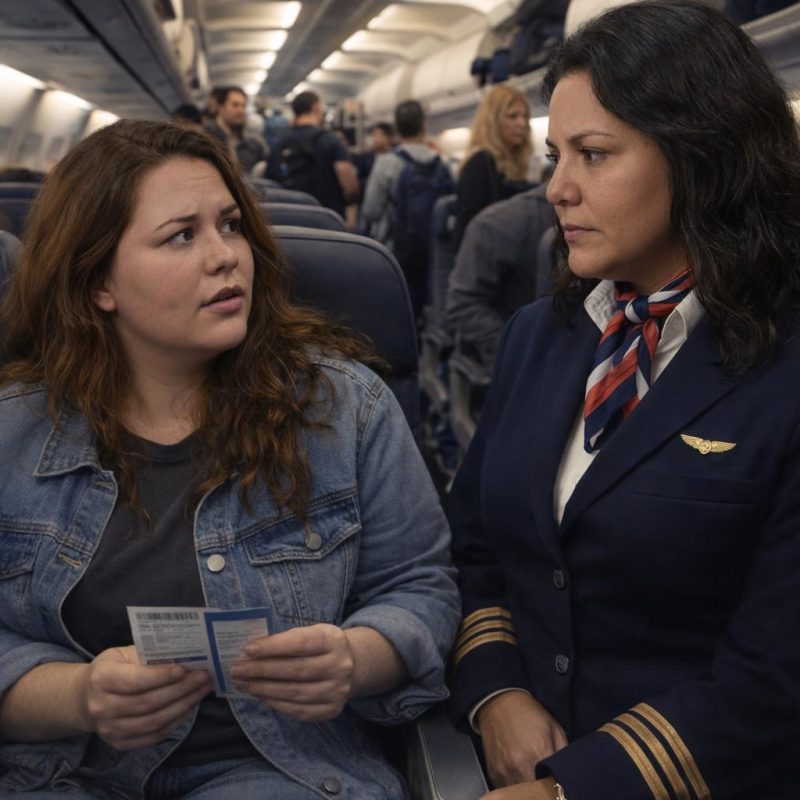 Image by RM AI
The Performance
Denise stopped asking and started telling. Her voice went from patient to professional in about half a sentence, and the whole row got very still. The woman — Victoria, though I didn't know her name yet — finally began to move. Slowly. She gathered her magazine, her bag, her jacket, with the deliberate pace of someone who wanted everyone watching to understand that she was choosing to comply, not being made to. I stepped back to give her room in the narrow aisle, which felt like the reasonable thing to do. She stood, turned, and moved past me — and then her shoulder hit mine. Hard. Not a brush, not a stumble. A solid impact that sent my phone skittering across the floor and knocked me sideways into the seat back. I had maybe half a second of pure confusion before she grabbed her own arm and the sound that came out of her filled the entire cabin. She was screaming. Actual screaming, the kind that makes every head turn at once, clutching her arm like I'd broken it. I stood there with my hands up, palms out, the way you do when you need everyone in the room to see that you are not touching anyone. The whole plane had gone silent. And then, into that silence, she pointed at me and said I had pushed her.
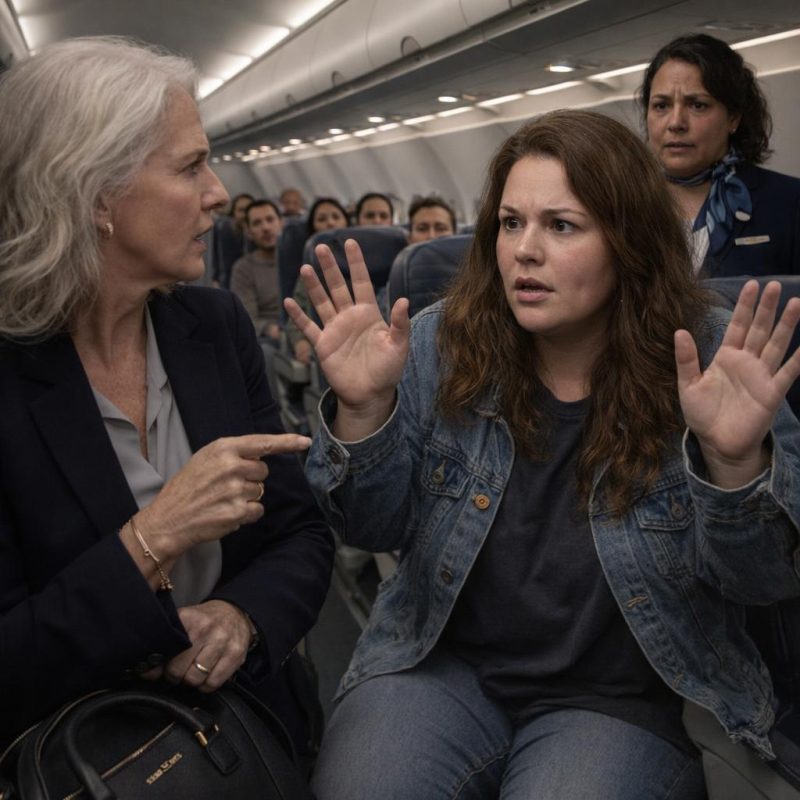 Image by RM AI
Escorted Off
Denise was already on her radio before Victoria finished the sentence. Two gate agents and a security officer were on the plane within a few minutes, and I stood in the aisle with my hands still half-raised, trying to explain what had happened to anyone who would listen. Denise told the security officer, clearly and without hesitation, that she had been watching the exchange and that she had seen the collision happen — and that it hadn't come from my side. Victoria's expression did something interesting when Denise said that. The performance didn't stop, exactly, but something behind it shifted. The security officer asked Victoria to come with him, and she went — but not quietly. She walked down the aisle announcing that she would be suing the airline, the crew, and me personally, that she had witnesses, that her attorney would be in touch before we even landed. People were craning their necks to watch her go. When she was finally off the plane, I picked my jacket up off the floor, shook it out, and sat down in 12A. My hands were trembling in a way I couldn't quite stop. Marcus leaned over from the middle seat and said, quietly, that he'd never seen anything like that in his life. I didn't answer him. I just sat there, and the cabin slowly filled back up with the ordinary sounds of a flight getting ready to depart, and the whole strange episode seemed to dissolve into the recycled air.
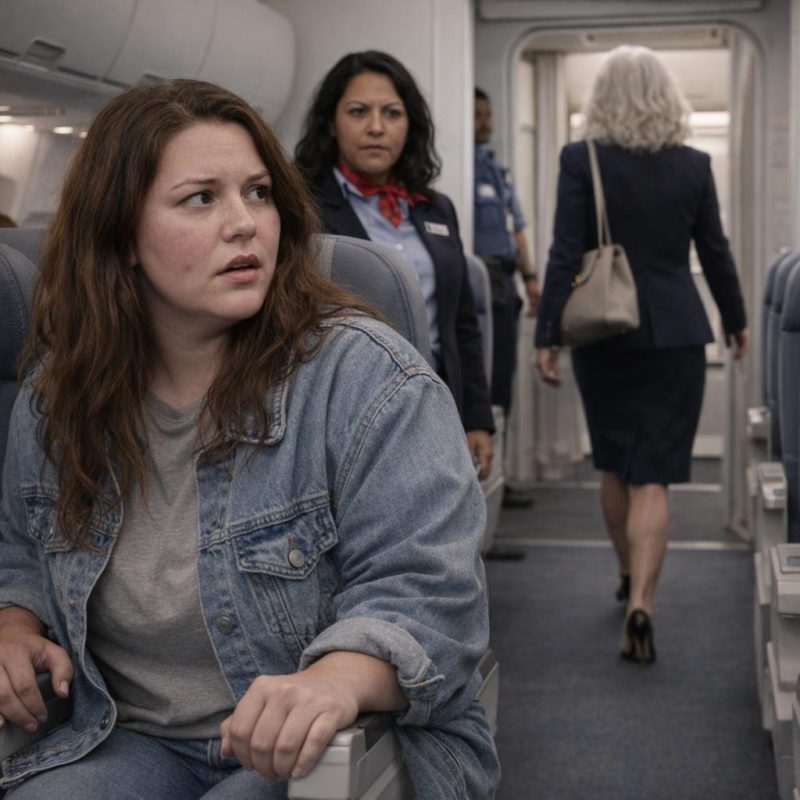 Image by RM AI
Viral
I landed, switched off airplane mode, and watched my phone have a small breakdown. The notifications came in waves — texts, then app badges, then a call from Jamie before I'd even reached the jetway. I answered and she didn't say hello. She said, 'Have you seen it?' I hadn't seen anything. She told me someone on the plane had filmed the whole seat confrontation and posted it, and that it had been shared a few thousand times already and was still climbing. I found the clip while she was still talking. It was maybe forty seconds long, shot from a few rows back, and it caught the moment Victoria stood up and the collision and me with my hands in the air. It did not catch the part where Denise confirmed what actually happened. The caption called it 'unhinged woman attacks elderly passenger over a plane seat,' and the thumbnail — the frozen frame the algorithm had chosen to represent the whole story — was my face. My mouth open, my hands up, my expression caught in that half-second of pure shock that apparently reads, without context, as aggression. Jamie was still talking, saying something reassuring, but I'd stopped processing words. I just sat with my phone in my hand in the middle of the deplaning crowd, staring at my own face looking back at me from a stranger's video.
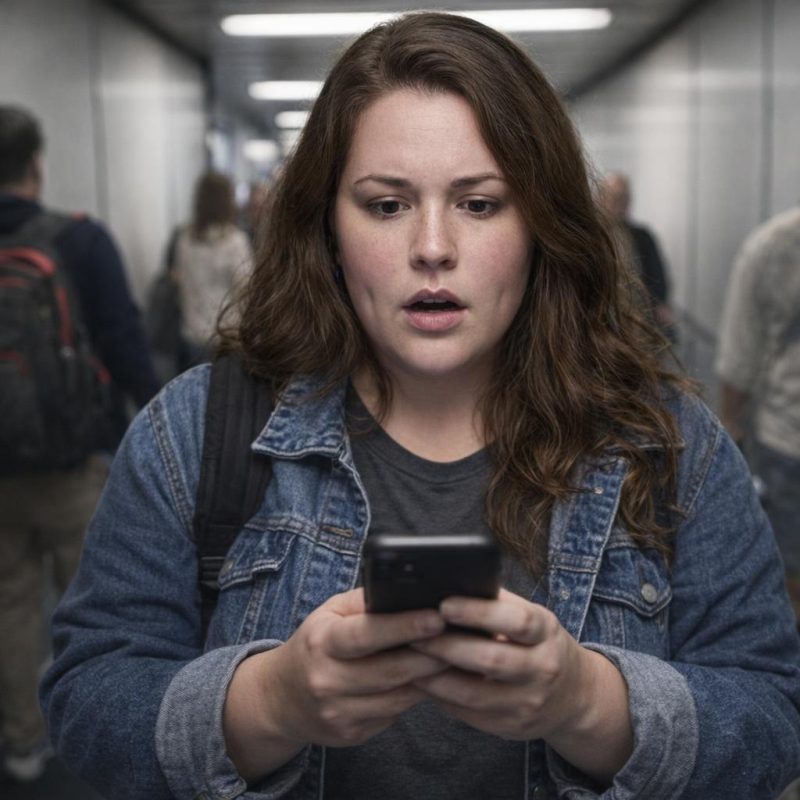 Image by RM AI
Comment Section Nightmare
By the time I got to baggage claim the view count had crossed a million. Jamie was texting me screenshots faster than I could open them. Half the comments were people defending me — pointing out that my hands were clearly up, that the woman had obviously staged it, that anyone who'd ever flown knew exactly what this kind of seat dispute looked like. The other half were something else entirely. People were writing paragraphs about my character based on forty seconds of shaky phone footage. Someone had started a hashtag about airplane etiquette that had somehow turned into a referendum on whether I specifically was a decent human being. There were threads. Actual threads, with people quoting each other and building arguments. Jamie called again and told me to stop reading the comments, that this was just the internet doing what the internet does, that it would be someone else's turn by tomorrow. I knew she was right. I also could not stop scrolling. There's something almost compulsive about watching strangers decide who you are — you keep thinking the next comment will be the one that makes sense of it, that will feel fair, and it never is. I was standing outside the terminal in the cold, bag at my feet, phone in both hands, when I landed on a comment that had over two thousand likes calling me the most entitled, aggressive monster they'd ever seen on a plane.
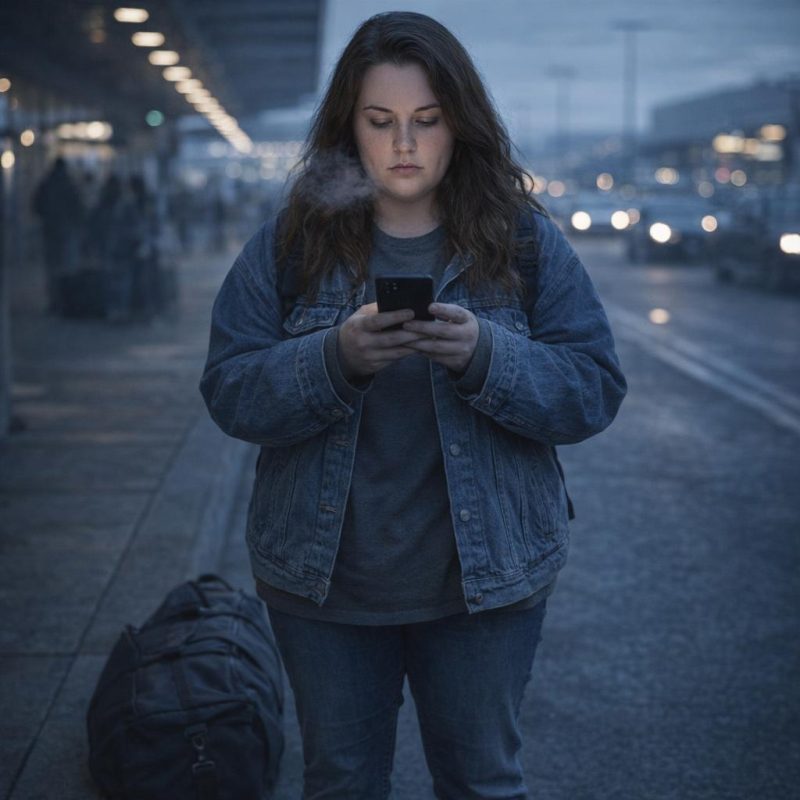 Image by RM AI
Inbox Flood
I made my accounts private that night, which Jamie had been telling me to do for two hours by that point. It helped, a little. The public comments stopped updating. What I couldn't close off were the direct messages, because apparently enough people had grabbed my handle before I went private that the inbox just kept filling. Most of it was noise — people who wanted to tell me I was wrong, people who wanted to tell me I was right, people who seemed to have no strong opinion but wanted to be part of something. I screenshotted the worst ones and sent them to Jamie, who responded with a string of increasingly alarmed emojis. A few of the messages were graphic enough that I felt genuinely sick reading them. I told myself this was just what happened when something went viral — that the ugliness was proportional to the attention, not to me specifically, and that it would fade. I almost believed it. I was about to put my phone down and try to sleep when I opened one more message. No profile picture, no username that meant anything. But the message itself was four sentences long, and the third sentence named my street.
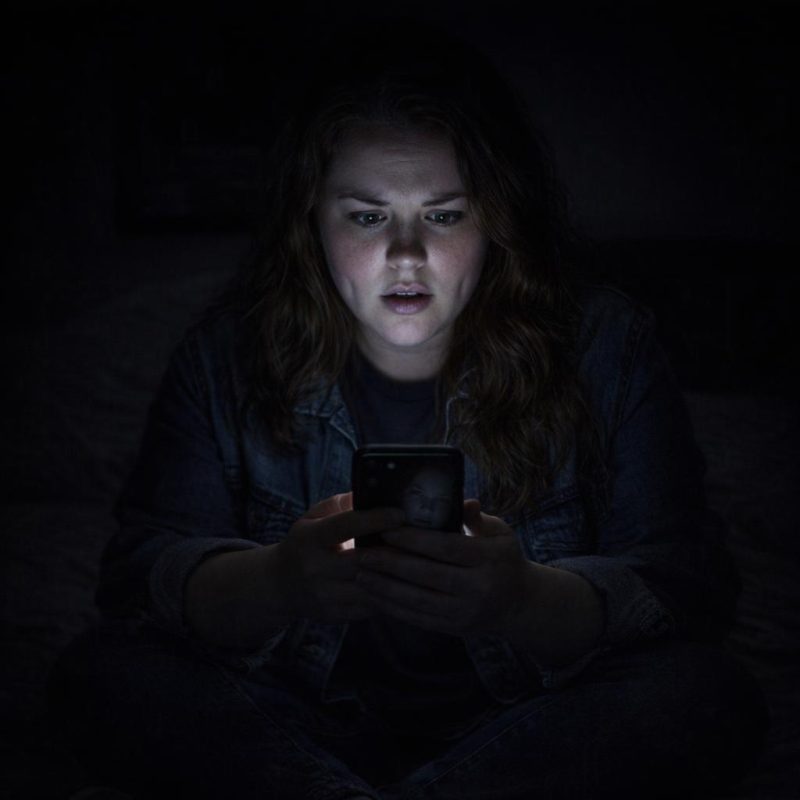 Image by RM AI
Home Again
Getting home felt like crawling into a foxhole. I dropped my suitcase just inside the door, locked the deadbolt, and stood there for a second with my forehead against the wood, just breathing. The apartment smelled like my candles and my laundry and my life, and that helped more than I expected. I unpacked slowly, putting everything back where it belonged — toiletries in the bathroom cabinet, shoes on the rack, the denim jacket on its hook by the door. I made chamomile tea and sat on the couch and told myself I was not going to look at my phone. I lasted about four minutes before I turned the TV on instead, which was a compromise. I couldn't tell you what was playing. Some home renovation show. I watched the shapes move on the screen and let my brain go soft. The tea went cold. I was almost asleep when I heard it — footsteps in the hallway outside, slow and deliberate, coming to a stop directly in front of my door. I held my breath and waited. They didn't continue.
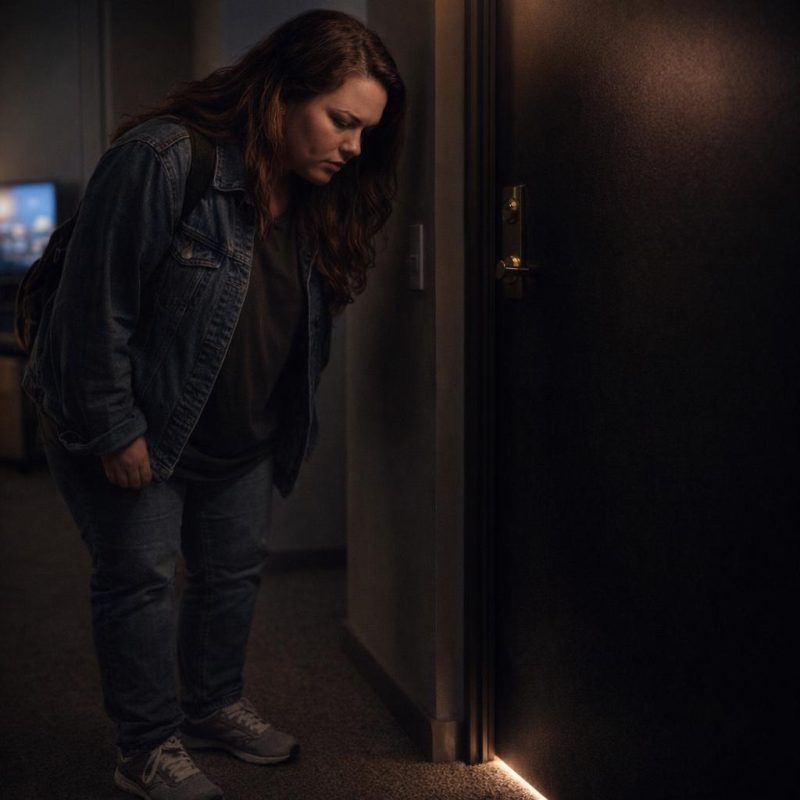 Image by RM AI
Fading Noise
The footsteps turned out to be my neighbor with a grocery bag, which I figured out the next morning when I heard his door open and close. I felt a little ridiculous about how long I'd sat frozen on my couch. That was the thing about the whole situation — it had rewired my nervous system in ways I hadn't fully noticed until I was jumping at sounds in my own hallway. But the days after that were genuinely quiet. The view count on the video stopped climbing. My message requests slowed from a flood to a trickle to almost nothing. I stopped checking my notifications every twenty minutes and started checking them once a day, then every couple of days. Jamie texted me mid-week to say the video had dropped off the trending list entirely — something about a celebrity dog and a minor political scandal had taken over, as these things do. I started sleeping through the night again. I called Jamie on Friday and told her I thought it was finally over, and she said she thought so too, and suggested we go to dinner to celebrate. I said yes without hesitating. Sitting on my couch that evening, I felt something I hadn't felt in weeks — something quiet and almost like relief.
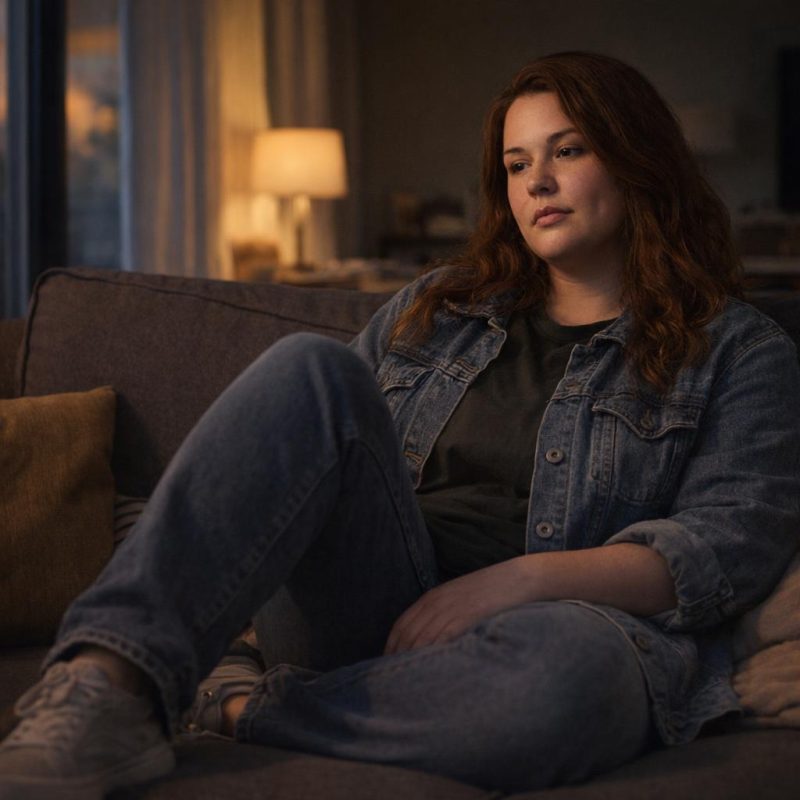 Image by RM AI
Legal Notice
The certified letter arrived on a Tuesday, which felt appropriate because Tuesdays are already the worst day of the week and apparently the universe agreed. I signed for it without thinking — the postal worker handed me the slip, I scrawled my name, and then I was standing in my doorway holding a thick envelope from a law firm I'd never heard of. I opened it at my kitchen counter. The heading was formal and dense and took me a second to parse, and then I read the name Victoria Hartwell and my stomach dropped straight through the floor. She was suing me. Assault and battery. Severe emotional distress. Physical injury requiring ongoing medical treatment. The number at the bottom was fifty thousand dollars. I read it twice because the first time didn't fully land. Then I called Jamie, who picked up on the second ring, and I read her the relevant parts out loud, and she said several things I won't repeat here. She told me to get a lawyer immediately, tonight, don't wait. I sat back down at the counter after we hung up, the letter still spread open in front of me, and I just stared at the words — fifty thousand dollars — printed there in clean, formal type like they were the most reasonable thing in the world.
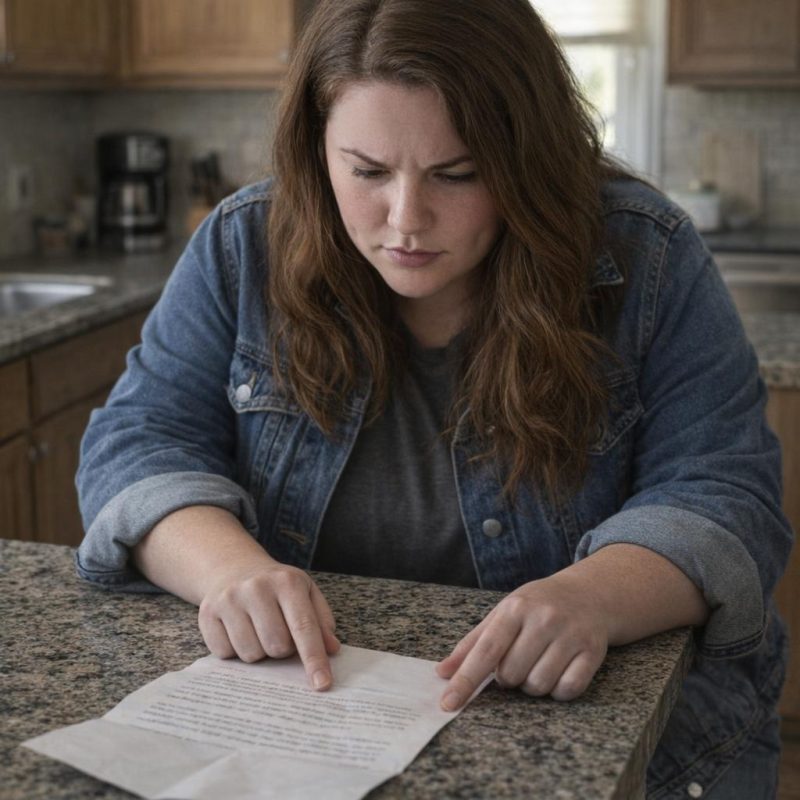 Image by RM AI
Meeting David Park
David Park's office was the kind of place that was designed to make you feel like everything was going to be fine — clean lines, good lighting, a plant that was actually alive. He reviewed the complaint while I sat across from him, and then he set it down and asked me to walk him through the whole thing from the beginning. So I did. I told him about the jacket on the seat, about coming back from the overhead bin to find Victoria already settled in, about asking her to move, about the flight attendant getting involved. I told him about the moment Victoria stood up and the collision — how it happened fast, how I hadn't touched her, how she'd gone from zero to theatrical in about two seconds flat. David took notes the whole time, asked me to clarify a few things, and didn't react much either way, which I found both reassuring and slightly unnerving. He said he'd request a statement from the flight attendant — Denise — and that her account would carry real weight. He seemed calm about the whole thing, which helped. Then he clicked his pen and looked up at me and said that before we went further, there was something I should know — that Victoria had filed complaints like this before.
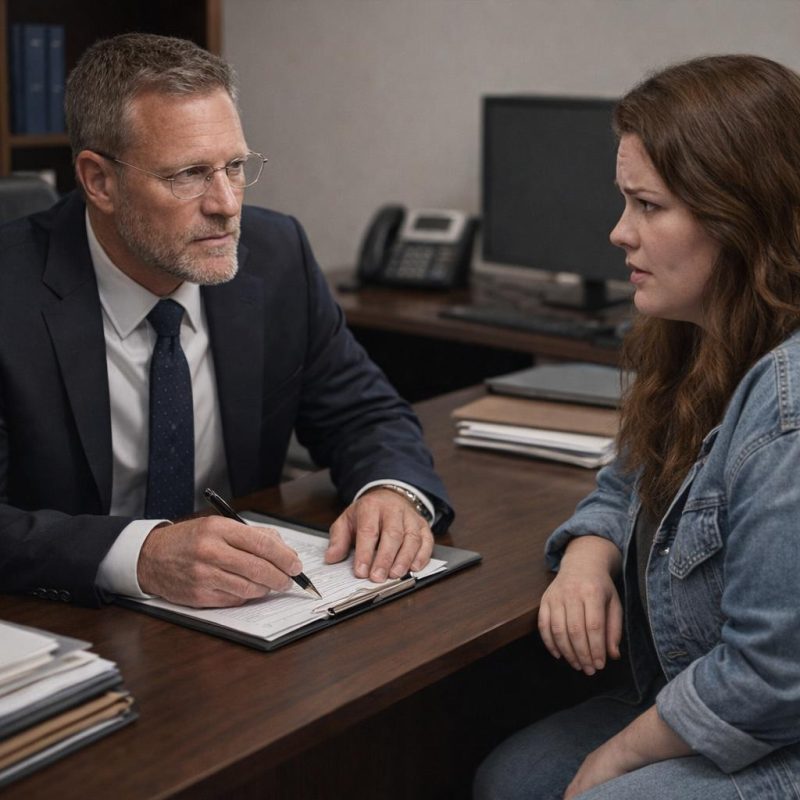 Image by RM AI
The Injury Claim
David walked me through Victoria's medical documentation at our next meeting, and I have to say, reading someone else's account of something you were present for is a genuinely disorienting experience. According to the records she'd submitted, Victoria had visited a doctor two days after the flight complaining of shoulder pain and visible bruising. There was a referral for physical therapy. There was also a separate section describing anxiety, disrupted sleep, and difficulty returning to normal daily activities — all attributed to the incident on the plane. I kept looking up from the pages expecting David to tell me this was obviously fraudulent and the case would be thrown out by Thursday. Instead, he explained, carefully and patiently, that the claims were vague enough to be difficult to disprove outright, and that without contradicting medical evidence, we'd be relying heavily on witness testimony. He said Denise's statement would help. He said the timeline and the video would help. He said a lot of things that were technically reassuring. I asked him how long this could take. He gave me a range that made me feel slightly nauseous. I drove home with the documents in my passenger seat and sat in my parked car for a while, just sitting with the weight of being accused of something I hadn't done.
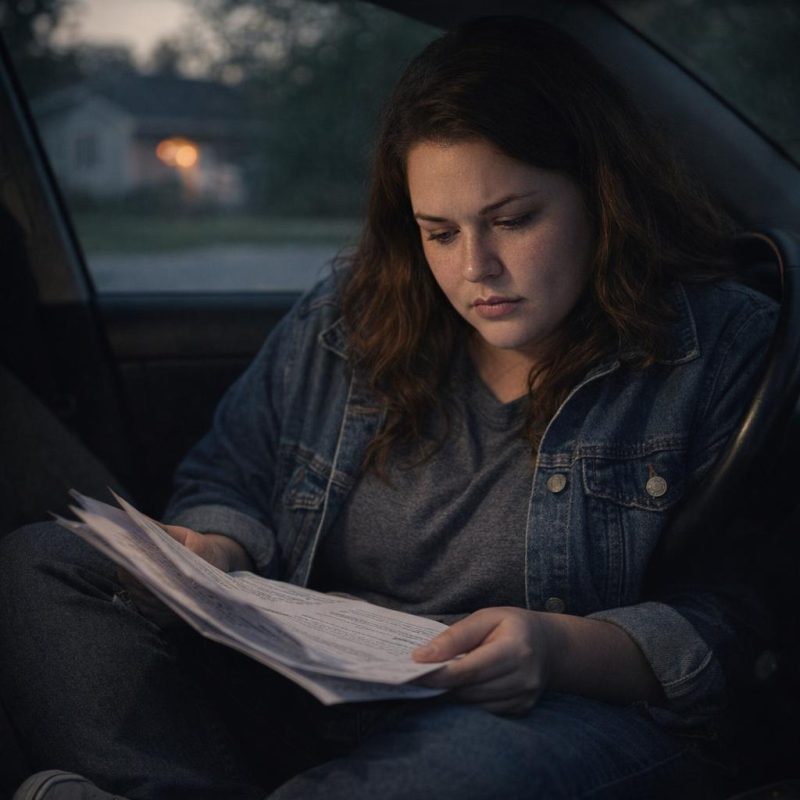 Image by RM AI
Local News
Jamie found the news segment before I did and called me with a warning, which I appreciated and then immediately ignored by pulling it up myself. A local station had run a three-minute piece framed as a debate about airplane etiquette and passenger rights — complete with the viral video, a graphic that said 'SEAT DISPUTE GOES LEGAL,' and a legal expert who seemed genuinely delighted to have an opinion about it. They said my name. On television. My actual name, attached to the words 'assault and battery,' in a segment that would now live on the internet forever. My phone started buzzing within minutes — coworkers, a cousin I hadn't spoken to in two years, someone from high school I barely remembered. Jamie called back and told me to stop watching, and I told her I had already stopped, which was a lie I told while still watching. I turned it off eventually. I made dinner. I tried to be a normal person in my normal apartment living my normal life. But there was this specific kind of exhaustion that had settled into me — not tired from doing things, just tired from being looked at, from being a story someone else got to tell, from being the subject of a three-minute segment I had no say in.
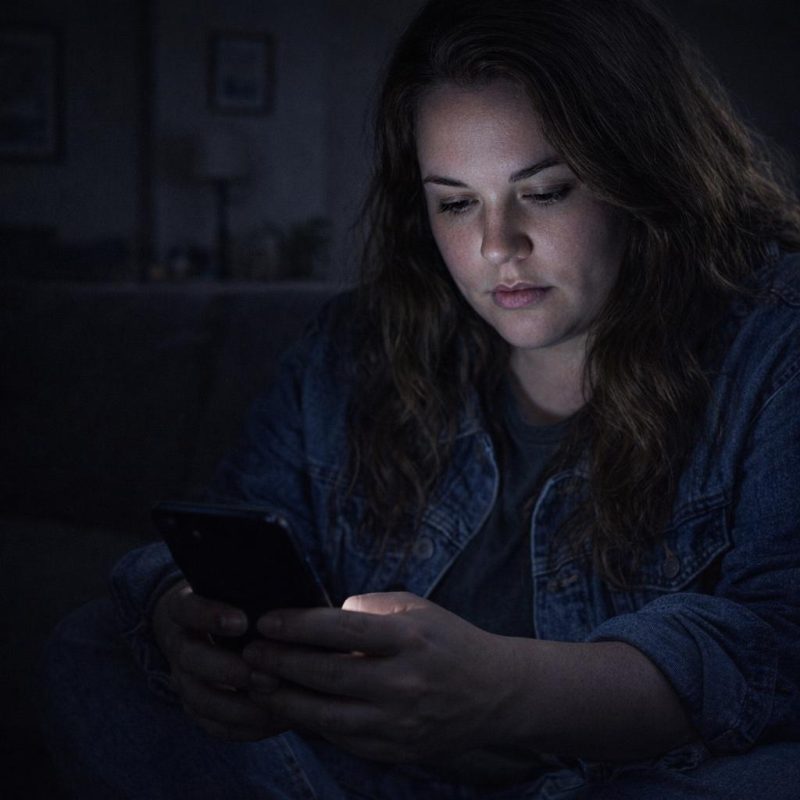 Image by RM AI
Giving Statement
David had arranged for a formal recorded statement, and I sat across from his investigator — a quiet, methodical guy named Marcus — in a small conference room with a recorder on the table between us. I walked through everything again, start to finish. The jacket. The seat. Victoria's refusal to move. Denise stepping in. The moment Victoria stood up and the way the collision happened — fast, off-balance, her shoulder catching mine as she turned. Marcus asked me to slow down at that part and describe it again. So I did. He asked me to describe Victoria's expression in the moments right before and right after. I thought about it and said that what struck me was how quickly it changed — one second she was composed, almost bored, and then the moment contact happened her face shifted into something that looked like pain and shock. I said it happened very fast. He asked me to say that last part again — the part about how fast the shift was. I repeated it. Marcus looked up from his notepad, and something moved across his face — not alarm exactly, more like a door opening behind his eyes — and he made a slow, careful note on the page.
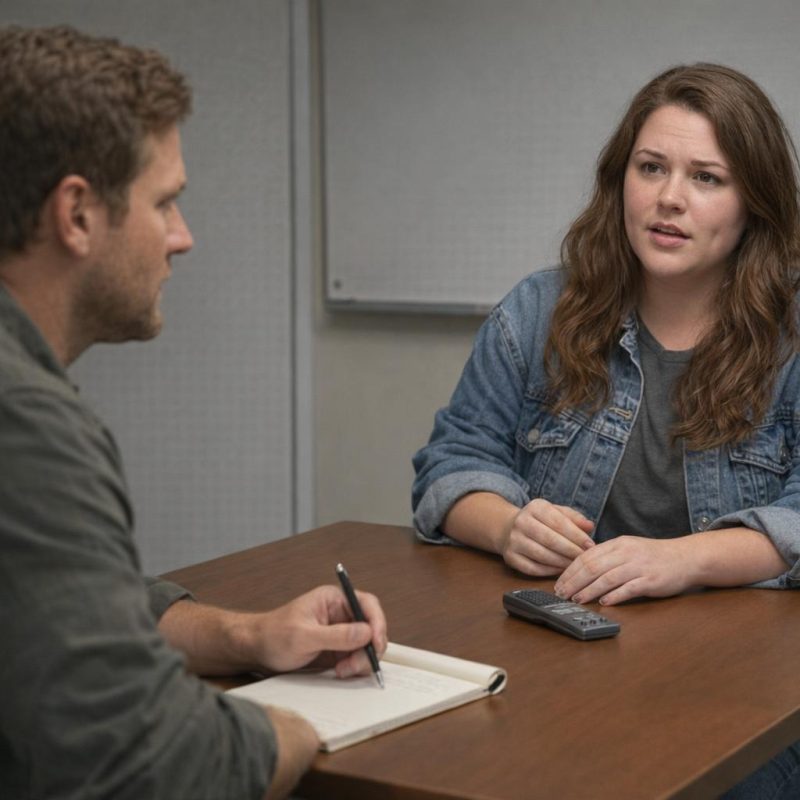 Image by RM AI
The Gym
I went to the gym on Thursday because I was trying to hold onto the pieces of my routine that still felt like mine. I swiped my membership card, nodded at the guy at the front desk, and pushed through the turnstile the same way I had for two years. The cardio area was straight ahead, and I glanced over out of habit — checking which treadmills were open, the way you do. I stopped walking. My brain took a second to catch up with what my eyes were seeing. She wasn't on a treadmill. She wasn't on any equipment. She was just standing near the treadmill row, facing the entrance, in workout clothes that looked brand new. I stood there in the middle of the gym floor, people moving around me, trying to figure out if I was wrong — if it was someone who just looked like her, if I was seeing things because I'd been thinking about her too much. But it wasn't someone who looked like her. Standing thirty feet away, in the gym I had been coming to for two years, was Victoria Hartwell.
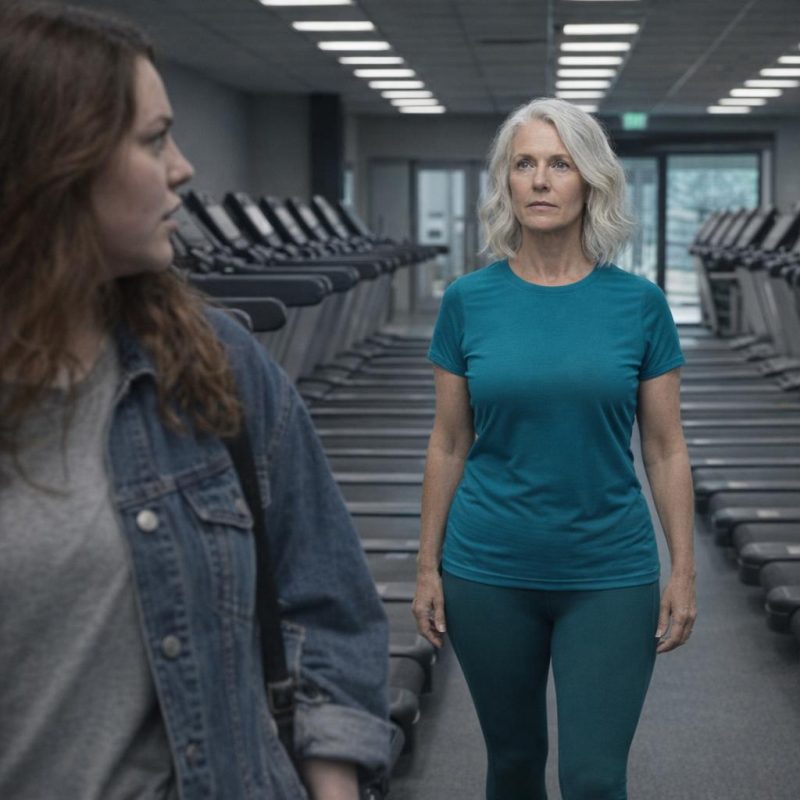 Image by RM AI
Coffee Shop
Two days after the gym, I stopped at my usual coffee shop on Saturday morning because I needed something normal. I needed to sit in my corner spot with an overpriced latte and pretend the week hadn't happened. I pushed open the door, felt the warm air and the smell of espresso hit me, and started scanning for a table the way I always do. There's one specific table I always go for — tucked against the window, good light, outlet nearby. I've been sitting there for three years. I looked toward the corner and my stomach dropped. Victoria was there, laptop open, coffee beside her, looking completely settled in, like she'd been there for hours. I stood in the doorway long enough that the person behind me had to step around me. I told myself it was nothing. This is a popular coffee shop. People use laptops. People sit in corners. I walked to the counter, ordered my drink to go, and kept my eyes forward the whole time. I waited for my name, grabbed my cup, and walked out. I texted Jamie from the sidewalk, hands wrapped around the warm cup, trying to sound casual about it. Through the window, I could see her still sitting there — at my table, in my corner, completely unbothered.
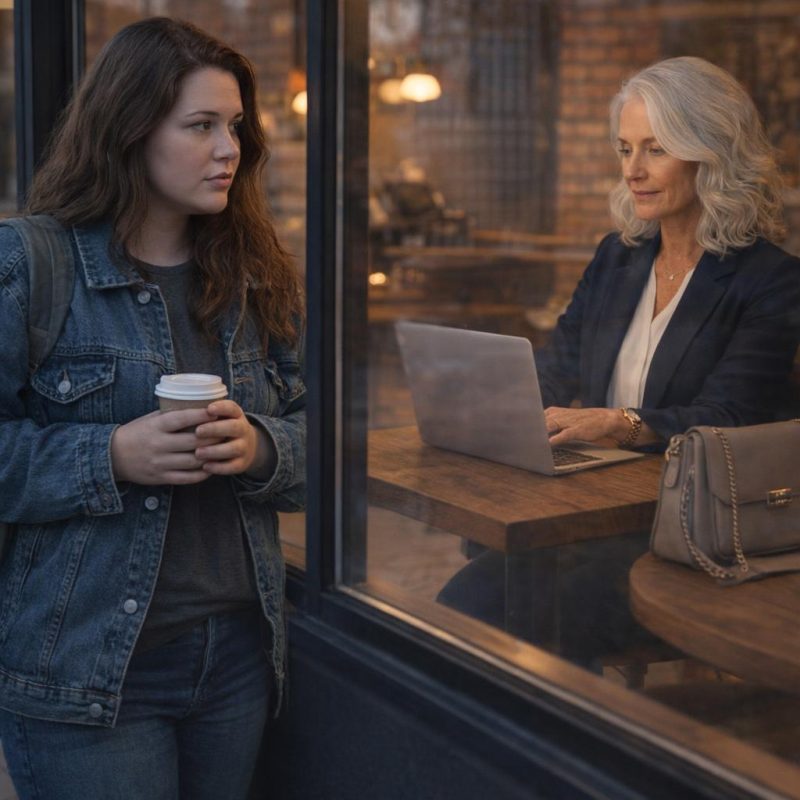 Image by RM AI
Jamie's Concern
Jamie met me for lunch two days later and I told her everything — the gym, the coffee shop, the corner table. I watched her expression shift as I talked. She didn't say anything at first, just set down her fork and looked at me with that specific face she makes when she's doing math in her head. Then she asked if those were both places I went regularly. I said yes, obviously, that's why it felt weird. She asked if I'd seen Victoria anywhere else — a grocery store, a random street, anywhere that wasn't part of my routine. I said no, just those two. She pointed that out like it meant something. Not a random street. Not a store. The gym I go to three times a week and the coffee shop I go to every Saturday. I said it could still be coincidence. Jamie gave me the look. You know the look. The one that says she's being patient with me but she doesn't agree. She said I should start paying attention to where I go and whether Victoria shows up there too. I said that felt paranoid. She said maybe, but what if it wasn't. I drove home telling myself I was overthinking it. The doubt came with me anyway and sat down at the kitchen table like it lived there.
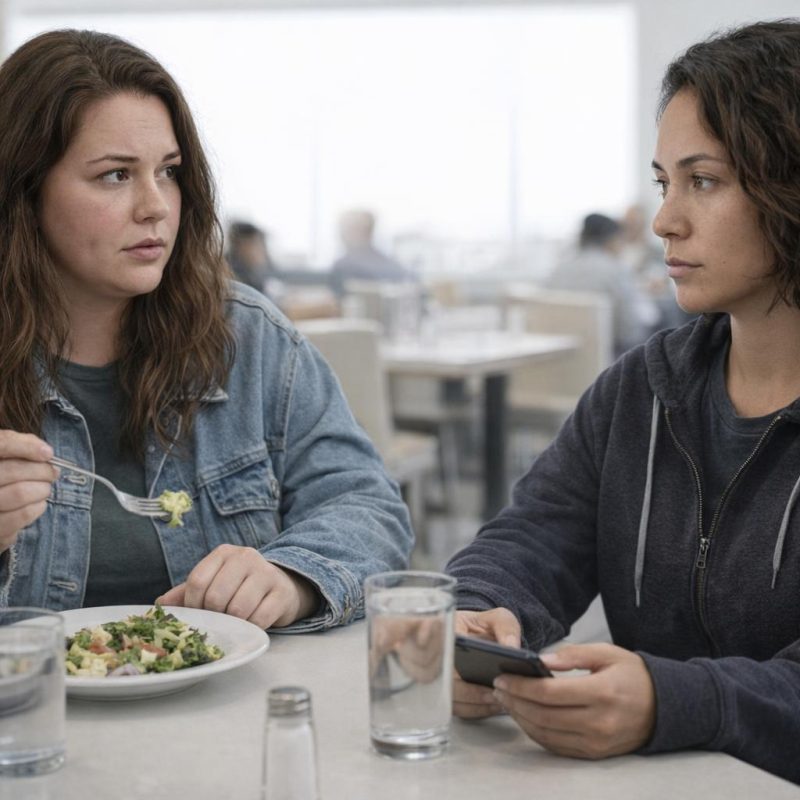 Image by RM AI
Workplace Reviews
My manager pulled me aside on Monday afternoon with the kind of expression that means something has already gone wrong before you even know about it. He turned his laptop toward me and showed me the reviews. Five of them, all one star, all posted within the last two days. I read the first one and felt my stomach drop. It mentioned me by name. Not just 'a staff member' — my actual name, calling me dismissive and rude to a customer. The second one said the same thing, different wording. The third one said I'd been condescending. I didn't recognize any of the names attached to the accounts. My manager said he knew they looked fake, that the accounts were brand new with no other activity, but that it didn't matter because they were already affecting the business rating. He was being kind about it, which somehow made it worse. I went back to my desk and sat there staring at my screen. I pulled up the reviews myself and read through all of them again. None of the incidents they described had ever happened. I had no memory of any of those interactions because they hadn't occurred. Someone had written them from nothing. I didn't know how to explain the feeling of reading your own name attached to things you never did — like watching someone build a version of you that you don't recognize and can't stop.
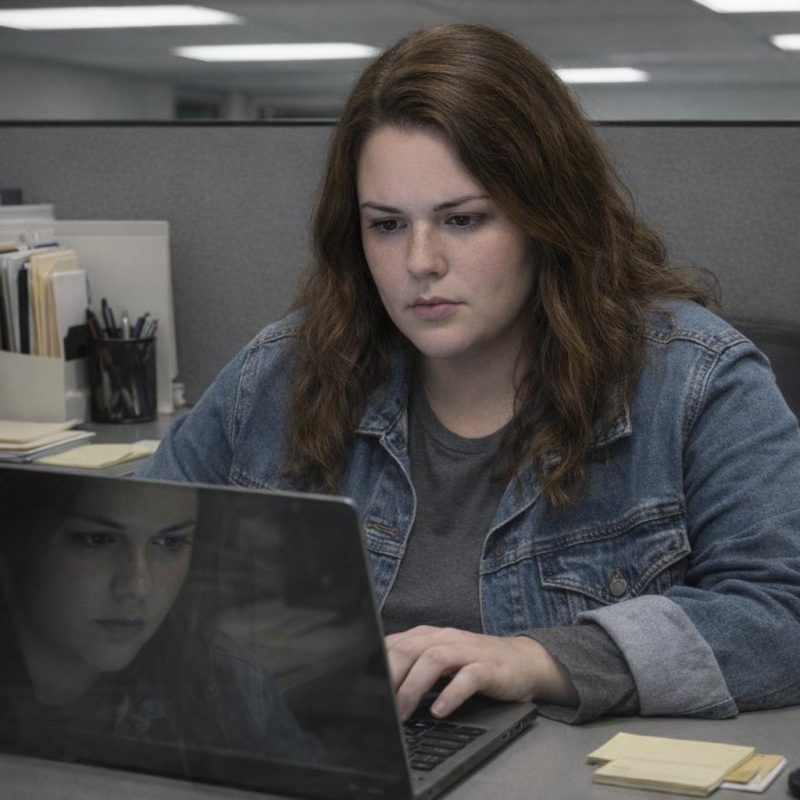 Image by RM AI
Keyed Car
I left for work Tuesday morning running about four minutes late, which meant I was moving fast through the parking lot and not really looking at anything. I almost walked past my car entirely. Something made me slow down — a glint of light catching wrong on the driver's side panel. I stopped. There was a scratch running the full length of the car, deep enough that I could see the silver metal underneath the paint. I walked the length of it slowly, like I was hoping it would look better from a different angle. It didn't. I went around to the front and stood there for a second, not fully processing what I was seeing. Then I did. Gouged into the hood, in uneven capital letters, was the word KARMA. I looked around the parking lot. Nobody. Just parked cars and a pigeon on the curb. My hands were shaking when I got my phone out. I took photos of everything — the side scratch, the hood, the letters, the whole car. I called the non-emergency police line and filed a report while standing next to it. Then I texted Jamie the photo of the hood. She called me back in under a minute. I was still standing in the parking lot, staring at those letters carved into my car.
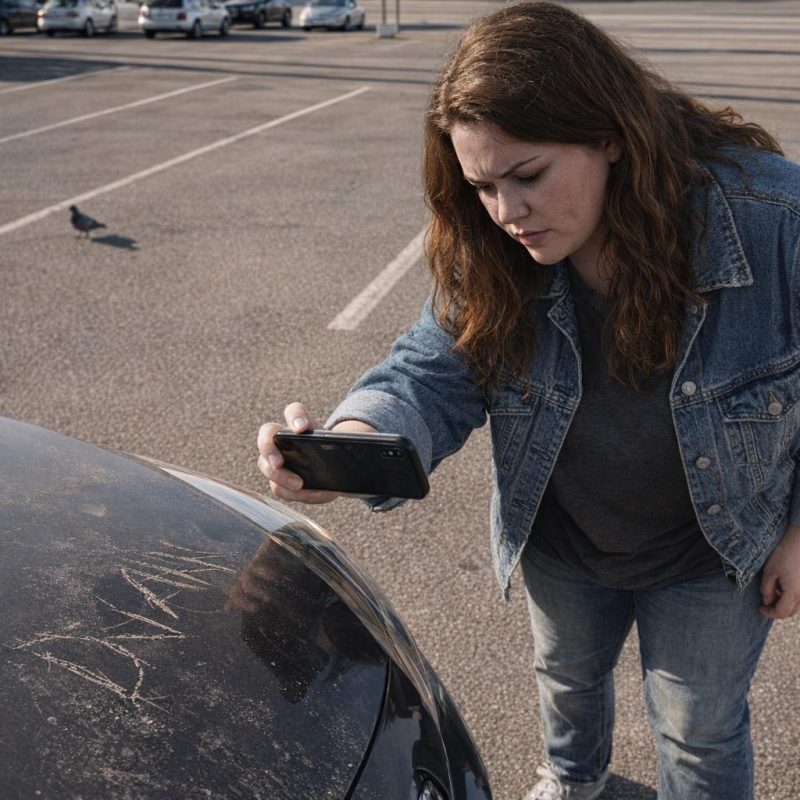 Image by RM AI
Victoria's Car
I started noticing the car the night after I filed the police report. Silver luxury sedan, parked across the street from my building, empty. I told myself it was a neighbor's car I'd never paid attention to before. I went inside. The next evening I came home from work and it was there again, same spot, same angle. I slowed down as I walked past. The hood was warm. I went upstairs and stood at my window for a while, watching it, feeling like an idiot for watching it. On the third night I went back down with my phone. I photographed the license plate, clear and straight on, then went back inside and looked it up through one of those vehicle registration search tools Jamie had bookmarked for me after the keyed car. It took about four minutes to come back. I sat on my couch and read the result twice. I took a screenshot and sent it to Jamie without any message, just the image. She called immediately and told me to contact the police. I said I would. I put my phone down and went to the window. The silver sedan was parked across from my building again.
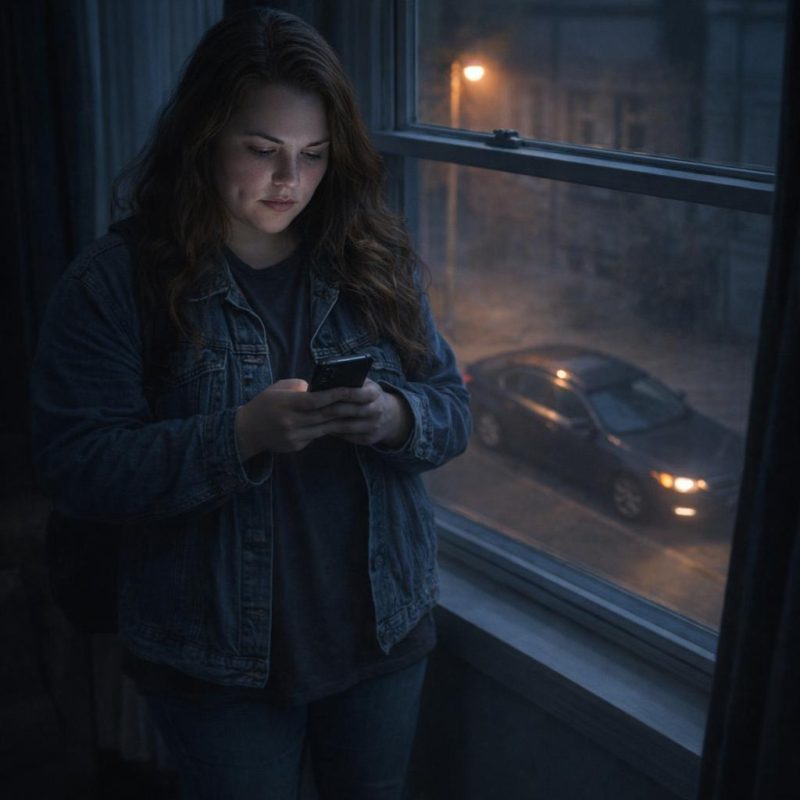 Image by RM AI
Watching the Street
I stood at my living room window that night for a long time. The sedan wasn't there. I'd checked three times already — once when I got home, once after dinner, once just before I made tea. The spot across the street was empty. I told myself that was a good thing. Maybe the photo of the plate had been enough to make whoever it was think twice. I made chamomile tea and set it on the coffee table and then went back to the window anyway. The street looked completely normal. People walking dogs. A couple coming back from somewhere, laughing. I watched all of it and felt completely separate from it, like I was watching a channel I used to be on. I checked the window again around eleven. Still nothing. I sat on the couch and picked up my tea, which had gone cold. I thought about calling Jamie but it was late and I didn't know what I'd even say — that the car wasn't there? That I was scared of an empty parking spot? I set the cold tea back down. The street outside was quiet and ordinary and I couldn't stop watching it, and the feeling that something was wrong didn't ease just because I couldn't see the source of it anymore.
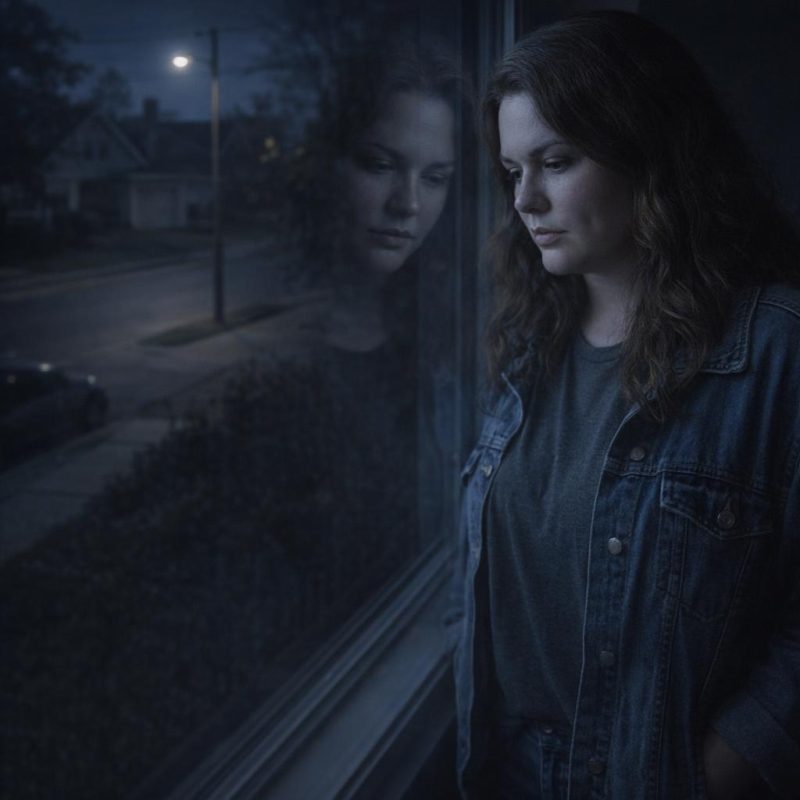 Image by RM AI
Anonymous Messages
My phone buzzed while I was getting coffee Thursday morning. Unknown number. The message said: *Nice coffee shop this morning.* I read it twice, then put my phone face-down on the counter and stood there for a second. I told myself it was a wrong number, a weird coincidence, someone messing around. I flipped the phone back over and deleted it. Twenty minutes later, another buzz. *You should lock your car.* I felt the air go out of the room. I was wearing a red sweater. The third message said: *Red looks good on you.* I called Jamie with my hands shaking so badly I almost dropped the phone. She picked up on the second ring and I just read her the messages out loud. She told me to screenshot everything before I did anything else. I did. Then I blocked the number. Thirty seconds later my phone buzzed again — different number, same style. *Blocking won't help.* Jamie was still on the line. I heard her go quiet for a second, then she said, very carefully, that I needed to go to the police today, not tomorrow. I saved the new screenshot and sat down on my kitchen floor because my legs had stopped cooperating. It seemed like someone must have been close enough that morning to see exactly what I was wearing — and I hadn't noticed anyone at all.
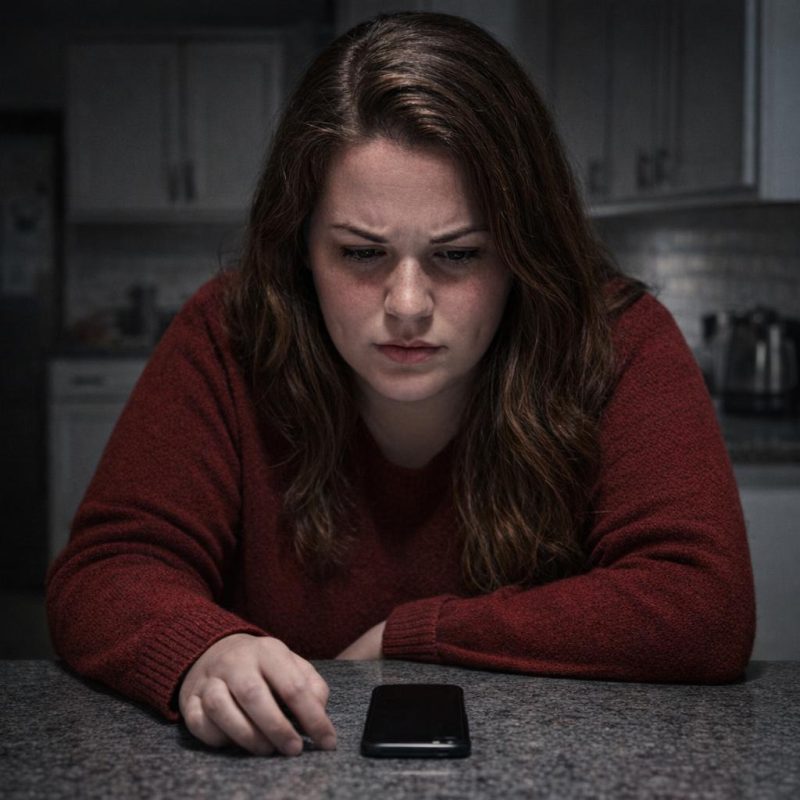 Image by RM AI
Keeping a Log
Jamie came over that night with her laptop and a very specific energy that meant she was going to make something organized out of the chaos. She told me to open a new document and start listing everything in order. I did. The gym, two weeks ago. The coffee shop, the Saturday after. The fake reviews at work. The keyed car with the word scratched into the hood. The sedan parked outside three nights running. The text messages from two different unknown numbers. As I typed each one out, Jamie added timestamps, cross-referenced the dates, and pulled up the screenshots I'd saved. She made a second tab and started mapping locations — my gym, my coffee shop, my apartment building, my workplace. She drew lines between them. I watched the document grow and felt something cold settle in my chest that wasn't quite fear and wasn't quite calm. It was something in between. When we were done, Jamie made me save it to my cloud drive, email it to myself, and save a copy to a USB drive she pulled from her bag like she'd planned this. I looked at the finished document — dates, locations, screenshots, everything laid out in clean rows — and the pattern it showed was impossible to argue with. I saved the last copy and closed the laptop, and sat with the weight of having proof of something I'd desperately wanted to believe wasn't real.
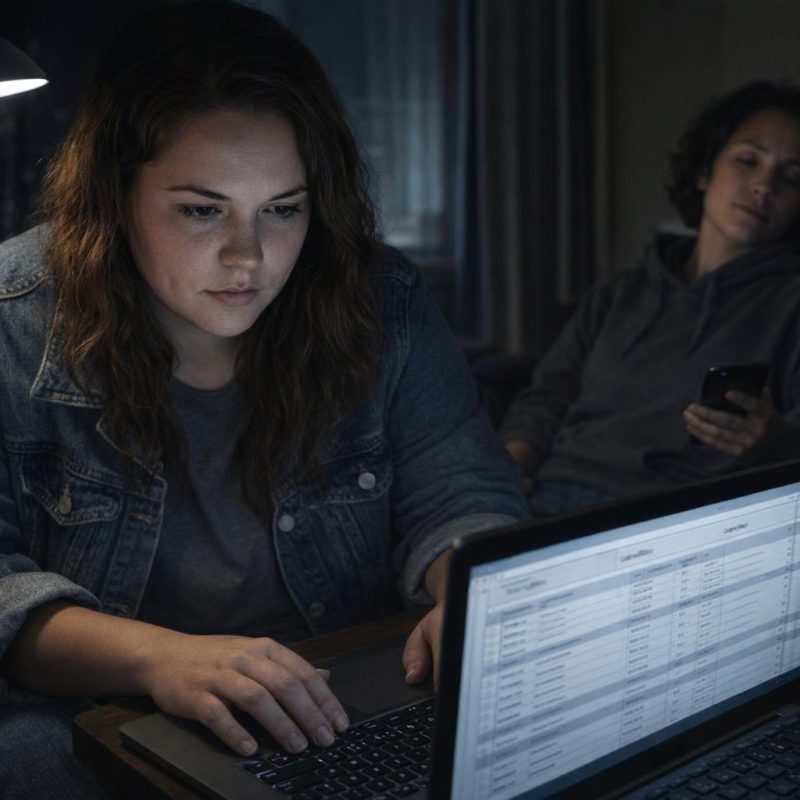 Image by RM AI
Jamie's Suggestion
Jamie came back the next evening with pad thai and that same organized energy, except this time she wasn't building a document — she was building a case for why I needed to do something with it. She spread the printed log across my coffee table and went through it item by item. The gym. The coffee shop. The messages. The car. Victoria standing outside my building at seven in the morning on a Tuesday. Jamie pointed out that Victoria's neighborhood was on the other side of the city. There was no reason for her to be on my street. I said I knew that, but that filing a report felt like a big step, like I was making a claim I couldn't fully back up. Jamie looked at me with the particular patience of someone who has been listening to me talk myself out of things for years. She said the evidence was right there on the table. I said it still felt dramatic. She said the word I'd been avoiding the whole time — the word I'd been circling around for weeks without letting myself land on it — and I felt it hit me somewhere behind the sternum. She said it was stalking.
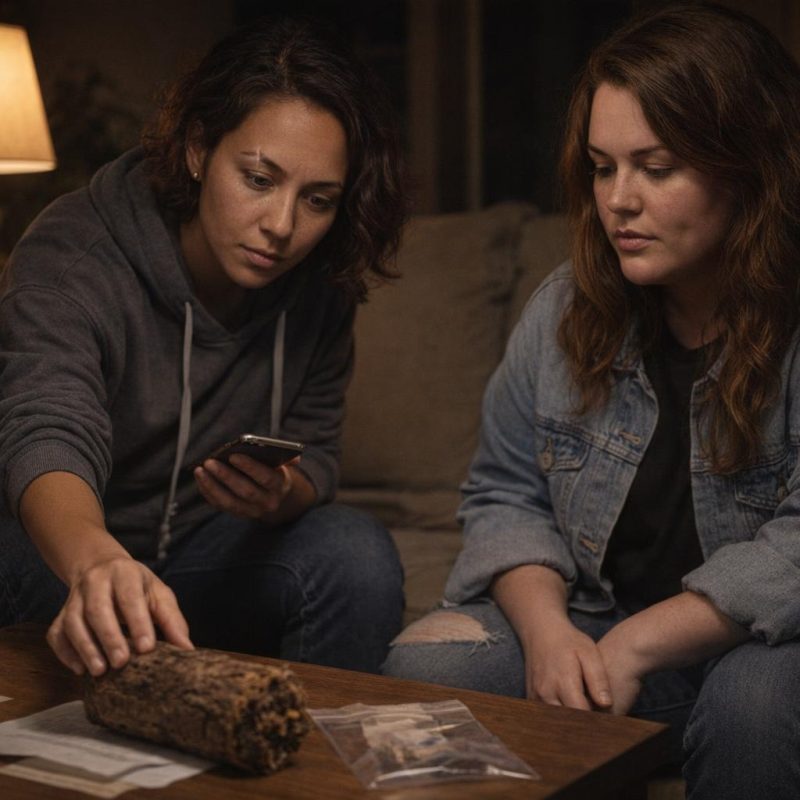 Image by RM AI
Photographing Evidence
I'd started checking the window before I left for work every morning. I told myself it was just a habit, just caution, the same way you check the weather. But that Thursday I looked out and my stomach dropped. She was there. Victoria was standing on the sidewalk directly across the street, facing my building, not moving. Just standing. I stepped back from the glass fast, heart going, and grabbed my phone off the counter. I moved to the edge of the window where I could see without being seen and zoomed in as far as the camera would go. I took four photos. Then three more. Her face was clear in every one — the sharp features, the expensive coat, the stillness of someone who wasn't in a hurry. I stood there watching her for what felt like ten minutes before she finally turned and walked away. I didn't leave until she was completely out of sight. Then I sat on the edge of my bed and went through the photos one by one, forwarding them all to Jamie without a word. My hands had stopped shaking by then, and what settled in their place was something quieter and colder — the particular weight of having proof you were right about something you desperately wished you'd been wrong about.
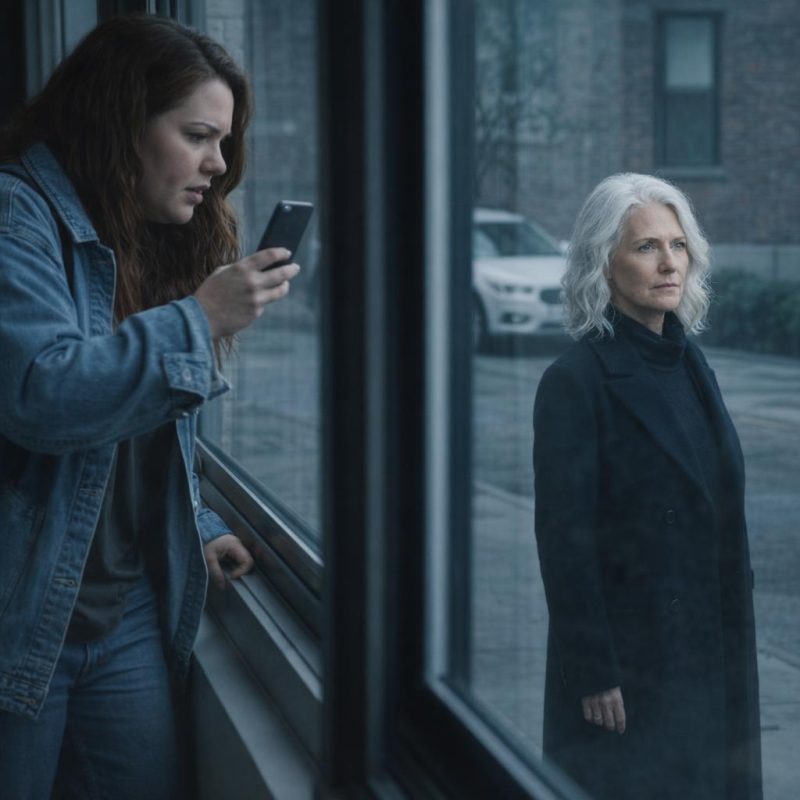 Image by RM AI
Marcus Reaches Out
I'd been checking my messages more than usual, which meant I noticed the new request almost immediately. The name didn't register at first — Marcus Webb — and I almost dismissed it as spam. Then I read the first line and sat up straight. He said he'd been the passenger in the middle seat. He'd seen the news story about the lawsuit and felt terrible that he hadn't spoken up sooner. He wrote that he remembered the flight clearly — Victoria refusing to move, the way she'd made a scene, the moment she lurched forward and grabbed her shoulder. He said he'd thought it was strange at the time. He said he'd actually written notes on his phone that day because something about the whole thing had felt off to him, and those notes had timestamps. He was offering to give a formal statement to anyone who needed it. I read the message twice. Then a third time. I typed back thanking him and asked if he'd be willing to speak with my attorney. He replied in under two minutes — just: *Absolutely. Whatever you need.* I forwarded his contact information to David with a message that probably had too many exclamation points, and then I read Marcus's original message one more time, because I needed to make sure it was real.
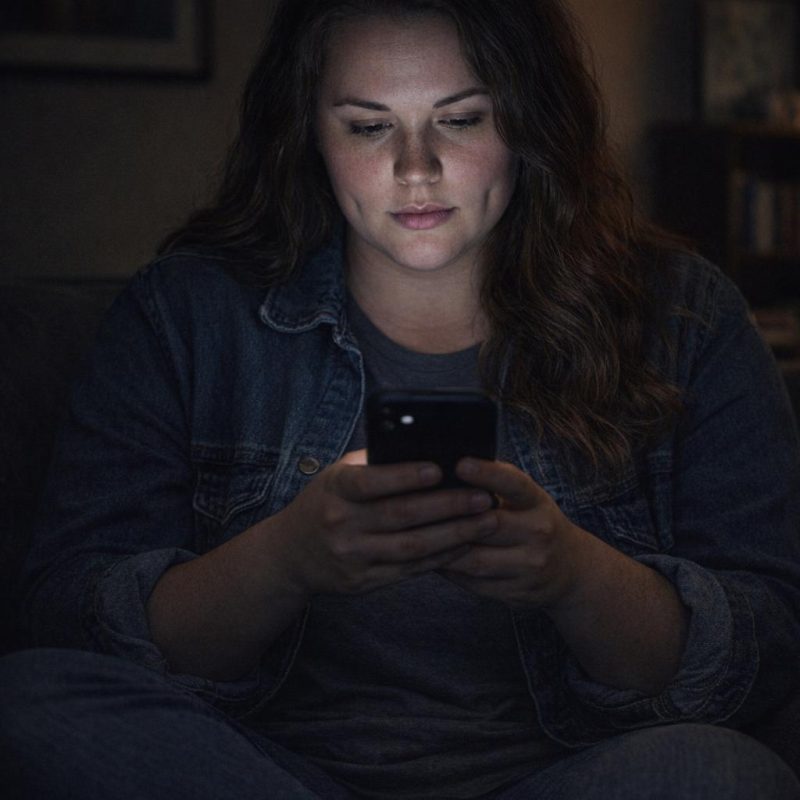 Image by RM AI
Meeting Detective Mills
The police station waiting area smelled like burnt coffee and old carpet, and I sat there for twenty minutes rehearsing how to explain everything without sounding unhinged. Detective Mills came out and introduced herself — late thirties, practical blazer, a notepad already in her hand — and led me back to her desk. I laid it all out. The plane incident, the lawsuit, the sightings, the messages, the keyed car. I showed her the log Jamie and I had built, the screenshots, the photos of Victoria outside my building. Mills asked good questions. She asked about dates, about distances, about whether I'd had any direct communication with Victoria since the flight. She was thorough and calm and I appreciated that she didn't look at me like I was wasting her time. Then I got to the name. I told her the woman's name was Victoria Hartwell. Mills had been writing steadily the whole time, but her pen slowed. She asked me to spell the last name. I did. She wrote it down, and when she looked back up at me, something in her expression had shifted — just slightly, just for a second — in a way I couldn't read.
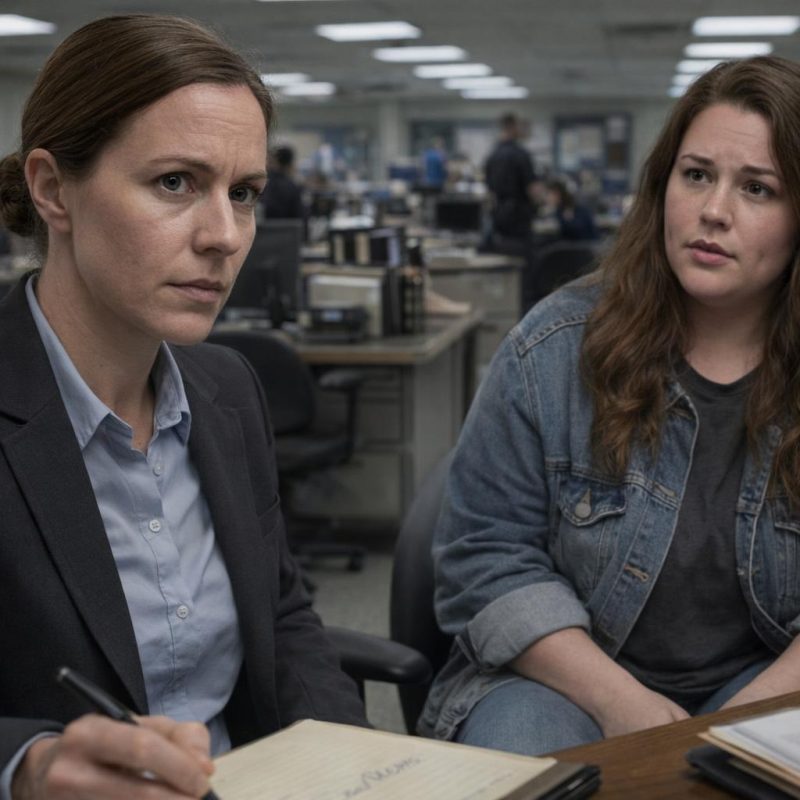 Image by RM AI
Skeptical Questions
Mills flipped back through her notes and started asking the harder questions. She said some of the sightings could be coincidental — the coffee shop, maybe even the gym, if Victoria lived or worked nearby. I told her Victoria lived in a gated community across the city. Mills made a note. She asked if I'd ever seen Victoria before the flight. I said no. She asked if we had mutual friends, mutual workplaces, any overlap she should know about. I said I'd never heard the name Hartwell before the day Victoria sat down in my seat. Mills nodded slowly, the way people do when they're not quite agreeing but not quite disagreeing either. She said she'd open a case file but that she'd need something more concrete — a direct threat, ideally in writing, or another documented incident — before she could move forward with anything actionable. I asked what counted as concrete. She said she'd know it when she saw it, which was not the answer I was hoping for. I was gathering my things to leave when she looked up from her notepad and asked, in a tone that was completely even, whether I was absolutely certain I had never encountered Victoria Hartwell before that flight.
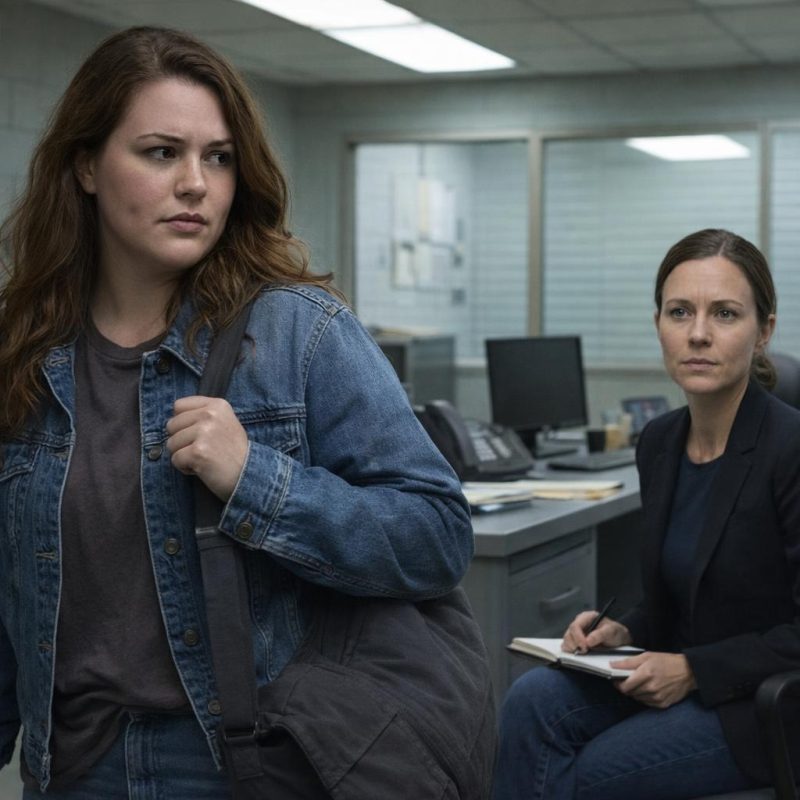 Image by RM AI
Jamie's Research
Jamie called me two days after the police station visit, and I could tell from her opening sentence — 'okay, so I went down a rabbit hole' — that she'd found something. She'd been searching Victoria Hartwell online. The address she'd found was in a gated community in the north hills, the kind of neighborhood where the houses have names instead of numbers. Jamie had pulled up the property records: the house was listed at just over two million dollars. She'd looked for a LinkedIn profile, a business registration, any kind of employment history. Nothing. What she did find were photos — society pages, charity gala coverage, a hospital fundraiser from three years back. Victoria in floor-length gowns, Victoria at tables with people whose names I vaguely recognized from local news. No job. No company. No visible reason to be anywhere at any particular time. Jamie said it plainly: Victoria had all the time in the world. I sat with that for a moment. Jamie asked what kind of person had nothing better to do than follow someone across a city for weeks. I didn't have an answer, and the silence between us felt heavier than anything either of us could have said to fill it.
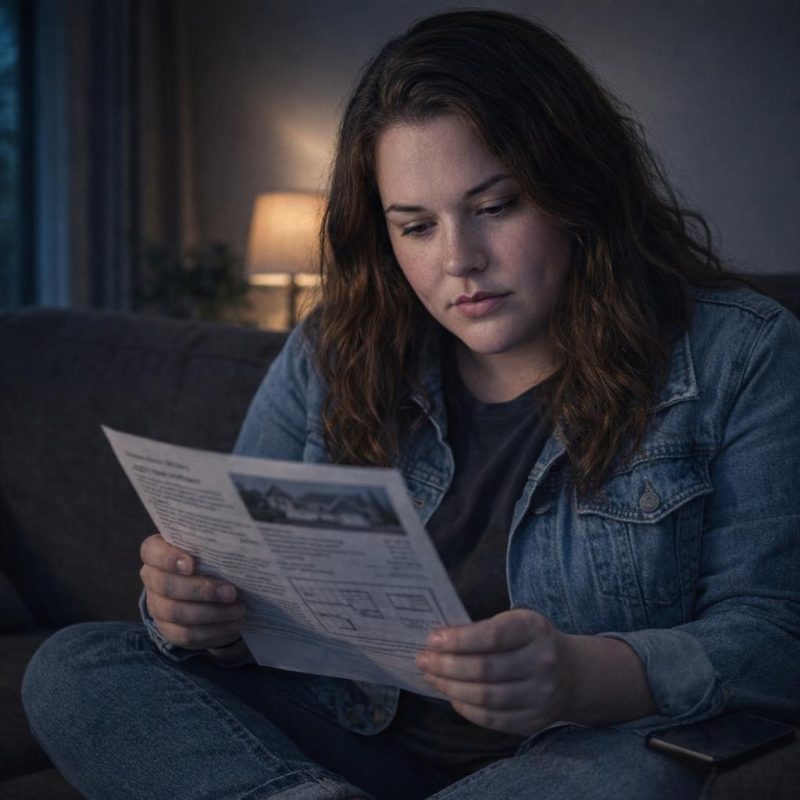 Image by RM AI
No Job, No Limits
We sat at my kitchen table with the printouts spread between us, and the more we talked through it, the worse it got. Victoria didn't work, which meant she had no schedule, no obligations, nowhere she had to be. She had money — real money, the kind that pays for lawyers without blinking and private investigators without a second thought. I worked full-time and was already watching my bank account with the specific anxiety of someone paying legal fees for the first time. Jamie said it out loud: Victoria could outlast me. Not because she was smarter or more determined, but just because she had more runway. I asked how long civil cases typically dragged on. Jamie said she'd looked it up and the answer was not comforting. She suggested I ask David about a restraining order, something that might at least create a legal boundary. I said I was worried it would escalate things, give Victoria a reason to push harder. Jamie said doing nothing was also a choice, and not a good one. She was right and I knew it. I told her I'd call David in the morning. But sitting there with the papers in front of me, the gap between what Victoria had and what I had felt like something I couldn't see the bottom of.
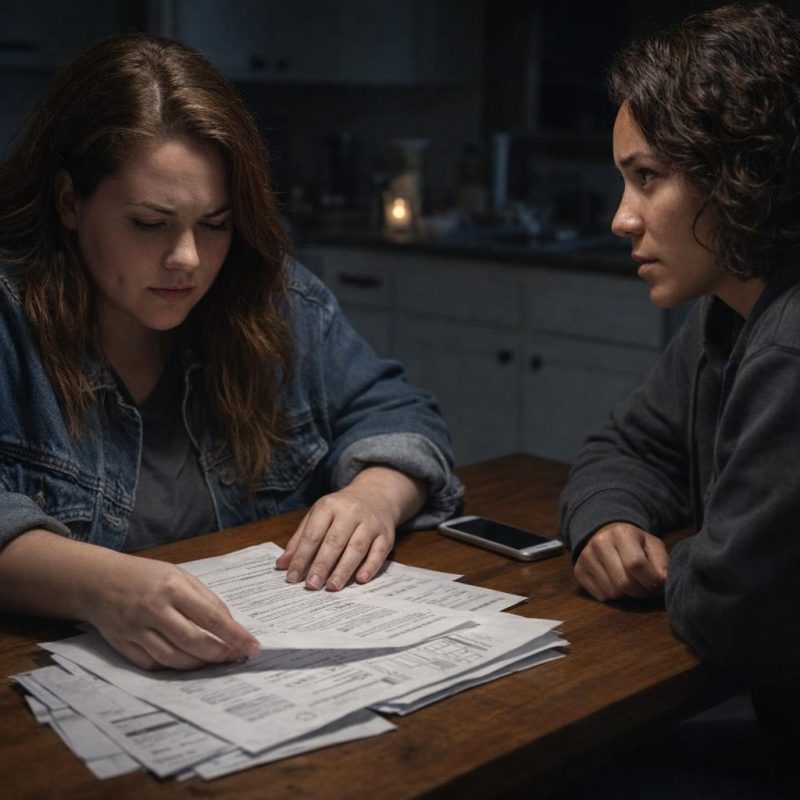 Image by RM AI
The Break-In
I got home from work on a Friday and was already thinking about dinner when I reached my door and stopped. My key was in my hand but I didn't need it. The door was closed but not latched — I could see the gap at the frame, a thin line of shadow where there should have been none. I always lock the deadbolt. Every single time, without exception, the way you develop habits when you live alone. I pushed the door open slowly with my fingertips. The apartment looked normal at first. Laptop on the desk. TV on the stand. Nothing overturned, nothing obviously missing. But then I started moving through the rooms and I noticed the small things. A kitchen drawer not fully closed. The closet door in my bedroom standing open at an angle I never leave it. The stack of papers on my desk slightly fanned, like someone had lifted them and set them back down. Nothing taken. Nothing broken. Just the quiet, specific wrongness of a space that had been touched by someone who wasn't supposed to be there. I called the police from the hallway, my back against the wall, because I didn't want to go any further inside. The deadbolt was undone.
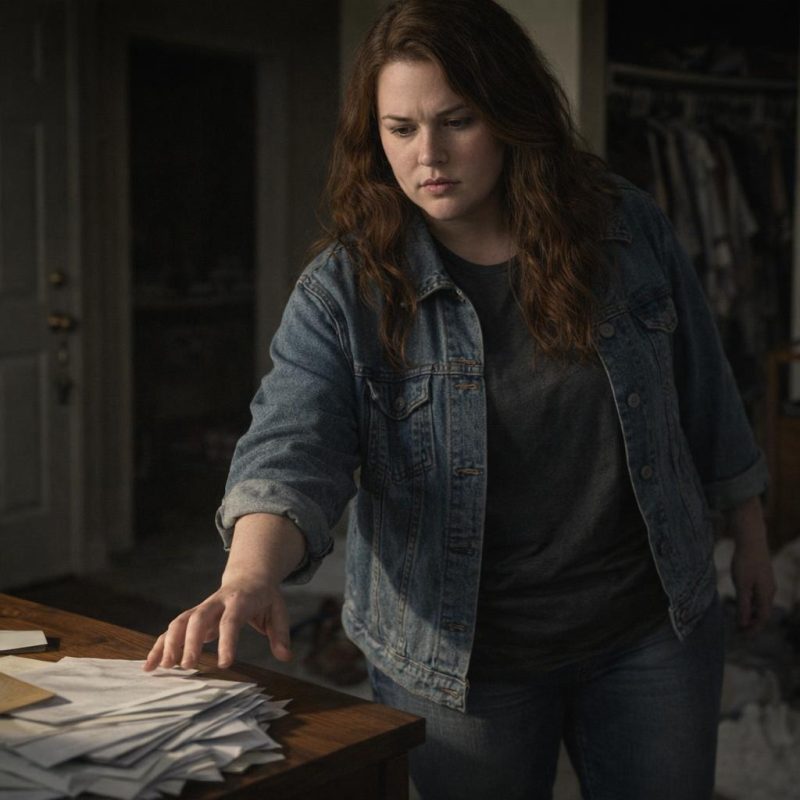 Image by RM AI
Hidden Camera
The two officers who responded were thorough, I'll give them that. They dusted every surface, checked the windows, tested the lock. No prints anywhere — not on the drawer, not on the closet door, not on the desk. Whoever had been in my apartment knew what they were doing, which somehow made it worse. Then one of the officers stopped in front of the bookshelf and tilted his head. He reached behind the picture frame I'd had hanging there for two years — a print I bought at a street market and never thought twice about — and pulled out something so small it sat in his palm like a coat button. A camera. Tiny, black, with a lens no bigger than a pencil eraser. He called Detective Mills immediately. She arrived within the hour, bagged it, and stood in my living room looking at the spot where it had been pointed — directly at my couch, angled toward the kitchen. I asked how long it had been there. Mills said she didn't know. The tech team would analyze it, but there was no way to tell just from looking. I stood in the middle of my own apartment and tried to remember every ordinary, private, unguarded moment I'd had in that room, and the weight of not knowing settled over me like something I couldn't shake off.
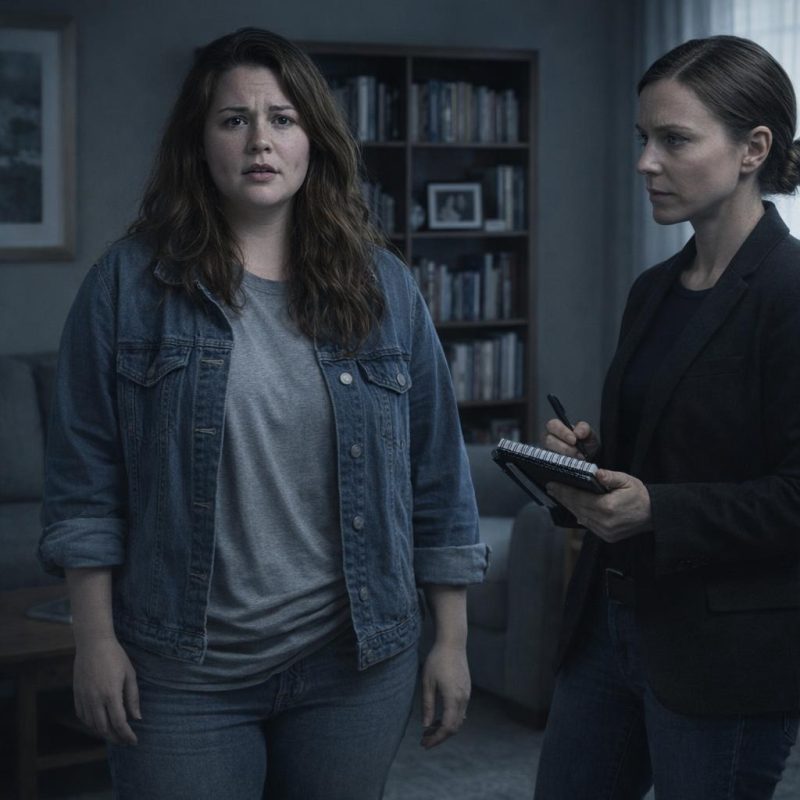 Image by RM AI
Formal Investigation
Mills called me the next morning and asked me to come to the station. I sat across from her at a desk that had seen a thousand worse situations than mine, which was either comforting or not, depending on how I looked at it. She told me the camera was with the tech team and they were pulling everything they could from it. Then she slid a form across the desk and said she was opening a formal stalking investigation. She said it plainly, like it was routine, but I felt something loosen in my chest when she said it. She gave me a case number. An actual number. After months of feeling like I was describing a bad dream to people who kept suggesting I get more sleep, someone had written it down and given it a reference code. Mills walked me through the process — background checks, subpoenas, documentation review. She told me to keep logging every contact, every delivery, every strange car parked too long outside. She warned me investigations take time. I asked if I was in danger. She didn't say no. She said to call 911 immediately if Victoria came anywhere near me. I walked out of the station into the gray afternoon air, still frightened, still shaking a little — but for the first time in months, not entirely alone in it.
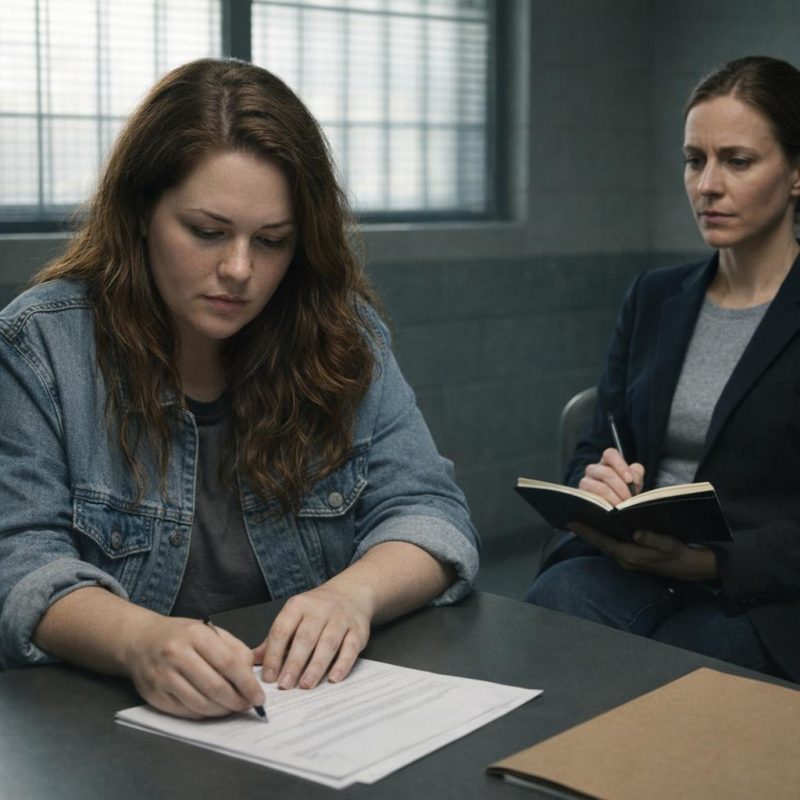 Image by RM AI
Reviewing the Past
I pulled three boxes out of my closet that weekend — the kind of boxes you move from apartment to apartment without ever fully unpacking. Old photos, journals, birthday cards, work lanyards from jobs I'd half-forgotten. I was looking for anything connected to the name Hartwell. I went through college photos first, then work events, then a stack of pictures from parties I barely remembered attending. Nothing. I searched my email — typed 'Hartwell' into the search bar and stared at zero results for a long moment. I skimmed journal entries from three years back, looking for anything that felt relevant, any name that might connect. Still nothing. I was about to give up and make coffee when I found a stack of photos from a restaurant birthday dinner — my friend Priya's, I think, maybe three years ago. Most of the pictures were the usual chaos of a group dinner: bad lighting, everyone mid-laugh, someone's elbow in the frame. But in one photo, taken from across the table, there were people in the background I didn't recognize. I almost set it aside — and then something about one of the faces stopped me, a flicker of familiarity I couldn't place, the way you feel when a word is on the tip of your tongue and won't come.
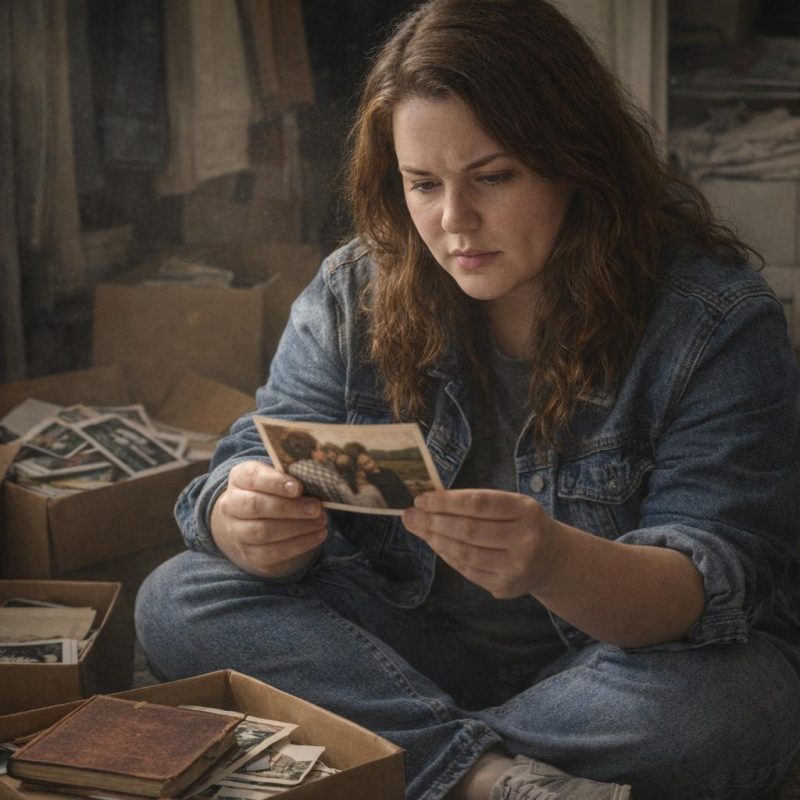 Image by RM AI
Flowers at Work
I was in the middle of a Tuesday afternoon, staring at a spreadsheet and thinking about nothing in particular, when the front desk called up to say there was a delivery for me. I figured it was the office supply order I'd been waiting on for two weeks. It was not. The delivery person wheeled in a vase so tall it blocked his face — white lilies, maybe two dozen of them, the kind you see at funerals. My coworkers materialized out of nowhere the way they always do when something interesting arrives, making appreciative noises, asking who they were from. My manager raised an eyebrow and smiled. I picked up the small envelope tucked into the stems with fingers that had already started to tremble, which I tried to hide by turning slightly away from everyone. The card was cream-colored, printed in a clean serif font. I read it twice to make sure I hadn't missed something. My manager asked if I was okay. I told her I needed to make a call and stepped into the hallway, photographing the flowers and the card before I did anything else. I called Mills and described the delivery. She told me to keep the card and not to touch the vase any more than I already had. I looked back through the glass at the lilies sitting on my desk, bright and enormous and completely out of place. The card read: Thinking of you — no name, nothing else.
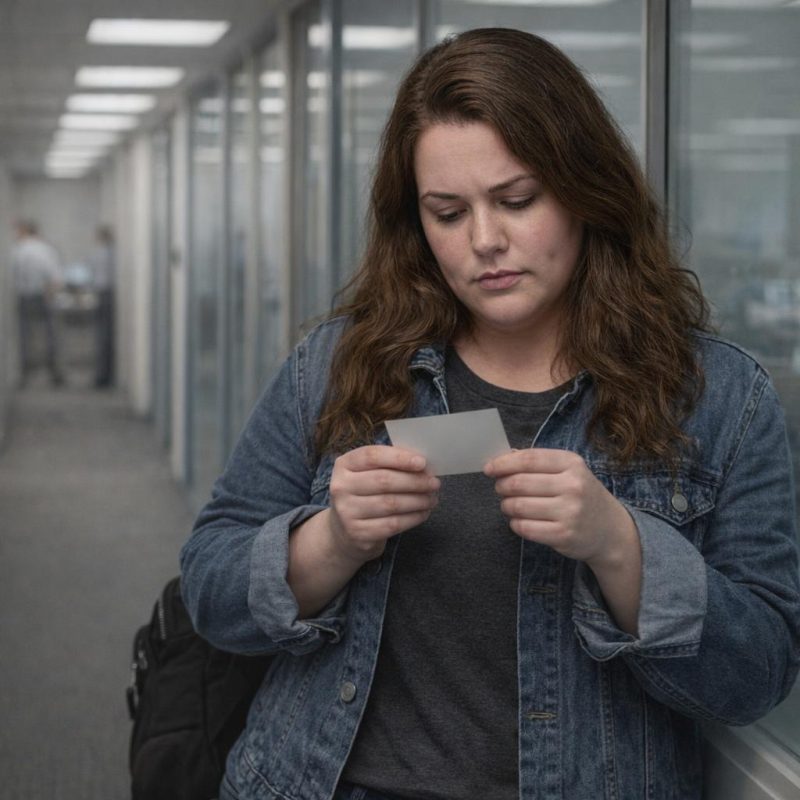 Image by RM AI
Deposition Scheduled
David called me on a Thursday evening, which already felt like a bad sign. He had that careful, measured tone he uses when he's about to say something he knows I won't like but has already decided I need to hear. The deposition was scheduled for the following Tuesday. Five days. He walked me through the logistics — a conference room at the opposing counsel's office, a court reporter, Victoria and her attorney on one side of the table. He explained that I'd be answering questions under oath, that he'd be there the whole time, that I should answer only what was directly asked and nothing more. I asked if I could bring up the stalking investigation, the camera, any of it. He said to let him handle strategy and not to volunteer anything unprompted. I asked what Victoria's attorney was like. He paused just long enough to tell me everything I needed to know before he said the word 'aggressive.' I told him I'd been dealing with aggressive for months. He said a deposition was different — it was her territory, her rules, and I needed to be prepared for that. I said I understood. I wasn't sure I did. The part I kept circling back to, the part I couldn't quite get past, was that on Tuesday I was going to have to walk into a room and sit down across the table from Victoria.
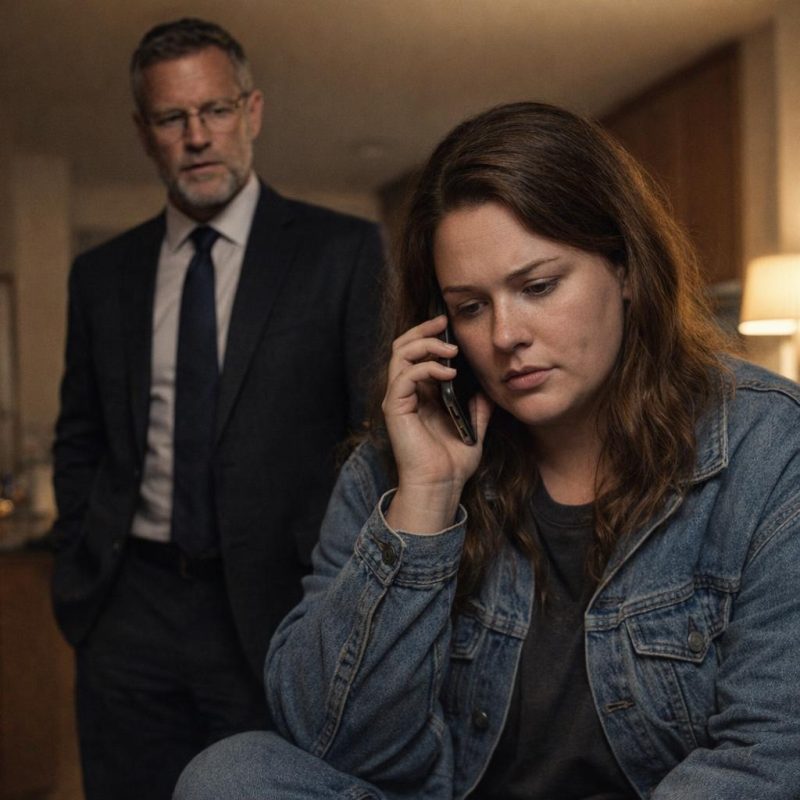 Image by RM AI
Preparing for Battle
I spent three hours in David's office the Friday before the deposition, and by the end of it I felt like I'd run a marathon in dress shoes. We went through the plane incident from the beginning — every detail, every word I remembered saying, every word I remembered her saying. Then David switched modes and started asking me the questions Victoria's attorney would ask, and they were not friendly questions. He asked them in a flat, skeptical voice that made everything I said sound slightly unreliable, and I had to keep reminding myself that he was on my side. He told me to pause before every answer, even if I knew it immediately — especially if I knew it immediately. He warned me that Victoria's attorney would try to get me flustered, would rephrase the same question four different ways looking for inconsistencies, would make me feel like I was the one who'd done something wrong. We reviewed Denise's statement, which was solid. David mentioned that Marcus had offered to testify if it came to that, which I hadn't known, and which made me feel something I didn't have a word for. He told me not to look at Victoria, not to react to anything she said, not to give her attorney a single thing to work with. I asked what happened if I lost my composure anyway. He said that was exactly what they were counting on. By the time I left, I knew my own story so well it had stopped feeling like mine.
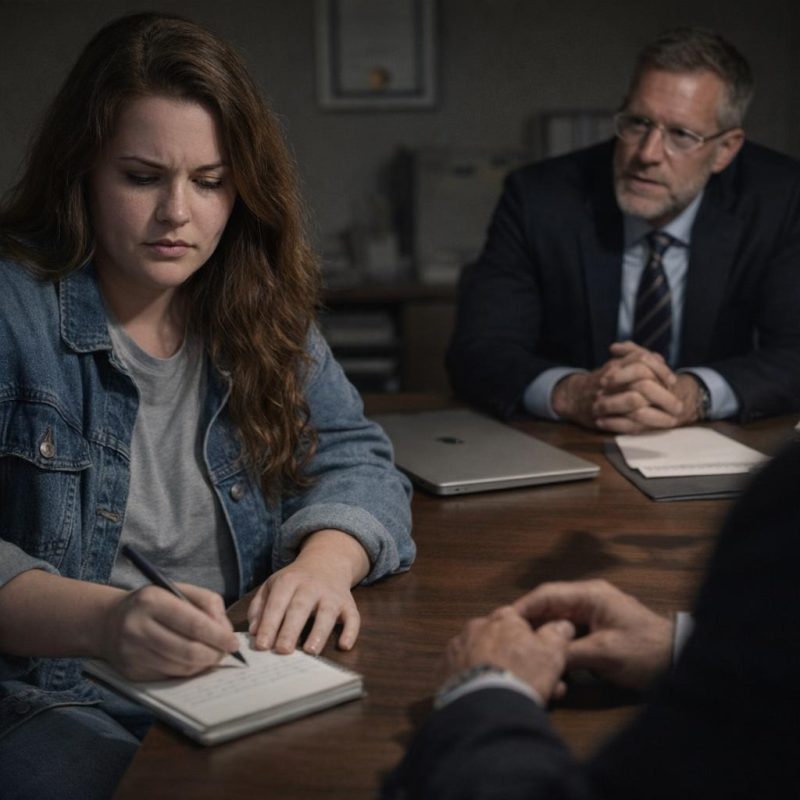 Image by RM AI
The Knowing Smile
David met me in the lobby of the law office at eight-fifty, ten minutes before we were supposed to be there, because he is the kind of attorney who arrives early to everything. He looked calm. I did not feel calm. We rode the elevator up together and he said, quietly, 'Remember — factual, brief, no editorializing.' I nodded like I'd been doing this for years. The conference room was at the end of a carpeted hallway, and through the glass panel beside the door I could already see people inside. David opened the door and I walked in. Victoria was already seated at the far end of the table. She was wearing a pale gray blazer, her hair pulled back, and she looked exactly like someone who had never been inconvenienced by anything in her life. Her attorney was speaking to the court reporter when we entered. Then Victoria looked up. The room didn't go quiet — people were still moving, papers were shuffling, someone was adjusting a microphone — but it felt quiet. She looked at me the way you look at something you've been expecting for a long time. Then she smiled. It was slow, and it didn't reach her eyes, and it was the most unsettling thing I'd seen in a room full of lawyers. I sat down and put my hands flat on the table to keep them still, and the cold in her expression stayed with me even after she looked away.
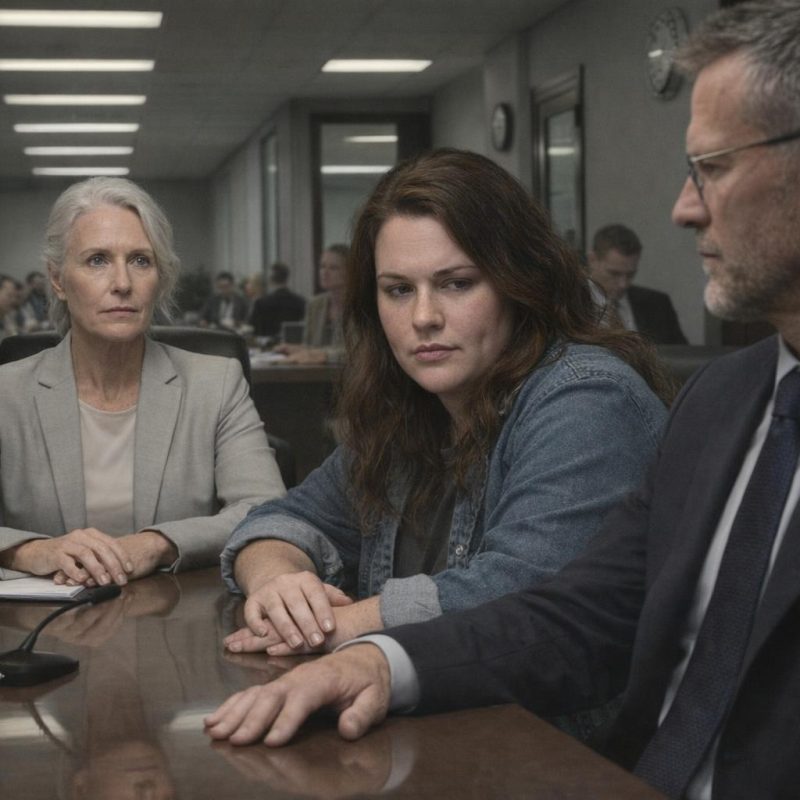 Image by RM AI
Mentioning the Past
The deposition started with Victoria's testimony, and her attorney walked her through the plane incident like they were narrating a nature documentary — calm, measured, every detail placed just so. Victoria described me as aggressive from the moment she sat down. She said I had raised my voice, that I had made her feel unsafe, that the incident had caused her ongoing anxiety and physical discomfort. Her attorney asked about her injuries and she described them with the kind of careful specificity that made me press my pen into my notepad to keep from reacting. David had told me not to react. I was trying very hard not to react. Then Victoria's attorney asked whether this kind of confrontation was unusual for her, and Victoria paused — a small, considered pause — and said the incident had reminded her of difficulties she'd experienced in the past. She said some people move through the world without ever examining the harm they cause. Her attorney nodded. And then Victoria turned her head and looked across the table — not at the court reporter, not at David, but at me — and said, 'Some people never learn from their mistakes.' David's pen moved on his notepad beside me, a single quiet mark, but he didn't object or speak.
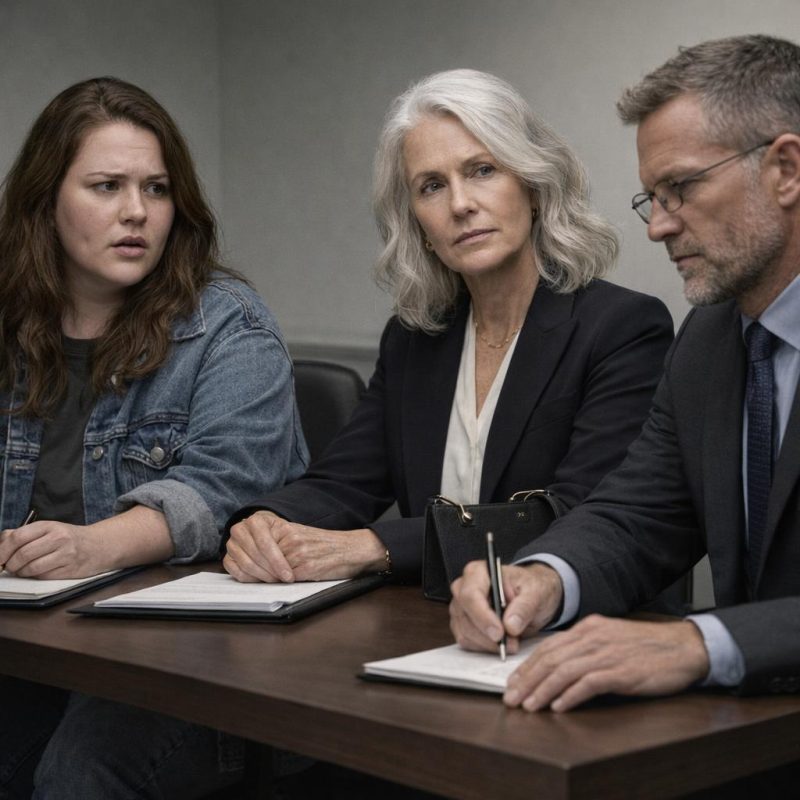 Image by RM AI
The Son
Jamie called me that afternoon while I was still staring at the deposition notes I'd been trying to organize for three days. She'd been digging through public property records — her idea, not mine — and she'd found something. A property listing for Victoria's address had two names on it. Victoria Hartwell and a Ryan Hartwell. Jamie said she thought it was her son. I wrote the name down on the corner of my notepad. Ryan Hartwell. I said it out loud, just to hear it, and something shifted in the back of my mind — not a memory exactly, more like the feeling of a word you can't quite pronounce. I asked Jamie if she could find anything else on him. She said she was already searching but the records were thin — no social media she could find, limited public footprint. I told her to keep looking. After we hung up I sat there with the notepad in my lap, staring at the name. I couldn't place it. I didn't know why it felt like it mattered. But the knot that had been sitting in my stomach since the deposition pulled a little tighter, and the name just kept sitting there, quiet and wrong.
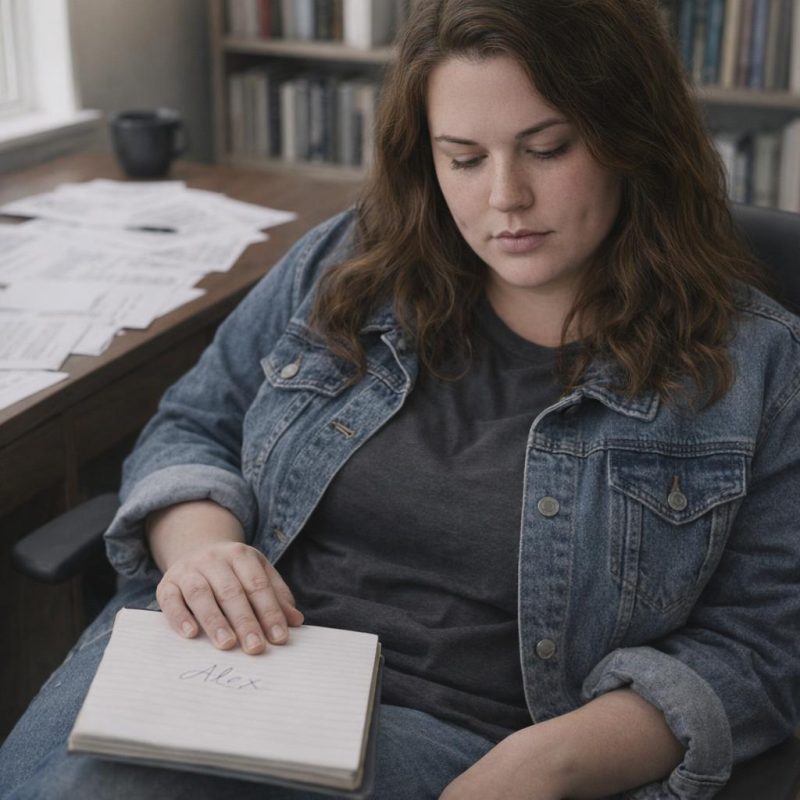 Image by RM AI
Database Search
I pulled up every public criminal database I could find and typed in Ryan Hartwell. I got hits immediately — more than I expected. There were arrest records, a court filing, what looked like a conviction. But every time I clicked through to the details, I ran into the same wall: redacted. Sealed. Access restricted. Jamie leaned over my shoulder and we both stared at the screen like it was going to change its mind. There was a case number — I wrote it down — but without a court login or an attorney's access, it was useless to me. I tried three different databases. Same result every time. What I could see was a county name. My county. And a timestamp on the original arrest that put it at almost exactly three years ago. I sat back and looked at that date. Three years ago was when I'd moved apartments. Three years ago was when a lot of things had changed for me, things I'd spent a long time trying not to think about. I couldn't get past the redactions. Whatever was in those files, someone had made sure it wasn't easy to find. The answers were right there on the screen, just out of reach behind a wall of black bars.
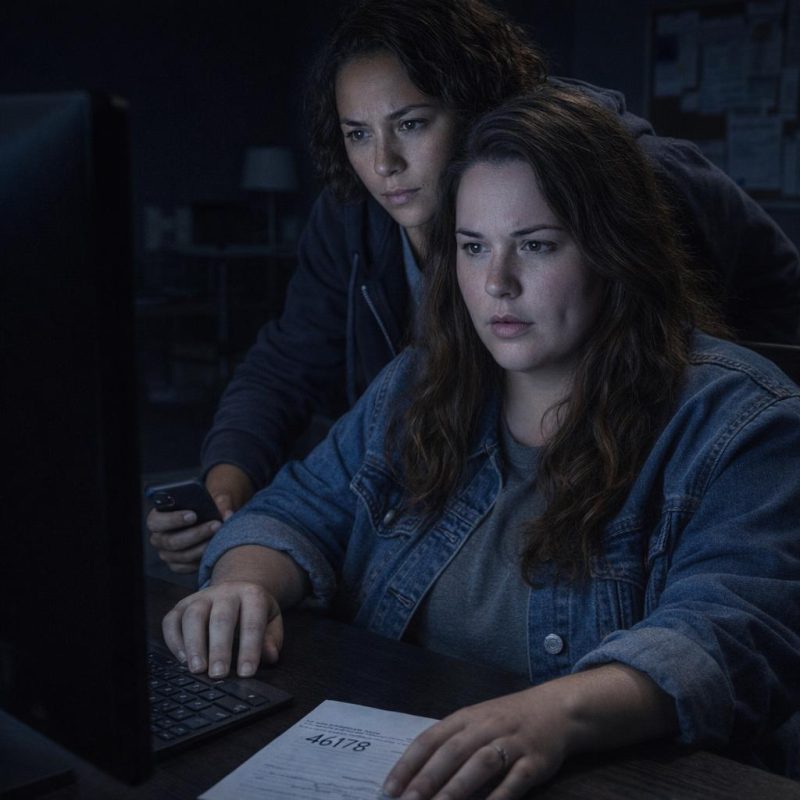 Image by RM AI
The Face in the Photo
I almost forgot about the photo. It had been sitting in my bag since the week before, a printout Jamie had made from a grainy image she'd pulled from an old neighborhood watch post — background faces, people I hadn't looked at closely yet. I smoothed it out on the table and used my phone camera to zoom in on the faces one by one. Most of them meant nothing. And then I got to one face near the edge of the frame and my hand went completely still. I knew that face. I knew the line of the jaw, the way the eyes sat slightly too close together, the particular set of the mouth that I had spent months trying to forget. Jamie was saying something behind me but I couldn't hear her. 'Alex,' she said. 'What's wrong?' I put the photo down on the table and told her. I told her about the guy I'd dated briefly three years ago, the one who hadn't taken the breakup well. The one who had started showing up places. Hundreds of messages. My workplace. My gym. The restraining order. The arrest. My hands were shaking as I turned the photo toward Jamie, and when I looked back at that face near the edge of the frame the room seemed to tilt sideways — because that face was Ryan's.
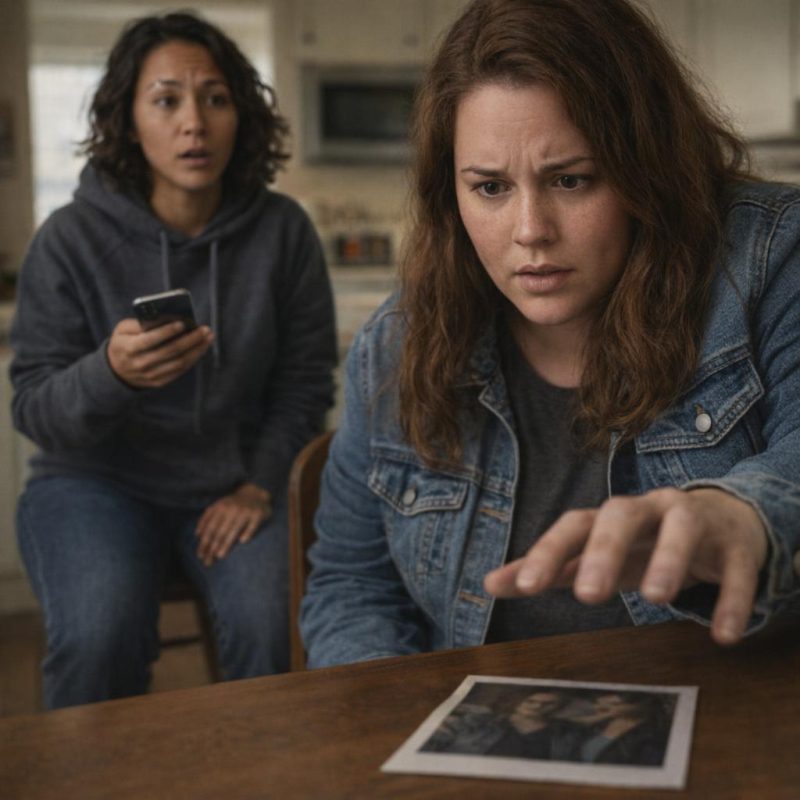 Image by RM AI
Released Two Months Ago
Jamie found the news article first — a short local piece about sentencing, the kind that runs three paragraphs and gets buried. Ryan Hartwell, convicted on stalking charges, sentenced to three years. We did the math together, accounting for time served and early release eligibility. Then Jamie pulled up a separate record, a brief court document that had somehow escaped the redaction sweep, and there it was: a release date. I pulled up my flight confirmation email in another tab. I pulled up the first message I'd screenshotted from the unknown number, the one that had arrived the week after I landed. I pulled up the note I'd made when I first noticed the woman at my gym — the one I now knew was Victoria. I lined them all up on the screen side by side. Ryan's release date sat at the top of the column. Two months before my flight. One month and three weeks before Victoria first appeared. Every single incident fell after that date, in a clean, unbroken line. Jamie didn't say anything. I didn't say anything. The release date on the left side of my screen and my flight confirmation on the right sat there together, and the gap between them was exactly eight weeks.
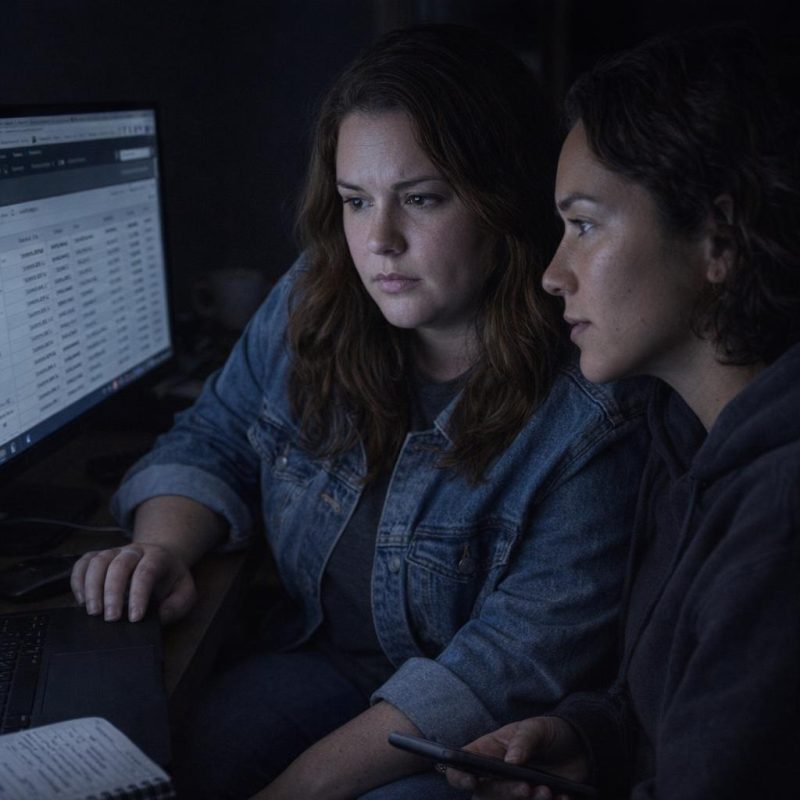 Image by RM AI
The Revenge Plan
I said it out loud before I'd fully finished thinking it. 'She's his mother.' Jamie looked at me. 'Victoria Hartwell. Ryan Hartwell. She's his mother.' I watched Jamie's face go through about four expressions in two seconds and land somewhere pale and still. I kept talking because if I stopped I thought I might not start again. The plane seat. Victoria hadn't been some entitled stranger who happened to sit in my spot — she had booked that flight knowing I would be on it. She had taken my seat on purpose, to start something, to make me the aggressor. The fake injury, the lawsuit, the gym, the messages, the car outside my building — none of it was random. None of it was coincidence. I had gotten her son arrested. I had filed the report, I had shown up to court, I had testified, and Ryan had gone to prison, and somewhere in those three years his mother had decided that I was going to pay for that. Every single thing that had happened to me since that flight — the anxiety, the legal bills, the sleepless nights, the feeling that I was losing my mind — had been aimed at me from the beginning. Victoria had built a case designed to destroy me, and I had walked right into it at thirty thousand feet.
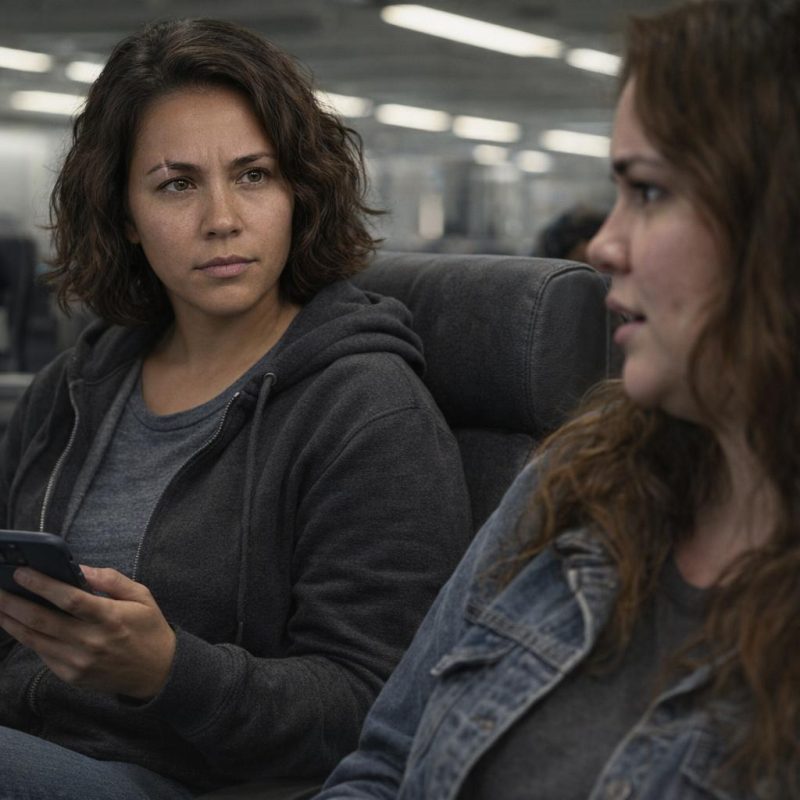 Image by RM AI
Taking It to Mills
I called Detective Mills from the parking lot outside my apartment because I couldn't wait until I got upstairs. I told her I had something and I needed to come in. She said to give her an hour. Jamie drove because my hands weren't steady enough. We spread everything across Mills's desk — the property record, the news article, the release date, the timeline I'd written out by hand on three pages of notebook paper. I walked Mills through all of it: Ryan's conviction, his release date, the first Victoria sighting, every incident in order. Mills didn't interrupt. She pulled up Ryan's case file on her computer and read for a long moment without speaking. Then she asked whether airport security had filed a formal report the day of the plane incident. I said they'd removed Victoria from the gate area but I didn't know if charges had been filed. Mills wrote something down. She said this changed the shape of the entire case. She said the pattern of contact, combined with the family connection and the timeline, gave her grounds she hadn't had before. She turned back to her desk, picked up her phone, and said she was requesting a warrant for Victoria's phone records and financial history.
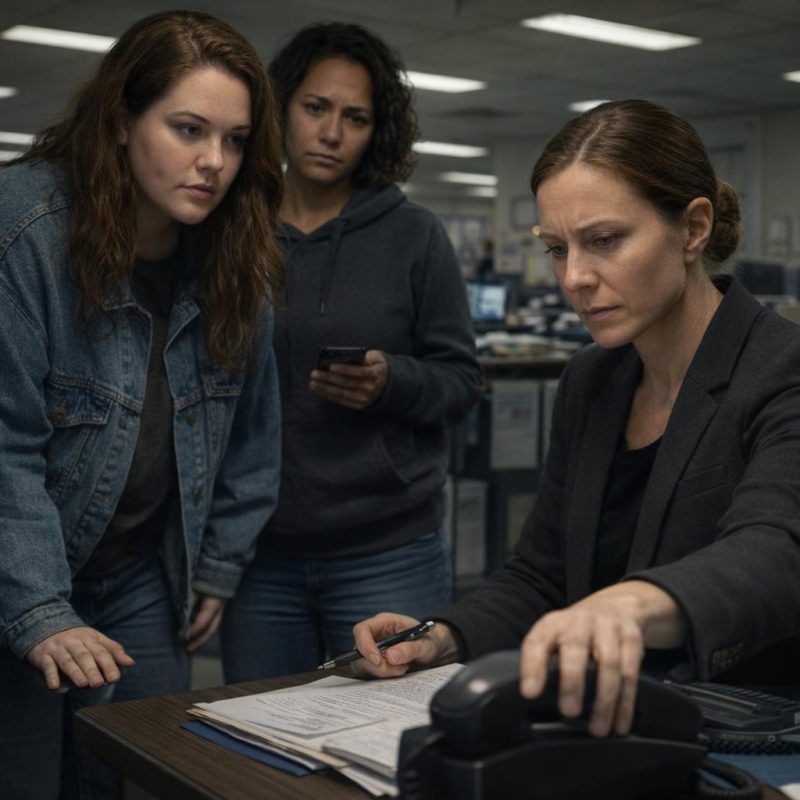 Image by RM AI
The Deliberate Booking
Mills called me four days later. She'd gotten the airline records back faster than she'd expected, she said, and I should sit down. I sat down. Victoria had originally booked a flight to the same destination — but a different one, departing two hours earlier. She'd changed it once, then again, and the final change had put her on my exact flight, my exact departure time. She had also changed her seat assignment three times after that. Her final seat was 14C. Two rows behind mine. Mills said Victoria had likely obtained my booking information through social engineering — calling the airline, posing as a travel agent or family member, the kind of thing that's harder to trace than a hack but just as effective. I asked how long Mills thought this had been in motion. She said at least since Ryan's release. Possibly longer. I sat with the phone against my ear after Mills said goodbye, not moving. I had been on that plane thinking about nothing more than getting home. I'd been annoyed about a seat. I had no idea that the woman settling in behind me had spent weeks maneuvering herself into position two rows back, and that the moment I opened my mouth to ask for my seat, everything she needed had already been set in place.
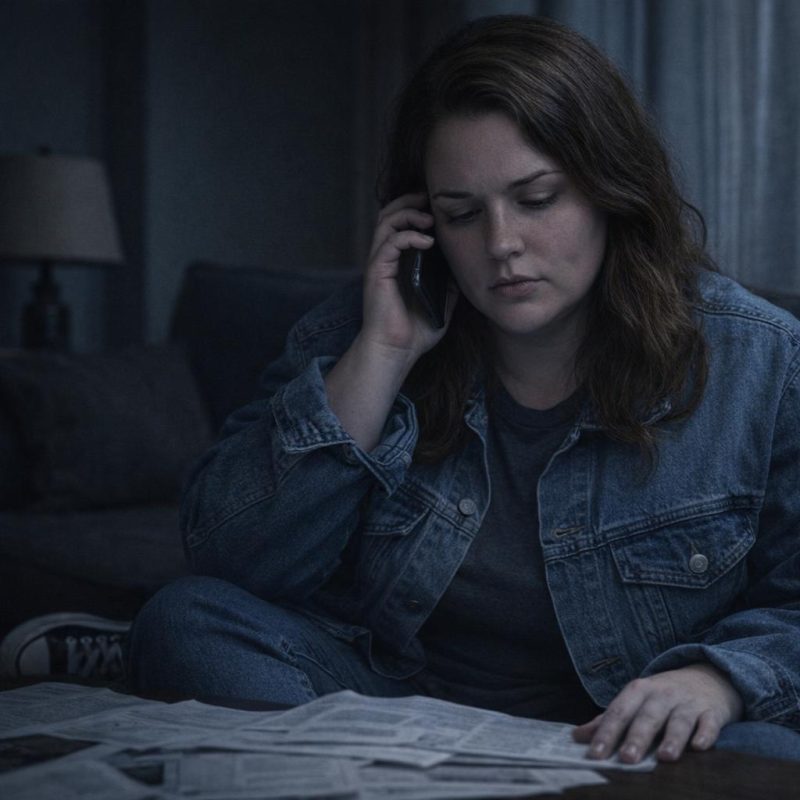 Image by RM AI
Counter-Suit
David had the detective's findings on his desk by the next morning. I sat across from him and watched him read through everything twice, which is what David does when something is significant — he reads it once fast and once slow. He set the papers down and said we had grounds to dismiss Victoria's lawsuit. Not just defend against it — dismiss it, with prejudice, on the basis that it was filed as part of a coordinated harassment campaign. He also wanted to file a counter-suit: malicious prosecution, intentional infliction of emotional distress, civil stalking. I asked him if doing that would make things worse, if it would push Victoria into doing something more. David said she had already done everything available to her. The lawsuit was her legal weapon and we were about to take it away. I signed the paperwork he slid across the desk — the motion to dismiss, the counter-suit filing, all of it — and my hands were shaking the whole time, but I signed every page. Walking out of David's office into the gray afternoon, I didn't feel relieved exactly. But for the first time in months, I wasn't only absorbing the hits. There was something steadying about that, even if I knew the fight was far from finished.
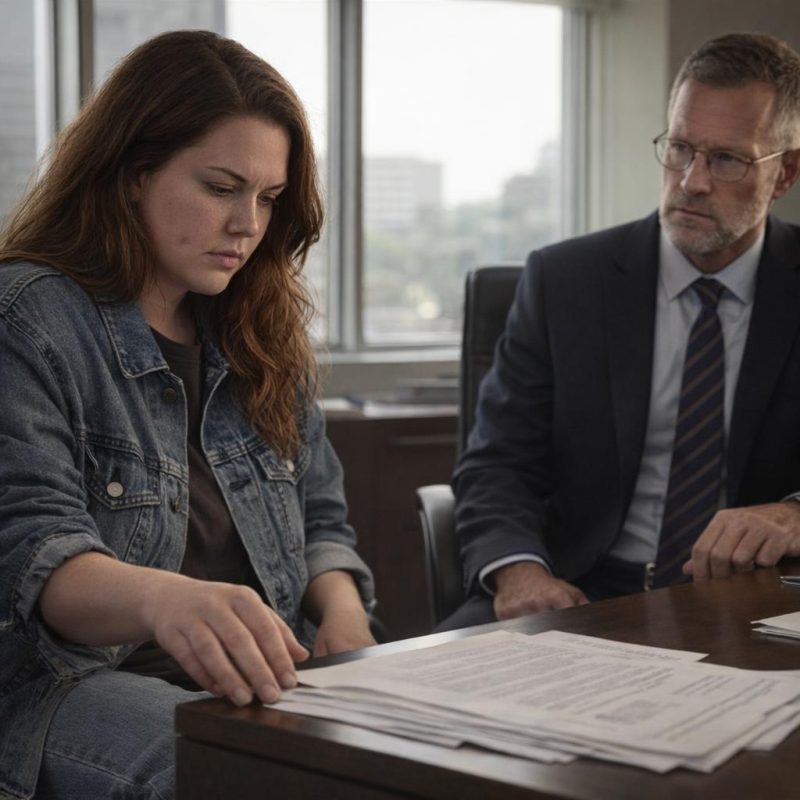 Image by RM AI
Police Warning
Detective Mills called me that afternoon, and I could tell from the way she opened with 'so I want to update you' that something had happened. She and another officer had driven out to Victoria's house that morning to deliver an official warning — cease all contact with me or face immediate arrest. Mills said they rang the doorbell four times. They could see Victoria's car sitting in the driveway. Nobody answered. They knocked. Still nothing. They waited on the porch for several minutes, then left a formal notice taped to the door, spelling out exactly what continued contact would mean legally. Mills told me they were now monitoring Victoria's known locations and that the moment anything else happened, they'd move to arrest her. I asked what happened if Victoria just kept ignoring them, kept pretending none of this was real. Mills said that was actually fine by her — every ignored notice was documentation. I thanked her and meant it. But when I hung up, I didn't feel safer. I felt the opposite. A woman who wouldn't even open her door for two uniformed officers wasn't backing down. She was deciding her next move. And Mills had just told her exactly how much time she had left.
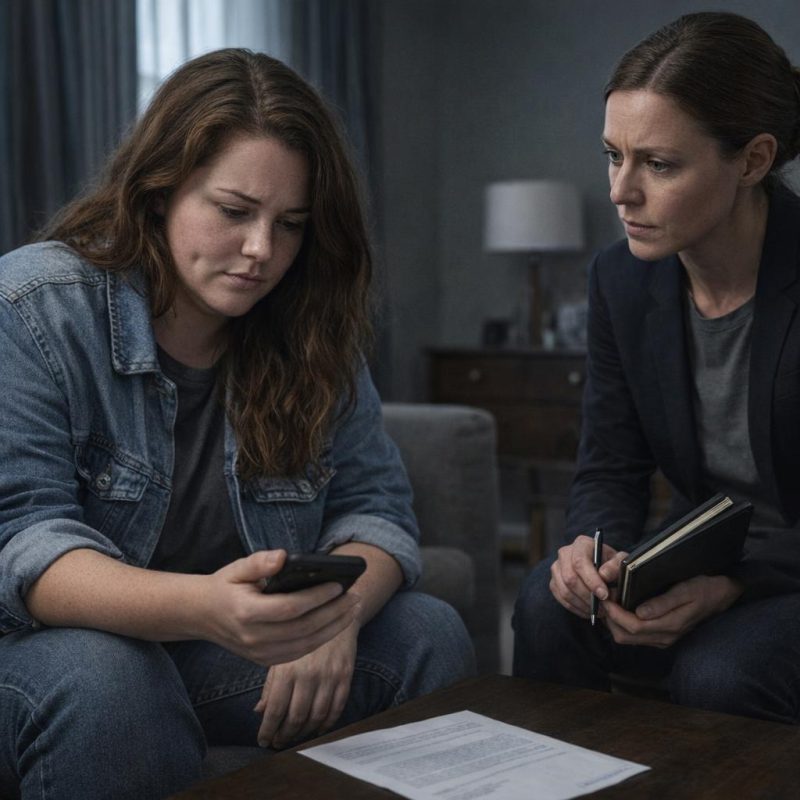 Image by RM AI
Lawyer Withdraws
David called me two days later with the kind of voice he uses when the news is good but complicated. Victoria's attorney had filed a motion to withdraw from her case. The motion cited irreconcilable differences and ethical concerns about client conduct — which, David explained, was lawyer-speak for 'my client is doing things I can't professionally defend and I want no part of what comes next.' He said the attorney had almost certainly seen the stalking evidence Detective Mills had compiled and decided the lawsuit wasn't just weak, it was a liability. Without representation, Victoria's case would almost certainly collapse on its own. I asked if that meant it was over. David said the lawsuit was dying, yes, but the criminal investigation was very much alive and moving forward. Then he said the thing I'd been dreading: a person who loses their legal options doesn't always stop. Sometimes they get less careful. I sat with that for a moment. There was a real flicker of something like hope in my chest — the first one in months. But underneath it, the dread was still there, quiet and patient. David asked if I was okay. I said I didn't know yet. He said that was probably the honest answer. Then he told me Victoria had filed no response to our counter-suit. The deadline had passed.
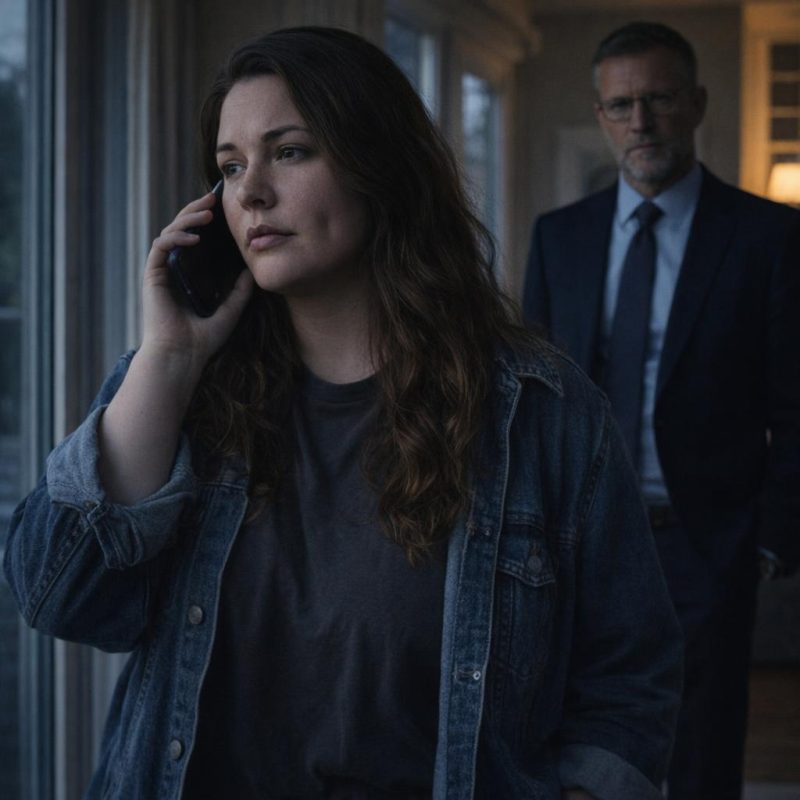 Image by RM AI
Ryan at the Door
I was at my desk on a Tuesday afternoon, staring at a spreadsheet and thinking about nothing in particular, when my coworker Marcus leaned into my doorway and said there was someone at the front entrance asking for me by name. Something in his tone made me look up. I walked toward the lobby, and through the glass door I saw him — and every single cell in my body went cold at once. Ryan. Standing right there on the other side of the glass, in broad daylight, at my workplace. I hadn't seen his face in three years and it hadn't changed — same jaw, same eyes, same expression that always looked just slightly too focused. He saw me the same second I saw him, and he started shouting my name, his voice muffled through the glass but completely audible. He was demanding I come outside and talk to him. I spun around and told Marcus to lock the front door right now, and I ran back to my office and locked myself inside. My hands were shaking so badly I could barely dial 911. I told the operator my name, my address, that there was a man outside violating a restraining order. I could hear him pounding on the building's front door while I was still on the phone. The sound of his fist against the glass was the most terrifying thing I had ever heard.
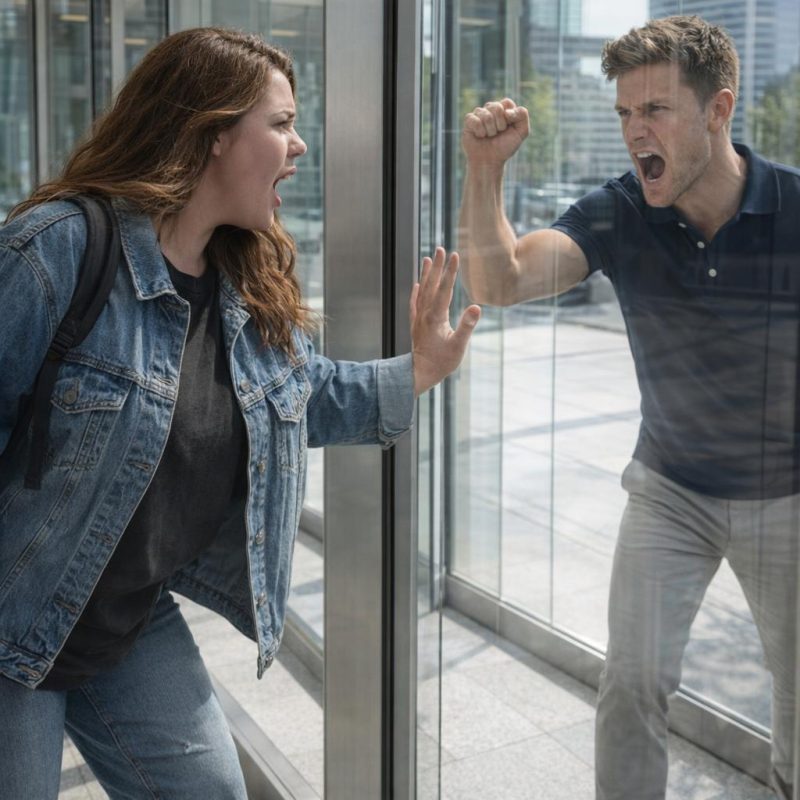 Image by RM AI
Locked In
The 911 operator had a calm, steady voice, and she told me police were on their way and asked if I was somewhere secure. I said I was locked in my office. She told me to stay there and keep the line open. I could still hear Ryan in the lobby — his voice rising and falling, sometimes shouting, sometimes dropping into something lower and more controlled, which was somehow worse. I heard my coworkers out there, someone trying to talk to him in a measured tone, and I wanted to scream at them to get away from him. Ryan started yelling that I had ruined his life. He said his mother had been right about me from the beginning. I grabbed my phone with my free hand and opened the voice memo app and just let it run, pointed at the door. Then I texted Jamie: Ryan is here at my office. Police coming. I'm locked in. I texted David the same thing. Both of them responded within seconds — Jamie with a string of all-caps and David with 'stay put, do not engage, I'm calling Mills.' The operator asked me again if I was safe. I said yes. I wasn't sure that was true. I sat on the floor with my back against the desk, phone pressed to my ear, and I counted the seconds between Ryan's shouts, waiting for the sound of sirens that wouldn't seem to come.
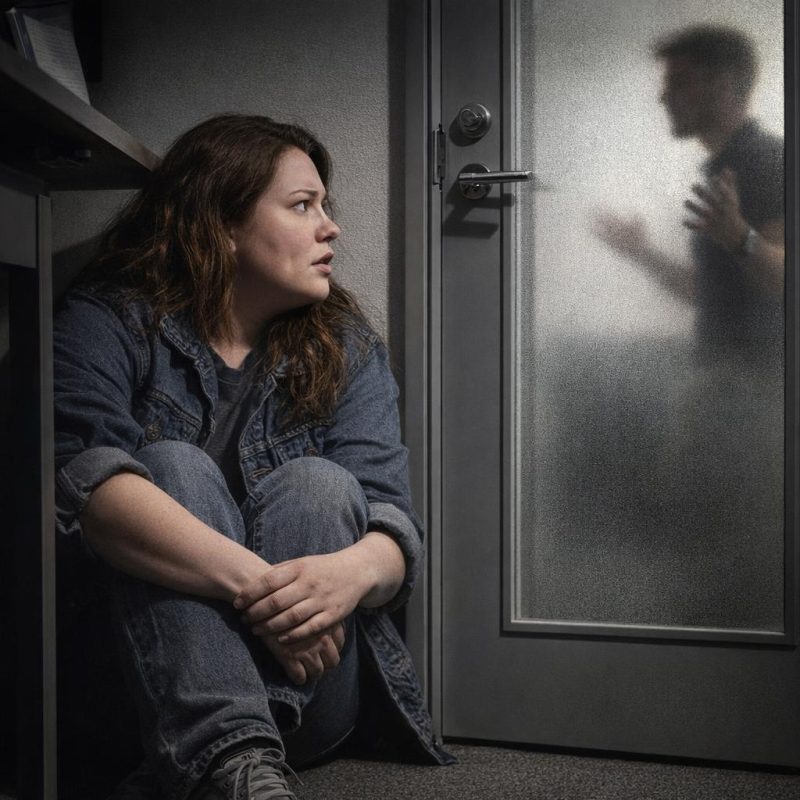 Image by RM AI
Arrested Again
The sirens came. I heard them from a distance first, then close, then right outside, and something in my chest unclenched just slightly. I heard officers' voices cutting through Ryan's — sharp, authoritative, telling him to step back, to put his hands where they could see them. Ryan kept shouting over them. He was saying something about his mother, about what I had done to their family, about how the system had destroyed them both. His voice cracked on the word 'mother' in a way that would have been almost sad if I hadn't been sitting on the floor of my locked office with my hands shaking. I heard the scuffle, then quiet. I unlocked my door and stepped out into the hallway. My coworkers were clustered near the lobby windows, watching. Through the glass I could see officers with Ryan in handcuffs, walking him toward a patrol car. Detective Mills pulled up just as they were loading him in — I saw her badge catch the afternoon light as she crossed the parking lot. I went outside and gave my statement to the responding officers while Mills stood nearby, listening. She told me Ryan would be held for the restraining order violation and that this arrest would matter. I nodded. Then I turned back toward the window and watched the patrol car pull out of the lot, and the quiet that settled over the parking lot felt like the first real breath I'd taken all day.
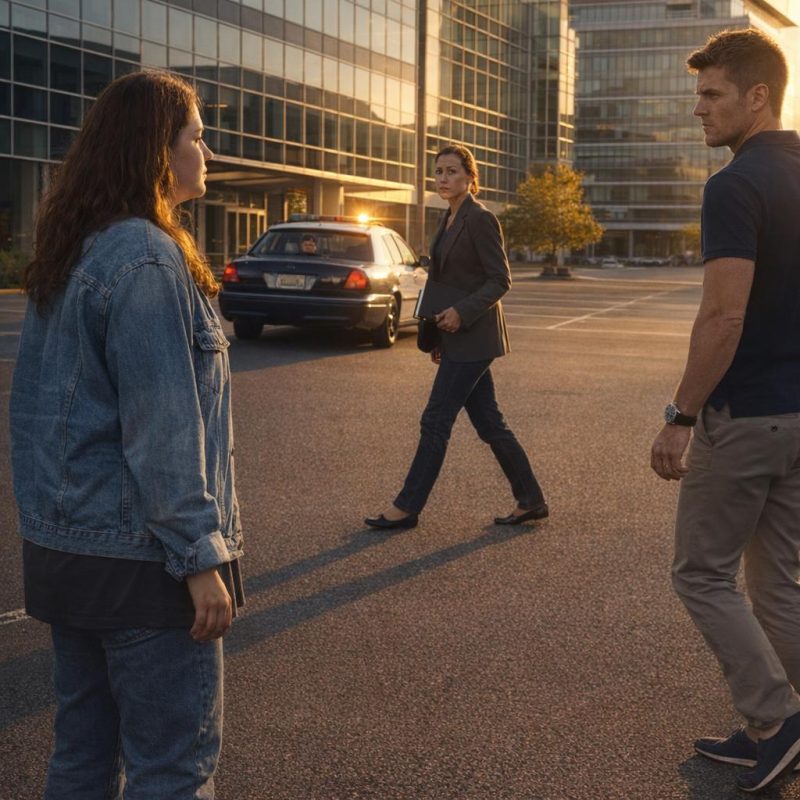 Image by RM AI
Courthouse Confrontation
The hearing had gone well — David said so twice on the way out, which meant he was genuinely pleased. We came through the courthouse doors into the gray morning light, and I was already thinking about coffee and whether I could take the afternoon off, when I saw her. Victoria was standing at the bottom of the courthouse steps, and she was looking directly at me. She wasn't pretending to be there by accident. She walked straight toward us, and David moved in front of me without a word, which I was grateful for because my legs had gone slightly unreliable. Her face was nothing like the composed, polished woman I'd seen on the plane. That version of Victoria was gone. This one had her jaw set and her eyes bright with something that looked like it had been building for a very long time. She said I had destroyed her son's life. She said Ryan was a good boy, a good person, until I lied about him and had him arrested. I told her Ryan had stalked me and I had no choice. She called me a liar. She called me a manipulator. Her voice was getting louder and people on the steps were stopping to look. David put a hand on my arm, steady and deliberate. Victoria took one more step toward us and said I deserved everything that had happened to me — and everything that was still coming.
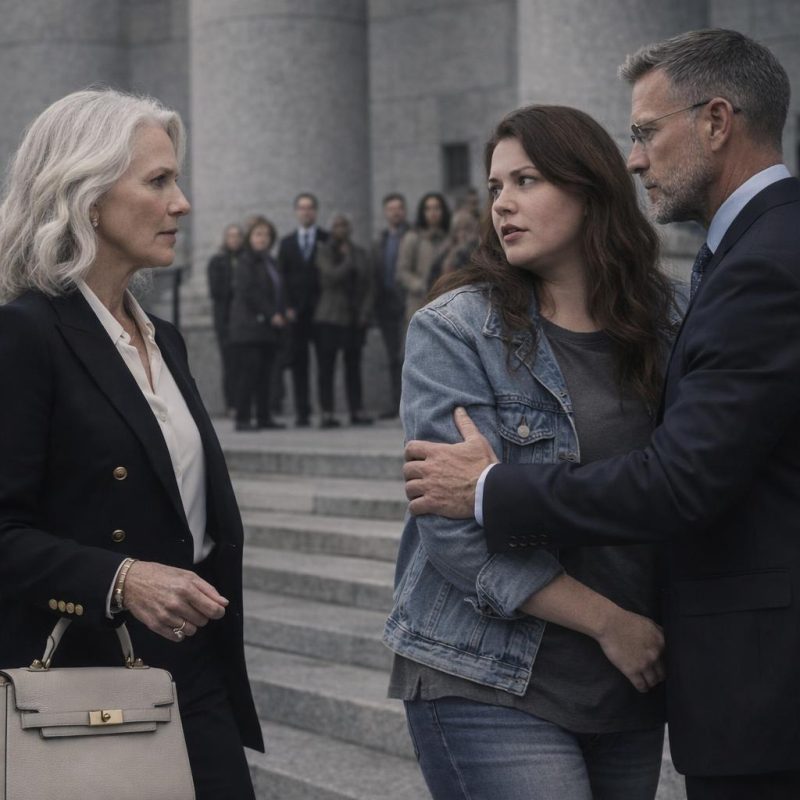 Image by RM AI
The Mask Drops
She wasn't done. Victoria stood on those courthouse steps with people watching from every direction and she didn't care at all. She said she had made sure I would pay for what I did to Ryan. Her voice was loud enough that a woman three steps up had stopped walking and was openly staring. I asked her, as clearly as I could manage, if she was admitting to stalking me. Victoria laughed — a short, sharp sound with nothing warm in it — and said I couldn't prove anything. I heard a small sound to my left and glanced over: David had his phone out, held low at his side, screen facing up. I looked back at Victoria. She said she had planned every moment of it, starting from the day she found out what I had done on that plane. She said she wanted me to feel hunted. She said she wanted me to feel helpless. She said Ryan was her son and she would burn down anything she needed to for him. I told her she was going to prison. She said it was worth it — every single piece of it — just to watch me suffer. Courthouse security was moving toward us from the top of the steps. Victoria saw them coming and didn't move. She just kept her eyes on me, jaw tight, hands still at her sides, completely certain she had already won.
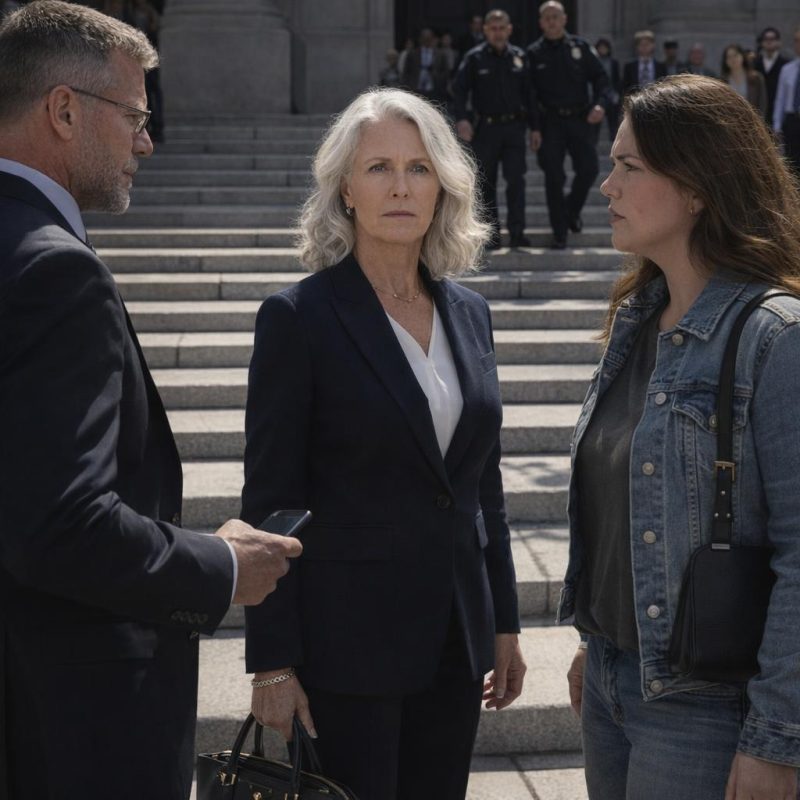 Image by RM AI
Recording the Confession
I raised my phone. I'd had the recording app running since the moment I saw her on the steps — the second I spotted her waiting there, something in me had known. I held the screen up so Victoria could see it clearly: the waveform still moving, the timer still counting. I told her I had recorded everything. The color left her face in a way I had never seen happen to a person in real life — not a flush, not a flinch, just a sudden, complete draining, like something had been switched off. David said, quietly and without any drama, that he had recorded it as well. Detective Mills came through the courthouse doors behind us — courthouse security had called her, apparently, the moment Victoria started shouting. I handed Mills my phone and she listened to thirty seconds of it, Victoria's voice coming through the speaker sharp and clear, saying she had planned every moment of it. Mills looked up. She told Victoria to stay where she was. Victoria turned and took two steps toward the parking lot. Two officers moved to block her path. Mills walked toward her with the steady, unhurried pace of someone who has done this before, and read her rights in a voice that carried across the steps. I stood next to David and watched Victoria's expression shift — the certainty draining out of it, replaced by something I hadn't seen on her face before.
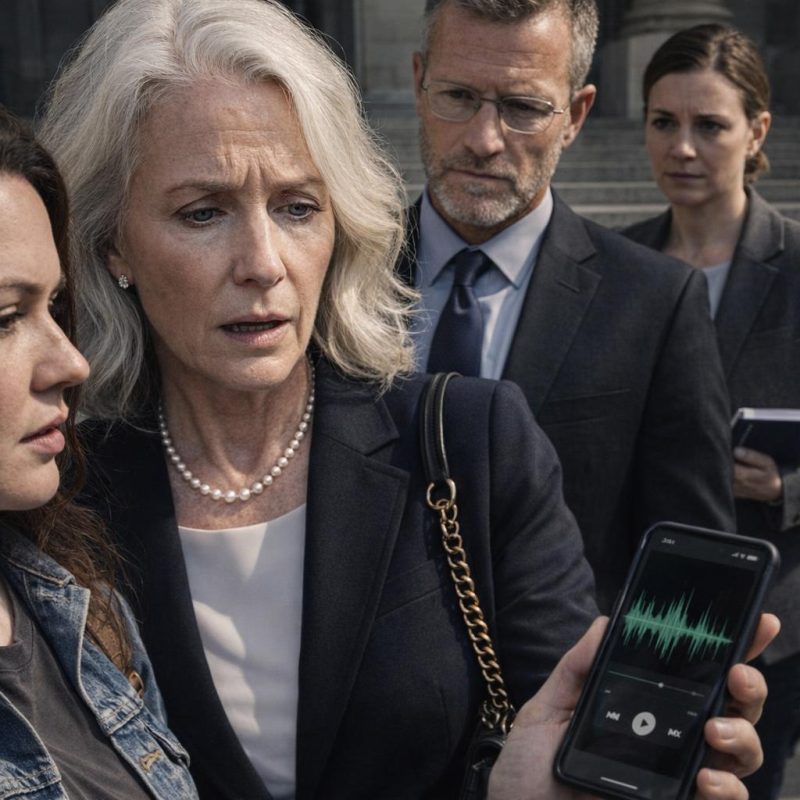 Image by RM AI
Arrested
Mills didn't hesitate. She had the cuffs out before Victoria could take a third step, and the click of them closing was the clearest sound I'd heard all day. Victoria's chin went up — that reflex of hers, the one that said she still believed she was the most important person in any room — but her hands were behind her back now, and that changed the geometry of everything. Mills read the charges in the same steady voice she'd used for the Miranda rights: stalking, conspiracy, harassment, and violation of a protective order. Victoria said she wanted her lawyer. Mills told her she could call one from the station. Victoria said it again, louder, like volume was going to change the answer. It didn't. Two officers walked her down the courthouse steps toward a patrol car, and I watched every single one of those steps. David put his hand on my shoulder — just rested it there, quiet and solid. Mills came back to us and said she'd need another statement from me, and I nodded because I didn't trust my voice yet. The patrol car door closed. Victoria Hartwell, in her tailored coat and her expensive jewelry, was in the back of a police vehicle. I stood on those steps and watched it pull away.
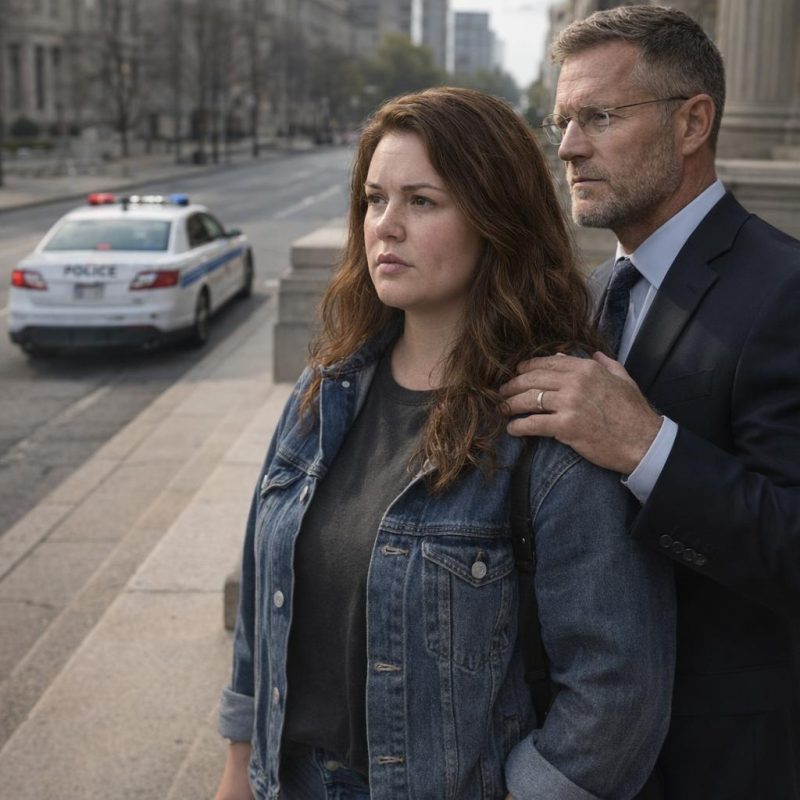 Image by RM AI
Both Behind Bars
Mills called the next morning while I was still in bed, staring at the ceiling and trying to remember what normal felt like. She told me both Victoria and Ryan were being held without bail pending trial. I made her repeat it. Both of them. Not going anywhere. The prosecutor was filing multiple felony charges, and Victoria's recorded confession — her own voice, on my phone, saying she had planned every moment of it — was apparently the kind of evidence that makes defense attorneys go very quiet. Ryan's violations of the restraining order were stacked on top of everything else. Mills said the case was strong, and coming from her, that meant something. David called an hour later to confirm that the civil lawsuit against me had been formally dismissed, and that he was moving forward with the counter-suit. Victoria's assets, he said, would cover damages and legal fees. I asked when the trial would be. He said months, probably, but that neither of them was going anywhere in the meantime. I sat with that for a long time after I hung up — the specific, physical fact of it, that there were walls and locks between me and both of them, and for the first time in longer than I could remember, the silence in my apartment felt like something I could breathe inside.
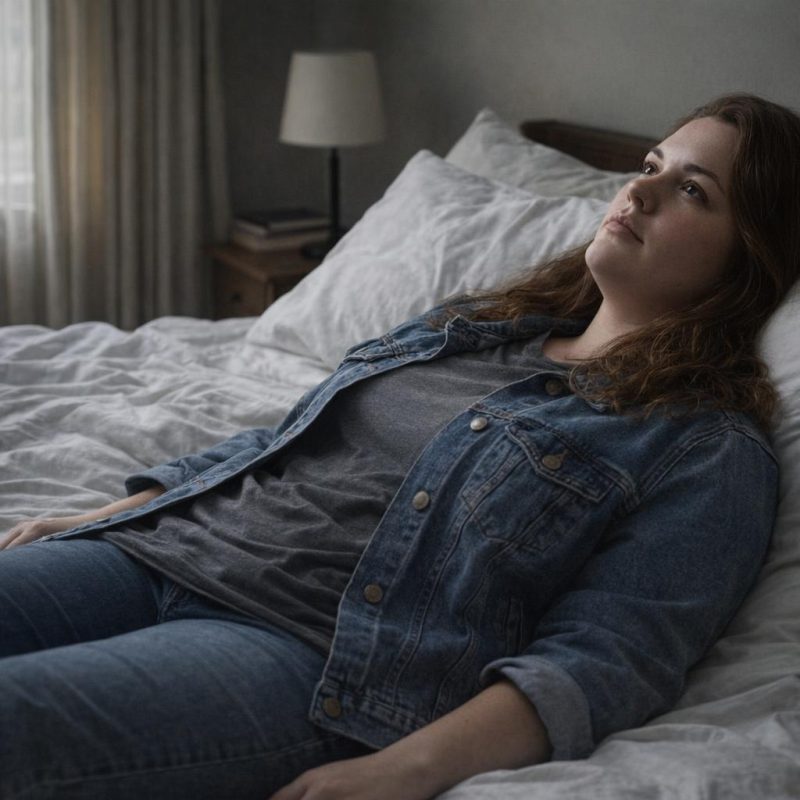 Image by RM AI
Apology from the Airline
The letter from the airline's legal department arrived on a Tuesday, which felt like a very ordinary day for something that strange to show up. They apologized — formally, in writing, on letterhead — for the incident on the flight and for the viral video that had followed. They acknowledged that new evidence had come to light regarding the circumstances of the original complaint. They offered compensation. I read it three times. David reviewed the offer that afternoon and said it was fair, and that the airline had also moved to permanently ban Victoria from future flights, which felt like the universe finally developing a sense of humor. He confirmed that the counter-suit had settled and that everything was resolved. I called Jamie and told her to meet me for dinner. She showed up already knowing something good had happened — she said she could tell from my voice — and when I told her the whole thing, she picked up her glass and held it across the table toward me. She said something about my survival that made me laugh for the first time in what felt like months. I raised my glass and met hers. The whole thing had started over a window seat on a Tuesday morning flight, and somewhere in the middle of all of it I had almost lost everything. I sat with that for a moment, and then I let it settle.
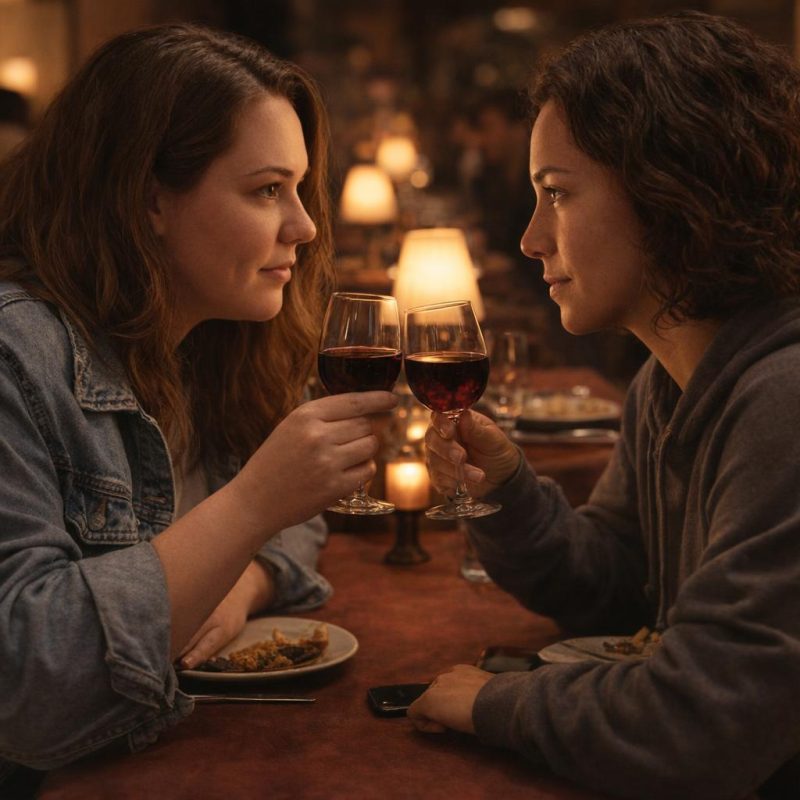 Image by RM AI
Window Seat
A few months later I had a work trip, and I almost rebooked it twice before I made myself stop. I packed my bag the night before. I drove to the airport in the morning like a person who does normal things. I checked in at the kiosk and looked at my boarding pass: seat 8A, window. I stood in the boarding line and noticed my hands weren't shaking. I found my row, lifted my bag into the overhead bin, and sat down. Nobody said anything. Nobody leaned over from the aisle to tell me I was in the wrong seat. The person next to me put in their earbuds and looked at their phone, which is exactly what strangers on planes are supposed to do. The door closed. The safety announcement played. We taxied out and lifted off, and I watched the ground drop away beneath me — the roads going small, then the buildings, then just the flat grey spread of the city giving way to clouds. I thought about everything it had taken to get back to this exact moment: a window seat, a Tuesday, nobody bothering me. The clouds came up around the wings and the light went white and even, and I felt, for the first time in a very long time, like my life was entirely my own again.
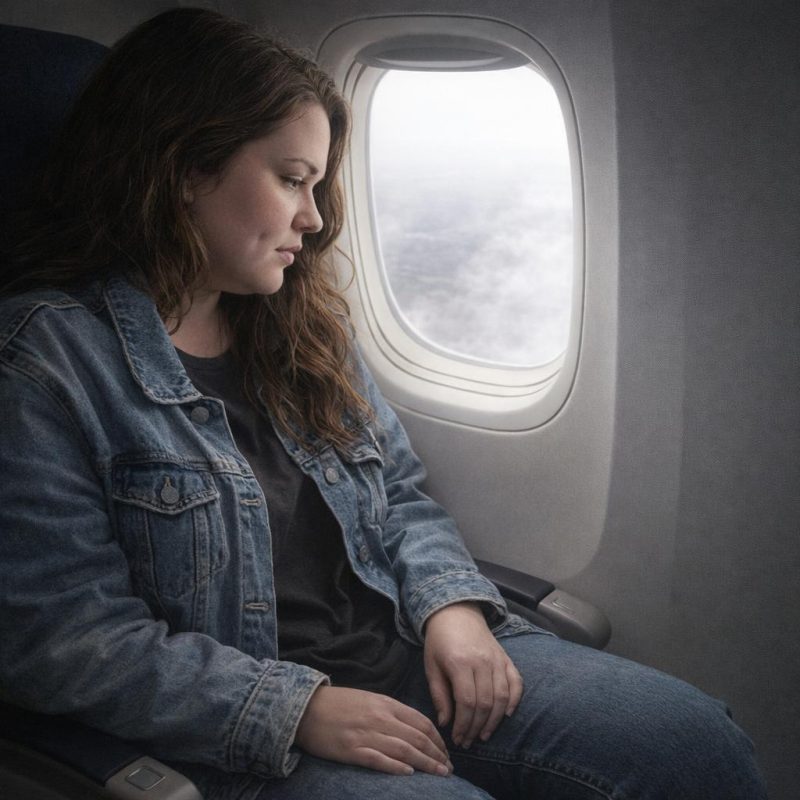 Image by RM AI
KEEP ON READING
The 20 Most Recognized Historical Figures Of All Time
The Biggest Names In History. Although the Earth has been…
By Cathy Liu Oct 4, 2024
10 of the Shortest Wars in History & 10 of…
Wars: Longest and Shortest. Throughout history, wars have varied dramatically…
By Emilie Richardson-Dupuis Oct 7, 2024
10 Fascinating Facts About Ancient Greece You Can Appreciate &…
Once Upon A Time Lived Some Ancient Weirdos.... Greece is…
By Megan Wickens Oct 7, 2024
20 Lesser-Known Facts About Christopher Columbus You Don't Learn In…
In 1492, He Sailed The Ocean Blue. Christopher Columbus is…
By Emilie Richardson-Dupuis Oct 9, 2024
20 Historical Landmarks That Have The Craziest Conspiracy Theories
Unsolved Mysteries Of Ancient Places . When there's not enough evidence…
By Megan Wickens Oct 9, 2024
The 20 Craziest Inventions & Discoveries Made During Ancient Times
Crazy Ancient Inventions . While we're busy making big advancements in…
By Cathy Liu Oct 9, 2024