

I Joined a Genealogy Site After Retirement. A 'Cousin' Started Asking Questions That Made My Blood Run Cold.
I Joined a Genealogy Site After Retirement. A 'Cousin' Started Asking Questions That Made My Blood Run Cold.
The Empty Calendar
I walked out of Henderson & Associates for the last time on a Friday afternoon in October, carrying a cardboard box with my desk plant and a half-eaten retirement cake. Thirty-seven years of reconciling accounts, tracking expenses, and making sure every penny had its proper place—all of it reduced to a few personal items and a sheet cake from the grocery store bakery. My coworkers had been kind, gathering in the break room with paper plates and forced smiles, telling me I'd earned this rest. Linda from payroll hugged me and said she couldn't imagine the office without me. I'd smiled and said all the right things about travel and hobbies, even though I had no plans for either. The truth was, I'd been good at my job precisely because I liked the structure of it. Numbers don't lie, dates don't change, and a balanced ledger gives you a satisfaction that's hard to explain to people who've never experienced it. My husband Tom would have understood, but he'd been gone two years now, and I'd thrown myself into work to avoid thinking about the empty house waiting for me. Now I didn't even have that distraction. I set the box on my kitchen counter and looked around at the silence. The silence in my house felt heavier than it had any right to.
 Image by RM AI
Proof People Leave Traces
I spent the first week of retirement doing absolutely nothing productive, which drove me crazy. I'd wake up at six out of habit, make coffee, and then just sit there wondering what people actually did with unstructured time. On Wednesday afternoon, I found myself scrolling through random websites, clicking from article to article without really reading anything. That's when I saw the advertisement for AncestryConnect, one of those genealogy sites that promises to help you discover your family history. The tagline said something about finding connections to relatives you never knew existed, and I don't know why, but it stopped me mid-scroll. I'd been thinking a lot about Tom lately—how his name still appeared on old bank statements and how his signature was still on file at the insurance company. People leave traces, I realized. Even after they're gone, there's proof they existed in all these records and documents. Maybe that's what drew me to the idea of genealogy. My mother had passed five years ago, and I'd never asked her enough questions about her parents or where our family came from. I created an account right there at my kitchen table, entering my basic information and uploading the few old photos I had. The welcome email promised connections to relatives I'd never known existed.
 Image by RM AI
Birth Certificates and Faded Ink
The genealogy site became my new job, which probably sounds pathetic, but I didn't care. I spent hours each day clicking through digitized records, learning how to navigate census data and birth certificates. The interface reminded me of the accounting software I'd used for decades—everything organized by date and category, searchable and cross-referenced. I found my grandparents' birth certificates within the first few days, then worked backward to their parents. There was something deeply satisfying about seeing my grandmother's name, Dorothy Mae Hutchins, written in faded ink on a 1923 birth certificate from a county clerk's office in Pennsylvania. I created spreadsheets to track everything, color-coding different family lines and noting which records I still needed to find. Census records showed me the exact addresses where my family had lived—houses I'd never seen, streets that probably didn't exist anymore. By the end of the first week, I'd traced my mother's side back three generations and was feeling pretty accomplished. Then I found a census record from 1940 that listed my grandmother, age seventeen, living with her parents at an address in Philadelphia. Next to her name was a handwritten notation in the margin, partially obscured by the scanner's shadow. I squinted at my screen, adjusting the brightness. My grandmother's maiden name appeared in a census record I'd never seen before, alongside a notation that made no sense.
 Image by RM AI
Numbers Don't Lie
I became obsessed with cross-referencing everything, which felt like coming home to the work I'd always loved. Death certificates led me to property records, marriage licenses connected to census data, birth certificates that confirmed or contradicted family stories I'd half-remembered. I built spreadsheets with columns for dates, locations, sources, and confidence levels—just like I used to track accounts receivable and vendor payments. There was a particular satisfaction in finding two independent sources that confirmed the same fact. My mother's family had lived in Pennsylvania for generations, mostly in and around Philadelphia, and I started mapping out their movements decade by decade. I noticed patterns in the data, the way I used to notice patterns in financial statements. The same street addresses appeared over and over, which made sense for a family that stayed in one area. But there was one address—1247 Maple Street—that kept showing up across three different generations. My great-grandparents had lived there in the twenties, my grandmother had listed it as her address in the forties, and even my mother had mentioned it in a letter I found tucked in an old photo album. I tried to trace the property ownership through public records, thinking maybe it had stayed in the family. But every search came up empty or redirected me to dead ends. One address kept appearing across three generations of my mother's family, but I couldn't find any record of who actually owned it.
 Image by RM AI
The Marriage That Almost Wasn't
I discovered the newspaper archives on a Sunday morning, and suddenly I had access to decades of local papers from Pennsylvania. I searched for my grandmother's name and found her high school graduation announcement, a mention of her in a church social column, and finally her marriage announcement. I'd always been told my grandparents married in June of 1944, right before my grandfather shipped out during the war. But the newspaper announcement was dated September 1944, three full months later than the family story. I stared at the screen, wondering if I'd misremembered or if someone had simply gotten the date wrong over the years. These things happen—dates get fuzzy, stories get retold with small errors. I was about to move on when I noticed a reference number at the bottom of the announcement directing readers to page twelve. I navigated to that page and found it: a small corrections section in tiny print. Most of the corrections were for misspelled names or wrong addresses, the usual newspaper errors. But there, squeezed between two other notices, was a correction for my grandmother's marriage announcement. I zoomed in as far as the image would allow, trying to make out the faded text. Beneath the announcement, in smaller print, was a correction notice I could barely read.
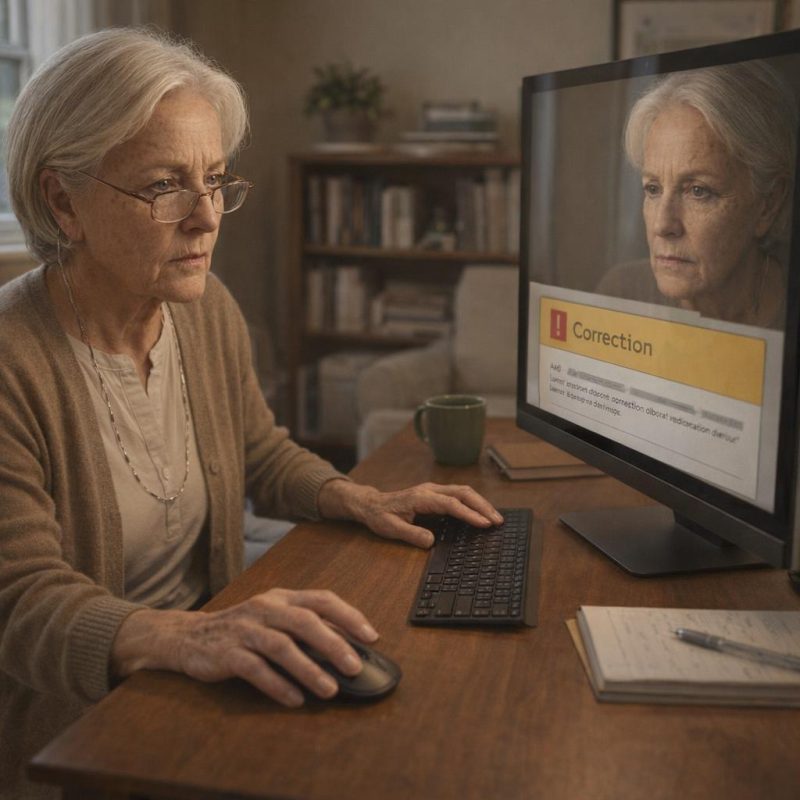 Image by RM AI
A Message From Claire
The message notification appeared on a Thursday afternoon while I was trying to decipher a property deed from 1952. I'd gotten used to the site's automated suggestions about possible relatives, but this was different—an actual message from another user. Her name was Claire Whitmore, and her profile picture showed a woman maybe in her forties with an eager, friendly smile. She said she'd been researching her family tree for years and believed we were distant cousins through my mother's side of the family. The message was warm and enthusiastic, full of exclamation points and smiley faces. She said she was thrilled to find someone else researching the Hutchins line and would love to compare notes. I felt a little flutter of excitement reading it. This was exactly what I'd hoped for when I joined the site—actual human connection, not just dusty records. I read through her message again, pleased that someone shared my interest. Then I got to the last paragraph where she mentioned specific family names she was researching. She knew my grandmother's maiden name was Hutchins, and she referenced Dorothy Mae specifically, asking if I had any information about Dorothy's childhood in Philadelphia. I sat back in my chair, impressed. She already knew my grandmother's maiden name without me mentioning it anywhere in my profile.
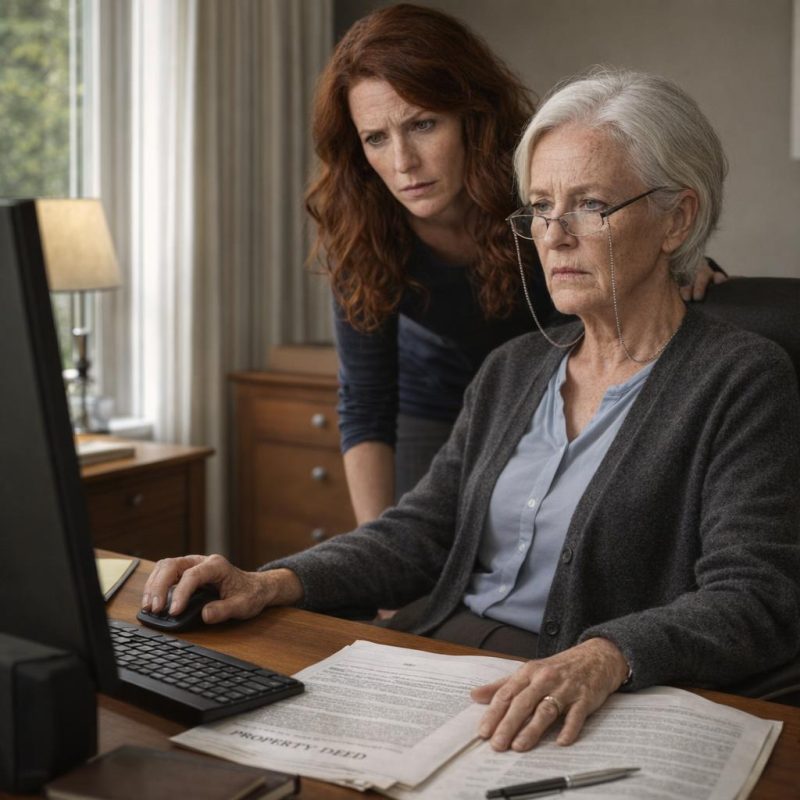 Image by RM AI
She'd Done Her Homework
Claire's response came within hours, and it was even longer than her first message. She wrote about how genealogy had become her passion after retiring early from teaching, and how she'd spent countless hours in archives and libraries tracking down family connections. Then she started listing details about my grandmother's childhood that I'd never encountered in any of my research. She knew Dorothy had attended Lincoln Elementary School, that the family had briefly moved to a different neighborhood in 1929, and that Dorothy had a younger brother who died in infancy—something I'd never heard mentioned. I was genuinely impressed. I'd been researching for weeks and hadn't found half of what Claire seemed to know off the top of her head. I wrote back asking how she'd managed to uncover so much information, especially about the brother I'd never known existed. Her reply came the next morning, breezy and casual. She said that's just what happens when you get really deep into genealogy—you start finding connections everywhere, and passionate researchers tend to accumulate details that aren't in the main databases. She added a little joke about how her family thought she was crazy for spending so much time on this hobby. It made sense to me. Some people just go harder than others on their interests. When I asked how she knew so much, she deflected with a cheerful comment about passionate genealogy enthusiasts.
 Image by RM AI
The Uncle Question
Claire's questions started getting more specific after that first week of friendly exchanges. At first, it was still general family history stuff—did I know where my great-uncle worked, did I have any photos from the fifties, that sort of thing. But then she started asking about my uncles, my mother's brothers, and the questions felt different somehow. She didn't want to know their birth dates or when they got married. She wanted to know exactly where they'd lived during the 1970s. Did I have street addresses for Uncle Frank in 1973? What about Uncle Robert in 1976? She asked if I had any documents that showed their addresses during that specific decade—tax records, letters, anything with a postmark. I found myself scrolling back through our messages, trying to figure out why she needed such precise location information. Most genealogy research I'd seen focused on births, deaths, and marriages, not tracking someone's exact address during a random decade. I typed out a response saying I'd have to check my mother's old papers, that I wasn't sure I had that level of detail. As I hit send, I felt a small knot of discomfort in my stomach. The questions felt oddly focused, but I told myself some researchers just prefer complete timelines.
 Image by RM AI
The Ohio Connection
Claire's next message came through while I was sorting through a box of my mother's old papers, and the timing felt almost eerie. She wanted to know if my mother had ever spent time in Ohio before marrying my father—specifically, had she lived there, worked there, or visited for any extended period in the mid-to-late sixties. The way she phrased it made me pause with my hand halfway into the cardboard box. It wasn't the usual genealogy question about birth records or marriage certificates. It was targeted, like she already knew something and was testing whether I did too. I sat back in my desk chair and stared at the message on my laptop screen. The honest answer was that I didn't know. My mother had been a quiet woman who rarely talked about her life before marriage, and I'd never thought to press her for details. Most daughters probably knew where their mothers had lived in their twenties, what jobs they'd held, whether they'd traveled. I realized I couldn't answer even the most basic questions about that period of her life. The gap in my knowledge bothered me more than it should have, like discovering an error in a ledger I'd thought was balanced. I typed a vague response about needing to check some documents, but my fingers felt heavy on the keys. I didn't actually know the answer, which bothered me more than it should have.
 Image by RM AI
Genealogy Fanatics
I reminded myself that people in these genealogy groups could get strangely intense about family history, reading meaning into dates and locations the way I'd once analyzed ledgers for discrepancies that might not even exist. Some folks treated their family trees like detective work, obsessing over every detail until they'd reconstructed entire timelines of people who'd been dead for decades. It wasn't that different from how I used to spend hours tracking down a two-dollar accounting error just because the numbers didn't balance. Maybe Claire was one of those completionist types who couldn't rest until every ancestor had a full address history documented in her database. Maybe she stayed up late working on her research the way I used to stay late at the office during tax season, losing track of time when I was deep in the numbers. I tried to convince myself that her intensity was just enthusiasm, the kind of single-minded focus that hobby people always had. My husband used to joke that I brought my work home with me even after I'd closed the office door, so who was I to judge someone else's obsessive tendencies? But when Claire's next message arrived at two in the morning, I stared at my phone for a long time before opening it.
 Image by RM AI
Addresses and Timelines
I started scrolling back through our entire conversation history, reading it with fresh eyes the way I used to review account ledgers when something felt off but I couldn't pinpoint the problem. The pattern became obvious once I was looking for it. Claire didn't care about family stories or personality traits or what my ancestors did for a living—she only cared about addresses, timelines, and exact years people lived in certain places. She'd never asked what my grandfather was like as a person, whether my grandmother was a good cook, if my uncles were funny or serious. Other people in the genealogy groups swapped stories about family quirks and old photographs, sharing memories alongside the vital records. Claire just wanted coordinates and dates, like she was mapping something instead of researching it. I thought about the other genealogy enthusiasts I'd encountered online, how they'd get excited about finding a great-aunt's recipe card or a letter that showed personality. Claire's questions felt more like an investigation than a hobby. I opened a new document on my laptop and started copying her questions into it, one by one, with dates and timestamps. My bookkeeper instincts were kicking in, the same ones that had helped me spot embezzlement twice in my career. I started keeping a list of her questions, the way I used to track discrepancies in account ledgers.
 Image by RM AI
The Gentle Redirect
When Claire asked about my mother's employment history in the late sixties, I hesitated before responding. I'd been answering her questions for weeks now, but something about this one made me want to close my laptop and walk away. I typed out a response saying I wasn't sure, that my mother hadn't talked much about that period of her life, then deleted it without sending. Claire must have seen the three dots indicating I was typing, because her next message came through before I could decide what to say. She wrote that records from that period could be hard to verify, that a lot of smaller businesses didn't keep great documentation, and that she understood if I couldn't find anything concrete. The comment sounded reasonable and sympathetic, but it also felt like she was steering me back into the conversation, smoothing over my hesitation without acknowledging it had happened. I'd seen that technique before in business meetings—someone would raise an objection and another person would just glide past it with a reassuring comment that made you feel silly for resisting. I sent back something noncommittal and closed my laptop. Diane called that evening asking if I was free for lunch, and I heard myself saying I needed to talk to her about something strange.
 Image by RM AI
The Photograph
The scanned photograph Claire sent showed my mother standing beside a dark-haired man outside a roadside diner, both of them smiling in that sun-faded way photographs did in the late sixties. The image quality was grainy, the colors slightly washed out, but I could see my mother clearly—younger than I'd ever really known her, maybe mid-twenties, wearing a sleeveless dress and sunglasses pushed up on her head. The man next to her had his arm around her shoulders in a casual, comfortable way. They were both laughing at something outside the frame, caught in a moment of genuine happiness. The diner behind them had a vintage sign I couldn't quite read, and there was a car visible at the edge of the frame that looked like something from an old movie. I zoomed in on my mother's face and felt something twist in my chest. She looked happy—not the careful, quiet happiness I remembered from my childhood, but something brighter and more unguarded. I'd seen hundreds of photos of my mother with my father over the years, formal portraits and holiday snapshots, and she'd never looked quite like this. Claire's message below the image was brief: "Do you recognize the man in this photo?" I didn't recognize the man, but I recognized the look on my mother's face—happier than I'd ever seen her in pictures with my father.
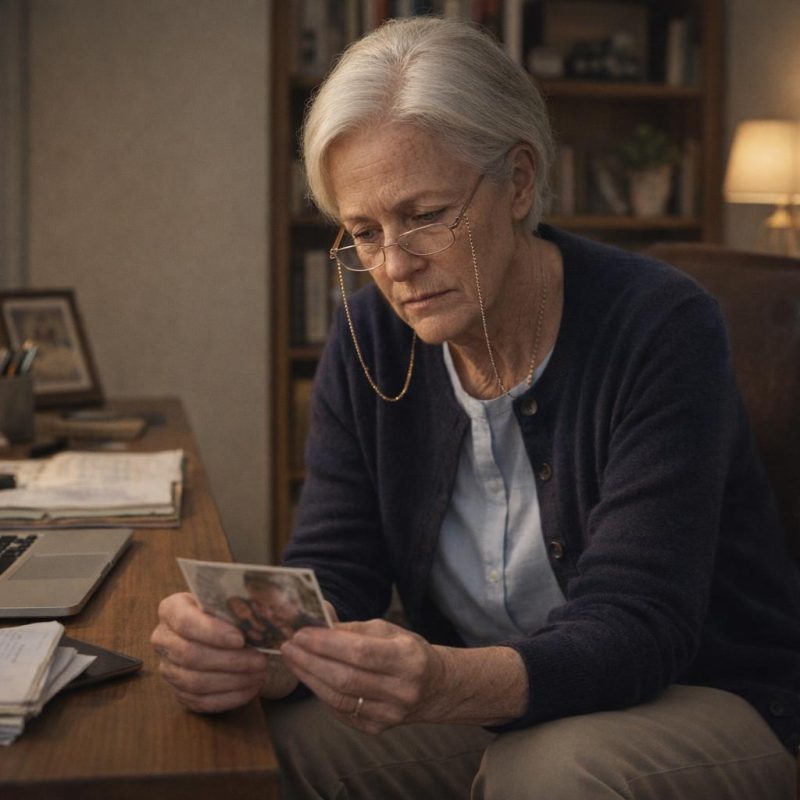 Image by RM AI
Diane's Kitchen Table
I brought the photograph to Diane's house expecting her to shrug and suggest it was probably just an old friend Mom never mentioned, maybe someone from a job or a neighbor from before she got married. I'd printed it out on regular paper, and it looked even more faded and distant in physical form, like something from someone else's family album. Diane answered the door with flour on her hands—she'd been baking something—and invited me into the kitchen where the smell of cinnamon hung in the air. I handed her the printout without much preamble, just said that someone from the genealogy site had sent it and asked if she knew who the man was. Diane wiped her hands on a dish towel and took the paper from me, glancing down at it with the casual interest you'd give any old family photo. Then her face changed. The color drained from her cheeks so fast I actually took a step toward her, thinking she might faint. Her mouth opened slightly and her eyes went wide, fixed on the image like she was seeing something terrible instead of a simple snapshot from decades ago. She sat down at her kitchen table so abruptly I heard the chair scrape against the floor, and when she spoke, her voice was barely a whisper.
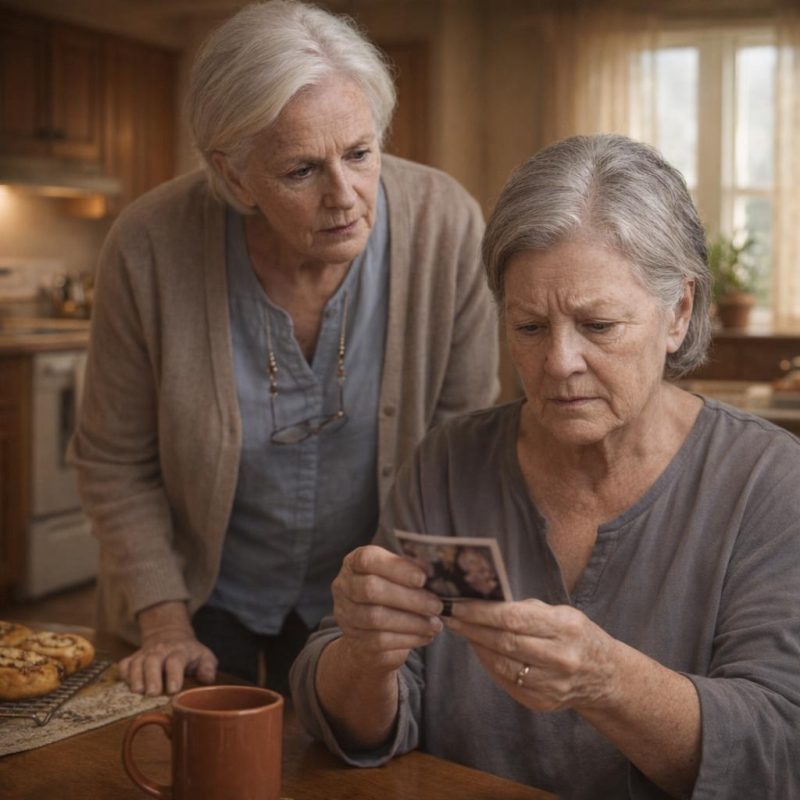 Image by RM AI
Where Did You Get This?
Diane stared at the photograph for what felt like minutes while I stood in her kitchen feeling my stomach tighten, watching my older sister age ten years in front of me. The kitchen was warm from the oven, but I felt cold standing there waiting for her to say something. She kept looking at the image, then away, then back again, like she was trying to decide something. The worry lines around her eyes deepened and her hands trembled slightly where they rested on the table. I'd never seen Diane look frightened before—she was the older sister, the one who'd always been steady and practical, the one who'd helped me file my taxes and talked me through my husband's death. Now she looked small and scared, and that frightened me more than anything Claire had asked. I wanted to take the photograph back, to pretend I'd never brought it to her house, to go back to not knowing that this image meant something terrible. The silence stretched out until I couldn't stand it anymore and opened my mouth to ask if she was okay, but before I could speak, she looked up. Finally she looked up and asked where I got the photo, and something in her expression made me afraid to answer.
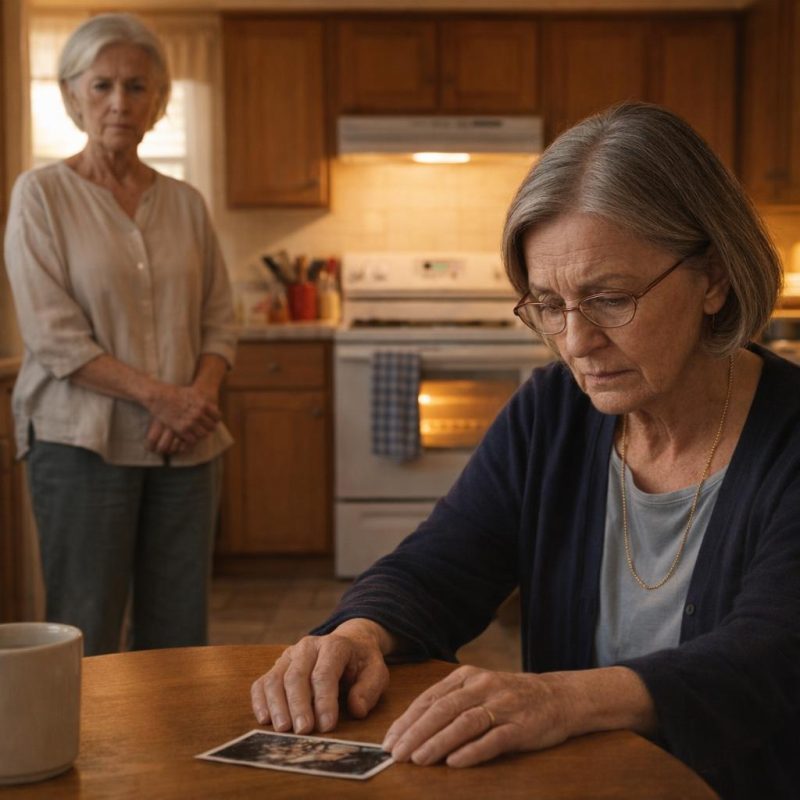 Image by RM AI
Daniel Mercer
Diane told me the man in the photograph was named Daniel Mercer, he wasn't family, and judging by the way she said his name—carefully, like it might cut her mouth—he was someone our mother had known in ways that still caused my sister pain. She set the photograph face-down on the table as if she couldn't bear to look at it anymore. Her voice was flat and controlled, the way people sound when they're working hard not to cry or scream. She said the name again, Daniel Mercer, and I repeated it back to her, testing it in my own mouth, waiting for some spark of recognition. Nothing came. I'd never heard that name before in my life, not from my mother or father, not from any relative at any family gathering. I told Diane as much, and something in her expression crumpled. She laughed—a bitter, broken sound I'd never heard from her before—and shook her head like I'd said something absurd. The laugh made my skin crawl because it wasn't a laugh at all, it was the sound of old wounds tearing open. She looked at me with something like pity mixed with anger, and I realized that whatever had happened with Daniel Mercer, Diane had been carrying it alone for years while I'd known nothing. The name meant nothing to me, but when I said so, Diane laughed—a bitter, broken sound I'd never heard from her before.
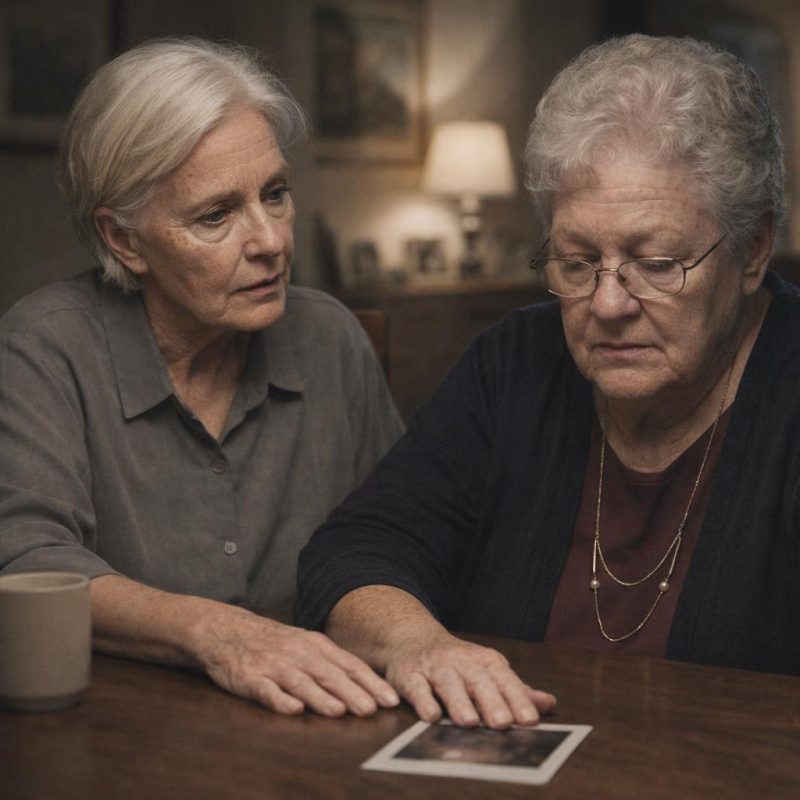 Image by RM AI
The Scandal
Diane told me our mother had nearly left our father before I was born. She said it quietly, like she was confessing something shameful, and I just sat there staring at her because that sentence didn't make sense in the context of the parents I'd known. My mother and father had been married for forty-three years when he died, and I'd never once heard them discuss separation or divorce, never seen anything but the quiet companionship of two people who'd settled into each other's routines. But Diane said it happened, said it was because of Daniel Mercer, said the whole thing had been so bad that afterward the subject became completely forbidden in our house. She wouldn't tell me details—kept saying she didn't know the full story herself, that she'd only been a child—but she emphasized how thoroughly the topic had been suppressed. No one spoke Daniel's name. No one referenced whatever had happened. It was like someone had taken an eraser to two years of our family history and scrubbed it clean. I asked when this happened, and Diane said she was eight, maybe nine, which I calculated in my head meant I was born two years after the scandal. Two years. I'd lived my entire life in the shadow of something I never knew existed, walking through a house that had been shaped by a crisis I couldn't even name.
 Image by RM AI
Fragments From Childhood
Diane's memories of that time were fragments, the kind of incomplete pictures children piece together from things they're not supposed to see or hear. She remembered lying in bed at night listening to arguments drift up from downstairs, our father's voice rising sharp and angry while our mother's fell to desperate whispers. Sometimes the fights moved to the hallway outside their bedroom, and Diane would press her ear to her own door trying to make out words. She was eight or nine years old, she said again, like she needed me to understand how little she'd comprehended at the time. The arguments always happened late, after Diane was supposed to be asleep, and they had a quality she described as frightening—not because of volume but because of the desperation in our mother's tone. Our father would shout and our mother would plead, and Diane said she'd never heard her sound like that before or since, like someone begging for something they knew they wouldn't get. I sat there trying to imagine my quiet mother pleading with anyone about anything, and I couldn't make the image fit. Then Diane said something that made my hands go cold: she remembered once hearing their father shout that he'd burn everything if it meant protecting this family.
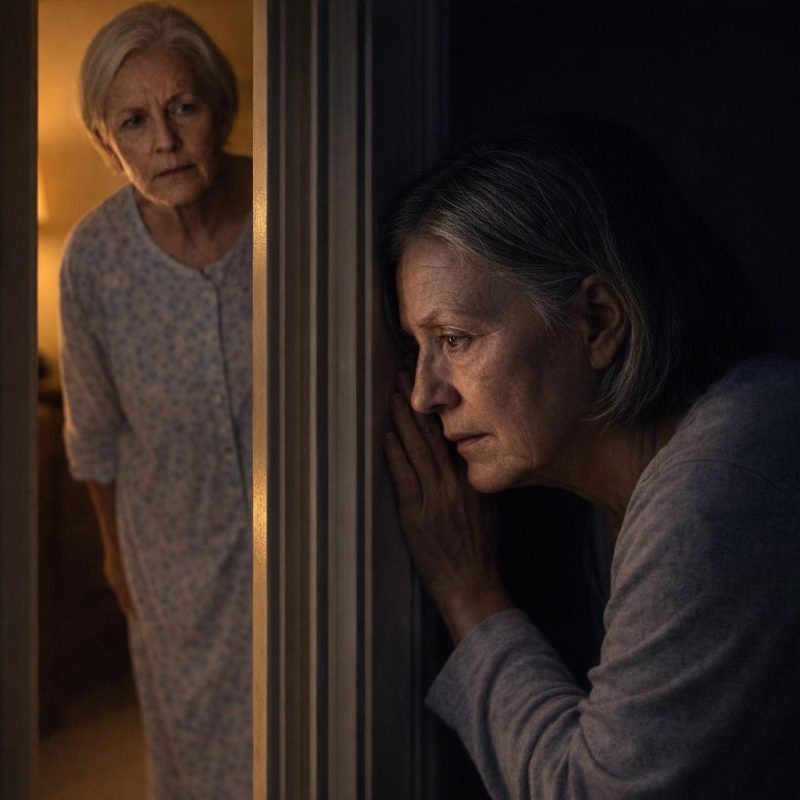 Image by RM AI
The Burning Barrel
Diane remembered our father burning photographs in a metal barrel outside one autumn evening. She described it in detail—the way he'd stood over the flames with his shoulders rigid and his back to the house, the orange light flickering across his face, the smoke rising straight up in the still air. Our mother had watched from the kitchen window, Diane said, just standing there with her hand pressed against the glass, crying. Diane had been watching too, from her bedroom window upstairs, not understanding what was happening but knowing somehow that it was important, that this was one of those moments that would stick in her memory even if she didn't know why. She said our father fed the photographs into the barrel one at a time, deliberately, like he was making sure each one caught fire completely before adding the next. The whole thing took maybe twenty minutes, and our mother never moved from the window, never went outside to stop him or ask him not to. I asked if Diane knew what was in the photographs he burned, what images had been important enough to destroy that way. She shook her head, but there was a hesitation before she answered, a pause that lasted just a beat too long, and I knew she had a guess she wasn't ready to share.
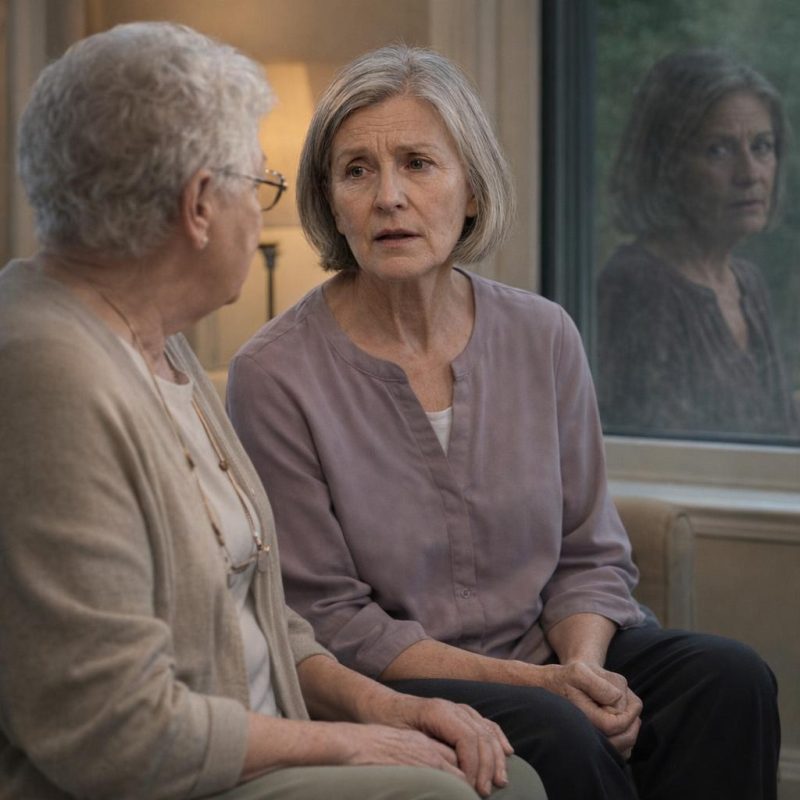 Image by RM AI
Reconsidering Everything
After leaving Diane's house, I sat in my car for twenty minutes reviewing every question Claire had ever asked me. I couldn't drive yet—my hands were shaking and my mind was racing through our entire conversation history like I was reviewing ledgers for discrepancies. All those questions about my mother's timeline, about where she'd lived and when, about family connections in Ohio and whether we had records from the 1960s. At the time they'd felt like normal genealogy curiosity, the kind of detailed questions people ask when they're trying to fill in family trees. But now, sitting in Diane's driveway with Daniel Mercer's name echoing in my head, they all suddenly felt less like research and more like an investigation. Claire had been building something, I realized, constructing a timeline or checking facts against information she already had. The enthusiasm I'd found so charming now seemed like something else entirely—not excitement about discovering family, but the intensity of someone pursuing answers to questions I didn't even know were being asked. I finally drove home, gripping the steering wheel too tight, my mind still churning. When I got home, there were three new messages from Claire waiting, each one asking if I'd had a chance to look into those Ohio records yet.
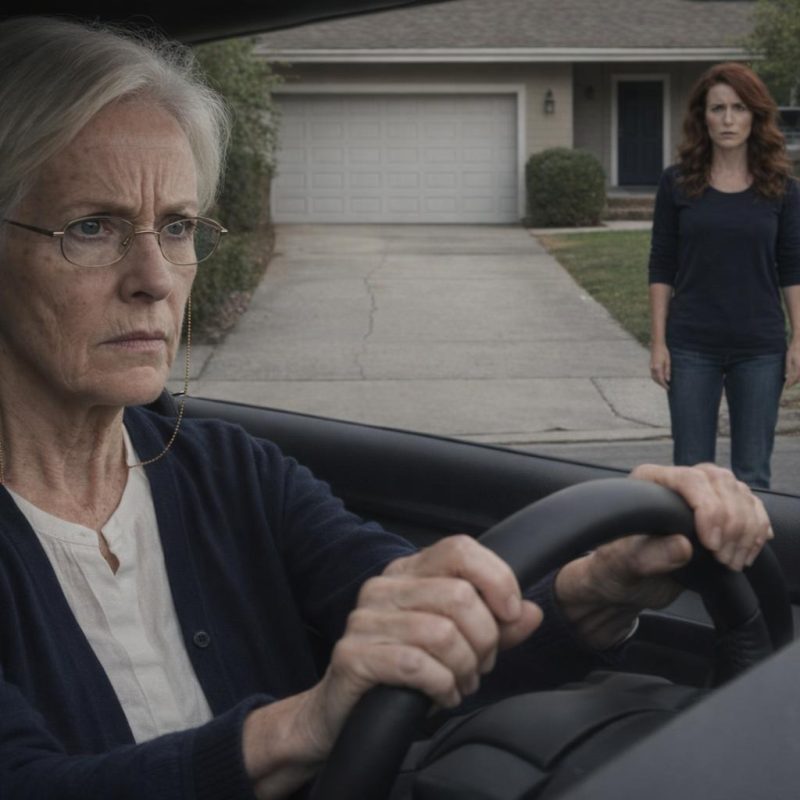 Image by RM AI
The Mercer Side
Claire's message asked whether my mother had ever inherited jewelry from 'the Mercer side,' and I stared at those two words for a full minute before responding. The Mercer side. Not 'our Mercer ancestors' or 'the Mercer branch of the family'—just 'the Mercer side,' like she was talking about a division or a faction, like there were sides to be on. I read the message three times trying to figure out why the phrasing bothered me so much. It was the kind of language you'd use to describe a divorce settlement or an estate dispute, not a genealogy question about distant cousins. I didn't know if my mother had inherited any jewelry from anyone—she'd never been much for jewelry beyond her wedding ring and a pair of pearl earrings she wore to church. But that wasn't what made me uneasy. What made me uneasy was the way Claire had phrased it, like she wasn't thinking of the Mercers as our shared family at all, like she was asking about someone else's relatives entirely. I typed back asking what she meant by Mercer side, then deleted it because it sounded confrontational. I tried again, softer, asking for clarification about which branch she was researching. Deleted that too. Finally I just asked which records she was looking at, kept it neutral and bookkeeper-professional, and hit send before I could second-guess myself again.
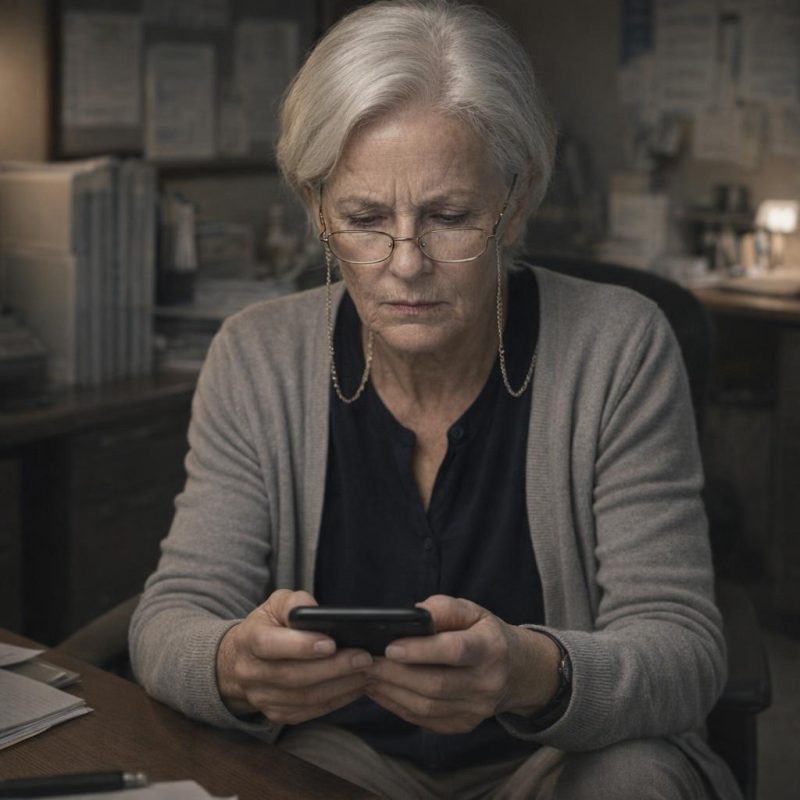 Image by RM AI
Not Cousins
Claire responded that she was trying to trace items that might have passed through family connections during estate settlements, which sounded reasonable enough on the surface but still felt off somehow. She kept using that word—'side'—instead of 'branch' or 'line' like she wasn't thinking of us as cousins at all. 'The Mercer side had several valuable pieces,' she wrote, and 'items from that side of the family often ended up dispersed.' That side. Not our side, not the family, just that side, like she was talking about strangers. I sat there staring at my laptop screen, that old bookkeeper instinct kicking in, the one that caught discrepancies in ledgers by noticing what wasn't there rather than what was. So I scrolled back through our entire conversation history, every message we'd exchanged since that first contact three weeks ago. I was looking for something specific now, and it didn't take long to find it—or rather, to find the absence of it. The word 'cousin' appeared only in that first message, the one where she'd introduced herself and said we might be third or fourth cousins through the Mercer line. After that, nothing. She'd never called me cousin again, never referred to us as family, never used any language that suggested actual relation.
 Image by RM AI
The Surname Question
Claire's follow-up message asked if my mother had ever lived briefly under another surname before marriage, and the question felt less like genealogy research and more like someone checking facts against a timeline. It was too specific, too pointed, the kind of question someone asks when they already know the answer and they're testing whether you'll tell them the truth. I didn't know the answer—my mother had been Helen Pritchard before she married my father and became Helen Sawyer, and I'd never heard any mention of another name. But the not-knowing made me feel vulnerable in a way I couldn't quite explain, like I was being quizzed on my own family history and failing. I thought about calling Diane to ask, but I didn't want to worry her more than I already had, didn't want to admit that I was still talking to Claire after everything we'd discussed. The question sat there on my screen, waiting for a response, and I felt the weight of it like something physical. This wasn't about building a family tree anymore, if it ever had been. This was about something else entirely, something I didn't understand but could feel circling closer. I closed my laptop without answering and sat in my kitchen listening to the clock tick, wondering if I should block her entirely.
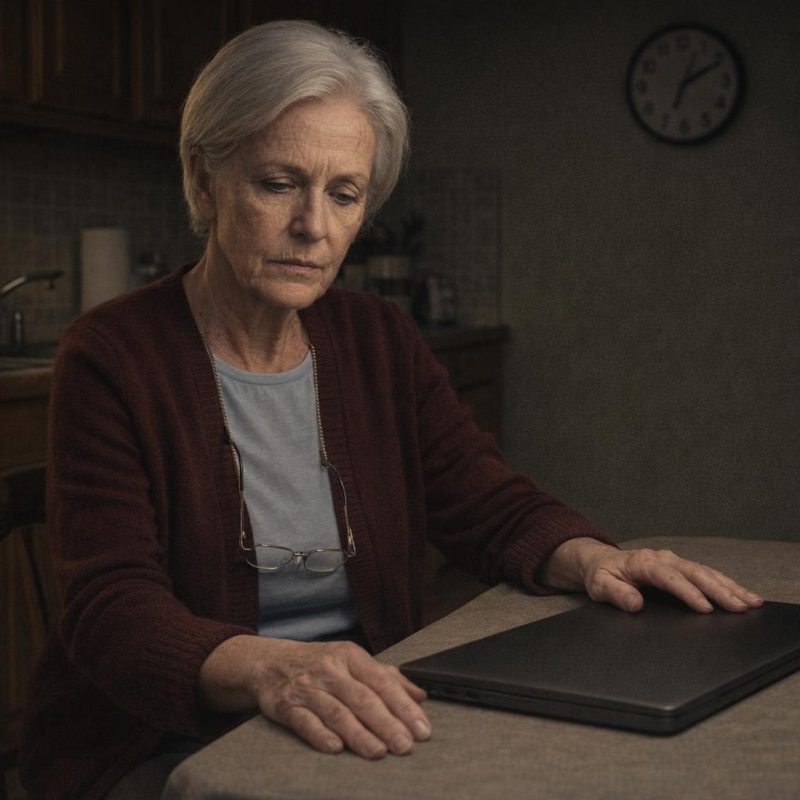 Image by RM AI
Monitored
I stopped checking the genealogy site for three days, but Claire's questions kept circling in my head like a song I couldn't shake. I'd be doing dishes or folding laundry and suddenly I'd be thinking about the Mercer side, about my mother's maiden name, about what photographs my father had burned in that barrel. I told myself I was being paranoid, that Claire was just an enthusiastic amateur genealogist who happened to phrase things oddly, that I was reading too much into everything because Diane had spooked me with her stories about Daniel Mercer. But I couldn't make myself believe it. The questions felt too targeted, too specific, like someone working from a list they'd prepared in advance. I kept my laptop closed and my phone face-down on the counter, deliberately avoiding the genealogy site and my email, but I couldn't shake the feeling that somewhere Claire was tracking my lack of response, noting the silence, adjusting her approach accordingly. It was ridiculous—she couldn't possibly know whether I was reading her messages or not—but the feeling persisted anyway, that sense of being watched even when I was alone in my house. On the fourth day, my phone rang from a number I didn't recognize, and I knew before answering that it would be her voice on the other end.
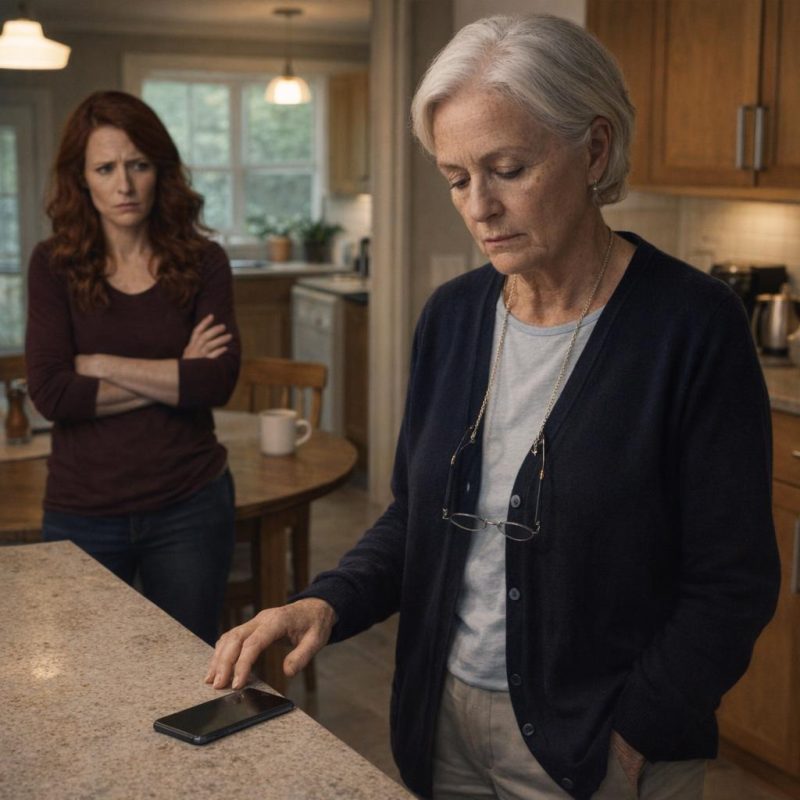 Image by RM AI
Diane's Warning
I drove to Diane's house the next morning and told her everything—the escalating questions, the phone call I'd let go to voicemail, the way Claire seemed to know exactly which threads to pull. My sister listened from across her kitchen table, her coffee going cold in front of her, and when I finished she reached across and grabbed both my hands hard enough that her wedding ring pressed into my palm. "You need to stop," she said, and her voice had gone tight with something that looked like fear. "Block her number. Delete your account. Just walk away from this entire thing." I started to pull my hands back but she held on, her fingers trembling slightly against mine. "I'm serious. Whatever she wants, whatever she thinks she knows about Mom or Daniel Mercer or any of it—it's not worth digging up. Some things should stay buried." She was practically begging, and that scared me more than anything Claire had said, because Diane didn't beg. She planned and organized and took charge, but she didn't plead like this, with her eyes wet and her voice breaking on the edges. I understood what she was asking, I really did, and part of me wanted to do exactly what she said—delete everything, pretend I'd never heard the name Daniel Mercer, go back to my quiet retirement and my genealogy hobby that stayed safely in the past. But I couldn't stop, I told her, because walking away now felt more dangerous than finding out what Claire actually wanted.
 Image by RM AI
Public Records Search
I spent six hours at the public library the next day, hunched over one of their research computers in the back corner where nobody would interrupt me. The library kept subscriptions to newspaper archives and property databases that I couldn't access from home, and I worked through them methodically, the way I used to reconcile accounts that didn't balance—starting with the basics and following every thread until something made sense. Daniel Mercer's name appeared in a 1978 business directory, then in a few property transfer records from the early seventies, then nothing for years until I found what I was looking for in the obituary archives. He'd died twelve years ago in a nursing facility two counties over, and I sat there staring at the scanned newspaper page, at the small photograph of a dark-haired man with kind eyes who looked nothing like the villain I'd been building in my head. The obituary listed his wife, deceased, and two grandchildren, no other details. No mention of his work or his properties or anything that might explain why my parents' marriage had nearly ended over him. I read it three times, looking for something I'd missed, some clue hidden in the sparse language, but there was nothing there except dates and the name of the funeral home. The obituary was surprisingly brief for someone who'd once caused enough trouble to nearly destroy my parents' marriage.
 Image by RM AI
Vanishing Properties
The property records took longer to untangle, but I'd always been good with documents, with following paper trails that other people missed. Daniel Mercer had owned three commercial lots in the mid-seventies, all of them in areas that seemed unremarkable at the time—edge-of-town locations near the highway interchange that was just being planned. By the nineties those lots had become prime retail real estate, anchoring a shopping complex that I'd driven past a hundred times without thinking about who owned the land underneath. I traced the ownership forward year by year, watching the properties appreciate, and then suddenly the trail went cold. The transfers happened during a six-month period in 1979, right after Daniel had been hospitalized for what the records vaguely called "extended illness." The new owners were listed as a development corporation I'd never heard of, and the sale prices seemed low even for that era, like someone had been in a hurry to move the properties while Daniel was too sick to object or maybe even to know what was happening. I sat back from the computer screen and rubbed my eyes, and that's when the timing really hit me. Someone had transferred those properties while Daniel was sick, and judging by the dates, my mother would have been working as a secretary right around that time.
 Image by RM AI
The Truth Call
Claire called again that night, and this time when my phone lit up with her number I didn't let it go to voicemail. I answered on the third ring and said hello, and there was a pause before she spoke, like she'd been expecting my voicemail greeting instead of my actual voice. We did five minutes of the most awkward small talk I'd ever endured—her asking how I was, me giving one-word answers, both of us knowing we weren't really talking about the weather or my retirement or anything else we were pretending to discuss. Finally she took a breath and said, "I need to be honest with you about why I reached out." I didn't say anything, just waited, and she continued: "My name is Claire Mercer. Daniel Mercer was my grandfather. I've been looking for you specifically for months." The words hung there between us, and I felt something cold settle in my stomach, because I'd suspected but hearing it confirmed was different, was worse somehow. My first reaction was to hang up, to end the call and block her number like Diane had begged me to do, but then Claire said something that made my finger freeze over the disconnect button. "I believe your mother stole something from my family," she said, her voice steady and calm, like she was stating a simple fact rather than accusing my dead mother of theft. "And I think you might be the only person who can help me prove it."
 Image by RM AI
The Accusation
Claire's voice stayed remarkably calm as she explained, the words coming out measured and careful, like she was afraid I'd hang up if she let any emotion show. Her grandmother had spent decades insisting that Daniel had intended to leave proof about the stolen property, she said, documentation that would show exactly what had happened to those commercial lots and who had benefited from the transfers. But every document had vanished when Daniel disappeared from the family—not died, she was careful to say, but disappeared, stopped coming around, stopped taking their calls, moved into that nursing facility where her grandmother wasn't allowed to visit. "She told the story until the day she died," Claire said. "Everyone thought she was bitter, that she couldn't accept that Grandpa had made bad business decisions and lost everything. But she never stopped insisting the proof existed somewhere." I wanted to defend my mother, wanted to say that she'd been a secretary, not a thief, that she'd worked hard her whole life and never taken anything that wasn't hers. The words were right there, ready to come out, but I couldn't make myself say them because I kept thinking about what Diane had told me, about how my parents' marriage had nearly ended over something involving Daniel's finances. I wanted to defend my mother, but I couldn't ignore that Diane had already confirmed my parents' marriage had nearly ended over something involving Daniel's finances.
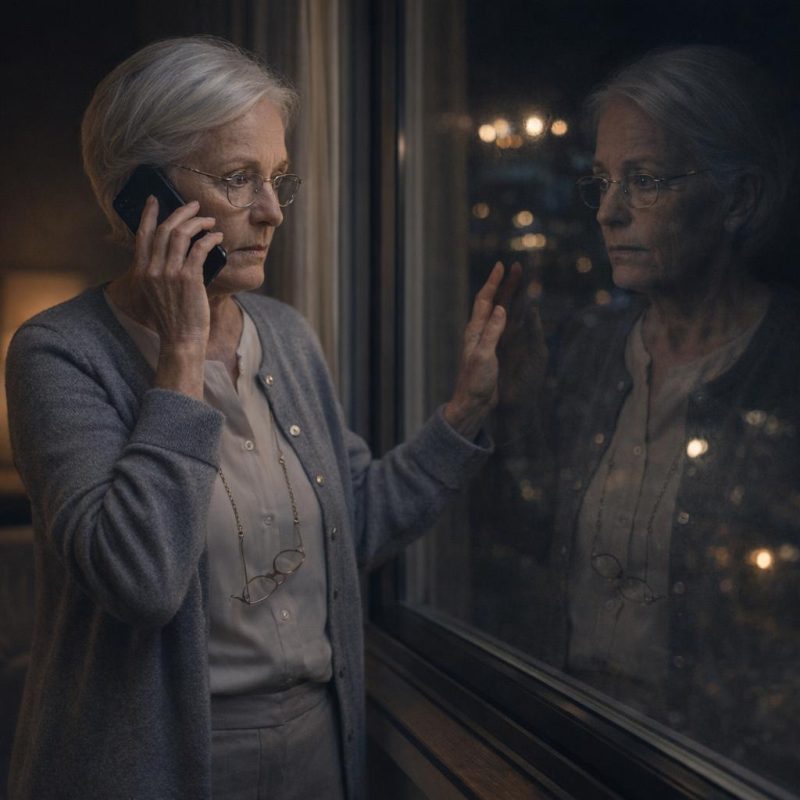 Image by RM AI
Missing Records
"Why are you so sure my mother was involved?" I asked, and my voice came out harder than I'd intended, defensive in a way that probably told Claire everything she needed to know about how this conversation was affecting me. She didn't hesitate, didn't pause to choose her words carefully. "Because she was close to Daniel during the exact period when commercial property worth millions simply disappeared from all official documentation," Claire said. "She worked in the office that handled the transfers. She had access to everything—the files, the records, the documentation that would prove what really happened to those properties." I wanted to argue, wanted to point out that access didn't mean guilt, that my mother could have been completely innocent even if she'd been in the same building where something illegal happened. But Claire wasn't finished. "What makes you so certain?" I asked again, and this time I heard the tremor in my own voice. There was a pause, and then Claire said something that made my hands start shaking so badly I almost dropped the phone. "DNA evidence connected our families through marriage records dated precisely to that period," she said. "Your mother and my grandfather were documented together in ways that go beyond just working in the same office. The timing isn't coincidental. The connections aren't coincidental. And the fact that those documents vanished right when she had access to them—that's not coincidental either."
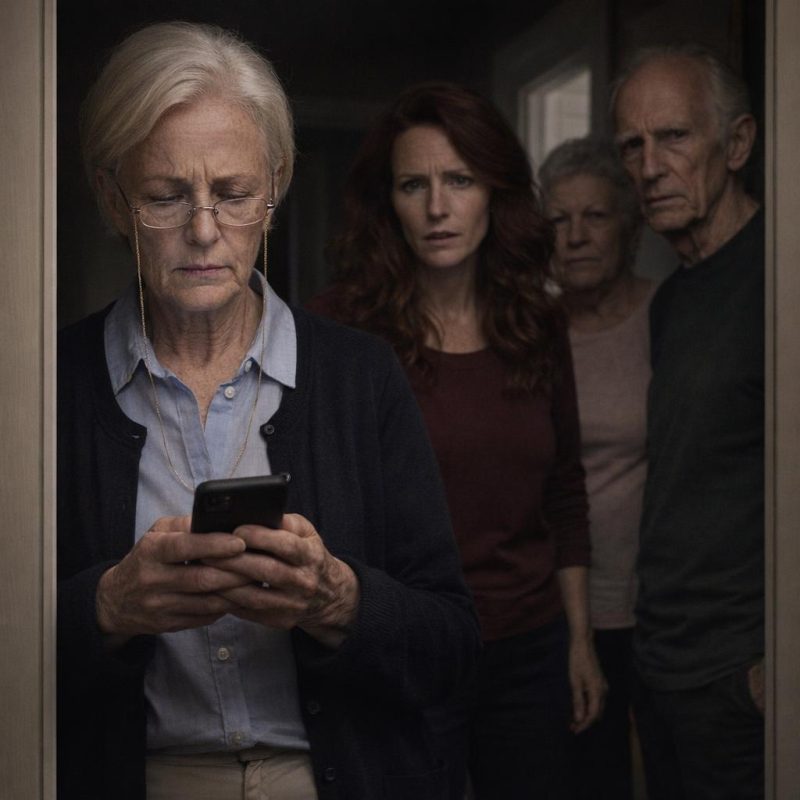 Image by RM AI
Financial Accusations
The next morning I drove to Diane's house without calling first, pulling into her driveway at seven-thirty while she was still in her bathrobe getting the newspaper. She looked up when my car door slammed and I saw her face change, saw her realize from my expression that I wasn't there for coffee and small talk. "Why did Dad really hate Daniel Mercer?" I asked, not even waiting until I'd crossed the driveway to her. "Not the affair story, not the version you've been telling me. The real reason." Diane's hand tightened on the newspaper and she glanced toward her house like she was thinking about going inside, about making me follow her so we wouldn't have this conversation where the neighbors might hear. But I just stood there waiting, and finally she said, "It was about money. Not an affair. Money." The word hung between us in the cool morning air, and I felt something in my chest tighten because I'd known, I'd known since Claire's call but I'd been hoping Diane would tell me something different, would give me some explanation that made my mother innocent. "What about the money?" I asked, and Diane wrapped her arms around herself even though it wasn't that cold. "Daniel accused Mom of helping him hide financial records during a family dispute," she said quietly, not meeting my eyes. "That's what Dad could never forgive."
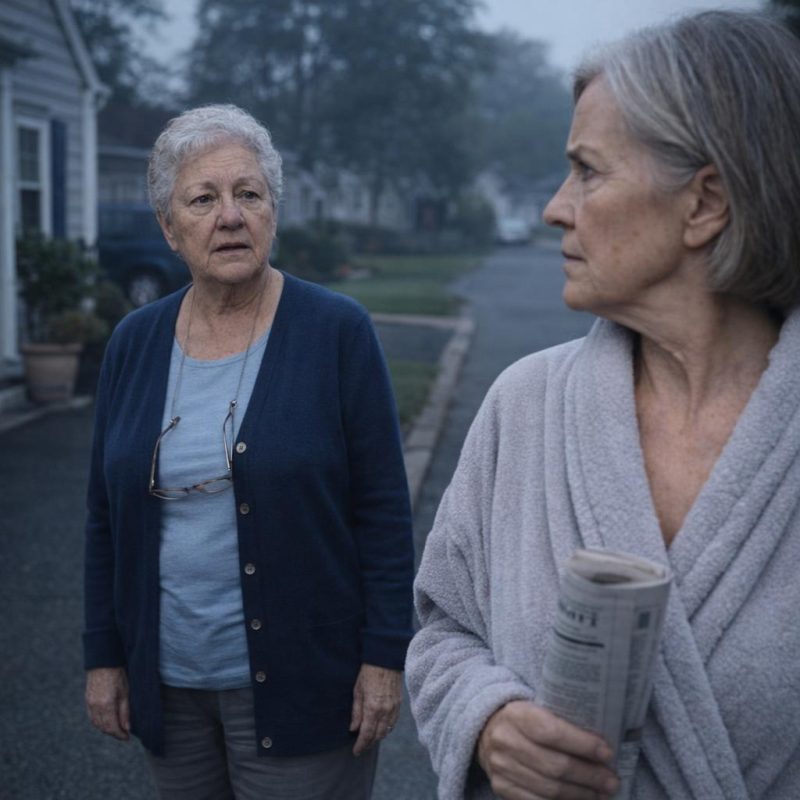 Image by RM AI
Police Involvement
"There's more," Diane said, and she still wasn't looking at me, was staring at the newspaper in her hands like the headlines might give her an escape from this conversation. "Police were involved. Briefly. When Daniel's family first made the accusations." I felt my stomach drop, felt the morning air suddenly seem too thin to breathe properly. "What do you mean police were involved?" I asked, and my voice came out barely above a whisper. Diane finally looked up at me, and her eyes were wet. "Daniel's family filed a complaint. Said Mom had helped him hide assets during his divorce, that she'd been involved in transferring properties that should have gone to his ex-wife and kids. The police looked into it but nothing came of it—there wasn't enough proof to file charges, wasn't enough evidence to proceed with any kind of prosecution." She paused, and I wanted her to stop talking, wanted to get back in my car and drive away before she could say whatever was coming next. But I just stood there, frozen, while Diane wrapped her arms tighter around herself and continued. "The lack of evidence didn't mean innocence," she said quietly, her voice barely carrying across the driveway between us. "It just meant the documents were hidden too well."
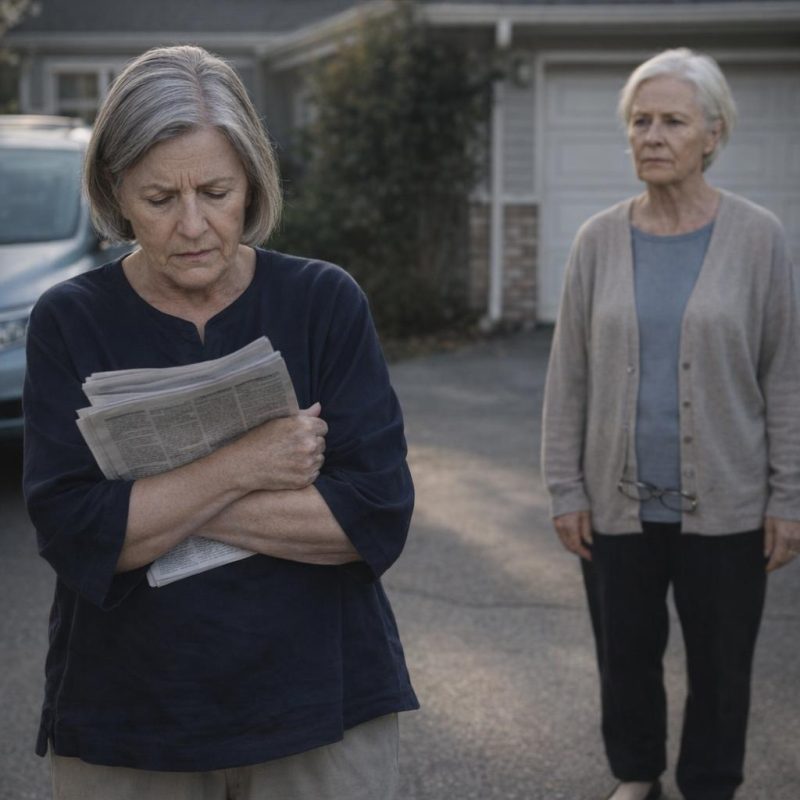 Image by RM AI
Mother's Defense
Diane told me that our mother had always maintained she'd been dragged into something she didn't understand, that Daniel Mercer had involved her in problems that had nothing to do with her actual role. According to Mom, she'd just been a secretary caught in the middle of powerful people fighting over money and property, and she'd never fully grasped what was happening until it was too late to extract herself. She'd insisted to Diane—multiple times over the years, apparently—that the whole mess was Daniel's doing, that he'd asked her to handle paperwork she thought was routine office filing, and by the time his family started making accusations, she was already tangled up in something she couldn't explain without sounding guilty. Mom had described herself as collateral damage in a dispute between Daniel and his relatives, someone who'd been in the wrong place at the wrong time with access to the wrong filing cabinets. Diane recounted all of this while we stood in her driveway, her voice flat and distant, like the words had been said so many times they'd worn smooth. I wanted desperately to believe it, wanted to accept that my mother had been an innocent bystander who'd gotten swept up in someone else's scandal. So I asked Diane directly if she believed that version of events, if she thought our mother had been telling the truth all those years. But when I asked if Diane believed that version, my sister looked away and said she honestly didn't know what to believe anymore.
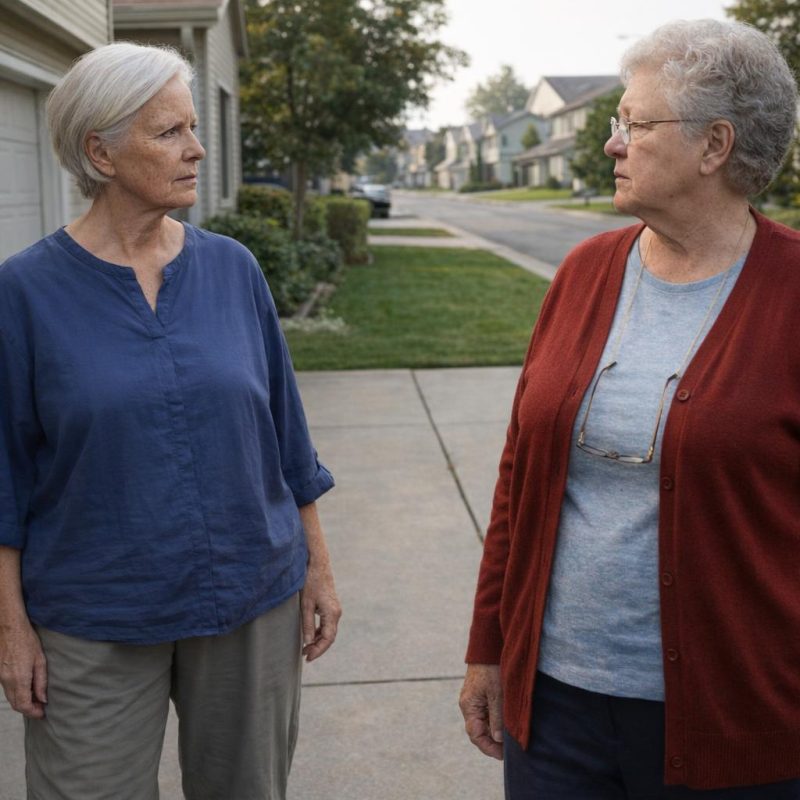 Image by RM AI
Father's Doubt
Diane's voice got quieter when she told me the next part, and she wrapped her arms around herself even though the morning wasn't particularly cold. Our father had never fully believed Mom's explanation, she said. He'd stayed in the marriage, had raised us and gone to work and mowed the lawn and done all the things married people do, but he'd carried suspicion with him until the day he died. Diane said she'd overheard arguments when she was older, late-night conversations that stopped abruptly when she walked into the kitchen for water, and Dad's voice had always held this edge of doubt that never quite went away. He'd never confronted Mom directly—or if he had, Diane never witnessed it—but the question had poisoned something between them, had created a distance that neither of them ever acknowledged out loud but that had shaped every interaction for decades. I thought about my childhood, about the way my parents had always seemed polite with each other but never particularly warm, and suddenly it made a horrible kind of sense. My father had died five years ago without ever getting an answer to the question that had haunted him, and now I understood why he'd sometimes looked at Mom with an expression I couldn't quite read. My entire childhood had been shaped by a question my father never got an answer to, and now I was inheriting that same uncertainty.
 Image by RM AI
Claire's Certainty
What frightened me most about Claire wasn't the accusations themselves but the absolute certainty in her voice when she made them, the way she spoke about my mother's involvement with the confidence of someone who'd spent years researching and cross-referencing until doubt became impossible. We'd had three phone conversations that week—she'd called on Tuesday evening, Thursday afternoon, and again on Saturday morning—and each time her tone had been the same: patient, thorough, and utterly convinced. She didn't rant or accuse wildly. She cited dates and document numbers and property transfers with the precision of someone who'd built an entire case file and knew exactly where every piece of evidence fit. She'd mention a specific deed transfer from 1971 and then explain how it connected to a bank account my mother had access to, and she'd do it all in this calm, almost gentle voice that made it sound like she was just sharing genealogy research instead of dismantling my entire understanding of my family. The certainty was more terrifying than anger would have been, because anger I could have dismissed as bias or grief or obsession. But Claire's confidence came from somewhere deeper, from months or maybe years of piecing together a puzzle until the picture became undeniable. I hung up after our third phone conversation that week and realized I had to search my mother's belongings myself, because living with Claire's version of truth felt worse than discovering evidence that might confirm it.
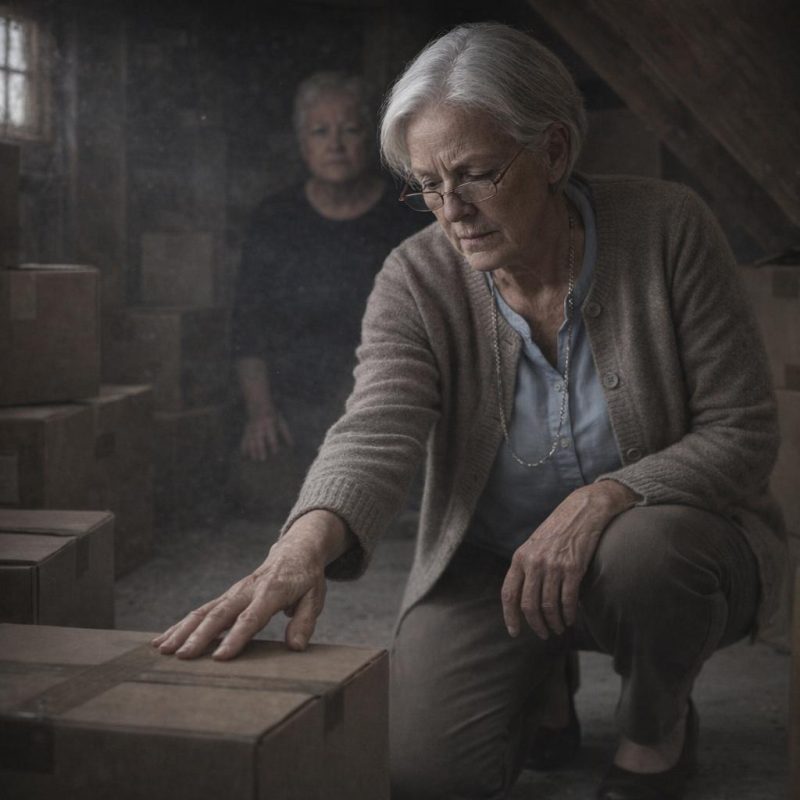 Image by RM AI
The Attic Search
I pulled down the attic ladder at nine o'clock on a Sunday morning and spent four hours sorting through boxes of my mother's things that I'd packed away after her funeral years earlier. The ladder creaked when I climbed up, and the attic smelled like dust and old cardboard and something faintly floral that might have been sachets Mom had tucked into storage decades ago. I'd been methodical when I'd packed these boxes six years ago, had labeled them carefully with black marker—'Kitchen Items,' 'Books,' 'Linens'—but I hadn't actually looked through most of the contents, had just wrapped things in newspaper and sealed the boxes and tried not to cry while I worked. Now I was opening them one by one, lifting out dish towels and paperback novels and framed photos of people I barely recognized, searching for something I couldn't quite name. My back ached from crouching under the low ceiling, and my hands were filthy with dust, and I was starting to think maybe there was nothing to find, that maybe Mom had been exactly who she'd claimed to be and I was tearing apart her belongings for no reason. Then I opened the third box, the one labeled 'Linens,' and beneath layers of old quilts that smelled like lavender, I found my mother's recipe binder with an envelope tucked inside that was thicker than it should have been.
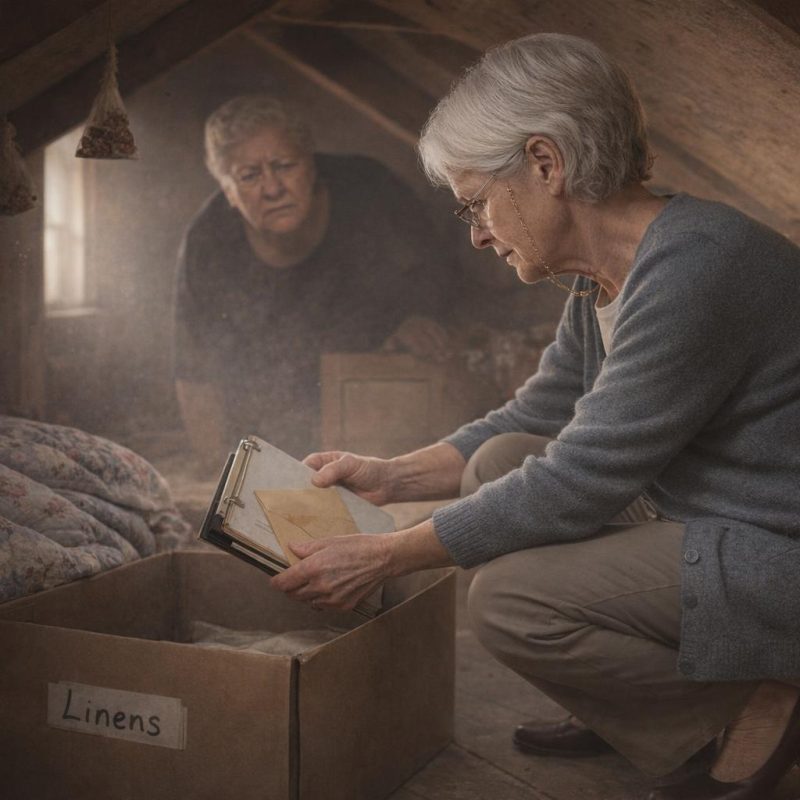 Image by RM AI
The Hidden Envelope
My hands trembled as I pulled the envelope from the recipe binder, recognizing my mother's handwriting on the front even though she'd been gone for six years. She'd written 'Important—Keep Safe' across the front in blue ink that had faded slightly but was still perfectly legible, and seeing those words in her distinctive slanted script made my throat tighten. Mom had always written with this particular flourish on her capital letters, a habit from the secretarial courses she'd taken in the 1960s, and I'd recognize that handwriting anywhere—on birthday cards, on grocery lists stuck to the refrigerator, on the note she'd left me the last time I'd visited her in the hospital. The envelope felt substantial in my hands, heavier than a few sheets of paper should have been, and I sat there on the attic floor with dust motes floating in the light from the small window and just stared at it for a long moment. Part of me wanted to put it back, to seal up the box and climb down the ladder and pretend I'd never found it, because once I looked inside there would be no going back to the version of my mother I'd carried in my memory. But I'd come too far to stop now, had spent too many sleepless nights wondering what the truth was. The envelope wasn't sealed, and when I lifted the flap, I saw the edges of what looked like old letters written on paper that had yellowed with age.
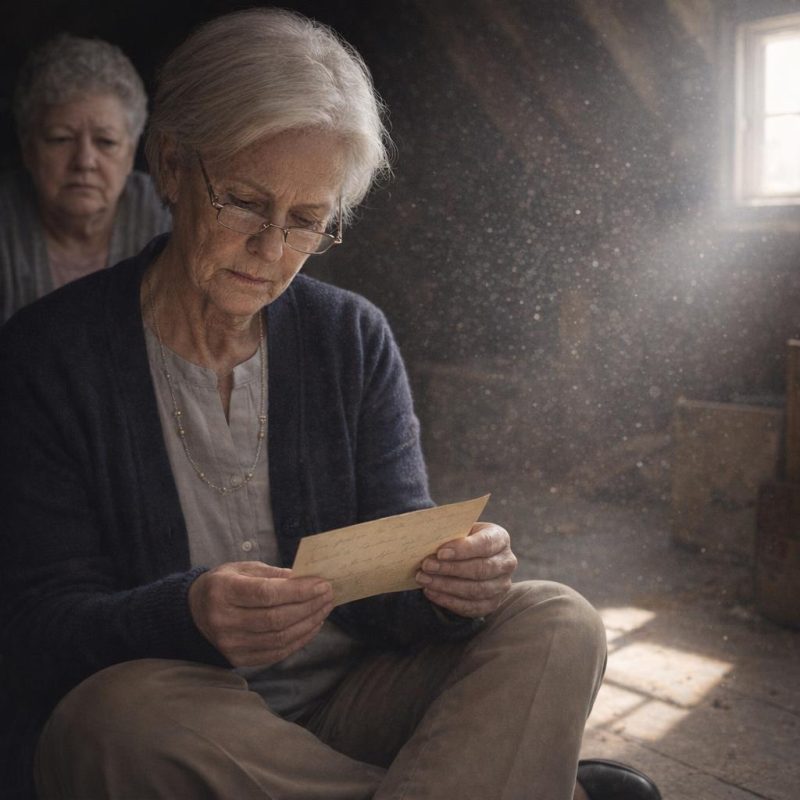 Image by RM AI
Daniel's Letters
The letters were from Daniel Mercer to my mother, written over several years in increasingly desperate handwriting, and every single one begged her to safeguard documents because he believed his own family intended to forge ownership transfers while he was hospitalized. I pulled them out carefully, unfolding paper that felt brittle under my fingers, and started reading. The earliest letter was dated 1969 and written in neat, controlled script, asking Mom to keep certain files in a safe place because Daniel was having surgery and didn't trust his cousin to have access to his office. But the letters got more frantic as the years went on. By 1971, Daniel's handwriting had deteriorated into something barely legible, and he was writing about his relatives threatening to have him declared incompetent, about property deeds that were being altered, about his ex-wife's family working with his own cousins to steal everything he'd built. He wasn't asking my mother to help him hide assets—he was begging her to protect proof that his family was committing fraud. 'Please keep these safe,' one letter read. 'You're the only person I trust. They'll destroy everything if they find them.' Another one said, 'The transfers they're planning are forgeries. I never signed anything. You have to keep the originals.' I sat on my attic floor reading about my mother's fear and Daniel's panic, and realized everything I'd believed about the scandal was backwards.
 Image by RM AI
The Secretary
One letter explained that my mother had worked briefly as a secretary for Daniel's lawyer and accidentally became the only person he trusted when his relatives started threatening legal action during his illness. She'd been hired for just six months in 1968 to help with filing during tax season, Daniel wrote, but she'd been the one who'd noticed discrepancies in documents that his cousin had brought in for him to sign while he was recovering from his first surgery. Mom had apparently mentioned the inconsistencies to Daniel, and that small act of honesty had made her the only person in his orbit he believed wouldn't betray him. The letter described how his own family had turned against him, how his ex-wife's relatives had joined forces with his cousins to contest his will and claim he was mentally unfit, and how everyone who should have protected him had instead seen an opportunity to profit from his illness. 'Your mother is the only one who hasn't asked me for money,' Daniel had written. 'The only one who hasn't tried to convince me to sign something I don't understand.' Reading it made my chest ache, made me understand why Mom had gotten involved even when it must have been terrifying. Daniel's final letter was dated three months before my parents' wedding, and the handwriting was barely legible, like he'd written it in a hospital bed while shaking.
 Image by RM AI
Locker 214
Tucked inside the final envelope was a small brass key attached to a yellowed motel receipt from 1972, and on the back my mother had written in shaky handwriting: 'If anything happens, locker 214.' The receipt was from a place called the Riverside Motor Lodge, and the paper had gone brittle and brown around the edges like it might crumble if I handled it too roughly. The key was small and tarnished, the kind that might open a storage locker or a safe deposit box, and it was tied to the receipt with a piece of string that had frayed with age. Mom's handwriting on the back was different from her usual careful script—the letters were uneven and pressed hard into the paper, like she'd been frightened when she wrote them, like her hand had been shaking too much to form the words properly. I turned the receipt over and over in my hands, trying to understand what it meant, trying to figure out where locker 214 might be and what my mother had hidden there fifty years ago. The Riverside Motor Lodge probably didn't even exist anymore, but maybe the locker did, maybe whatever Mom had been protecting was still sitting somewhere waiting to be found. I held the key in my palm. Whatever this unlocked would either destroy my mother's memory forever or finally explain the silence she'd carried until her death.
 Image by RM AI
Two Counties East
Diane and I left before sunrise on a gray Tuesday morning, the kind of morning where the sky never really gets light, just shifts from black to a dull charcoal that makes everything look washed out and tired. I had the brass key in my coat pocket and the yellowed receipt folded carefully in my purse, and neither of us said much during the two-hour drive east through counties I'd never had reason to visit before. The silence between us wasn't uncomfortable exactly, but it was heavy with the weight of not knowing what words fit what we might find at the end of this trip. Diane kept her eyes on the road and I watched the landscape change from suburban sprawl to farmland to small towns that looked like they'd been slowly emptying out for decades. The train station, when we finally found it, wasn't the crumbling ruin I'd half expected—it had been renovated over the years, turned into one of those heritage buildings with fresh paint and historical plaques, though you could still see the bones of the original structure underneath all the updates. I approached the station manager at the information desk with the receipt in my hand, feeling ridiculous and desperate at the same time, like someone chasing ghosts through bureaucracy. He took the yellowed paper from me and studied it with an expression that shifted from polite confusion to genuine surprise. The basement storage lockers hadn't been accessed in over thirty years, he said, and I felt my heart start hammering against my ribs.
 Image by RM AI
Verification
The station manager explained that accessing abandoned storage lockers required verification—three forms of identification tied to my mother's name, a phone call to the transit authority's legal department, and probably a fair amount of patience while they figured out whether this was even allowed anymore. I spread my documents across his desk like I was applying for a mortgage: my driver's license, my mother's death certificate, the probate papers that named me as executor of her estate. He examined each one with the careful skepticism of someone who'd learned not to trust anything that looked too convenient, then disappeared into a back office to make his phone call while Diane and I sat in plastic chairs that were bolted to the floor. The waiting area smelled like industrial cleaner and old coffee, and I counted the tiles on the ceiling because it was better than thinking about what might be in locker 214 or what might not be there at all. Nearly two hours passed before the station manager emerged looking resigned rather than helpful, the kind of expression that said he'd been told to cooperate but wasn't particularly happy about the complications we'd added to his Tuesday. He had authorization to proceed, he told us, and we followed him through a door marked 'Staff Only' and down a concrete staircase that felt like it belonged to the original building, the steps worn smooth in the middle from decades of use. The fluorescent lights flickered on with a buzzing sound that made my teeth ache, and I counted the rusted lockers against the far wall until I reached number 214.
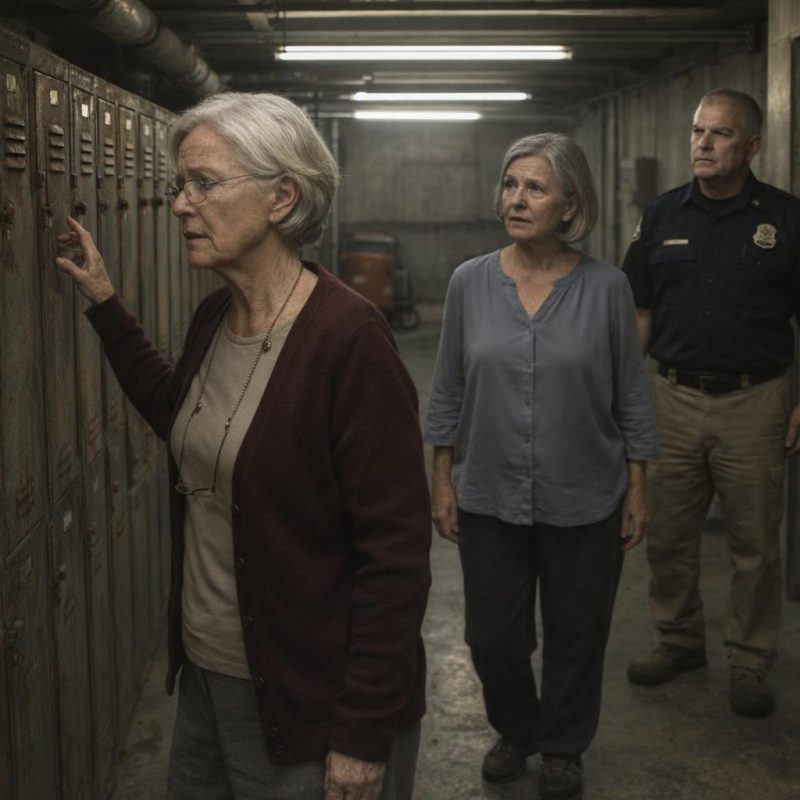 Image by RM AI
Fifty Years of Dust
I pulled the brass key from my pocket and my hands were shaking so badly that it took me three tries to get it lined up with the lock, and when I finally managed to slide it in, the mechanism resisted like it had forgotten how to work after fifty years of sitting untouched. The station manager had gone back upstairs, leaving Diane and me alone in the basement with the flickering lights and the smell of concrete and rust, and I put both hands on the key and turned it with more force than I'd intended. Something inside the lock gave way with a grinding sound that made me wince, and then the locker door scraped open on hinges that screamed in protest, revealing a metal box sitting on the bottom shelf like it had been waiting for someone to come back for half a century. The box was maybe a foot wide and eight inches deep, covered in a layer of dust so thick I could write my name in it, and the rust had eaten away at the corners until the metal looked lacy and fragile. I reached for it and my vision went spotty around the edges, my breath coming too fast and too shallow, and I had to grip the edge of the locker to keep myself steady. Diane put her hand on my shoulder and asked if I was okay, but I couldn't answer because I wasn't sure what okay even meant anymore. My hands were trembling so badly that Diane had to help me lift the box out of the locker and set it on the concrete floor.
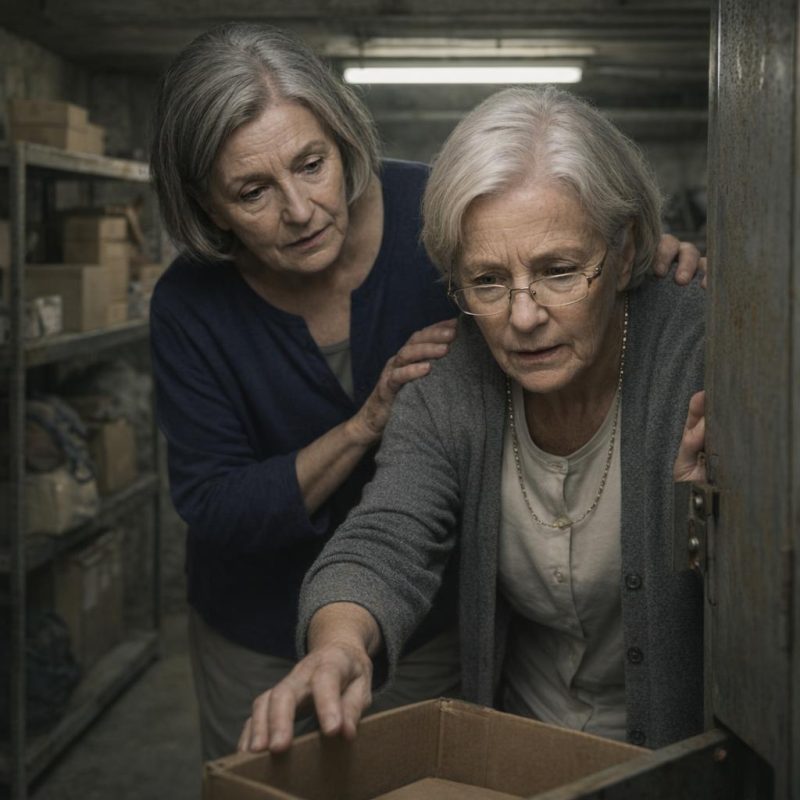 Image by RM AI
What Mother Kept
The metal box wasn't locked, just held shut by a simple latch that had corroded into place, and when Diane pried it open the hinges left rust flakes on her fingers like dried blood. Inside were papers—so many papers, all of them protected in plastic sleeves that had yellowed with age but had kept the documents underneath mostly intact. I lifted out the first one and found myself staring at a property deed with official stamps and notary seals, the kind of document that looked important even if you didn't understand all the legal language. There were more deeds underneath, and contracts, and handwritten statements on letterhead from law offices that probably didn't exist anymore, and as I read through them with Diane looking over my shoulder, I started to understand exactly what my mother had been protecting all these years. The documents showed how Daniel Mercer's relatives had transferred land ownership while he lay incapacitated in a hospital bed recovering from a stroke, how they'd forged signatures and backdated paperwork and paid off the right people to make it all look legal. My mother hadn't stolen these papers—she'd preserved them, hidden them away as evidence of a crime that someone had wanted buried forever. I was still holding the first deed, my hands finally steady now that I understood what I was looking at, when I heard footsteps on the basement stairs. A woman's voice called out asking if Evelyn was down there.
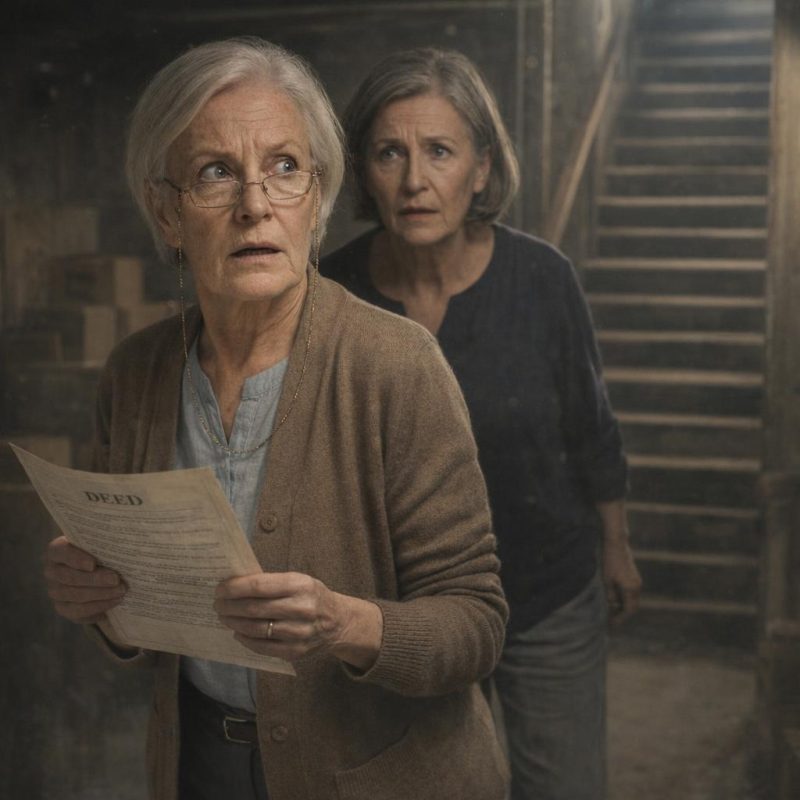 Image by RM AI
The Other Granddaughter
Claire appeared at the bottom of the stairs and she looked terrified rather than triumphant, her face pale and her eyes red-rimmed like she'd been crying on the drive over, and when she saw the open box and the documents in my hands, she burst into tears and collapsed against the wall like her legs had stopped working. I stood there frozen, still holding the deed, trying to reconcile this sobbing woman with the persistent stranger who'd been asking questions that made my blood run cold just weeks ago. Diane moved between us instinctively, protective, but Claire wasn't advancing or threatening—she was sliding down the wall until she was sitting on the concrete floor with her knees pulled up to her chest, crying so hard she could barely breathe. She kept saying she was sorry, over and over, and I didn't understand what she was apologizing for until she finally managed to get enough air to explain. She hadn't been trying to destroy my mother's reputation at all, she said through her tears, her voice breaking on every other word. She'd spent years trying to prove her own grandmother wasn't losing her mind, trying to find evidence that would validate the story Ruth had been telling for forty years while everyone in their family dismissed her as delusional. The documents I held in my hands were the only proof that Ruth had been telling the truth all along.
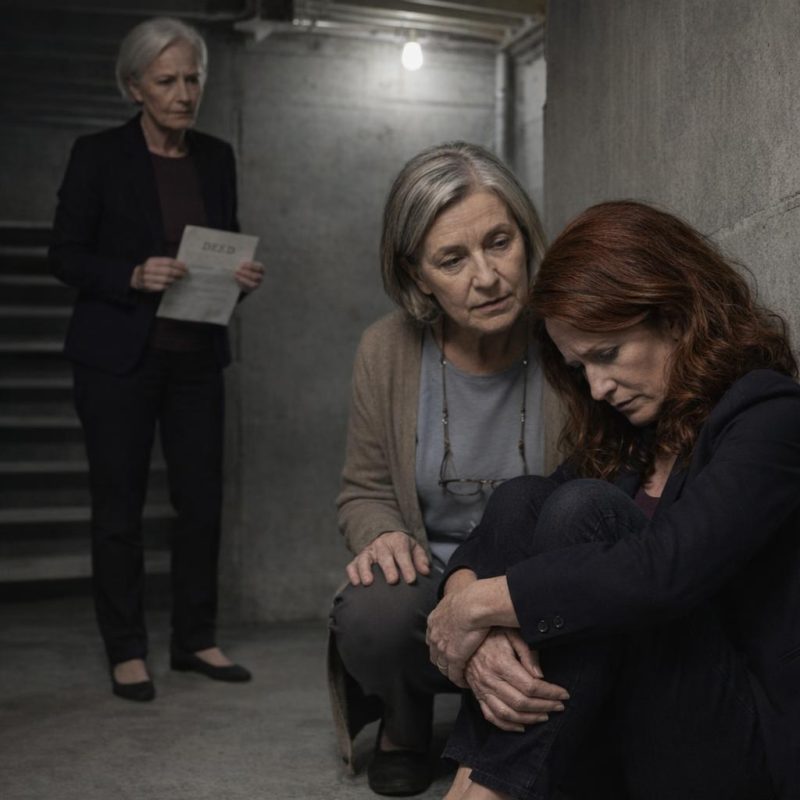 Image by RM AI
Ruth's Story
Claire composed herself enough to explain the full story, wiping her face with her sleeve and taking shaky breaths between sentences like someone who'd been holding everything in for too long. Her grandmother Ruth had married Daniel Mercer's son back in the seventies, she said, and Ruth had inherited Daniel's insistence about the property fraud along with his name. For forty years Ruth had told anyone who would listen—her children, her grandchildren, lawyers, journalists, anyone who might believe her—that Daniel's land had been stolen through forgery and corruption, that the people who'd taken it had destroyed his life and gotten away with it. But her family had gradually stopped believing her claims, Claire said quietly, her voice thick with shame. They'd attributed Ruth's stories to grief at first, then to the normal confusion of aging, and eventually to dementia when she kept repeating the same accusations year after year. Claire had been the only grandchild who kept listening, who noticed that Ruth's story never changed in the details that mattered, who decided to search for evidence independently using DNA testing and genealogy sites. That's how she'd found me, she explained—the DNA records had linked our families through marriage connections near Daniel during the exact period the documents disappeared. I felt sick with shame for every suspicious thought I'd had about her, for every time I'd assumed the worst about her intentions. The documents I held in my hands were the only proof that Ruth had been telling the truth all along.
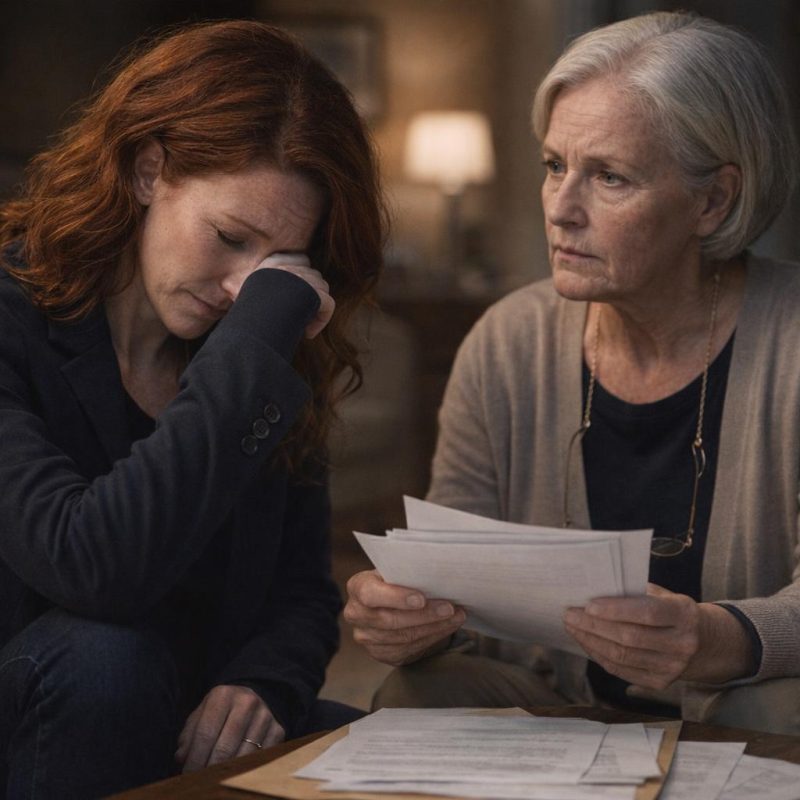 Image by RM AI
The Woman They Called Delusional
Claire pulled out her phone with hands that were still shaking and showed me a photograph of Ruth Mercer, an eighty-four-year-old woman with fierce eyes that looked directly at the camera like she was daring it to doubt her. Her face was deeply lined and her hair was white and thin, but there was nothing confused or diminished in that gaze—she looked stubborn and vindicated and tired of not being believed. Claire explained that Ruth had spent half her life being treated like her memories were symptoms of decline, like her insistence on the truth was evidence of deteriorating mental capacity rather than a legitimate grievance that deserved investigation. Medical professionals had suggested her stories were early dementia, Claire said, and her own children had eventually started nodding along sadly whenever Ruth brought up Daniel's stolen property, the way you humor someone who can't help what they're saying anymore. But Ruth had never stopped insisting she was telling the truth, had never wavered in the details, had never let anyone convince her that her memories were false even when it would have been easier to just let it go. I looked at the photograph and felt overwhelming empathy for this woman I'd never met, this stranger who'd been dismissed and patronized and treated like she was losing her grip on reality when she'd been right all along. Ruth was still alive, Claire said quietly, but she was in hospice care and didn't have much time left to learn the truth.
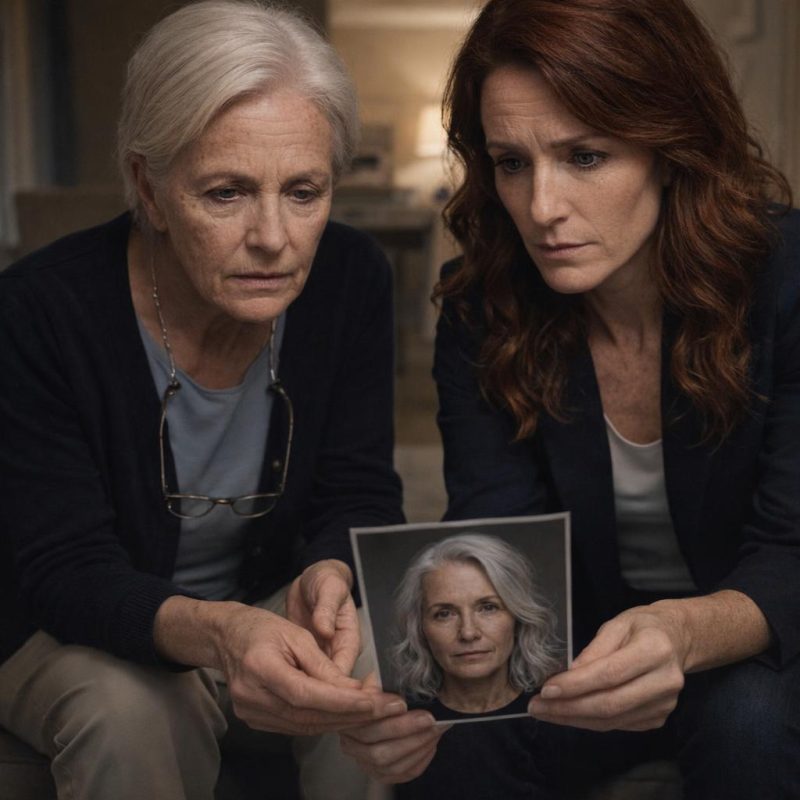 Image by RM AI
The DNA Connection
Claire explained how she'd started with DNA testing through the genealogy site, how marriage records from the 1970s had linked our families during the exact period when the documents disappeared, how my mother's name had appeared in connection with Daniel Mercer in ways that suggested she might have been involved somehow. The genealogy site had allowed Claire to make contact with me, she said, and every detailed question she'd asked had been an attempt to locate evidence without revealing what she was looking for in case I didn't know anything or didn't want to help. Her knowledge of family details had come from months of research—census records, newspaper archives, property transfers, anything she could find that might lead her to proof. The photograph she'd sent me hadn't been a threat or a manipulation, she explained—it had been a desperate hope that I might recognize its importance, that I might understand what she was trying to find. I thought about all the messages I'd ignored, all the times I'd felt uneasy about her persistence, all the ways I'd misread her desperation as something sinister. Everything Claire had done—the questions, the photograph, the persistent messages that had made my blood run cold—had been a desperate attempt to find proof for a dying woman who deserved to be believed.
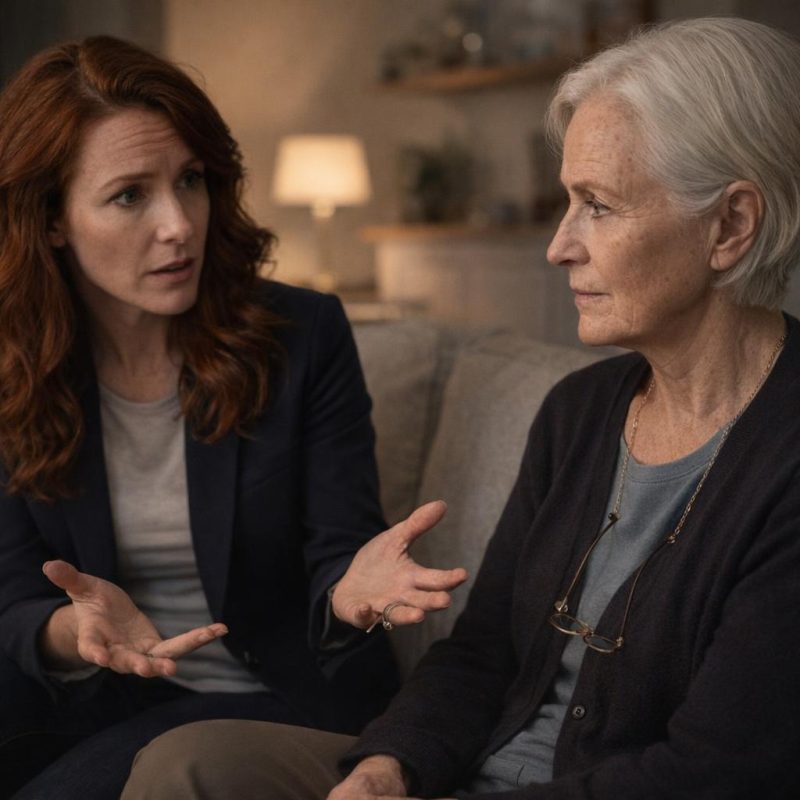 Image by RM AI
Two Mothers
I sat there in that dusty basement, holding documents that told two stories at once, and something clicked into place that I should have seen earlier. Claire had been fighting to prove her grandmother wasn't delusional, wasn't making up stories, wasn't the confused old woman everyone had dismissed for decades. I had been fighting to prove my mother wasn't a thief, wasn't complicit in something criminal, wasn't the person I'd feared she might have been when I first found those papers. We'd both been defending the women who raised us, trying to protect their legacies from assumptions that felt unbearable. Ruth deserved to be believed after a lifetime of being called crazy. My mother deserved to be remembered as something other than someone who stole documents and hid them away. The papers in my hands served both purposes—they proved Ruth had been telling the truth all along, and they proved my mother had been protecting that truth, not destroying it. Claire was watching me with those intense eyes, and I could see she understood what I was realizing. Diane stood near the stairs, her hands clasped together, witnessing something shift between us. We weren't adversaries anymore. We were two women who'd spent months trying to honor the people we'd loved. Claire looked at the documents in my hands and asked if I would help her prove Ruth right before it was too late.
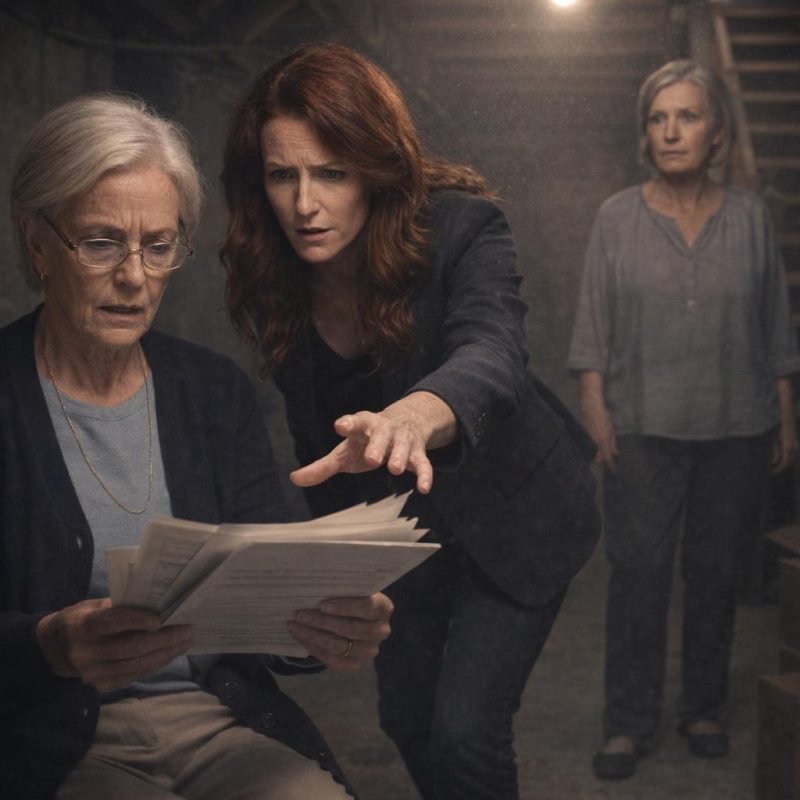 Image by RM AI
The Agreement
We handled those documents like they were made of glass. I photographed every single page with my phone, making sure the lighting was good enough to read every word, every signature, every notation in the margins. Claire did the same with her phone, both of us creating backup copies in case something happened to the originals. Diane found an old accordion folder in better condition than the envelope, and we transferred everything carefully, keeping the pages in order. Claire suggested we contact an estate attorney who could review historical property disputes, someone who would understand what we were looking at and whether any legal remedy still existed after fifty years. I agreed immediately—these documents deserved professional evaluation, and Ruth deserved whatever justice could still be claimed. But Diane reminded us both that proving fraud from half a century ago might be legally impossible, that statutes of limitations had probably expired decades ago, that we might be building up hopes that couldn't be fulfilled. Claire's expression didn't change. She said Ruth didn't need a courtroom victory or a financial settlement. Ruth needed her family to stop treating her like she was crazy.
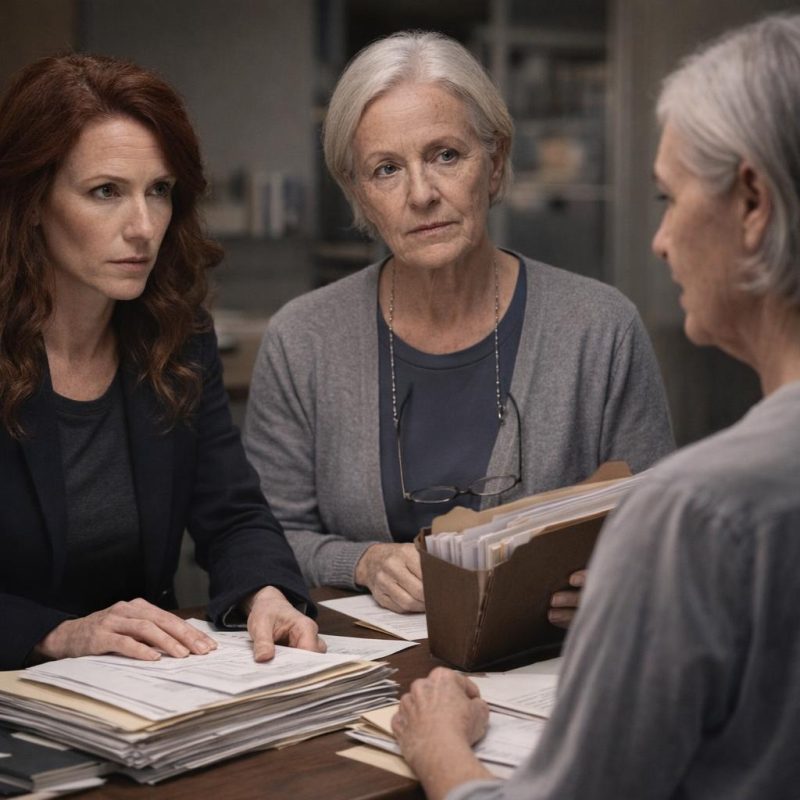 Image by RM AI
Attorney Whitfield
Marcus Whitfield was an estate attorney in his early fifties who specialized in historical property disputes, and when Claire called his office, he agreed to see us within two days. His conference room had tall windows and dark wood furniture that made everything feel serious and official. We spread the documents across his table—the property deeds, the notarized contracts, the handwritten statements my mother had preserved. Whitfield put on wire-rimmed glasses and started reading, his expression neutral at first, professional. Then his eyebrows rose as he examined the first deed. They rose higher when he read the contract with its suspicious timing. He picked up one of the handwritten statements, read it twice, then reached for another document to cross-reference something. Claire and I sat across from him, not speaking, barely breathing. Diane had her hands folded on the table, watching him with the same careful attention I was. Whitfield read the final statement—the one that described Daniel's hospitalization and the relatives who'd visited with papers to sign—and his expression shifted from professional interest to something more serious. He looked up after reading the final statement and said these documents appeared to prove systematic fraud conducted against an incapacitated property owner.
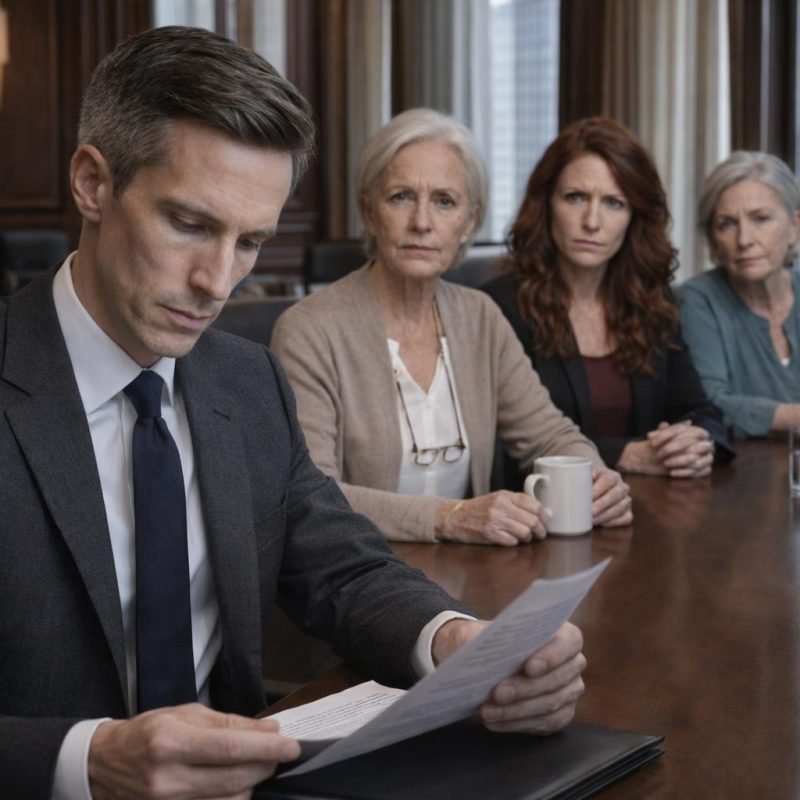 Image by RM AI
Confirmed
The next two weeks felt like holding my breath underwater. Whitfield took copies of everything and started his research—verifying signatures against county records, tracing property transfers through decades of ownership changes, confirming that the people named in the documents were real and the transactions had actually occurred. He called in a handwriting expert to examine the signatures on the deeds. He consulted with a colleague who specialized in elder fraud cases. Claire texted me updates every few days, and I could feel her anxiety through the phone screen. Then Whitfield called us back to his office. He'd prepared a formal summary, typed and bound, and he walked us through his findings with the careful manner of someone who understood the weight of what he was saying. Daniel Mercer's relatives had illegally transferred three valuable properties while he was hospitalized in 1972, exploiting his incapacitated state to forge or coerce signatures on documents that stripped him of assets he'd spent his life accumulating. The documentation my mother had preserved proved it beyond reasonable dispute—there was no question the fraud had occurred. Whitfield paused before delivering the final detail. The commercial lots that had been worth modest sums in 1972 were now worth over eight million dollars combined.
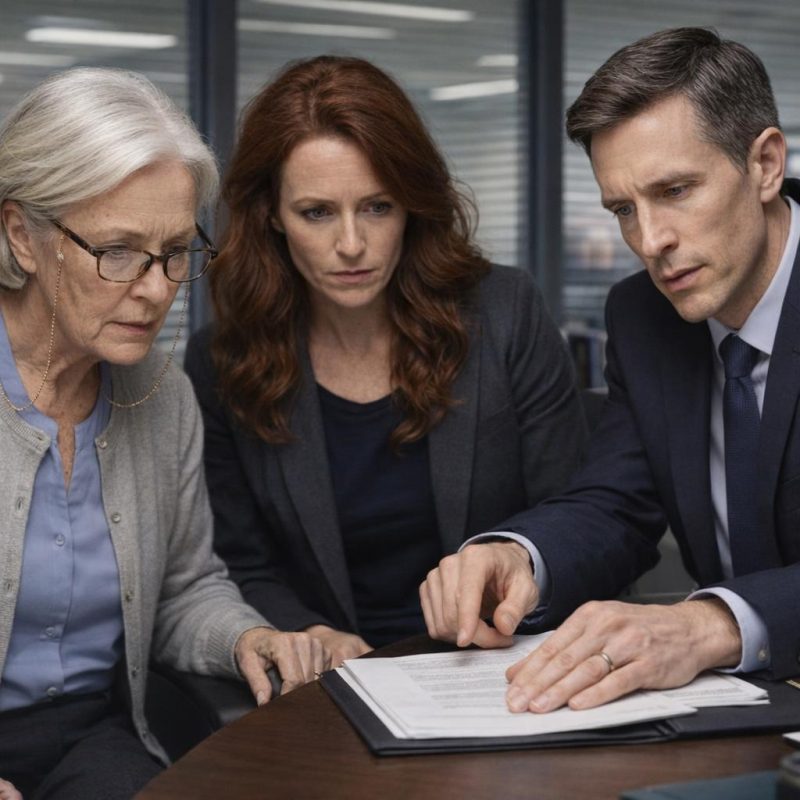 Image by RM AI
Partial Justice
Whitfield explained that recovering the property after fifty years would be extraordinarily complex. Statutes of limitations had expired for criminal prosecution. The properties had changed hands multiple times, sold to buyers who had no knowledge of the original fraud. But there were legal theories that might apply—unjust enrichment, constructive trust, equitable remedies that didn't depend on criminal statutes. Claire's family could file claims, pursue negotiations, potentially recover partial rights or financial settlements. It would take years. It might never fully succeed. But the process had already succeeded in the way that mattered most, at least to Claire. She took a copy of Whitfield's letter—the one that confirmed in formal legal language that the fraud had been real, that Ruth's story was true, that she hadn't been confused or delusional or making things up. Claire drove straight to the hospice facility where Ruth had been moved three weeks earlier. I went with her, and Diane came too, all of us understanding that this moment was more important than any courtroom victory could ever be. When Claire showed Ruth the attorney's letter confirming the fraud had been real all along, the old woman wept for the first time in decades.
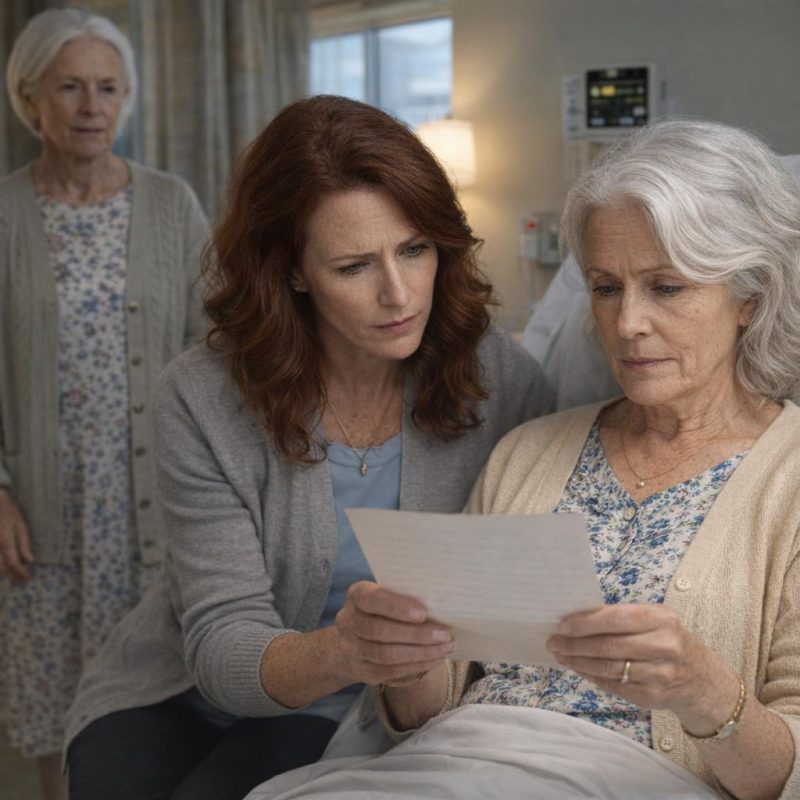 Image by RM AI
What Money Can't Buy
The attorneys estimated that even partial recovery could mean millions of dollars for Claire's family—settlements from the current property owners, insurance claims, maybe even a percentage of the properties themselves if the legal theories held up in court. It was life-changing money, the kind that could secure Claire's future and her children's futures. But sitting in Ruth's hospice room, watching the old woman hold that letter with shaking hands while her adult children stood around her bed with tears in their eyes, I understood the real treasure had nothing to do with property values. Ruth's daughter kept saying "I'm sorry, Mom, I'm so sorry we didn't believe you," and Ruth just shook her head, smiling through her tears. Her son held her other hand, his face twisted with regret for all the years he'd dismissed her stories as the confused ramblings of an aging mind. Claire sat beside the bed, crying quietly, and I stood near the window with Diane, both of us witnesses to something that felt almost sacred. Ruth looked across the room at me, and she held out her hand. I crossed to the bed and took it, her fingers thin and cold in mine. Ruth held my hand and thanked me for finding what my mother had protected, and I couldn't speak through the tightness in my throat.
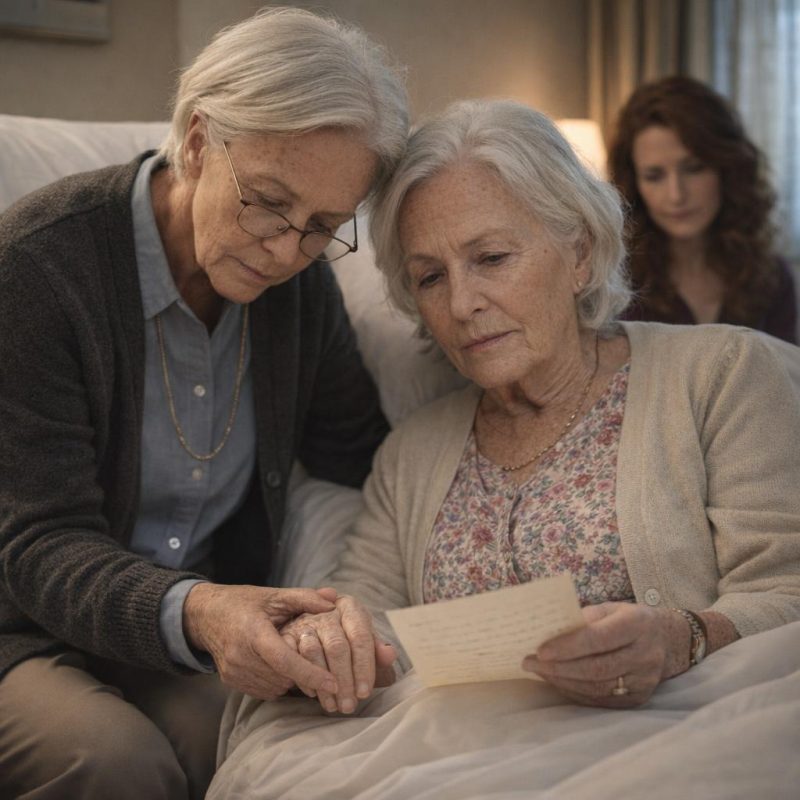 Image by RM AI
The Silence She Carried
Driving home from the hospice, I couldn't stop thinking about my mother spending forty years believing she had permanently damaged two families by staying silent about documents she didn't know how to reveal safely. She'd watched Ruth's family dismiss her as delusional, knowing she had proof that would vindicate the old woman but terrified of what might happen if she came forward. She'd carried the weight of that knowledge through my entire childhood, through my father's death, through her own declining years. Every time she must have thought about speaking up, the fear must have stopped her—fear of legal consequences, fear of powerful people, fear of making everything worse instead of better. Diane was quiet in the passenger seat, and I was grateful she didn't try to fill the silence with reassurances. My mother had died two years ago believing she was a coward, believing she'd failed everyone involved, believing the secret she'd kept had been an act of weakness rather than an impossible situation with no good options. She died thinking she was a coward, and I would never be able to tell her she was wrong.
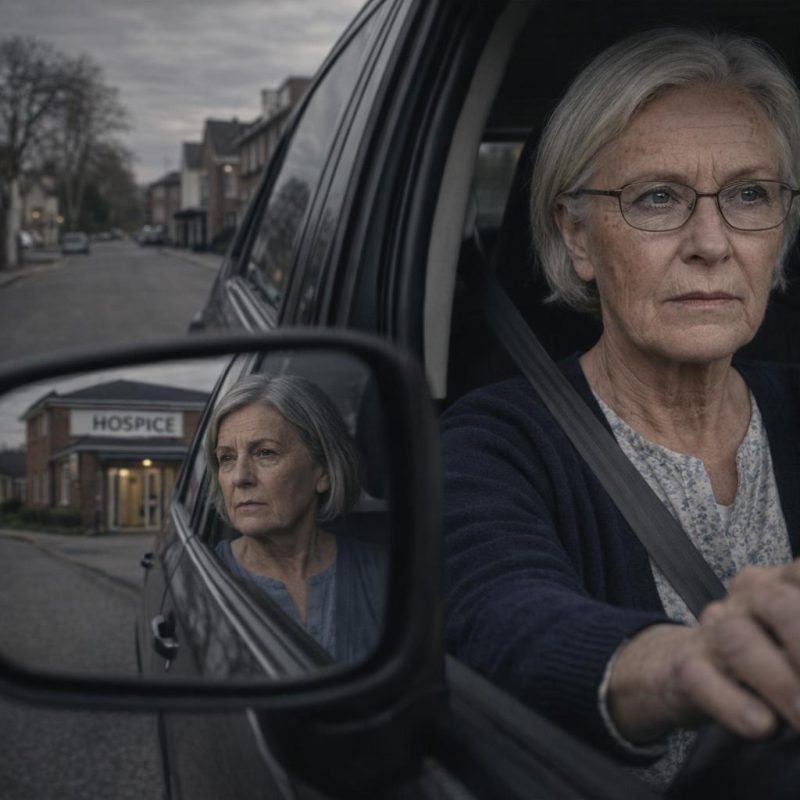 Image by RM AI
Trapped Between Powers
I finally understood that my mother hadn't been a thief or a conspirator or a liar—she had been a frightened young secretary who got caught between powerful families fighting over money, and she spent her whole life afraid to make things worse. Daniel Mercer had trusted her with those documents, probably hoping she'd know what to do with them, and she'd been maybe twenty-five years old, working a secretarial job, with no legal training and no powerful connections of her own. The people who'd committed the fraud had money and lawyers and the kind of confidence that comes from never being questioned. My mother had been terrified that coming forward would bring their attention to her, that they'd find ways to discredit her or threaten her or make her wish she'd stayed silent. So she'd hidden the documents and told herself she was protecting them for the right moment, and the right moment never came because there was no right moment, just decades of fear and guilt and the growing impossibility of explaining why she'd waited so long. She'd baked pies and clipped coupons and kept our household running on a bookkeeper's salary, and nobody looking at her would have guessed what she carried. The woman who baked pies and clipped coupons had been carrying a burden that would have crushed most people, and she carried it alone.
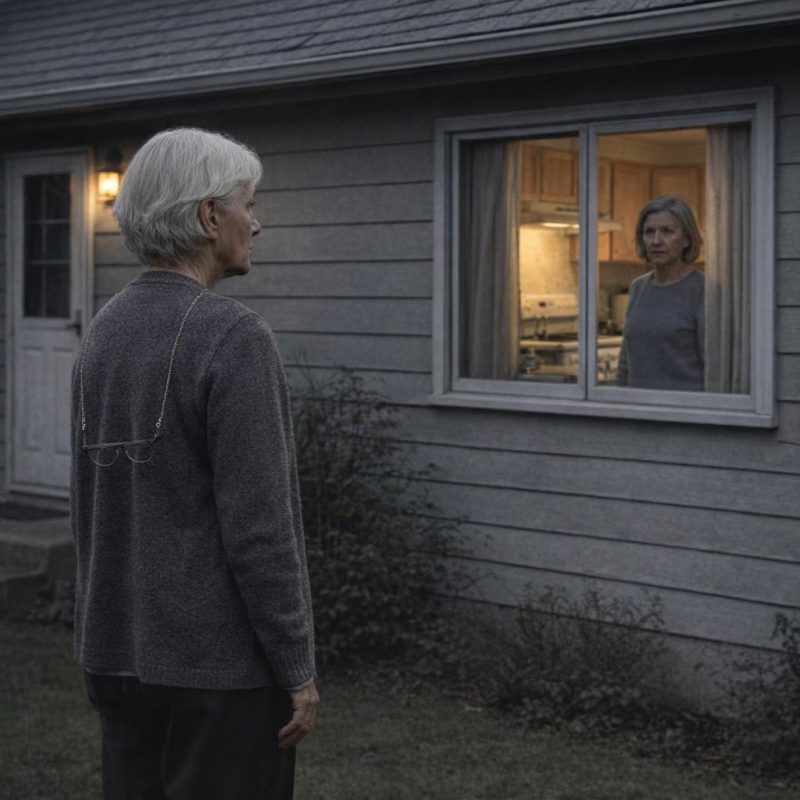 Image by RM AI
Evidence She Couldn't Reveal
I sat down with Diane and Claire the next morning and finally put into words what I'd been piecing together for weeks. My mother hadn't been protecting herself from embarrassment or hiding some shameful secret—she'd been genuinely terrified of legal consequences. She'd witnessed crimes, real crimes committed by people with money and power, and she'd ended up in possession of documents that proved those crimes. But she'd also known that possessing stolen evidence, even evidence of wrongdoing, could make her vulnerable to charges herself. She wasn't a lawyer or a whistleblower with protections. She was a secretary who'd been handed documents by a dying man, and she'd spent decades afraid that coming forward would get her arrested or sued or worse. So she'd hidden the evidence in a bus station locker and lived her whole life carrying that weight, preserving the proof while protecting herself the only way she knew how. Diane cried when I explained it, and Claire sat very still, listening. Then I showed them the note again—the one that had been with the key, the one that said 'If anything happens, locker 214.' I'd thought it was paranoia before, but now I understood it differently, now I was honoring her sacrifice in a way I'd never been able to before. The note she left with the key—'If anything happens, locker 214'—was the closest she ever came to asking for help.
 Image by RM AI
Ruth Before the End
Three weeks after the legal team confirmed everything, Claire called to tell me that Ruth Mercer had passed away peacefully in hospice care. She'd been surrounded by her children and grandchildren, and according to Claire, she'd spent her final days talking about Daniel and the farm and all the stories people had stopped believing decades ago. But this time her family had listened, really listened, because they finally knew she'd been telling the truth all along. Ruth died knowing she'd been vindicated, that her father-in-law's name had been cleared, that the fraud had been documented and acknowledged. Claire said her grandmother had smiled more in those last three weeks than she had in years. I attended the funeral on a gray Saturday morning, standing quietly in the back of the church while Claire's relatives filled the pews. The service was simple and dignified, full of stories about Ruth's stubbornness and her fierce loyalty to family. Afterward, at the reception, Claire found me near the coffee table and took my arm. She walked me over to a cluster of her aunts and uncles and cousins, and she introduced me with words I'll never forget. I felt something shift inside me then, a kind of healing through truth that I hadn't known was possible. At the funeral, Claire introduced me to her relatives as the woman whose mother had saved their family's legacy.
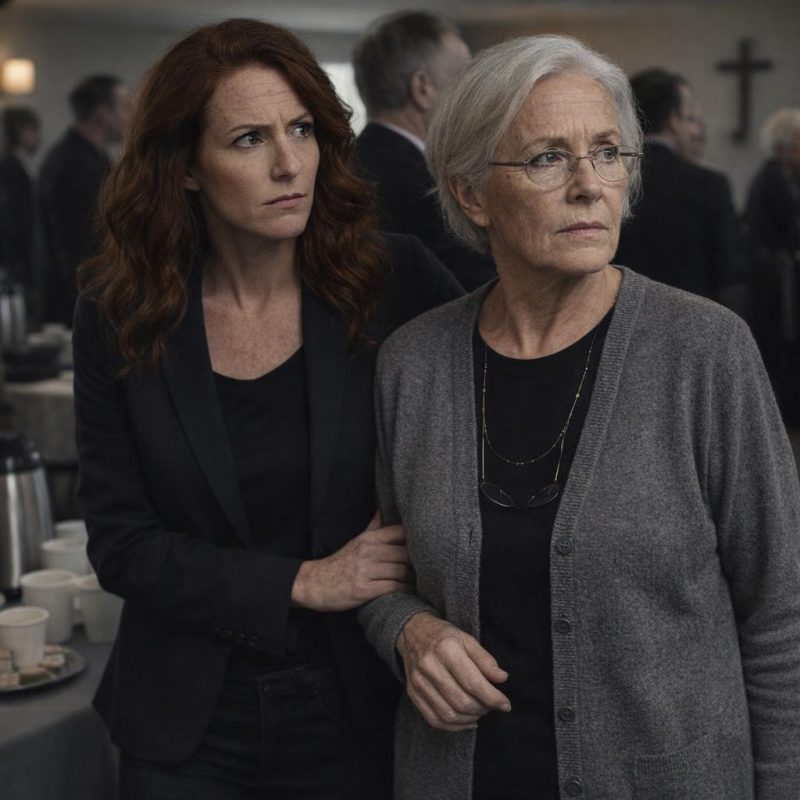 Image by RM AI
Sorting Photographs
Months later, on a quiet Tuesday afternoon, Claire came to my house carrying a shoebox full of old photographs. We sat together at my kitchen table with the box between us, spreading the pictures across the surface like puzzle pieces. Some were hers, some were mine, and we compared faces and dates and tried to piece together the connections between people who had known each other before either of us was born. There was Daniel as a young man standing beside a tractor, Ruth as a girl with braids, my mother in her twenties wearing a dress I'd never seen before. Claire had done research, matched names to faces, figured out who had worked where and when. We talked about the farm, about the law office where my mother had worked, about the social circles that must have overlapped in ways we'd never considered. It felt strange and peaceful at the same time, sitting there with someone who'd started as a stranger on a genealogy website and had become something I couldn't quite name, building real connection in a way I hadn't expected. Then Claire reached into the box and pulled out a photograph I hadn't seen yet. She handed me a photograph of Daniel Mercer smiling beside a young woman I barely recognized as my mother, and this time the image didn't frighten me at all.
 Image by RM AI
Something More Complicated and Real
I looked at that photograph for a long time, studying my mother's face and Daniel's easy smile, and I realized how much had changed since Claire first sent me that message months ago. We weren't strangers anymore, not really, and we weren't cousins in any traditional sense either. We were something more complicated and real—two women connected by secrets neither of us created, finally piecing together the truth our families had buried for half a century. My mother had carried her burden alone, and Ruth had spent decades being dismissed and doubted, and now Claire and I sat at my kitchen table sorting through the evidence of their lives and their choices. We talked for hours that afternoon, not just about the documents or the fraud or the legal aftermath, but about smaller things too—recipes our mothers had made, holidays we remembered, the ordinary details that make up a life. When Claire finally left, I stayed at the table with the photographs still spread out in front of me, and I felt something I hadn't felt in a very long time—I felt at peace with everything that had happened, with all the choices that had led us here. I looked at Claire across my kitchen table and realized that some family connections aren't found in DNA records or marriage certificates, but in the quiet understanding between people who have finally stopped being afraid of the past.
 Image by RM AI
KEEP ON READING
The 20 Most Recognized Historical Figures Of All Time
The Biggest Names In History. Although the Earth has been…
By Cathy Liu Oct 4, 2024
10 of the Shortest Wars in History & 10 of…
Wars: Longest and Shortest. Throughout history, wars have varied dramatically…
By Emilie Richardson-Dupuis Oct 7, 2024
10 Fascinating Facts About Ancient Greece You Can Appreciate &…
Once Upon A Time Lived Some Ancient Weirdos.... Greece is…
By Megan Wickens Oct 7, 2024
20 Lesser-Known Facts About Christopher Columbus You Don't Learn In…
In 1492, He Sailed The Ocean Blue. Christopher Columbus is…
By Emilie Richardson-Dupuis Oct 9, 2024
20 Historical Landmarks That Have The Craziest Conspiracy Theories
Unsolved Mysteries Of Ancient Places . When there's not enough evidence…
By Megan Wickens Oct 9, 2024
The 20 Craziest Inventions & Discoveries Made During Ancient Times
Crazy Ancient Inventions . While we're busy making big advancements in…
By Cathy Liu Oct 9, 2024